
Woodland romance is the brief I hear most for this theme now: fairy-tale details, moss, sugar mushrooms, bark and wildflowers, usually with fairy lights somewhere nearby. The hard part is keeping it grown-up. A cake that leans too far into whimsy starts to look like a child’s birthday, so I build every one of these on a clean tiered structure and let a single magical idea lead. Sage, ivory, blush, gold and chocolate brown are the colours that hold up under candlelight. Below are twenty enchanted designs, with notes on how each one is actually made and what it needs from your venue.
Moss, Bark and Mushrooms: What You Can Actually Eat
Couples are often surprised by how much of a forest cake is made from sugar, chocolate and crumbs. Most of the effect is edible, but a few popular props are not, and they need handling.
- Edible: moss made from tinted crumbs, meringue or gumpaste mushrooms, chocolate bark, piped vines, sugar flowers, wafer paper butterflies, gold leaf sold as edible.
- Decorative only: real moss, wood slices, pine cones, twigs and most fresh flowers. These should sit on a food-safe barrier and come off before cutting.
- Check carefully: fresh flowers. Some garden favourites are toxic, and blooms from a florist may have been sprayed. I wrap stems and keep petals away from the icing unless the flower is grown for eating.
Real wood slices look right on a dessert table, but untreated bark sheds and can harbour dust. I put a cake board under every tier so the cake never touches the wood.
Sugar flowers versus fresh
Sugar flowers cost more because each petal is shaped and dried by hand, but they can be made weeks ahead and kept as a memento. Fresh flowers are cheaper and look looser, which suits wildflower and garden designs. Many of my enchanted cakes mix both: sugar mushrooms and leaves on the cake, fresh greenery around the stand.
1. Enchanted Forest Wedding Cake
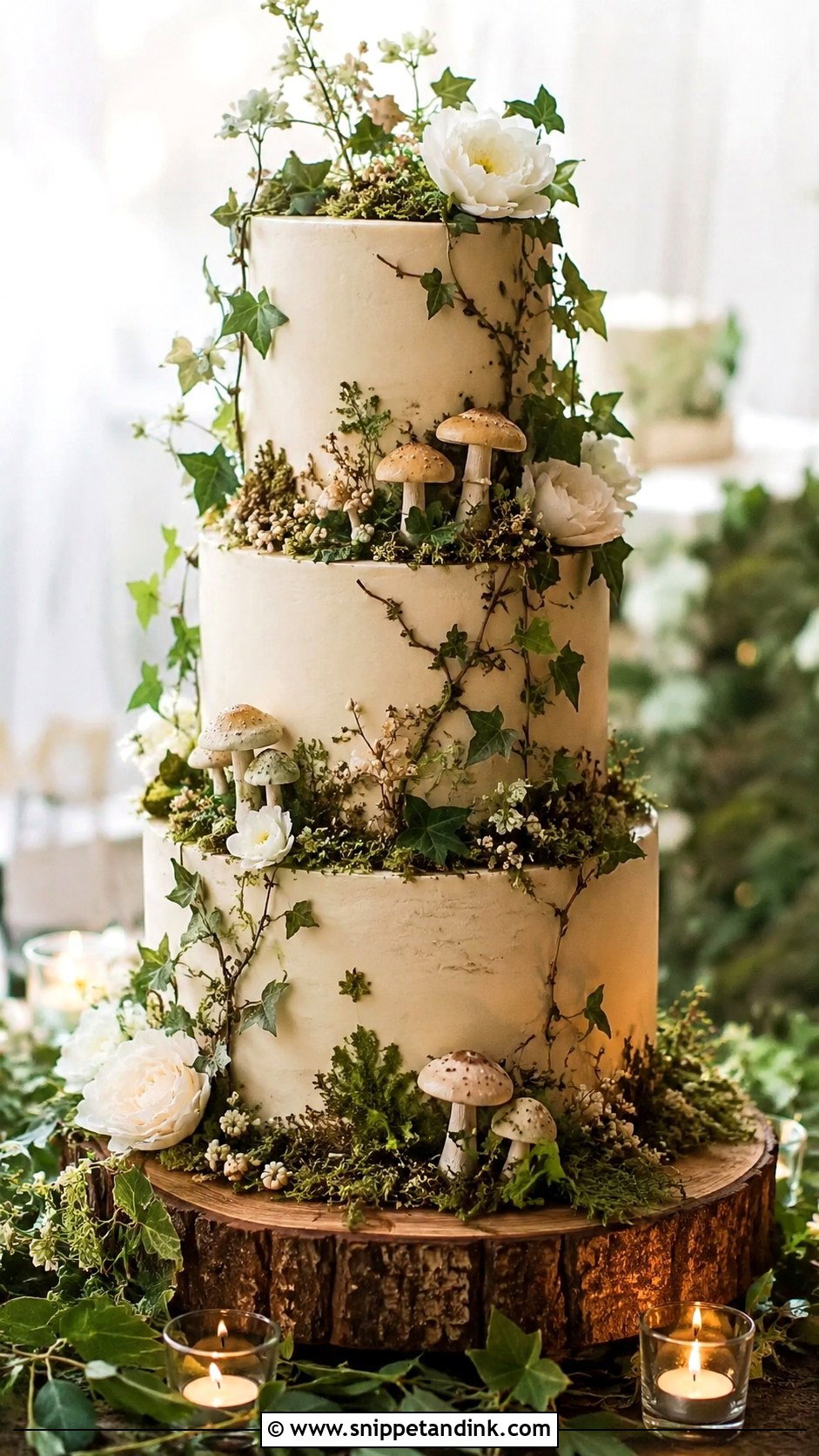
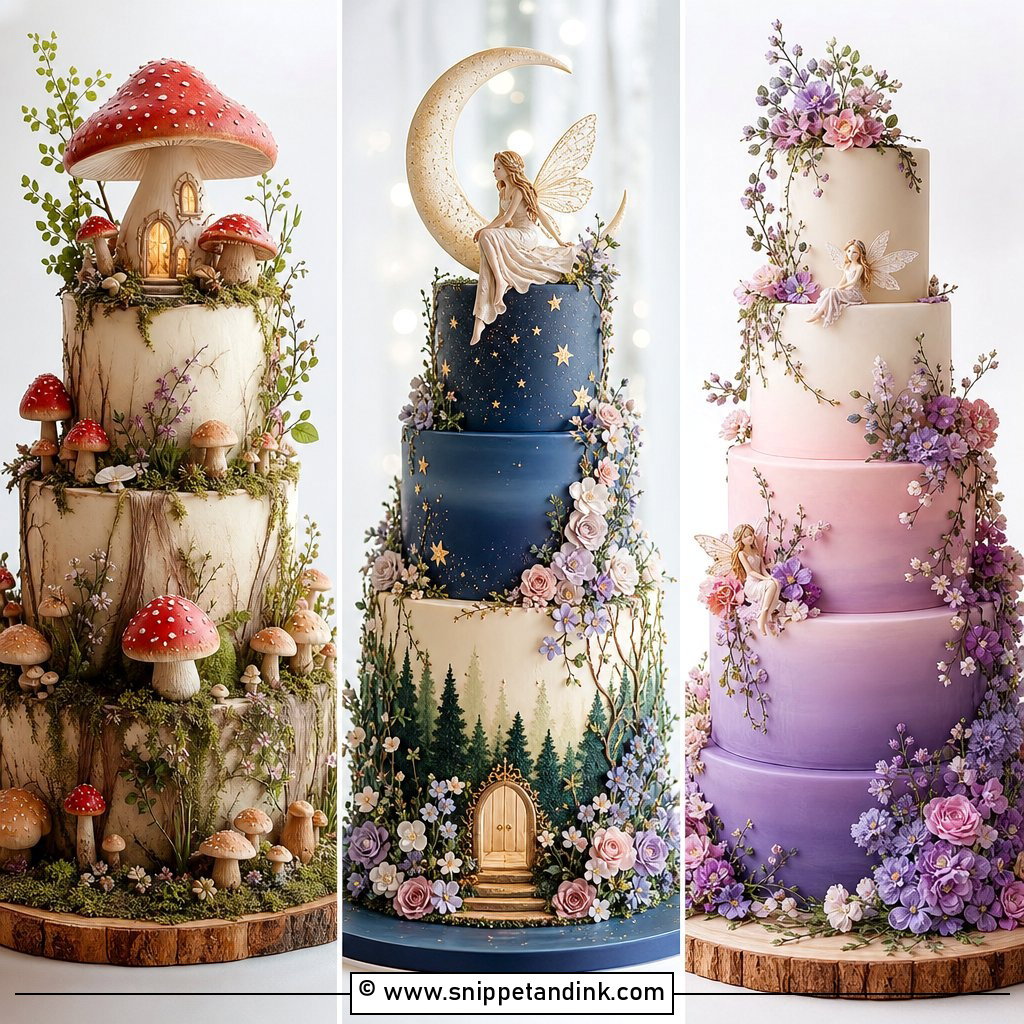
This is the one that tells the whole story on one stand. I start with ivory tiers, tuck edible moss and small sugar mushrooms into the ledges, and let vines trail between them with a few flowers. A wood slice underneath grounds it, and a touch of gold leaf keeps it from looking like a craft project. Vanilla, almond, honey or lemon sponge suits the lighter look. The one thing I’m strict about is sharp tier edges: texture reads as intentional only when the structure underneath is crisp.
2. Woodland Wedding Cake
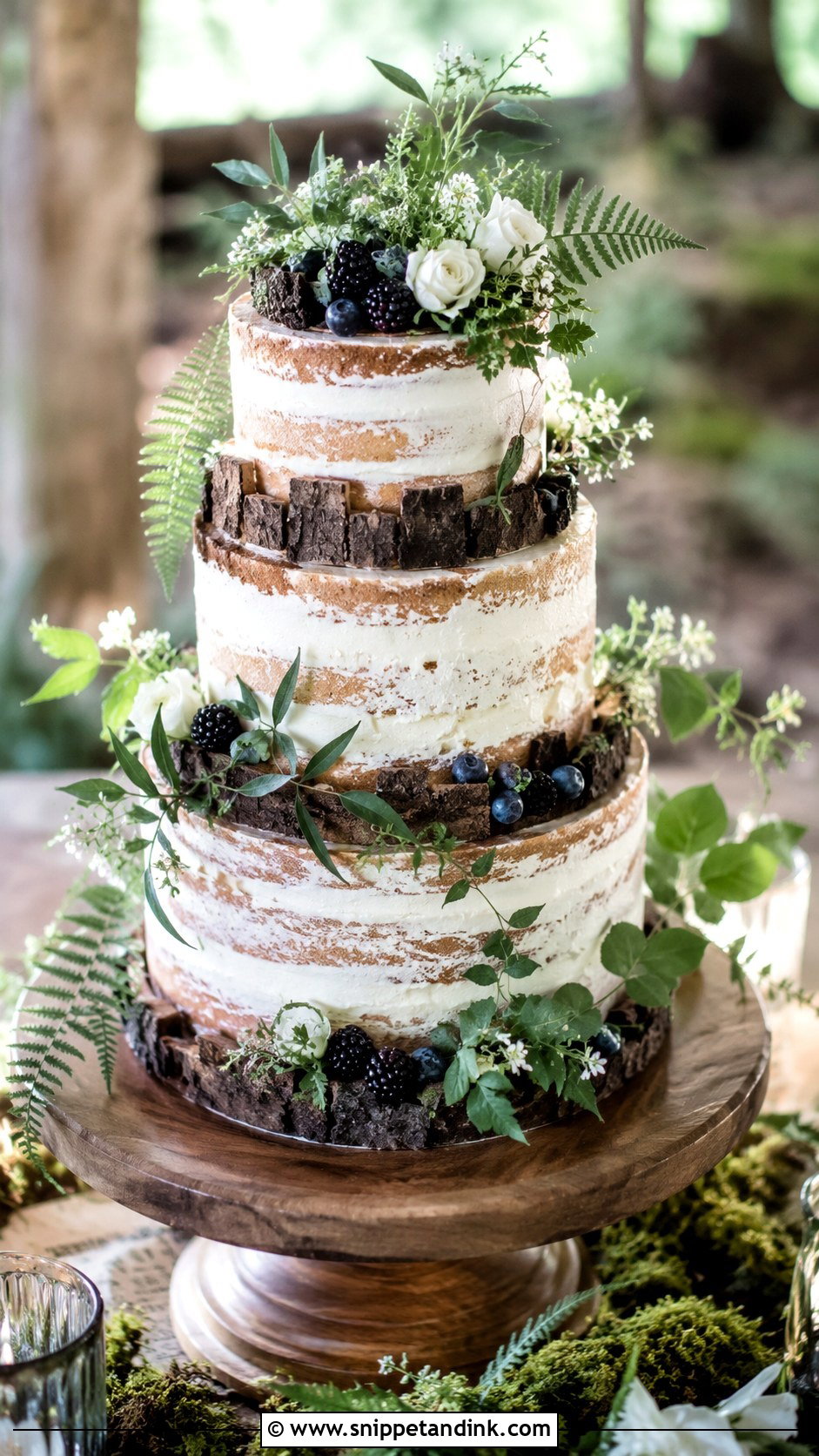
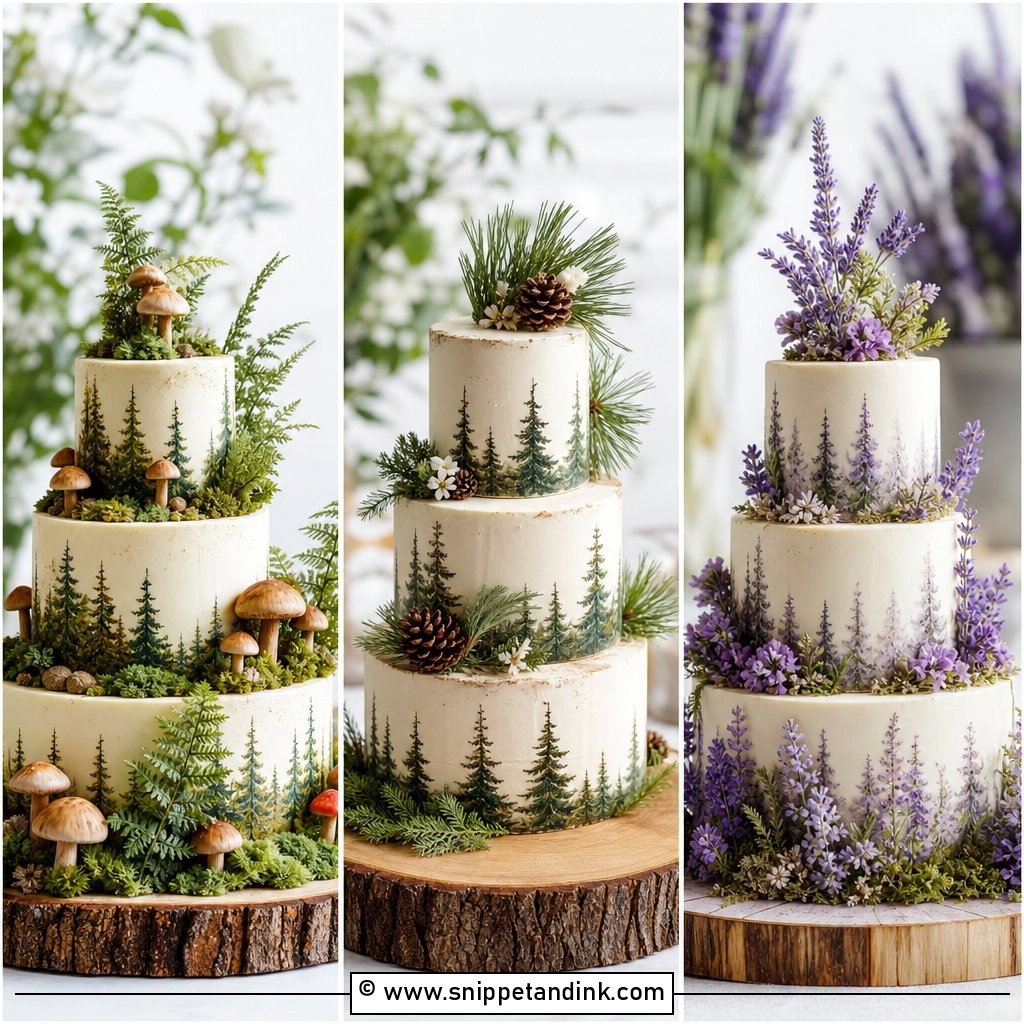
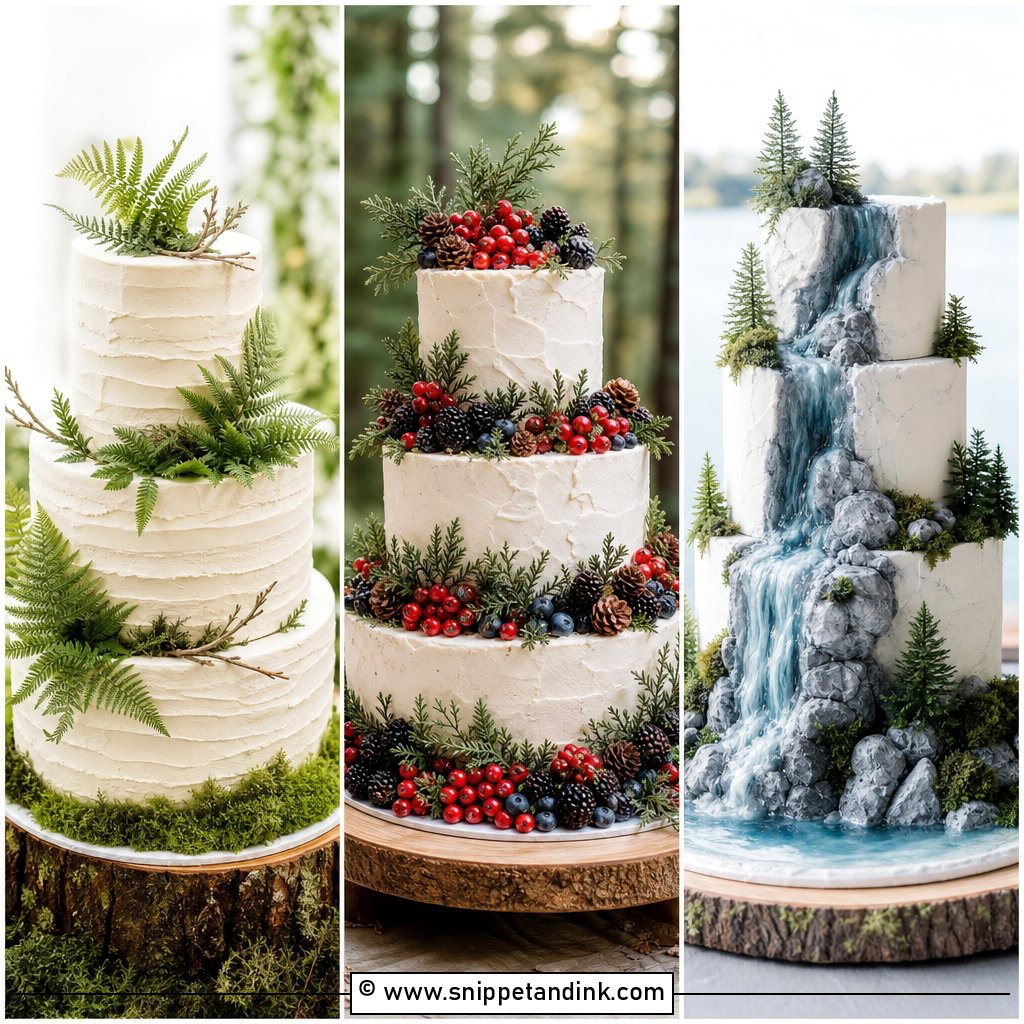
A woodland wedding cake is the quieter cousin of the full forest design, with bark texture, ferns and a natural palette but no fantasy creatures. I often do it semi-naked, scraping the buttercream back so the sponge shows through. That finish dries out faster than a fully coated cake, so I brush the layers with syrup and ask for it to be cut within a few hours of setting out. Acorns, berries and hand-painted leaves add detail. Candles and loose greenery around the stand do a lot of the theming for free.
3. Fairy Tale Wedding Cake
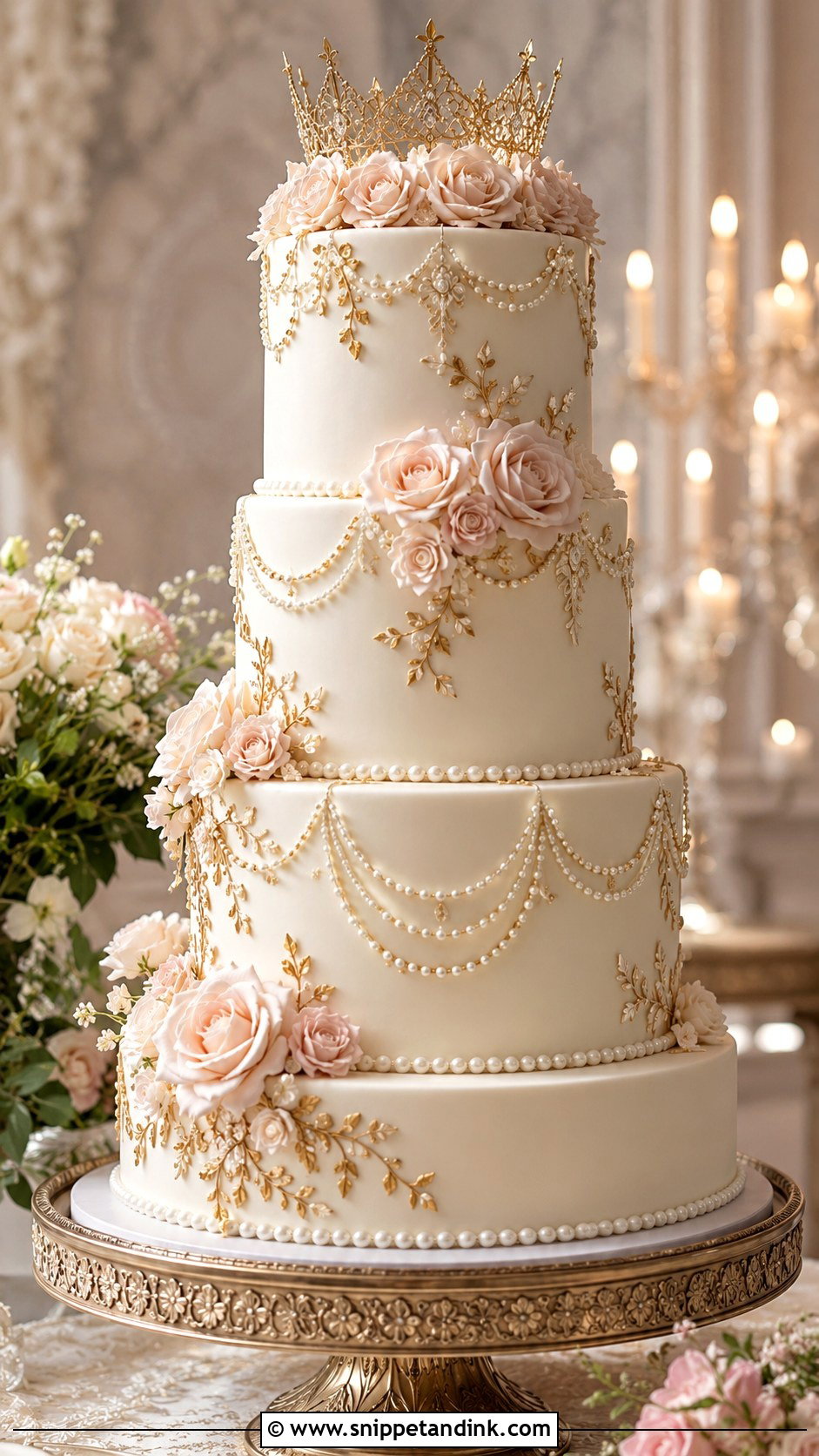
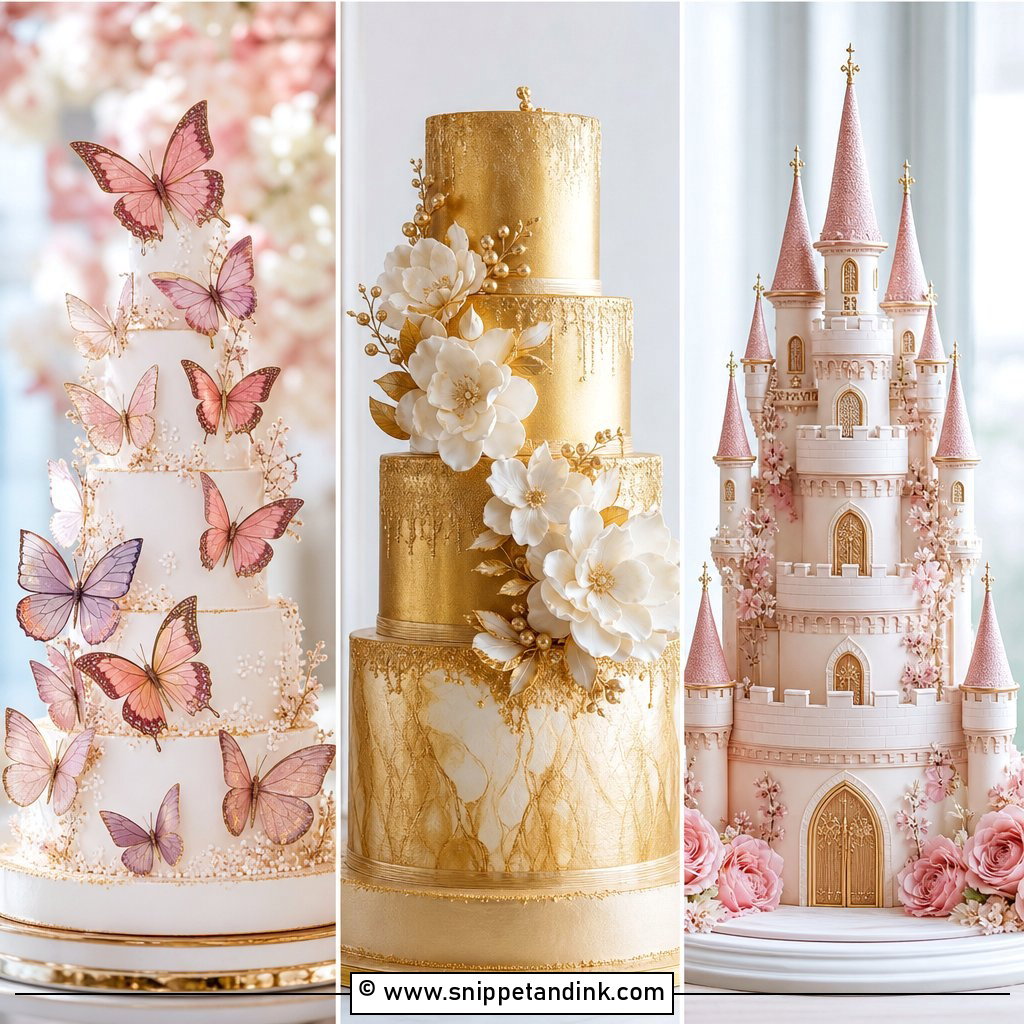
Storybook cakes go wrong when they get literal. Skip the plastic castle; I’d rather pipe a small turret silhouette in royal icing or use a slim gold crown topper. Smooth fondant suits this design because it takes hand-painted vines and pearl borders cleanly, and a light lustre dust makes it glow under reception lights. Ivory, blush, champagne and sage keep it bridal. Tall tiers help, as height alone reads as grand.
4. Moss Wedding Cake
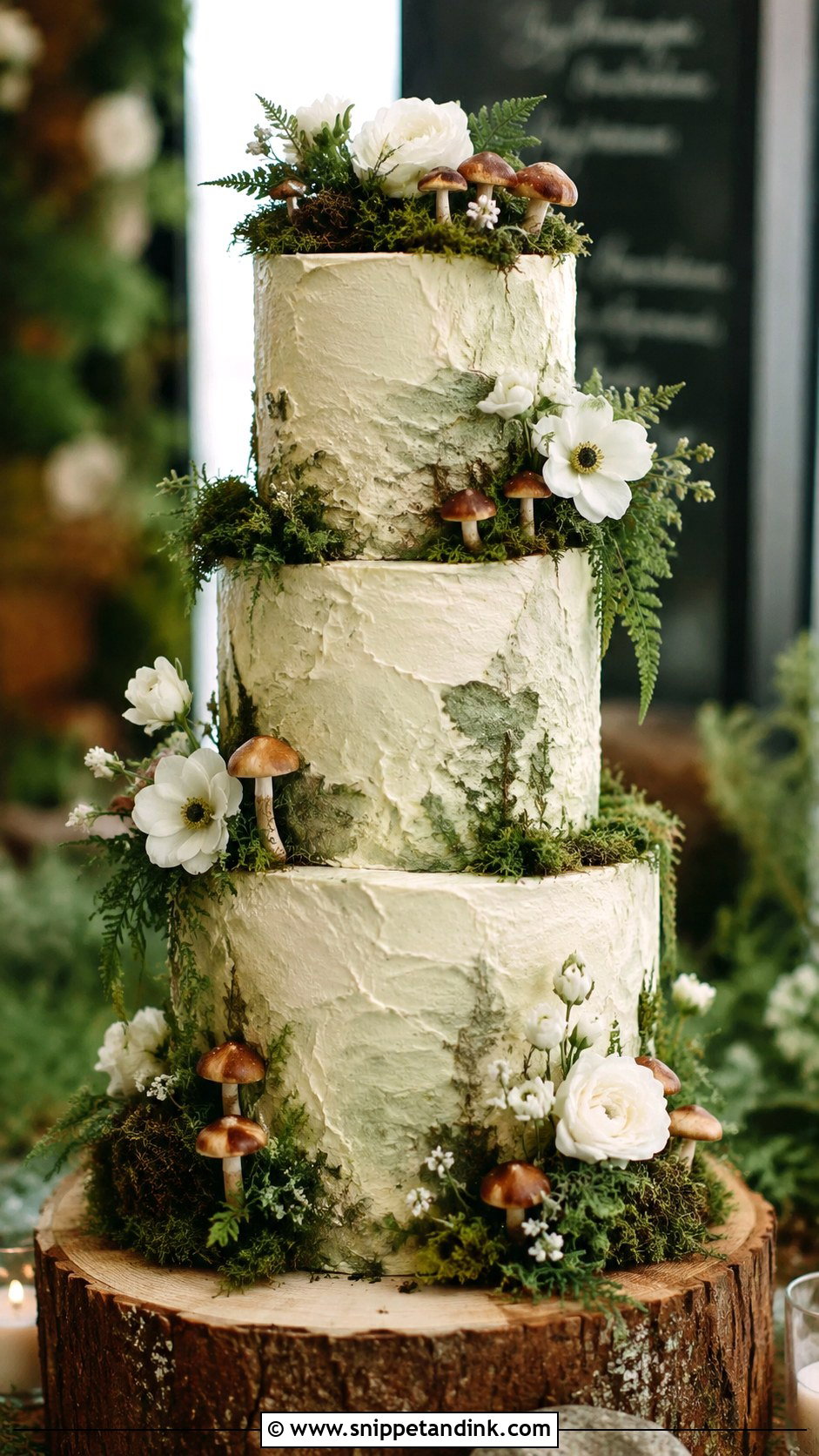
Moss is easy to overdo. Placed on every tier, it looks like the cake has been left in a garden shed. I make it from cake crumbs or cookie crumbs tinted green and dried, then press small clumps at the base of a tier or under a sugar flower. Paired with ivory buttercream or a stone-grey fondant, it reads as forest floor. White flowers keep it from going too dark. Moody green palettes and lodge receptions suit it best.
5. Mushroom Wedding Cake
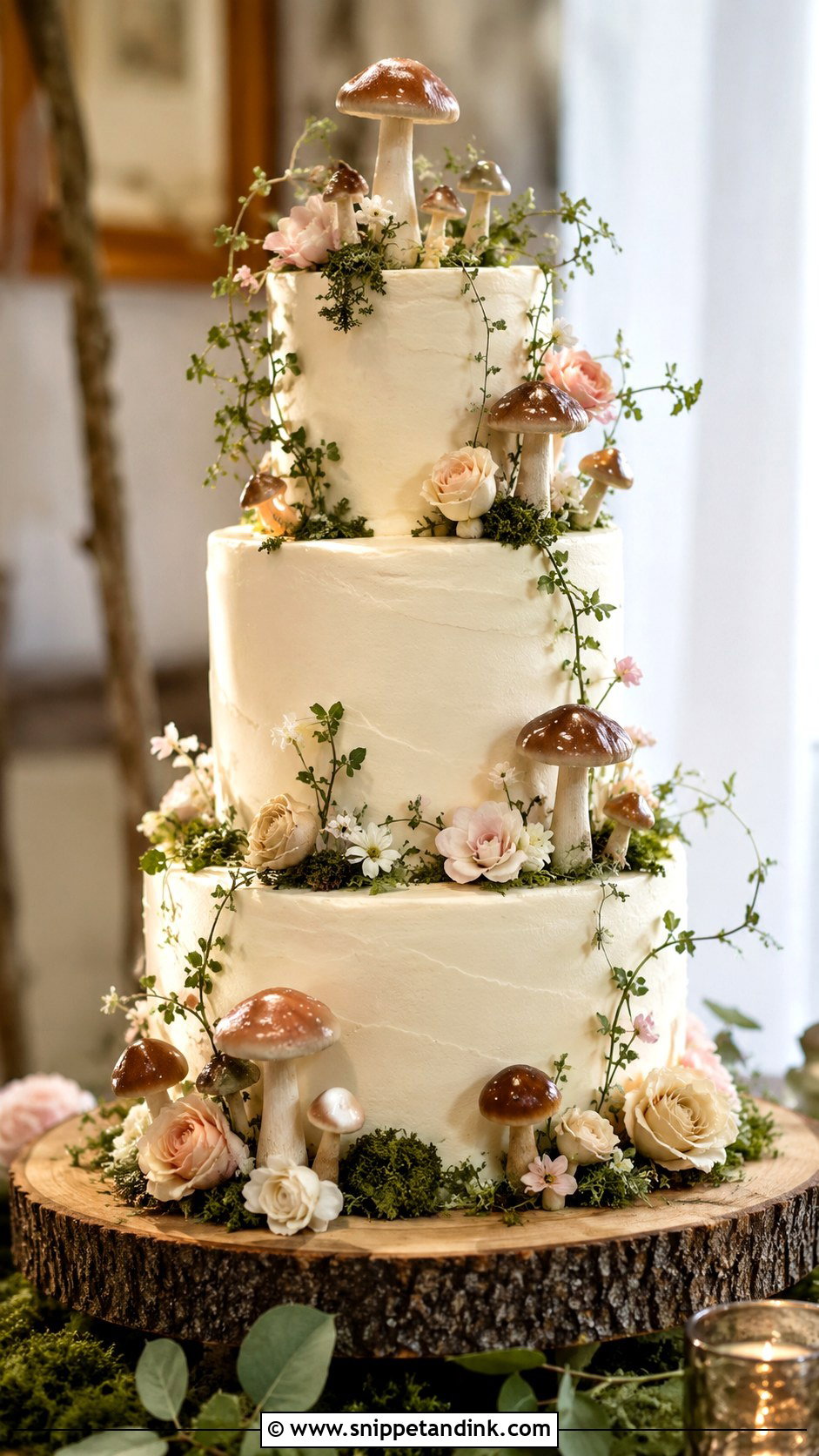
A mushroom wedding cake works when the mushrooms stay small and realistic. I pipe meringue mushrooms or sculpt them from gumpaste in cream, tan, rust or muted red, and cluster them as if they’d grown up the side of the tier. Oversized ones turn it into a novelty cake instantly. Textured buttercream, a little moss and a vine connect them to the rest of the design. Blush flowers between tiers soften the whole thing for a wedding.
6. Tree Bark Wedding Cake
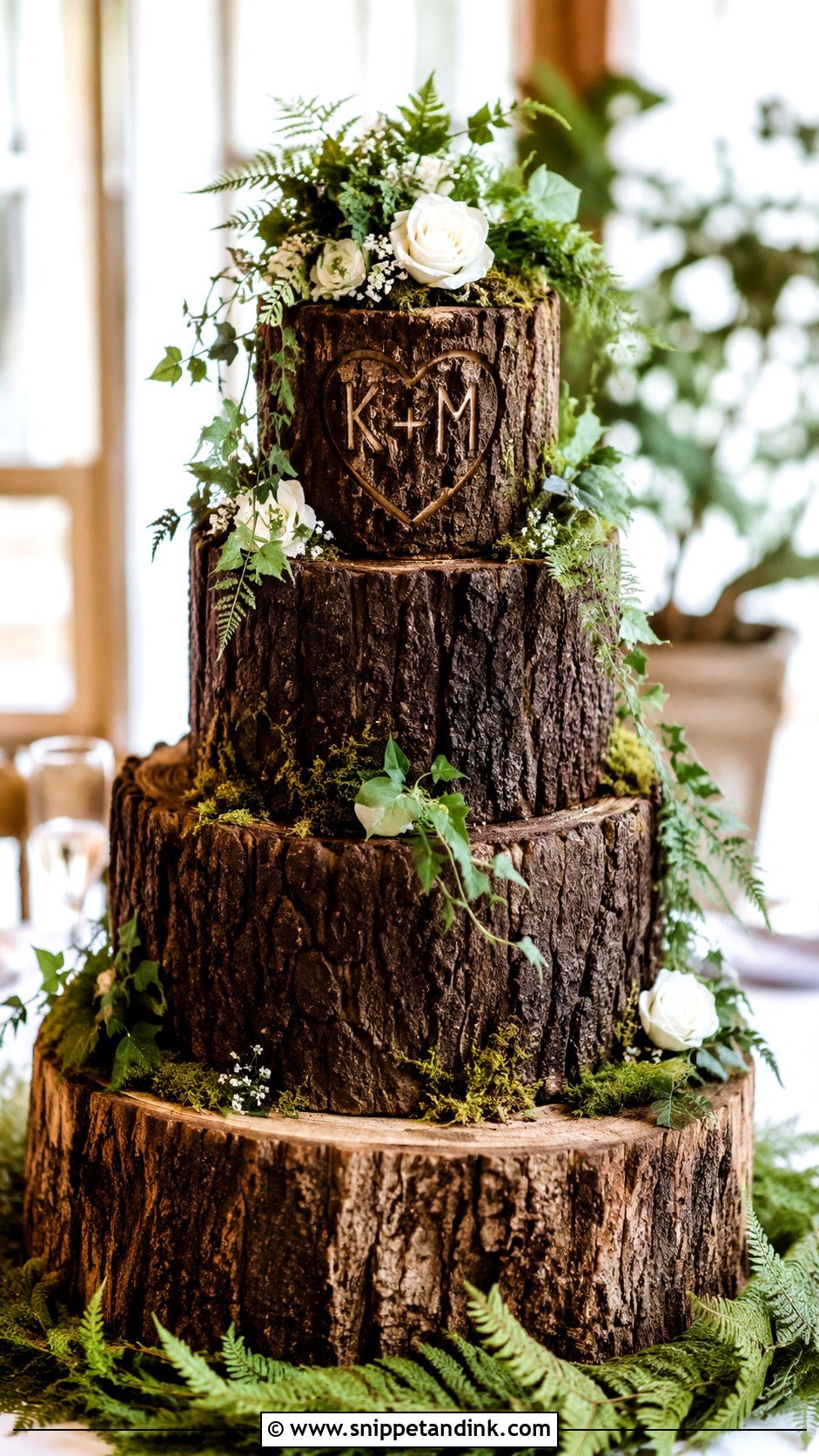
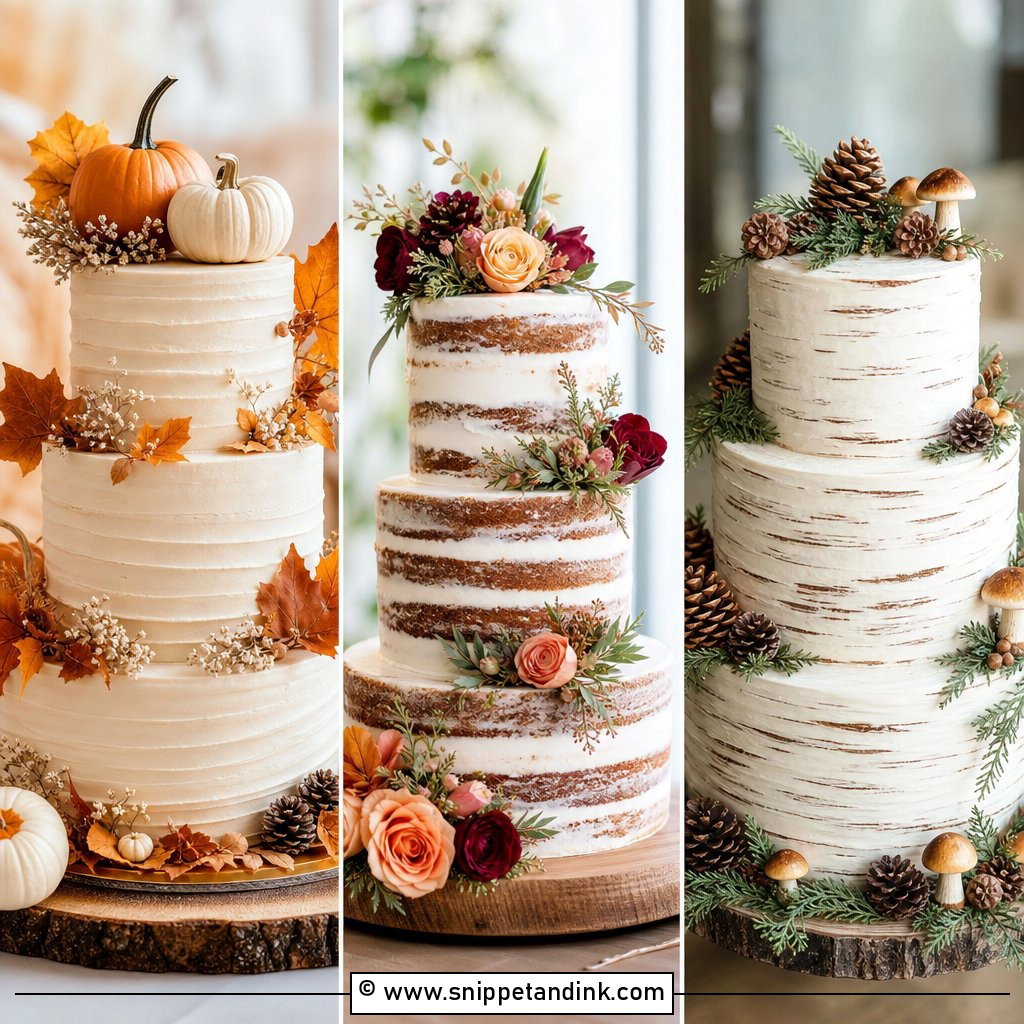
Bark is one of the most dramatic finishes in this theme, and it’s mostly done with chocolate. I either comb chocolate buttercream into ridges or wrap the tiers in modelling chocolate, then score it by hand. Carved initials on the bottom tier are the detail couples remember. Chocolate, mocha, spice or dark vanilla sponge suits it. Be aware that modelling chocolate softens in a warm room; I wouldn’t put this cake in a sunny conservatory.
7. Wildflower Wedding Cake
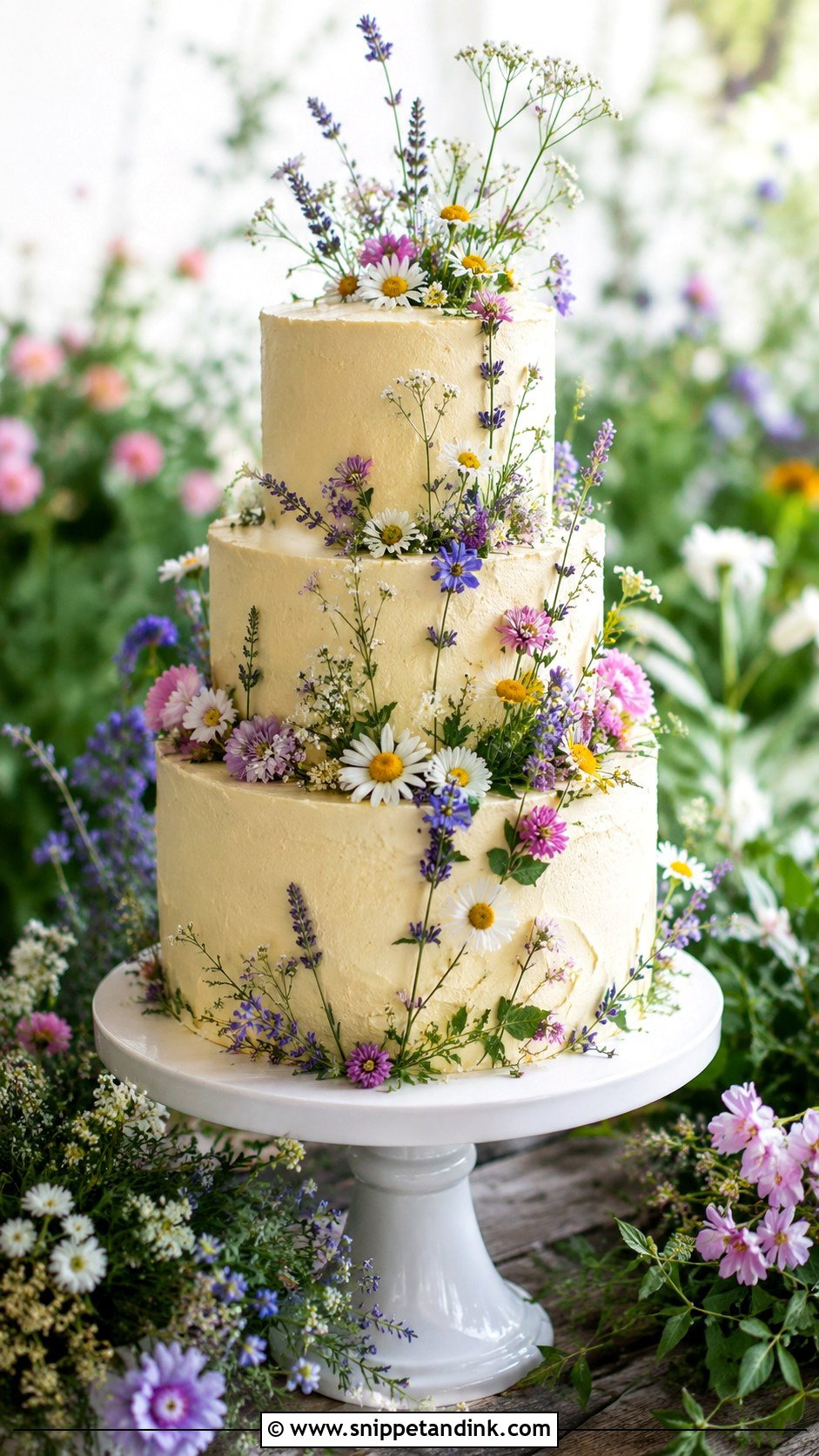
Flowers carry this one, so the base has to stay plain: smooth buttercream or a light semi-naked coat. A wildflower wedding cake looks right when the blooms climb across the tiers at odd angles rather than sitting in rows. Lavender, blush, cream, yellow and soft blue give the meadow feel. Only edible or food-safe flowers should touch the cake, and the florist and I agree the list in advance. Lemon, honey or berry sponge sits well with it.
8. Butterfly Wedding Cake
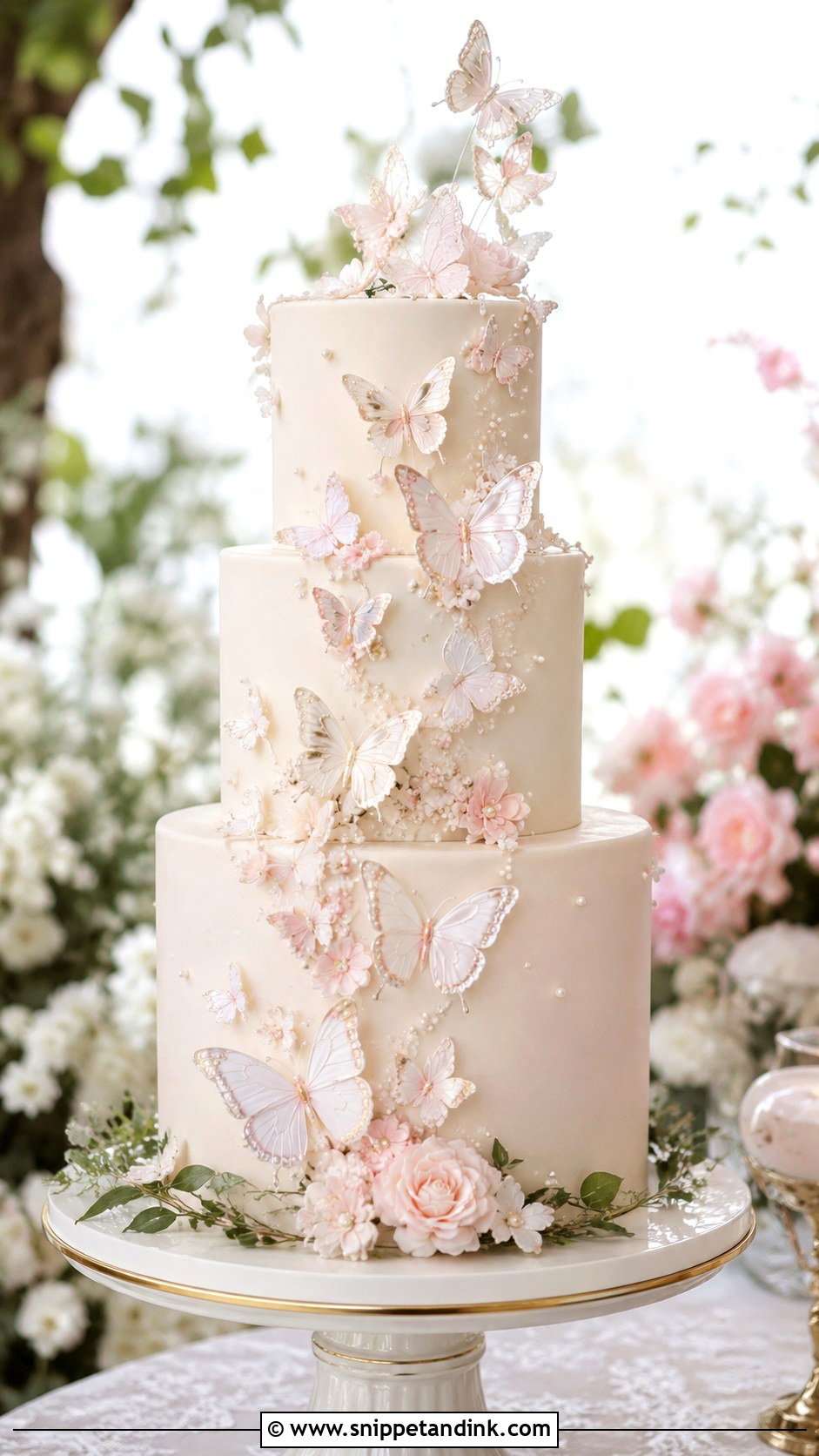
Butterflies are the most delicate decoration I make, and the most fragile. I cut them from wafer paper or thin gumpaste, dry them folded so the wings lift, and attach them in a loose upward trail. Humidity makes wafer paper wilt, so for a summer garden wedding I use gumpaste instead. Ivory or pastel buttercream with pearl, gold or pale blue wings keeps it sophisticated. Bright butterfly colours push it straight back toward a birthday cake.
9. Green Wedding Cake
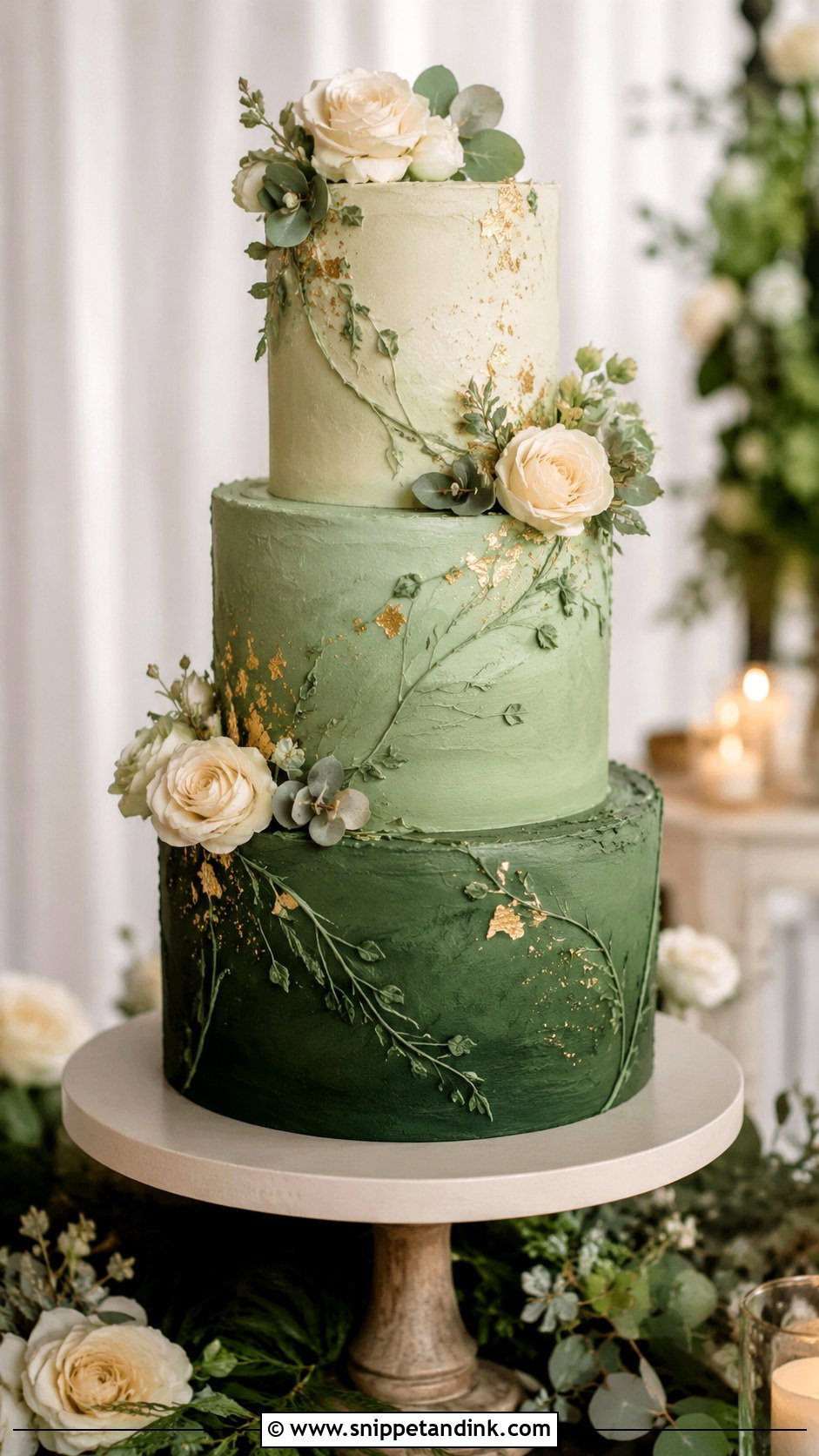
A green wedding cake needs the right green. Sage, olive, eucalyptus and deep forest all suit this theme; mint and lime don’t. Tinting buttercream dark green takes a lot of colour, and too much gel colour can leave a bitter taste, so for deep shades I tint fondant or use a thin painted layer instead. Ombre tiers are a good option if you can’t pick a single shade. Pistachio or matcha sponge echoes the colour inside.
10. Gold Wedding Cake
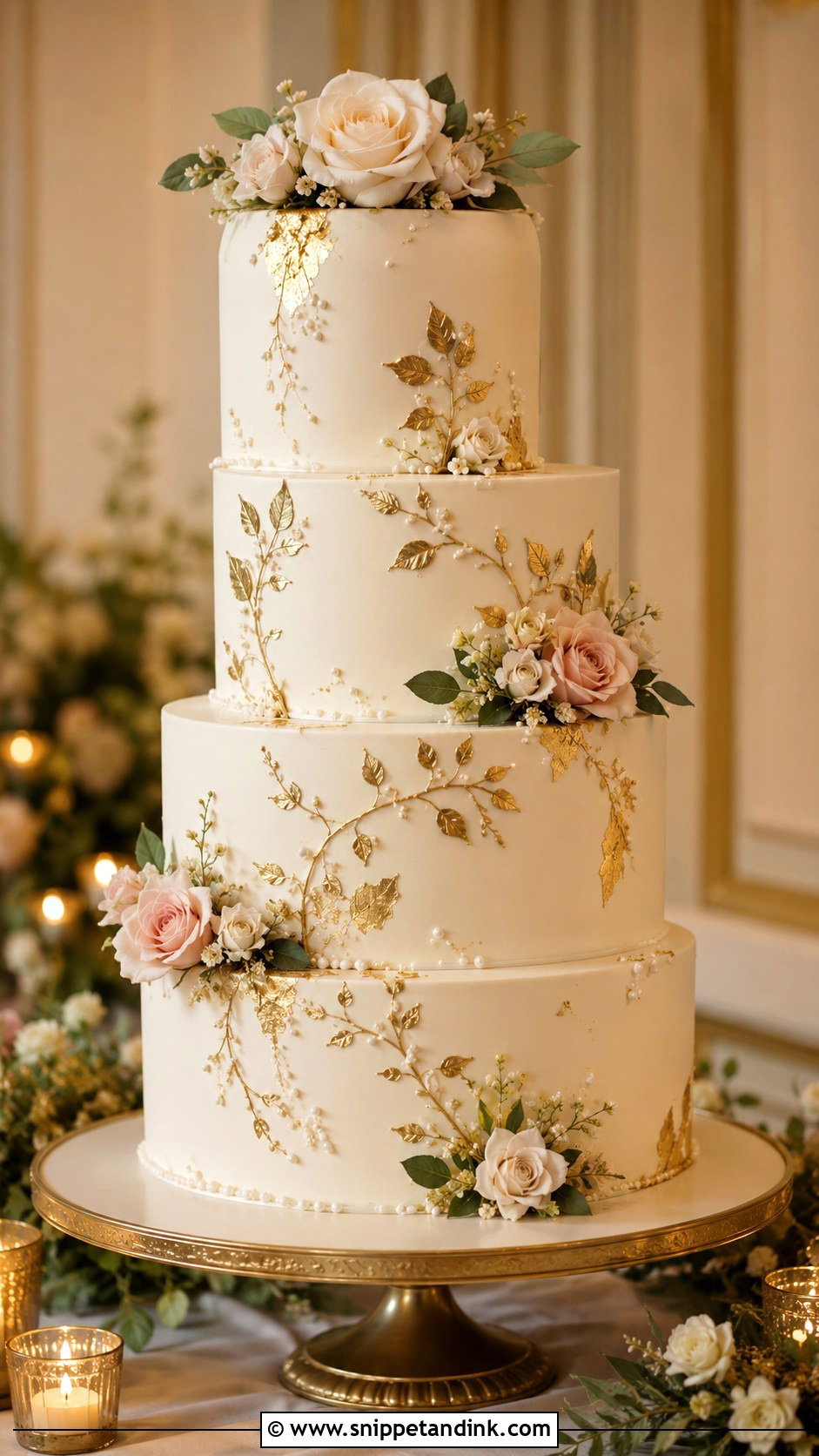
Gold works best here as an accent rather than a full coat. Leaf applied in patches, painted vines and thin borders give warmth without looking like a hotel lobby. I apply edible gold leaf by hand with a dry brush, and it only sticks to a slightly tacky surface, so it goes on fondant better than chilled buttercream. Evening receptions are where gold earns its place, since it catches the candlelight. Add moss or greenery so it still belongs to the forest theme.
11. Floral Cascade Wedding Cake
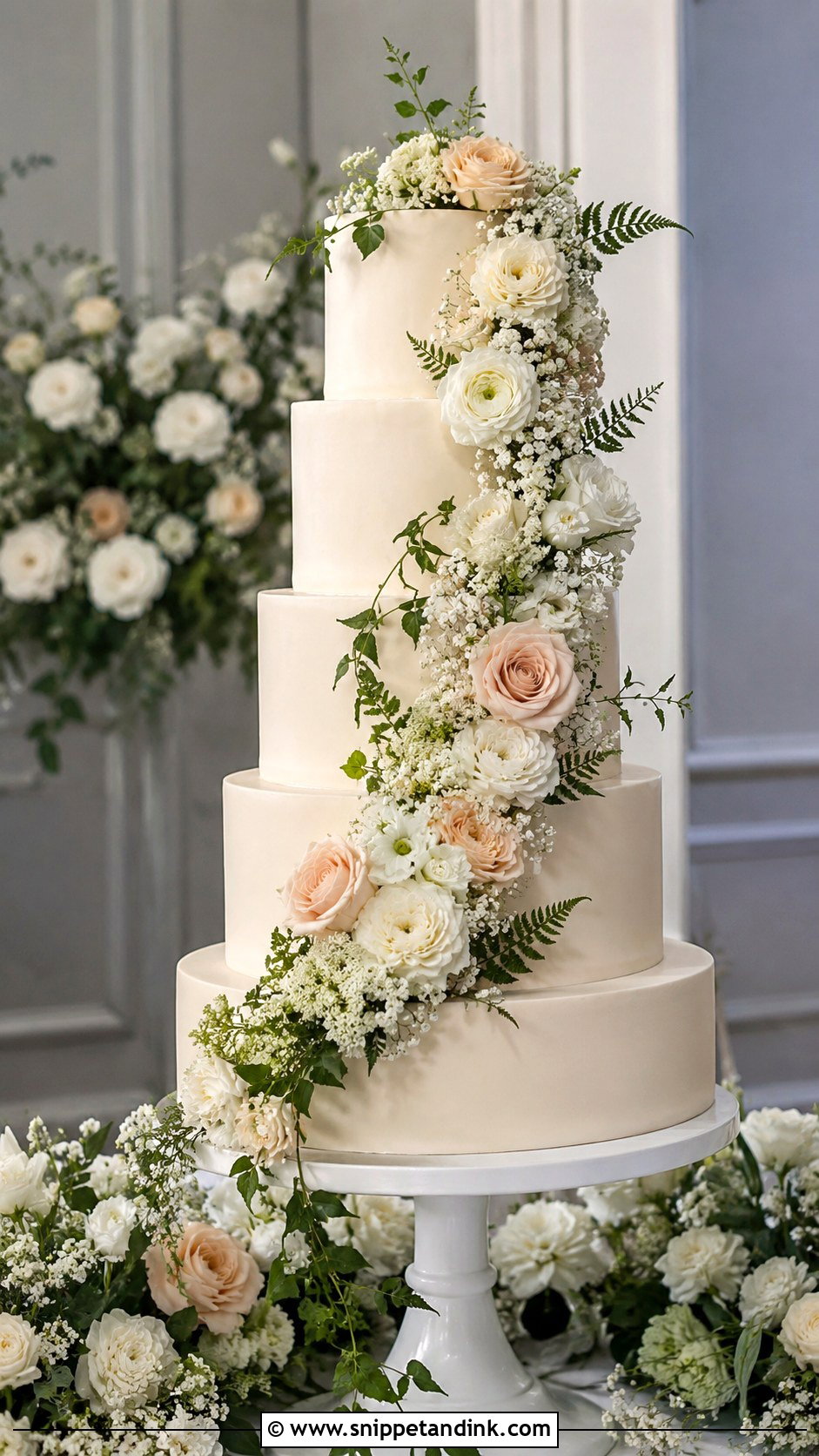
A cascade is a good route into the theme for couples who don’t want mushrooms or bark. I keep the base ivory or blush and run the flowers diagonally from top tier to bottom, using roses, ranunculus, sweet peas, ferns and smaller woodland blooms. Loose greenery is what stops it looking formal. Matching it to the bouquet is easy if the florist and I share the flower list. Fresh stems need wrapping or a barrier before they go in, so plan that conversation early.
12. Vine Wedding Cake
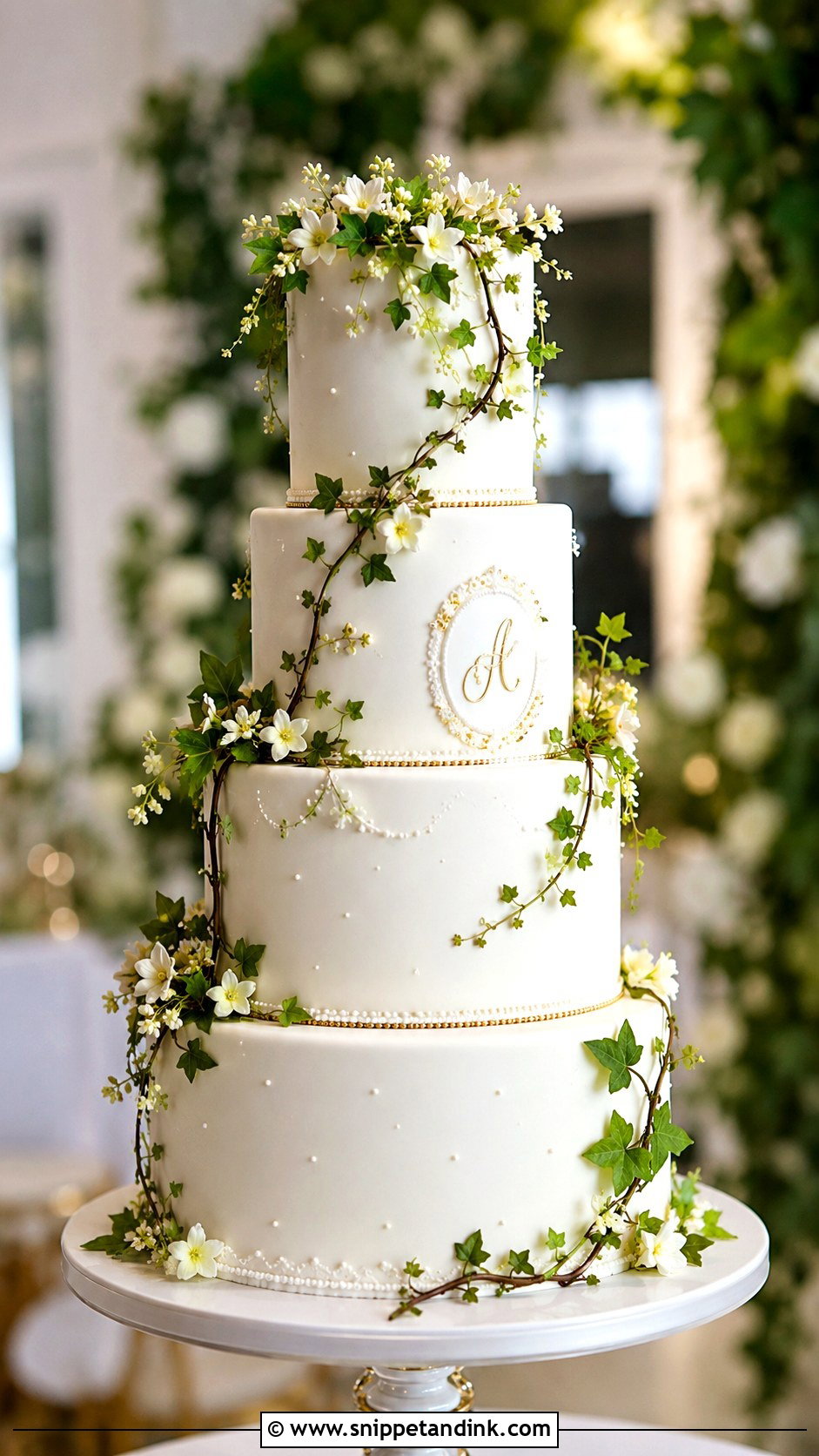
Vines are the most adaptable decoration on this list. I pipe them freehand, paint them in green cocoa butter, or wrap fondant ivy around the tiers, depending on how formal the room is. On a white base, they add movement without going rustic. A few tiny blossoms or gold dots are enough. Because it’s restrained, it suits a ballroom as well as a garden, and pretty much any sponge, including lavender or raspberry.
13. Moon Wedding Cake
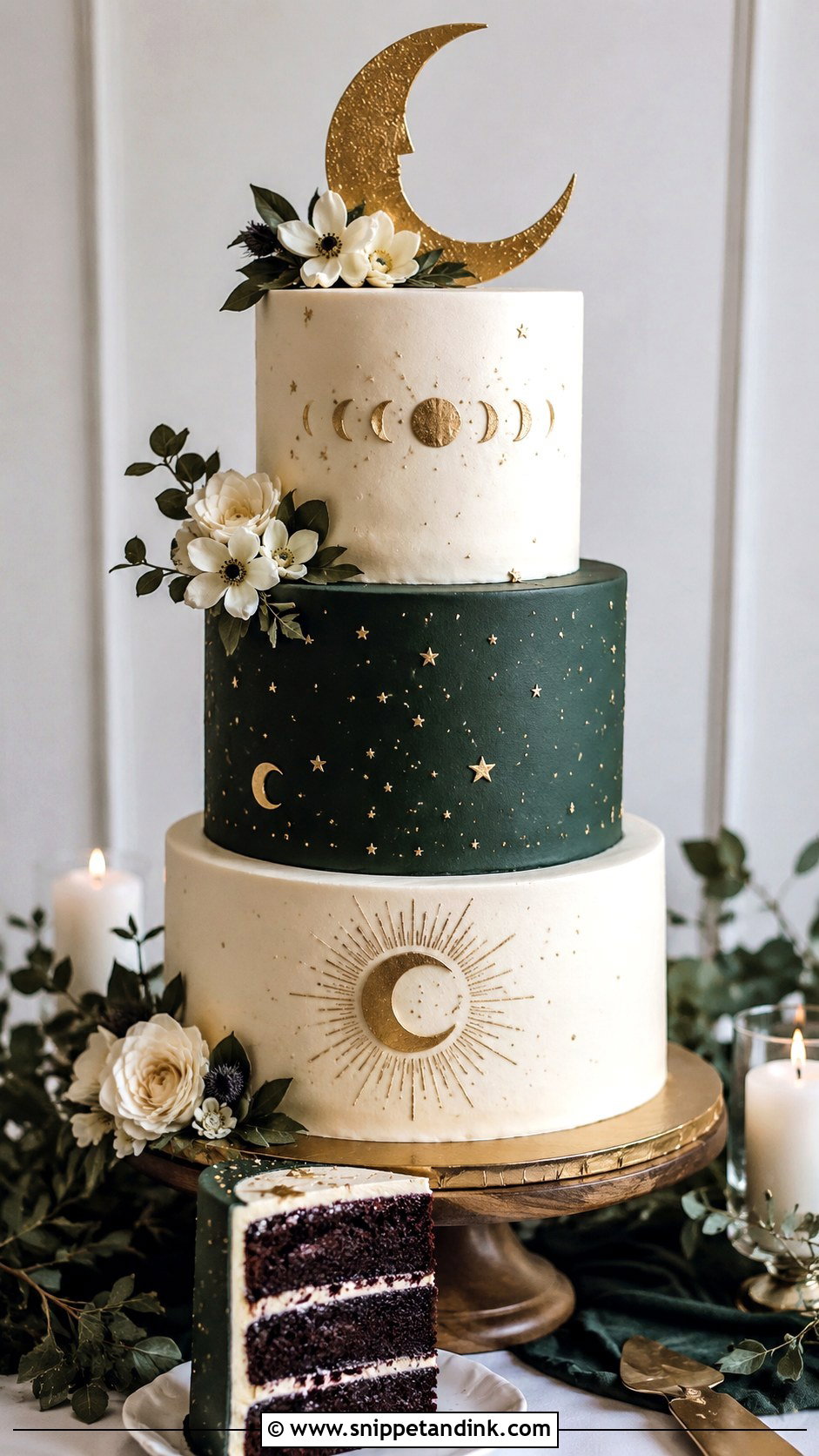
Celestial details give the theme a night-time feel, which is why I suggest them for evening and outdoor receptions. Ivory, midnight blue or forest green fondant all take gold stars and moon phases well. Midnight blue fondant tends to fade under strong light, so I keep the cake out of direct sun and spotlights until the reception. A crescent topper finishes it. Cream, blush or dusty blue flowers stop it looking like a planetarium.
14. Garden Wedding Cake
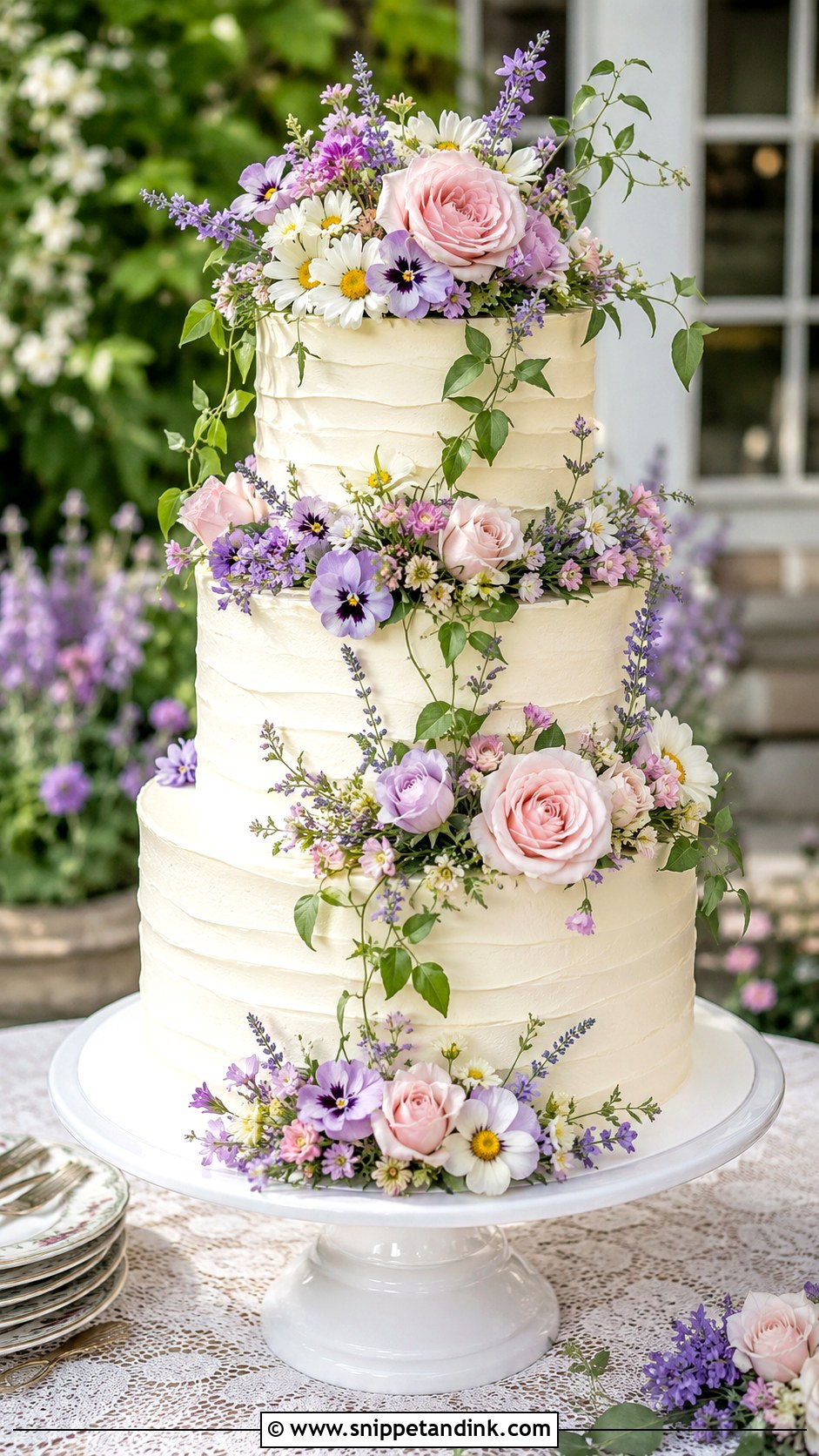
Think of the garden cake as the forest cake with the lights turned up. Smooth buttercream, pastel flowers and climbing greenery give a softer version of the theme. Roses, daisies, lavender and pansies all appear on these, but every fresh flower must be food-safe or properly wrapped before it touches icing; some common garden blooms are toxic. Lemon, strawberry or orange blossom sponge suits the mood. A stone table or white pedestal with greenery around the base completes it.

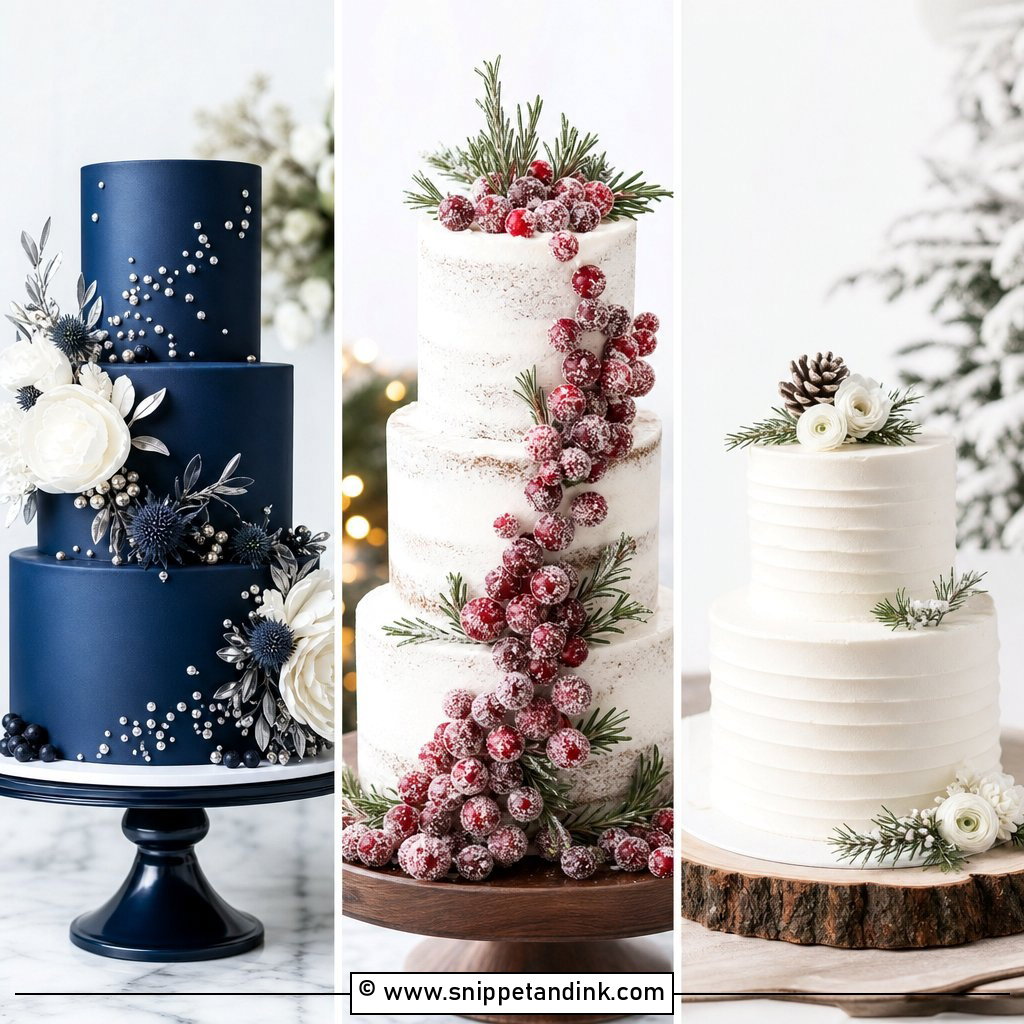
15. Rustic Wedding Cake
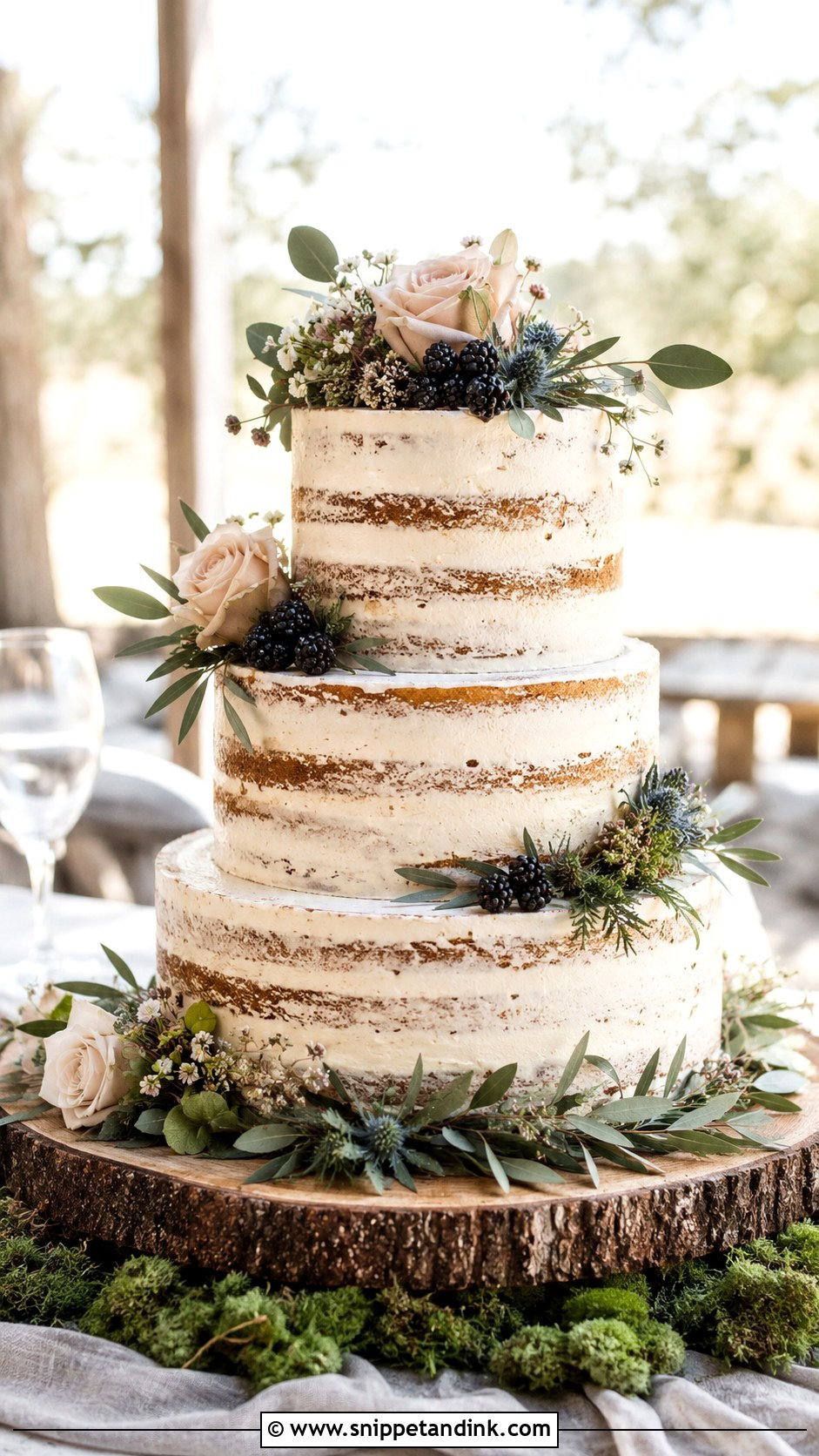
Rustic cakes look relaxed, but they still need structure. I use semi-naked or roughly textured buttercream, a wood slice and soft blooms, and keep the palette to ivory, brown, sage and muted blush. Barns, forest lodges and autumn dates suit it. Carrot, spice and apple sponges feel seasonal and hold their moisture well, which matters for a semi-naked finish. A few refined flowers or a gold touch keep it from looking unfinished.
16. Black Forest Wedding Cake
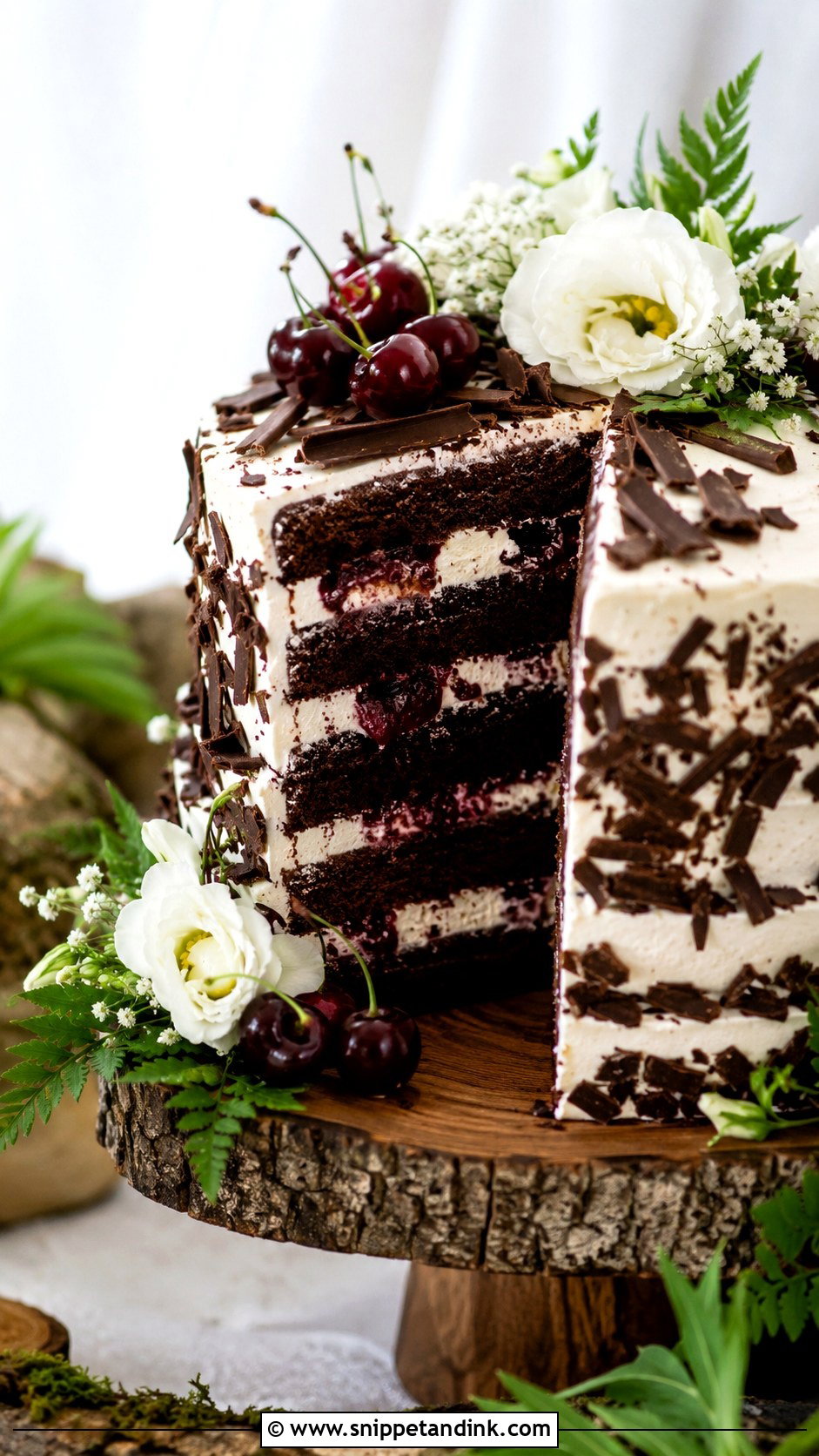
Choosing Black Forest gives you a cake whose name already belongs in the theme. Dark chocolate sponge, cherries, cream and shavings are the classic build. The issue for a wedding is that whipped cream won’t hold up stacked in tiers or sitting out for hours, so I swap it for a stabilised cream or a whipped ganache and keep the cake chilled until just before display. Glossy cherries and chocolate curls on top, white blooms against the dark sides. It’s rich, so smaller slices go further.
17. Stone Wedding Cake
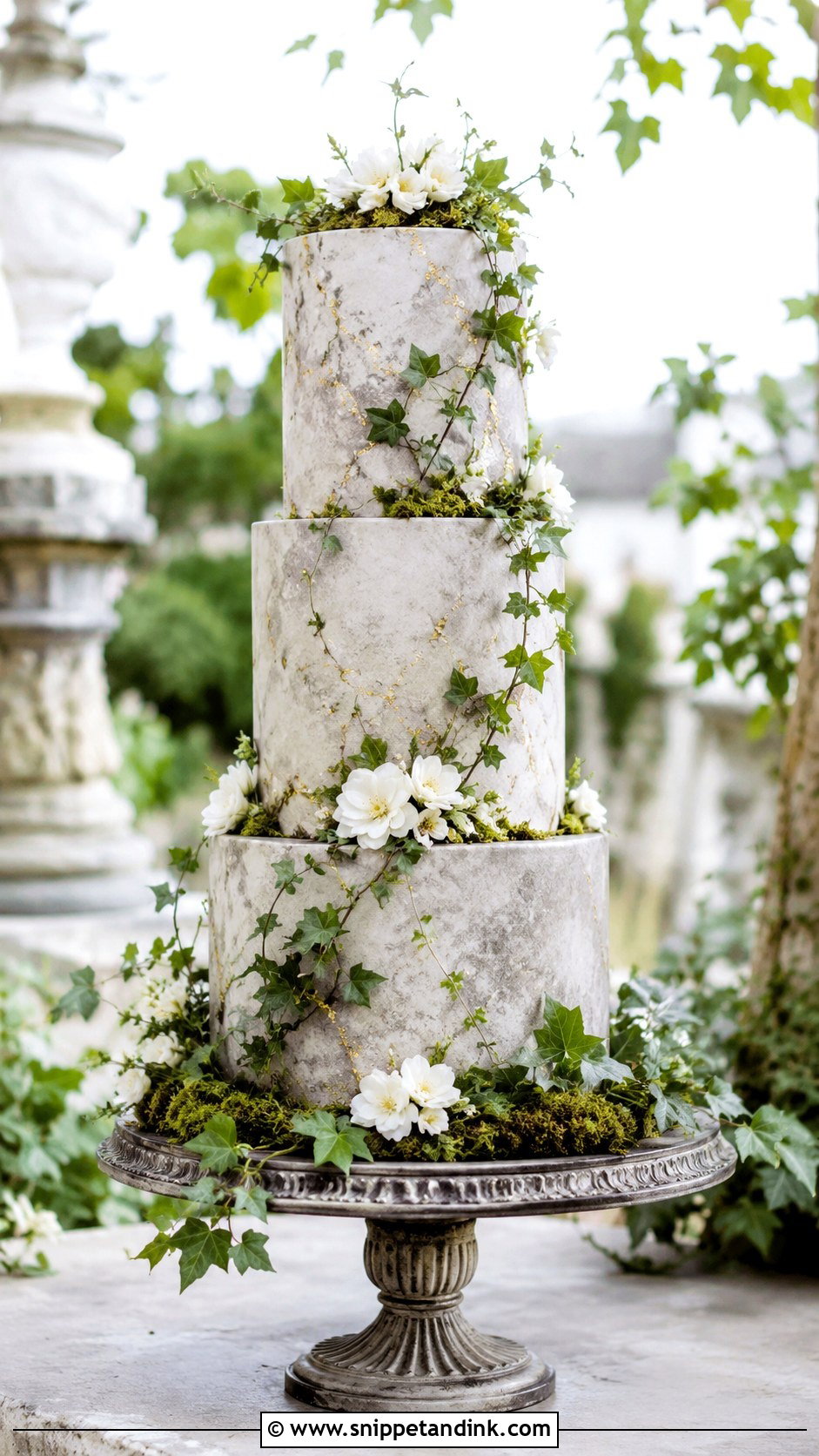
A stone finish suggests an old castle garden or a ruin in the woods. I marble grey, ivory or taupe fondant and add soft shading with dusts so it looks weathered rather than painted. Tall, simple tiers let the texture do the work. Vines, a little moss and white flowers bring it back to romance. Earl grey, honey or almond sponge suit the cooler palette.
18. Watercolor Wedding Cake
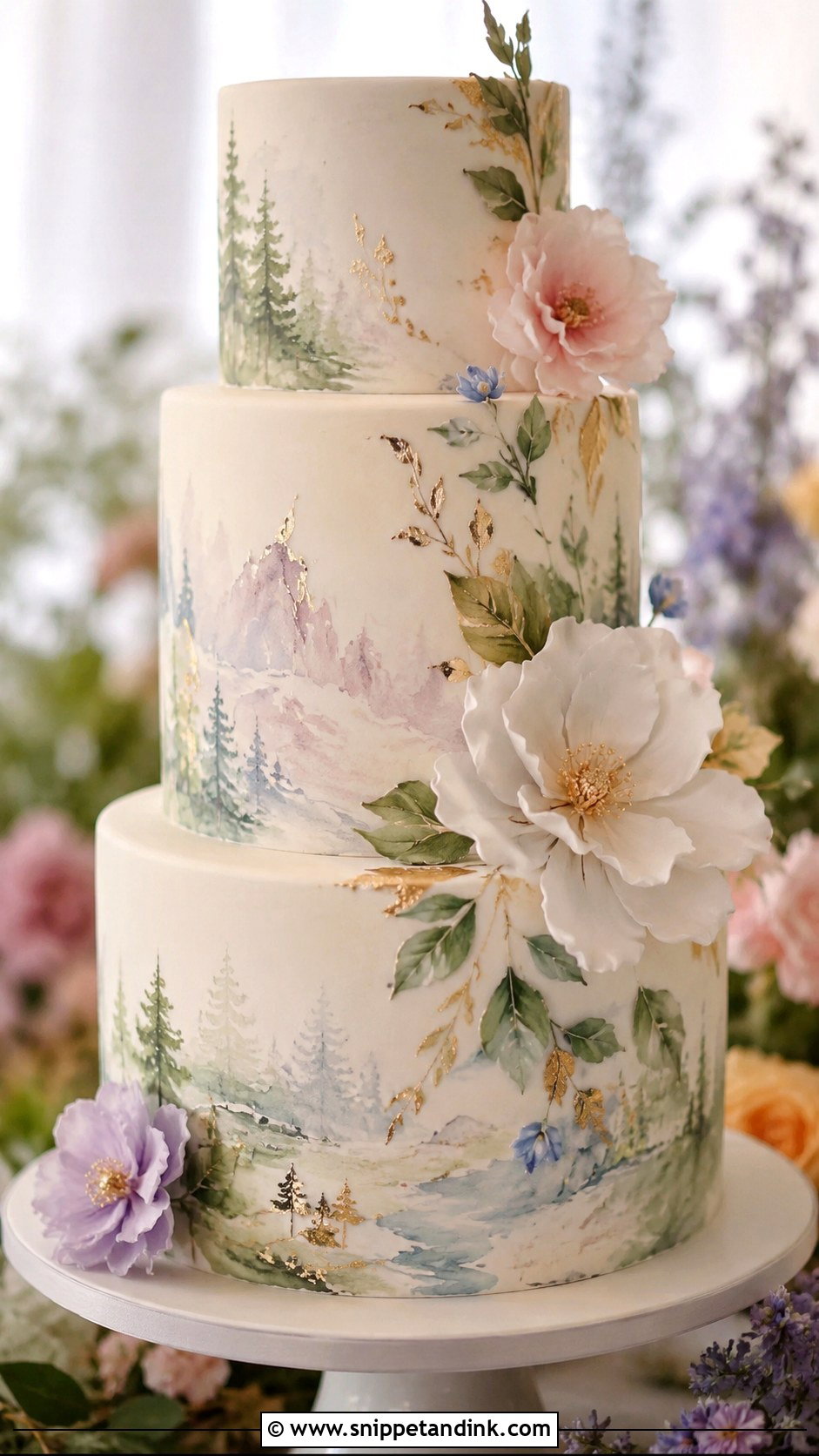
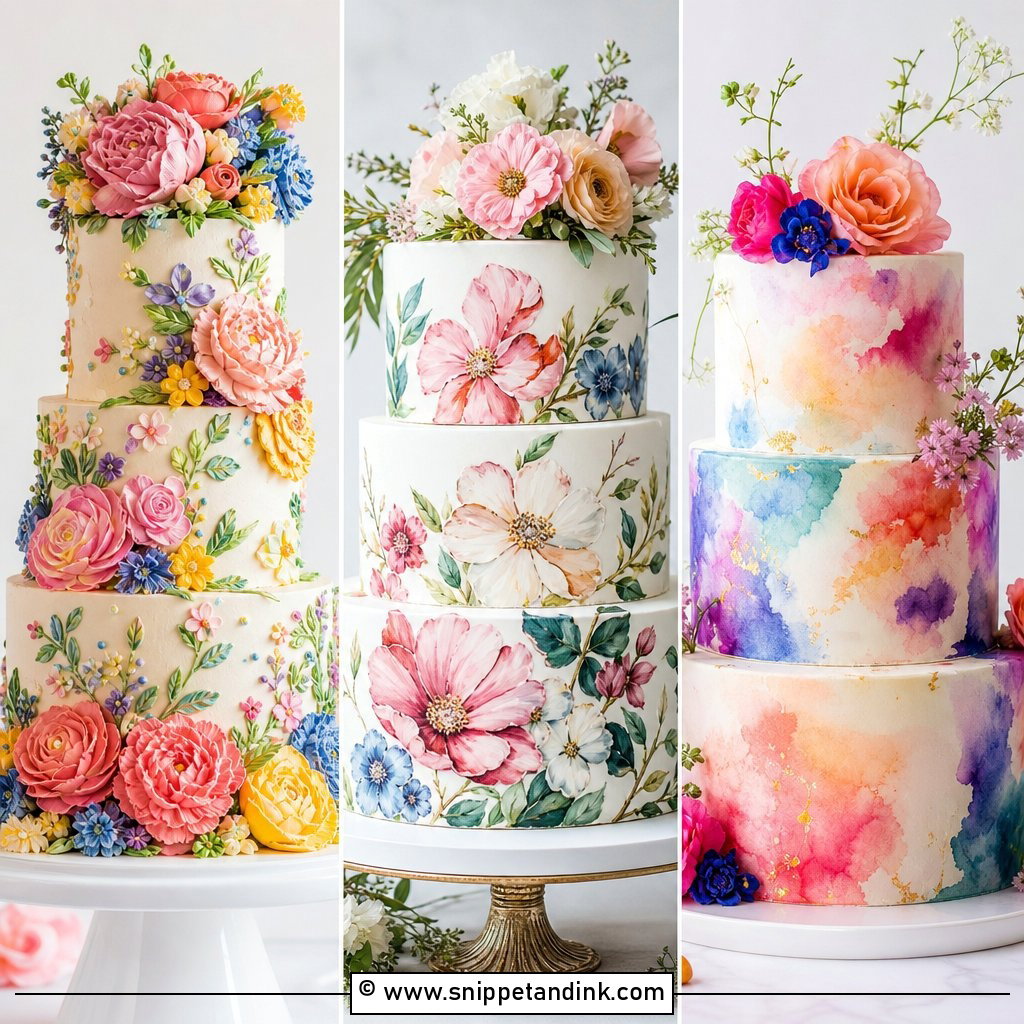
Watercolour is the most artistic way into this theme. I paint misty greens, blush, lavender and soft blue onto smooth fondant with diluted gel colours, sometimes adding faint trees or leaves. Buttercream can take watercolour too, but it has to be chilled and very smooth or the brush drags. A few sugar flowers add depth without hiding the painting. It suits couples who want the cake to feel personal, though it does need a decorator comfortable with a brush.
19. Pearl Wedding Cake
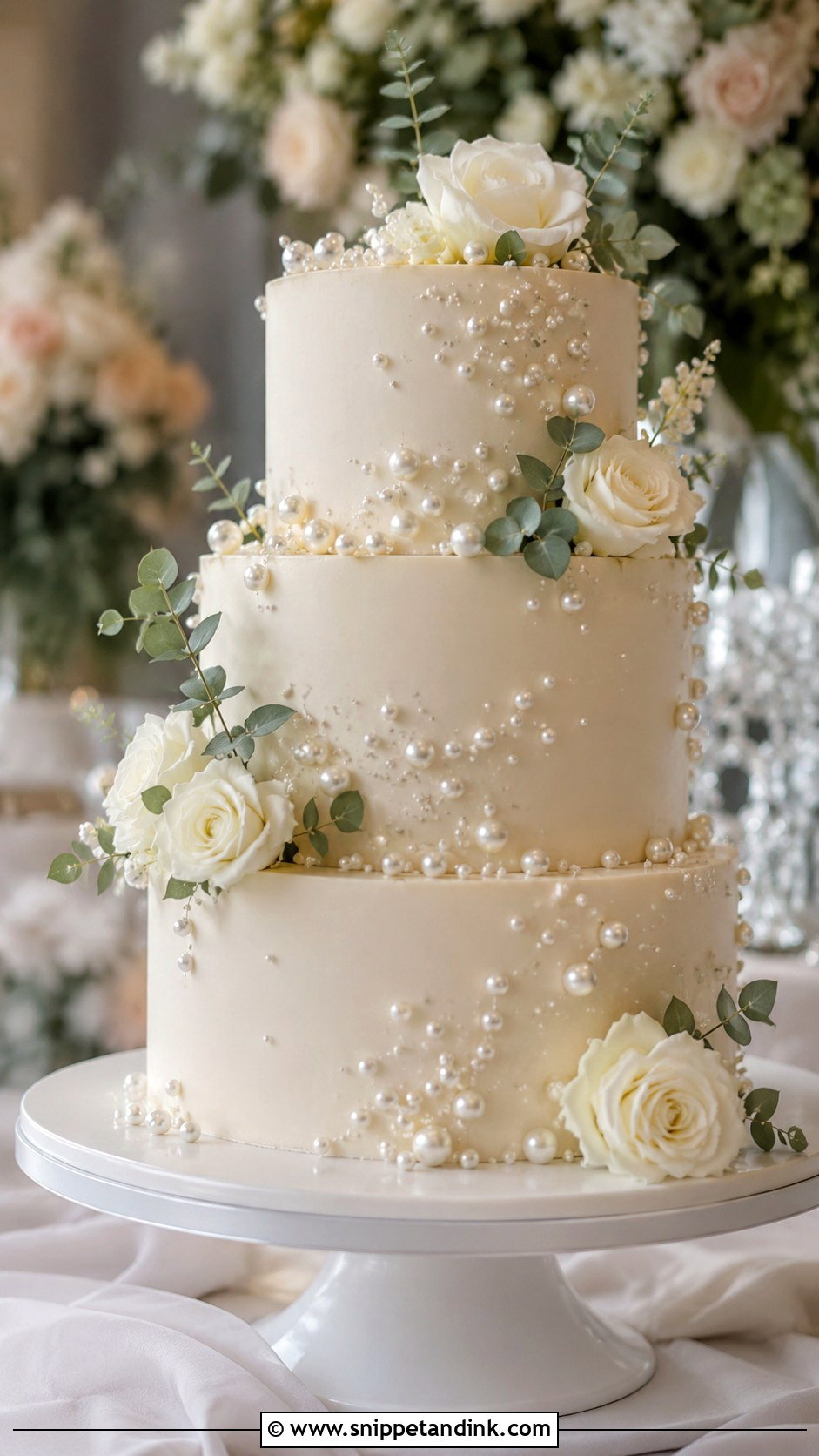
Pearls make the enchanted look formal. I scatter small sugar pearls like dew drops or set them in fine borders around each tier, on ivory buttercream with soft greenery and white flowers. Sugar pearls are hard, so I tell caterers to pick them off the top layer before plating for children. This is the design I’d suggest for an indoor or formal venue that only wants a hint of the forest. Vanilla, coconut or lemon sponge keeps it light.


20. Fairy Light Wedding Cake
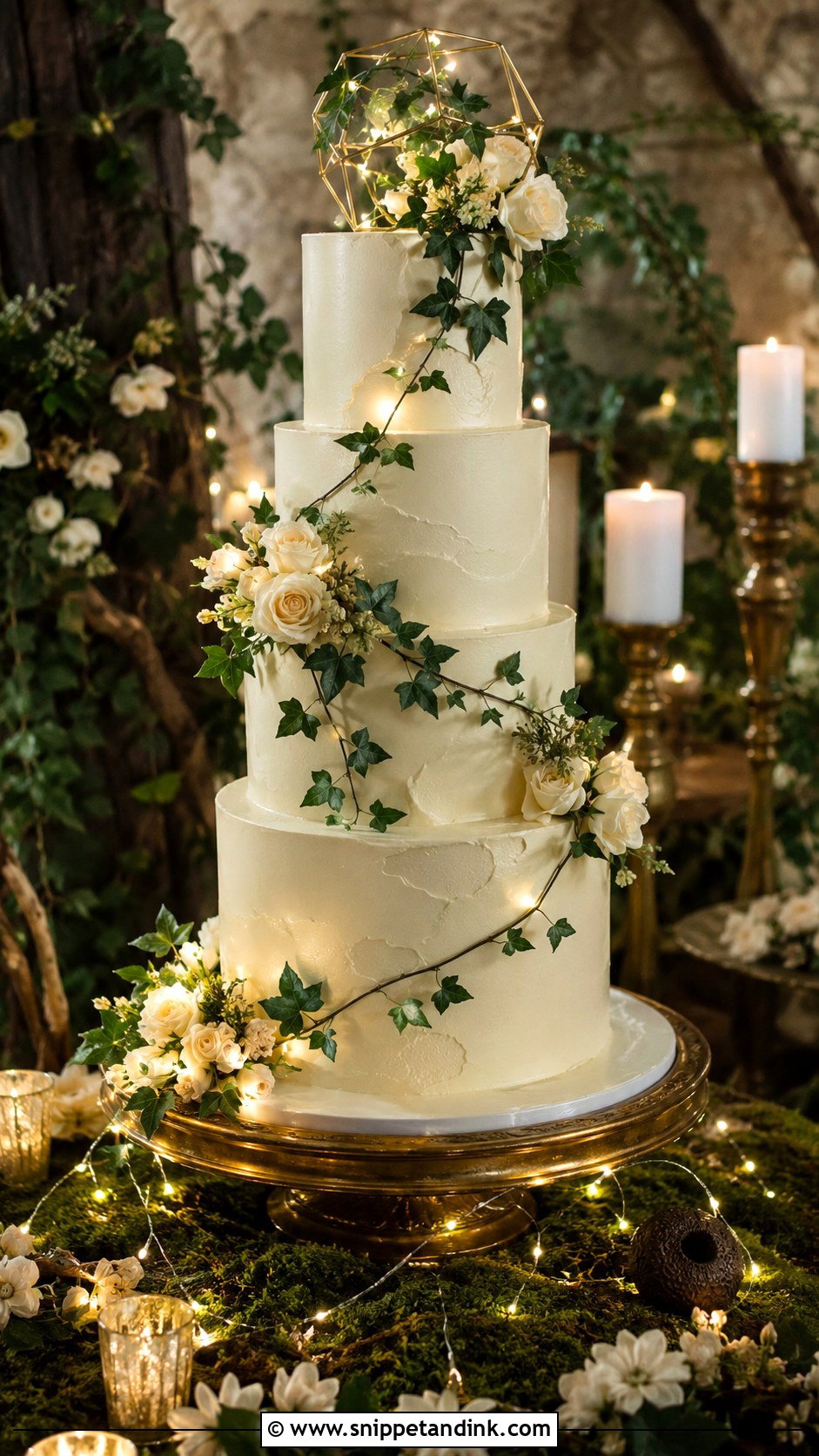
A fairy light wedding cake is really a cake with lighting around it. I never put wires or batteries inside edible tiers. Tiny battery-powered lights go in a clear acrylic stand, around the base or through greenery on the table. The cake itself stays simple with ivory icing, green accents, flowers and a little gold. Check that the batteries will last through dessert, since the cake often isn’t cut until late. Candles and moss on the table finish the glow.
Forest Venues Are Hard on Cakes
This theme pulls couples outdoors, and the outdoors is where cakes struggle. Buttercream softens quickly in warm air and direct sun, and modelling chocolate bark can sag. If the reception is in a tent or a barn without air conditioning, tell your baker at the first meeting. I’ll switch to a firmer ganache under the fondant or a more stable buttercream recipe, and plan for the cake to be set up as late as possible.
Uneven ground is the other issue. Rustic tables in barns and woods are rarely level, and a tall tiered cake on a tilted table can lean. Ask the venue for a sturdy, level table in the shade, away from heaters, candles and the dance floor.
Delivery and lead time
For a heavily decorated design, book your baker several months ahead, as sugar mushrooms, butterflies and flowers take days of drying time. Tall cakes travel in separate tiers and get stacked on site, so allow the baker an hour or so of setup in the room before guests arrive. Remote venues add drive time on rough roads; make sure the access route is shared well before the day.
One Magical Detail Is Usually Enough
The enchanted cakes that work best mix natural texture, soft flowers and earthy colour, then pick one magical element and stop. Bark and moss go rustic, pearls and gold go formal, butterflies and mushrooms go whimsical, moons and watercolour go dreamy. Pick the direction that matches your venue and season, then talk through the practical side with your baker: heat, transport, which decorations are edible. Get those right and the design can carry the theme for the whole reception.
You'll Like These Ideas:




Leave a Reply