
Red on white is the oldest colour story in wedding cakes, and it still works because the contrast is so honest: a white tier reads as bridal from across the room, and a red rose is the first thing the eye lands on. The trouble is that red is also the least forgiving colour I put on a cake. It shows every crushed petal, every bleed mark and every rose placed a centimetre off. Below are thirty versions of the pairing, from a single cluster on a two tier cake to a sheet cake for the kitchen, with notes on how each one behaves once it leaves my table and sits in a warm room for four hours.
Real, Sugar or Silk Roses, and How Each Gets onto the Cake
Before you pick a design, decide what the roses are made of, because it changes who does the work, when it happens and what can go wrong. I talk this through at every tasting where red roses come up.
Fresh roses
They look the most alive and match the bouquet exactly. The catch is that most commercially grown roses are sprayed, so they should never touch icing directly. I wrap every stem in floral tape, sleeve it in a drinking straw or flower pick, and slide a small disc of parchment or wafer paper under any bloom lying flat. Fresh roses also have a clock on them: out of water they start to droop after a few hours, so they go on at the venue, not the night before.
Sugar roses
Gum paste roses are made by hand, petal by petal, and dried before they are coloured. They stay the same shape all day, suit hot venues and can be kept afterwards as a souvenir. They are not really for eating, and they take time, so they need to be in the order early. Red is a heavy colour to mix, and a good baker will dust and steam the petals so they look velvety rather than plastic.
Silk or artificial roses
They are an option for budget or allergy reasons, but they need the same barrier as fresh flowers since they are not food grade. Cheap silk roses also have a shine that cameras exaggerate. If you go this way, ask to see the exact stems under daylight first.
1. White Wedding Cake With Red Rose Cascade
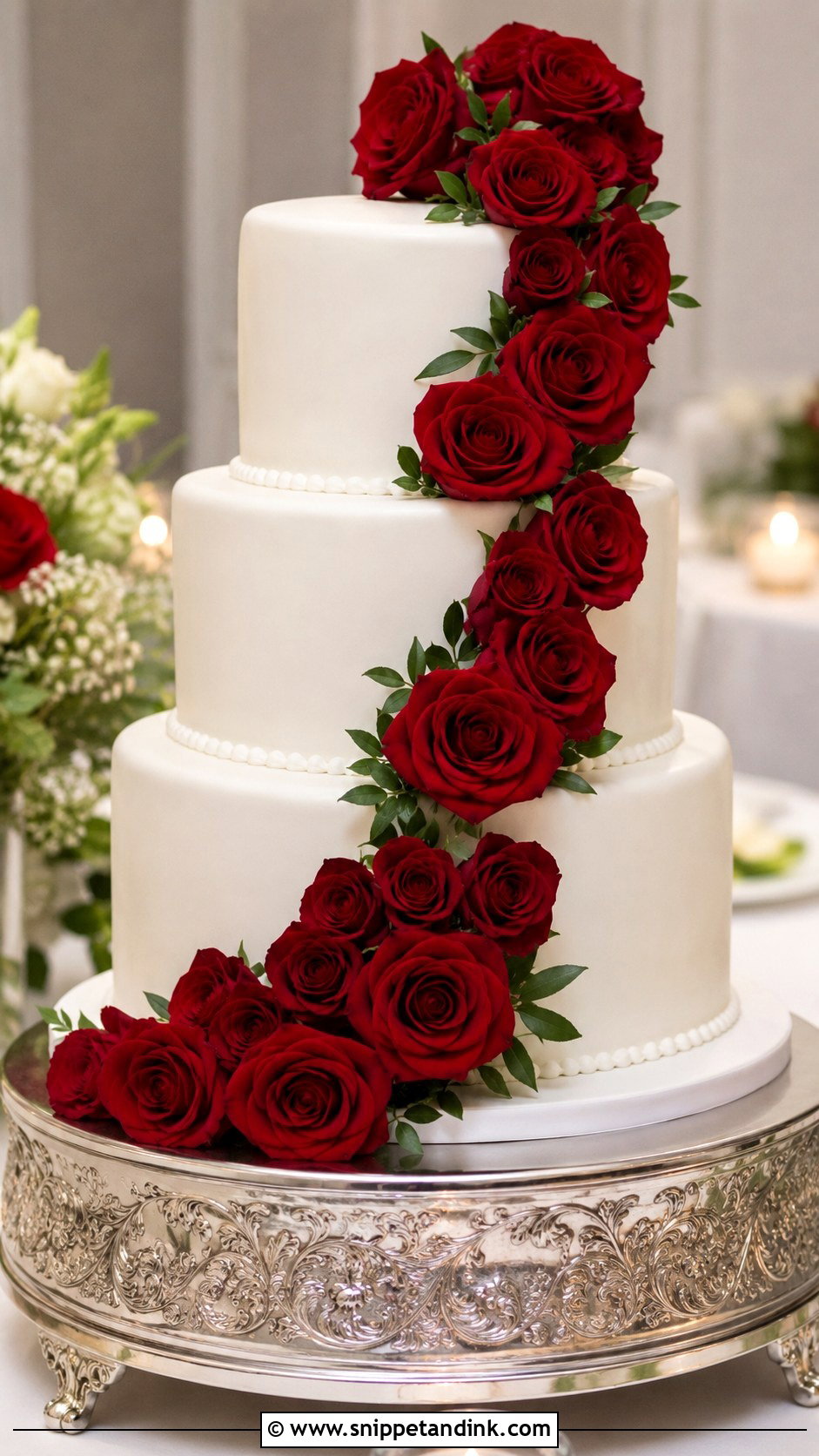
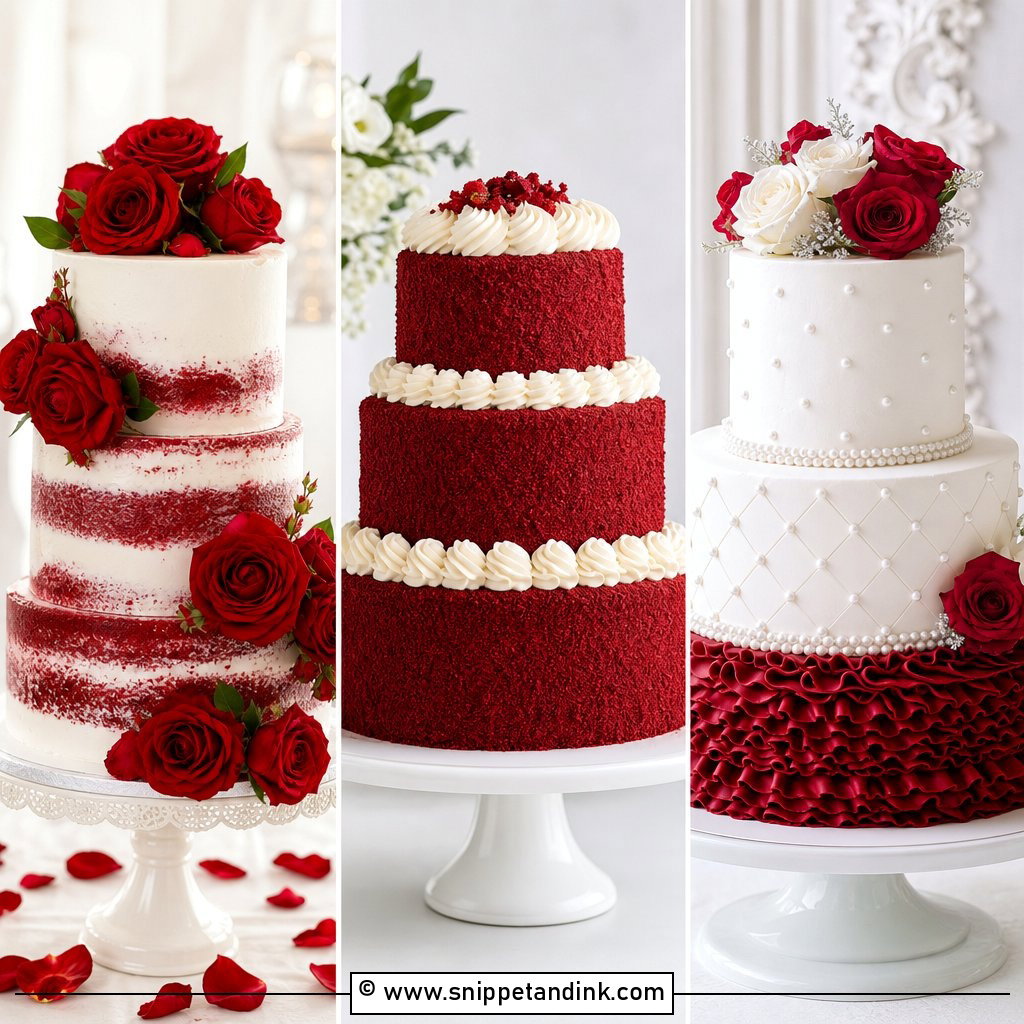
A red rose cascade is the version couples ask for most, and the one that goes wrong most often. The roses start at the top tier and drop down one side on a diagonal, which needs at least three tiers so the line has room to travel. I build the cascade in the venue, never before transport, because a fully dressed cascade shifts in a van. Keep the icing smooth behind it; texture under red roses just looks messy. Sugar roses give a cleaner curve, fresh ones a looser, more alive one, and greenery is optional, not required.
2. White Buttercream Wedding Cake With Red Roses
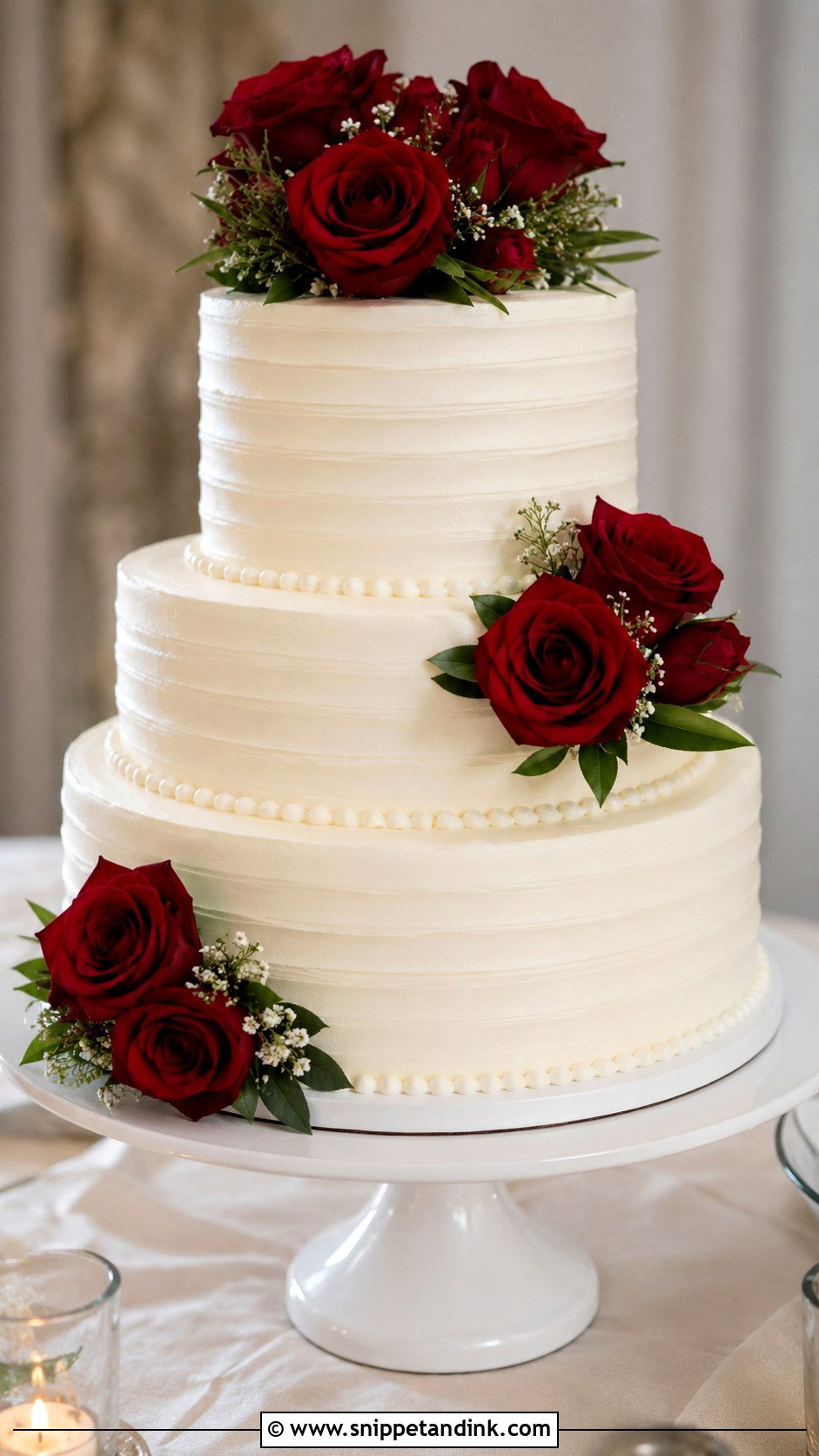
Buttercream is what most guests actually want to eat, and that matters more than people admit. The catch with white buttercream is that it is never paper white, because butter is yellow; I knock it back with a tiny amount of violet colouring so it sits closer to ivory than cream. Red roses can go on top, at the base or between tiers. Watch the room temperature: buttercream softens in a warm marquee, and heavy fresh blooms will slowly sink into it, so I keep rose clusters lighter on this finish than on fondant.
3. White Fondant Wedding Cake With Red Roses
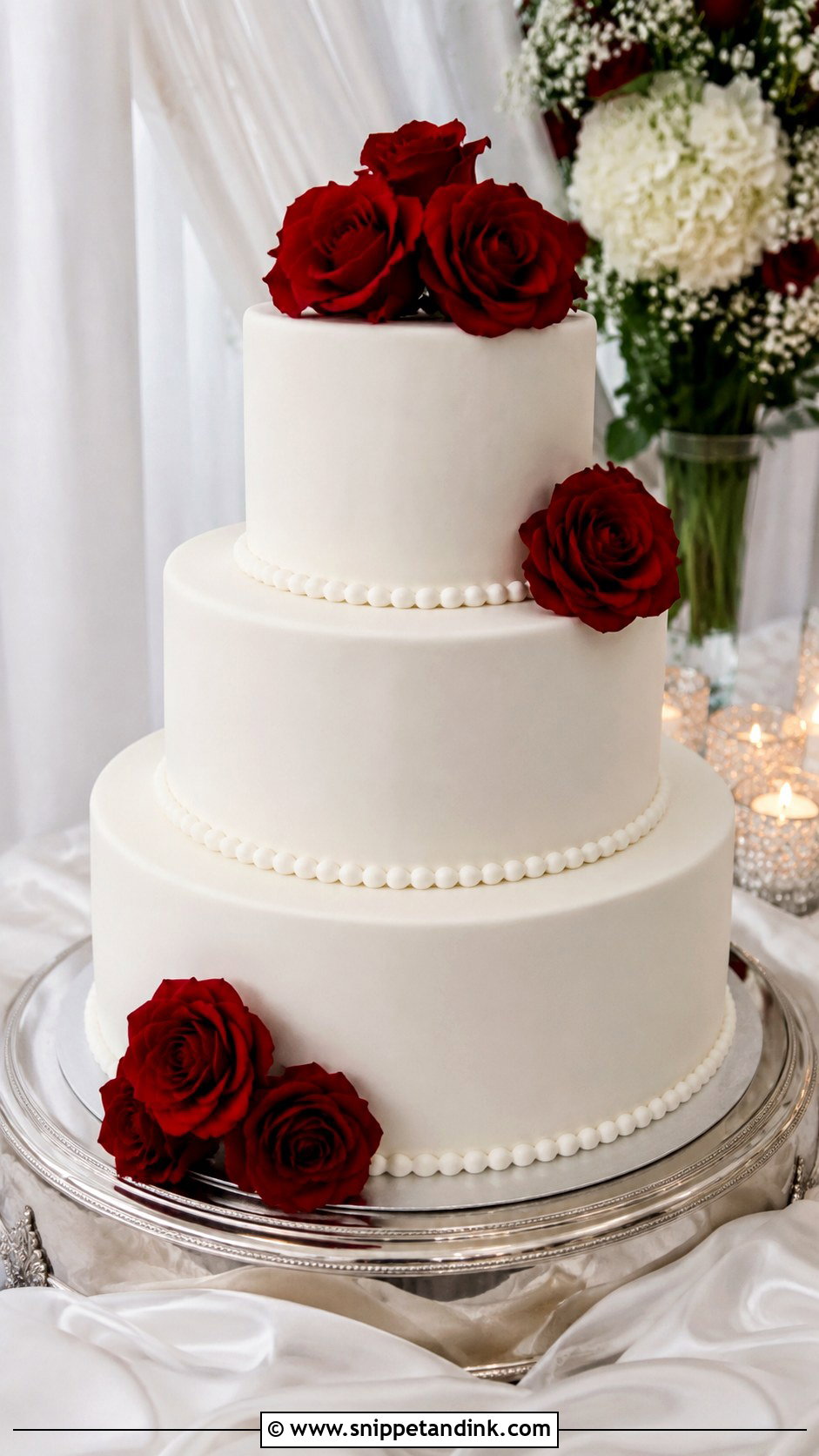
Fondant gives the sharpest white you can get on a cake, and next to it a red rose looks almost graphic. That crispness suits hotel ballrooms and black tie rooms where everything else is tailored. The roses can be fresh, gum paste or modelled fondant. One honest warning: fondant beads with moisture if a cake goes from a cold fridge into a humid room, and water spots on bright white are very visible. I ask venues where the cake will sit before I decide whether it goes in the fridge at all.
4. Three Tier White Wedding Cake With Red Roses
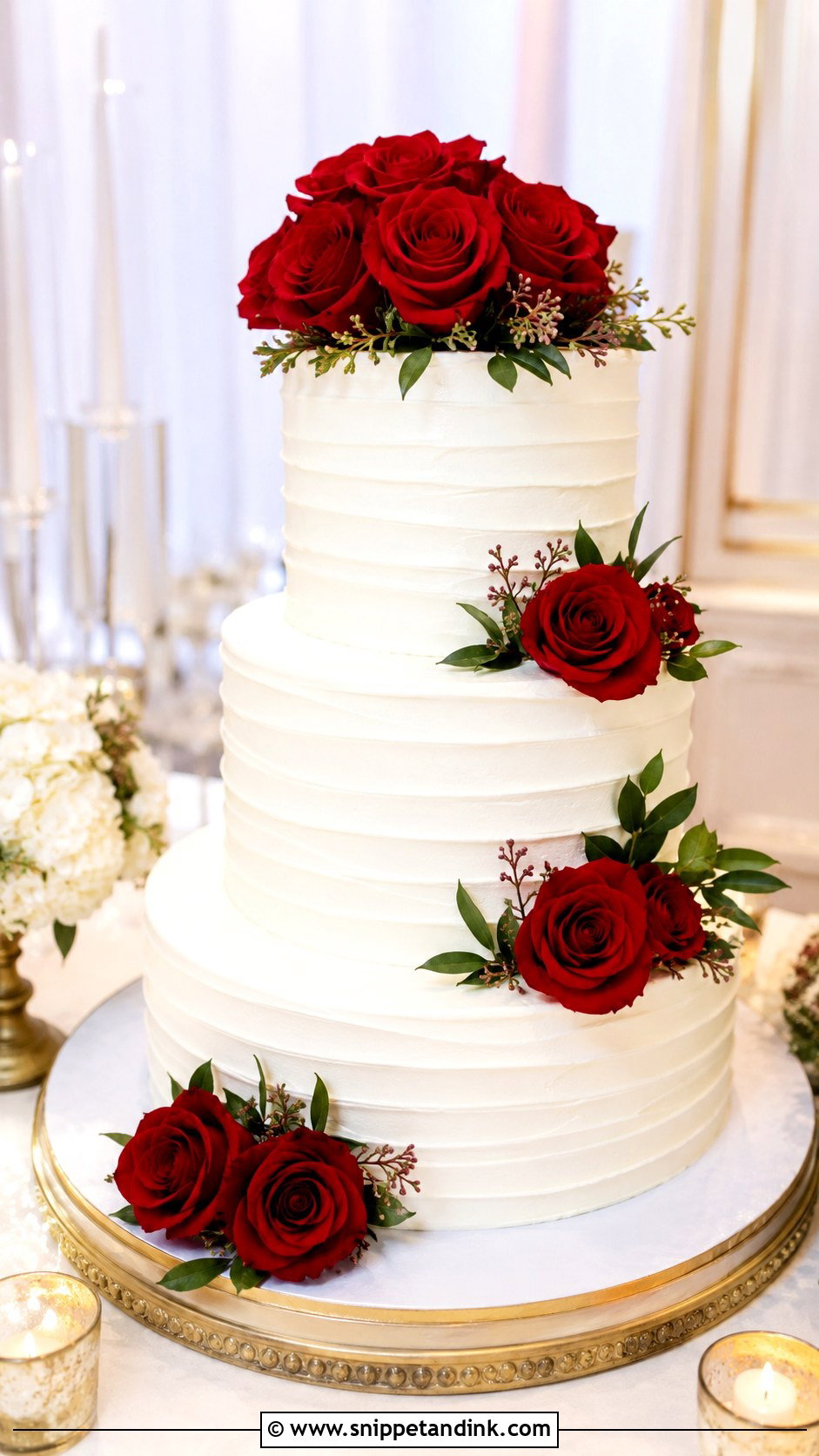
Three tiers is the size where this pairing finally has space to breathe. You can run a top cluster, a short side cascade and a small base group without any tier feeling crowded. I plan the roses in odd numbers per group and leave at least one tier face completely clean, because a three tier cake covered on every side looks heavier in photos than it does in person. Light piping or a soft texture is fine; just pick one, not both.
5. Two Tier White Wedding Cake With Red Roses
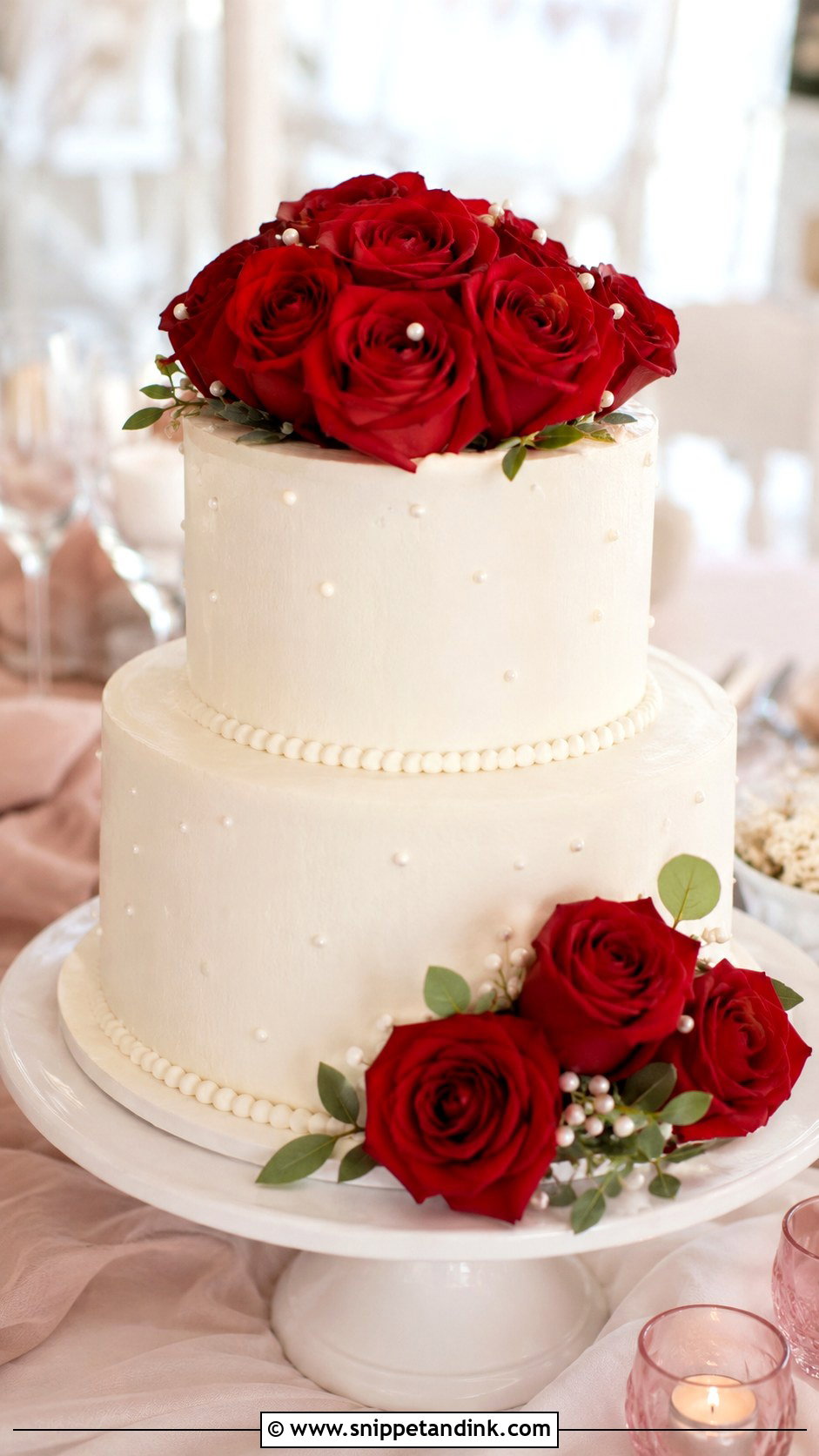
Two tiers suits smaller receptions and elopement dinners, and it is the cake I most often pair with a kitchen sheet cake for the extra slices. A generous rose cluster on top with a smaller group at the base keeps it balanced. Size the roses down: full garden roses on a six inch top tier look clumsy, so I use spray roses or rosebuds there and save the big heads for the base.
6. Square White Wedding Cake With Red Roses
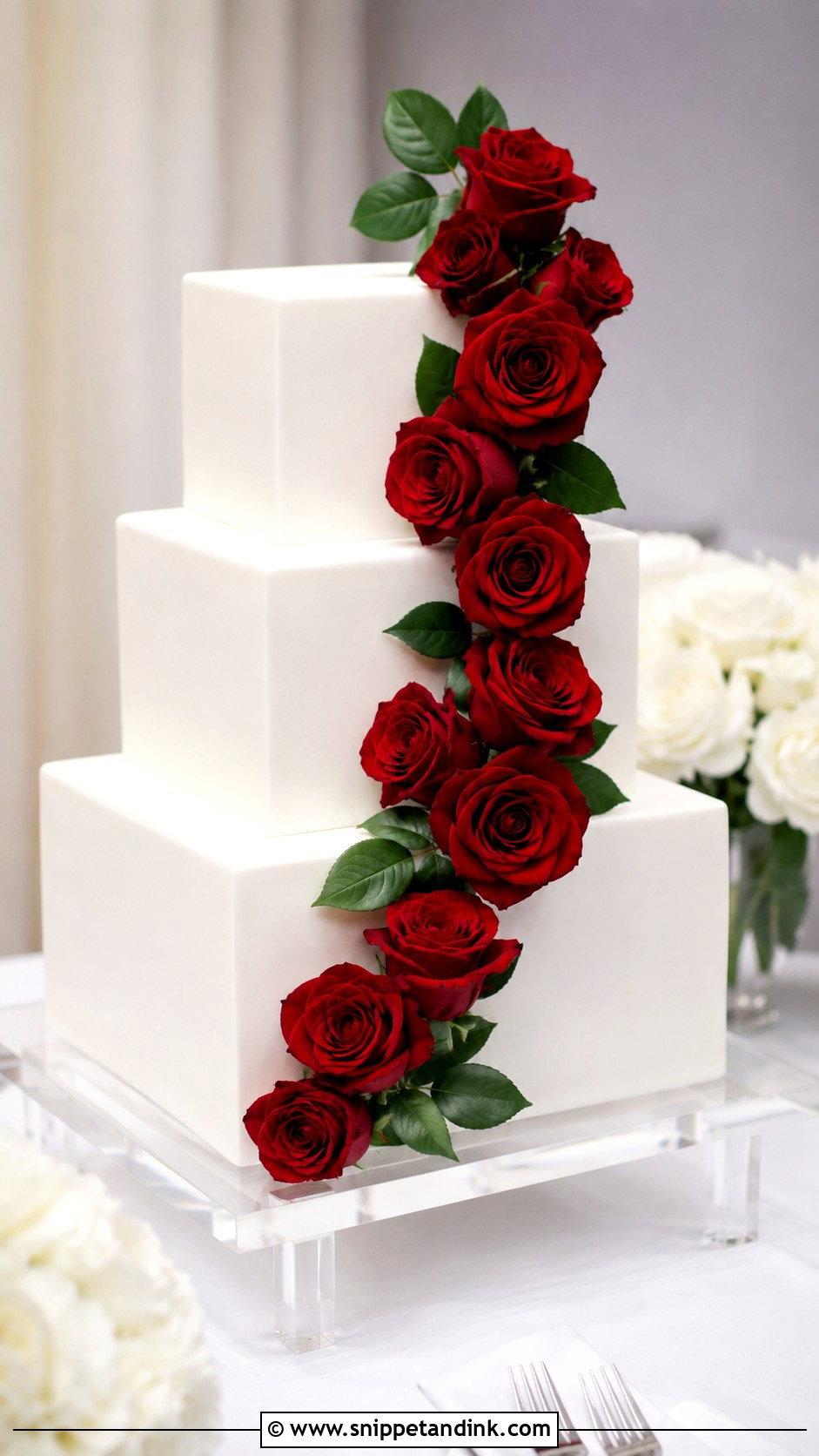
Square tiers change the whole mood. The corners look modern and structured, especially with sharp buttercream edges or fondant. Red roses can sit at opposite corners, along one vertical edge, or in a short cascade down the front. Square tiers are harder to finish cleanly, so look closely at the corners in a baker’s portfolio before you commit. A ribbon or small sugar pearls will soften the angles if the room is very rounded and romantic.
7. Round White Wedding Cake With Red Roses
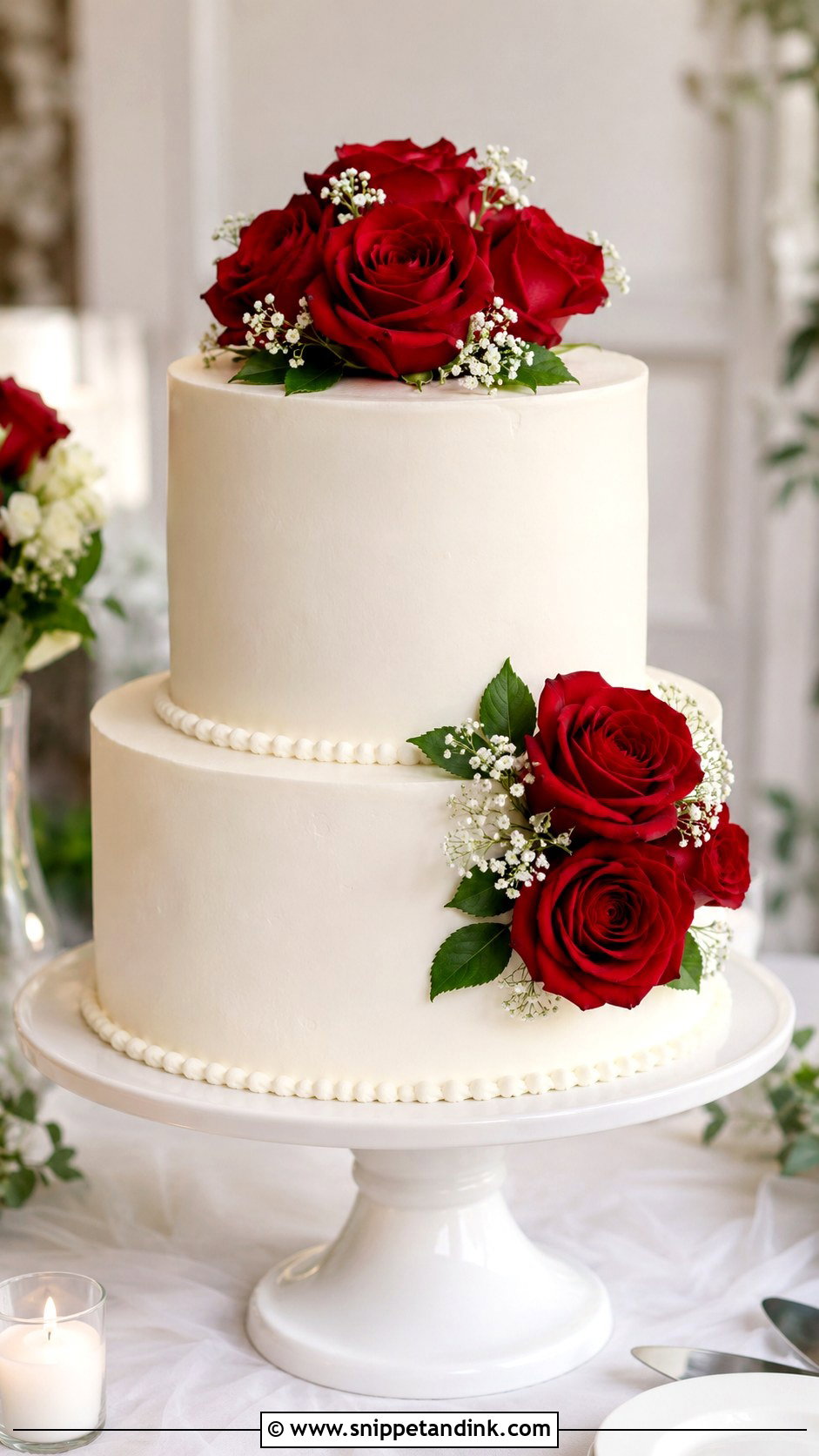
Round tiers are the default for a reason: they are easier to ice smoothly, easier to stack, and they suit almost any finish from fondant to a spatula texture. Roses can sit on top, wrap the base or trail down one side. Because the shape is so familiar, it ages well in albums. If you are unsure about anything else on the cake, start here and let the roses do the talking.
8. Tall White Wedding Cake With Red Roses
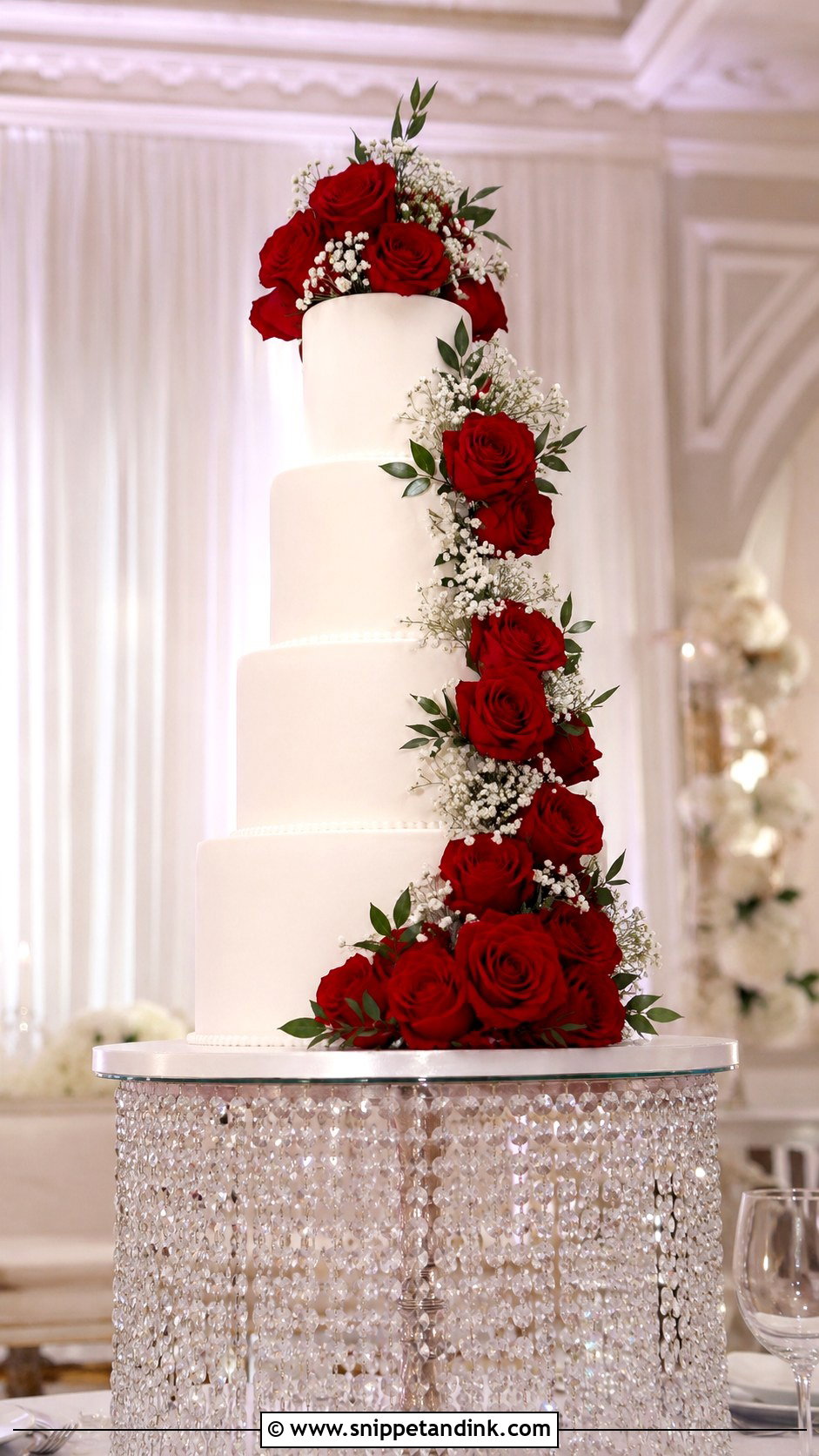
A tall cake earns its place in rooms with high ceilings or large floral installations, where a standard cake would look small. The height can come from extra tiers, extra tall double barrel tiers or separator layers. Height means more internal support: every tier needs dowels and a board, and tall cakes are best stacked on site. A vertical cascade suits the shape because it pulls the eye top to bottom. I keep the roses lighter toward the top so the cake never looks top heavy.
9. Simple White Wedding Cake With Red Roses
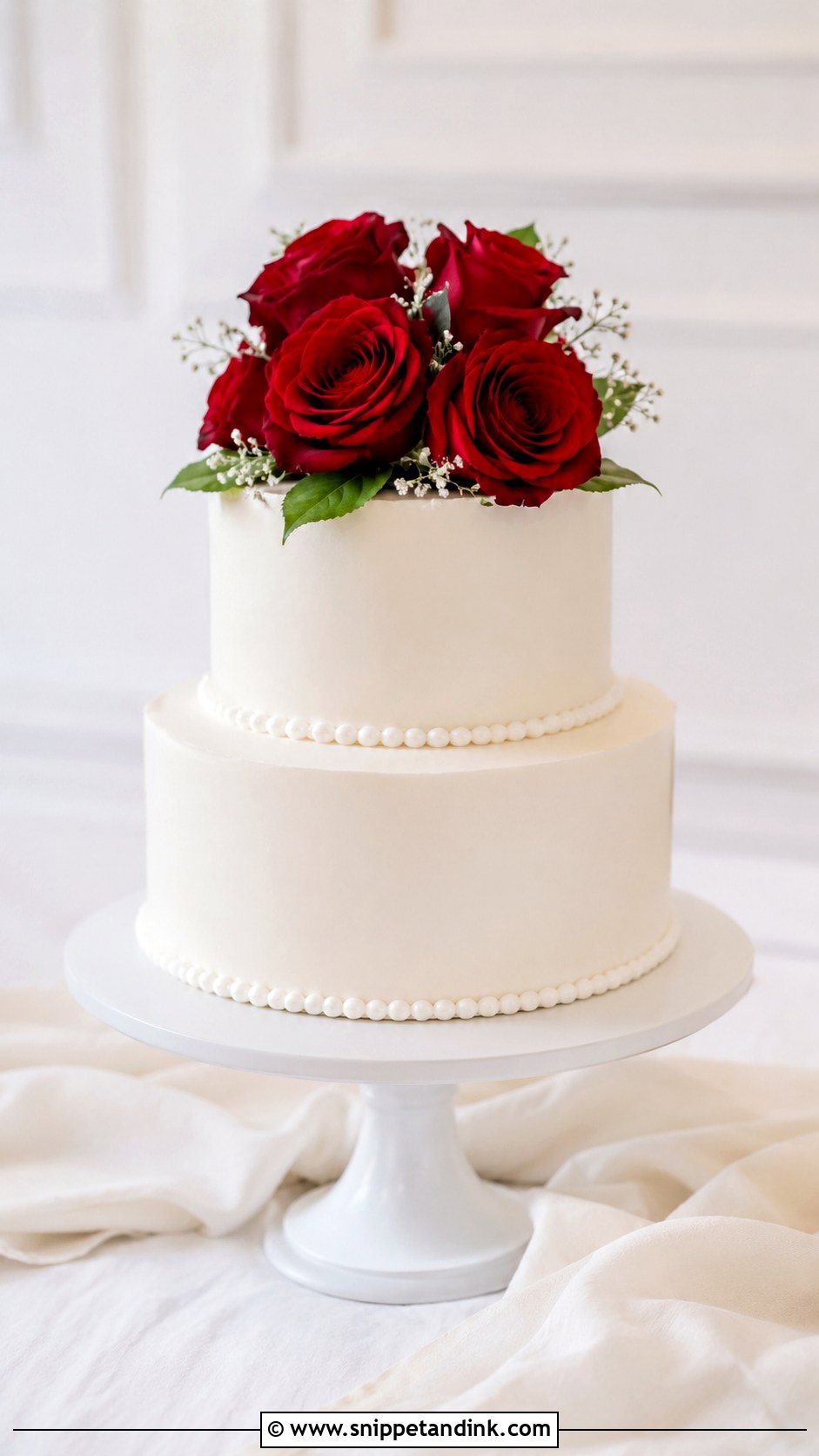
Plain white tiers with one well placed rose group is harder to pull off than it looks. With nothing else on the cake, every flaw in the icing shows, so the finish has to be really clean. A few red roses on top or at the base are enough. My rule for this one: choose the best quality roses you can get, because on a simple cake a bruised petal is the only thing anyone will see.
10. White Wedding Cake With Red Roses And Pearls
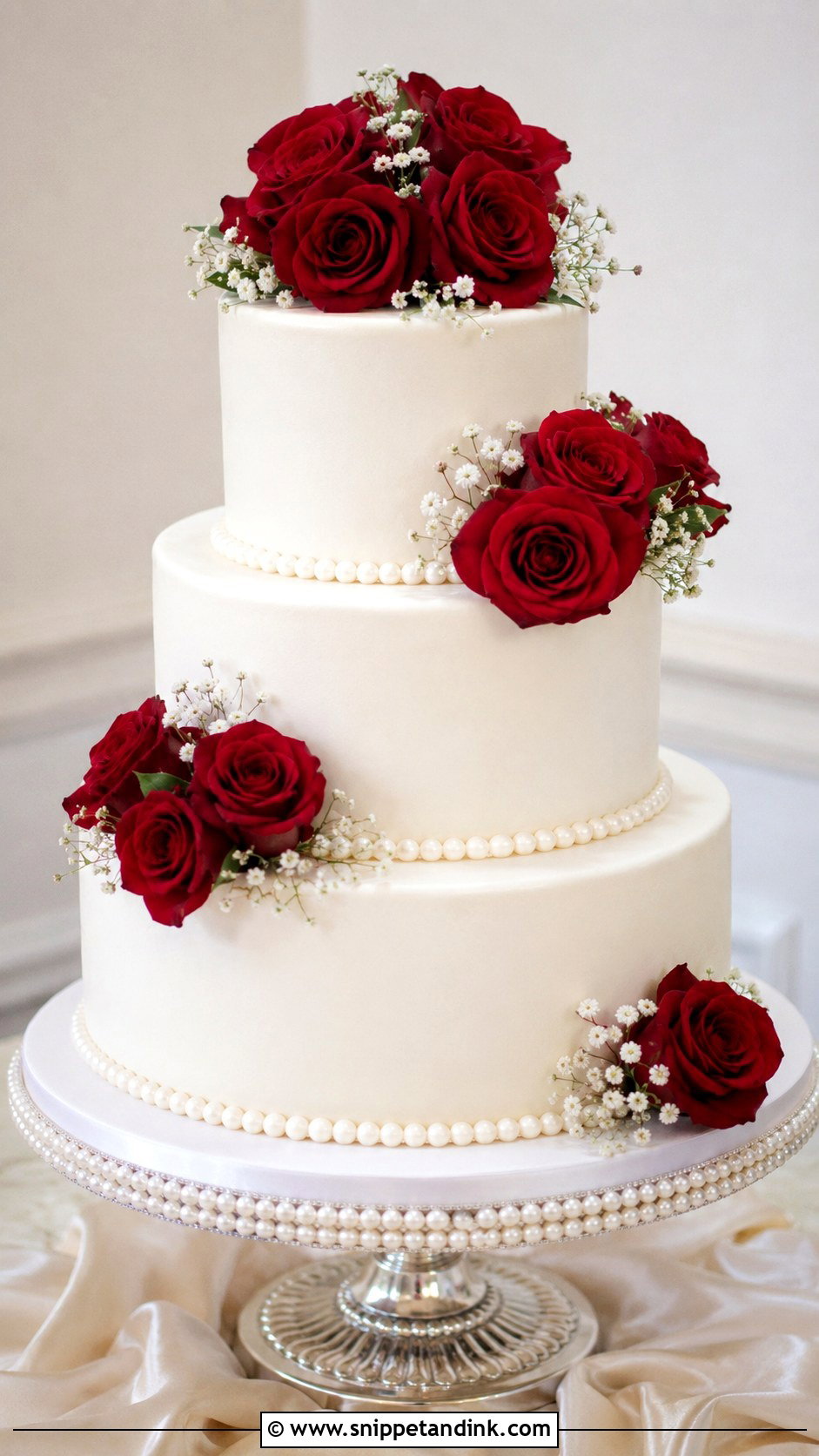
Pearls soften the red, and the pair has a slightly vintage feel that suits lace gowns and candlelit rooms. They can be piped in buttercream, rolled from sugar or set on as small edible dragées. Hard sugar pearls are worth flagging to guests with dental work. A pearl border on each tier with a red rose cascade is the combination I’d point to first. Keep the pearl pattern controlled, or the cake starts to look like a craft project.
11. White Wedding Cake With Red Roses And Lace
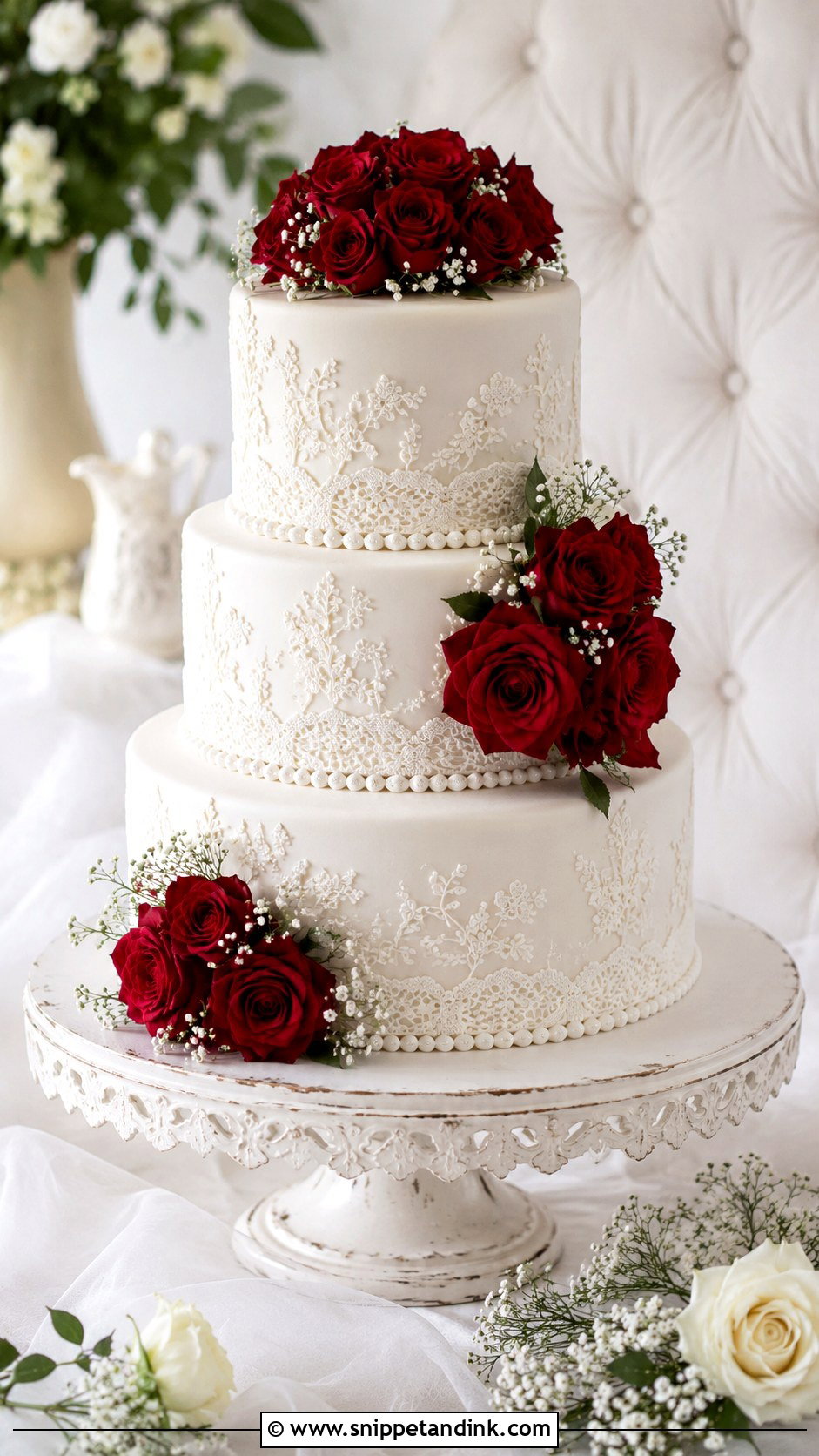
Lace is the detail I use when a couple wants the cake to echo the dress. It can be piped in royal icing, pressed into fondant with a mould, or applied as edible lace sheets. Bring a photo of the actual gown lace to your tasting; matching a motif is far easier than inventing one. Red roses stop the design looking pale, but group them tightly so they sit beside the lace, not on top of it, or all that detail disappears.
12. White Wedding Cake With Red Roses And Gold
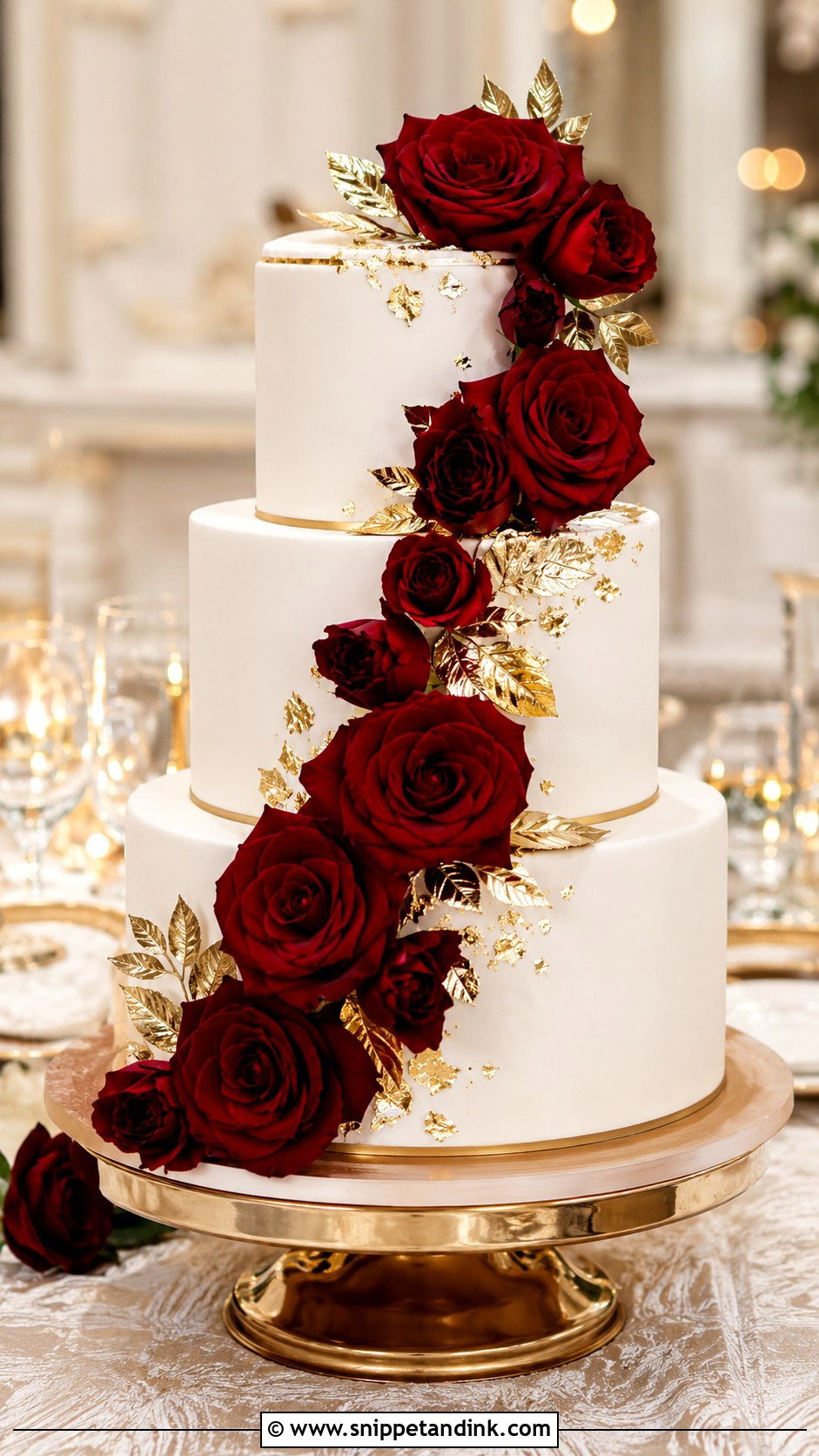
Gold with red reads rich and warm, especially under evening lighting. It can be a thin painted line on each tier edge, a few leaf accents or a monogram. Edible gold paint on fondant is reliable; on buttercream it can look streaky, so I’d use gold leaf there instead. Treat the gold as a frame and let the roses be the colour. Covering whole tiers in gold usually fights the red rather than supporting it.
13. White Wedding Cake With Red Roses And Greenery
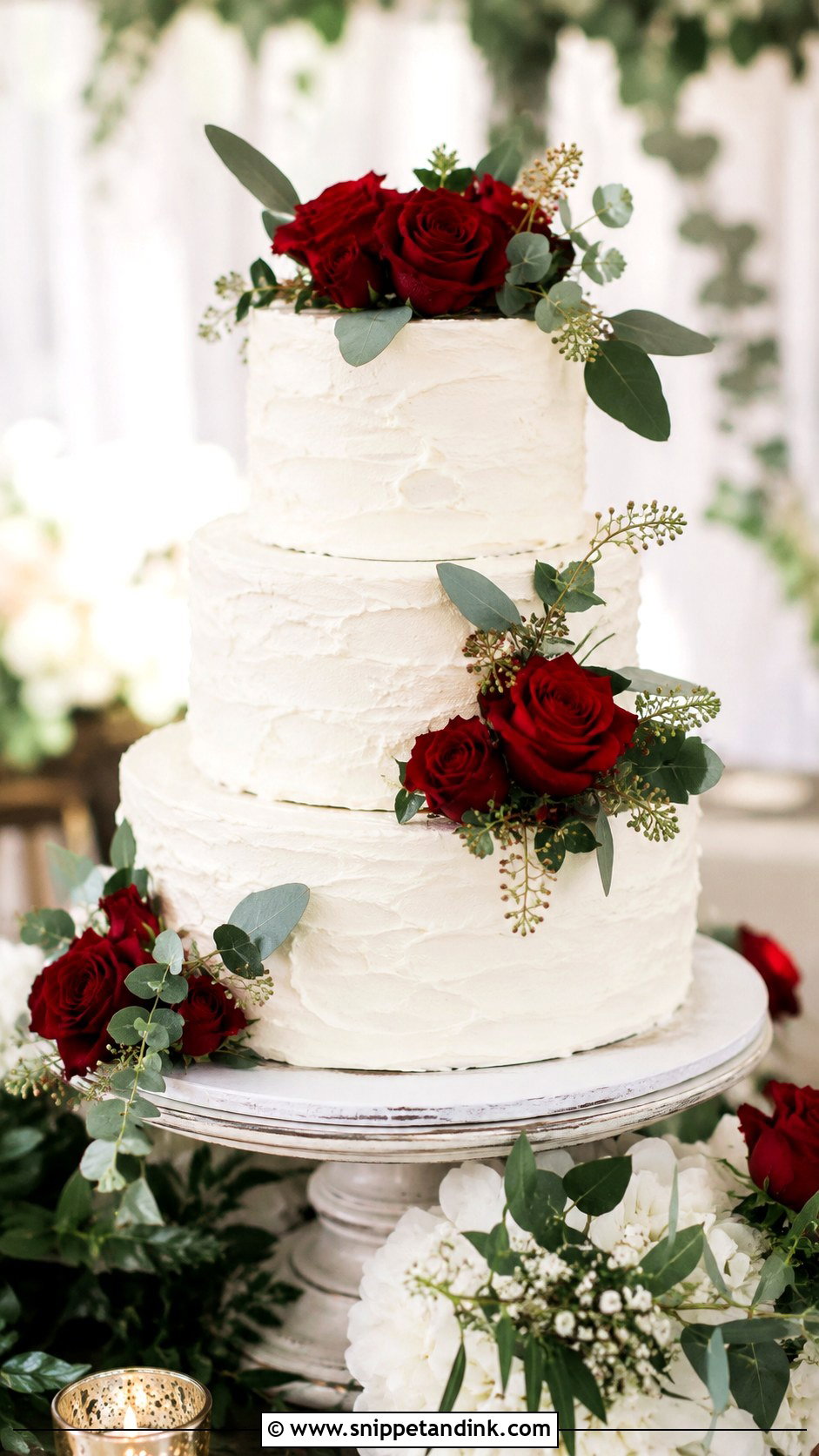
Greenery takes the red and white out of the ballroom and into a garden. Eucalyptus, olive leaves or small sugar leaves frame the roses and make them feel freshly cut. The real issue is food safety: some popular foliage is toxic, and eucalyptus in particular should never touch icing directly. I wrap stems and keep leaves on picks or a barrier. A few sprigs frame the roses; armfuls hide the cake.
14. White Wedding Cake With Red Sugar Roses
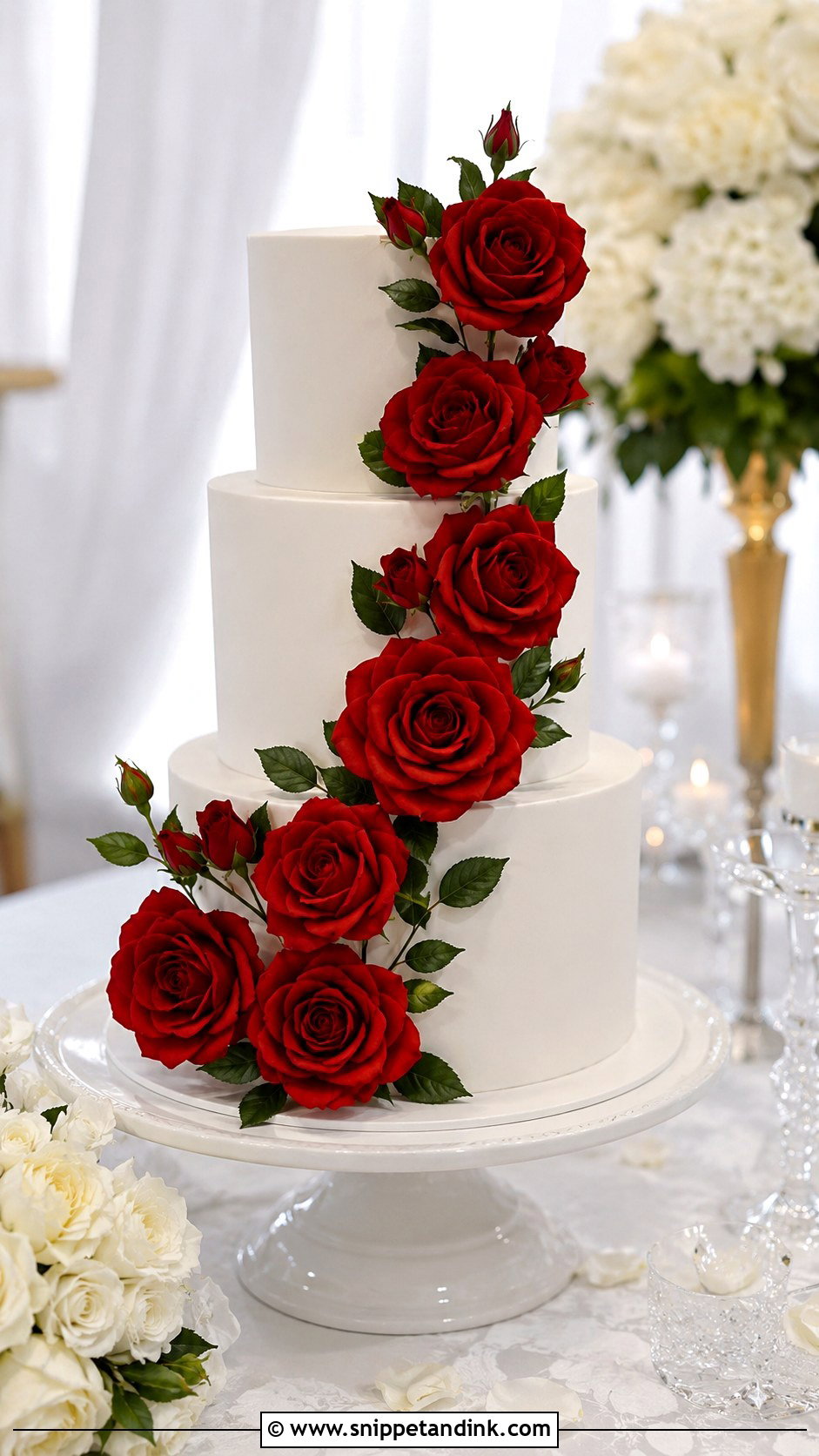
Sugar roses are the answer when fresh flowers are a risk: summer heat, a long day, or a florist who can’t guarantee pesticide free blooms. They are made in advance and placed exactly where they need to go, and they will not wilt by the speeches. Two things to know. Deep red sugar flowers need a lot of colour, and a good one takes real time to make, so they are usually ordered weeks ahead. And humidity softens gum paste, so they should not sit in a fridge.
15. White Wedding Cake With Fresh Red Roses
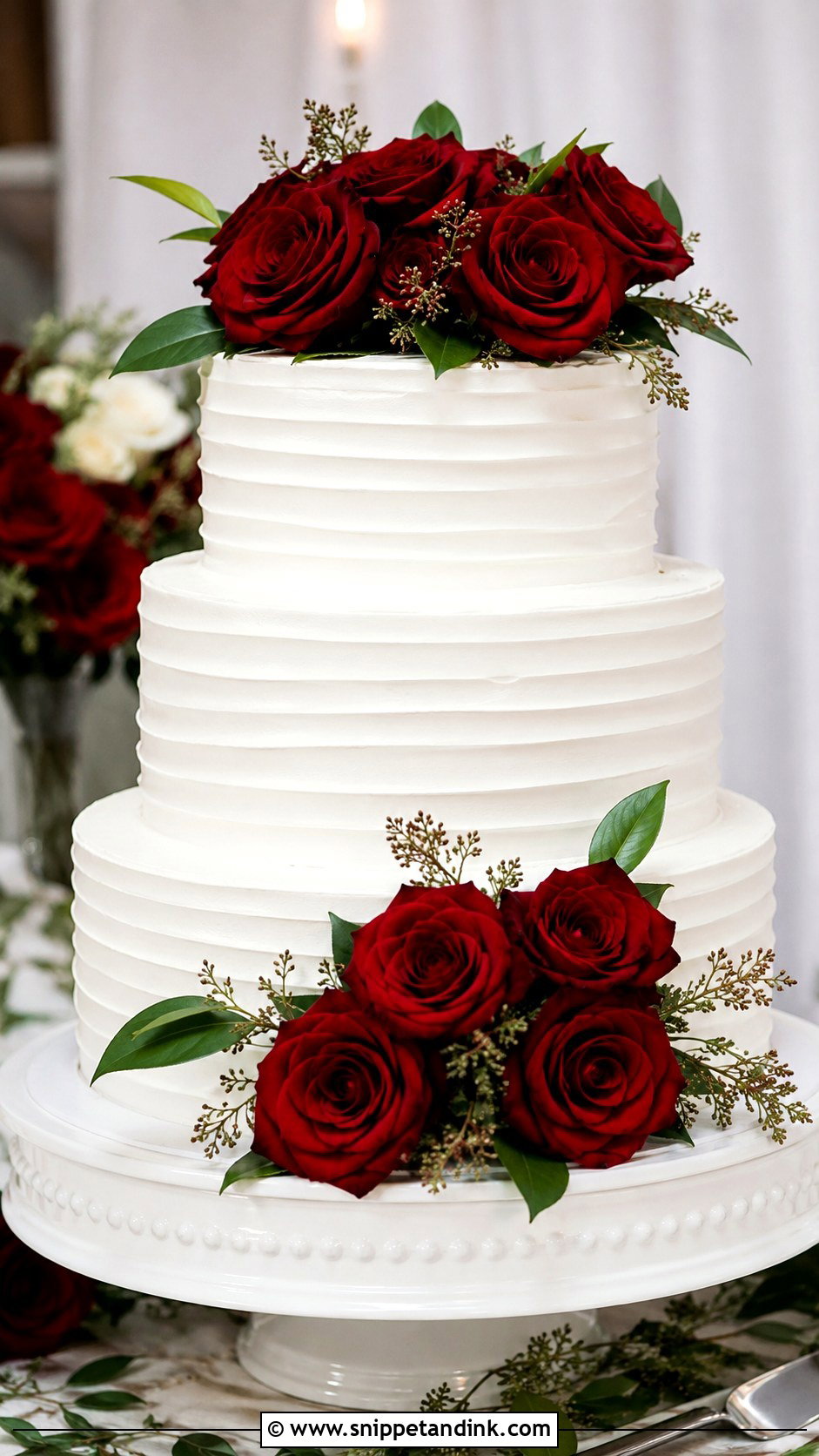
Fresh red roses connect the cake to the bouquet and centrepieces in a way sugar never quite does. They need preparation before they touch a cake: grown without heavy chemicals where possible, stems wrapped in floral tape and pushed into straws or picks, never straight into the sponge. I also place a small barrier under heads that sit flat on icing, because a dark red petal can leave a pink mark on white buttercream. Smooth icing shows them best.
16. White Wedding Cake With Red Roses On Top
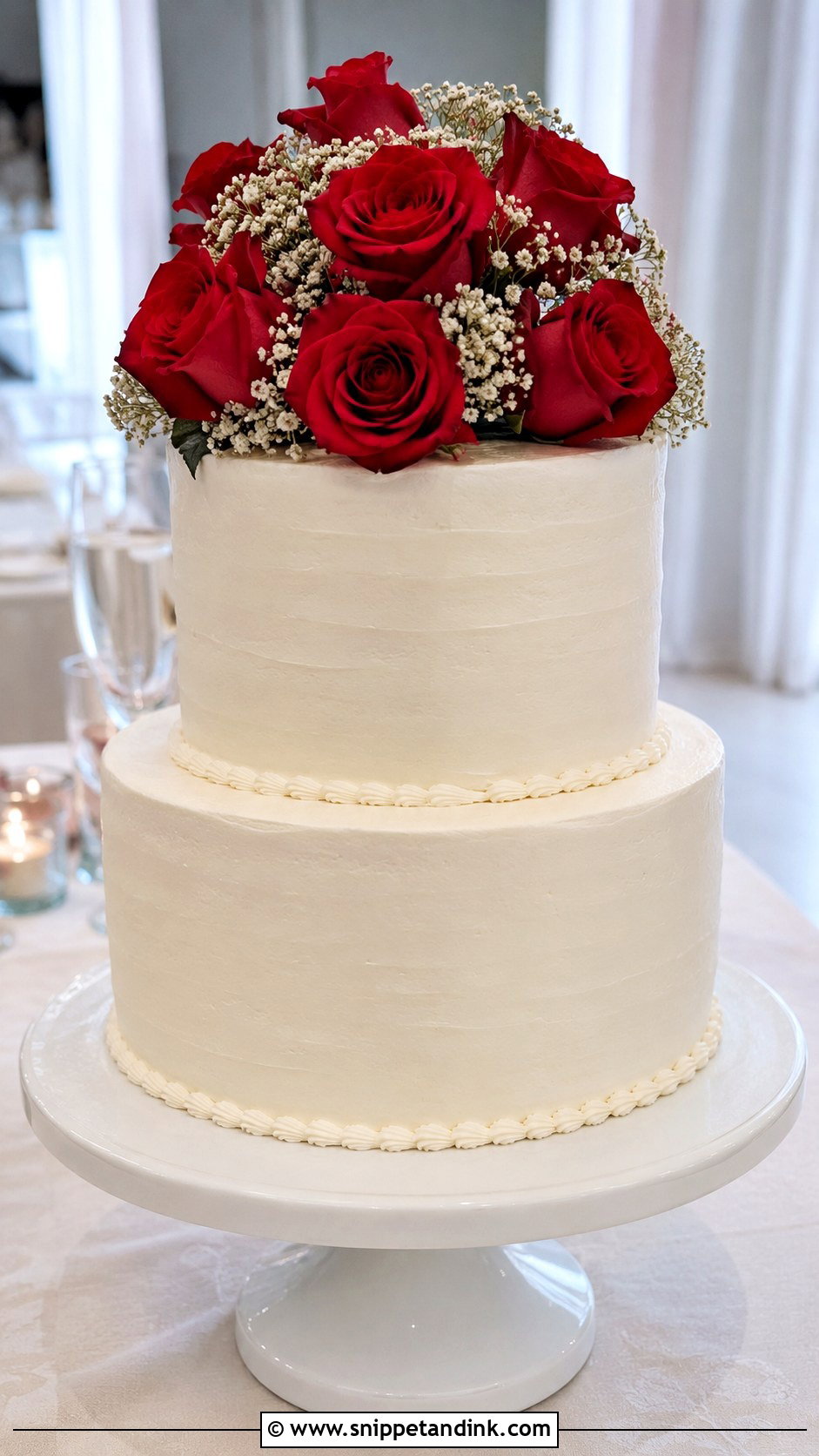
Roses on top only is the most practical design in this list. The cluster becomes the topper, so you can skip a figurine or sign entirely. It works on one tier cakes and tall ones alike. A full dome of roses looks dramatic; five or seven blooms look calmer. Keep the sides mostly white so the top reads as a decision, with a thin border or light piping if the tiers feel bare.
17. White Wedding Cake With Red Roses Between Tiers
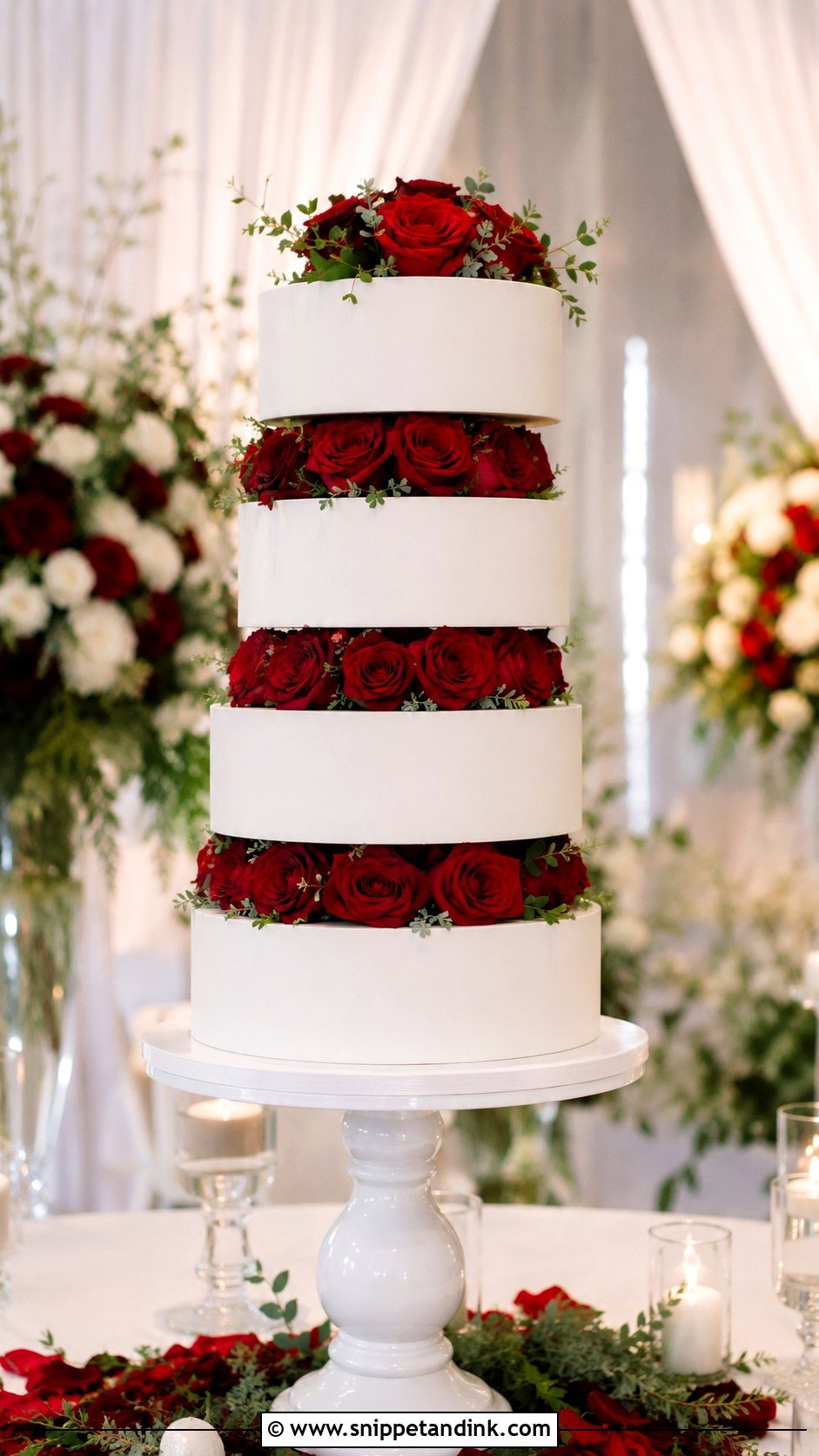
Placing roses between tiers gives you colour at every height without touching the cake surface at all. The flowers sit on separators or form rings in the gaps, which makes this one of the safest ways to use fresh blooms. It looks full from the front, the sides and the head table. The thing to plan is the gap height: separators need to be tall enough for a rose head, or the flowers get squashed when the tier above goes on.
18. White Wedding Cake With Red Rose Border
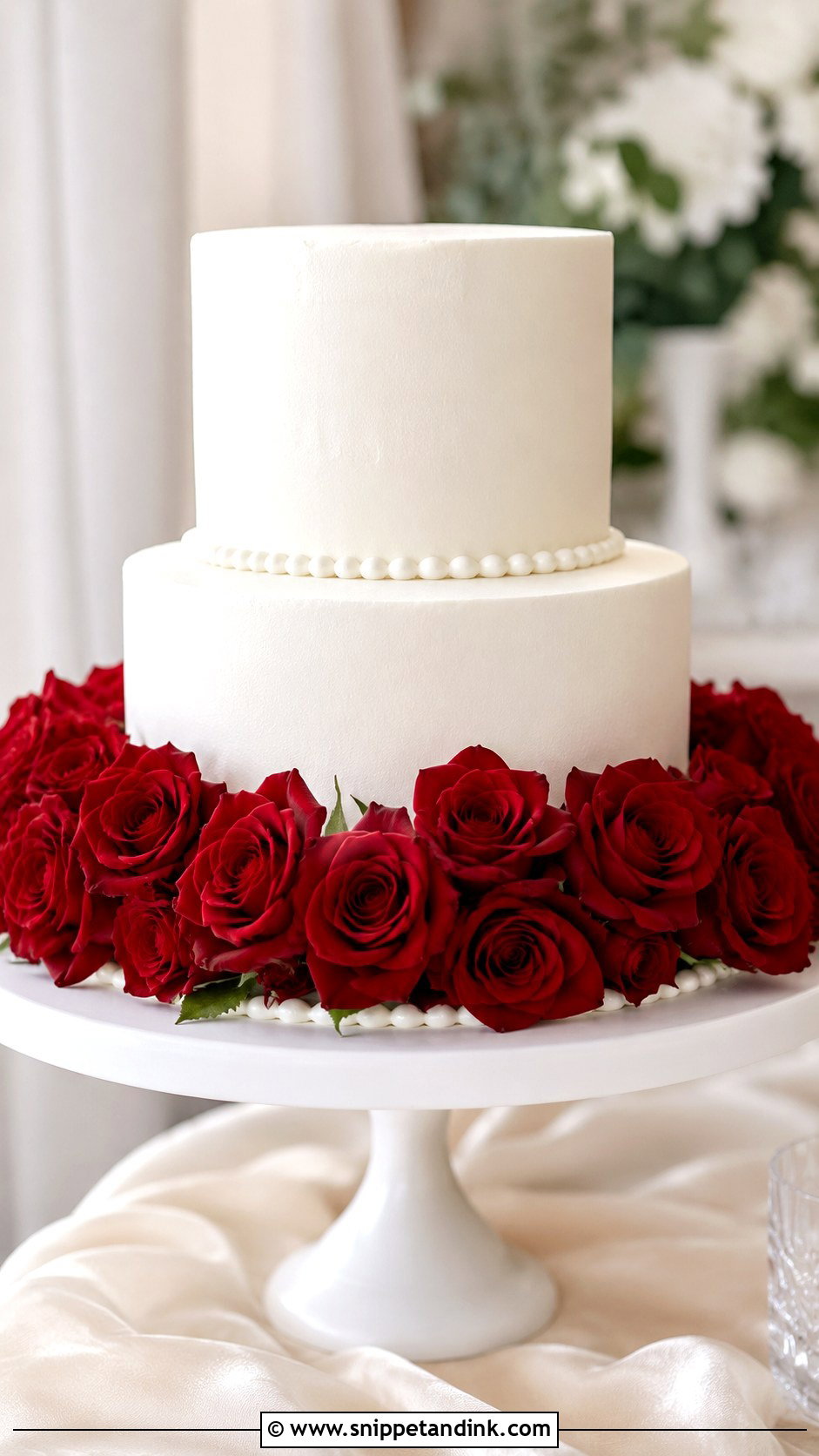
A border of roses grounds the cake and makes the table look styled even if the tiers stay plain. It can circle the base of one tier, every tier, or just the cake stand. Rosebuds give a fine, neat line; open blooms look bolder. If the border sits on the cake board rather than on icing, your florist can do it on the day, which takes pressure off the baker’s schedule.
19. White Wedding Cake With Red Roses And Ribbon
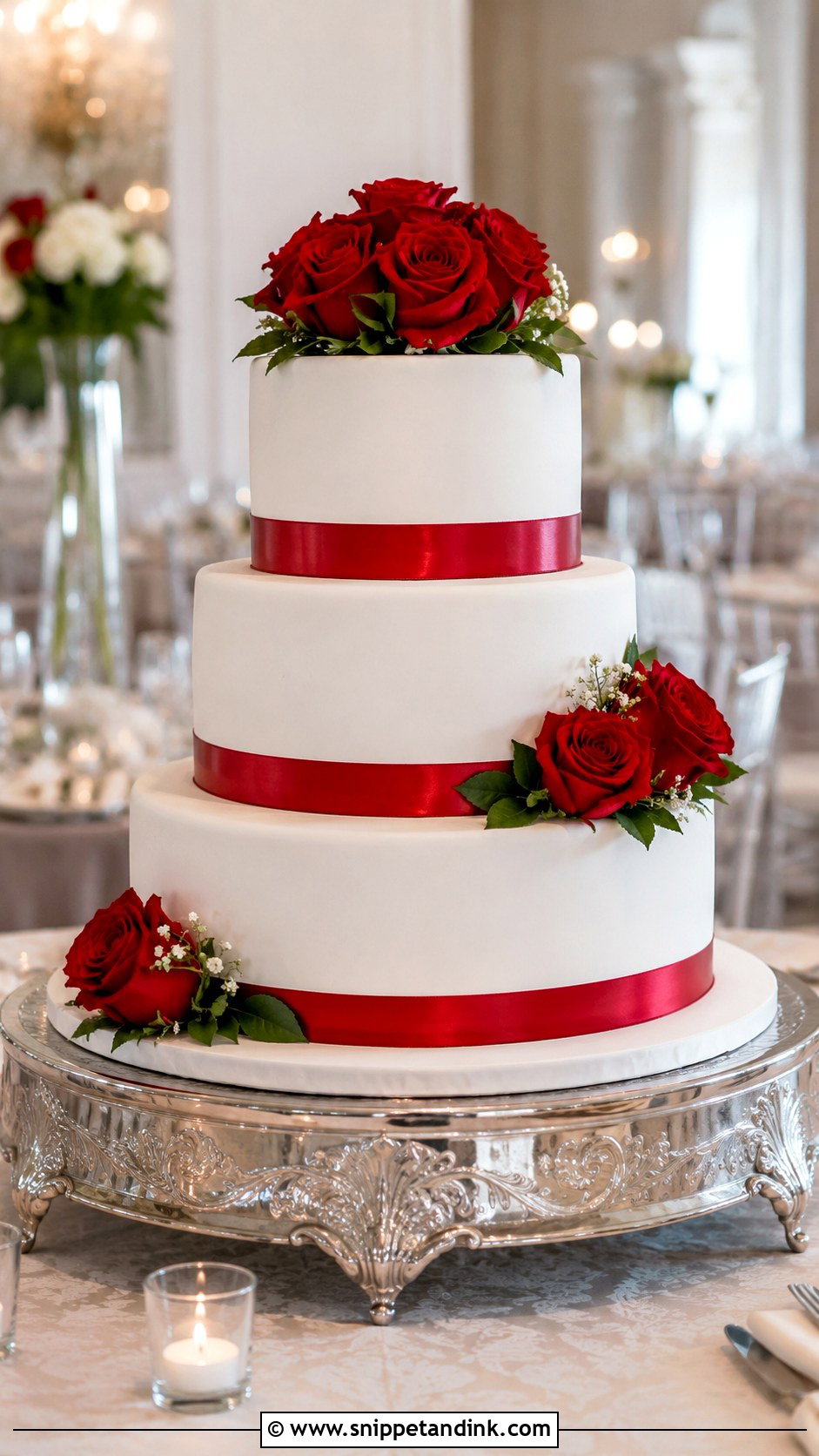
Ribbon gives each tier a tailored edge. It can be white, ivory, red or a soft metallic, and the roses can sit at the ribbon join to hide it. Fabric ribbon absorbs fat from buttercream and goes see-through in patches, so I back it with a thin strip of fondant or acetate first. That is why ribbon looks cleanest on fondant cakes. Keep it to one ribbon colour so the red roses stay the only strong accent.

20. White Wedding Cake With Red Roses And Piping
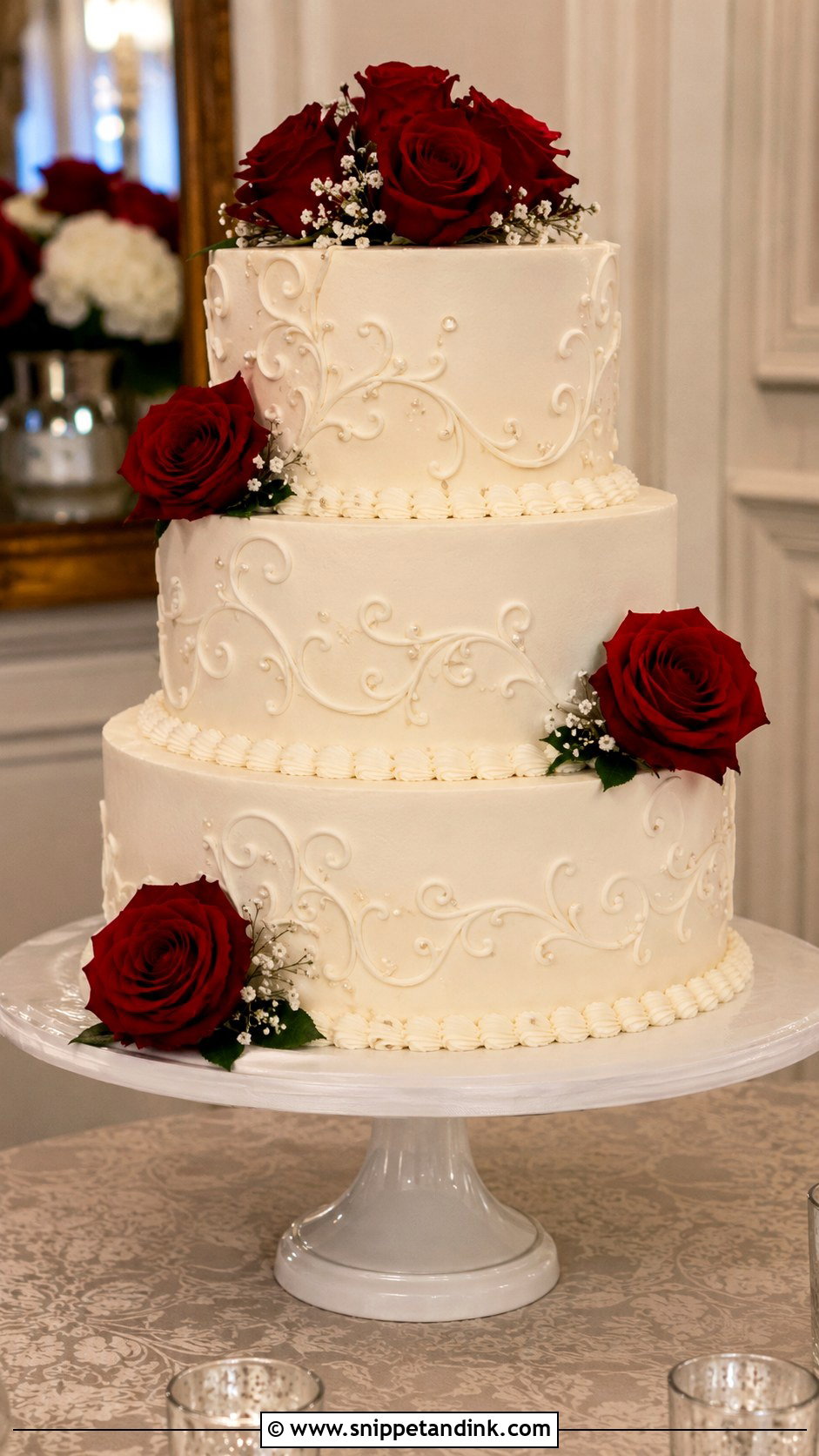
Classic piping brings the skilled bakery detail into the design: scallops, scrolls, dots and borders. I keep the piping white so the texture shows without competing with the roses. Royal icing holds a crisp line longer than buttercream, which matters for a cake that sits out all evening. Use the red roses as the one colour accent, on top or along one side, and let the piping fill the rest.
21. White Lambeth Wedding Cake With Red Roses
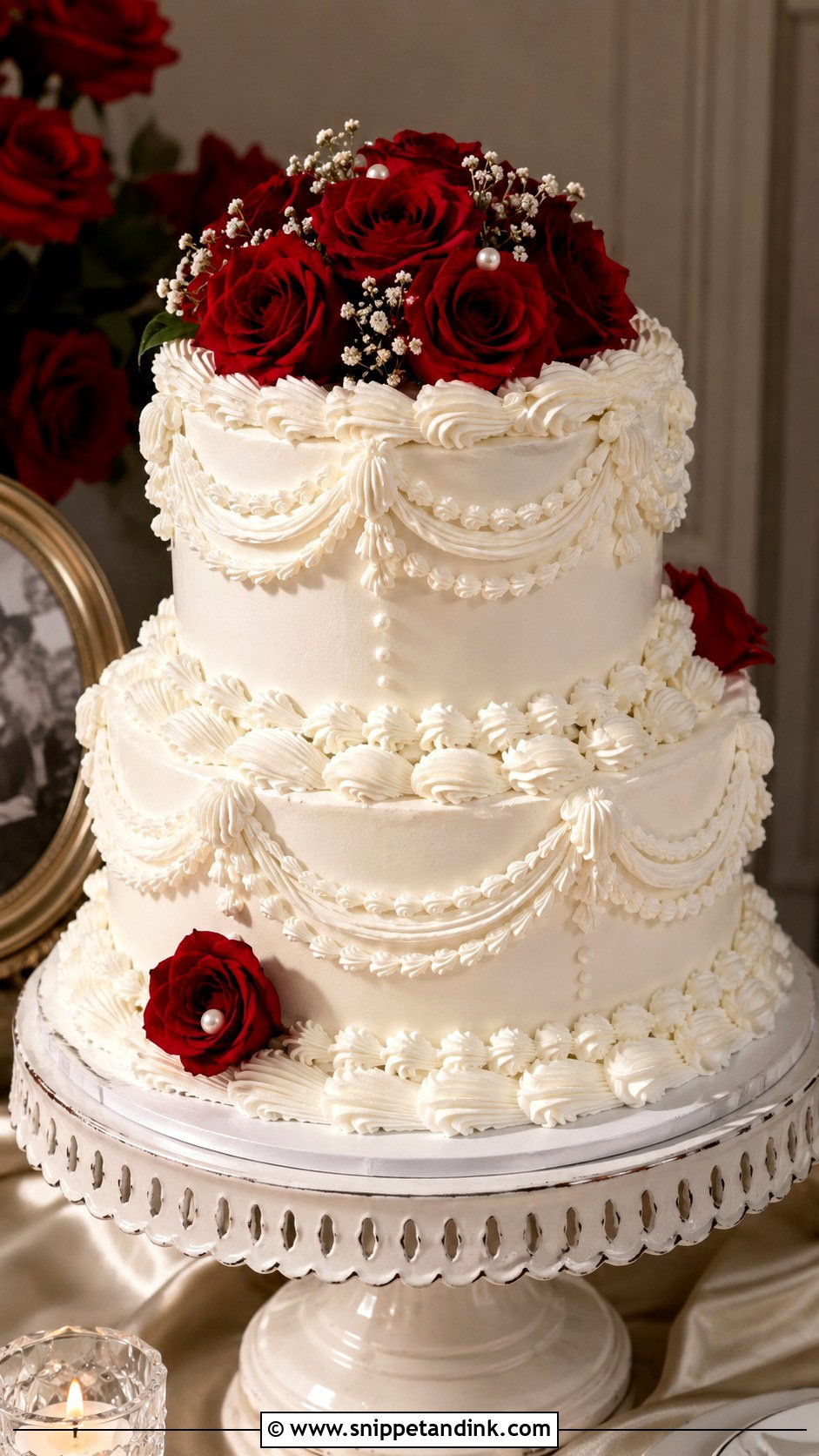
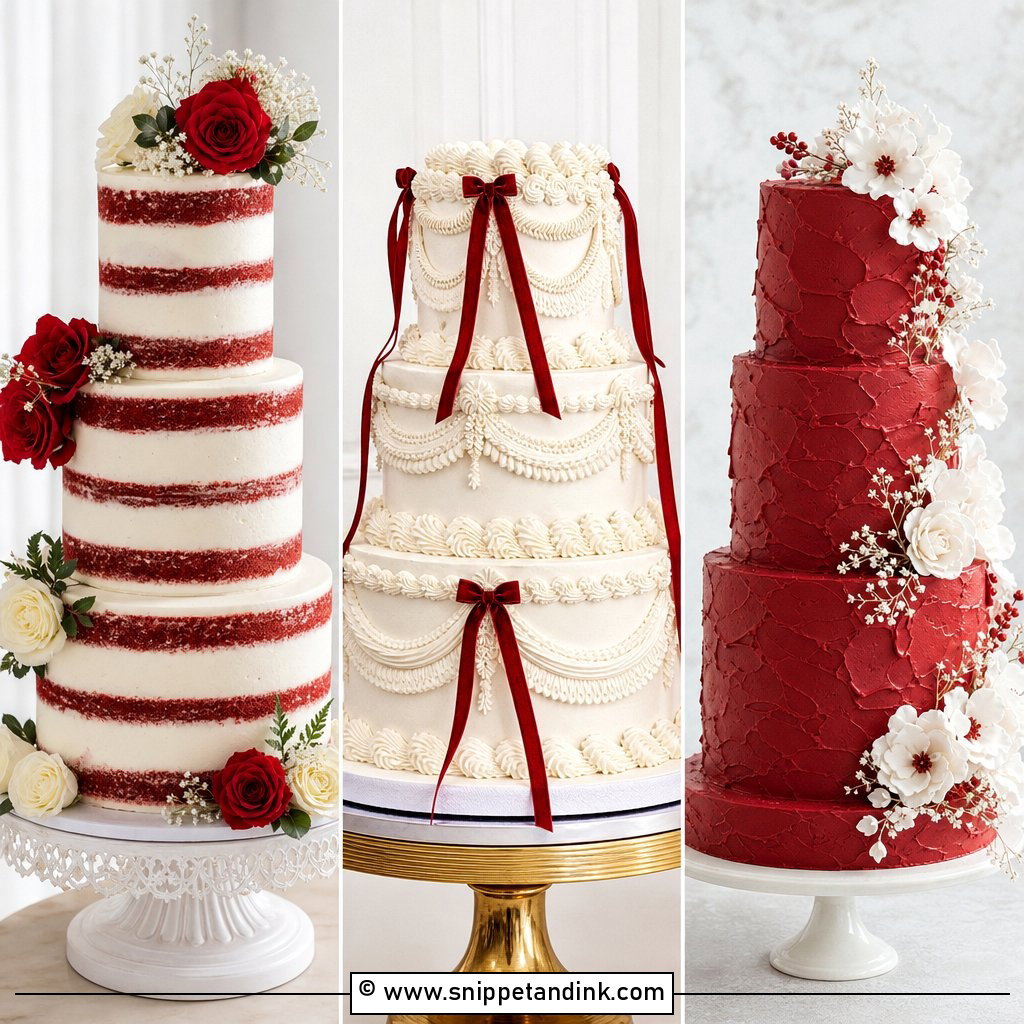
Lambeth is the over-piped, layered style with swags, shells and borders stacked on each other. In all white it looks bridal rather than busy, and it photographs well because the piping throws so much shadow. It is also slow work, so expect it to cost more than a plain finish. Since the cake is already full of detail, add the red roses sparingly, on top or at the base, and resist adding pearls or gold as well.
22. White Ruffle Wedding Cake With Red Roses
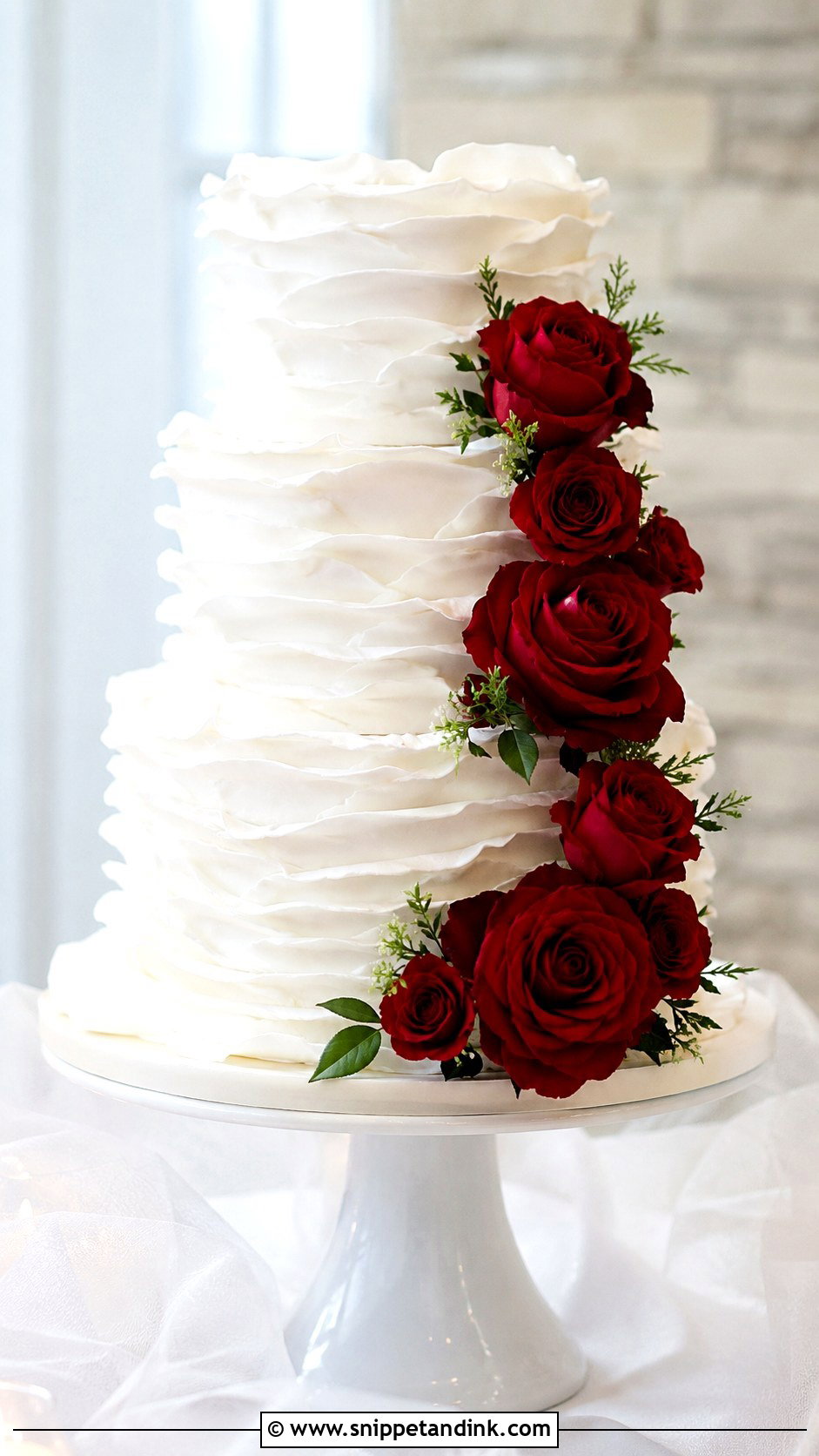
Ruffles give the cake a fabric feel that pairs naturally with tulle and organza skirts. They can be made from fondant, buttercream or wafer paper. Wafer paper ruffles are the lightest and most delicate, but they curl in humidity, so I’d avoid them for an outdoor summer reception. Keep the roses to one clear placement, a top cluster or one side cascade, so the ruffles stay readable.
23. White Textured Buttercream Wedding Cake With Red Roses
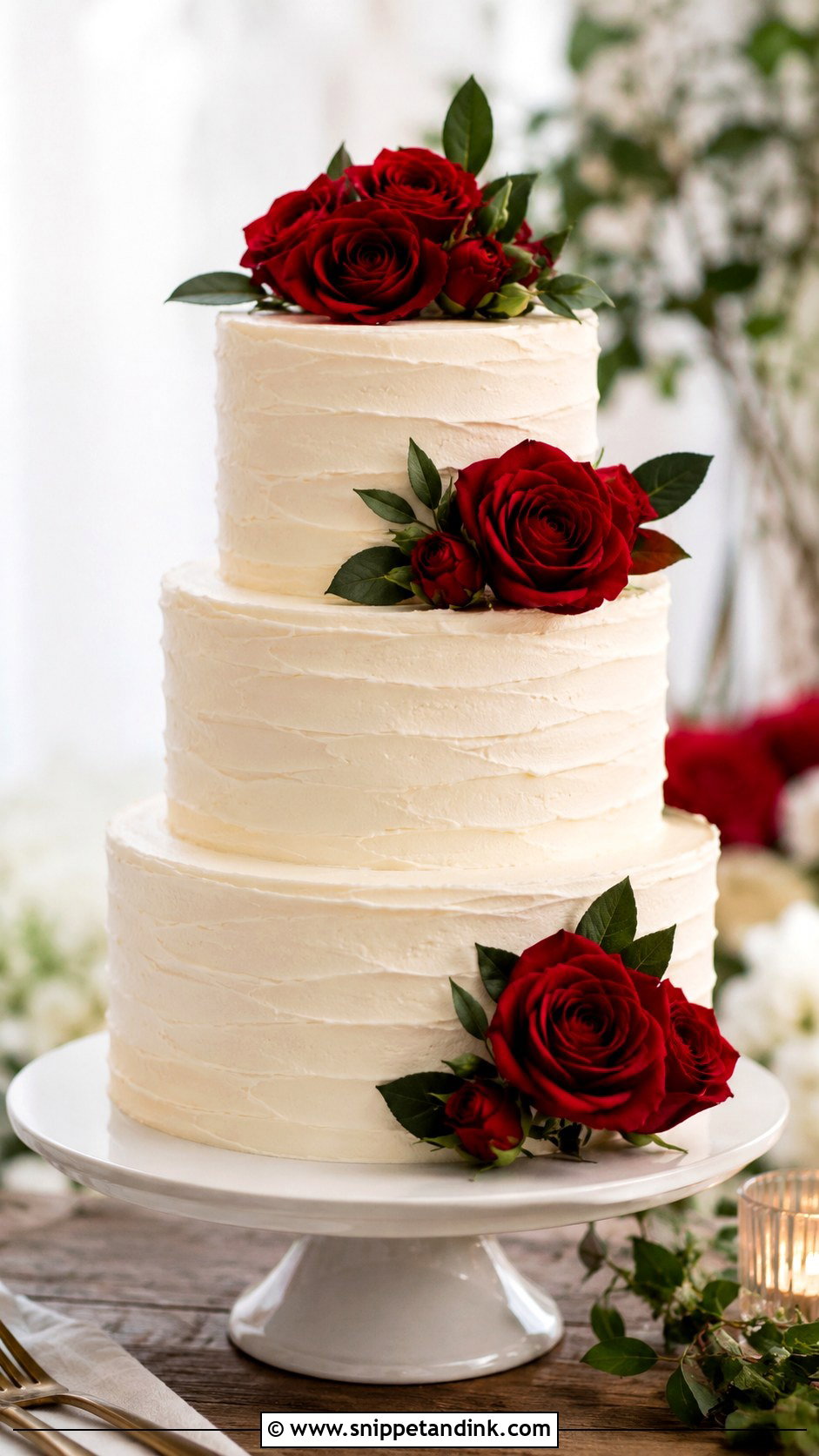
Textured buttercream is less formal than fondant and much kinder to imperfect conditions. Palette knife strokes, horizontal lines or spatula marks catch light and hide small marks from transport. It suits garden and estate receptions and small dinners. Place the roses loosely for a natural feel or tightly for a classic one. One caution: deep textures trap petals and leaves, so set fresh flowers on picks rather than pushing them into the ridges.
24. White Semi Naked Wedding Cake With Red Roses
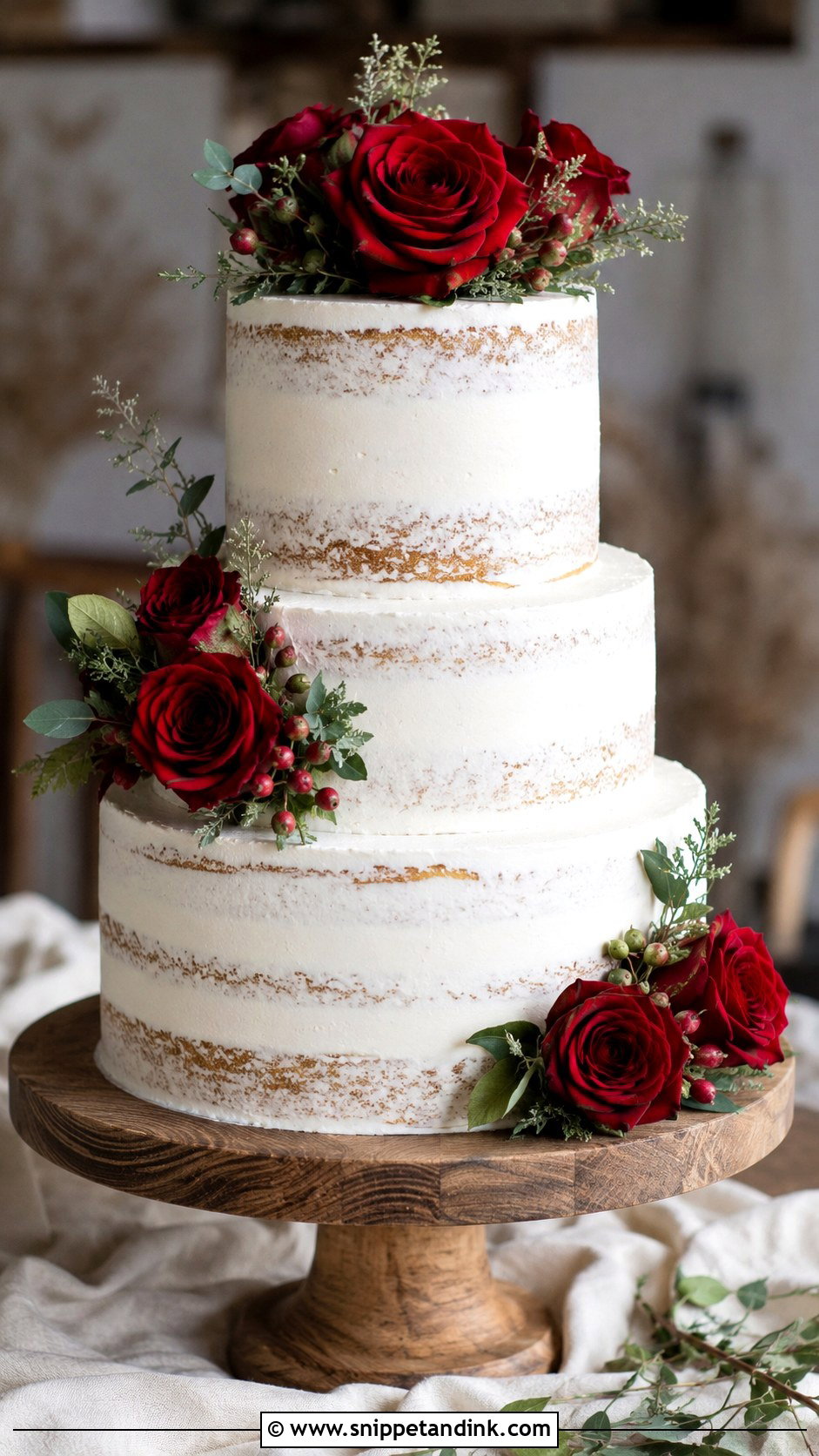
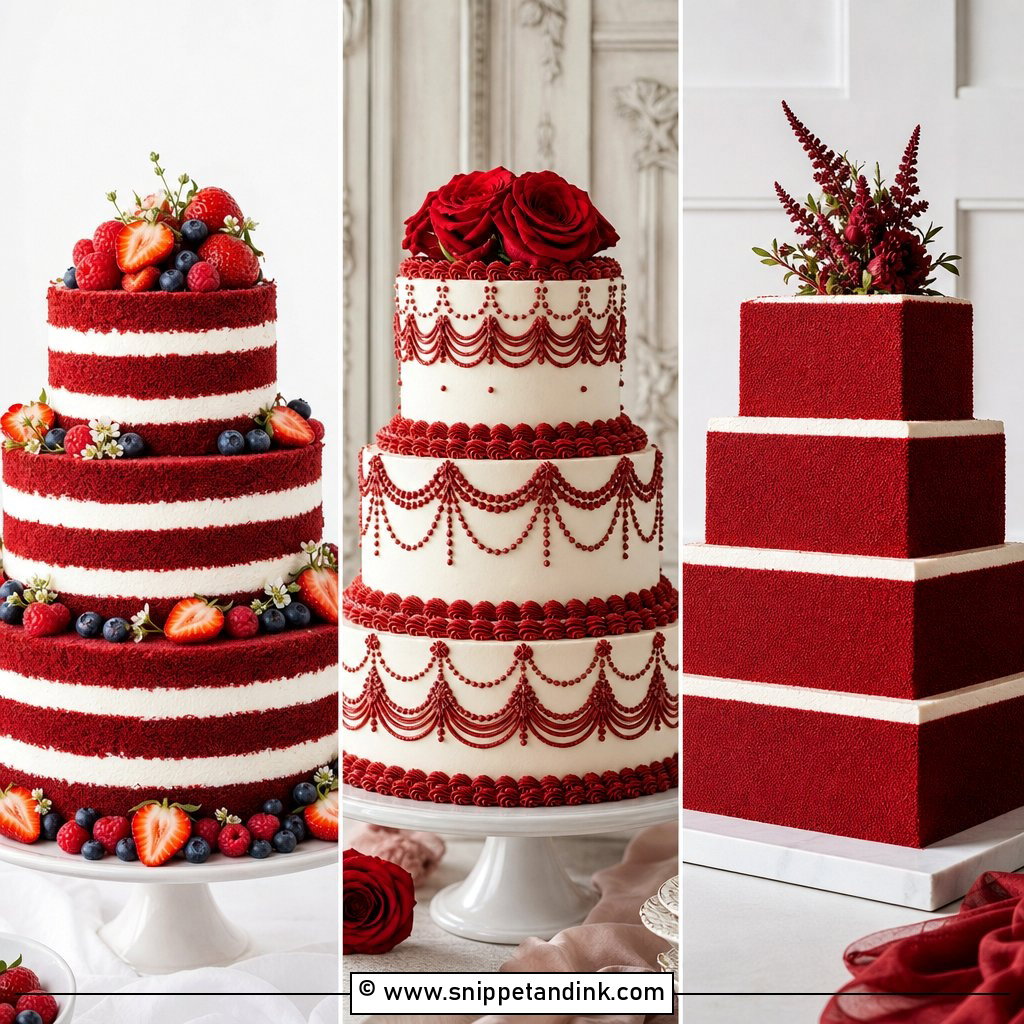
A semi naked cake is the rustic version, with a thin scrape of white icing so the sponge shows through. The crumb coat is exposed, so the cake dries out faster than a fully iced one; I assemble these as late as possible. Vanilla, almond and light sponges look best under a thin coat. Because the frosting is so thin, red rose placement does most of the decorating. A top cluster and a couple of small side accents usually do it. Berries only if they appear in your flowers too.
25. White Marble Wedding Cake With Red Roses
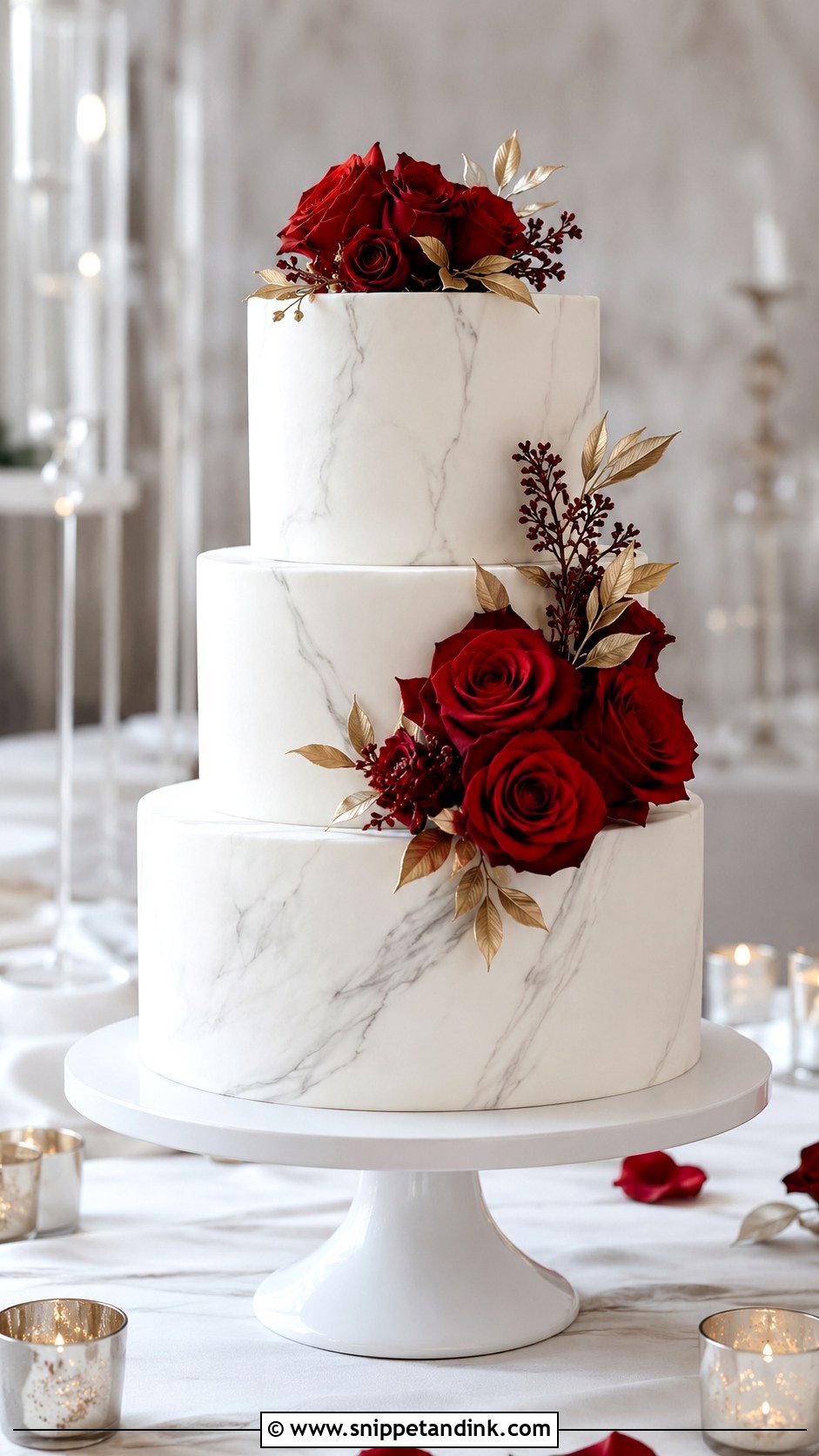
Marble gives a modern, artistic surface: soft grey veins running through white fondant or buttercream. Red roses warm up what could otherwise look cool and gallery-like. Keep the veining subtle, because strong marbling plus big red roses becomes two loud ideas. A clean, tight rose group lets the pattern stay visible. Silver or gold is an option, but this cake rarely needs it.
26. White Pearl Wedding Cake With Red Roses
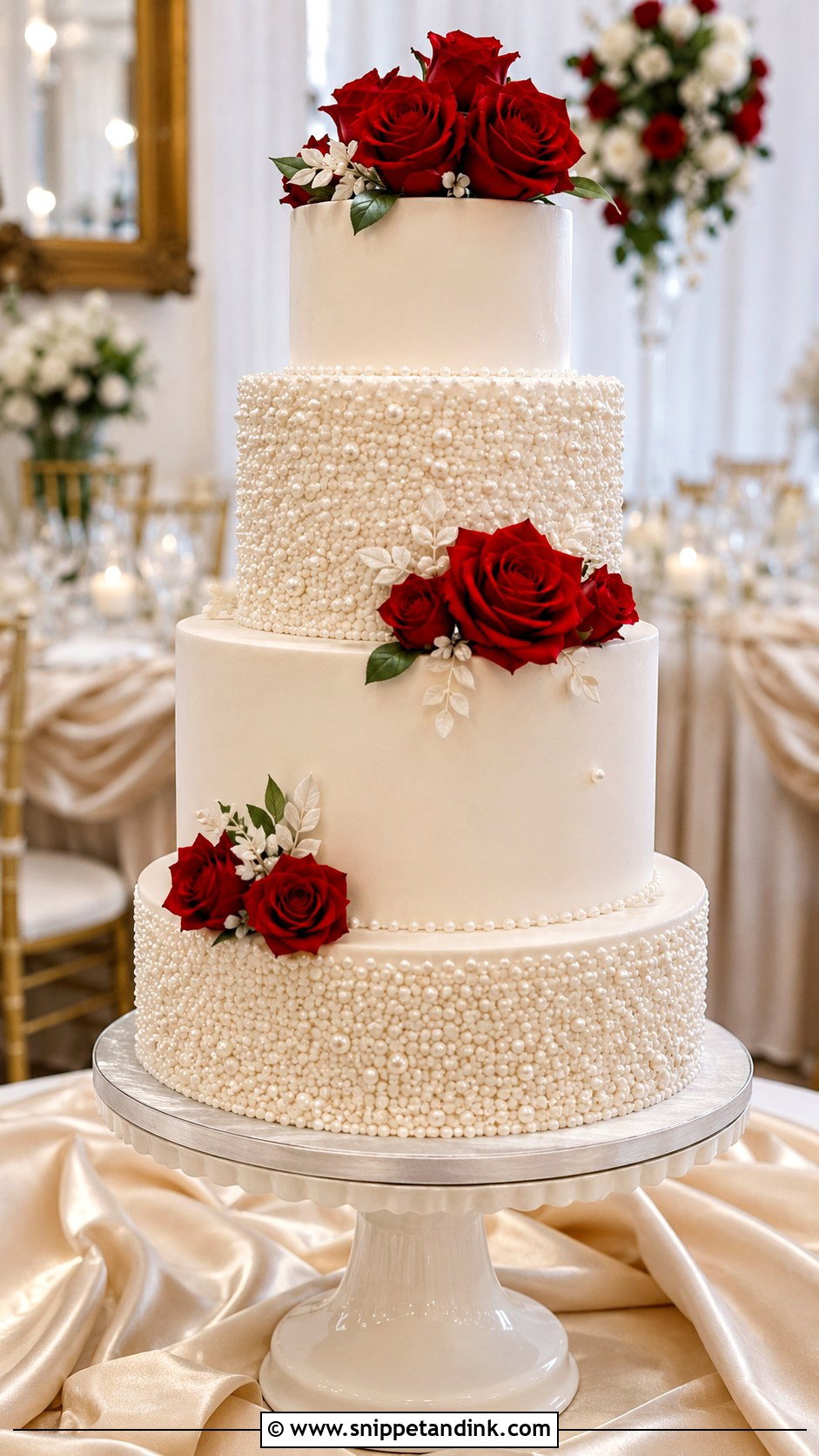
A pearl covered tier creates a luminous surface that catches candlelight. Pearls can cover a whole tier, form borders or sit as small dot patterns. Red roses stop it looking monochrome. Even spacing is everything here; uneven pearls look homemade under close photography. If you want extra shine, put it in the stand or the linen, not more pearls on the cake.
27. White Wedding Cake With Burgundy Red Roses
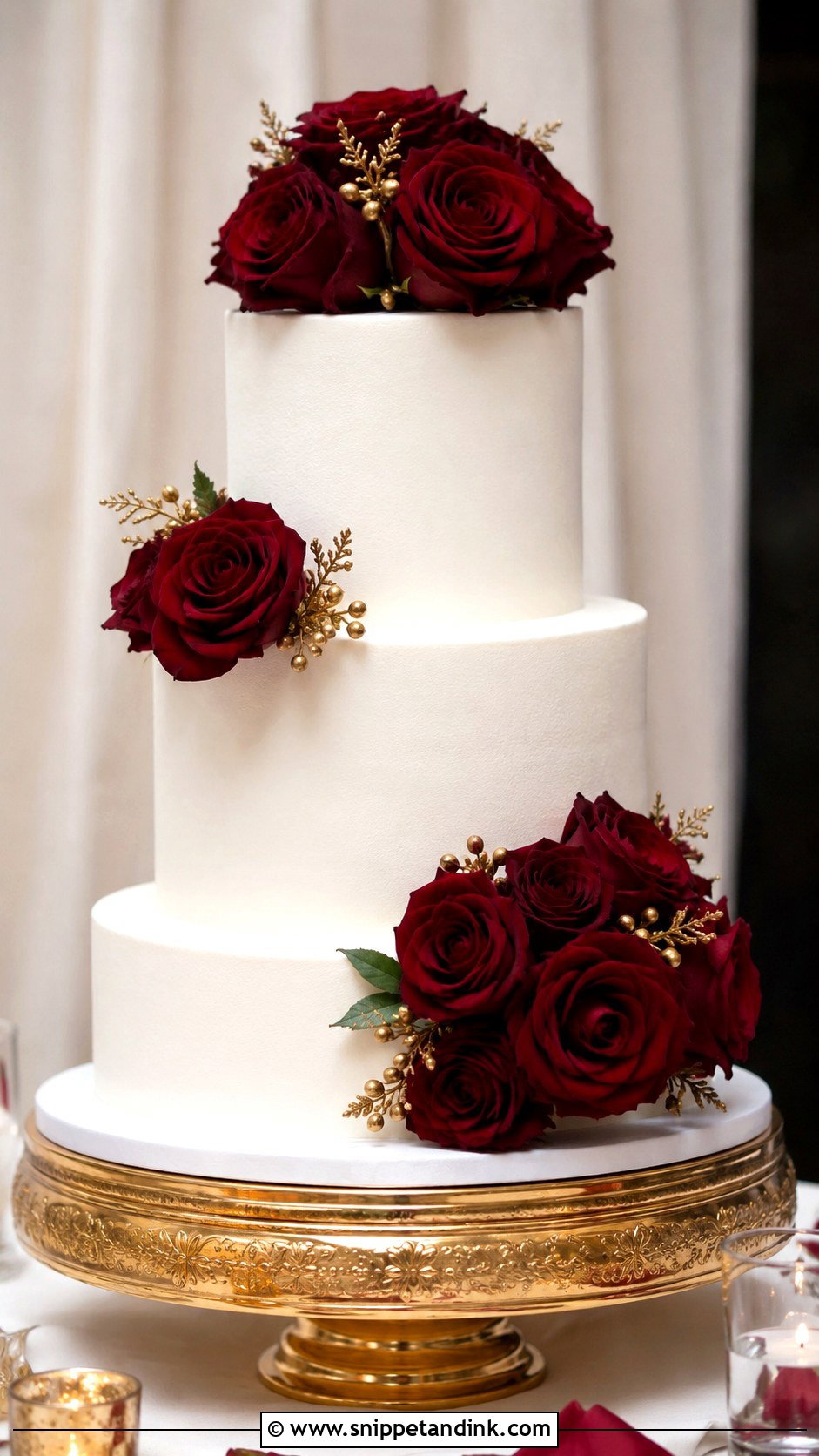
Burgundy roses take the classic look somewhere darker and more grown up. They suit autumn and evening weddings and look rich without drifting into Christmas territory. On white icing they are even more contrasty than true red, so fewer flowers are needed: a small cascade or a top arrangement is enough. Pair with minimal greenery or a gold edge. Dark petals also stain more easily, so a barrier under each bloom matters most with this shade.
28. White Wedding Cake With Red Rose Petals
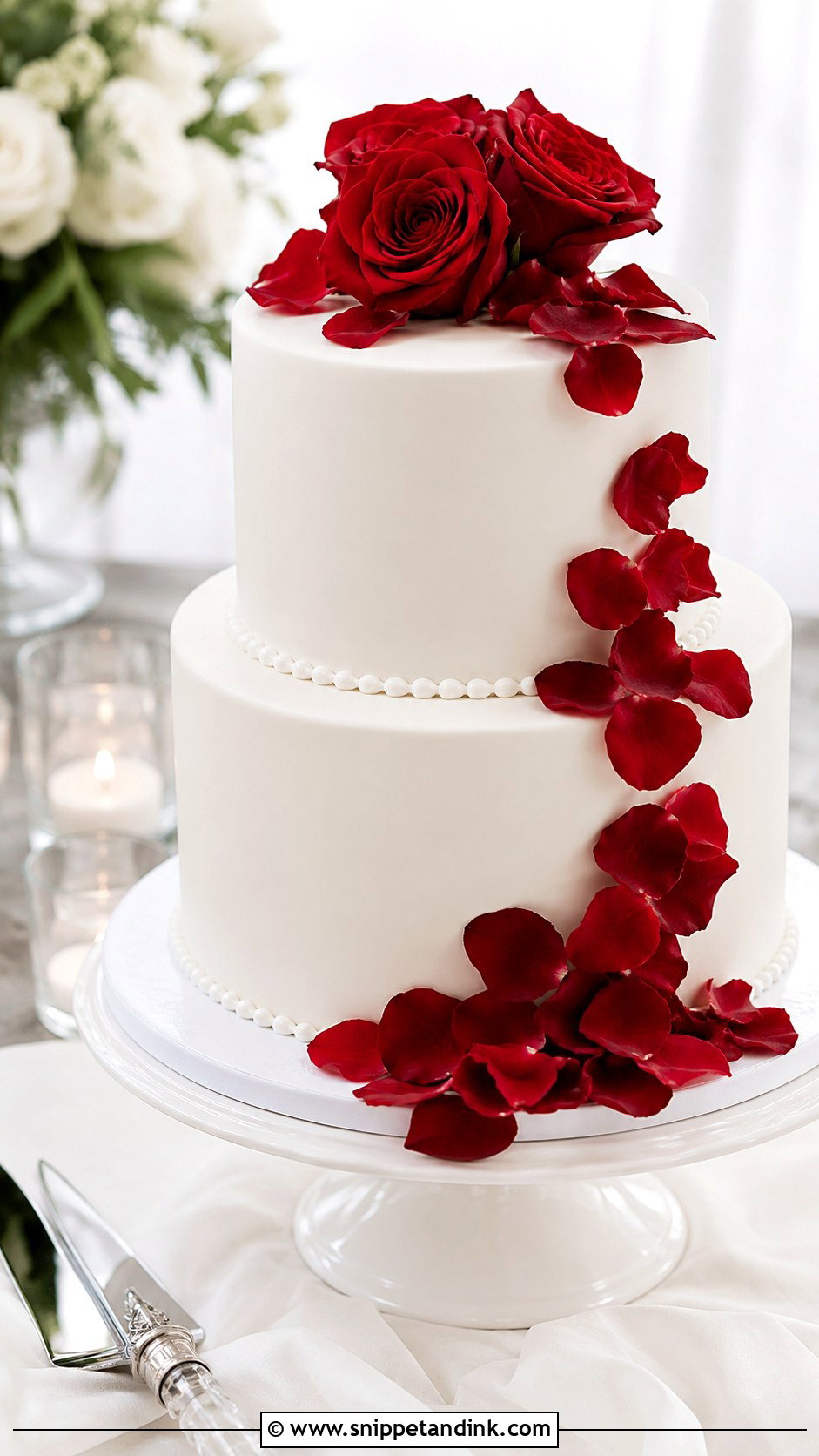
Petals are the understated version. They scatter down one side, gather at the base or ring the cake stand. They must be food safe, which means sourced unsprayed, not just any roses from the centrepieces. Loose petals also bruise and brown at the edges within a few hours, so I scatter them at the venue right before guests come in. One or two full roses on top tie the petals to a clear design.
29. White Wedding Cake With Red Roses And Monogram
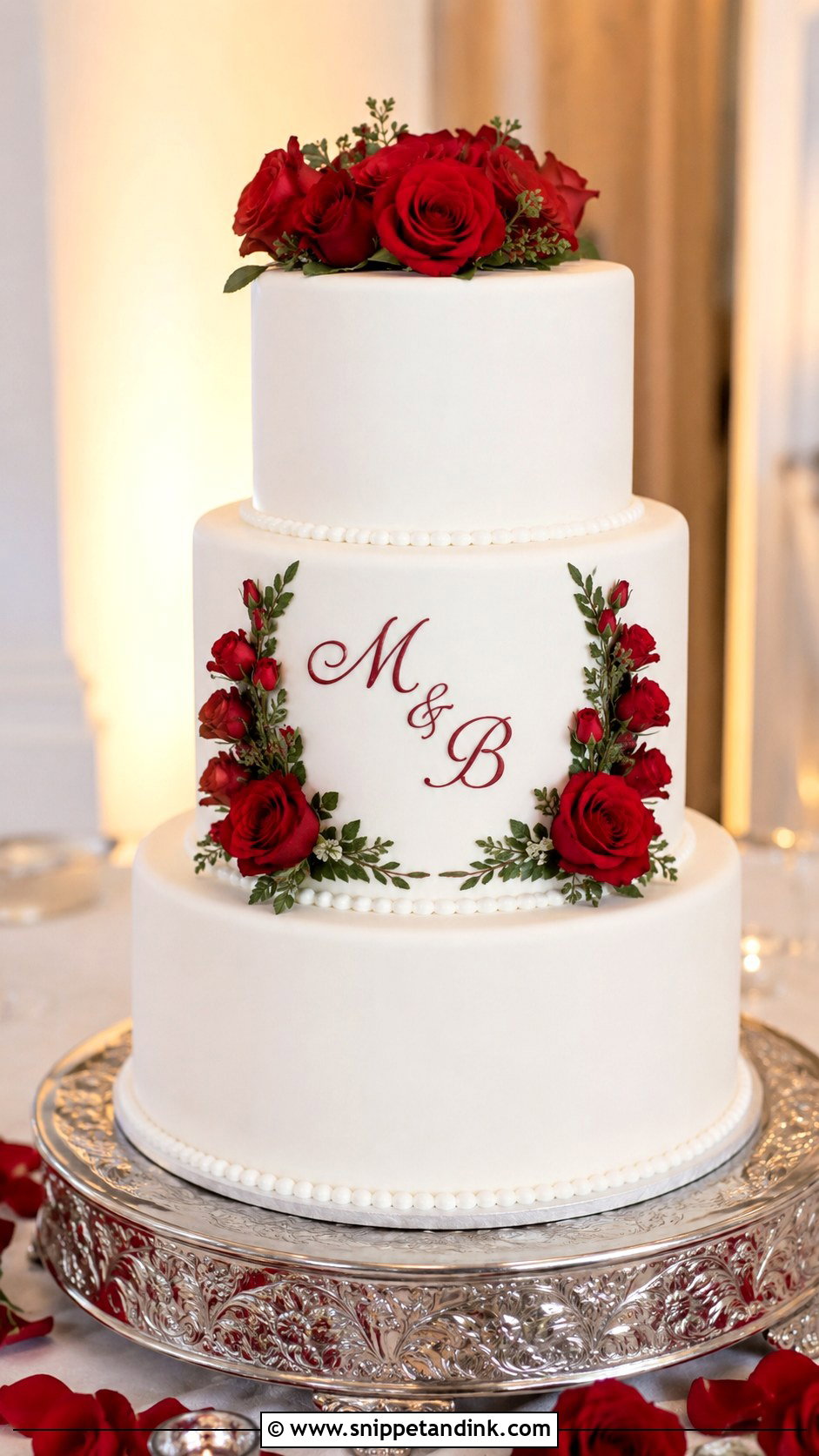
A monogram makes the cake specific to the two of you. It can be piped, painted, embossed or set as a topper. Red roses frame the initials without hiding them if they sit to the side rather than above. Keep the lettering simple; a script with heavy flourishes is hard to read at photo distance. Smooth white icing is the best base, and a thin pearl or ribbon border is all the extra it needs.
30. White Sheet Wedding Cake With Red Roses
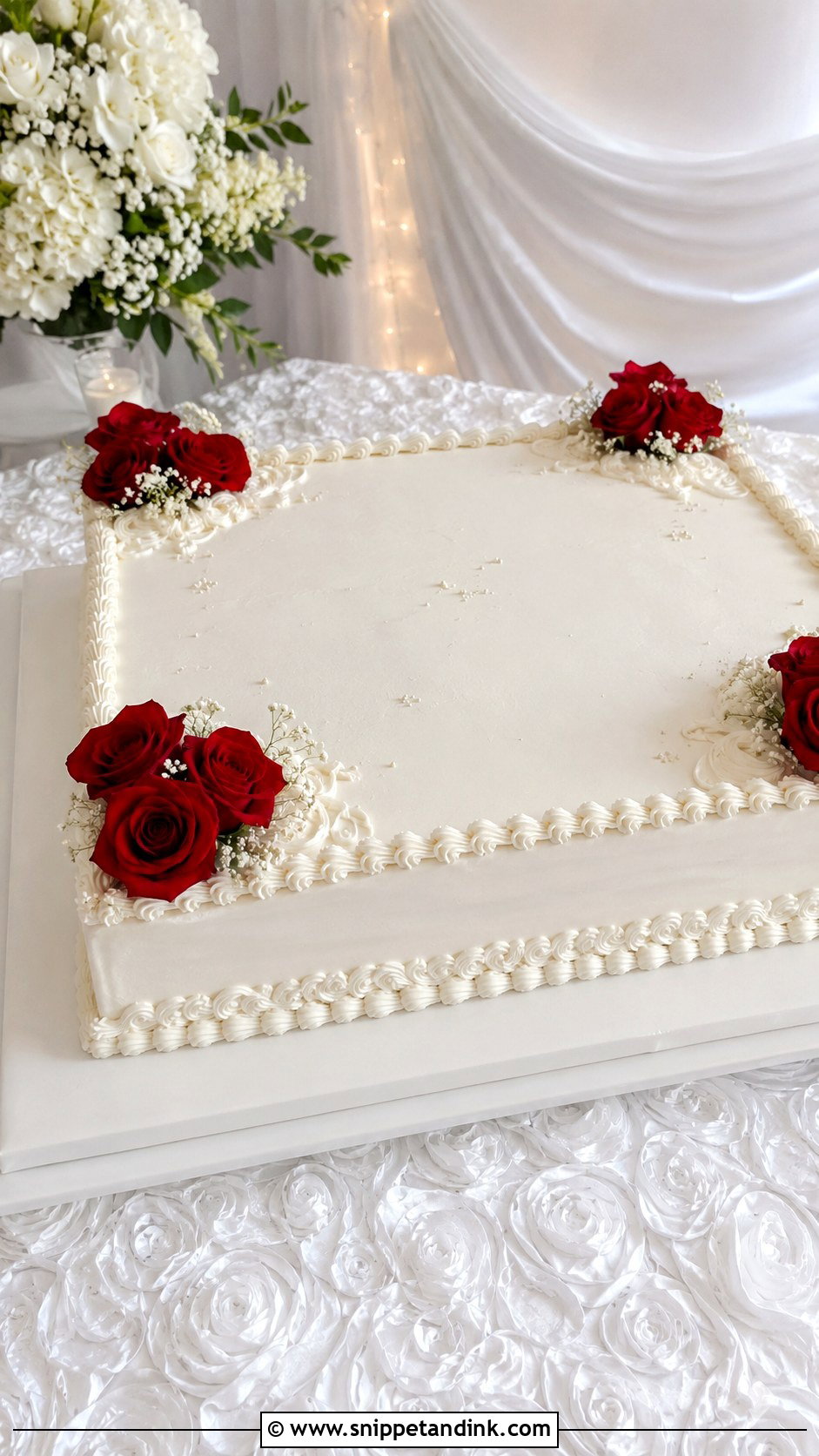
A sheet cake is the practical piece of this list, and I suggest it more than couples expect. It lacks height, but smooth white frosting, piped borders and red rose clusters make it look intentional on a dessert table. It is also the smart move when you want a smaller display cake plus extra servings in the kitchen. Put roses at the corners or along one long side, and keep them out of the middle so the cutter can portion cleanly.
Which Red Works Against Ivory, Bright White and Candlelight
“Red” covers a huge range, from orange-leaning scarlet to blue-leaning crimson and almost black burgundy. The shade you pick should depend on your icing more than your colour board.
- Bright white fondant suits blue-leaning reds like crimson. Orange-leaning reds against pure white can look slightly cheap in photos.
- Ivory buttercream is warmer, so it flatters scarlet and true red, while very cool crimson can make it look yellow by comparison.
- Candlelit and evening rooms swallow dark colours. Burgundy that looks rich at a daytime tasting can read as black after sunset, so I lean one shade brighter for night receptions.
- Gold lighting and uplighting shift everything warmer. If the room will be washed in amber, check the roses under a warm bulb before you sign off.
The simplest test is to hold a real rose in your chosen shade against an icing sample at the tasting. It takes two minutes and saves a lot of disappointment.
Who Places the Roses on the Day, and When
A red rose cake usually involves two vendors, and the handover is where things slip. Settle these points in writing a few weeks out.
- Decide who dresses the cake. Some bakers insist on placing flowers themselves; others leave it to the florist. Either works, as long as one named person is responsible.
- Ask the florist for a separate cake bundle: a set number of heads in the right sizes, plus a few spares, delivered conditioned and ready.
- Time it. Fresh roses go on within an hour or two of guests arriving, not at morning setup.
- Plan the cutting. Roses on picks lift out in seconds, but someone on the catering team needs to know to remove them before slicing, so no stem or straw ends up on a plate.
Matching the Roses, Icing and Room Before You Order
Most of these thirty cakes come down to three decisions: fresh roses or sugar, buttercream or fondant, and how much of the cake the roses should cover. Make those with your venue in mind. A warm outdoor reception points to sugar flowers and textured buttercream; a cool ballroom can take fresh roses on smooth fondant. A small cake needs one cluster, a tall one can hold a full cascade. Bring your bouquet plan and a photo of the room to your tasting, and the right version usually becomes obvious.
You'll Like These Ideas:






Leave a Reply