
Few flowers do as much work on a cake as a sunflower. One head can carry a whole tier, and its brown center gives the eye a place to stop. That’s why sunflower cakes turn up at so many summer barn weddings, and why they adapt so easily: scrape the frosting thin for a farmhouse feel, or wrap the tiers in fondant and add navy or terracotta for something sharper. The designs below cover finishes, color pairings and companion flowers. As you read, notice which details depend on fresh blooms, because that choice affects your quote and how the cake handles a warm room more than any other.
Bring a Fabric Swatch, Not a Paint Chip
Several cakes below pair sunflowers with navy, sage, terracotta or black. Getting those colors right in frosting is its own small craft, and it helps to know how it works before you sign off on a sample.
Buttercream made with real butter is ivory, not white. Every color I add sits on that warm base, so blues drift toward teal and greens warm up. I correct for it, but the most accurate reference you can give me is a scrap of the actual bridesmaid fabric or ribbon. A screen color or a paint chip looks different from frosting under every light.
Deep shades also keep developing after mixing. Navy, black and dark terracotta can darken noticeably as the color sits for a few hours, so I mix them a day ahead and match the finished shade, not the fresh one. Large amounts of dark coloring can taste bitter and stain lips, which is why I often move a dark tier into fondant.
- Light, muted shades like sage and butter yellow tint easily in buttercream.
- Navy and black are better in fondant, ribbon or a fine painted line.
- Terracotta looks warmer under candlelight than in daylight, so check a sample in both.
- Ask to see the color on a tasting cake, not just a spoonful in a bowl.
1. Rustic Sunflower Wedding Cake
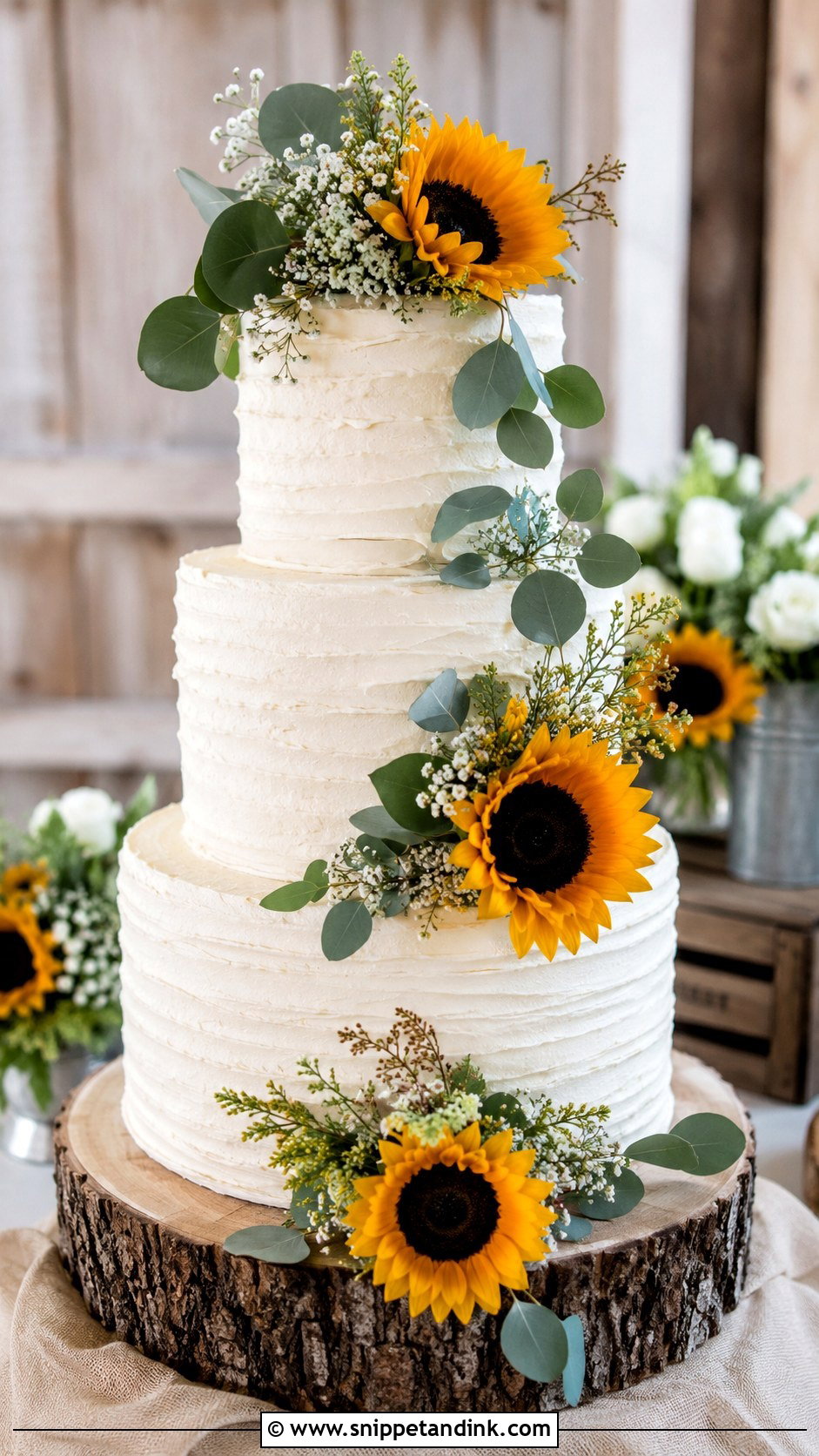
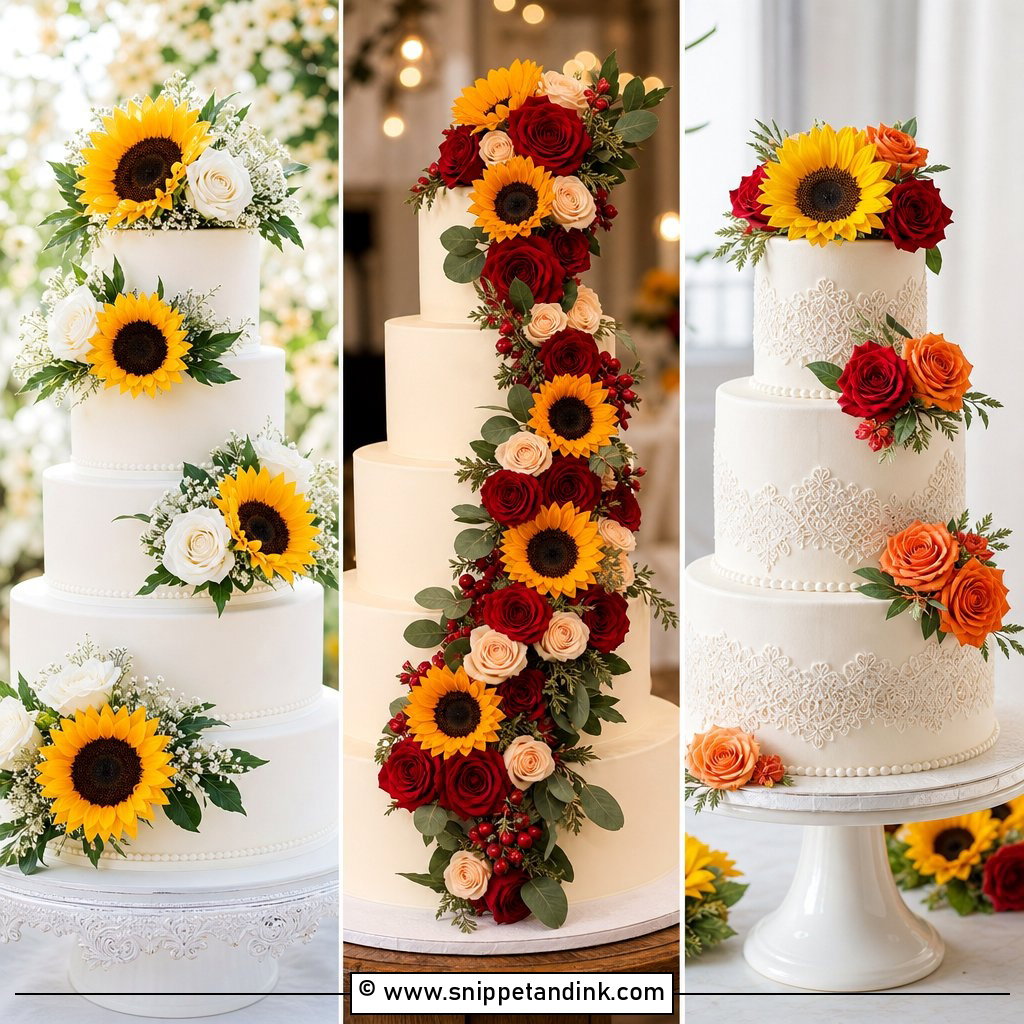
This is the design most couples picture first. Two or three tiers in lightly textured ivory buttercream, with a cluster of sunflowers at the base, the middle and the top. I keep the texture loose, with palette-knife strokes rather than a smooth coat, because it forgives a little warmth and a bumpy drive down a farm track. Small white roses or greenery soften the yellow. If you want burlap or lace, keep it on the boards rather than against the frosting.
2. Naked Sunflower Wedding Cake
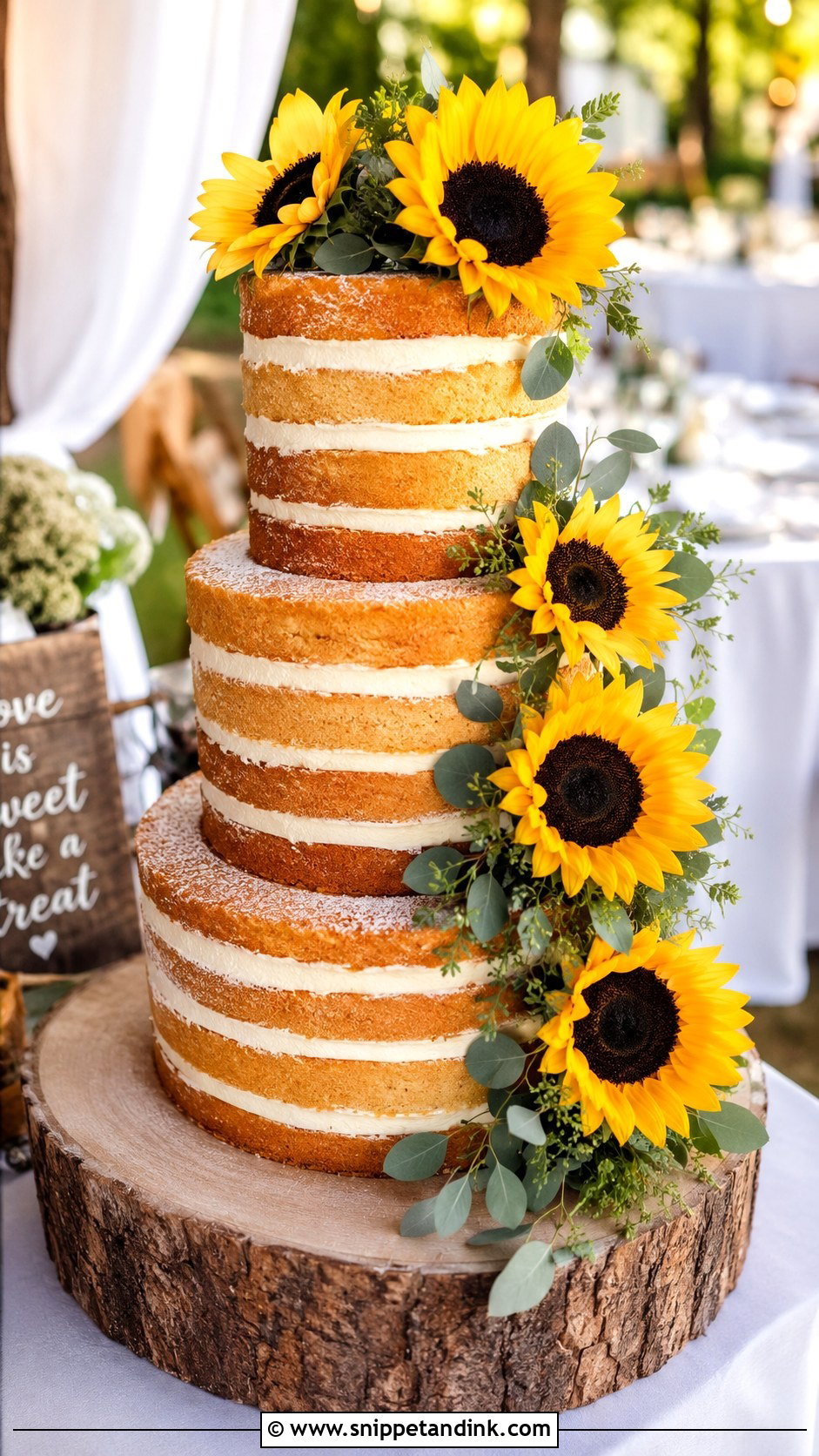
Exposed layers need perfect stacking, since there’s no frosting to hide a leaning tier. I bake and level each layer carefully, brush it with syrup so it doesn’t dry out on display, and apply a thin filling that shows as an even stripe. Vanilla, almond, honey and spice sponges have warm golden crumbs that sit nicely beside the petals. A diagonal of sunflowers down the tiers keeps it balanced. My one warning: a naked cake left in direct sun for an afternoon will dry at the edges, so ask for a shaded table.
3. Semi Naked Sunflower Wedding Cake
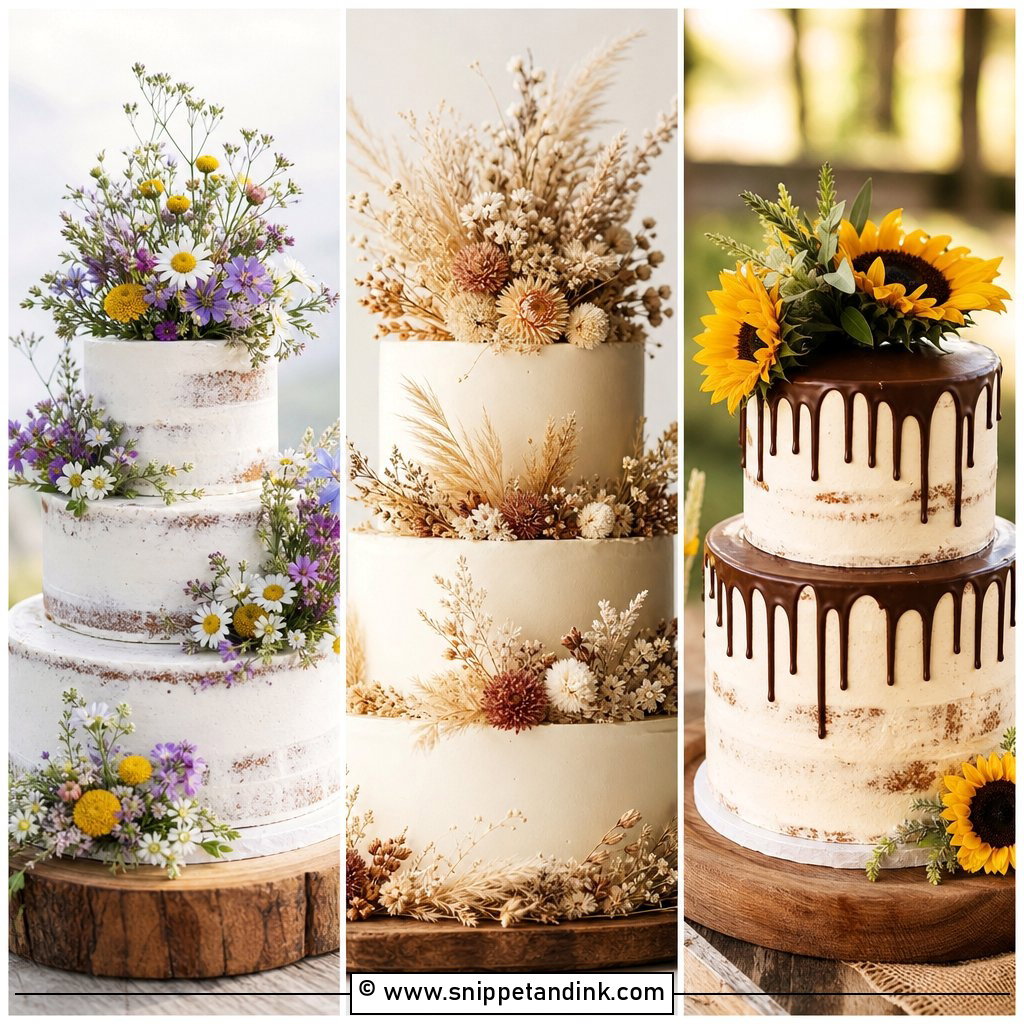
Think of this as insurance for the rustic look. A semi naked sunflower wedding cake has a thin scrape of buttercream that seals the sponge while still letting the layers peek through. Warm ivory frosting suits sunflowers better than bright white, which can make the yellow look harsh in photos. A loose cascade of blooms with small daisies or cream roses fills the side, and any eucalyptus needs wrapped stems or a barrier before it touches the cake.
4. Sunflower Wedding Cake With Burlap
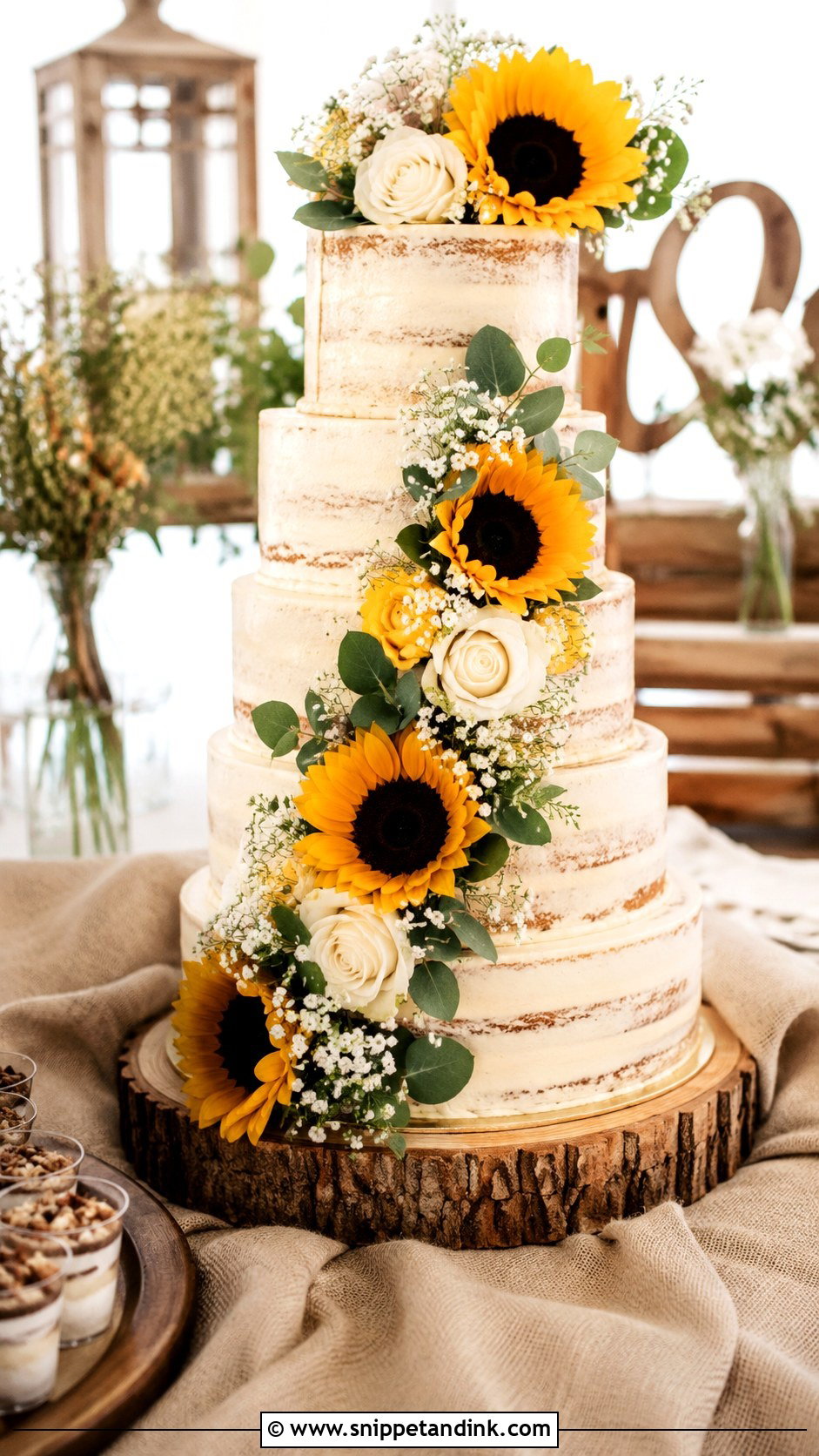
Burlap belongs on the boards, not on the frosting. Real jute sheds fibers and soaks up butter, which leaves greasy stains within hours. When couples ask for this look I wrap burlap as a narrow ribbon over a strip of food-safe ribbon or around the cake drum at the base of each tier, then layer lace over it to soften the texture. Ivory buttercream and vanilla sponge are the classic pairing. A sunflower topper or a side cluster keeps the burlap from dominating.
5. Sunflower Wedding Cake With Roses
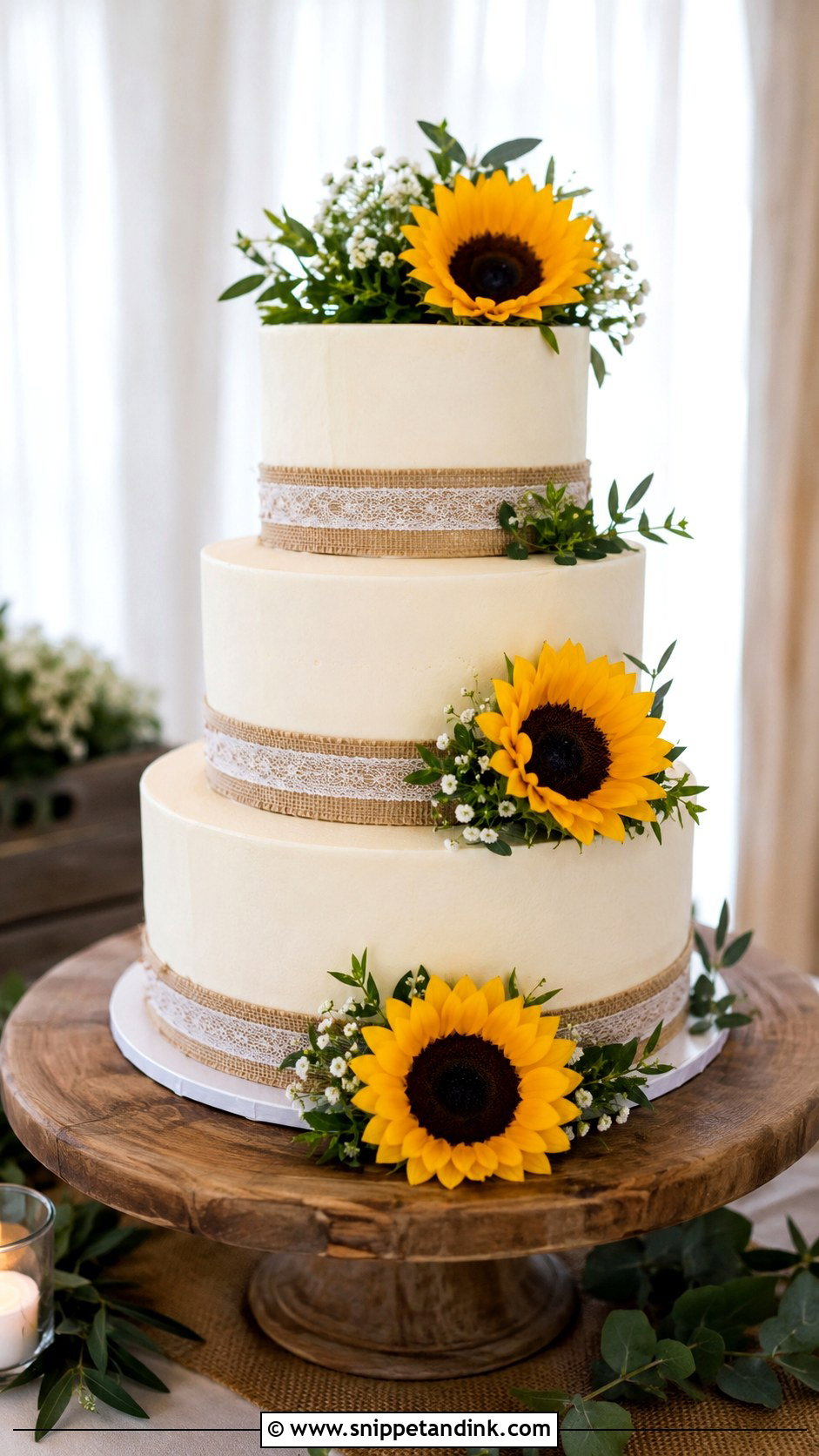
Roses and sunflowers need grouping. Scatter them and the cake looks busy; cluster them and it looks designed. I build each group around one sunflower with two or three roses tucked against it, then place the groups in a diagonal or between tiers. White roses stay classic, blush softens, and deep red pulls the cake toward autumn. A smooth buttercream or fondant base gives that arrangement a clean backdrop.
6. Sunflower Wedding Cake With Baby’s Breath
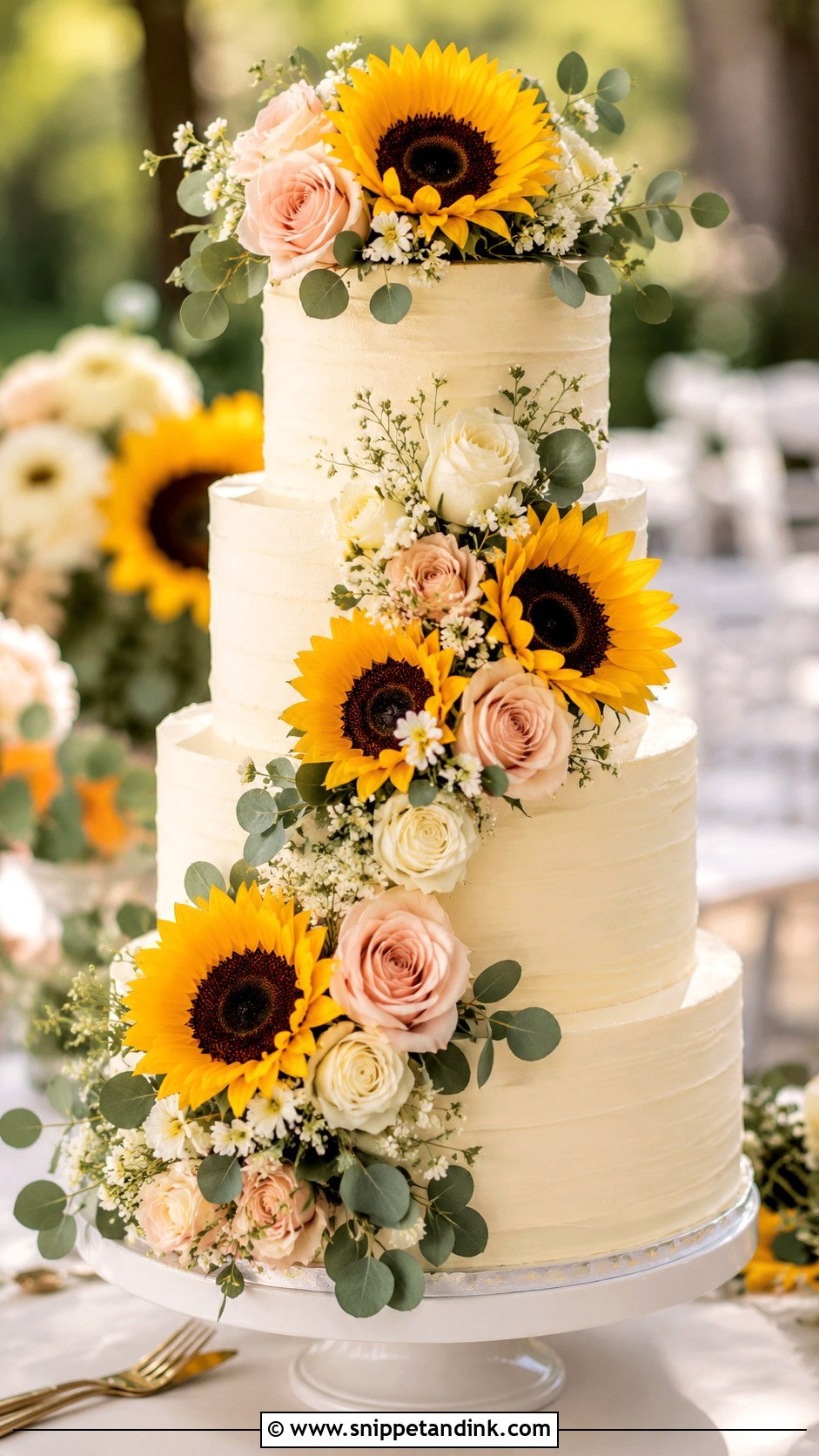
Sunflower heads are round and wide, so several of them side by side leave awkward gaps. Baby’s breath fills them. I arrange sunflowers in small clusters and let the gypsophila trail between tiers, always with stems wrapped and sitting on a barrier, since baby’s breath isn’t safe to eat. Ivory buttercream keeps everything soft. In photos the tiny white flowers lift the yellow and keep it from reading as heavy.
7. Sunflower Wedding Cake With Eucalyptus
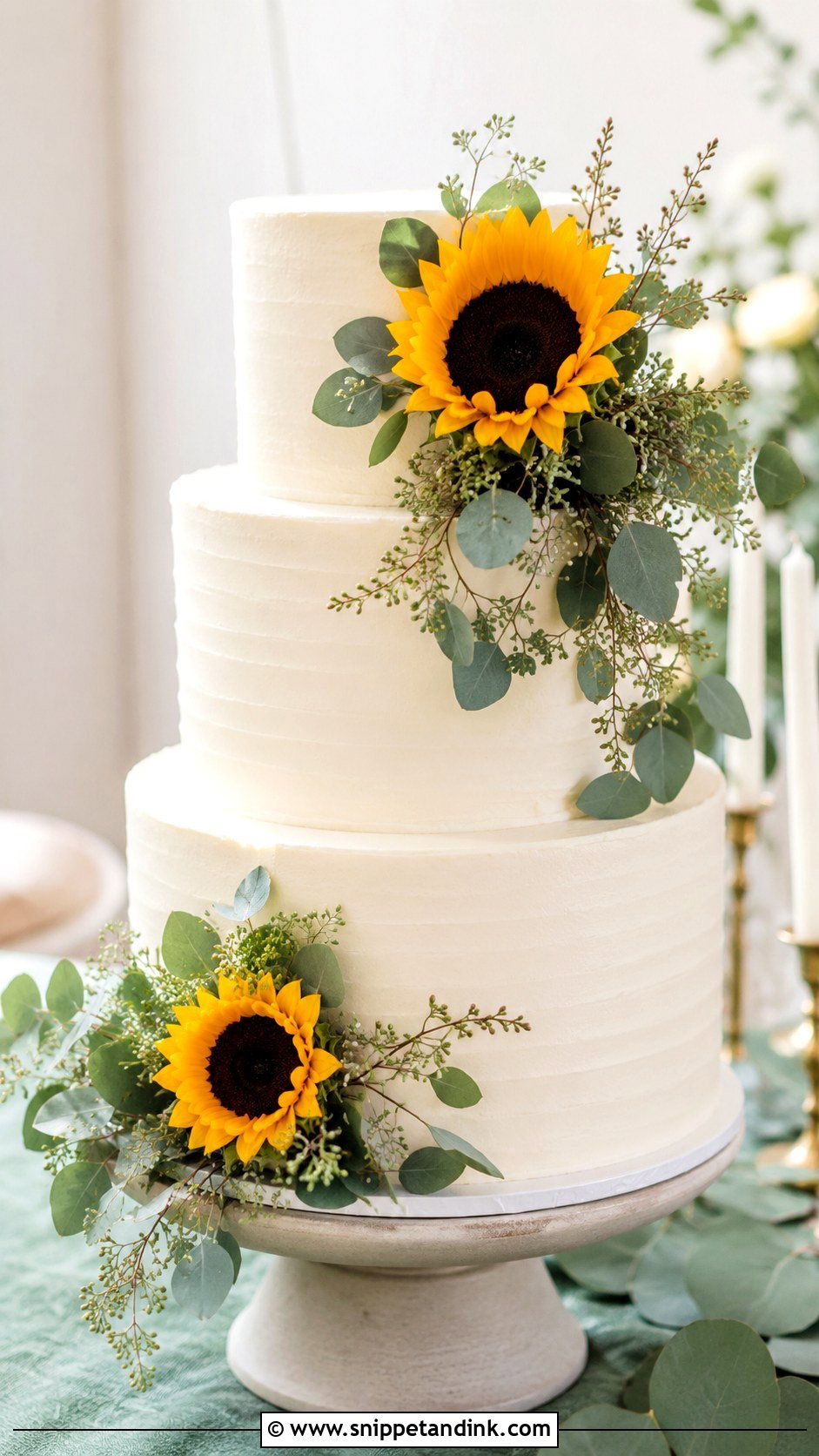
Two kinds of eucalyptus show up on cakes for different reasons. Silver dollar has round, flat leaves that lie neatly against tiers; seeded eucalyptus adds little berry clusters and movement. Neither is edible, and eucalyptus oil isn’t something you want in frosting, so I insist on wrapped stems and placement on cake boards or barriers. The muted grey-green calms the yellow down. A diagonal trail of blooms and leaves gives height without needing many flowers, which suits sage palettes and candlelit wood tables.
8. Sunflower Wedding Cake With Navy Blue
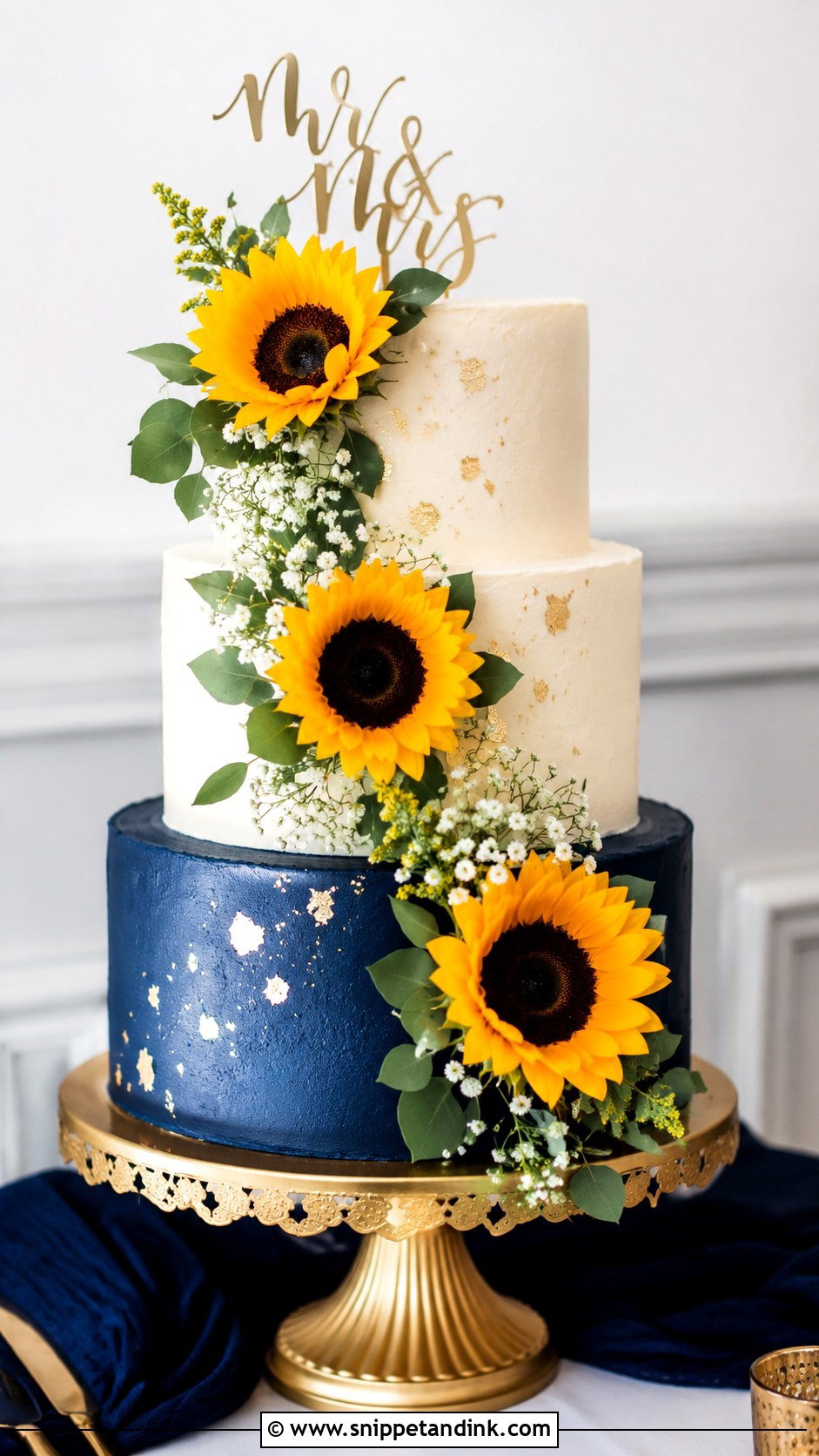
Navy and sunflower yellow sit almost opposite each other on the color wheel, which is why the pairing looks so crisp. The strongest version I make has a navy bottom tier with ivory tiers above and sunflowers as the only bright color. Navy buttercream takes a lot of gel color and can taste slightly bitter, so for a full tier I’d usually suggest navy fondant instead. Navy ribbon, brushed watercolor strokes or a navy drip are lighter options, and a touch of gold leaf echoes the petals.
9. Sunflower Wedding Cake With Sage Green
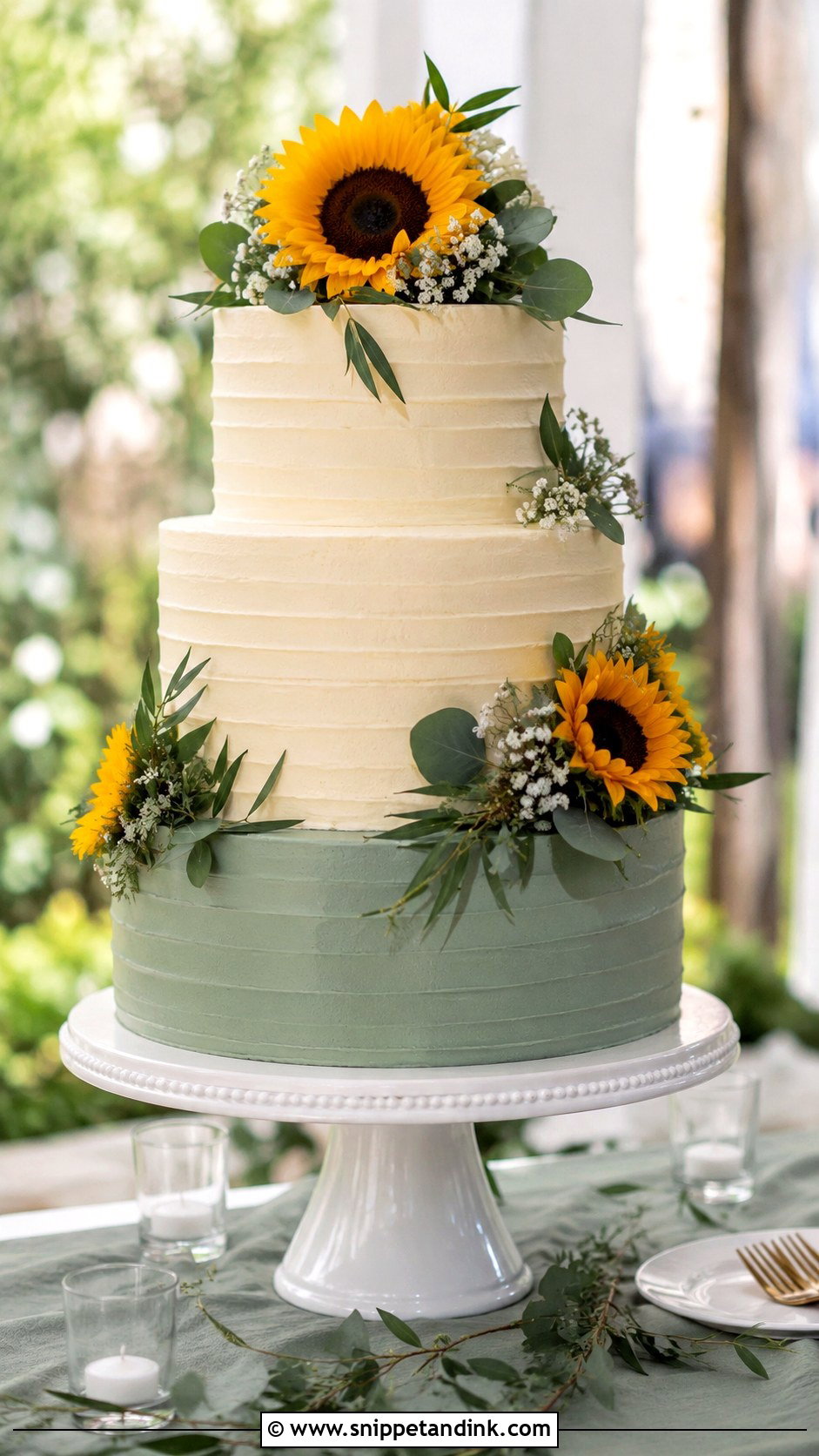
Sage tints well in buttercream because it’s a muted shade that needs very little color. I mix it slightly greyer than the swatch, since butter-based frosting carries a yellow cast that warms the green. A sage base tier, sage ribbon or painted leaves around ivory tiers all frame sunflowers without competing. Olive leaves or small white flowers on one side are enough. This is one of the easiest pairings to match to bridesmaid dresses.
10. Sunflower Wedding Cake With Terracotta
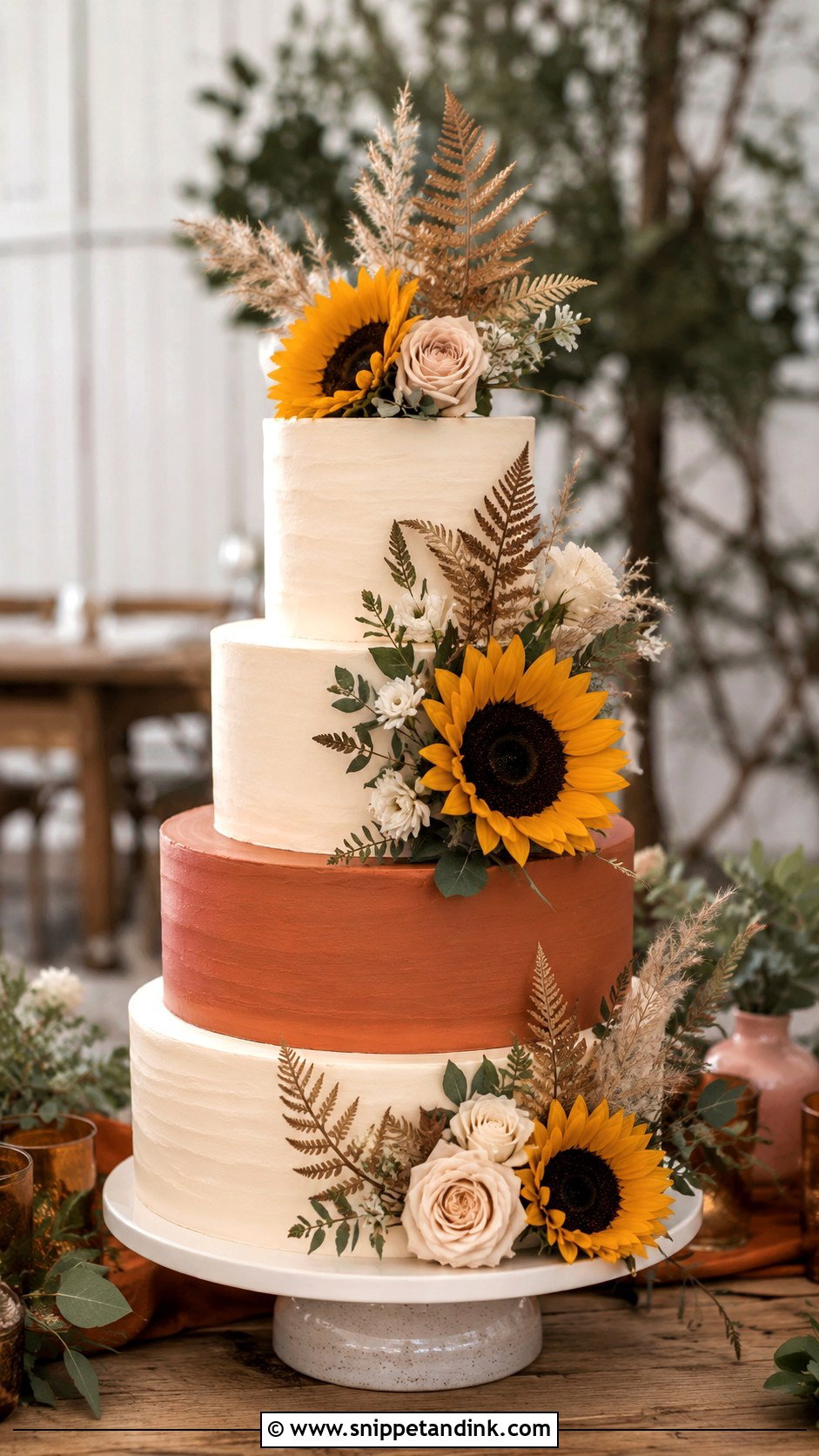
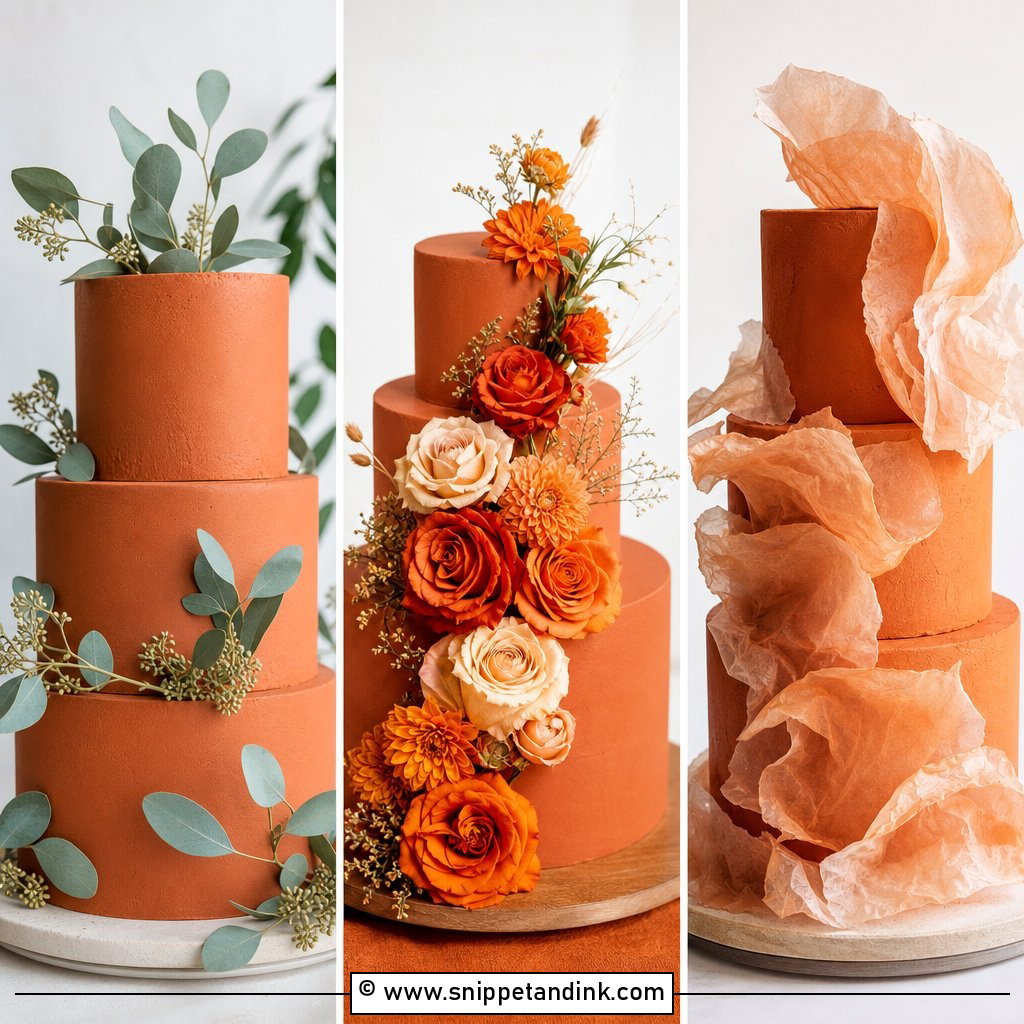
Terracotta needs a careful hand: too much orange and it fights the sunflowers, too little and it reads as peach. I build it from orange with a touch of brown and test it under warm and cool light before committing. A smooth terracotta tier between ivory ones, or terracotta brush strokes over white, both work. Add sunflowers with pampas grass, dried fern or cream roses, keeping any dried materials on wrapped stems because they shed. Let the sunflowers stay the focal point and the terracotta play the supporting role.
11. Sunflower Wedding Cake With Buttercream Flowers
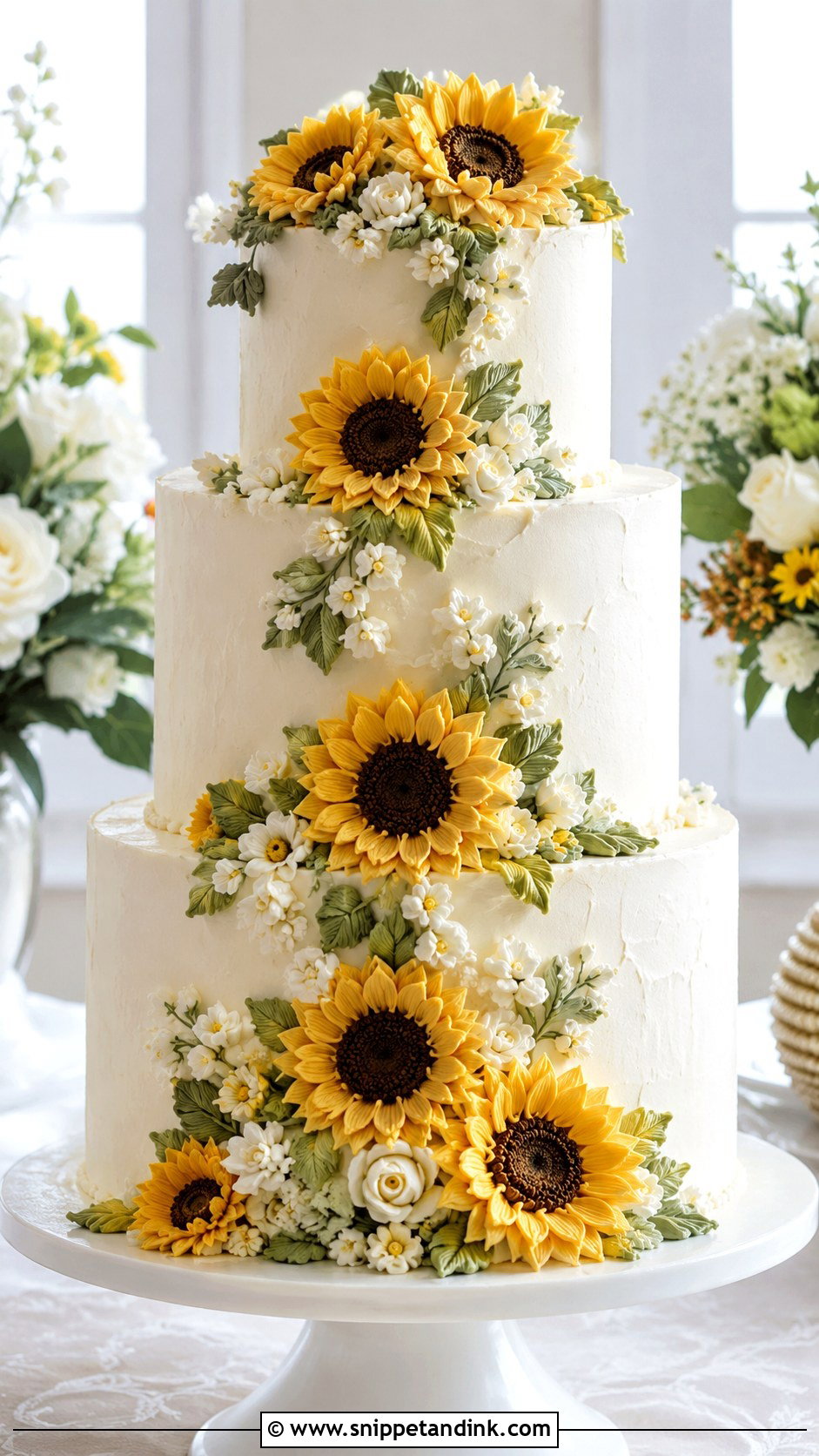
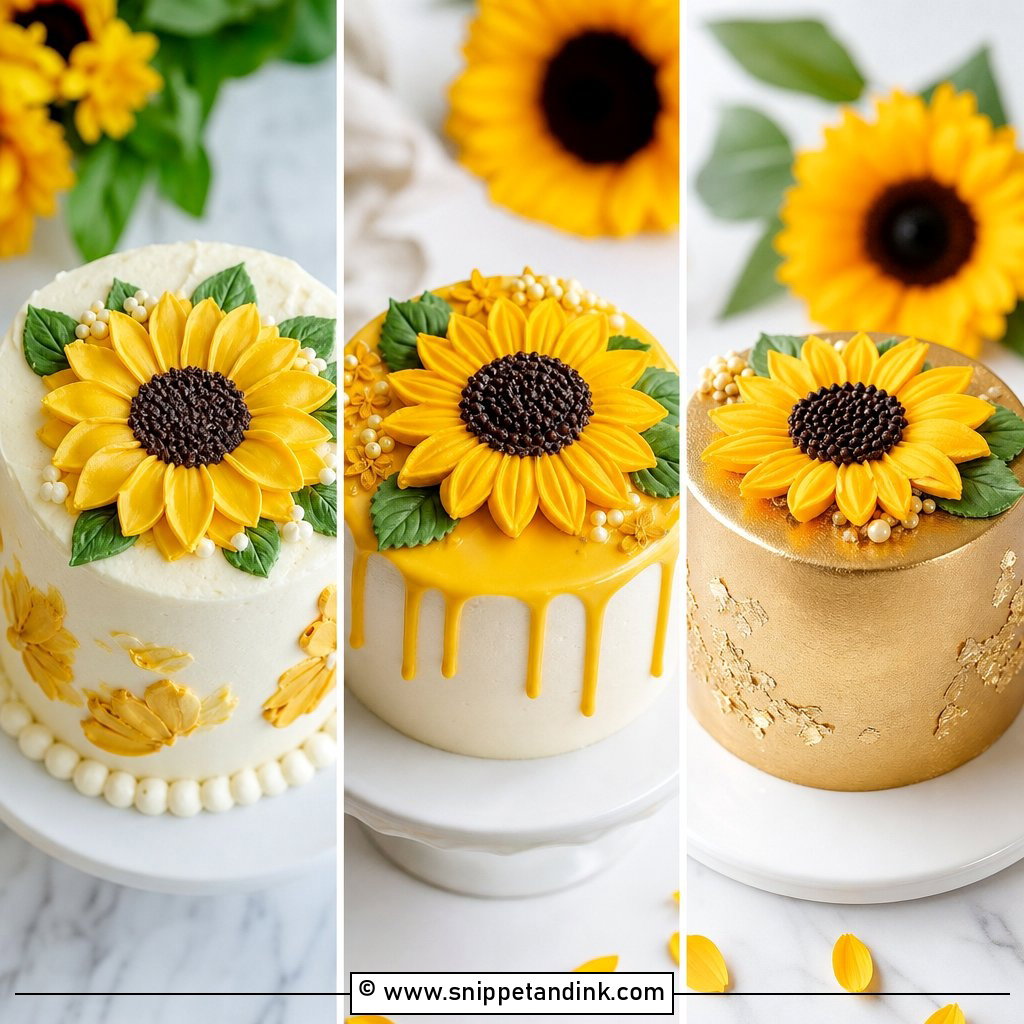
Piped sunflowers are entirely edible, and I can control every petal’s size and color. I use a leaf tip for the pointed petals, building two rounds of them, then fill the center with dark chocolate buttercream dots or crushed cookie for texture. Pipe them onto parchment and freeze them, then set them on the chilled cake, so they hold their shape. They suit single-tier and smaller cakes best; in strong heat, petal tips are the first thing to soften.
12. Sunflower Wedding Cake With Sugar Flowers
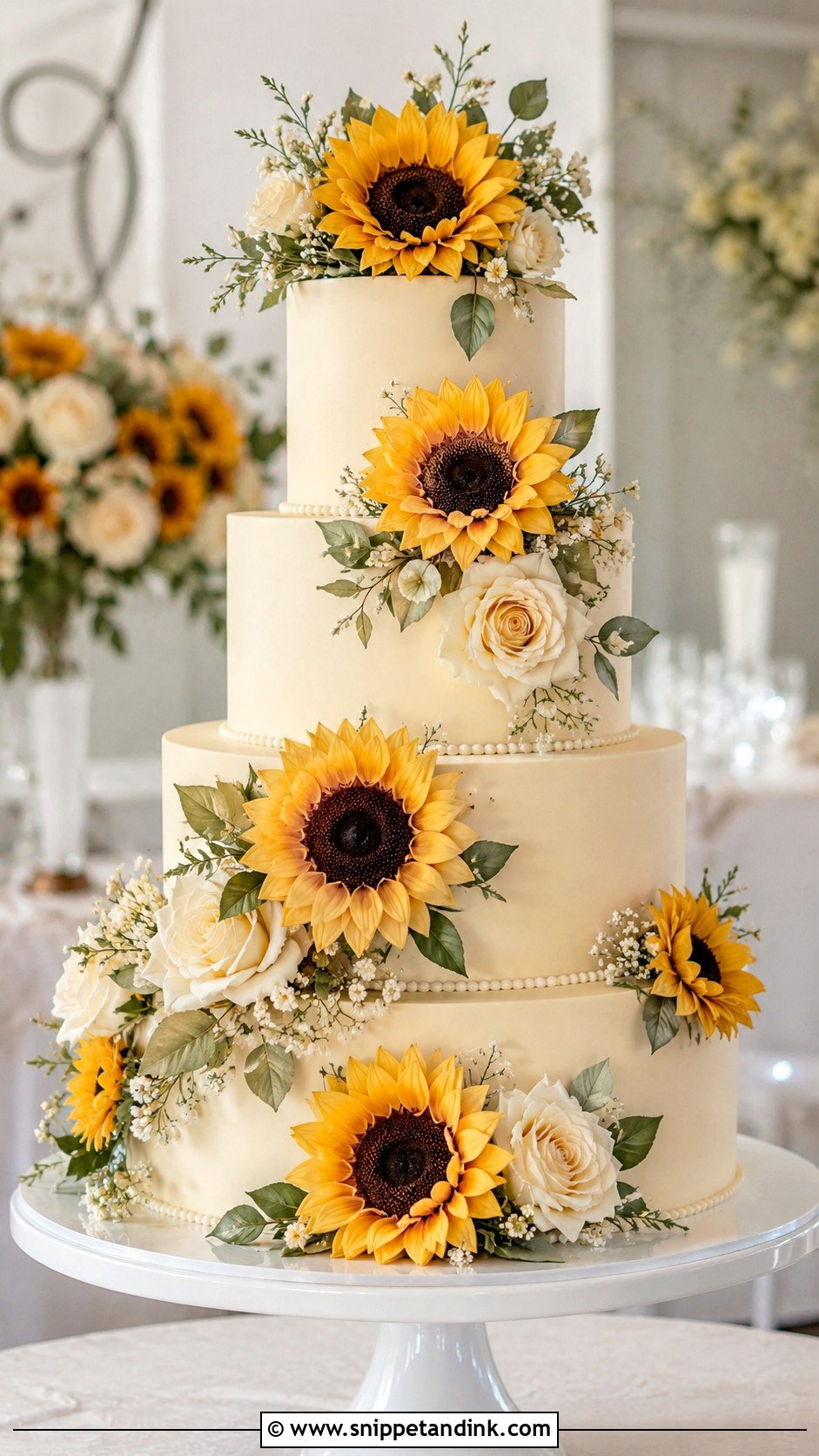
A gum paste sunflower takes hours: each petal is cut, veined, wired and dried before the flower is assembled and dusted with color. The reward is a bloom that never wilts and can be tinted to your exact palette. These are my recommendation for formal weddings or long, warm receptions. They sit well on smooth fondant or pearl-dusted buttercream with a few sugar leaves. Order early, since a large set takes weeks.
13. Sunflower Wedding Cake With Fondant
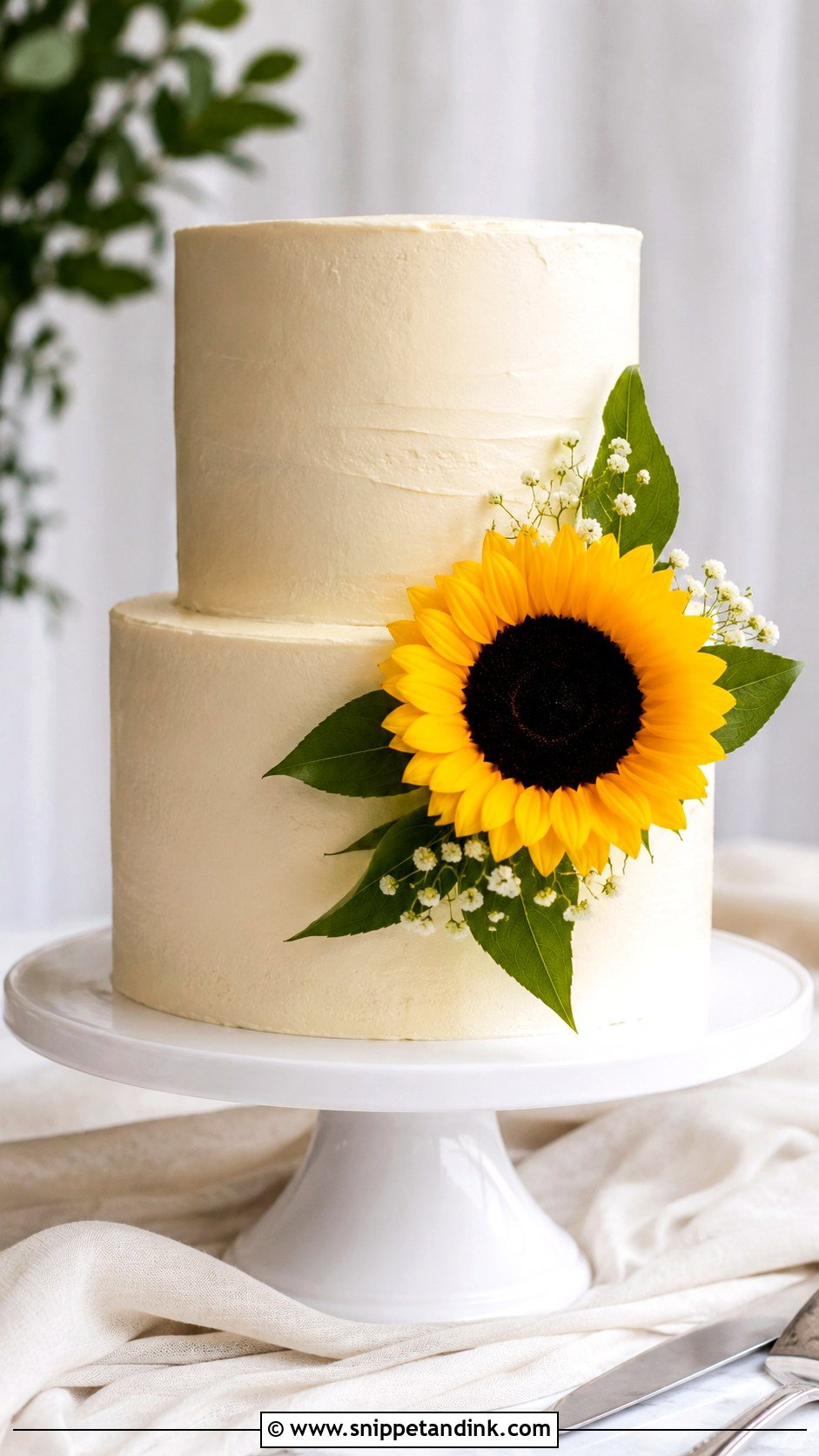
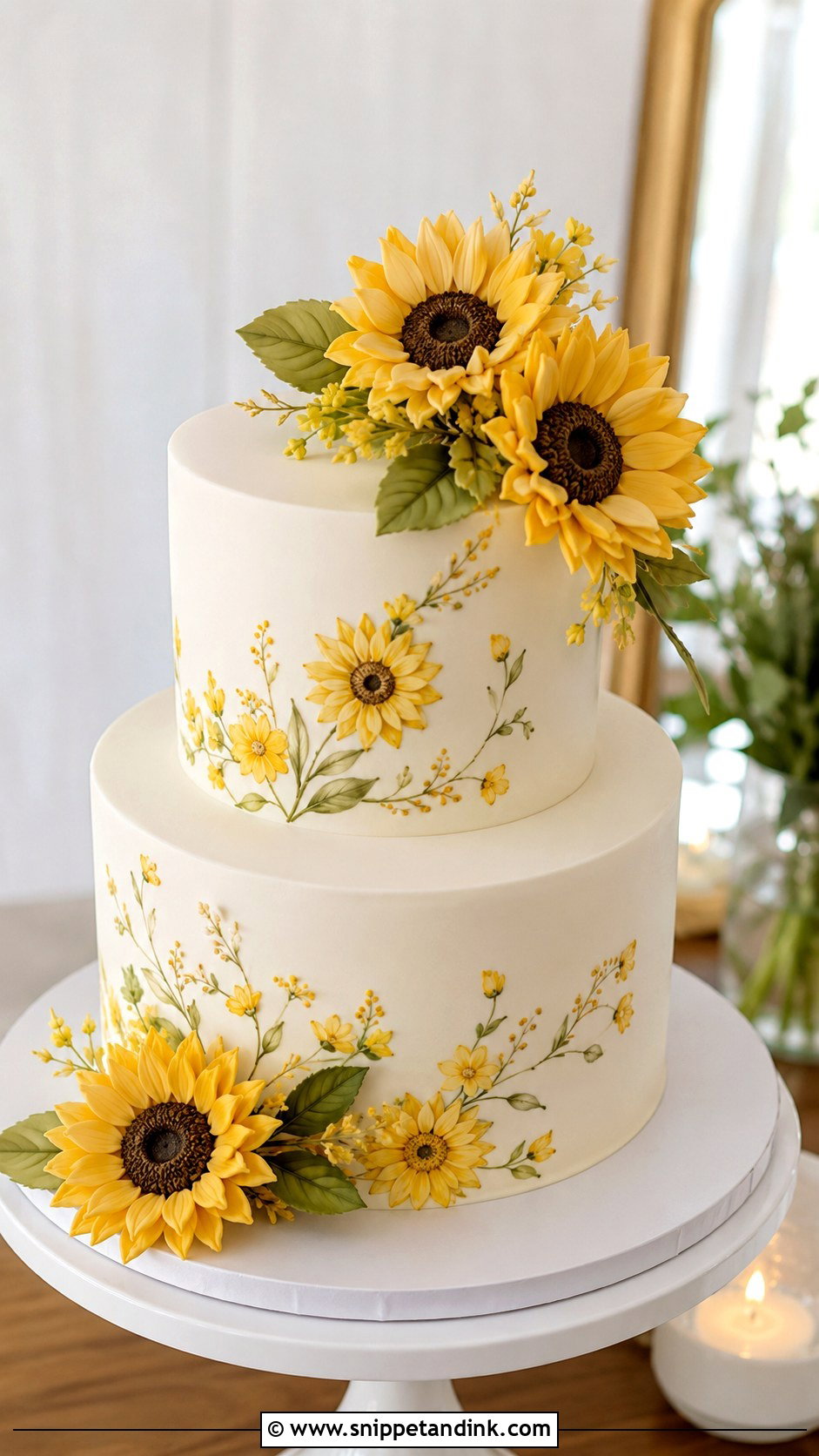
Fondant is the most reliable surface for detailed work, and the one that keeps its edges sharpest in a warm room. It takes painting, appliqué and sculpted blooms equally well. White or ivory keeps the cake classic; a pale yellow, sage or navy accent tier ties it to your palette. Because fondant hides everything underneath, the sponge and filling have to be good, since that’s what guests remember. Keep the decoration to a few strong floral placements.
14. Sunflower Wedding Cake With Drip
Control is everything with a drip. I chill the cake first, test a single drip down the side, and adjust the ganache temperature until it stops where I want it, roughly a third of the way down. White chocolate, caramel, honey gold or a soft yellow all match the petals. Sunflowers sit on top and down one side above the drip line. Smooth frosting and a narrow palette keep it bridal rather than birthday.

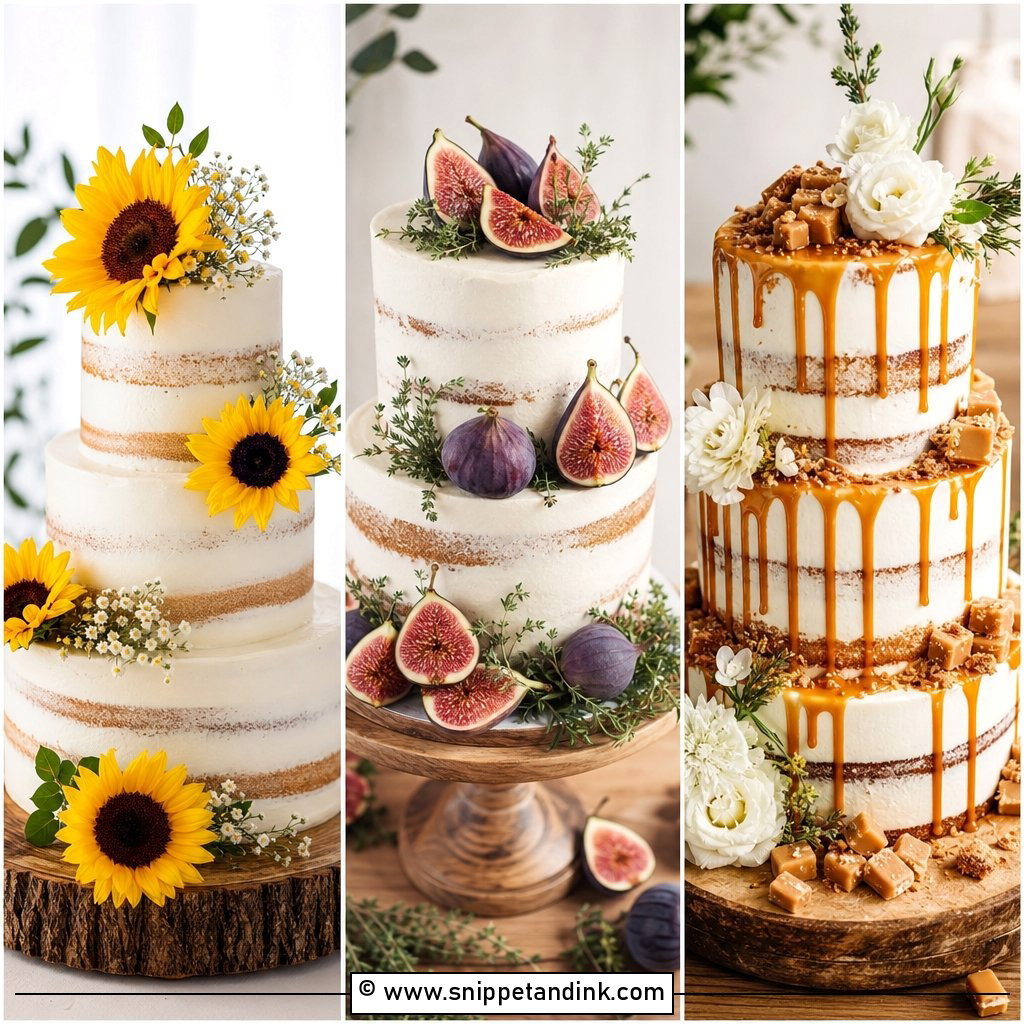
15. Sunflower Wedding Cake With Chocolate
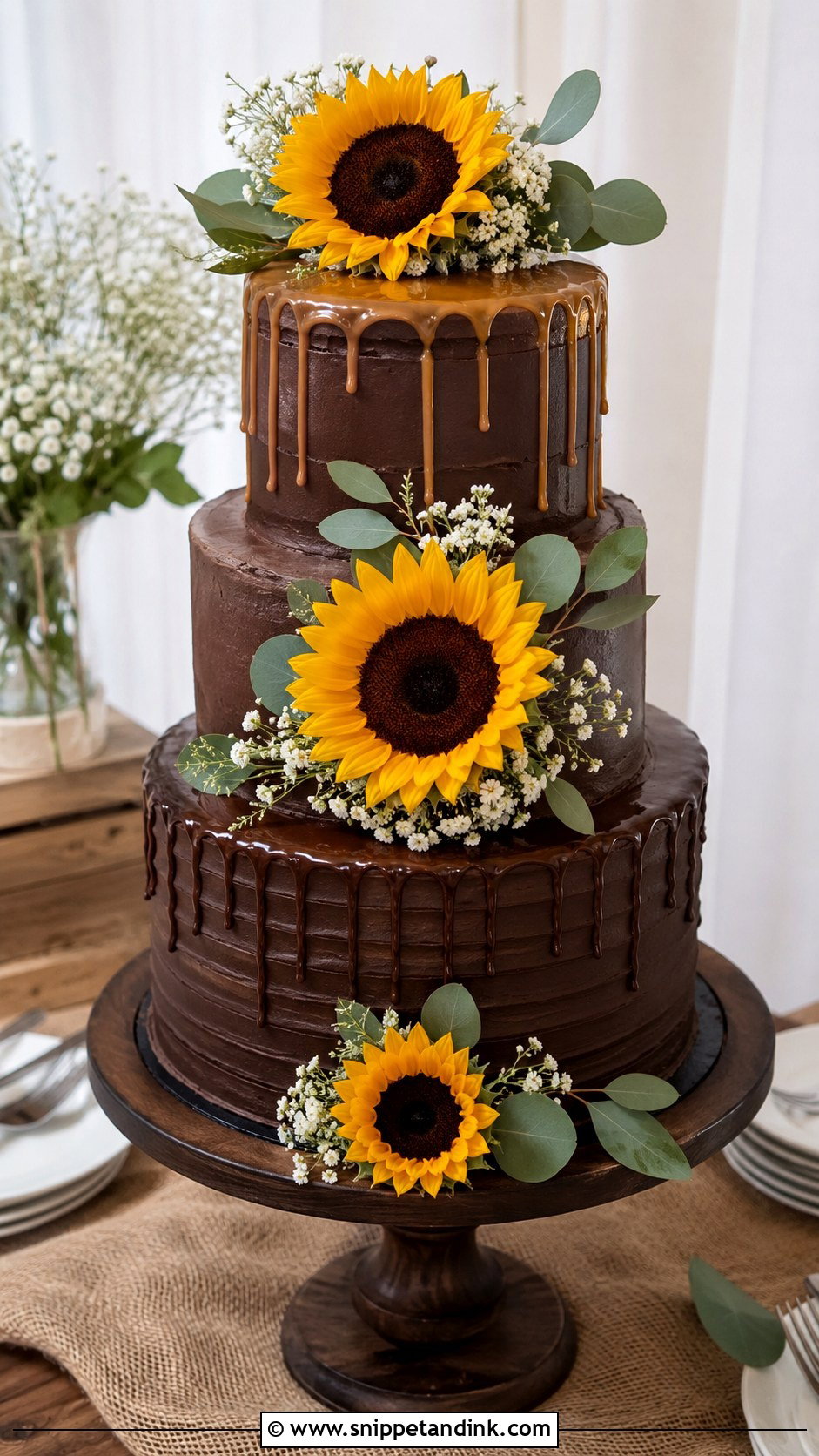
Chocolate cakes are more stable than many couples think, especially under dark chocolate ganache, which firms up and protects the tiers far better than buttercream in a warm barn. The deep brown makes yellow petals glow. I’d pair it with sunflowers and greenery, maybe a caramel drip. If you want a lighter bridal look, alternate chocolate and ivory tiers, or add a few white flowers in the clusters.
16. Sunflower Wedding Cake With Cupcakes
This setup is about logistics as much as looks. A sunflower wedding cake with cupcakes lets you cut a one or two tier cake for photos while guests serve themselves, so nobody waits for slicing. Pipe the cupcakes with sunflower petals or top them with small fondant flowers, and keep the yellow identical between cake and cupcakes, since mismatched shades are obvious on one table. It’s also an easy way to offer vanilla, chocolate, lemon and spice.
17. Sunflower Wedding Cake With Black And White
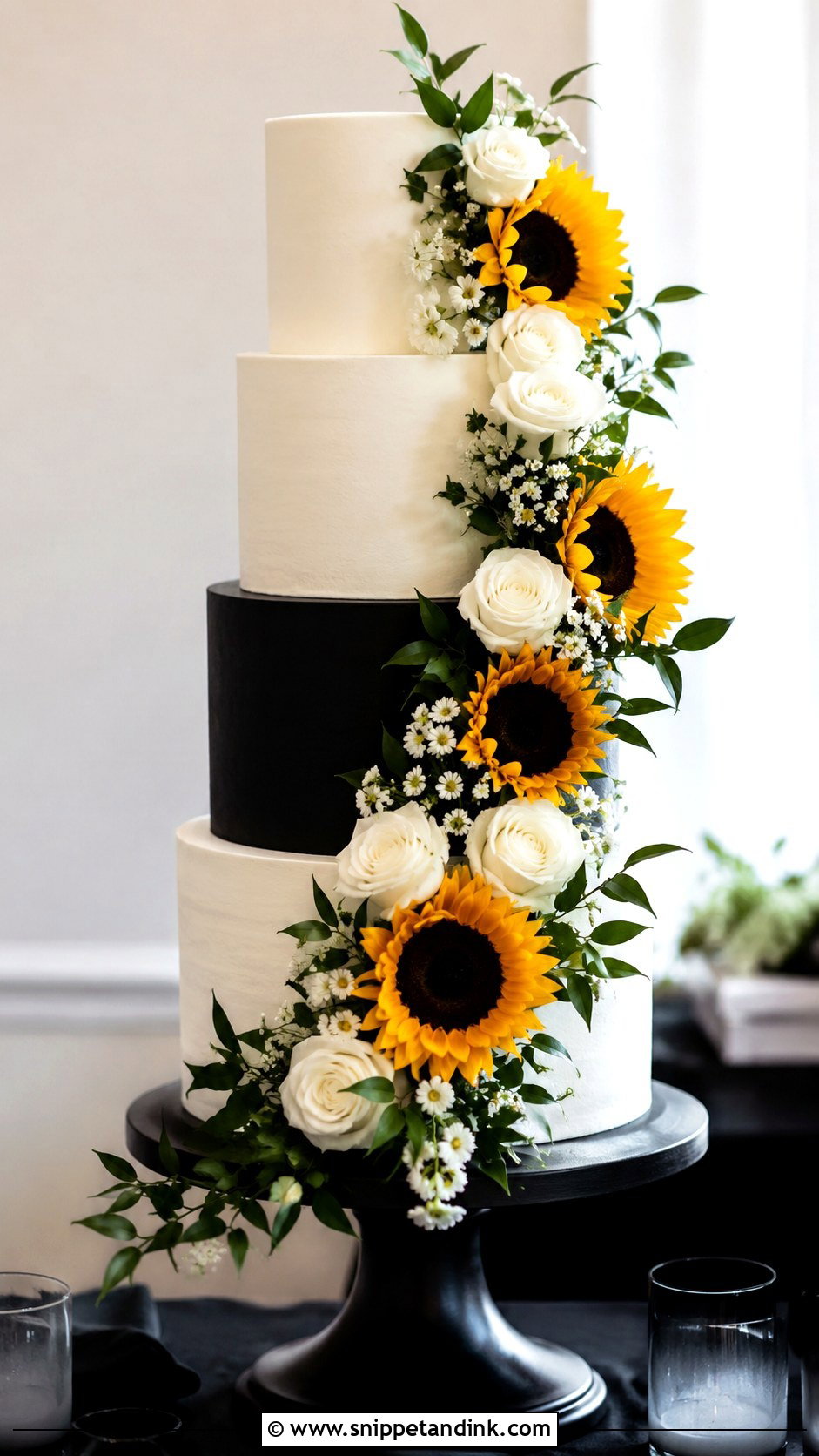
Black and white is the most graphic frame a sunflower can have. White tiers with thin black ribbon, black fondant accents or a single matte black tier with ivory buttercream above it all work. Black buttercream is heavy on dye and stains teeth, so I steer couples to fondant or ribbon for anything larger than a fine line. A cascade of sunflowers with a few white flowers and leaves softens the contrast. It’s a strong choice for couples who want sunflowers without a farmhouse feel.
18. Sunflower Wedding Cake With Lace
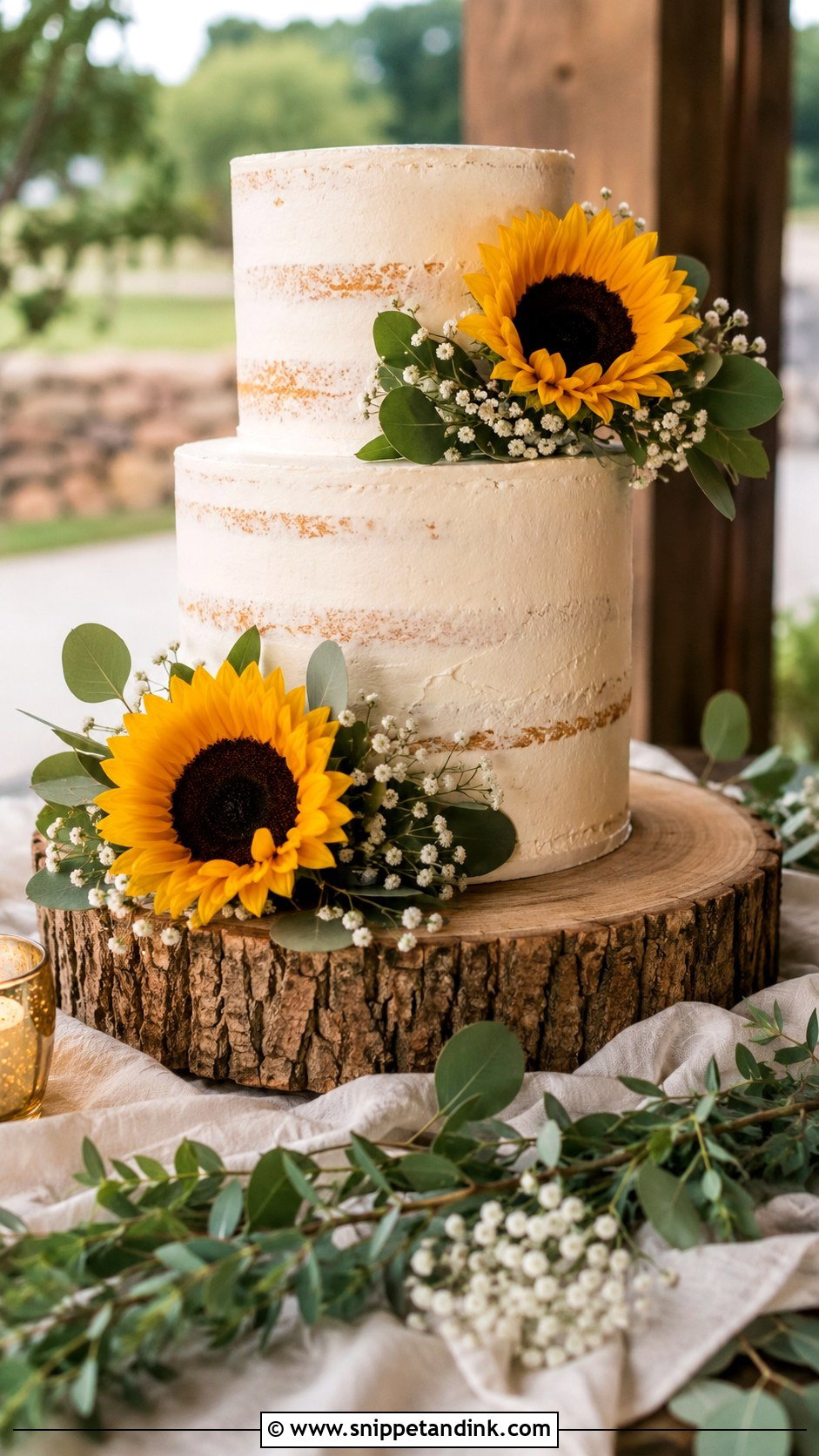
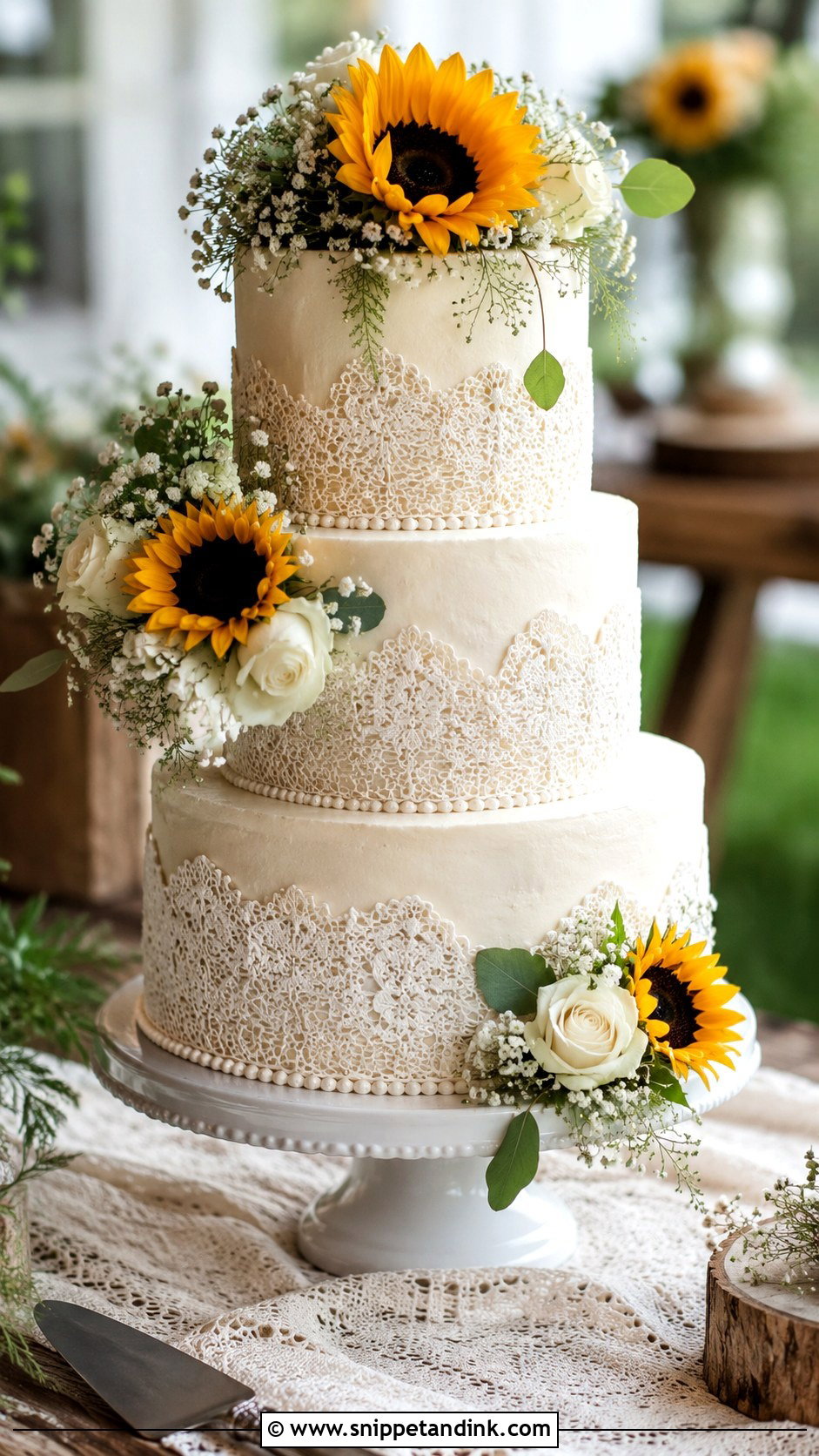
Lace and sunflowers is a vintage pairing that relies on restraint. I make lace from edible lace mix set in silicone mats, from fondant impressions, or by piping it freehand in buttercream. Real fabric lace can be used on the boards but shouldn’t touch the frosting. Ivory shows the pattern best. Keep the flowers to one cluster of sunflowers with a cream rose or two, so the lace isn’t hidden.
19. Sunflower Wedding Cake With Wood Stand
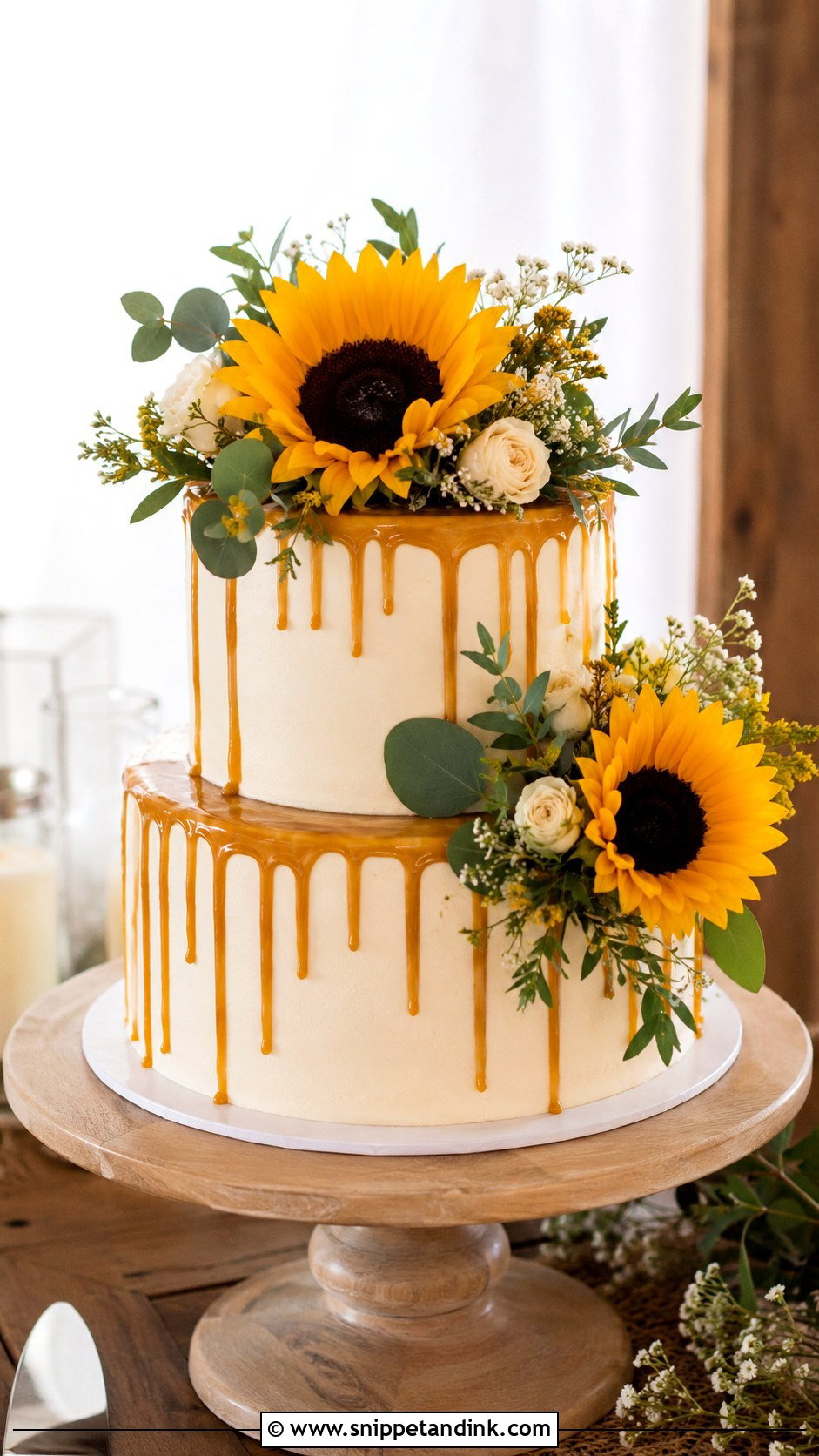
A wood slice stand adds height and connects the cake to a rustic room. Before using one I check that it’s sealed and level, and I always put a cake board between wood and cake, since raw wood can tip a tiered cake or leach moisture into it. Sunflowers placed at the base visually tie cake and stand together. Semi-naked layers, textured buttercream and smooth ivory tiers all look at home on wood, against barn doors or neutral linens.
20. Simple Sunflower Wedding Cake
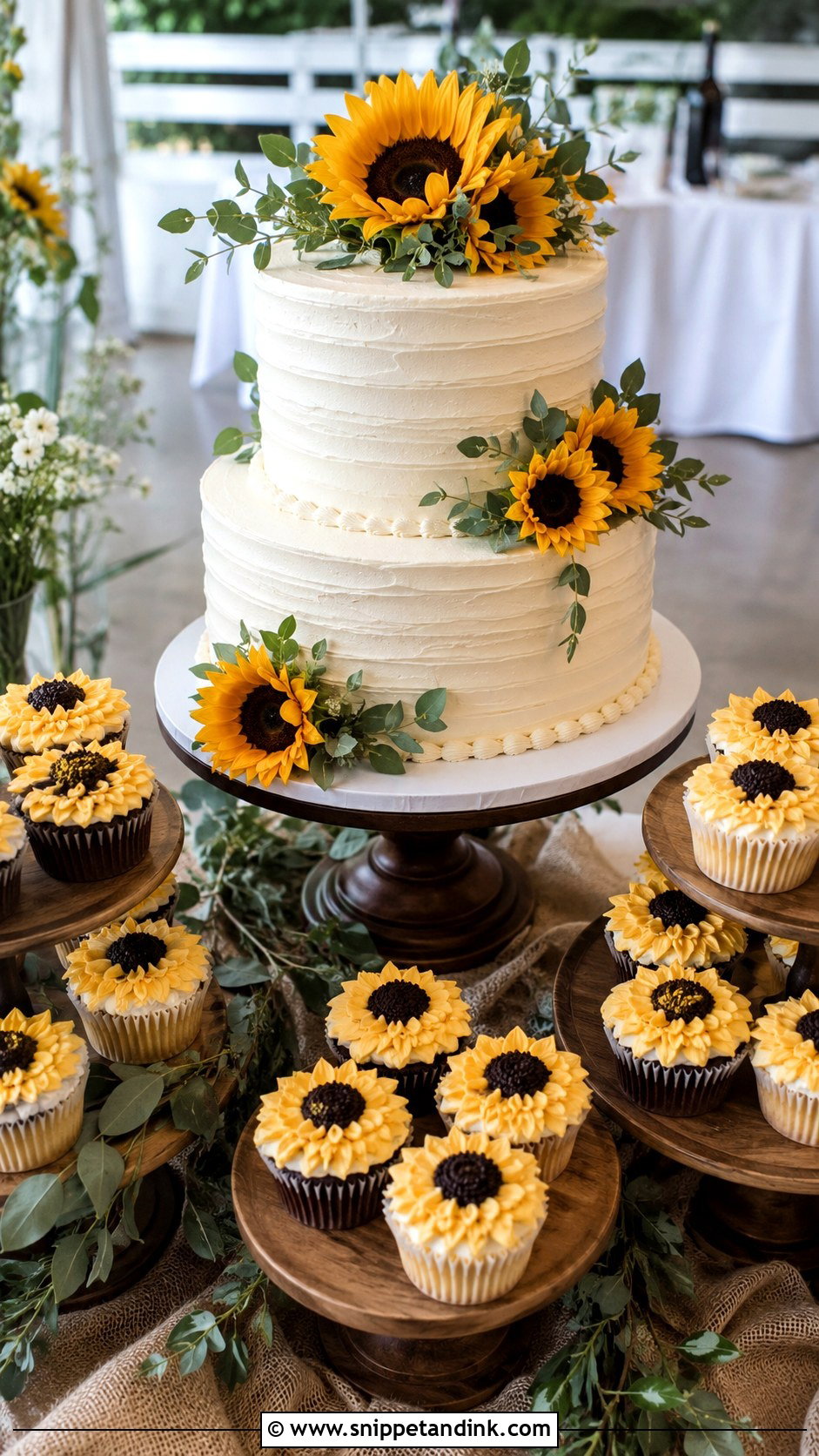
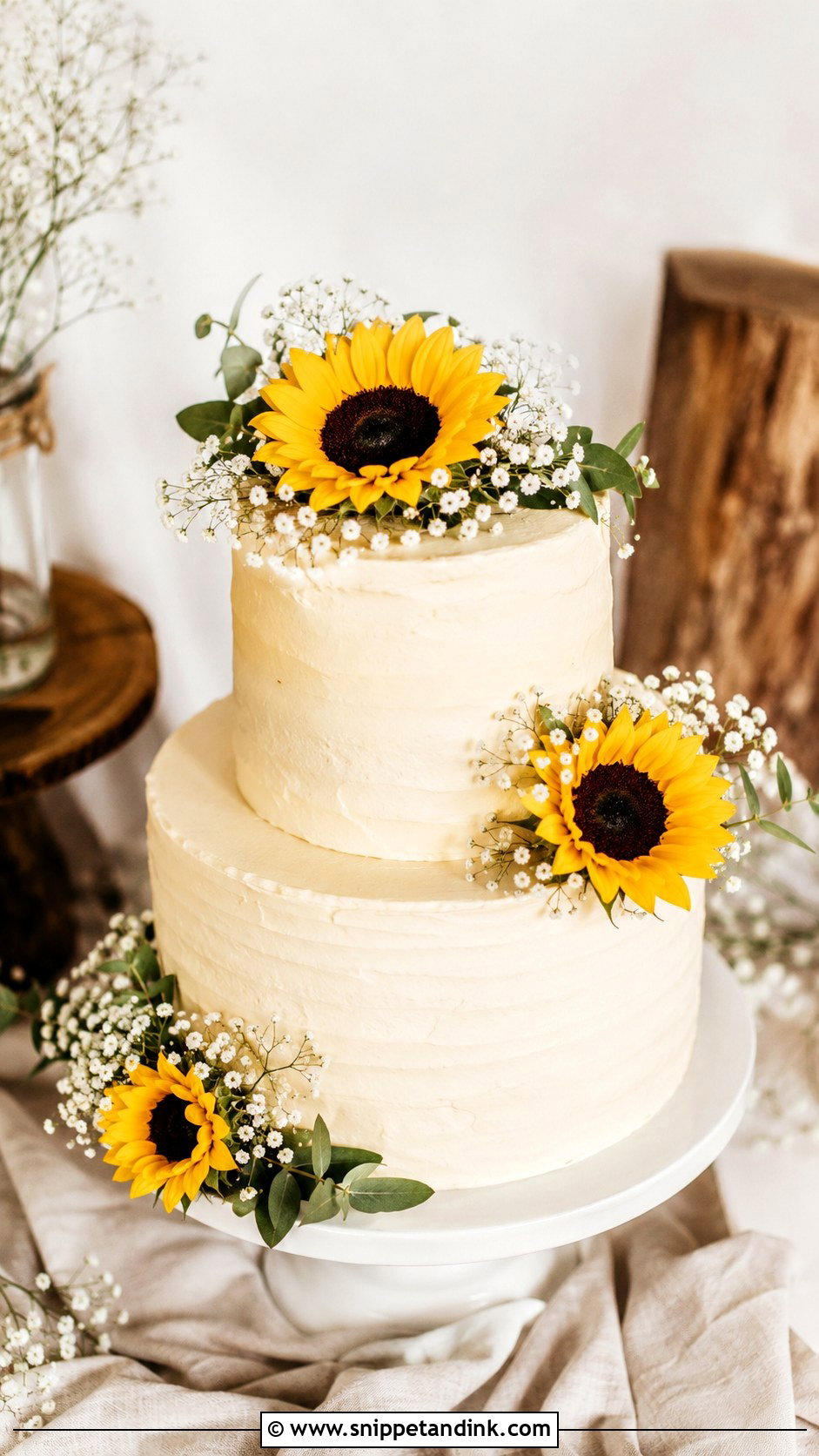
Sometimes one bloom says enough. One or two tiers of smooth ivory buttercream, a single large sunflower on top or a small cluster on the side, and the cake is done. Simple cakes show every flaw in the frosting, so smooth sides and sharp top edges matter more here than anywhere else on this list. A thin ribbon or a few leaves finish it for an intimate wedding, a courthouse reception or a backyard party.
Who Puts the Sunflowers on the Cake, and When
Fresh sunflower cakes have two vendors touching one dessert, and the gap between them is where things slip. Sort out who does what months ahead, and write it into both contracts.
- Decide who supplies the cake flowers. Usually it’s the florist, ordered with the bouquets so the color matches.
- Agree on which blooms are food-safe and how stems will be sealed: floral tape, water tubes or food-safe picks.
- Set the delivery order. The cake arrives and is stacked first; the florist dresses it afterwards, not the other way round.
- Ask the florist to condition the sunflowers well, since cut heads droop quickly without water.
- Confirm the cake table is in shade and away from heaters, kitchen doors and the band’s lights.
- Leave a short note for the venue staff on what to remove before cutting, so nobody slices through a wired stem.
Some bakers prefer to place flowers themselves and some venues charge for a florist’s extra trip, so ask both early. If juggling two vendors feels like too much, sugar or piped sunflowers remove the handoff entirely.
A Sunflower Can Carry the Plainest Cake in the Room
The sunflower is strong enough to define a theme on its own, so the rest of the cake can be as relaxed or polished as your venue. Casual rooms suit naked layers, wood stands and textured buttercream; formal ones suit fondant, sugar flowers or a navy accent tier. Before you settle on a design, bring your bouquet photos, fabric swatches and the venue’s temperature to your tasting. With those in hand, the cake will look like it belongs in the room.
You'll Like These Ideas:








Leave a Reply