
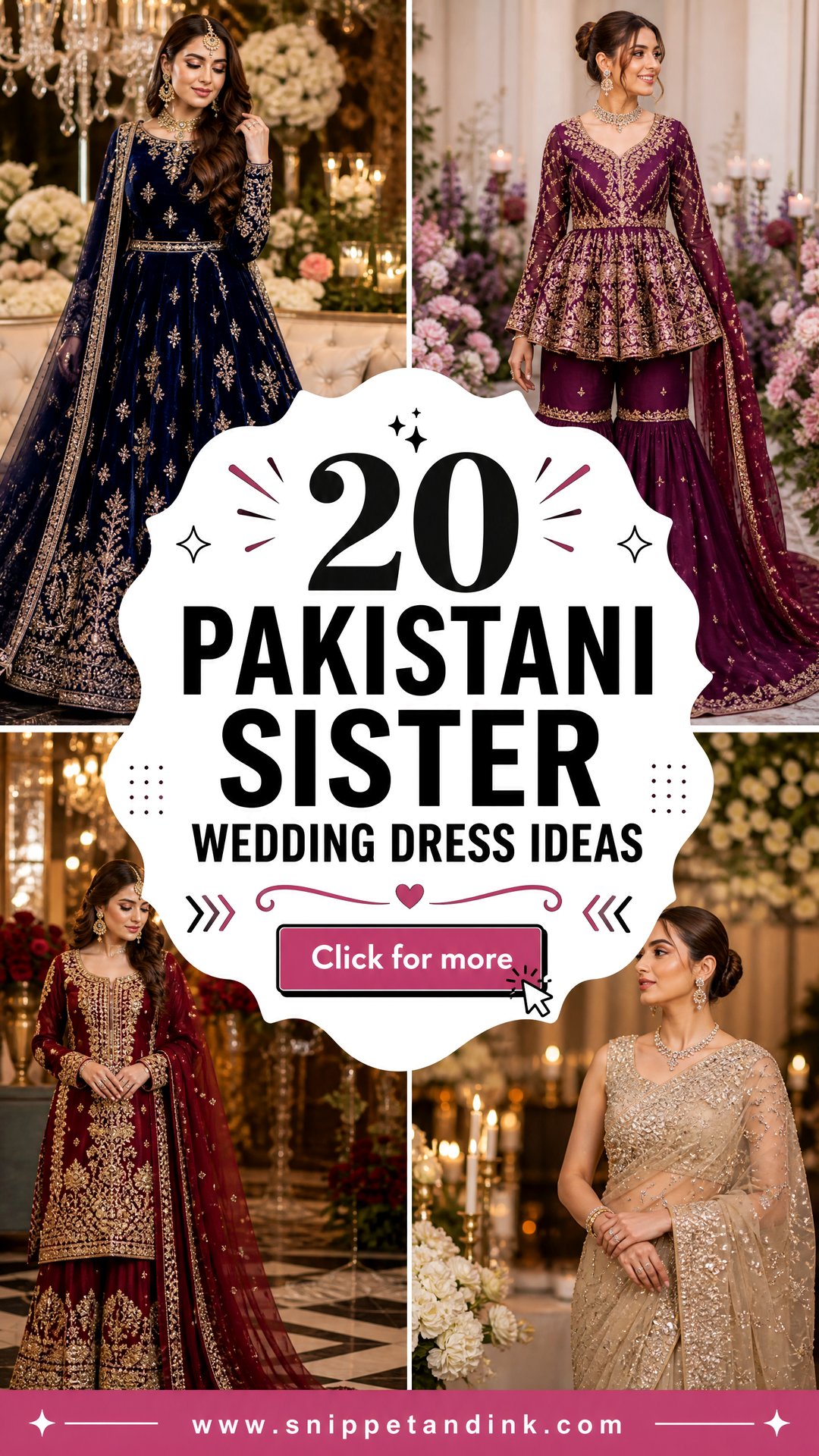
Dressing the bride’s sister is a balancing job. You’re in nearly every family photo, you’re on your feet from the dholki onward, and you still have to sit one shade quieter than the bride. Below are twenty complete outfits spread across the mehndi, nikkah, baraat and walima, from traditional ghararas, shararas, lehengas, pishwas dresses to saris with a few modern touches. When I style a sister, I start with two questions before any fabric: what is the bride wearing at each event, and how many hours will you be running around in this outfit?
Laying Out All Four Functions Next to the Bride’s Outfits
The most useful thing a sister can do is plan her outfits as a set, not one at a time. I ask clients to put the bride’s mehndi, nikkah, baraat and walima colors in a row, then build their own row underneath it. Each of your outfits should sit one step away from hers: lighter, darker or a neighboring color, never the same shade and never a heavier level of embroidery.
- Mehndi: this is where you can go brightest. Yellow, orange, green and pink are expected, and mirror or gota work is welcome.
- Nikkah: soft and restrained. If the bride is in white or ivory, stay away from those shades entirely and pick a pastel.
- Baraat: the bride will almost always be in red, maroon or a deep jewel tone. Pick a color that sits beside hers in photos without matching it: emerald next to red, navy or teal next to maroon.
- Walima: the bride often wears pastel or silver here, so you can go slightly richer than at the nikkah without looking out of place.
If you share sisters or cousins in the bridal party, agree on who wears what color at the baraat. Four women in near-identical maroon next to a bride in red is the outcome I most often see people regret in the album.
Give the Tailor More Time Than You Think
Wedding season is the tailor’s busiest stretch, and a sister’s outfits usually get stitched after the bride’s are underway. I’d give the stitching several weeks for each heavy outfit and leave room for a second fitting, because blouses and kameez almost always need a small adjustment once the embroidery adds weight. Bring the actual shoes to the final fitting so hems on shararas, ghararas and farshi shalwars are cut to the height you’ll really be standing at.
1. Emerald Green Pakistani Sister Wedding Lehenga
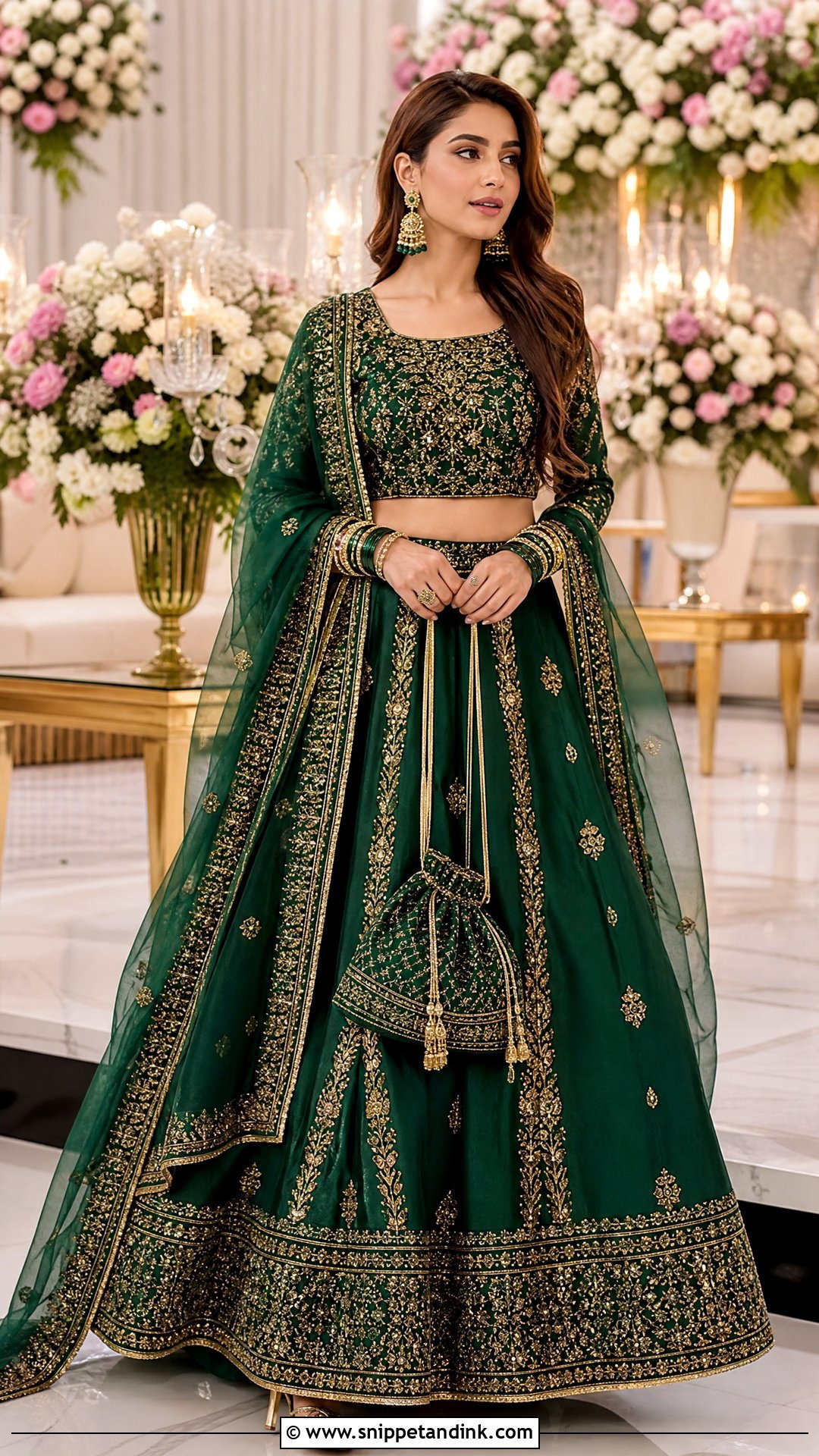
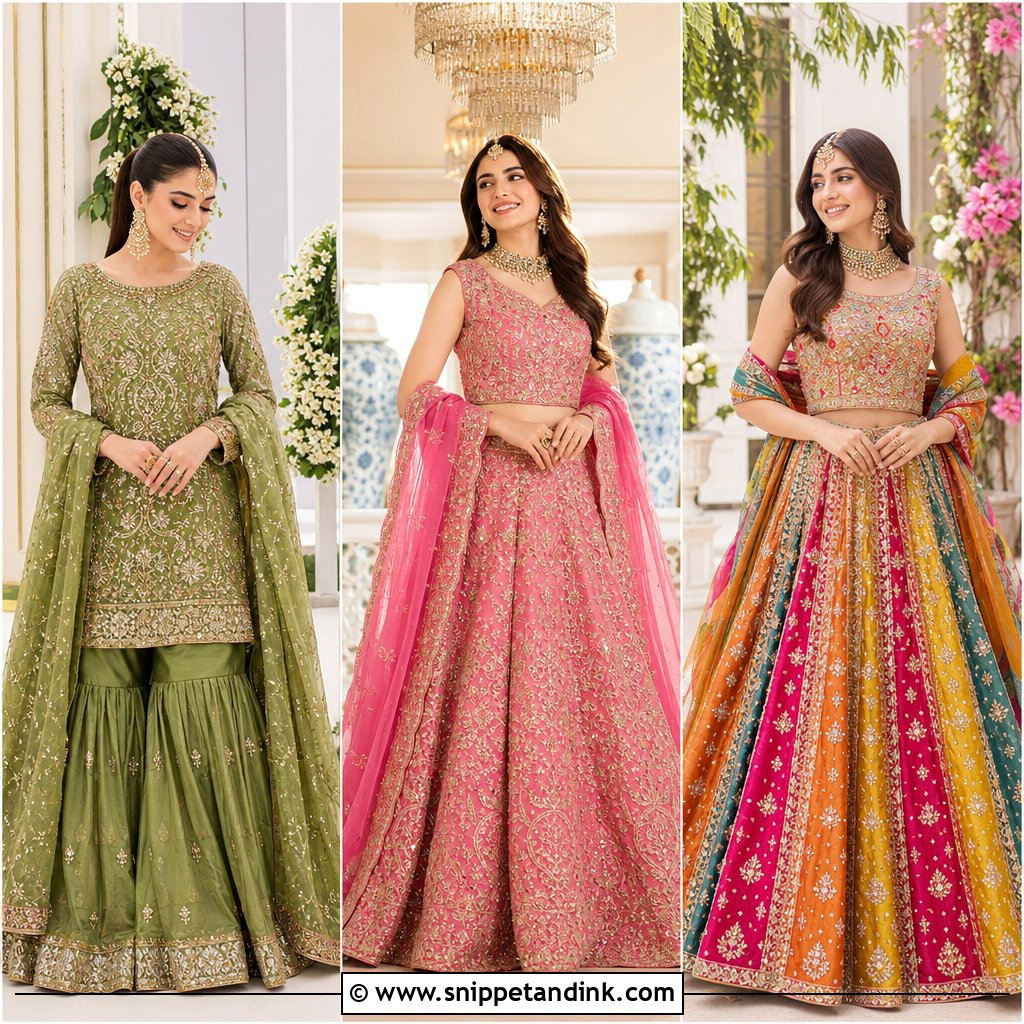
Emerald is one of the safest jewel tones for a sister at the baraat, because it sits well next to bridal red without fighting it. I like a paneled raw silk skirt here: raw silk holds its shape, so the panels flare even after you’ve sat through a long dinner. Pair it with a fitted blouse in antique gold work and a sheer organza dupatta. If the skirt is heavily worked, keep the blouse neckline plain, otherwise everything competes at chest level. Gold jhumkas, a small maang tikka, stacked bangles and a structured potli in gold or deep green are enough. Block heels can hide under the hem, and a sleek bun or soft curls keep the neck clear for the earrings. Warm bronze makeup with a muted rose lip suits the depth of the green far better than a cool pink would.
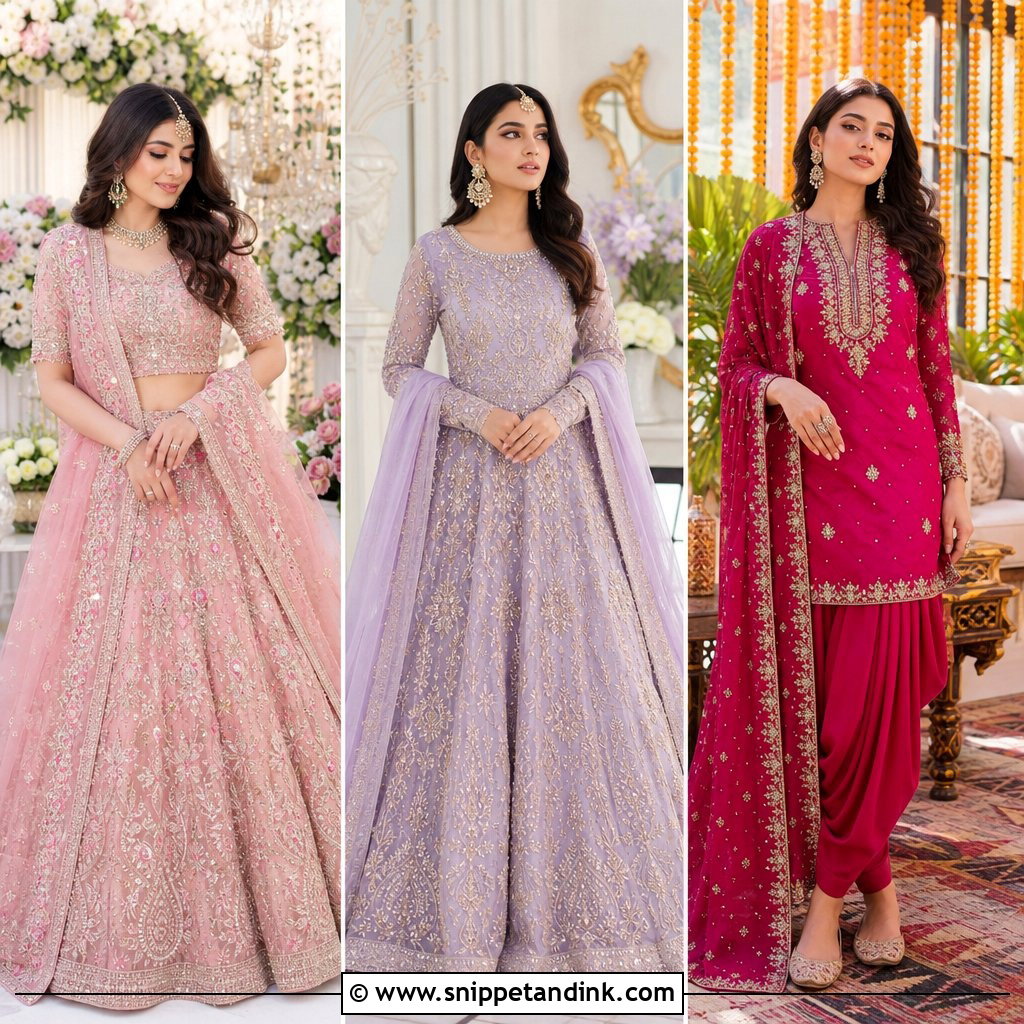
2. Blush Pink Pakistani Sister Wedding Gharara
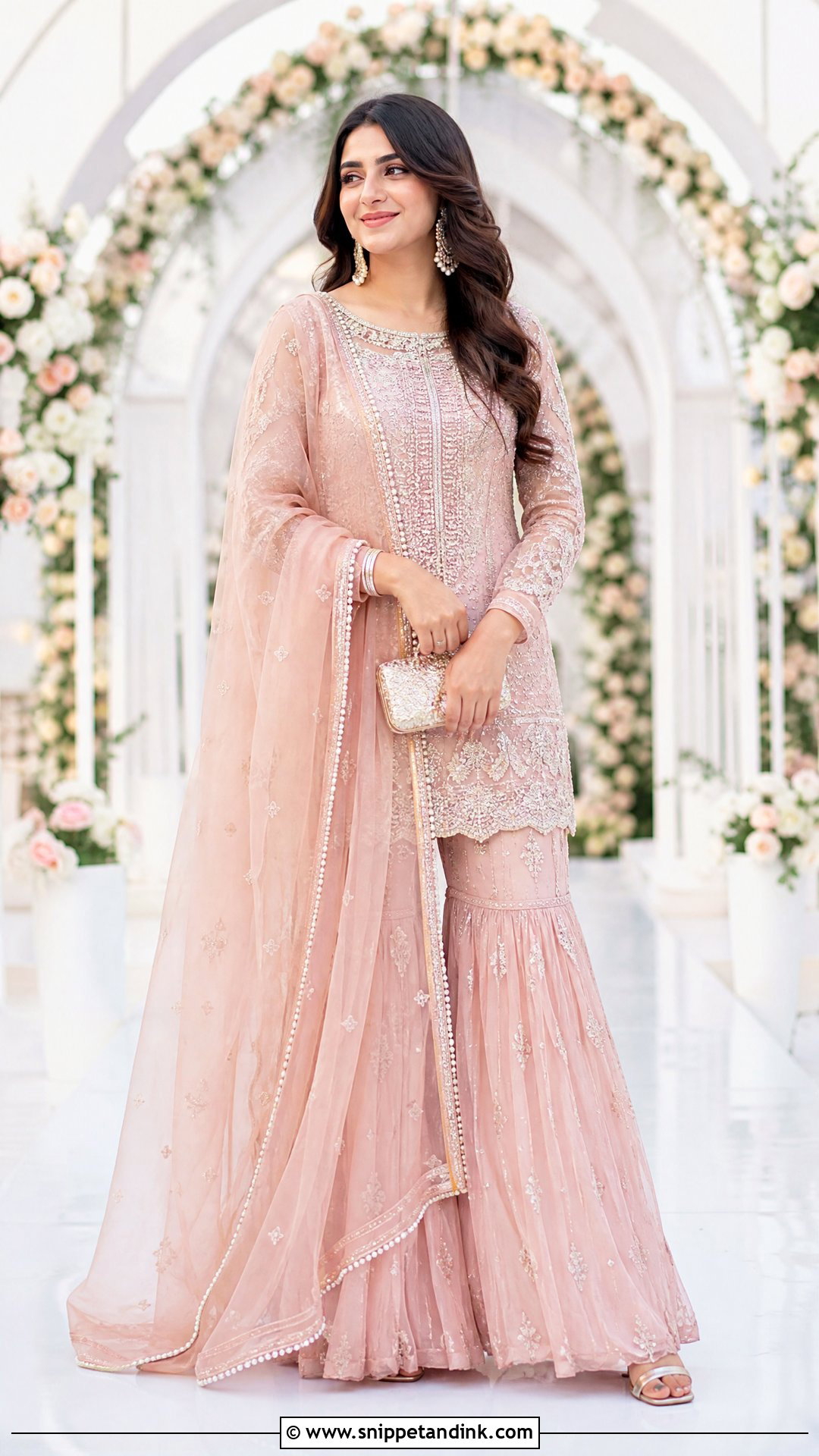
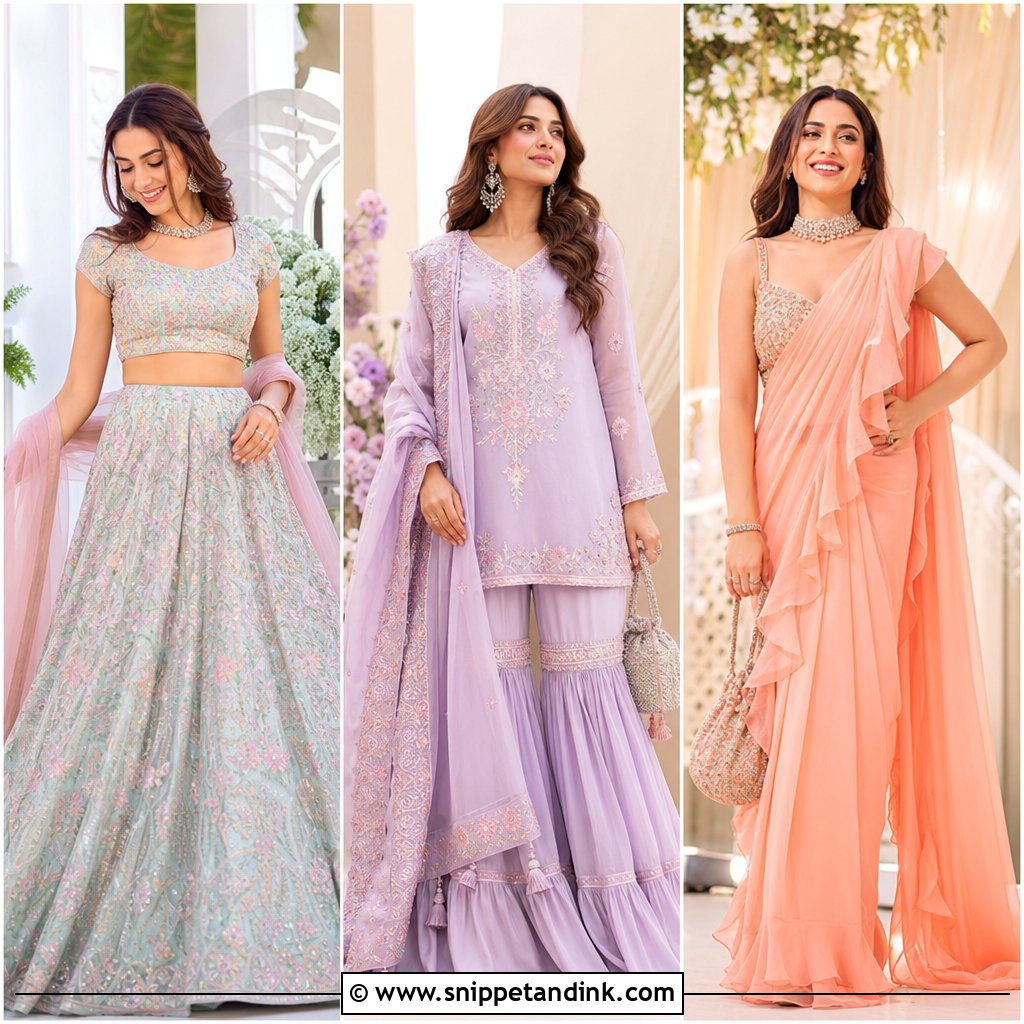
Blush pink is my first suggestion for a daytime nikkah, particularly when the bride is in ivory, white or something much deeper. Go for a short embroidered kameez over a gharara with detailed knee panels; the gota at the knee is where a gharara gets its character, so don’t skimp there. Chiffon, tissue or light jamawar all move well. I’d keep the embellishment to pearl or pale gold and let the organza dupatta carry only a narrow border. Pearl drops, a few delicate bangles and metallic kitten heels finish it. A low bun with a centre part and fresh, natural makeup suit how soft the color already is.
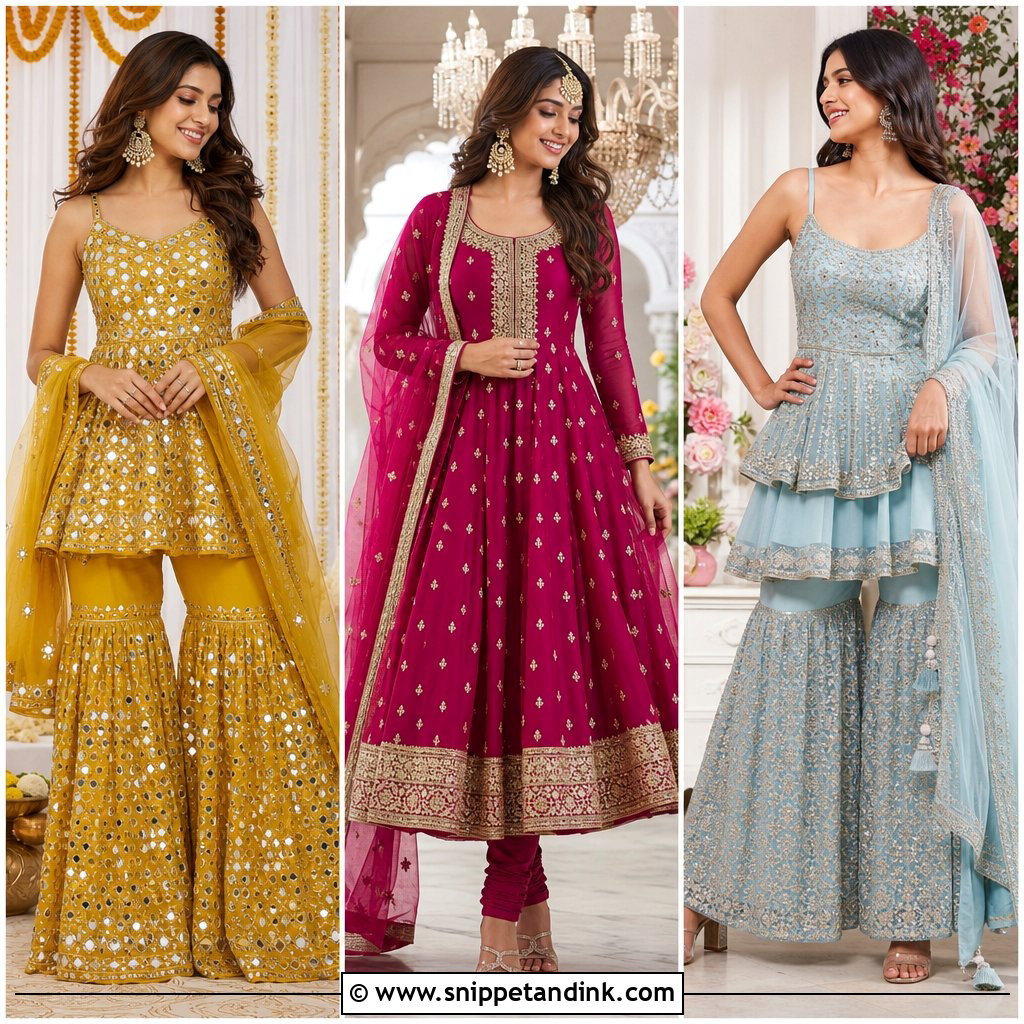
3. Mustard Yellow Pakistani Sister Mehndi Sharara
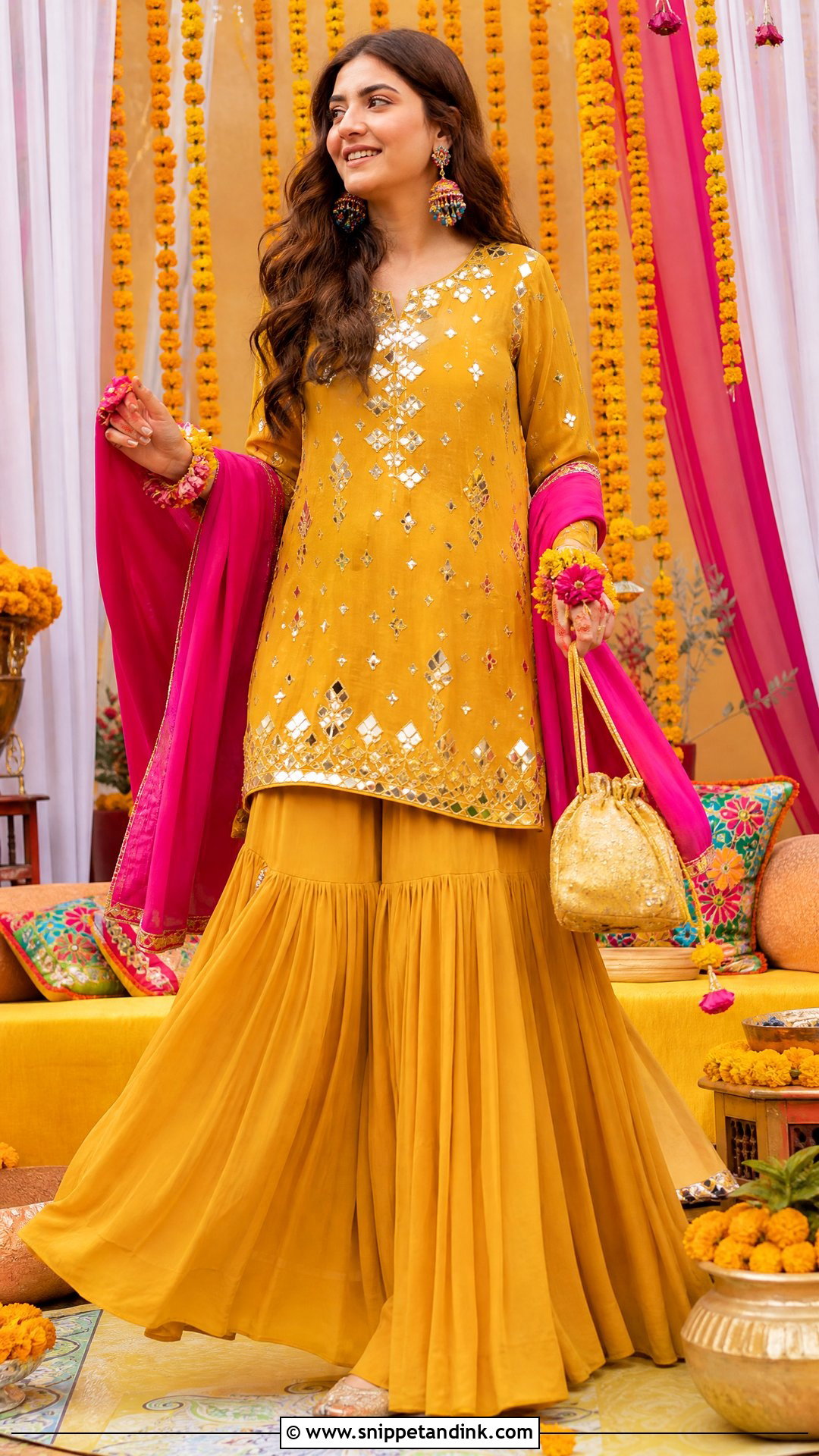
Mehndi nights are loud, bright and full of dancing, so this is the function where a sister can wear real color. A mustard yellow sharara with a short mirror-work shirt does exactly that. Throw a hot pink or turquoise dupatta against it for contrast. Gota edging and small mirrors catch the light on camera, so you don’t need heavy embroidery to look dressed. One practical point: mirror work has sharp edges at the back, so ask your tailor to line the shirt fully or it scratches by the third dance. Gold khussas, colorful jhumkas and a loose braid finish it, with a coral lip that sits happily next to yellow.
4. Ivory Pakistani Sister Nikkah Pishwas
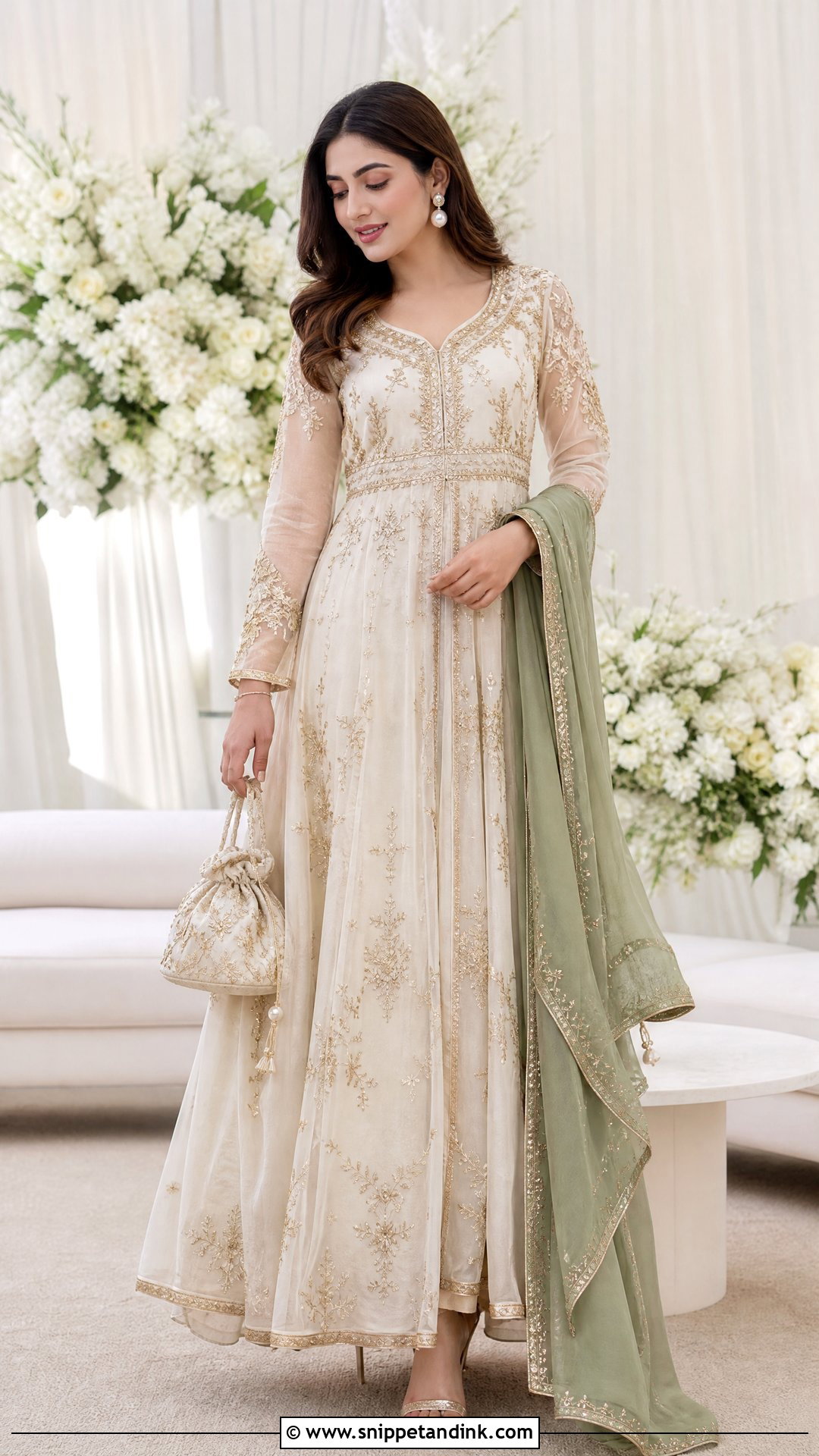
Ivory at a nikkah needs care, and the first thing I check is what the bride is wearing. If she’s in white or off-white, an ivory pishwas can read as a second bride from across a room. Keep the embroidery restrained and bring color in through the dupatta: sage, dusty rose or powder blue all work. A floor-length cotton silk or organza pishwas with fine gold detail gives a long, narrow line. Pearl earrings and a small embroidered bag are plenty. Choose a half-up style or a smooth low bun depending on the neckline, and keep the lip pink-beige so the face doesn’t disappear against such a pale outfit.
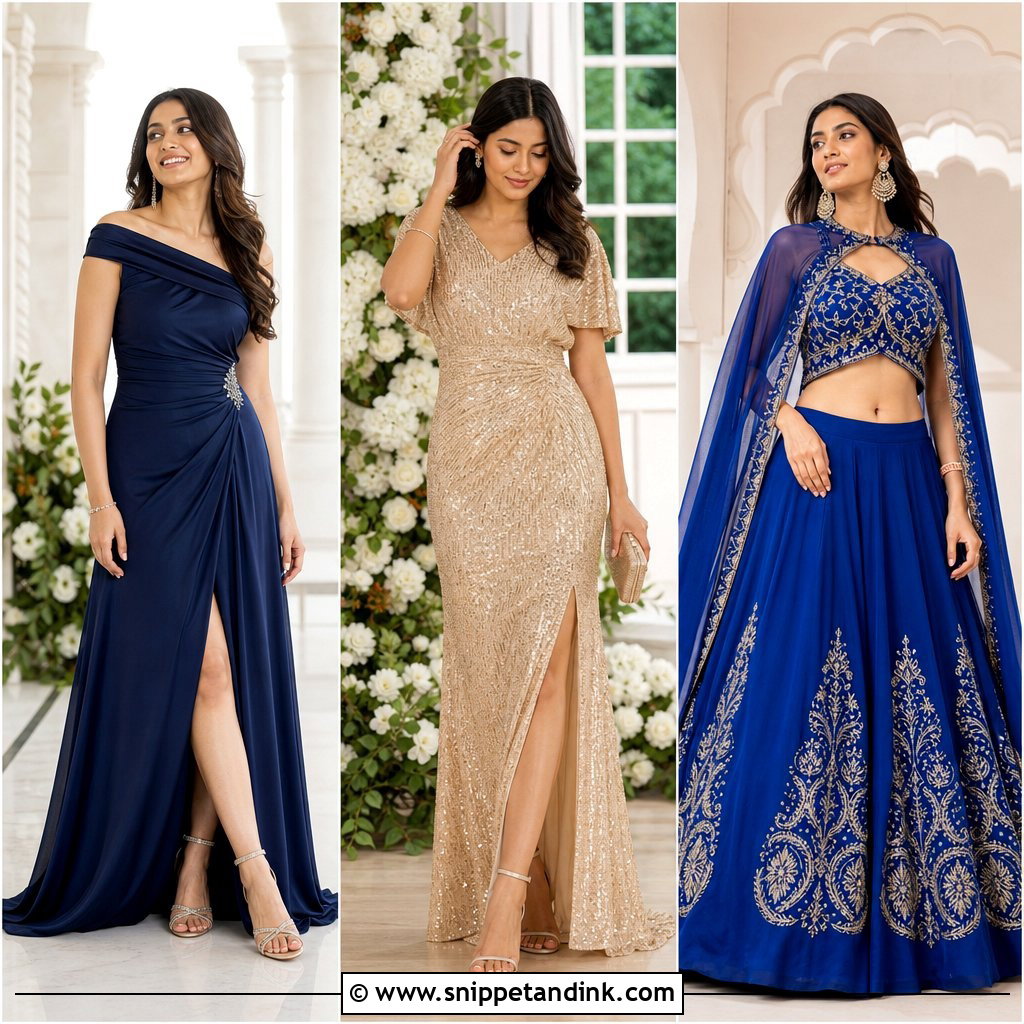
5. Navy Blue Pakistani Sister Velvet Lehenga
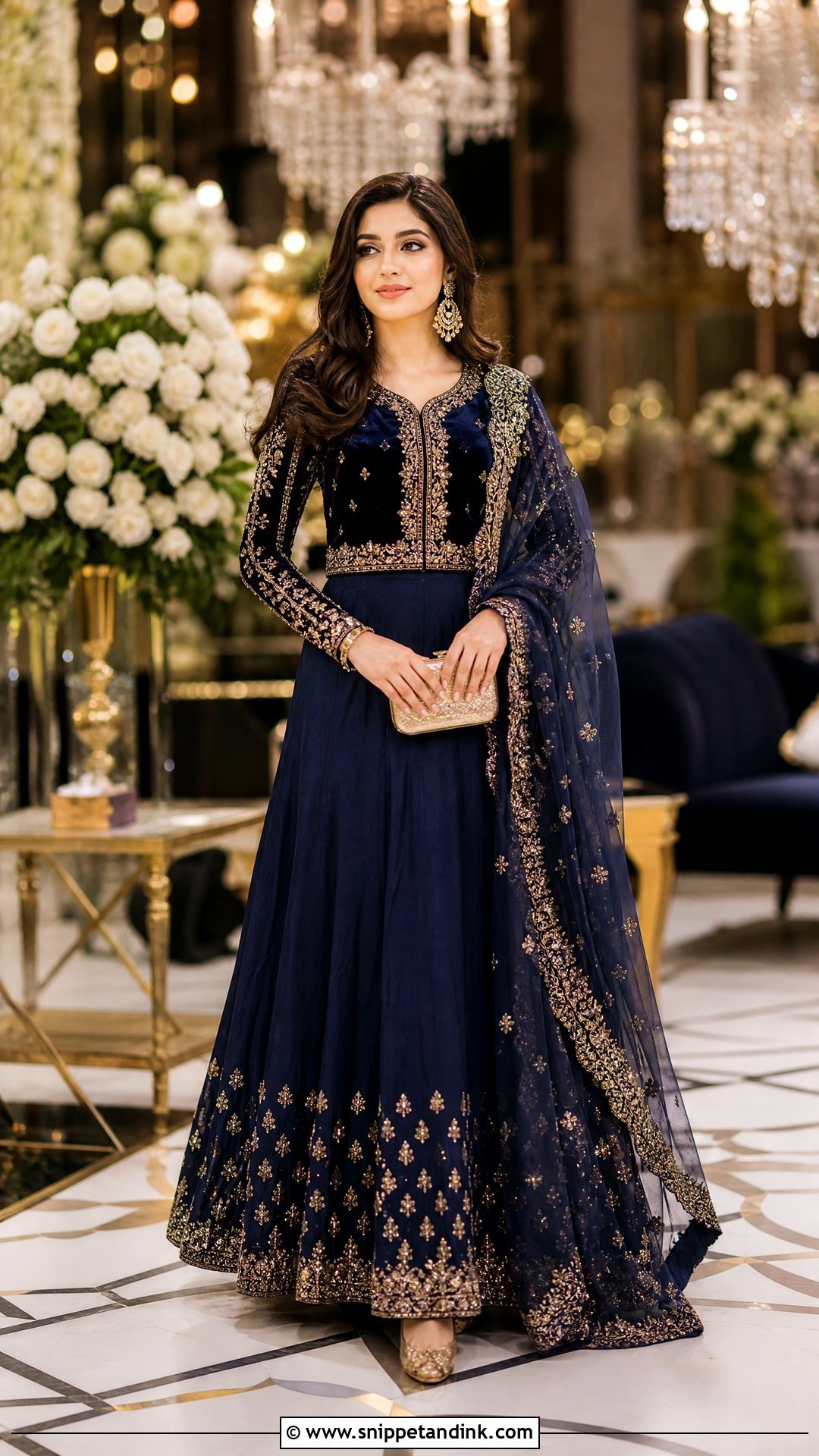
Navy velvet is a winter outfit, full stop. In a heated hall in December it’s comfortable; at an outdoor summer baraat you’d be miserable within an hour. What I like about it is how it reads under evening lights: deep, almost black, with the antique gold embroidery picking up every bulb. To stop it getting heavy, I’d put the velvet in the blouse or long shirt and use a raw silk lehenga below, then add a net dupatta with scattered motifs to soften the face. Statement earrings, one cocktail ring and a compact gold clutch are enough. Closed embroidered heels keep your feet warm, and a berry lip suits the color.
6. Powder Blue Pakistani Sister Angrakha Dress
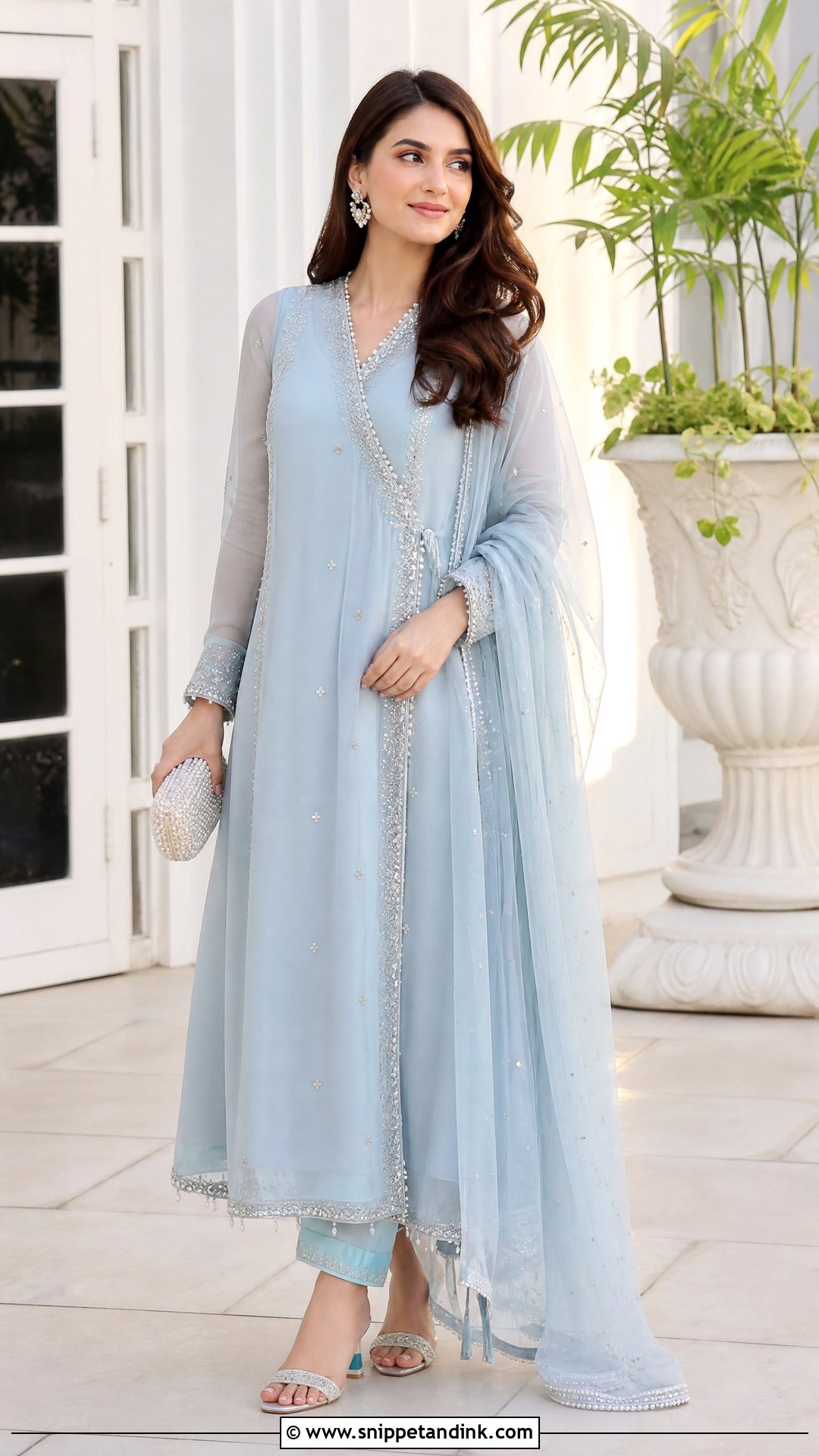
For a daytime walima or a formal family lunch, powder blue looks calm and photographs cleanly in natural light. An angrakha cut gives you a defined waist through the overlapping bodice, and the skirt moves freely. Ask for silver threadwork or pearls rather than multicolored embroidery, which tends to look busy on such a pale base. A churidar or straight pants underneath give coverage when you sit cross-legged for photos. Drape the net dupatta over one shoulder so the wrap detail stays visible. Silver sandals, crystal earrings and a pearl clutch close the look, with cool pink blush and loose waves.
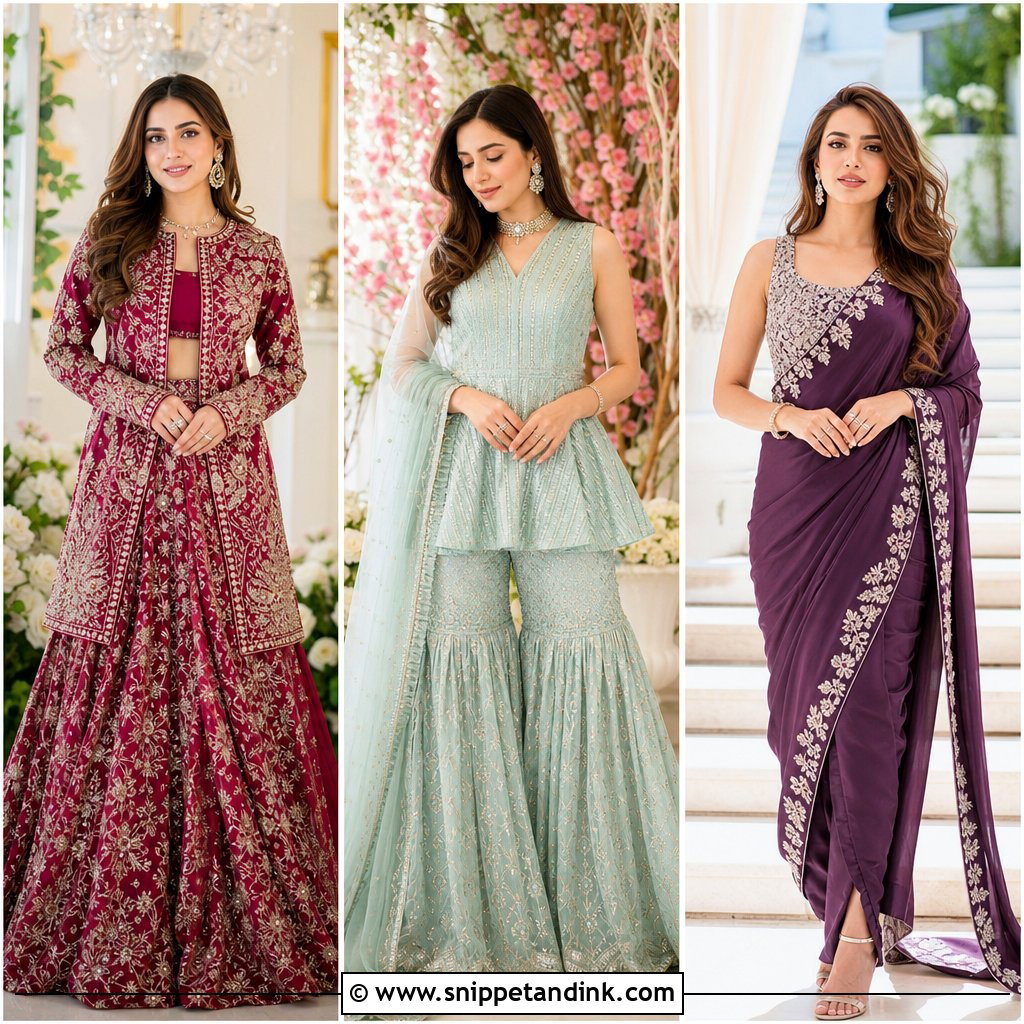
7. Plum Pakistani Sister Peplum Gharara
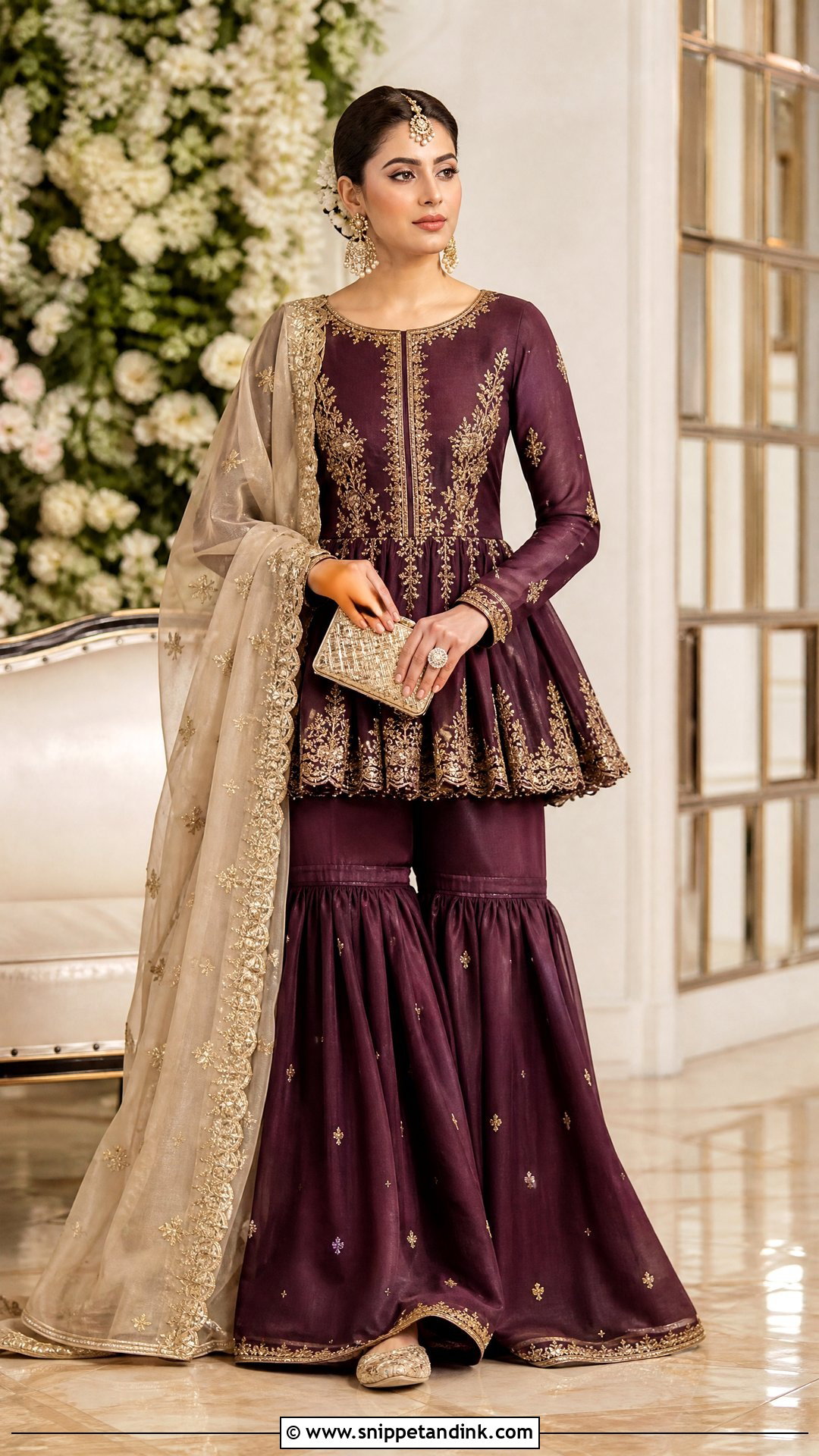
Would you rather look structured than flowing? A plum peplum top with a coordinated gharara gives you both. The peplum sits at the natural waist and the gharara flares below the knee, so the outfit has shape at two points. I’d put the zari or dabka work at the neckline and waistband of the peplum, and keep the gharara lighter so the weight doesn’t drag the hem. A sheer dupatta in plum or muted gold, antique gold earrings and a slim maang tikka are enough. Pointed khussas are practical for a long night. On makeup, don’t match the lip to the fabric; a neutral rose next to plum looks intentional, a plum lip looks like a costume.
8. Sage Green Pakistani Sister Anarkali Suit
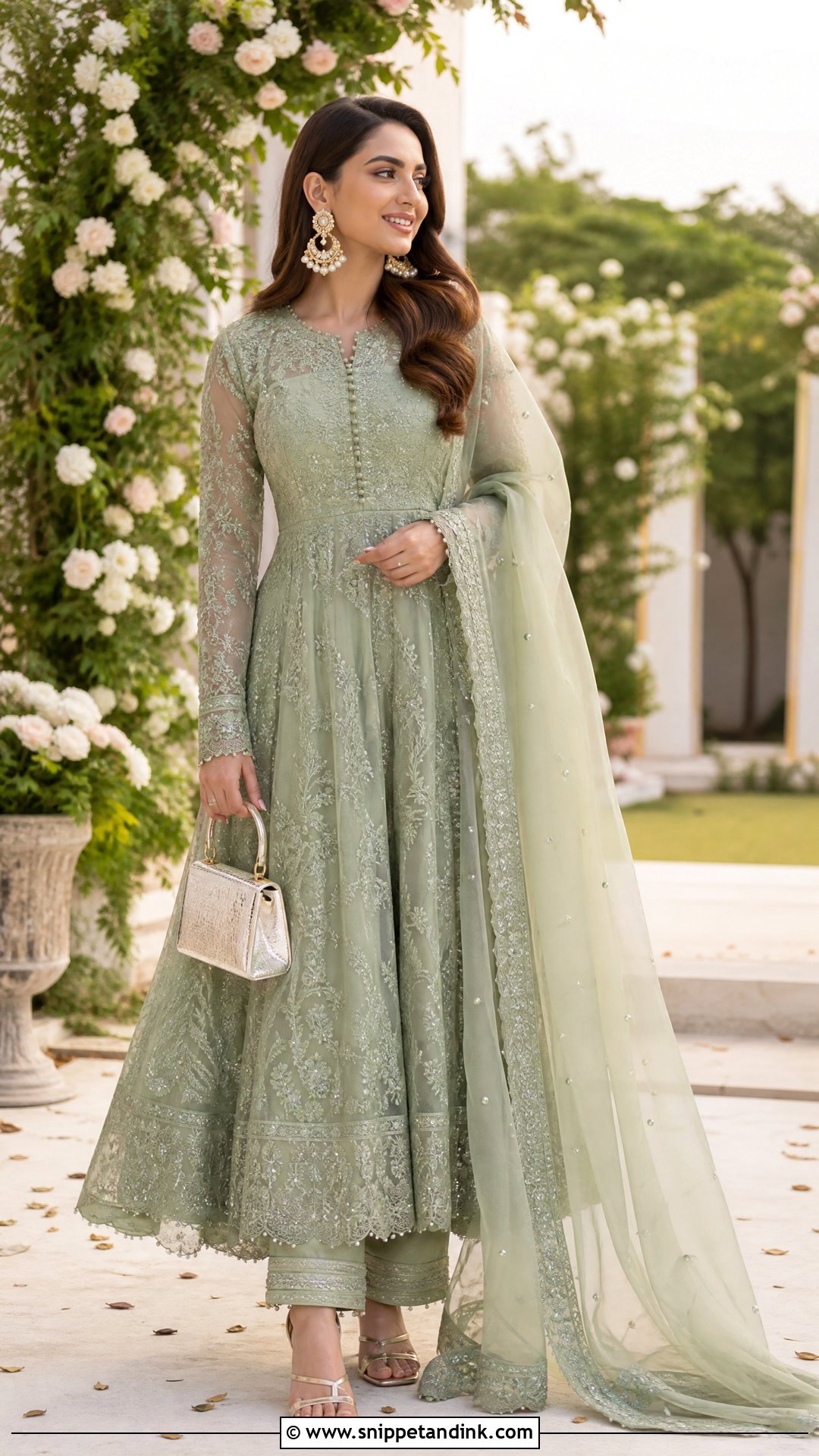
Sage green is my go-to for garden receptions and understated nikkahs, because it doesn’t shout but still reads as a deliberate choice next to pastel florals. A long Anarkali with tonal embroidery, a soft flare and full sleeves does the work. Have the churidar fitted properly at the ankle, since the bunching is half the look. An organza dupatta with tiny pearls or embroidered corners adds texture. Champagne heels, pearl chandbalis and a small metallic bag finish it. A braided low bun feels traditional; loose curls are more relaxed. It’s the color I reach for when the wedding palette is built on natural shades.
9. Black And Gold Pakistani Sister Sari
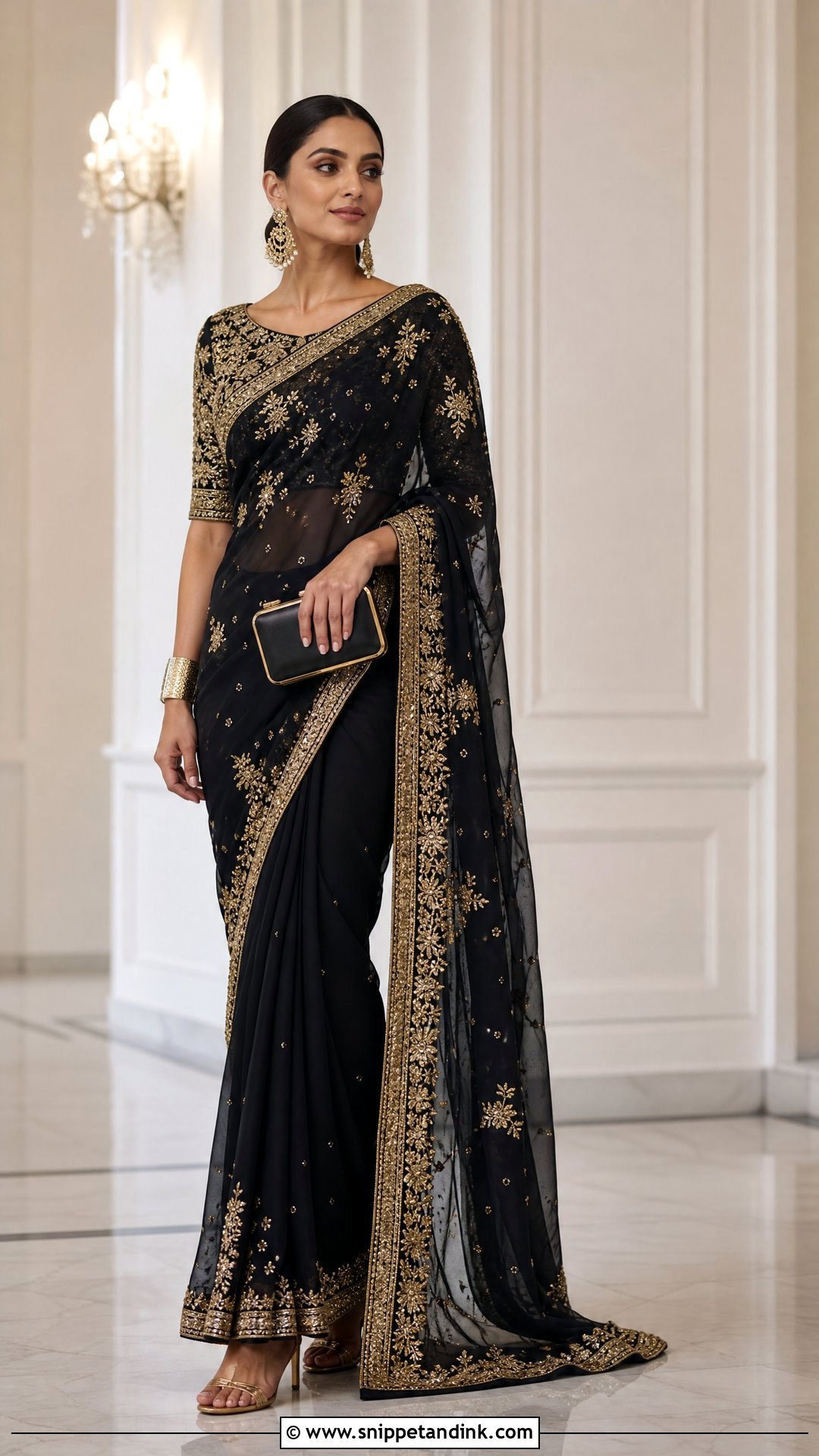
Before you buy black, check with the family. In many Pakistani households black is perfectly fine for a reception, but some elders still consider it wrong for a wedding, and it’s better to know before the blouse is stitched. If it’s welcome, a black and gold sari is one of the most confident evening looks a sister can wear, especially when the rest of the bridal party is in lighter shades. Pick fluid chiffon or georgette with a refined gold border rather than all-over sparkle. An elbow-sleeve blouse with a modest neckline keeps it formal. Gold earrings, a cuff and a black clutch, with a clean bun and either a classic red or a warm rose lip.
10. Coral Pakistani Sister Kalidar Dress
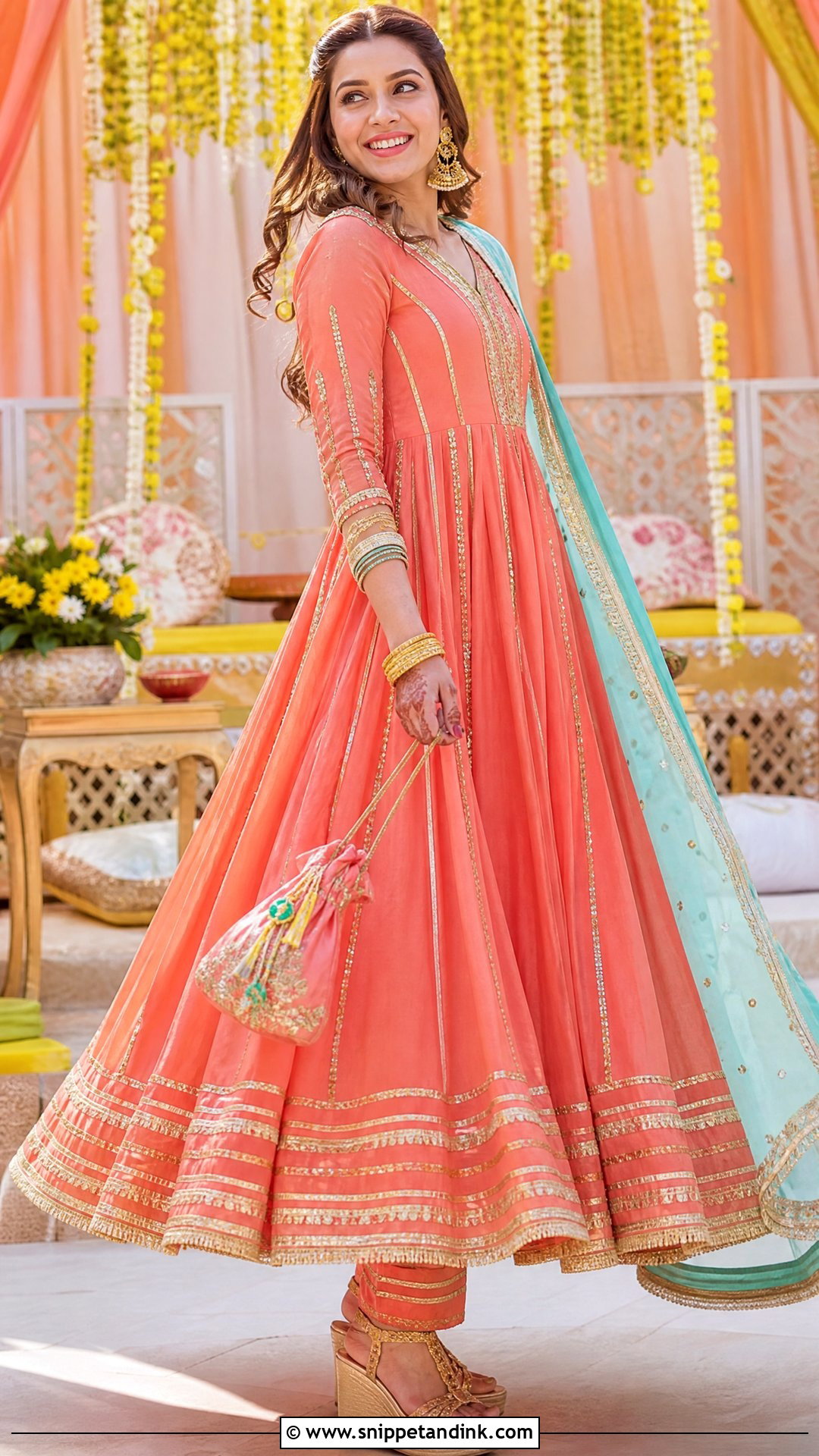
Coral gives you warmth and festivity without the bridal weight of red. A long kalidar dress with a fitted bodice and many flowing panels is made for a mehndi or daytime wedding, because every kali swings when you move. Put gota or small floral motifs at the neckline and hem. Wear narrow pants underneath and a light dupatta in peach or contrasting turquoise. With this many panels, check the hem length in the shoes you’ll wear; kalidar dresses tend to catch on heels if they’re cut too long. Wedges or low block heels are safest for dancing. Gold jhumkas, stacked bangles and peach-toned makeup finish it.
11. Lilac Pakistani Sister Cape Lehenga
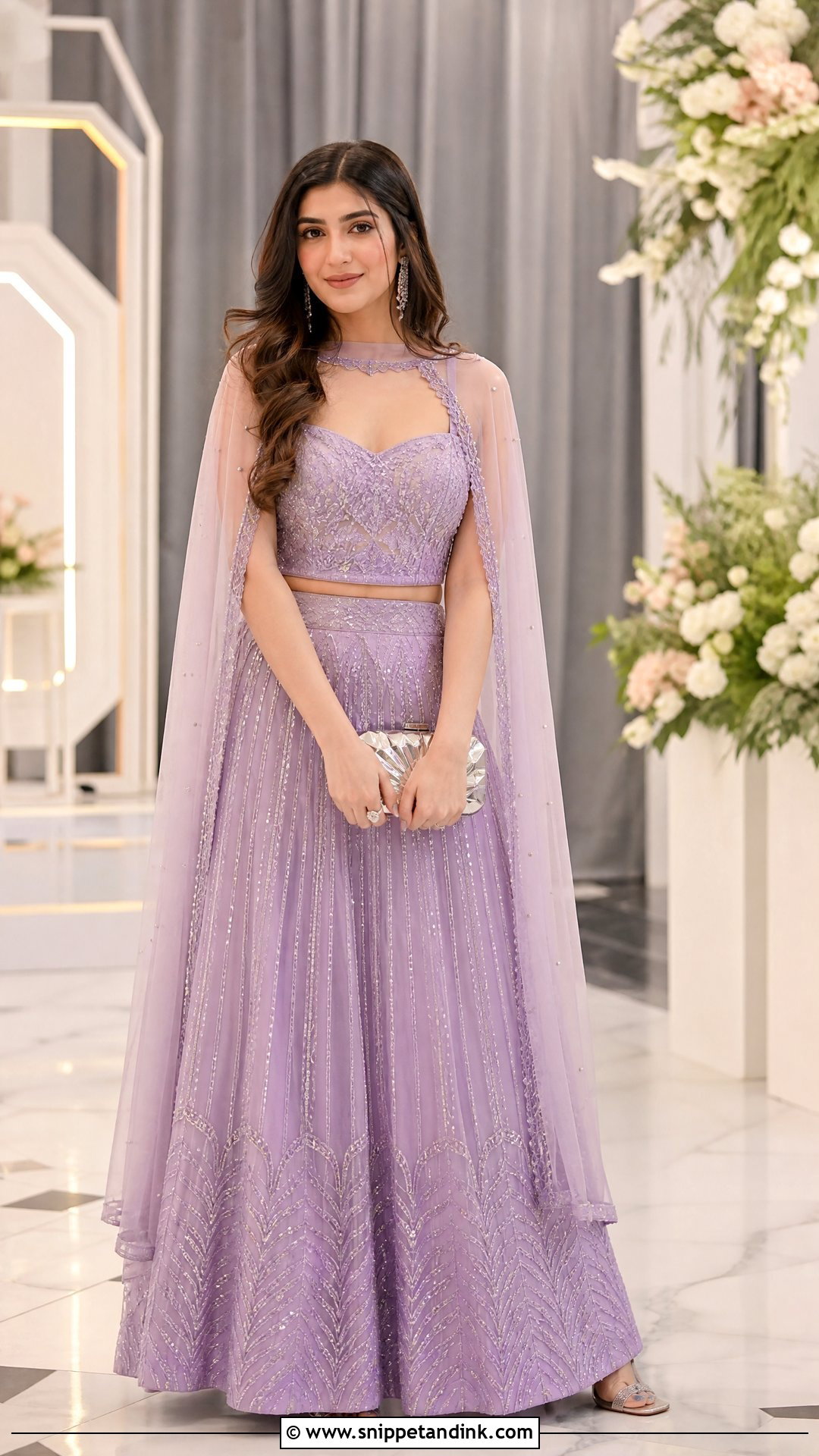
A lilac lehenga with a coordinated cape is the most practical modern reception option here, and that’s why I recommend it to sisters who are doing a lot of hosting. The cape gives you coverage over a sleeveless or short-sleeve blouse, and unlike a dupatta it doesn’t slide off every time you bend to greet an aunt. Keep the skirt lightly worked and concentrate the pearls or appliqué on the cape’s shoulders and border. Crystal drops, a delicate ring and a silver clutch suit the pastel. Metallic heels in silver or champagne, a sleek ponytail and lavender-grey eyes with a satin neutral lip keep it contemporary.
12. Maroon Pakistani Sister Farshi Shalwar Suit
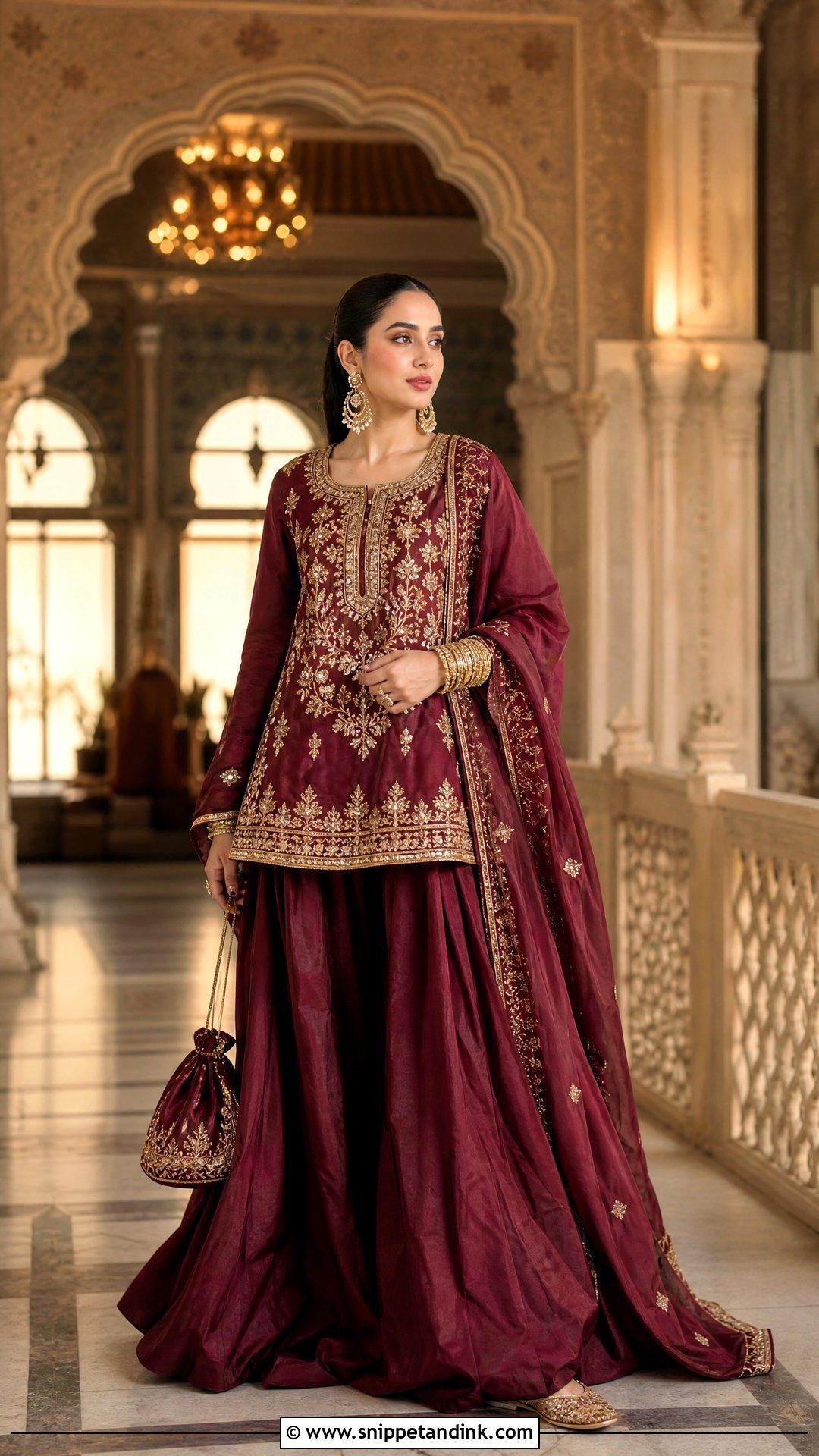
A maroon farshi shalwar suit brings real heritage character to a formal baraat. The farshi shalwar pools on the floor, so pair it with a short or mid-length shirt; a long kameez hides the very shape you chose it for. Antique gold embroidery with fine borders is enough, and I’d avoid dense bridal-level work so you don’t edge into the bride’s territory. A tissue or organza dupatta over one shoulder adds shine. Because there’s so much volume at the bottom, keep the top half streamlined: chandbalis, a few bangles, a sleek bun, kohl eyes and a brick lip. One fitting tip: hem the shalwar in your actual khussas, or you’ll be stepping on it all night.
13. Teal Pakistani Sister Long Shirt Sharara
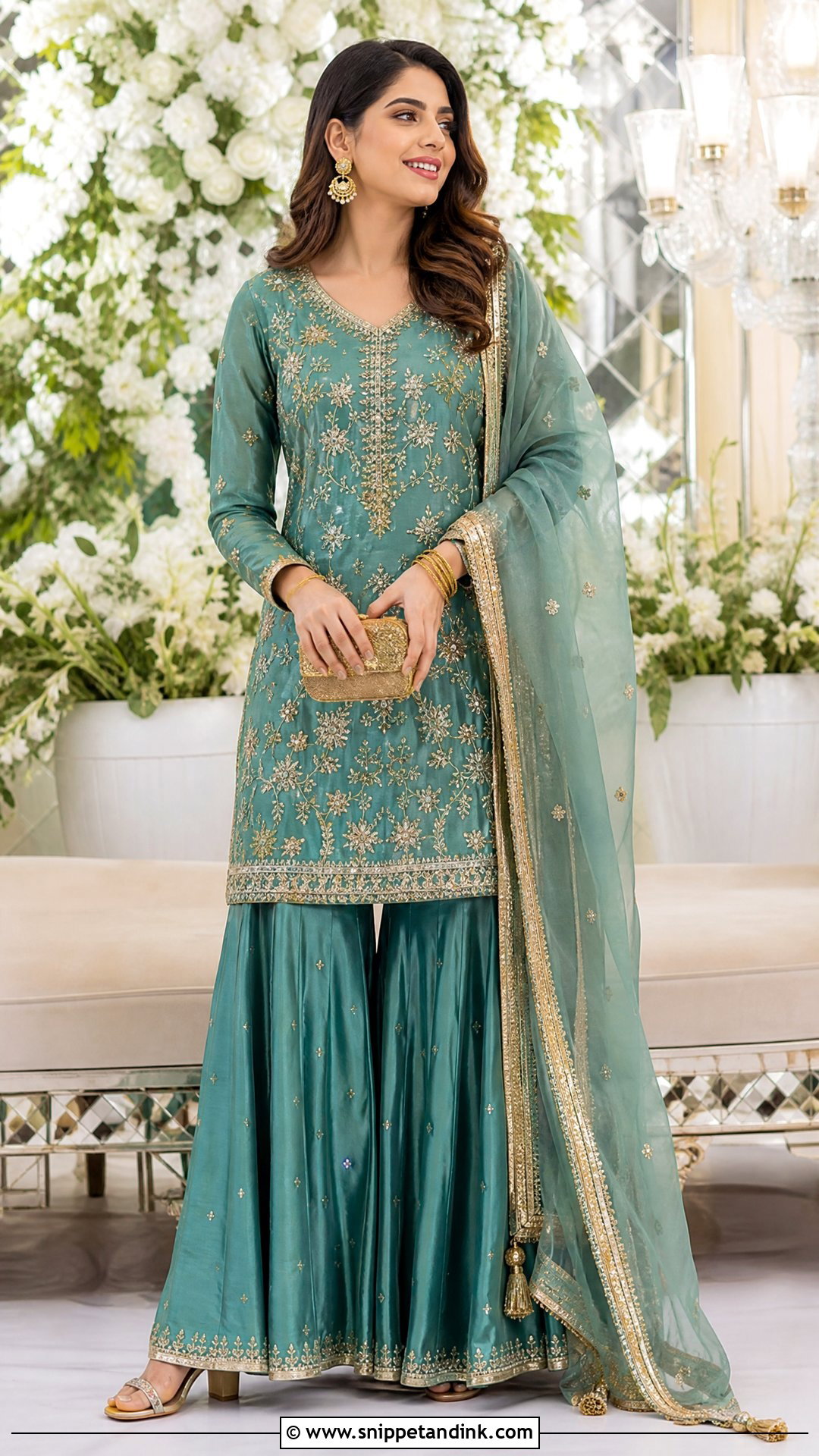
Teal sits right between bright and muted, which makes it a safe bet when you want color but the bride’s palette is fairly restrained. A knee-length embroidered shirt over a wide silk or chiffon sharara is easy to wear for hours. Vertical embroidery on the shirt lengthens the body, and a defined neckline keeps attention up near the face. Give the dupatta a contrasting border in gold or magenta. Wear platform sandals or block heels, because a sharara cut for flats will drag on the floor in heels and the reverse leaves an awkward gap. A side braid with a few small pins and a warm nude lip finish it.
14. Silver Gray Pakistani Sister Maxi Dress
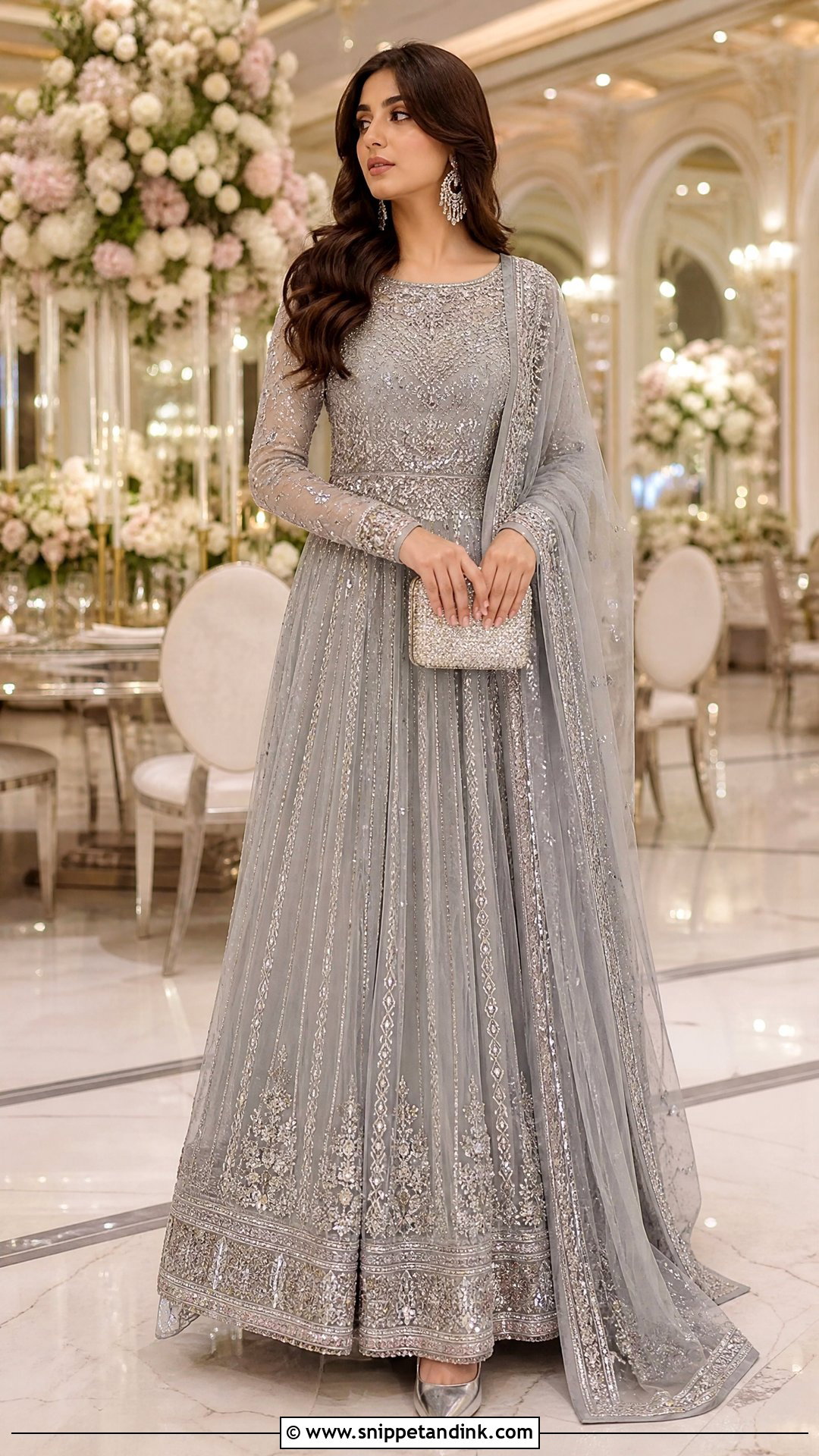
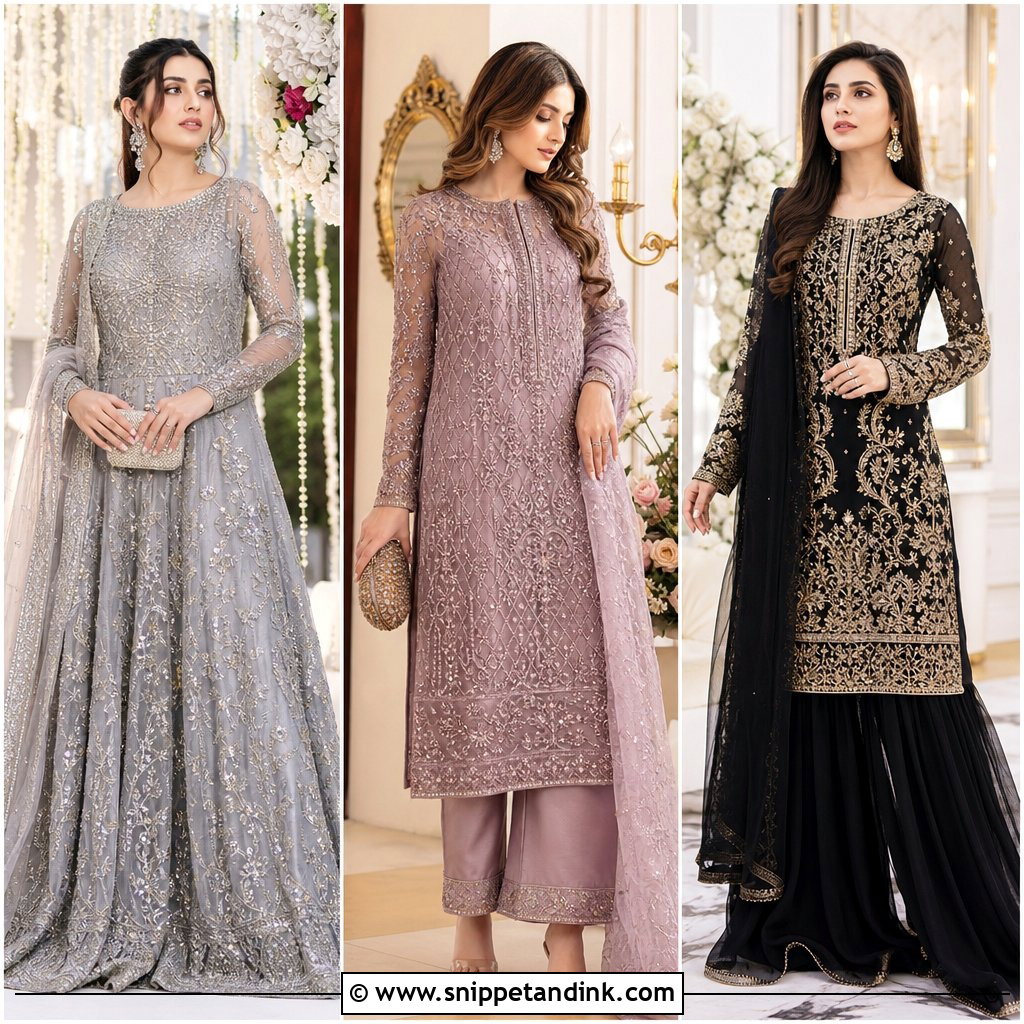
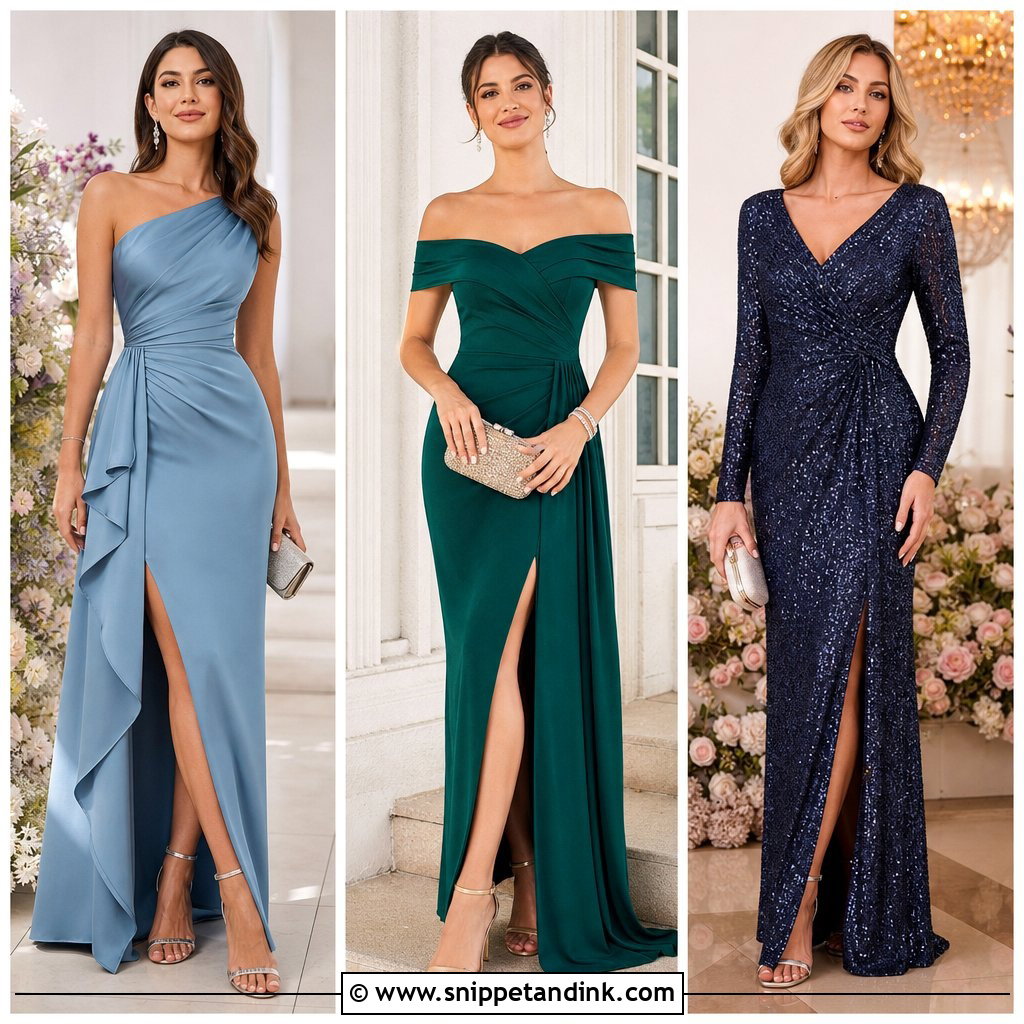
Silver grey is the understated option for a walima or a ballroom reception where the bride will be in something rich and saturated. A fitted bodice with a flowing skirt is all the shape you need, with the crystal or silver thread work kept to the neckline and waist so it doesn’t look costume-like. Pin the sheer dupatta to one shoulder or let it drape over the arms. Crystal earrings, a silver minaudière and pointed metallic heels suit the cool tone. If the neckline is already worked, skip the necklace. Grey can wash out warm skin under hall lighting, so I add a little more blush than you’d think and choose a mauve lip.
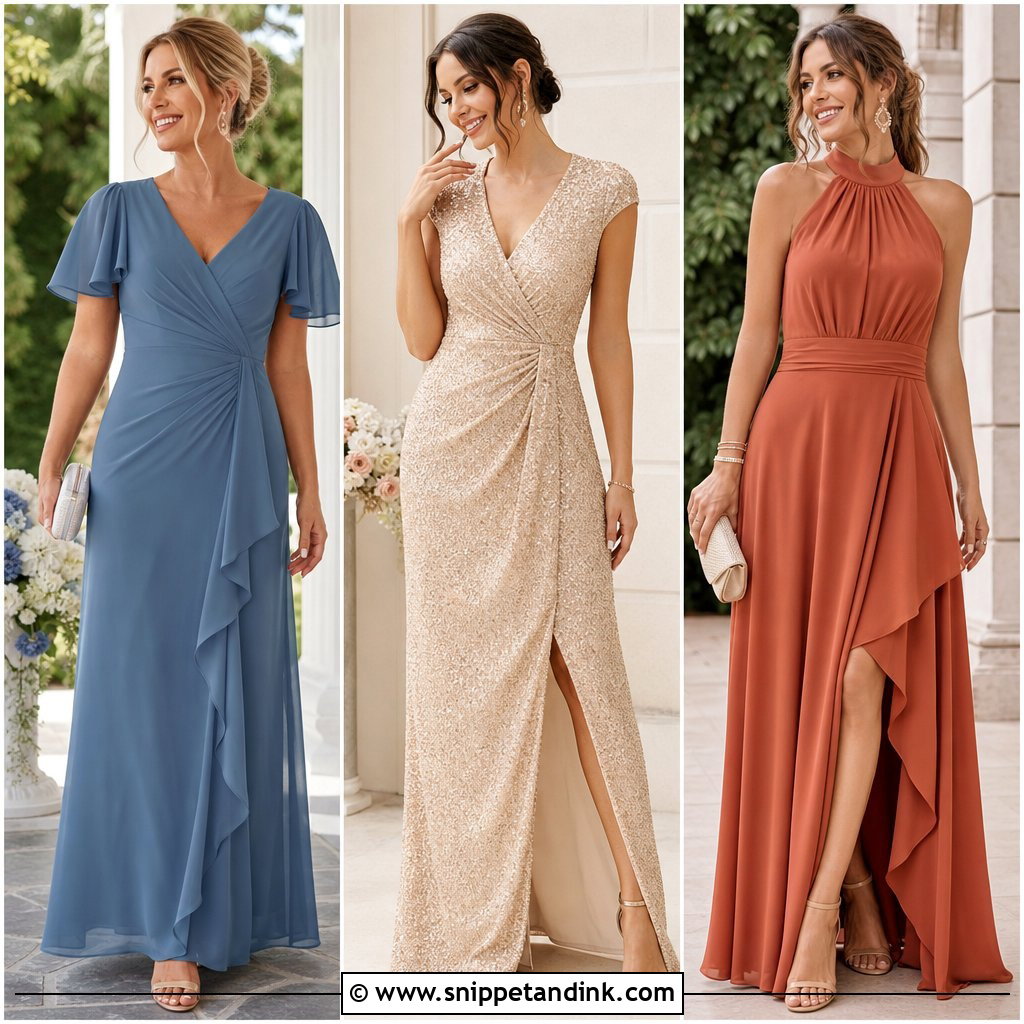
15. Orange Pakistani Sister Gota Lehenga
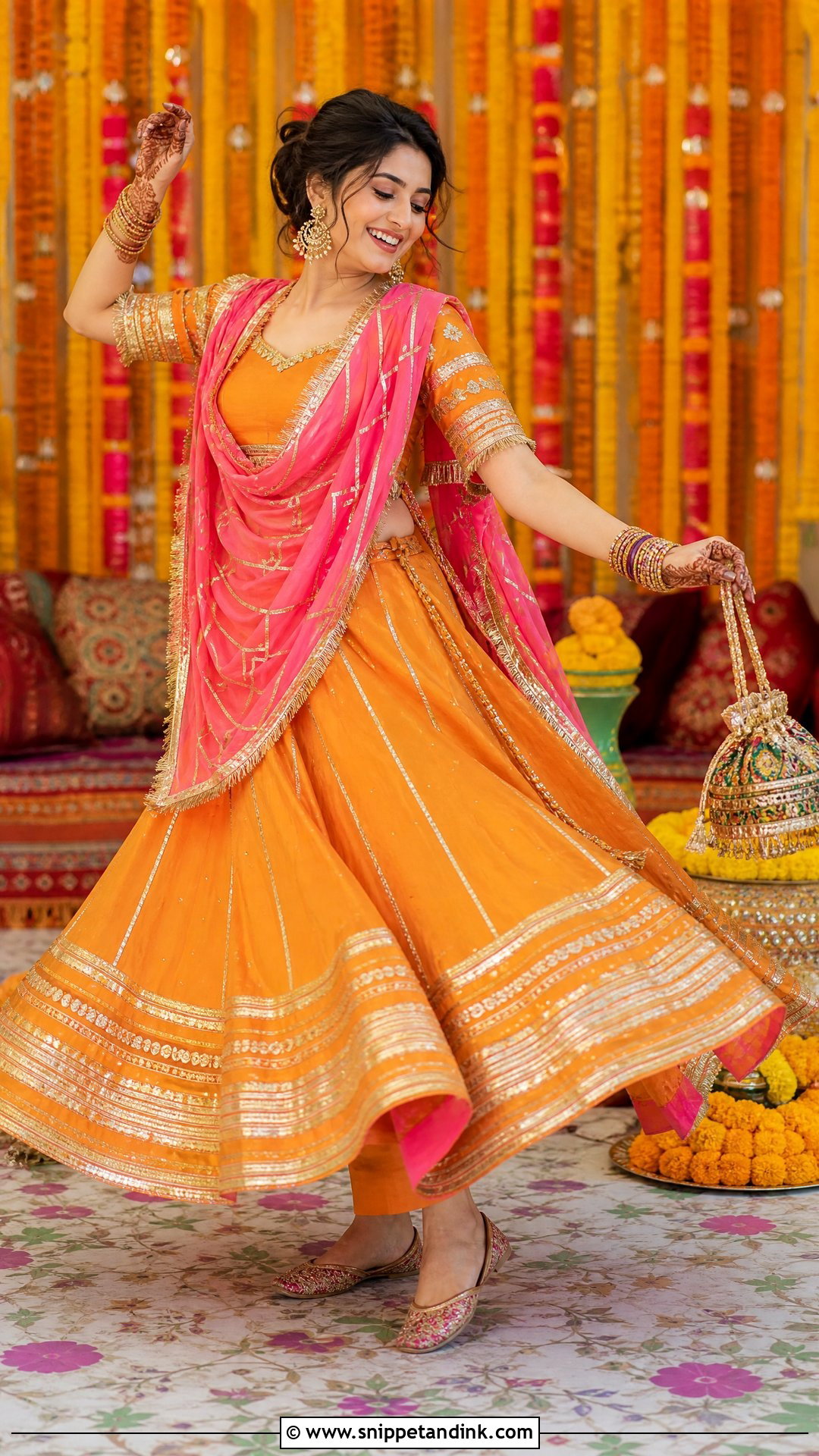
Orange is pure mehndi energy. Build it around a flared orange lehenga, a fitted blouse and a contrasting pink or green dupatta. Gota borders and small metallic motifs flash every time you turn, which is exactly what you want on a dance floor. If the skirt is heavily decorated, keep the blouse simple with a clean neckline. Oversized jhumkas, colorful bangles and gold khussas are comfortable and traditional. A long braid with parandi ties or fresh flowers matched to the decor, peach-gold eyes and a bright pink lip complete it. Do a quick sit test at your fitting: heavy gota at the hem can make a lehenga stiff when you sit on the floor for the mehndi rasam.
16. White And Gold Pakistani Sister Gharara
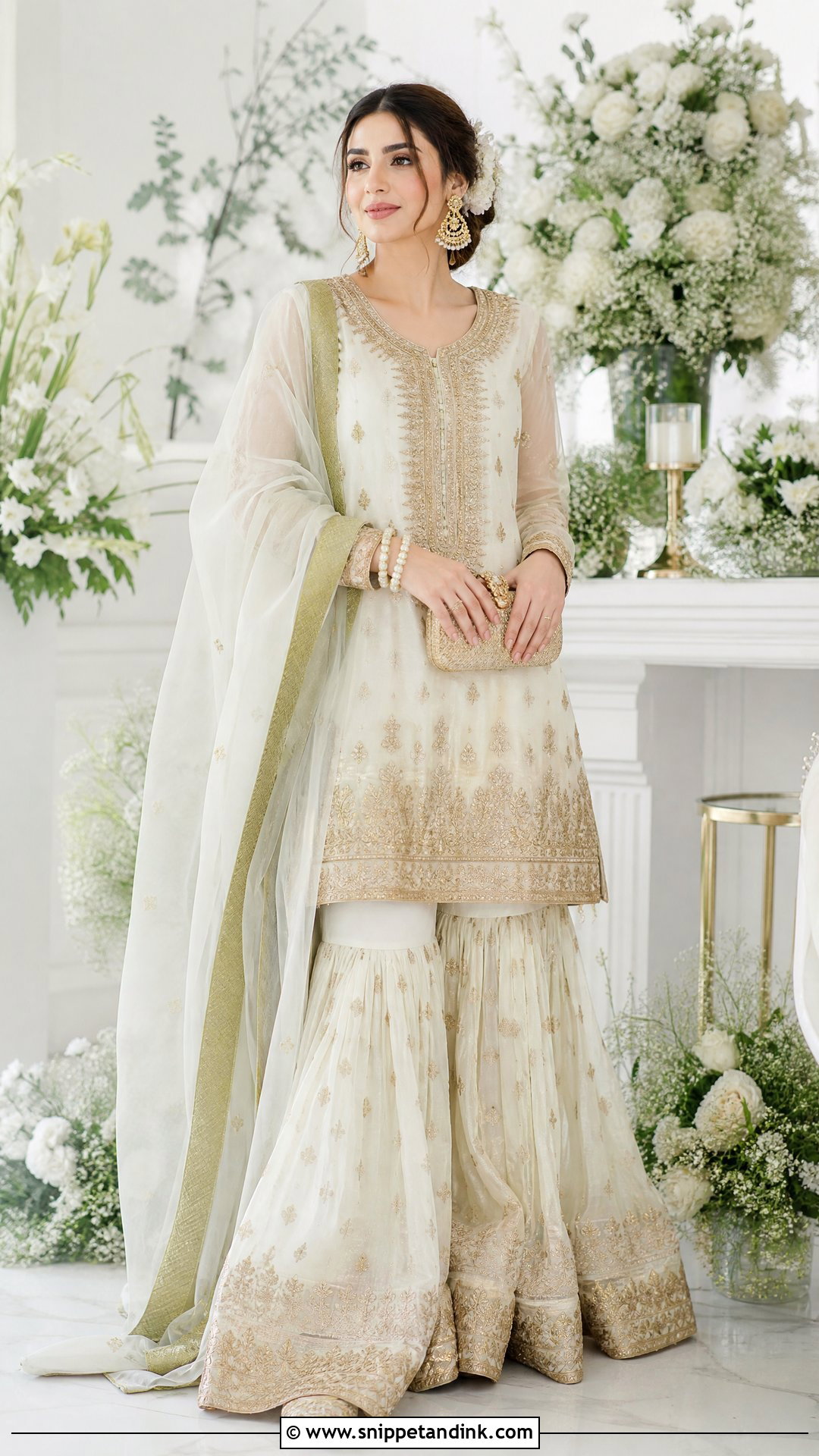
White and gold is classic for a nikkah, but it’s the riskiest choice on this list if the bride is also in white. Confirm her outfit before you order. If she is in white, shift to a warm ivory or cream base and give your dupatta an olive or rose border so the two of you are clearly distinct in photos. A short kameez with fine gold work, a classic gharara and a sheer dupatta are all you need. Gold jhumkas, pearl bangles and a small brocade clutch suit it. Embellished cream khussas are comfortable for a home or mosque ceremony where you may be barefoot part of the time anyway. Add a rose-brown lip so pale clothing doesn’t wash out your face.
17. Rust Pakistani Sister Velvet Angrakha
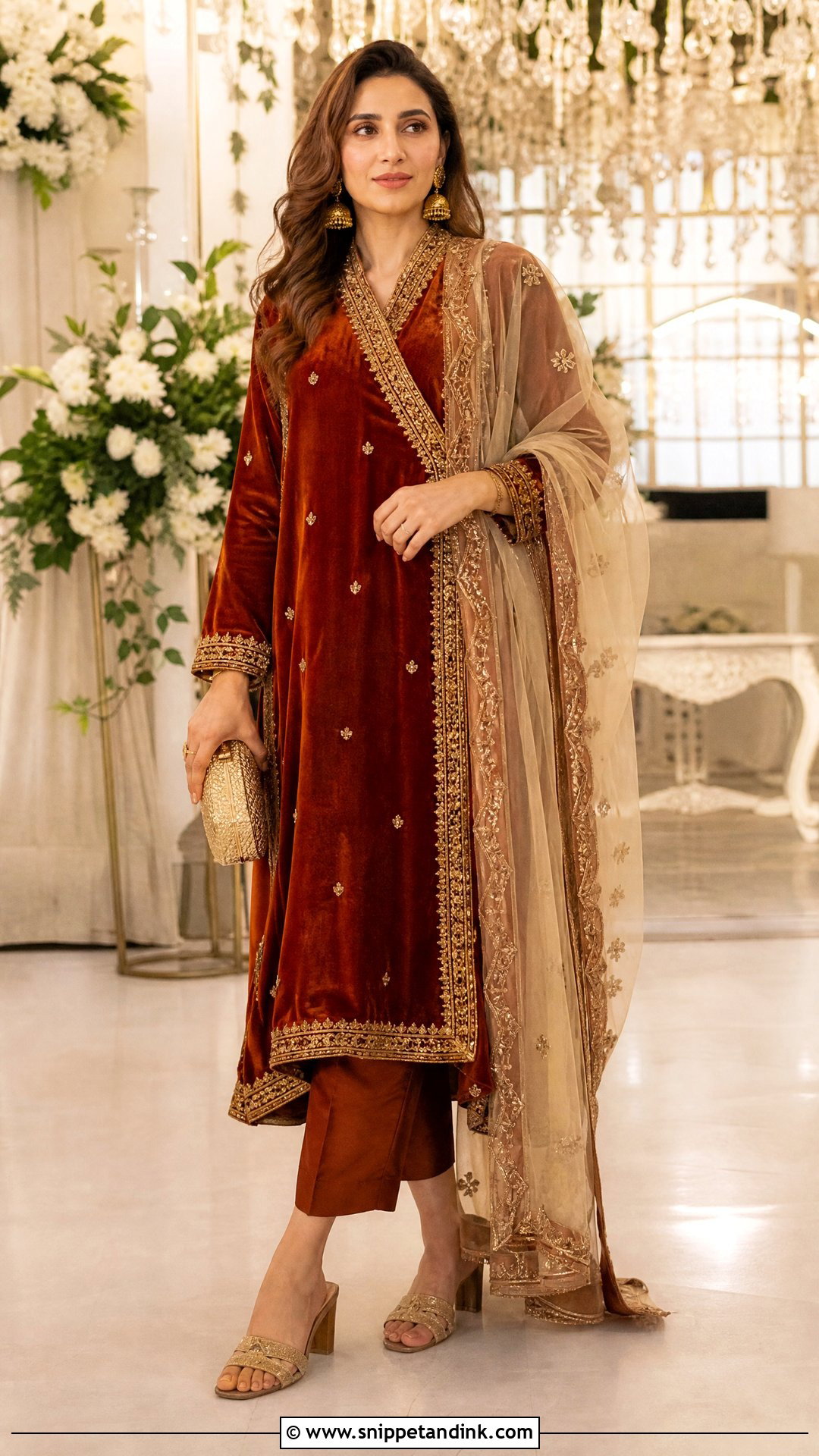
Rust velvet is for a cool evening wedding lit with warm bulbs; it absorbs the light and glows in a way silk doesn’t. A knee-length or calf-length angrakha with a wrapped front and waist ties gives you shape. Pair it with raw silk trousers for a dinner or a lightly flared lehenga for the more formal function. Velvet is heavy, so a sheer beige dupatta helps break up the mass. I keep jewelry restrained here, because the fabric already carries a lot of visual weight. Antique earrings, a textured gold clutch and low block heels are enough, with warm brown eyes and a terracotta lip.
18. Mint Green Pakistani Sister Jacket Lehenga
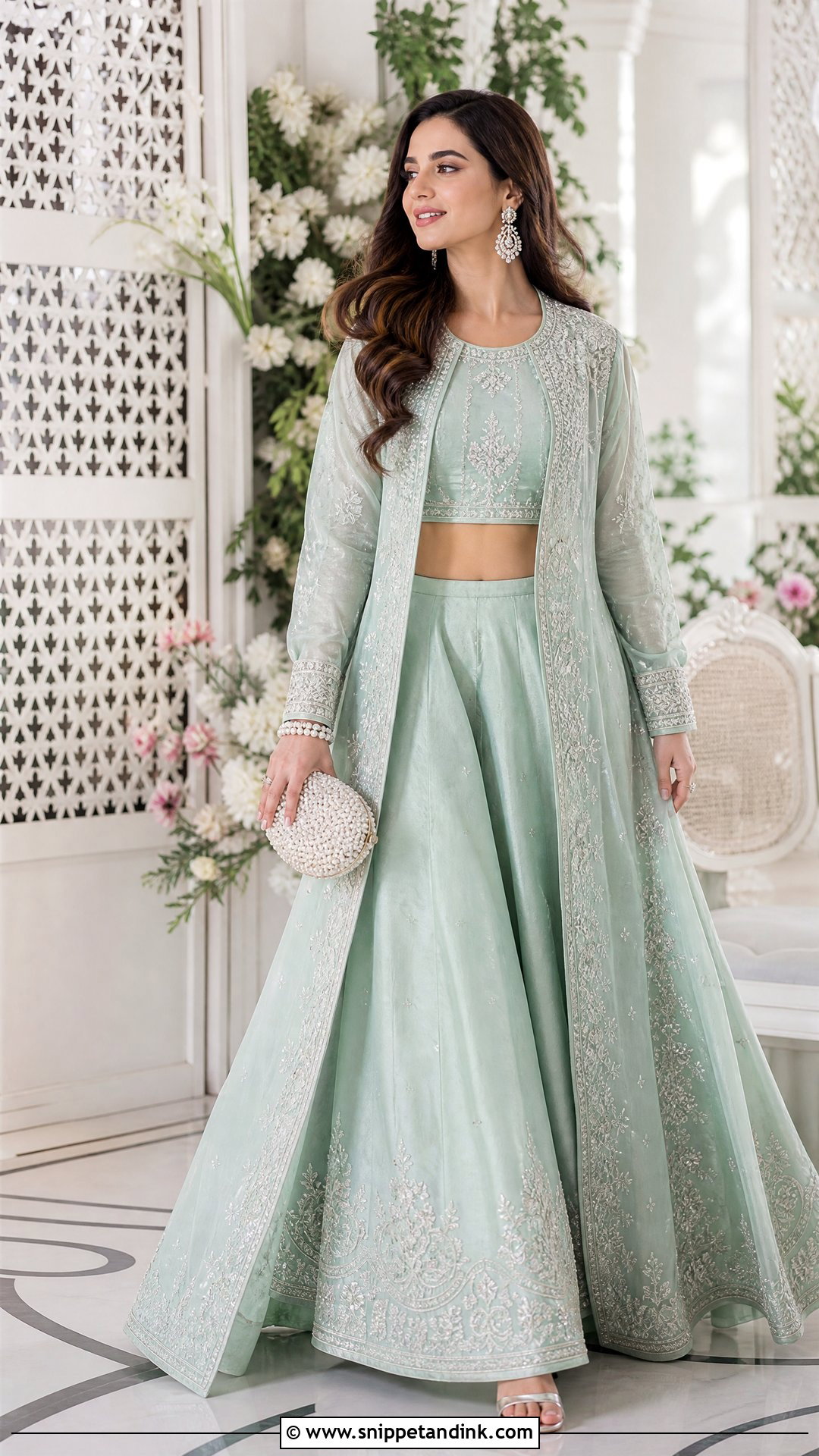
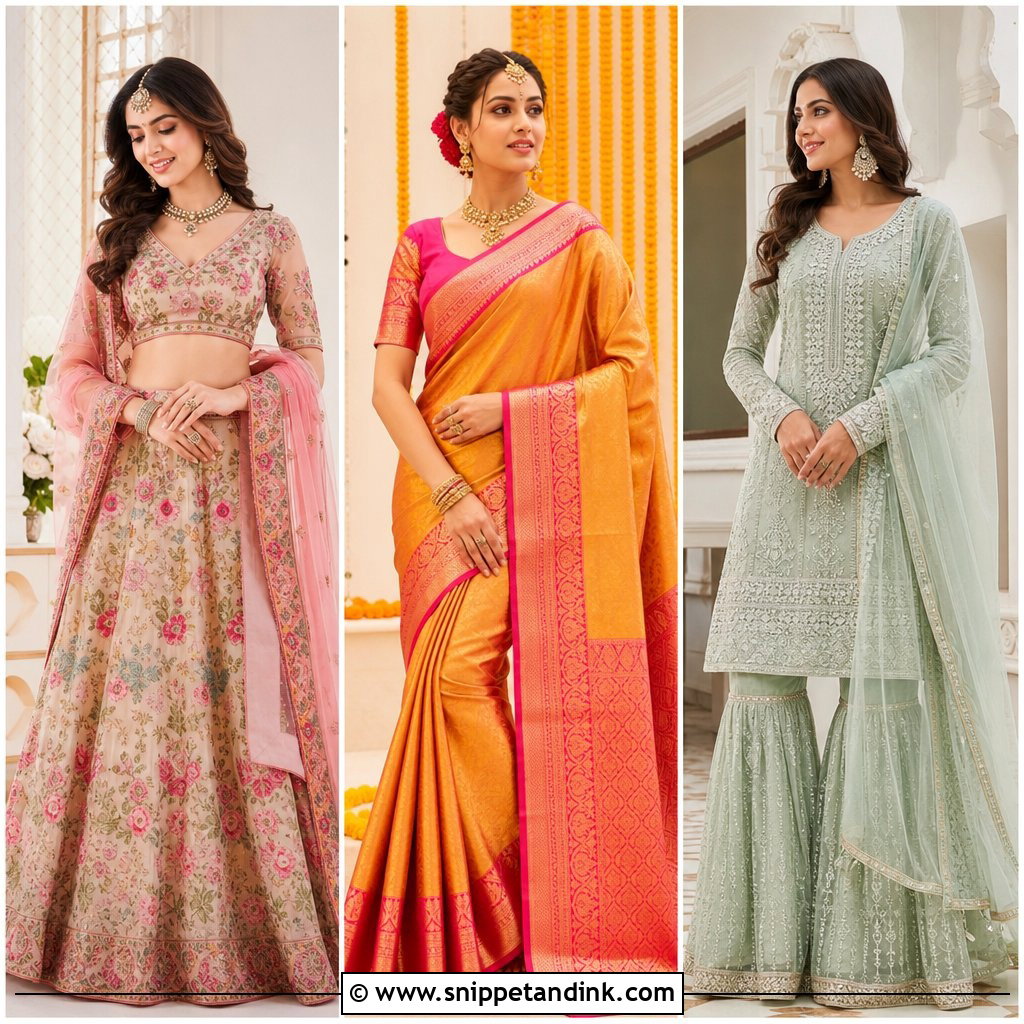
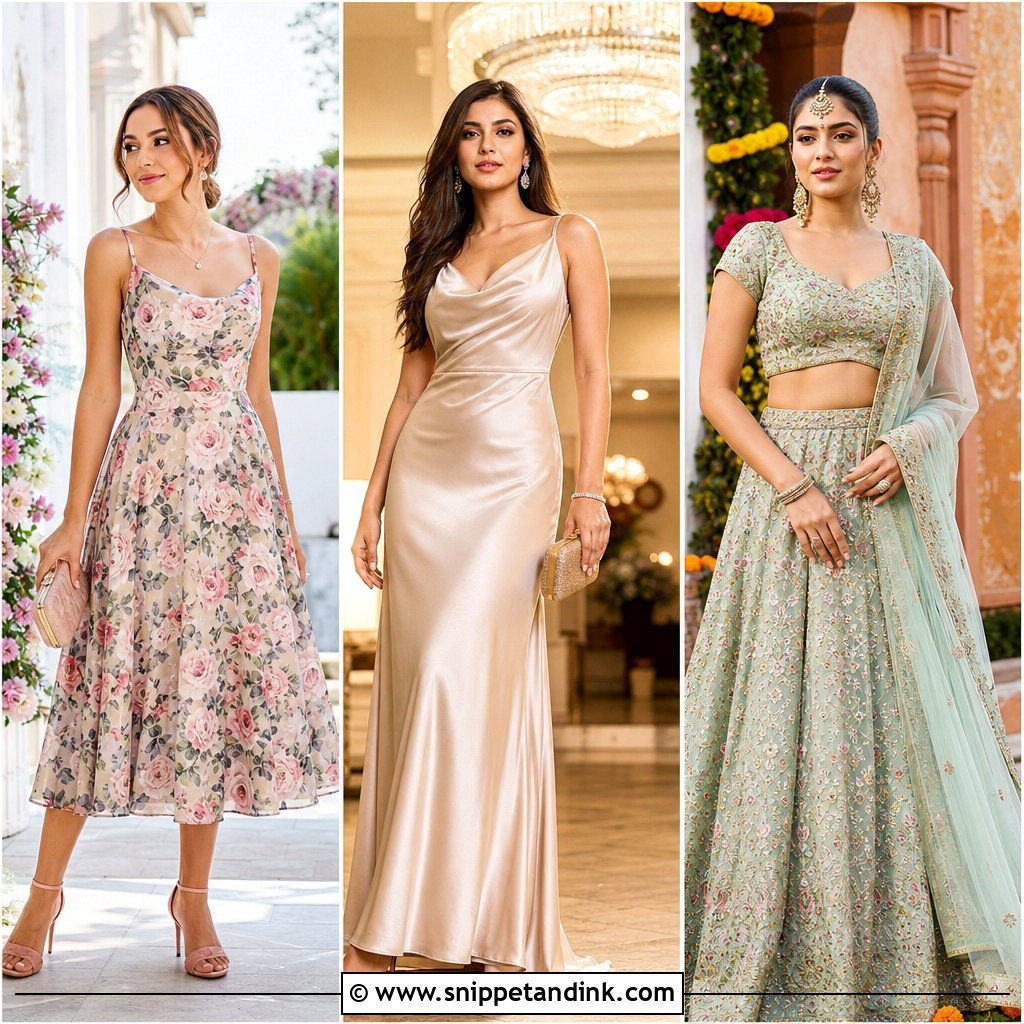
A mint jacket lehenga is a fresh change from the usual three-piece outfit. Start with a simple flared skirt and fitted blouse, then layer a long front-open organza or net jacket over the top. The embroidery belongs on the jacket’s edges, sleeves and hem, so it frames you without loading weight onto the body. Pearls and silver thread are kind to mint. One thing to know: a net jacket snags on bangles and clutch clasps, so keep the jewelry smooth. Crystal earrings, a slim bracelet and silver or nude heels finish it, with soft curls or a high ponytail so the jacket stays visible. It works best at a walima or daytime reception.
19. Champagne Pakistani Sister Embellished Sari
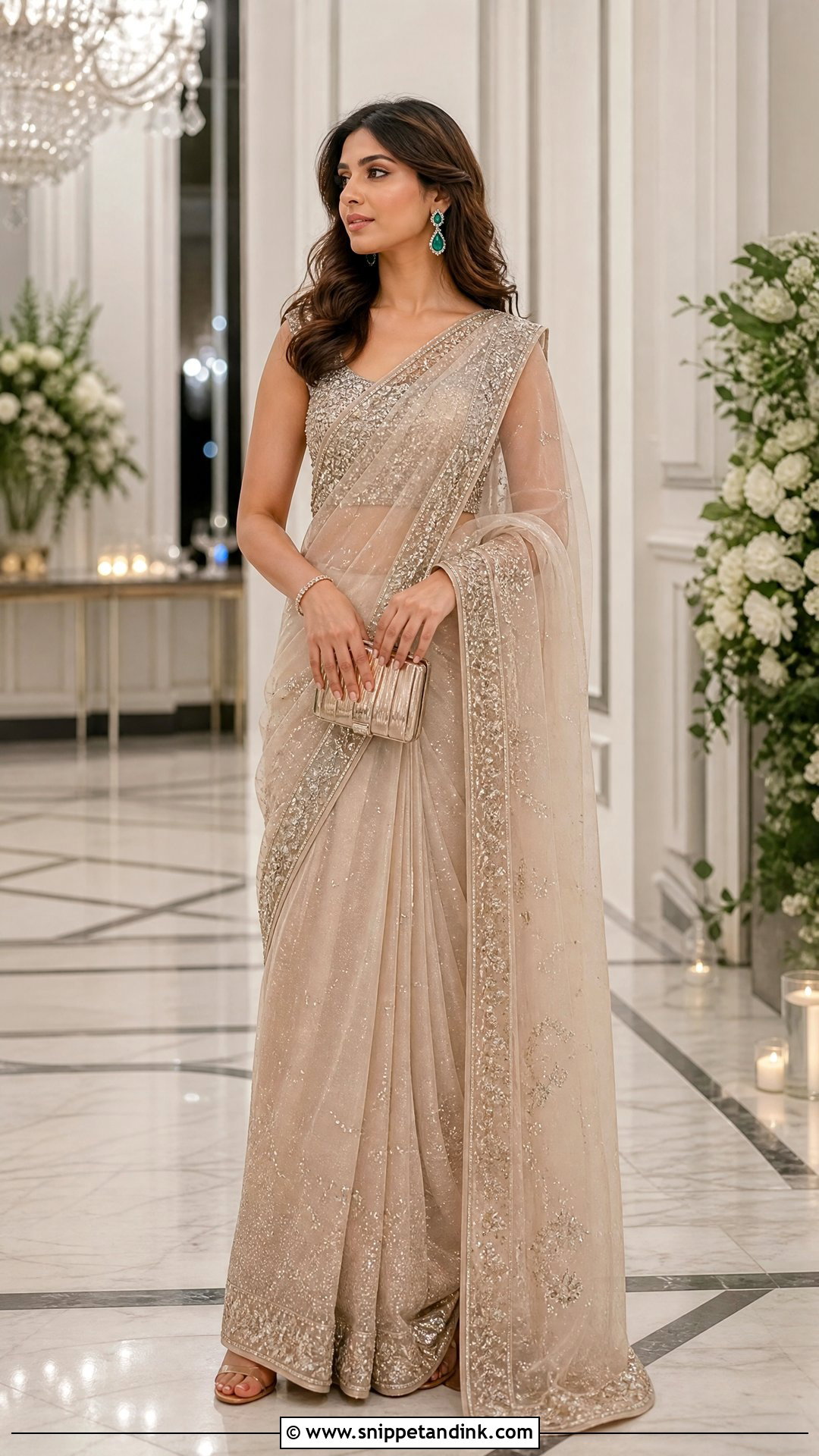
Champagne goes with almost any wedding palette, which makes it a good fallback if the bride hasn’t settled her colors yet. For a formal reception, choose a pre-draped or traditionally pleated sari in silk, chiffon or tissue. If you’ve never managed a sari through a ten-hour day, I’d honestly steer you to pre-draped; the pleats stay put and you can sit, stand and hug without re-tucking. Pair it with a structured blouse in beadwork or fine gold embroidery, and aim for a gentle shimmer rather than anything resembling the bride’s main outfit. Emerald or ruby-toned earrings give one point of contrast. A side-parted bun shows the earrings off, and a deep rose lip stops the neutral from looking flat.
20. Royal Blue Pakistani Sister Banarsi Suit
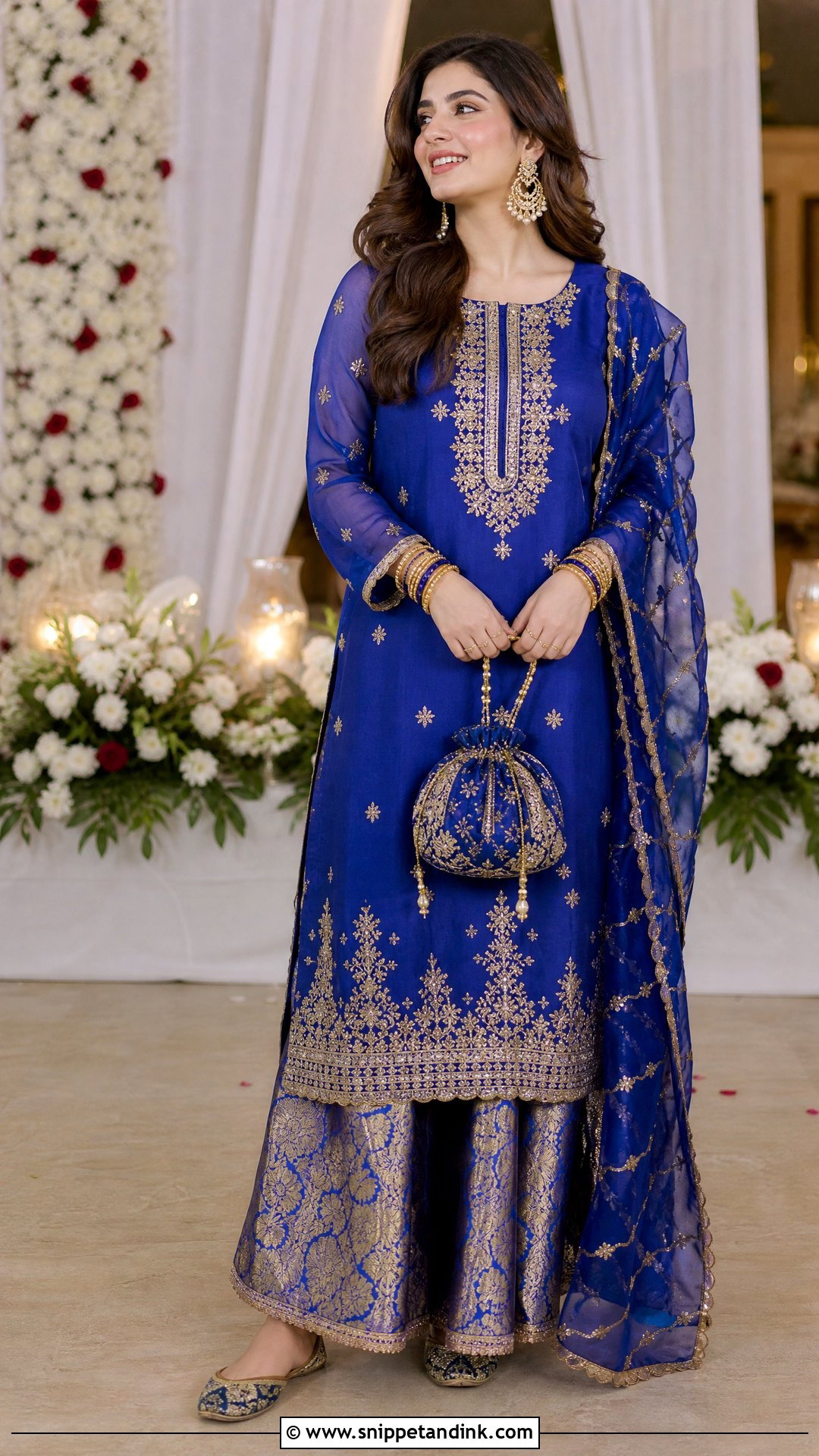
Royal blue with Banarsi brings strong traditional character to a baraat or a family dinner. A straight embroidered kameez with a Banarsi shalwar or wide trousers in blue and gold is much easier to manage than a full lehenga, which matters if you’re the one sorting out the bride’s entry. Banarsi is woven, not embroidered, so the pattern runs through the fabric and lies flat; it won’t scratch or catch the way heavy dabka does. Add an organza dupatta draped neatly over one shoulder. Gold chandbalis, coordinated bangles and a structured potli complete it. Embroidered khussas give a heritage finish, block heels give height. A sleek braid with defined eyes and a berry lip suits the clean lines.
The Sister Is Working All Night, So Dress Like It
Guests can sit through a baraat. You can’t. You’ll be on the stage arranging the bride’s dupatta, fetching her phone, holding her clutch, helping her up and down steps and standing in every group photo. That changes what I recommend.
- Sleeves you can lift your arms in. Have the tailor add a little ease at the armhole, especially on fitted velvet or raw silk blouses.
- A dupatta that stays put. Pin it at the shoulder with two small safety pins hidden under the embroidery rather than one big brooch, which drags fine organza.
- A hem you won’t trip on. Floor-length shararas and farshi shalwars look grand, but if you’ll be climbing on and off a stage, ask for the hem to clear the floor slightly in front.
- Shoes you’ve worn for an evening already. Break in khussas a week early; new ones rub at the heel and the toe.
A Clutch Packed for Two People
Your clutch is everyone’s emergency kit, so pack it for two people. I’d carry spare safety pins and bobby pins, a small sewing kit with thread in your outfit’s color and the bride’s, blotting papers, the bride’s lipstick, a pair of flat foldable slippers, and a few tissues. Glue dots or double-sided fashion tape save a slipping dupatta or a gaping neckline in seconds. A tiny packet of mints and a phone charger round it out, because someone will ask.
Dressing Second Best on Purpose, and Loving It
A sister’s outfit works when it feels like part of the wedding without pulling the eye away from the bride. Bright shararas and kalidars for the mehndi, soft ghararas for the nikkah, richer fabrics for the baraat and lighter, cooler looks for the walima give you a natural progression across the week. Sit down with your sister and look at her four outfits side by side before you commit to yours. Leave real time for stitching and at least one fitting in the shoes you’ll wear. And pick the silhouette you can move in, because you’ll be carrying her dupatta, fixing her jewelry and answering everyone’s questions all day.
You'll Like These Ideas:


Leave a Reply