
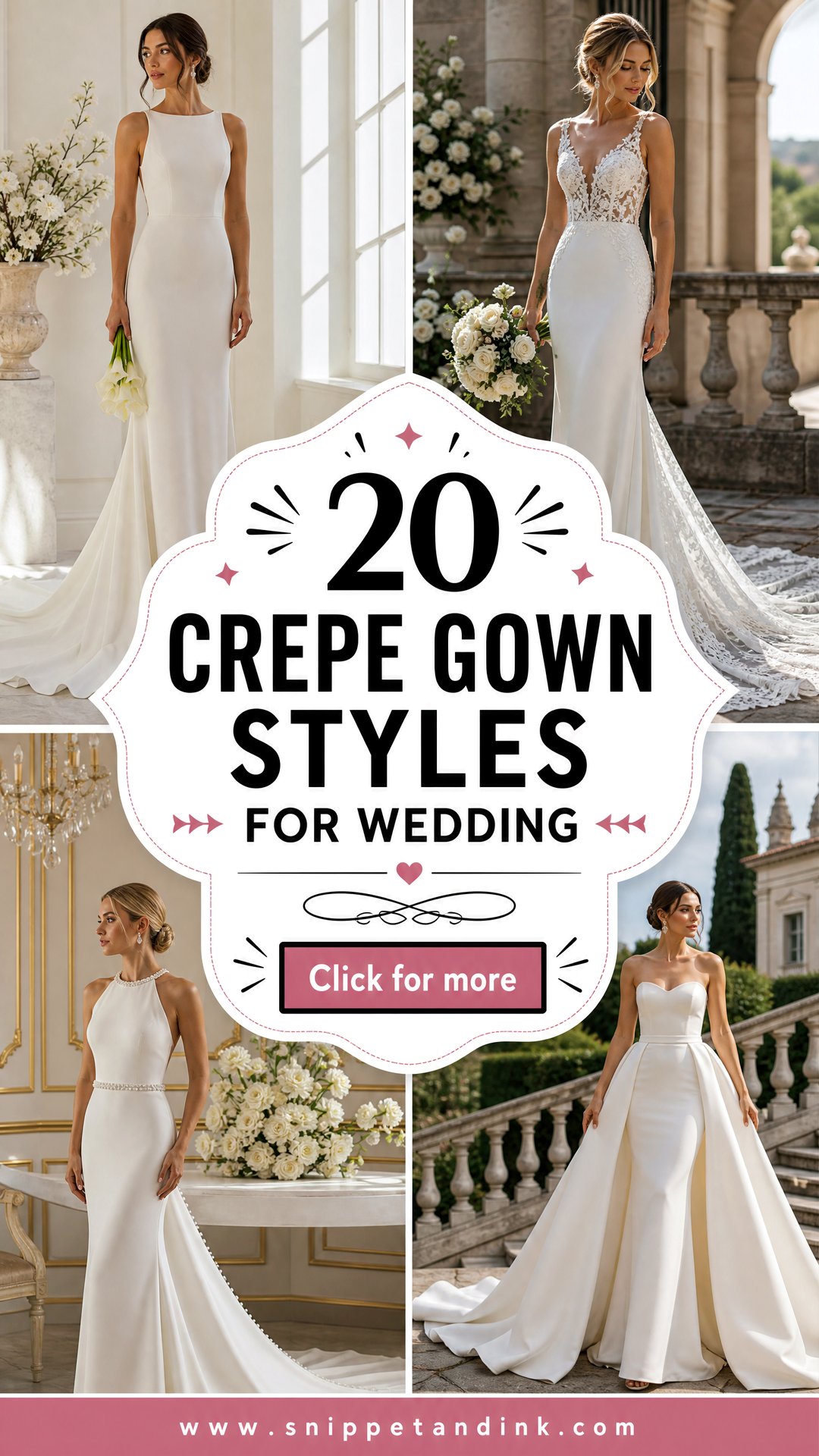
Crepe is the fabric I hand to brides who say they want something clean. It has a fine, pebbly matte surface that soaks up light instead of bouncing it back, so it looks expensive in photos without any shine, and it has enough body to hold a fitted line. A-line, mermaid, sheath and fit-and-flare shapes all suit it. The flip side is honesty: crepe shows the construction of a dress, and every slightly-off seam with it. The twenty gowns below are styled as complete outfits, from neckline and veil down to shoes, because with a plain fabric the accessories carry more of the mood. Add pearls and lace and crepe turns romantic; keep everything sleek and it reads minimal.
Not All Crepe Behaves the Same
“Crepe” on a label can mean very different cloths. Before you fall for a shape, it helps to know which one you’re touching, because the weight decides how the gown hangs, how warm it is and how much it forgives.
- Stretch crepe has a little elastane in it. It moves with you and is the kindest for mermaid and fit-and-flare shapes, but it clings to anything underneath.
- Double or heavy crepe is thick and structured. It holds a ball skirt or a sharp column and hides underwear lines well, though it gets warm in summer.
- Silk crepe drapes beautifully and feels cool, but it wrinkles more easily and marks if splashed with water.
- Crepe-back satin has a matte side and a shiny side; some gowns use both for contrast panels.
In the shop, I pinch a fold of the skirt and let it go. Heavy crepe springs back; a thin one stays creased, which tells you how it will look after the car ride. Then look at the dress side-on under a lamp. Raking light shows every seam pucker and pull that straight-on light hides.
1. Strapless Crepe Wedding Gown
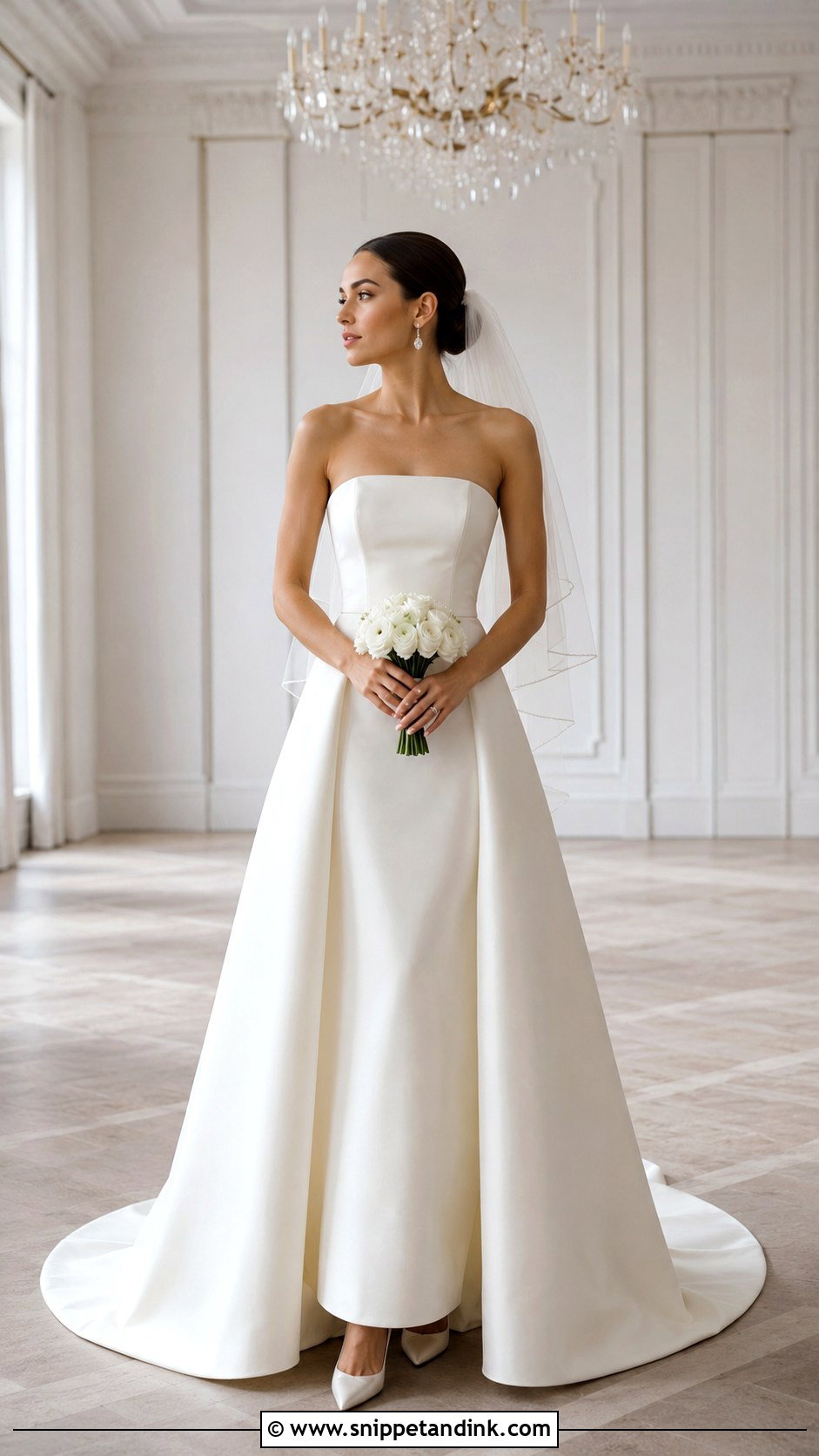
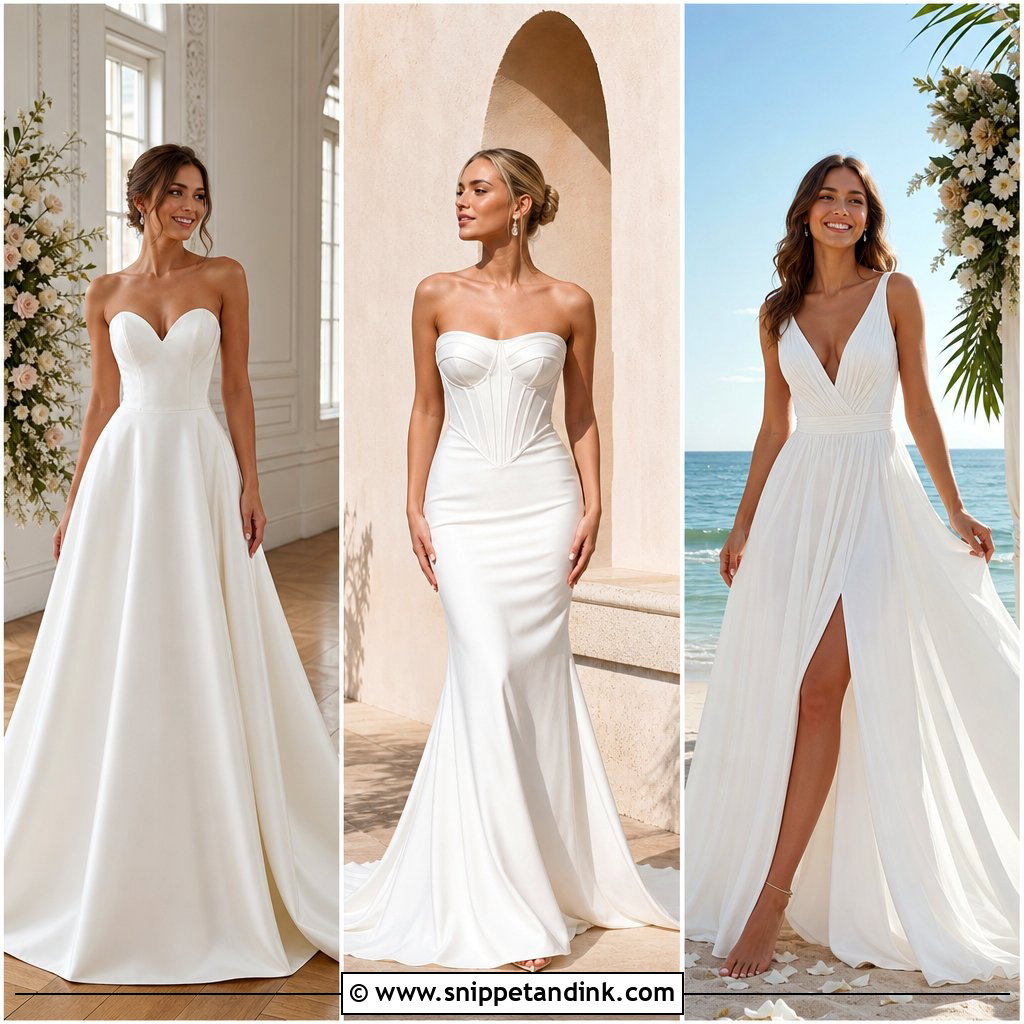
Strapless crepe relies entirely on what’s built inside. I look for proper boning, a waist stay and a bodice that grips the ribcage, because crepe has no texture to hide a top edge that gaps when you lean forward. A straight or gently curved neckline over an A-line or column skirt keeps the proportions calm. Pointed ivory pumps, pearl drops and a fingertip veil with a clean edge are enough. Wear a low bun to show the shoulders. For a church or a cool evening, a removable crepe bolero cut from the same bolt solves coverage. Rooftops and contemporary ballrooms suit this one.
2. Off Shoulder Crepe Wedding Gown
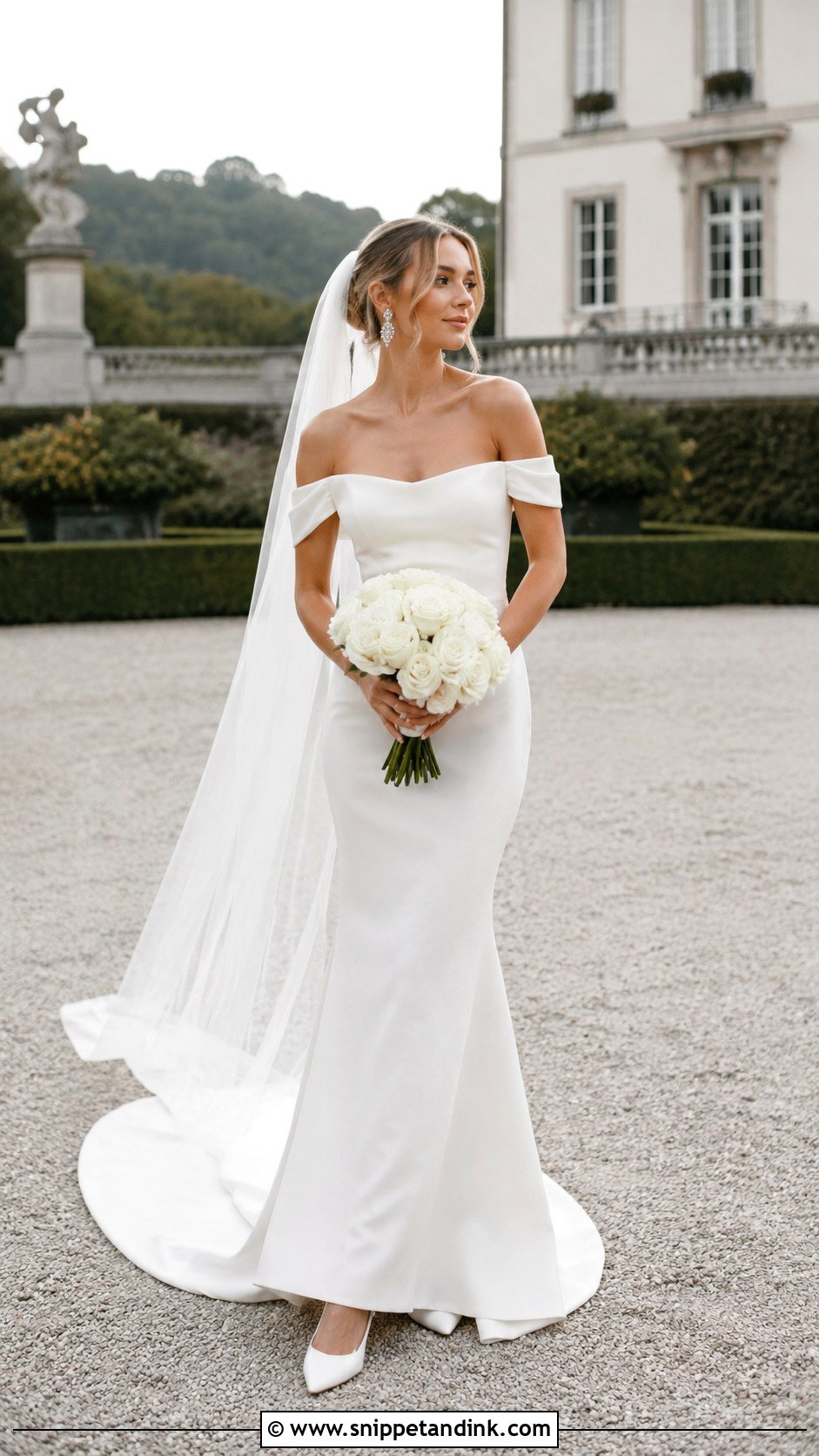
Draped off-the-shoulder sleeves soften crepe’s crispness more than any other neckline. Over a fitted bodice and a gentle fit-and-flare skirt, the effect is romantic but still tidy. The test I always run: arms up, then a hug. If the bands slide or bite into the upper arm, they need re-setting before anything else is altered. Crystal earrings, a thin bracelet and ivory slingbacks finish it, with a loose chignon or soft waves. Tuck a chapel veil beneath the hair so it doesn’t cover the collarbones. A white coat between photos takes care of cooler evenings, and a round bouquet of white roses and greenery suits gardens and old estates.
3. Long Sleeve Crepe Wedding Gown
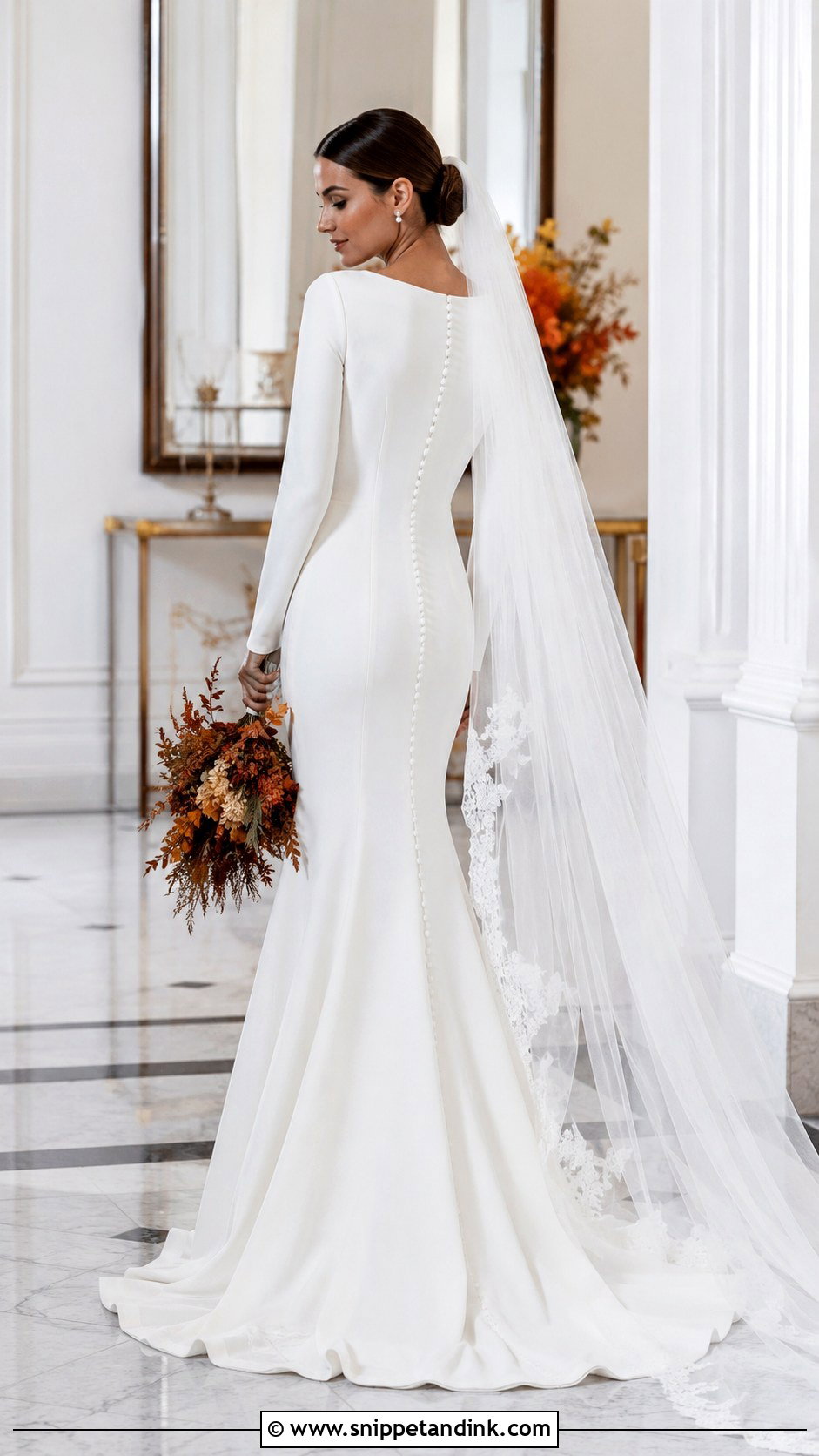
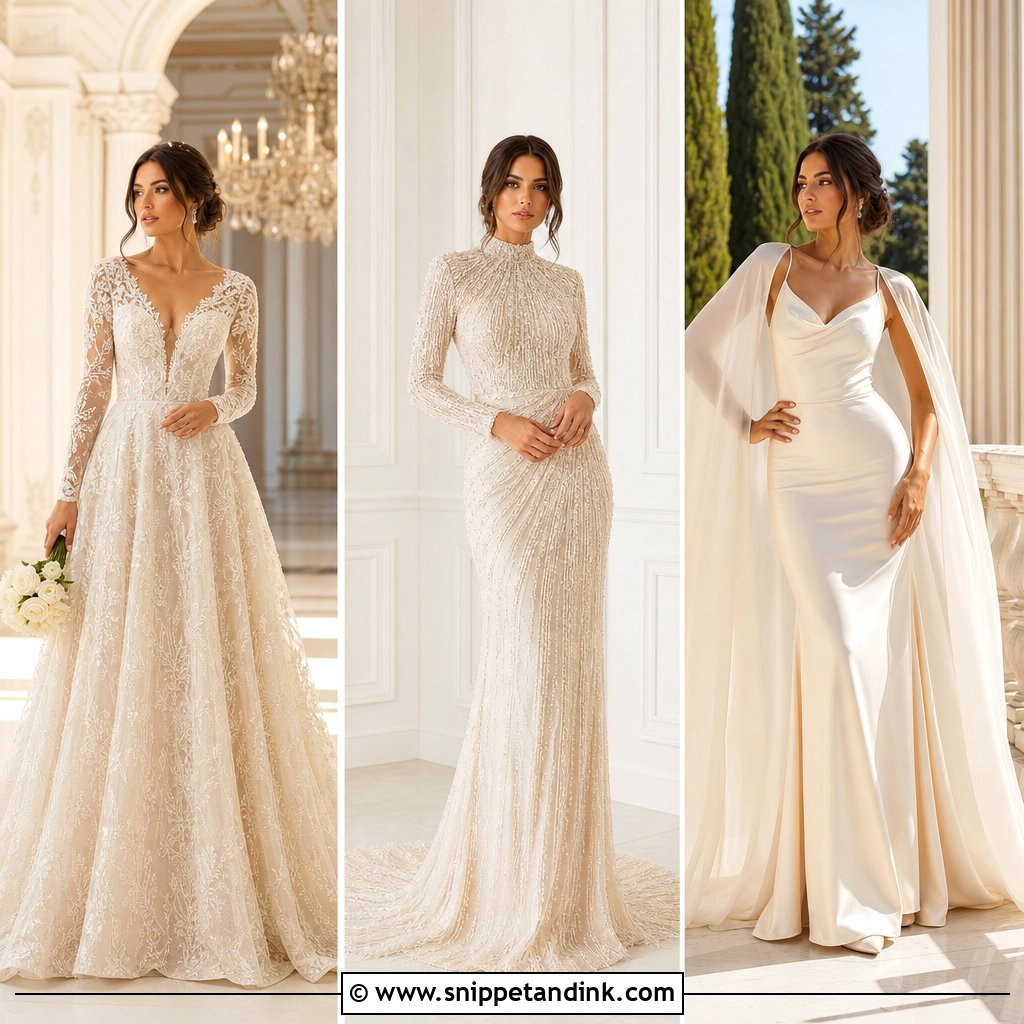
Long crepe sleeves are warmer than lace, which makes this the gown I suggest for autumn and winter. They need to be cut with a little ease at the elbow, though. A sleeve that’s perfect with your arm straight can feel tight once you bend to hold a bouquet for an hour. Fitted sleeves, a defined waist and a softly flared skirt keep it moving. Covered buttons at the cuffs and down the back add detail without breaking the clean surface. Closed ivory heels, pearl studs and a cathedral veil make it formal; swap the veil for a pearl headband and a structured bouquet for something less traditional. Grand hotels and mountain venues suit it.
4. V Neck Crepe Wedding Gown
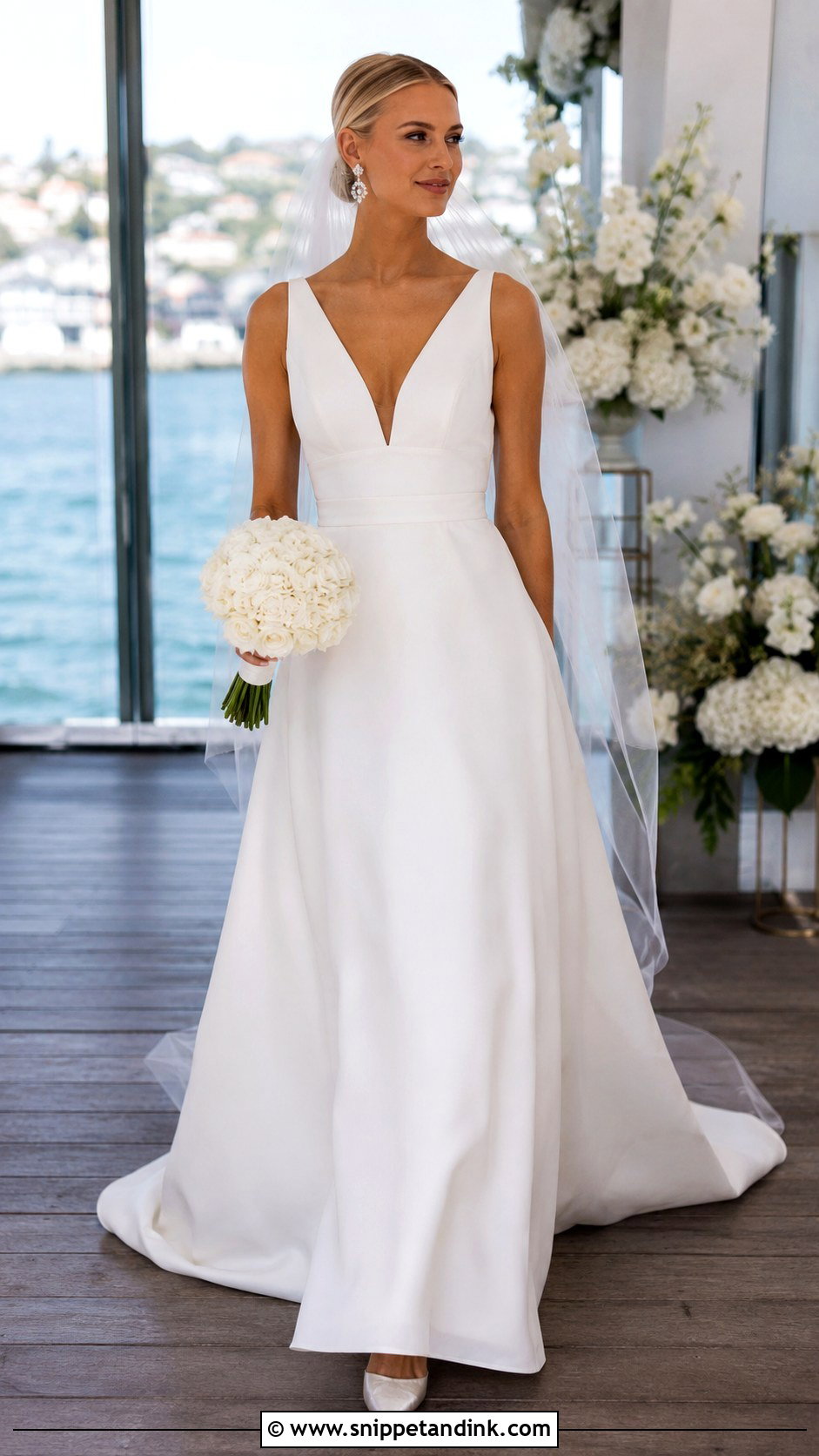
A V-neck draws one long line from the face down the torso, which is why it flatters almost every height. The question is depth. I pin the V at a fitting and have the bride lean forward and laugh, because a neckline that’s comfortable standing still can feel exposed by the reception. A shaped seam or wide waistband defines the waist before an A-line or fitted skirt. Wear statement earrings and leave the chest bare unless a fine pendant follows the V exactly. Pointed pumps, a soft tulle veil and a compact bouquet; hair in loose waves or a polished updo. Beaches, gardens and formal receptions all work.
5. Square Neck Crepe Wedding Gown
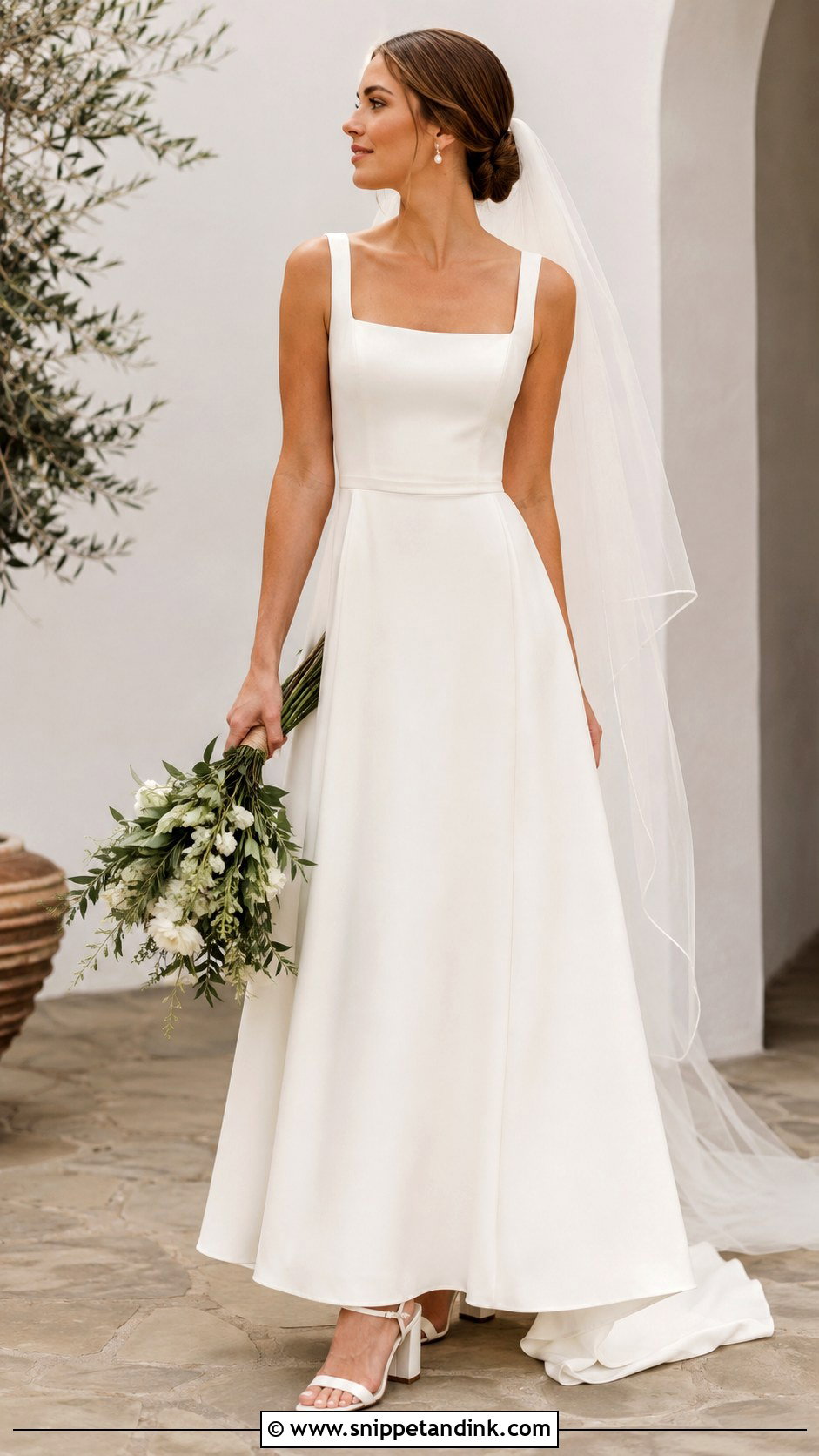
The square neck has a slight vintage edge, and in crepe it looks crisp rather than costume. Wide straps or short fitted sleeves give support and frame the shoulders. It sits well on a structured bodice with an A-line, sheath or gently flared skirt. Pearl earrings, a thin tennis bracelet and block-heel ivory sandals keep you comfortable on cobbles or grass. A smooth low bun and fingertip veil repeat those straight lines. Want it softer? A loose bouquet with trailing greenery does the job. Courtyards, city halls and small restaurants suit it, and the neckline should stay the star, so keep jewellery minimal.
6. High Neck Crepe Wedding Gown
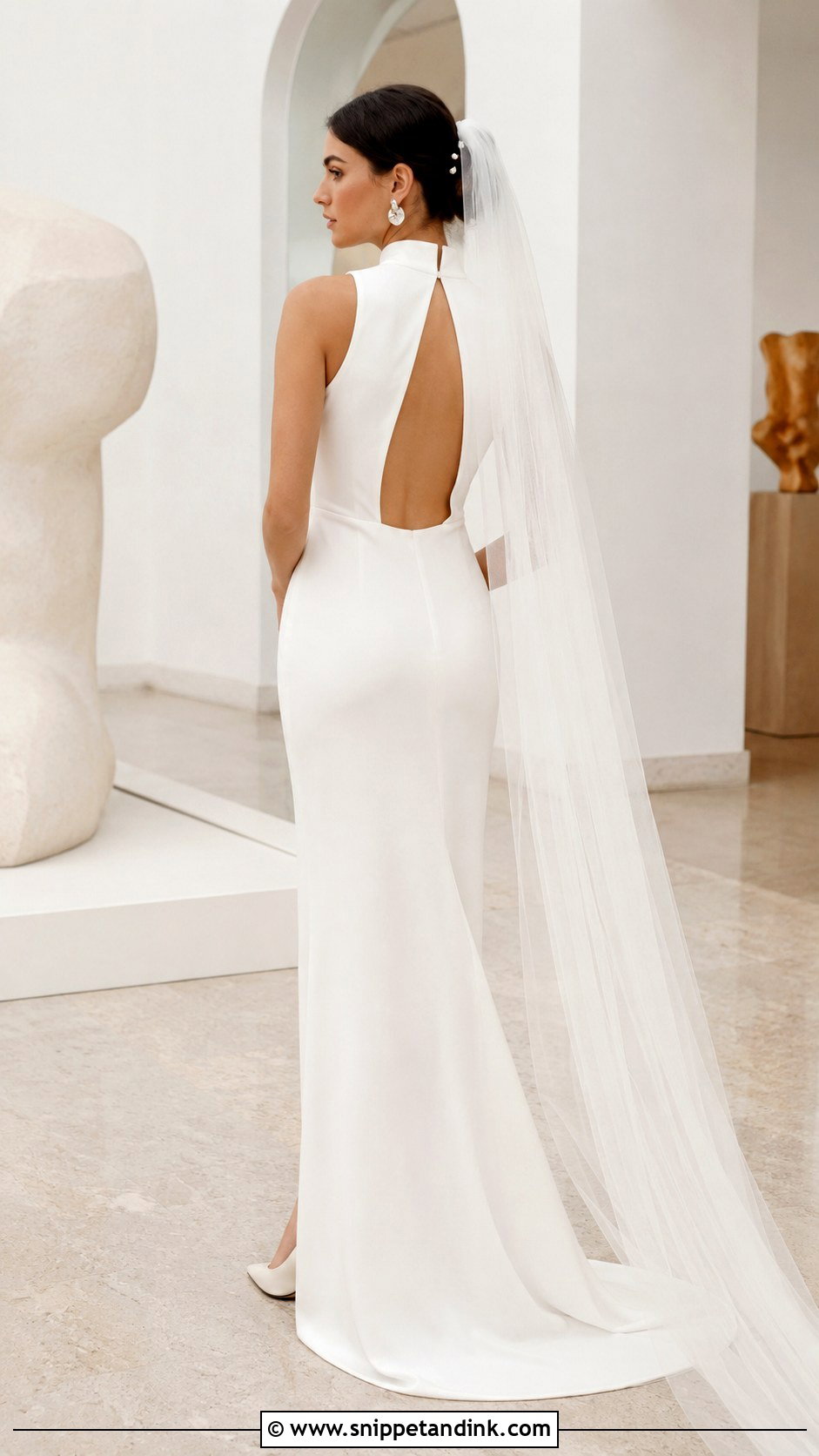
High necks frame the face, and crepe makes them look modern instead of prim. Pick a smooth sleeveless design for a contemporary feel or fitted long sleeves for something traditional. No necklace; sculptural earrings are better. A sleek bun, pearl hairpins and a long veil emphasise the vertical line, with pointed ivory heels and a small structured bouquet. I often suggest a keyhole or open back so the gown doesn’t feel buttoned up from every angle. One fitting note: a high crepe neck needs to sit a finger’s width off the throat, or it rides up whenever you turn your head. Museums and city venues are its natural setting, and it’s a strong option for modest brides who still want something fashionable.
7. One Shoulder Crepe Wedding Gown
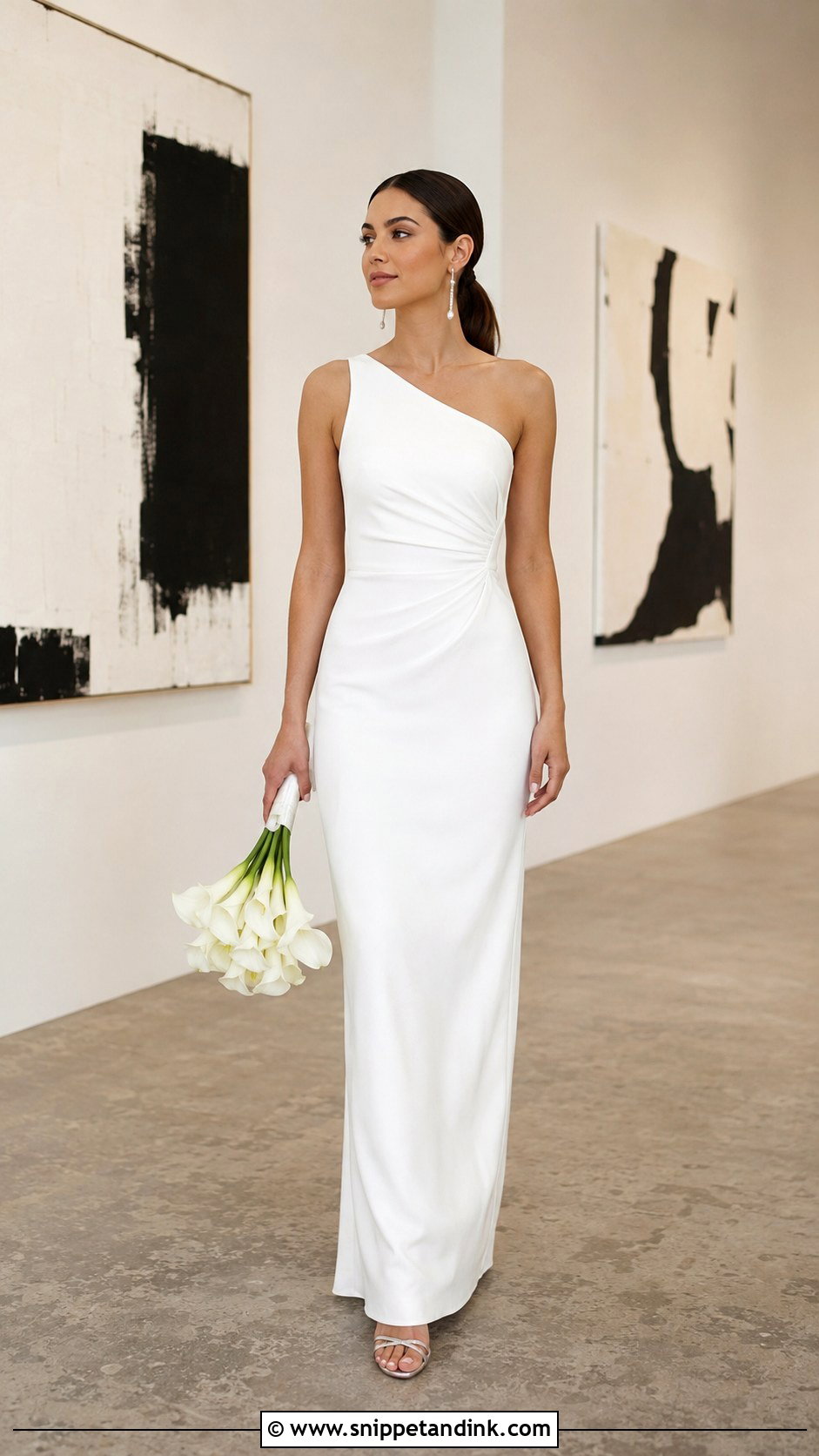
An asymmetrical neckline gives crepe a confident, sculptural feel. A fitted bodice over a straight column or a controlled mermaid flare is the most balanced version. The single strap carries more of the dress’s weight than you’d think, so it needs a firm interior band or it slips off the shoulder by evening. Leave the bare shoulder without a necklace and wear matching slim drops or small hoops. A smooth ponytail or side-parted bun keeps it clean. Silver heels, a small white clutch and calla lilies or tulips suit the modern line; a veil beneath the hair or a sculptural comb both work. Galleries, architectural venues and evening ceremonies suit it.
8. Cowl Neck Crepe Wedding Gown
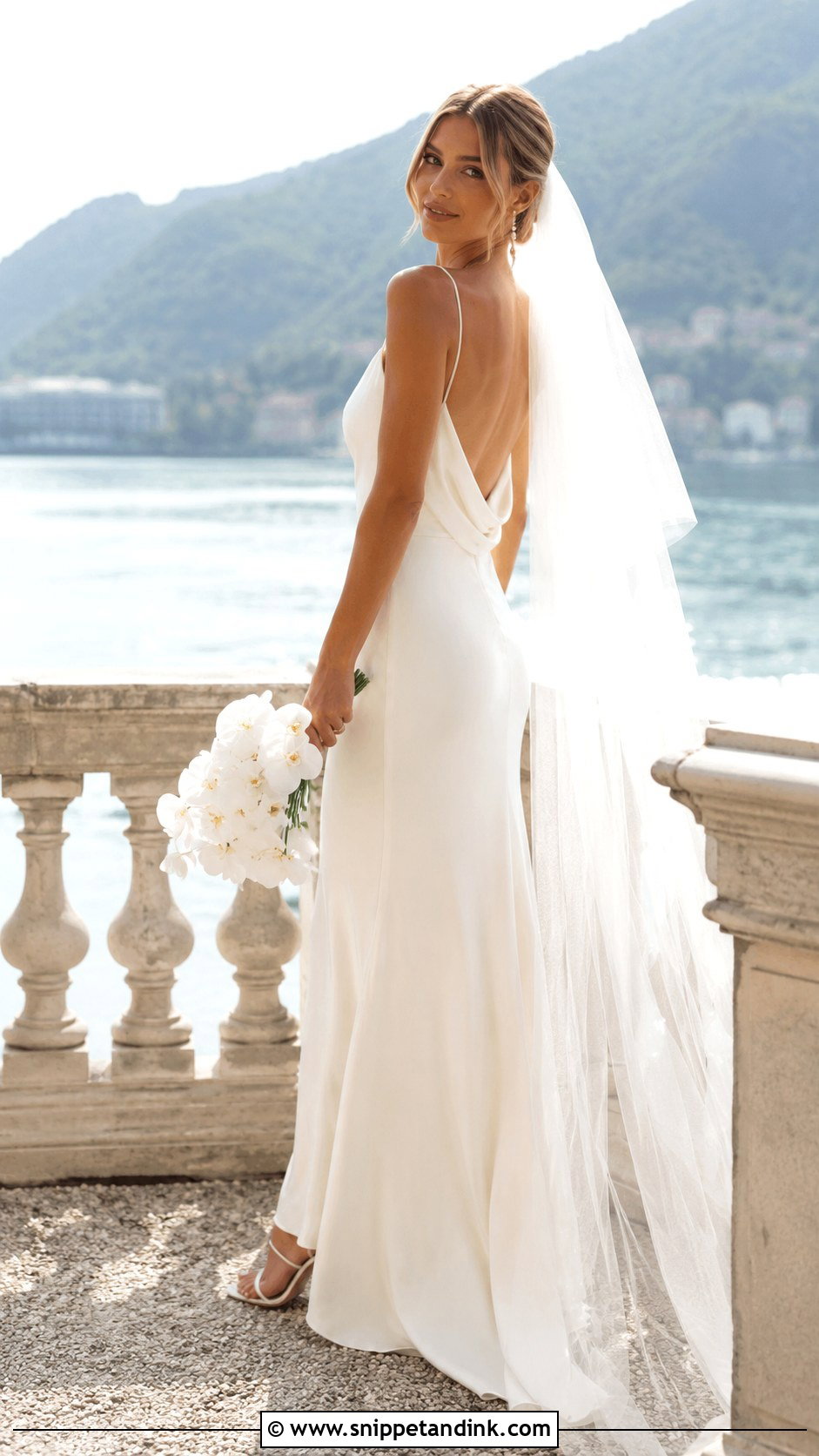
Draped cowls soften crepe in a way nothing else does. Narrow straps, a low back and a fluid column or bias-style skirt let the drape hang properly. This is the least forgiving shape here: bias-draped crepe clings, and any line underneath shows, so I fit it over the exact underwear she’ll wear on the day. Strappy heels, small pearl earrings and a light veil that moves with you finish the look. Loose waves or a relaxed low bun echo the drape. White orchids or simple greenery keep it spare. Waterfronts, destination weddings and intimate dinners suit it; heavy necklaces fight the folds.
9. Mermaid Crepe Wedding Gown
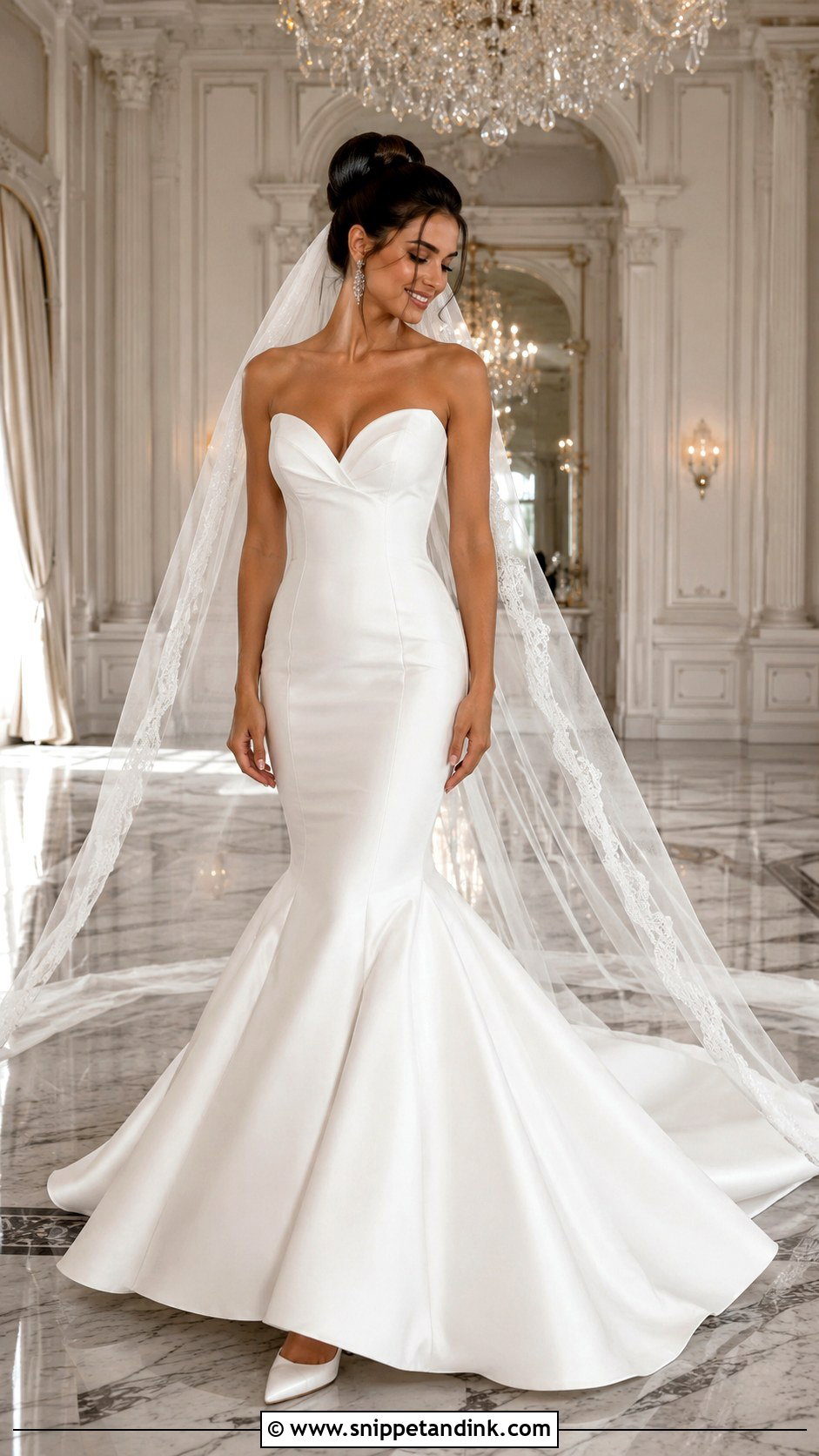
Mermaid crepe follows the body to the knee and then flares. Stretch crepe makes it wearable for a full day, but I still refuse to finish a fit until the bride has sat in a chair, climbed a step and danced a few steps in it. A sweetheart or off-the-shoulder neckline balances the dramatic skirt. Bring your wedding shoes to every fitting, because a heel change of even an inch moves the hem and the flare point. Pointed pumps, crystal drops, a long veil reaching past the train and a polished updo keep the shape streamlined. Ballrooms and big evening venues with wide aisles show it off.
10. Fit And Flare Crepe Wedding Gown
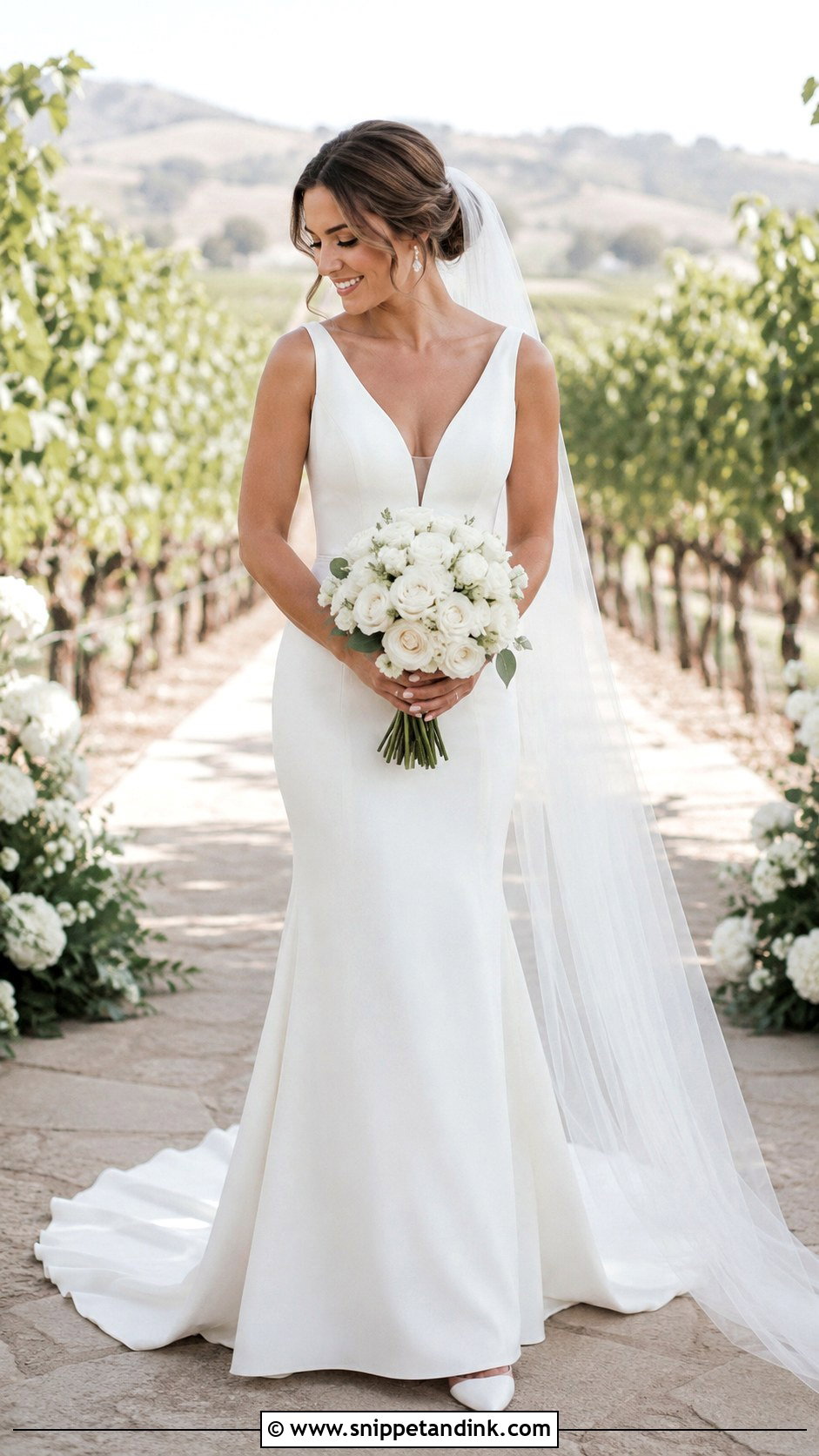
Fit and flare is the mermaid’s easier sister. The skirt opens higher, around mid-thigh, so you can walk and dance freely while keeping shape through the bodice and hips. Choose V, scoop or strapless based on the support you need. Ivory pumps, medium drop earrings and a chapel veil give a balanced formal look, with a soft updo and a rounded bouquet. Buttons down the back bring detail to the smooth fabric. It’s the shape I suggest when a bride loves a mermaid on the hanger but feels trapped in one. Vineyards, country clubs and traditional ceremonies all suit it.
11. A Line Crepe Wedding Gown
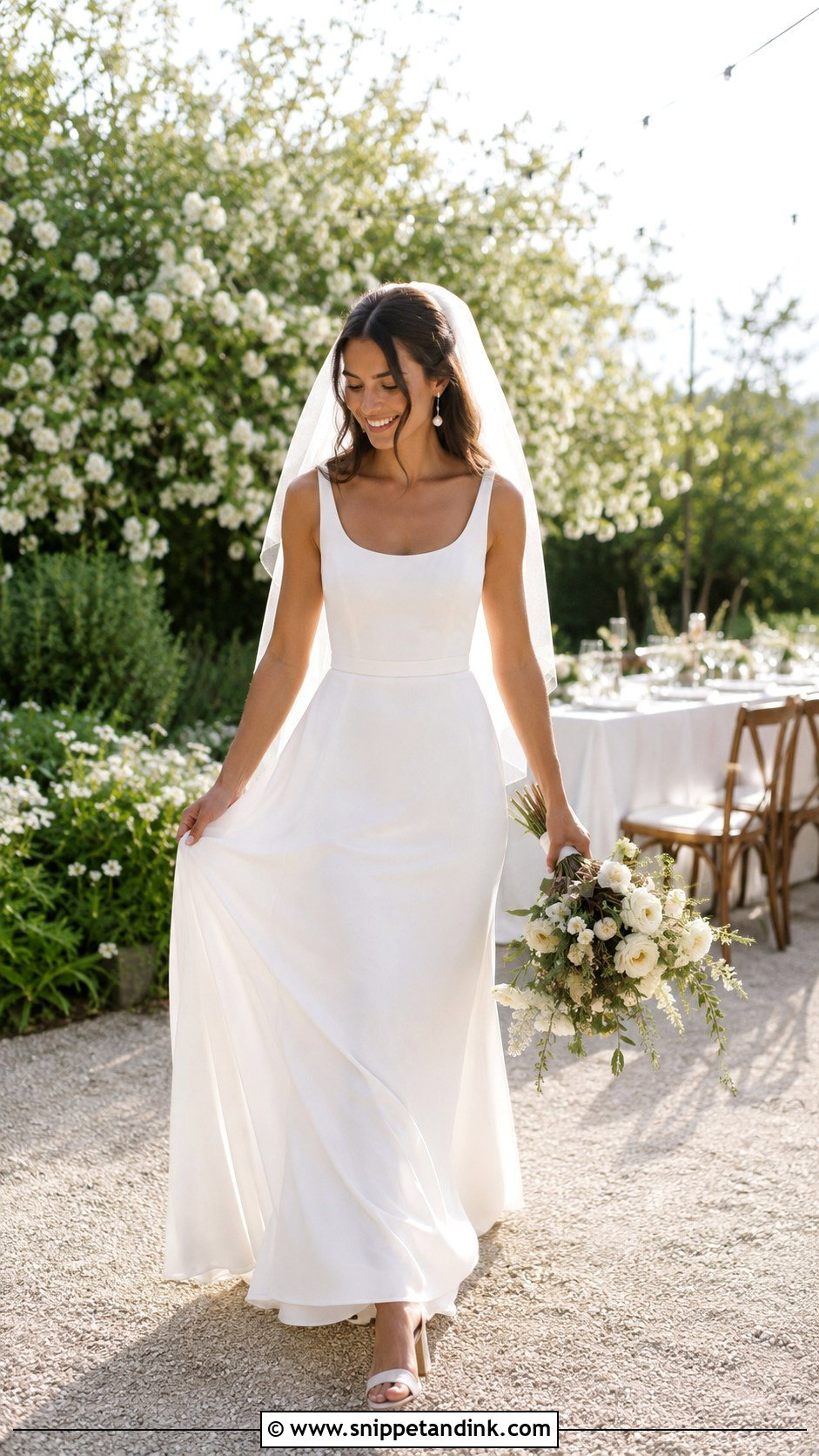
An A-line in crepe skims rather than clings, which makes it comfortable for long services and busy receptions. The waist does the work, so a defined seam or narrow crepe belt is worth having. Scoop or V-necks look classic; a square neck feels more current. Pair it with block-heel pumps, pearl earrings and a lightweight fingertip veil, plus soft waves and a loose bouquet. In heat, I lean toward a lighter crepe here, as a heavy double-weight skirt gets warm by mid-afternoon. It moves from garden to barn to ballroom without looking out of place.
12. Crepe Ball Gown
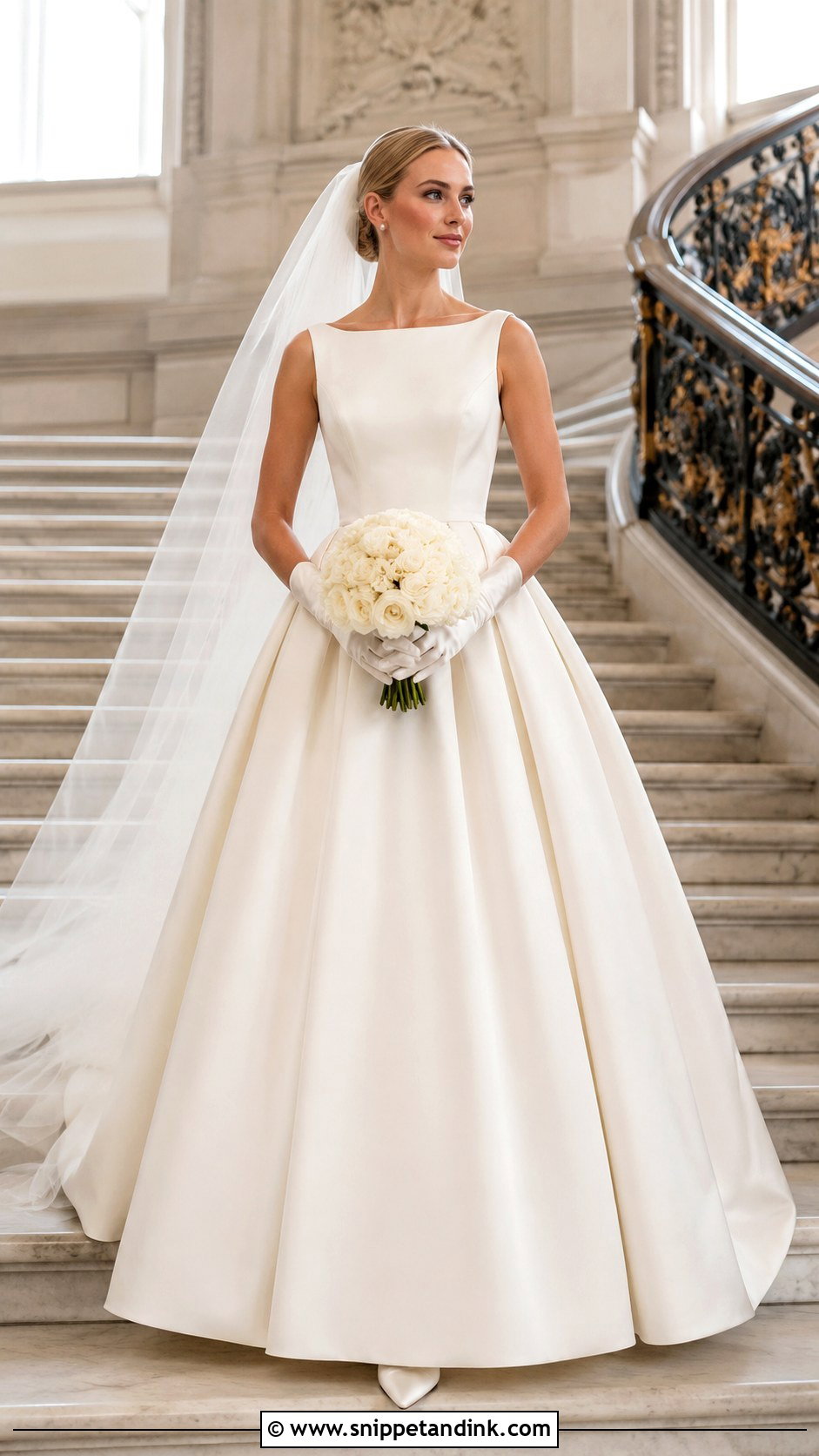
A crepe ball gown gets its drama from shape, not decoration. The full skirt is built from shaped panels or soft pleats, and the matte surface keeps the traditional silhouette from looking fussy. Heavy crepe in a full skirt is weighty, so I check the waist seam is reinforced and that the bride can carry the skirt comfortably up stairs. Pearl studs, a cathedral veil and closed satin or crepe pumps suit it. A neat bun or smooth half-up style keeps the head from looking small above all that volume. Elbow gloves can add formality for an evening wedding. Carry a medium, rounded bouquet. Grand staircases and old estates give the skirt room.
13. Sheath Crepe Wedding Gown
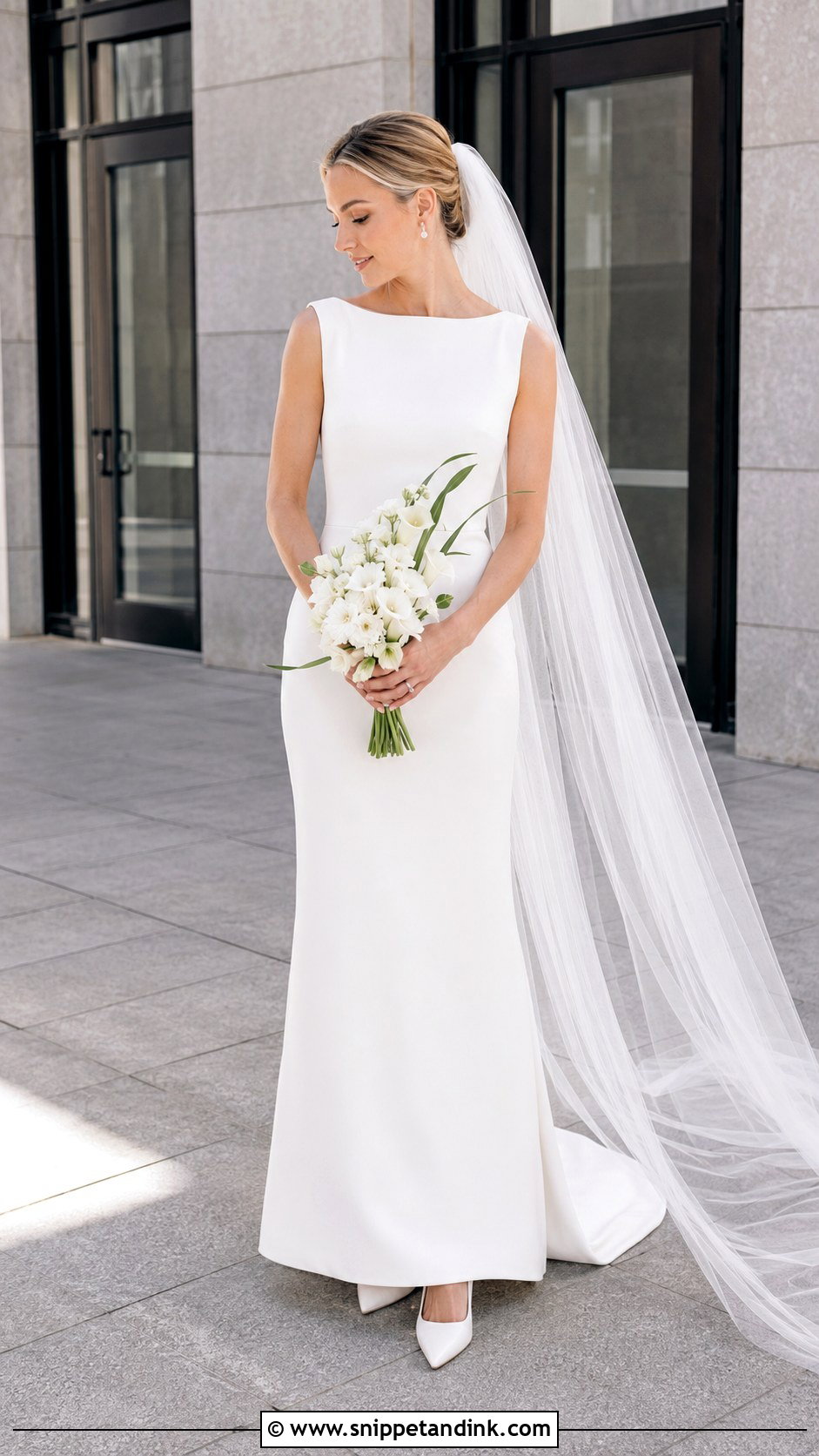
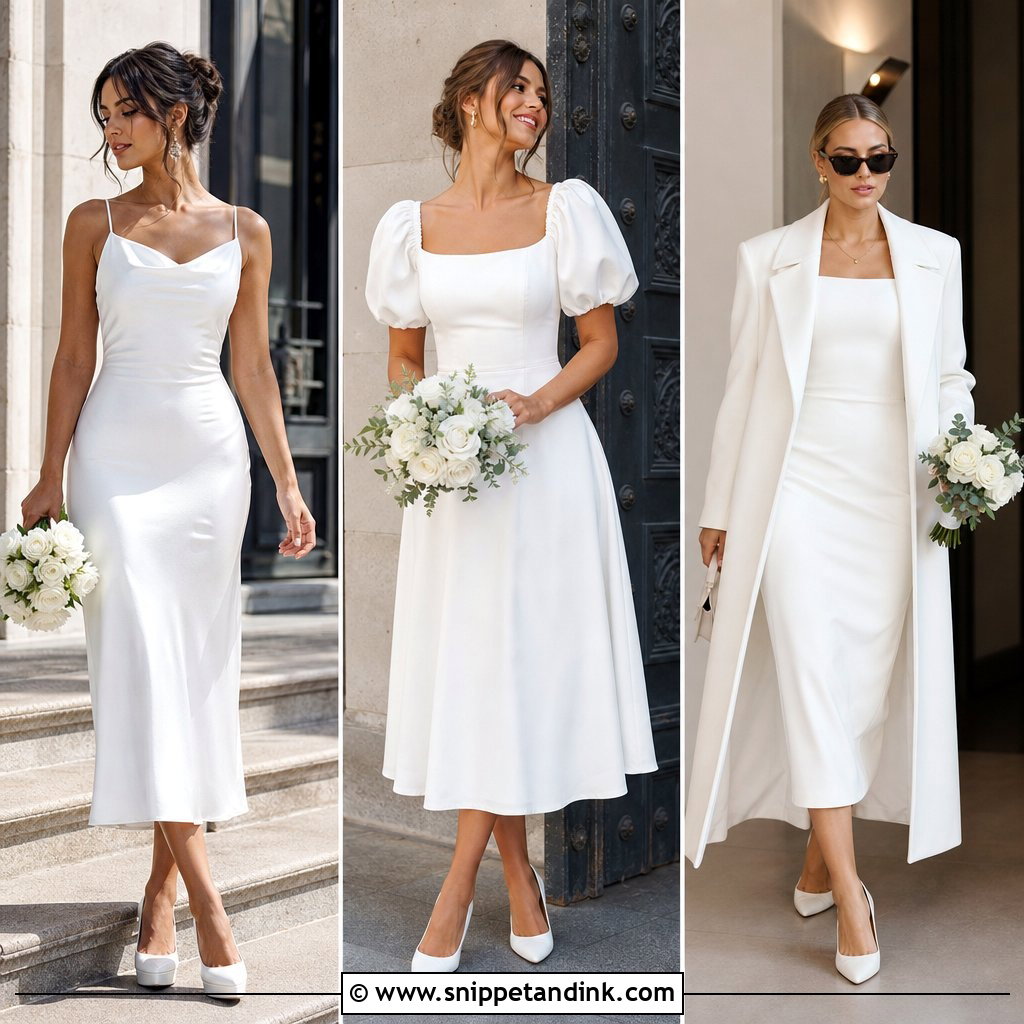
Sheaths fall in one clean line close to the body, so the tailoring has nowhere to hide. Shoulders, waist, hips and hem all need precise fitting, and crepe will show a dimple at any seam that’s been pulled too tight. A boat neck, V-neck or sleeveless scoop sets the level of coverage. Pointed kitten heels, small studs and a simple floor-length veil suit it. A short structured blazer works well for a civil ceremony or cold photos, and a narrow bouquet repeats the line. Courthouses and destination trips suit it best, since a sheath packs flat and travels far more easily than a layered gown.
14. Column Crepe Wedding Gown
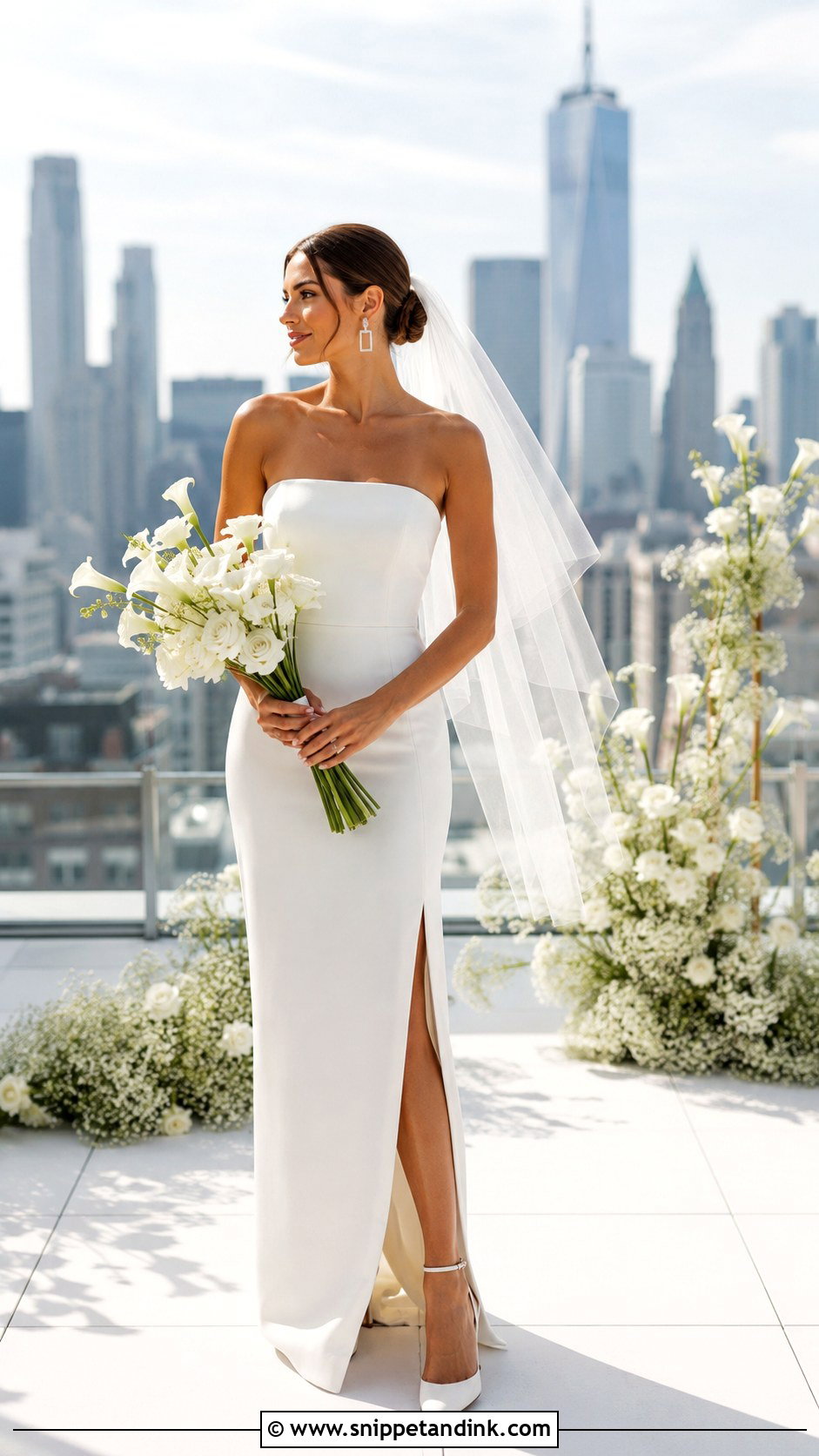
A column is often confused with a sheath, but it hangs more loosely from the hips, which makes it easier to wear for a long day. A straight strapless neckline, narrow straps or a draped cowl all suit it. Pointed ivory heels, geometric earrings and a single-layer veil keep things modern, with a sleek low bun and long-stemmed flowers echoing the vertical. If there’s a side slit, your shoes will be seen at every step, so pick a clean, simple pair. I also check slit height while the bride sits; it often climbs further than expected. Rooftops and modern hotels are made for it.


15. Open Back Crepe Wedding Gown
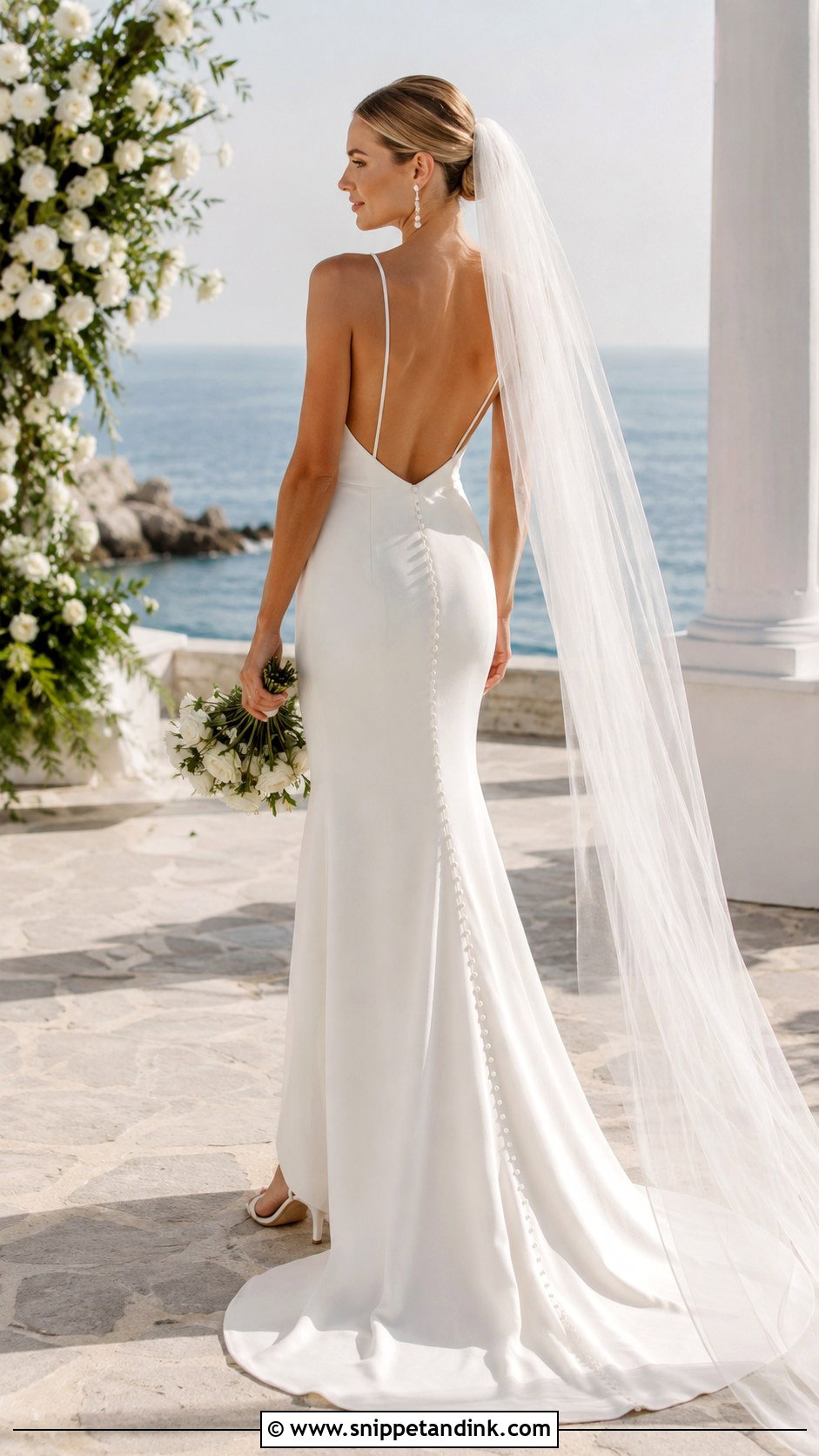
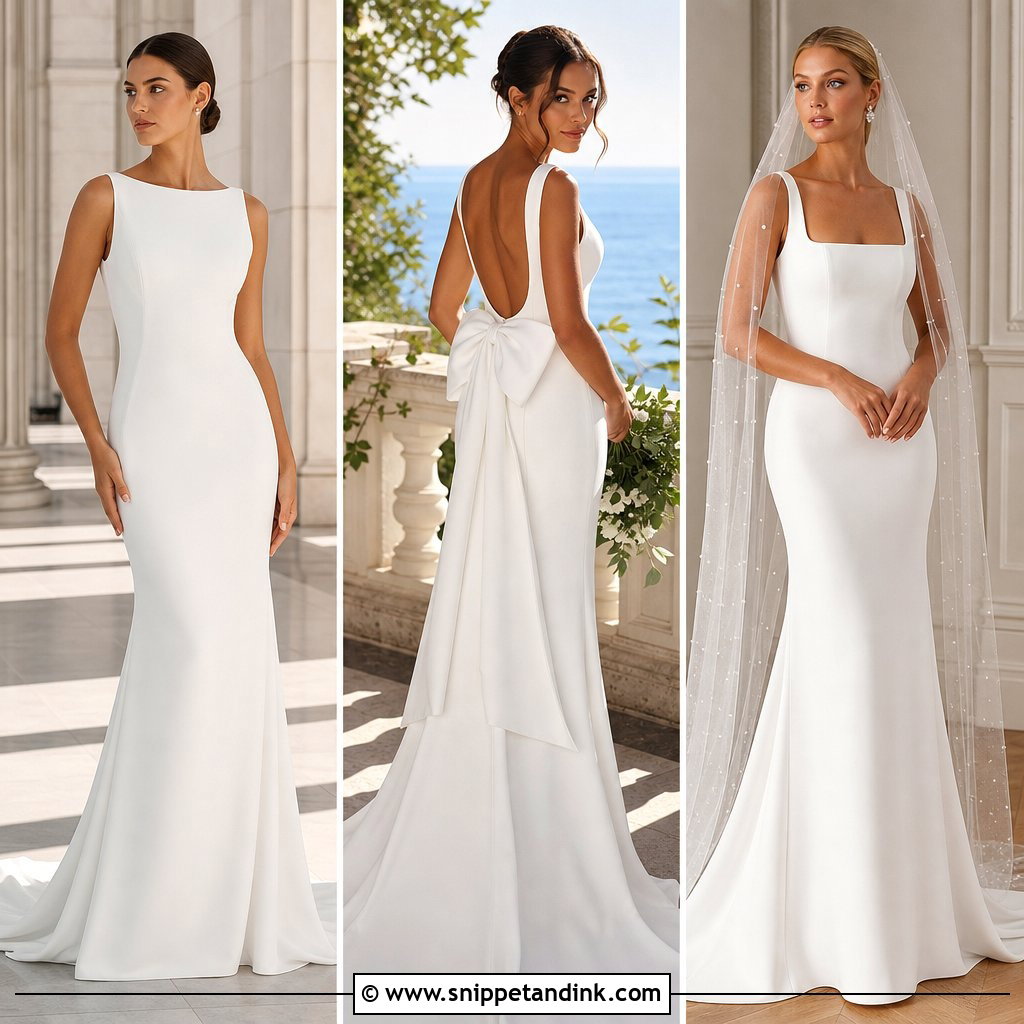
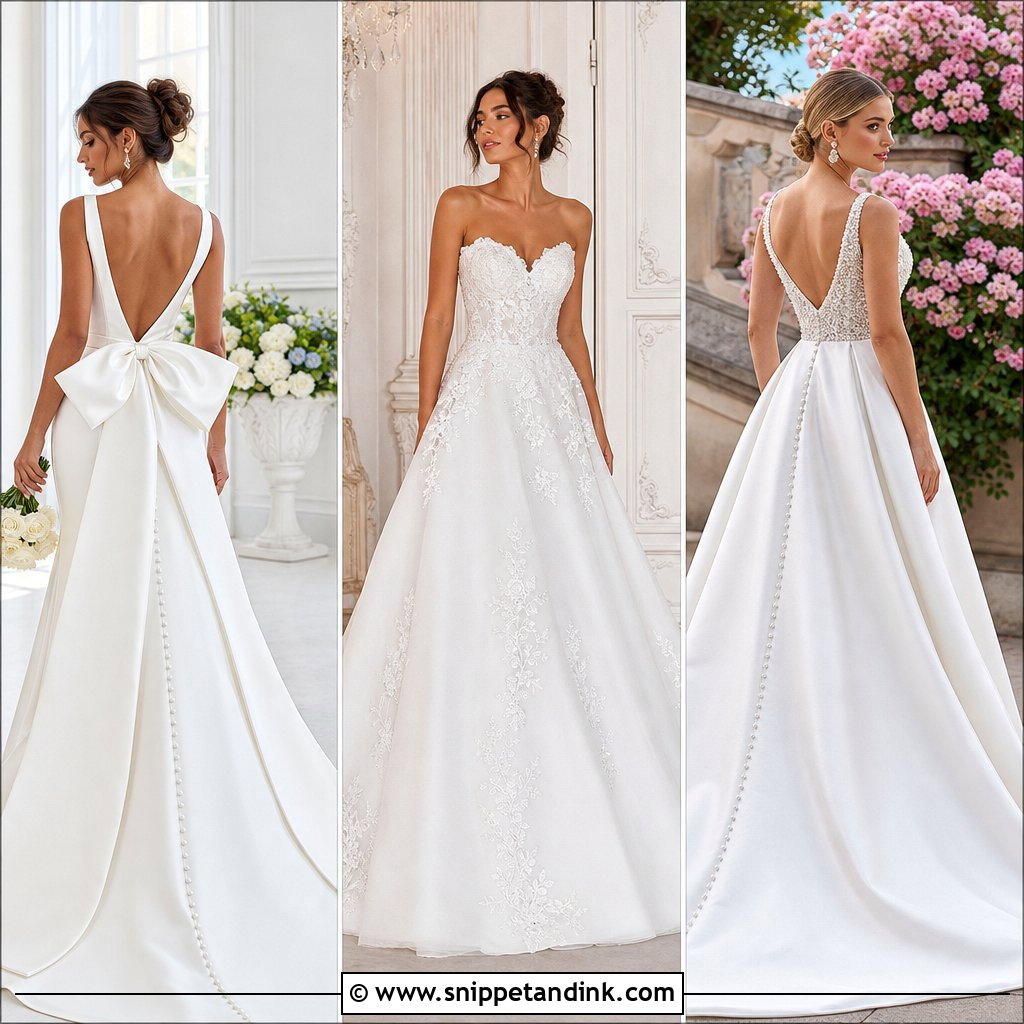
From the front an open-back gown looks minimal; turn around and the back is the whole point. A low curve, geometric cut-out, fine straps or covered buttons down to the train all work. Sort the underwear at the first fitting, not the last. Low-back bras, sewn-in cups and adhesive options each suit different cuts, and nothing should peek above the opening. Wear a bun, braid or side-swept style to keep the back clear, with long earrings, ivory heels and a sheer veil fixed below the hair. Take the veil off for the reception and the back comes into its own. A removable crepe cape covers it for a religious ceremony.
16. Cape Crepe Wedding Gown
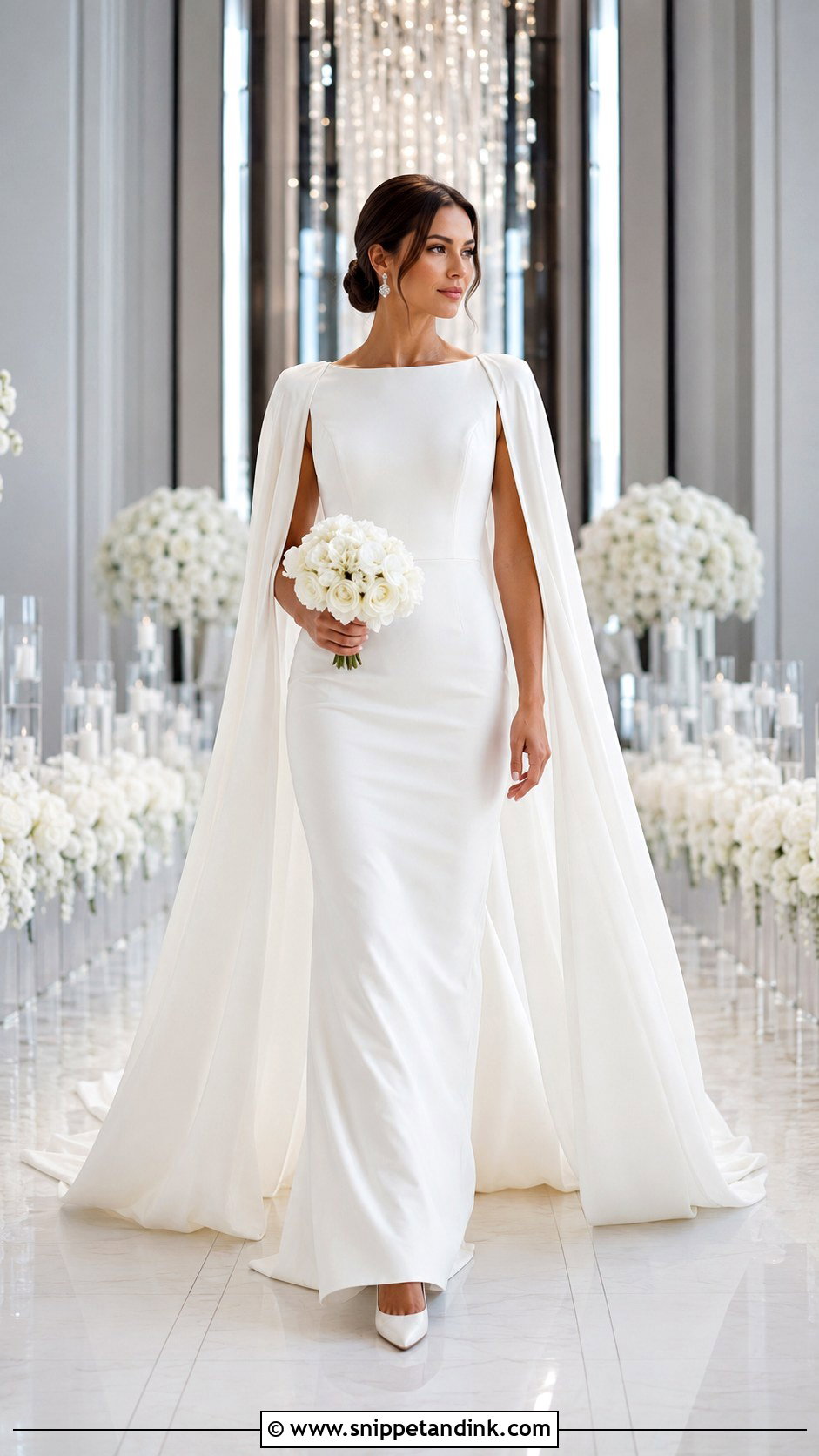
Capes give the ceremony a sense of occasion and can stand in for a veil. They can fall from the shoulders, clip at the neckline or be built into the gown itself. Lightness is everything. A crepe cape that’s too heavy pulls the bodice backward and the front neckline lifts, which I see at fittings more often than you’d expect; chiffon or a fine crepe avoids it. A fitted column, sheath or A-line underneath keeps the balance. Simple earrings, pointed pumps and a sleek updo let the cape lead, and a small bouquet stops the upper body looking bulky. Unclip it after the ceremony for a cleaner reception look.
17. Bow Back Crepe Wedding Gown
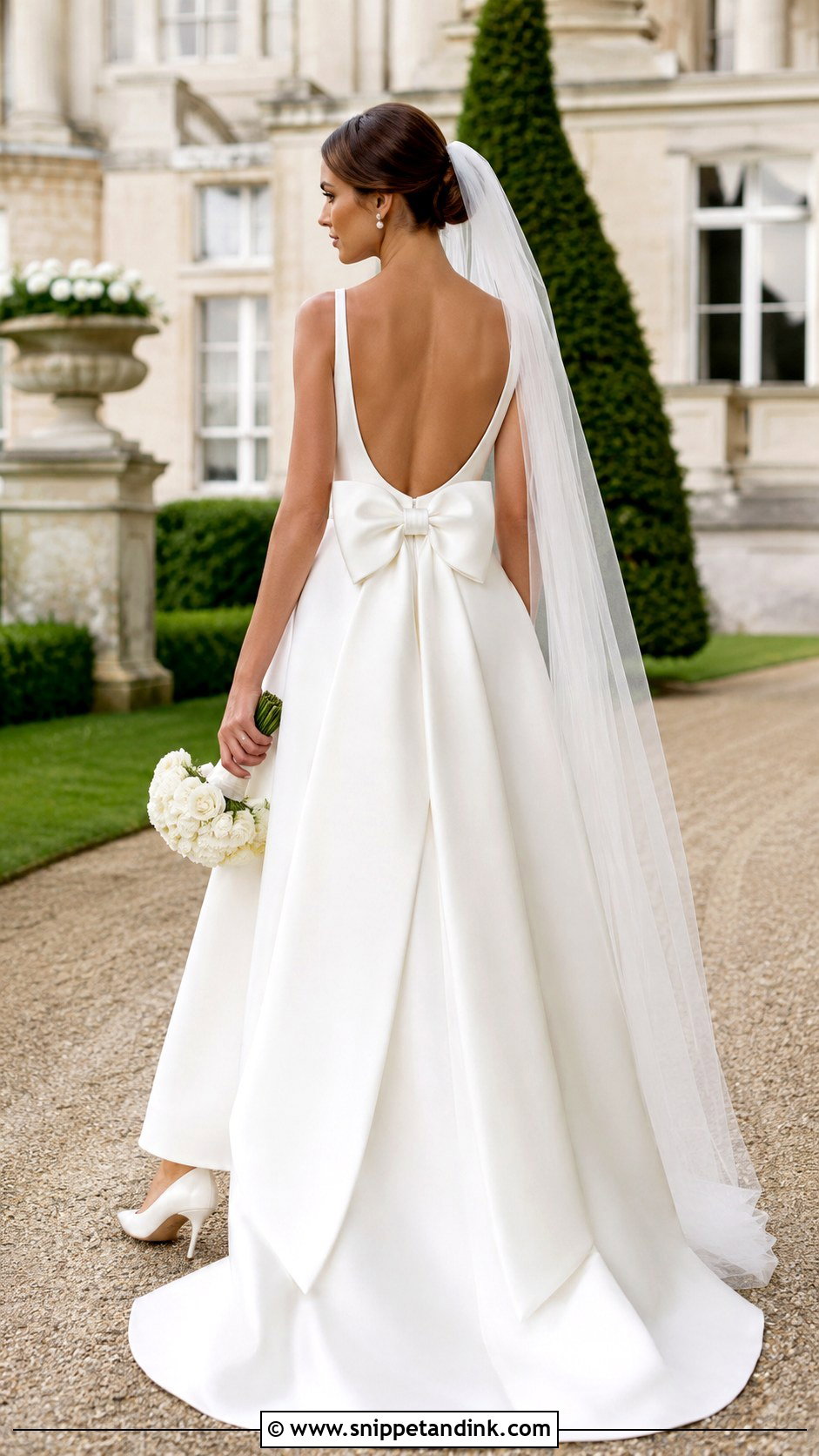
A structured bow at the waist, lower back or top of the train gives a crepe gown one strong detail without covering it in decoration. It sits best on a simple column, A-line or fit-and-flare. Ask what’s inside the bow. Interfacing keeps the loops crisp; without it, crepe bows droop by the speeches. Keep jewellery to pearl studs and a slim bracelet, wear a low bun so the bow shows, and take the plain veil off after the ceremony so the back is clear in photos. Pointed ivory heels and a compact bouquet finish it. Big floral hair pieces compete with the bow, so I leave them out.
18. Lace Applique Crepe Wedding Gown
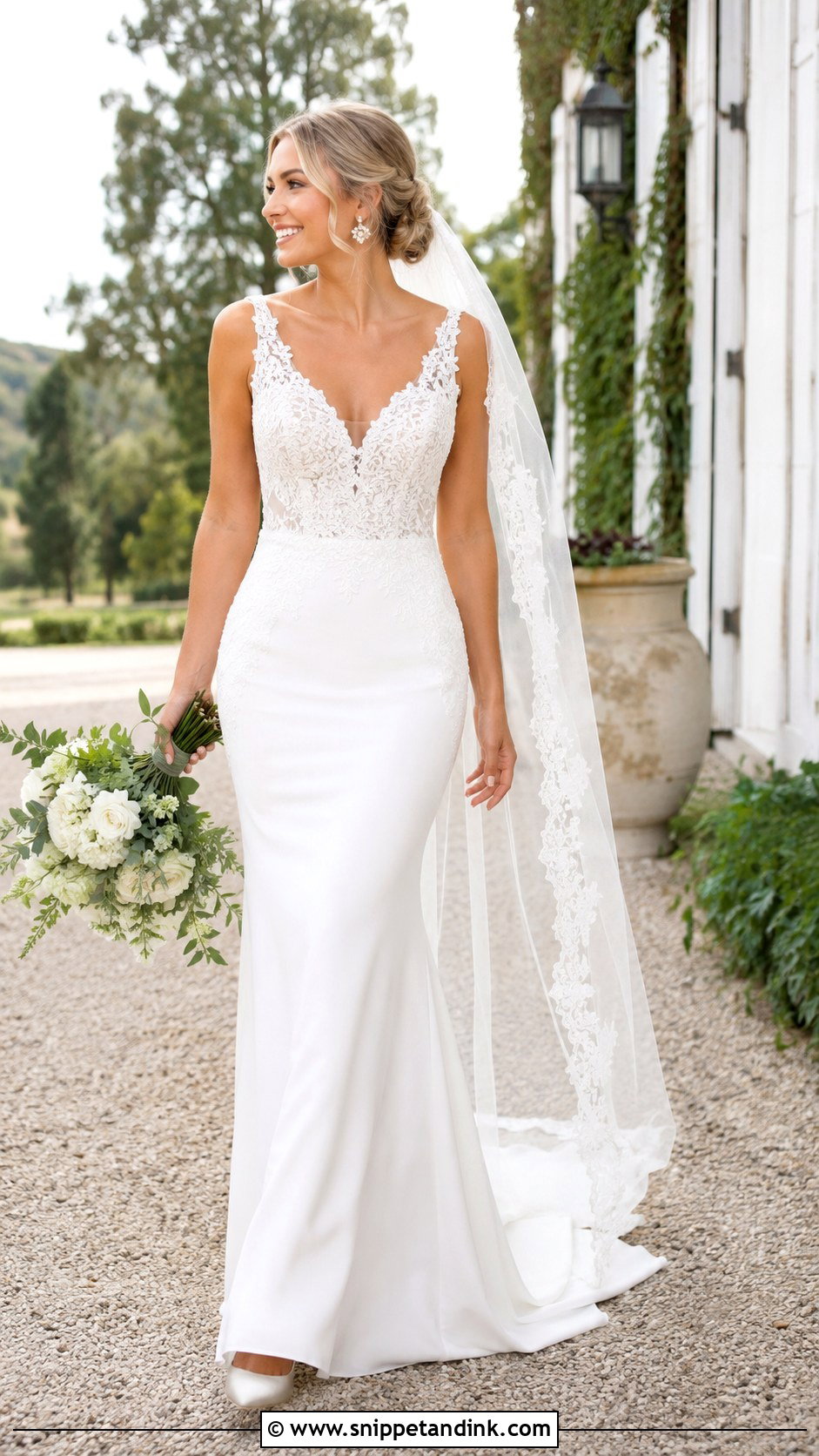
Lace appliqué gives crepe texture while letting the smooth fabric stay visible. The best versions place lace around the bodice, sleeves, waist or train rather than covering everything. A fitted crepe skirt with a lace-trimmed neckline is especially well balanced. Pearl or floral earrings, ivory pumps and a veil with a narrow lace edge suit it, with soft waves or a textured low bun. Keep the bouquet light. Check the colour match up close: lace and crepe are dyed separately, and an ivory appliqué on a slightly cooler crepe shows in daylight. Gardens and countryside estates suit it. Let one lace element lead rather than matching it on every accessory.
19. Pearl Crepe Wedding Gown
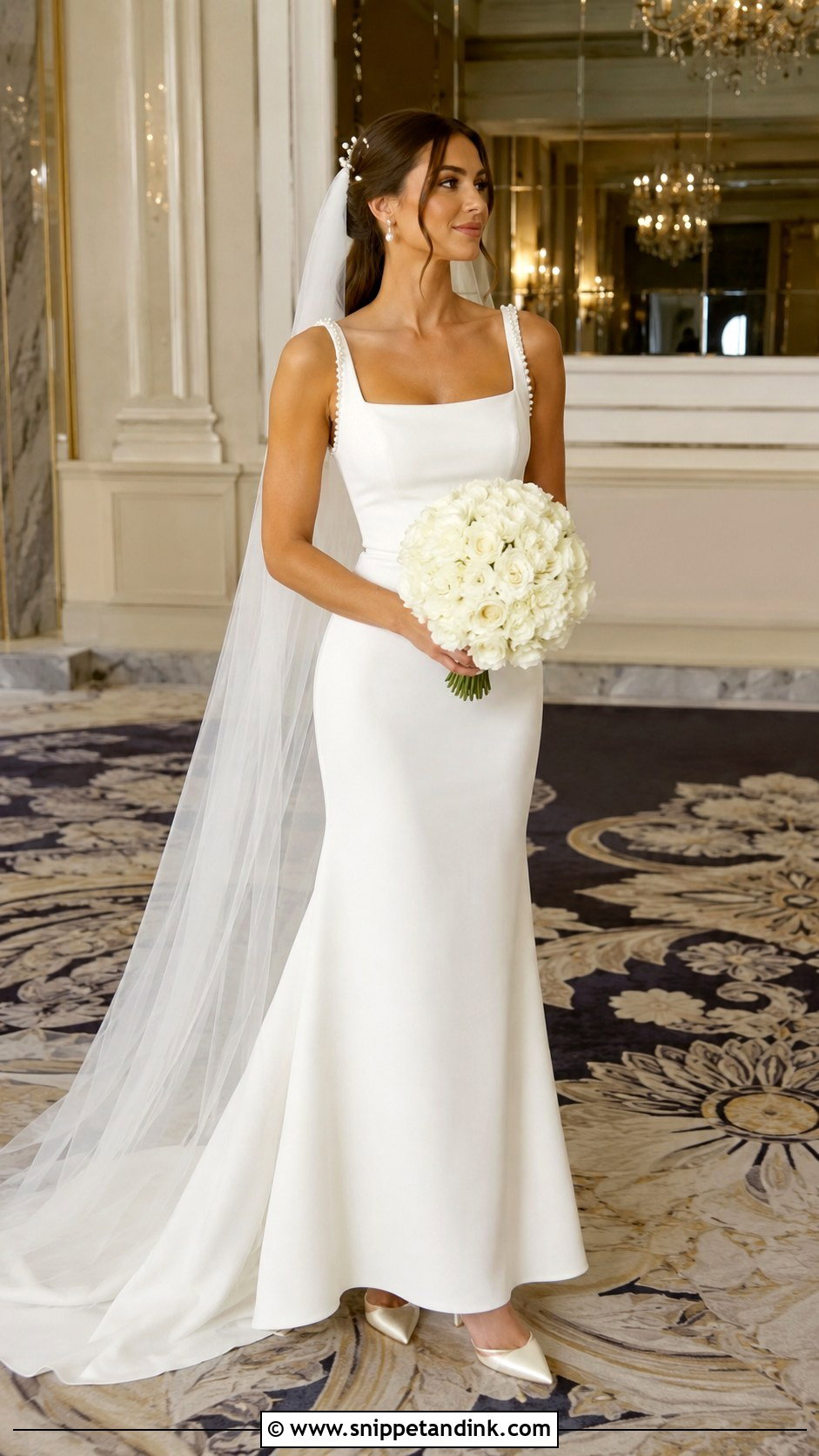
Scattered pearls on a neckline, sleeve or open back add detail without hiding a clean crepe shape. Put them in one area. Pearl straps on a square-neck bodice look polished; a pearl-trimmed back makes the walk away from the altar memorable. Echo them lightly with small pearl earrings and two or three pearl pins rather than a full matching set. Ivory slingbacks, a plain tulle veil, a rounded bouquet and a smooth chignon complete it. Ask how the pearls are attached: individually knotted pearls survive a day of hugs, while chain-stitched rows can unravel if one thread snaps. Formal gardens and hotel ballrooms suit it, and the pearls give gentle dimension against the matte fabric.


20. Crepe Gown With Detachable Overskirt
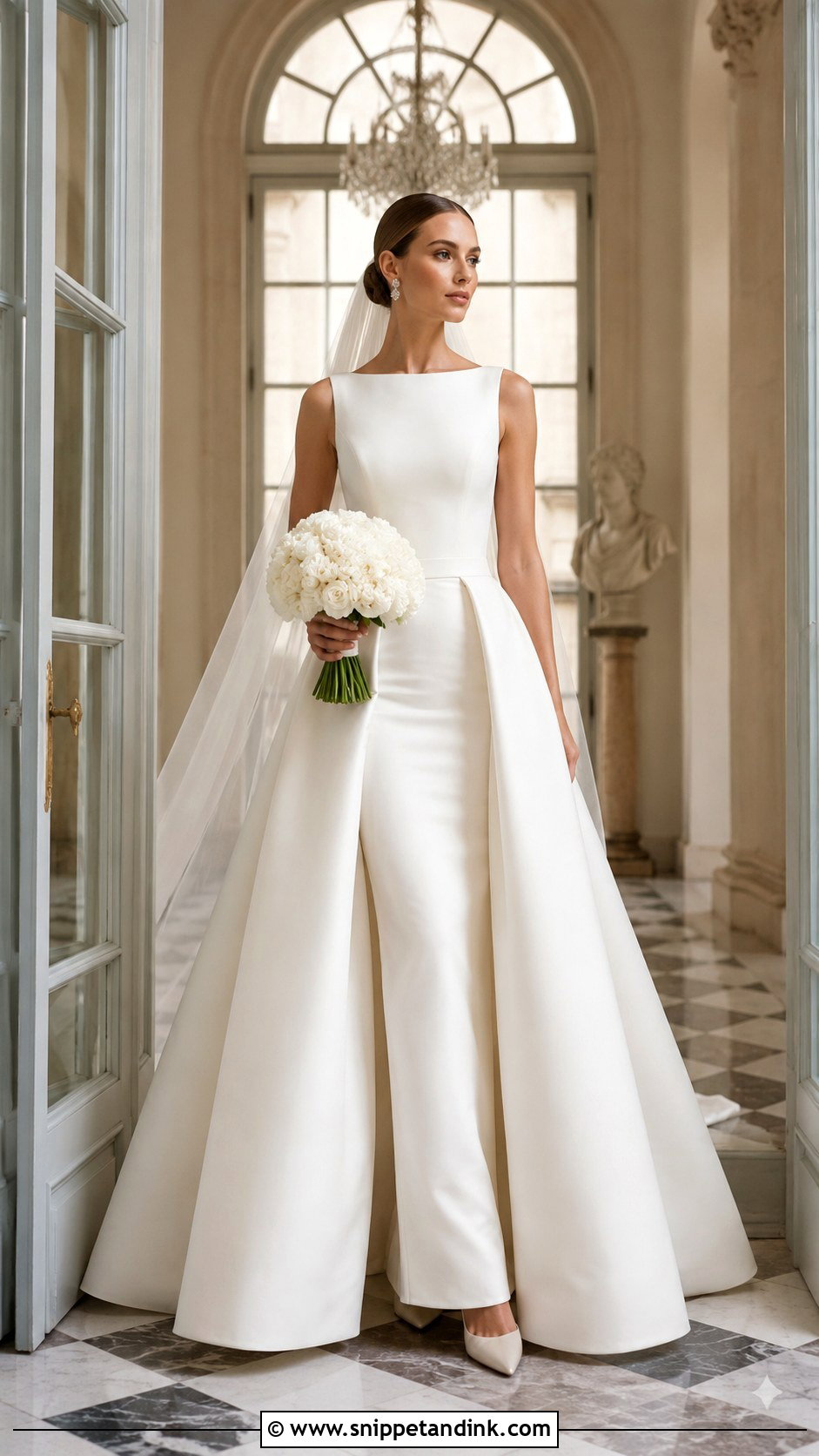
Why settle for one silhouette when a crepe gown with detachable overskirt gives you two? Walk in with the full overskirt layered over a fitted sheath, column or mermaid, which adds volume and makes the waist look smaller. After photos, take it off for a sleek dress that’s easier for dinner and dancing. The fastening matters more than anything: hooks and a flat waistband lie smoothest, and someone in your party needs to practise removing it before the day. Crystal earrings, pointed ivory pumps, a long veil, a sleek bun and a structured bouquet suit both versions. Big weddings and ballrooms are where it makes sense.
What Crepe Allows at Alterations, and What It Doesn’t
Crepe is a lovely fabric to take in and a stubborn one to let out. When a seam is unpicked, the old needle holes and the pressed line often stay visible on the surface. So a gown ordered slightly too large can be tailored down cleanly, while one ordered too small has very little room to grow. I tell brides to order to their largest measurement and let the seamstress do the rest.
Questions worth asking your seamstress
- How much seam allowance is there at the side and back seams?
- Can the hem be shortened from the bottom, or does it have a facing or horsehair that complicates it?
- Will you press with a cloth? Crepe goes shiny if an iron touches it directly.
- How many fittings do you want, and should I bring my shoes and underwear to each one?
On the morning, a handheld steamer held a few inches away releases creases from the car or the hanger. Keep it moving and never let it spit water, since drops can leave rings on silk crepe.
Is Crepe Too Plain for a Wedding?
One fabric covers a lot of ground here. Crepe looks modern as a plain column, romantic with lace appliqué, dramatic under a cape and classic as an A-line. Start with the venue, the season, how much coverage you want and how much you plan to move, then pick the silhouette. At fittings, judge the whole outfit, including shoes, underwear, jewellery, hair, veil and anything removable. Because crepe shows construction so clearly, tailoring matters more here than with lace or tulle. Wear it, sit in it, dance in it, and keep the gown that still feels comfortable at the end of the night.
You'll Like These Ideas:








Leave a Reply