
There is no single South African bridal look, and I’d be wary of anyone who sells you one. Xhosa, Zulu, Sepedi, Venda, Ndebele, Tsonga, Tswana, Sesotho and Swati dress each have their own colors, cuts and rules about who wears what. Most of the brides I style end up with more than one outfit: something rooted in the family’s tradition for the customary ceremony, and either a white gown or a heritage-fabric gown for the church or reception. The ideas below are starting points. Before you commit to anything ceremonial, such as a headpiece, a blanket or particular beadwork, sit down with the older women in your family, because they’ll know what is right for your stage of marriage and what isn’t.

One Wedding, Several Outfits: Planning Across the Ceremonies
Many South African weddings happen in stages. There may be lobola negotiations, a traditional ceremony at one family’s home, and a white wedding at a church or venue, sometimes weeks apart. When a bride comes to me, I ask for that whole calendar first, because it decides how many outfits she needs and how much each one should cost.
- The customary ceremony usually calls for the most culturally specific outfit, and it’s where family guidance matters most. Ask early whether certain pieces will be lent or given to you.
- The white wedding can be a conventional gown, a gown trimmed in heritage fabric, or a heritage-fabric gown in a bridal cut. This is the outfit where your personal taste has the most room.
- A reception change is worth it if your main gown is heavy, beaded or long-trained. A two-piece or a short dress in the same textile keeps the story going while you dance.
If the budget only covers one custom piece, I’d put it into the outfit that carries the most meaning for your family and buy or rent the rest.
Shweshwe, Beadwork and a Realistic Dressmaker Timeline
Shweshwe arrives stiff because it’s starched, and that starch washes out. The fabric also shrinks a little in its first wash. I always ask the maker to pre-wash the cloth before cutting, otherwise a dress that fits in the studio can tighten after the first clean, and indigo can bleed onto white trim.
Hand beadwork is slow work and it can’t be rushed in the final fortnight. For a custom gown with significant beading, I’d start conversations with a dressmaker around six to nine months out, and lean toward the longer end in peak wedding season. Plan on at least three fittings: one in a test garment to settle the shape, one with the real fabric before beading goes on, and a final one with shoes and headwrap. That final fitting should happen close enough to the date that your measurements are settled, but with enough time for a last adjustment.
1. Xhosa Wedding Dress
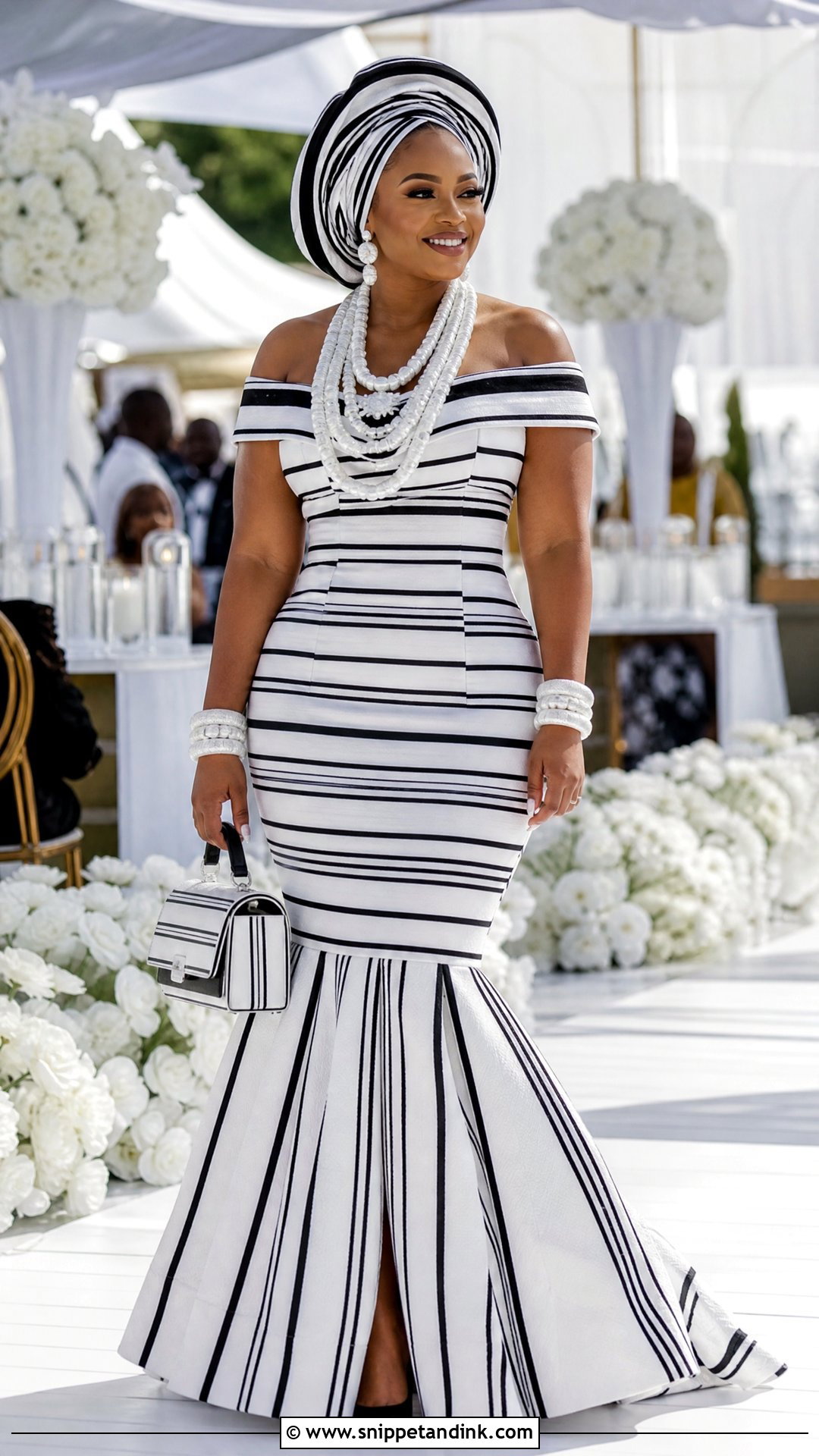
The striped black-and-white trim is what makes a Xhosa wedding dress readable from across a room, so I treat the trim as the design and the gown as its frame. A fitted bodice into a gently flared floor-length skirt gives the bands a clean surface to sit on. Black piping at the waist, neckline and hem is plenty; add stripes to the sleeves as well and the eye has nowhere to rest. Umbhaco-style cotton also cuts well into a mermaid or A-line shape, though it’s stiffer than satin, so allow extra ease at the knee. Finish with a headwrap, layered beadwork and black or white heels, and have a maker who knows Xhosa dress check the beadwork placement before it’s stitched down.
2. Zulu Wedding Dress
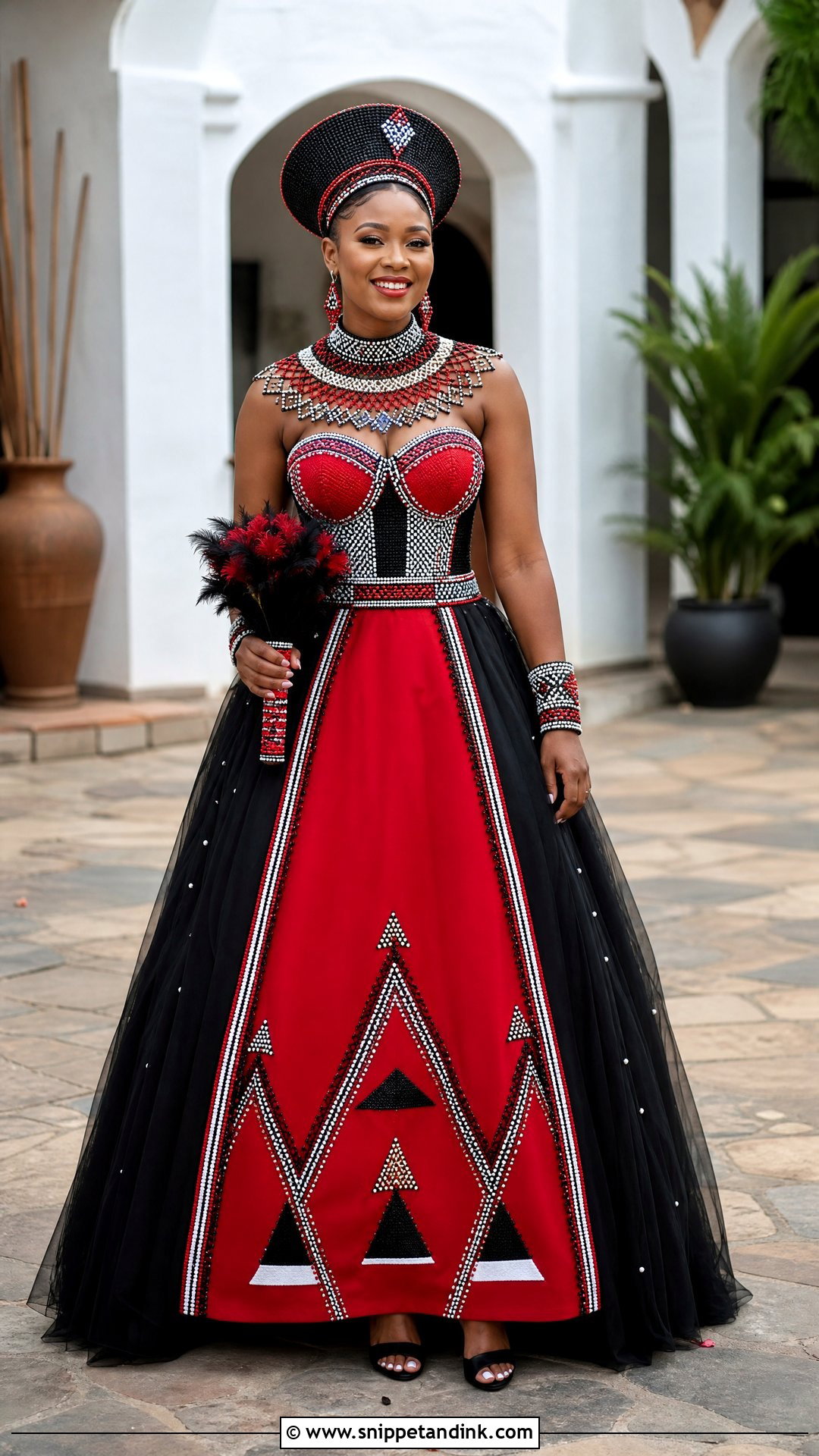
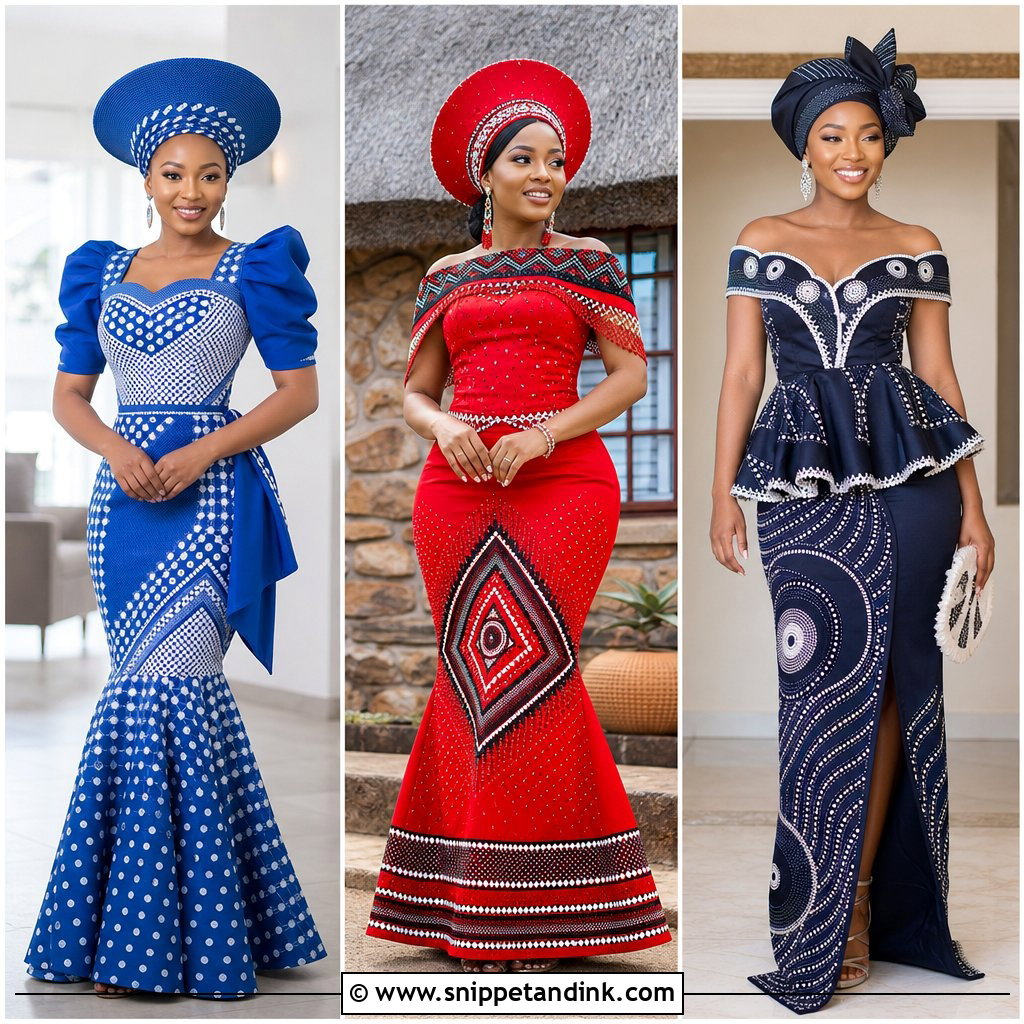
Zulu bridal dress is usually several pieces working together rather than one gown, which is why I plan it from the head down. The isicholo-style hat carries meaning tied to marital status, so confirm with family whether you should wear it at this stage before you buy or borrow one. Below it, a full skirt or fitted gown in red, black, white or green takes a beaded bodice and structured waistband well. For a modern take, I like a sleek off-the-shoulder gown with hand-applied beadwork and a removable overskirt. Choose low block heels or stable pumps: Zulu celebrations involve real dancing, and stilettos sink into grass.
3. Sepedi Wedding Dress
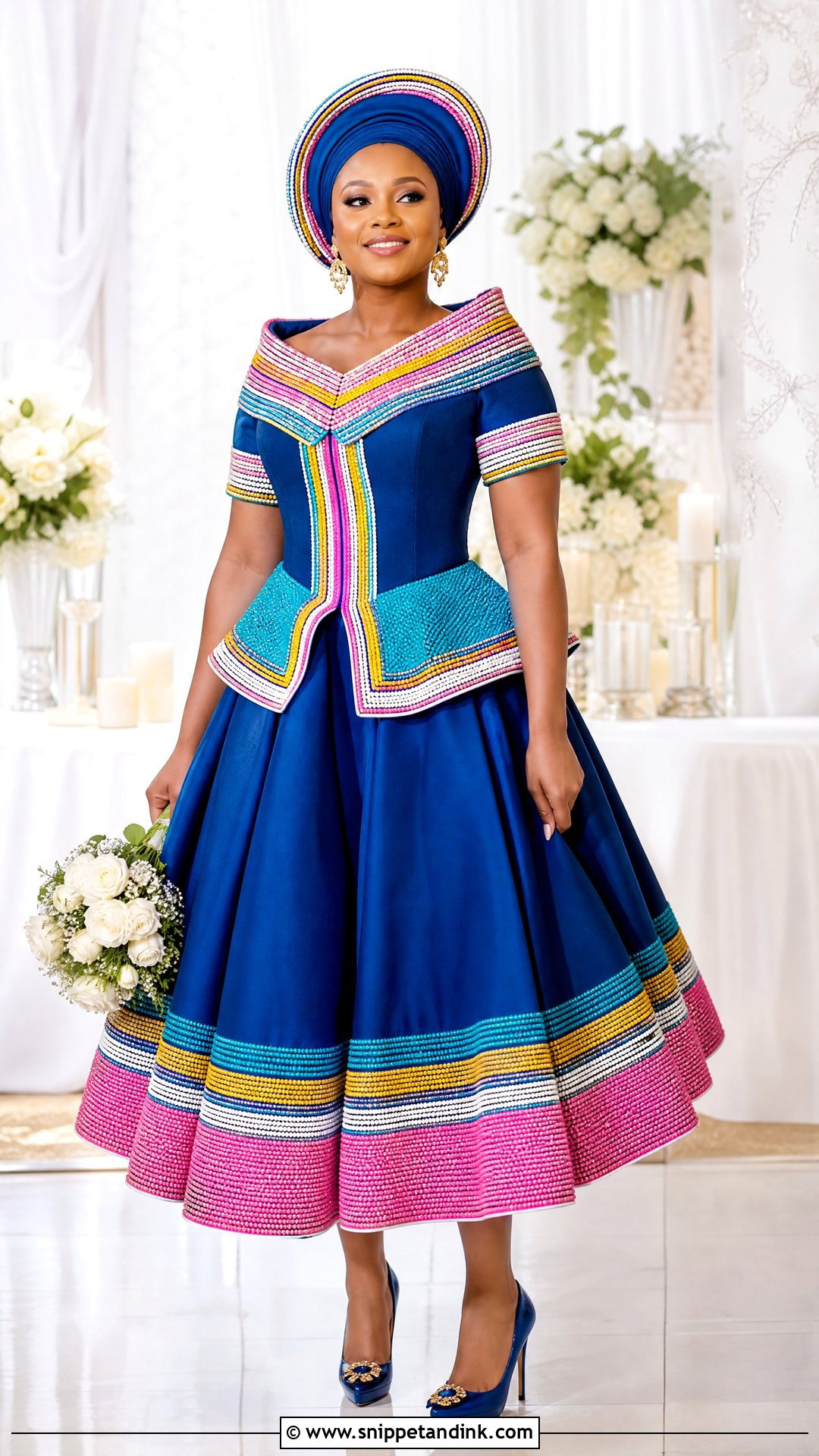
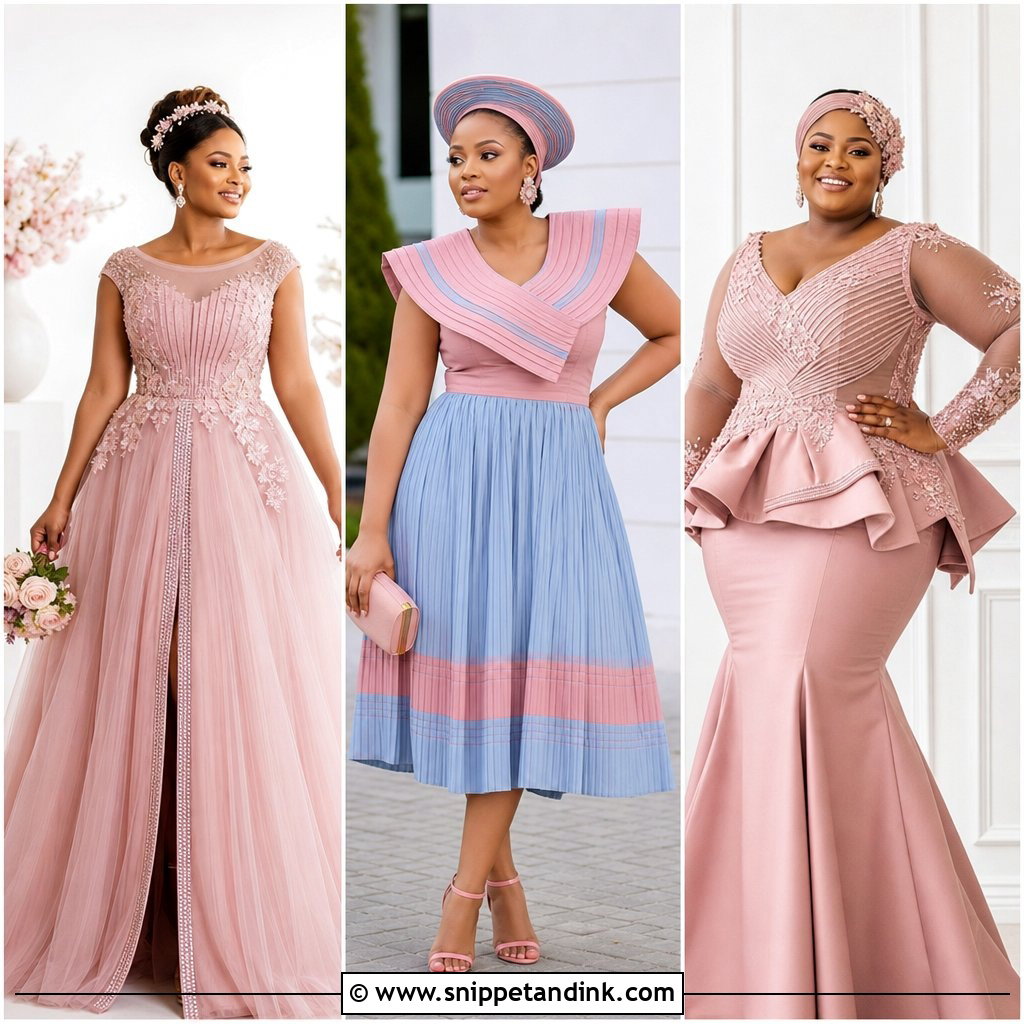
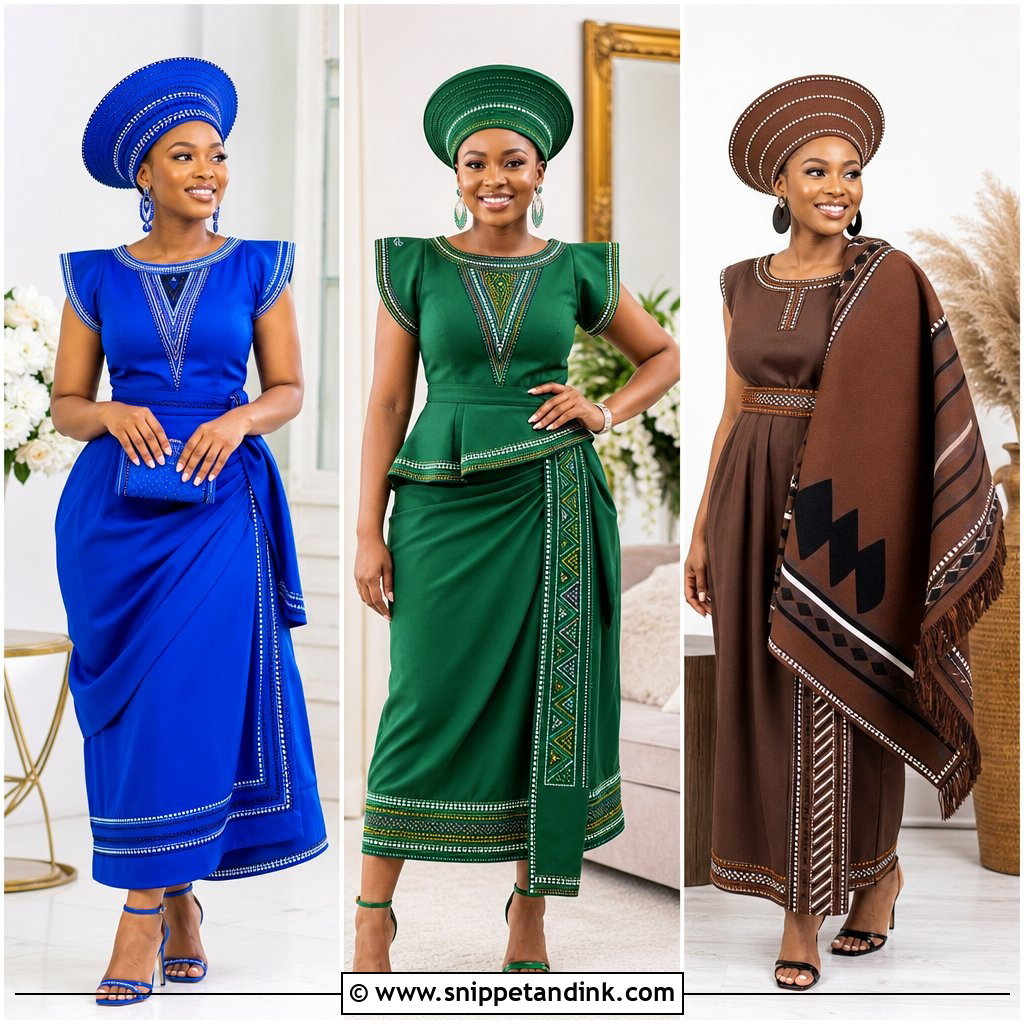
Bright bands are the heart of a Sepedi wedding dress, and the trick is giving each color a clean edge so the layers read as deliberate. A fitted peplum top over an ankle-length skirt is the classic shape; a one-piece gown can mimic it if you’d rather not wear separates. Blue, pink, yellow, orange and turquoise can all appear, but I keep the waist sharply defined so the skirt volume doesn’t swallow a petite frame. If strong color isn’t you, a cream base with Sepedi bands only at the bodice and hem still reads clearly. A matching headwrap, a beaded collar and solid heels are all it needs.
4. Venda Wedding Dress
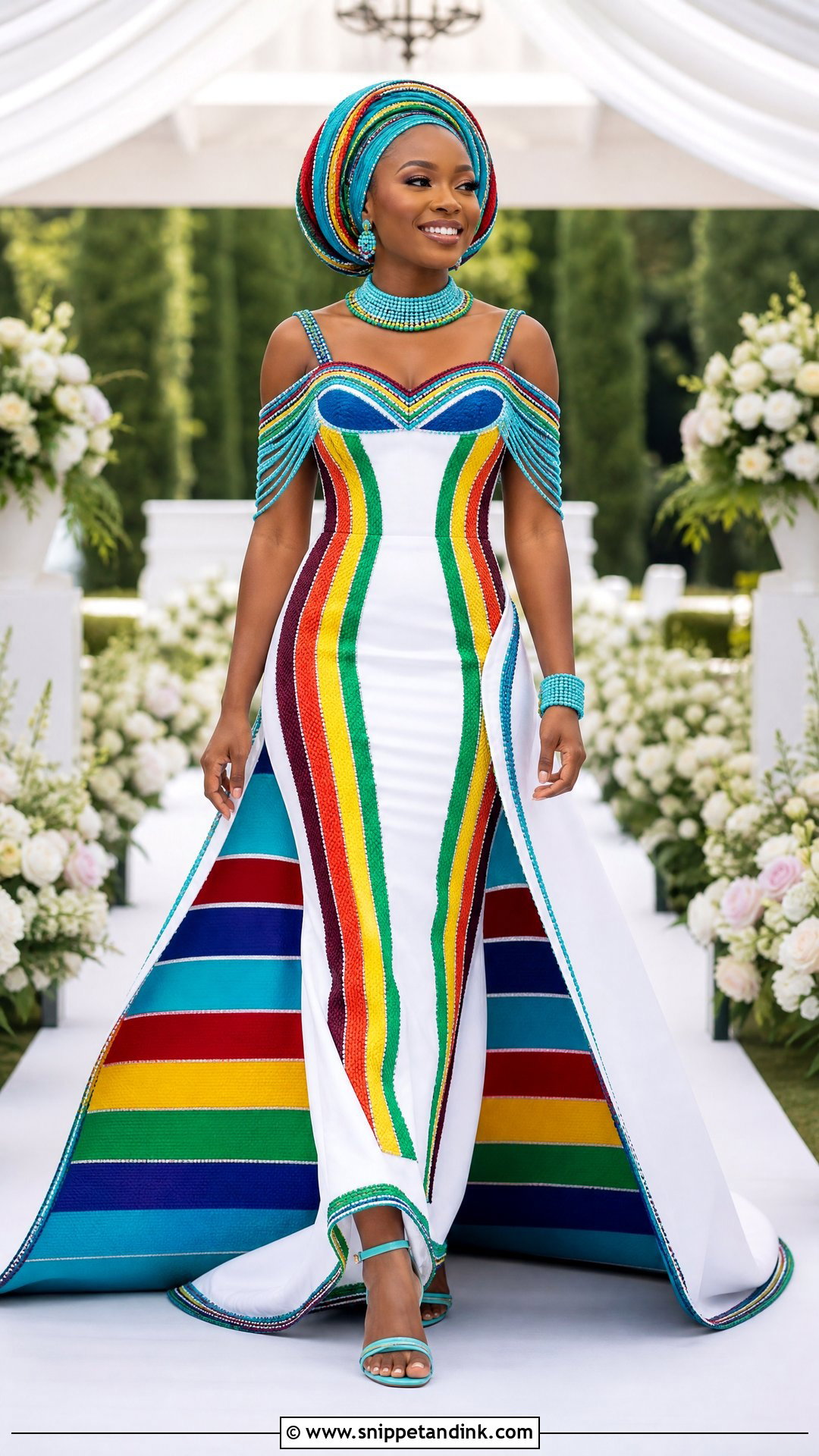
Venda stripes move. That’s the appeal, and also the risk, because stripes that aren’t matched at the seams look wrong the moment you walk. On a long fitted gown, I ask the dressmaker to align the stripes at the side seams and waistband first, then decide where else the fabric goes: bodice, sleeves or skirt panels. Red, yellow, turquoise, green and blue sit happily together as long as one color leads. Pick neutral pumps if the gown is busy, or pull one stripe color into the shoes. A detachable train gives you ceremony drama and comes off for the reception.
5. Ndebele Wedding Dress
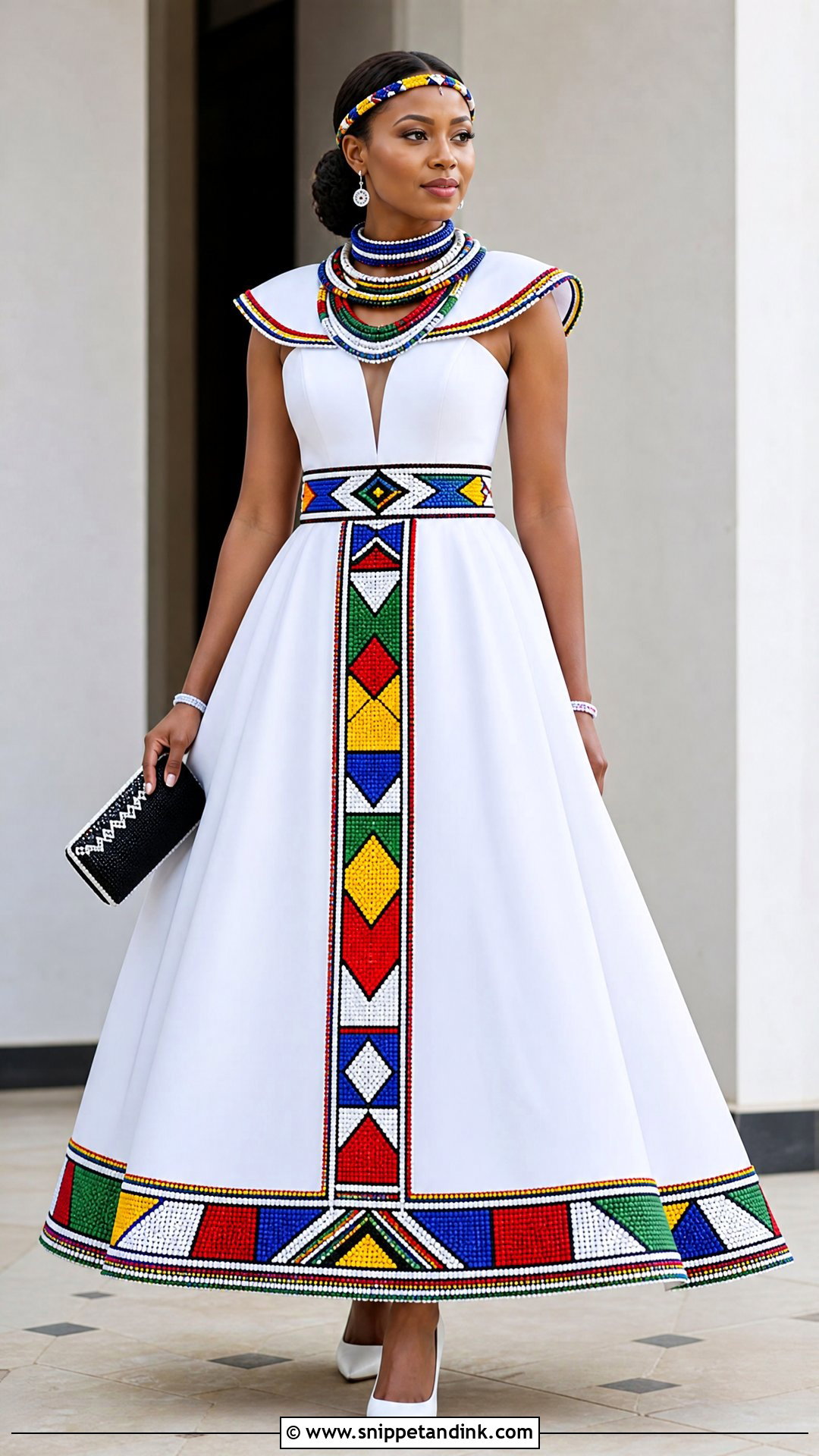
Ndebele geometry depends on crisp lines, so the base fabric matters more than people expect. A white, black or cream ground with red, yellow, blue and green lines needs a firm weave; on a soft, drapey fabric the straight edges wobble and the pattern loses its precision. A column gown or structured A-line gives the design a flat plane to sit on. I’d rather see one motif repeated cleanly than five different ones competing. Stacked necklaces and a beaded headband finish it, and a specialist beadworker can tell you which elements carry ceremonial meaning and shouldn’t be used purely as trim.
6. Tsonga Wedding Dress
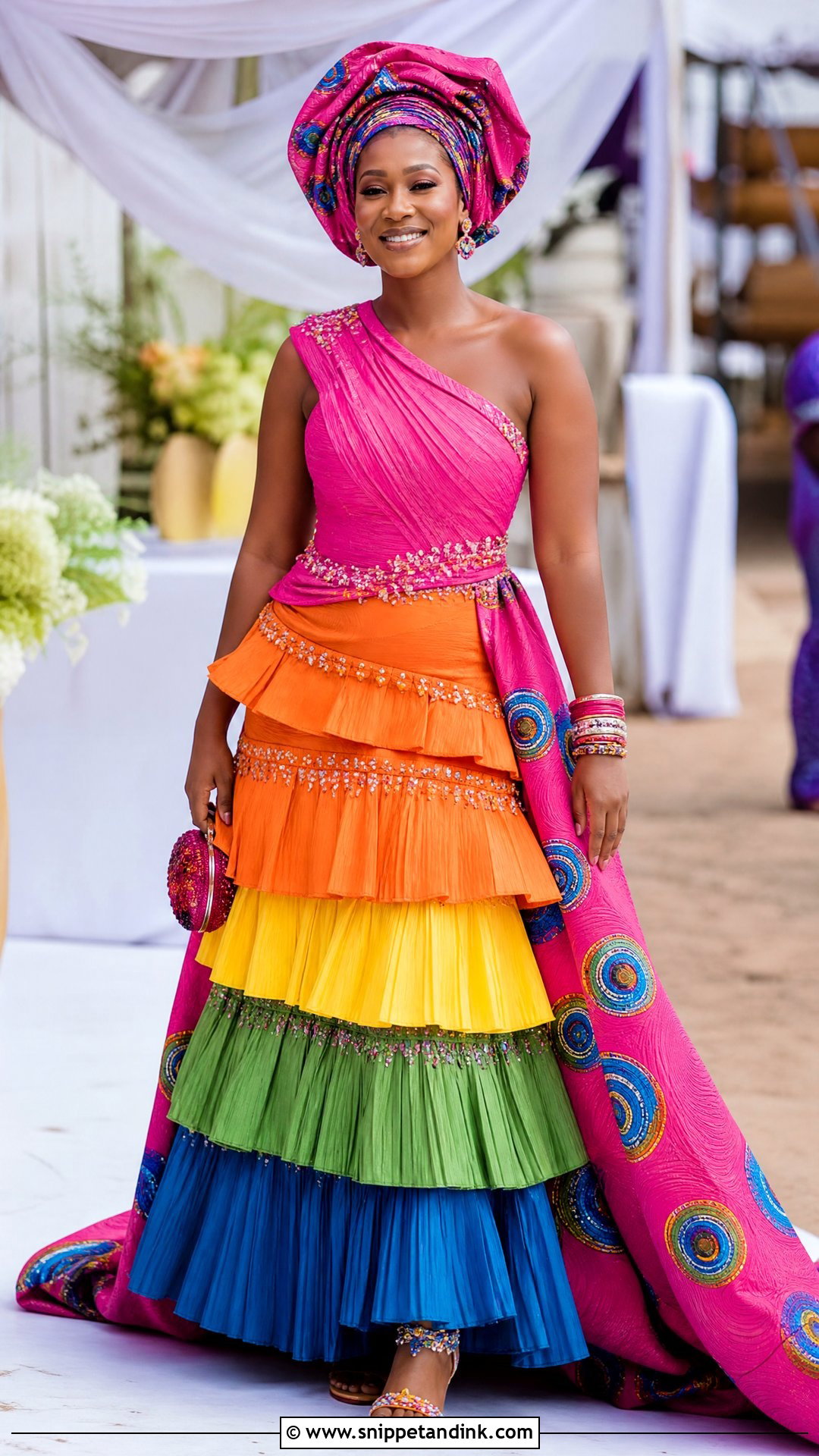
Tsonga fabric is lively, so I usually let it sit on selected panels and keep the rest of the gown one solid color. A fitted bodice with a tiered skirt in pink, yellow, blue, green or orange gives you movement when you dance, and the tiers swing in a way a straight skirt never will. Ruffled shoulders or a peplum add a little more. For a contemporary version, a one-shoulder mermaid gown with a removable printed train keeps the textile central without overwhelming the line. Talk through the ceremonial pieces with family before you finalize; some households have strong views on what the bride wears for which part of the day.
7. Tswana Wedding Dress
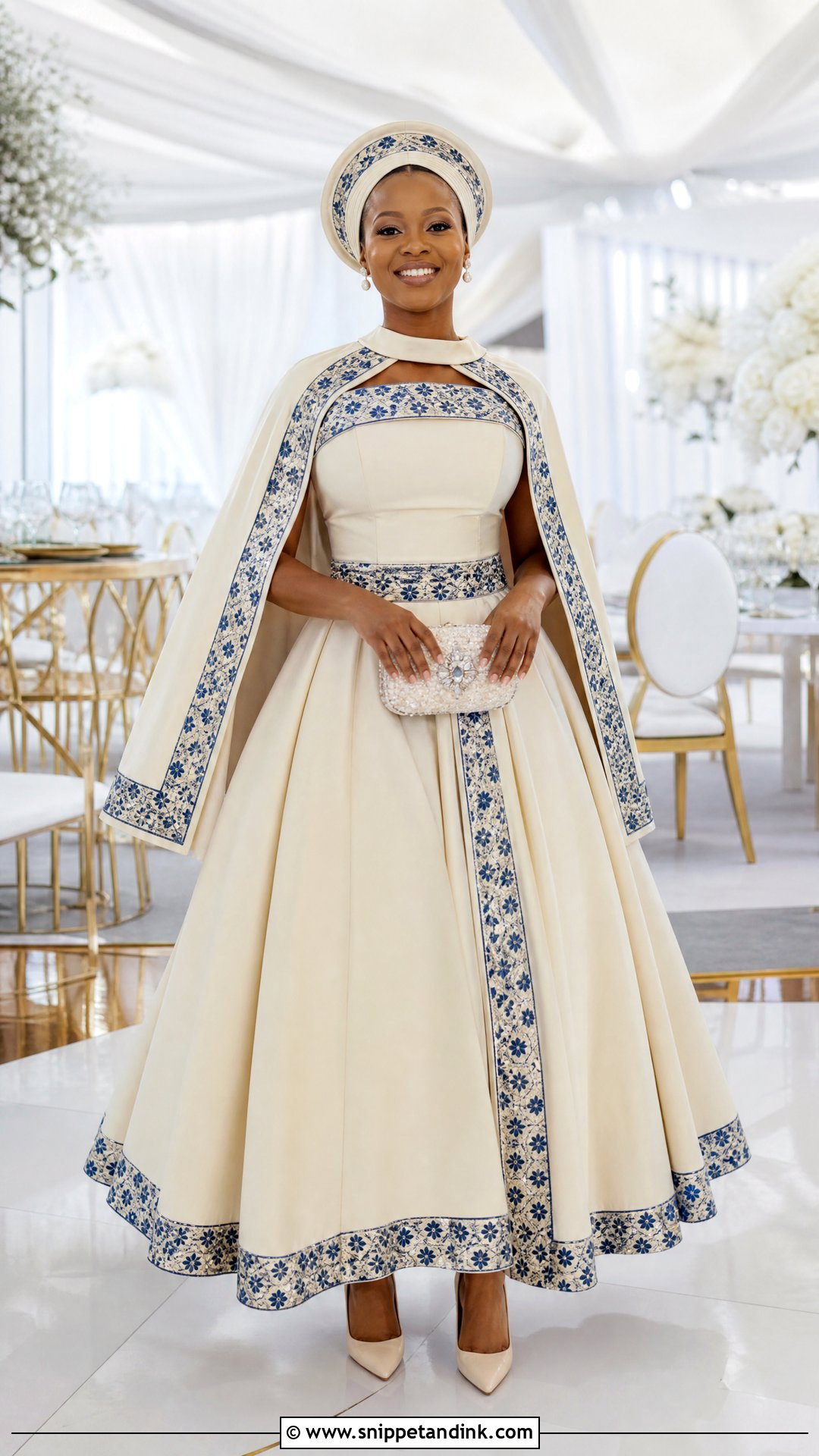
Cream, royal blue or soft white gives a Tswana wedding dress a quieter, tailored feel than the multicolored styles. I build it on a structured gown with a modest neckline, a shaped waist and a full skirt, then run printed trim along the sleeves, peplum and hem with a matching headpiece. Tailored traditional silhouettes like this suit modern construction because the trim follows the seams. Where I see it go wrong is at the back: trim that meets neatly at the front and misaligns at the zip. Ask to see the back at every fitting. Pearl earrings and pointed pumps keep it refined, and a cape lined in the print adds drama if you want it.
8. Sesotho Wedding Dress
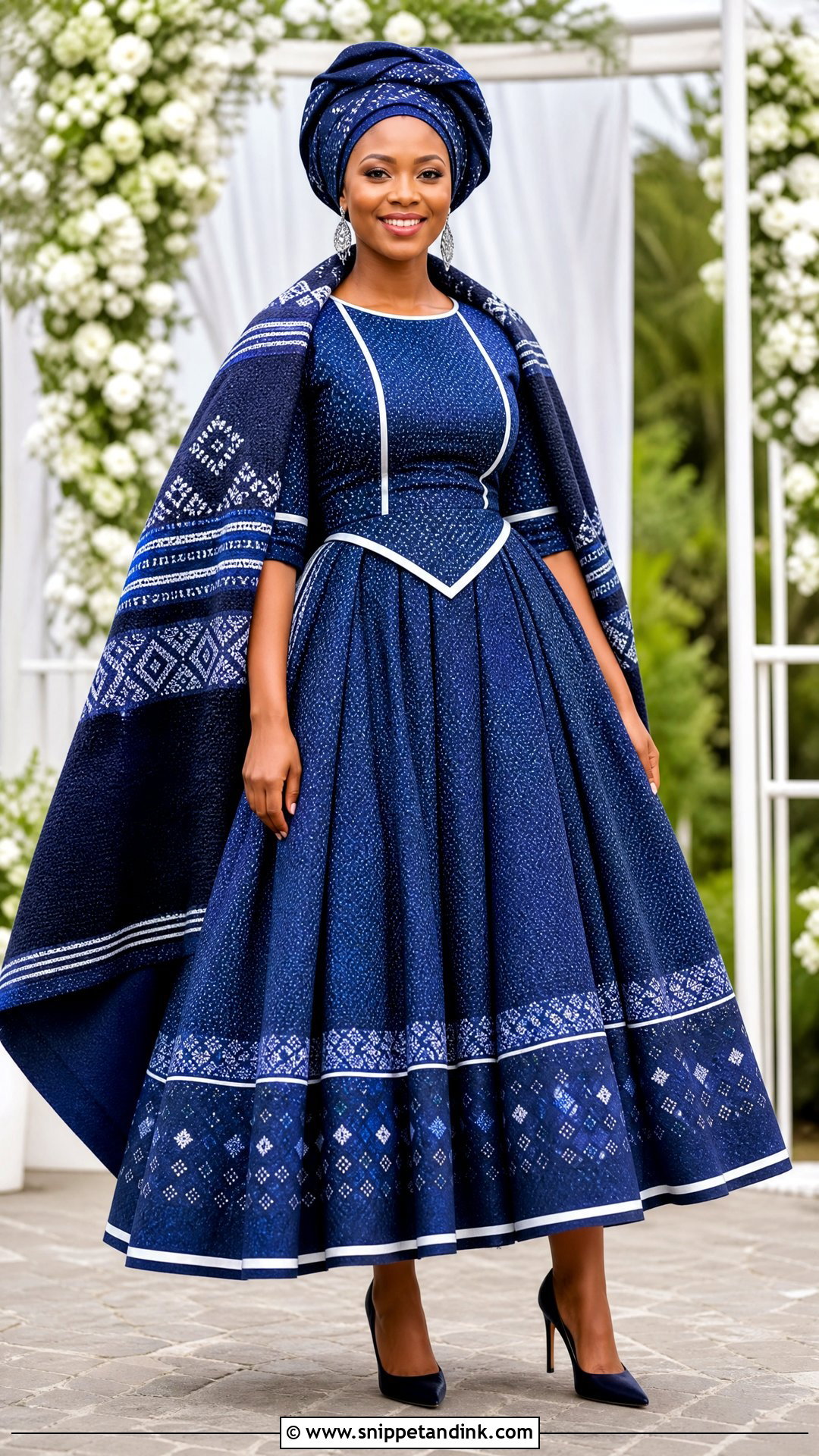
Deep blue shweshwe is one of the most reliable fabrics I work with for a Sesotho wedding dress, because it holds a crisp shape and has a lot of character on its own. A fitted bodice with elbow-length sleeves and a flared skirt works for both portraits and dancing. White piping, covered buttons or small lace inserts lift the darker print near the face. A headwrap and a culturally appropriate blanket create the layered ceremonial look; check with family how the blanket should be worn. Shweshwe is cotton and doesn’t breathe like linen, so in heat I choose a breathable lining and a slightly shorter hem. For a cold day, a fitted jacket in the same fabric keeps the waist visible.
9. Swati Wedding Dress
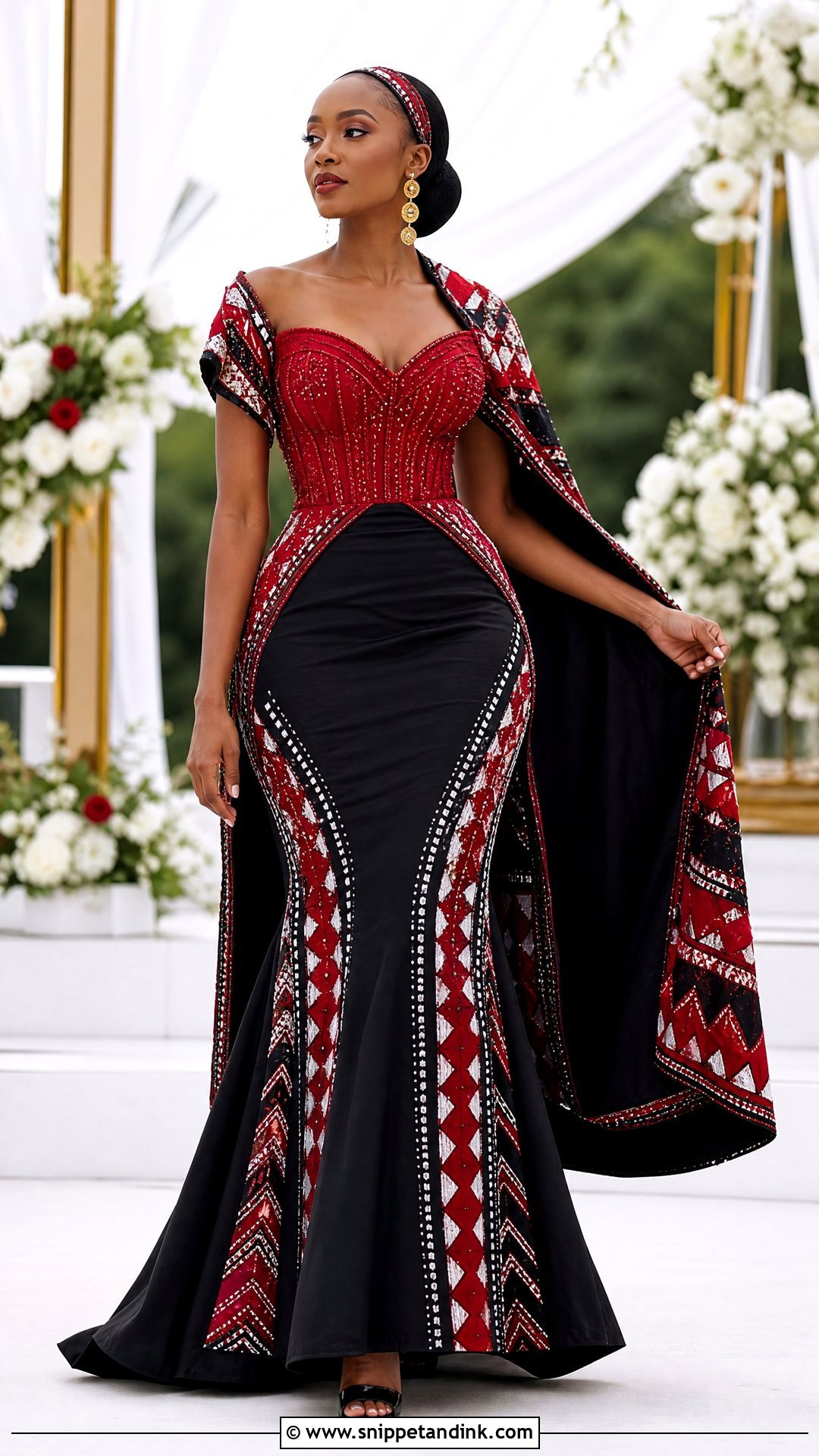
Red and black is a strong pairing, and on a Swati wedding dress I try to keep it from tipping into costume. A strapless or one-shoulder gown with a red bodice and a long black skirt with red printed panels is the bolder route. The softer route is a white gown with Swati-style fabric used only in a sash, train and wrap. Once the dress carries more than one pattern, I cut back on jewelry: gold earrings and some beadwork, nothing more. A removable shoulder wrap lets you change the mood between ceremony and reception. As with any ceremonial piece, confirm the arrangement with relatives and a specialist maker before ordering.
10. Shweshwe Mermaid Wedding Dress
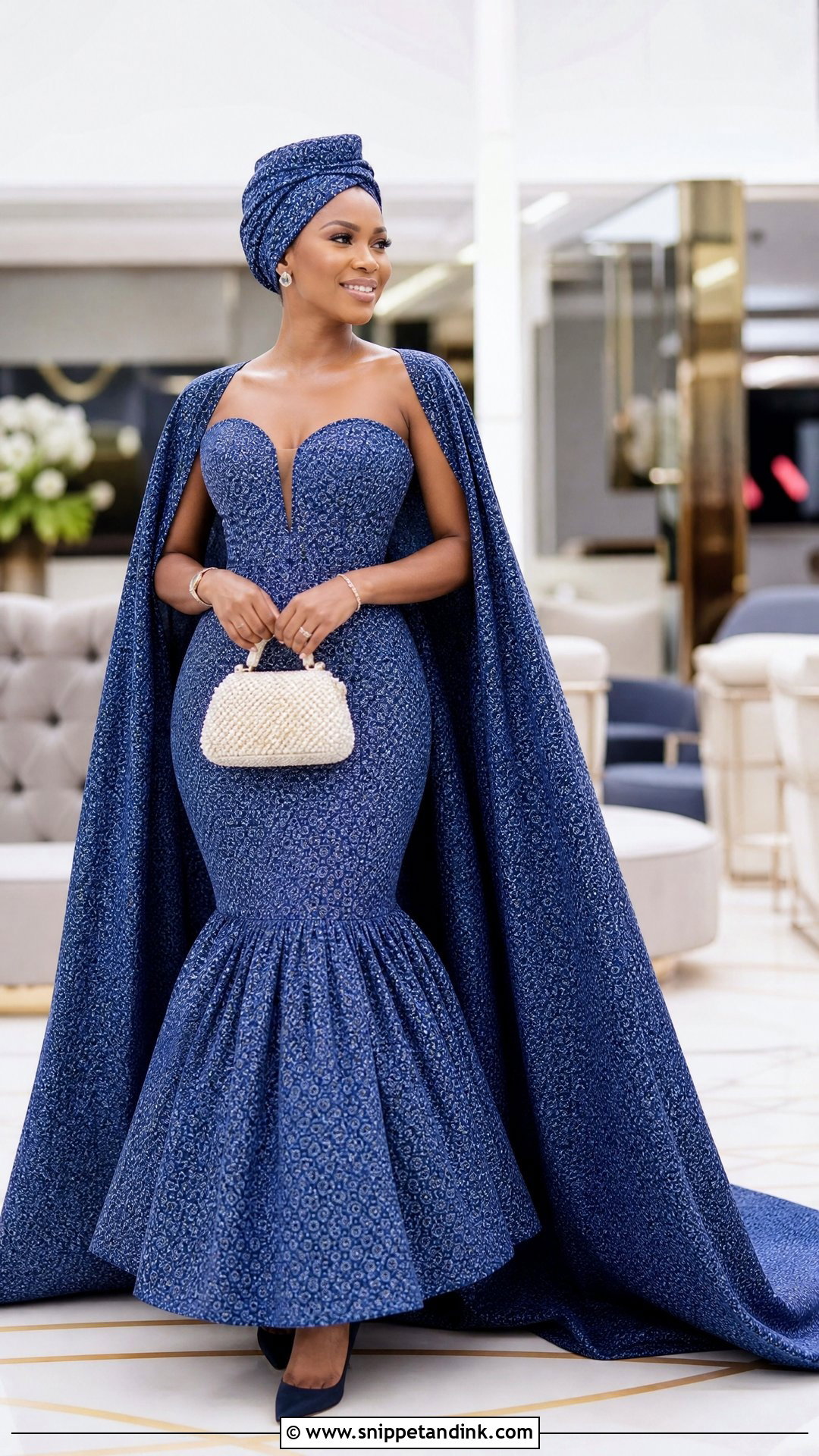
The fit of a shweshwe mermaid wedding dress lives or dies at the knee. The fabric has very little give, so a mermaid cut that’s tight through the thigh can make walking, sitting and dancing a struggle. I ask for the flare to start just above the knee rather than below it, and I test it by having the bride sit and climb a step at the fitting. Blue, brown, red or green shweshwe can cover the whole gown, though solid side panels give a cleaner line. A sweetheart or square neckline with proper internal boning holds up the weight of the print. Finish with a matching headwrap, small earrings and pumps in navy, cream or silver.
11. White Shweshwe Wedding Dress
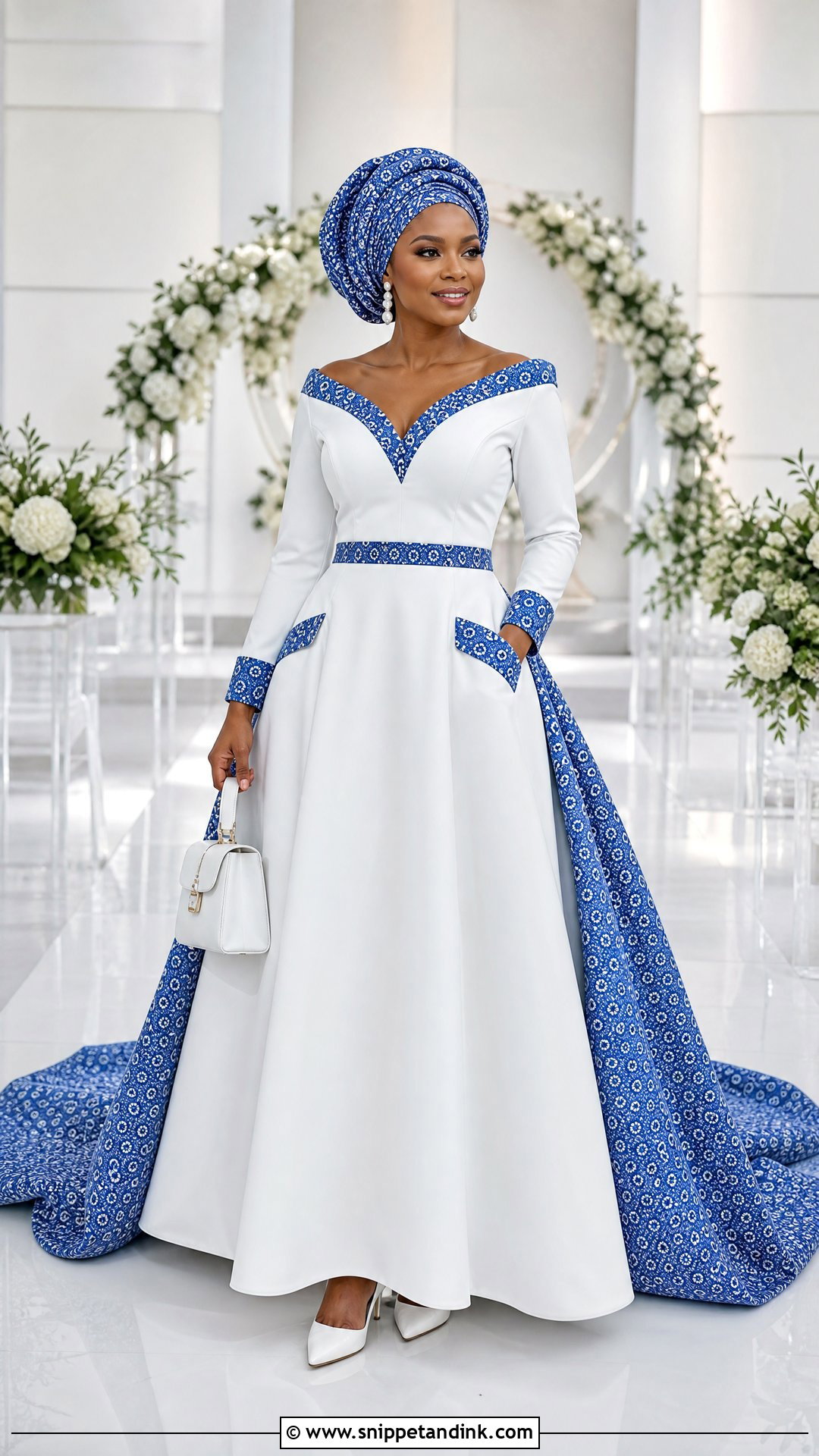
A white gown with shweshwe trim gives you a classic bridal shape and a clear South African signature at the same time. Start with an A-line or ball gown, then place blue, brown or red shweshwe along the neckline, cuffs, waist, pockets and train. Keeping the print to the edges lets the white stay bridal. One warning from fittings: indigo shweshwe can transfer color onto white fabric if it gets wet, so I ask the maker to pre-wash the trim and test a scrap before stitching it to the white. A detachable patterned train gives you a simpler dress for dancing, and a printed headwrap, white pumps and pearl earrings complete it.
12. Black And White Xhosa Wedding Dress
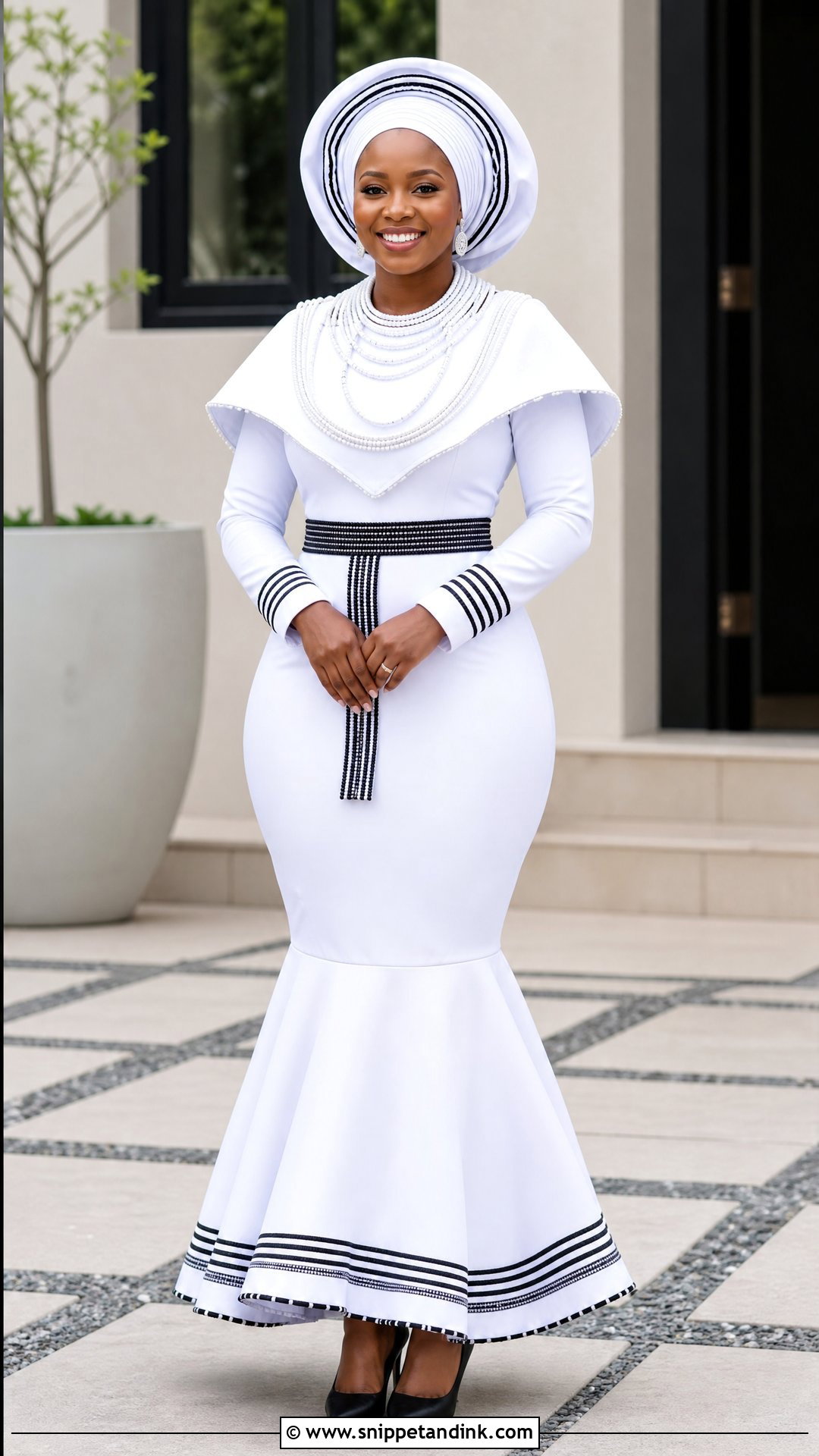
High contrast photographs clearly, which is a real advantage for a black-and-white Xhosa wedding dress in a busy outdoor setting. A long-sleeved white gown with black striped cuffs, a defined waistband and bands near the hem is my starting point. A trumpet skirt adds drama; an A-line is kinder if you’ll be on your feet greeting guests for hours. An iqhiya-style headwrap, layered white beadwork and black closed-toe heels complete it, and a short striped cape covers the shoulders for the ceremony. I keep the stripe placement symmetrical unless the designer is deliberately going asymmetric. Bring family into the design conversation, so the result reads as Xhosa and not just monochrome.
13. Red Zulu Wedding Dress
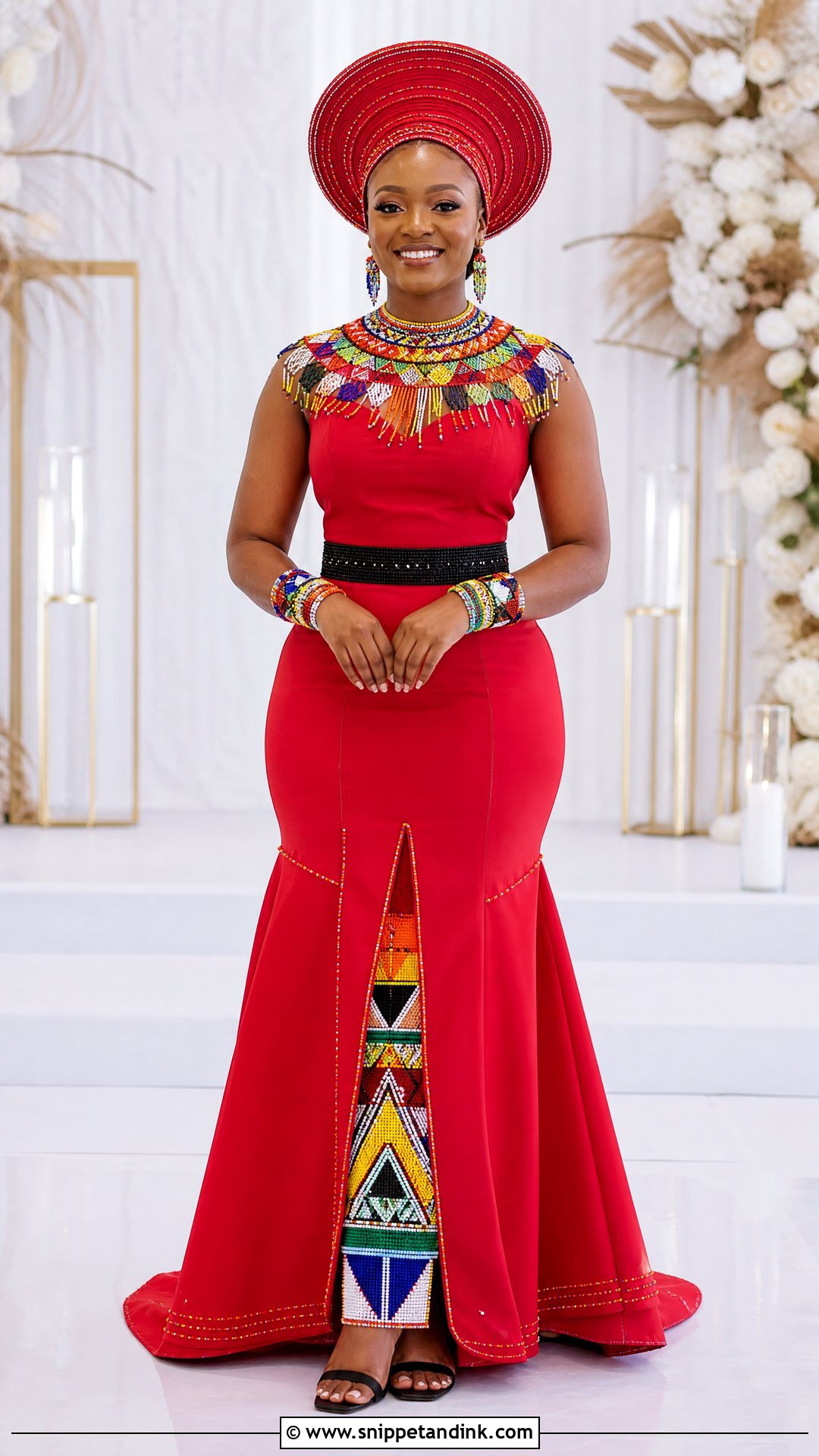
Red carries warmth, but a full red gown can look flat in photos if the fabric is shiny, so I steer brides toward a matte crepe or cotton. A fitted red gown with a flared hem, or a structured top with an ankle-length skirt, frames a beaded neckline well. A patterned waistband defines the shape. Save the reflective beads for the neckline and wrists, where catching light helps. If head-to-toe red feels like too much, put it in an overskirt, shawl or bodice panel instead. The isicholo-style headpiece and other ceremonial accessories should be chosen with guidance, since they can signal more than taste.
14. Blue Sepedi Wedding Dress
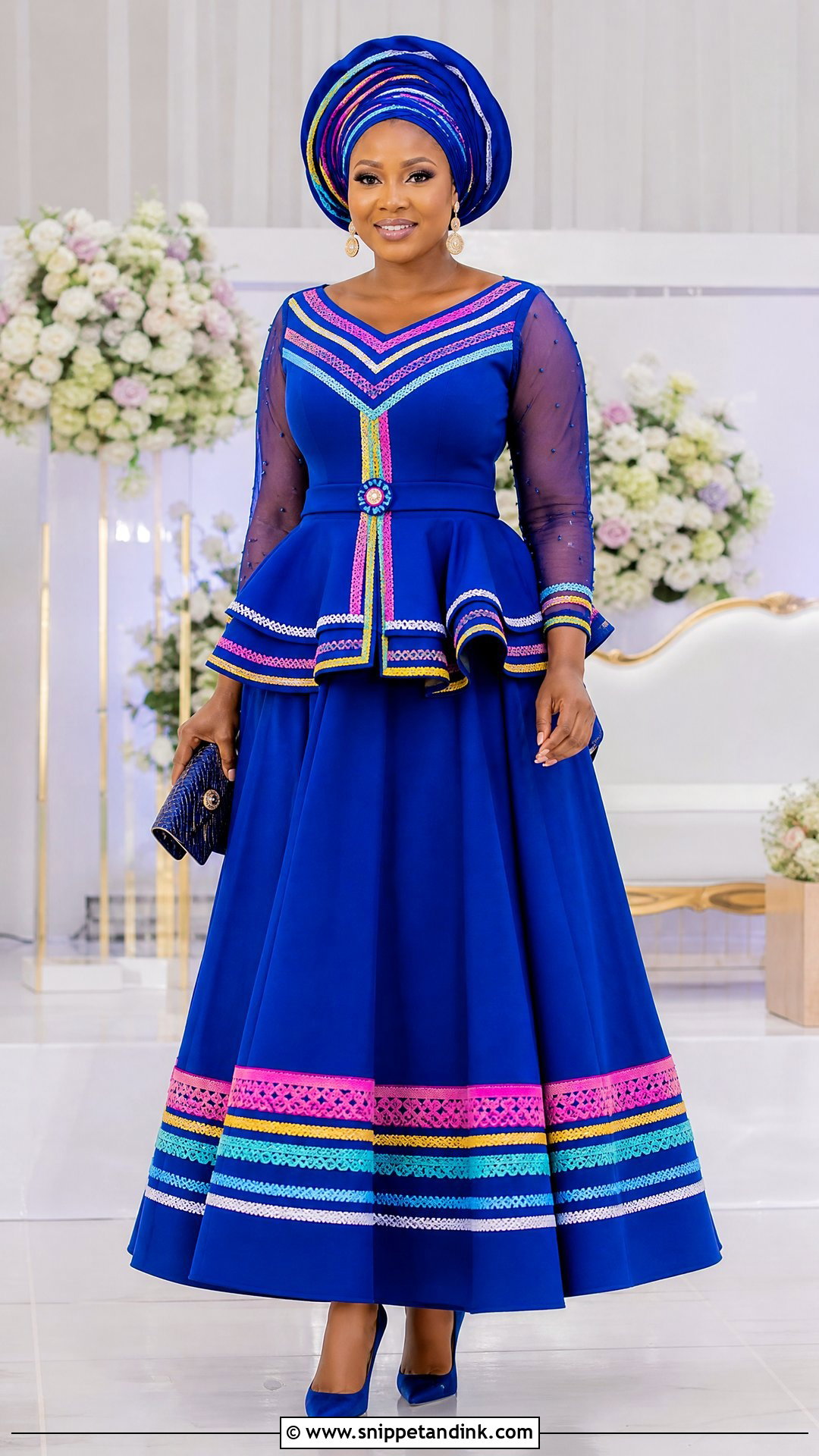
Royal blue gives a Sepedi dress a base that lets the bright bands stand out instead of fighting each other. A floor-length gown with a shaped bodice, peplum waist and full skirt carries pink, yellow, turquoise and white bands around the neckline, sleeves and lower skirt. I check skirt volume carefully: enough to swing, not so much that you can’t get through a doorway or into a car. Sky blue with white as the main accent is a lighter alternative. Blue pumps and a matching headwrap tie it together, with gold earrings for a little shine. Ask for hidden pockets; you’ll want somewhere to keep tissues and lip color.
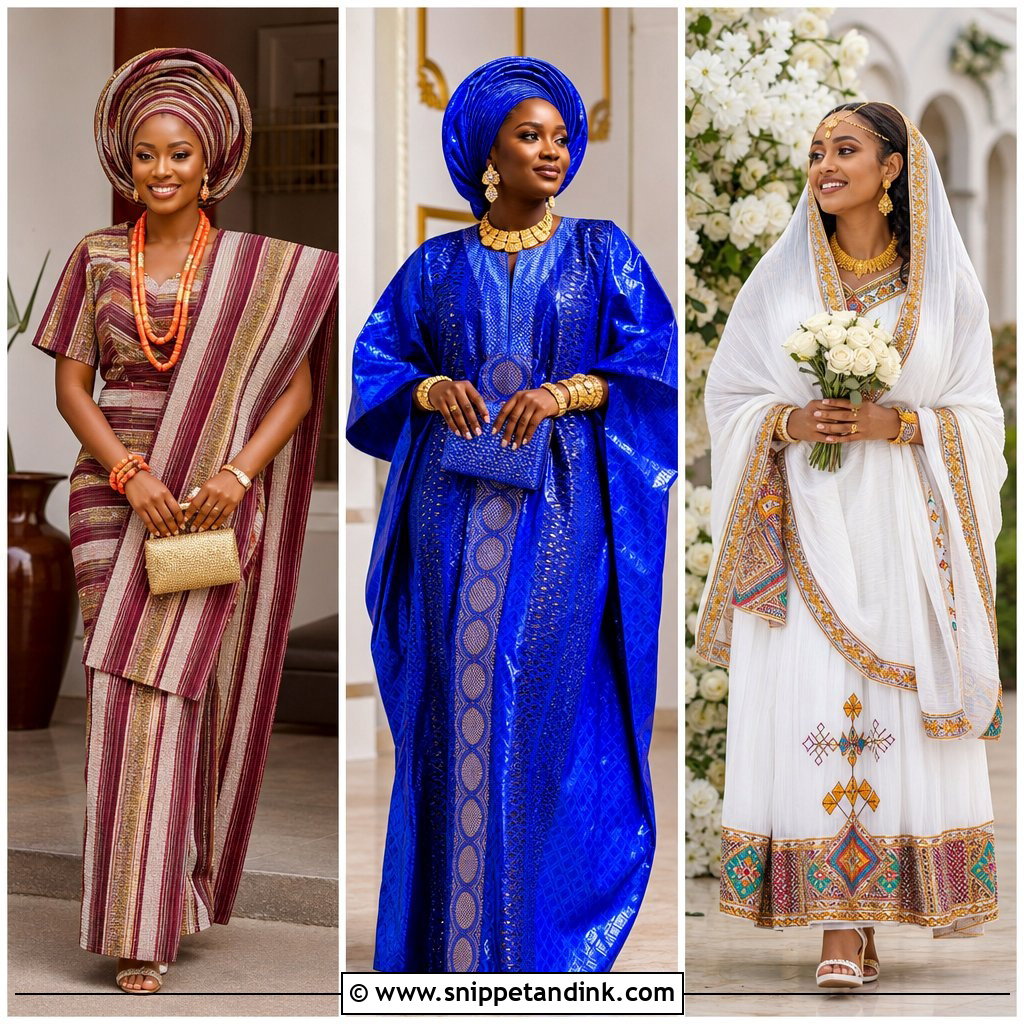
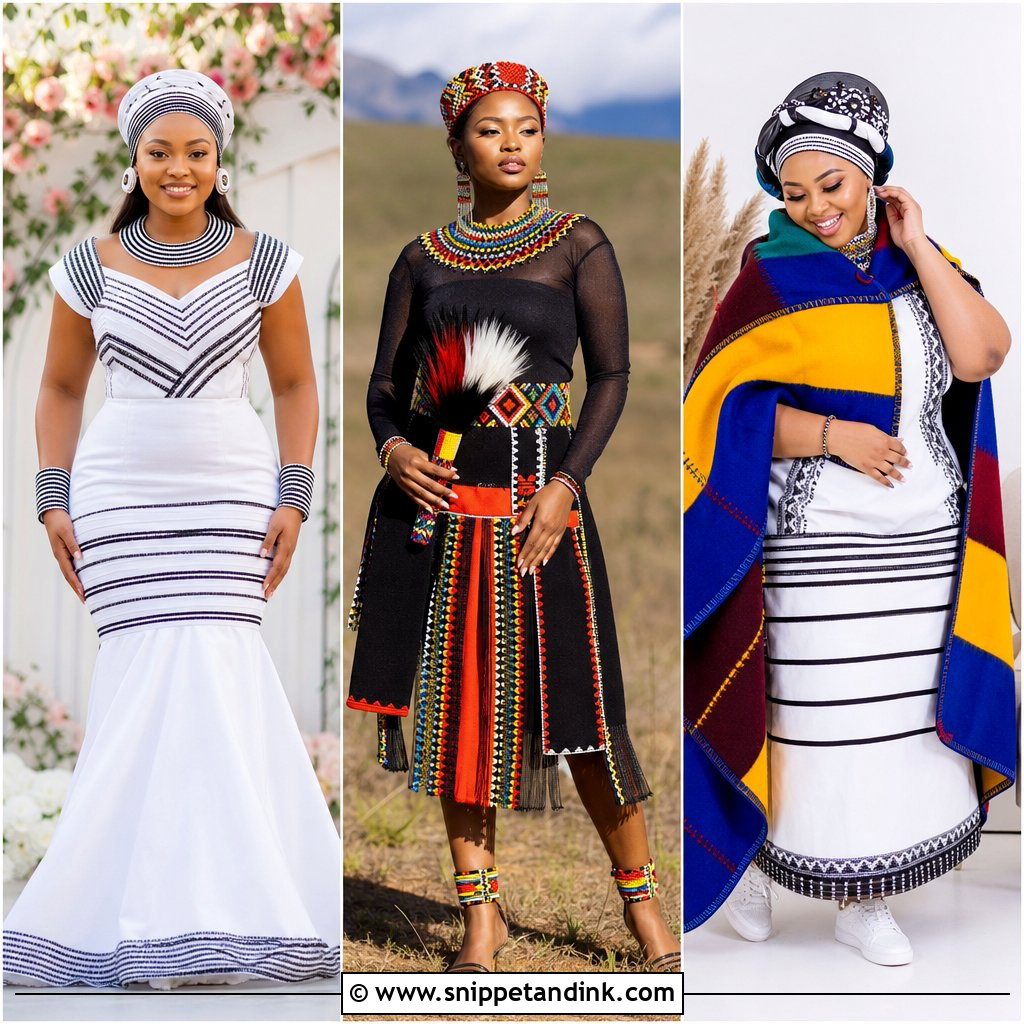
15. Colorful Venda Wedding Dress
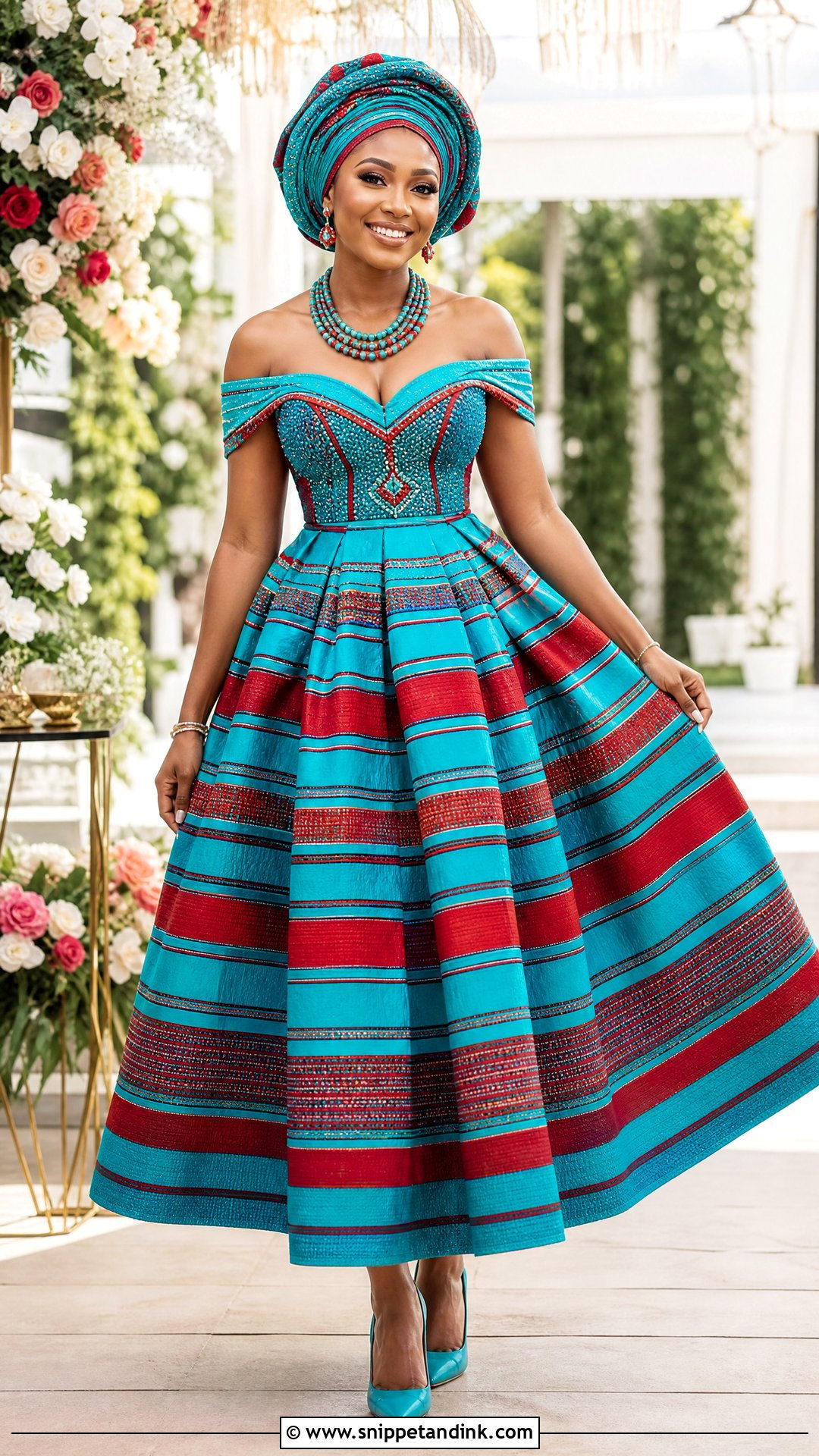
Bold striped fabric works best when it follows the shape of the gown, and that takes careful cutting. On an off-the-shoulder bodice into a full skirt, I want the horizontal stripes lined up exactly at the waist seam, because a mismatch there is the first thing people notice. Another approach is a solid red or turquoise base with Venda-style fabric only in the sleeves, a center panel and the train. A plain underskirt gives the patterned outer layer body. I’d pick one dominant color for the accessories rather than echoing every stripe. If you’re planning more than one outfit, the full-color version suits the traditional ceremony and a simpler gown suits later.
16. Beaded Ndebele Wedding Dress
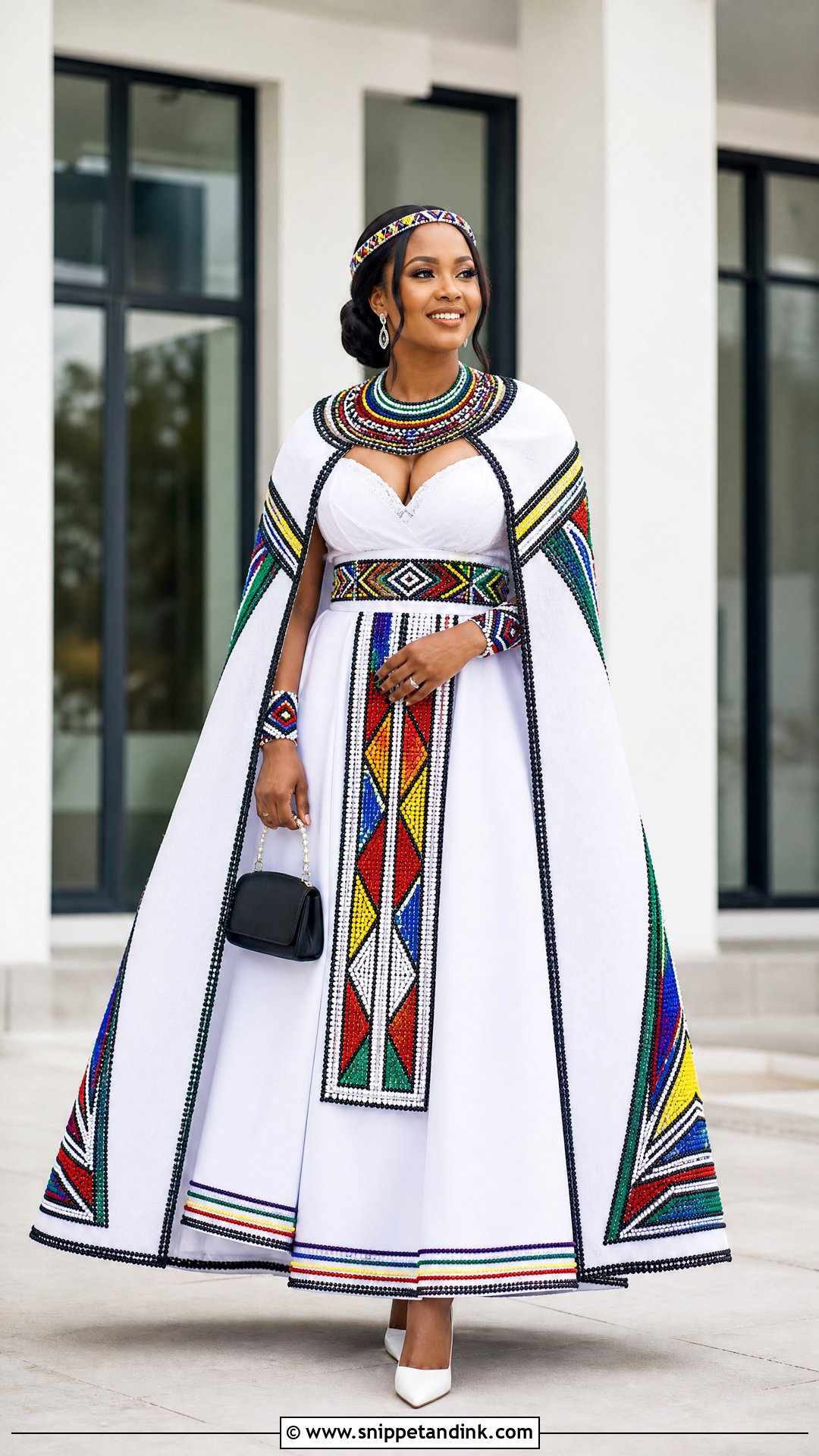
Heavy beading changes how a dress hangs, and that’s the first thing I plan for with a beaded Ndebele gown. A clean white column or A-line base takes geometric beading across the neckline, waist, sleeves and skirt border, but all that weight pulls the fabric down and can drag a neckline off the shoulders. I ask for a firm, breathable foundation layer and for the beads to be spread evenly so no single area sags. Red, yellow, blue, green and black in repeated shapes keep it orderly. A detachable beaded cape is a dramatic ceremony option. Work with a skilled Ndebele beadworker so the patterns are made with understanding, not just copied.
17. Modern Makoti Wedding Dress
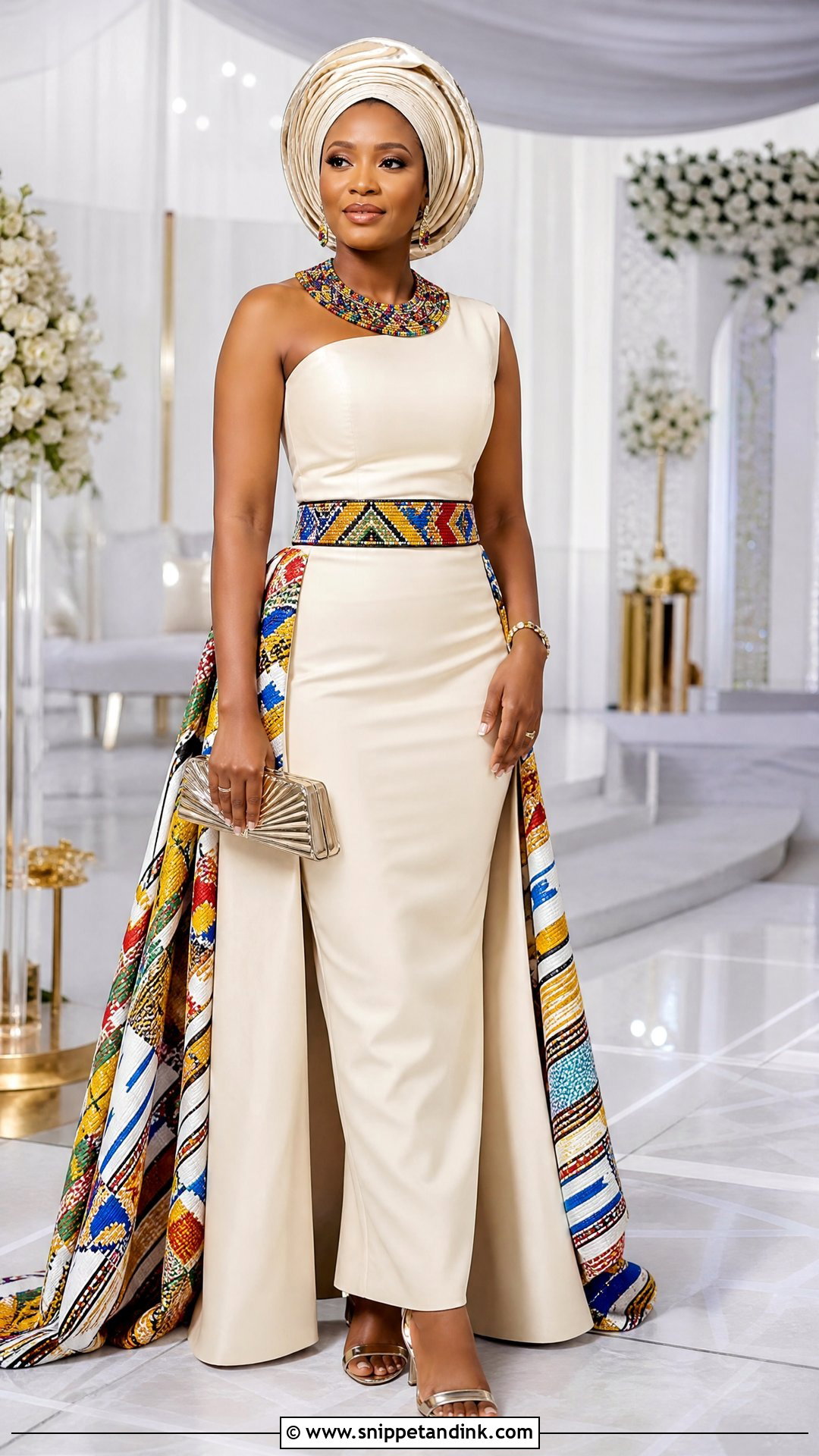
A modern makoti wedding dress takes a current bridal cut and gives it fabric or detail tied to your own family. One-shoulder, mermaid, A-line or off-the-shoulder can all work. The mistake I see most is print everywhere: bodice, sleeves, waist, peplum and train all at once. Pick two or three places and repeat the same textile there, so the eye travels around the dress instead of stopping. A matching headwrap, some carefully chosen beadwork, comfortable heels and a small structured bag finish it. Modern construction and heritage fabric sit together well when the print has room to breathe.
18. Plus Size South African Wedding Dress
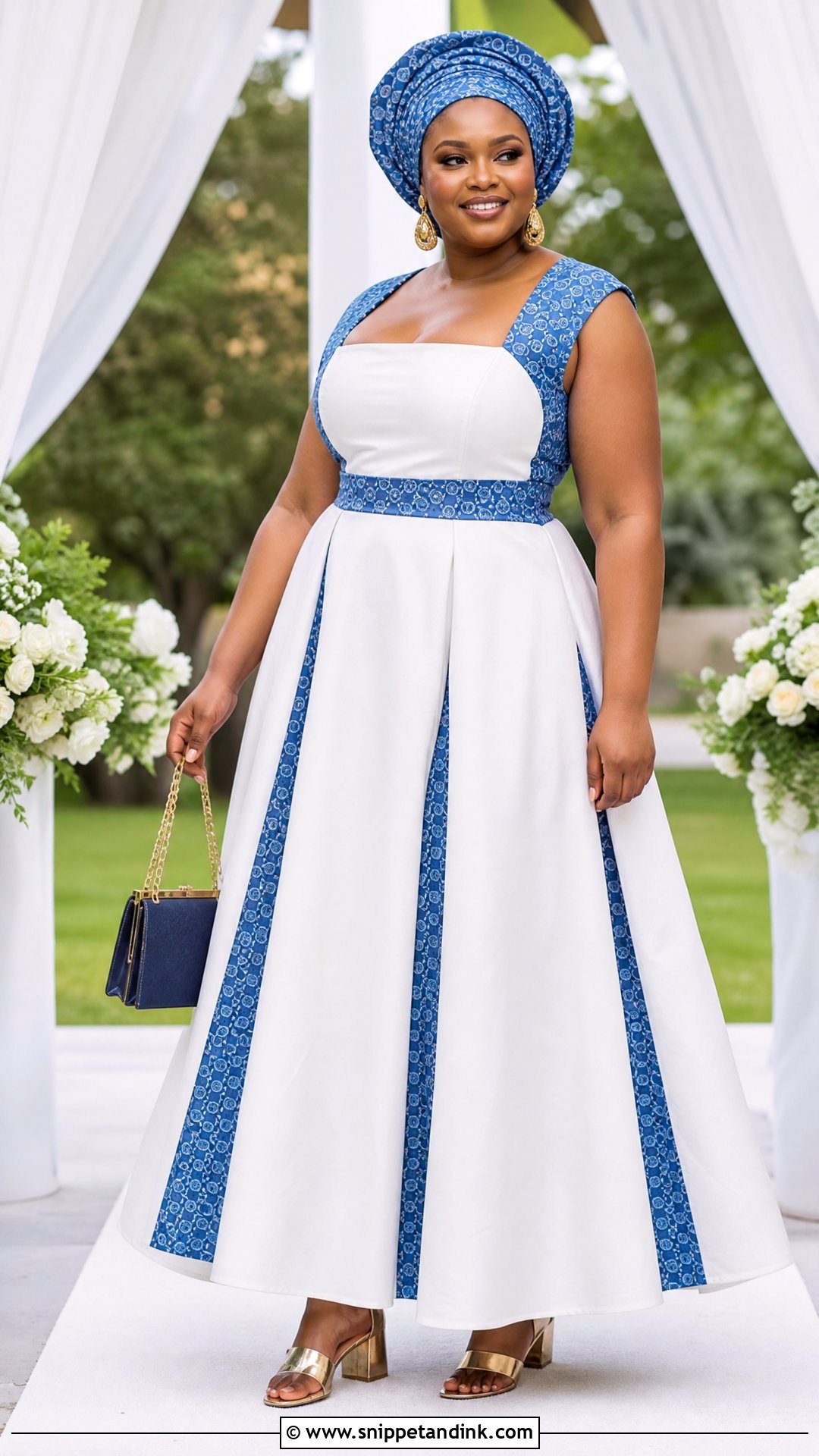
With a plus-size South African wedding dress, the construction inside matters as much as the print outside. I ask for proper internal support, a firm waist stay and seams with enough allowance to let out after a final fitting. An A-line with a defined waist balances the shape; a structured mermaid shows curves off with confidence. Vertical print panels or a central bodice section lead the eye up and down the dress. I don’t buy the old rule that curvy brides should hide in dark, loose fabric. Bright shweshwe, Xhosa monochrome, Venda stripes and bold Sepedi bands all look exceptional when they’re properly fitted. Stable block heels help on a long day.
19. Long Sleeve South African Wedding Dress
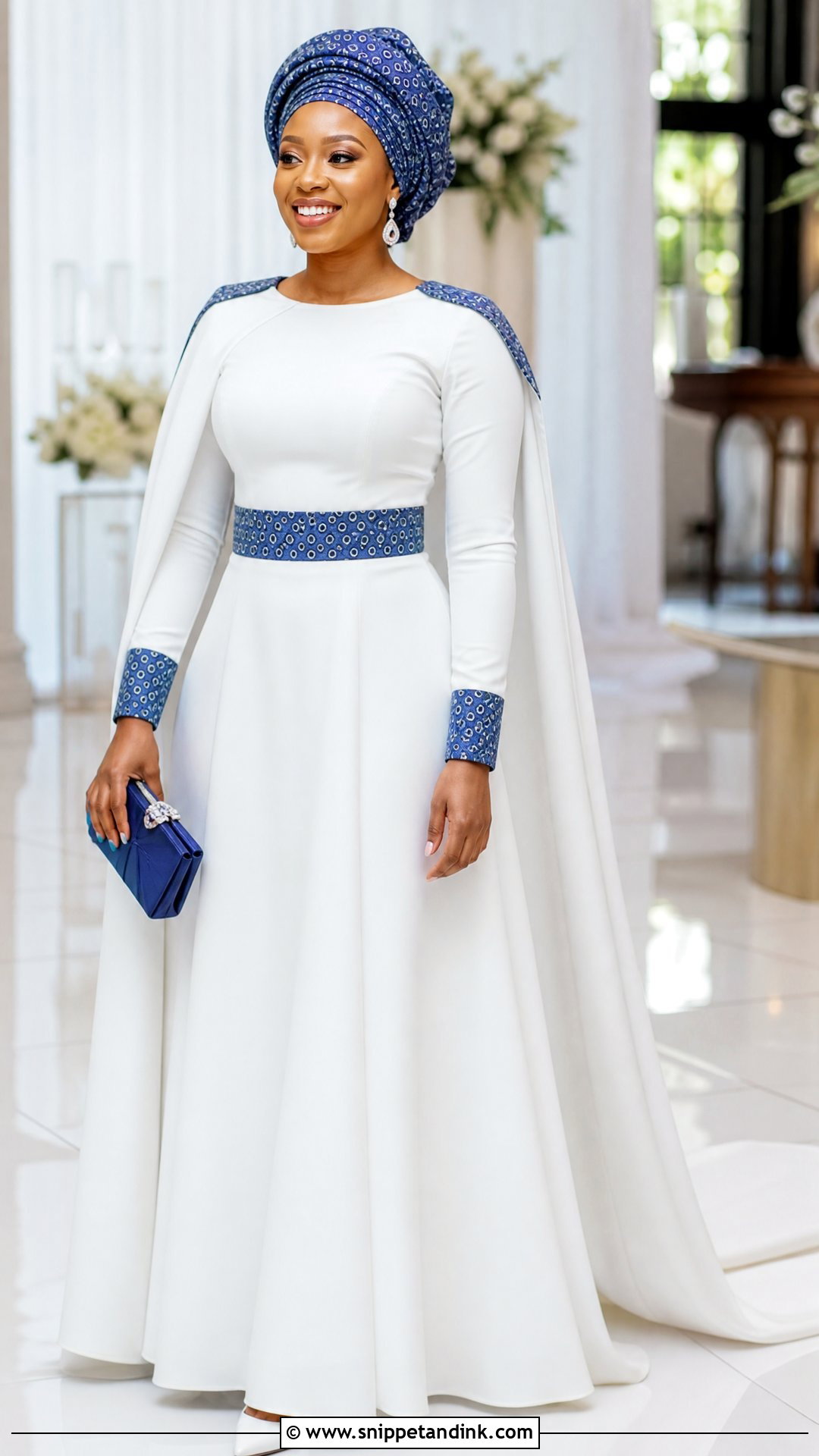
Long sleeves are where comfort problems show up first, usually at the elbow when you lift a glass or hug someone. I ask the bride to raise her arms above her head at every fitting; if the sleeve pulls the bodice up, it needs more room under the arm or a stretch lining. Lace, plain crepe, patterned cotton and light mesh with beadwork all work. A white A-line with shweshwe cuffs is understated, while a black-and-white Xhosa-style dress has more punch. For color, repeat Venda, Sepedi or Tsonga-style fabric at the sleeves and waistband. Light fabrics suit hot afternoons; lined sleeves and an overskirt suit evening ceremonies in winter.
20. Two Piece South African Wedding Dress
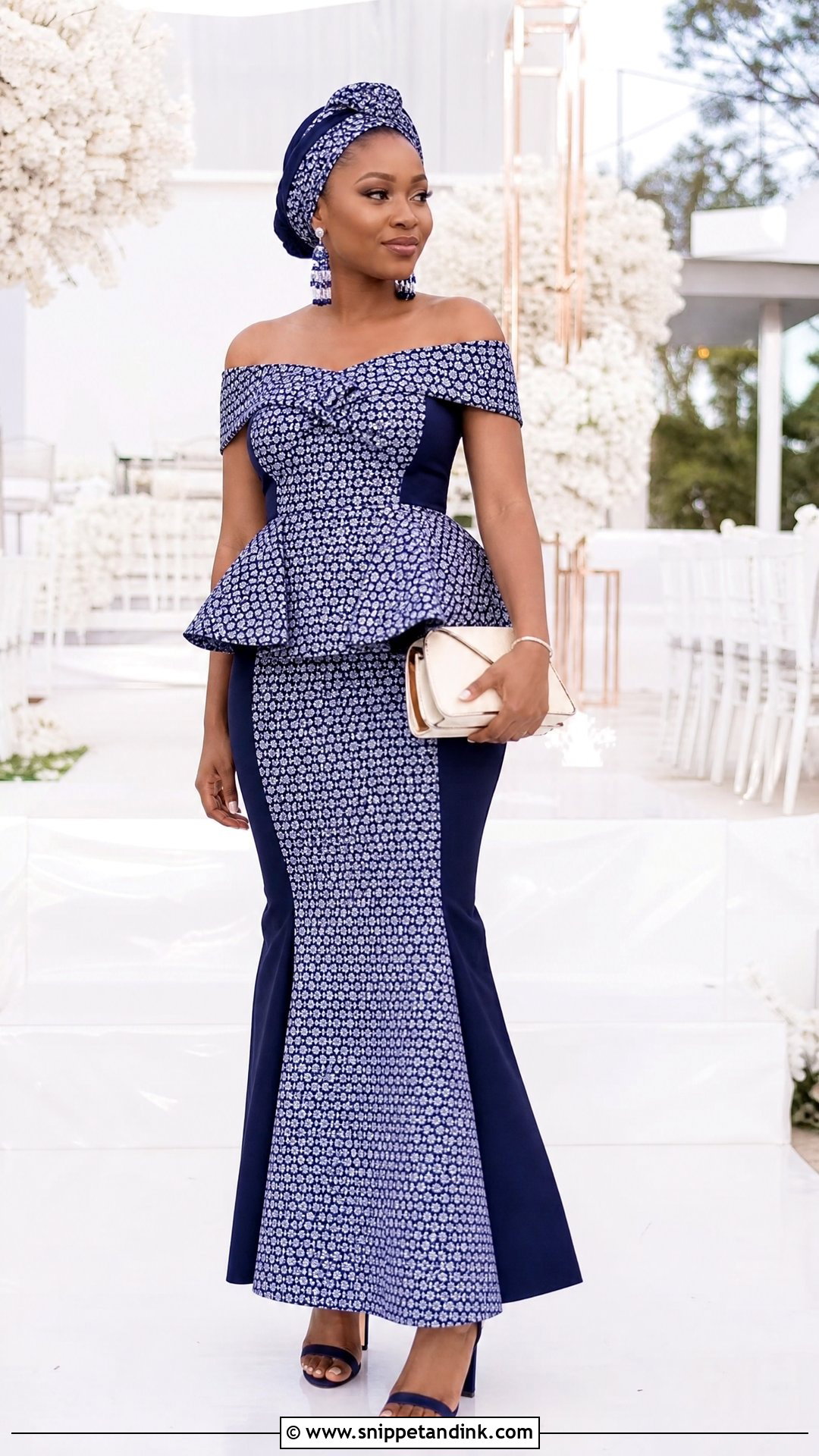
Separates are my favorite answer for brides whose weight or measurements tend to change in the months before a wedding, because a two-piece South African wedding dress lets the top and skirt be adjusted independently. A fitted peplum top with a long mermaid skirt, or an off-the-shoulder blouse with a full pleated skirt, both read formal. Use one shweshwe or heritage textile throughout and break it with solid panels. A small gap at the midriff is modern; an overlapping top gives more coverage. And afterward, each piece can be worn again with plainer clothes to family events.
Caring for a Heritage Gown After the Last Dance
These outfits are often passed down or worn again, so the week after the wedding matters. Shweshwe and other printed cottons shouldn’t go to a dry cleaner that will treat them like satin. I ask brides to take the dress to a cleaner who handles cotton and beadwork, or to hand wash plain shweshwe pieces in cold water, inside out, without soaking.
- Never hang a heavily beaded gown by its shoulders for months. The weight stretches the fabric. Fold it with acid-free tissue between the layers and store it flat in a breathable cotton bag.
- Remove any beaded collars, headbands and loose necklaces and store them separately, so threads don’t catch.
- Check the stored dress every few months and refold it along different lines, so creases don’t become permanent.
- If a ceremonial piece was lent by family, return it cleaned and with any loose beads repaired.
Fabric First, Then Family, Then the Fitting Room
Every one of these South African Wedding Dress Ideas comes back to the same three things in my fittings: the right fabric for your heritage, the blessing of the people who know what the ceremonial pieces mean, and tailoring that lets you move. A colorful Venda gown, a monochrome Xhosa ensemble, a beaded Zulu outfit or a white dress edged in shweshwe can all be right. Plan the headwear, shoes and jewelry with the dress rather than after it, and test it by walking, sitting and dancing before the day.
You'll Like These Ideas:


Leave a Reply