
Xhosa bridal dressing carries family identity in every layer: the umbhaco skirt, the beadwork, the iqhiya, the blanket. The twenty looks below range from full traditional ensembles to modern gowns and separates, from black and white to blue shweshwe and brighter tailoring. Customs differ between families and communities, so before I fit anything I ask the bride to speak with her elders about the colours, garments and dressing practices that matter to them. My part is the craft: cut, weight, comfort, and making sure she can greet guests, kneel, walk and dance without fighting her clothes.
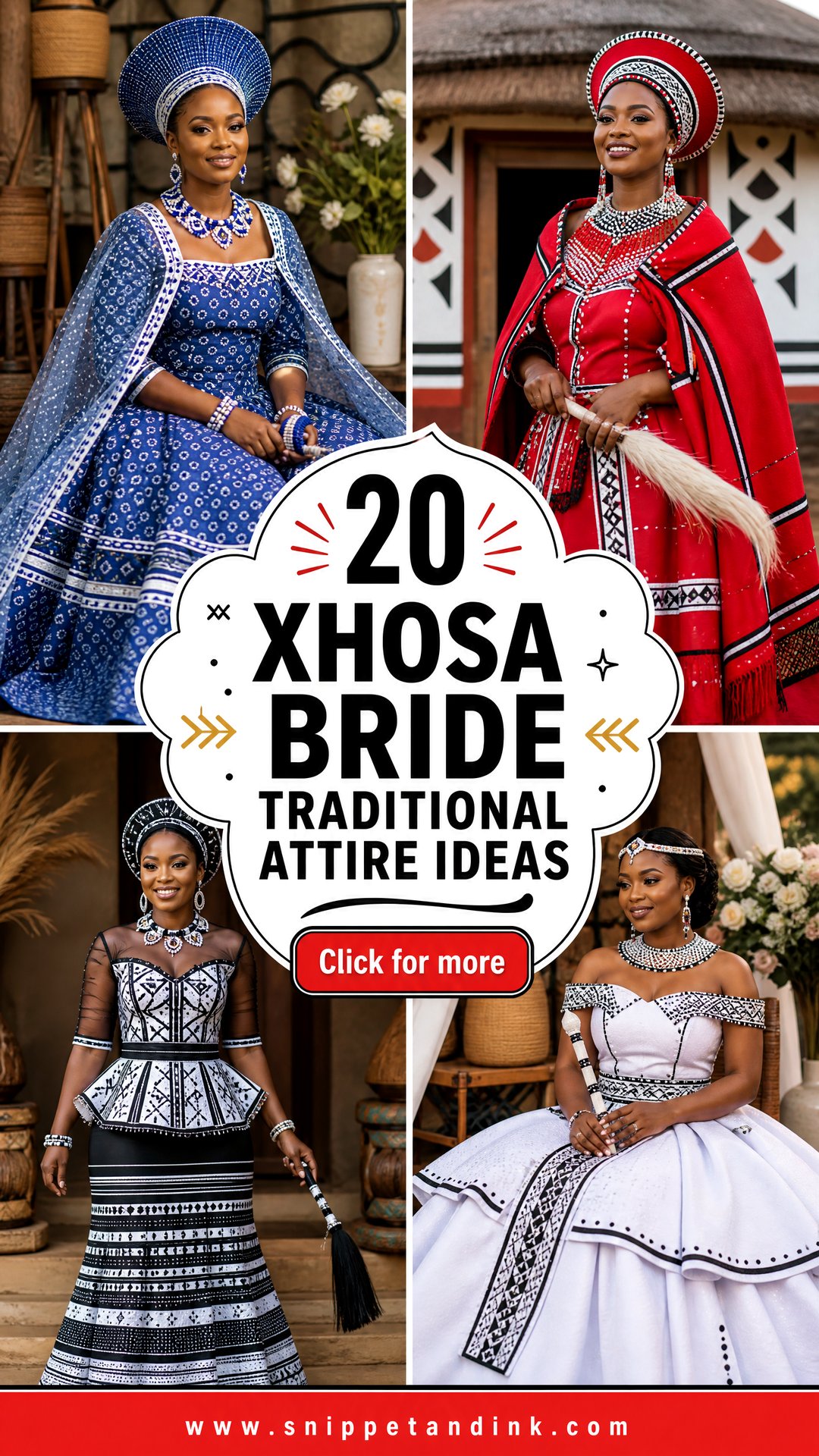
Sewing Umbhaco and Shweshwe So the Bands Lie Flat
The dark bands on umbhaco are strips of braid or bias stitched on in rows, and they decide whether the garment looks crafted or rushed. When I check a seamstress’s work, I look at three things: the rows stay parallel all the way around, the corners at the apron are mitred neatly, and the bands do not pucker where they cross a seam.
- Wash shweshwe before it is cut. The stiff starch washes out and the cloth can shrink a little, which would ruin a fitted bodice.
- Commission beadwork as early as you can. It is made by hand, and a full collar, cape or apron takes real time.
- Ask the dressmaker to fit you with the apron and blanket on, since both add bulk at the waist.
- Buy a little extra fabric for repairs or a matching piece for the groom.
If you are wearing more than one outfit during the celebrations, give each its own fitting date rather than squeezing them into one appointment.
1. Traditional Xhosa Umbhaco Bride Attire
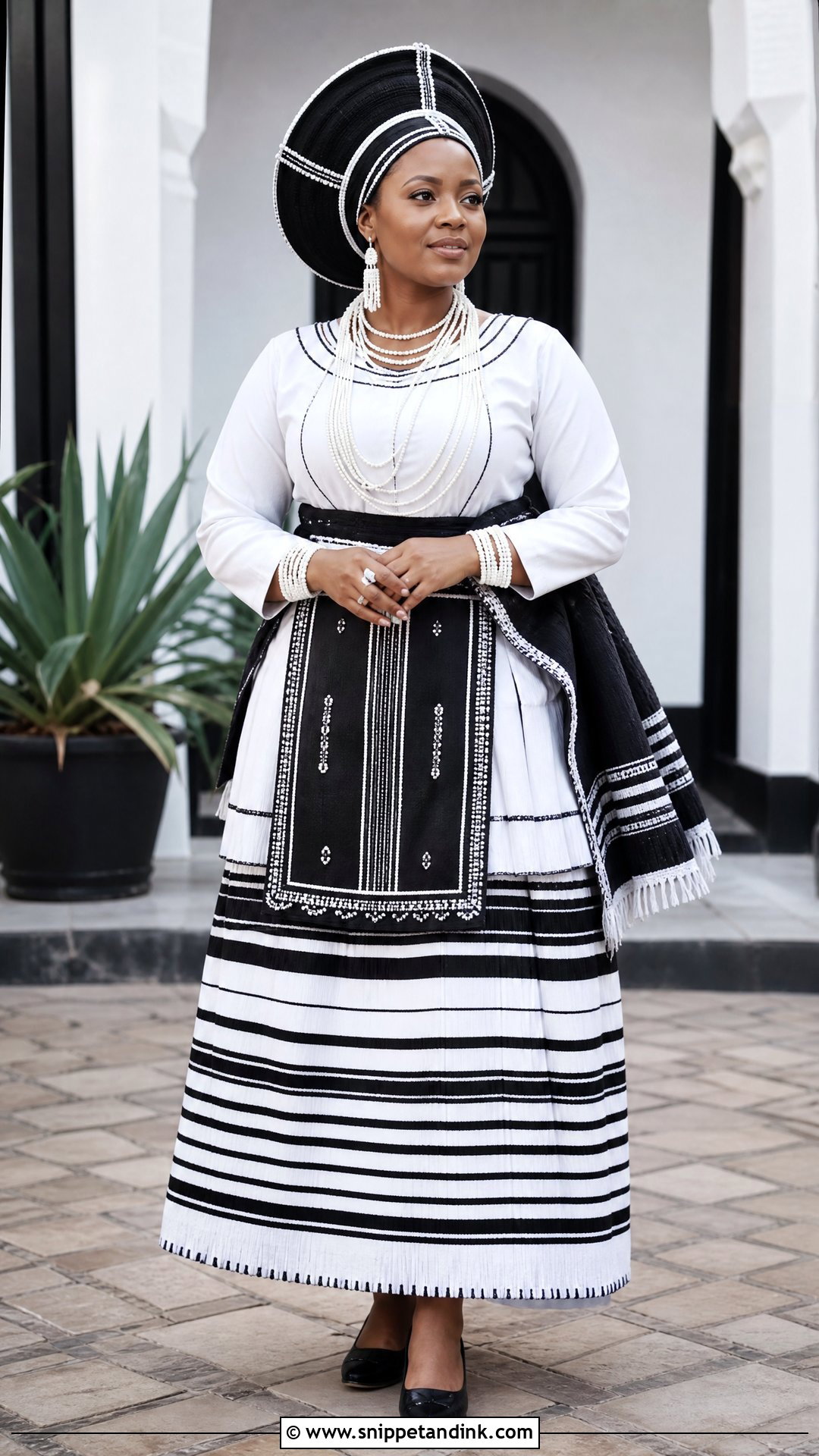
A full umbhaco ensemble is the most complete heritage look on this list. The long skirt with its dark bands, a blouse with a modest neckline and comfortable sleeves, an apron, layered beadwork and an iqhiya tied the way your family does it. A blanket may go around the waist or over the shoulders when the ceremony calls for it. The skirt is heavy once the bands and apron are on, so I set the waistband slightly firmer than a normal skirt to stop it creeping down. Low-heeled shoes under the hem, beaded bracelets and earrings finish it. These details can signal identity and marital status, so check with relatives before changing anything traditional.
2. Black And White Xhosa Bride Attire
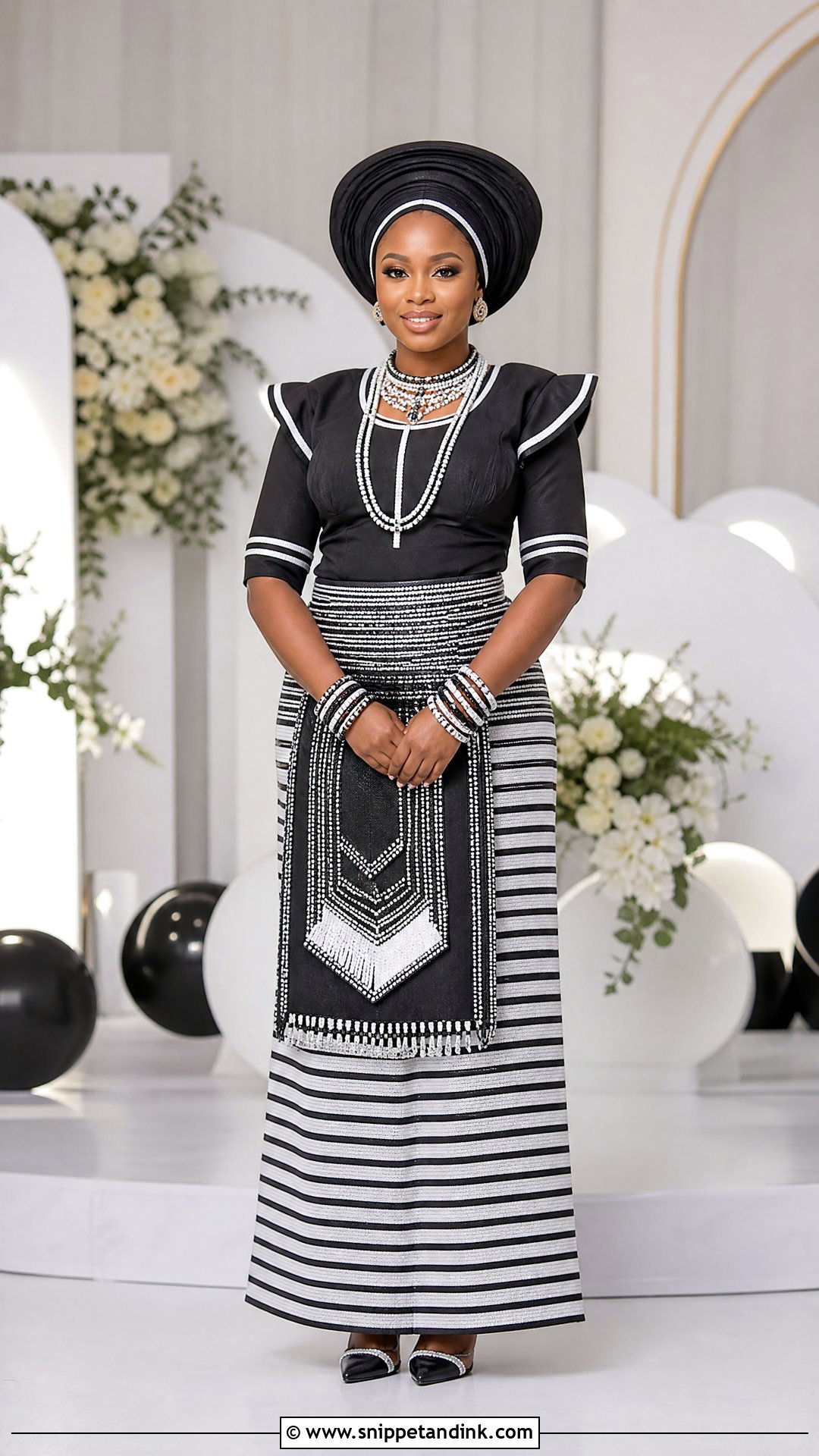
Black and white is the sharpest palette for Xhosa bridal dressing, and also the least forgiving: any wavy band or uneven stripe shows immediately. A floor-length striped skirt with a fitted black bodice or a structured white blouse trimmed in contrasting bands is the base. A matching apron adds pattern without crowding. Finish with an elegant black iqhiya, white beaded necklaces, stacked bangles and plain black shoes. A shaped waist, peplum or gently flared sleeve modernises it. I keep beadwork evenly balanced between neckline and wrists so the eye travels across the whole outfit.
3. Blue Shweshwe Xhosa Bride Dress
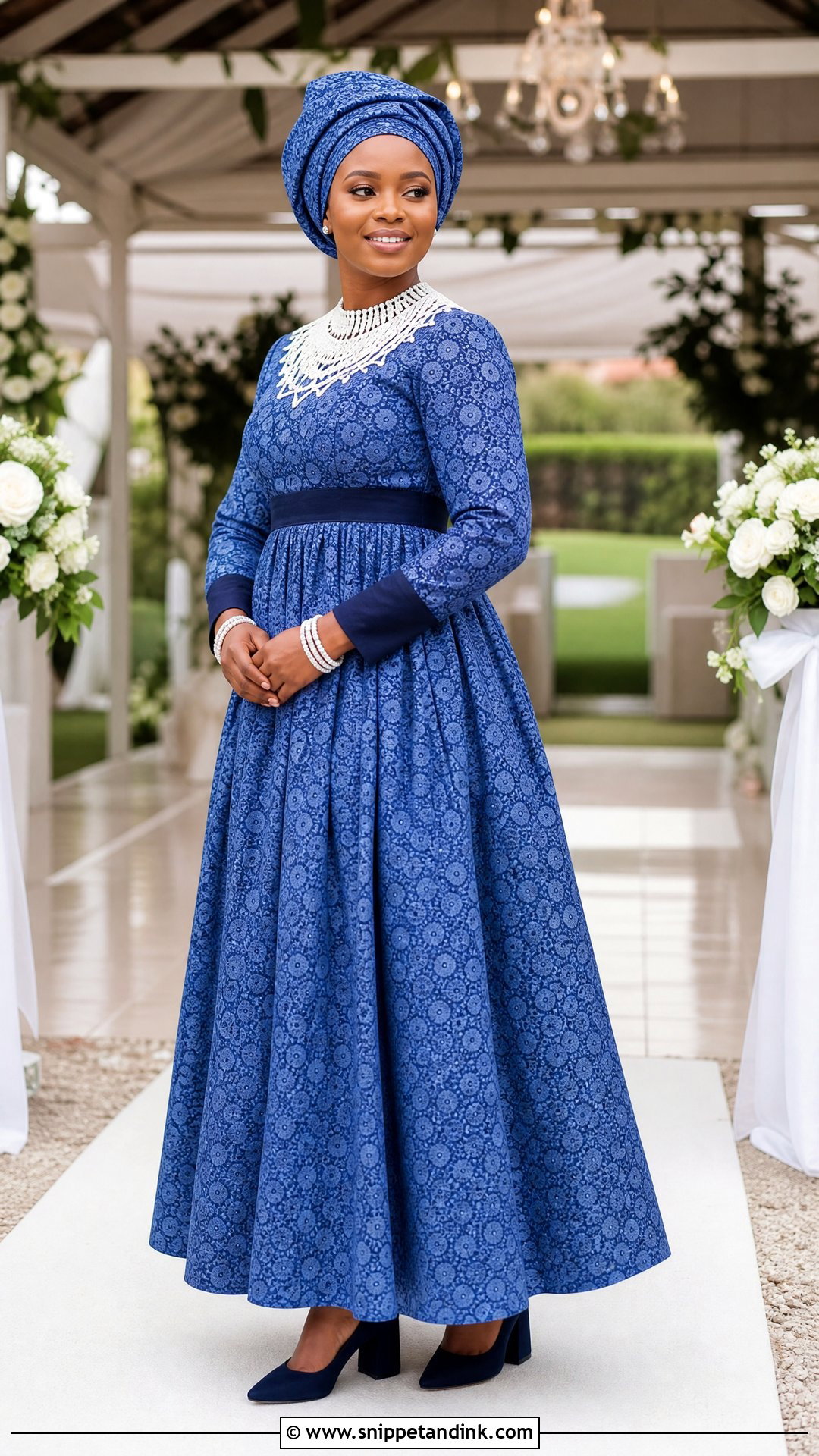
Blue shweshwe is starched when new and softens after washing, so the first thing I tell anyone sewing with it is to wash the fabric before cutting, or the finished dress can shrink. A full-length dress with a fitted bodice and wide skirt shows off the small print, and solid navy panels at the waist, cuffs and hem give it structure. Shweshwe has long been part of Xhosa dressing, especially in dresses and long skirts worn with traditional accessories. A matching headwrap, white beaded collar, layered bracelets and navy block heels or embellished flats complete it. It works well as an arrival or family-photo outfit.
4. Red Xhosa Bride Umbhaco Dress
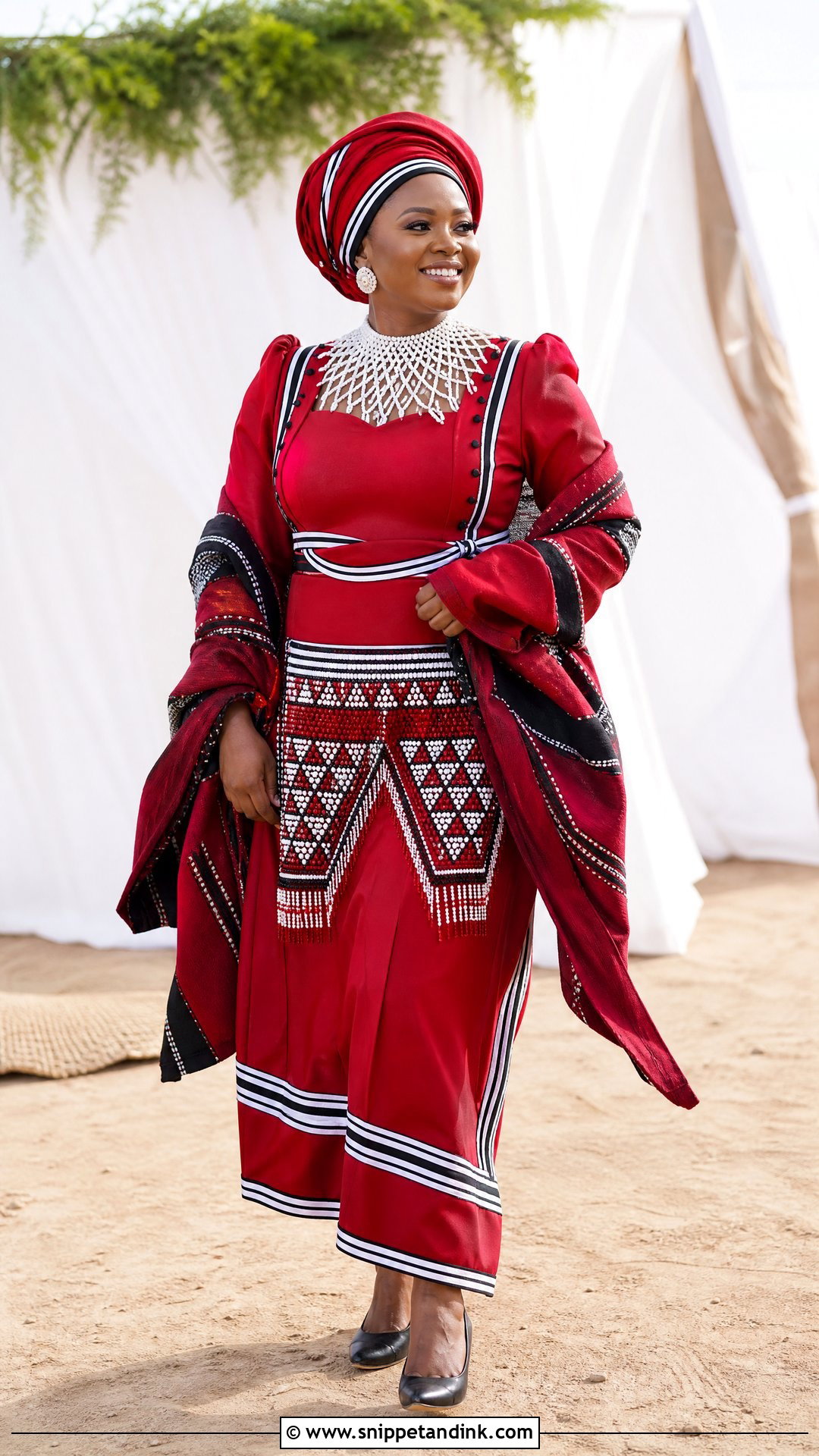
Deep red with black and white bands gives an umbhaco-inspired bridal ensemble real warmth. A long red skirt, a blouse with structured sleeves and a comfortable fitted waist, and either a red or black headwrap. White beads brighten the neckline. Add a beaded apron, stacked cuffs and low black heels. A ceremonial blanket in red or a complementary pattern can go on top if your family’s customs include it. My rule here is to stop at those three colours. Introduce a fourth and the outfit loses the clarity that makes it read as one piece.
5. Xhosa Bride Attire With Beaded Cape
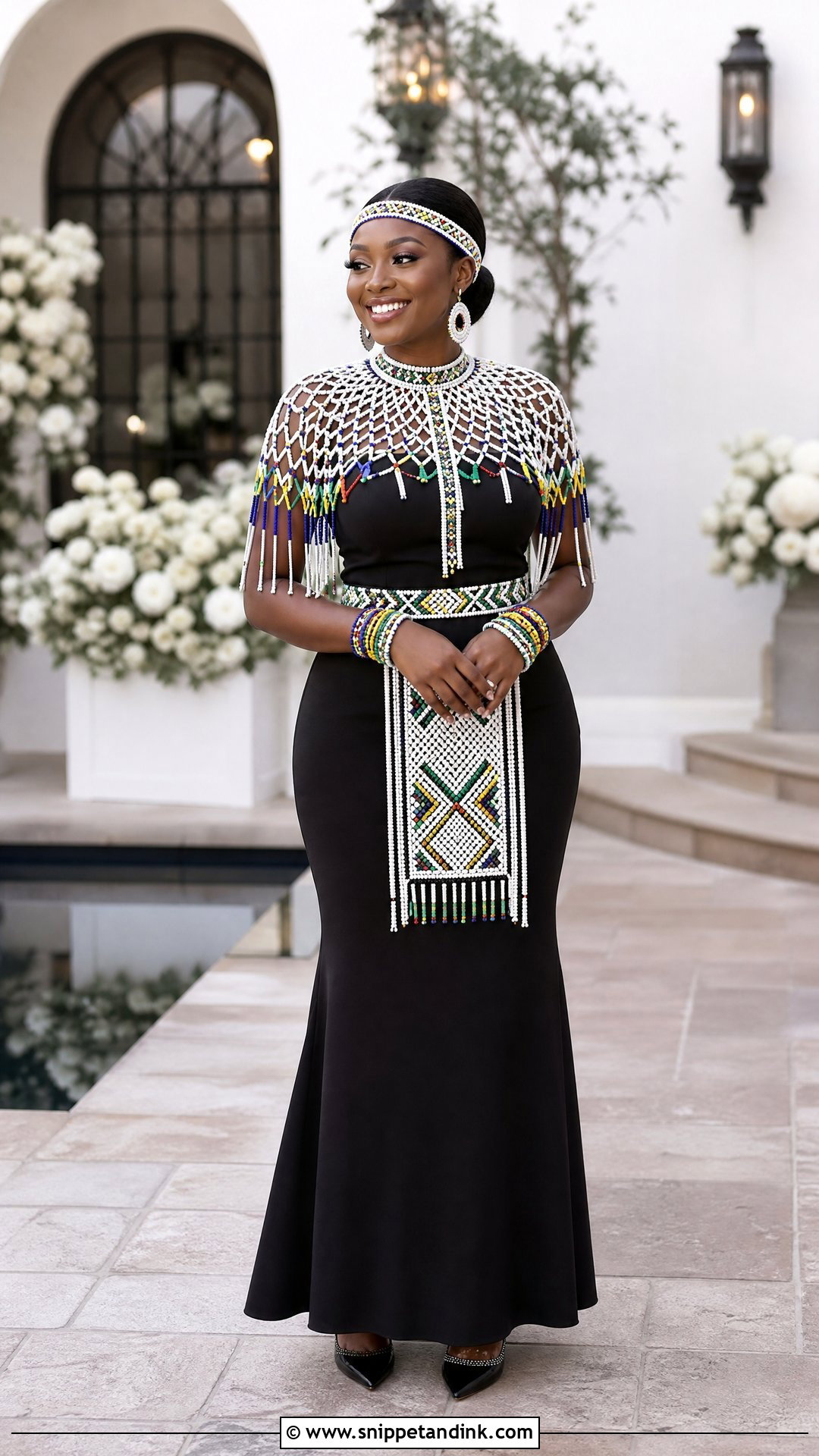
A beaded cape is heavy, and that weight sits entirely on the shoulders and neck for hours. I always weigh it in my hands before the bride tries it, then have her wear it for at least thirty minutes at a fitting. Underneath, a simple floor-length black, white or navy dress with a fitted waist and softly flared skirt lets the beadwork show. Coordinate a beaded headband, bracelets, earrings and an apron in the same colours. Closed pumps or low block heels keep it neat. Beadwork in many Xhosa ensembles reflects community and family identity, so the design is worth discussing at home first.
6. Xhosa Bride Attire With Black Iqhiya
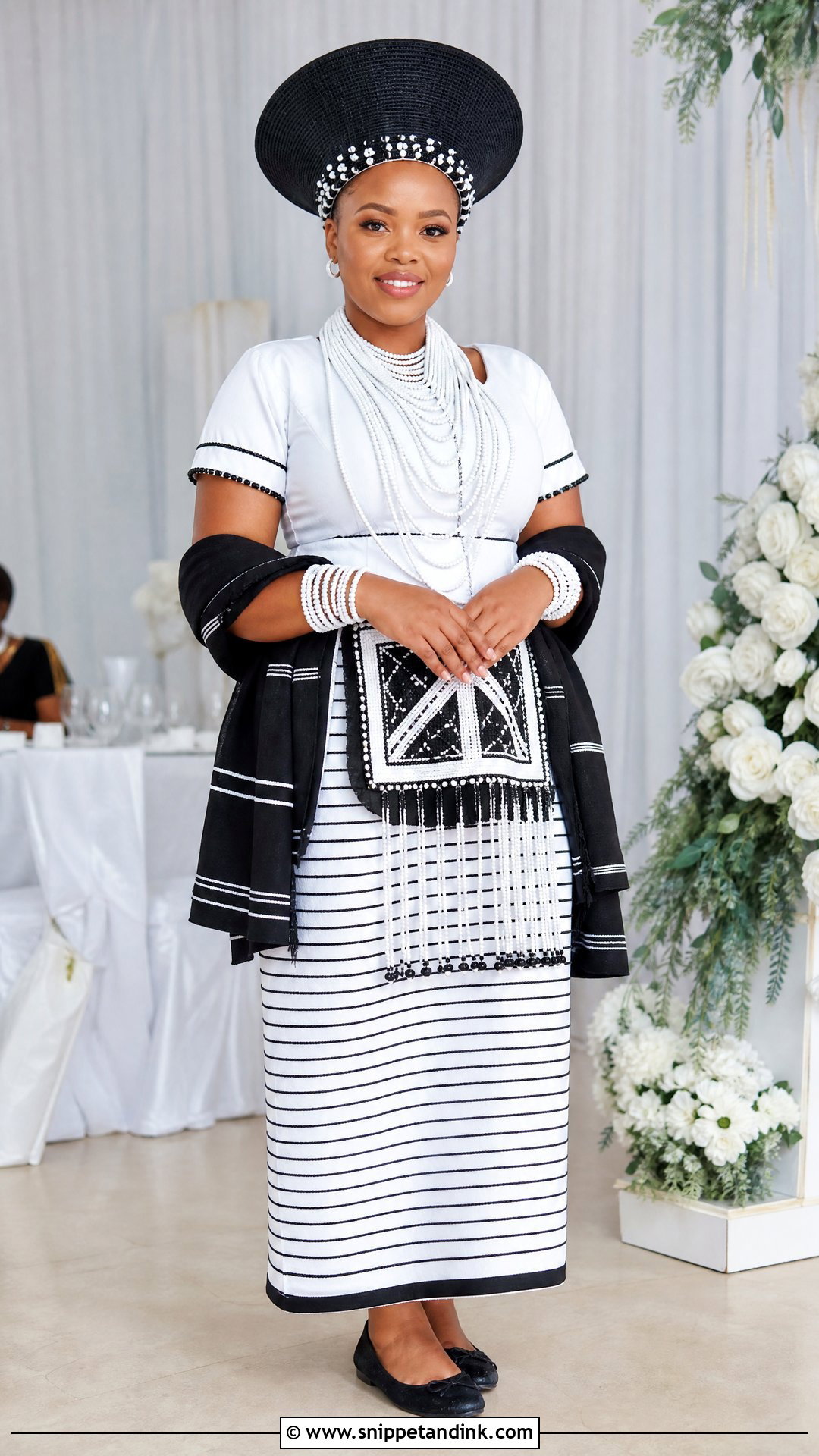
The black iqhiya anchors the whole look, and it is never only decorative. Paired with a long striped umbhaco skirt, a fitted blouse and a traditional apron, with white beads at the neck and wrists for contrast, it frames the face. Depending on family practice, it may sit low on the forehead or be arranged in a more open, modern shape. Because the head covering can carry meaning about respect and married status, I let elders or an experienced Xhosa dresser guide the final arrangement. Add a waist blanket or shoulder covering if required and comfortable black flats.
7. White Xhosa Bride Dress With Black Trim
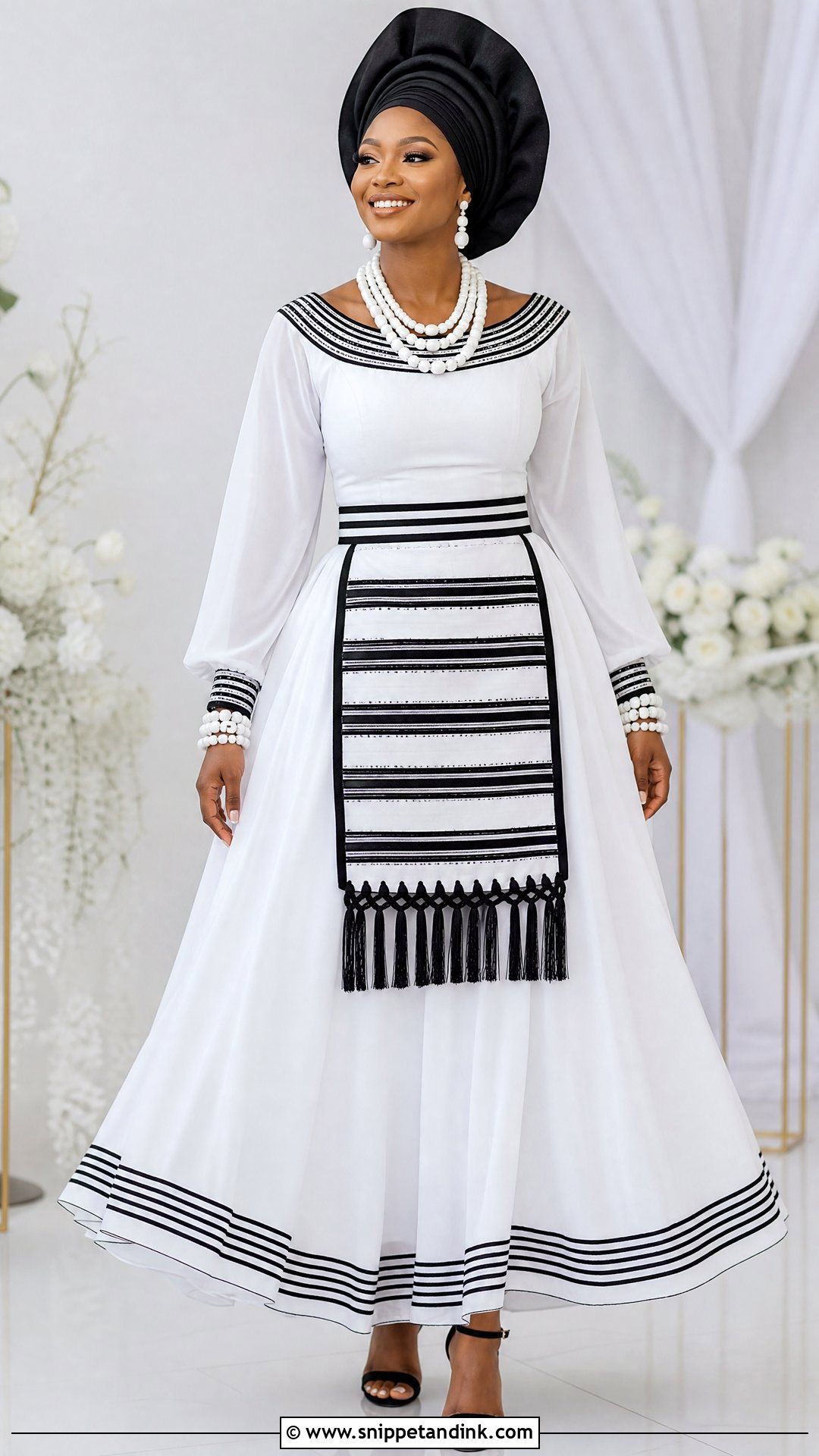
Can a white bridal gown still feel connected to Xhosa heritage? Bold black trim answers that well. A shaped bodice, modest neckline and full skirt edged in horizontal bands, with black at the cuffs and waist, makes the silhouette look intentional. The bands are where I spend my time: they have to be stitched flat and evenly spaced on white, which shows every wobble. A structured black headwrap, layered white beadwork, bangles and black closed heels finish it. A striped apron or detachable overskirt brings more pattern for the traditional part of the day.
8. Xhosa Bride Attire With Traditional Blanket
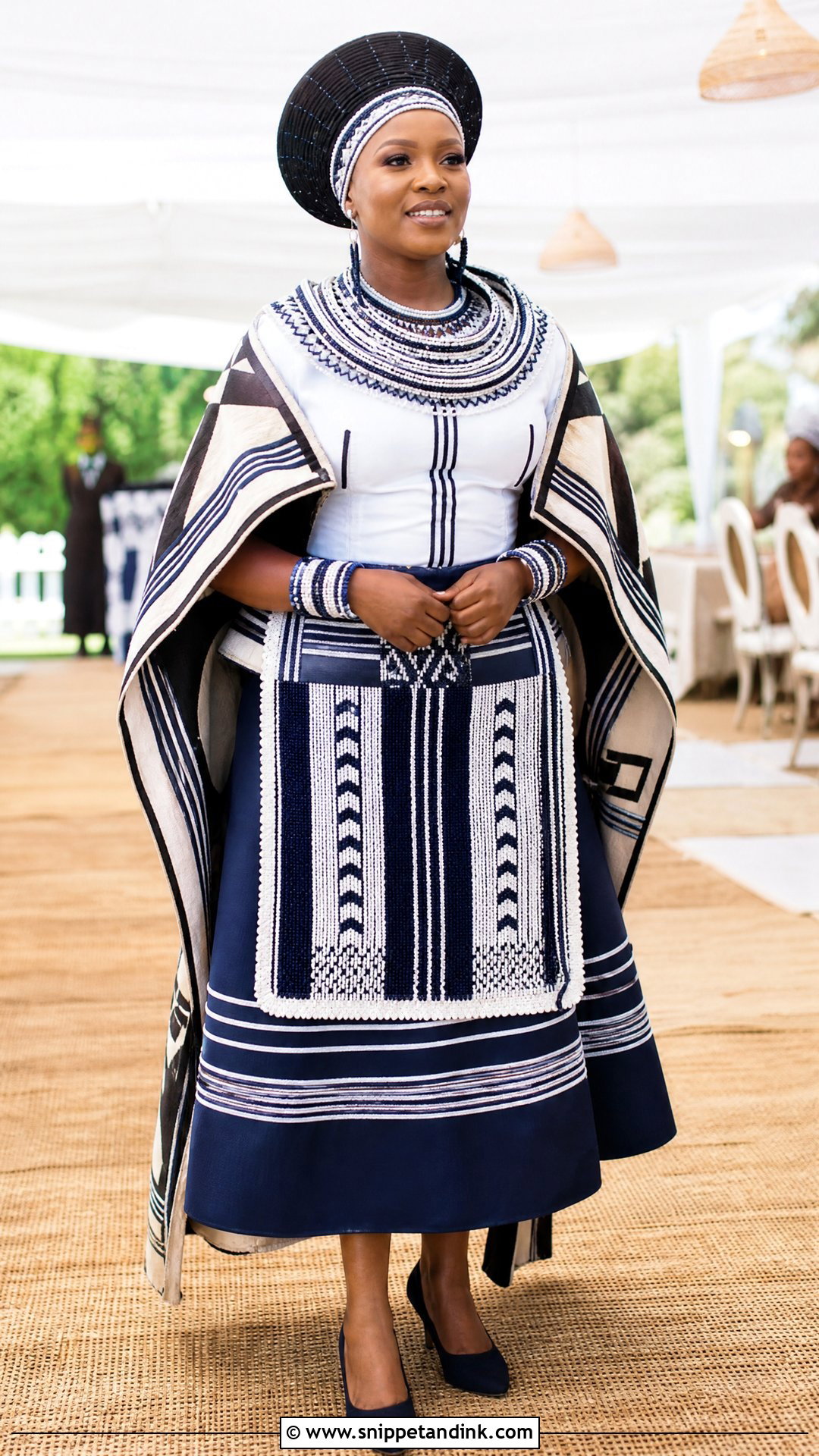
A blanket adds presence, but also bulk, so the dress underneath should be streamlined rather than wide. A long dress or matching skirt and blouse in black, white, navy or red works best. The blanket may drape over the shoulders or fasten at the waist, depending on your family’s practice. I pin it from the inside with a large safety pin so it does not slide when the bride bends to greet elders. Add an iqhiya, a beaded collar, bracelets and supportive low heels. Choose a blanket that coordinates instead of hiding every detail. Relatives can explain what it represents for your family.
9. Modern Xhosa Bride Mermaid Dress
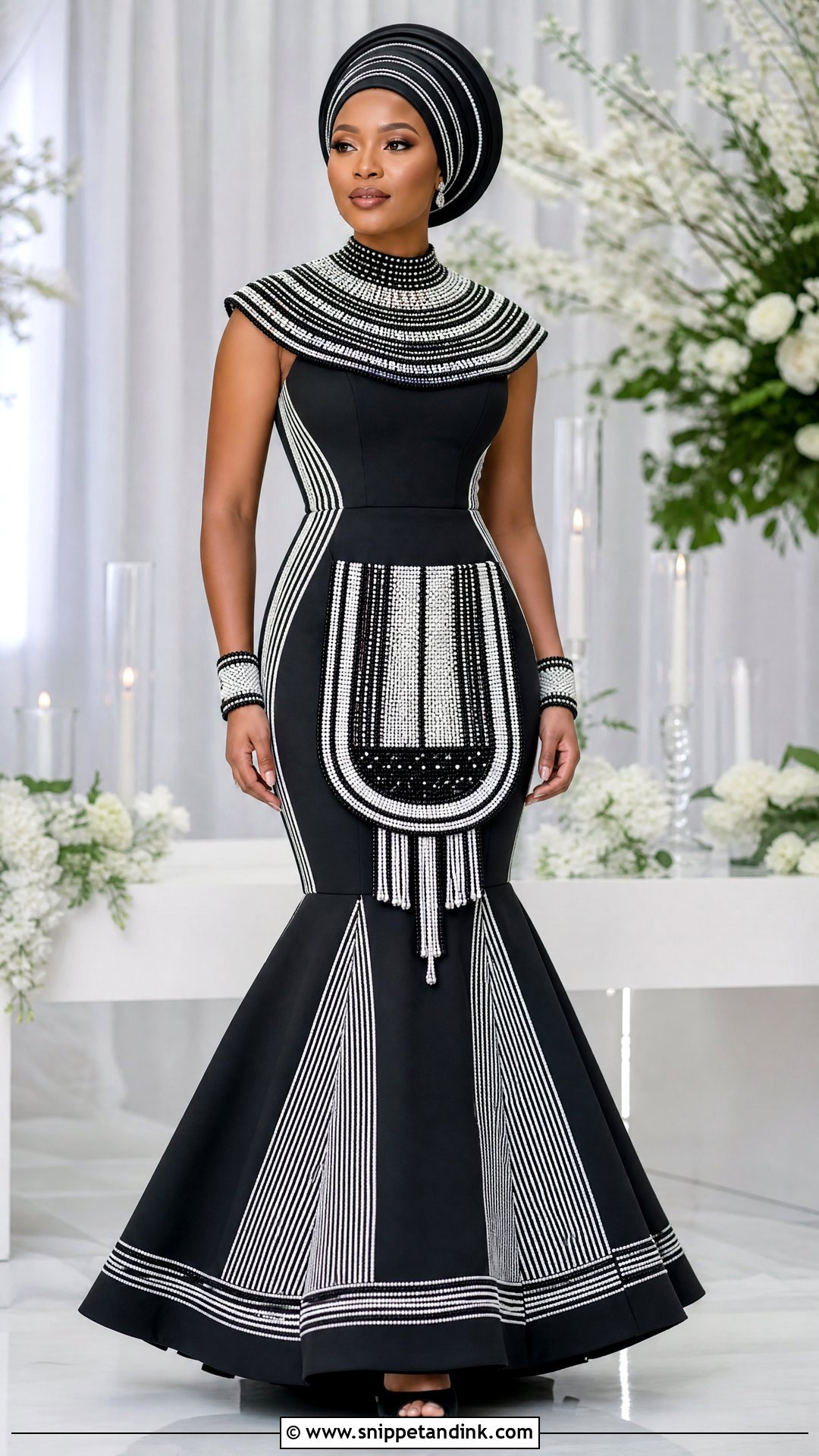
A mermaid gown is the most modern shape here, and the hardest to move in. Black-and-white striped panels can define the waist, neckline and flared hem, while a solid centre panel keeps it polished. I ask for a little extra room at the knee and a small hidden slit beneath the flare, because traditional celebrations often involve dancing and sometimes kneeling. A coordinating headwrap, beaded collar, slim bangles and low platform heels suit it. A detachable apron or shoulder cape can add the ceremonial layer. Look at it from the side and back too, not just the front.
10. Xhosa Bride Ball Gown With Beadwork
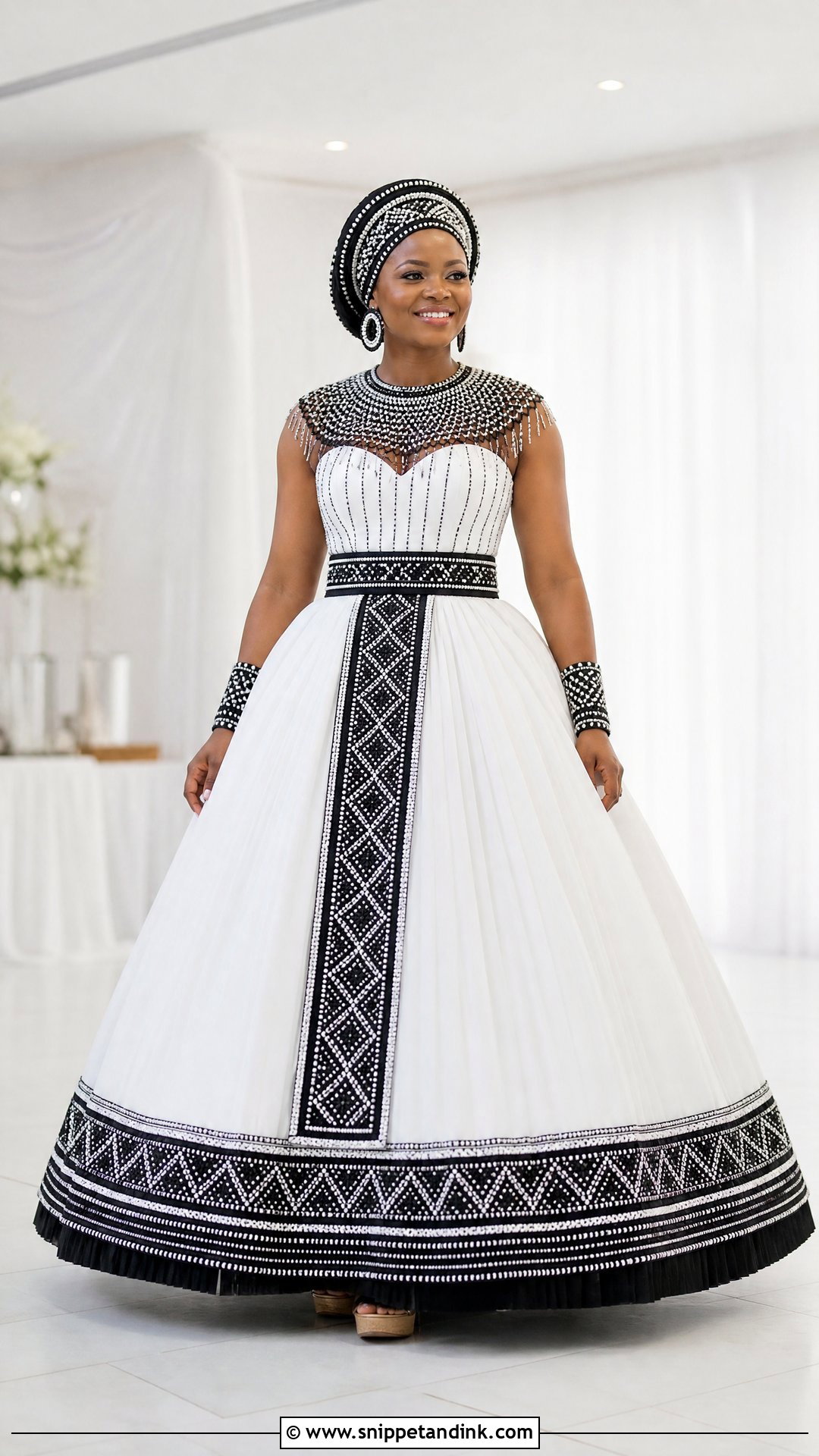
For a grand entrance, a ball gown with Xhosa-inspired pattern placement and handpicked beadwork works best when the beadwork is the single focal point. Black-and-white bands around the neckline, waist and hem, then a beaded collar or shoulder panel as the hero. A matching headwrap, earrings, cuffs and comfortable platform shoes complete it. Petticoats make the skirt heavy, so I choose the lightest underskirt that still holds the shape. Ask for pockets too. Repeat a few colours and motifs rather than covering the gown, and it stays elegant.
11. Xhosa Bride Two-Piece Skirt Outfit
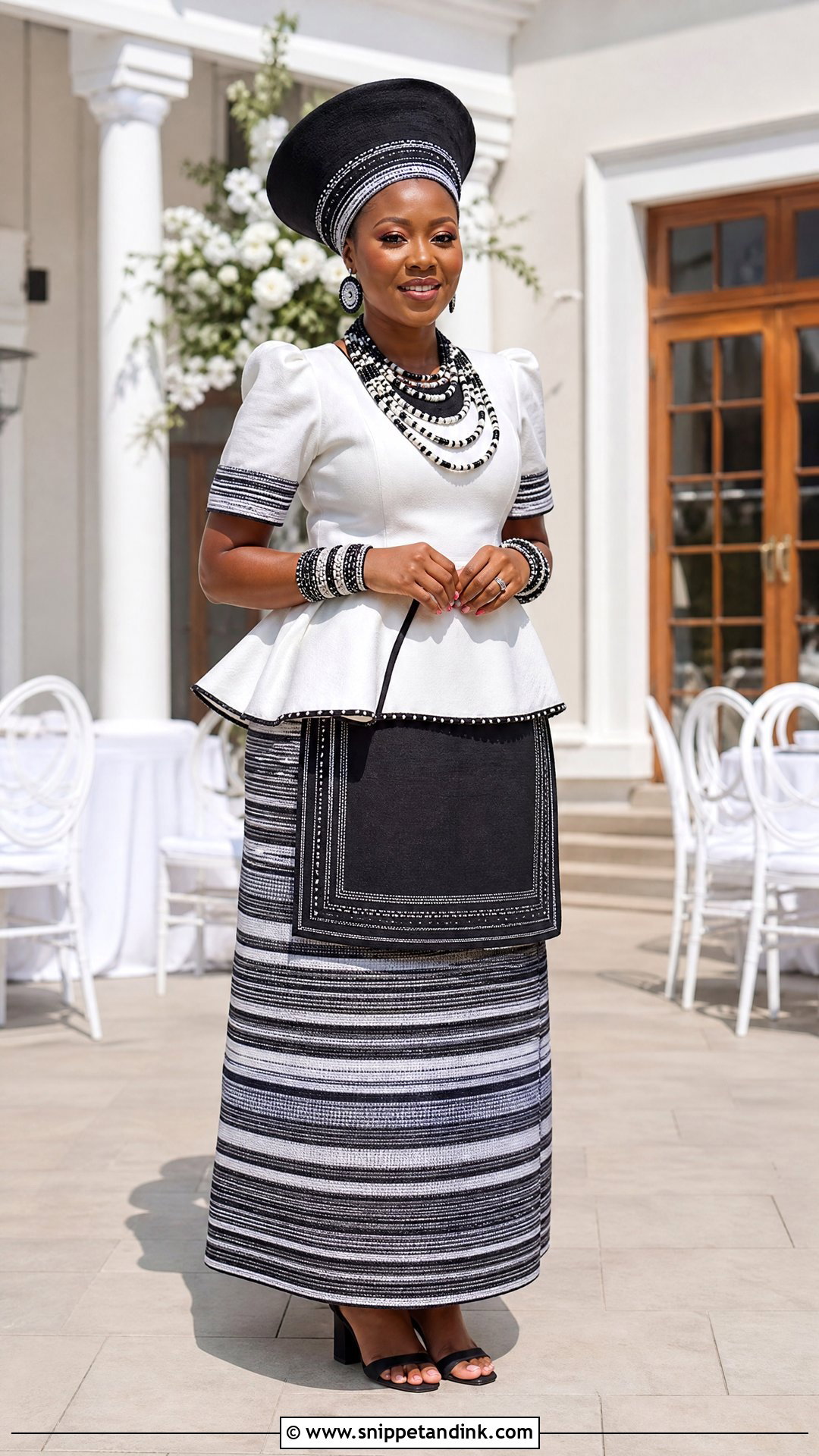
Separates make sense for a bride who wants the traditional look and a piece she can wear again. A high-waisted floor-length skirt and a tailored blouse in matching striped or shweshwe fabric, with a peplum, puff sleeves or wide cuffs for definition. An apron over the skirt, an iqhiya, layered necklaces, bracelets and low block heels finish it. Each piece can be altered on its own, which helps if your top and bottom are different sizes. The weak spot is the waistband: I add a hook and an inside button so the skirt stays put while you dance.
12. Xhosa Bride Peplum Top And Long Skirt
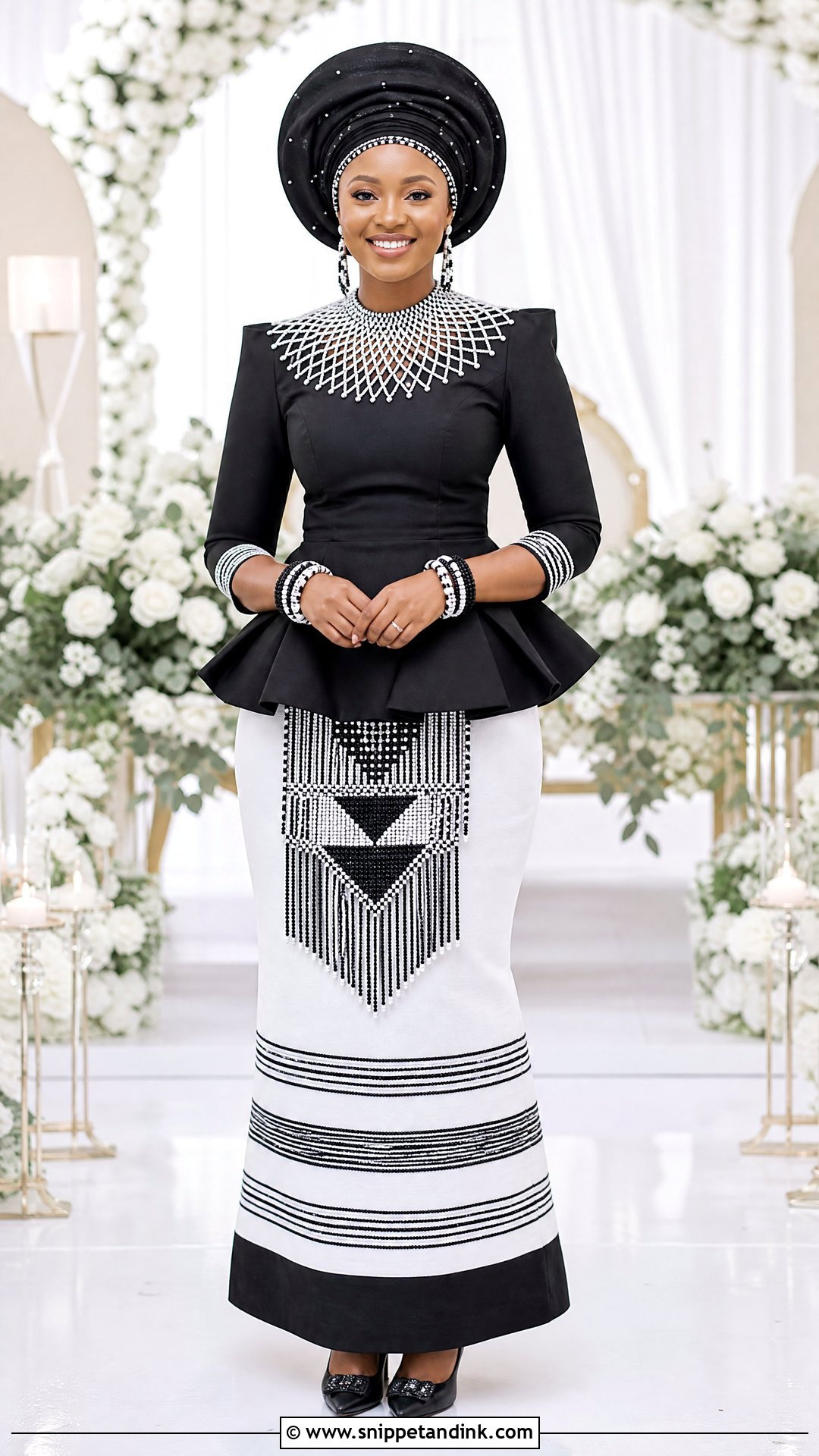
A peplum carves out the waist above a full skirt, but it fights a busy print. Keep the peplum shape simple if the fabric is patterned. A fitted top with elbow sleeves, a floor-length striped skirt, a coordinating apron, a black iqhiya, a white beaded collar, stacked bangles and closed shoes complete the outfit. On fuller busts, a slightly deeper but still modest neckline balances the peplum. I always do a full fitting with the headwrap, jewelry and shoes on, because a tall iqhiya and a heavy collar change the proportions more than people expect.
13. Xhosa Bride Off-Shoulder Umbhaco Gown
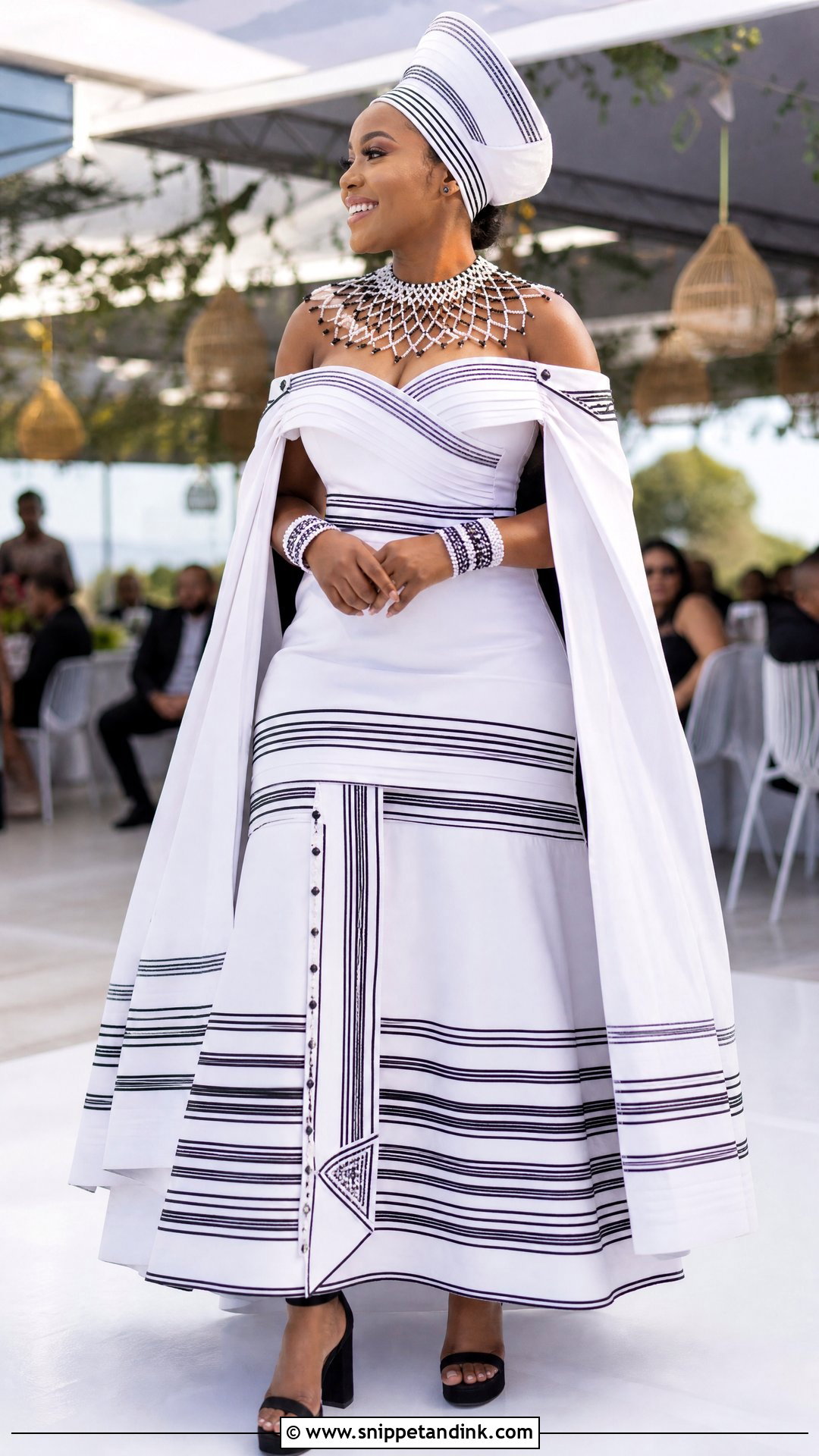
Off the shoulder is a modern formal cut, and it needs a family conversation before a fitting. Some families are comfortable with it; others expect shoulders covered in front of elders, so I suggest a detachable shoulder wrap for those moments either way. Structurally, the bodice must be well supported so the neckline does not slide. Keep the black-and-white stripes in one or two zones: skirt, waist or folded neckline. A matching iqhiya or beaded headpiece, a broad necklace, cuffs and sturdy block heels finish it. Test the neckline while moving your arms.
14. Xhosa Bride Long-Sleeve Traditional Dress
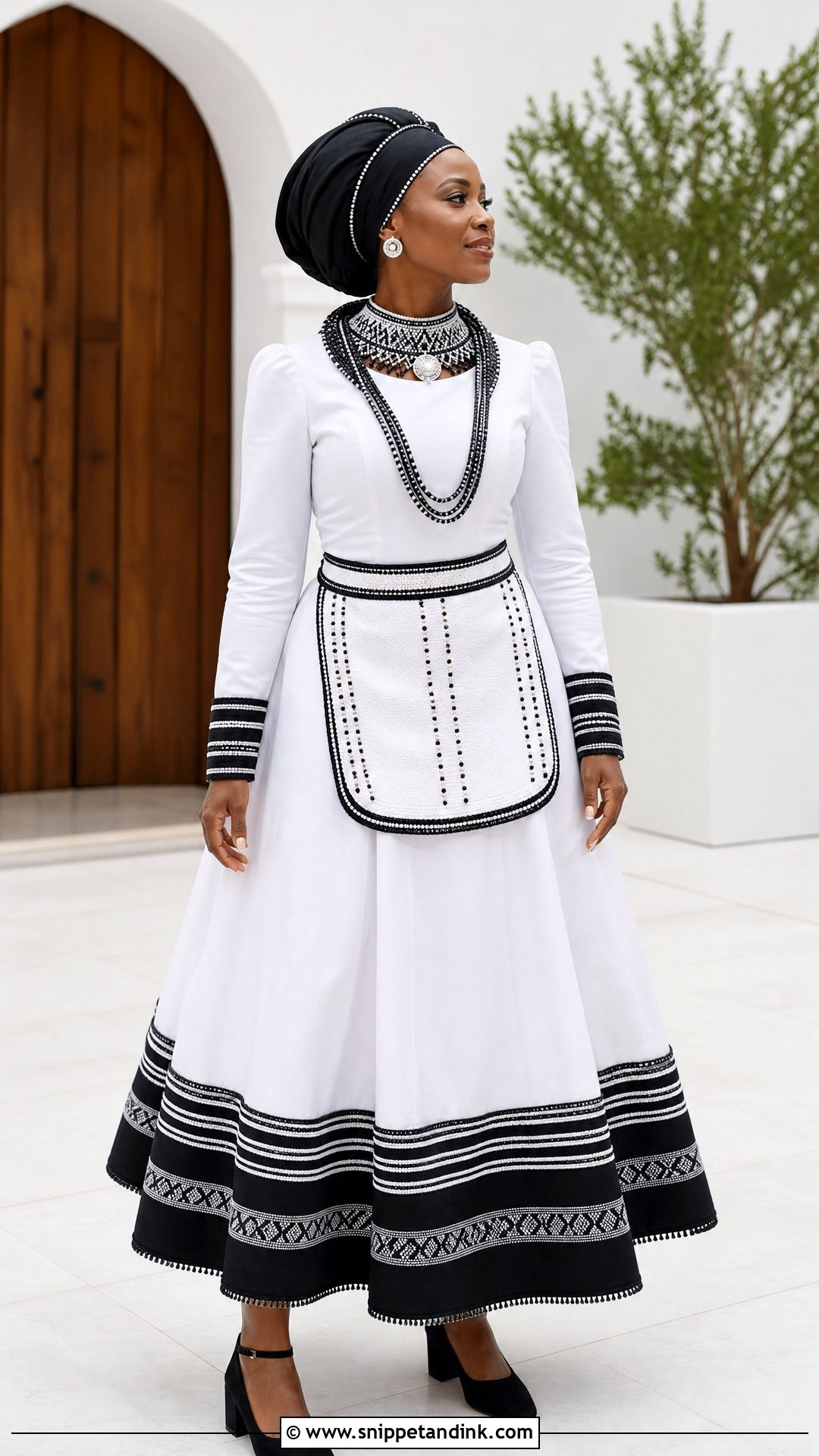
Long sleeves suit cooler weather and conservative settings, and a long-sleeve Xhosa bridal dress leaves room for detail at the cuffs. A fitted bodice with sleeves that taper to decorated cuffs, an A-line or gently flared skirt, and striped borders, shweshwe panels or bead trim. An iqhiya, layered beadwork, a structured apron and closed block heels complete it. If a blanket goes on top, I use a breathable cotton lining in the sleeves; heavy sleeves under a blanket get very warm outdoors. Lift your arms at the fitting before anything is finalised.
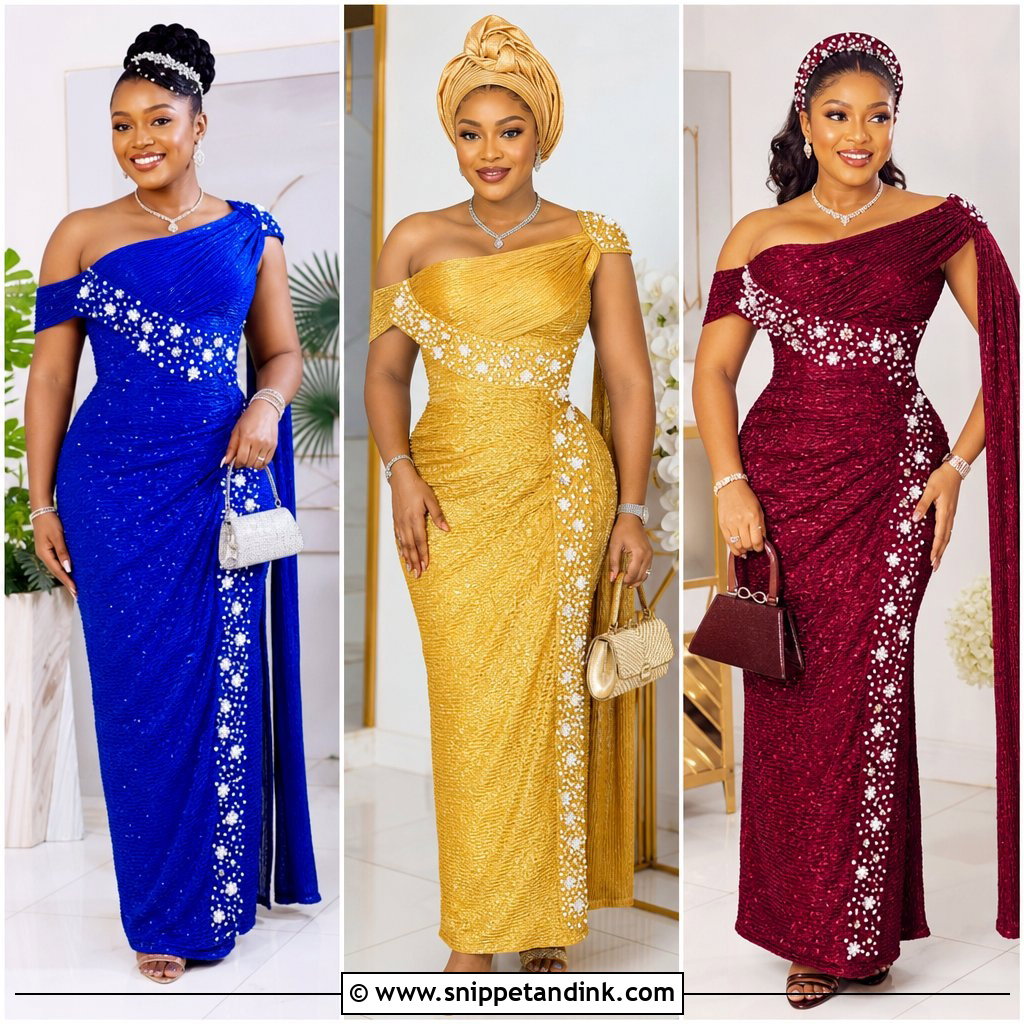
15. Xhosa Bride Puff-Sleeve Umbhaco Dress
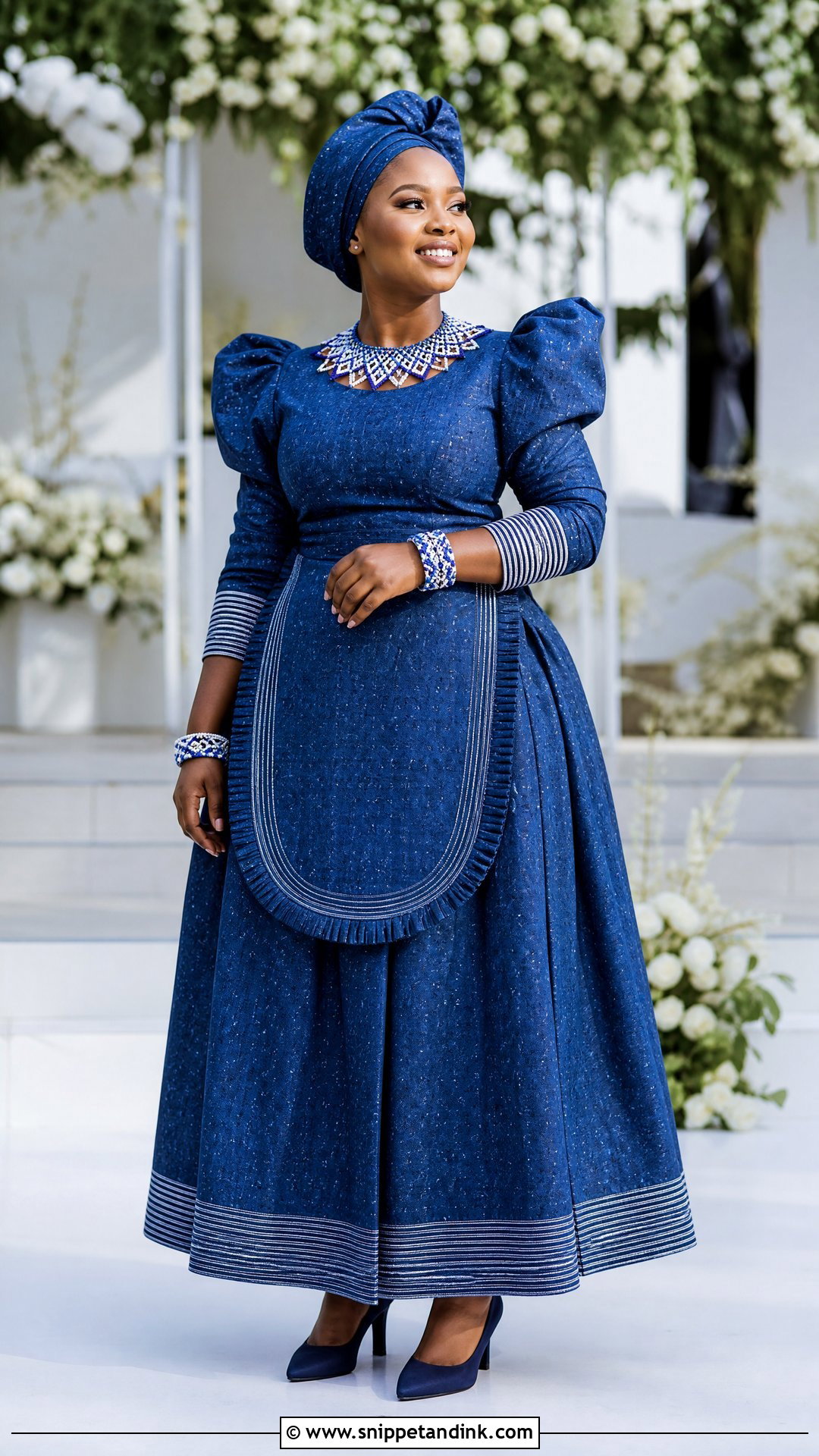
Puff sleeves freshen an umbhaco dress, but only one dramatic shape fits in an outfit. Big sleeves plus a huge skirt and a heavy cape is too much. A long gown with a defined waist and moderately full skirt is the right base. Keep the sleeves structured at the shoulder and tapered near the elbow or wrist, finished with striped cuffs. A matching headwrap, beaded collar, apron, bracelets and low heels complete it. In blue, brown or burgundy shweshwe, repeat one solid colour in the shoes and head covering to tie it together.
16. Plus-Size Xhosa Bride Umbhaco Outfit
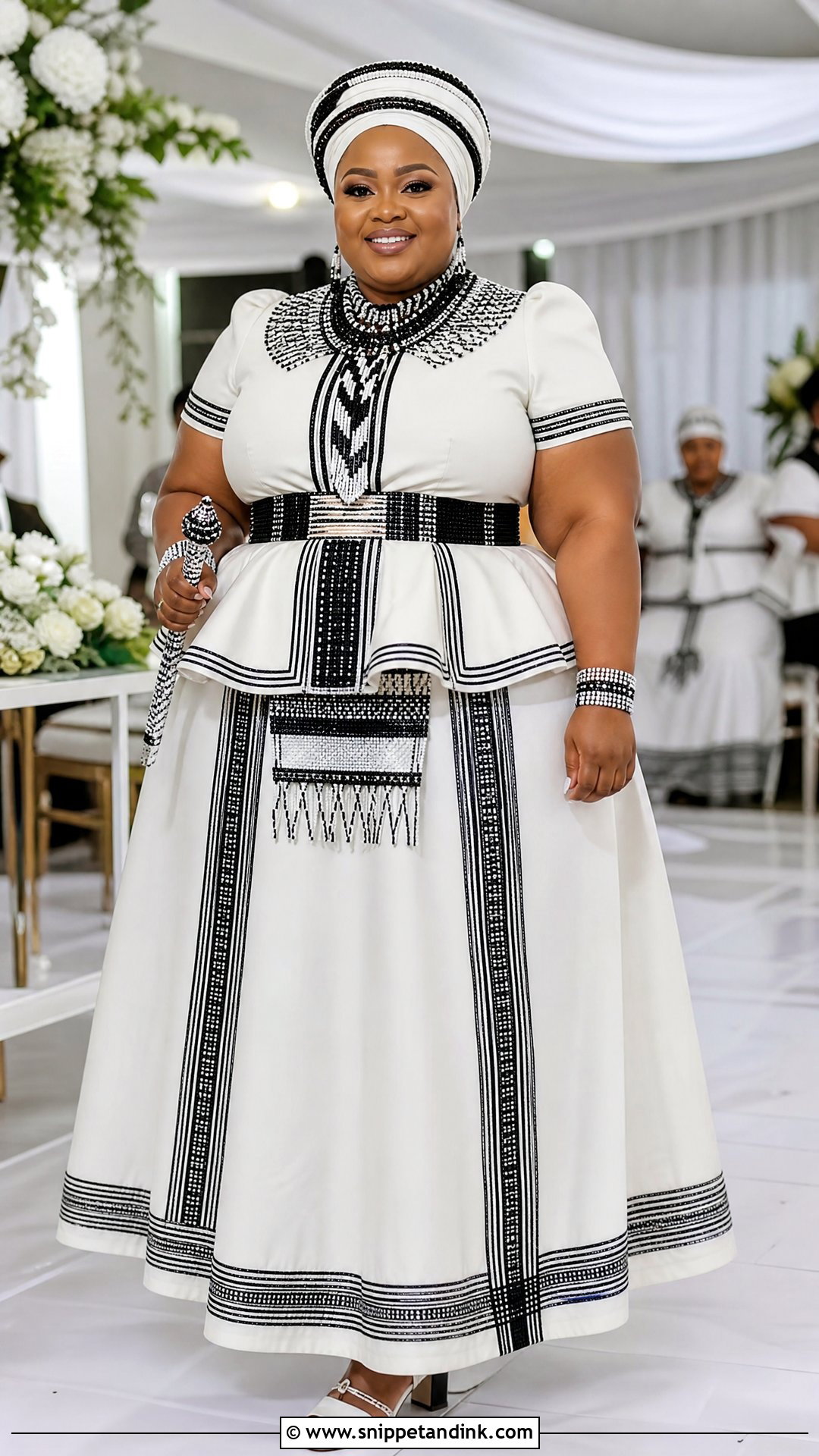
Fit for a plus-size umbhaco outfit is about support and movement, not hiding anything. A high-waisted skirt that skims the hips and falls straight to the floor, a shaped blouse with a supportive lining and a peplum at the natural waist. Vertical panels lengthen the line, while contrasting bands draw attention to the neckline and hem. Standard size charts are rarely accurate for traditional garments, so I take full measurements and fit with the right undergarments and shoes on. Add a headwrap scaled to your frame, layered beadwork, an apron and wide-fit block heels or embellished flats.
17. Minimal Xhosa Bride Traditional Dress
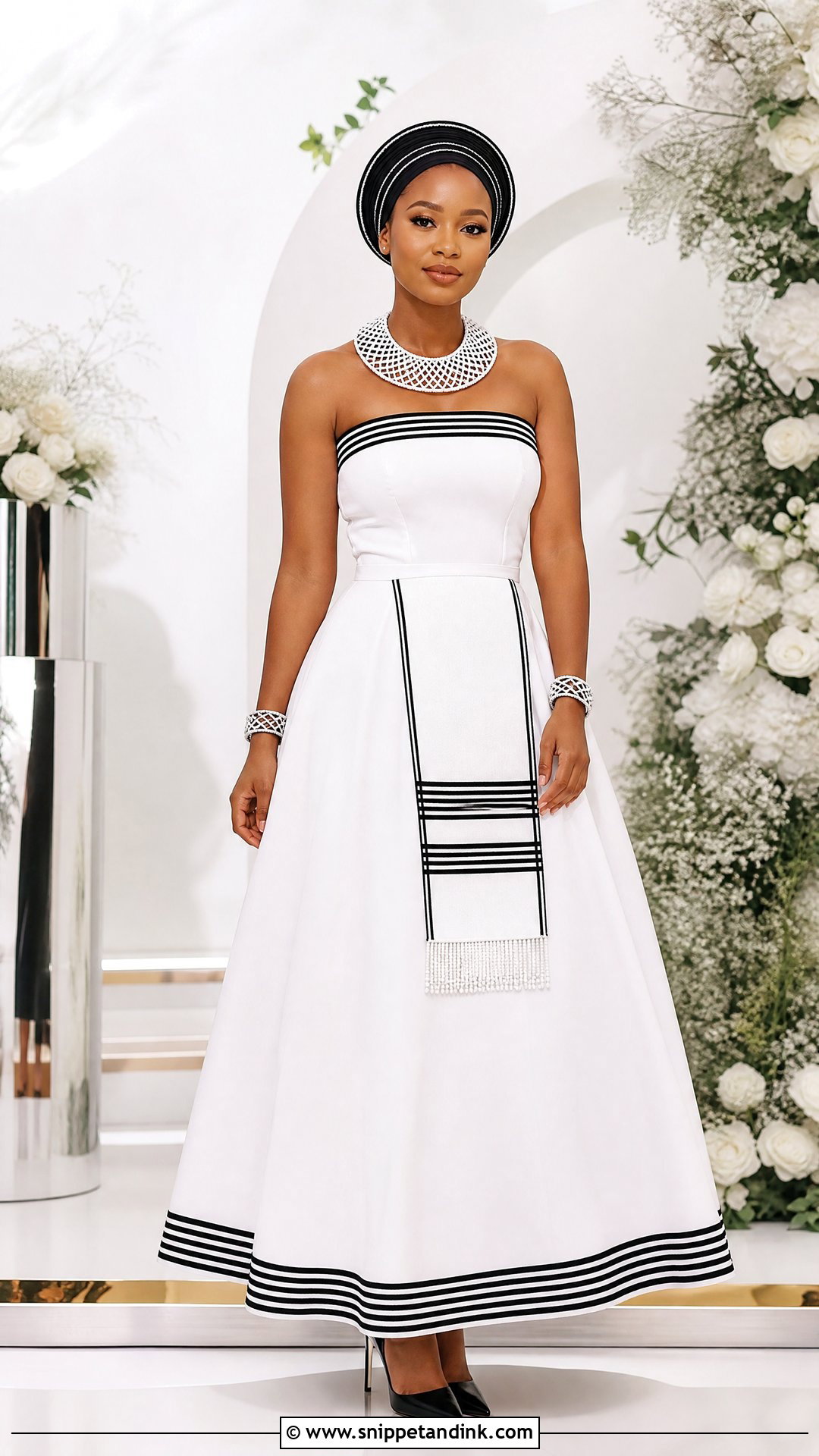
Minimal does not mean missing pieces. A clean A-line with black-and-white striped borders and one patterned panel, a simple black iqhiya, a single beaded collar, matching bracelets and classic black pumps can be striking because nothing competes. A narrow apron or light shoulder covering can be added if the ceremony requires it. With less decoration, fabric quality shows more, so I choose cotton with enough body to hold the A-line in outdoor light. Whatever you strip back, keep every garment or detail your family considers essential.
18. Colorful Xhosa Bride Traditional Attire
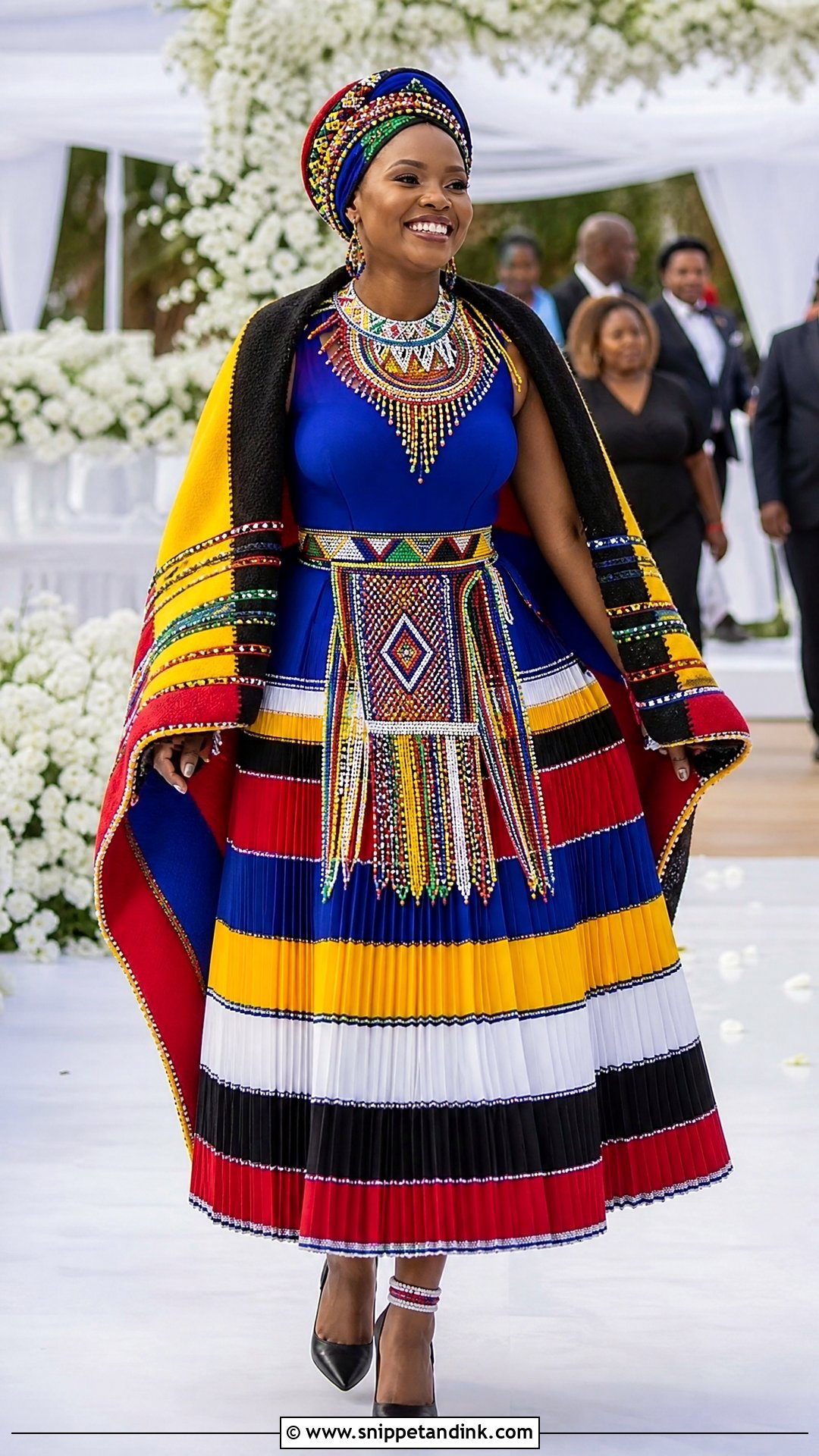
Bright colour works when every shade has a reason to be there. A long skirt combining red, blue, yellow, black and white in organised bands, a solid blouse that repeats one dominant colour, a coordinated headwrap, multicoloured beadwork, a matching apron and neutral black shoes. If you add a blanket, it should share at least two colours with the dress. Keep the handbag small. Some bead colours and patterns carry particular meaning in certain families and communities, so I ask the bride to check her palette at home before we buy fabric.
19. Xhosa Bride Attire With Beaded Headpiece
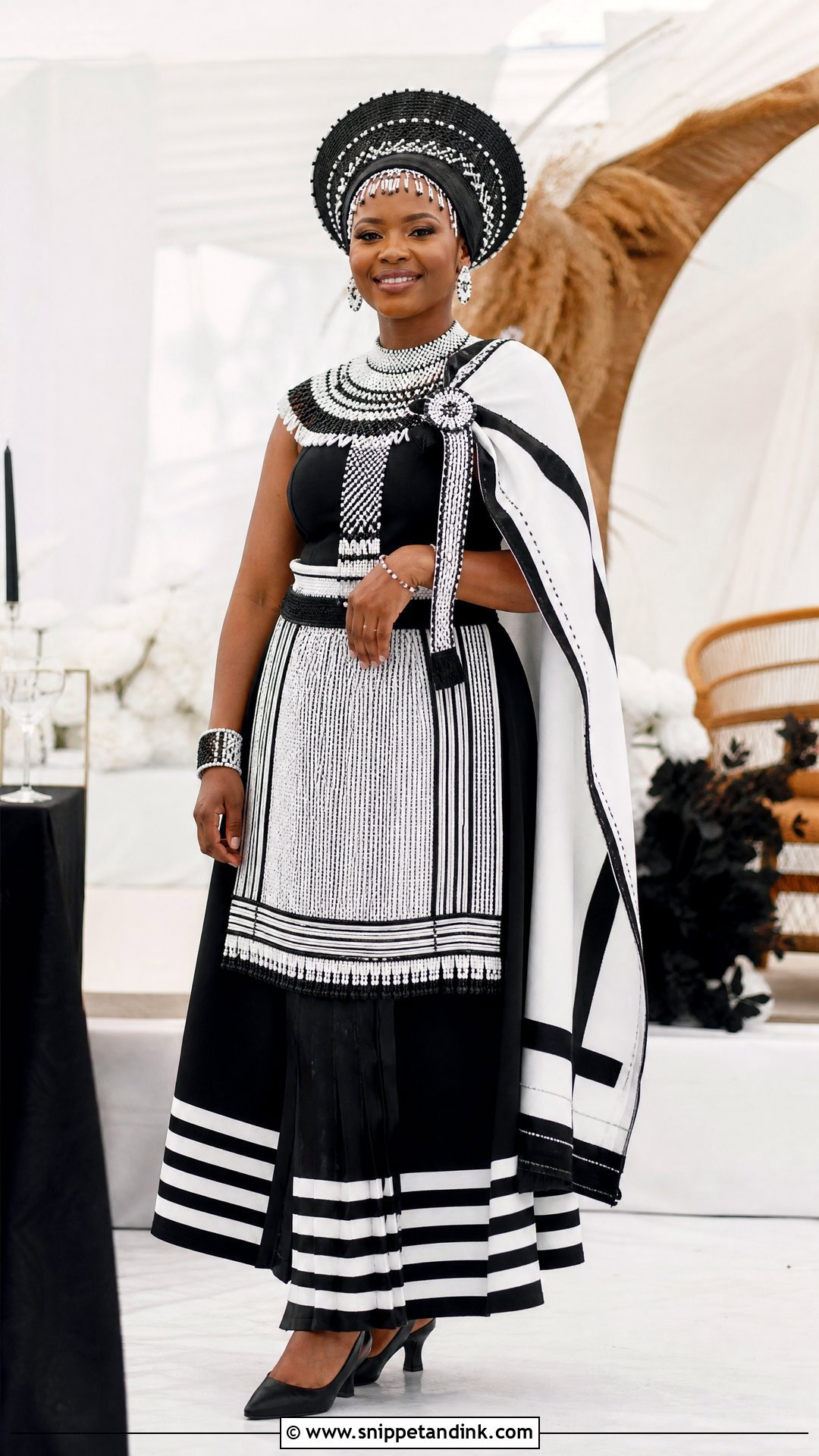
A beaded headpiece brings the eye up to the face and links naturally with the necklace, bracelets and earrings. It can sit over an appropriate head covering or be worked into the iqhiya, which is a job for an experienced dresser. Pair it with a long black-and-white dress, a striped skirt ensemble or a blue shweshwe gown, and repeat its colours across the jewelry while varying the scale. I check how tight it sits at the temples after an hour; a band that feels fine at first can cause a headache by the afternoon. Use authentic guidance on the pattern, not just appearance.
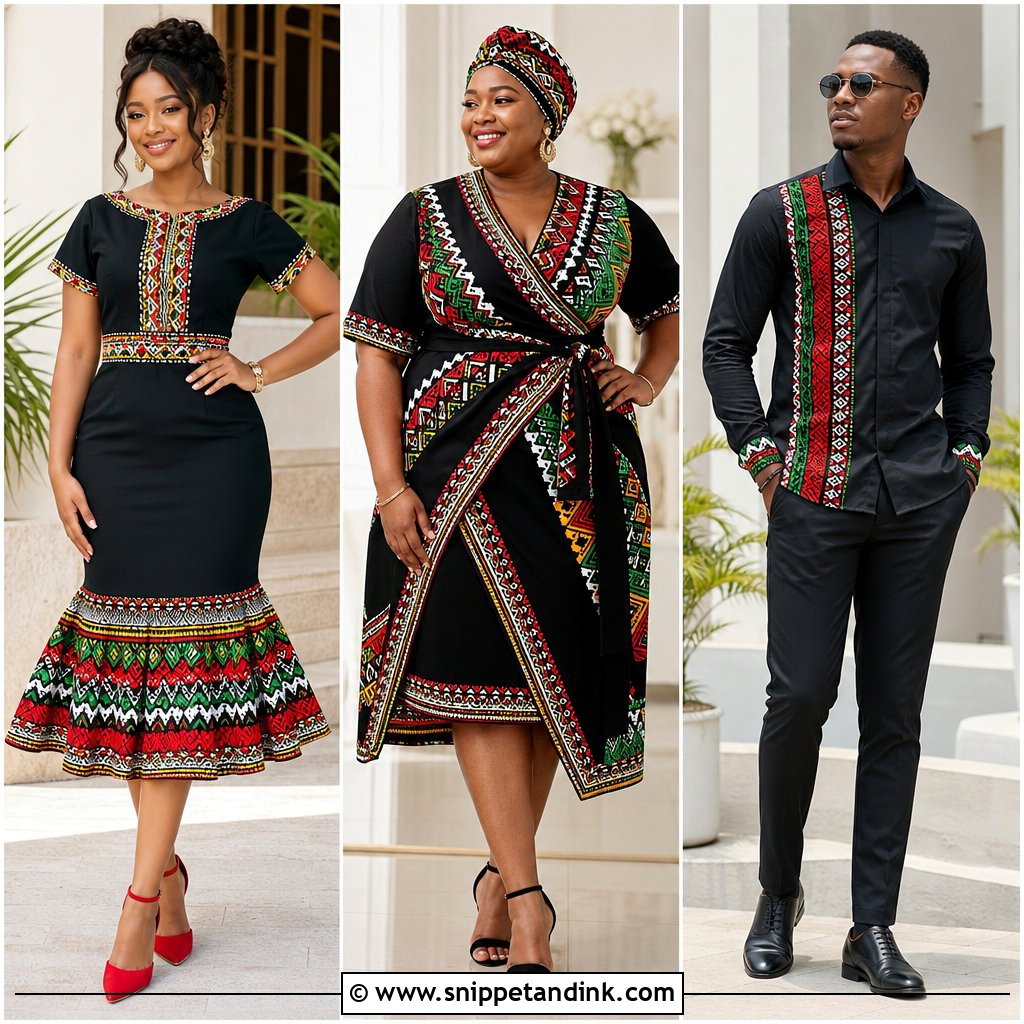
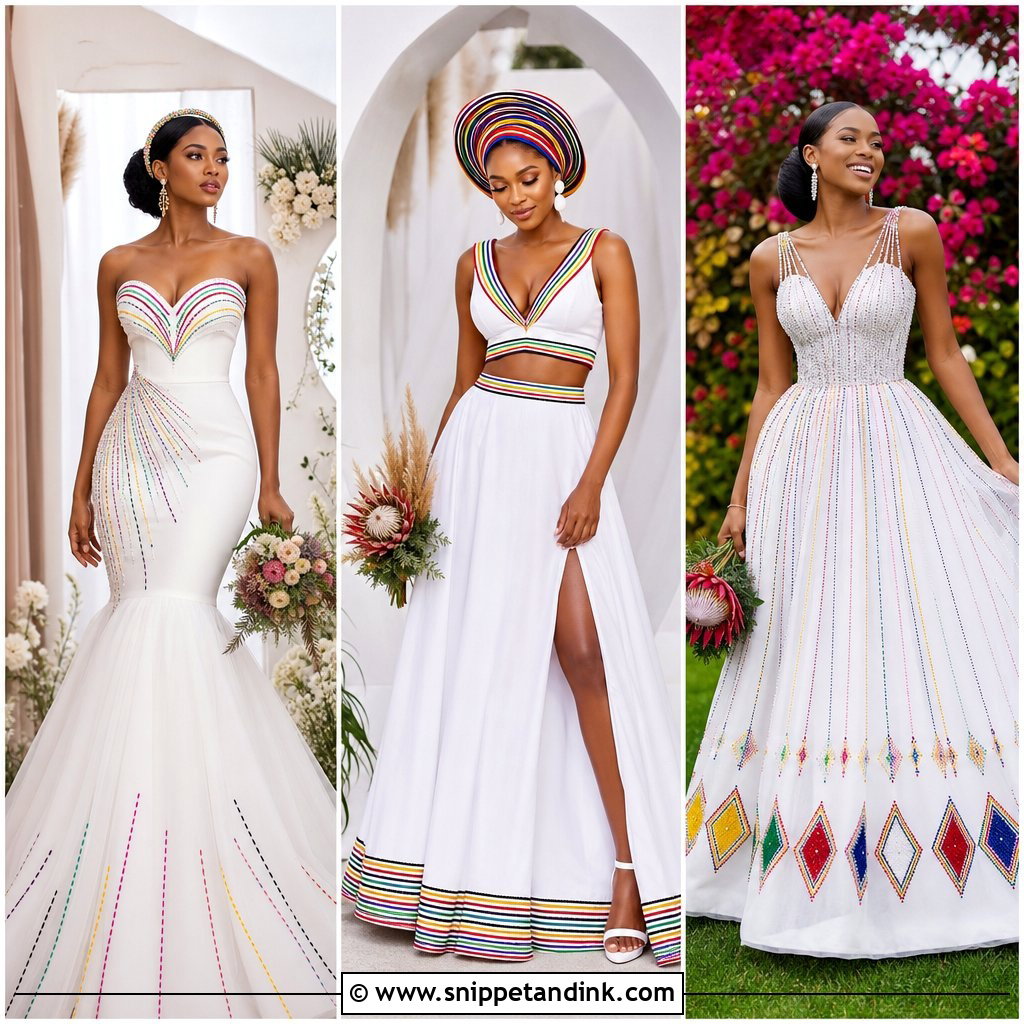
20. Xhosa Bride Attire With Matching Groom Outfit
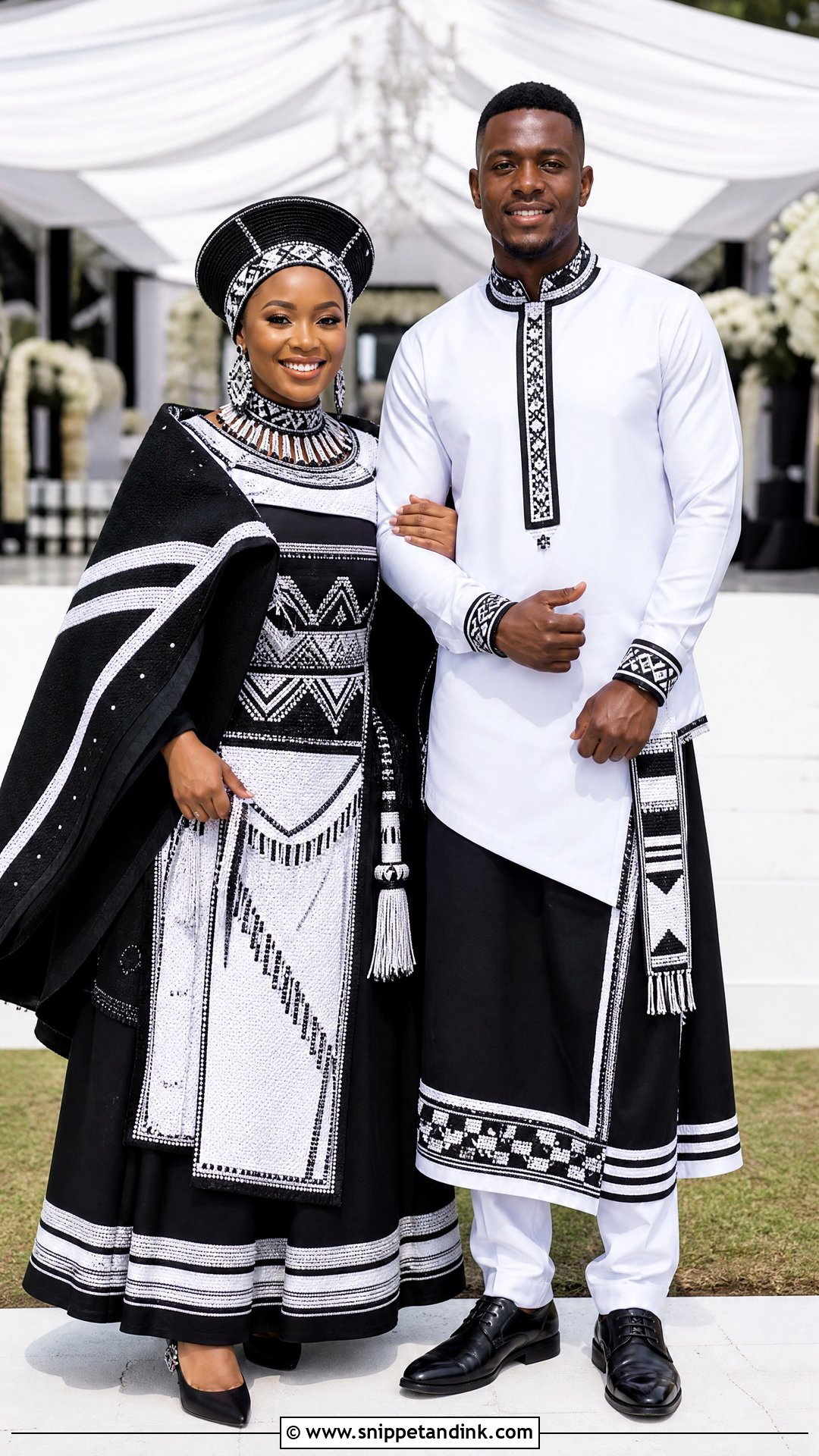
A coordinated bridal couple looks best when the pair share colours, not whole outfits. The bride wears a floor-length umbhaco gown or skirt ensemble with an iqhiya, beadwork, apron and ceremonial covering. The groom can choose a shirt, tunic, jacket or traditional lower garment with the same striped trim or shweshwe. Repeat two or three colours between you and give each person a distinct shape. Black shoes keep it formal. Matching every bead and border makes it look like a uniform. Both families should weigh in on any garment with specific cultural meaning.
Carrying Beadwork and a Blanket Through a Long Outdoor Day
Traditional ceremonies are often outdoors and run for hours. Heavy collars, capes and blankets get warm, and the iqhiya needs to hold its shape the whole time. I pin the headwrap through its folds onto a thin cotton under-scarf, which grips better than bare hair and is far kinder on the scalp. Take off the heaviest beadwork between formal moments if your family is comfortable with it, and keep water nearby.
A small kit makes a difference: large and small safety pins, black and white thread with a needle, a few spare beads, and a cloth to sit on so the skirt and apron stay clean.
Storing beadwork after the wedding
Never hang a beaded cape or collar. Its own weight stretches the thread over time. Lay pieces flat, wrapped in clean cotton, away from sunlight, and spot-clean rather than soaking. If a strand feels loose, have it restrung before beads start falling, because a missing bead in a set pattern is much harder to replace than a whole thread.
Respect First, Then Fit and Comfort
The right Xhosa bridal look balances respect for your family’s customs with comfort and good craftsmanship. These twenty ideas span complete umbhaco ensembles, black iqhiya pairings, mermaid gowns, colourful separates and couple outfits. Talk with elders about garments, colours, beadwork and dressing practices first. Then find a tailor who understands both ceremonial needs and flattering construction, and fit in the full outfit, shoes and accessories included. Classic or contemporary, I want the bride to finish the day feeling connected to her heritage and still able to dance.
You'll Like These Ideas:


Leave a Reply