
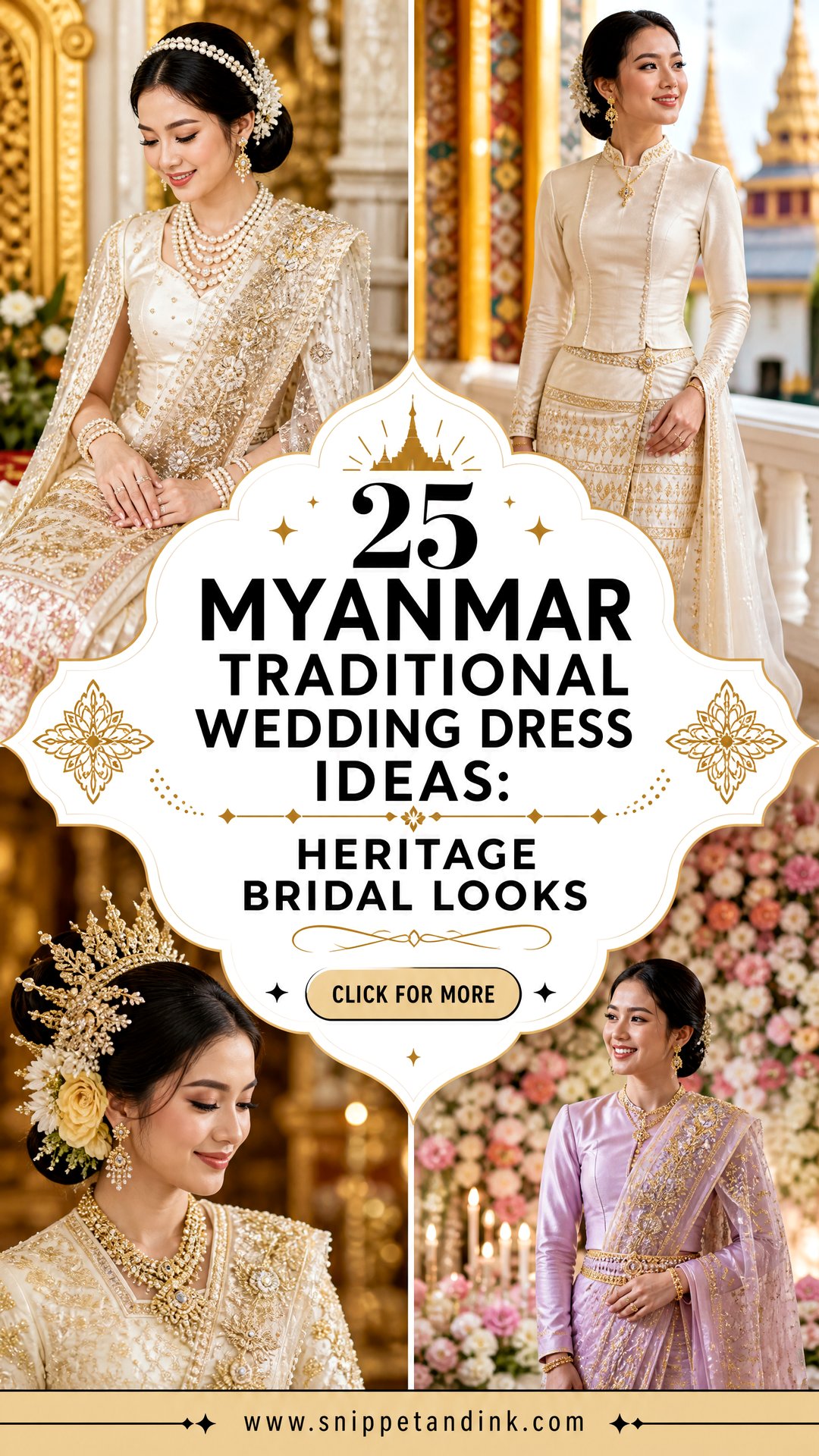
A Myanmar bridal outfit is built from two pieces that have to work together: the fitted eingyi blouse and the htamein, the ankle-length wrapped skirt. A classic Myanmar wedding outfit then adds jewelry, a smooth bun and shoes you can stand in for hours, while the groom usually matches with a paso, a taikpon jacket and the gaung baung headwrap. When I style a Myanmar bride, I start with the htamein fabric, because the weave decides the colour, the formality and how much jewelry the look can carry. The 25 looks below run from royal jacketed sets with acheik patterns to quiet lace blouses for a small family ceremony, with notes on what each one asks of you on the day.
Ordering a Htamein and Eingyi That Let You Kneel and Bow
Most Myanmar bridal sets are made to measure, and the timeline is set by the fabric rather than the tailor. Hand-woven acheik silk, especially the intricate wave patterns, is slow work on the loom, and good weavers fill up ahead of wedding season. I ask brides to settle on fabric four to six months before the wedding, then allow for at least two blouse fittings after that.
What to bring to the first fitting
- The shoes you’ll actually wear, because the htamein hem is set to their height.
- The bra or shapewear you plan to wear underneath. A fitted eingyi is cut to the shape beneath it, and changing that later throws off the fit.
- A rough plan of the ceremony. If you’ll kneel to pay respects to parents and elders, the htamein needs some ease around the knee.
- Photos of your jewelry, so the neckline can be cut to show the necklace instead of hiding it.
Wrapped, sewn or zipped
A traditional htamein wraps and tucks at the waist. It looks graceful, but after hours of sitting and standing the tuck can loosen. Many brides now have the skirt sewn into a tube with a hidden zip or hooks, and I’d go that way unless you’re confident re-tucking a wrap in a small bathroom. Whichever you choose, do a walk test at the final fitting: take ten long steps across the room, and if the hem tightens around your ankles, ask for a discreet slit or a little more room below the knee.
1. Gold Myanmar Wedding Dress With Silk Htamein
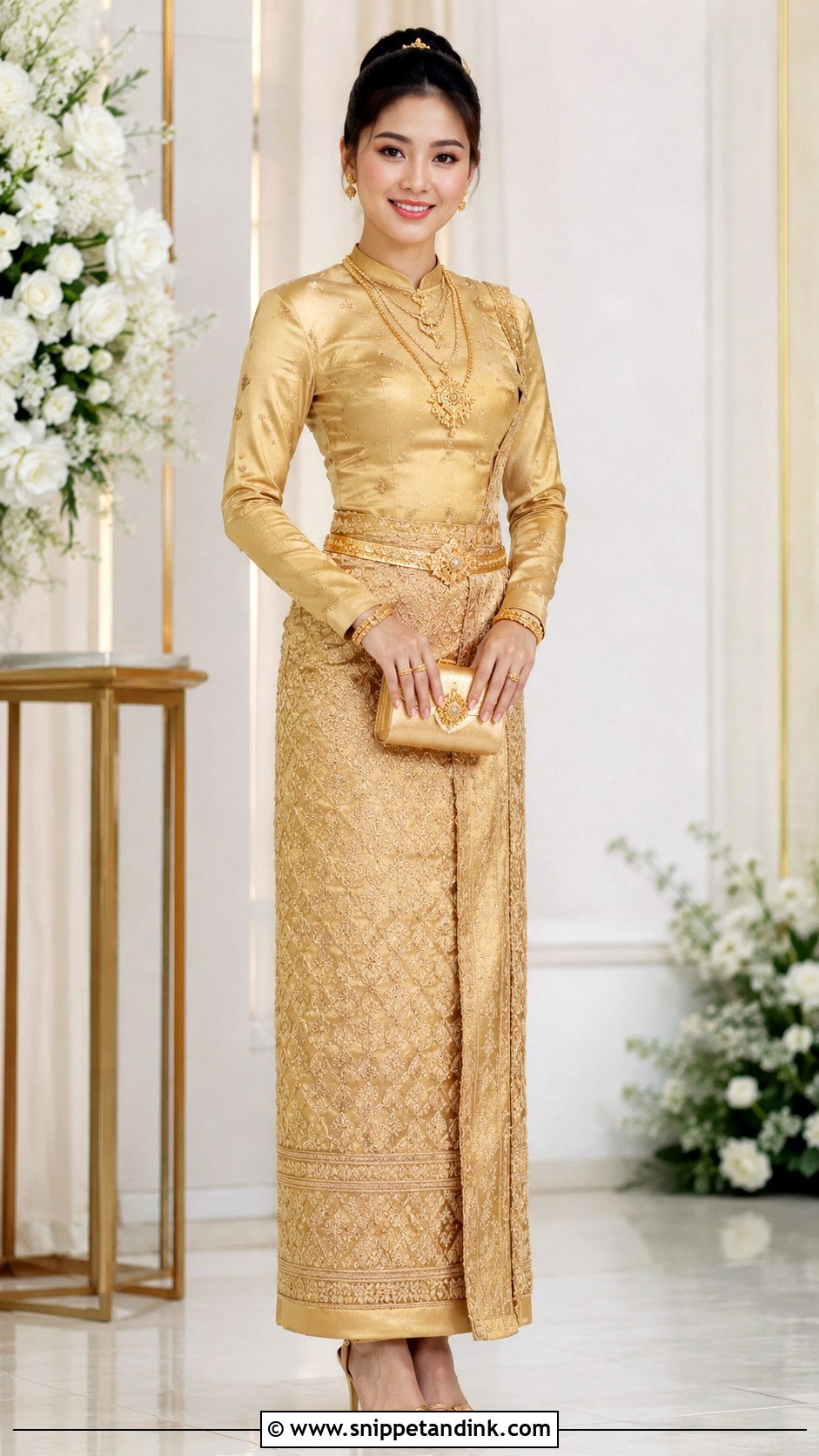
Gold silk is the safest place to start, and also the easiest to get wrong. Antique gold or champagne reads richer than bright metallic gold, which can flatten to yellow under indoor lights. Pair the blouse with a silk htamein carrying woven floral or acheik-inspired patterns so the skirt has movement against the plain top. I keep the jewelry to one tone here, with the necklace, earrings, bangles and small hairpiece all matching. Choose low gold heels. Ceremonies involve a lot of standing and kneeling, and a tall stiletto inside a narrow htamein is how brides trip.
2. Red Myanmar Wedding Dress With Traditional Jacket
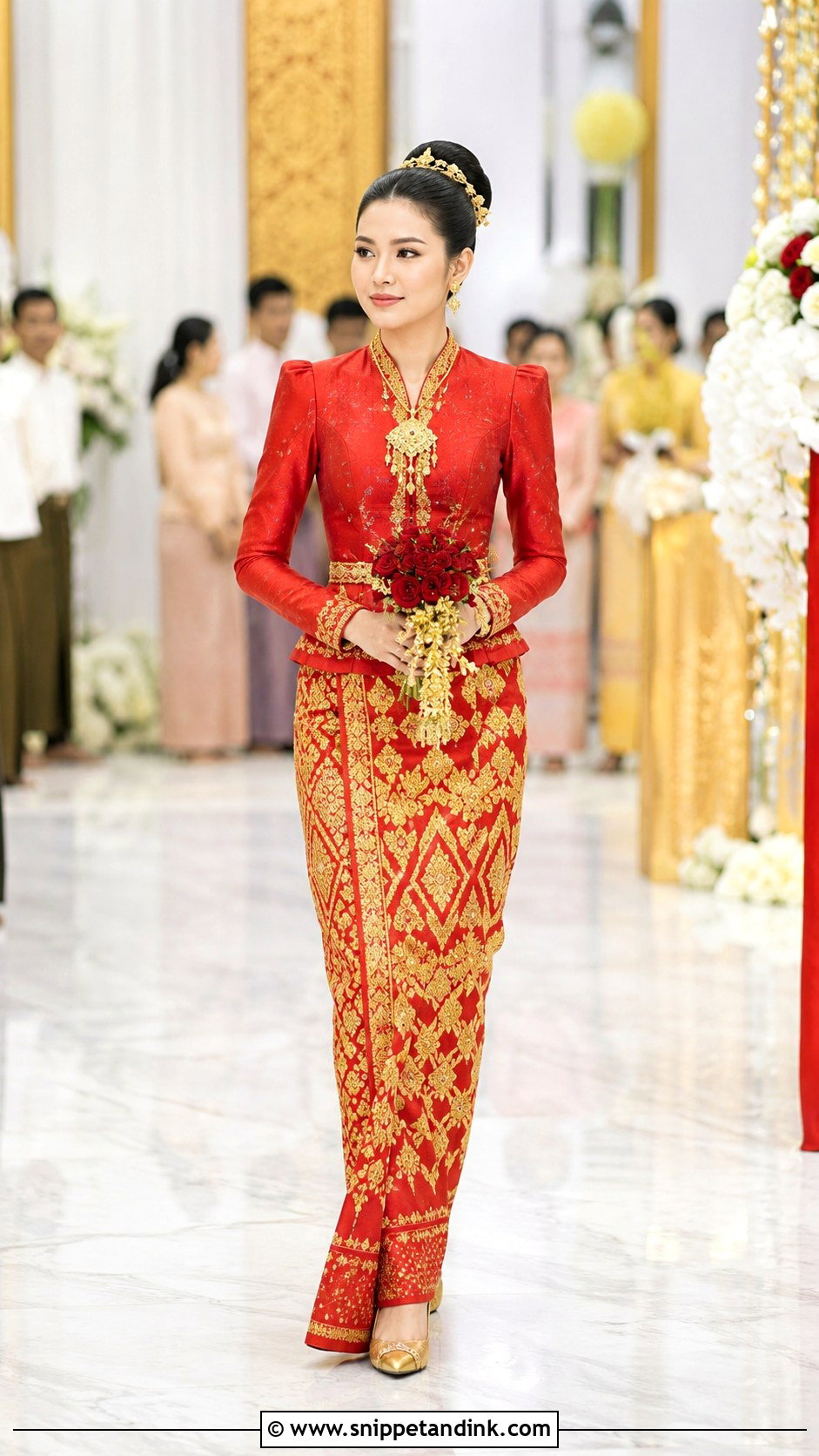
Families often ask for red at the main ceremony because it carries celebration and good fortune. The structured traditional jacket is what makes this look formal, so the fit across the shoulders matters more than anything else. If the jacket pulls when you raise your hands to pay respects, it needs letting out. A red or red-and-gold htamein keeps the line unbroken underneath. I’d soften the strength of the colour at the head rather than the body, with floral pins in a sleek updo, then add gold jewelry, a small clutch and heels you’ve already broken in.
3. White Myanmar Wedding Dress With Lace Blouse
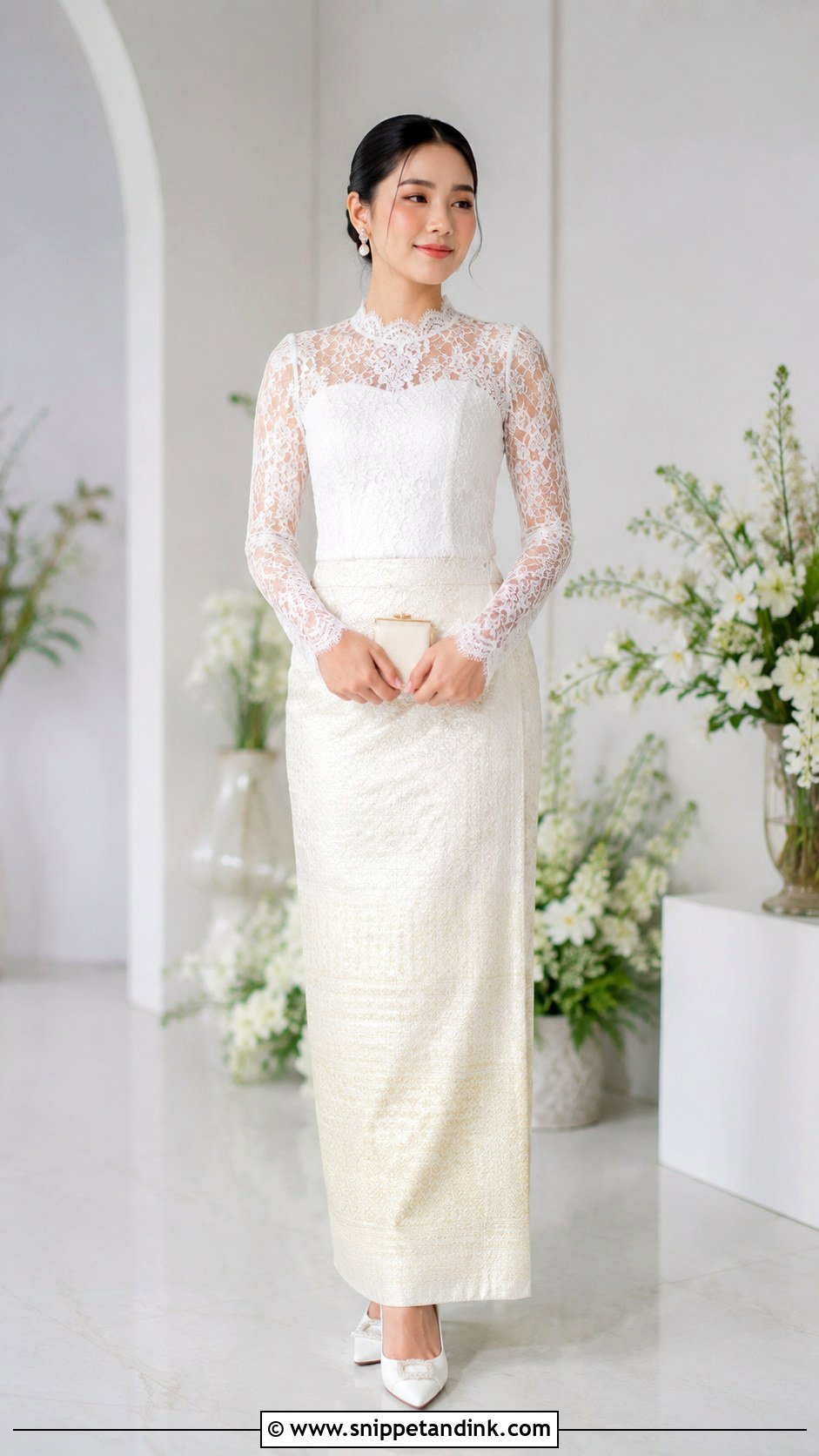
White lace on a traditional cut gives you a bridal feeling without switching to a Western gown. I like a white lace blouse over an ivory htamein more than pure white on white: two clearly different whites look planned, while two nearly matching ones look like a mistake. Lace needs a lining that sits flat, since a puckered lining shows straight through in daylight. Pearls or light gold suit it best. Keep the bun smooth and the bag small, and save it for a daytime ceremony or temple photos, where soft natural light picks up the lace texture.
4. Pink Myanmar Wedding Dress With Floral Silk
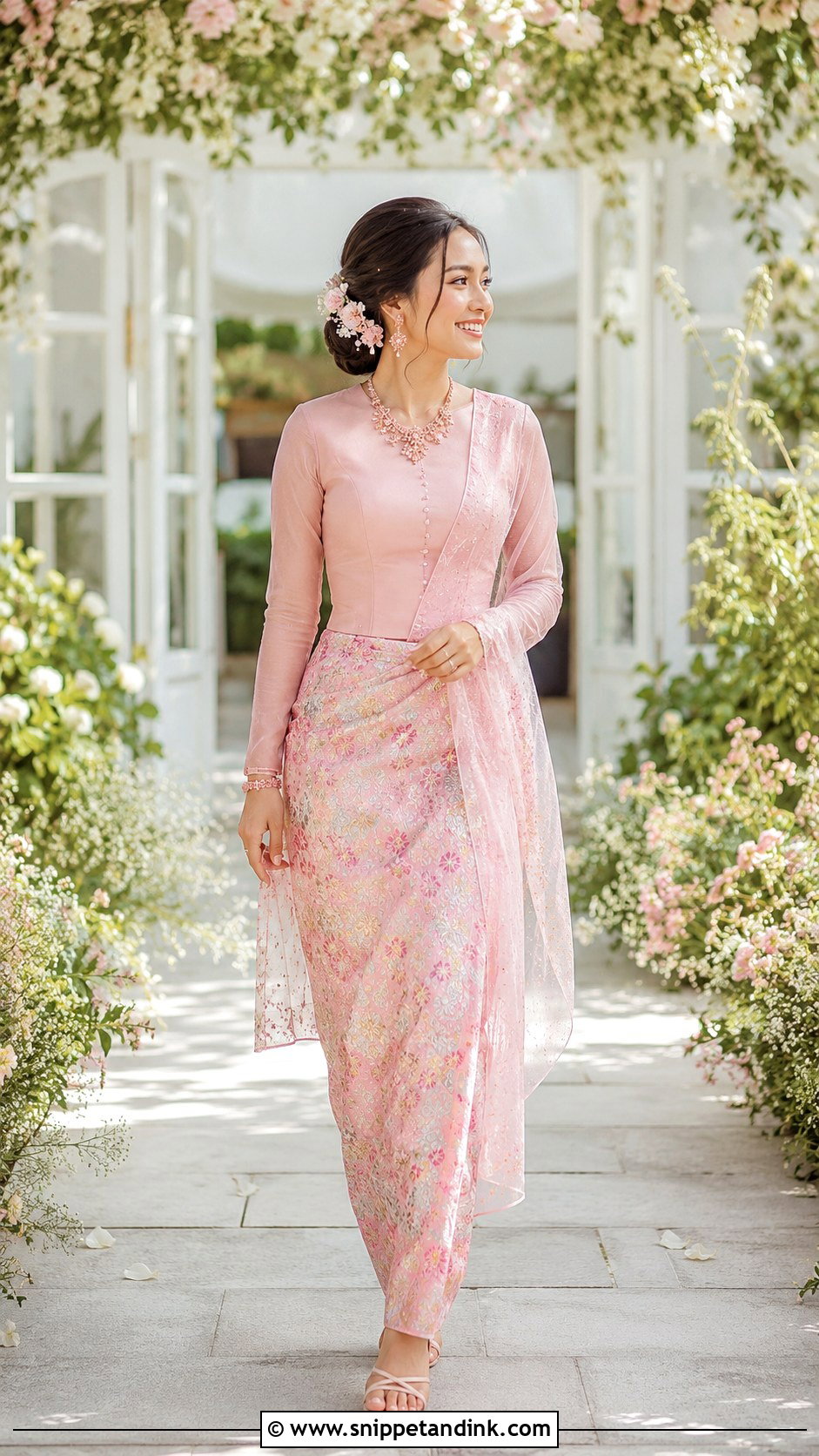
Blush and dusty rose are the most forgiving colours in this list across different skin tones, which is why I suggest them to brides who feel nervous about colour. A fitted pink eingyi over a floral woven htamein puts the pattern below and keeps the top calm. Rose-gold jewelry warms the pink. Yellow gold works too, but it can look slightly orange next to cool pinks, so hold it against the fabric before you buy. A light shawl or jacket makes it formal enough for the ceremony, and small white flowers pinned into the hair, jasmine if you can get it fresh, suit this outfit better than any metal ornament.
5. Blue Myanmar Wedding Dress With Acheik Pattern
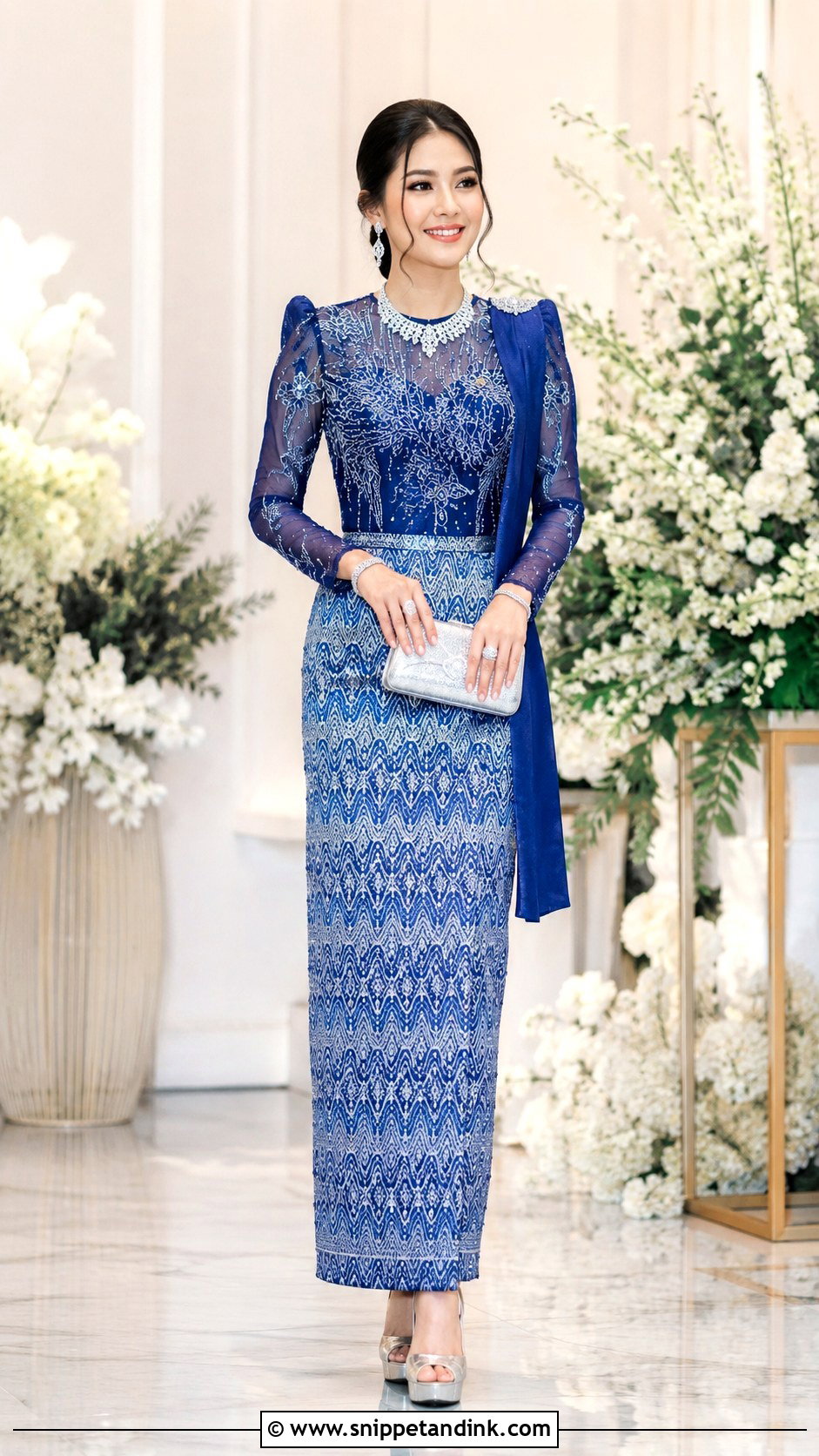
Blue sits well on camera because it doesn’t bounce colour onto the skin the way red does. Choose royal blue, sapphire, powder blue, or teal depending on how formal the ceremony is; the darker the blue, the more formal it reads. This is where acheik waves really show, because the wave lines stand out against a single cool ground colour. I pair silver with powder blue and gold with sapphire, since the deeper shade can carry the warmer metal. A high neckline or fitted sleeves, metallic heels and a sleek hairstyle keep it neat.
6. Green Myanmar Wedding Dress With Gold Jewelry
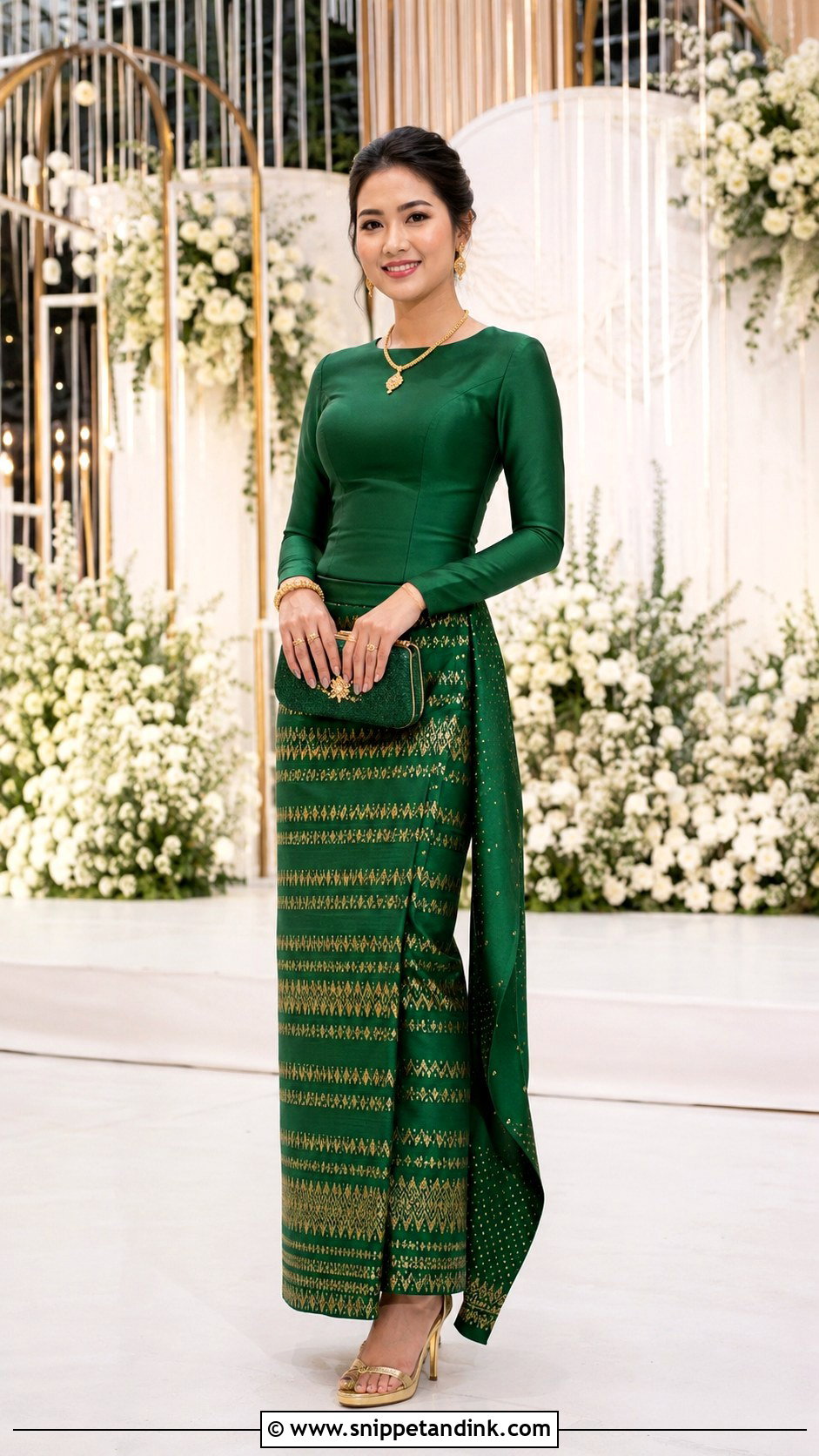
Emerald or jade with gold is a combination I reach for at evening ceremonies, because deep green holds its colour under warm indoor lighting where pastels wash out. Olive and forest green work too, but they need gold woven into the htamein or they go flat in photos. Look for subtle floral motifs rather than a busy print. A low bun with a decorative comb and green or gold heels finish it. It’s a traditional alternative to red that guests won’t have seen at every wedding this season.
7. Purple Myanmar Wedding Dress With Embroidered Blouse
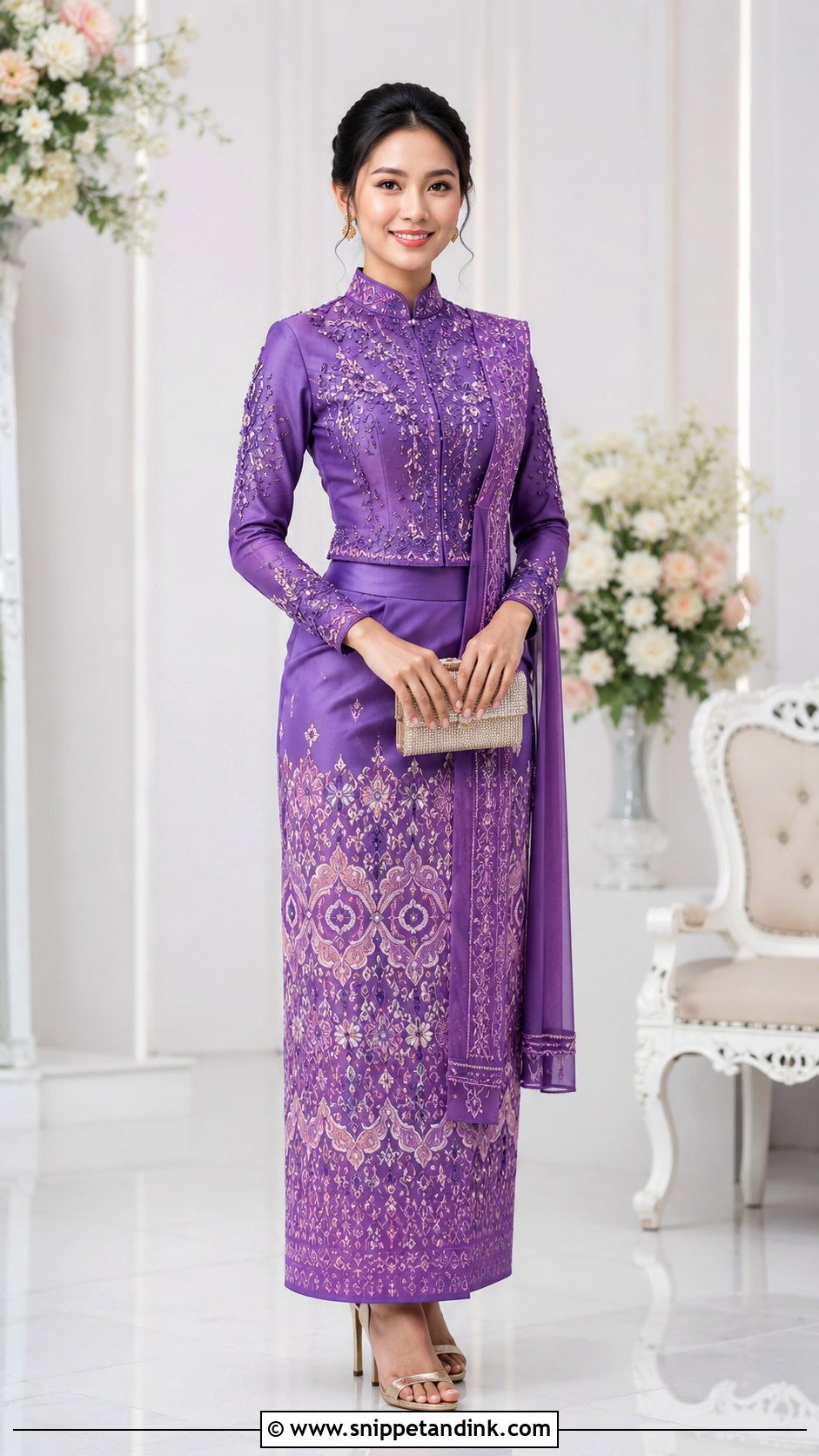
Purple depends entirely on undertone. Plum and royal purple lean warm and take gold; lavender and orchid lean cool and look cleaner with silver. Before I commit to jewelry, I hold both metals against the fabric in daylight, because the wrong one makes the whole outfit look cheaper than it is. An embroidered purple blouse over a matching htamein needs neat tailoring, since shiny purple silk shows every wrinkle at the waist. A structured clutch, metallic heels and a side-parted updo complete it.
8. Ivory Myanmar Wedding Dress With Pearl Accessories
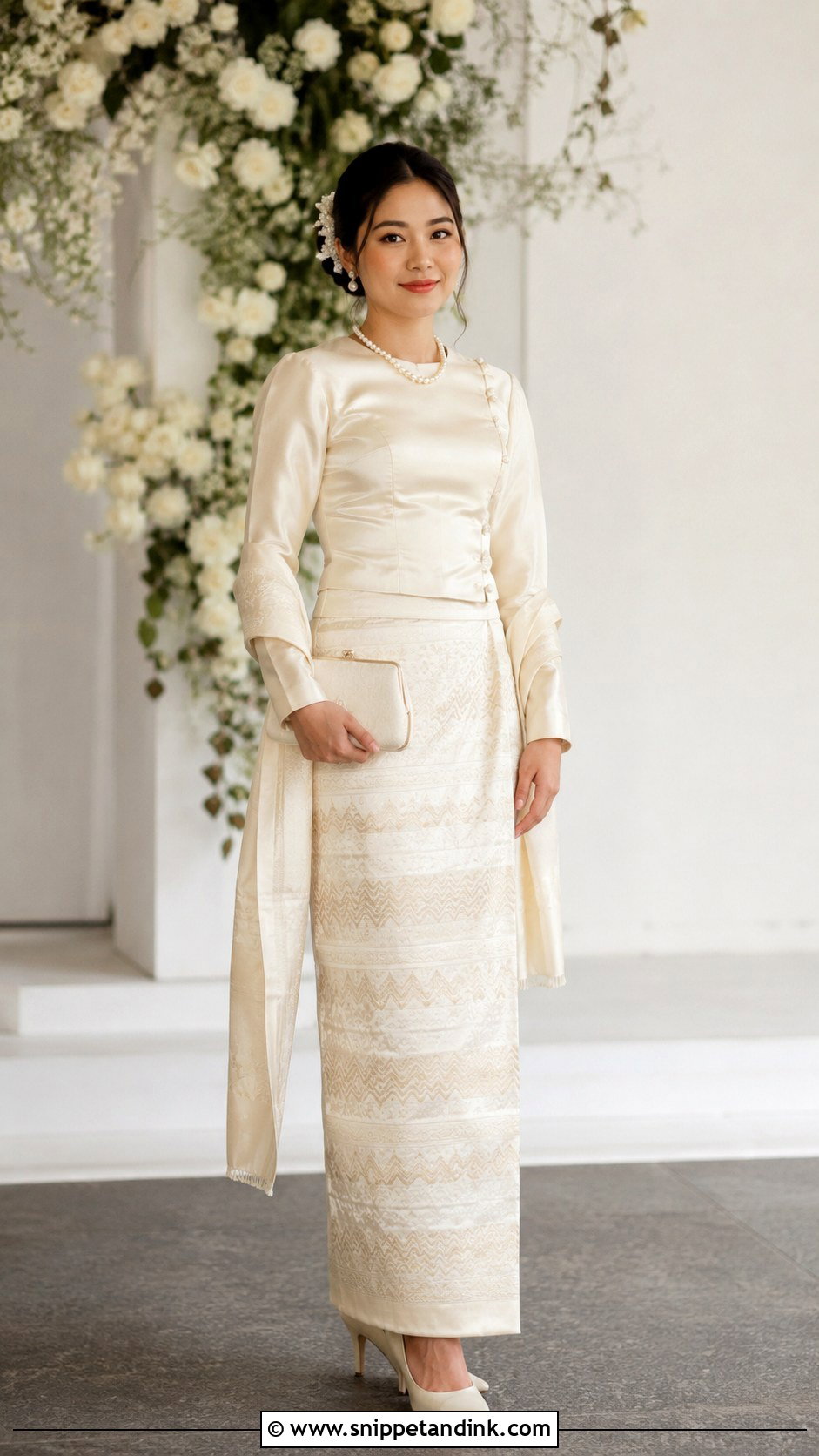
Ivory is warmer than bright white and suits most skin tones better, especially in photos taken under yellow indoor bulbs. Start with an ivory silk blouse and a matching htamein in satin or a light woven silk. Pearls share that creamy warmth, so a pearl comb in the bun, simple pearl earrings and one necklace are plenty. Watch the shoes: a bright white heel beside ivory silk makes the silk look dingy, so match the shoes to the fabric or go a shade darker. I’d keep this one for a minimal ceremony with lots of natural light.
9. Royal Myanmar Wedding Dress With Htaingmathein Jacket
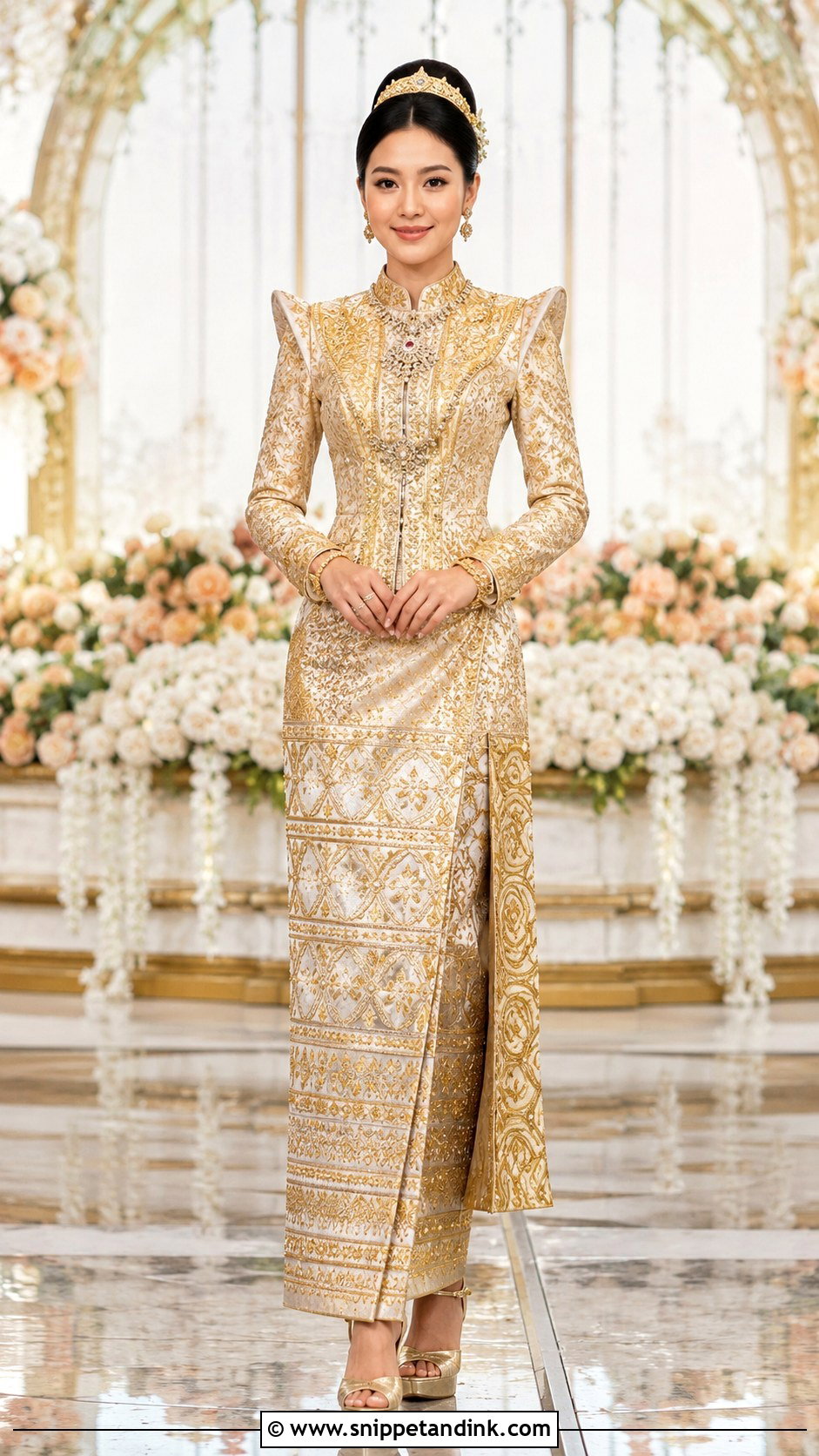
Htaingmathein styling takes its cue from royal court dress, and modern versions usually pair a structured jacket with ornate embroidery and a matching htamein. It is the most formal look on this list, and the heaviest. Before you commit, wear it for at least an hour at a fitting and sit, kneel and lift your arms in it. A stiff jacket that feels fine standing still can dig in at the hips the moment you sit. Gold, red, emerald and deep purple carry the ornate work well. With that much detail on the jacket, I keep the bag plain and let statement jewelry sit at the ears and neck only.
10. Modern Myanmar Wedding Dress With Fitted Blouse
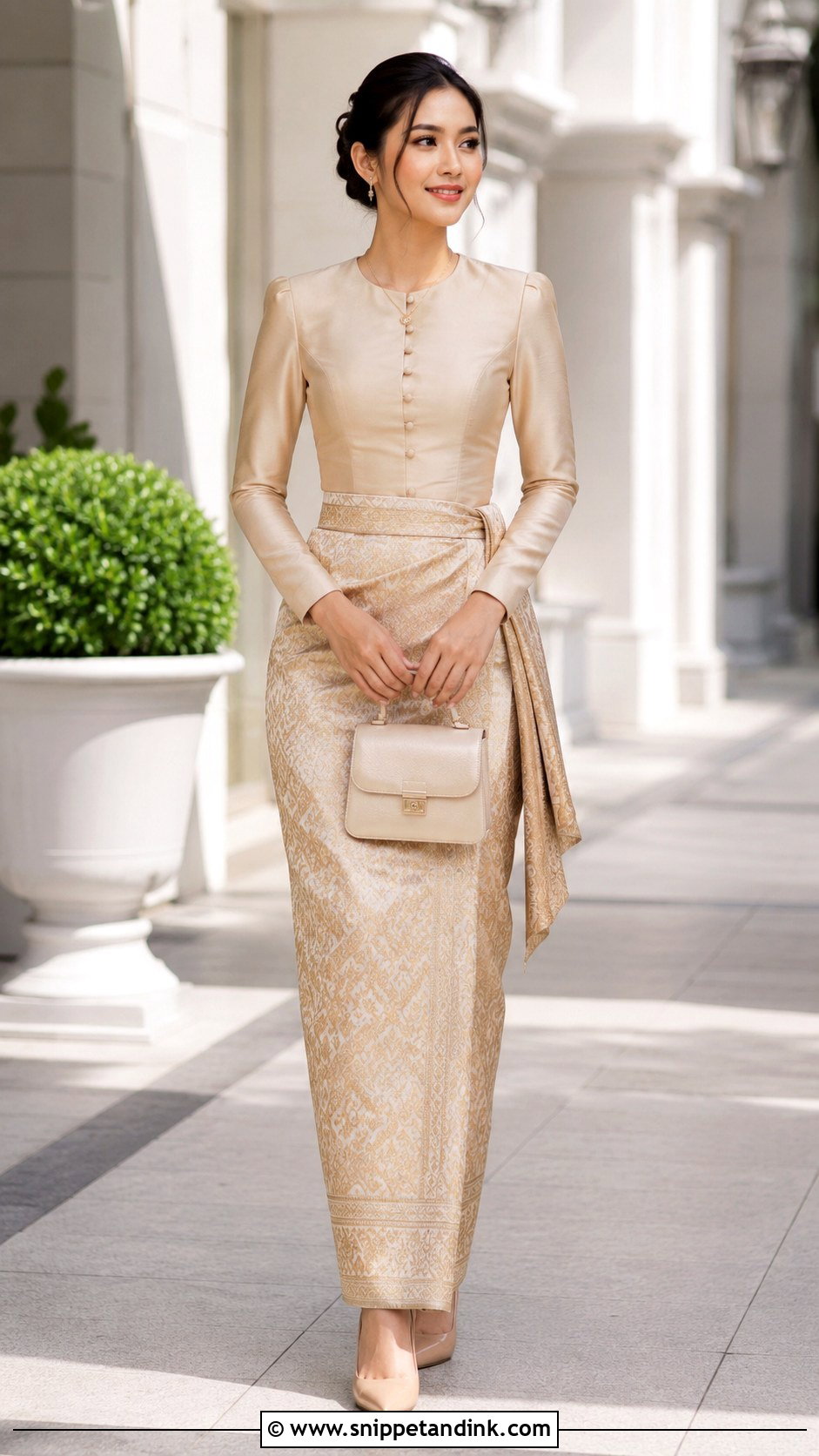
A modern version keeps the eingyi and htamein shape but strips back the ornament. With no embroidery to distract, the fit is all anyone sees, so clean seams and soft sleeves matter more here than in any other look. Ivory, blush, champagne, sage and pale blue all suit a solid htamein or a subtle pattern. I’d let one piece of jewelry carry the look, earrings or a bracelet but not both. A structured mini bag and simple heels finish it. This is the set I suggest to brides who want to wear their outfit again at family events after the wedding.
11. Myanmar Wedding Dress With Matching Groom Outfit
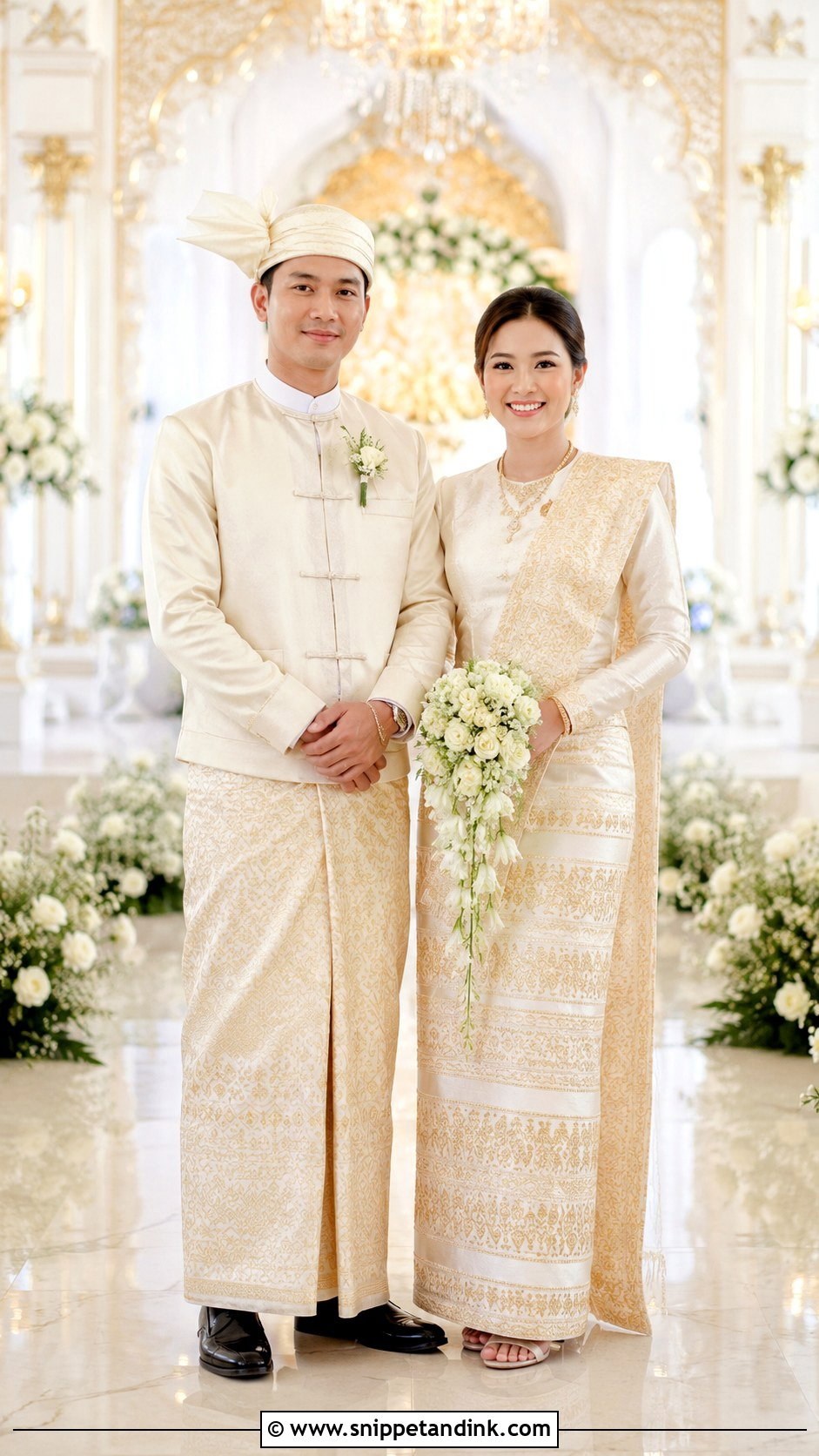
Coordinating with the groom works best when you share one element rather than copy everything. He wears a paso with a taikpon jacket and the gaung baung on his head, and the two looks can connect through the same gold thread, a shared base colour or a matching woven pattern in his paso and your htamein. When I plan a coordinated pair, I order both fabrics at the same time from the same weaver if possible. Dye lots drift, and two matching silks bought months apart rarely match in photos. He’ll want polished dress shoes; you’ll want jewelry, heels and a clutch.
12. Myanmar Wedding Dress With Gold Lace Overlay
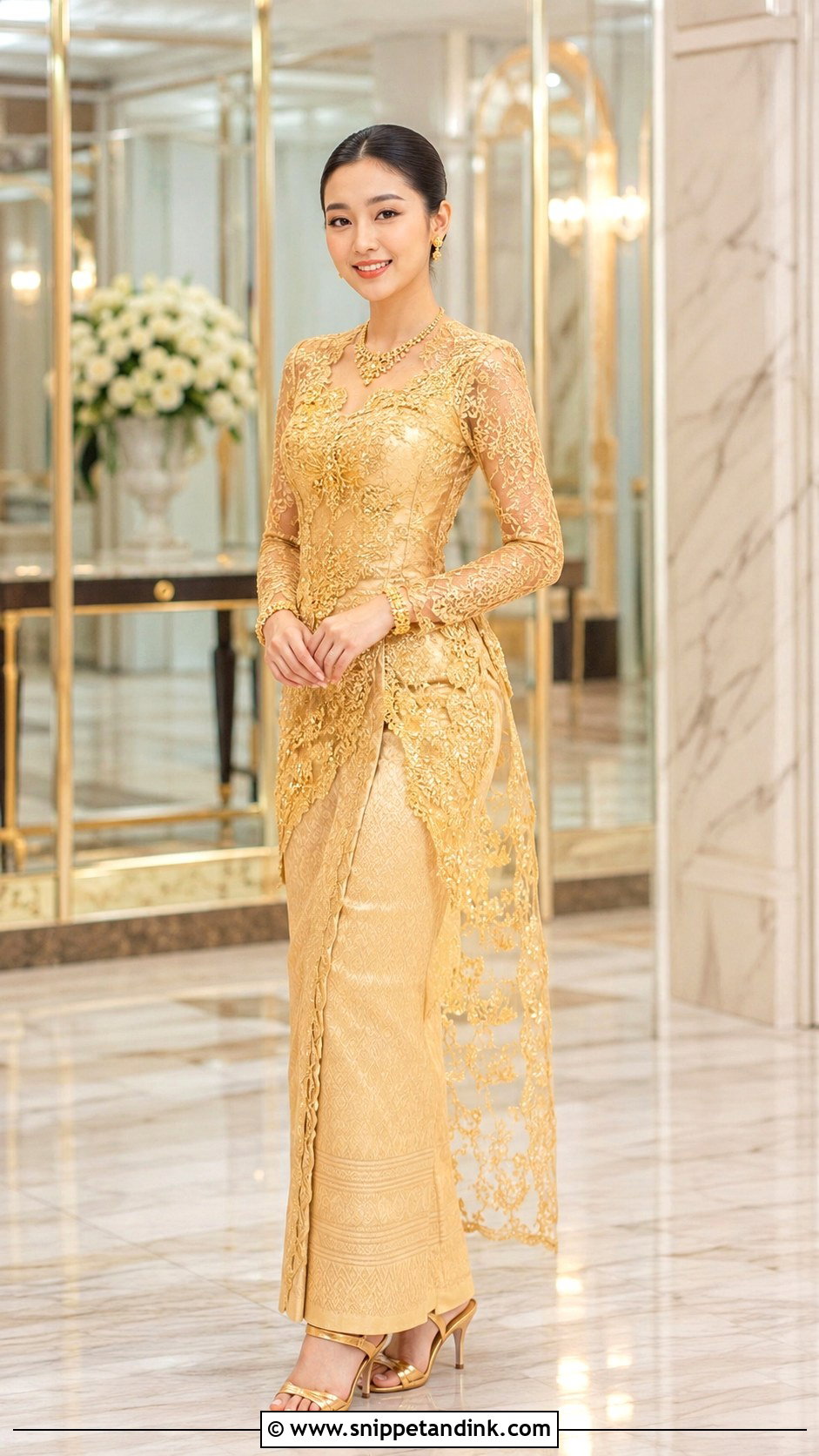
Gold lace over a fitted blouse gives texture without heavy embroidery, and the lining underneath changes everything. An ivory lining makes the gold read soft, a nude lining pulls it closer to skin, and a red one turns it festive. Pair it with a silk htamein in ivory, champagne, red or deep green. I tell brides to keep necklaces small here, because a busy necklace on top of patterned lace turns into visual noise. A neat bun, soft makeup and metallic heels keep the balance. Lace is softer than a jacket, so this outfit carries well from the ceremony into the reception.
13. Myanmar Wedding Dress With White And Gold Colors
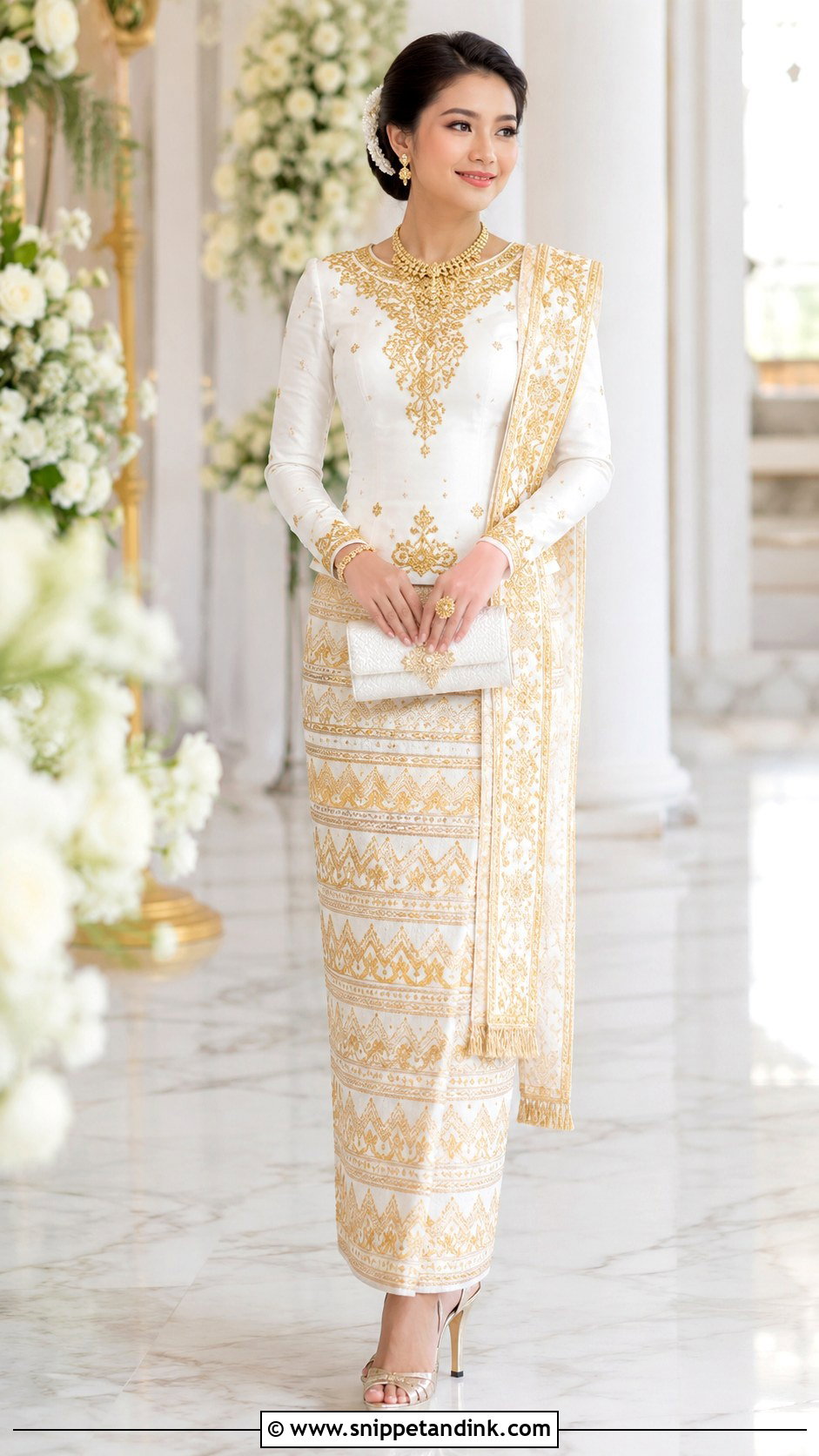
White and gold is about proportion. A white fitted blouse with gold embroidery over a gold-patterned htamein reads bright and bridal. Reverse it, with a gold blouse over a white silk skirt, and the weight moves to the top, which flatters brides with narrower shoulders. Plain white silk marks easily, so if the day includes an outdoor walk or a meal before the photos, I’d put the white on the blouse rather than the hem. Gold jewelry, white or gold heels and delicate gold hair accessories complete it, and it shows best in daytime light.
14. Myanmar Wedding Dress With Red And Gold Colors
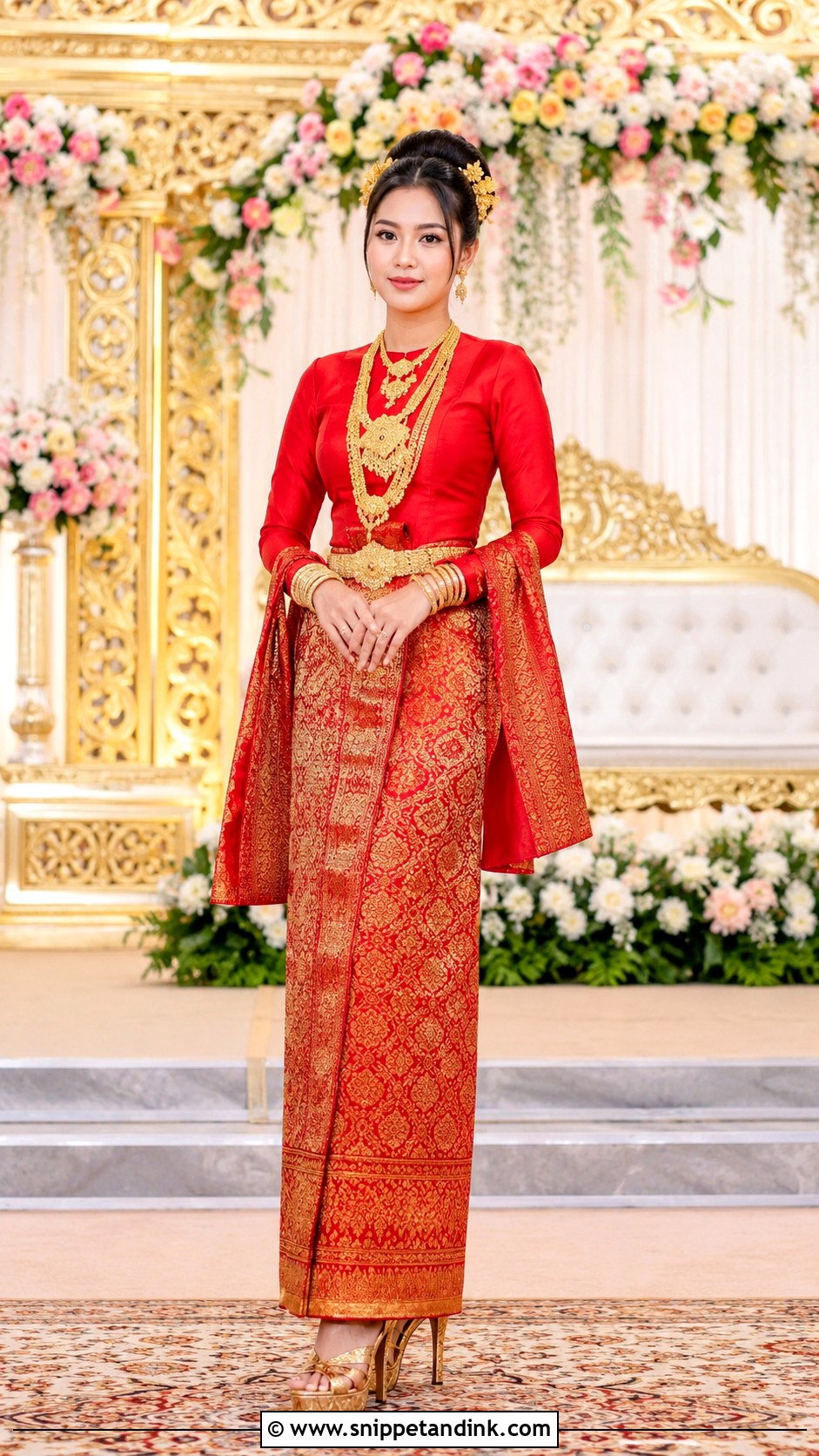
Red and gold is the boldest traditional pairing here, and it leaves no room for anything else competing. A red silk blouse with gold embroidery over a red-and-gold htamein already carries a lot, so layered necklaces, earrings and bangles should all be the same gold tone. Gold heels or sandals stop the shoes adding another colour. A smooth updo matters with this much pattern; loose curls beside heavy embroidery look cluttered. If the groom is coordinating, gold, cream or deep red accents tie the pair together without making him look like he’s wearing your fabric.
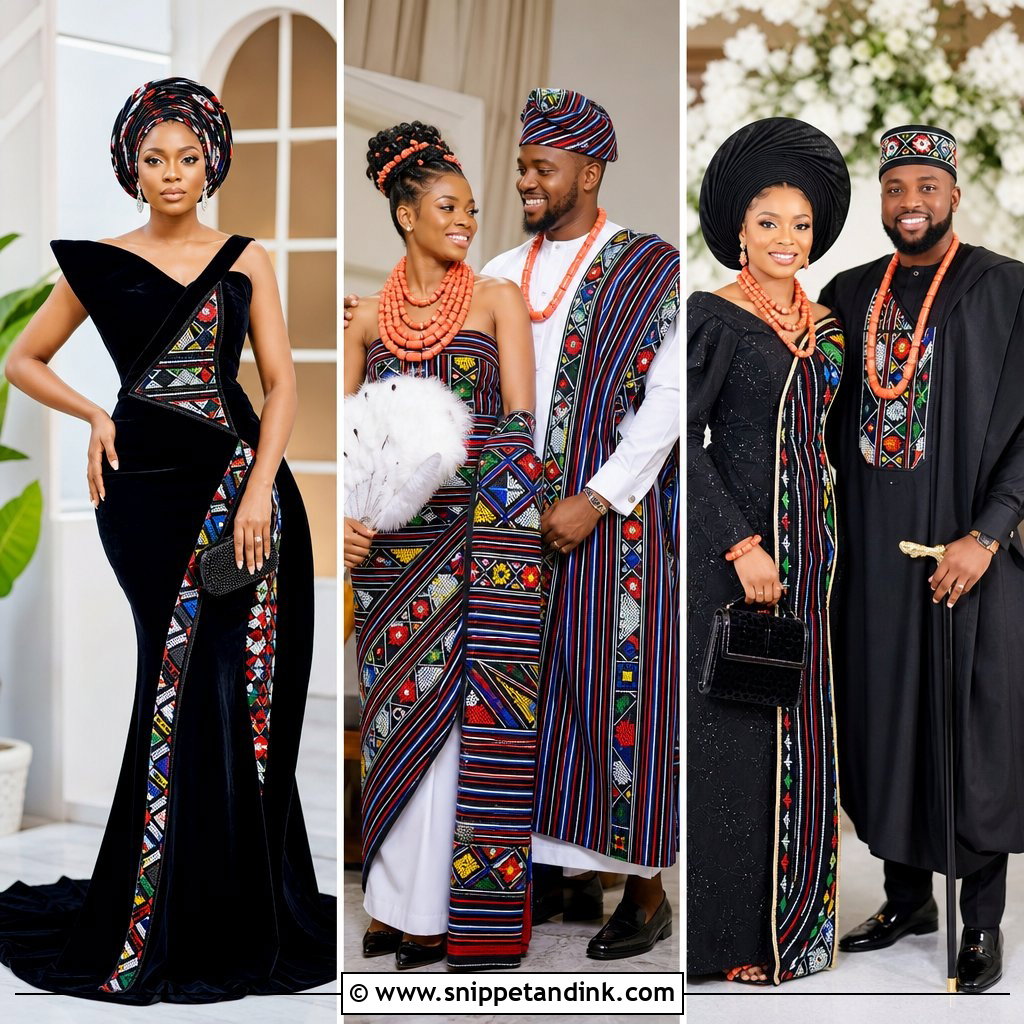

15. Myanmar Wedding Dress With Pastel Silk
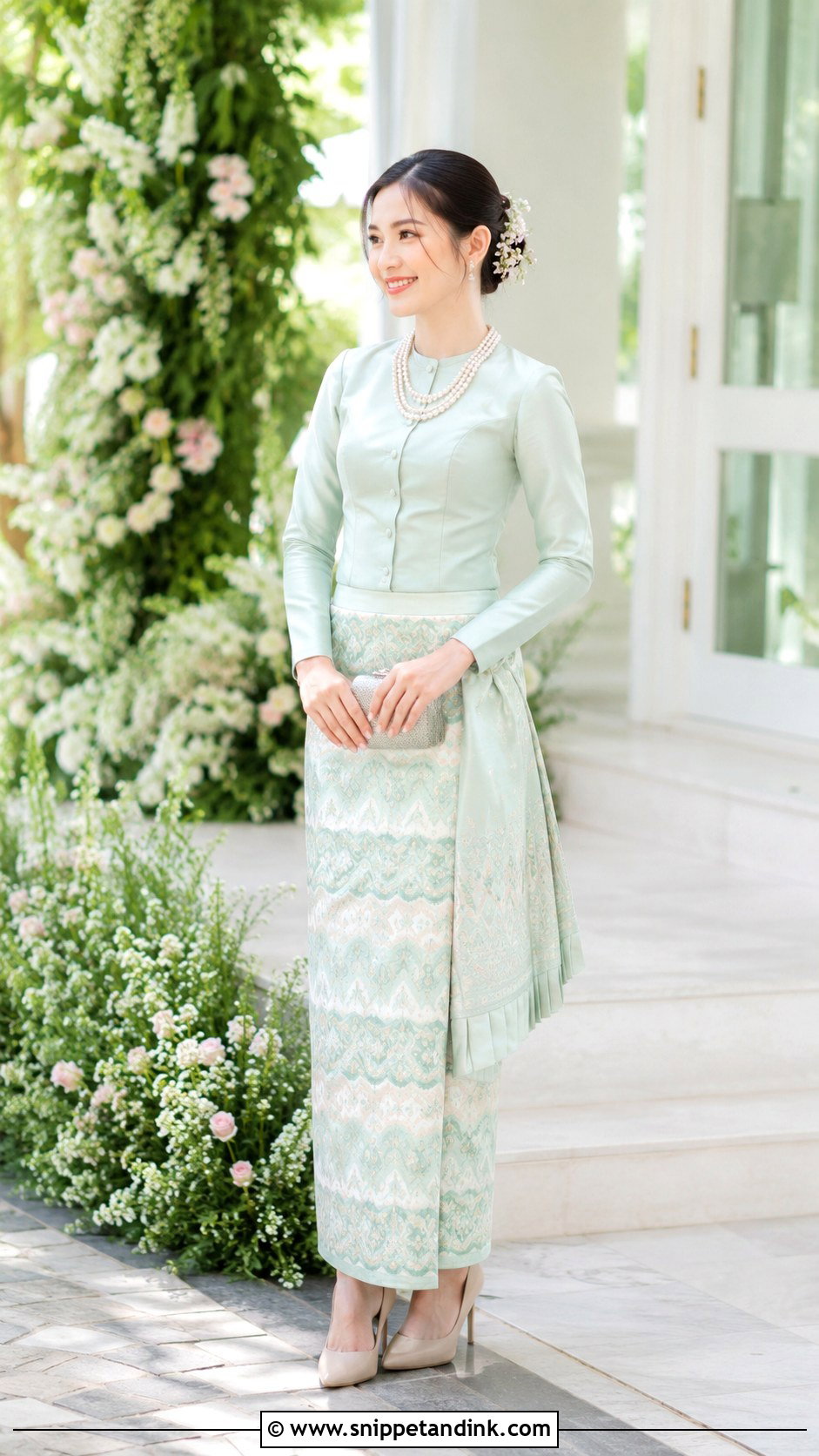
Pastel silk is the lightest-feeling option on the list, and it looks truest outdoors. Mint, lavender, peach, baby blue and blush all suit a fitted blouse with a matching htamein. The catch is that pastels show sweat marks and water spots far more than deep colours, so for a hot morning ceremony I’d ask the tailor to add underarm shields inside the blouse. Pearls or light gold, nude heels, a soft clutch and a floral hairpiece finish it. Garden photos and small family weddings suit it, and it’s comfortable enough for a long day.
16. Myanmar Wedding Dress With Silver Embroidery
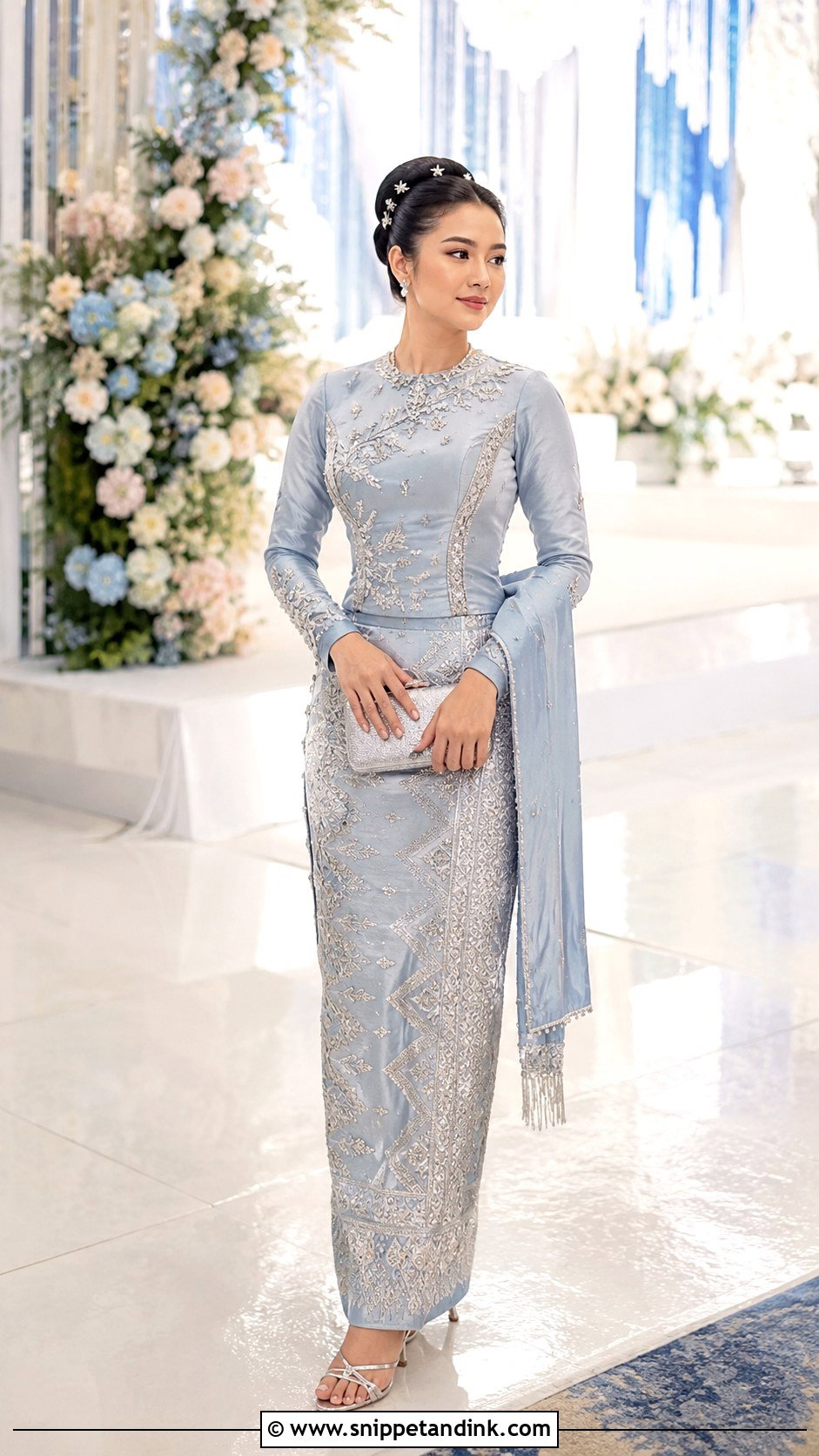
Silver embroidery cools a look down, and it sits well on white, blue, lavender, grey and emerald. Metallic thread can be scratchy on the inside, so I check the back of embroidered sleeves and necklines before a bride wears them all day; a soft lining layer solves it. Pair a fitted blouse with embroidered sleeves or neckline with a htamein that has a little shine. Silver jewelry and crystal hairpins keep the metal consistent. Brightly lit indoor halls suit this outfit, because silver catches strong artificial light far better than dim candlelight.
17. Myanmar Wedding Dress With Traditional Floral Motif
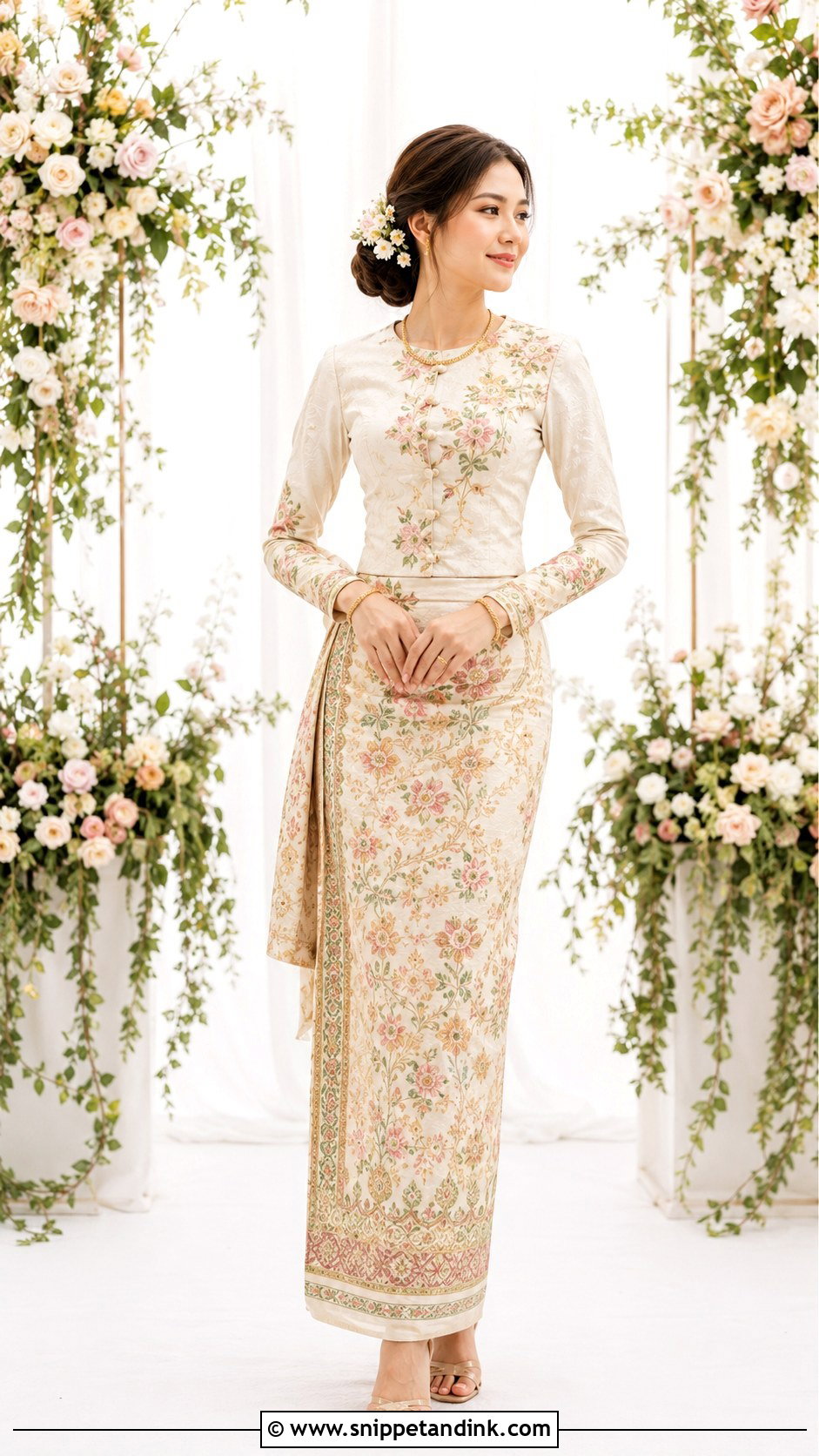
Woven or embroidered flowers have depth that printed ones don’t, and the difference is obvious in close-up photos. Soft gold, blush, cream and pastel grounds keep the flowers subtle; deeper colours make them stand out. I keep the accessories small so the fabric does the talking. A low bun with fresh or faux flowers carries the motif up into the hair. It’s gentle enough for an engagement ceremony as well as the wedding itself.
18. Myanmar Wedding Dress With High Neck Blouse
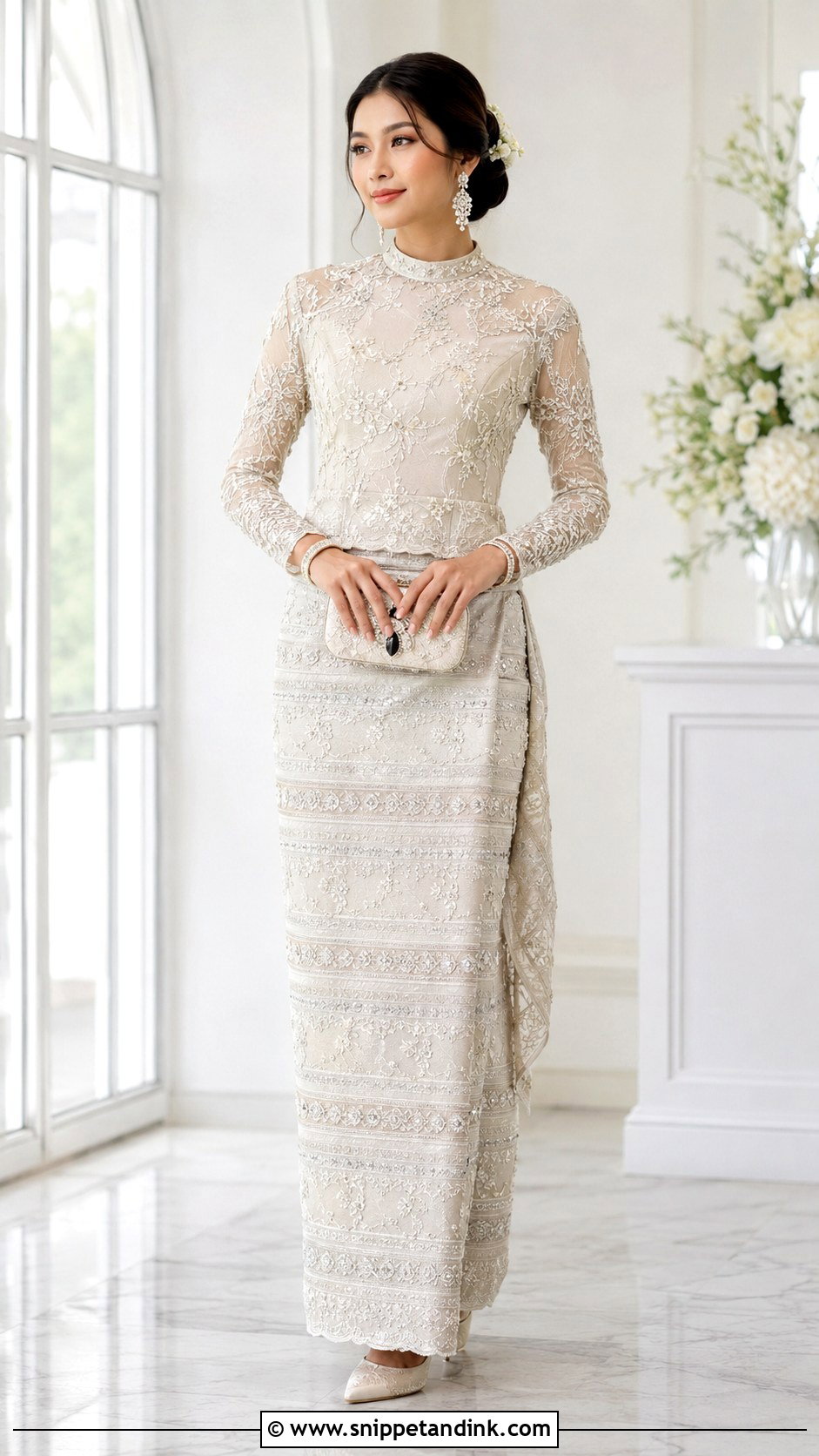
A high neck covers the collarbone, so the face and ears become the focal point. That’s why I move the sparkle into statement earrings and skip the necklace entirely; a necklace sitting on top of a high collar just bunches. The neckline works best in lace, silk or a structured fabric that won’t wrinkle at the throat. Pair it with a fitted htamein in the same colour family for a long, unbroken line. Do a seated test at the fitting, since high collars can ride up and press under the chin when you sit. A sleek bun keeps the neck visible.
19. Myanmar Wedding Dress With Long Sleeve Lace
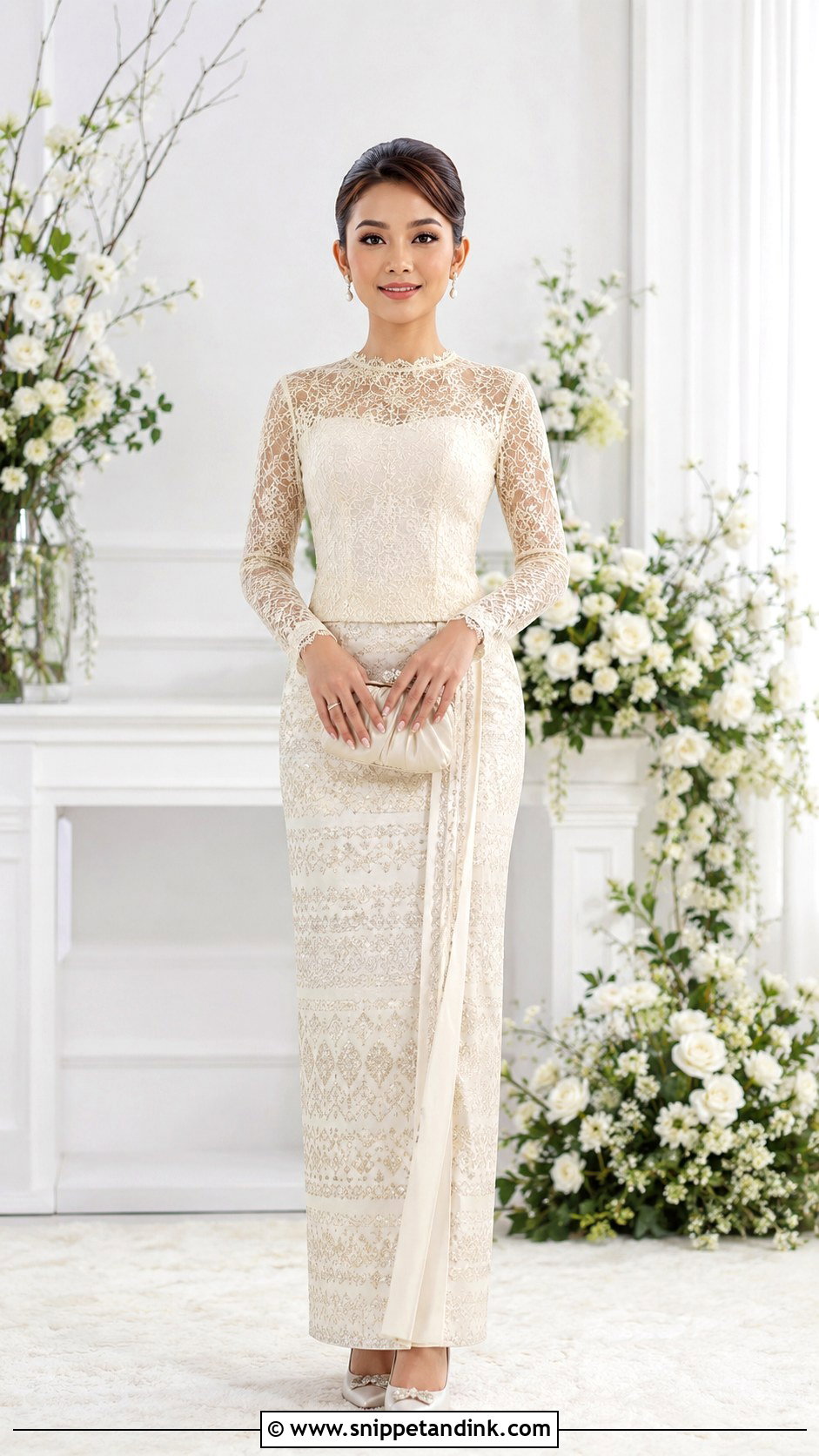
Long lace sleeves give coverage without much heat, which matters in a warm climate. The first thing I check is the armhole. Lace sleeves set too low restrict how far you can lift your arms, and you’ll be raising your hands to pay respects to elders more than once. Keep the lining smooth and breathable. White, ivory, blush or gold lace pairs with a silk htamein in a matching or complementary shade, and pearl or gold jewelry, refined heels and a small bag are all it needs. A low bun or soft updo keeps the lace shoulders on show in photos.
20. Myanmar Wedding Dress With Velvet Jacket
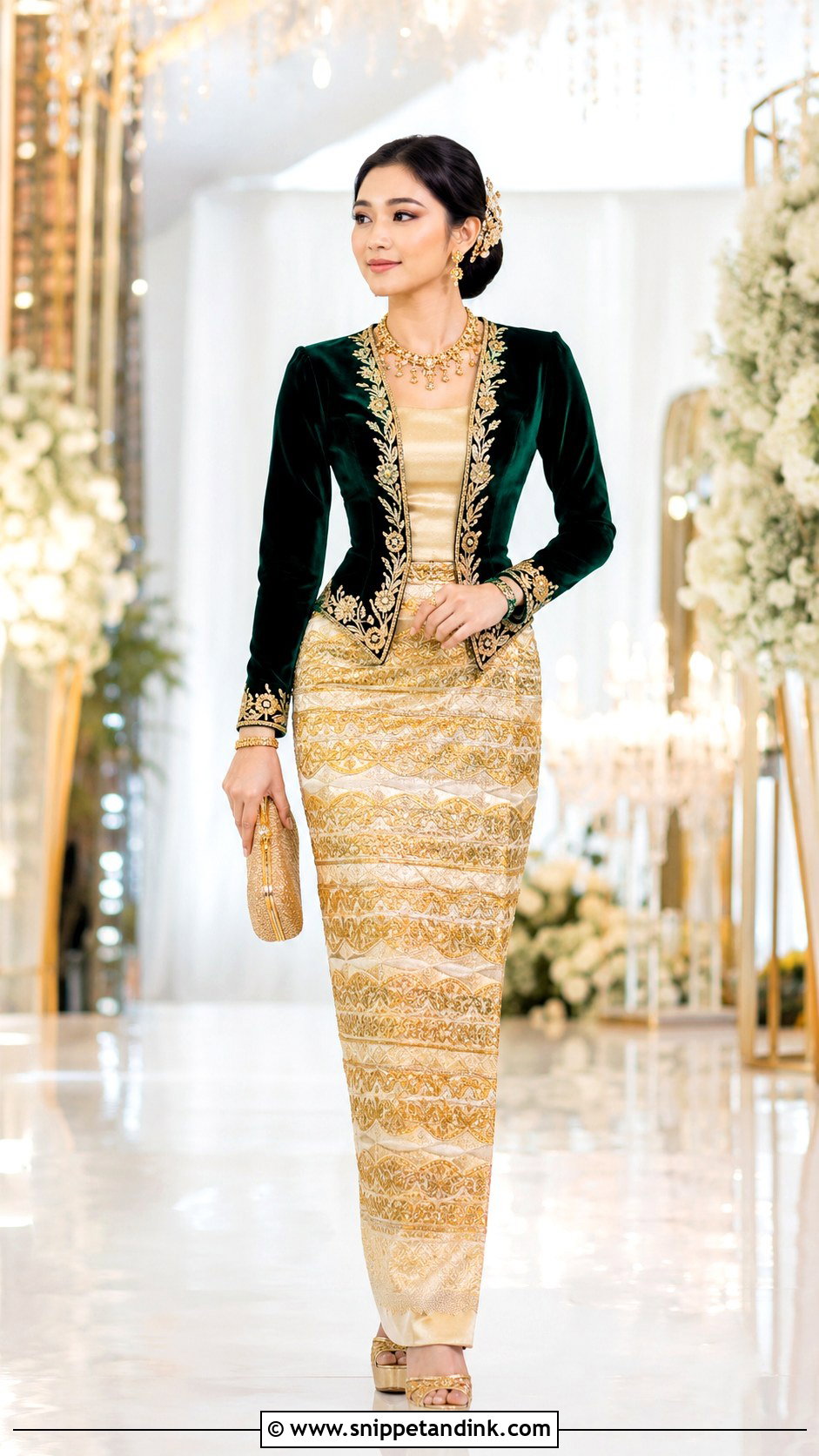
Velvet belongs to evening and to air-conditioned halls; in daytime heat it becomes uncomfortable within the hour. Deep shades like burgundy, emerald, navy, and plum show the pile best, because light catches differently across the nap. A fitted blouse under the jacket keeps the outfit neat, and a silk htamein with gold or tonal woven details adds contrast in texture. Velvet crushes when you sit, so I tell brides to do standing portraits straight after the ceremony, before the creases set in. Pick the metal and the shoes by the venue.
21. Myanmar Wedding Dress With Minimal Jewelry
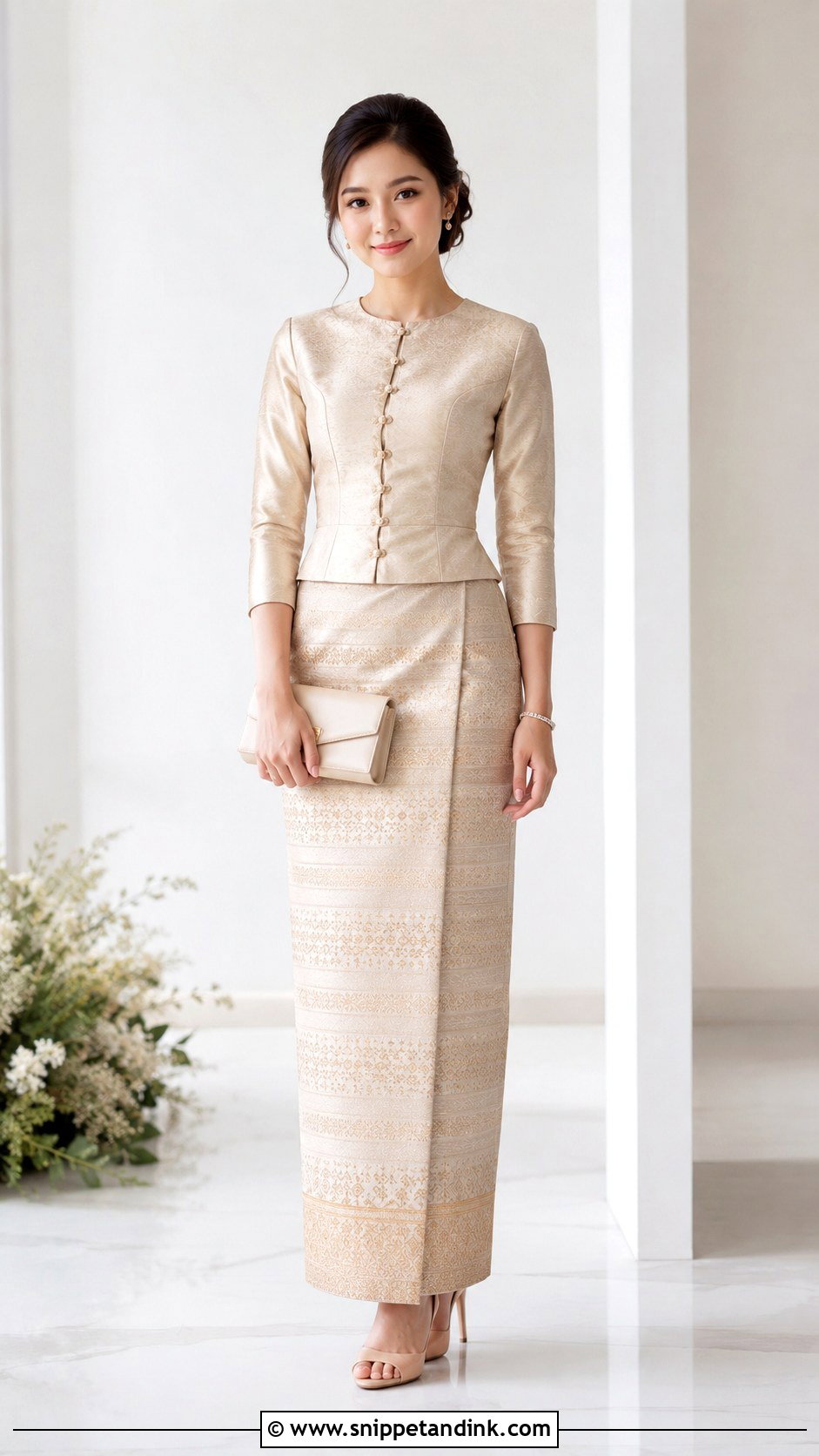
Minimal jewelry only works if the tailoring and silk are excellent, because nothing distracts from a loose seam. A finely tailored blouse and htamein in good silk, with small earrings, one bracelet and a delicate necklace, can be enough. The approach suits detailed fabric, lace or embroidery, where heavy jewelry would fight the textile. I usually say yes to one slightly bigger piece, so the bride doesn’t look underdressed next to guests wearing family gold. Simple heels, a clean clutch and a neat bun keep it looking deliberate.
22. Myanmar Wedding Dress With Statement Hairpiece
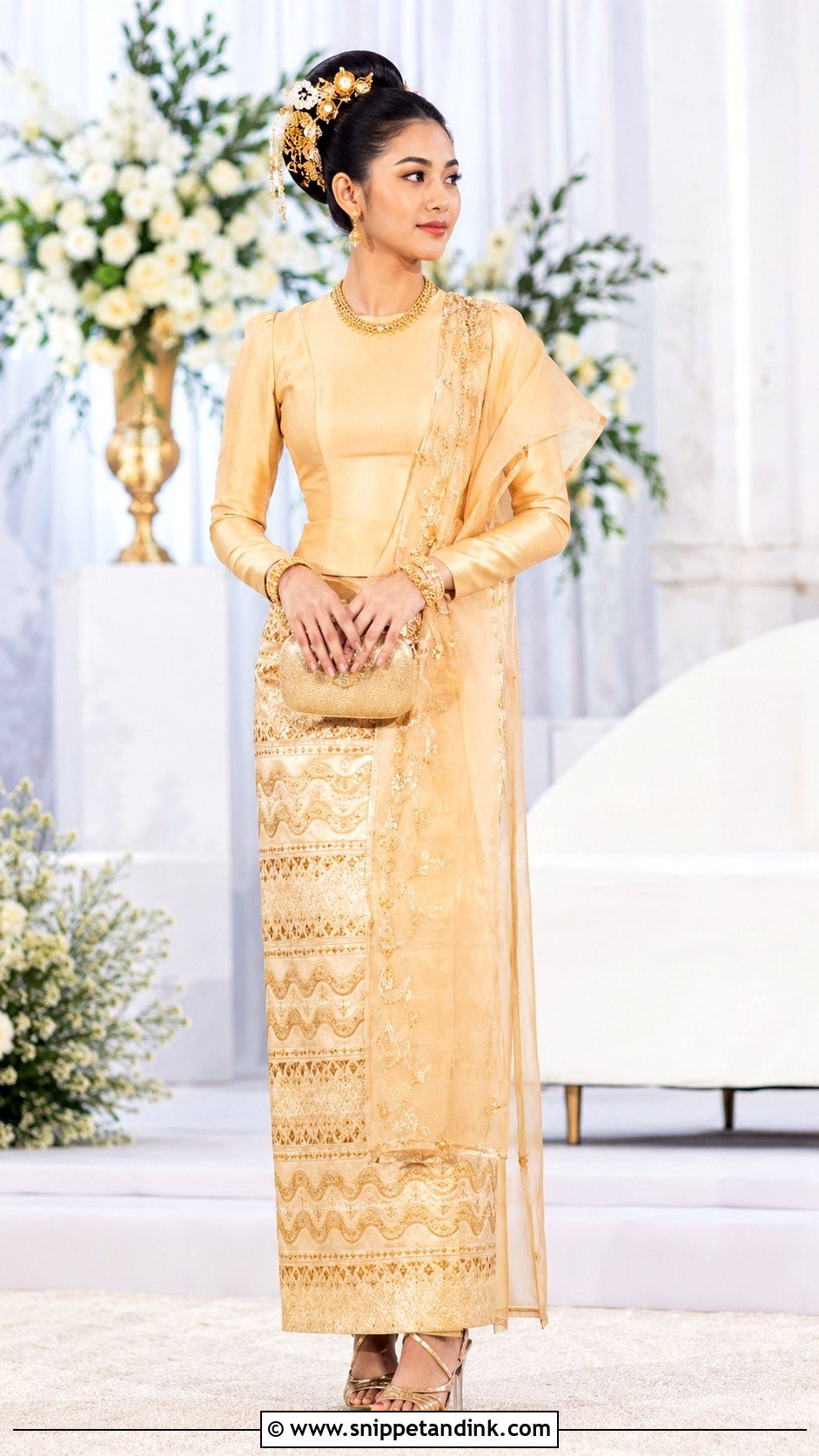
A statement hairpiece moves the drama off the body. Start with a classic silk blouse and htamein, then add a decorative comb, gold hair ornament or pearl headpiece in the same metal as your jewelry. Heavy ornaments need a solid base: a smooth bun, with the piece anchored into the bun itself rather than the surface hair, is what keeps it secure while you bow. If the hairpiece is bold, I scale the earrings down and drop the necklace. Coordinated heels and a small clutch finish the outfit without making the clothing heavy.
23. Myanmar Wedding Dress With Shan Inspired Details
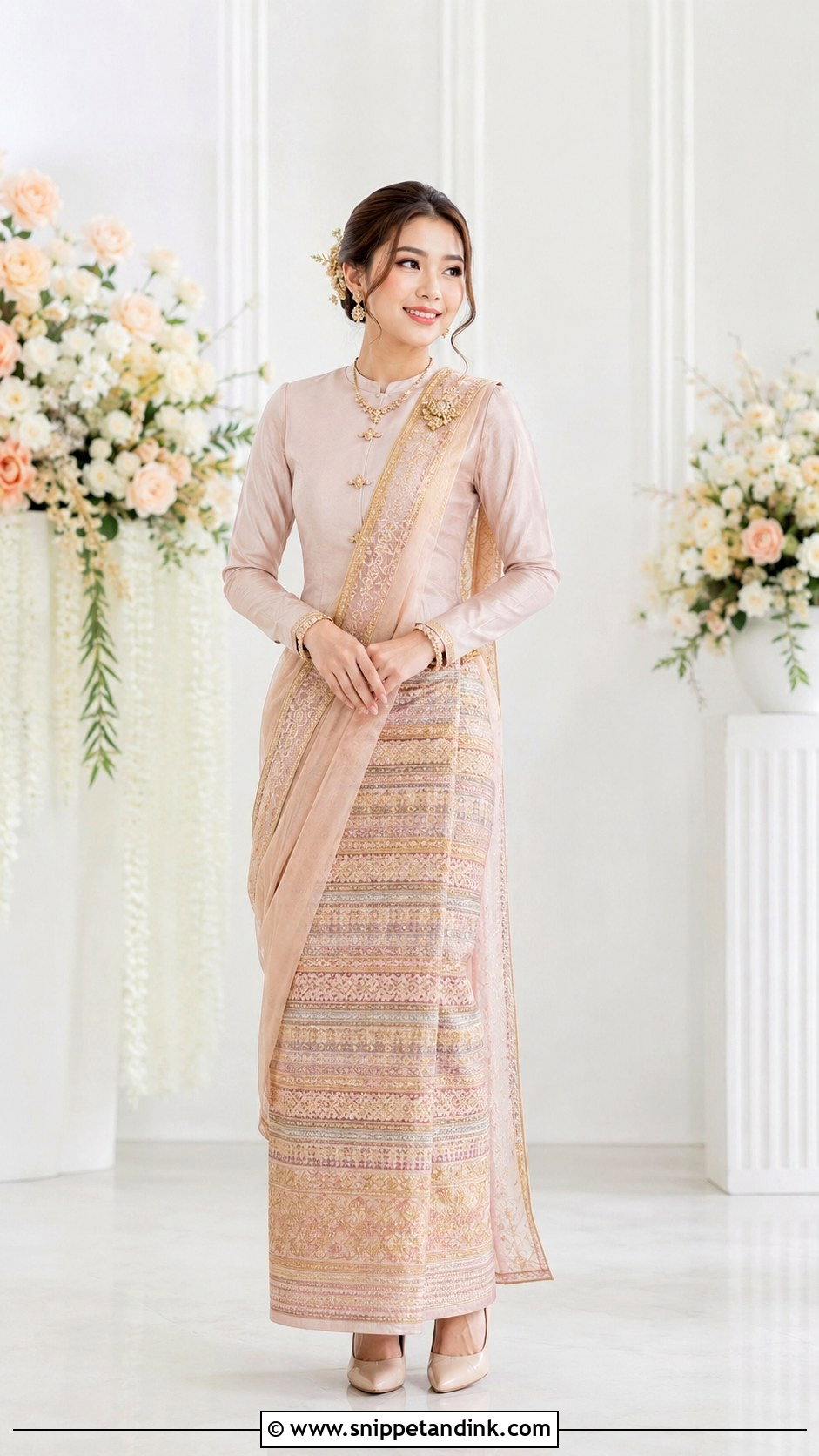
Shan-inspired styling leans toward clean silhouettes, gentle colours and fine silk. A pastel or jewel-tone blouse with a long htamein makes a polished base, with delicate jewelry, neat shoes and a coordinated shawl for a formal setting. If Shan dress isn’t part of your own heritage, I’d keep the inspiration to colour and silhouette rather than copying specific ethnic garments, so it reads as respect rather than costume. For brides with Shan family, ask the older women what they wore at their own weddings; there are often details that never appear in photos online.
24. Myanmar Wedding Dress With Kachin Inspired Details
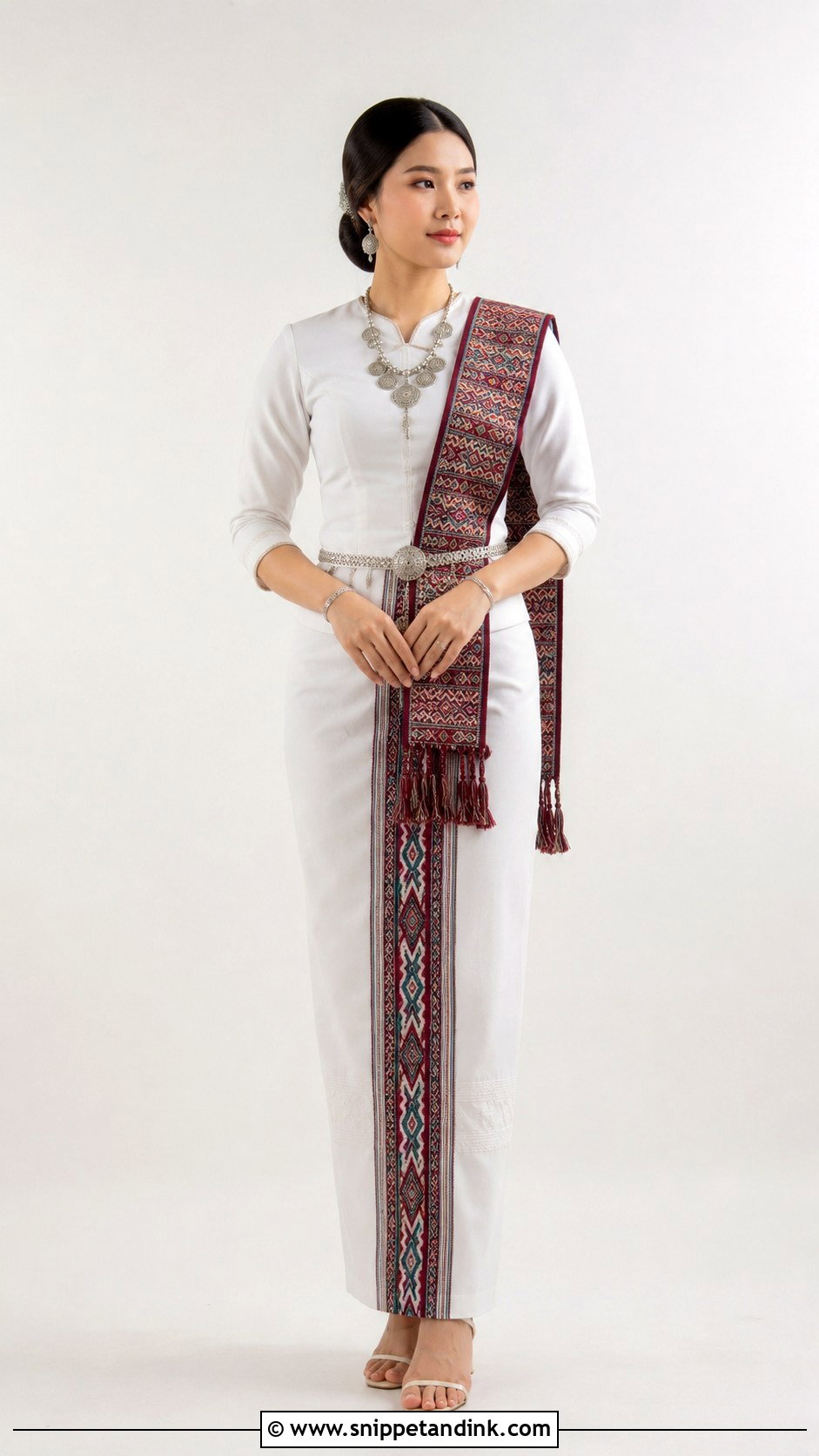
Kachin dress is known for bold woven textiles in deep reds with silver ornaments, so this look needs more care than most. Choose a fitted blouse and long skirt shape, then bring in Kachin-inspired patterns through a sash, trim, shawl or jewelry rather than covering the whole outfit. Silver accessories complement the strong textile. I’d only suggest this one to brides with Kachin heritage, or to couples honoring it with family guidance. If you can, buy the woven pieces from Kachin weavers directly so the patterns are right.
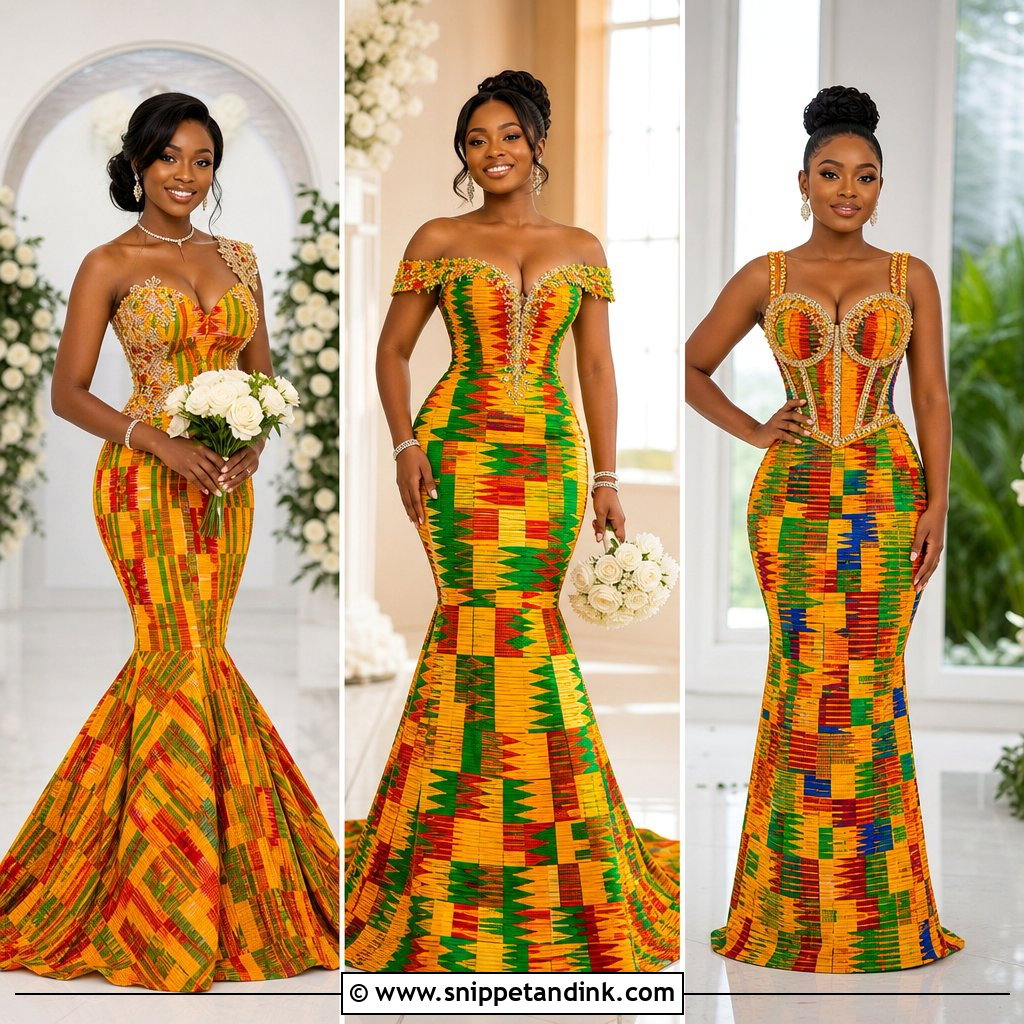

25. Myanmar Wedding Dress With Reception Outfit
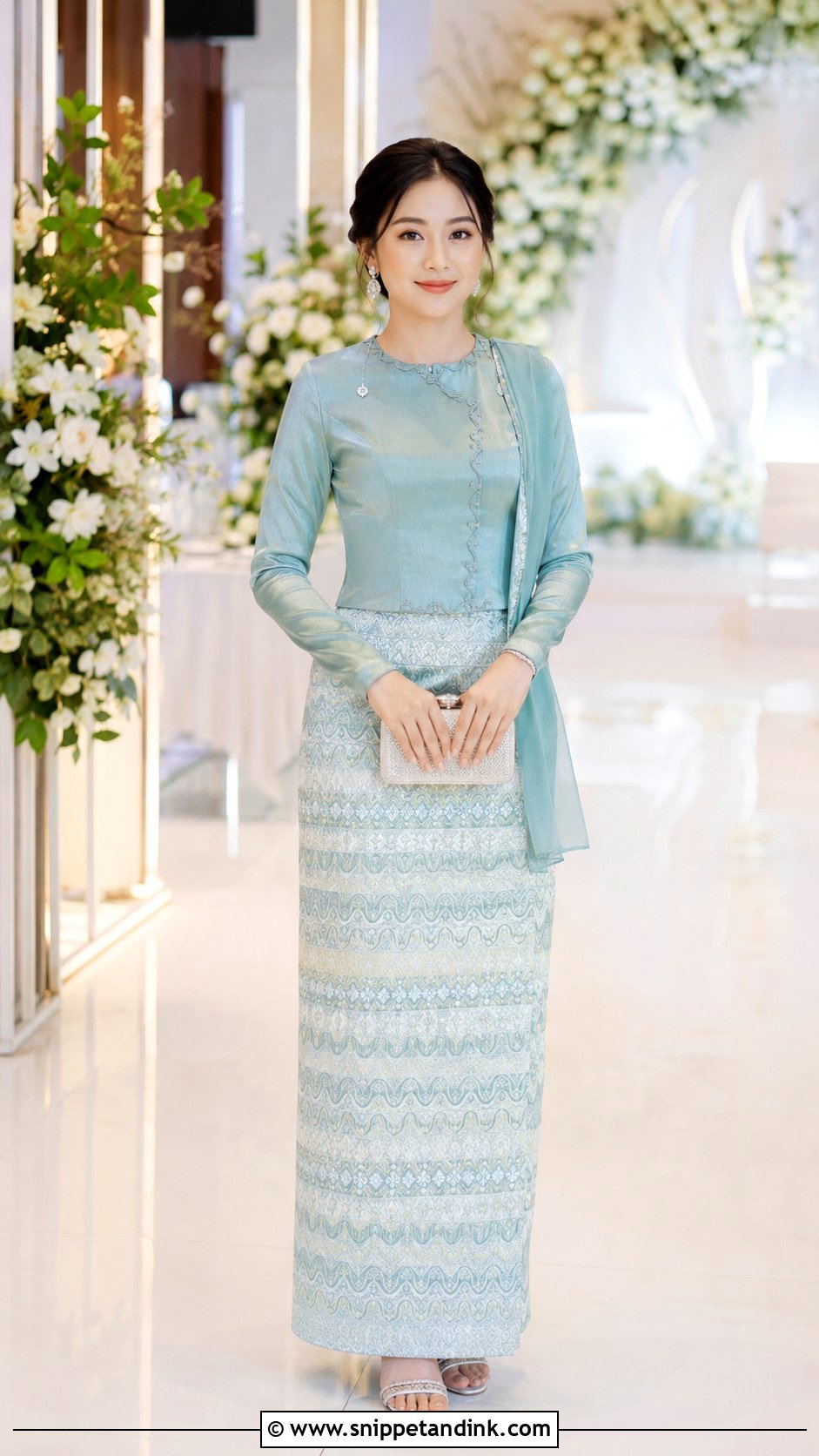
Changing for the reception is common, and the reason is weight. A ceremony outfit with a jacket or dense embroidery is fine for a few hours; by the time you’re greeting guests and dancing, you want less on your shoulders. Choose a silk blouse and htamein in soft gold, blush, teal, ivory or lavender with lighter embroidery, plus comfortable heels or dressy sandals and jewelry that won’t drag at your ears. Hair can stay in its bun, or come down into soft waves if your hairstylist pinned it with that change in mind.
Silk, Velvet and Metallic Thread Each Need Different Care Afterward
These outfits often turn into family pieces, passed to a sister or a daughter, so what you do in the first week after the wedding decides how they’ll look in twenty years.
- Deal with food or makeup marks quickly and take the set to a cleaner who handles silk. Never soak hand-woven acheik, because strongly contrasting dyes can bleed into each other.
- Store silk folded in acid-free tissue rather than hanging, and refold it along different lines every few months so creases don’t set permanently.
- Hang a velvet jacket on a padded hanger with space around it. Folding crushes the pile, and those marks are hard to steam out.
- Metallic embroidery tarnishes in humid air. A breathable cotton garment bag, never plastic, and a dry cupboard slow that down.
- Keep pearls and gold-plated jewelry away from perfume and stored separately, so clasps and settings can’t snag the silk.
In a humid climate, mould is the bigger threat than moths. I air the pieces out on a dry day every few months and keep a few silica packets in the storage box, placed so they don’t touch the fabric.
The Htamein Is Where I’d Spend Most of the Budget
Gold silk, lace blouses, royal jackets, pastel sets and coordinated looks with the groom all start from the same two garments, so the real decisions are fabric, colour and fit. Pick the htamein first, let it set the jewelry metal and the formality, and leave a tailor enough time to fit the blouse properly. A polished hairstyle, broken-in heels and one meaningful heirloom piece will matter more on the day than whatever is fashionable this year. The right outfit suits the ceremony, respects your family’s customs and lets you kneel, walk and sit without thinking about it.
You'll Like These Ideas:




Leave a Reply