
Most of the Sotho brides I dress arrive with one fabric already decided and very little else. Seshoeshoe, also called shweshwe, is still the heart of many Basotho women’s ceremonial wardrobes, and a blanket or headwrap often carries as much meaning as the dress underneath. What changes from bride to bride is the cut: a full printed gown, a white dress with panels of print, a two-piece she can wear again. Below are twenty directions I’d put in front of a bride at a first consultation, with notes on how each one actually wears once the dancing starts and the aunties start adjusting things.
Wash Your Seshoeshoe Before the Tailor Cuts a Single Panel
New Seshoeshoe comes off the bolt stiff with starch and with a faint distinctive smell. That crispness is part of its charm, but it also means the cloth will shrink and soften the first time it gets wet. If a fitted bodice is cut from unwashed fabric, the first time the dress is cleaned it can come out noticeably tighter, and the sleeves are usually the first place you feel it.
So the first instruction I give any bride is to wash the fabric before it goes anywhere near scissors. Soak it in cold water, rinse until the water runs fairly clear, and dry it out of direct sun. Expect a little indigo to bleed in the first rinse, so wash it alone. Iron it while still slightly damp and the surface comes back smooth.
How much extra fabric to buy
- Add a metre or so on top of the tailor’s estimate to allow for shrinkage and pattern matching across seams.
- Buy headwrap fabric from the same bolt as the dress, since dye lots can differ slightly in shade.
- Keep a small offcut. It travels with you to shoe, bag and white-fabric shopping so you compare colours in daylight.
- If you plan a detachable train or overskirt, tell the tailor now, because those pieces take more length than people expect.
Check the direction of the print too. Many designs have a clear up and down, and a skirt cut with half its panels upside down is something no one notices until the photos come back.
1. Blue Sotho Traditional Wedding Dress
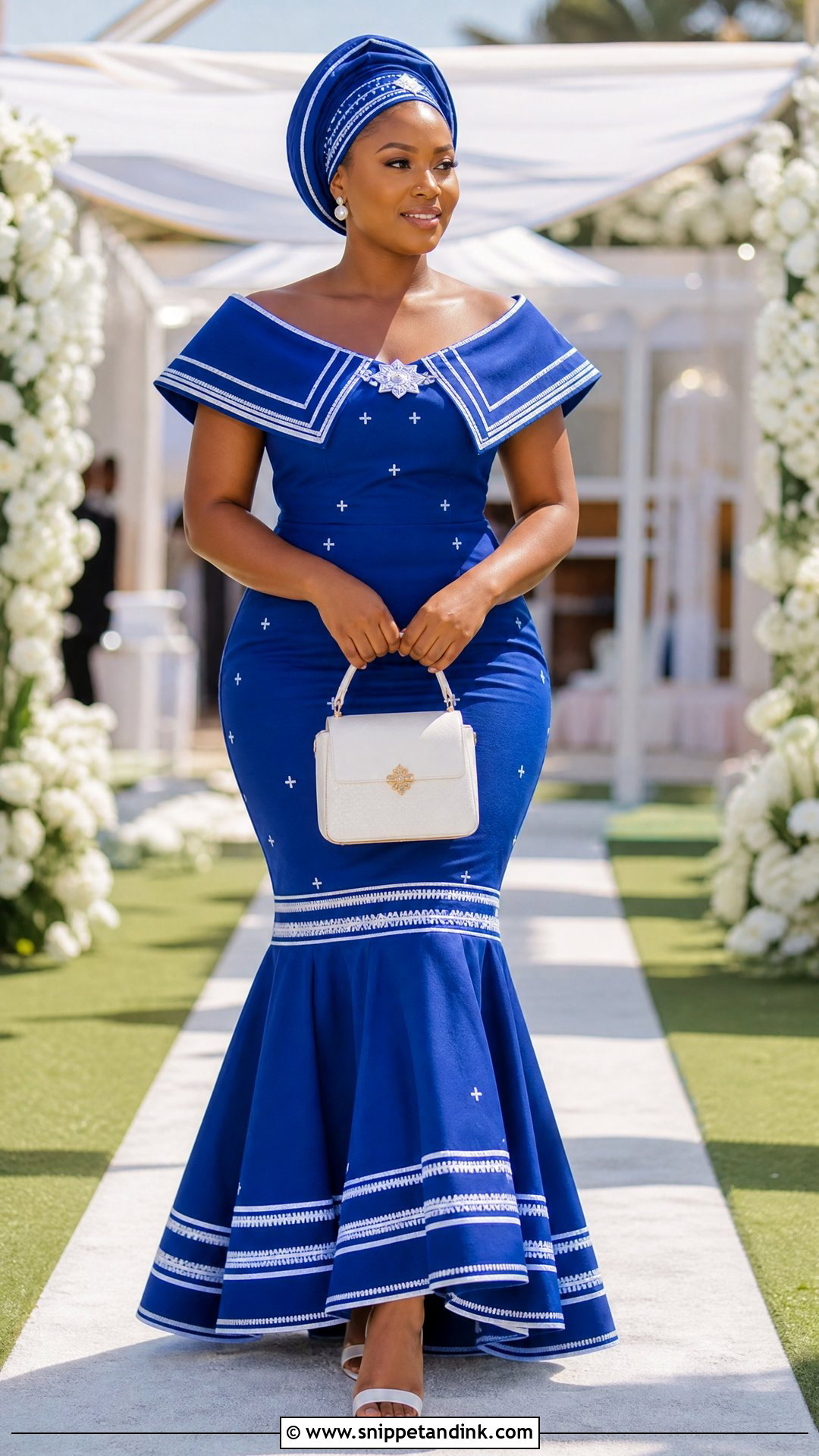
Blue is the colour most people picture for a Sotho wedding celebration, and it’s the easiest print to tailor because the small motifs hide seam joins well. I like a fitted bodice with a round or shallow V neckline over a floor-length skirt with real walking room. White ribbon or piping at the waist and sleeve tiers gives the print an edge without fighting it. Navy or white block heels, pearl studs and a small structured bag finish it. If a blanket will go over the shoulders, ask the family which pattern they expect before you fix the neckline, because a heavy wool fold sits right where a deep V would be.
2. Red Sotho Traditional Wedding Dress
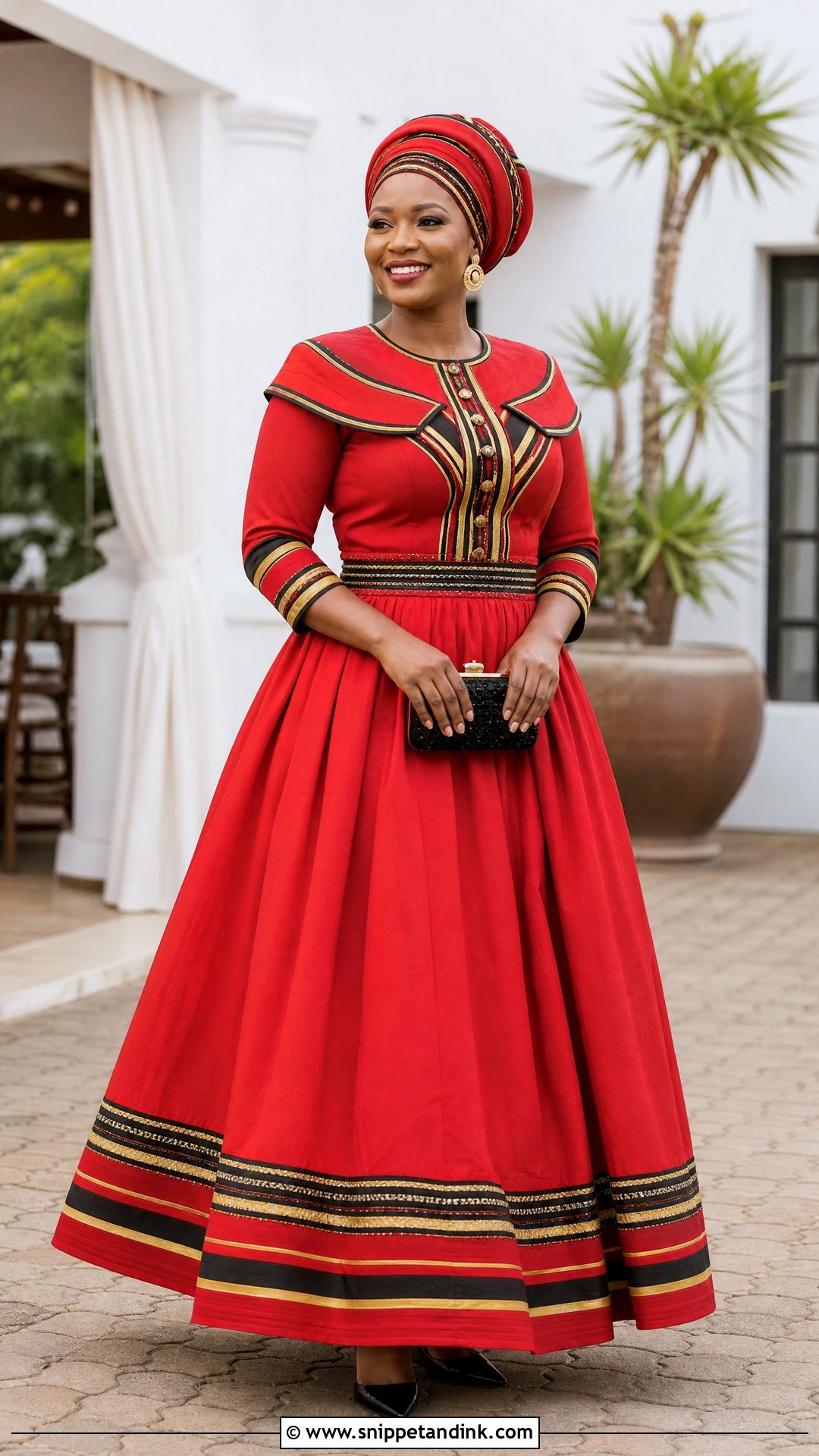
Red reads from across a field, so it suits outdoor ceremonies where guests stand far back. A floor-length cut with a shaped waist, three-quarter sleeves and a gentle flare stays formal but lets you climb steps and kneel without a fight. Black, white or gold trim at the neckline and cuffs is plenty. I keep jewellery to simple gold earrings here, since red plus a busy necklace plus a tall headwrap starts to compete. Low black pumps get you through a long ceremony. If a blanket is coming, let it be the only other strong layer.
3. Green Sotho Traditional Wedding Dress
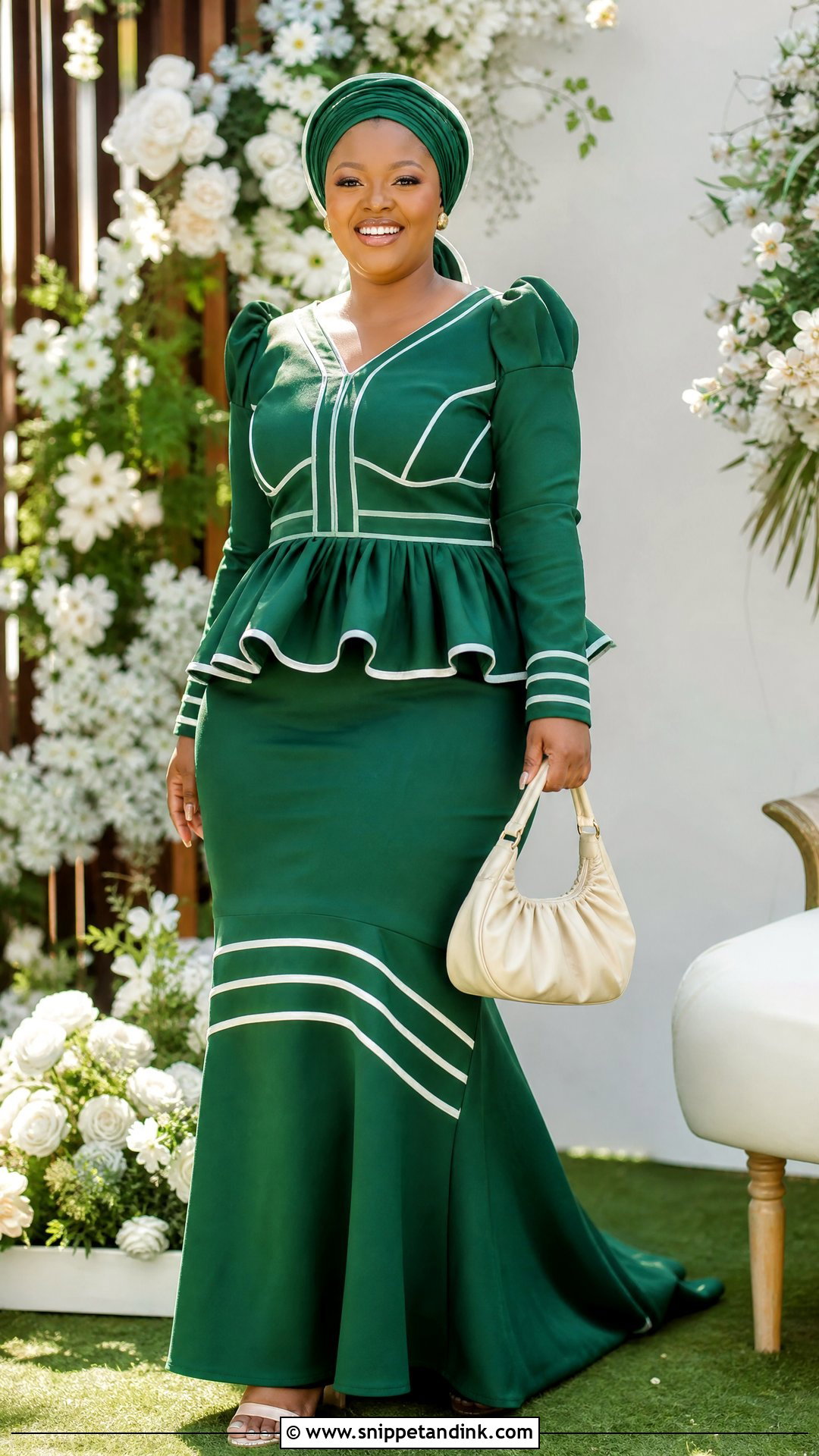
Green print looks its best against open landscape, and I’d pick it for any ceremony held outdoors in the mountains or a garden. A peplum waist over a long trumpet skirt gives shape in the middle and movement at the hem without a crinoline. White piping and covered buttons keep the print tidy. Cream block heels and a cream bag calm the colour down. One practical warning from fittings: a trumpet cut in cotton needs extra ease through the hips, because unlike stretch fabric it will not give when you sit, and a breathable cotton lining stops it clinging on a warm day.
4. Brown Sotho Traditional Wedding Dress
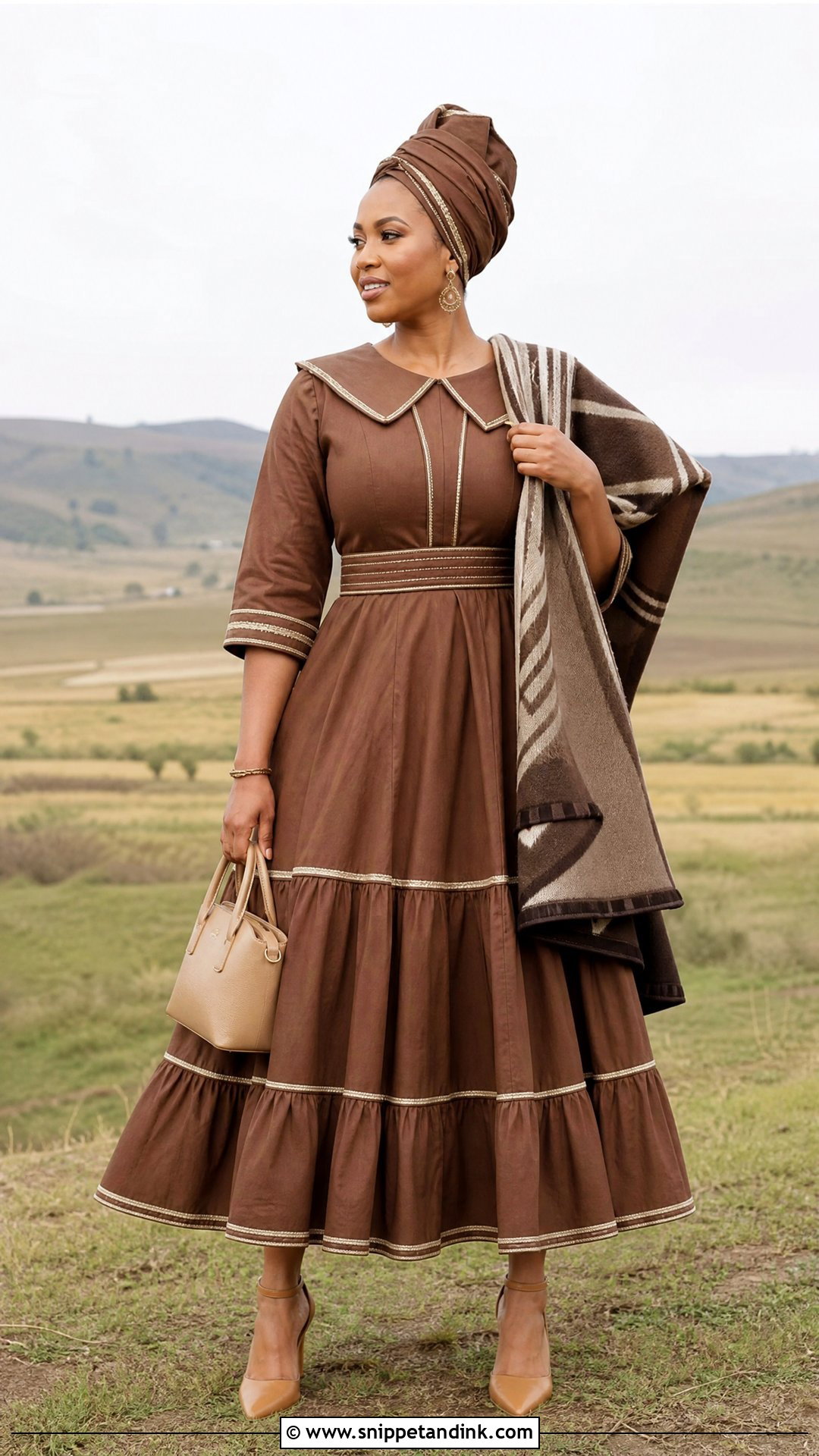
Brown suits the bride who doesn’t want to be the brightest thing in the room. A long A-line with a firm waistband, elbow sleeves and a tiered hem is traditional and easy to personalise. Cream or beige trim lifts the print near the face, which matters because brown can flatten skin tone in shade. Brown Seshoeshoe often carries several tiny accent colours, and the mistake I see most is trying to match every one. Pull your accessories from the lightest shade in the print, add bronze earrings and tan heels, and a blanket in a toning colour over one shoulder if the ceremony calls for it.
5. Yellow Sotho Traditional Wedding Dress
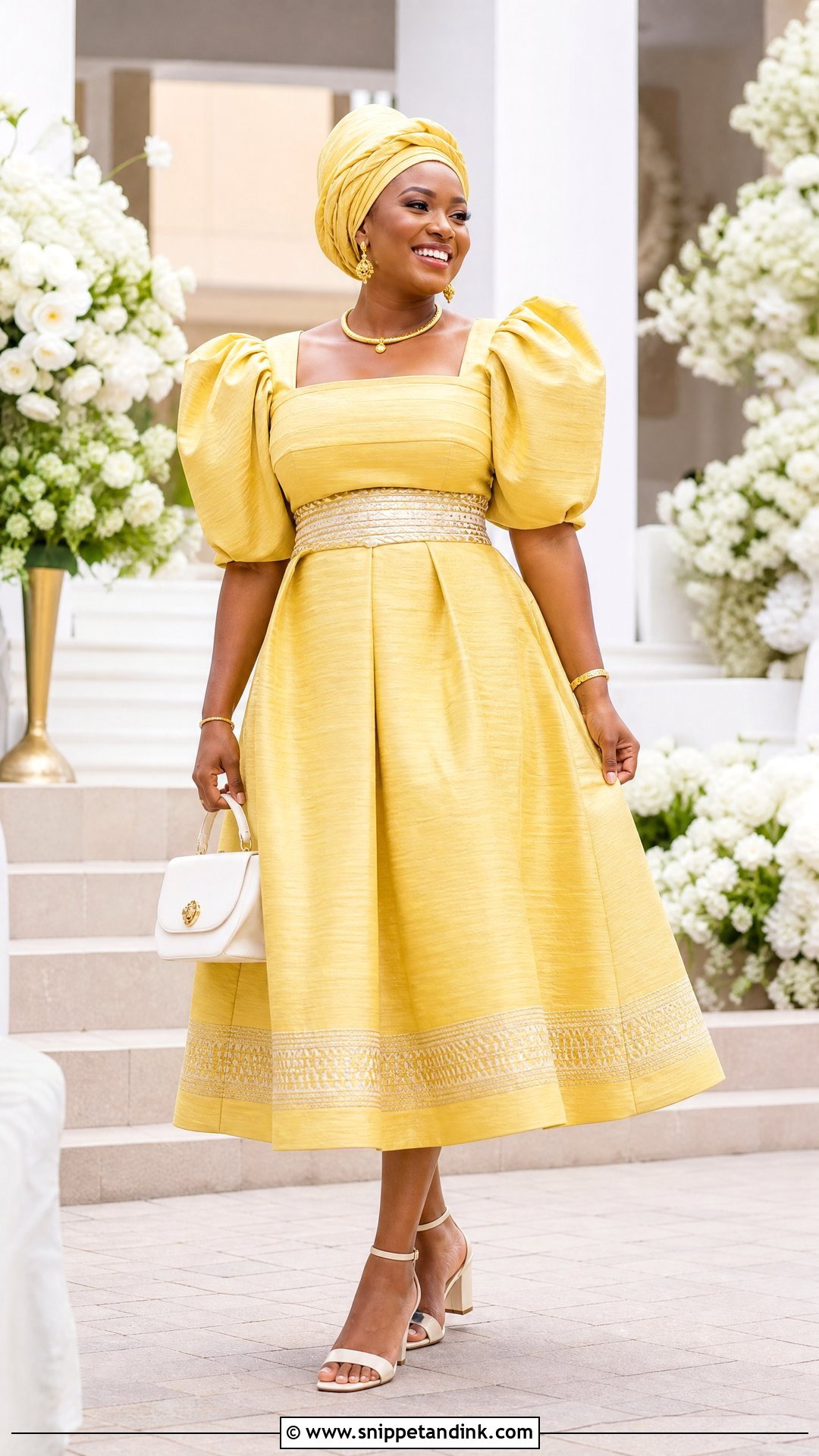
Yellow is cheerful and very honest about tailoring: every wrinkle and uneven seam shows. That’s why I’d cut it as a structured midi or ankle-length dress with a fitted bodice and a softly gathered skirt rather than anything loose. Short puff sleeves and a wide waistband give it shape; elbow-length cuffs are an easy swap if you need more coverage. White edging at the neckline and hem keeps it crisp. Cream sandals, fine gold jewellery and a white bag are enough. Skip extra contrast decoration, because yellow already draws every eye.
6. Purple Sotho Traditional Wedding Dress
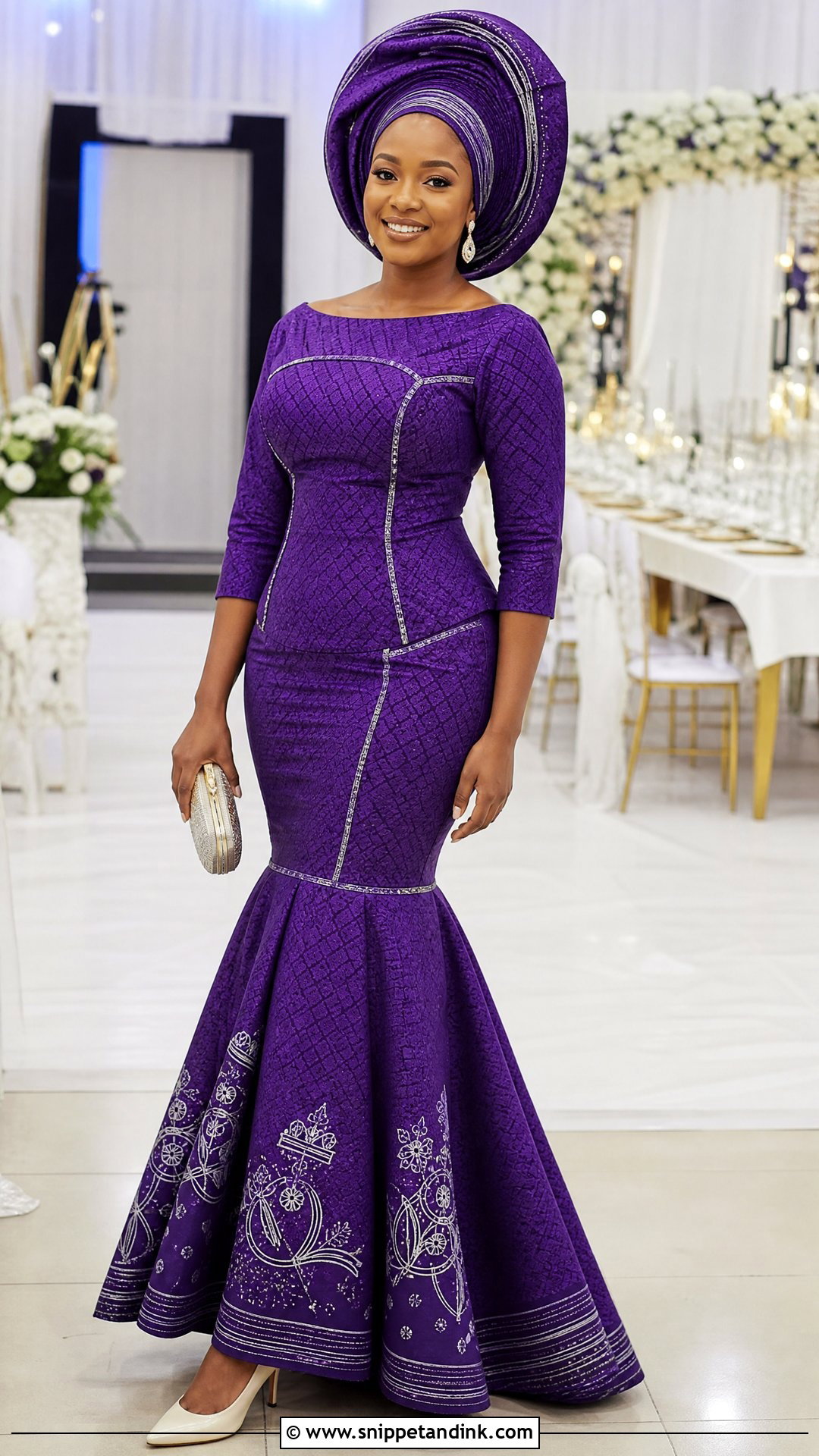
Deep purple Seshoeshoe holds up well under hall lighting and marquee canvas, where brighter shades can look washed out. A mermaid cut with a bateau neckline and three-quarter sleeves gives drama, with the flare starting around the knee. Silver or white piping along the seams shows off the tailoring. Pair it with a sculpted headwrap, silver drops and grey or ivory heels. Before the final fitting, I always have the bride walk up and down stairs in it: a narrow cotton mermaid needs a discreet back slit or it will hobble her. On a cold day a well-chosen Basotho blanket adds warmth as well as depth.
7. Orange Sotho Traditional Wedding Dress
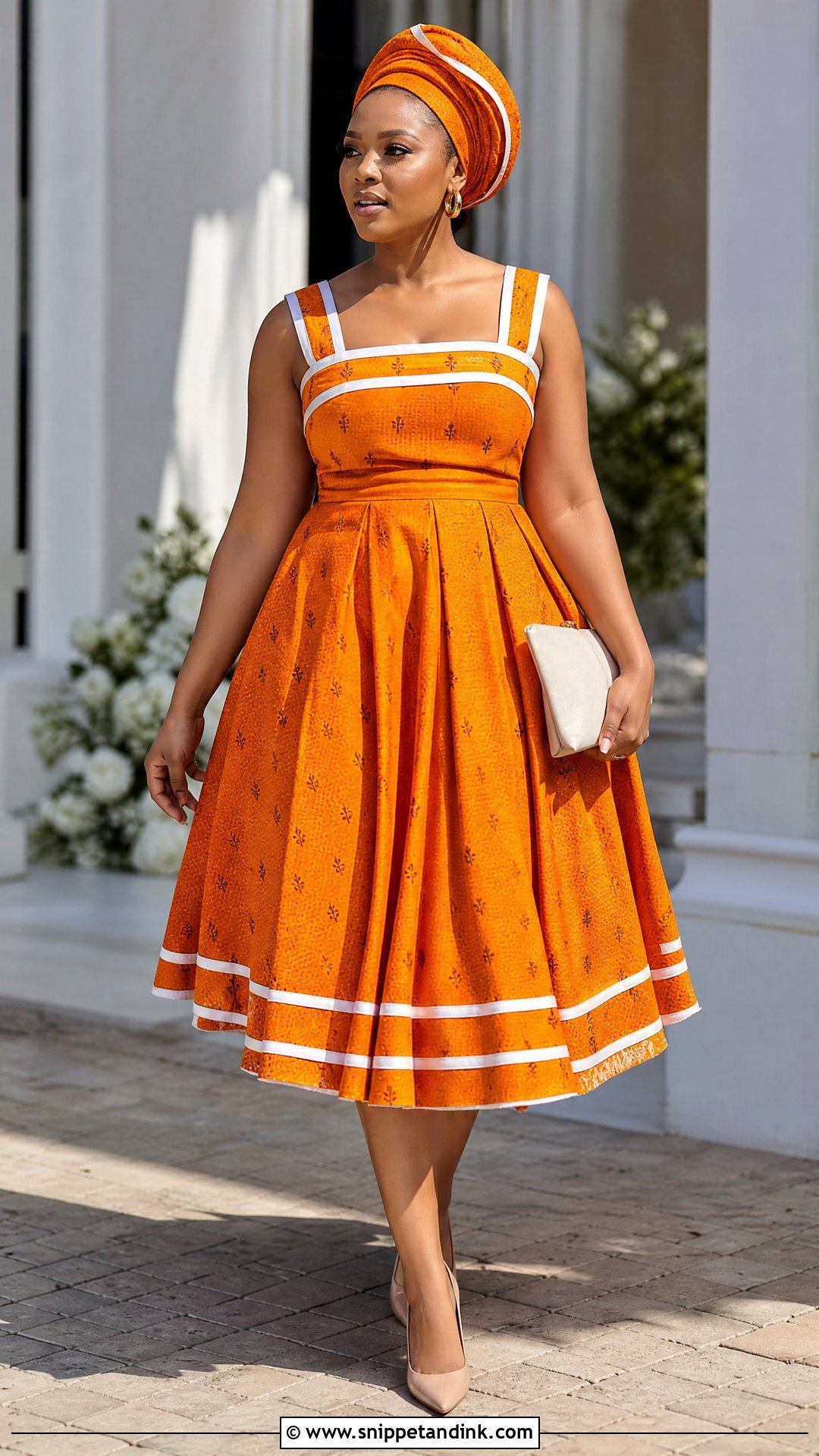
Orange works best in daylight, when it glows rather than turning muddy. An off-the-shoulder gown with supportive straps, a fitted waist and a wide A-line skirt mixes a modern bridal shape with the traditional print. Many families prefer covered shoulders for the formal part of the day, so I often suggest a wide portrait neckline instead, or a removable wrap for the ceremony that comes off for the reception. White ribbon at the neckline and hem ties it together. Gold hoops, a cream clutch and nude pumps keep the rest quiet, and a soft makeup look stops the face competing with the fabric.
8. Black And White Sotho Traditional Wedding Dress
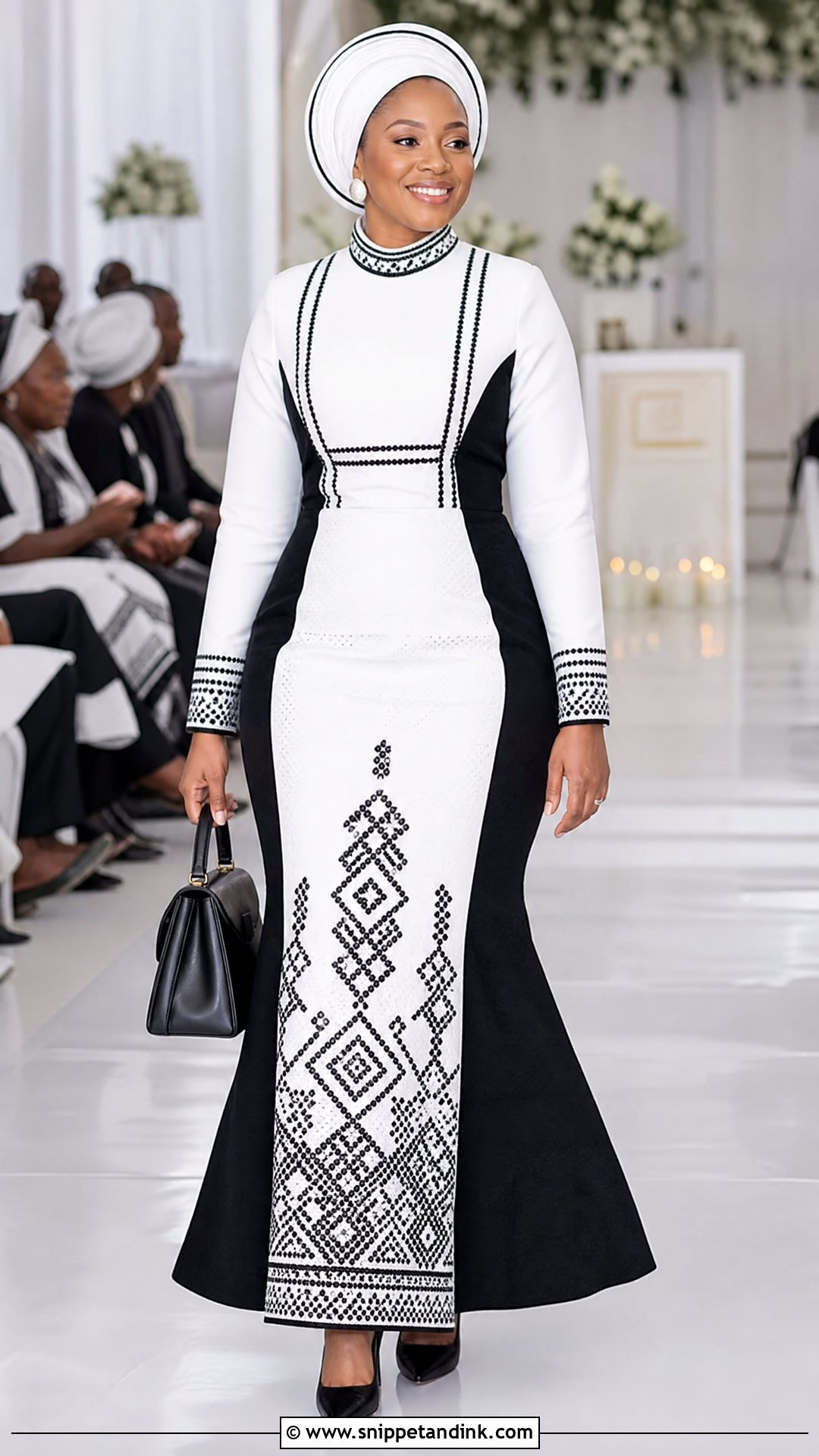
Black and white is the sharpest of these, and the least forgiving of a poor fit, since high contrast exaggerates any pull lines. A long fit-and-flare with a high neck, fitted sleeves and a natural waist is a clean starting point. Solid black side panels add shape without breaking up the print. A white headwrap brightens the face; black pumps and a small black bag ground it. Prefer it softer? Use white fabric for the bodice and print for the skirt. My rule for two-colour outfits is that each colour appears at least twice, so nothing looks like it wandered in from another wardrobe.
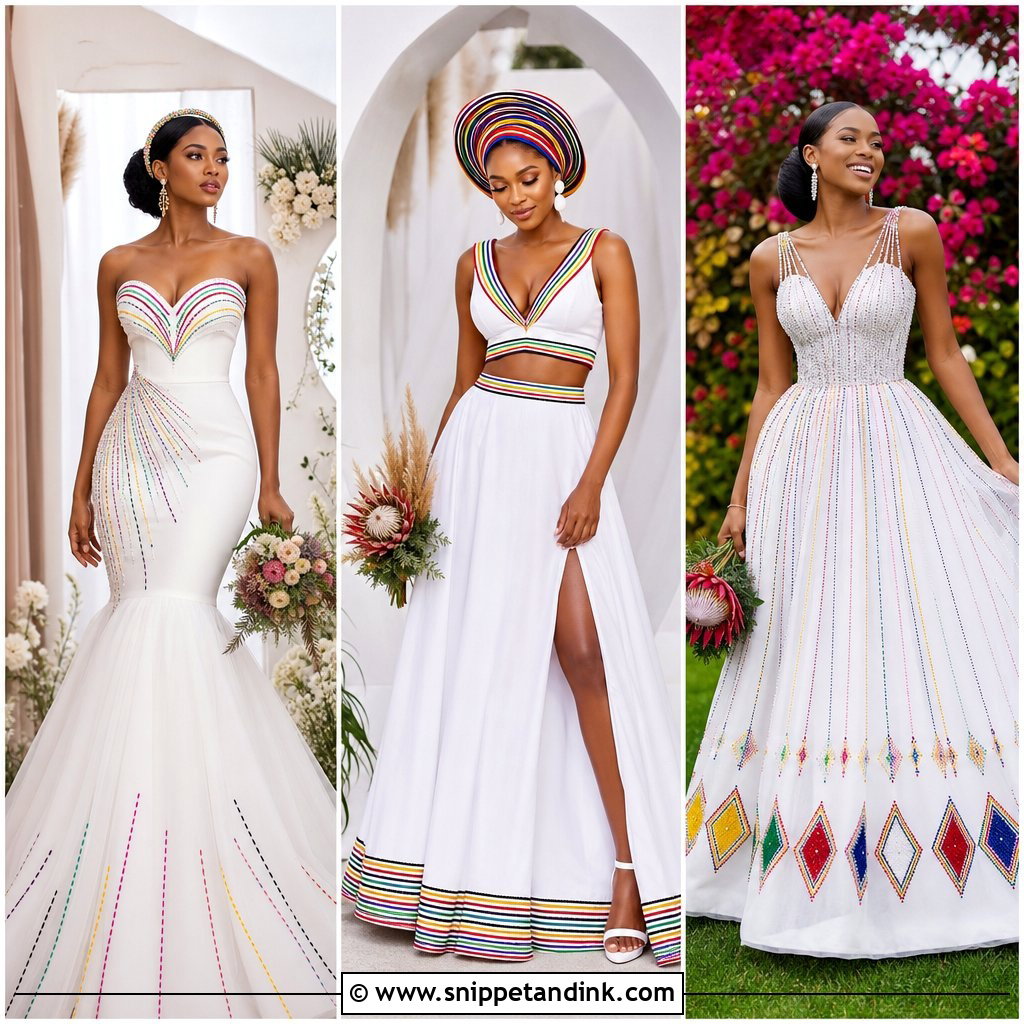
9. White Sotho Wedding Dress With Seshoeshoe Panels
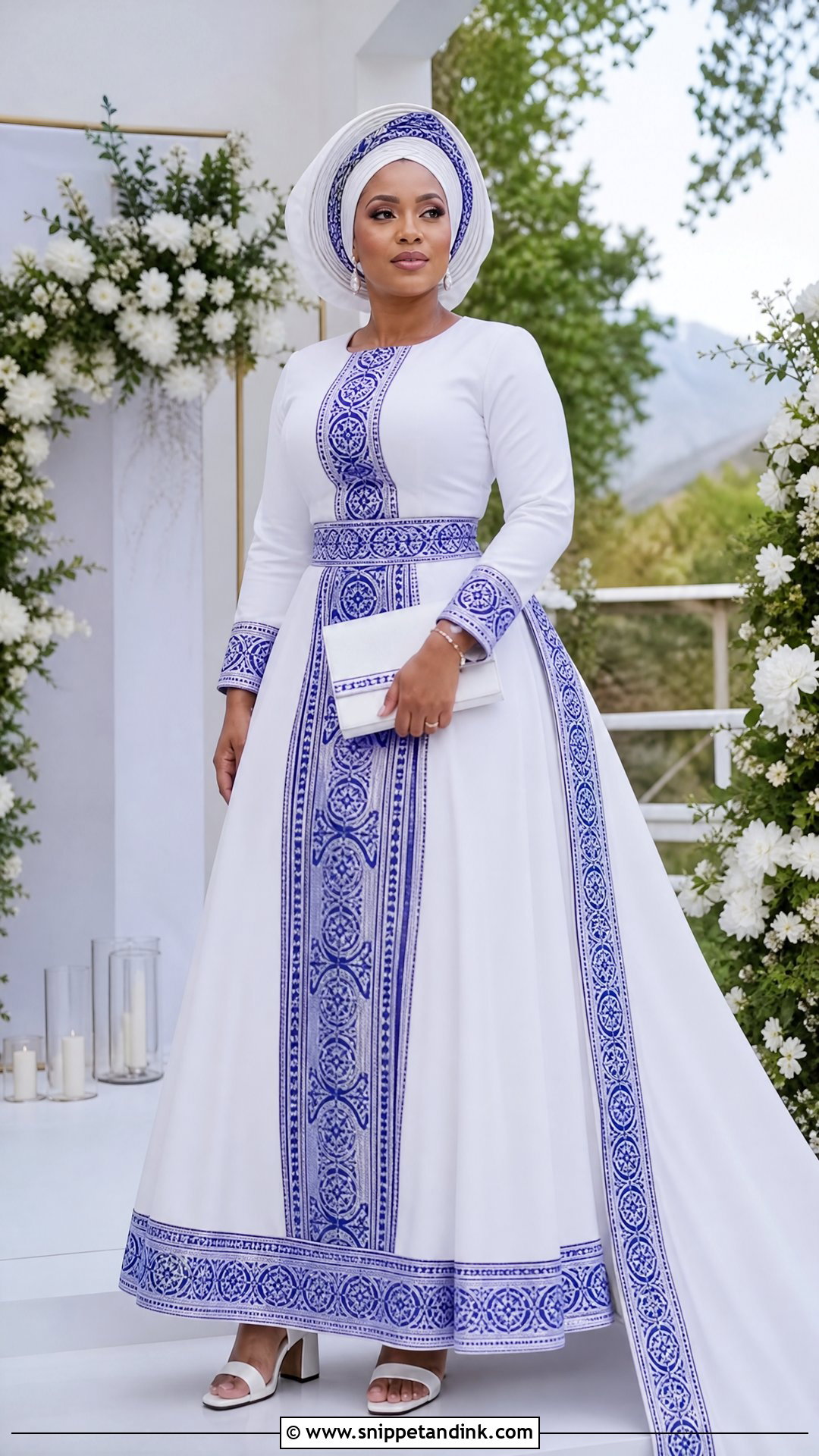
A white gown with Seshoeshoe panels is the answer I give most often to a bride planning one dress for both a church service and a family celebration. Start with a floor-length white A-line with a plain fitted bodice and sleeves you can move in. Set blue, brown or red print down the centre front of the skirt, at the cuffs and across the waist, so the print shows from every side. A detachable printed train adds drama for the portraits. Here is the fussy bit: whites vary hugely, from blue-white to cream, so carry a swatch of your print to every fabric shop and compare it by a window, not under the shop lights.
10. Sotho Traditional Wedding Dress With Basotho Blanket
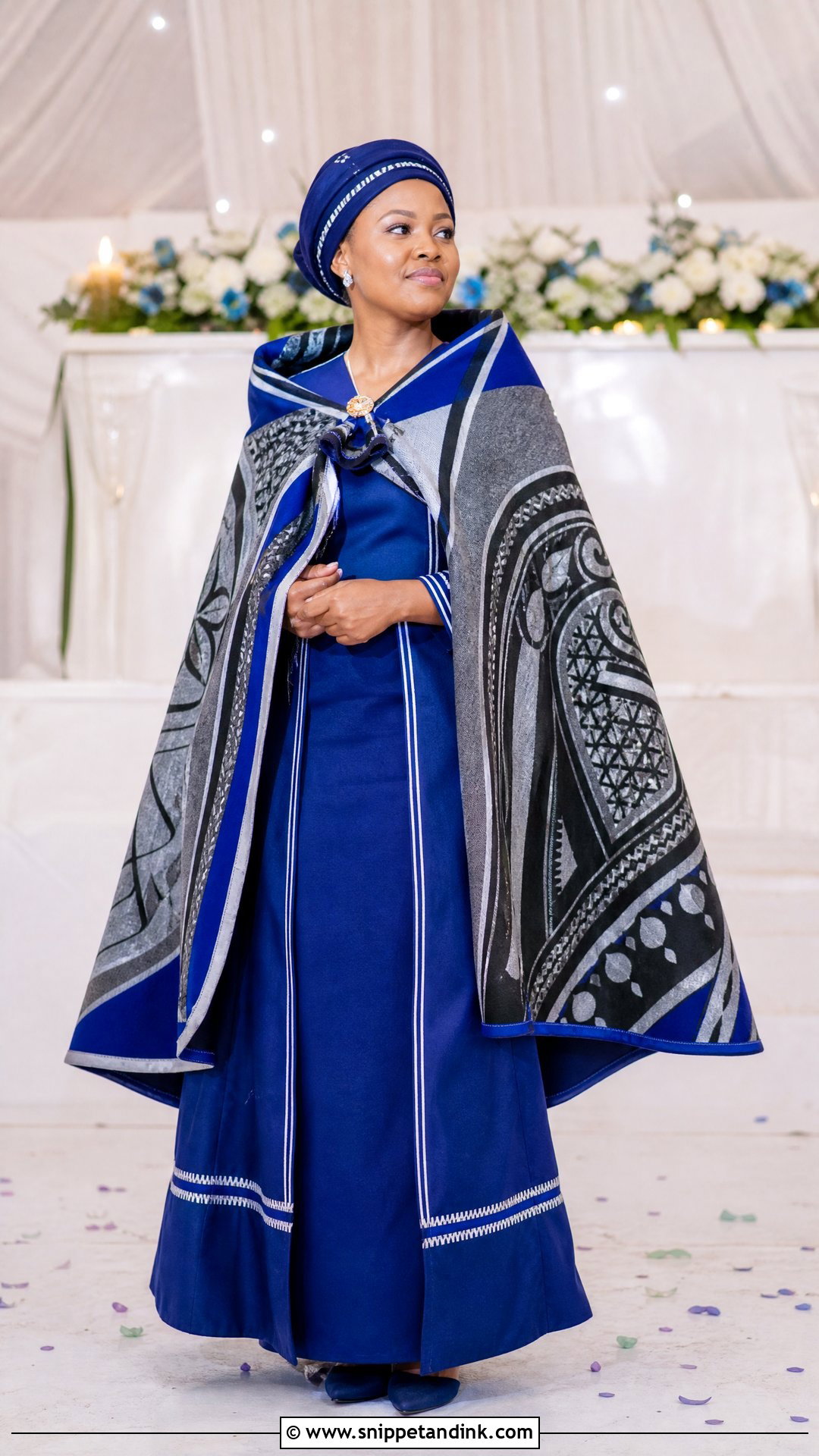
Pairing Seshoeshoe with a Basotho blanket gives the most layered, ceremonial version of the outfit. Blankets are worn at weddings and other important gatherings, and in many families a new bride receives or wears one as part of moving into married life. Because a folded blanket adds real bulk at the shoulders, I keep the dress underneath streamlined: fitted bodice, straight skirt, three-quarter sleeves. Low closed shoes and restrained jewellery follow. Before you buy or borrow the blanket, sit down with the relatives who know the family’s customs. They will tell you which pattern is expected and how it should be pinned, and that conversation is worth more than any styling advice I can give.
11. Sotho Traditional Wedding Ball Gown
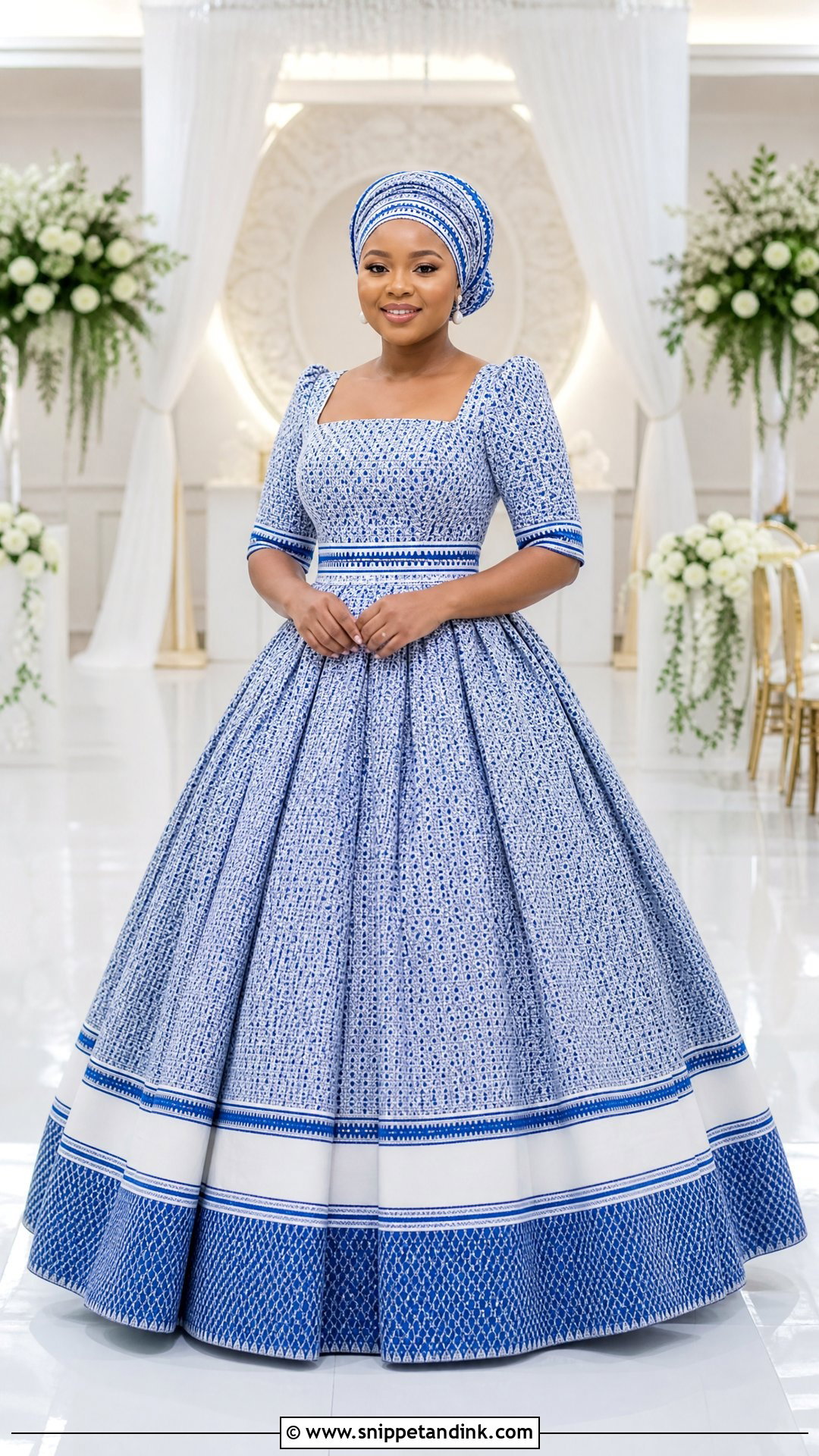
A ball gown in printed cotton makes an entrance, but it’s also the heaviest thing on this list. The bodice must fit smoothly through shoulders and waist, then the skirt opens into structured pleats or layered panels. A square neckline and elbow sleeves balance the volume. Use ribbon trim sparingly at cuffs, waist and outer skirt. Block heels hidden under the hem give stability. I’d ask for a removable petticoat or a lighter reception skirt if there will be hours of dancing, and I’d only trust this one to a tailor who has built formal gowns before, because a cotton skirt this full needs proper internal support to hang without sagging.
12. Sotho Traditional Wedding Mermaid Dress
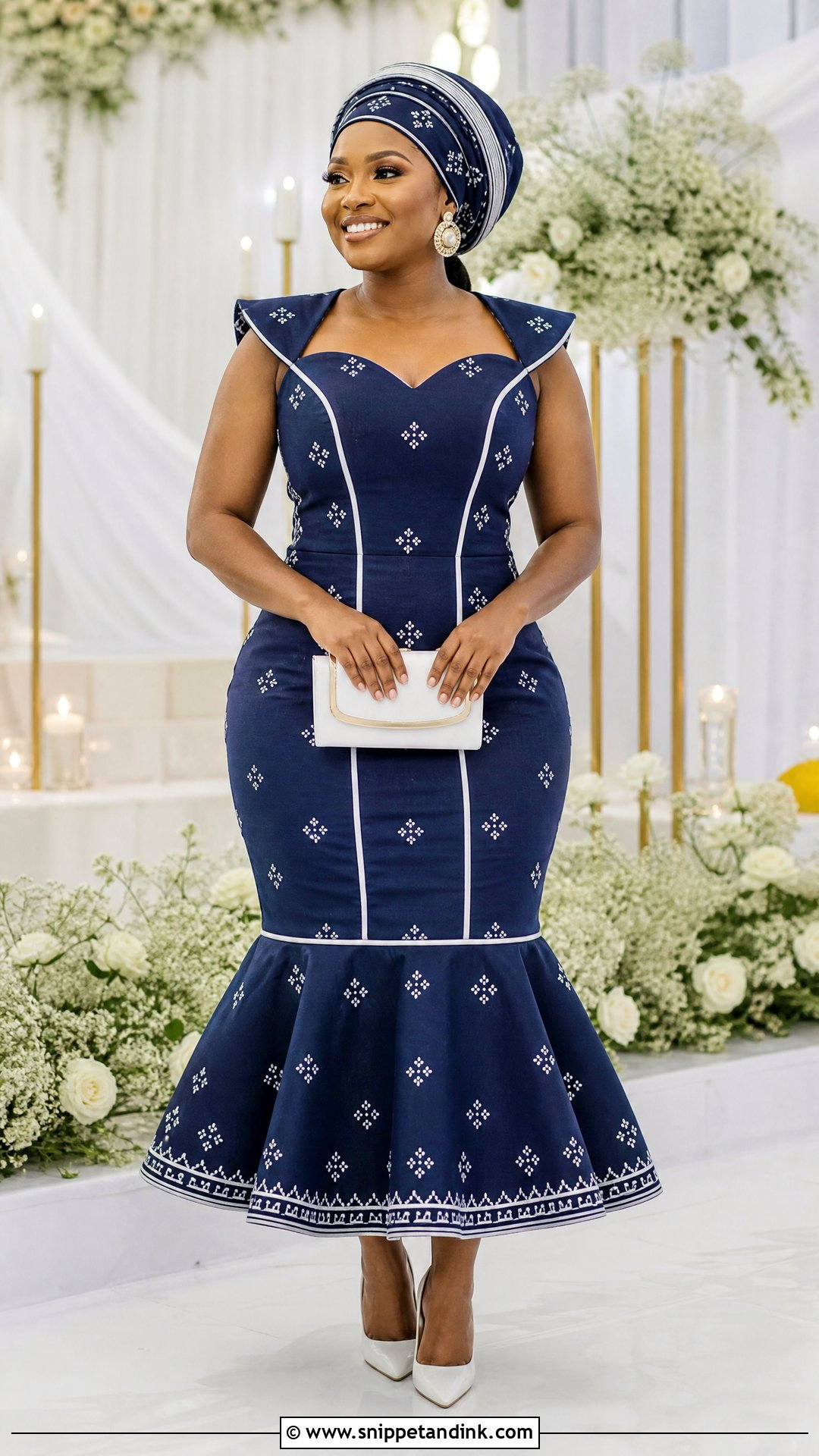
Cotton print in a mermaid shape looks sleek in pictures and can be miserable to wear if it’s cut like stretch eveningwear. The gown should follow the body comfortably to the hips and widen near the knee. A modest sweetheart neckline with shoulder coverage softens the silhouette. Solid side panels or vertical piping lengthen the line. Pointed pumps, a matching headwrap and simple metallic earrings keep the volume down. At the fitting, sit, walk and do a short dance step in it. If it rides up or pinches, it needs a back slit, a hidden pleat or a flexible lower panel before the day.
13. Sotho Traditional Wedding Peplum Dress
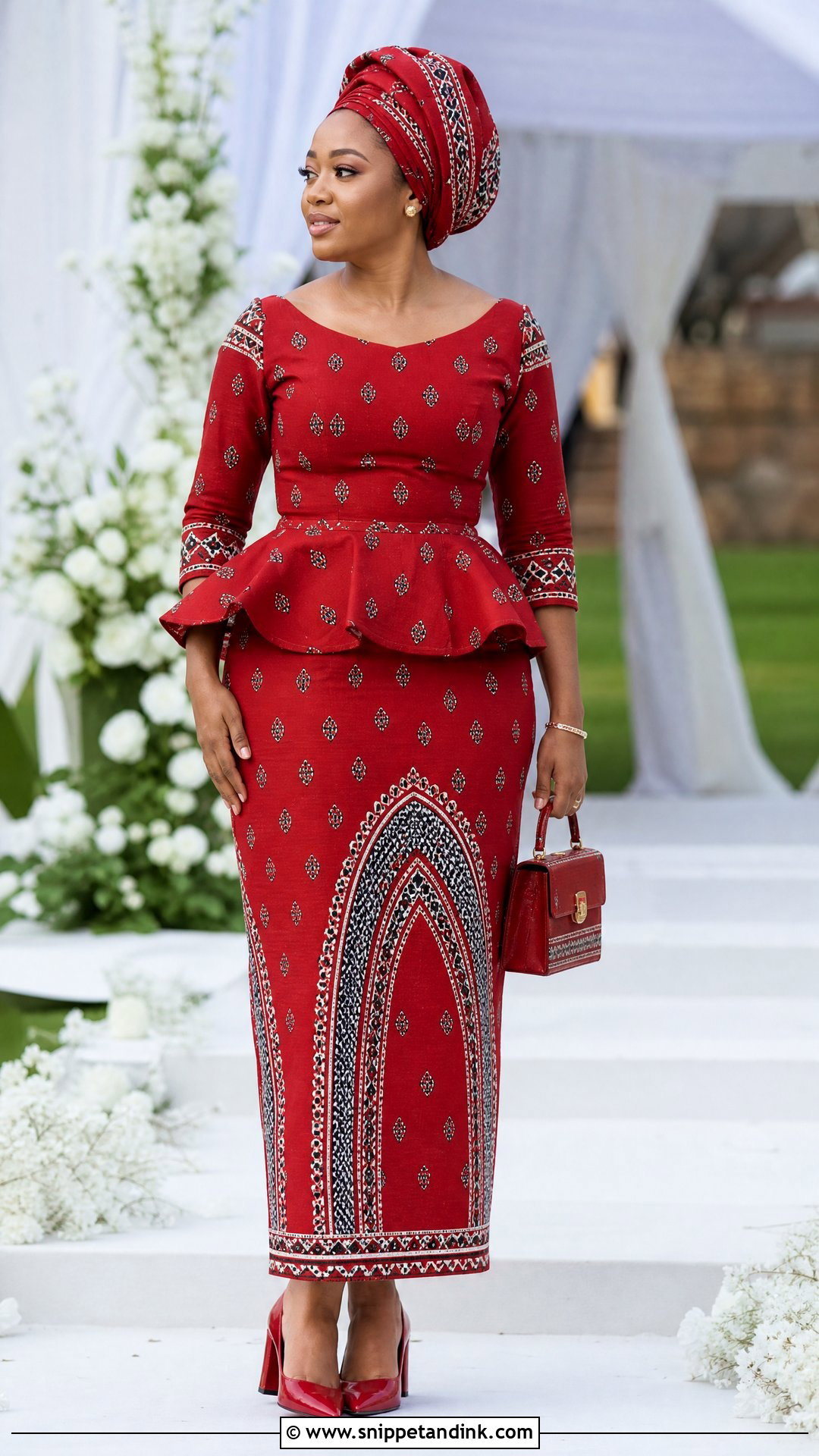
The peplum is my usual suggestion for a bride who wants her waist defined without a corset. A fitted Seshoeshoe bodice with a gently structured peplum sits over a long straight or slightly flared skirt. Cut it symmetrical for a classic look, or longer at the back for movement as you walk. Three-quarter sleeves and a rounded neckline keep it refined. Keep trim at the neckline, waist and cuffs only, or the print gets crowded. One idea I like a lot: have the peplum made as a separate overskirt that buttons on, so it comes off for a simpler reception outfit.
14. Sotho Traditional Wedding Two-Piece Dress
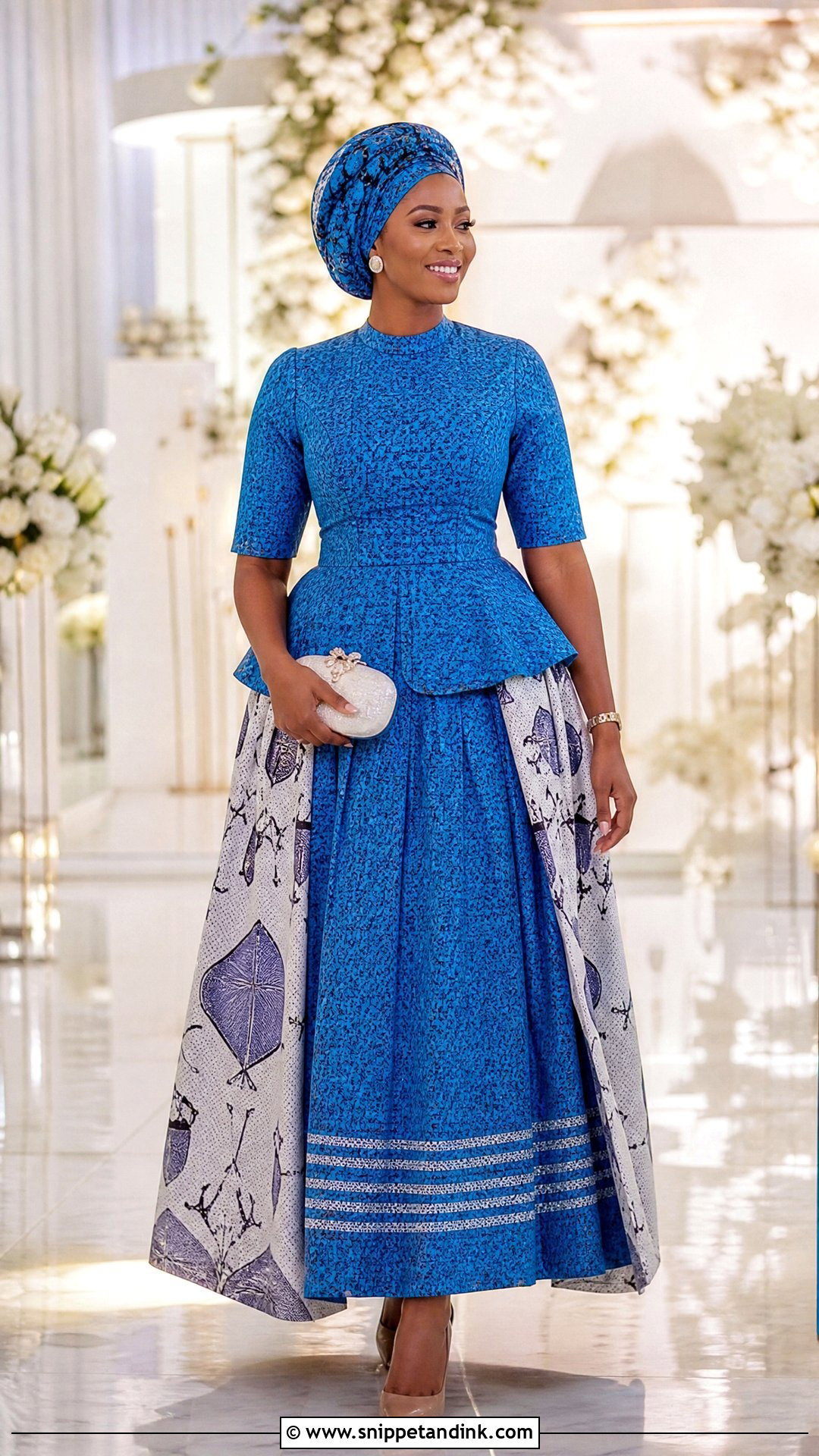
A two-piece is the outfit brides thank me for at the end of the night, because the waistband can be loosened and the skirt actually gets worn again. Pair a structured peplum top with a floor-length skirt that sits securely at the natural waist. Elbow sleeves, a high round neckline and covered buttons down the back look formal. A lightly gathered skirt walks easily. Check the overlap while seated: the top should cover the waistband when you lean forward to eat. Ask the tailor to line up the print across both pieces so it reads as one garment, and add a detachable overskirt or blanket for the ceremony.
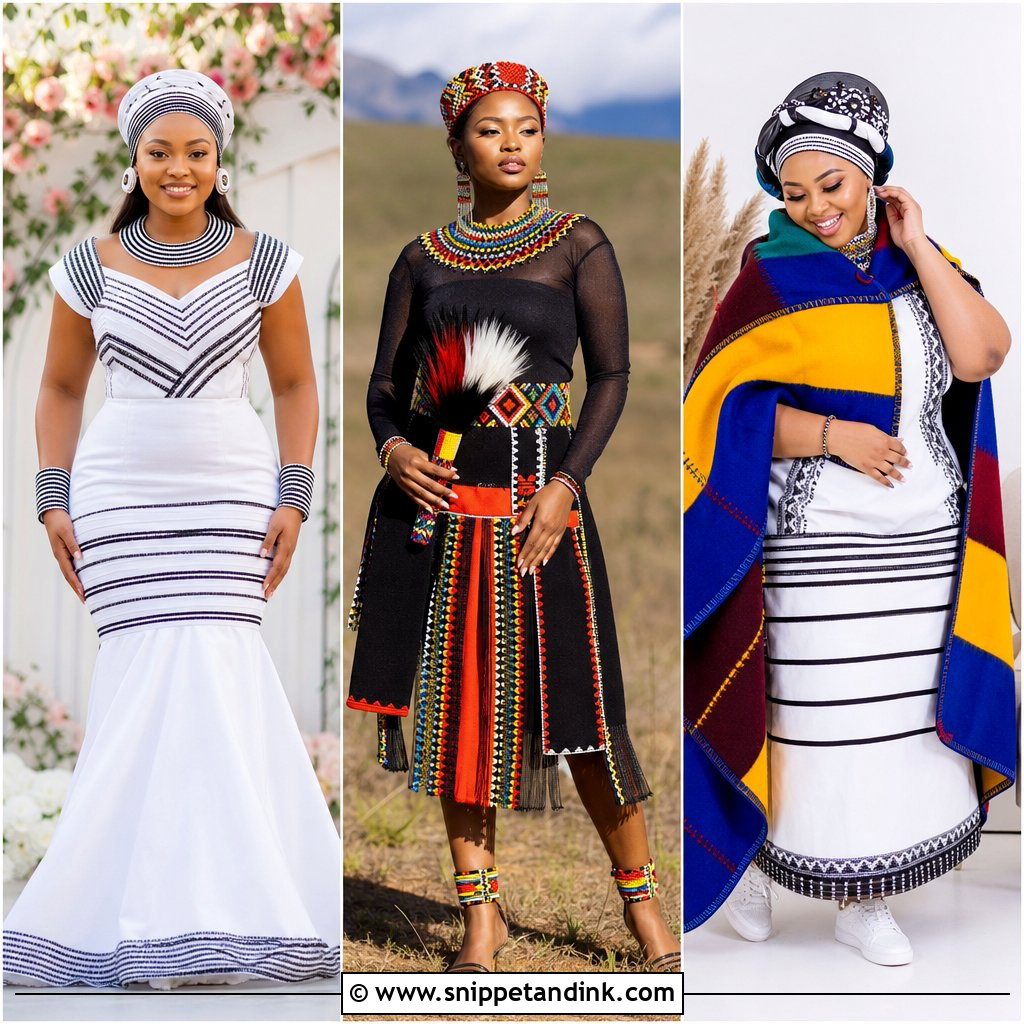
15. Sotho Traditional Wedding Dress With Puff Sleeves
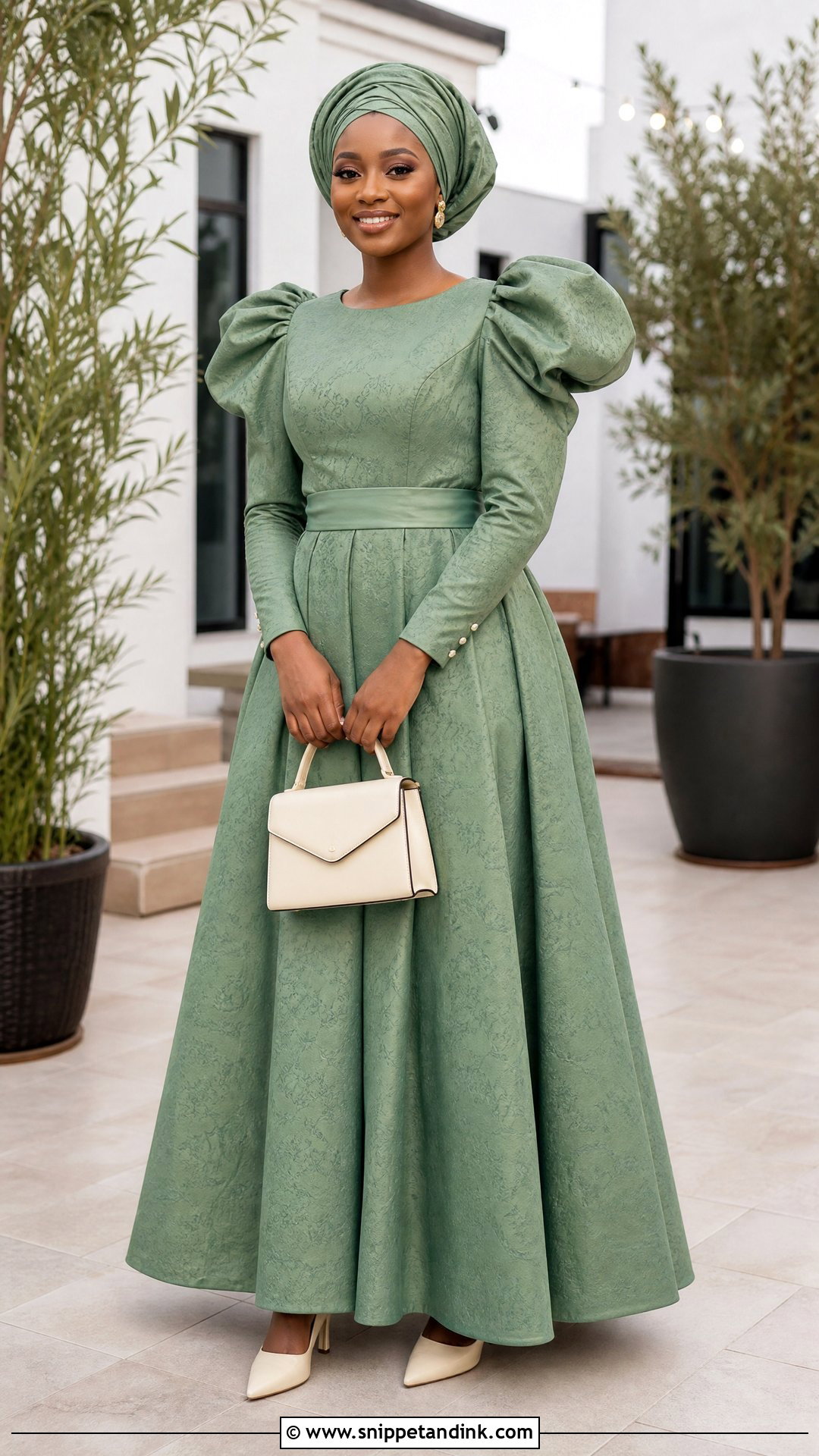
Puff sleeves give a Seshoeshoe dress a fashionable shoulder line. I prefer sleeves that rise gently at the shoulder and narrow above the elbow, so you can still lift your arms to hug people. Keep the neckline plain and the waistband smooth; sleeves plus a busy neckline is too much. A plain cream, navy or black bag sits well against the print. Broader shoulders usually look better with softer, less structured gathers, while a narrow frame can carry fuller ones. Pin a sleeve at the first fitting before cutting both, because height and width are hard to judge on a hanger.
16. Sotho Traditional Wedding Dress With Layered Skirt
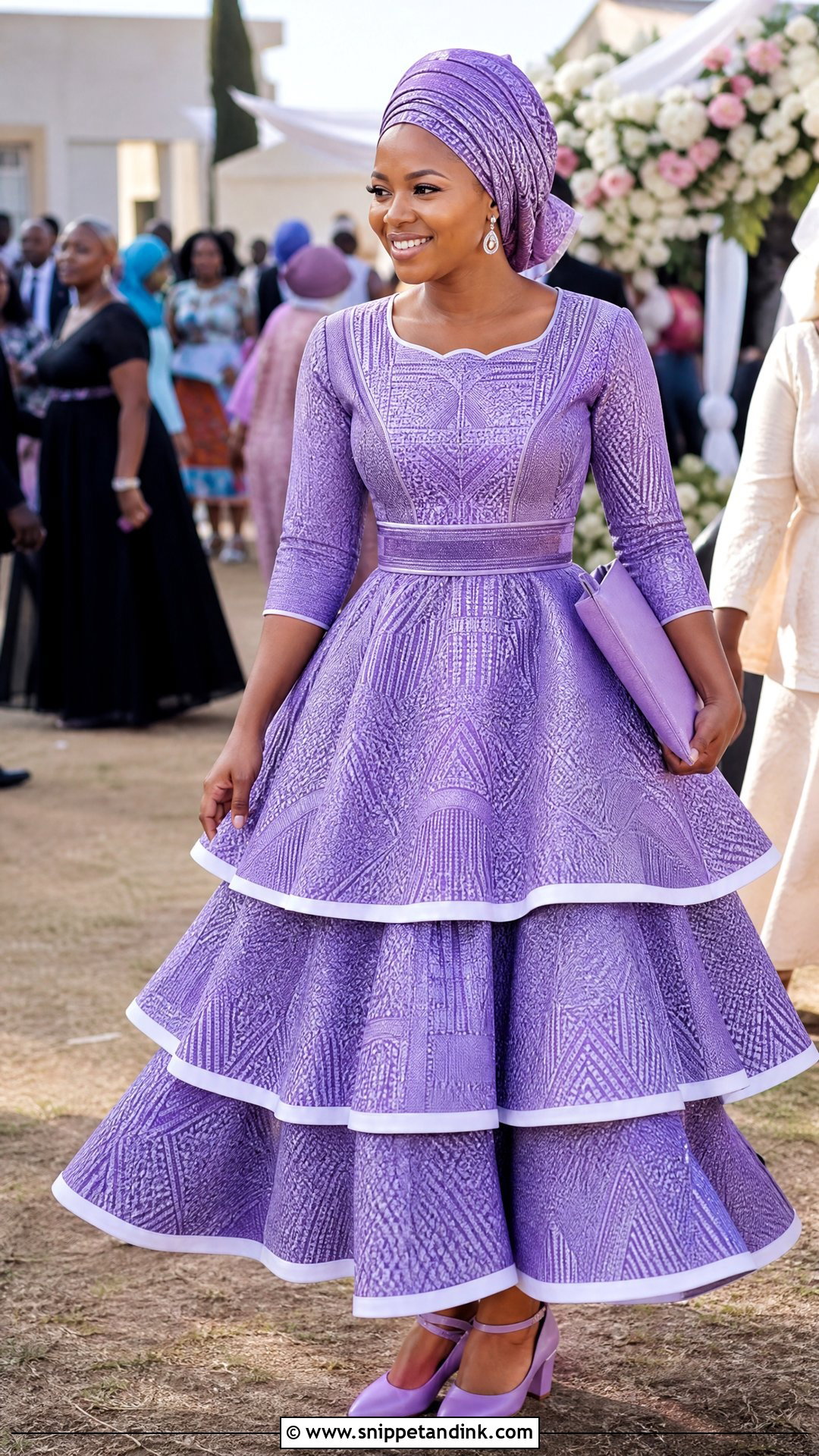
Tiers add movement without the weight of a ball gown, which makes this cut a good outdoor option. Build it on a fitted bodice, a defined waist and two or three broad tiers, with narrow ribbon separating each layer so they read in photos. Fitted sleeves balance the volume below. Low block heels cope with uneven grass. My standard note to the tailor is to keep the upper tiers light and hem the bottom one a little shorter at the front, so it doesn’t catch under your toes on a slope. Proportioned well, it swings when you dance.
17. Sotho Traditional Wedding Midi Dress
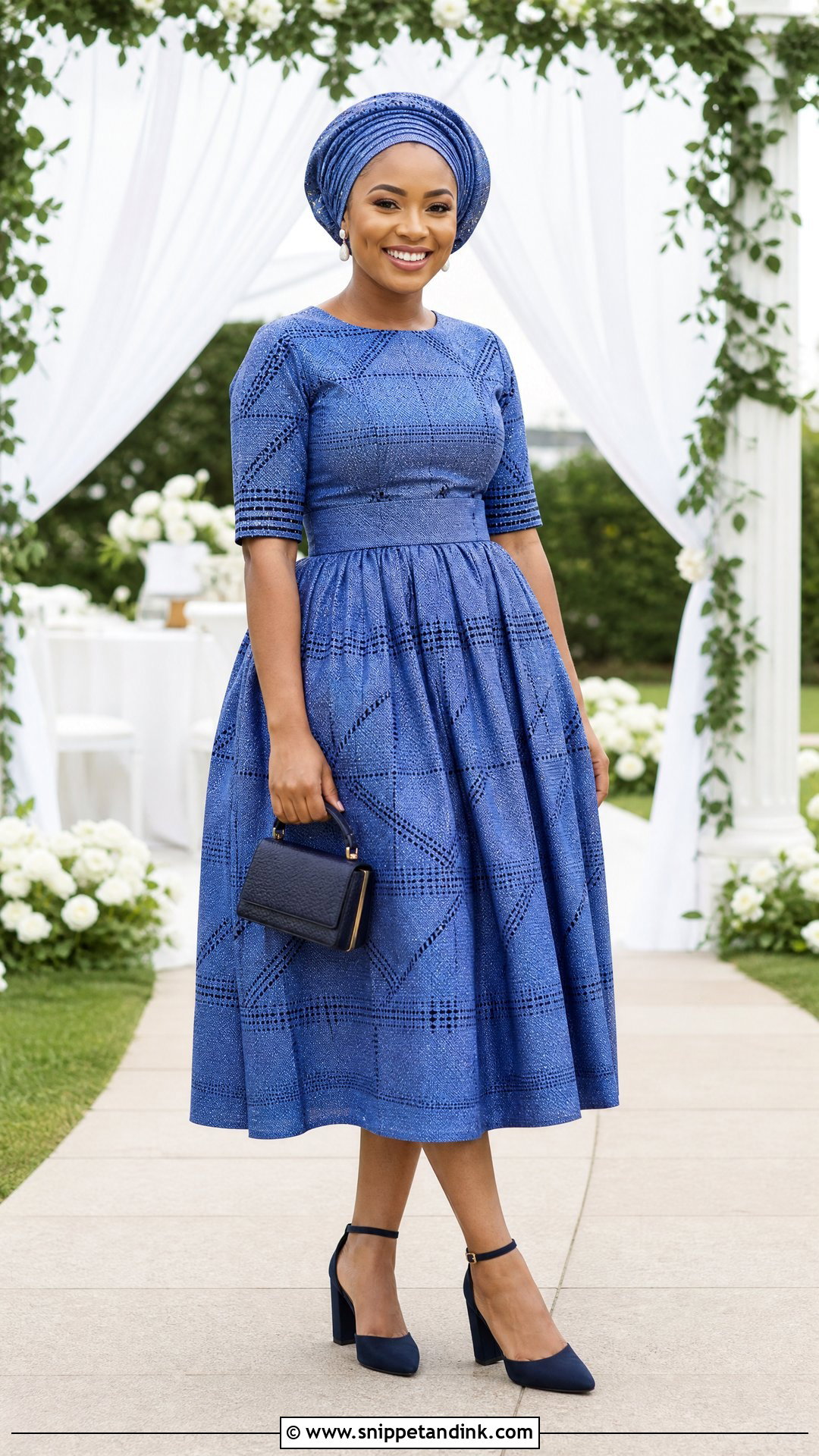
A midi suits a small ceremony, a hot afternoon or a bride with several outfit changes. Tea length, ending below the knee or around mid-calf, with a fitted bodice and short or elbow sleeves, plus a wide waistband over a pleated skirt. Since your shoes are fully on show, choose them carefully: polished block heels, pumps or smart flats in a colour pulled from the print. Keep accessories formal so the shorter hem still feels ceremonial. A tailored jacket or toning blanket covers you when the evening cools.
18. Sotho Traditional Wedding Dress With Matching Headwrap
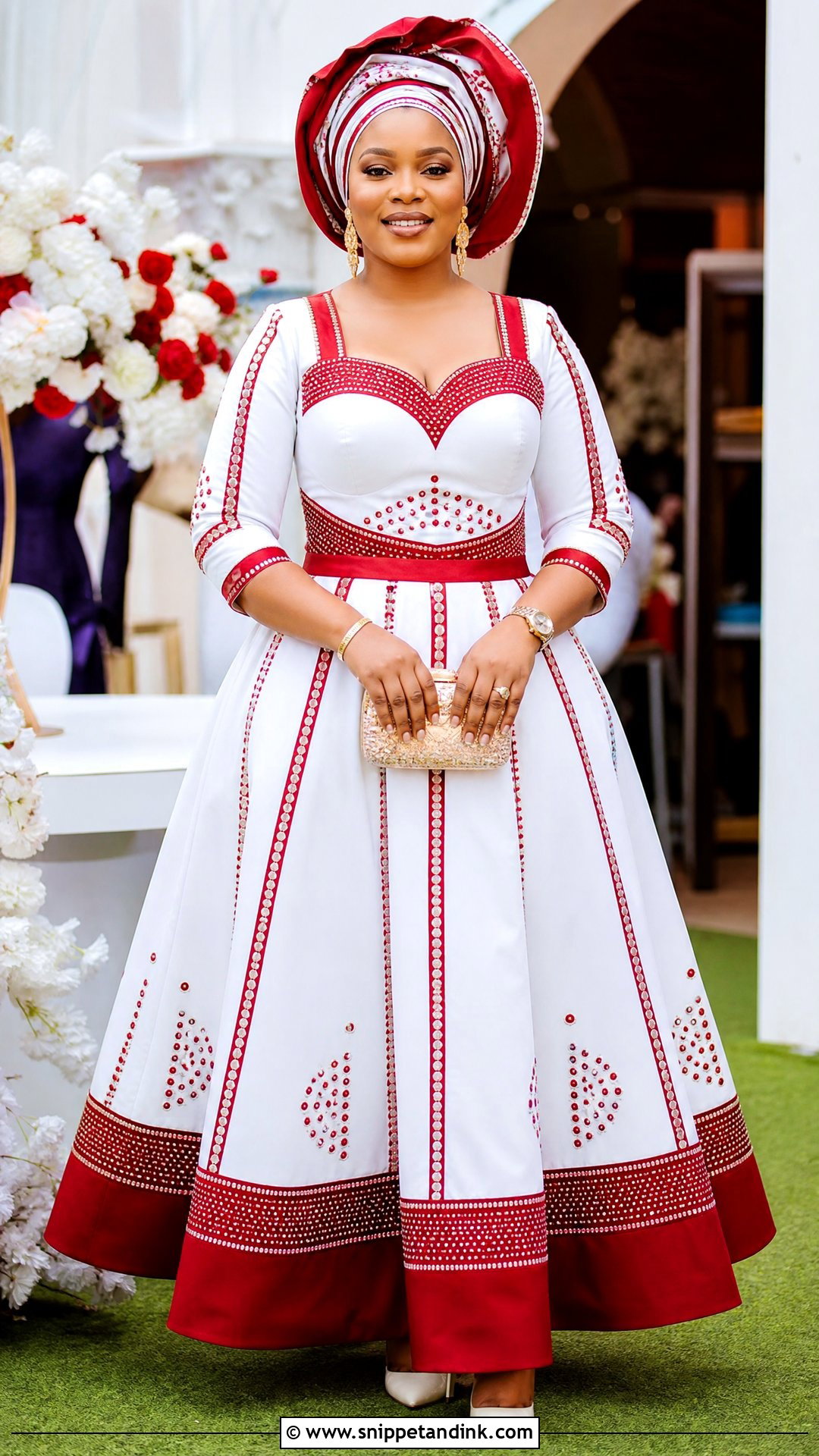
A headwrap in the same fabric pulls the whole outfit together, but it has to be planned with the dress, not added at the end. Over a long Seshoeshoe gown with a shaped bodice and A-line skirt, I cut the headwrap on a different grain so the folds don’t disappear into the matching print. Scale its height to the face and to the volume of the skirt. Add a blanket and the headwrap should get simpler, or the top half becomes crowded. Practise tying it several times before the wedding, or book someone who ties wraps regularly, and anchor it with pins at the back so it survives hugs and dancing.
19. Plus-Size Sotho Traditional Wedding Dress
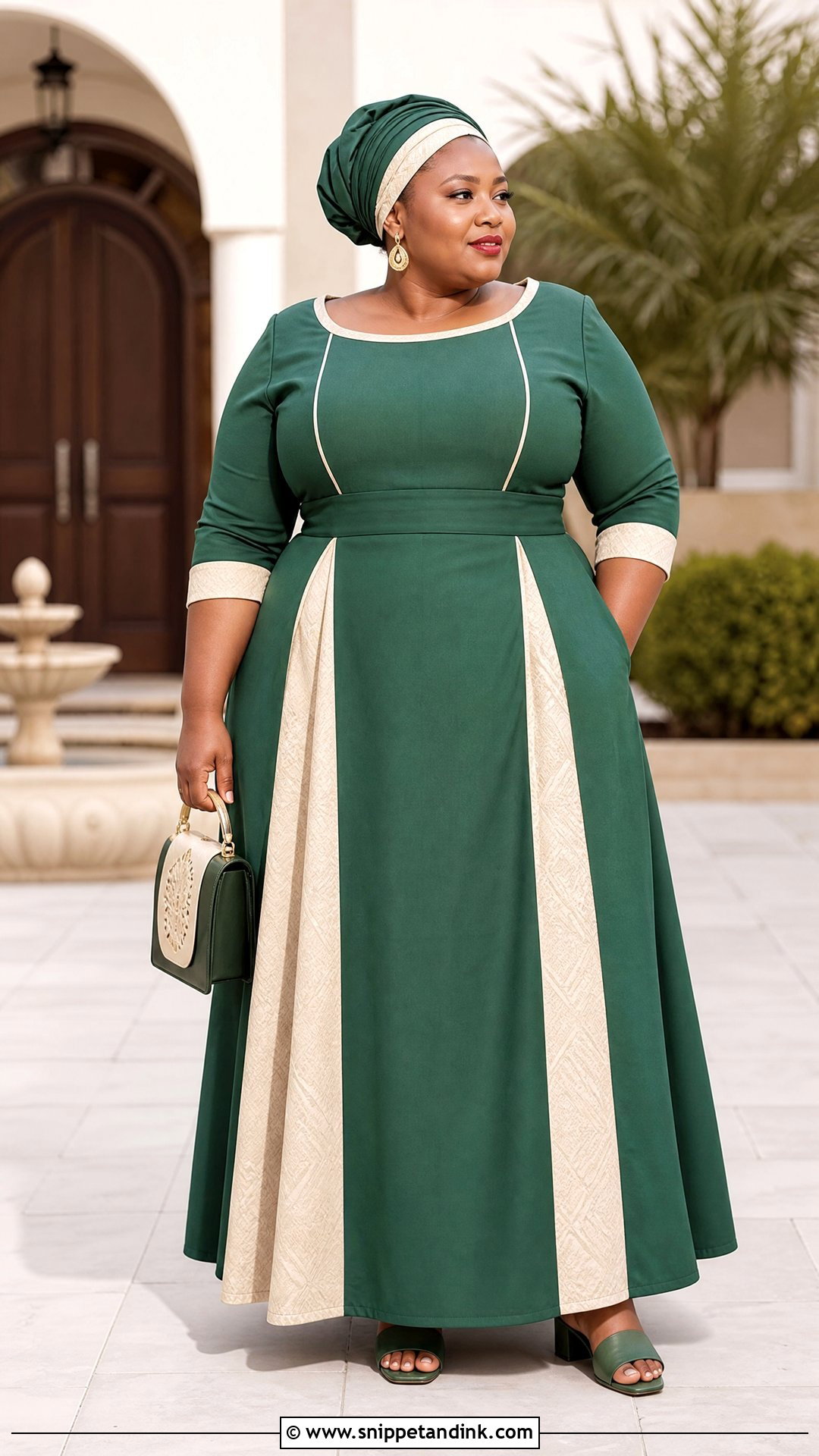
For a plus-size bride I start with fit and comfort, and ignore anyone’s rules about what she should or shouldn’t wear. An A-line Seshoeshoe gown with a shaped bodice, supportive sleeves and a wide waistband moves well. Princess seams or vertical solid panels add structure without hiding the print. Choose a neckline that stays put and leaves room across the shoulders. Lining matters more than people expect: it stops cotton clinging and keeps the skirt hanging straight. Never order from a standard size chart alone. Plan at least three fittings so the tailor can refine bust, waist, sleeves and hem on your body.
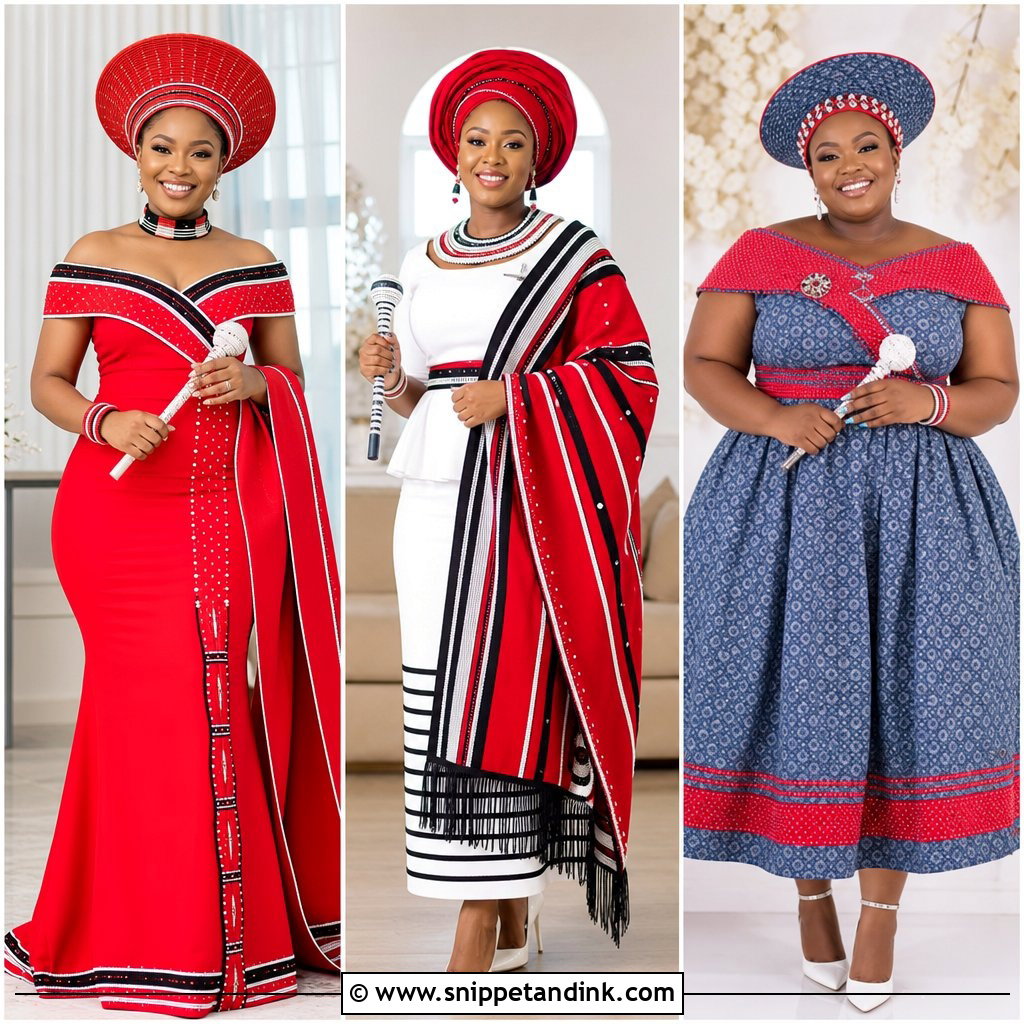
20. Modern Sotho Traditional Wedding Dress
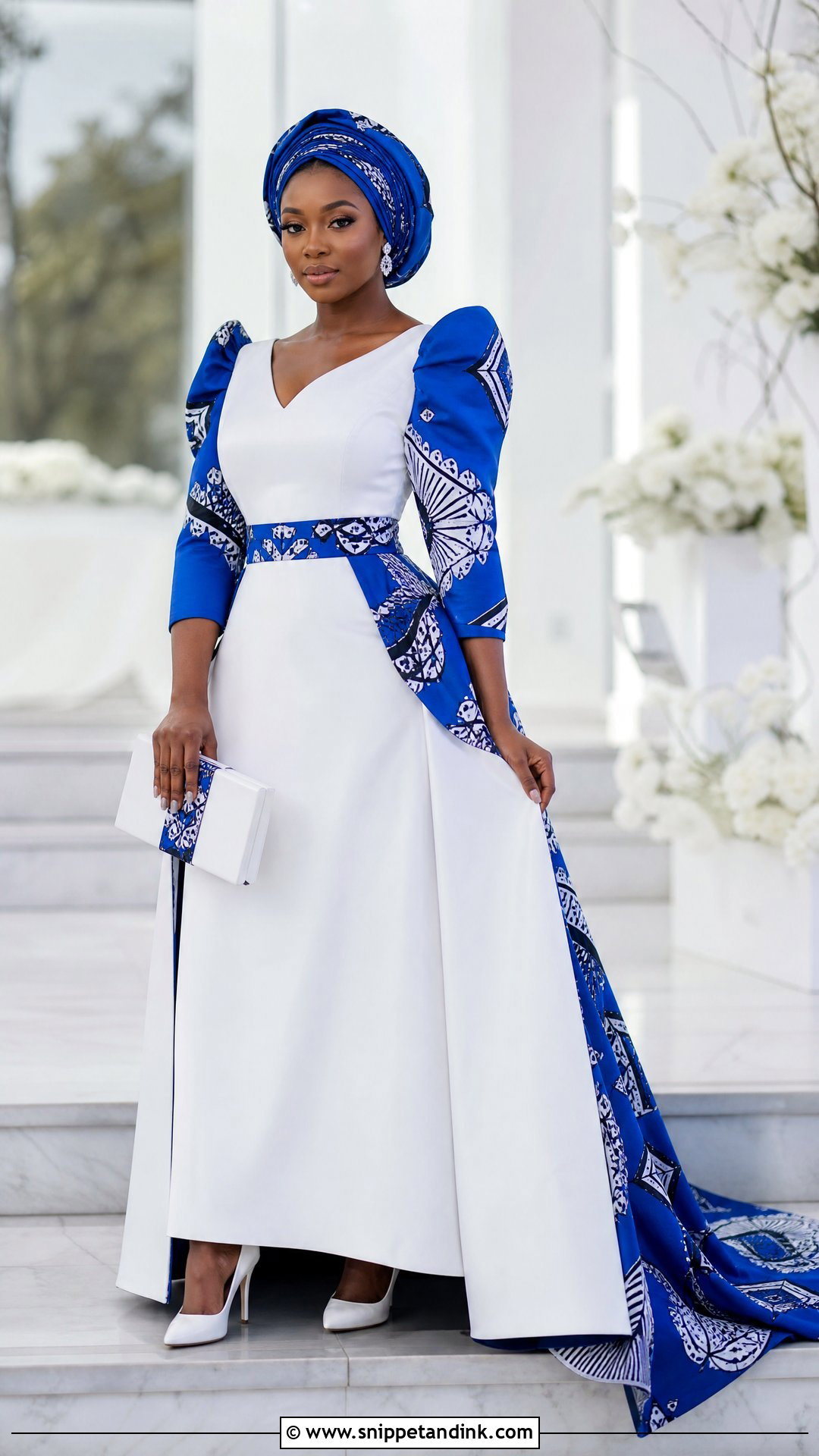
A modern Sotho dress can honour heritage without copying one historical shape. Think of a white, navy or black gown with Seshoeshoe sleeves, waistband panels and a detachable printed train, over a tailored bodice and A-line skirt. A matching headwrap or a blanket for the ceremonial part links it to tradition. I keep it to two fabrics at most, because three is where modern starts to look unfinished. Talk through the full look with family and with a tailor who knows Basotho attire; between them they’ll help you balance your own taste with what the day asks of you.
How Printed Cotton Behaves Over a Long Ceremony Day
Seshoeshoe is a cotton, and cotton creases. A bride who sits through a long service, rides in a car and then poses for formal portraits will have horizontal lines across her lap by the afternoon. You can’t stop that entirely, but you can plan around it.
- Ask for a full lining. It adds weight to the skirt so it falls straighter and creases less deeply.
- Press the dress the night before, then hang it rather than folding it into a bag.
- Have someone carry a small travel steamer for touch-ups between the ceremony and photographs.
- Do the formal portraits before the long sit-down meal if your schedule allows it.
Heat is the other thing to think about. A blanket over a lined cotton gown is warm, which is welcome on a winter morning in the highlands and hard work on a summer afternoon. If your ceremony is in the hot months, I’d plan for the blanket to be worn for the ceremonial moments only, with a clear place for it to be folded and kept afterwards.
A Fitting Plan With Room for the Family’s Opinion
Traditional outfits often get seen by more relatives before the wedding than a white gown does, and their input can change the design late in the process. Build that into the timeline instead of fighting it.
- First appointment: measurements, washed fabric handed over, rough sketch agreed.
- First fitting in a plain calico or muslin version, so the shape can change freely before the print is cut.
- Second fitting in the real fabric. This is the moment to bring a trusted relative to check neckline, length and blanket fit.
- Final fitting with your shoes, headwrap and blanket on, about two weeks before the wedding, leaving time for small alterations.
Busy tailors fill up fast in the months when many families hold weddings, so book your first appointment well ahead and confirm when the dress will be finished, not just when it will be started.
Your Print, Your Family, Your Fittings
A good Sotho bridal outfit comes from meaning, tailoring and comfort in roughly equal parts. Blue gowns are the classic route; peplums, two-pieces, mermaid cuts and white dresses with printed panels take it somewhere newer. Whichever shape you land on, talk to the relatives who know your family’s customs before you commit to ceremonial pieces, wash your fabric before it’s cut, and wear the finished dress for an hour at home before the wedding. Sit, walk, dance and look at it in daylight. If it still feels like you after that, it’s the one.
You'll Like These Ideas:




Leave a Reply