
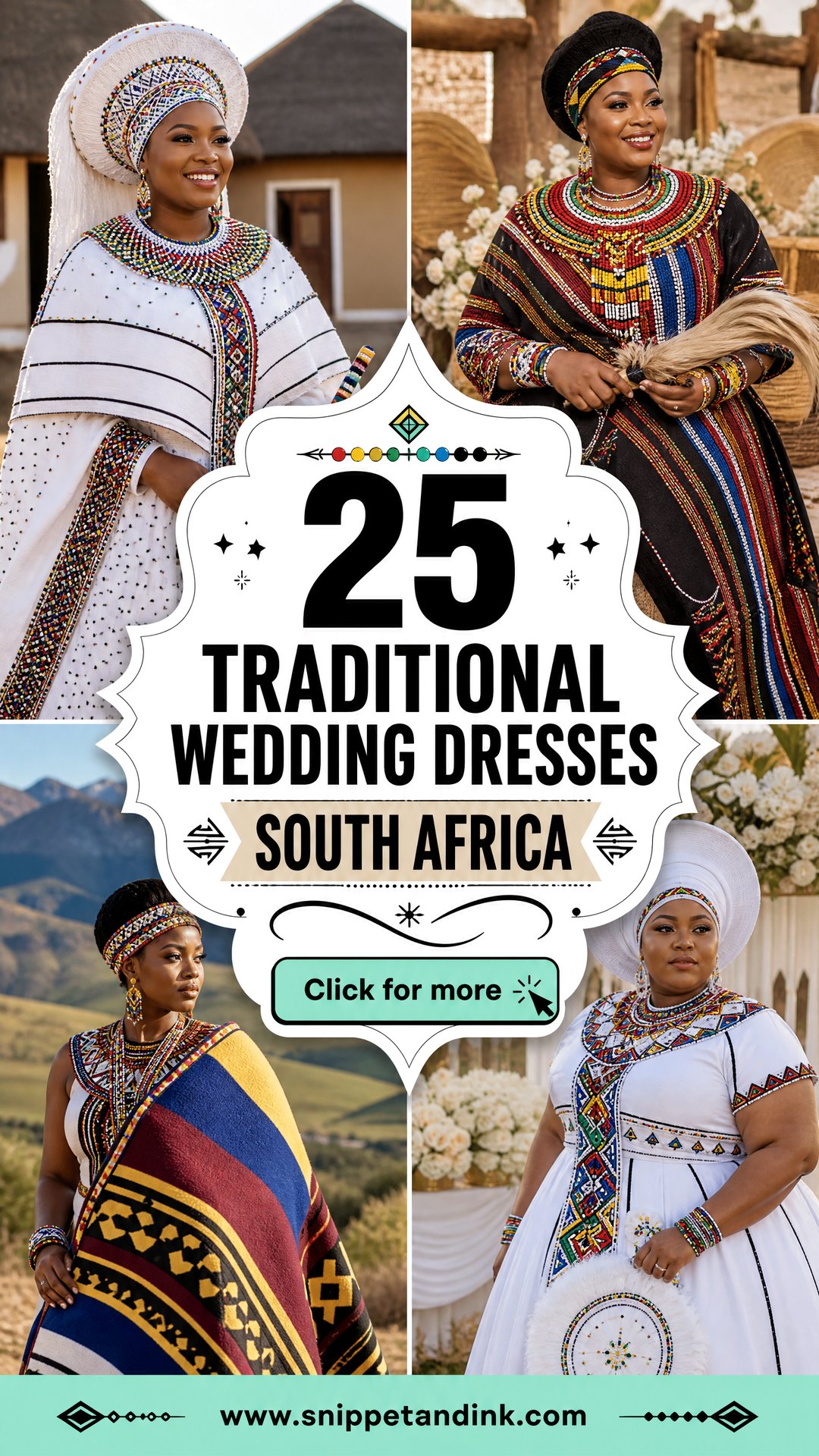
South African traditional bridal wear changes completely from one culture to the next, and that’s what makes styling it so rewarding. Zulu brides may wear the isicholo, Xhosa brides umbhaco, and there are Pedi colors, Tswana shweshwe, Ndebele beadwork, Venda stripes and Tsonga xibelani details. When I put a look together, the dress is only the start. The headpiece, beadwork, wrap, shoes and jewelry all carry meaning, and families notice if one of them is wrong. Many brides now cut these fabrics into mermaid gowns, off-shoulder bodices or capes, which works well when the cultural markers stay clear. Here are twenty-five looks, with what I’d watch for in each.
Two Families, Two Cultures, Two Outfits?
Many South African couples hold more than one celebration: a traditional ceremony, sometimes gift-exchange events beforehand, and often a white wedding as well. When the bride and groom come from different cultures, the first question I ask isn’t about color. It’s whose attire is expected at which event, and that answer comes from the families, not from a mood board.
In many families, the bride wears her own culture’s attire at events hosted by her side, then is dressed in her new family’s style at the point she is welcomed into their home. Some families expect it; others leave it to the couple. Ask an elder on each side early, ideally before lobola is settled, because outfits for the groom’s family are sometimes gifted or chosen by them.
What I settle before any fabric is bought
- Which events need traditional dress, and whose tradition applies to each.
- Whether any garment or blanket is being gifted by family, so you don’t buy a duplicate.
- Which colors or beads carry meanings in either culture that you should avoid or include.
- Whether the bride is expected to cover her head at the in-laws’ events, which changes the hair plan.
1. Zulu Traditional Wedding Dress With Isicholo
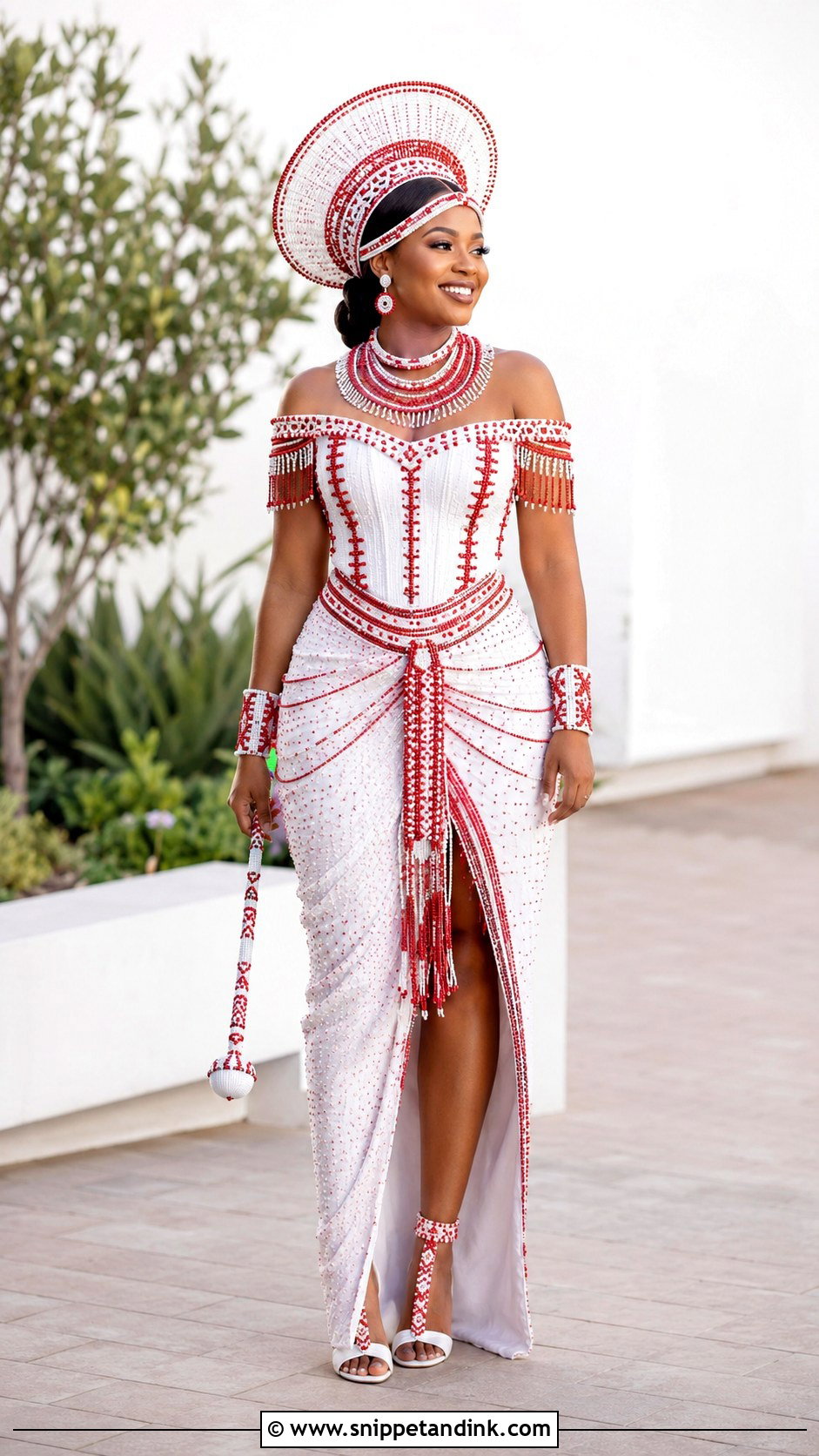
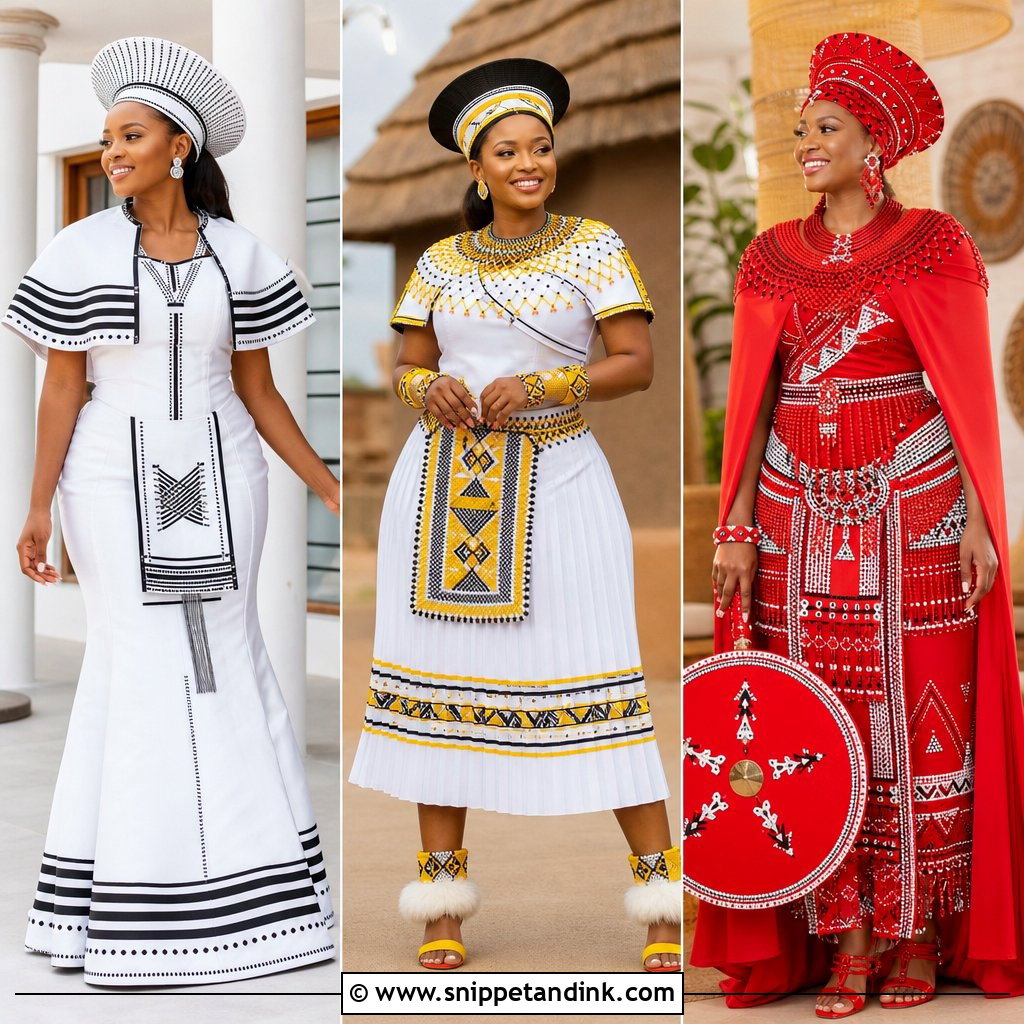
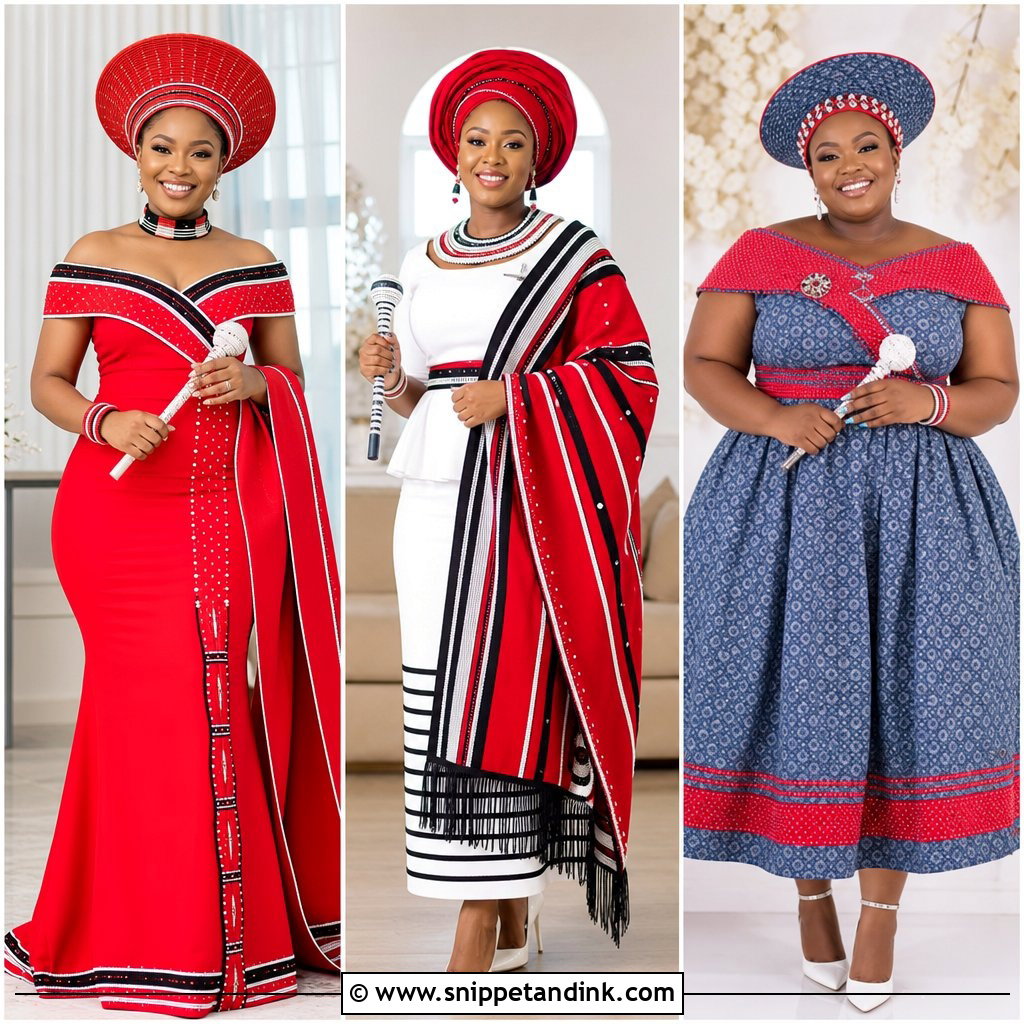
The isicholo is what makes this look read Zulu from across a room, and it’s also the piece I fit first. A wide hat sits on the crown, so the hair underneath must be flat and secure, usually braided close or wrapped, or it tilts by mid-afternoon. Pair it with a fitted or flared dress, bold beadwork and statement necklaces that frame the face. White, black, red, gold and earth tones all work, with beaded belts, cuffs and anklets adding detail. A mermaid cut, sheer sleeves or a train can modernize it. Keep makeup polished but restrained so the beadwork leads.
2. Xhosa Umbhaco Wedding Dress
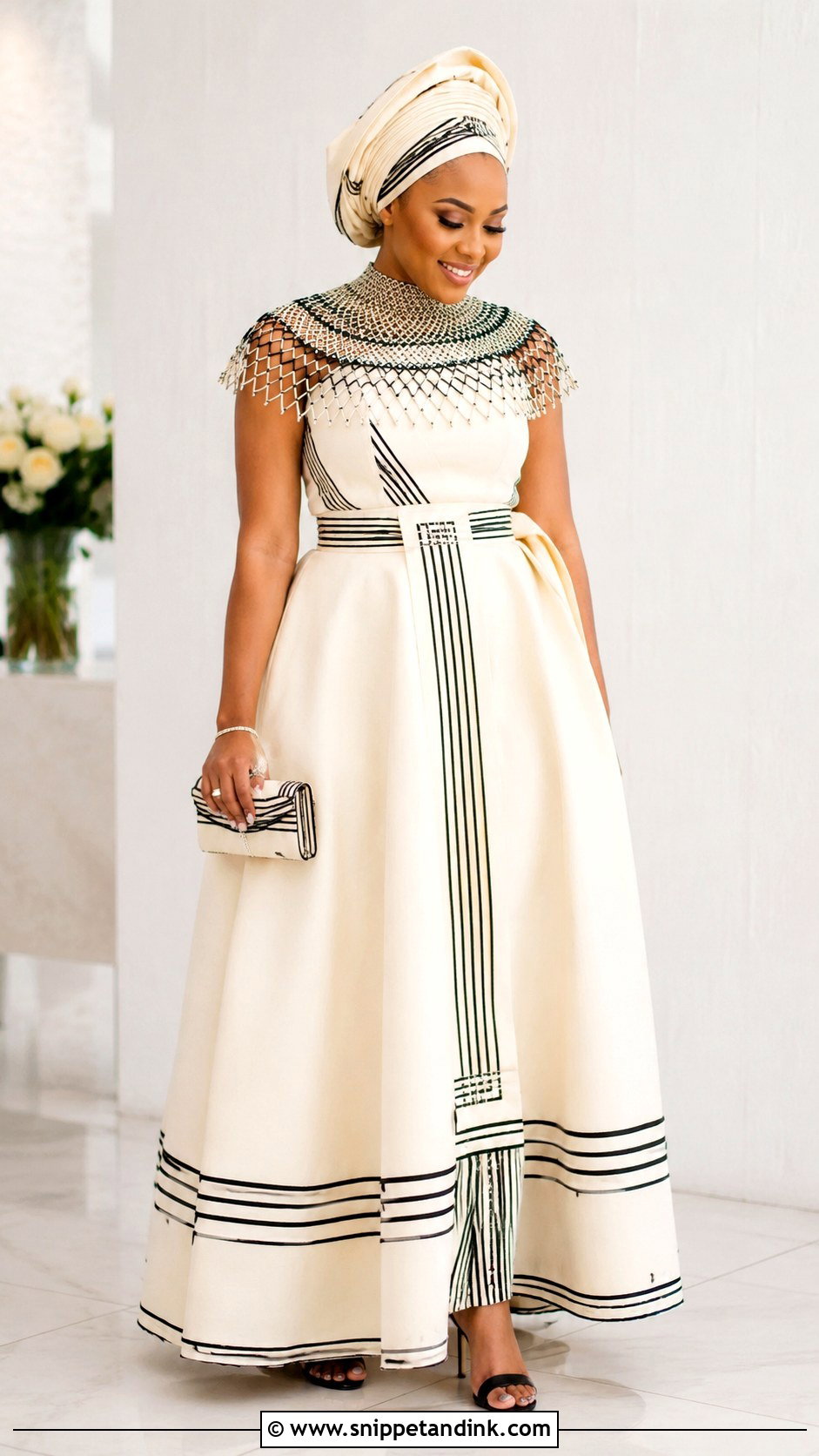
An Xhosa umbhaco wedding dress is defined by its black bands on white or cream cloth, and the spacing of those bands is where a good seamstress shows her skill. On a full skirt they should run perfectly level at the hem; on a peplum top they need to meet cleanly at the side seams. Brides choose a full skirt with a fitted bodice, a wrap skirt with a peplum top, or a modern gown with traditional trim. A matching doek gives the regal finish. Black heels, white beads and a small structured bag suit it. I’d always ask to see a finished bodice before the skirt is cut.
3. Pedi Traditional Wedding Dress
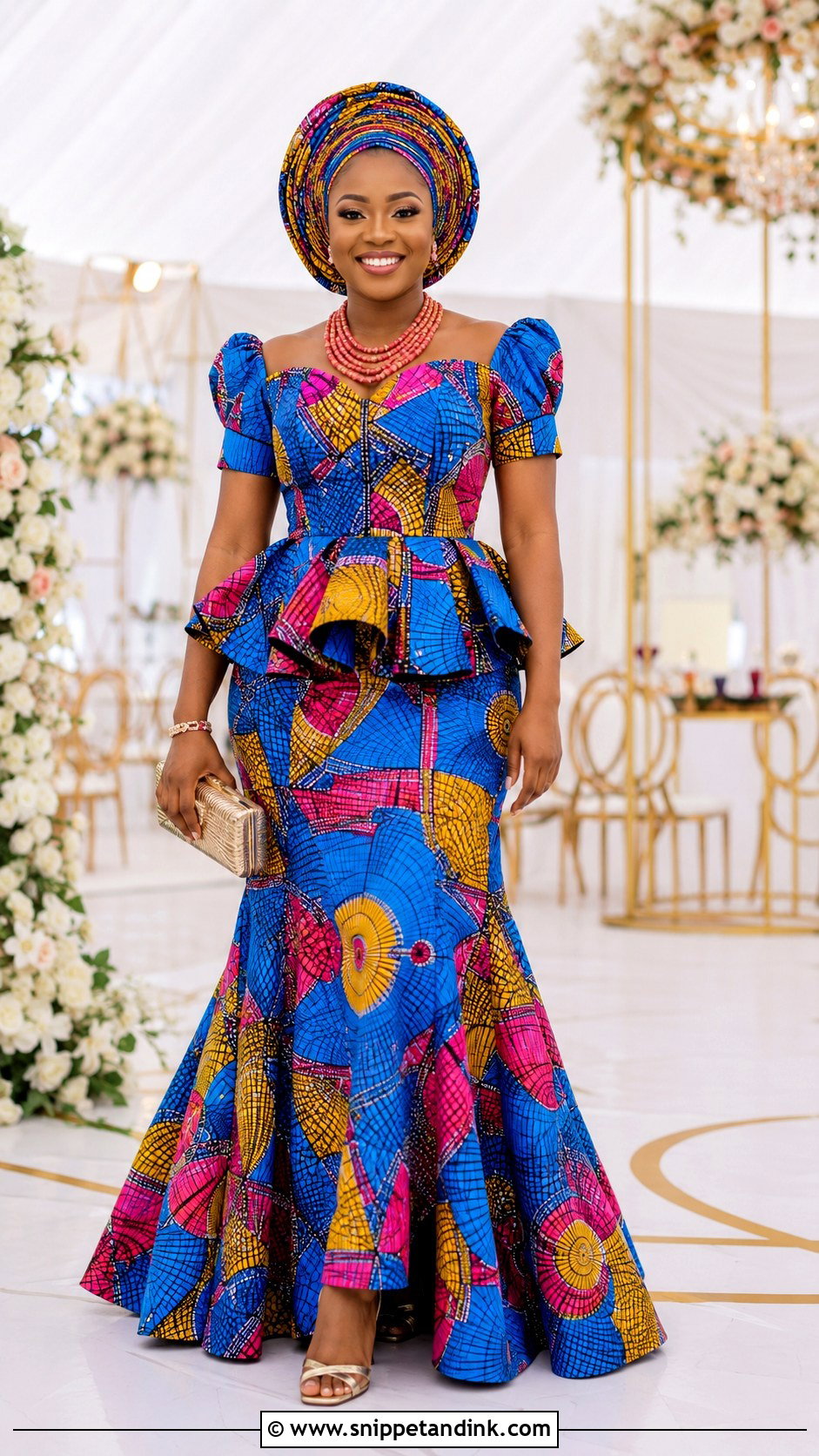
Pedi color is joyful and loud on purpose. A Pedi traditional wedding dress mixes blue, pink, yellow, green or orange, usually in pleated skirts, peplum tops and matching headwraps. A ball gown, a fitted dress with a flared hem or a dramatic two-piece all work. With this many colors, I pick one to dominate and let the others appear in the trims, otherwise the outfit can look busy in photos. Beaded accessories and layered necklaces tie it together, and nude, metallic or color-matched heels keep it polished. It photographs well indoors and out.
4. Tswana Shweshwe Wedding Dress
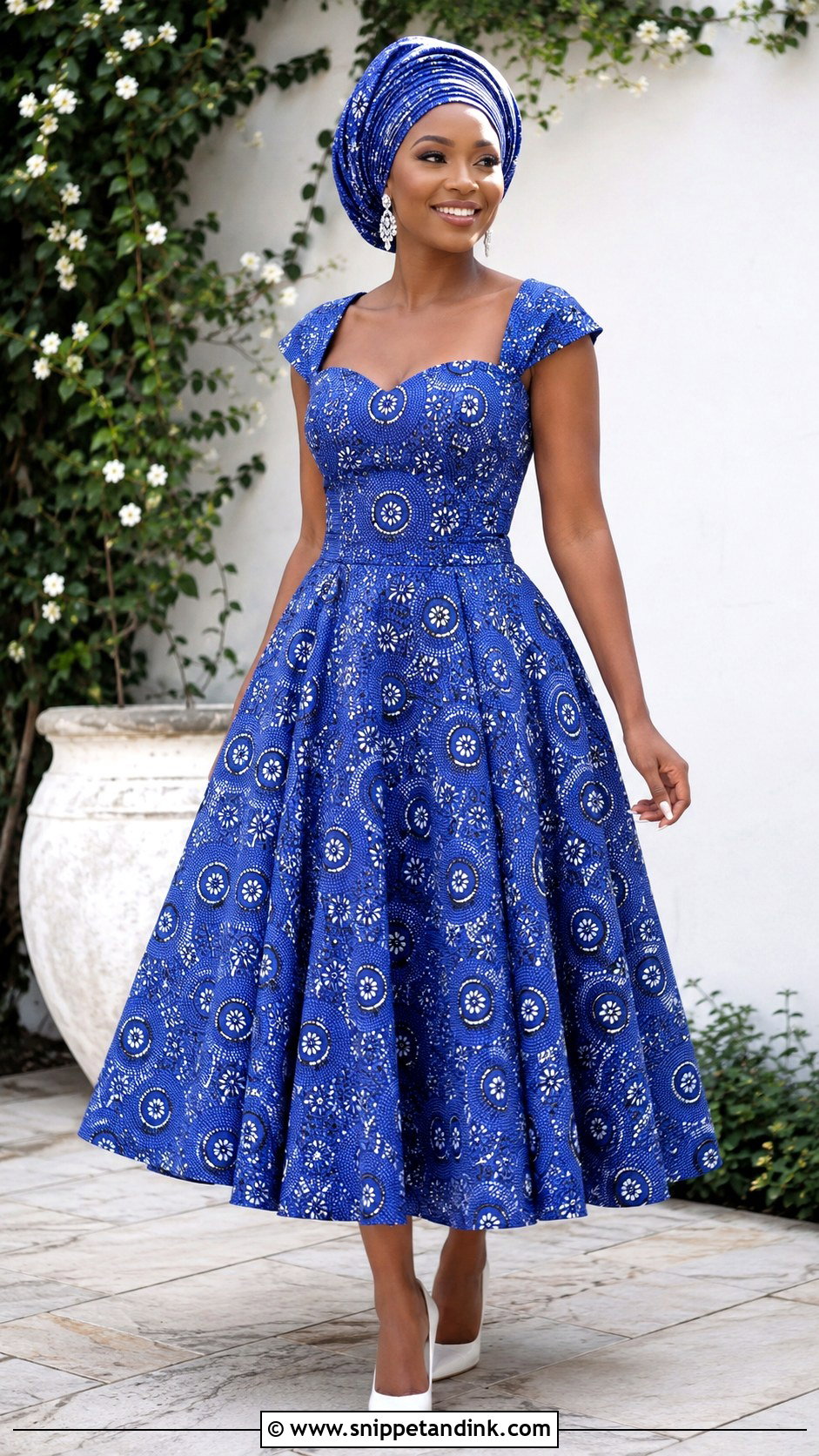
Shweshwe is a printed cotton with a crisp, starched finish, and it behaves differently from bridal satin. New shweshwe shrinks and softens once the starch washes out, so I insist it’s washed before cutting, or the bodice may tighten after the first clean. Blue, brown, red or green patterns give a classic feel. A full skirt with a fitted bodice is the traditional shape; a mermaid cut feels more modern. Add a matching doek, fabric-covered buttons, beaded earrings and simple heels. Lace, tulle or satin panels soften it if you want something more bridal.
5. Ndebele Traditional Wedding Dress
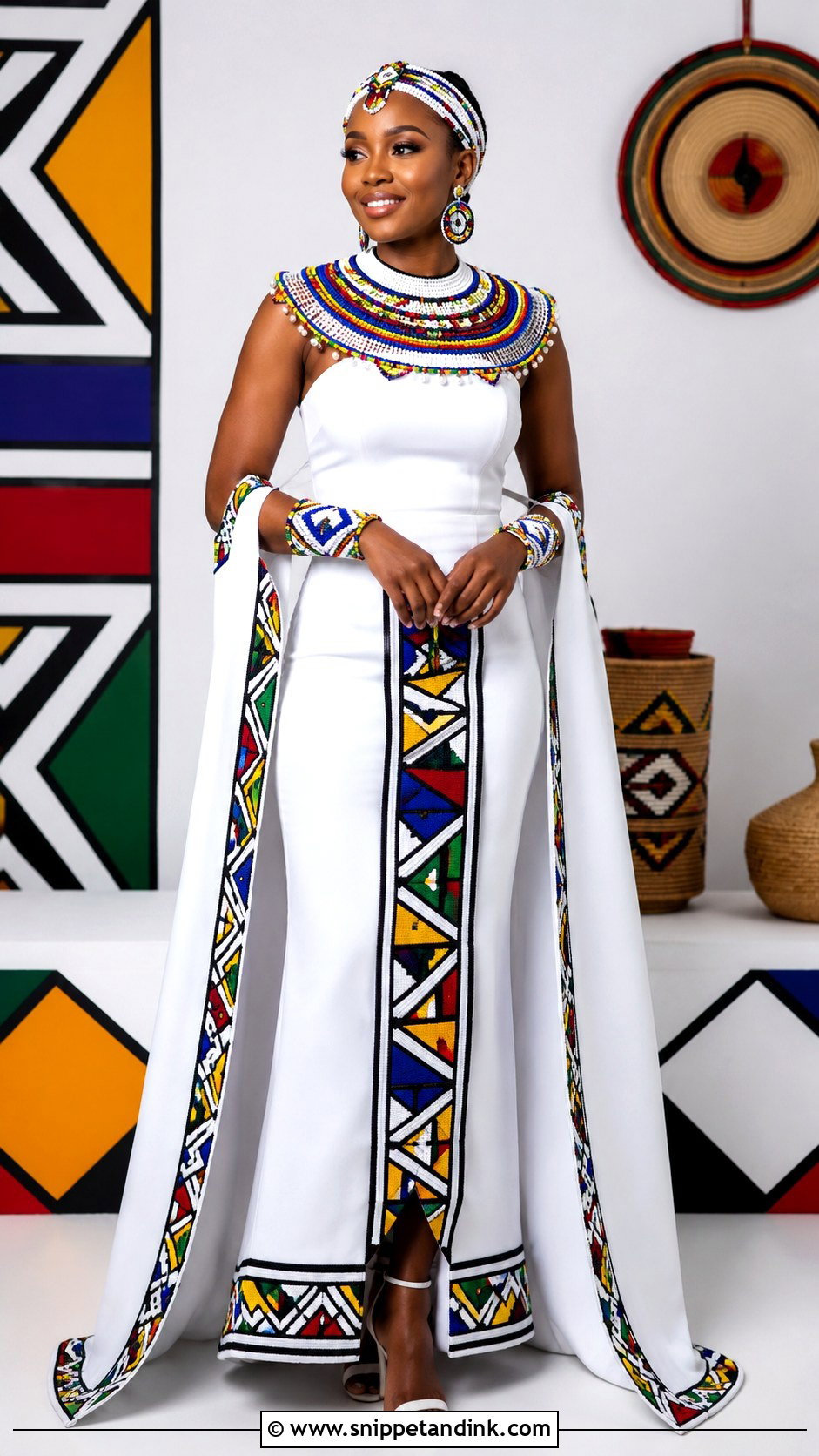
Ndebele styling is bold, geometric and built around beadwork. A complete look might include a white or colorful dress, an apron-inspired beaded panel, stacked neck rings, cuffs and a statement headpiece. Brides choose a fitted gown with colorful panels or a full skirt with Ndebele-inspired patterns. Let the beadwork lead and keep shoes and makeup clean. White, black, red, yellow and turquoise sit naturally together. Stacked neck rings are heavy and restrict how you turn your head, so I’d wear them for the ceremony and portraits, then switch to a lighter collar for dancing.
6. Venda Traditional Wedding Dress
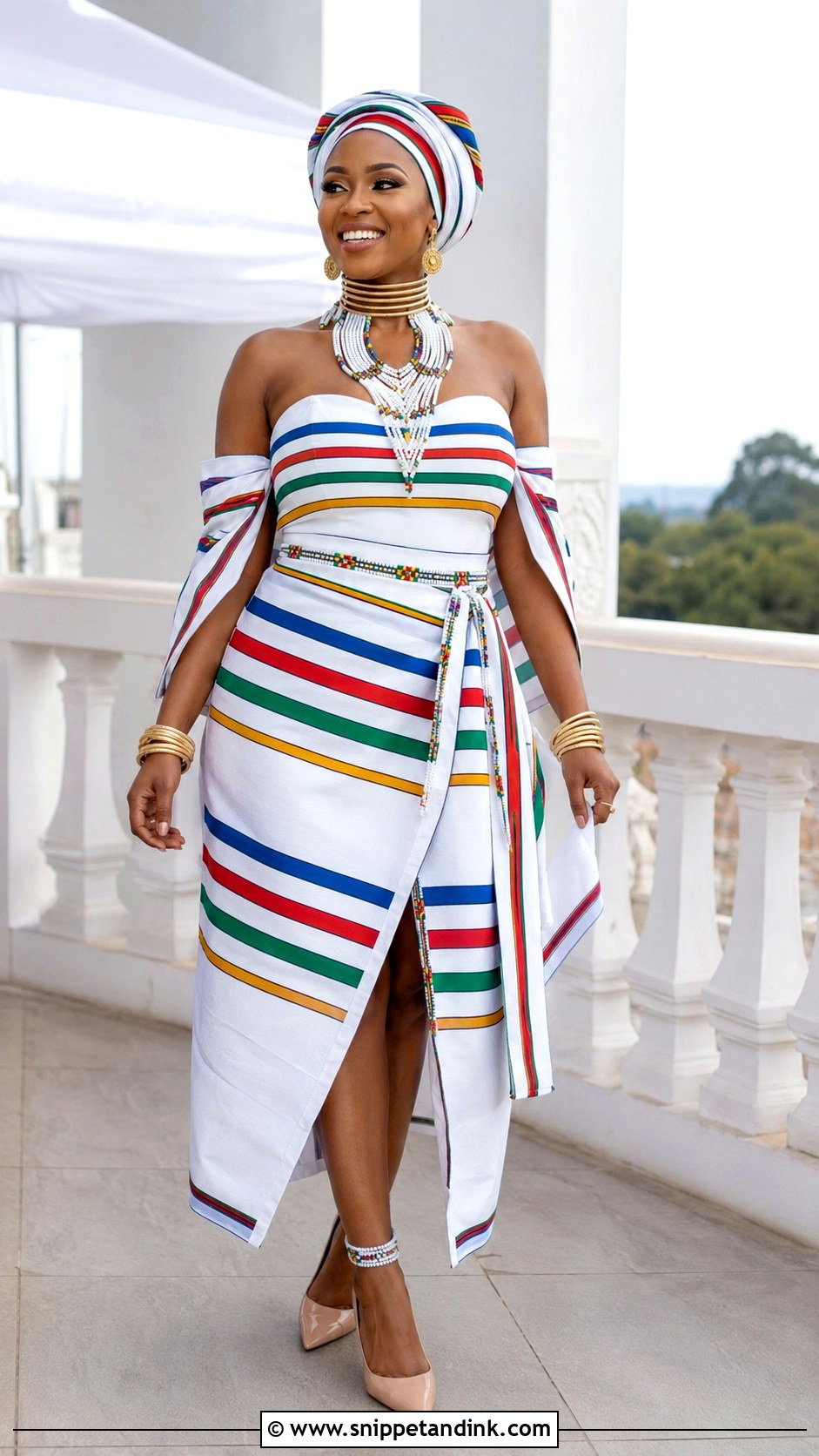
Venda cloth is defined by its bright stripes, and how those stripes are placed decides whether the look is elegant or busy. Venda-inspired outfits often use colorful striped cloth with fitted bodices, wrap skirts and matching headwraps. To modernize it, I place the stripes at the hem, sleeves or waist on a long skirt, off-shoulder top or gown, and keep the bodice plainer. Gold jewelry, beaded accessories and simple heels finish it. With colors this strong, a clean hairstyle and glowing makeup work best.
7. Tsonga Traditional Wedding Dress
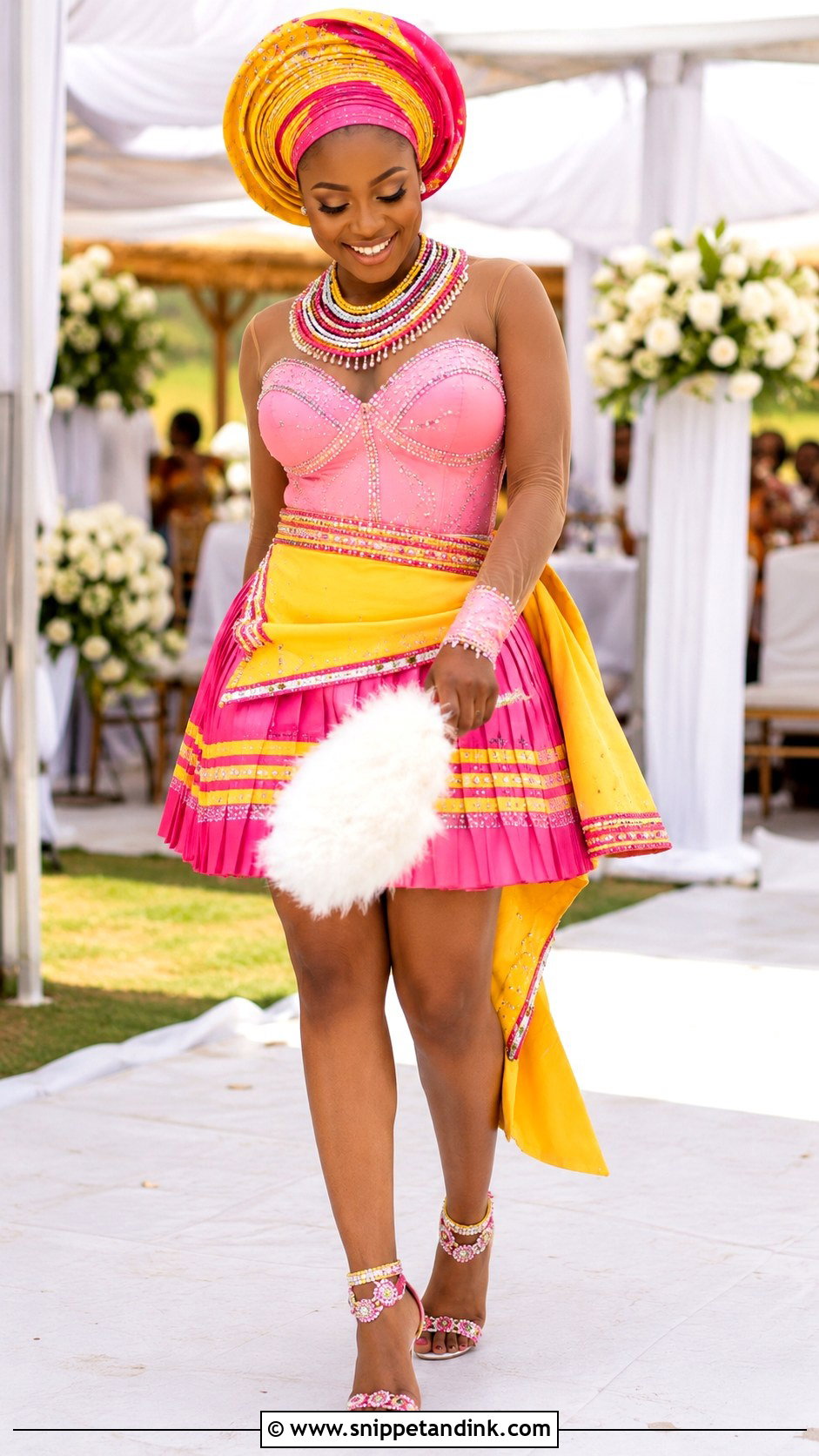
Tsonga dressing is built for movement. Xibelani-inspired skirts, bold pinks, yellows and blues and patterned fabric swing when the bride walks or dances, which is the whole point. A complete outfit might include a fitted top, layered skirt, matching doek, beaded necklace and heels or embellished flats. A real xibelani is layered and heavy, so I tell brides to practice moving in it before the day; the swing comes from the hips, and it takes a little rhythm to make it look natural. Coordinate the colors rather than letting each layer compete.
8. Swati Traditional Wedding Dress
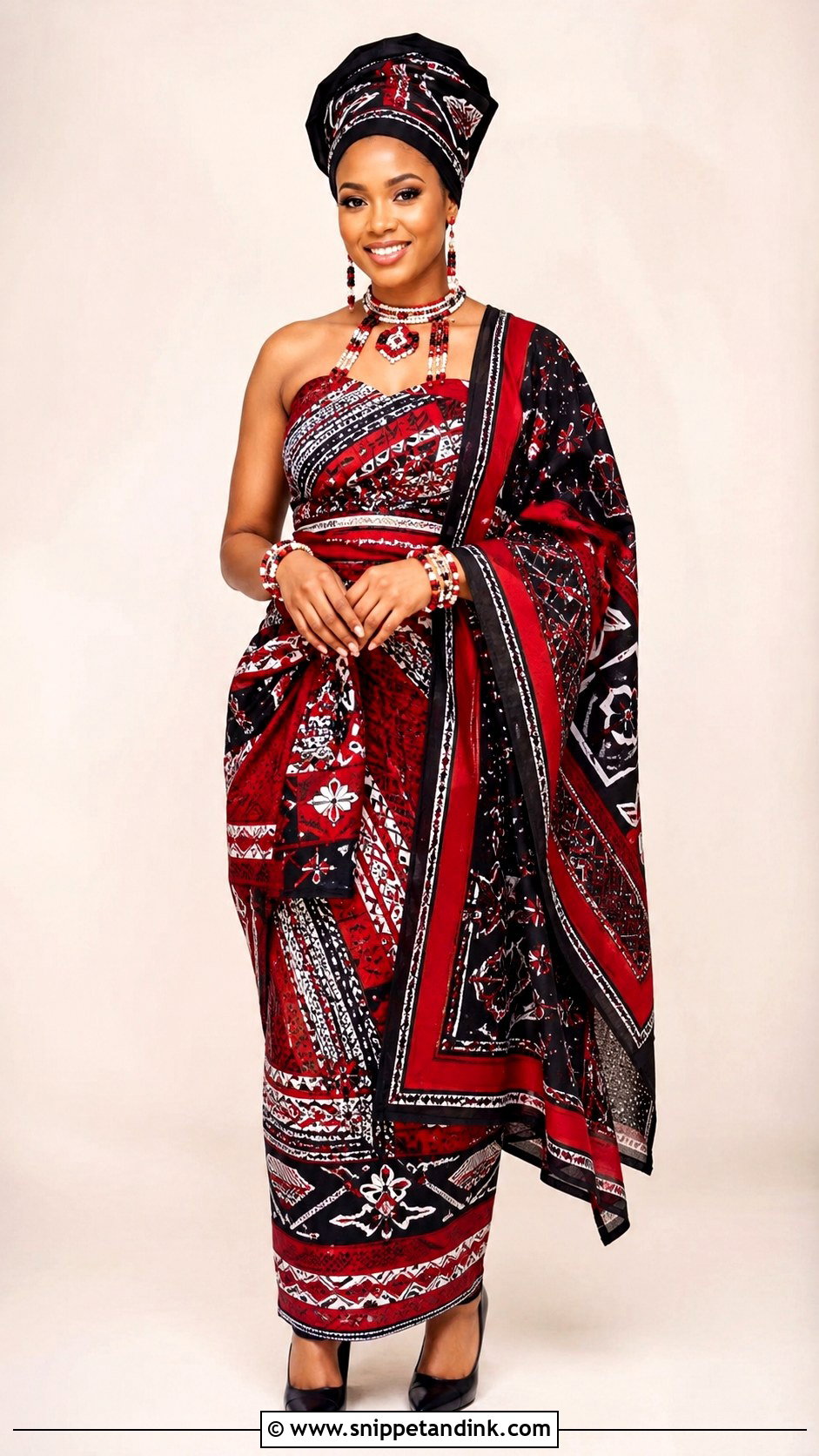
Swati bridal wear often uses red, black, white and patterned fabric. The outfit may include a wrapped skirt, fitted top, shoulder covering, matching headwrap and beaded accessories, while modern versions use a structured gown with Swati fabric panels, a cape or a dramatic train. Choose black or metallic heels and jewelry that complements the print rather than hides it. A wrapped cloth over one shoulder needs anchoring, so I sew a hidden snap or loop into the bodice instead of relying on pins that pull at the fabric. Clean proportions make it feel regal.
9. Sotho Traditional Wedding Dress With Blanket
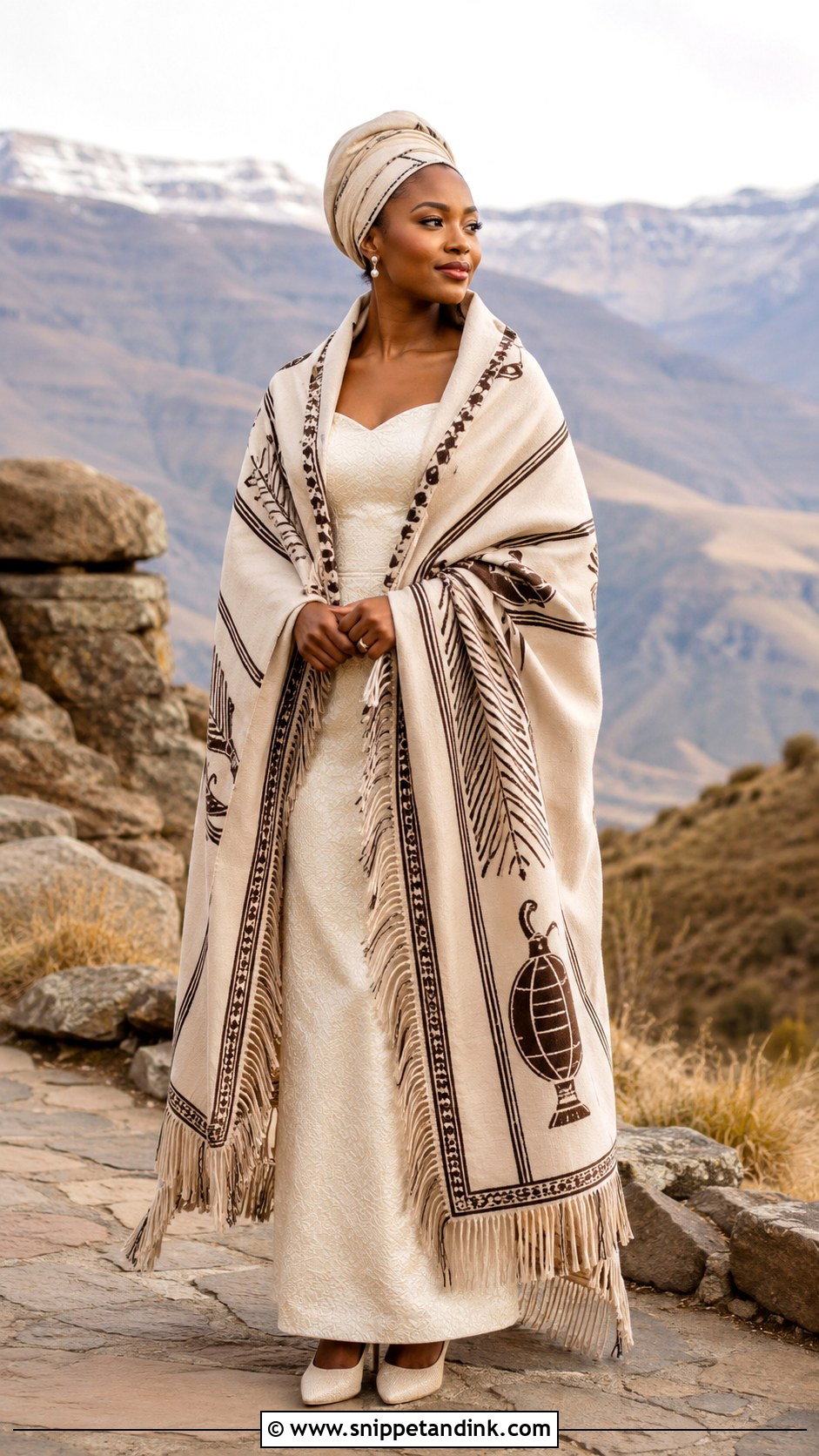
The Basotho blanket carries real status, so I treat it as the centerpiece rather than an accessory. It can go over a fitted gown, a long skirt set or a clean bridal dress in cream, navy, brown or a soft neutral. Drape it neatly across the shoulders like a cape and fasten it so it doesn’t slide when you hug guests. Add a matching headwrap, understated earrings and closed-toe heels or boots depending on the season. A belt defines the waist if you want shape. These blankets are warm, so in summer heat I’d keep it for the entrance and photographs.
10. White Traditional Wedding Dress With Beads
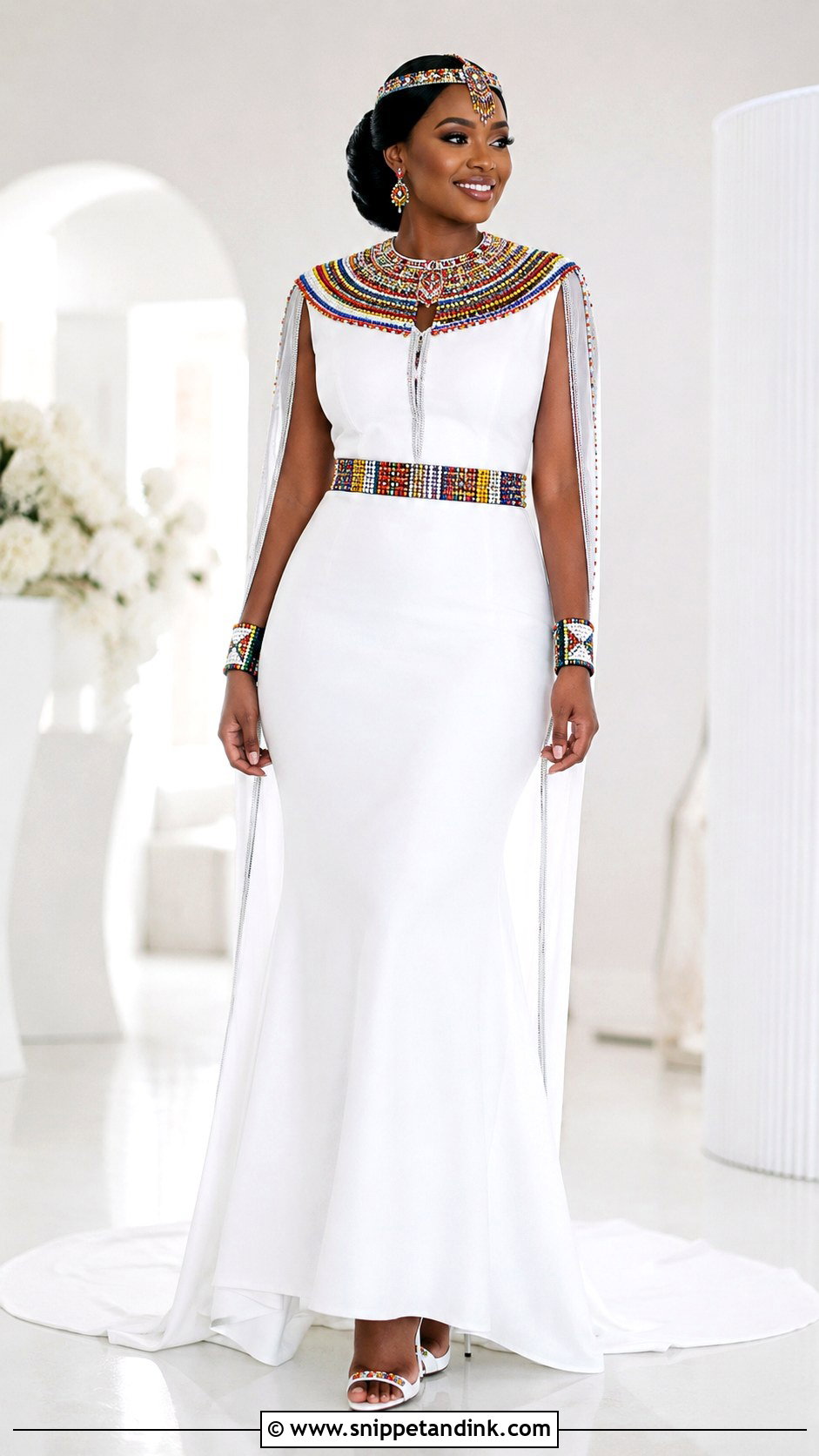
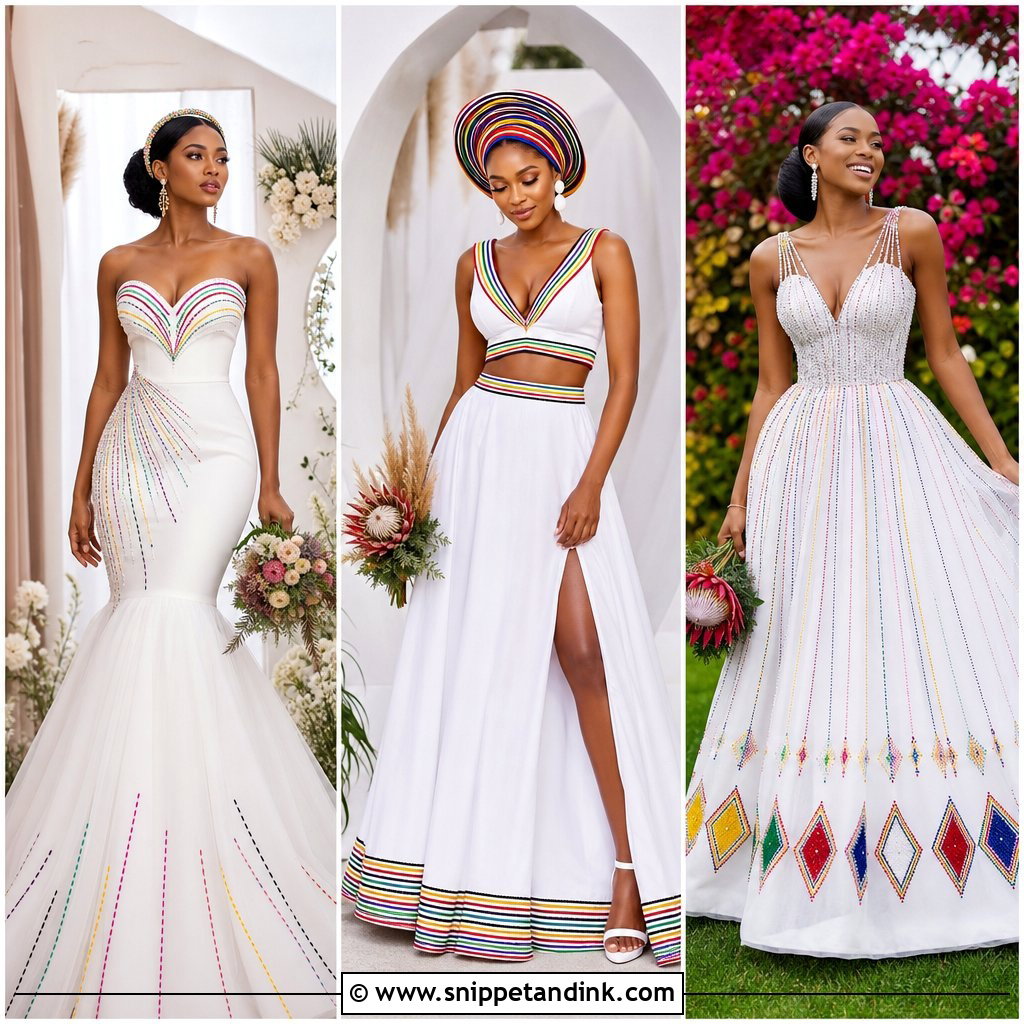
White with colorful beads bridges a white-wedding feel and a cultural one. The gown brings softness; the beadwork brings identity. It can lean Zulu, Xhosa, Ndebele or a mix, depending on the bead colors and patterns you choose. A fitted gown with a beaded neckline, waist belt, headpiece and matching cuffs looks clean, and white heels or metallic sandals keep it bridal. Choose bead colors with intention, since in several cultures particular colors carry meanings that elders will read. If you’re unsure, ask the beader or an older relative before ordering.
11. Red Traditional Wedding Dress South Africa
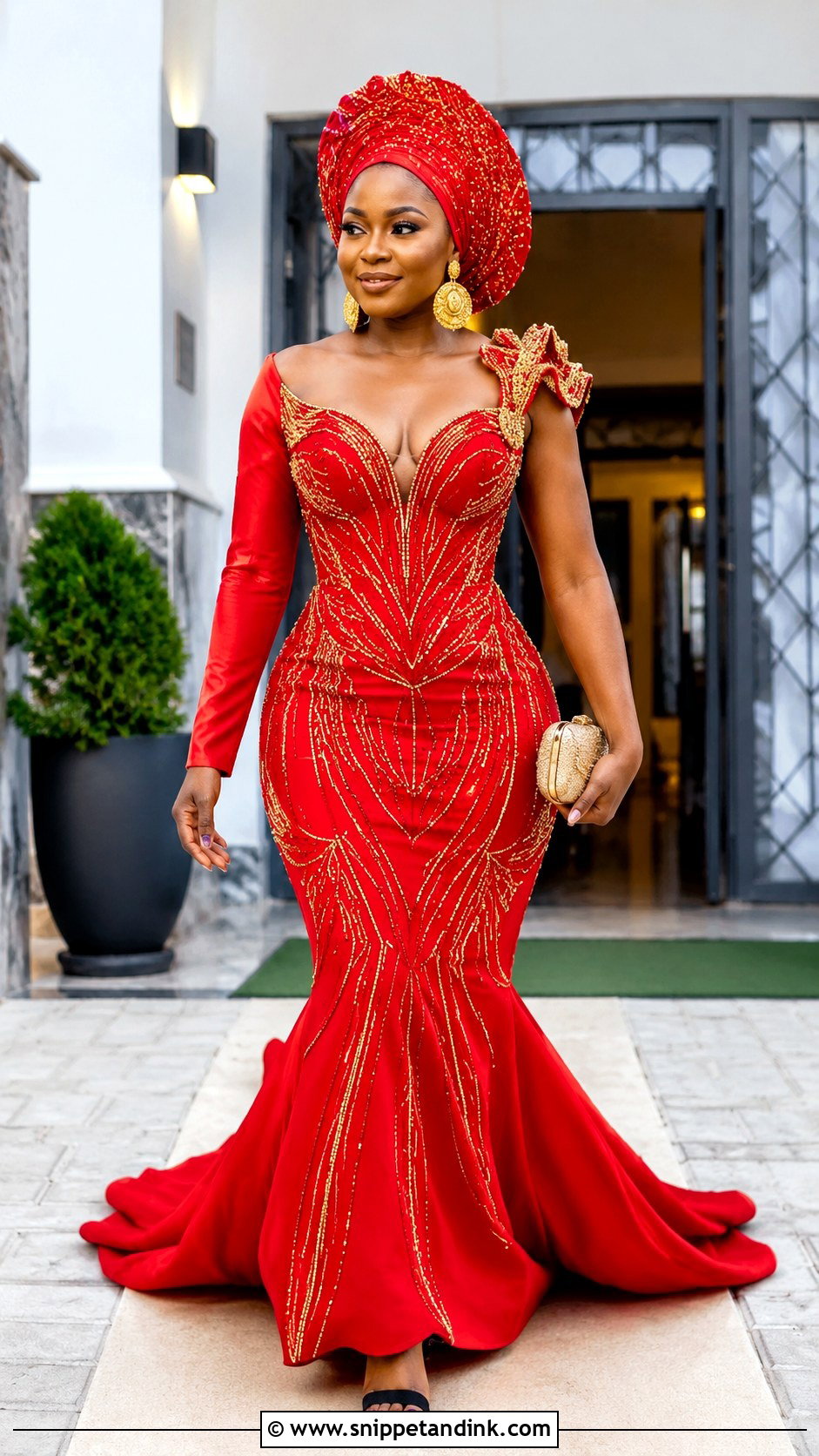
Red is bold and celebratory, and it suits Zulu, Tswana, Pedi, Ndebele and modern African bridal styling. Options include a red mermaid gown with beadwork, a shweshwe dress with a matching doek, or a two-piece with a full skirt. Gold jewelry warms it; black or nude heels ground it. When the dress is heavily patterned, I keep accessories simple, and when it’s plain red, I add beads, embroidery or a printed wrap for cultural texture. Bright red can bleed onto white beadwork if it gets wet, so test a scrap before the seamstress sews beads onto it.
12. Blue Traditional Wedding Dress South Africa
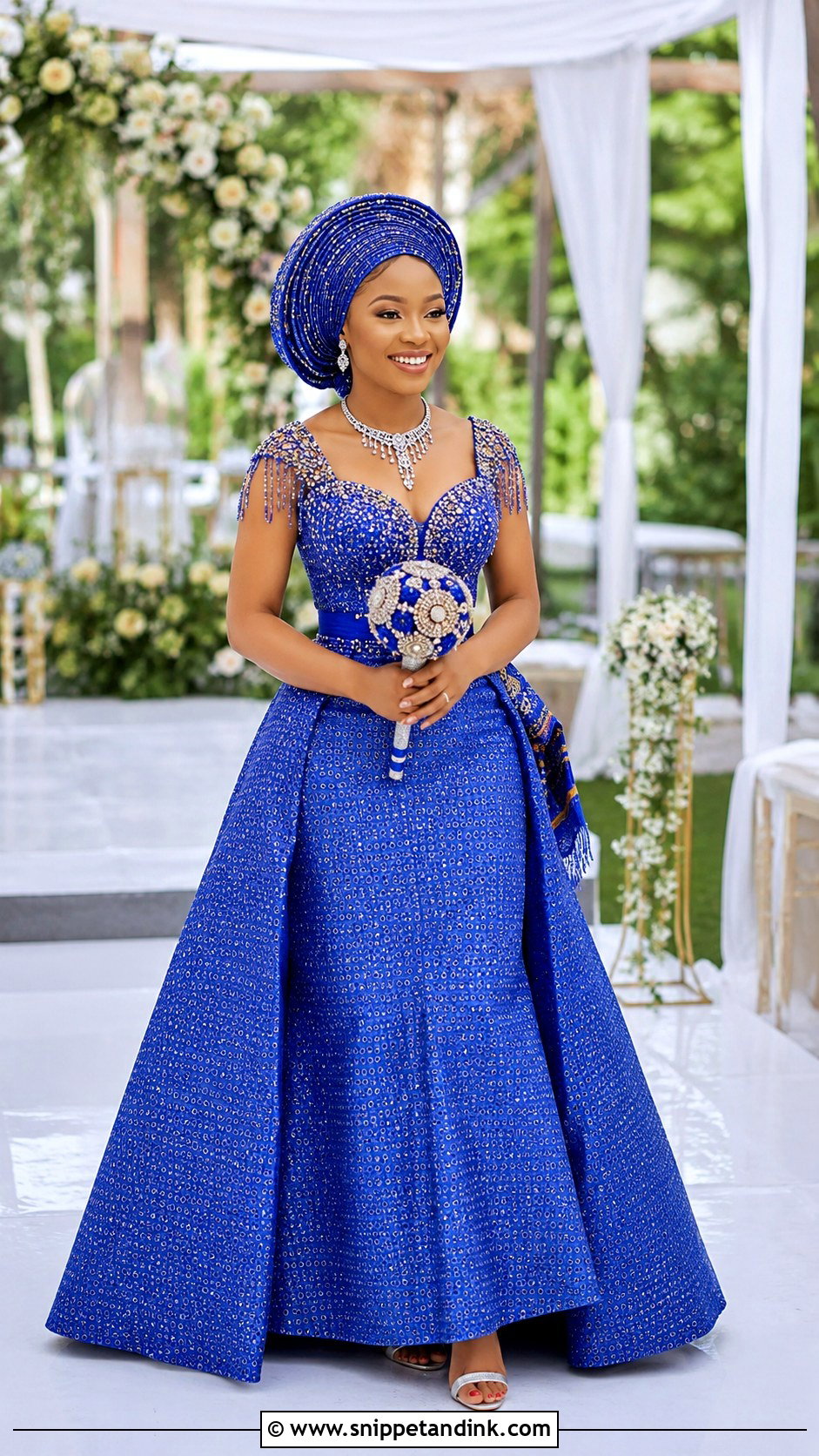
Blue is the most versatile color here. Blue shweshwe is closely tied to Tswana and Sotho-inspired bridal outfits, but it also sits well in Pedi and modern designs. A full skirt with a fitted top gives the classic shape, while a blue mermaid gown feels more modern. Add a matching headwrap, silver or pearl-like beads and white or metallic heels. Navy reads formal; royal blue reads bright and celebratory. Indigo-dyed cotton can rub color onto pale skin and white shoes when new, which is another reason I pre-wash it.
13. Black And White Xhosa Wedding Dress
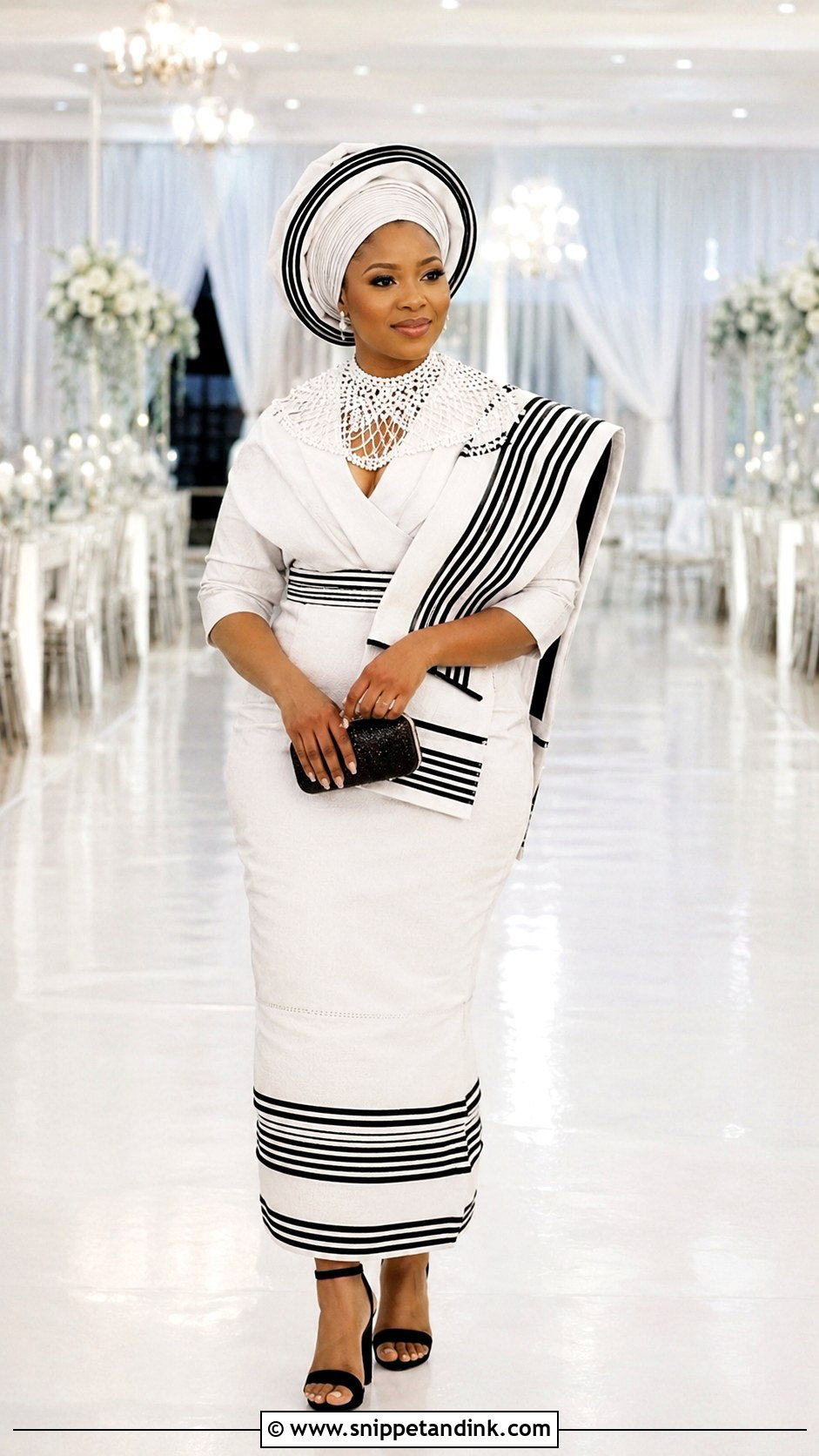
Black and white leaves nowhere for a mistake to hide, which is why it looks so sharp when the work is good. Every umbhaco-inspired stripe, bead and fold reads clearly. Choose a fitted gown with black bands, a full skirt with matching top or a wrap-style outfit with a structured doek, then add black heels, white beads and a neat clutch. For a softer bridal finish, add sheer sleeves, a small train or fine embroidery. White cloth also shows grass and dust stains quickly at an outdoor ceremony, so plan where you’ll stand and sit.
14. Gold Traditional Wedding Dress South Africa
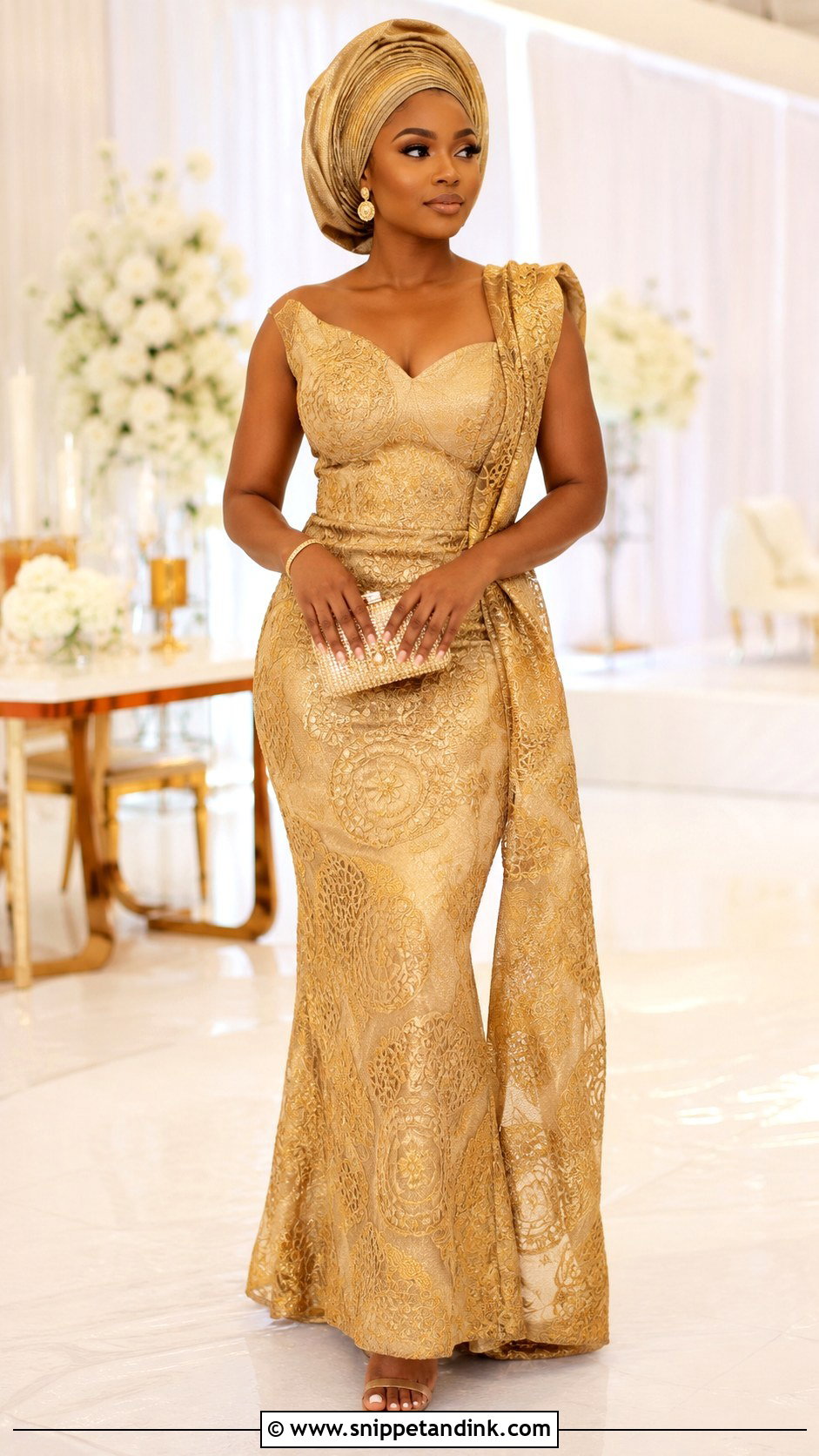
Gold looks rich on its own, so this is the look where I take accessories away. Gold can come through satin, brocade, shweshwe accents, beadwork, embroidery or metallic trim. A fitted gold gown with a matching headwrap is regal; a white dress with gold traditional details is softer. Pair it with neutral heels, gold earrings and one clean bracelet. When the dress has heavy shine, keep makeup fresh. Metallic fabric reflects flash strongly, so it shines most at evening receptions and formal family ceremonies with warm lighting.

15. Modern Zulu Wedding Dress
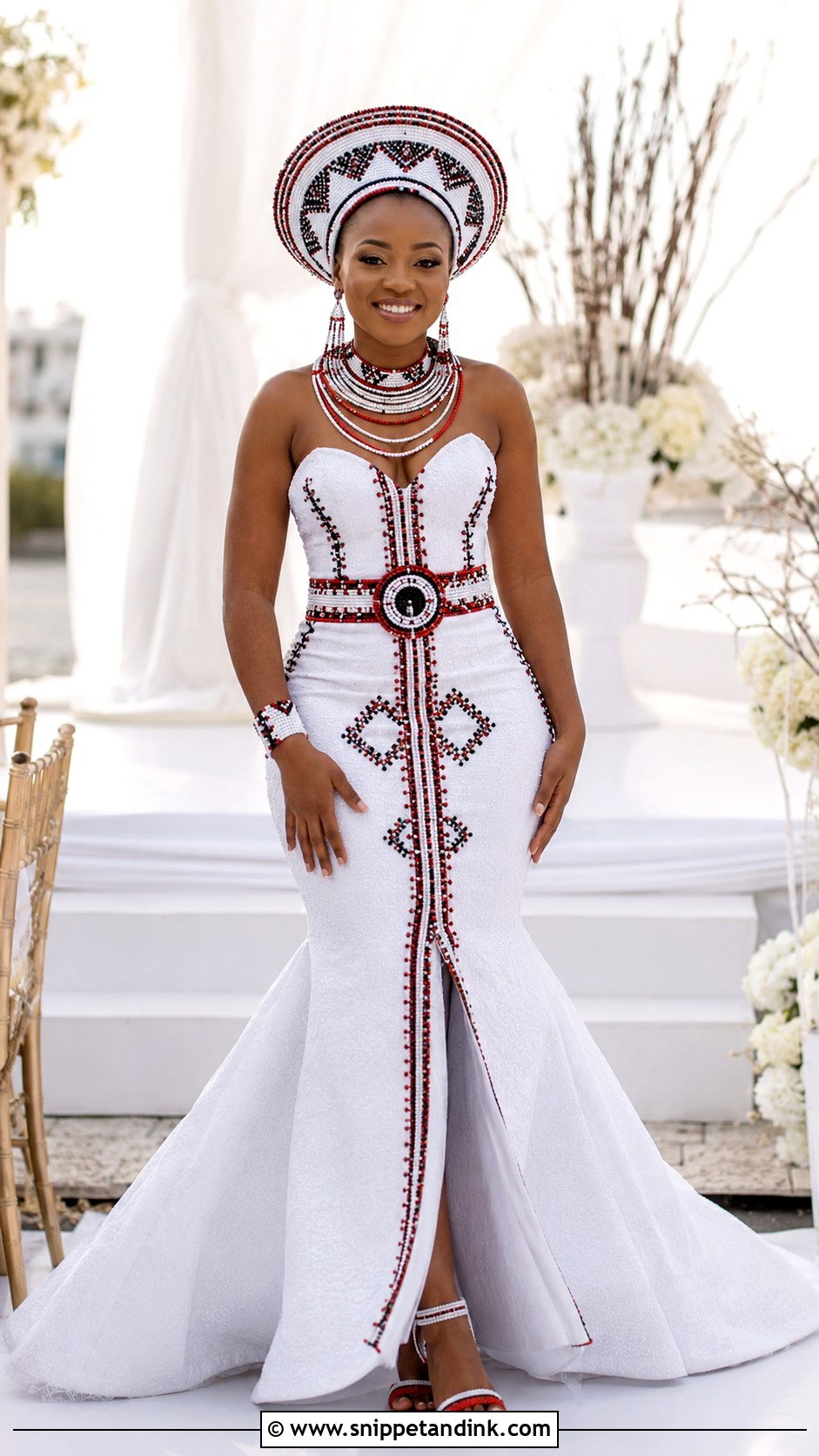
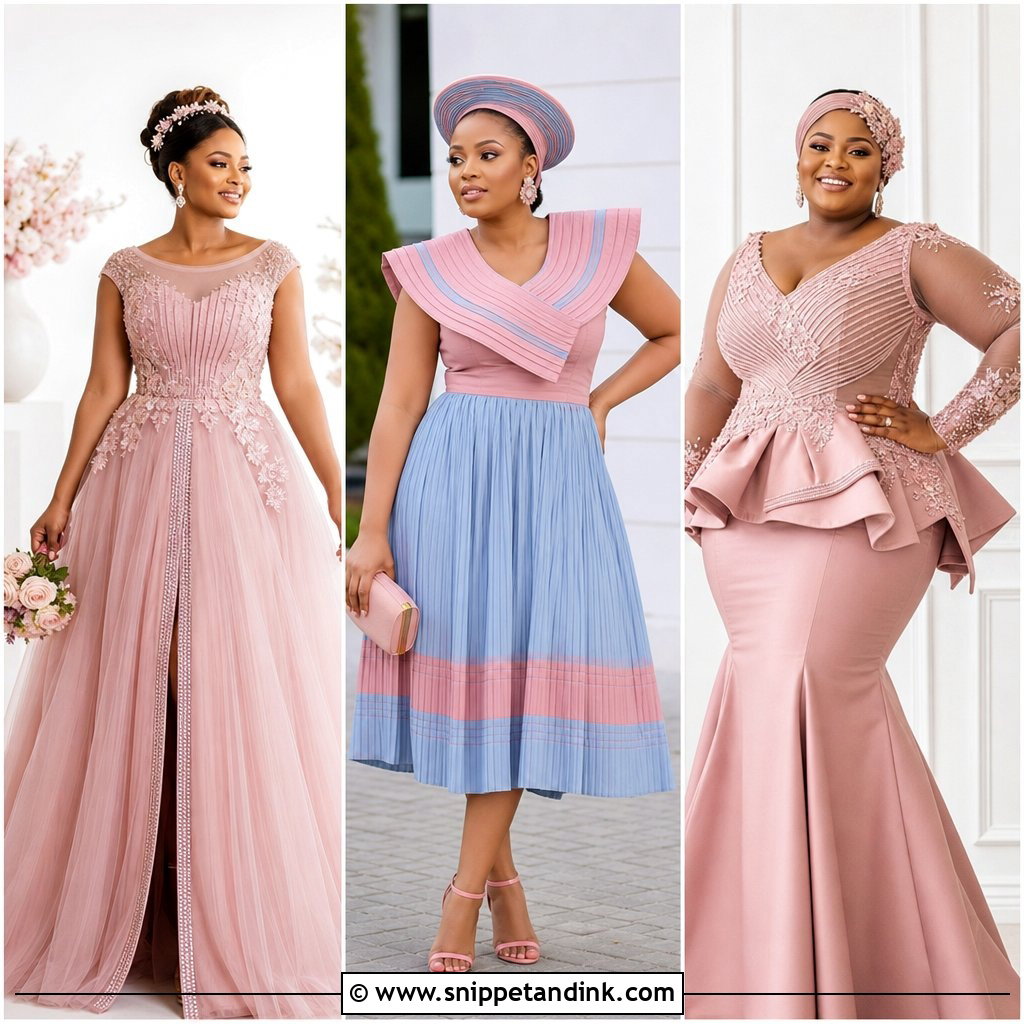
Modern Zulu bridal wear blends cultural detail with contemporary tailoring: fitted gowns, mermaid hems, dramatic sleeves, off-shoulder necklines and clean trains, all paired with an isicholo and beadwork. Colors range from white with colorful beads to black and gold, red and white, or earthy neutrals. A beaded cape or belt connects the gown to Zulu tradition. Plan the hairstyle around the headpiece; a sleek low style lets the isicholo sit properly, while big volume at the crown pushes it up and off-balance.
16. Modern Xhosa Wedding Dress
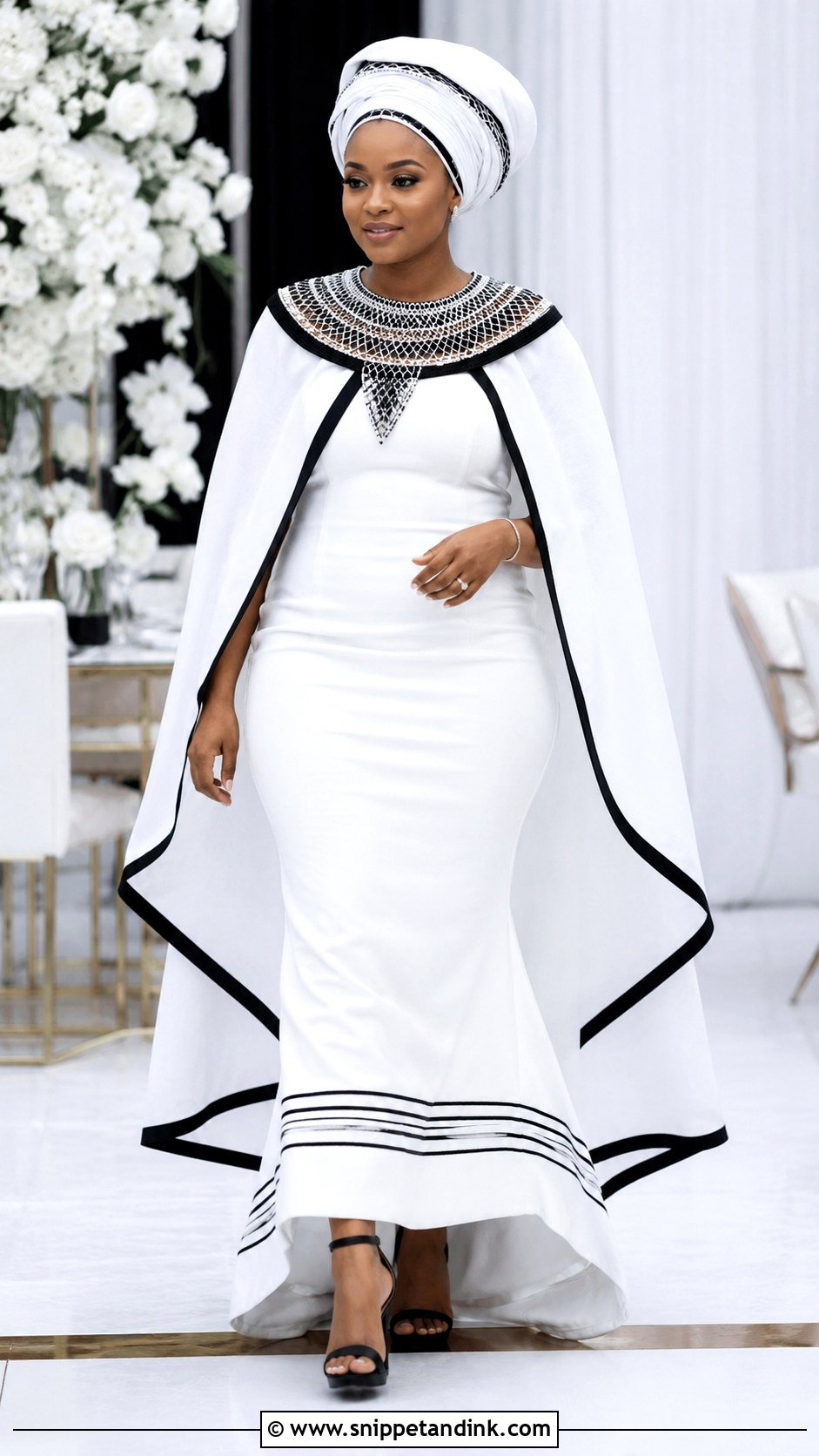
A modern Xhosa dress keeps umbhaco’s character with a fresher shape. Brides choose white gowns with black stripe trim, fitted bodices, peplum waists, capes or trains, completed by a matching doek, beaded collar and black or white heels. The update can be subtle, such as a cleaner neckline or softer fabric, or dramatic, with a structured shoulder or a floor-sweeping skirt. My rule is that the black banding stays visible from a distance. If the modern elements hide it, the dress stops reading Xhosa.
17. Modern Pedi Wedding Dress
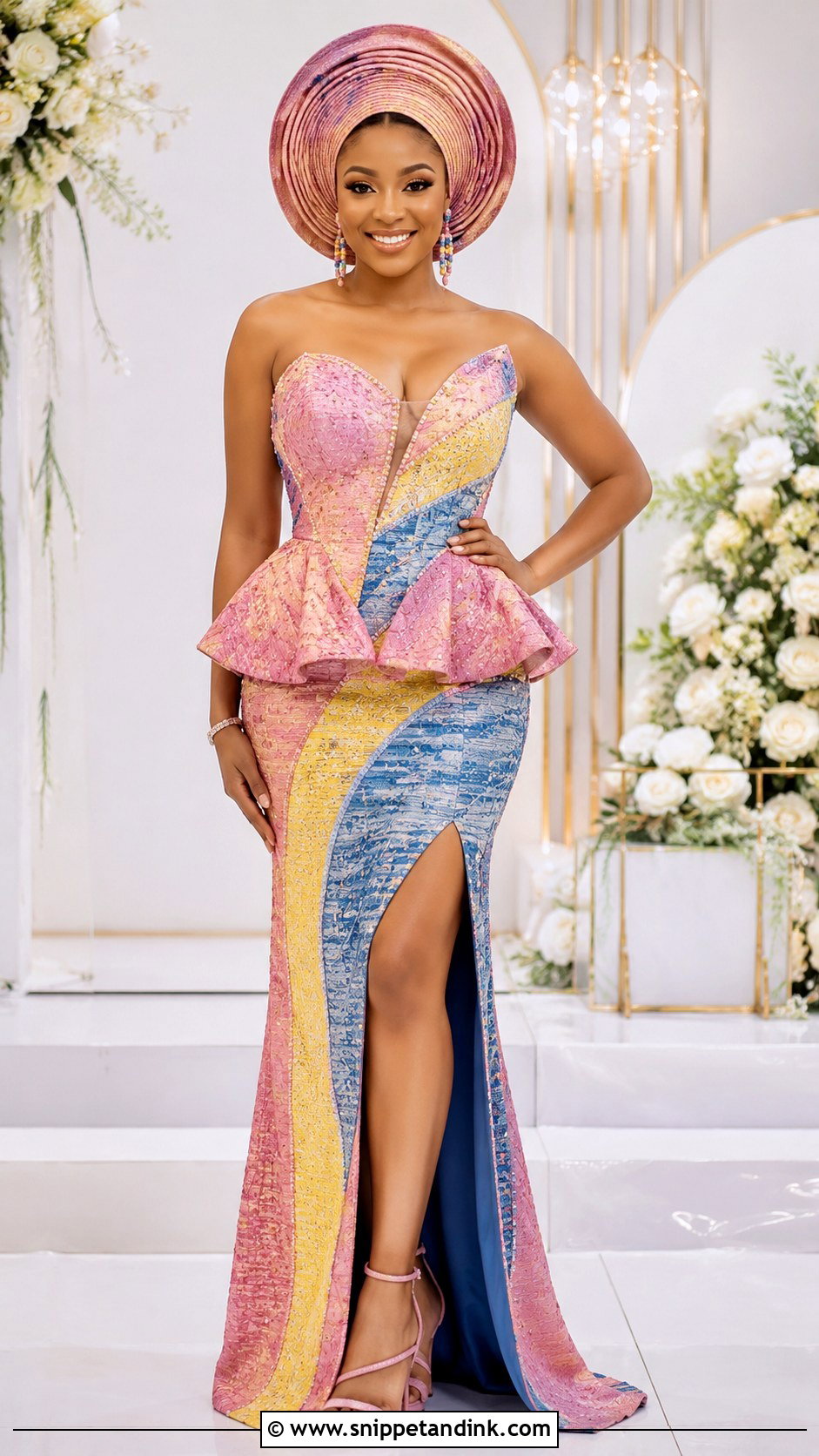
Pedi colors adapt well to a fitted gown, one-shoulder dress, layered skirt or dramatic peplum set. Bright color blocking, bold trims and matching headwraps are common. To keep it elegant, I choose one main color and use the others as accents. Beaded earrings, a neat clutch and strappy heels finish it. The waist can be shaped with belts, peplums or paneling, which makes this one of the easier looks to fit across body types. Strappy heels sink into lawn at outdoor ceremonies, so I’d swap them for a block heel if you’re on grass.
18. Modern Ndebele Wedding Dress
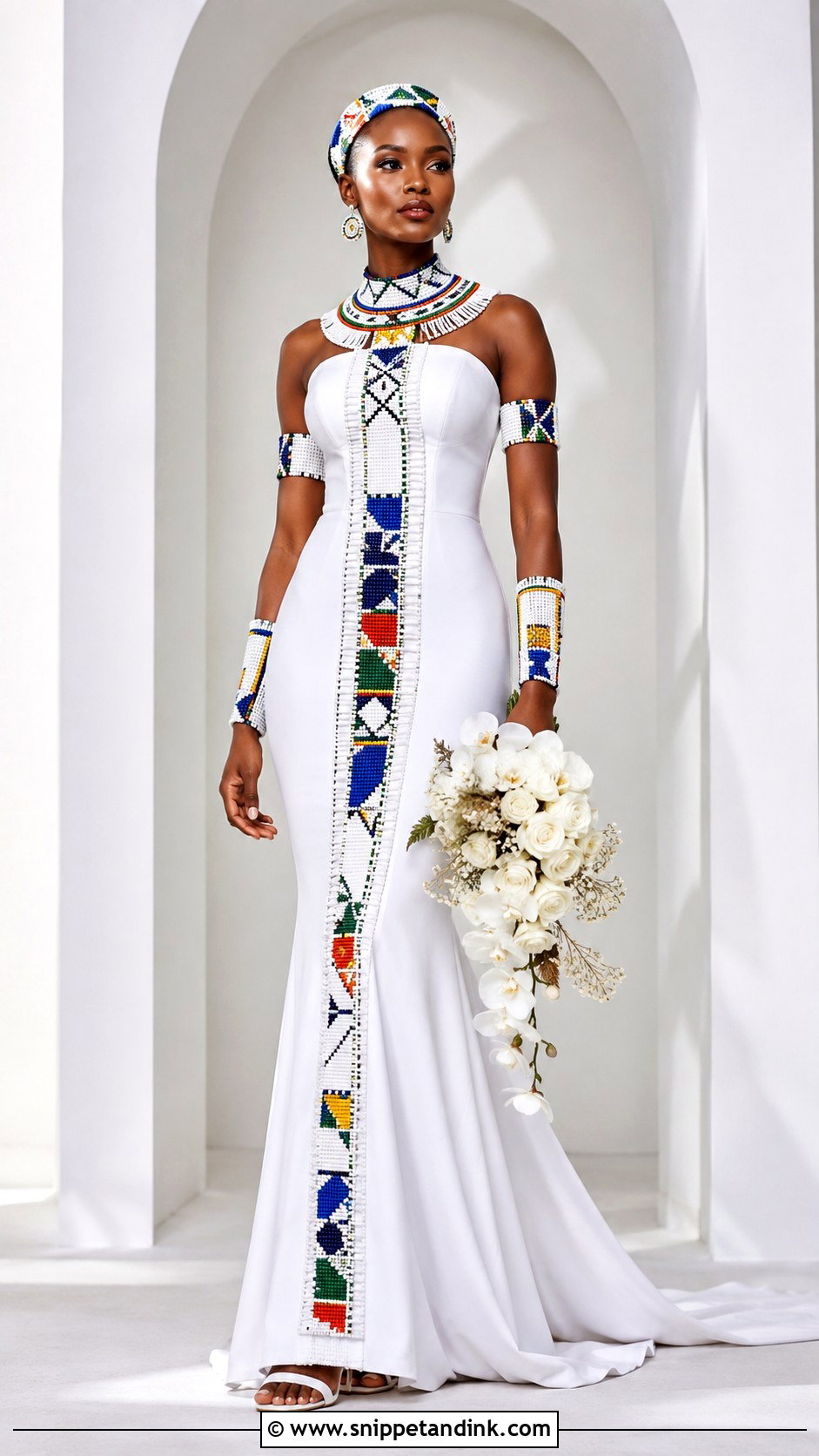
Modern Ndebele styling turns geometric patterns and beadwork into a high-impact look. A white gown with colorful Ndebele panels feels clean; a fitted black gown with bright bead accents feels dramatic. Add a beaded collar, arm cuffs, headpiece and simple heels. I pick one zone, such as the neckline, waist or hem, to carry the boldest pattern and keep the rest quieter, because three busy areas compete in photos. Beaded panels add weight to a gown, so the seamstress may need to reinforce seams where they’re attached.
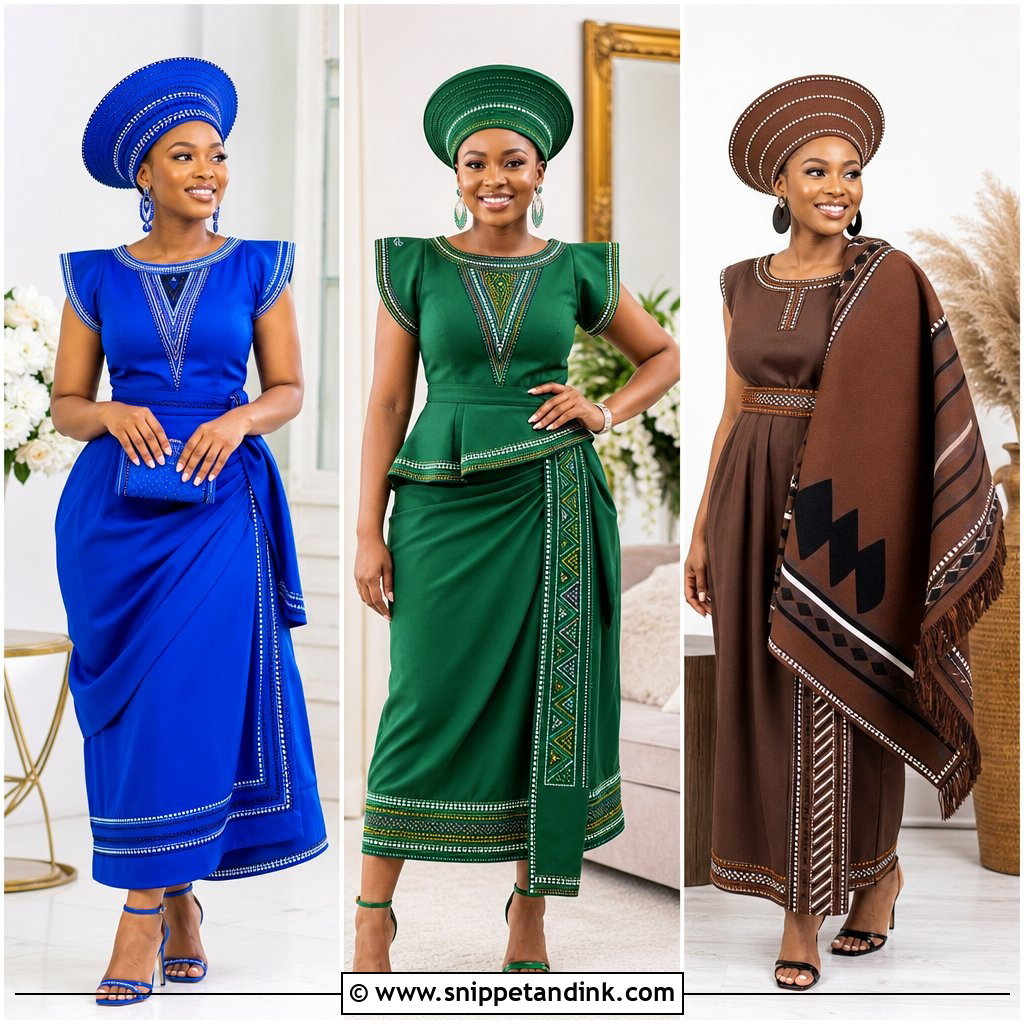
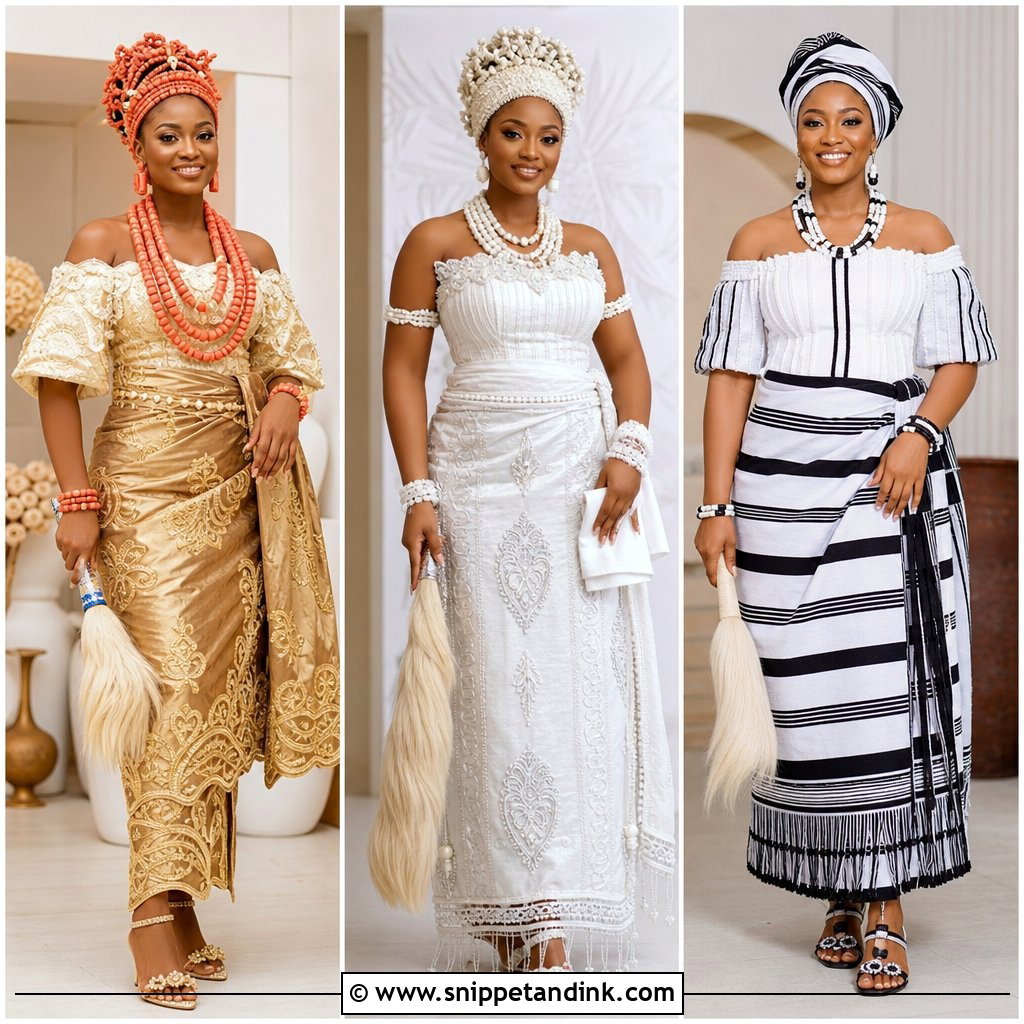
19. Shweshwe Mermaid Wedding Dress
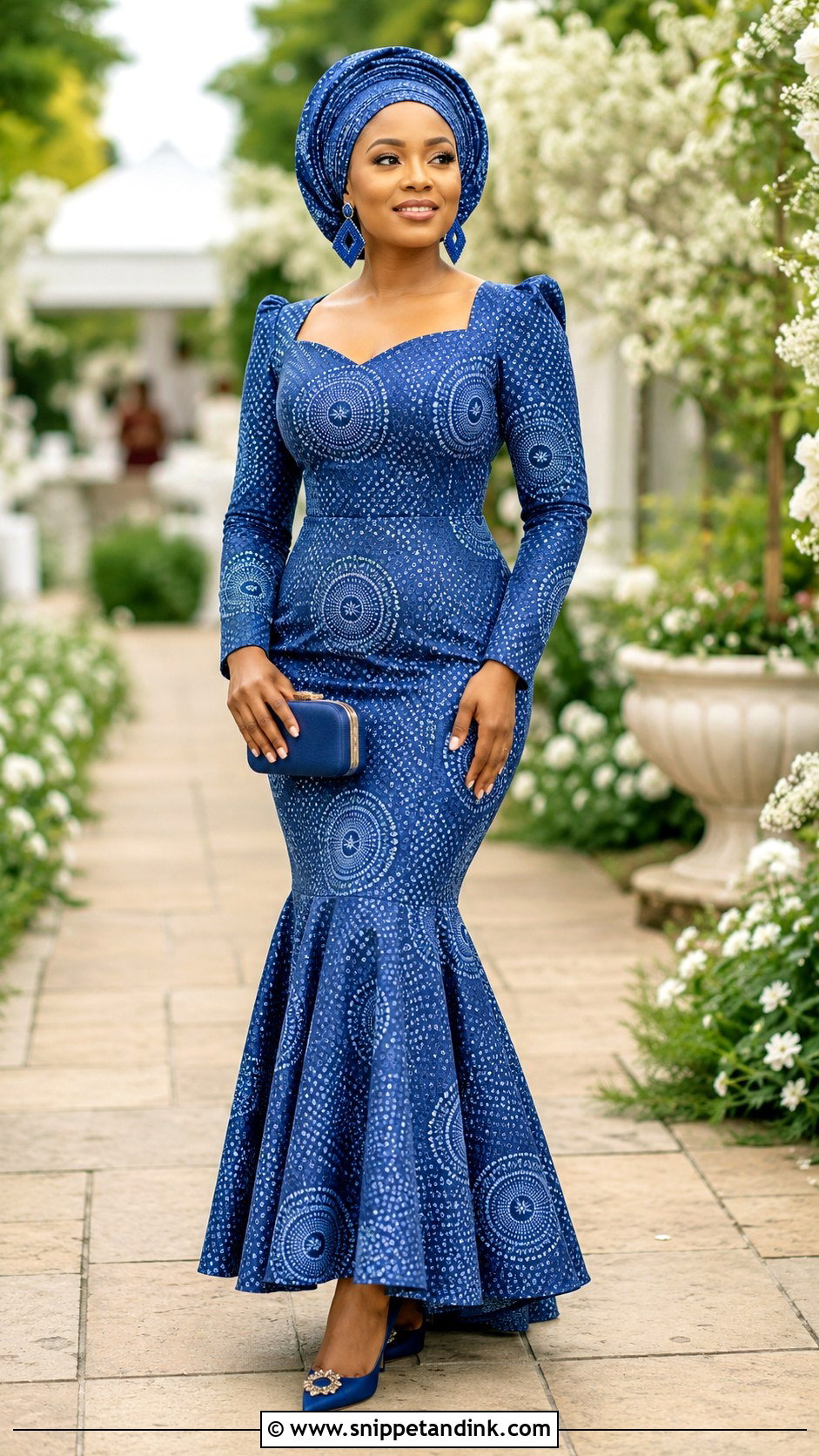
The mermaid cut gives shweshwe a formal bridal shape. A fitted bodice and flared hem feel elegant while the print keeps it South African, and blue, brown, red and green all work. Add a matching doek, structured earrings and pointed heels, plus lace sleeves, a detachable train or satin panels for softness. Shweshwe is a cotton with little give, so a mermaid fit needs careful measuring through the hip and knee; too tight and you can’t climb steps or sit. I ask brides to sit and walk upstairs at the final fitting.
20. Shweshwe Ball Gown Wedding Dress
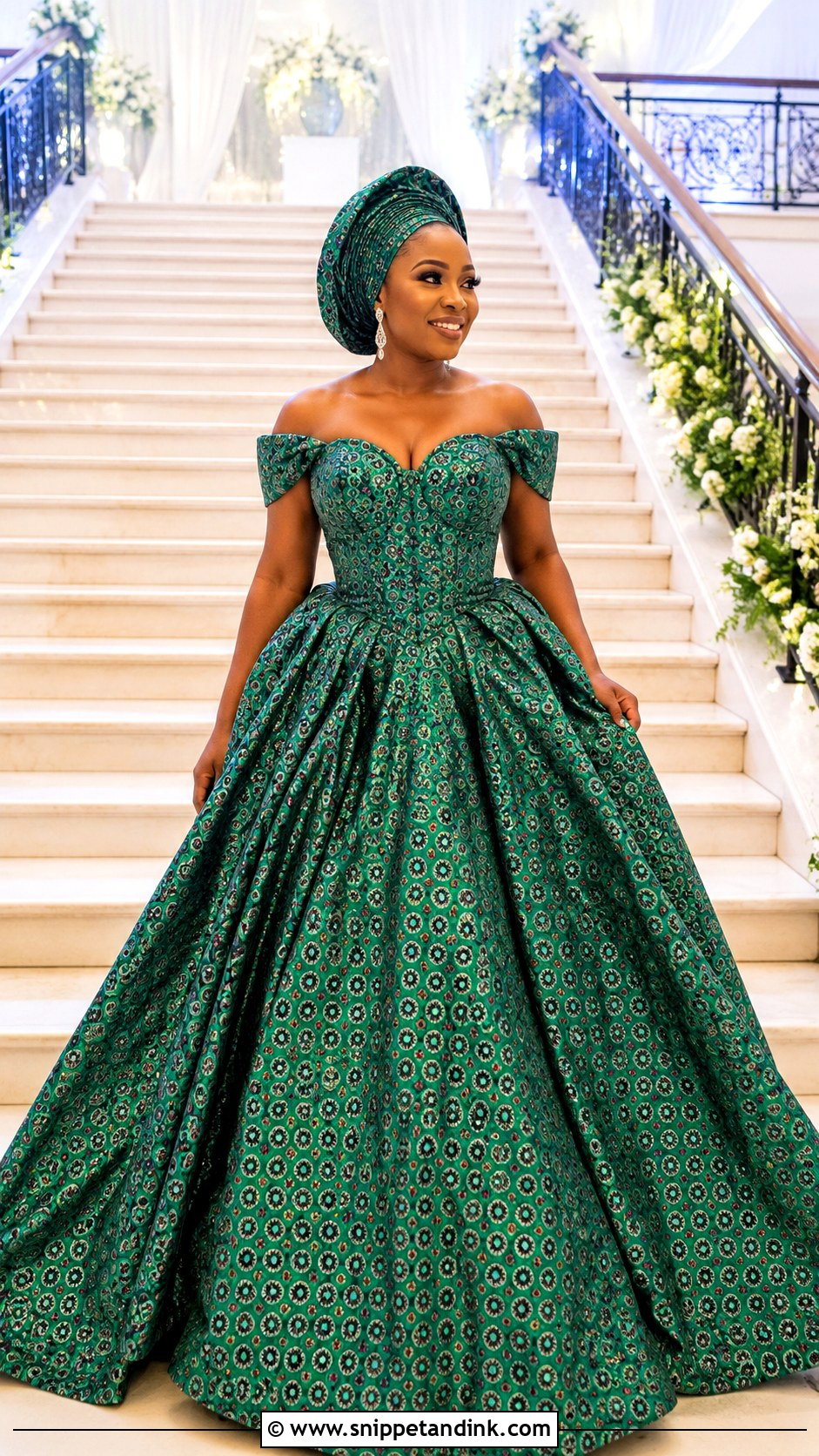
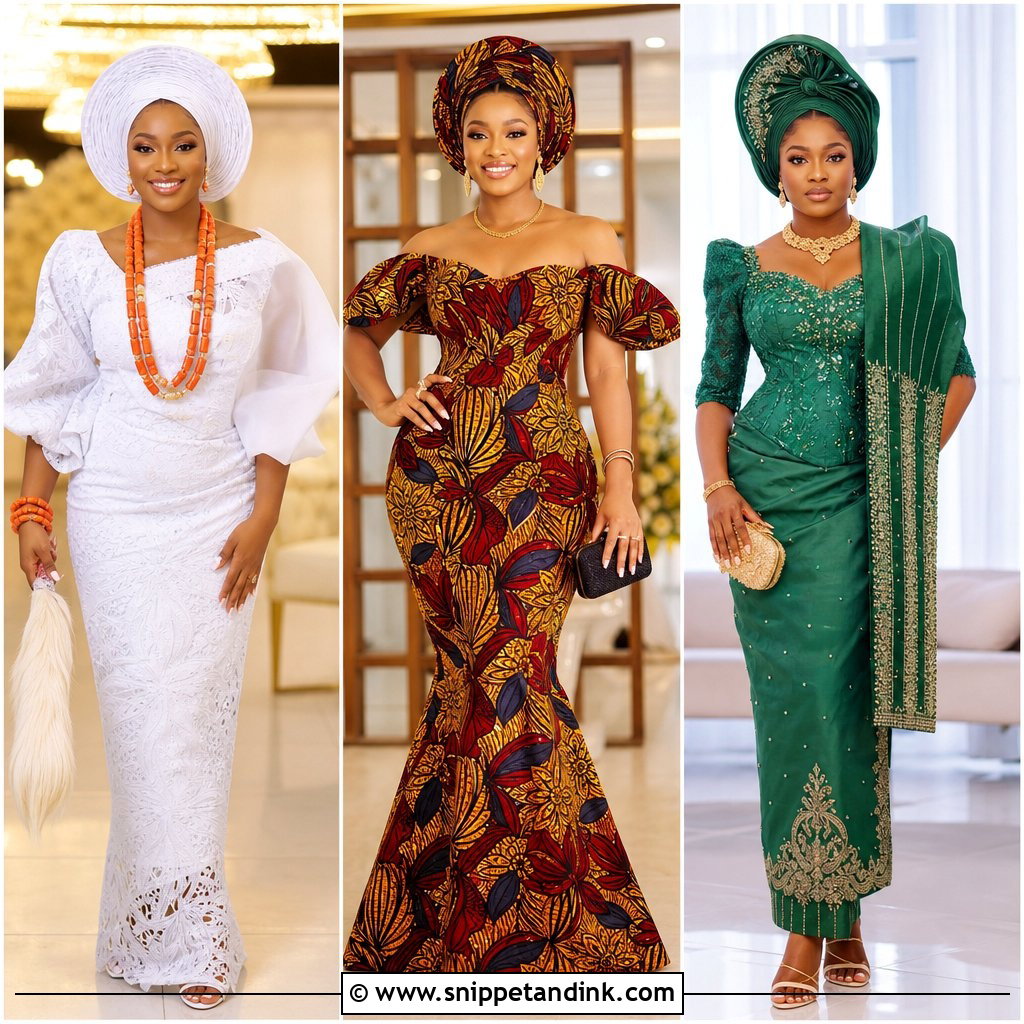
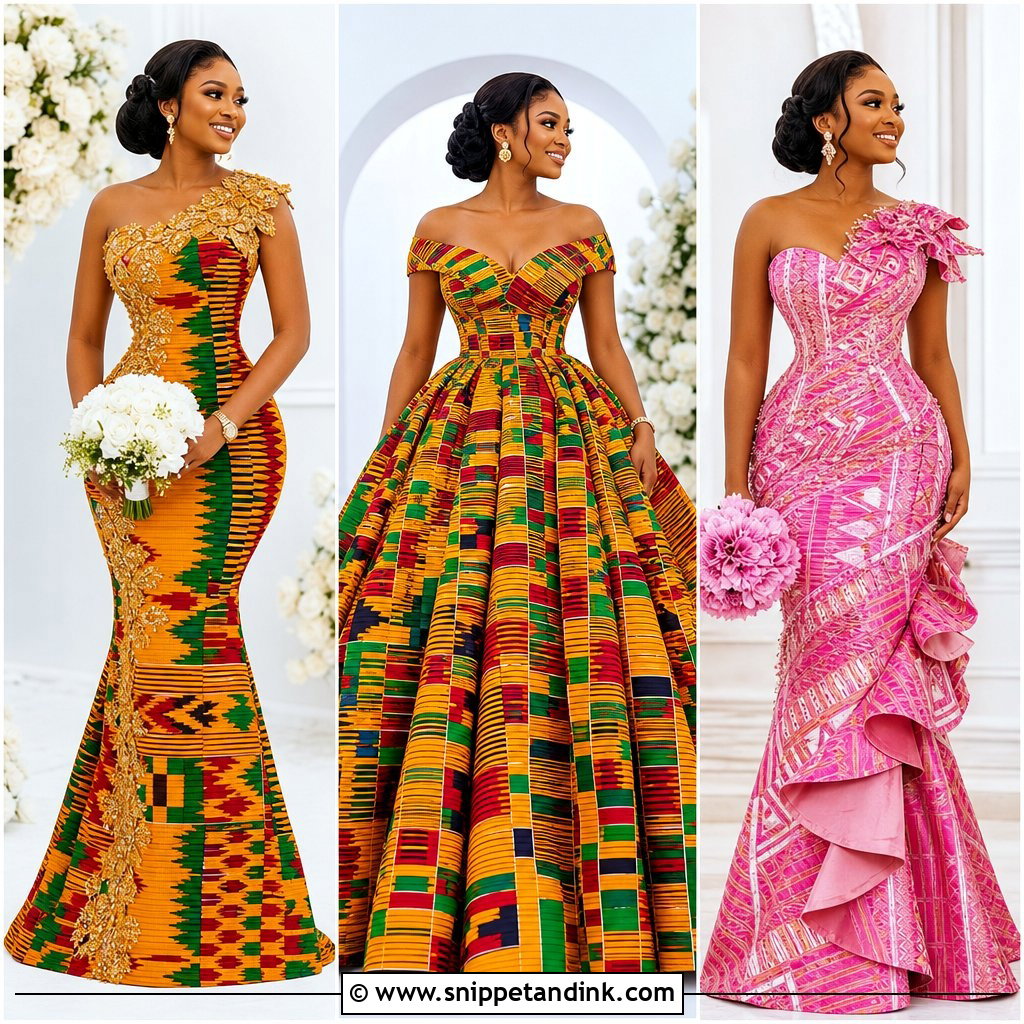
A shweshwe ball gown brings real drama to an entrance. The full skirt gives volume and the printed fabric adds depth and cultural character, while a fitted bodice keeps the bride from being swallowed by fabric. Add a matching headwrap, drop earrings and comfortable heels hidden under the skirt. A small beaded bag finishes it. Blue, burgundy, emerald and brown shweshwe all suit this shape. A full skirt in starched cotton needs a petticoat underneath to hold its shape, and it takes up space in a car, so plan transport.
21. Off Shoulder Traditional Wedding Dress
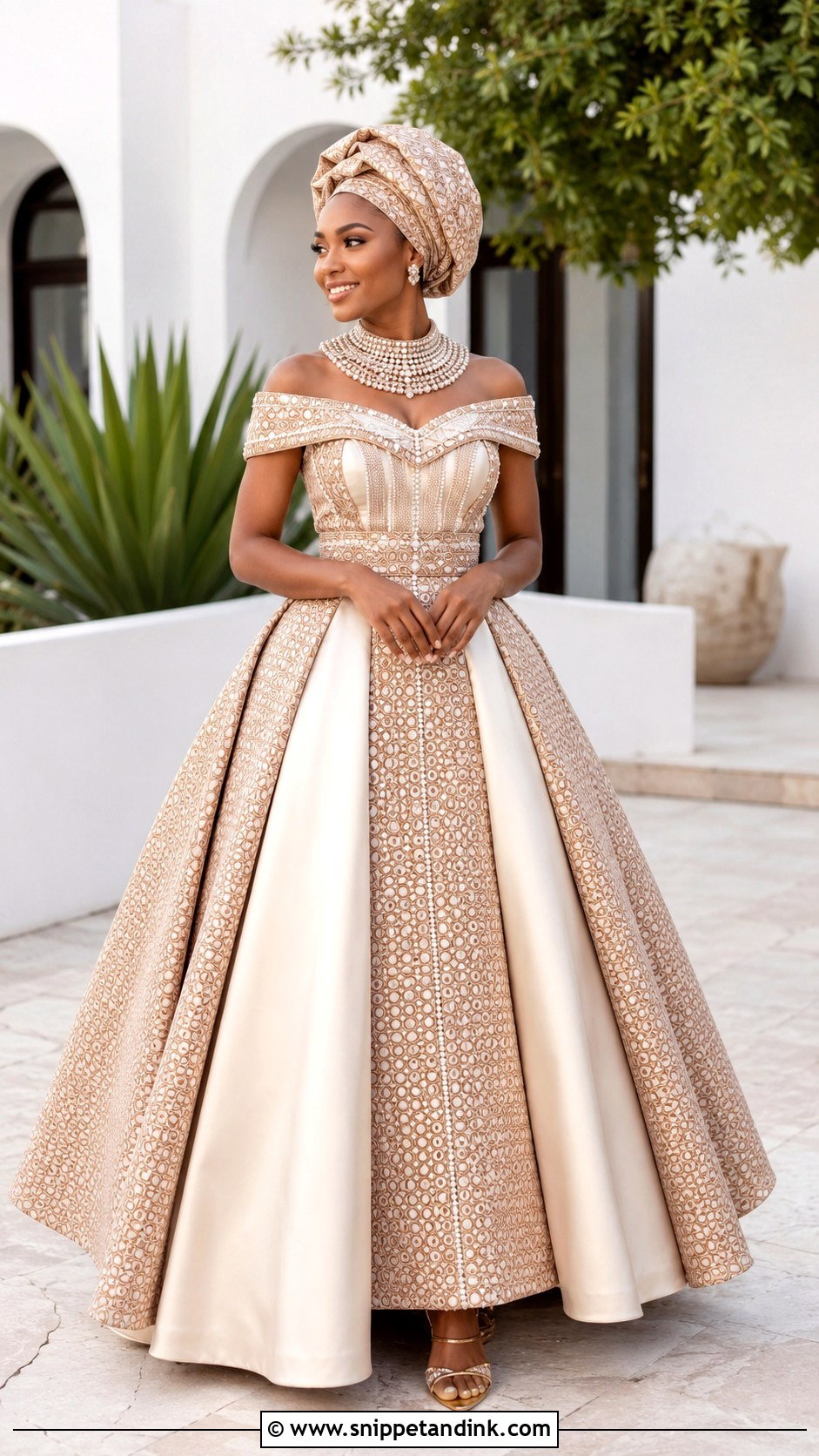
An off-shoulder neckline frames the shoulders and suits Xhosa, Pedi, Tswana, Ndebele or Zulu-inspired designs. Brides choose a fitted gown, a full skirt or a peplum dress with a matching doek or headpiece. With the neckline open, a beaded collar or layered necklace becomes the focal point; heels, bangles and a neat clutch finish it. The bodice must be well tailored, ideally with boning and a silicone grip strip, or you’ll spend the day pulling it up. That one detail decides whether this neckline works.
22. Two Piece Traditional Wedding Dress
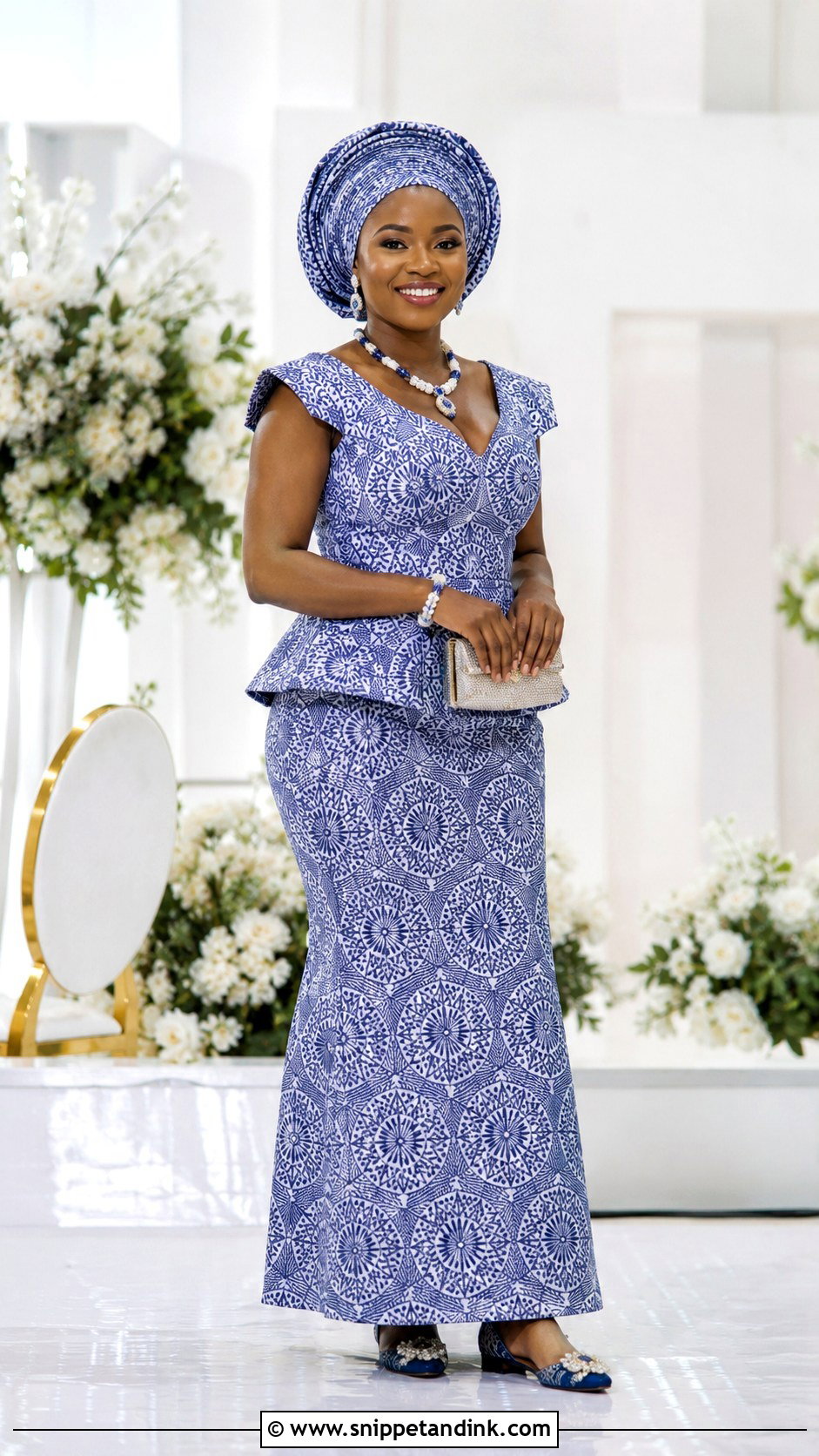
Two-piece outfits are the most adaptable choice here. A fitted top or peplum blouse with a matching skirt, often made from shweshwe, umbhaco, Pedi fabric, Venda stripes or Tsonga prints, lets you move freely and adjust for comfort. A high-waisted skirt creates shape, and a cropped or longer top suits different modesty preferences. Add a matching headwrap, beaded jewelry and heels or embellished flats. Because the pieces are separate, you can swap the skirt for the reception, and I often plan it that way for brides with two outfits.
23. Traditional Wedding Dress With Cape
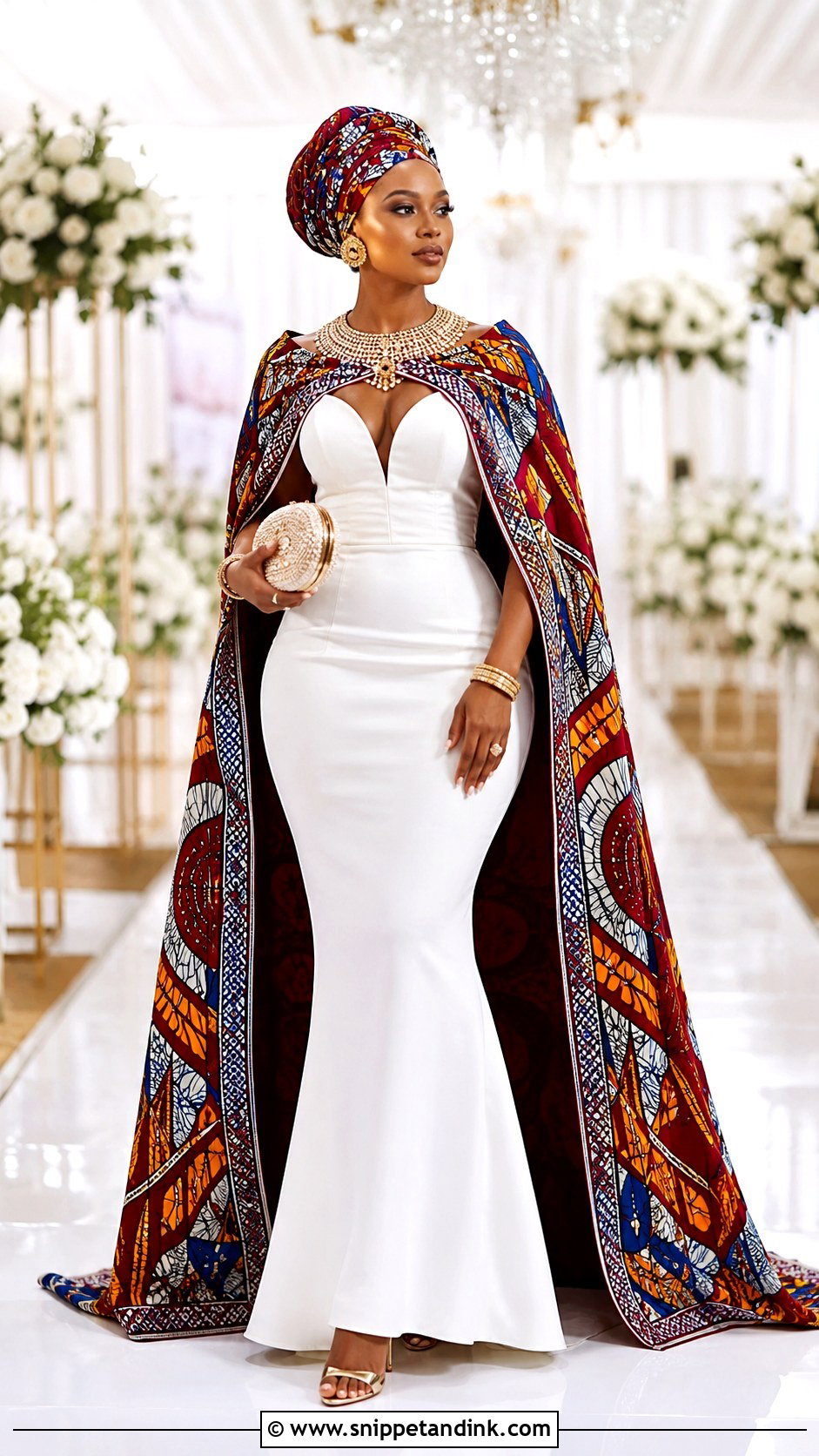
A cape adds movement without hiding the shape of a fitted gown. It can be made from matching shweshwe, umbhaco fabric, satin, lace or beaded trim, and it can stand in for a veil when you want a more cultural finish. Complete it with a headwrap, traditional jewelry and sleek heels, and keep the dress underneath simpler if the cape is strongly patterned. Heavy capes pull backward on the neck, so I anchor them at the shoulder seams with hooks rather than tying them at the throat.
24. Traditional Wedding Dress With Doek
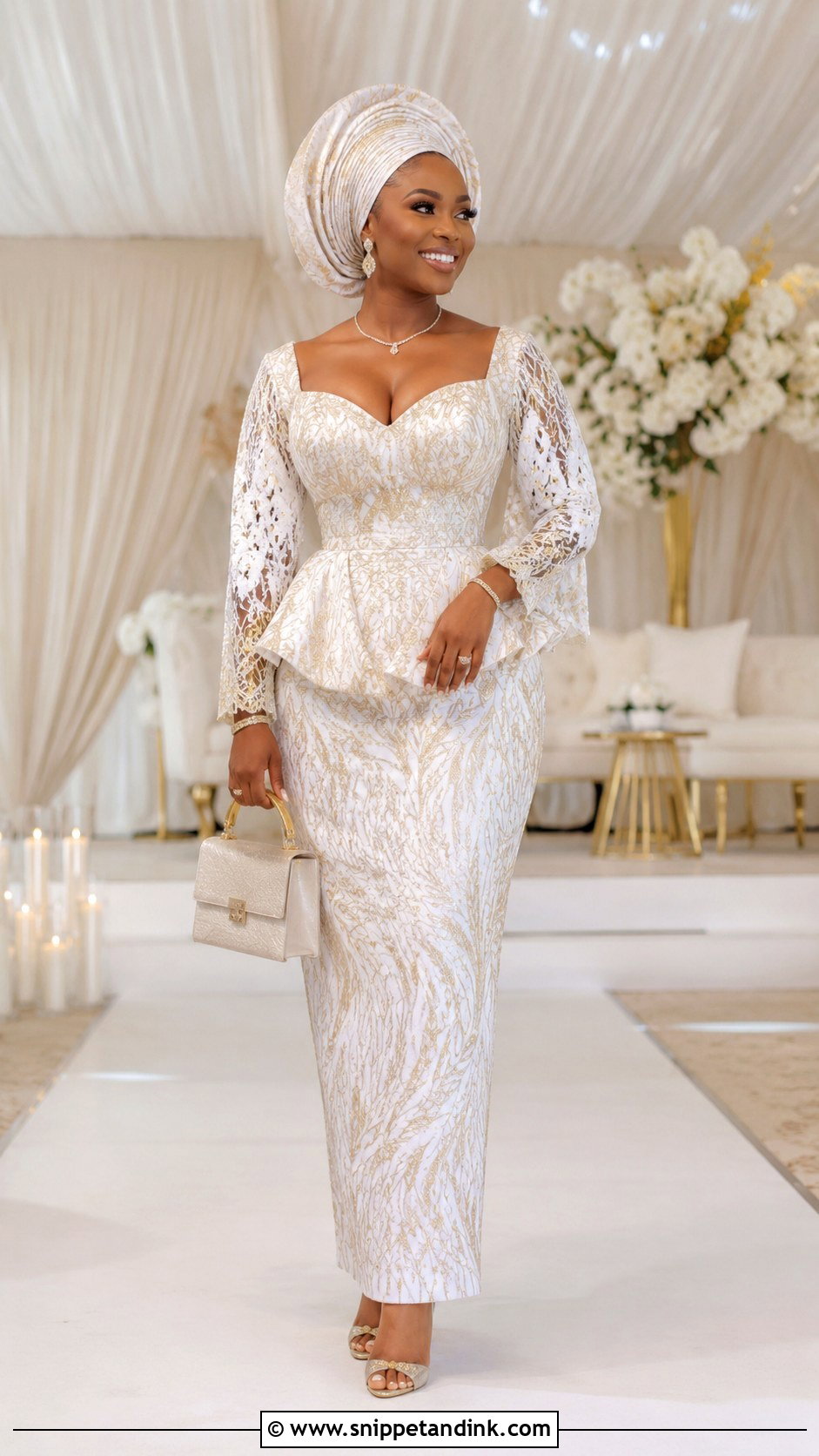
The doek frames the face, so I treat it like a hairstyle rather than an accessory. It can match the dress exactly or pick up one color from it, and it works with Zulu, Xhosa, Pedi, Tswana, Venda, Sotho and many modern looks. A fitted dress with a full doek feels polished; a two-piece with a softer wrap looks relaxed but still formal. Choose earrings that suit the doek shape and a necklace that doesn’t crowd the neckline. Large structured doeks take practice, so book whoever ties it for a trial and photograph each step.

25. Plus Size Traditional Wedding Dress South Africa
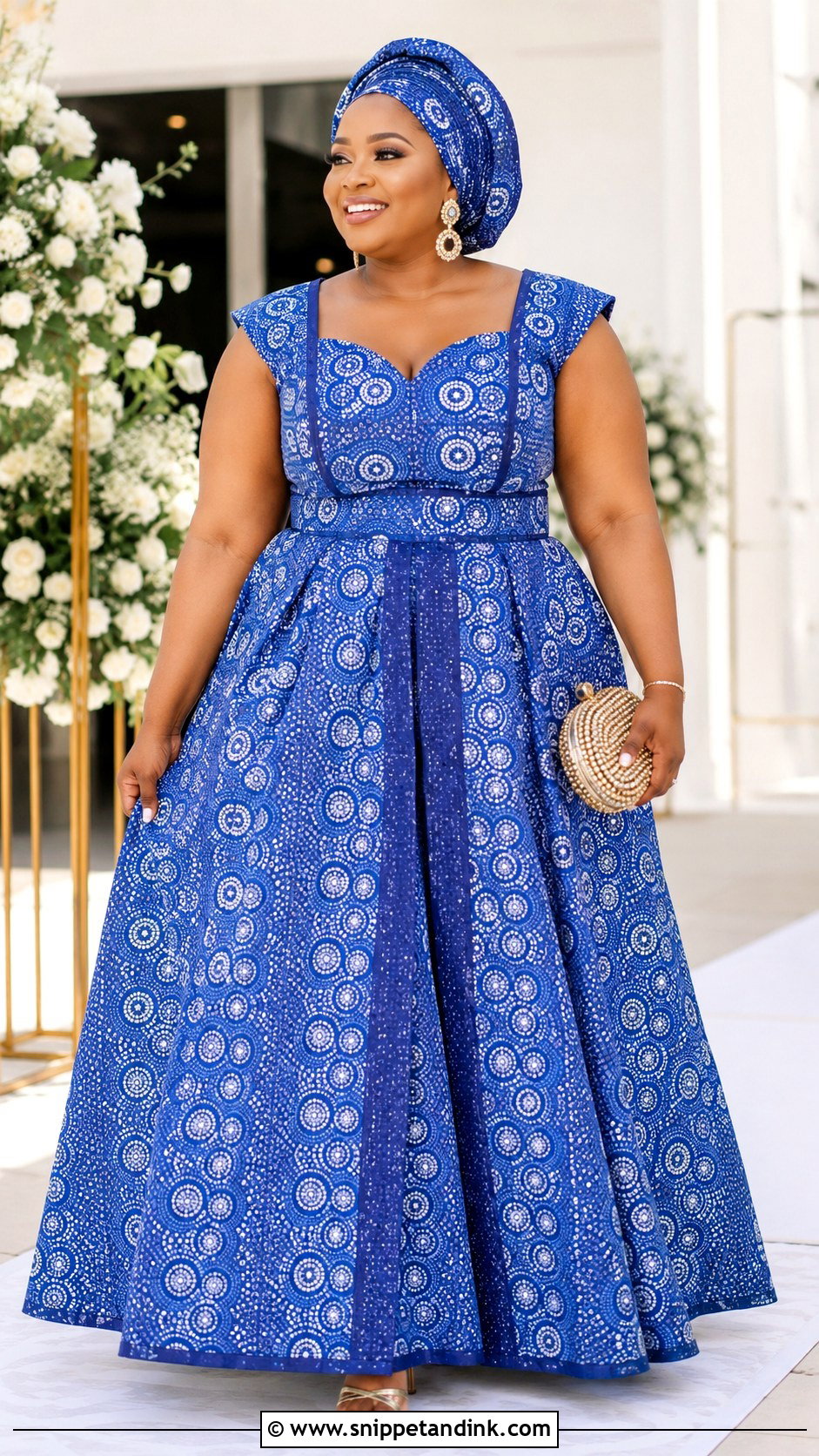
Fit matters more than fabric for curvy brides, and I start every plus-size traditional outfit with structure. Wrap bodices, peplum tops, A-line gowns, structured mermaid dresses and two-pieces with defined waists all work. Shweshwe, umbhaco, Pedi prints and Ndebele details can be placed through panels so the print falls where you want attention. A matching doek, strong earrings and comfortable block heels finish the outfit. Ask for a lined bodice with proper support built in; the dress should skim and move, and you should never feel hidden in it.
Shweshwe Shrinks, Beads Take Weeks, Blankets Get Hot
Most problems I’m called in to fix with traditional bridal wear come from the materials, not the design. Shweshwe needs washing before it’s cut, because it shrinks and loses its starch. Put the fabric through a gentle cold wash, let it dry flat, press it and only then hand it to the seamstress. Buy an extra meter or two for the doek and any repairs.
Handmade beadwork takes time. Collars, belts, aprons and cuffs are often made by individual beaders, and a detailed collar can take weeks. Order once the dress design and colors are confirmed, and ask for the pieces to arrive before your final fitting, so the neckline can be adjusted around the weight of the collar.
Heat, grass and long days
Traditional ceremonies often happen outdoors in the yard or on a farm, and they run long. A blanket over a lined gown is hot in summer, so plan a moment to take it off. Stiletto heels sink into lawn and sand; a block heel or embellished flat saves you. Carry a small kit with safety pins, a needle and matching thread, and a few spare beads on a string, because a snapped bead strand on the day is common and easy to fix if you’re prepared.
Dressing for Your Own Heritage and Your New Family’s
South African bridal dress gives you room to honor culture while still feeling modern. The right outfit respects your heritage, fits properly and stays comfortable through a long celebration. Zulu beadwork, Xhosa umbhaco, Pedi color, Tswana shweshwe, Ndebele patterns, Venda stripes, Tsonga movement or a blend can all work when the dress, headpiece, jewelry and shoes are planned together. Good tailoring and early conversations with your elders are what turn a traditional outfit into one you’ll feel proud wearing.
You'll Like These Ideas:





Leave a Reply