
A Sepedi bridal outfit is built on colour, structure and a lot of careful sewing. Most of the brides I dress land on one of two shapes: a full-length gown, or a makoti set of fitted blouse and skirt finished with pleats, printed bands, beadwork and a matching doek. Newer designs borrow fitted bodices, capes and detachable overskirts, and that works well as long as the print and the headwrap still carry the Bapedi side of the story. Before I sketch anything, I ask who in the family should see the design, because customs differ between households and an elder’s opinion is far easier to hear at the drawing stage than at the last fitting. Below are the ideas I keep coming back to, from colorful makoti attire to gowns that lean modern.
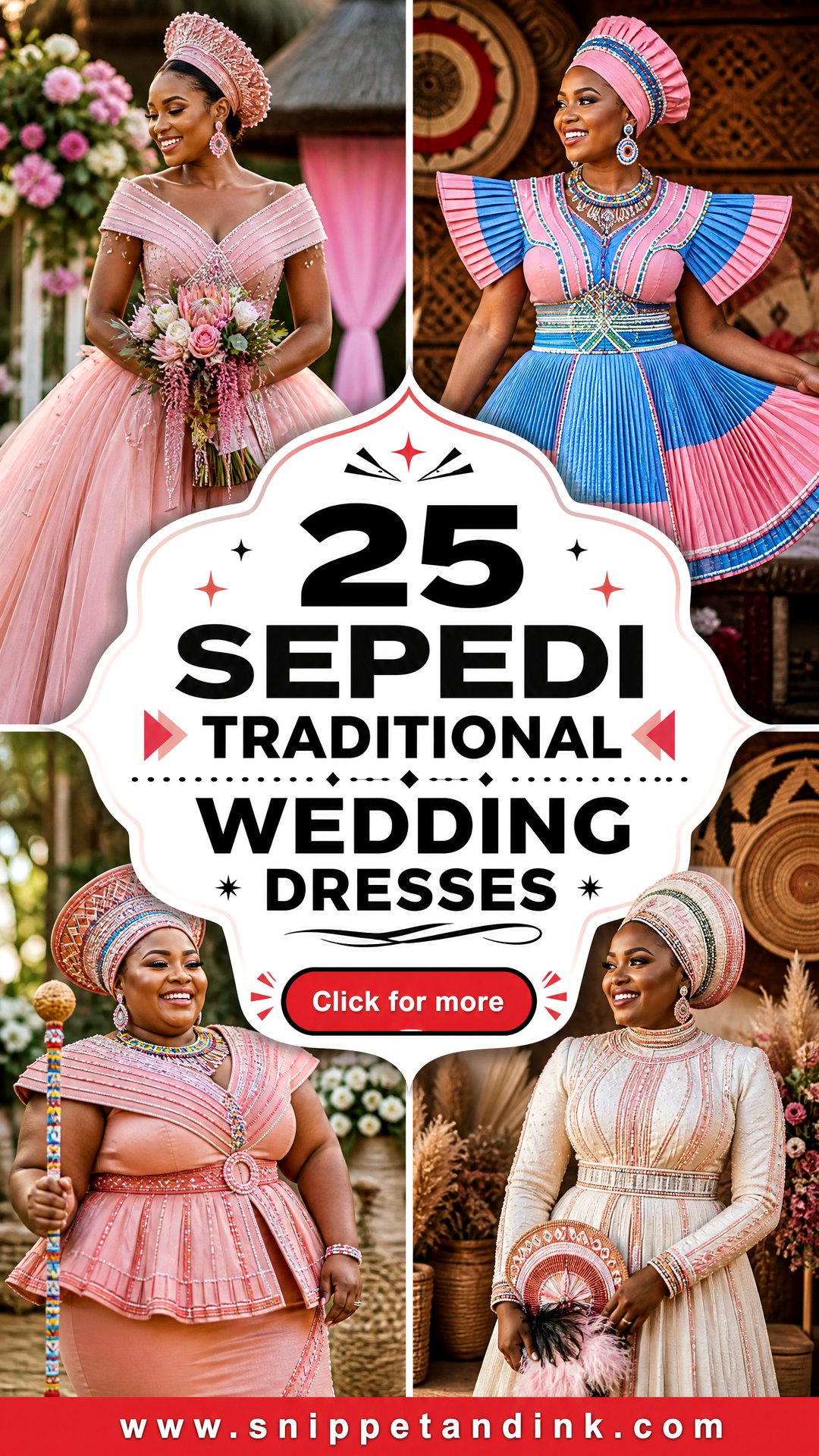
Briefing Your Seamstress on a Sepedi Bridal Outfit
Most of the problems I fix in a makoti outfit start at the first meeting, when the bride brings a photo and no other information. A photo shows the shape, but not the fabric weight, the lining or how long you’ll wear it. Give your seamstress the full picture early and the fittings go far more smoothly.
- The order of the day: how many ceremonies, whether you change outfits and how long you’ll be standing, kneeling or sitting on the ground.
- Who needs to approve the design, so elders see the sketch before fabric is cut.
- The exact fabric, bought with a little extra. Printed cotton should be washed and dried before cutting so any shrinkage happens before it becomes your dress.
- Your shoes and doek, brought to every fitting, since heel height changes the hem and a tall wrap changes your proportions in the mirror.
Leave time. A custom outfit with pleats or beadwork usually needs a few months from first fitting to collection, and handwork takes longer than most brides expect. I’d rather finish early and steam it once more than rush pleats the week before.
Getting the doek right
Ask for the headwrap to be cut from the same fabric or trim as the dress, and practise tying it at least twice before the day. A doek that looks crisp at nine in the morning can slip by the afternoon, so a thin velvet band or a few pins underneath the first wrap keeps it anchored.
1. Pink And Yellow Sepedi Wedding Dress
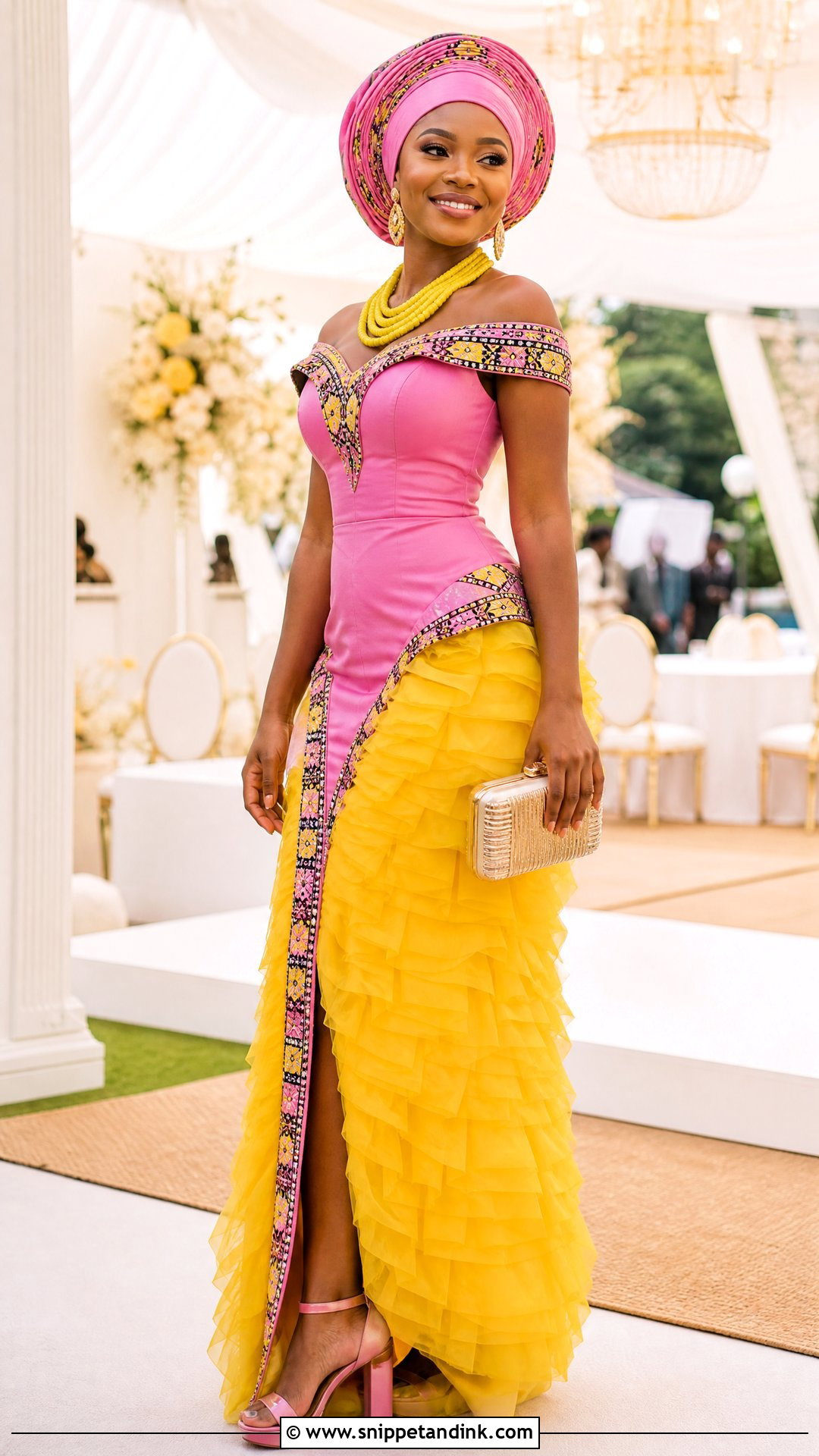
Pink on top and yellow below is a cheerful split, and it reads clearly from across a yard full of guests. I’d keep the bodice fitted with a modest neckline and let the yellow skirt do the work, with ruffles only around the lower third so the hem moves without the whole skirt swelling. Ask your seamstress to run the same printed trim on the sleeves and waist; when the bands match, the two colours look planned rather than borrowed. A pink doek, yellow beads and gold studs are enough jewellery. Block heels matter here more than you’d think, because a pale yellow hem shows every scuff from sinking stilettos on grass.
2. Blue And Pink Pleated Sepedi Wedding Dress
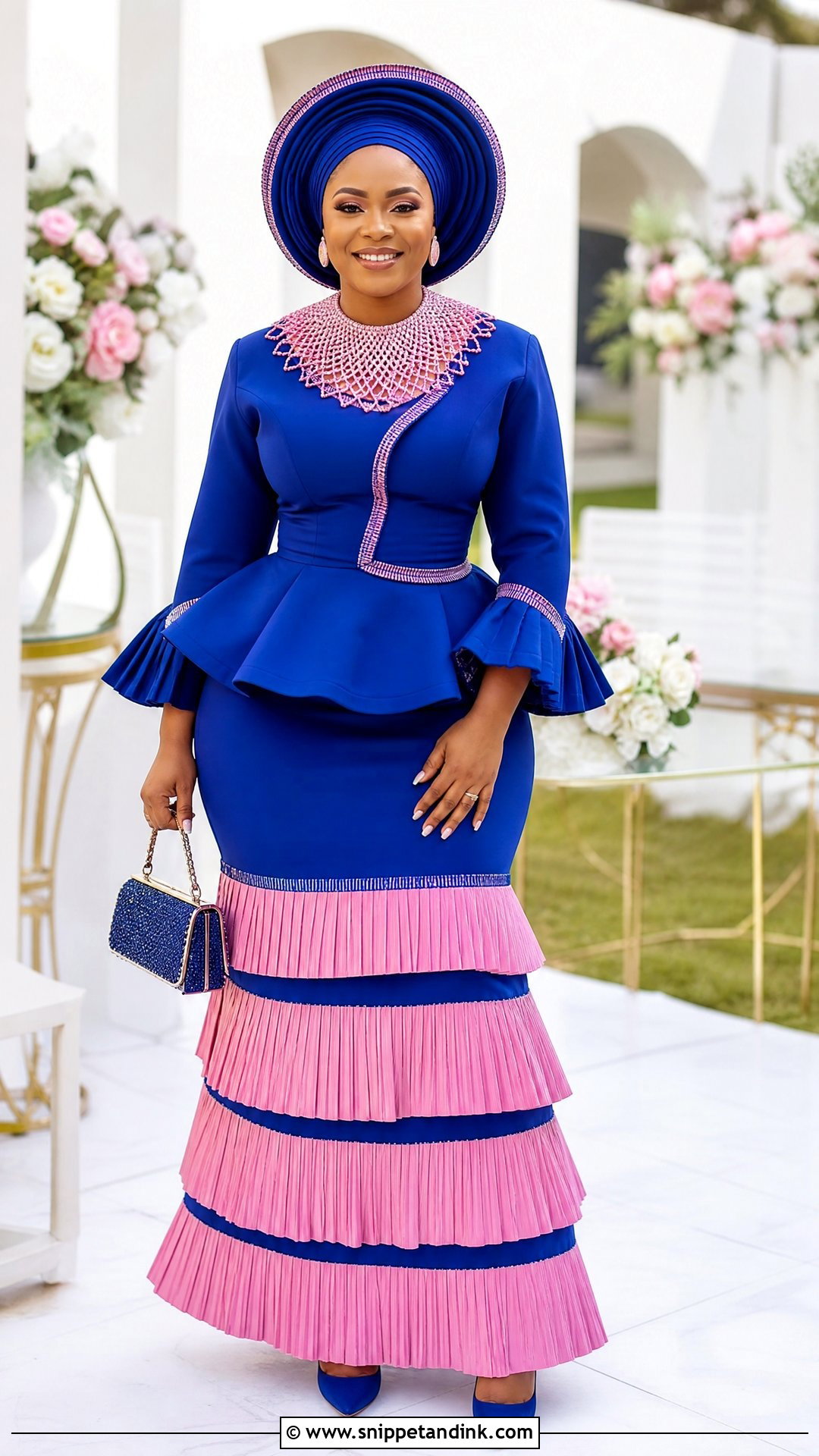
Pleats are only as good as the pressing behind them. On a royal blue skirt with pink pleated tiers, I want the tiers spaced so each one still shows a strip of blue between them; packed too close, they flatten into one pink blur in photos. The blouse pairs well with pink piping, short puff sleeves and a peplum. My fitting test is simple: arms up as if hugging an aunt, then arms forward as if serving food. If the shoulders pull, the back needs more room before anything else is finished.
3. Green Shweshwe Sepedi Makoti Dress
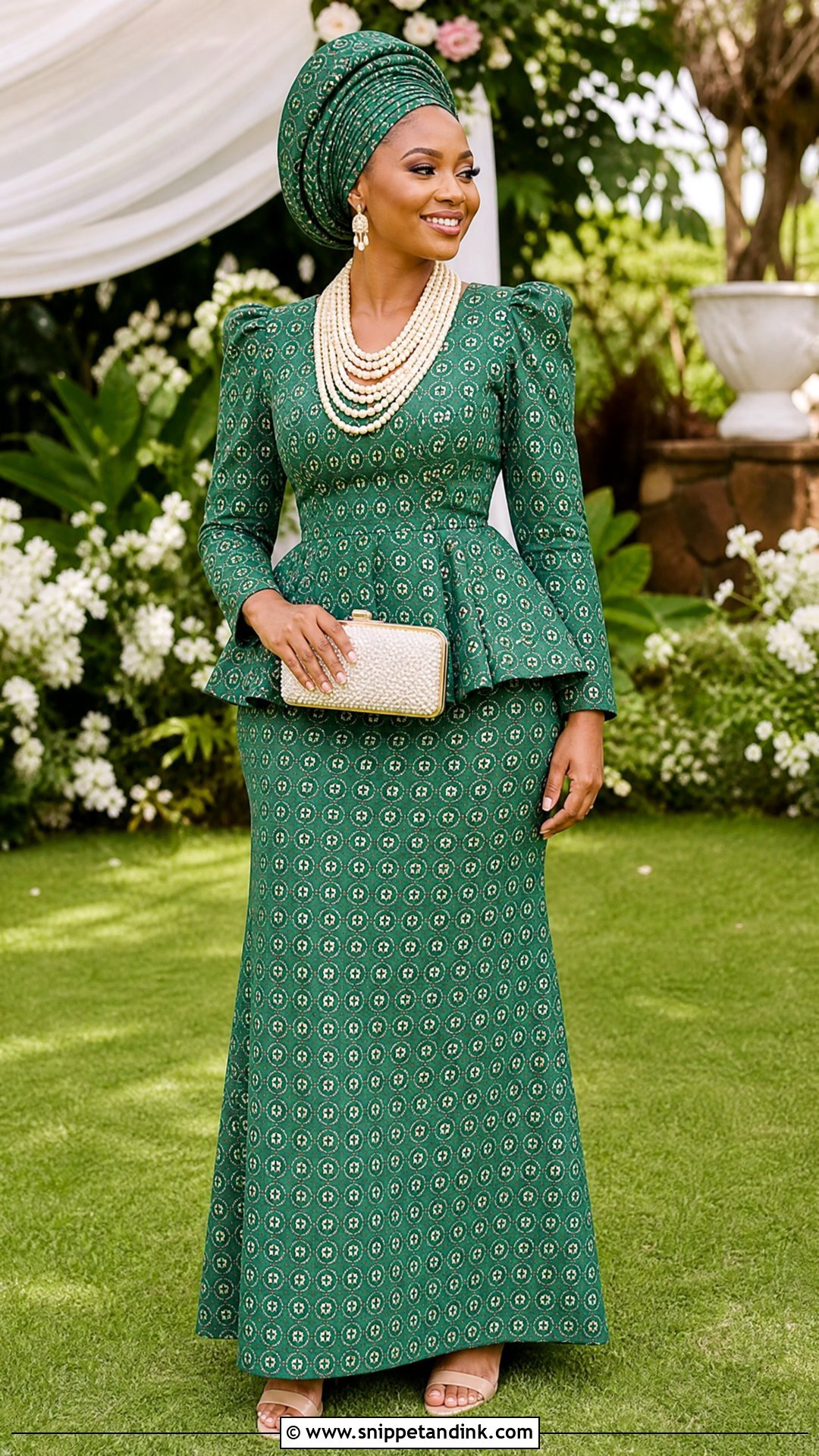
Green print looks dignified without trying hard, which is why I suggest it to brides who feel nervous about louder pairings. A long flared skirt in green Shweshwe sits well under a fitted peplum blouse in a matching solid, with a narrow band at the neckline, cuffs and hem. Shweshwe arrives stiff with starch and can shrink, so I insist the fabric is washed before it is cut. Hidden side-seam pockets are worth asking for; you’ll want somewhere for tissues and a lip balm during a long day. Check with family whether particular colours or details are expected for your ceremony before the final cut.
4. Red And Black Beaded Sepedi Wedding Dress
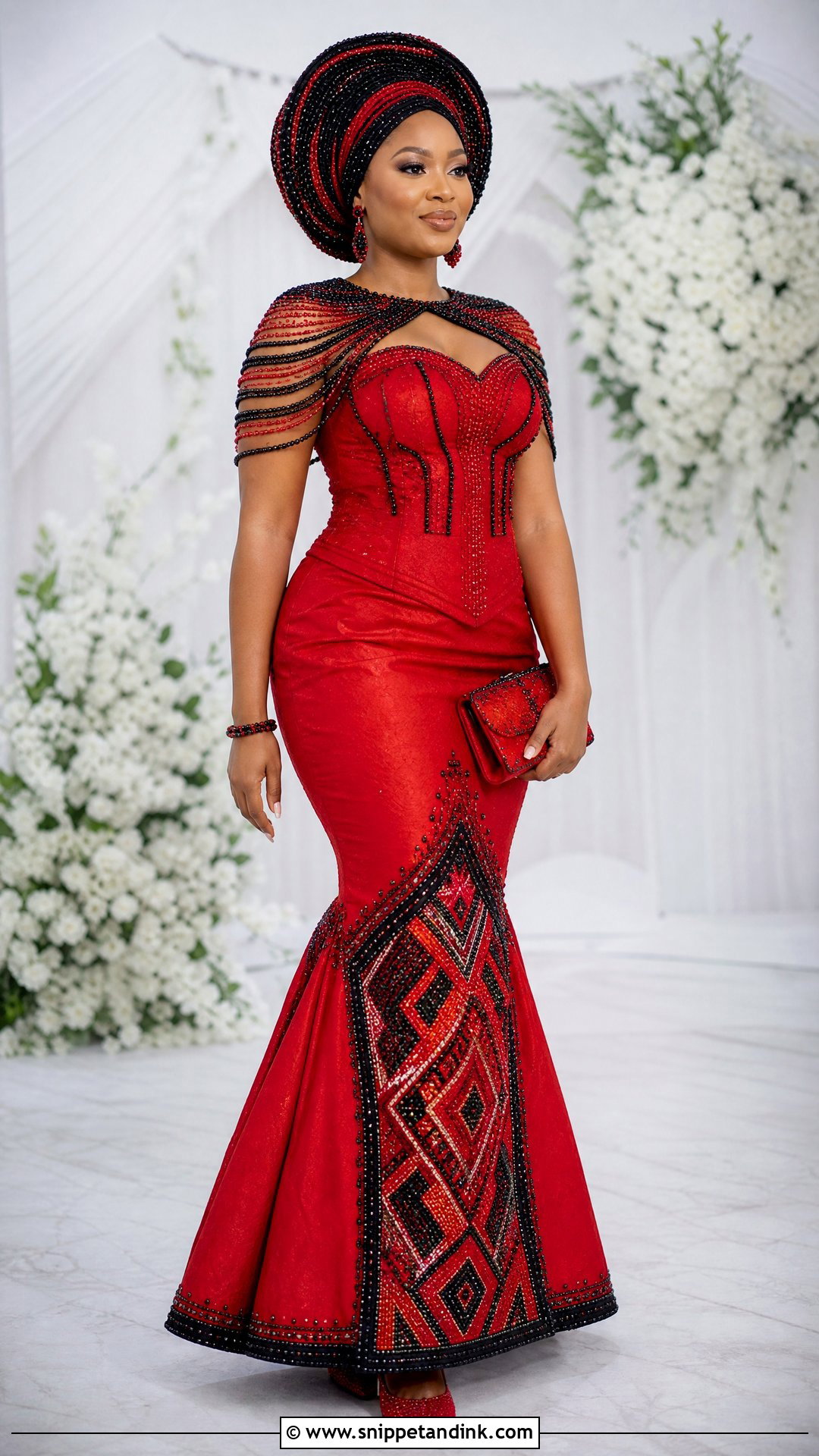
Red and black is the combination I reach for when a bride wants her entrance noticed. A fitted red bodice with black beadwork at the neckline and waist, running into a flared mermaid skirt with printed panels, carries plenty of weight already, so I stop the beading above the hip. Beads sewn into a fitted skirt catch on each other when you sit and can split threads by evening. A detachable shoulder cape gives coverage for the ceremony, and a soft lining under the skirt keeps the mermaid shape from sticking to your legs in the heat.
5. Orange And Blue Sepedi Peplum Dress
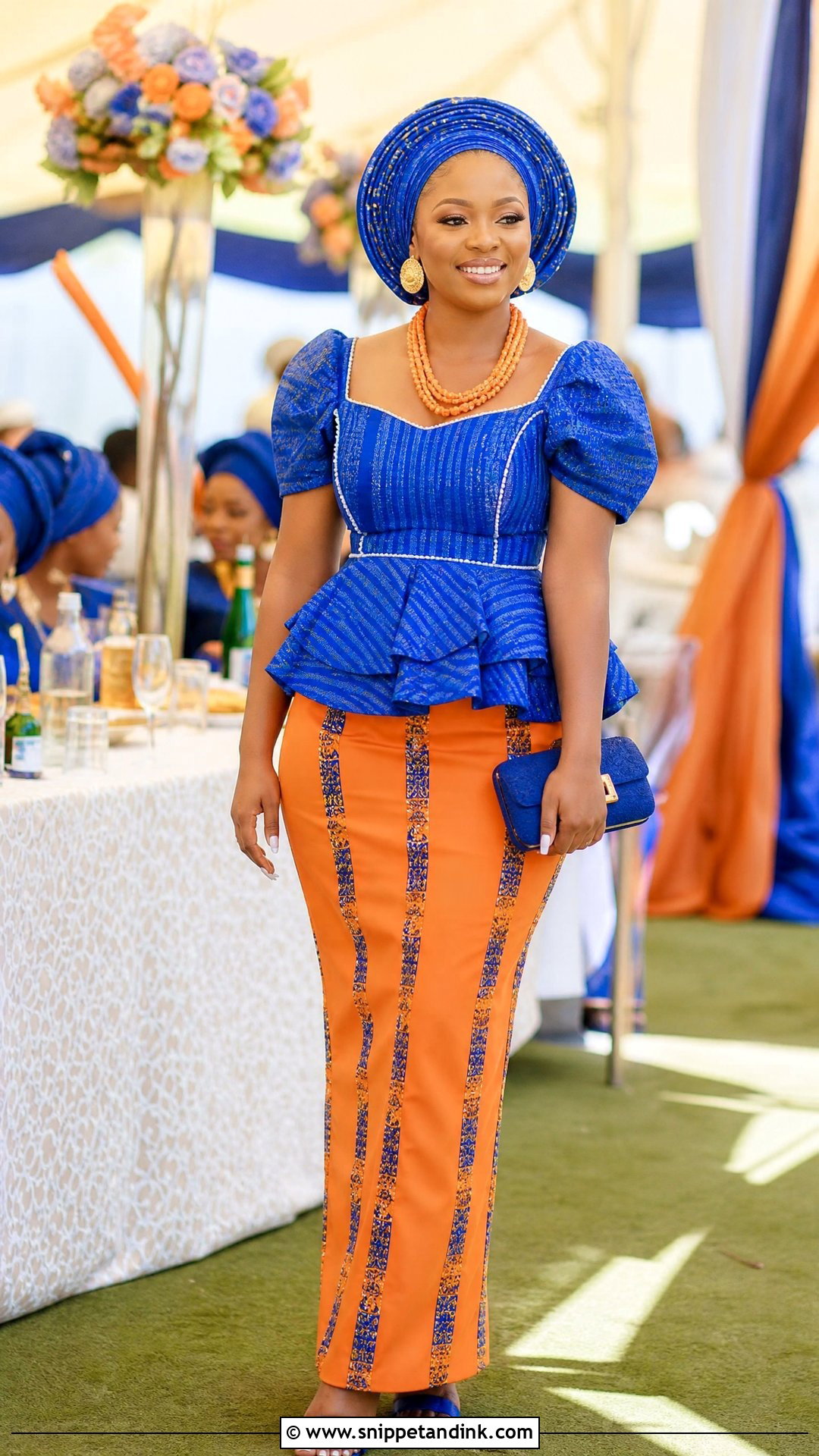
Orange with blue suits a bride who is happy to be seen. My preference is a blue peplum blouse with orange piping over a floor-length orange skirt, with printed panels cut vertically through the skirt so the eye travels down rather than across. The peplum has to be in proportion: if it flares past the widest part of your hips, it adds width instead of shaping the waist. Before you approve the skirt, sit, stand and take a full stride in it. A blue doek, an orange bead necklace and blue block sandals finish it without adding a third colour.
6. Purple And Turquoise Sepedi Ball Gown
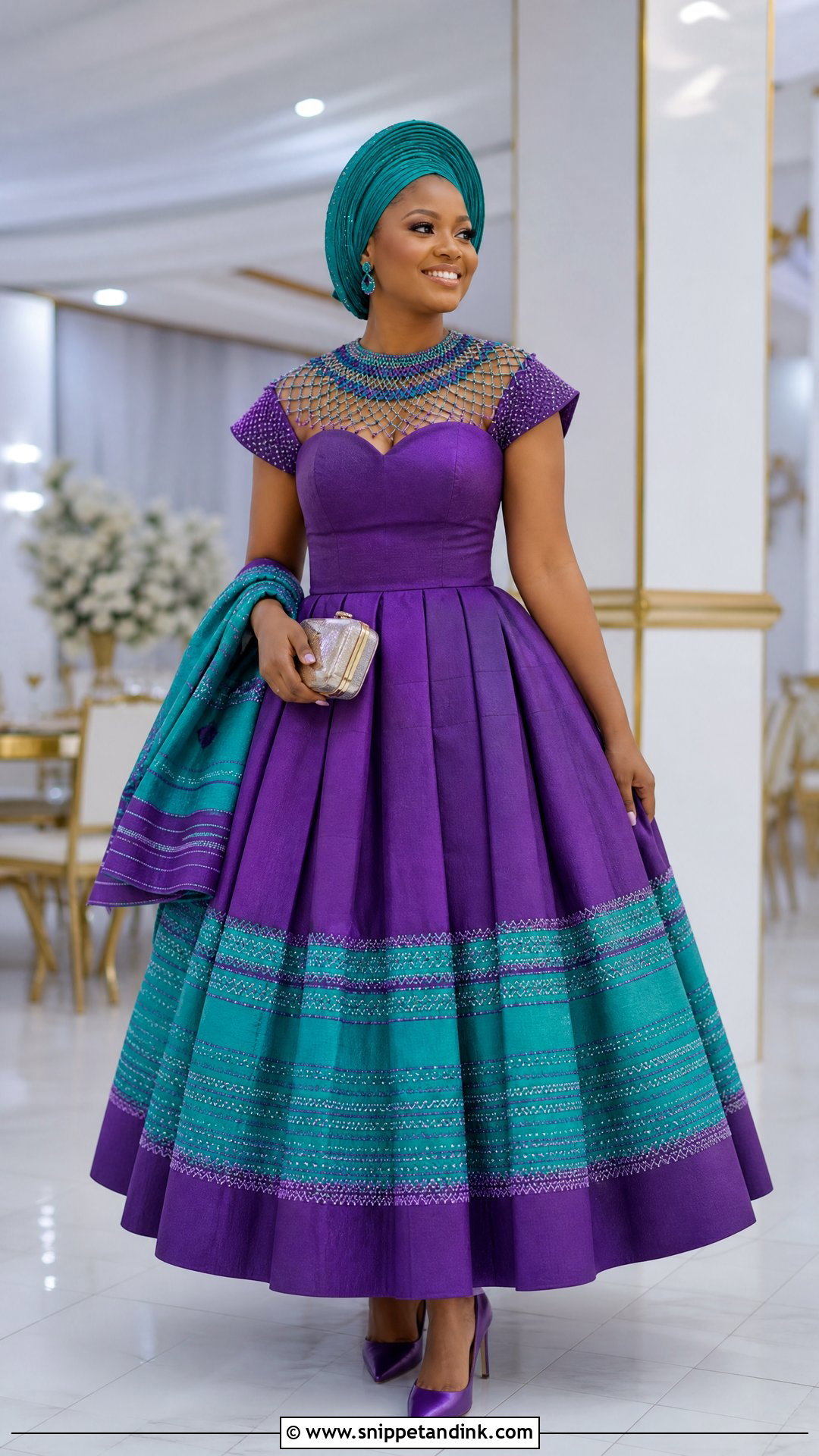
Picture a full purple skirt swinging with flashes of turquoise in every pleat. This Sepedi ball gown works best with a structured purple bodice, a true natural waist and turquoise printed bands across the skirt. Volume is where I see brides suffer: stiff netting looks full but is hot and scratchy after a few hours. I build fullness from two or three light layers instead, which holds the shape and lets you breathe. Wide straps or short sleeves give the bodice support, and a turquoise shawl covers the shoulders for formal moments.
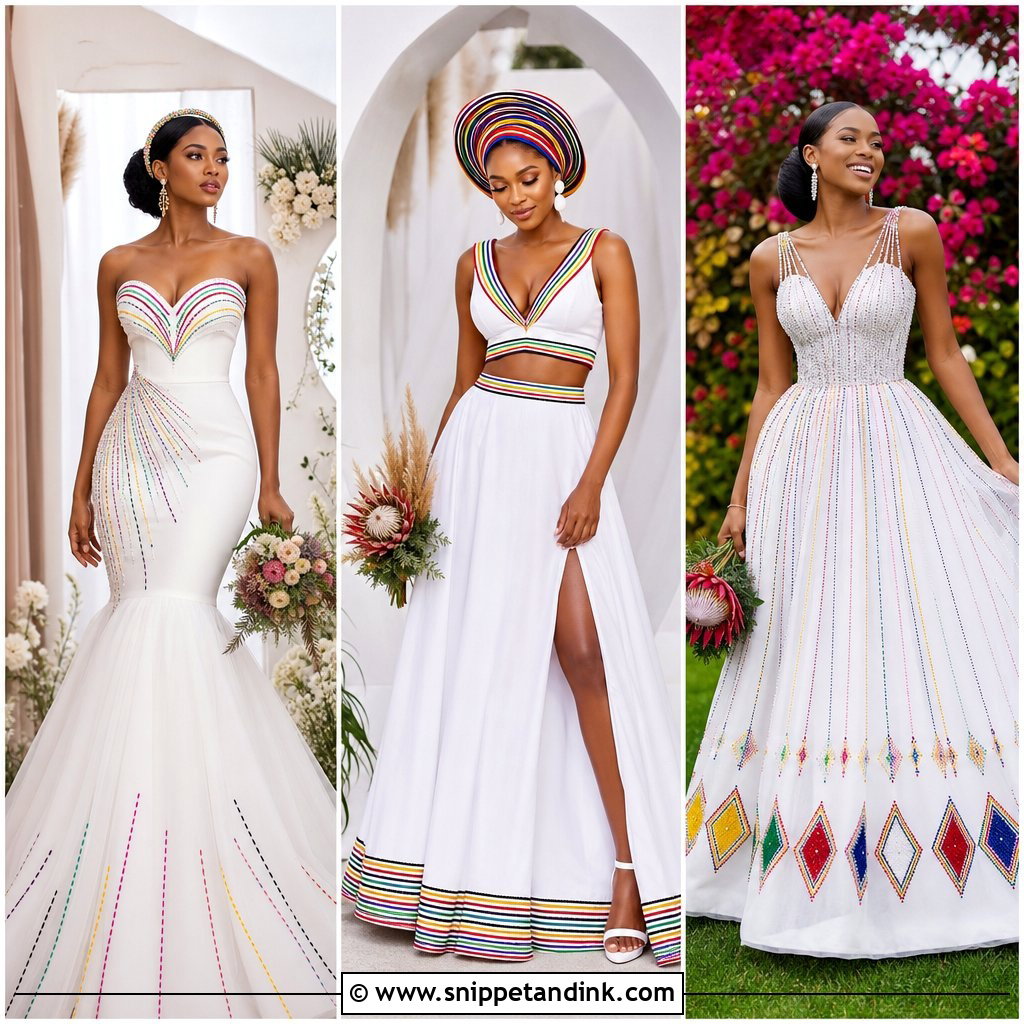
7. White Sepedi Wedding Dress With Colorful Trim
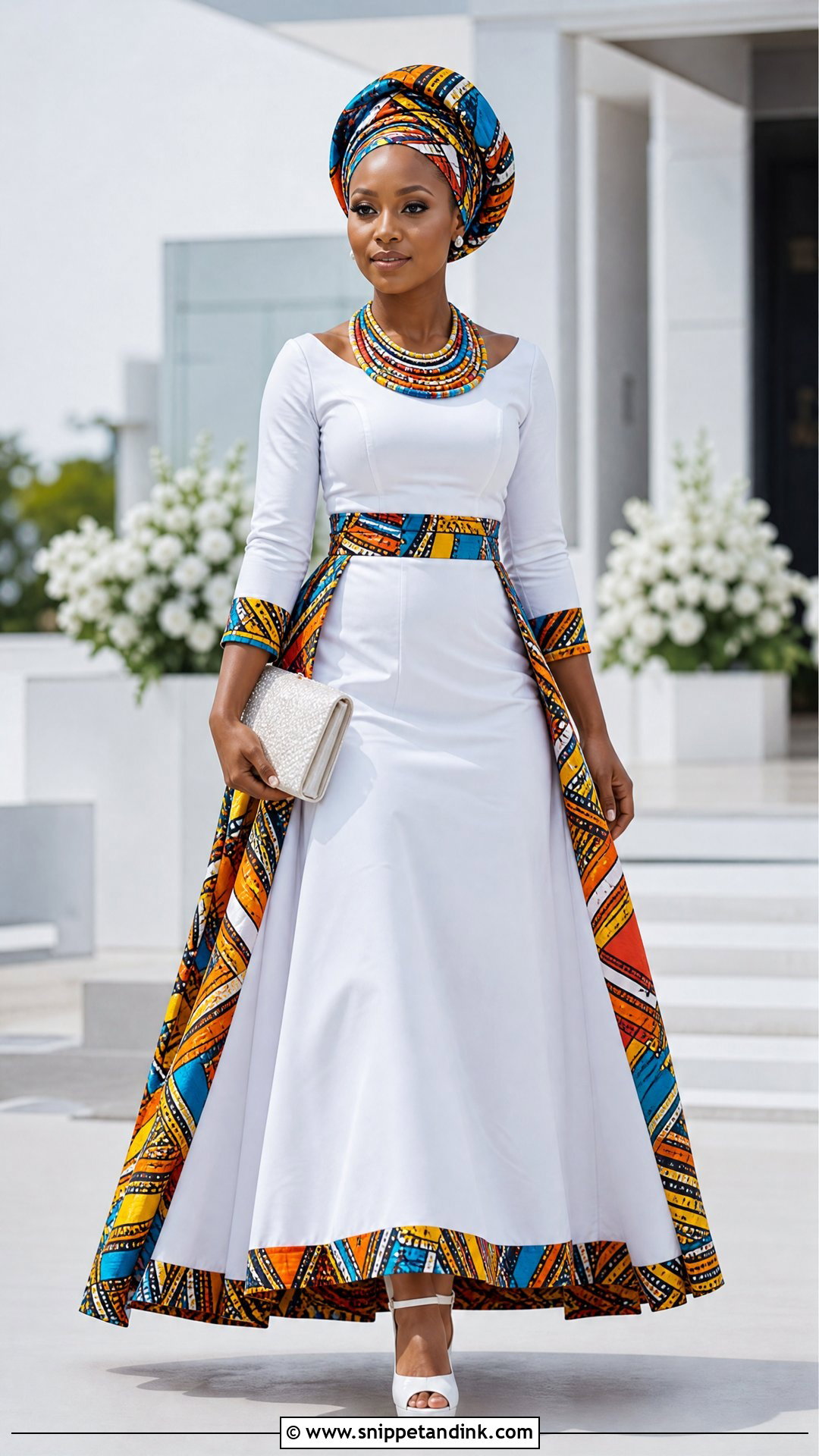
White with Sepedi trim is the gown I make most often for couples planning one day that blends a church service with family traditions. An A-line white dress with a clean bodice, modest neckline and short sleeves becomes clearly Sepedi once narrow bands of pink, blue, yellow and green sit at the waist, cuffs and hem. The detachable printed overskirt is the useful part: it brings colour to the traditional ceremony, and when it comes off, you’re in a simpler white dress for the reception. Resist adding trim everywhere. Three placed bands look tailored; seven look busy.
8. Maroon And Gold Sepedi Wedding Dress
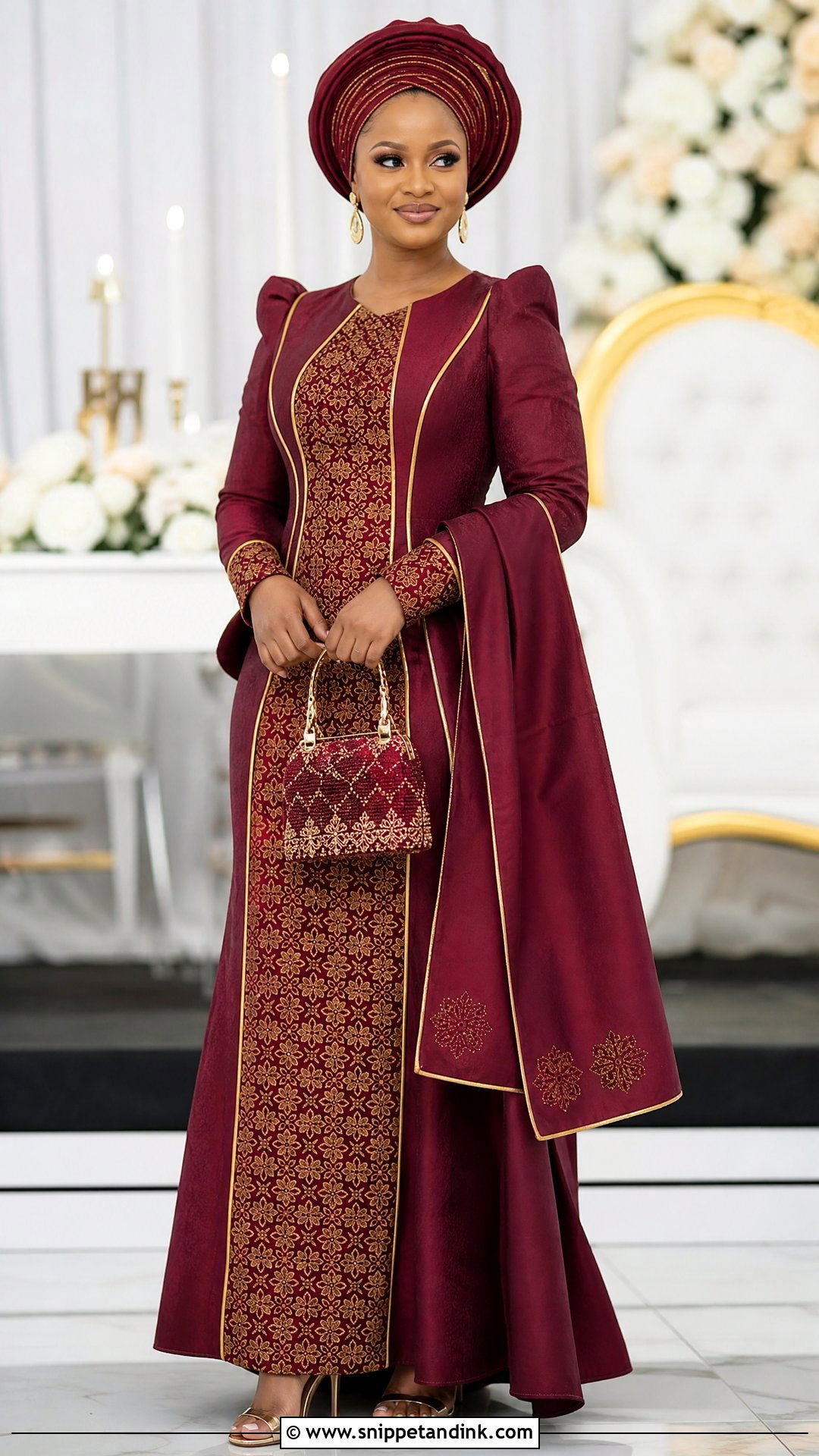
Maroon reads as serious and rich, which suits a formal family gathering. A long-sleeve maroon dress with a softly flared skirt and gold piping is my base, sometimes with a gold-and-maroon printed panel down the front to lengthen the line. In warm months I swap the sleeve fabric for something lighter than the body, because long sleeves in a heavy weave are what make brides overheat by midday. Keep the jewellery small; the colour pairing already looks expensive. A gold-trimmed shawl covers you when the ceremony asks for it.
9. Yellow And Blue Off-Shoulder Sepedi Dress
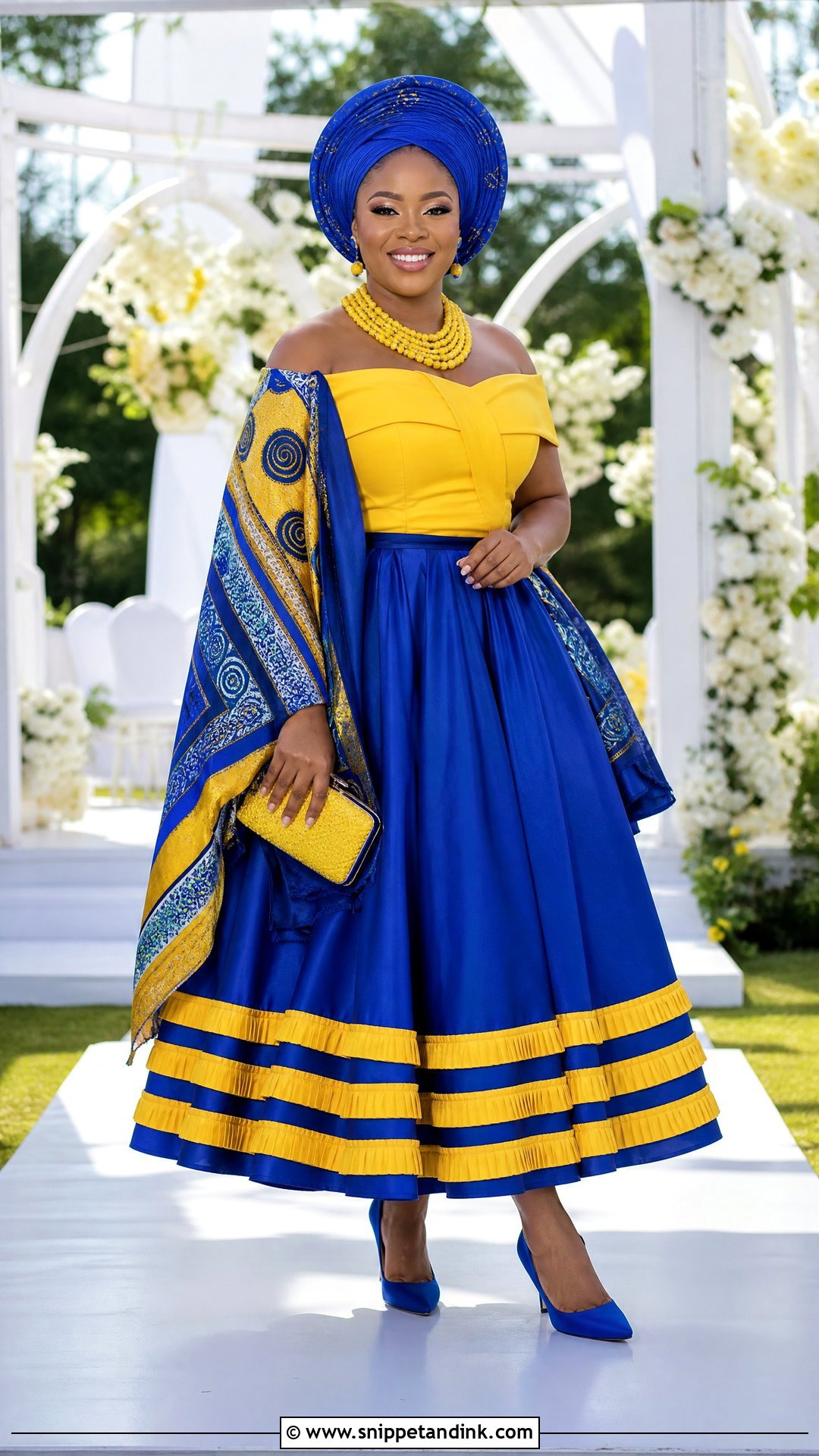
An off-shoulder neckline is where structure matters most. On a yellow bodice with a folded neckline over a full blue skirt with yellow pleats, I sew in boning and a grip band so the neckline stays put when you lift your arms or bend to greet elders. Without that, you’ll spend the day hitching it up. Wear the necklace a little lower than the fold so the two don’t crowd each other. If coverage is expected for part of the day, detachable short sleeves or a printed shawl solve it in seconds.
10. Black And White Sepedi Wedding Dress
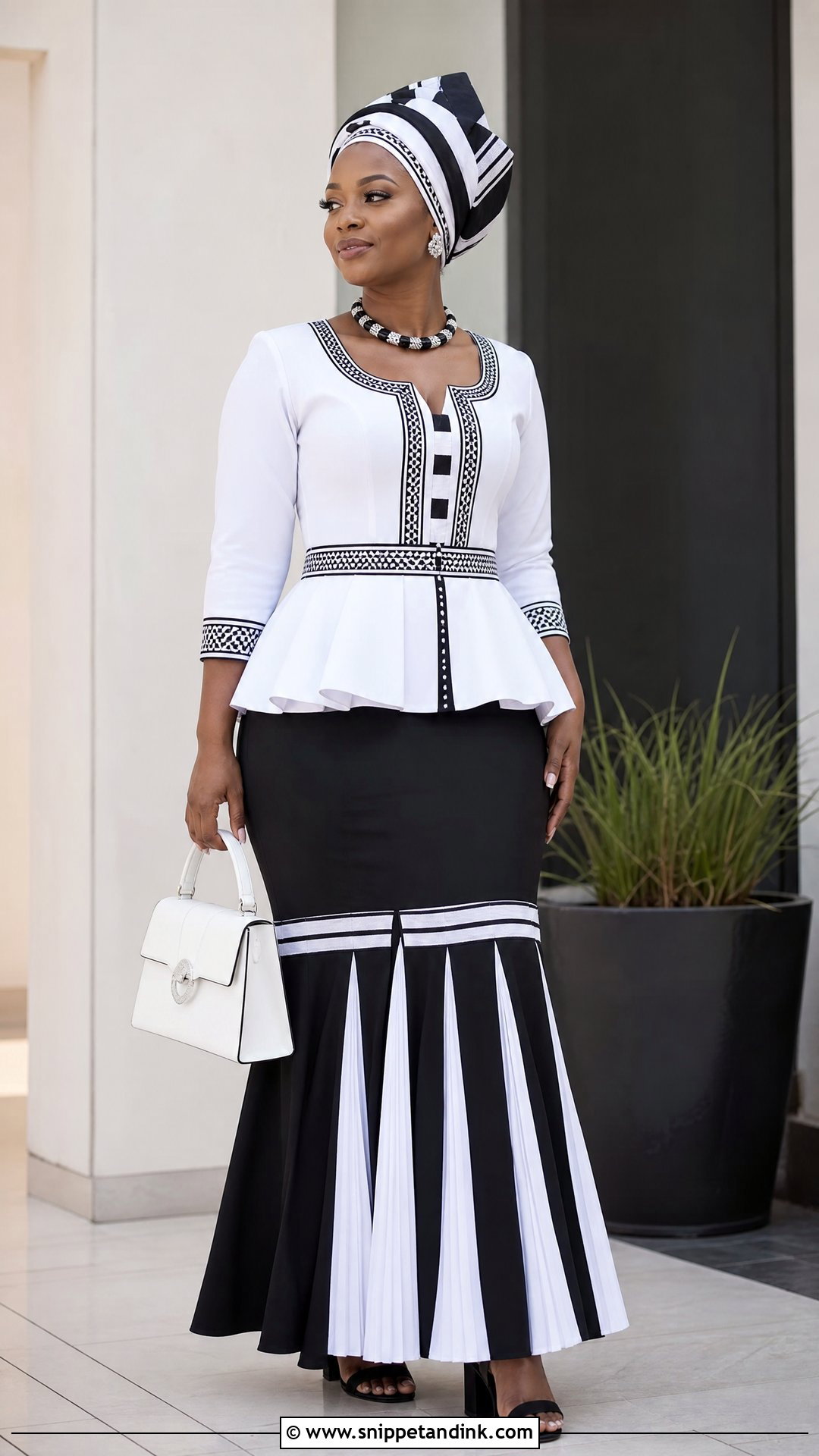
Would you rather have a look that is graphic and easy to match? Black and white lets the print take over: a white fitted blouse with black geometric trim, a floor-length black skirt with white pleated panels and a peplum to balance the fuller hem. The thing I check here is symmetry. A monochrome print placed slightly off-centre on the bodice is obvious in every front-facing photo, so I pin the print placement on the fabric before cutting. Black absorbs sun, so line the dark skirt with a breathable cotton if you’ll be outdoors.
11. Coral And Teal High-Low Sepedi Dress
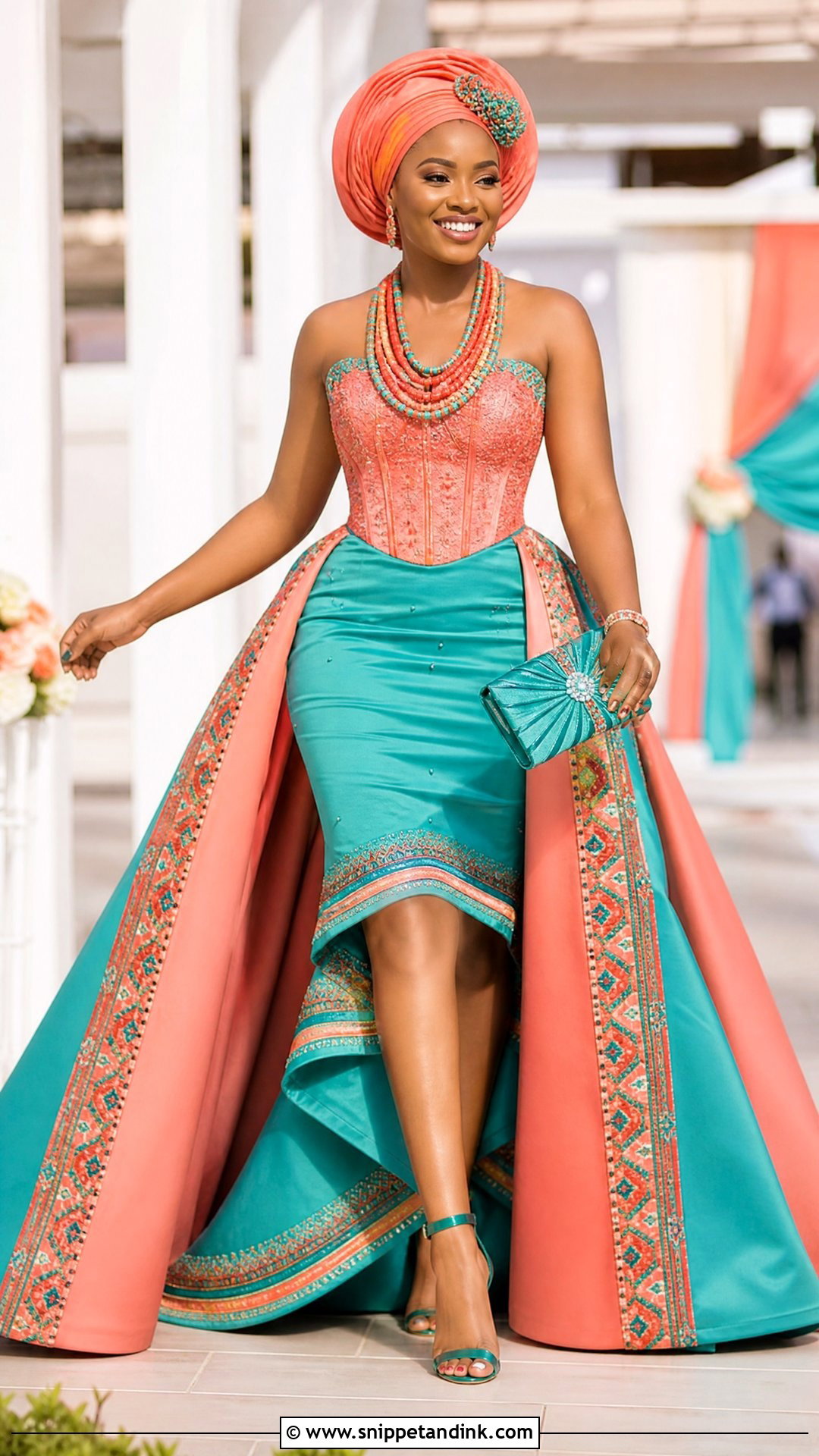
A high-low hem gives movement and shows off your shoes. Coral on the bodice with a teal skirt that sits below the knee in front and drops to the ankle at the back works well, with coral-and-teal bands at the hem, waist and sleeves tying the halves together. My one caution is the front length: for a traditional ceremony with elders present, I keep it well below the knee. If the family expects a full skirt for the formal part, a detachable overskirt lets you have both.
12. Navy And Red Sepedi Cape Dress
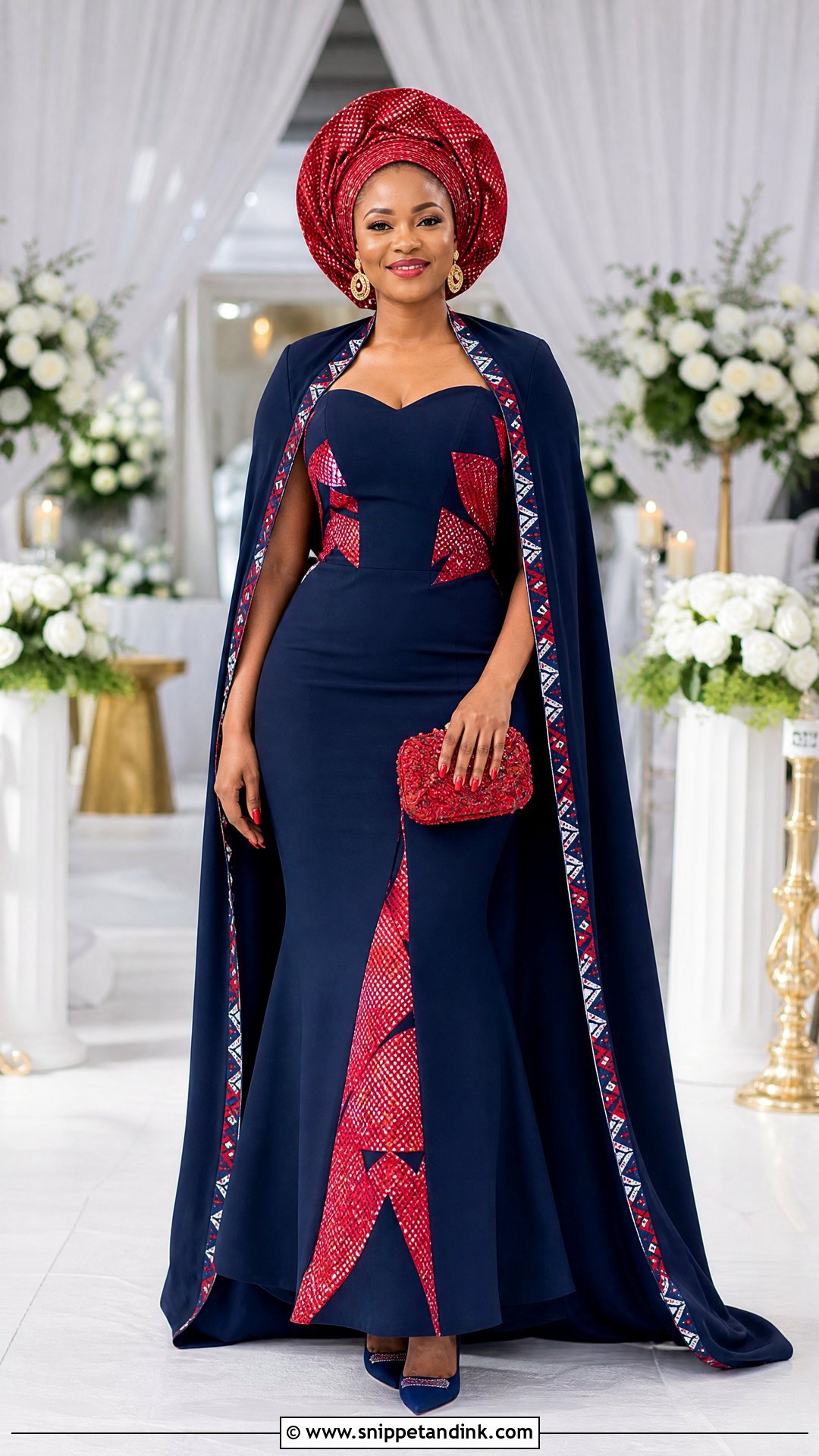
The cape makes this navy and red Sepedi wedding dress feel ceremonial without heavy decoration. The base is a fitted navy gown with a gentle fishtail hem and red printed panels at the waist and lower skirt, with a light navy cape edged in the same red print. Because all of the cape’s weight hangs from the shoulders, the gown underneath needs a properly fitted shoulder seam, or the neckline drags backwards through the day. I attach capes with hidden snaps or hooks so you can take it off for dancing in a few seconds.
13. Blush Pink Sepedi Tulle Wedding Dress
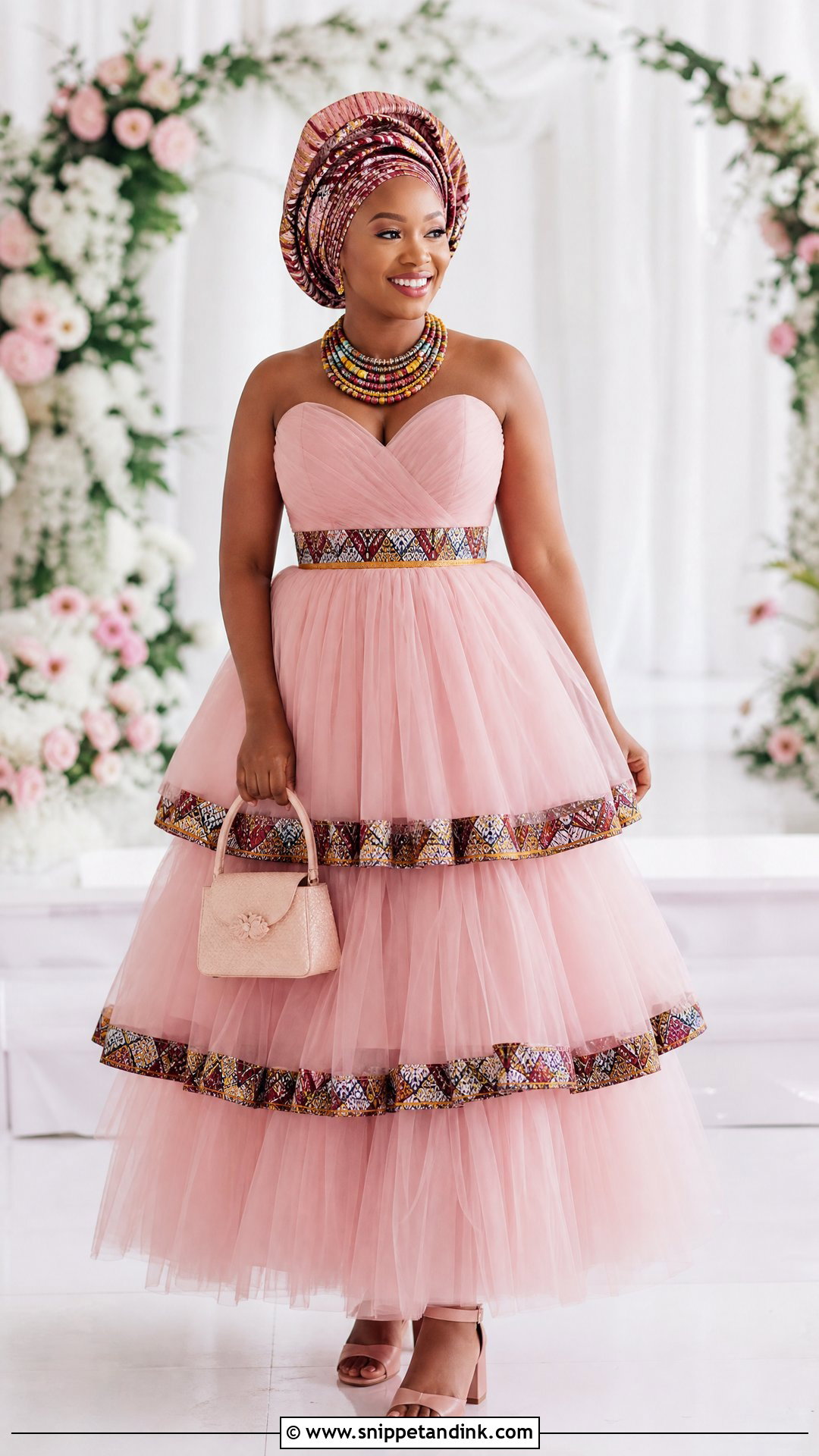
Blush tulle is soft, but it is also fragile. I’d only use it on a layered A-line skirt with printed fabric at the waistband, cuffs and each tier, and I’d keep the outer tulle hem a little shorter than the floor so it doesn’t drag over gravel or snag on chair legs. A smooth inner skirt underneath stops the tulle clinging to your legs as you walk. Ask a Sepedi designer to choose where the print goes, since that’s what keeps the dress from reading as a generic party gown.
14. Emerald And Pink Ruffle Sepedi Dress
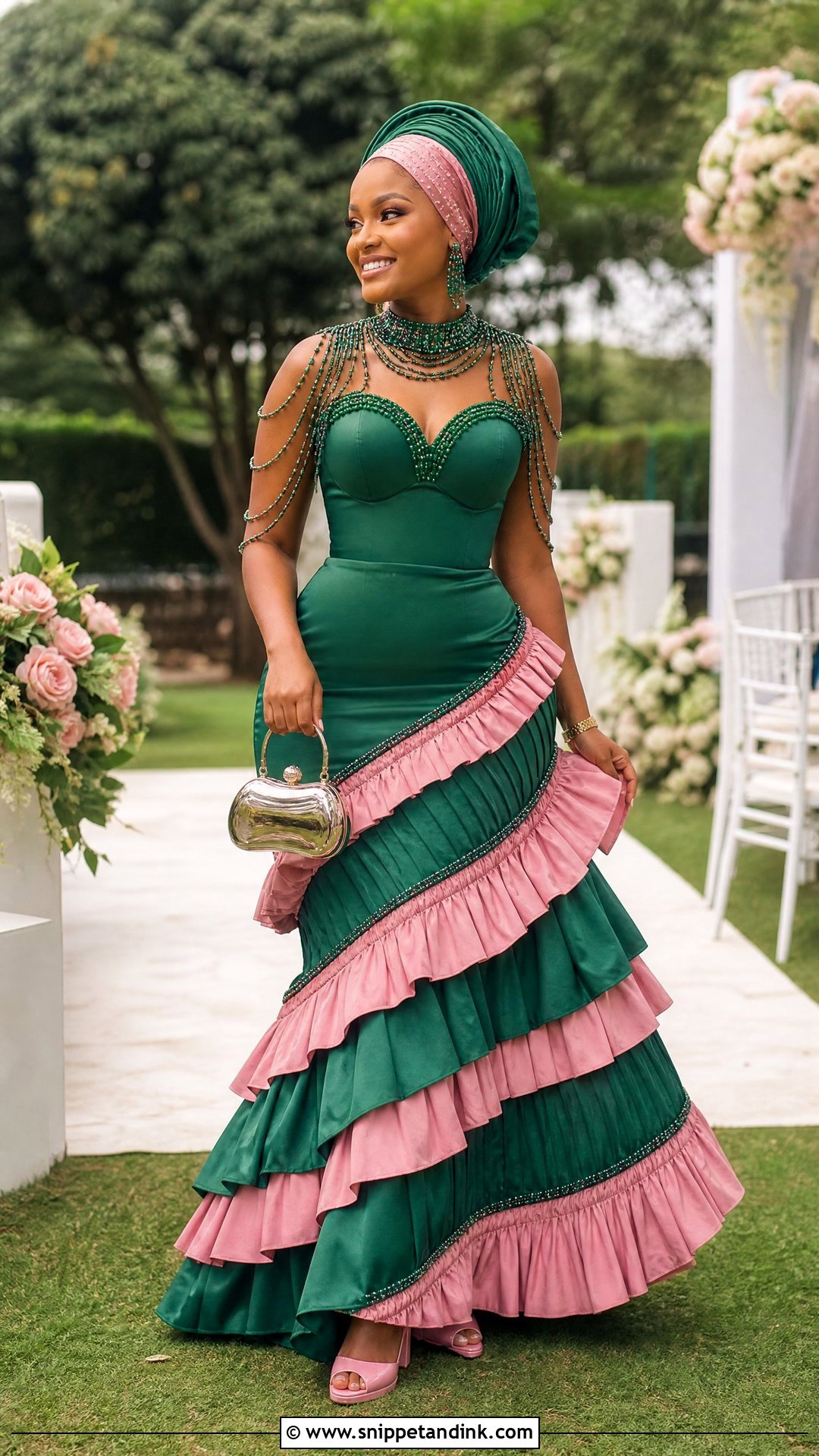
Emerald gets brighter beside pink. A fitted emerald bodice with diagonal pink ruffle bands across a long skirt is a joyful design, and repeating the pink at the neckline and sleeves keeps it balanced. Deep ruffles are where I hold back: they add volume at exactly the height where your arms swing, and they crush when you sit. Brides who want a flatter line can swap ruffles for pleated bands that lie close. Keep the jewellery plain.
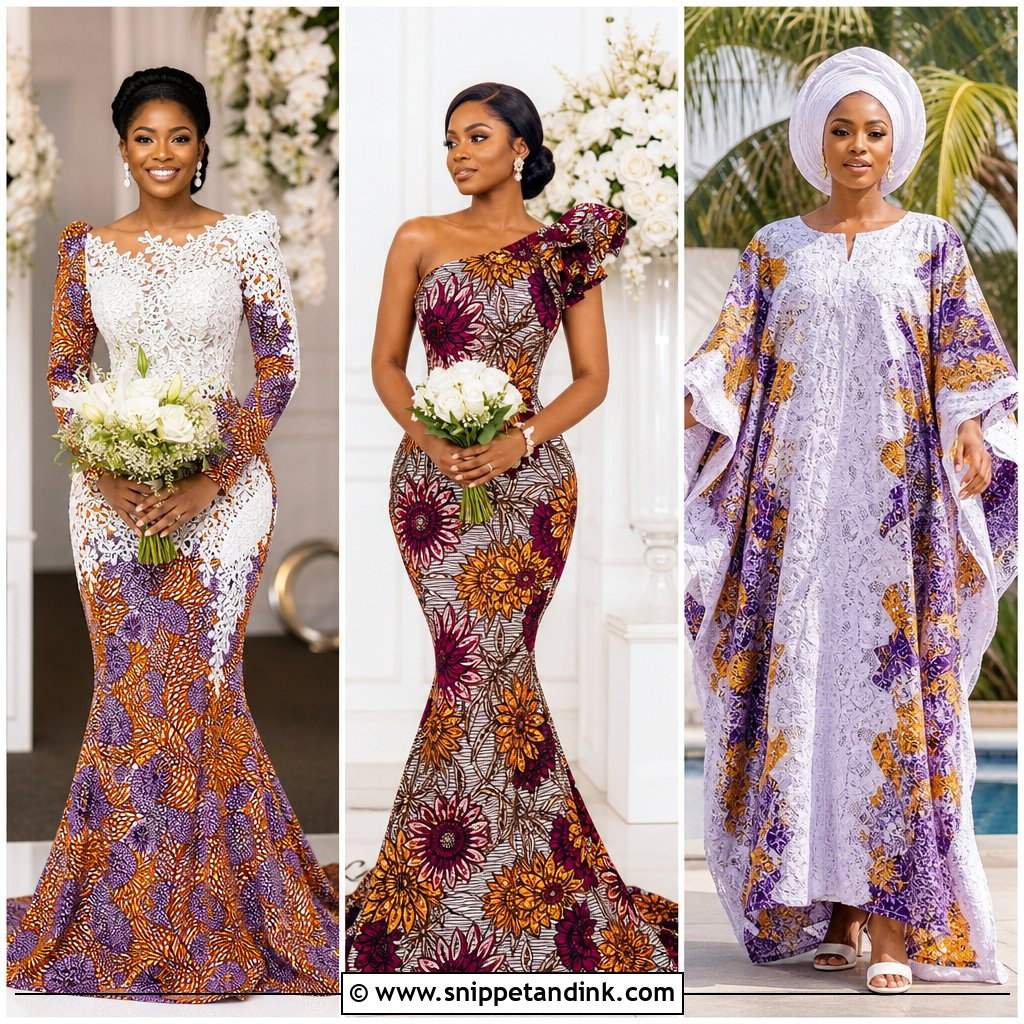

15. Royal Blue Beaded Sepedi Fishtail Dress
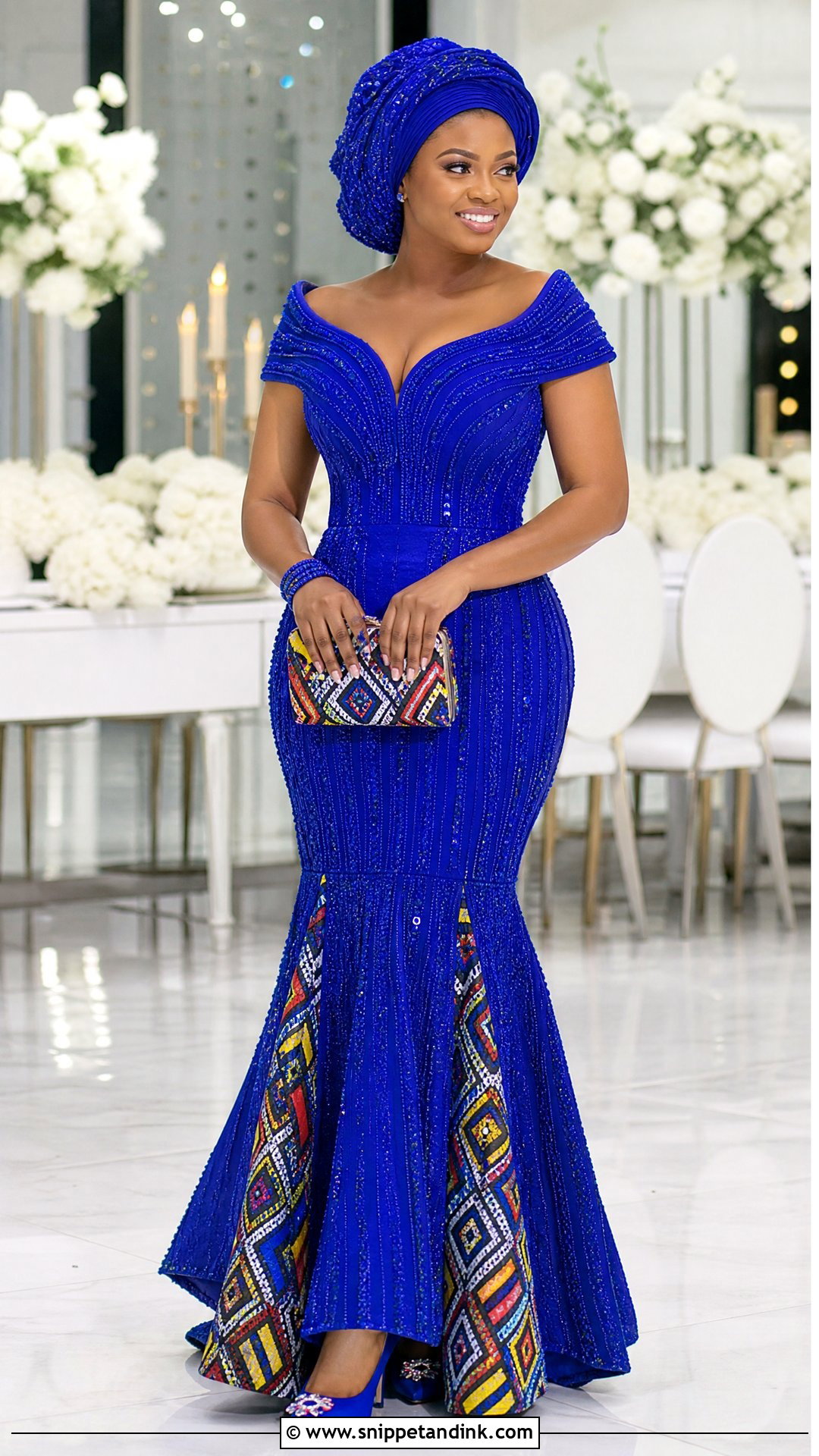
Royal blue makes a strong base for a fitted fishtail gown. I start with a supportive bodice, a modest curved neckline and a flare that begins just below the knee, then add hand-applied beadwork at the neckline with pink or yellow patterned inserts at the flare. Beading has to stay off the waist and the underarms, where the fabric bends and rubs. A fishtail limits your stride, so I either add a hidden back vent or start the flare a touch higher. Practise sitting and climbing a step at your final fitting, not on the morning.
16. Burgundy Sepedi Two-Piece Wedding Dress
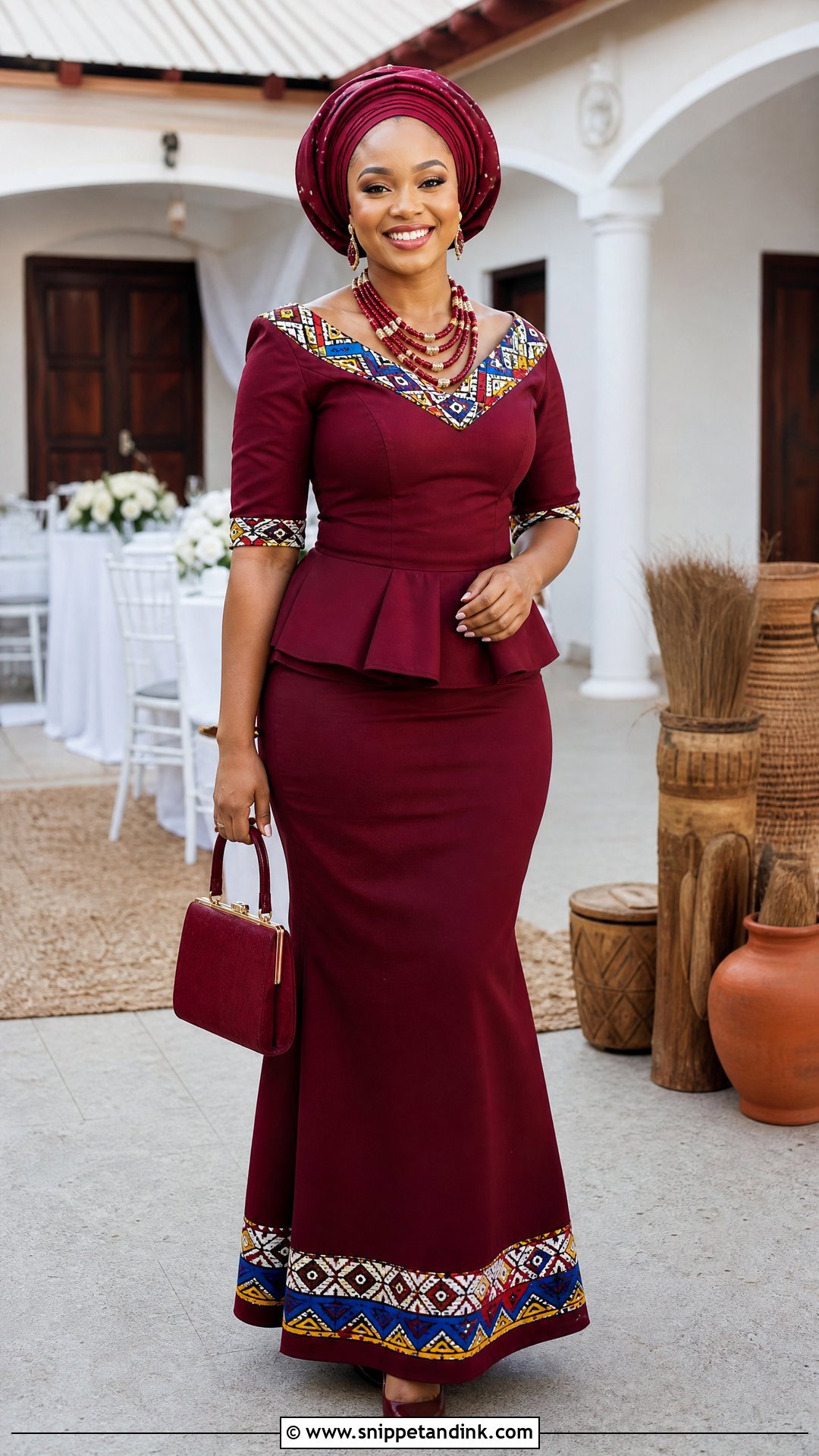
A two-piece can look every bit as formal as a gown when the proportions are right. I pair a fitted burgundy blouse with a sculpted peplum and elbow sleeves with a matching floor-length skirt, adding printed panels in pink, blue or cream at the neckline, waist and hem. Separates are easier to alter if your size changes in the months before the wedding, and the skirt can be worn again later. Make sure the blouse overlaps the waistband by a good few centimetres, otherwise it rides up when you raise your arms.
17. Turquoise And Orange Tiered Sepedi Dress
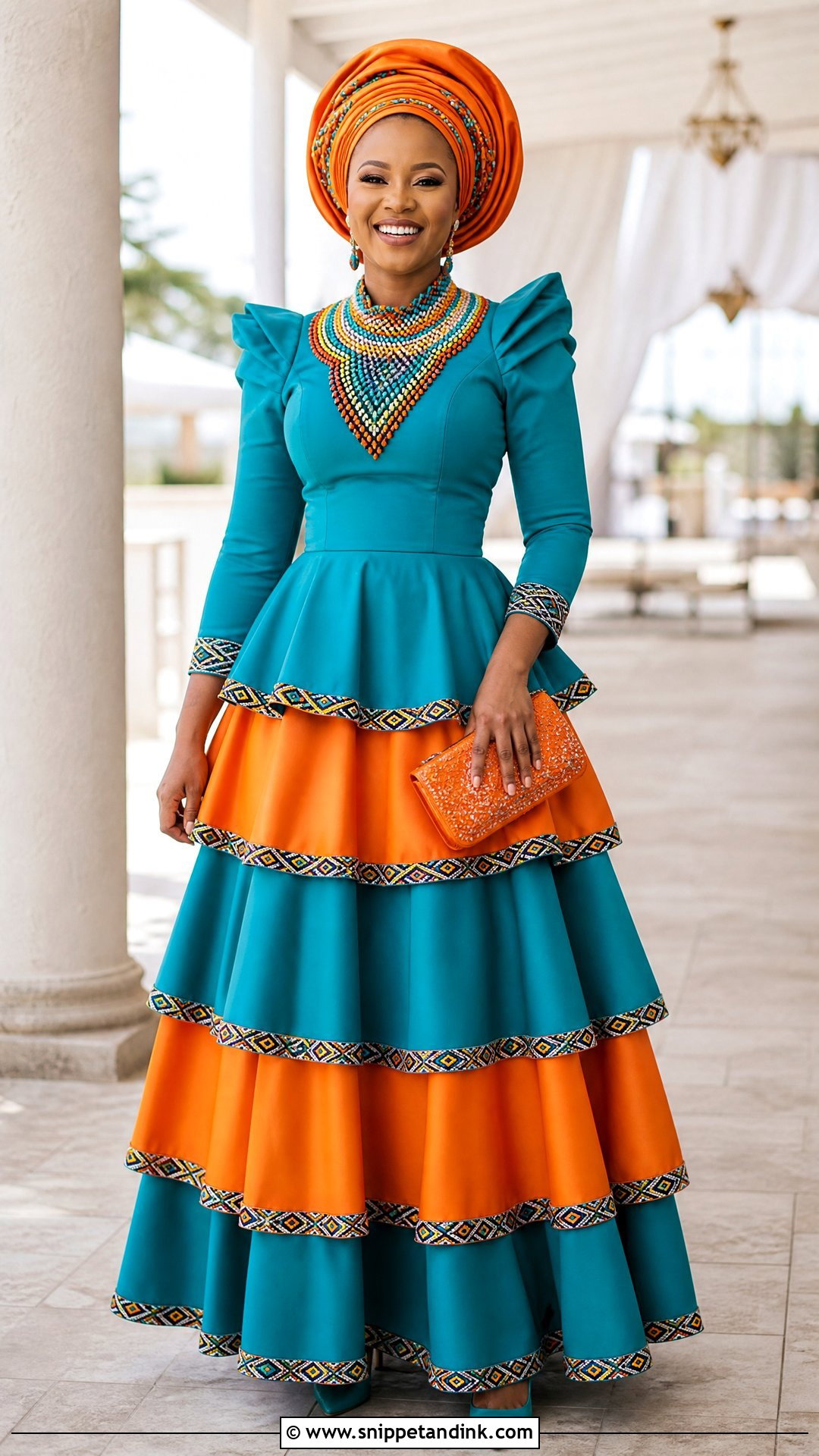
Turquoise and orange tiers bring warmth and plenty of swing. Design it with a turquoise fitted top and alternating tiers below, with narrow patterned bands between them instead of oversized ruffles; bands give a cleaner join and don’t collapse in photos. I keep the upper tiers smooth over the hips and save the fullness for the lower ones, which flatters most figures. Lightweight cotton or a cotton blend lets the tiers move instead of standing stiffly. This one is made for an outdoor celebration where people see the whole skirt in motion.
18. Mustard And Purple One-Shoulder Sepedi Dress
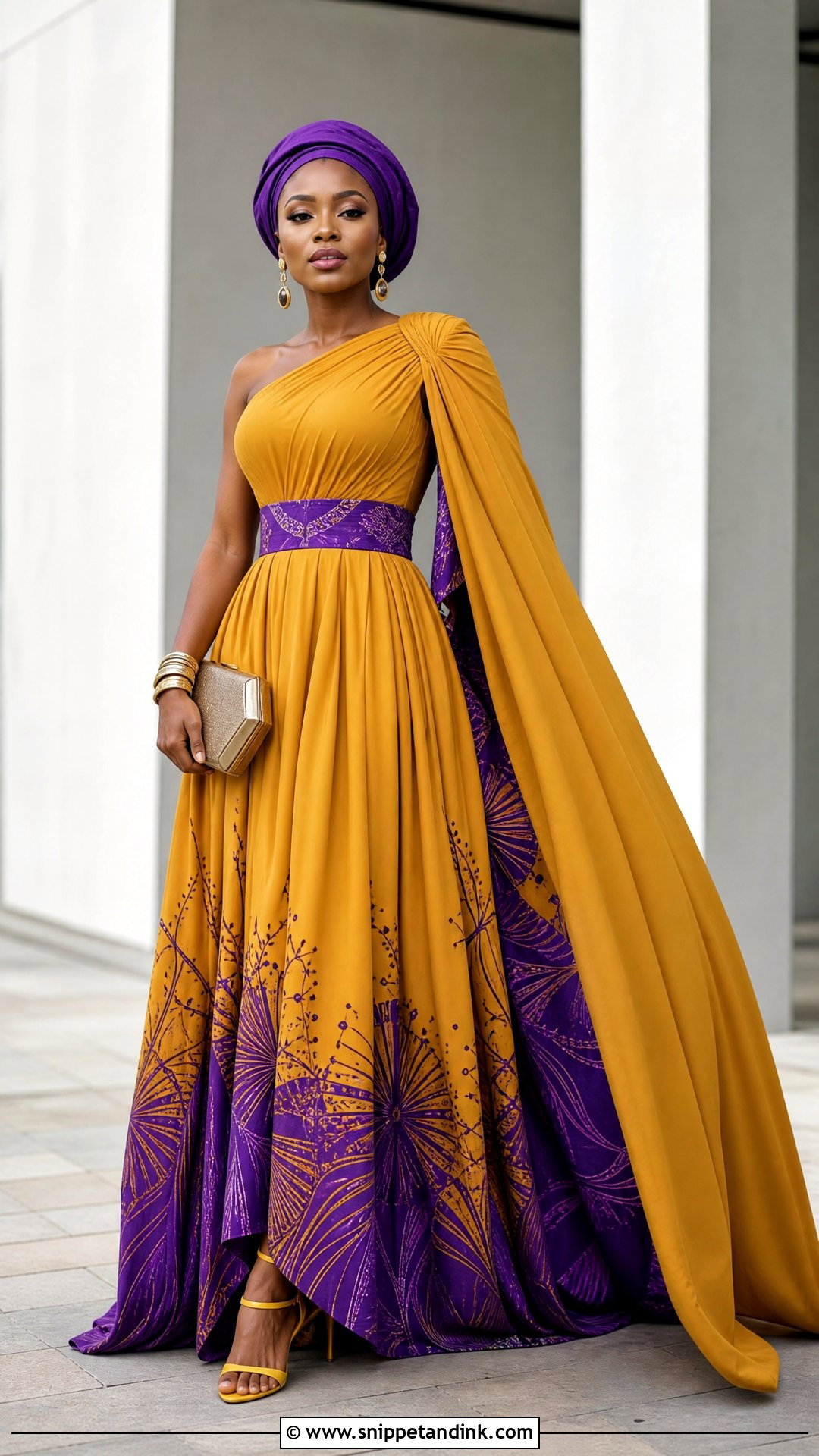
A one-shoulder bodice is sleek, but it only works if the strap is doing real work. In mustard with a wide strap edged in purple print, purple at the waistband and a full floor-length skirt, the strap should be at least three fingers wide and anchored into the bodice lining, or you’ll be adjusting it all afternoon. Balance the asymmetry with a simple purple doek rather than a tall wrap that leans to one side. For a covered ceremony, a printed cape that fastens at the bare shoulder works.
19. Pink And Blue Pleated Yele Dress
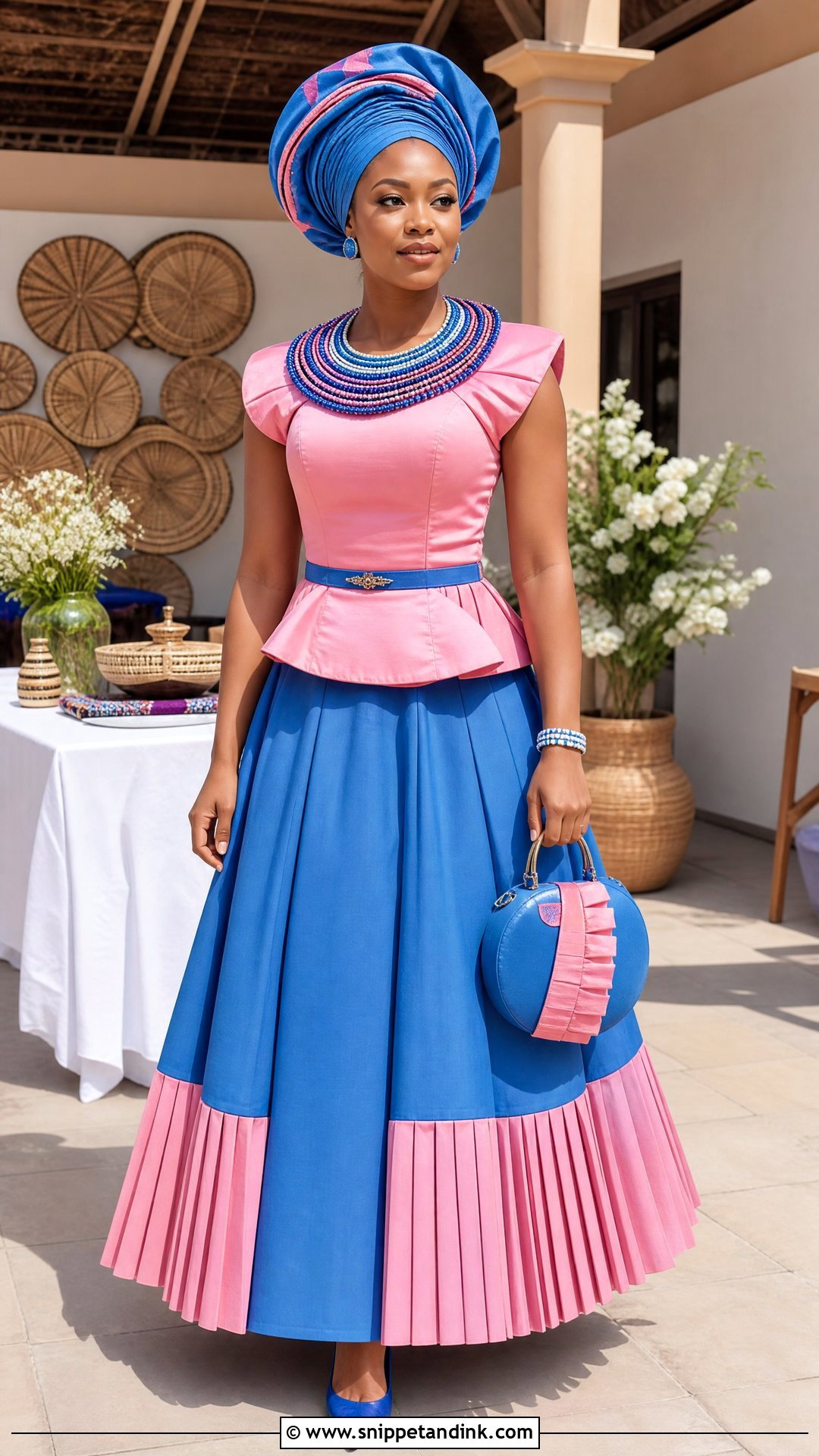
Pleated yele-inspired detailing ties this pink and blue look firmly to Sepedi dressmaking. A full blue skirt with evenly spaced pink pleats, a fitted pink blouse with blue trim and a soft peplum is the classic combination. Pleats need a hot iron and pressing cloth before every wear, so ask whoever is helping you dress to press the skirt the night before, not in a rush on the morning. A narrow belt cleans up the join between blouse and skirt. Work with a designer who knows these garments, so the pleat spacing and trim are done the way your family will recognise.
20. Ivory Sepedi Wedding Dress With Printed Panels
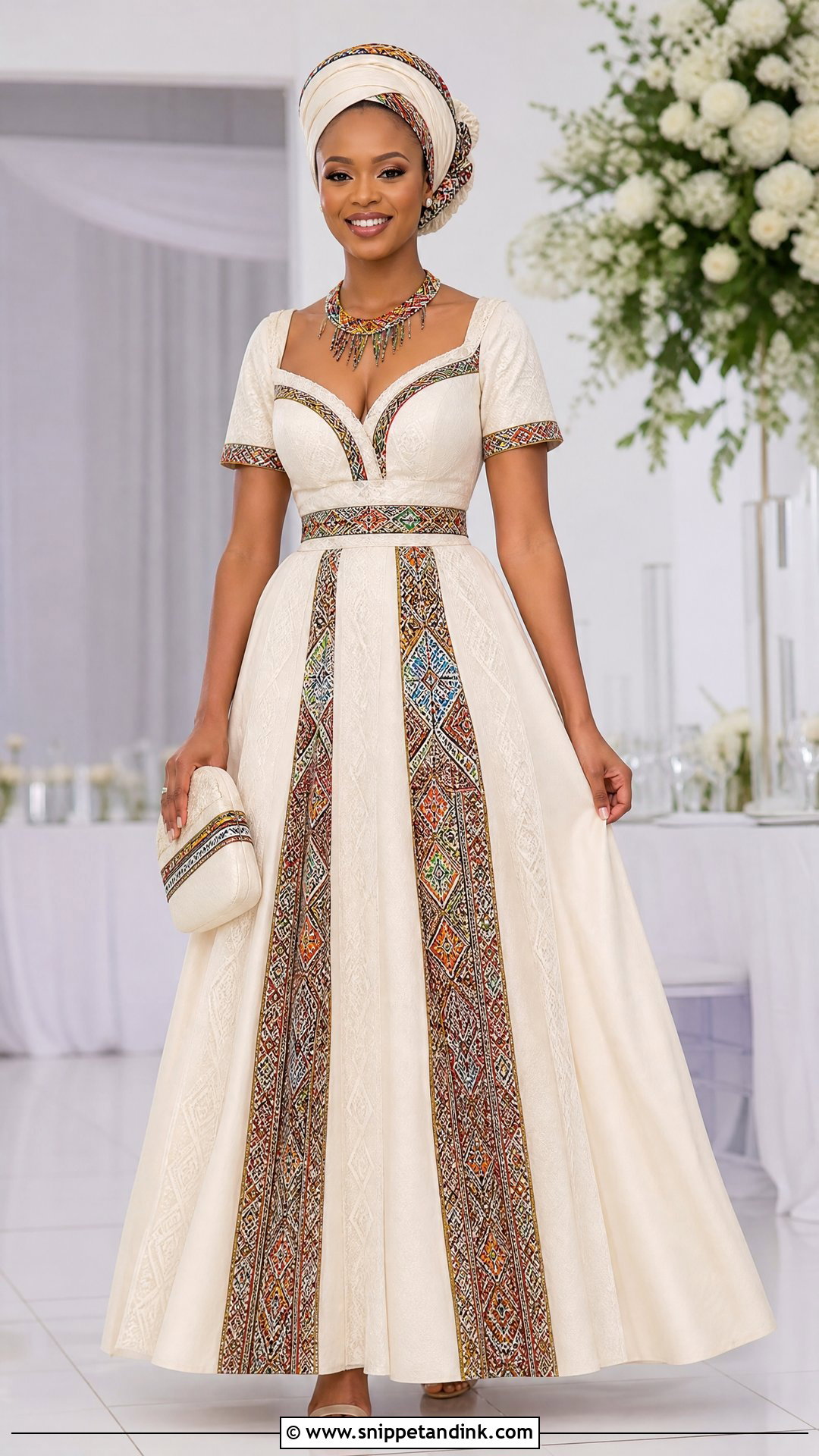
Ivory is kinder than bright white on most skin tones, and it lets printed panels stand out clearly. I use an A-line ivory gown with a fitted bodice and short sleeves, then run vertical Sepedi-inspired fabric panels in blue, pink, yellow and green through the centre and sides, joined by a printed waistband. A train looks elegant indoors, but I keep it short or detachable if there’s outdoor walking or dancing. Pale fabric picks up dust from the ground very quickly.
21. Plus-Size Sepedi Peplum Wedding Dress
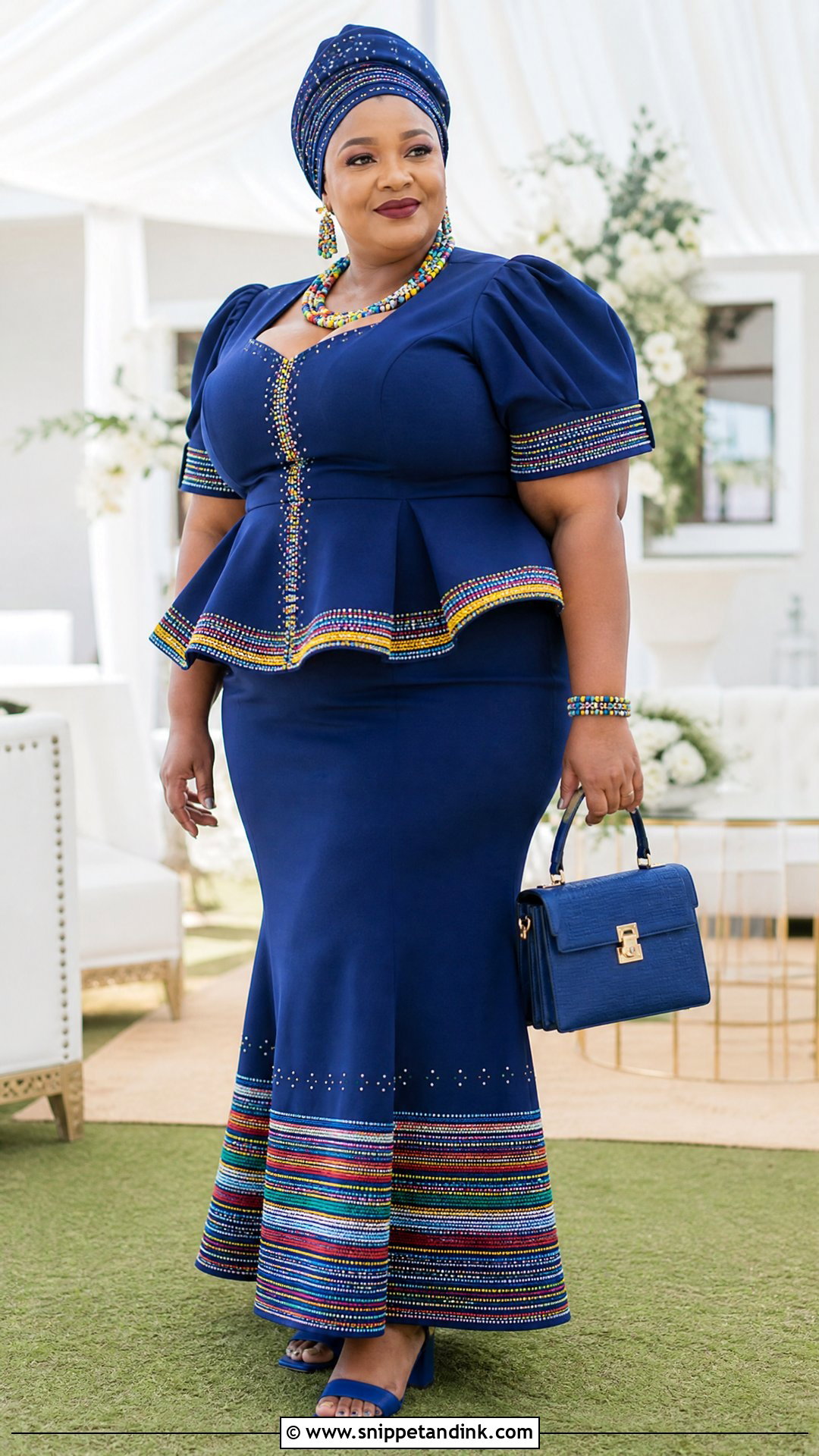
A well-cut peplum suits curves when it starts at your natural waist and not lower. I pair a fitted blouse with a V or rounded neckline and supportive sleeves with a long skirt that skims the hips before widening. Rich blue, pink or green with contrasting printed bands keeps it clearly Sepedi. Stiff interfacing right at the waist looks crisp on the hanger but digs in when you sit, so I use a softer one there. Ignore label sizes completely; custom measurements and at least two fittings matter far more.
22. Modest Sepedi Long-Sleeve Wedding Dress
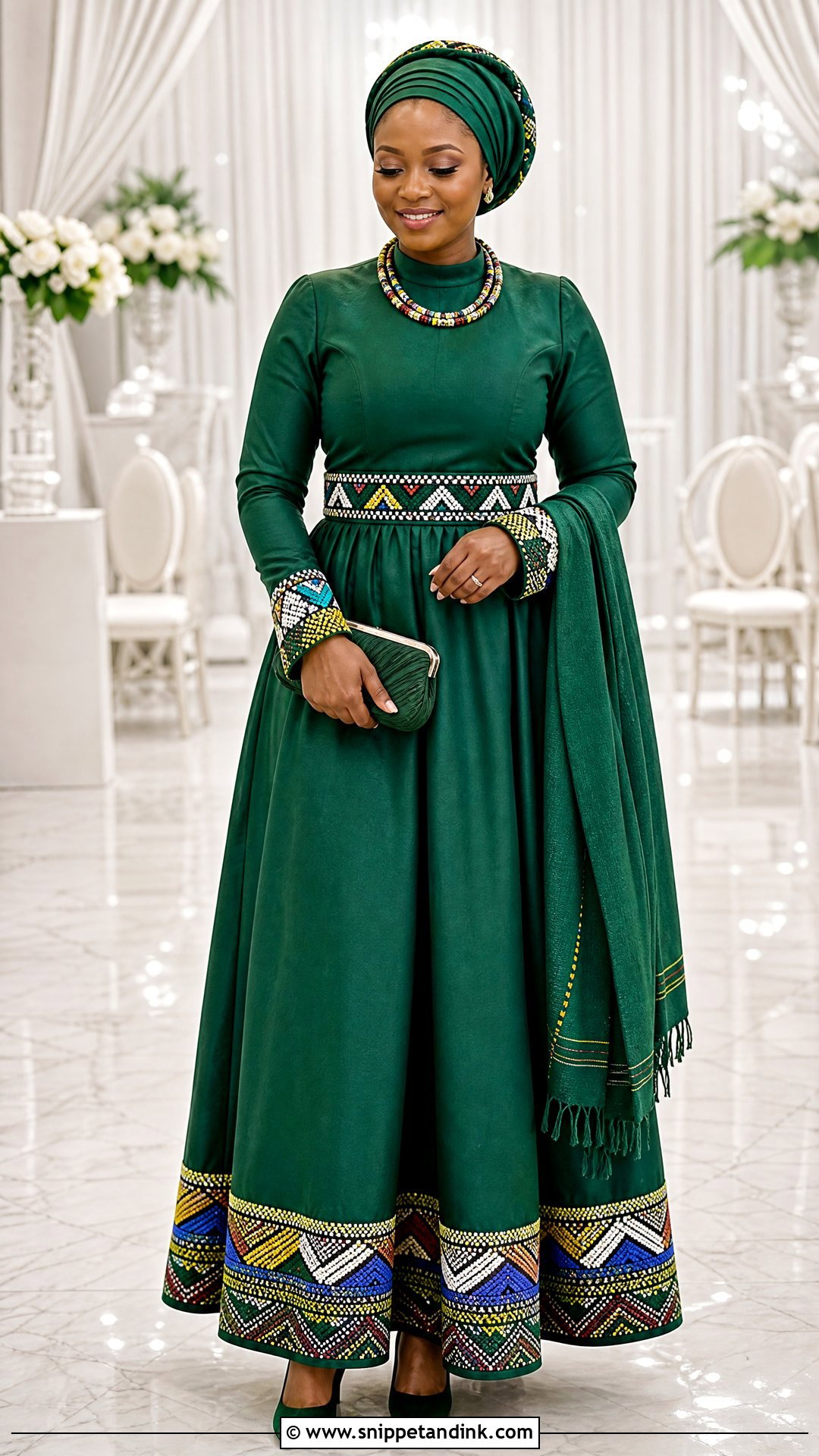
Long sleeves and a higher neckline can look just as festive as anything sleeveless. I’d make a floor-length gown in maroon, navy, emerald or royal blue with patterned fabric at the cuffs, collar, waistband and hem, and a gently flared skirt that’s easy to walk in. The sleeve fabric is my main concern: in summer, a lighter weave than the body keeps you from overheating during outdoor rituals. A beaded necklace sits well over the plain bodice, and a matching shawl adds another traditional layer without hiding the detailing.
23. Tea-Length Sepedi Wedding Dress
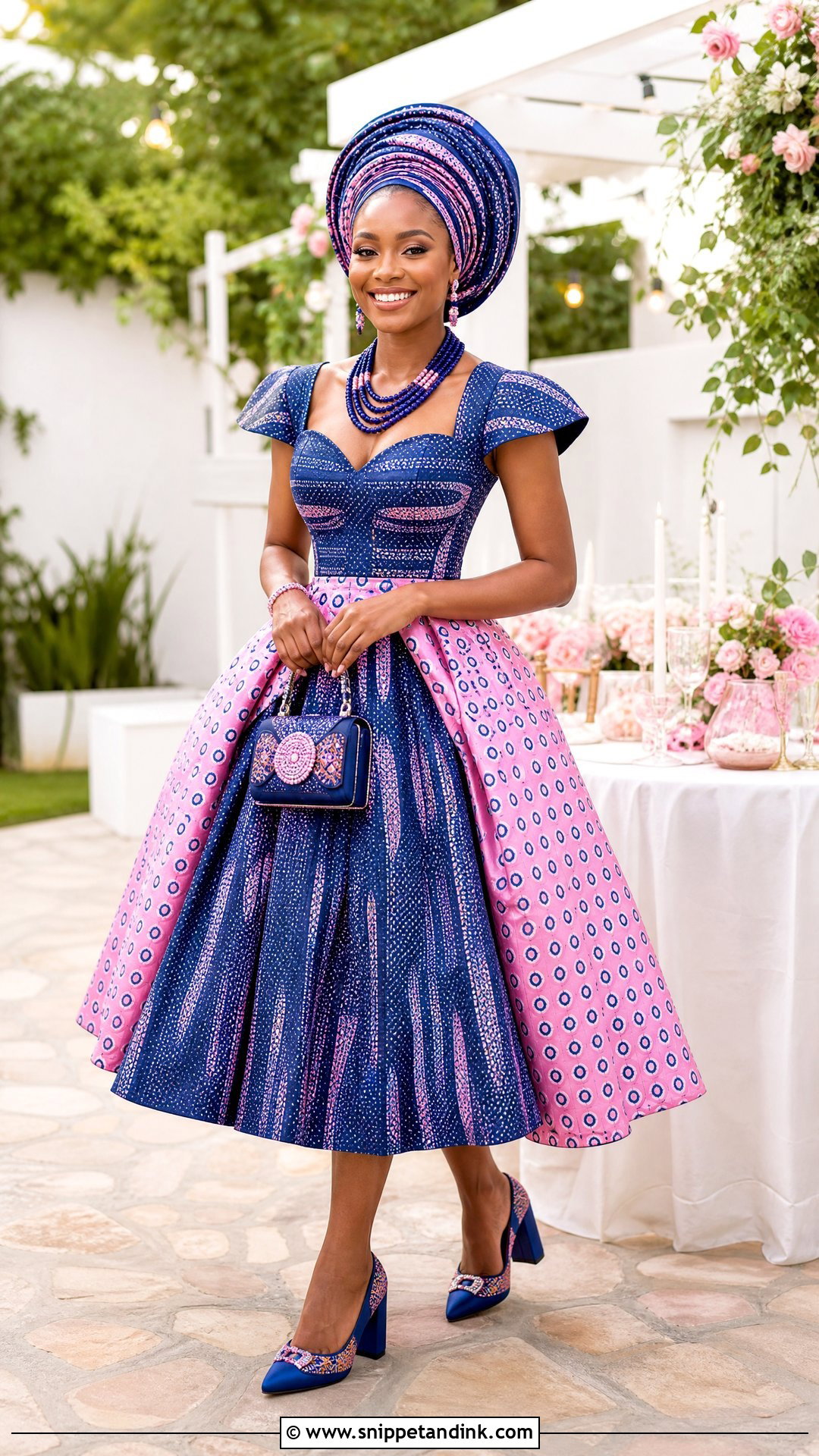
Tea length works for a smaller celebration, a hot day or a bride who simply wants to move freely. A fitted bodice with short sleeves and a full skirt landing between knee and ankle looks festive in blue-and-pink, yellow-and-green or red-and-black print. Your shoes become part of the outfit, so pick a pair that repeats one colour from the print instead of introducing a new one. For formal moments, a light shawl or detachable overskirt adds coverage. I’d keep the hem at mid-calf or lower for a traditional ceremony.
24. Sepedi Bridal Jumpsuit With Overskirt
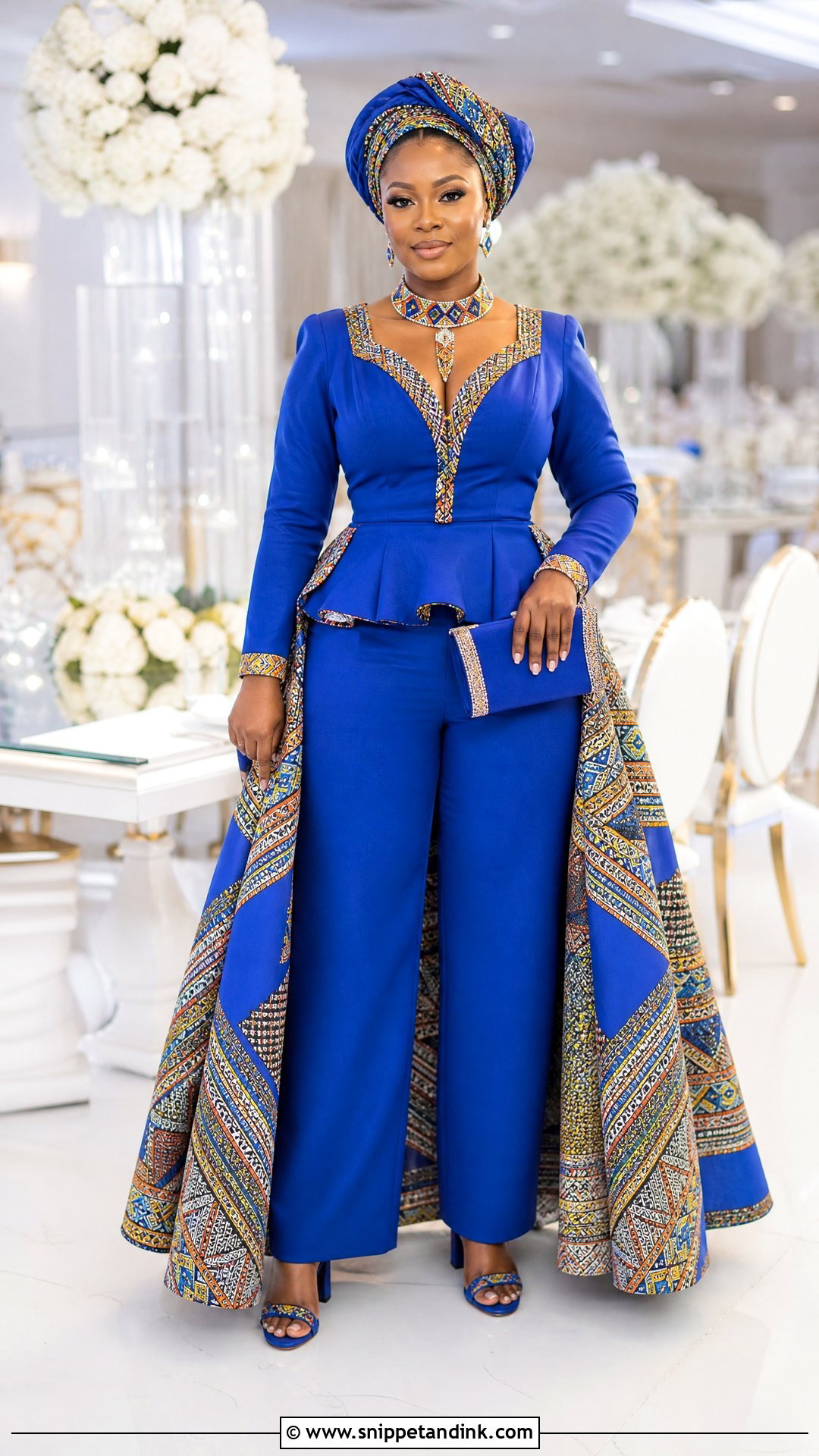
A jumpsuit with a detachable overskirt gives you two outfits without a costume change. The jumpsuit is wide-leg in royal blue, emerald or burgundy with a fitted peplum bodice and printed trim at the neckline and waist; the full overskirt in coordinating fabric goes on for the ceremony and comes off for dancing. The trouser hem should nearly cover your shoes in heels without touching the ground, so bring the actual shoes to every fitting. The attachment is the tricky part: hooks hidden under the peplum stay flat, while a buttoned band adds bulk at the waist. Choose a designer with real tailoring experience for this one.
25. Sepedi Bride Dress With Matching Groom Outfit
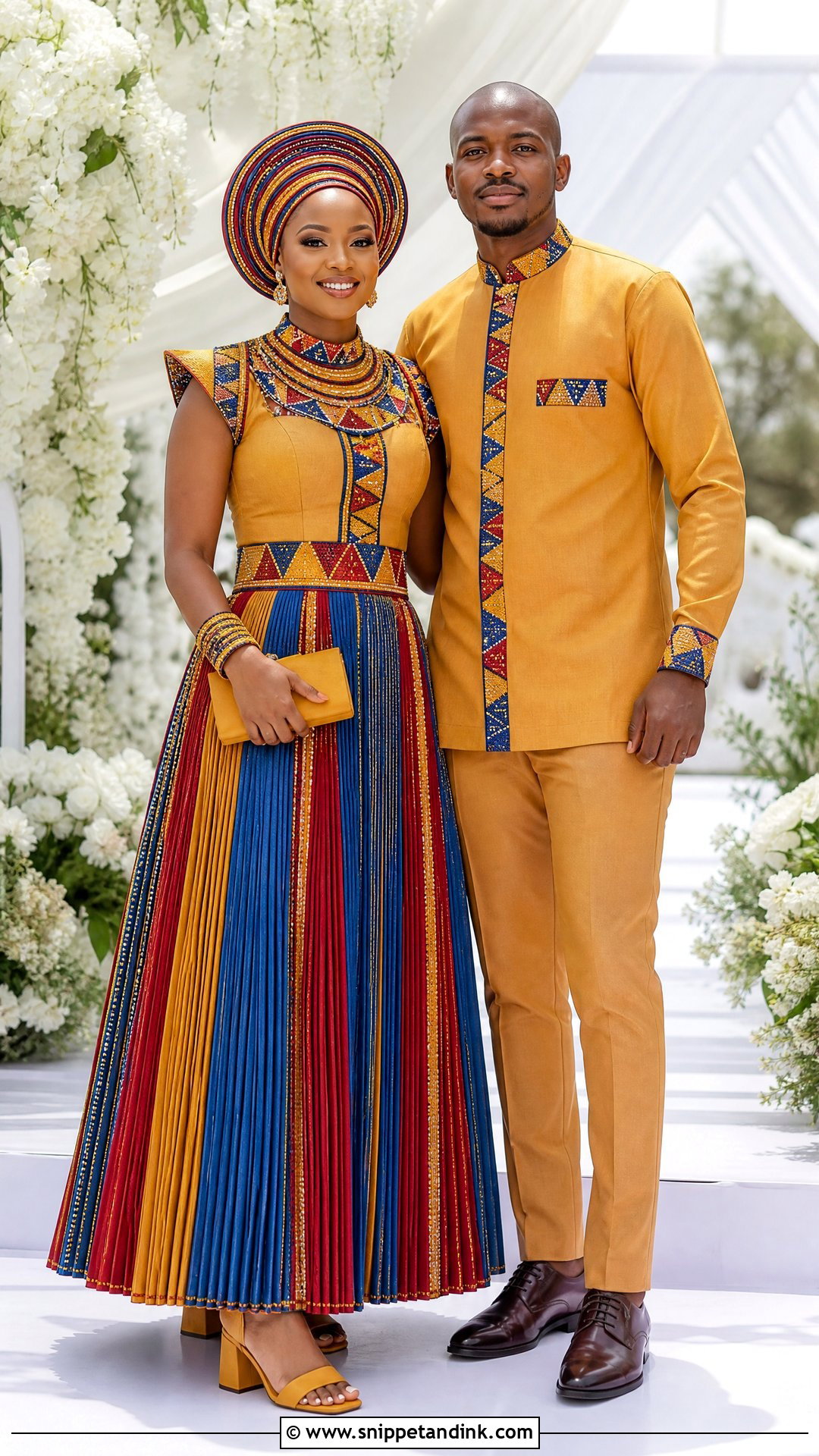
Coordinated couple attire looks better when the outfits share a fabric, not a design. The bride wears a full-length Sepedi dress in pink, blue, yellow or green with a structured bodice, pleated skirt, headwrap and beadwork. The groom repeats that print on his shirt, vest, pocket or jacket trim, with solid tailored trousers. I buy both outfits’ fabric from the same bolt, because two rolls of the same print can come out slightly different in colour. Book a joint fitting so you see both outfits side by side under similar light.
How Printed Cotton Behaves Over a Long Celebration
Shweshwe and similar printed cottons are hardwearing, but they crease. The first time you sit for an hour, the back of the skirt will show it, and pleats lose their edge by the evening. That isn’t a reason to avoid them. It’s a reason to plan.
I tell brides to give one person a small kit: a travel steamer, a pressing cloth, safety pins, a needle with thread matched to the main colour and spare doek pins. A quick steam between the ceremony and the photographs brings the fabric back. Fitted skirts lined with a smooth polyester or cotton lawn crease far less than unlined ones, so ask about lining at your first fitting.
Washing and storing it afterwards
Hand wash printed cotton in cold water with a mild soap, never soak it with bleach, and dry it inside out in the shade so the colours don’t fade. Iron while it’s still slightly damp. Remove beaded collars and anything with metal hooks before washing. For storage, fold the dress loosely with acid-free tissue between the folds, keep it in a cotton bag instead of plastic and refold it every few months so the creases don’t set permanently. Many brides wear their makoti outfit again at family events, and fabric looked after this way lasts for years.
Making a Makoti Outfit Feel Like Your Family’s
Start with what your family expects, then decide how much modern shaping you want on top of it. Pleated skirts and peplum sets give the classic look, while fishtails, capes, jumpsuits and detachable overskirts bring something newer. When you compare designs, think less about colour and more about fabric weight, walking room, sleeve comfort, how the doek sits and whether you can sit down to eat. A seamstress who understands your customs and is honest about fit will get you through ceremony, photos and dancing without one hitch.
You'll Like These Ideas:



Leave a Reply