
There’s no single African bridal fashion. Every country, region and community has its own garments, cloth, jewellery and rules about who wears what. A Ghanaian bride may wrap herself in kente; a Yoruba bride ties a gele over handwoven aso oke; others wear umushanana, habesha kemis, gomesi or embroidered North African gowns. Tailoring can modernise any of these, but in my fittings the family’s customs always come before the cut. Below are twenty traditional wedding looks from across the continent, with what I’d pay attention to when dressing a bride in each.
Handwoven Cloth and Beadwork Take Months, Not Weeks
The most common problem I see with traditional bridal outfits is timing. Handwoven kente, aso oke and similar cloths are made on looms strip by strip, and a weaver may already have other orders. Custom beadwork is slow, hand-strung work too. Then the tailor needs time after the cloth arrives, and fittings with heavy fabric or beads take longer than with a light gown.
- Decide the garments with your family first, including colours and any pieces with specific meaning.
- Order the cloth and beadwork as early as you can; several months ahead is sensible, and longer for custom weaving or large wedding parties.
- Get the cloth to your tailor with enough time for at least two fittings, plus a final one with all jewellery and the headpiece on.
- Book the specialist dressers, such as a gele tier or someone experienced with draping, at the same time as hair and makeup.
Ask for a small sample of the cloth early, so the tailor can test how it presses, pleats and washes before cutting the real length.
1. Ghanaian Kente Wedding Outfit
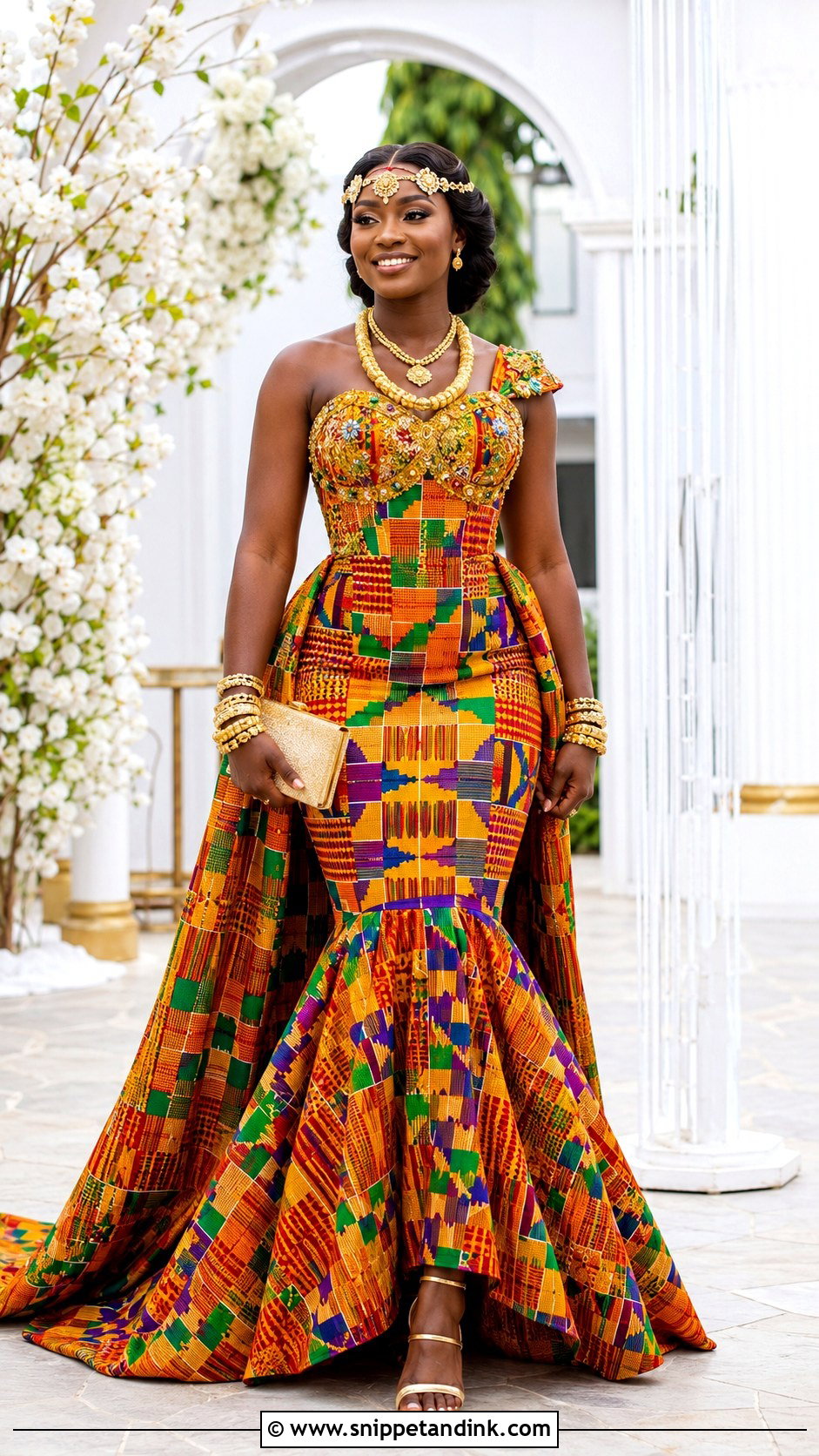
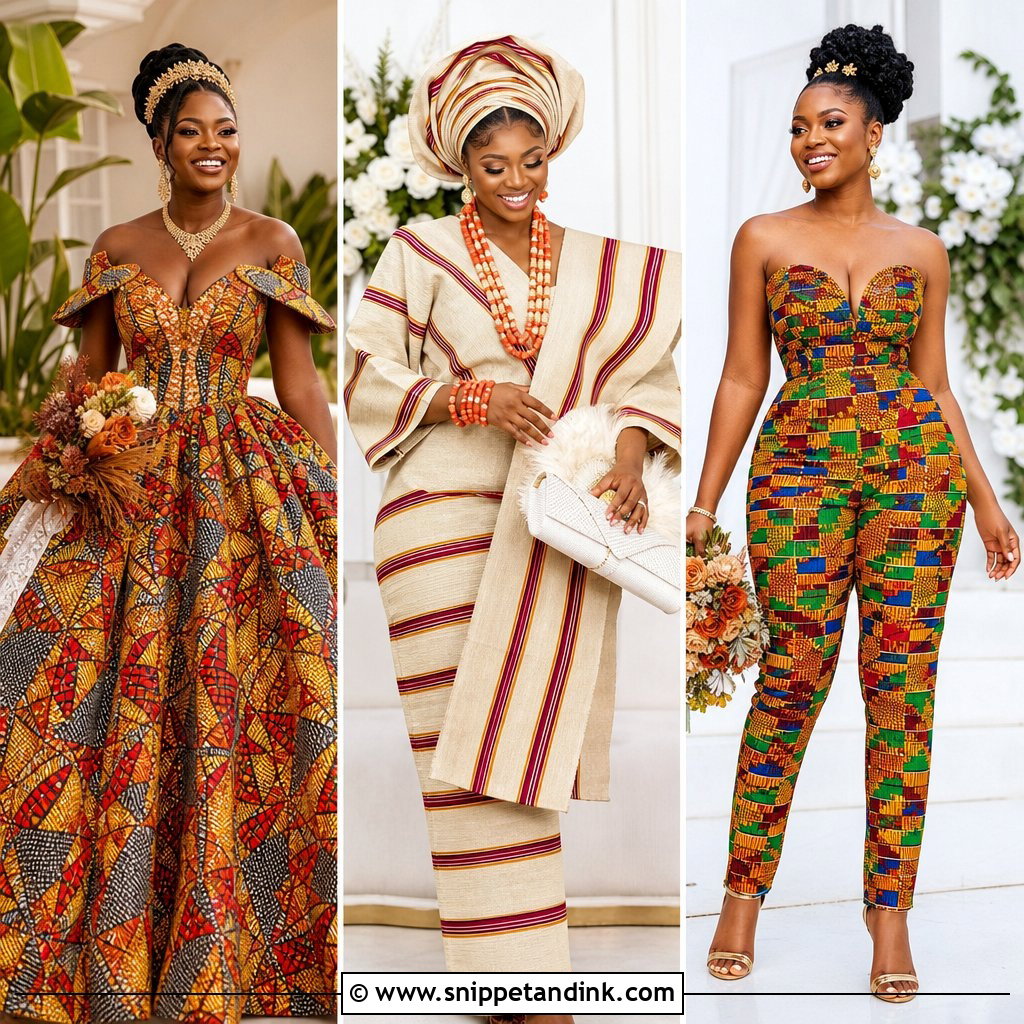
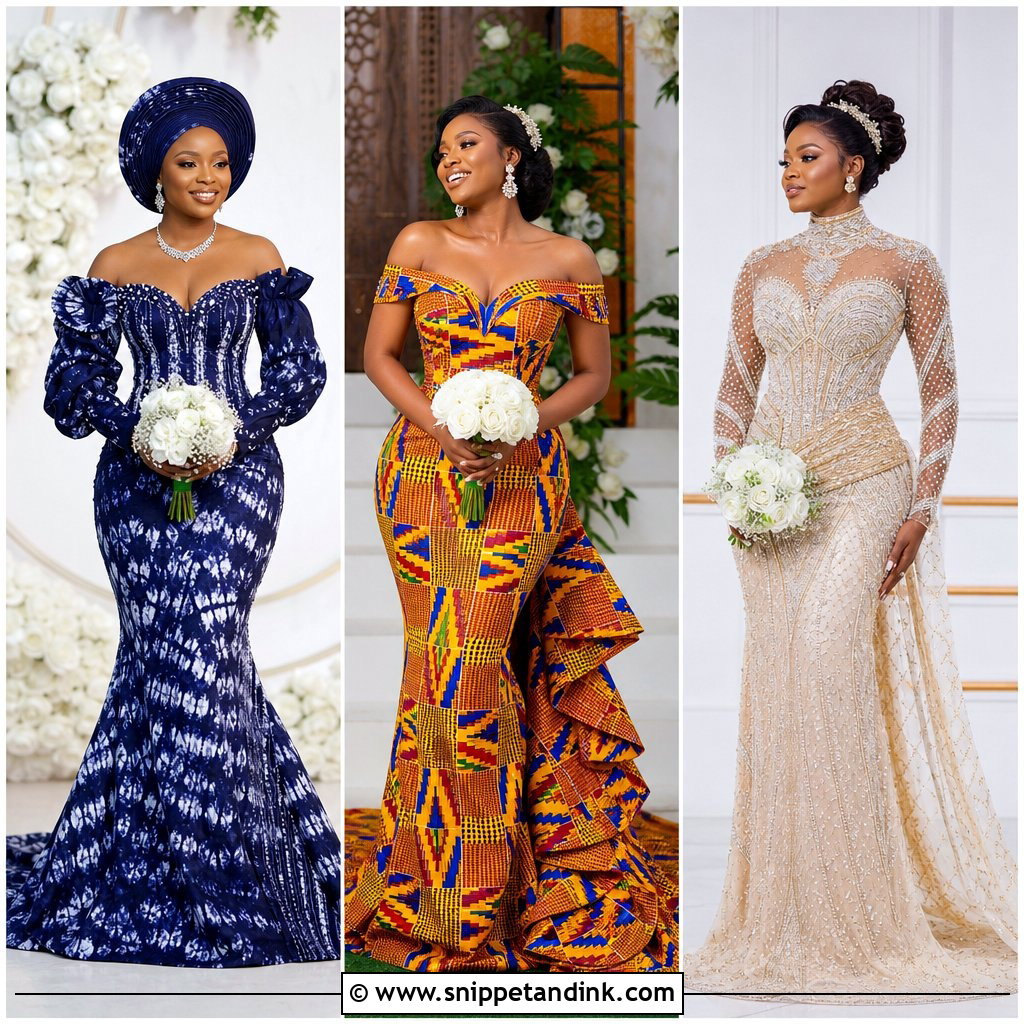
Kente is handwoven in narrow strips that are sewn together, and that construction affects how it can be cut. A wrapped kente ensemble keeps the strips whole; a fitted floor-length gown means cutting into them, so I’d ask the tailor to plan the pattern before a single cut is made. A structured bodice holds the bold geometry, and a sweeping skirt lets it move. Gold necklaces, statement earrings, stacked bracelets and a headpiece suit it. Kente colours and patterns can carry particular meanings, so choose the cloth with your family or a weaver who can explain them. Metallic heels and a small gold clutch finish it.
2. Yoruba Aso Oke Wedding Outfit
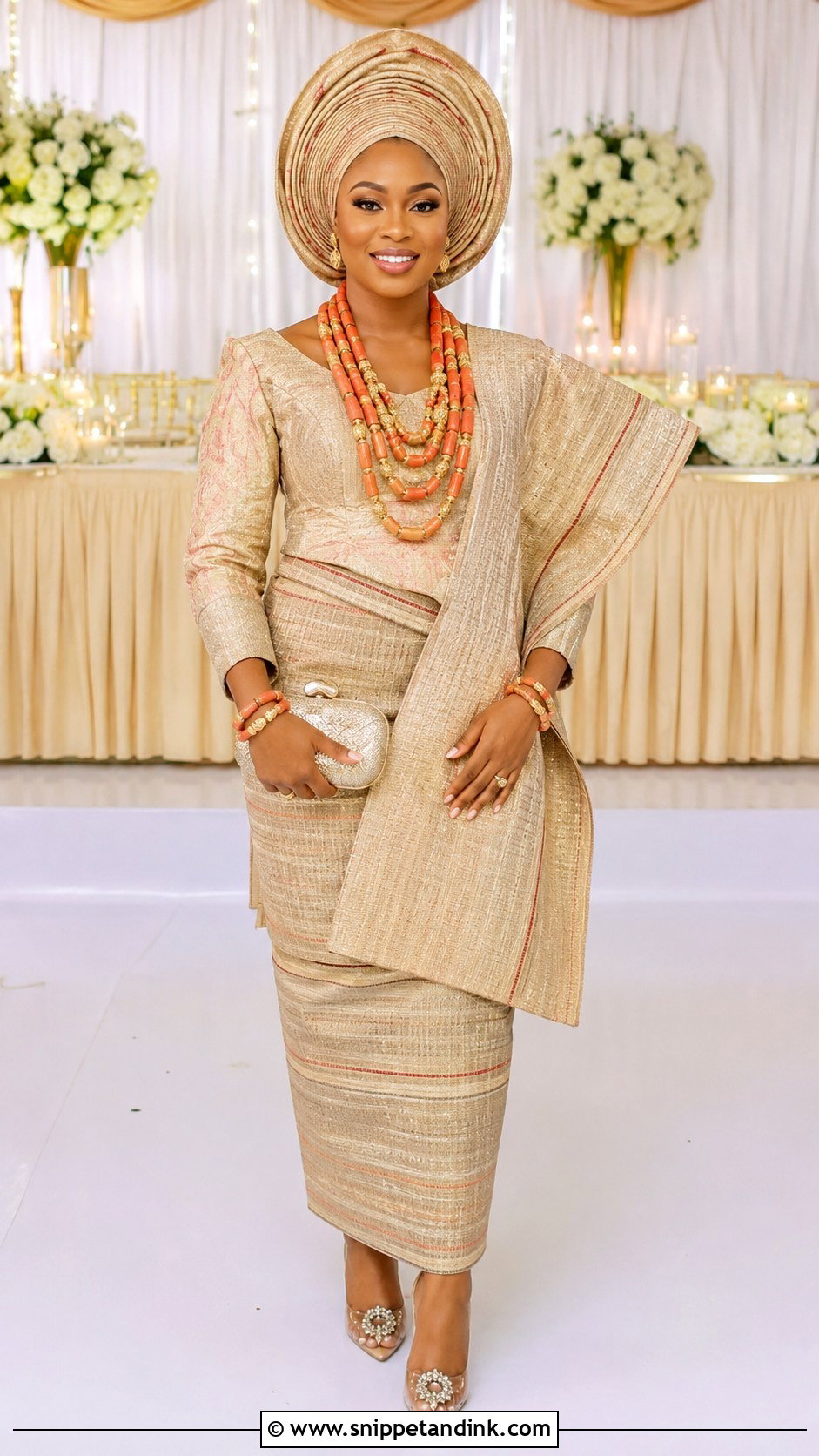
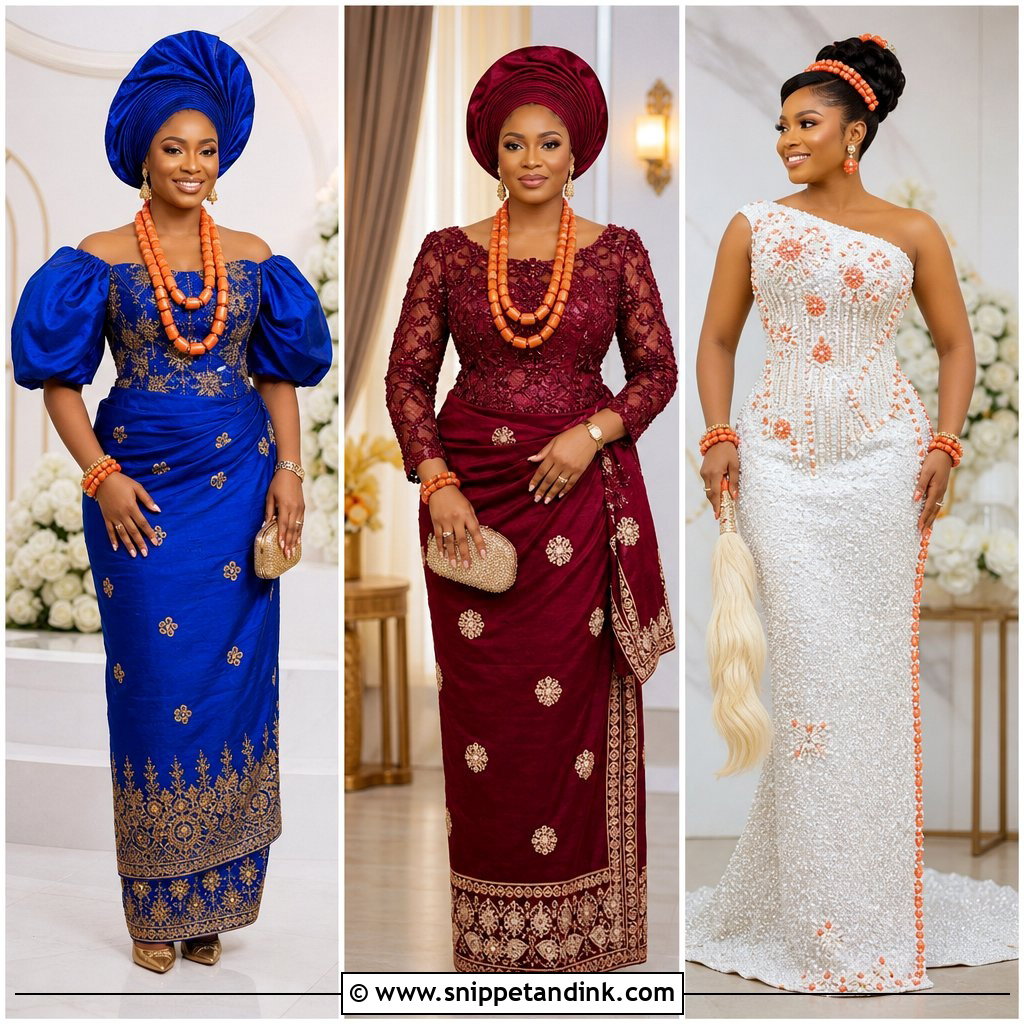
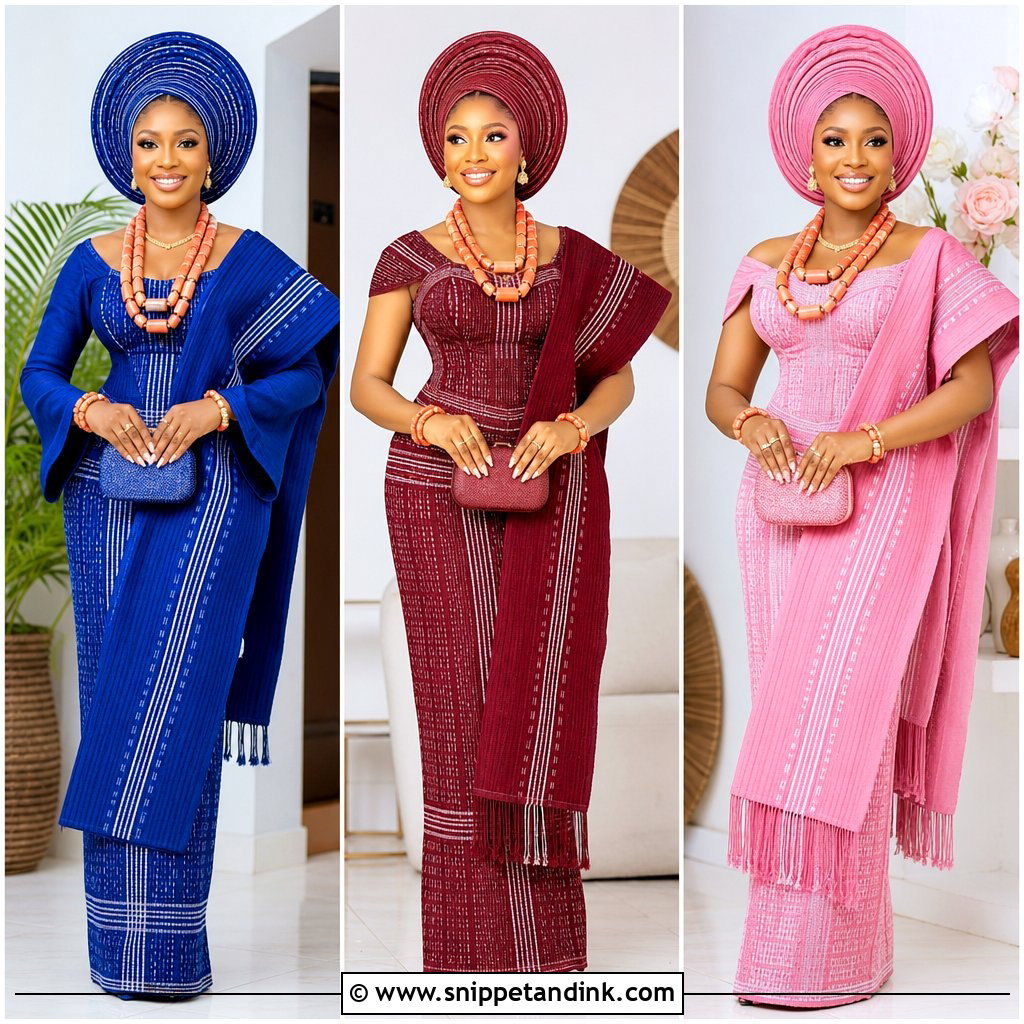
A Yoruba aso oke wedding outfit is four pieces working together: the iro wrapper, the buba blouse, the gele and the ipele over the shoulder. Aso oke is thick and stiff, which helps the gele hold its sculpted folds and makes the iro sit firmly. The gele is the part that most often goes wrong. Too high and it tips back in photos; too wide and it crowds the face. That’s why I’d book a gele tier who has dressed brides before, and do a practice tie. Jewel tones or metallic combinations with beading suit it, along with beads, bracelets, embellished heels and a clutch.
3. Igbo George Wrapper Wedding Outfit
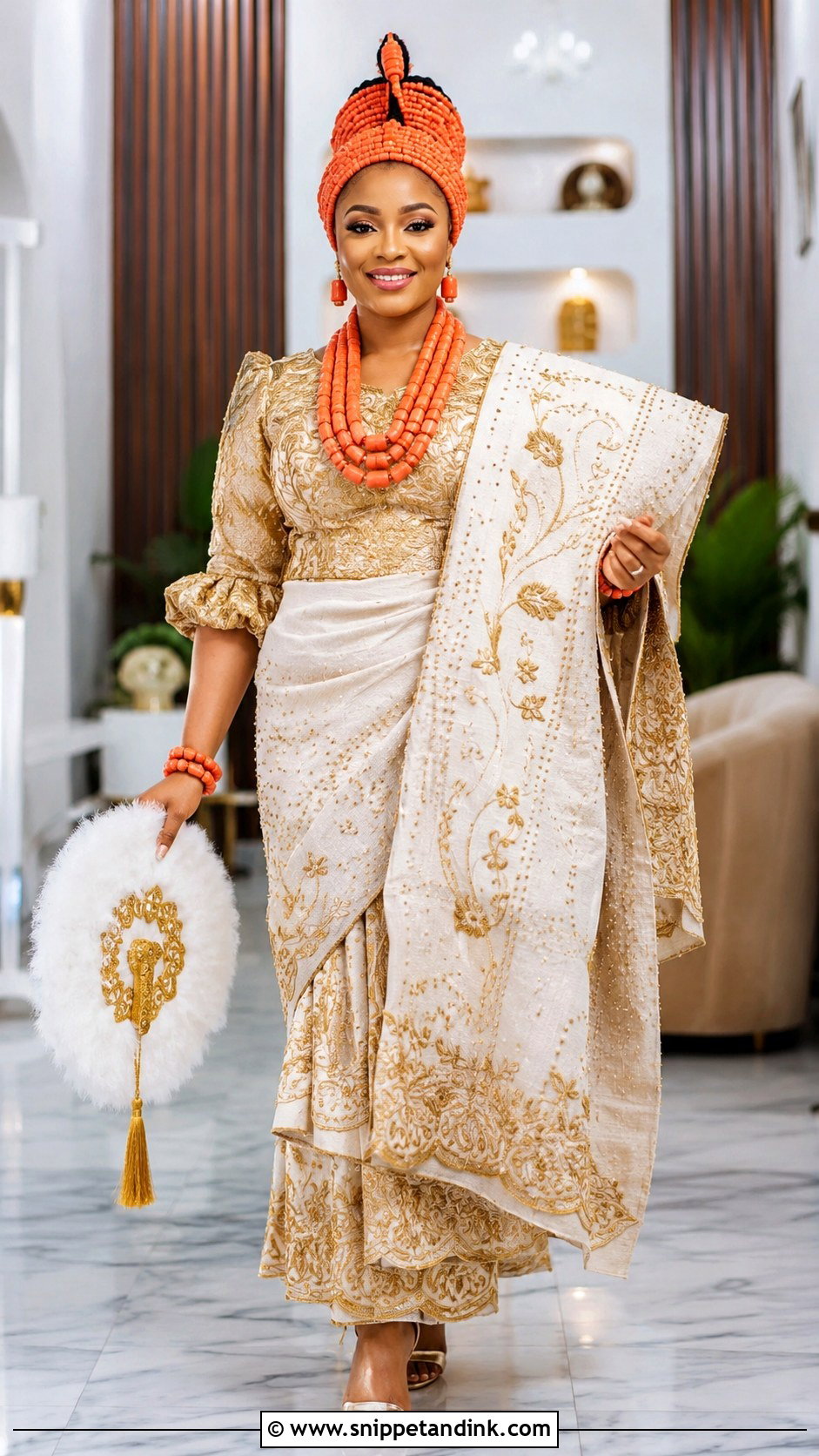
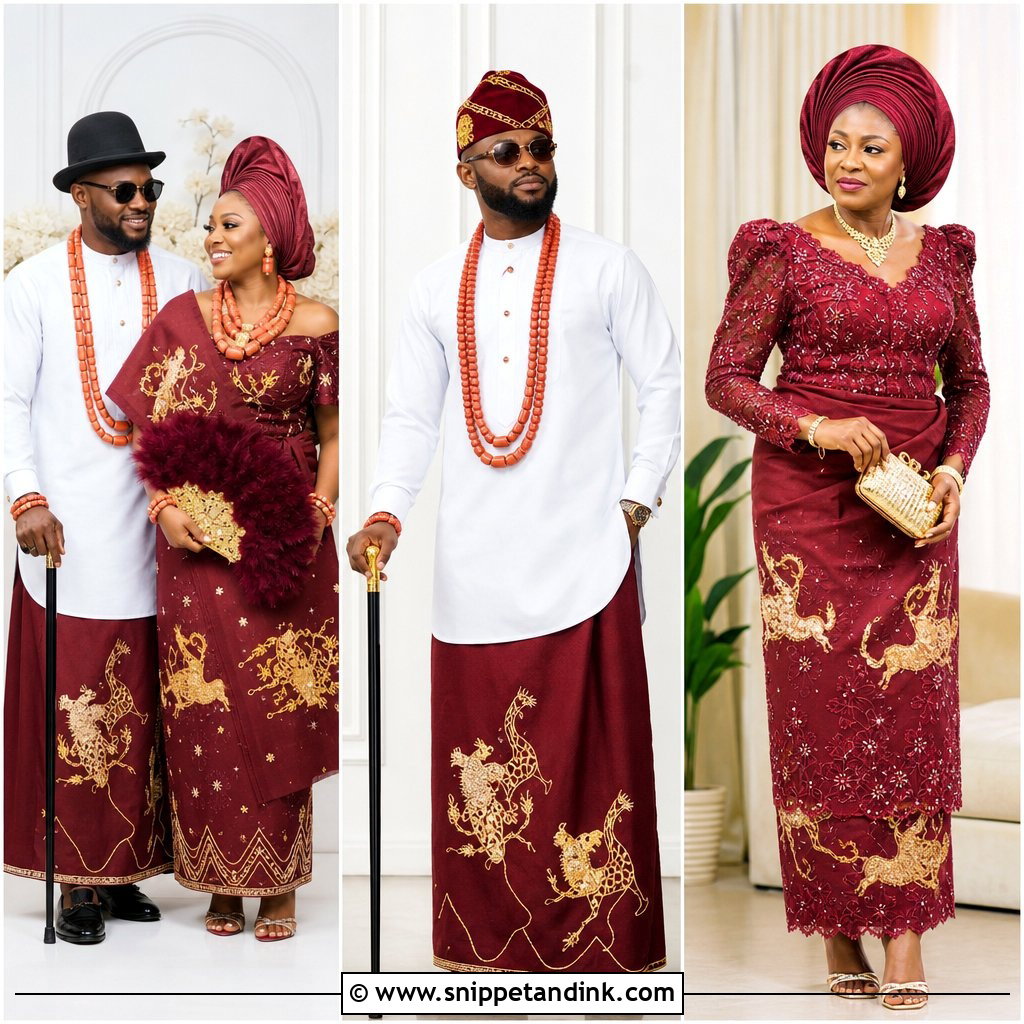
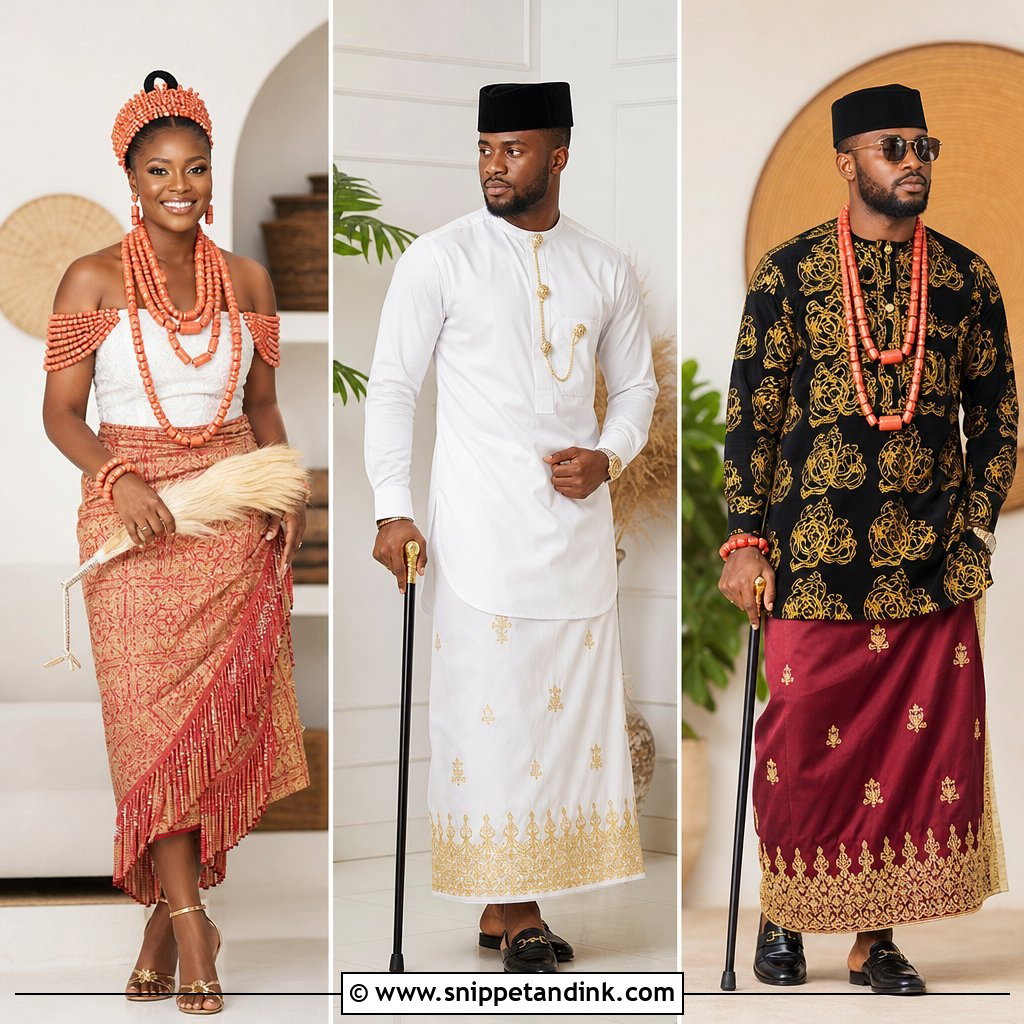
George is a heavy, embroidered or sequinned cloth, and an Igbo George wrapper wedding outfit often uses one or two wrappers with a fitted embroidered blouse. Two layers of George at the waist add bulk quickly, so I’d keep the blouse lean: long sleeves, a structured neck or a slim peplum. Coral beads at the neck, ears and wrists plus a matching headpiece give it its ceremonial finish. A hand fan is useful in a warm hall as well as for portraits. Choose low or medium heels you can stand in all day under the wrapper. Deep red, royal blue, gold, emerald and ivory all work well against the texture.
4. Edo Coral Bead Wedding Outfit
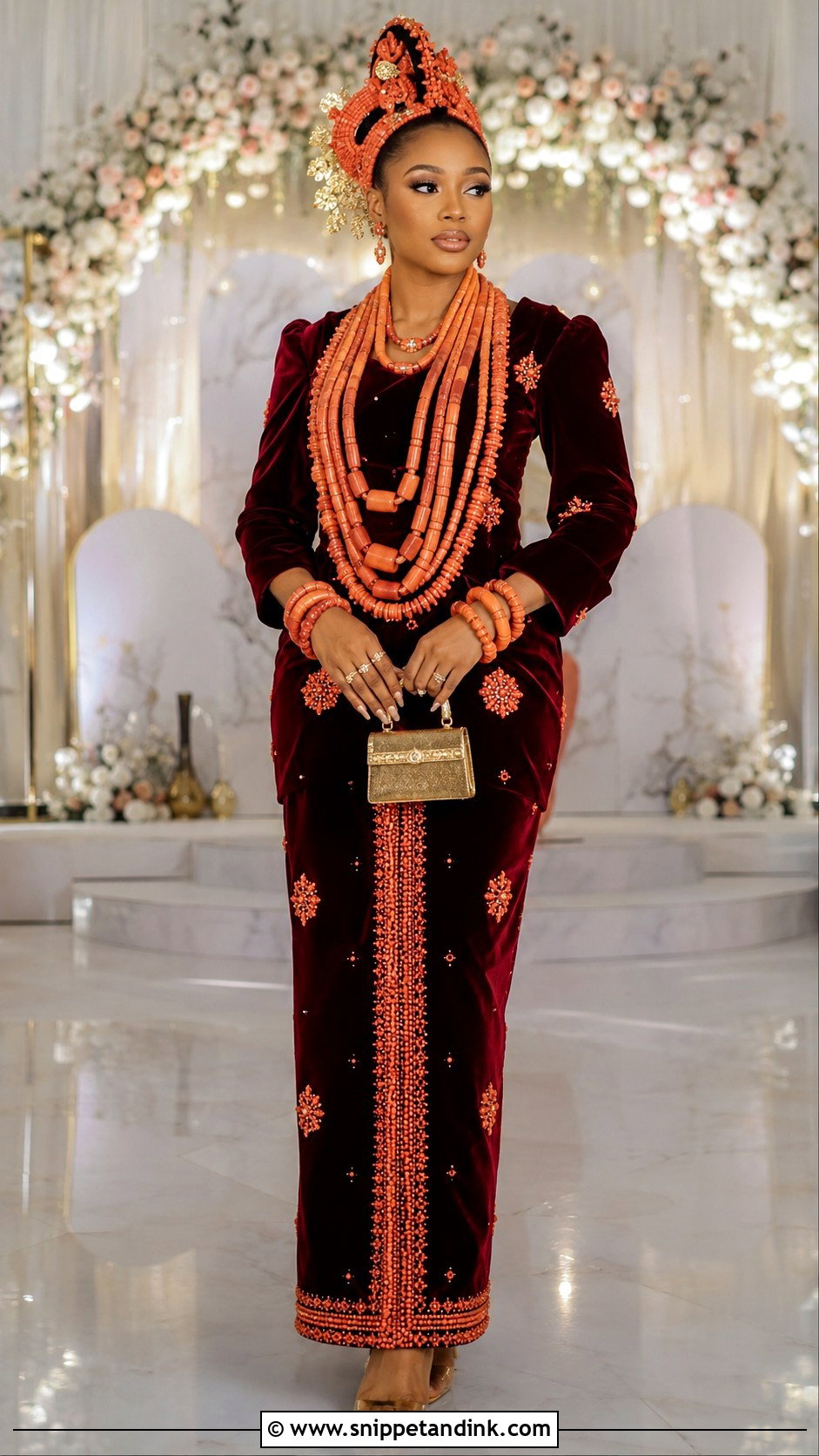
In an Edo coral bead wedding outfit, the coral is the dress. Layered beadwork can include a high collar necklace, earrings, bracelets and body pieces, with an okuku-style crown drawing everything to the face. Real coral is heavy, and that’s the comfort issue I always raise: a velvet or richly decorated blouse underneath needs a firm structure so the beads don’t drag the neckline. Pair it with a long wrapper or a slim skirt in red, burgundy or ivory. Keep shoes and bag plain, with simple metallic heels and a small clutch. Do a full fitting with the beads on, not just the fabric.
5. Hausa-Fulani Kaftan Wedding Outfit
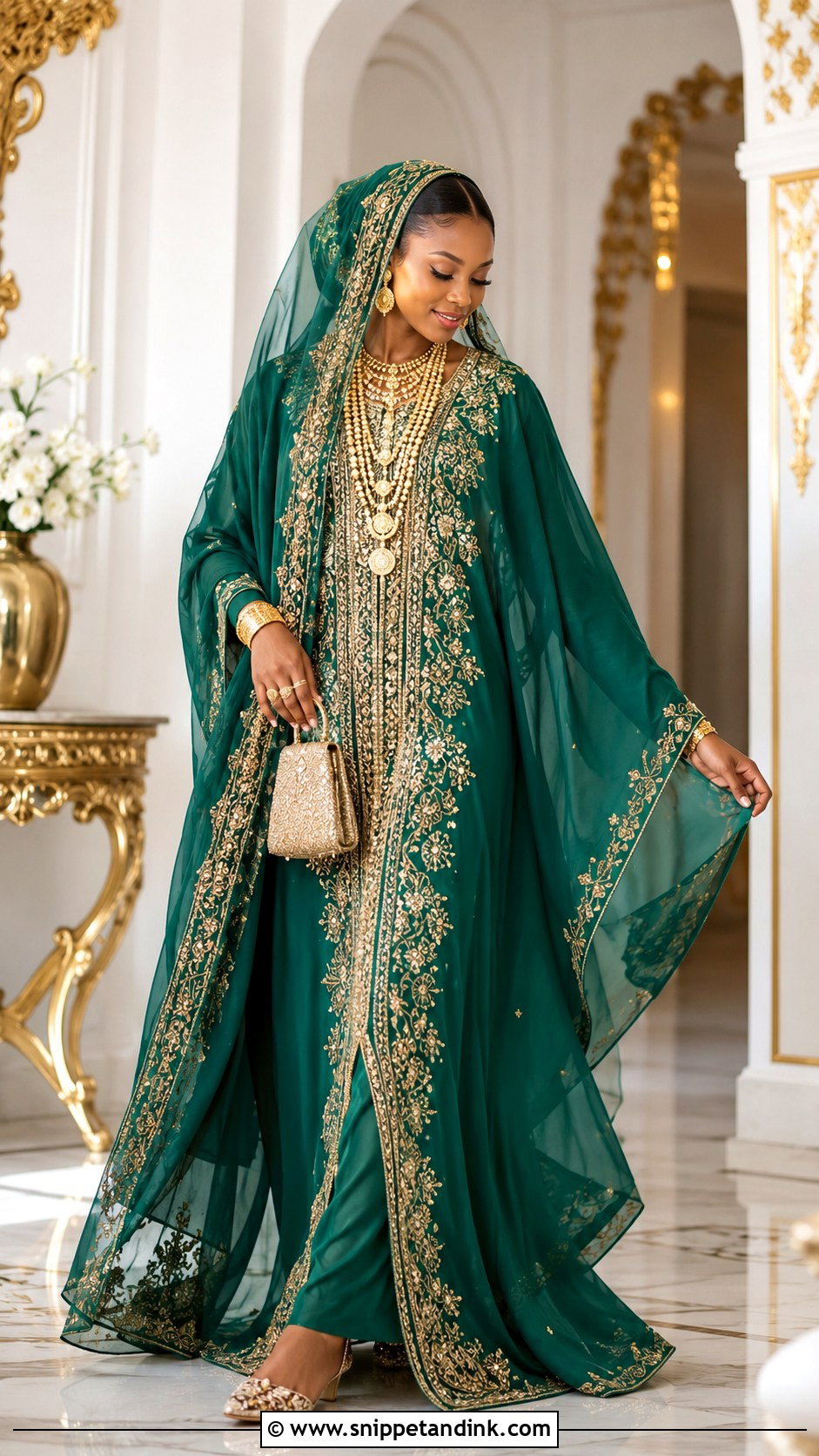
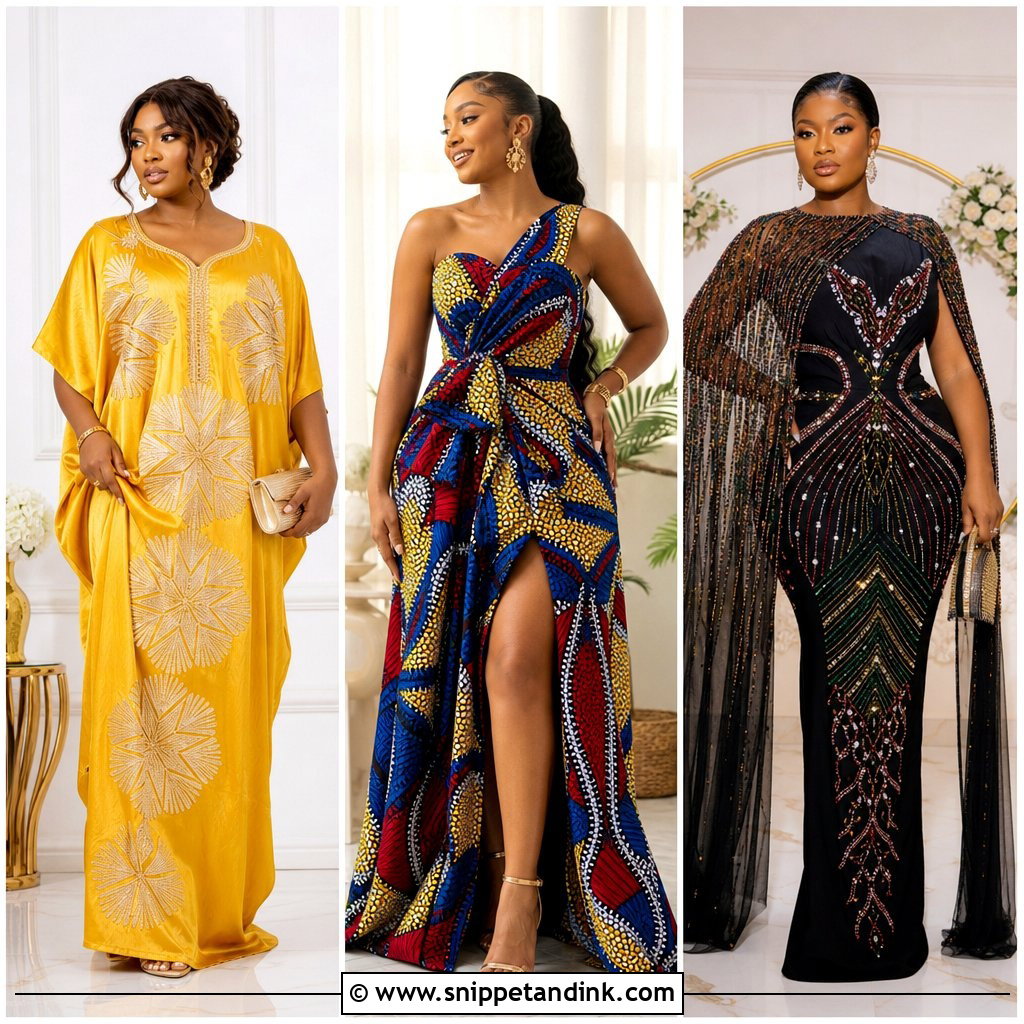
A Hausa-Fulani bride is usually dressed with full coverage, and a floor-length kaftan in lace, brocade or silk does that with richness rather than fitted shaping. Embroidery at the neckline, sleeves and front panel carries the luxury. The veil or head covering has to fit your family’s customs, so I confirm that first and then style the jewellery around it. Gold earrings, layered necklaces, bracelets and rings bring light. Pointed flats or low heels keep you comfortable. Ivory, champagne, emerald, dusty rose and deep blue all suit the embroidery. Make sure the sleeves let you raise your arms easily.
6. Senegalese Grand Boubou Wedding Outfit
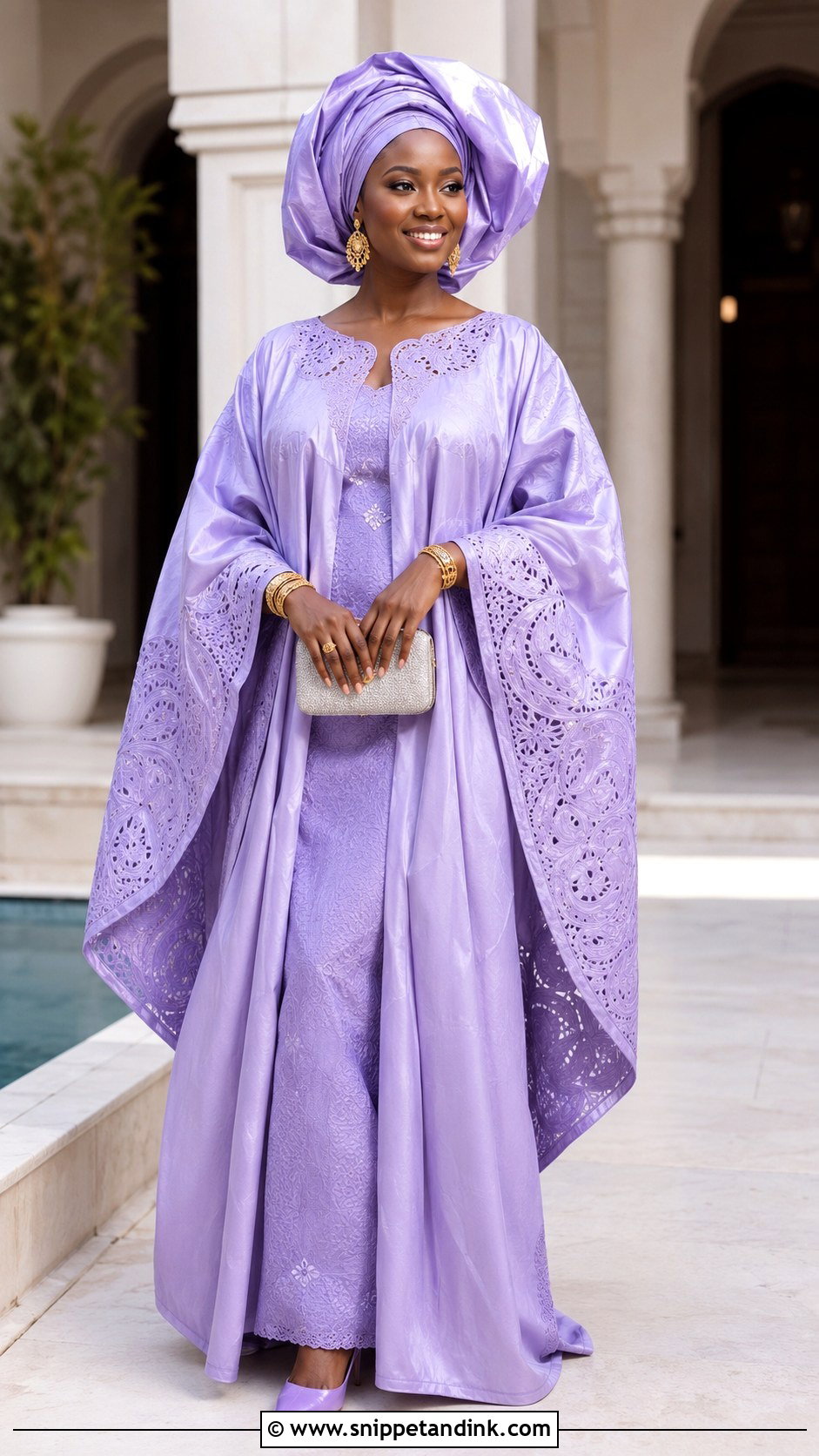
The grand boubou is a wide robe that moves beautifully, and it can swamp a petite bride if the proportions are off. A defined underdress or skirt gives the volume a structure to hang from. Polished bazin, lace, embroidery and cutwork make it formal. I pay most attention to sleeve and hem length: wide sleeves should end where your hands are still free, and the hem should clear your shoes when you walk. A sculptural headwrap, gold earrings, bracelets and a matching clutch finish it, over pointed pumps or mules. Dressing in one colour, white, lavender, emerald, coral or royal blue, shows the embroidery best.
7. Malian Bazin Riche Wedding Outfit
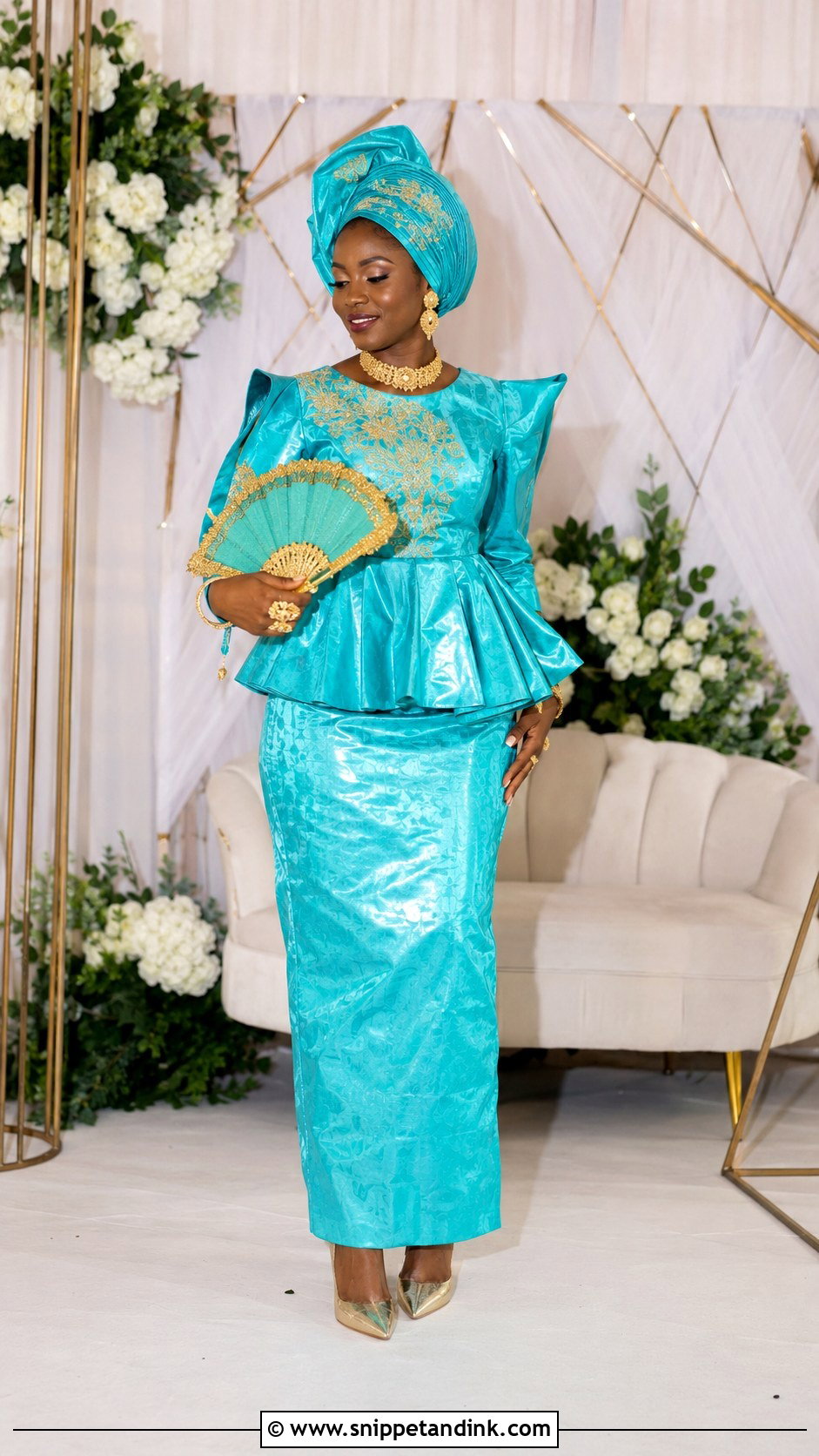
Bazin riche is cotton damask that’s dyed, beaten and polished until it has a crisp, glossy finish. It holds pleats, peplums and sculpted necklines better than almost any other fabric, which is why it suits a tailored top and long skirt. It also stays stiff, so the shoulders, waist and arms need careful fitting or the outfit will feel like armour. Choose one main colour, turquoise, purple, fuchsia or gold, and bring in contrast through embroidery rather than more accessories. Gold jewellery, a fan, metallic shoes and a small clutch complete it. Use a tailor who knows how bazin handles.
8. Moroccan Takchita Wedding Outfit
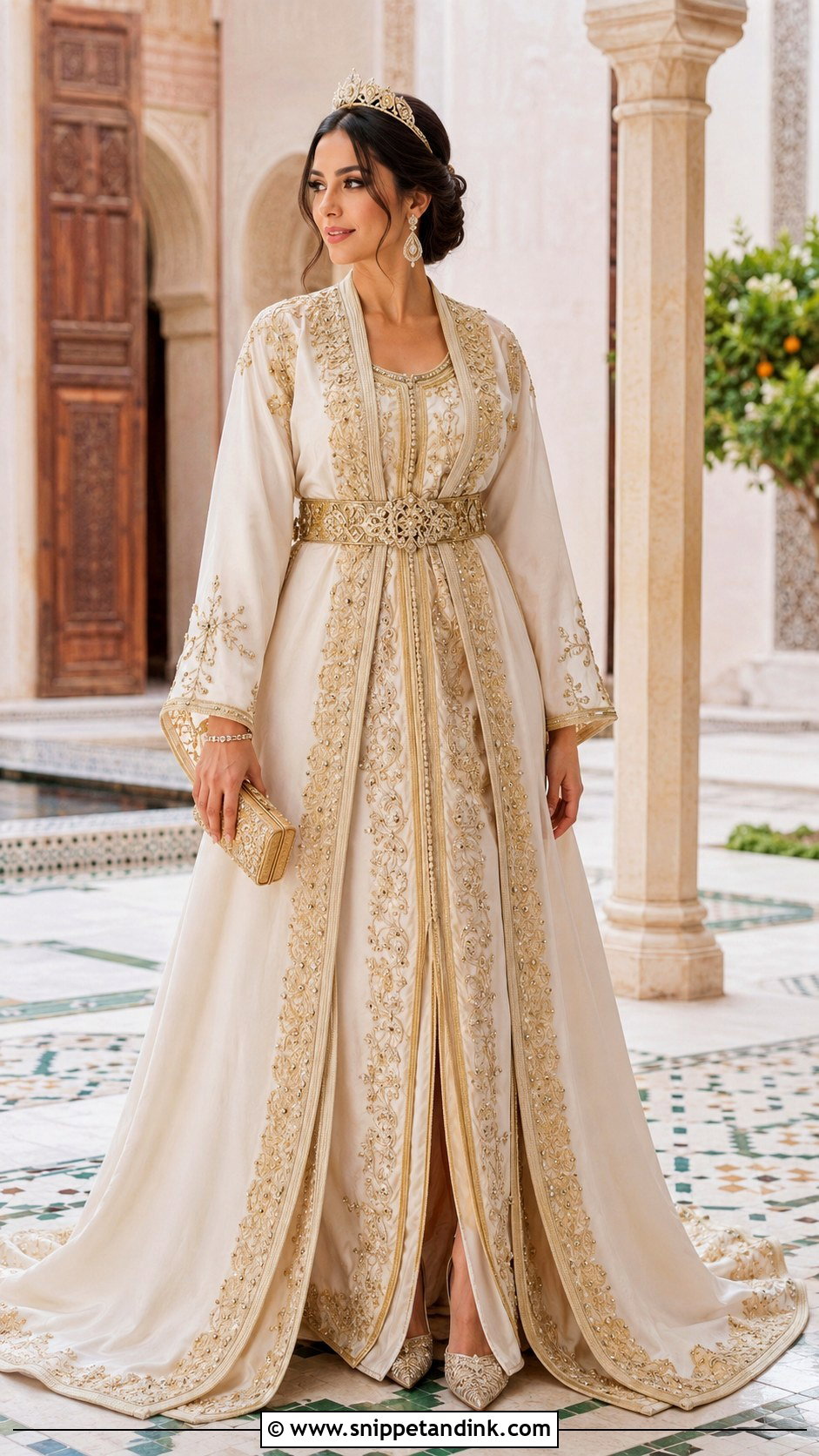
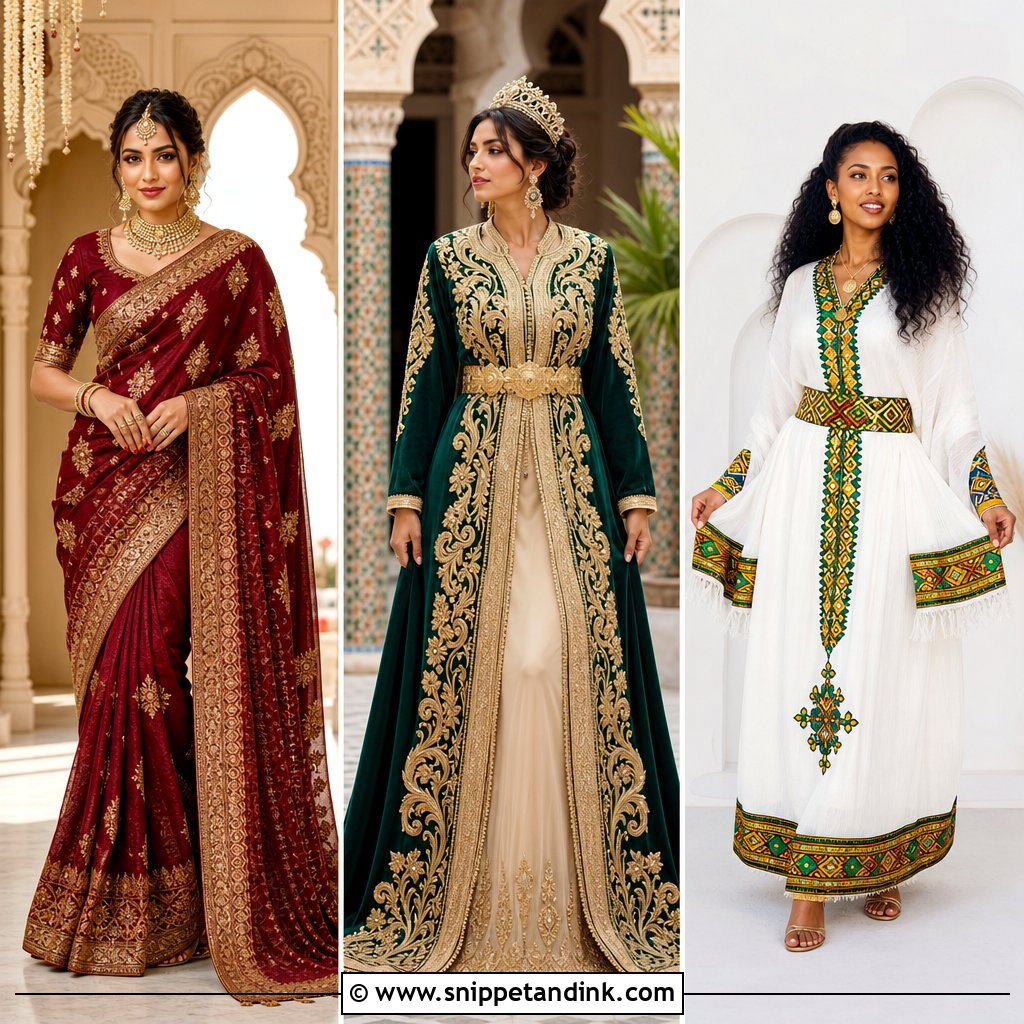
A takchita is two layers: an inner dress and an open overdress, cinched at the waist with an ornate belt. That belt is the focal point and also the part I fit most carefully. It needs to sit firmly without pressing when you sit down to eat, and heavy metal belts can pinch. Embroidery, beading and metallic thread on the neckline, sleeves and front opening add depth. Ivory and gold are classic; emerald, sapphire, burgundy or blush are richer. Embellished slippers or low heels, a refined headpiece, drop earrings and a delicate bracelet finish it. Match the jewellery metal to the embroidery thread.
9. Algerian Karakou Wedding Outfit
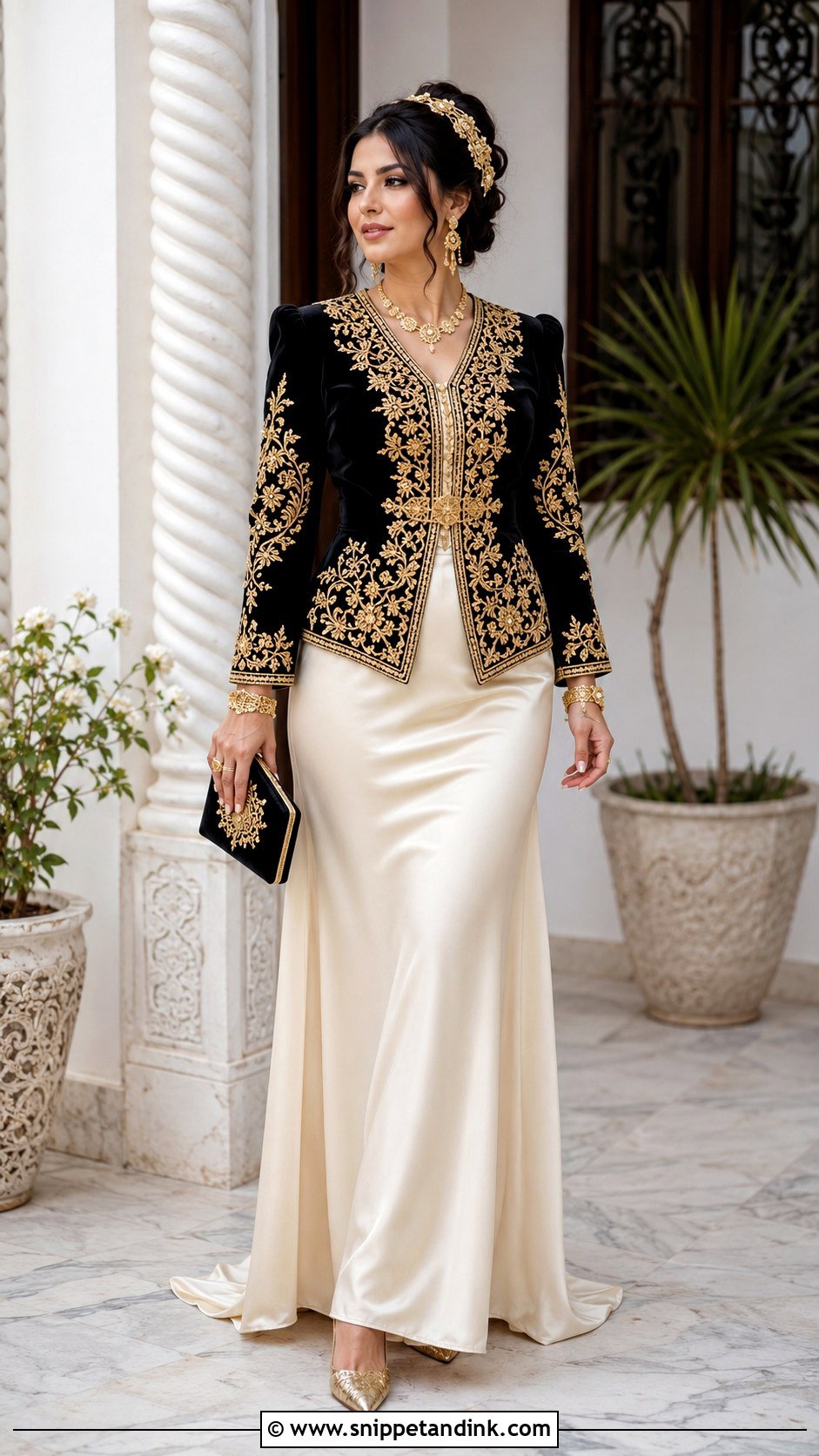
In an Algerian karakou wedding outfit, the fitted velvet jacket with its gold embroidery is the star, usually in black, burgundy, navy or emerald. It goes with a long satin skirt, traditional draped trousers or a flowing panel that softens the structure. Velvet jackets are warm and fitted, so I’d check the armholes with your arms raised; a tight armhole ruins the line when you dance. Sleeve length should keep the embroidered cuffs visible. Gold earrings, a necklace, bracelets and a head ornament add to the embroidery. Pointed metallic shoes and a small velvet clutch finish it.
10. Tunisian Keswa Wedding Outfit
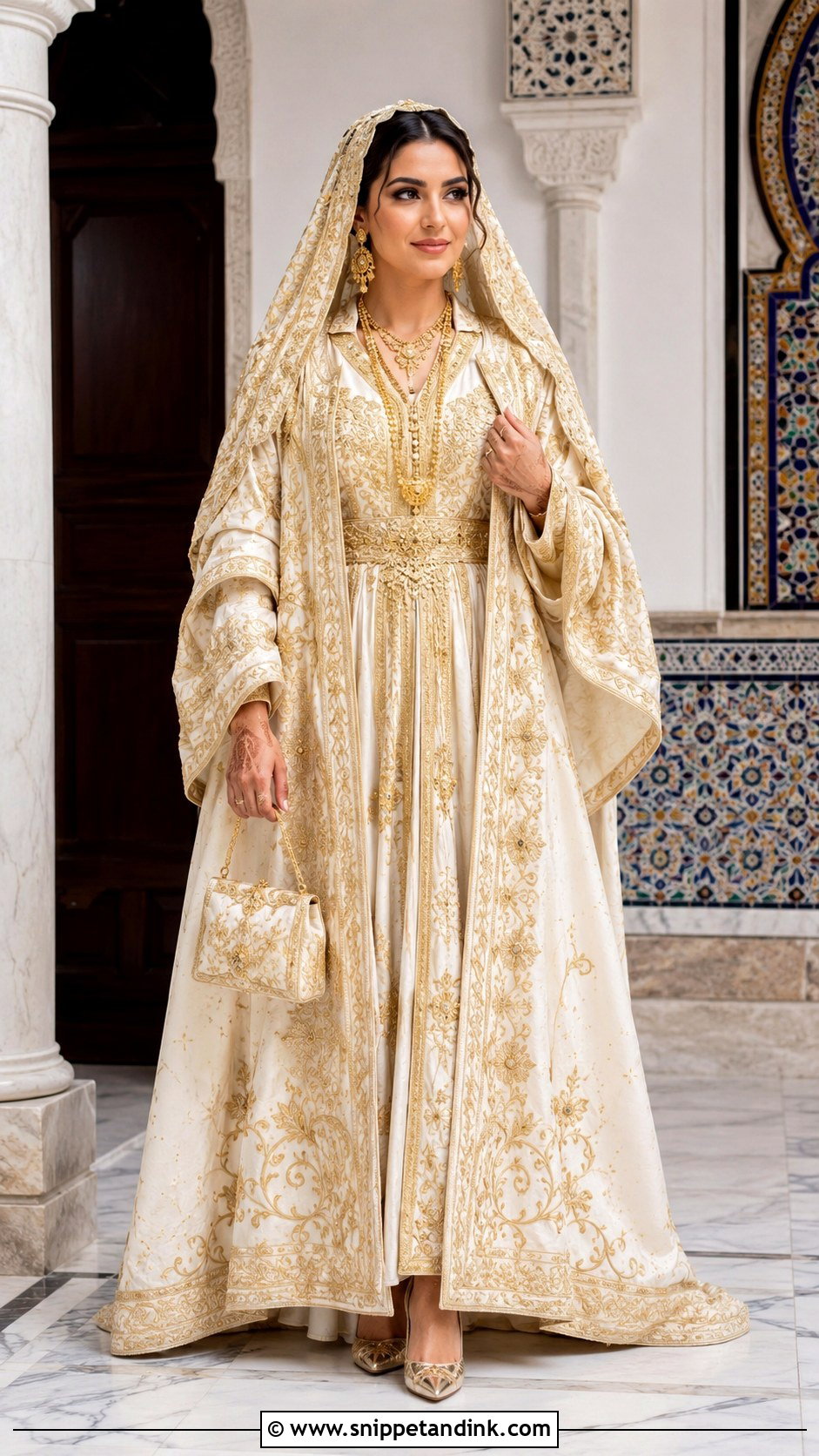
The Tunisian keswa varies so much between regions and families that I never style one without a relative or specialist in the room. It may include embroidered garments, layered textiles, a decorated vest or bodice and an ornate head covering, all glittering with metallic thread and sequins. The outer pieces can be heavy, so a well-fitted underlayer helps them sit neatly. Rather than adding unrelated accessories, repeat the gold or silver of the embroidery in your shoes and a small bag. Respect the regional distinctions instead of mixing traditions for effect.
11. Ethiopian Habesha Kemis Wedding Outfit
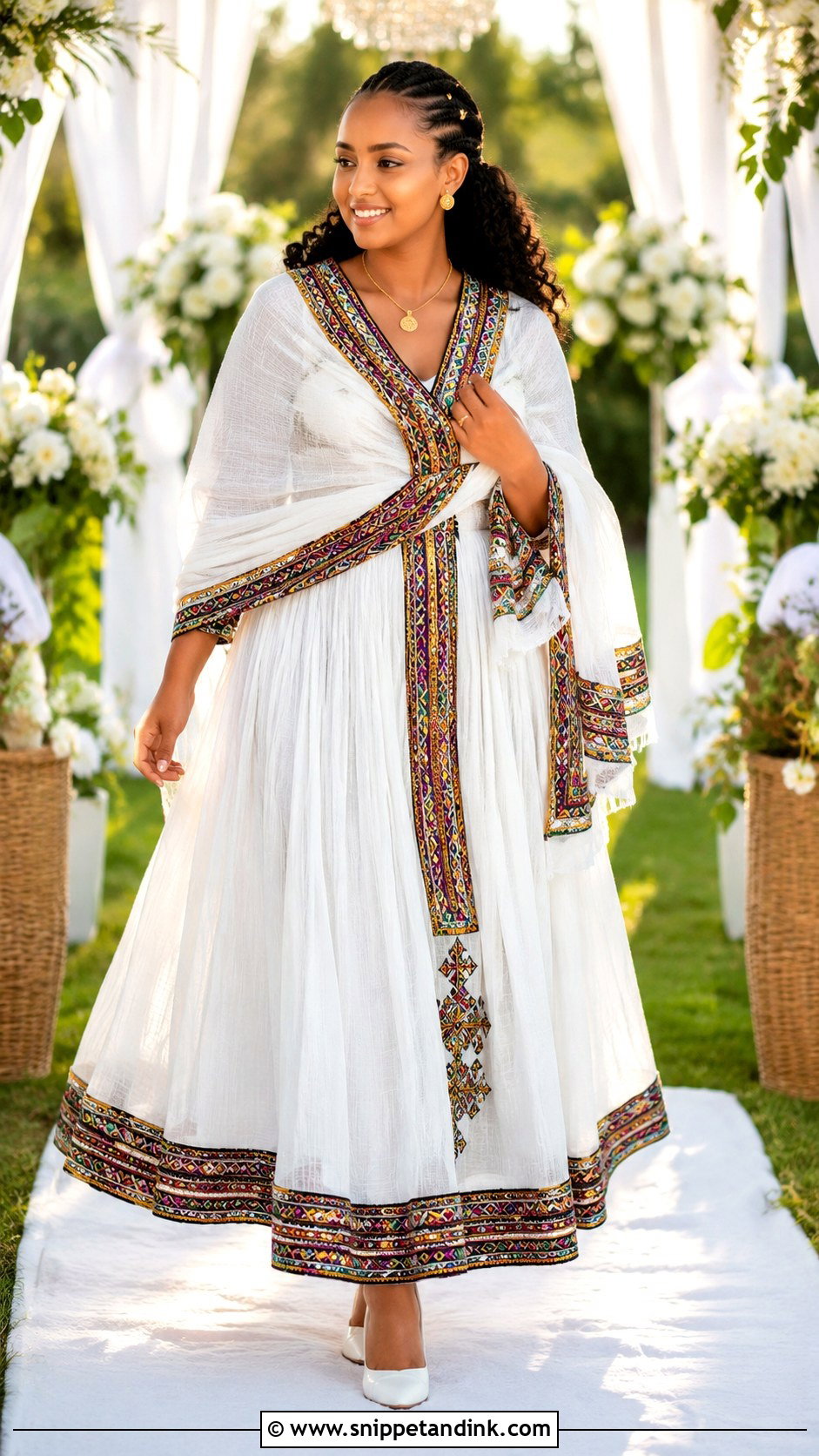
A habesha kemis is usually white cotton with a woven or embroidered tibeb border at the neck, cuffs, hem or front panel. The cotton is light and breathable, which is a welcome change from the heavy cloths in this list. A netela draped over the shoulders adds movement and gives you several ways to pose. Gold earrings, a fine necklace, bracelets and white or metallic shoes keep attention on the tibeb. If you want more shape, ask for a gently fitted waist and soft flare. Buying from an Ethiopian weaver matters, since border design can carry meaning. Braided hair finishes it neatly.
12. Eritrean Zuria Wedding Outfit
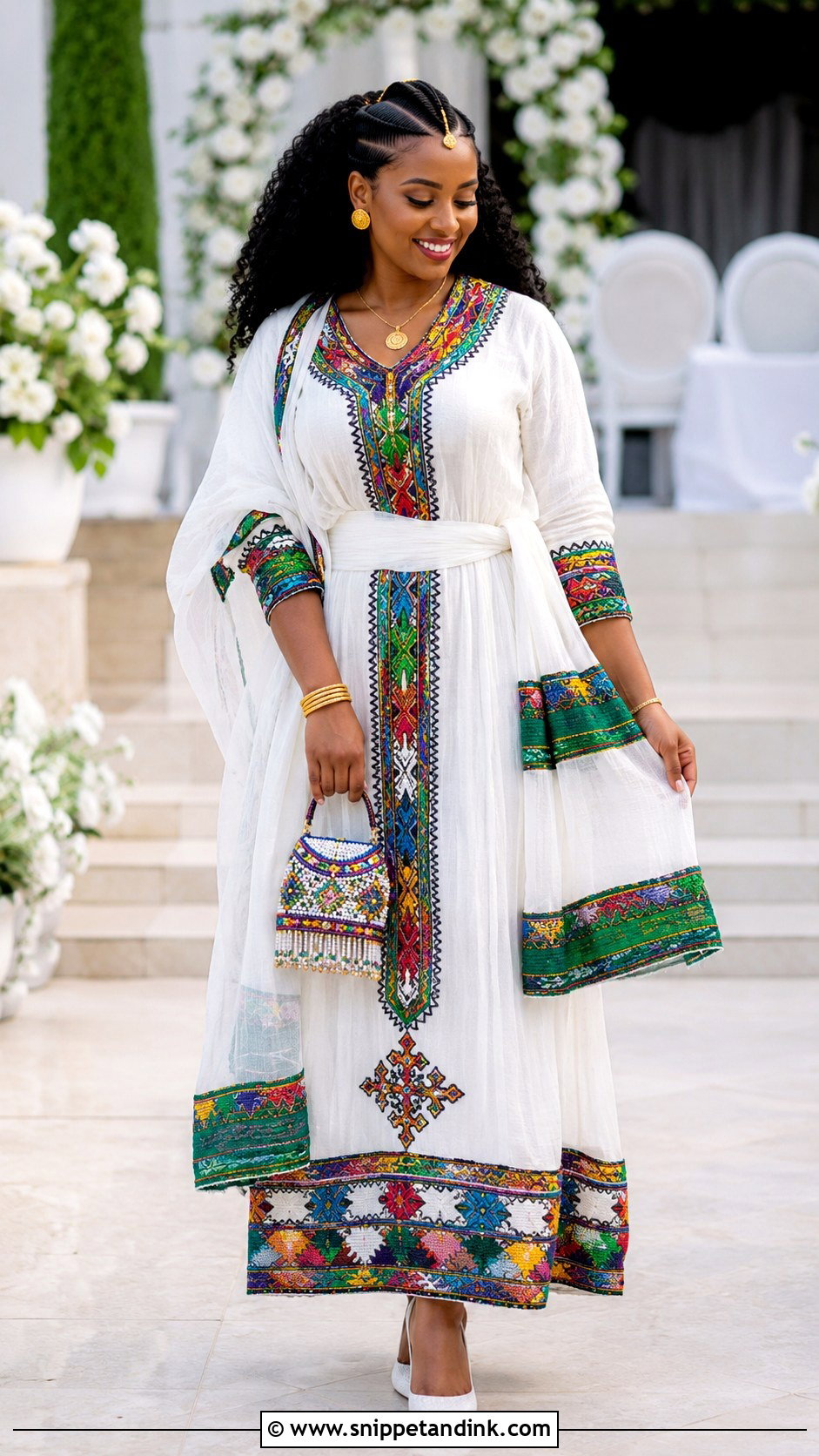
The Eritrean zuria shares features with Ethiopian dress, so I’d confirm the exact construction and terminology with Eritrean family or artisans rather than assuming they’re the same. It’s typically bright white with coloured woven borders at the neck, sleeves, bodice and hem. A shawl over both shoulders or around the arms gives light coverage and photographs well at full length. White cotton shows marks, so keep wipes away from it and have a clean shawl as backup. Gold jewellery, white pumps or low metallic sandals and a small satin bag suit it. Traditional braids complete the look.
13. Rwandan Umushanana Wedding Outfit
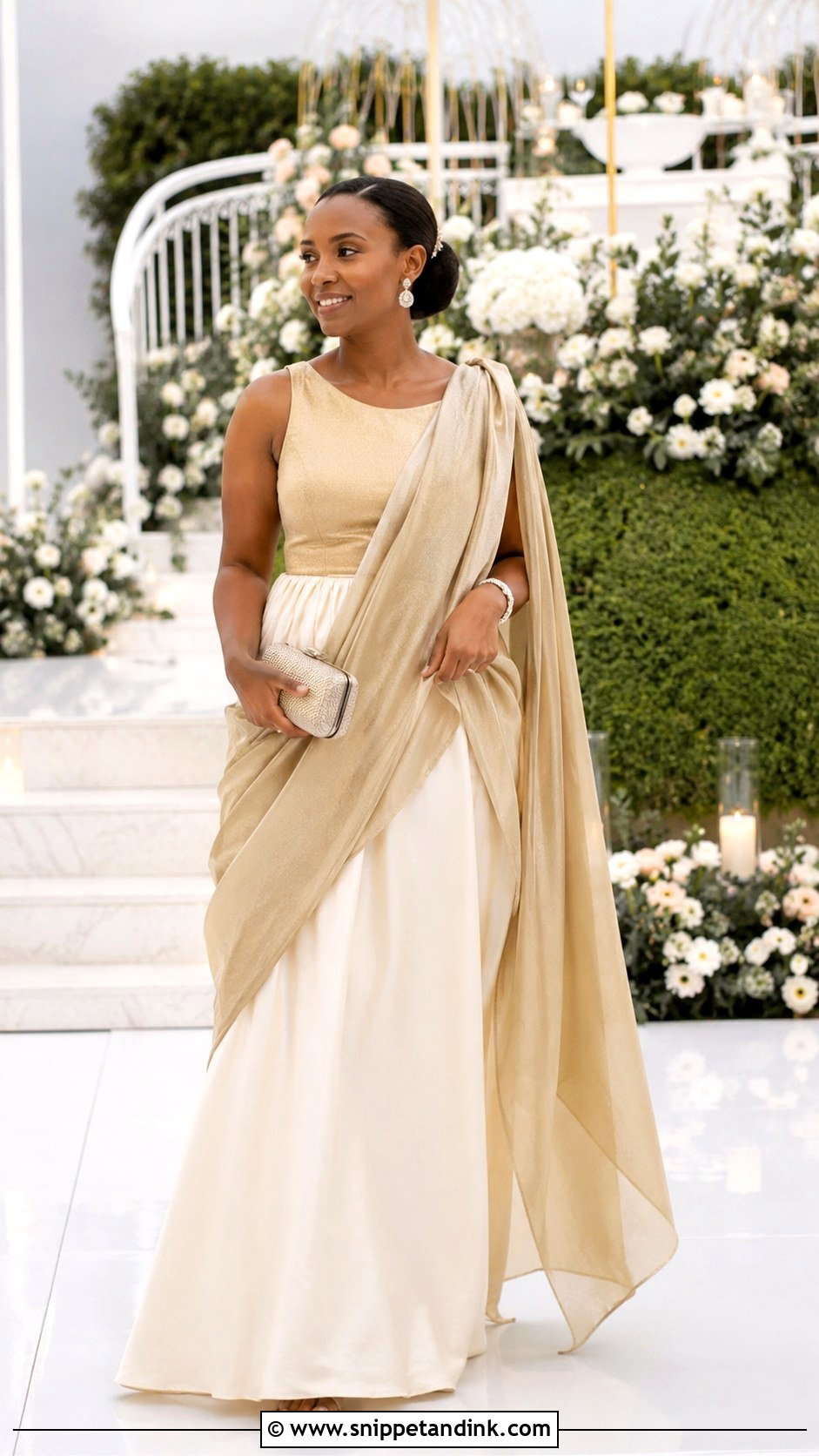
The umushanana relies on drape: a long skirt and a sash-like layer that falls from one shoulder across the body, usually over a fitted top. Fluid silk or satin moves well and avoids bulky gathers, but slippery fabric slides. I’d secure the shoulder drape with hidden pins or a small stitch and make sure the underlayer is firm. Choose one colour, or a pale top with a richer skirt and drape. Delicate earrings, a bracelet, low heels and a small clutch keep the line clean. A Rwandan tailor can adjust the length and shoulder placement while keeping the form correct.
14. Ugandan Gomesi Wedding Outfit
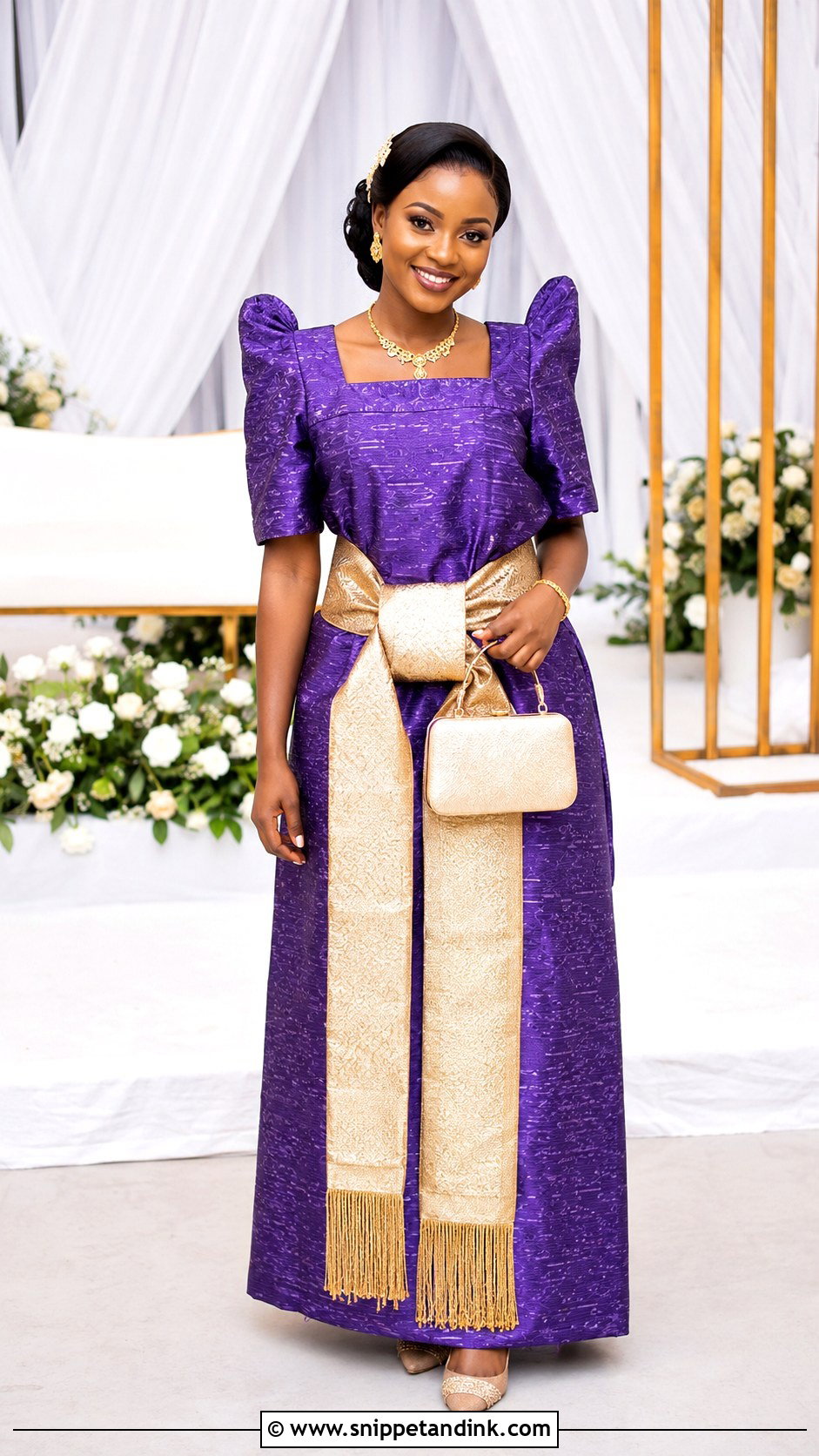
The gomesi is worn for the Kwanjula introduction, with its floor-length skirt, square neckline, puffed sleeves and wide sash tied at the waist. Lustrous fabric shows off those structured details; purple, green, blue, gold and coral feel festive. The sash should define the waist without stopping you from breathing or bending. Because the skirt is long and full, and the Kwanjula involves kneeling and sitting, practise both before the day. Earrings, a necklace, bracelets and closed heels finish it. If your attendants wear matching colours, set yourself apart with richer fabric, embroidery or jewellery.
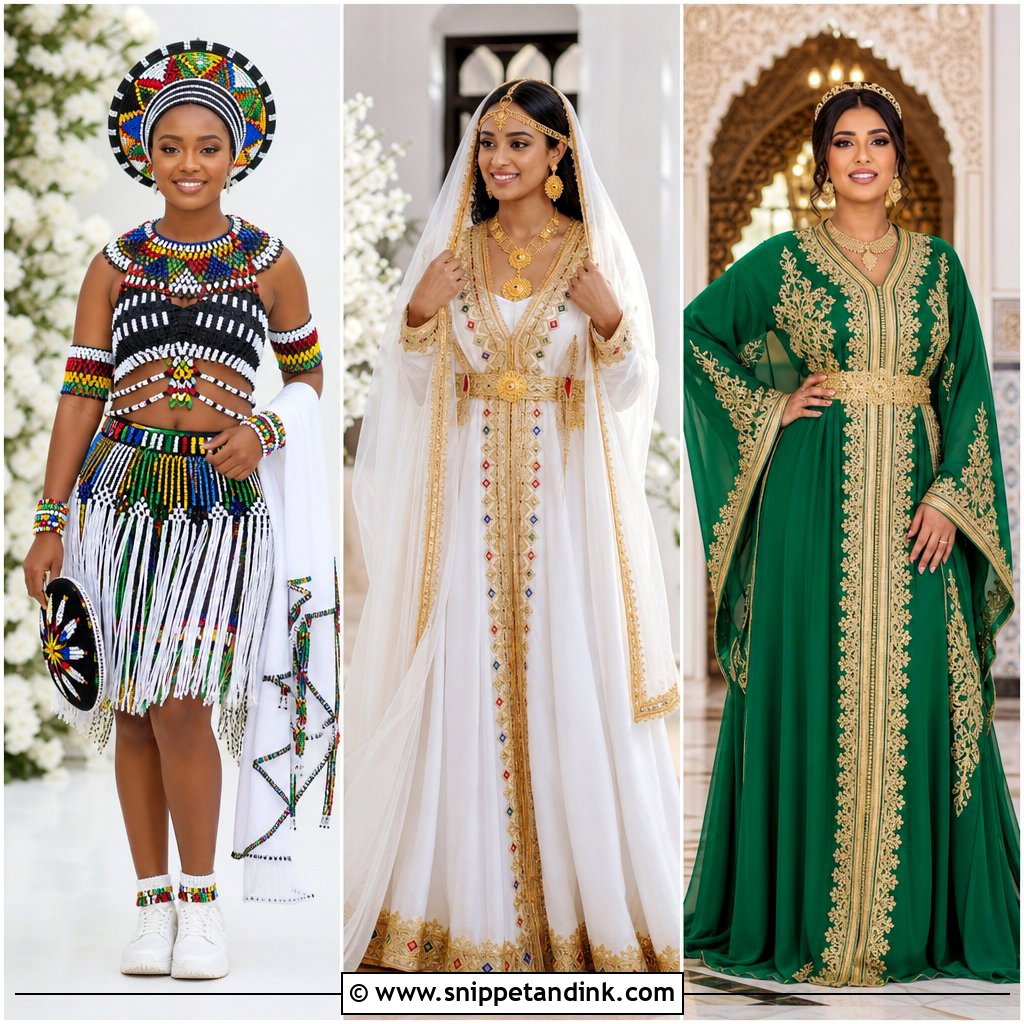
15. Maasai Beaded Wedding Outfit
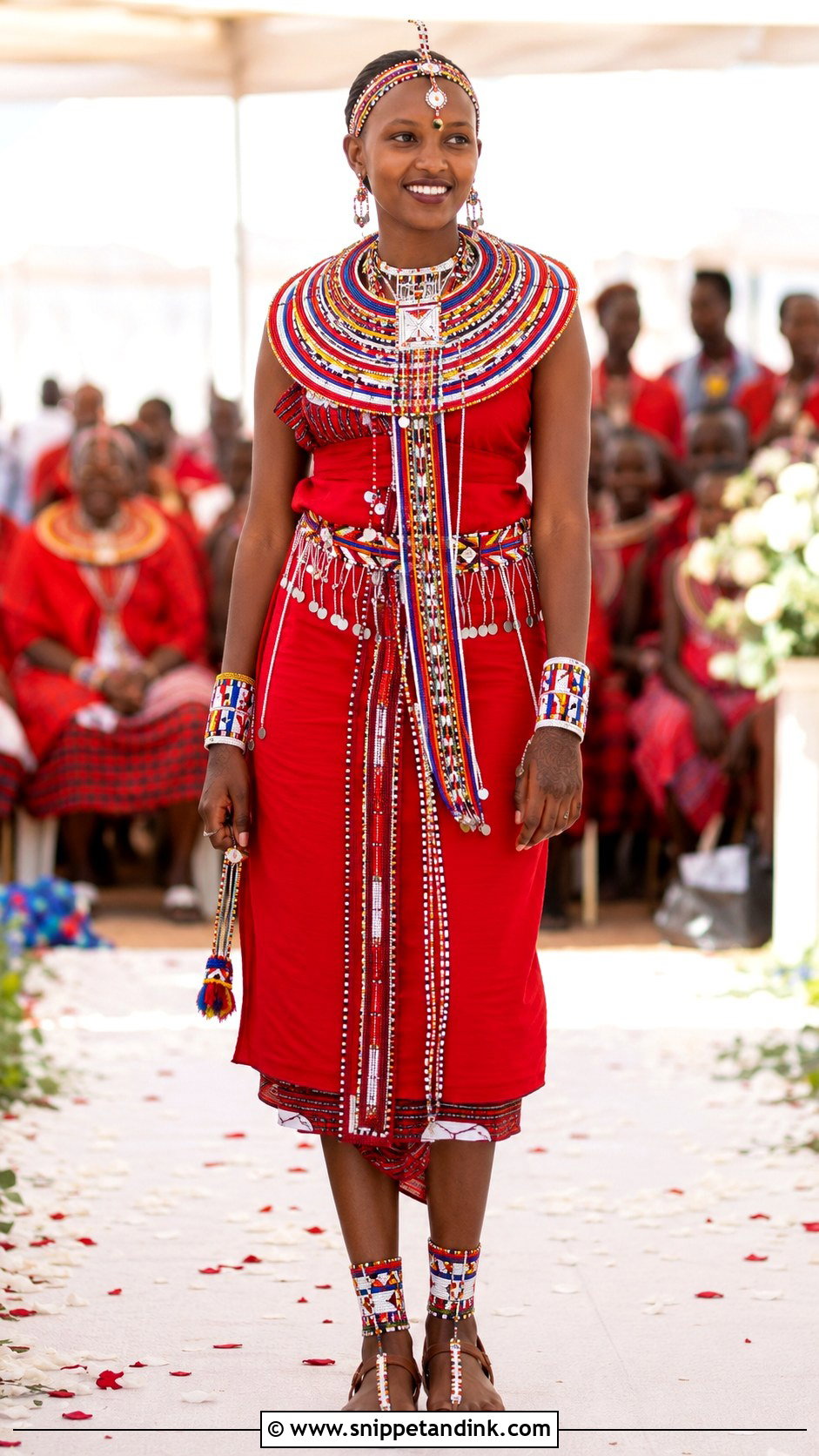
Maasai beadwork carries meaning tied to age, status and community, so it isn’t decoration to be picked by colour. A bride’s ensemble may include layered collars, necklaces, earrings and bracelets over a wrapped garment, in precise patterns of red, blue, white, orange, green and yellow. Work with Maasai family and bead artisans to decide which pieces she wears and where they sit. Wide collars are heavier than they look, so wear them for an hour before the day. Leather sandals suit long periods of standing. Keep any bag small and plain, and avoid anything that turns the look into costume.
16. Swahili Kanga Wedding Outfit
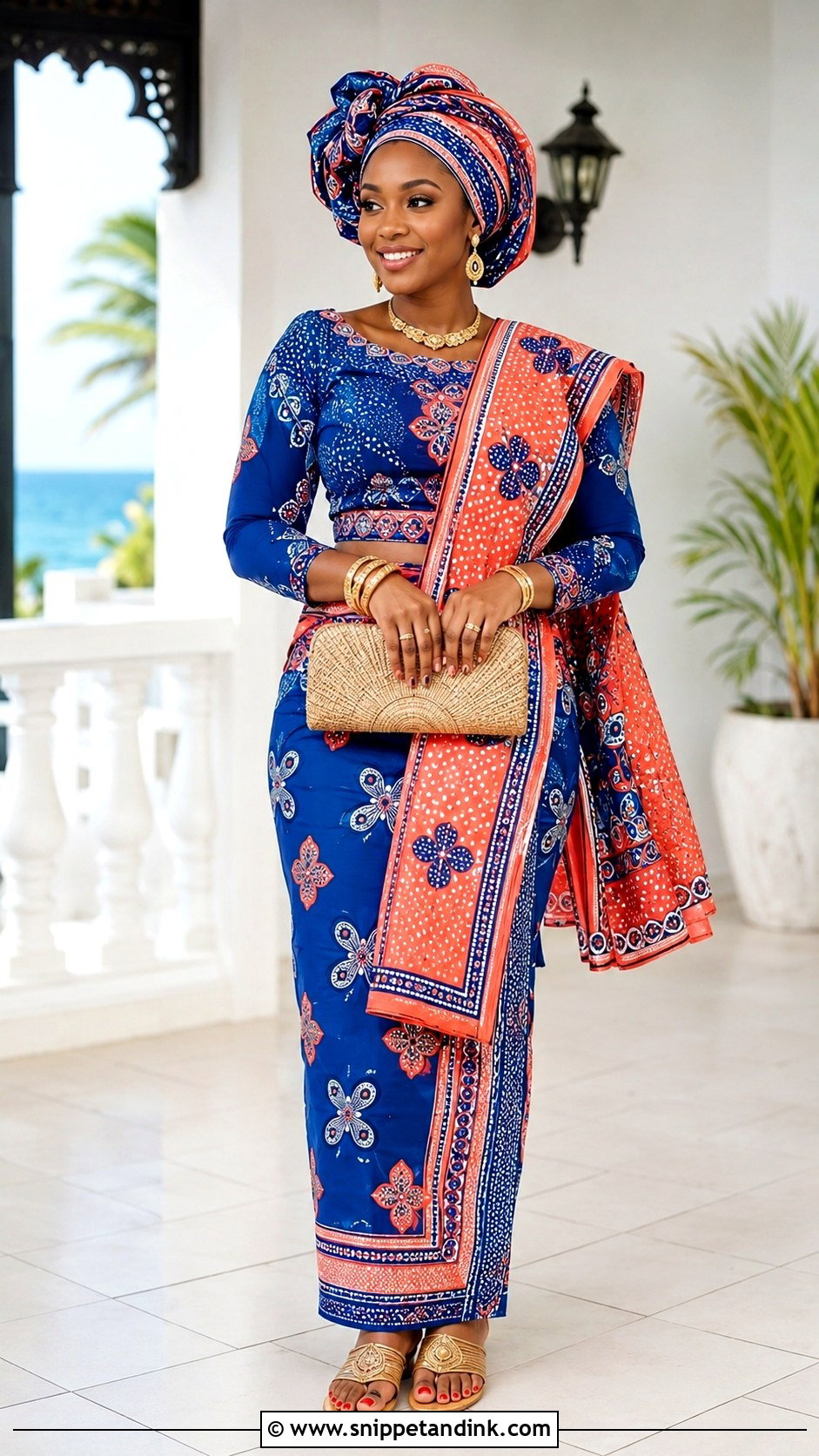
Kanga is sold in pairs, and the printed message along each cloth means something, so the bride should know what hers says before wearing it. Two coordinated cloths can become a skirt, a blouse, a shoulder covering or a headwrap. For a more formal look, use the print as an overskirt or draped layer over a modest floor-length dress. Plan where the border and message fall on the body; a tailor can align them so they look intentional. Gold earrings, bangles, embellished flat sandals and a woven clutch suit a coastal celebration.
17. Zulu Isidwaba Wedding Outfit
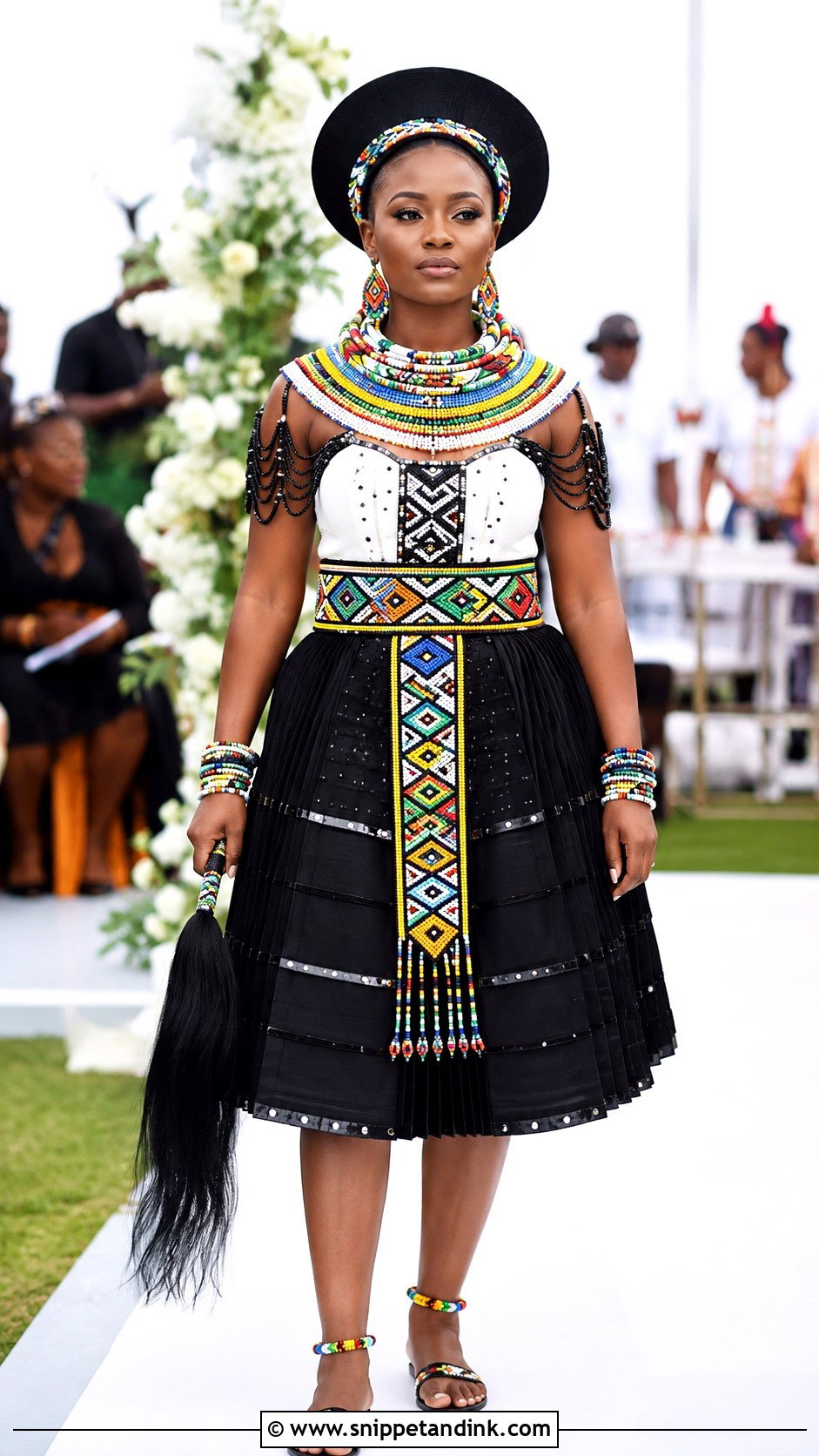
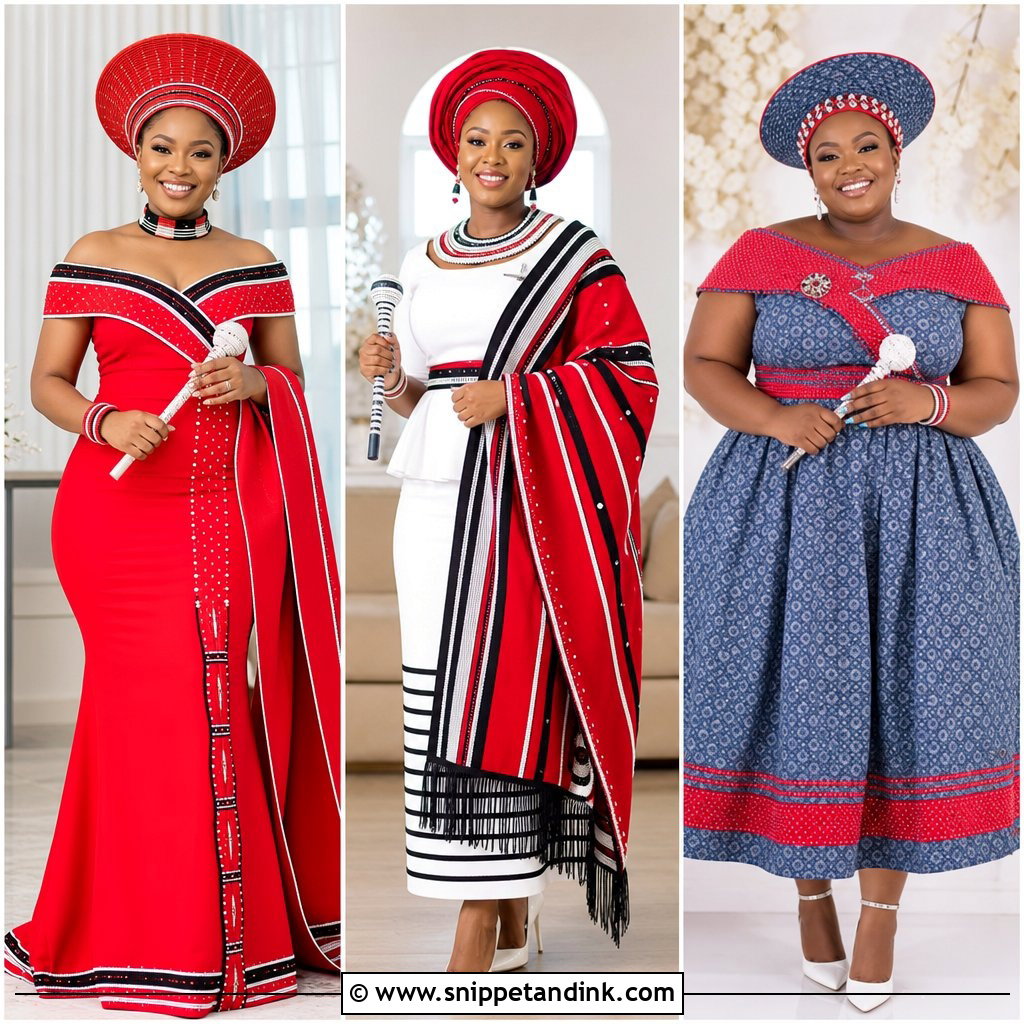
The isidwaba is a pleated skirt, and in Zulu tradition it relates to a woman’s married status, so the details should come from family custom, not a mood board. The bride may add a decorated top, layered beaded collars, bracelets, anklets and a headpiece appropriate to her family. Black, white, red, blue and yellow make a graphic palette. Flat shoes let her dance and move through a long celebration. Keep modern accessories to a minimum, since the beadwork already carries colour and meaning. Have someone knowledgeable help balance skirt, headwear and necklaces so nothing slips.
18. Xhosa Umbhaco Wedding Outfit
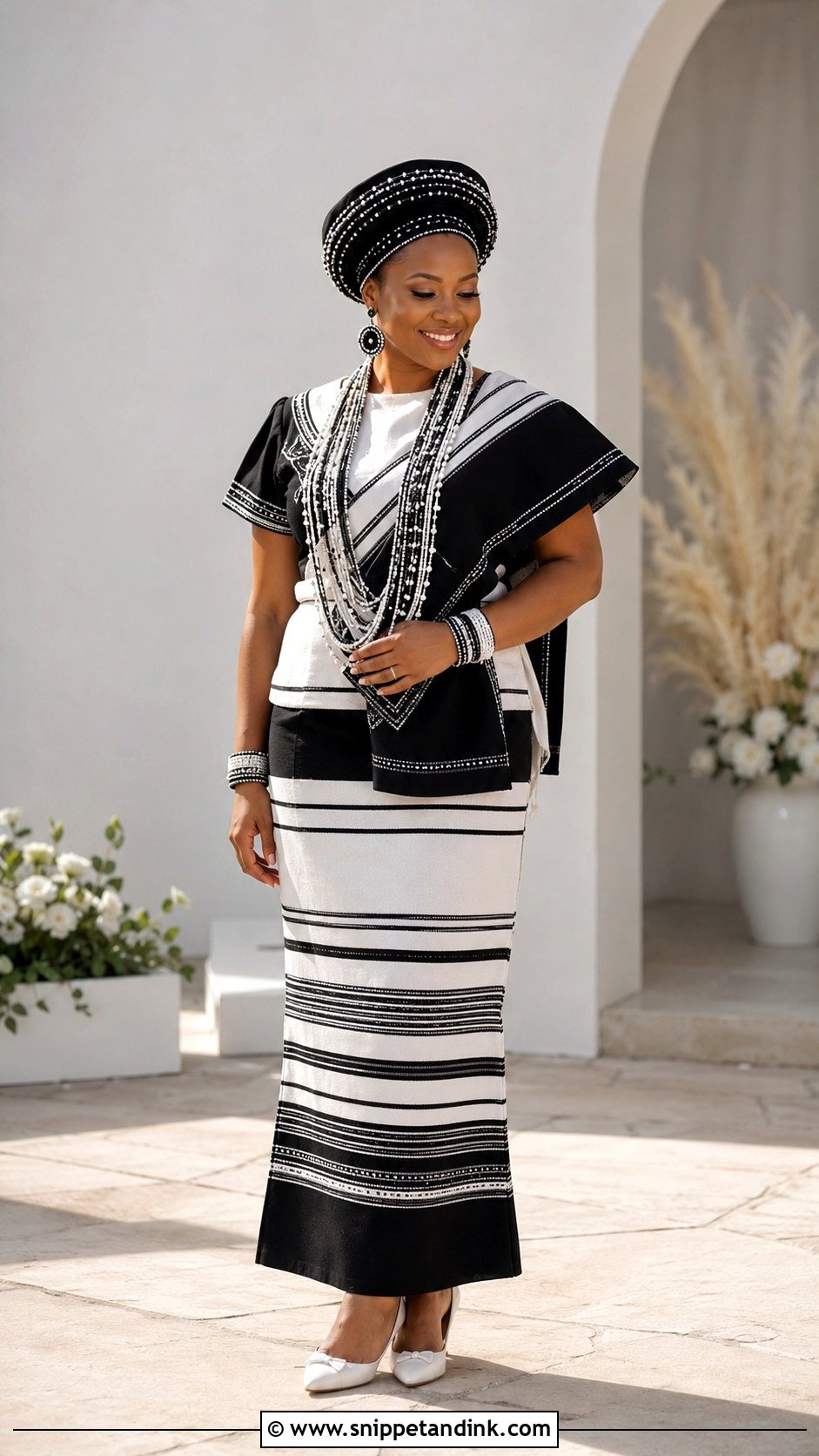
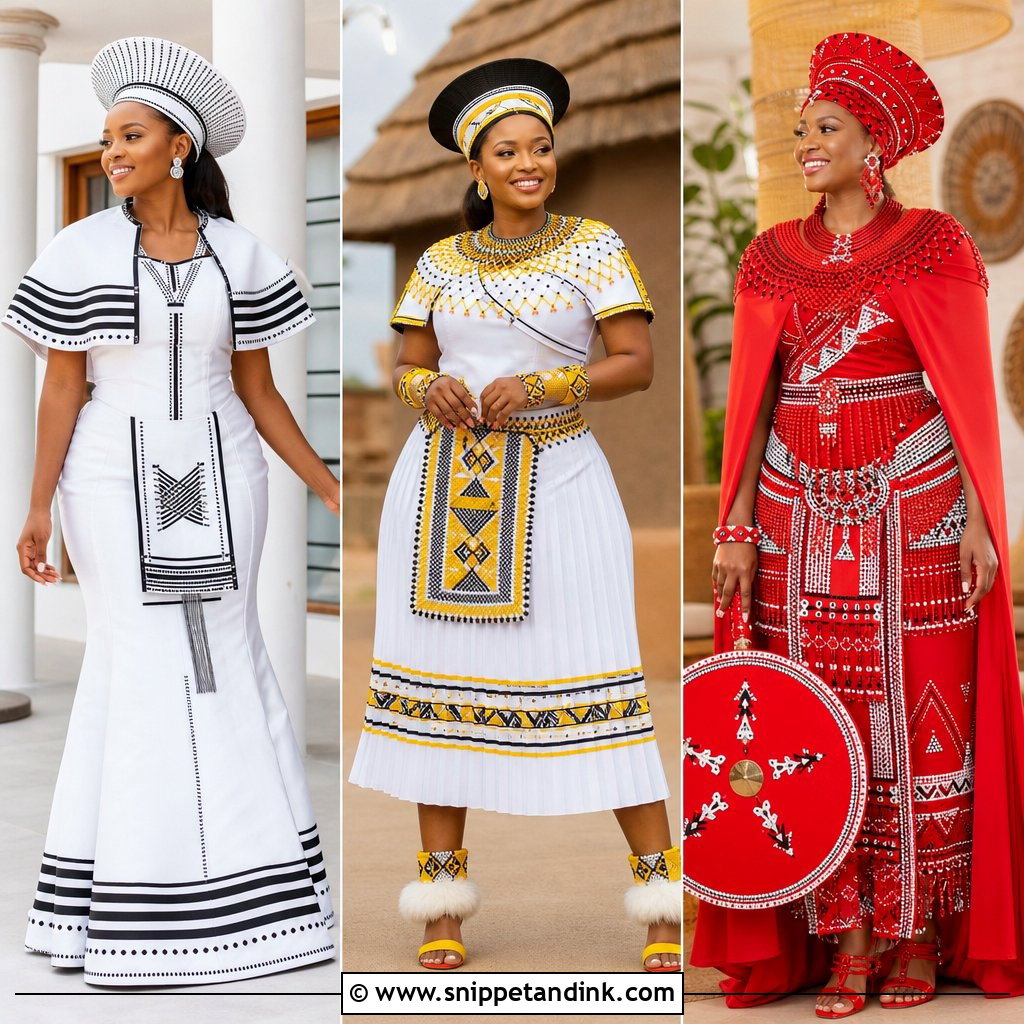
Umbhaco is known for black bands and trims on a white or ochre base, often with beadwork. A bride might wear a long skirt and coordinated top or dress, with a matching shoulder cloth. Xhosa dress can signal identity, age and marital status, so I’d confirm every piece with relatives before finalising. The heavy trims and beading make the skirt hang straight, but they also add weight at the hem; check the waistband is firm enough. Traditional necklaces, bracelets, earrings and headwear finish it. Low heels or flats suit the length and setting.
19. Ndebele Beaded Wedding Outfit
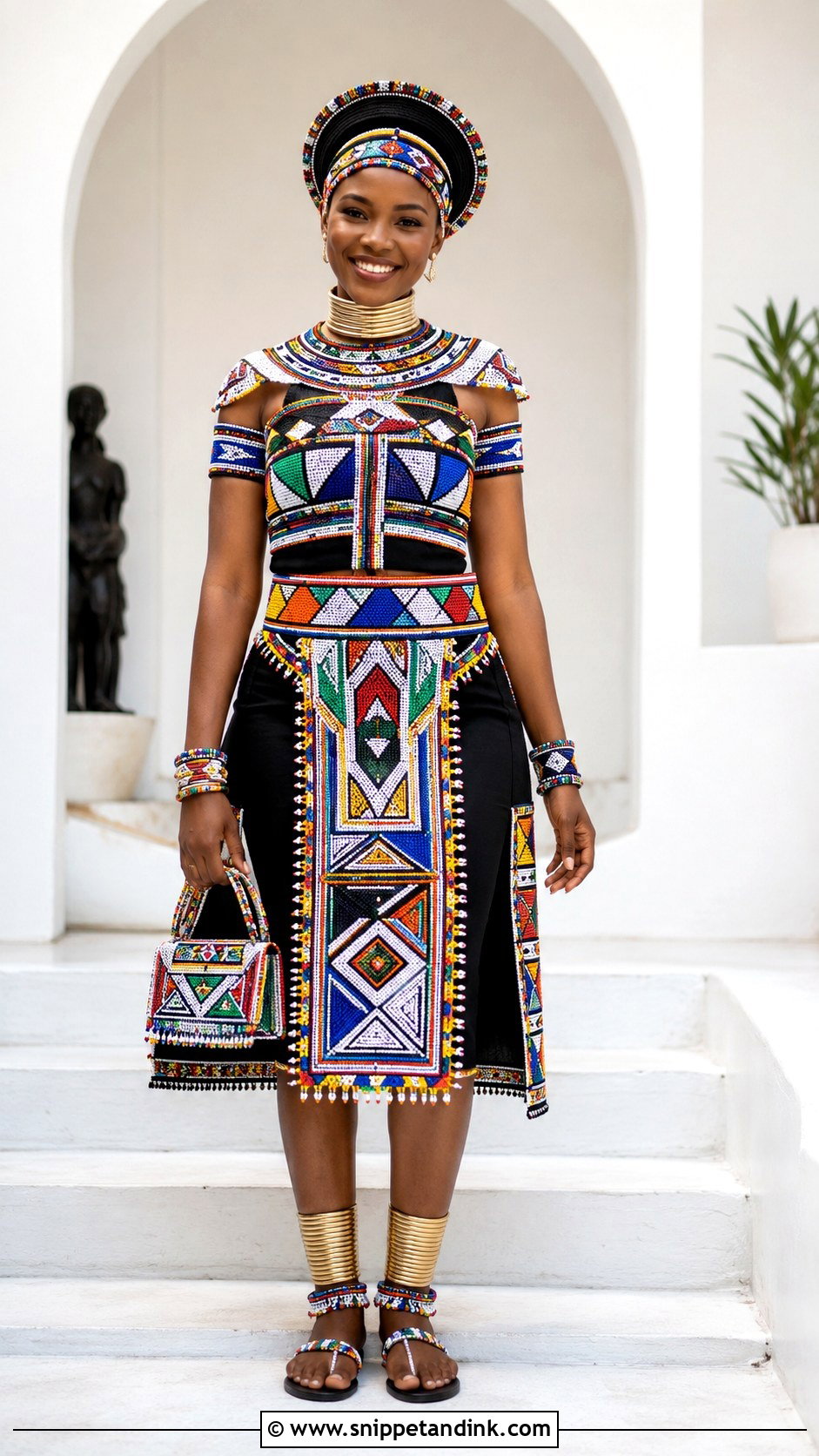
Ndebele bridal dress is defined by bold geometric beadwork in red, yellow, blue, green, black and white, worn with a traditional apron or skirt, neck rings, bracelets, anklets and a headdress. Certain ornaments indicate marital or social status, so family or Ndebele artisans should guide what’s worn and where. Avoid adding unrelated printed fabric; it competes with the beadwork’s rhythm. If you want a bag, choose a small one in a colour already in the beads. Flat shoes or simple sandals keep the focus up. Neck rings and heavy beaded pieces need a trial wear.

20. Sotho Shweshwe Wedding Outfit
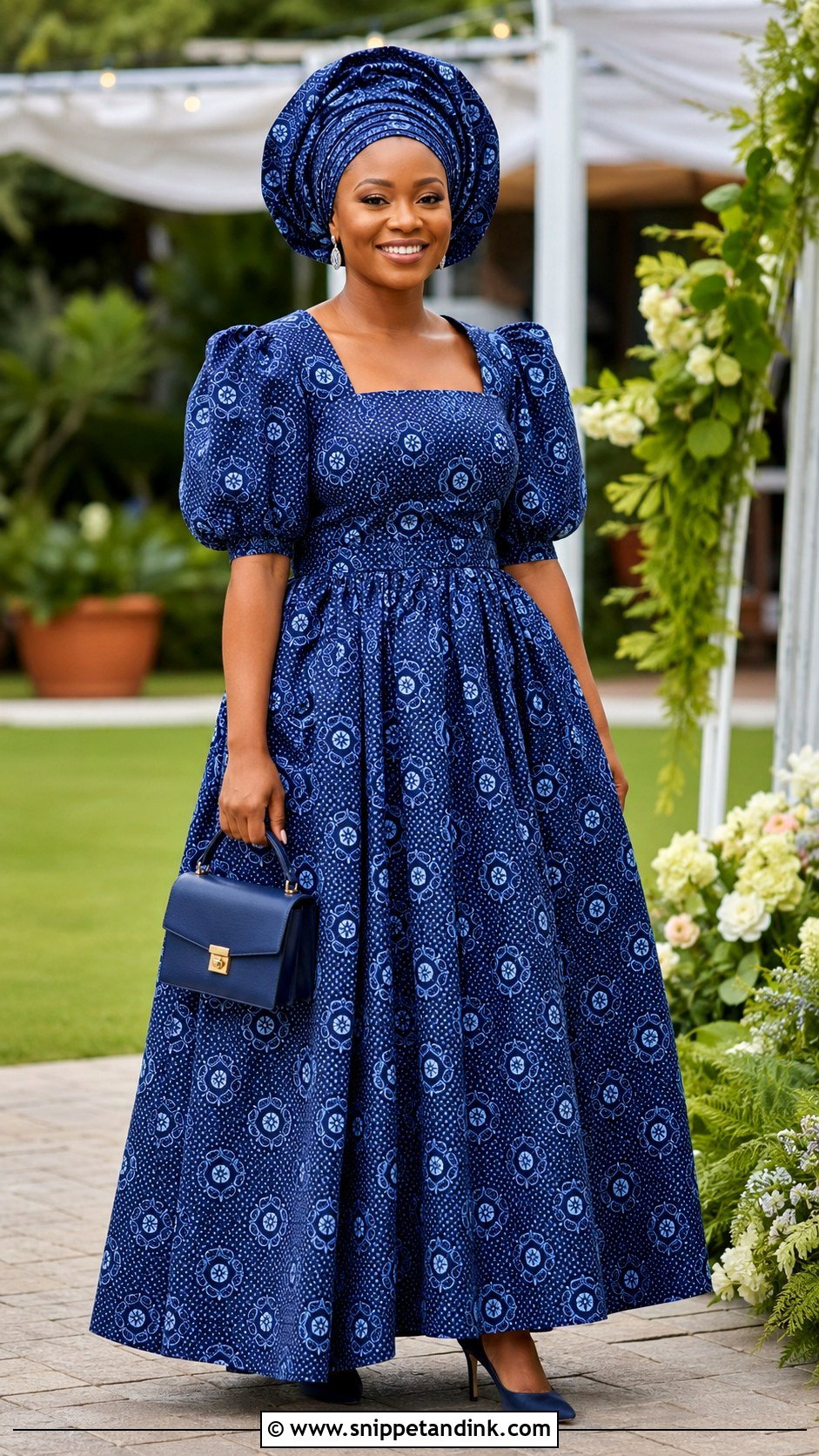
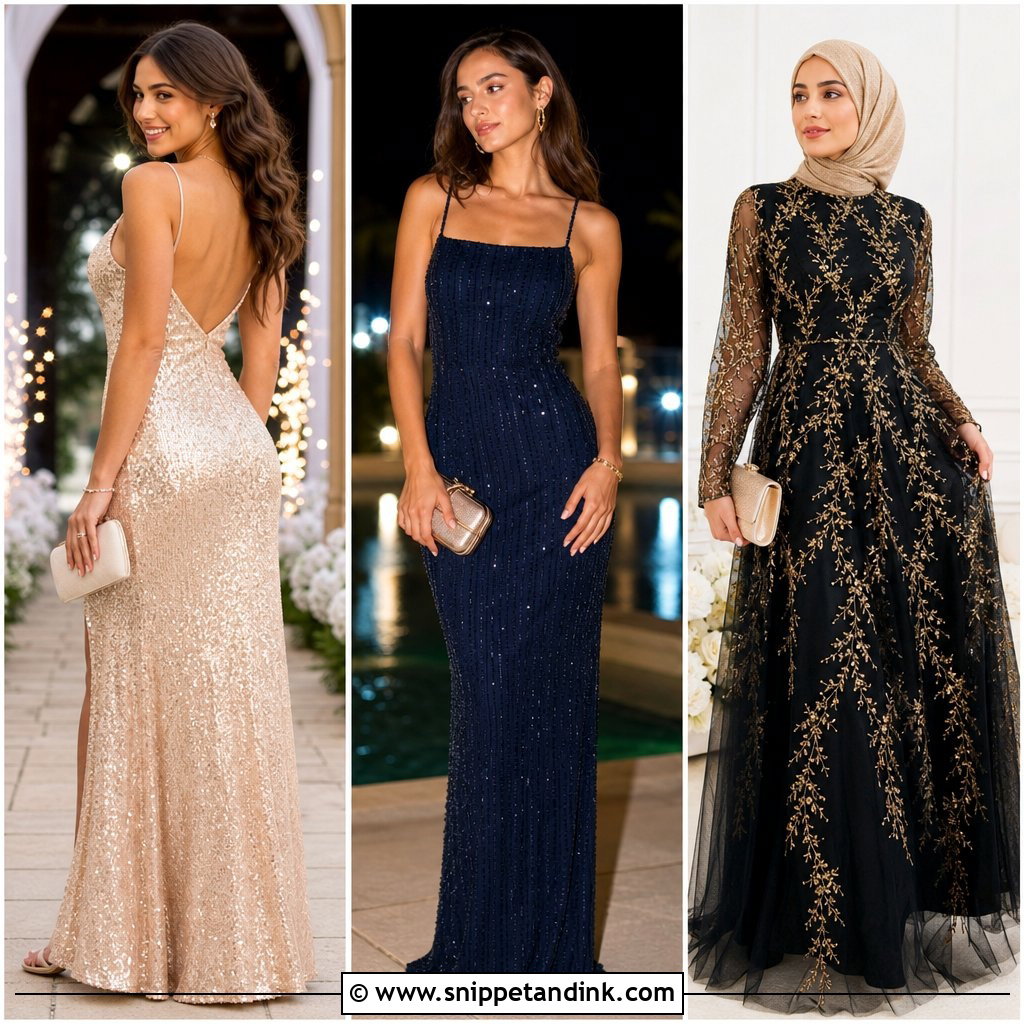
Shweshwe is a printed cotton that comes off the roll stiff and softens after its first wash, so I always pre-wash it before cutting. Otherwise a fitted dress can shrink at the first clean. A Sotho shweshwe wedding outfit often takes a fitted bodice, defined waist and softly flared skirt, with puff sleeves, a peplum or a wrap for interest. Indigo is traditional; brown and red work too. Match the print at the seams. A matching headwrap, simple earrings, comfortable heels and a structured bag finish it. Shweshwe is worn by several Southern African communities, so the cut should follow the bride’s own Sotho family customs.
When Two Heritages Share One Wedding Day
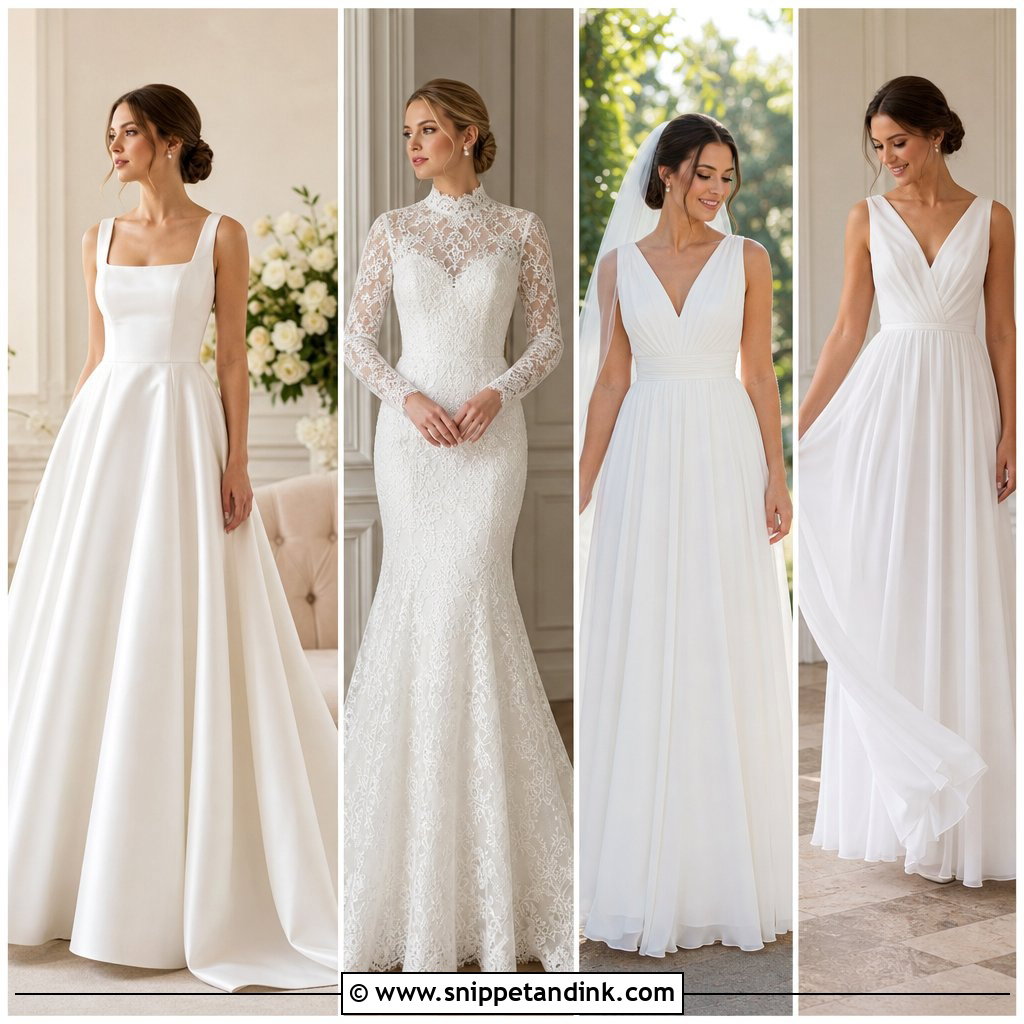
Many couples I dress are bringing together two different cultures, or a traditional ceremony and a Western one. Rather than mixing elements into a single outfit, I usually suggest separate looks, each worn properly. The traditional ceremony gets the bride’s or groom’s family dress in full; the reception or church service can be a white gown or a modern outfit.
Planning the changes
- Map the day’s schedule with the dresser and count how long each change takes. A gele tie, heavy beadwork or a draped garment can need half an hour or more.
- Have a private changing room near the venue with a mirror, hangers and a steamer.
- Give each outfit its own labelled bag with shoes, jewellery and pins inside, so nothing goes missing.
- If guests wear coordinated family cloth, share colour and fabric details with them early so they have time for tailoring.
Heavy textiles and beads are tiring to wear, so put the most demanding outfit at the time of day when you’ll be most rested and the room is coolest.
Heritage First, Tailoring Second
Across these twenty looks, bridal dress varies enormously, from handwoven kente and aso oke to flowing umushanana, embroidered habesha kemis and fitted shweshwe. The outfit that works is the one that respects the bride’s family, community and wedding customs, not simply the most colourful. Before choosing cloth, jewellery, headwear or beadwork, talk to relatives, weavers and artisans who know what each piece means. Good tailoring can then make it comfortable and well fitted without removing anything that matters.
You'll Like These Ideas:



Leave a Reply