
A modern African wedding dress starts with the cloth, and that is where I start too. Kente, Aso Oke, Ankara, Shweshwe, Adire and Kitenge each behave differently once they are cut into a bodice or a train, so the silhouette has to suit the textile as much as the bride. Because African bridal traditions vary so much by region, community and family, I always ask whose heritage the dress is speaking for before we talk about necklines. The twenty looks below are the ones I see work in real fittings, with notes on where each one tends to need help.
Buying the Cloth Before You Commission the Dress
Most of the problems I fix in African bridal gowns trace back to the fabric order, not the sewing. Handwoven Kente and Aso Oke arrive in narrow strips that have to be joined, wax prints are sold in fixed lengths, and pattern matching across a bodice eats cloth fast. Sort the fabric out first and the rest of the process gets much calmer.
- Bring the actual cloth to your first consultation, or a large swatch of it. A designer can’t plan seam placement on a woven strip from a phone photo.
- Ask how much your silhouette needs, then buy extra. Diagonal layouts, matched motifs and a detachable train all add yardage, and a second dye lot rarely matches.
- Pre-wash cotton prints like Ankara and Shweshwe before cutting so any shrinkage happens before the fitting, not after the first clean.
- Rub a damp white cloth on indigo and deep red textiles. If color transfers, have it rinsed and set before it goes anywhere near an ivory lining.
Give yourself time. Custom gowns in heritage cloth usually need several fittings, and handwoven pieces can take weeks to source or weave, so I’d start the conversation six to nine months out if you can.
1. Modern Kente Mermaid Wedding Dress
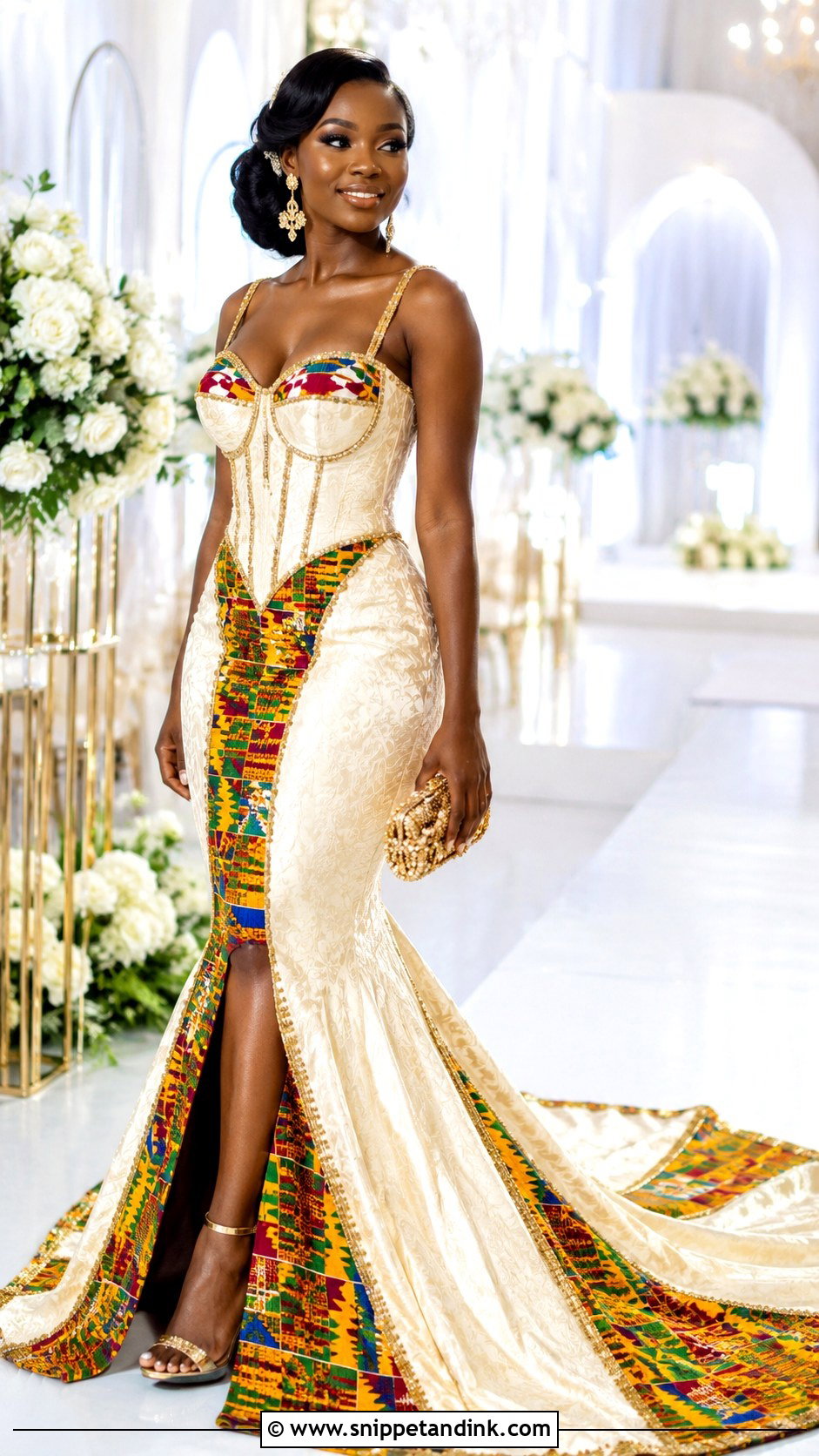
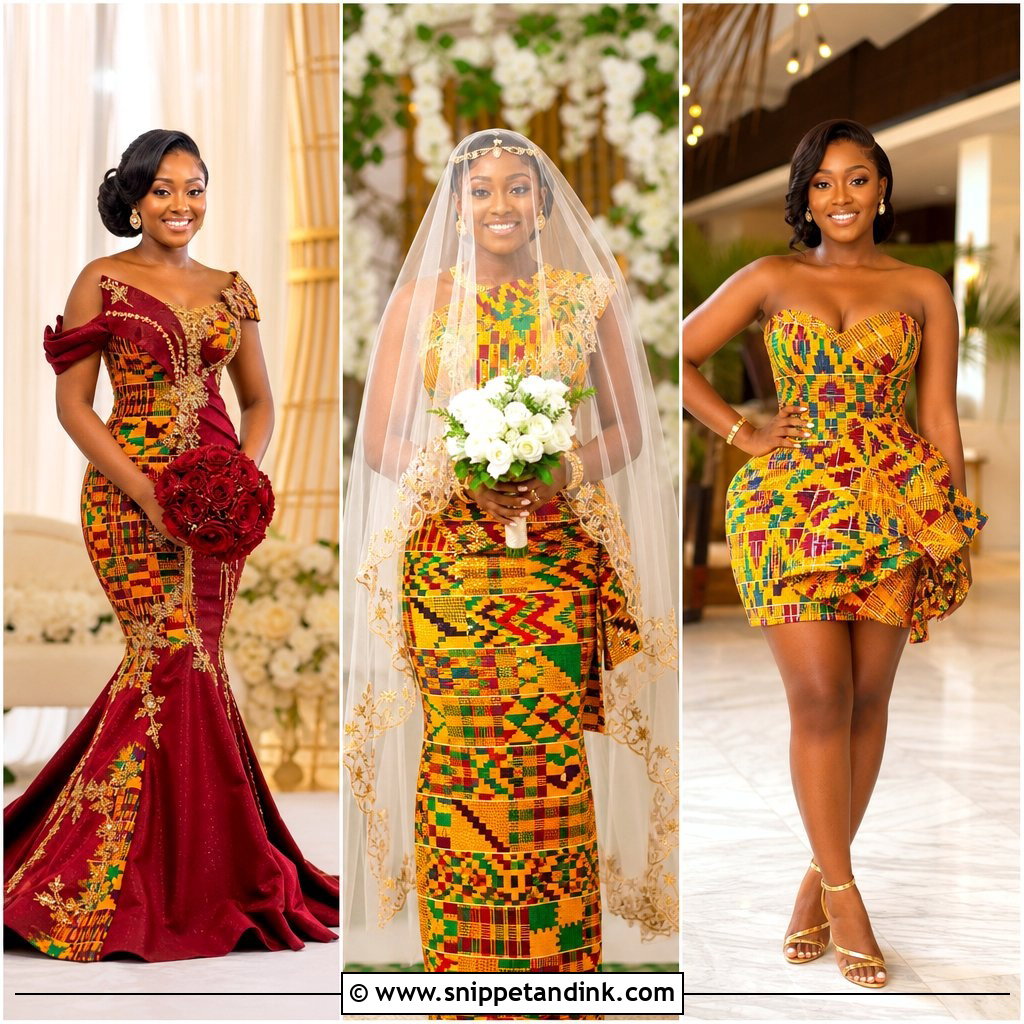
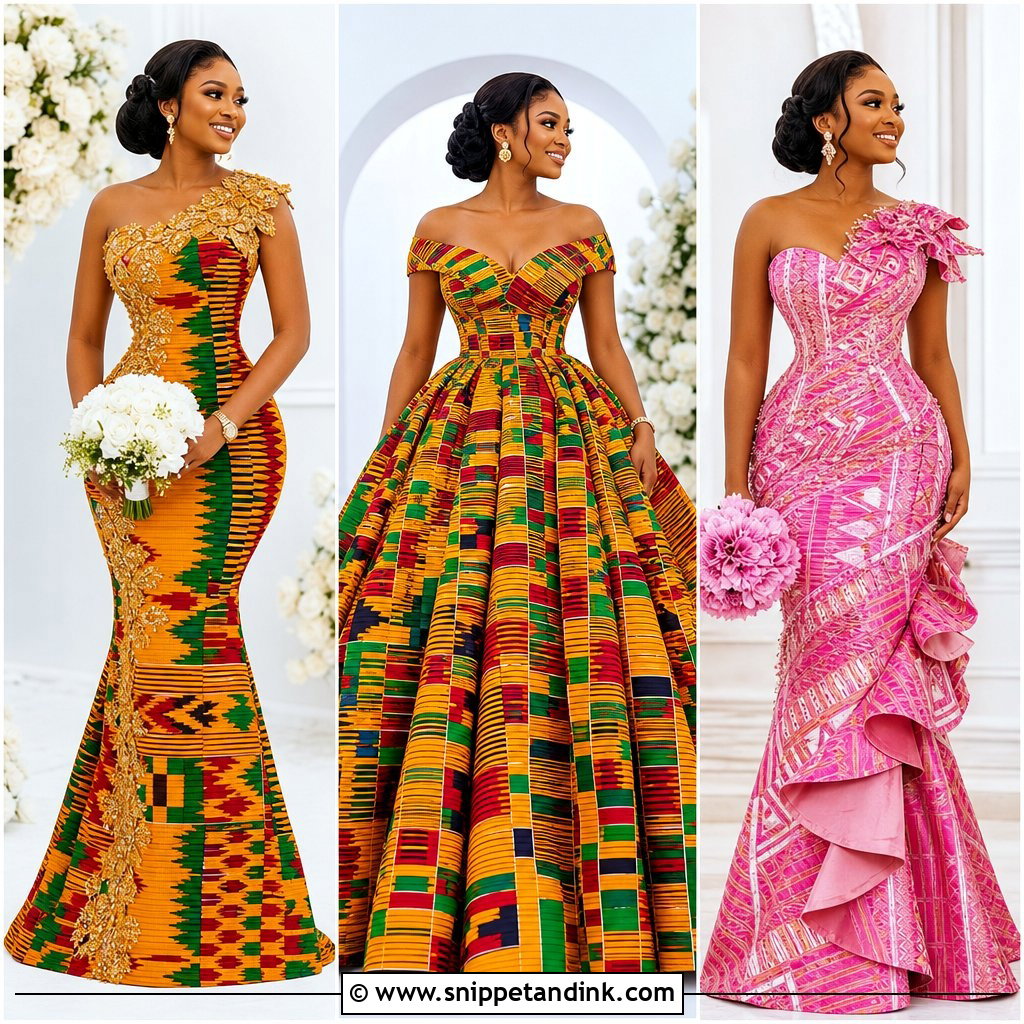
Kente on a mermaid shape is all about where the strips land. Handwoven Kente comes in narrow strips sewn together, so on a fitted bodice I map the seams so a bold block sits at the waist and never splits across the bust. In Ghana you’ll see the cloth worn wrapped, as coordinated separates or tailored into a structured gown, and the gown version needs internal boning because the weave has no stretch at all. Keep accessories quiet: gold earrings, a low bun and a small beaded clutch are plenty when the pattern is already loud.
2. Ankara Ball Gown Wedding Dress
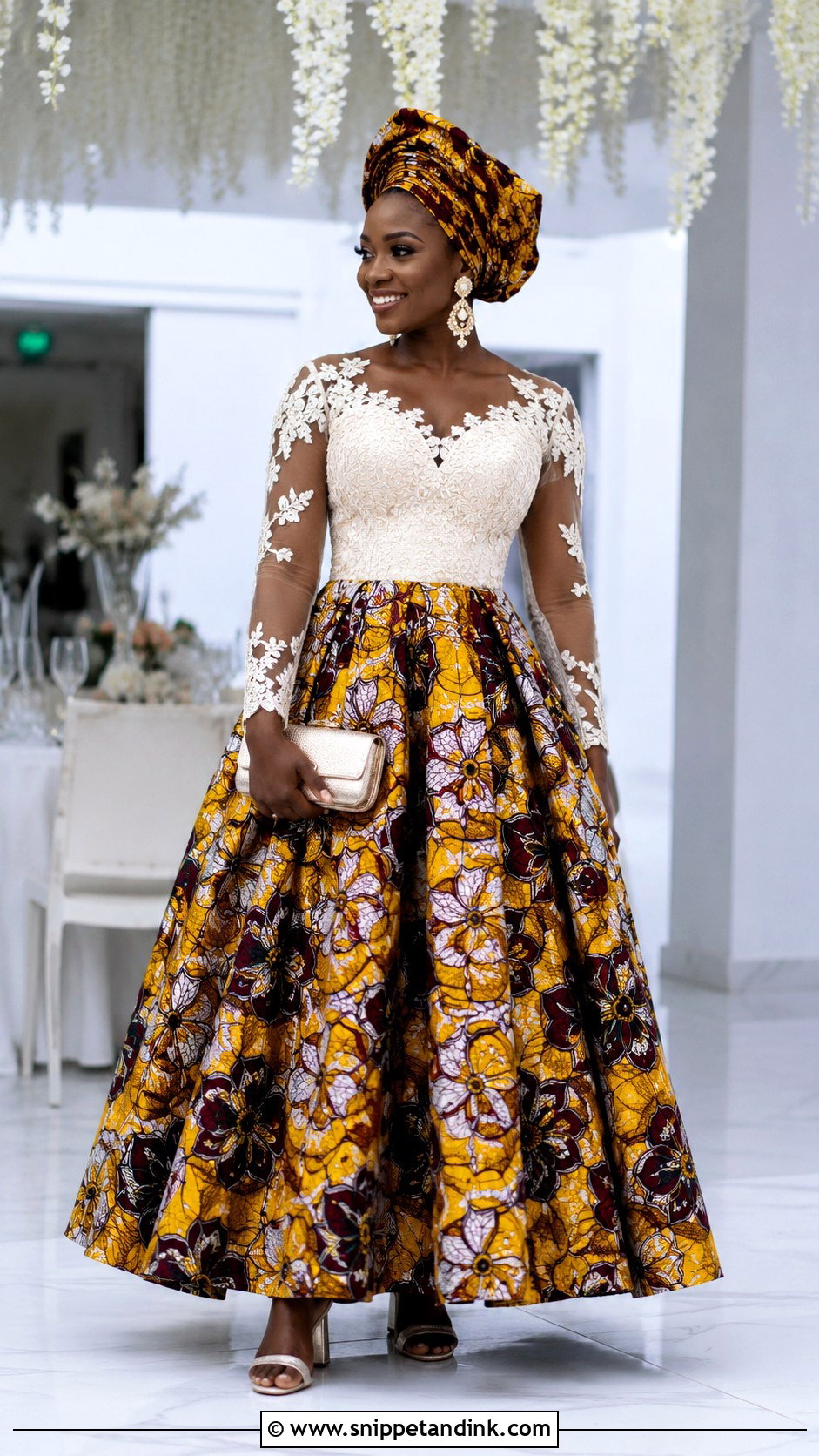
Ankara ball gowns photograph big, which is the point, but cotton wax print is heavier than people expect once you pleat several yards into a skirt. I ask for a firm waistband and a lining with a little crinoline rather than more fabric, so the skirt holds its shape without dragging the bodice down. If one print feels like a lot, an ivory lace bodice over an Ankara skirt calms it. Pull a single color from the print for your bag and keep the headwrap optional.
3. Aso Oke Peplum Wedding Dress
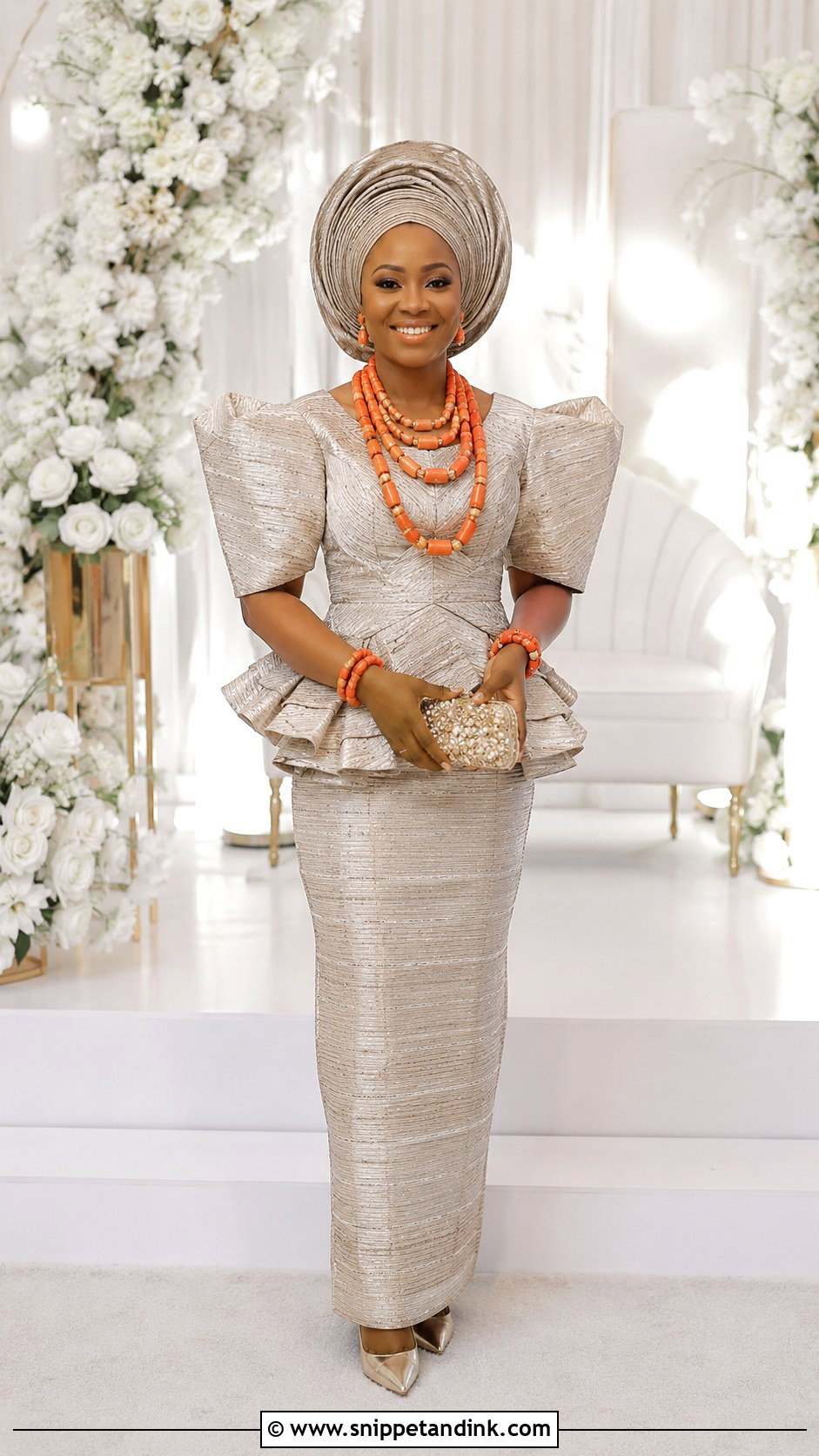
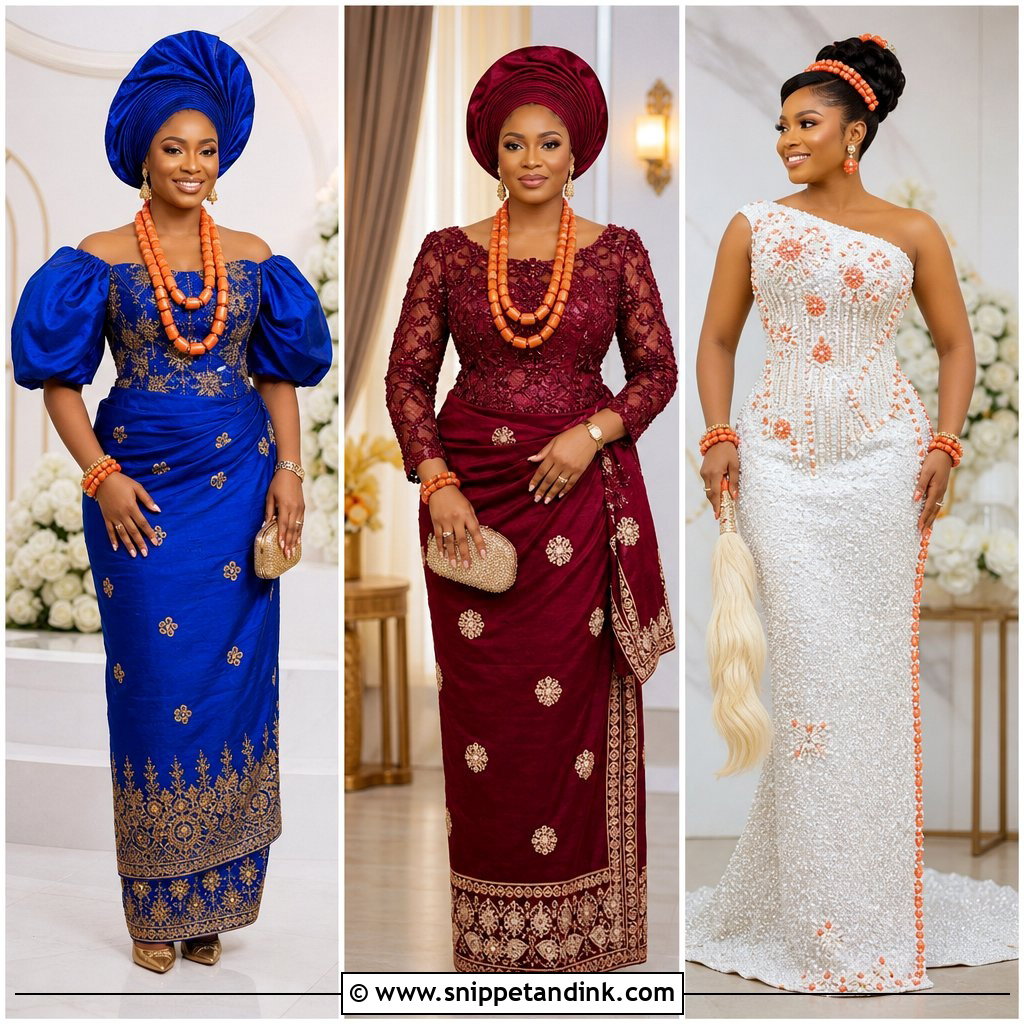
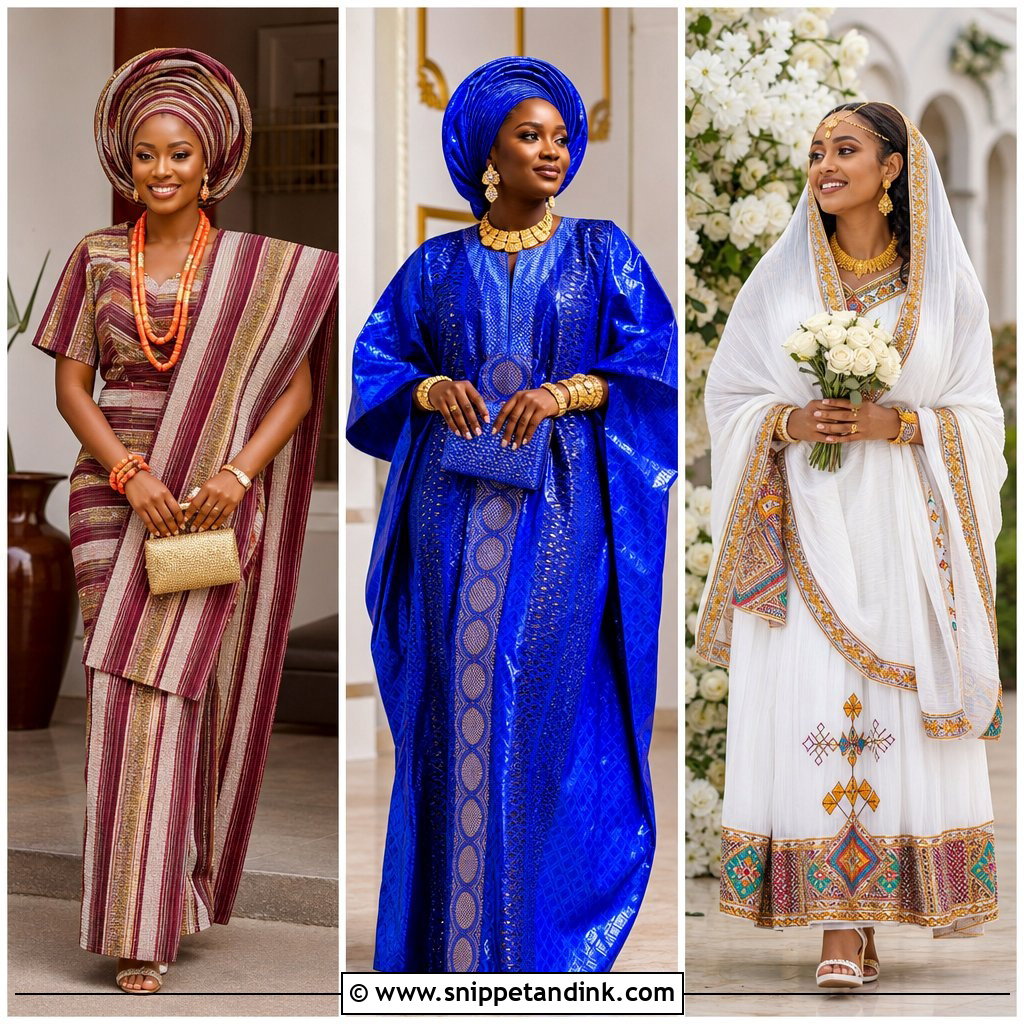
For a Yoruba-inspired bridal celebration, an Aso Oke peplum top reads polished and very traditional at once. Nigerian bridal dressing is usually a coordinated set (blouse, wrapper or skirt, sash, beads and gele), so I plan all of those pieces at the first fitting, not the last. Aso Oke is handwoven and stiff, which is why a peplum holds its curve so well, but that same stiffness means one big feature is enough. Pick a dramatic peplum or oversized sleeves. Doing both turns the top into a box.
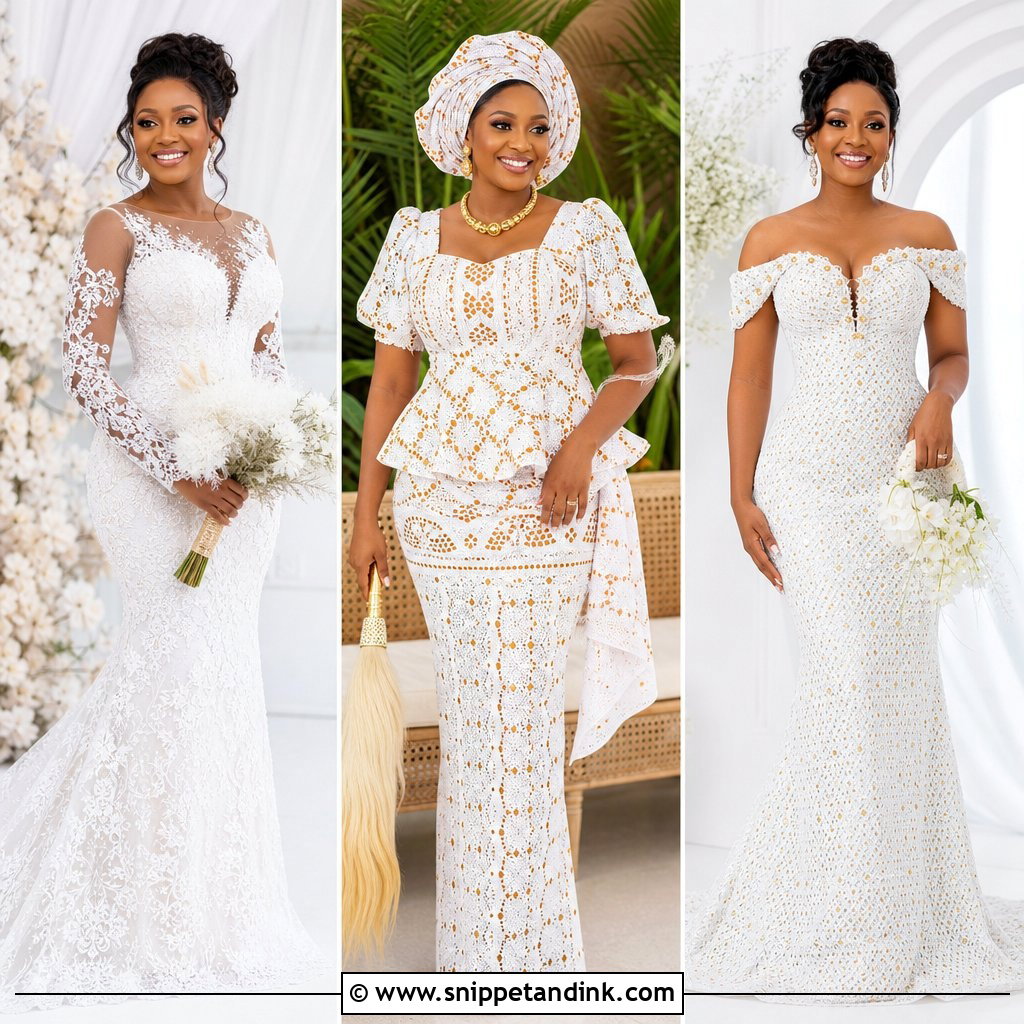
4. White Lace African Wedding Dress
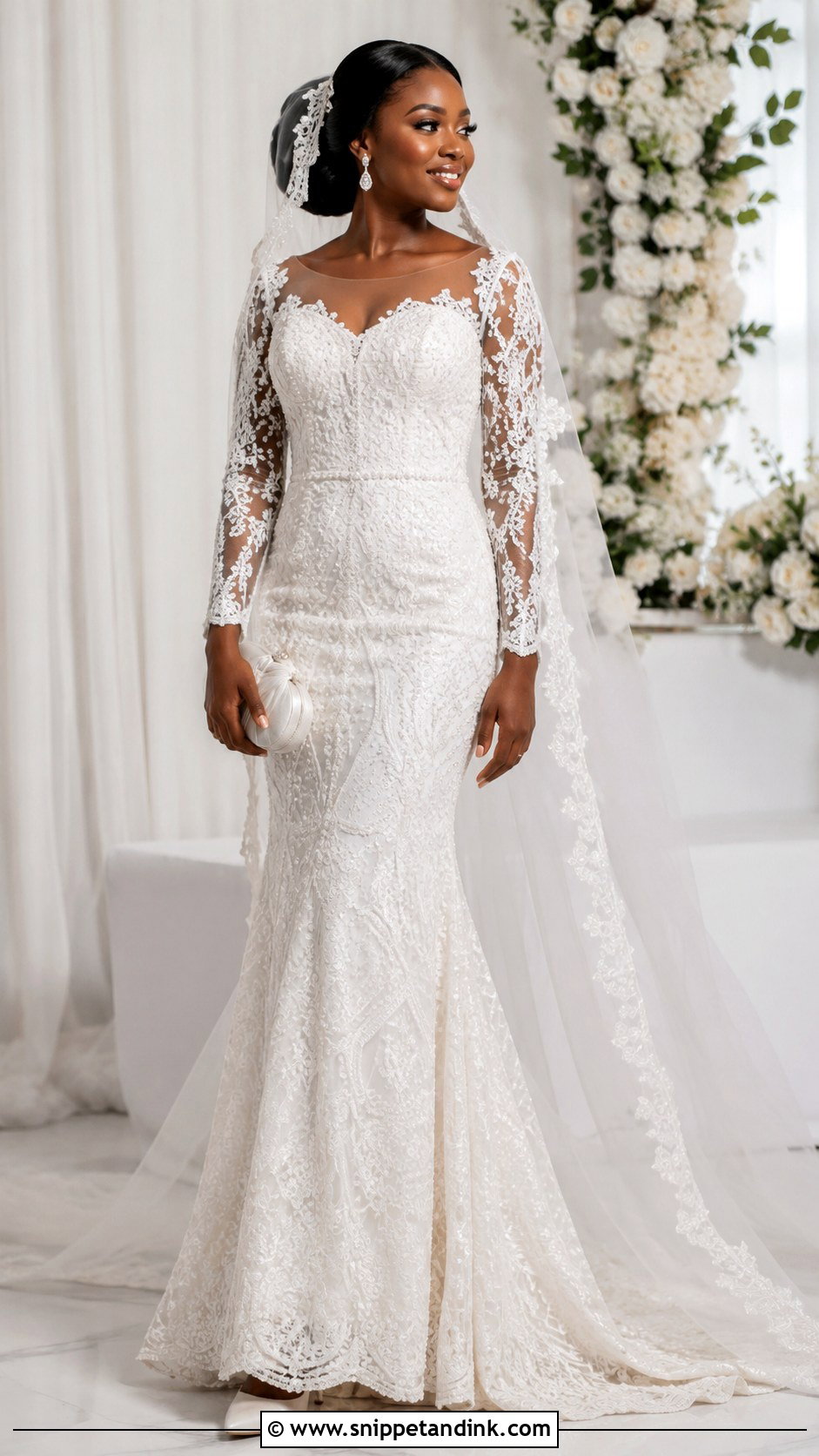
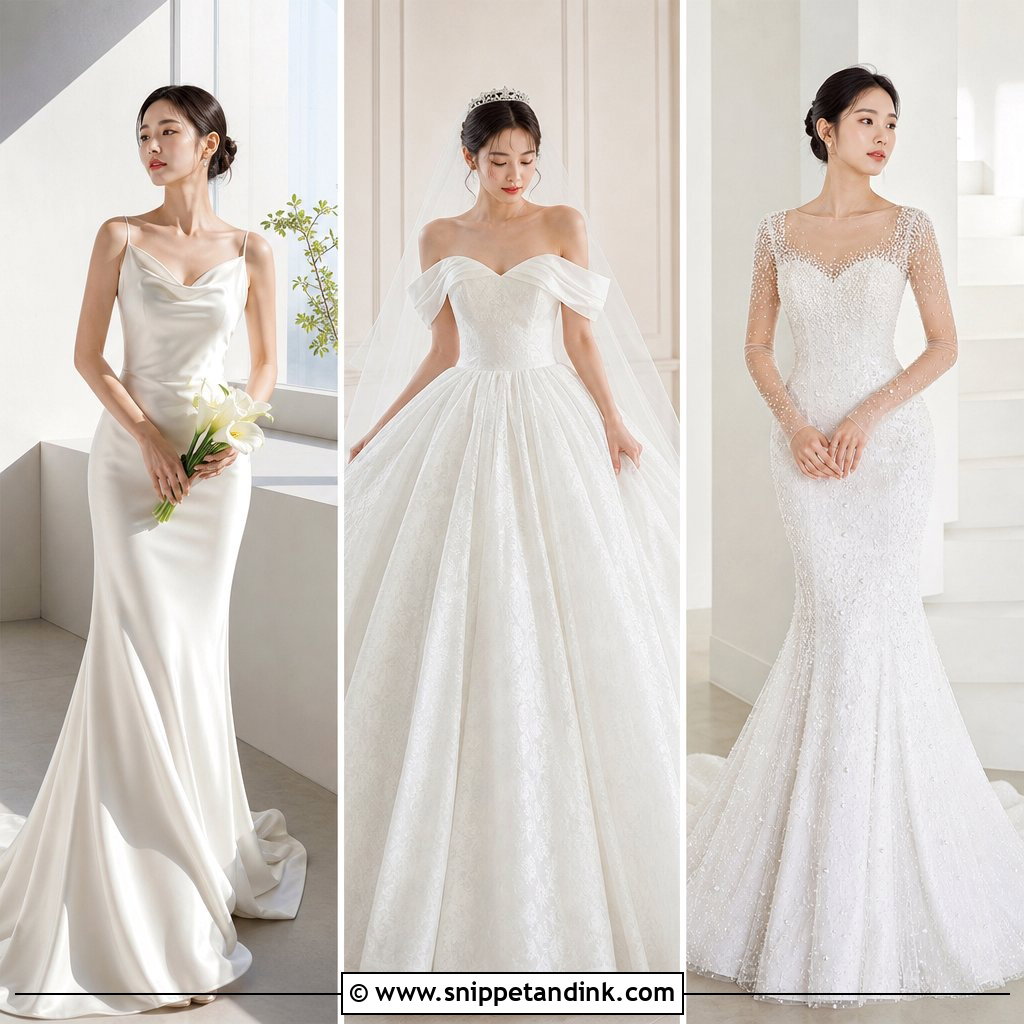
White lace stops looking generic the moment you add beadwork or patterned trim with a story behind it. I usually concentrate the detail in one zone, often the bodice or the train edge, because embellishment spread evenly over a trumpet or A-line gown loses its focus from more than a few feet away. A veil edged in the same embroidery ties it together. Ivory pumps and drop earrings are all you need, and a bouquet carrying one or two colors from the trim connects the dress to the ceremony palette.
5. Shweshwe A-Line Wedding Dress
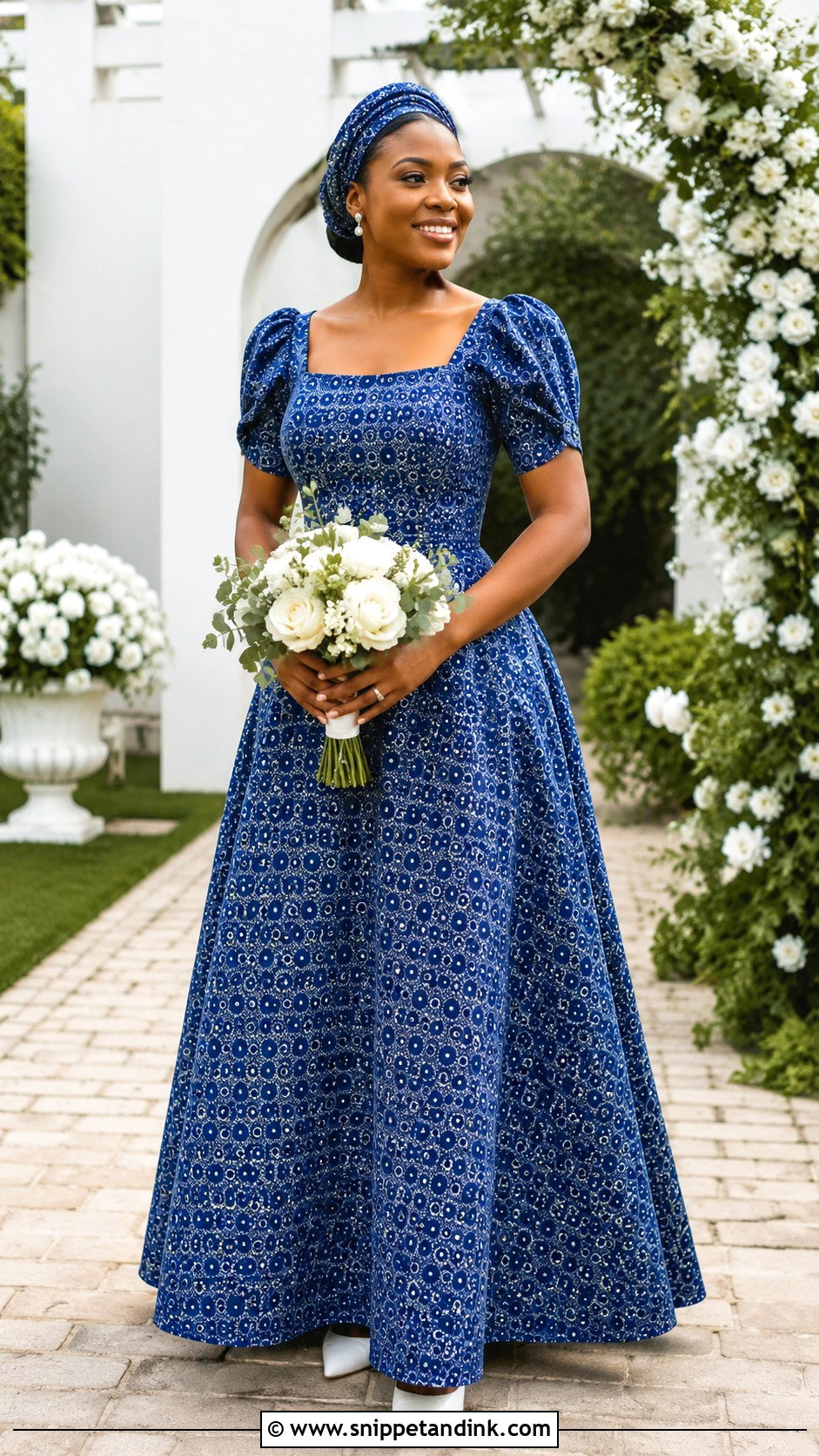
Shweshwe is crisp straight off the bolt because it’s traditionally starched, and that starch softens and the cotton can shrink once washed. I ask the maker to pre-wash it before cutting, otherwise an A-line skirt that fitted perfectly in the studio can shorten after its first clean. The fabric is tied to Southern African dress and suits square necklines, puffed sleeves or a clean bateau. A plain belt breaks up an allover print, and a removable overskirt gives you a narrower dress for dancing.
6. Adire Indigo Wedding Dress
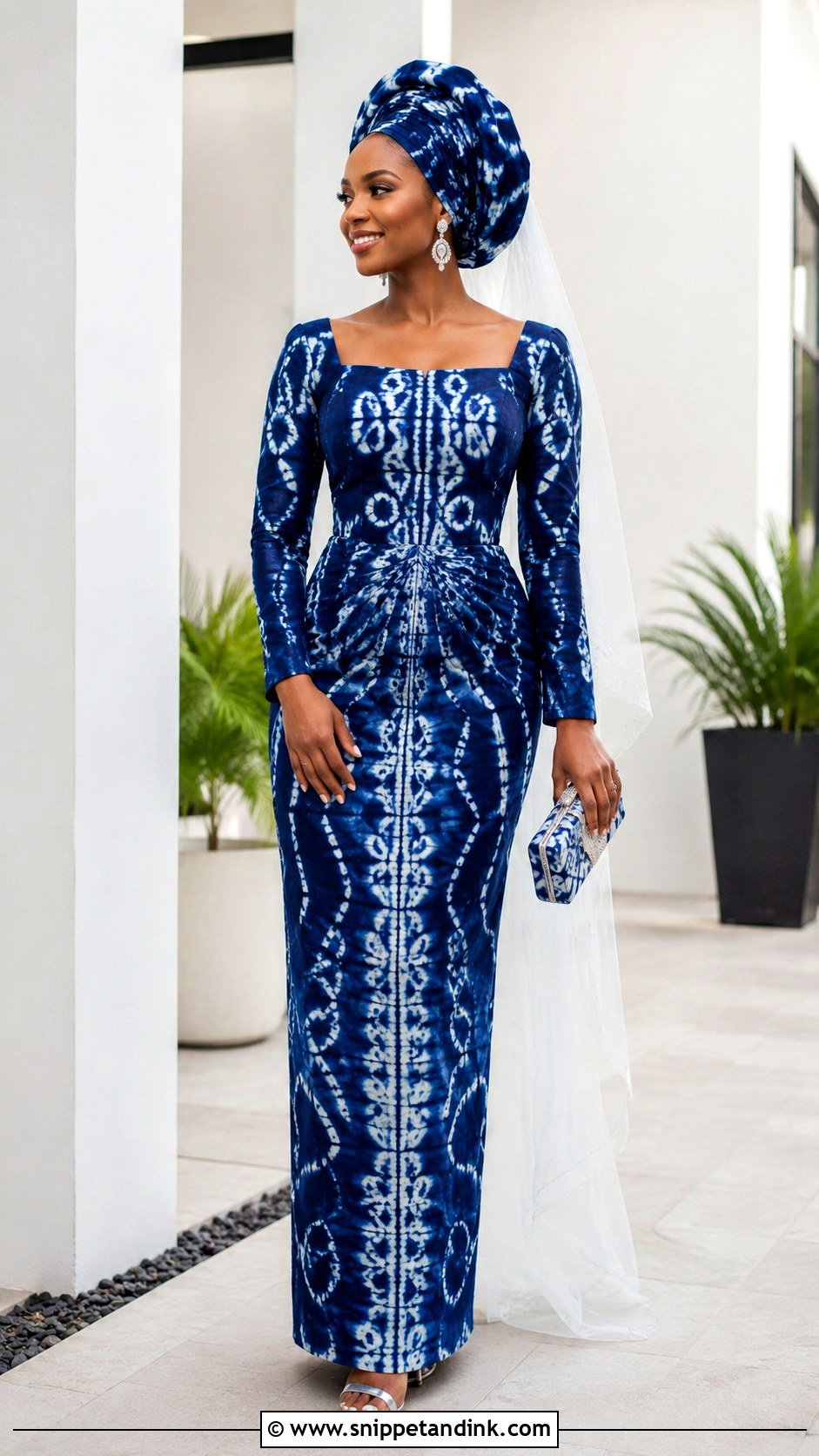
Deep indigo is one of my favorite alternatives to white, but resist-dyed Adire has a habit worth knowing about: fresh indigo can rub off onto ivory linings, pale shoes and skin. I have the cloth rinsed and tested on a white scrap before it becomes a gown. Contemporary Nigerian designers do use Adire motifs as bridal embellishment, and a column shape shows the hand-dyed pattern best. Because every length dyes slightly differently, see the actual fabric before approving the layout and point out the motifs you want front and center.
7. George Fabric Corset Wedding Dress
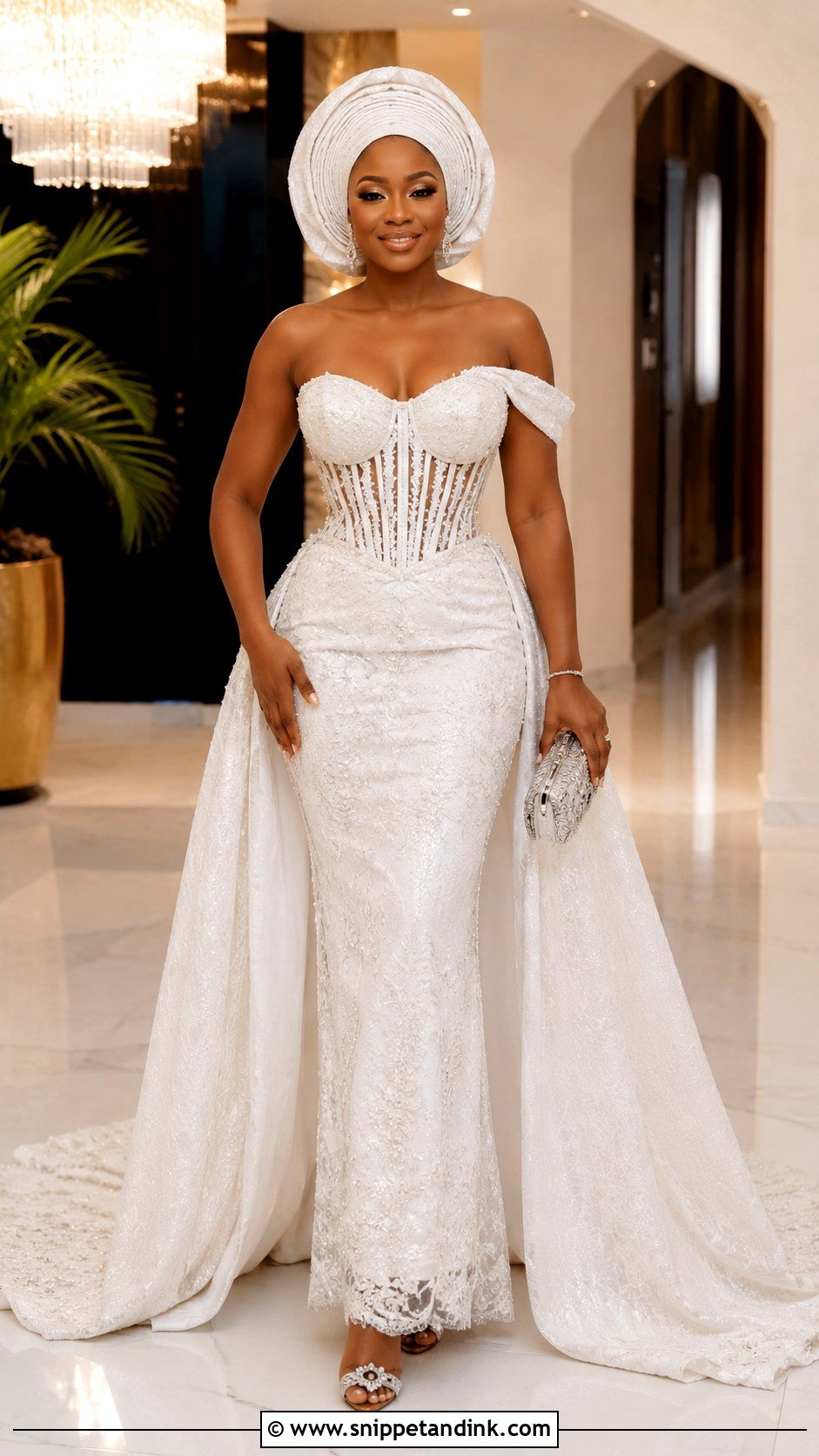
George fabric has a dense, slightly heavy hand, so the corset underneath has to carry real weight. My test is simple: before any beads go on, the bride sits, walks a full circle and dances for a minute in the bare corset. If it digs at the hip when seated, it will hurt by the reception. Let the beadwork follow the existing pattern instead of burying it, add a removable train for a second look, and keep jewelry to one bracelet and drop earrings.
8. Kitenge Off Shoulder Wedding Dress
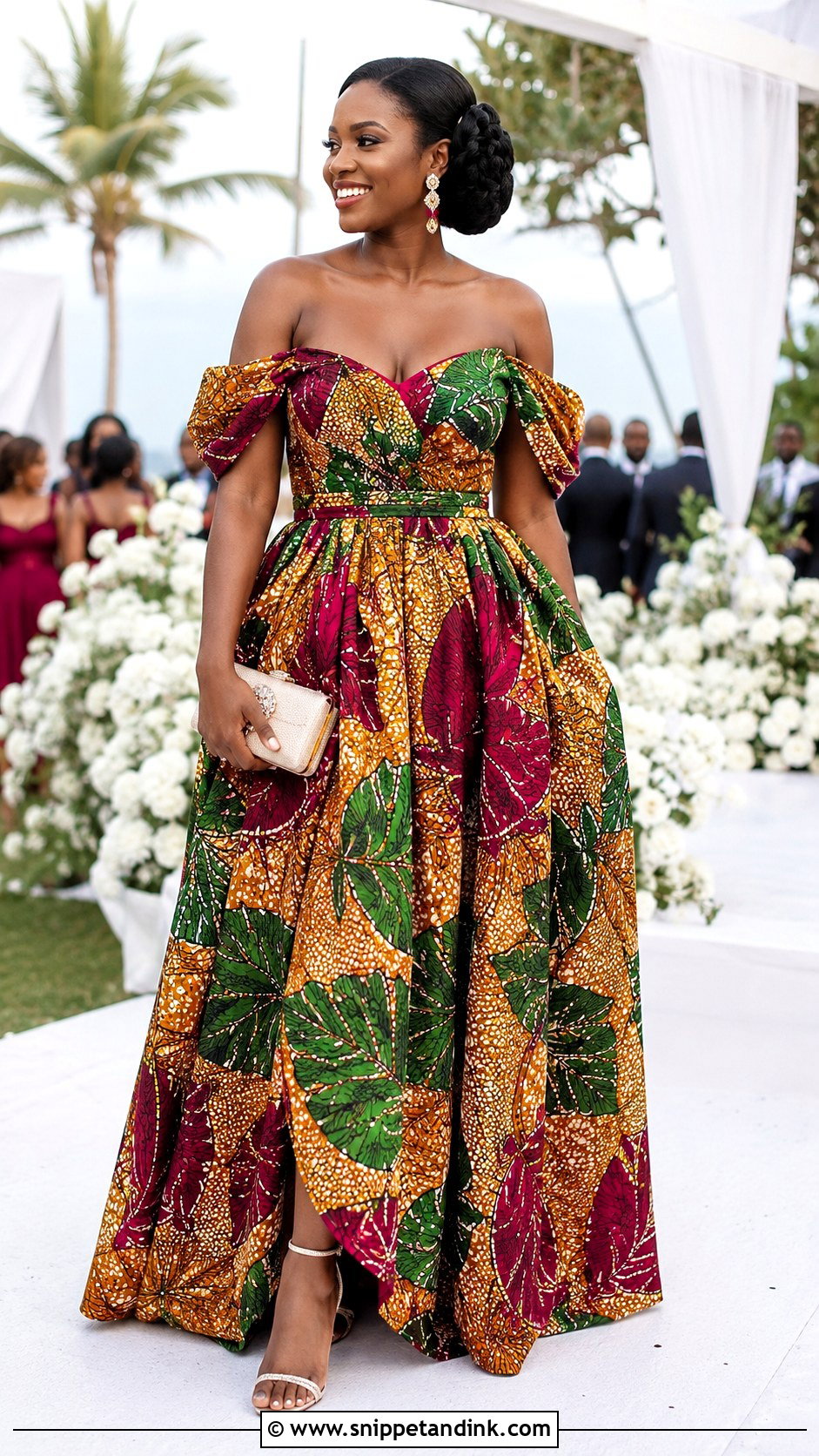
Off-the-shoulder necklines slide on most people unless the bodice is built to hold them, so I look for internal boning and a silicone grip strip along the top edge. Kitenge prints are often large, which makes motif placement the real design decision here: center the main motif across the bodice and the front skirt so close-up portraits don’t crop it in half. A clean updo keeps the neckline visible, and earrings in one shade from the fabric finish it.
9. African Print Two Piece Wedding Dress
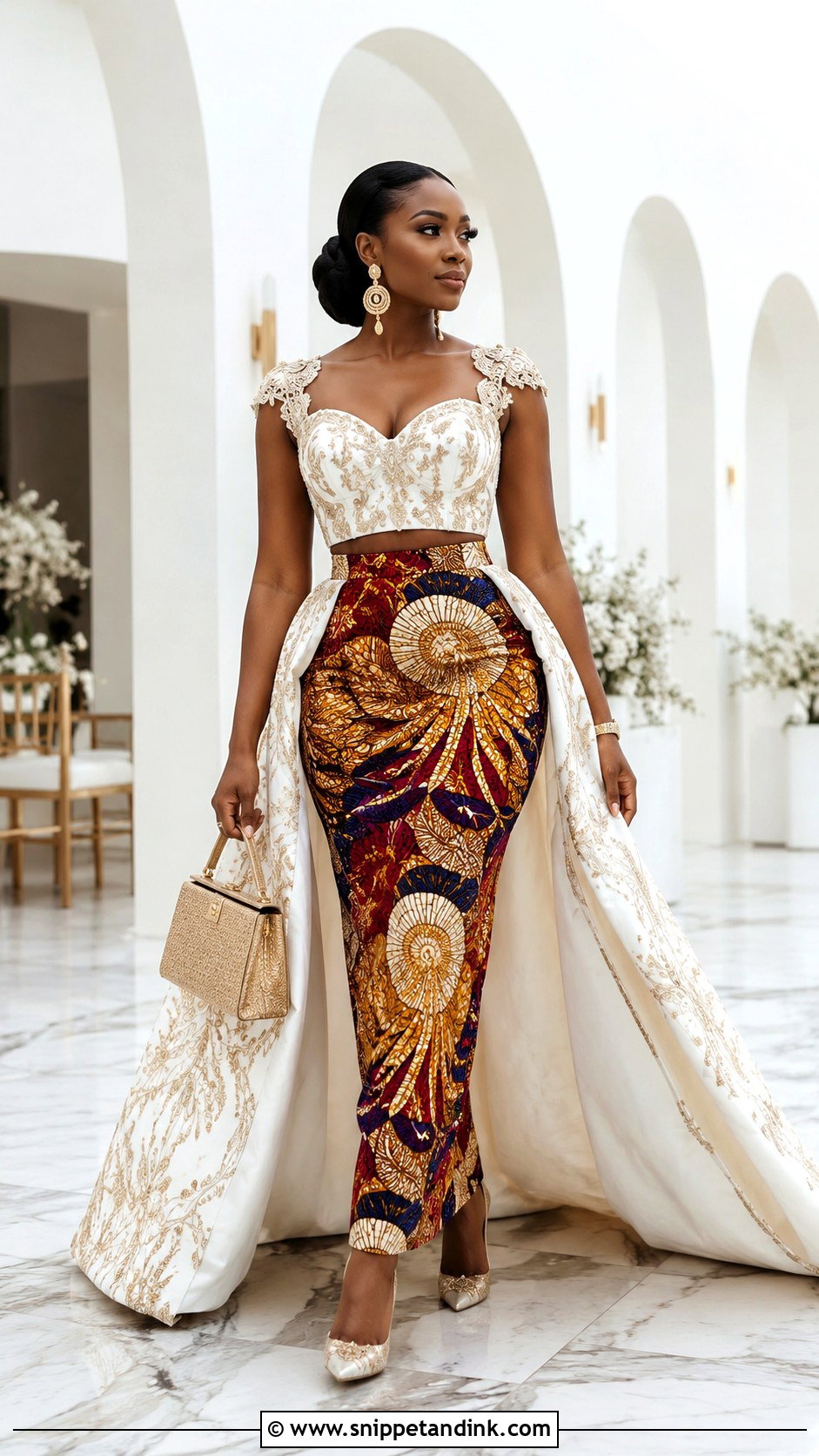
Two-piece sets are the most practical option on this list, and also the easiest to get wrong. If the top and skirt don’t share a fabric, color or trim, they read as separates rather than a wedding outfit. I keep the visible midriff to a sliver when the bride is standing, because it opens up as she raises her arms. A detachable overskirt adds ceremony weight, and you can wear the top and skirt separately long after the wedding.
10. Cape Sleeve African Wedding Dress
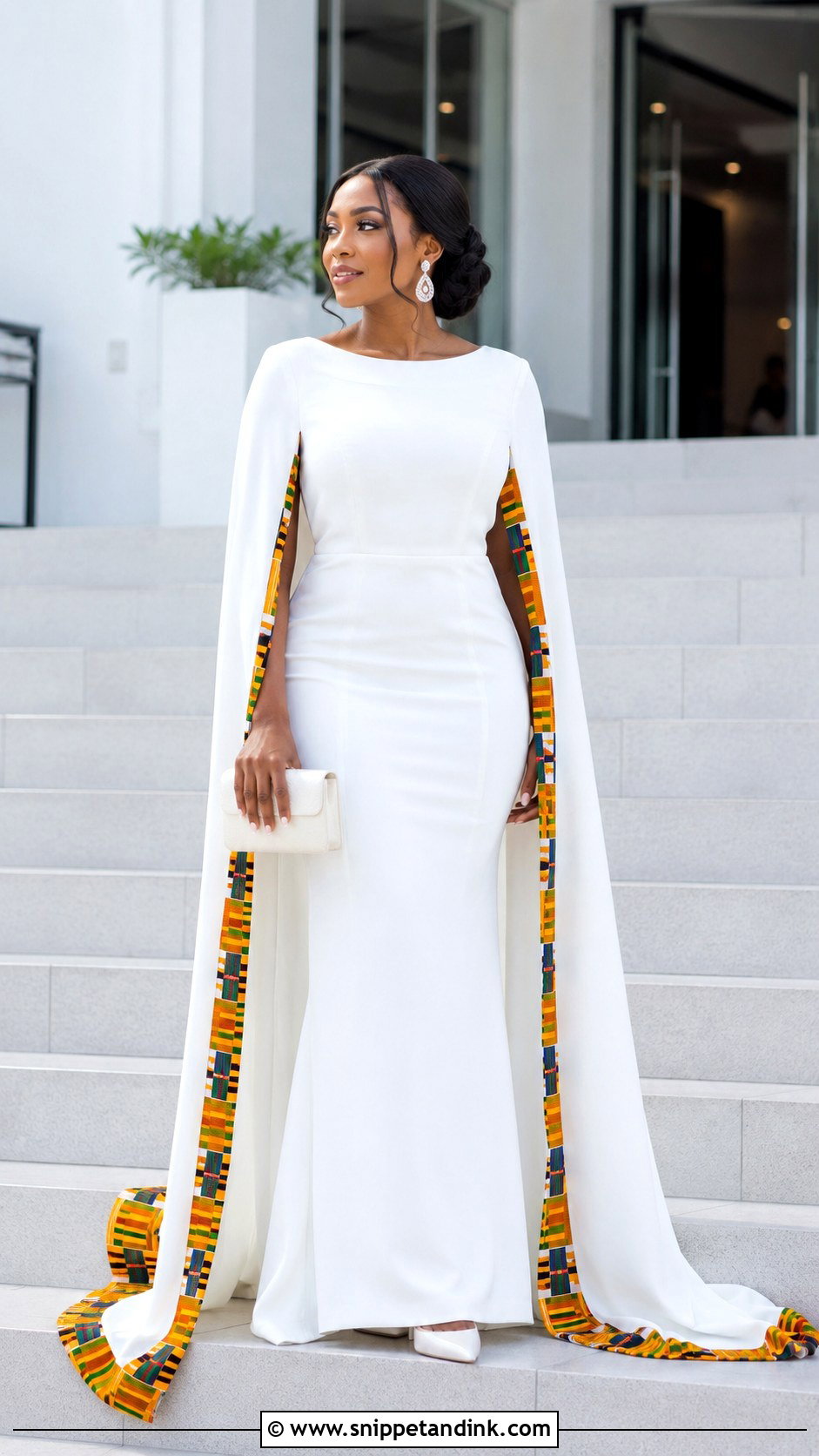
A cape changes how a bride moves, and I always have her walk stairs in it before the hem is finished. A slim crepe base gown with Kente, Ankara, lace or beaded trim at the shoulders keeps the layers balanced, whether the cape stops at the elbow or runs into a train. The risk is weight pulling the neckline backward, so I ask for discreet hooks or snaps at the shoulder seams. Detachable is worth it for outdoor paths and windy photos.
11. One Shoulder Kente Wedding Dress
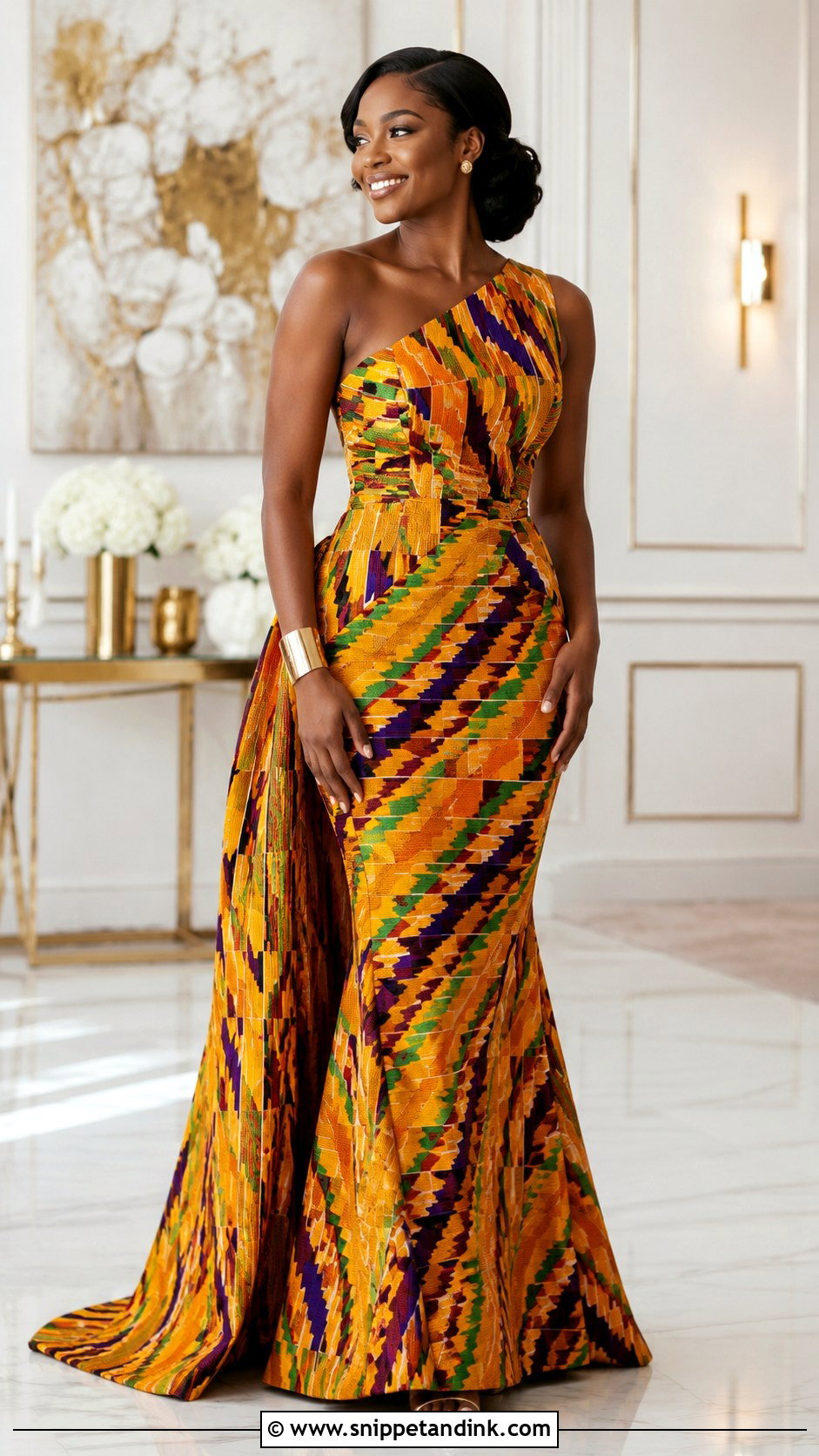
A one-shoulder Kente wedding dress works because the asymmetric line gives the eye somewhere to travel. I like to angle the stripes diagonally to echo the neckline, though that uses noticeably more cloth, so buy extra strips. A folded shoulder detail adds volume without bulk. Wear a side-swept bun or low braids so the bare shoulder stays clear, and consider a plain overskirt for the ceremony that comes off for the reception.
12. High Neck Beaded African Wedding Dress
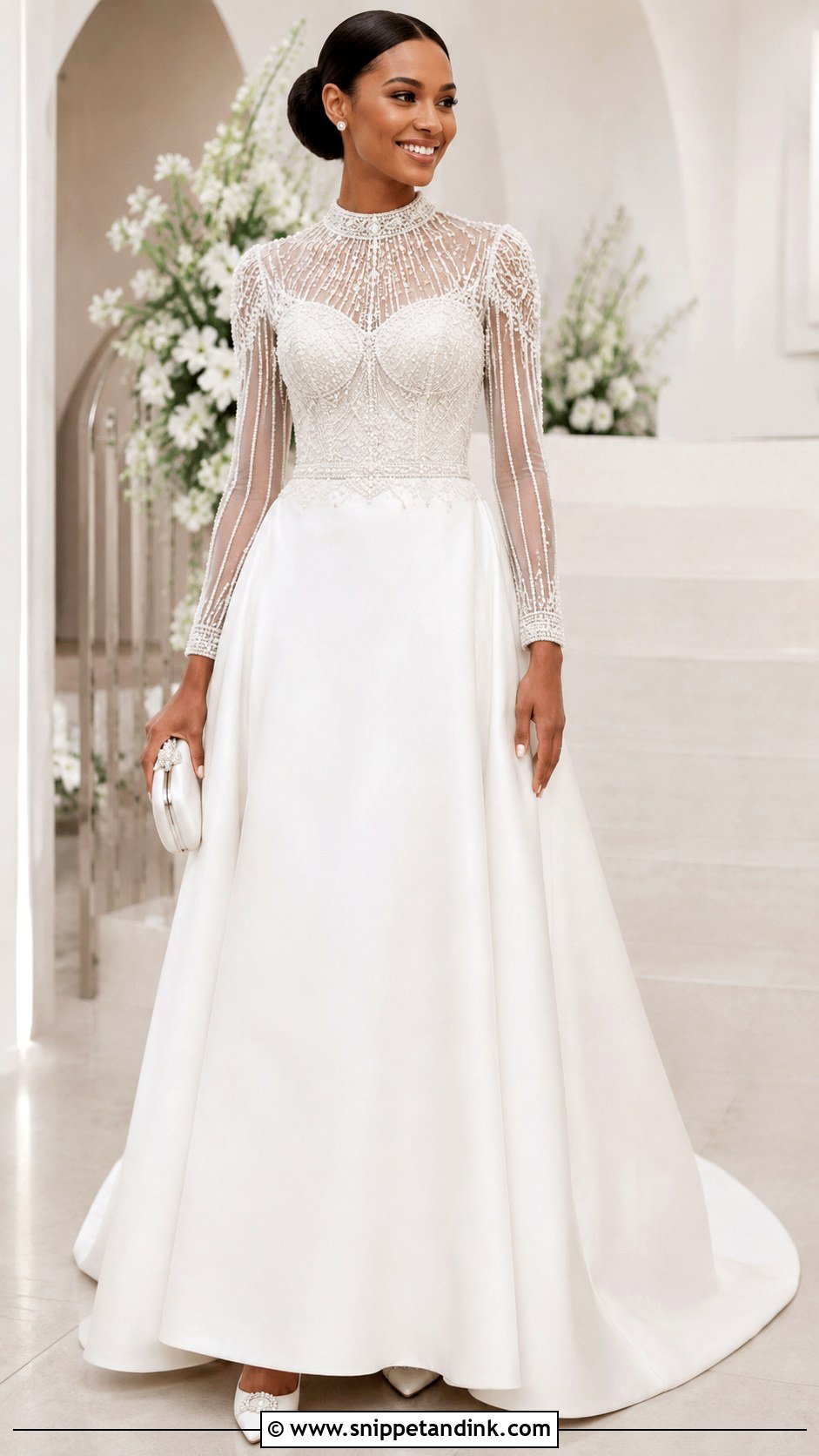
High necks covered in beads look regal and can feel heavy by evening. Glass beads add up quickly at the collar, so I ask for lighter beads near the neck and shoulders and save the denser work for the bodice. An illusion neckline beaded into a fitted top over a clean A-line skirt keeps the whole thing from tipping into ornate. Skip the necklace entirely; small studs and a satin clutch are enough, with optional beading at the cuffs or veil border.
13. Detachable Train African Wedding Dress
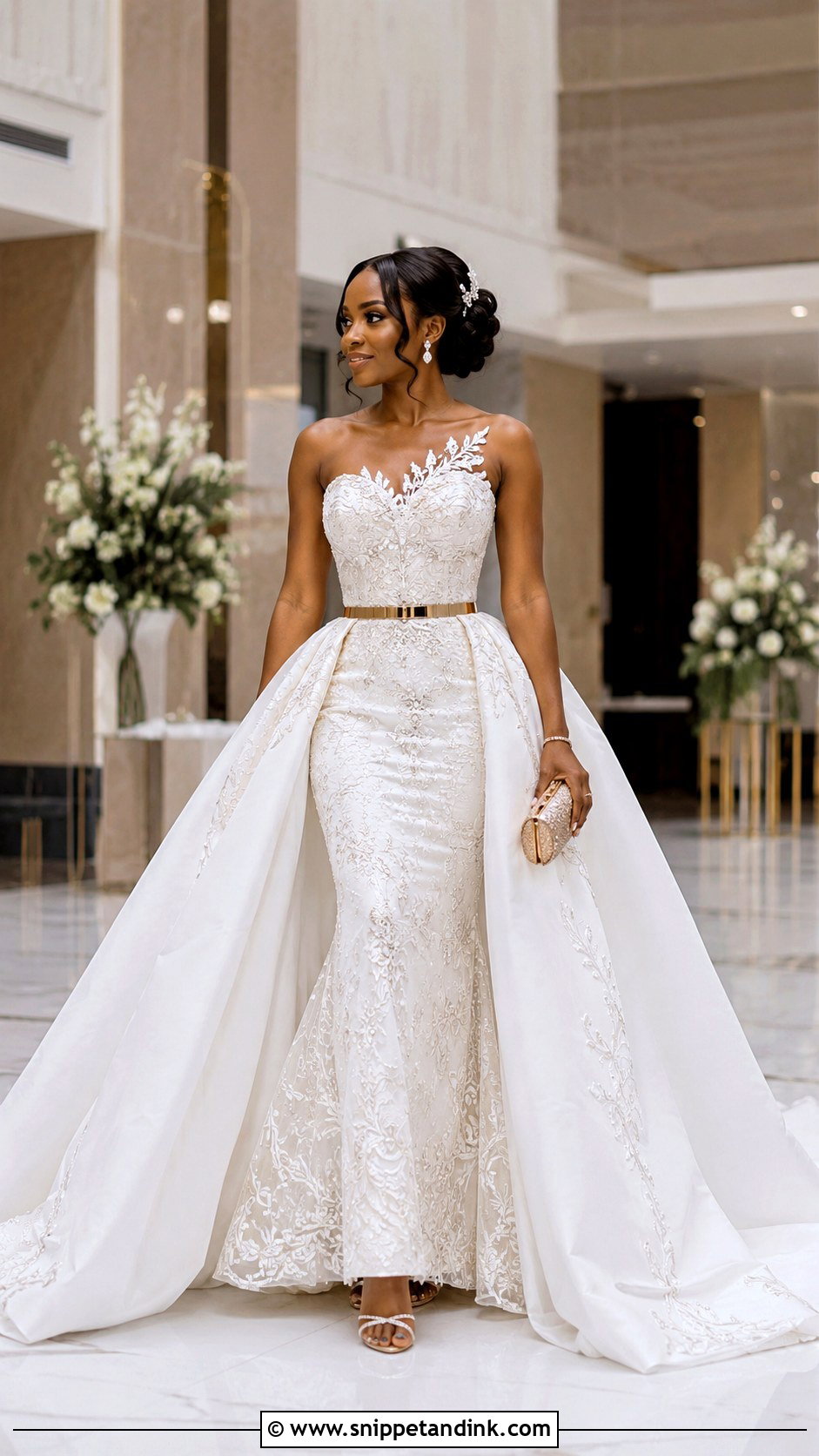
With a detachable train, the fastening matters more than the train. I want snaps or hooks hidden under the waistband and a closure an attendant can undo in under a minute without help from the bride. Over a fitted mermaid or straight gown with embroidered panels, the full overskirt gives a ball gown entrance, then the base dress takes over for dancing. Match the decorative details on both pieces so the switch looks planned.
14. Long Sleeve African Lace Wedding Dress
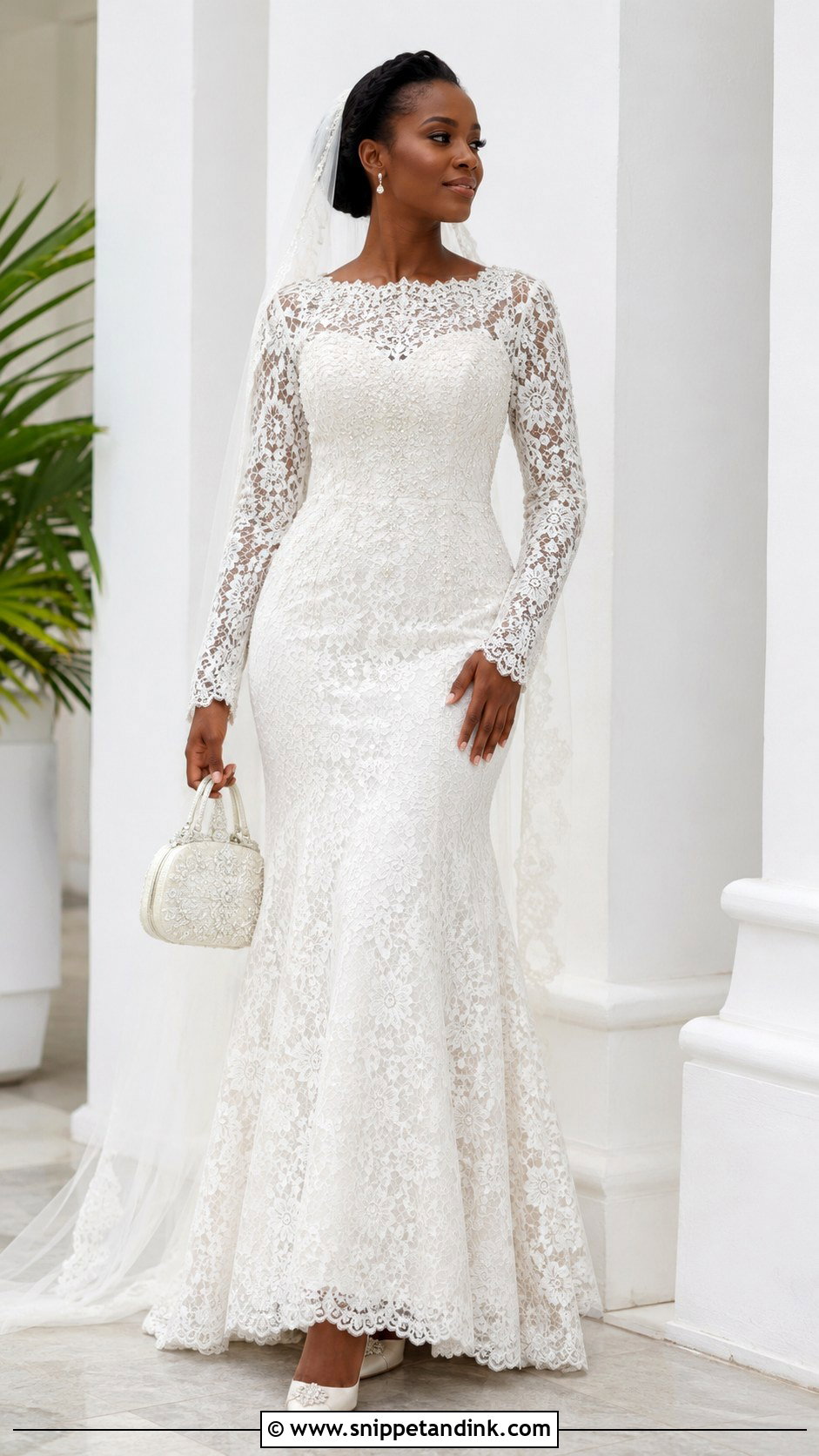
Long lace sleeves are lovely until a bride hugs her grandmother and hears a seam pop. In fittings I have her bend her elbows, reach forward and lift both arms, because set-in lace sleeves often need a little extra ease at the underarm. Scalloped cuffs and hand-beaded motifs add interest without weight. If you want full coverage, line the illusion sections in a shade matched to your skin or to the dress, and choose a long veil that echoes the lace.
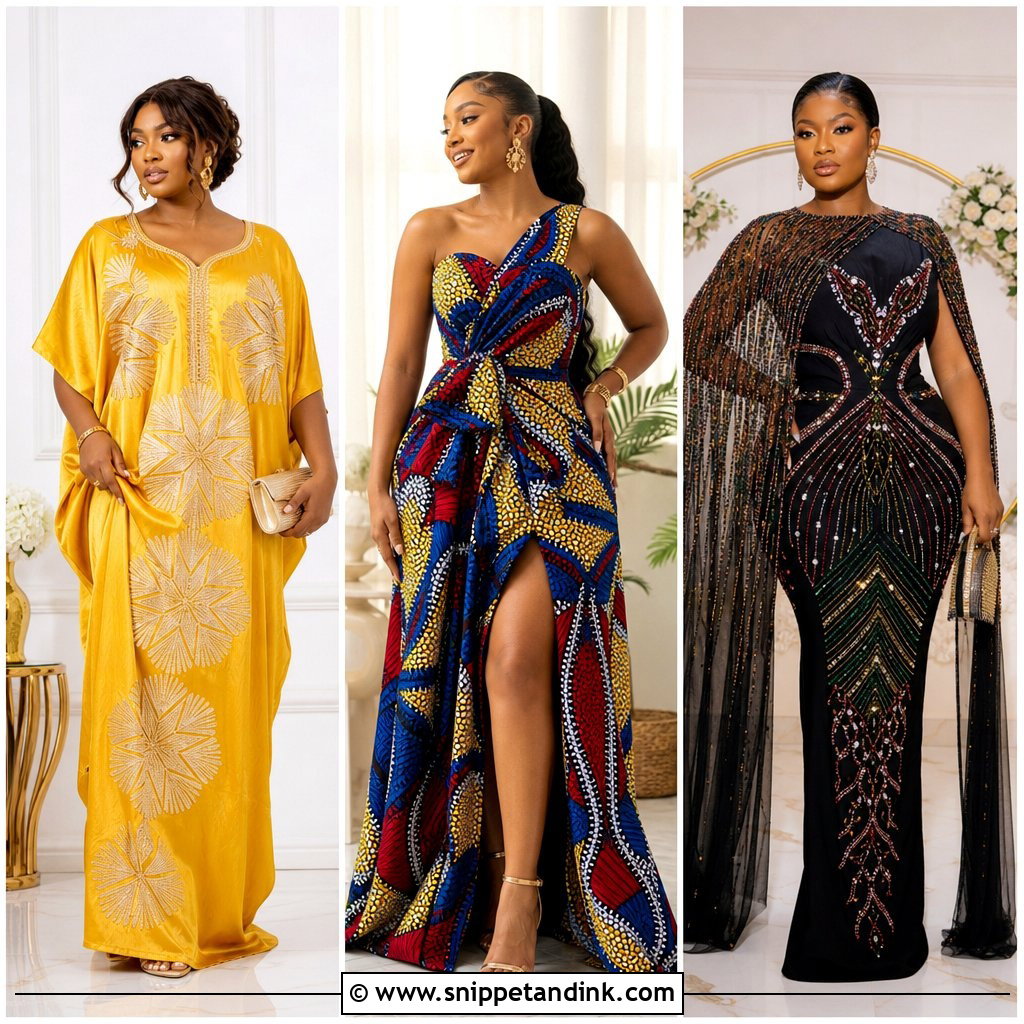
15. Asymmetrical Ankara Wedding Dress
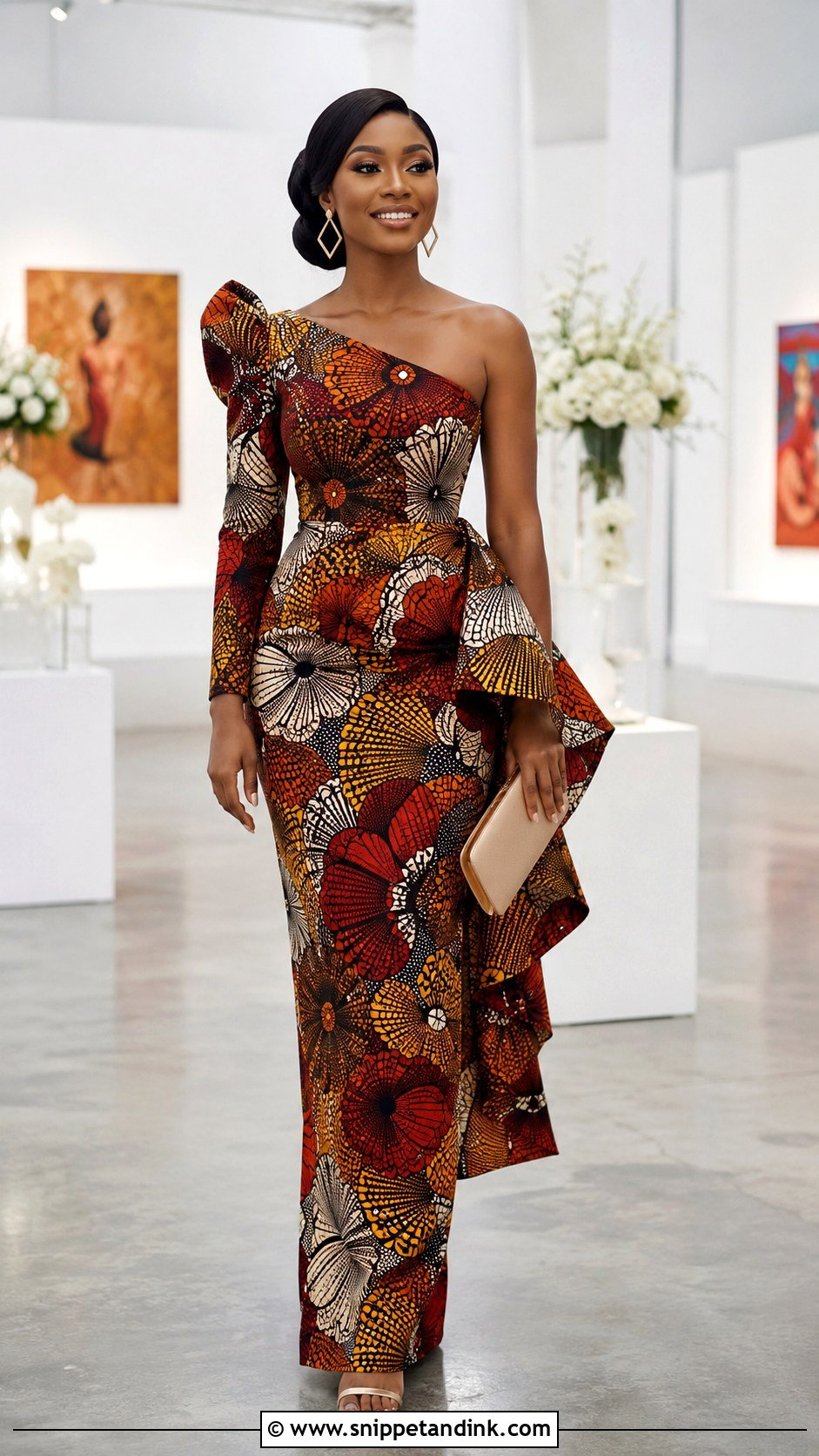
Asymmetry needs discipline. I’d pick one statement detail, a sculpted sleeve, a diagonal neckline or a high-low overskirt, and keep the rest of the construction plain so the print and the shape aren’t fighting. Pattern matching is the hard part because an asymmetric cut can’t simply be mirrored, so the fabric layout must be agreed before cutting. Check the finished dress from the side and back as you walk; that’s where a lopsided print shows.
16. Minimalist White African Wedding Dress
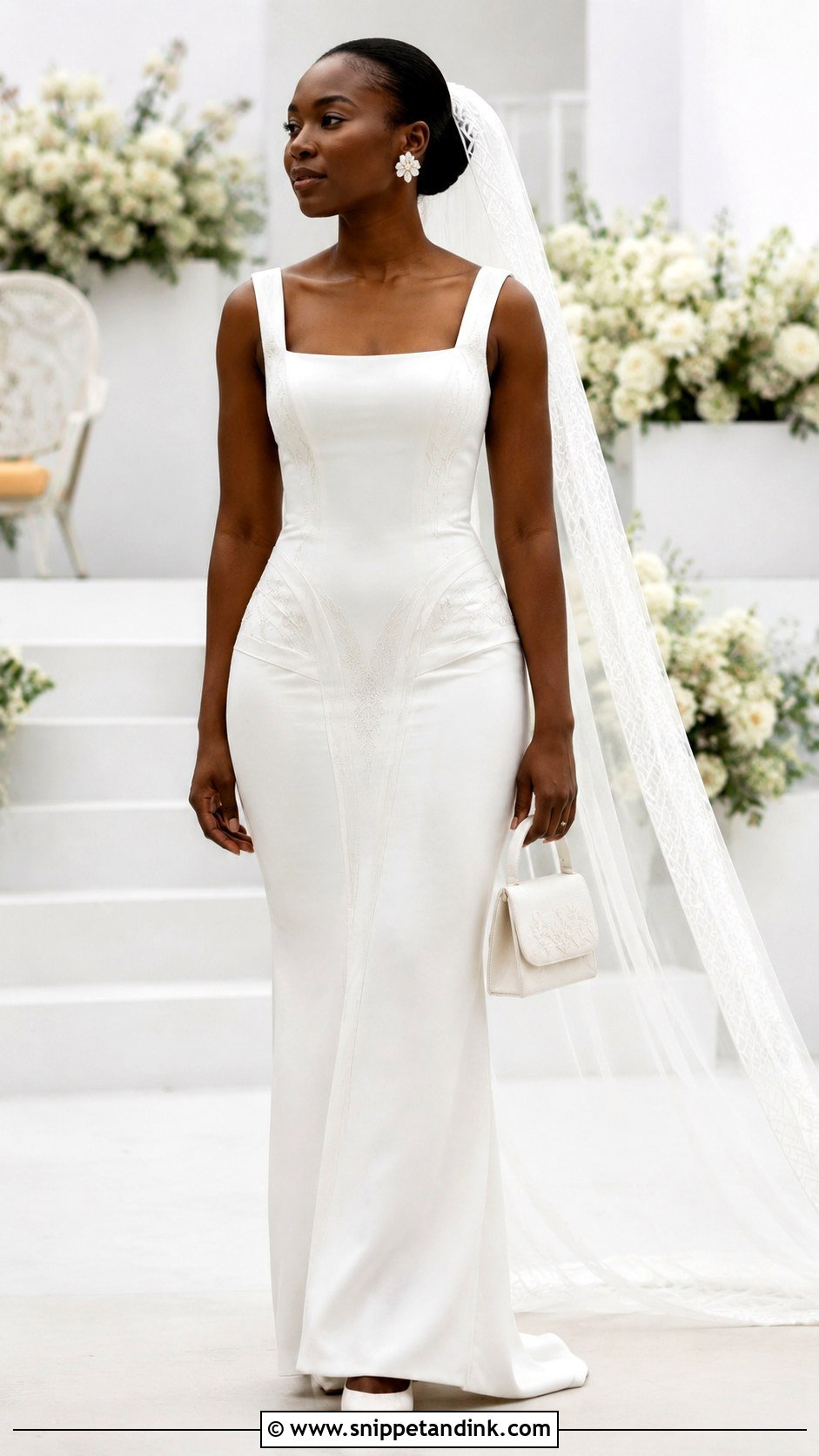
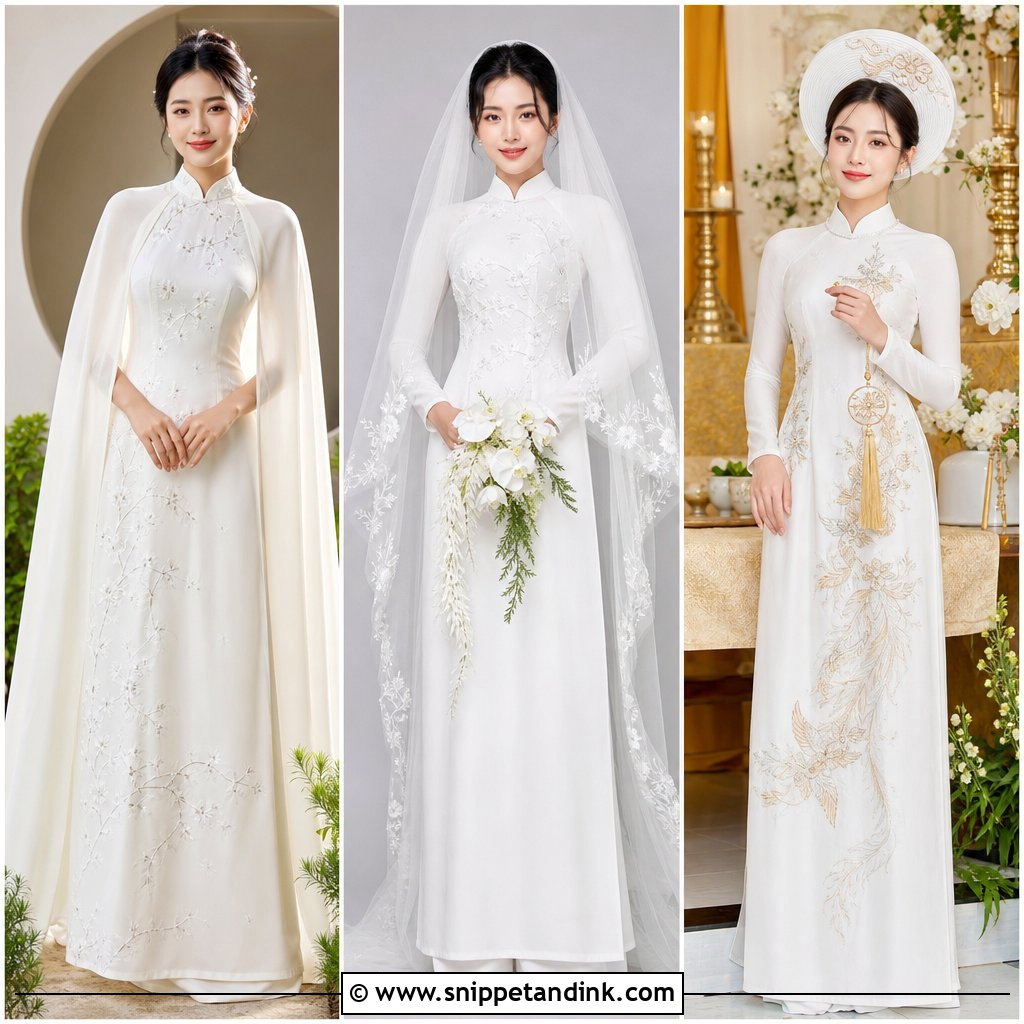
Not every culturally meaningful gown needs color. A clean white column in crepe or matte satin, with tonal woven inserts or a line of embroidered symbols at the waist, can carry heritage quietly. Architectural seams and a square neckline give structure. I often recommend this for brides wearing a bright traditional outfit at another part of the day, since the white gown then becomes the calm contrast. A narrow veil with a patterned edge adds one more heritage detail.
17. African Wedding Dress With Gele
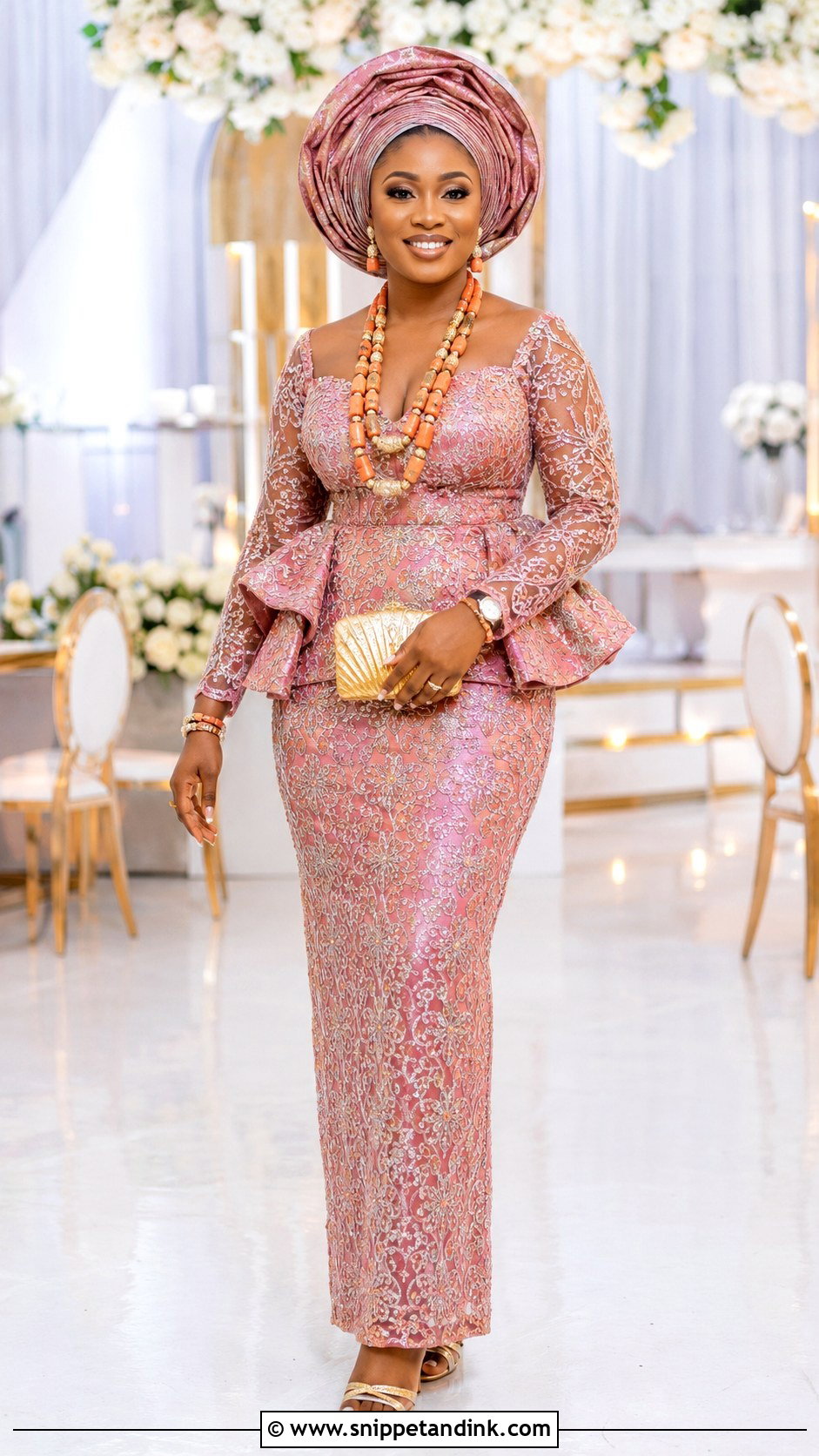
A gele pulls the whole outfit together, but it also sets the scale for everything below it. I pair a big, sculpted wrap with a simple bodice and a smaller, controlled wrap with a heavily embellished dress. Nigerian bridal ensembles usually treat garments, jewelry, sash and headwear as one set, so choose the gele fabric alongside the gown in lace, brocade or Aso Oke. Book a gele tier with time to spare; a good one takes a while to shape and pin securely.
18. Plus Size African Mermaid Wedding Dress
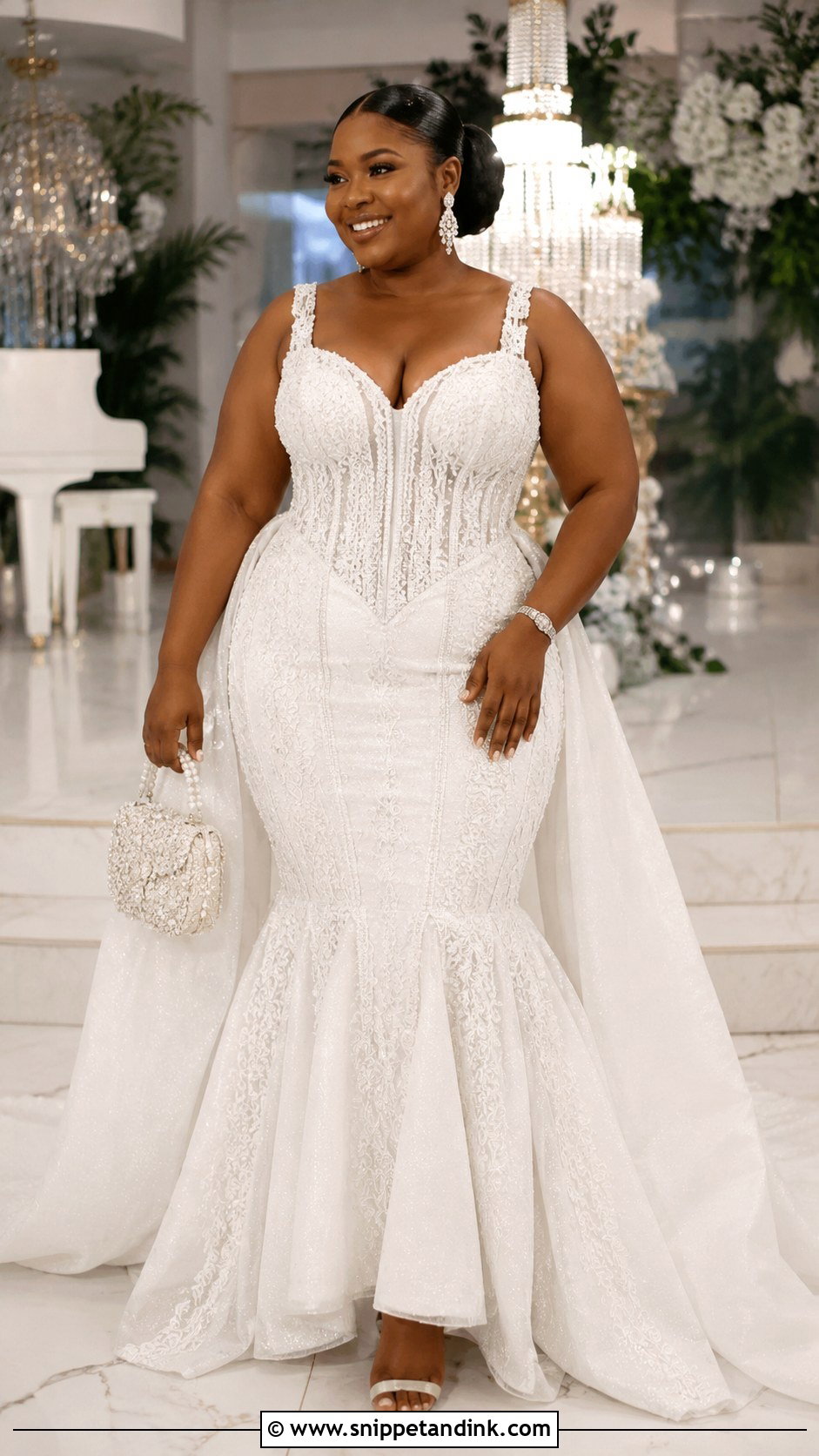
On a plus-size mermaid, the knee is the decision point. I place the flare at or just above the knee so she can walk normally, and I prefer wider straps or a stable off-shoulder build over a strapless bodice for real support. Vertical embroidery lines and print panels set along the body’s own curves flatter more than any rule about hiding shape. In fittings we test sitting, dancing and raised arms, never just standing still in front of the mirror.
19. Modest African Wedding Dress
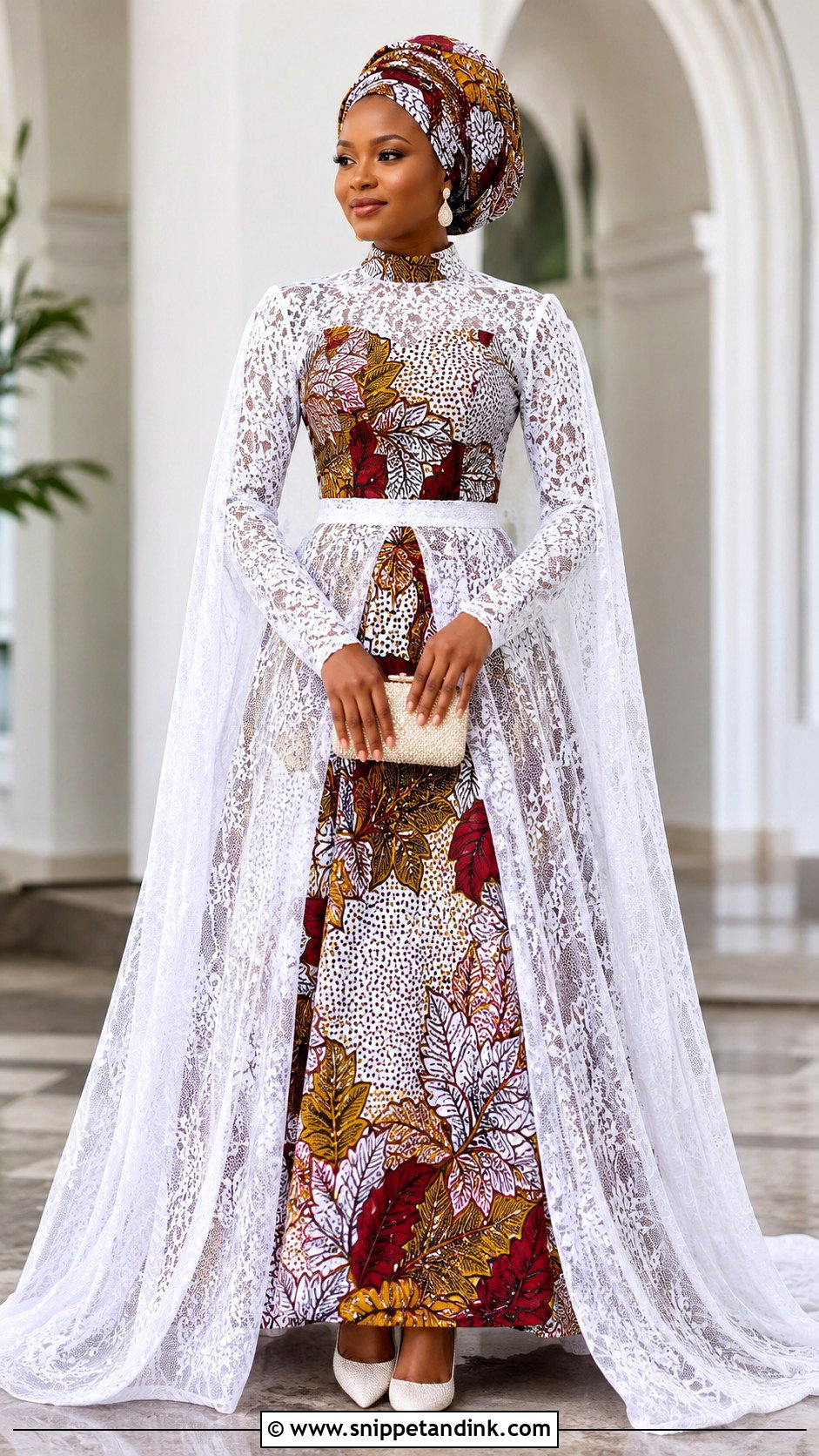
Full coverage and a contemporary shape aren’t opposites. A high neckline, long sleeves and a floor-length A-line in lace, brocade or Kitenge need a defined waist and shaped seams, or the dress starts to look borrowed. Sheer fabrics are the trap: they can look opaque indoors and turn see-through under flash, so I check the lining in daylight with a phone flash on. A cape, a coordinated headwrap or an embellished veil adds ceremony presence.
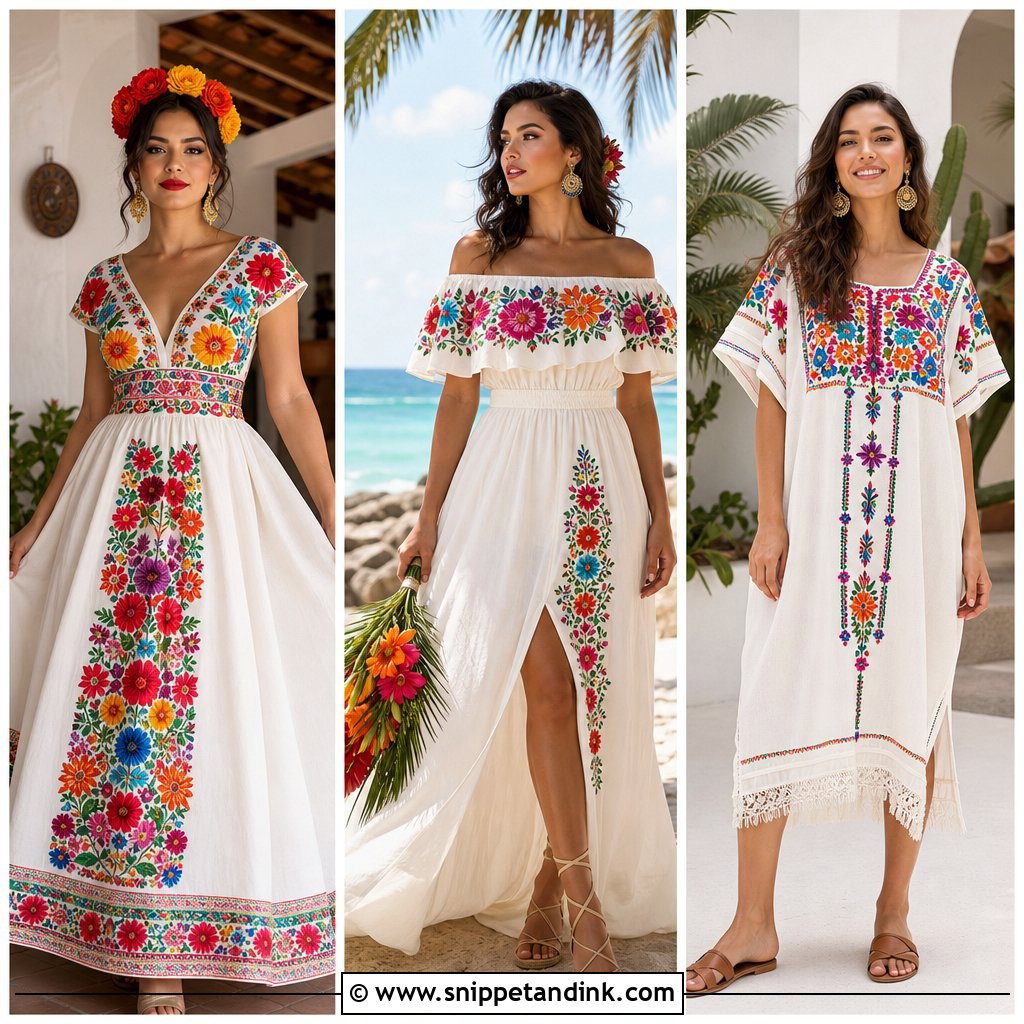
20. Short African Reception Wedding Dress
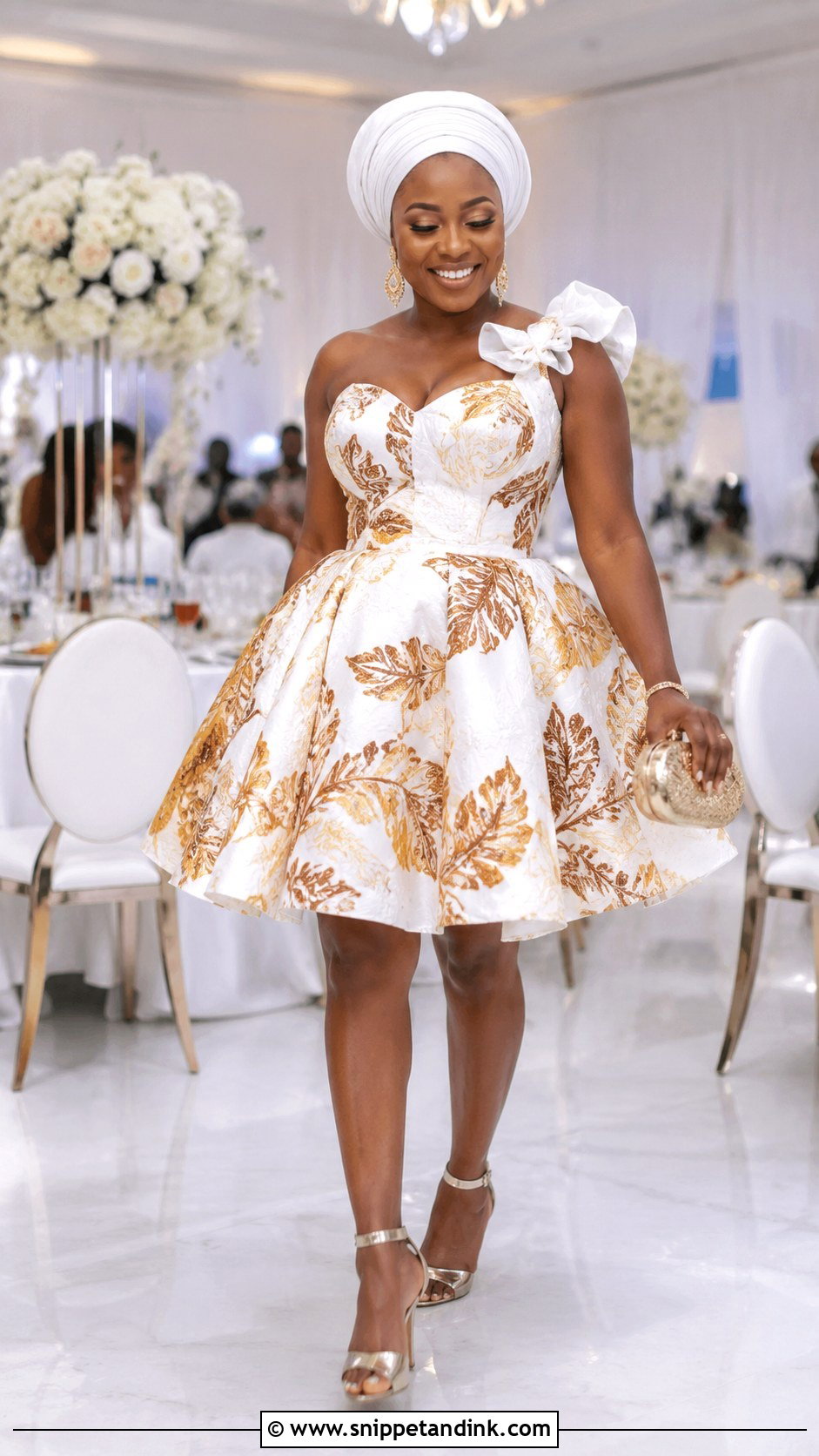
The reception dress is the one brides actually dance in, so I fit it with the shoes she’ll wear and make her move. A knee-length fit-and-flare in Ankara, Kente, lace or beaded fabric keeps it bridal, while a tailored long-sleeve mini suits a sleeker taste. Carry one color or motif over from the ceremony gown so the two looks belong together. Check the hem and neckline mid-dance; a short dress rides up faster than people expect.
Planning the Change Between Your Traditional and White Looks
Many couples wear more than one outfit, a traditional set for one part of the day and a gown for another. The change is where timing slips. I schedule it like a separate appointment: the dresser, the gele tier or headwrap stylist, and someone who knows every fastening on both outfits.
- Hang both outfits in the order they’ll be worn, with jewelry and shoes bagged and labeled for each.
- Budget at least 30 to 45 minutes for a full change that includes a new headpiece, more if the gele has to be retied.
- Pick hair and makeup that work for both looks, since you rarely have time to redo either.
- Have a quiet room with a full-length mirror and good light, not a corner of the venue kitchen.
How Kente, Aso Oke and Indigo Should Be Stored Afterward
Handwoven and hand-dyed cloth is an heirloom, so I’d treat it more carefully than a synthetic gown. Get it cleaned soon after the wedding by a cleaner who will spot-test, because makeup and food stains set over weeks. Never wring Kente or Aso Oke; the strip joins and long floats in the weave can distort.
Store heavy woven gowns flat or loosely folded with acid-free tissue in each fold, not hanging from the shoulders, where the weight stretches the seams over time. Keep indigo pieces wrapped separately from anything pale. Once a year, unfold everything and refold along new lines so permanent creases don’t form.
Letting Your Heritage Fabric Lead the Gown
The Modern African Wedding Dresses I remember best weren’t the most elaborate. They were the ones where the cloth, the cut and the bride’s own story agreed with each other. A Kente mermaid gown can be as bridal as embroidered white lace or a modest Aso Oke ensemble. Learn how your fabric is made, talk to family where it matters, and work with a maker who has cut that textile before. Then let the fittings do their job.
You'll Like These Ideas:


Leave a Reply