
South Indian bridal dressing is built on silk, gold and flowers, and the regional differences are bigger than most people outside the tradition realise. The Kanjeevaram is still the bride most families picture, but there are also Kerala kasavu drapes, Telugu pattu sarees, Karnataka silks, half sarees and lighter reception looks. What makes any of them personal is the blouse, the drape, the temple jewellery, the waist belt and the hair. My first question to a South Indian bride is never colour; it’s how long she’ll be seated on the floor during rituals, because that decides the weight of silk she can comfortably carry. The outfits below run from classic red silk to pastel organza.
Reading a Bridal Silk Saree Before You Pay for It
A bridal silk saree is often one of the most expensive pieces in the whole wedding, and it’s meant to last decades. I’d spend ten minutes in the shop checking it properly before anyone starts talking about blouse designs.
- Look for a Silk Mark tag or a handloom label. It isn’t the only proof of quality, but its absence is a reason to ask more questions.
- Ask whether the zari is pure or tested. Pure zari uses real silver coated in gold; tested zari uses cheaper metal or synthetic thread and is much lighter on the price. Both are fine, as long as you know which you’re paying for.
- Turn the saree over. In handwoven silk, the back of the motifs shows floats and small irregularities. A perfectly flat reverse often means a power loom.
- On a Kanjeevaram, look at where the border meets the body. In a traditionally woven piece they’re interlocked, and you can see the joining line if you look closely.
- Hold it up. Real bridal silk is heavy and drapes in deep folds; a very light, stiff piece won’t pleat the same way.
Once you’ve bought it, take it to your blouse tailor straight away. Blouses cut from the saree’s attached piece need time, and good tailors are busy in wedding season.
1. Red Kanjeevaram Bridal Saree
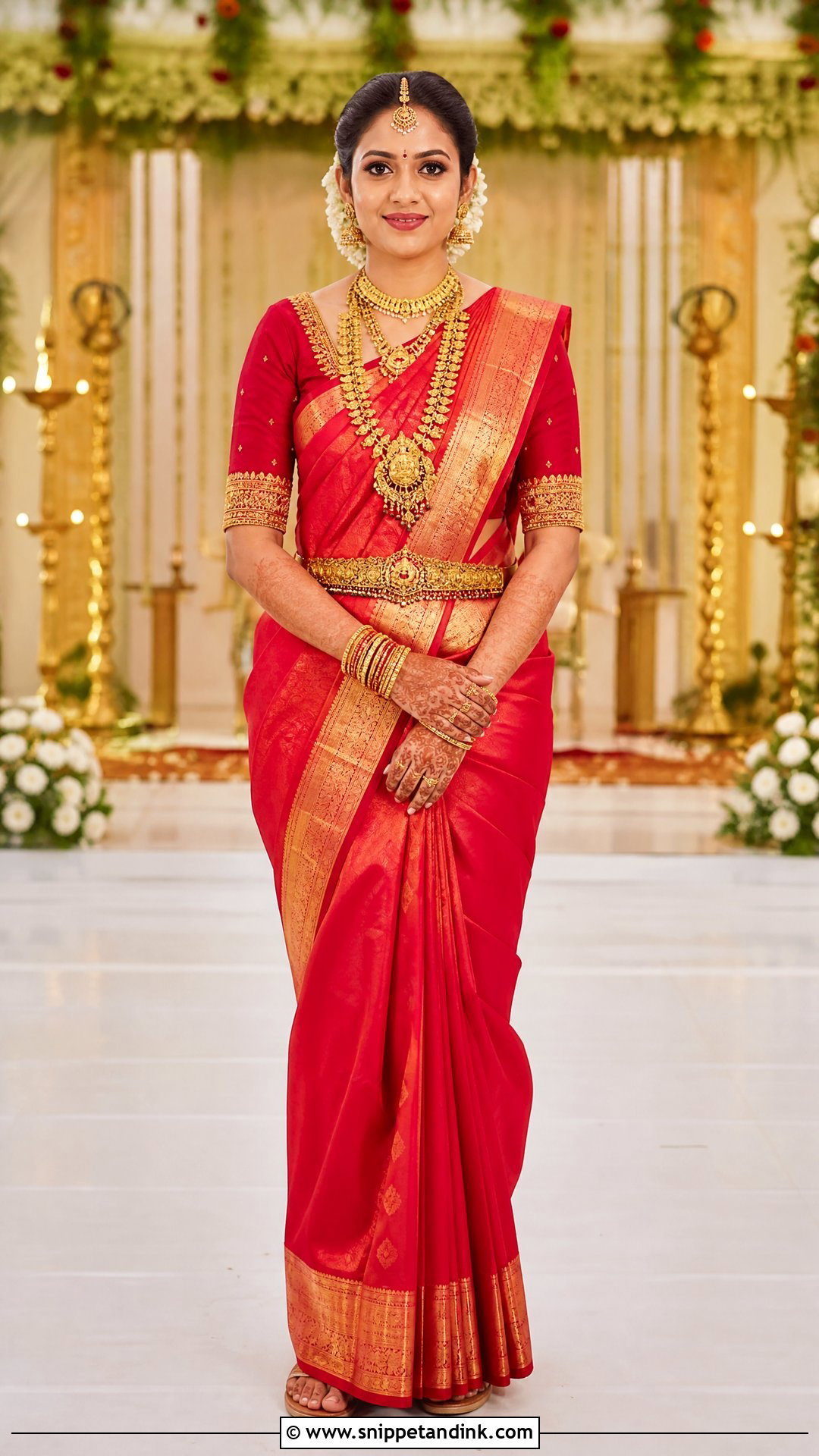
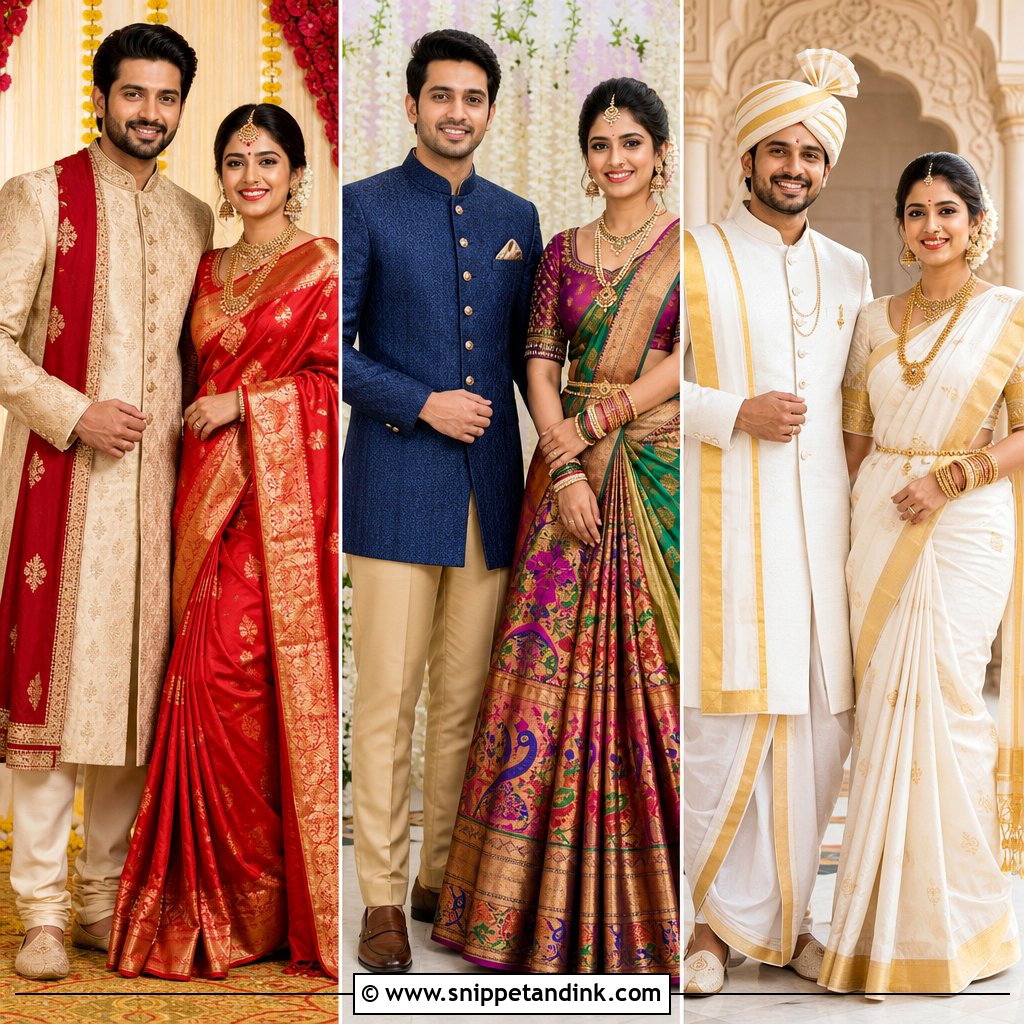
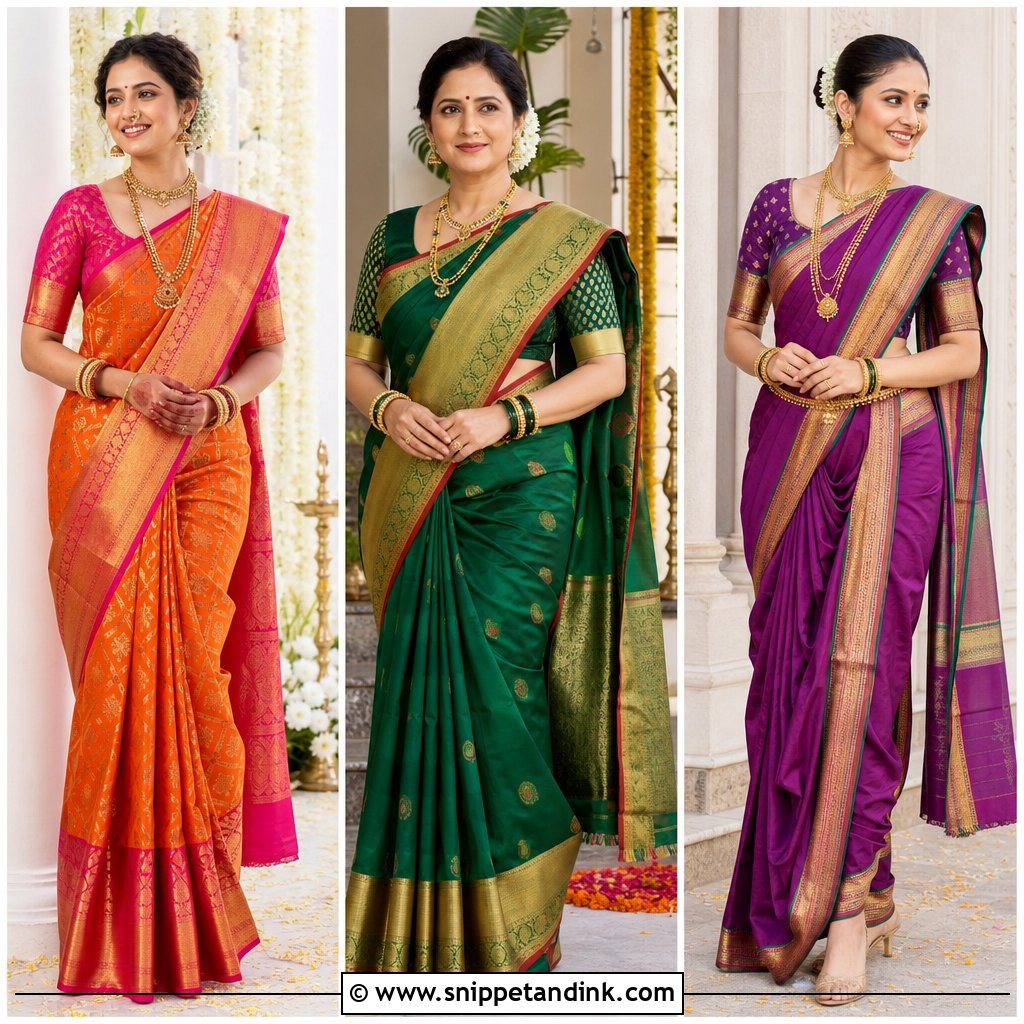
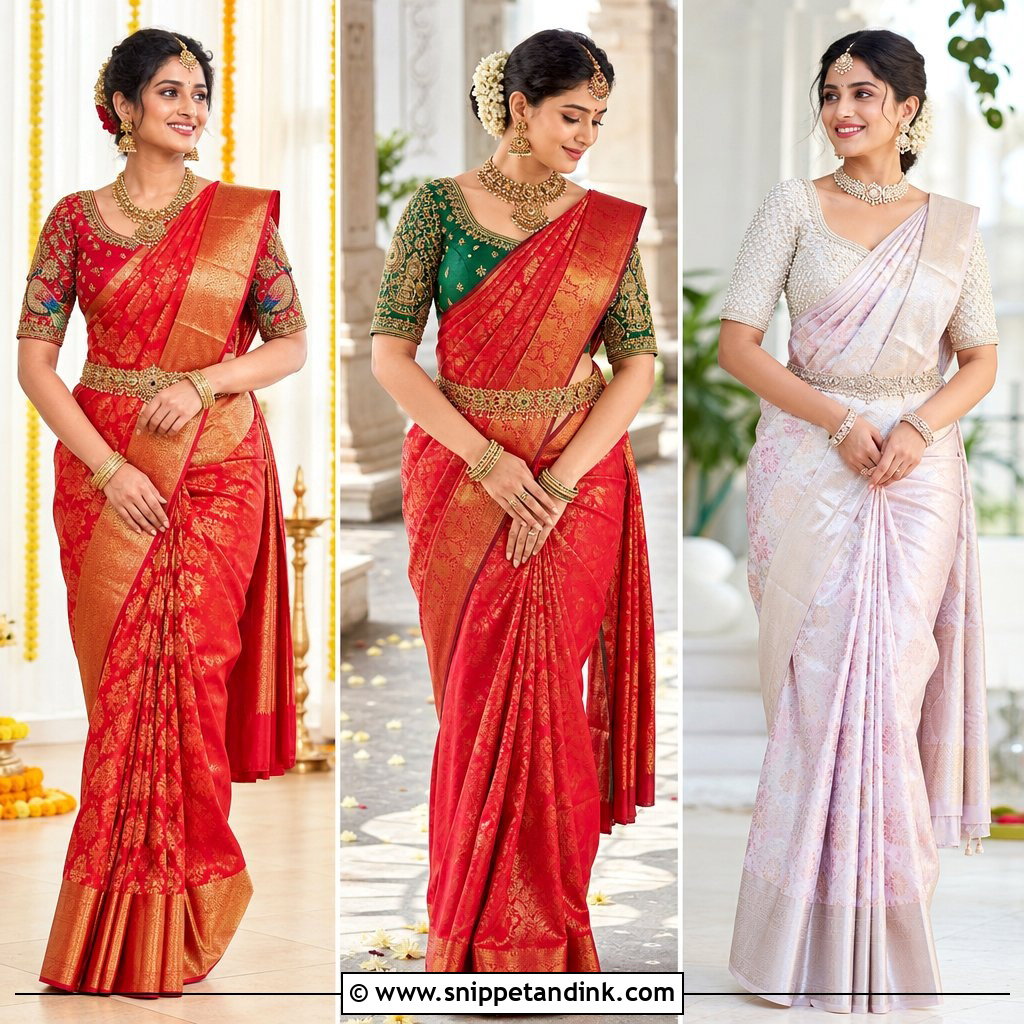
Red Kanjeevaram is the image most people have of a South Indian bride, and with good reason: Kanjeevaram silk has long been tied to weddings and big family occasions in the south. Crimson or vermilion with a broad gold zari border and traditional motifs is the classic. An elbow-length blouse with zari sleeves keeps it ceremonial. Layered temple necklaces, jhumkas, a vanki on the upper arm, bangles and a gold waist belt complete the jewellery. A centre-parted braid with jasmine and gold ornaments finishes it. Ask your draper for crisp front pleats and a well-pinned pallu, and wear embroidered flats for the long rituals.
2. Maroon Koorai Pattu Bridal Saree
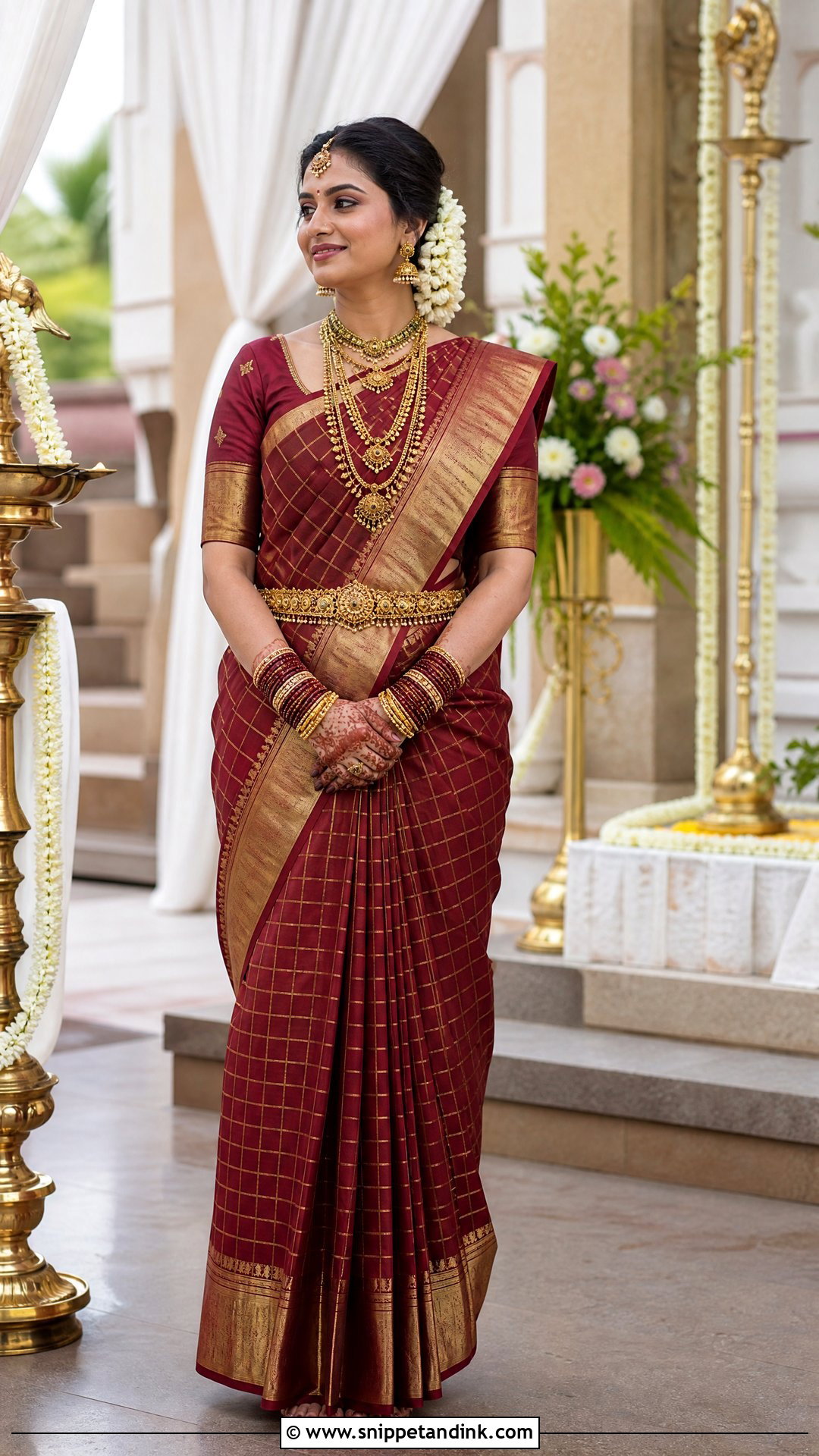
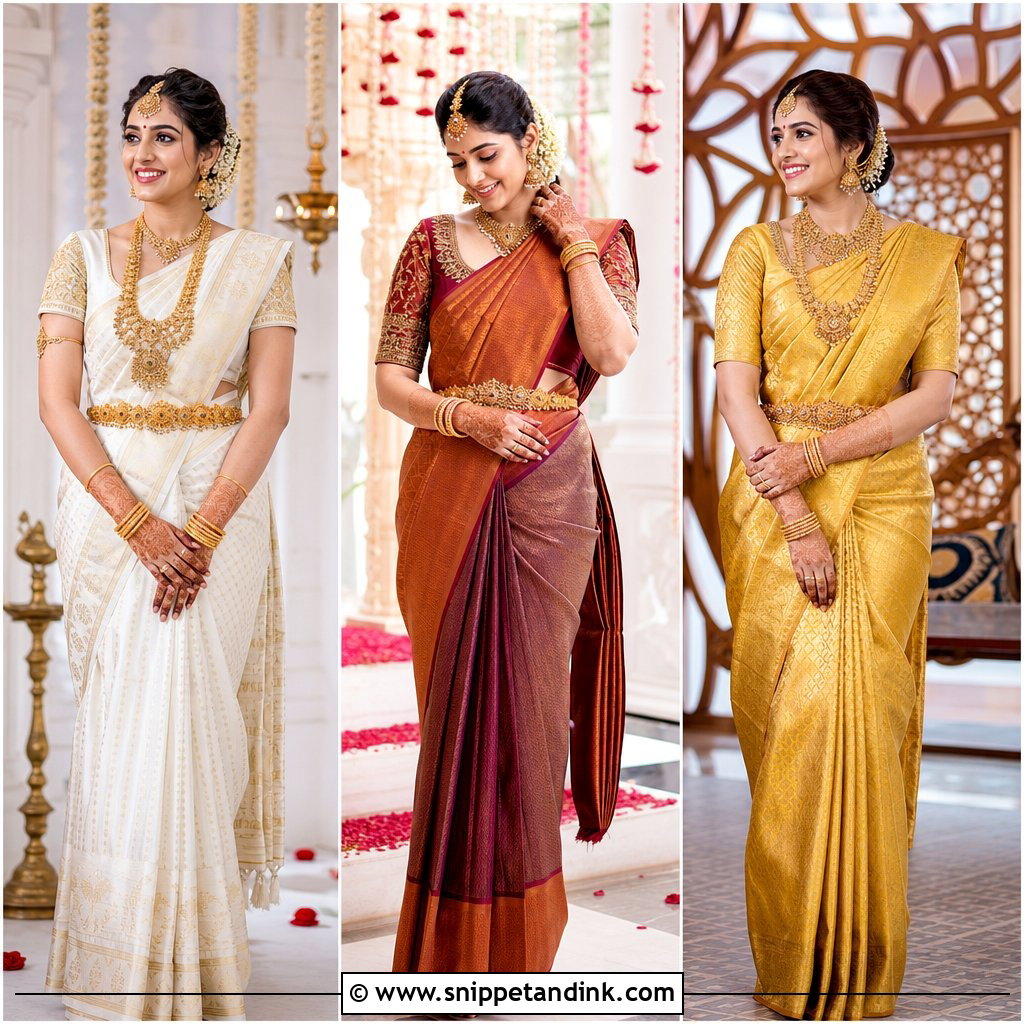
Maroon Koorai pattu is the dignified alternative to bright red. Look for gold checks, temple borders or red-and-gold contrast. Match the blouse in maroon, or introduce mustard, emerald or antique gold. Necklaces at different lengths fill the neckline without hiding the border. Add a gold oddiyanam, stacked bangles, statement earrings and a nose ring if your family wears one. A long jasmine-covered braid finished with a tassel suits it. Koorai is traditionally given by the groom’s family in many Tamil households, so check whose choice the colour is before you shop.
3. Green Kanjeevaram Bridal Saree
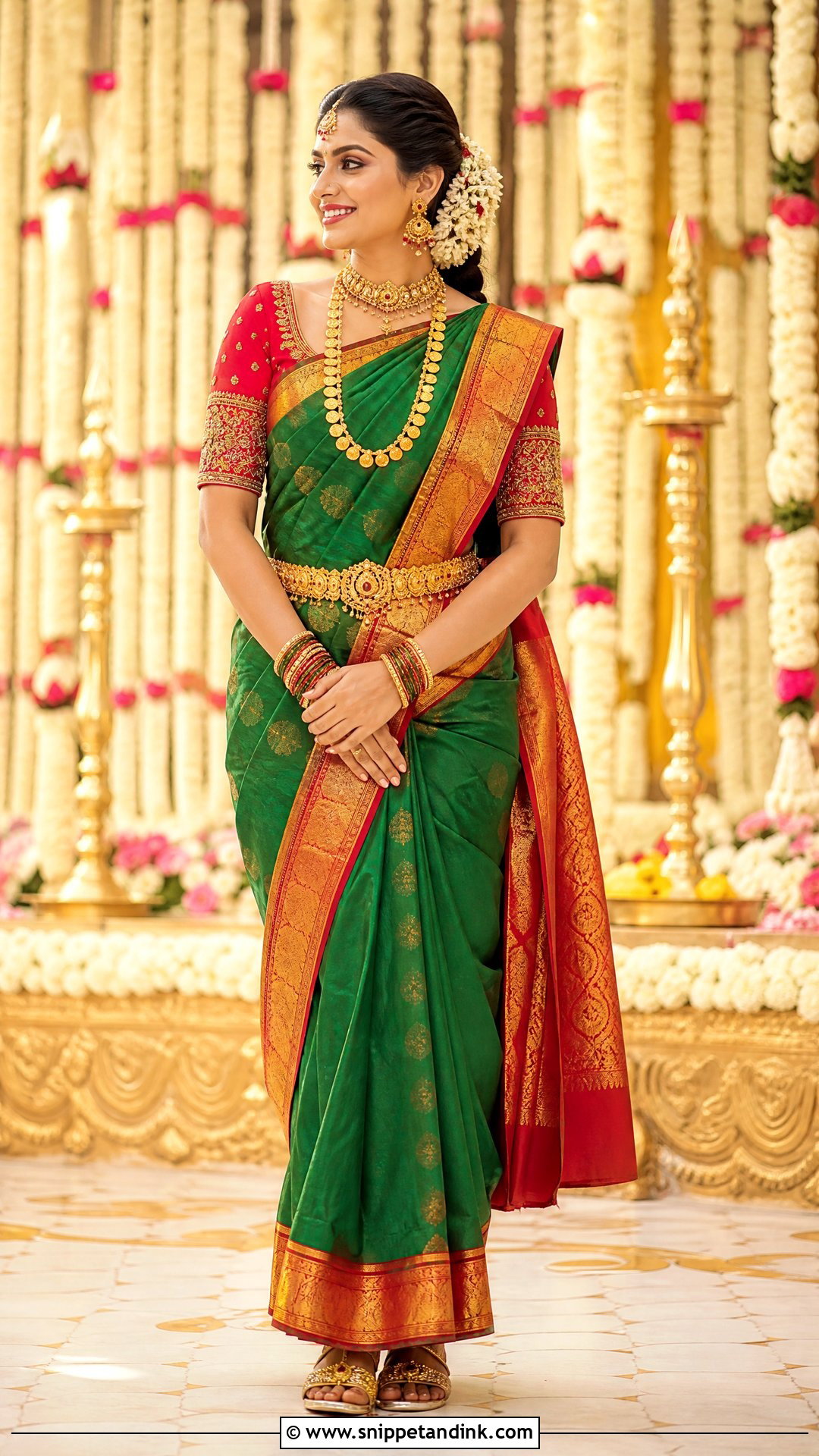
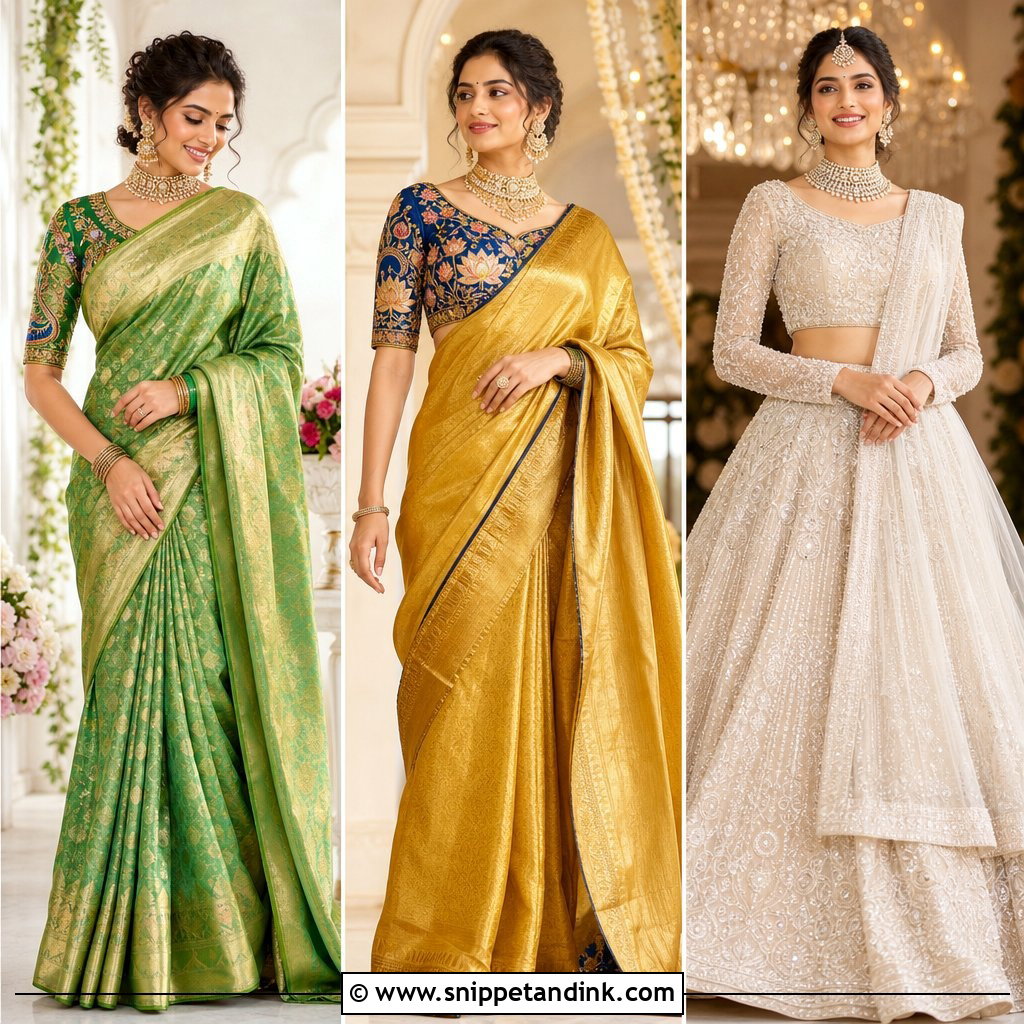
Green silk next to antique gold looks rich in any light. A green Kanjeevaram with a red, pink or maroon contrast border is my favourite vivid pairing. Repeat the border colour in the blouse and let small zari motifs on the sleeves tie the two together. Layer a short choker with a longer kasu-style necklace, then add jhumkas, bangles, a waist belt and braid jewellery. Jasmine, roses or both can frame a low bun or braid. For an outdoor ceremony, choose a slightly lighter silk and a breathable blouse lining; full bridal Kanjeevaram in direct sun is hard work.
4. Gold Tissue Kanjeevaram Bridal Saree
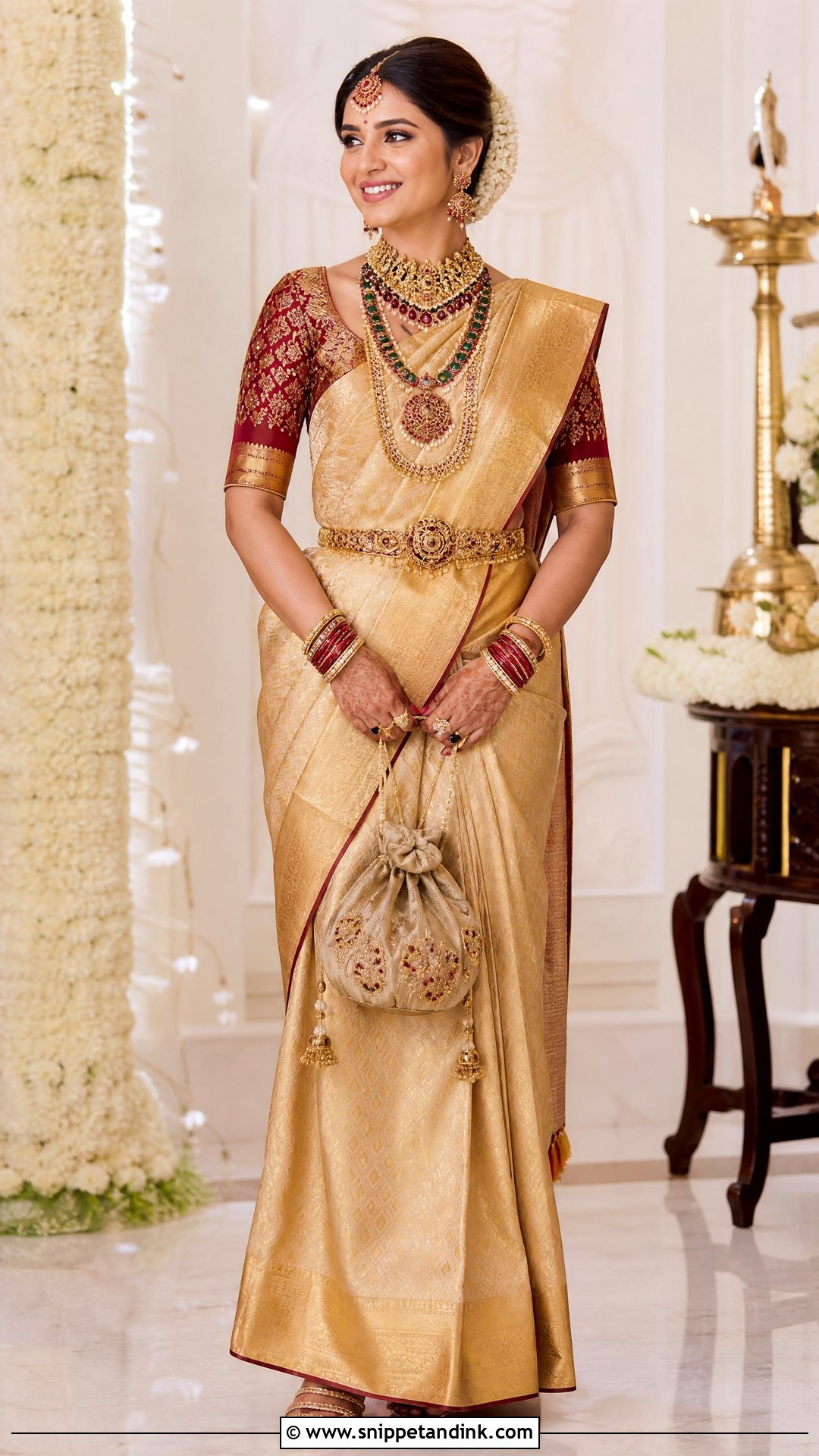
A gold tissue Kanjeevaram saree catches every bit of light, which means the blouse has to bring the colour: ruby red, emerald or deep magenta. A structured neckline sits neatly under layered necklaces. Antique temple jewellery with coloured stones stops the outfit looking flat and all one tone. A smooth bun ringed with jasmine and a forehead ornament draw focus to the face. Tissue is crisp and slippery at once, and it resists pleating, so this is one saree I’d always have professionally draped. Gold sandals and a small embroidered potli complete it.
5. Pink Kanjeevaram Bridal Saree
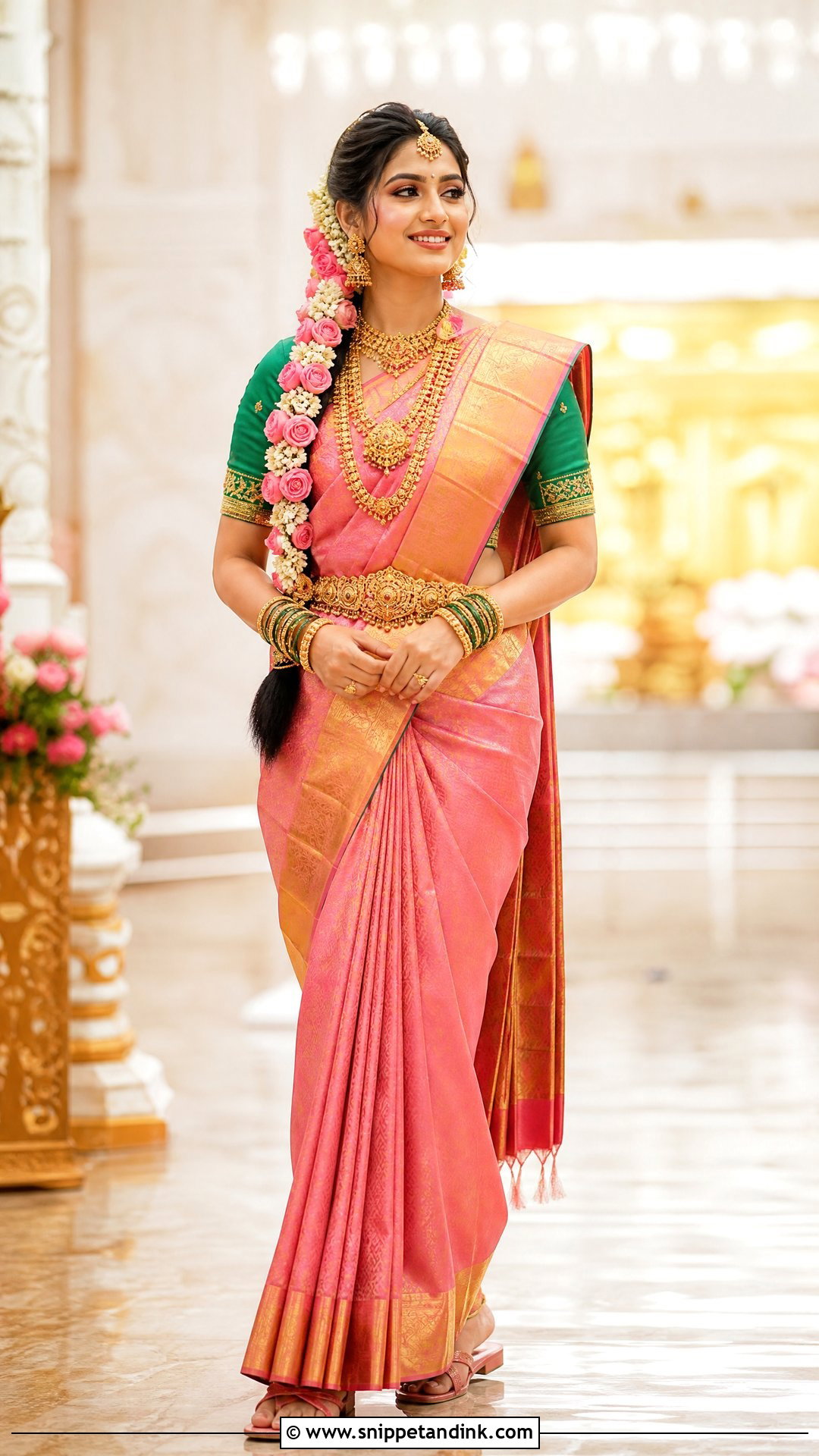
Pink is celebratory without the weight of red. Rani pink is bold and traditional; rose, coral or lotus pink look lighter on camera. A gold border with a green, maroon or tonal pink blouse works well. Keep the blouse embroidery restrained with elbow sleeves so the weave stays the focus. A temple choker, long necklace, jhumkas, bangles and a gold waist belt complete the jewellery. Pink roses mixed with jasmine suit a braid or bun. Define the eyes with kohl and choose a rose lip; very pale makeup disappears against bright pink silk.
6. Purple Kanjeevaram Bridal Saree
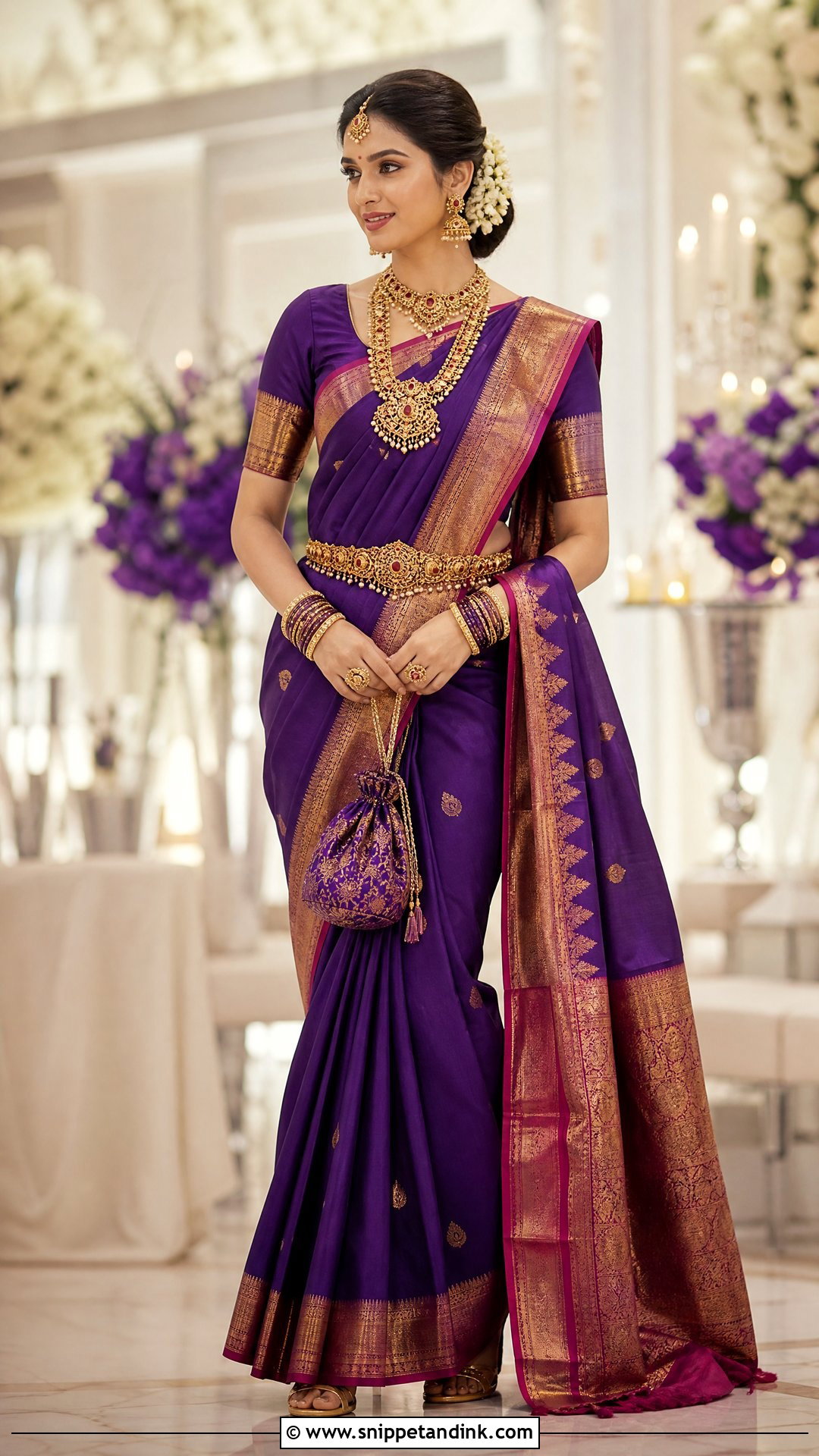
Purple works well for an evening ceremony or reception, under artificial light. Plum, aubergine or deep violet silk with gold zari and a magenta or green border is a strong combination. A modest scoop or square neckline leaves room for statement necklaces. Antique gold with ruby or emerald stones, stacked bangles and an oddiyanam suit it. A sleek centre part into a flower-wrapped bun is refined; a long braid with gold discs and jasmine is more traditional. Deep purple can take stronger eye makeup, but keep the skin natural. Gold sandals and a potli that echoes the border finish it.
7. Kerala Kasavu Bridal Saree
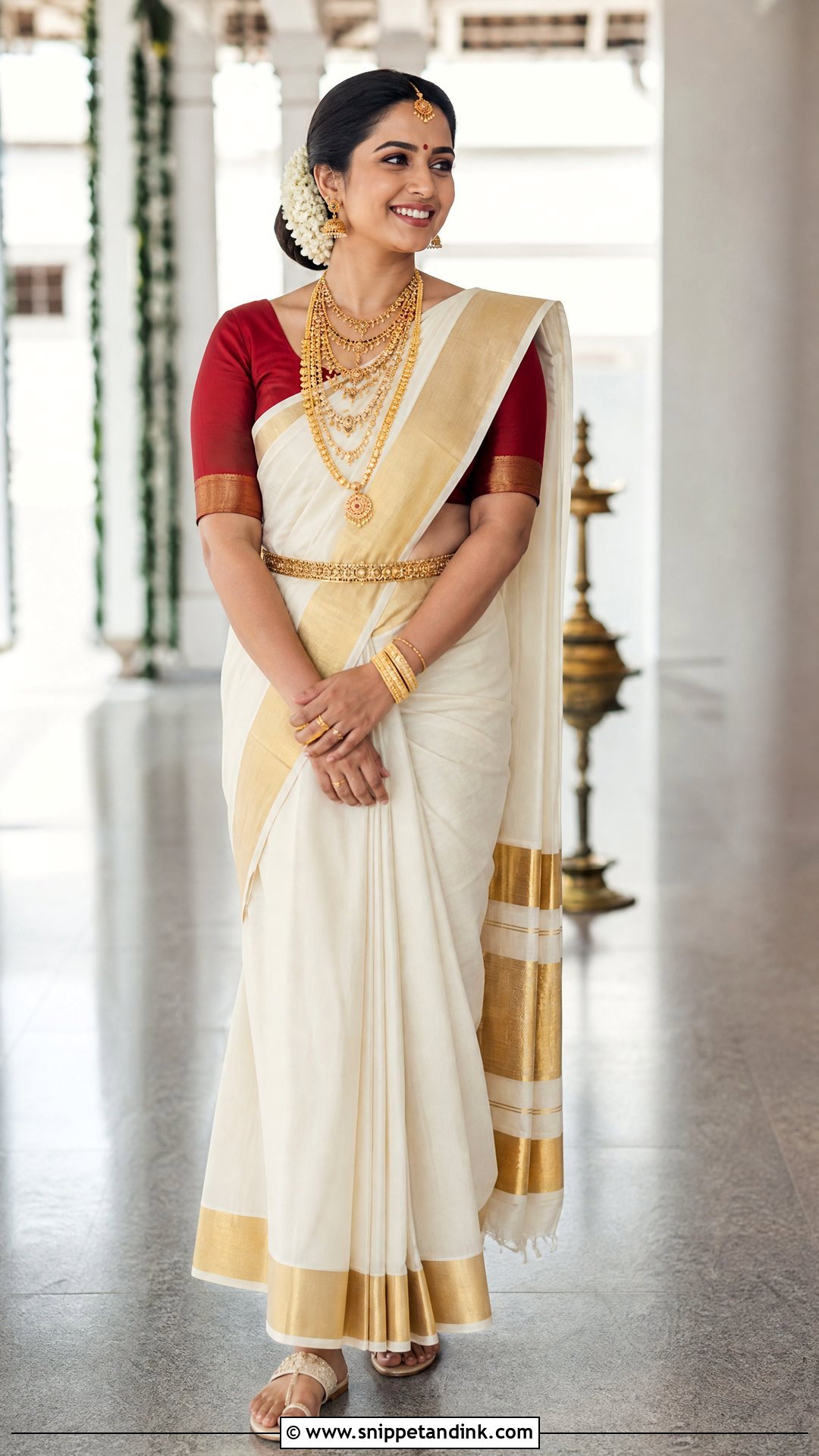
Kasavu is ivory handloom cotton with a gold border, and Kerala bridal dressing is known for exactly that pairing of ivory, gold cloth and gold jewellery. Wear an ivory blouse for a single-tone look, or red, green or gold for contrast. With such a quiet palette, the jewellery and flowers carry the detail: necklaces at varied lengths, earrings, bangles, a waist belt and small hair ornaments. A low jasmine bun keeps the pallu visible. A few red flowers add gentle colour. Unlike silk, kasavu cotton creases readily, so plan to steam it the morning of the wedding.
8. Kerala Set Mundu Bridal Outfit
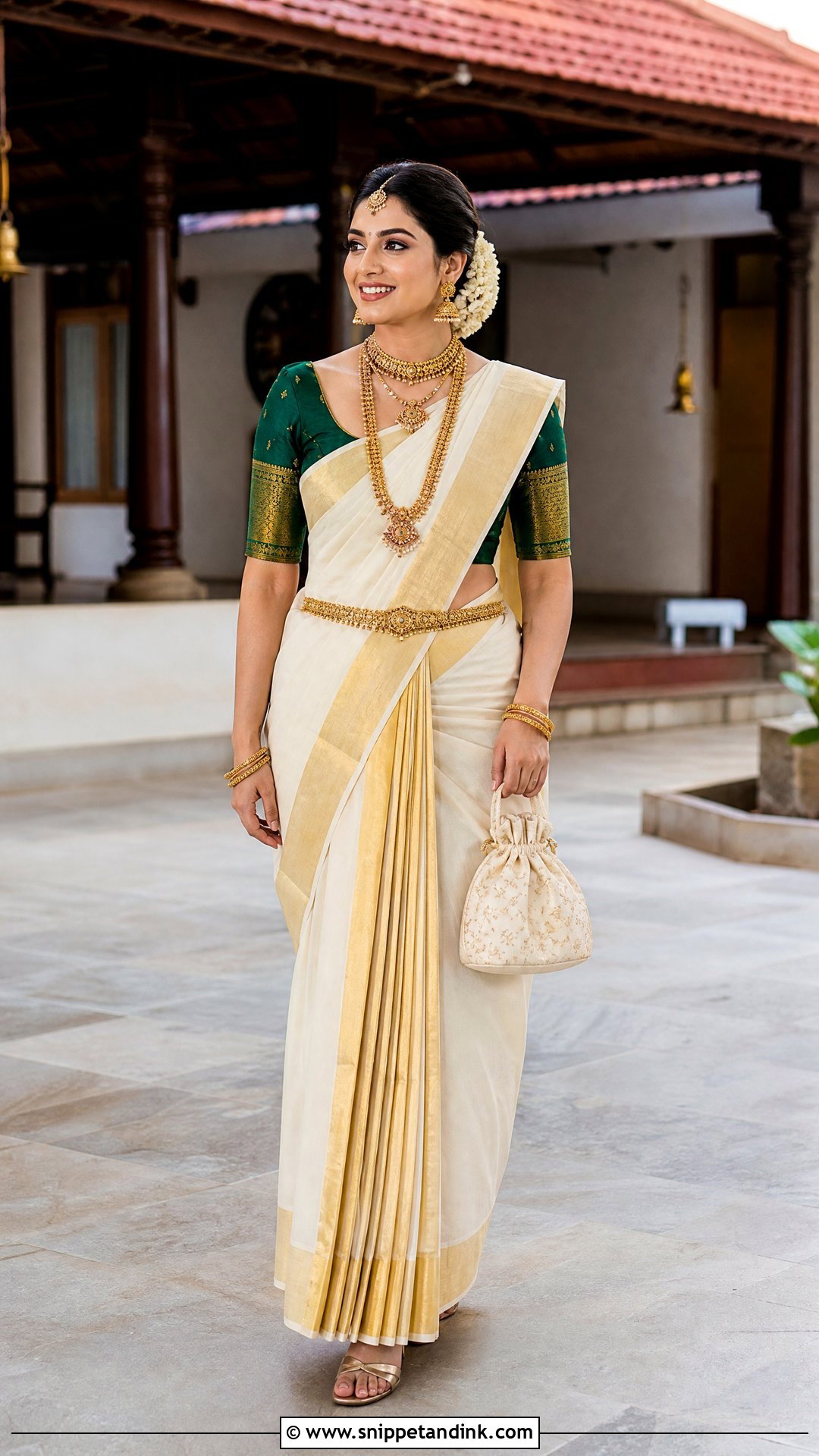
The set mundu is a two-piece drape: a lower cloth worn with clean pleats and an upper piece (the neriyathu) laid diagonally across the blouse. Because the top layer sits directly over it, the blouse has to fit closely, or the drape ripples. Red, green, ivory or gold blouses all work. Layer gold necklaces with traditional earrings, bangles and an optional waist belt. A centre-parted low bun with jasmine suits the clean lines. Add a narrow coloured border or small gold motifs on the blouse for definition. Ivory or metallic flats and a small potli finish it.
9. Red Telugu Pattu Bridal Saree
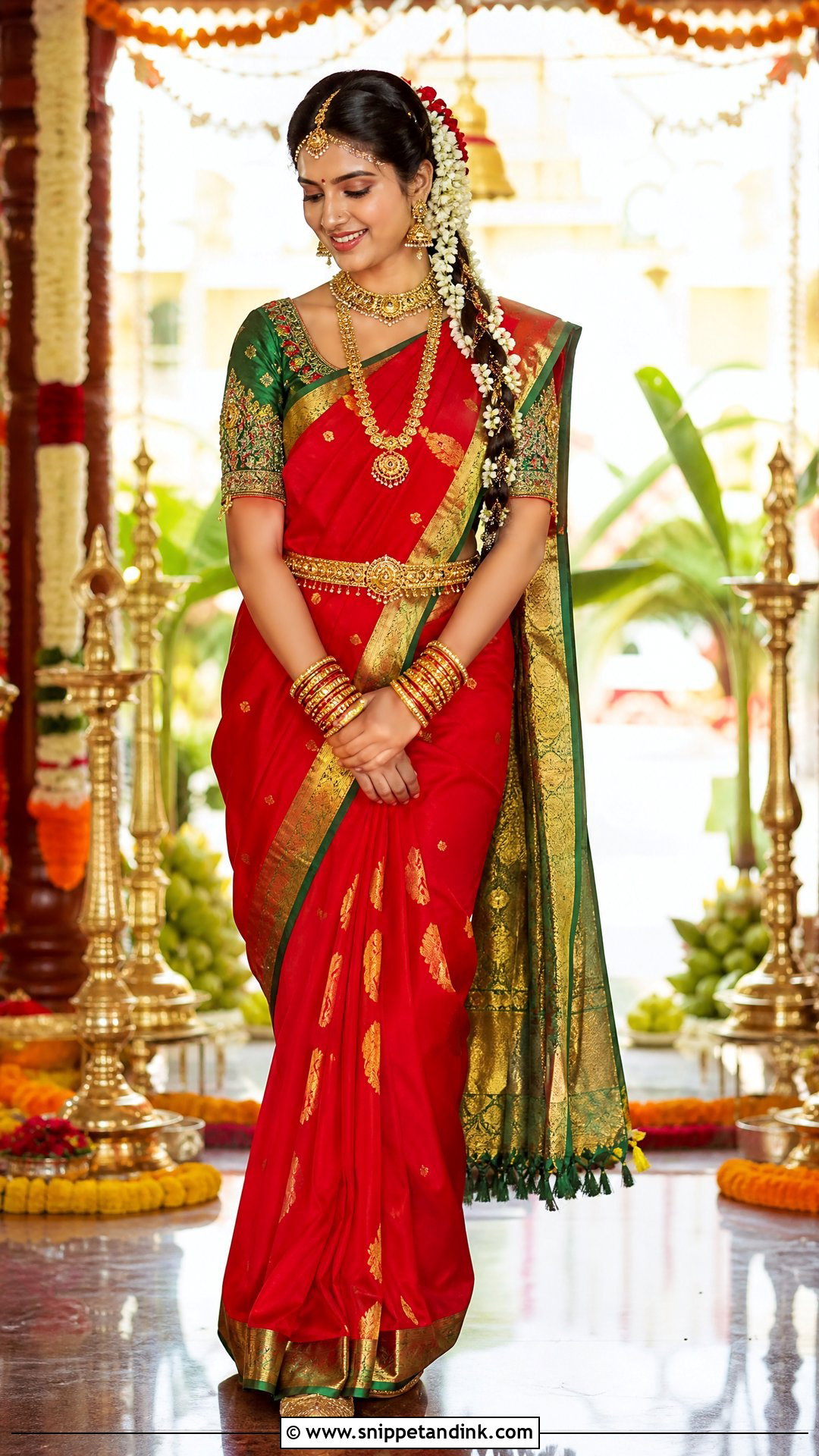
A red Telugu pattu saree gives a bright, detailed ceremony look. Choose scarlet, brick or vermilion silk with gold buttas and a green or mustard border, and repeat one border colour in the blouse. The jewellery is where Telugu bridal dressing goes big: a guttapusalu-style necklace, a long gold chain, jhumkas, bangles, armlets and a waist belt. Decorate a long braid with flowers, gold ornaments and a jada tassel at the end. Pleat the pallu so its weave shows beside the jewellery. Heavy layered necklaces press into the blouse, so I always check the neckline at a trial with all the pieces on.
10. Gadwal Silk Bridal Saree
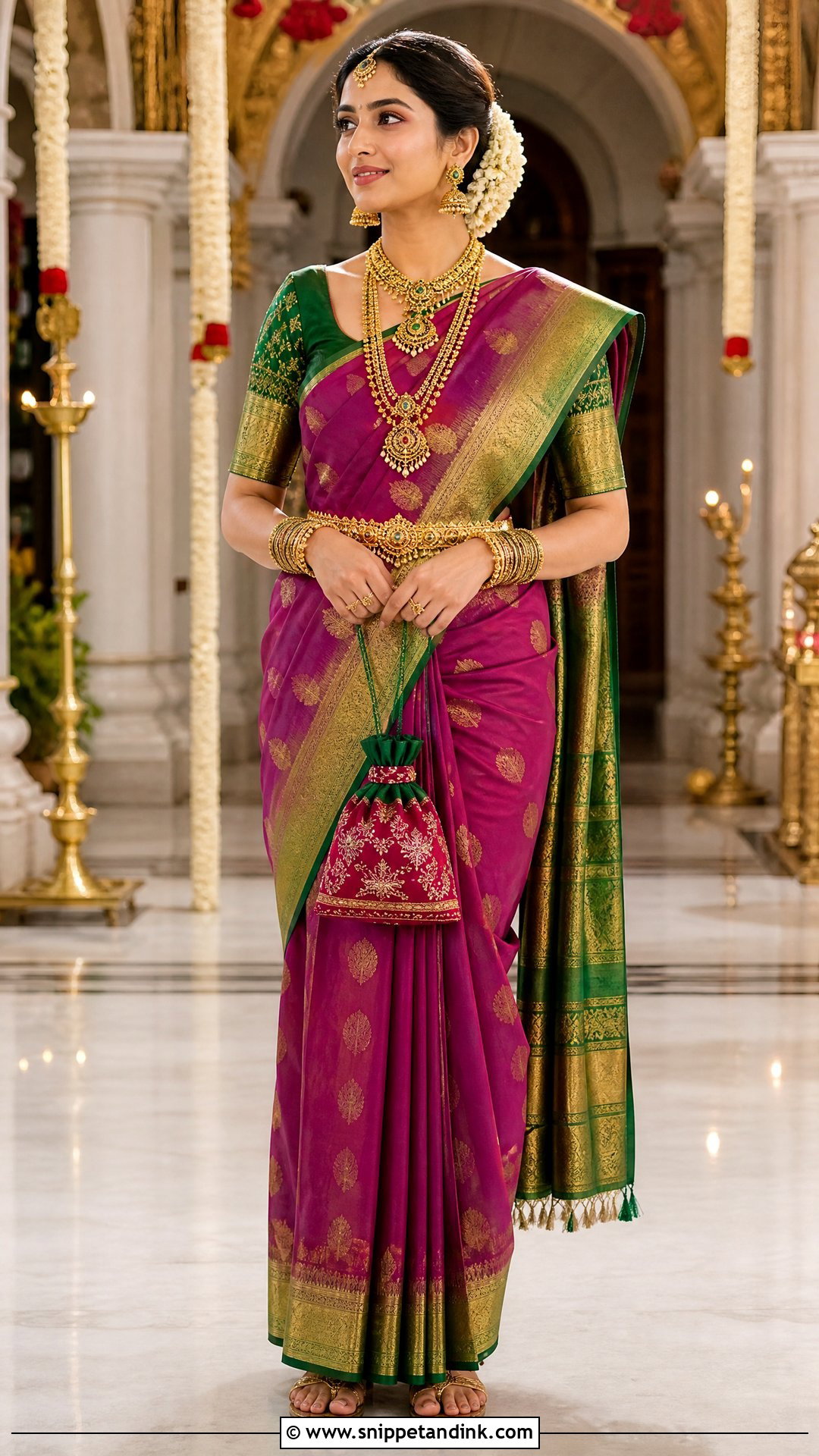
Gadwal saris pair a lighter cotton or silk body with silk borders and pallu, so you get a grand border without the full weight of an all-silk saree. Red, green, mustard or magenta with a contrasting gold zari pallu works well, with the blouse in the border colour. A short choker, long necklace, jhumkas, bangles and a fitted waist belt complete it; the belt also helps hold the drape. Wear a floral braid for the ceremony and switch to a jasmine bun to change the mood for the reception. Ask the draper to show off where the body meets the border.
11. Dharmavaram Silk Bridal Saree
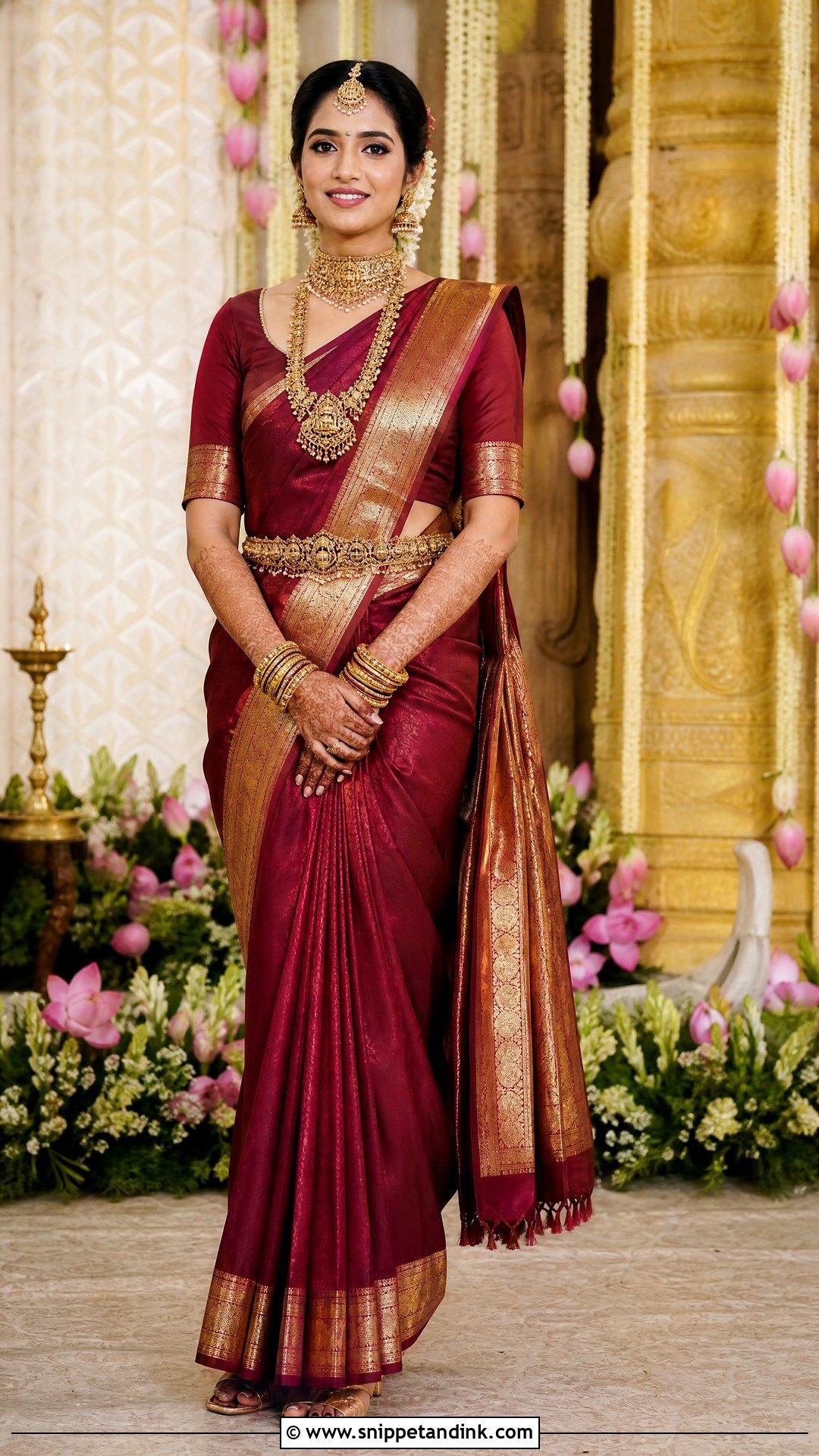
Dharmavaram silk is known for broad borders and a heavy, formal drape. Maroon, rust, crimson, green or mustard with dense zari on the pallu suit it. Match the blouse for one continuous colour, or choose a contrasting jewel tone. Traditional necklaces, a statement choker, jhumkas, bangles and an ornate waist belt hold their own against the weight of the fabric. A long decorated braid balances the visual weight. Keep the front pleats crisp and the hem just off the floor; heavy silk underfoot is how brides trip during the saptapadi. A medium bindi and gold cushioned sandals complete it.
12. Uppada Silk Bridal Saree
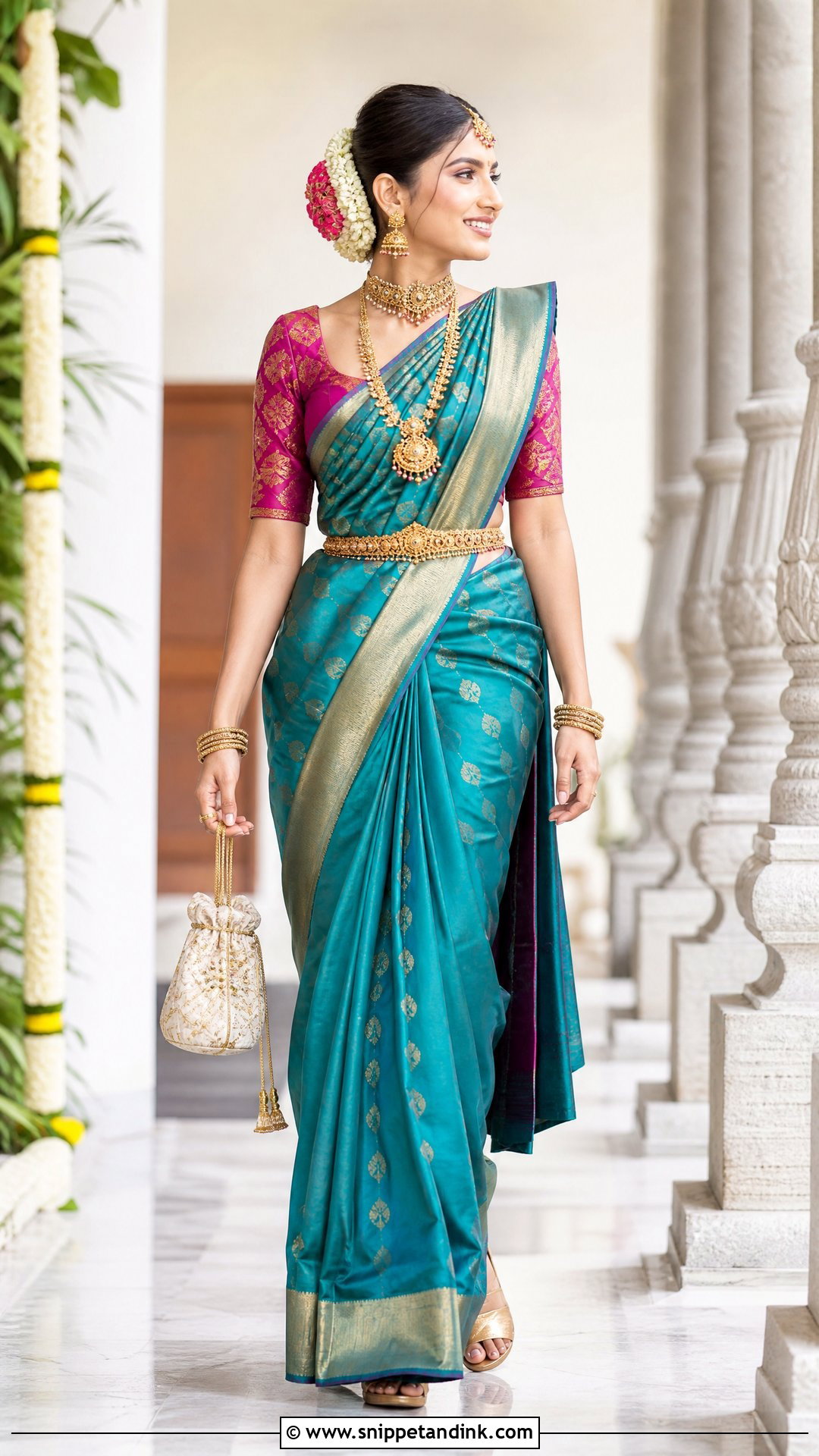
Uppada is a lighter, more fluid silk woven in the jamdani technique, and it moves beautifully, which makes it a good engagement, reception or small-wedding saree. Pink, teal, purple or red with fine gold motifs and a refined border suit it. A fitted silk blouse with elbow sleeves gives the soft fabric some structure. Pair it with a temple choker, long necklace, earrings, bangles and a slim belt rather than very heavy pieces, which drag a light saree out of shape. A low bun with jasmine or roses keeps it graceful. Metallic flats and a light potli finish it.
13. Pochampally Ikat Bridal Saree
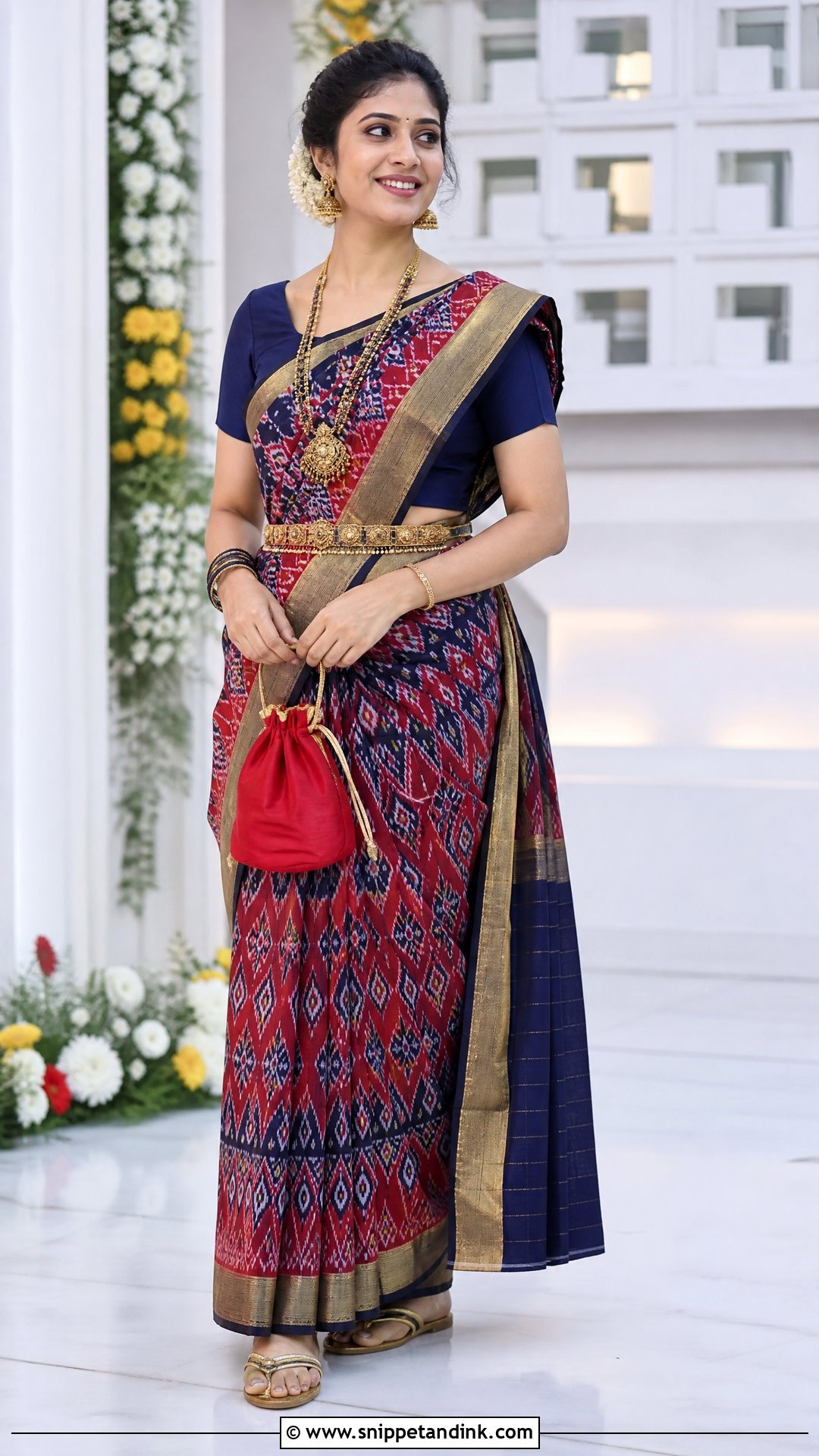
Pochampally ikat brings graphic pattern into bridal dressing: the threads are tie-dyed before weaving, which gives the slightly blurred edges you see on each motif. Silk in red, magenta, orange, green or navy with a gold border suits a ceremony. Since the weave is already busy, I’d pair it with a solid blouse in one of its main colours and keep embroidery to the sleeves or neck. Antique gold, a medium waist belt, jhumkas and coordinated bangles avoid clutter. A neat jasmine bun contrasts with the geometry; a long braid feels more traditional. Choose a plain potli.
14. Mysore Silk Bridal Saree
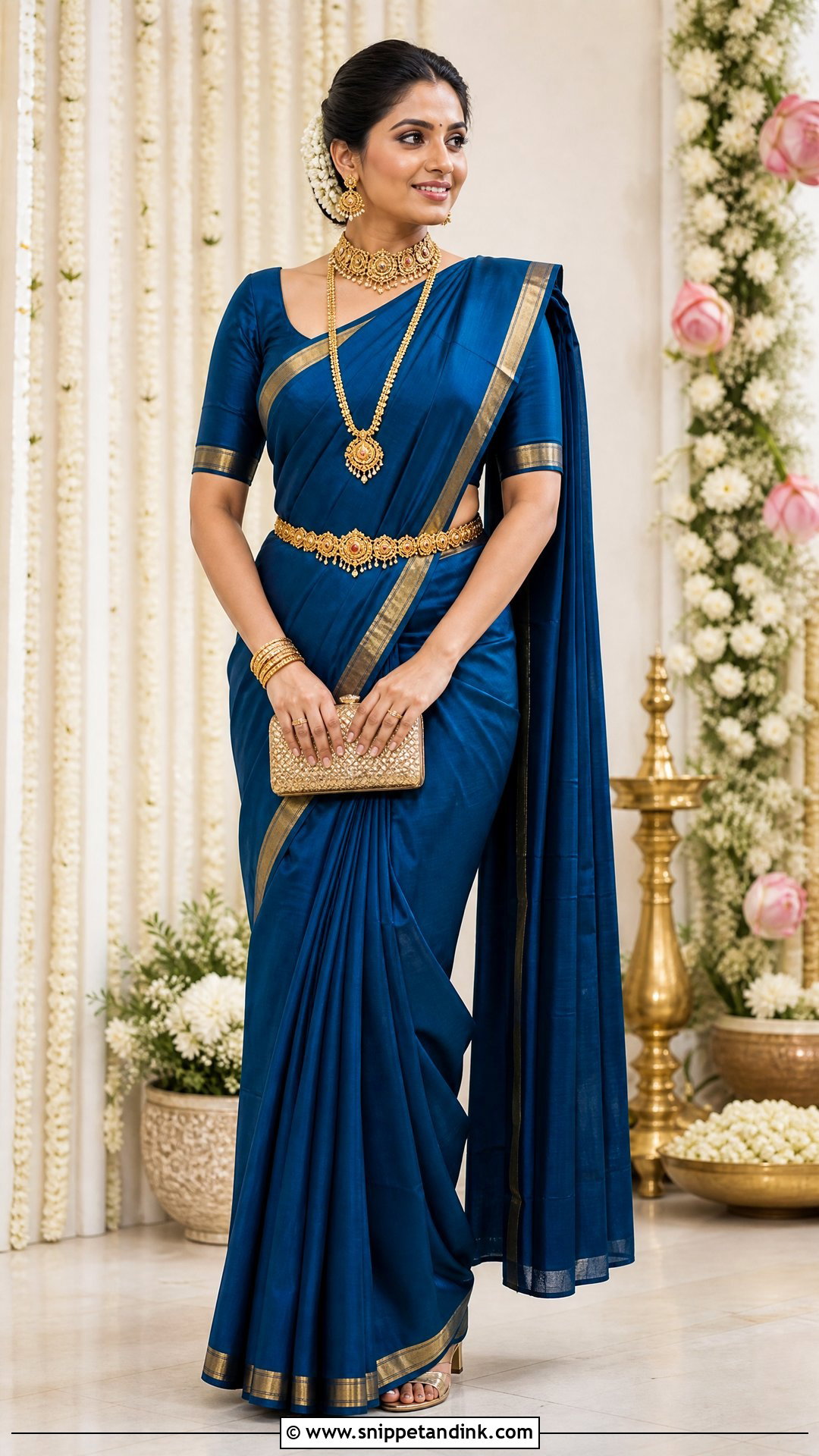
Mysore silk is smooth, light and has a soft sheen, so it’s my go-to suggestion for a bride who finds Kanjeevaram too heavy. Deep red, fuchsia, peacock blue, bottle green or purple with a classic gold border all work. A matching blouse gives one clean colour; a contrasting one shows off the border. With a plainer surface, jewellery takes the lead: a temple choker, long necklace, earrings, bangles and a slender belt. A polished jasmine bun or an ornamented braid both suit it. Pin the pallu firmly, as this silk is slippery and slides off the shoulder easily.
15. Ilkal Silk Bridal Saree
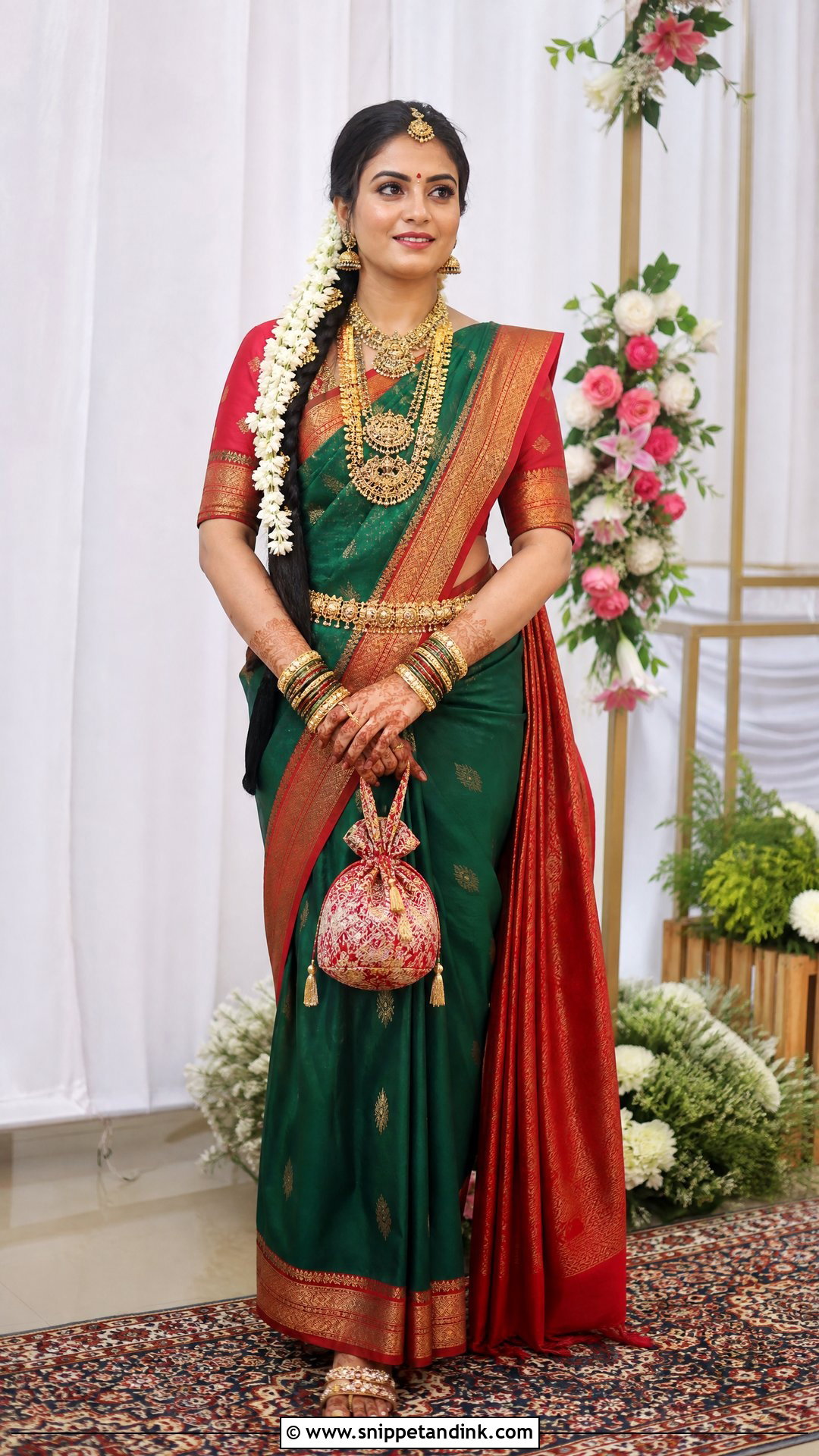
Ilkal sarees have a very particular construction: the pallu is traditionally joined to the body with an interlocking technique, often in a contrasting red with a white pattern. Pick a red, green, purple or mustard body and match the blouse to the border. Keep the blouse simple so the weave stays the focus. Layered gold necklaces, jhumkas, bangles and a traditional waist belt give it ceremony-level weight. A long braid with jasmine and gold suits its regional character. Arrange the pallu so its contrast shows from front and back. A red bindi, kohl and gold sandals finish it.
16. Kodava Bridal Saree
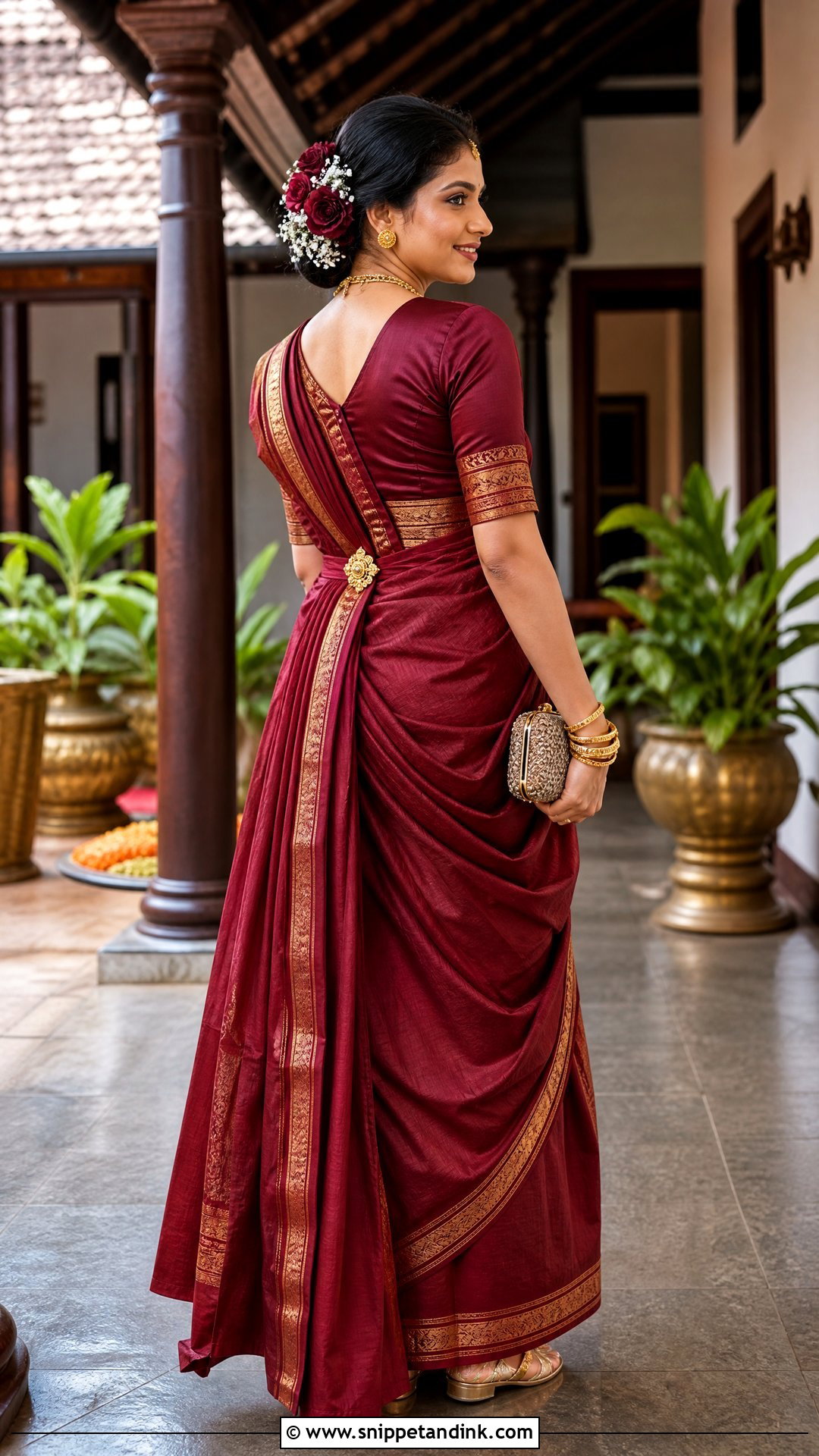
The Kodava drape is unlike any other South Indian style: the pleats sit at the back and the pallu is brought from the back over the right shoulder and pinned. Choose silk in red, maroon, green or cream with a rich border, and a fitted blouse that doesn’t add bulk under the drape. Traditional gold jewellery, earrings, bangles and a statement necklace complete it, with a waist ornament if your family wears one. A tidy flowered bun keeps the drape the focus. Have someone experienced in Kodava dressing tie it; the structure is too different from a standard drape to learn the night before. Follow your family’s guidance throughout.
17. Madisar Bridal Saree
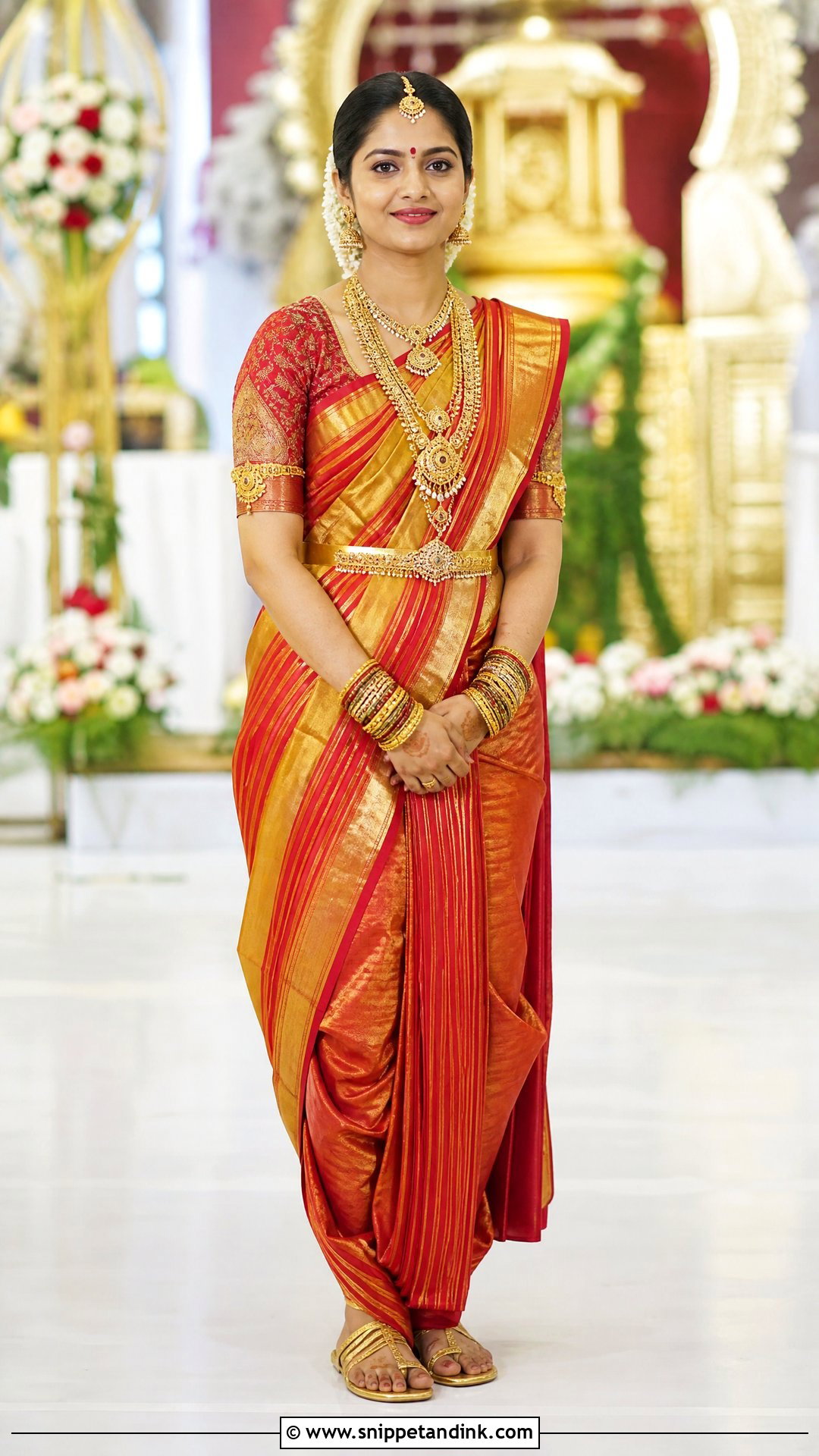
The Madisar is the nine-yard drape worn by brides in particular Tamil Brahmin communities, and the exact method varies between families, so follow yours. Red, maroon, mustard or green silk with a strong gold border, with a fitted blouse in a coordinating colour, is typical. Layer temple necklaces, bangles, earrings, armlets and any ceremonial pieces your family uses. A long jasmine braid or a traditional bun keeps it formal. The drape uses a lot of fabric between the legs, so book a practice session with whoever will tie it, and wear fitted shorts underneath for security. Flat gold sandals complete it.
18. South Indian Half Saree Bridal Outfit
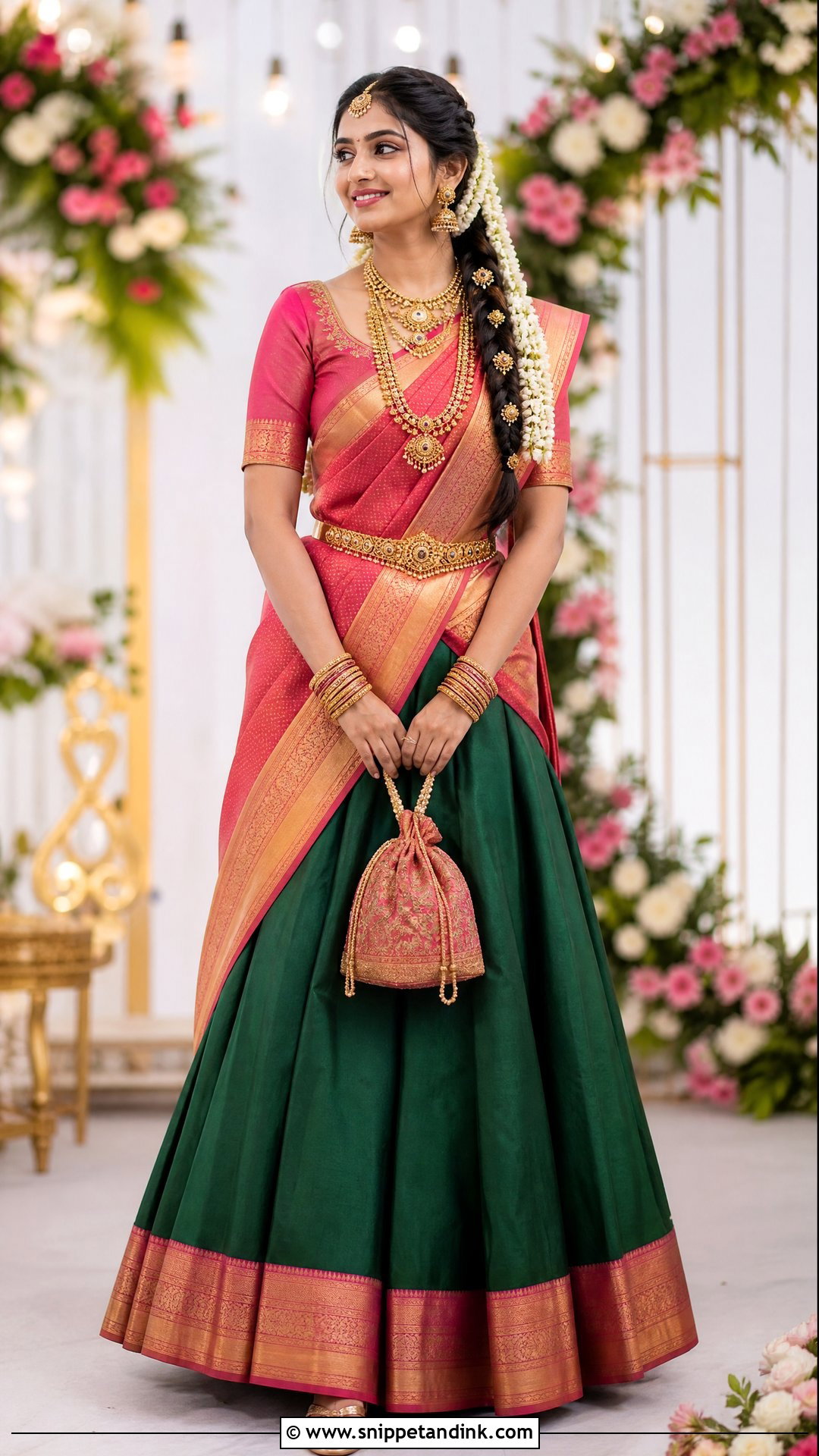
The half saree, or langa voni, is a three-piece outfit: a silk skirt, a fitted blouse and a contrasting voni draped like a pallu. It’s long been part of South Indian dressing, especially for younger women, and it’s the root of today’s lehenga-saree shapes. I like it for an engagement, pre-wedding ceremony or reception. Green and pink, purple and mustard, or red and gold all work, with zari borders repeated across all three pieces. Layered gold necklaces, jhumkas, bangles and a flower-decorated braid finish it. The waist belt does real work here, holding the voni in place over the skirt.
19. Kanjeevaram Bridal Lehenga
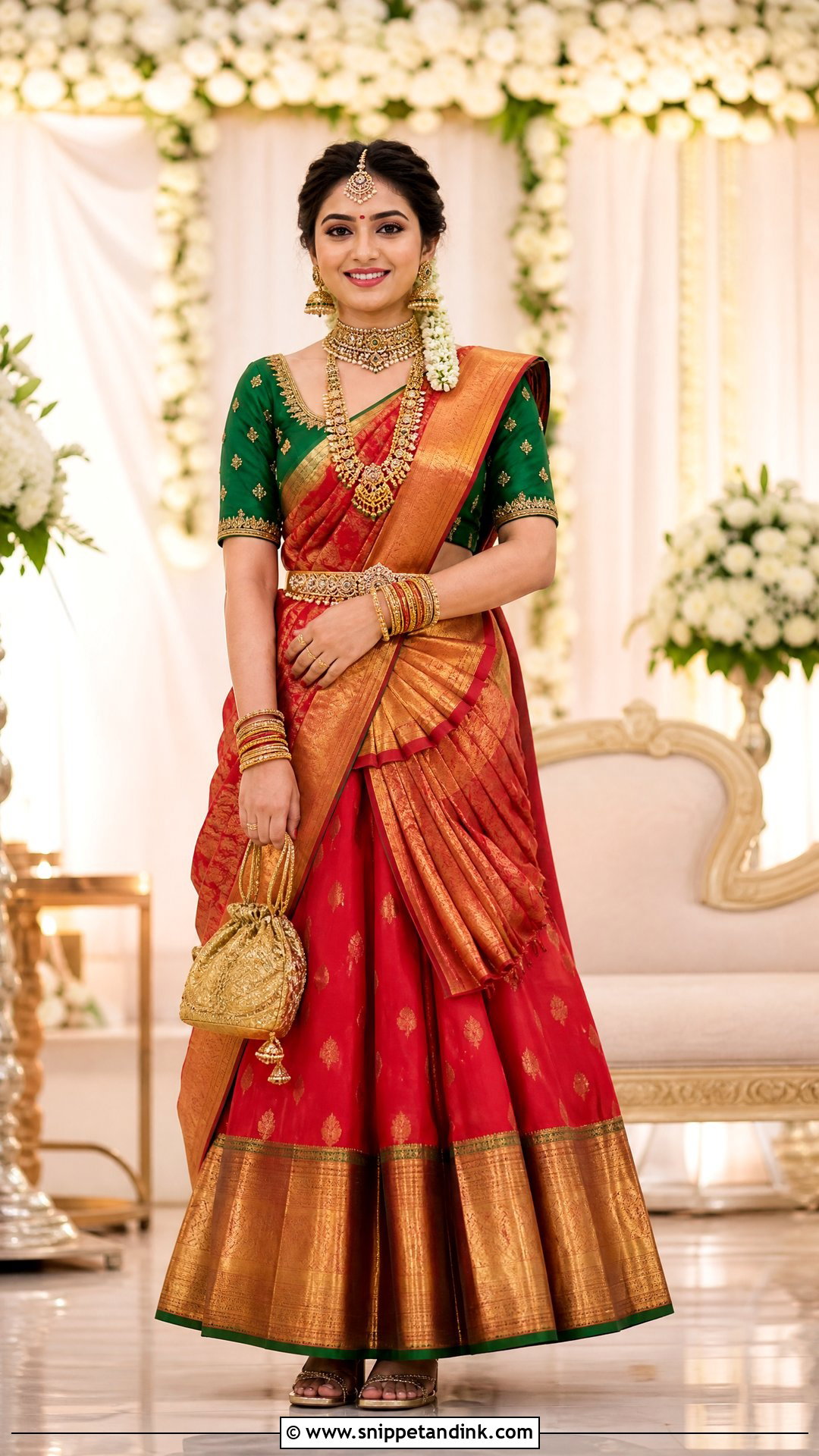
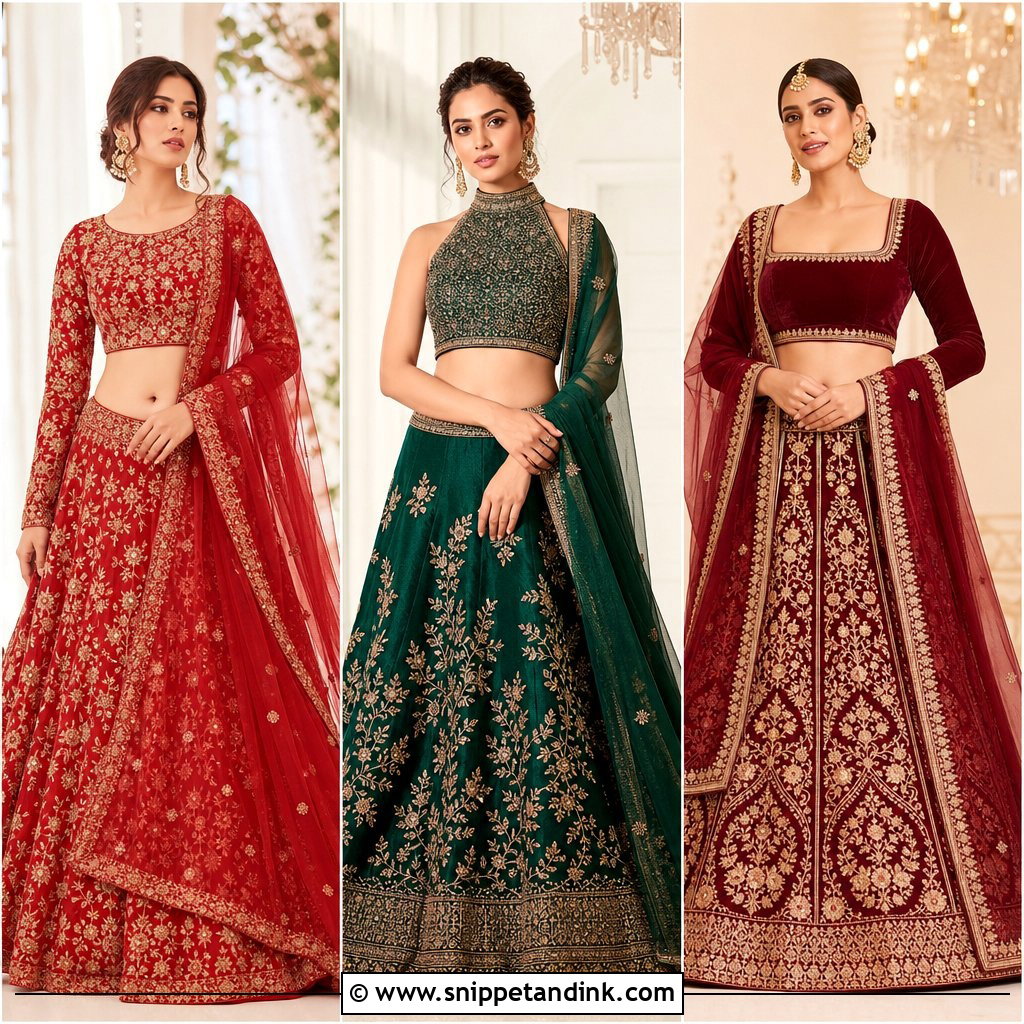
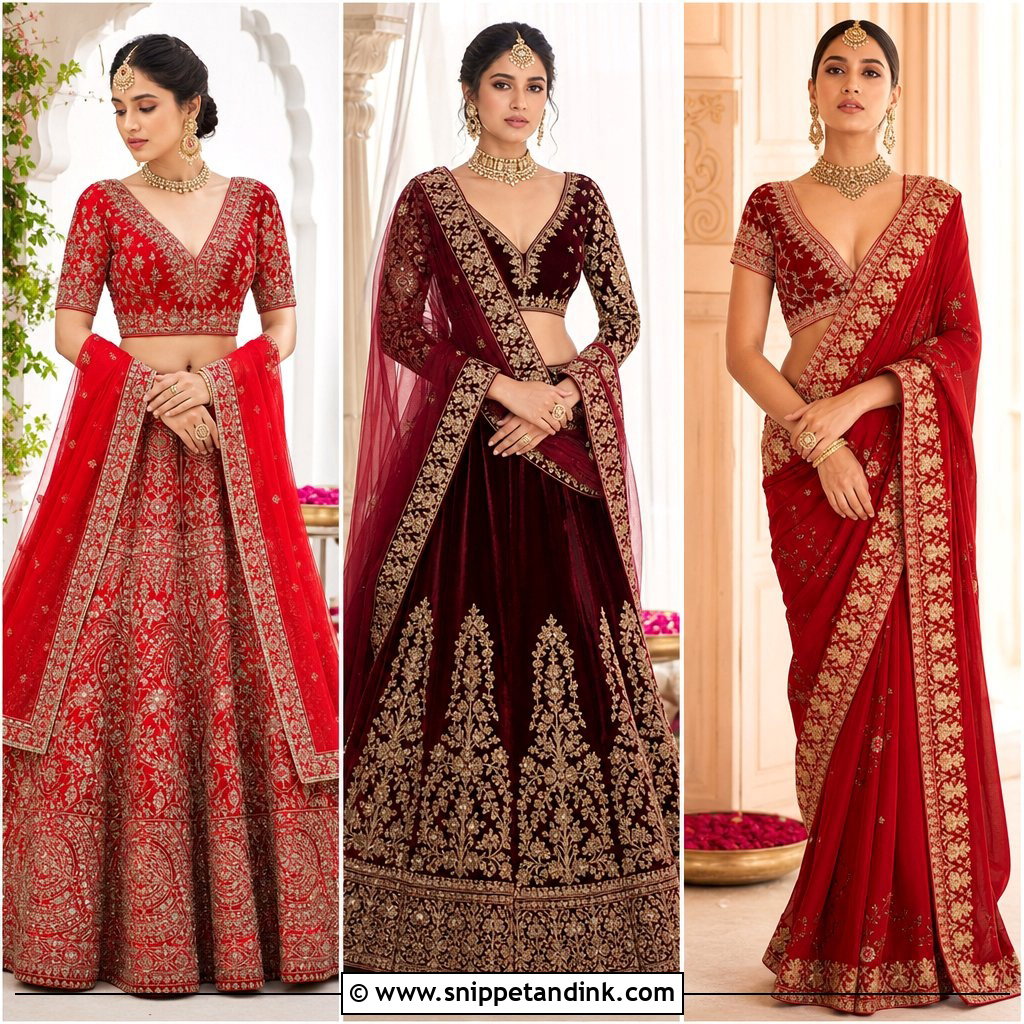
A Kanjeevaram bridal lehenga puts South Indian silk into a skirt, so you get the fabric without managing six yards. A full silk skirt with a broad zari border, a fitted blouse and a dupatta pleated over one shoulder like a pallu is the shape. Red and gold is traditional; green and pink or purple and mustard are livelier. Temple jewellery ties it back to South Indian bridal dressing: a choker, long necklace, jhumkas, bangles, belt and braid ornaments. One honest caution: a full Kanjeevaram skirt is heavy at the waist, so ask for a broad, firm waistband. It suits receptions, sangeets and mixed-tradition weddings.
20. Pastel Organza Bridal Saree
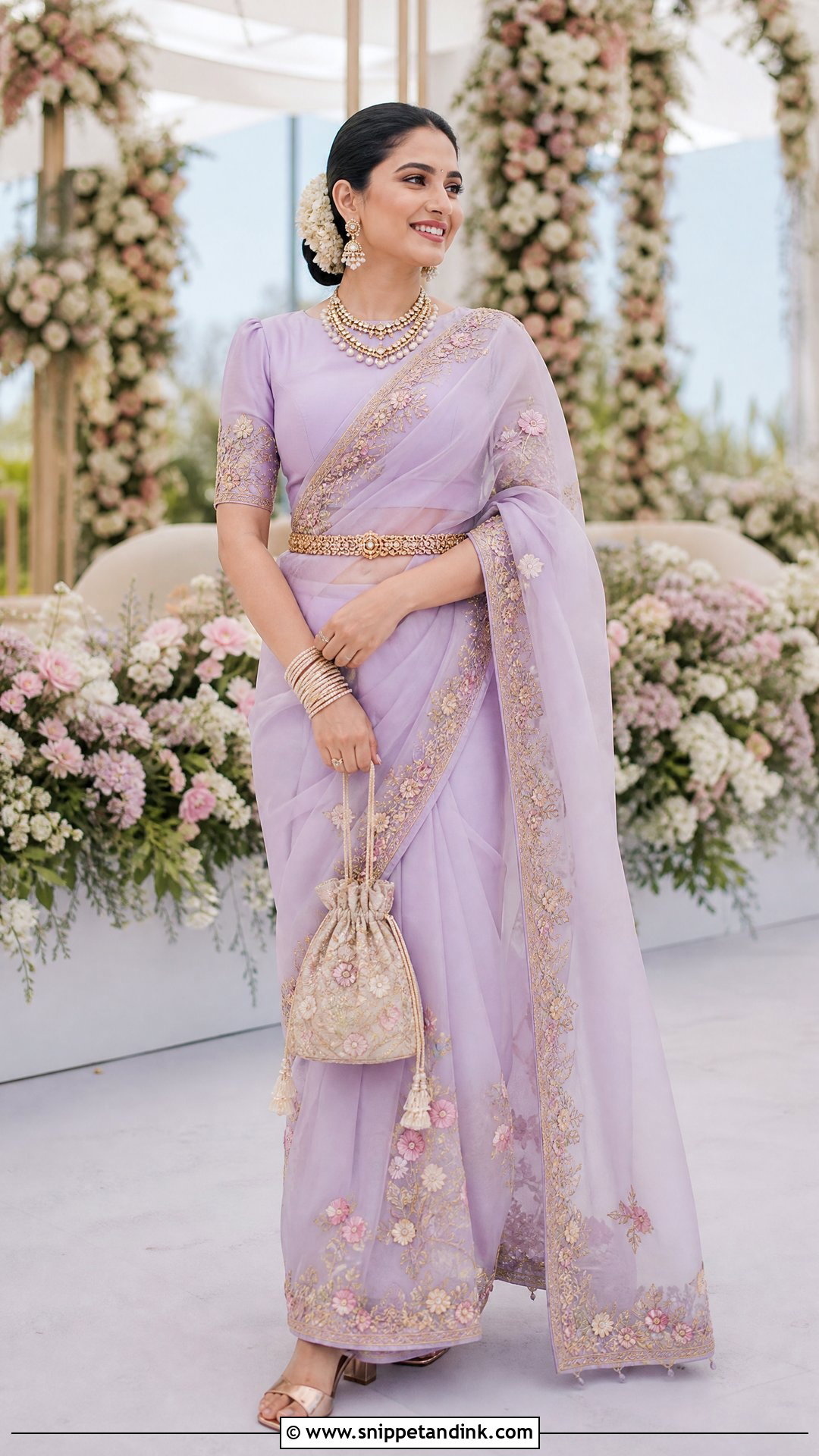
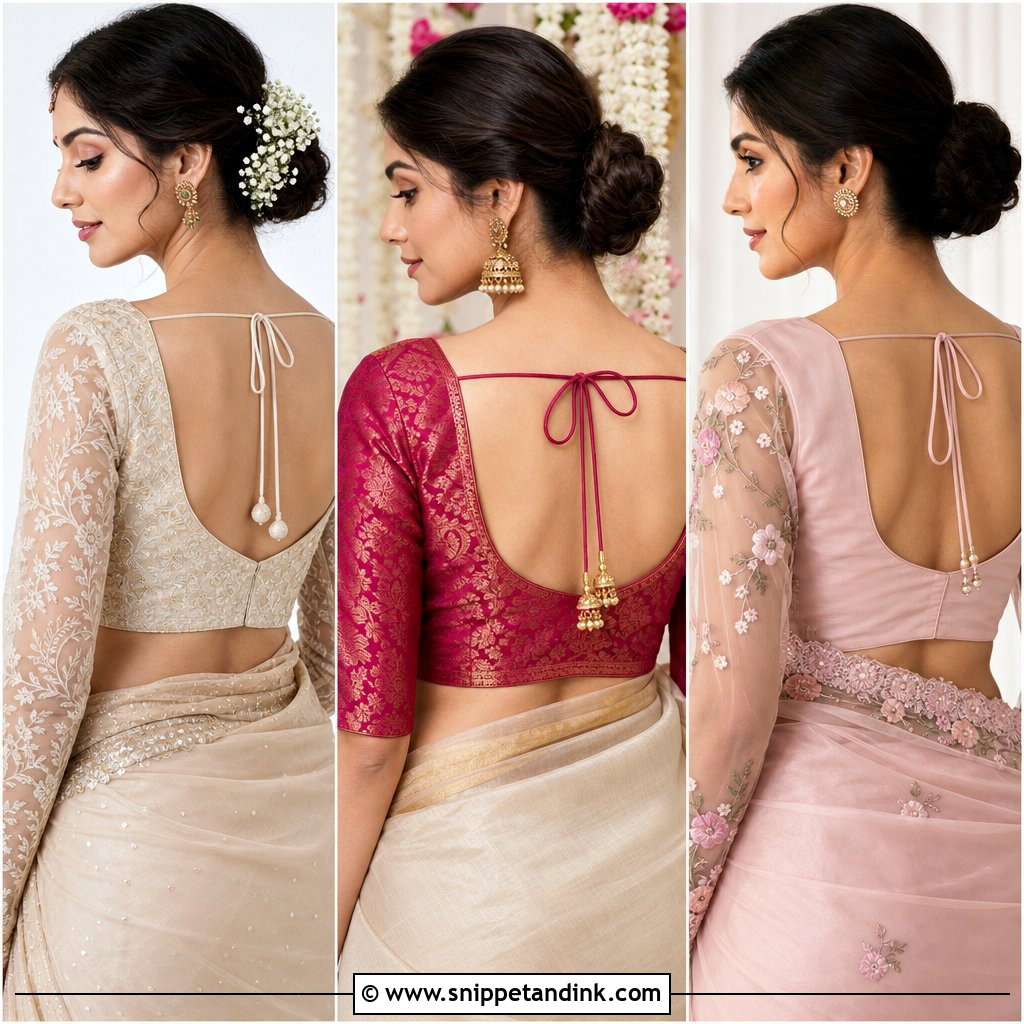
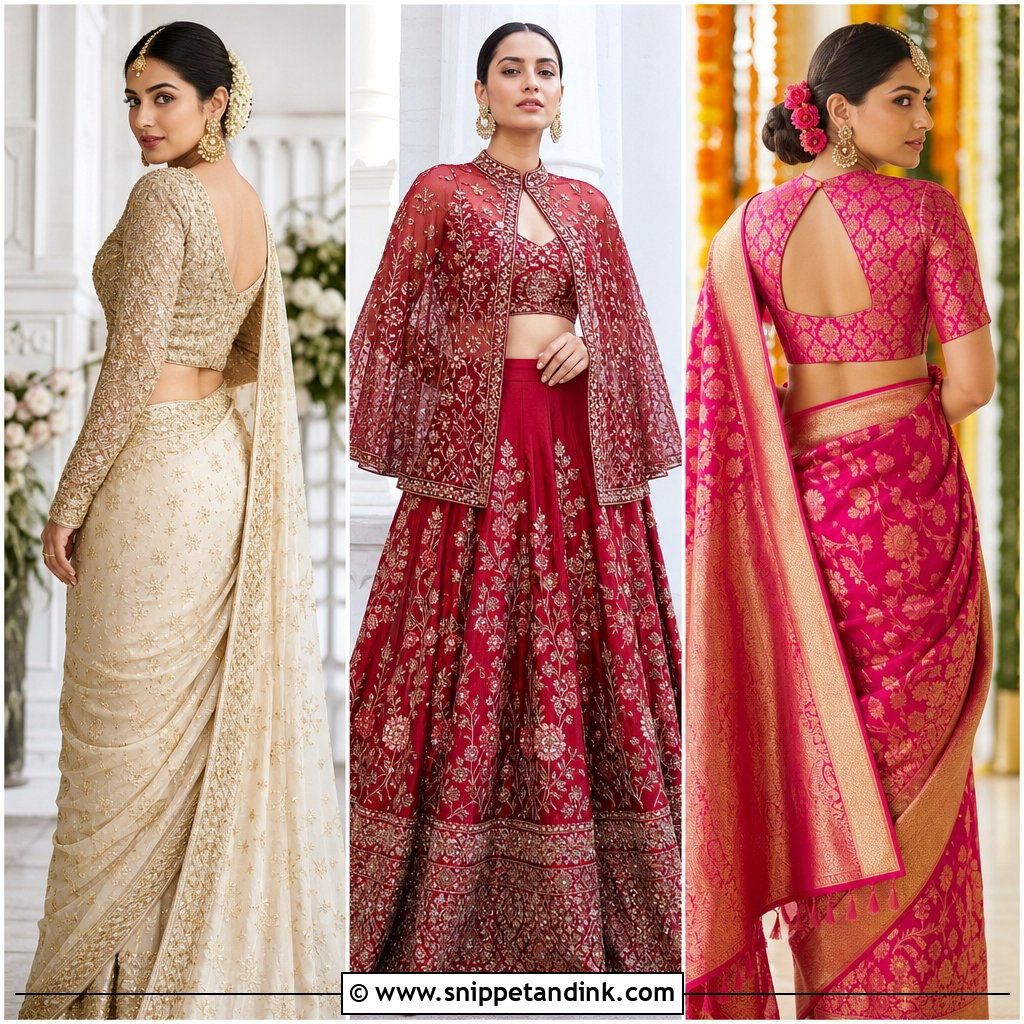
Pastel organza is the lightest look here, made for a reception or a daytime event. Blush, powder blue, mint, lavender or peach with a gold border or fine floral embroidery all work. A structured silk blouse stops the sheer fabric looking casual. Temple jewellery adds traditional contrast; pearls and coloured stones suit the soft palette. A slim waist belt holds the drape. Organza is crisp, so it doesn’t fall as flat as silk; ask the draper to press the pleats in place with pins on the inside. A low bun with jasmine or small white flowers, luminous skin and a rose lip complete it.
Wearing a Heavy Silk Through Hours of Rituals
A full bridal Kanjeevaram or Dharmavaram can weigh well over a kilo before the jewellery goes on, and most of that weight hangs from one shoulder and the waist. Plan for it the way you’d plan for a long walk.
- Ask your tailor to add a little padding inside the blouse at the pallu shoulder; it spreads the pressure of the pinned fabric.
- Use a firm cotton petticoat tied tightly. Silk petticoats slip under heavy pleats.
- Practise sitting cross-legged on the floor in the full drape during your trial. If the pleats pull or the hem lifts, the draper can adjust before the day.
- Keep a helper close during the ceremony to lift the pallu when you stand up, so it isn’t stepped on.
Folding, Airing and Wrapping Your Wedding Silk Afterwards
Zari breaks along sharp folds over time, and that’s the most common damage I see on silk sarees kept for years. After the wedding, have it dry cleaned by someone experienced with silk if it’s stained. Otherwise, air it in the shade for a few hours.
Wrap it in soft cotton or muslin, never plastic, which traps moisture. Every few months, unfold it and refold it along different lines so the zari doesn’t crack in one place. Keep mothballs out of direct contact, since they can tarnish the metallic thread; a few dried neem leaves or cloves in the cupboard is a gentler option. Stored this way, the saree can be passed on to the next bride in the family.
From Muhurtham Silk to Reception Organza
South Indian bridal outfits work best when regional tradition, your own taste and practical comfort all get a say. A red Kanjeevaram may suit the main ceremony, while a half saree, an organza drape or a silk lehenga brings variety to the other events. Before you choose, think about the venue, the length of the rituals, family customs, the weight of the silk and how much you’ll stand, sit and walk. Book blouse fittings and a draping trial well ahead. Then let the jewellery, flowers, shoes and hair support the cloth, because in this tradition the silk is meant to be remembered.
You'll Like These Ideas:


Leave a Reply