
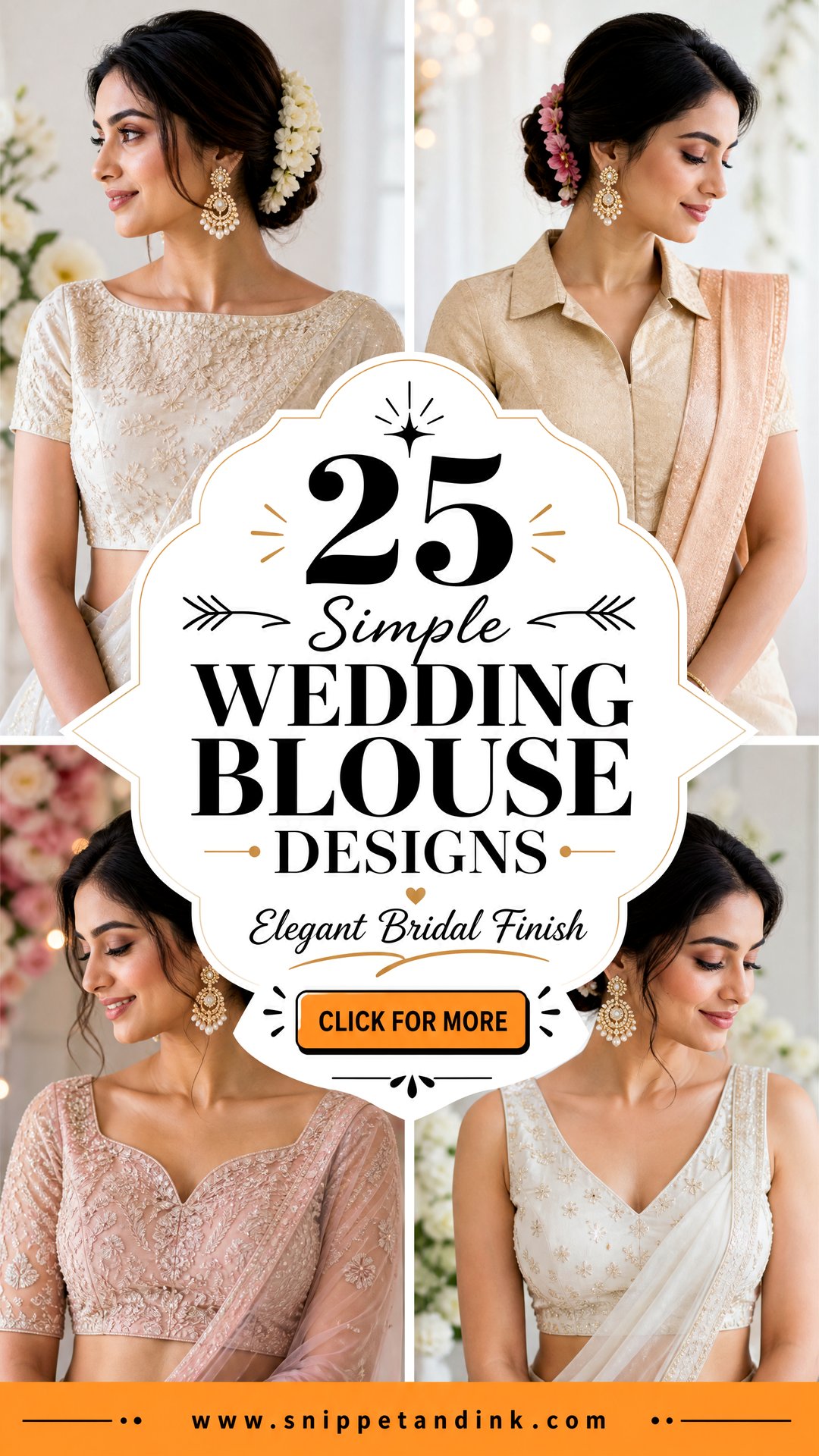
Ask anyone who has worn a saree through a twelve-hour wedding and she’ll tell you the blouse decides how the day goes. A saree can be borrowed or rented; a blouse has to fit you. A plainer blouse also leaves room for the jewellery, the dupatta and the hair to shine without the whole outfit fighting itself. Here are 25 blouse ideas, from round necks and collars to organza sleeves and pearl edging, that suit sarees, lehengas and modern drapes, with notes on fabric and what to tell your tailor for each.
What Your Tailor Needs From You, and When
Most blouse disappointments come down to time and information. A plain blouse can be stitched in a week or two, but embroidered or wedding-season work often takes longer, and good tailors get booked solid before the big wedding months. I tell brides to hand over fabric at least six to eight weeks ahead, longer for anything with hand embroidery.
Take these with you to the first appointment:
- An old blouse that fits you well. Tailors can copy a good fit faster and more accurately than they can work from a measuring tape alone.
- The bra you’ll wear on the day, or ask for cups stitched in so you need none.
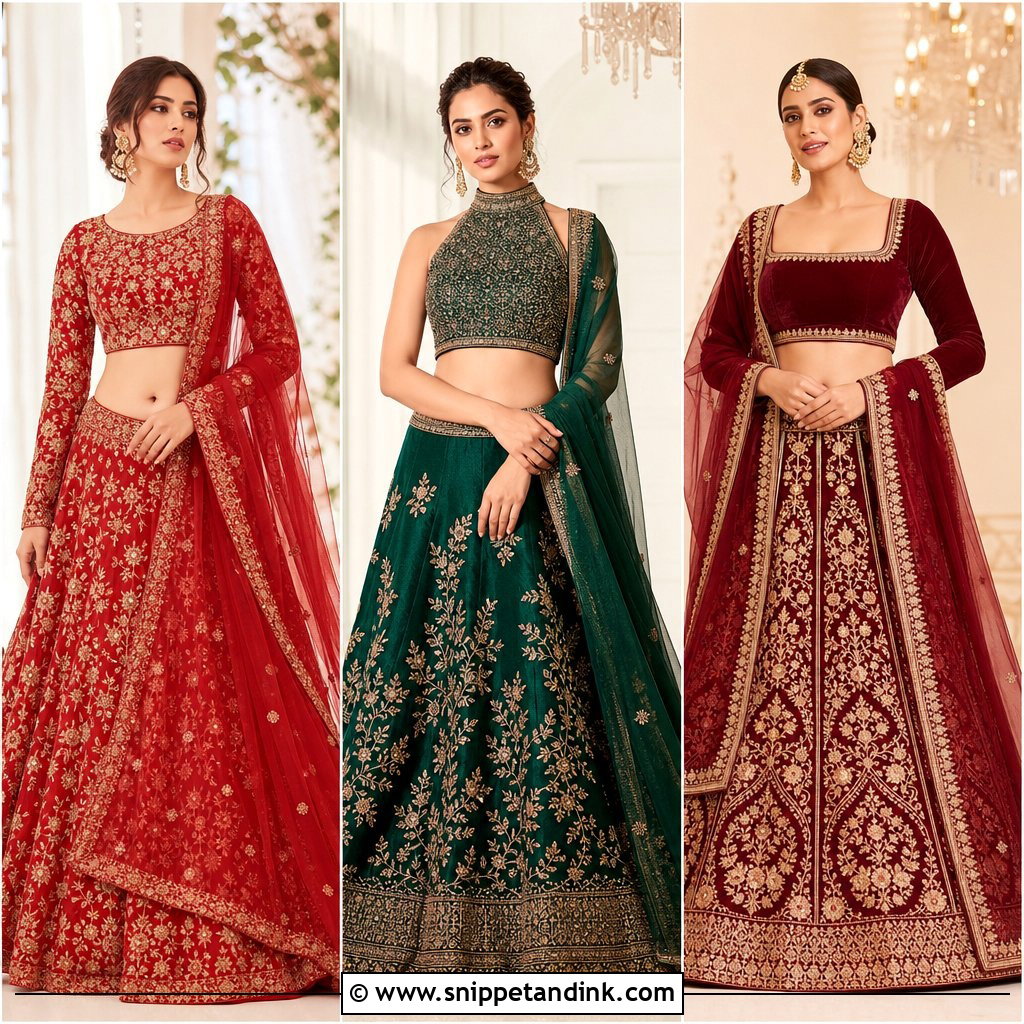
- The saree or lehenga itself, so the neckline depth and border can be matched to the drape.
- A clear note on closures: front hooks, back hooks, side zip or dori. Front hooks are easiest to dress yourself in.
Ask for a trial before the final stitching of any embroidery, and for wide seam allowances so the blouse can be adjusted later.
1. Simple Round Neck Wedding Blouse Design
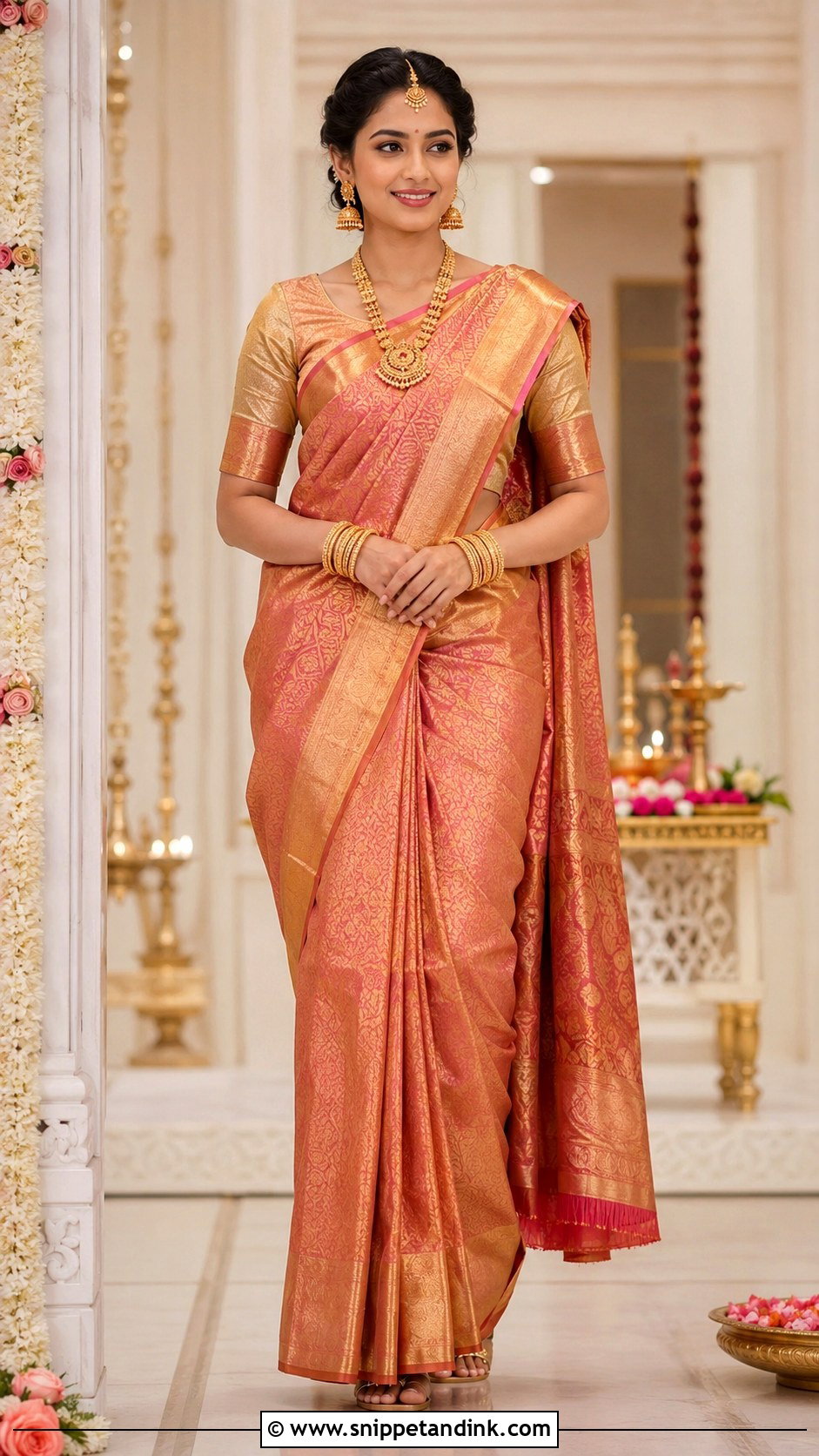
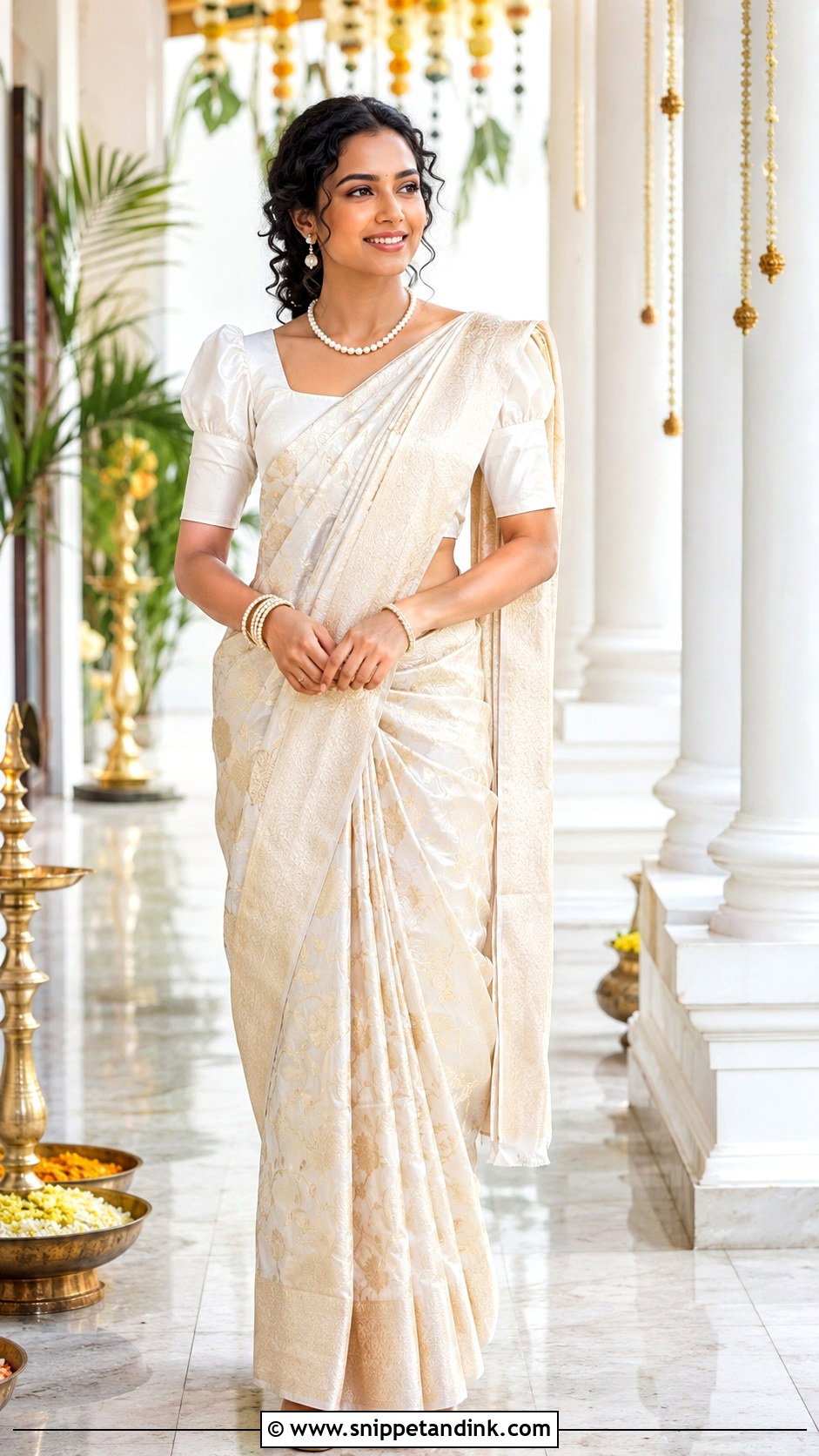
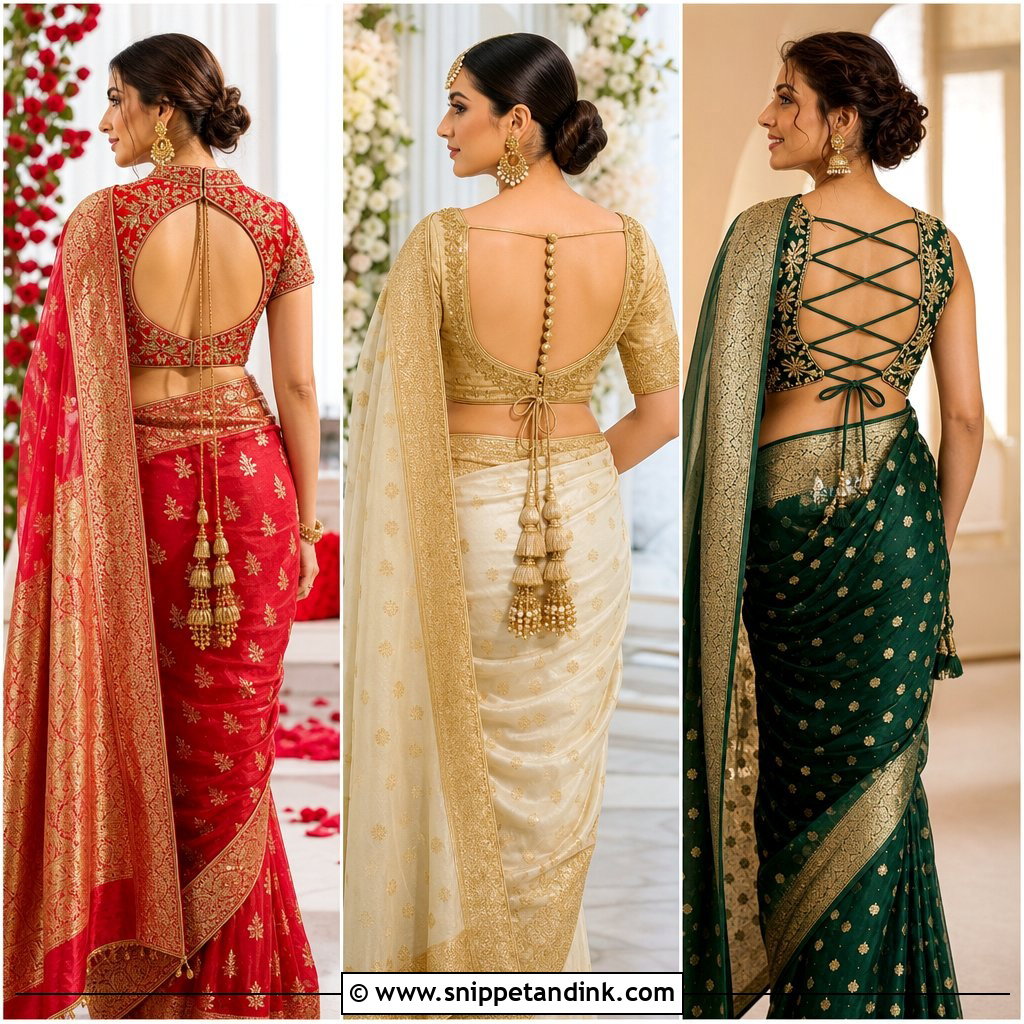
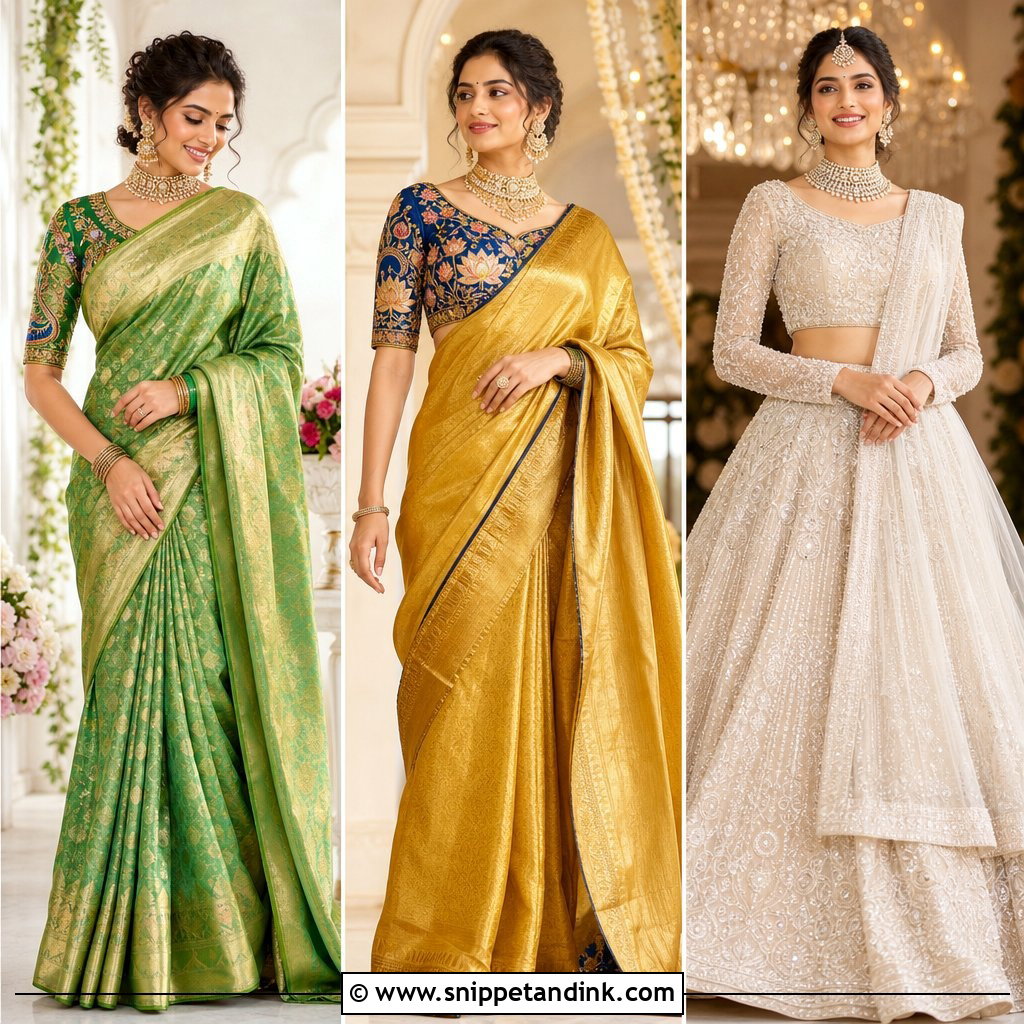
Round necks are the shape I’d start any wardrobe with, because they suit almost every saree and don’t need adjusting during long ceremonies. Silk, brocade, raw silk, cotton silk and satin all work. A fitted version with elbow sleeves, thin piping and a little embroidery at the neck goes beautifully with temple jewellery and a neat bun. Balance it against the saree: if the saree is heavily woven, keep the blouse almost plain; if the saree is simple, add pearl edging or delicate zari work for a more festive finish.
2. Simple Boat Neck Wedding Blouse Design
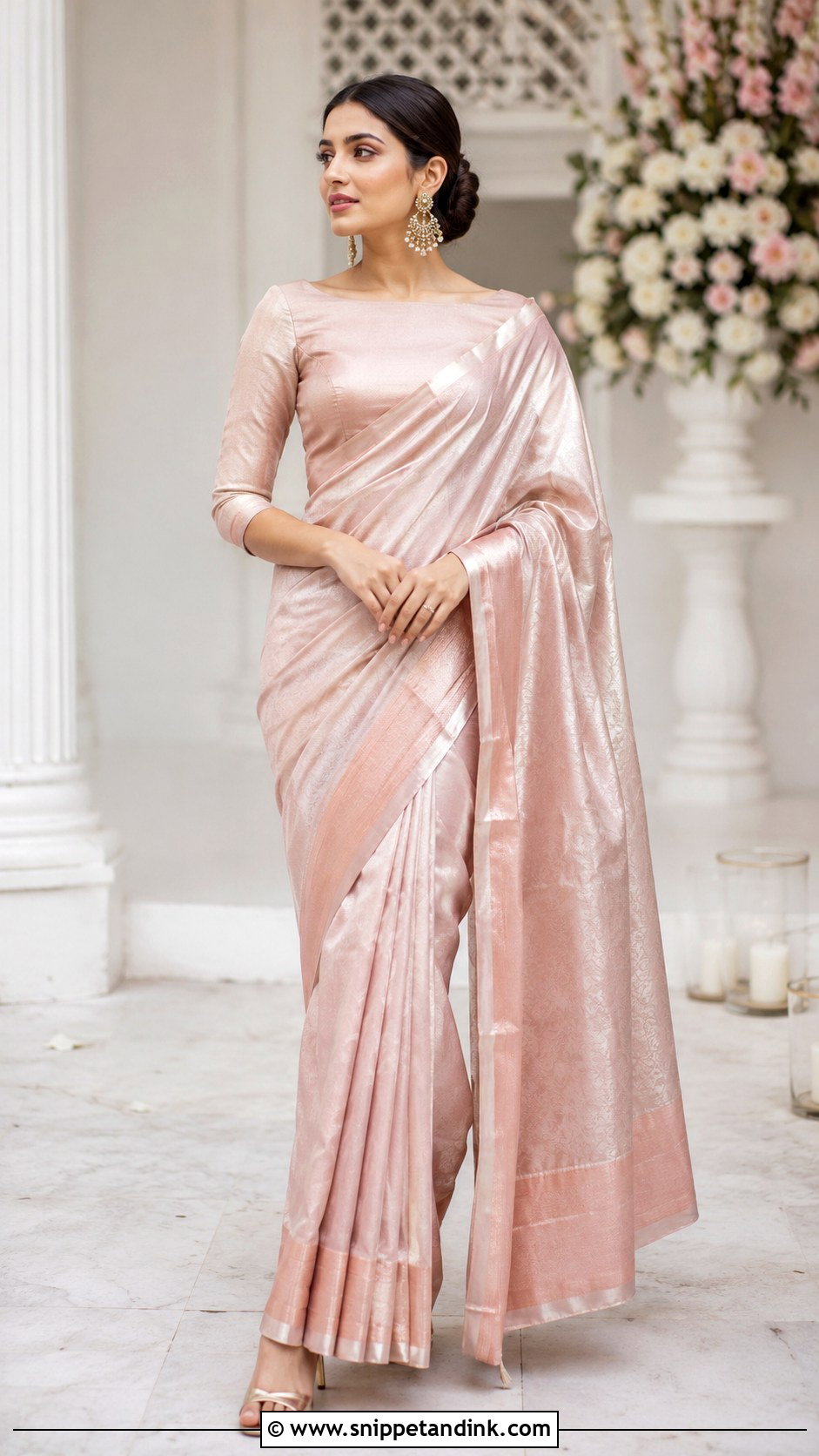
Boat necks sit wide across the collarbone, which frees up the neck for statement earrings instead of a heavy necklace. The risk is slippage: a boat neck cut even slightly too wide slides off one shoulder all day. I ask tailors to add a small lingerie strap holder inside each shoulder, a tiny popper that clips around your bra strap. Three-quarter sleeves look refined for a wedding. A soft zari border or a plain contrast fabric is enough detail with chiffon, silk or a light lehenga.
3. Simple V Neck Wedding Blouse Design
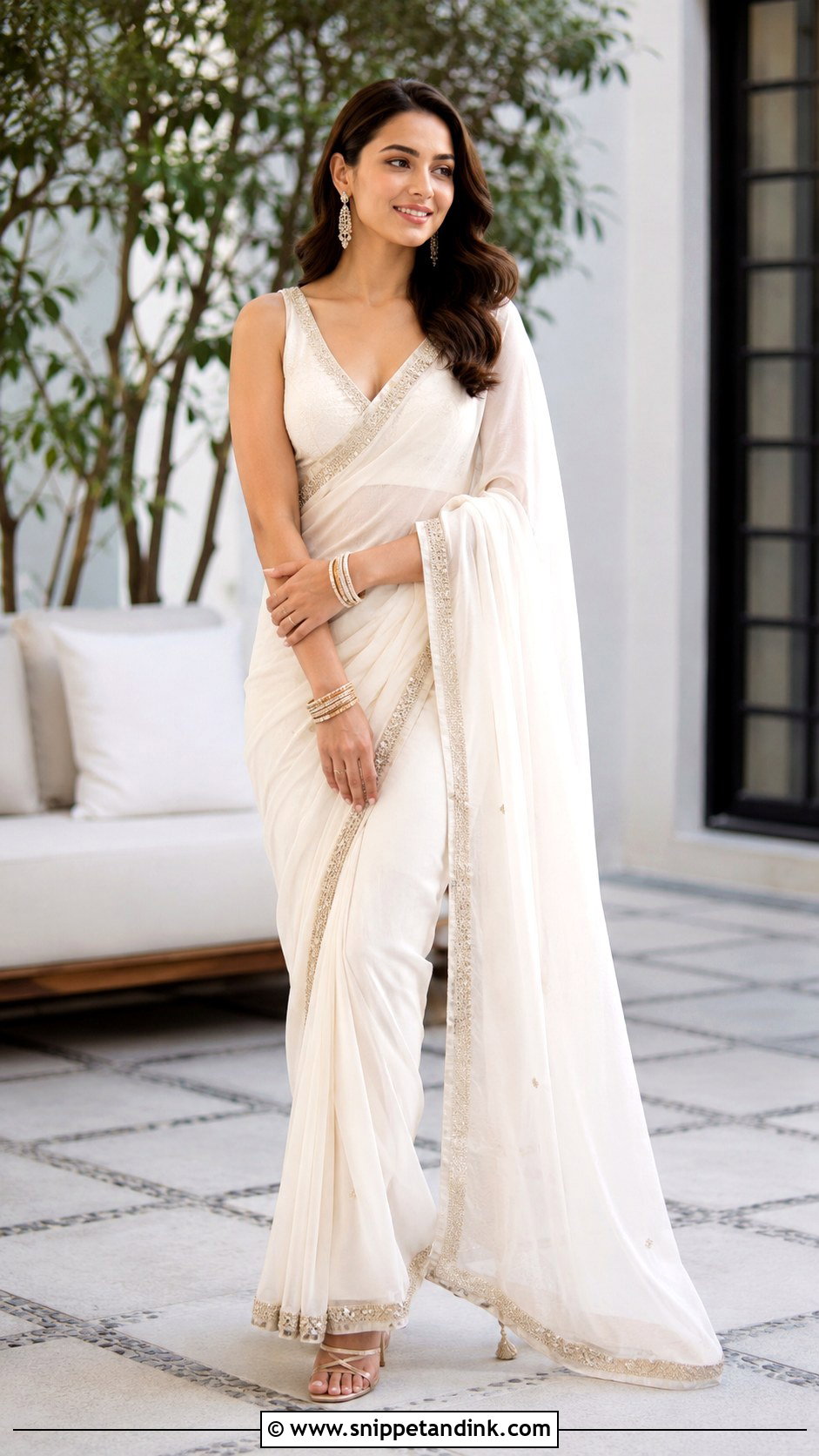
V necks lengthen the neckline and sit equally well under a fine chain or a traditional choker. For a wedding I’d keep the depth moderate; a deep V on a stiff fabric like brocade or tissue gapes forward when you bend to touch elders’ feet or sit for rituals. Raw silk, velvet, brocade and tissue all suit it, with a narrow gold border along the edge. Georgette sarees, soft curls and drop earrings complete it, and it works under a lehenga too.
4. Simple Square Neck Wedding Blouse Design
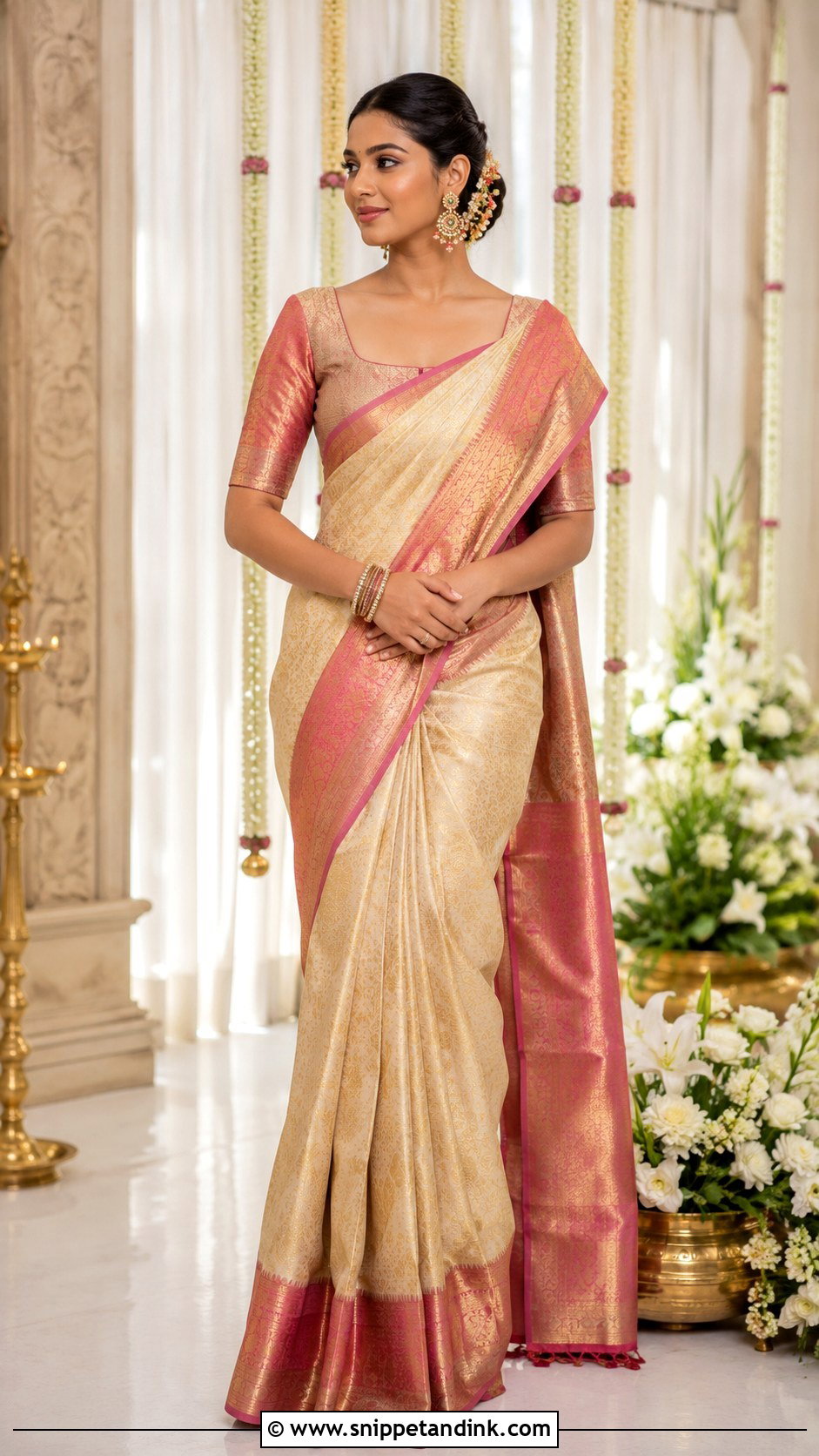
The straight lines of a square neck balance the soft curves of a saree drape. It’s a favourite of mine for sisters of the bride, who want something noticeable but not bridal. Short sleeves look youthful, elbow sleeves more classic. In silk with small butti embroidery, it sits well with a Kanjeevaram, kundan earrings and a sleek bun. The corners only stay crisp if the fit at the shoulder and bust is exact; any looseness and they fold inward.
5. Simple U Neck Wedding Blouse Design
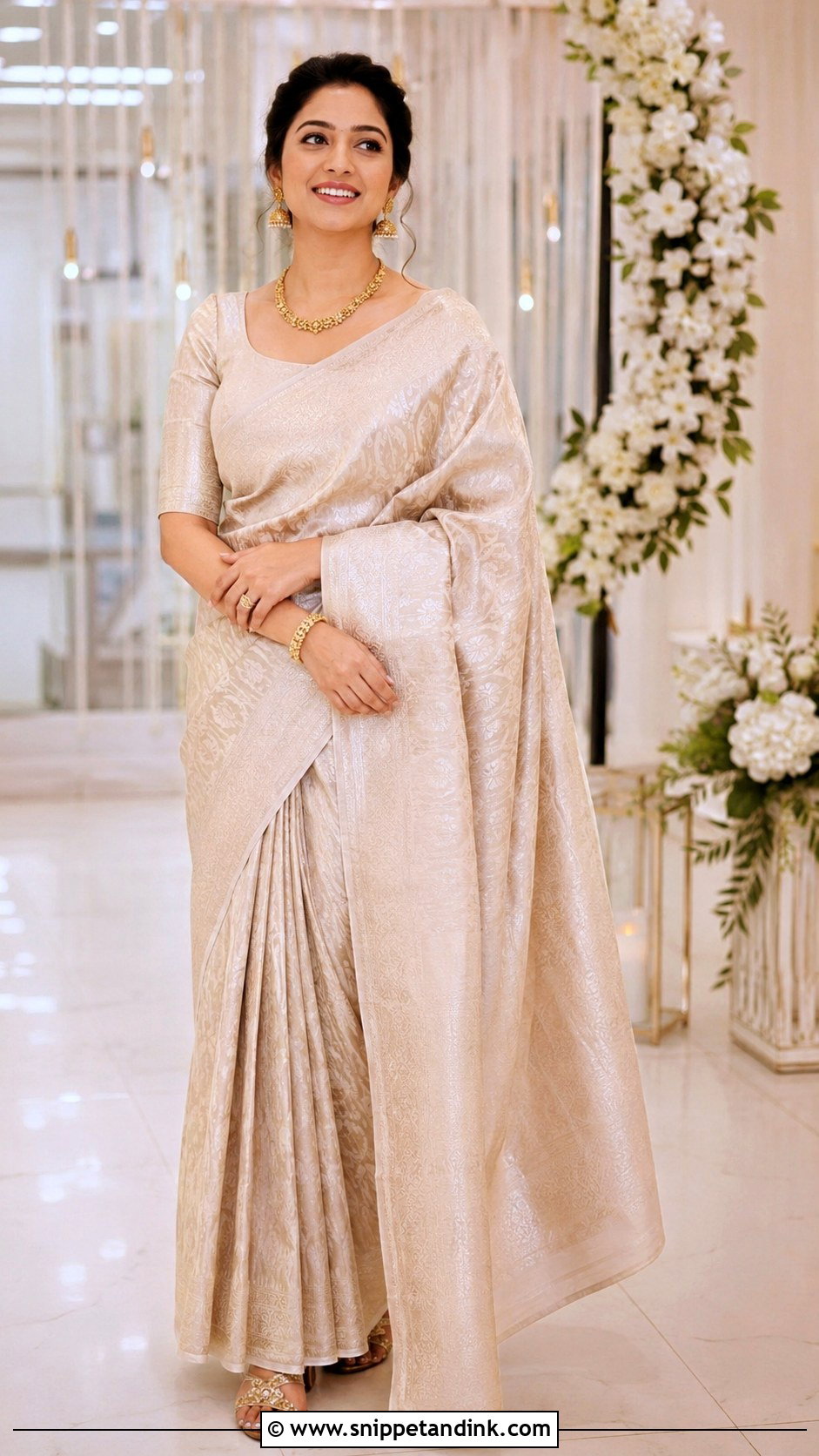
Comfort is the main reason to pick a U neck. The curve is softer than a V and sits flatter against the skin through long ceremonies. It suits silk, Banarasi and organza sarees and embroidered lehengas. A thin zari border at the neck and sleeves, maybe tiny sequins or thread motifs, keeps it festive but light. A simple gold necklace, jhumkas and a small bindi are all I’d add.
6. Simple High Neck Wedding Blouse Design
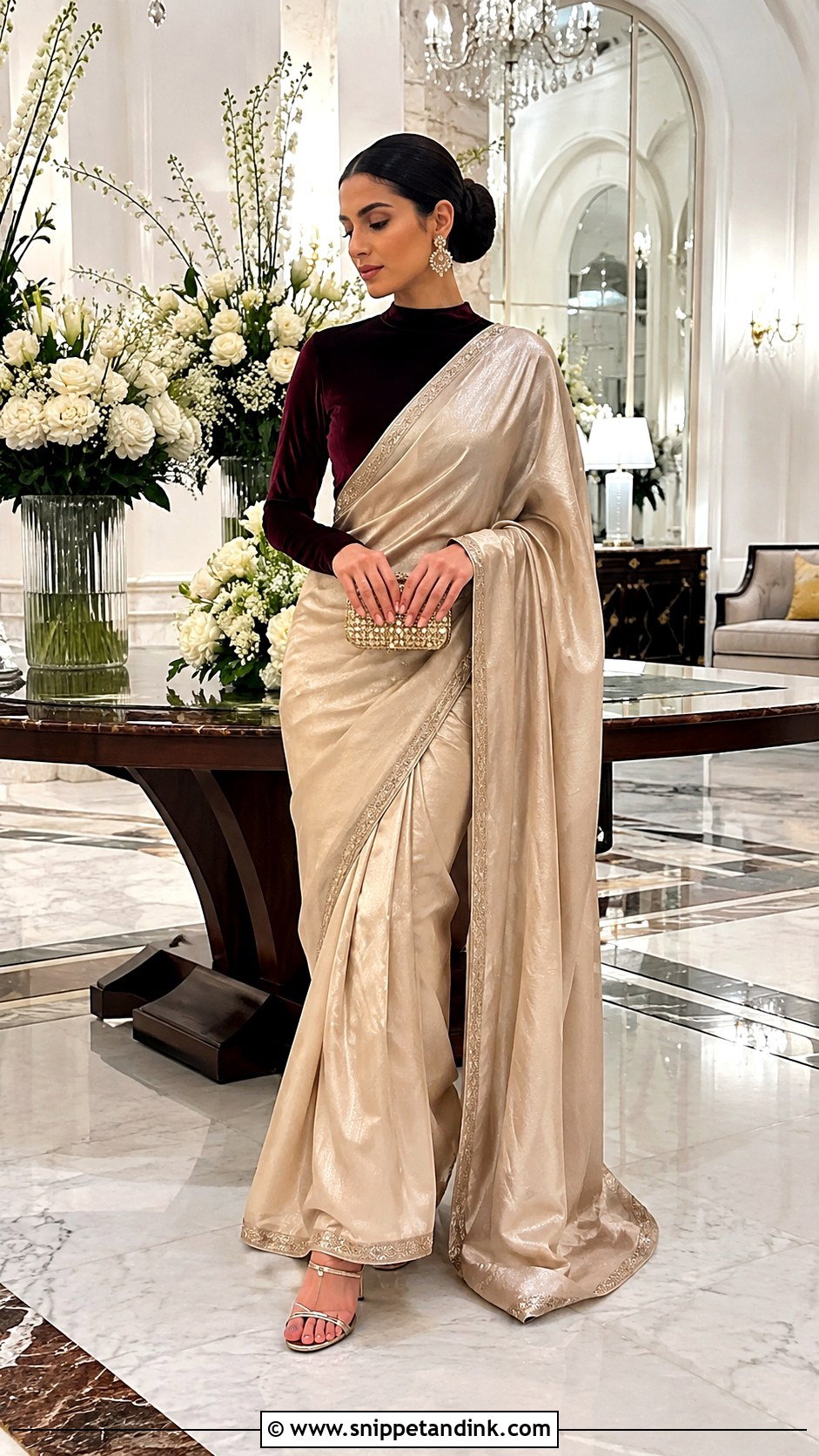
High necks feel covered and slightly royal, and they’re wonderful for winter weddings and evening receptions. The neckline is the statement, so skip the necklace and wear bold earrings. Silk, brocade, velvet and jacquard all work. Ask for the back opening to be a zip or hooks running from the nape, since a high neck with front hooks is fiddly to get into in a hurry. Pair it with a plain silk saree or a lightly embroidered lehenga and a potli bag.
7. Simple Collar Neck Wedding Blouse Design
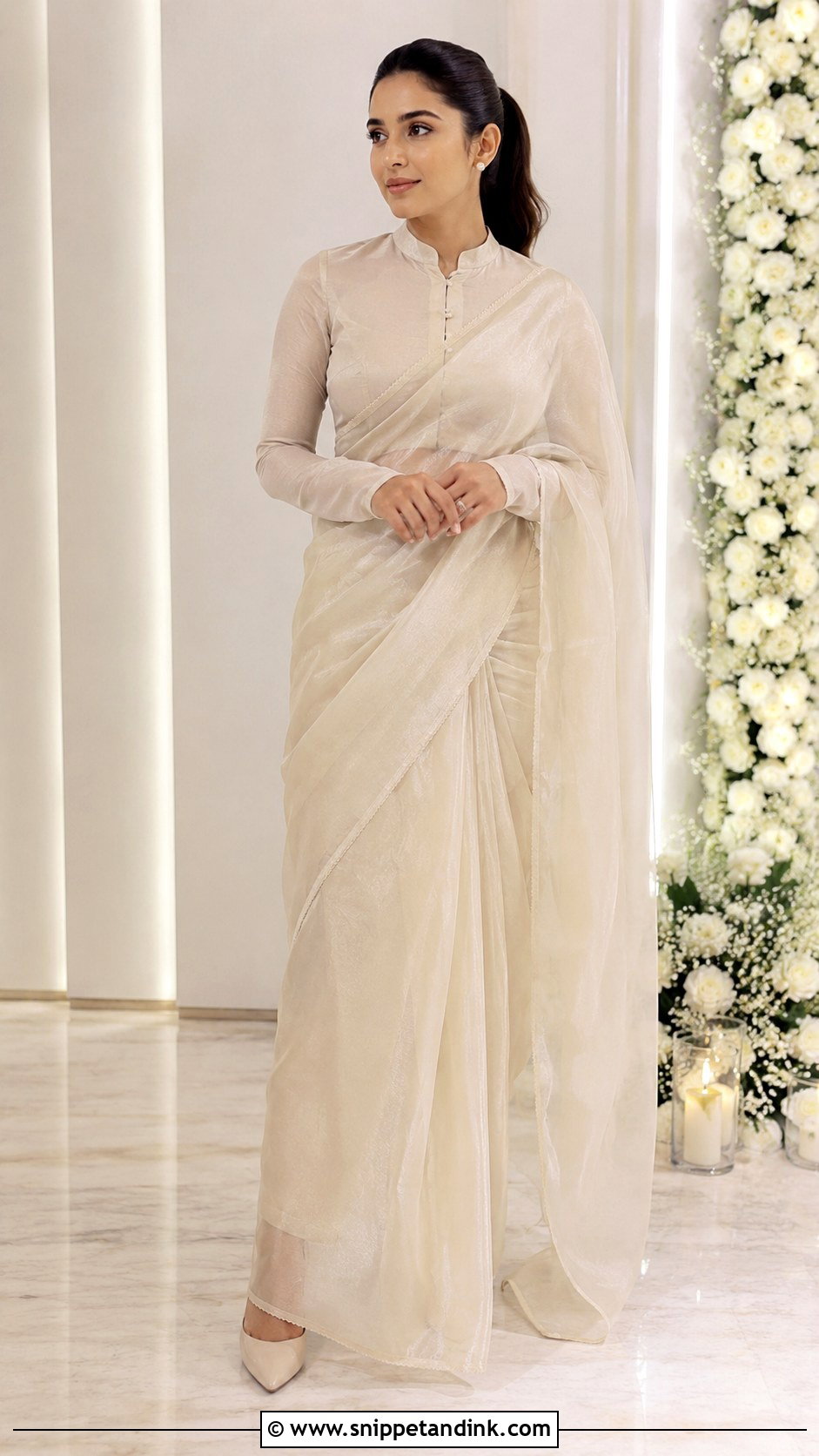
Collars give traditional wear a tailored, slightly contemporary edge. Small and rounded, mandarin-style or shirt-inspired, they need a firm fabric: silk, satin, brocade or tissue, not soft cotton, which collapses at the collar points. A hidden front closure keeps the line clean. Pair it with a lightweight saree, pearl studs and pointed heels. It’s my pick for engagement functions and for guests who want polish without heavy work.
8. Simple Sweetheart Neck Wedding Blouse Design
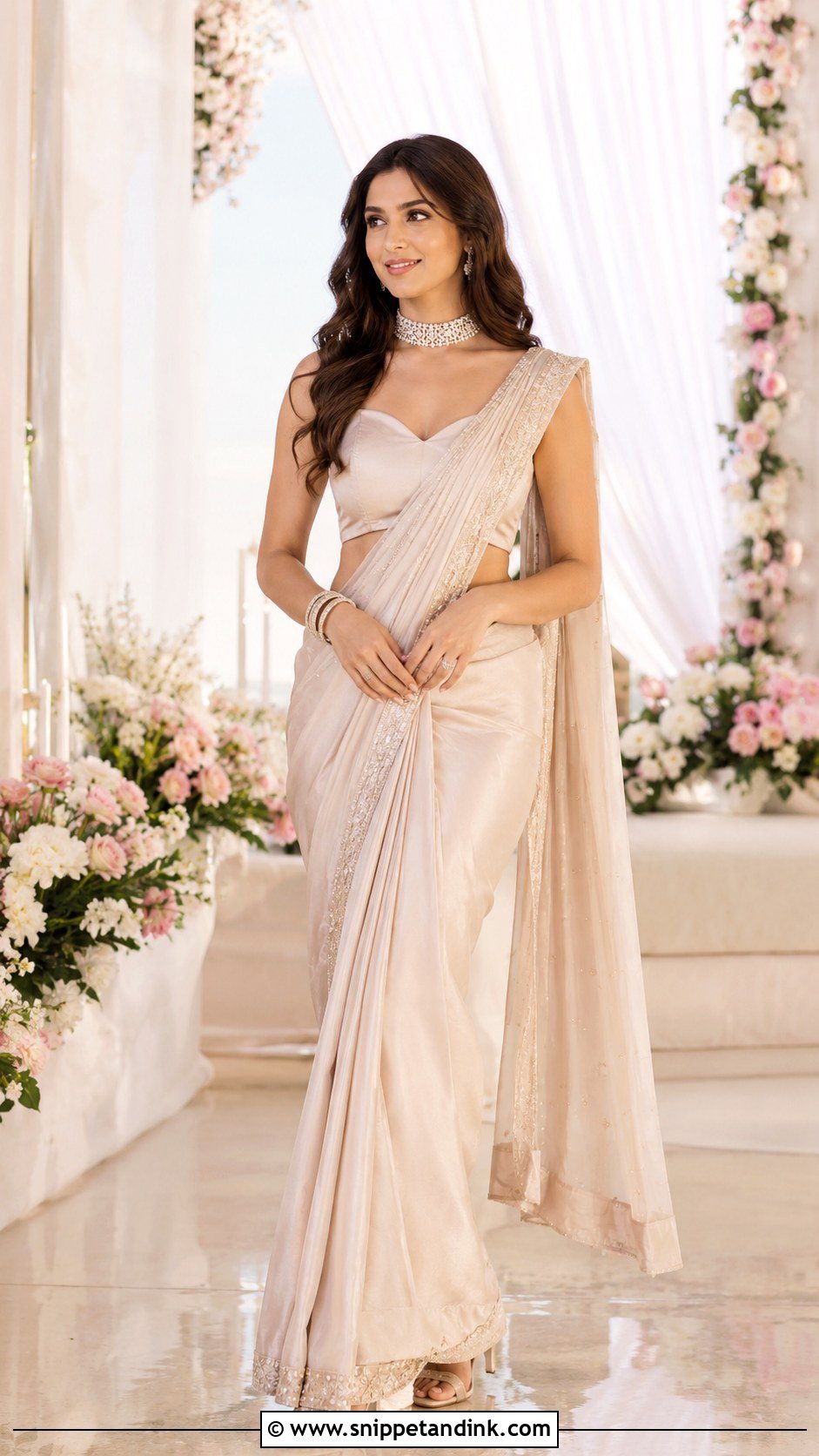
Sweetheart necks add a soft curve and define the upper body without embellishment. Keep the depth comfortable and the cups structured, because a sweetheart without support loses its shape under the weight of a pallu. Silk, velvet, satin and brocade all hold it well. A plain sweetheart blouse with elbow sleeves looks striking against a heavy saree, while a lightly embroidered one suits a simpler lehenga. A choker and soft waves finish it.
9. Simple Keyhole Neck Wedding Blouse Design
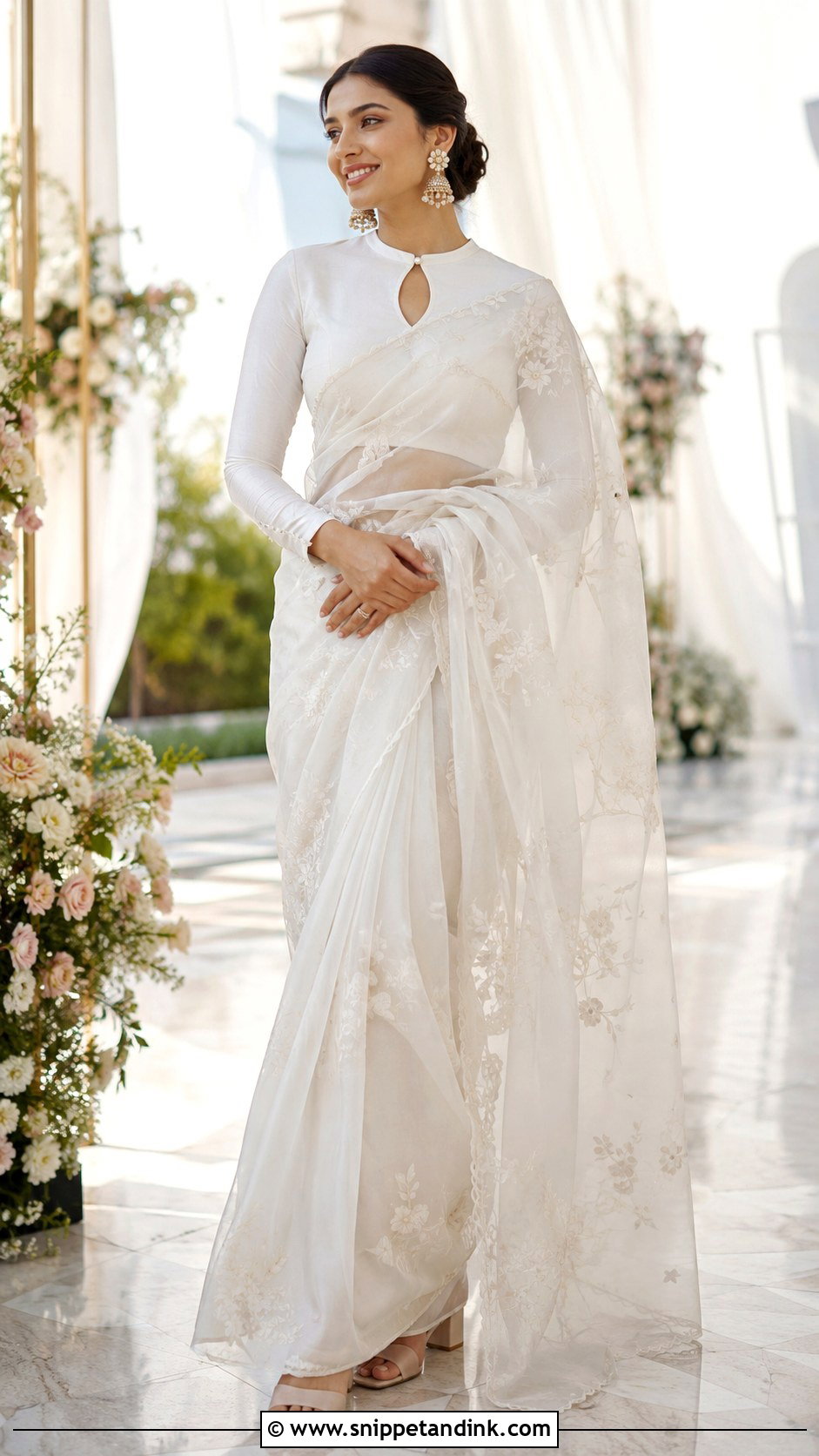
A keyhole is a small detail, and that’s its charm. It can sit at the front or the back depending on how much you want to show. A little teardrop with a single button looks delicate and refined, especially edged with a thin border or a pearl button. The opening needs a facing stitched inside, or it stretches out of shape after a few wears. Keep the sleeves and cut plain, and pair it with silk or organza sarees or a lehenga skirt.
10. Simple Back Button Wedding Blouse Design
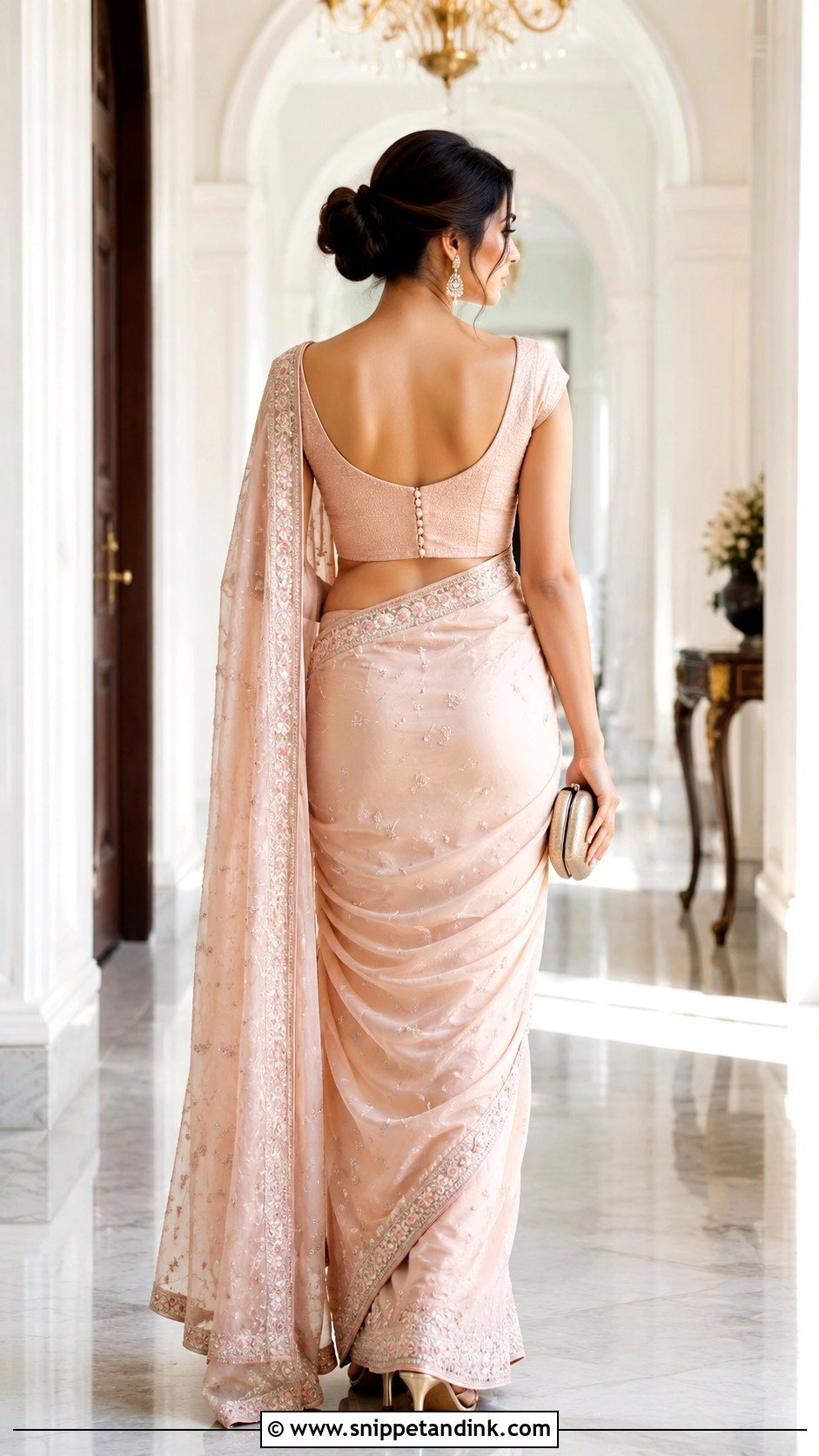
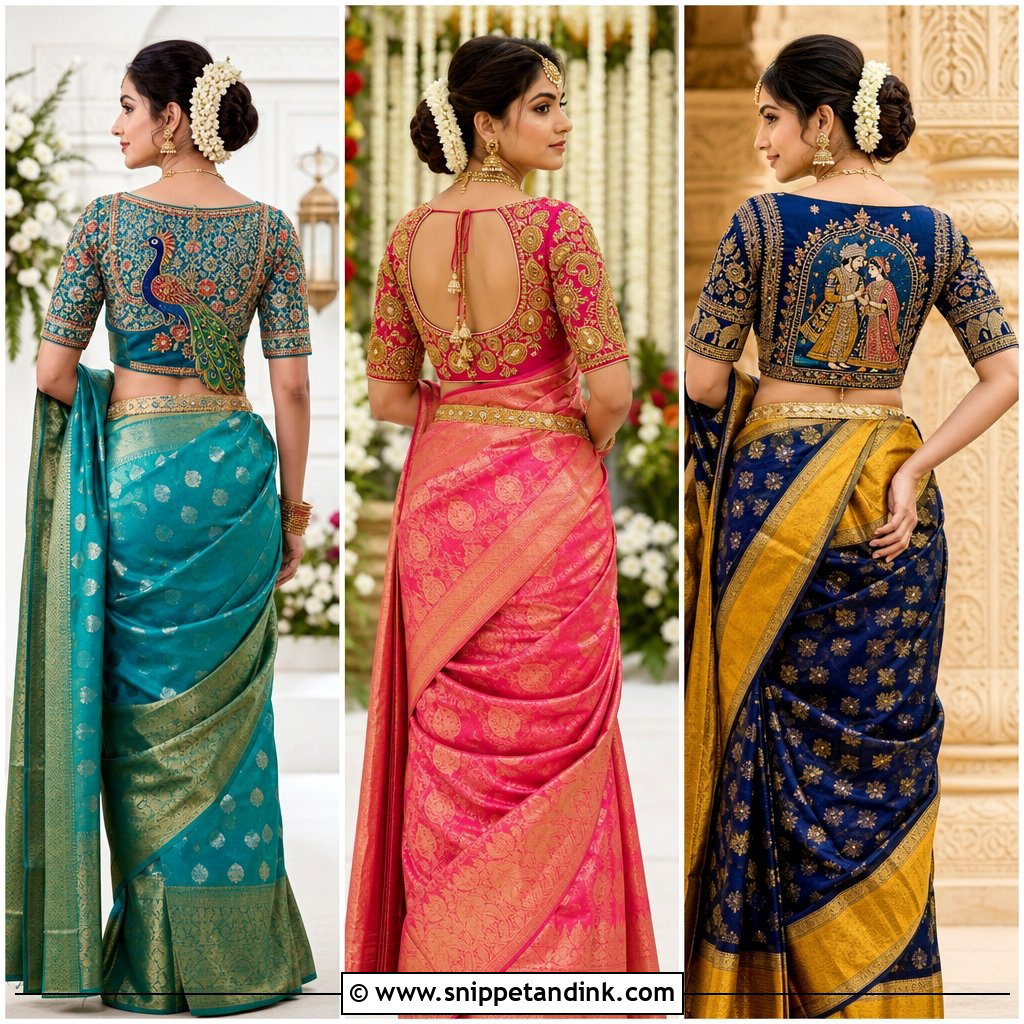
Back buttons look good from every angle, and in wedding photos the back is seen more than you’d think, during pheras, vows and walking away from the camera. The front can stay modest with a round, boat or square neck. Fabric-covered, pearl or metallic buttons all work. They should sit on a placket with a strip of interfacing so the fabric doesn’t pull between buttons, and I’d hide hooks underneath for security. A low bun with fresh flowers shows them off.
11. Simple Elbow Sleeve Wedding Blouse Design
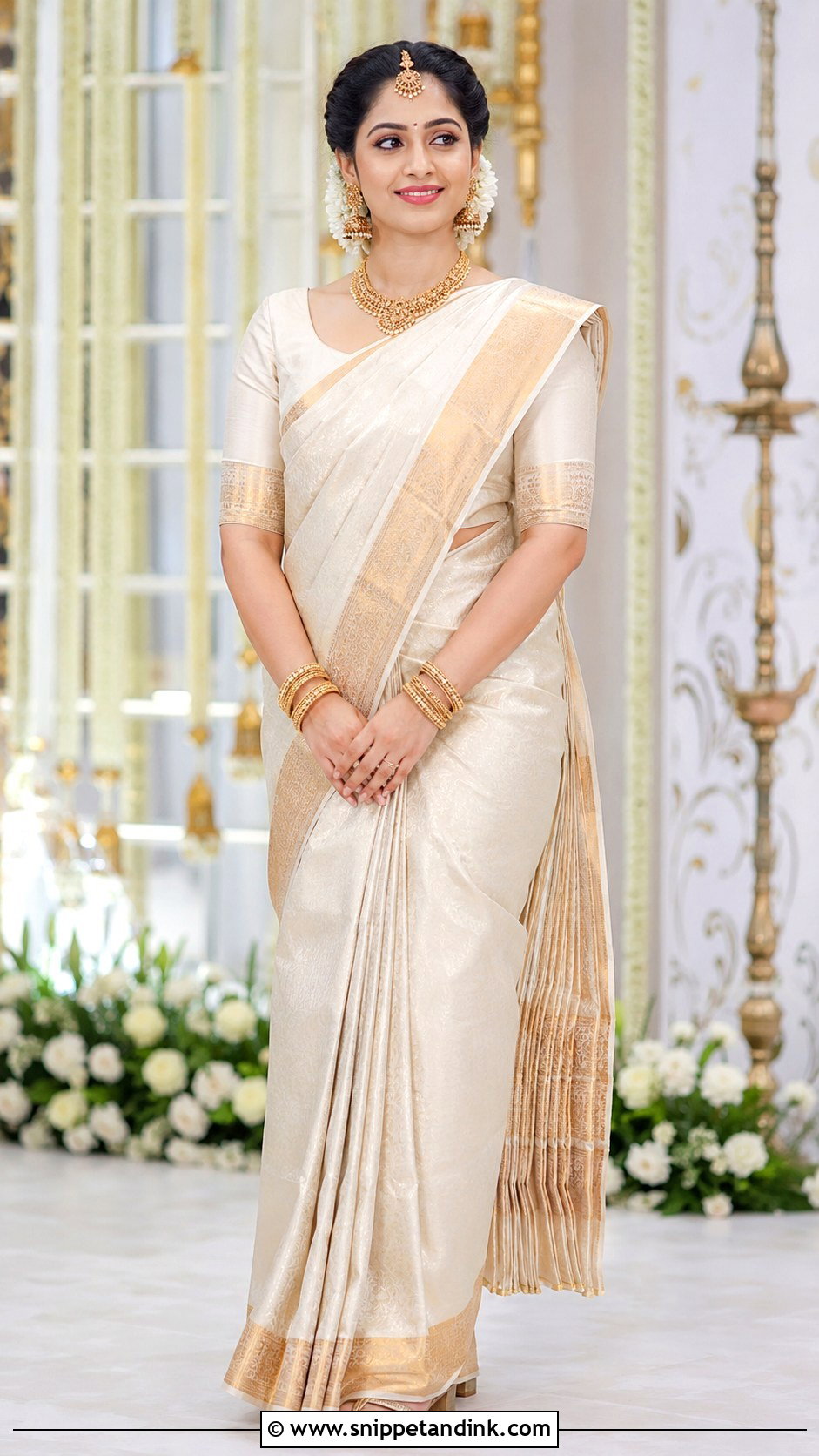
Elbow sleeves give coverage without heat, and they don’t need adjusting through a long function. They suit Kanjeevaram, Banarasi and silk sarees and traditional lehengas. A thin zari border, light threadwork or small motifs at the sleeve hem are plenty. The sleeve should end just above the elbow point, not on it, so you can bend your arm without the hem cutting in. With a heavily woven saree, a plain contrast blouse looks richest.
12. Simple Full Sleeve Wedding Blouse Design
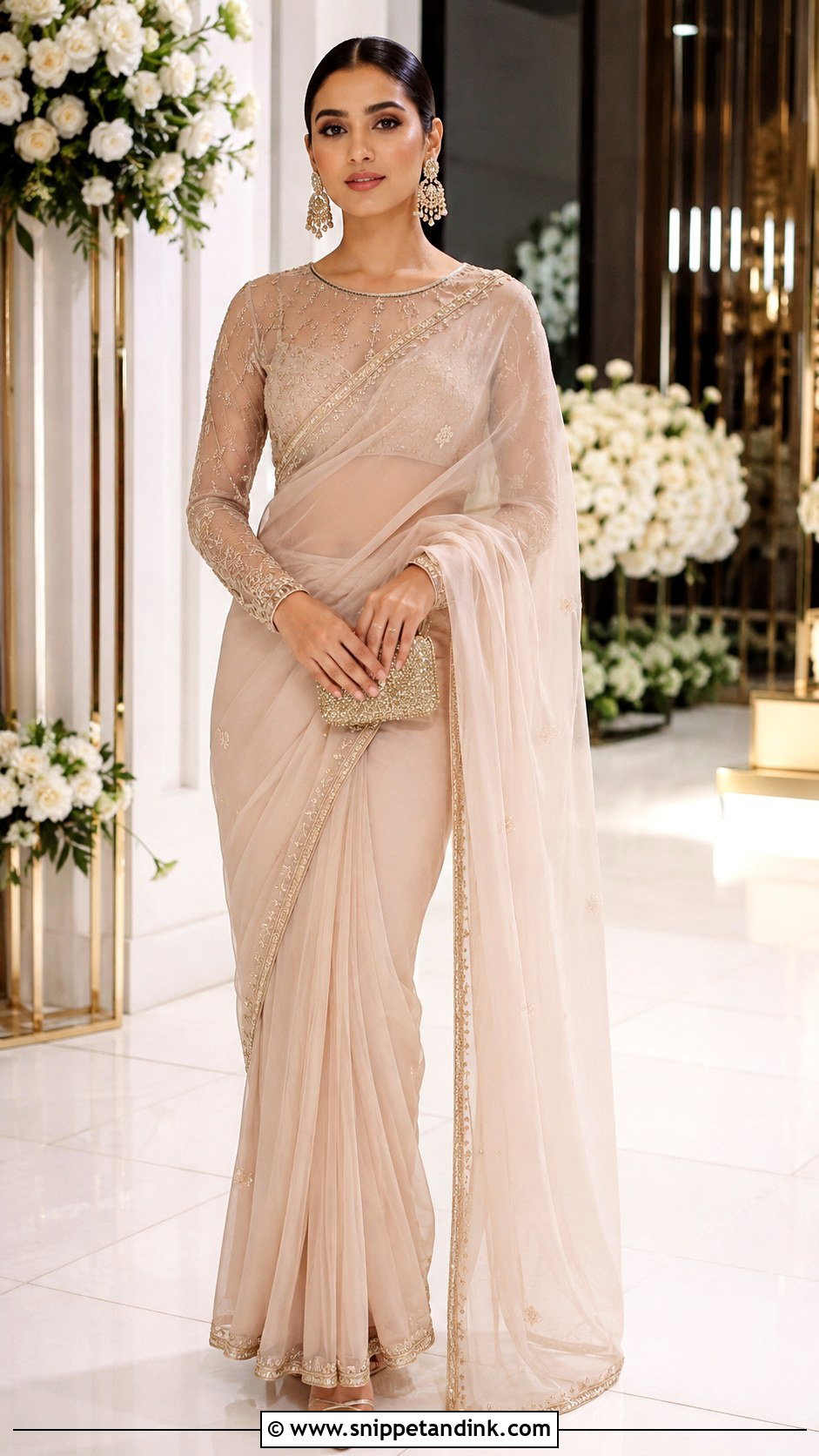
Full sleeves feel slightly regal and make sense in cooler weather and for evening receptions. Sheer net, organza, lace, silk and velvet all work. Sheer sleeves need a little extra ease at the elbow, since net has no give and splits at the seam if it’s cut too tight. Keep the sleeve plain with a wrist border, or add tiny embroidered dots. Pair with chiffon, silk or a flowing lehenga, and keep the rest of the accessories light.
13. Simple Puff Sleeve Wedding Blouse Design
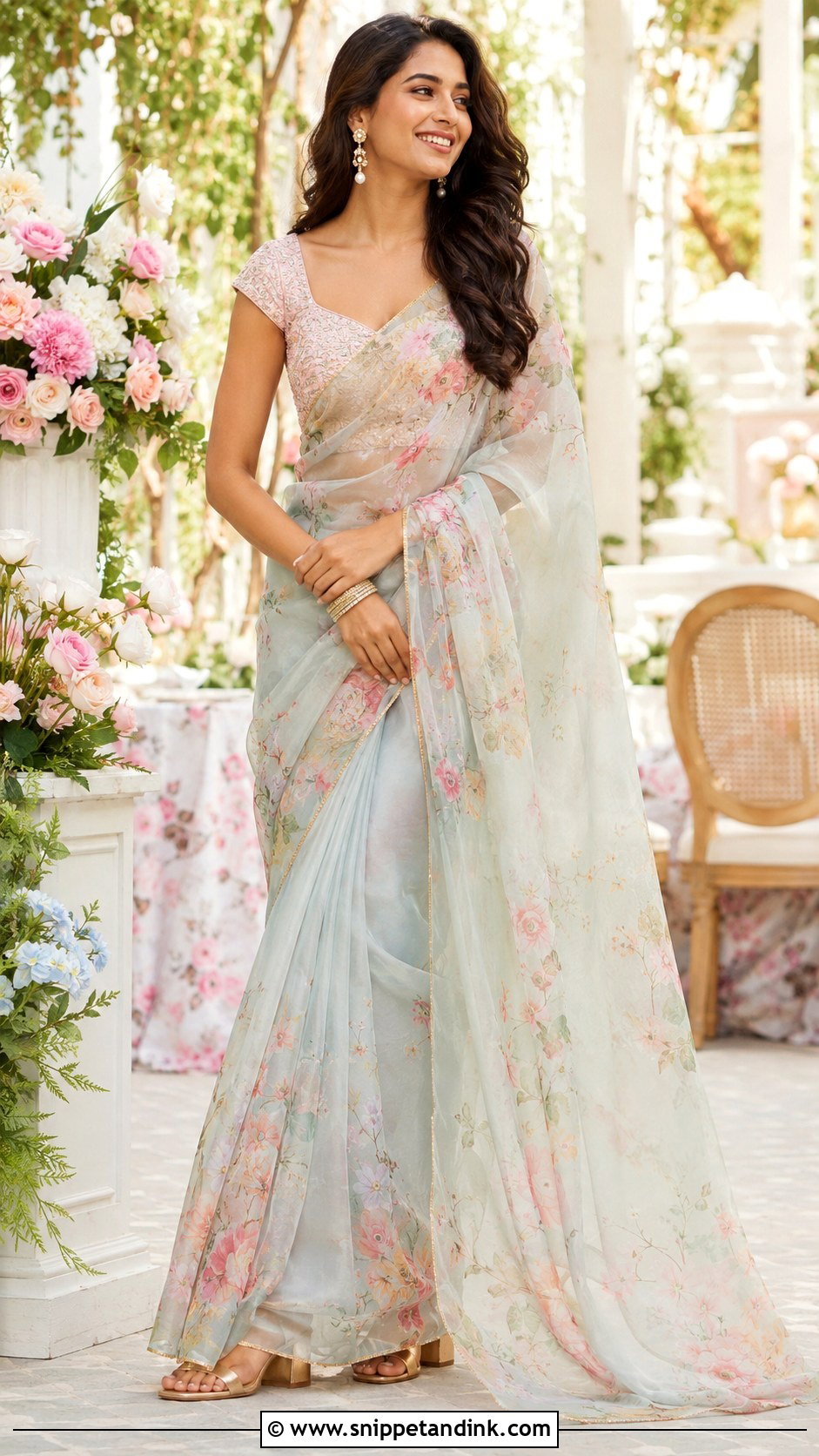
A gentle puff softens a traditional outfit and suits silk, cotton silk and vintage-leaning lehengas. Keep it modest in size; a big puff under a pallu draped over the shoulder gets squashed flat and looks lopsided. Short puffs feel youthful, elbow-length ones more classic. A plain blouse with a small border at the sleeve hem looks polished with pearls, soft curls and simple heels.
14. Simple Cap Sleeve Wedding Blouse Design
Cap sleeves sit just over the shoulder and keep a blouse light for daytime and summer functions. Organza, chiffon, satin and silk blends all suit them. I’d keep the neckline simple, round, V or boat, and add a thin embroidered border at the sleeve edge for a wedding touch. On fuller upper arms, a cap that ends at the widest point can cut across it, so a slightly longer short sleeve may be kinder. Pastel sarees, slim bangles and block heels finish it.
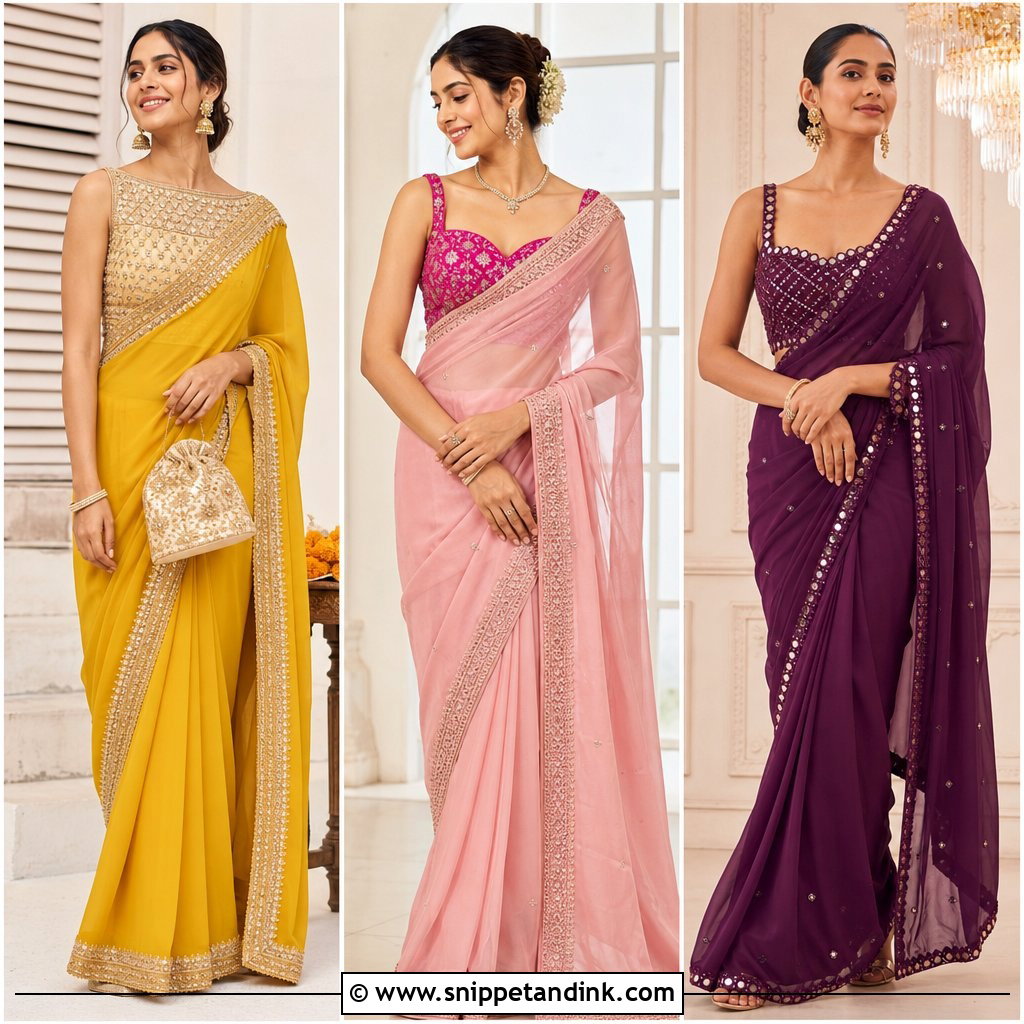

15. Simple Sleeveless Wedding Blouse Design
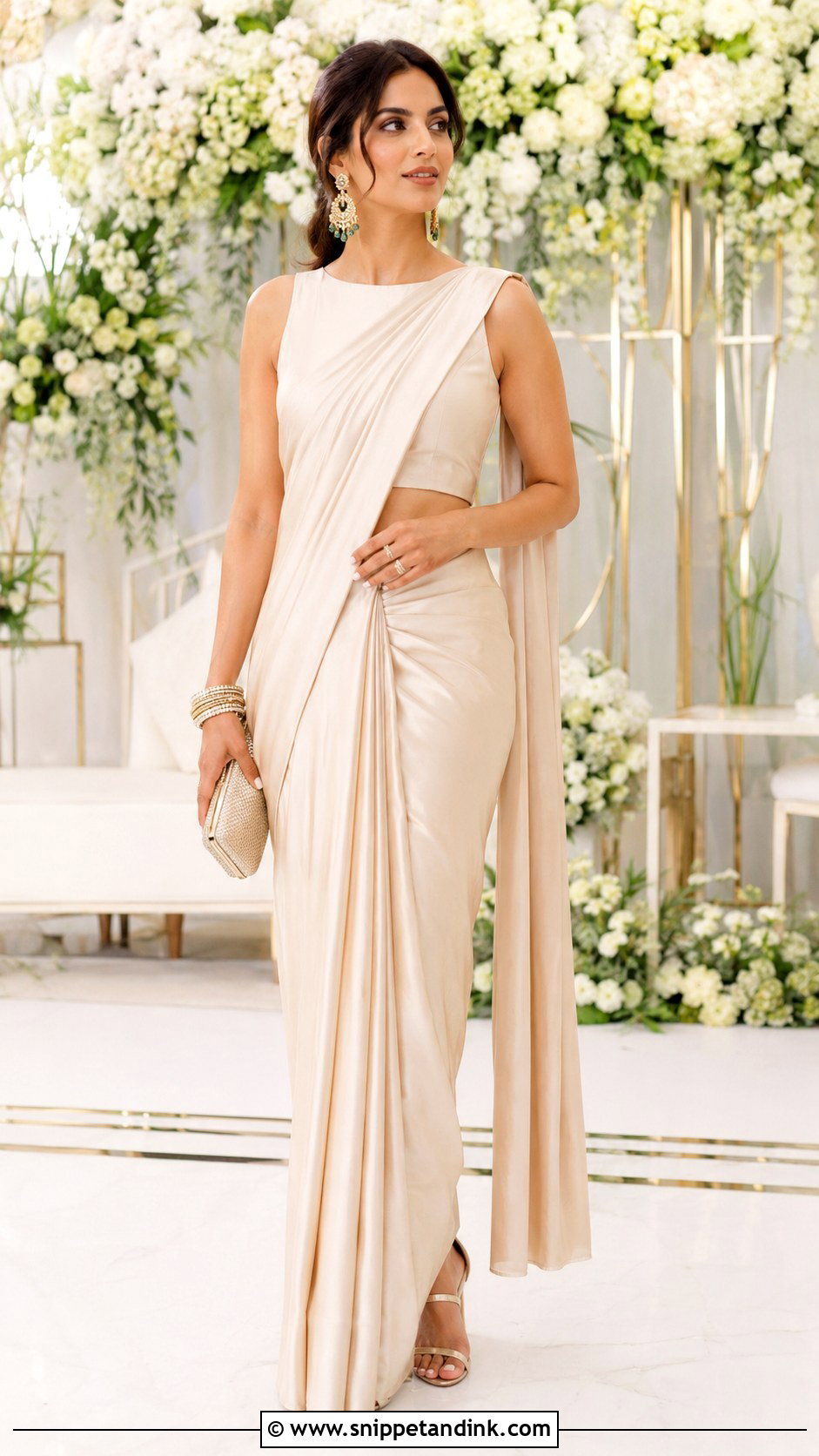
Sleeveless blouses look modern when they’re well tailored, and badly when they aren’t. With no sleeves anchoring them, the armhole has to be cut close and high or it gapes when you lift your arm. Silk, brocade, satin and velvet hold their shape best. Balance a bare arm with a modest high, boat or square neck. Statement earrings, stacked bangles and a flowing saree suit receptions and summer ceremonies.
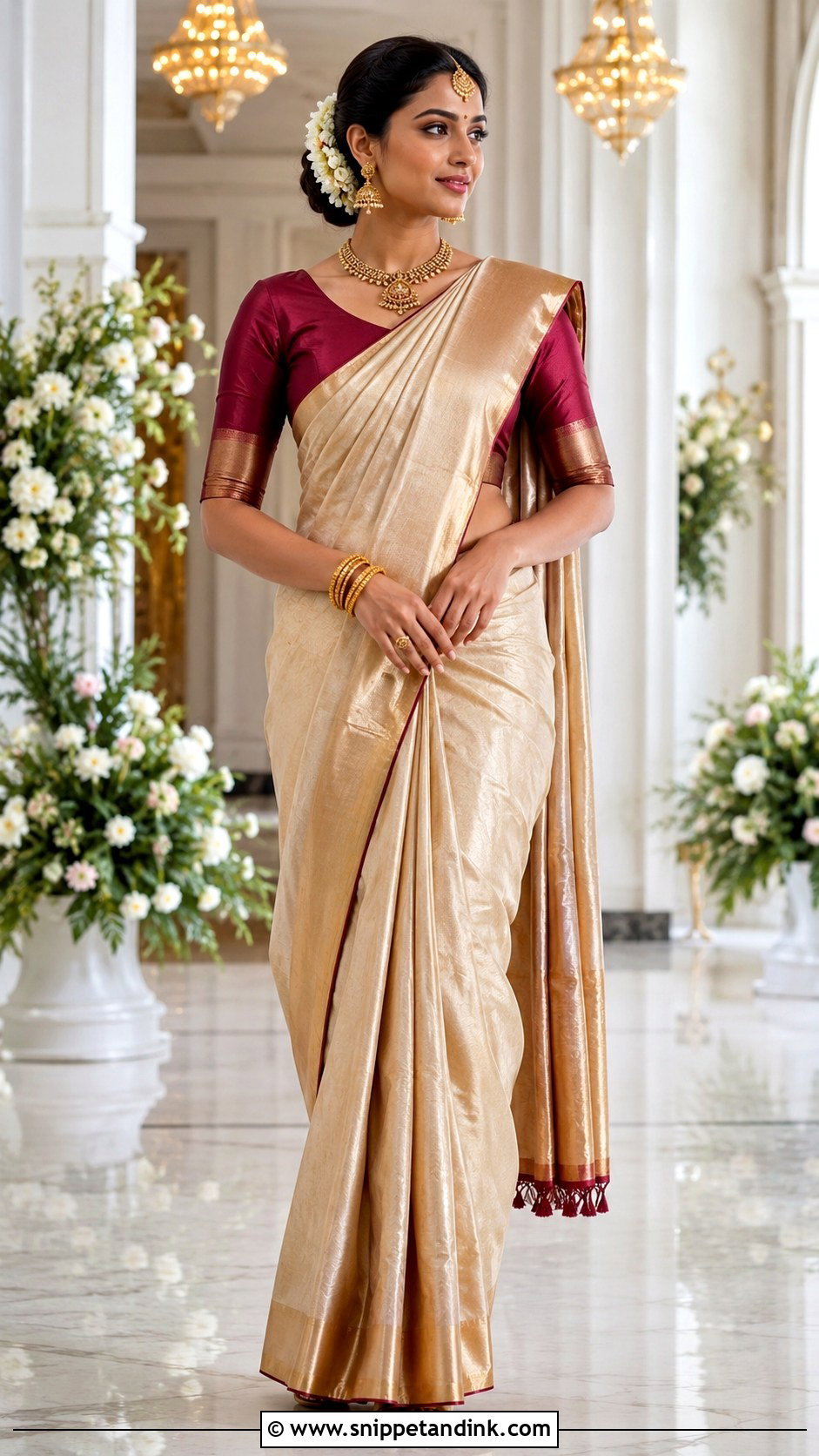
16. Simple Silk Wedding Blouse Design
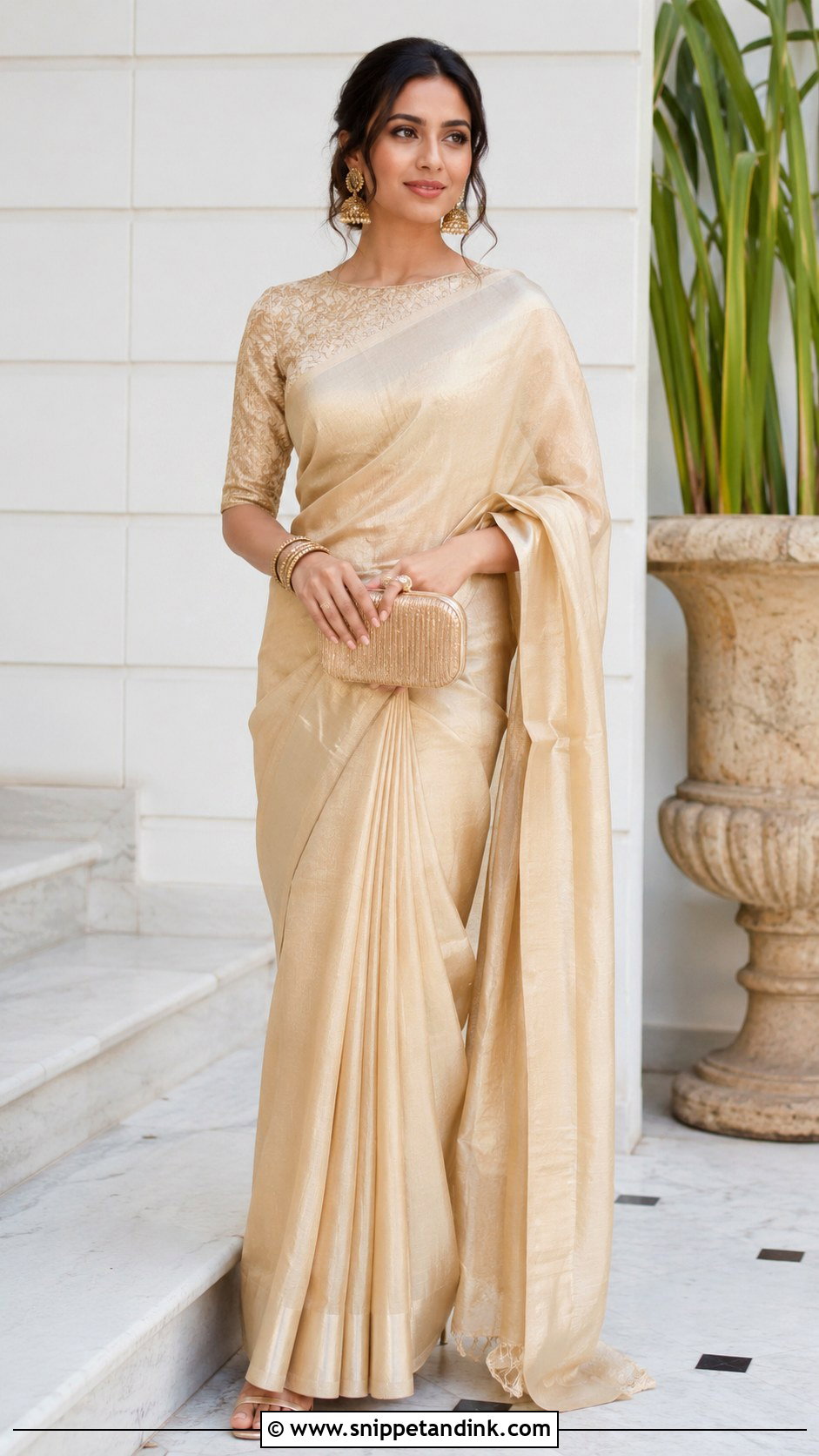
If I could keep only one blouse in a wardrobe, it would be plain silk. Silk carries its own richness, so it works with almost every traditional outfit and doesn’t need embroidery. Choose a contrast or matching shade depending on the saree; a round, square or V neck with elbow sleeves is the most versatile. Fine piping or small zari motifs add detail. Ask for generous seam allowances, at least an inch at the sides, so it can be let out for weddings years from now.
17. Simple Brocade Wedding Blouse Design
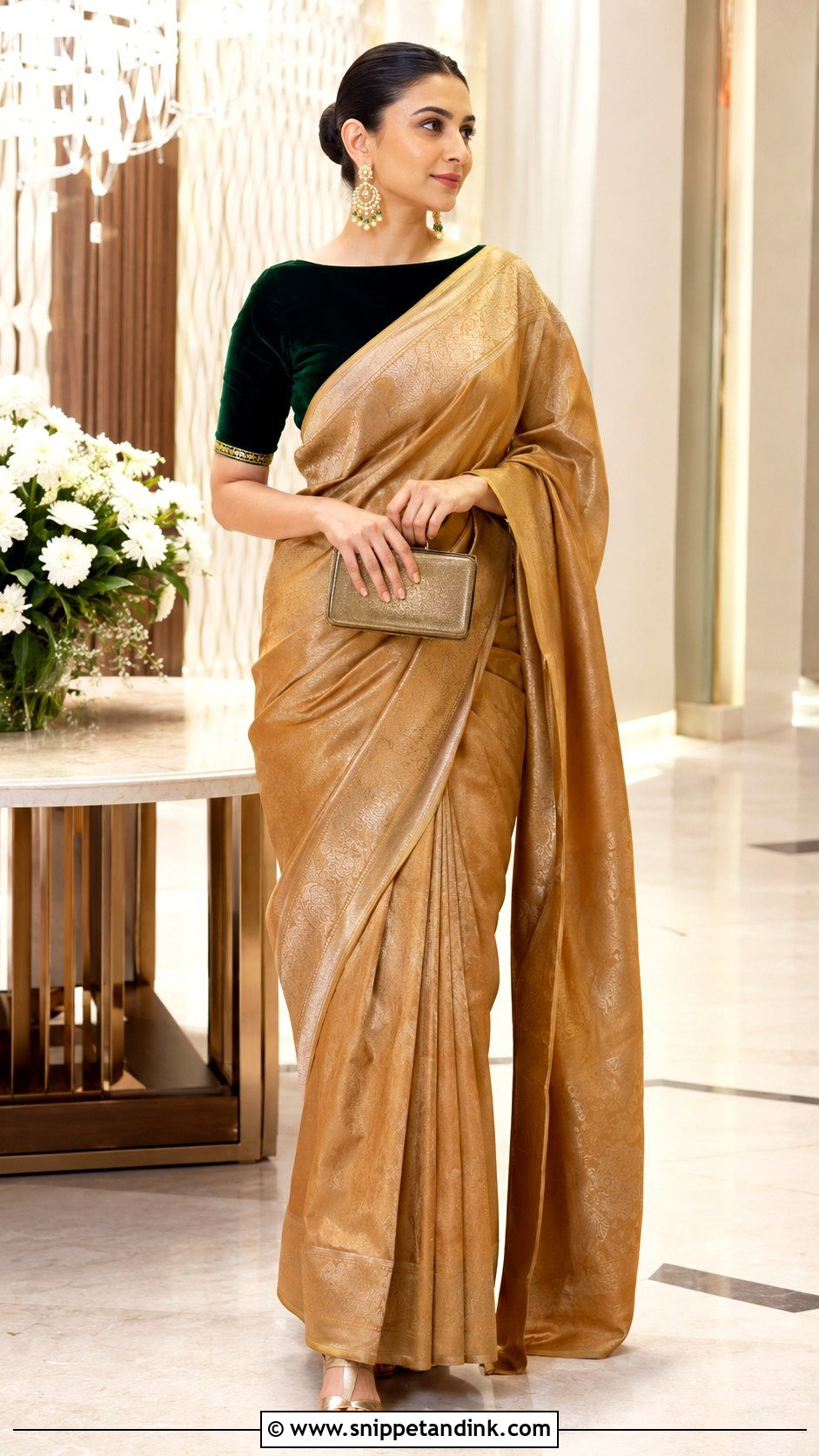
Brocade already has its pattern woven in, so a brocade blouse needs no embroidery at all. Keep the cut clean with a boat, round or square neck and simple sleeves. My usual trick is to pull one colour from the saree border and choose brocade in that shade. Brocade frays fast once cut, so the inside seams should be overlocked or bound. It pairs well with plain silk and tissue sarees and lehenga skirts.
18. Simple Velvet Wedding Blouse Design
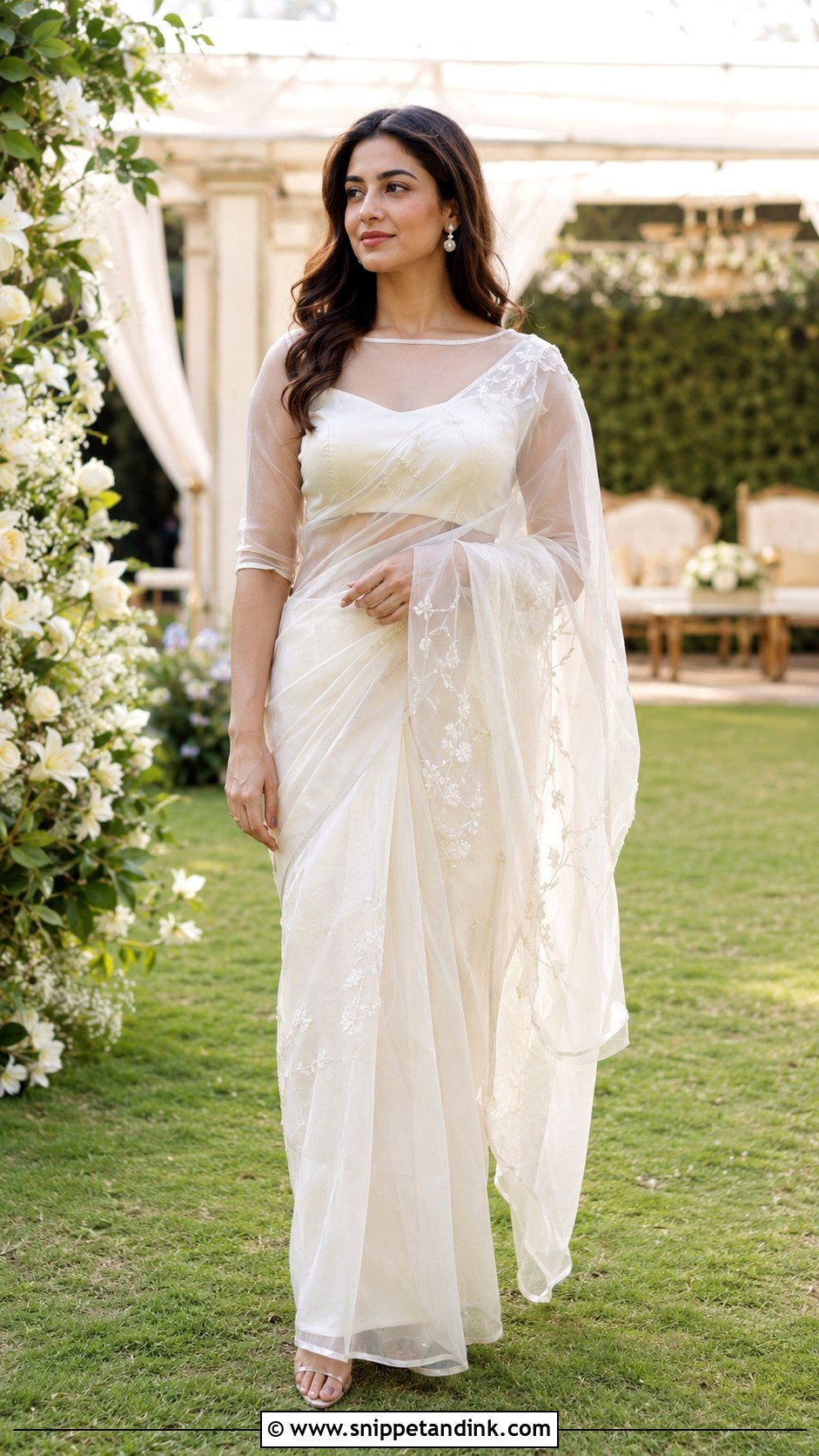
Velvet makes even a plain blouse feel special, which is why it’s my choice for evening weddings and winter. Deep maroon, emerald, navy, plum and berry tones read richest. Velvet is warm and has a nap, so all pieces must be cut in the same direction, or one side looks a shade darker in photos. A V, sweetheart or high neck suits it, with a narrow border, small buttons or subtle embroidery at the sleeve edge. Kundan earrings and a sleek bun are enough.
19. Simple Organza Wedding Blouse Design
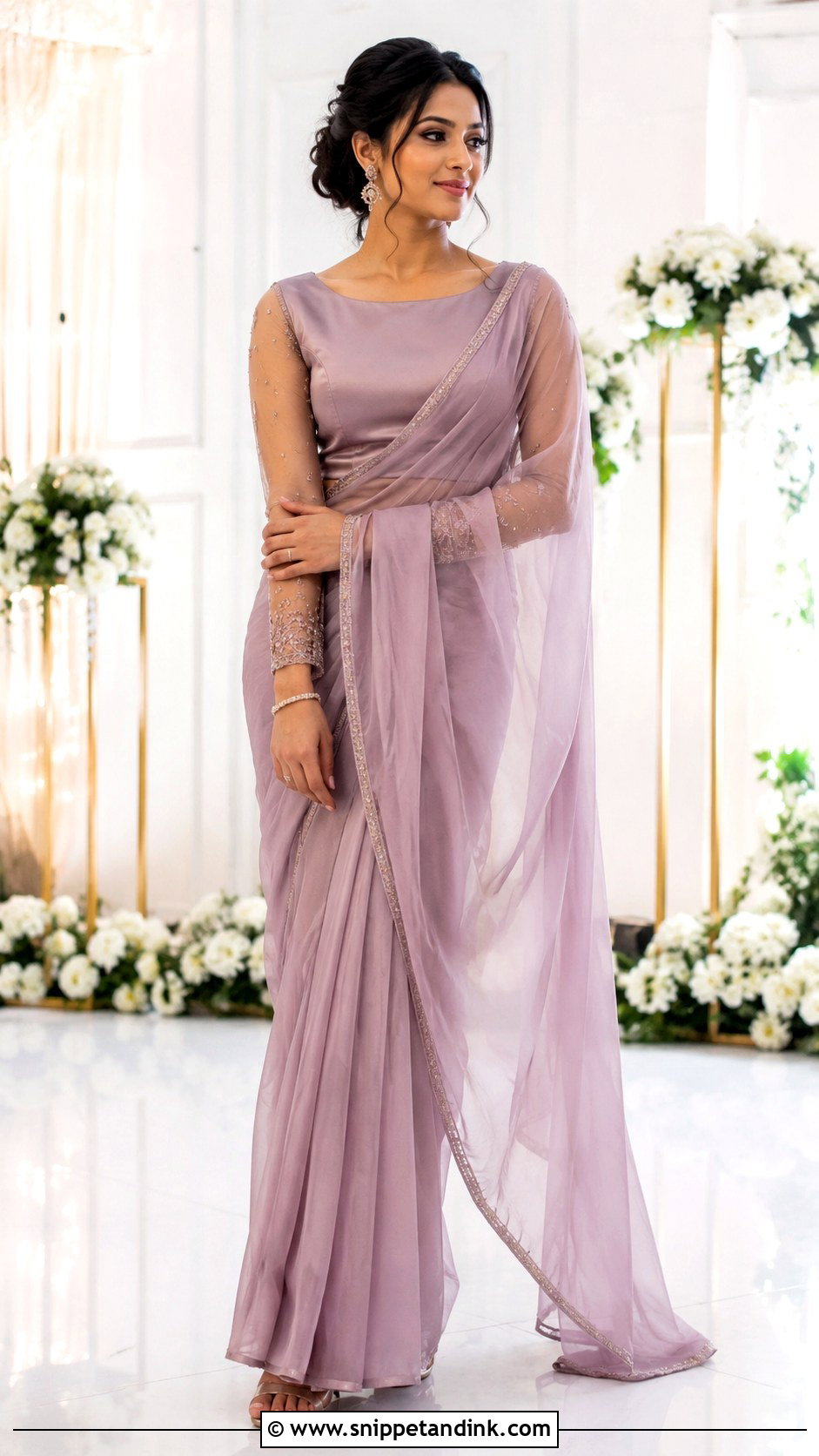
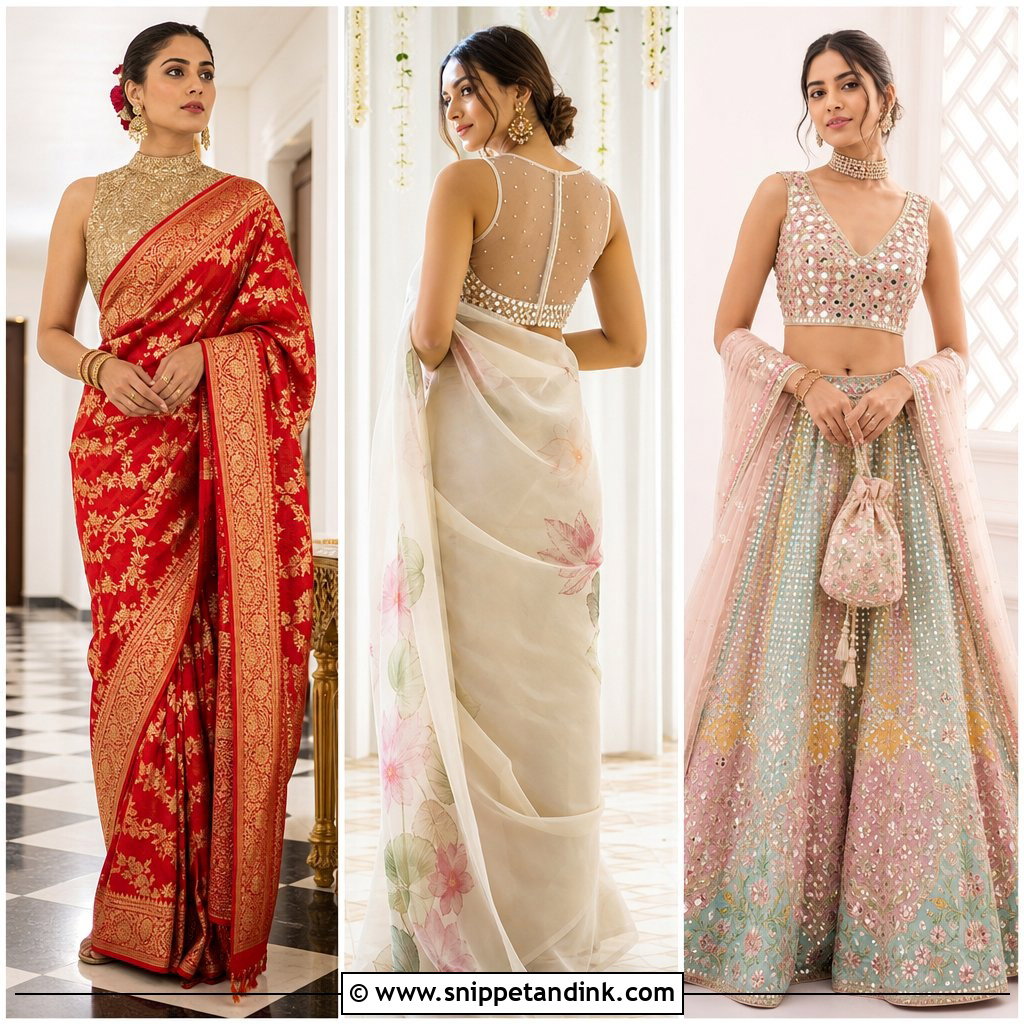
Organza is light, slightly crisp and sheer, so it suits daytime weddings, garden ceremonies and pastel outfits. Use it for the whole blouse or just the sleeves and neckline. A silk-lined body with sheer organza sleeves is the comfortable version; unlined organza scratches at the underarm after a few hours. Ivory, blush, sage, powder blue and champagne all work, with tiny floral motifs or a slim border and pearl jewellery.


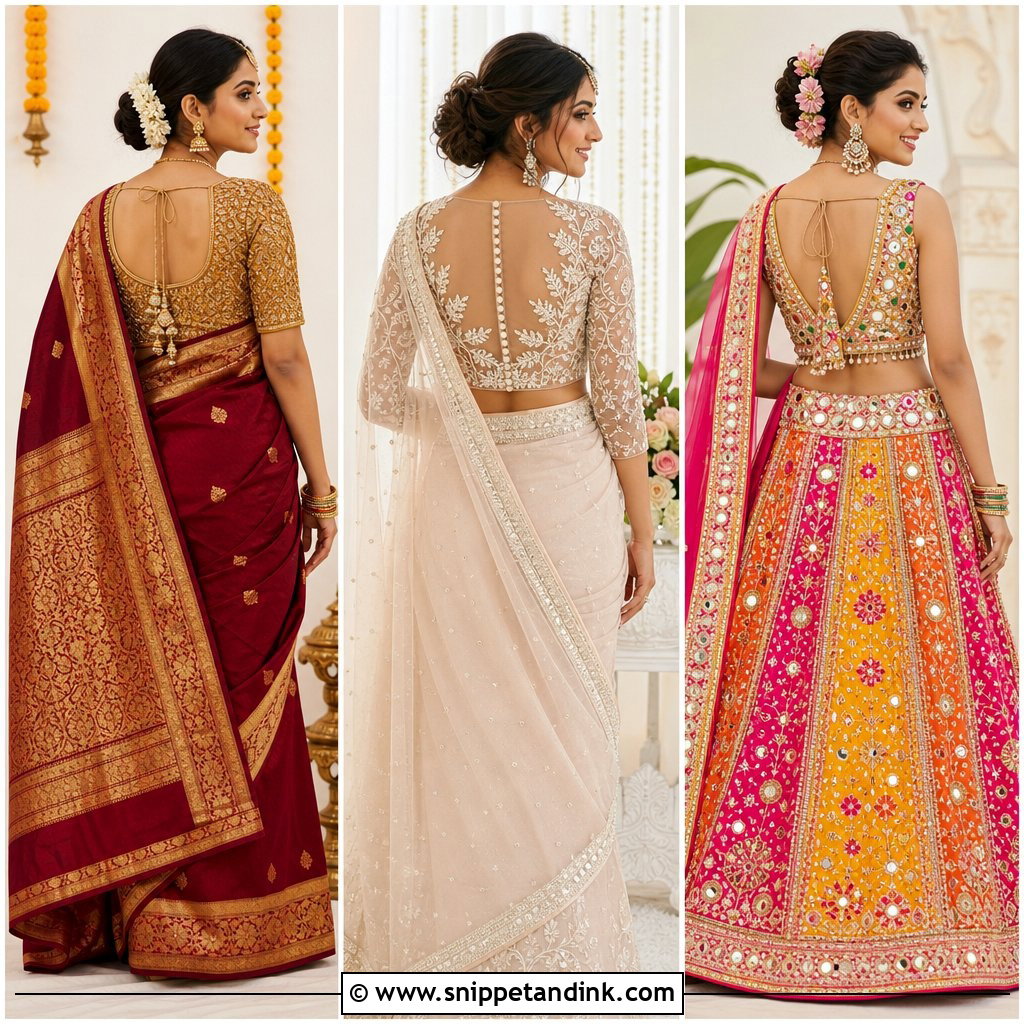
20. Simple Net Sleeve Wedding Blouse Design
Net sleeves add detail without weight: the body can be silk, satin or brocade with soft net for the sleeves, which makes a clean contrast. Full or three-quarter length look most graceful. Small beads, tiny sequins or thread motifs make the net festive, but heavy beadwork drags net out of shape, so keep it sparse. Pair it with a soft-draping georgette, chiffon or organza saree for receptions and engagements.
21. Simple Mirror Work Wedding Blouse Design
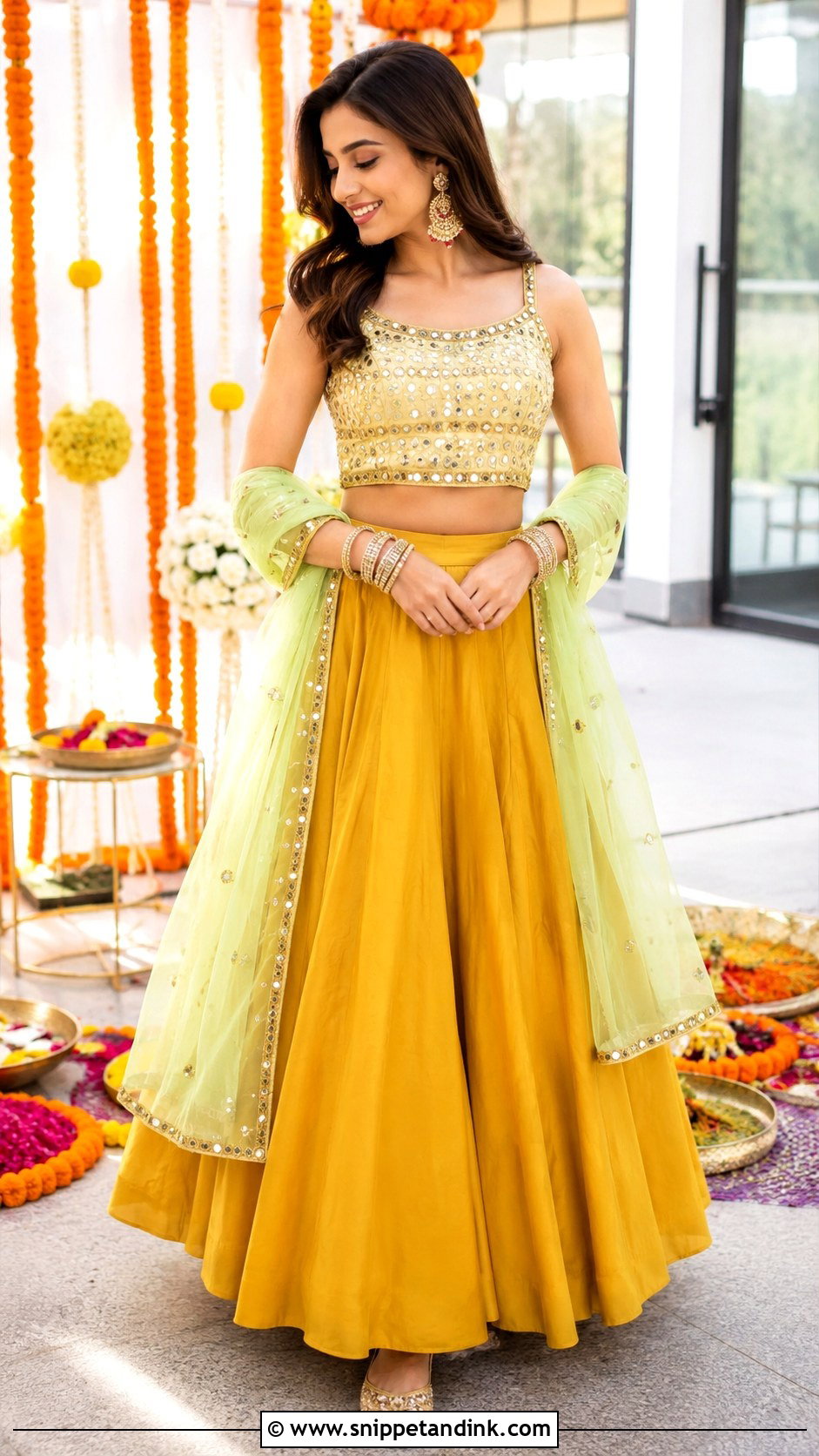
A simple mirror work wedding blouse belongs at mehendi, sangeet and daytime functions, where its sparkle catches sunlight. The trick is restraint: small mirrors along the neckline, sleeve border or back, not across the whole blouse. Mirror pieces are stiff and their edges can scratch at the underarm, so keep them away from the side seams. Cotton silk, raw silk and georgette bases all work, with a plain lehenga or light saree and oxidised or kundan jewellery.
22. Simple Pearl Work Wedding Blouse Design
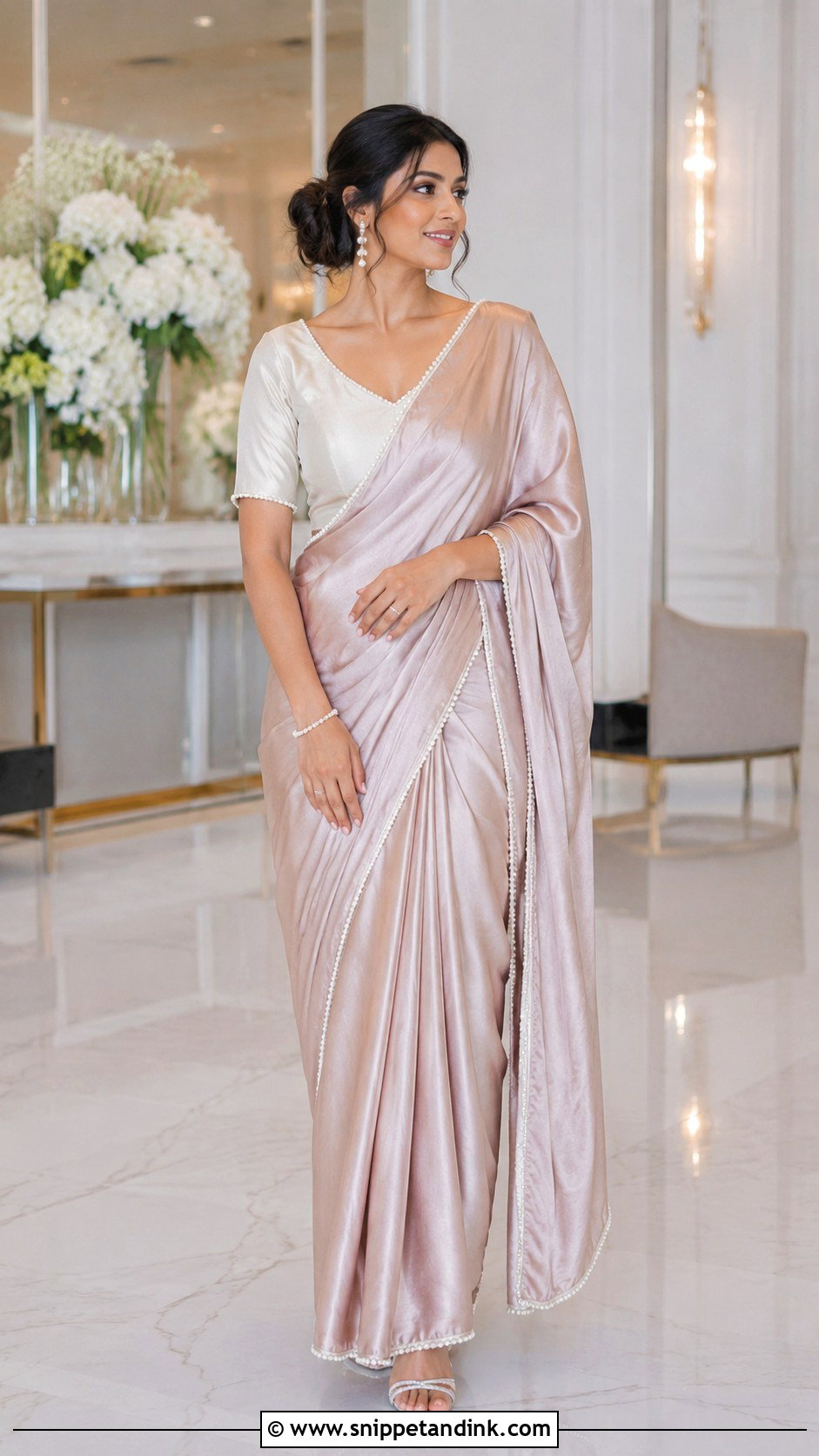
Pearl edging looks soft and expensive, especially with ivory, blush, gold, sage, lavender and pastel blue. Instead of heavy coverage, put pearls along the neckline, the sleeve hem or the back opening; a few scattered across sheer sleeves look graceful too. Pearls sewn on singly with a knot behind each one survive a long day; ones on a continuous thread can unravel if one breaks. Organza, satin or pastel lehengas suit it, with delicate pearl studs or a soft choker.
23. Simple Zari Border Wedding Blouse Design
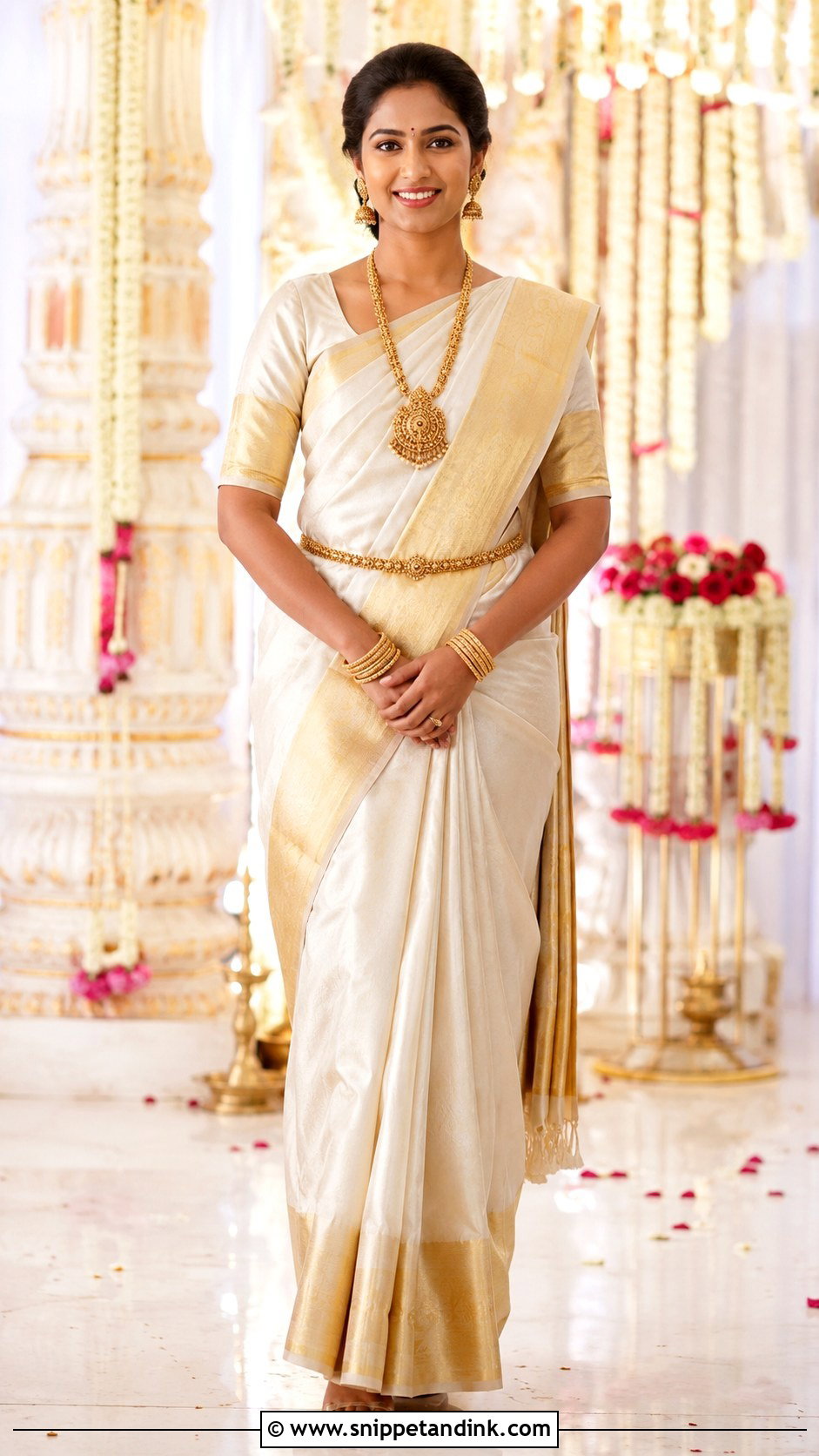
Few designs are as useful as a zari border wedding blouse, where the blouse stays plain and the border frames the neckline, sleeves and back. It pairs beautifully with silk, Banarasi and Kanjeevaram sarees. Match the zari to the saree pallu where you can. Gold zari feels classic; silver looks fresh with pastels and cool tones. Real zari can tarnish over time, so store the blouse wrapped in soft muslin, away from perfume.
24. Simple Floral Embroidery Wedding Blouse Design
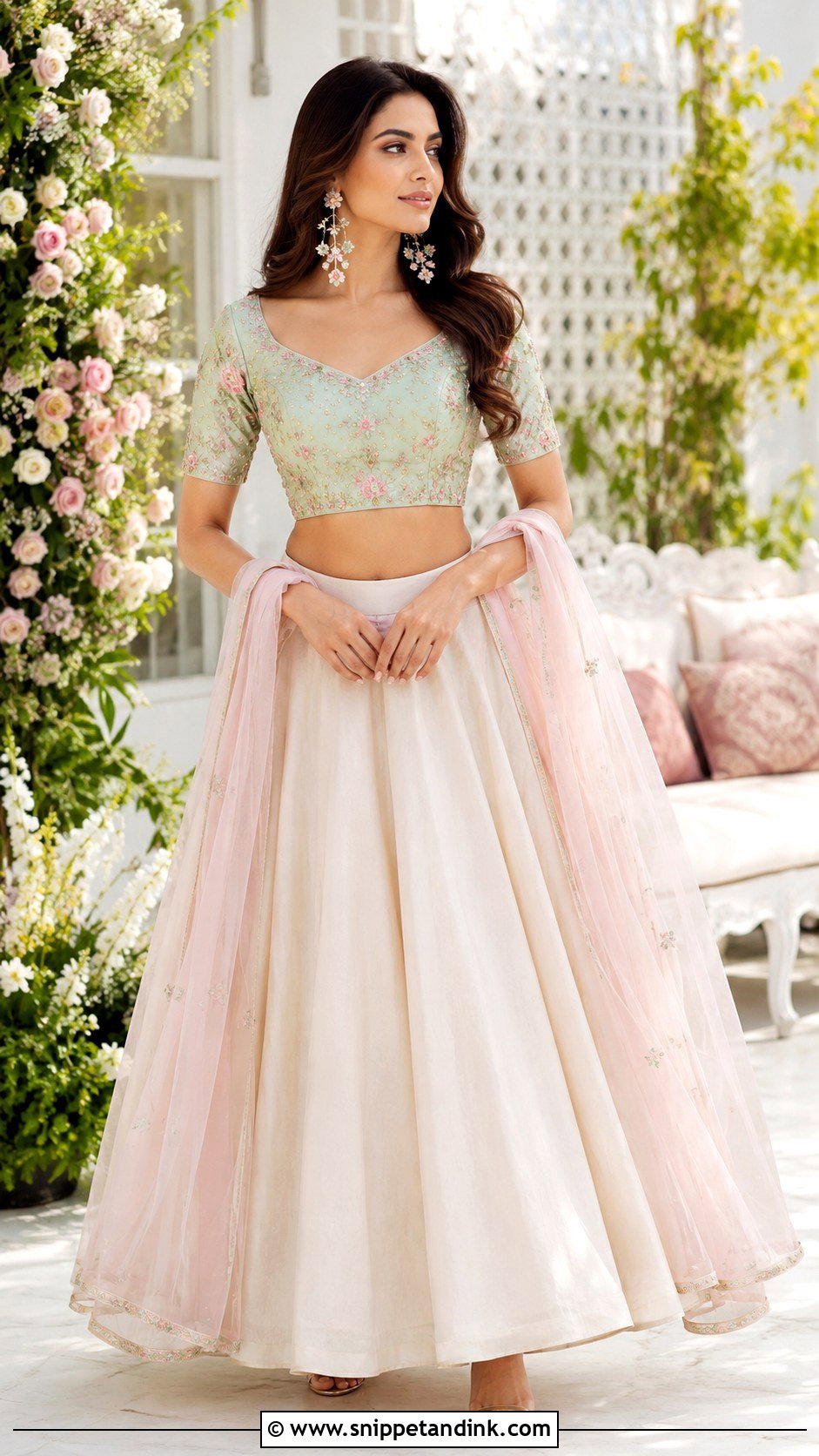
Small thread flowers look softer than stonework and are much lighter to wear for long events. Place the floral work near the neckline, the sleeves or across the back for balance. Thread embroidery also doesn’t catch on the saree’s fabric the way stones and sequins can. Pastels suit daytime, jewel tones the evening. Pair it with organza, silk or a plain lehenga skirt, soft curls and floral-inspired earrings.
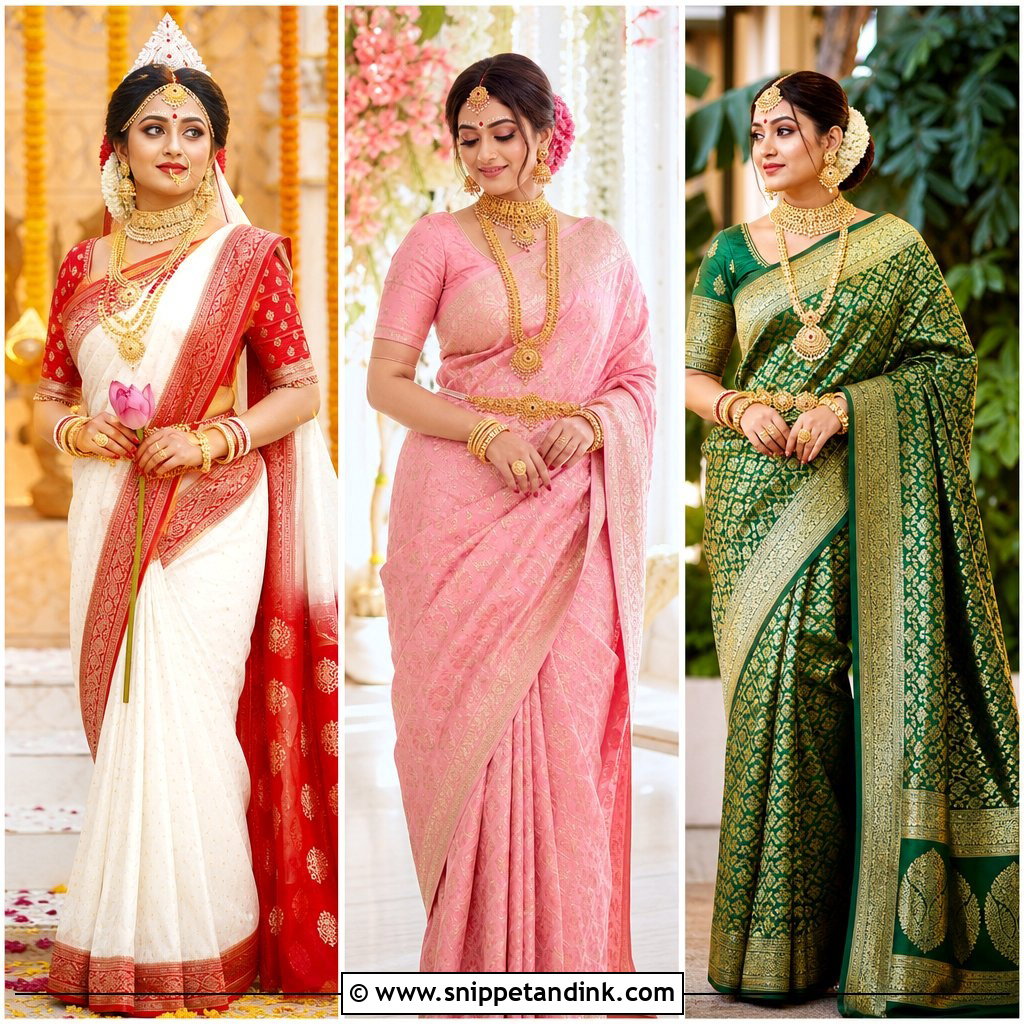
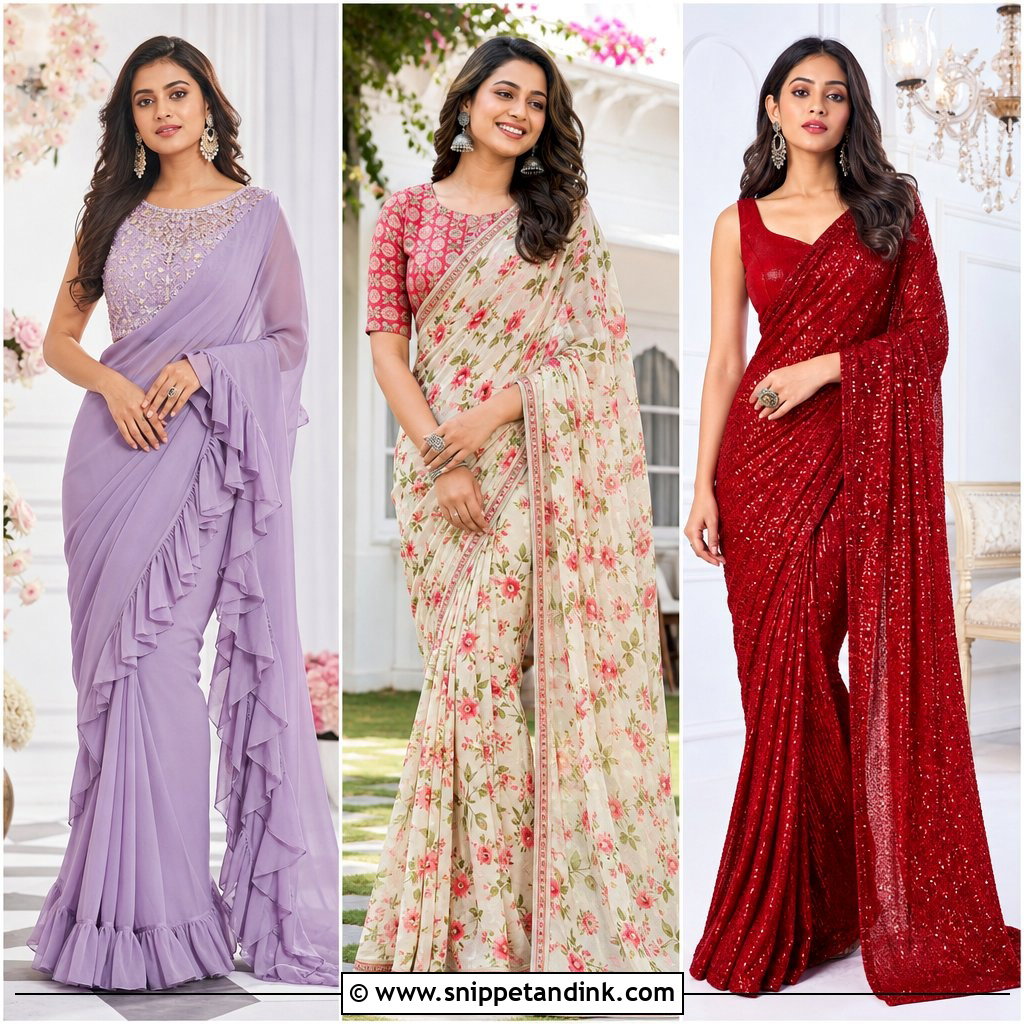
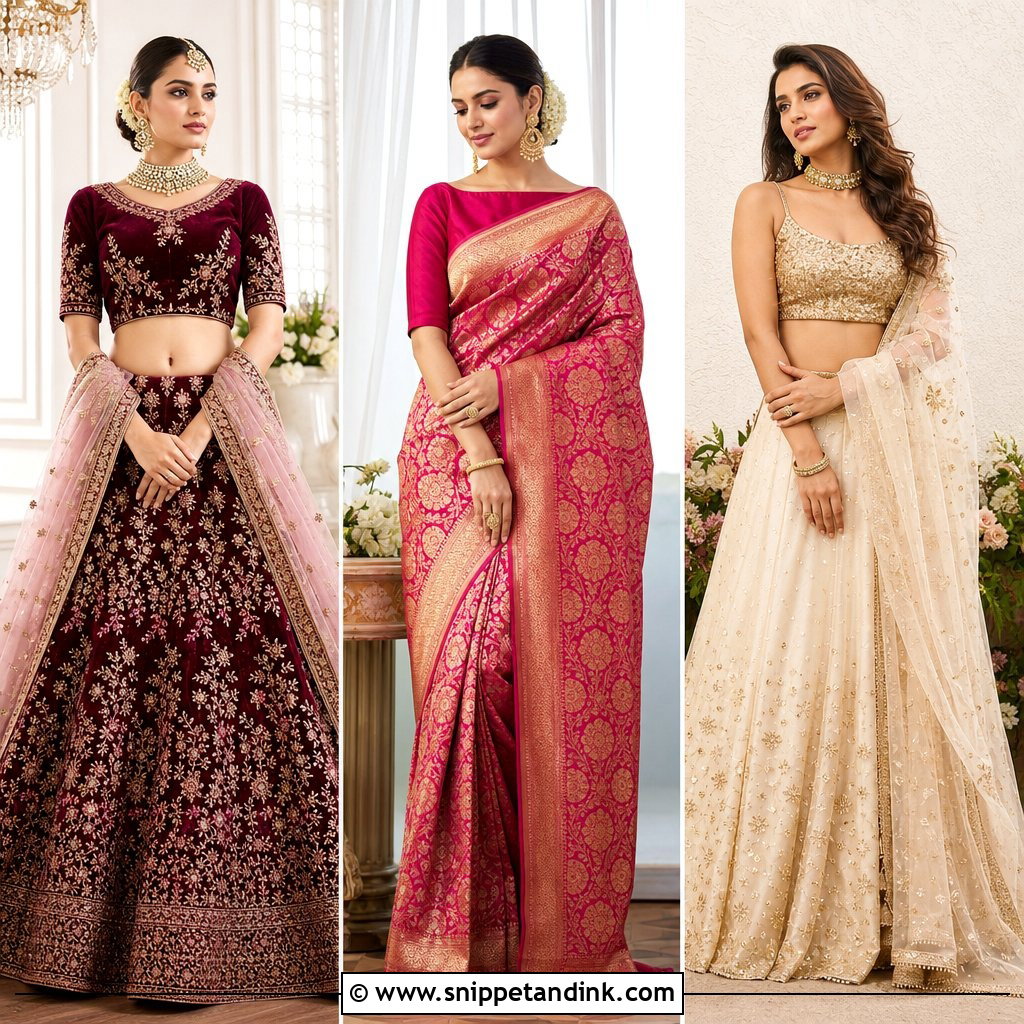
25. Simple Backless Wedding Blouse Design
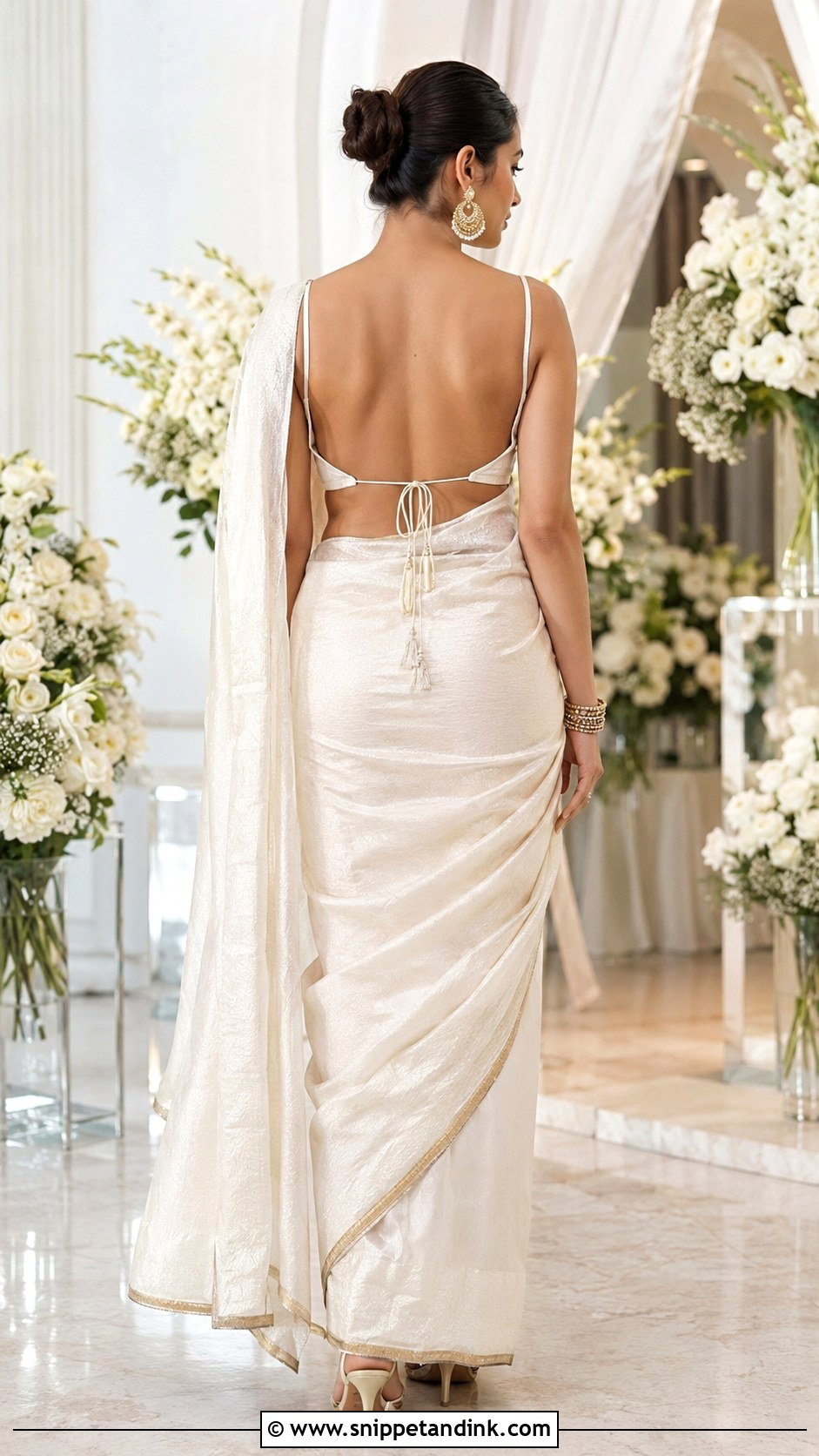
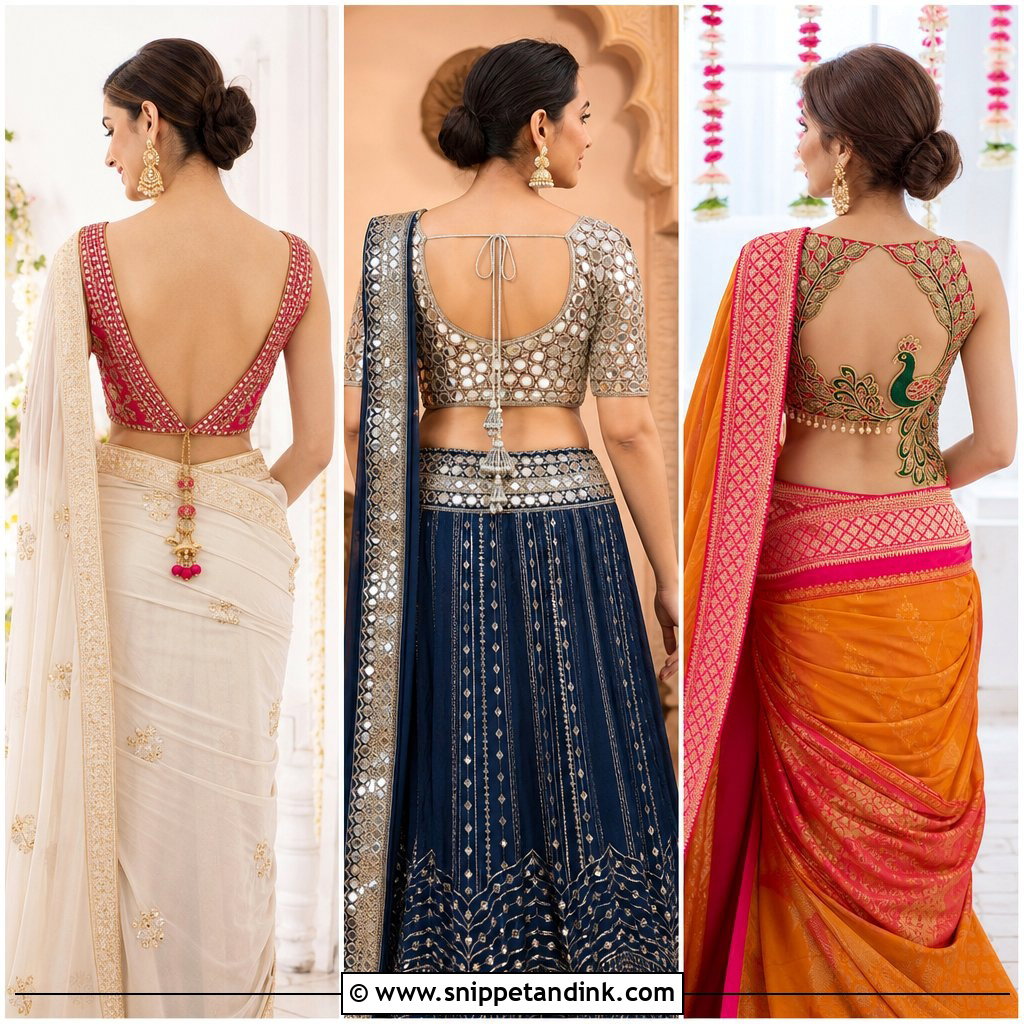
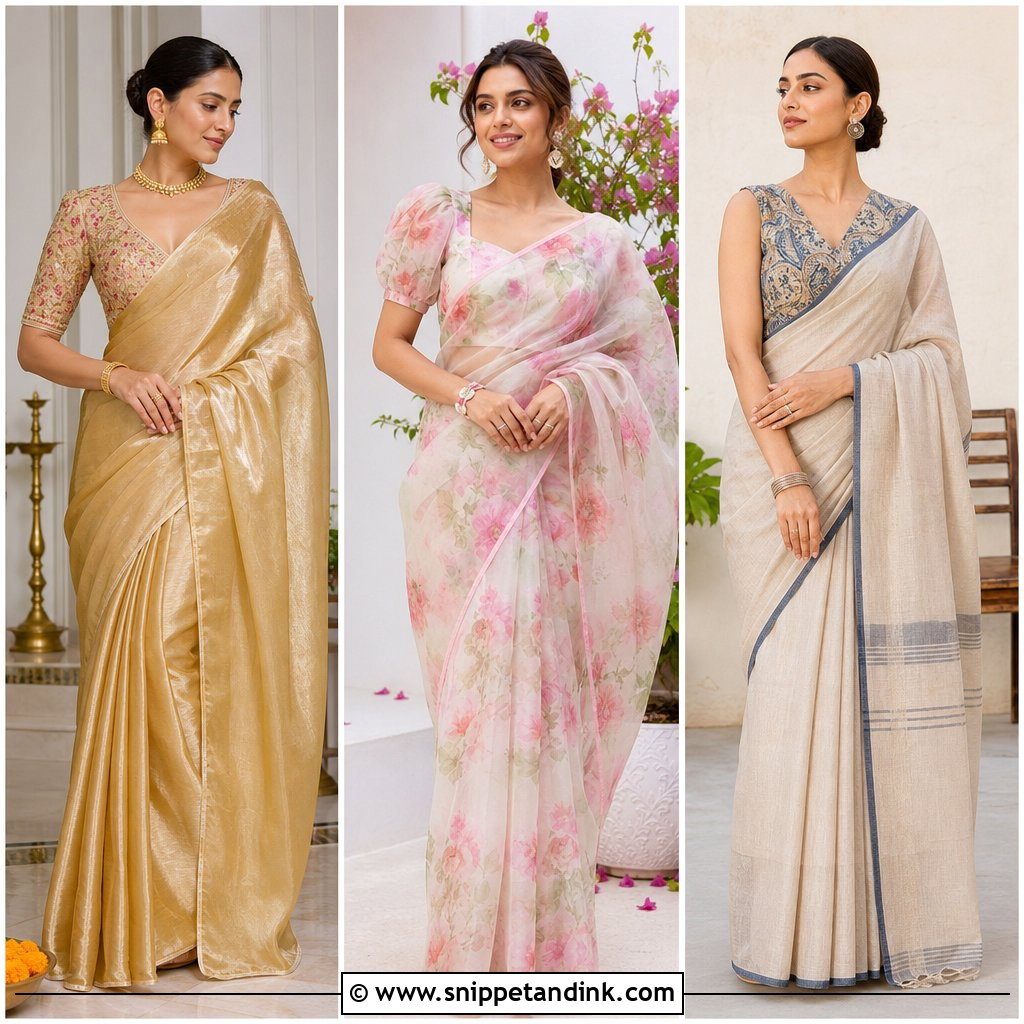
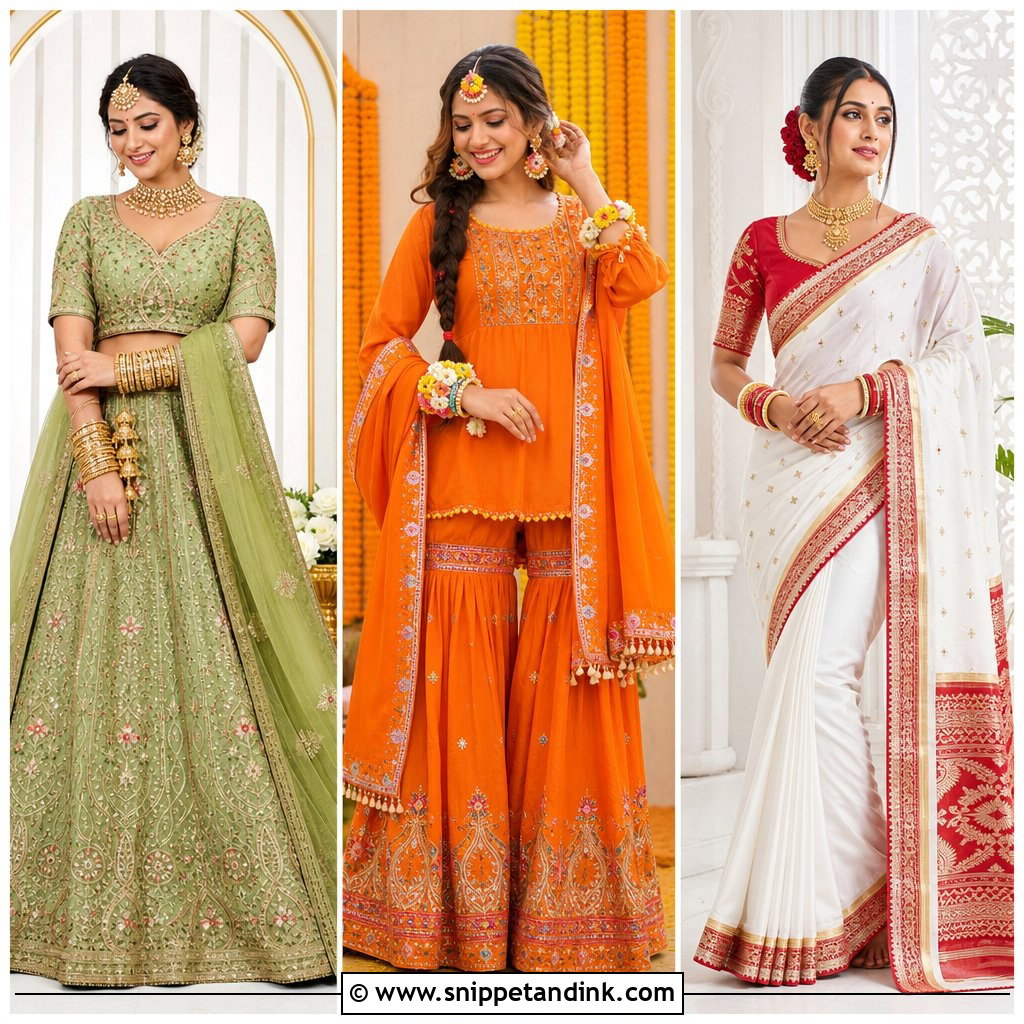
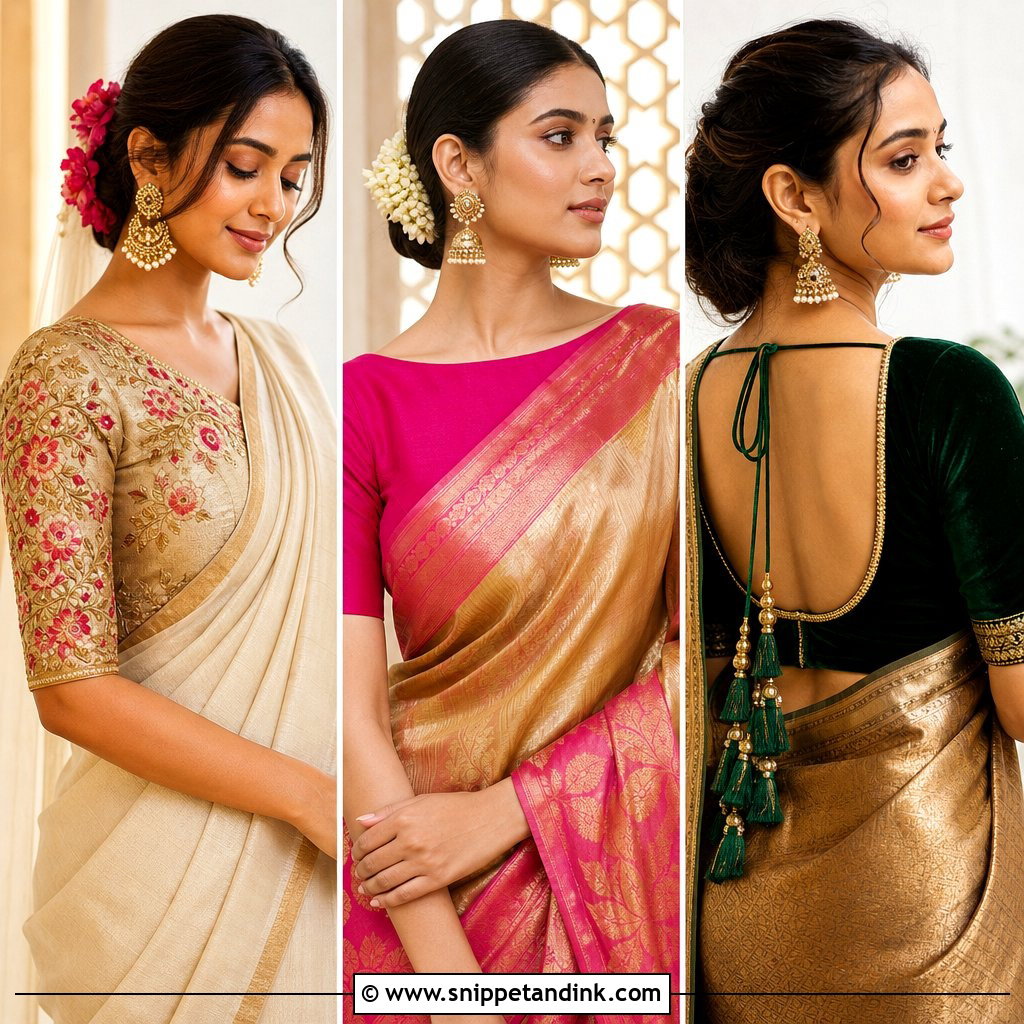
Backless blouses look refined when the front and the styling stay quiet. The closure is everything: a secure tie-back, a dori, or a broad lower band so nothing shifts when you dance. I always build in cups or a stitched-in bra, since a backless blouse leaves no room for a regular one. Keep the front modest with a boat, high or round neck, and add tassels at the dori for a festive touch. It suits receptions, sangeet and guests who like modern shapes.
Matching a Blouse to the Saree’s Weight
The weight of the saree should guide the blouse fabric more than colour does. A heavy Kanjeevaram or Banarasi needs a blouse with body, such as silk, brocade or raw silk, or the pallu pulls a soft blouse sideways off the shoulder. Light georgette, chiffon and organza drapes look better with a blouse that’s equally light, or the top half looks stiff and boxy against a fluid skirt.
Keeping the pallu from dragging the blouse
Pin the pallu to the blouse at the shoulder seam with a small safety pin on the inside, not through the outer fabric. A second pin under the arm, through the saree pleat into the blouse’s side seam, stops it slipping down your back. On silk and velvet blouses, use fine brass pins; thick ones leave visible holes.
Blouse Length Under a Lehenga
With a lehenga, the gap between blouse and skirt matters as much as the neckline. If you want little or no midriff showing, ask for a longer choli and have the lehenga waistband fitted at the same appointment, since the two have to meet properly. Try sitting down in both, because a short blouse rides up when you sit for rituals and the gap doubles.
A Plain Blouse Cut Well Beats a Heavy One Cut Badly
A blouse is the easiest place to get a wedding outfit right without relying on heavy embellishment. Decide by the event, the fabric, your comfort with the neckline, the sleeve length and what jewellery you’re planning. Silk and brocade feel traditional, organza and pearl work feel soft, and collars, keyholes and clean backs feel modern. Whatever the design, a blouse that fits beats one that’s overdesigned, so give your tailor time and go back for a trial.
You'll Like These Ideas:



Leave a Reply