
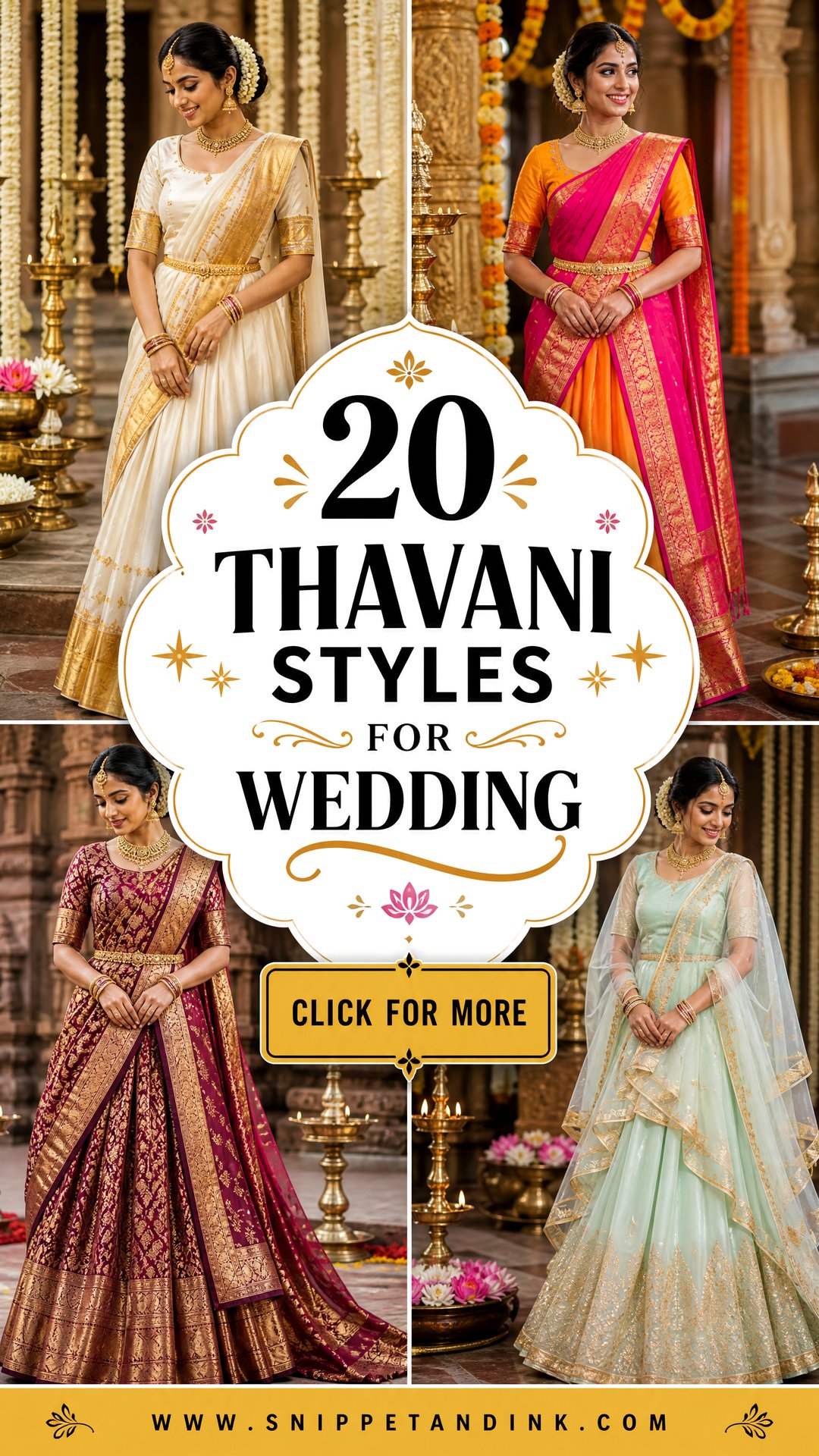
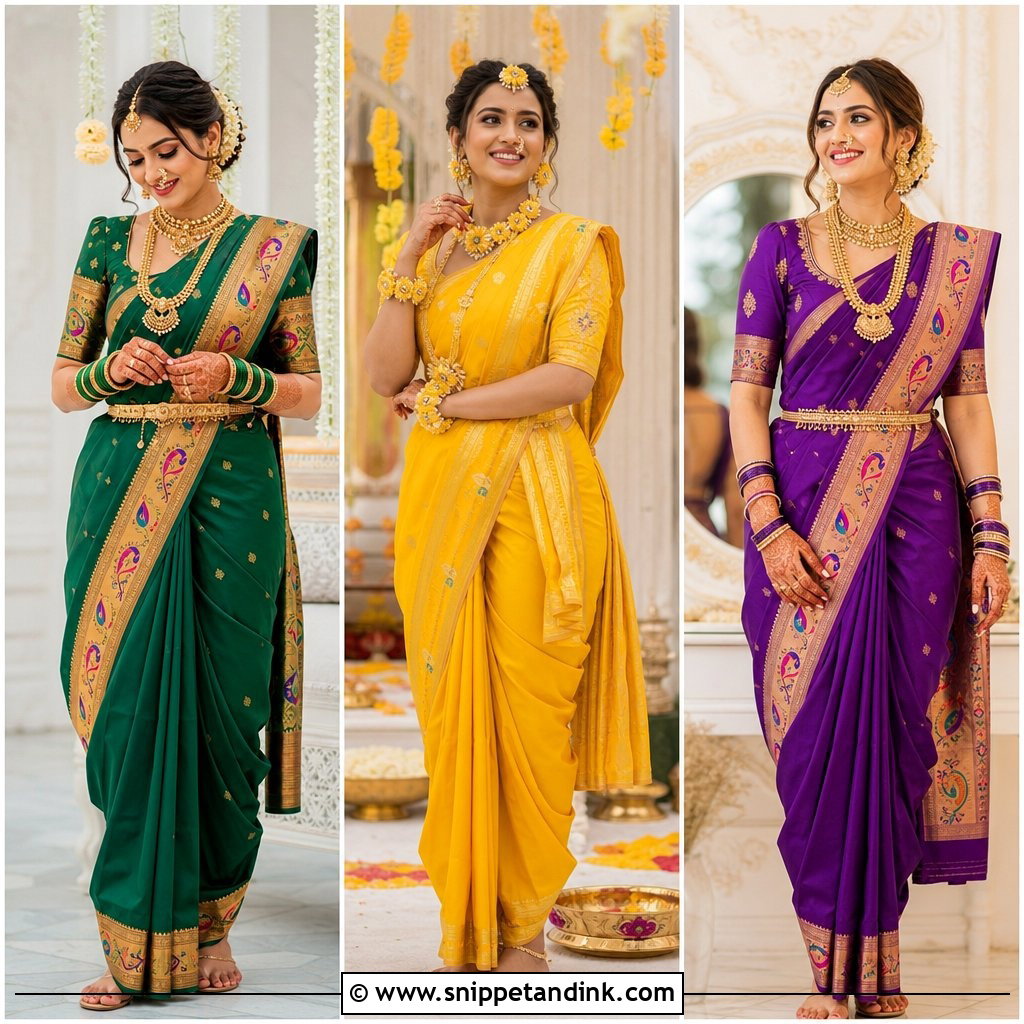
The thavani sits halfway between a saree and a skirt, and that is why I love dressing people in it for South Indian wedding celebrations. You get the pleats and border of a drape with the freedom to sit cross-legged, climb temple steps and dance at the sangeet. Depending on whose grandmother you ask it’s a half saree, a langa voni or a pavadai dhavani, but the structure is the same: a blouse, a flared skirt and a draped dupatta. Wedding versions now run from heavy Kanjeevaram silk with temple borders to light organza and Banarasi brocade. Below are twenty complete looks, for brides, sisters, bridesmaids and guests, with the drape, jewelry and comfort notes I’d give at a fitting.
Pinning a Half Saree So It Lasts Through the Muhurtham
Most thavani problems on the day are drape problems, not outfit problems. A pallu that slips during the ceremony or a skirt that rides up when you sit cross-legged ruins photos faster than any color choice. This is the order I dress someone in:
- Skirt first, tied firmly at the natural waist with the drawstring knot tucked to one side, so it won’t press into you when the belt goes on.
- Tuck the first end of the dupatta into the skirt at the front right, then wrap it around the back to the front.
- Pleat the remaining length into even folds, about a hand’s width each, and lay them over the left shoulder with the border facing out.
- Pin the pleats to the blouse at the shoulder from the inside, then pin again at the waist where the dupatta crosses the skirt.
- Add the waist belt last, so it sits over the pin and holds it flat.
Use safety pins in the dupatta’s own color and pin into the blouse seam, never into the silk alone, or the weight will pull a hole. Before you leave, sit on the floor, stand up, raise both arms and turn around. If anything moves, add a pin there. Heavy pattu needs more anchoring than organza, and a newly ironed pallu slides more than one that has been worn once.
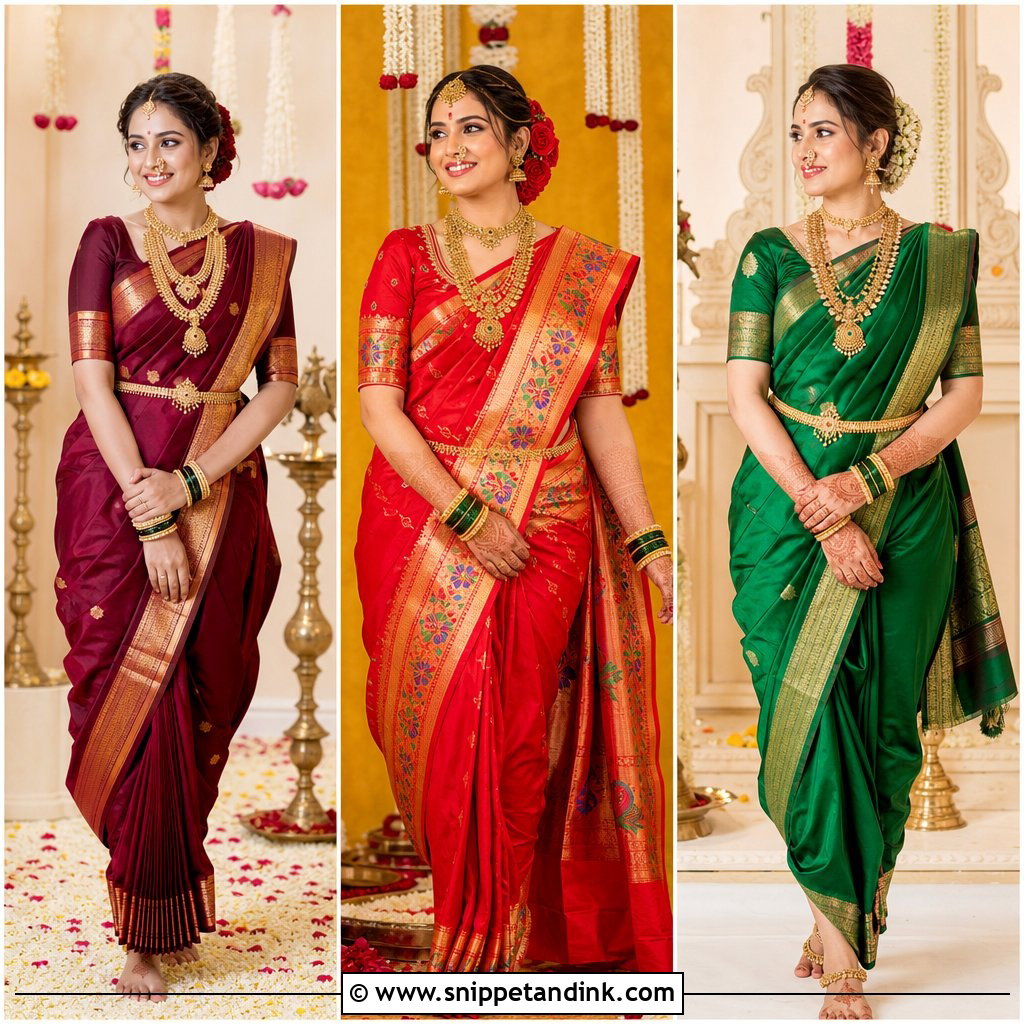
1. Red And Gold Kanjeevaram Thavani
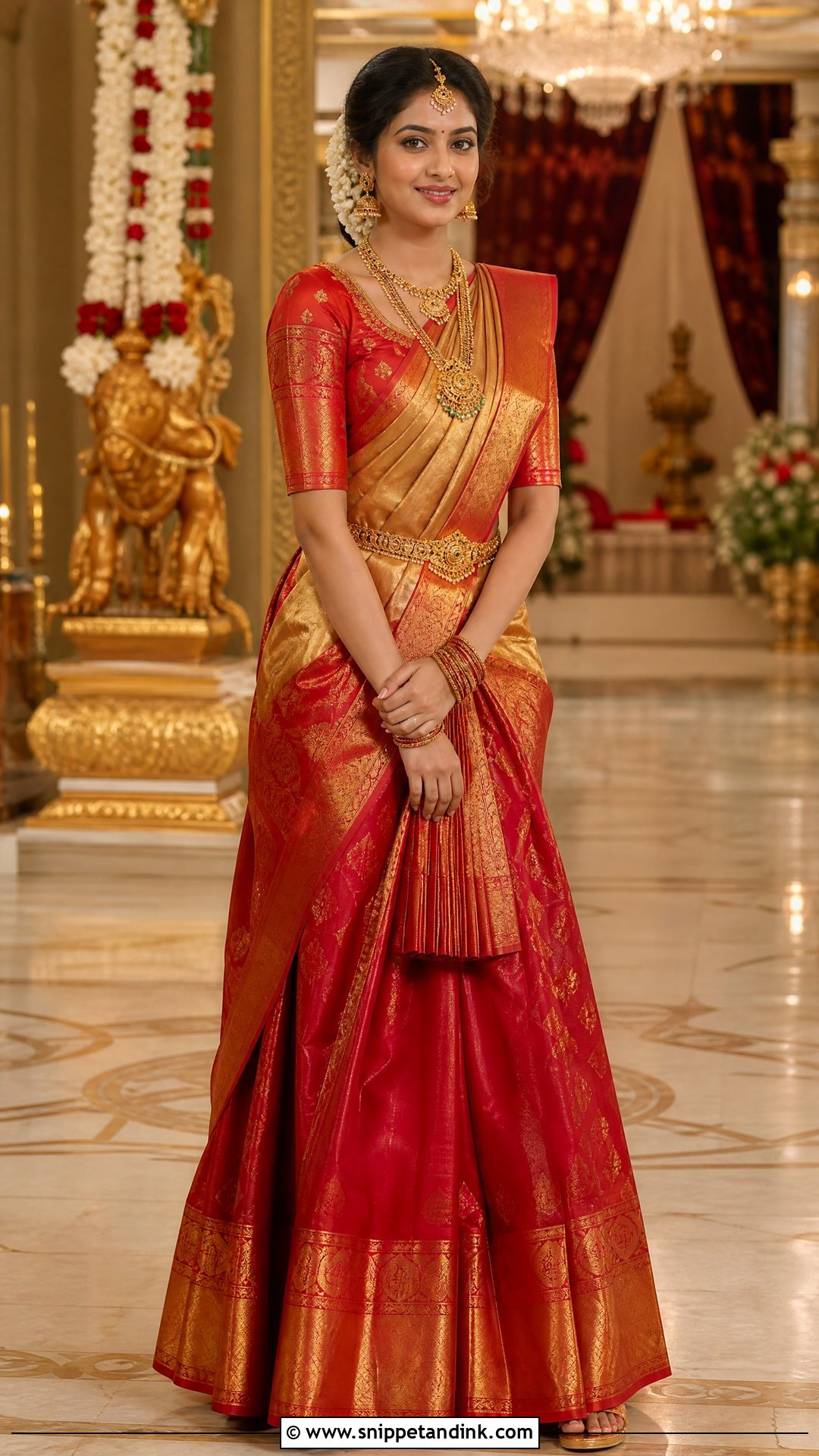
For a muhurtham, nothing reads as clearly ceremonial as a red and gold Kanjeevaram thavani. A red silk skirt with small gold buttas, an elbow-sleeve blouse and a dupatta with a broad zari border is the classic set. When I pleat this dupatta, I fold it so the border runs unbroken from shoulder to waist, because that line of gold is what the camera picks up. A gold vaddanam locks the pleats and defines the waist. Temple necklace, jhumkas, stacked bangles and anklets complete it, with a long jasmine-wrapped braid and low gold sandals. A red lip and defined eyes hold their own against the silk.
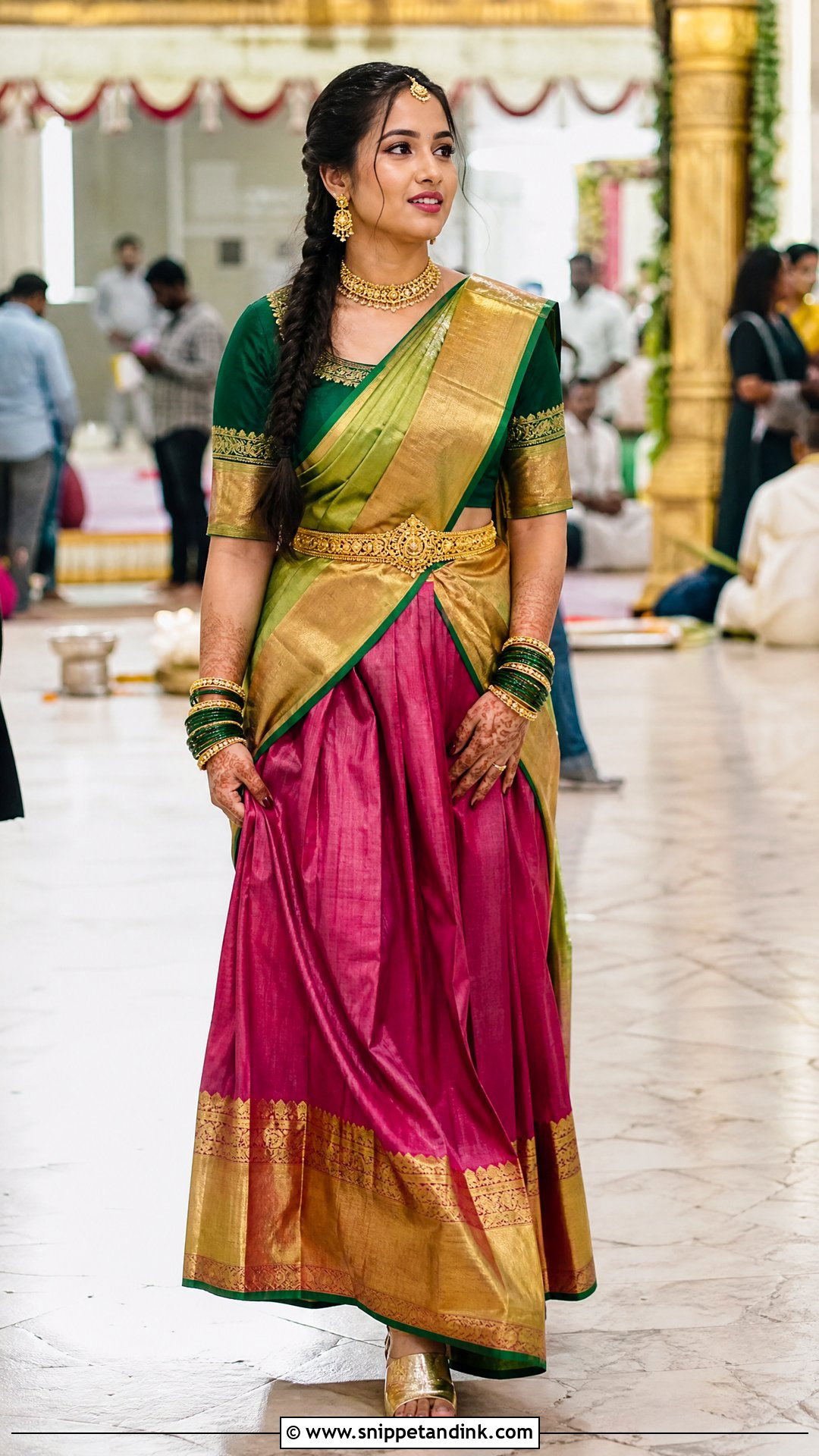
2. Green And Pink Pattu Thavani
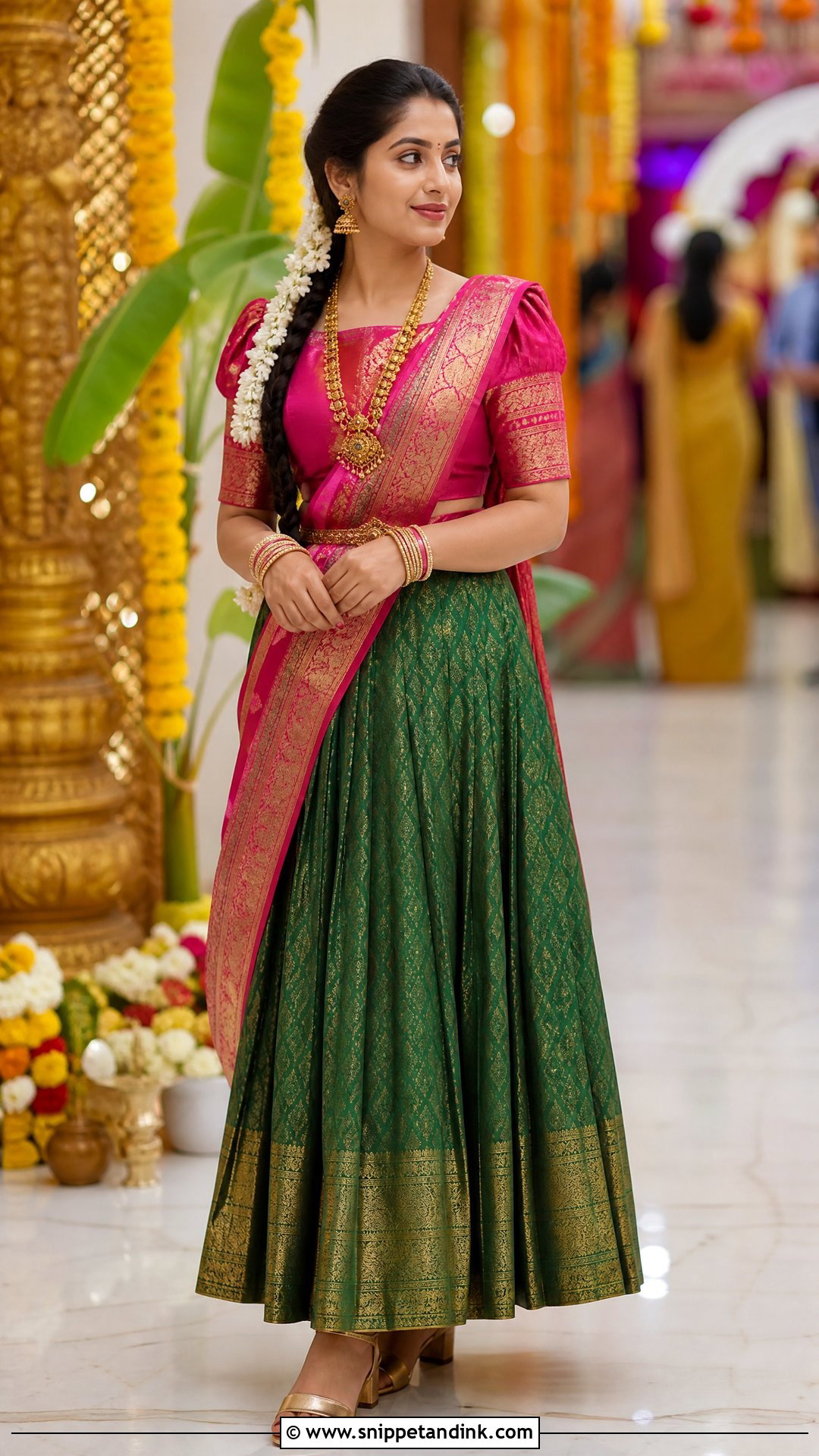
Green and pink is one of the oldest pattu pairings, and it still works because the two colors sit at the same depth. A bottle-green skirt with a pink and gold border, a fitted pink silk blouse and a green dupatta edged in zari make the set. It suits a daytime wedding or engagement. Pin the saree-style drape at the shoulder and again at the waist; one pin alone lets heavy silk slide every time you raise your arms. Antique gold, a short necklace with a medium haram, gold juttis and a center-parted braid with jasmine keep it classic. Match the lipstick to the blouse.
3. Royal Blue And Magenta Silk Thavani
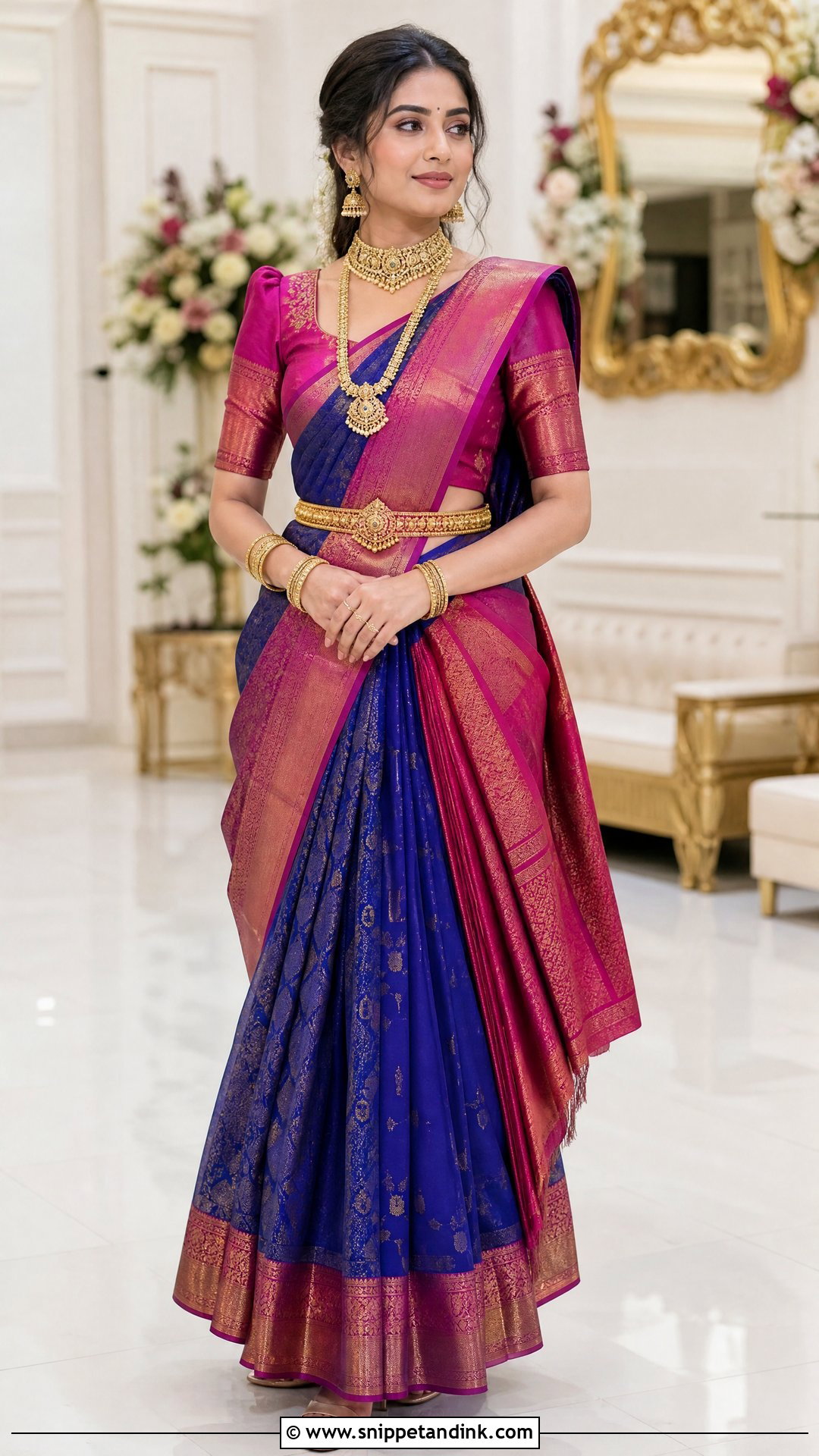
Royal blue with magenta is the combination I give a younger sister who wants to stand out without wearing bridal red. The gold zari border is what makes the two loud colors look planned, so don’t skip it. A structured blouse with elbow sleeves keeps the shape crisp, and a pleated dupatta calms the palette more than a loose one would. Choker, long chain, jhumkas and a slim waist belt are enough. Gold or magenta sandals match the set. A braid, low bun or half-up style all work. Keep the lip a neutral pink, since a bright magenta mouth next to a magenta dupatta flattens the face in photos.
4. Mustard And Maroon Wedding Thavani
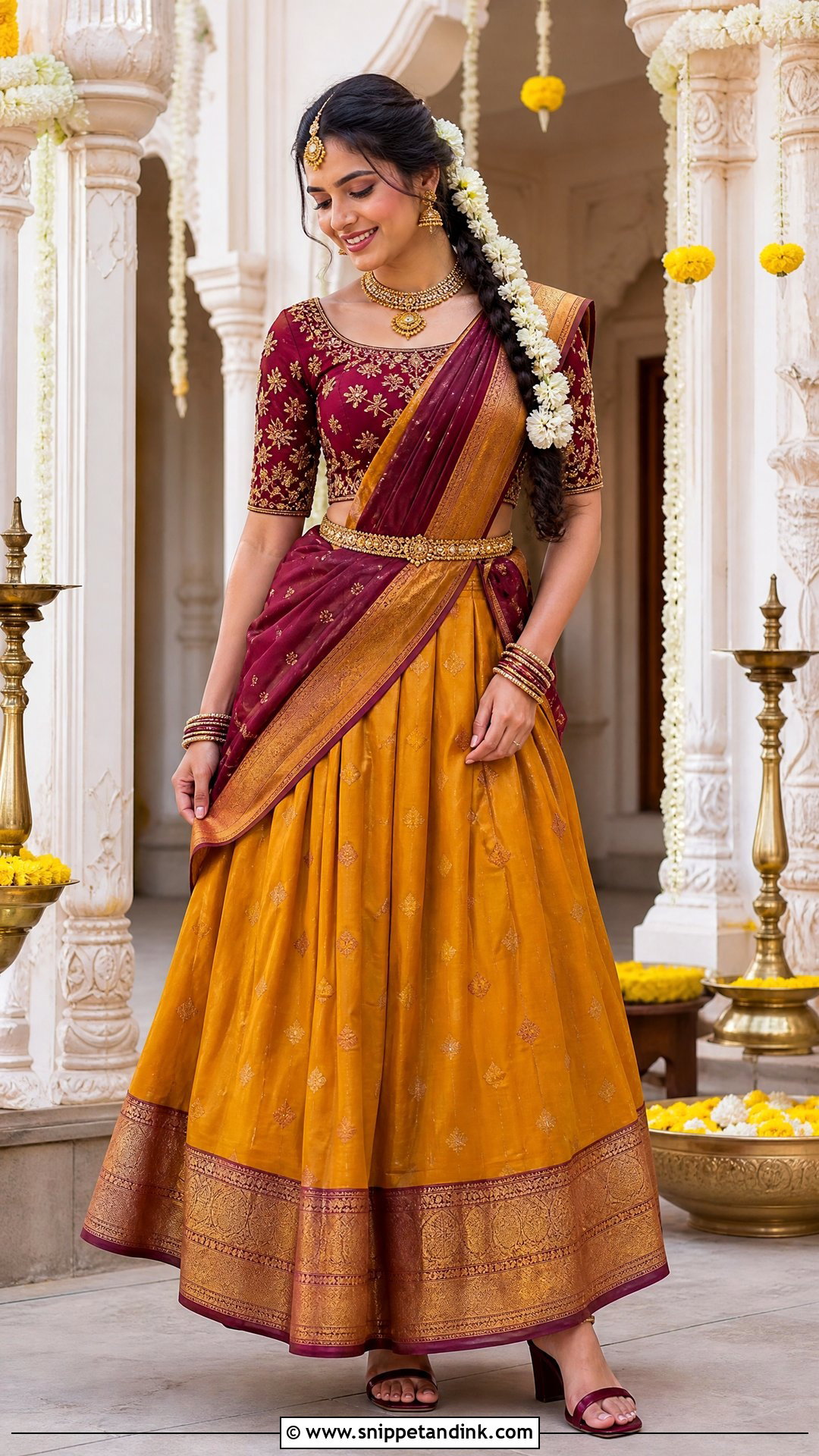
Mustard with maroon is a morning color story; it glows in early sunlight at pre-wedding rituals and looks warm under the mandap. Choose a mustard silk skirt with a wide maroon border and a maroon blouse with a little zari work. The dupatta goes diagonally and a gold waist belt holds it. This palette loves antique gold, nakshi and temple jewelry, though I’d pick one medium necklace over several heavy layers if you’re wearing it from dawn. A sleek braid with a few flowers, maroon block heels or gold flats, a small bindi and a muted brick-red lip finish the look.
5. Ivory And Gold Kerala Thavani
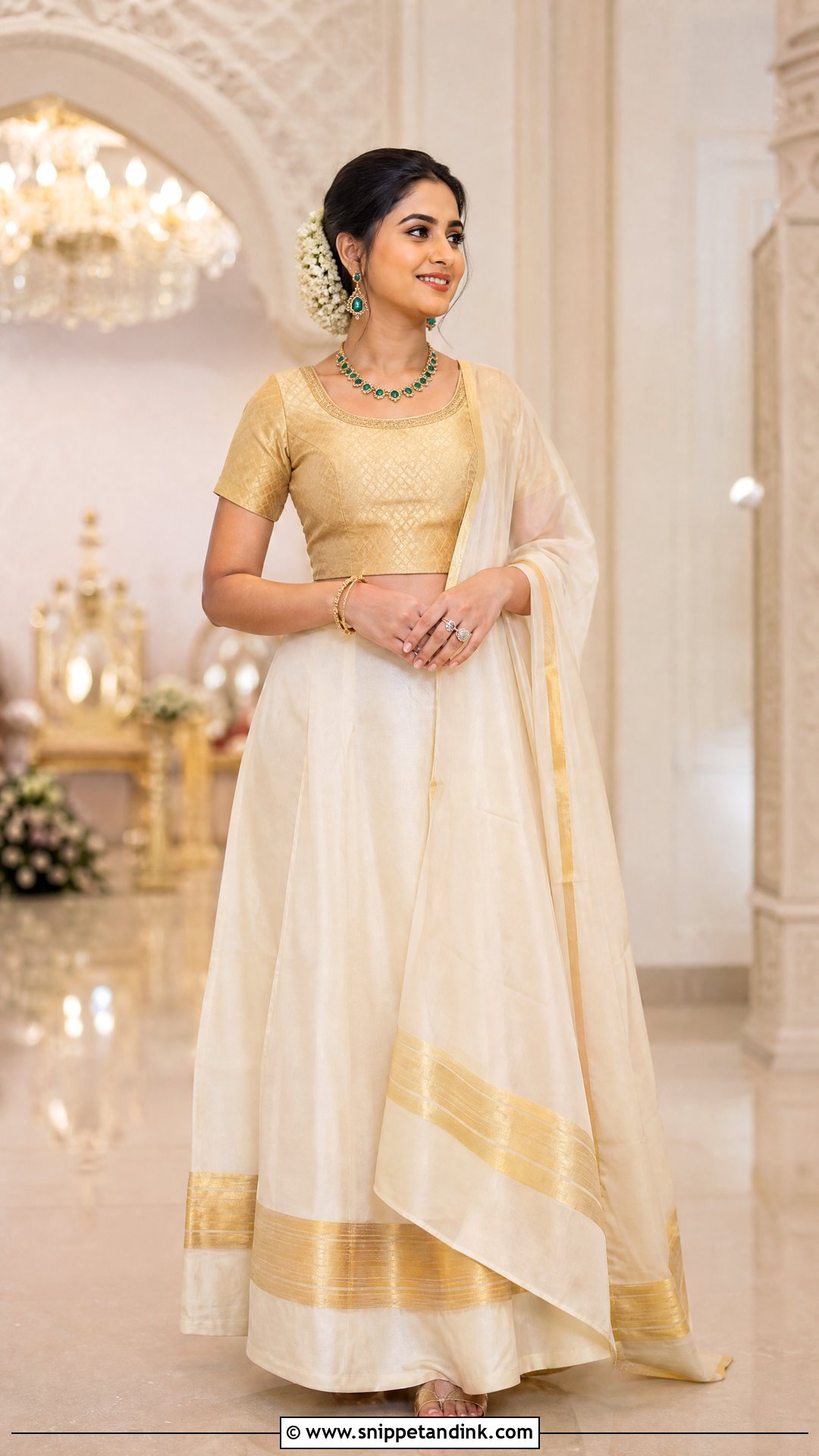
Ivory with a kasavu-style gold border is the quiet option, and also the one most likely to wash out under flash. Build it from an ivory silk or cotton-silk skirt, a gold blouse or ivory blouse with metallic embroidery, and a matching ivory dupatta. Keep the drape neatly pleated; loose folds of pale fabric read as crumpled in photos. Emerald or ruby jewelry adds a single note of color, or wear plain gold for a fully traditional finish. A low bun circled with jasmine and gold sandals suit it. The makeup has to work harder here: kohl and a berry or red lip give the face definition against all that ivory.
6. Pastel Pink Embroidered Thavani
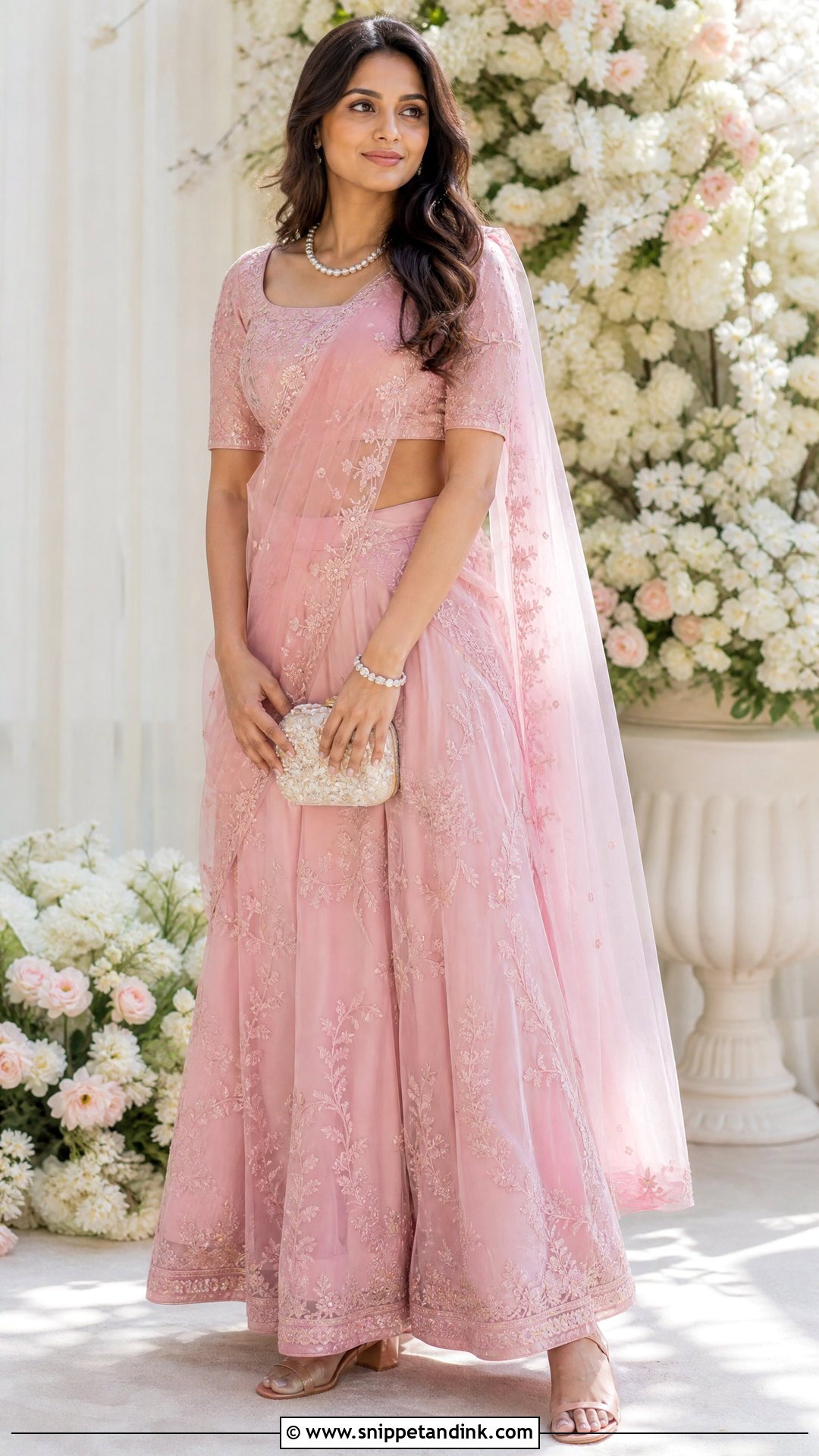
Pastel pink is where I move away from heavy antique gold. Delicate threadwork, sequins or scattered floral embroidery on a pink skirt look crowded next to a big temple necklace; pearls, diamond-look pieces or pale kundan sit much better. Pair the skirt with a tonal blouse and a light net or organza dupatta with a slim border. Drape it loosely over one shoulder so the embroidery underneath shows. Blush heels, a small embellished clutch and loose waves or a textured bun suit an engagement or reception. Brown eyeliner and a pink-nude lip keep everything in the same soft key.
7. Purple And Teal Bridal Thavani
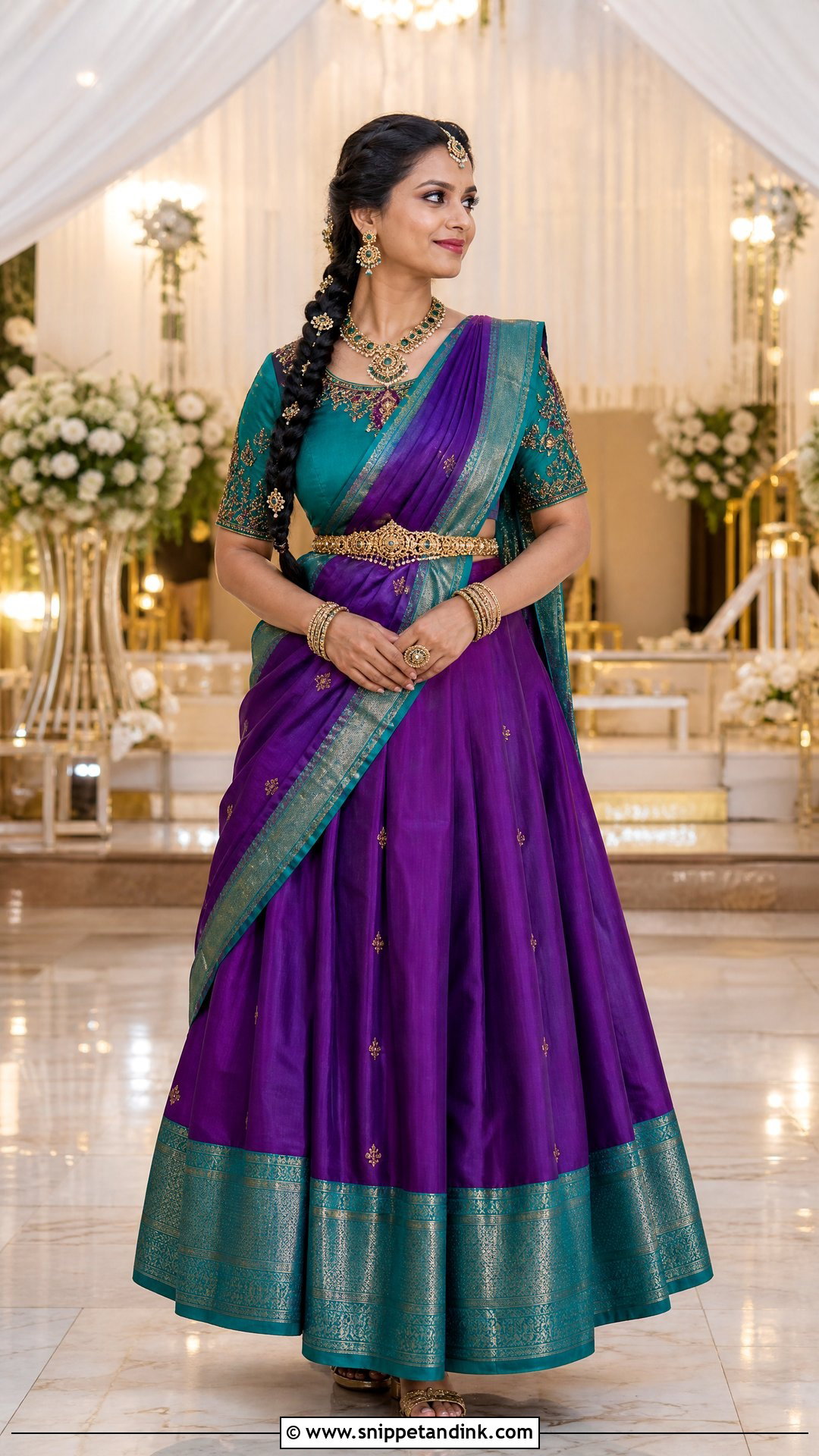
Purple and teal look regal under evening lights, and I usually recommend a cascading shoulder drape for them. Pleating it flat would hide half the border, whereas letting it fall in tiers shows both colors along the edge. A deep purple skirt with teal and gold woven borders, a teal blouse with structured sleeves and a purple dupatta make the set. Antique gold works, and green stone accents pick up the teal so the jewelry looks chosen for this outfit. Gold sandals, a compact potli, a braid with small gold ornaments and a plum lip finish it.
8. Orange And Rani Pink Thavani
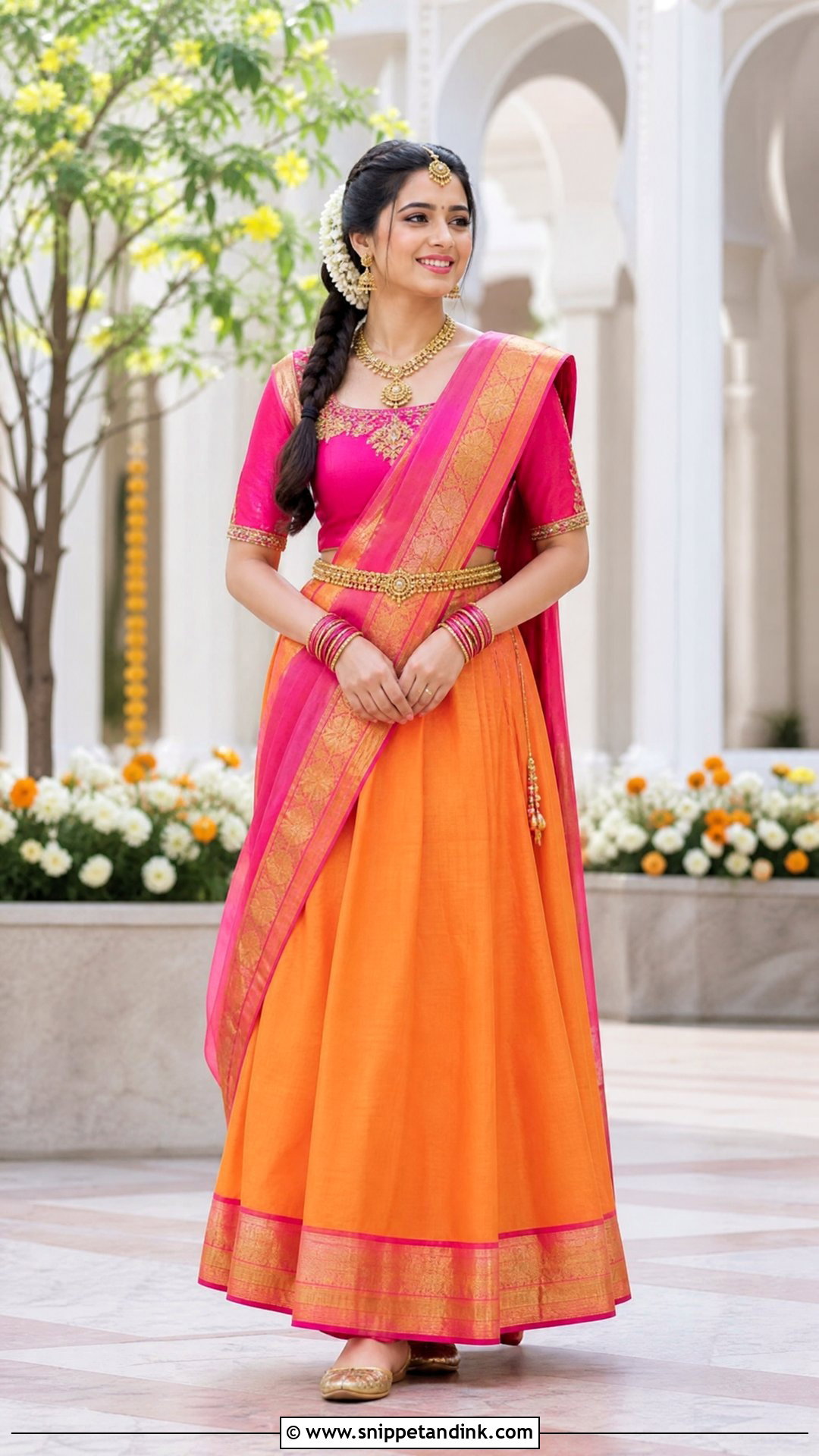
Orange and rani pink belong to daytime functions with music and color everywhere. An orange silk skirt with a broad pink border makes the base, and a rani pink blouse becomes the focal point. You can reverse the dupatta colors for a more layered effect. With two colors this strong, multicolored jewelry tips it into chaos, so I keep to plain gold. A waist belt organizes the drape and gives the full skirt some shape. Gold flats, stacked bangles, a flower-wrapped braid, peach blush and a pink lip keep the face bright without fighting the fabric.
9. Banarasi Brocade Wedding Thavani
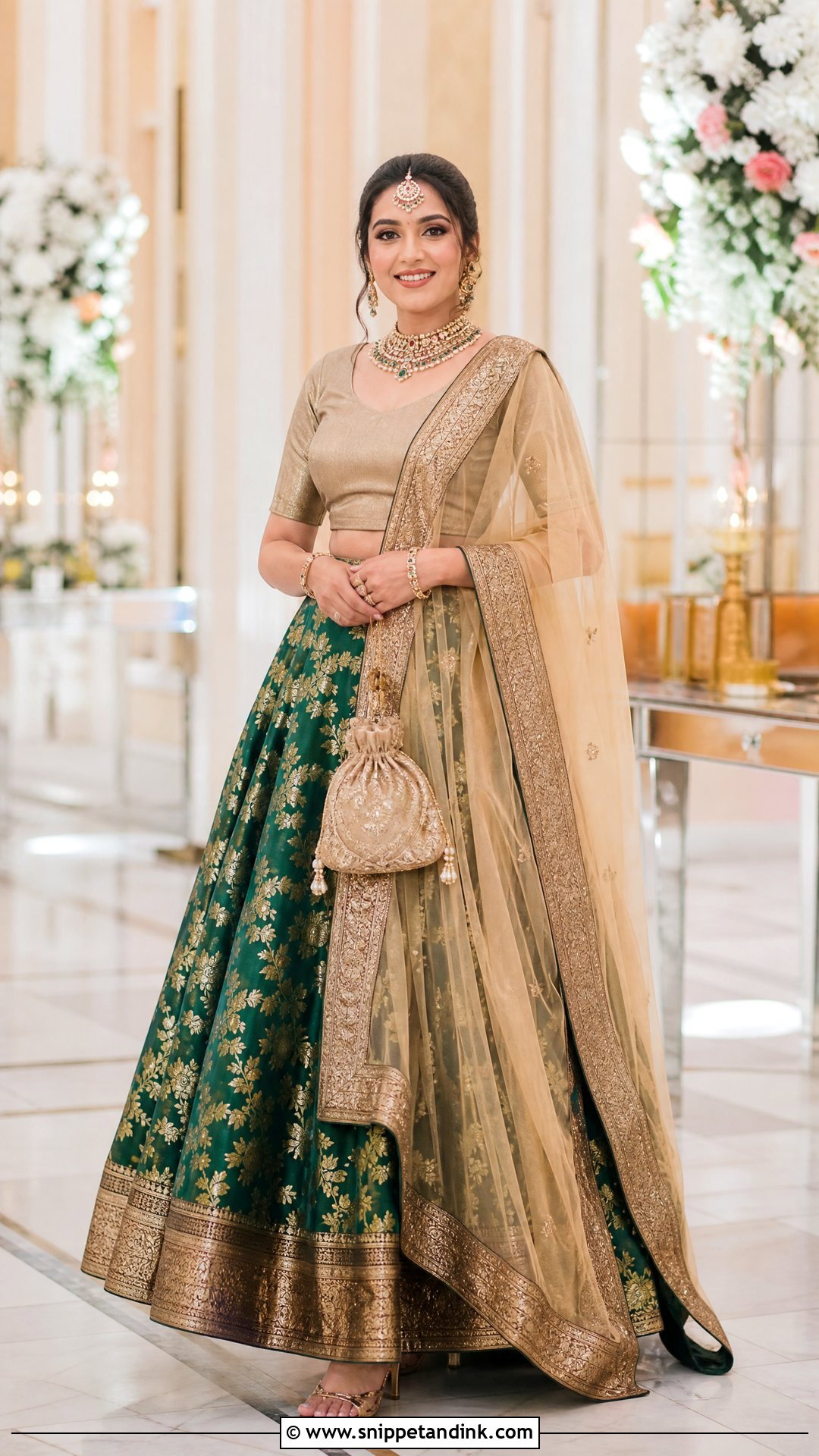
A Banarasi brocade thavani takes a North Indian weave and puts it into a South Indian shape. The brocade skirt carries so much pattern, with zari florals, paisleys and vines, that I always pair it with a plain silk blouse. Emerald, red, navy or plum all suit the weave. Brocade is stiff and heavy, so a lighter dupatta with a Banarasi border keeps the whole thing from feeling like armor by the third hour. Kundan jewelry, gold jhumkas and an embroidered potli suit it, along with metallic block heels. A smooth bun or polished braid is better than a complicated style, and a deep rose lip finishes it.
10. Gold Tissue Silk Thavani
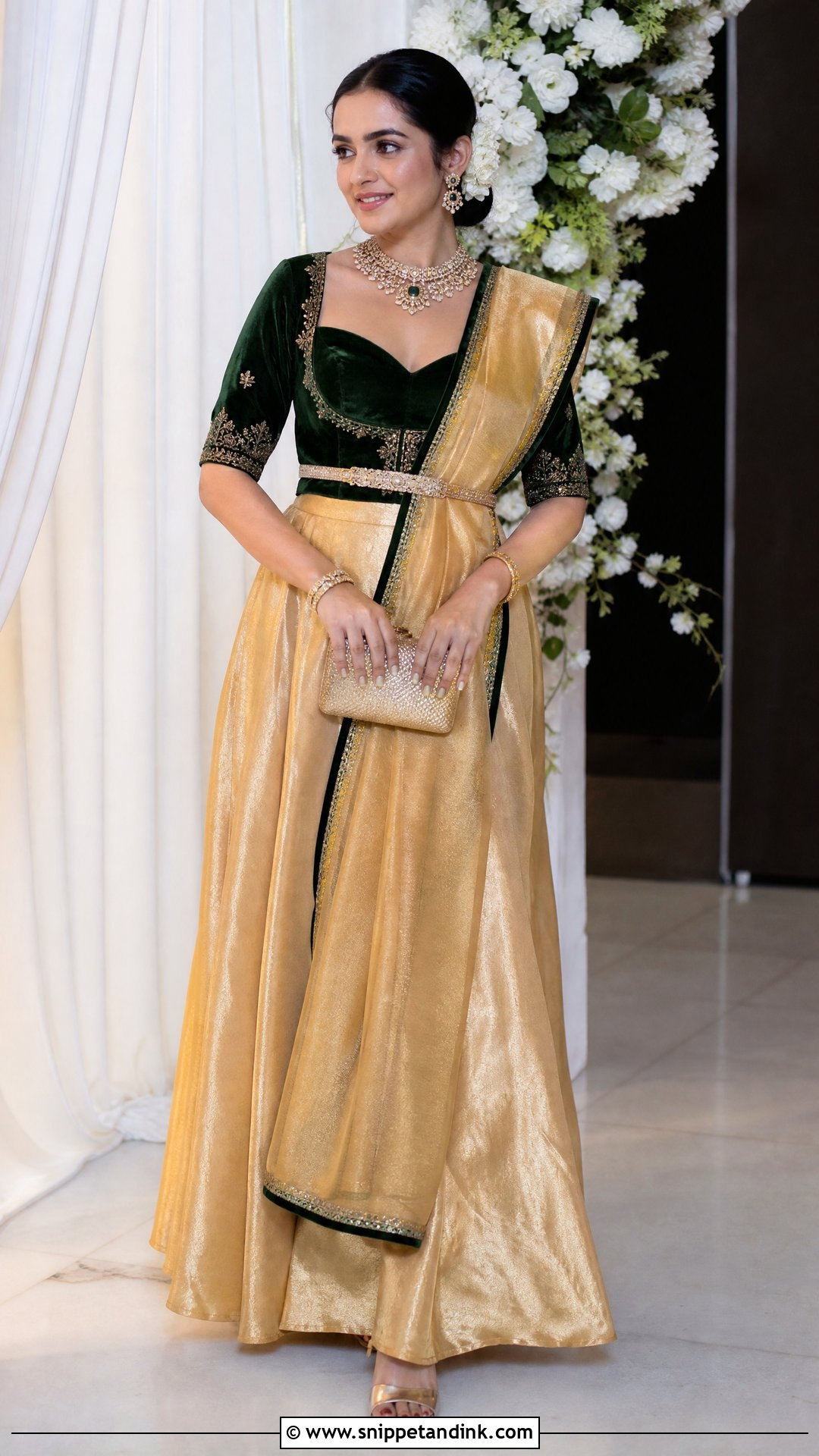
Gold tissue silk has its own shine, which means it needs less of everything else. A soft gold skirt with a contrasting emerald, ruby or maroon blouse and a gold dupatta with a colored border is the whole idea. Skip heavy embroidery on the tissue; it competes with the fabric’s sheen. One statement necklace, matching earrings and a slim belt are plenty. Tissue also creases sharply and the creases catch light, so I steam it on the hanger right before dressing and avoid sitting in it during the car ride if possible. A low bun with flowers or a sleek ponytail, bronzed cheeks and a neutral lip suit it.
11. Floral Organza Wedding Thavani
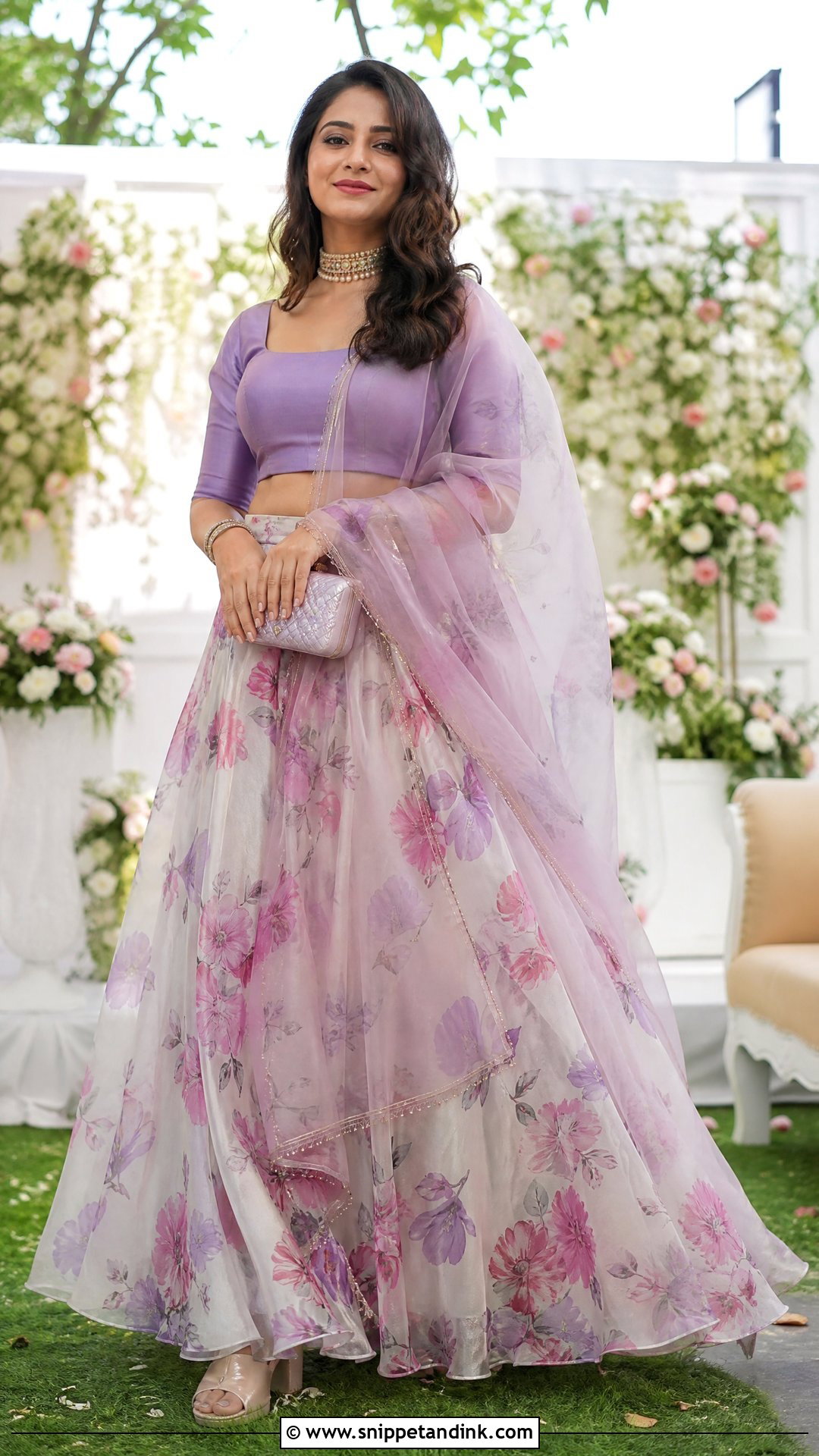
Organza gives the thavani a lighter, floating shape that suits an outdoor wedding or garden reception. Choose a printed or embroidered floral organza skirt and pull the blouse color from the print. The sheer dupatta needs careful draping; organza holds its folds stiffly, so pin it at the shoulder and let the rest fall rather than wrapping it tight. In wind, it will lift, so a second pin at the waist saves a lot of grabbing. Pearl earrings, a delicate choker and a few slim bangles keep it airy. Neutral block heels, a pastel clutch, soft curls or a half-up style and a fresh pink lip finish it.
12. Velvet Blouse And Silk Thavani
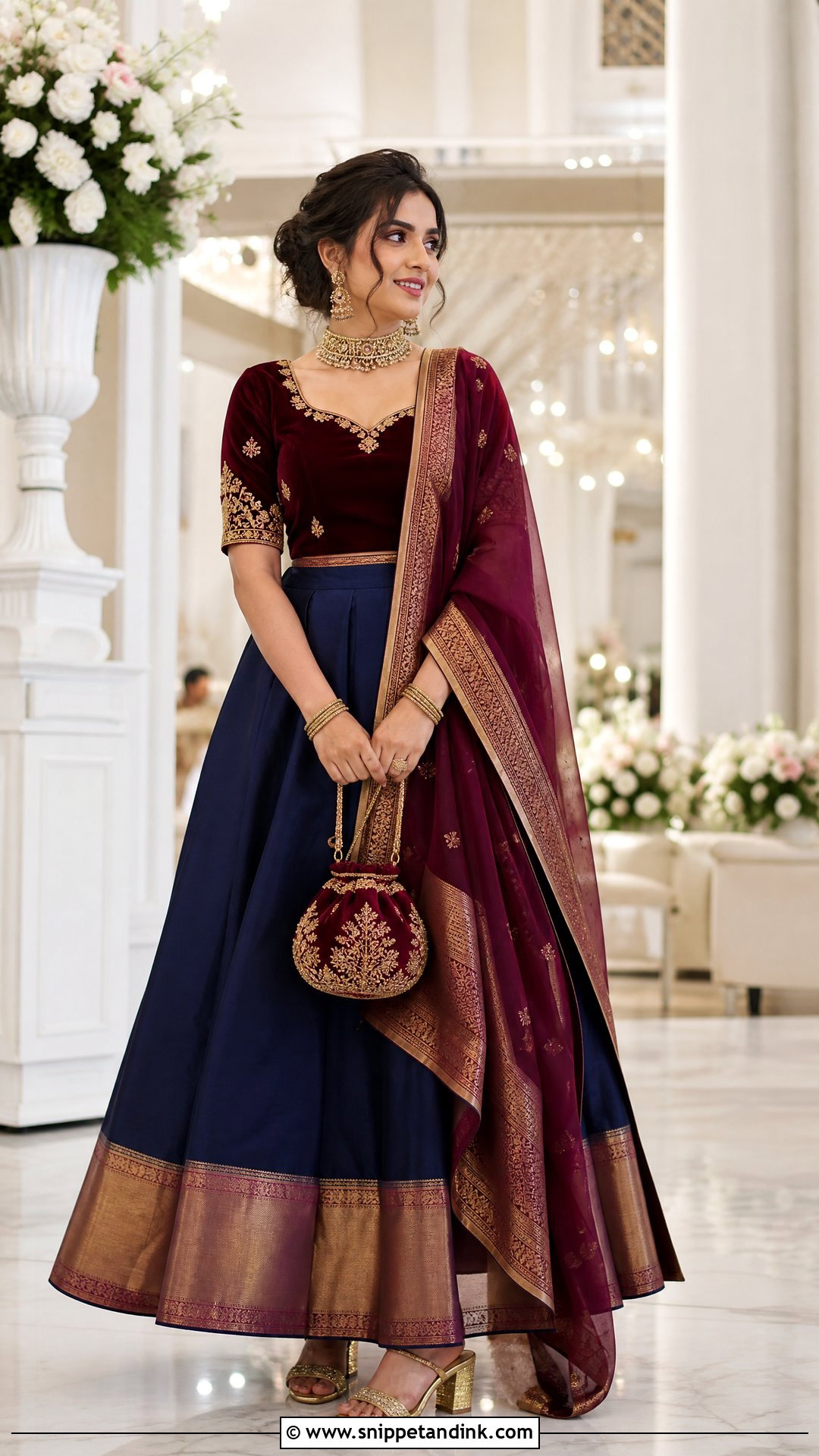
Velvet is my answer for a winter reception or an air-conditioned hall where silk alone feels thin. Keep the skirt plain or lightly woven in deep green, navy, burgundy or purple, and let a fitted velvet blouse with elbow sleeves and restrained gold work add the richness. Velvet looks heavy around the neck, so keep the drape neat and choose either one long necklace or a structured choker, never both. A silk dupatta with a border linking blouse and skirt ties the set together. Gold block heels, a small potli, a sleek bun and a matte lip suit the texture. In a warm venue, velvet is uncomfortable within an hour, so check the weather.
13. Mirror Work Wedding Thavani
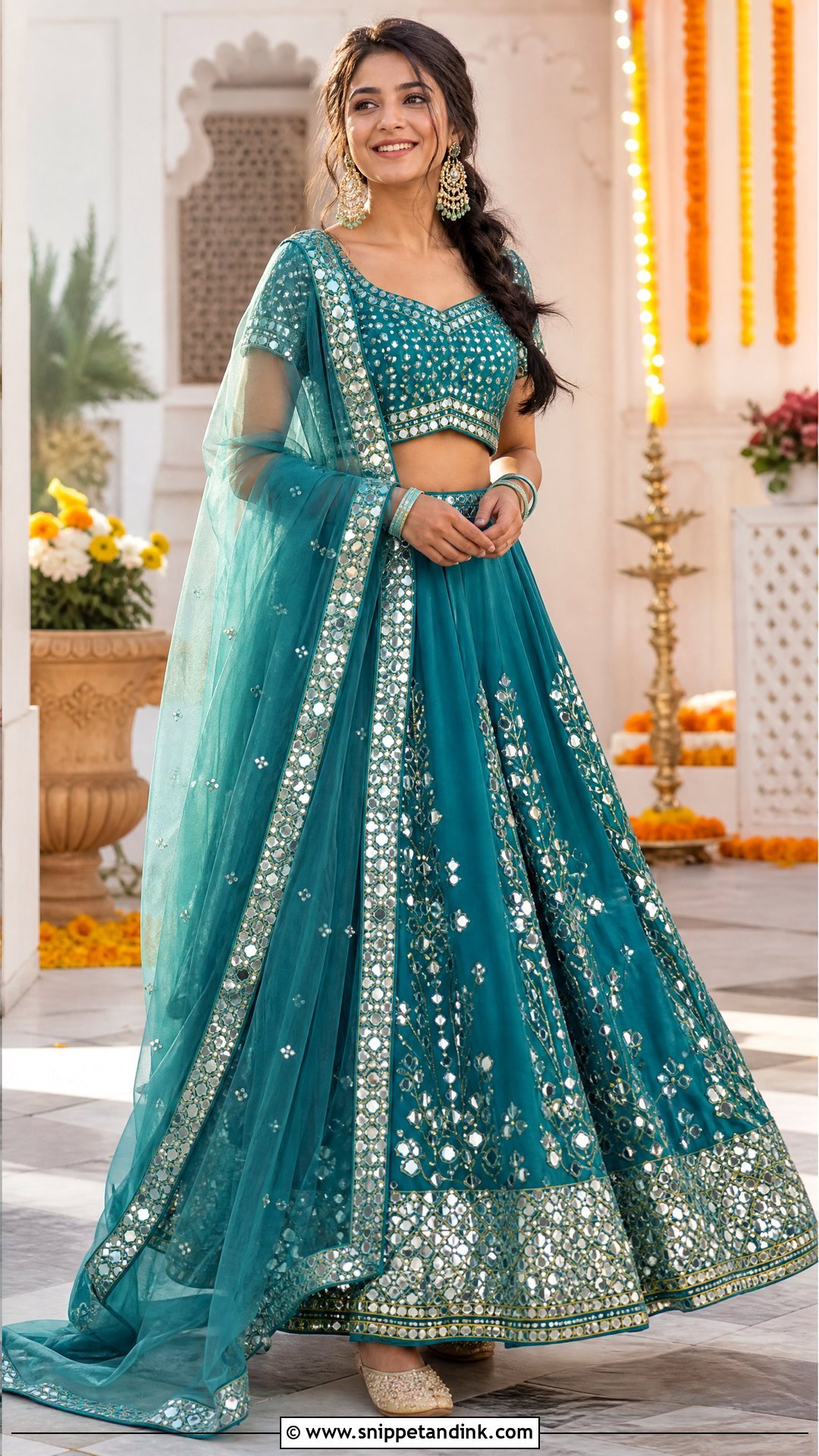
Mirror work belongs at the sangeet or mehndi, where the little discs throw light while you dance. A solid skirt in teal, coral, royal blue or fuchsia with evenly spaced mirrors, a coordinated embroidered blouse and a light dupatta with mirror trim make a fun set. Keep the drape simple; crowded folds hide the mirrors. Mirror edges can also catch on fine net and lace, so I avoid pairing it with a delicate dupatta. Oxidized silver keeps it casual, kundan makes it formal. Cushioned juttis, a side braid or ponytail and a long-wear lip color handle hours of dancing.
14. Temple Border Silk Thavani
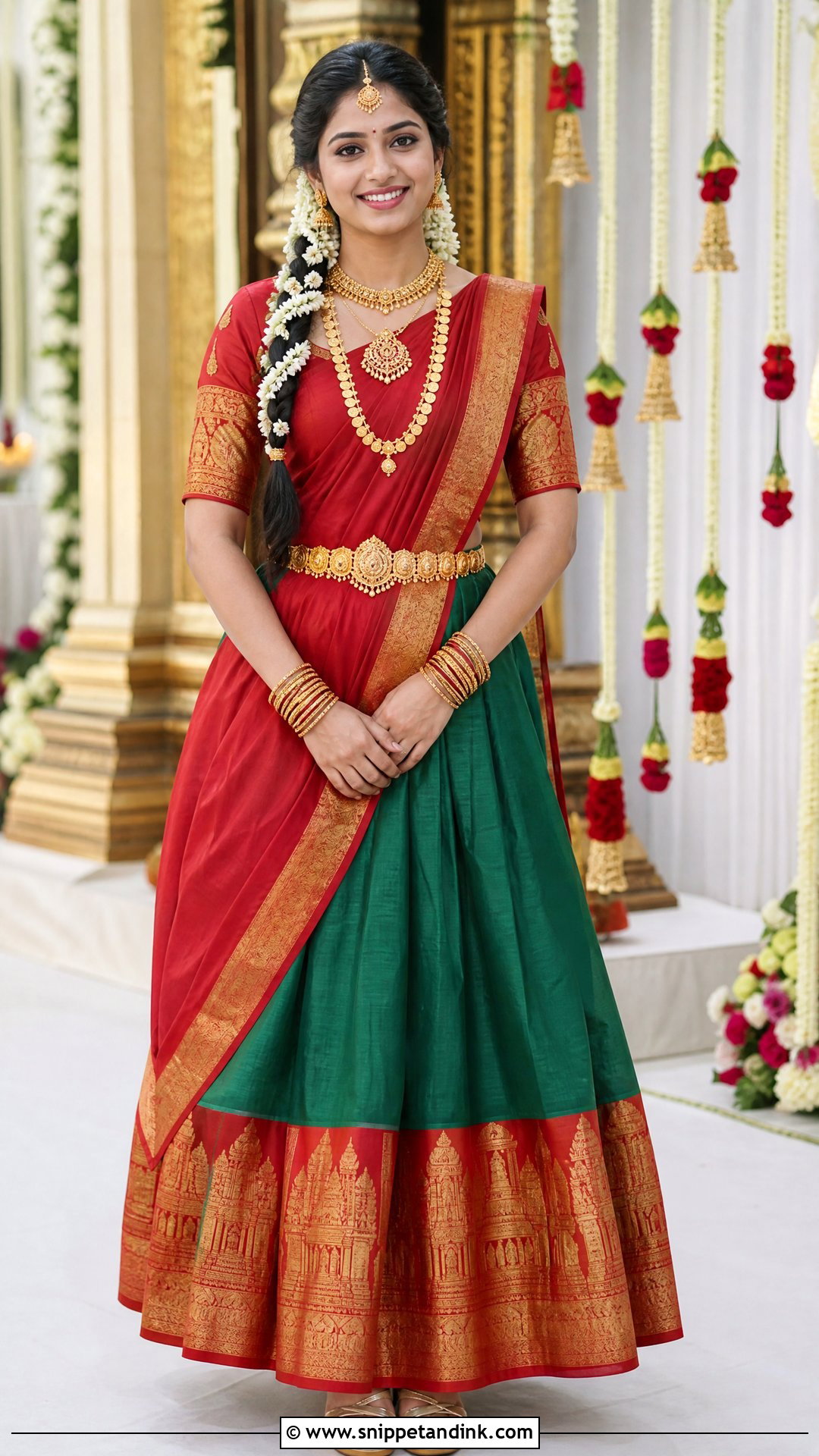
Nothing says South Indian silk quite like a temple border, with its triangular gopuram edging in gold, red or green. A plain contrast blouse keeps the border in charge. Repeat the pattern on the dupatta, pleat it cleanly and lock it with a gold vaddanam for a composed ceremonial line. Temple jewelry is the obvious companion: a goddess-motif necklace, coin haram, jhumkas and bangles. Simple gold sandals keep you comfortable through a long ceremony. A long braid with jasmine and gold hair pieces, plus kohl-lined eyes, a red bindi and a classic red lip, complete the traditional styling.
15. Peacock Motif Wedding Thavani
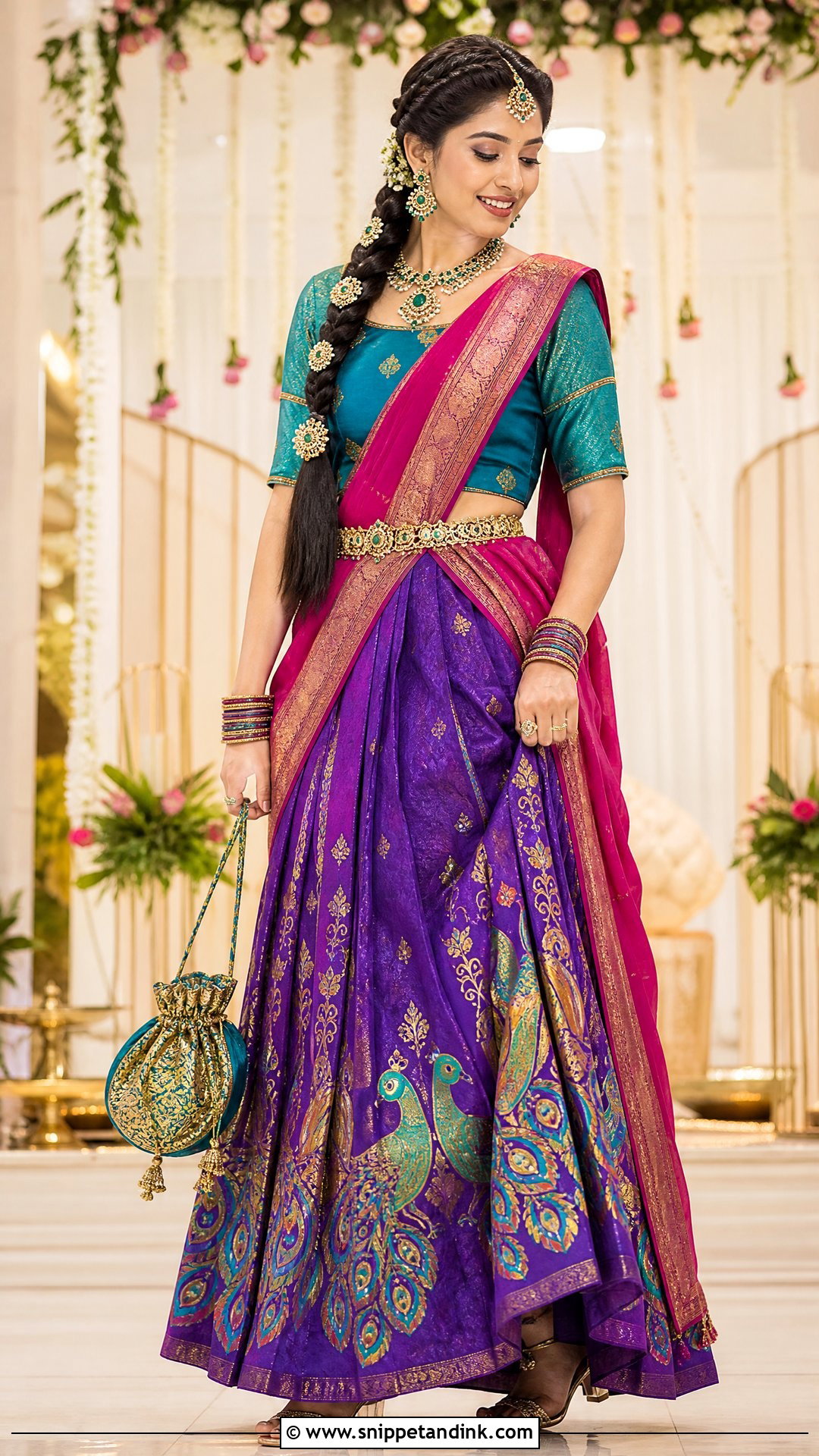
Peacock motifs give you color and craftsmanship in the weave itself, so there’s no need for heavy surface embellishment. Look for small woven peacocks across a silk skirt, or a statement border of blue, green and gold birds. A teal or royal blue blouse brings out the motif, and a magenta or purple dupatta adds depth. I like green stones or blue enamel in the jewelry because they echo the weave without copying it. A slim belt keeps the pallu in place and frames the skirt. Gold sandals, a matching potli, a braid with small hair ornaments and emerald eyeliner finish it.
16. Checked Silk Wedding Thavani
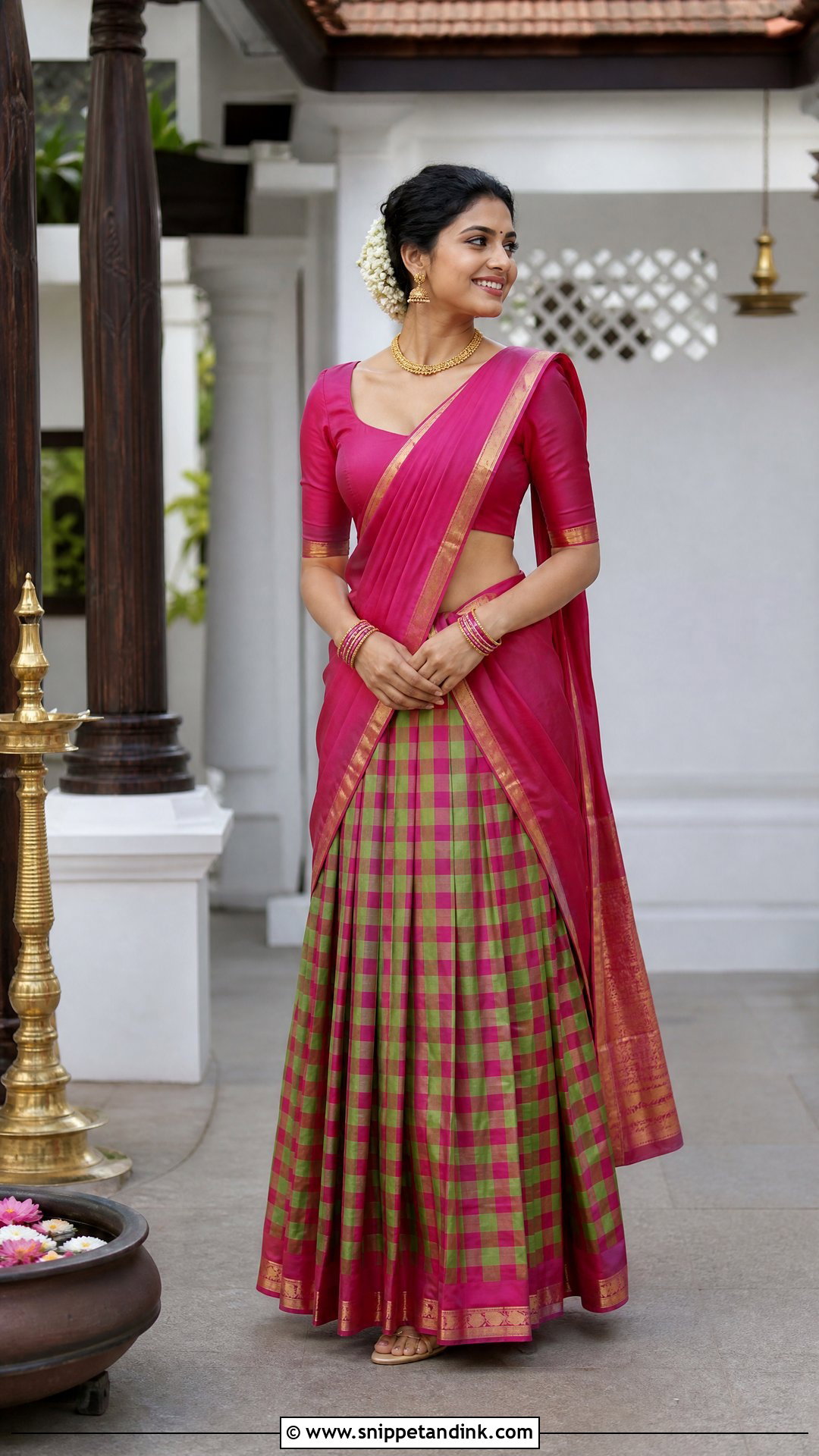
Silk checks are the easiest thavani to style, which is why I suggest them for teenagers wearing one for the first time. Green with pink, blue with gold or mustard with maroon all work. Pick the blouse from the darkest color in the check; a light blouse makes the skirt look busier than it is. A plain dupatta with a checked or zari border ties it together. Checked silk is usually crisp and holds volume on its own, so low sandals balance it better than heels. A short gold necklace, jhumkas, bangles, a neat jasmine braid and a muted pink or red lip are all it needs.
17. Burgundy And Gold Bridal Thavani
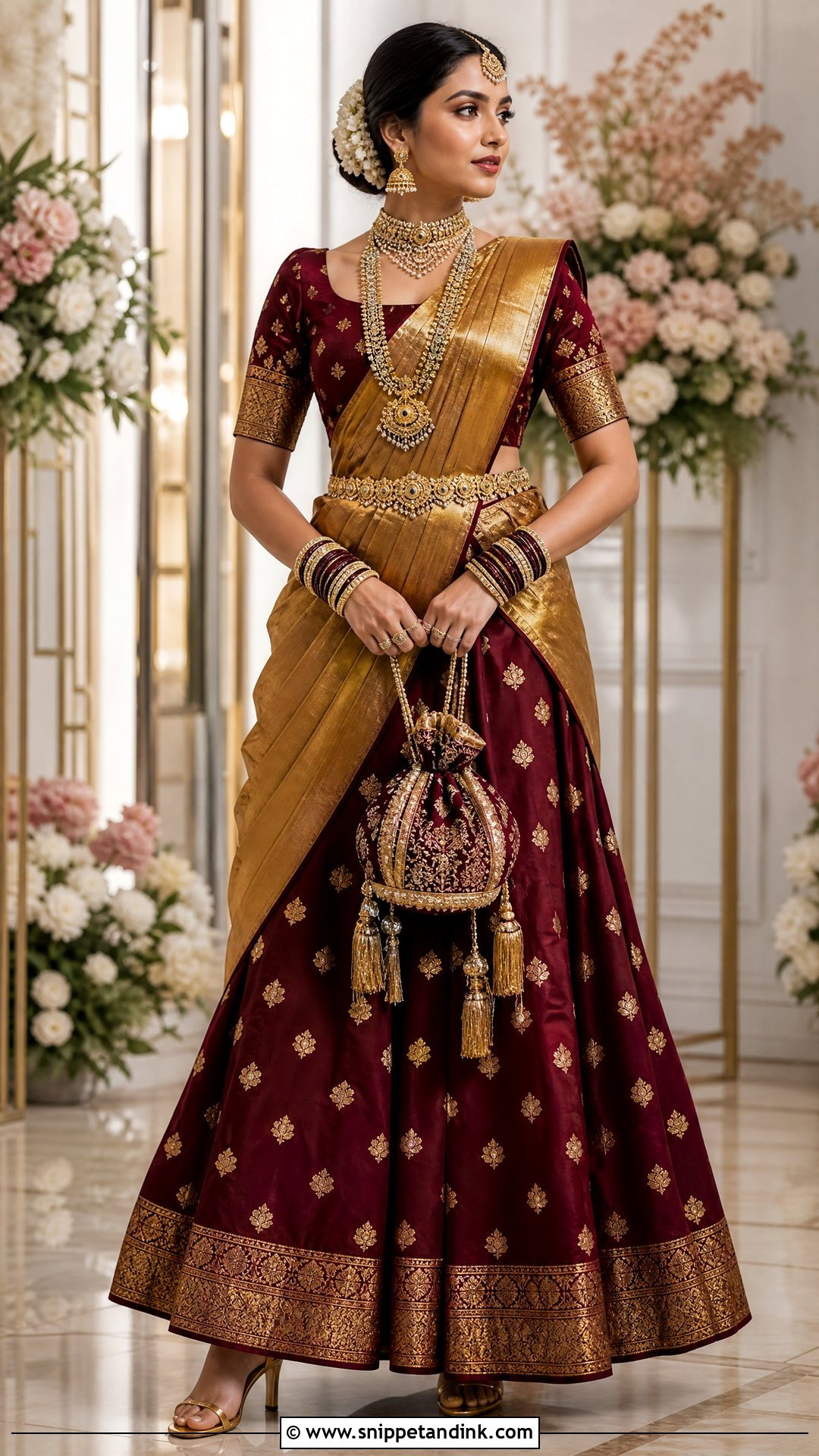
Burgundy is the color I offer brides who want depth without traditional red. A burgundy silk skirt with dense gold buttas or a broad brocade border, a matching blouse with structured sleeves and a gold dupatta give a rich tonal contrast. Pleat the dupatta at the shoulder to keep the metallic fabric controlled. Ruby accents with traditional gold make the color story tighter. Layer a choker with a longer necklace only if the blouse neckline leaves room. Gold heels, burgundy bangles, an embroidered potli and a low bun with jasmine or roses suit an evening reception, along with a deep berry lip.
18. Pastel Blue And Silver Thavani
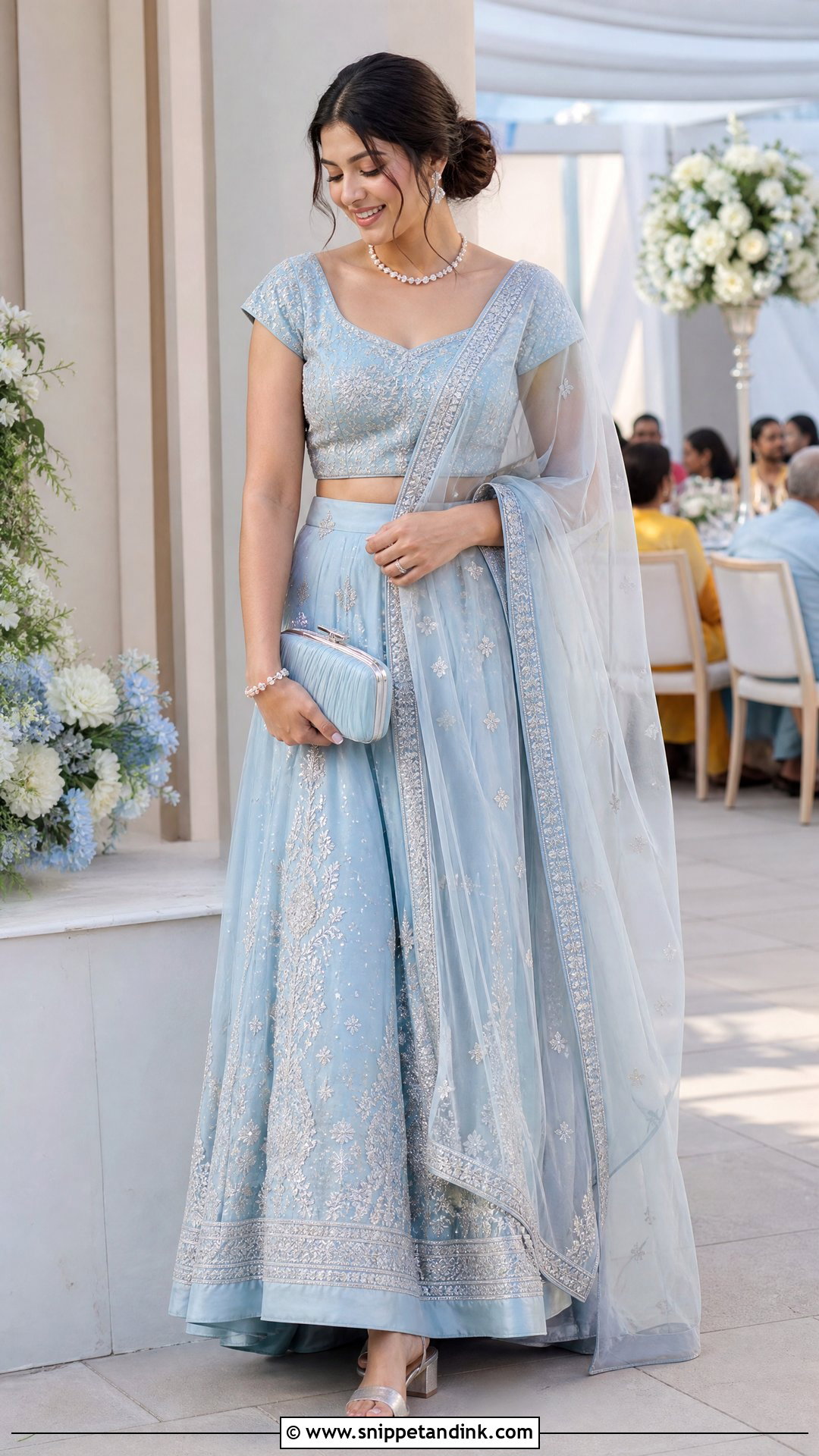
Powder blue with silver is cool-toned from top to bottom, so yellow gold jewelry fights it. Pearls, crystal or diamond-look pieces belong here instead. Pair a skirt with delicate silver embroidery with a matching blouse in a clean neckline and fitted sleeves. A sheer blue dupatta edged in silver floats nicely over one shoulder. Silver block heels and a pale blue clutch keep the palette consistent, and soft curls or a textured bun with a small floral accessory suit it. Cool pink blush and gray-brown eyeliner make sense, since warm bronze makeup next to icy blue fabric looks muddy on camera.
19. Belted Silk Wedding Thavani
The belt is the most practical part of a long-day thavani. With the dupatta pleated across the front and the border sitting neatly over the shoulder, a traditional vaddanam or a simple metallic belt clamps everything at the waist so the pallu stops moving whenever you bend or hug relatives. It also defines the silhouette. Build the set from a colorful silk skirt, fitted blouse and contrast dupatta with a heavy zari border. Because the belt already pulls the eye, keep the rest balanced: choker, long earrings, bangles and comfortable block heels. A braid or bun and a classic lip finish it.
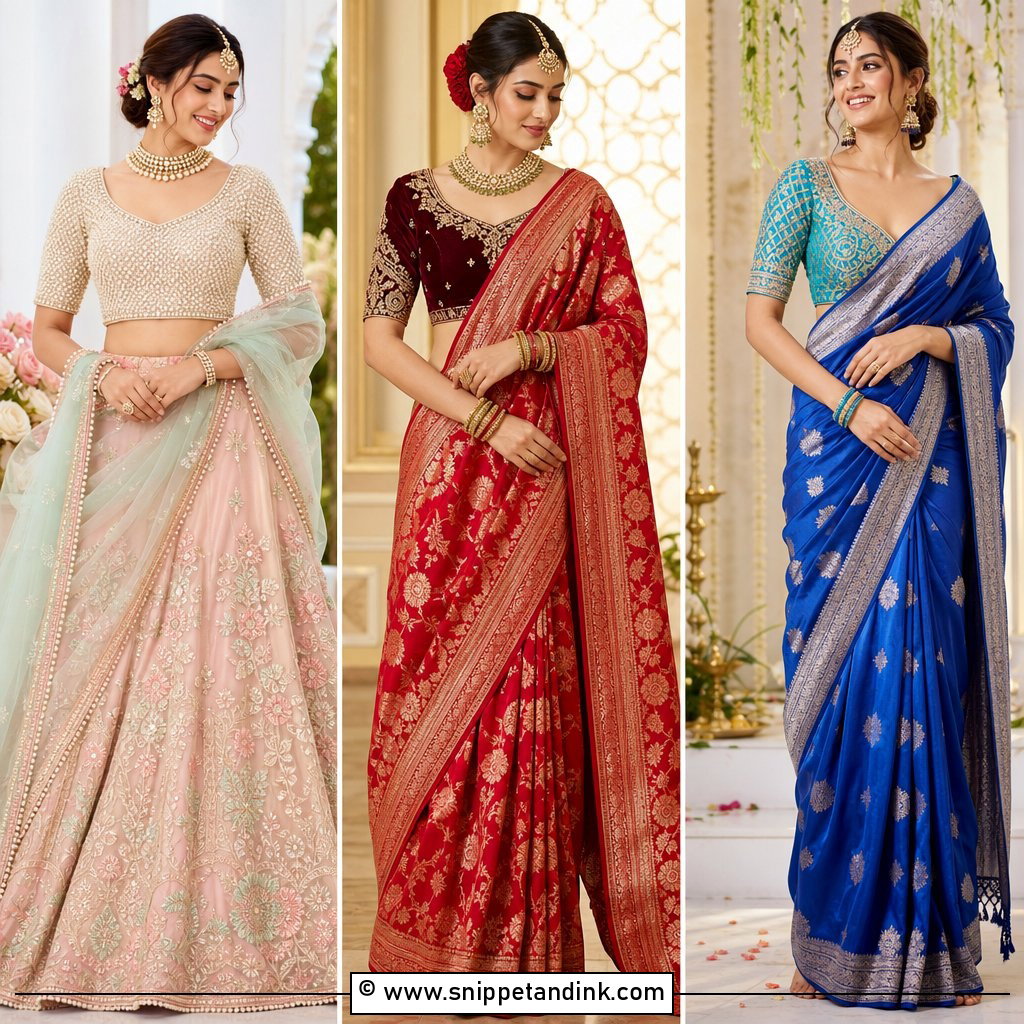
20. Layered Dupatta Wedding Thavani
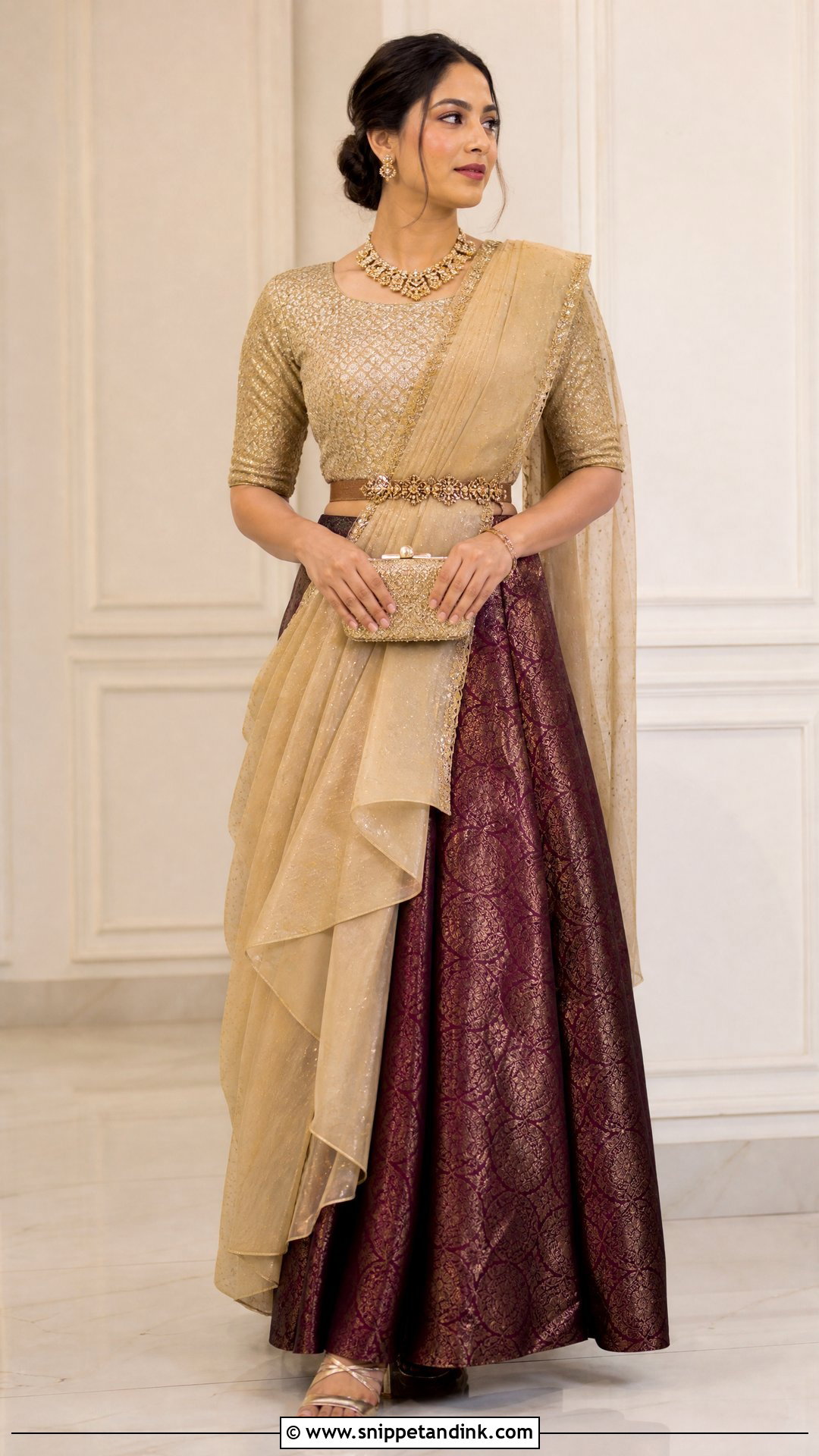
A layered drape lets the dupatta border appear at several levels across the shoulder, which gives a reception look real dimension. Start with a fairly simple silk or brocade skirt and a well-fitted contrast blouse, then arrange the dupatta in cascading folds over one shoulder. Layering adds bulk quickly, so use a lightweight dupatta and pin every fold from underneath where the pins won’t show. A statement necklace, medium jhumkas and a slim belt are enough. Metallic heels and a small embellished bag finish the set. Wear a smooth bun or side-swept curls so the shoulder stays visible.
The Blouse Is the Part That Needs Weeks
Skirts and dupattas usually come ready to wear. The blouse almost never does, and it is the piece that decides whether the outfit looks expensive. A plain silk blouse is quick for most tailors, but maggam or aari embroidery is done by hand and can take weeks during wedding season, when every tailor is booked. I tell families to hand over the blouse piece as soon as the fabric is chosen, and to plan for at least one fitting before the final stitch.
At that fitting, wear the bra you’ll wear on the day and bring the jewelry. A choker sits differently on a high neck than on a deep round one, and an elbow sleeve that is snug at the fitting gets tight after an hour of henna, heat and bangles. Ask for a little extra seam allowance at the sides so it can be let out for future weddings.
After the function
Pure silk and real zari are an heirloom only if they’re stored properly. Air the thavani in shade before folding it, keep perfume off the zari because it speeds up tarnish, and wrap it in a soft cotton cloth rather than plastic. Refold silk along new lines every few months; a crease left in the same place for years will eventually crack the weave. Heavy stains go to a cleaner who handles silk sarees, not a regular dry cleaner.
Same Three Pieces, Very Different Days
A blouse, a skirt and a dupatta can carry a morning muhurtham, a loud sangeet and a cool evening reception, depending on the silk, the color and the way you drape it. Kanjeevaram and temple borders lean ceremonial; organza, pastels and tissue feel lighter; checks and mirror work suit dancing. Plan the blouse fitting early, try the full drape with your actual jewelry before the day, and pin more than you think you need. Then wear the one that feels like your family’s wedding, not someone else’s.
You'll Like These Ideas:


Leave a Reply