
Dressing for a Maharashtrian wedding starts with the drape. The classic Nauvari saree and the Paithani silk saree carry most of the tradition, and the small details finish it: mundavalya, nath, green glass bangles, the chandrakor bindi, gajra, temple jewelry and zari borders. When I style a Marathi bride or her family, comfort gets as much thought as color, because the rituals are long, there are many family photos and often several functions in two days. Lehengas, pre-draped sarees and fusion sets have their place too. Below are the looks I’d build, from the bride’s ceremony drape to a guest’s lunch outfit, with what to watch for in each.
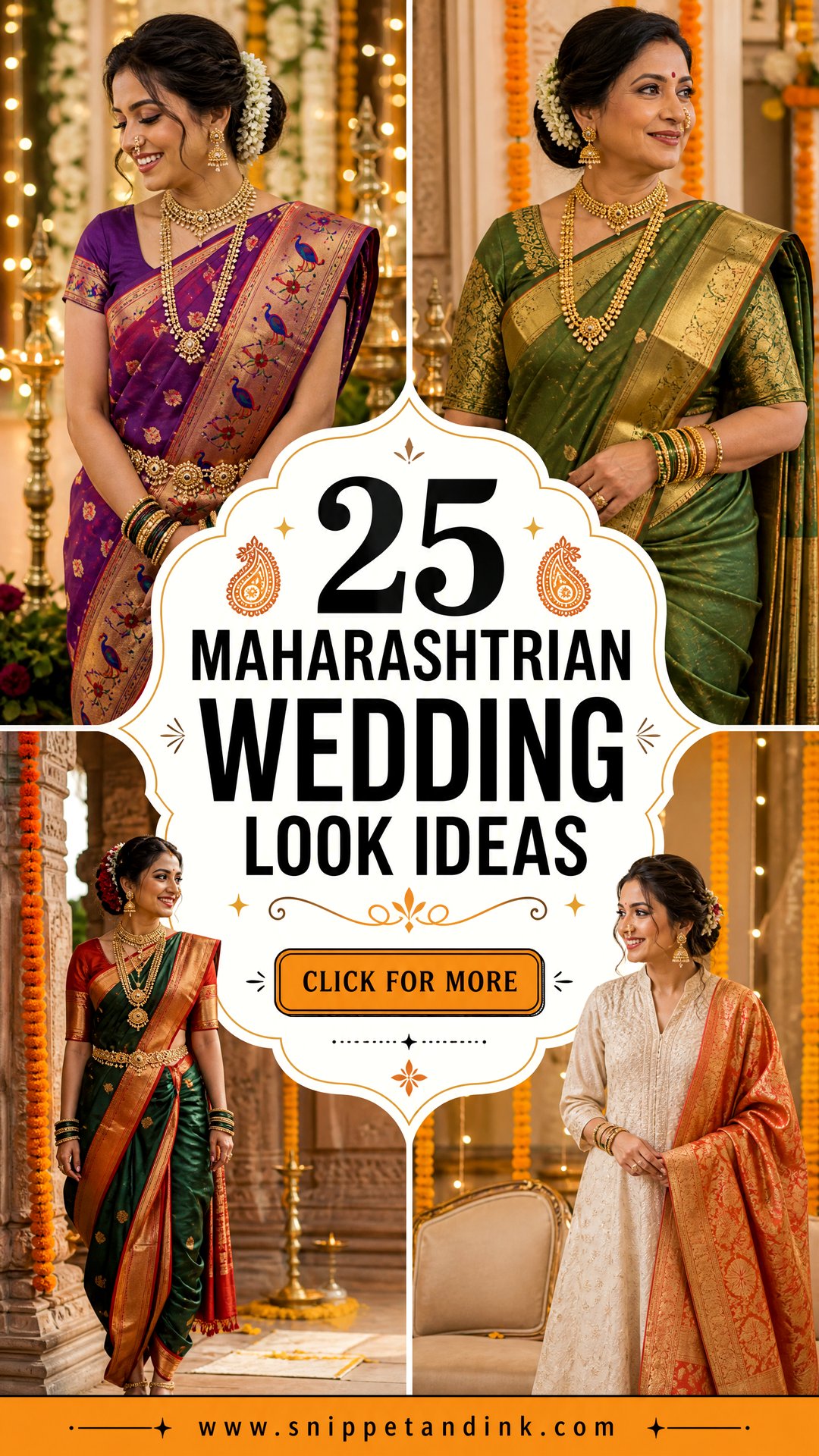
Handwoven Paithani or a Power-Loom Copy? What I Check
Many sarees sold as Paithani are machine-made lookalikes. That’s not wrong if the price matches, but a family buying an heirloom should know what they’re paying for. Before I style a bride in one, I turn it over.
- Look at the back of the pallu. A handwoven Paithani’s motifs are woven in by hand, so the reverse looks almost as finished as the front. A power-loom copy shows loose floating threads behind the design.
- Check the motif edges. Hand-woven peacocks and lotus motifs have slight irregularities; machine motifs repeat identically.
- Feel the weight. Pure silk with real zari has body and drapes heavily; polyester blends feel light and slippery.
- Ask for the Silk Mark label or a certificate when buying an expensive piece, and keep the receipt with the saree.
1. Green Paithani Nauvari Saree Look
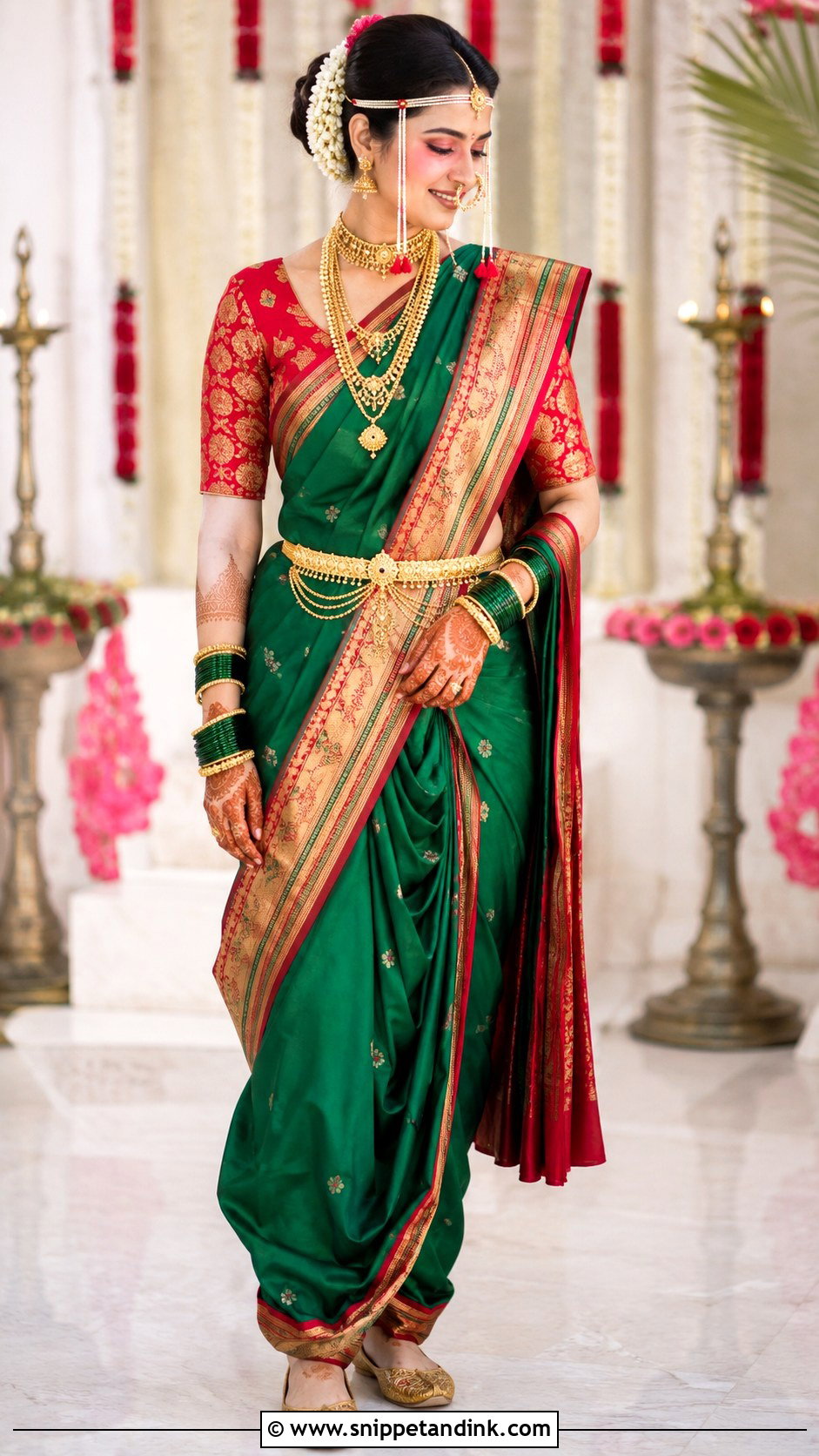
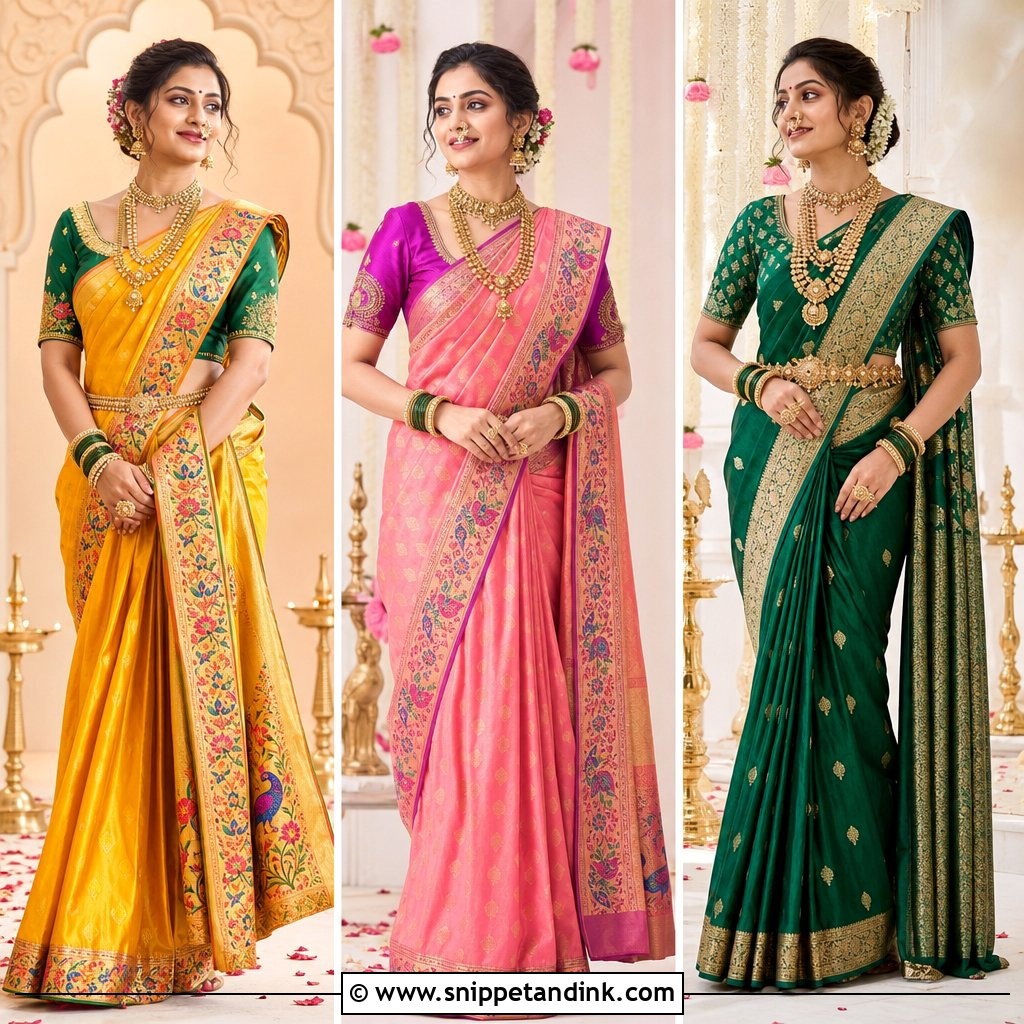
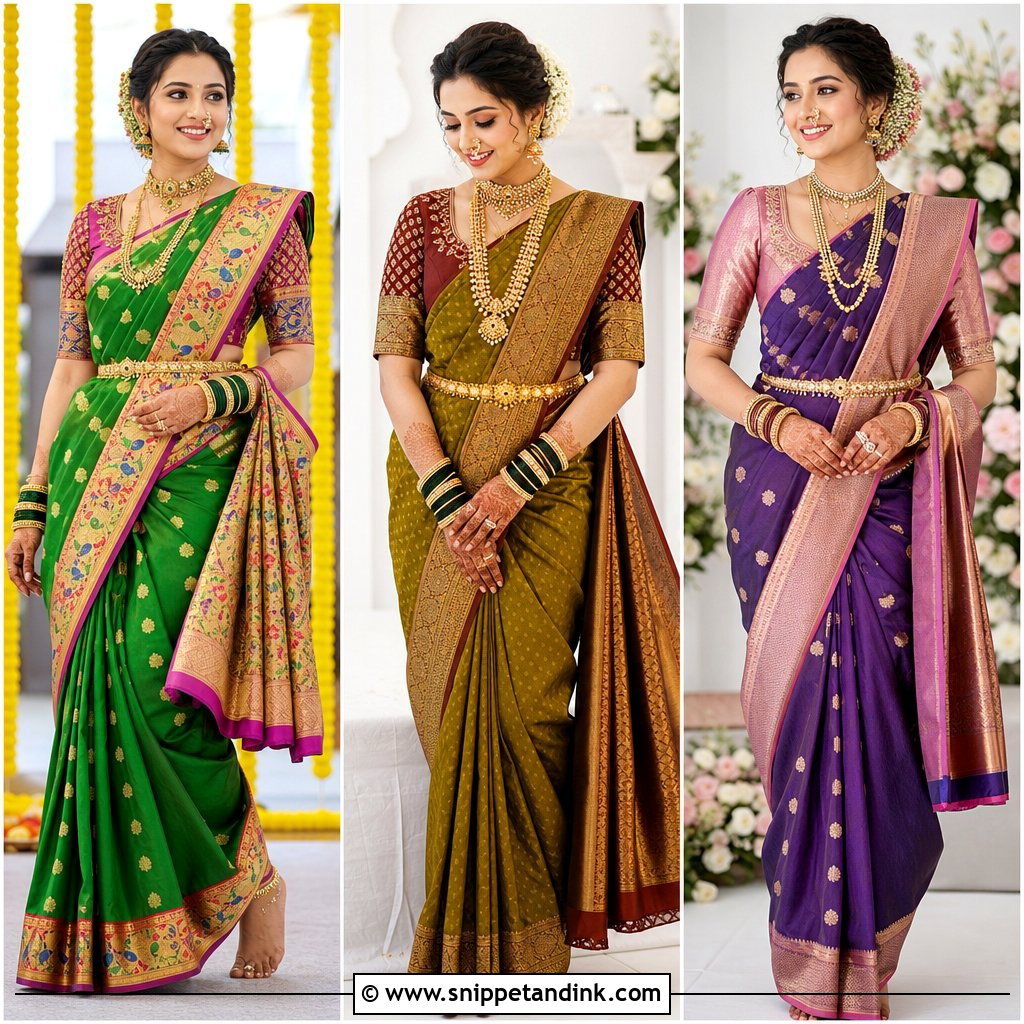
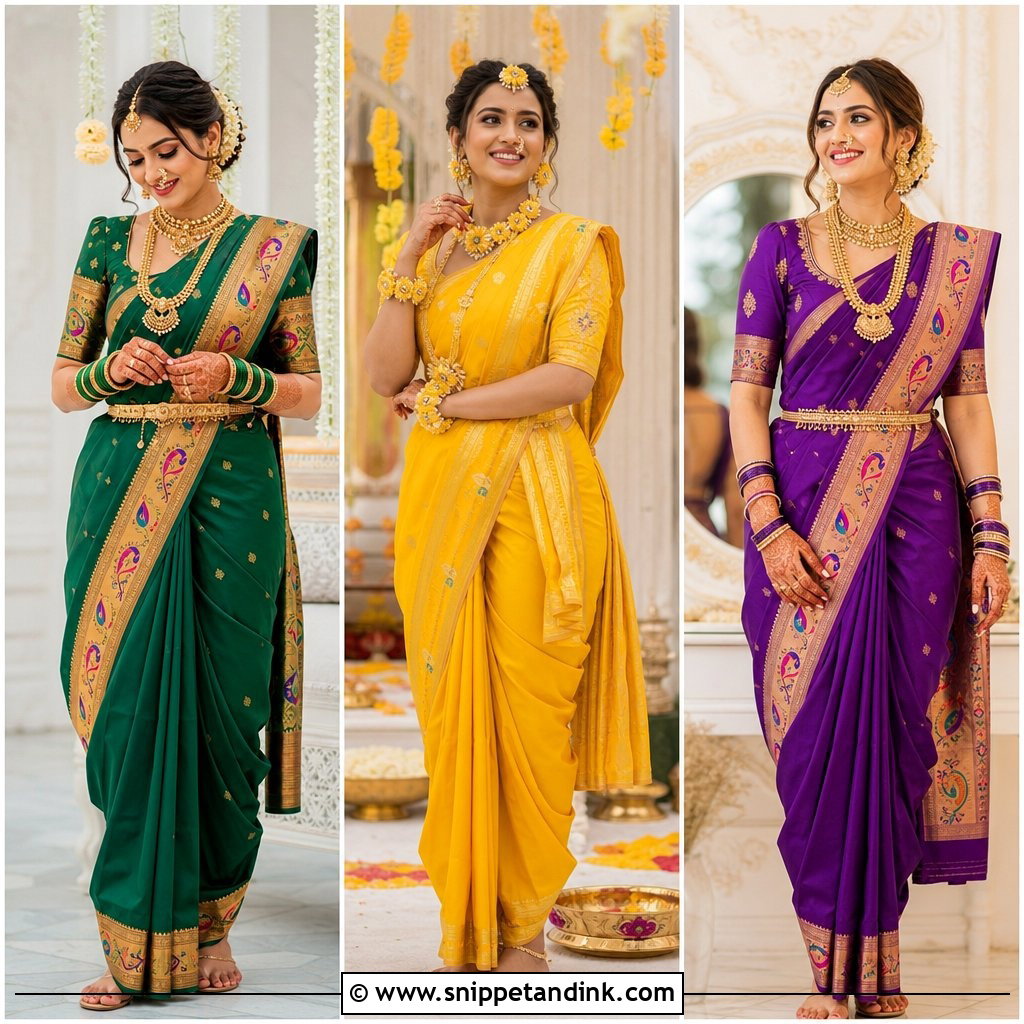
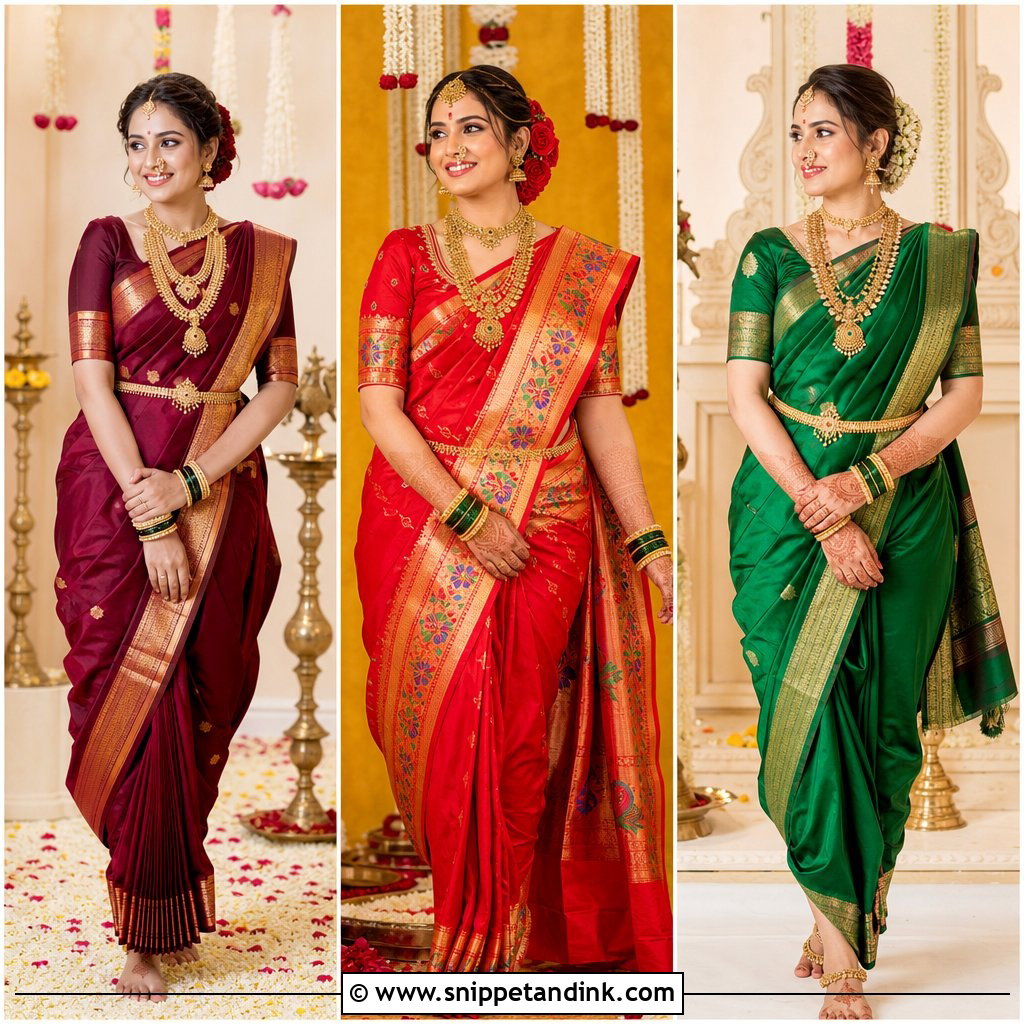
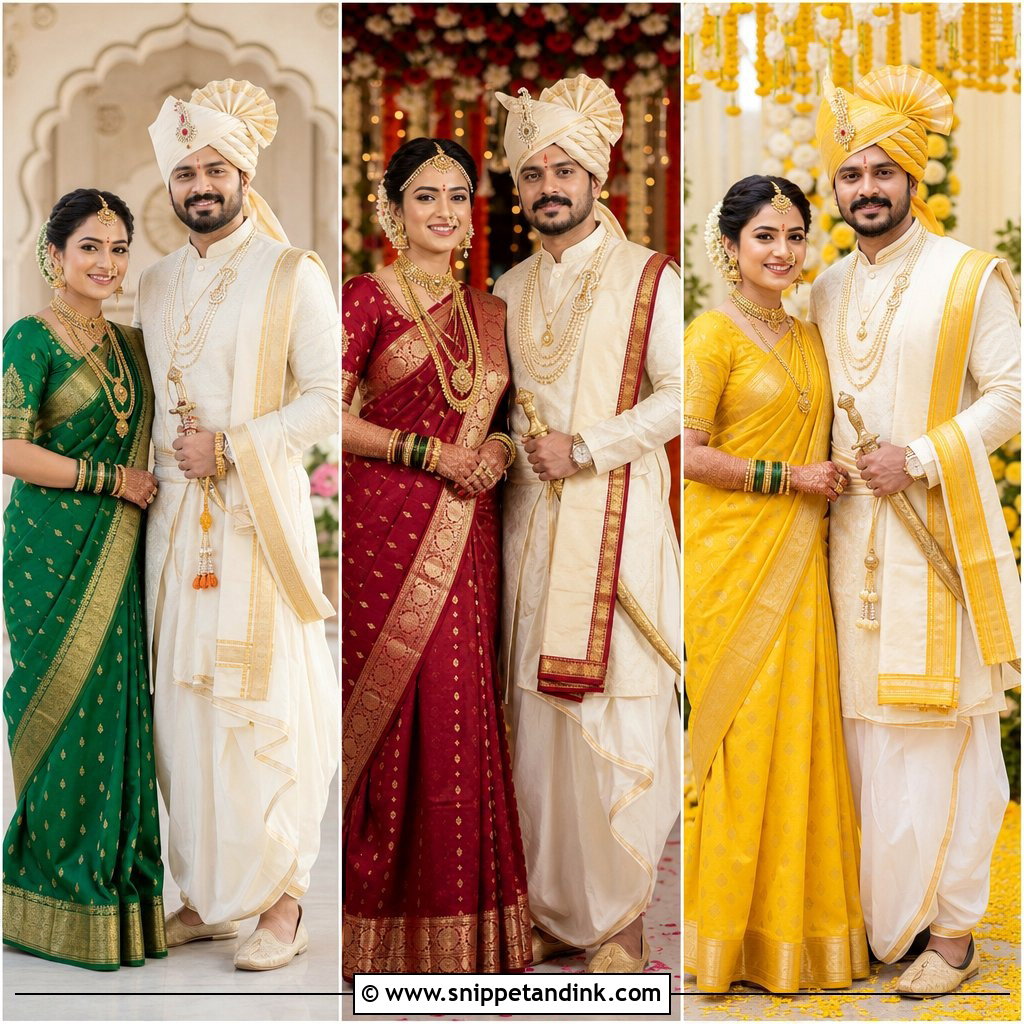
Green Paithani in the nine-yard drape is the image most people picture first. The Nauvari’s dhoti-style tuck gives structure, and the Paithani border carries the festive weight. I usually choose emerald, parrot or bottle green with a red, purple or gold pallu. A fitted silk blouse, gold kamarband, layered necklaces, green glass bangles and a traditional nath complete it, with a center-parted bun and jasmine gajra. The kamarband isn’t just ornament; it holds the waist pleats in place through hours of sitting and standing. Kolhapuri-style sandals or gold flats sit right under the drape, and mundavalya with a chandrakor bindi finish the bride.
2. Yellow Haldi Nauvari Saree Look
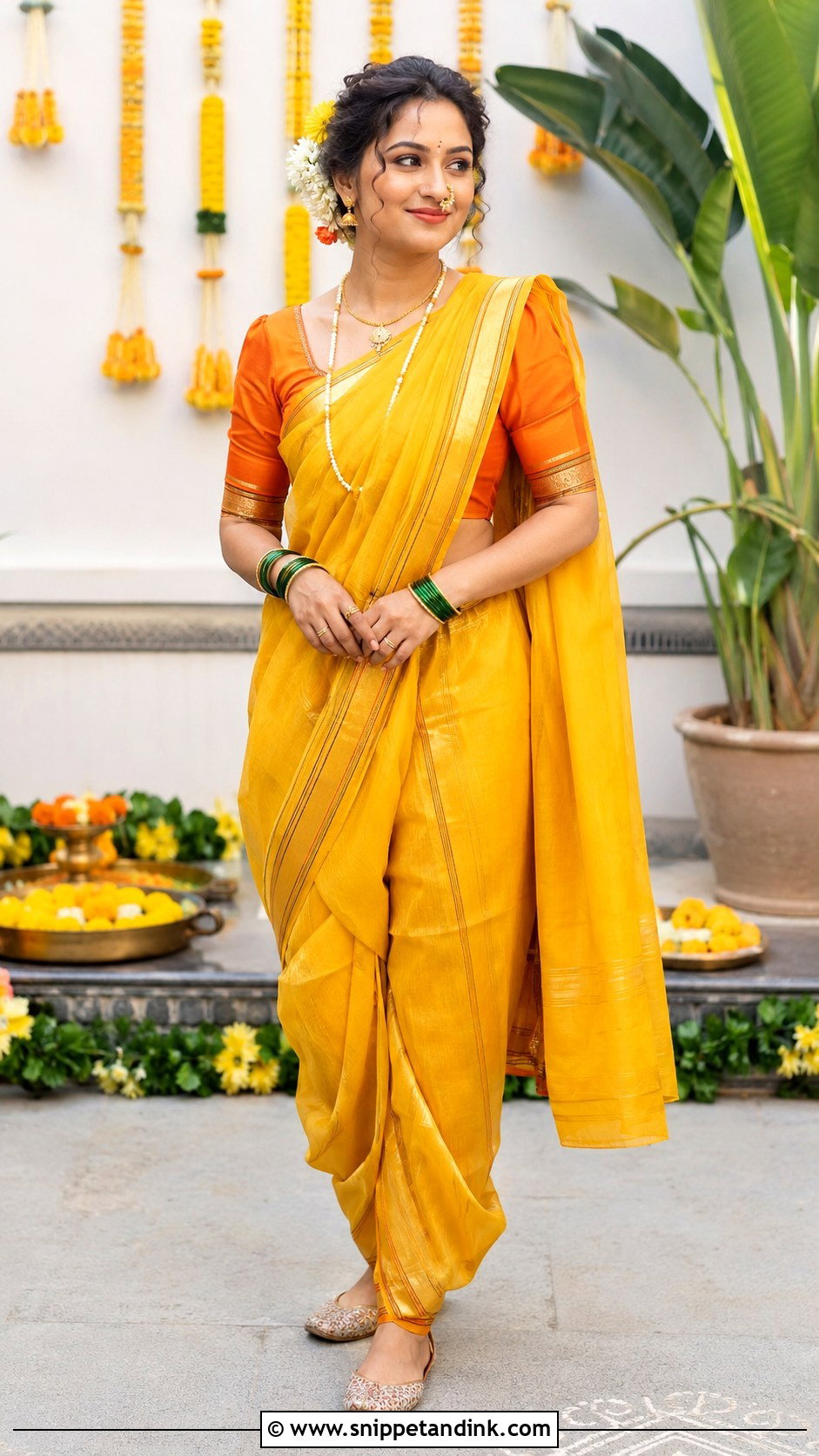
Turmeric gets everywhere at a haldi, so this is not the day for your best Paithani. A yellow Nauvari suits a Maharashtrian haldi ceremony best in cotton-silk or a light silk you’re happy to stain. A gold border keeps it festive without weight. I pair it with a short-sleeve blouse in yellow, orange or green, plus small gold earrings, a simple nath, green bangles and a fine necklace. Real flowers in the hair suit the mood better than heavy ornaments. Flats are a must, since you’ll be sitting on the floor, getting up and being lifted into hugs.
3. Purple Paithani Saree Wedding Look
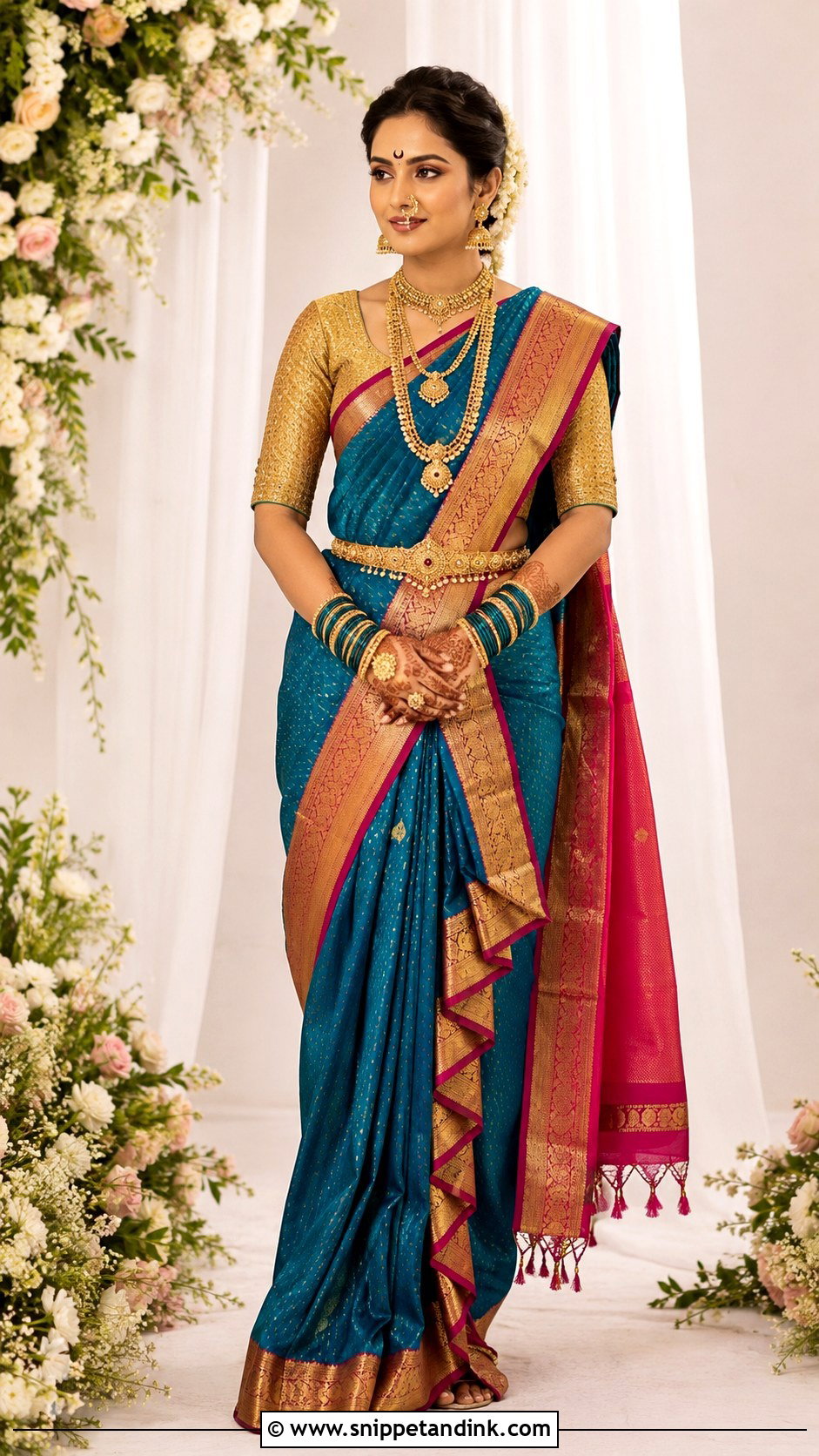
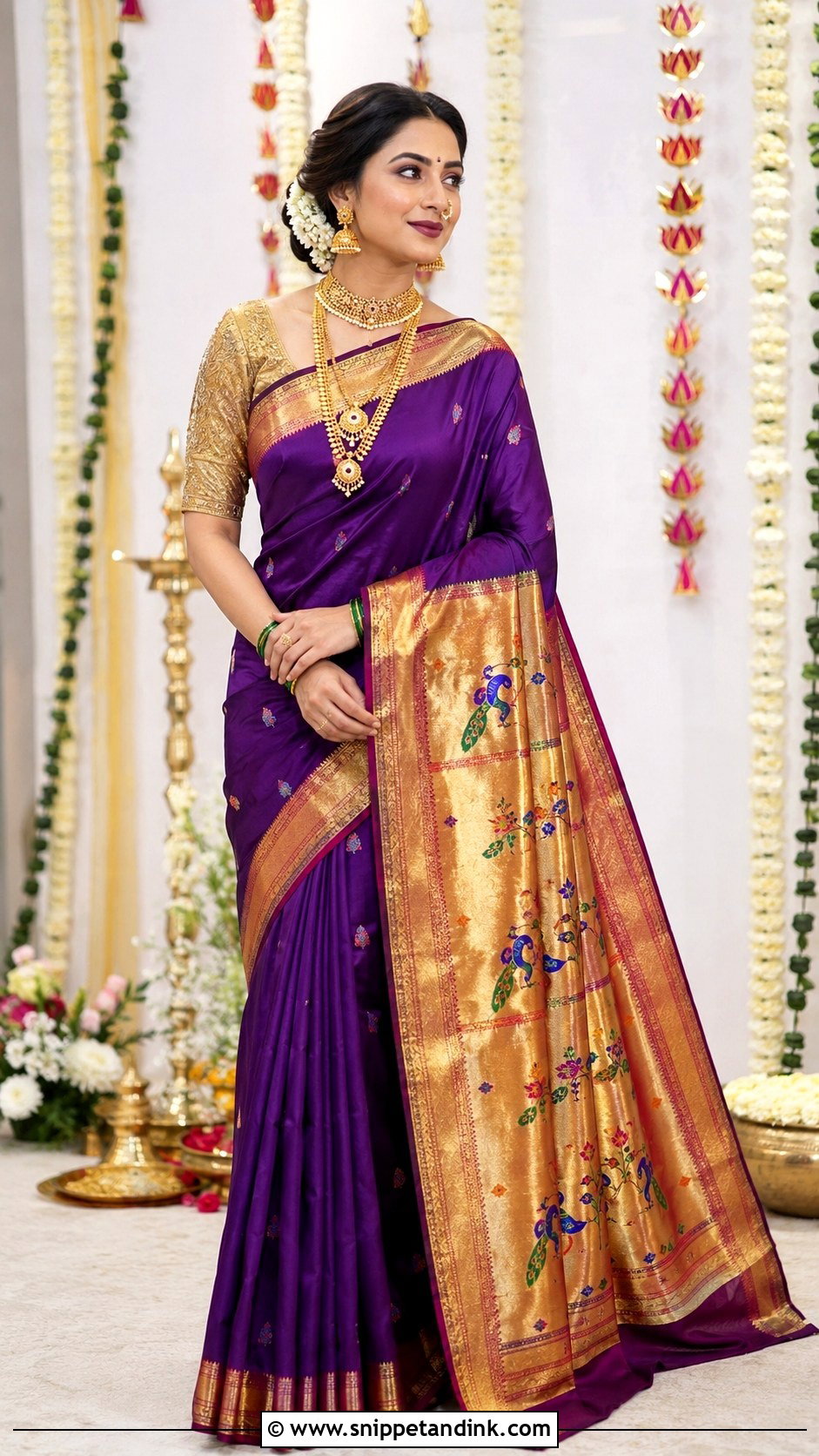
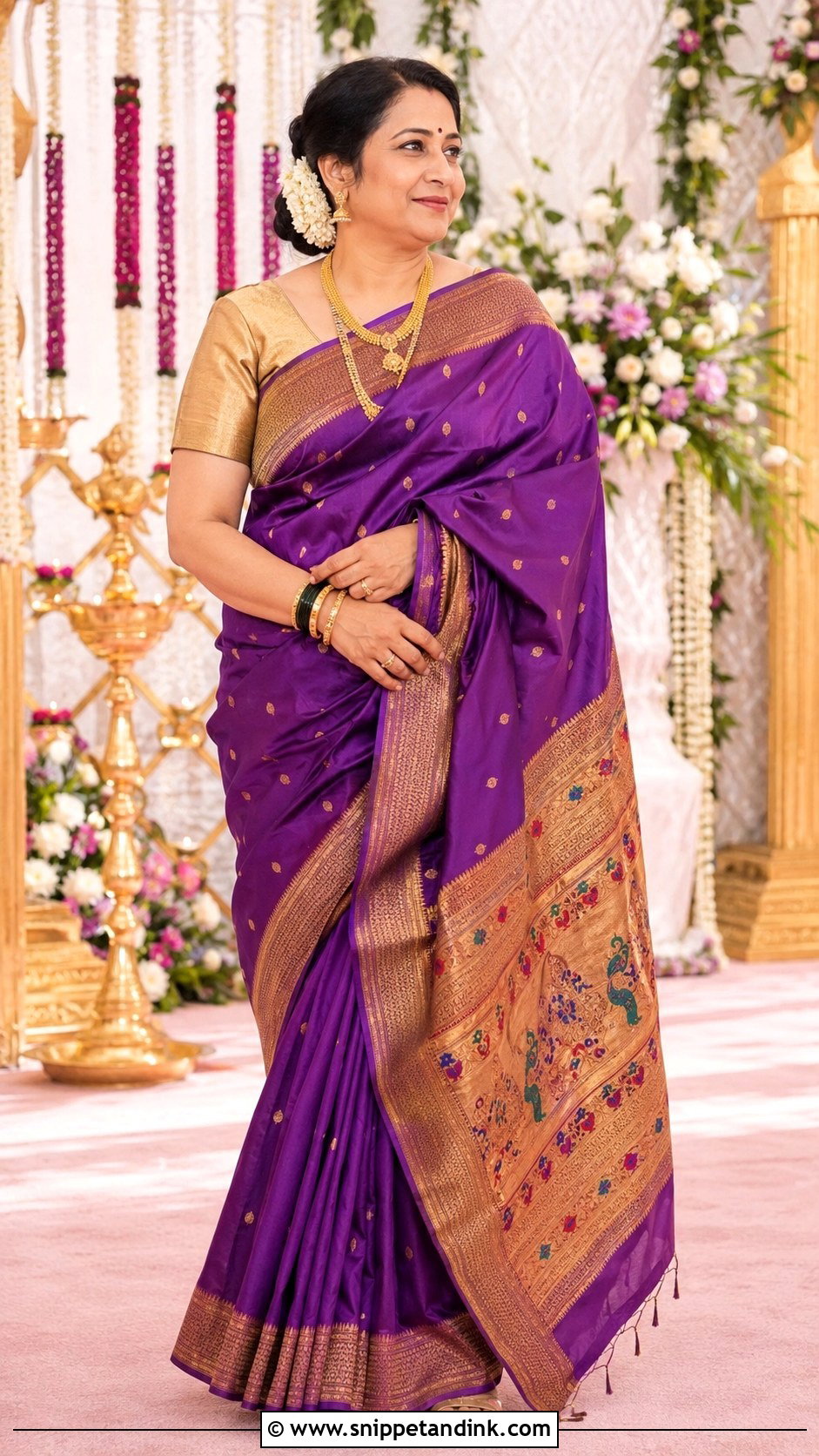
Purple Paithani reads royal without needing much else, and it suits the bride, her sisters, her mother or any close relative. Pick a six-yard Paithani with a rich zari pallu and peacock motifs. A gold blouse is the safe pairing; magenta or emerald makes it bolder. Layered gold, a choker, jhumkas, green bangles and a statement nath complete it, with a low bun and gajra. Purple can drain warmer skin under yellow indoor lights, so I usually suggest a berry lip and a little warmth on the cheeks to balance it. Gold heels or embellished flats finish the outfit.
4. Red Shalu Saree Bridal Look
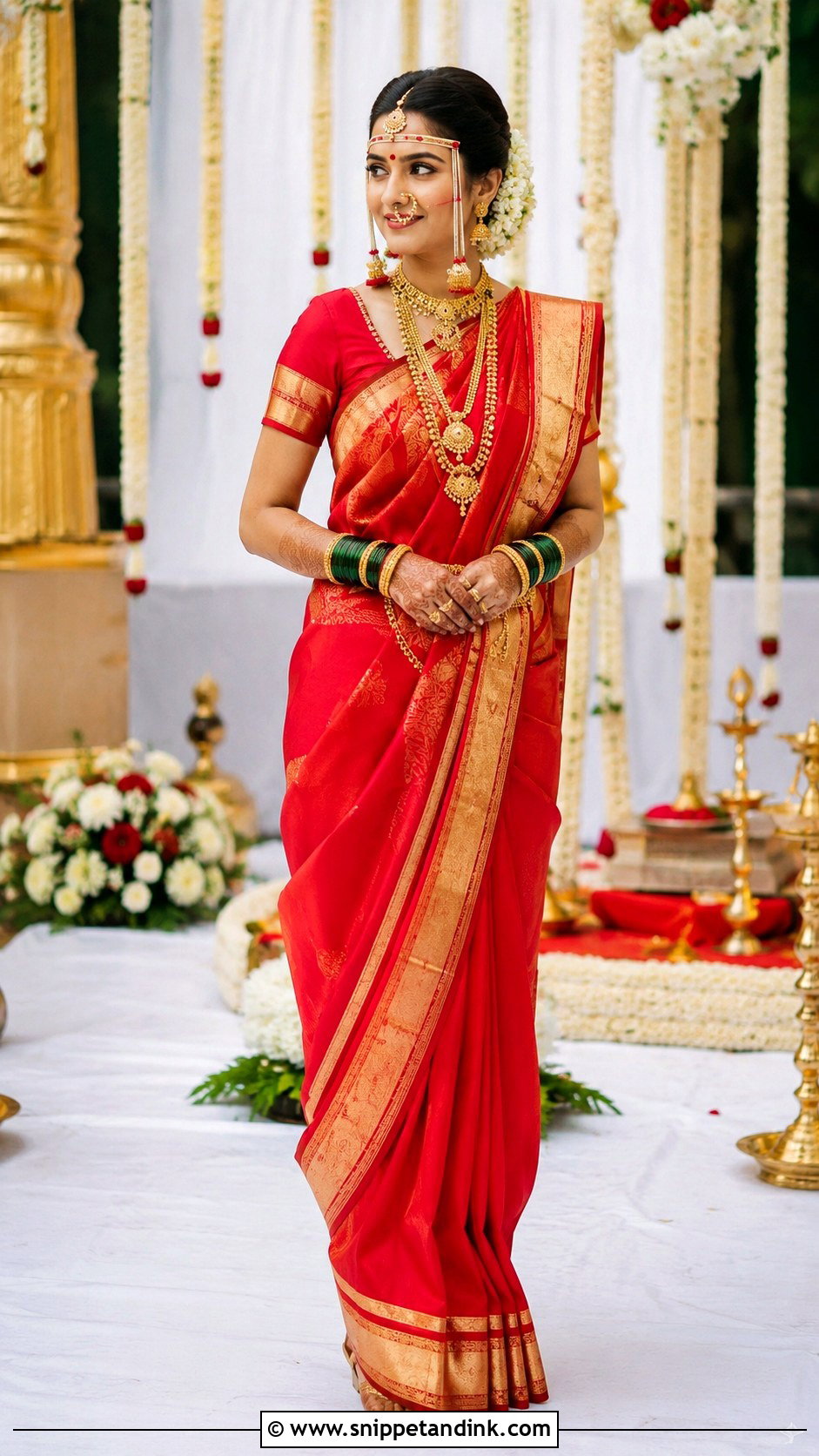
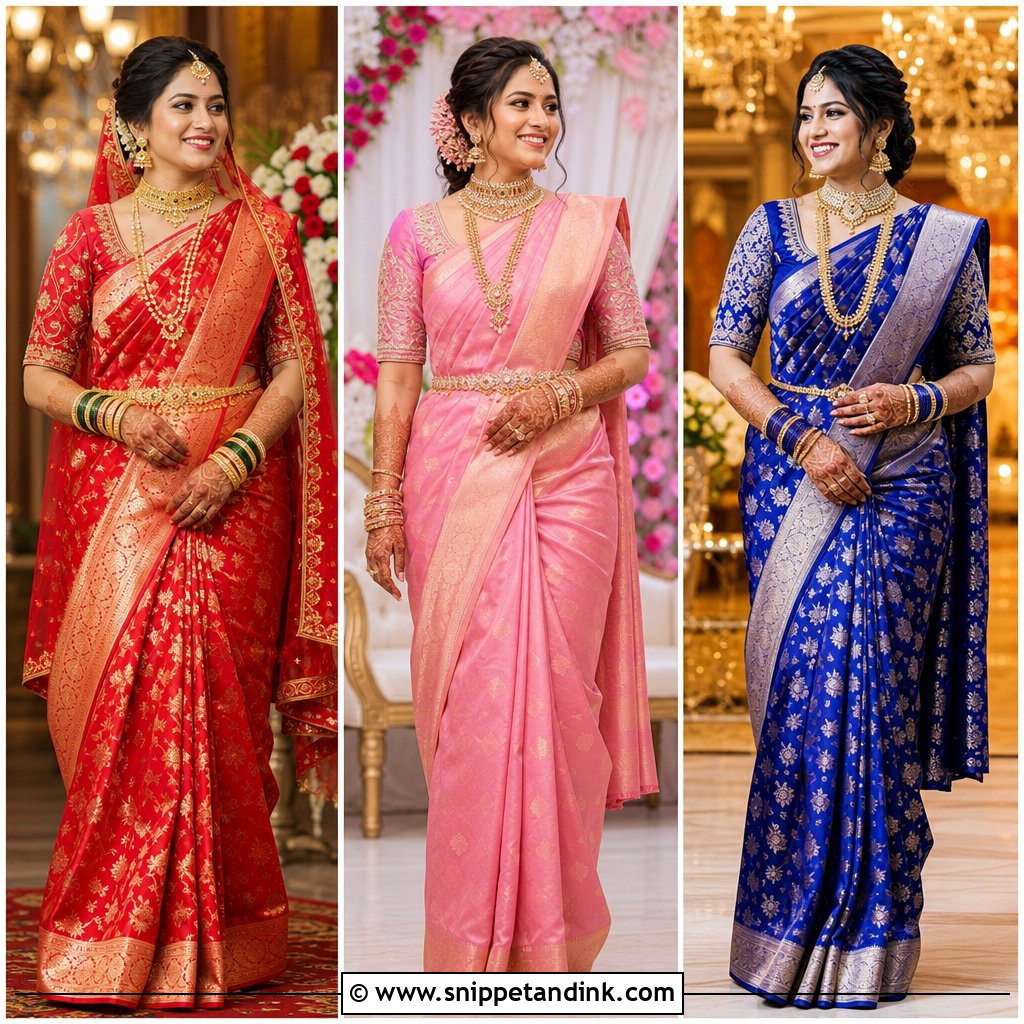
Shalu is the silk saree many Marathi families give the bride, and it feels more draped and fluid than a Nauvari. Its rich silk and detailed zari make it right for the main ceremony or the post-wedding rituals. I style red Shalu with gold woven borders and a matching or gold blouse, then add mundavalya, nath, green bangles and gold necklaces for the full bridal effect. Shalu silk is heavy at the pallu, so pin it well at the shoulder or it slides every time you bow for a blessing. Hair stays classic: a bun with fresh flowers.
5. Orange Paithani Saree Wedding Look
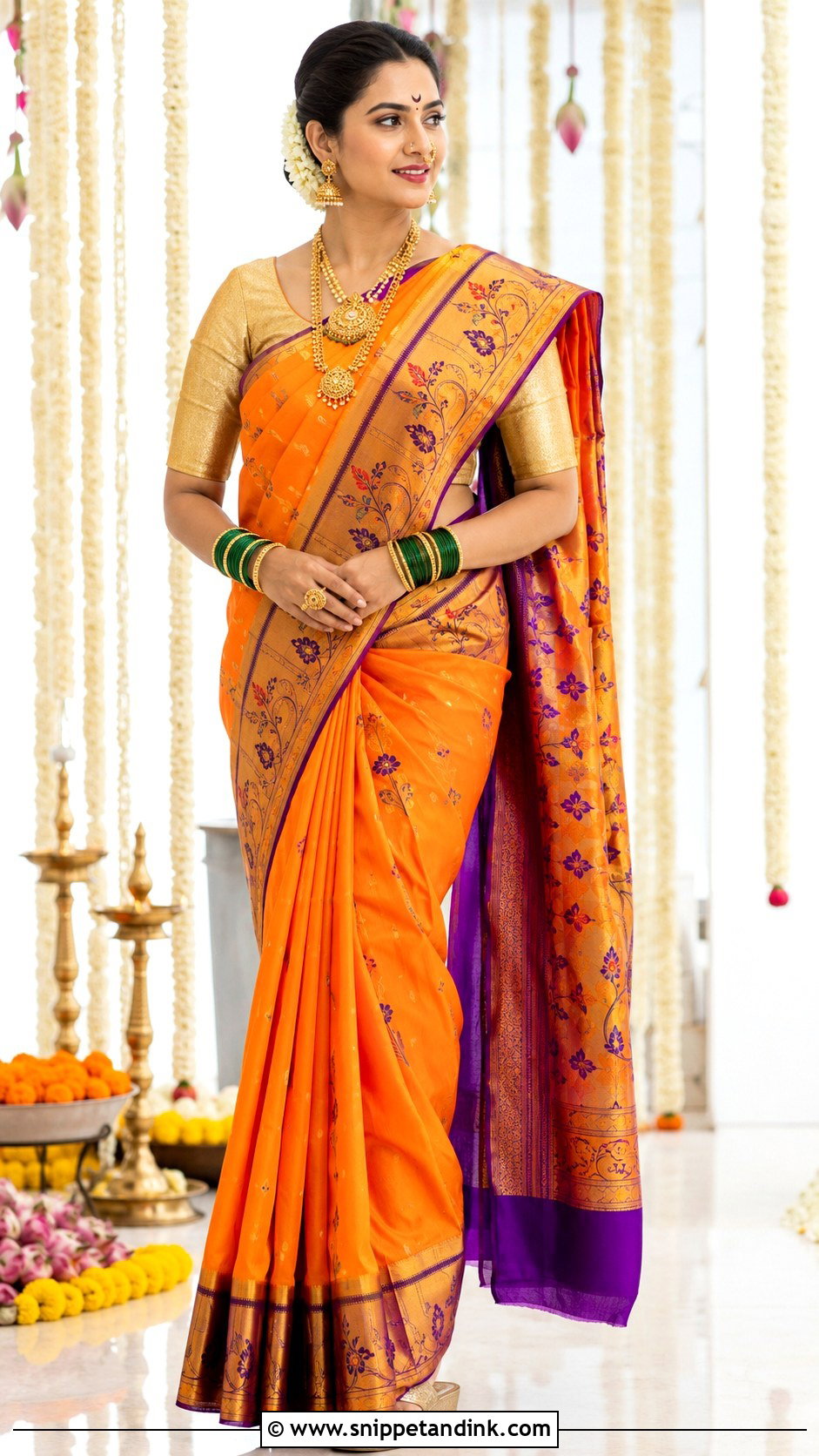
Orange Paithani brings warmth to morning ceremonies, family rituals or a pre-wedding function. Saffron, burnt orange or mango orange look best with a contrasting purple, green or pink border. A gold blouse keeps it festive; a contrast blouse gives it personality. Temple jewelry, green bangles, a small nath and a round or crescent bindi suit it, with a side-parted bun and jasmine. Gold wedges or embellished flats keep you comfortable all day. In bright morning sun, orange can glare in photos, so I like to position the family under shade for portraits.
6. Peacock Blue Nauvari Saree Look
Peacock blue gives a traditional Maharashtrian wedding look a strong color without shouting, and it takes gold jewelry very well. I’d choose a silk Nauvari with a zari border and a green, purple or magenta pallu, with a gold or matching blue blouse. Here the kamarband earns its place, defining the waist so the drape looks structured. Nath, chandrakor bindi, layered necklaces and bangles keep it authentic, and a sleek bun with gajra completes it. The contrast pallu shows up best when the drape is pleated tightly, so ask your draper for narrow pleats.
7. Pink Paithani Saree Guest Look
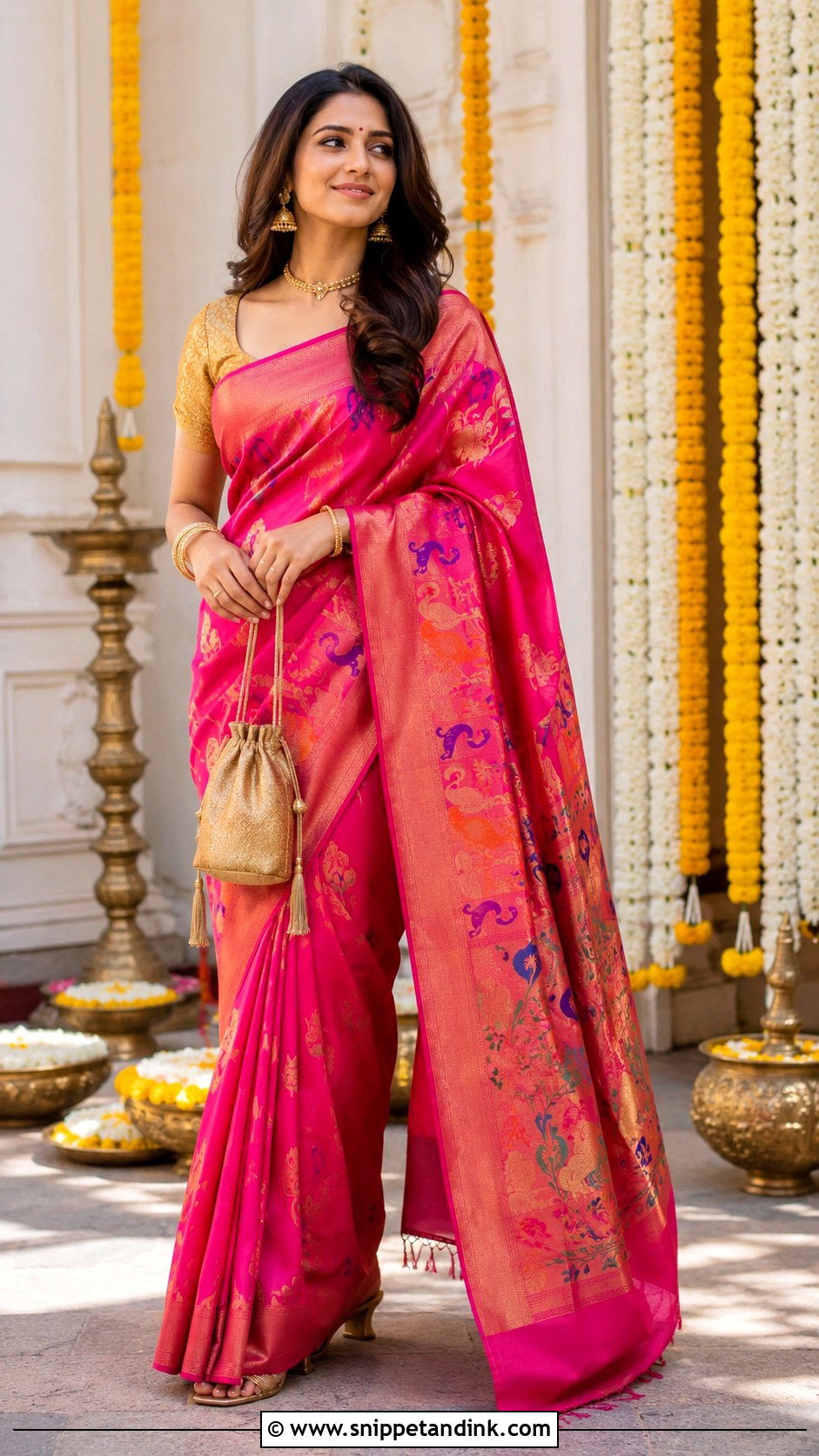
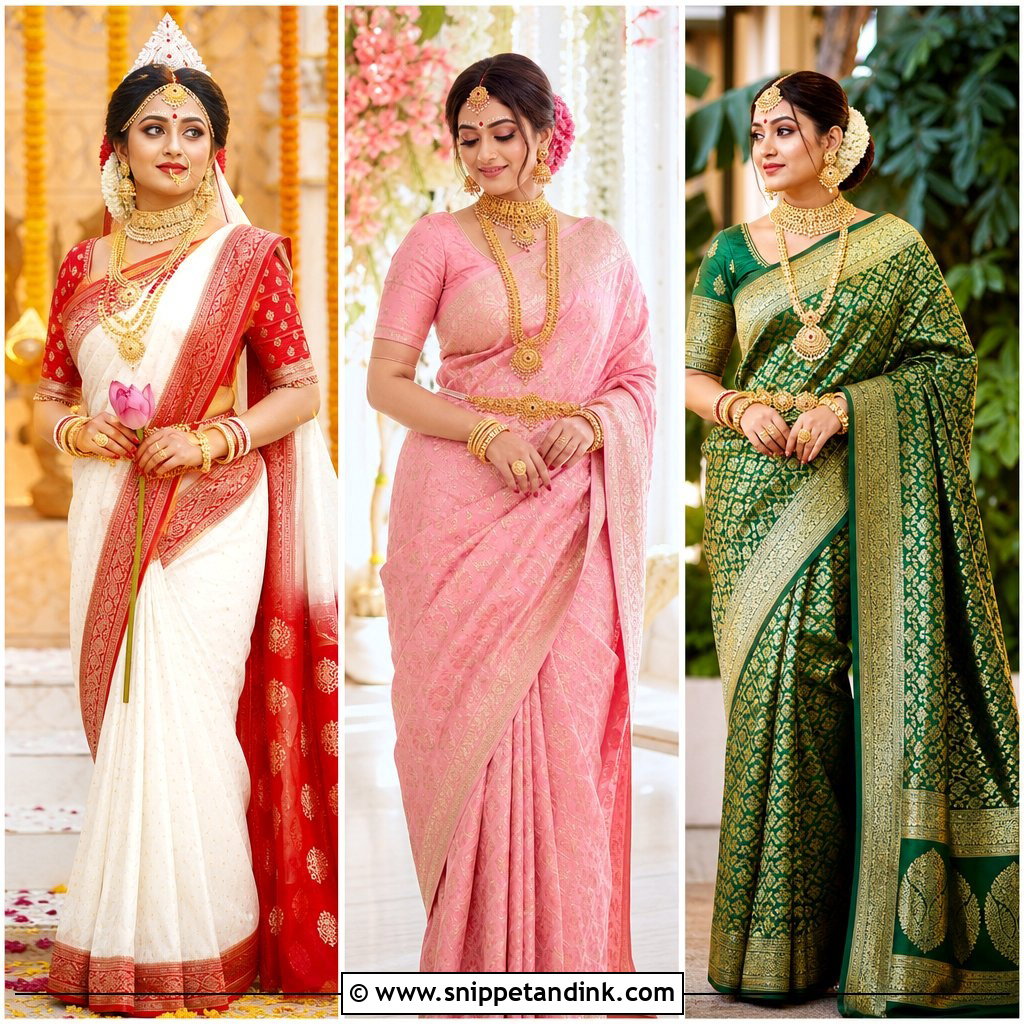
A pink Paithani lets a guest look festive while leaving the spotlight on the bride. Soft rose suits daytime; rani pink and fuchsia hold up better in the evening. A gold blouse and traditional jewelry work, but I keep the layers lighter than a bride’s: jhumkas, bangles, a fine necklace and a small bindi. Hair can go into a bun, a braid or soft waves. Gold sandals and a potli bag finish it. Respectful and colorful, and a guest can comfortably wear it from the muhurta to dinner.
8. White And Gold Maharashtrian Saree Look
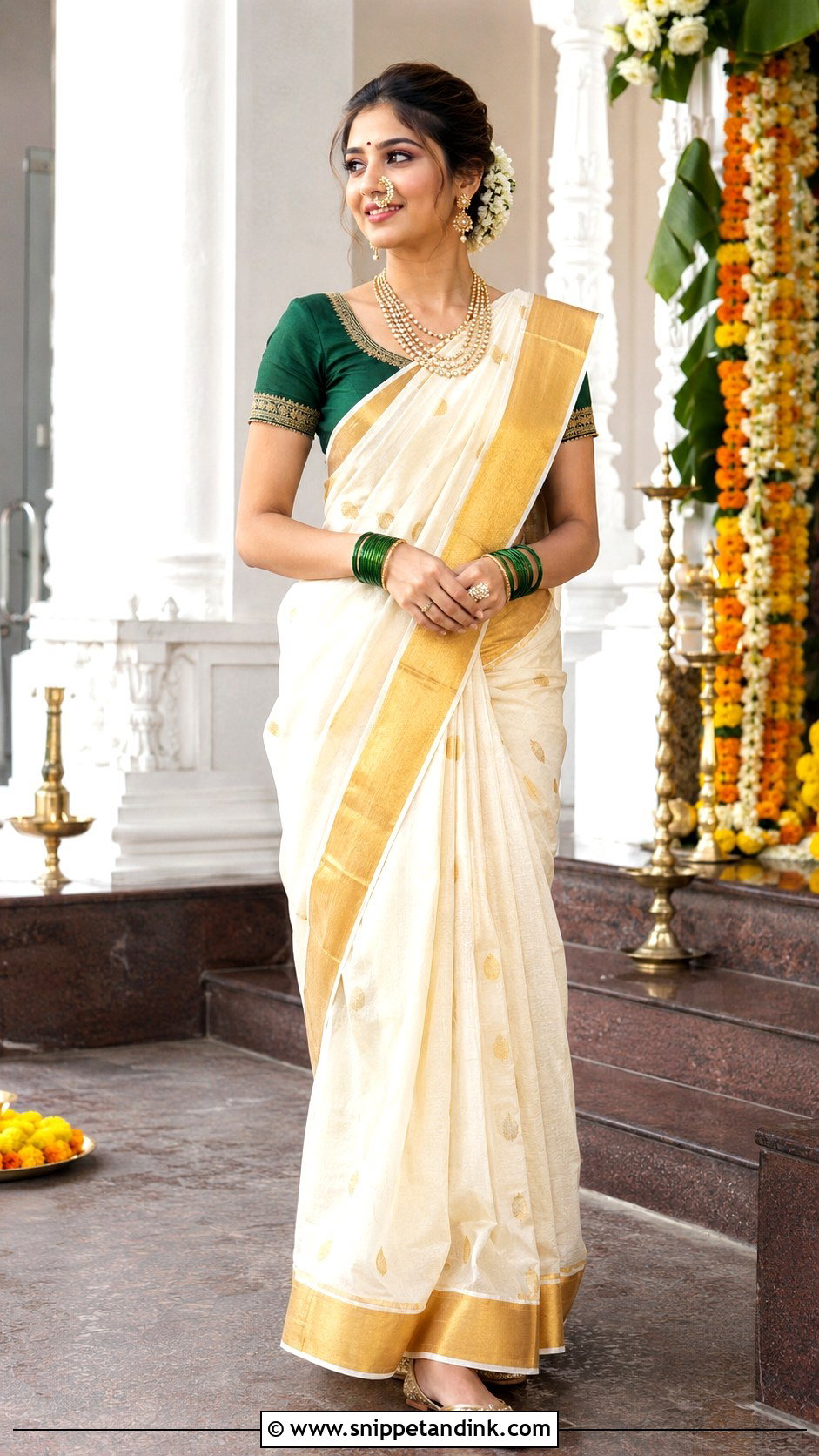
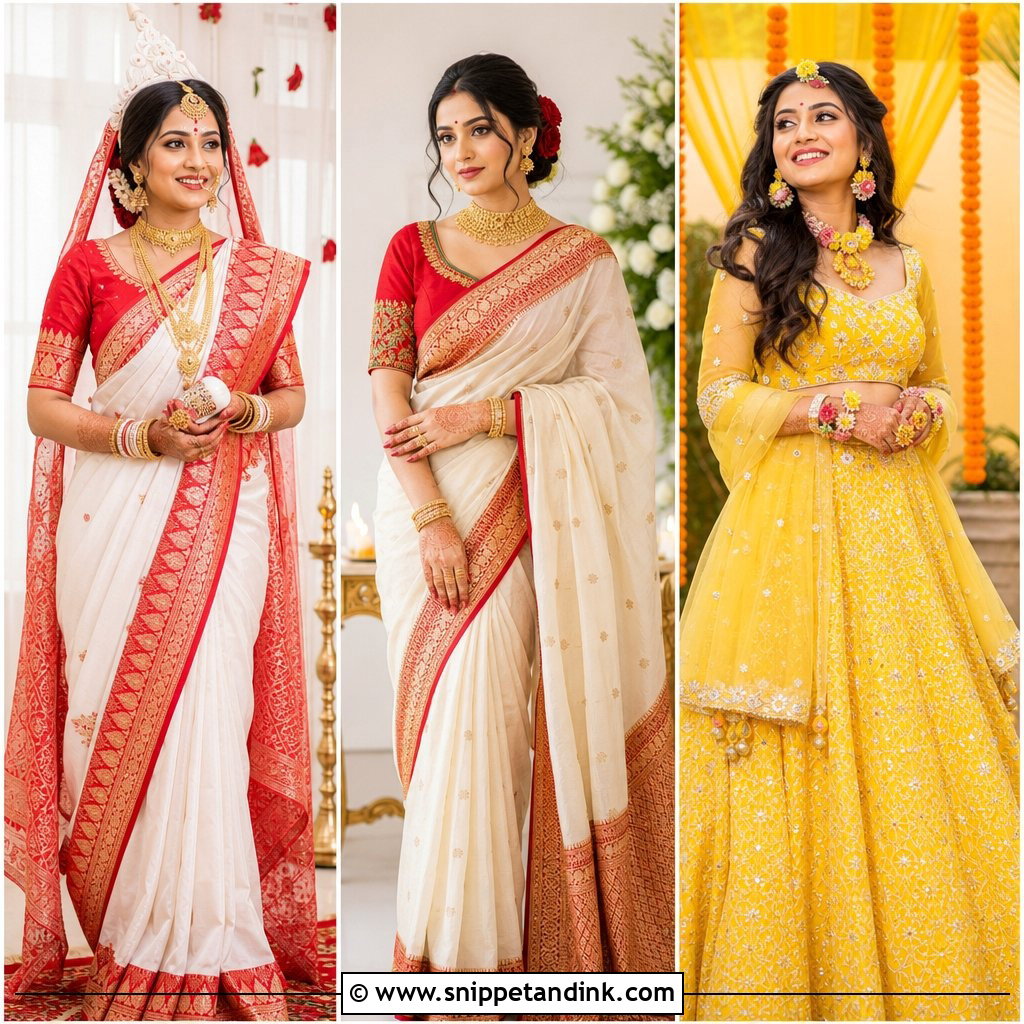
White and gold feels calm and ceremonial, which is why I suggest it for daytime functions, puja rituals and family gatherings around the wedding. Off-white, ivory or cream silk with a gold border is softest. A gold blouse keeps it light; a green blouse makes it more traditionally Maharashtrian. Pearl and gold jewelry, green bangles, a small nath and a neat bindi suit it, with a jasmine-wrapped bun. One caution: some families prefer to avoid plain white at a wedding, so if you’re a guest, a heavy gold border or a colored blouse makes it clearly festive.
9. Kashta Saree With Gold Kamarband Look
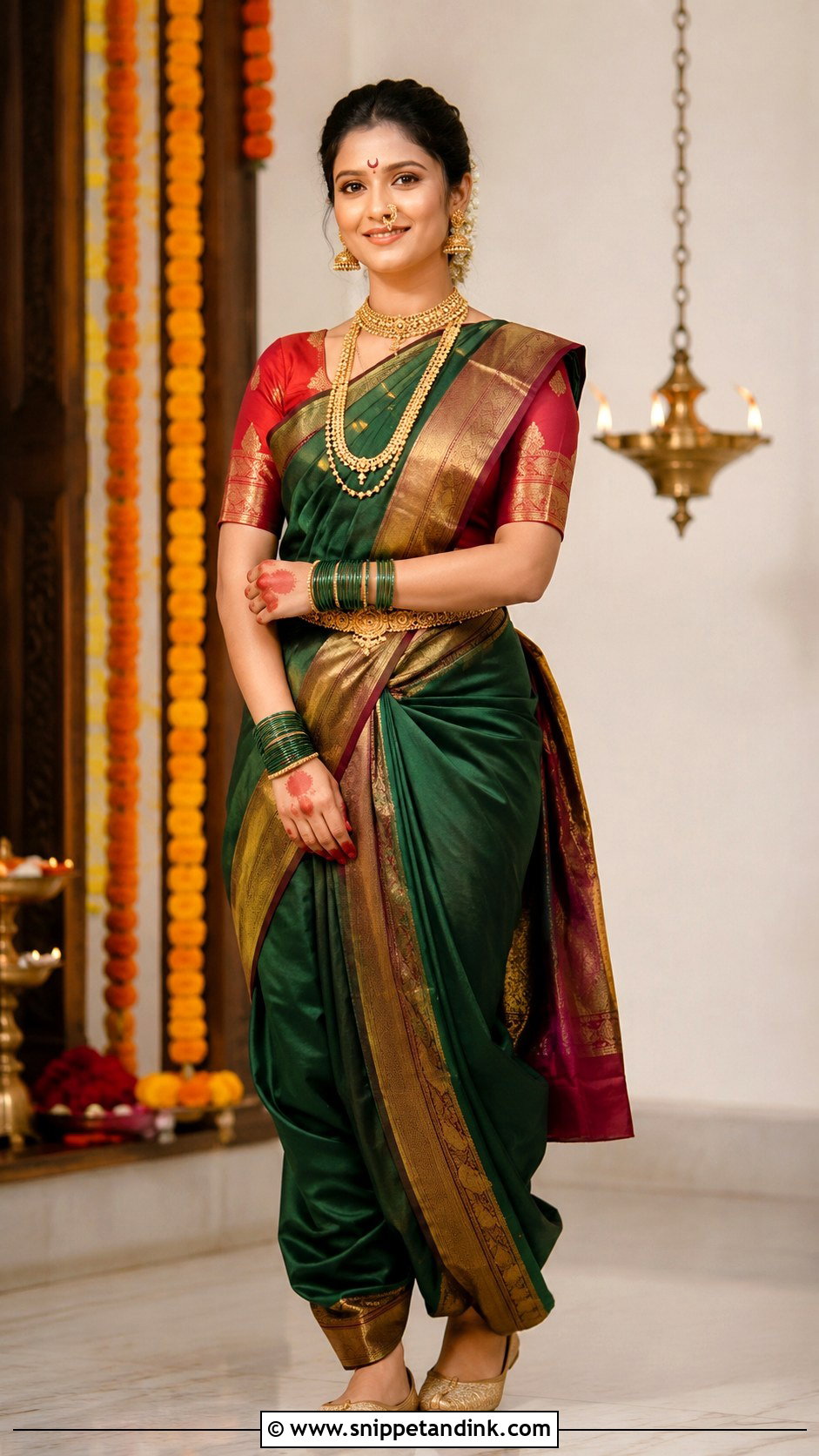
The Kashta drape tucks the back pleats between the legs like a dhoti, which is why women could once ride and work in it. A gold kamarband defines the waist and keeps everything neat. I’d choose a silk Nauvari or rich cotton-silk in green, red, purple or blue, with a fitted blouse that still lets you raise your arms. Layered necklaces, jhumkas, green bangles, nath and a chandrakor bindi finish it, with a sleek bun or a long braid. Flat gold sandals respect the drape’s practical roots. Bridesmaids and close relatives look right in it at traditional ceremonies.
10. Paithani Lehenga With Dupatta Look
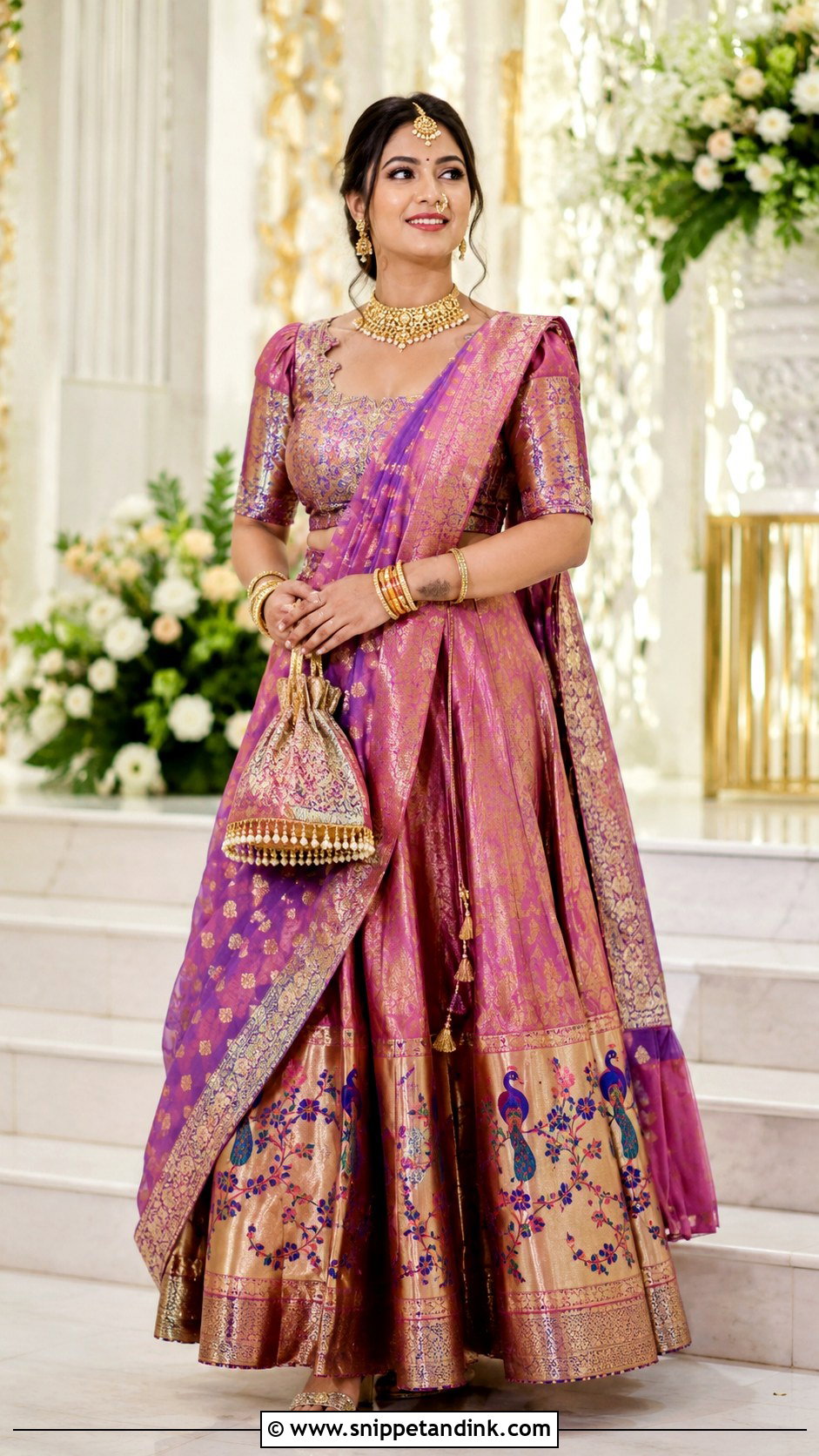
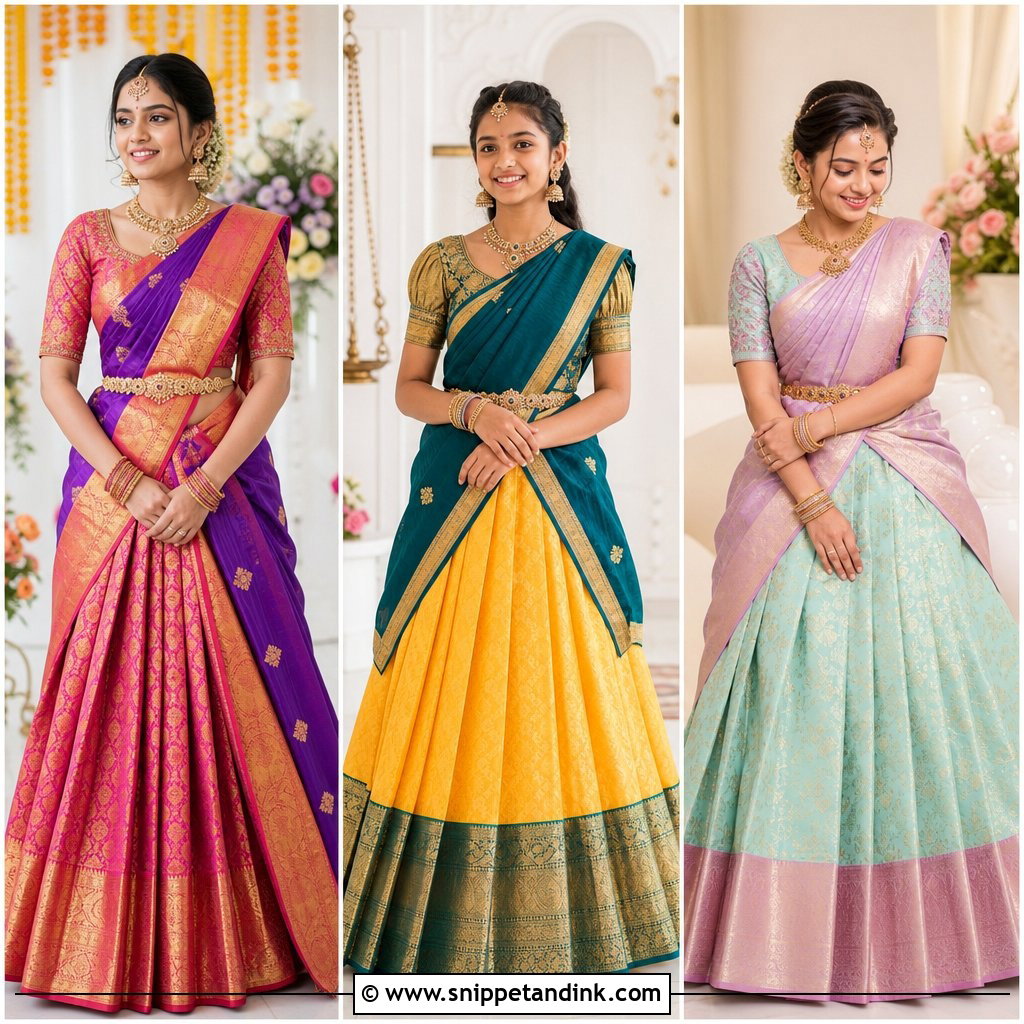
A Paithani lehenga brings Maharashtrian weaving into a more modern silhouette, and it works for the engagement, sangeet, reception or as the bride’s second outfit. Look for Paithani borders, peacock motifs or rich silk texture. Pair it with a structured blouse and drape the dupatta over one shoulder or across the front. Keep the cultural link strong with gold jewelry, a nath, bangles and a bindi. A real Paithani lehenga is heavy at the hem, so I’d ask for can-can underneath only if you’re not planning to dance. Embellished heels and a potli bag finish it.
11. Green Saree With Red Blouse Look
Green with red is the combination that says Maharashtrian wedding before anyone looks closely; both colors are considered auspicious. A silk saree, a Paithani or a lighter festive saree all work depending on your role. The red blouse is what makes even a simple saree look ceremonial. Add gold jewelry, green glass bangles, a traditional nath and a small bindi, and keep the jewelry modest if the border is already heavy. A jasmine bun or long braid softens it. Gold sandals and a compact potli make long functions easy, and it’s a reliable choice for guests and family.
12. Maharashtrian Bridal Saree With Mundavalya Look
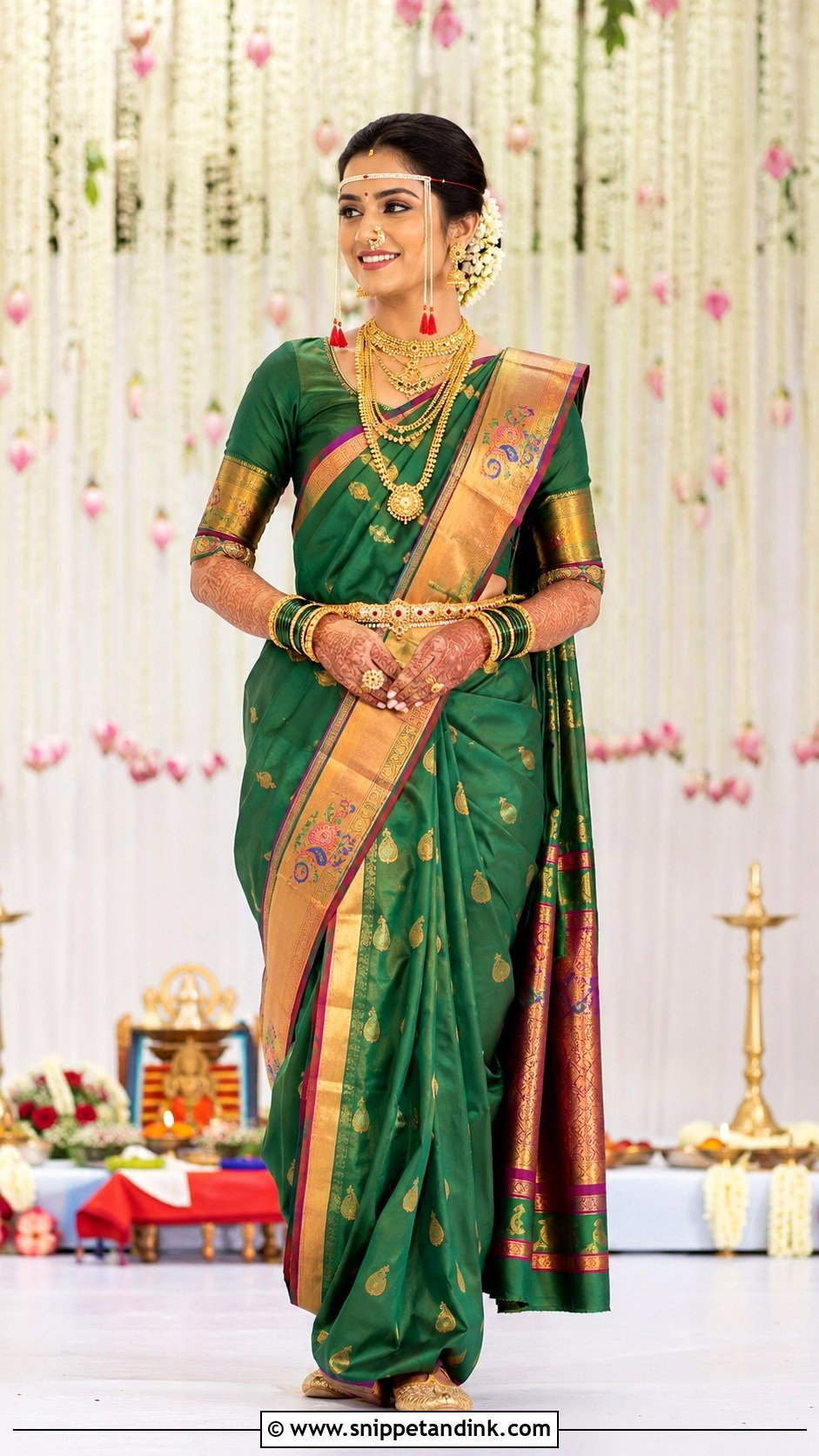
Mundavalya, the strings of pearls or flowers tied across the forehead, is what instantly marks a Marathi bride. It frames the face, so I fit it before the makeup is finished and check it doesn’t sit on the bindi. Choose a Paithani, Shalu or Nauvari in green, yellow, red, purple or peacock blue, with a well-fitted blouse, a nath, layered necklaces, green bangles and a kamarband. Pin the bun firmly because the mundavalya ties pull at it during long rituals. Keep the eyes defined, the bindi strong and the lip toned to the saree.
13. Maharashtrian Reception Saree Look
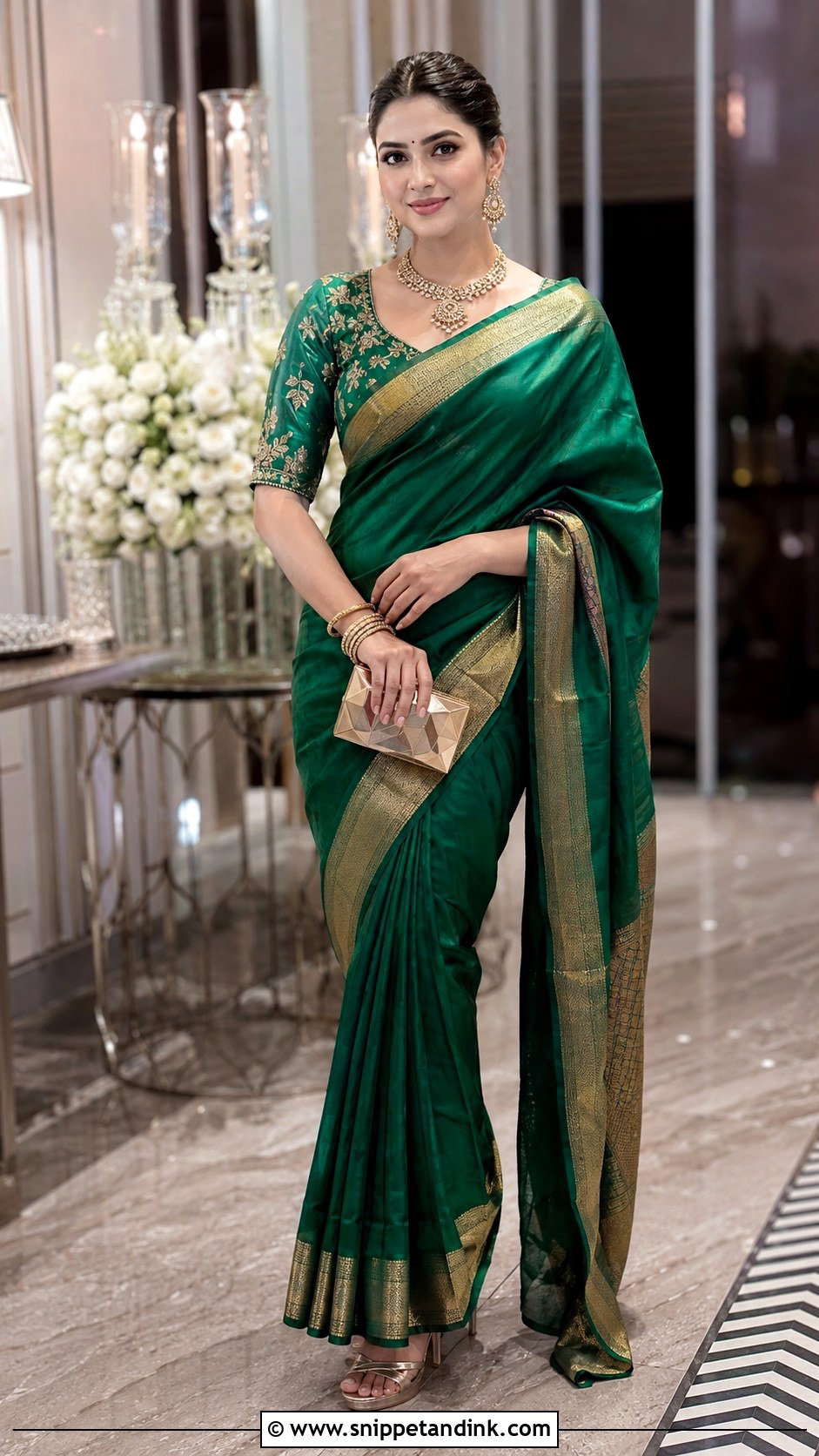
Receptions let the look be more polished and evening-ready while still honoring tradition. I’d reach for a rich Paithani, Banarasi silk or designer silk in maroon, navy, emerald, purple or gold. A modern blouse, with elbow sleeves, a boat neck or a structured silk cut, makes it feel fresh. Statement earrings, a necklace and bangles are enough; you can leave the heavier bridal pieces behind. Evening lighting flattens zari unless there’s some contrast, so a deeper saree shows the gold far better. Heels and a structured clutch finish it.
14. Maharashtrian Engagement Saree Look
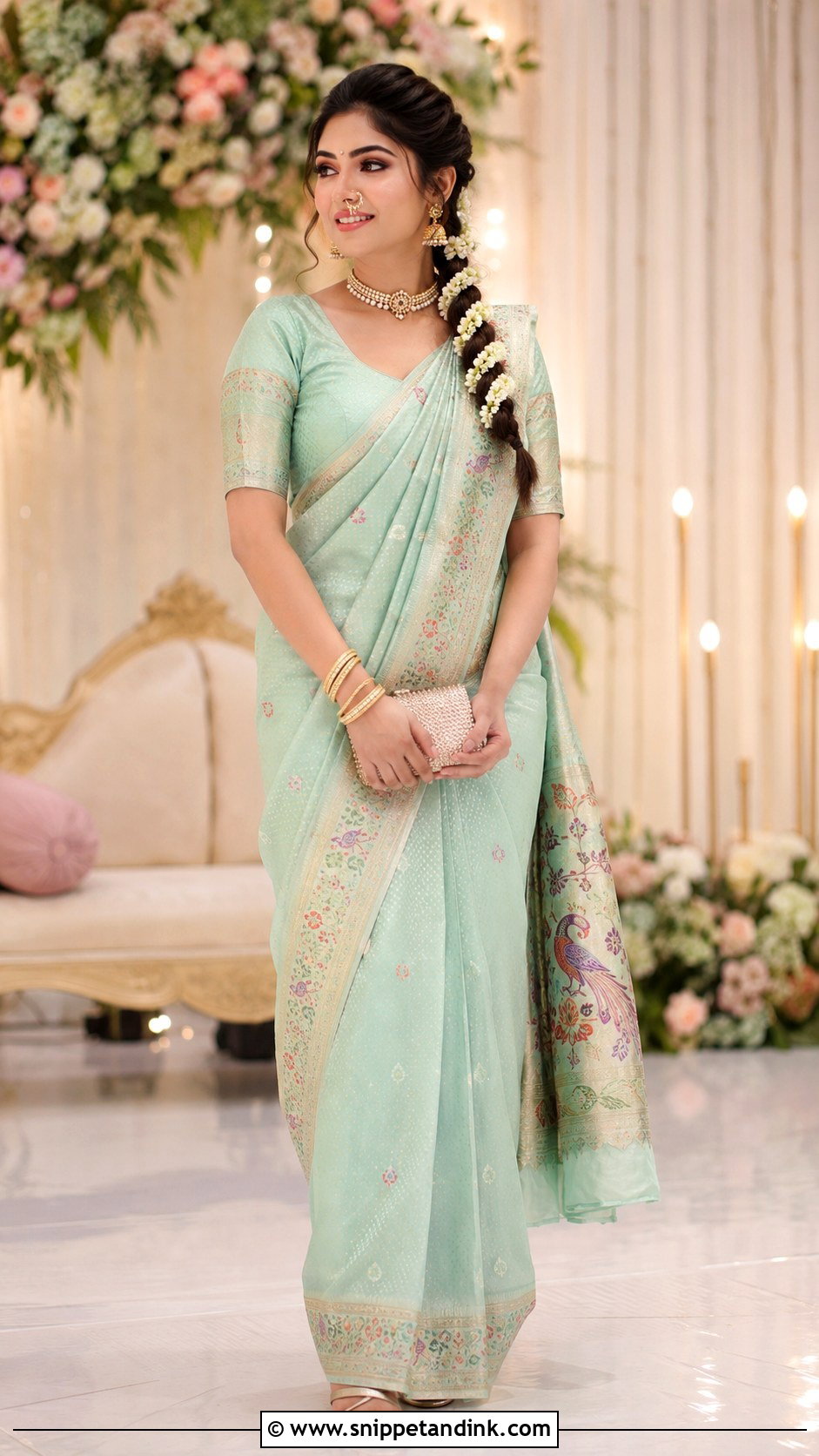
The engagement should feel special but noticeably lighter than the wedding. A pastel Paithani, soft silk or a Chanderi in mint, peach, lavender, powder blue or blush with gold borders all suit it. I’d add a choker, small jhumkas, bangles and a dainty nath if you want one. During the ring exchange every photo is of your hands, so keep the pallu pinned high and out of the way. Soft waves, a bun or a floral braid suit the mood, with metallic heels and a small clutch.

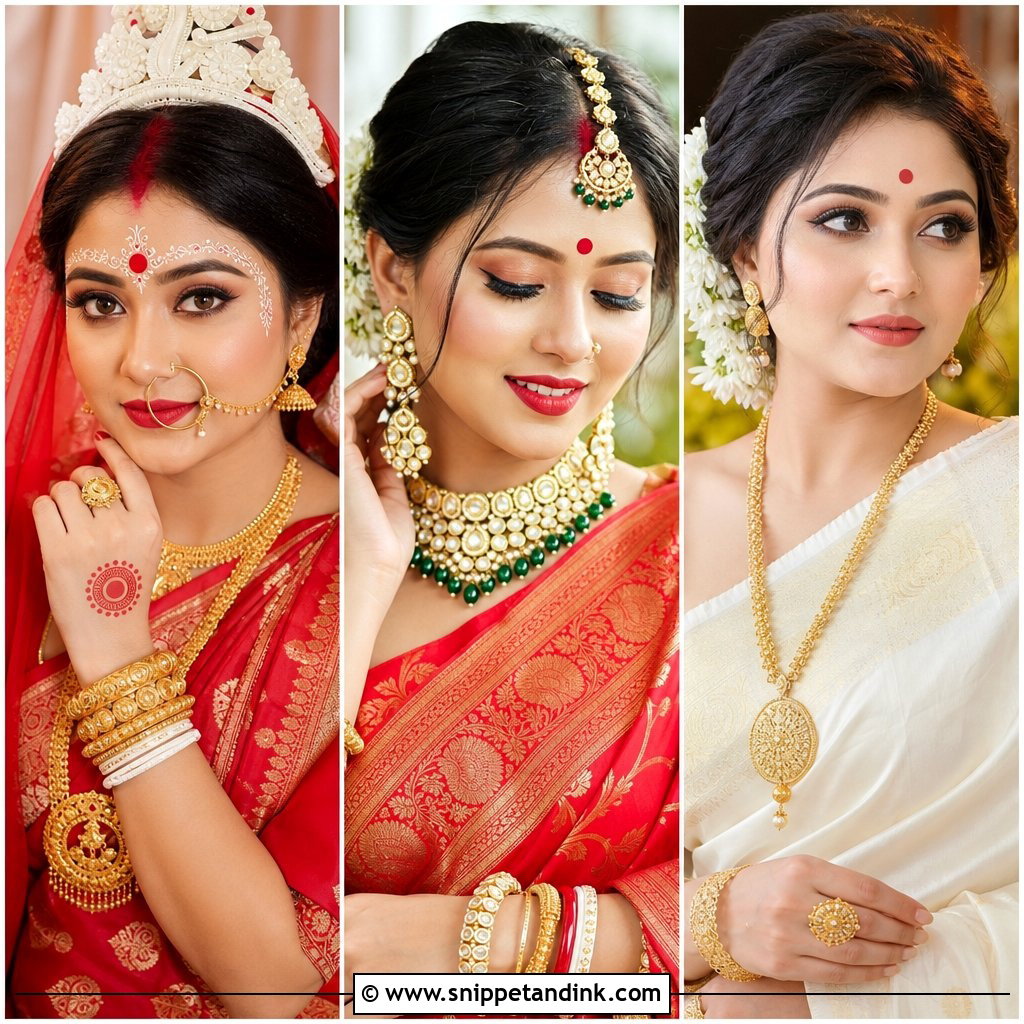
15. Maharashtrian Mehendi Saree Look
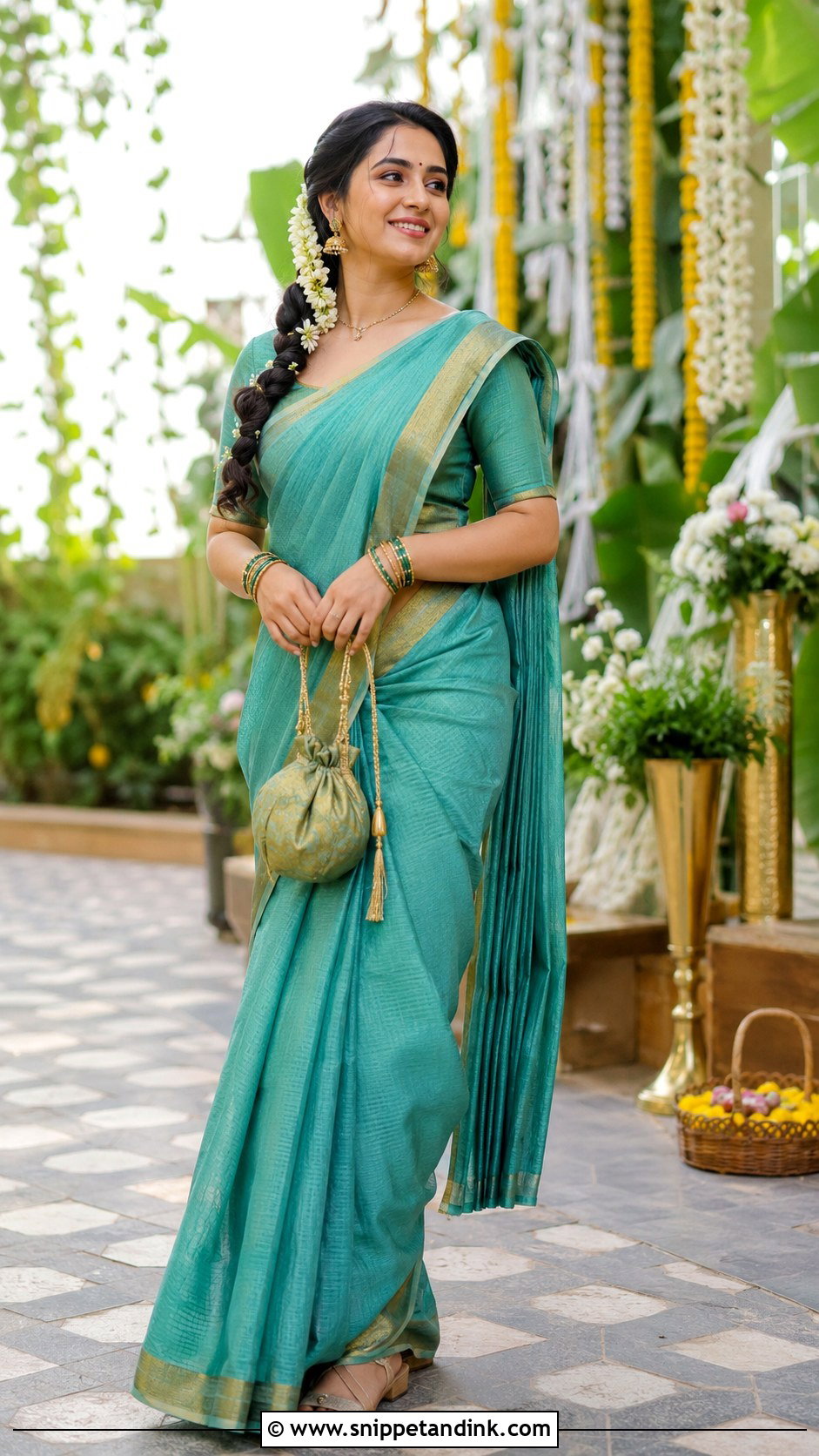
At the mehendi you’ll sit for hours with your hands out and can’t fix your own saree, so choose something that stays put. Lightweight green, yellow, teal, orange or pink in cotton-silk, organza or a light Paithani-style fabric works best. I’d go sleeveless or short-sleeved so nothing brushes the wet paste on your arms. Keep jewelry light, especially bangles and rings, which smudge the design. A floral braid or half-up style keeps hair off your face, and flats or low wedges are plenty.
16. Maharashtrian Sangeet Lehenga Look
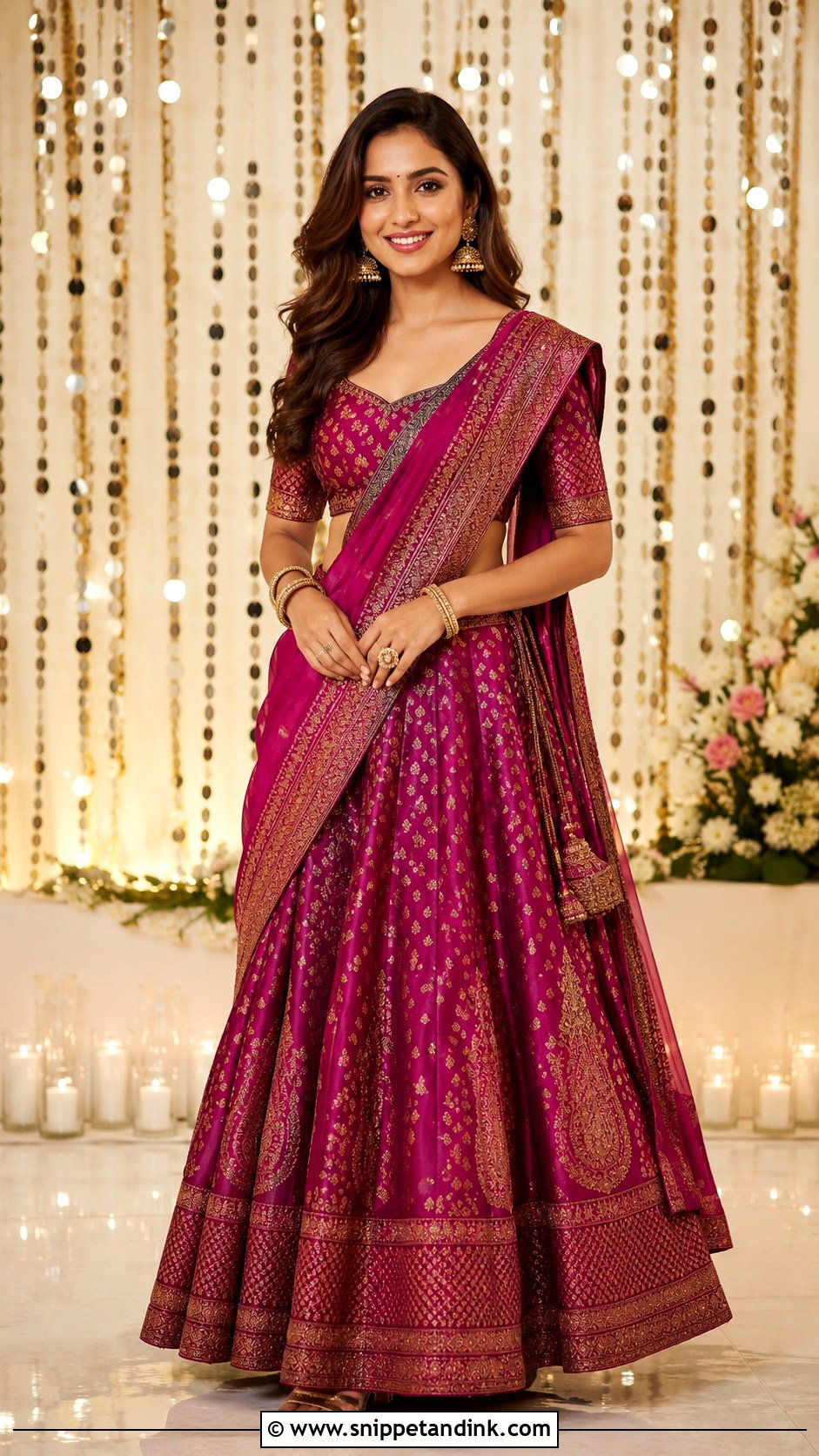
Sangeet is the one night where movement matters more than drape. Choose a lehenga in silk, brocade or Paithani-style fabric with a lighter flare. Teal, magenta, purple, emerald and gold all suit it. Pin the dupatta securely on one shoulder; I use at least two pins, one at the shoulder and one at the waist, so it survives a full dance routine. Jhumkas, bangles and a statement ring are enough. A ponytail, braid or soft curls stay lively, and block heels or wedges handle a sprung dance floor. Add a small nath for a stronger Maharashtrian note.
17. Maharashtrian Bridesmaid Paithani Saree Look
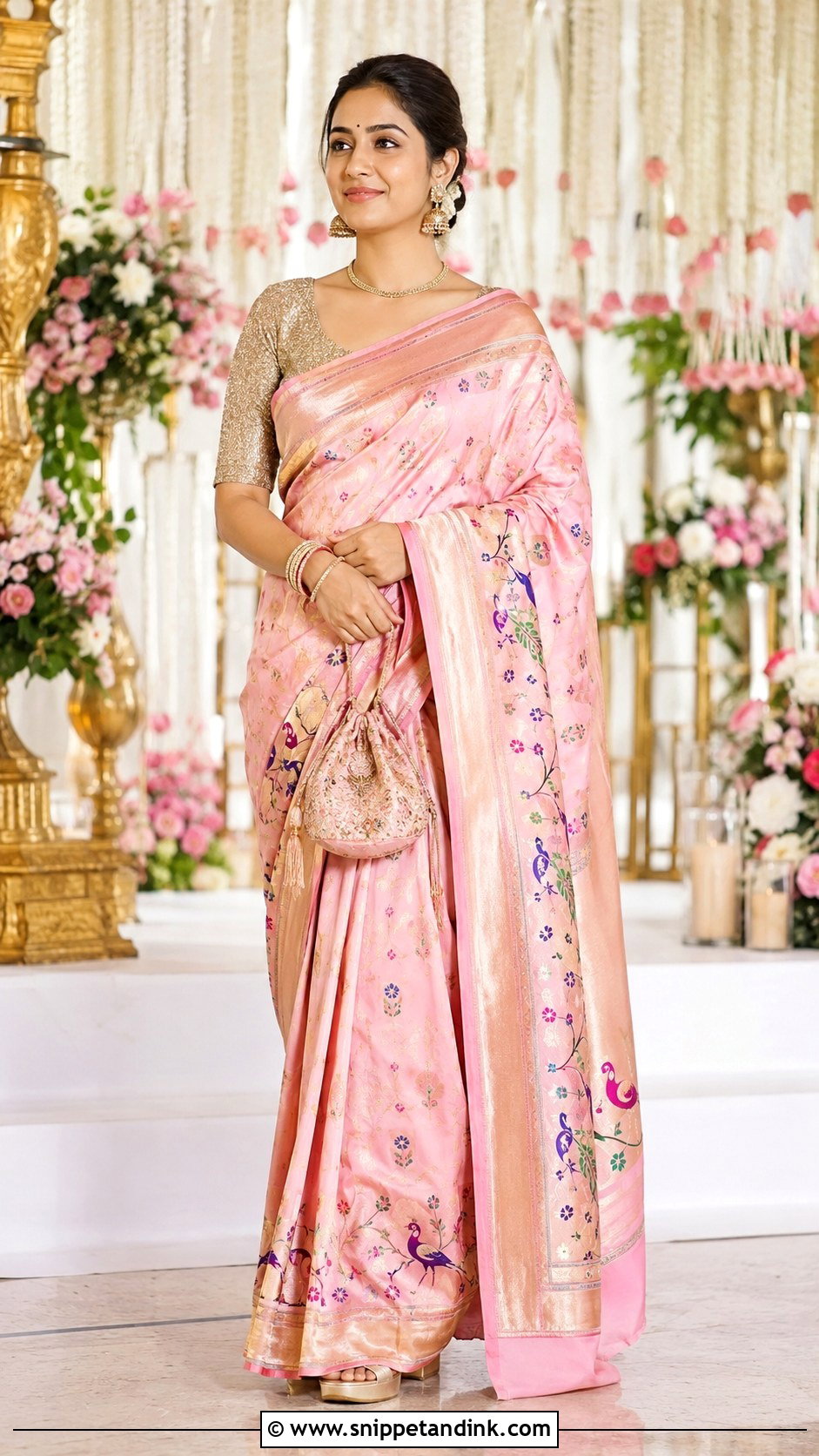
For bridesmaids, coordination beats matching. Paithanis in different shades of one color family, greens, pinks or purples, look intentional in group photos without looking like uniforms. A six-yard drape is far easier to manage than a heavy Nauvari over a long day. I keep jewelry neat: jhumkas, bangles, a small necklace and a bindi. If the bride is in heavy gold, bridesmaids go lighter so nobody looks bridal by mistake. Soft buns, braids or waves suit, and gold flats or wedges finish it.
18. Maharashtrian Mother Of The Bride Saree Look
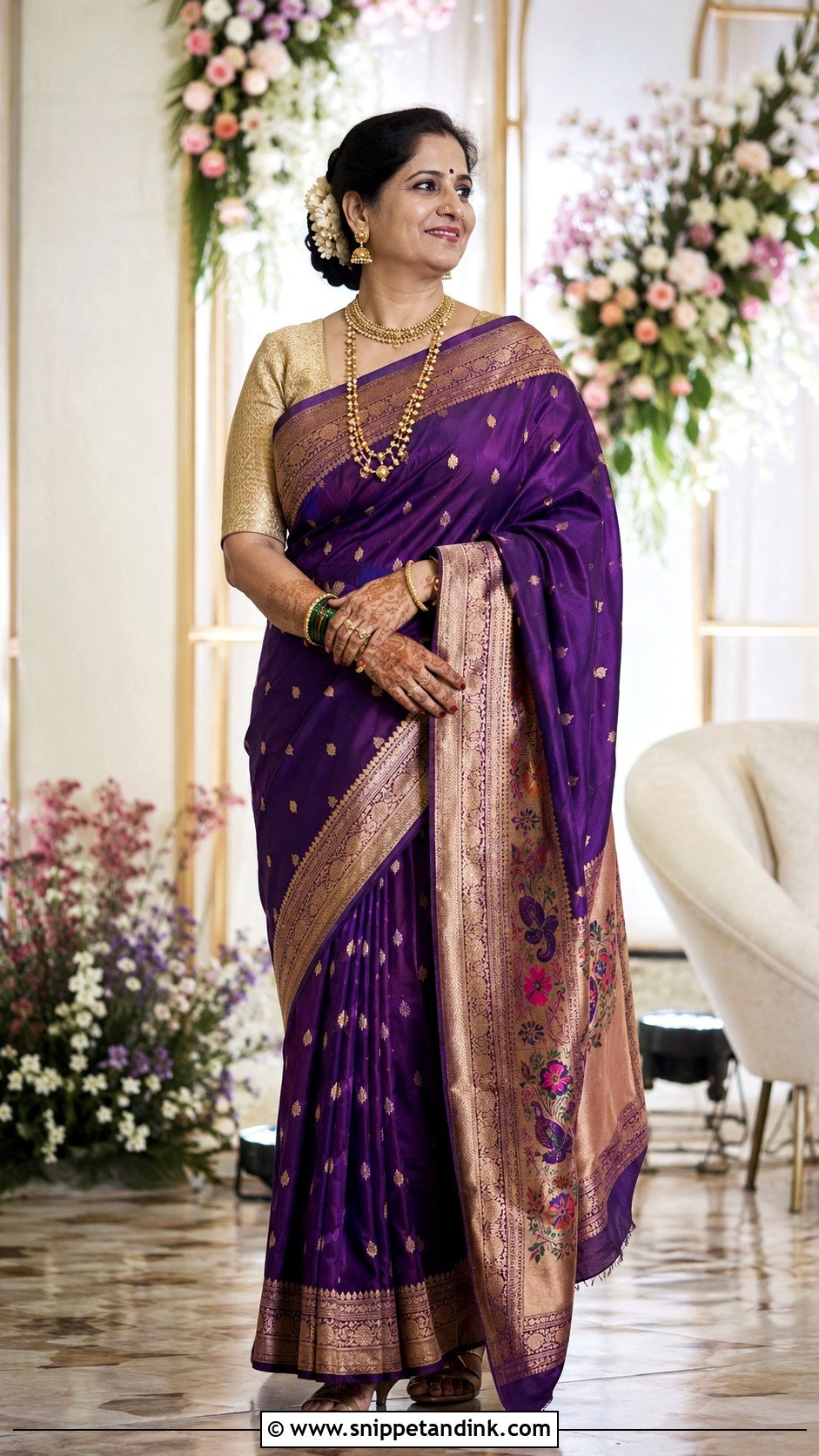
The bride’s mother is on her feet for most of the day, greeting and hosting, so I plan her outfit for dignity and endurance in equal measure. A silk Paithani, Shalu, or Banarasi saree in deep green, purple, maroon, navy or gold is right. Her blouse needs supportive sleeves and a secure neckline. A gold necklace, earrings, bangles and a classic bindi complete it. Pin the pallu neatly pleated so she isn’t rearranging it between every greeting. A low bun with flowers and cushioned sandals or low heels finish the look.
19. Maharashtrian Sister Of The Bride Lehenga Look
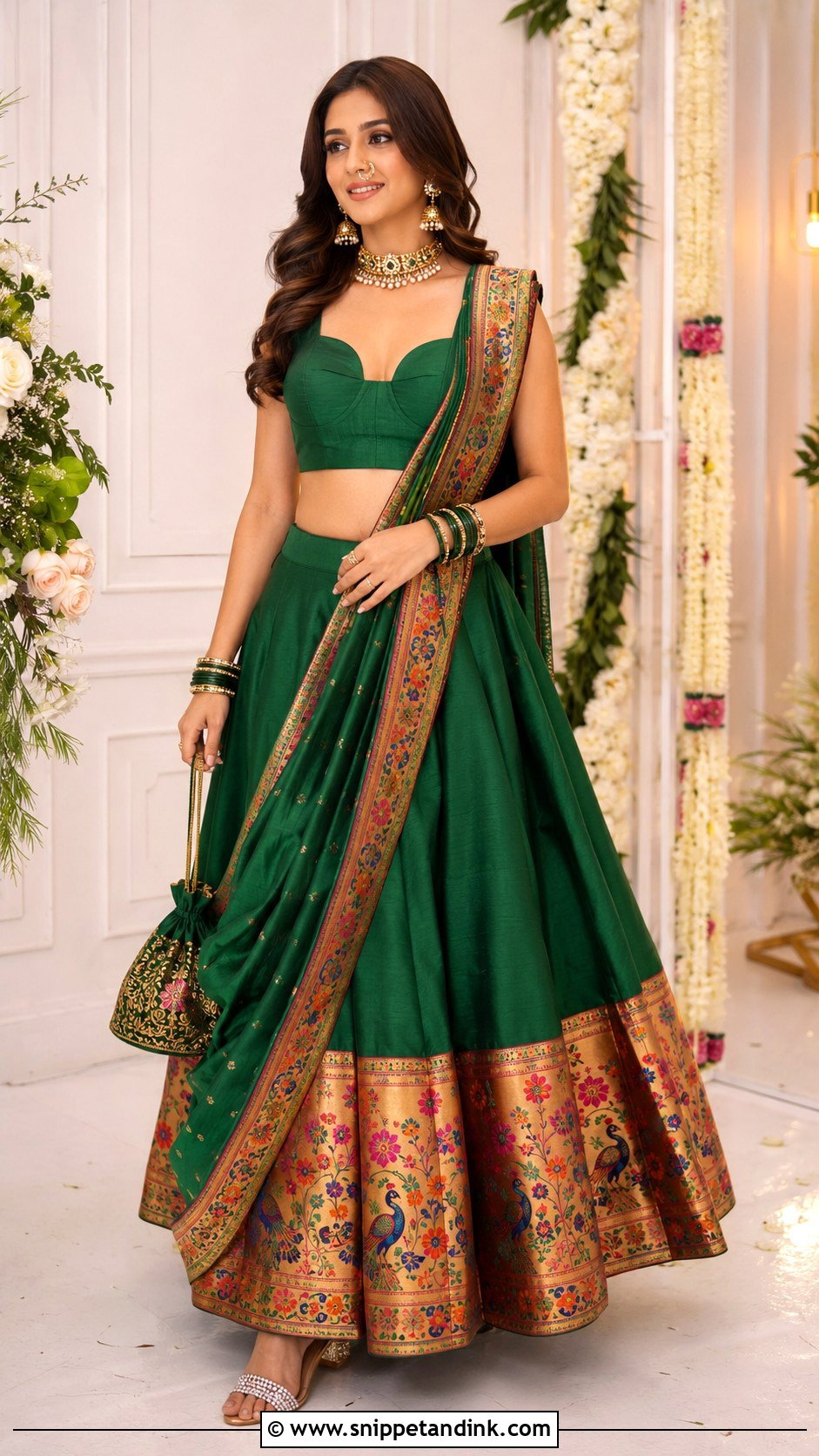
The bride’s sister can go youthful and festive. A silk or brocade lehenga with Paithani borders or zari motifs, in rani pink, emerald, peacock blue or orange, will stand out in family photos. Pair it with a structured blouse and drape the dupatta neatly across the shoulder or arms. Jhumkas, a choker, bangles and a bindi suit it, and a small nath makes it traditional without looking bridal. I’d check the shade against the bride’s outfit before buying; sisters often end up in the same color by accident. Soft curls, a braid or a sleek bun, plus comfortable heels and a potli.



20. Maharashtrian Wedding Guest Saree Look
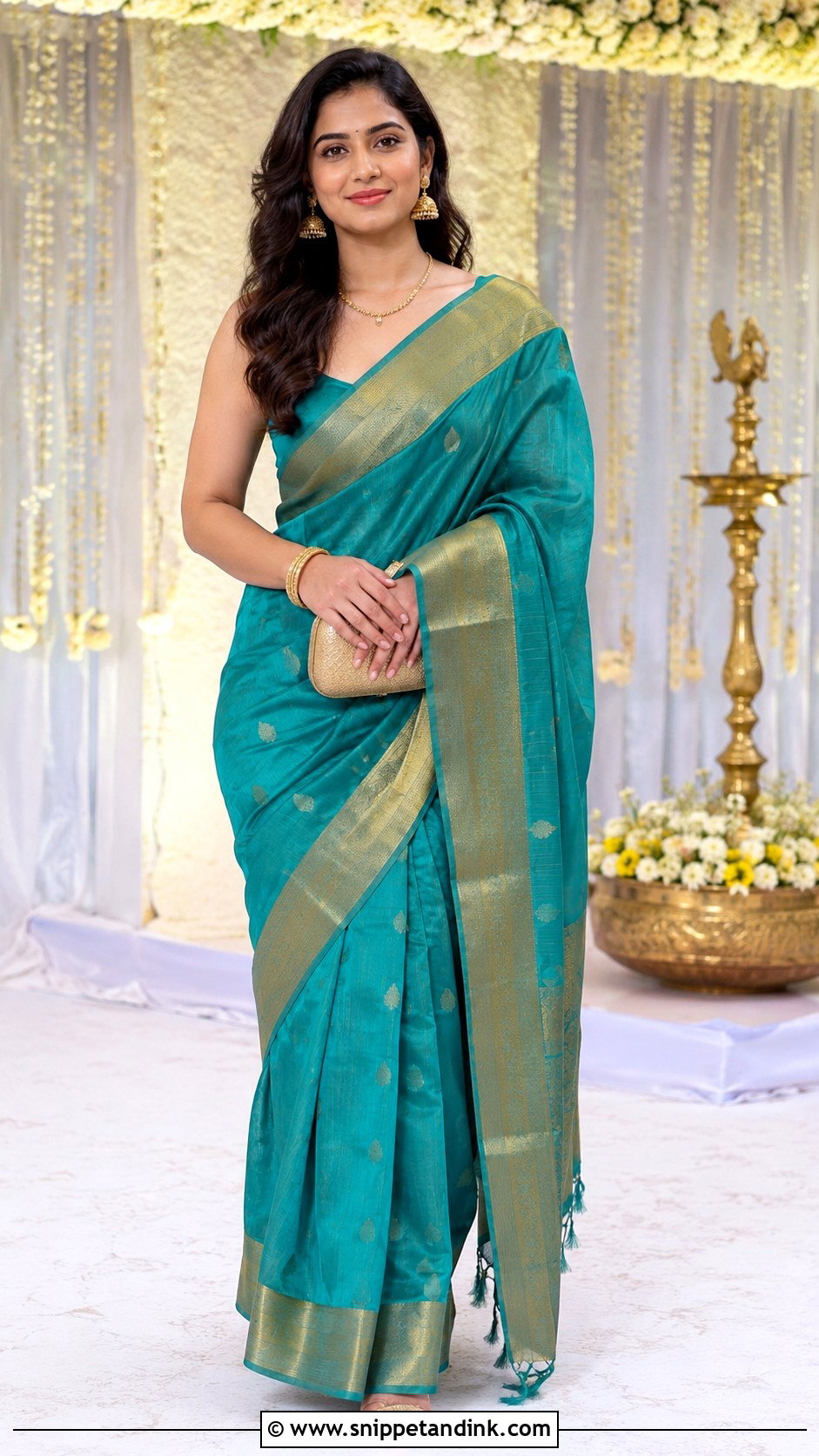
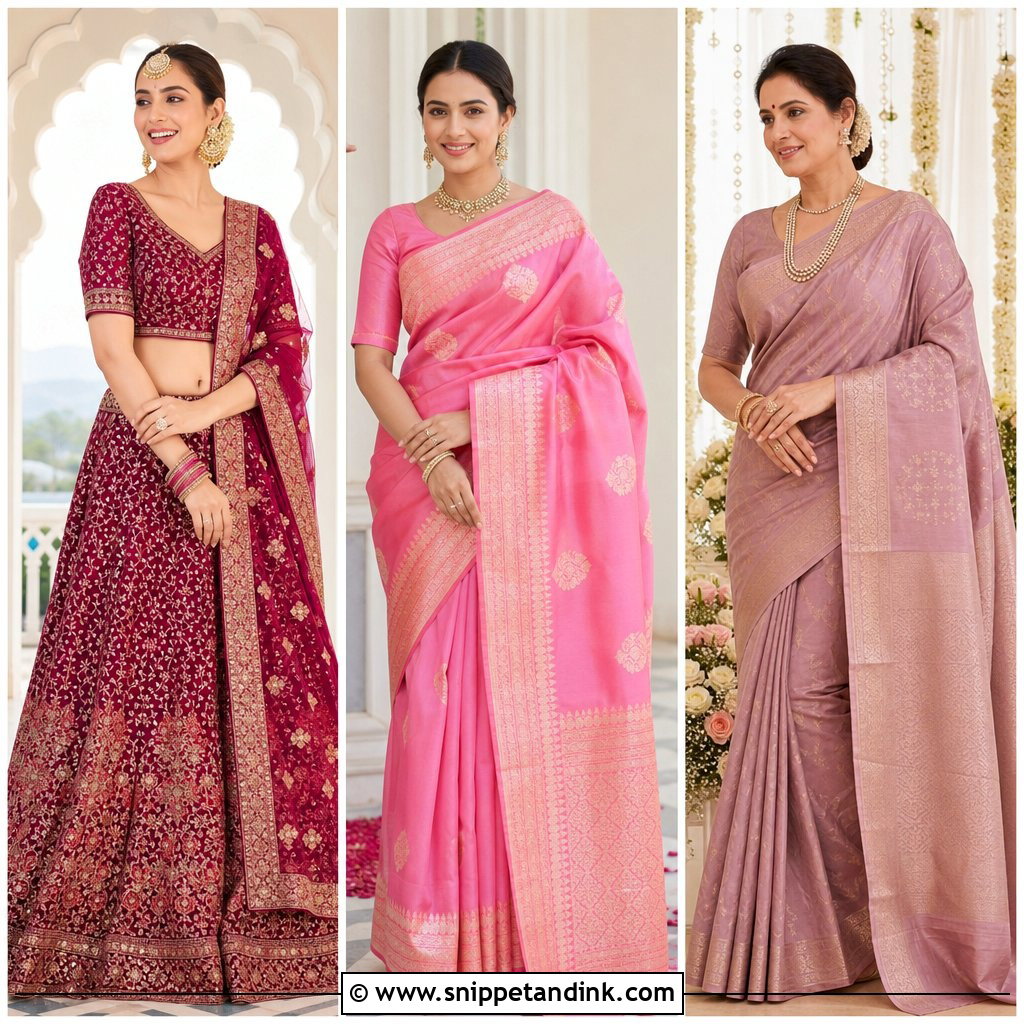
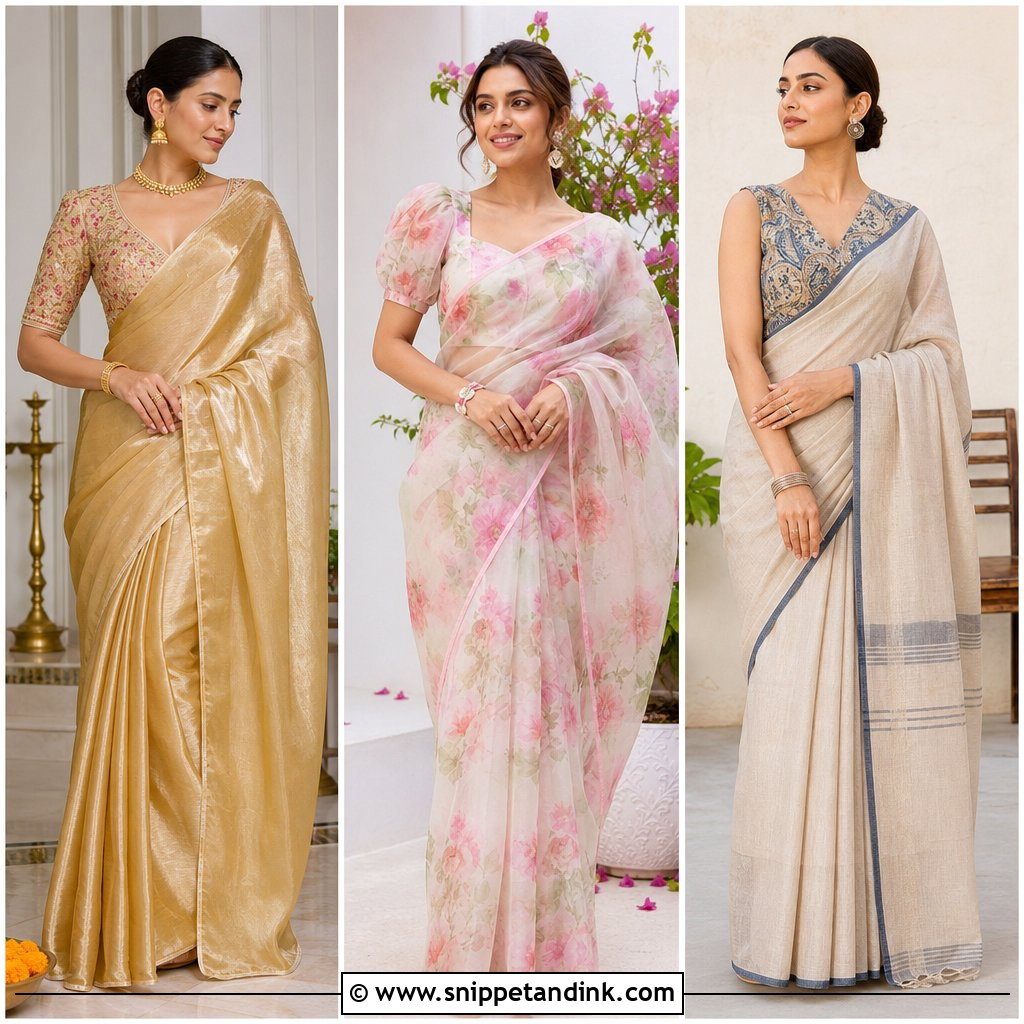
Guests should look festive but clearly not bridal. A silk, Chanderi, organza or Paithani-style saree is safe. Teal, pink, mustard, lavender, green and blue all work, and if you know the bride’s exact shade, avoid it. A simple blouse with medium jewelry, jhumkas, bangles, a small bindi and a fine necklace, is enough. Keep the drape neat and easy to sit in, since rituals can run long and you may be seated on the floor. A bun, braid or soft waves, comfortable heels or flats and a small clutch complete it.
21. Maharashtrian Fusion Saree Look
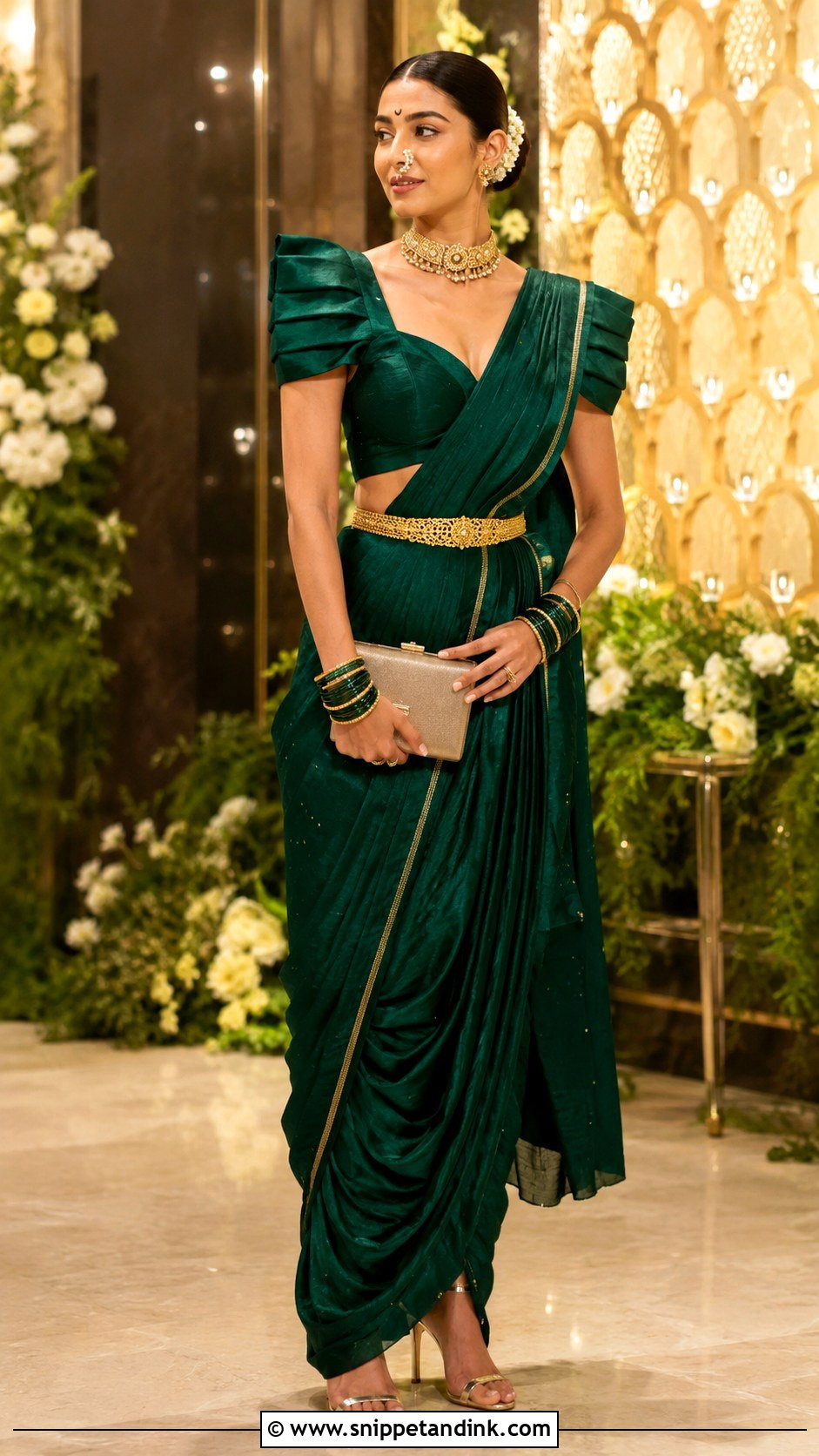
Fusion works when the Maharashtrian markers are unmistakable. I’ll take a pre-draped or belted saree, or a silk saree with a contemporary blouse, then anchor it with a nath, green bangles, a chandrakor bindi or a Paithani border. A structured blouse with sleeves, a high neck or a clean back keeps it current. Rich colors hold it together: emerald, purple, mustard, pink or royal blue. Sleek hair, metallic heels and a clean clutch finish it, and it suits the reception, engagement or sangeet better than the main ceremony.
22. Maharashtrian Pre Draped Nauvari Look
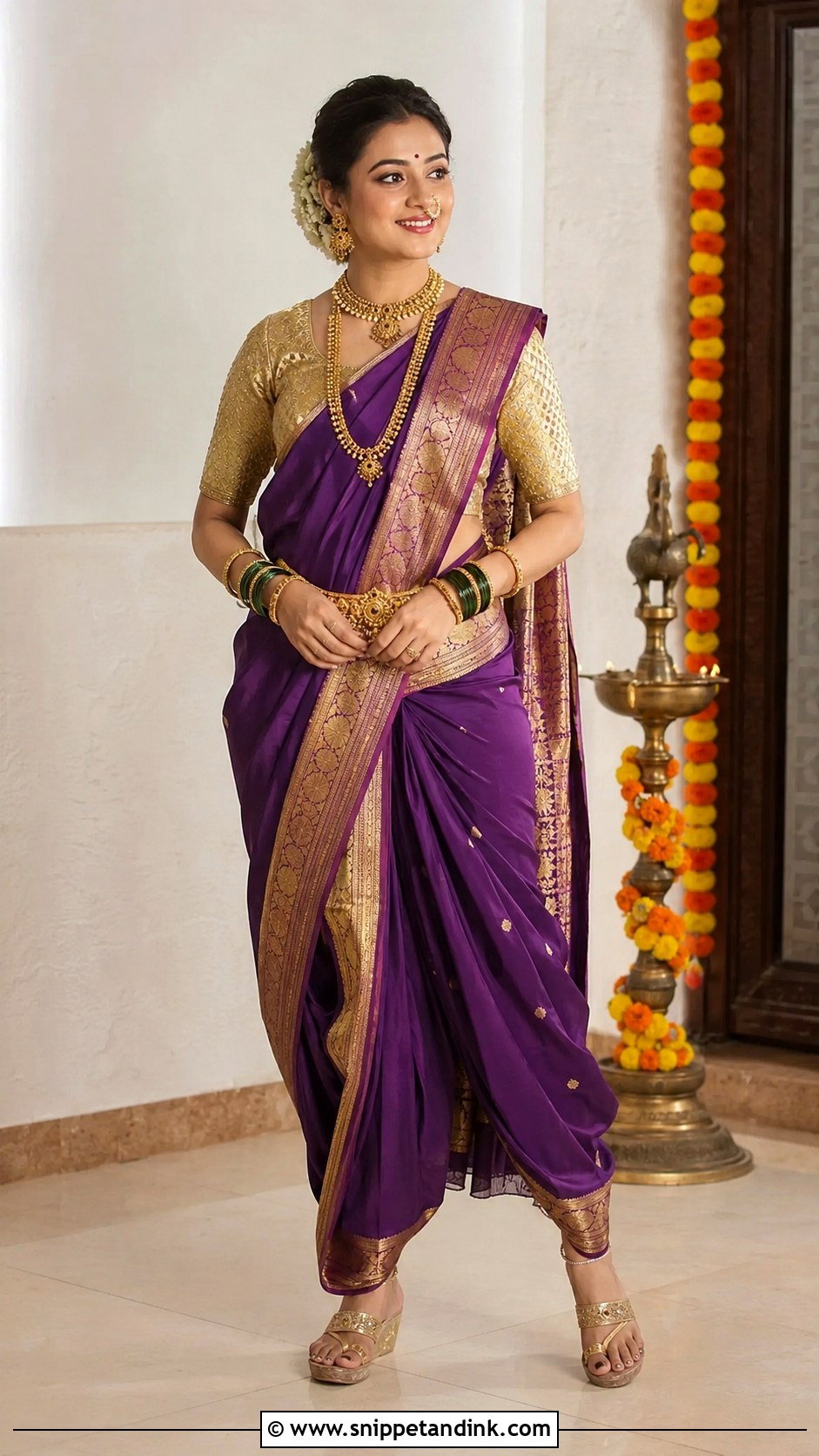
A pre-draped Nauvari gives you the dhoti-style shape without needing a skilled draper, and it’s far easier to walk in. Bridesmaids, guests and some brides choose it for exactly that reason. Look for silk, cotton-silk or Paithani-style fabric in green, red, yellow, purple or blue. Pair it with a fitted blouse, gold jewelry, bangles, a nath, a bindi and a kamarband. The catch is sizing: pre-stitched Nauvaris are sized at the waist, so try it on with the blouse and kamarband well before the wedding. A bun with gajra and flats or wedges keep it secure.
23. Maharashtrian Kurta Dupatta Wedding Look
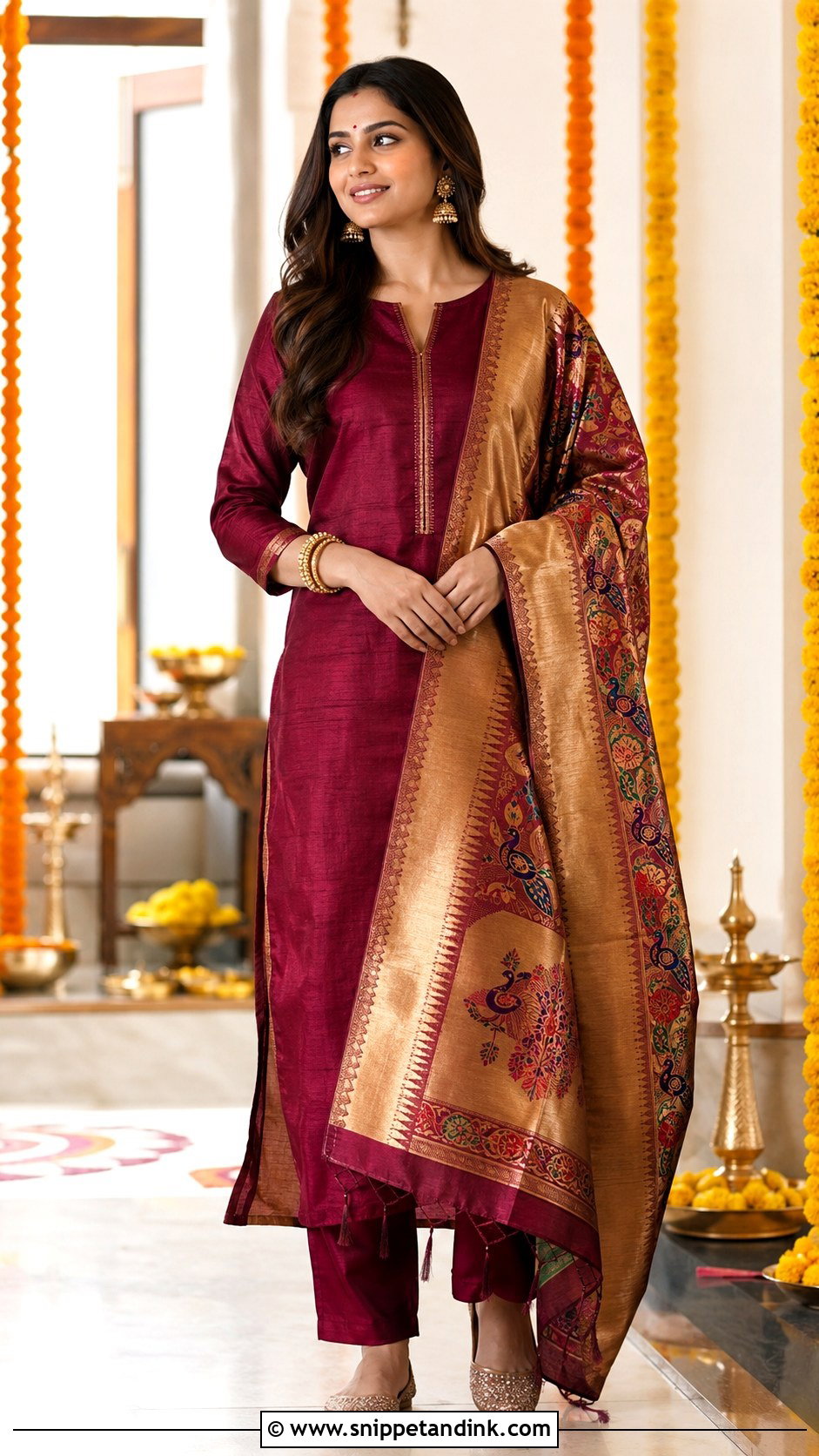
For smaller functions, travel days and family lunches, or for guests who’d rather not wear a saree, a kurta set does the job. A silk kurta set or an anarkali-style kurta paired with a Paithani dupatta carries the cultural detail, especially with a rich border or peacock pallu. Churidar, straight pants or a flowing skirt change the formality. Jhumkas, bangles, a bindi and embellished flats complete it. I like this as the outfit guests travel in, because it doesn’t crush and you can still arrive looking festive.
24. Maharashtrian Silk Saree With Gajra Look
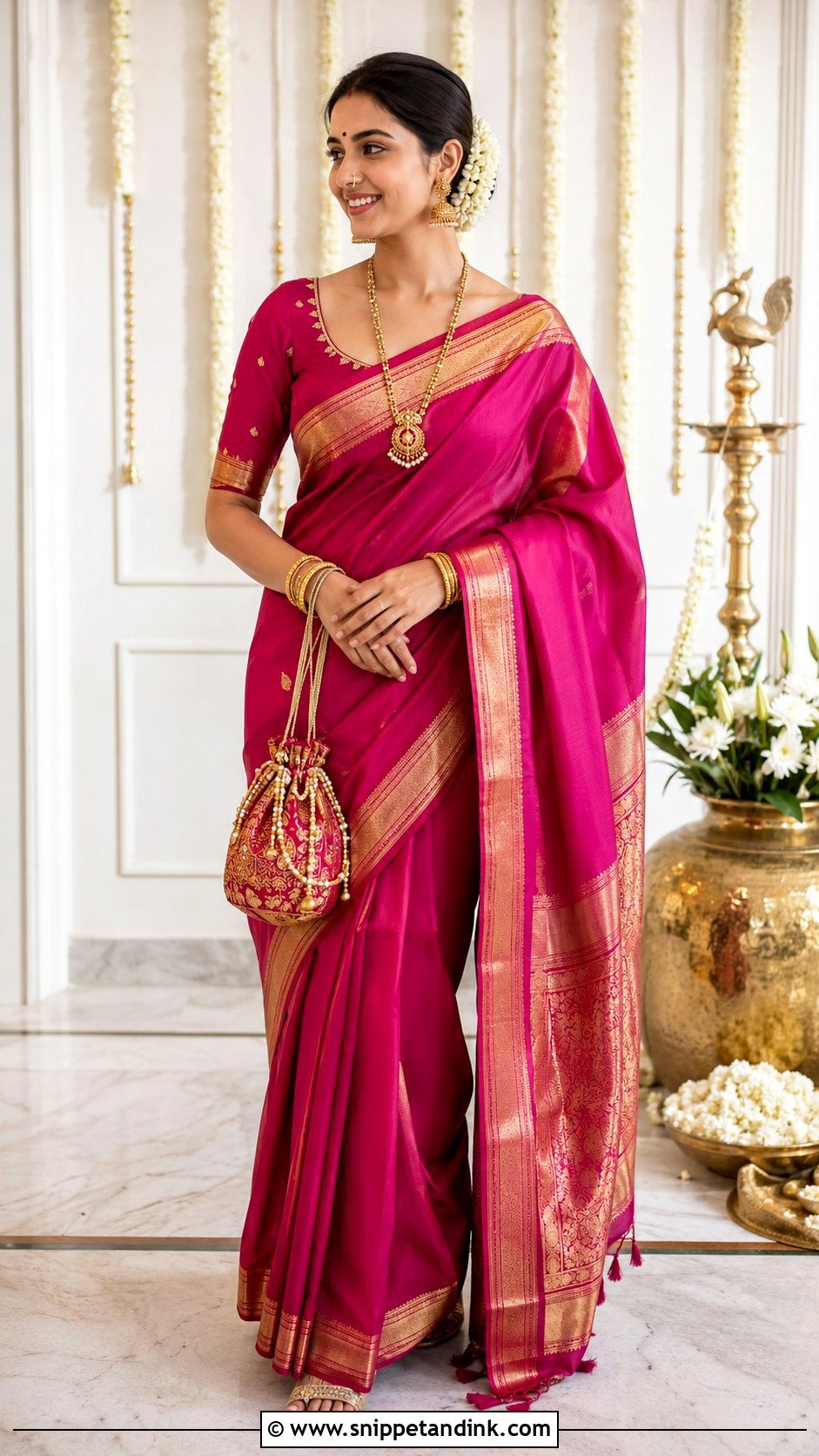
Fresh gajra makes even a simple saree feel ceremonial, and the scent is part of the memory. Choose silk in green, magenta, purple, yellow or blue with a gold border, a matching blouse, jhumkas, bangles, a necklace and a small nath. The low bun wrapped in jasmine is the key detail. Buy the gajra the same morning and keep it in the fridge in damp paper until you dress; jasmine browns within hours in heat. Gold sandals and a small potli complete a look that suits guests, sisters, cousins and close family.
25. Maharashtrian Bridal Lehenga With Nath Look
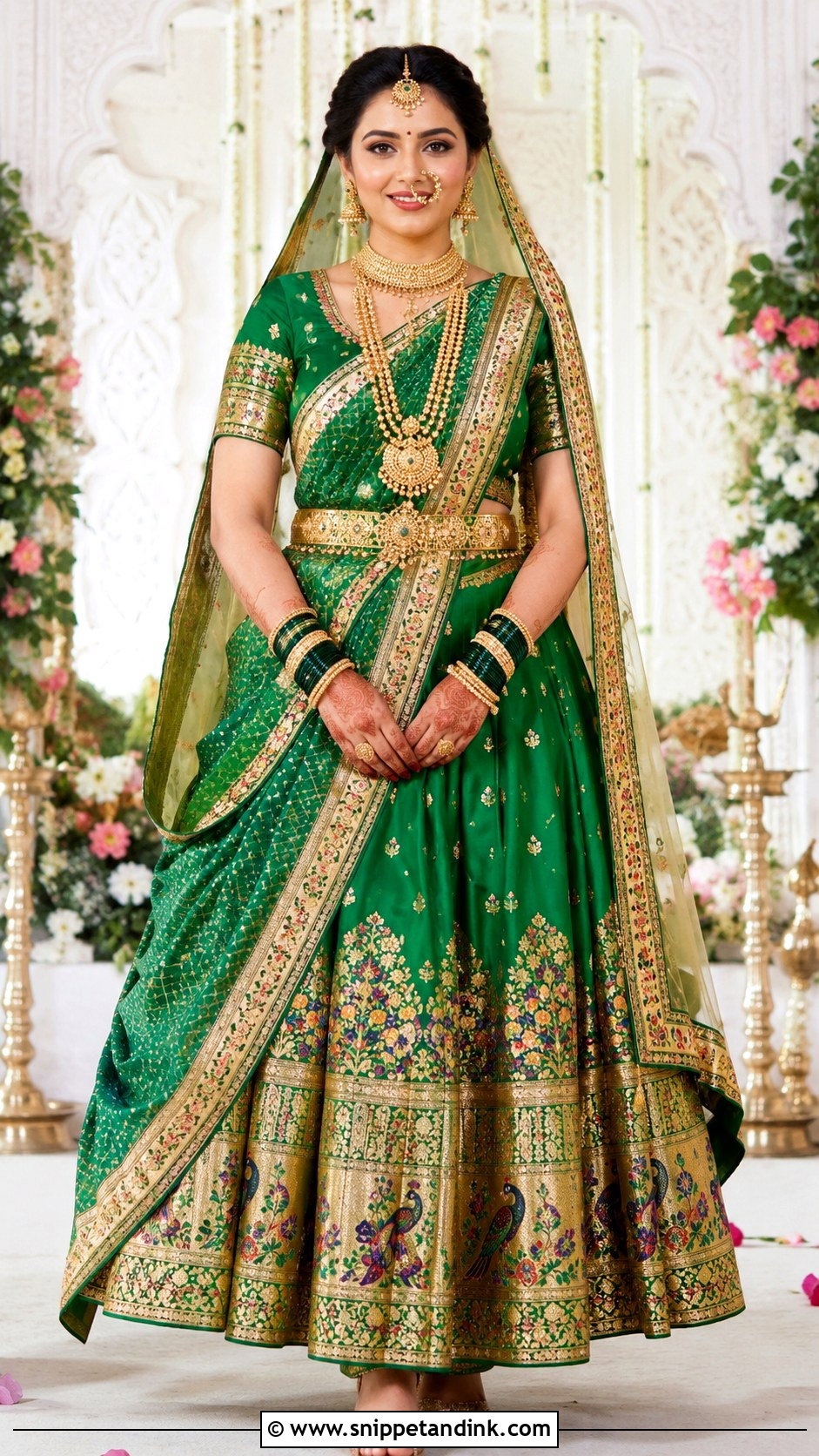
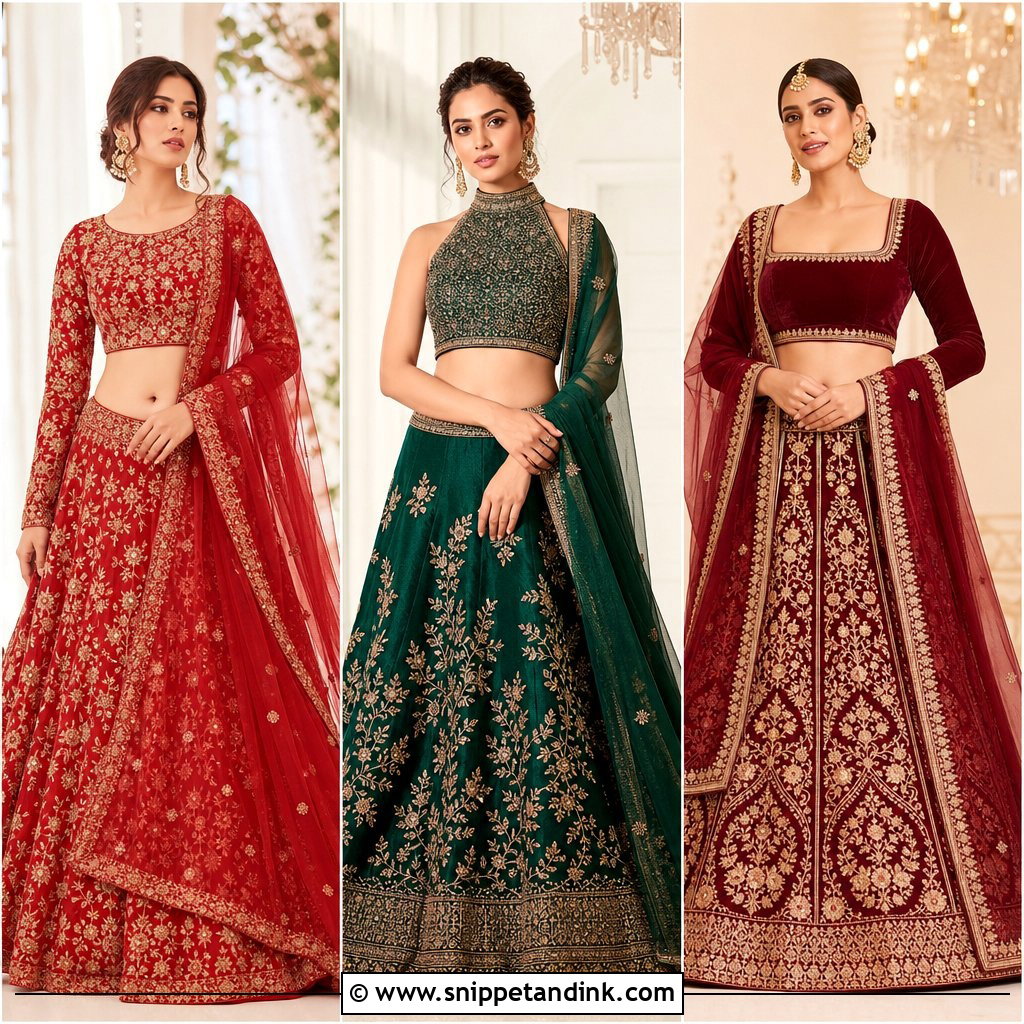
A bridal lehenga lets the bride change silhouette while keeping the cultural details visible. Silk, brocade or Paithani-style fabric in green, red, pink, purple or gold all suit. The dupatta can go over the head or across the shoulder, and a statement nath, layered gold, green bangles, a bindi and a kamarband keep it Maharashtrian. A large nath on top of a heavy dupatta can feel crowded around the face, so I balance one against the other. A bun with gajra and supportive heels finish it.
Nine Yards, Thirty Pins and a Long Muhurta
A traditional Nauvari is roughly nine yards of fabric, and draping it well takes practice. Most brides book an experienced draper and I’d do the same. Allow at least forty-five minutes for the drape alone on the wedding morning, more if the jewelry goes on afterward.
- Do a trial drape. Wear it for an hour, sit cross-legged on the floor as you will during the rituals, and stand up again without help.
- Expect a lot of safety pins. Ask the draper to use small gold-toned ones and to show your sister or a friend where the key ones are, so she can repin anything that slips.
- Plan the restroom. A Kashta drape is not quick to manage. Go just before the muhurta, and take one trusted helper with you.
- Test the nath. Wear it for an hour, then eat and drink something. Clip-on naths pinch after a while; ask for a soft chain to support it from the hair.
I always pack an emergency kit for the bride’s sister to carry: extra pins, double-sided fabric tape, a small comb, bobby pins and a spare set of green bangles, because a few always break.
Caring for Paithani Silk Once the Wedding Is Over
Air the saree in the shade for a few hours before putting it away; never put it in direct sun, which fades silk dye. Wrap it in soft muslin or an old cotton dhoti rather than plastic, and keep naphthalene balls well away from the zari. Refold it along different lines every few months, because zari cracks along a fold that never changes. Spray perfume before you dress, not onto the saree, since alcohol can tarnish the metallic thread.
Dressing for Every Ritual Without Losing the Marathi Thread
A Maharashtrian outfit works when the saree, drape, color, jewelry, hair and shoes read as one look. The Nauvari is the deepest tradition; Paithani brings the richness. Lehenga, kurta and fusion outfits work too, as long as the nath, mundavalya, green bangles, gajra and gold are there to tie them back to the culture. Bride, bridesmaid, mother or guest, plan the outfit around how long you’ll be sitting, standing and greeting. If you’re comfortable through every ritual, it will show in the photos.
You'll Like These Ideas:



Leave a Reply