
Pinning Six Yards of Silk to Last Through a Long Ceremony
A South Indian wedding morning can start before dawn and run past lunch, with long stretches spent sitting cross-legged near the homam fire. Silk that looks perfect at the first photo can slip, sag and untuck by the kanyadaanam if it isn’t anchored properly. This is the order I dress a bride or a family member in, and it is worth copying even for guests.
- Petticoat first, tied firmly at the natural waist. A loose drawstring is the reason pleats drop. Some women now wear a saree shapewear skirt instead, which is slimmer under heavy silk.
- Tuck the first round and make the pleats in one go, between five and nine depending on the silk weight. Press them flat with your palm, then put one safety pin through all of them at the waist.
- Pin the pallu at the shoulder seam of the blouse from the inside, so the pin doesn’t show in photos. For heavy Kanjeevarams I add a second pin a few inches lower on the back.
- Sit down on the floor, cross-legged, and stand up again before you leave the room. Anything that shifts now will fall apart later.
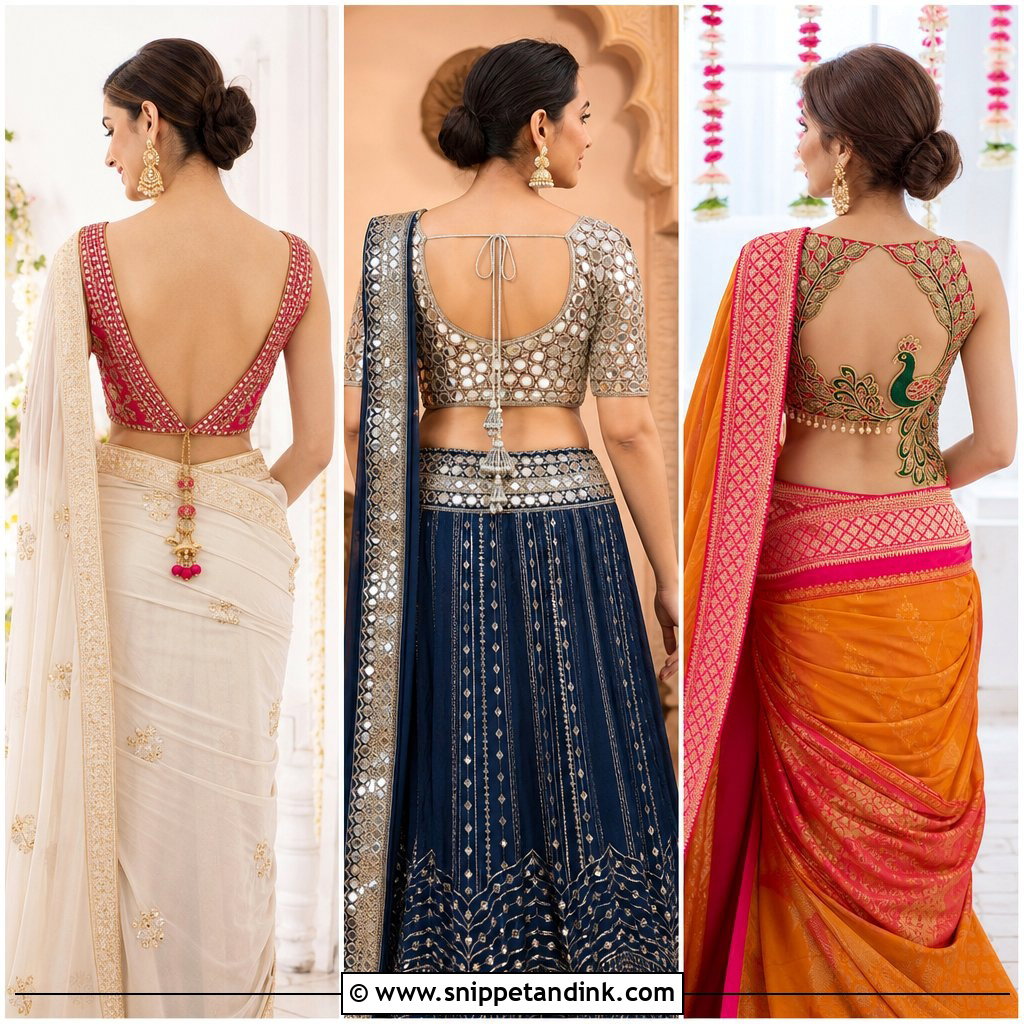
Have the blouse stitched at least three to four weeks ahead and fitted with the jewelry you will wear, since a heavy necklace pulls the neckline forward. Keep a small pouch of safety pins and a few bobby pins in someone else’s bag, not yours.
1. Bridal Kanjeevaram Saree Outfit
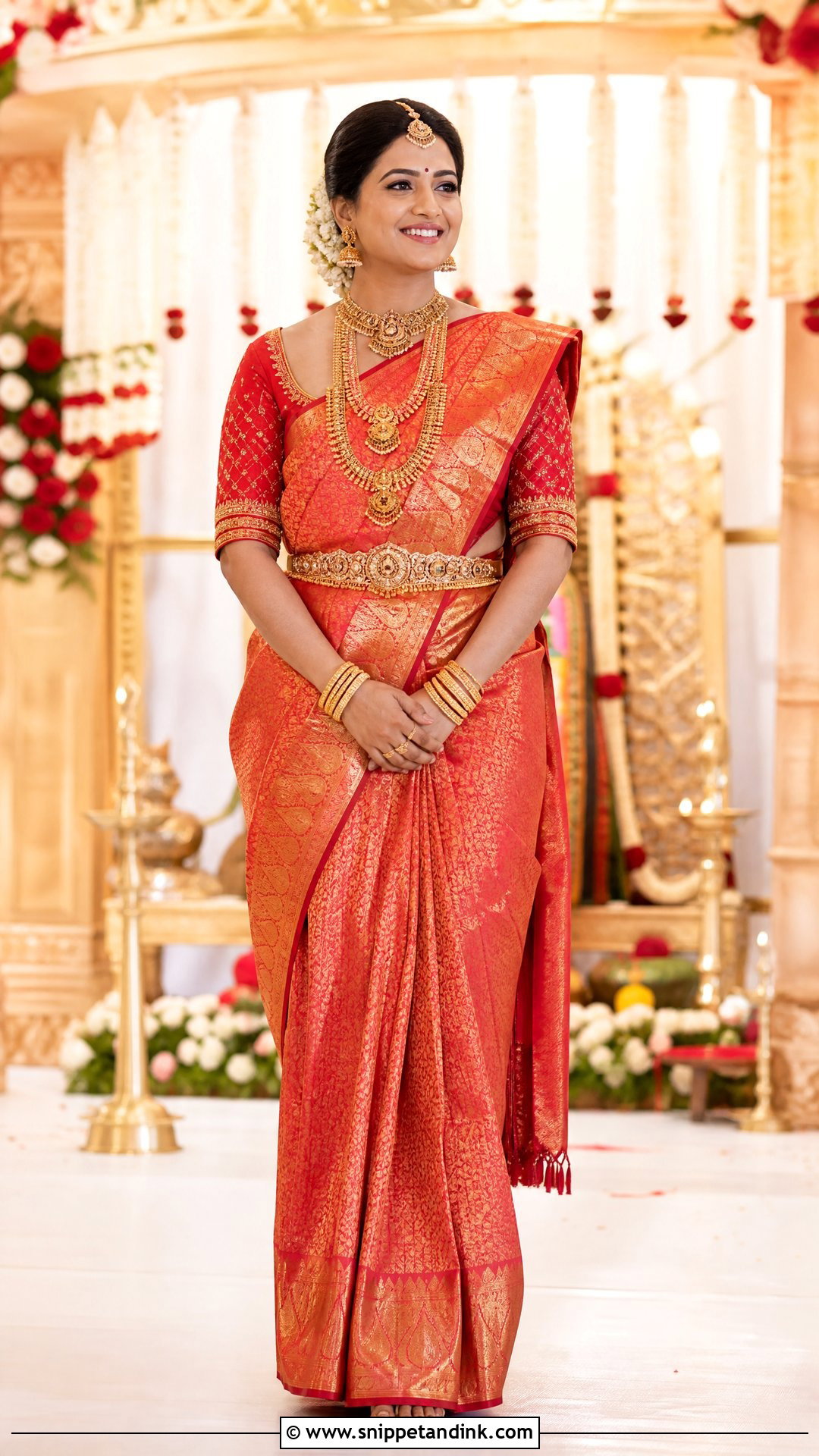
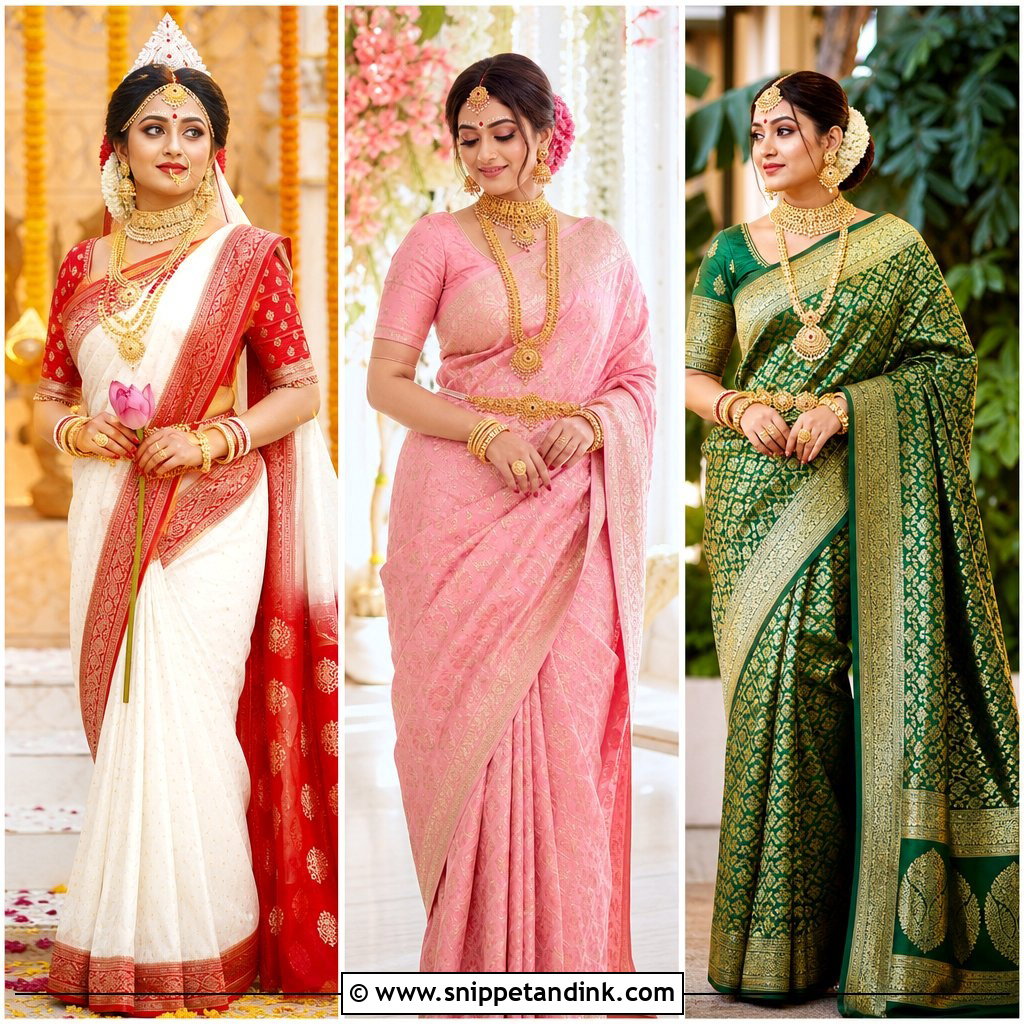
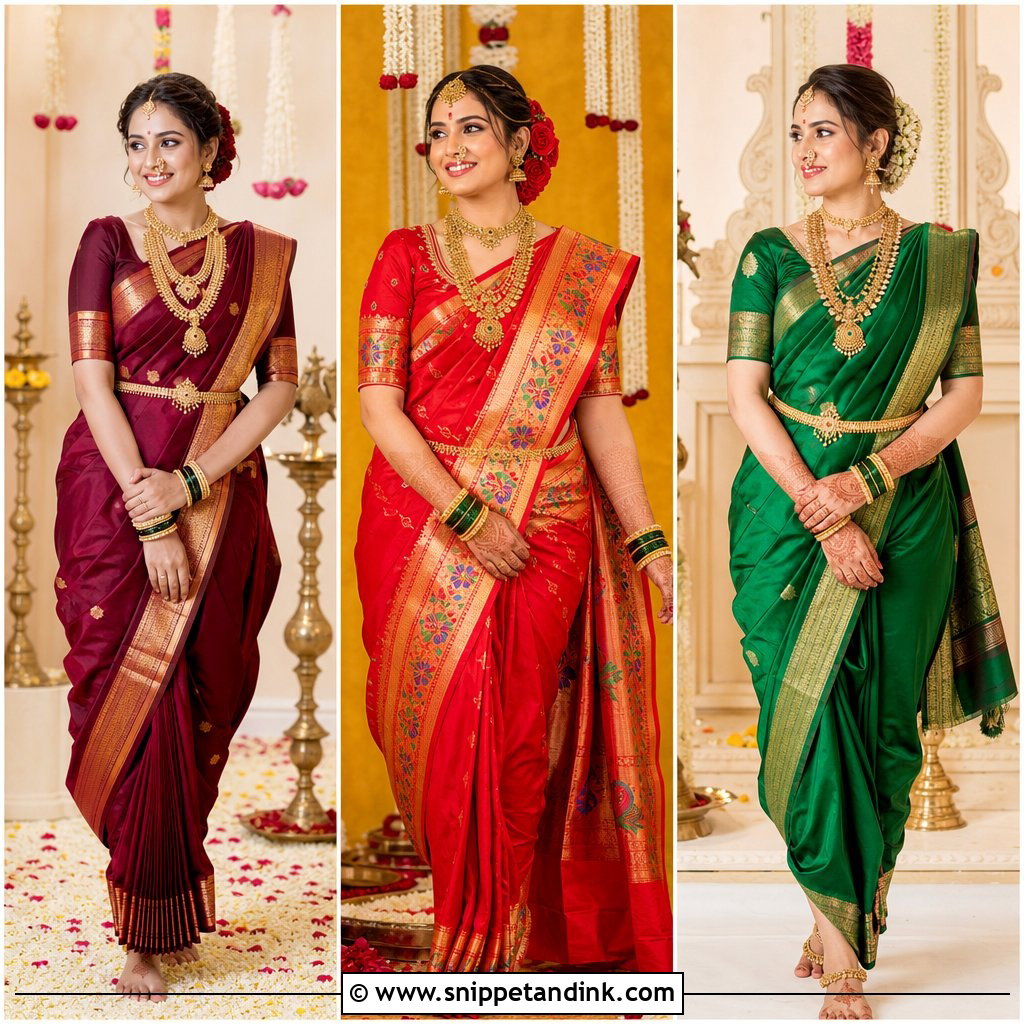
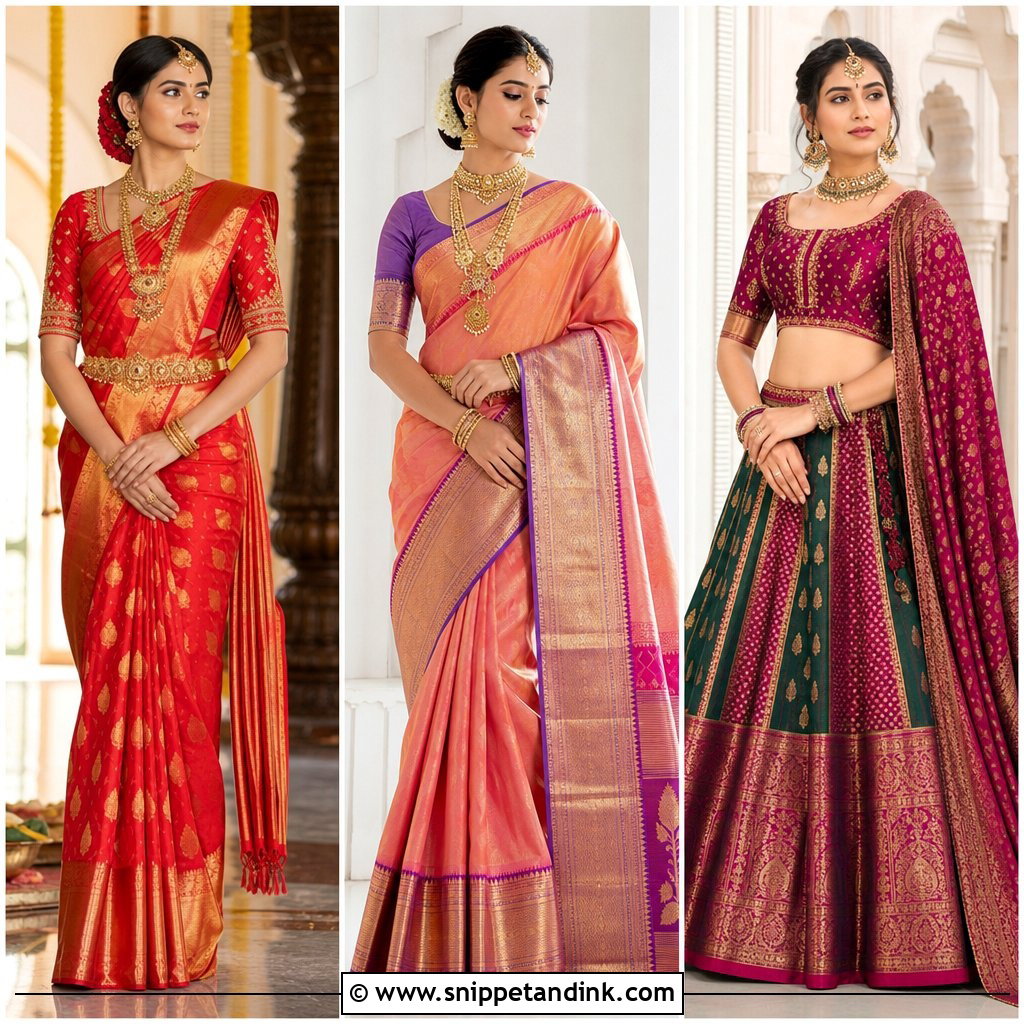
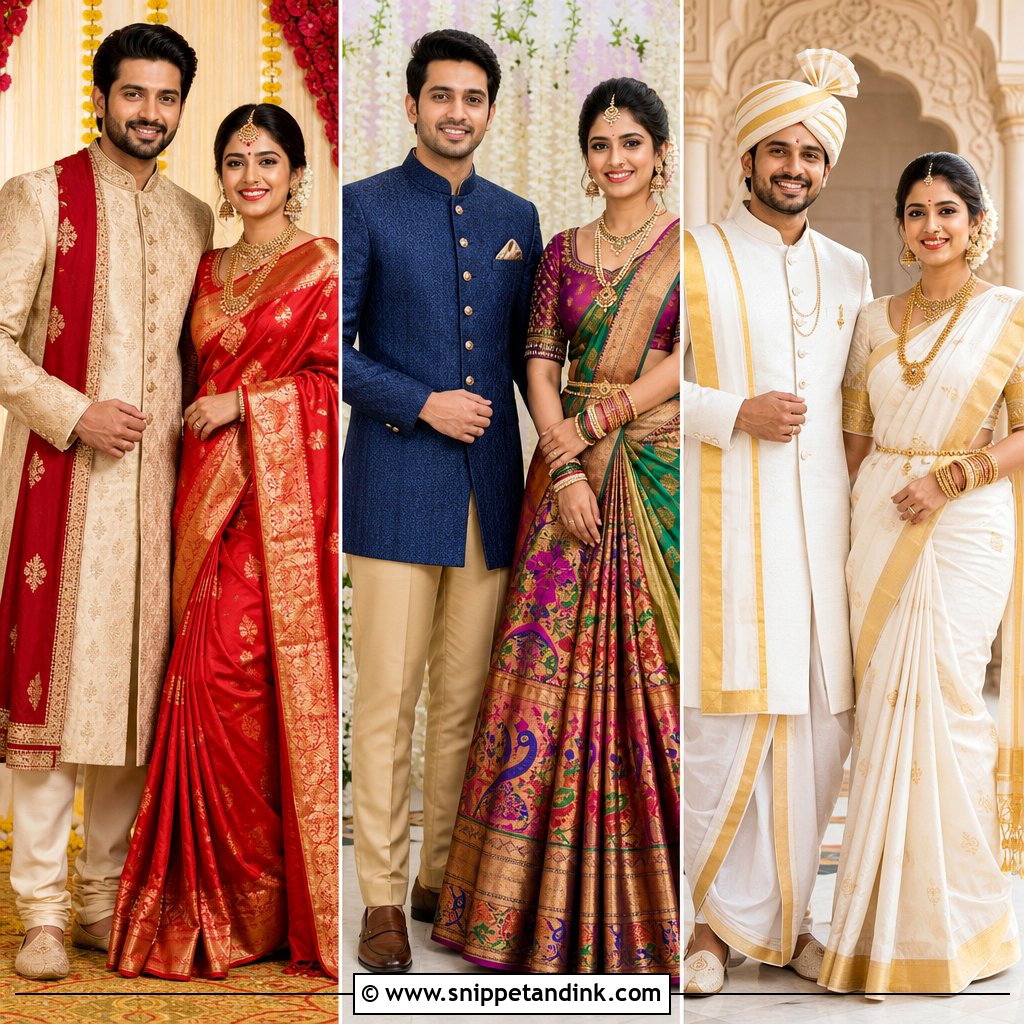
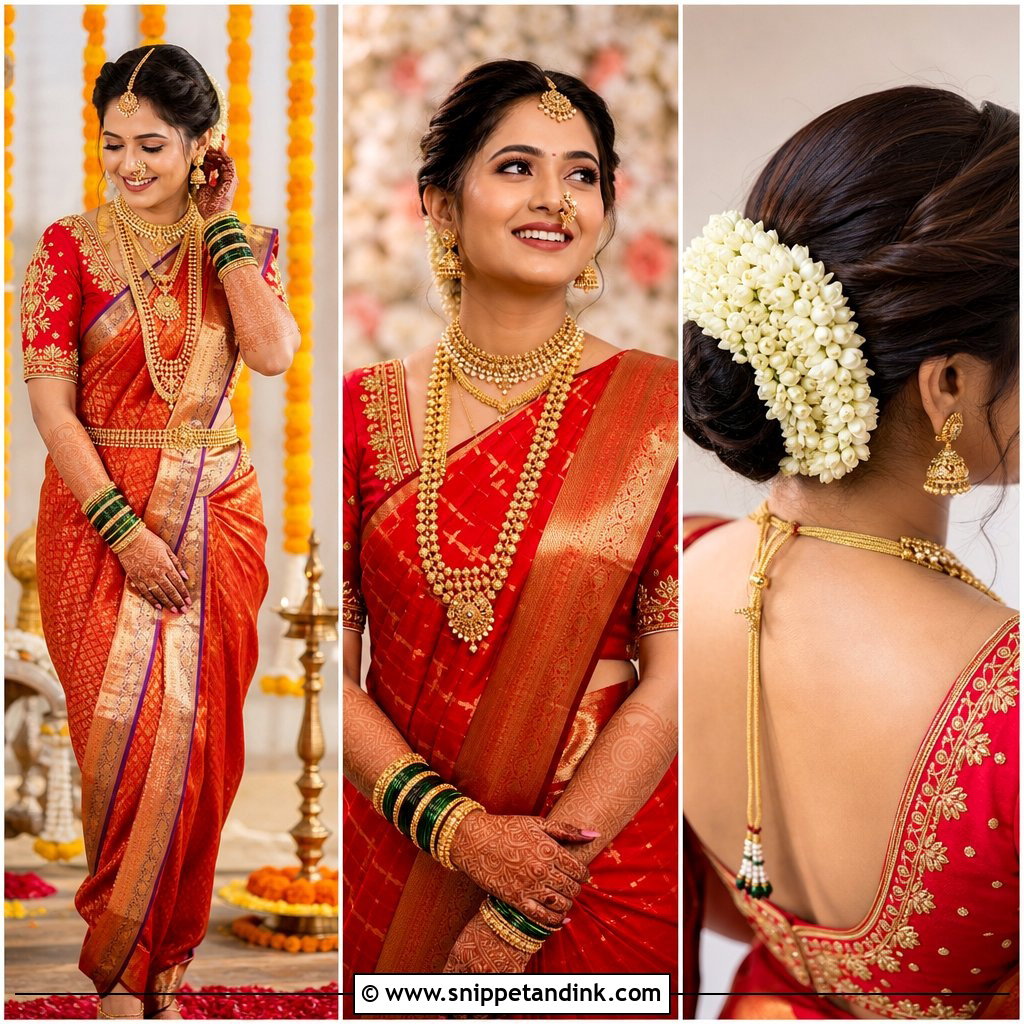
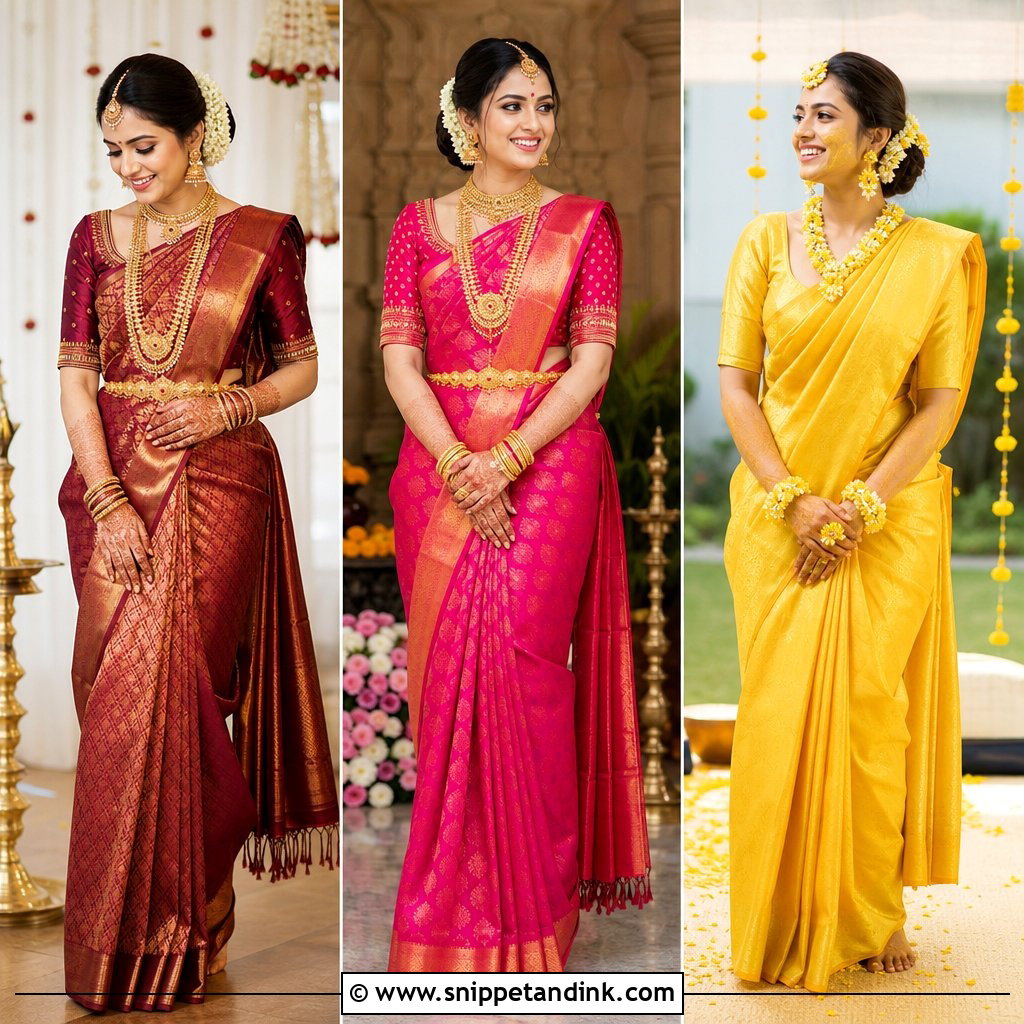
For the muhurtham itself, nothing in South Indian dressing carries the weight of a bridal Kanjeevaram. Red, maroon, mustard and temple green are the usual picks, and the wide zari border is what the camera reads from across the mandapam. I build the rest around the border: a fitted silk blouse, temple jewelry, a waist belt (oddiyanam) that sits on the pleats rather than above them, layered necklaces, jhumkas and anklets. A sleek bun wrapped in jasmine keeps the neck clear for the thali. Under the saree, I’d pick gold heels with a low block, because you will stand, sit cross-legged and stand again many times. Keep makeup defined, with kohl-lined eyes and a lip pulled from the body colour of the saree, not the border.
2. Red Silk Saree Wedding Outfit
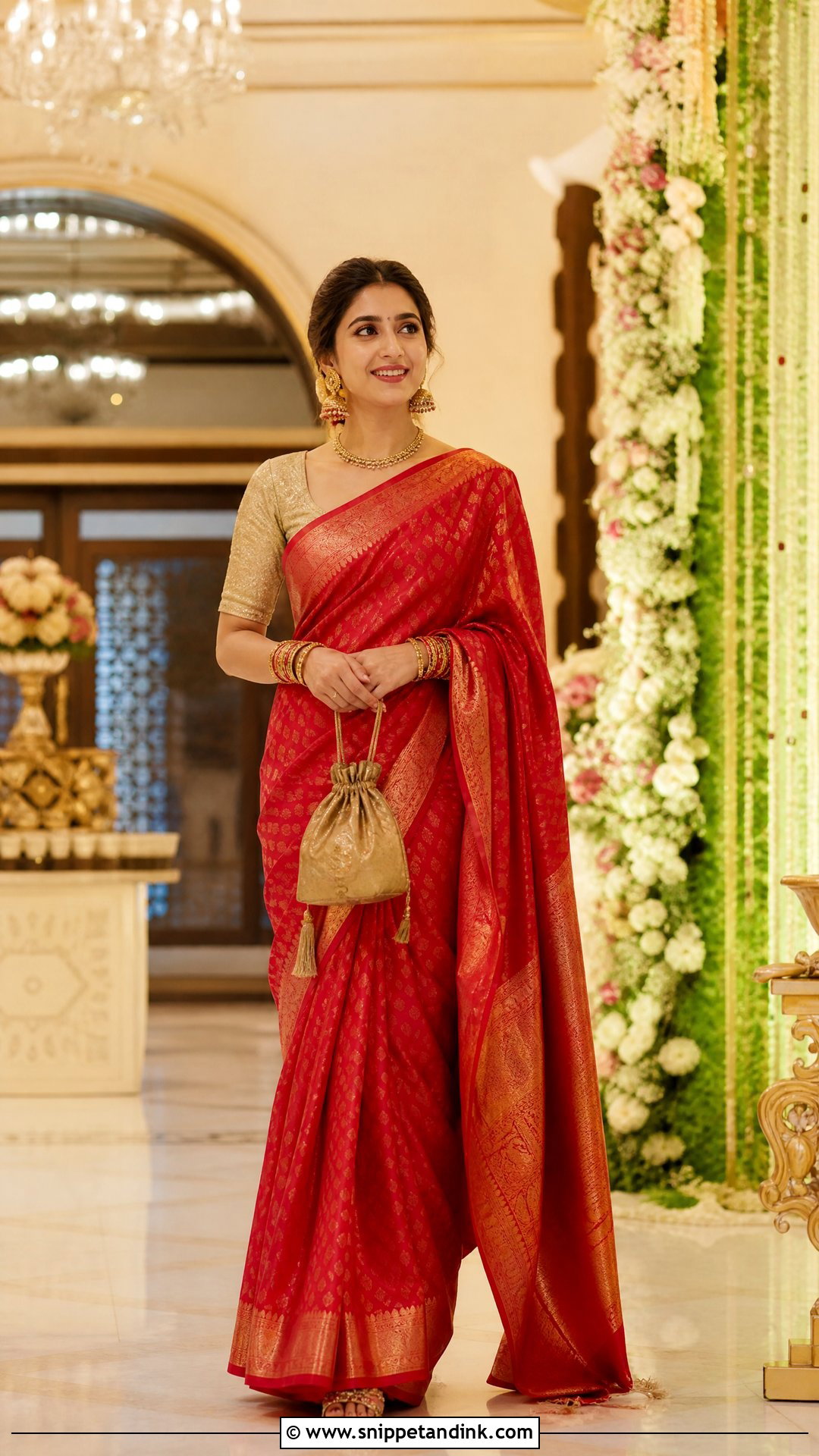
Red silk is not reserved for the bride at most South Indian weddings, but the amount of gold on it should drop as your role does. A bride can carry heavy zari across the whole body. As a guest, I’d look for a red silk with a slimmer border and plainer pallu, so you read as festive rather than as a second bride in the family photo. A gold blouse, antique jewelry and a small potli bag are enough. If the red feels loud on your skin, matte makeup and a warm gold lid calm it down far better than switching to a pale lip.
3. Green Pattu Saree Wedding Outfit
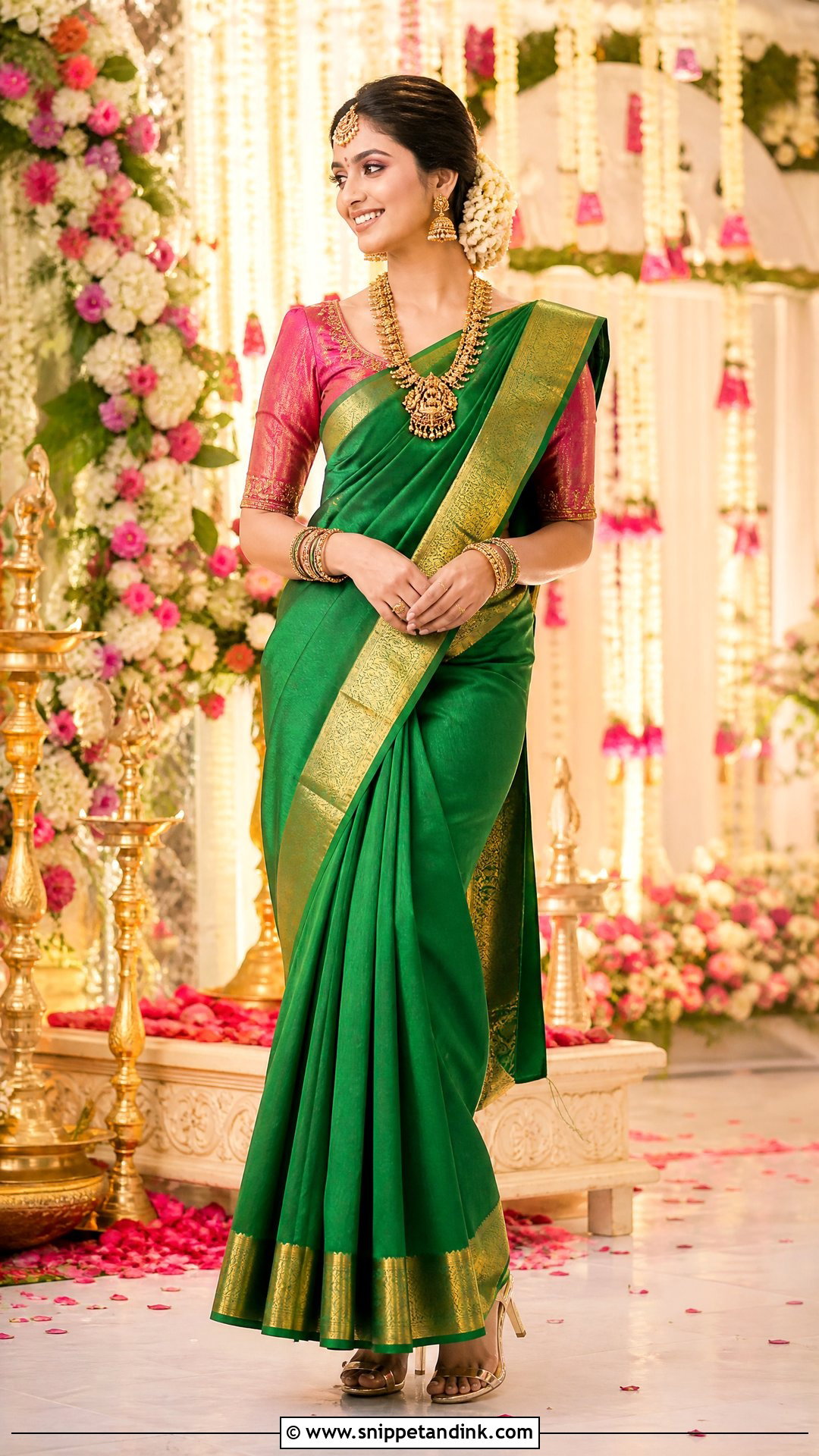
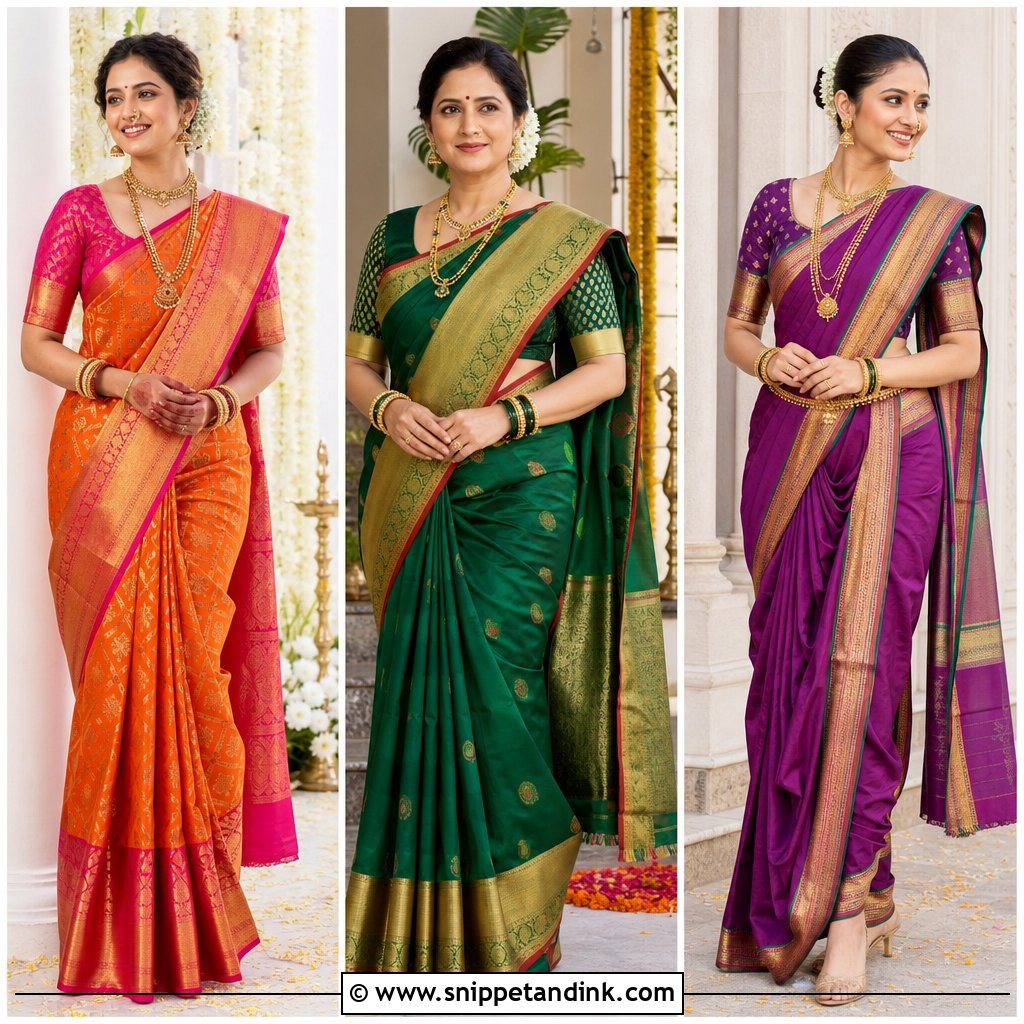
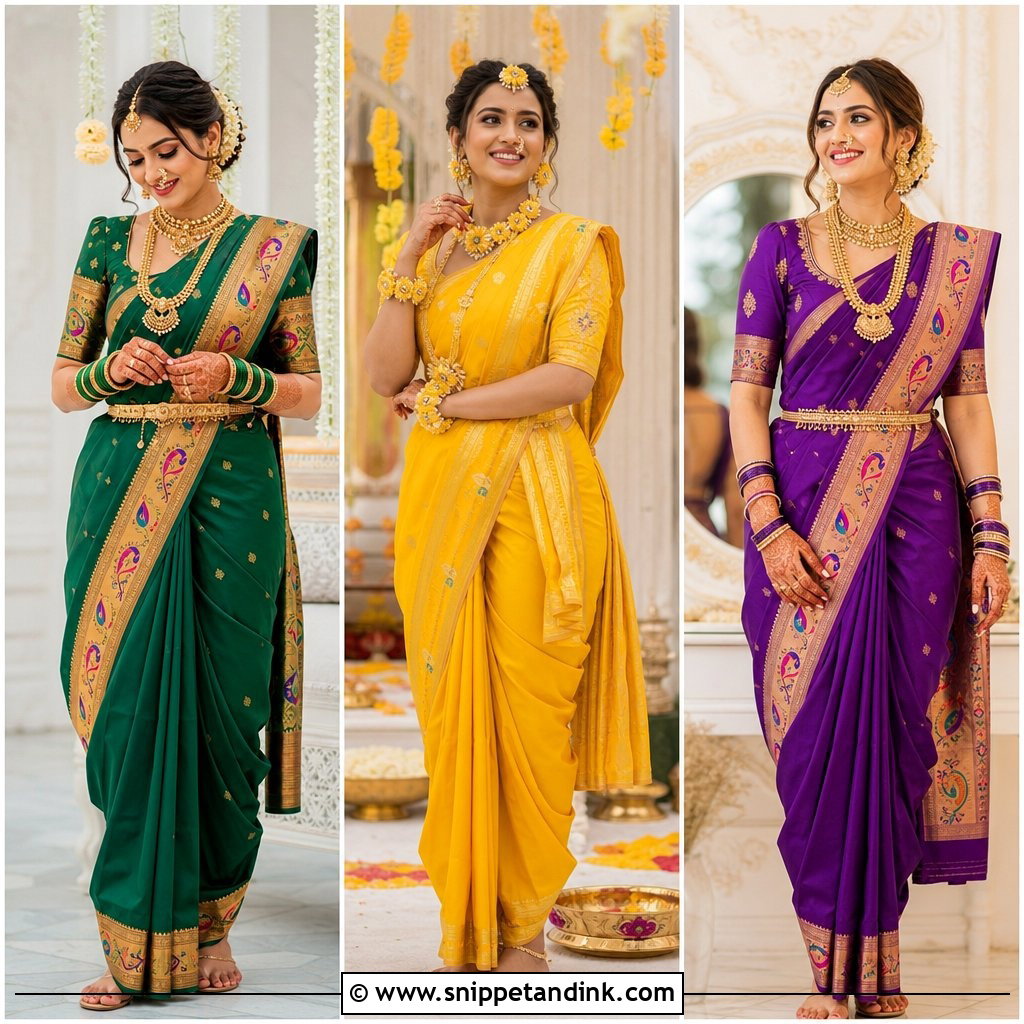
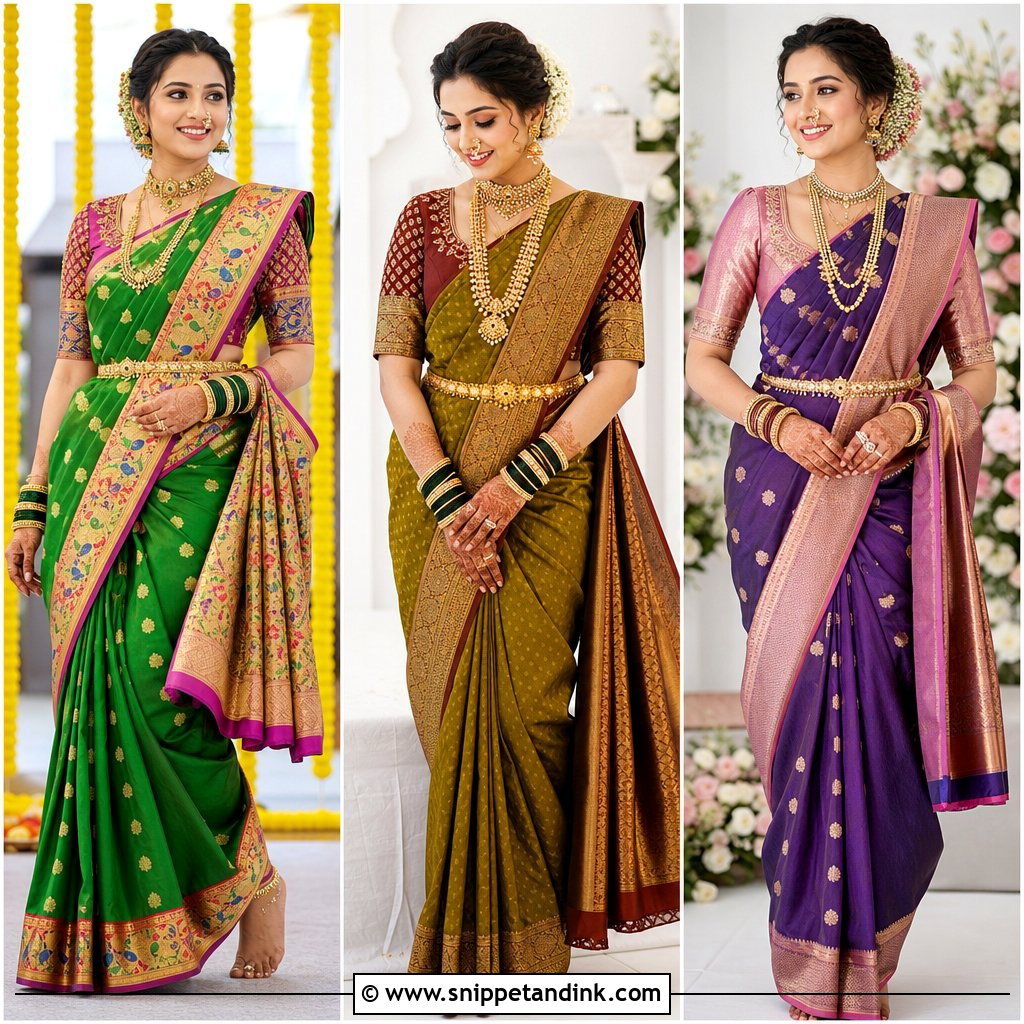
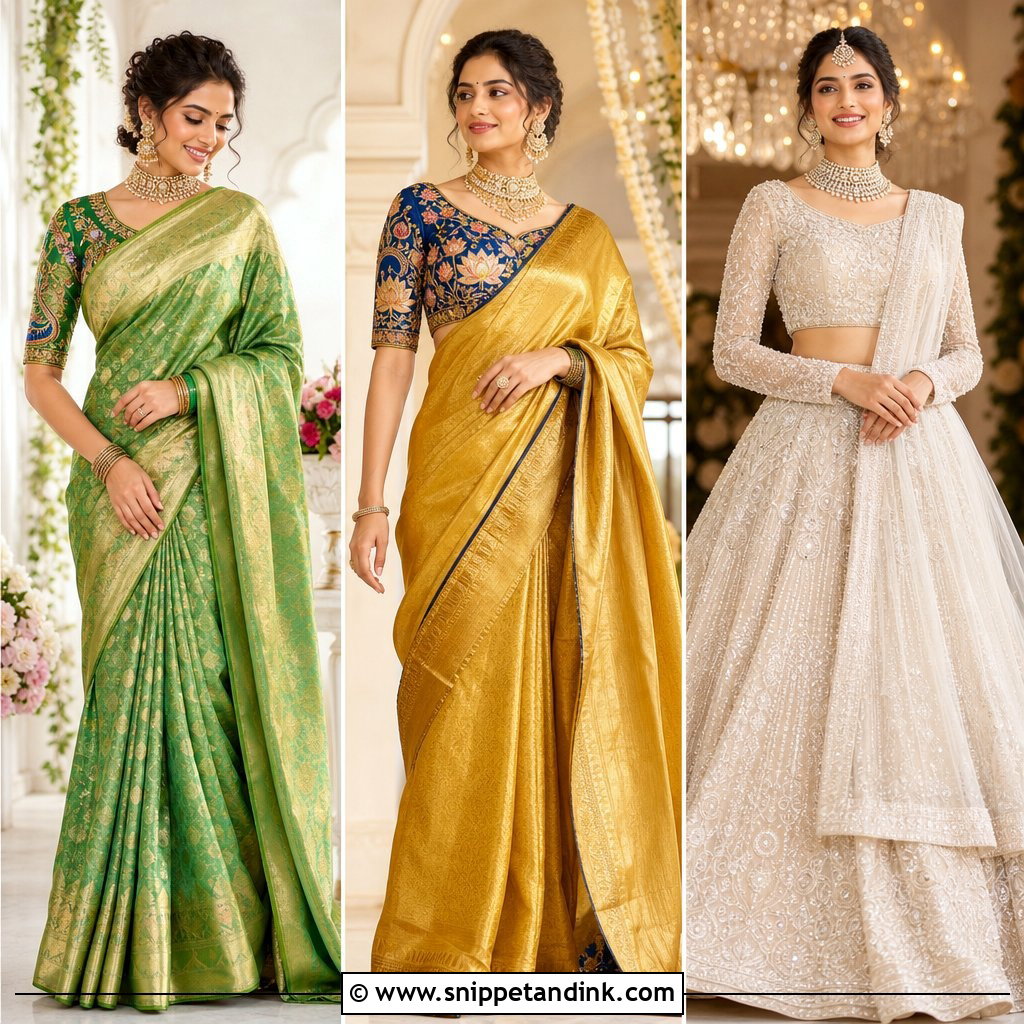
Green pattu sits in that useful space between rich and fresh. Emerald and bottle green look deeper and more formal; parrot and leaf green feel younger and suit daytime rituals. The traditional move is a contrast blouse in pink, orange or purple, and it matters more than people think, because the blouse is what frames the face in close-ups. Temple jewelry, glass bangles, a gold waist belt and a flowered braid finish it. Silk this heavy pulls on the shoulder pin over a long ceremony, so I always put sisters and close family in block heels and check the pallu pin twice before the rituals start.
4. White And Gold Kasavu Saree Outfit
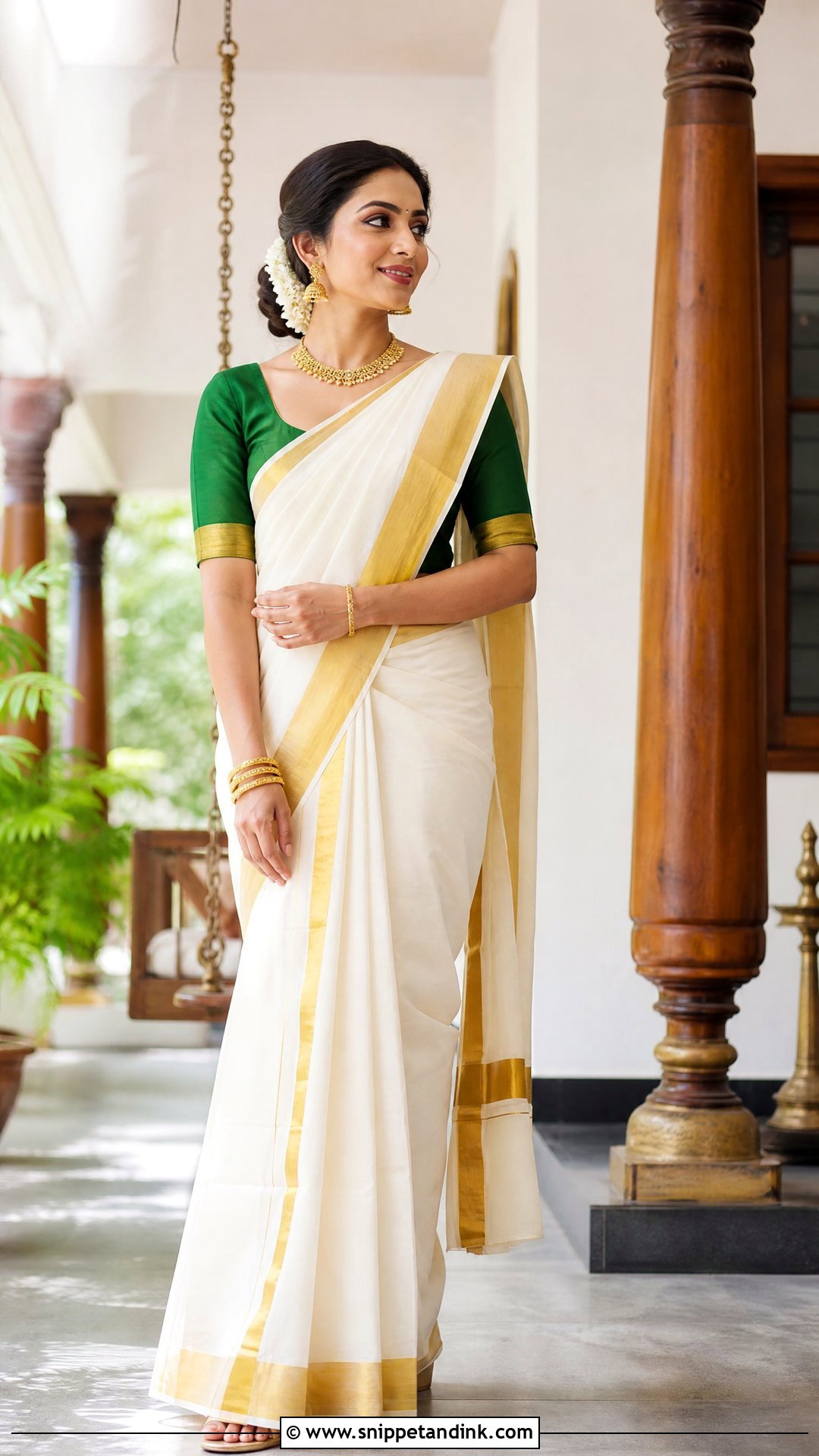
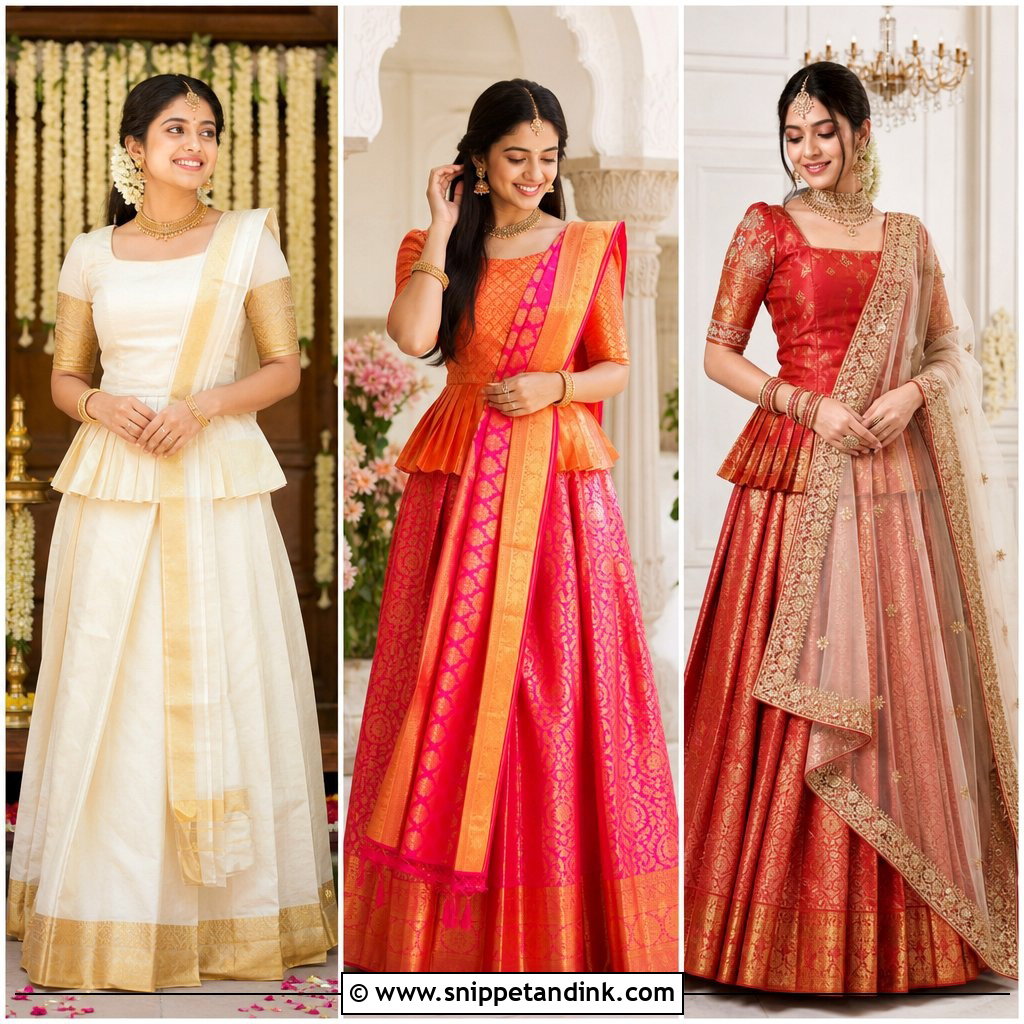
The white and gold Kasavu has its roots in Kerala, and it is the one saree here where restraint is the whole point. It suits Kerala-inspired wedding dressing, pre-wedding ceremonies and daytime family events. Off-white handloom cotton creases quickly and shows sweat marks under the arm, so I steam it the morning of and choose a blouse in green, maroon or gold to carry the colour. Gold jewelry only, kept short: a small necklace, jhumkas, bangles and a neat bindi. A low bun with jasmine and nude sandals finish it. For a guest who wants tradition without the weight of silk, this is the saree I suggest first.
5. Half Saree Wedding Outfit
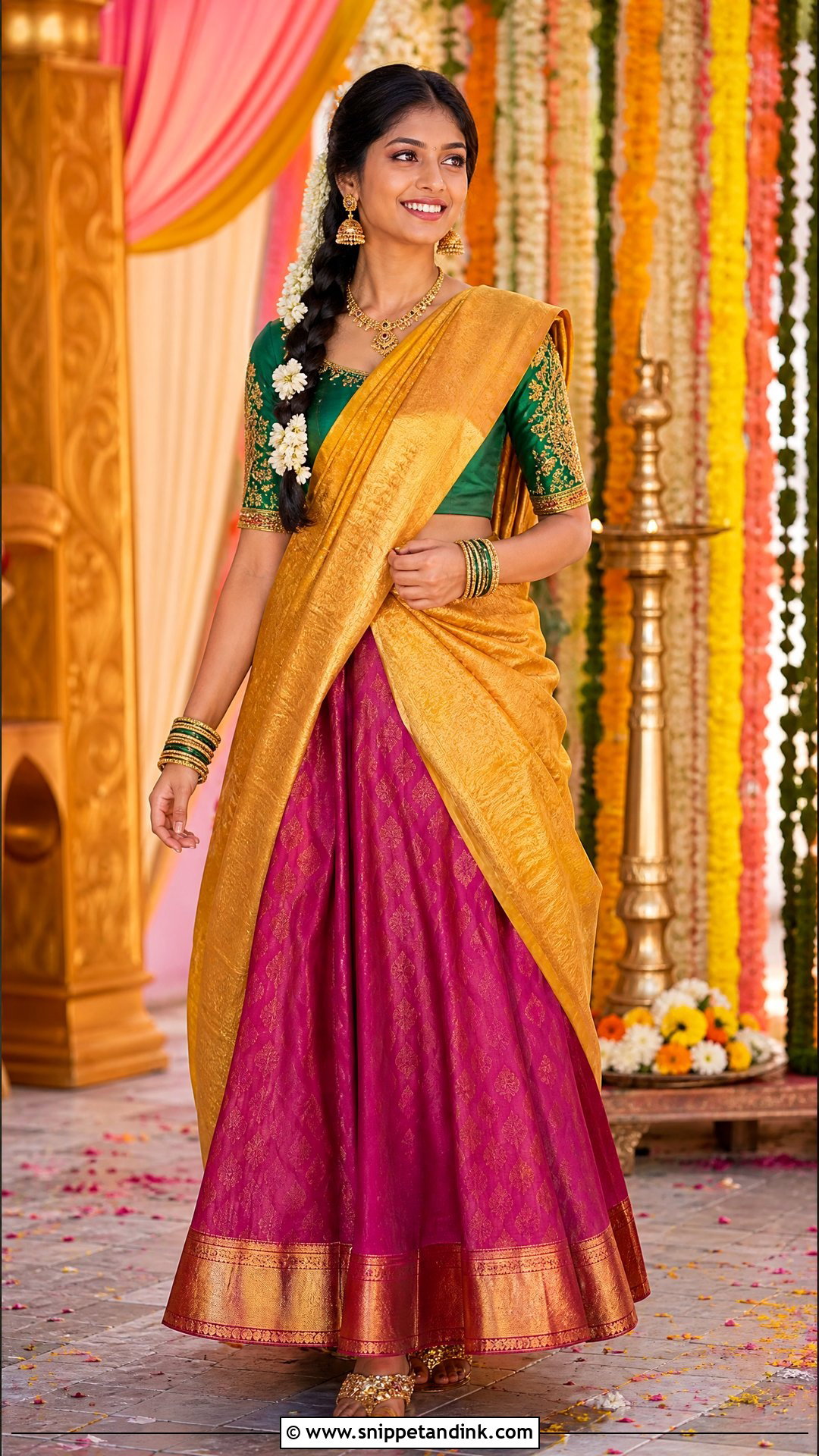
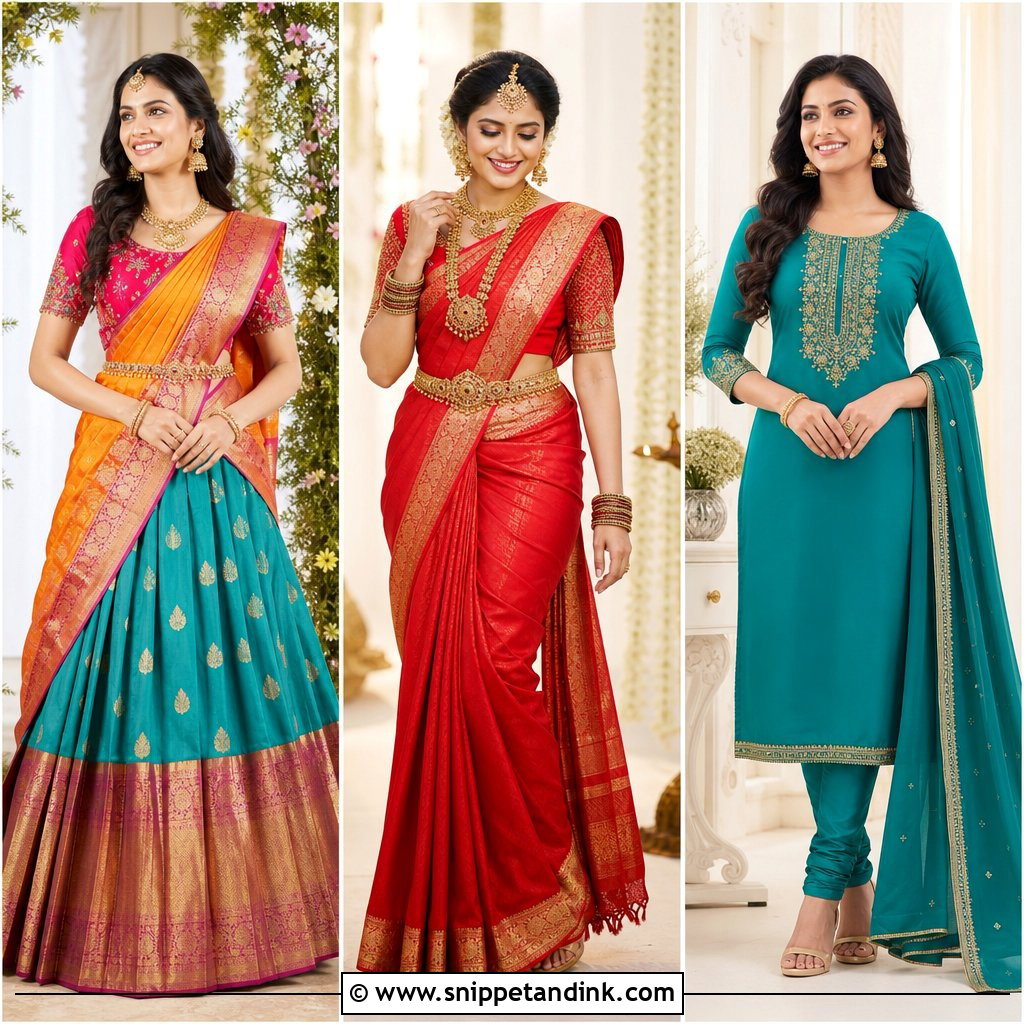
Also called langa voni, pavadai dhavani, or langa davani, the half saree is a skirt, a blouse and a draped dupatta, and it is the outfit I reach for when dressing younger sisters and bridesmaids. The skirt does the work, so pick silk or brocade with a proper border at the hem. The dupatta is where it goes wrong: unpinned, it slides off the shoulder every time she bends. I pin it at the shoulder and again at the waist on the left. A long flowered braid suits it, and jewel tones like magenta, royal blue and purple hold up well next to heavier bridal silks.
6. Lehenga Saree Wedding Outfit
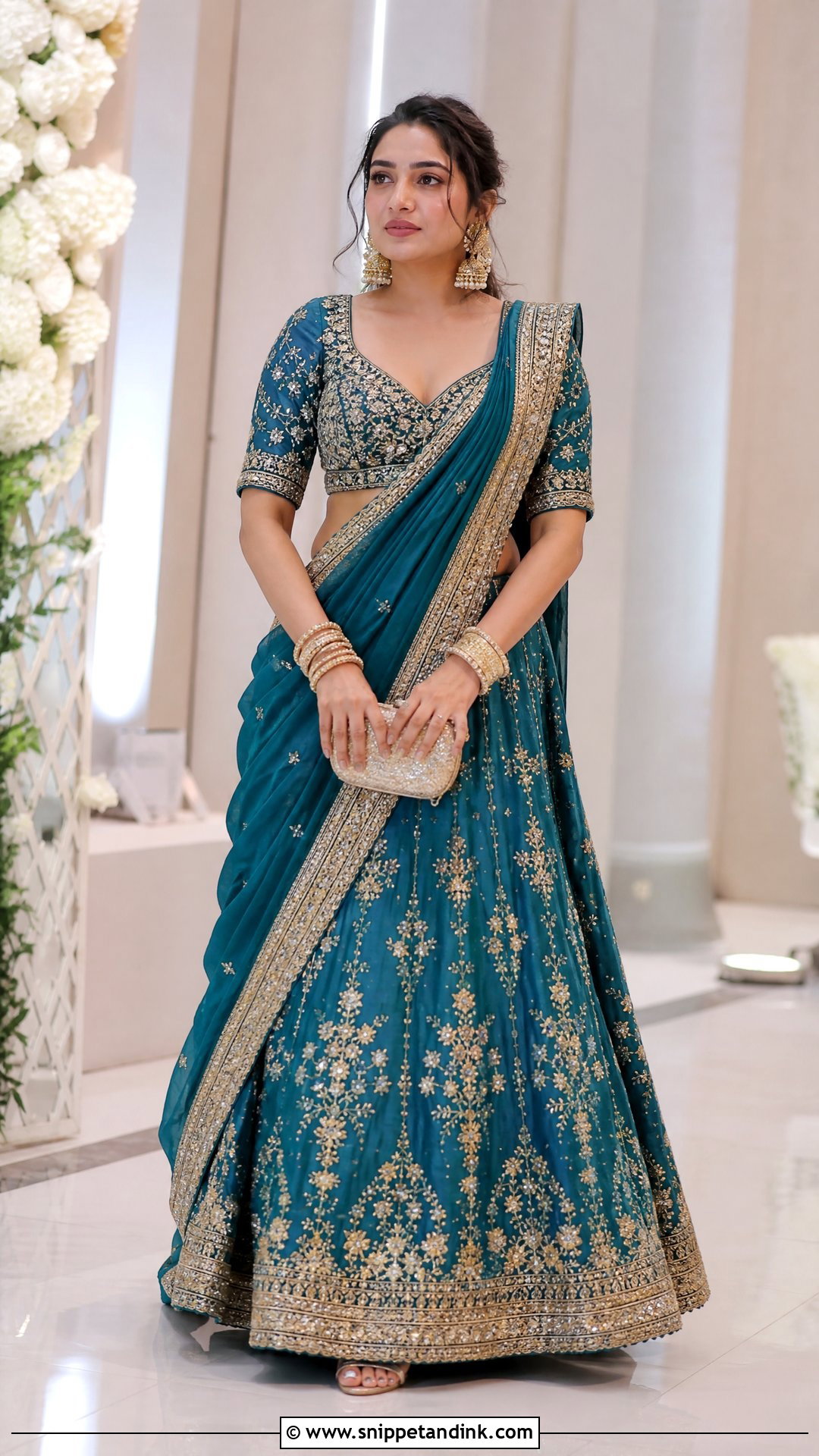
A lehenga saree gives you the line of a saree with the structure of a skirt and a pre-draped or stitched pallu. I like it for anyone who has never managed six yards of pleats on their own, since there is nothing to come loose. Silk, brocade or lightweight embroidered fabric all fit a South Indian setting; a gold-bordered pallu keeps the regional feel. Temple earrings, bangles and a maang tikka are plenty. One thing to check at the fitting: the pallu should be stitched at the shoulder seam, not just tacked, or it twists by the second hour. It suits receptions and guest dressing more than the main rituals.
7. Silk Lehenga Wedding Outfit
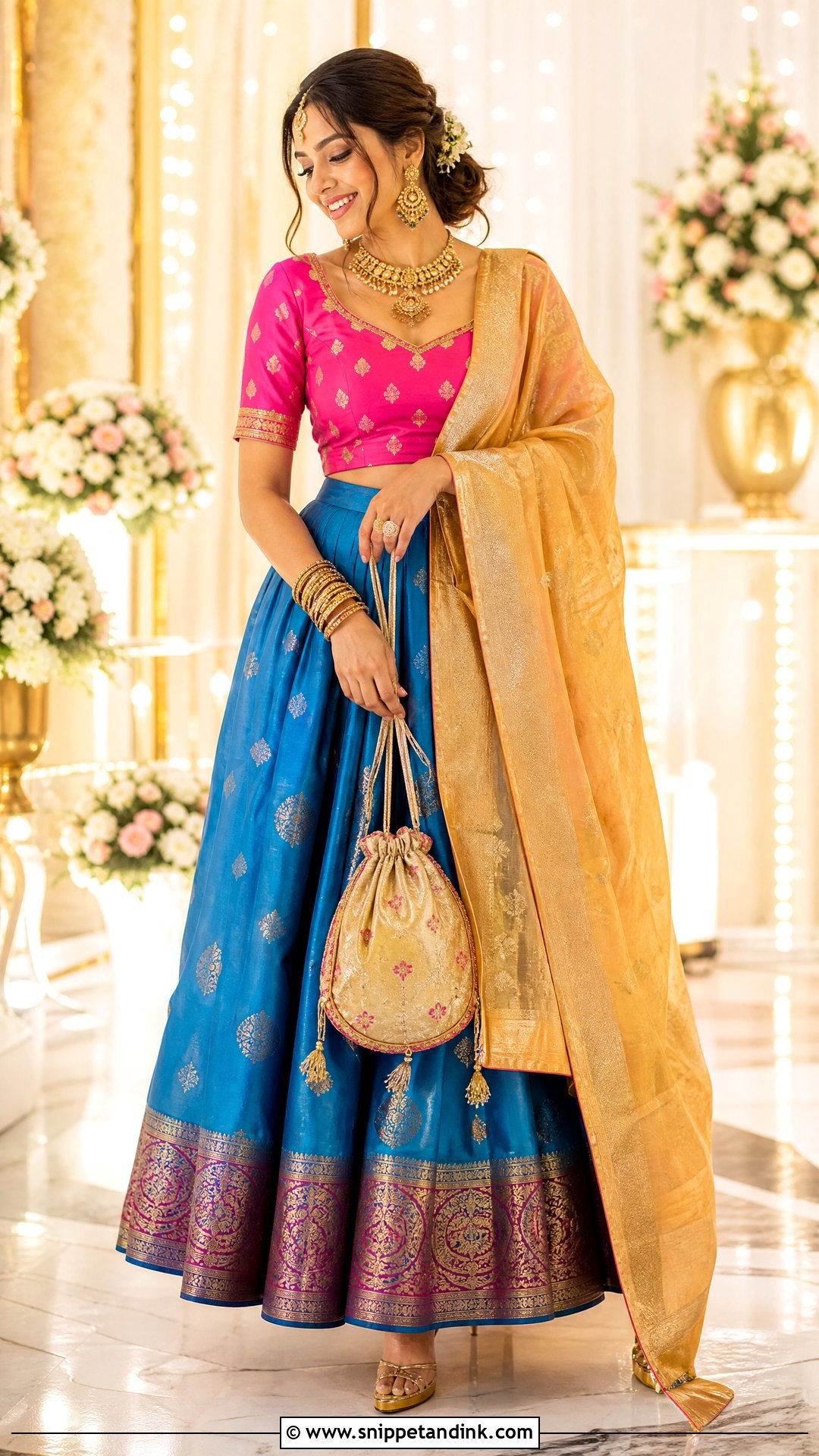
Not every guest wants a saree, and a silk lehenga is the most comfortable way out. A flared skirt with woven borders, a matching or contrast blouse and a dupatta over one shoulder looks festive in peacock blue, rani pink, turmeric yellow or deep purple. Gold jewelry, bangles, heeled sandals and a silk potli keep it traditional. Where the family is conservative or the ceremony is in a temple, I’d keep the blouse back modest and the sleeves at least to the elbow. Silk lehengas are easy to sit cross-legged in, which matters more than it sounds on a long morning.
8. Temple Jewelry Saree Outfit
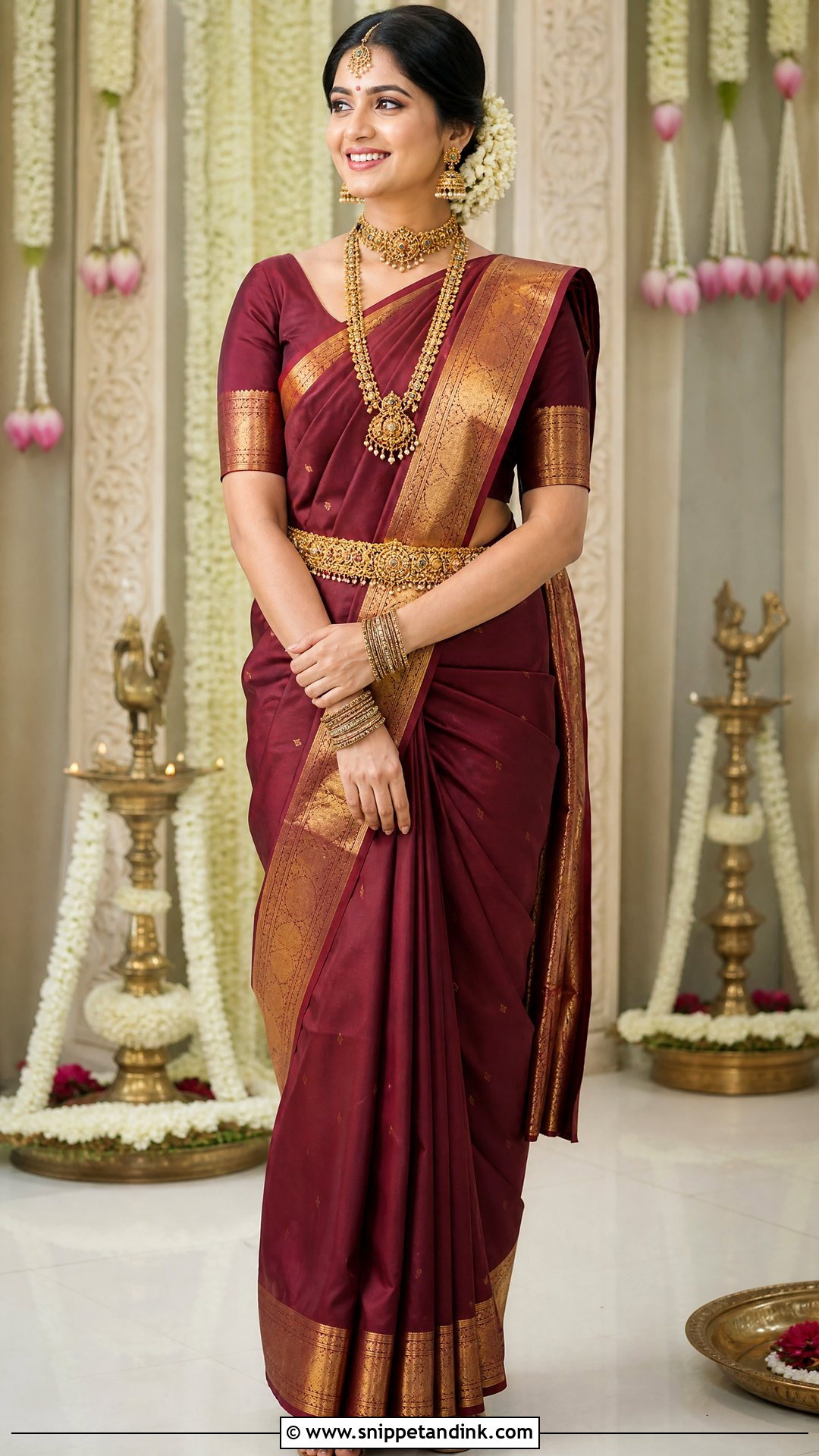
When the jewelry is the point, the saree has to step back. Start with a solid silk in maroon, green, rust or navy, then layer antique temple pieces: a choker, a long haram, jhumkas, bangles and a waist belt. Temple gold is heavy, and a long haram drags the pallu down with it, so I pin the pallu under the necklace rather than over it. Elbow-length sleeves balance all that metal. A jasmine bun, a small bindi, neat pleats and polished makeup are all it needs. Mothers and aunts often wear this better than brides, because they are carrying family pieces they already know how to wear.
9. Gold Tissue Saree Wedding Outfit
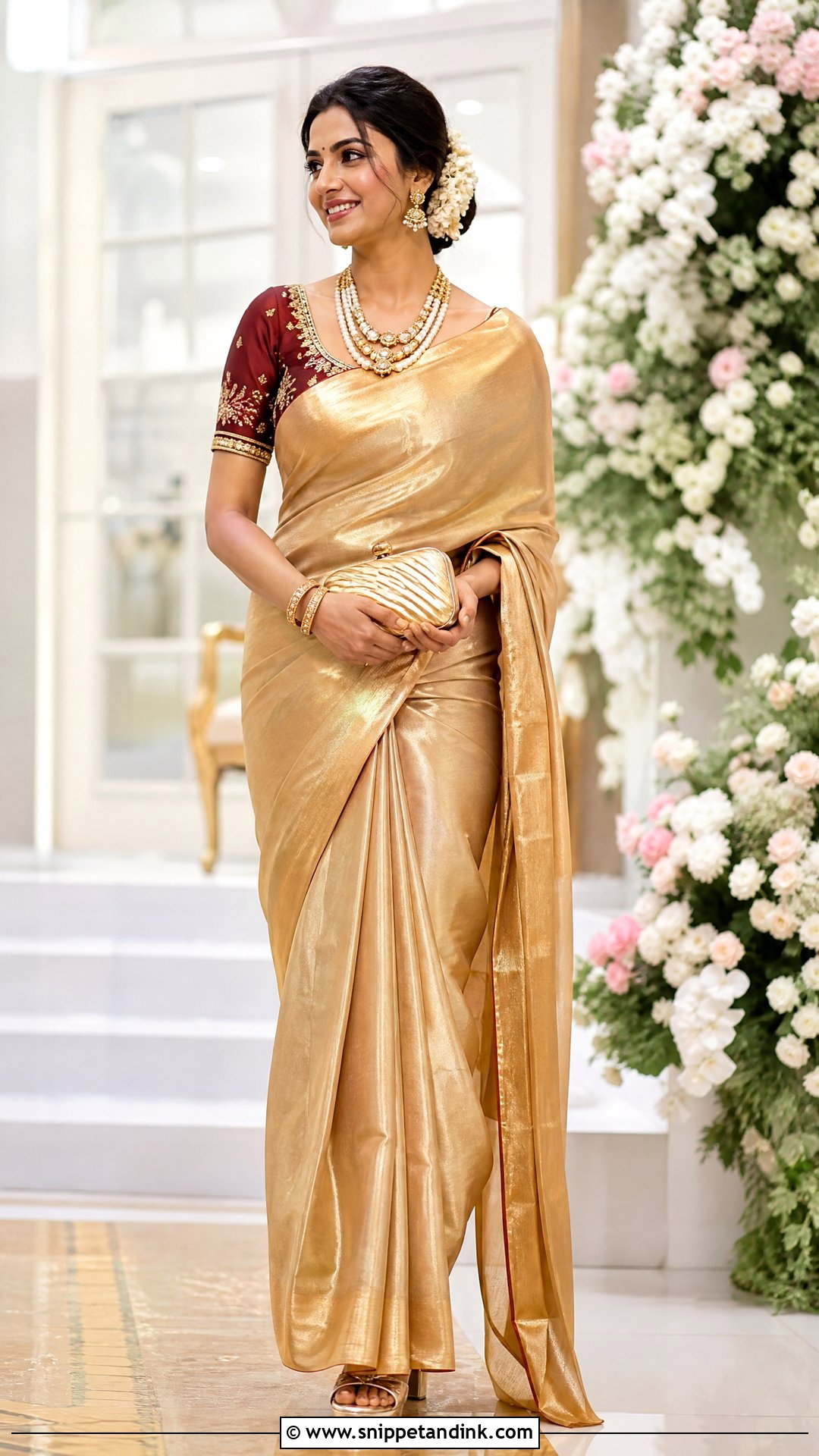
Tissue silk is woven with metallic yarn, which gives it that soft glow without the weight of a full Kanjeevaram. I suggest it for receptions, engagements and daytime functions. Match the blouse for a monochrome gold look, or go maroon, emerald or deep pink if you want contrast. Pearl or antique gold jewelry, a structured clutch and metallic sandals suit it. The catch: tissue creases sharply and the folds catch the light, so it needs steaming right before you dress and careful sitting. A soft bun, flowers or loose waves can all work, with glowy skin and a neutral lip.
10. Pastel Silk Saree Wedding Outfit
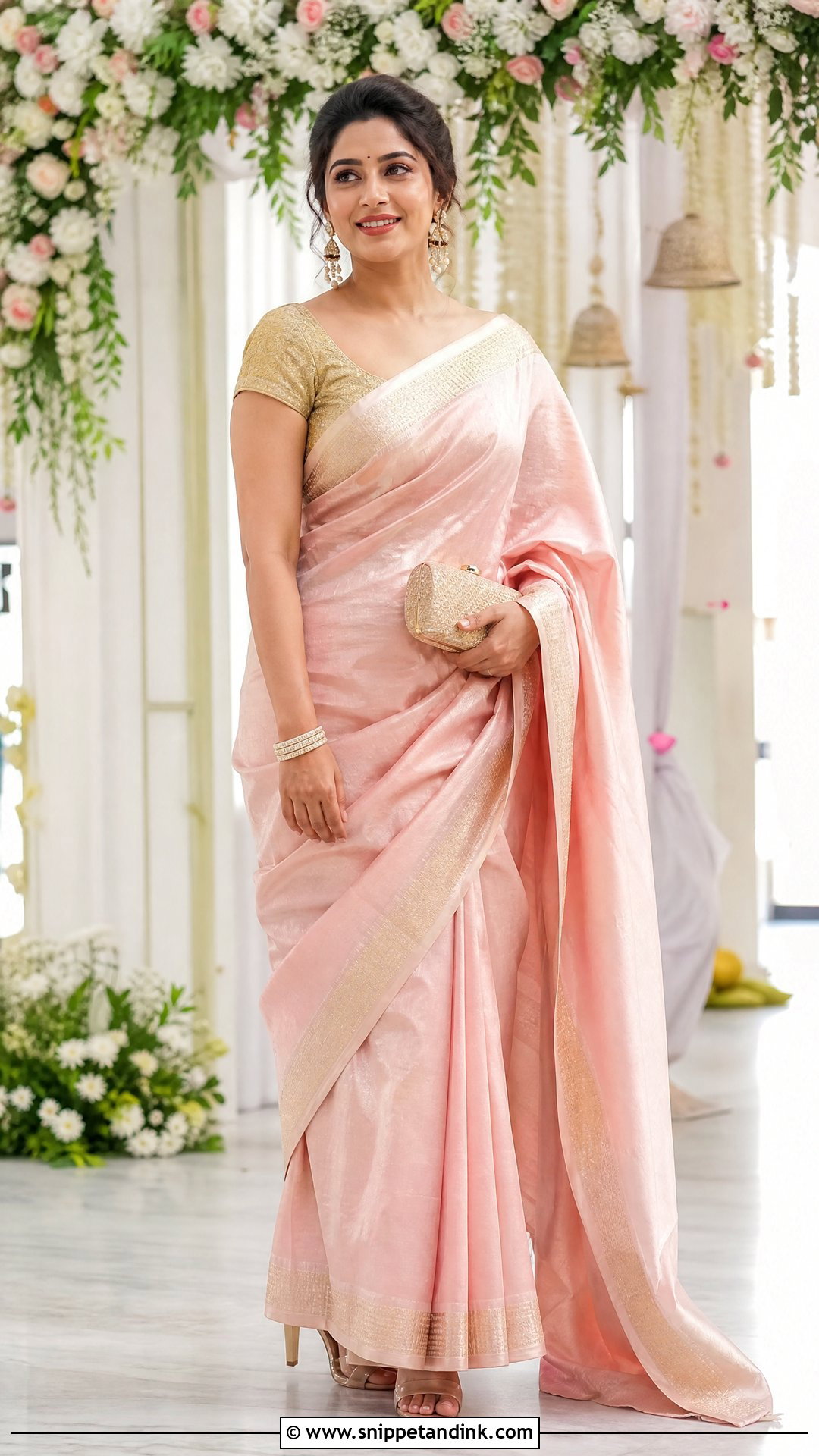
Pastel silks are a good answer for daytime guests and bridesmaids who don’t want to compete with the bridal reds. Blush, mint, powder blue, lavender and champagne still read as festive in silk, as long as the border has gold or silver zari; without it, pastels can look too plain beside heavy Kanjeevarams. I’d pair a fitted blouse with pearls or light temple jewelry, bangles and a small clutch. Under strong outdoor light, very pale shades can wash out, so I check the colour against the guest’s skin in daylight before committing. A bun, braid or soft waves all suit it.
11. Orange Kanjeevaram Saree Outfit
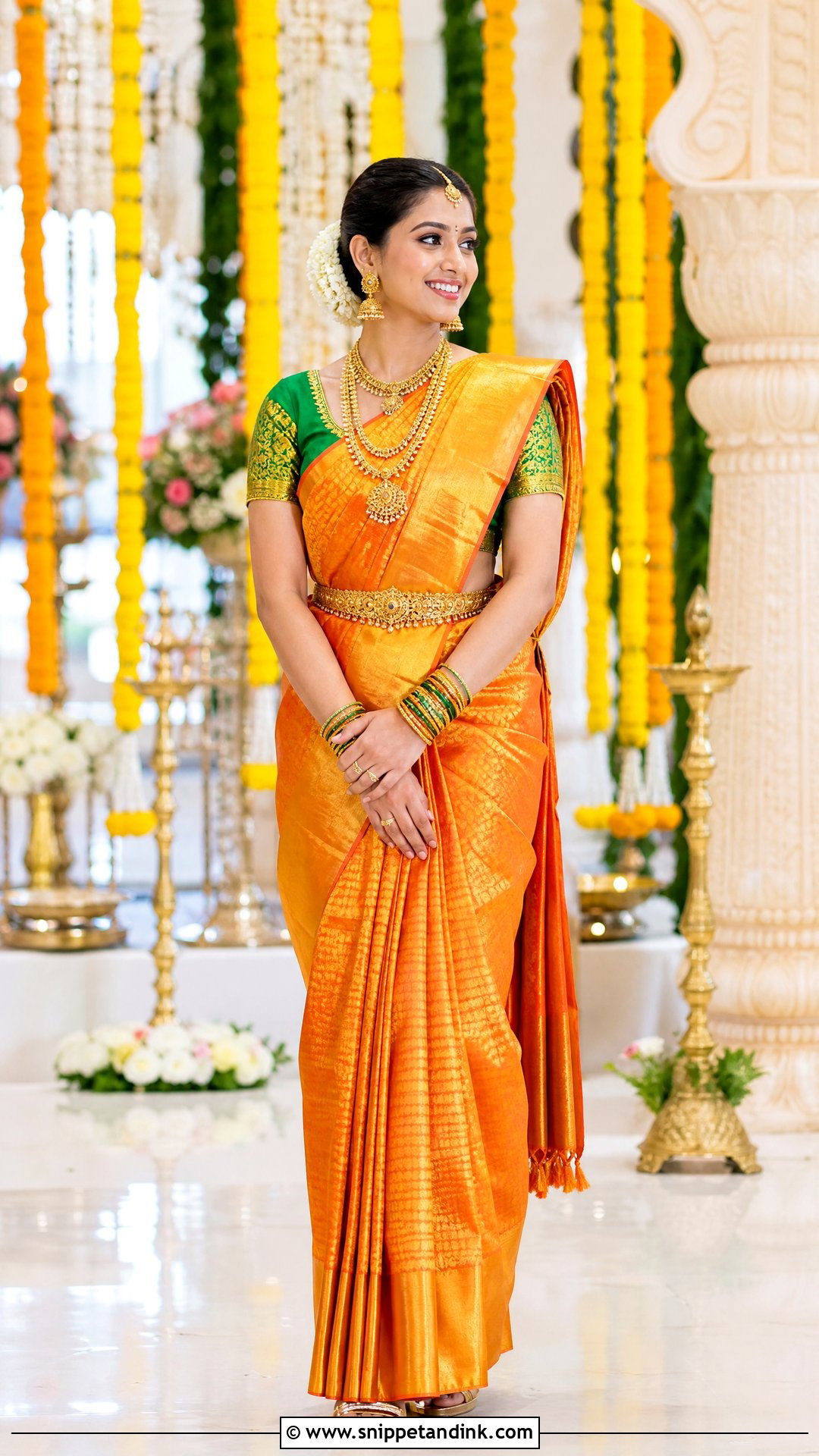
Orange sits naturally in South Indian ceremonies, from kumkum orange to coral, mango and burnt orange, especially with gold zari. The contrast blouse is traditional here too: green, red, pink or gold. I add layered gold jewelry, bangles, a waist belt and a jasmine bun for a ceremonial finish. Brides often wear orange for pre-wedding rituals, and close family wear it to the main wedding. Orange is warm enough that cool, pink-toned makeup clashes with it, so I keep the eyes bronze, the brows defined and the lip in the same warm family as the saree. Gold sandals and a silk potli are enough.
12. Pink Silk Saree Wedding Outfit
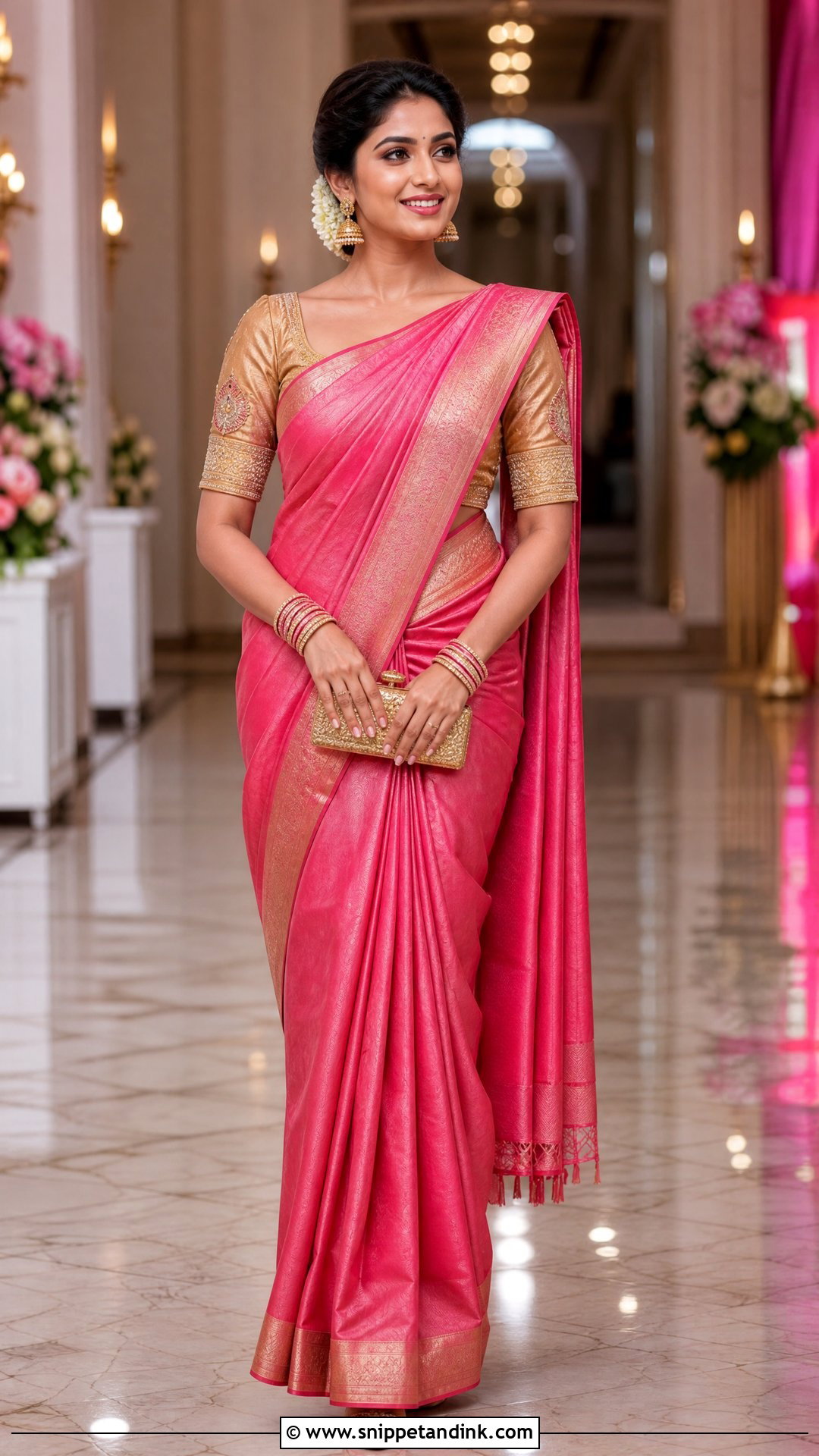
Pink is the easiest silk to dress up or down by role. Bridesmaids can go bright rani pink; guests usually look better in rose, blush or dusty pink. A bride in pink makes it grand with heavy zari, layered jewelry and a waist belt. The blouse choice changes everything: gold reads classic, green reads traditional contrast, and a deeper pink reads modern. Jhumkas, bangles, a floral bun, a small gold clutch and comfortable heels keep it practical. Hot pink silk reflects colour onto the skin in close portraits, so I go a touch lighter on blush than usual.
13. Blue Silk Saree Wedding Outfit
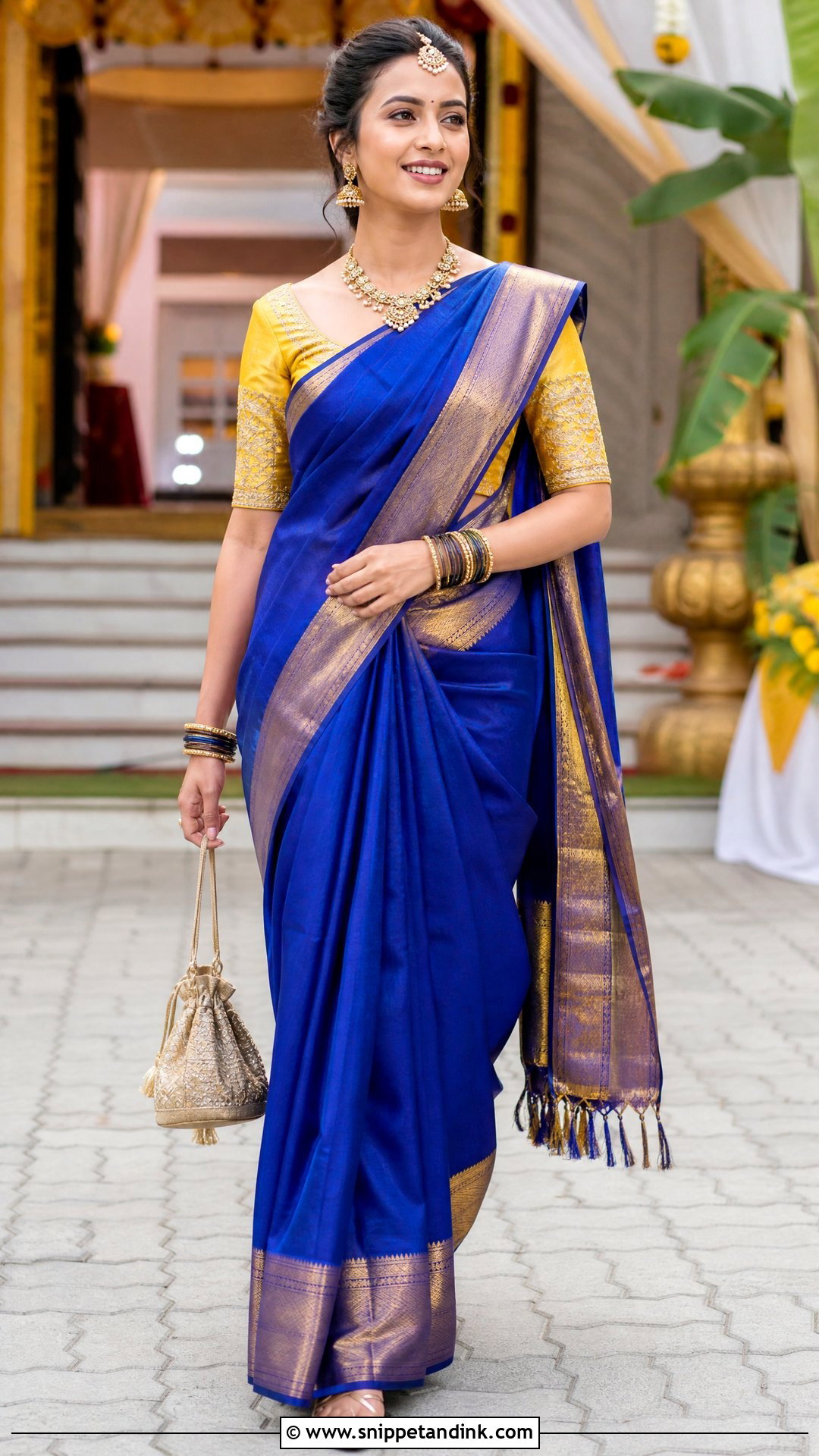
Blue silk is a smart move for guests, sisters, and bridesmaids who want colour without the usual red or green. Royal blue, peacock, navy and teal all hold gold zari well. The classic pairing is a contrast blouse in pink, gold, yellow or green. Antique jewelry, bangles and metallic sandals balance it, and a low jasmine bun or decorated braid finishes it. Navy can look almost black indoors under tungsten light, which some families avoid at weddings, so I lean toward peacock or royal blue for evening events. Keep makeup clean and slightly warm.
14. Yellow Haldi Saree Outfit
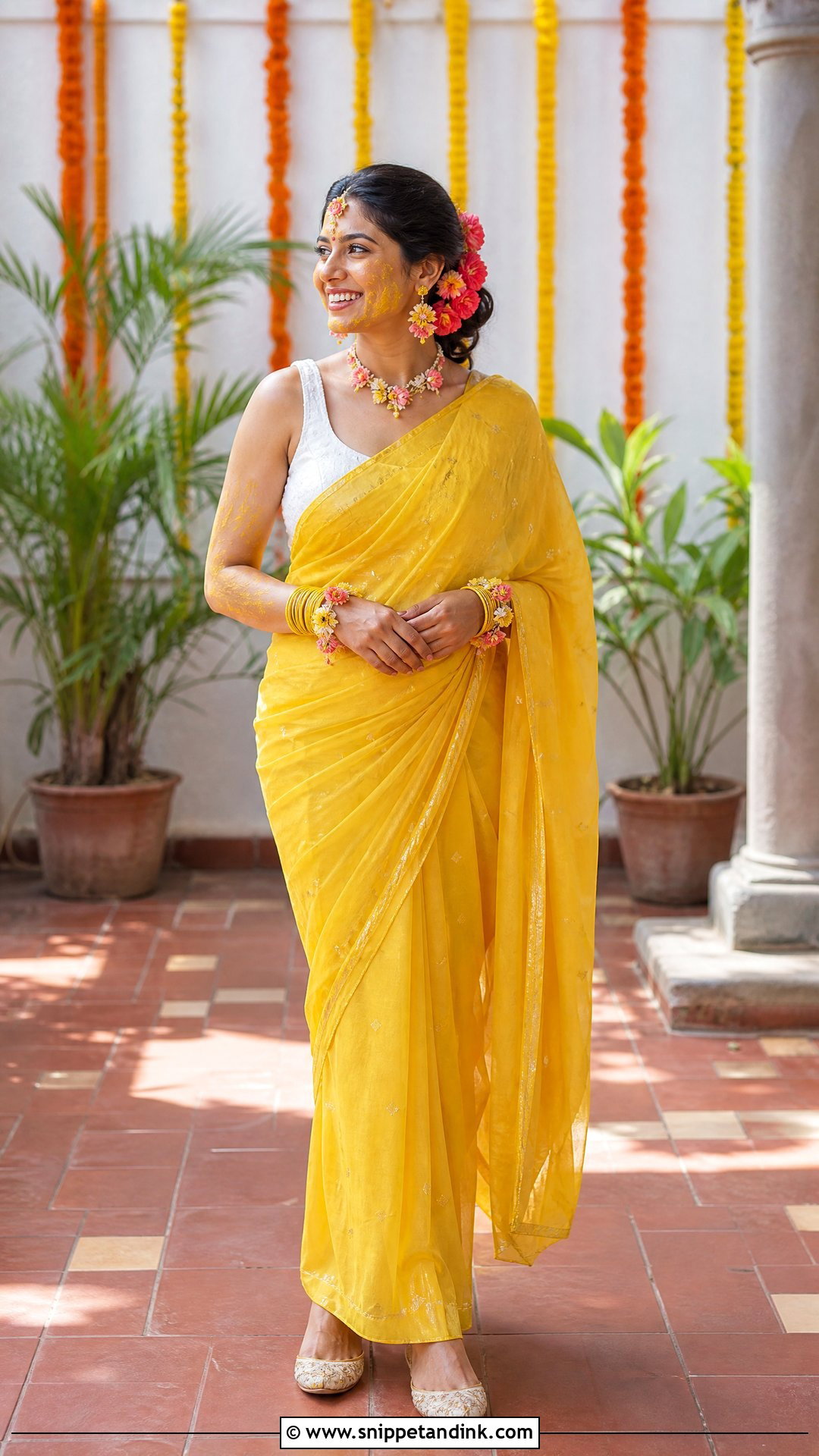
Turmeric gets everywhere at a haldi, so I treat the yellow haldi saree outfit as something that may not come out clean. Lightweight silk, cotton silk, organza or georgette in turmeric, mustard or lemon all work. A simple blouse in white, green, pink or gold, floral jewelry, fresh flowers and flat sandals keep you ready to sit on the floor and get messy. Skip anything delicate, embroidered or hard to wash, and avoid real zari, since turmeric stains in metallic threads rarely lift. Pin the drape firmly and wear a braid or low bun with flowers.
15. Reception Saree Gown Outfit
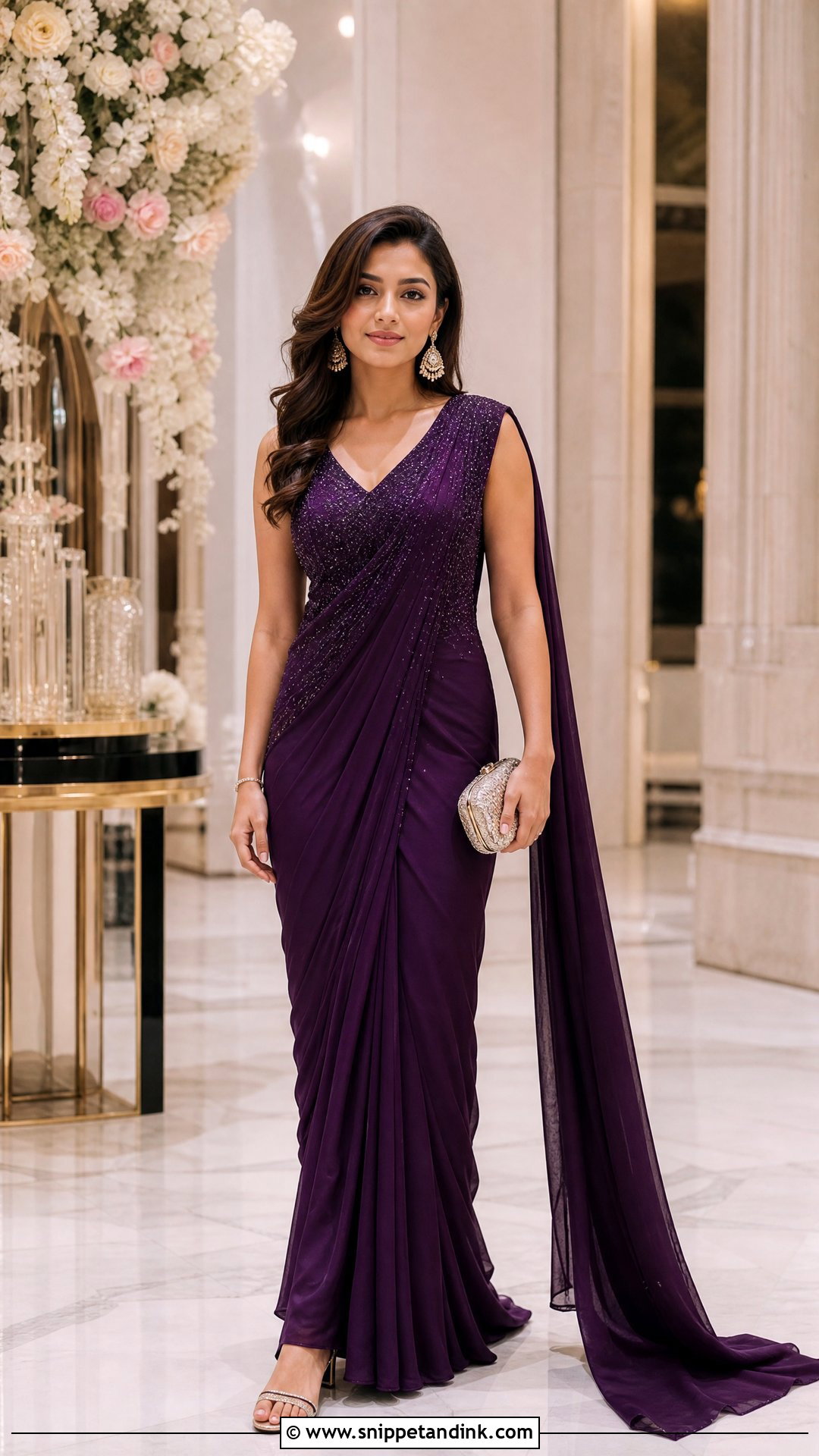
A saree gown is a gown base with a draped pallu sewn in, and it solves the main problem guests have at evening receptions: managing pleats for five hours. Jewel tones, metallics or soft pastels all suit it; I’d keep embroidery to one area, either the bodice or the pallu, so it doesn’t look busy. Statement earrings, a sleek clutch and heeled sandals are enough. A soft updo or side-parted waves keeps the shoulder line clean. It is the outfit I recommend to friends of the couple who rarely wear a saree and want to dance without checking their drape.
16. Anarkali Wedding Outfit
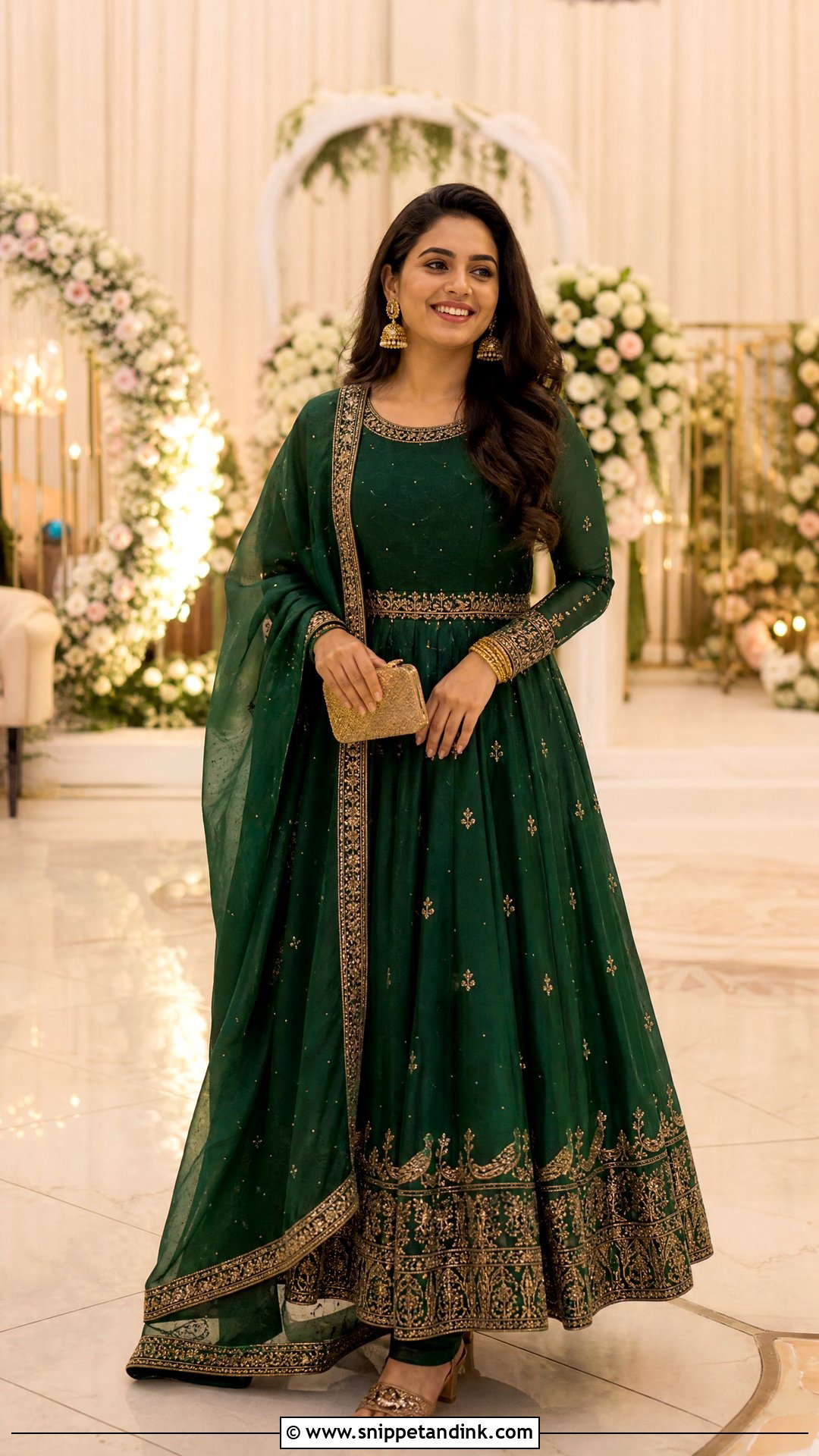
An anarkali gives you festive detail with no draping at all. Floor-length or calf-length, in silk, brocade, chiffon or georgette, the embroidery usually sits on the neckline, sleeves and hem. Pair it with churidar or fitted pants, a dupatta, jhumkas, bangles and embellished sandals. Emerald, wine, navy, mustard and soft pink suit South Indian venues. The flare needs to clear the floor by about an inch if you’ll be walking on uneven mandapam floors or temple steps. I pin the dupatta at one shoulder so it can’t slide. It packs well, which makes it a sensible pick for destination weddings.
17. Sharara Wedding Outfit
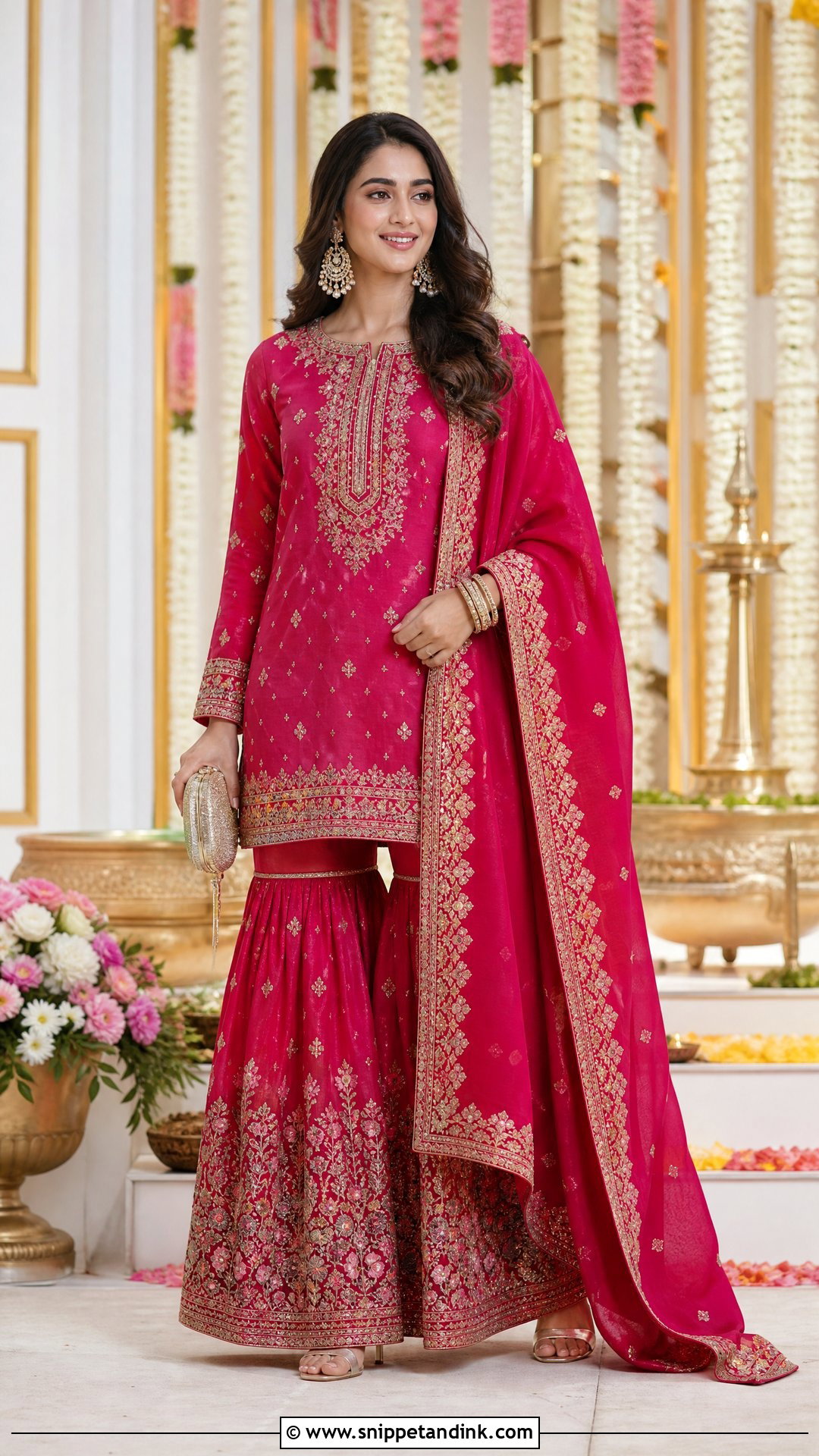
Shararas are comfortable, festive and easy to move in: a kurta, flared pants and a matching dupatta in silk, georgette or embroidered fabric. Rich colours and gold details keep it right for a South Indian event. Chandelier earrings, bangles, embellished juttis or heels and a small clutch finish it. I’ll be honest, though: at a traditional muhurtham the sharara reads as North Indian, so I save it for receptions, mehendi-style nights and guest looks. The wide legs also trap on stairs, so hem them to your shoe height, not barefoot height.
18. Kurta And Silk Skirt Wedding Outfit
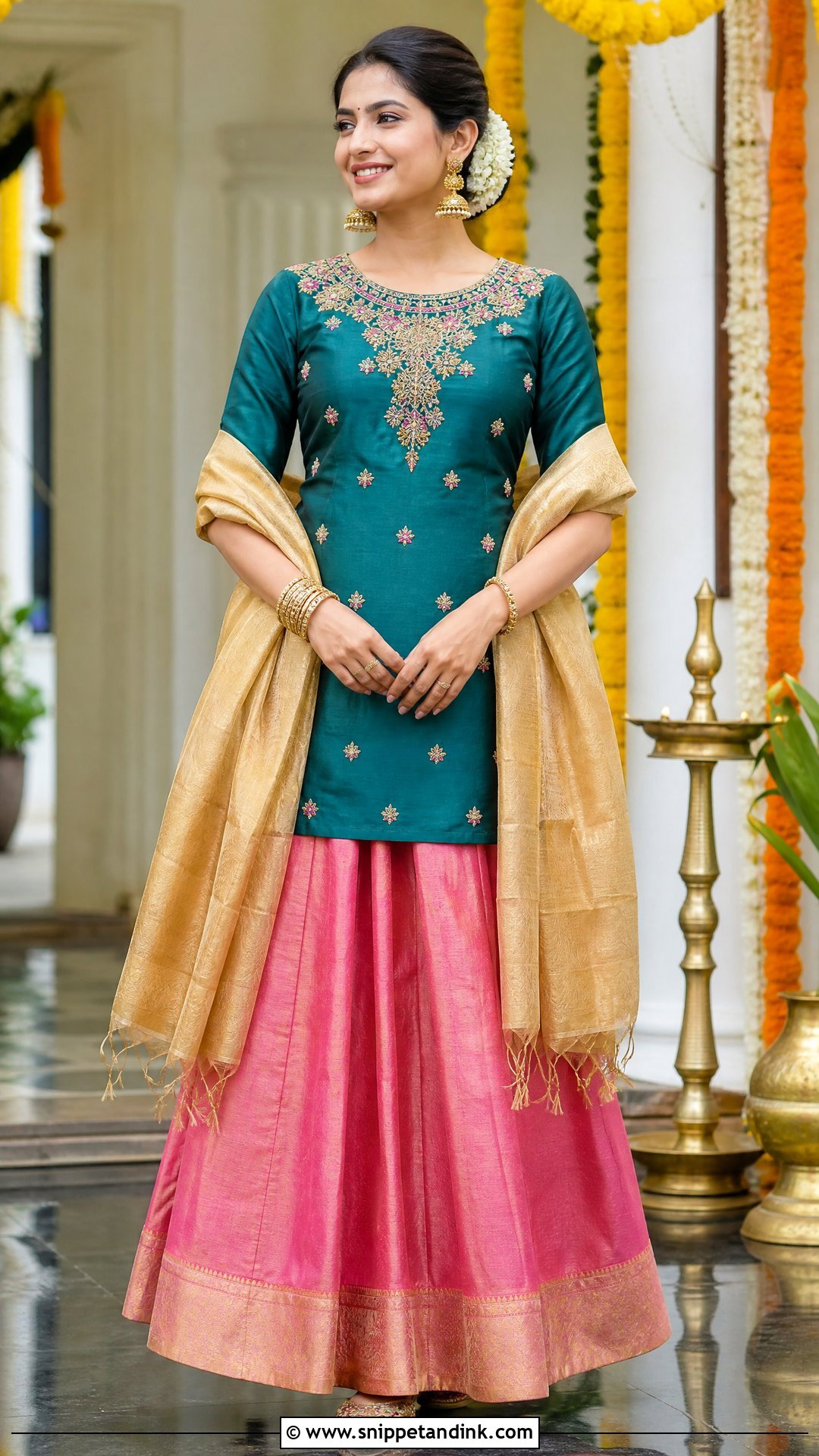
This fusion combination keeps the traditional elements while making them easier to move in. An embroidered kurta, short or mid-length, goes over a flared silk skirt with a dupatta. The colour pairings that work are the old South Indian ones: maroon with gold, teal with pink, cream with green, mustard with red. Jhumkas, stacked bangles and heeled sandals or embellished flats complete it. My rule is kurta length: a short kurta shows the skirt border, which is where the silk looks richest. A braid, floral bun or half-up style suits cousins and bridesmaids who want something different from a saree.
19. Bridesmaid Half Saree Outfit
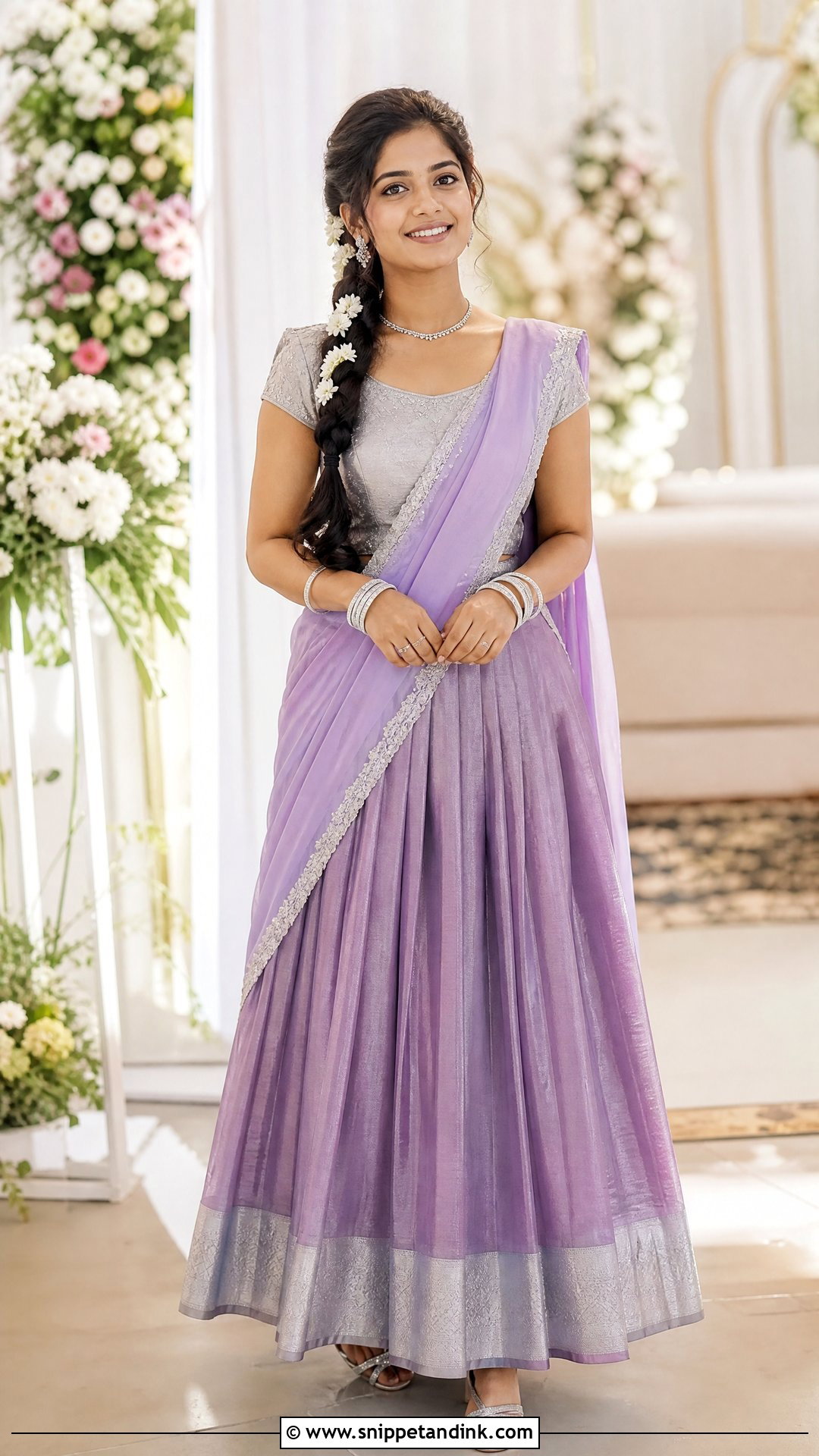
Half sarees are the easiest way to coordinate a group, because you can change one variable and keep the rest. Silk, organza or brocade all work. Pink and green, yellow and orange, blue and gold, or lavender and silver are reliable pairs. I usually keep the skirt colour the same across the group and let each bridesmaid choose her blouse sleeve, jewelry or hairstyle so the photos look planned, not uniform. Jhumkas, bangles, a light necklace and comfortable sandals, with a floral braid or low bun, keep everyone cohesive. Do a group fitting at least once; dupatta lengths vary more than you’d think.


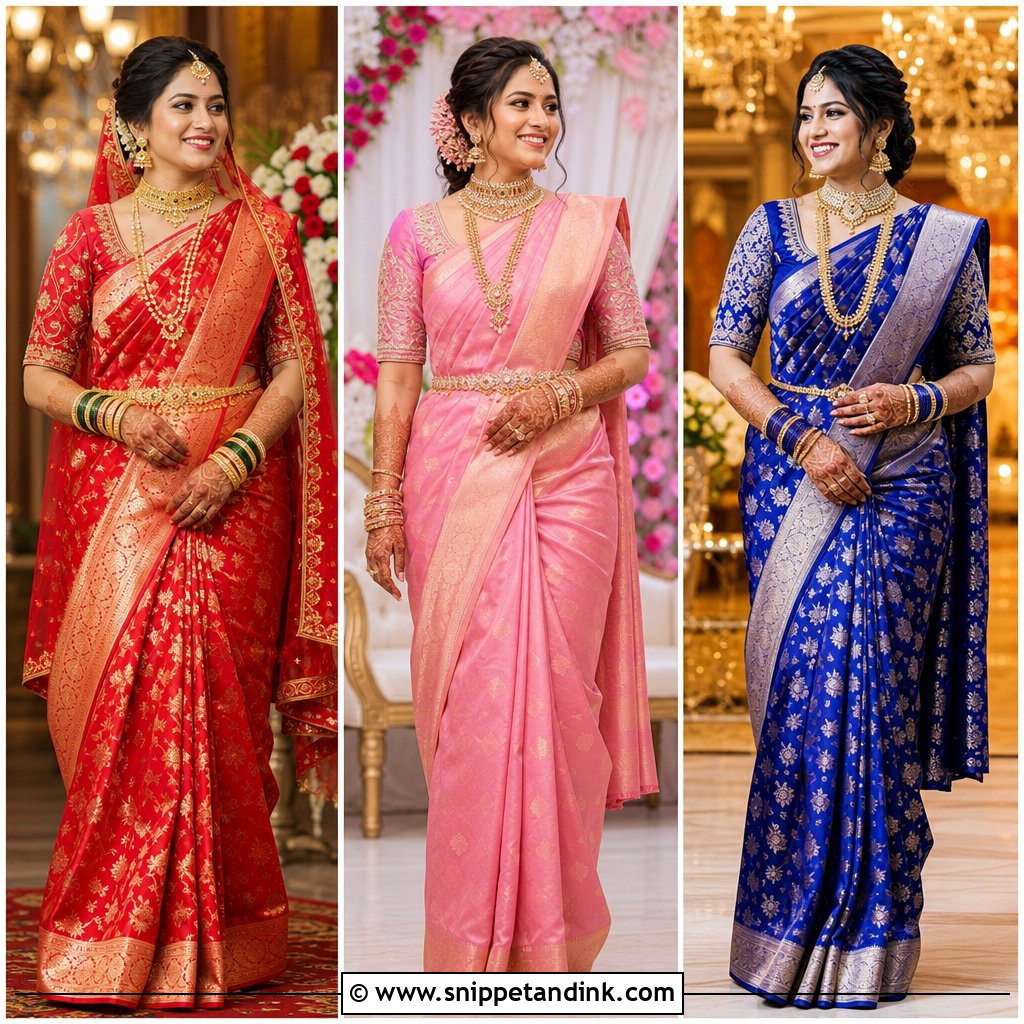
20. Mother Of The Bride Silk Saree Outfit
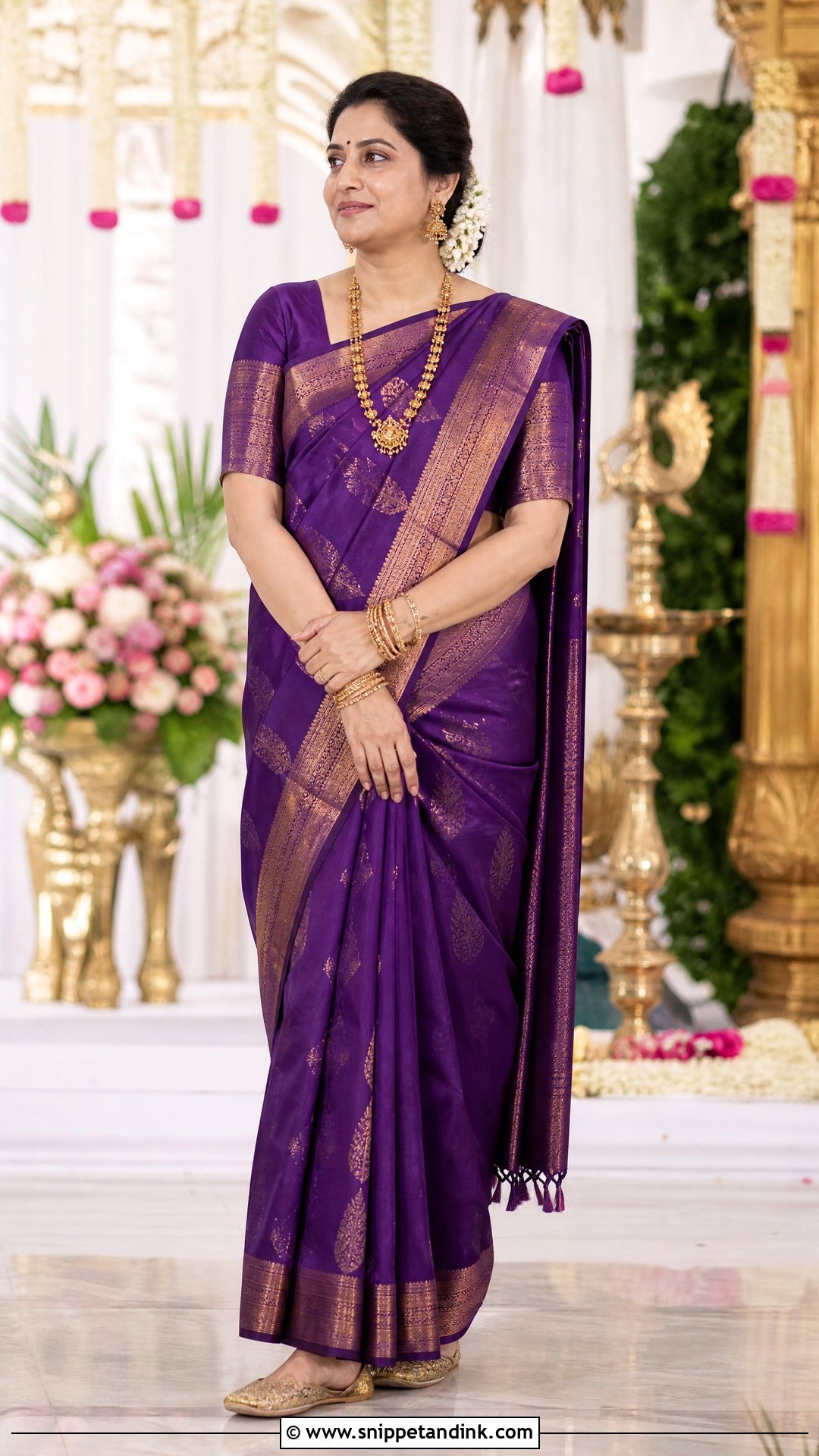
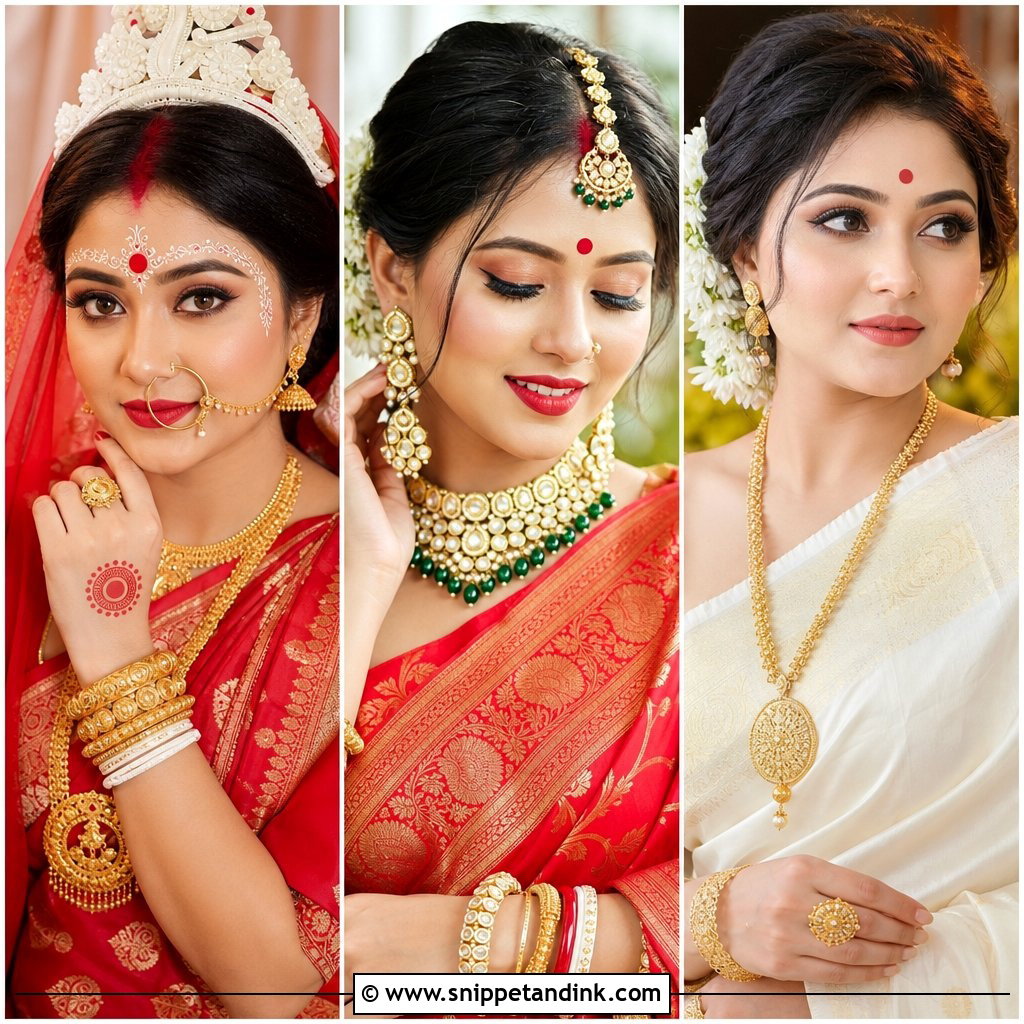
The mother of the bride is on her feet longer than anyone, moving between rituals, guests and the photographer, so the saree has to be secure first. A rich Kanjeevaram or pattu in maroon, green, purple, gold or deep blue suits the role. I like elbow-length sleeves, subtle embroidery or a contrast border on the blouse. Traditional gold jewelry, bangles, a neat bun and low heels or dressy flats are enough. I pin the pleats at the waist and the pallu at the shoulder, then ask her to sit and stand twice before she leaves the room. Grand, but never louder than the bride.
21. Wedding Guest Silk Cotton Saree Outfit
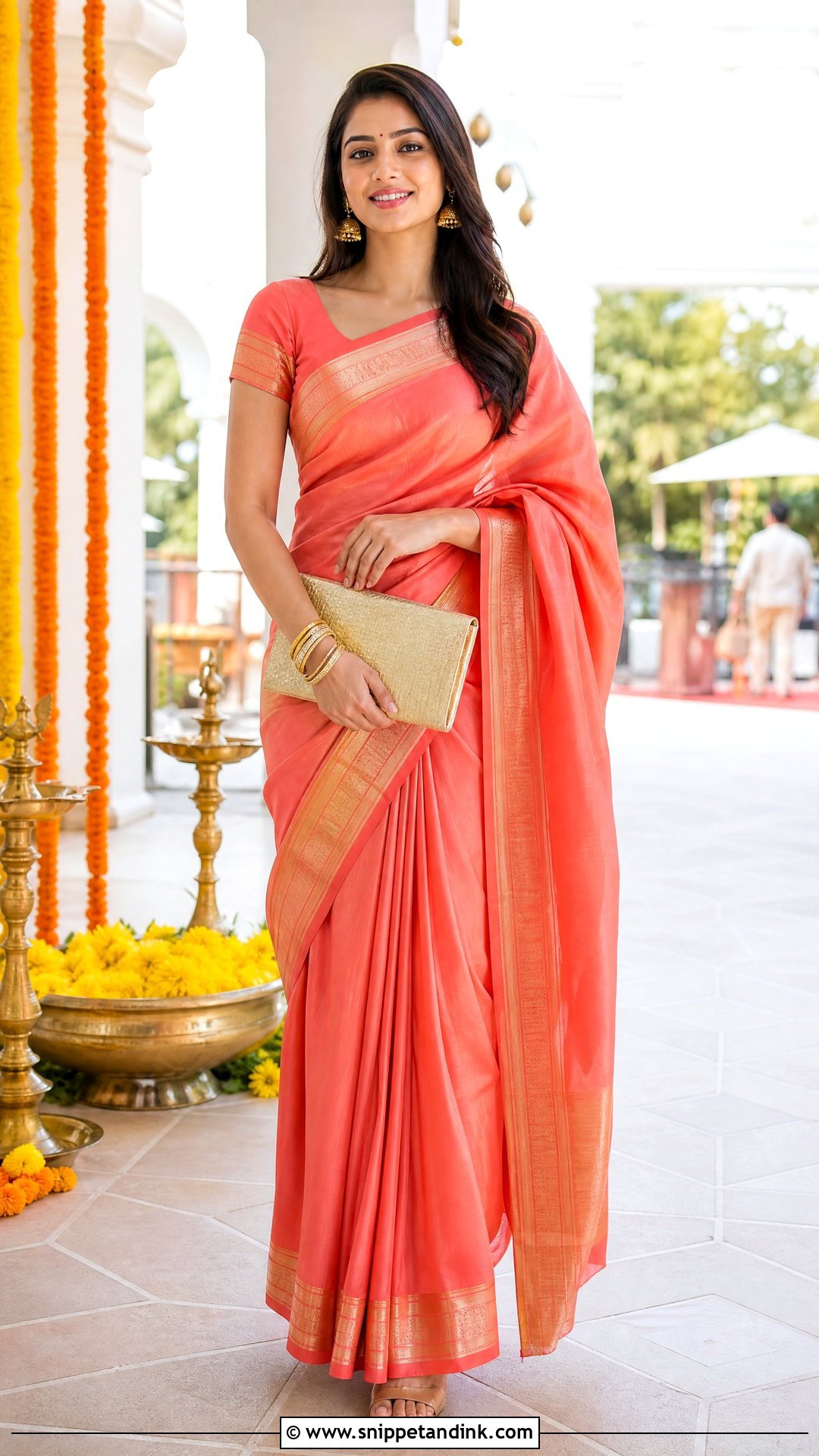
Silk cotton is the guest saree I recommend most for warm weather. It is lighter than pure silk, breathes better and still carries a zari border. Coral, green, yellow, pink and blue all feel festive. A well-fitted blouse, medium earrings, bangles and comfortable sandals are plenty, with a small bindi and a neat hairstyle. Silk cotton has less body than pure silk, so pleats can go limp by the afternoon; I starch the border lightly or pin each pleat at the waist. Add a potli or clutch and you’re dressed for a daytime ceremony without overheating.
22. Organza Saree Wedding Outfit
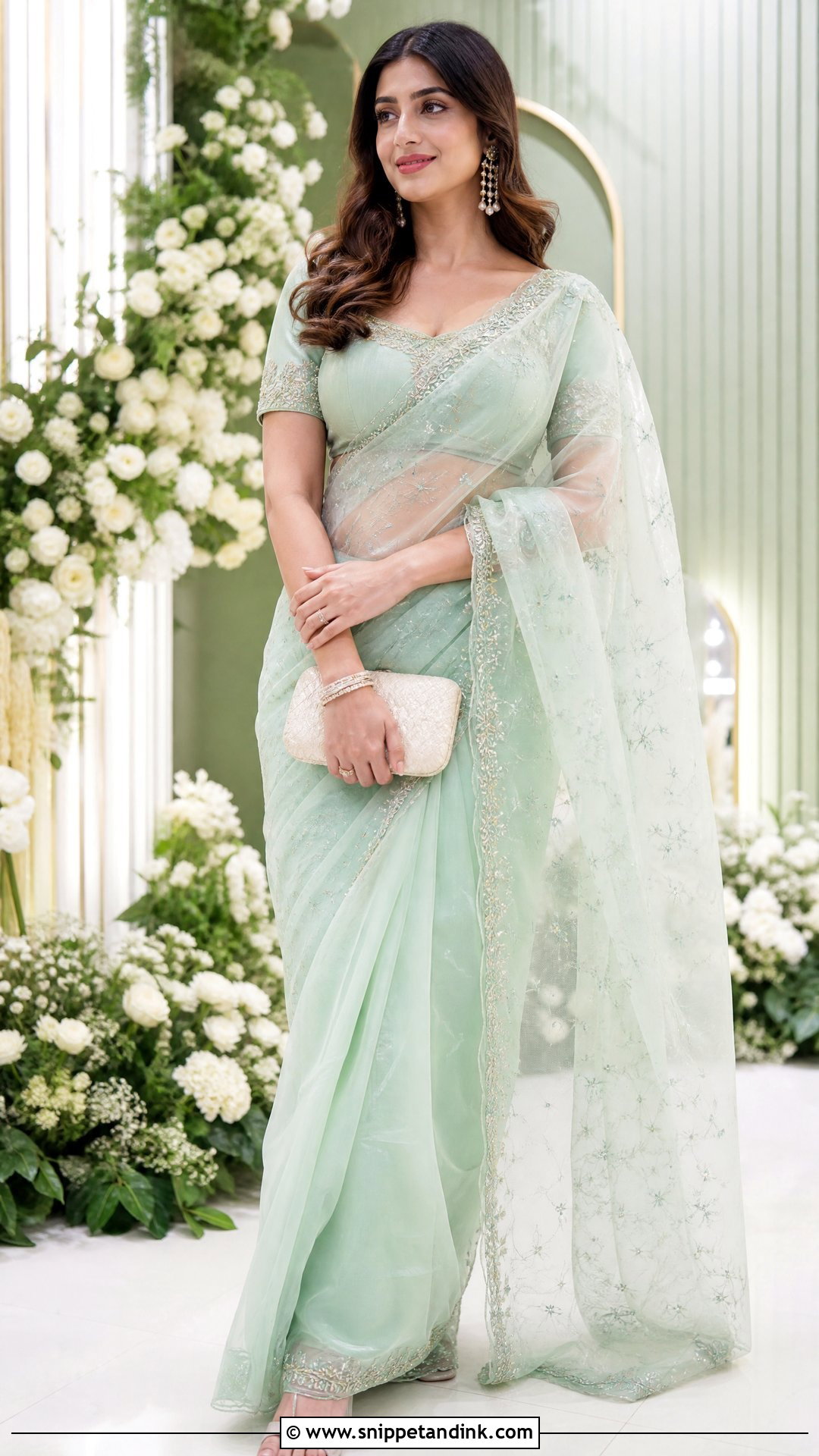
Organza is sheer, crisp and light, which makes it feel modern next to traditional silks. Floral embroidery, zari borders or soft threadwork give it the festive finish. Ivory, peach, mint and powder blue suit daytime events; jewel tones suit evening receptions. Because organza holds volume, pleats can puff out at the hip, so I make them narrower than usual and press them before pinning. A structured blouse, pearl or gold jewelry, a clutch and heels are enough. Don’t over-accessorize; the fabric is already doing a lot. A soft bun, waves or a sleek ponytail all match it.
23. Banarasi Saree Wedding Outfit
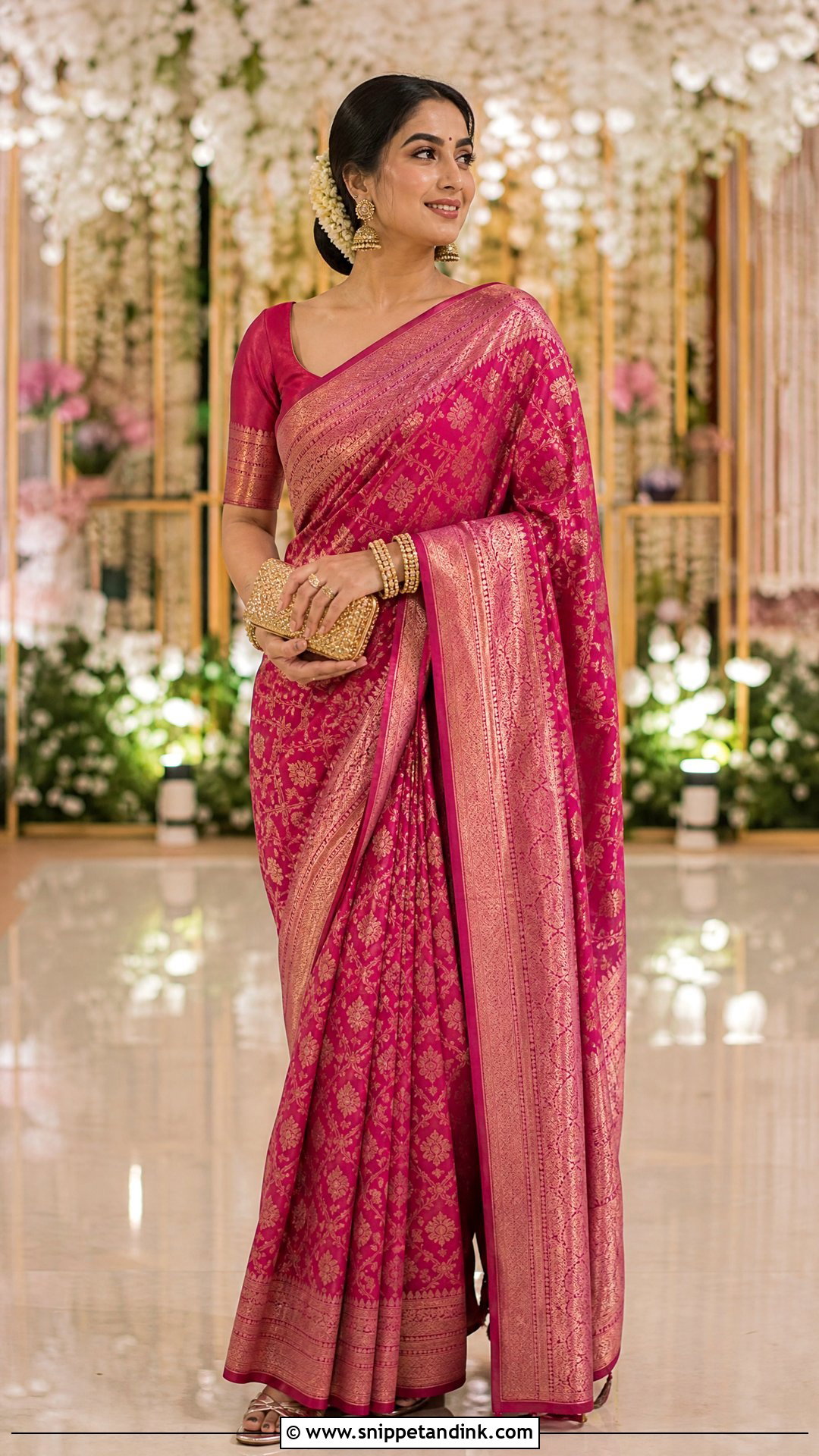
A Banarasi is a North Indian weave, so at a South Indian wedding the styling decides whether it blends in. Magenta, emerald, red, royal blue or gold Banarasi silks look rich in any setting. I pull it into the regional look with a traditional blouse, temple jewelry, bangles and a flower-adorned bun. Gold heels or embellished sandals keep it formal. Banarasis with heavy all-over weaving are already busy, so I hold the jewelry back to one strong necklace. It works for receptions, guest dressing and family events, and it is a respectful way to wear a family heirloom from another region.
24. Simple Saree Wedding Outfit
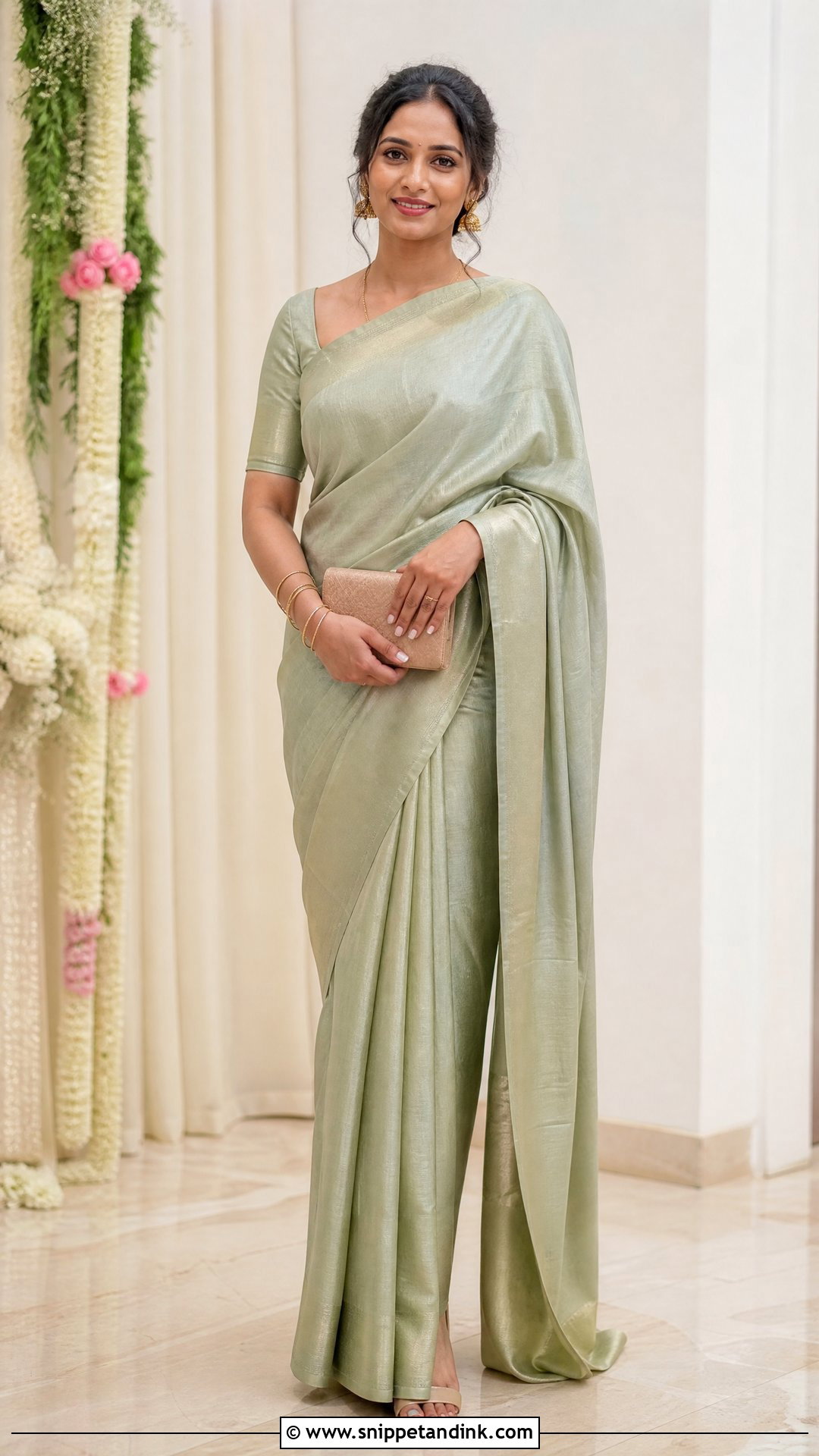
Simple is not the same as plain, and the difference is in the drape. A lightweight silk, silk cotton, chiffon or georgette with a clean border, in sage, dusty rose, cream, teal or mauve, looks graceful at smaller ceremonies, morning rituals and weddings where you’re not immediate family. A tailored blouse, small jhumkas, a bangle stack, comfortable sandals and a neat clutch are enough. I spend my time on the pleats: even, pressed and pinned so they fall straight. A low bun or soft waves keeps the head neat. That care is what separates understated from underdressed.
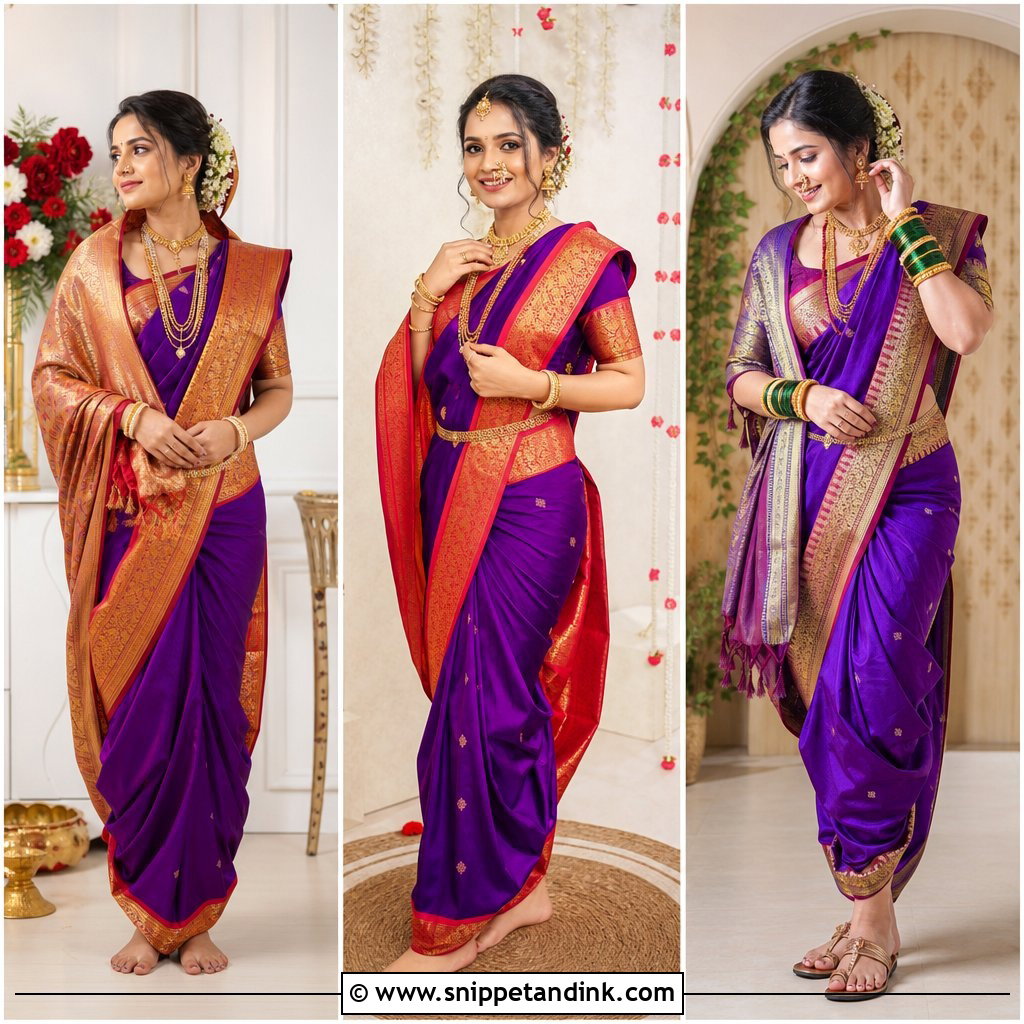
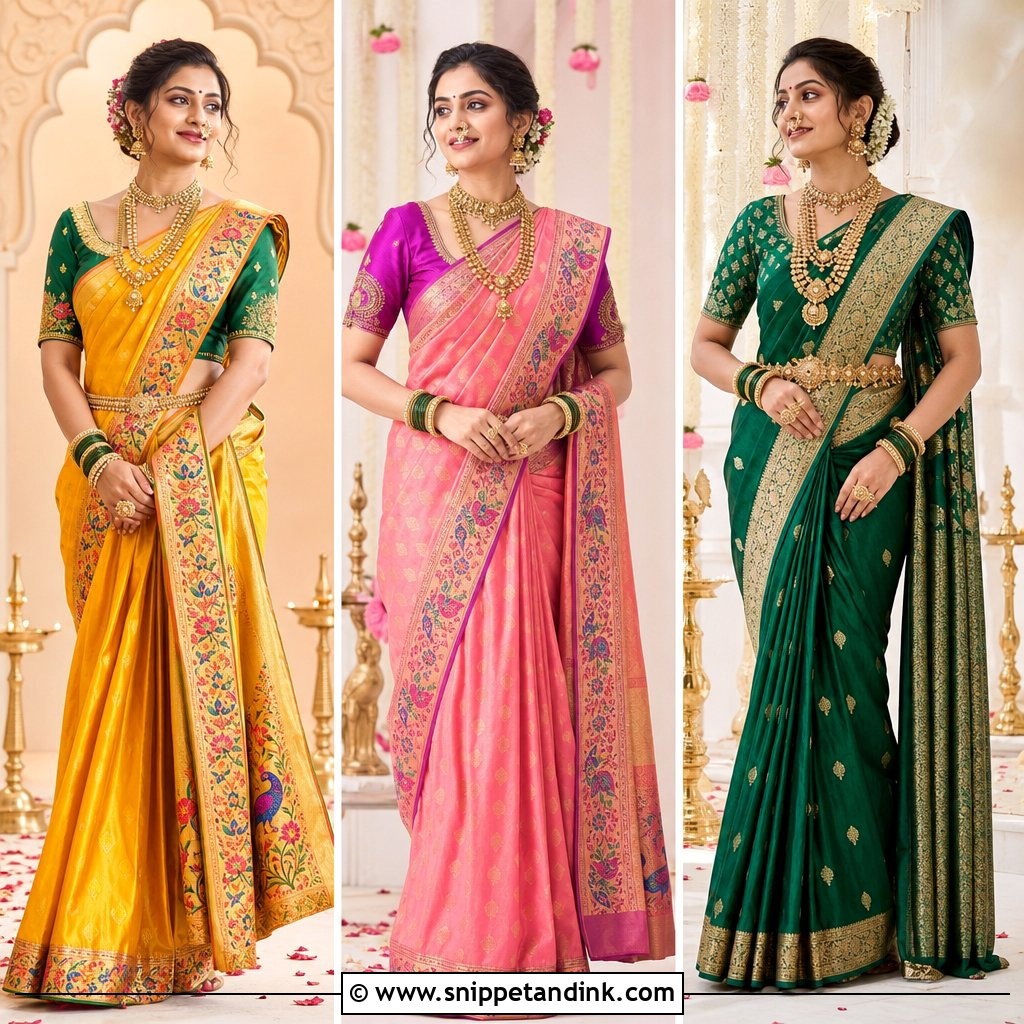
25. Modern South Indian Wedding Guest Outfit
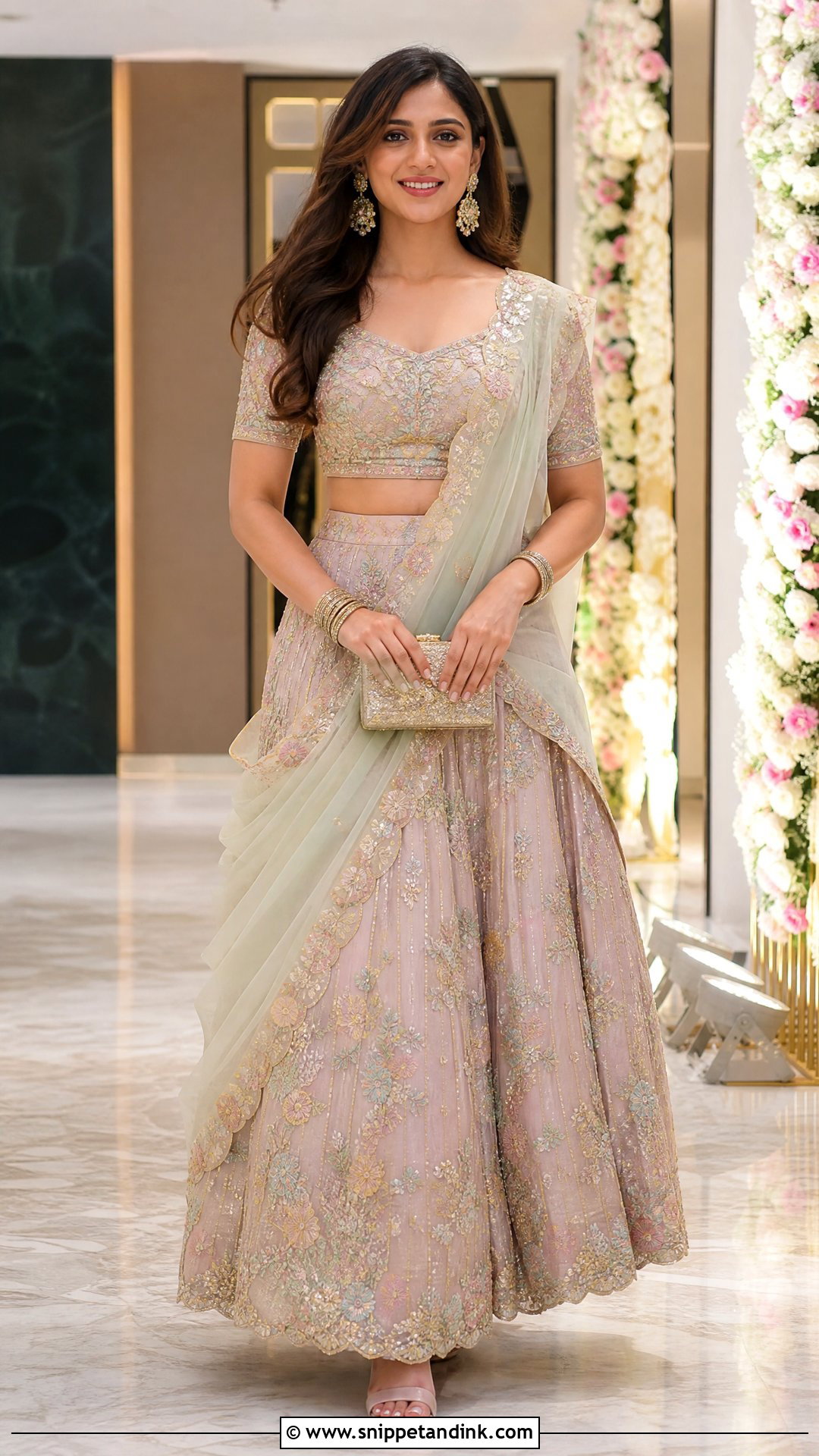
Modern guest dressing at a South Indian wedding usually means borrowing one traditional element and keeping the rest simple. A silk lehenga saree, an embroidered anarkali, a pastel organza saree or a kurta with a flared skirt all fit. Keep it festive through colour, fabric and jewelry rather than heavy embellishment, and pick one strong accessory: temple earrings, a statement necklace or a bold bangle stack. Dressy sandals, a clutch and a hairstyle that stays put finish it. What I steer guests away from is anything casual or anything that could be mistaken for bridal.
Guest Etiquette at a Temple or Mandapam Wedding
South Indian weddings vary a lot between communities, so treat these as a starting point and ask the family if you’re unsure.
- Black and all-white outfits are avoided at many weddings, although the white and gold Kasavu is the exception in Kerala families.
- Heavy bridal red with a wide zari border can look like you’re competing with the bride. Lighter reds or any other jewel tone are safer.
- Temples and many mandapams ask you to remove footwear, so pick sandals you can slip off quickly and that you won’t mind leaving at the door.
- Expect to sit on the floor or low seating for the rituals. Choose a skirt or saree you can sit cross-legged in without strain.
Putting a Silk Saree Away After the Wedding
Kanjeevarams and pattu silks are often handed down, so how you store them matters. Air the saree in the shade for a few hours first; never in direct sun, which fades the body colour. Dry clean only, and only when it really needs it. Fold it with the zari on the inside and wrap it in a soft cotton or muslin cloth rather than plastic, which traps moisture and dulls the metal threads.
Refold it along different lines every few months, because silk can tear along a crease that has stayed in one place for years. Don’t spray perfume directly onto the zari, and keep naphthalene balls away from the fabric. I tell families that a well-stored saree can still look fresh when the next bride in the house wears it.
Dressing for the Muhurtham, Then for the Reception
Most of the decisions above come down to two questions: what part do you play in the wedding, and how long will you be sitting, standing and walking in it? Heavy Kanjeevarams and temple gold belong to the bride and close family at the morning rituals. Lighter silks, organza, silk cotton and fusion outfits suit guests and pre-wedding events. Whichever you choose, I’d spend as much time on the blouse fit, the pins and the footwear as on the colour, because that is what decides whether you still look composed at the end of the day.
You'll Like These Ideas:


Leave a Reply