
Dressing a bride from Karnataka starts with a question I always ask first: which community, and which ceremony? A Kodava drape, an Ilkal saree from the north, a Bunt bride’s coastal gold and a Mysore silk muhurtham look are all distinct, and families notice when the details are mixed up. Silk, gold, jasmine and glass bangles run through most of them, alongside Kanjeevaram bridal sarees and temple jewellery. Below are the looks I’d build for a bride from this state, from the heaviest heritage drape to a lighter modern version, with notes on weight, comfort and what holds up through a long morning of rituals.
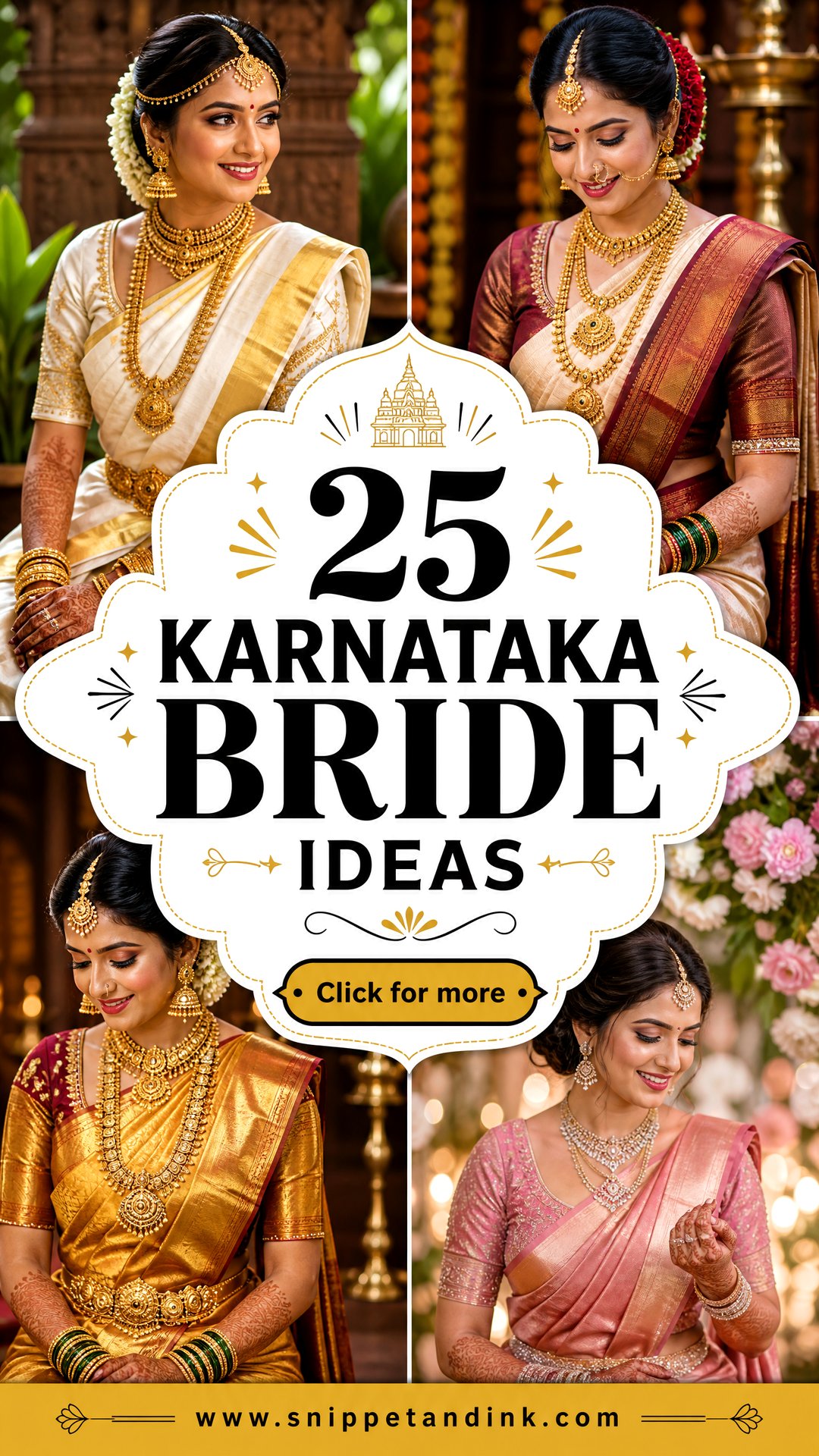
Mysore Silk, Ilkal or Kanjeevaram: How Each One Wears After Six Hours
Brides usually pick a saree by colour and border. I’d add a third test: how it feels at the end of a long muhurtham, after sitting cross-legged, walking the saptapadi and greeting a line of relatives.
Mysore silk
Light and soft, with a fluid drape. Comfortable for long ceremonies and warm halls. The trade-off is that pleats lose crispness faster, so the draper needs extra pins at the waist and a belt to hold them.
Ilkal
Often cotton-silk or cotton, so it breathes well in heat. Its pallu has a heavier traditional weave, which drapes with structure. Ideal for temple rituals and a bride with North Karnataka roots.
Kanjeevaram
The heaviest of the three. It holds pleats and the pallu beautifully all day, but you feel the weight on the shoulder and waist by the afternoon. If your ceremony runs long, I’d consider changing into a lighter saree for the reception.
Whatever you choose, have a full practice draping before the wedding, with the blouse, jewellery and a pair of the shoes you’ll wear. Many problems only show up once everything is on together: a pallu that hides the haram, a belt that sits too high, a blouse that pulls when you raise your arms for the garland.
1. Mysore Silk Saree Karnataka Bride
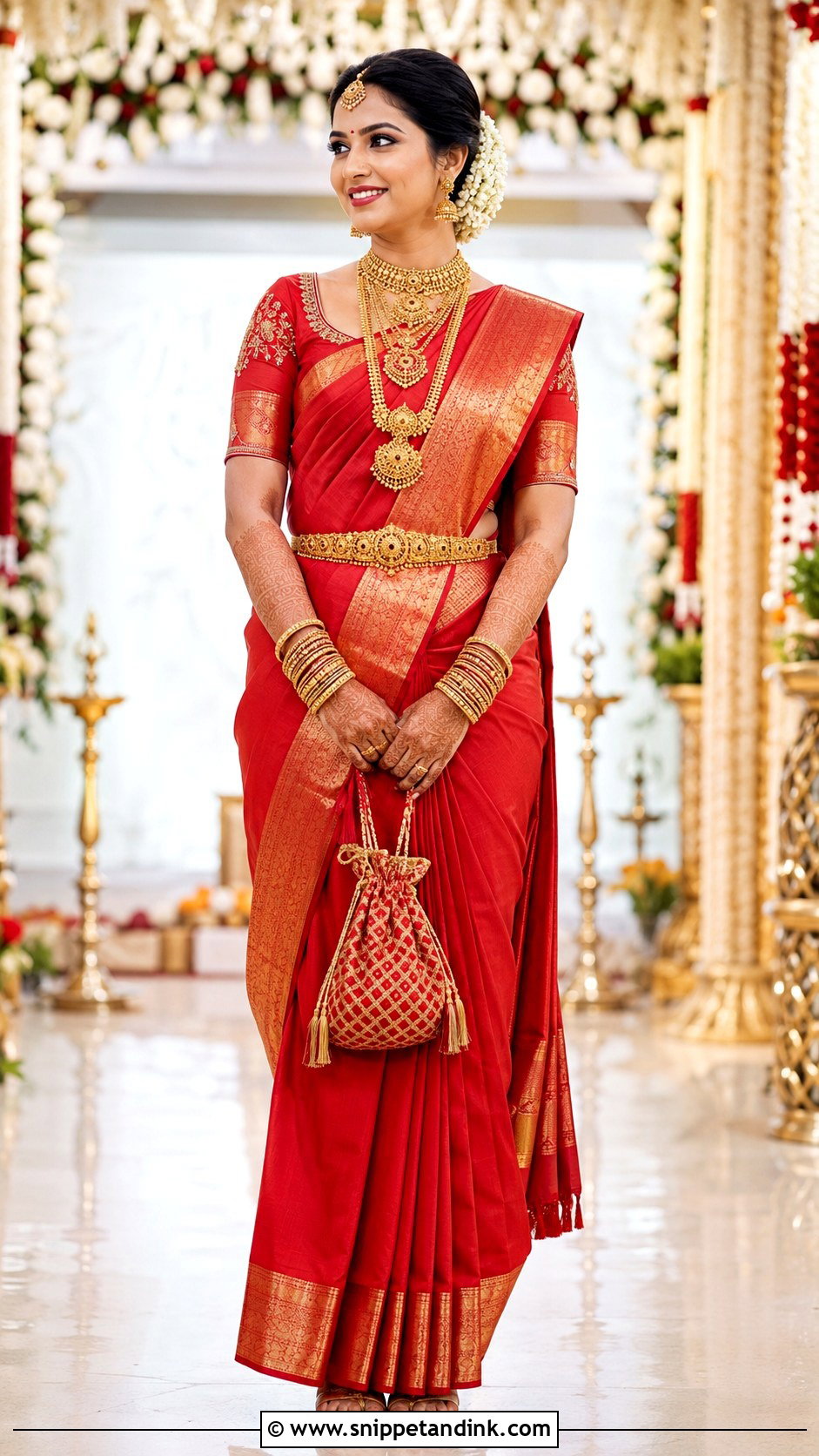
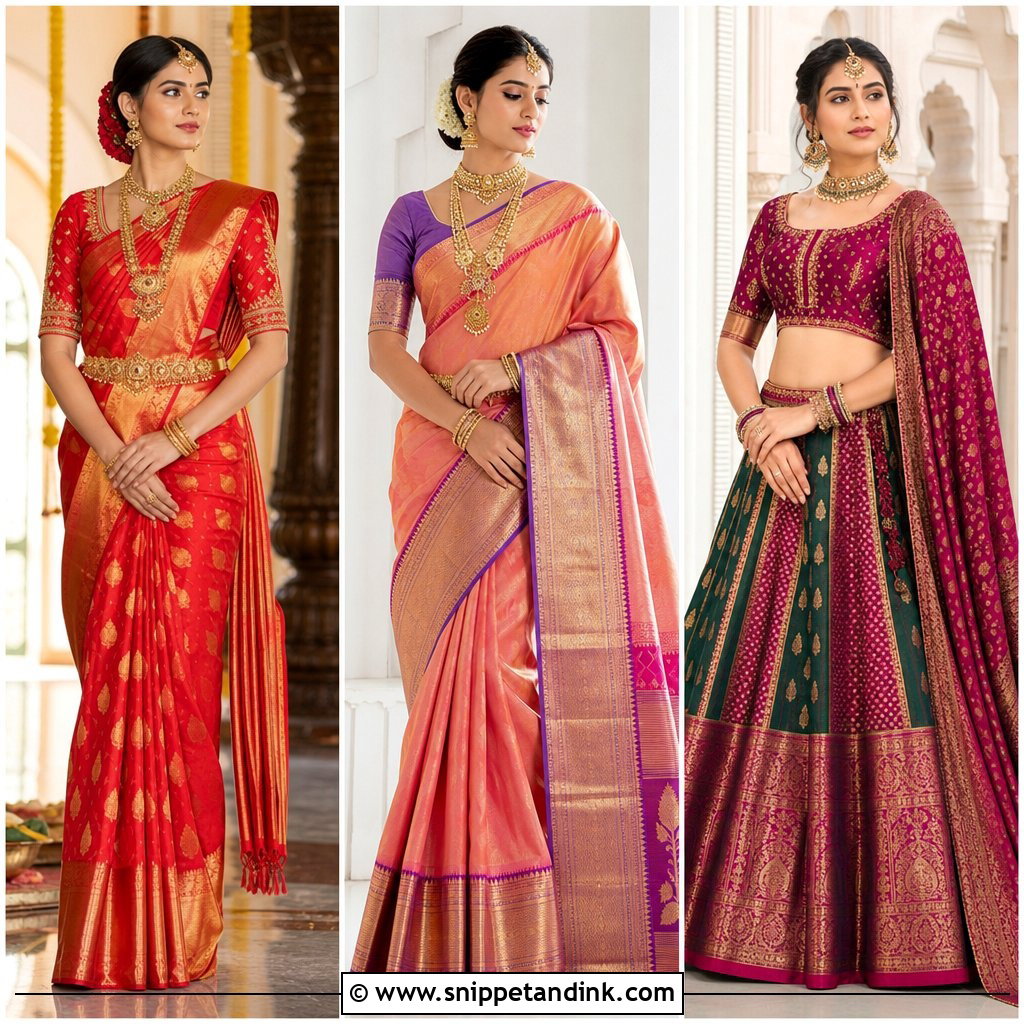
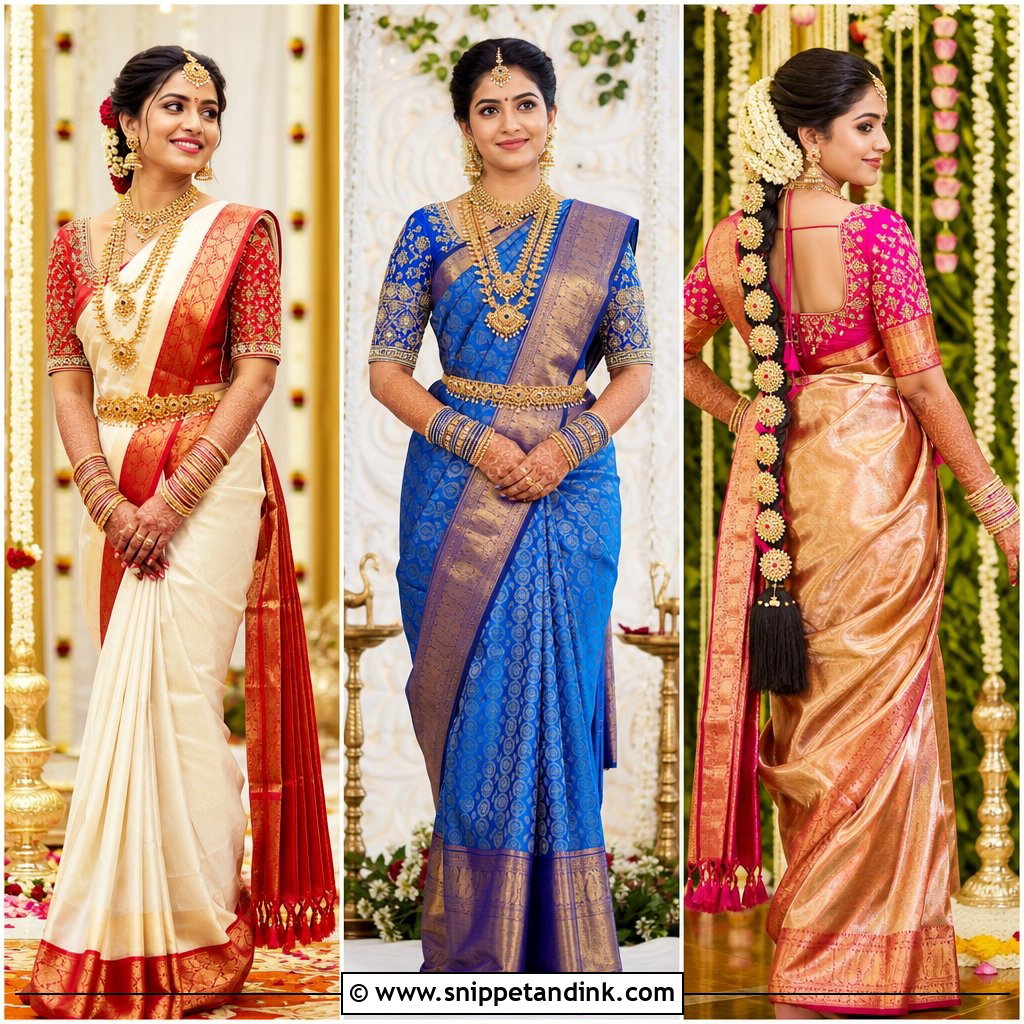
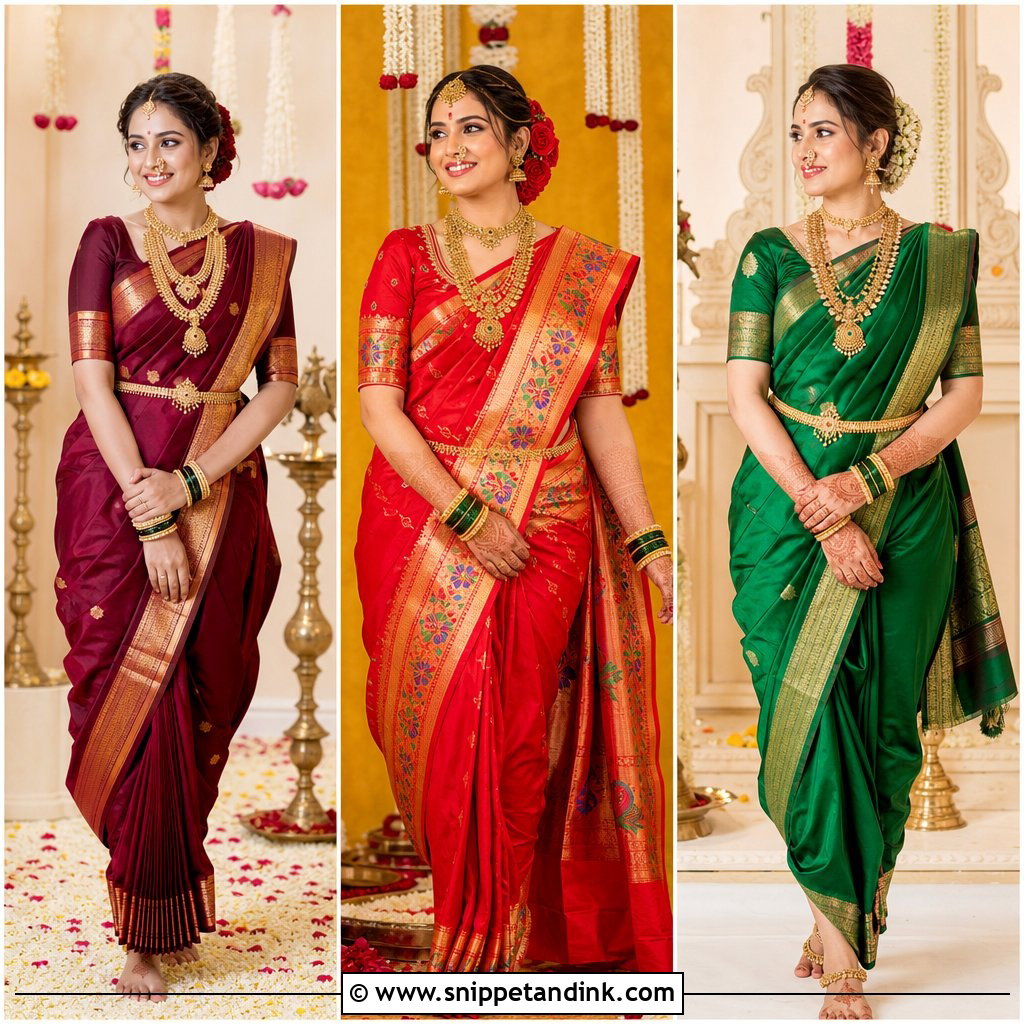
Mysore silk is softer and lighter than most bridal silks, which is why I suggest it to brides who dread carrying a stiff saree for six hours. It has a smooth, almost liquid fall and a zari border that shines without bulk. Red, maroon, green and royal purple are the classic choices. Because the fabric is light, layered gold necklaces can look heavier than the saree itself, so I balance them with a waist belt that anchors the drape. A low bun covered in jasmine, a defined eye and a red or rose lip finish it.
2. Ilkal Saree Karnataka Bride
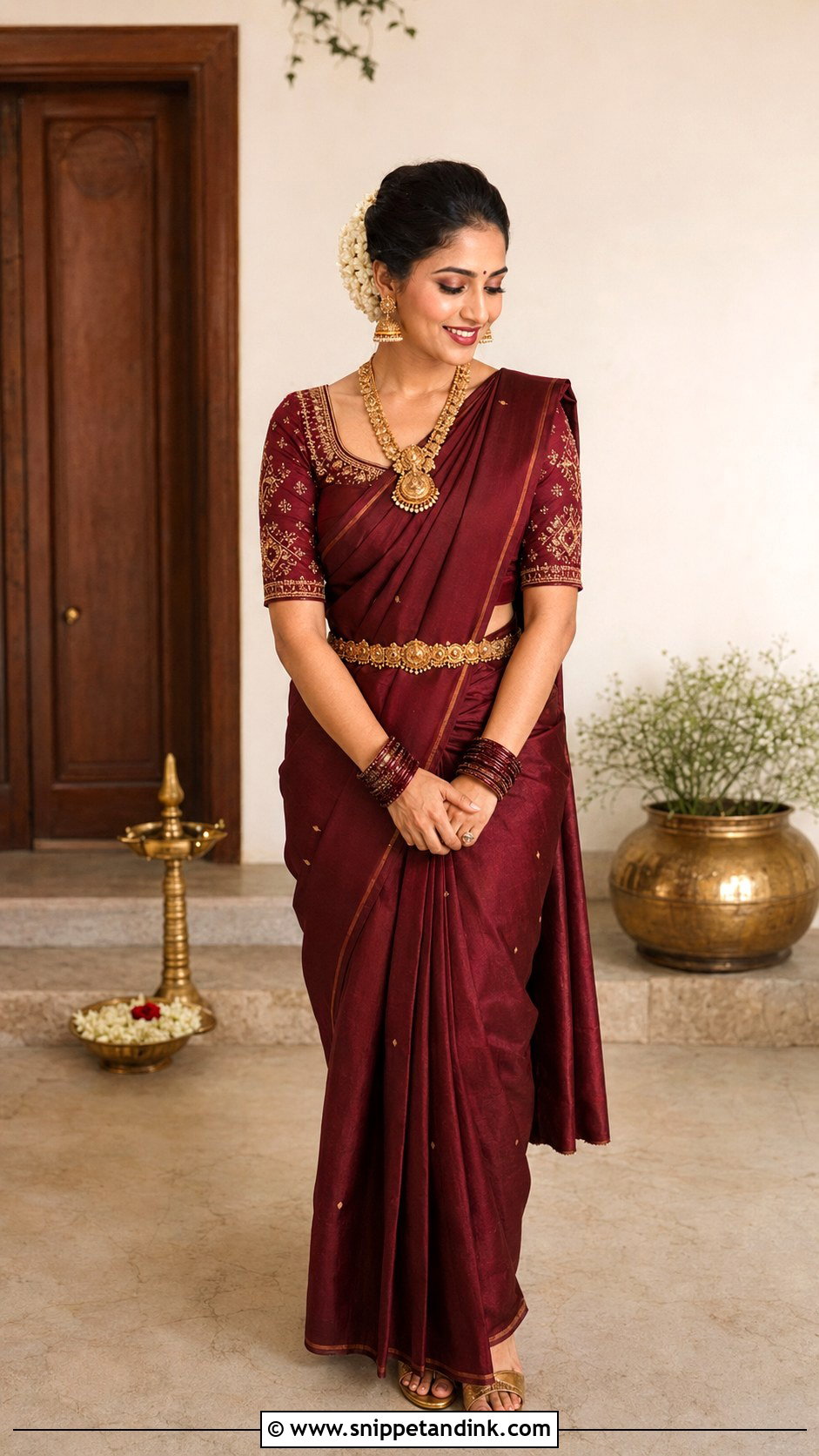
Ilkal sarees come from North Karnataka and are recognised by their pallu, traditionally joined to the body of the saree with a special interlocking weave. For a bride with roots in that region, wearing one says something about family that no other saree can. Red, mustard, deep green and rust are traditional. I pair it with an embroidered silk blouse, antique gold, green glass bangles, toe rings and a kamarbandh. A centre-parted bun with jasmine and orange kanakambara flowers keeps it rooted. Ilkal cotton-silk is lighter than pure silk, which helps at long temple rituals.
3. Kanjeevaram Saree Karnataka Bride
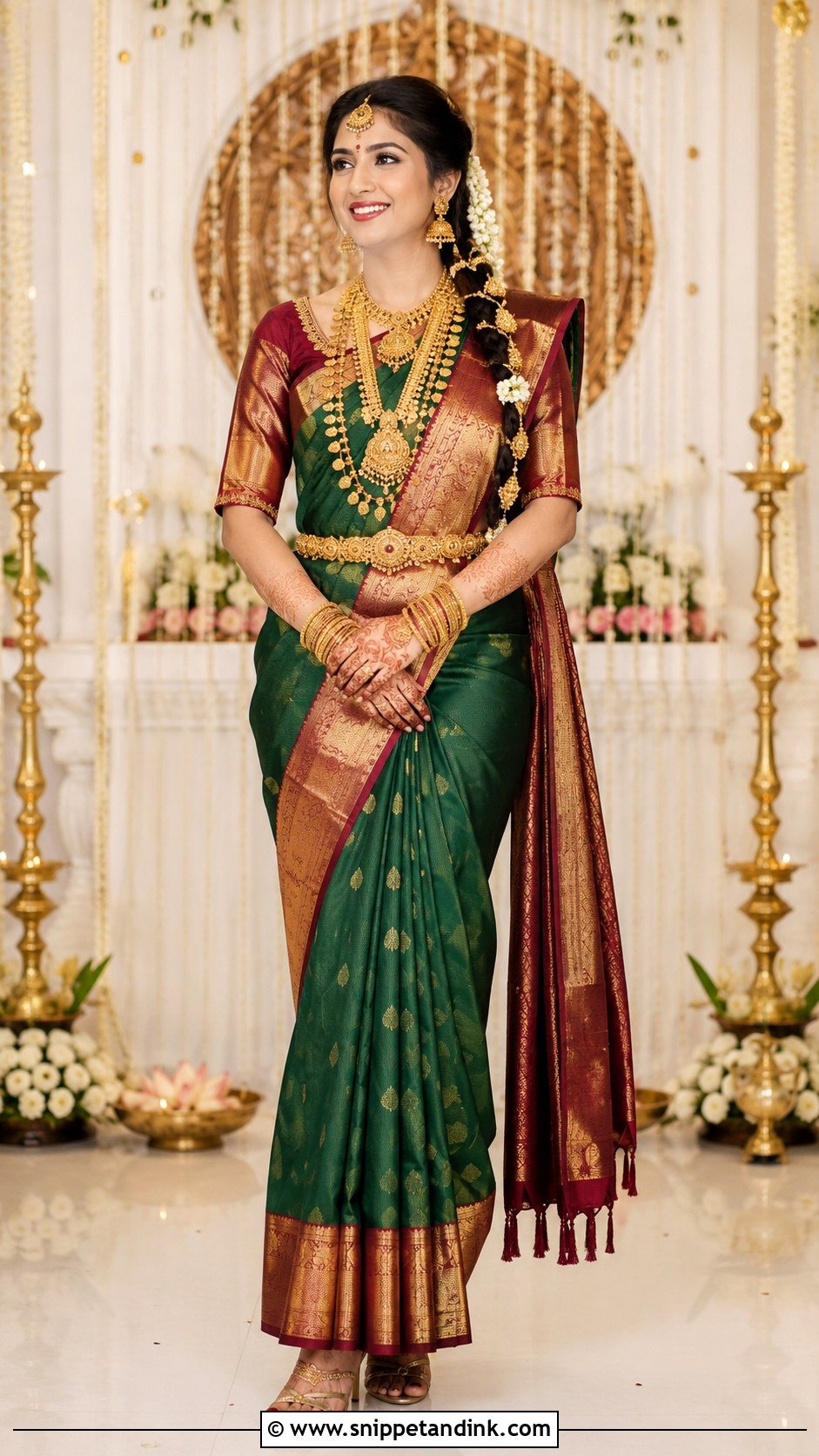
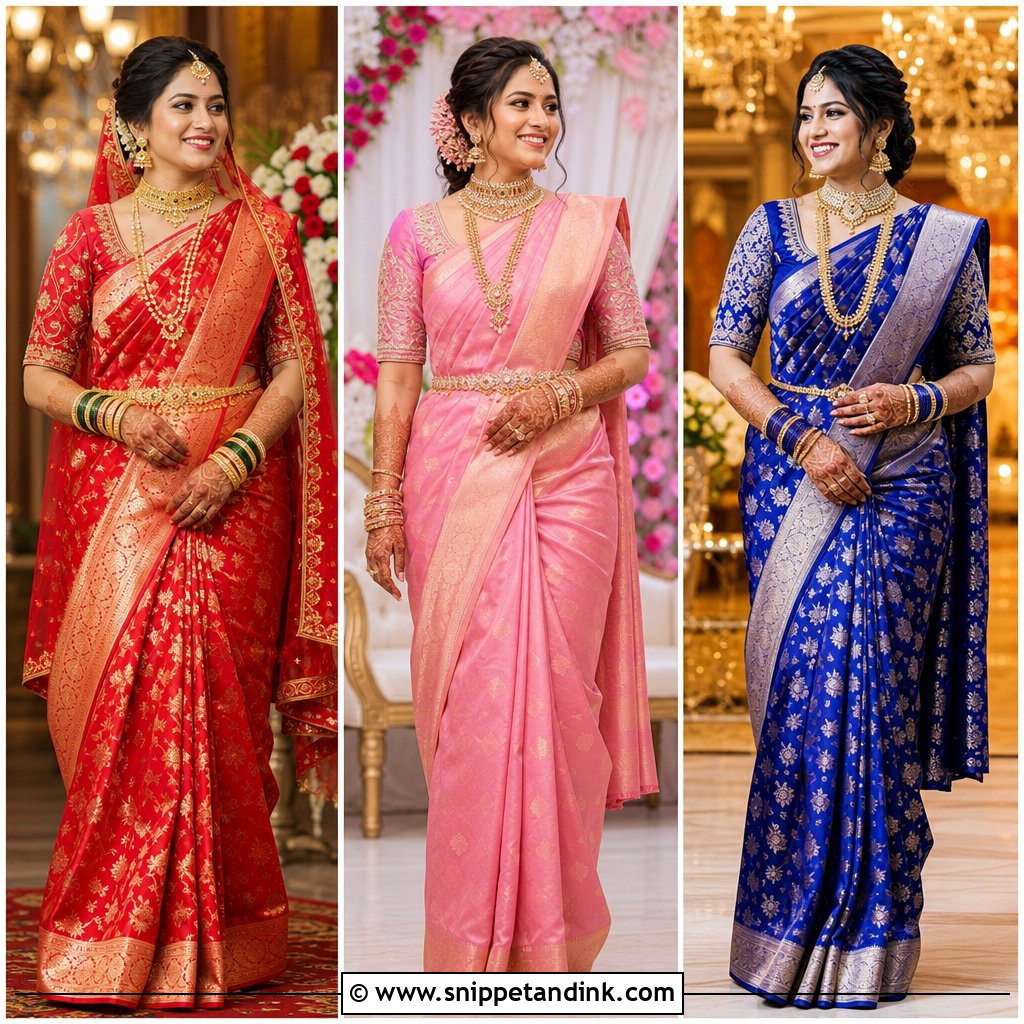
Kanjeevaram silk is heavy and holds its shape, so the pleats stay crisp and the pallu sits like a sculpture. That weight is why some brides love it and others find it tiring by noon. Deep red with gold, green with maroon, pink with orange and royal blue with antique zari are the combinations I’d consider. Layered temple jewellery, a long haram, jhumkas and a bold maang tikka suit its scale. I always ask for the blouse to be fitted with the saree on, since a thick pallu pulls at the shoulder seam. A flower-decorated braid finishes a regal South Indian wedding appearance.
4. Red Silk Saree Karnataka Bride
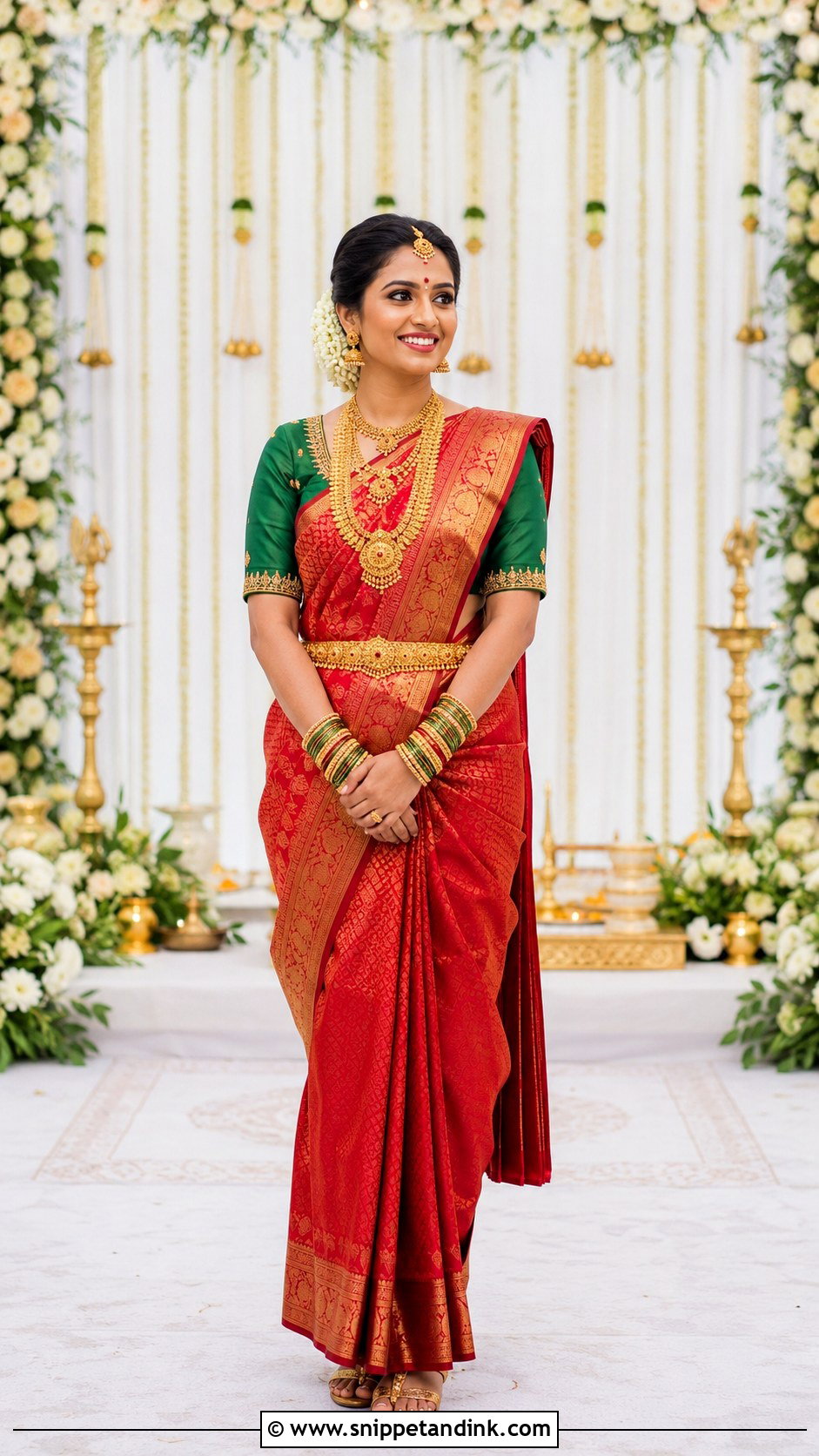
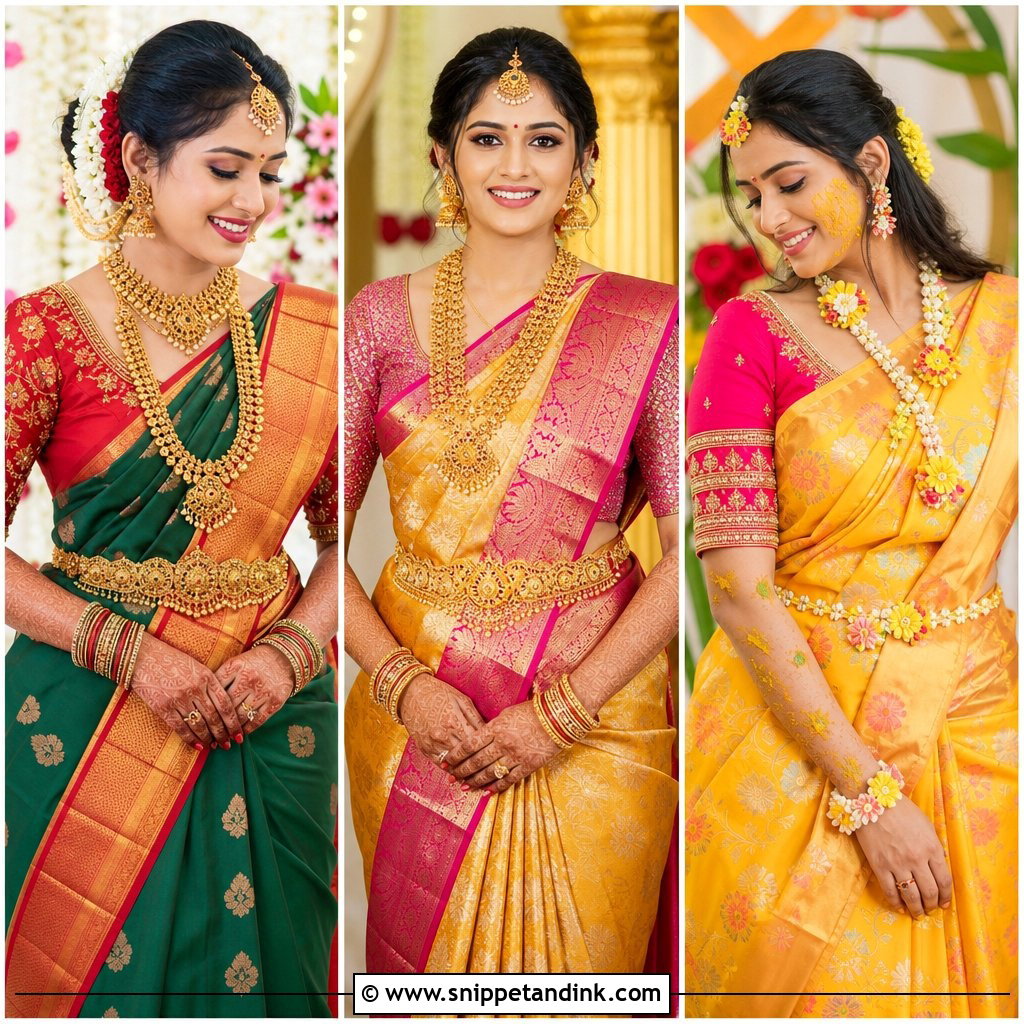
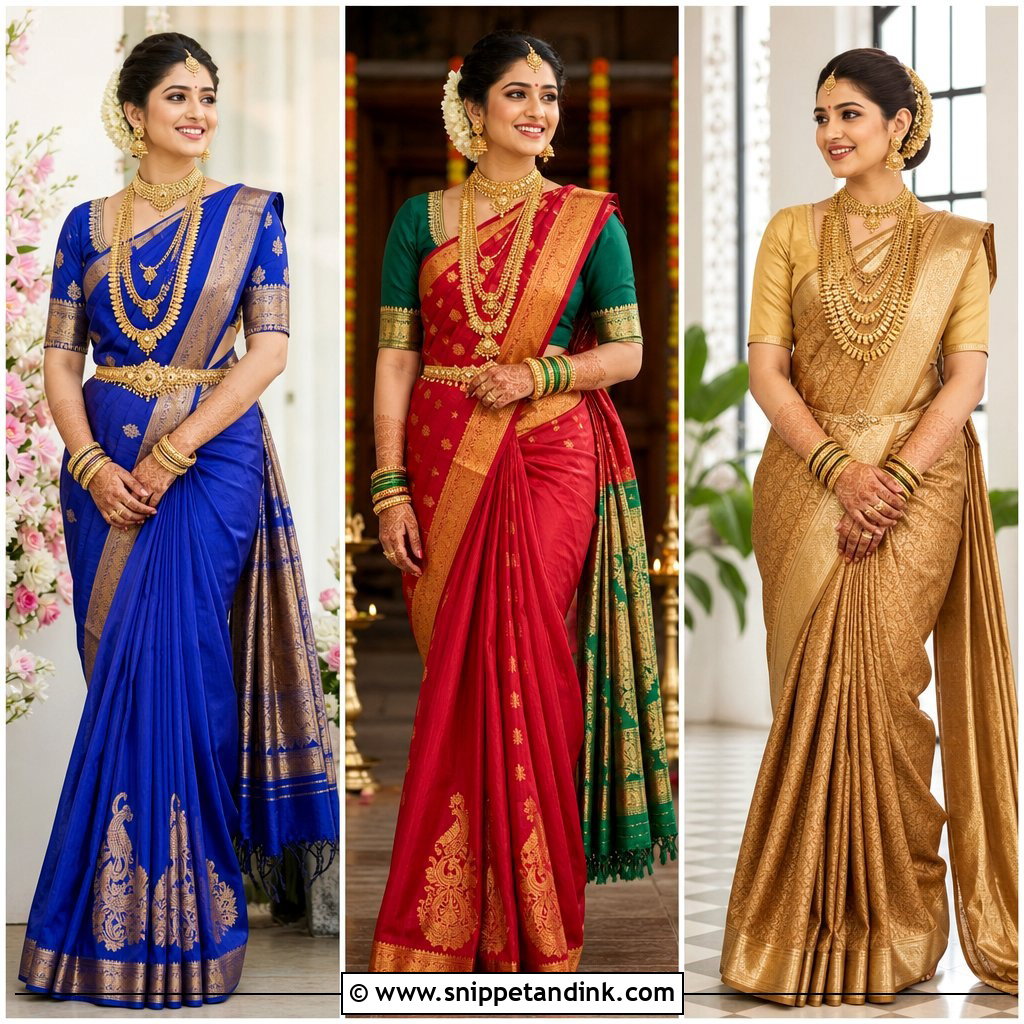
Red silk is the most auspicious choice for the main ceremony in many Karnataka families. A green contrast blouse is the traditional pairing, and a gold waist belt keeps the pleats flat when you’re sitting at the mandap. Choker, layered necklaces, jhumkas, bangles and a maang tikka complete it. Jasmine bun or long braid? I decide by how long the ceremony runs: a braid hangs heavy with flowers and pulls at the scalp, while a bun distributes the weight. Keep the eyes defined and the base fresh.
5. Green Silk Saree Karnataka Bride
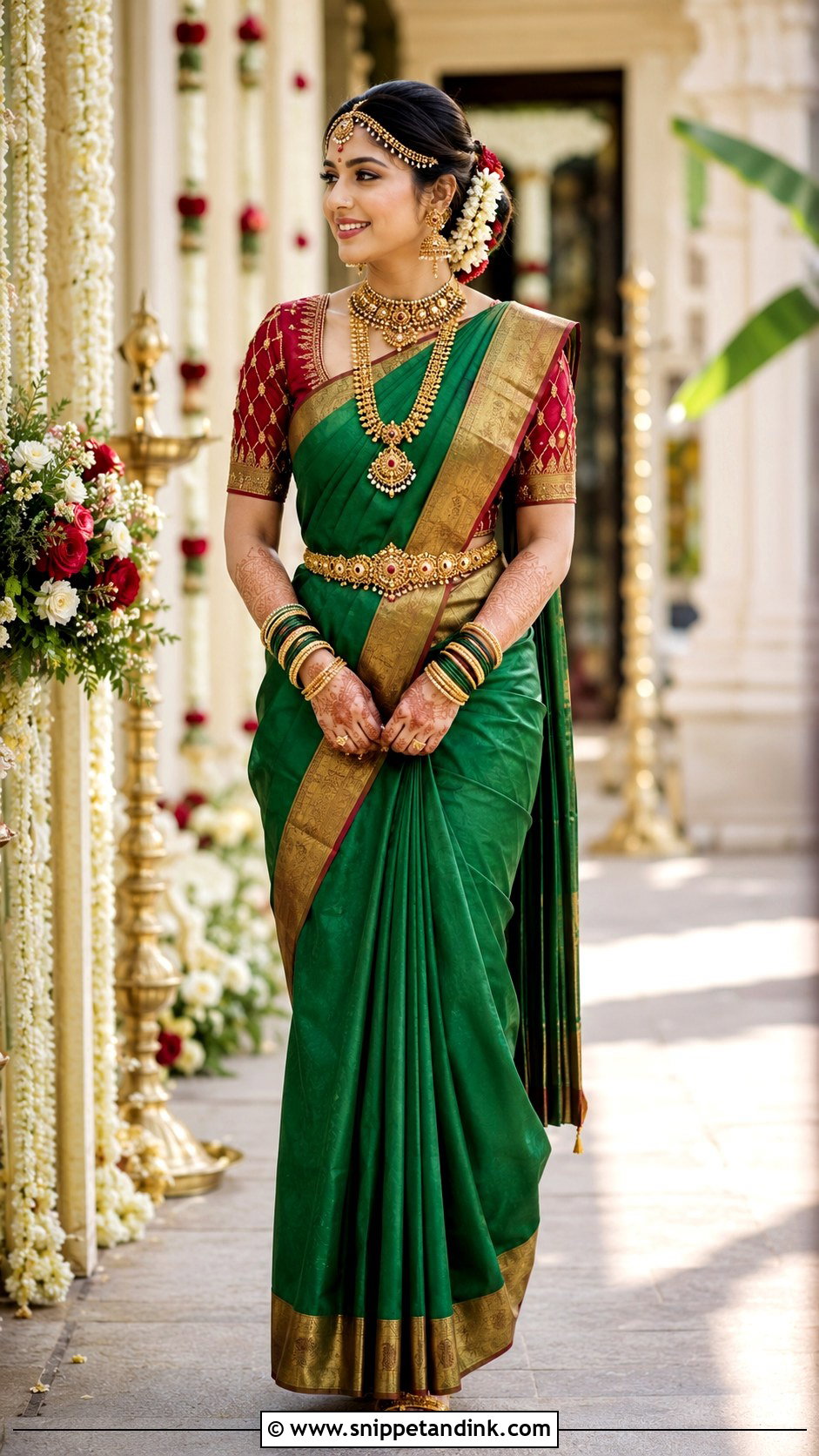
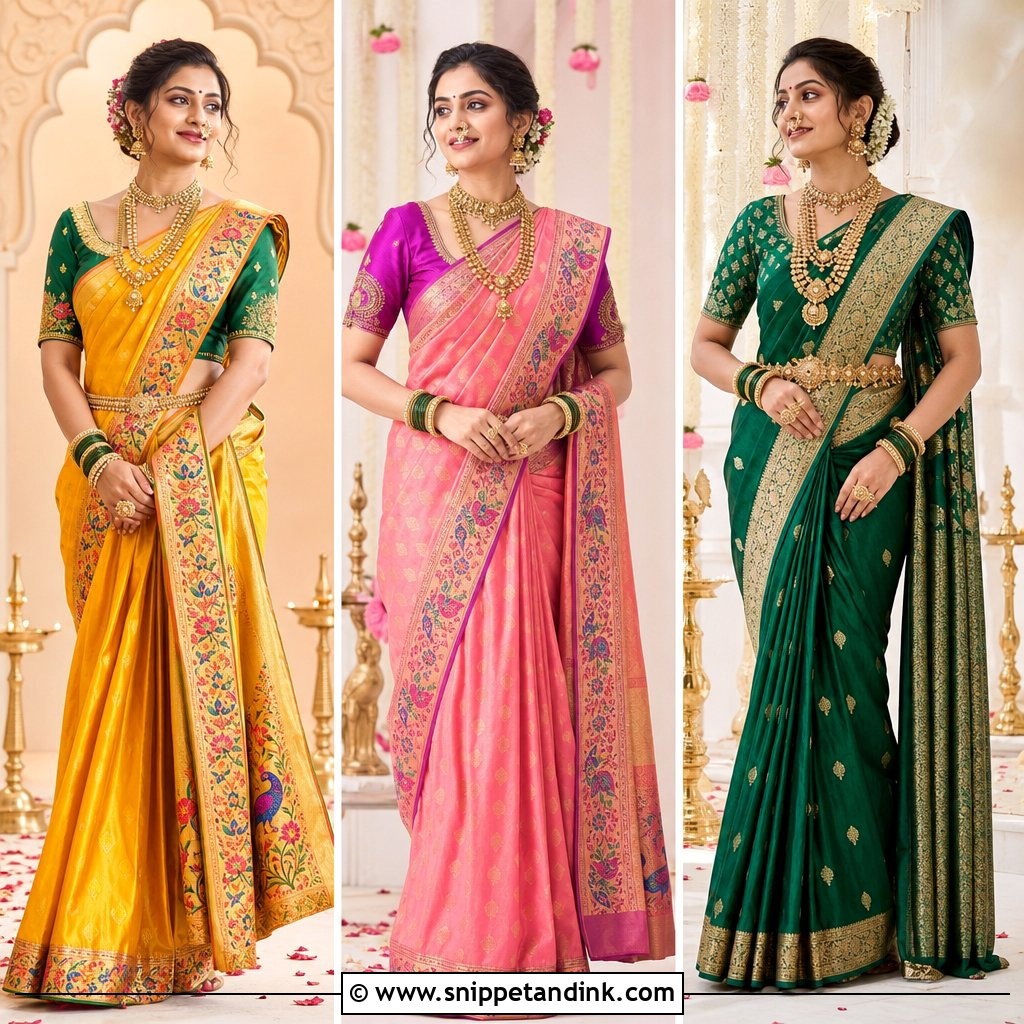
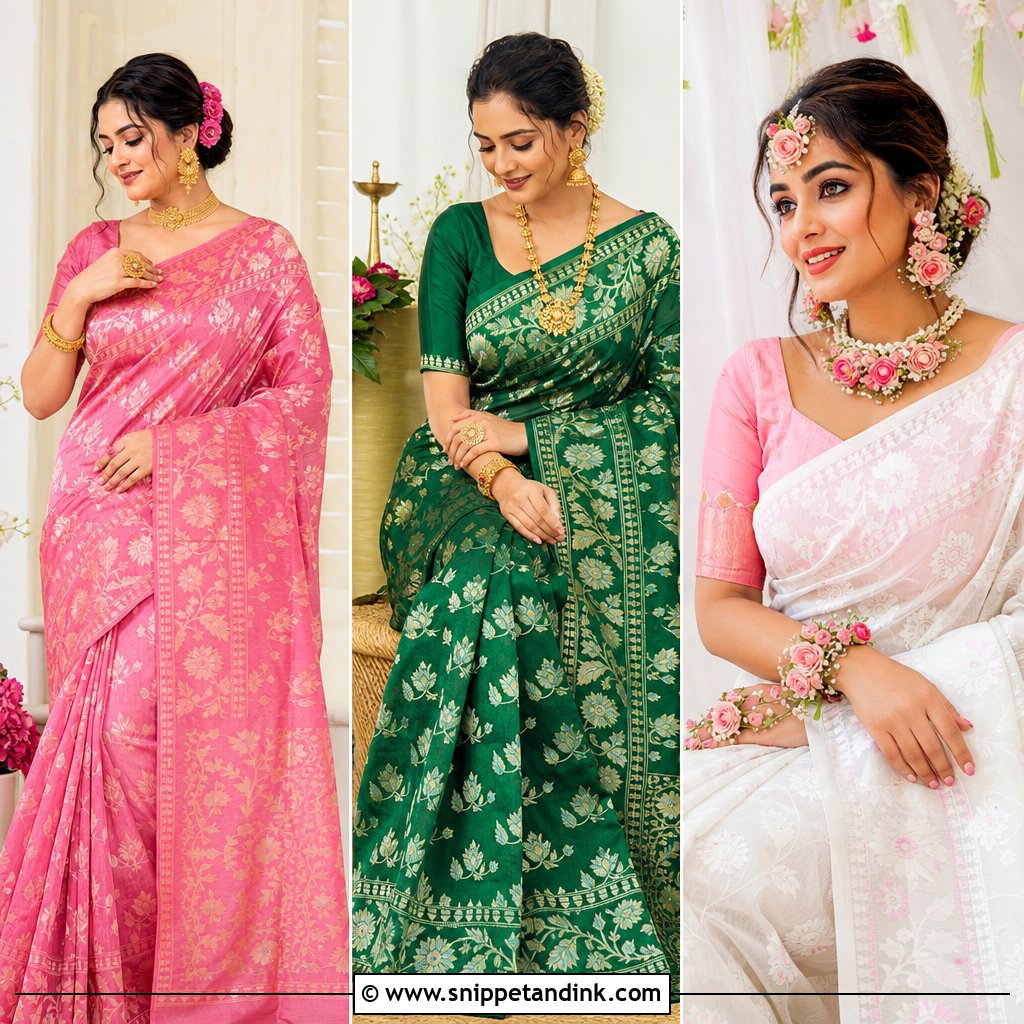
Green silk is the colour I’d suggest for a muhurtham when the bride doesn’t want red. Emerald, parrot, bottle and leaf green each suit different undertones, so drape the pallu across your face in daylight before deciding. A red, gold or pink blouse is the classic contrast. Temple necklaces, a matha patti, anklets and a kamarbandh build it into a full bridal look. A bun of jasmine and small roses adds fragrance. Pre-wedding rituals and family ceremonies suit it equally well.
6. White And Gold Karnataka Bride
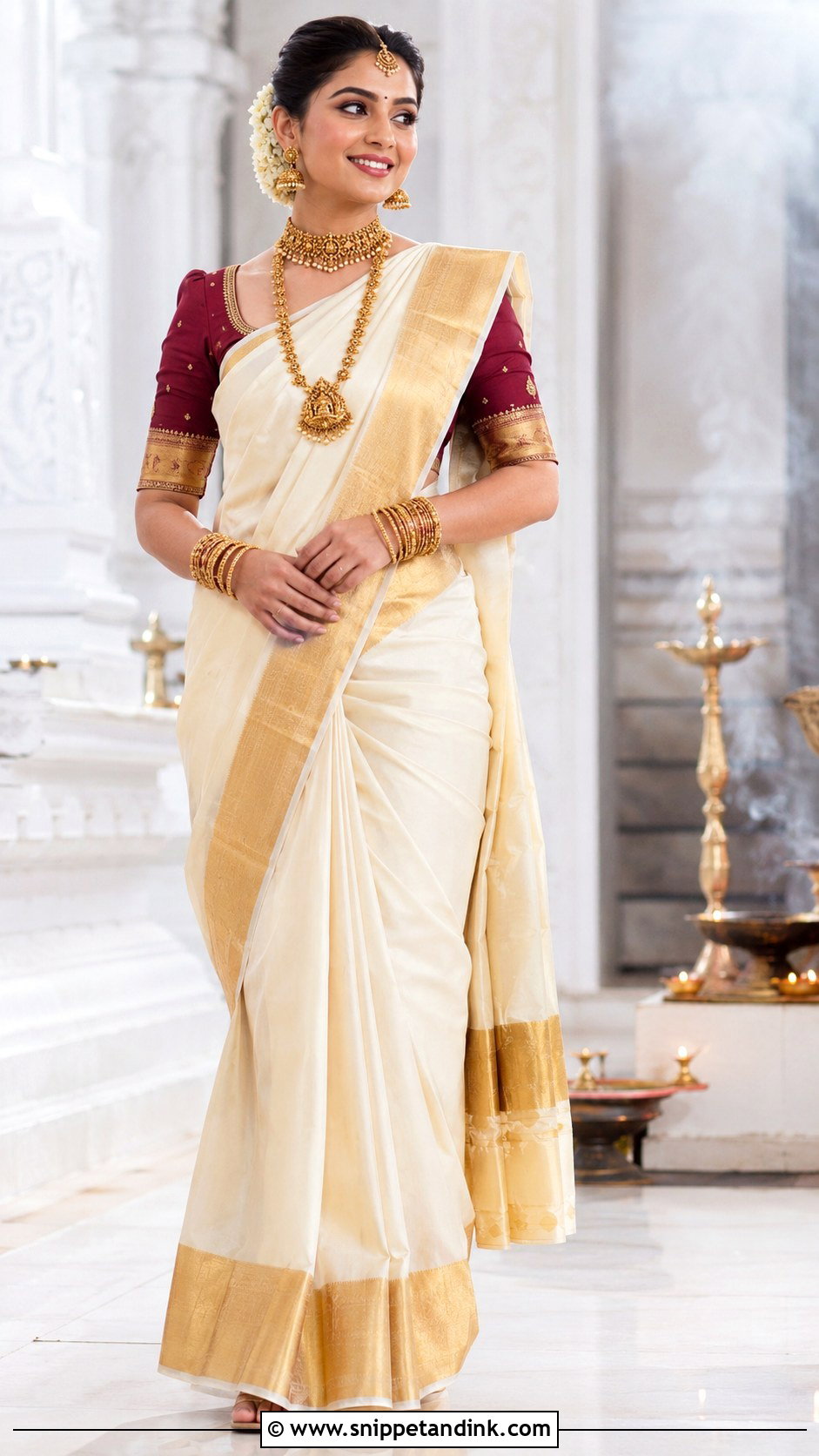
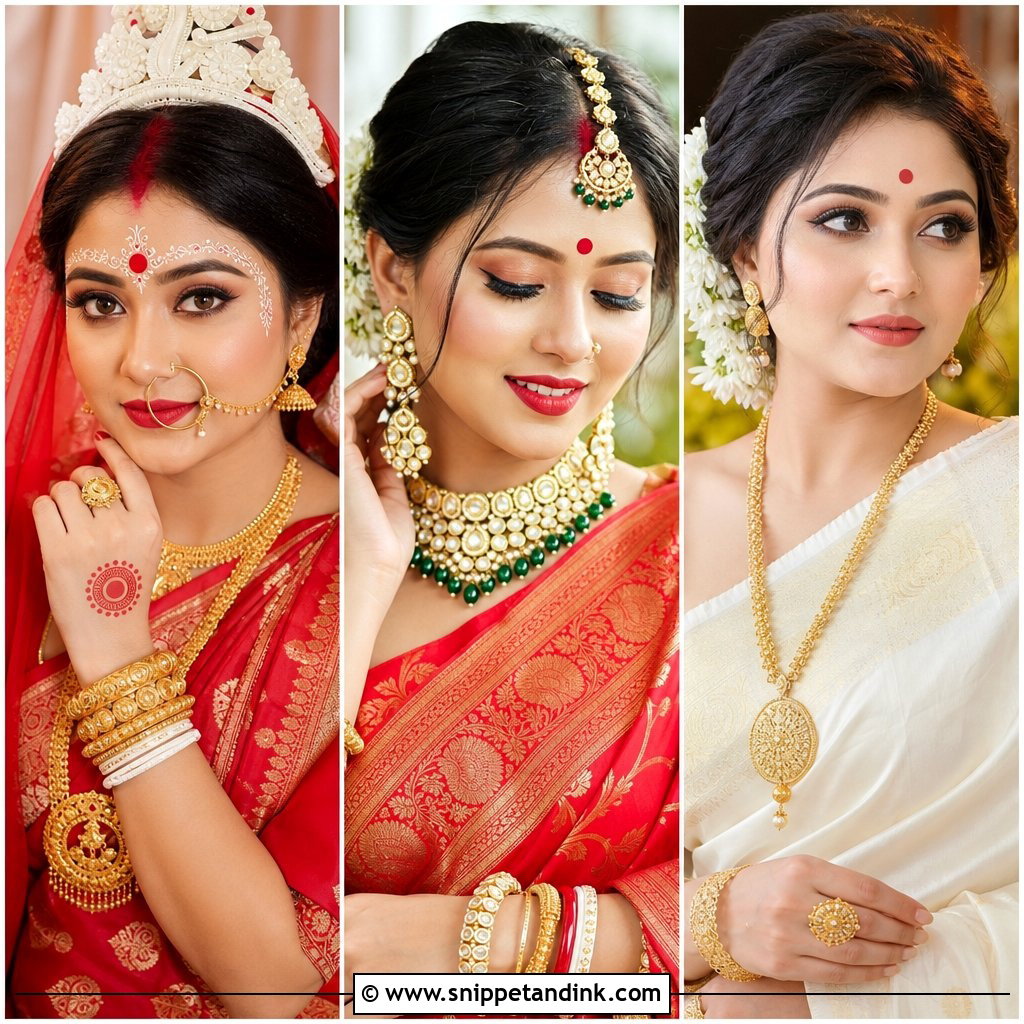
Ivory and gold reads calm, but it needs enough gold to look bridal rather than festive. I choose a silk with a wide zari border and a blouse in gold, maroon or green. Choker, long necklace, jhumkas, bangles and a maang tikka bring the weight back. My caution: cream silk shows turmeric and kumkum instantly, so for rituals where these are applied, plan a second saree. Soft gold eye shadow and a rose or coral lip keep it fresh.
7. Kodava Saree Karnataka Bride
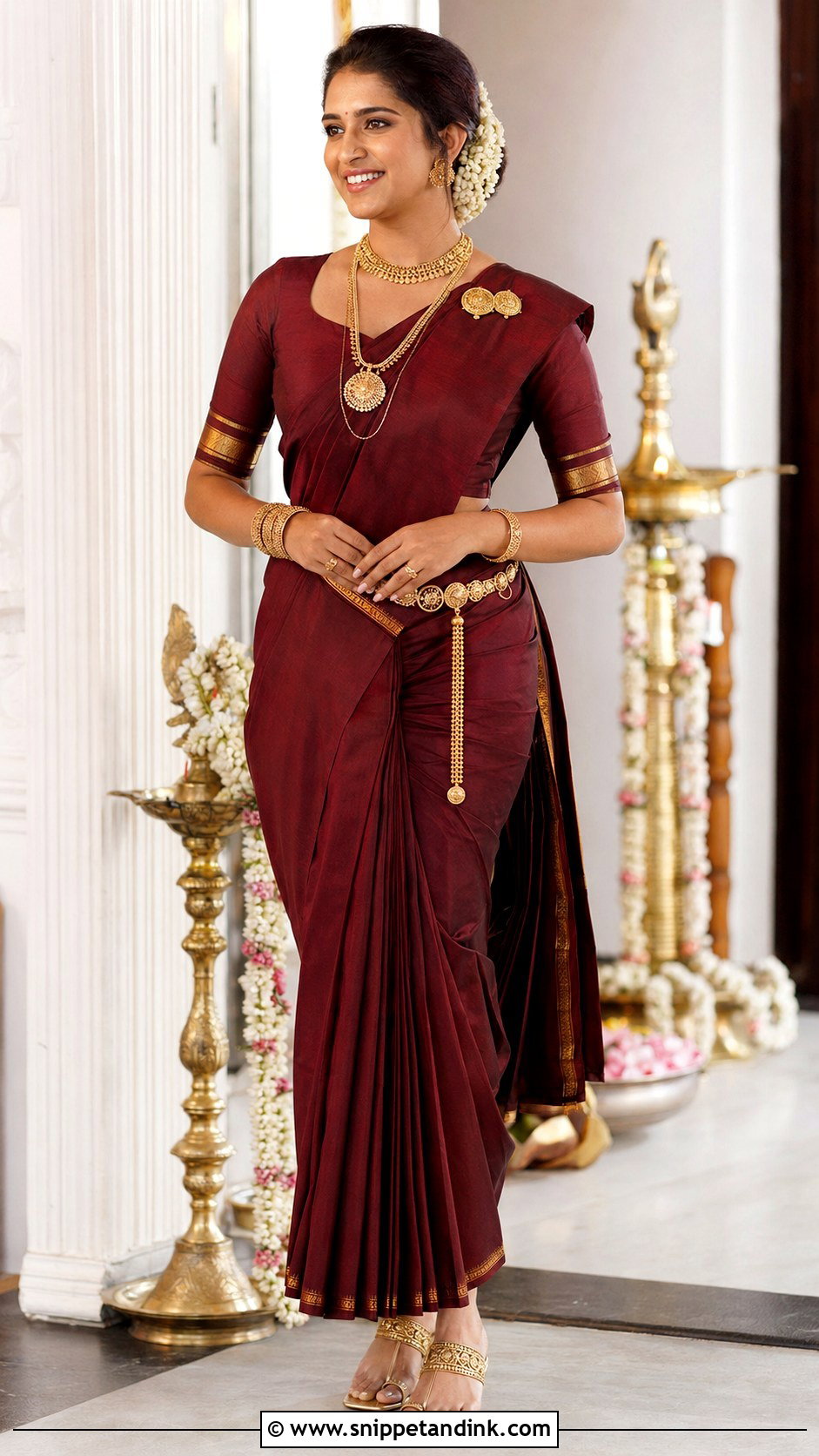
The Kodava drape is unlike any other in this list: the pleats sit at the back and the pallu comes from behind over the right shoulder, where it’s pinned. That changes how jewellery and hair work, because the front of the body is smooth and the shoulder carries the pin. I’d book a draper who has done Kodava weddings, since this drape is hard to learn from a video on the morning. Red, maroon, ivory and gold silks with traditional gold jewellery suit it. Keep makeup balanced; the drape is the story.
8. Bunt Bride Saree Look
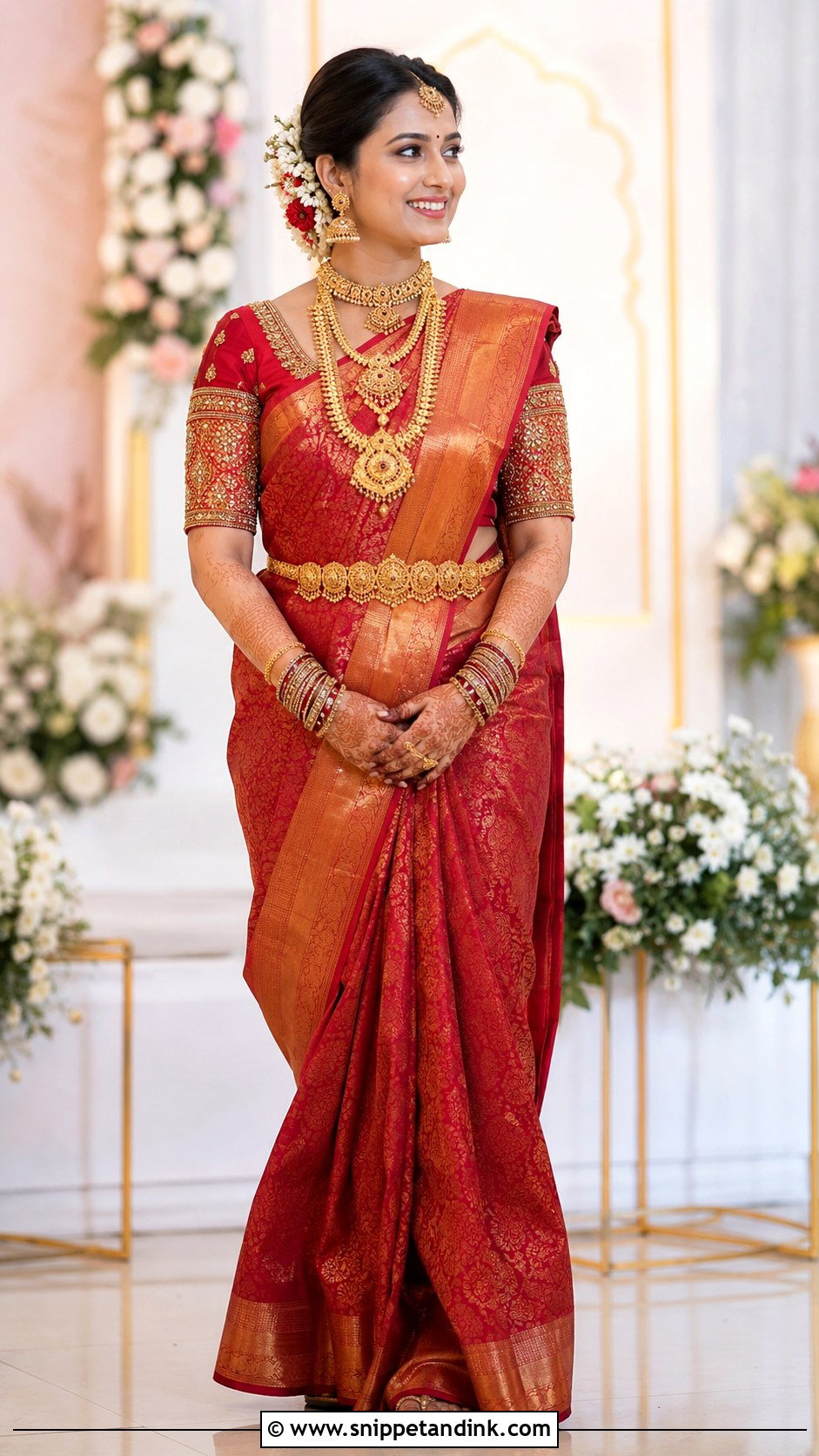
Bunt brides from coastal Karnataka typically wear heavy, prominent gold, and the styling should plan around it. A rich silk in red, gold, green or maroon with a zari or embroidered blouse gives that gold a backdrop. Choker, long chains, heavy earrings, bangles, rings and a waist belt are layered generously. I check earring weight at the trial, because heavy earrings worn for a full day can strain the earlobe; ear chains (sahare) take some of that load. Glowing skin, defined eyes and a deep pink or red lip finish it.
9. Kasuti Embroidery Karnataka Bride
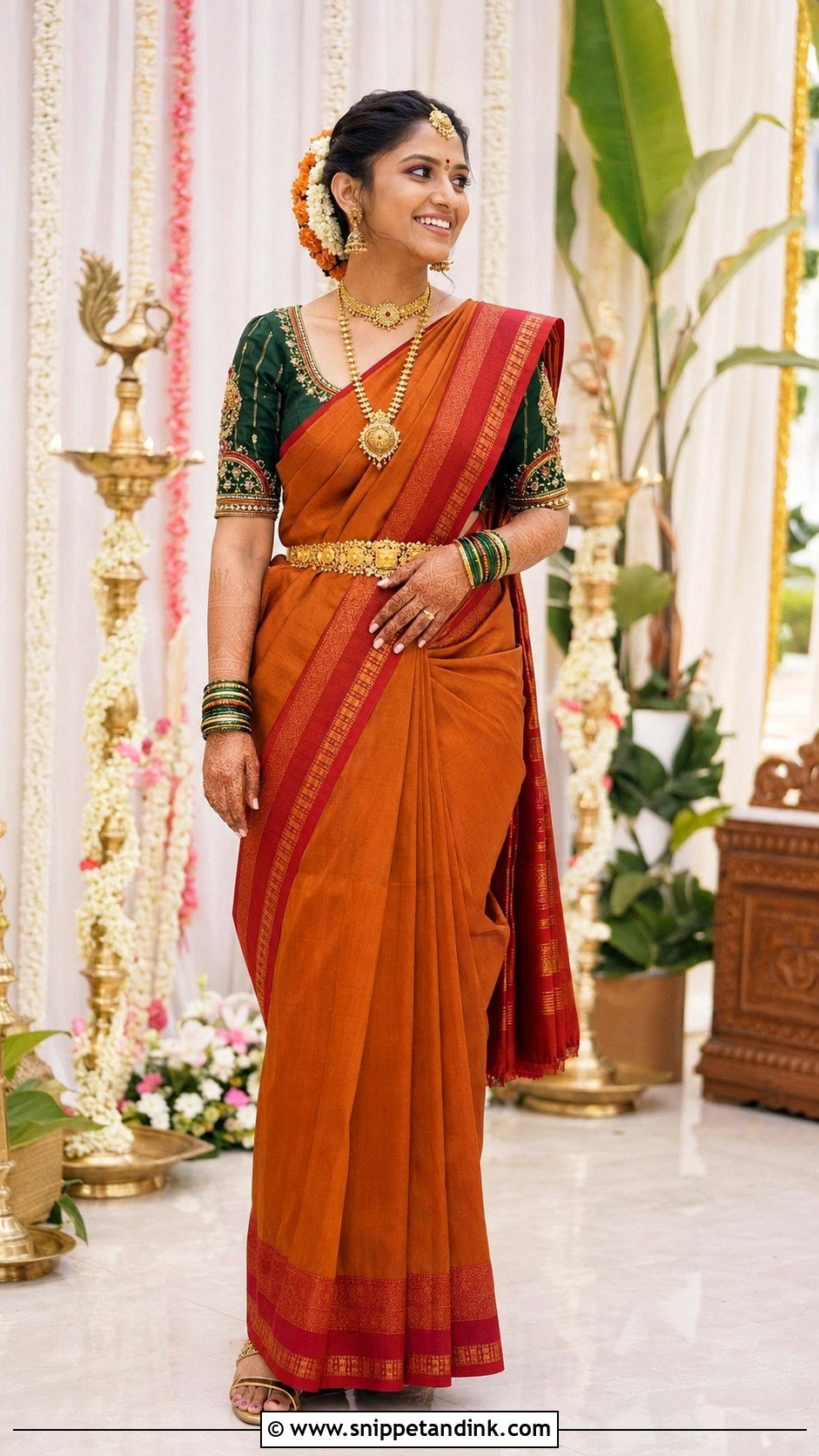
Kasuti is hand embroidery from the Dharwad region, worked by counting threads so the back looks almost as neat as the front. It traditionally features motifs like temple towers and chariots, and it reads best on a solid ground. I’d choose maroon, mustard, green, navy or rust silk and let the embroidery speak. Antique gold, glass bangles and a simple maang tikka are enough. Soft makeup and a jasmine bun keep the focus on the textile work at an intimate wedding or engagement.
10. Temple Jewelry Karnataka Bride
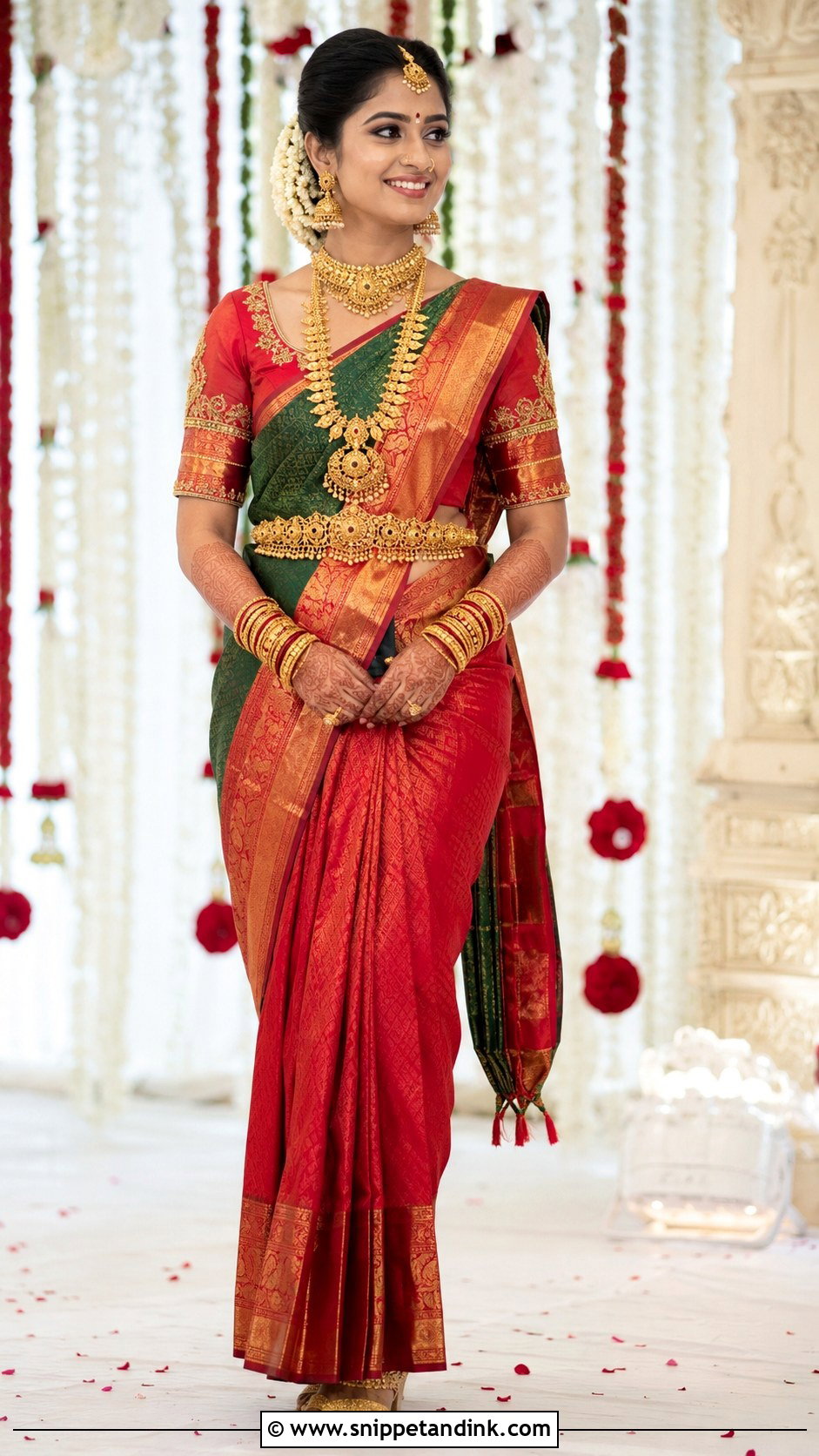
Temple jewellery is cast with goddess and temple motifs and has real weight, so this look is planned from the jewellery outward. A temple choker with a long haram, jhumkas, bangles, a maang tikka, a waist belt and hair ornaments form the set. Red, green, purple, orange or gold silk carries it. A long braid with jasmine and gold accessories makes the back view as detailed as the front, which matters when guests watch the ceremony from behind. Long-wear makeup with defined brows and kohl holds through the heat of the mandap.
11. Antique Gold Karnataka Bride
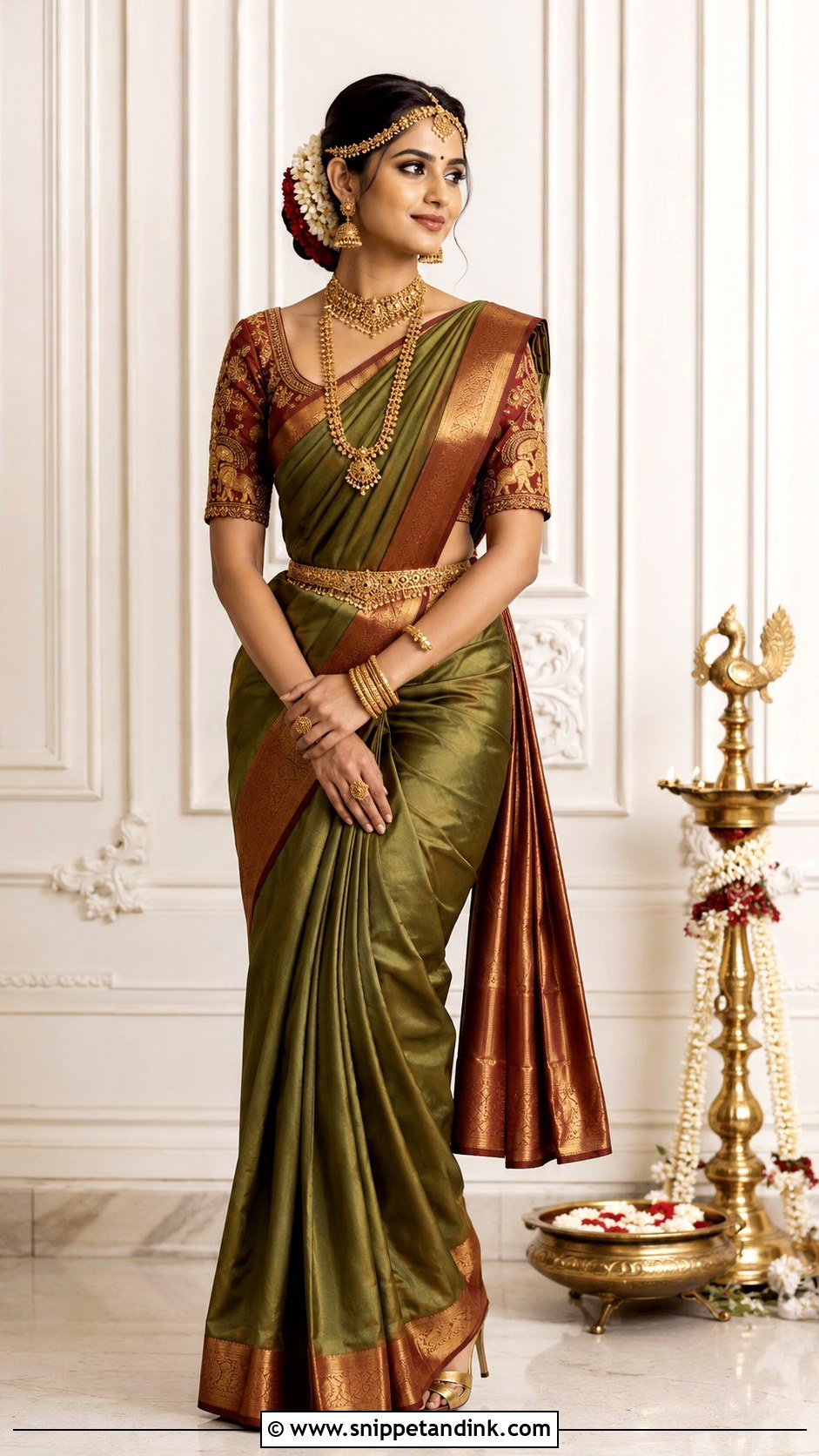
Antique gold has a darker, slightly oxidised finish that sits softer against the skin than bright yellow gold. I pair it with wine, rust, olive, mustard or maroon silk, because deep colours bring out its texture. Layered necklaces, jhumkas, bangles, a matha patti and a kamarbandh complete the set. Bronzed eyes and a muted terracotta lip match the warmth. A few red flowers in the jasmine bun add contrast.
12. Gold Kanjeevaram Karnataka Bride
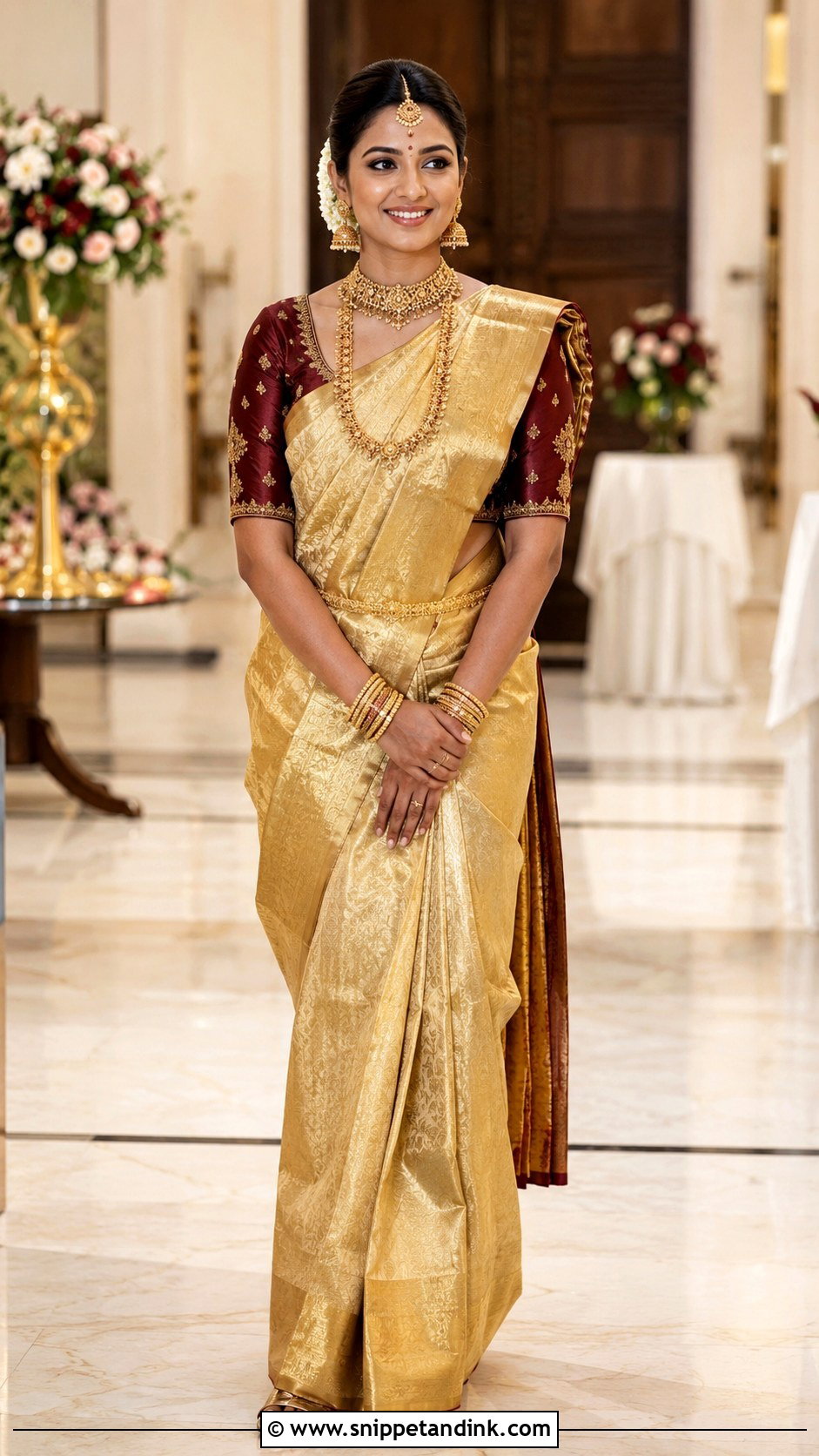
A gold Kanjeevaram has so much shine that the blouse becomes the colour. Maroon, green, red or magenta all work. Layer gold jewellery cleanly: choker, long necklace, bangles, jhumkas, maang tikka, and stop there, or it blurs into one mass of gold in photos. Indoor halls with warm lighting suit gold best. Glowing skin and a rose or berry lip complete it, with a sleek jasmine bun.
13. Pink Silk Saree Karnataka Bride
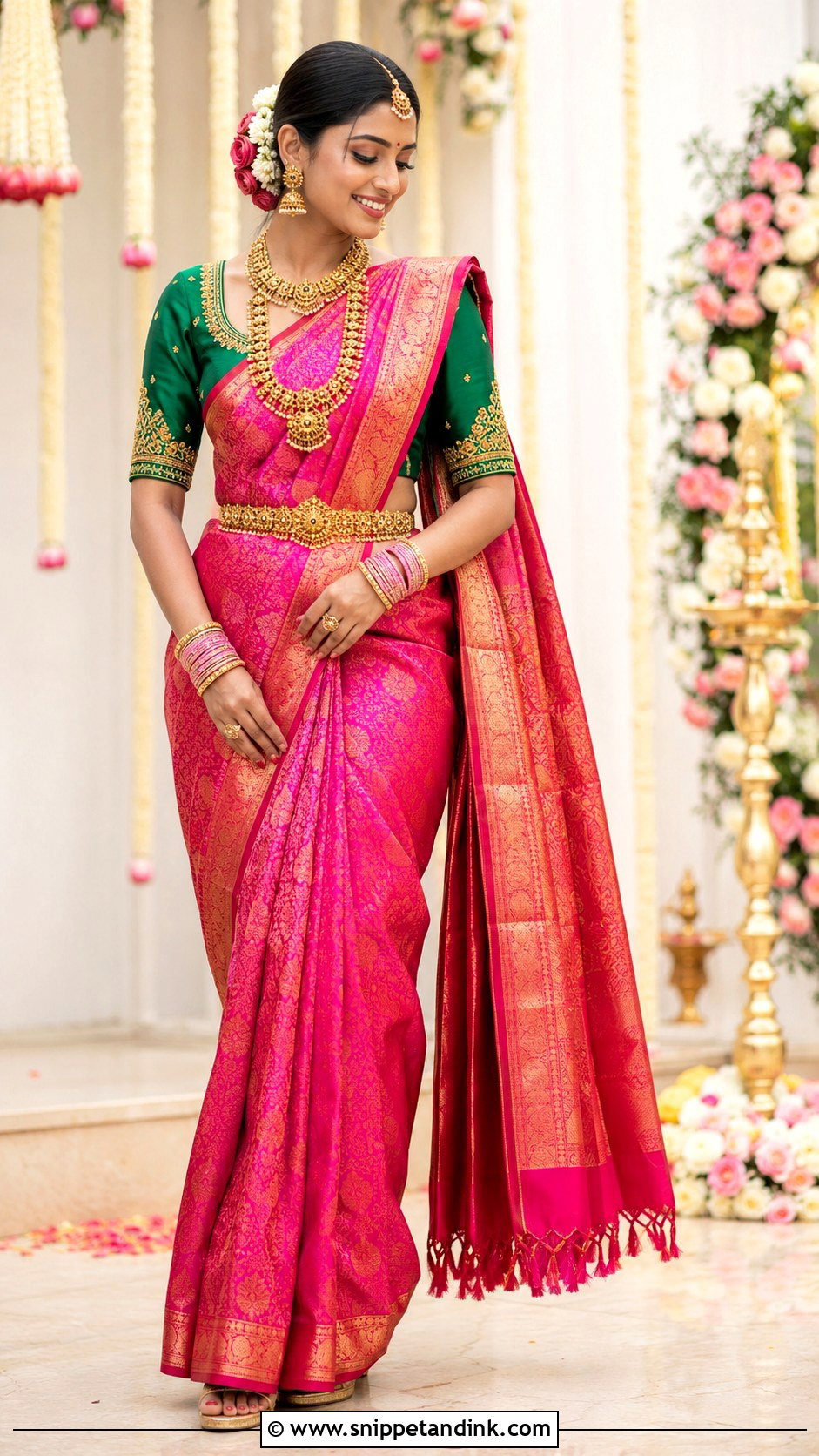
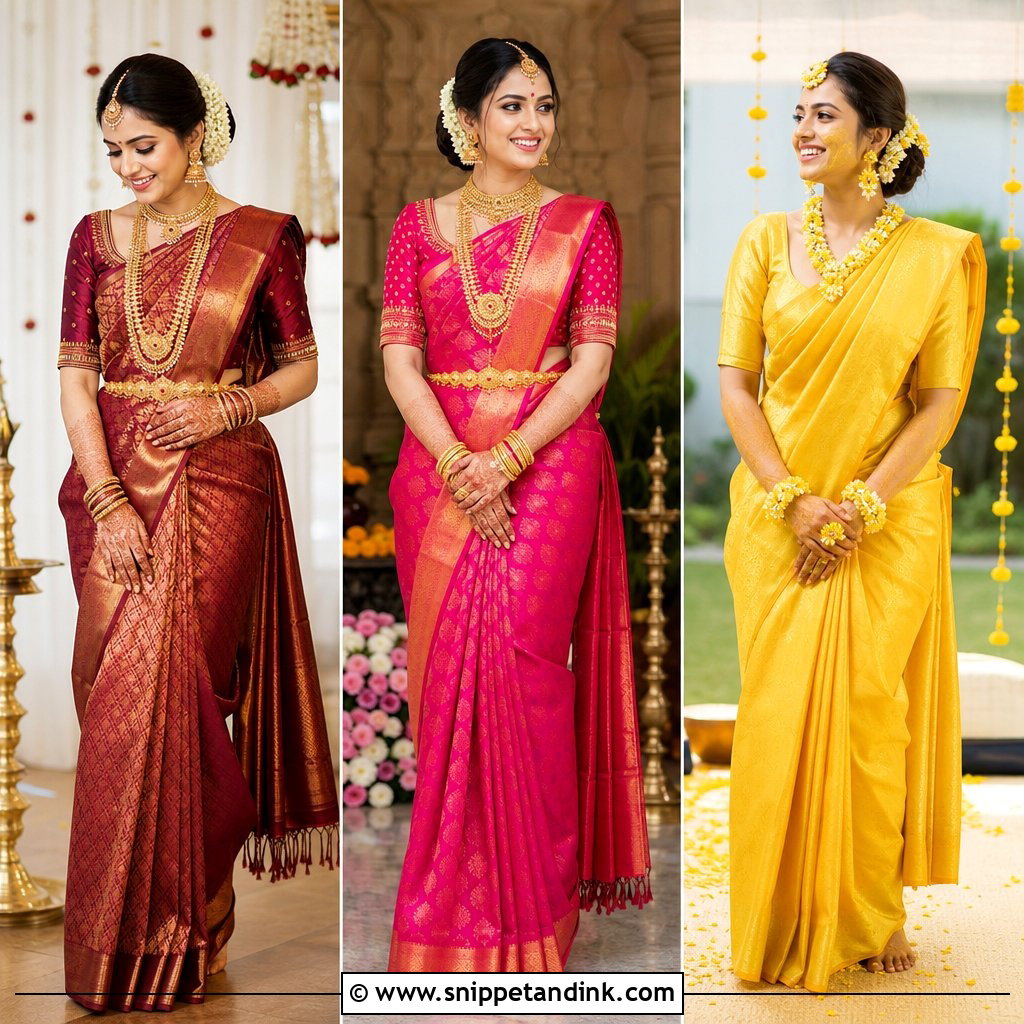
Rani pink, lotus pink and magenta all carry gold zari well and feel brighter than red. A contrast blouse in green, orange, maroon or gold brings in the South Indian colour pairing. Pink and gold bangles, a delicate waist belt, layered necklaces and jhumkas complete it. I’d match lipstick to the saree’s undertone; a blue-pink saree with a warm coral lip clashes on camera. A jasmine and rose bun finishes it.
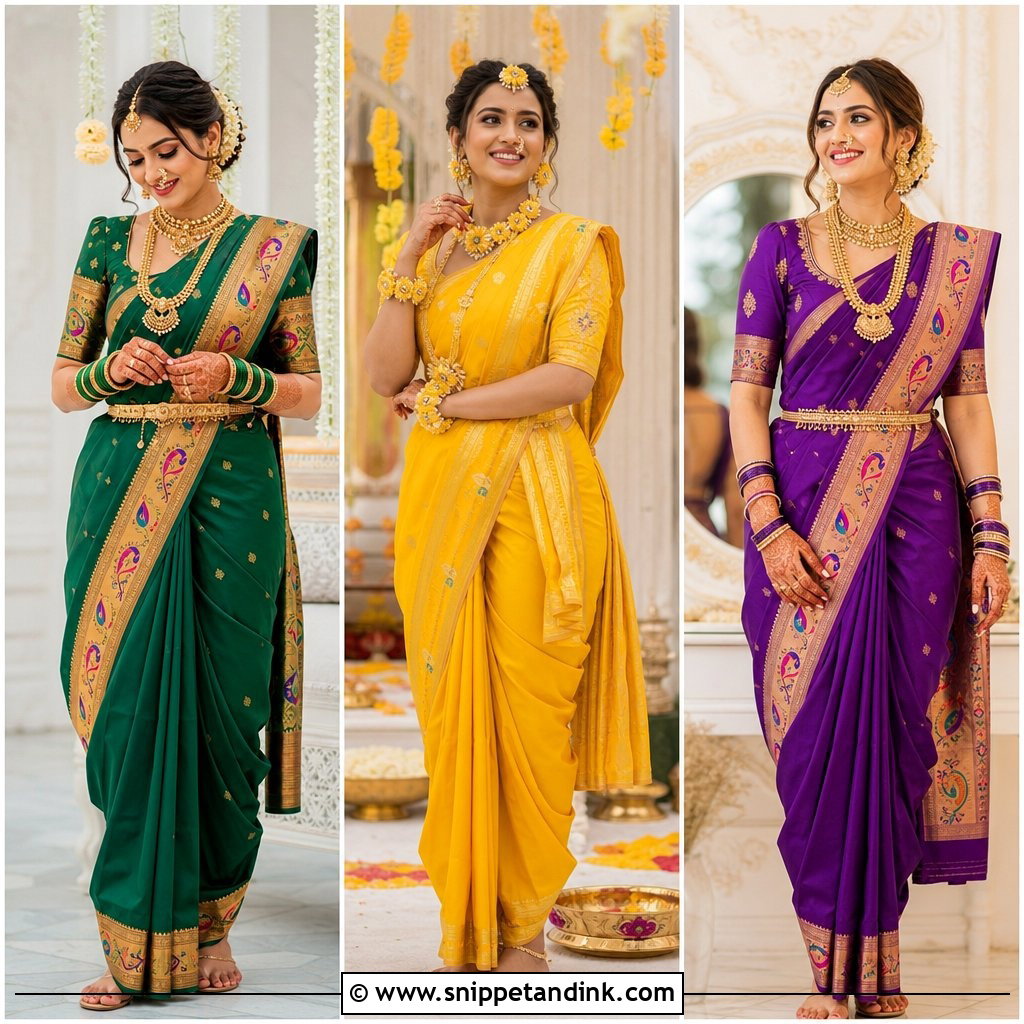
14. Yellow Saree Karnataka Bride
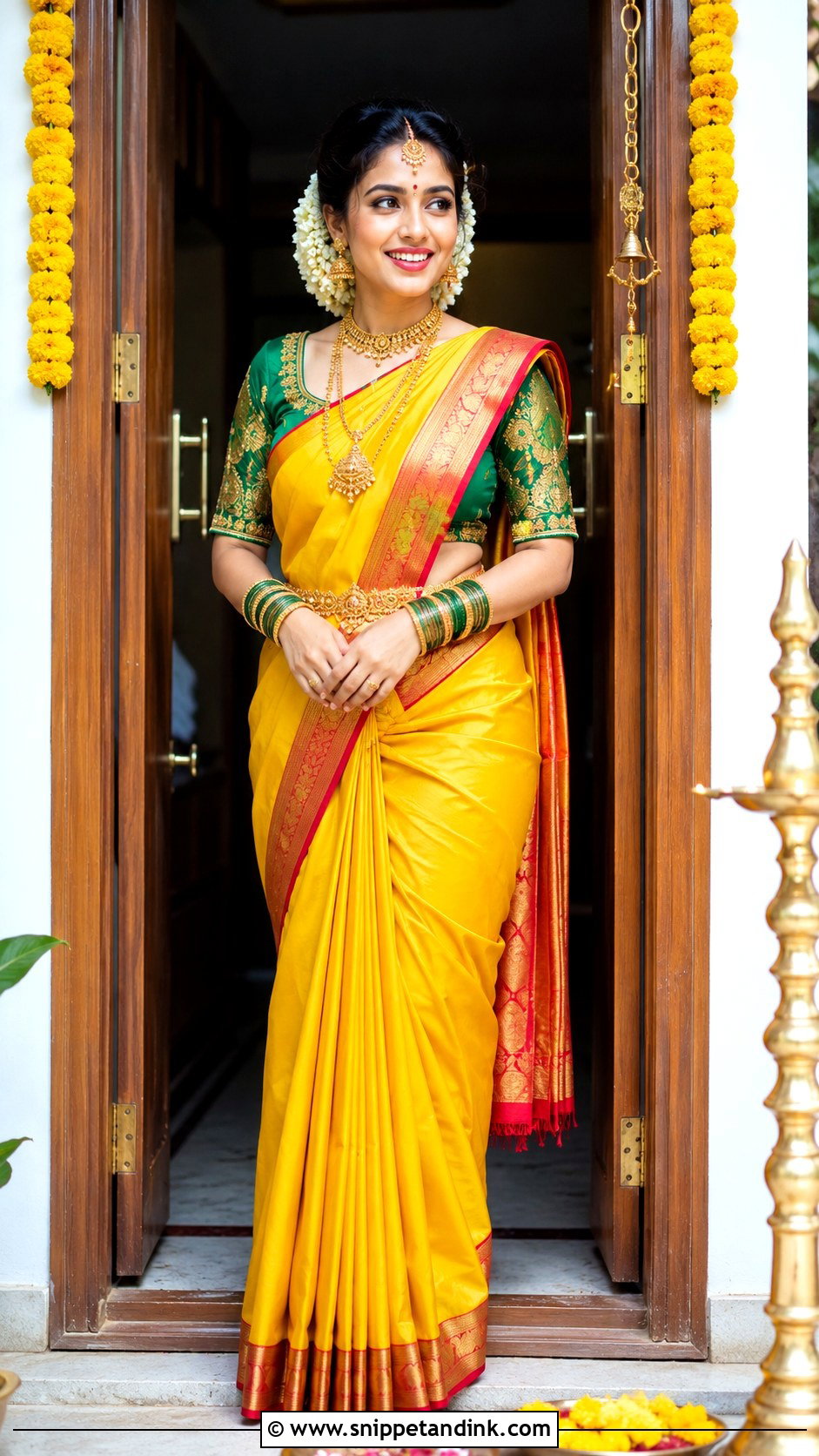
Turmeric yellow or mustard silk with a red or green border is the classic choice for haldi, pooja and early morning rituals. Glass bangles in green or red, fresh flowers and gold jewellery complete it. If turmeric paste is part of the ritual, choose cotton silk you don’t mind staining and waterproof makeup. Flat sandals or low heels help when you are getting up and down from the floor repeatedly.
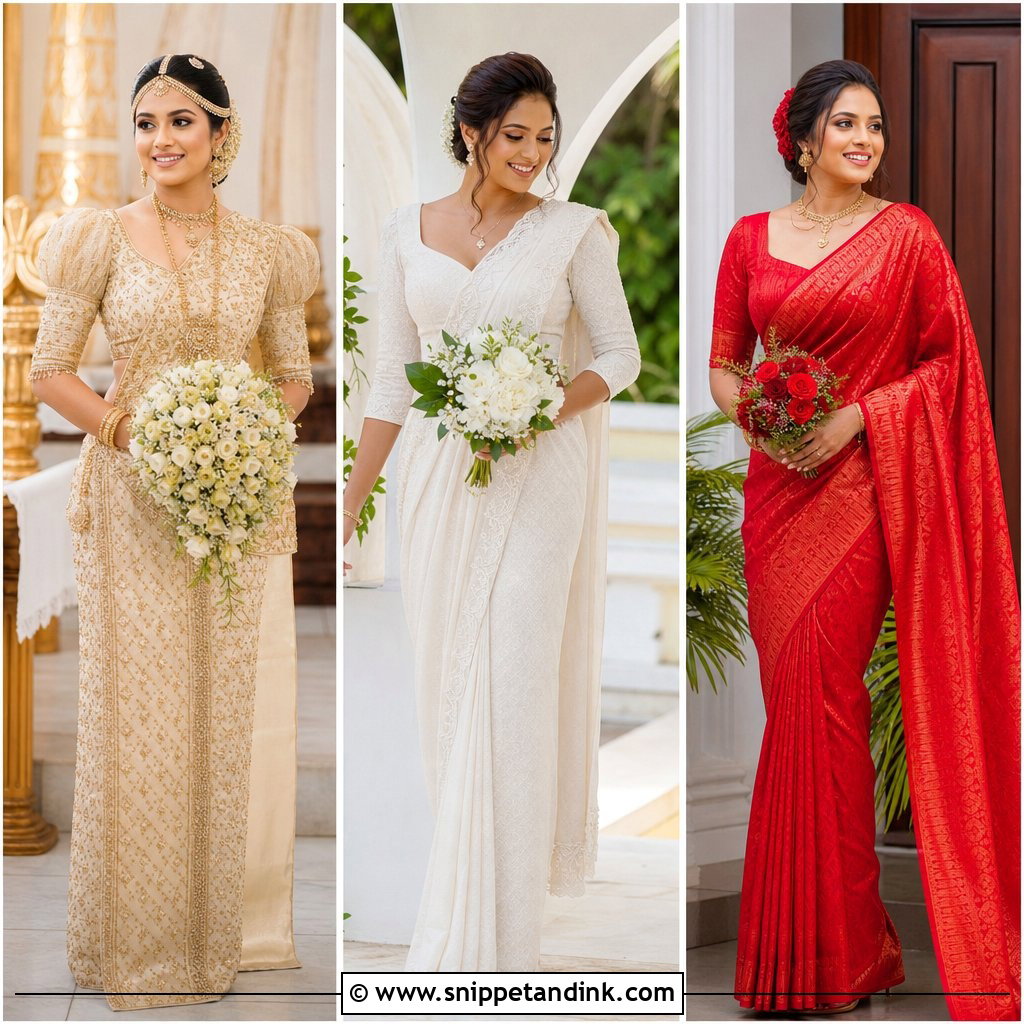
15. Orange Silk Saree Karnataka Bride
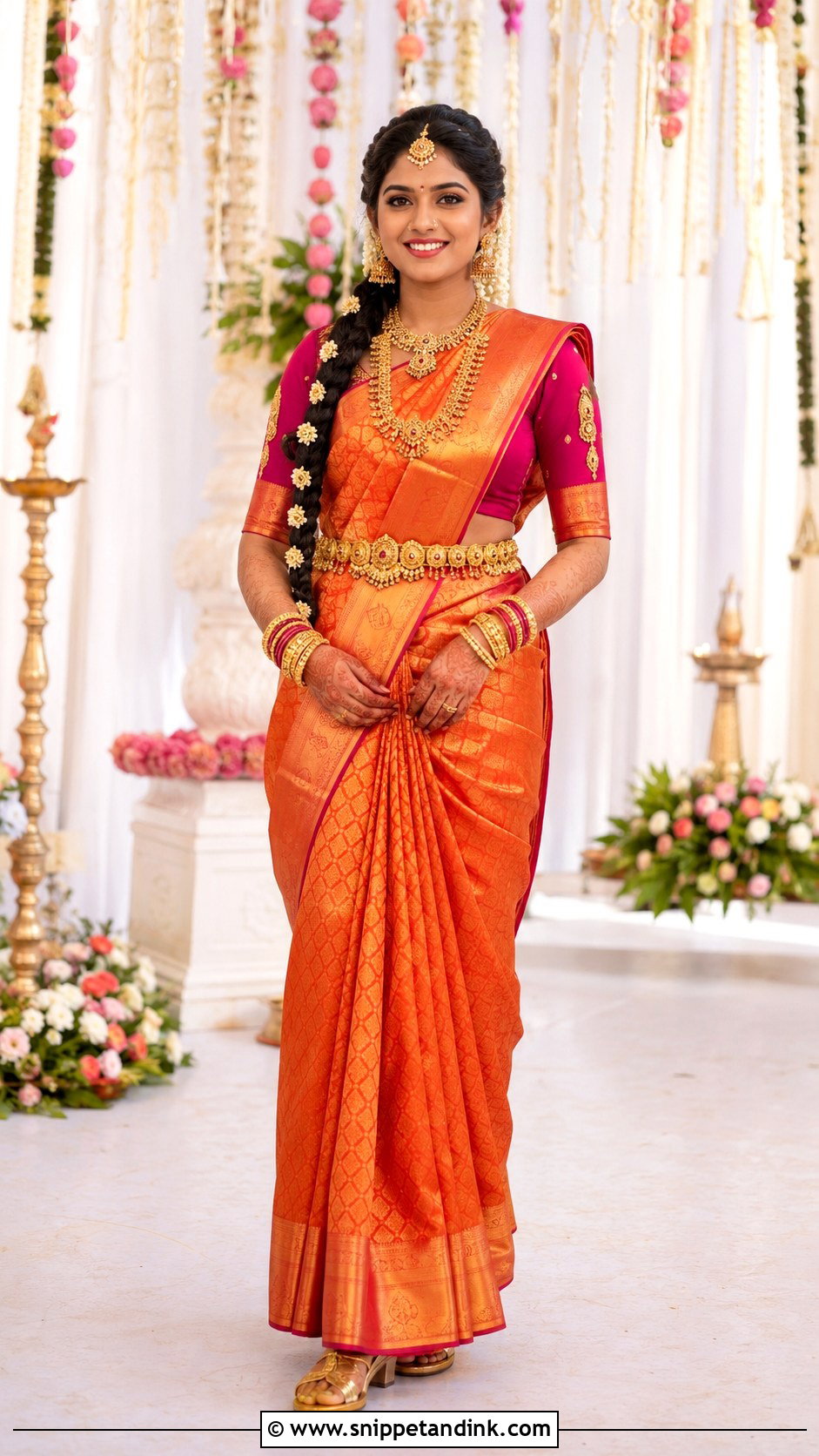
Orange is warm and bright under morning sun. Burnt orange, kumkum orange, coral and rust all suit gold zari. A green, red or magenta blouse gives strong traditional contrast. Temple jewellery, anklets, a maang tikka and a gold belt complete it. Warm gold eye shadow and a coral-red lip match the saree’s undertone, and a long braid with jasmine swings nicely through the saptapadi.
16. Maroon Saree Karnataka Bride
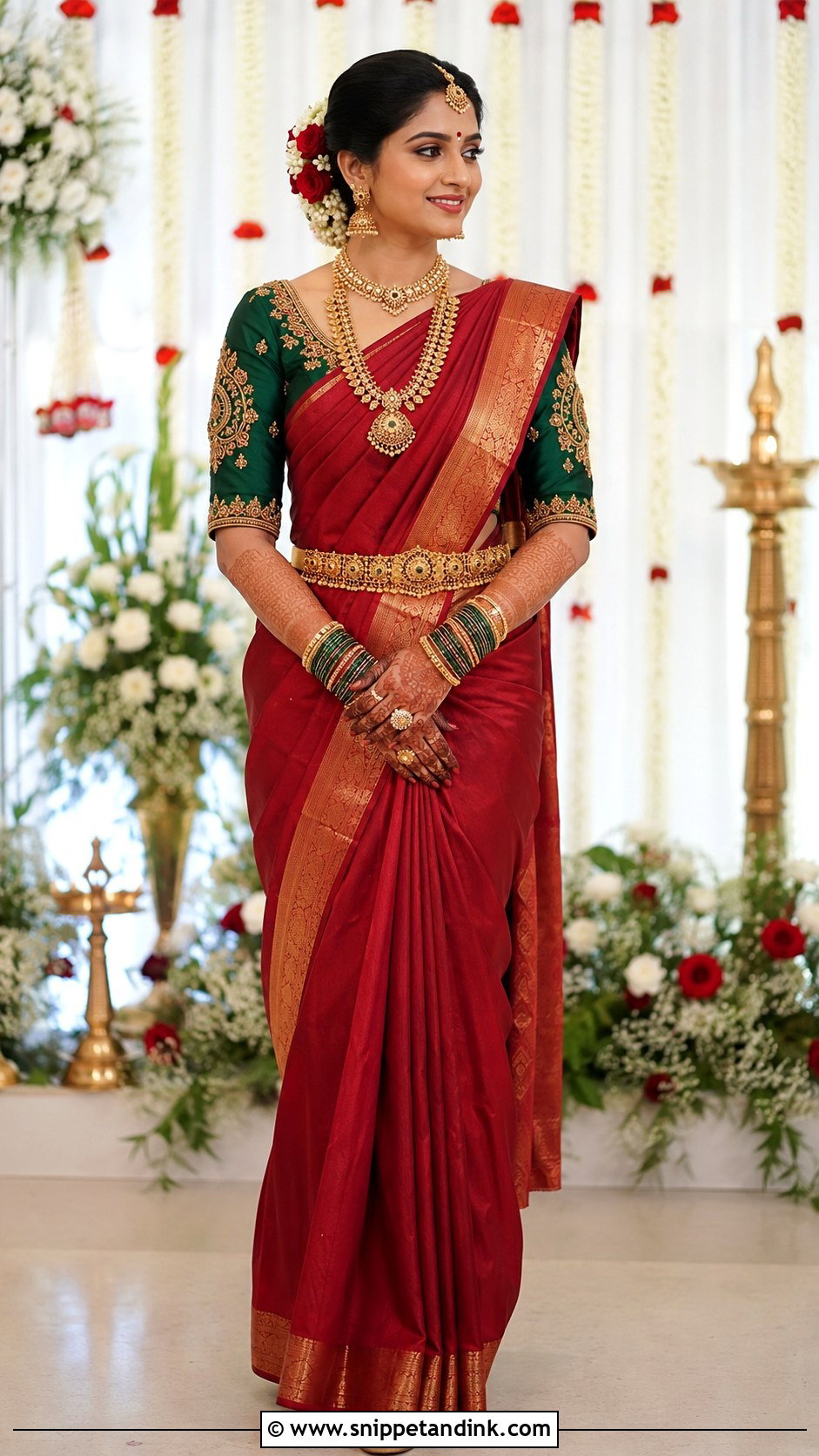
Maroon is the deepest of the bridal reds, and it suits brides who want a richer, more mature look for the main ceremony. A matching or green contrast blouse works. Antique gold necklaces, jhumkas, bangles, rings and a waist belt complete the bridal set. Maroon can look almost brown under poor lighting, so I lean slightly bolder on makeup here: smoky brown eyes and a wine lip. A bun with jasmine and red flowers keeps it bright near the face.
17. Purple Silk Saree Karnataka Bride
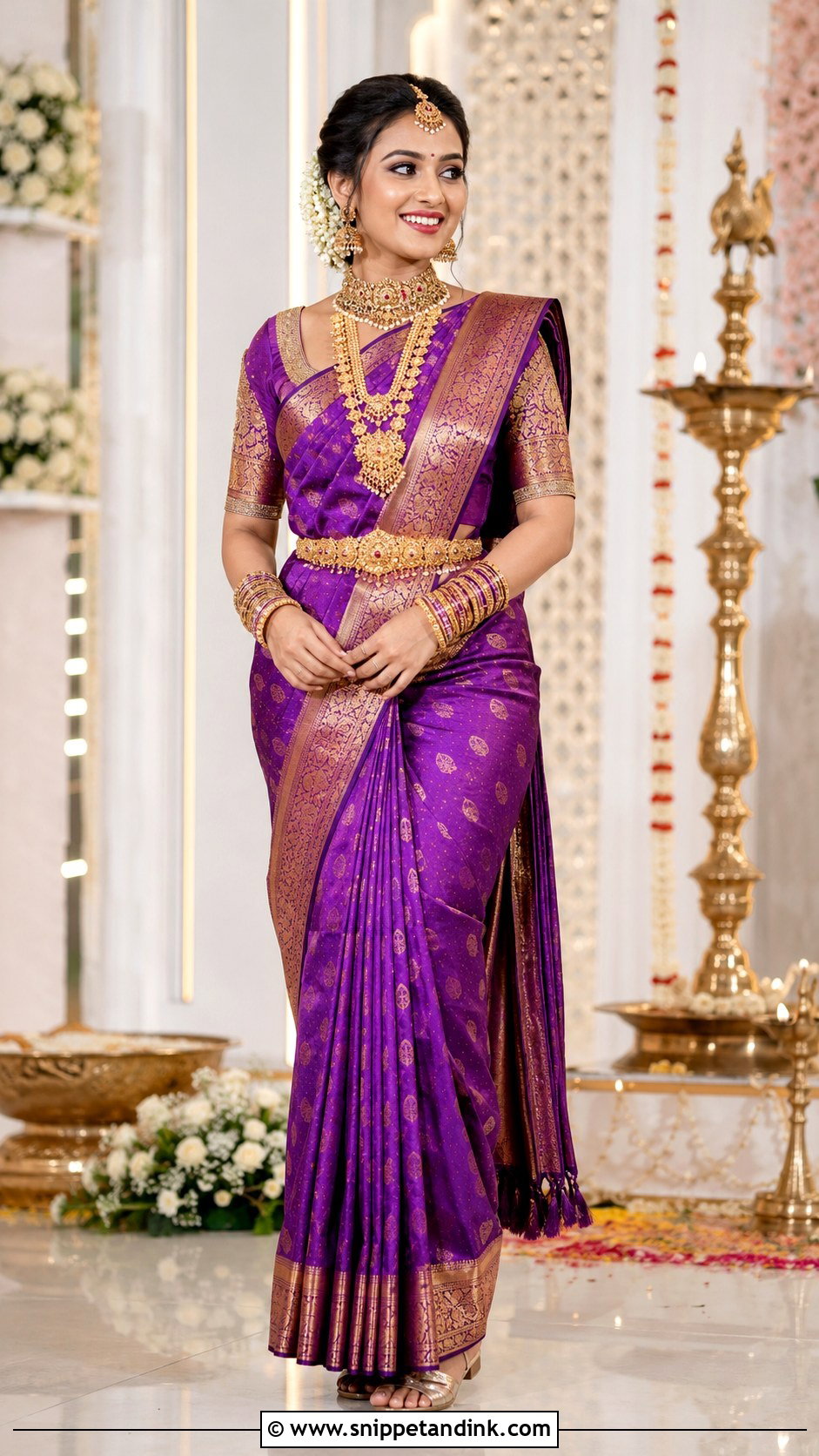
Purple is less expected for a Karnataka bride, though it stays traditional when the zari, jewellery and hair are classic. Royal purple, aubergine, violet and plum silks all carry gold well. A gold, pink or green blouse sets the level of contrast. A sleek jasmine bun keeps the colour from feeling too modern. Defined eyes with gold shimmer and a berry lip suit receptions and evening rituals.
18. Blue Silk Saree Karnataka Bride
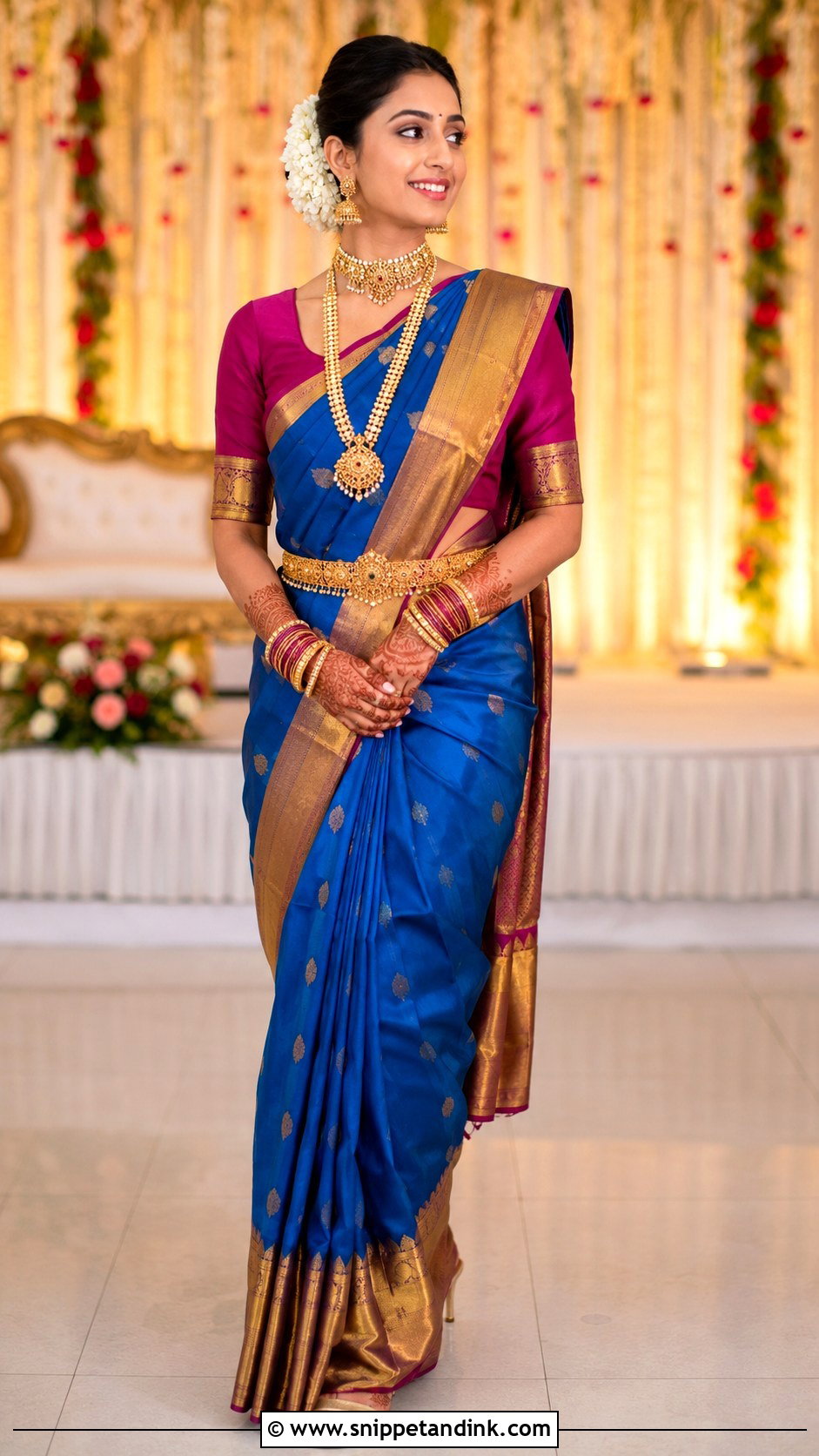
Navy, royal blue, peacock and teal silks are regal with gold zari and look rich under evening light. Blue is cool-toned, so I warm up the face: bronze eyes, peach blush, rose lip. A magenta, gold, maroon or green blouse makes it festive. Choker, long necklace, jhumkas, bangles and a waist belt complete it. A jasmine bun or braid keeps it rooted in regional bridal style.
19. Half Saree Karnataka Bride
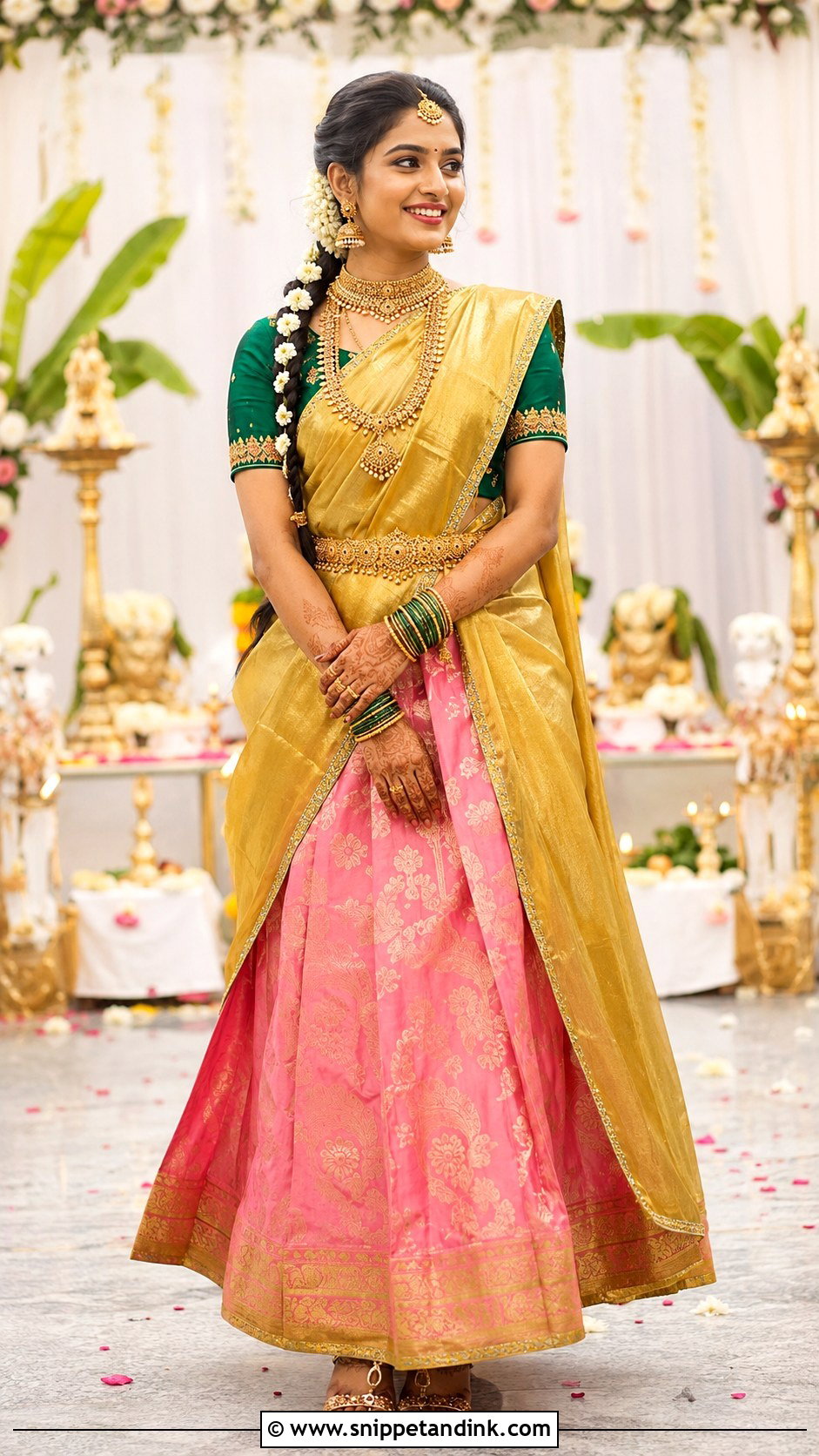
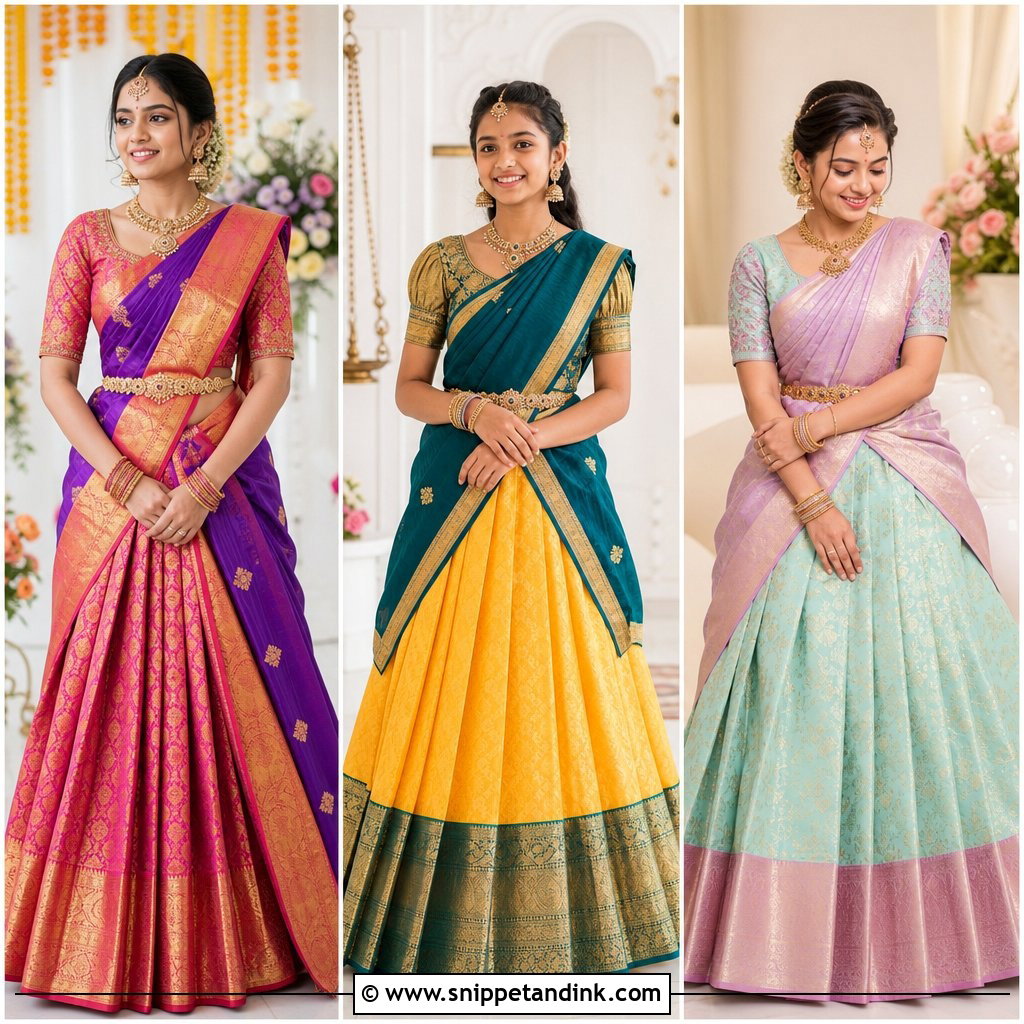
The half saree (langa voni) is a silk skirt, fitted blouse and a dupatta draped like a pallu. It’s lighter and easier to move in than a full saree, which is why I suggest it for engagement and pre-wedding rituals, and for younger brides. Pink and green, yellow and red or purple and gold are the festive pairings. Gold jewellery, bangles, a maang tikka and anklets complete it. A braid with flowers suits the silhouette. The skirt should clear the floor by a few centimetres so you don’t step on it while walking around the fire.
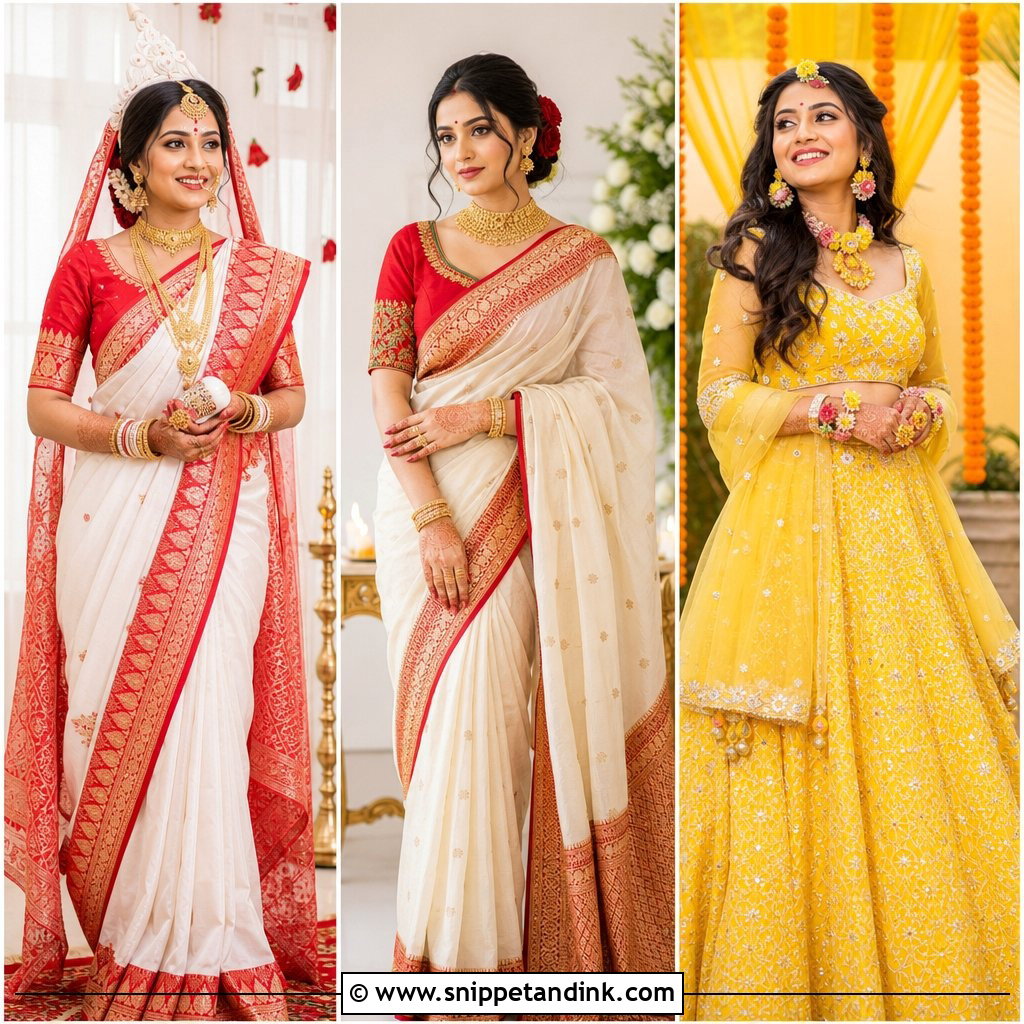

20. Reception Saree Karnataka Bride
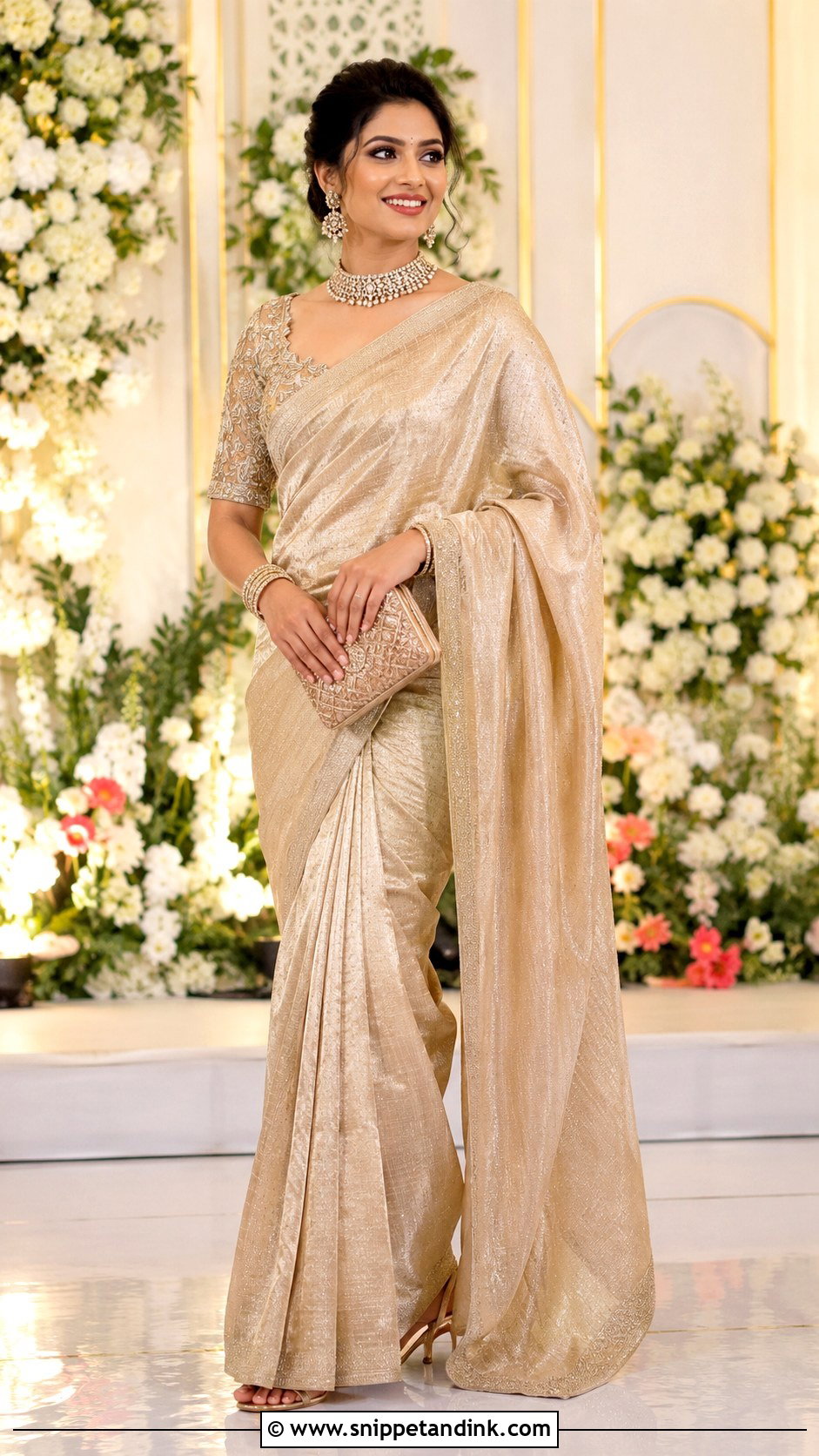
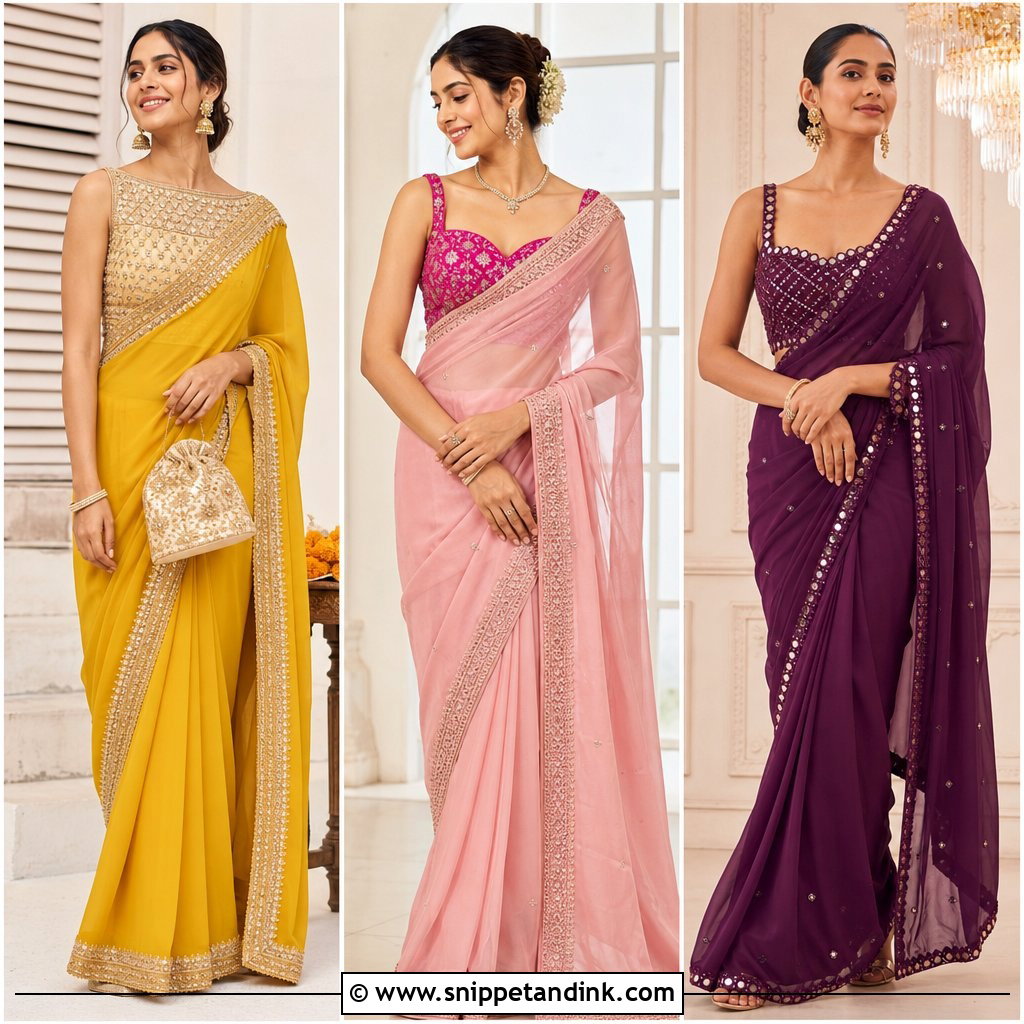
Receptions run long and involve hours of standing for photos, so I edit the jewellery down from the ceremony look. Silk, tissue, organza silk or a designer saree in gold, champagne, emerald, wine or blush all suit evening stage lighting. A structured blouse with embroidery or beadwork holds up in close-up photos. A statement choker, earrings, bangles and a ring are plenty. Soft bun, side waves or a modern braid depending on the saree.
21. Engagement Saree Karnataka Bride
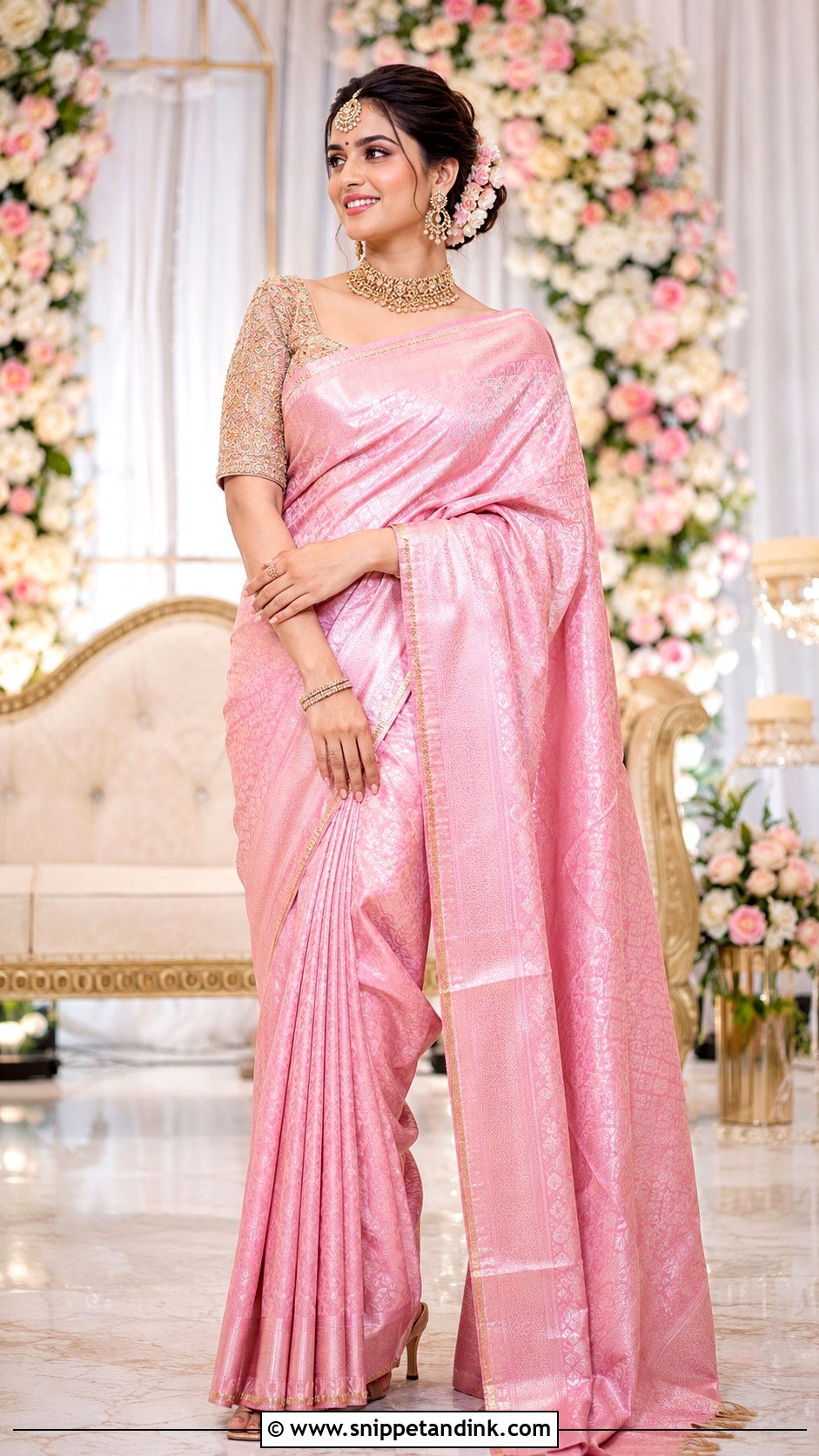
An engagement saree needs to photograph well and let you greet guests comfortably. Pastel pink, mint, lavender, peach or classic red silk all work, depending on how formal the ceremony is. A detailed blouse and gold or diamond-style jewellery give it a bridal finish without the full weight of the wedding set. Soft curls, a floral bun or a braid with a few flowers all work. I’d keep the maang tikka small so you can save the bigger piece for the wedding day.
22. Haldi Saree Karnataka Bride
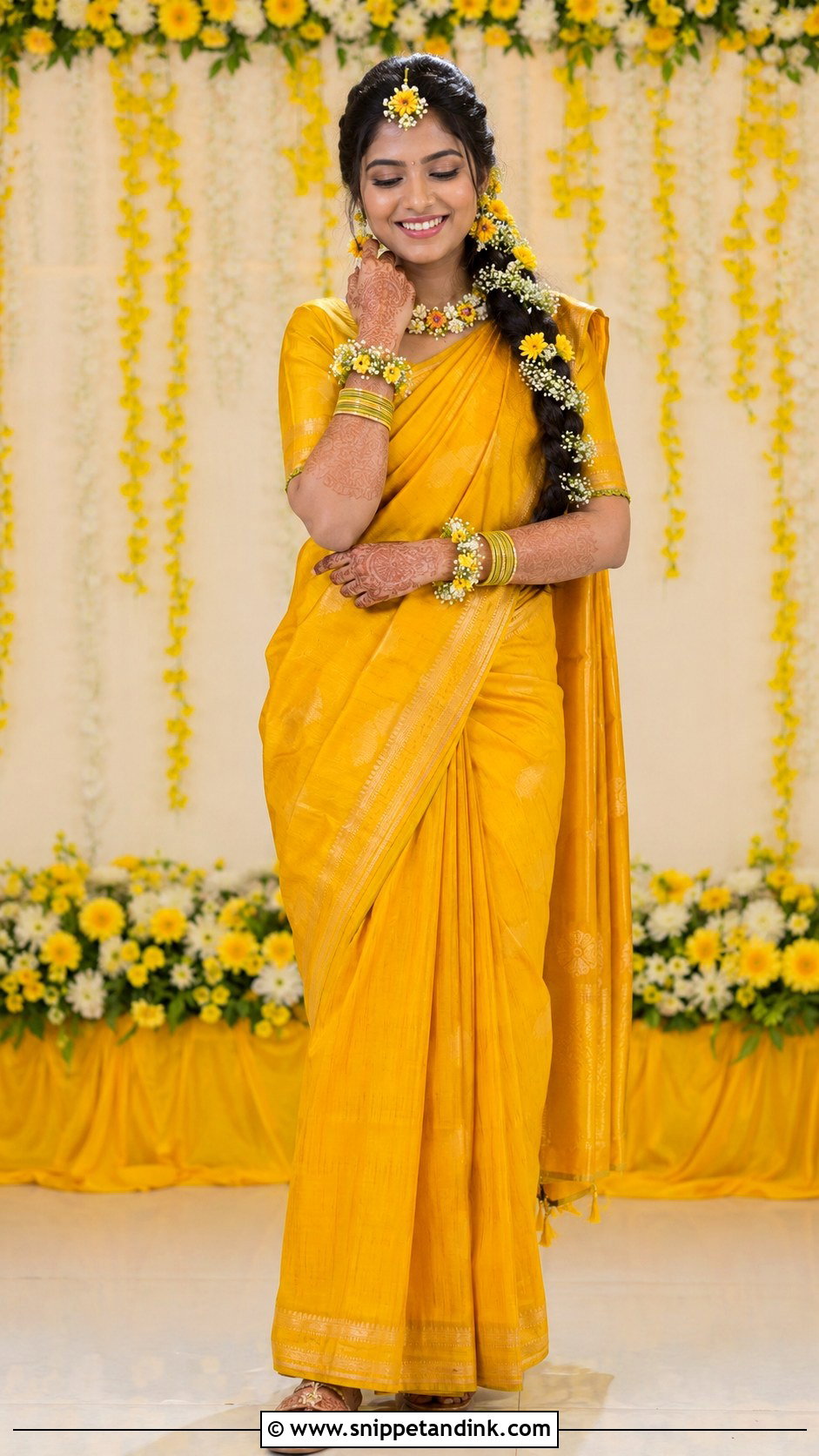
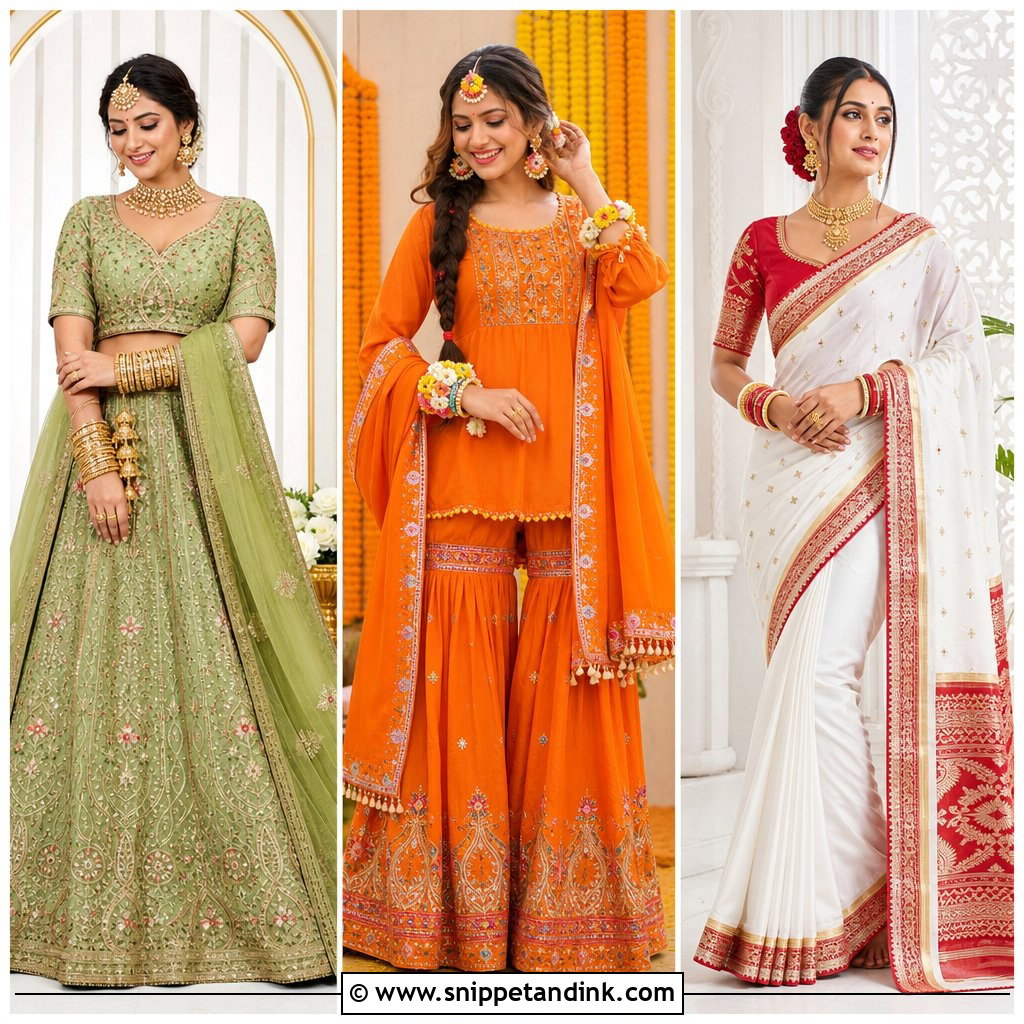
Haldi is messy, so the outfit has to be practical first. Yellow, mustard, cream or light orange cotton silk with a simple border handles turmeric better than pure silk, which stains for good. Floral jewellery replaces heavy gold, and glass bangles and flat sandals keep you mobile. A braid or low bun stays put while people apply paste. Waterproof, minimal makeup with a lip tint finishes a traditional haldi outfit that’s comfortable enough to enjoy.
23. Mehendi Saree Karnataka Bride
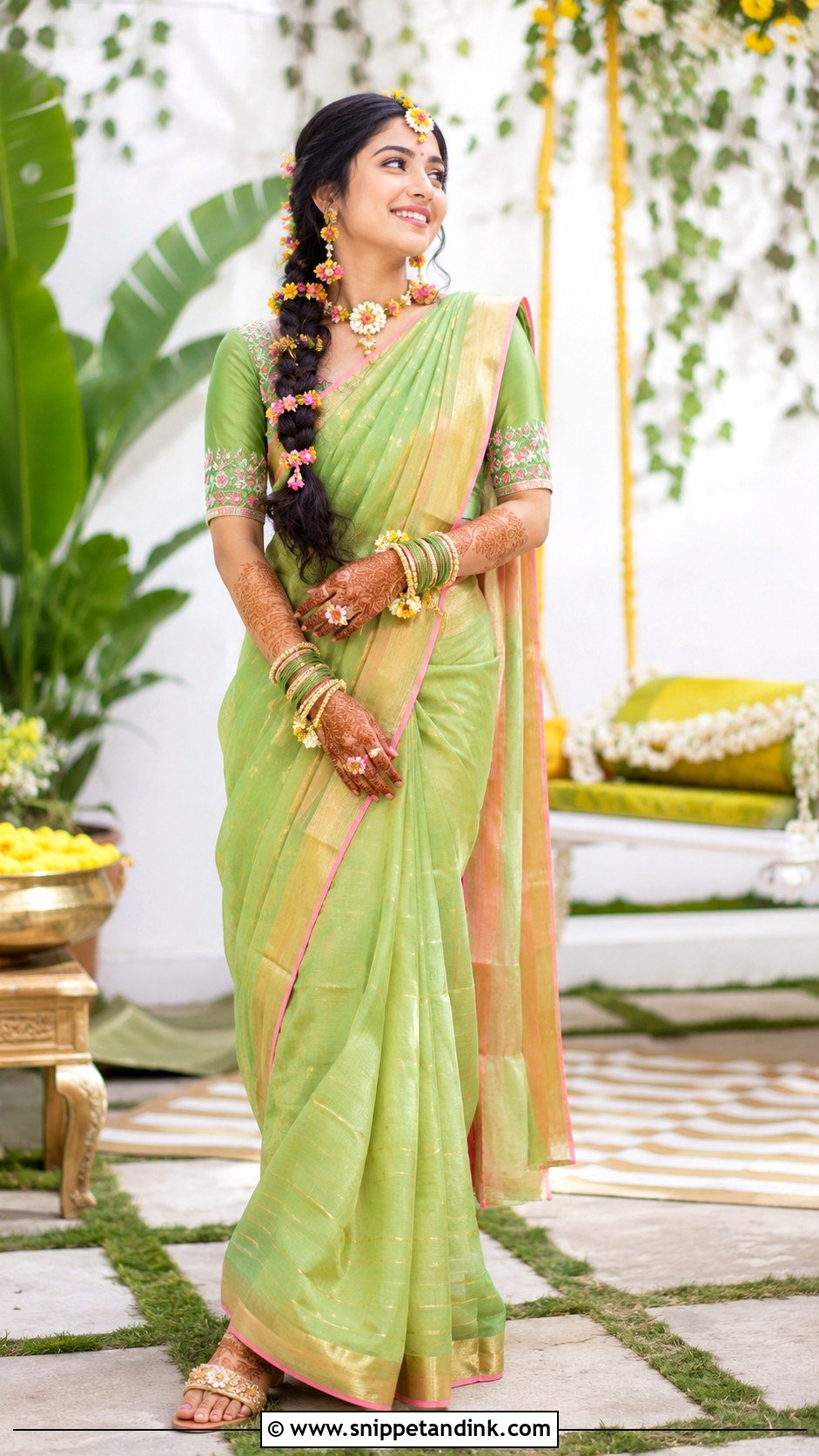
Mehendi application keeps your hands and forearms still for a long time, so the blouse sleeves need to stop above the elbow or roll up easily. Green silk, georgette or a light saree with gold, pink or orange accents works. Floral jewellery, light earrings and stacked bangles (worn after the henna dries) keep it comfortable. A side braid or soft bun keeps hair away from wet paste. Peach blush and a soft pink lip suit daytime or outdoor mehendi.
24. Simple Karnataka Bride
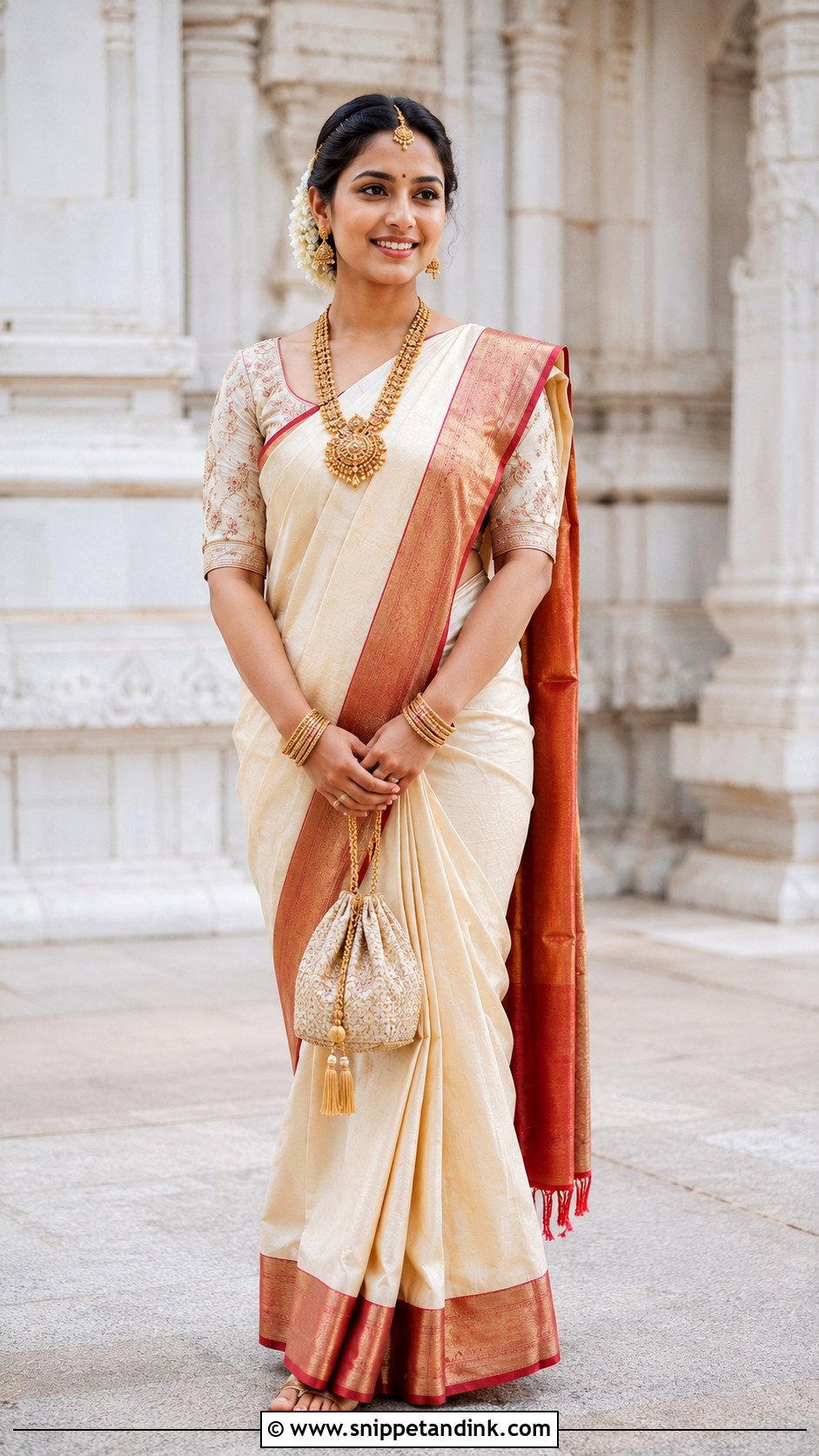
A simple look suits temple weddings and intimate ceremonies, where heavy jewellery can feel out of proportion. A classic red, cream, green or gold silk with a refined border, a plain or lightly embroidered blouse, one statement necklace, earrings, bangles and a small maang tikka are enough. A neat jasmine bun keeps it traditional. Natural, polished makeup and comfortable sandals complete the look. Restraint here makes the saree’s weave and the jasmine stand out.
25. Modern Karnataka Bride
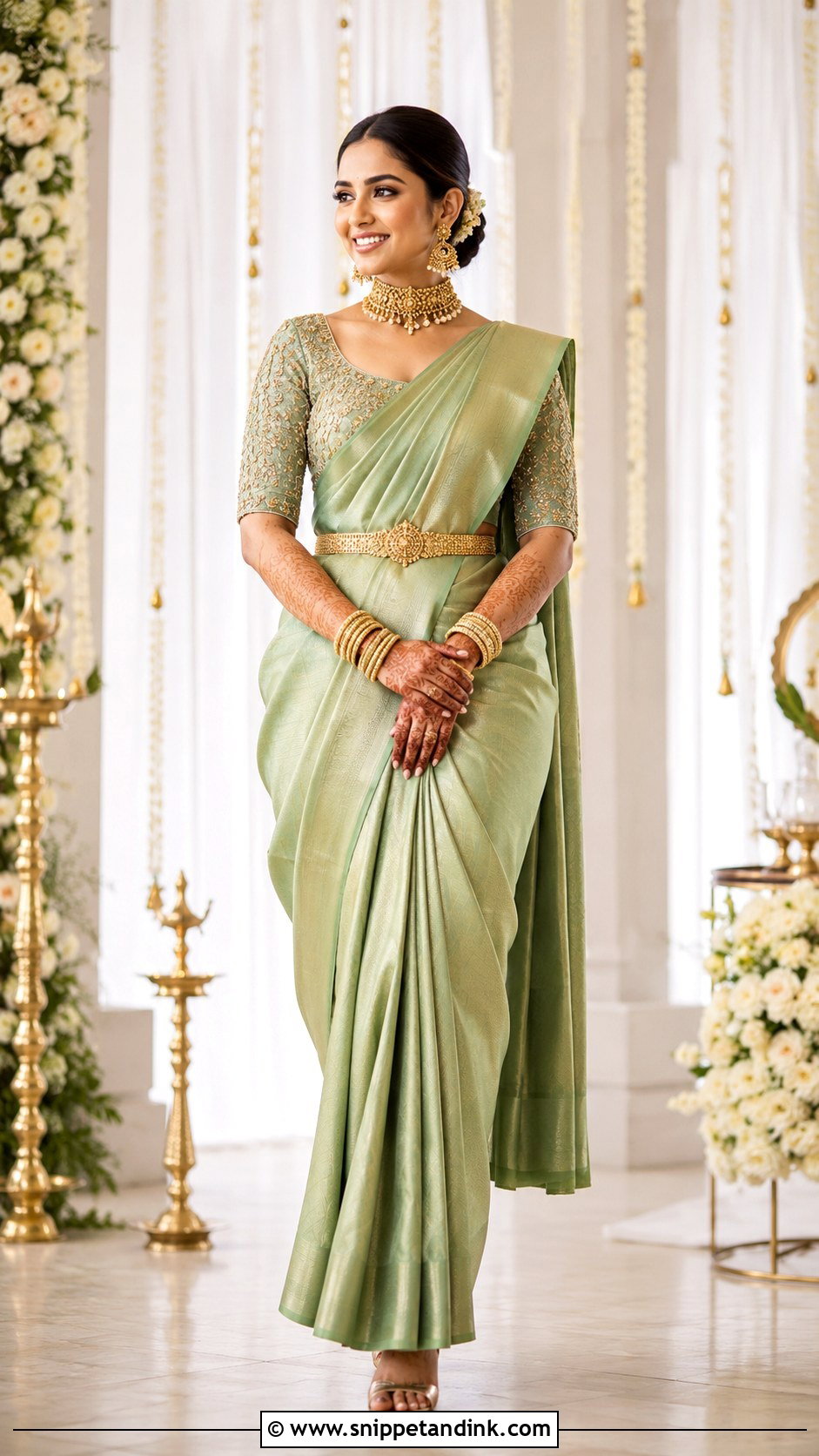
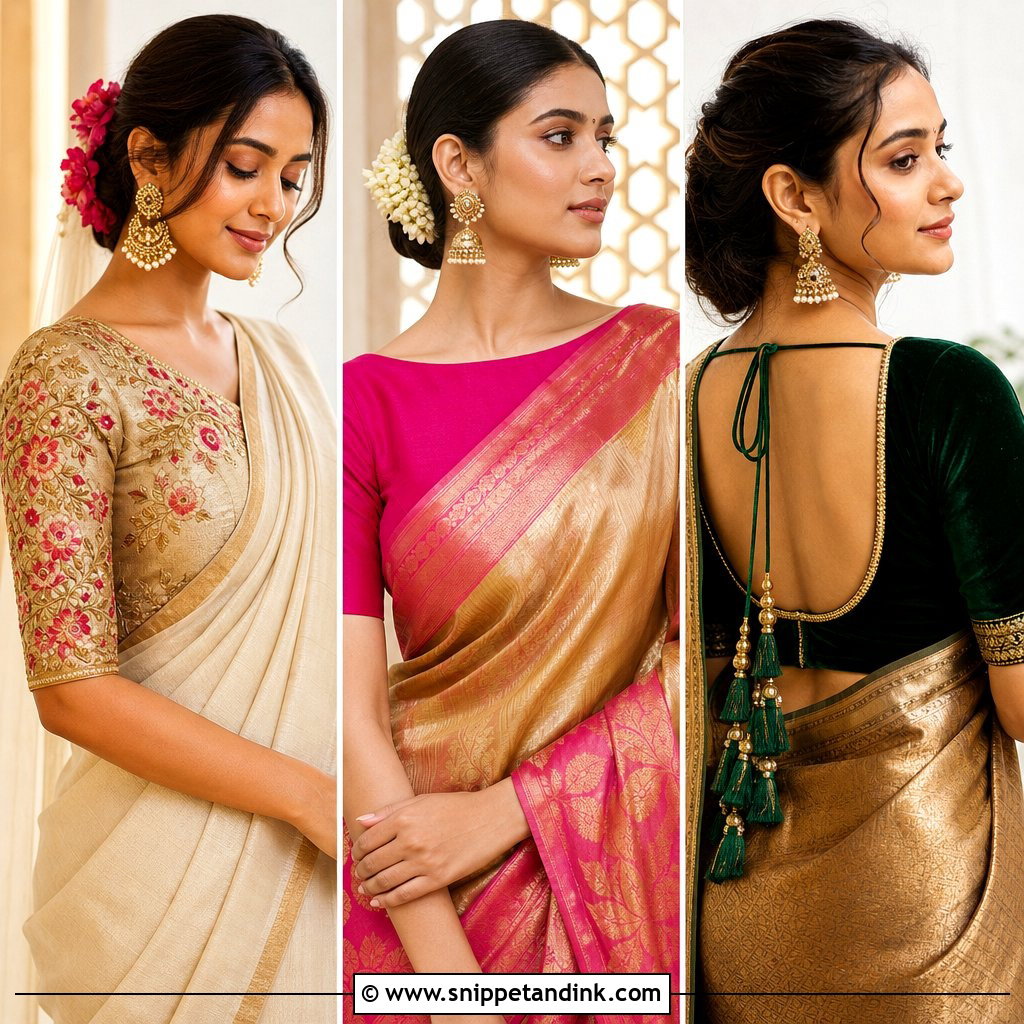
A modern bride often keeps the heritage pieces and edits everything around them. Blush, sage, champagne gold, icy blue or deep wine silk give a fresher palette. Elbow sleeves, subtle embroidery or a high neck make the blouse feel current. One bold choker, earrings, bangles and a sleek waist belt are plenty. A polished bun, soft waves or a minimal braid suit it. I’d still recommend jasmine; it connects the look to tradition even when everything else is pared back.
Carrying the Gold and the Jasmine Through a Muhurtham
Muhurtham timings are often early in the morning, which means dressing starts before dawn. Most of the trouble I see comes from the weight of the jewellery and from flowers that wilt or drop.
- Wear the heaviest earrings only for the ceremony itself, and support them with ear chains. Swap to lighter earrings for the lunch and reception.
- Pin layered necklaces to the blouse at the shoulders with small safety pins so they don’t slide toward each other when you bend.
- Order jasmine as tight buds for an early morning ceremony and keep them wrapped in a damp cotton cloth in a cool place overnight. Buds open slowly and stay fresh longer than strings that have already bloomed.
- Ask the hairstylist to anchor the flower strings into a padded base or a hidden mesh, not just into hair, so they don’t pull the bun loose.
- Keep a small kit with safety pins, bobby pins, blotting paper and a spare string of jasmine with someone close to you.
After the ceremony, take the waist belt off first when you sit down to eat. It has been holding your pleats all morning, and your back will thank you.
Your Family’s Customs Come Before Any Trend
A bride from Karnataka has a wide palette to draw from: Mysore silk, Ilkal, the Kodava drape, Kanjeevaram, temple jewellery, antique gold, jasmine flowers or a softer modern colour story. Start with your family customs and the ceremony timing, then think about venue lighting, how much jewellery weight you can carry and the hairstyle that will hold through the rituals. Planned as one look from the head to the feet, it will feel meaningful and photograph as a whole rather than a collection of pieces.
You'll Like These Ideas:


Leave a Reply