
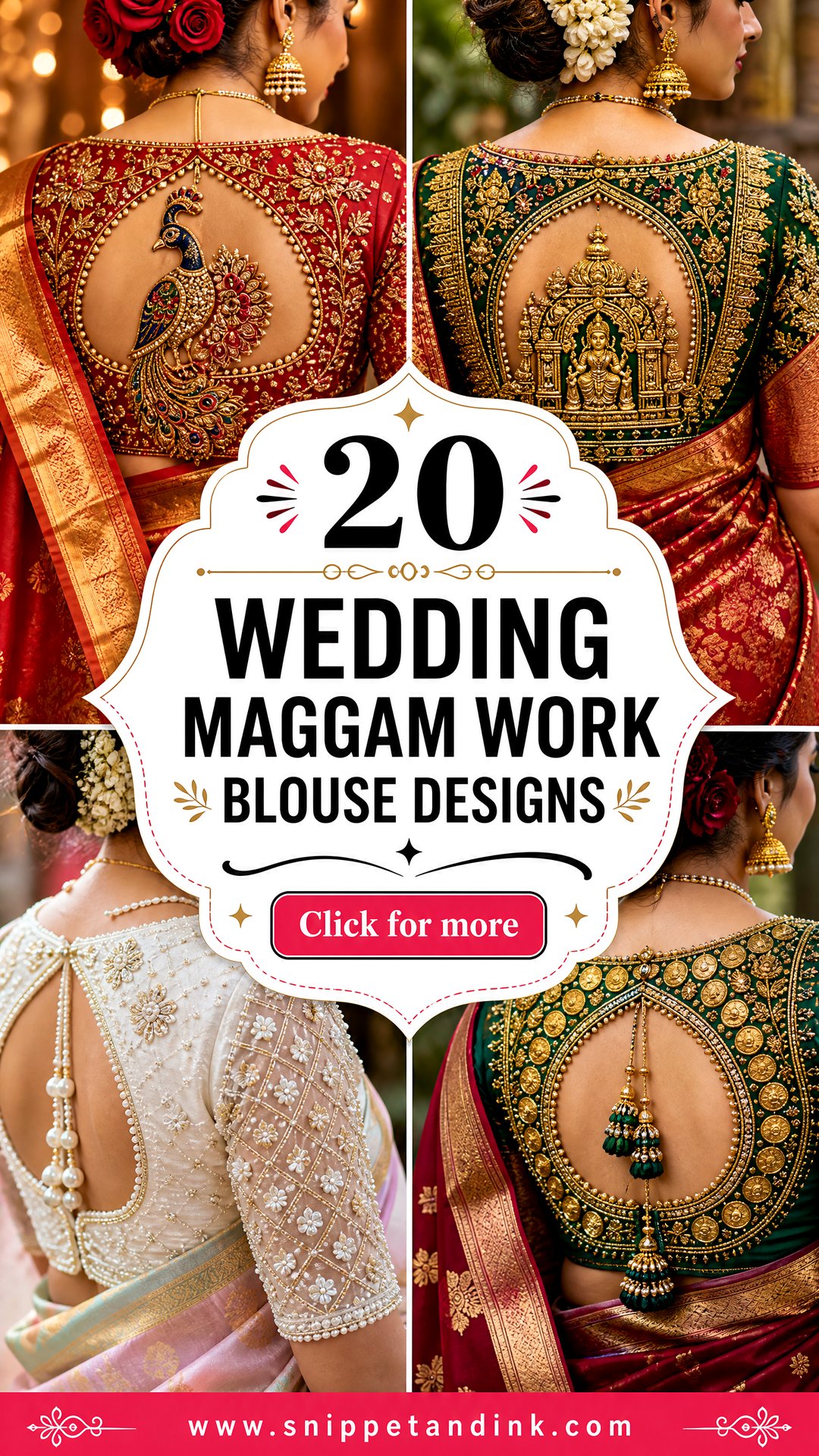
Wedding maggam work blouses are where a South Indian bridal outfit gets most of its texture. The work is done by hand on a wooden frame, with zari, beads, stones, sequins and raised threadwork laid onto silk, and a strong blouse can carry a fairly plain saree on its own. Peacocks, elephants, lotus and temple motifs still lead most bridal orders, with cutwork necklines and personalized backs close behind. In every fitting I style, the blouse has to answer to the saree border, the jewelry and the hours the bride will spend seated in rituals. Below are twenty complete looks with the color, neckline, sleeve and embroidery choices I’d give an embroiderer for each.
What Your Embroiderer Needs Before the Silk Goes on the Frame
Maggam work is stitched on a wooden frame with an aari hook, row by row, and once a section is beaded it can’t be moved. That’s why the briefing matters more than the inspiration photo. I go to the embroiderer with the actual saree, not a picture of it, so the zari tone and border color can be matched in daylight.
- Measurements taken over the bra you’ll wear on the day, since padding changes where the neckline and back motif land.
- The jewelry you plan to wear, or at least its length, so the front work stops where the necklace starts.
- Which side the pallu falls, because a motif that hides under it on one shoulder is wasted hours.
- A clear yes or no on hand wash, dry clean or lining type, decided now rather than after stitching.
Then ask for timing in writing. Heavy bridal maggam often takes several weeks of embroidery before tailoring even starts, and busy wedding months stretch every queue. I’d place the order at least two to three months ahead and book a trial fitting with enough time left for alterations, because taking in a fully embroidered side seam is slow and fiddly work.
Ask to See the Reverse Side
Turn a finished sample over. Neat knots, no long loose threads and a firm base fabric tell you far more about the workshop than the front does, and a sloppy reverse is usually what scratches your skin by evening.
1. Red Peacock Maggam Work Blouse With Kanjeevaram Saree
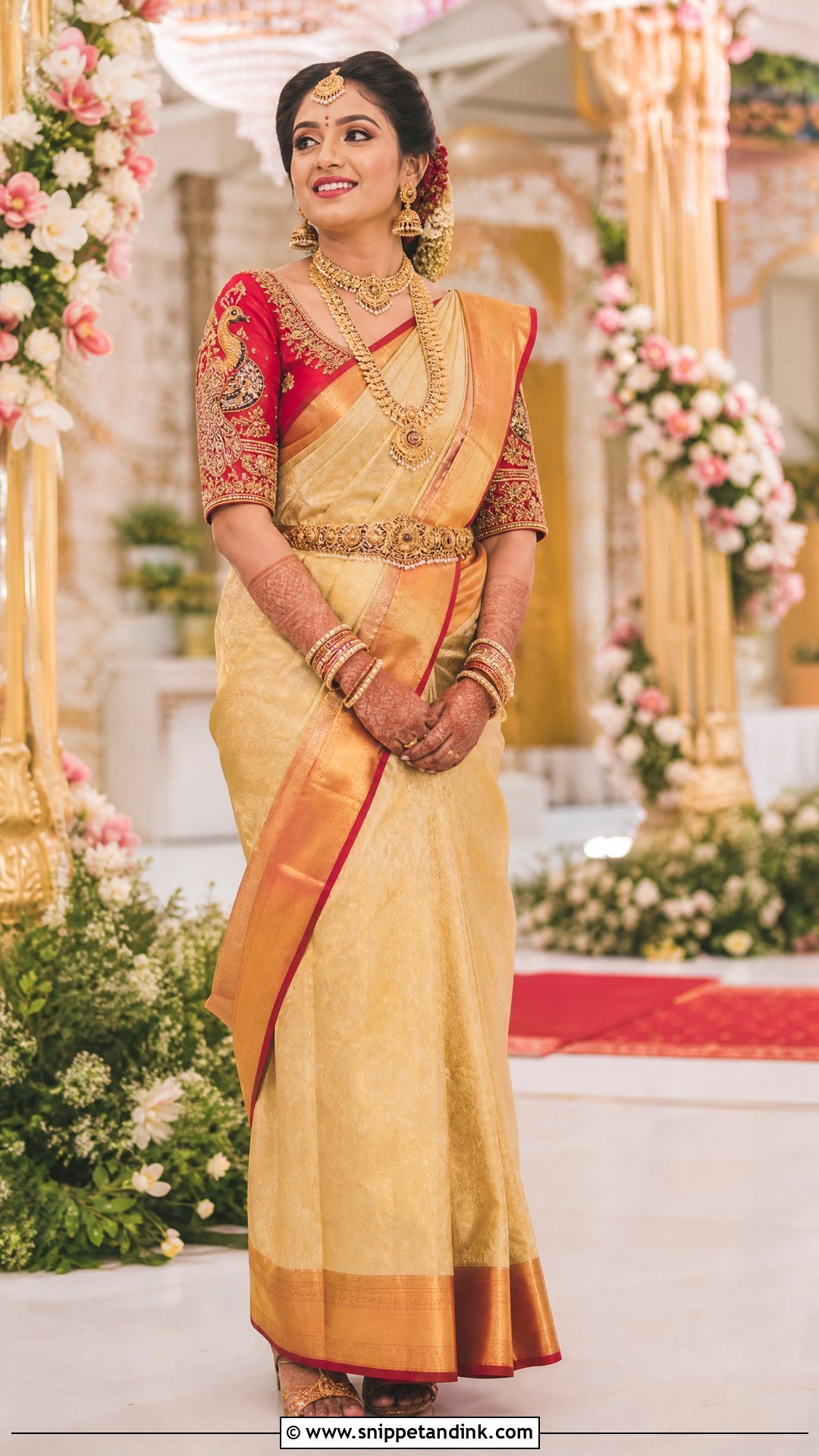
Red with a gold Kanjeevaram is the pairing most families picture first, and peacocks earn their place on it. I’d ask for a structured silk blouse, elbow sleeves, a medium round neck and two birds facing each other across the back. The feathers are where these designs go wrong: too many green stones and the tail turns into a blur, so I ask for zari outlines with pearls and small beads to give each feather its edge. Temple necklaces, jhumkas, stacked bangles and a flower-wound braid finish it, with a gold waist belt to hold the pleats. Pick embroidered sandals with a padded sole, because you’ll be standing for long stretches.
2. Green Temple Maggam Work Blouse With Red Silk Saree
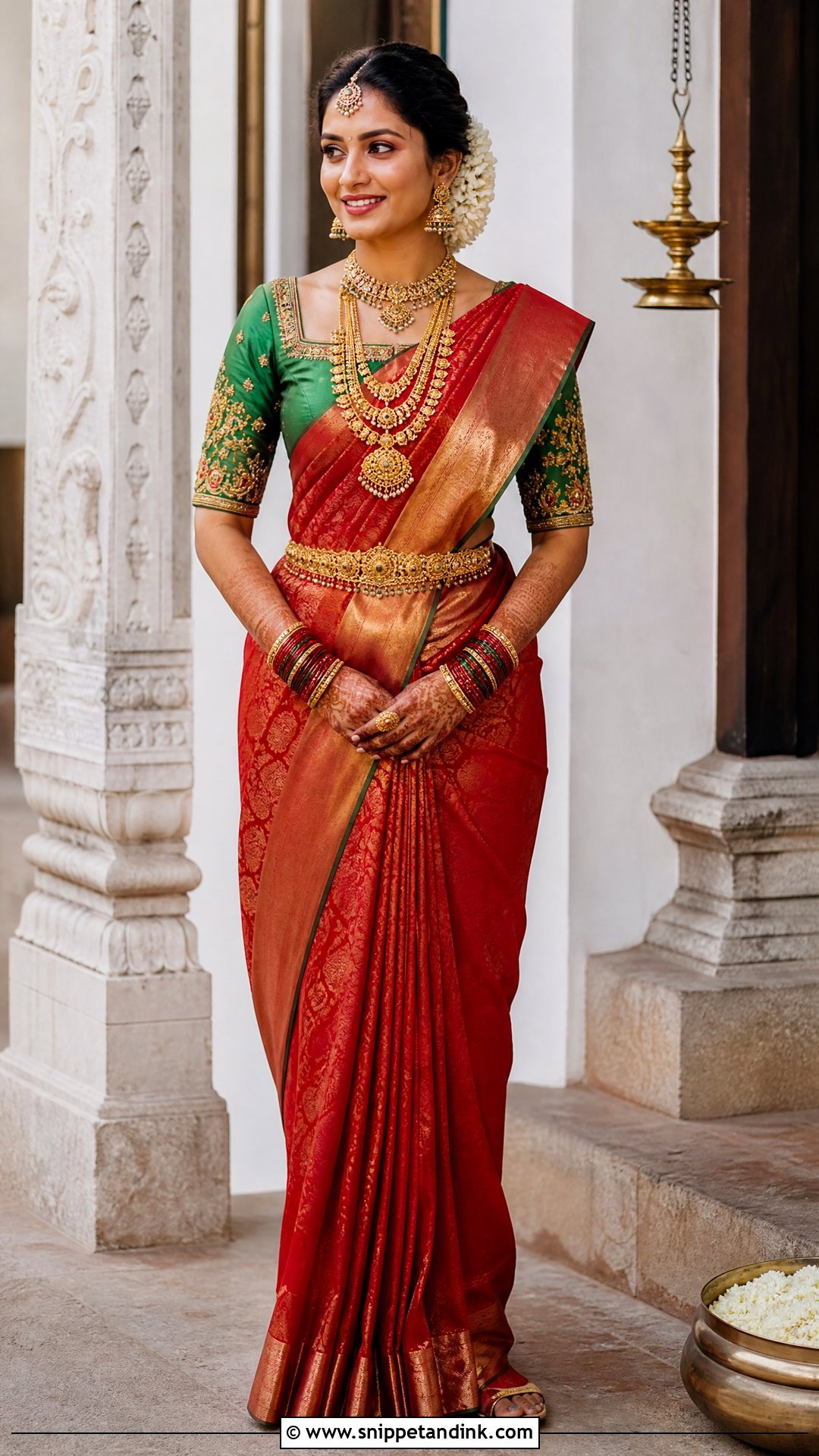
Green silk under a red saree gives temple embroidery a background it can actually be read against. Small arches run along the neckline and sleeve borders, and one larger motif sits at the center back. I always steer this design toward antique-gold zari and dull beads with a few tiny maroon stones, since bright yellow gold on green can look brassy under hall lighting. A square neck and elbow sleeves suit the architectural lines. The arch pattern echoes the woven borders of heritage silks, which is why it settles so well at traditional ceremonies. Antique temple jewelry, a kamarband, red and green bangles and a low jasmine bun complete it, with block heels or cushioned sandals underneath.
3. Pink Floral Maggam Work Blouse With Gold Saree
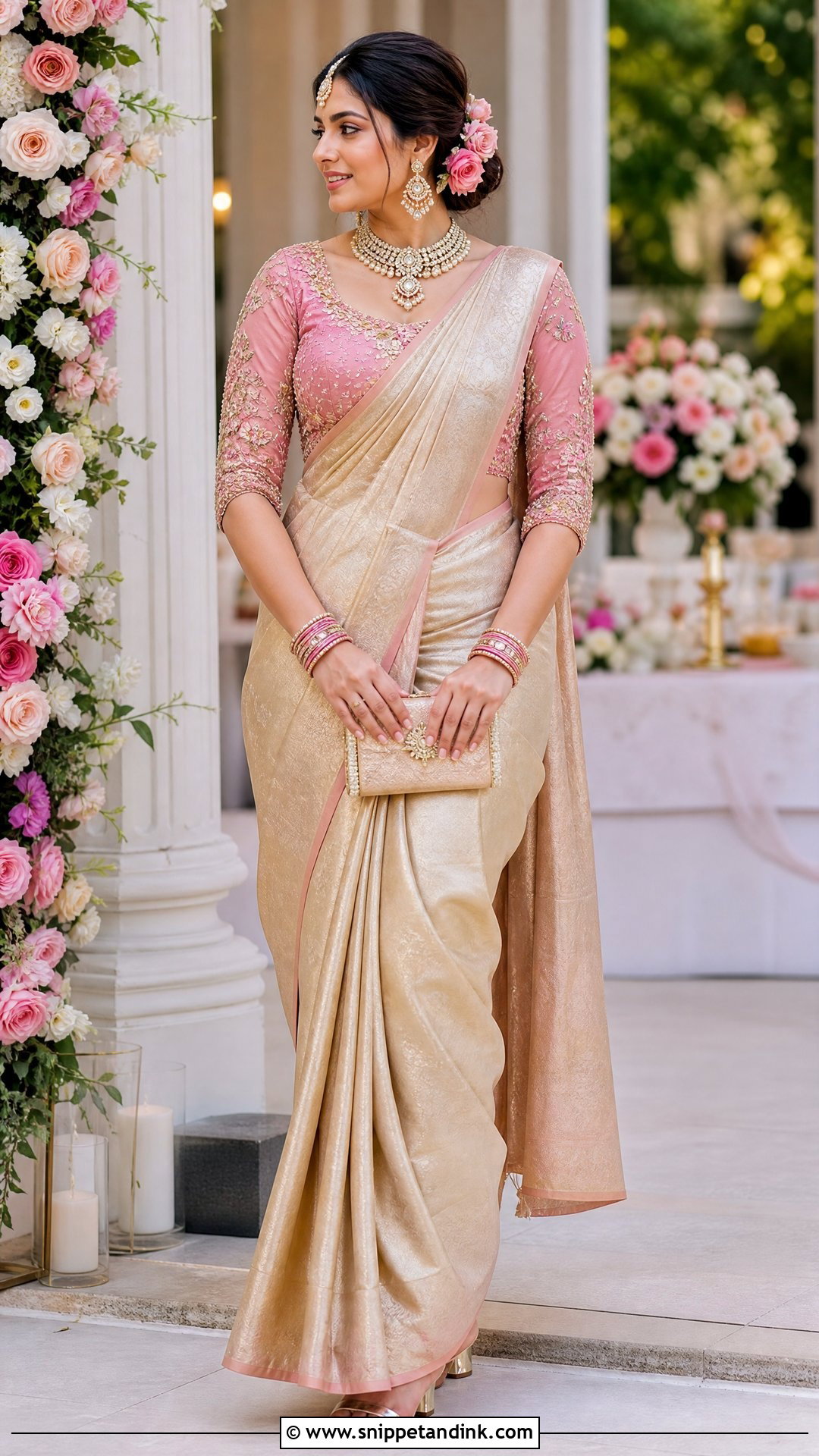
Rose pink on pale gold is the lightest-feeling combination in this list. Floral vines travel the neckline, sleeves and a wide U-back, built from pink thread, zari, pearls and a few clear stones. Keep the front sparse. A pearl and kundan necklace needs a flat surface to sit on, and heavy work under it makes the necklace tilt forward. Three-quarter sleeves give the vines room to show in photographs. A gold clutch, pink bangles, metallic sandals and a soft bun with roses finish it, and I’d save it for a daytime ceremony or an engagement in a bright room, where pastel embroidery doesn’t get swallowed.
4. Maroon Zardosi Maggam Work Blouse With Beige Saree
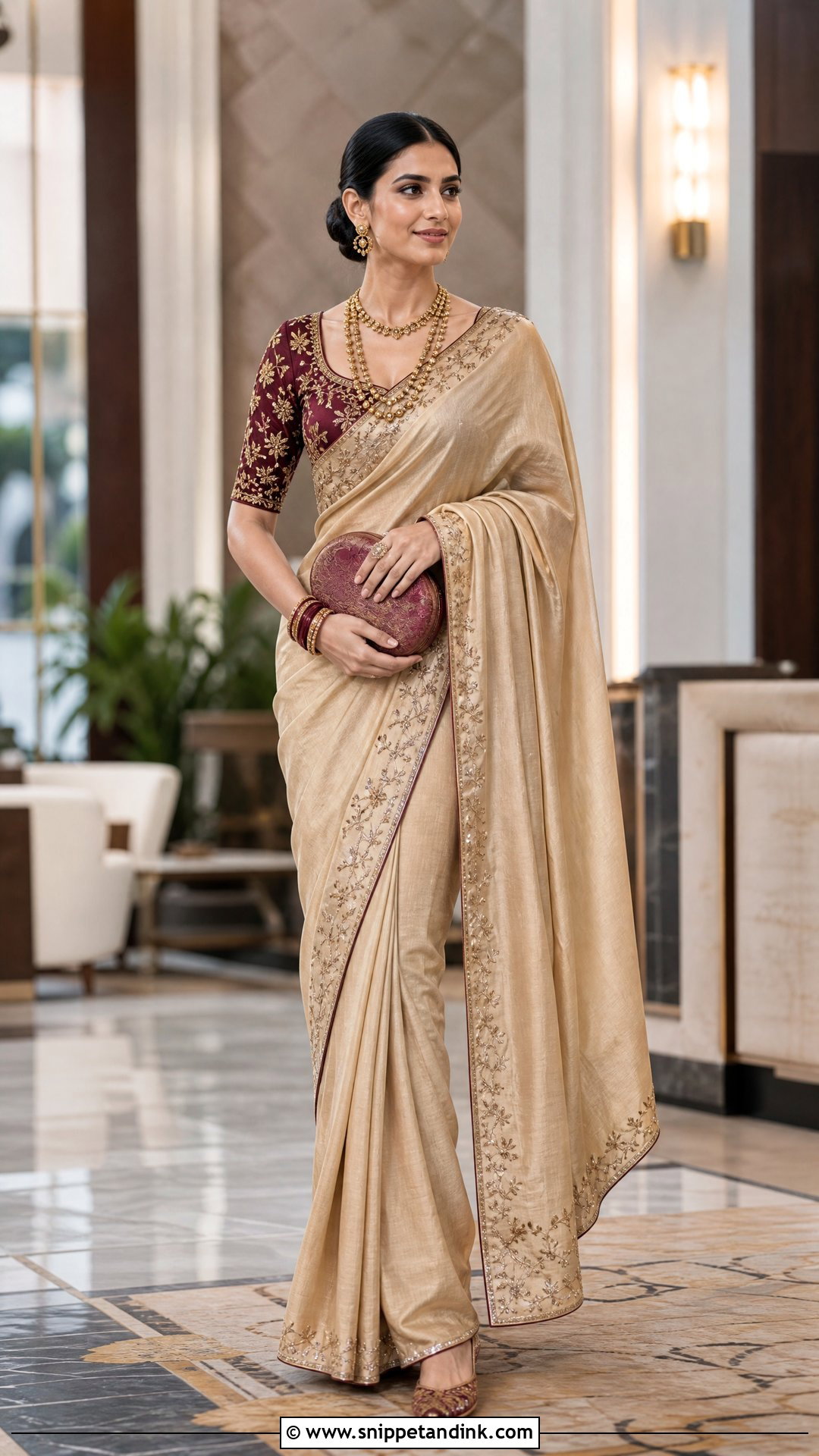
Zardosi is the heaviest work on this list, so I plan its weight before its pattern. Maroon coils, zari, beads and sequins scroll around the neckline and sleeve edges of a raw silk blouse with a high round neck, elbow sleeves and a moderately deep back. I keep the center of the bodice lighter on purpose; metal coil work across the whole front feels like a breastplate after a few hours. Pair it with a beige or champagne saree with a maroon border, and carry the maroon into the bangles and clutch. Antique-gold earrings, a layered necklace and a sleek bun suit it, with maroon block heels or juttis. It reads mature and rich rather than bright.
5. Royal Blue Kundan Maggam Work Blouse With Gold Saree
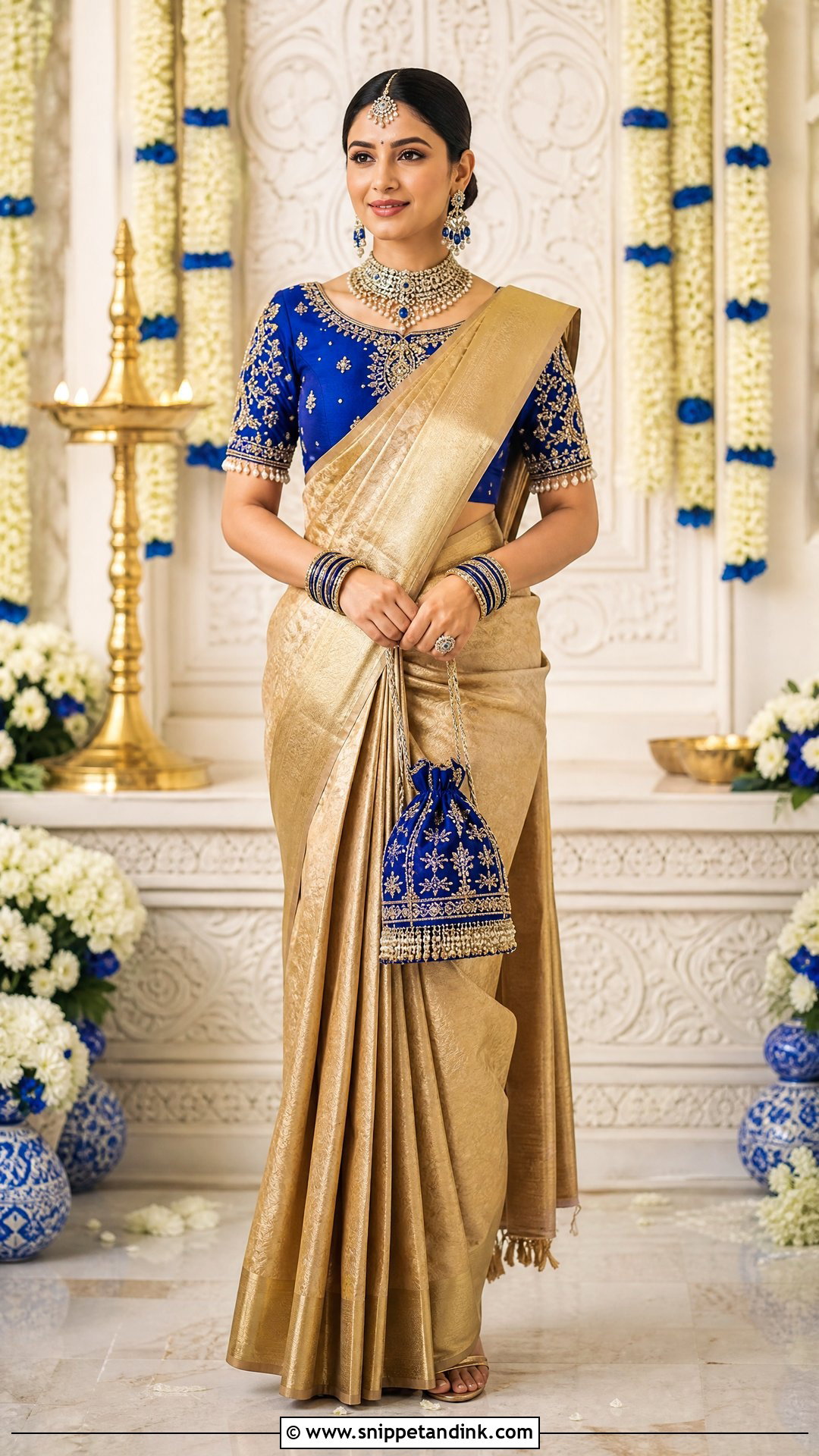
Royal blue is the color that makes kundan look most alive, because the stones’ gold settings stand out sharply against it. The base is a fitted silk blouse with a boat neckline, elbow sleeves and a broad back panel of symmetrical kundan vines, each stone ringed with tiny pearls or gold beads. Scattered buttas fill the open areas without burying the fabric. A gold tissue or silk saree with a narrow blue border lets the blouse lead. I insist on a smooth lining here, since the back of kundan work is sharp and scratchy against skin. Kundan earrings, a choker, blue and gold bangles, a potli, a center-parted bun and gold sandals finish it.
6. Yellow Lotus Maggam Work Blouse With Pink Pattu Saree
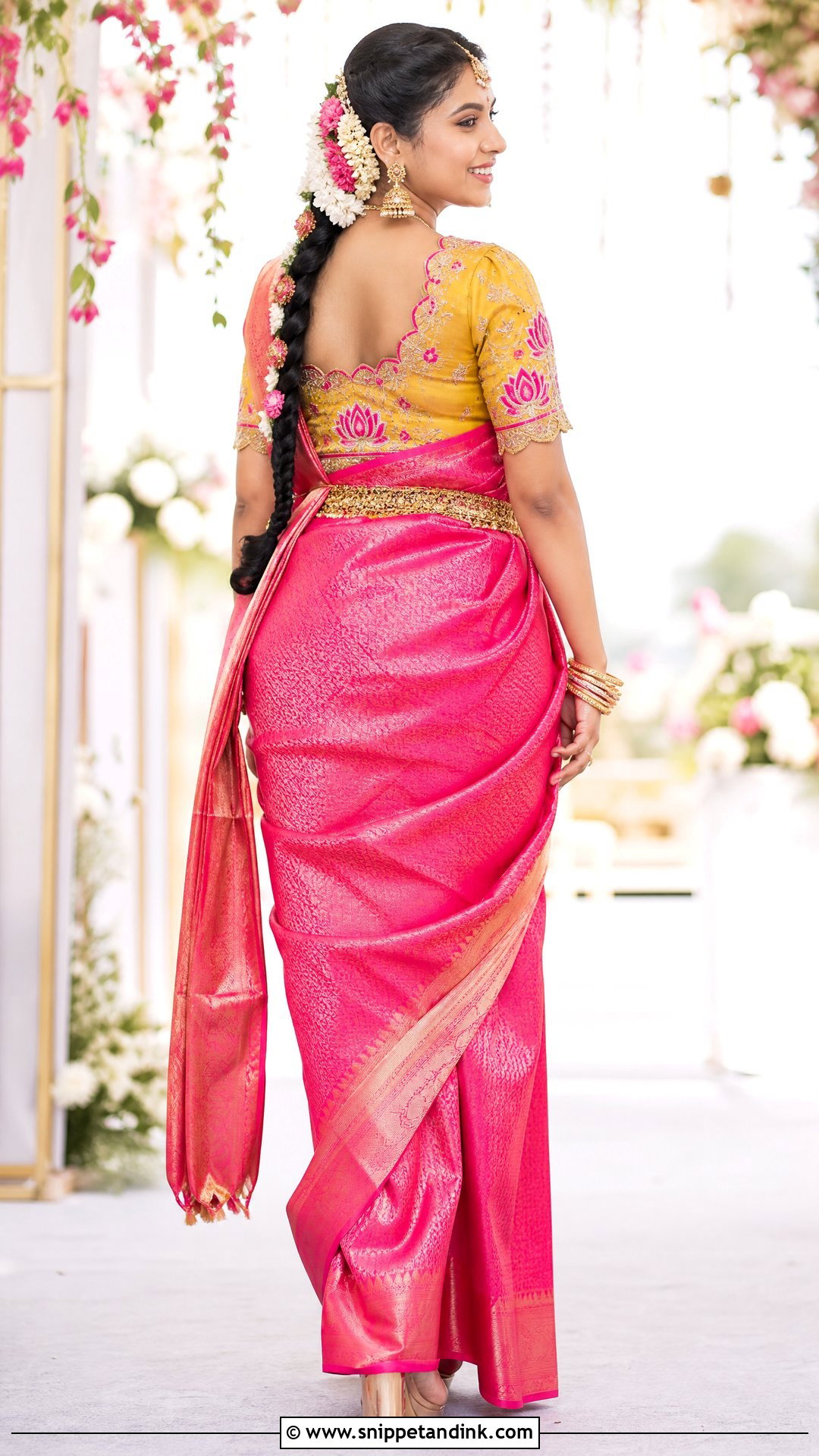
Mustard or turmeric yellow, not lemon, is the shade I’d choose for a lotus blouse, because a pale yellow washes out under strong daylight and flash. Lotus flowers bloom around a scalloped back neckline with smaller buds running down the elbow sleeves, stitched in pink thread, antique zari, pearls and a few green beads to link it with a pink pattu saree. The lotus is a long-standing bridal motif that looks complete without dense coverage, so this blouse is usually lighter to wear than it appears. A gold waist belt, temple earrings, layered necklaces, pink bangles, a flower braid and gold platform sandals suit it. I like it most for a haldi or a morning ritual.
7. Purple Elephant Maggam Work Blouse With Mustard Saree
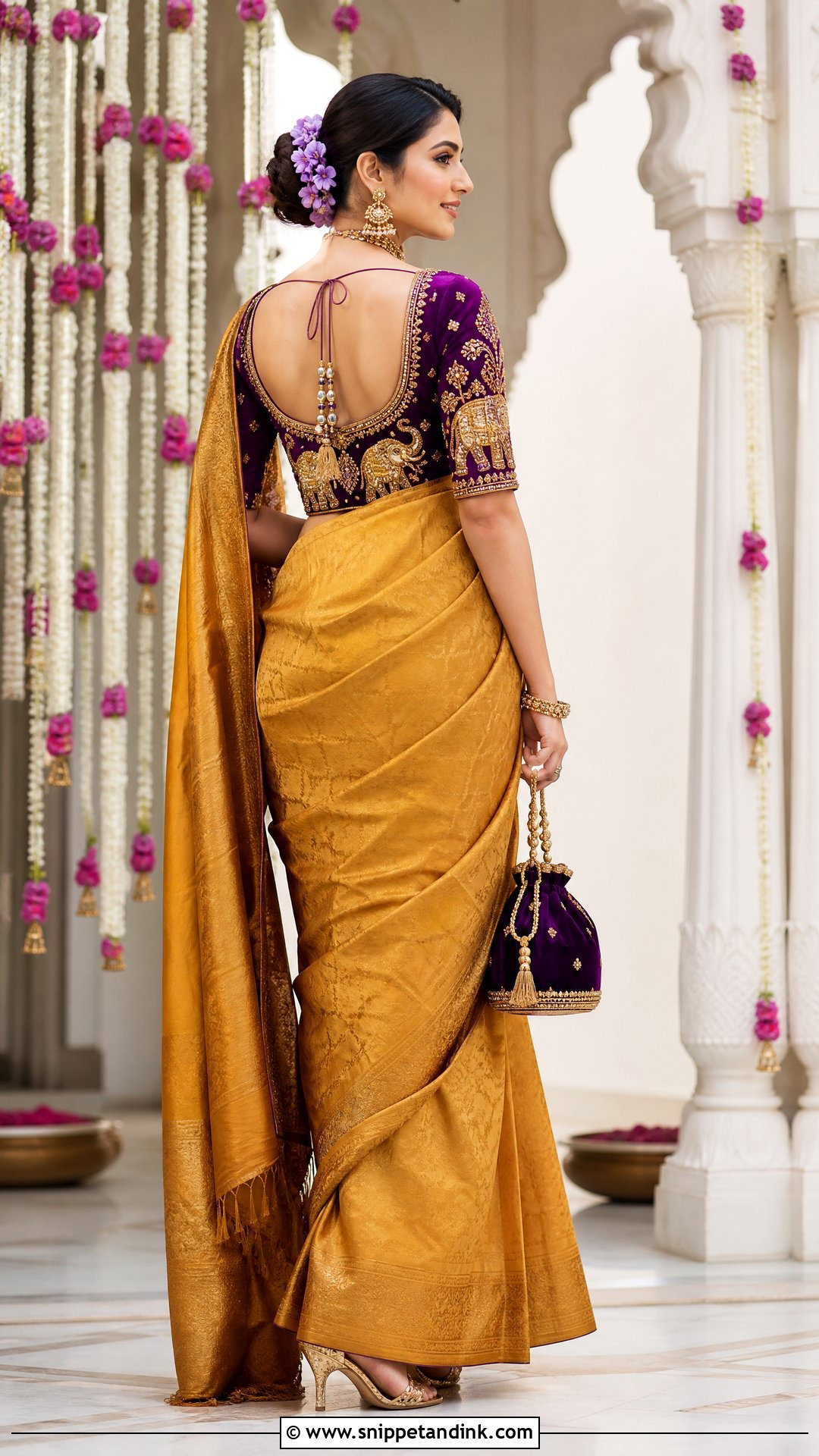
Elephants give a blouse a heritage feel straight away, and families often request them for what they stand for: prosperity, strength and good fortune. Here a deep purple blouse sits against a mustard saree, with elephants marching along the sleeve borders or across the lower back in zari, kundan, pearls and small crystals, joined by little florals. A modest V-neck and elbow sleeves keep it wearable. One placement I always correct: large motifs set right under the arm. Dense work there stiffens the fabric where your arm rubs all day. Antique-gold jewelry, a purple potli, a floral bun and metallic sandals complete it.
8. White Pearl Maggam Work Blouse With Pastel Saree
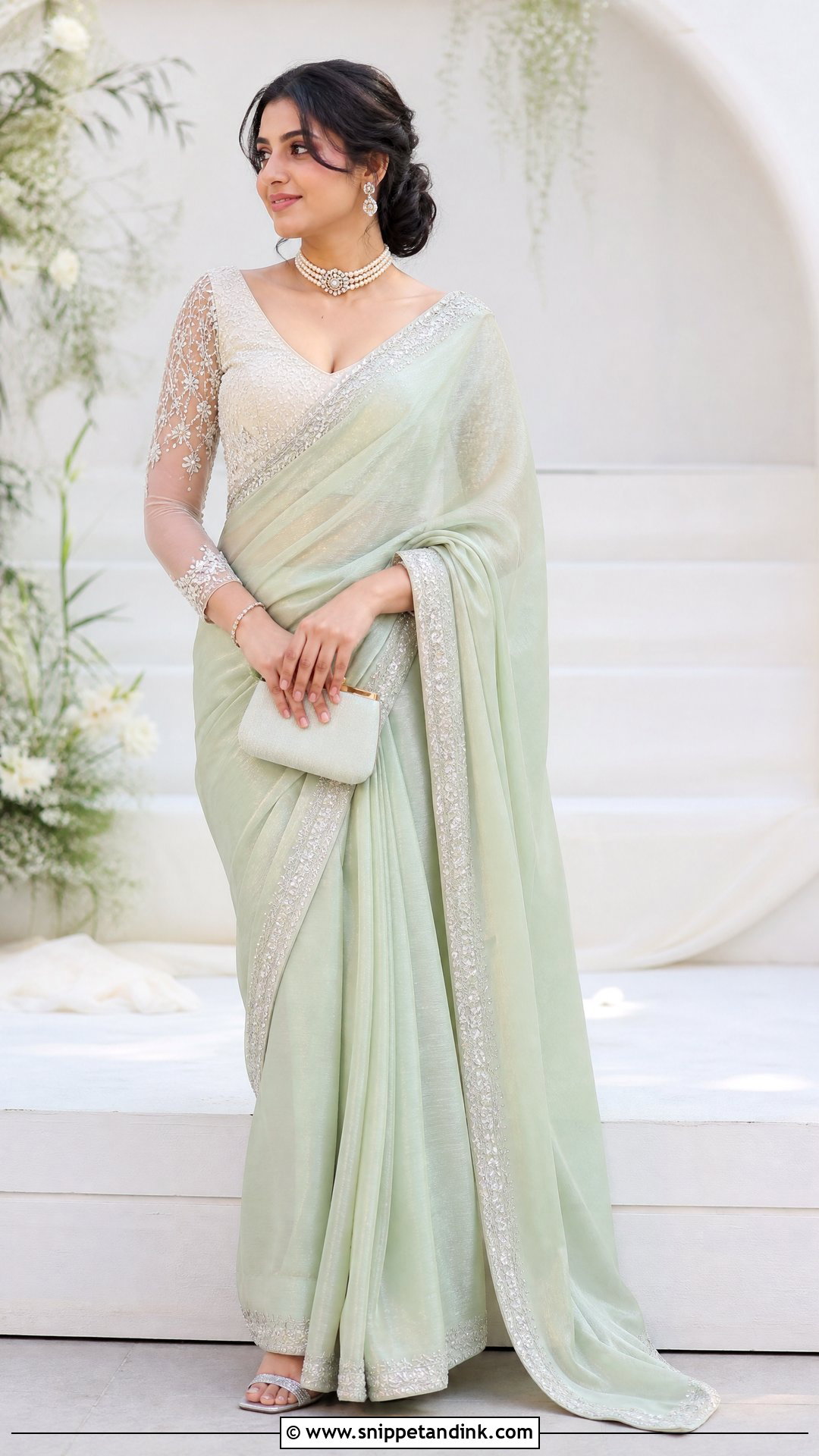
Ivory pearl work is the quiet option, and it needs a pastel saree to show up at all. Pink, powder blue or mint silk with a silver or champagne border works best. The blouse has a wide scoop neck, sheer elbow sleeves and pearl vines along the front and back edges, lifted with clear stones, silver thread and a few sequins. Line the bodice fully and leave the sleeves sheer so the pearls sit visibly on them. Pearls are heavier than they look in a sketch, so I check that the scoop neckline doesn’t gape once they’re stitched on. Pearl drops, a fine choker, a pastel clutch, silver sandals and a curled bun or neat braid suit an engagement or reception.
9. Orange Paisley Maggam Work Blouse With Green Saree
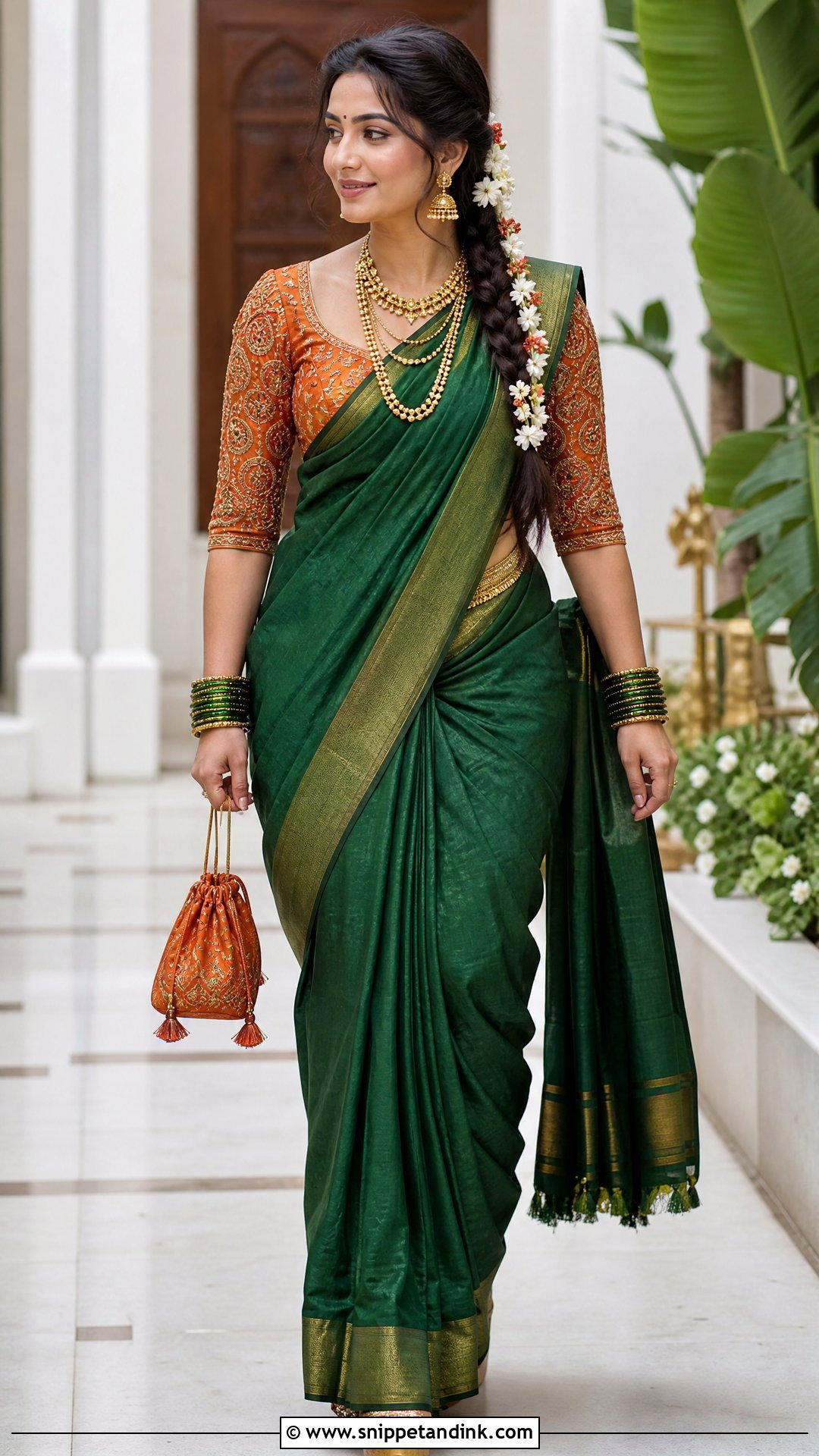
Paisley is the motif most likely to turn into a busy mass from across a hall. On a burnt-orange silk blouse with a rounded square neck and three-quarter sleeves, I ask for paisleys around the back neckline and smaller ones repeated on the sleeves and front border, with plain silk visible between every motif. Gold zari, green beads, maroon thread and pearl outlines give each one a clear edge. The saree is bottle green with an orange or gold border. Jhumkas, layered gold necklaces, green bangles and an orange potli pull the colors together, with a long braid, floral hair accessories and gold wedges to finish.
10. Magenta Jhumka Maggam Work Blouse With Teal Saree
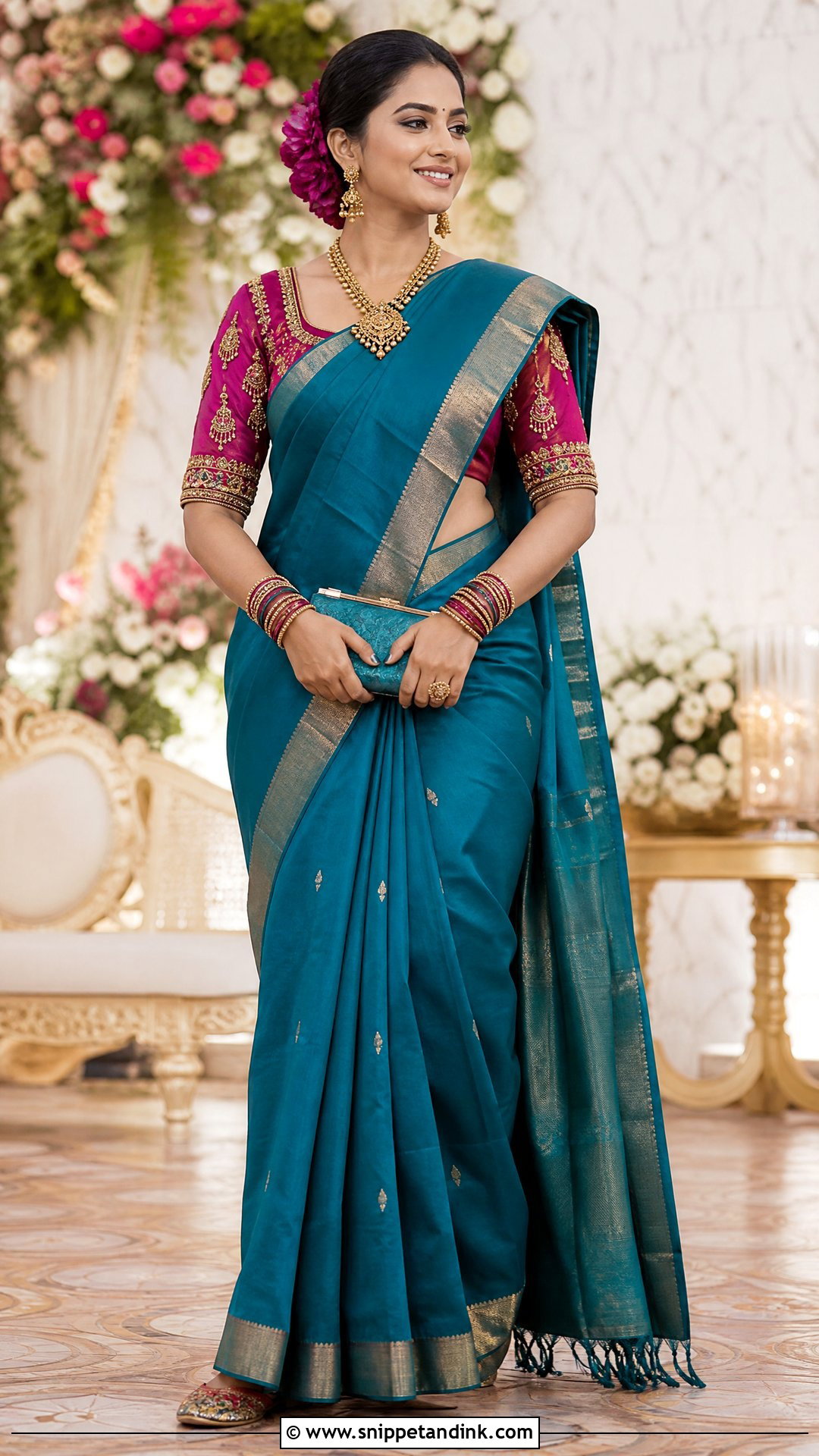
Embroidered jhumkas hanging from the back neckline are a playful idea, and they only work if every dangling piece is stitched down properly. A magenta blouse against a teal saree gives them strong contrast; gold beads, pearls, stones and fine chain make them look three-dimensional. A simplified jhumka repeats on the elbow sleeves so the side view connects to the back. Leave the neckline moderately open for a choker or short temple necklace. Loose chains catch on the pallu every time you sit or turn, so I tug each hanging element at the final fitting. Real jhumka earrings, gold bangles, a teal clutch, embroidered heels and a bun with magenta flowers finish it.
11. Gold Cutwork Maggam Work Blouse With Red Saree
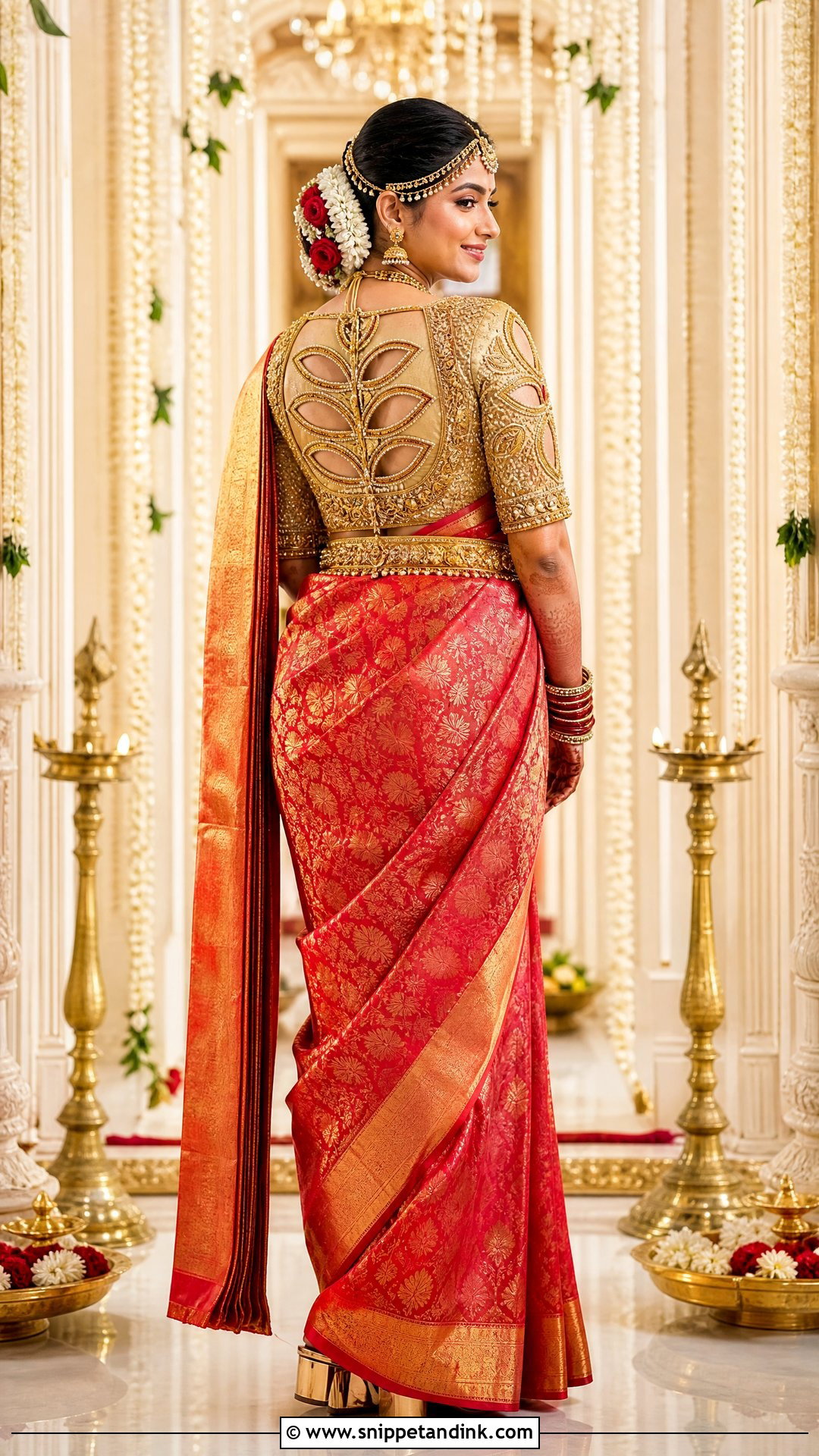
Cutwork gives you the most dramatic back of any style here, and it’s also the one that needs the most structural care. The silk base should sit close to your skin tone or the saree’s gold border, with a leaf-shaped cutwork pattern opened around the back neckline. Each opening is outlined in zari, beads, pearls and fine thread. Cutwork now appears on necklines as well as backs, from a simple border to a full bridal panel. Every cut edge must be reinforced, and I ask for soft net backing behind larger openings so they hold their shape instead of stretching once you move. A red Kanjeevaram, layered gold jewelry, a jeweled belt, a floral bun and gold platforms complete it.
12. Black Geometric Maggam Work Blouse With Copper Saree
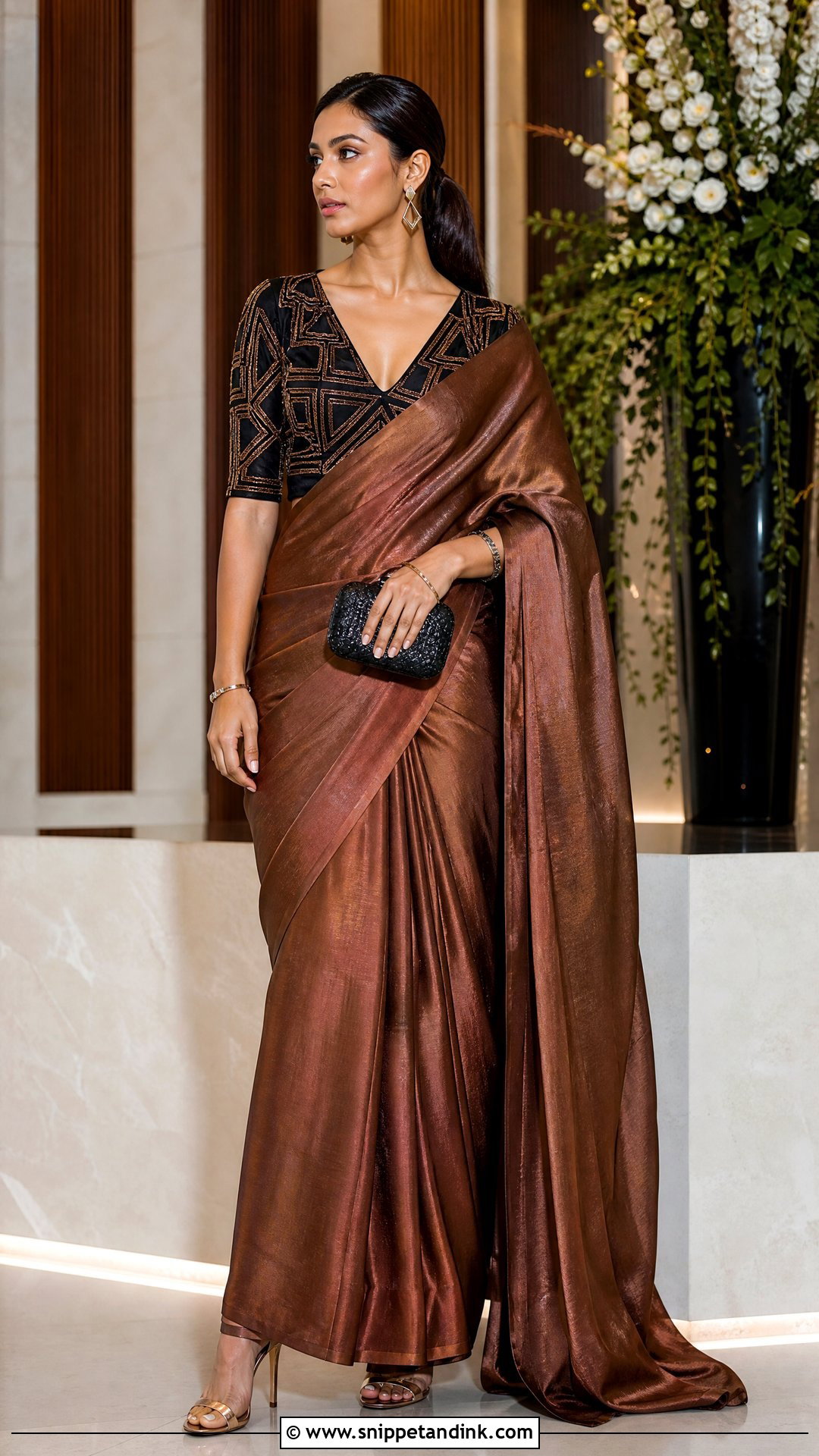
Black geometric work suits a reception or a guest look far better than a ceremony, and it’s the design in this list for someone who loves maggam craft but not florals. A fitted raw silk blouse with a clean V-neck and elbow sleeves carries metallic lines, diamonds and angular borders across the sleeves and back. Copper beads, muted gold zari and black sequins keep it in the same color story as a copper saree. Drape the saree simply; a fussy pleat pattern fights the lines. Sculptural gold earrings, a slim bracelet stack, a black clutch, metallic heels and a low ponytail or smooth bun keep the outfit as sharp as the embroidery.
13. Coral Parrot Maggam Work Blouse With Green Saree
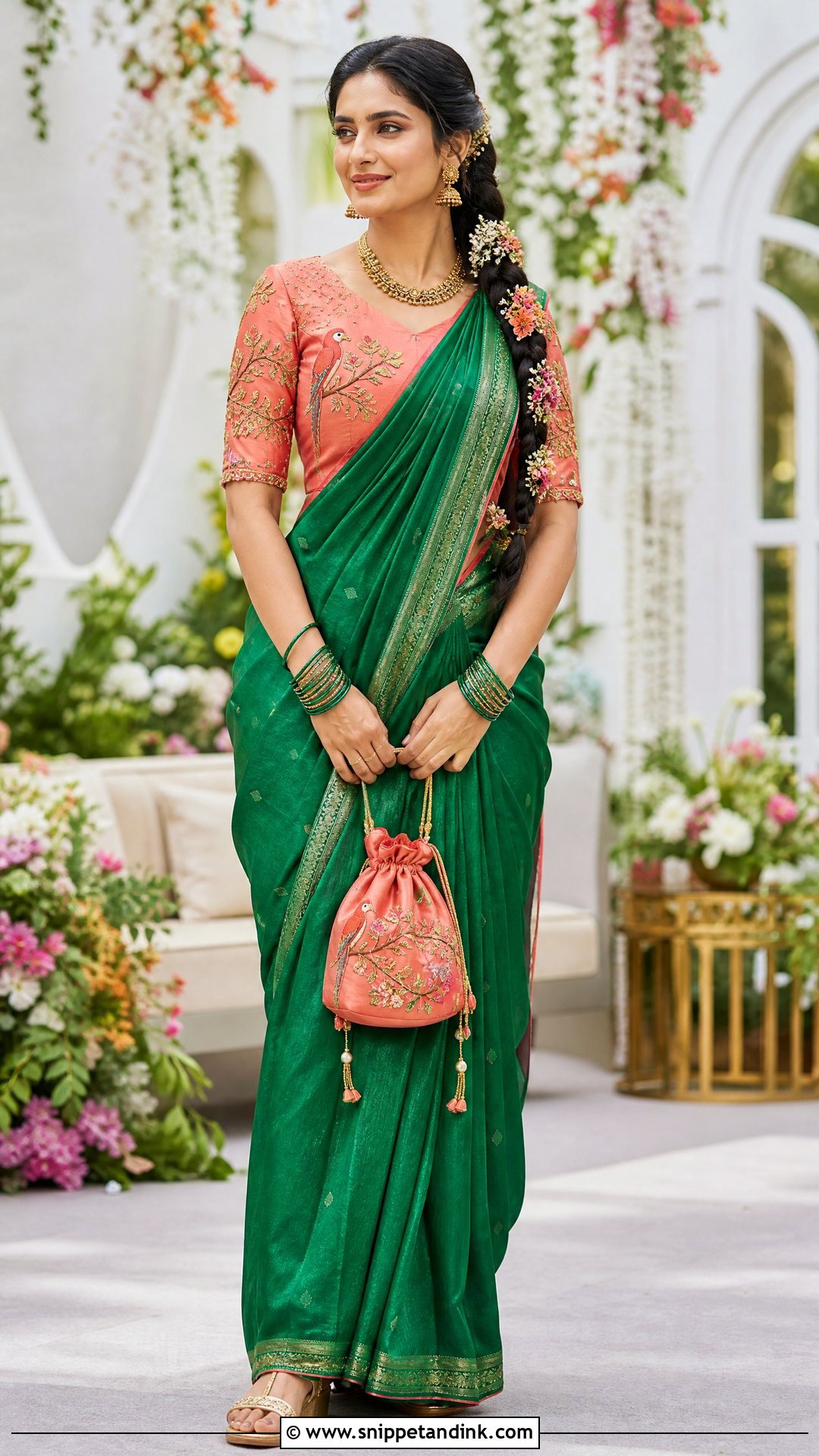
Parrots are fun, and the sizing decides whether they read as birds at all. On a coral blouse with a leaf-green or emerald saree, I place two parrots either side of the back neckline, joined by embroidered branches and small flowers, in green thread, zari, red stones, pearls and sequins. Tiny leaves repeat on the elbow sleeves. Keep the birds medium and symmetrical: oversized ones overwhelm a petite back, and very small ones vanish in photographs. Gold earrings, a short necklace, green glass bangles, a coral potli, cushioned gold sandals and a braid with flower clusters finish the garden mood.
14. Navy Annapakshi Maggam Work Blouse With Pink Saree
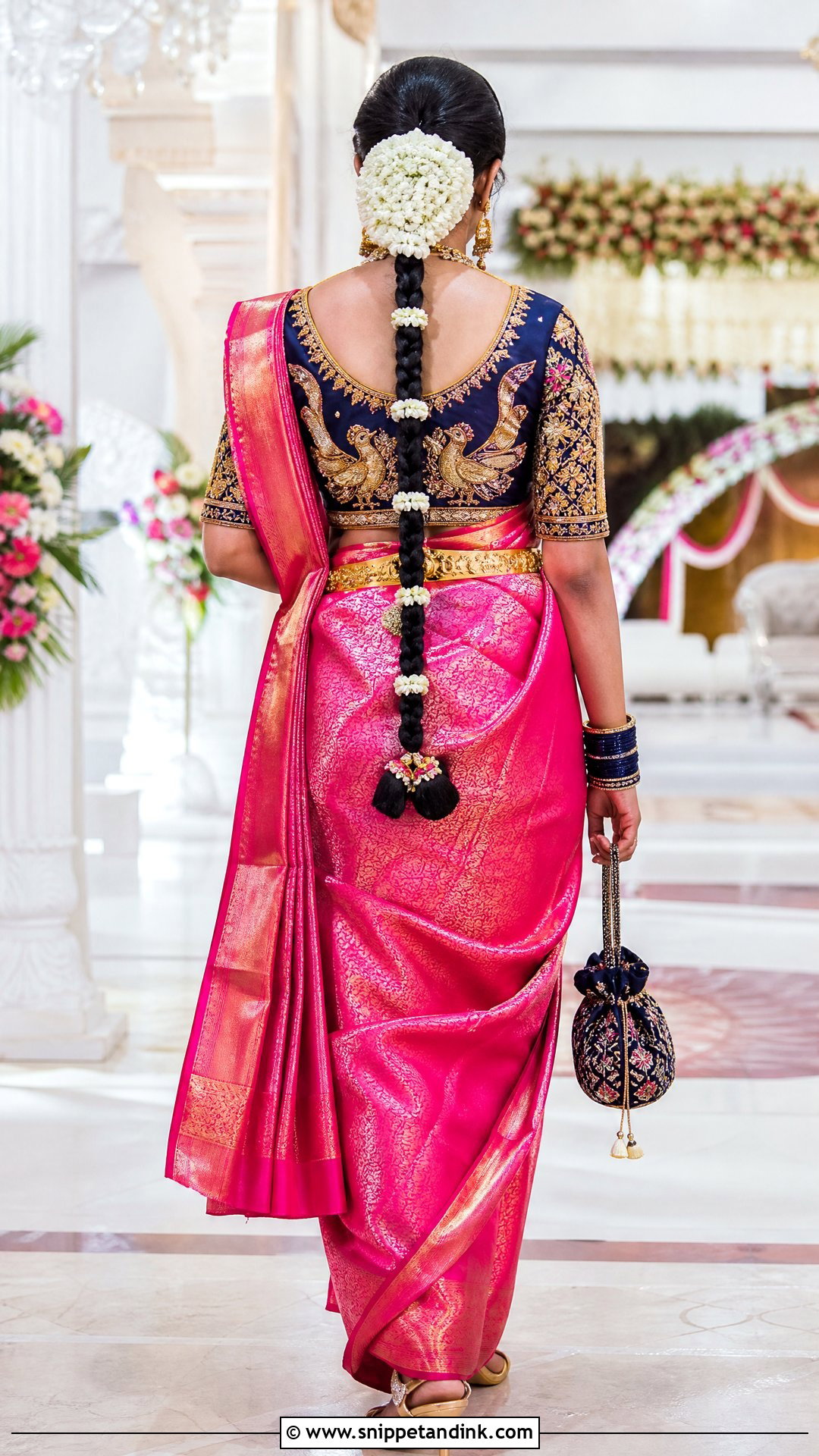
An Annapakshi maggam work blouse is about as regal as South Indian bridal embroidery gets. The pairing here is a navy silk blouse, elbow sleeves and a broad U-back, with two birds framing a central floral or temple element in antique zari, pearls, pink stones and green thread. A bright pink pattu saree with a navy or gold border gives the embroidery contrast while keeping a traditional palette. The curved necks and tail feathers of these birds are hard to keep even by eye, so I always ask for a traced sample on paper before the fabric goes on the frame. Temple earrings, layered necklaces, a waist belt, navy bangles, a potli, a flower braid and gold heels finish it.
15. Emerald Coin Maggam Work Blouse With Maroon Saree
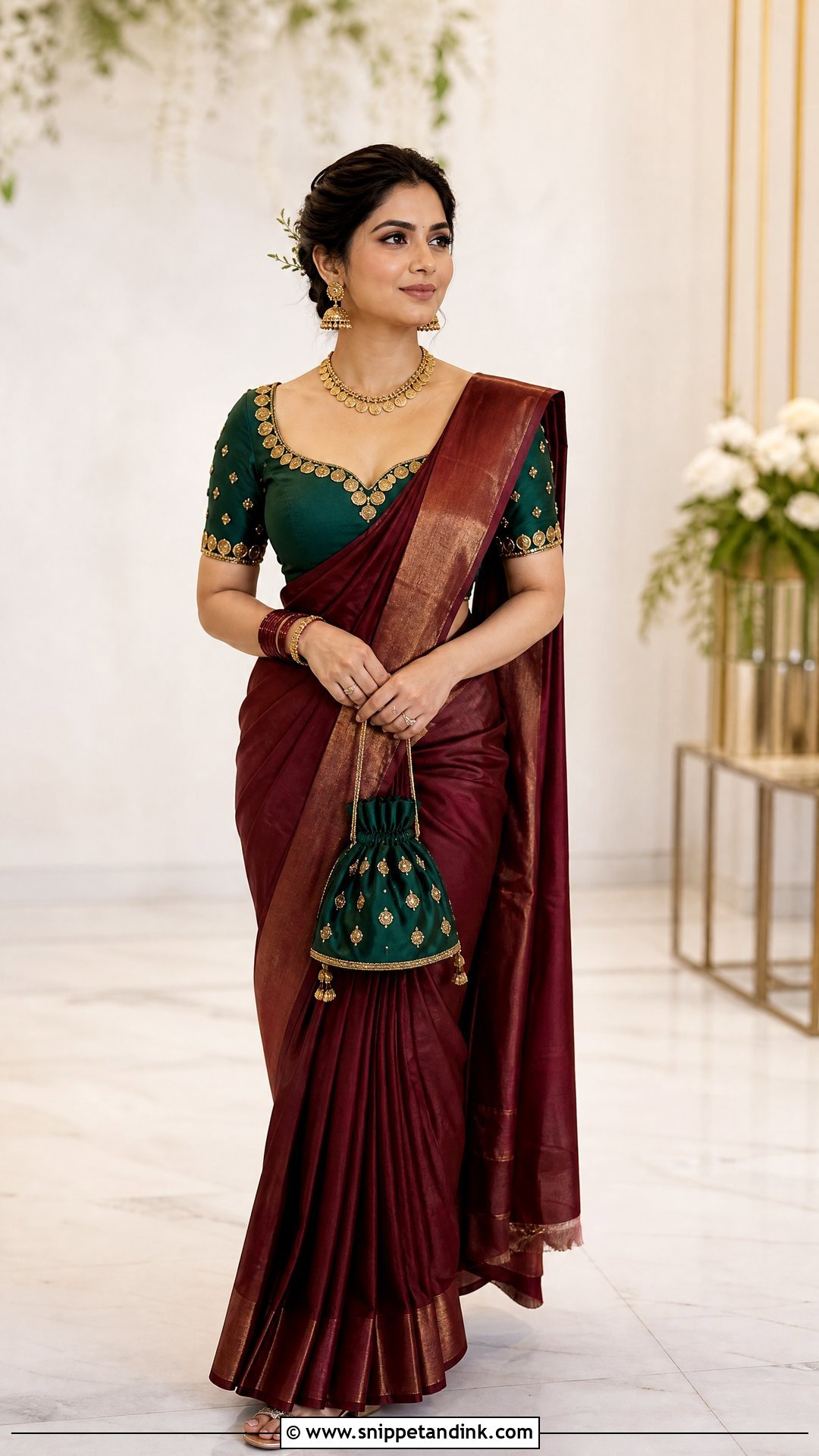
Coin work looks like jewelry stitched into the fabric, and on emerald silk with a maroon saree it’s very rich. Small coin motifs run along the neckline and sleeve edges, and a larger necklace-shaped pattern sits across the back, with zari, red stones and tiny pearls filling the gaps. A sweetheart or softly curved neckline eases the structure. My one condition is lightweight decorative discs, not real metal pieces, especially at the shoulders; heavy coins drag the neckline forward and you’ll keep hitching it up. Wear the blouse for a full hour before the wedding to check. A coin necklace, jhumkas, maroon bangles, an emerald potli, antique-gold sandals and a neat hairstyle complete it.
16. Lavender Butterfly Maggam Work Blouse With Silver Saree
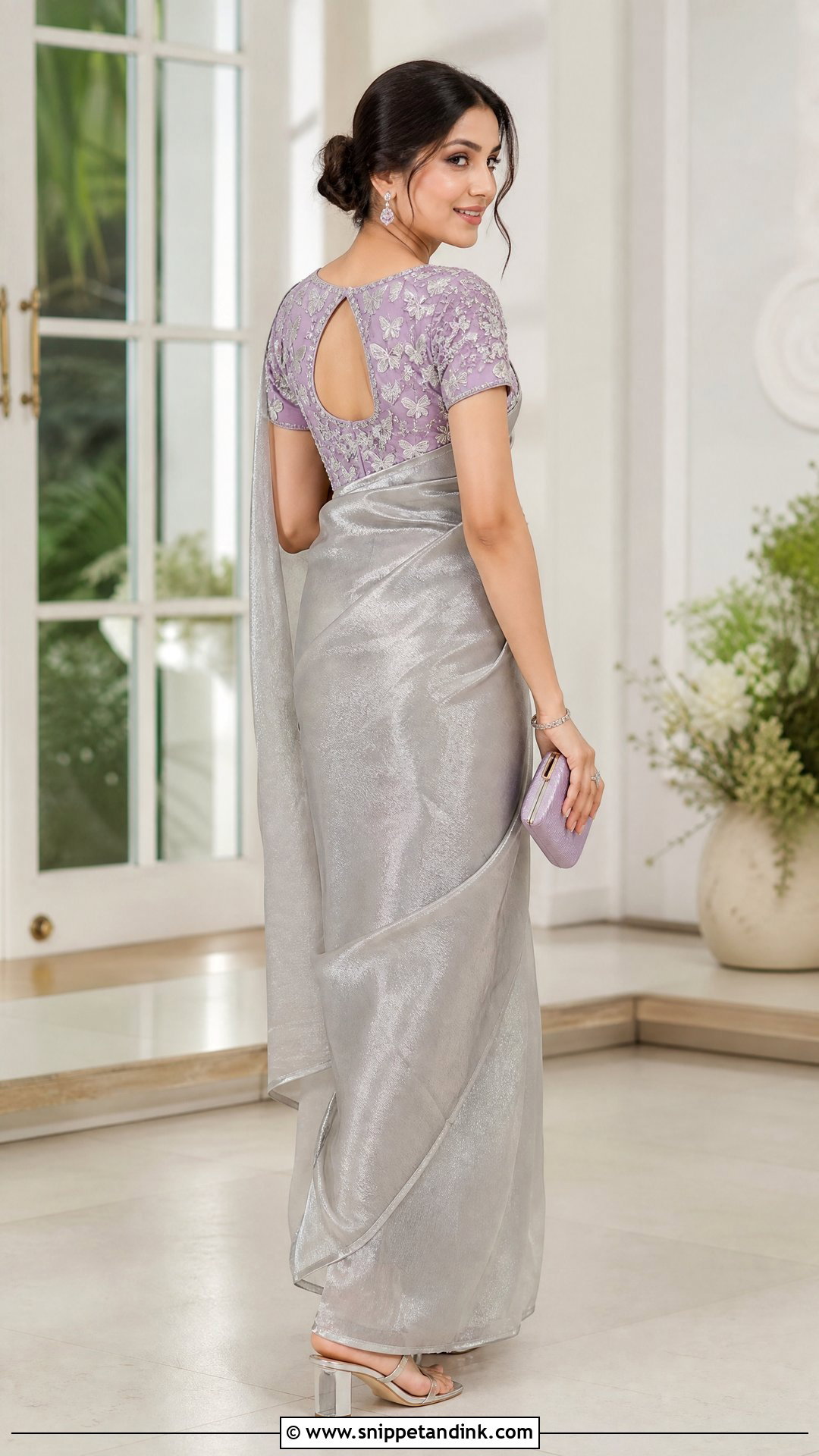
Lavender and silver belong to an engagement or reception rather than the main ceremony. A lavender raw silk blouse with a wide boat neck, short sleeves and a modest keyhole back carries butterflies in silver thread, lilac beads, clear crystals and small sequins. One larger butterfly near the shoulder blade, smaller ones scattered down the sleeves. The risk is overloading the wings, so I ask the embroiderer to hold to two thread colors and keep both wings mirror-matched. A silver-gray tissue saree with a neatly pleated pallu, crystal earrings, a slim bracelet, a lavender clutch, silver block heels and soft waves or a low bun finish it.
17. Burgundy Sun And Moon Maggam Work Blouse With Gold Saree
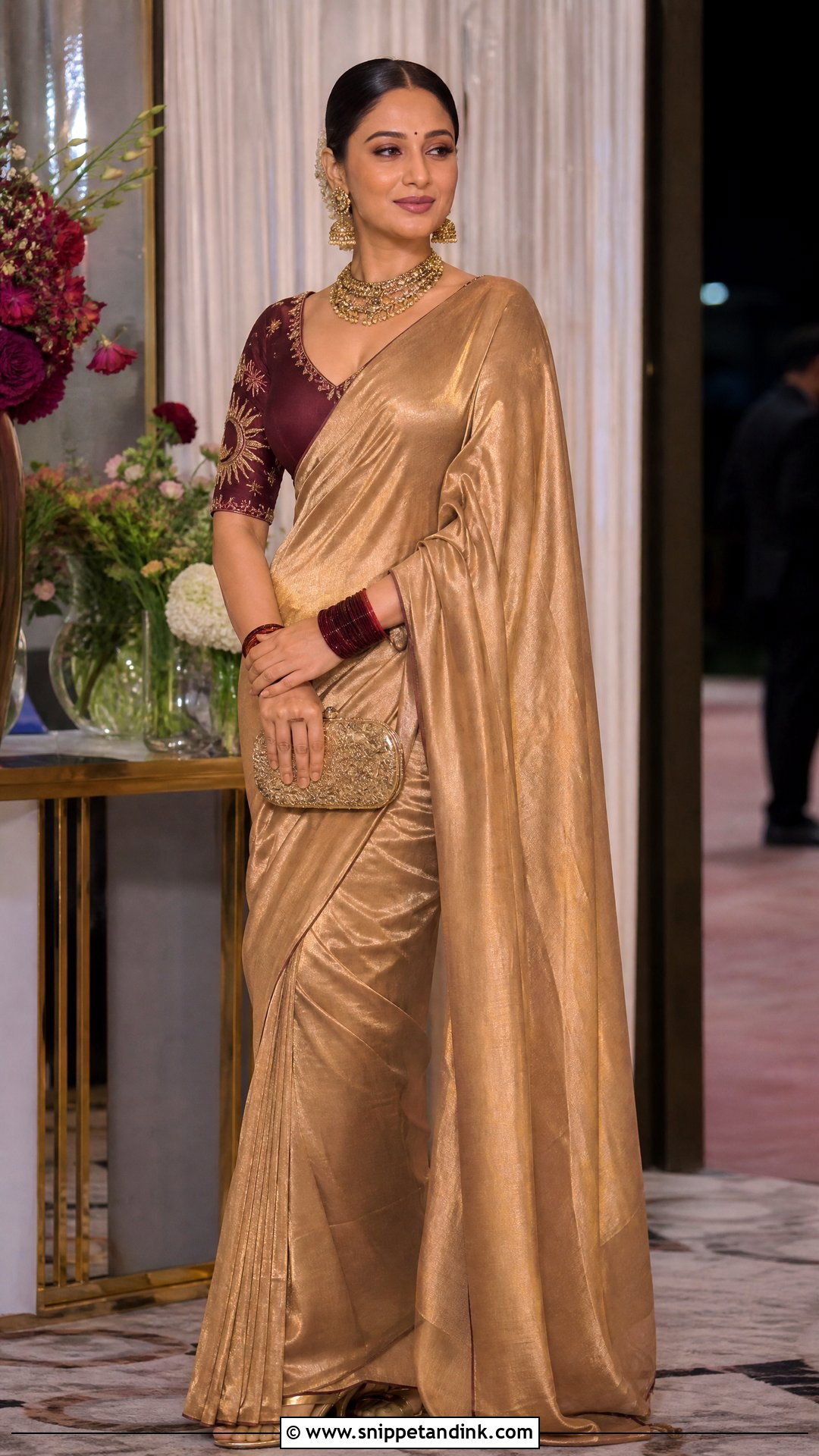
Celestial embroidery is the most personal-feeling design here that still holds up at a formal wedding. A burgundy silk blouse carries a sun on one sleeve and a crescent moon on the other, with small stars, beads, sequins and metallic thread drifting across the upper back. Keep the front simple, a medium V-neck is enough, so the bridal necklace isn’t competing. I ask for rounded embellishments around the sleeves because sharp-edged stones snag the pallu, and a fitted lining keeps the motifs lying flat. A muted gold saree, antique-gold jewelry, burgundy bangles, a structured clutch, gold sandals and a center-parted bun with small hair accessories complete it without tipping into costume.
18. Turquoise Mirror Maggam Work Blouse With Pink Saree
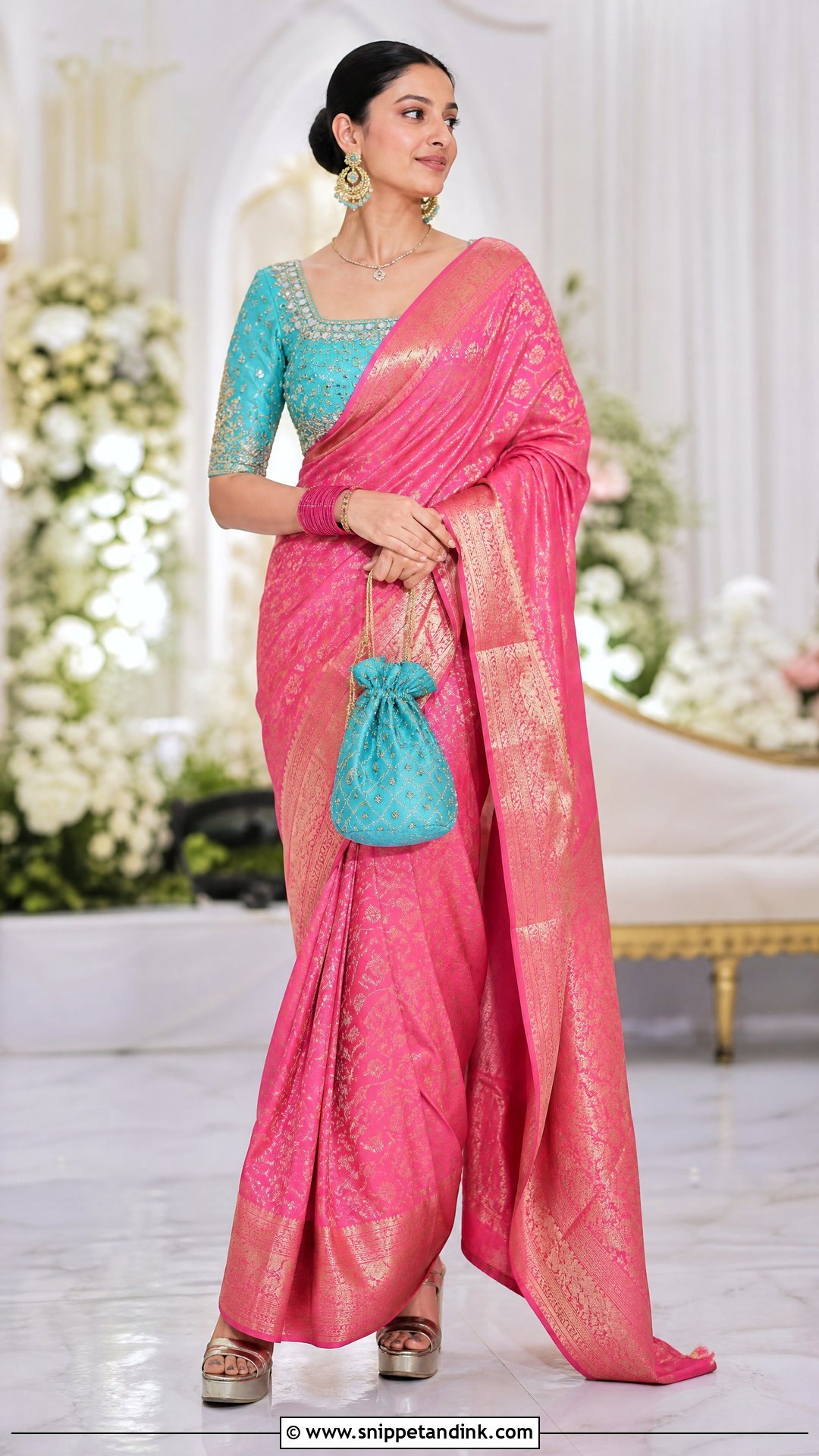
Mirror work combined with maggam is my choice for evening functions, because the mirrors catch every lamp and candle in the room. A turquoise blouse against a bright pink saree carries small, lightweight mirrors in floral or geometric formations around the neckline, sleeves and back, outlined in gold thread, beads and pink embroidery. A square neckline and elbow sleeves give the work enough structure. Check every mirror edge with your fingertip at the fitting; a rough rim will scratch your inner arm and pull threads in the saree. Gold chandbalis, a simple necklace, pink bangles, a turquoise potli, metallic block heels and sleek hair balance the sparkle.
19. Blush Initial Maggam Work Blouse With Ivory Saree
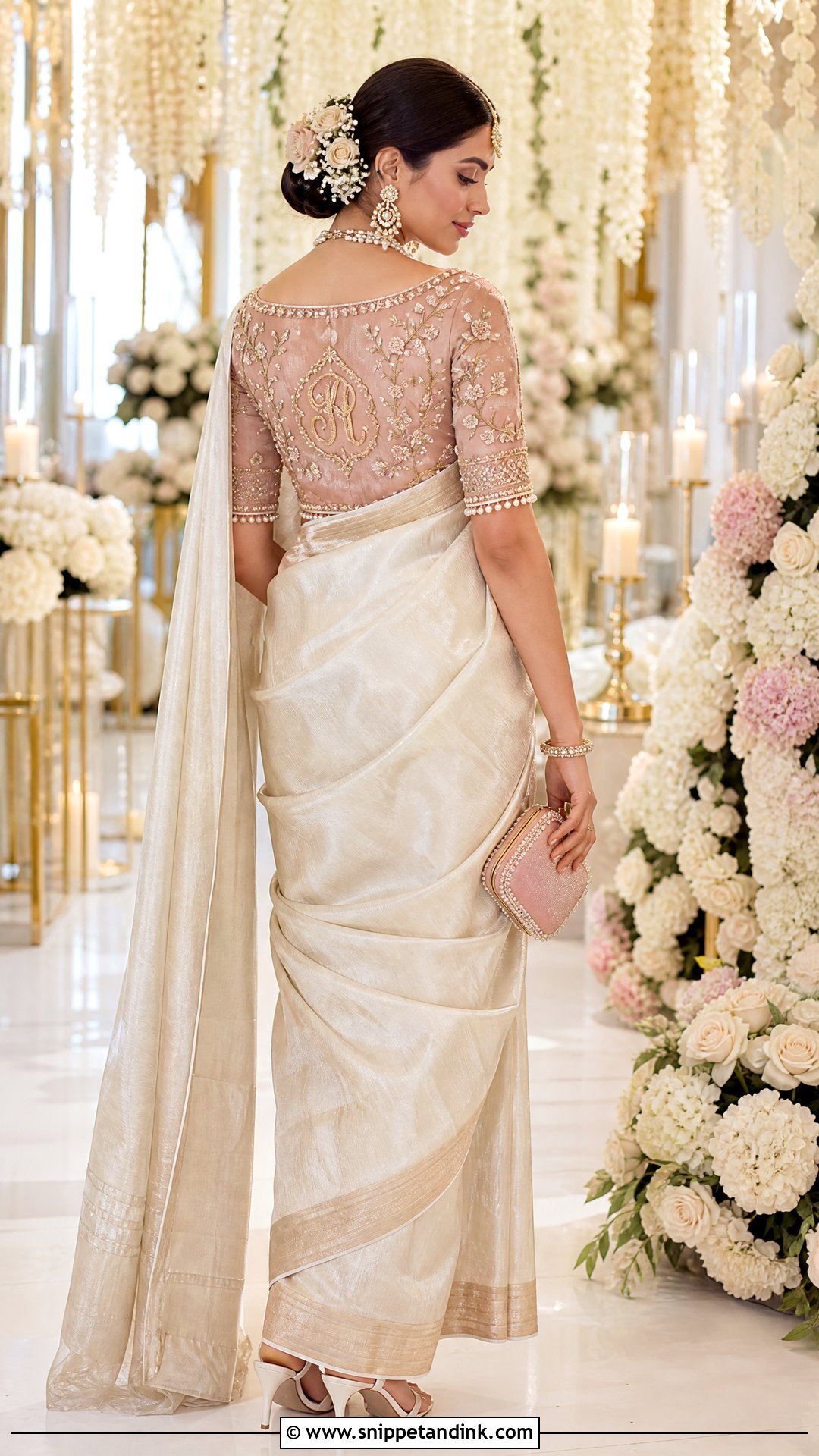
Initials at the center back turn a blush blouse into a keepsake you’ll actually want to look at again. Pair it with an ivory saree with a blush or champagne border, and surround the lettering with fine floral vines, pearls, zari and tiny stones. Name and initial embroidery has become a familiar way to bring a custom touch into traditional clothing. A wide U-back and elbow sleeves keep the motif visible below the pallu. Choose plain, well-spaced letters; ornate script turns illegible once it’s beaded. I ask for a paper sketch and check the spelling, placement, scale and thread colors before any stitch goes in, since unpicking beaded letters damages silk. Pearl and kundan jewelry, a blush clutch, ivory sandals and a low floral bun finish it.


20. Red Lakshmi Maggam Work Blouse With Gold Pattu Saree
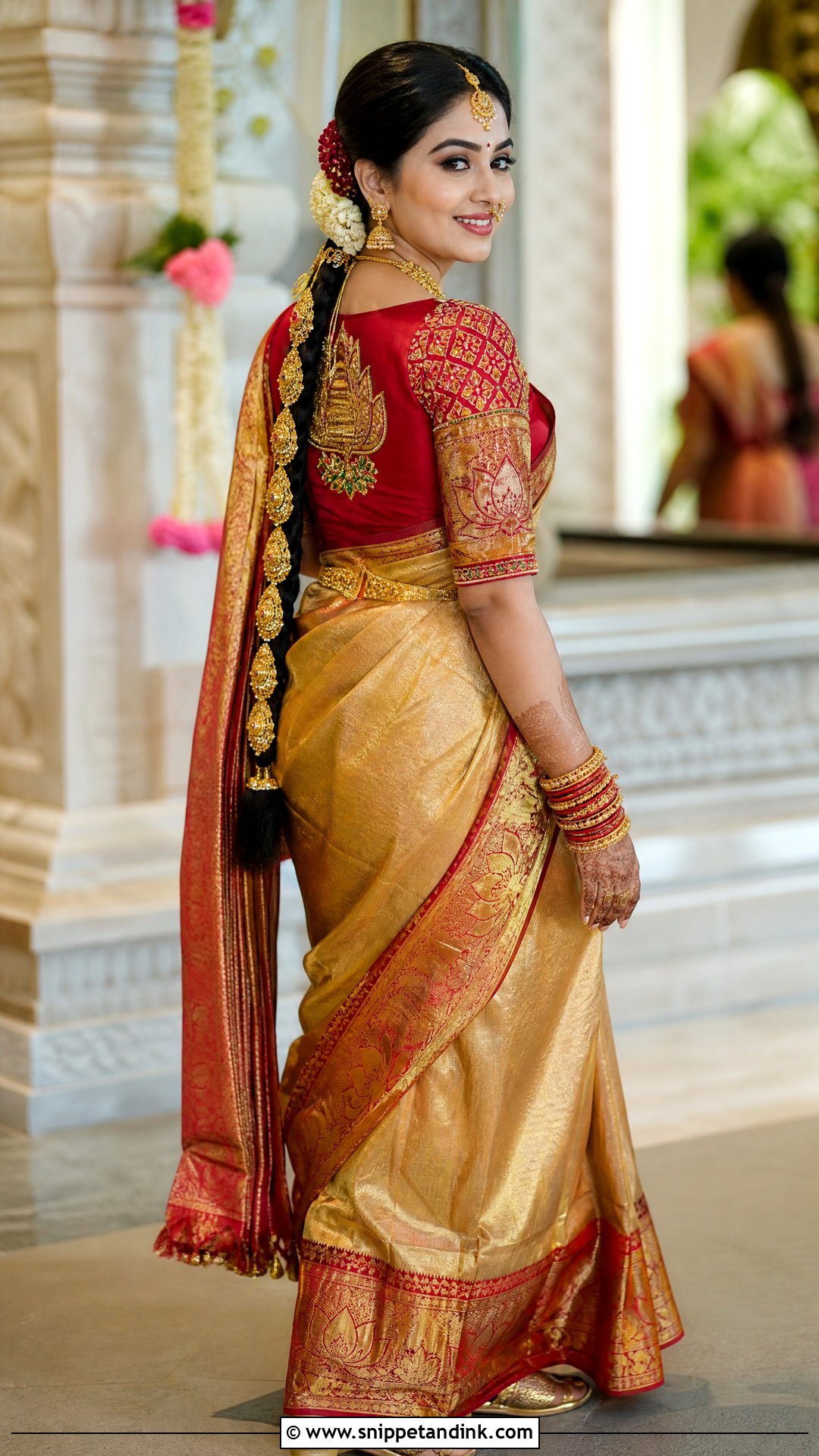
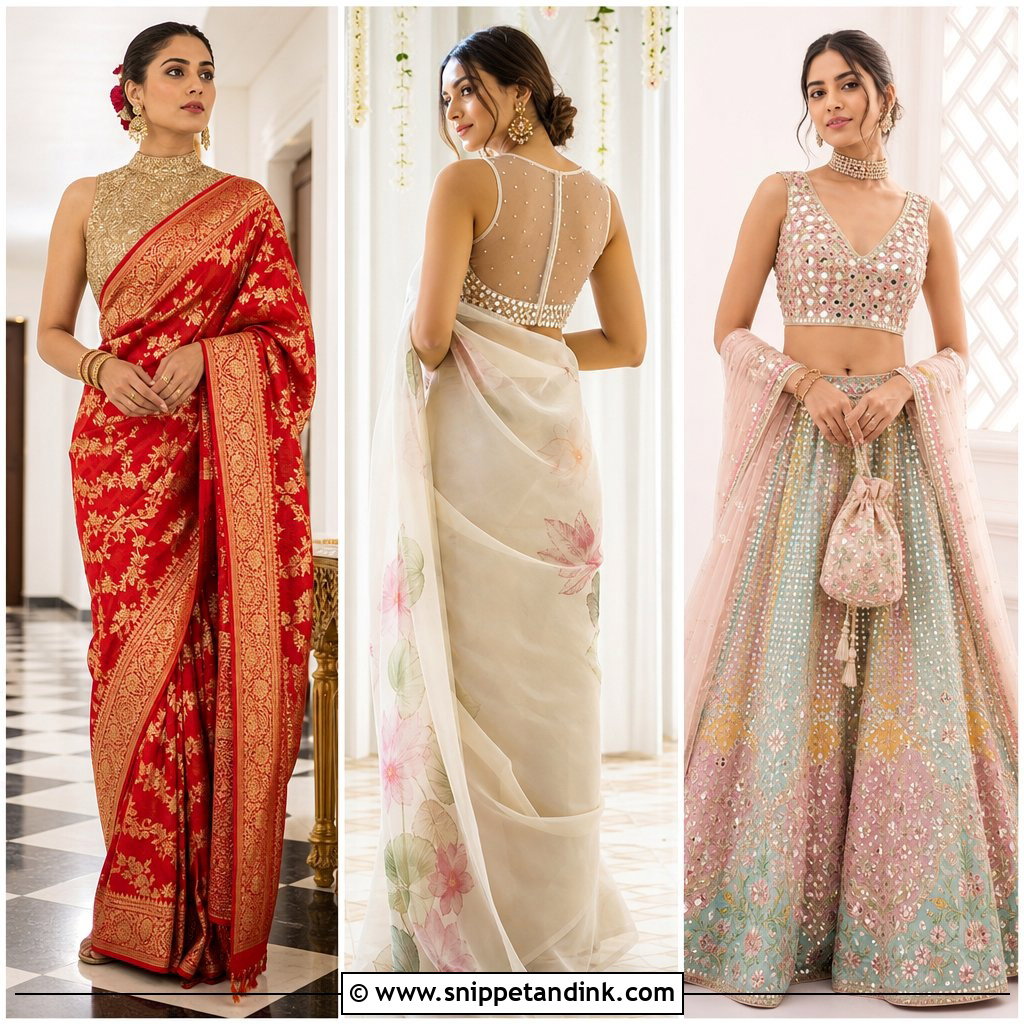
A red Lakshmi maggam work blouse with a gold pattu saree is as traditional as bridal dressing gets. The central figure sits on the upper back, framed by lotus flowers, temple arches, pearls, zari and antique-gold beads, while elbow sleeves carry smaller lotus or coin borders and the front stays light for jewelry. With a deity motif I review the final drawing closely before stitching, so the face and hands are respectfully and clearly drawn. Temple jewelry, a waist belt, red and gold bangles, a decorated braid and cushioned sandals complete it, with the pallu pinned to frame the back. Families often keep this blouse for years, so choose durable silk, colorfast thread, reinforced seams and a breathable cotton lining.
How a Heavy Blouse Behaves Through a Long Muhurtham
A blouse that feels fine standing in a fitting room can feel very different after you’ve sat cross-legged for a ritual, stood for blessings and then posed for an hour of family photos. Embroidery adds real weight and makes the fabric stiffer, and the places that suffer are always the same: underarms, the back of the shoulders and the lower edge where the saree tucks in.
At the final fitting I ask the bride to sit on the floor, raise both arms as if putting on a garland and twist to look behind her. If the armhole cuts, the work under the arm needs thinning. If the back pulls open, a hidden hook or an extra tie fixes it. Keep a small kit with safety pins, a needle threaded in the blouse color and a few spare beads, since a single loose stone is easy to stitch back on between ceremonies.
Why I Wrap Finished Maggam Blouses in Muslin
Zari darkens when it meets moisture and trapped air, and plastic covers hold both. Once the wedding is over, air the blouse inside out for a day so any perspiration dries, then have it professionally dry cleaned by someone who handles embroidered silk. Never let perfume or deodorant touch the work directly.
Store it folded flat in soft cotton or muslin with a layer of tissue between the folds, rather than on a hanger, because the weight of the embroidery stretches the shoulders over months. Refold it along different lines every few months so the silk doesn’t crack where it creases, and keep it in a dry cupboard away from damp walls.
Settle the Saree First, Then Draw the Blouse
Every design above starts from the saree you’ve already chosen, its border, its body color and how much gold it carries. Peacock, temple, elephant, lotus, paisley and the newer cutwork, celestial and initial motifs each give that saree a different partner. Once the motif is settled, decide the neckline, sleeve length and pallu placement around your jewelry, then ask for a sketch and a small sample before the work goes on the frame. A soft lining and firmly stitched embellishments are what keep you comfortable from the first ritual to the last photograph.
You'll Like These Ideas:





Leave a Reply