
Brides usually arrive at a first styling meeting thinking about the saree or lehenga, and leave realising the blouse decides almost everything else. It sets where the necklace sits, how the dupatta can be pinned, how much you can lift your arms during the pheras and what the camera sees from behind. Below are the blouse styles I build bridal outfits around most often, from heavy handwork to one clean cut with a single detail, with notes on fit, fabric and what each one asks of the rest of your look.
How Many Fittings a Heavy Bridal Blouse Really Needs
Embroidered blouses aren’t made like ordinary ones. The tailor cuts and fits the base fabric first, then the embroiderer works on it, and only after that is the blouse assembled. Any change after embroidery is slow and sometimes impossible, so most of the fitting work has to happen early.
- Measurement and pattern fitting. Wear the bra you’ll wear on the day. Cup shape changes the whole bodice, and switching later means refitting.
- Trial in plain fabric or the unembroidered base. Sit on the floor, raise your arms above your head, and bend forward. Gaping at the neckline or pulling at the armhole shows up here.
- Final fitting with the finished blouse. Bring your heaviest necklace and your dupatta. Heavy jewellery drags a neckline down, and pins need a reinforced spot to go into.
- A short check about two weeks out. Weight often shifts in the final month, and side seams with extra allowance can be let out or taken in quickly.
For heavy handwork, many embroiderers ask for two to three months, and longer in peak wedding season. A plain silk or Banarasi blouse can be done in a few weeks. If your timeline is tight, choose the style first and the embroidery second.
1. Bridal Maggam Work Blouse Design
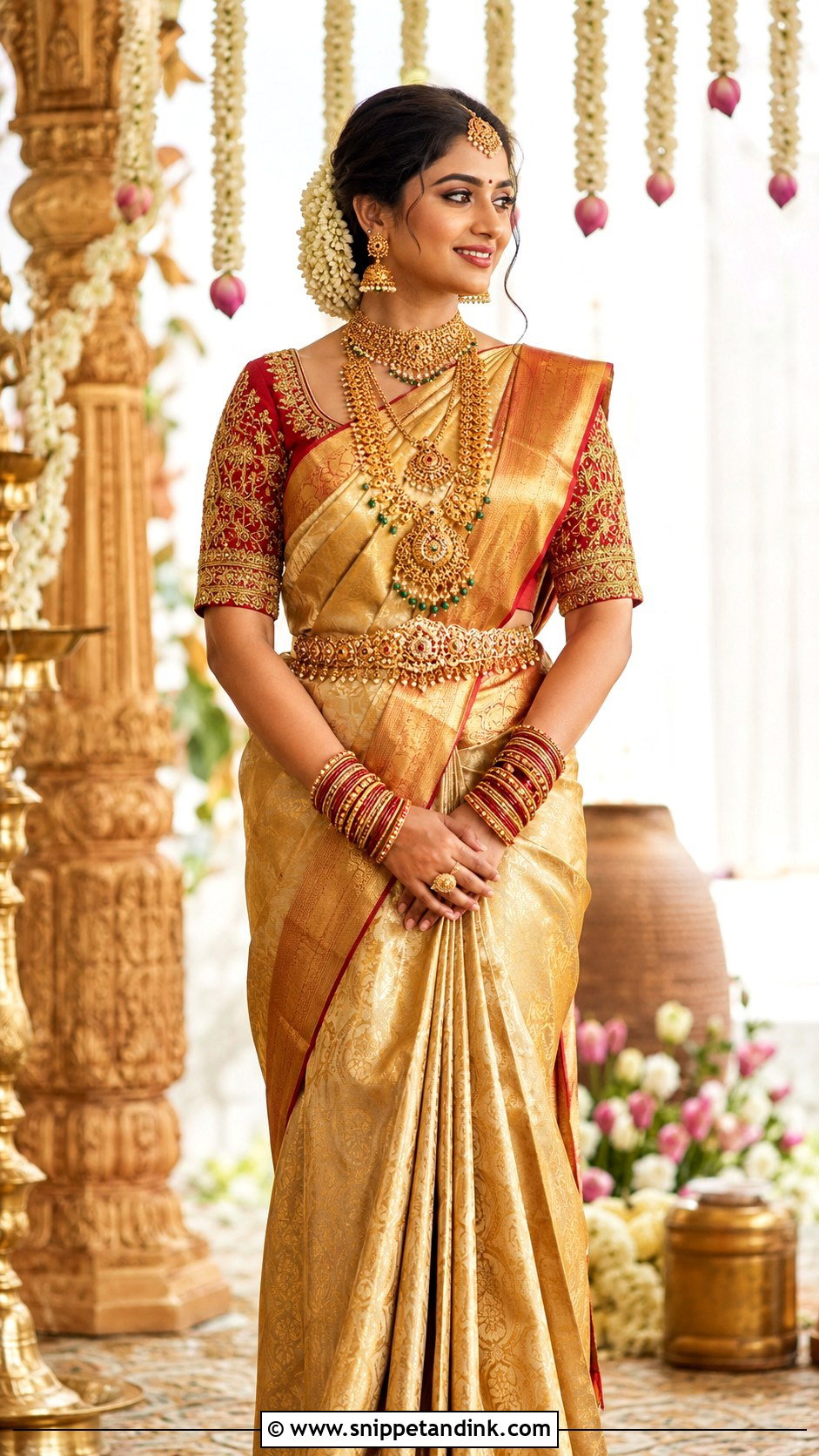
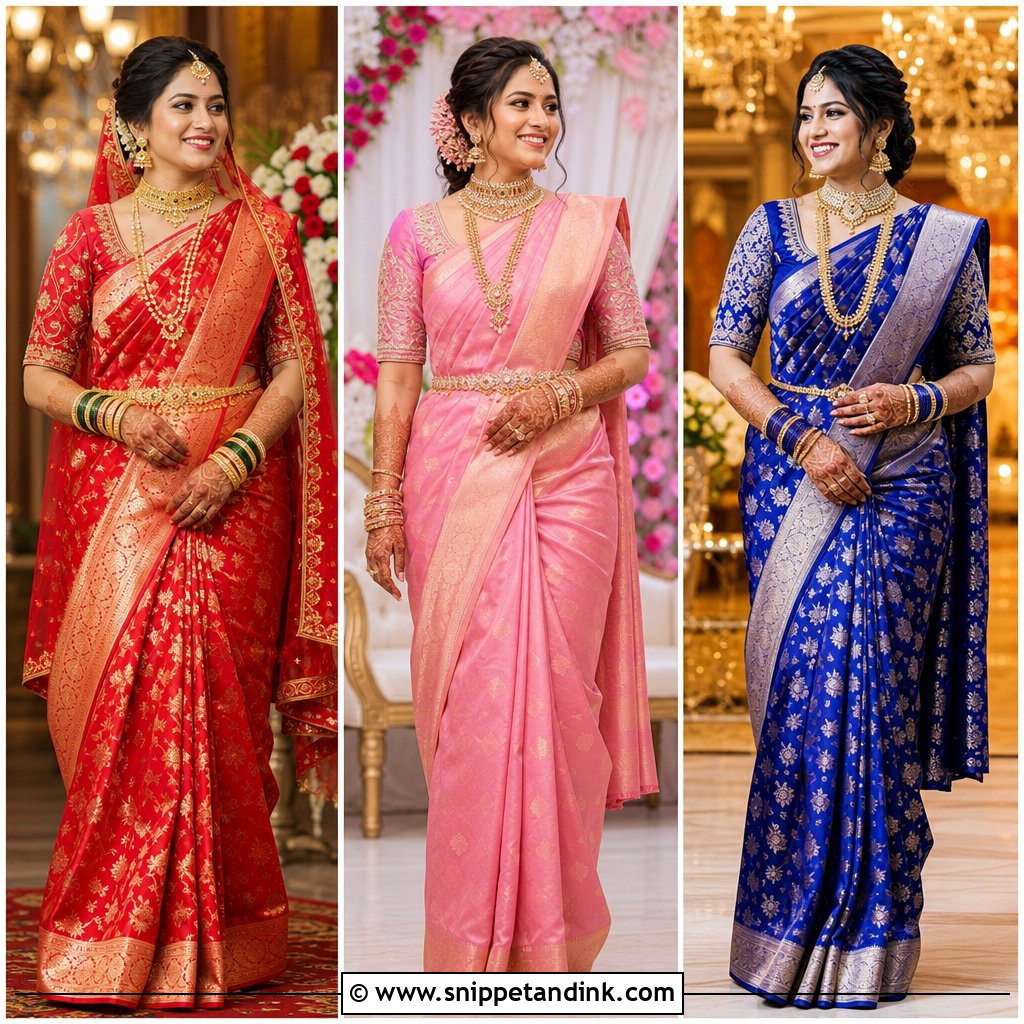
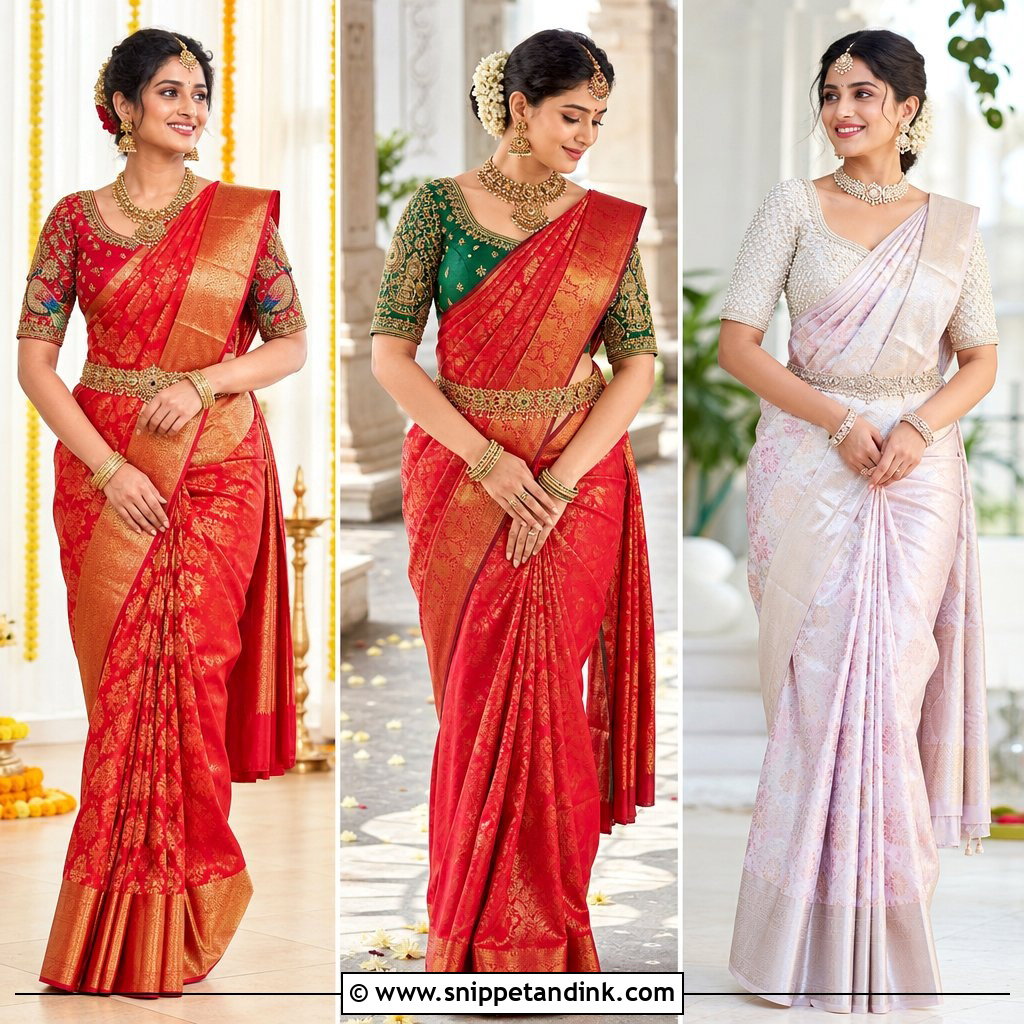
Maggam is the blouse I reach for when a bride wants handwork that reads from the back of a hall. A bridal maggam work blouse design in deep red or maroon sits naturally against a gold, rust or ruby silk saree, with zari, beads and stones worked across the sleeves and neckline. The weight is real, though. Heavy maggam on the sleeves pulls the shoulder seam down if the base fabric is thin, so I ask the tailor for a lining with some body before the embroidery goes on. Temple necklaces, jhumkas and a flower-wrapped bun finish it, and a pallu pleated narrow keeps the work on show.
2. Bridal Aari Work Blouse Design
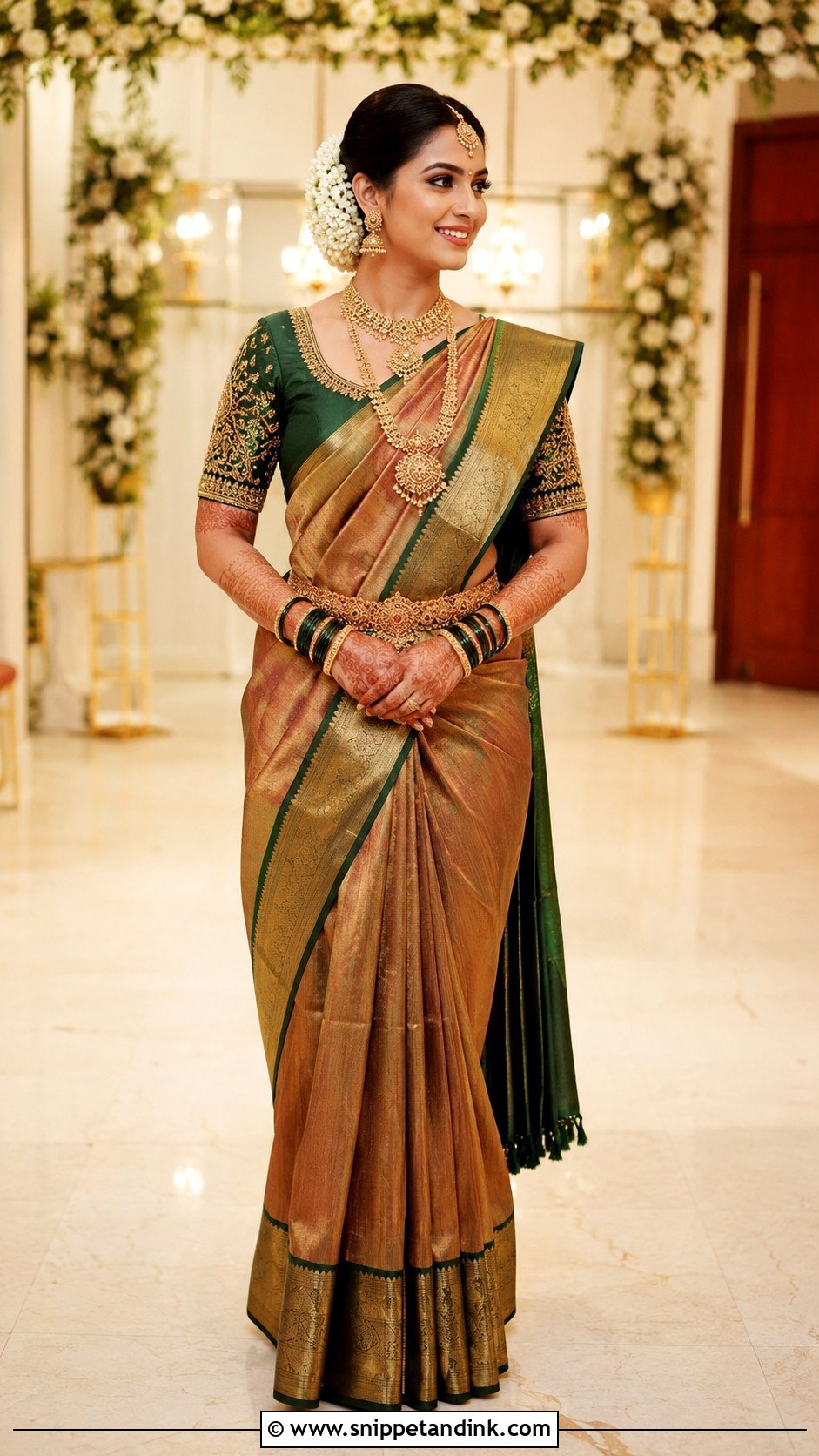
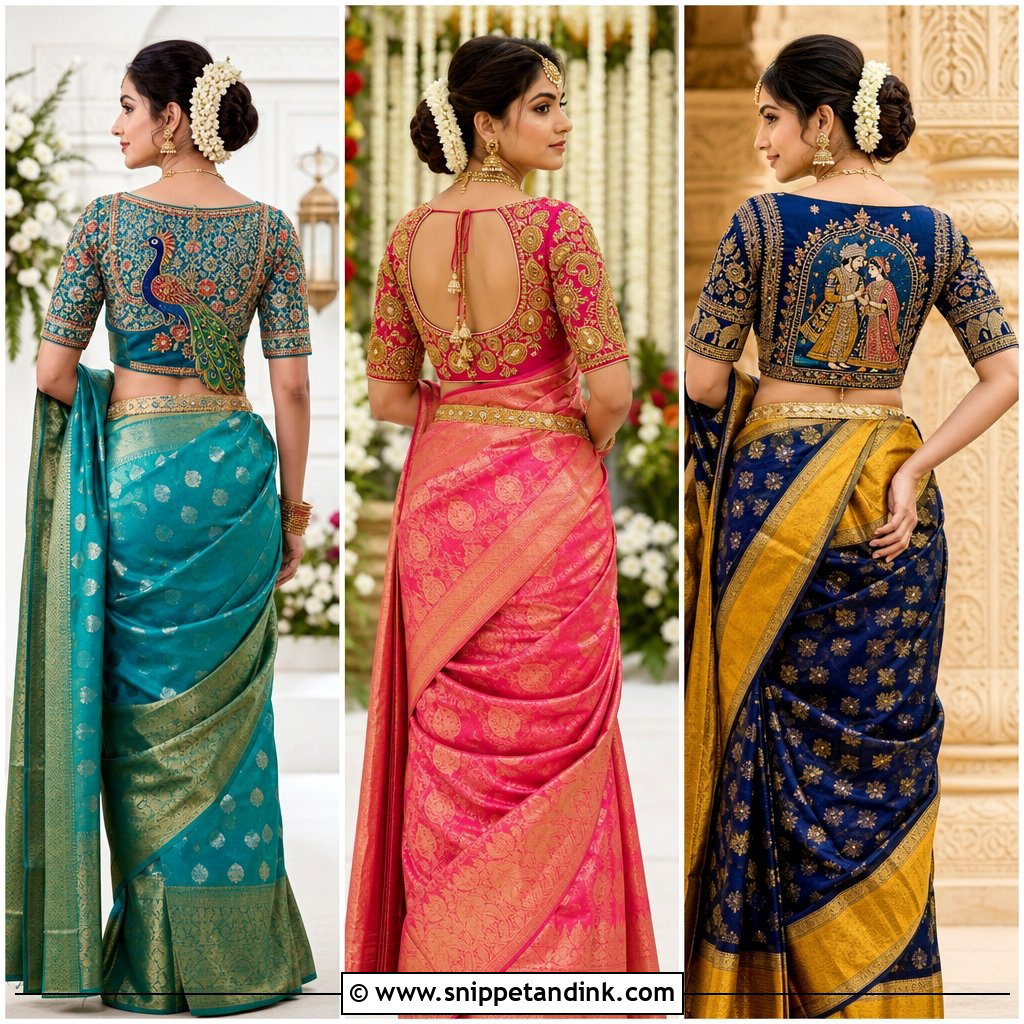
Aari is finer and flatter than maggam, which is why it moves with you instead of sitting on you. A bridal aari work blouse design suits Kanjeevaram, Banarasi and silk lehengas alike, and contrast pairs like emerald with gold or ivory with red thread are where it shows best. Peacocks, vines, lotus or a set of initials all work in this technique. My one rule: pick a motif from the saree border and repeat it on the sleeve, so the blouse looks commissioned for that drape rather than bought separately.
3. Bridal Zardosi Blouse Design
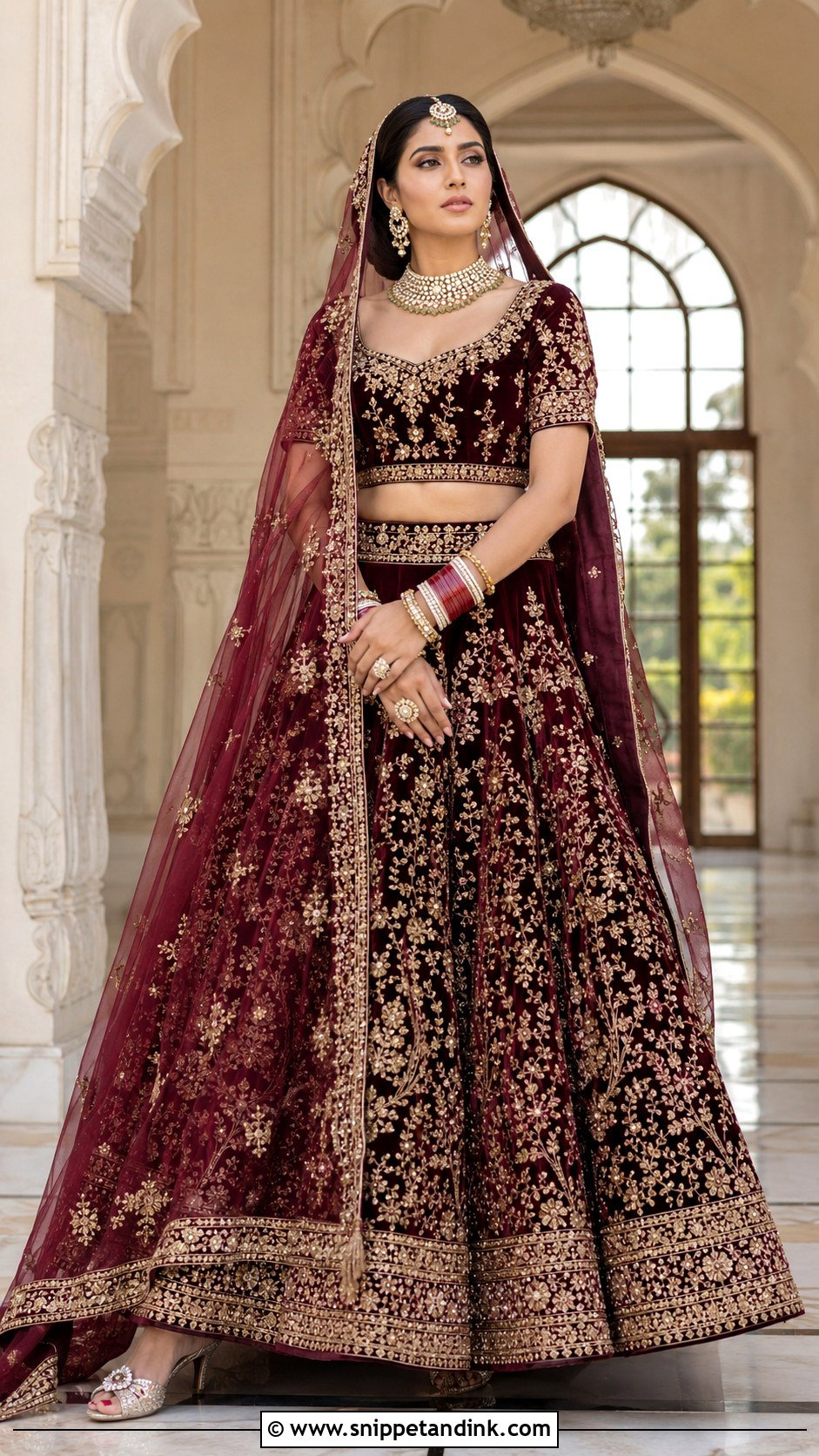
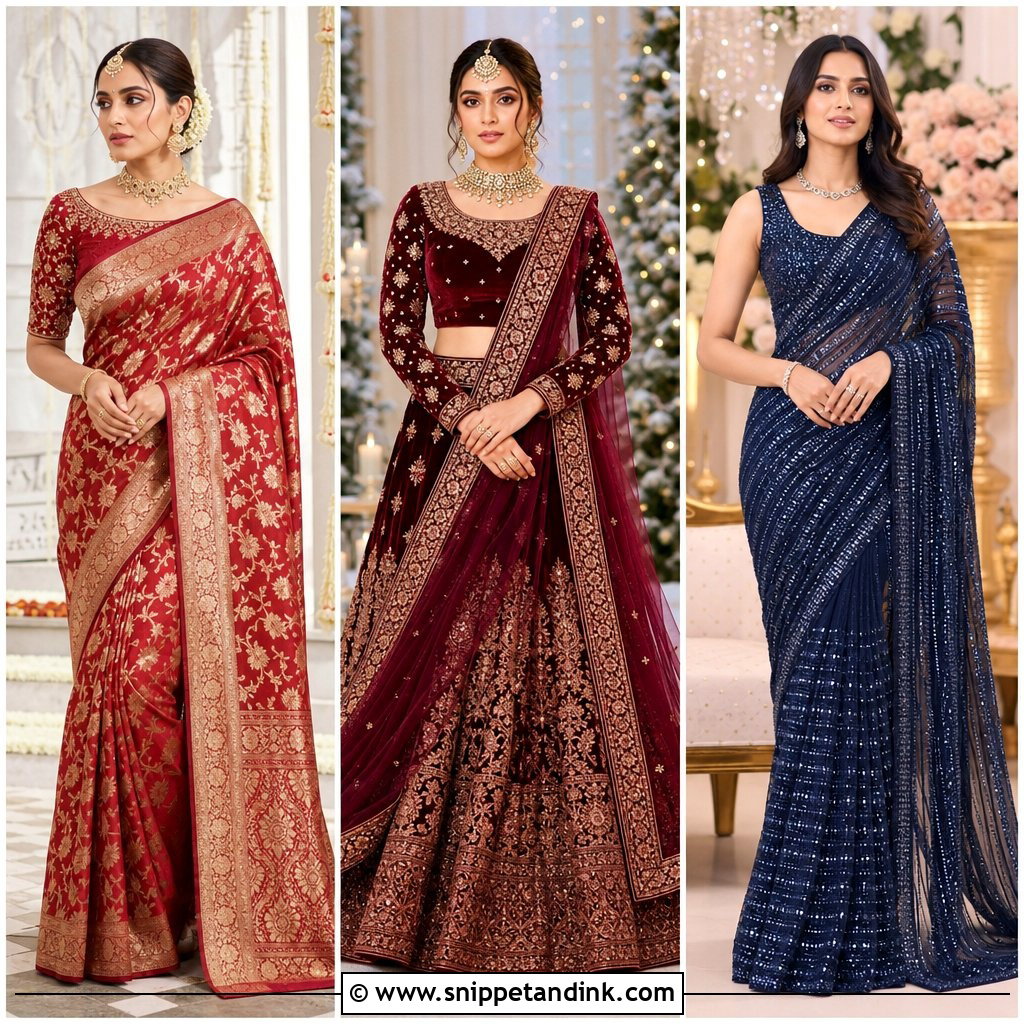
Zardosi is raised metal wire, so it catches light in a way flat embroidery never will. Gold on red, wine, navy or emerald is the traditional route; silver on blush or ivory gives a lighter, newer read. It also scratches. Zardosi on the inner arm rubs against the bodice all day, so I keep the densest work on the outer sleeve and the front panel. Pair it with a velvet lehenga or a bordered dupatta, and let the skirt flow so the whole outfit doesn’t feel armoured. Kundan and a maang tikka belong with this one.
4. Bridal Mirror Work Blouse Design
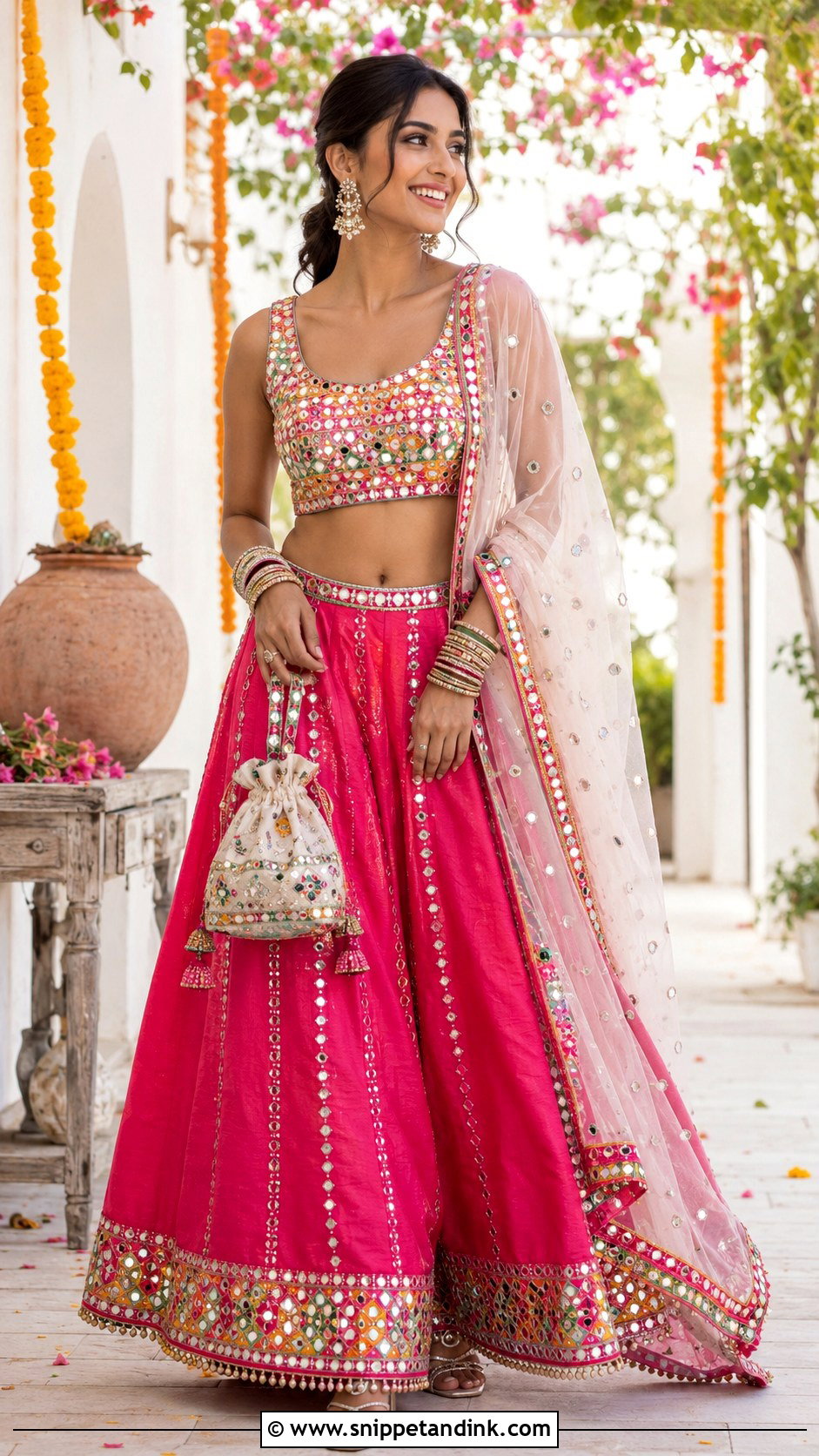
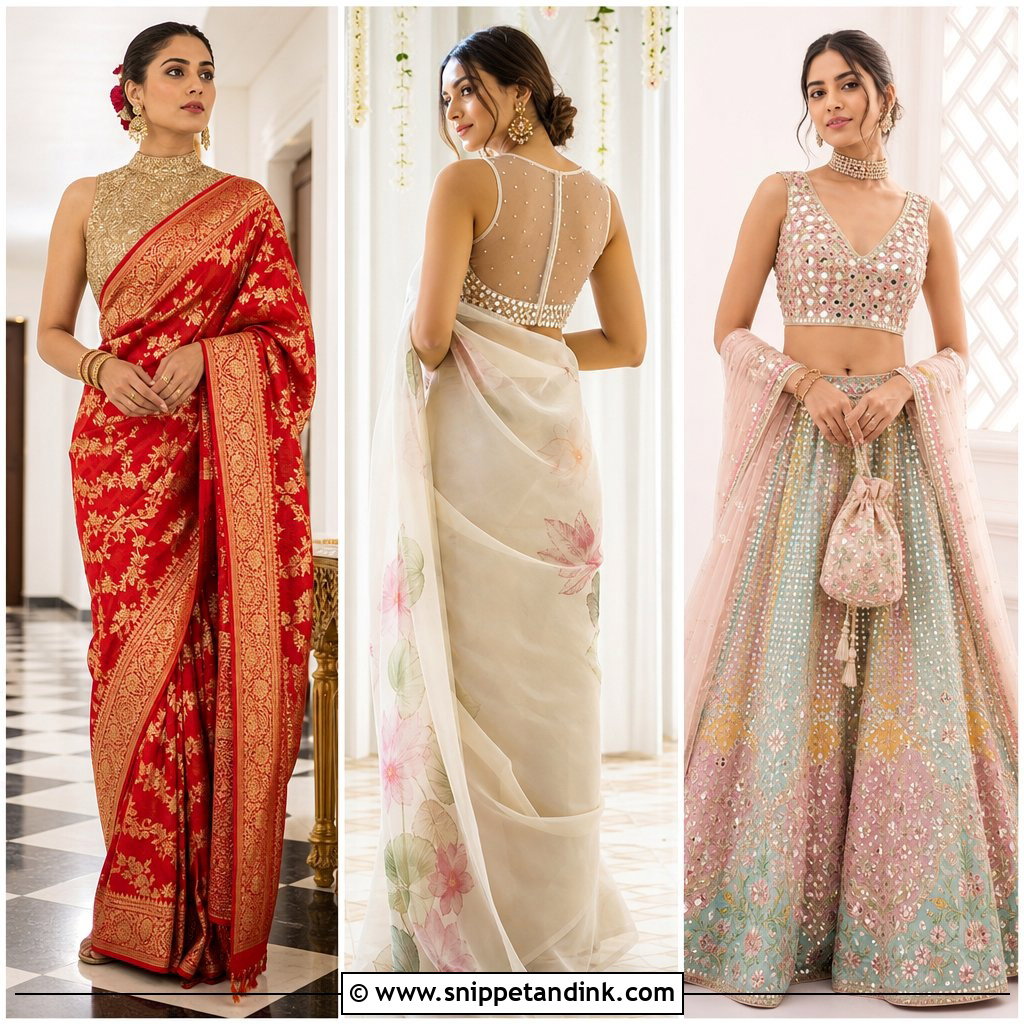
Mirror work does the sparkling for you, which means your jewellery can step back. It’s my first suggestion for daytime functions like the mehndi, where yellow, hot pink, orange or green lehengas want something playful rather than regal. Real glass mirrors are heavier than people expect and can feel cold against skin, so ask for a soft lining behind each panel. On a saree, a georgette or silk drape with a mirror border ties it together. A braid, a potli and comfortable sandals keep you moving between dances.
5. Bridal Sweetheart Neck Blouse Design
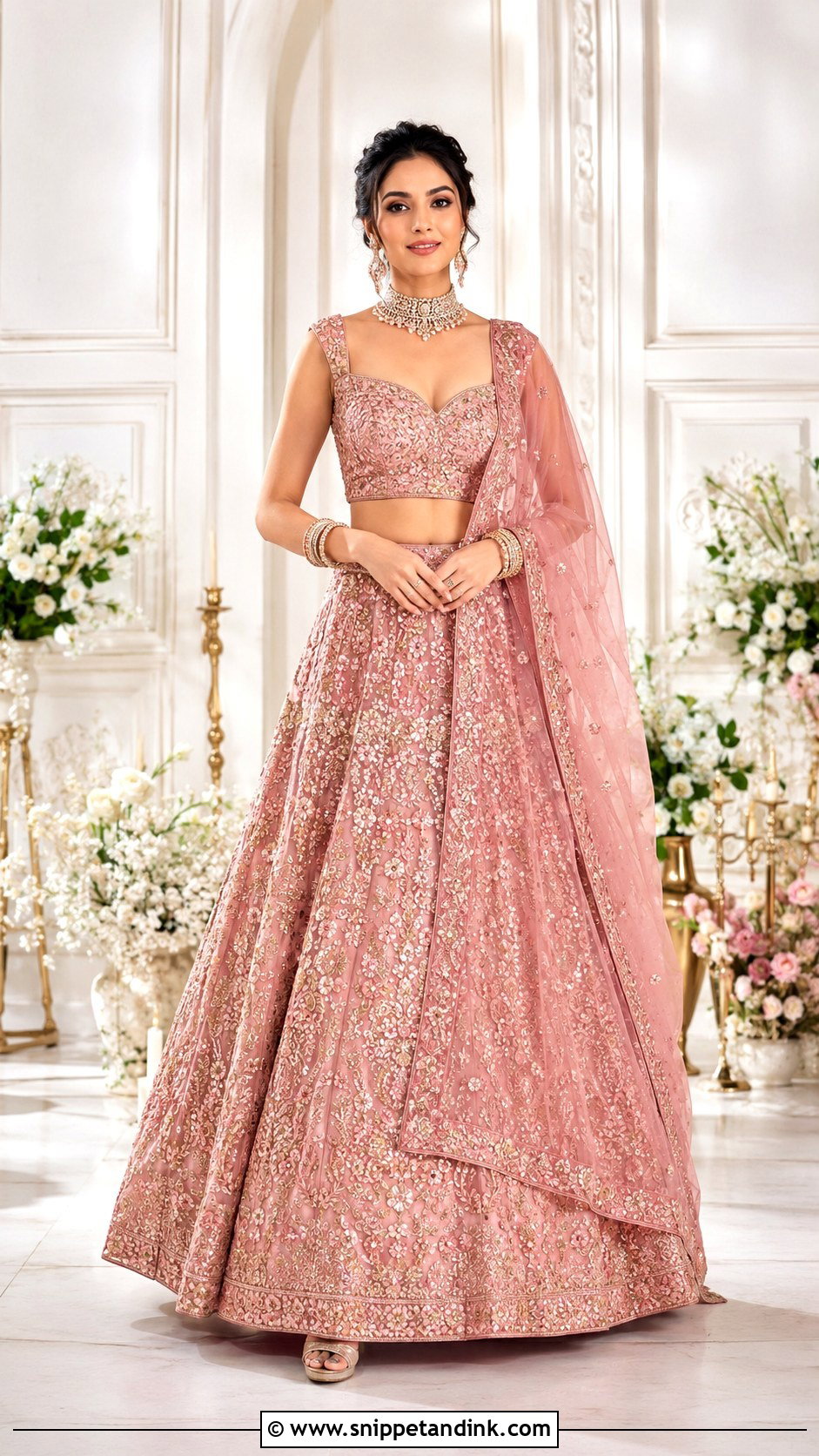
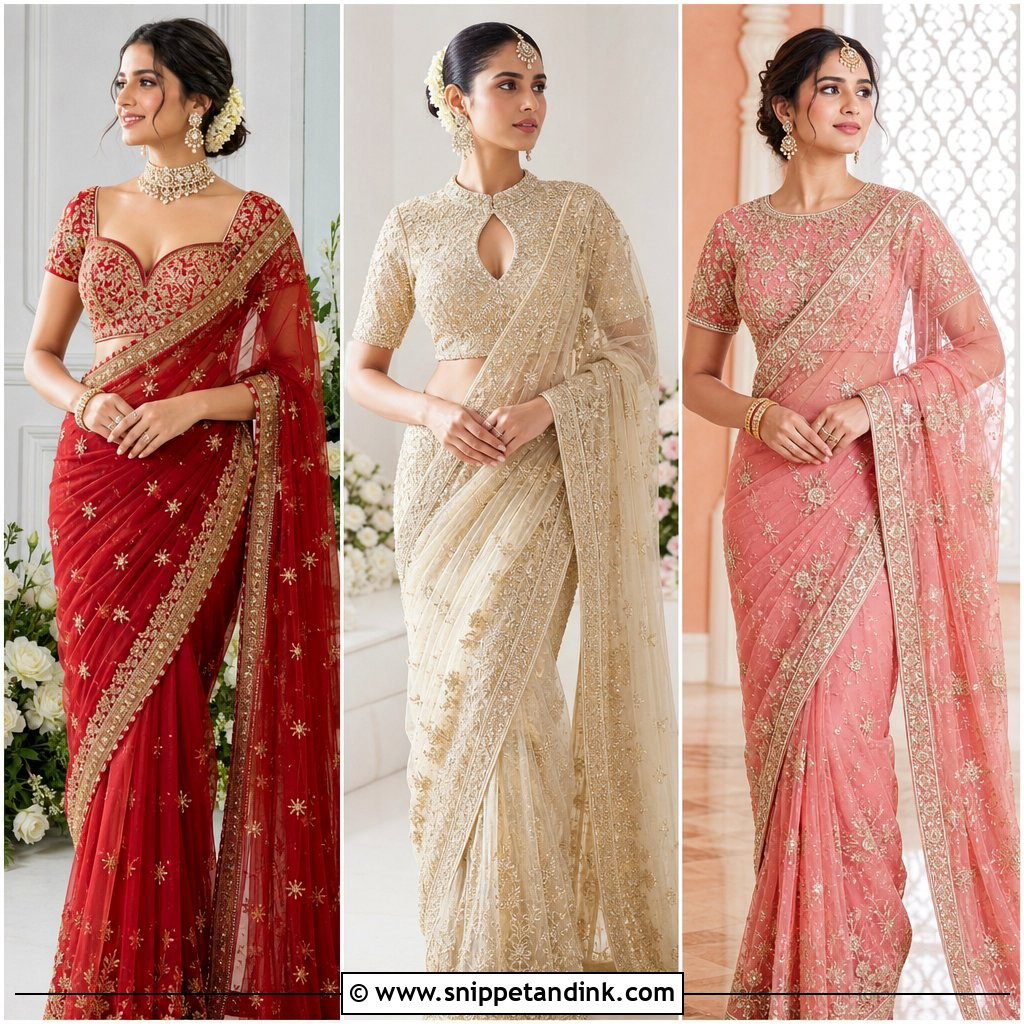
The sweetheart curve softens a broad shoulder line and gives a fuller bust a cleaner shape than a straight neck does. It sits well under organza, silk and Banarasi drapes, and with a lehenga in matching or contrast tones. The detail I check at fittings is the dip in the centre: if it gapes when you lean forward to touch the fire or take blessings, it needs a hidden hook or a tiny tack. A choker that follows the curve and a dupatta pinned over one shoulder complete it, and the shape holds up from the side as well as the front.
6. Bridal Deep V Neck Blouse Design
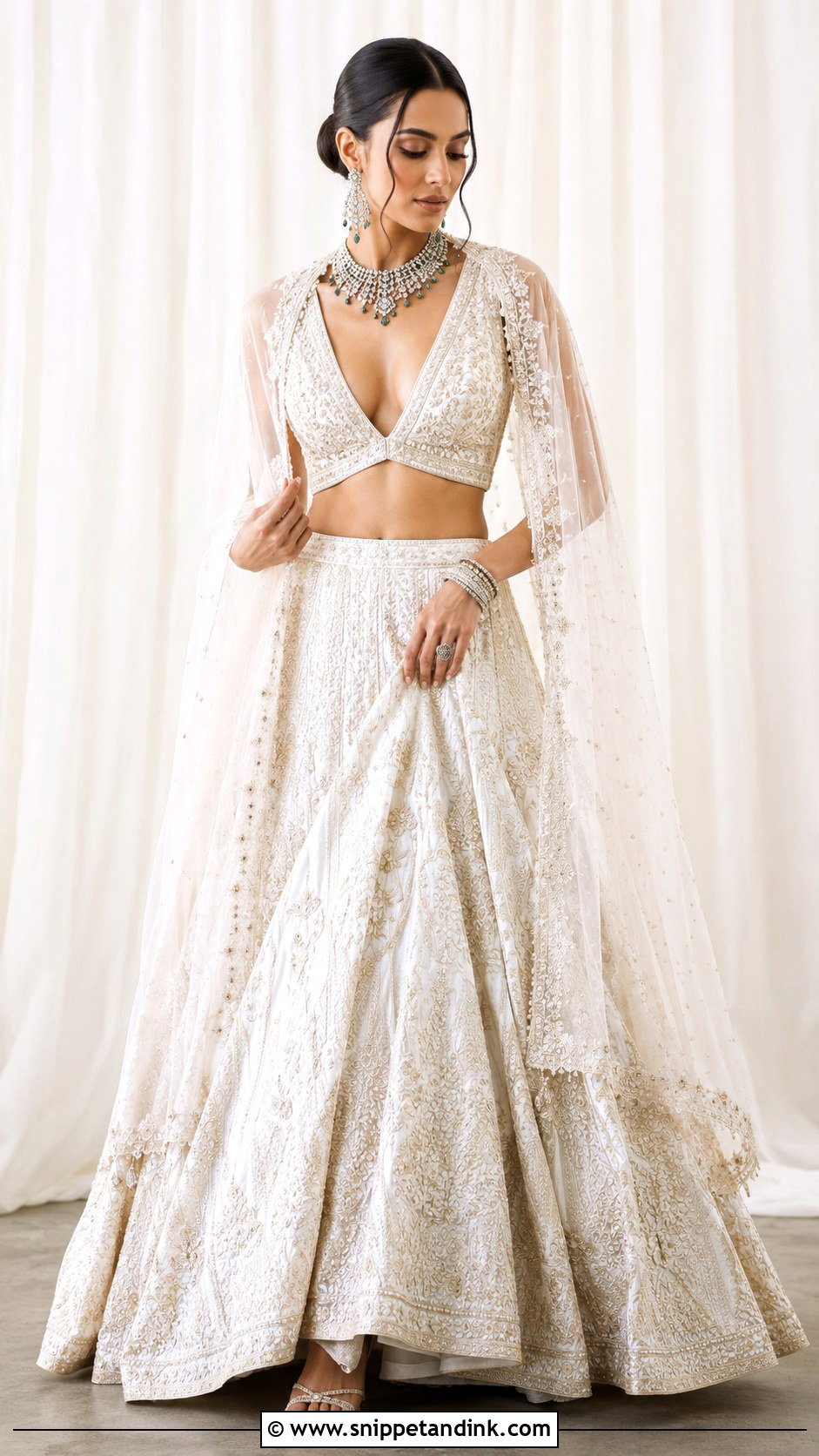
A deep V lengthens the neck and torso, so I often suggest it to petite brides who feel swallowed by heavy outfits. It needs structure to stay bridal: full sleeves, a zari border along the V or stonework that frames the opening. The risk is gaping and slipping, so the V should be cut a touch narrower than you think and finished with a fine net panel or fashion tape if you’re unsure. Layered necklaces fill the space well, and a high-waist lehenga or a full drape keeps the proportions in check.
7. Bridal High Neck Blouse Design
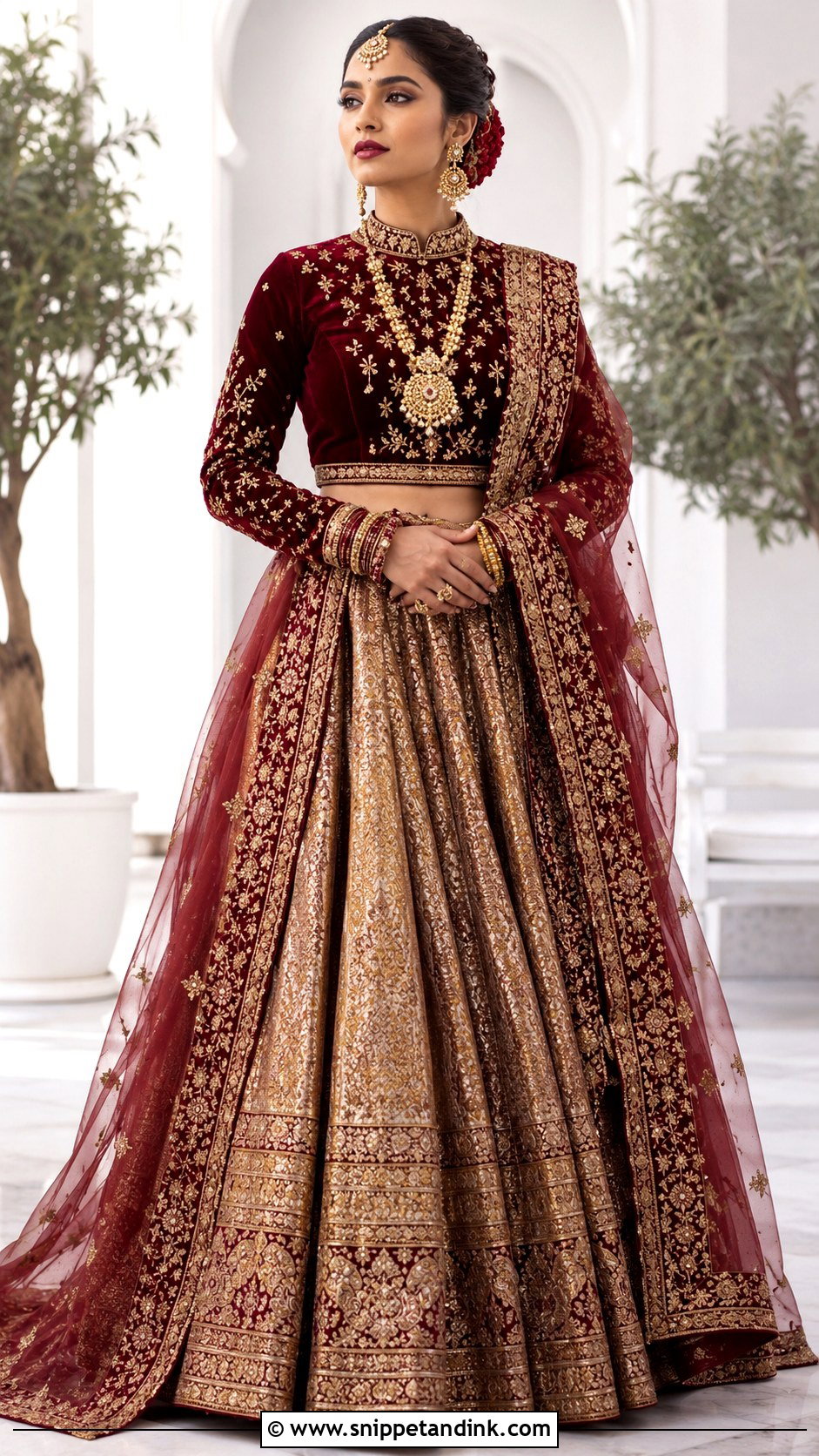
High necks are where I send brides who’d rather not think about necklines at all. With the throat covered, attention moves to sleeve embroidery, fabric texture and the line of the shoulders, so velvet, raw silk and brocade all earn their place. Skip the choker; it fights the collar. Long necklaces, statement earrings or a maang tikka work better. One honest warning: a high neck in velvet at a summer daytime ceremony is hot, and a closed collar shows every bead of sweat under the chin.
8. Bridal Boat Neck Blouse Design
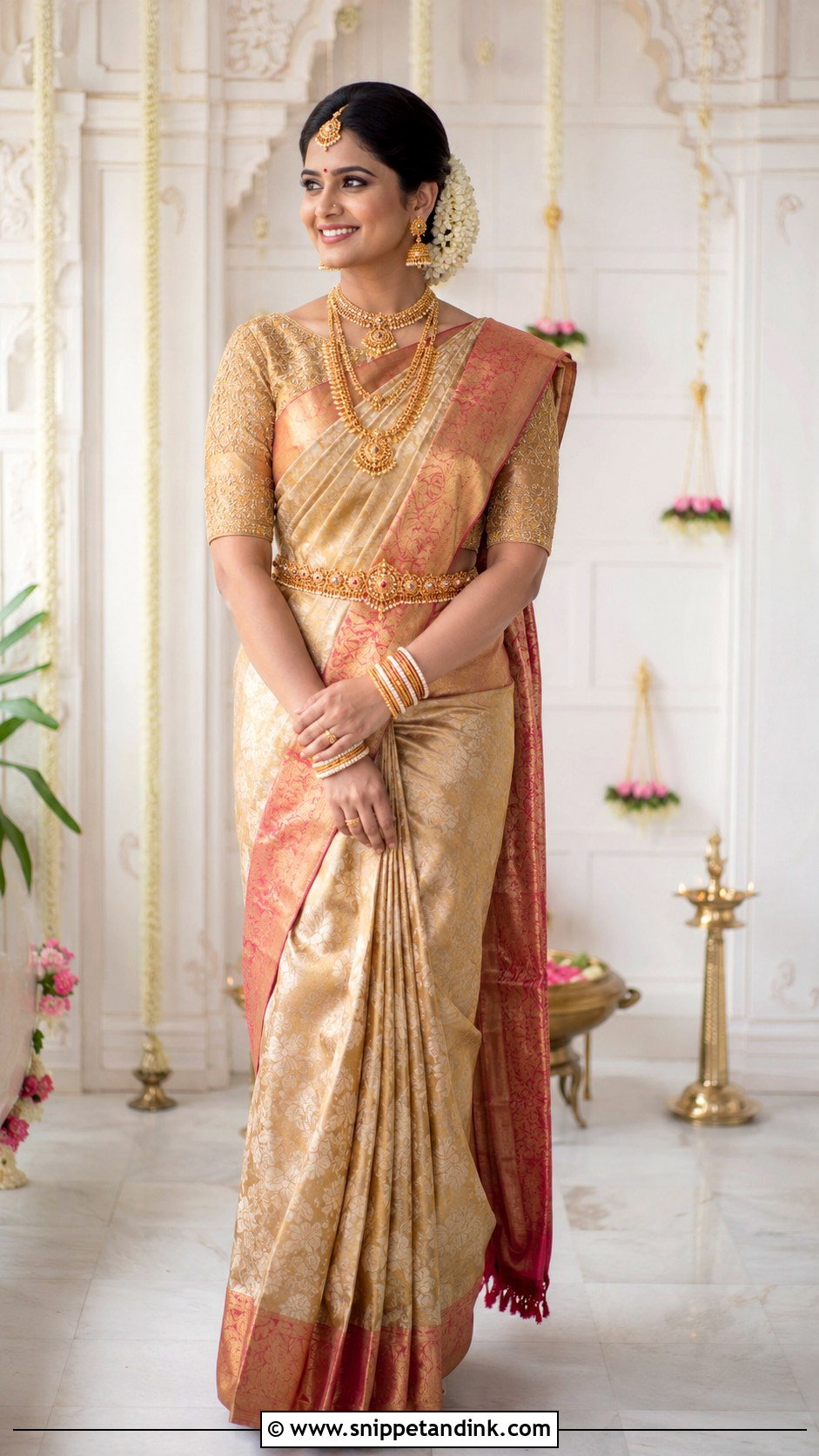
Boat necks are comfortable through four-hour ceremonies because nothing digs in and nothing slips. A bridal boat neck blouse design shows the collarbone while covering more than a deep cut, and it sits easily under Kanjeevaram, Banarasi or a simple lehenga. The shoulder width matters more than anything here: cut too wide, the edge creeps off the shoulder each time you raise your hands. Embroider the neckline and sleeves, wear long earrings and a centre-parted bun, and drape the pallu tidily so the neckline stays visible.
9. Bridal Square Neck Blouse Design
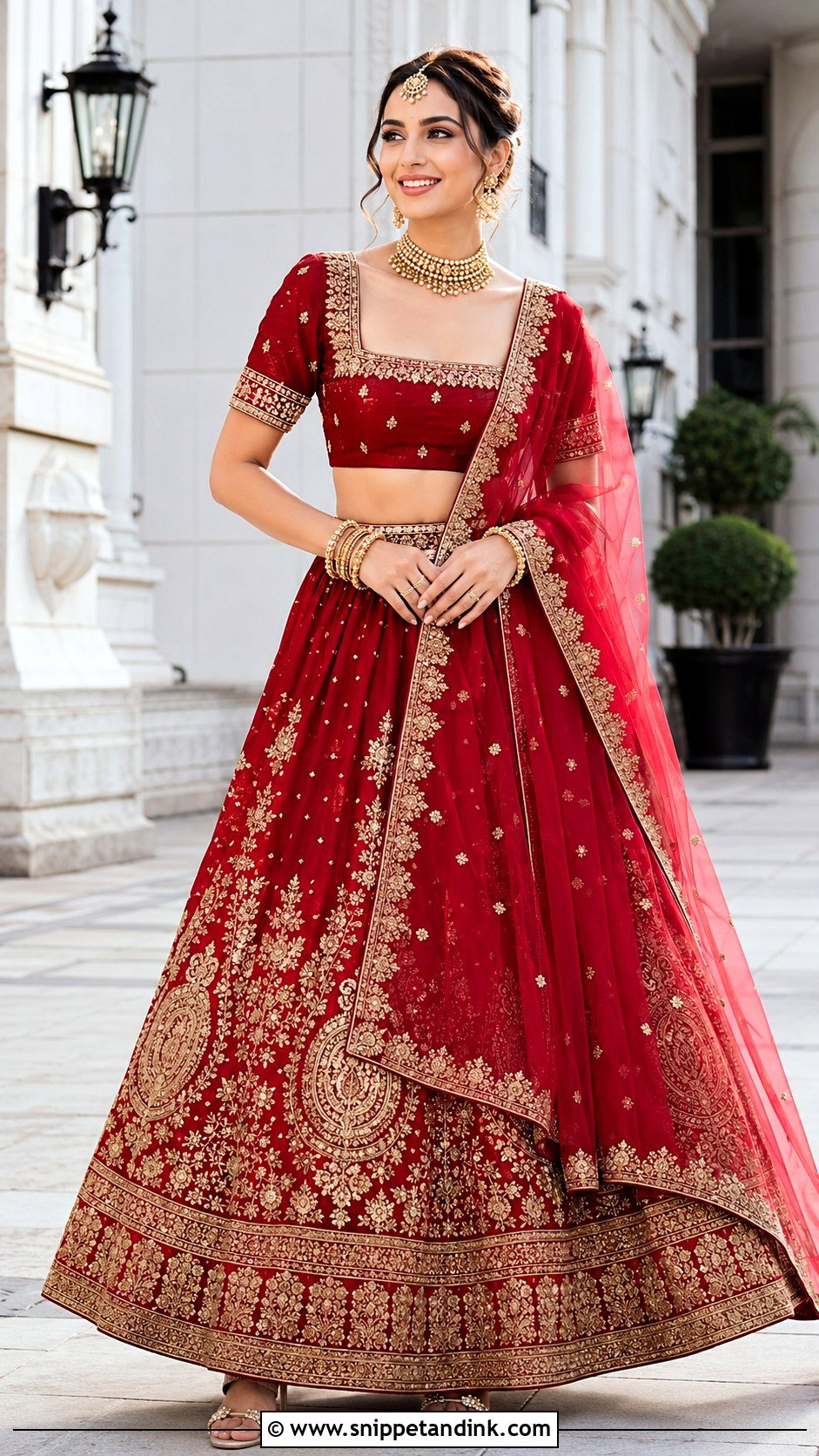
A square neck gives you a clean frame for heavy jewellery, which is why it pairs so well with chokers and short temple necklaces. It works with a silk saree for a traditional look or a flared lehenga for something fresher. Embroidery along the edge sharpens the shape. Elbow sleeves keep it traditional, full sleeves make it grander. Square necks are unforgiving on a narrow frame if the corners sit too far apart, so I mark the corner points on the bride’s body at the first fitting rather than trusting a size chart.
10. Bridal Off Shoulder Blouse Design
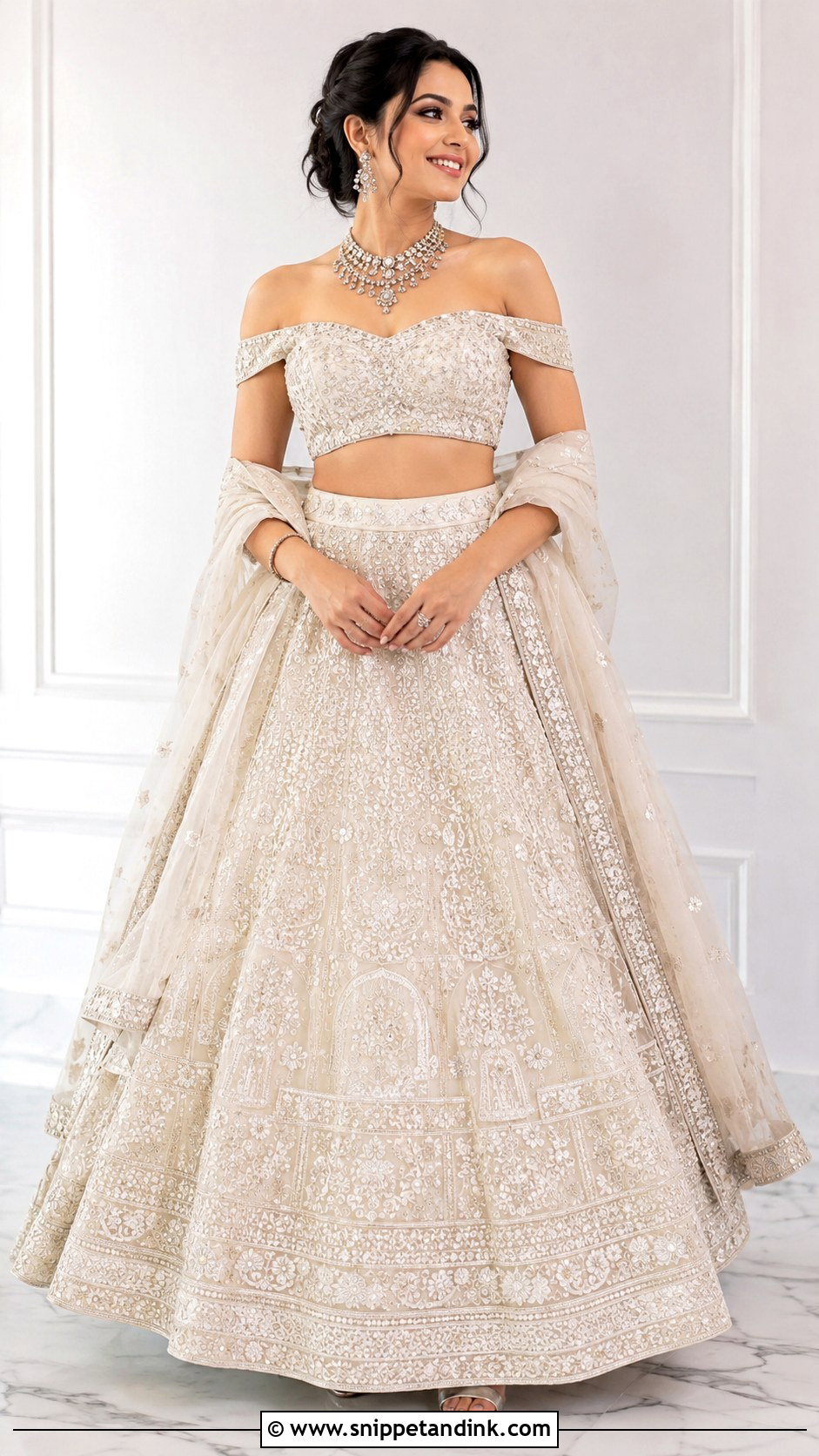
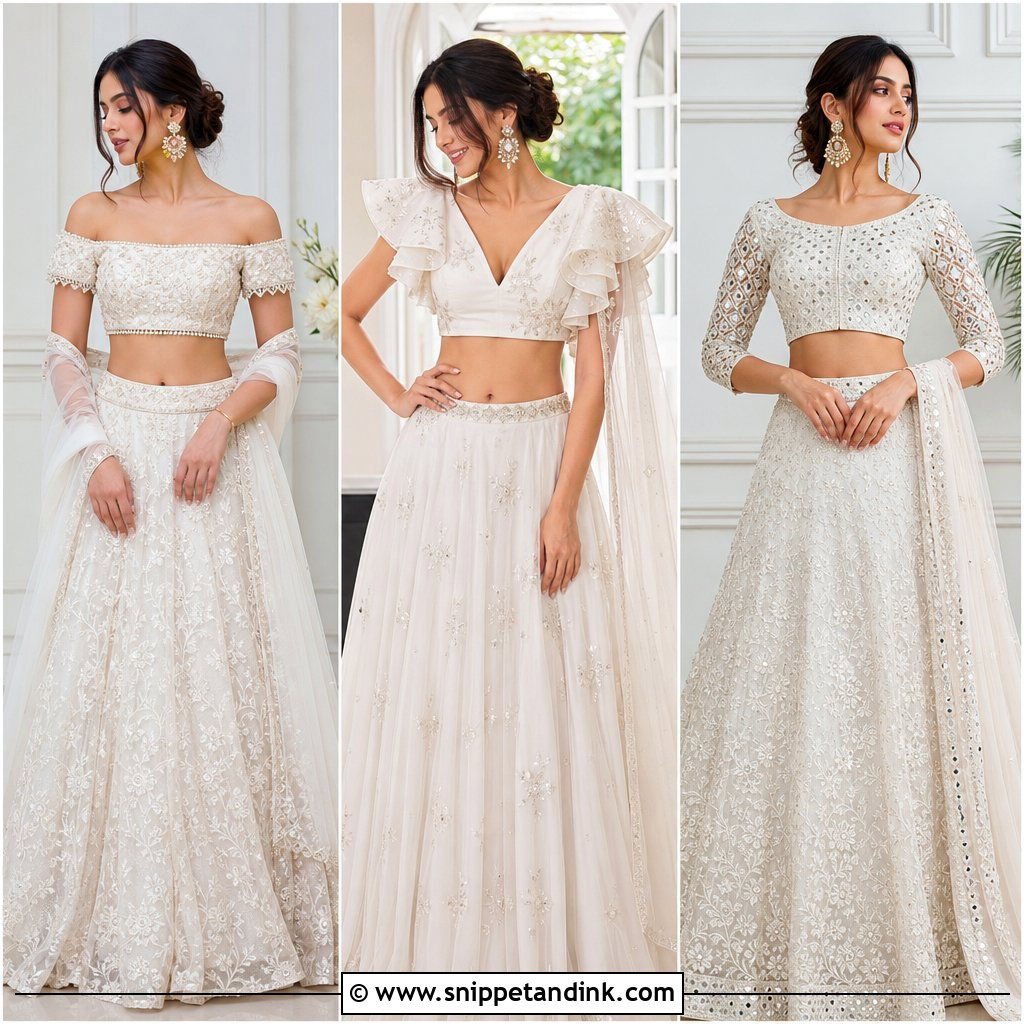
Off-shoulder blouses belong at the reception or sangeet more than at the ceremony itself, mostly because you can’t lift your arms far in them. With the shoulders bare, the bodice has to be built to hold: boning at the sides and a firm band at the top edge stop it sliding as you move. Pair it with a high-waist lehenga and a light dupatta draped around the arms. If the blouse carries sequins or pearl work, choose either a statement necklace or bold earrings, not both.
11. Bridal Full Sleeve Blouse Design
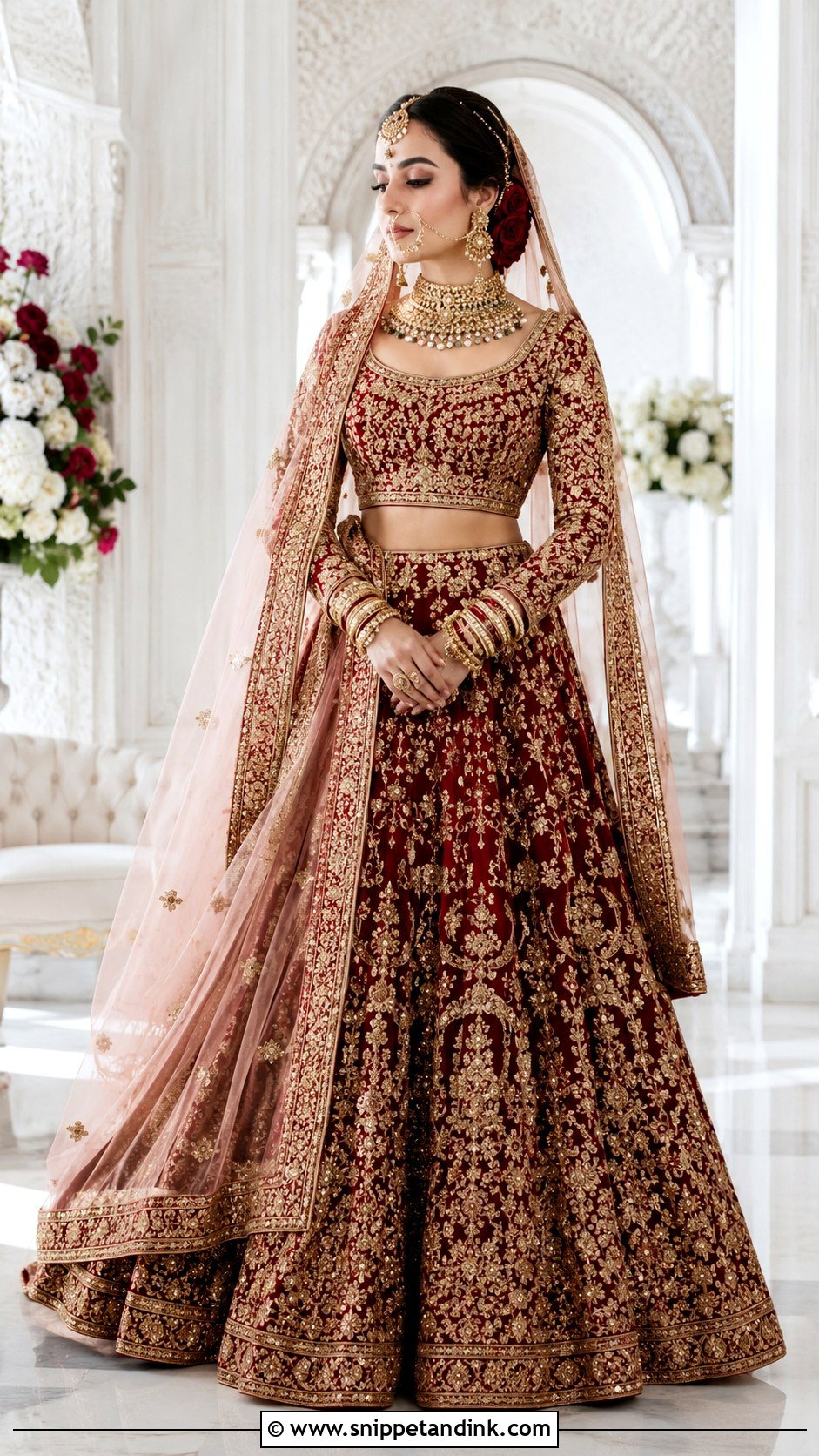
Full sleeves add richness from every angle, which matters during rituals when the photographer is often beside or behind you. Sheer net sleeves keep things light; velvet or silk sleeves suit a winter wedding. Because the blouse already covers a lot, I balance it with an open neckline such as sweetheart, square or boat. The fitting point that catches people out is the bicep. Henna is applied after the final fitting, and bangles go on over the cuff, so leave enough ease to get the sleeve over stacked bangles without pulling the embroidery.
12. Bridal Elbow Sleeve Blouse Design
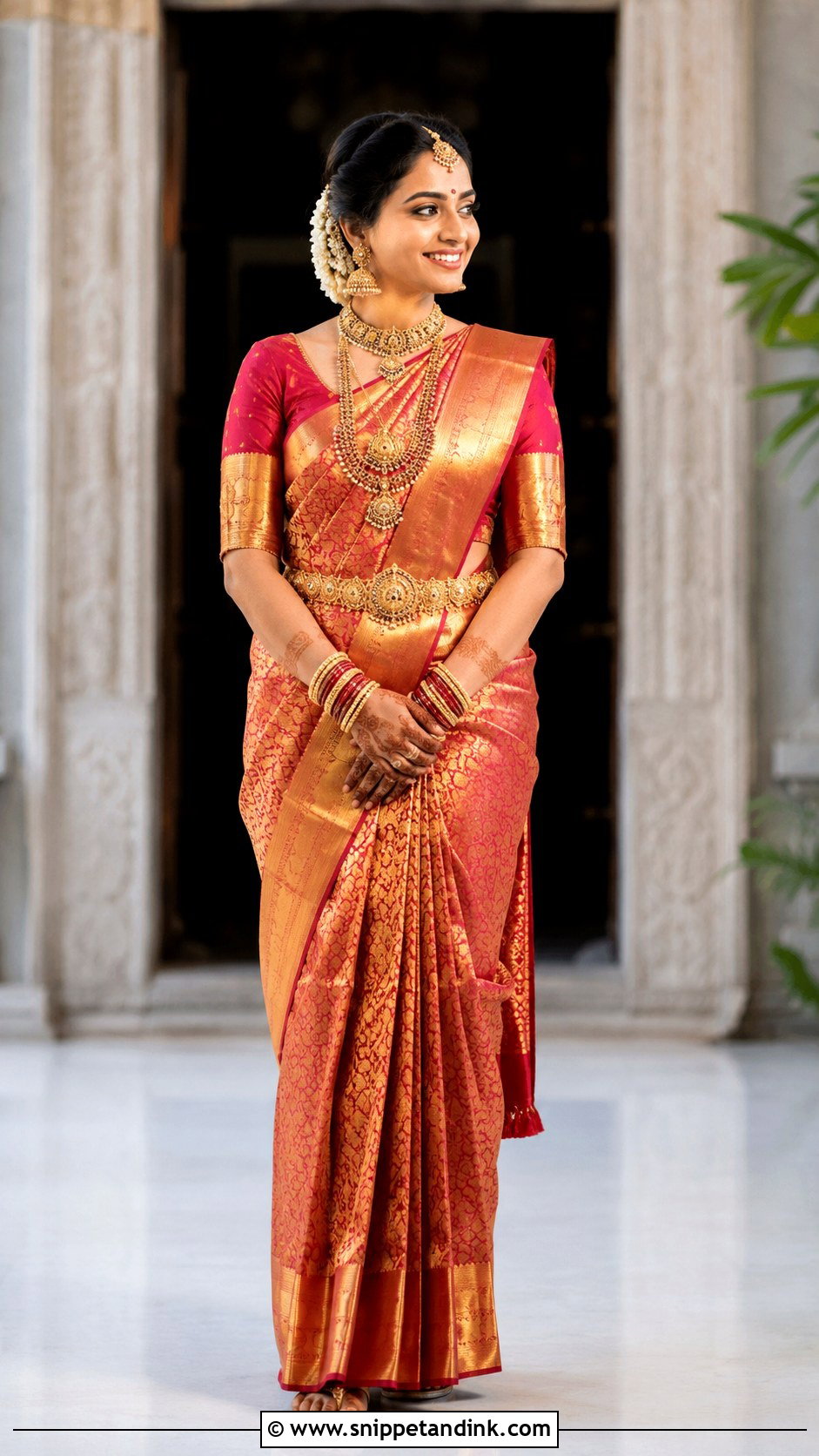
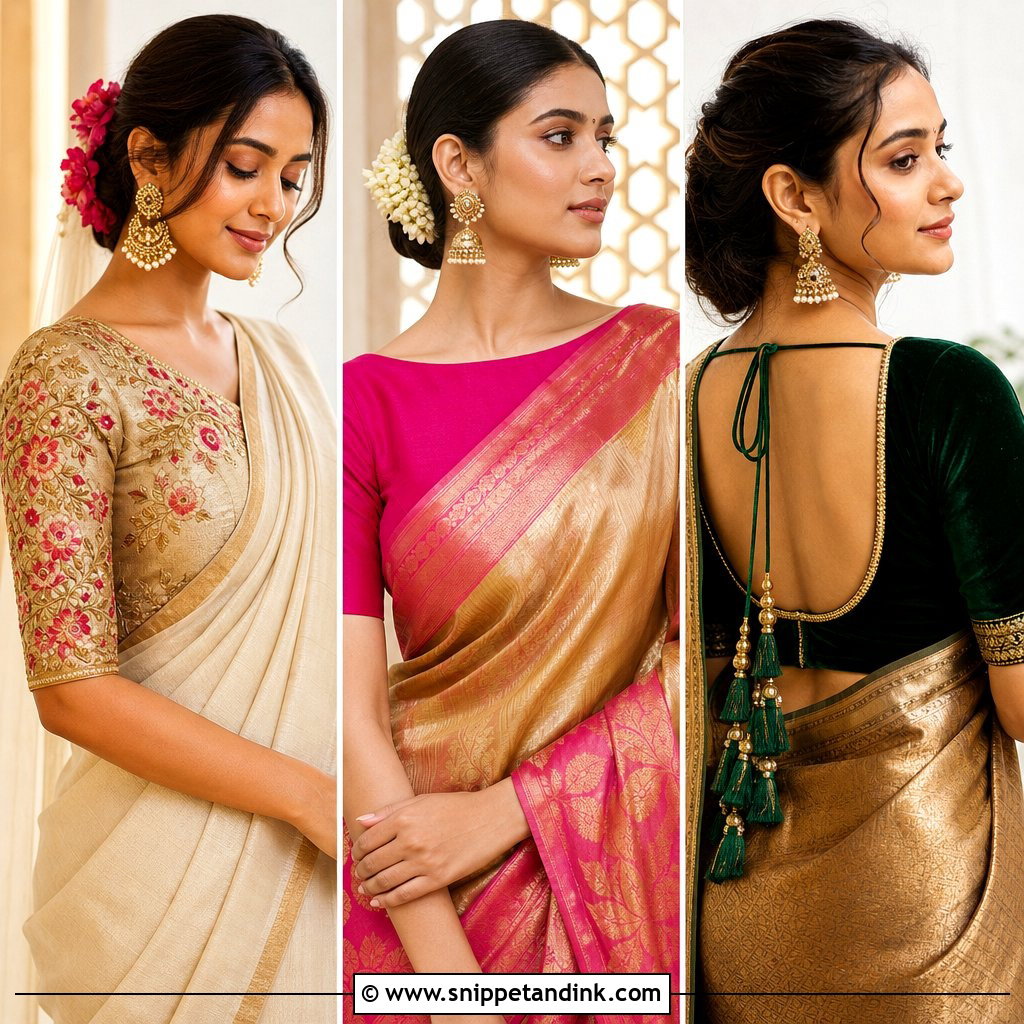
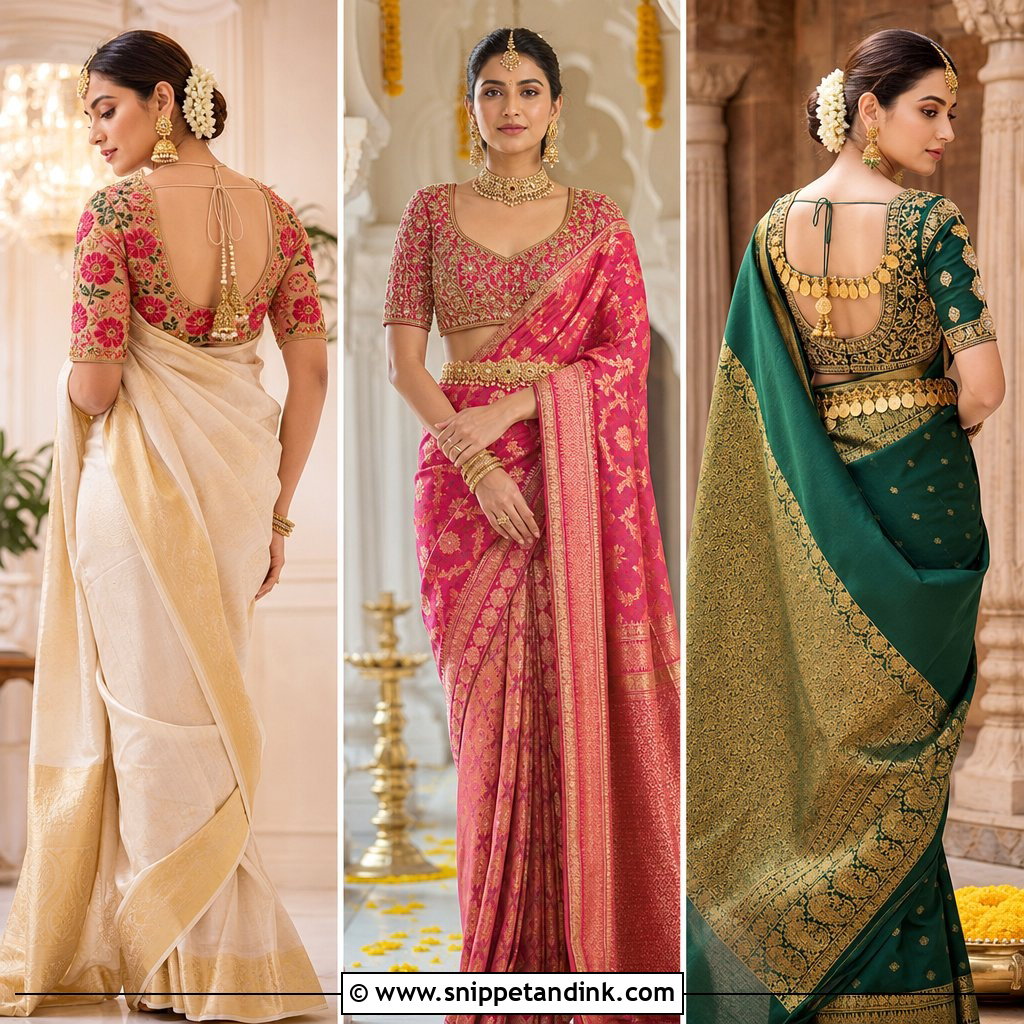
Elbow sleeves are the length I recommend most for silk saree brides, and the reason is practical: enough sleeve to carry embroidery, short enough that you can eat, bend and hold a garland without fighting the fabric. Zari borders, butas, peacocks or beadwork on the sleeve all suit it. Temple jewellery, a waist belt, bangles and jasmine in the hair round out the classic South Indian look. Ask for the hem to end just above the elbow crease rather than on it, or it bunches every time you bend your arm.
13. Bridal Puff Sleeve Blouse Design
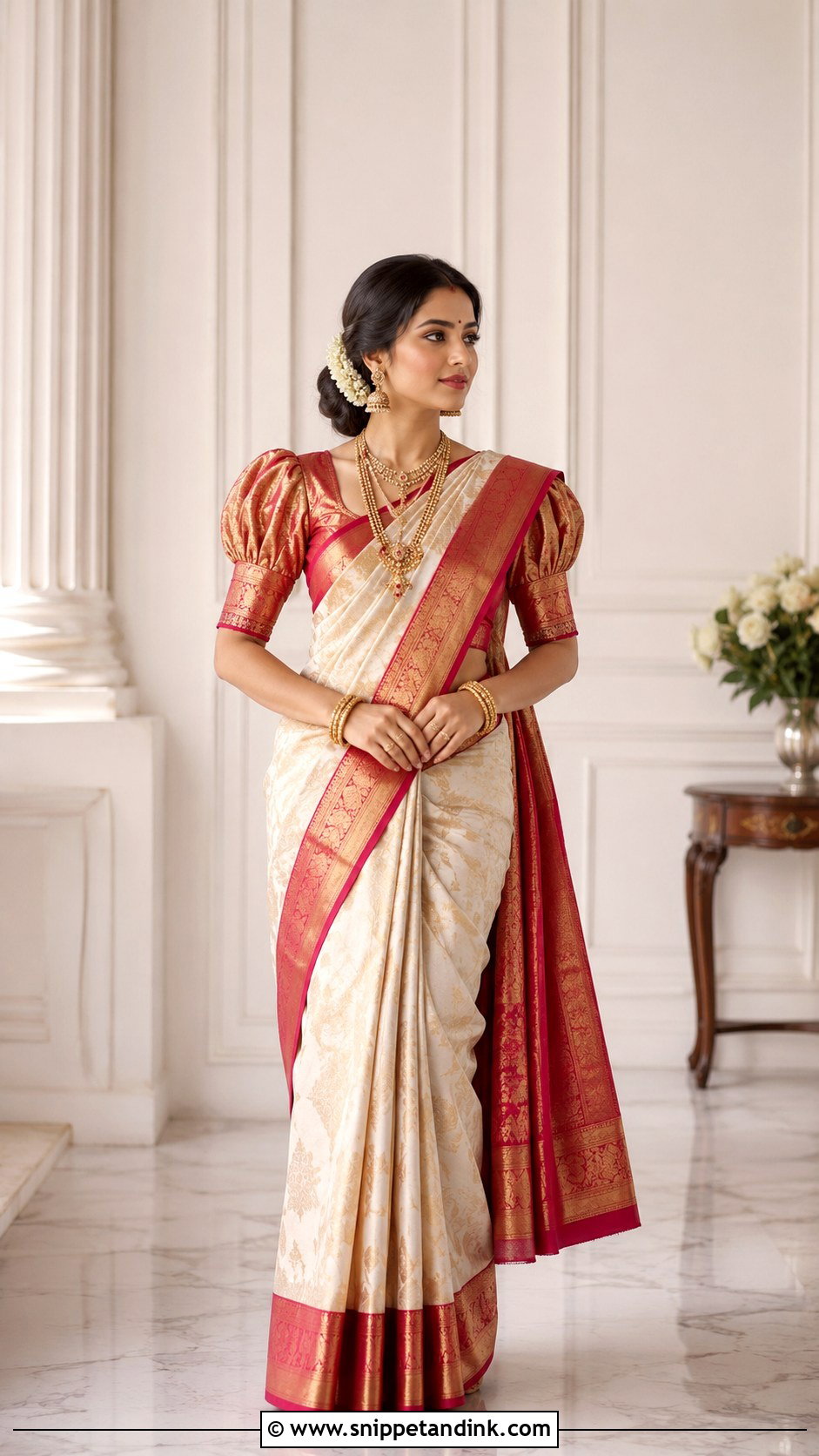
Puff sleeves bring a vintage softness, and they behave very differently depending on fabric. Brocade, raw silk and satin silk hold the puff all day; georgette and chiffon collapse by lunch. Subtle puffs read refined, bigger ones read dramatic, so decide which before you choose your necklace. Keep the neckline simple, add a low bun and bangles, and let a saree with a bold border or a lehenga with traditional motifs do the rest. If your upper arms are your least favourite feature, a gathered puff is kinder than a fitted short sleeve.
14. Bridal Cape Blouse Design
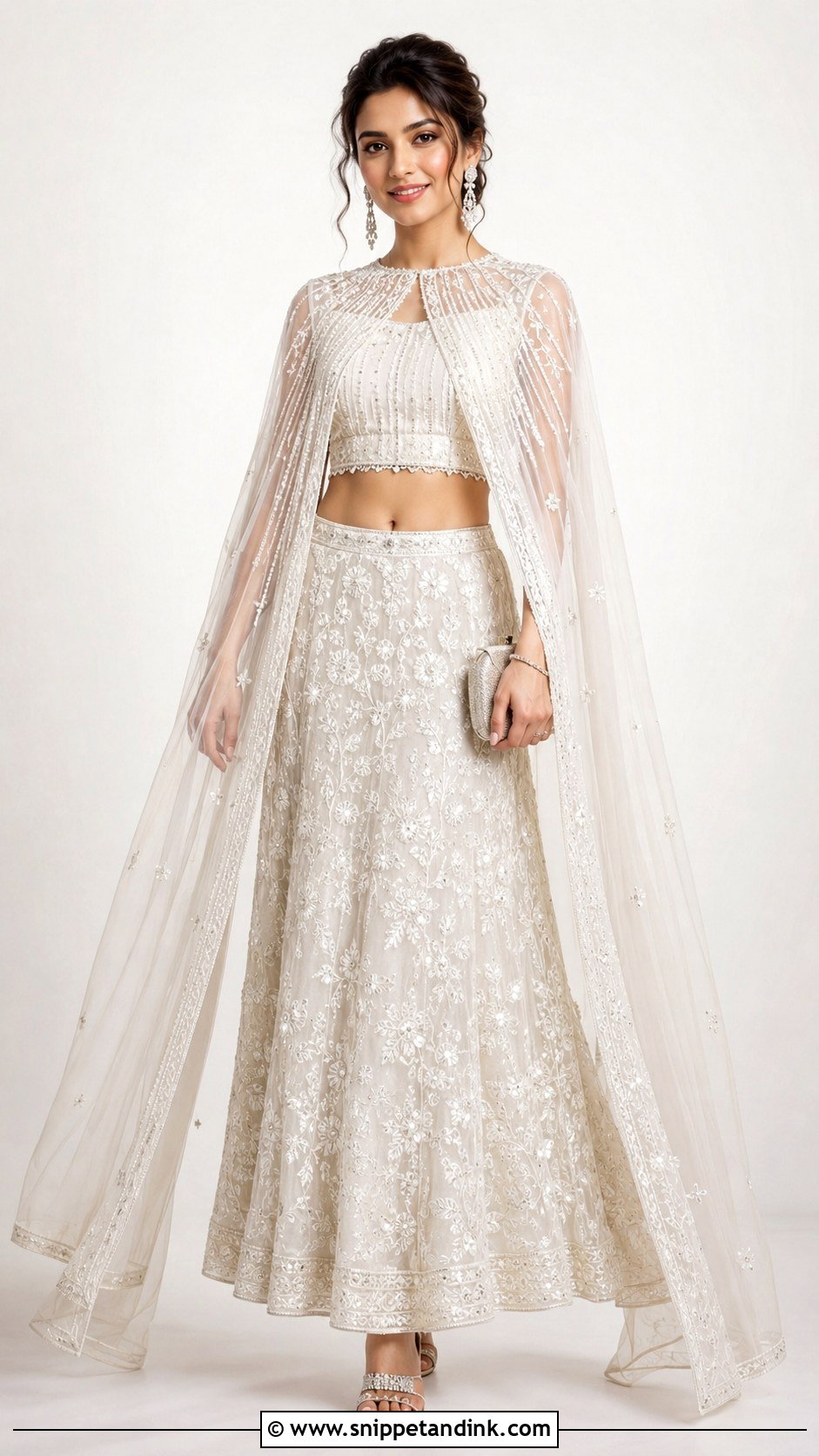
A cape gives you movement and coverage without the faff of pinning a heavy dupatta, which is why I suggest it for engagement and reception looks. It can be sheer, beaded or embroidered, attached at the shoulders or worn loose. The blouse underneath should be fitted, or the cape adds visual bulk you didn’t ask for. Beaded capes are heavier than they look and can drag the neckline back, so attach them at the shoulder seam, not the neck edge. Delicate earrings and heels in the embroidery tone finish it.
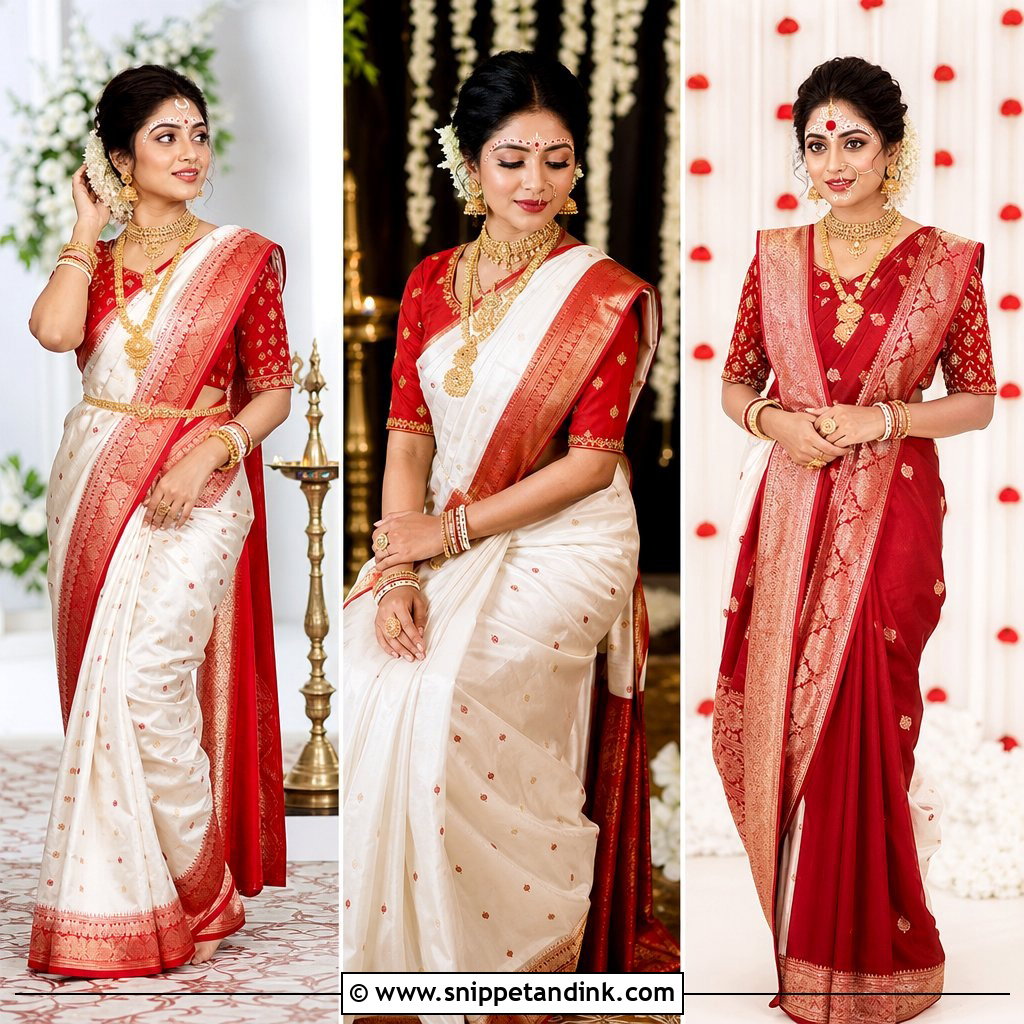
15. Bridal Jacket Blouse Design
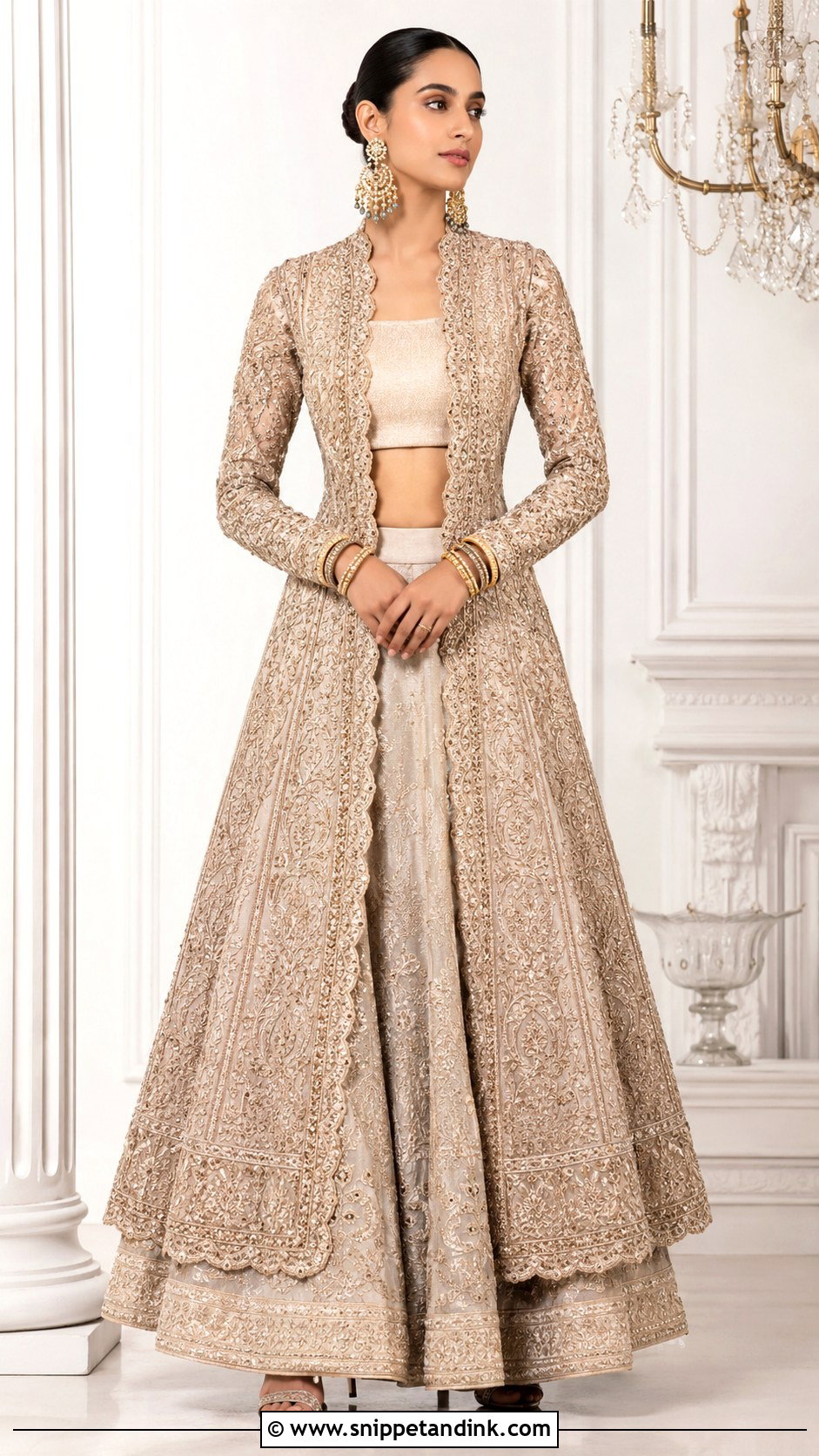
Jacket blouses solve two problems at once: coverage for a conservative ceremony and warmth for a winter evening. A bridal jacket blouse design can be cropped for a lehenga or longer over a draped saree, in embroidered silk, brocade, velvet or net. Keep the inner blouse plain so the jacket stays the focus. I’d steer short-waisted brides toward the cropped version; a long jacket can cut your height in half in photos. Bold earrings, a neat hairstyle and a structured clutch are all it needs.
16. Bridal Velvet Blouse Design
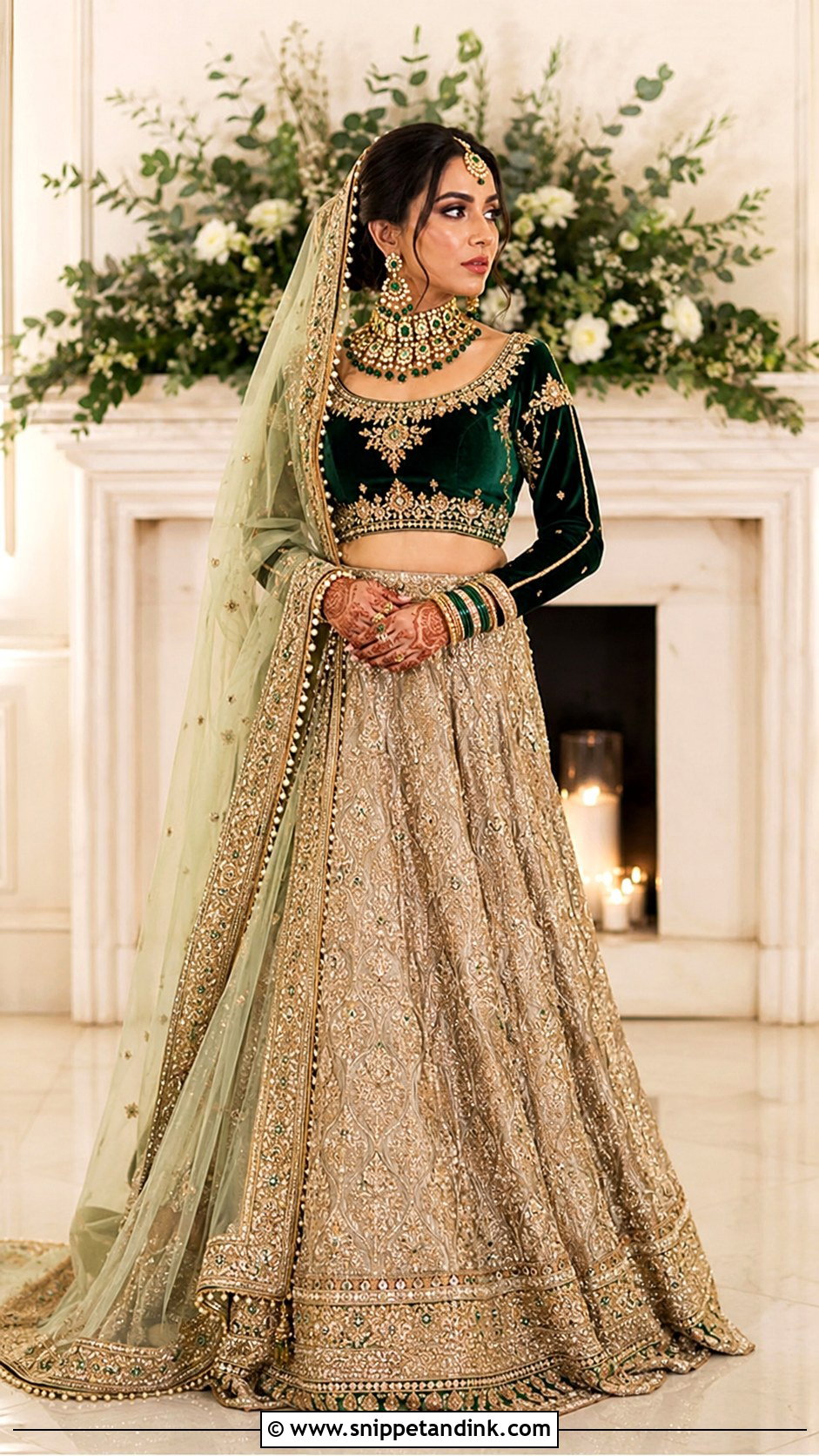
Velvet has a depth no other blouse fabric matches, especially in maroon, emerald, navy, plum or chocolate with gold embroidery on top. It belongs at evening and winter weddings. Velvet also marks. The pile crushes where a pallu is pinned or where you sit against a chair back, so I ask brides to try the pin placement on a scrap before the big day. Keep the fit clean around the shoulders, contrast it with a silk saree or net dupatta, and add kundan with a few pearl accents.
17. Bridal Silk Blouse Design
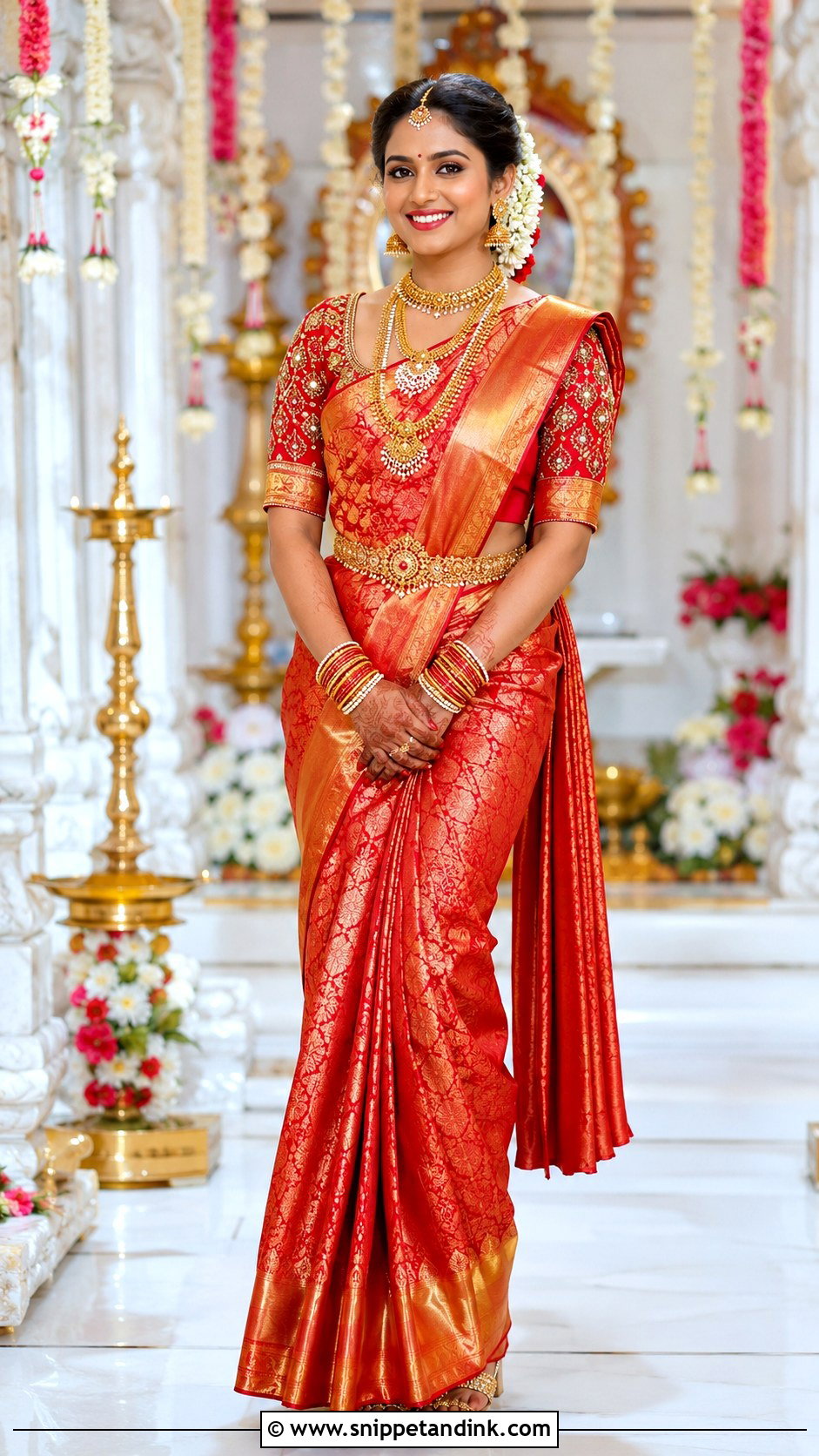
A plain silk blouse is the quiet workhorse behind most Kanjeevaram and Banarasi bridal looks. Match the saree colour for a single unbroken line, or contrast it to make the drape pop. Small butas, a temple border or sleeve embroidery are enough decoration. Silk does show sweat marks at the underarm, so I always ask the tailor for removable dress shields; they cost almost nothing and save the photos. Gold jewellery, a waist belt, bangles and fresh flowers complete the traditional finish.
18. Bridal Banarasi Blouse Design
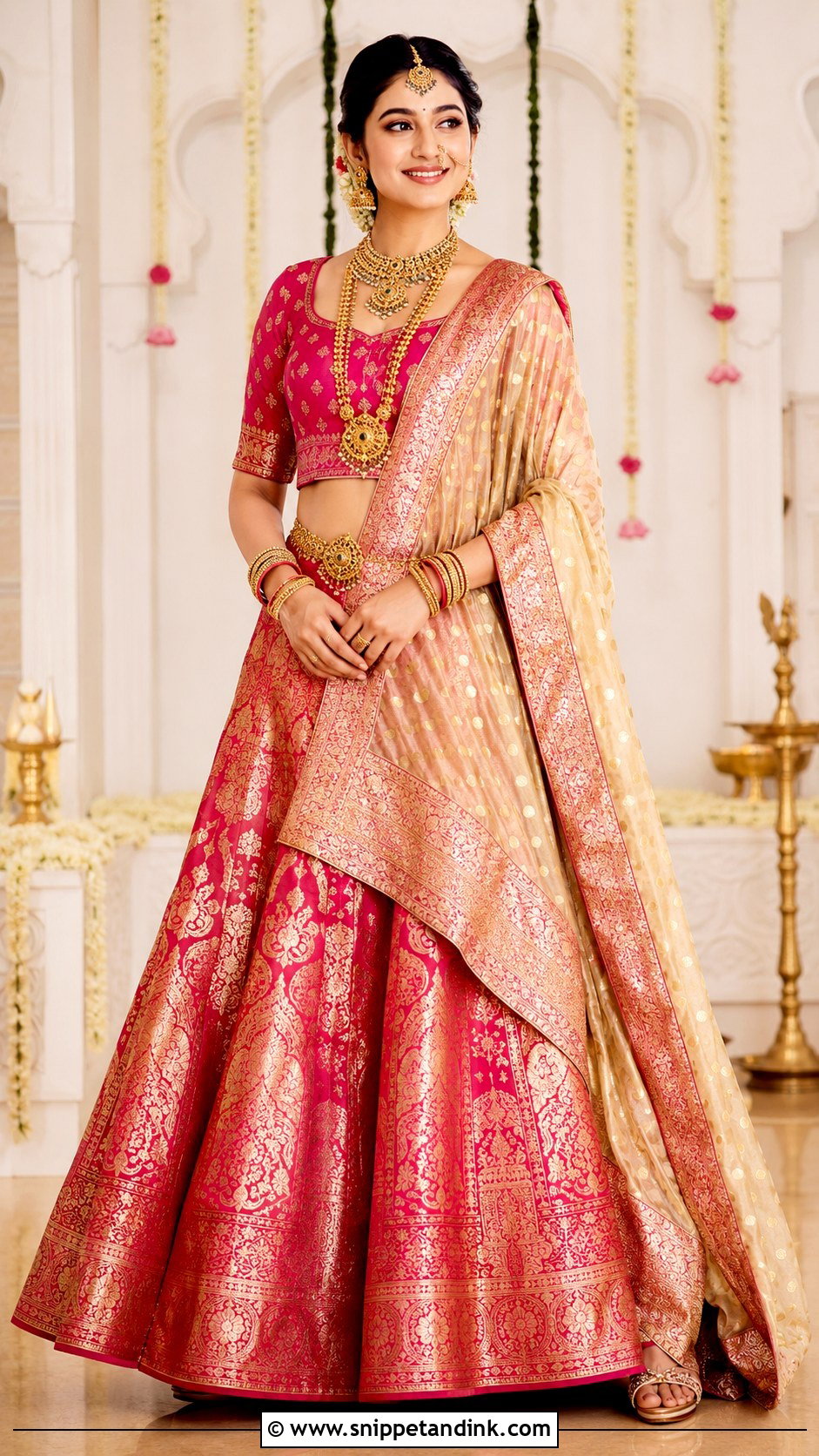
Banarasi brings its own decoration in the weave, so you need very little added on top. A bridal Banarasi blouse design looks rich against a plain silk saree or as part of a coordinated Banarasi lehenga. Red, rani pink, emerald, purple and gold are the classic bridal shades. Woven zari has very little give, so seams need generous allowance in case you need letting out after the trial. Heavy weave, simpler jewellery; lighter weave, go bold with temple pieces.
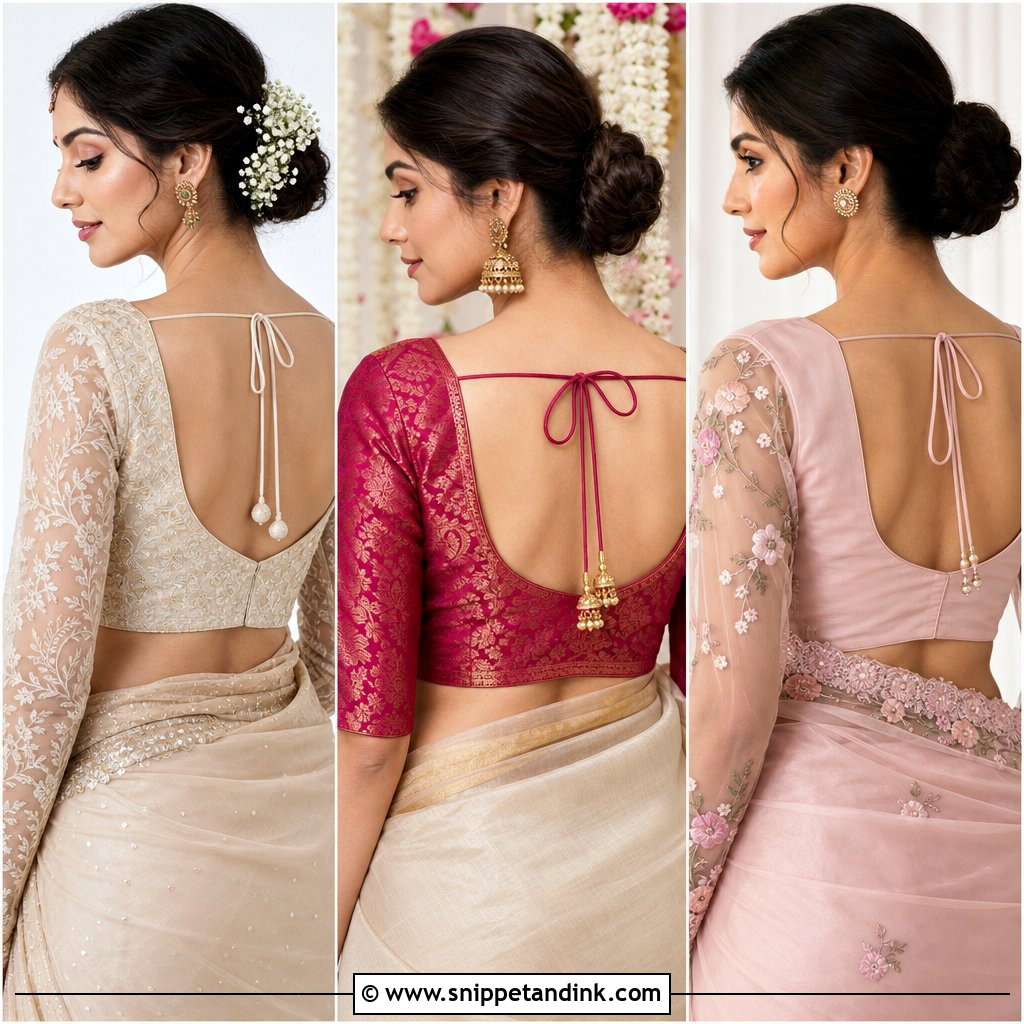
19. Bridal Backless Blouse Design
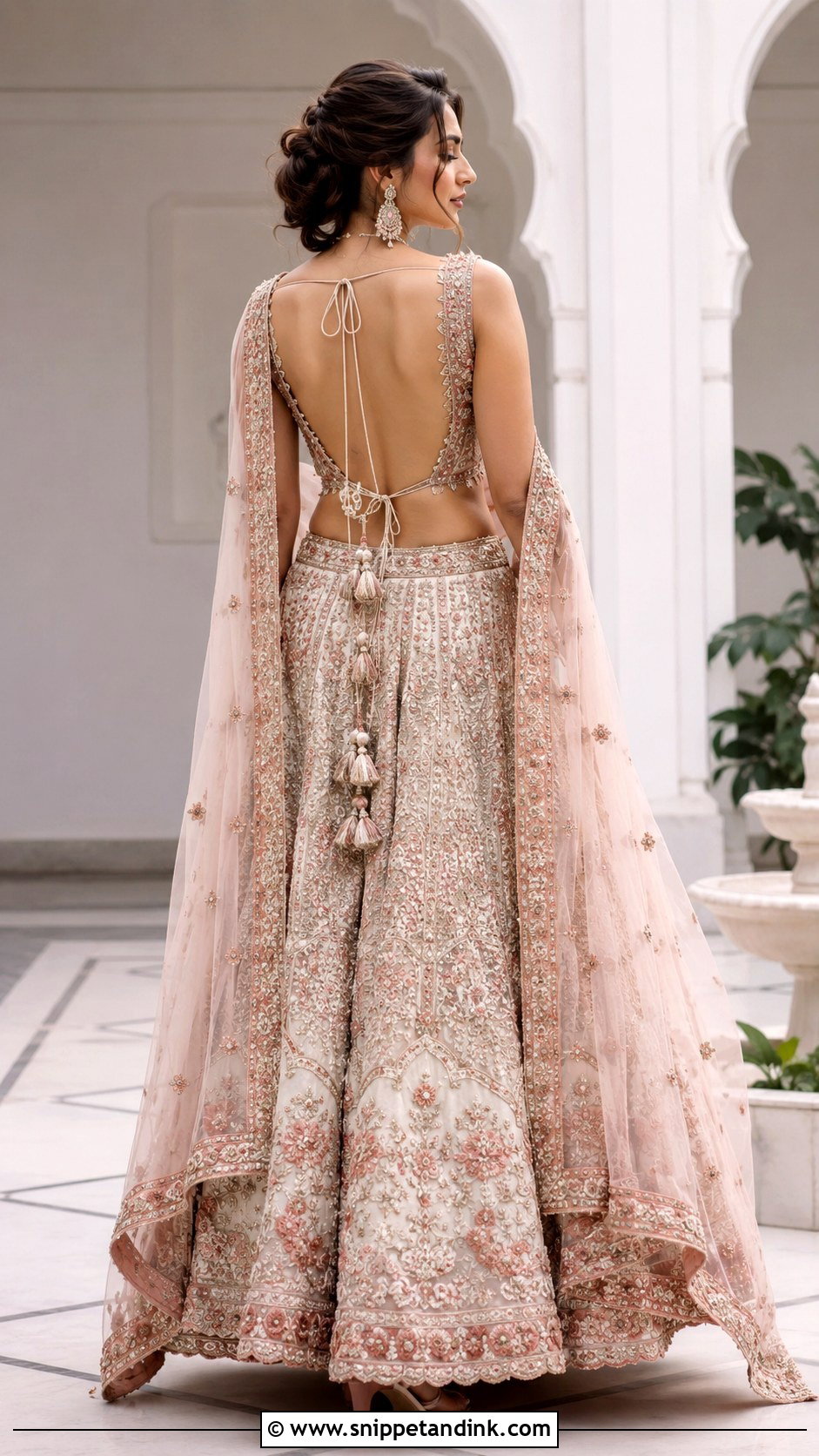
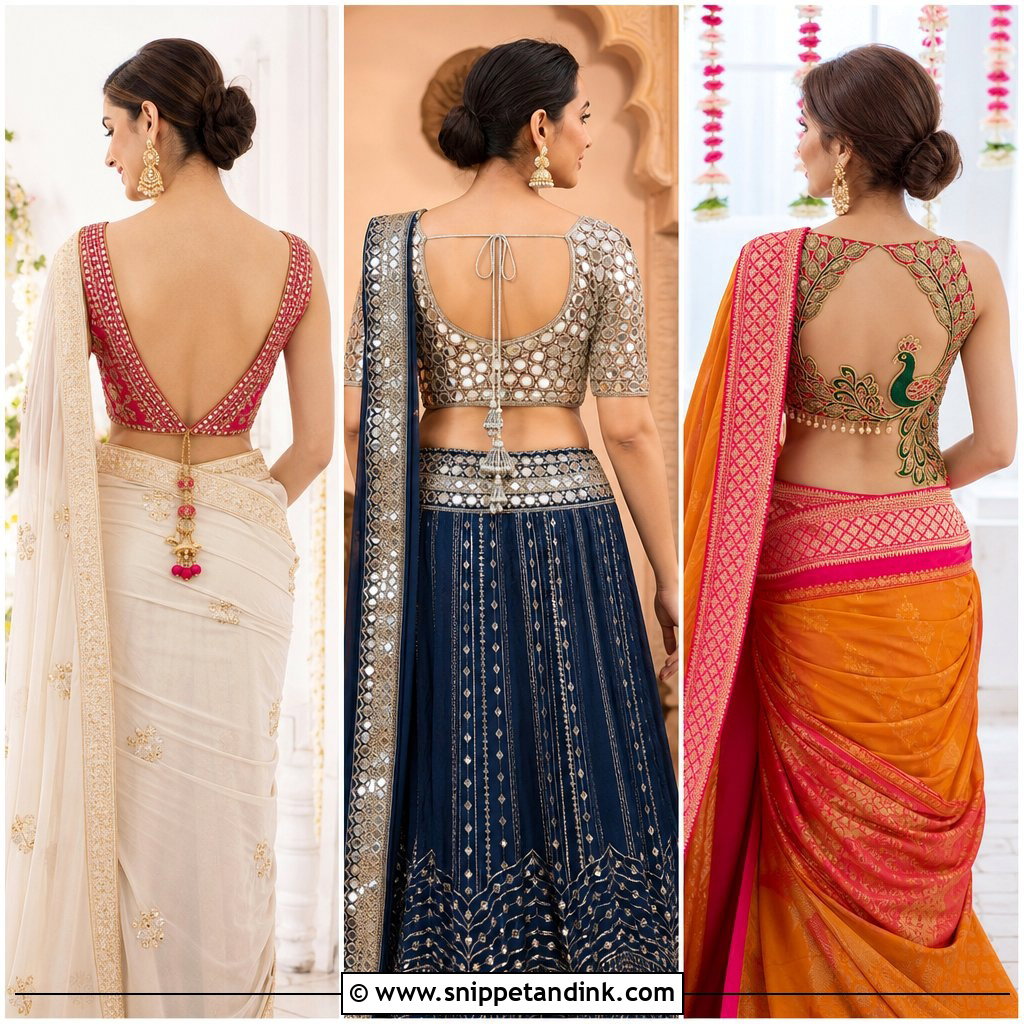
A backless blouse only works when the front is engineered to stay put. That means padded cups built in, a firm band under the bust and straps set slightly inward so they don’t slide. Get those right and the open back becomes the focal point of every ritual photo taken from behind. Tassels, latkans or an embroidered border finish the edge. Drape the dupatta to frame the back rather than hide it, and keep your hair up or swept to one side.

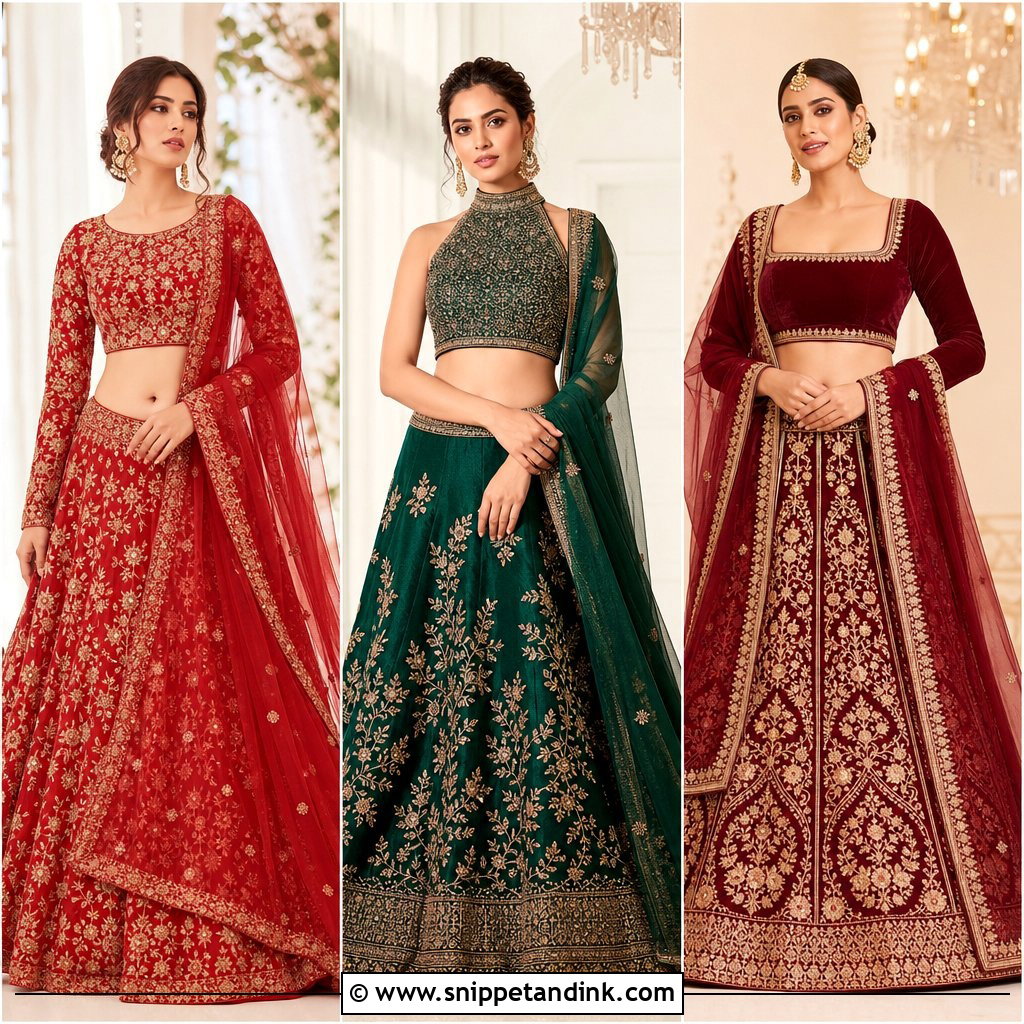

20. Bridal Dori Back Blouse Design
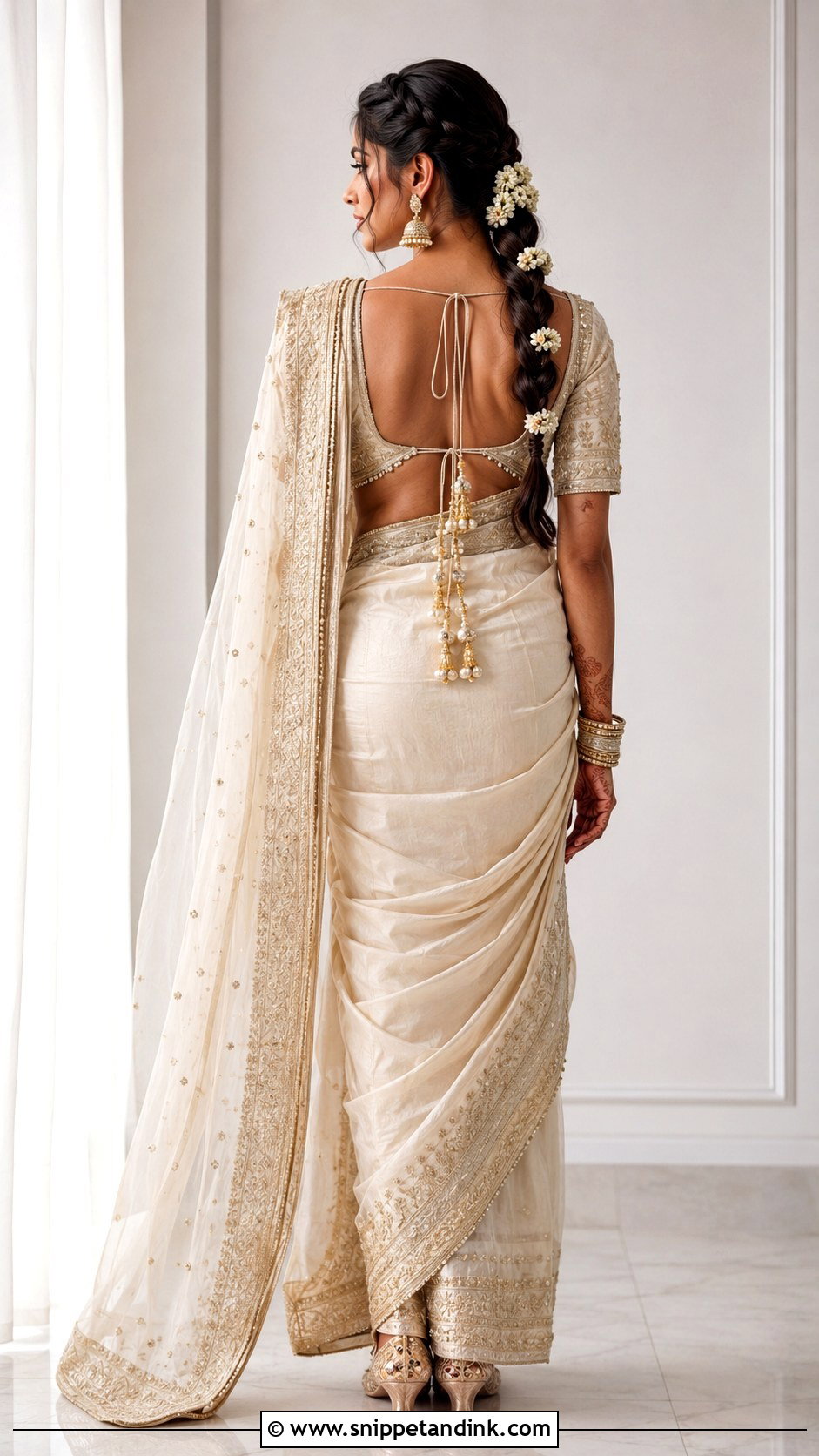
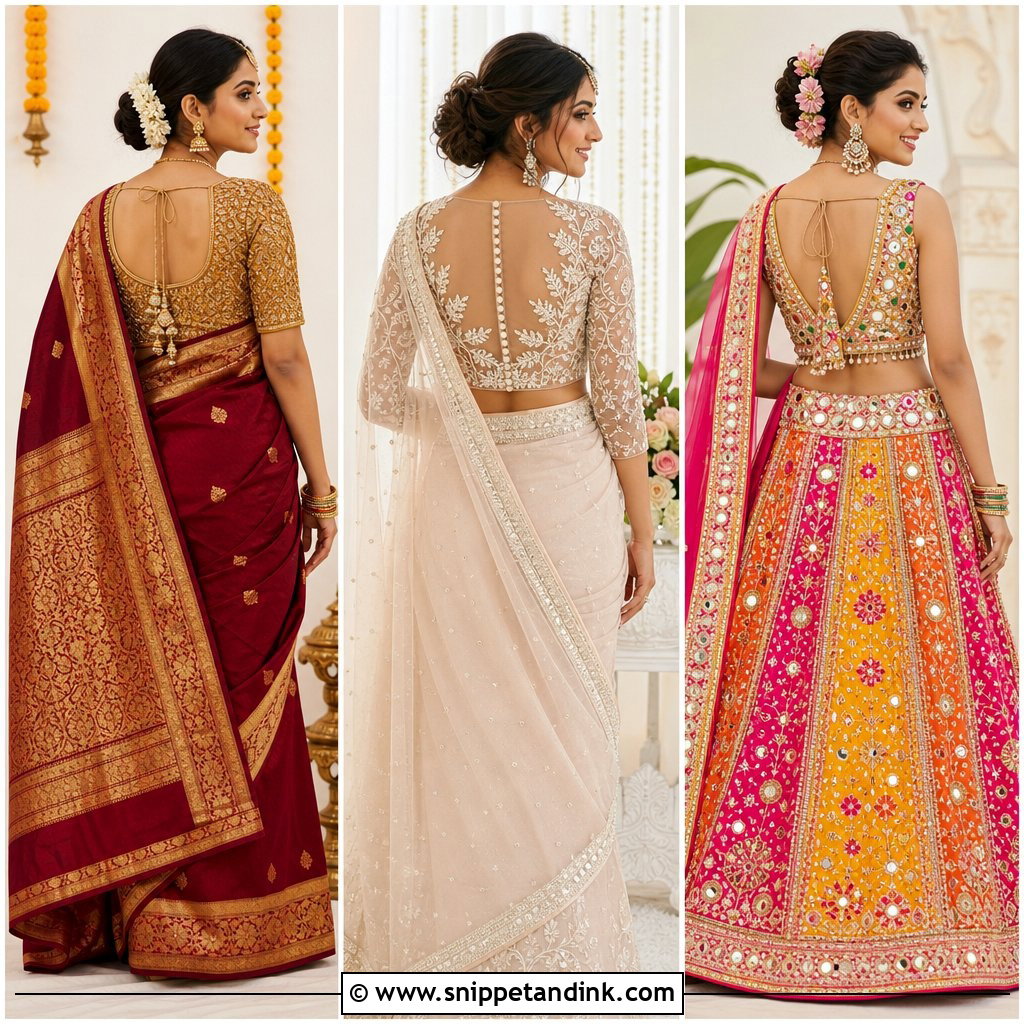
Doris give a traditional back plenty of life: the strings swing as you walk, and the ends can carry tassels, pearls or small embroidered hangings that echo the saree. A bridal dori back blouse design suits silk sarees, lehengas and half-saree looks. Tie-ups loosen through the day, so I ask for a hidden hook under the knot to carry the tension. A dupatta resting lightly on one shoulder, jhumkas and a soft braid keep the back on show.
21. Bridal Keyhole Back Blouse Design
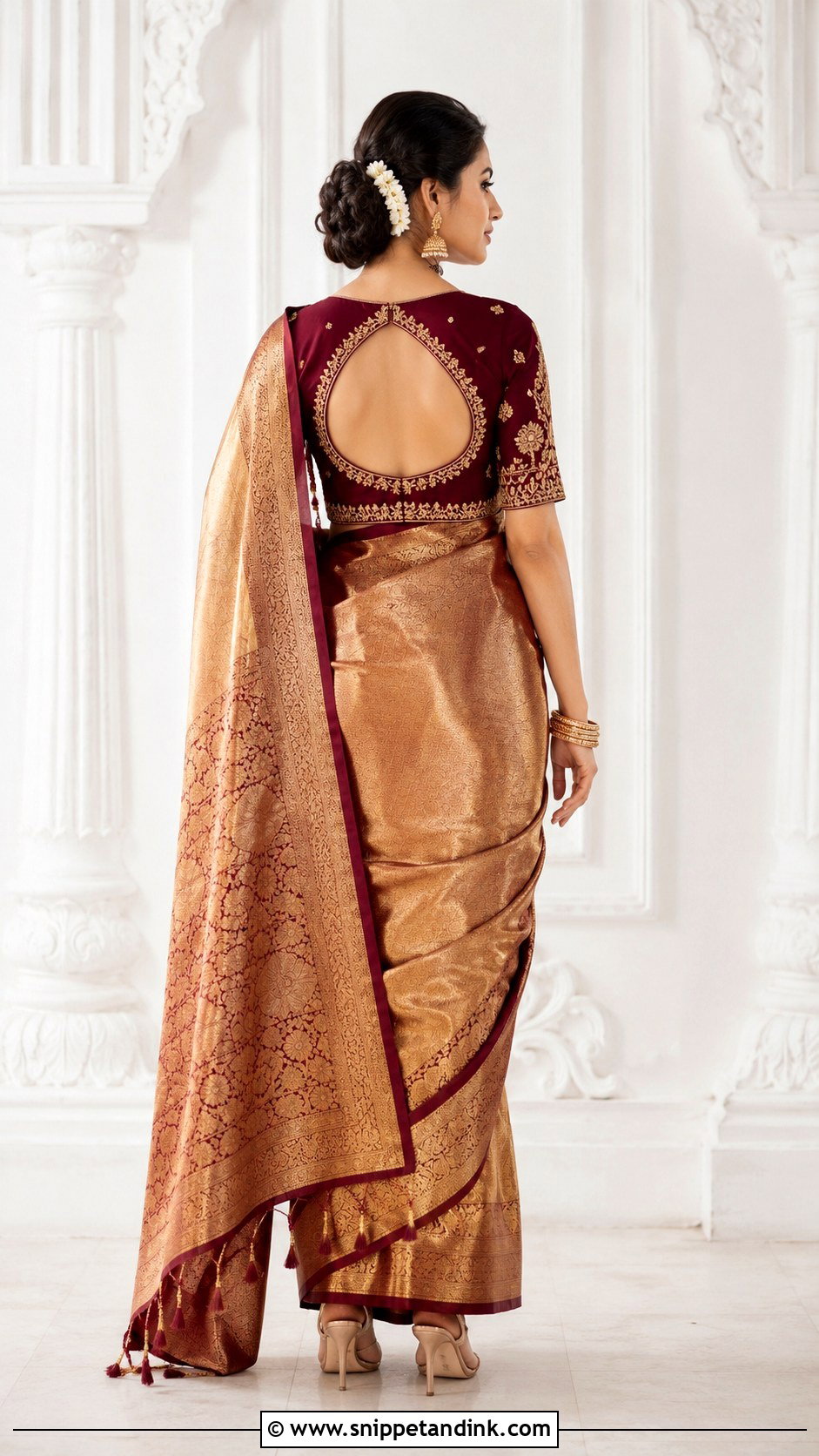
A keyhole sits between a closed back and a fully open one, so it’s the cut I suggest to brides whose families are traditional but who still want a detail behind. The opening can be round, oval, teardrop or heart-shaped. Edge it with embroidery, pearls or zari so it looks deliberate. It works in silk, velvet, brocade and net. If you’re planning loose waves, think twice; open hair covers the keyhole completely, and it disappears from every back-facing photo.
22. Bridal Sheer Sleeve Blouse Design
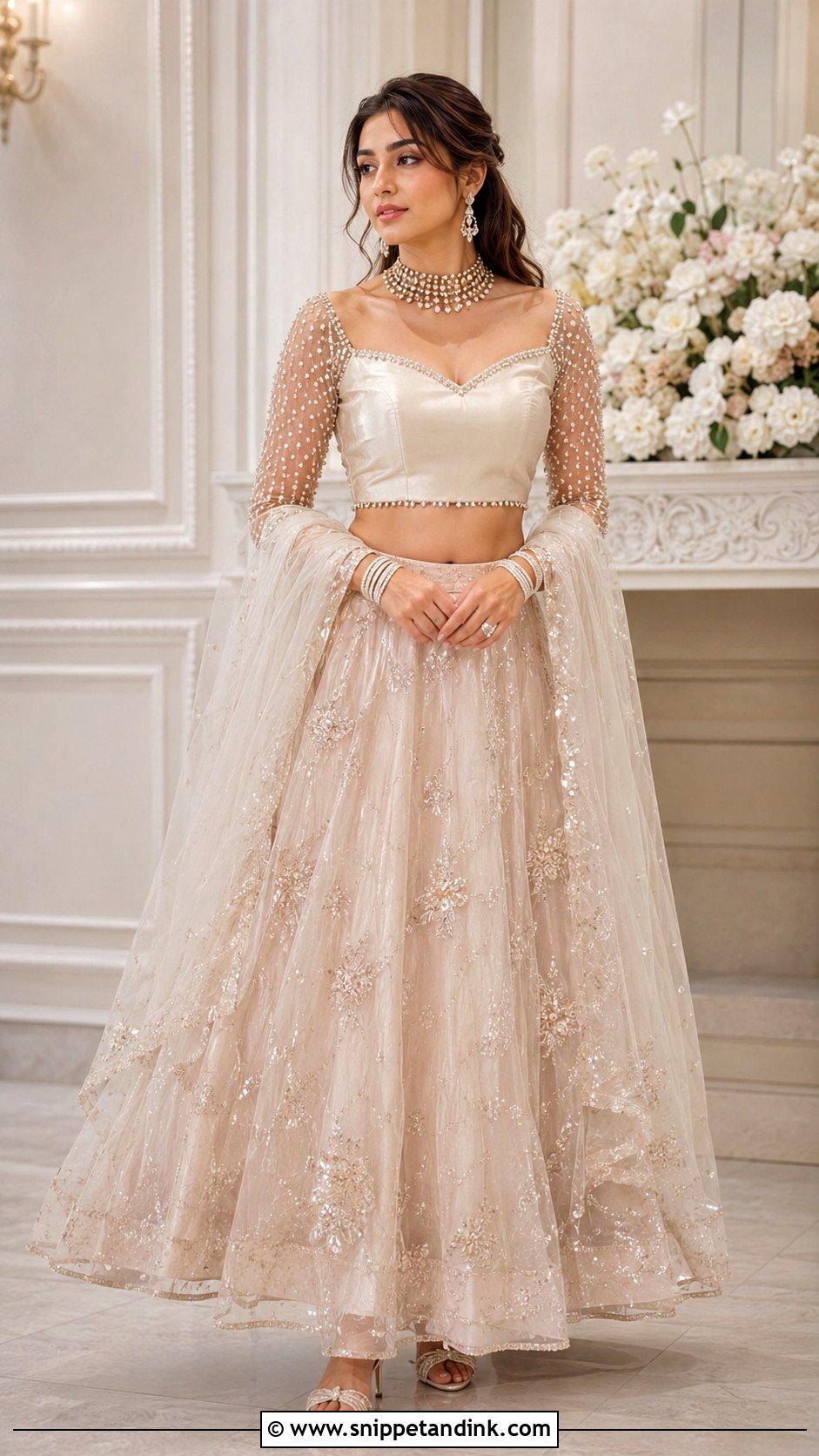
Sheer sleeves take weight out of an otherwise heavy outfit. Net, organza and tulle all work, scattered with pearls, sequins or floral embroidery. The bodice underneath needs to be solid silk or velvet for support. Organza sleeves crease if you lean on them, so I prefer soft net for long ceremonies and save organza for a reception where you’re standing more. A choker, crystal or kundan earrings and a soft dupatta suit this blouse, and it shines under indoor lighting where the sleeves glow slightly.
23. Bridal Peplum Blouse Design
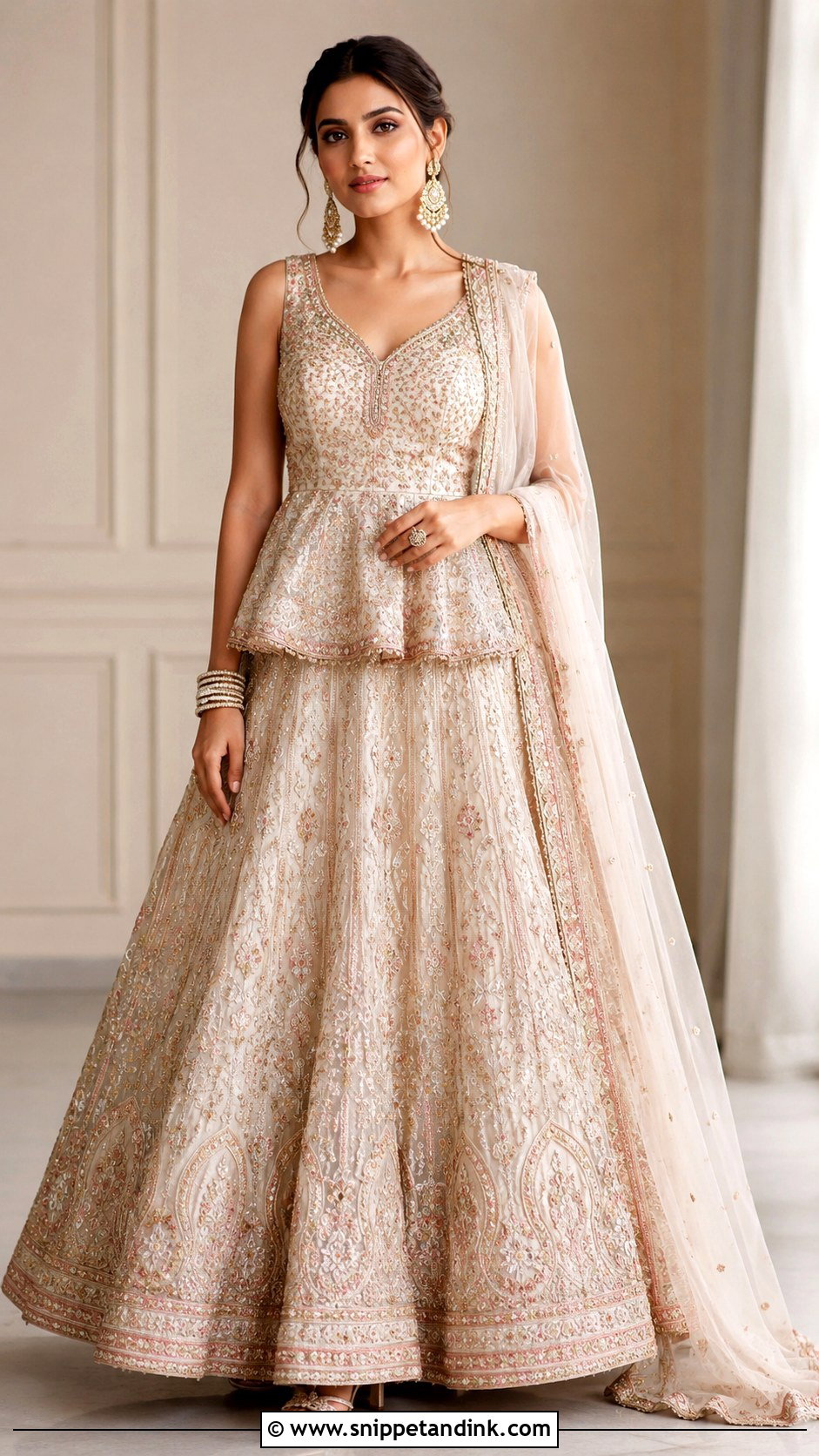
A peplum flares at the waist, giving shape and a bit of extra coverage over the lehenga band. It’s comfortable for brides who don’t want to feel cinched all evening. Embroider the neckline, waist seam and sleeves for a bridal finish, or wear it over a draped saree for a fusion look. The flare only shows with a lighter dupatta. On a very short torso, a long peplum can swallow your waist, so I keep it no deeper than a hand’s width.
24. Bridal Personalized Blouse Design
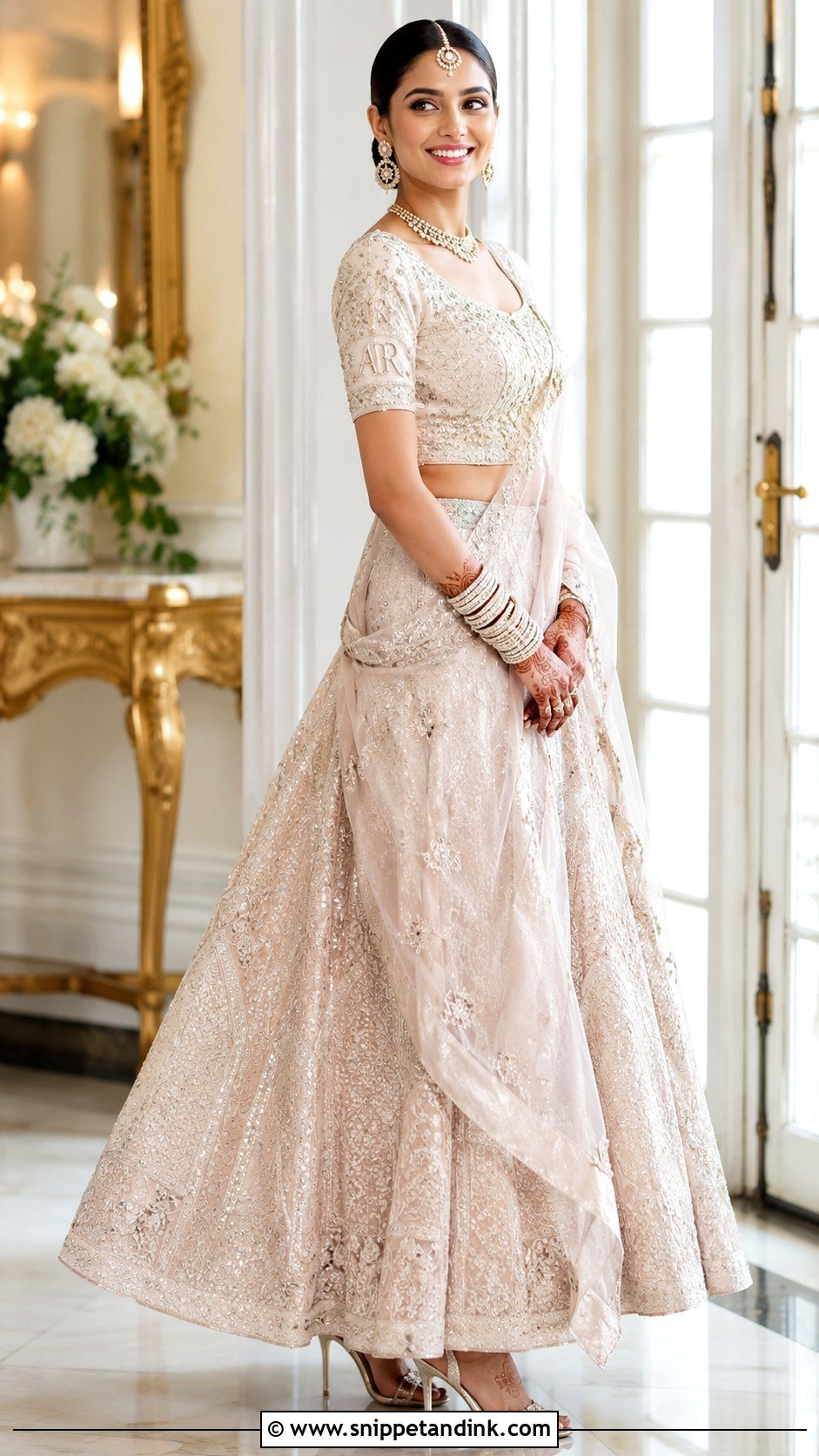
Personalised embroidery turns a blouse into something you’ll actually keep: your initials, the wedding date, a family motif or a small scene from your story. Place it where it reads in photos and doesn’t fight the main design, usually the back panel, the sleeve edge or the lower front. A soft dupatta drape shows it better than a heavy one. Lock the wording with your embroiderer in writing early; name and date spellings are the most common thing I see corrected late, and hand embroidery is slow to unpick.


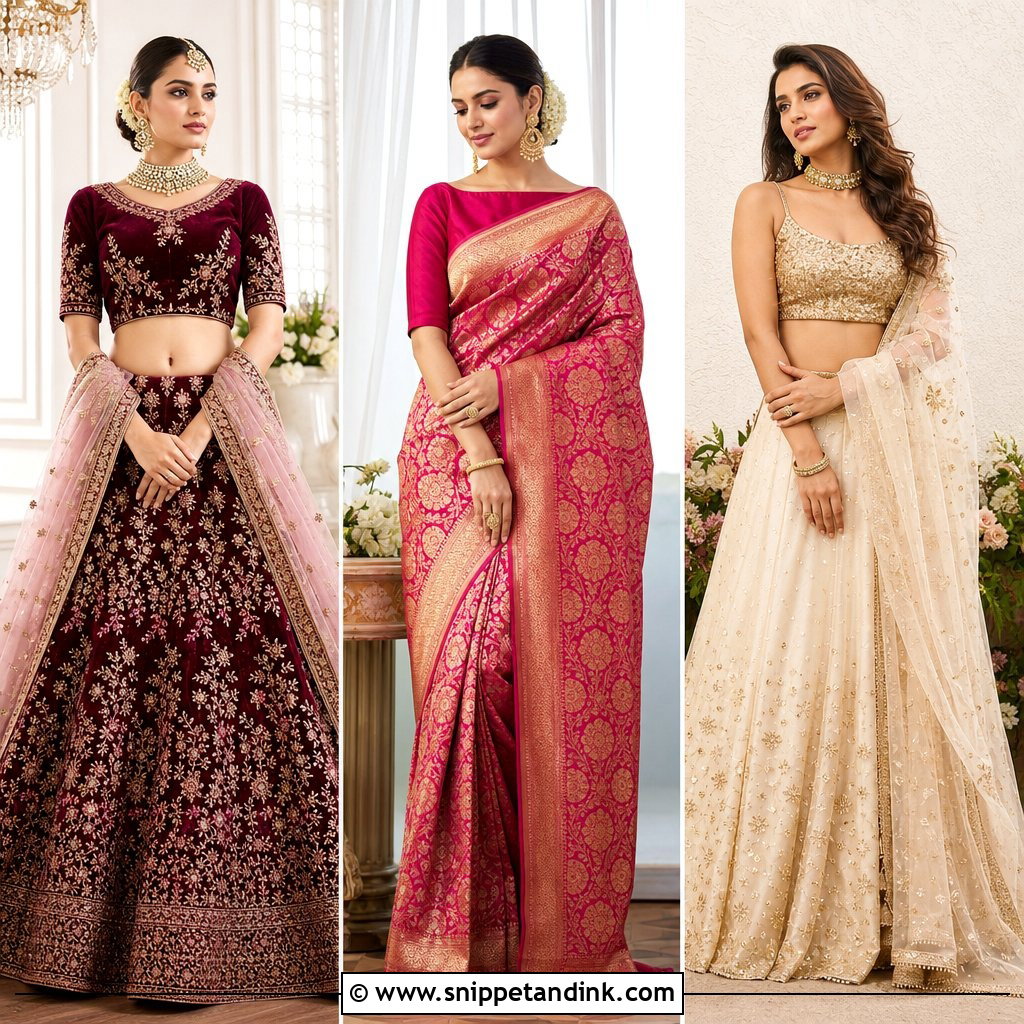
25. Bridal Minimal Blouse Design
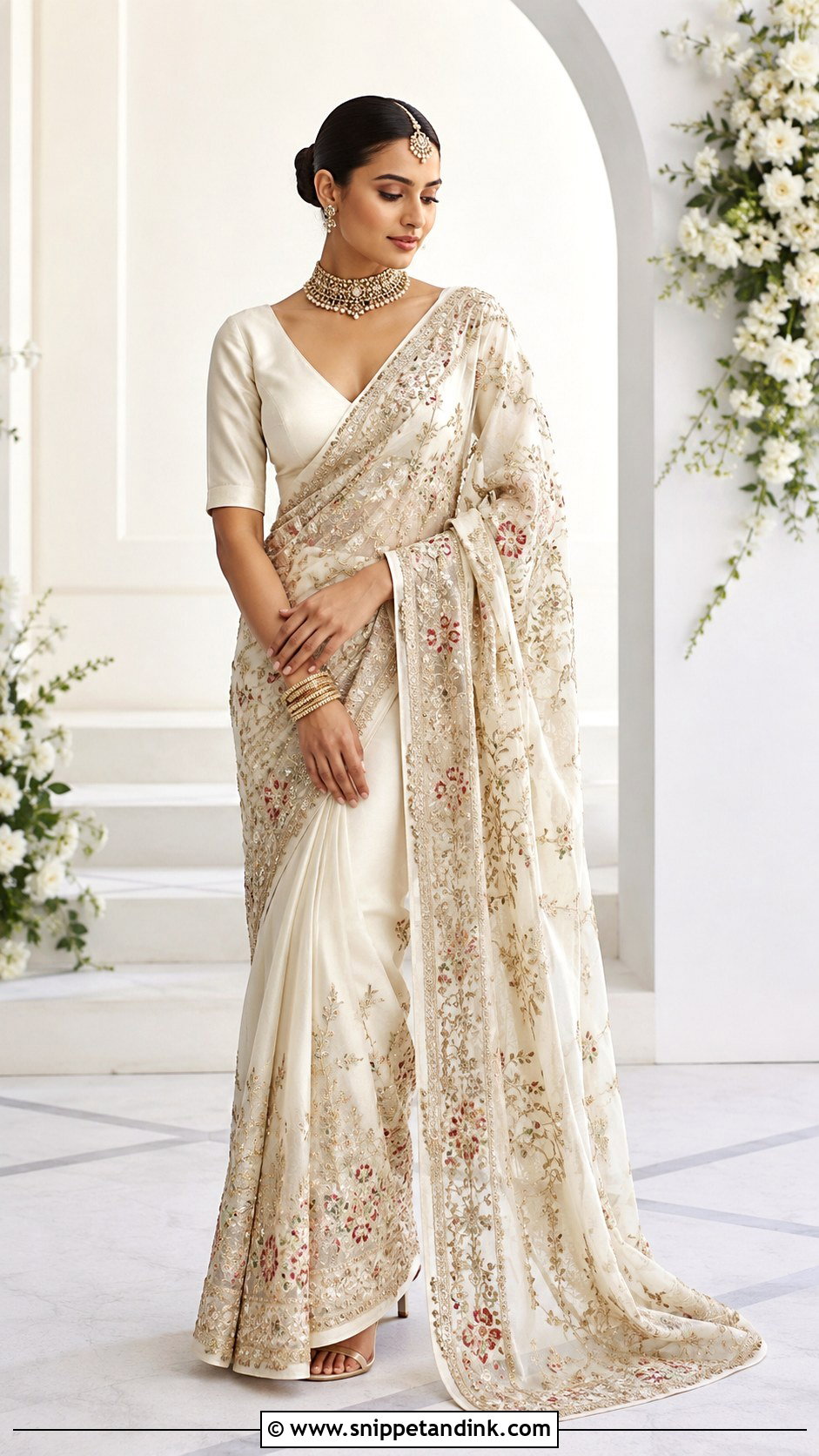
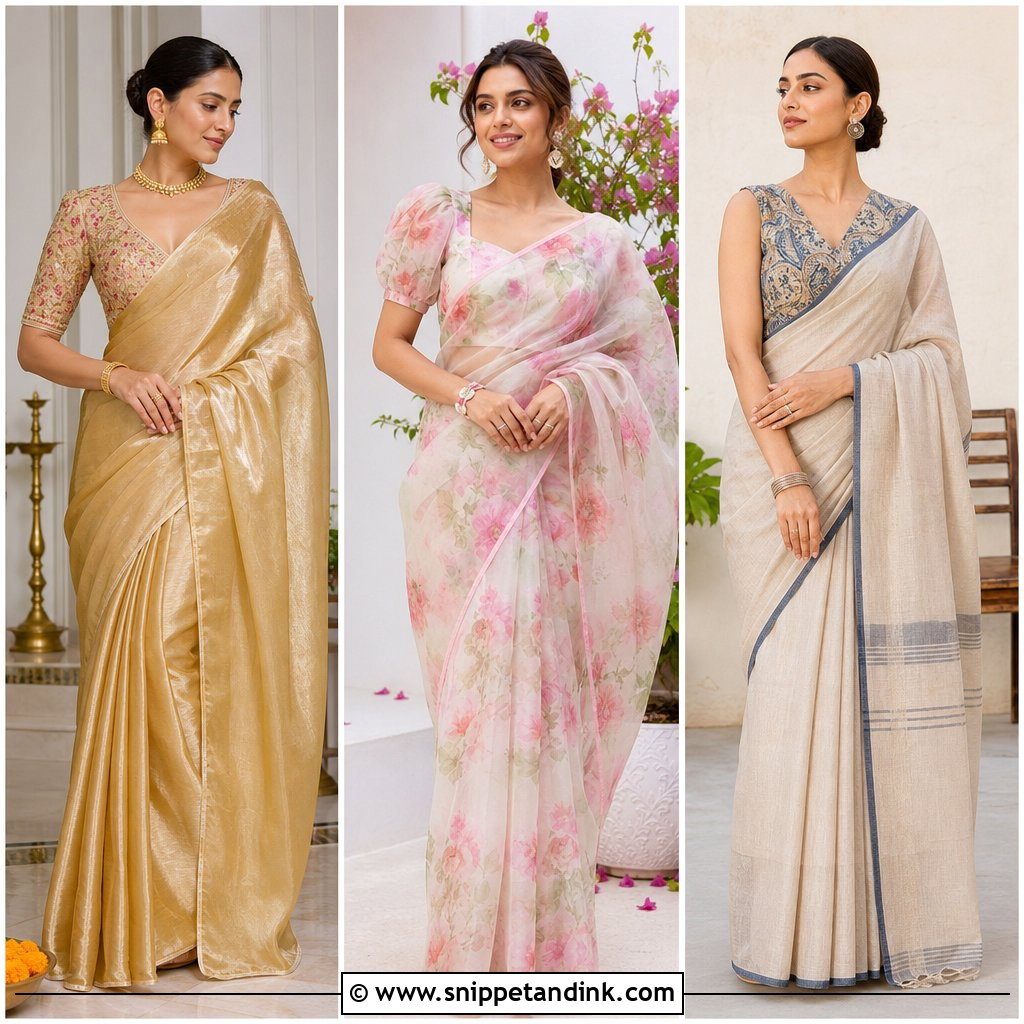
Minimal blouses rely on fabric and cut, so every flaw in tailoring shows. Plain silk, satin or brocade with one considered detail, a beautiful neckline or a single border, pairs naturally with a statement saree or an embroidered lehenga and stops the whole look tipping into busy. Refined jewellery like a choker, a small maang tikka and bangles suits it, along with a soft bun or sleek open hair. I’d recommend it for intimate weddings, but only with a tailor you trust; there’s no embroidery to hide an uneven dart.
Sweat, Folds and Tarnish After the Wedding
Most bridal blouses are worn again, for a sister’s wedding, an anniversary, or restyled with a new saree. Whether that works depends on what happens in the first week after.
The first night
Turn the blouse inside out and let it air on a padded hanger overnight before it goes anywhere near a bag. Sweat trapped against zari and zardosi is what turns metal thread dull and dark. Don’t wash it at home; heavy embroidery, velvet and silk should go to a dry cleaner who handles bridal work, and point out any makeup or haldi marks at drop-off.
Long-term storage
- Wrap it in soft cotton or muslin, never plastic, which traps moisture.
- Fold with tissue between the layers, and lay embroidery face to tissue so beads don’t press into the fabric.
- Velvet is better rolled loosely than folded, since folds leave a crushed line in the pile.
- Refold every few months so creases don’t set along the same line.
If you think you might restyle it, ask your tailor at the first fitting to leave wider seam allowances. It costs a little fabric now and saves the blouse later.
Which Blouse Suits the Ceremony You’re Actually Having?
A blouse is a working garment on the wedding day. You’ll sit cross-legged, raise your hands, bend for blessings and hug relatives for hours, so the right one is the design you can do all of that in without adjusting. Heavy maggam or zardosi suits a grand traditional ceremony; a plain silk cut with a strong neckline suits something smaller. Decide the back, sleeves and fabric with your saree or lehenga in hand, try the dupatta pinning before the final fitting, and you’ll have an outfit that looks considered from every side.
You'll Like These Ideas:



Leave a Reply