
An Indian bridal outfit carries more than style. It often says where your family comes from, which rituals you’ll perform and how long you’ll be sitting at the mandap, and it has to hold up under heavy jewelry for hours. The looks below run from a red zardozi lehenga and regional silk sarees to shararas, ghararas and a few fusion pieces. Brides now mix heritage textiles with unexpected colors and separates more freely than before, which gives you room to choose. As you compare them, think about season, venue, the jewelry you’ll wear and how much you need to move. I’ve added what I check with each one at fittings and draping trials.
How Long Does a Handworked Bridal Outfit Take to Make?
Longer than most brides expect. A lehenga with zardozi, dabka or pearl work is embroidered by hand on a frame, often by several artisans, and a woven Banarasi or Kanjeevaram takes weeks on the loom before it’s even cut. Here’s the rough planning I give brides:
- Start looking about six to nine months before the wedding. Designer lehengas commonly need three to four months of production after the order, sometimes more in peak season.
- Order the blouse fabric with extra margin. Blouses are altered more than any other piece, and late weight changes are common.
- Book a first fitting at least six weeks before the wedding and a final one within the last two weeks.
- If you’re buying a woven silk saree, check its authenticity marks at purchase, such as a silk certification tag or regional handloom label, rather than after the wedding.
Readymade and designer-sample pieces are faster but rarely fit without significant work, so leave time for alterations even when you buy off the rack.
1. Red Zardozi Bridal Lehenga
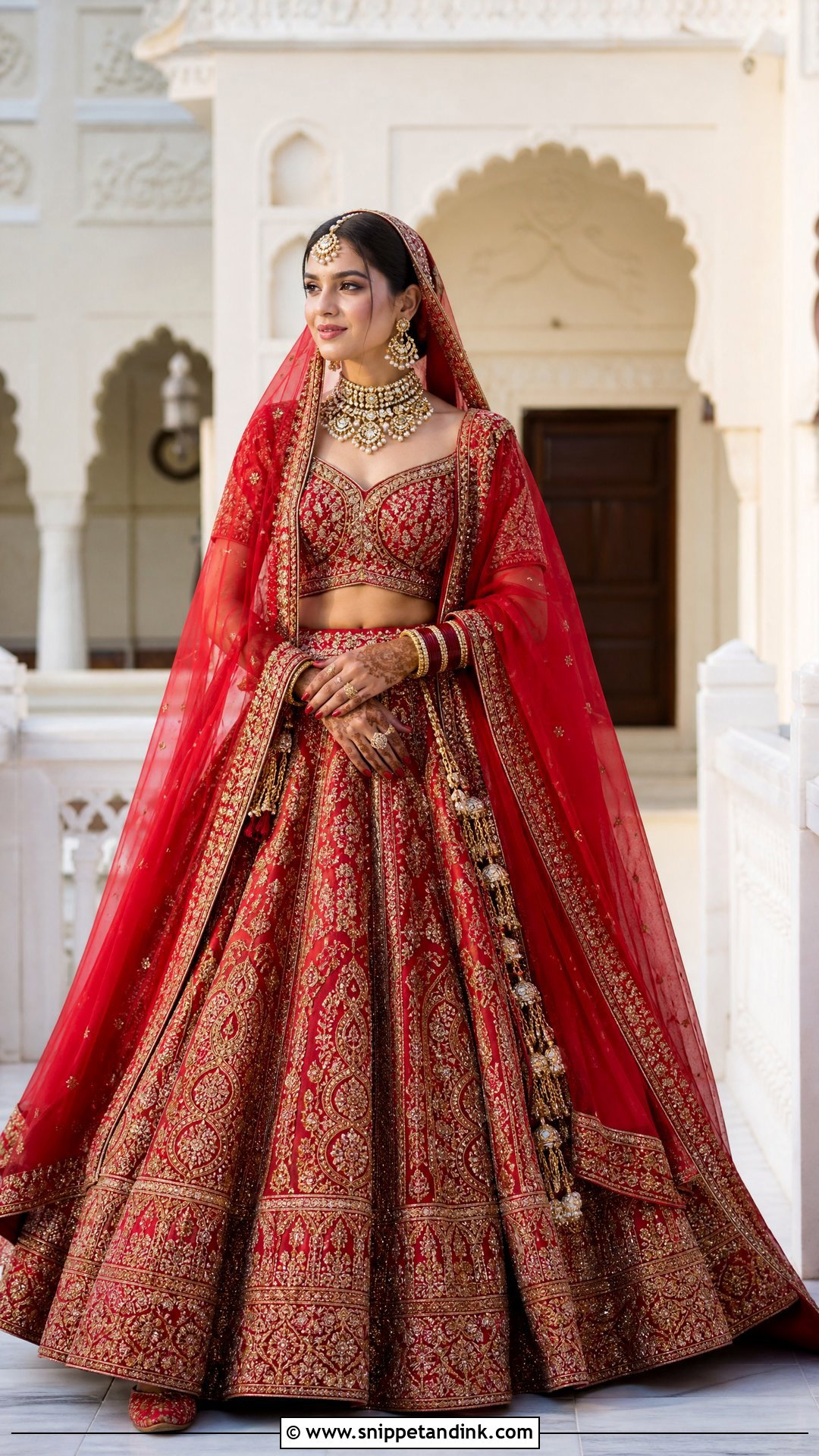
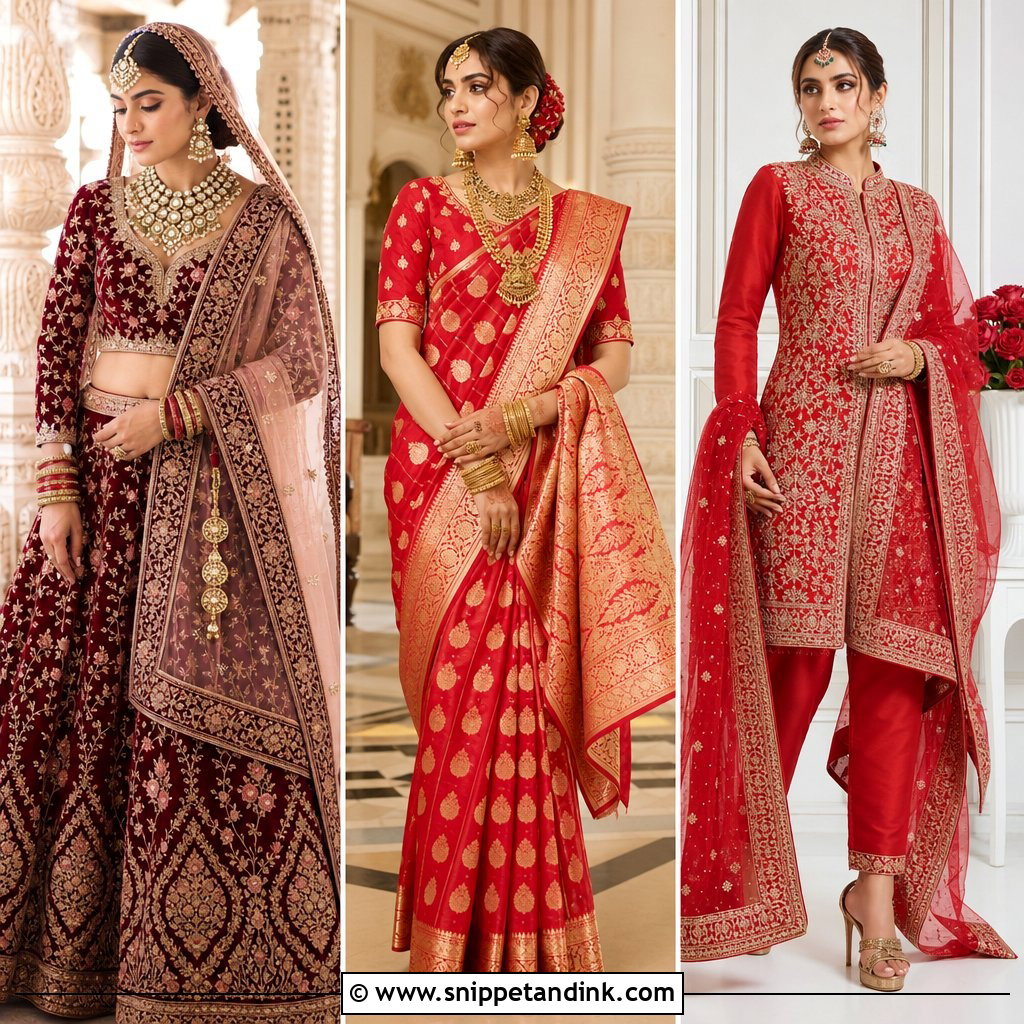
A red zardozi bridal lehenga is the classic grand bridal look, and it’s also the heaviest. Zardozi is metal-thread embroidery, so dense work in raw silk or velvet can weigh a lot; ask for the embroidery spread evenly across the panels rather than packed at the hem, which drags the waistband down. A structured blouse supports layered necklaces. One embroidered dupatta goes over the head and a lighter one across the shoulder. Gold jhumkas, a maang tikka, stacked bangles and embroidered juttis complete it, with luminous skin and a deep rose lip. It’s at its best at an evening ceremony or palace venue.
2. Ivory Pearl Bridal Lehenga
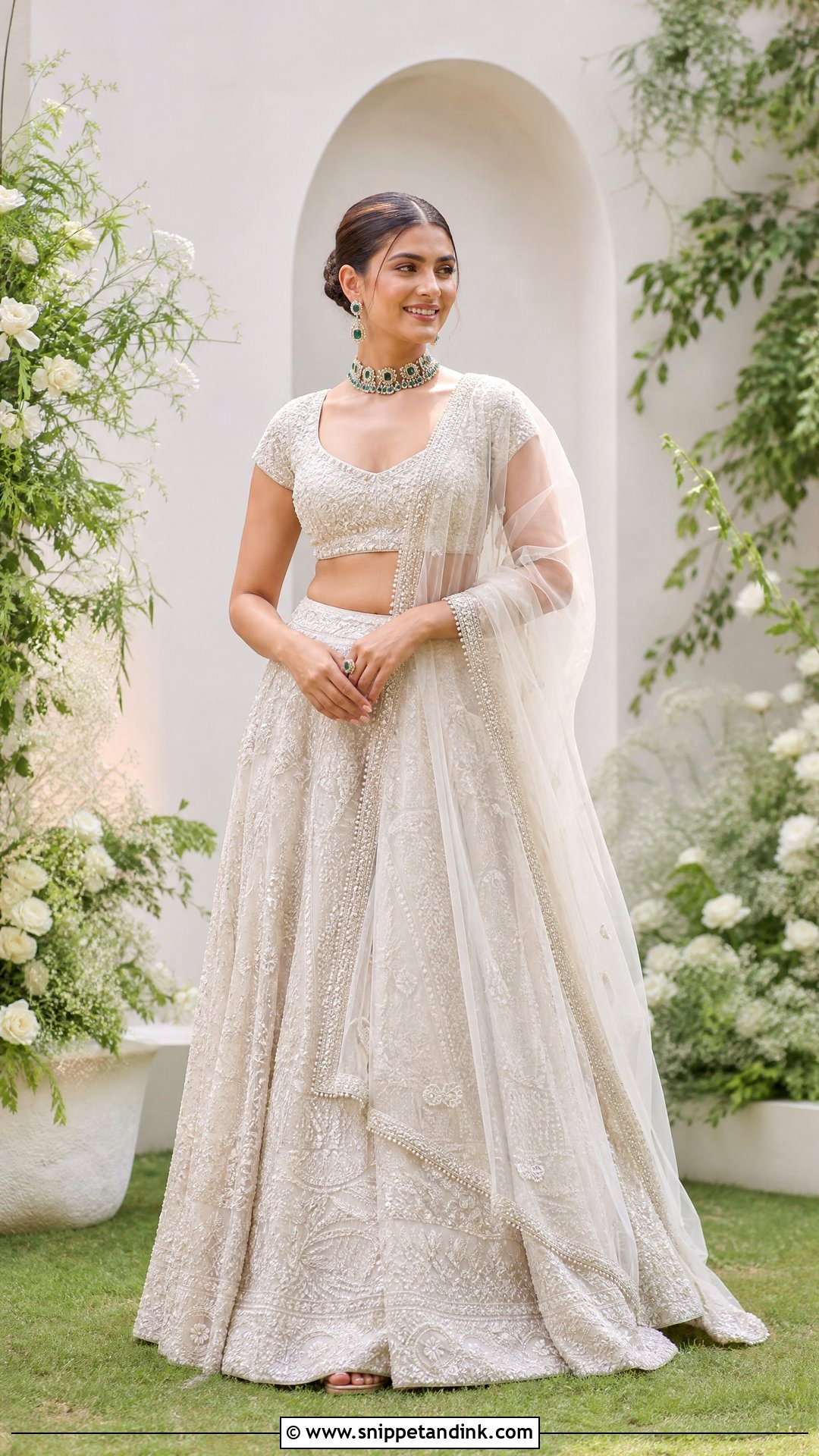
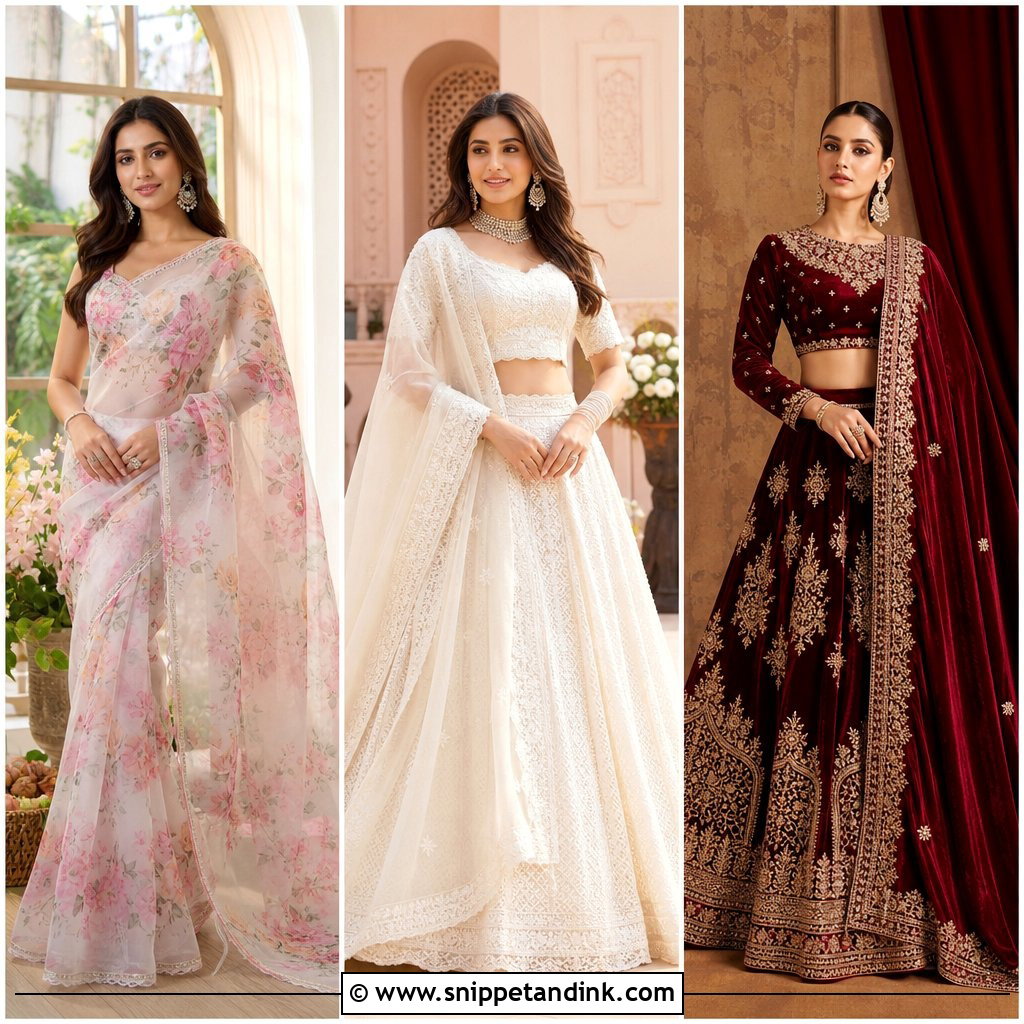
Ivory with pearls gives you ceremony-level impact in a quieter color. An ivory silk or organza lehenga worked with pearls, sequins and fine thread pairs with a fitted blouse with delicate sleeves and a modest neckline, plus a sheer dupatta edged in pearls. I like emerald or pale kundan jewelry here for gentle contrast. Metallic block heels give height without aching feet. Ivory has one real risk: on camera it can wash out against fair skin or blow out in bright sun. Choose warm, glowing makeup, avoid accessories as pale as the fabric, and ask the photographer to expose for the outfit, not the background.
3. Pink Floral Bridal Lehenga
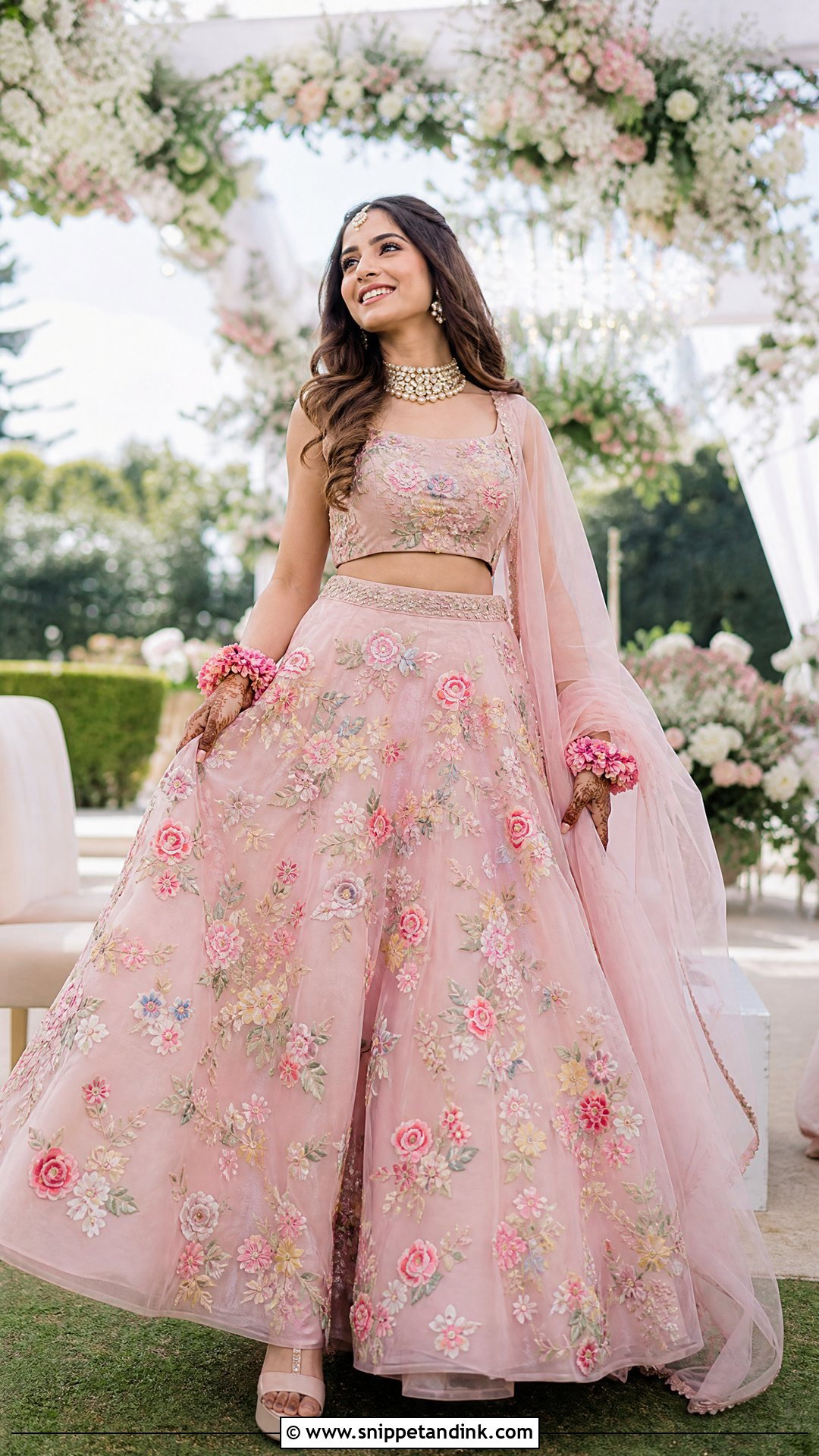
Blush pink with embroidered flowers suits a daytime garden wedding and a bride who doesn’t want red. Organza or silk with floral threadwork in rose, peach, lavender and muted green keeps it lighter than traditional heavy work. Keep the blouse motifs small, then add a sheer blush dupatta over the arms or head. Pearl earrings, a delicate choker, floral bangles and neutral platforms keep it cohesive, with loose waves or a flower-trimmed braid. Organza creases easily in a car or after sitting, so I’d ask for a steamer at the venue. Pastel lehengas also show grass and mud stains quickly, so lift the hem on lawns.
4. Maroon Velvet Bridal Lehenga
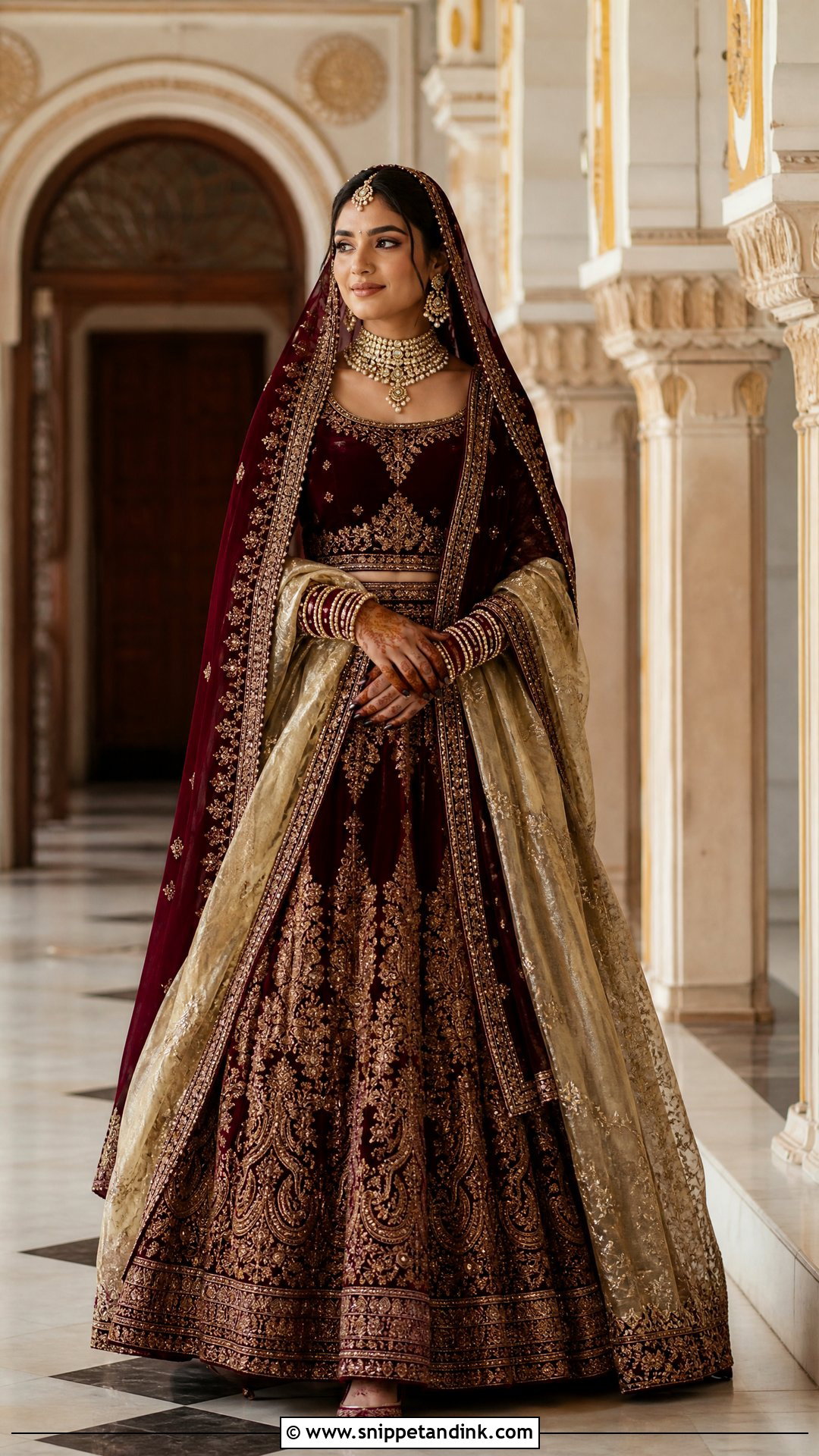
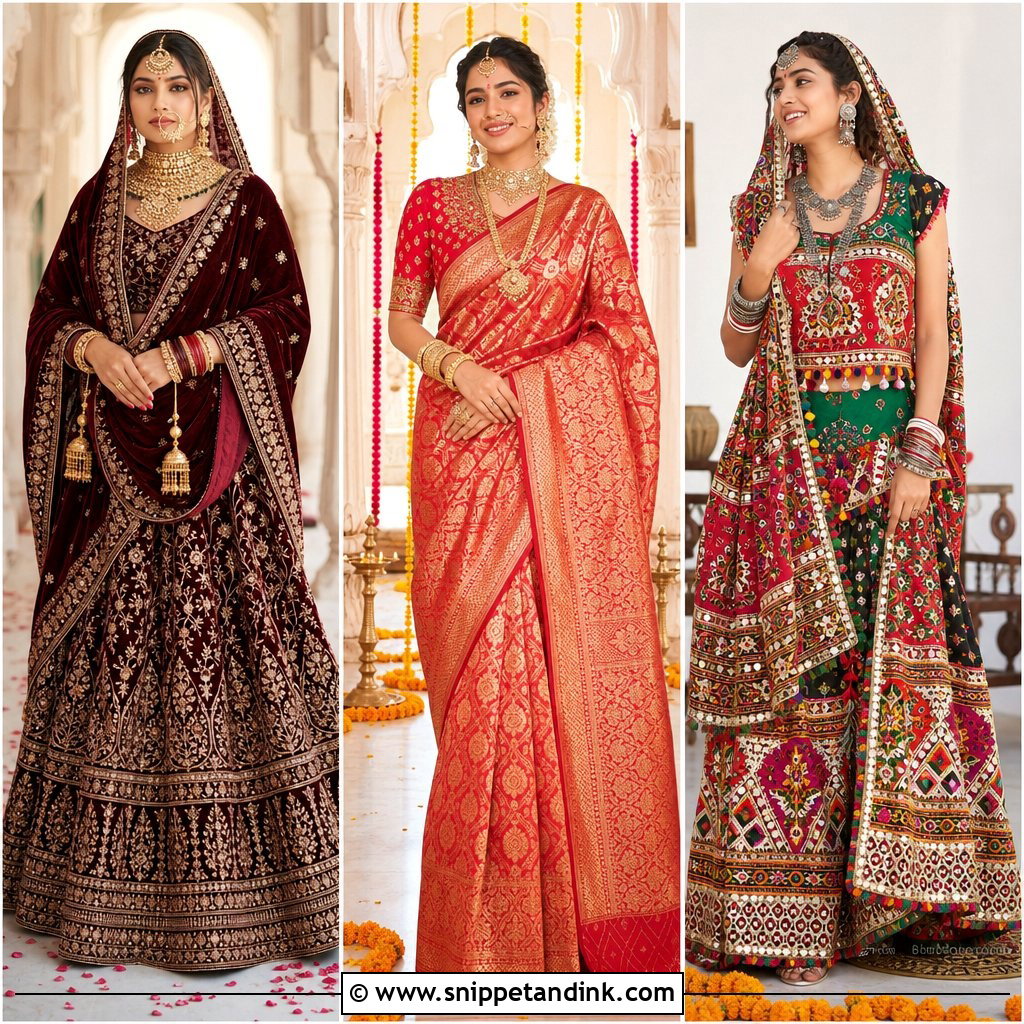
Maroon velvet is made for cool-weather evenings. Velvet already looks heavy, so space the embroidery out; antique gold zardozi, dabka and beadwork framing the skirt, blouse and dupatta look richer than all-over coverage. A fitted velvet blouse with a square or curved neckline sits well under polki. One maroon dupatta over the head and an optional tissue dupatta across the body add contrast. A traditional nath, gold bangles and padded juttis complete it, along with a sleek bun and berry lip. Velvet is warm, so I’d only recommend it for winter dates or well air-conditioned halls. Its pile also crushes where you sit, so keep a soft brush handy.
5. Gold Tissue Bridal Lehenga
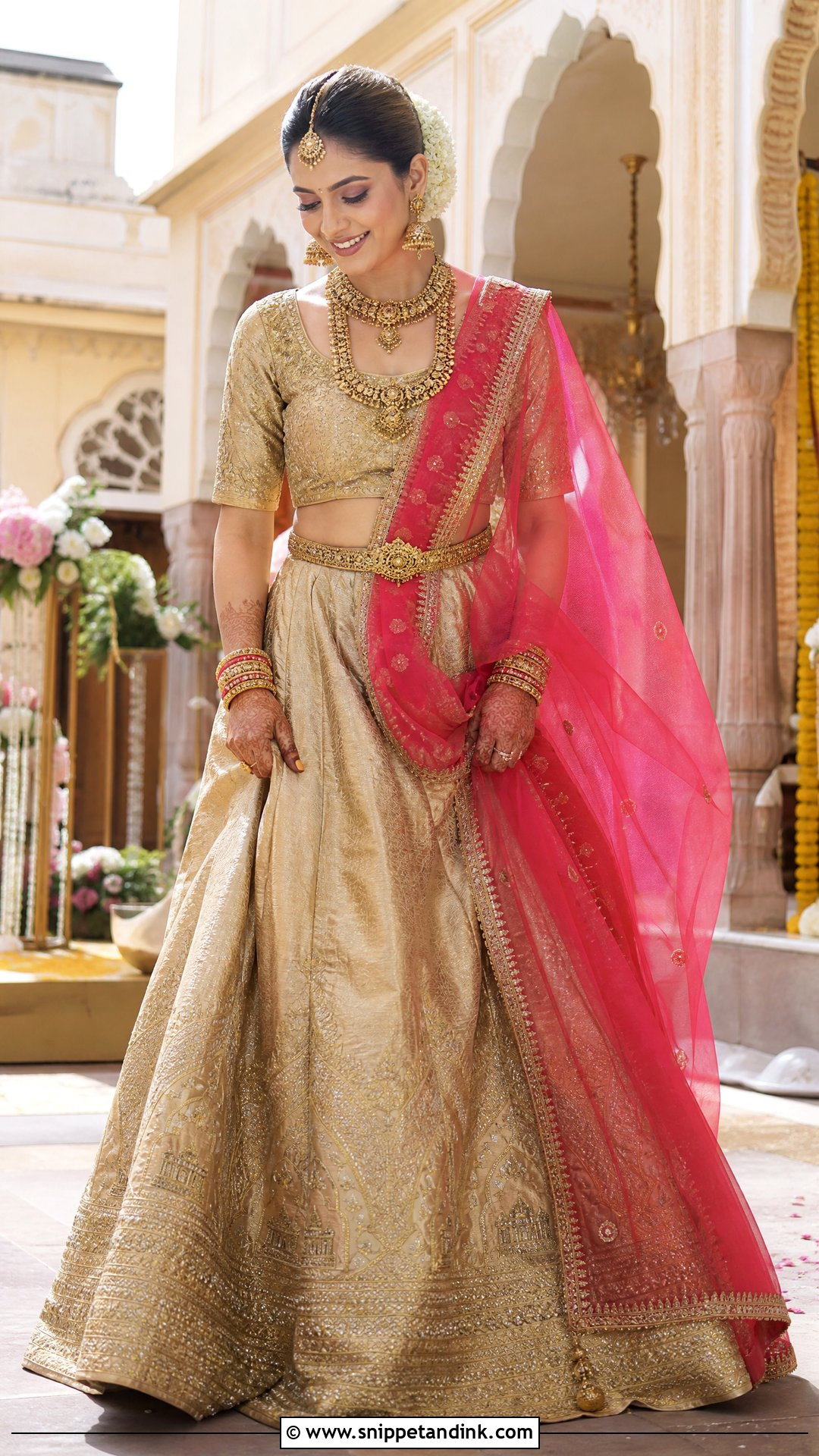
Tissue is a fine silk woven with metallic thread, so a gold tissue lehenga shines without the weight of heavy embroidery. Look for a full skirt with woven motifs, a defined border and enough lining to hold its shape. Pair it with a gold blouse in tonal embroidery and comfortable sleeves, then add contrast with a rust, coral, pink or deep red dupatta over the head. A waist belt keeps the drape in place. Temple or antique gold jewelry, metallic sandals and a flower-wrapped bun finish it. Keep makeup warm and slightly brighter than usual, because a face can disappear against reflective gold. Daytime ceremonies and heritage venues suit it.
6. Emerald Green Bridal Lehenga
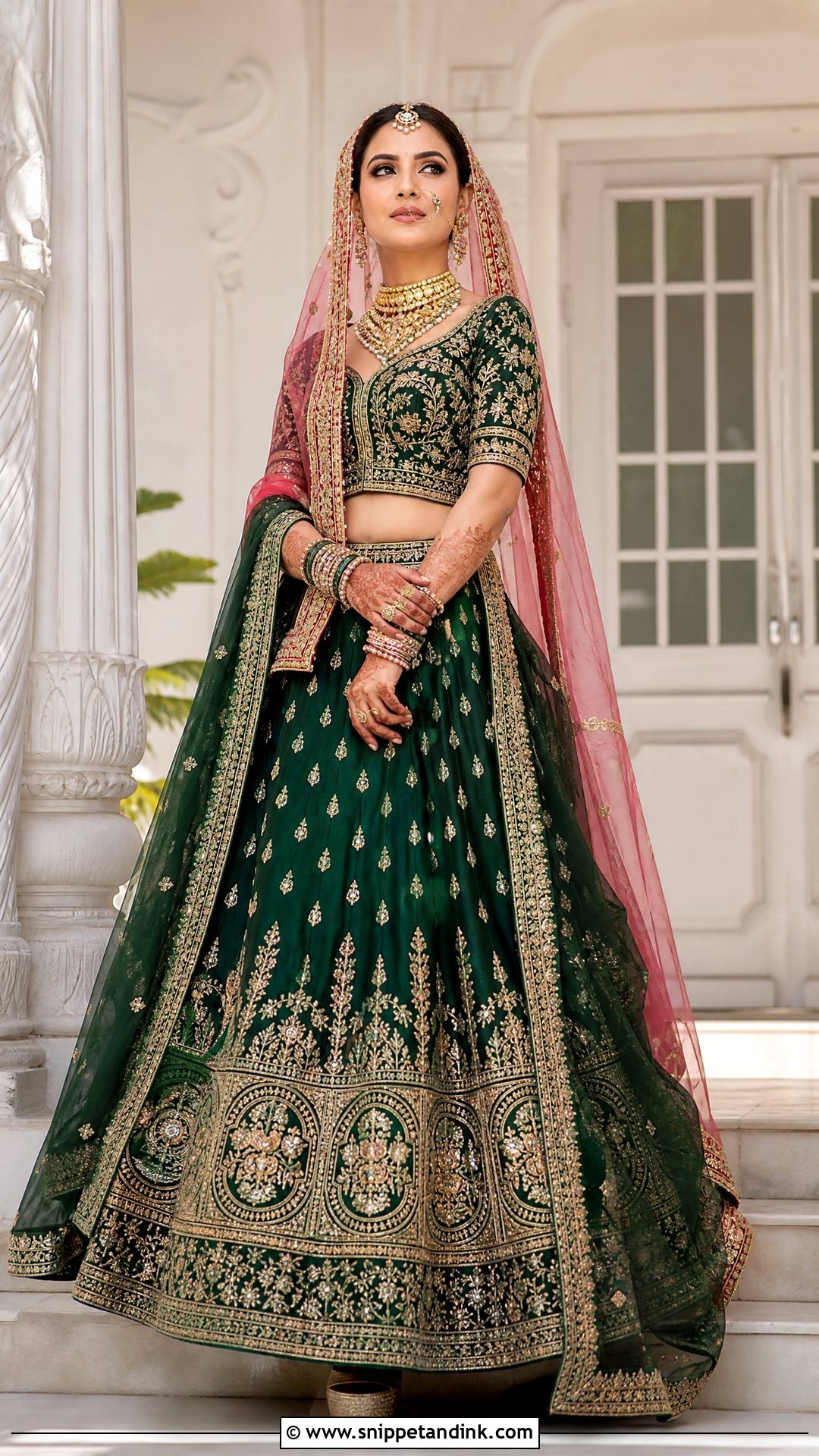
Emerald green is a confident alternative to red, and it looks rich in silk, brocade or velvet against plain stone or neutral walls. Choose floral or architectural motifs in antique gold and a supportive embroidered blouse. A matching green dupatta keeps the look unified; a rose or gold one adds depth. Layer kundan necklaces at different lengths with coordinated earrings, bangles and a centered maang tikka. Gold platforms or embroidered juttis finish it. Green can drain warmth from some skin tones under evening light, so I check it against the bride’s face at the trial and add a touch more blush if needed. A structured bun keeps the color from dominating.
7. Red Banarasi Silk Bridal Saree
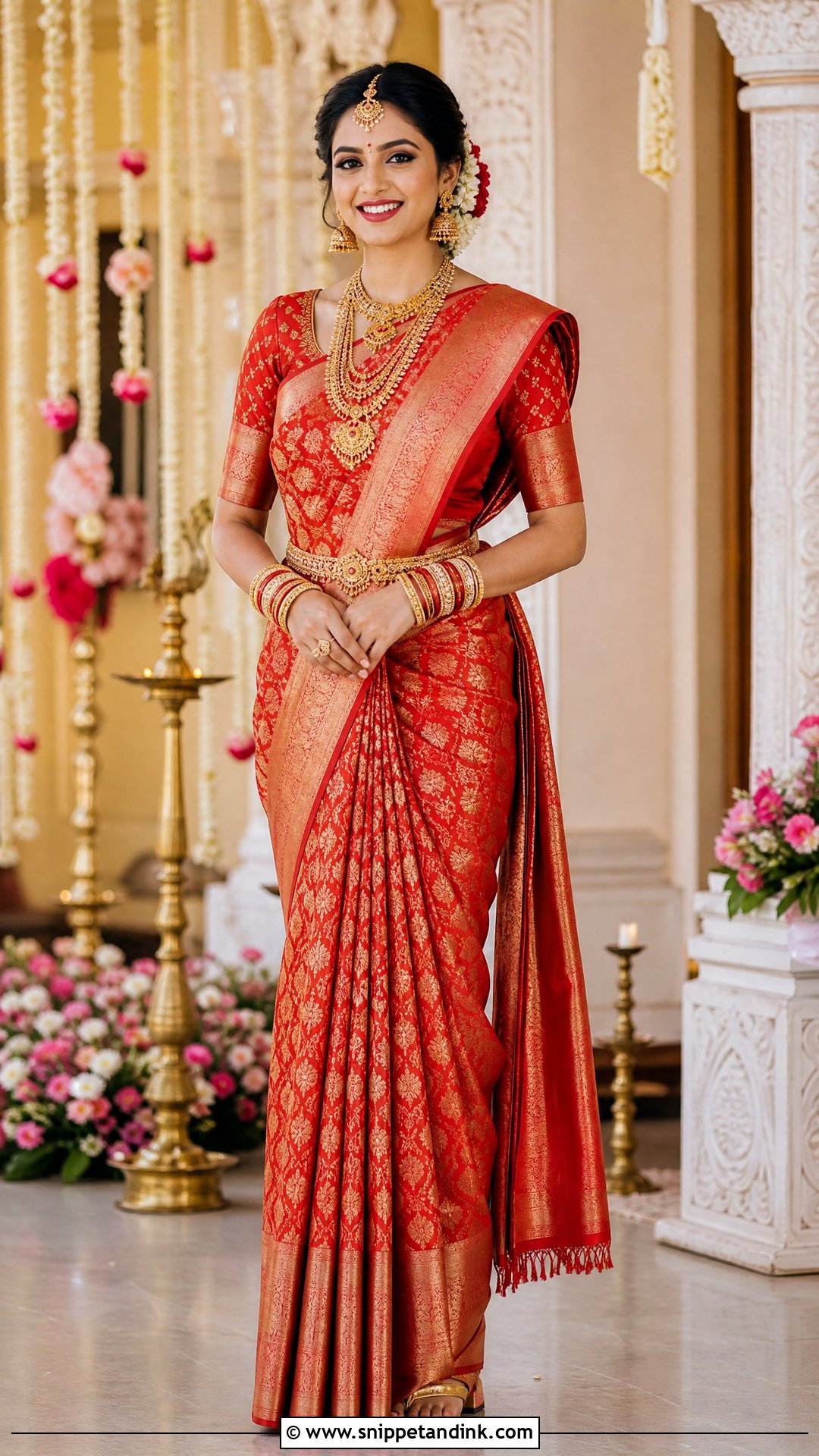
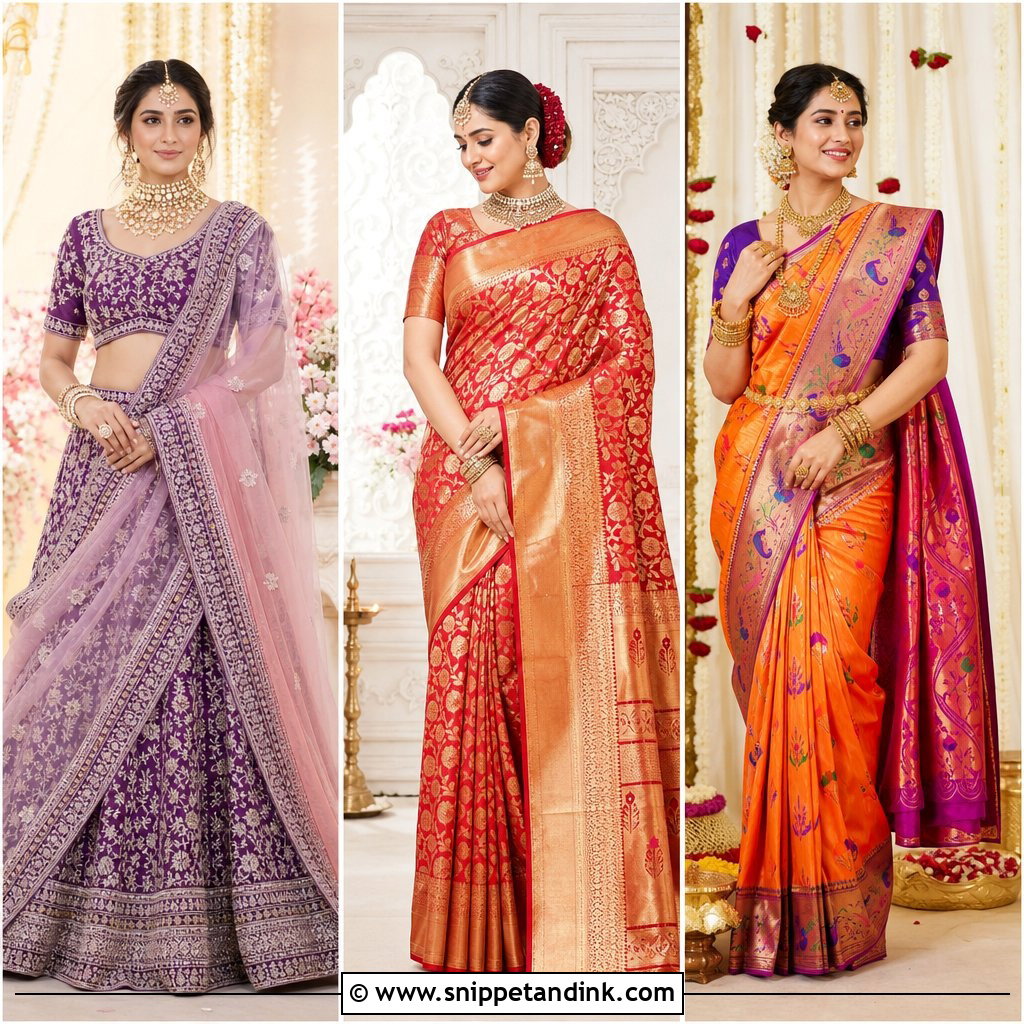
A red Banarasi silk bridal saree gives traditional richness in a drape rather than a skirt. Look for gold woven motifs and a distinctive zari border. Pair it with a fitted red or antique gold blouse that lets you raise your arms during rituals. Crisp pleats give the silk structure, and a pinned pallu keeps it in place through the pheras. A layered gold necklace, jhumkas, bangles, a maang tikka and bridal footwear hidden under the hem complete it, with a flower-trimmed low bun and a red lip. Ask whether the zari is real or tested (metal-coated) thread; both look good, but real zari ages differently and costs considerably more.
8. Kanjeevaram Silk Bridal Saree
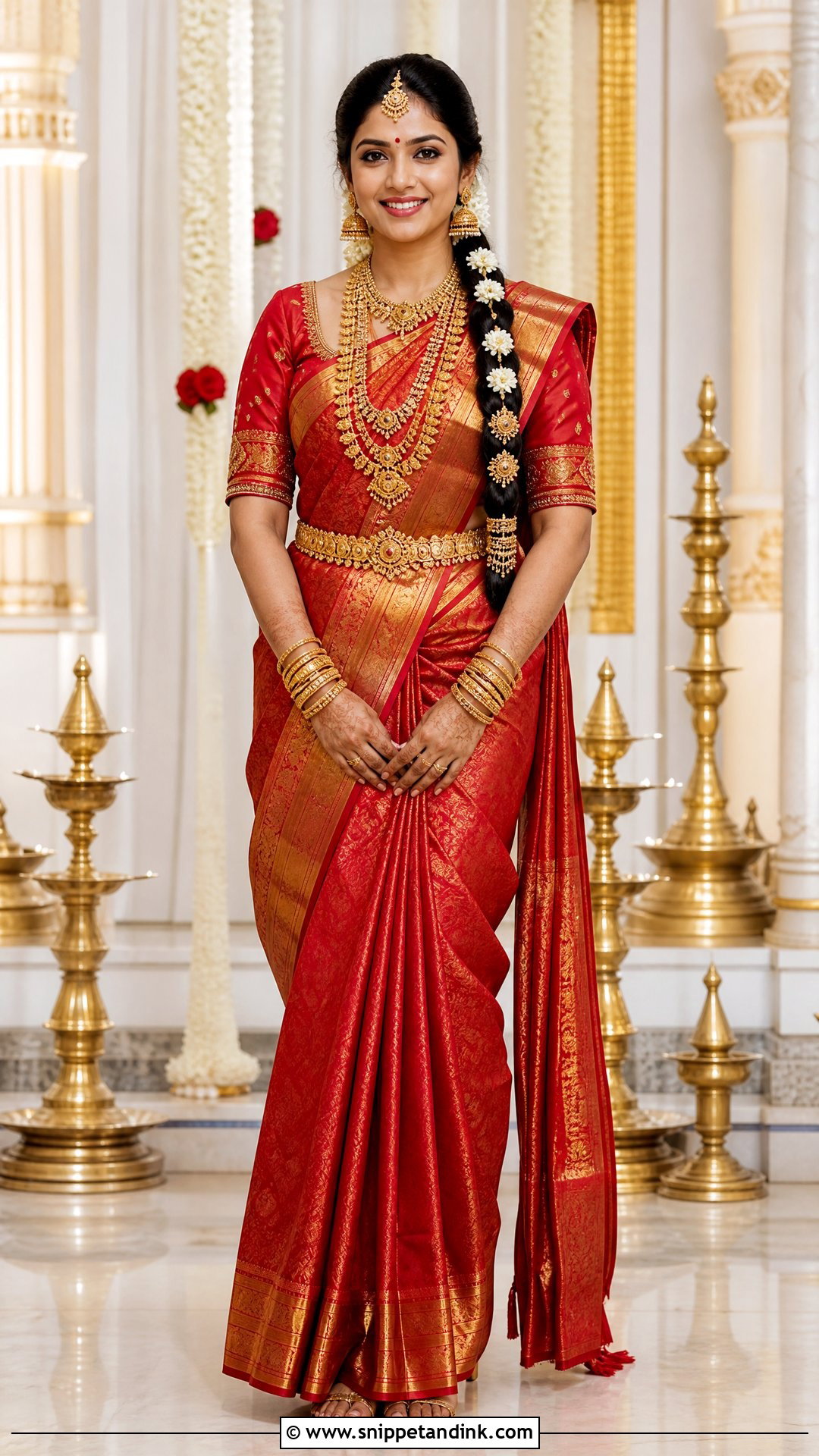
A Kanjeevaram silk bridal saree has a weight and sheen that announce a ceremony before anyone speaks. Crimson, magenta, green or burnt orange with a contrasting gold border is the classic choice, often with a separately woven border that gives a crisp line. An elbow-sleeve blouse balances it. Kanjeevaram silk is thick, so pleats are bulkier than in lighter silks; a skilled draper makes fewer, wider pleats to keep the waist neat. Temple necklaces, statement earrings, a waist belt, bangles and anklets suit it, with a long flower-wrapped braid and stable gold sandals. Family and heritage ceremonies suit it best.
9. Purple Paithani Bridal Saree
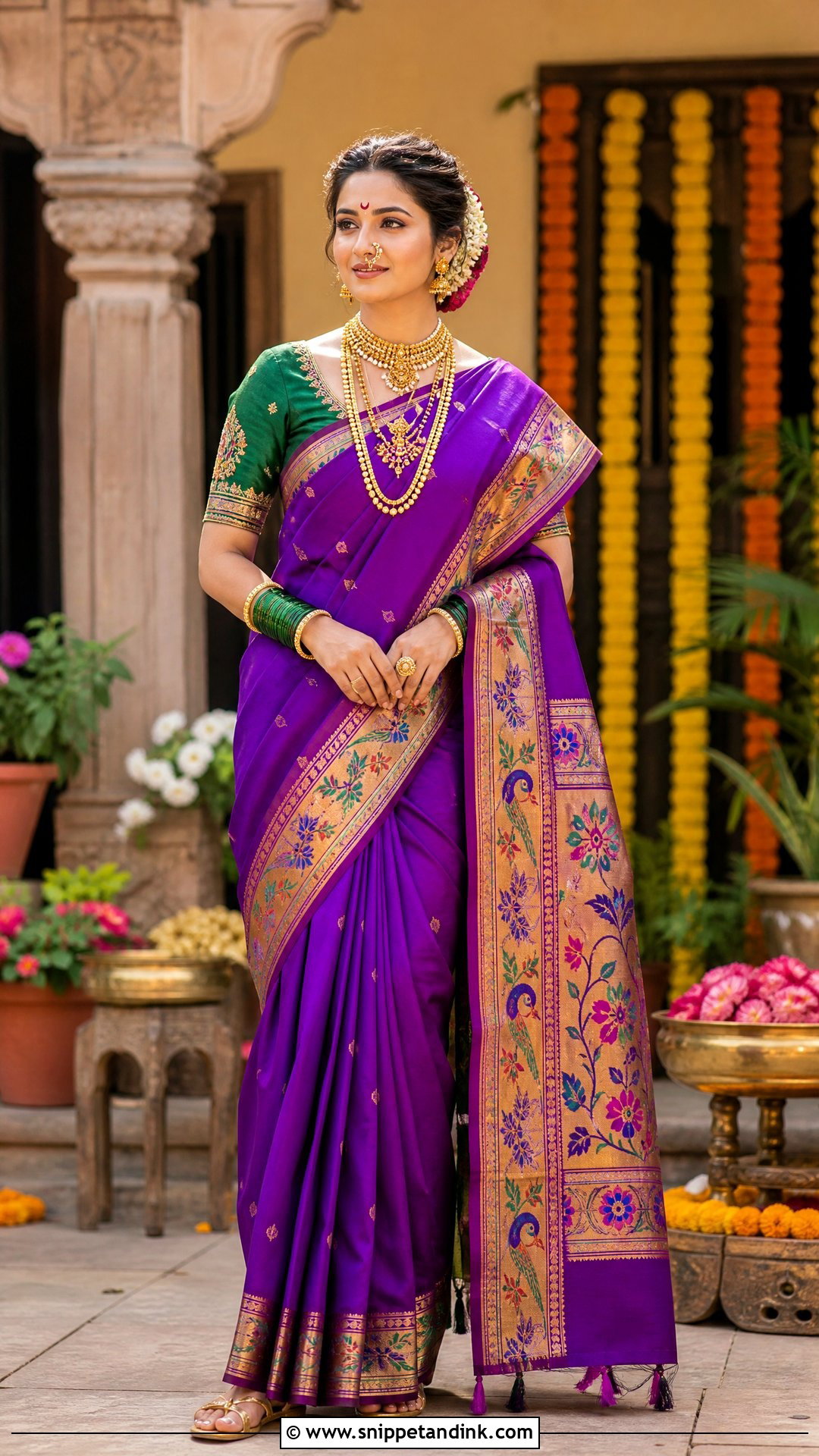
Paithani is a handwoven silk from Maharashtra known for its peacock and lotus pallu, and that pallu deserves to stay visible. Purple with a contrasting border is vivid without needing surface embellishment. A green, pink or gold blouse makes a lively pairing; a matching purple one is quieter. Traditional gold necklaces, statement earrings, a crescent bindi, green bangles and a delicate nose ring complete it, with a flower-decorated bun. Wear comfortable gold sandals for long ceremonies. When we drape a Paithani, I spread the pallu flat across the back or over the arm rather than pleating it, so the weaving shows in photos.
10. Bengali Red And White Bridal Saree
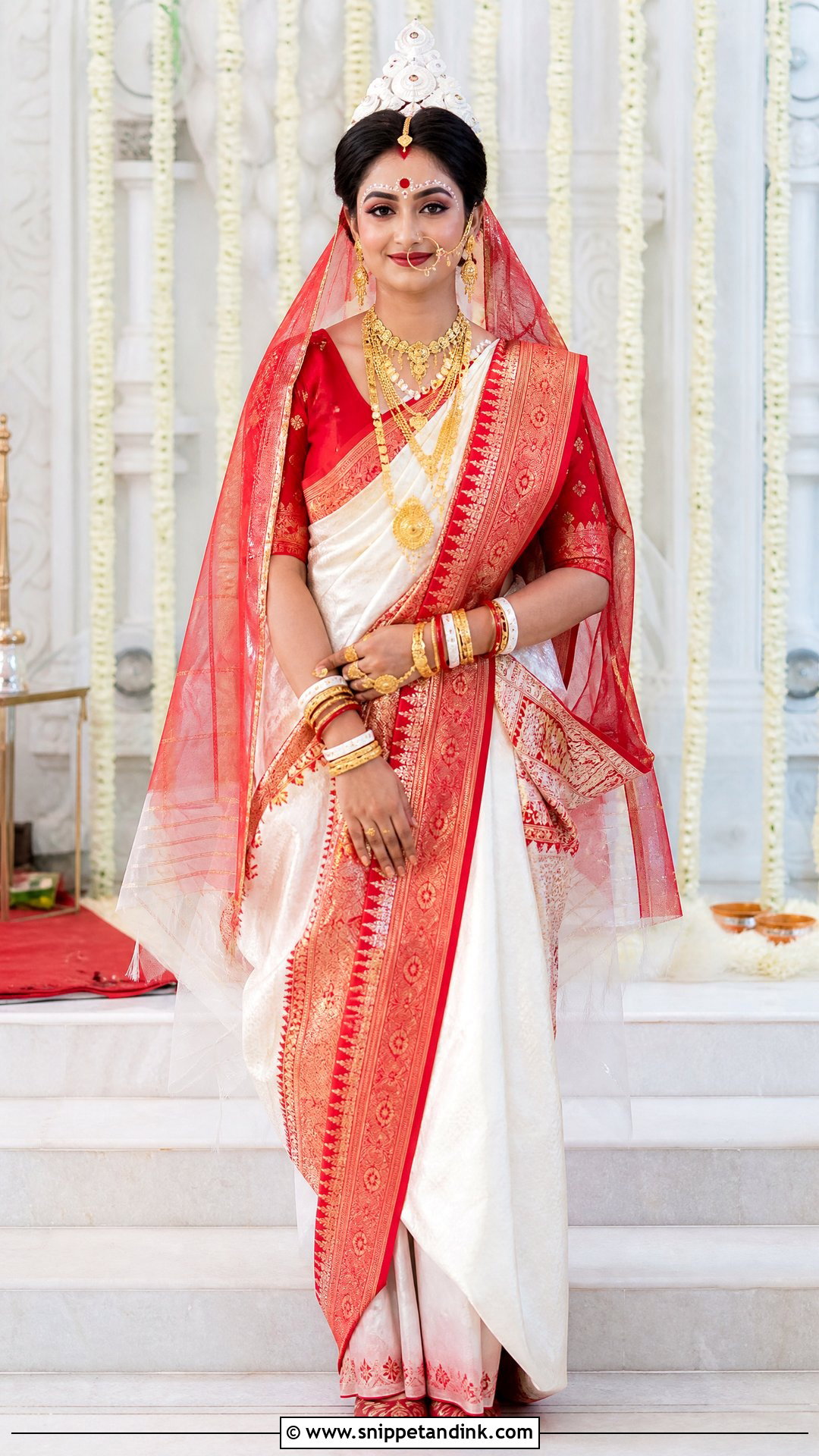
Red and white is unmistakable as a Bengali bridal outfit. Start with a white or cream silk saree with a broad red border and woven detail, and a fitted red blouse with elbow sleeves or subtle gold work. Arrange the pallu so the border frames the upper body. Layered gold jewelry, red and white bangles, a statement nath and red or gold footwear complete it. The forehead decoration, traditionally sandalwood dots, needs a steady hand and time, so book it into the makeup schedule. A centered bun keeps the veil secure. Plan drape, jewelry and makeup together, because the whole look depends on balance.
11. Gujarati Panetar Bridal Saree
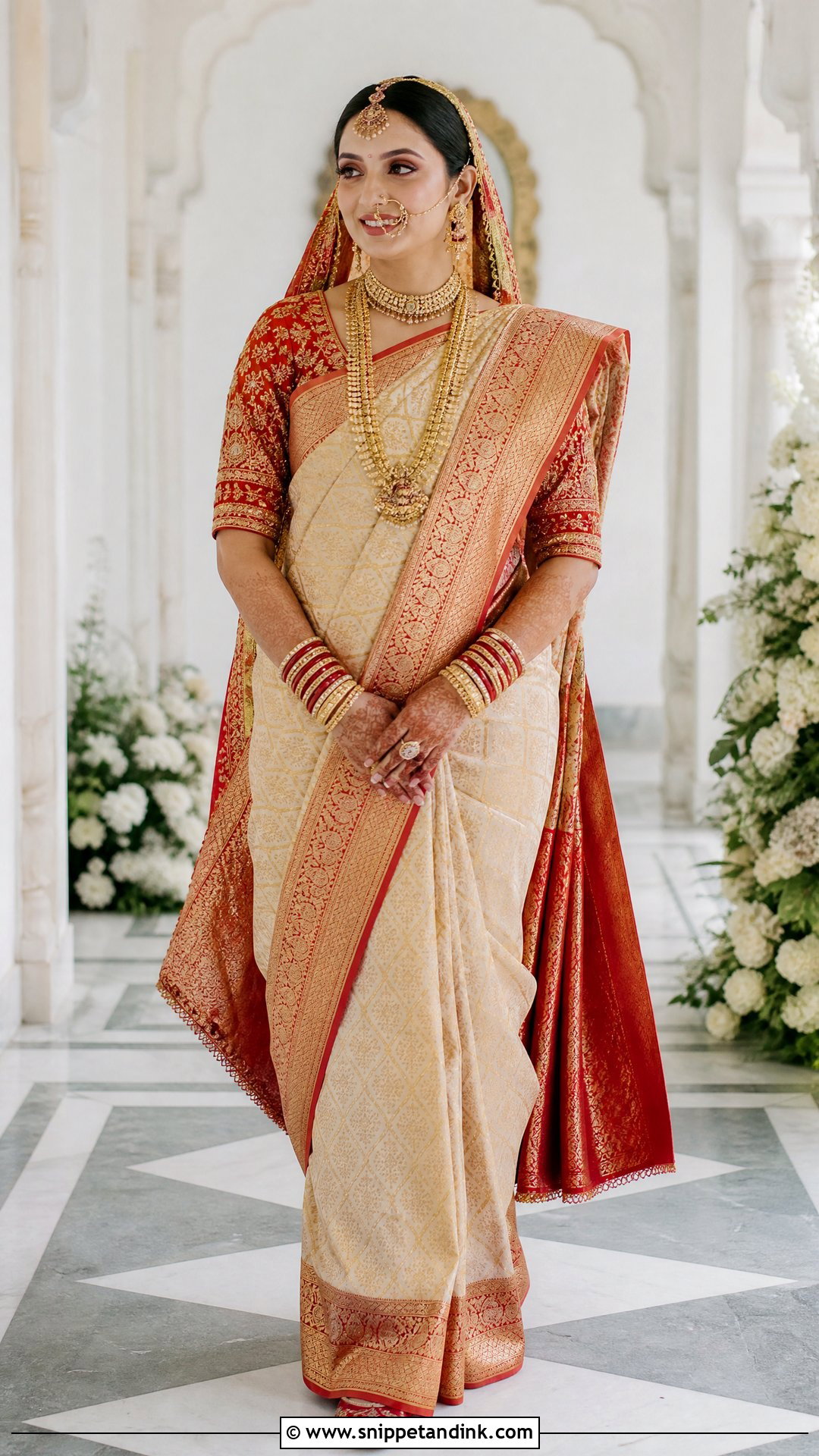
Panetar is the traditional Gujarati bridal saree, usually white or cream with a red border and often bandhani detail, and it’s commonly worn for the ceremony alongside a gharchola. Choose a version with enough body to hold pleats and wear it with a red embroidered blouse that matches the border. The Gujarati drape brings the pallu over the right shoulder to the front, which shows off the decorated end. Gold necklaces, traditional earrings, stacked bangles, a nath and a positioned head covering finish it, along with red or gold juttis. It gives strong contrast in photographs and offers a softer alternative to all-red.
12. Maharashtrian Nauvari Bridal Saree
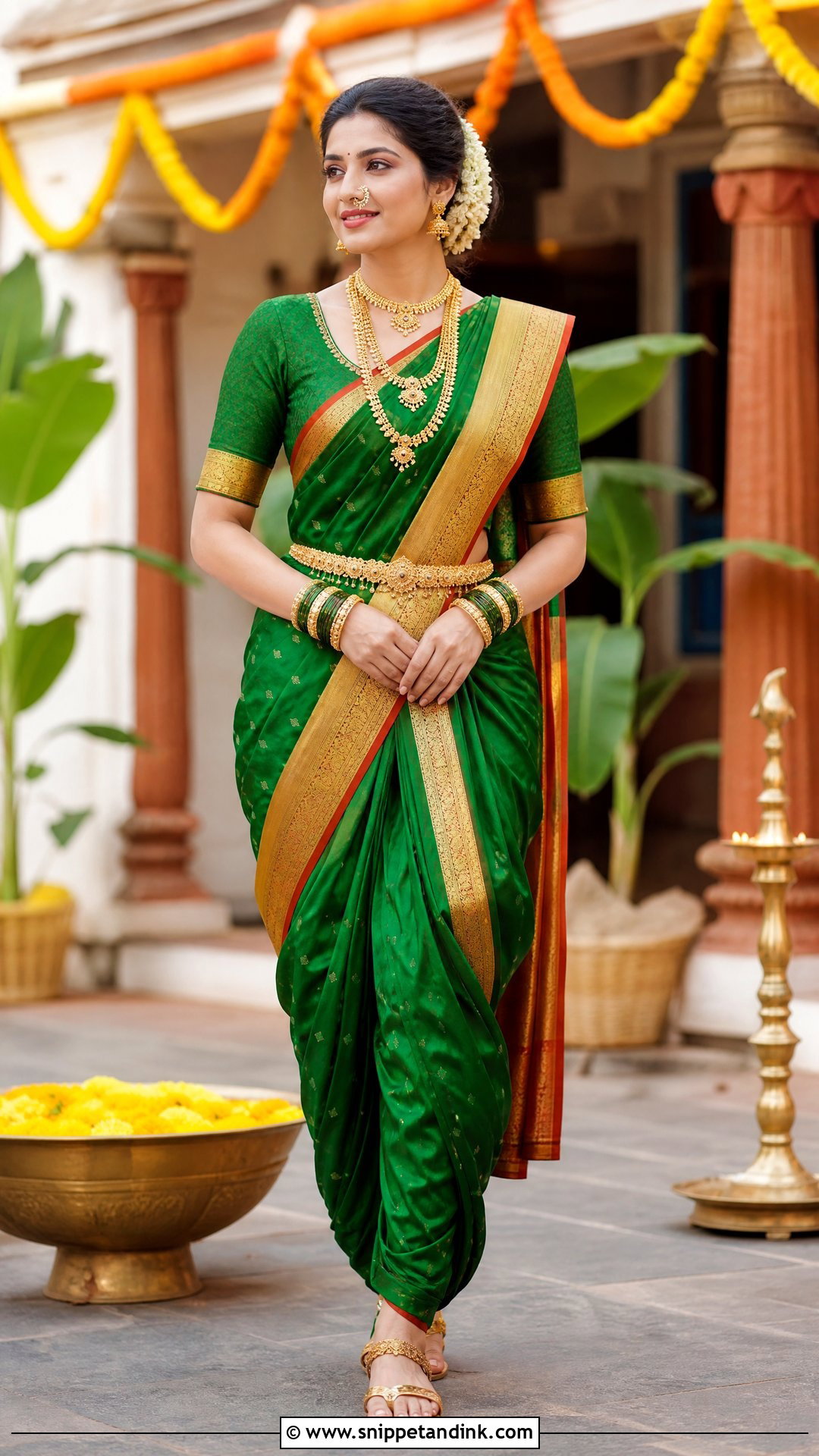
A Maharashtrian Nauvari bridal saree uses nine yards draped between the legs, so it moves like trousers and stands out in any group photo. Silk in green, yellow, red or purple with a rich gold border is traditional. A secure short-sleeve blouse lets you move freely. This drape takes practice to get right, so either hire an experienced draper or ask for a pre-stitched Nauvari if you want it fast and secure. Add a traditional nath, layered gold necklaces, green glass bangles, a waist belt and simple gold sandals, with a flower-decorated bun and a small bindi. It’s practical for ceremonies with lots of movement.
13. Kerala Kasavu Bridal Saree
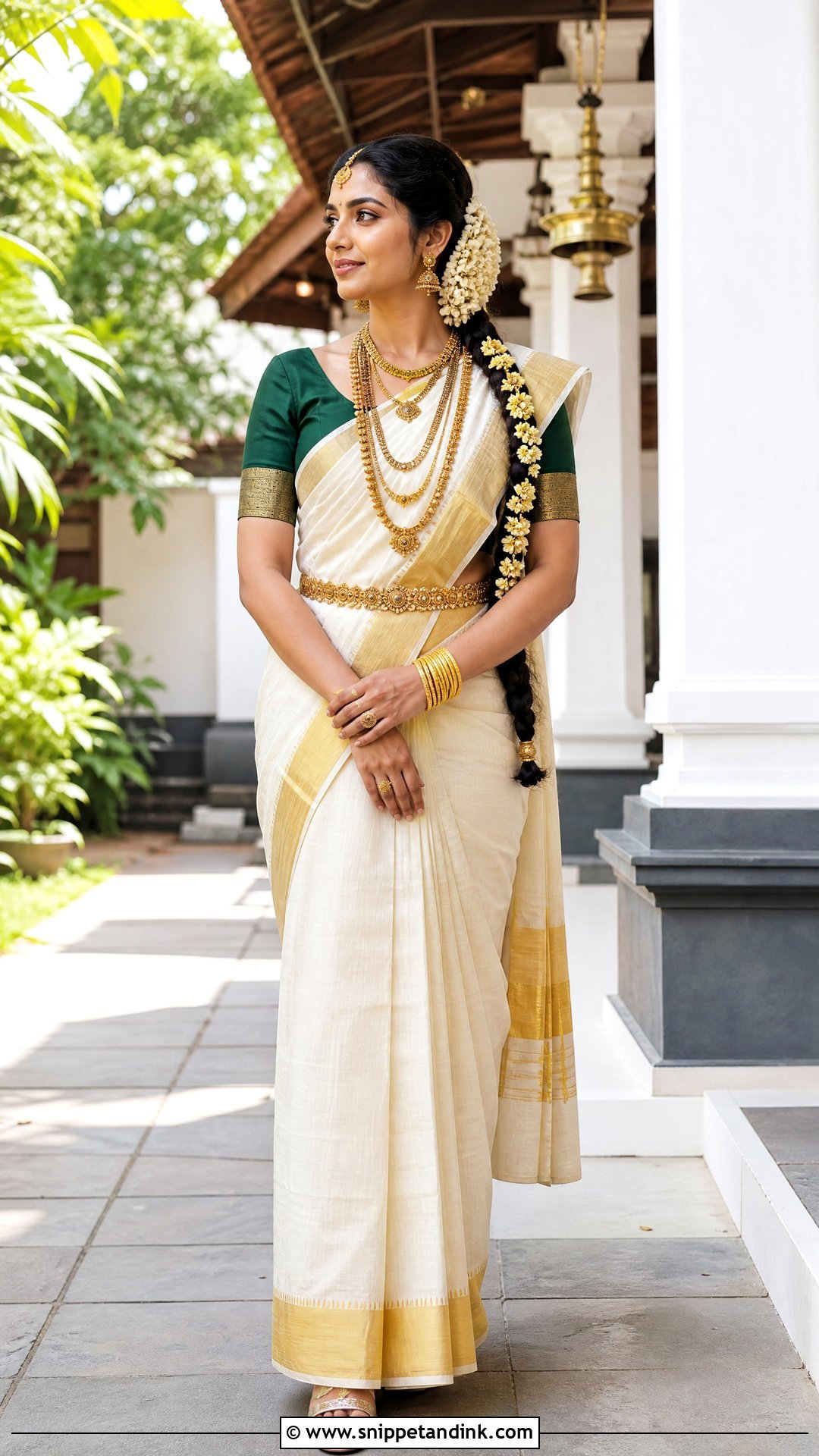
Kasavu is Kerala’s handloom cotton or silk, ivory with a gold border, and its calm palette puts all the attention on the drape and jewelry. Choose an ivory, gold, green or deep red blouse depending on how much contrast you want. Keep pleats crisp; handloom cotton creases faster than silk, so a light starch and a careful steam before dressing help. Layered gold necklaces, traditional earrings, bangles, a waist belt and simple metallic sandals suit it. A long braid or smooth bun decorated with jasmine completes the look, with fresh skin and a soft red lip. It suits temple ceremonies and daytime weddings.
14. Embroidered Bridal Sharara
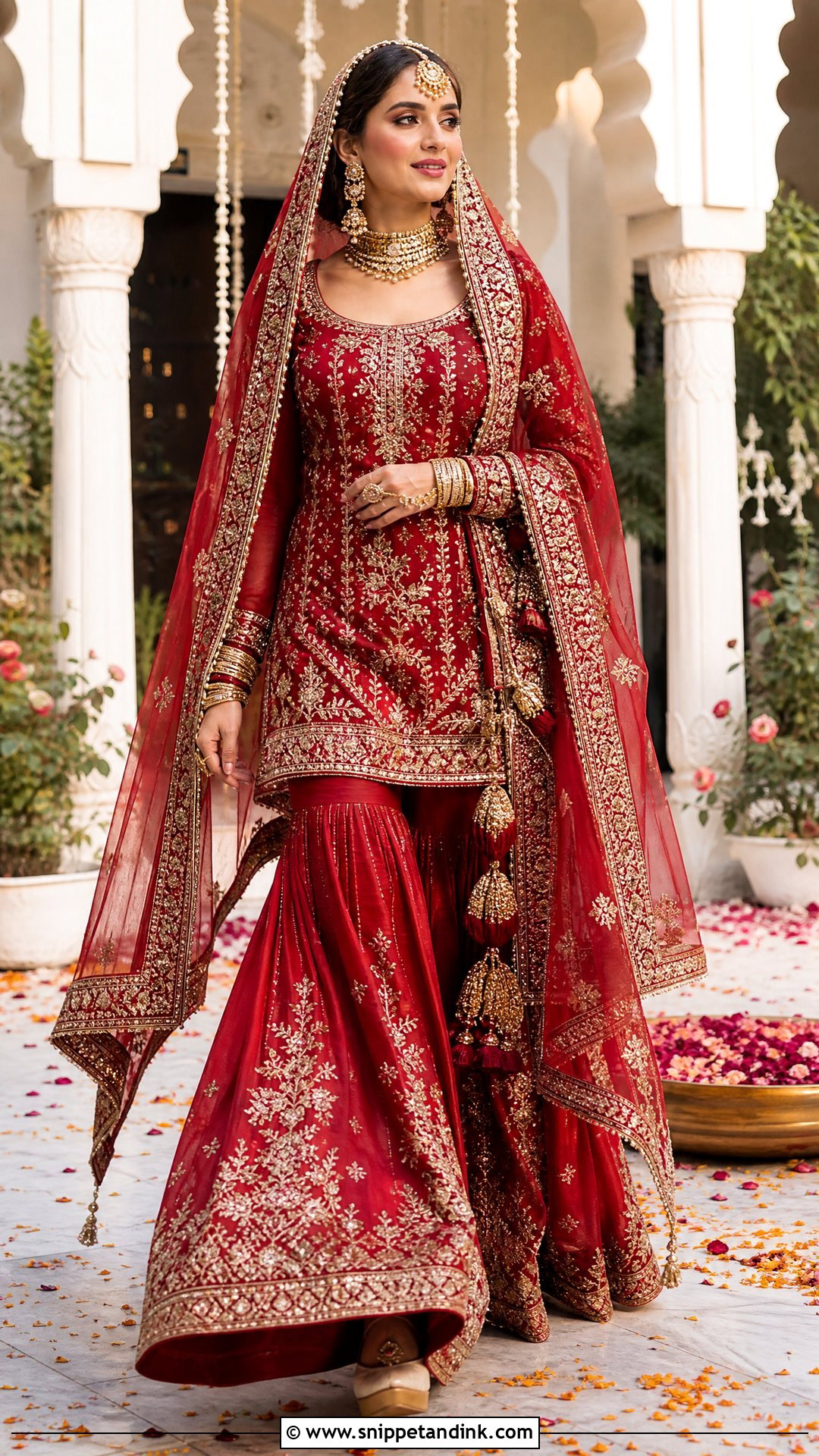
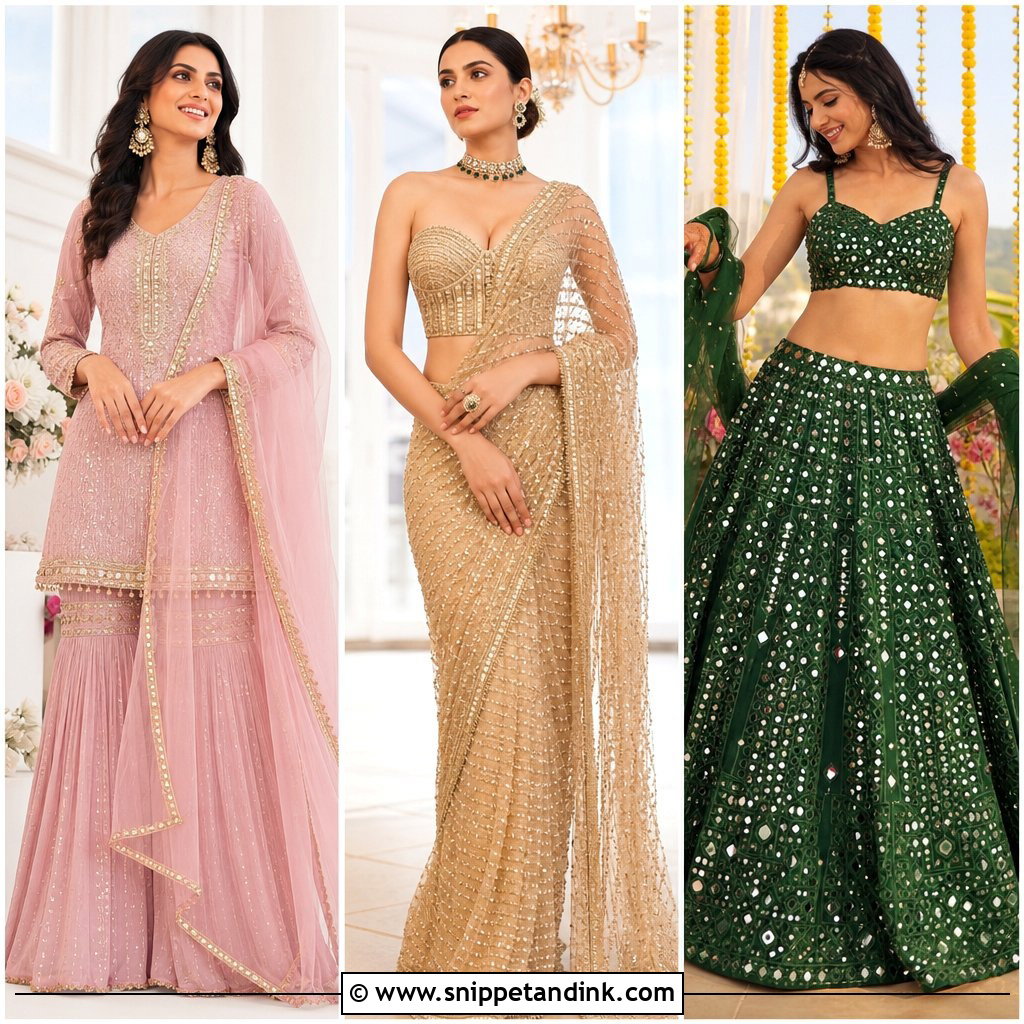
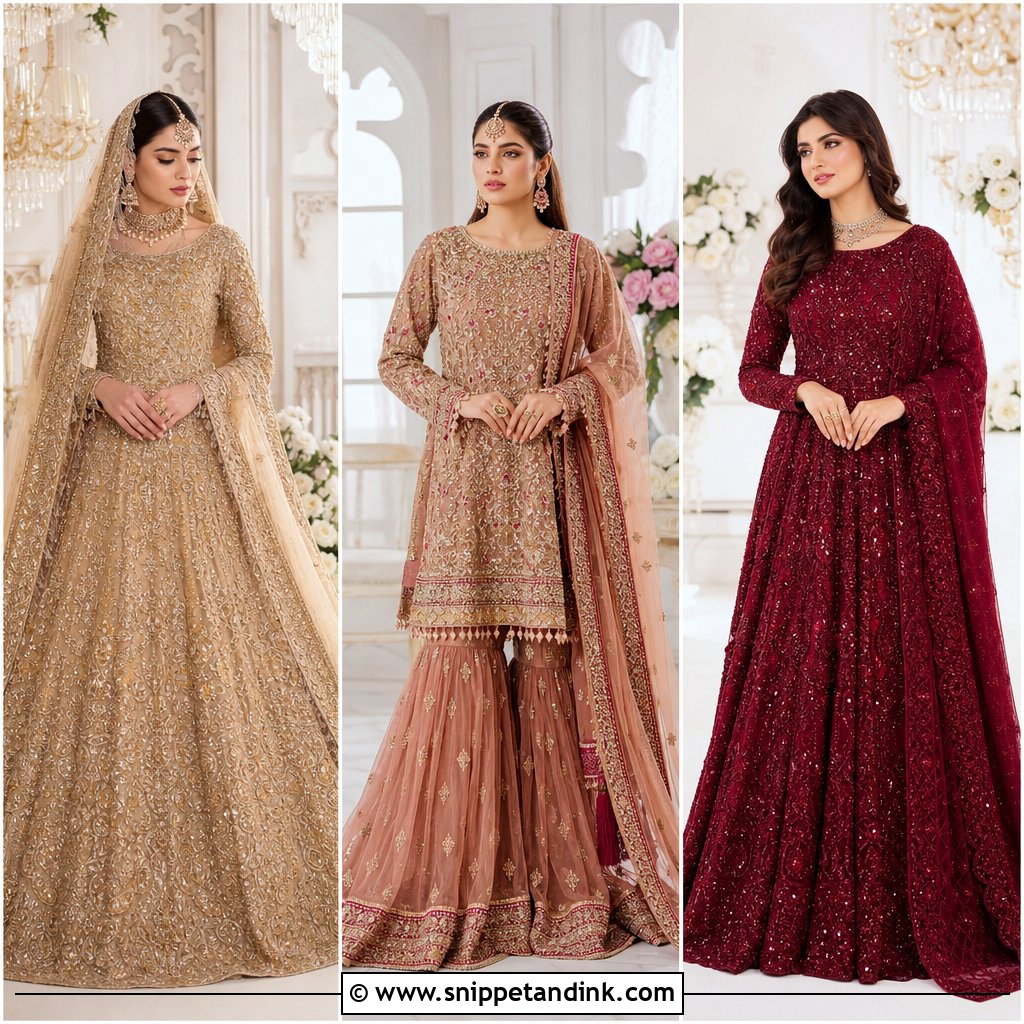
A sharara gives you drama and freedom to move without a full lehenga skirt. Wide silk or georgette pants with dense embroidery near the hem pair with a short fitted kurti that marks the waist. Drape a long sheer dupatta over the head or diagonally across the body. A choker, matching earrings, a maang tikka, bangles and platform juttis complete it, with a braid or low bun. Deep red, rose, ivory, teal and gold all work. Sharara hems sit close to the floor and catch heels, so I always hem them with the exact shoes. It’s practical for a sangeet, nikah or reception.

15. Traditional Bridal Gharara
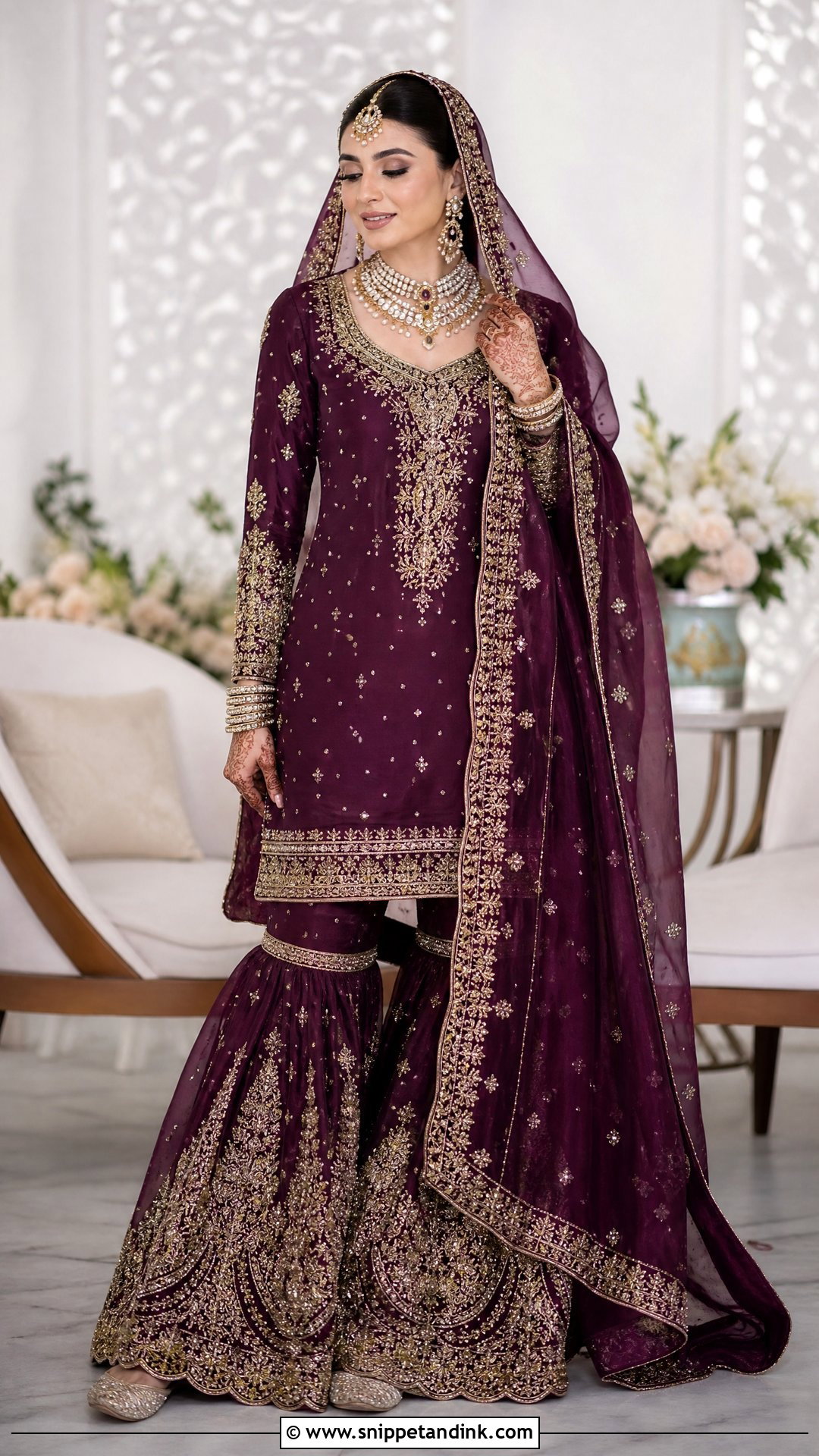
A gharara is fitted to the knee, then flares dramatically below a gathered joint at the knee, which is what gives it a distinct silhouette. That knee seam is usually covered with a band of gota or zardozi. Choose a rich fabric and pair it with a knee-length kurti so the construction shows. Drape a coordinated dupatta over the head with one decorated edge across the shoulder. Layered necklaces, statement earrings, a passa or maang tikka, bangles and embellished juttis finish it, with a sleek bun. Deep red, bottle green, plum, ivory and dusty rose are strong choices. If the knee band sits too low, walking becomes awkward, so check it at the fitting.
16. Floor-Length Bridal Anarkali
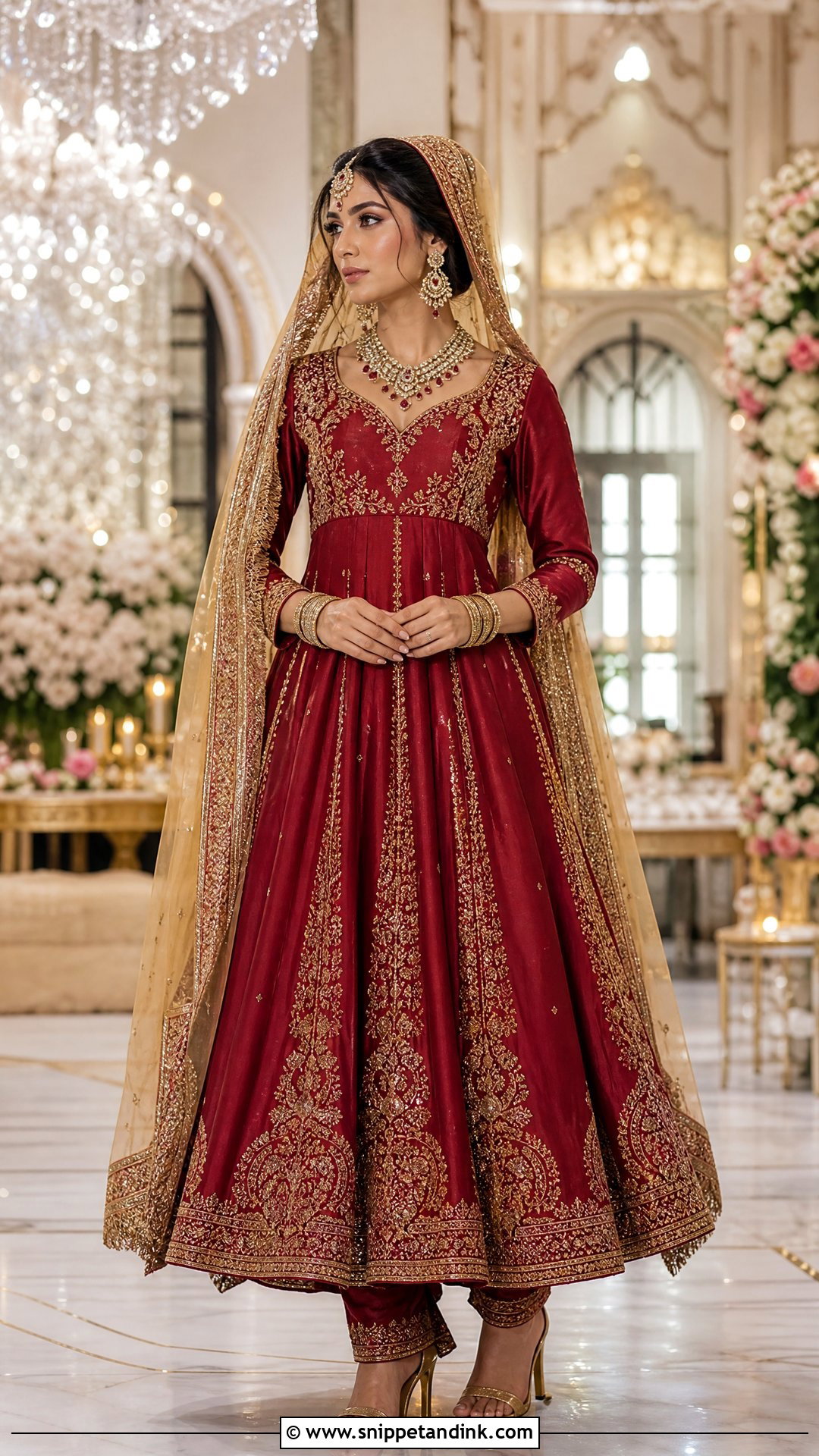
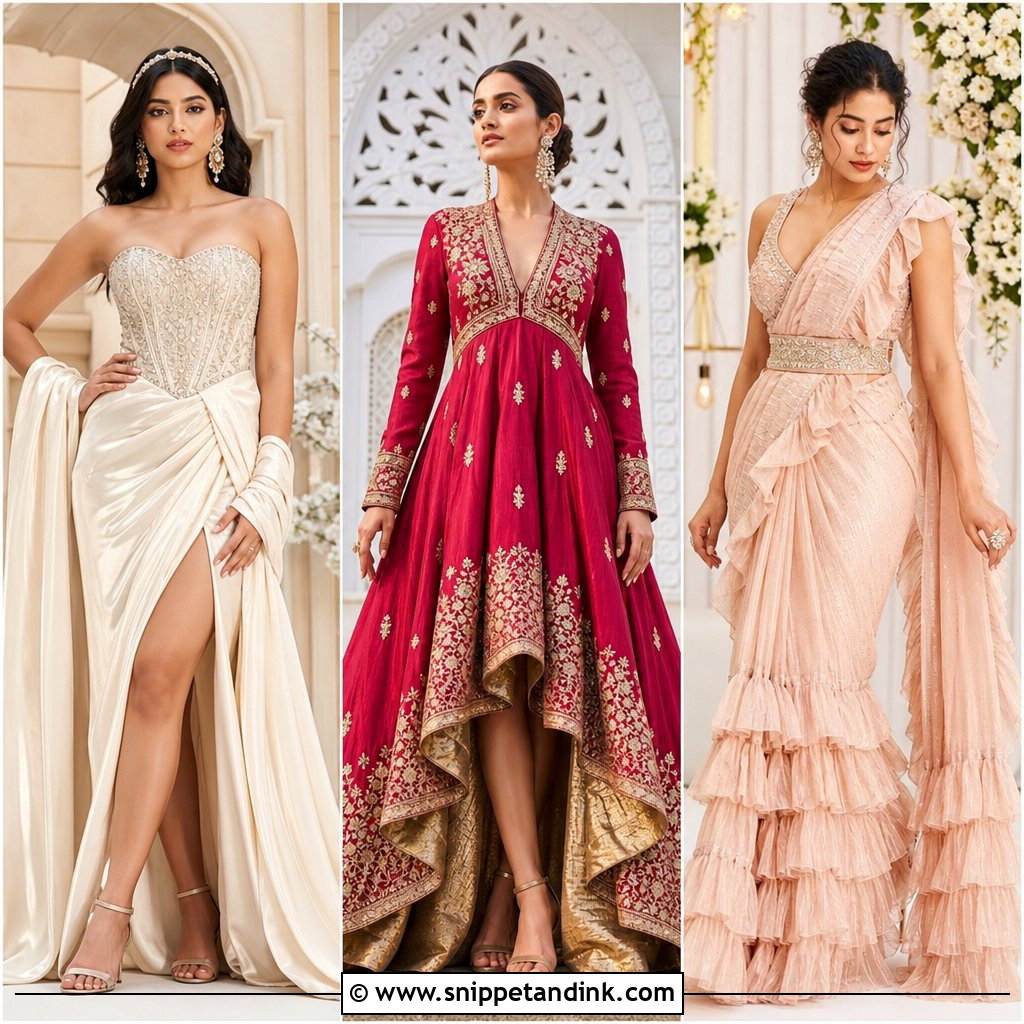
A floor-length Anarkali offers coverage and formality without a complicated drape. Choose a structured bodice and a wide skirt that flares from the natural waist, in silk, brocade, velvet or layered organza. Embroidery at the neckline, sleeves, waist and hem with some open space keeps the shape clear. Fitted pants go underneath and a dupatta over the head. Chandelier earrings, a statement necklace, bangles and stable heels complete it, with a center-parted bun or braid. Floor-length Anarkalis have a lot of fabric in front; I usually ask for the front hem a touch shorter than the back so you don’t step on it climbing mandap steps. Receptions and nikahs suit it.
17. Draped Bridal Saree Gown
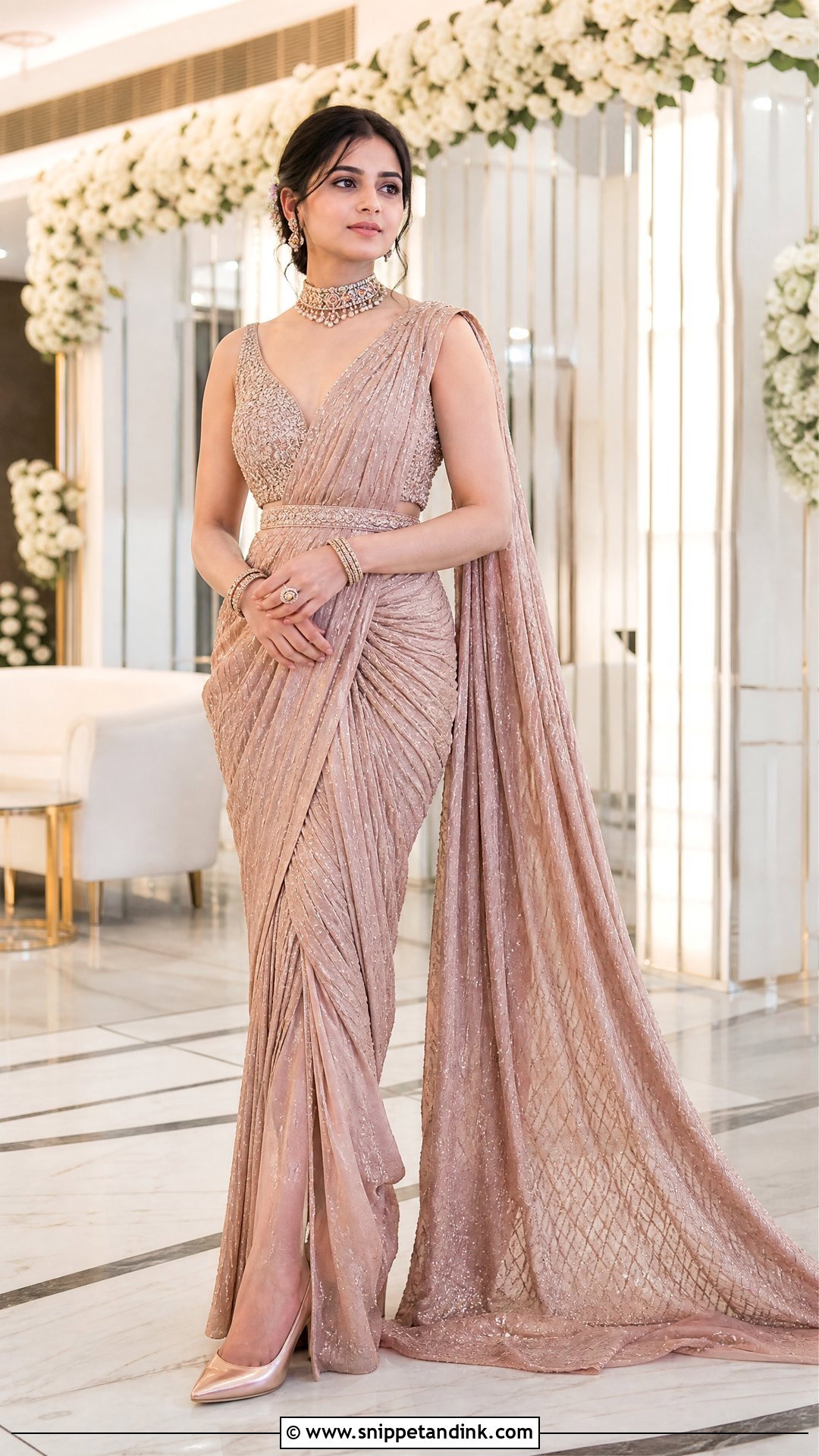
A saree gown gives a saree’s flow with the security of a stitched gown. Look for a defined waist, attached pleats and a long draped panel that reads as a pallu, with embroidery at the bodice and border to keep it Indian in character. A choker, earrings, bangles and a slim belt if the drape needs definition suit it, plus pointed metallic heels. Wear soft waves or a sculpted low bun depending on the neckline. Ivory, champagne, rose gold, ruby and emerald all feel bridal. It’s an easy outfit to change into quickly, so it works well for a reception or destination event after a heavier ceremony look.
18. Dhoti Pant Bridal Cape Set
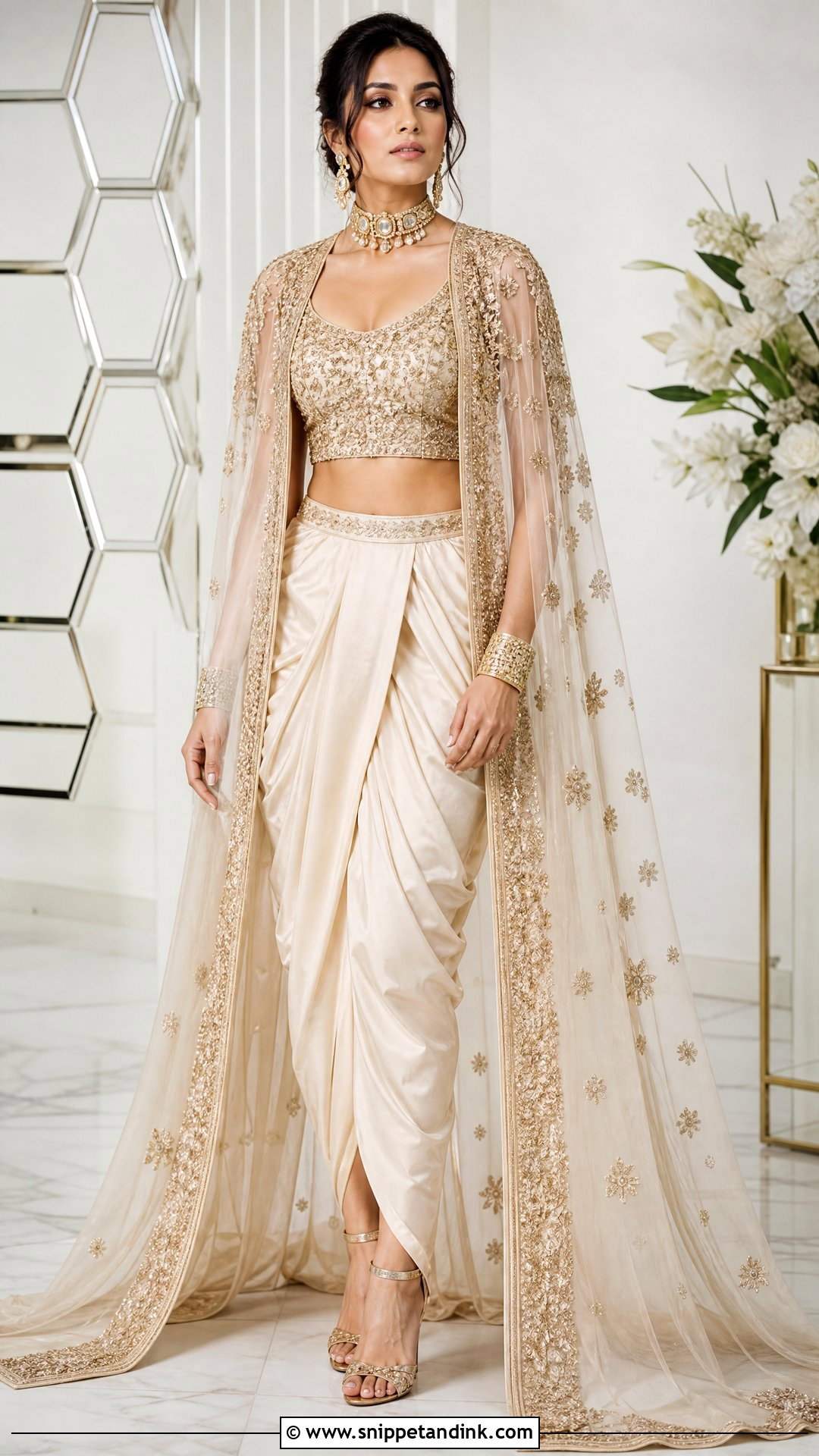
Would you rather wear something dramatic without managing a heavy skirt? A dhoti pant set with a cape gives you that. Fluid silk dhoti pants and a fitted embroidered blouse in the same color family sit under a floor-length sheer cape with ornate borders or scattered motifs. A jeweled choker, drop earrings, cuffs and embellished heels finish it, with a sleek ponytail or modern bun. Ivory and gold is understated; jewel tones are bolder. A long cape trails behind you on stairs and stages, so I’d add a discreet wrist loop at the hem. It suits a reception, sangeet or modern civil ceremony.
19. Long Jacket Bridal Lehenga
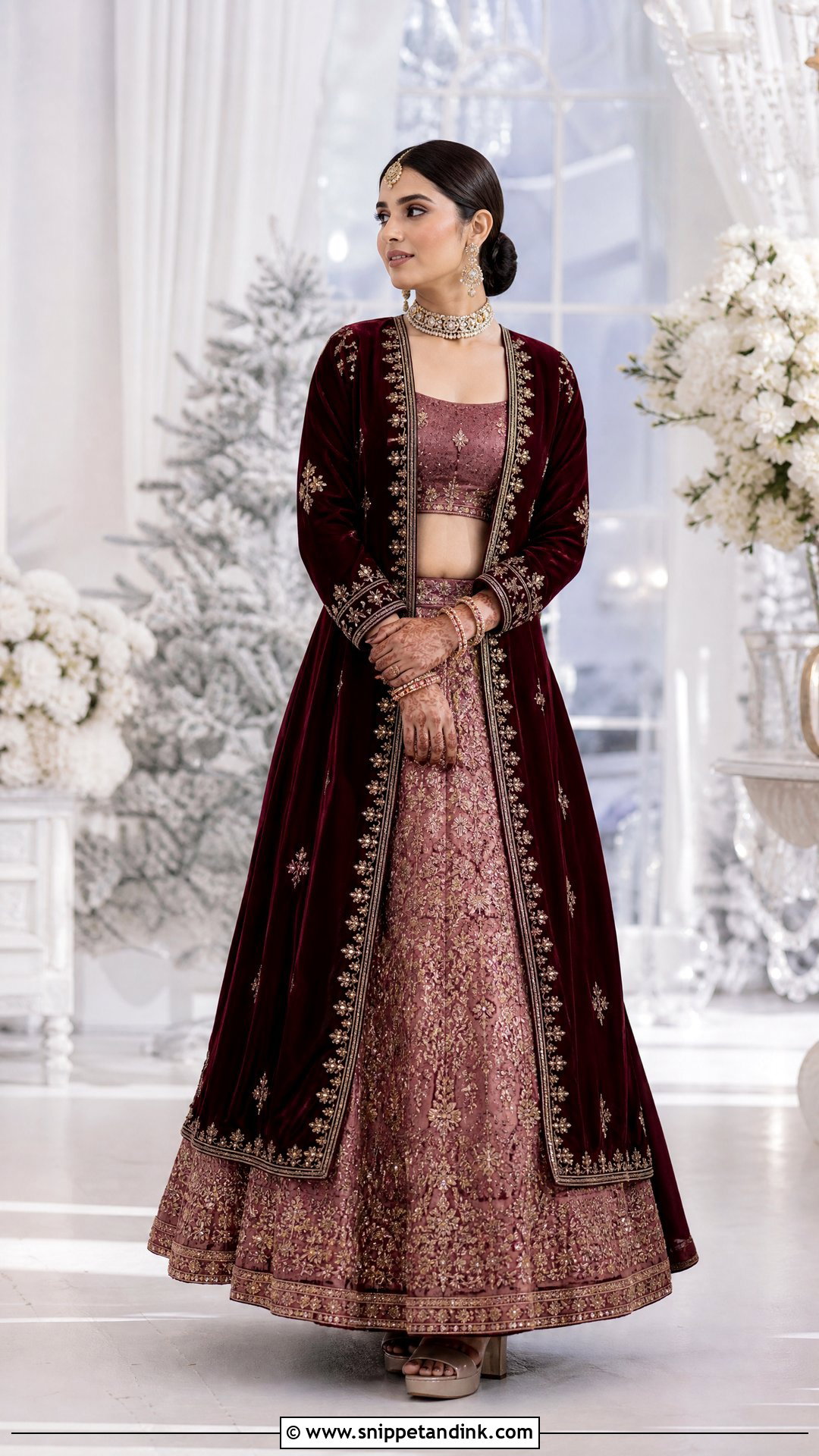
A long jacket over a lehenga adds coverage and length while keeping the familiar skirt and blouse. Start with a moderately embellished lehenga and a fitted blouse, then layer a sheer, velvet or brocade jacket that reaches the ankles, open at the front so the skirt shows. Embroidery down the jacket edges draws a vertical line that lengthens the body. A choker or medium necklace, earrings, bangles and platform heels complete it, with a sleek bun or soft waves. Burgundy, navy, ivory, emerald and antique gold suit it. A velvet or brocade jacket is welcome warmth at a winter wedding; in summer, choose sheer net instead.
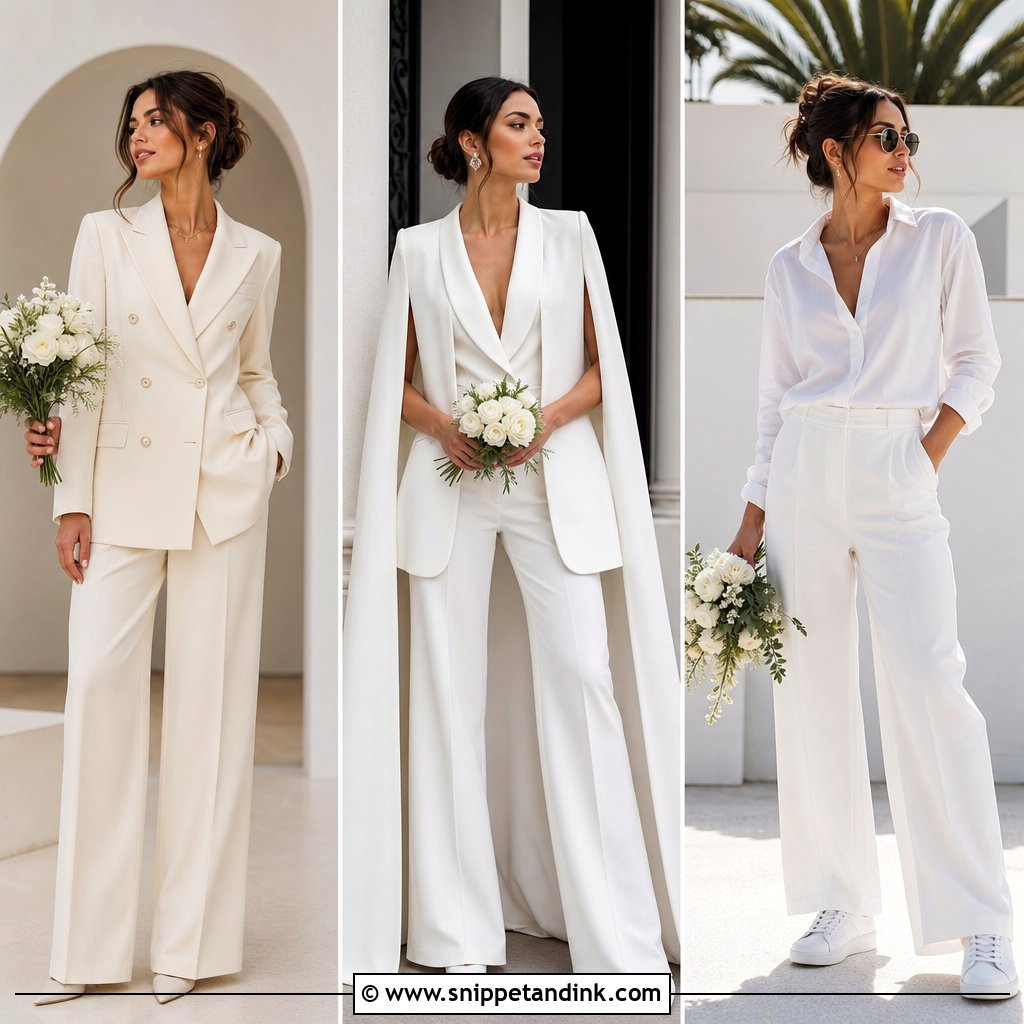
20. Embroidered Bridal Pantsuit
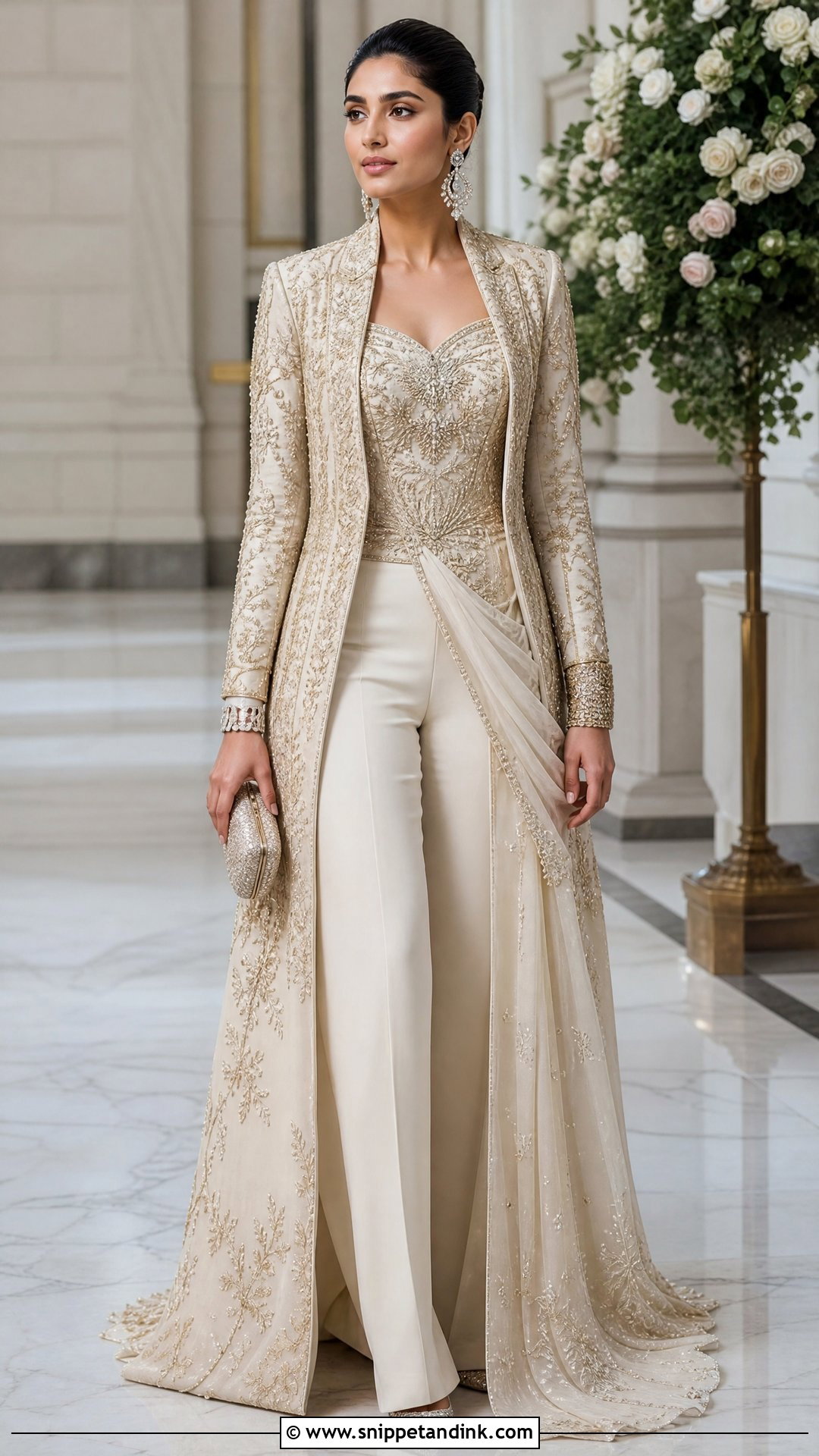
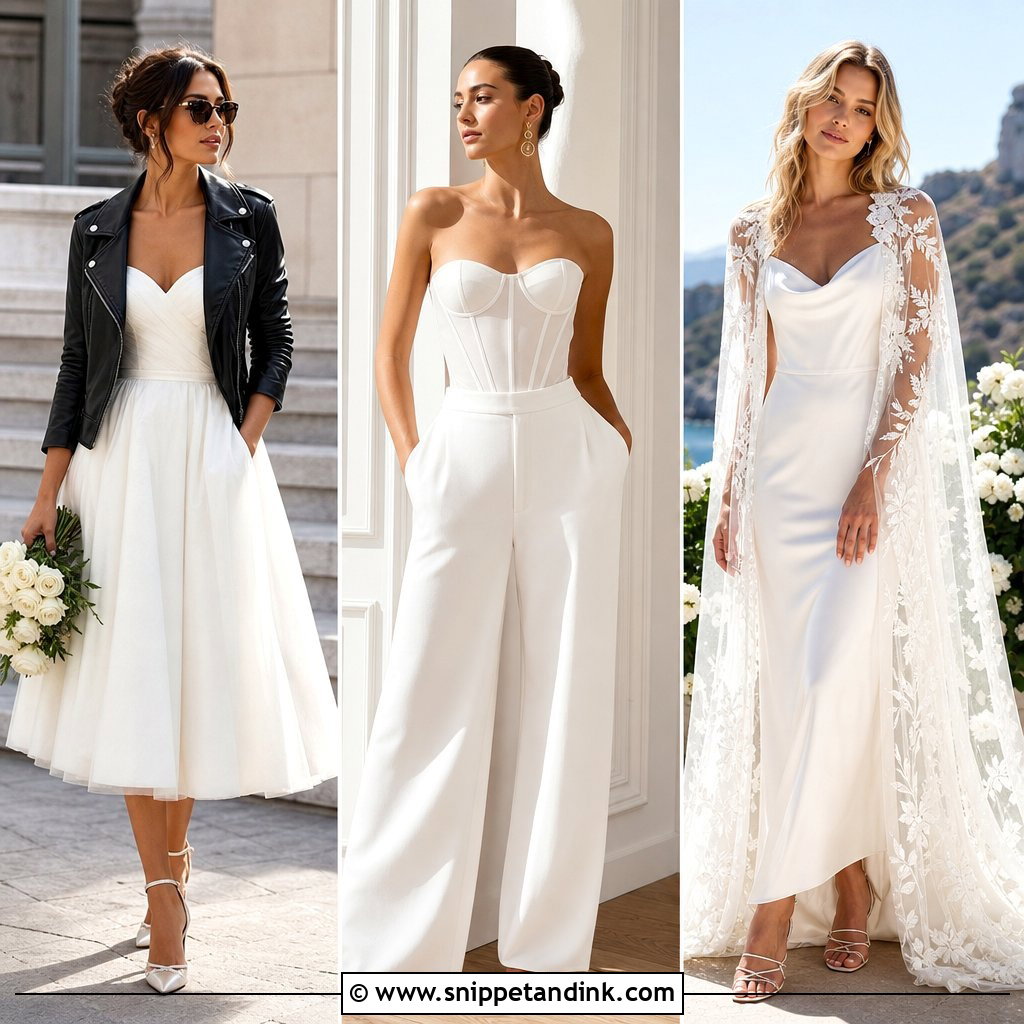
A bridal pantsuit suits a bride who feels most herself in sharp tailoring. High-waisted wide-leg trousers with a fitted blouse or corset top and a structured long jacket get their ceremony feel from Indian embroidery, beadwork or metallic motifs. A detachable draped panel or sheer dupatta softens the tailoring. Statement earrings, a bold cuff, pointed heels and a compact clutch finish it. Wear a necklace only if the neckline is open; skip it when the jacket is heavily worked. I’d check with family before choosing this for a religious ceremony, where expectations may be firmer, but it’s a strong look for a reception or civil wedding.
Six Hours in a Bridal Lehenga, Hour by Hour
Most rituals involve long stretches of sitting, standing and walking in circles, often in heat and under heavy jewelry. The outfit that felt easy at the trial can feel very different by the end of the pheras. These are the things I set up so the bride stays comfortable.
Securing the dupatta
A head dupatta is usually pinned to the hair at several points and to the blouse at the shoulder. Ask your hairstylist to build a firm base, such as a padded bun, for those pins to grip, and put lighter dupattas on the head and heavier ones across the body. A heavy dupatta pinned only to the hair pulls at the scalp within an hour.
Sitting, eating and the bathroom
- Practise sitting cross-legged in the skirt or drape before the day. Some lehengas need a slightly looser waist to sit comfortably on the floor.
- Choose one person to help you in the bathroom and show them how the skirt and dupatta lift. Pinned dupattas usually need removing first.
- Keep a small pouch of safety pins, blouse hooks and a mini sewing kit with whoever stays nearest to you.
Afterwards, air the outfit before packing it, wrap embroidered and zari pieces in soft muslin rather than plastic, and refold them along different lines every few months. Metallic thread tarnishes in damp air and silk splits along permanent folds.
Let the Rituals Pick Between Red Silk and a Pantsuit
The right bridal outfit honors your traditions and still lets you feel like yourself. A red lehenga, an ivory saree, a sharara or a tailored pantsuit can all carry a ceremony when they’re chosen for the rituals, climate and venue. Before you commit, sit, walk and move in it, and test the drape, weight, shoes and jewelry under both daylight and indoor light. Good alterations and a skilled draper make even a heavy outfit manageable. Choose the look that supports the ceremony instead of distracting you from it.
You'll Like These Ideas:





Leave a Reply