
A round neckline is the one I reach for when a bride tells me she wants to forget about her dress once it’s on. It frames the face, it covers without fuss, and it can sit right at the collarbone like a jewel neck or drop a little into a soft scoop. It also takes almost any bridal fabric, from satin and crepe to lace, chiffon, organza and beaded tulle. Because the front is so quiet, the personality of the gown moves elsewhere: the sleeves, the back, the skirt, the veil. Wedding dress necklines decide a lot downstream, including which earrings work and how high the hair should go, so I always settle the neckline before we talk accessories. Below are twenty ways to build a full look around this shape.
Where a Round Neck Should Land on Your Collarbone
Round necks aren’t all cut at the same height, and the height changes everything else. When a bride steps onto the pedestal, the first thing I do is find the dip between her collarbones. A neckline sitting right at that dip reads as a jewel neck; one that drops two or three fingers below it reads as a scoop. Neither is better, but they suit different people.
- A fuller bust usually looks more balanced in a slightly lower scoop. A high, tight jewel neck over a full chest can create one unbroken block of fabric from chin to waist.
- A long neck or narrow shoulders can carry a true jewel neck easily, and it looks especially sharp with an updo.
- A short neck often benefits from a scoop that shows a little skin, so the dress doesn’t seem to start at the jaw.
- If you plan to wear a necklace, the neckline has to sit low enough to leave a gap. A chain resting directly on the fabric edge looks like a mistake in close-up photos.
A quick test I give brides at home: put on a plain round-neck t-shirt and a scoop-neck one, take a phone photo of each from chest up, and compare. It’s crude, but it tells you which height flatters your face before you start trying on gowns.
1. Round Neck Satin A-Line Wedding Dress
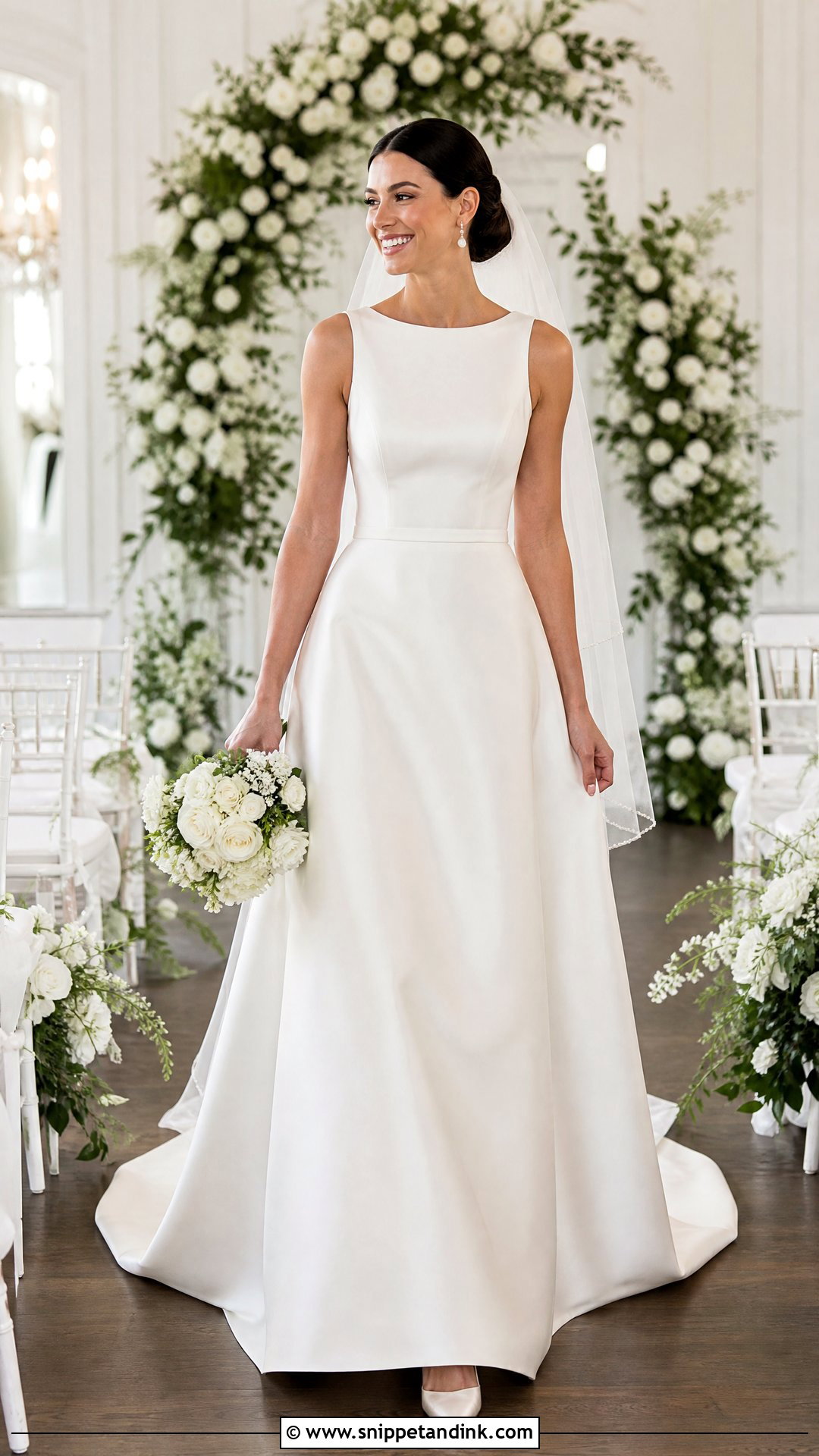
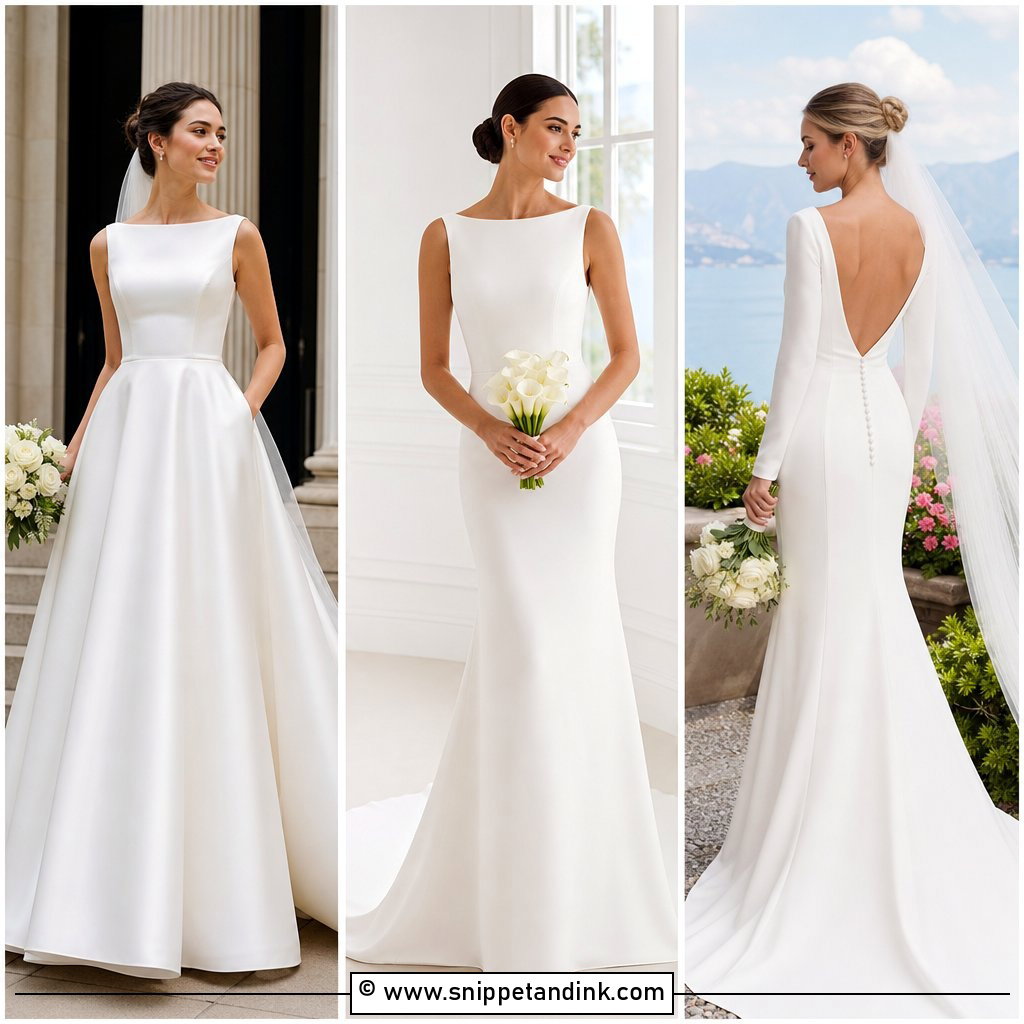
Satin is the honest test of a round neck, because it shows every ripple. On an A-line, I want the bodice to follow the natural waist and then release into the skirt, with covered buttons down the back and a chapel train if you like a little drama. Pearl drops, a sleek low bun, pointed ivory pumps and a fingertip veil keep it clean. The thing I check first at the fitting is whether the neckline lies flat when you breathe in; satin that is cut a fraction too high will buckle at the base of the throat. A narrow satin belt or a little waist seaming helps if you want more definition.
2. Round Neck Lace Long Sleeve Wedding Dress
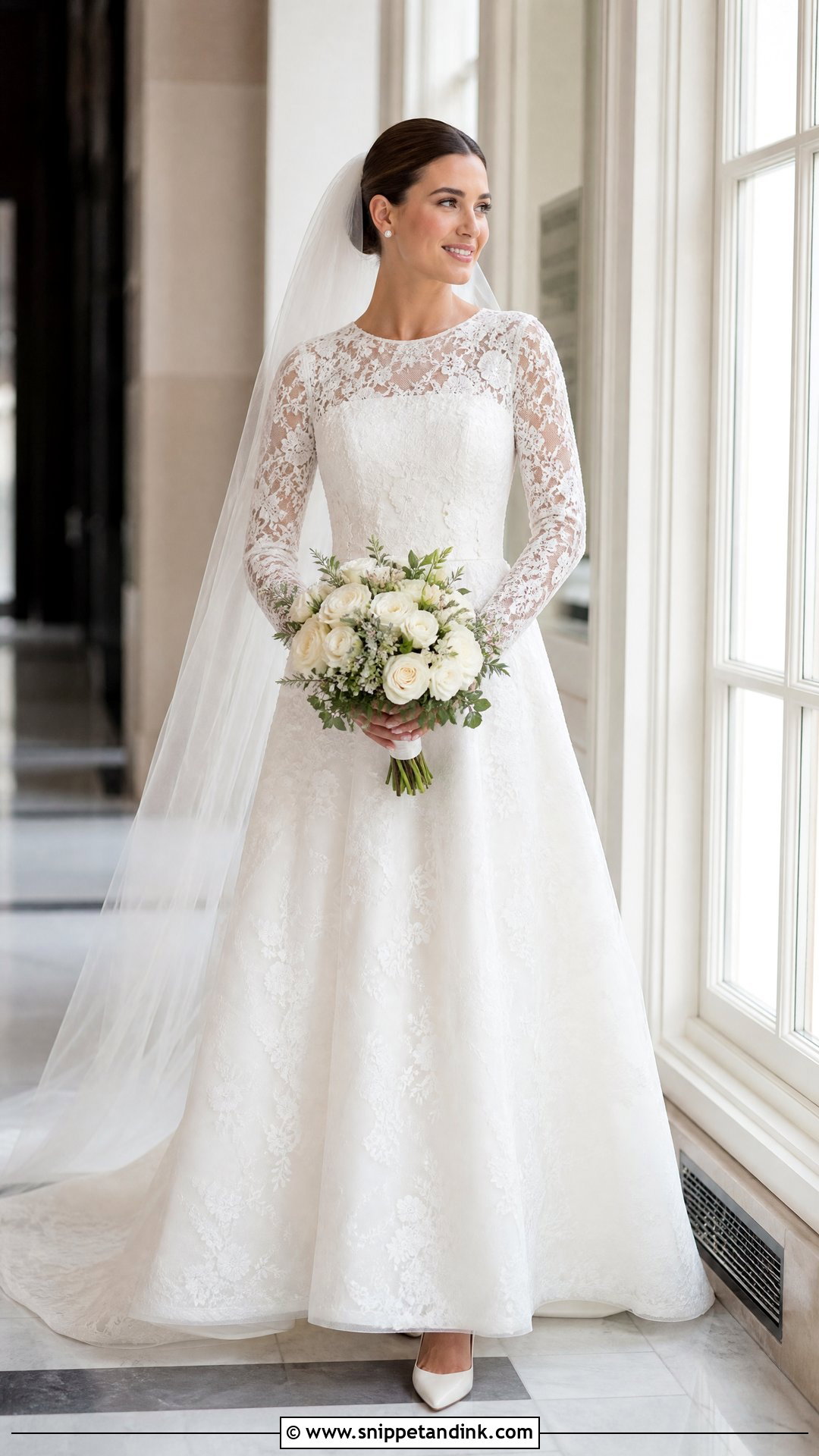
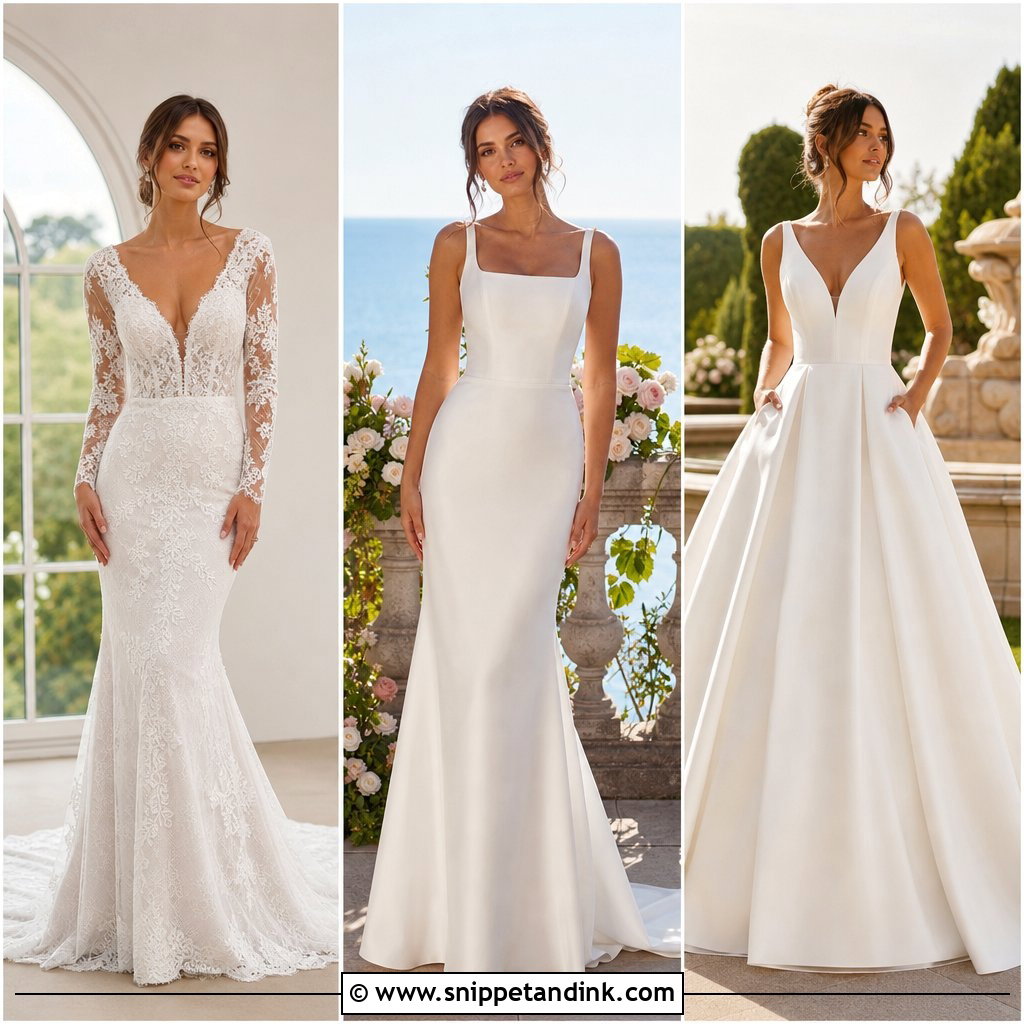
Lace softens a covered neck in a way plain fabric can’t. A fitted bodice with sheer lace sleeves and a flowing skirt keeps the top half detailed and the bottom half calm. Floral motifs read romantic, while geometric lace looks cleaner and more current. If the neckline is finished in a scalloped edge, I tell brides to skip the necklace entirely; the scallop is the jewelry. Tiny cuff buttons, a soft chignon, pearl studs and a plain tulle veil finish it. Lace sleeves are where I see the most complaints on the day, so have them altered for a full arm lift, not just for how they look standing still.
3. Round Neck Princess Ball Gown Wedding Dress
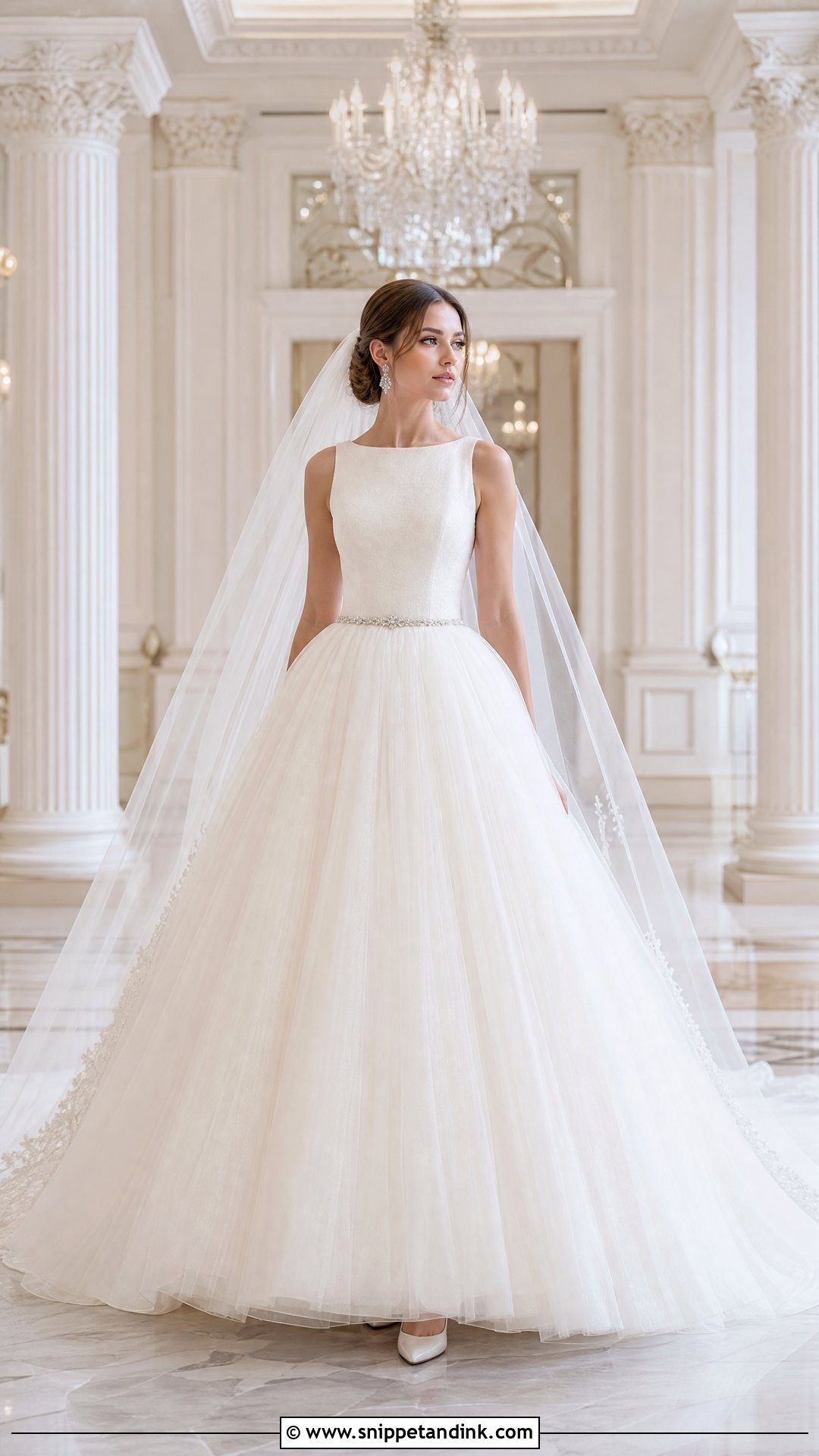
The plain round neck is what stops a full ball gown from tipping into costume. A fitted bodice and defined waist hold the shape, and layers of tulle, organza or satin do the work below. With a heavy skirt, I usually suggest a sleeveless cut with wider straps, because thin straps dig in once that weight is hanging off you for hours. Crystal earrings, a polished updo and a cathedral veil anchored beneath the bun suit the scale. Want sparkle? Put it in a beaded waistband rather than across the whole bodice. Practice sitting and turning in fittings; a full skirt behaves very differently in a car seat than on a pedestal.
4. Round Neck Mermaid Wedding Dress
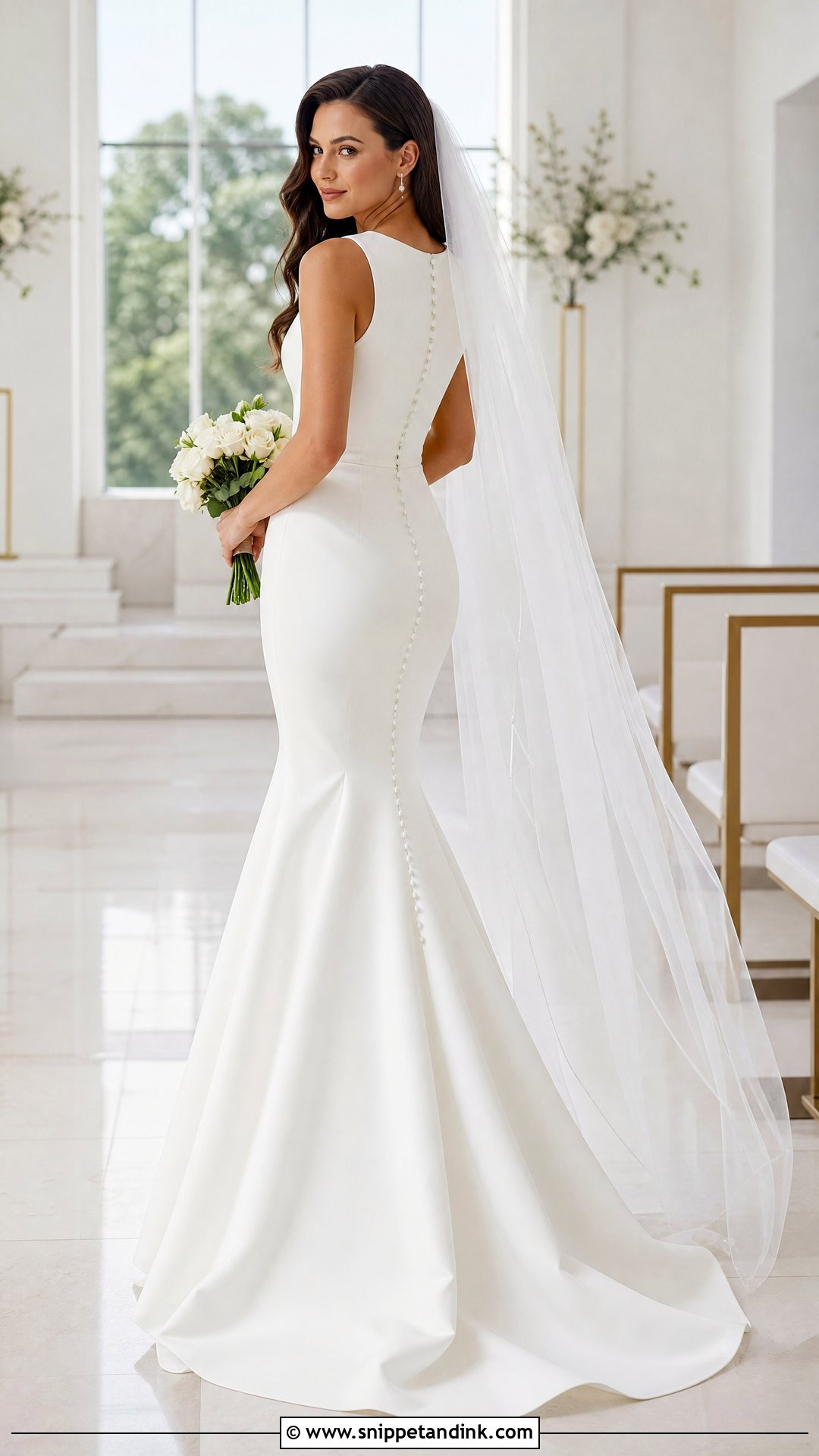
This one pairs modest coverage up top with a fitted body, and that contrast is the whole appeal. Stretch crepe or well-lined lace lets the gown follow you before it flares near the knee. Dropping the round neck slightly softens such a strong shape, and a low scoop back or covered buttons gives people something to look at from the aisle. I’d steer you away from a mermaid if your ceremony has stairs and a long walk, unless the flare starts high enough to take a full stride. Side-parted waves, slim drops, pointed heels and a chapel veil keep it sleek. Test stairs and a few dance steps before the final hem is set.
5. Round Neck Chiffon Wedding Dress
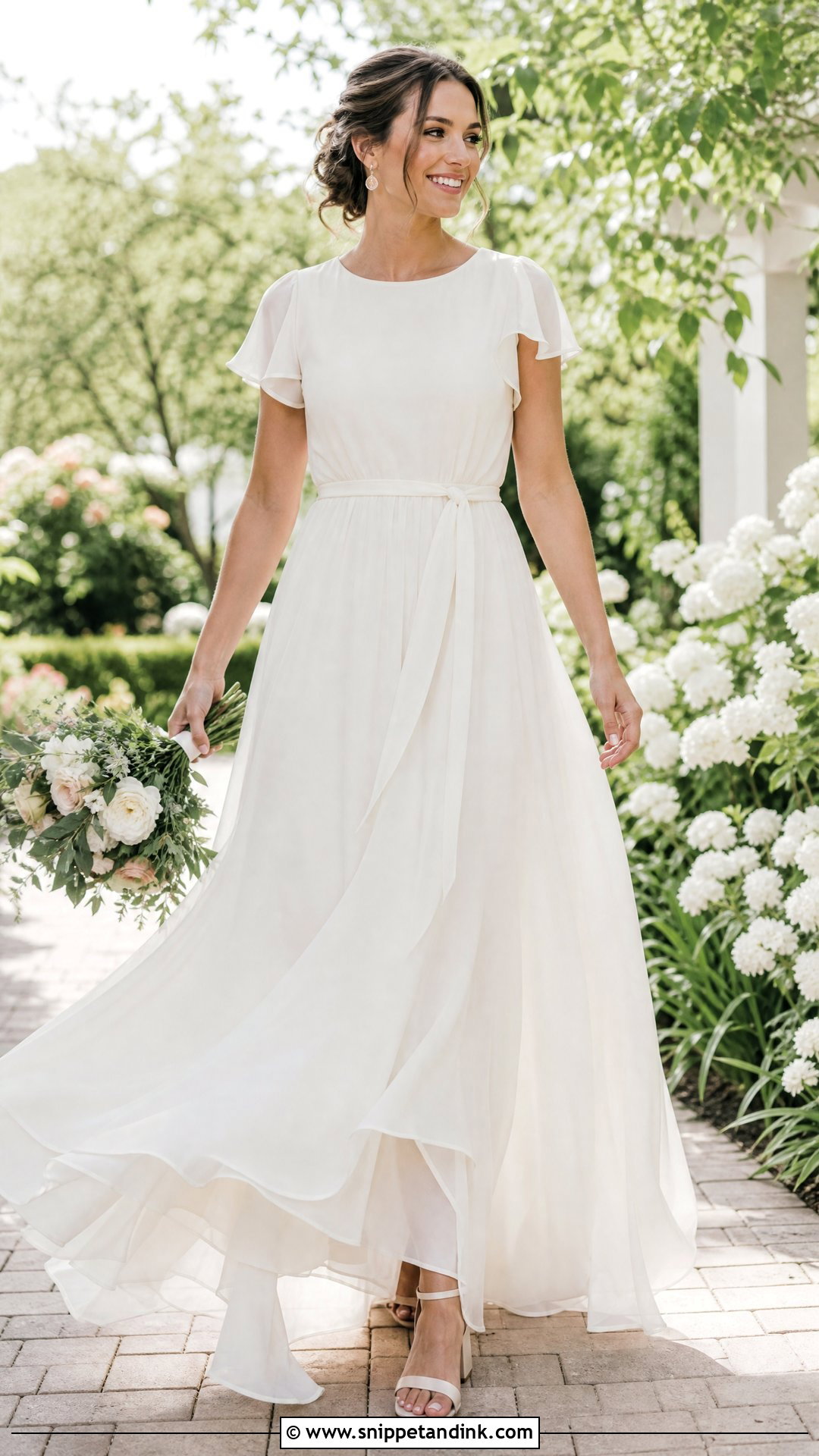
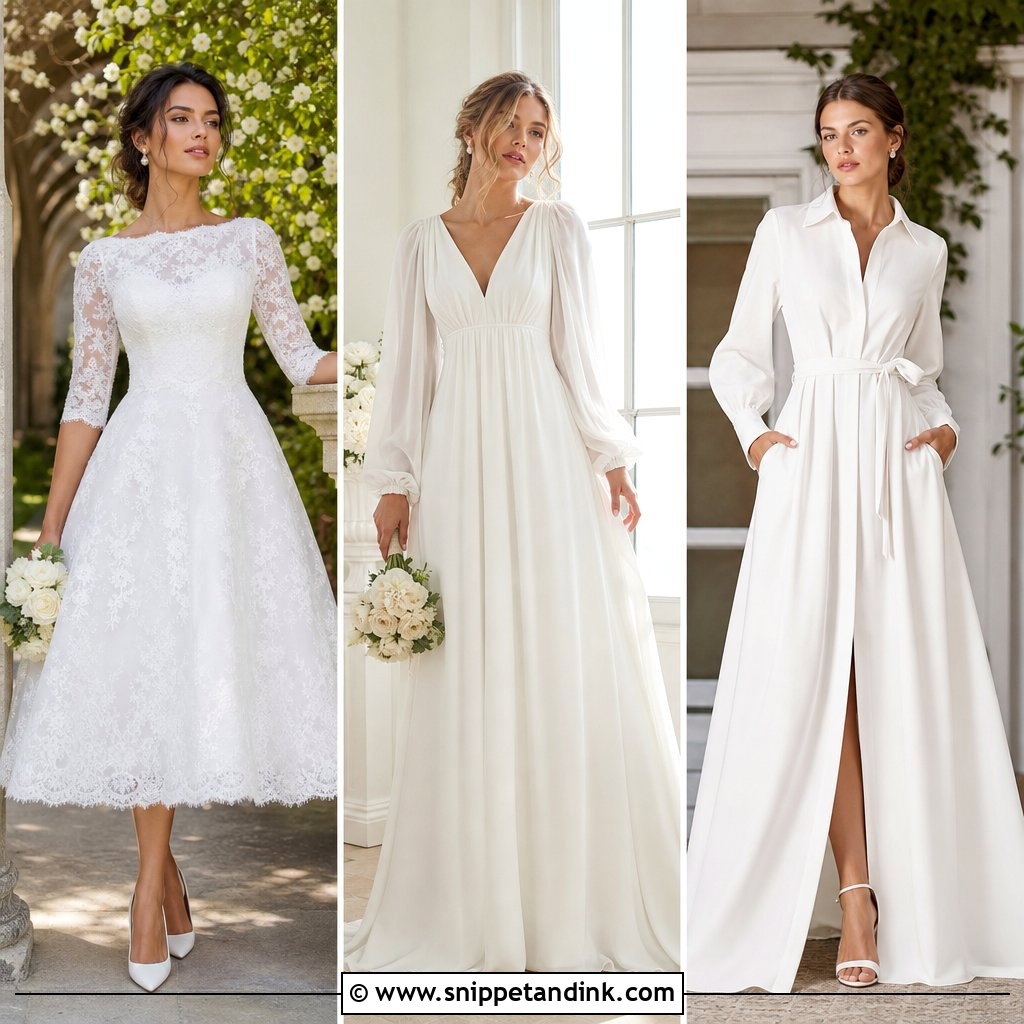
Chiffon makes a round neck feel light enough for a summer garden. An empire line or a softly defined waist lets the fabric fall instead of cling, and a layered skirt moves well in photos. Flutter sleeves add coverage and suit the airy fabric. With delicate earrings, a loose low bun and block-heel sandals, it’s comfortable for a long outdoor day. Outdoors, I keep the hem to floor length or a sweep train; anything longer drags through grass and picks up seeds. Chiffon is often more transparent than it looks in a fitting room, so check the lining by a window and again under warm indoor bulbs.
6. Round Neck Tea Length Wedding Dress
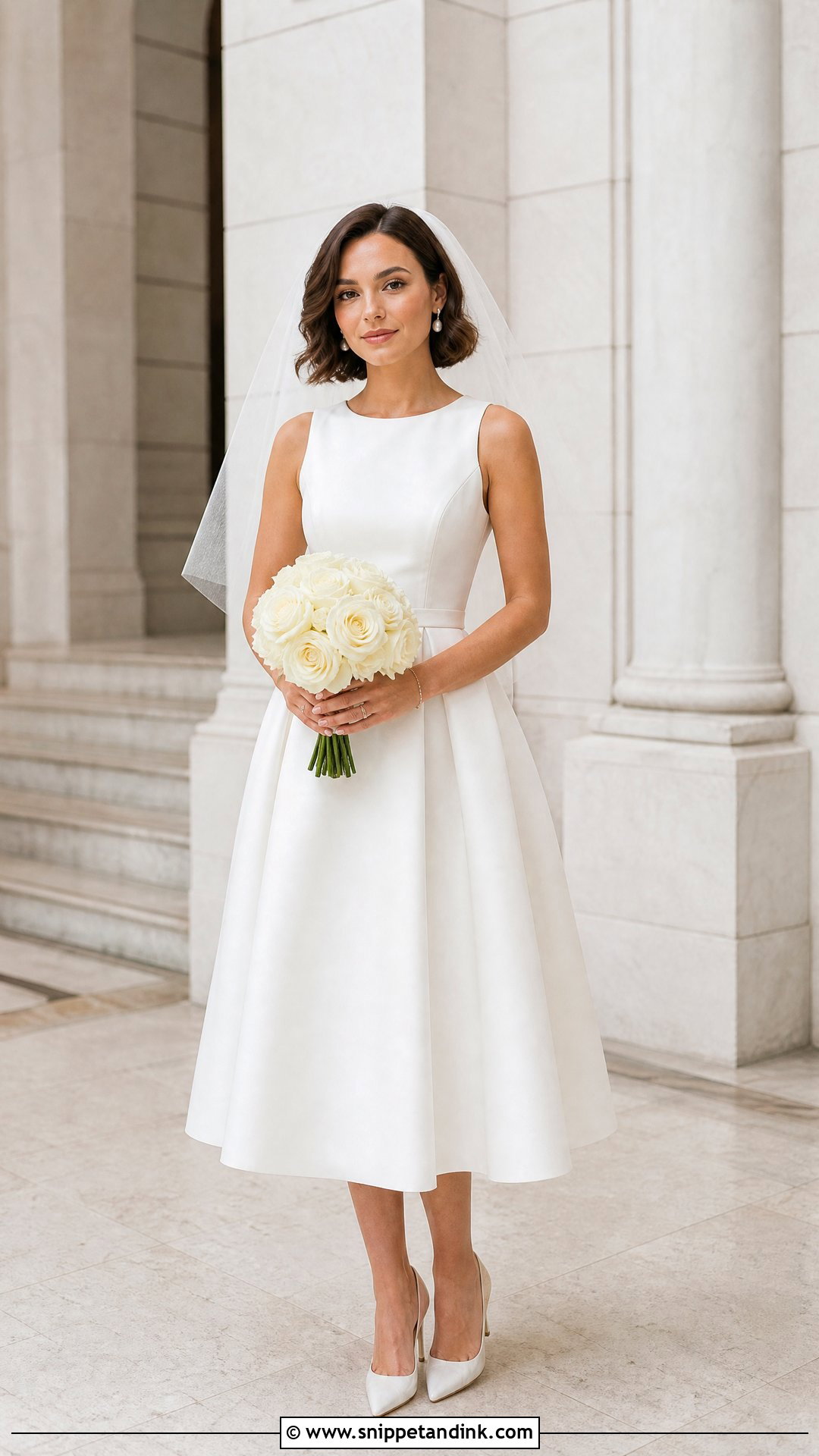
Tea length gives a round neck dress a playful, fifties-leaning feel and puts your shoes on show. The skirt should land between knee and ankle, and it needs body: mikado, satin or structured organza holds the shape where chiffon would collapse. Pointed slingbacks, pearl earrings and a short veil or birdcage suit it, with a neat bun or a curled bob. Hem placement is everything here. I ask brides to bring their exact shoes to every fitting, because an inch of heel changes where the hem hits, and the most flattering spot is just below the widest part of the calf.
7. Round Neck Crepe Column Wedding Dress
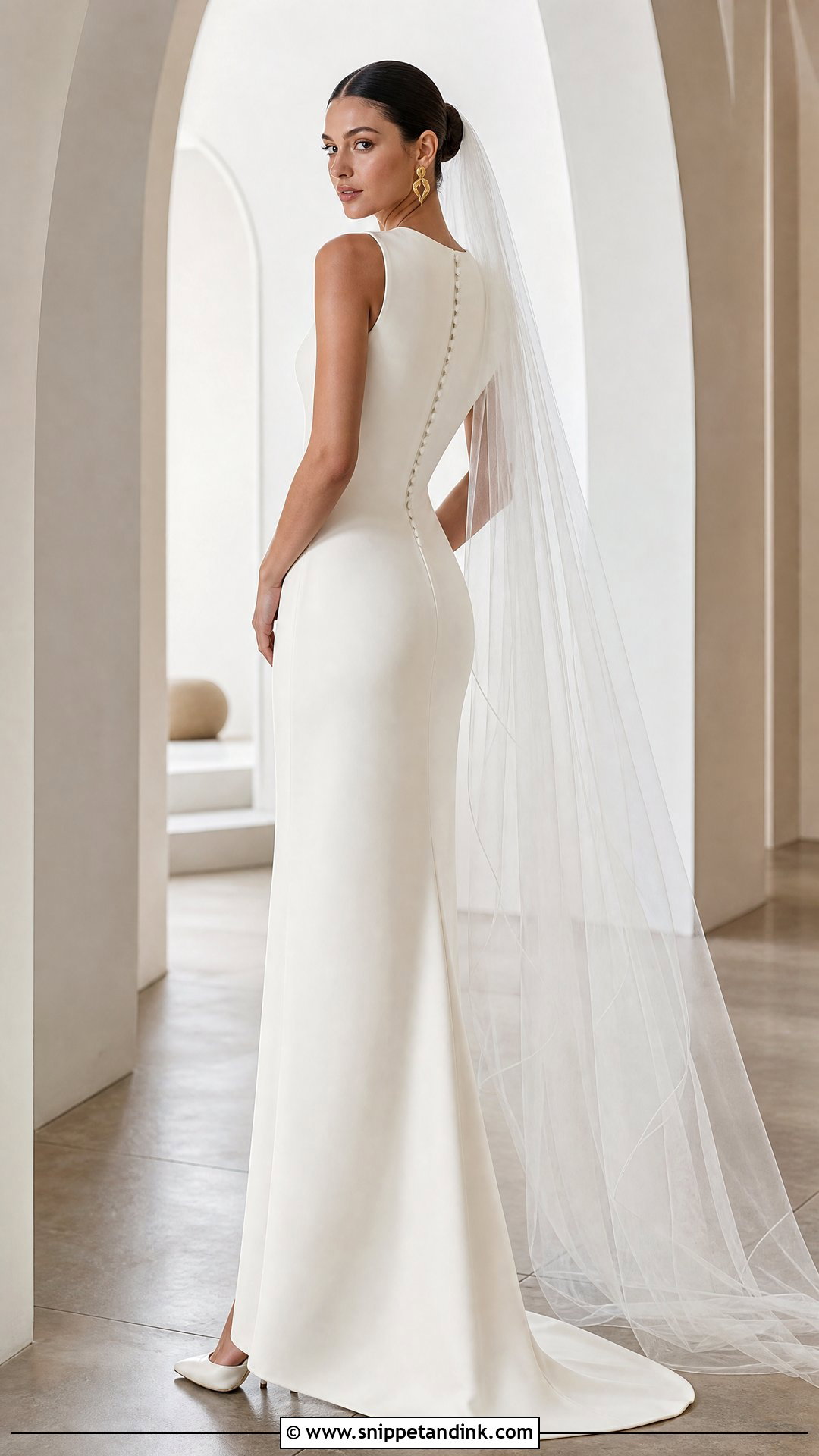
A crepe column is minimalism with nowhere to hide. The fabric should skim, never squeeze, so the line runs uninterrupted from shoulder to floor. A sleeveless bodice with broad shoulder coverage gives room for discreet built-in support. If you want one memorable detail, choose a low back, a buttoned train or a removable overskirt, not all three. Sculptural earrings, a sleek bun, pointed pumps and a narrow cathedral veil keep the mood intact, and I’d leave the necklace in the box. Plain crepe shows every wobbly seam and every undergarment edge, so this is the gown where I’d spend the alteration budget first.
8. Round Neck Beaded Wedding Dress
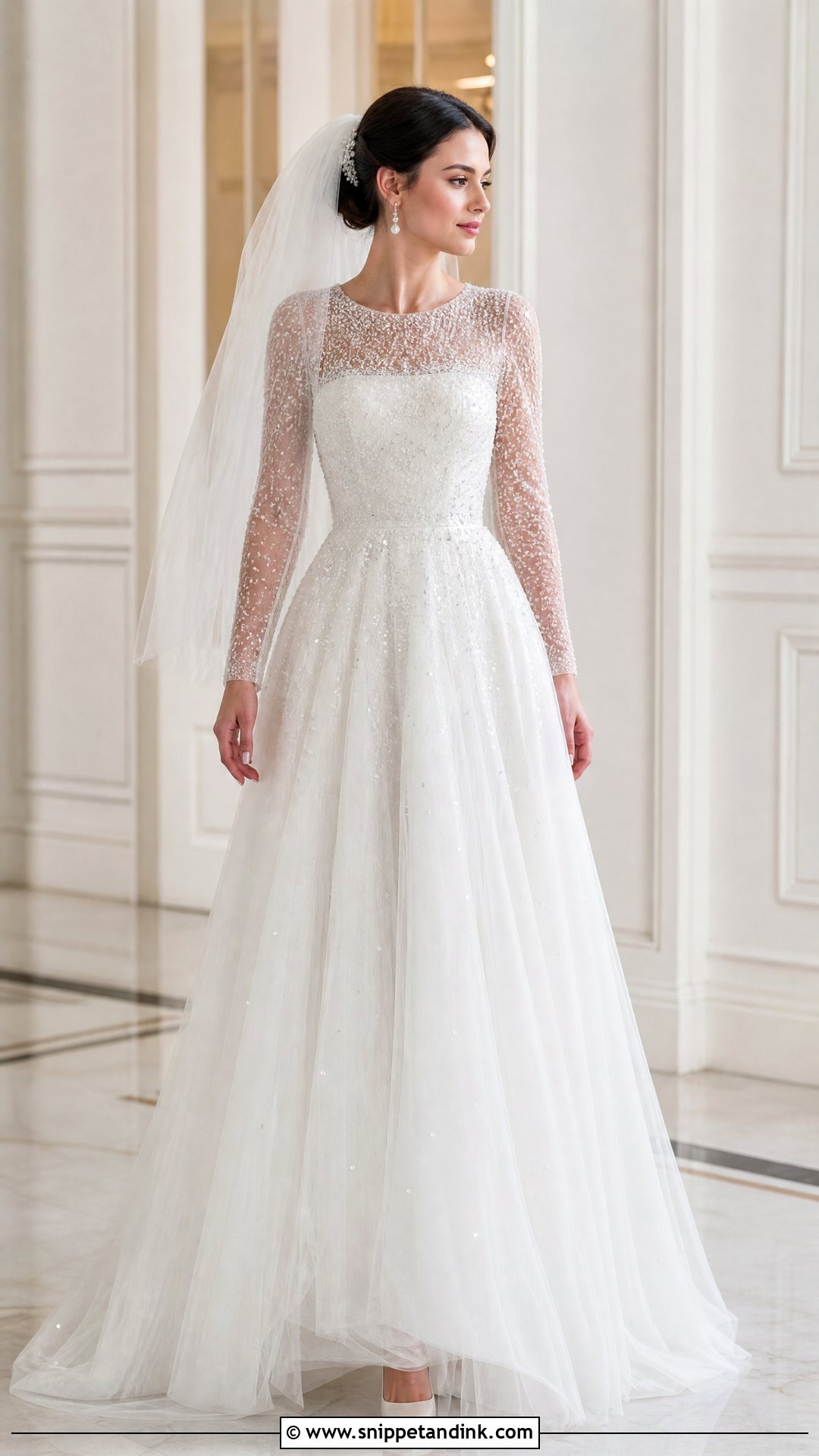
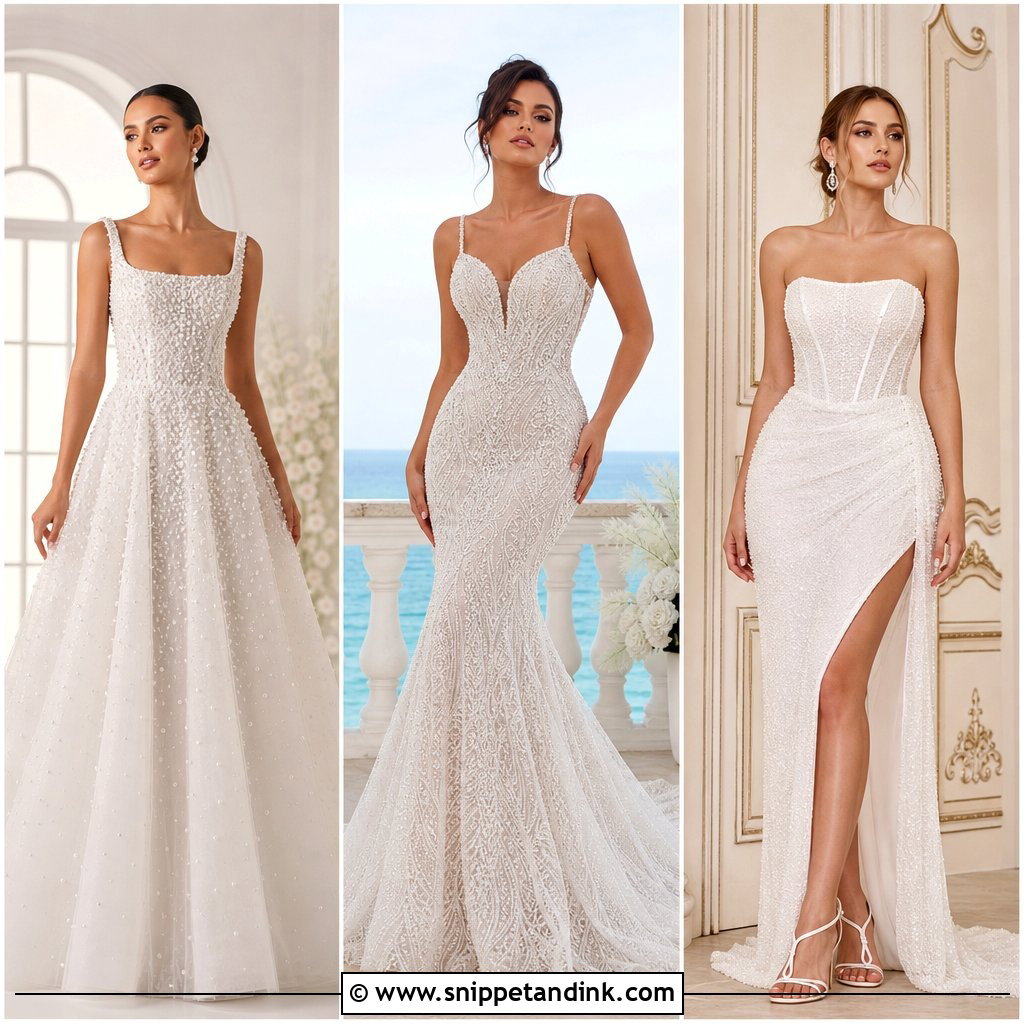
Beading on a round neck works best when it follows the bodice lines instead of piling up at the throat. Fine pearls, crystals or silver beads can run onto sheer sleeves and fade into a plain chiffon or tulle skirt. Keep everything else small: modest earrings, a simple comb, neutral satin pumps and a single-layer veil that lets the work show through. A fully beaded bodice can weigh noticeably more than a plain one, and that weight drags on the shoulders, so I check the shoulder fit and the interior lining carefully. Ask for reinforced hanging loops and plan proper storage so the beads don’t pull the fabric before the wedding.
9. Round Neck Illusion Wedding Dress
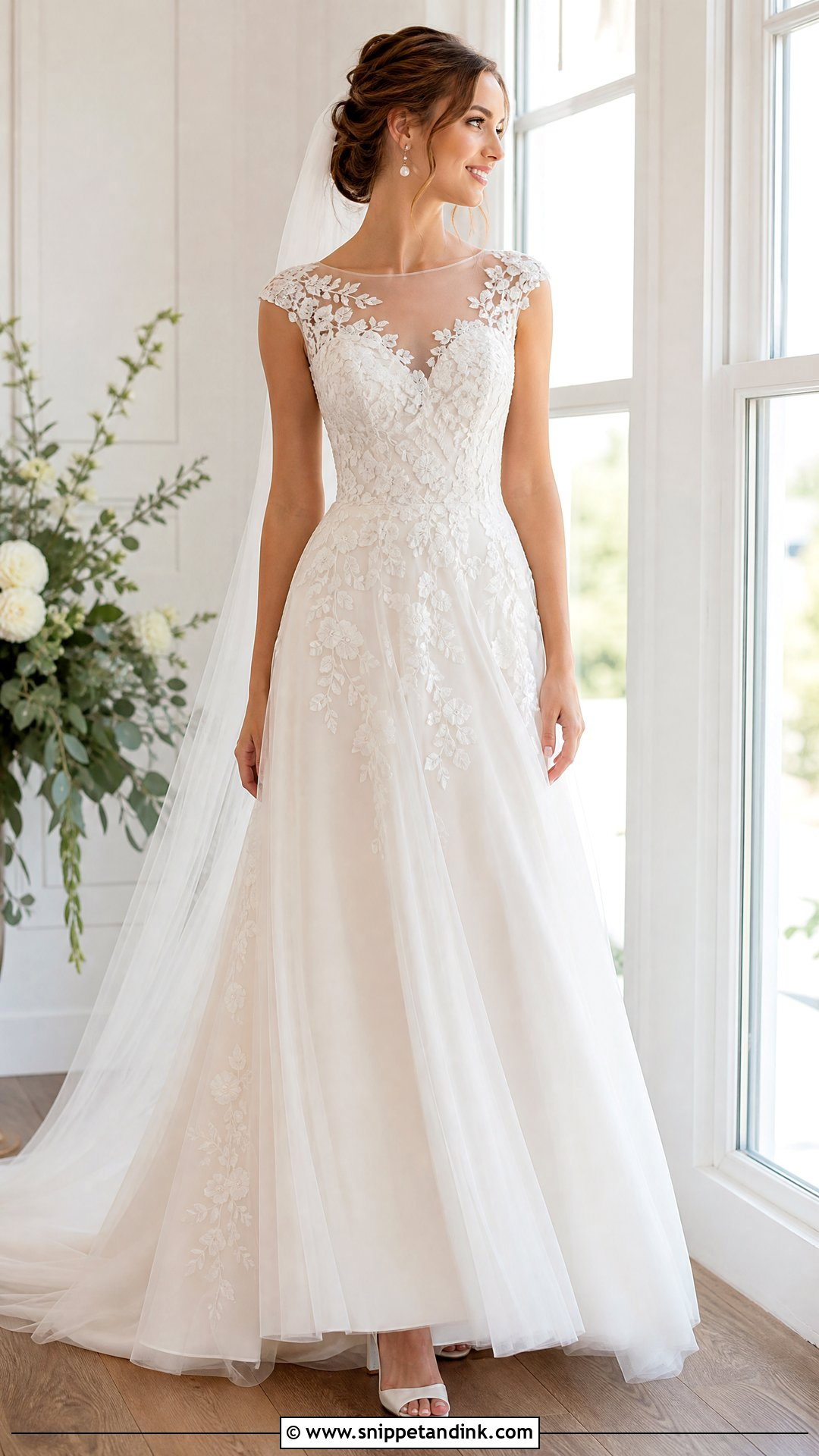
With an illusion neckline, sheer tulle runs from a sweetheart, straight or curved inner bodice up to the collarbone, so you get the outline of coverage with the structure showing through. Floral appliqués along the edge hide the seams where mesh meets bodice. An airy tulle skirt, pearl earrings and a romantic updo suit it, and the veil should attach below the hairstyle so fabric doesn’t bunch at the neck. The mesh tone matters more than brides expect. I hold a few swatches against the chest in daylight, since a mesh that’s too pink or too grey looks like a separate layer in photos. Have the seamstress check the armholes and neck edge for scratchy trim, too.
10. Round Neck Cap Sleeve Wedding Dress
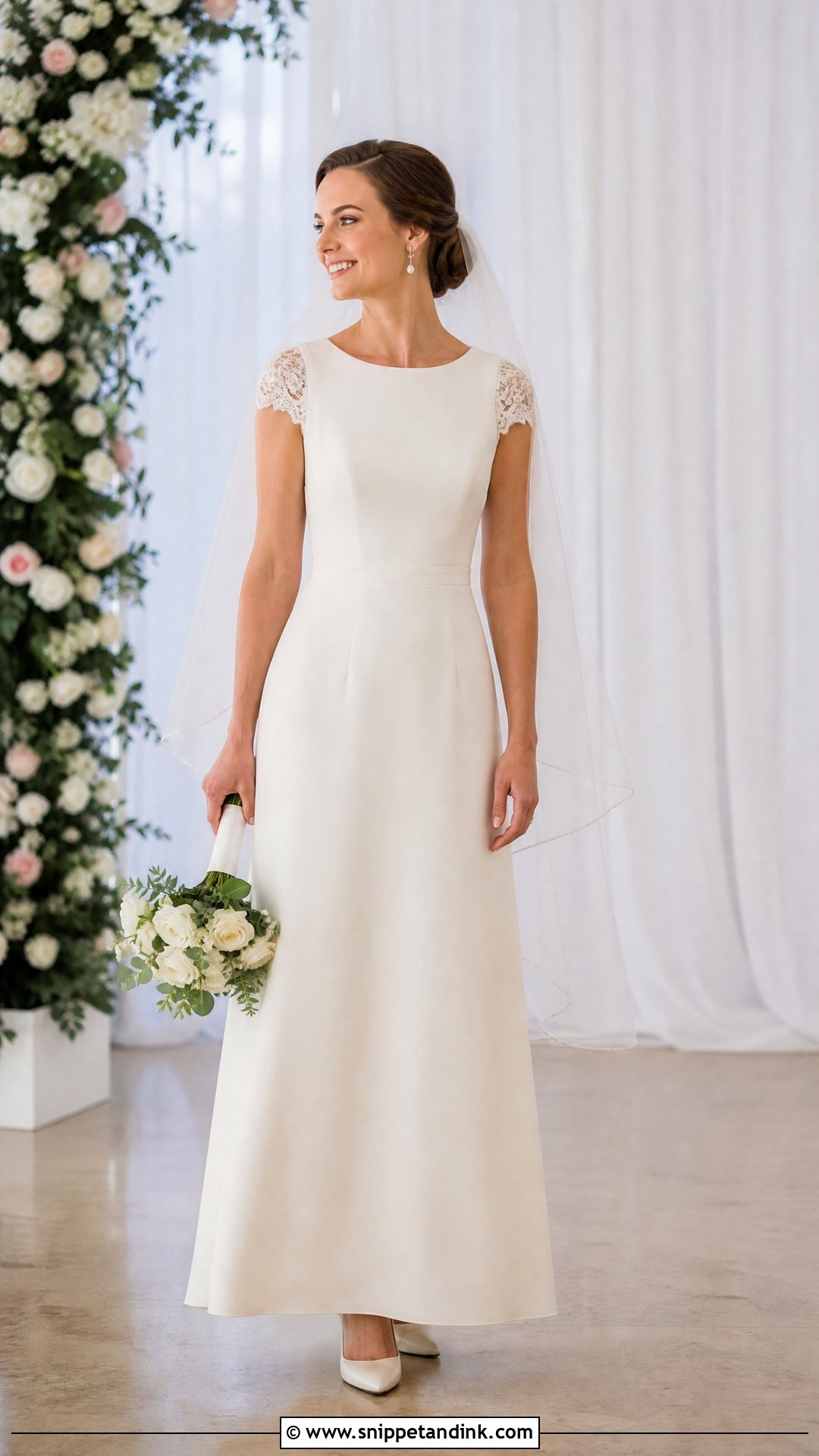
Cap sleeves give a little shoulder coverage without the weight of a full sleeve. With a round neck they make a tidy upper line that suits A-line, sheath and fit-and-flare skirts alike. Lace caps feel soft; smooth satin ones feel tailored. A twisted low bun, pearl drops, ivory pumps and a fingertip veil keep the shoulders visible. Cap sleeves are deceptively tricky to fit. If they extend too far past the shoulder point, they lock your arms down, and you’ll feel it the first time you hug someone. In fittings, I have brides lift both arms overhead and watch whether the neckline rides up.
11. Round Neck Three Quarter Sleeve Wedding Dress
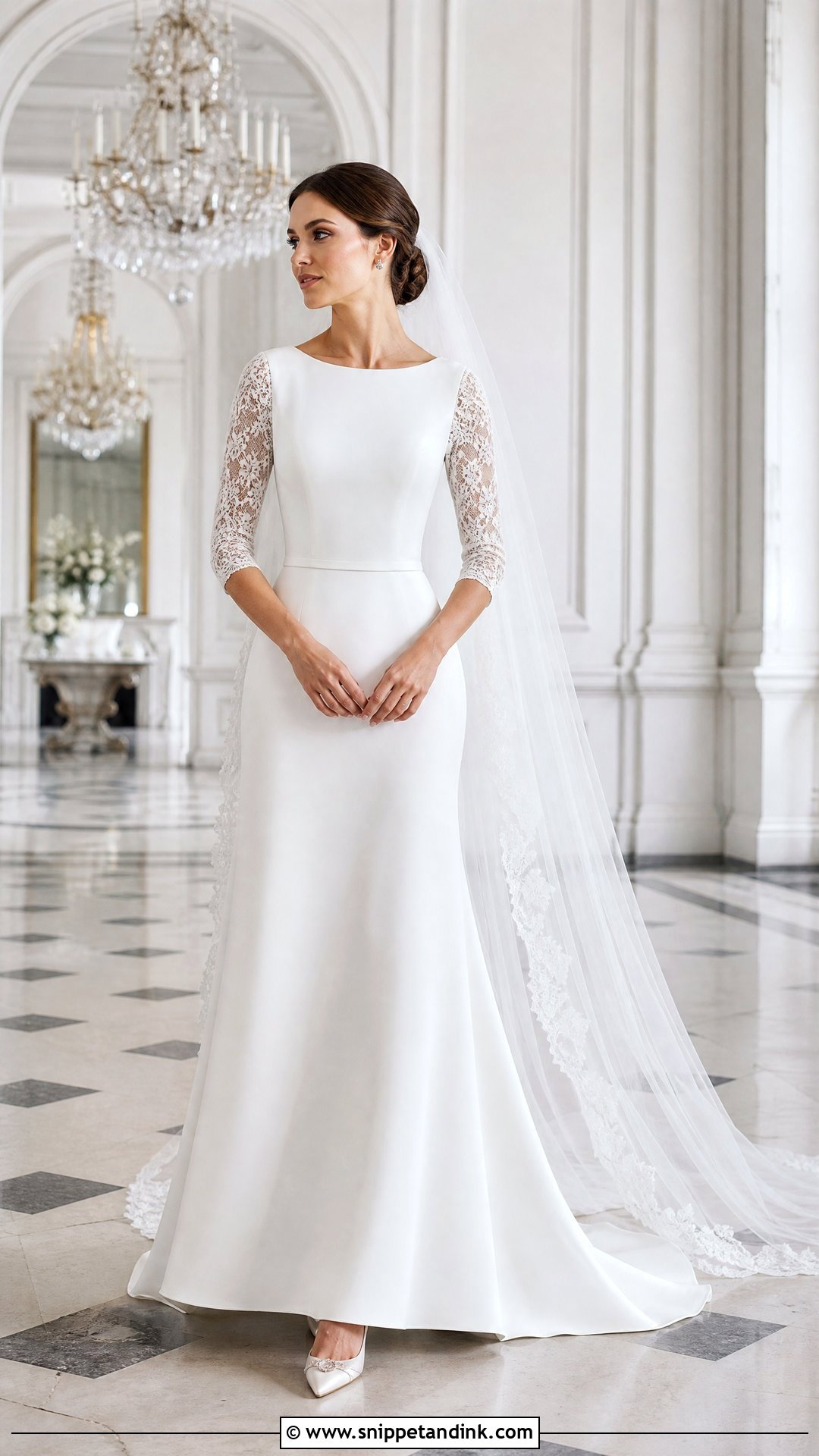
Three-quarter sleeves stop between elbow and wrist, which covers the arm while still showing enough forearm to keep the look from feeling heavy. Fitted lace sleeves over a crepe skirt work well, as do smooth satin sleeves for a more formal gown. A defined waist and a gently flared skirt keep the proportions balanced. Wear a low chignon, crystal studs and pointed pumps, with a chapel veil for the ceremony and a comb for the reception. Skip stacked bracelets; they fight the sleeve edge. Bend your elbows repeatedly at the fitting, because a lined sleeve that’s comfortable straight can bind at the crook once you’re holding a glass all evening.
12. Round Neck Basque Waist Wedding Dress
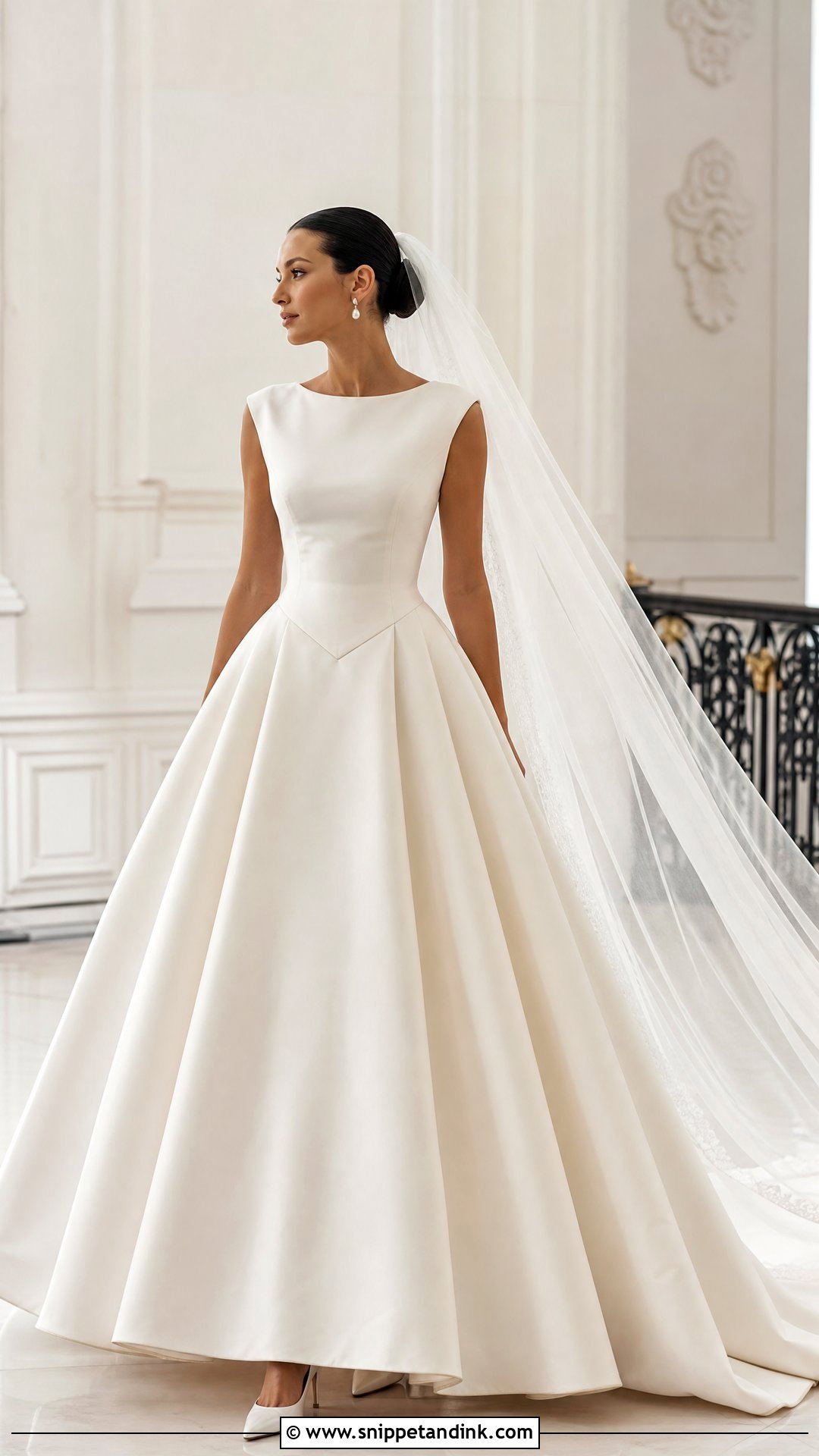
A basque waist dips below the natural waist into a soft V, sculpting the line into a full skirt. It’s a historical shape, so satin or mikado gives it crisp structure, while lace or embroidery softens it. Keep the round neck plain so the pointed waist is the focal point. Pearl earrings, a smooth bun, a cathedral veil and pointed pumps complete it. The one thing I always check here is the point while you’re seated. A basque that’s a touch too long or too rigid presses into the lower stomach the moment you sit down for dinner, and that ruins the reception for you.
13. Round Neck Empire Waist Wedding Dress
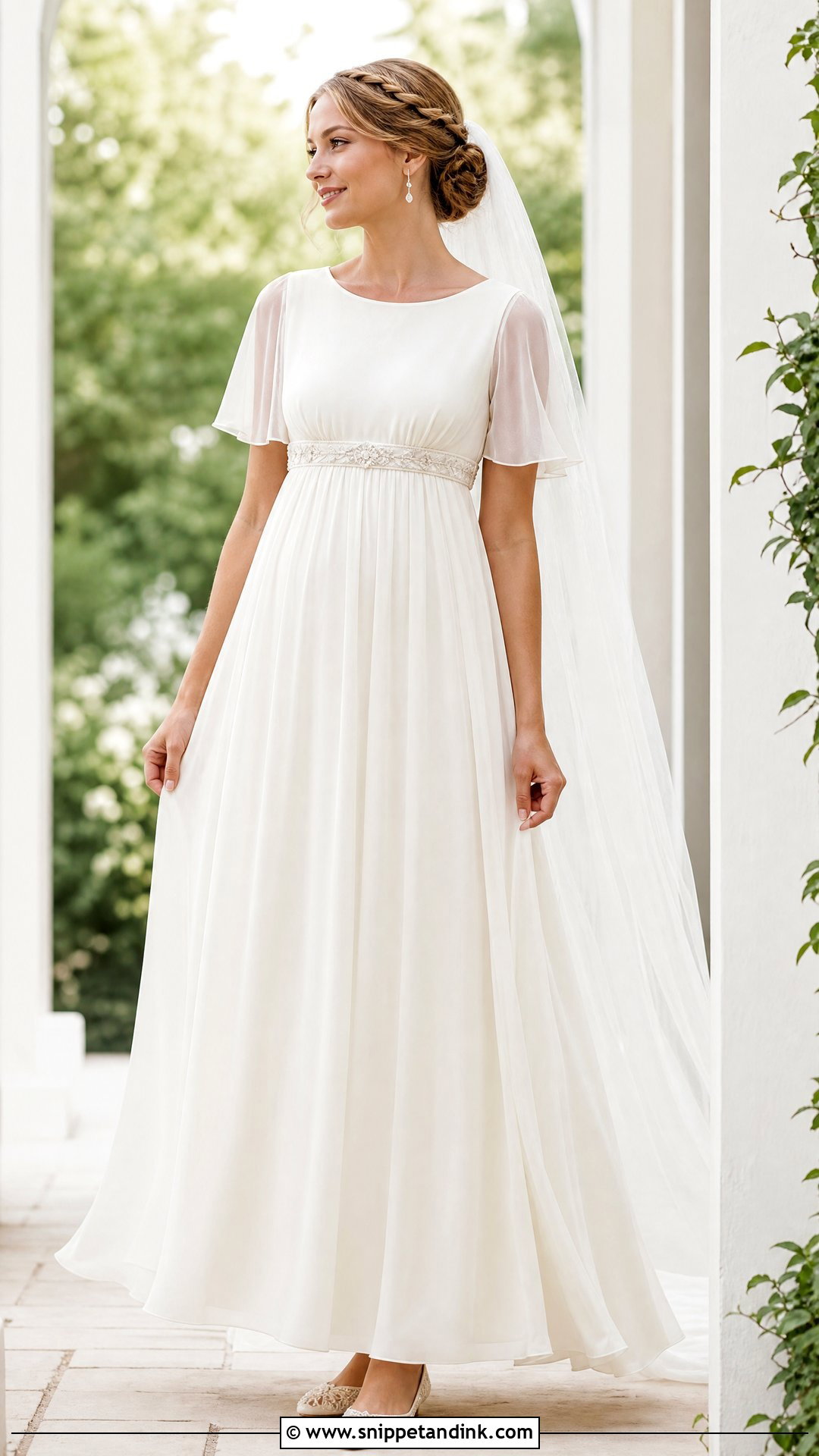
An empire waist sits right beneath the bust and lets the skirt fall long and loose. Paired with a soft round neck, it’s one of the most comfortable bridal shapes I dress anyone in. Chiffon, soft tulle and silk-like fabrics suit it because they drape naturally from that high seam. Choose short sheer sleeves or wider straps depending on coverage, and finish with delicate drops, a braided low bun and block heels or flats. The weak point is the under-bust seam: if the inner bodice isn’t snug, the seam creeps upward when you raise your arms. A well-built inner bodice fixes that without visible boning.
14. Round Neck Drop Waist Wedding Dress
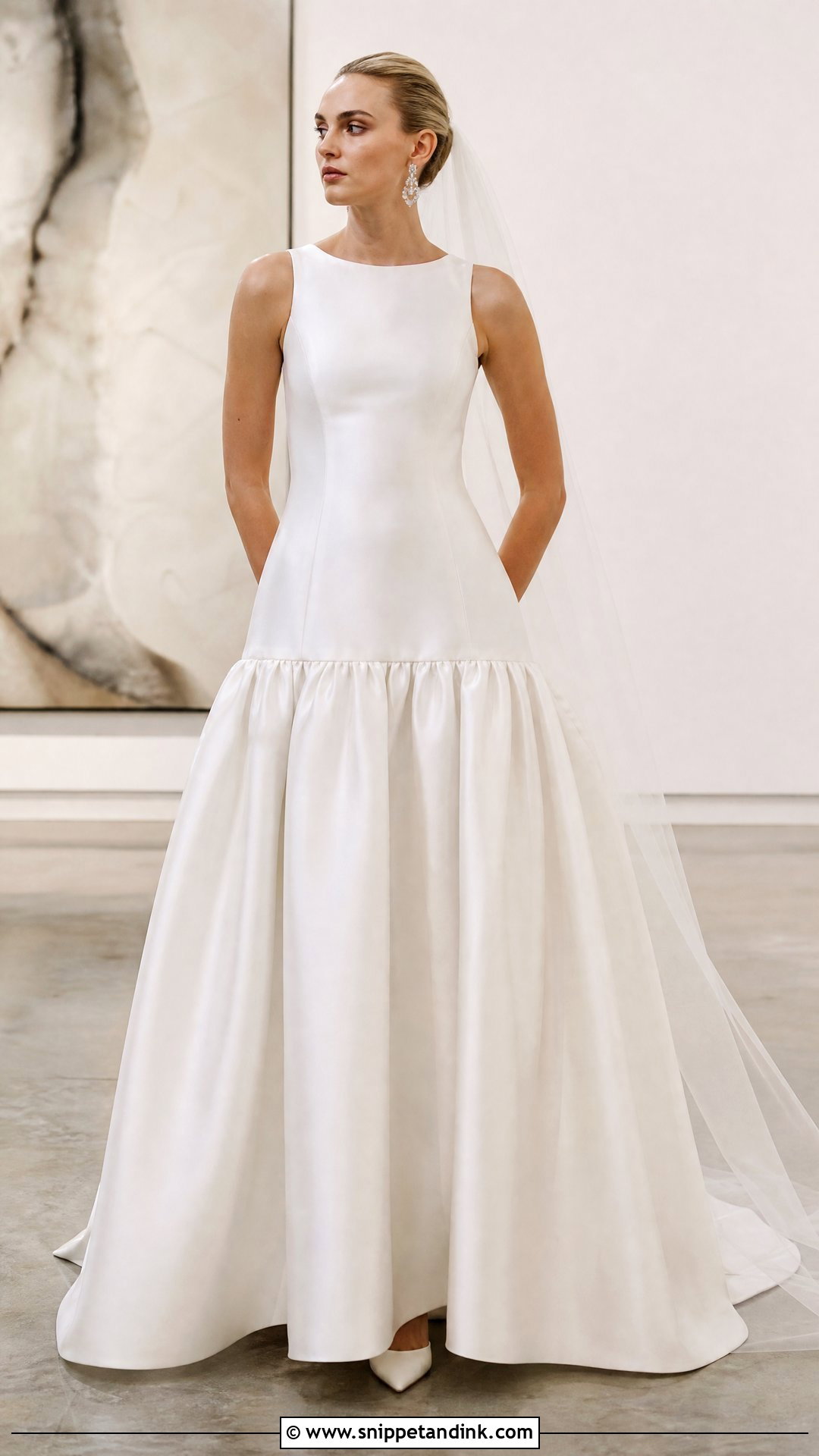
A drop waist carries the fitted bodice down past the natural waist before the skirt opens, which makes the round neck look fresher and the torso longer. Satin gives an architectural finish; embellished tulle reads softer. A sleeveless bodice keeps the long line clean, and a fuller skirt below the hips adds contrast. Swept-back hair, statement earrings, simple pointed heels and a long plain veil finish it. I’m honest with brides that this shape is less forgiving through the hips than an A-line. The seam has to follow your body exactly or it pulls across, so walk, sit and climb a few steps at every fitting.

15. Round Neck Wedding Dress With Cape
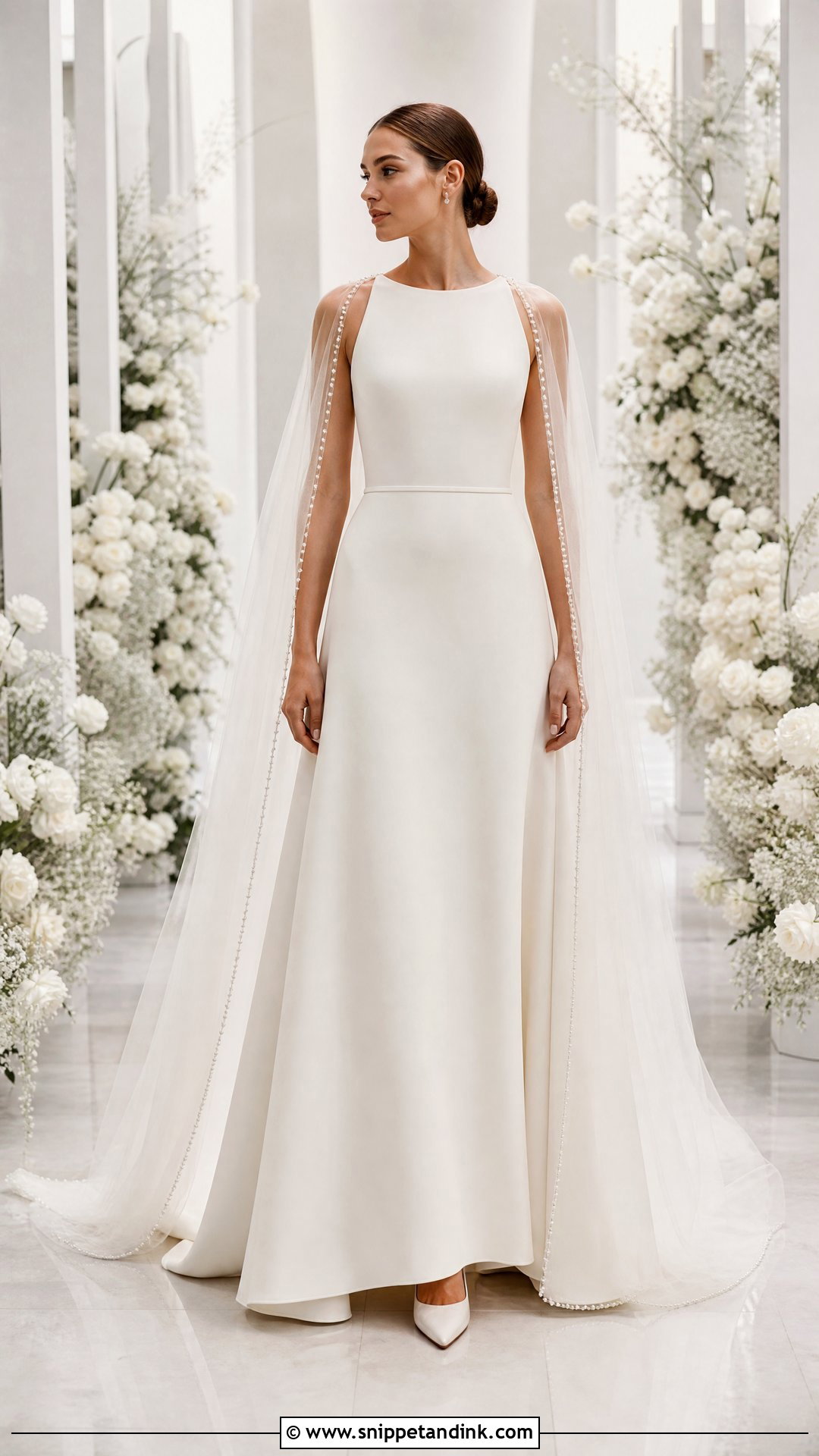
A removable cape turns a simple round neck gown into a ceremony look, then comes off for dancing. Start with a clean crepe, satin or mikado dress, A-line or column, and add a lightweight tulle cape that attaches at the shoulders and falls to chapel or cathedral length. Pearl edging or scattered crystals add detail without crowding the neckline. Many brides use the cape in place of a veil. I insist on testing the fastenings before the day: hooks that are fiddly will be fumbled by a nervous bridesmaid, and heavy snaps can mark delicate fabric. A sleek low bun keeps the attachment points tidy.
16. Round Neck Bow Back Wedding Dress
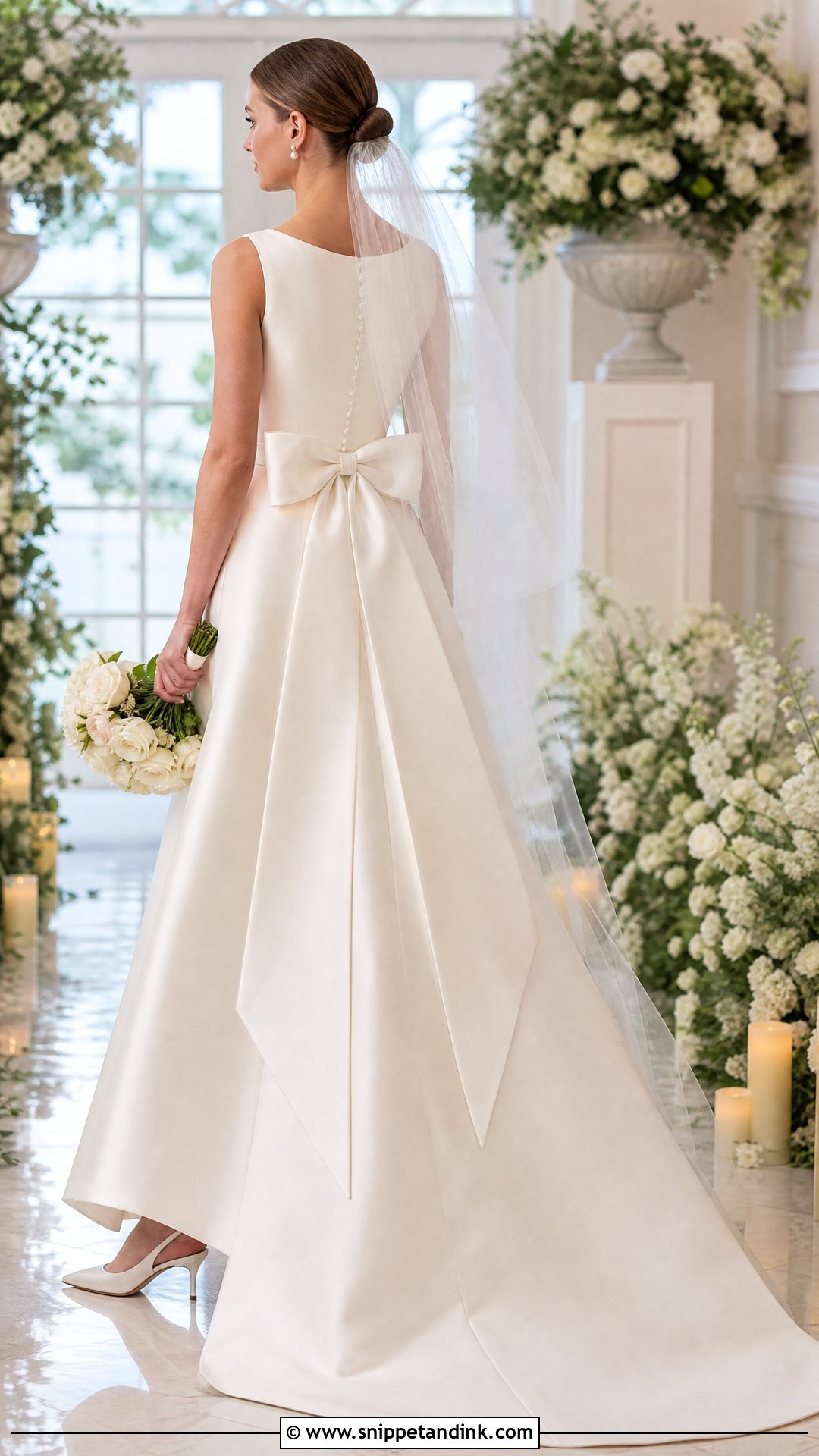
Brides who love a quiet front and a surprise from behind gravitate to this one. A satin or mikado A-line with a smooth bodice gets a structured bow at the waist or upper back. Long tails can melt into the train; a smaller bow feels more playful. Keep the front simple with pearl studs and a polished bun, and let a sheer fingertip veil sit over the bow for the ceremony before you take it off. Bow size is where I’d slow down. Look at it from the side and while seated, because a large structured bow at the small of the back can push you forward in a chair.
17. Round Neck Floral Appliqué Wedding Dress
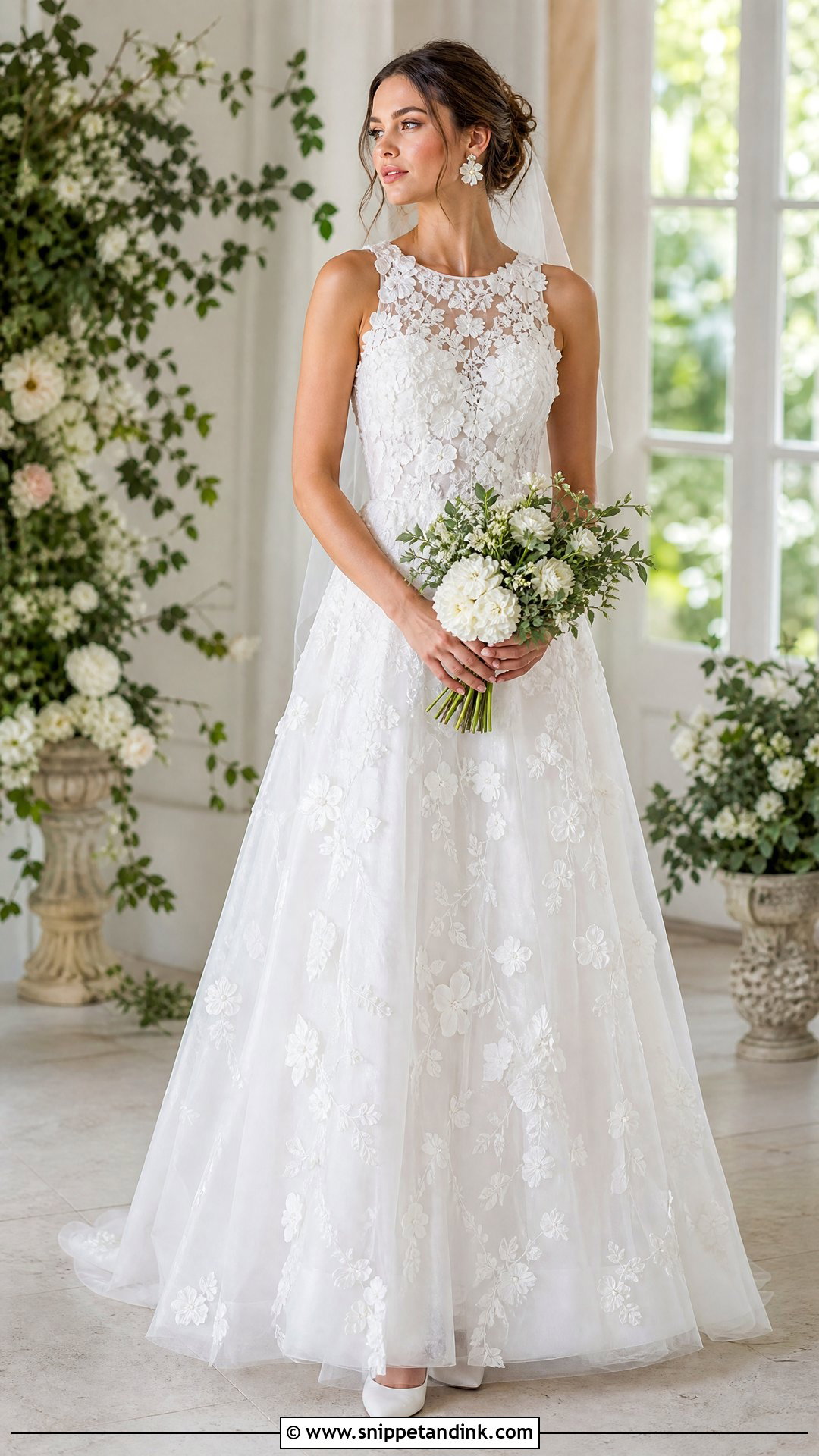
Dimensional appliqués give the neckline depth, starting at the shoulders, crossing the bodice and scattering down a tulle skirt. Near the neck, they need to lie fairly flat. Raised petals right at the collarbone scratch skin and snag on a veil comb, which I see far more often than people expect. Small pearl centers or clear crystals add controlled sparkle. A soft updo, floral-inspired earrings, satin pumps and a plain single-layer veil keep the focus on the dress. After alterations, check every appliqué for loose stitches and symmetry; a shifted motif near the face is the first thing a camera catches.
18. Round Neck Pleated Wedding Dress
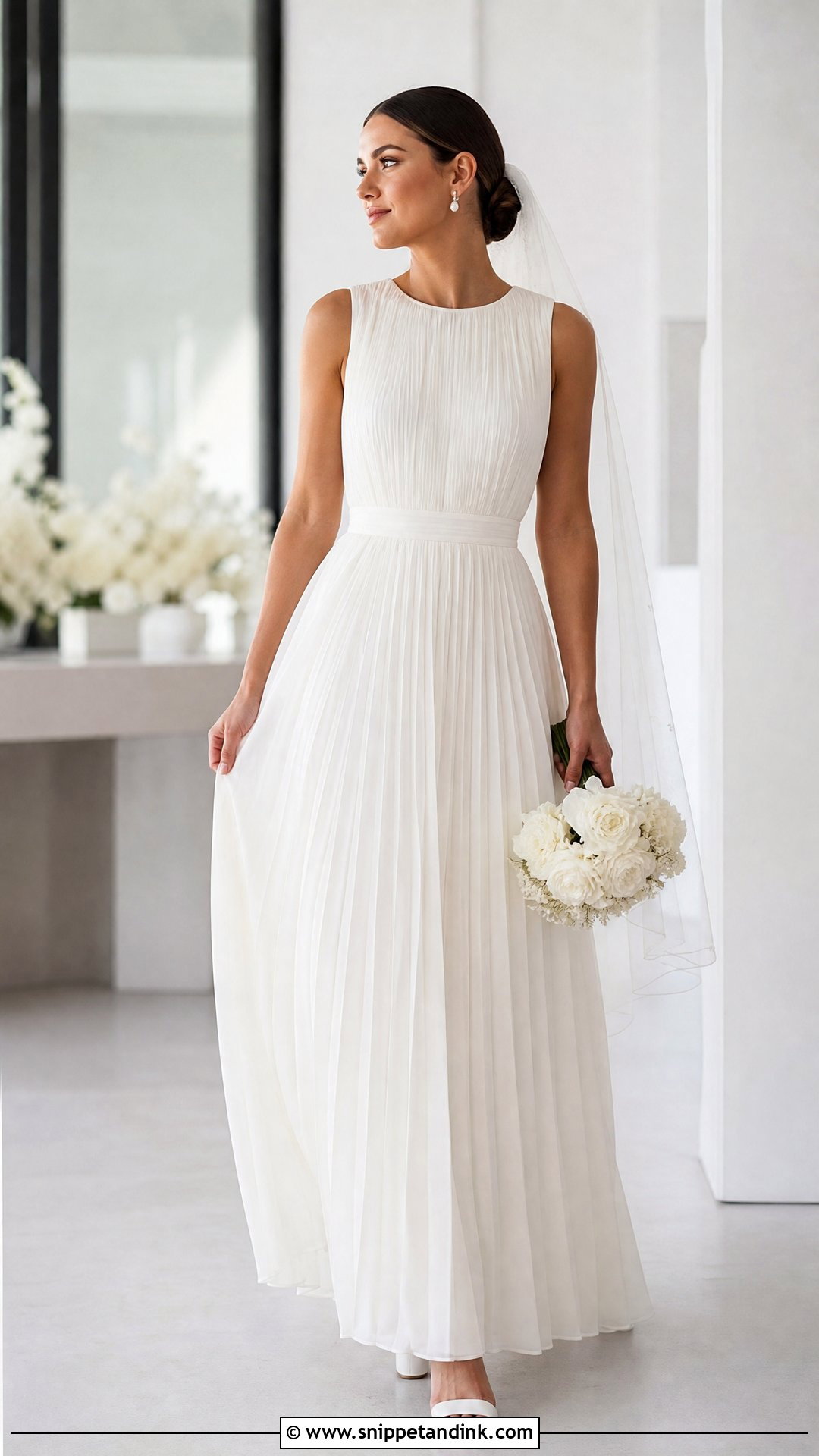
Pleats bring movement and definition without lace or beading. Fine pleats on a chiffon bodice feel soft; bigger pleats on a satin or organza skirt add structure. A defined waistband separates the two textures. A sleek ponytail or low bun, pearl earrings, block heels and a light veil suit the clean design. The pleats must fall evenly on both sides, so stand in front of a three-way mirror at fittings. Pressing is where pleated gowns get ruined. A general dry cleaner can flatten the folds in one pass, so have someone experienced with bridal fabrics do the final press.
19. Round Neck Structured Plus Size Wedding Dress
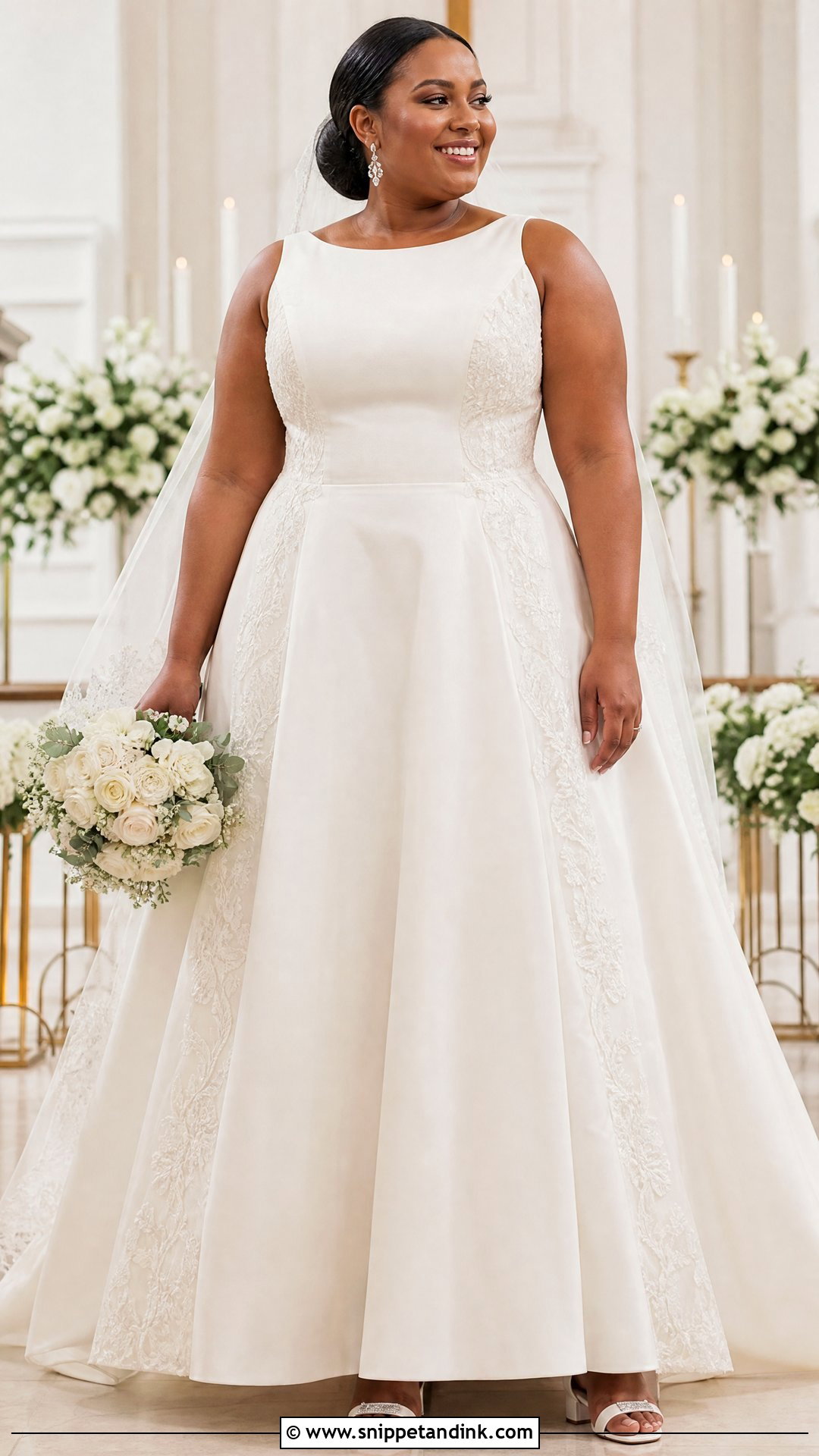
For plus-size brides, a structured round neck gown works because the support is built in rather than added on. I focus on fit, not rules about which silhouette you’re allowed. A firm inner bodice, a waist seam that lands where your waist actually is, and smooth lining can make an A-line, ball gown or fit-and-flare feel secure. Wider straps and a medium-height neckline give dependable coverage, with room for lace, buttons or beading. Drop earrings, a low bun, supportive block heels and a veil scaled to the train complete it. Order from your current measurements, not the number on a label; bridal sizing often runs small.
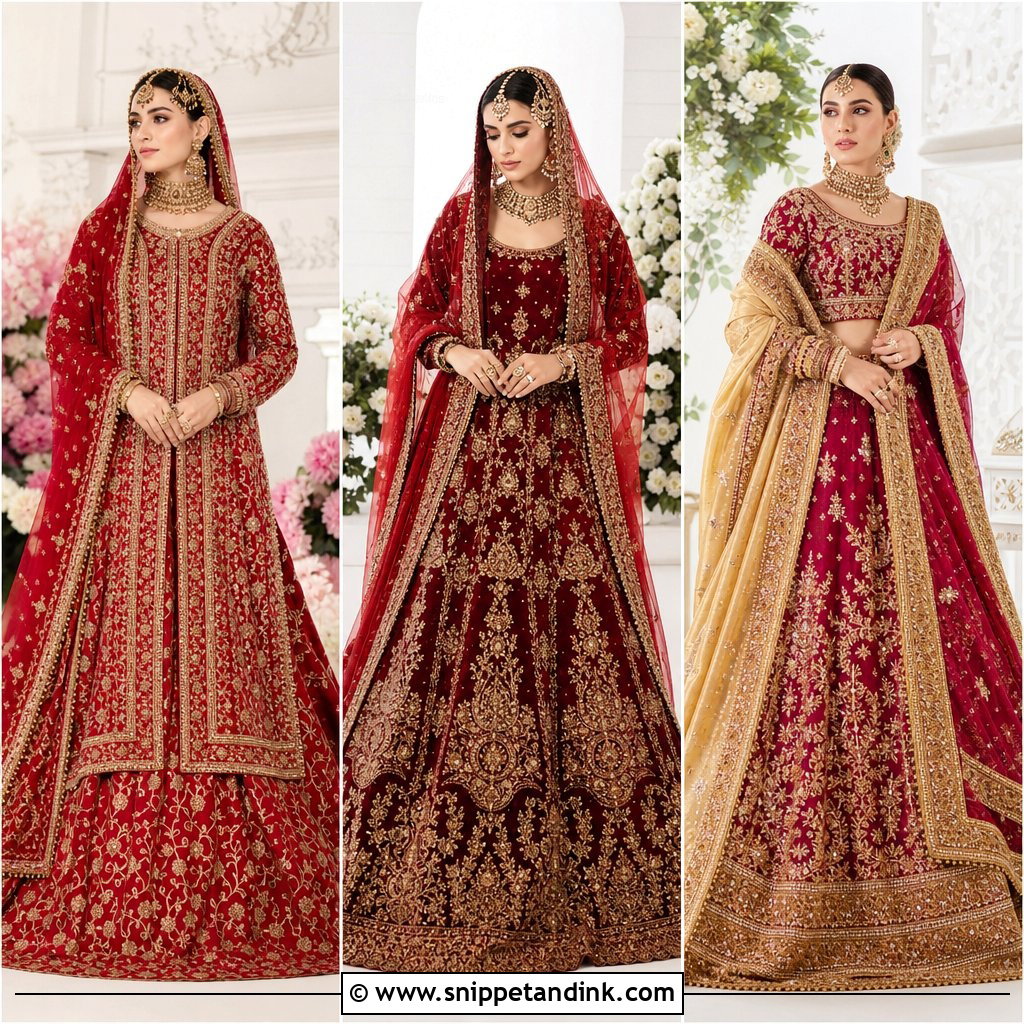
20. Round Neck Modest Wedding Dress
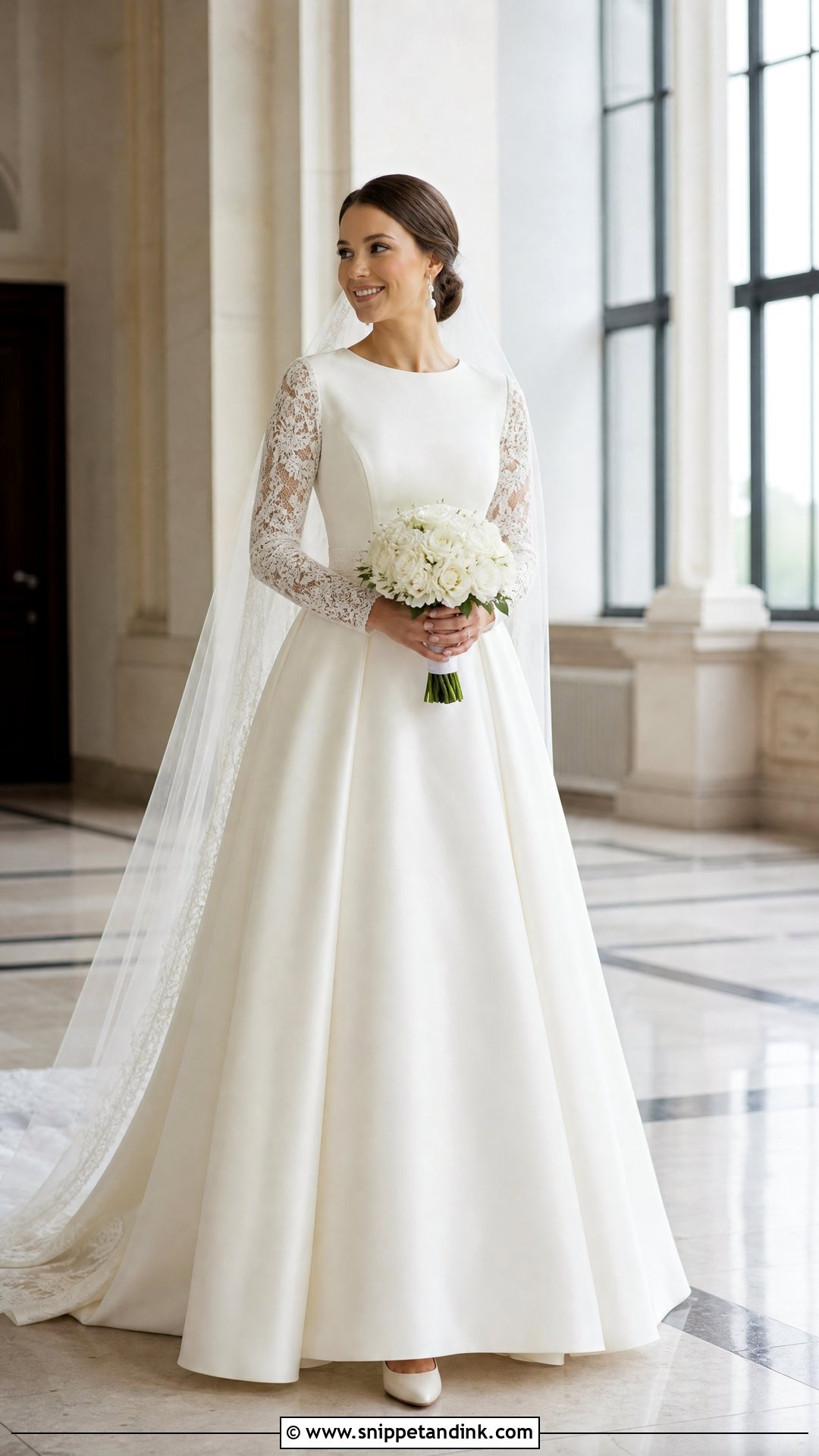
Full coverage doesn’t have to mean plain. An opaque lined bodice, long sleeves and a neckline resting at the collarbone form the base, with satin for a smooth finish or lace sleeves and appliqués for texture. An A-line skirt moves easily, and covered buttons can run from the back neck all the way to the train. Pearl earrings, a neat low bun, closed-toe pumps and a cathedral veil keep it composed. For extra ceremony coverage, add a detachable overskirt or a light cape. I always test modest gowns under a strong flash, because some linings that look opaque in person turn see-through on camera.
Gaping, Riding Up and Other Round Neck Fit Problems
A closed neckline shows fit problems that a V-neck or strapless gown would hide. These are the ones I see most at second fittings, and what a good seamstress does about each.
The neckline stands away from the chest
Gaping at the front usually means the bodice was cut for a different bust shape, or the shoulders are too long. Lifting the shoulder seams slightly often fixes it. On lace, a small dart hidden under a motif works well. Ignore it and the gap opens wider every time you lean forward to sign the register.
It climbs toward the throat when you sit
When a neckline rides up seated, the back is usually too short or the waist seam sits too high. Sit down in every fitting and look in the mirror. If the front edge creeps toward your chin, say so before the final hem.
Wrinkles fan out from the neck
Little diagonal pulls from the neckline toward the armholes mean the fabric is under tension, often from shoulders that are uneven, which most bodies are. A competent tailor can adjust each shoulder separately. Satin and crepe show these lines most, so they need the most attention.
Ask for at least two fittings after the main alterations, and wear the bra or shapewear you’ll actually marry in. Changing undergarments after the last fitting is the most common reason I see a round neck that sat perfectly in the shop gaping on the day.
One Neckline, Twenty Different Brides
What I like most about a round neck is how little it asks of you. It suits chiffon and crepe, beadwork and appliqué, a tea-length skirt or a full ball gown. So the real decisions are practical ones: how much the fabric weighs, how much you’ll be moving, and what the venue will be like at four in the afternoon. Bring the actual shoes and undergarments to every fitting. Then pick the version you forget you’re wearing by the second hour, because that’s the bride who enjoys her own party.
You'll Like These Ideas:








Leave a Reply