
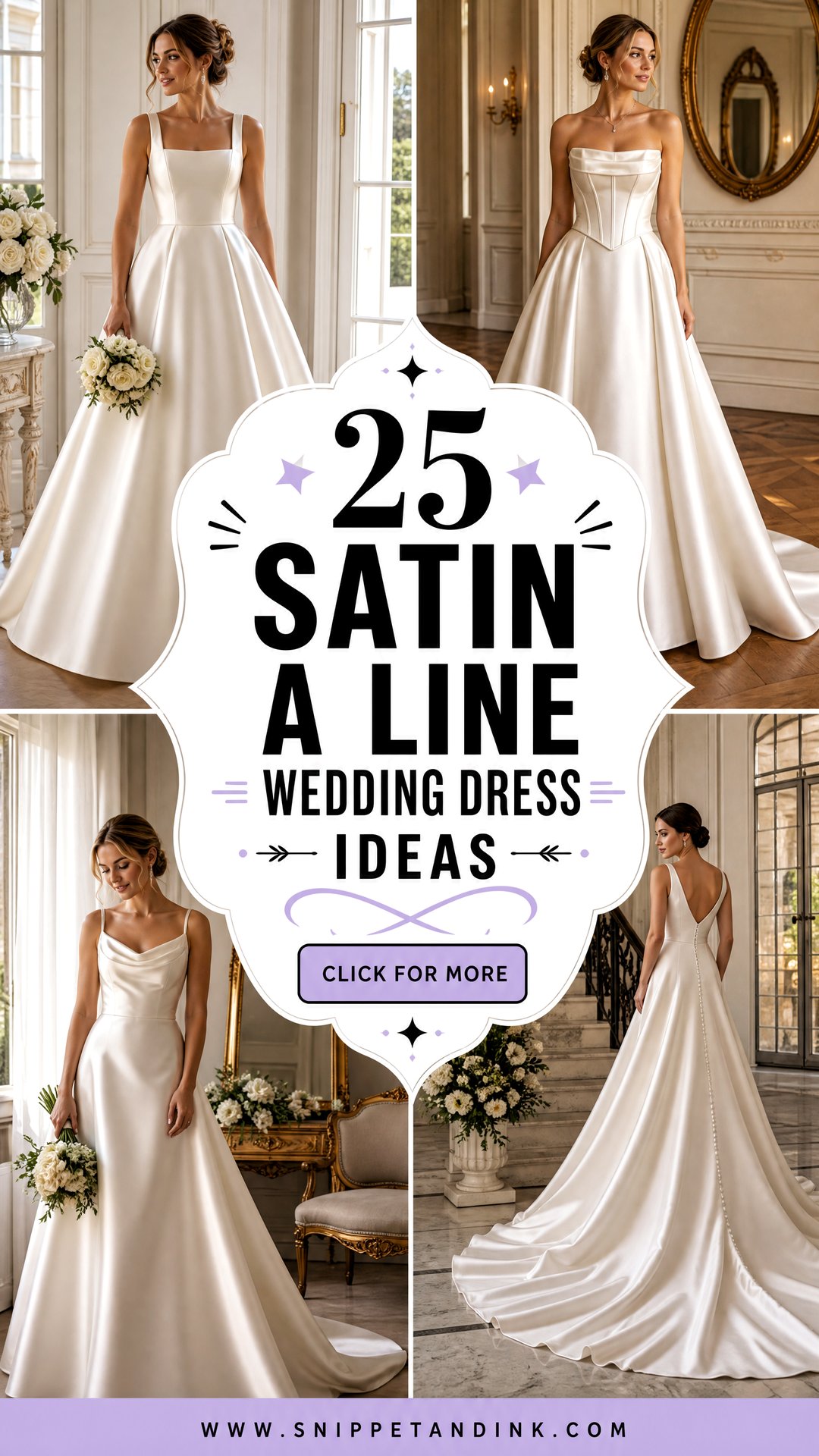
A satin A-line is the dress I see suit the widest range of brides, because the skirt skims the hips instead of gripping them and the fabric does the decorating for you. Satin catches light along every seam, so fit and fabric quality show more than they would under lace. For 2026 the strongest details are clean satin, basque waists, bow details, off-the-shoulder and square necklines, and very little embellishment. The shape works from a garden ceremony to a hotel ballroom. Below are 25 versions, each styled head to toe, with what I’d watch for in the fitting room.
Not Every Satin Behaves the Same Way
Satin is a weave, not a fibre, so two dresses labelled satin can feel and wear completely differently. I ask brides to handle the fabric before falling for a silhouette.
The main types you’ll meet
- Duchess satin: heavy and structured, with a soft sheen. It holds an A-line shape on its own and suits formal, cooler-weather weddings, but it’s warm to wear.
- Crepe-back satin: lighter, with a matte reverse. It drapes and moves well, which suits cowl necks and soft bodices.
- Silk satin: luxurious and breathable, but it marks easily and is the most expensive option.
- Polyester satin: more affordable and more crease-resistant, though it can look shinier under flash and feels warmer against the skin.
Quick tests in the shop
Squeeze a corner of the skirt in your fist for a few seconds and let go. If deep creases stay, they’ll appear wherever you sit. Then look at the dress from the side under the shop lights: cheaper satin shows a harsh, plastic shine, while better fabric has a softer glow. Finally, sit down in the sample. Satin pulls across the hips when seated, and that’s when you see whether the cut has enough ease.
1. Strapless Satin A Line Wedding Dress
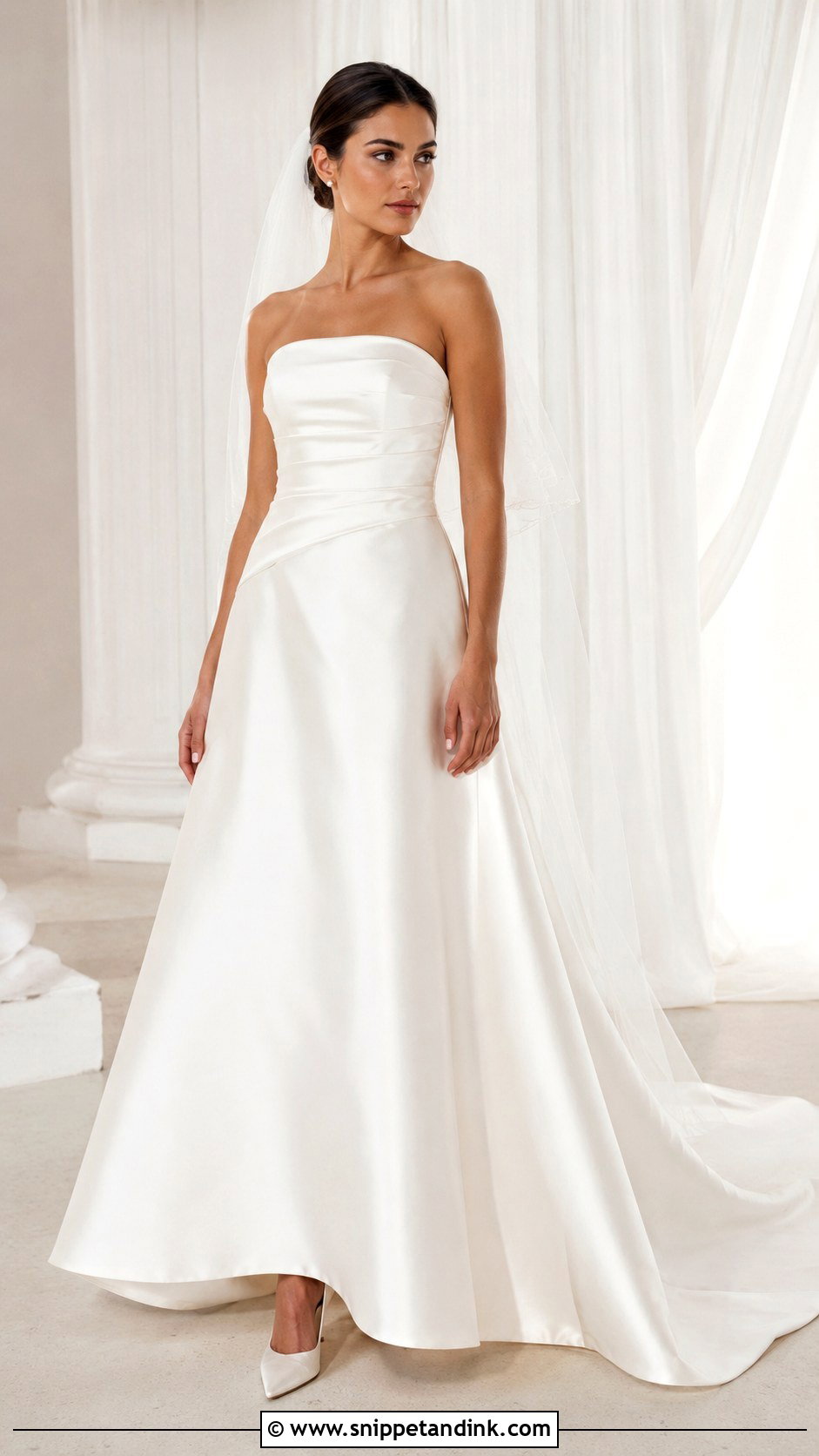
Strapless satin only looks clean if the bodice is built properly. I check for internal boning and a grip band at the top, because satin is slippery and a strapless bodice without them gets tugged up all night. With that sorted, a smooth ivory gown and a chapel train is about as classic as bridal dressing gets. Pointed satin pumps, pearl studs and a fingertip veil keep the focus on the shape. A small white bouquet won’t compete with the shine.
2. Off Shoulder Satin A Line Wedding Dress
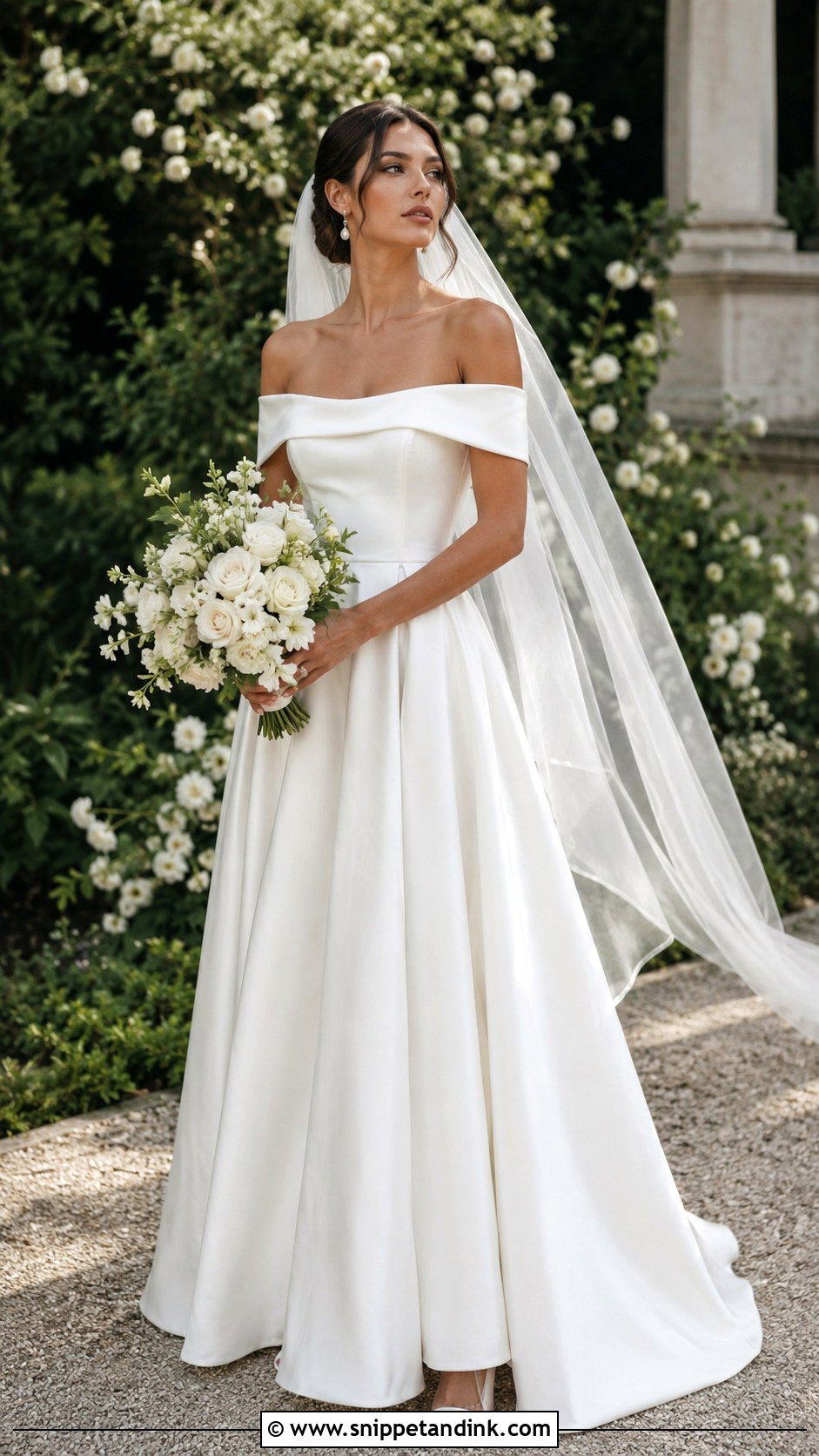
Off-the-shoulder sleeves frame the collarbone and soften the structure of a satin bodice. The fit at the upper arm is the thing to get right: too tight and you can’t lift your arms to hug anyone, too loose and the sleeves slide down. A folded neckline and a medium train suit ballroom and estate weddings. I’d skip the necklace altogether. Drop pearl earrings, a low bun and a sheer veil sitting behind the shoulders finish it.
3. Square Neck Satin A Line Wedding Dress
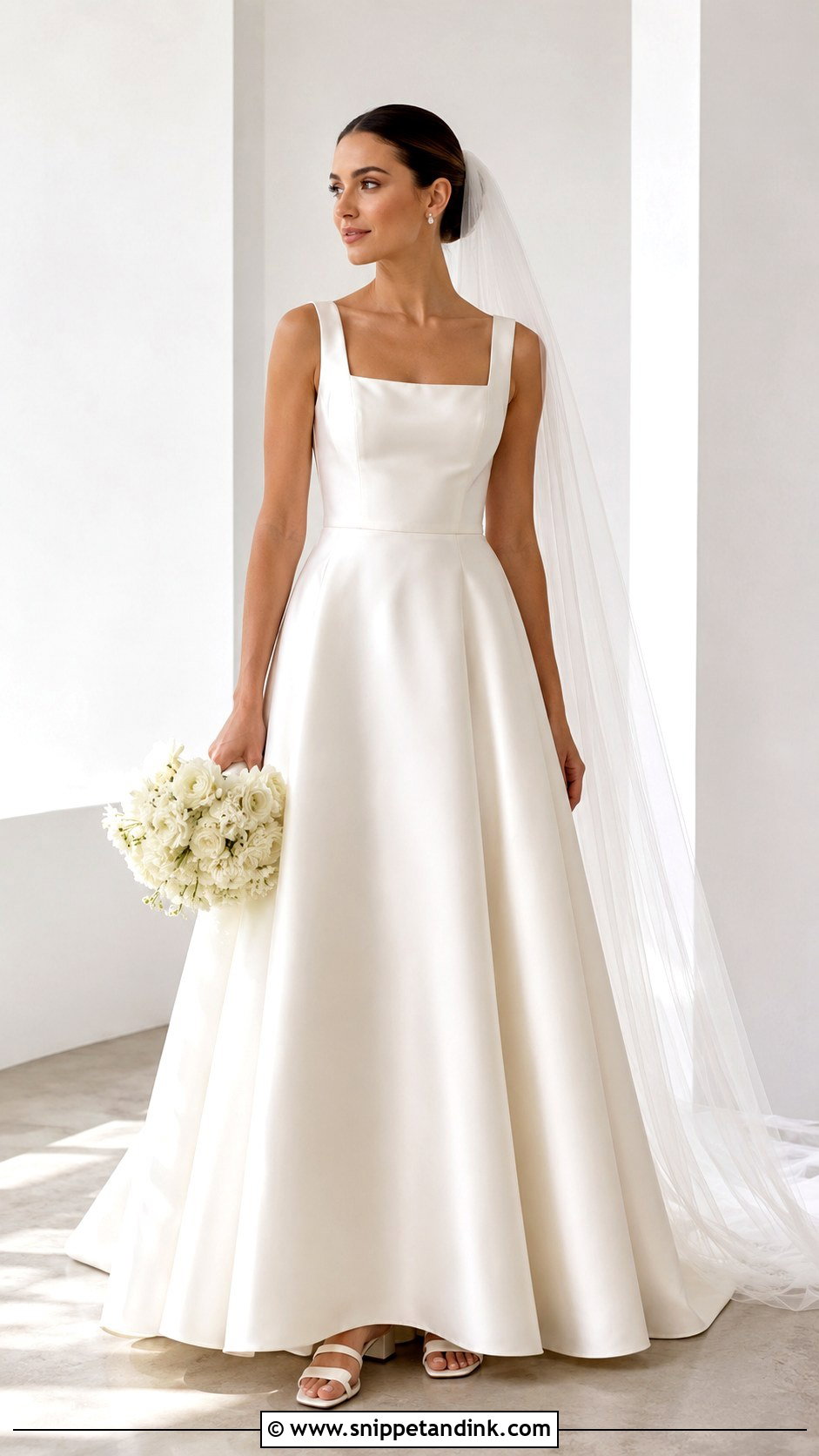
A square neckline gives the upper body clear structure and balances a fuller satin skirt, which is why it photographs well from almost every angle. Wide straps offer more support than slim tank straps, especially for a larger bust. Small crystal studs, a smooth low bun and a narrow cathedral veil add length without fuss. Block-heel sandals are kind on grass. Glowing, natural makeup suits the clean line.
4. V Neck Satin A Line Wedding Dress
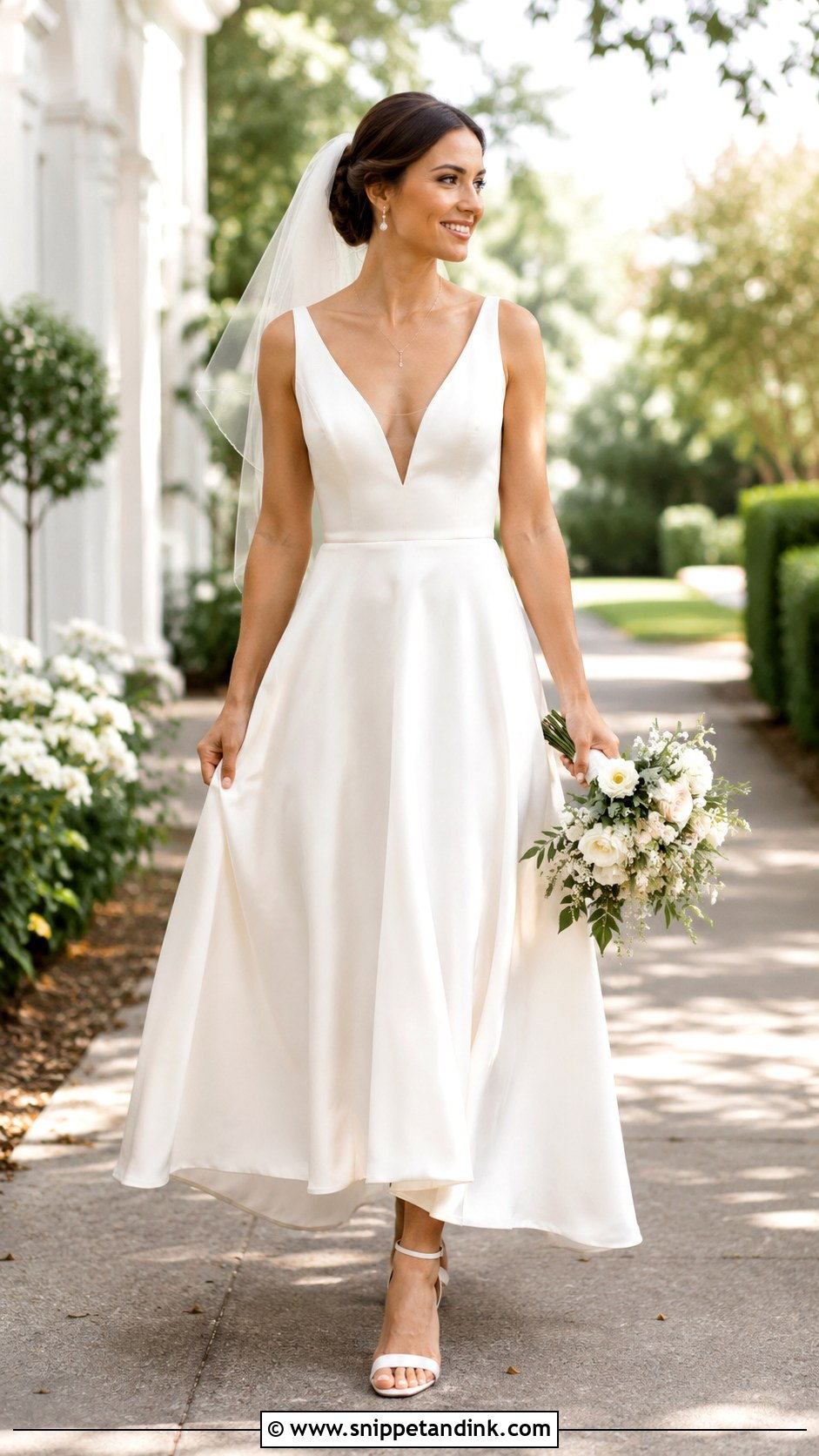
A V-neck lengthens the neck and torso, and a moderate depth is easy to wear all day. The detail I check is gaping: satin doesn’t stretch, so a V that’s even slightly too wide will stand away from the body when you lean forward. Fashion tape or a small hidden snap fixes it. A fine pendant and ankle-strap heels suit the line. For outdoor weddings, choose a shorter train or plan a bustle, because satin drags dirt along fast.
5. Sweetheart Satin A Line Wedding Dress
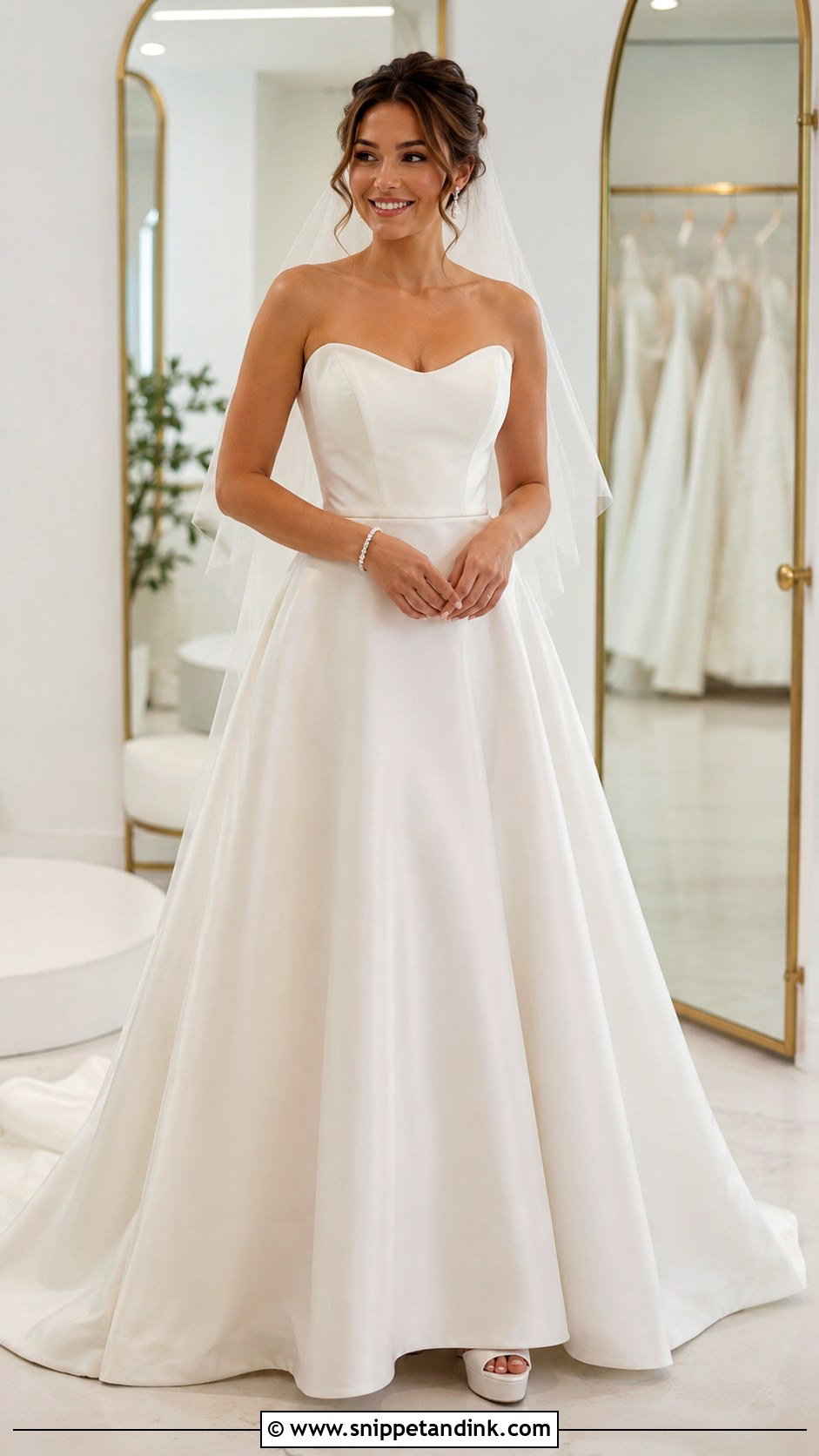
The sweetheart curve is the most forgiving bridal neckline, and it works on plain satin and on corset-style bodices alike. With a defined waist, smooth skirt and modest train, the dress stays easy to accessorise. Platform heels add comfort under a full-length hem without changing the look, since nobody sees them. Pearl drops and a soft tulle veil complete it. Ask for the hem to be measured with your actual shoes, not a borrowed pair.
6. Basque Waist Satin A Line Wedding Dress
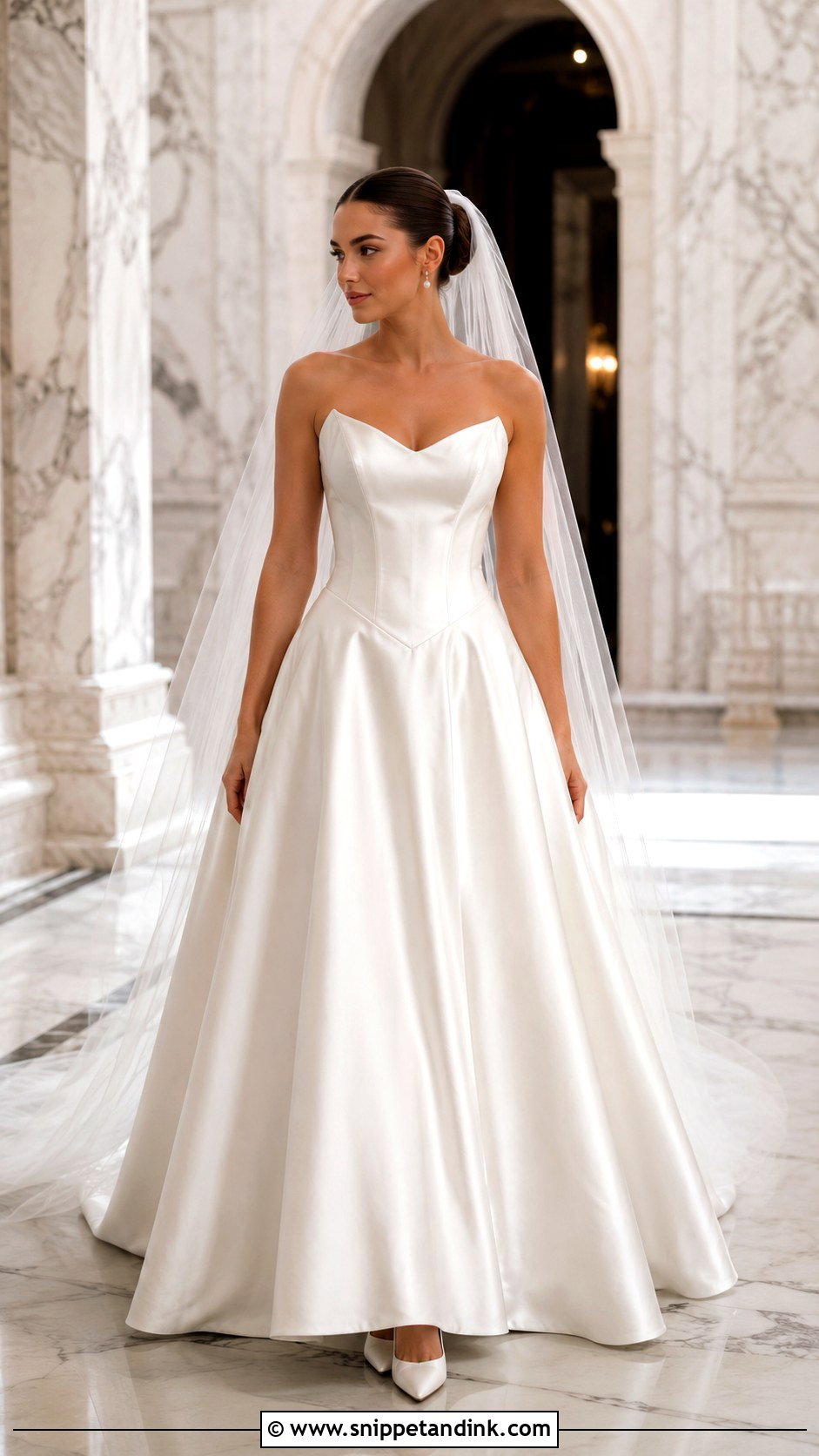
A basque waist drops into a point below the natural waistline, which lengthens the torso before the skirt opens out. It’s the most current detail on this list and also the most fit-dependent: the point must sit centred and flat, or it looks twisted. Gentle boning keeps it in place when you sit. Pointed ivory heels and pearl earrings keep the rest refined, and a long veil from behind a sleek bun shows off the waistline. It suits formal ceremonies and grand indoor venues.
7. Satin A Line Wedding Dress With Pockets
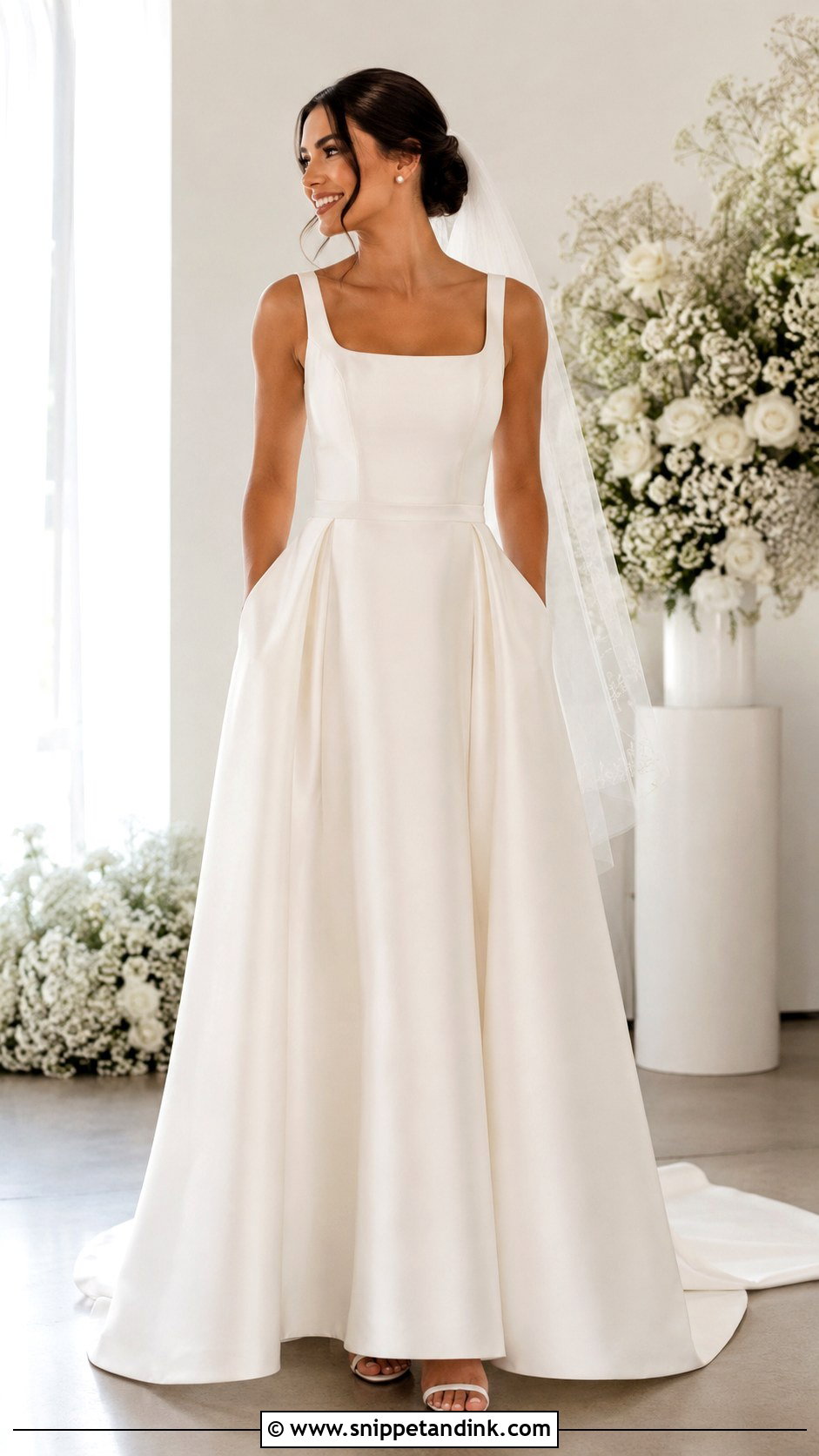
Pockets in satin need volume around them, otherwise they bulge at the hip. Look for a skirt with enough fullness for them to sit flat, and resist filling them with your phone, since satin shows the outline of anything heavy. Used well, pockets give you a relaxed pose in photos and somewhere to put lip balm. Block heels, pearl studs and a simple veil keep the styling quiet.
8. Satin A Line Wedding Dress With Bow Back
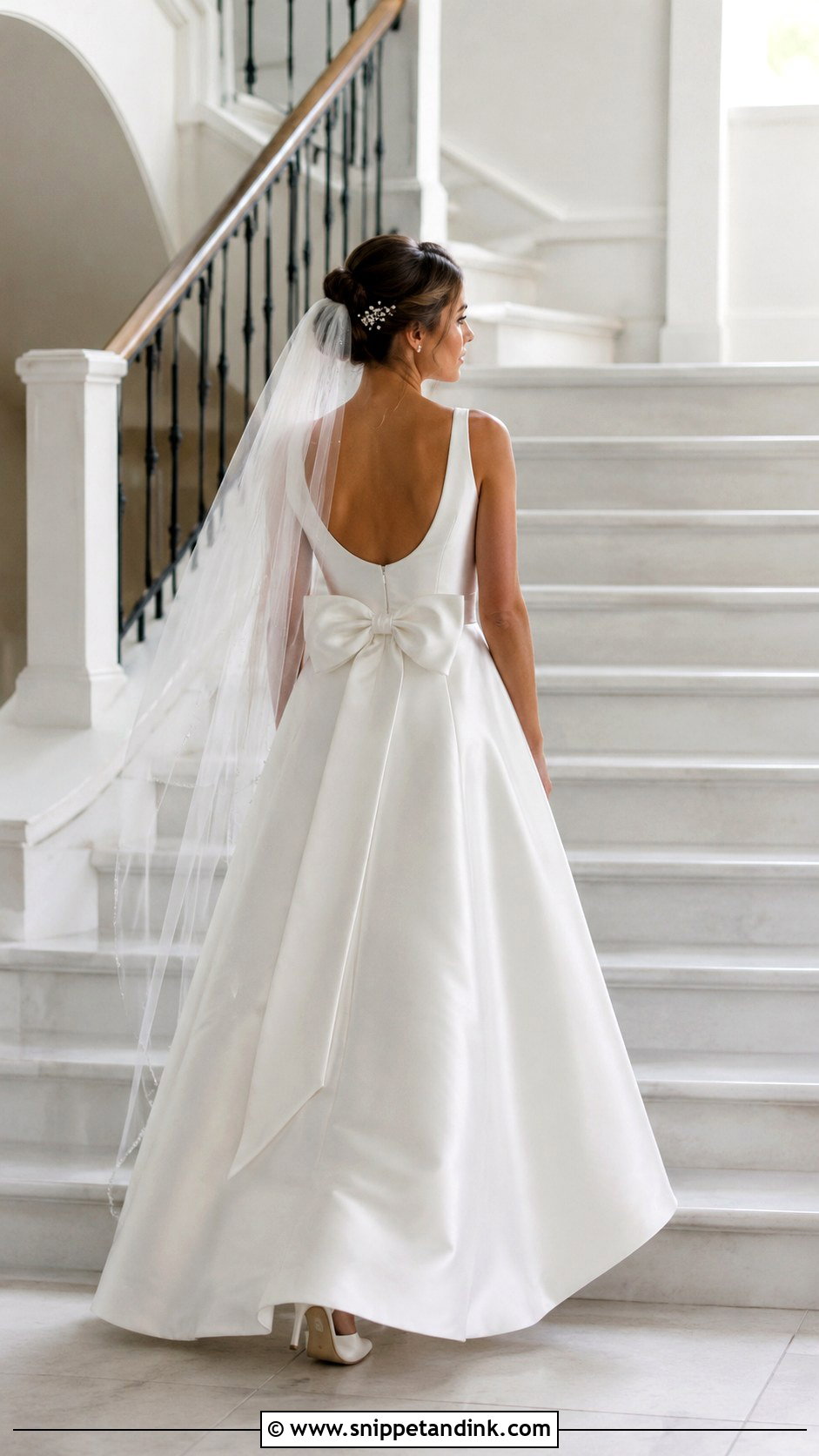
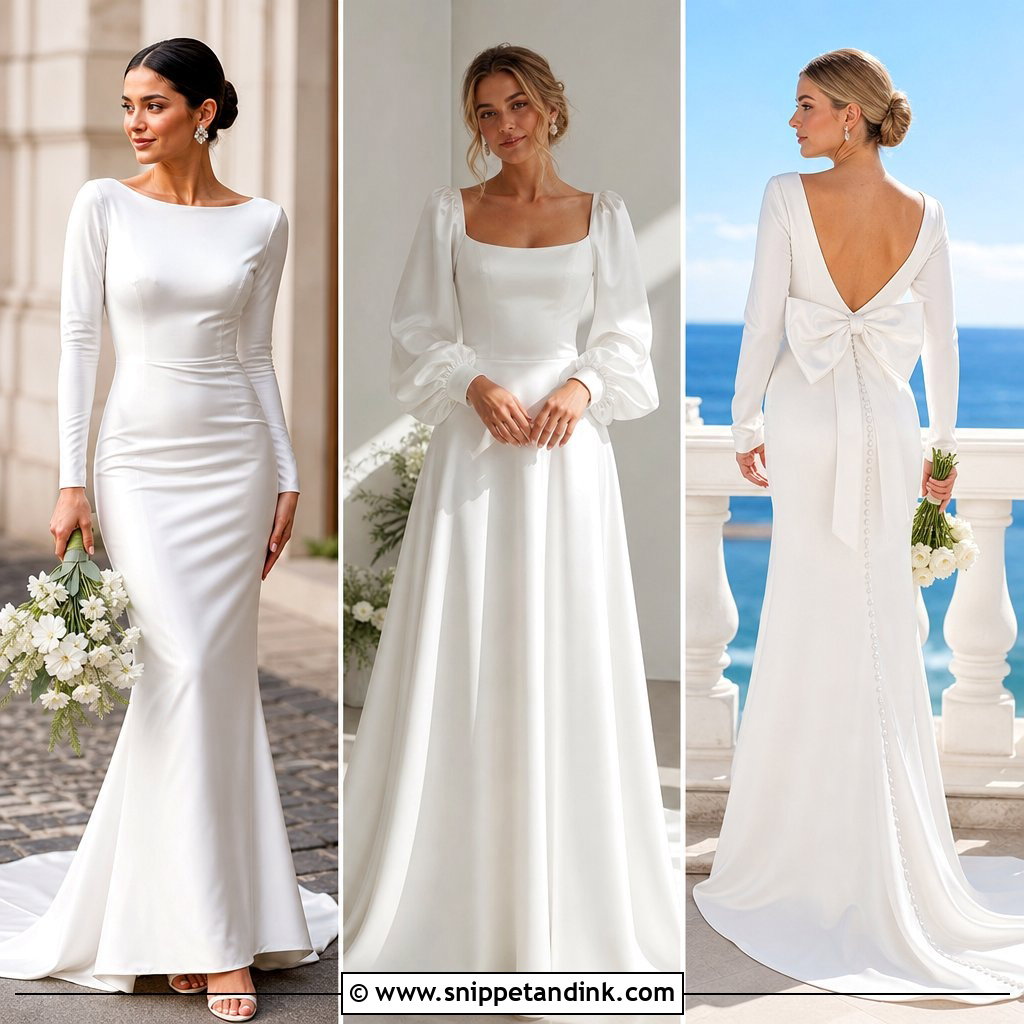
A bow at the back keeps the front clean and saves the detail for the aisle shot. Ask whether it’s fixed or detachable: a detachable bow lets you remove it before sitting at dinner, where a large one gets crushed. A low chignon with pearl pins sits nicely above it. I’d take the veil off after the ceremony so the bow can be seen properly in portraits. It’s a good fit for brides who like one feminine detail and nothing else.
9. Satin A Line Wedding Dress With Detachable Sleeves
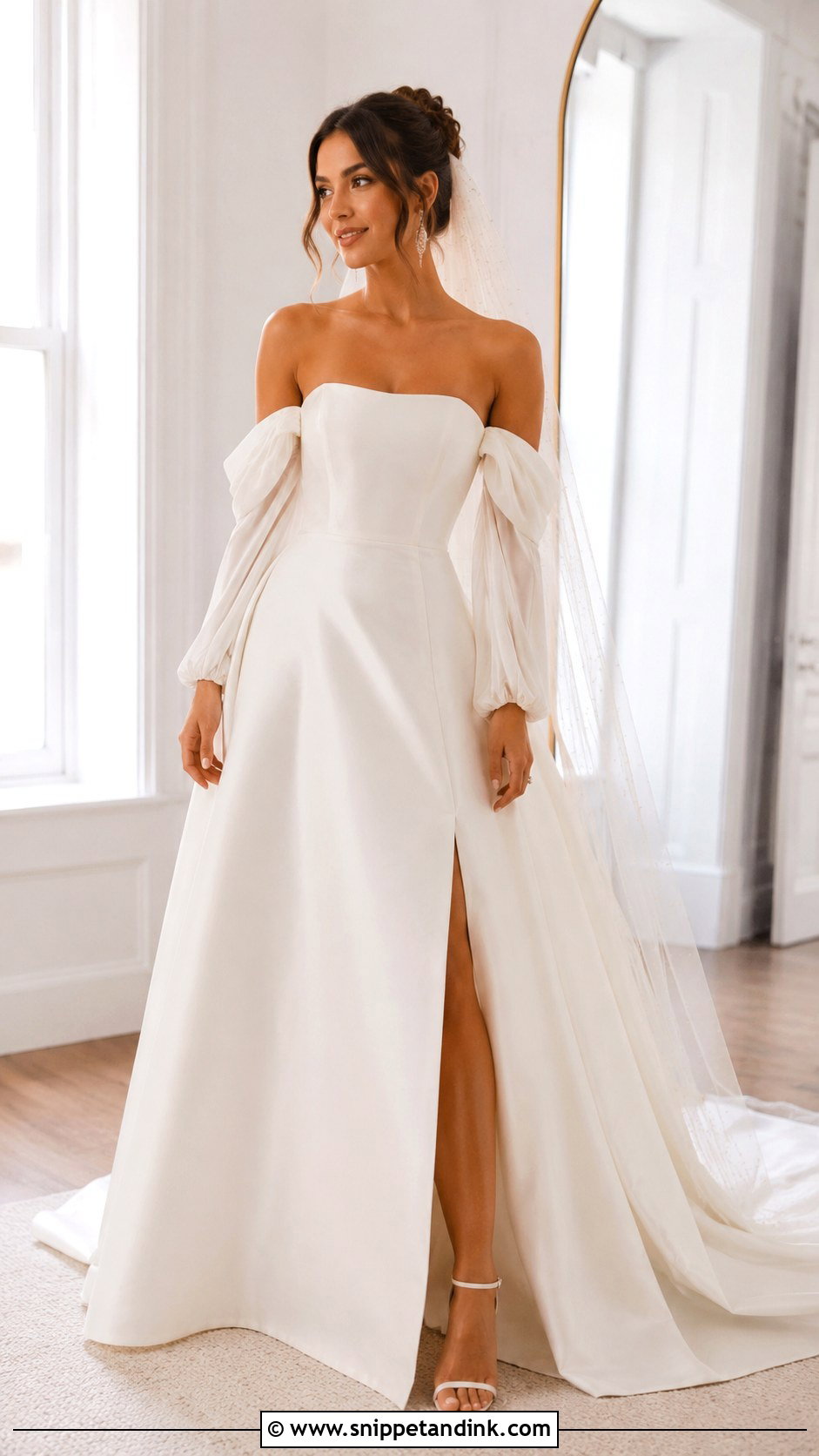
Detachable sleeves give you a formal ceremony look and a lighter reception look from one dress. Puff, off-shoulder or long sheer sleeves can all clip or tie on. The base gown should be plain, so the sleeves look intended rather than added. Check how the sleeves attach: tiny buttons or snaps hold better than ties and are easier for someone to remove quickly. Earrings and heels in the same tone as the satin keep it cohesive.
10. Long Sleeve Satin A Line Wedding Dress
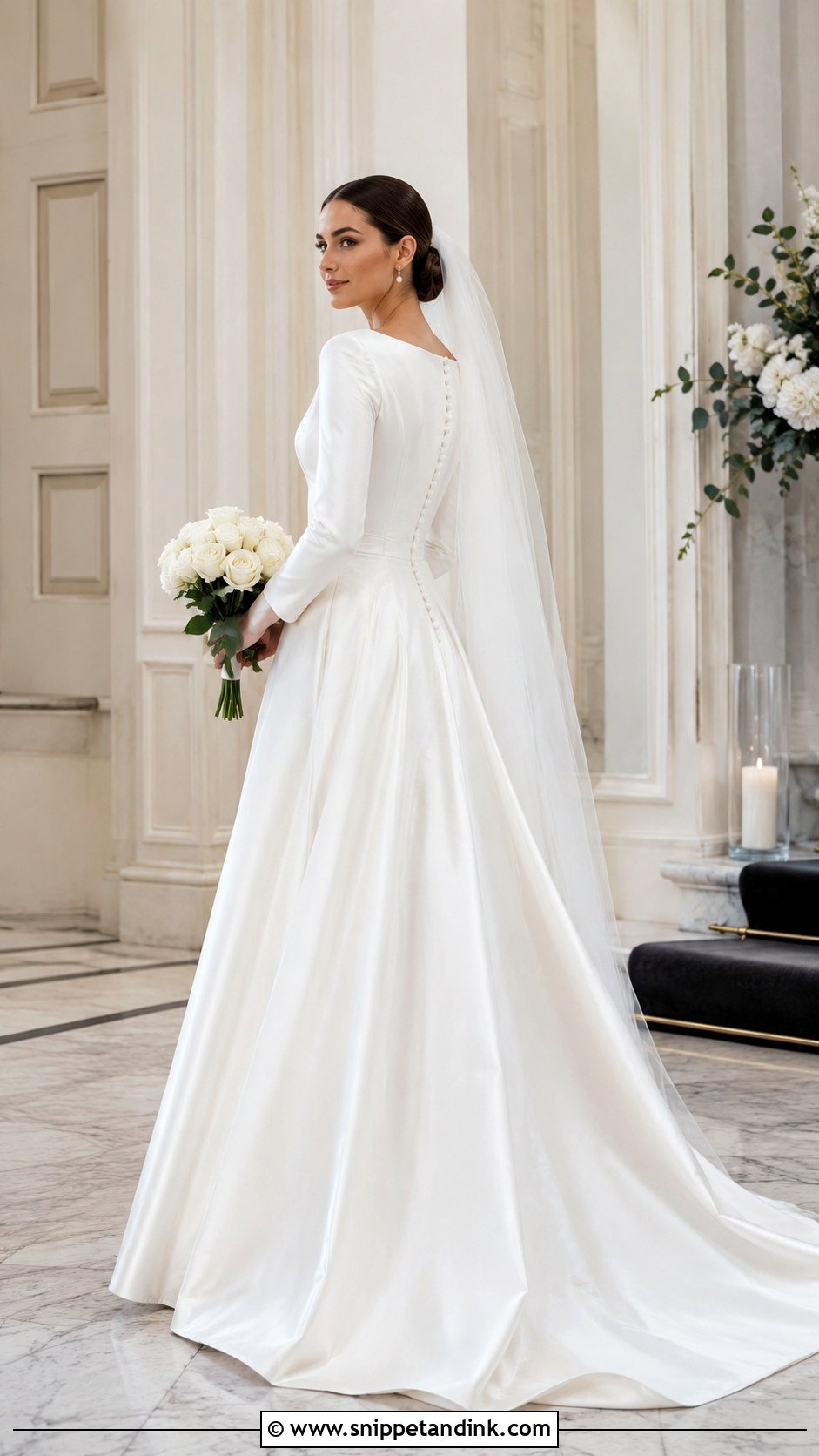
Long satin sleeves need structure, or they wrinkle at the elbow every time you bend your arm. A slightly heavier satin solves that. Fitted sleeves look sleek; slightly relaxed ones look softer and allow more movement. With the arms covered, keep the neckline simple, bateau or square. Covered buttons at a high back add finish. It suits cooler months, historic venues and winter weddings, with closed-toe heels and pearl earrings.
11. Short Sleeve Satin A Line Wedding Dress
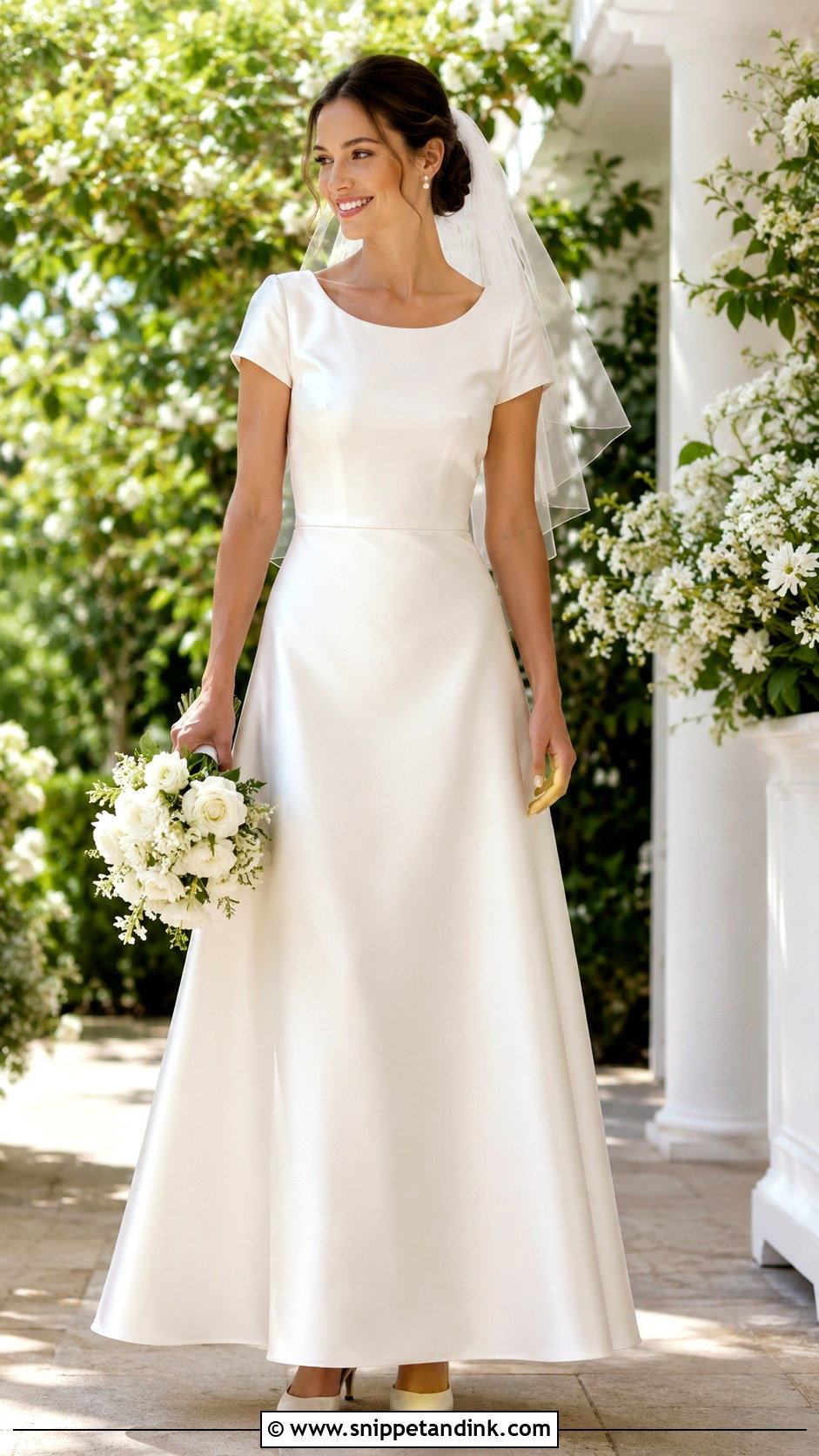
Short sleeves give a little arm coverage without the warmth of long ones, so they’re a natural fit for spring and summer ceremonies. With a scoop neckline and fitted waist, the risk is looking more like a party dress than a wedding gown. Good-quality satin, a defined waistline and a small train or button detail at the back keep it bridal. Pearl studs, a short veil and low ivory heels finish it.
12. Spaghetti Strap Satin A Line Wedding Dress
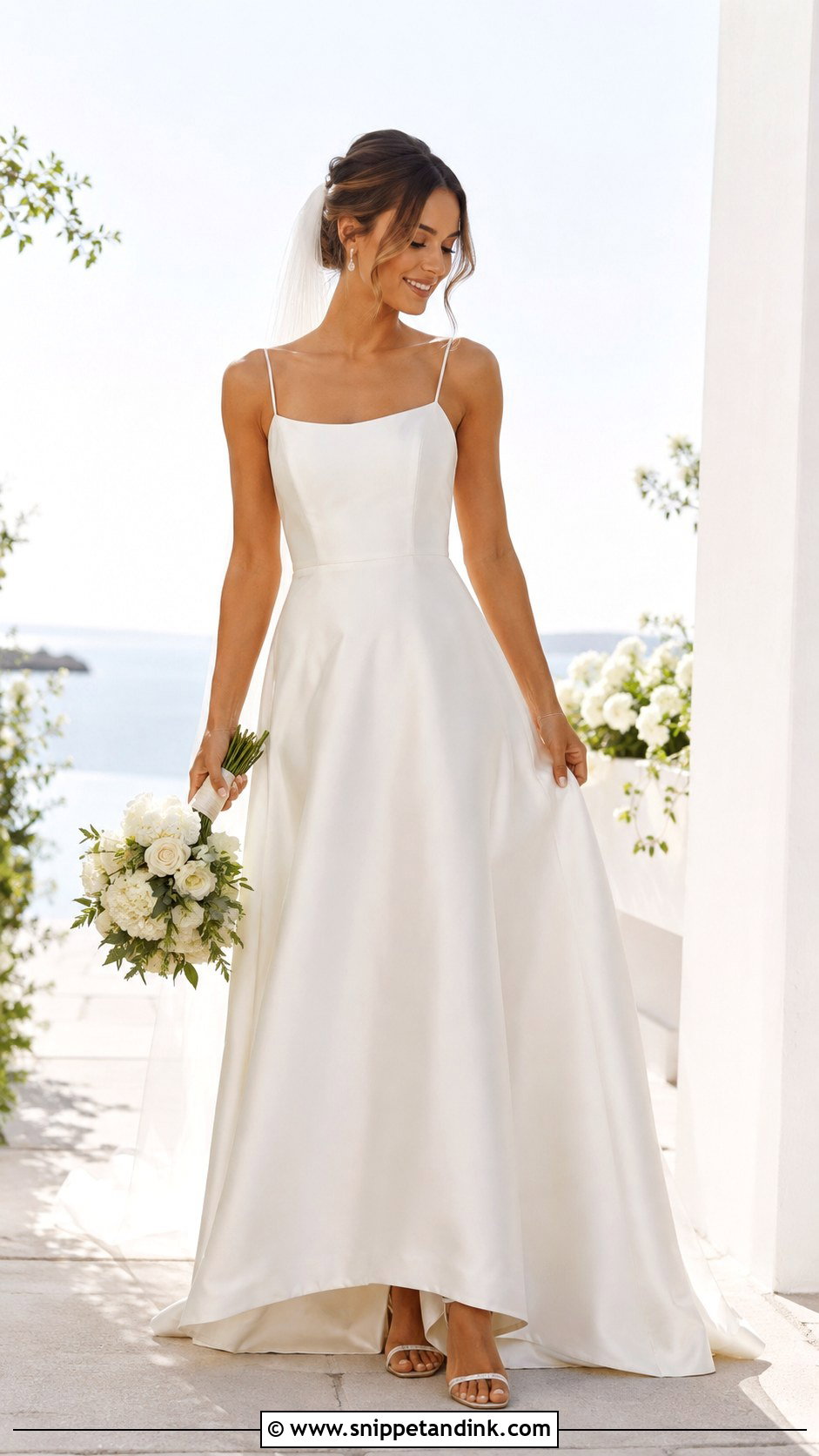
Spaghetti straps carry very little weight, so the bodice underneath has to do the holding. I look for soft structure inside, otherwise the straps dig into the shoulders by the evening. This cut suits warm weather and beach venues. A sheer wrap or a removable satin bolero gives coverage for a religious ceremony and comes off for the reception. Dainty earrings and strappy ivory heels keep it light.
13. Halter Satin A Line Wedding Dress
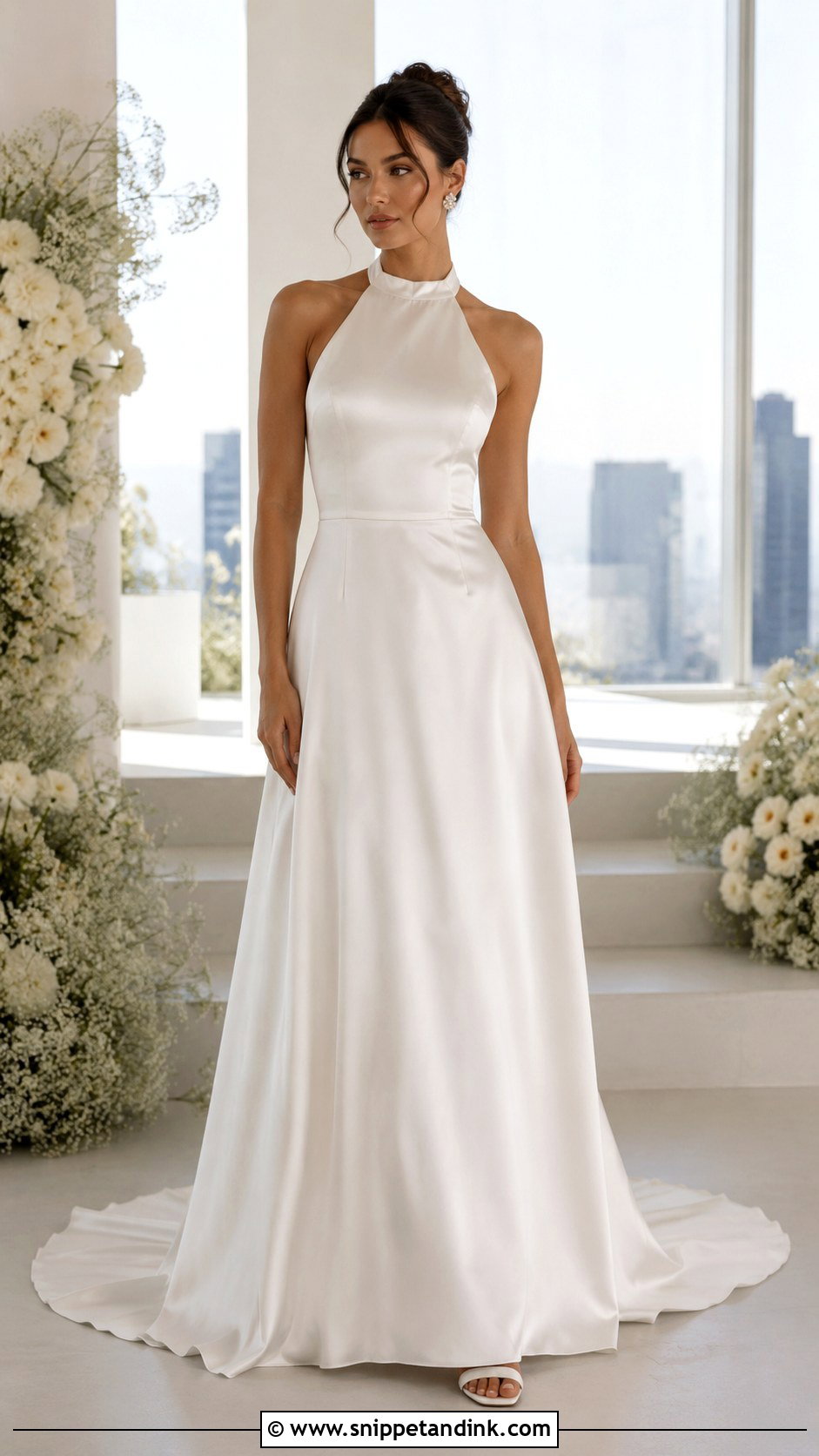
A halter supports from the neck, which some brides find more comfortable than strapless. It draws the eye upward and looks sleek with a fitted bodice. Check that the neck strap doesn’t pull heavily on the back of your neck after a few hours; a wider strap spreads the weight. Skip the necklace, wear statement studs with a polished updo, and soften the modern lines with a long plain veil for the ceremony.
14. One Shoulder Satin A Line Wedding Dress
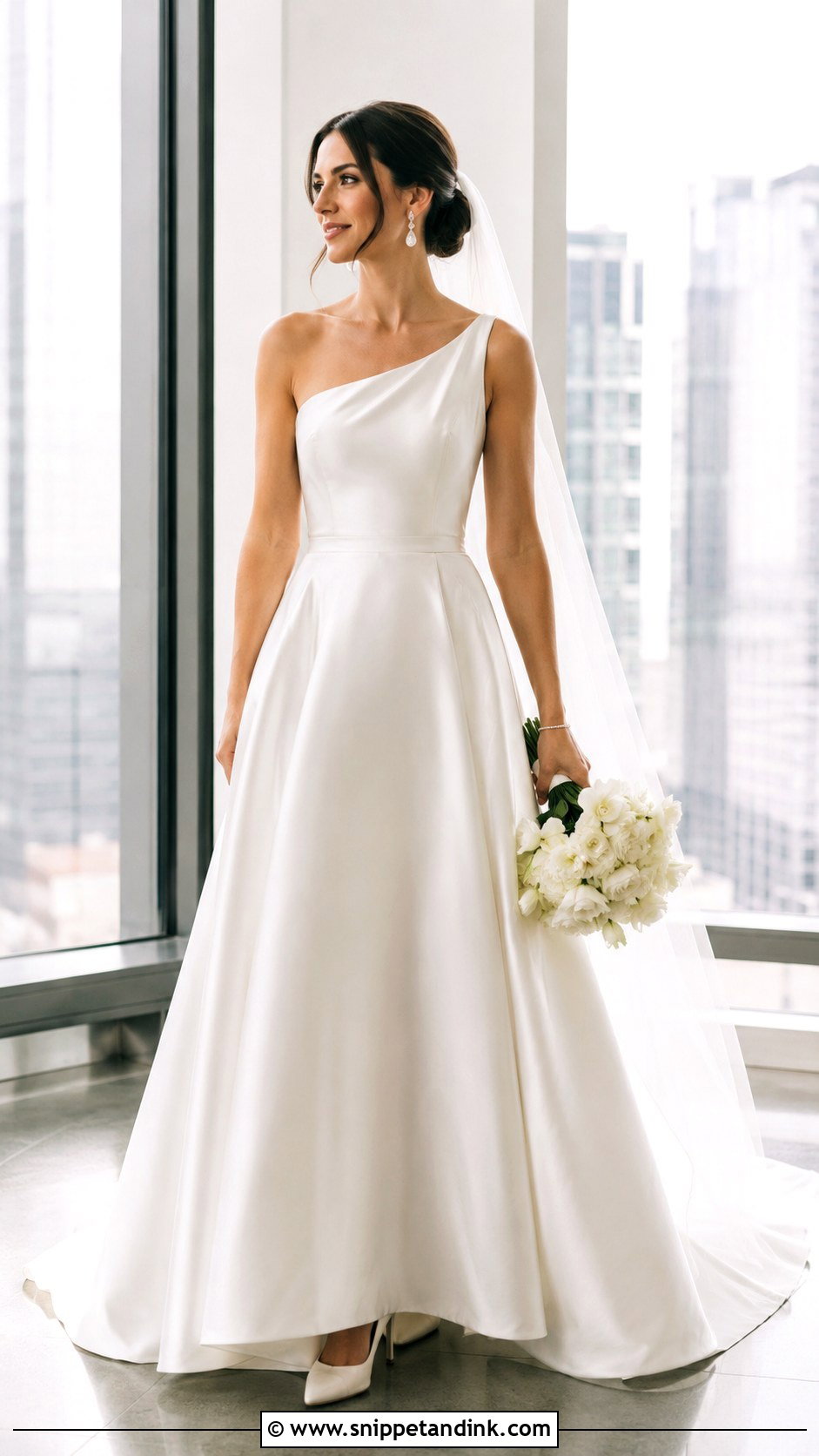
One-shoulder necklines are asymmetric, so the balance matters. A single wide strap or a soft draped shoulder looks better than a thin strap, which can look unfinished in satin. Wear the veil lower on the head so it doesn’t cut across the neckline. Sleek earrings, a smooth bun and a sculptural bouquet suit modern venues and city weddings.
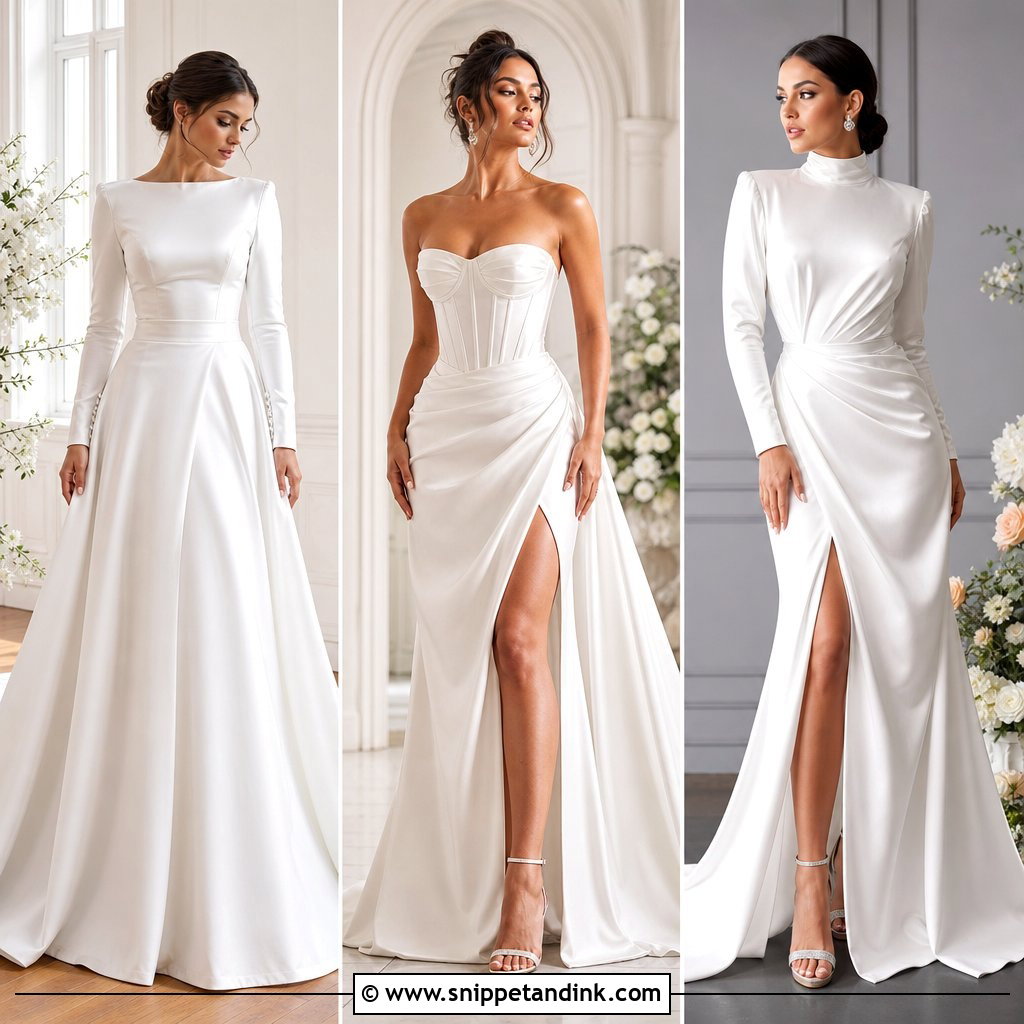
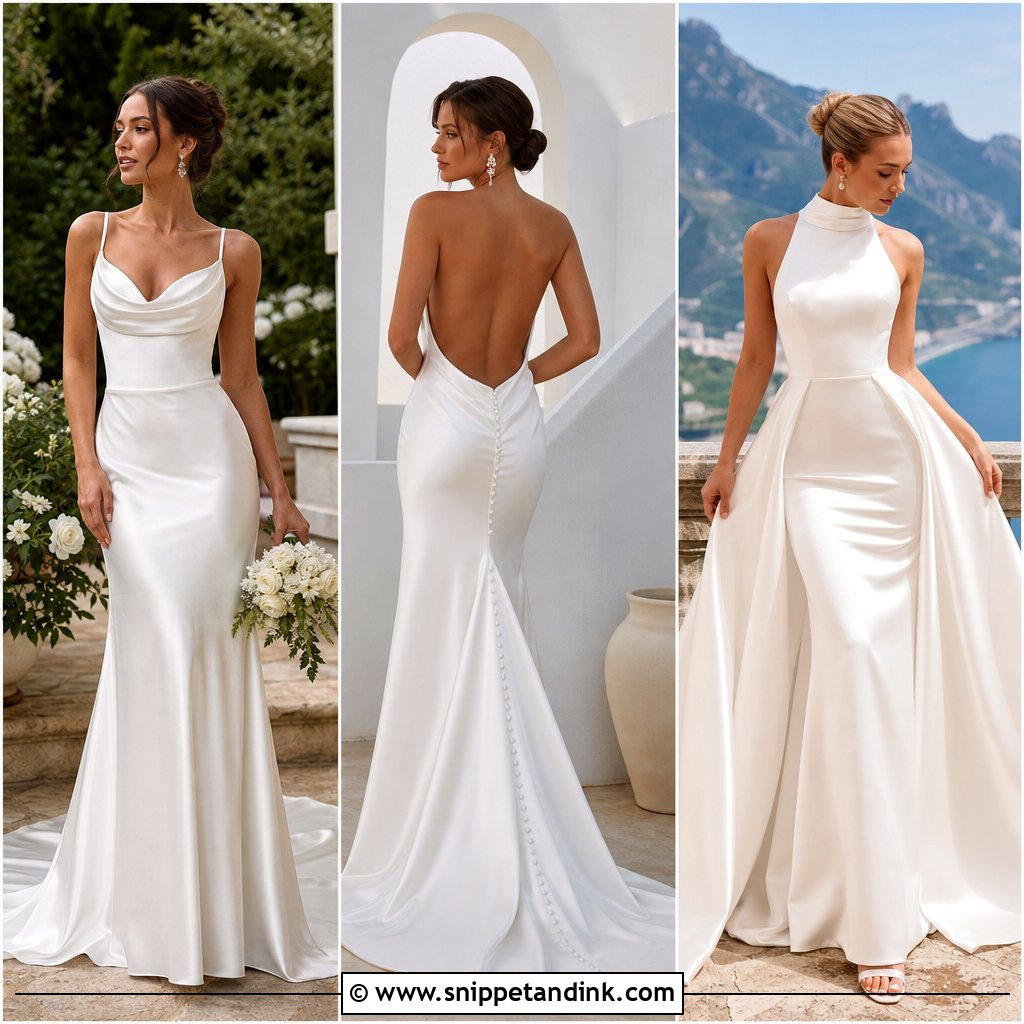

15. Cowl Neck Satin A Line Wedding Dress
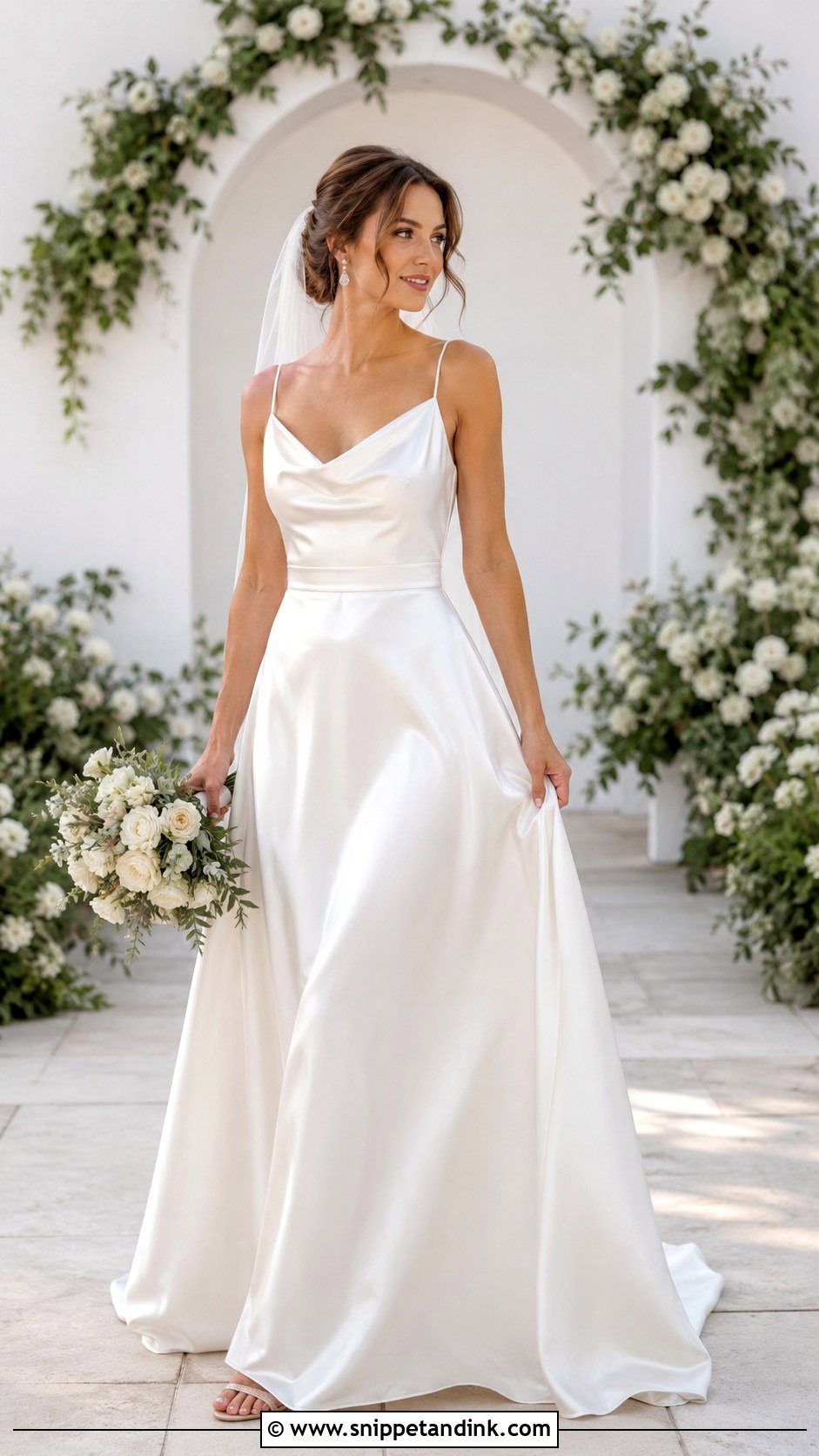
A cowl neck only works in fluid satin, such as silk charmeuse or a soft crepe-back satin; stiff duchess satin can’t drape into folds. That fluidity also means it clings, so consider the undergarments early. Slim straps, a defined waist and a gently flowing skirt keep it soft. Loose waves or a low bun and minimal jewelry let the drape lead. It’s a relaxed alternative to a structured bodice.
16. Corset Satin A Line Wedding Dress
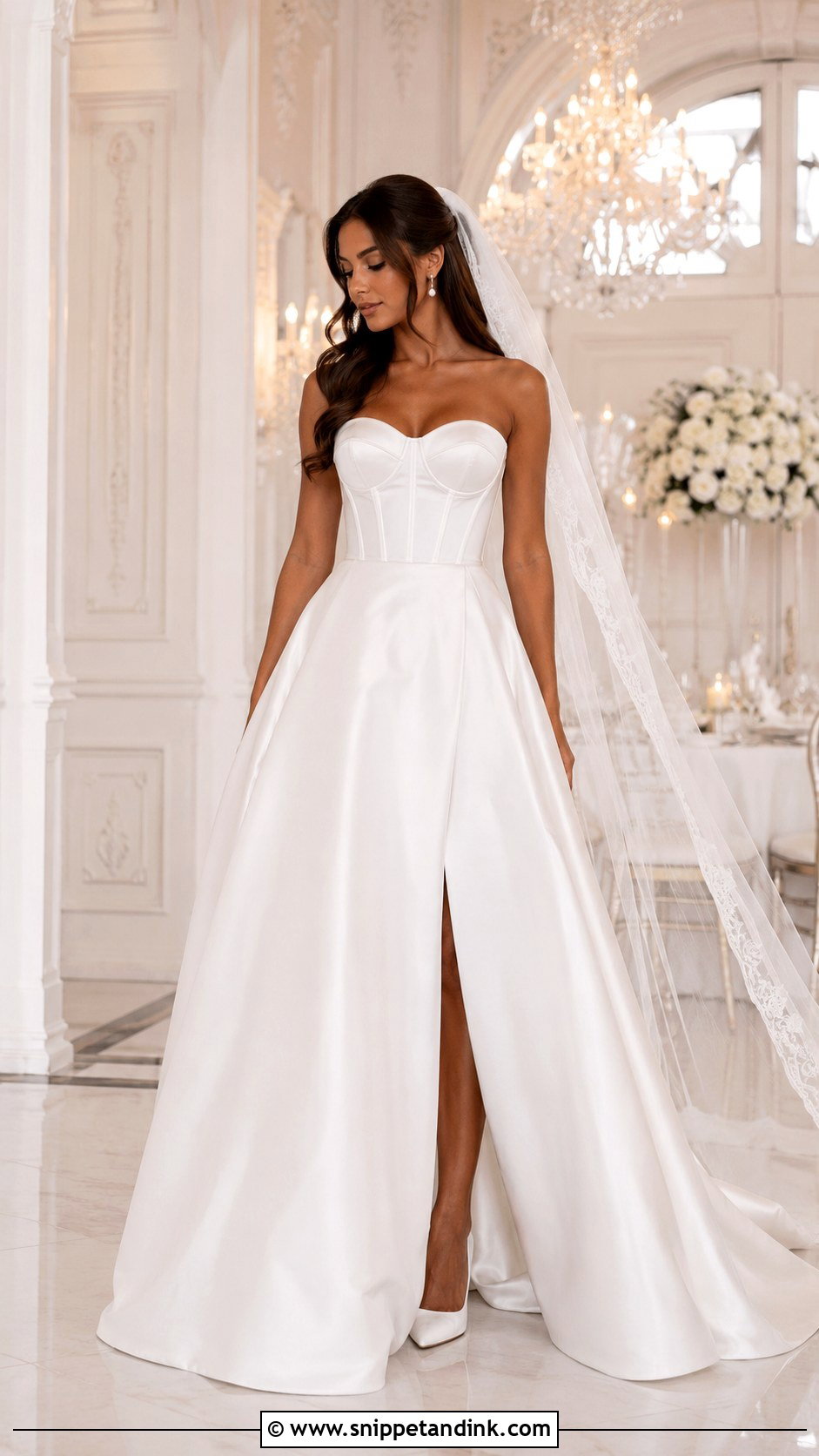
A corset bodice gives shape and real support, and a lace-up back makes it adjustable if your weight shifts in the months before the wedding. Visible seaming or subtle boning both suit satin. The skirt then opens into a smooth A-line. Keep everything else clean: pearl drops, a cathedral veil and pointed satin heels. A soft bouquet balances the structure. Practise sitting in it; a corset that’s comfortable standing can press at the ribs when seated.
17. Minimal Satin A Line Wedding Dress
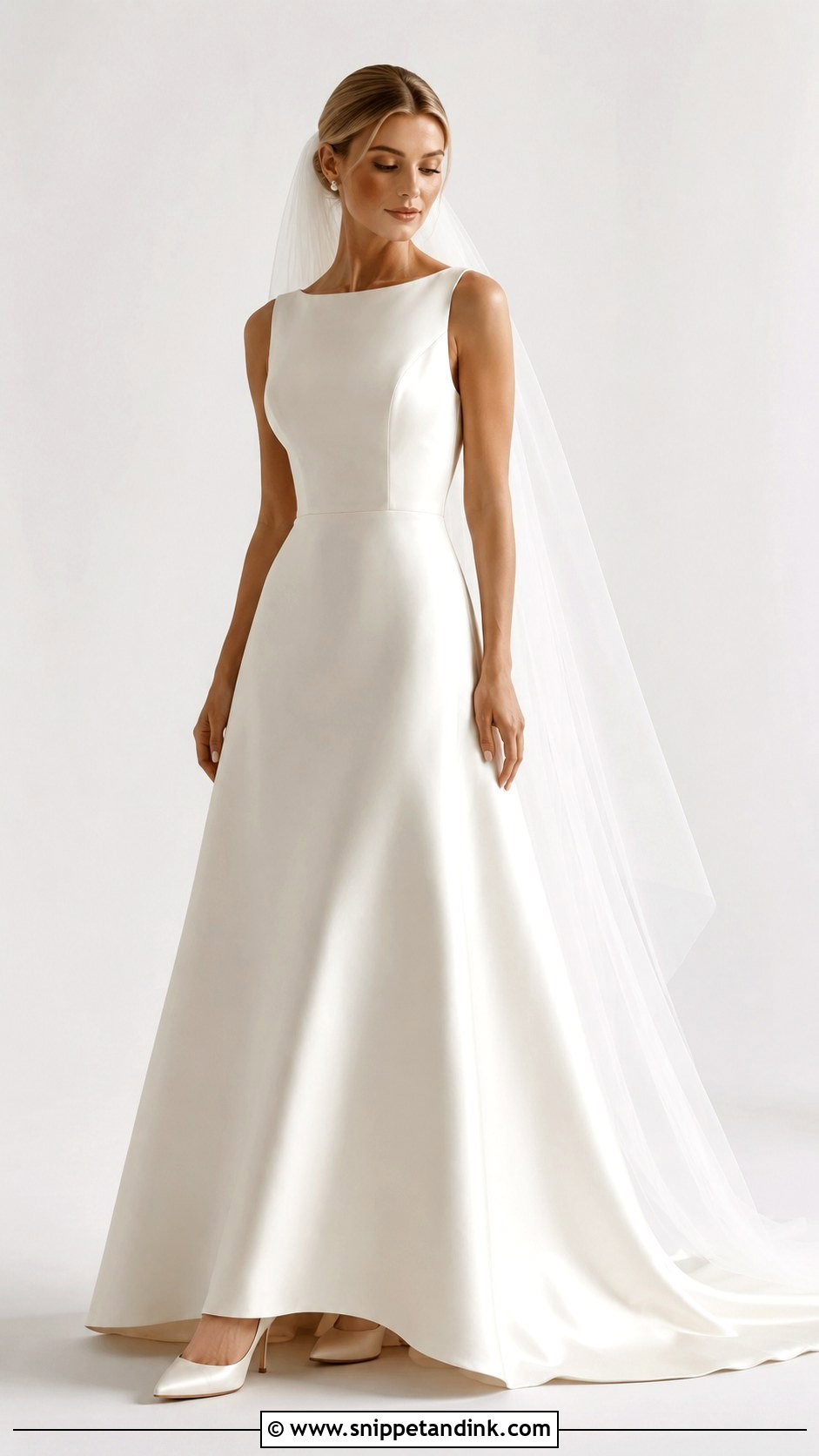
With nothing to hide behind, a minimal satin gown depends entirely on fit and fabric. A smooth bodice, simple neckline, natural waist and soft flare is the whole recipe. I spend more time on tailoring with these dresses than any other, because a ripple at the side seam is the first thing a camera finds. Press it well, keep the accessories few, and it suits anywhere from a courthouse to a formal reception.
18. Pearl Satin A Line Wedding Dress
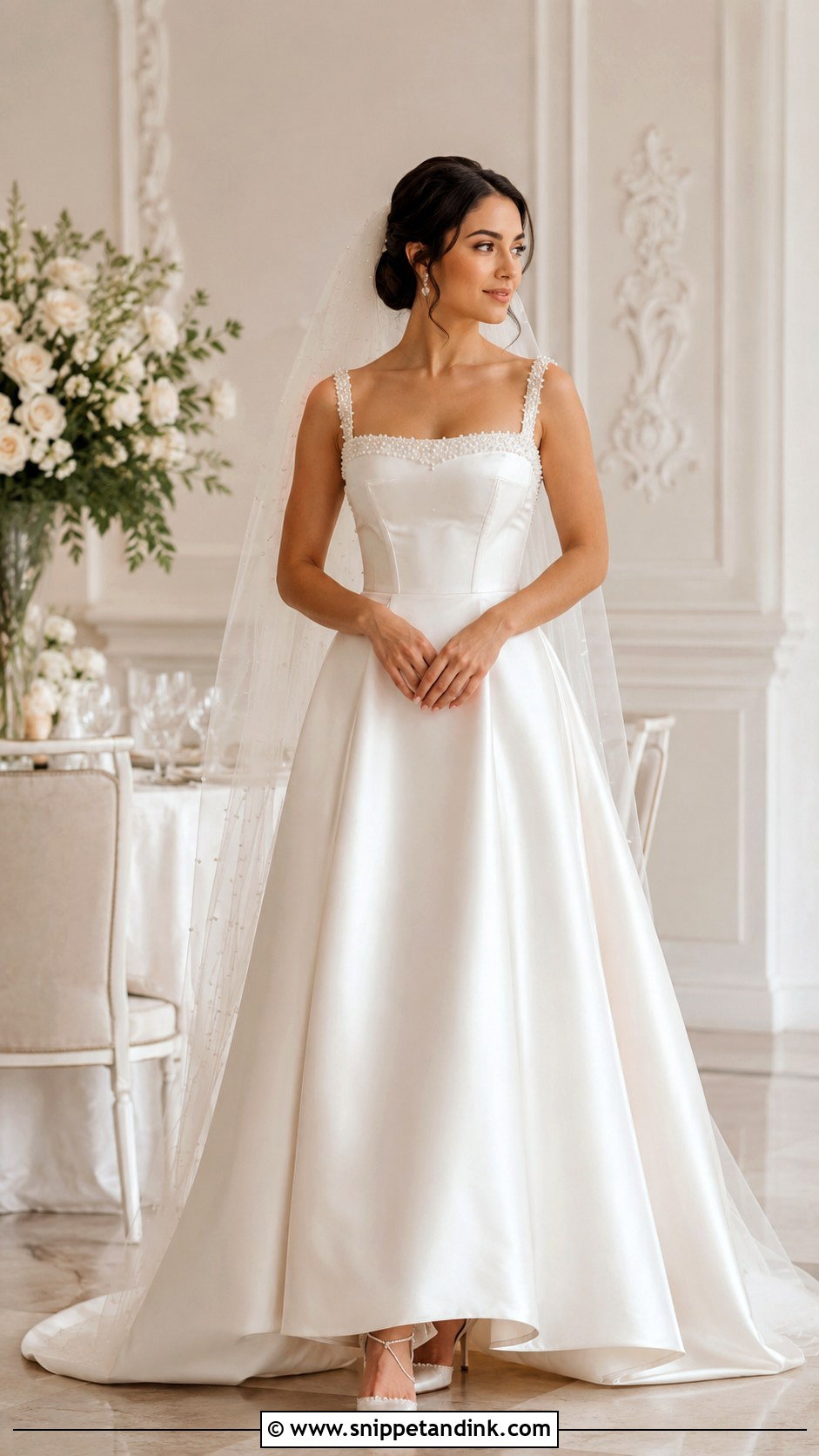
Pearls add gentle texture to satin without the sparkle of crystals. Small pearl details on the bodice, straps or veil work best with a clean skirt. Too many pearl pieces at once looks crowded, so if the dress has them, keep the jewelry to simple earrings. Check that sewn-on pearls are secured individually, not on a single thread, so one snag doesn’t send a row across the floor.
19. Lace Bodice Satin A Line Wedding Dress
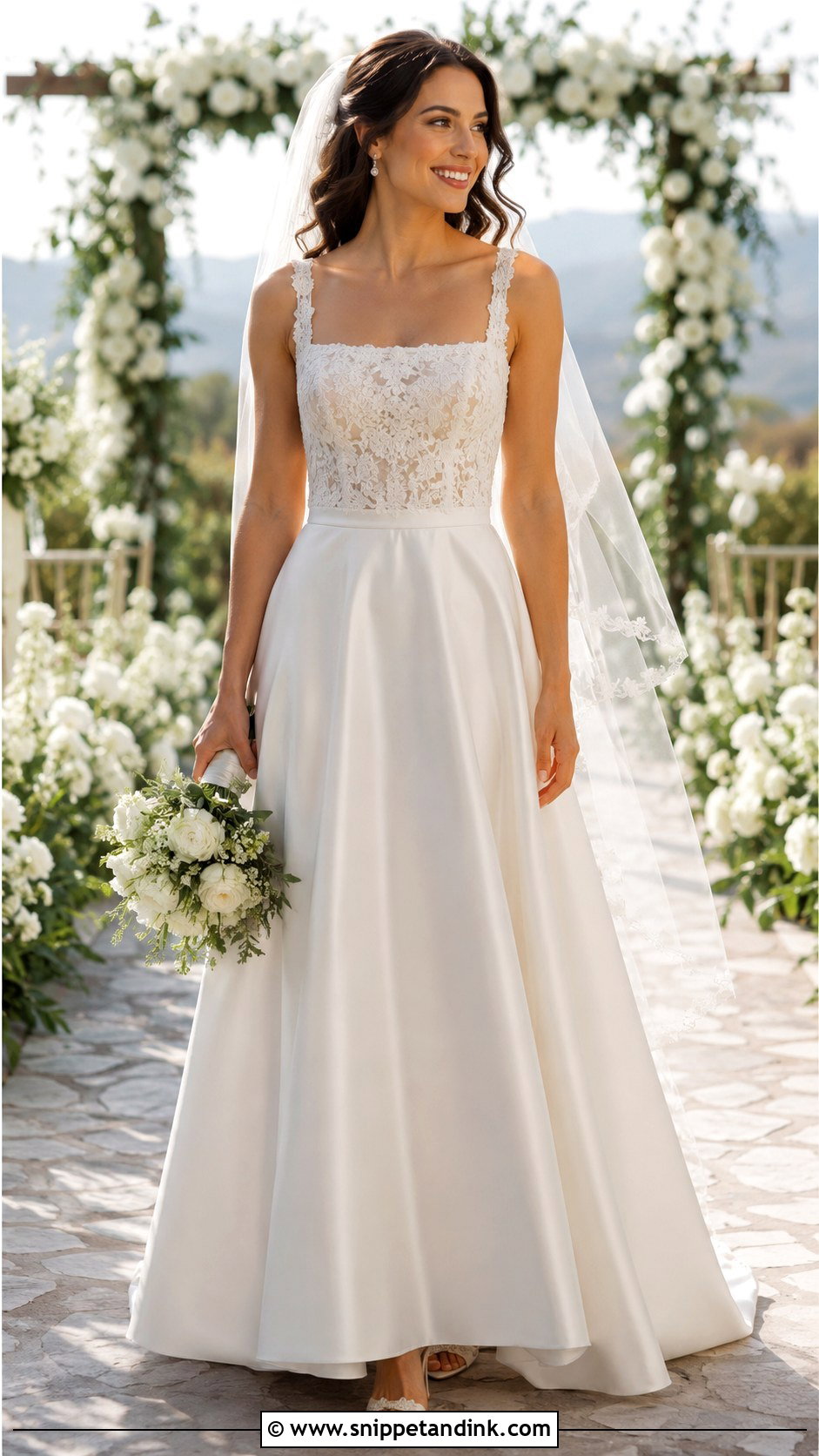
Lace near the face and satin below gives texture and softness without committing to a full lace gown. Choose the bodice neckline first, V, square or short sleeve, then keep the skirt plain. The join between lace and satin is where I look closely; it should be invisible or neatly finished, not puckered. A veil with little or no trim keeps the lace from competing. Soft curls and ivory heels finish it.




20. Pleated Satin A Line Wedding Dress
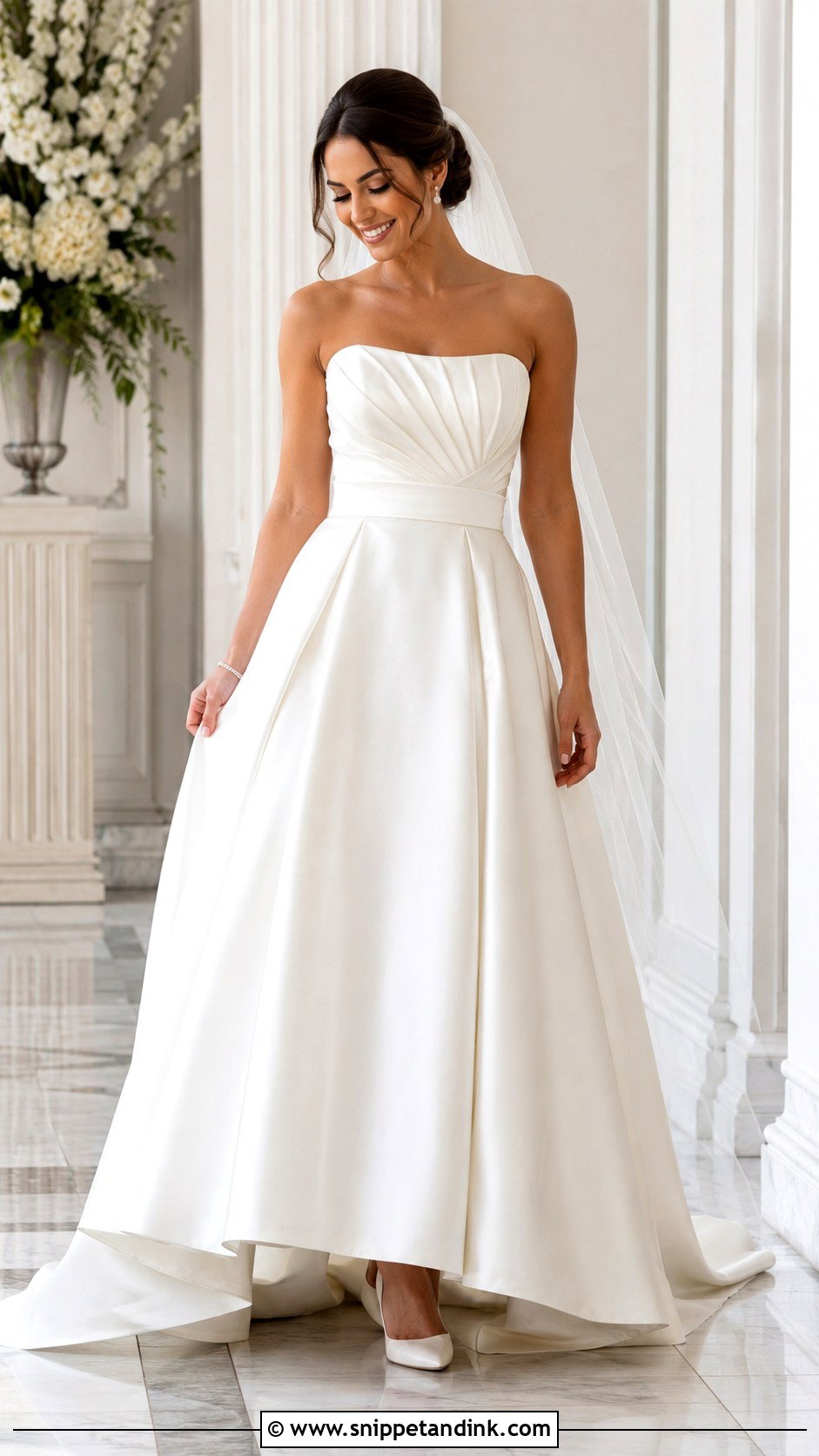
Pleats add dimension to satin’s shine, but they must be placed carefully or they add bulk at the hip. A pleated bodice or folded waist detail looks structured; a pleated skirt moves well in walking photos. A plain veil lets the pleating show. Understated earrings and simple heels keep it calm. It sits between a minimal gown and a beaded one.
21. Satin A Line Wedding Dress With Slit
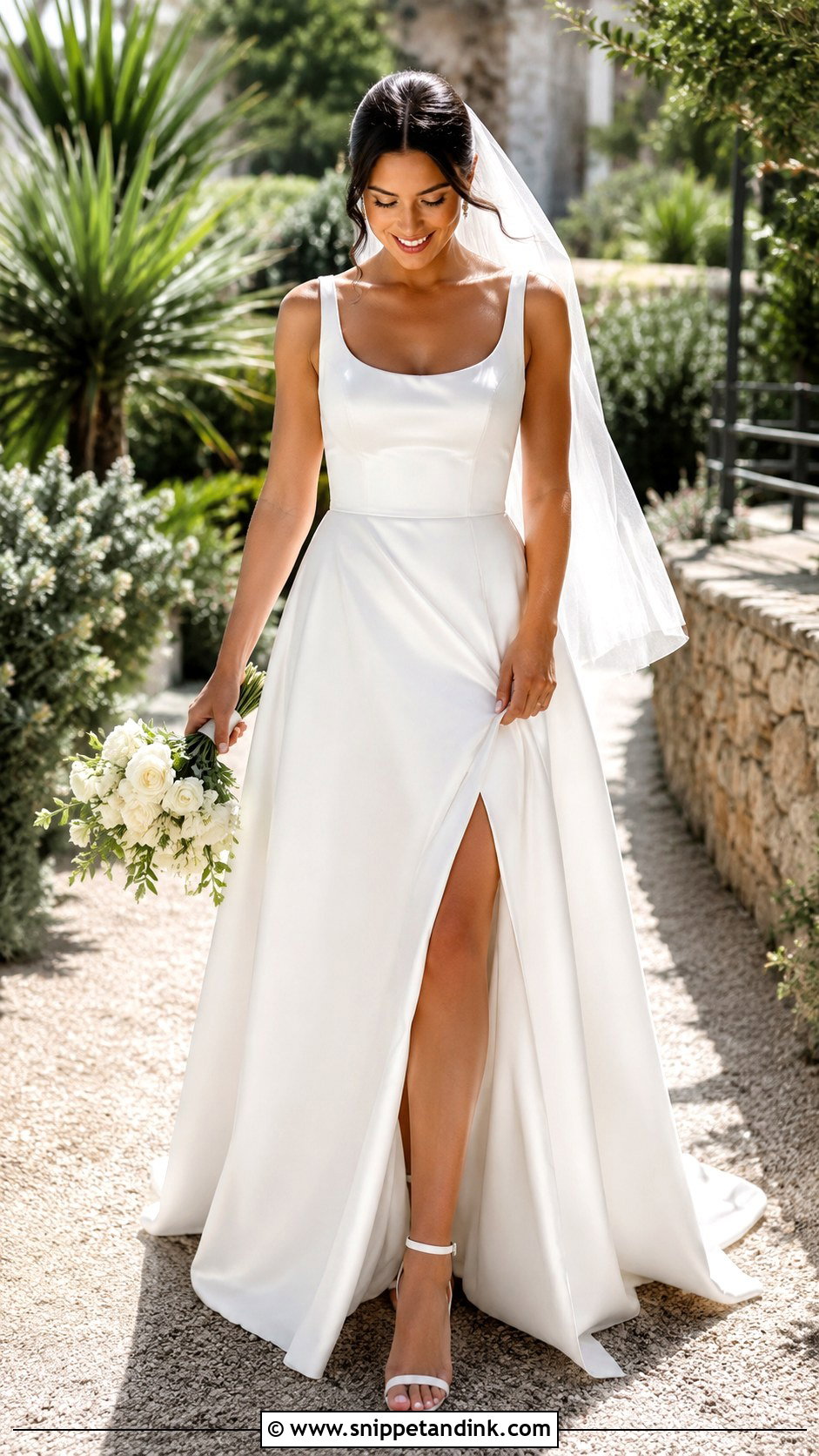
A slit adds movement, and it should open naturally as you walk rather than gape when you stand. I check this on a step or stair at the fitting, since that’s when a slit opens widest. Your shoes will be seen, so choose ankle-strap heels that are bridal and comfortable. A clean bodice and sheer veil keep it classic. It suits warm-weather and outdoor weddings.
22. Satin A Line Wedding Dress With Train
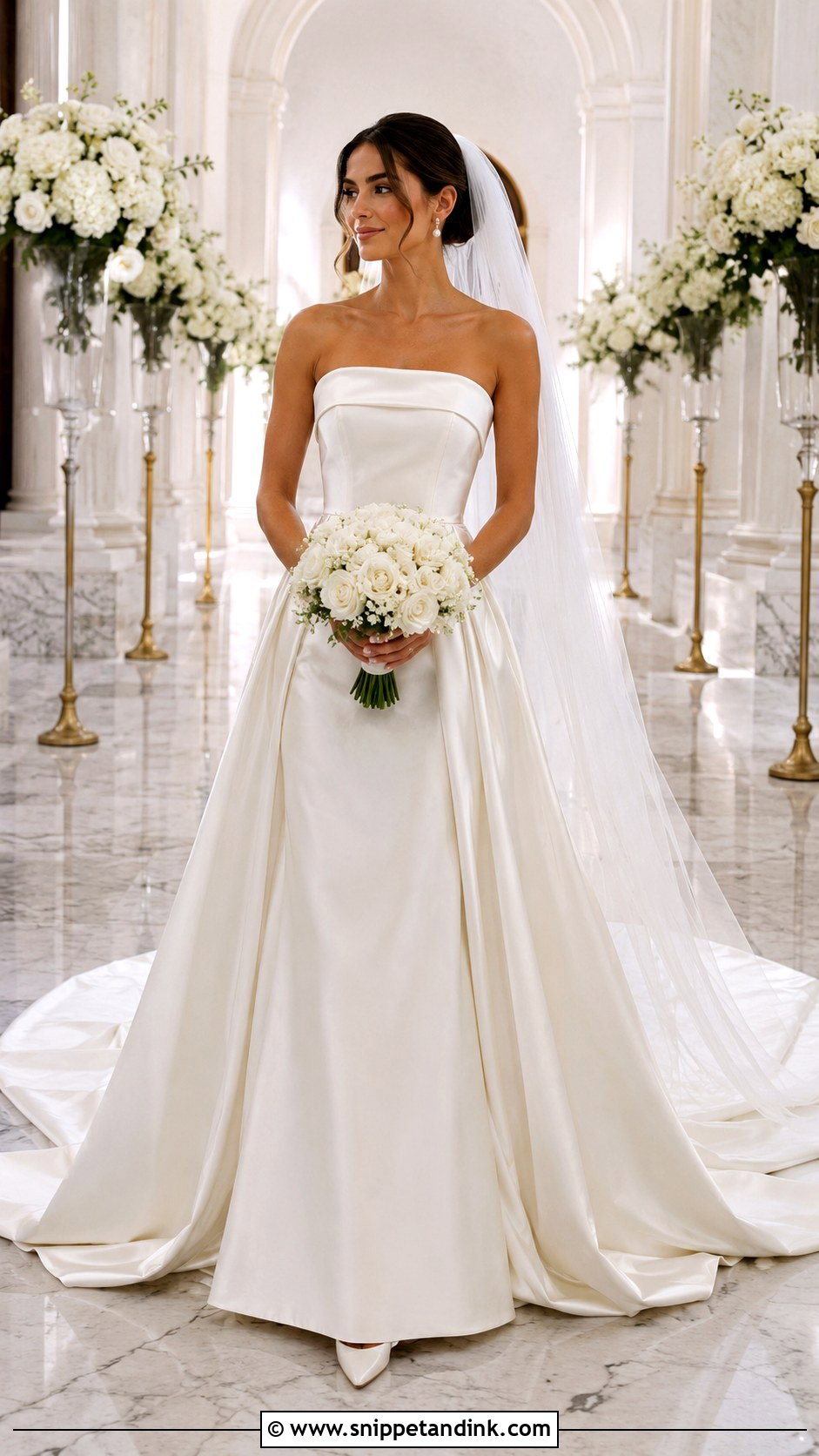
Satin shows off a train because the fabric reflects light along its whole length. A chapel train is easier to manage; a cathedral train makes a bigger ceremony moment. Plan the bustle during alterations, not the week before: a French bustle tucks under, an over-bustle hooks up on top, and each suits different trains. Have a bridesmaid practise it before the day. Classic pumps and a veil matching the train length finish it.
23. Satin A Line Wedding Dress With Buttons
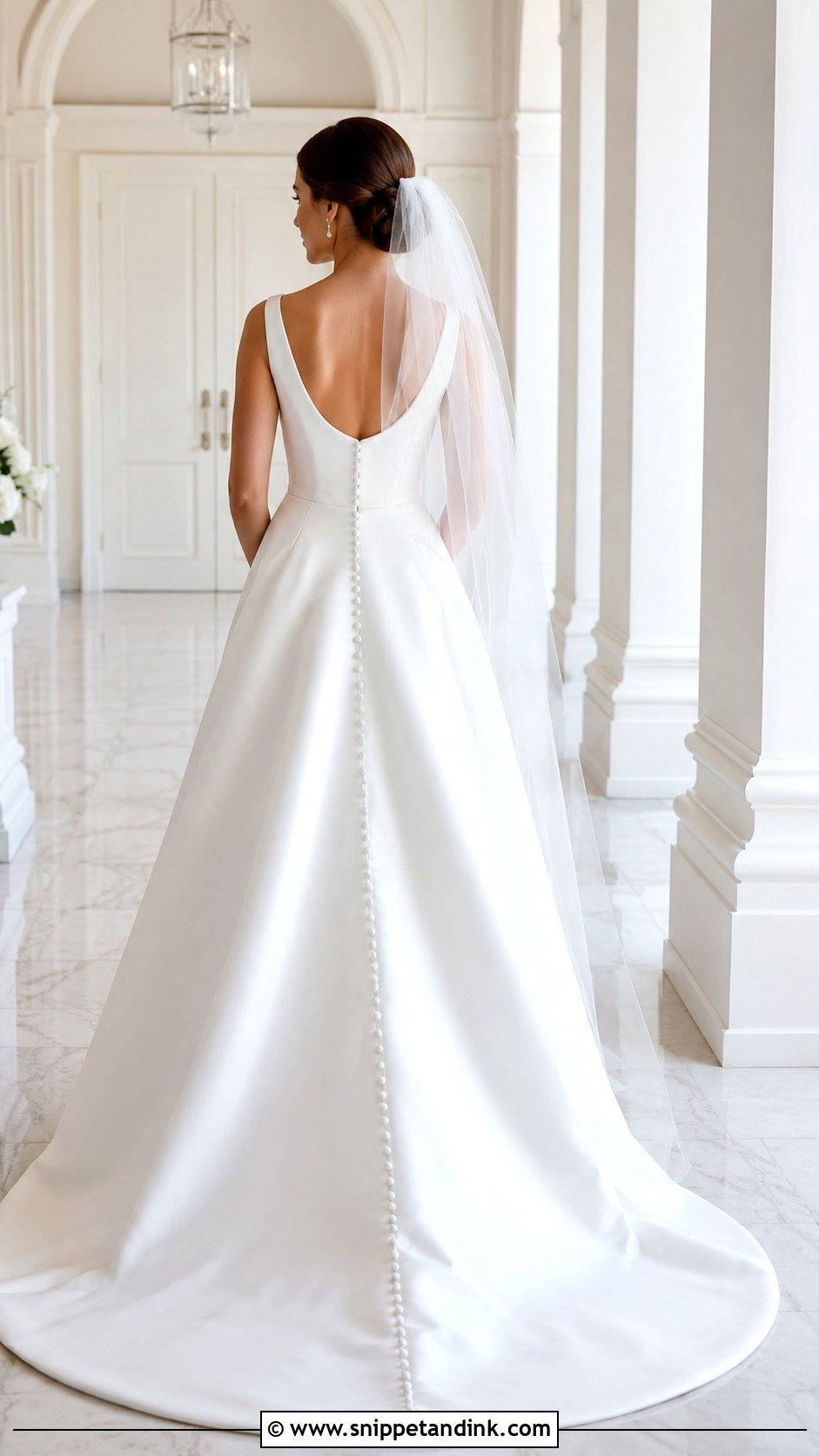
Covered buttons down the back add detail without breaking the satin surface. Most are decorative over a hidden zip, which matters on the day, because a full row of working loops can take a long time to fasten. Ask which kind yours are. Remove the veil for some portraits so the back shows. A low bun and closed-toe heels suit the classic feel.
24. Tea Length Satin A Line Wedding Dress
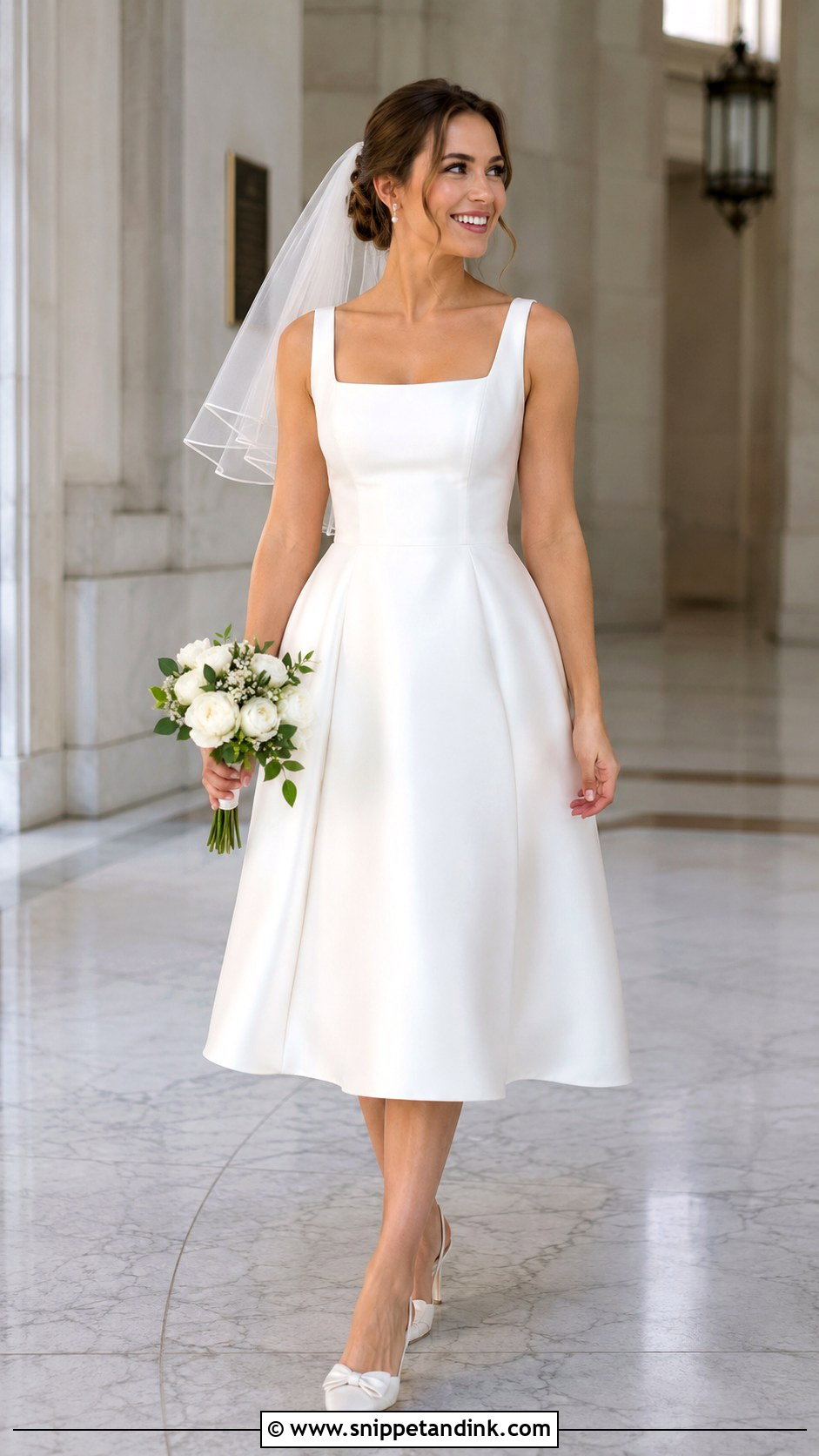
Tea length sits between knee and ankle, so the shoes become part of the outfit. Slingbacks, block heels or embellished pumps all work. I reach for it most often for courthouse weddings, small ceremonies and daytime receptions. A fitted bodice and flared skirt keep it bridal; a short veil or a bow in the hair helps too. Keep the styling neat so it doesn’t read as a cocktail dress.
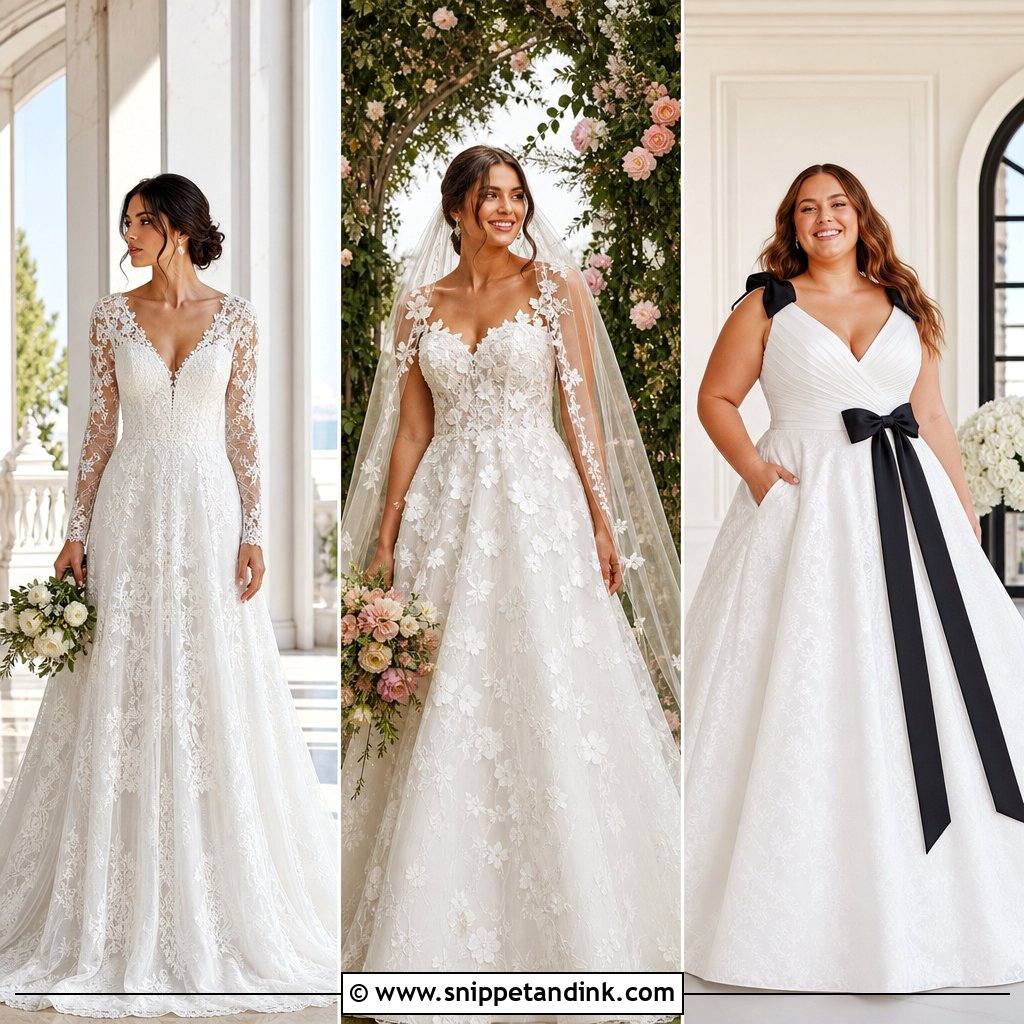

25. Champagne Satin A Line Wedding Dress
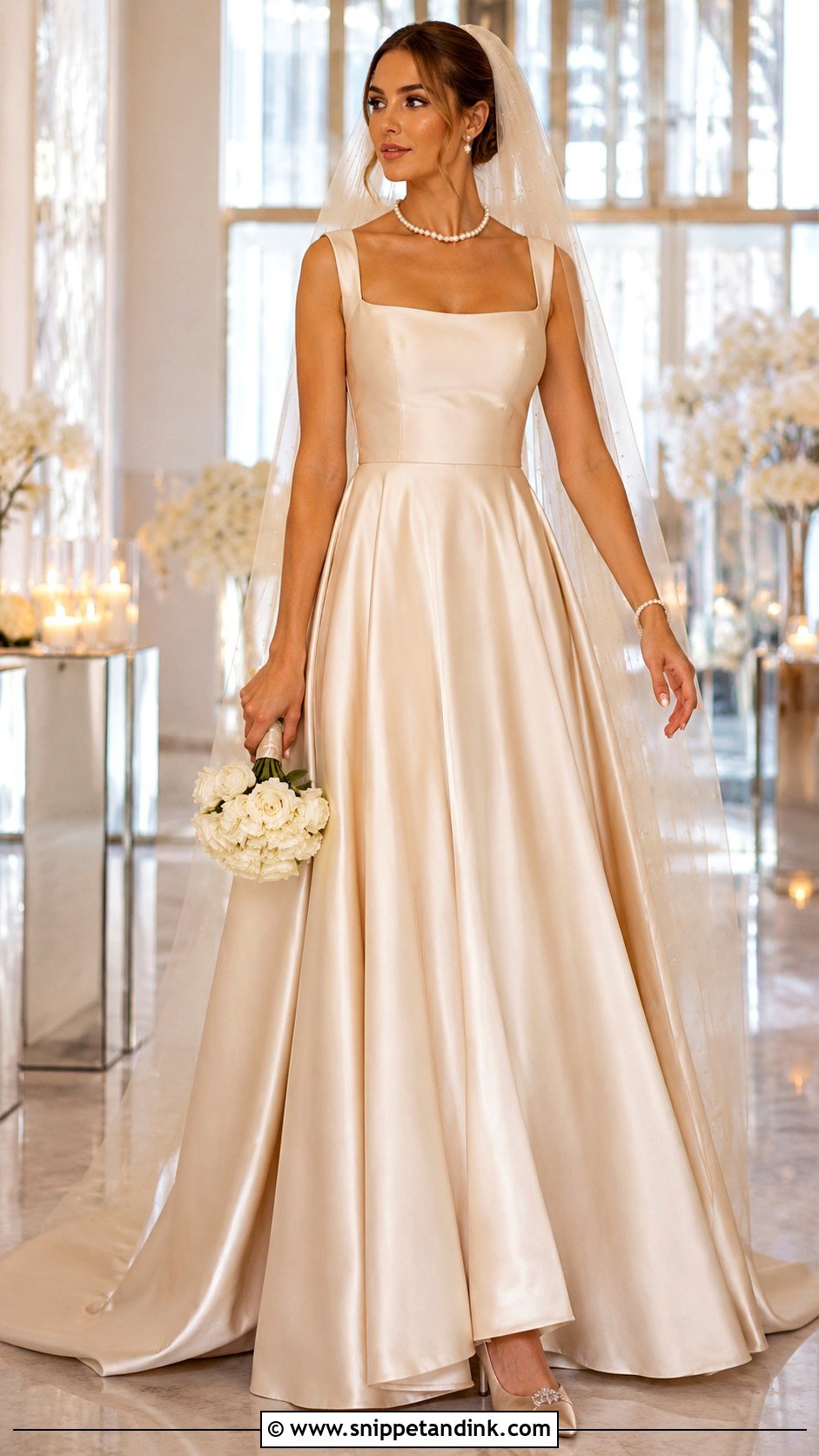
Champagne satin gives warmth instead of bright white, and it flatters many skin tones that look sallow next to optic white. Try it in daylight and in the venue’s evening lighting, because champagne can read almost gold in warm light. A simple silhouette keeps the colour refined. Ivory or champagne heels, warm pearls and a matching-tone veil complete it. It suits garden, hotel and evening settings.
Creases, Water Spots and the Morning After
Satin is less forgiving than lace or tulle on the day itself, and a little planning saves a lot of panic.
- Have the dress steamed the day before or the morning of, never pressed with a hot iron directly on the face of the fabric.
- Keep water away from it. Satin can water-spot, so a damp hand or a splash from a glass leaves a mark; blot gently with a dry cloth rather than rubbing.
- When you sit, smooth the skirt under you and lift the back slightly, so you’re not crushing the same section all evening.
- Pack a small kit for your bridesmaid: fashion tape, white chalk for marks, a clean white cloth and spare bustle ribbons or hooks.
After the wedding
Get the dress to a cleaner who specialises in bridal gowns within a few weeks. Clear spills such as champagne or sugary drinks can be invisible at first and turn yellow over time. Once it’s clean, store it in an acid-free box or a breathable cotton garment bag, never plastic, somewhere cool and dark. Long-term hanging stretches the bodice and shoulders under the weight of the skirt, so a box is better for satin over the years.
Satin Rewards Good Tailoring More Than Decoration
Satin A-lines work because they combine comfort and structure, and almost any detail can be added to the same base: a strapless neckline, off-shoulder sleeves, a basque waist, pearls, pockets or a long train. The finished look depends on matching the gown with the right veil, shoes, jewelry and hairstyle for your venue. Give the satin room to shine, put your budget into fit, and the dress will still look right in photos years from now.
You'll Like These Ideas:






Leave a Reply