
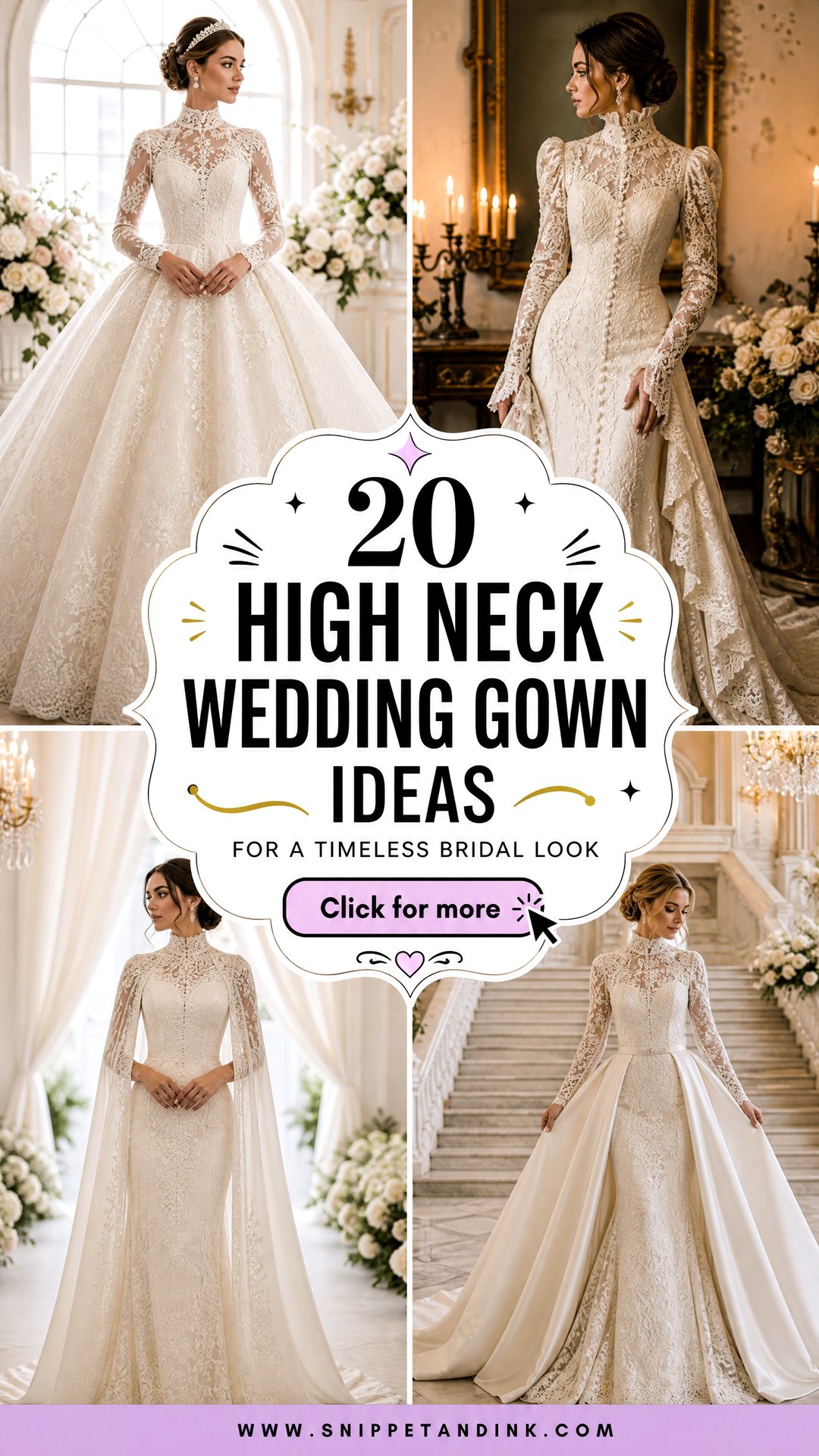
A high neckline frames the face the way a good portrait crop does, and it brings structure to the whole look. The covered gowns brides try on now range from sculpted satin to sheer lace, floral appliqué, pearl beading and open backs, in chiffon as often as crepe. The neckline sits happily on nearly every skirt shape, from A-line and mermaid to sheath and ball gown. What makes or breaks it in my fittings is balance: the earrings, the hair and the veil have to leave the collar room to breathe. Designers keep reworking high necks with sheer yokes and architectural cuts, so there’s far more range than the old buttoned-up image suggests. Below are twenty versions, classic to modern, with my notes on fit and styling for each.
Does a Covered Collar Suit a Short Neck or a Full Bust?
Brides often tell me in their first appointment that high necks aren’t for them. Occasionally that’s true, but usually they tried the wrong version of the neckline, not the wrong neckline.
If Your Neck Is on the Shorter Side
A solid collar that climbs to the jaw can make a short neck disappear. A mock neck that stops at the base of the throat, or an illusion yoke with lace only along its edge, gives the same line while showing skin. Wearing your hair up adds visible length too.
If You Have a Fuller Bust
Opaque fabric from waist to chin can turn the chest into one block. A sheer yoke, a keyhole, vertical seaming or a defined waistband breaks that up. Internal support matters even more here, because a collar can’t lift anything.
Shoulders and Season
Halter cuts that bare the shoulder suit narrow and athletic frames, while on broad shoulders a cap or long sleeve softens the width. And covered fabric is warm. For a summer garden, look at chiffon, illusion tulle and unlined lace sleeves rather than satin all the way to the throat.
1. Lace Long Sleeve High Neck Wedding Gown
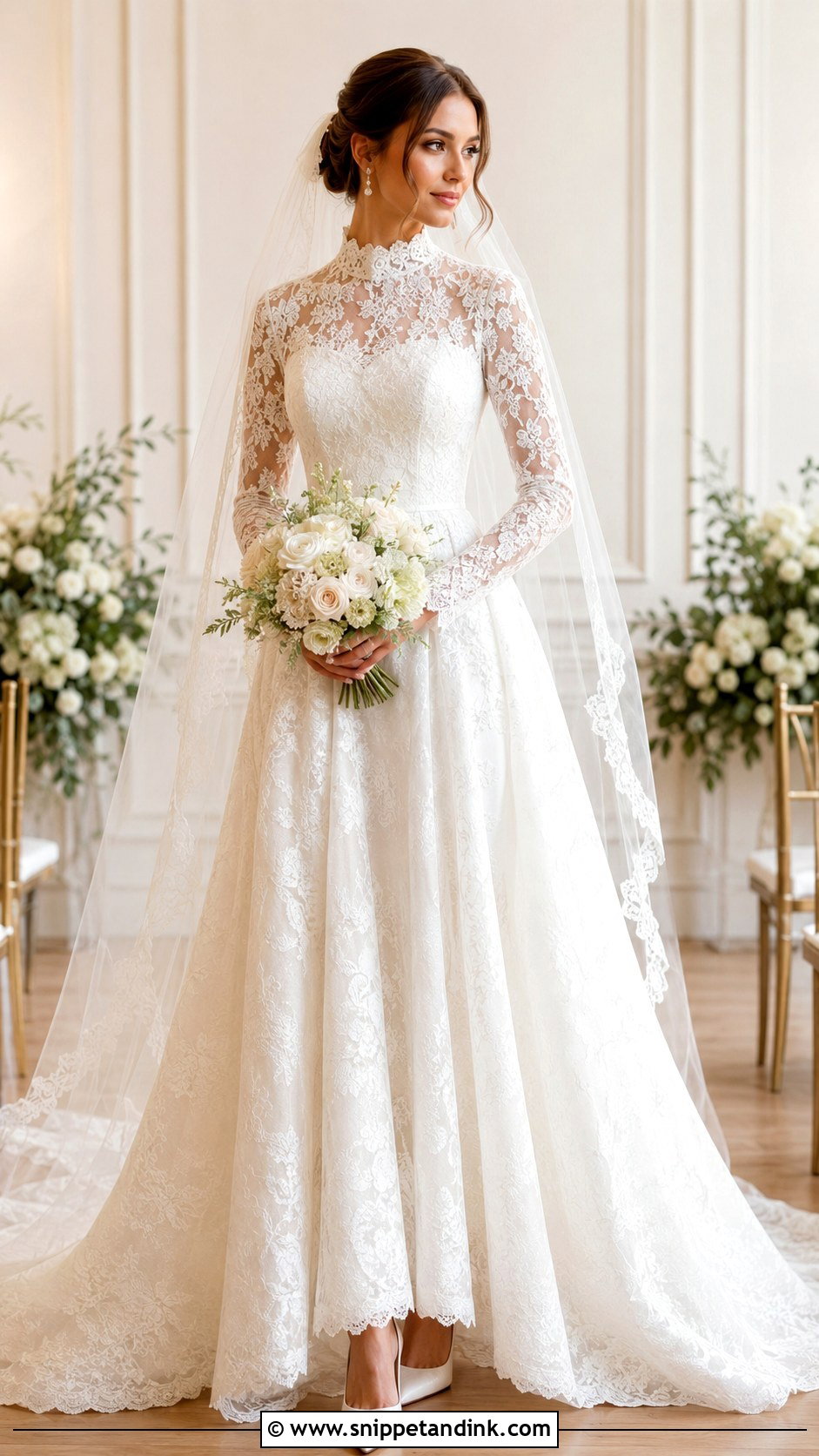
Long lace sleeves with a high neck give romantic coverage, but only if the lace is light. I steer brides toward soft floral lace over a thin lining, because heavy corded lace on both sleeves and collar starts to feel like armour by mid-afternoon. An A-line or fitted sheath keeps all that fabric in proportion, and covered buttons down the back finish it. Pearl drops and a low chignon leave the neckline visible, while pointed ivory pumps stay out of the way. For a formal indoor ceremony, a fingertip veil with a cut edge is my first suggestion. If you want less coverage, sheer lace sleeves and an illusion neckline still work, as long as the bodice itself is properly lined.
2. Satin A-Line High Neck Wedding Gown
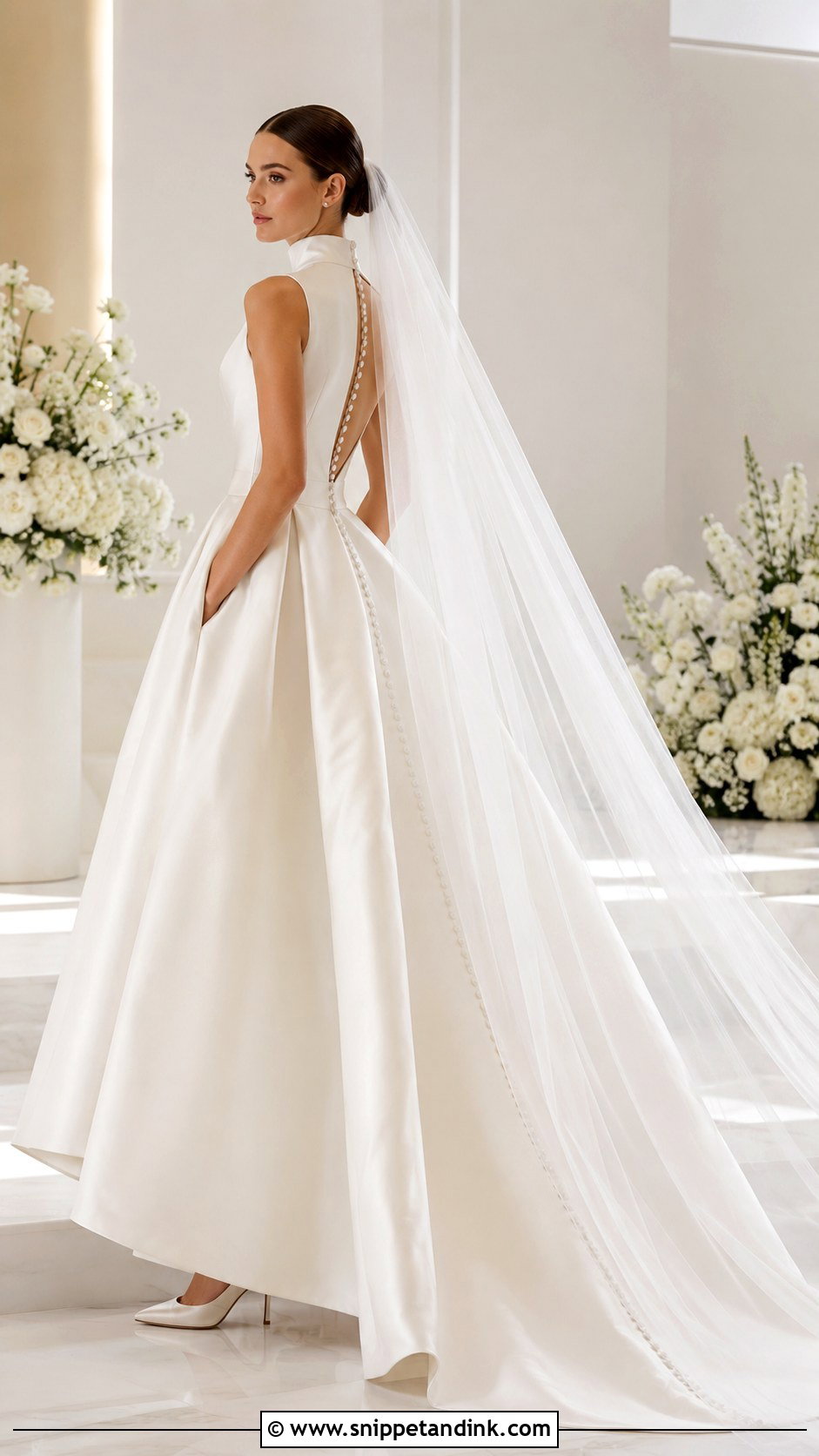
Satin shows every seam, which is exactly why I like it on a high neck: there’s nowhere for poor construction to hide. The A-line works because the fitted bodice defines the waist before the skirt opens out. Gentle pleats, princess seams or a narrow waistband give shape without decoration, and a covered collar with a low back and fabric buttons makes a strong contrast. One honest caution: satin creases wherever you sit, and by the reception a lap of fine lines across the skirt is normal. Heavier duchess satin resists it better, if that bothers you. Crystal studs, ivory satin pumps and a small structured bag suit the portraits. Wear the hair in a polished bun or sleek ponytail with a long, plain veil.
3. Illusion Lace High Neck Wedding Gown
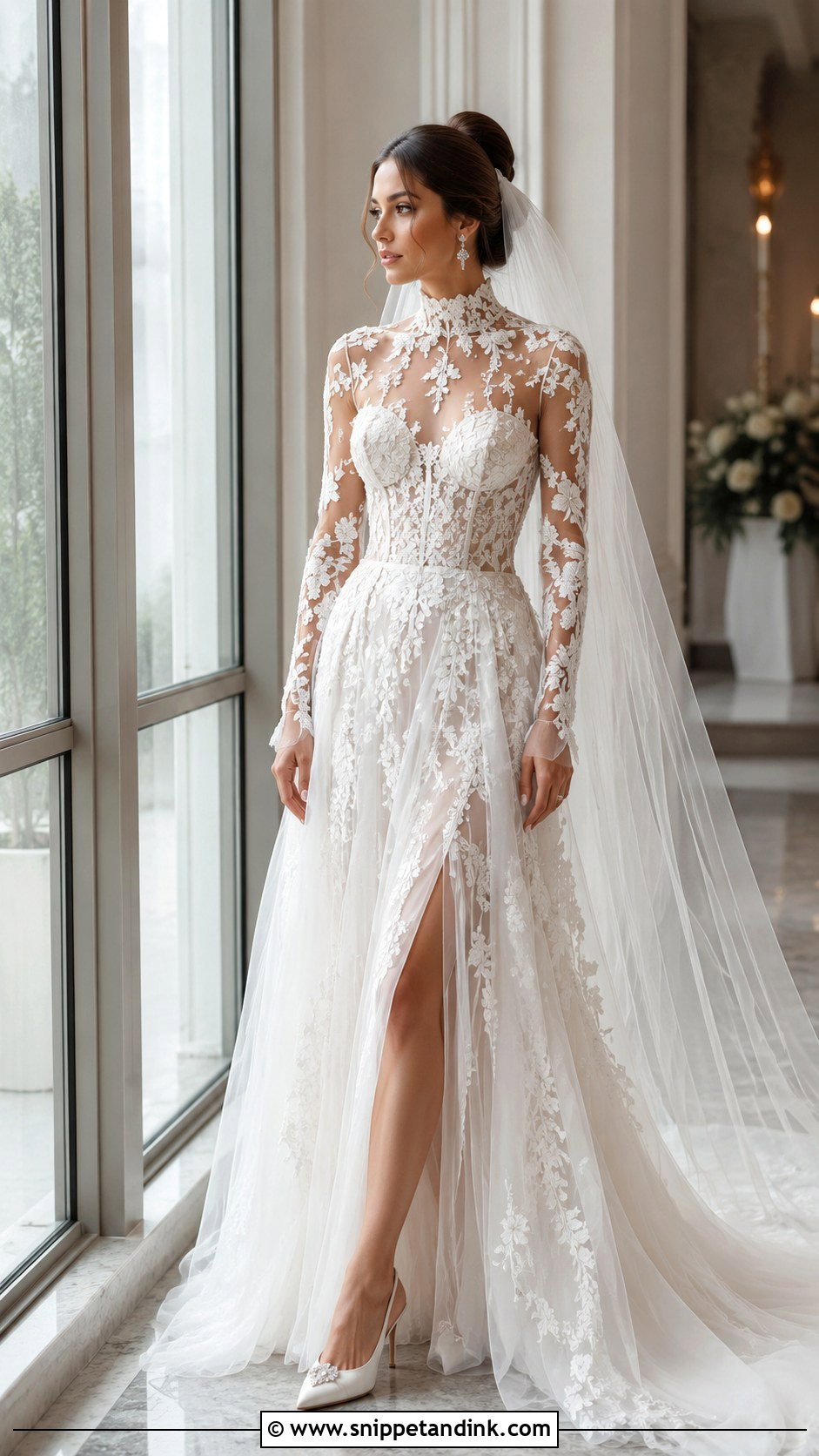
An illusion high neck gives you the line of a covered collar without the full coverage. Sheer tulle forms the base, and lace appliqués placed around the neck, shoulders and upper bodice do the framing. The first thing I check is the tulle shade against the bride’s skin. The closer the match, the more the lace appears to float on its own. Insist on a properly lined bust, then pick a skirt in tulle, crepe or chiffon. Skip the necklace; small diamond or crystal earrings are enough. A soft updo keeps the lace visible, and pointed slingbacks with a sheer cathedral veil finish it. If the veil carries lace too, match its placement to the dress, or the whole outfit gets busy.
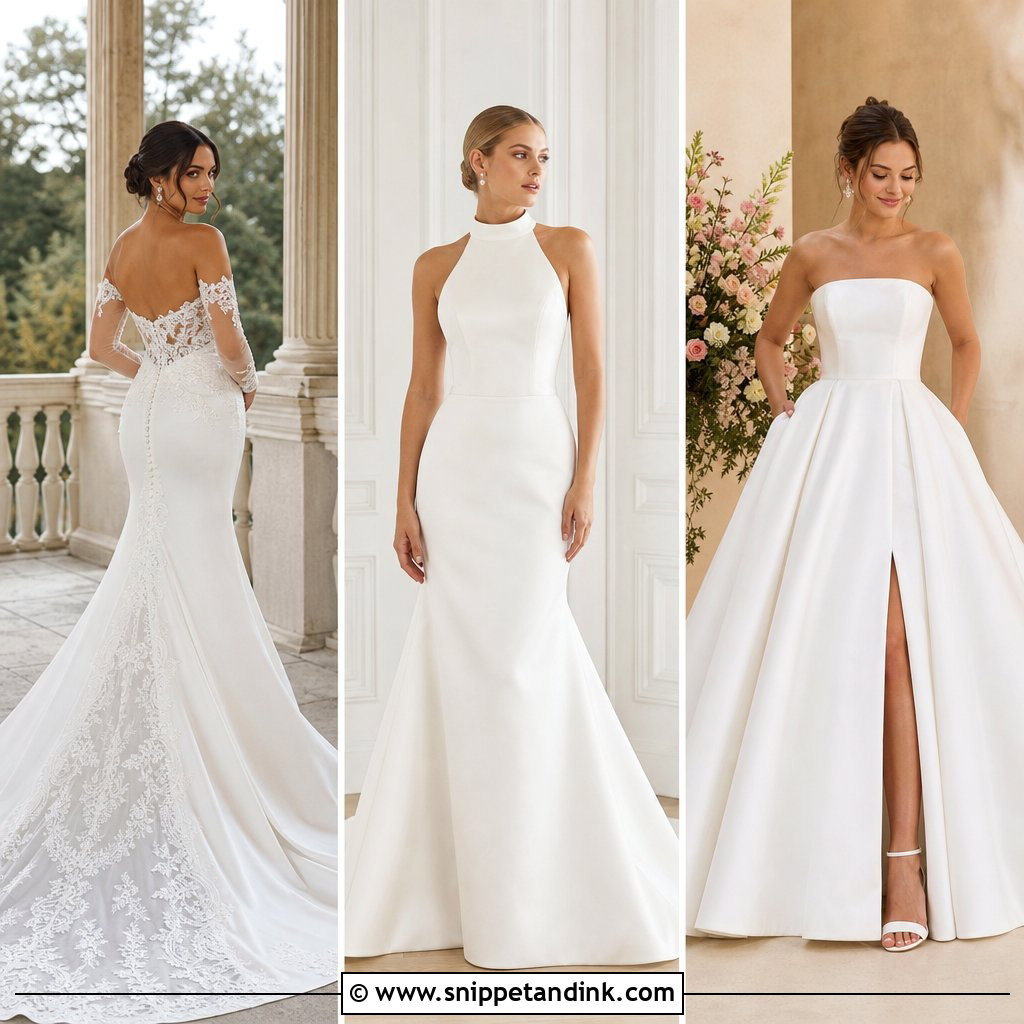
4. High Neck Halter Wedding Gown
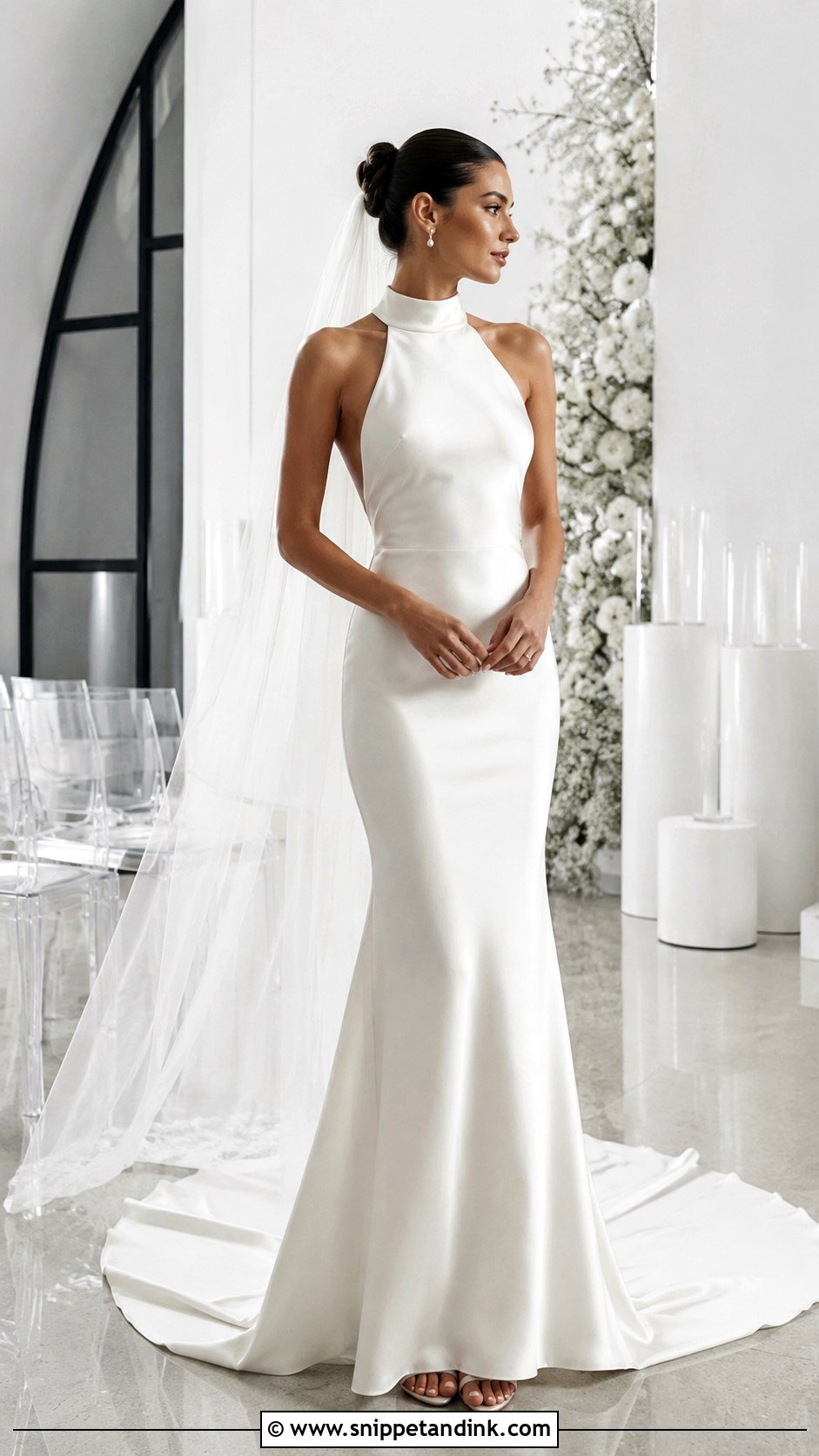
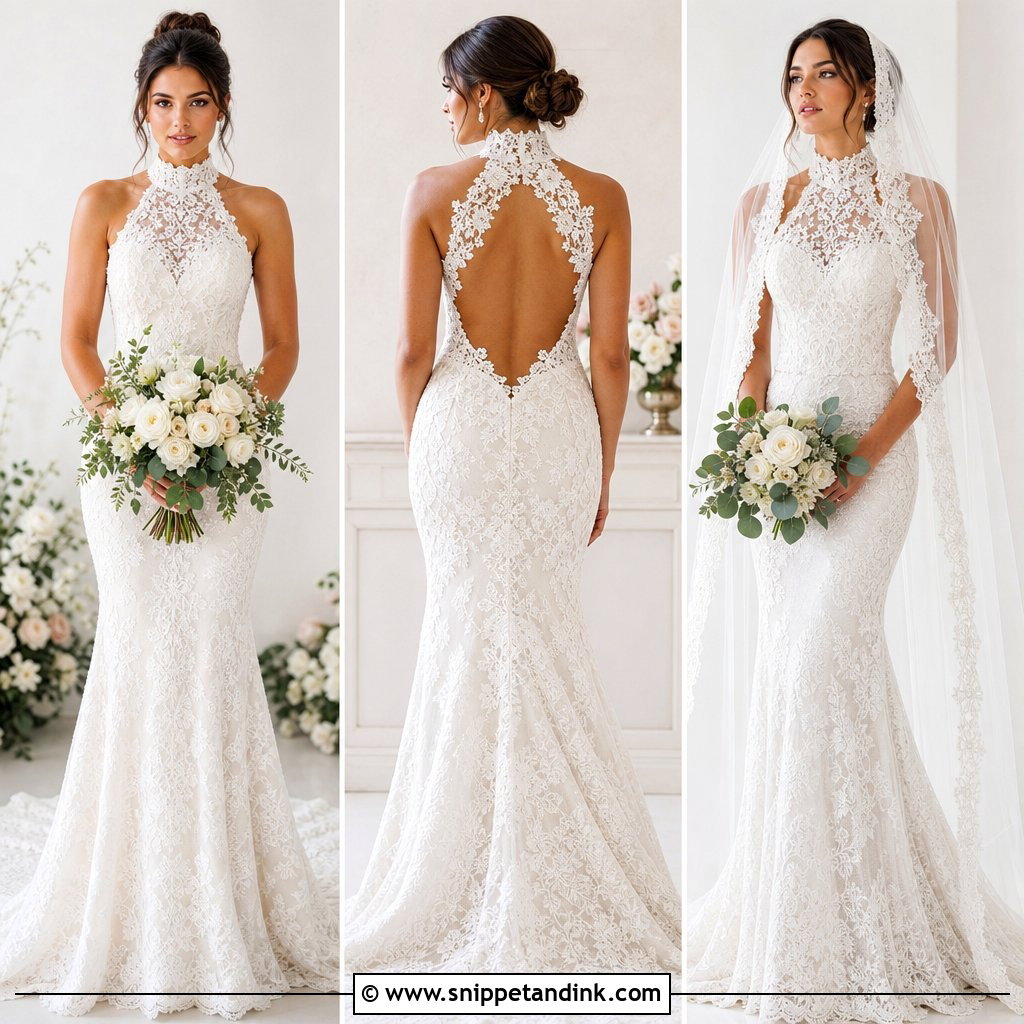
A high neck halter wedding gown leaves the shoulders bare and sends every eye to the face and collarbones. Fluid satin cut as a sheath is the understated version, and a structured A-line skirt brings more ceremony drama. An open back stops the covered front from feeling stiff. Support is the conversation I have first, because a halter can’t lean on straps. It needs built-in cups, boning and often a bra sewn into the bodice, so ask about all three at your first fitting rather than your last. Sleek drop earrings, a smooth bun and one fine hairpin suit it, along with metallic or ivory sandals and a chapel-length veil.
5. Open Back High Neck Wedding Gown
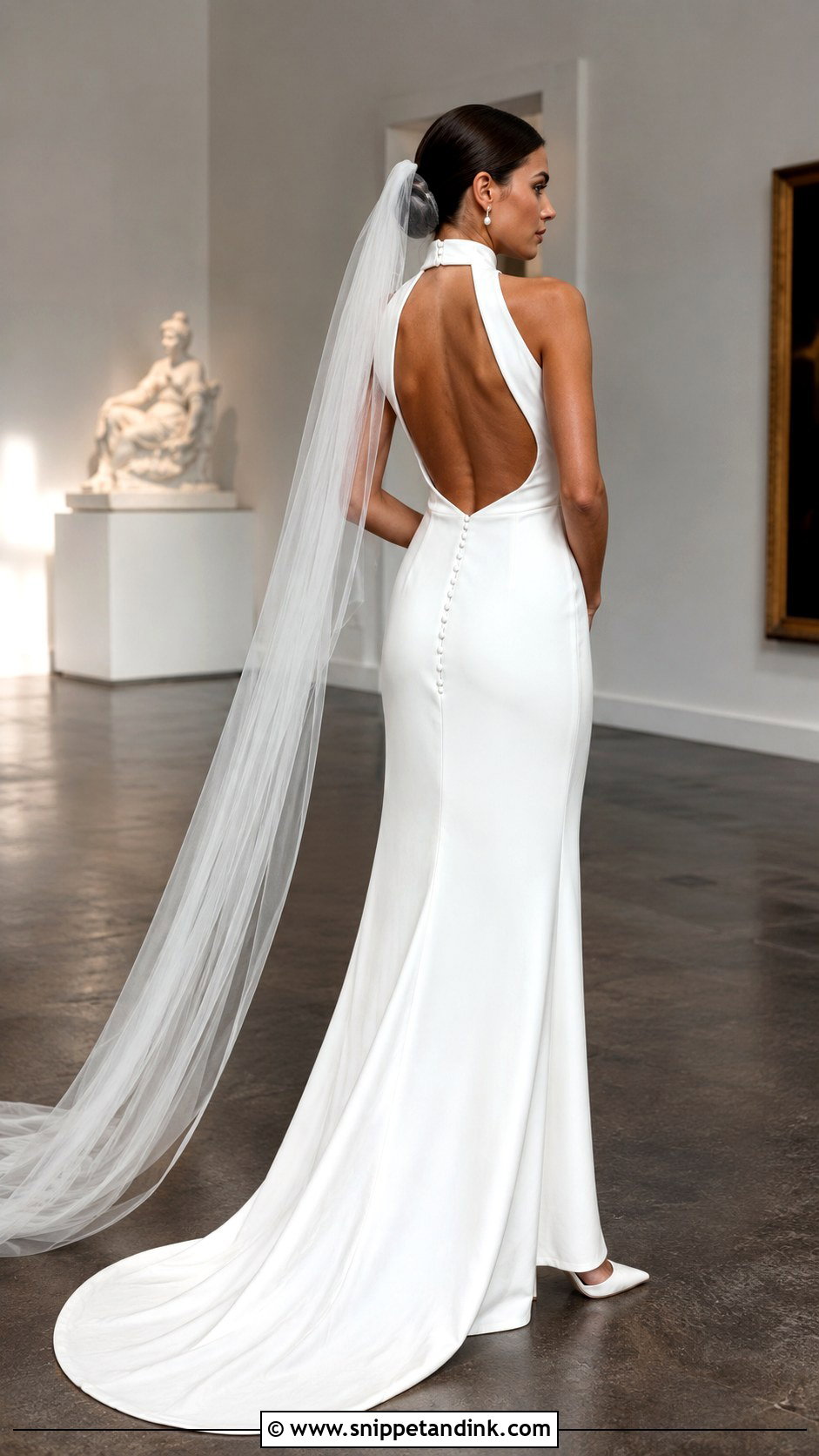
Covered from the front and bare behind, this is the gown that gets a reaction when you turn at the altar. The back can be a round cutout, a deep V or a narrow keyhole framed by buttons and lace. Fitted crepe or satin sharpens the contrast with the modest neckline. Settle your undergarments before alterations begin, not after. Built-in cups, a low-back bodysuit or adhesive support each change the fit, and the seamstress has to tailor the bodice around whichever you choose. A neat bun and pearl earrings keep the back clear, and the veil should be sheer and plain so it doesn’t hide the opening. A detachable overskirt can add grandeur for the aisle and come off before the reception.
6. Mermaid High Neck Wedding Gown
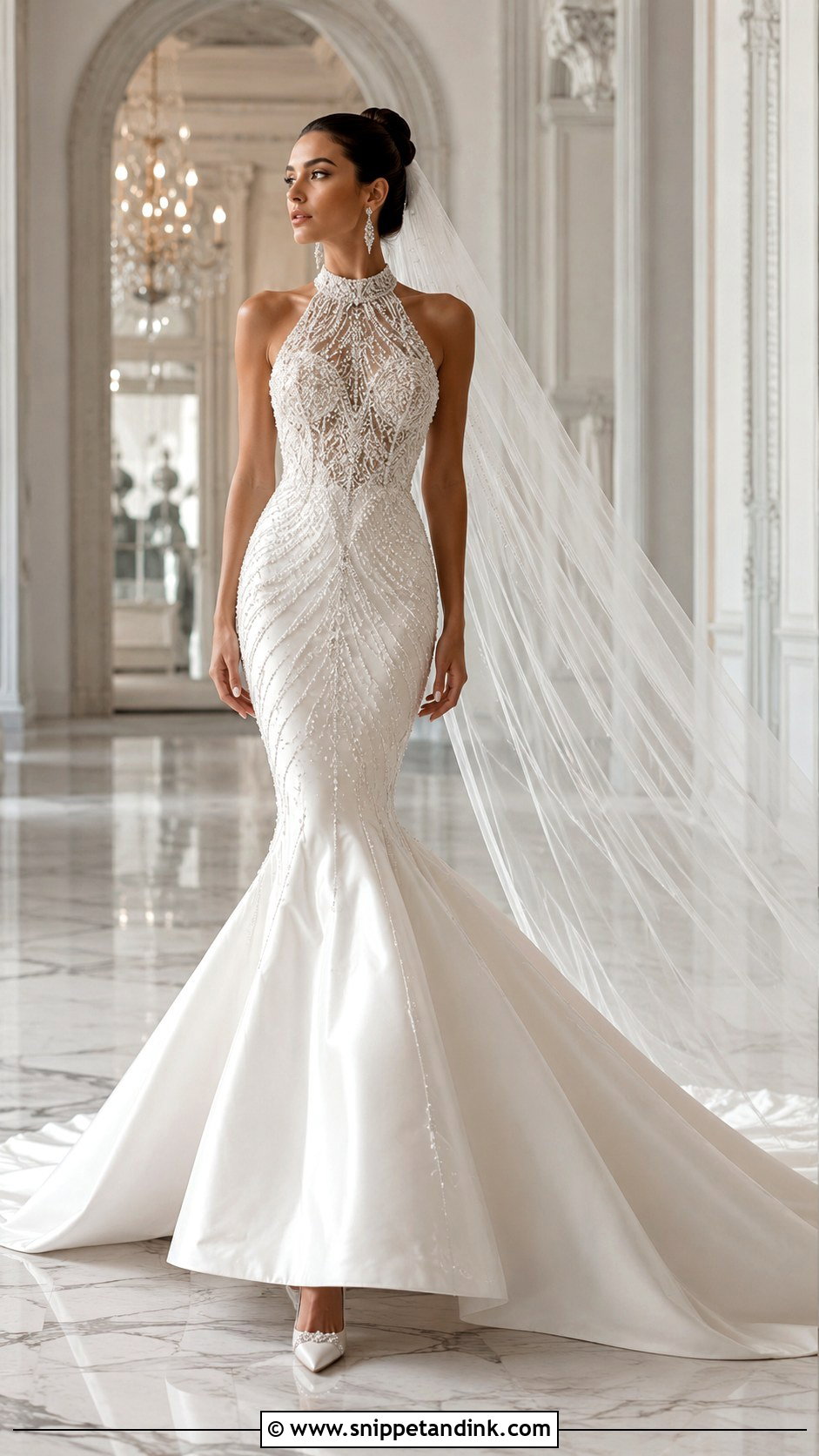
The mermaid follows the bodice, waist and hips before flaring near the knee. With a high neck, that’s a lot of fitted fabric from collar to knee, so movement is the test I take most seriously. Stretch crepe is the most forgiving and the cleanest; lace and beaded tulle look more glamorous but give less. The flare should start at or just above the knee. Set it too low and you’ll shuffle all night. In fittings I ask brides to take full steps, sit, turn and climb a stair. Long drop earrings, a sleek updo and pointed heels lengthen the line. A cathedral veil is possible, but keep it light so it doesn’t drown the flare.
7. Ball Gown High Neck Wedding Gown
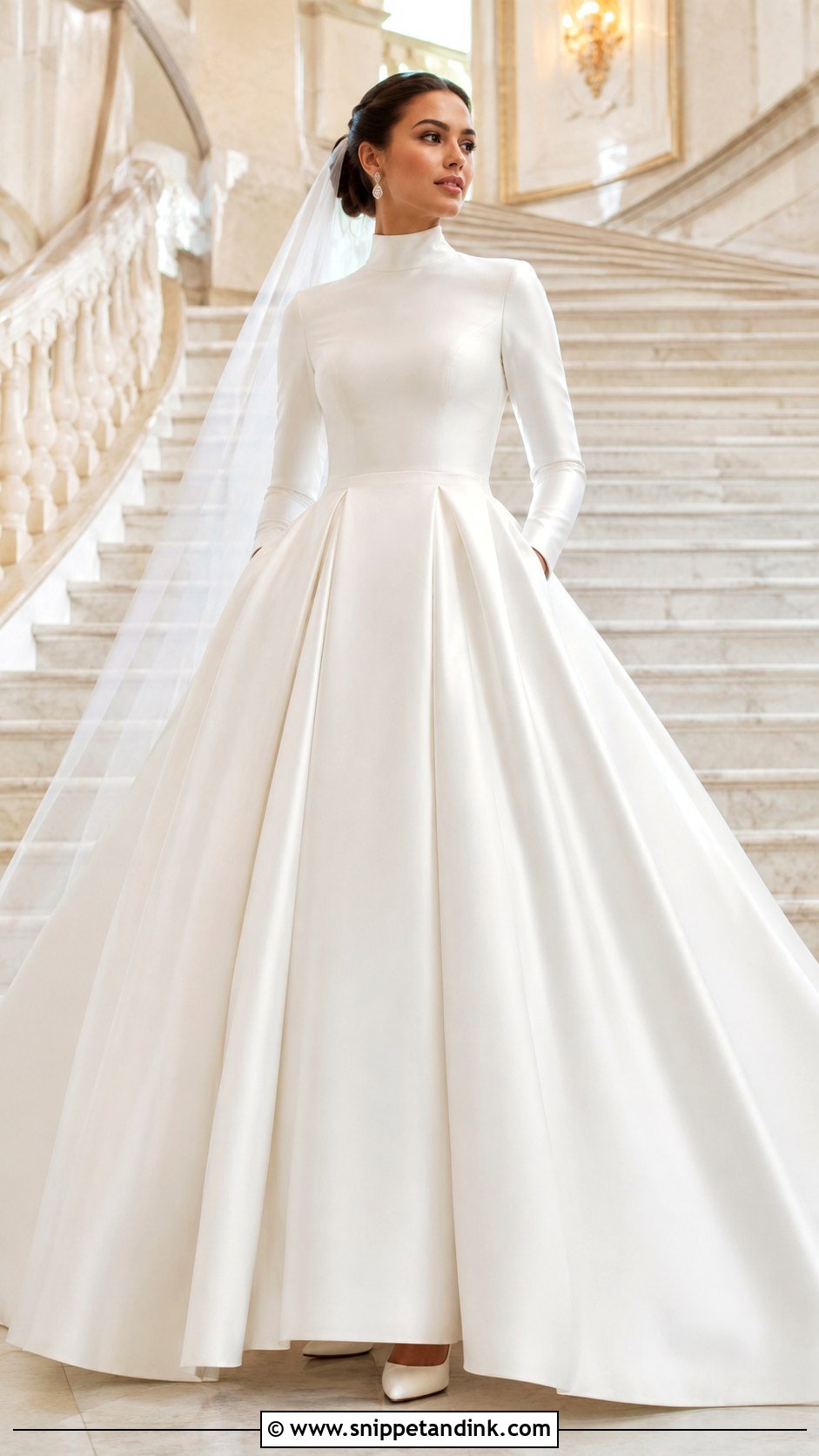
Few looks feel as formal as a high neck over a full ball gown skirt. The fitted top and the volume below define the waist and balance each other. Mikado, satin, and structured organza hold that shape well, while tulle gives a softer result. If the skirt has pleats, flowers or layers, keep the bodice plain. Volume raises practical questions I always put to brides: how you’ll use the bathroom, get through doorways and sit at a dining table. Hidden pockets help, and so does a removable petticoat that cuts the volume for the reception. A neat bun, crystal earrings, ivory pumps under the hem and a long, clean-edged veil complete it.
8. Minimalist Crepe High Neck Wedding Gown
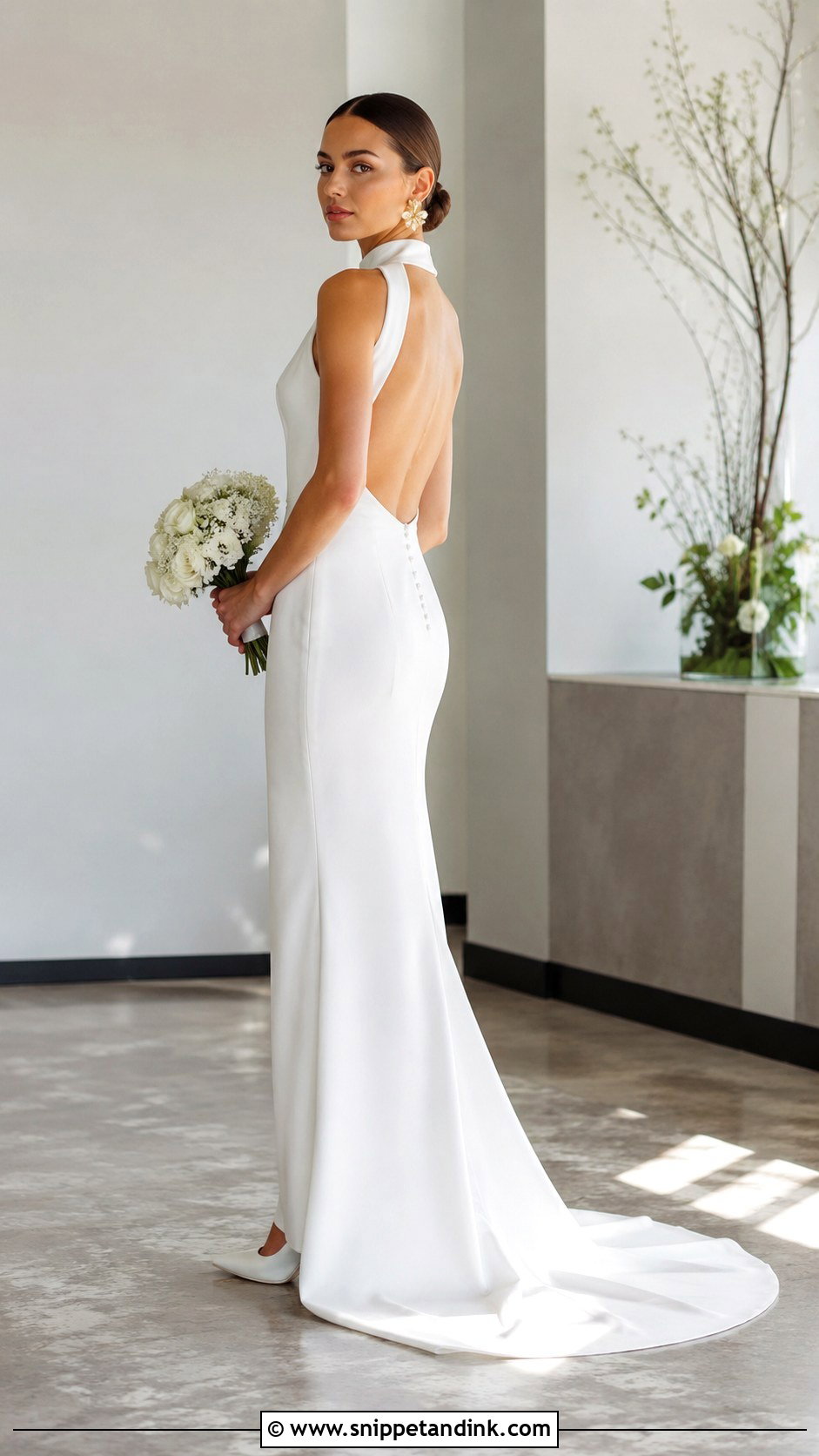
In plain crepe, the cut has to carry everything. These gowns are usually column or sheath shapes with long vertical seams and almost no embellishment. Fabric weight is what I feel for first. Thin crepe clings and shows every line underneath, while a heavier double-faced crepe skims the body and keeps the collar crisp. A low back, buttoned cuffs or a narrow train adds quiet interest. Sculptural earrings, pointed pumps and a compact bouquet of greenery suit the restraint. A low bun or side-parted twist keeps the hair tidy. Finish with a sheer chapel veil, or swap it for a sleek headband.
9. Beaded High Neck Wedding Gown
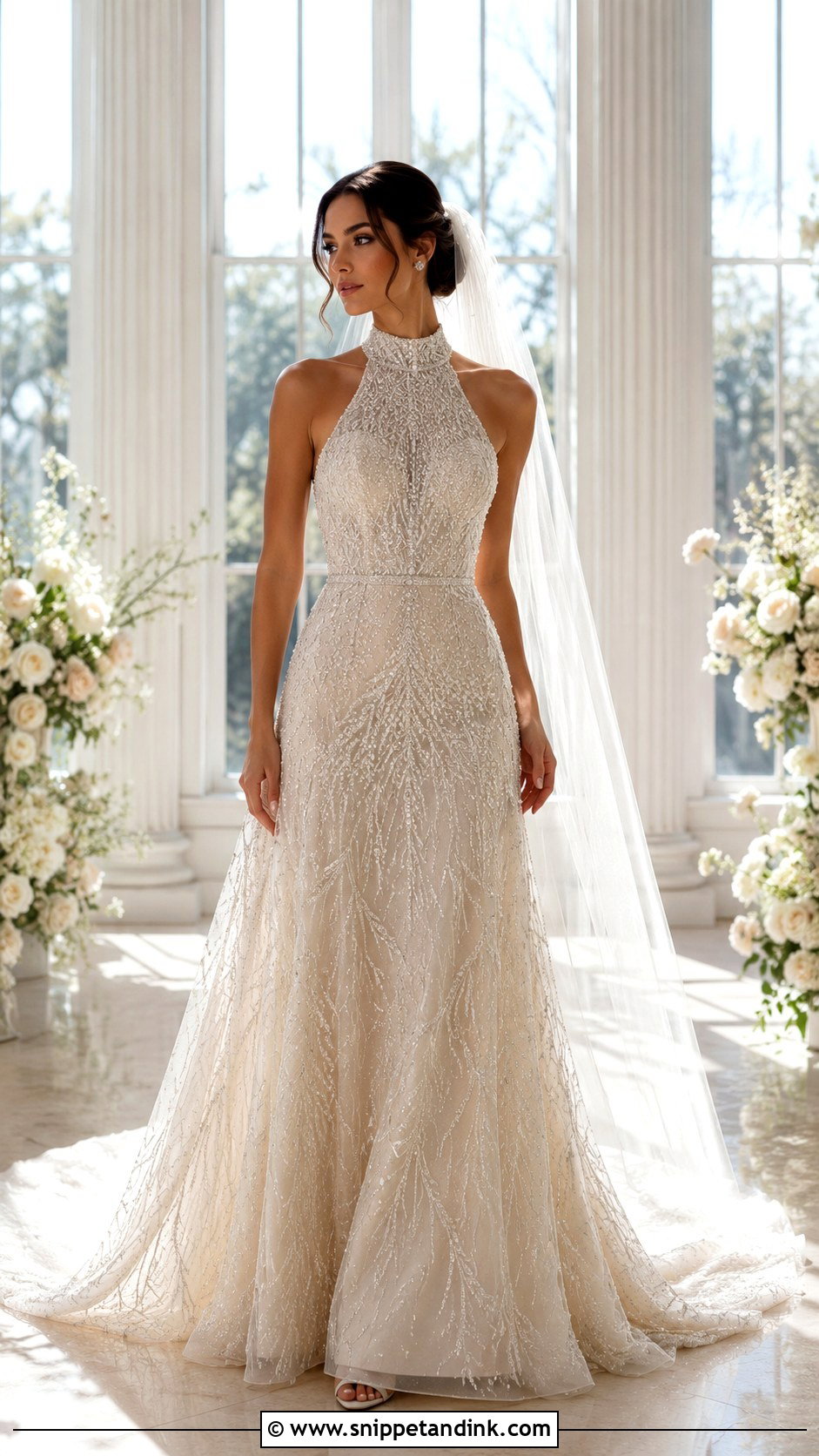
Under bright ceremony lighting, a beaded high neck catches light from every angle. Scattered crystals give a soft shimmer; an allover geometric pattern goes full glamour. Keep the silhouette simple, a column or soft A-line, so the surface doesn’t overwhelm you. Beading is heavy, and that weight hangs from the collar and shoulders. I check where it sits on the shoulder and whether the lining shields the skin from the bead backs, which can scratch after a few hours. Crystal studs and a slim bracelet are enough jewellery. Sweep the hair off the neck and pair it with a plain tulle veil.
10. Pearl High Neck Wedding Gown
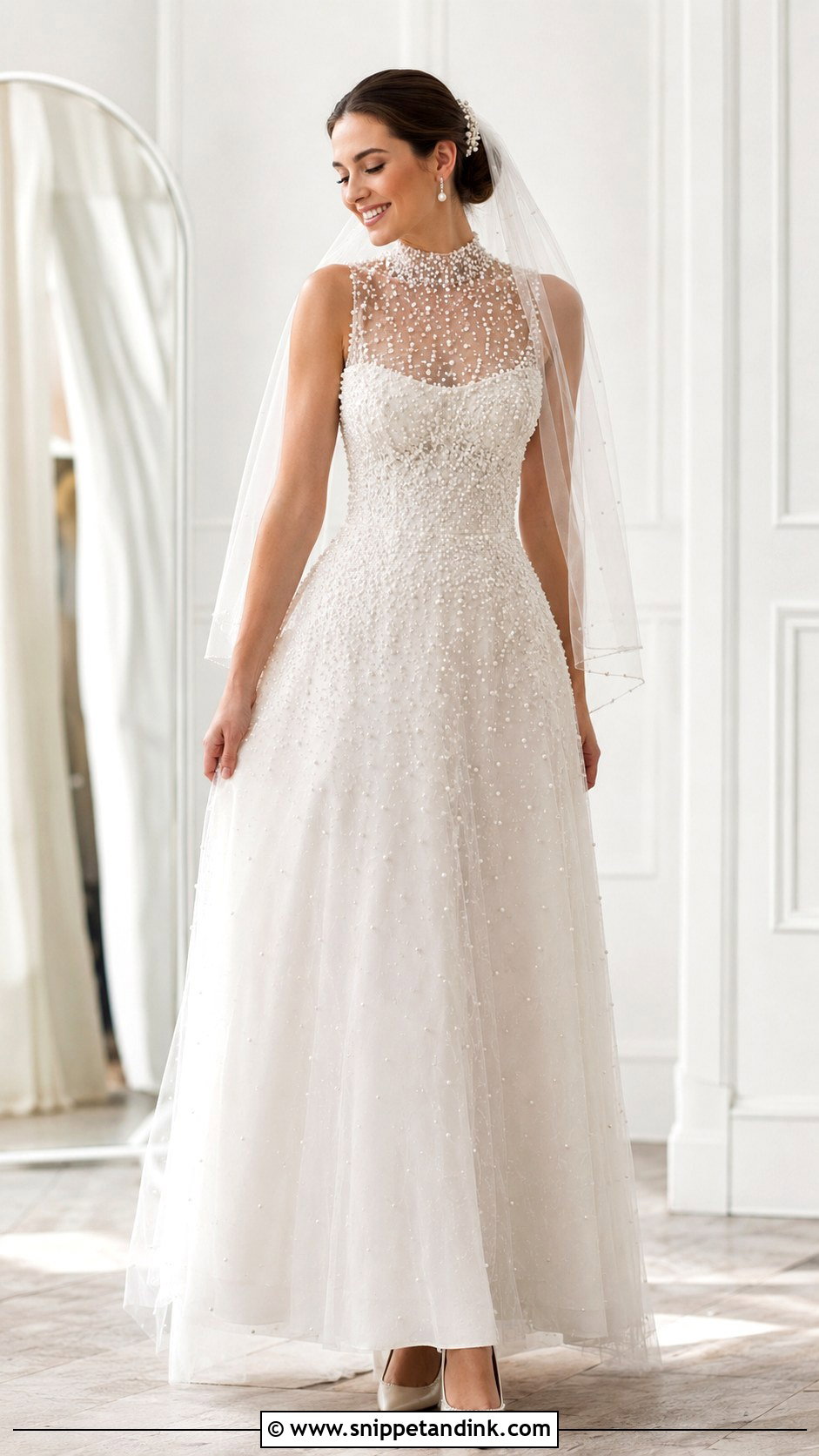
Pearls give a softer glow than crystals, which suits brides who find sparkle too much. They can be scattered over illusion tulle, lined along a satin collar or mixed into floral embroidery. A fitted bodice with a flowing A-line skirt keeps it wearable. Carry the theme lightly with small pearl earrings and one pearl hairpin, and leave off the necklace, which would crowd the collar. Check the stitching. Pearls are sewn on one by one, and the ones at the collar and wrists take the most rubbing, so that’s where a loose one usually appears first. They can also snag a tulle veil. A low textured bun and a plain fingertip veil finish it.
11. Floral Appliqué High Neck Wedding Gown
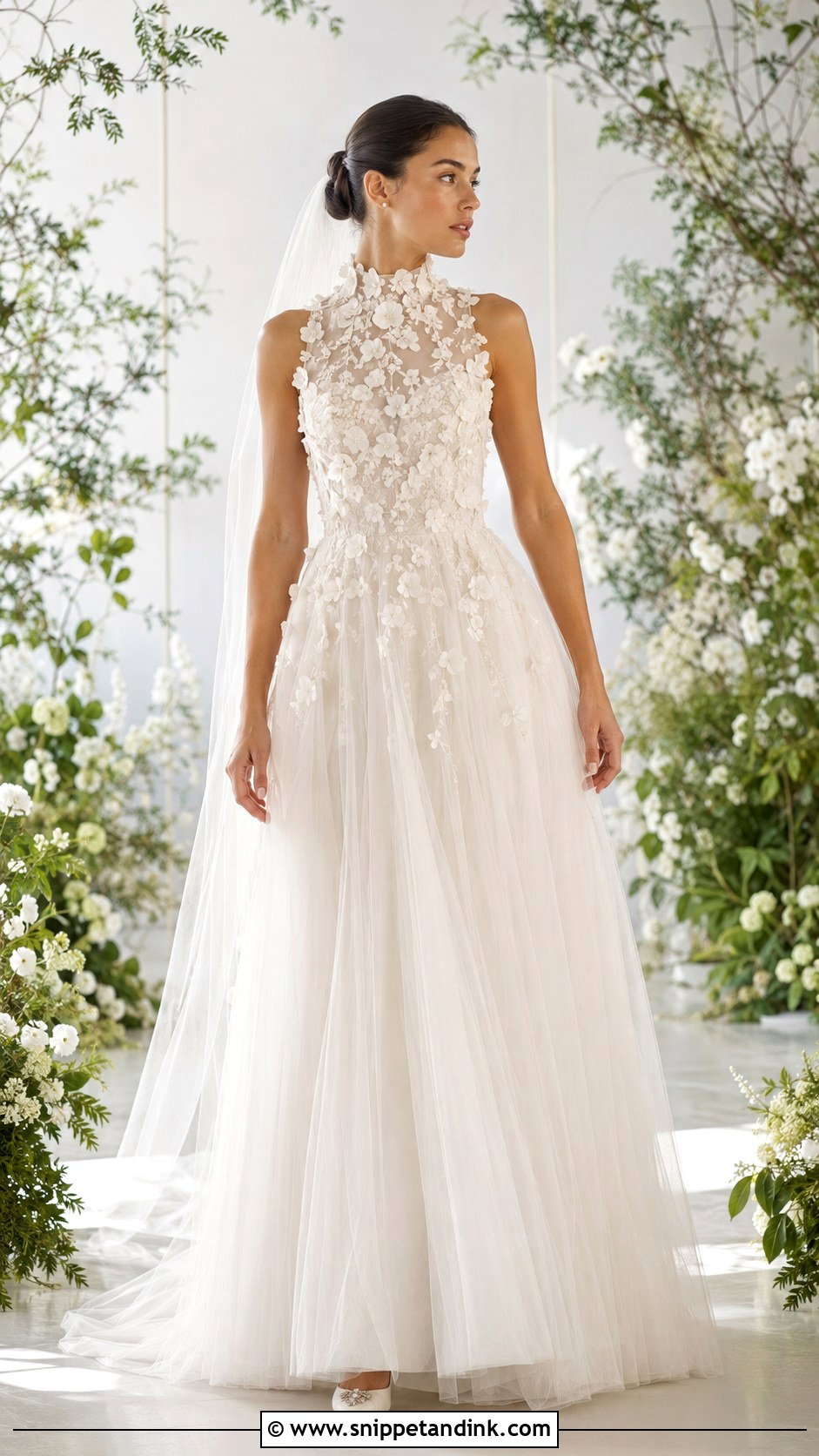
Raised flowers turn a high neck into the focal point of the whole look. The placements I like best travel from the collar over the shoulders and bodice, then scatter as they move down the skirt, so the design fades out instead of stopping abruptly. Sheer tulle underneath feels airy; lined lace gives more coverage. With dimensional appliqué, I always run a finger round the inside of the collar, since the stitched backs can scratch the neck after a few hours and may need a soft facing added. Understated studs, a soft bun and pointed ivory heels suit it. A plain veil avoids competing edges, and a small floral comb is enough if you want a garden note.
12. Victorian High Neck Wedding Gown
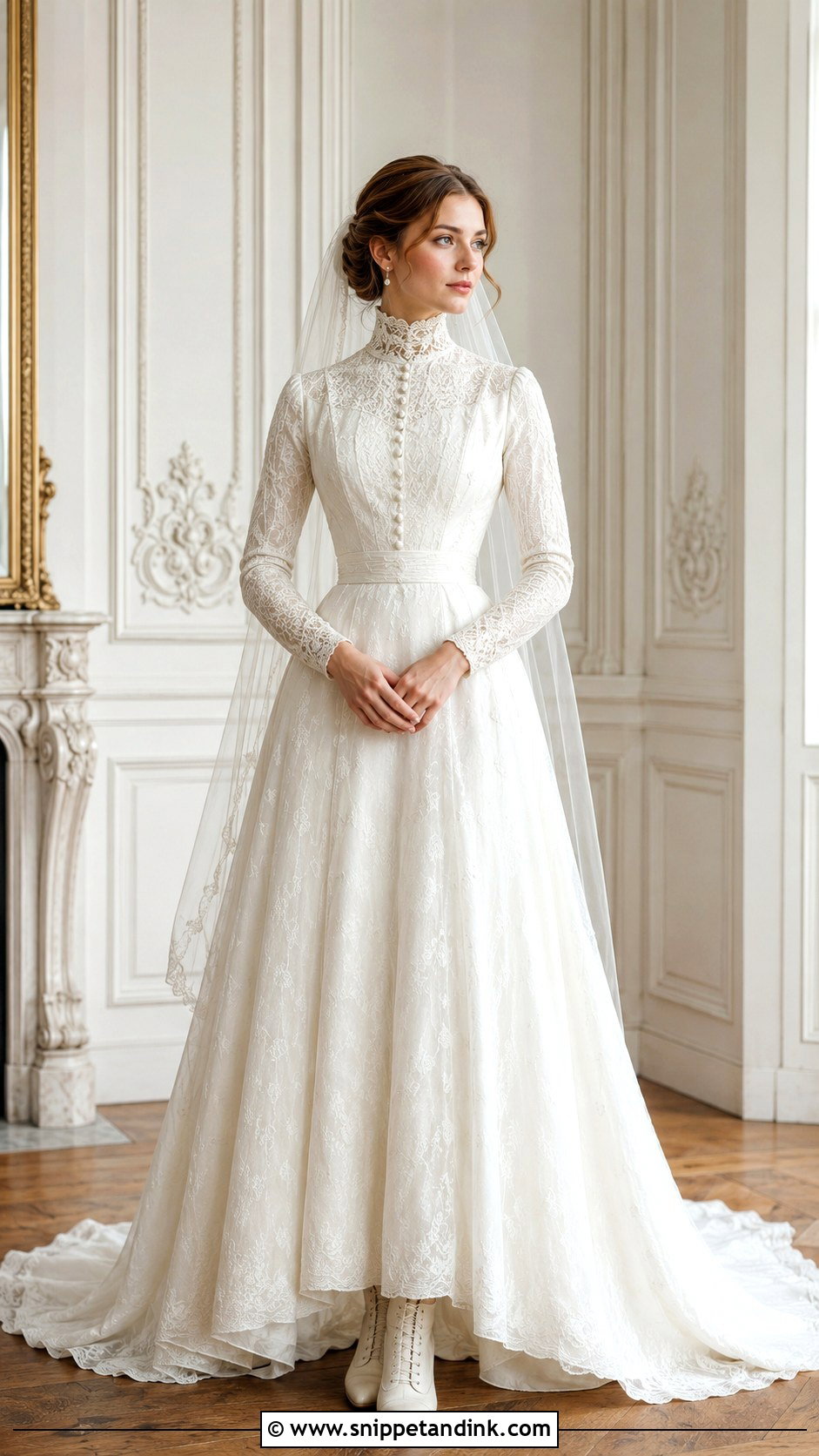
Lace collars, covered buttons, long sleeves and a defined waist give the Victorian gown its character. The risk is looking like you’ve come in costume. I tell brides to choose two or three period details and keep the rest simple: lighter fabric and a softly gathered A-line skirt in lace or embroidered tulle. Pearl earrings, lace-up ivory boots and a neat low bun suit it, with a small comb or headband in place of a tiara. Hang the veil from the back of the hairstyle so it doesn’t cover the collar. Historic venues, gardens and intimate rooms where guests see the fabric up close are where this gown makes the most sense.
13. Mock Neck Wedding Gown
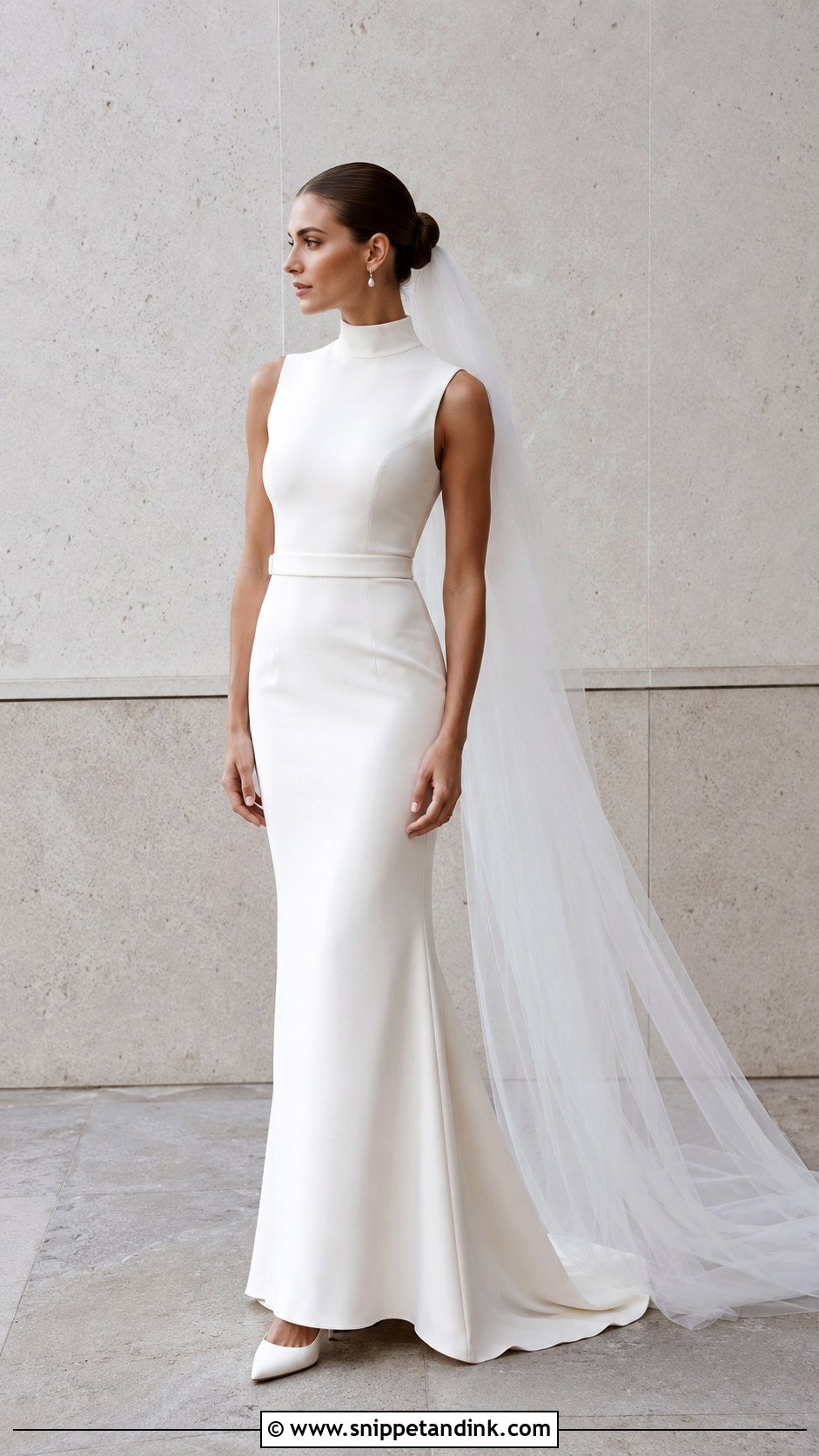
A mock neck sits close to the throat but stops lower than a traditional turtleneck, which makes it the easiest way into covered necklines. Smooth satin or crepe keeps it minimal, and illusion lace softens it. A sheath elongates, while an A-line skirt adds movement and suits more venues. Small hoops or drops, a sleek bun and pointed pumps finish it, and a narrow belt helps if the column feels shapeless. Collar fit is everything with this one. Too loose and it folds over; too tight and you’ll feel it every time you swallow. A good seamstress can adjust it at the centre back.
14. Ruffle Collar High Neck Wedding Gown
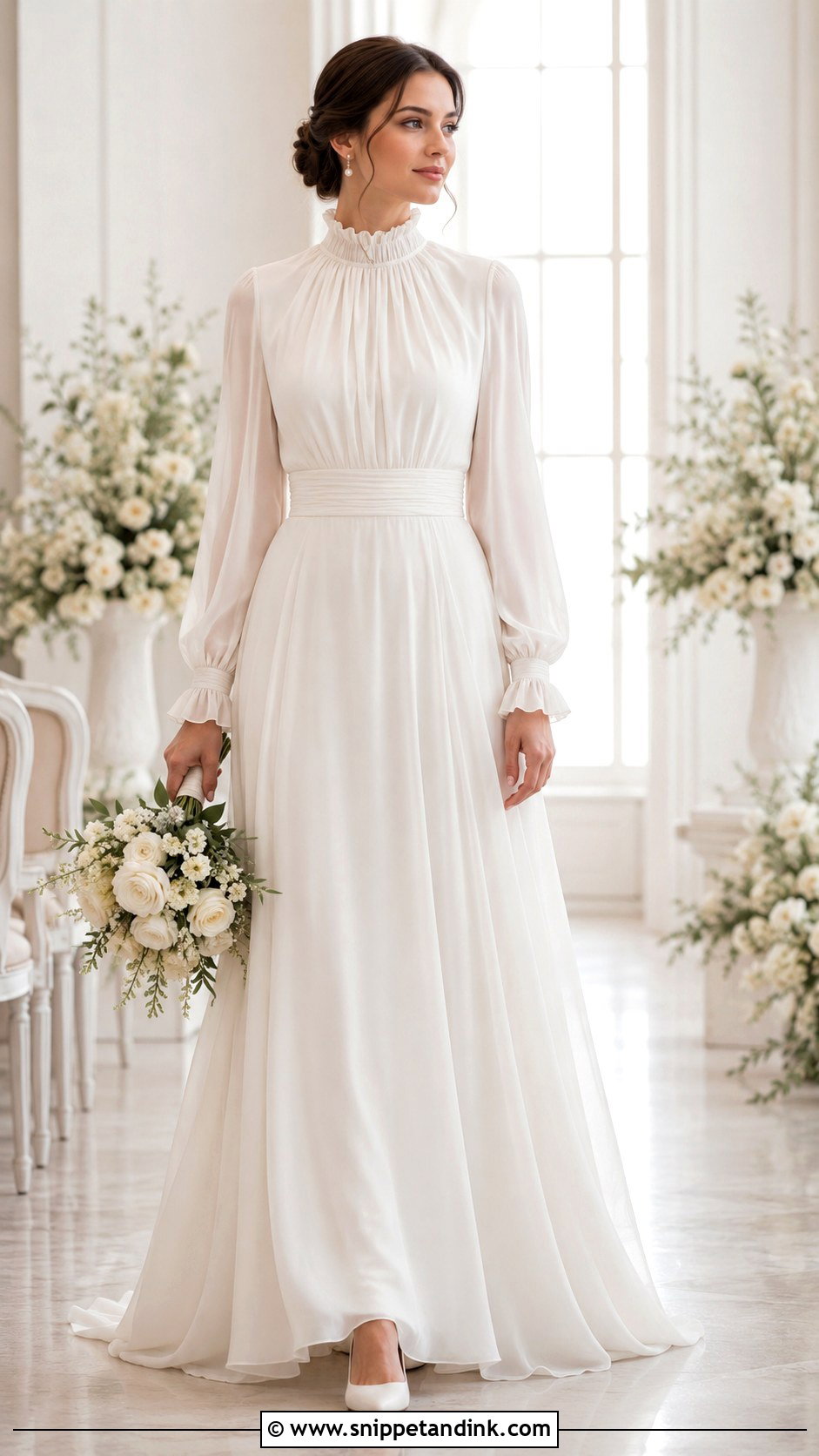
Ruffles at the collar add movement and a bit of personality. It might be one gathered edge, several narrow lace layers or an asymmetrical flourish. Because the detail pulls the eye up, keep the rest simple, with a fluid chiffon A-line or a clean satin column. Delicate earrings, an uncomplicated updo and closed-toe pumps are enough. A veil is optional when the ruffled collar already frames the face; if you wear one, attach it below the hairstyle. Stiffer ruffles brush the jaw, so if your skin is sensitive, wear the dress for ten minutes in the shop while turning, sitting and talking before you commit.
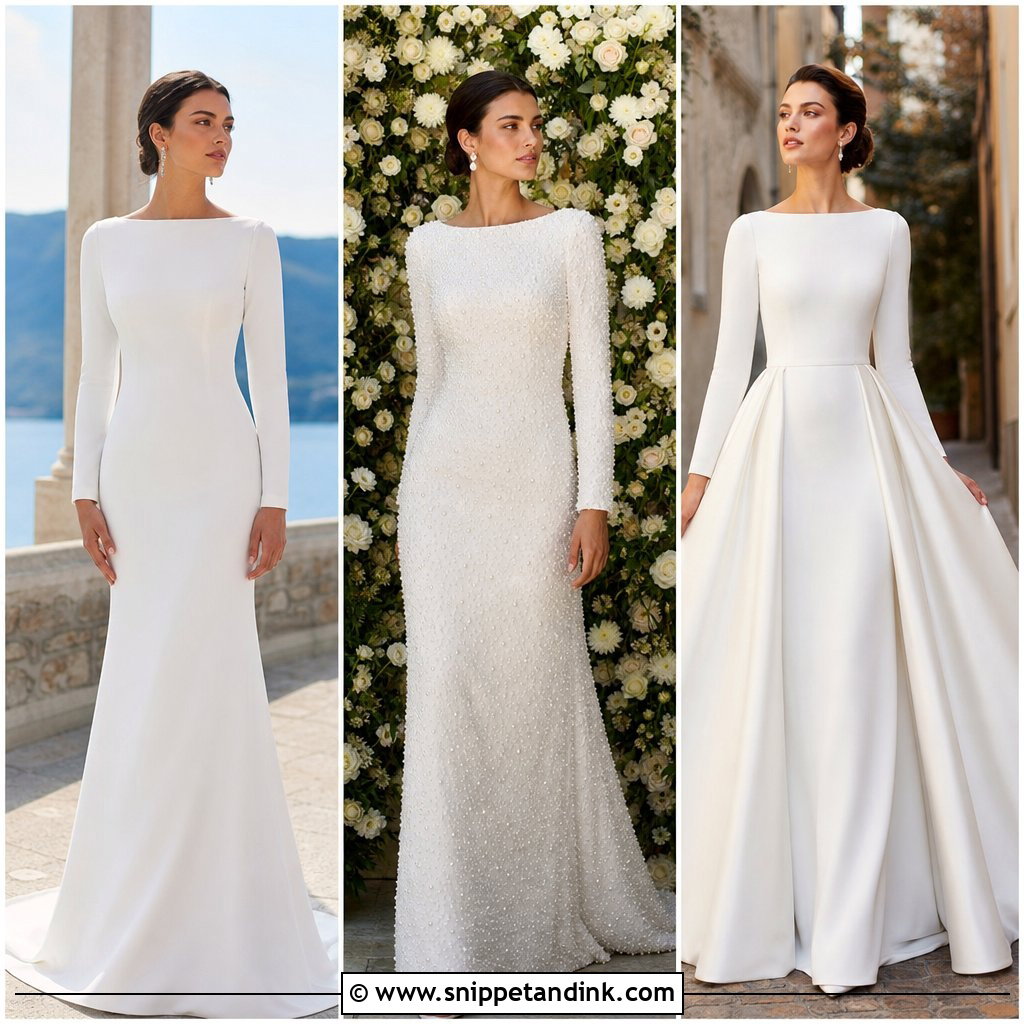
15. Cape Sleeve High Neck Wedding Gown
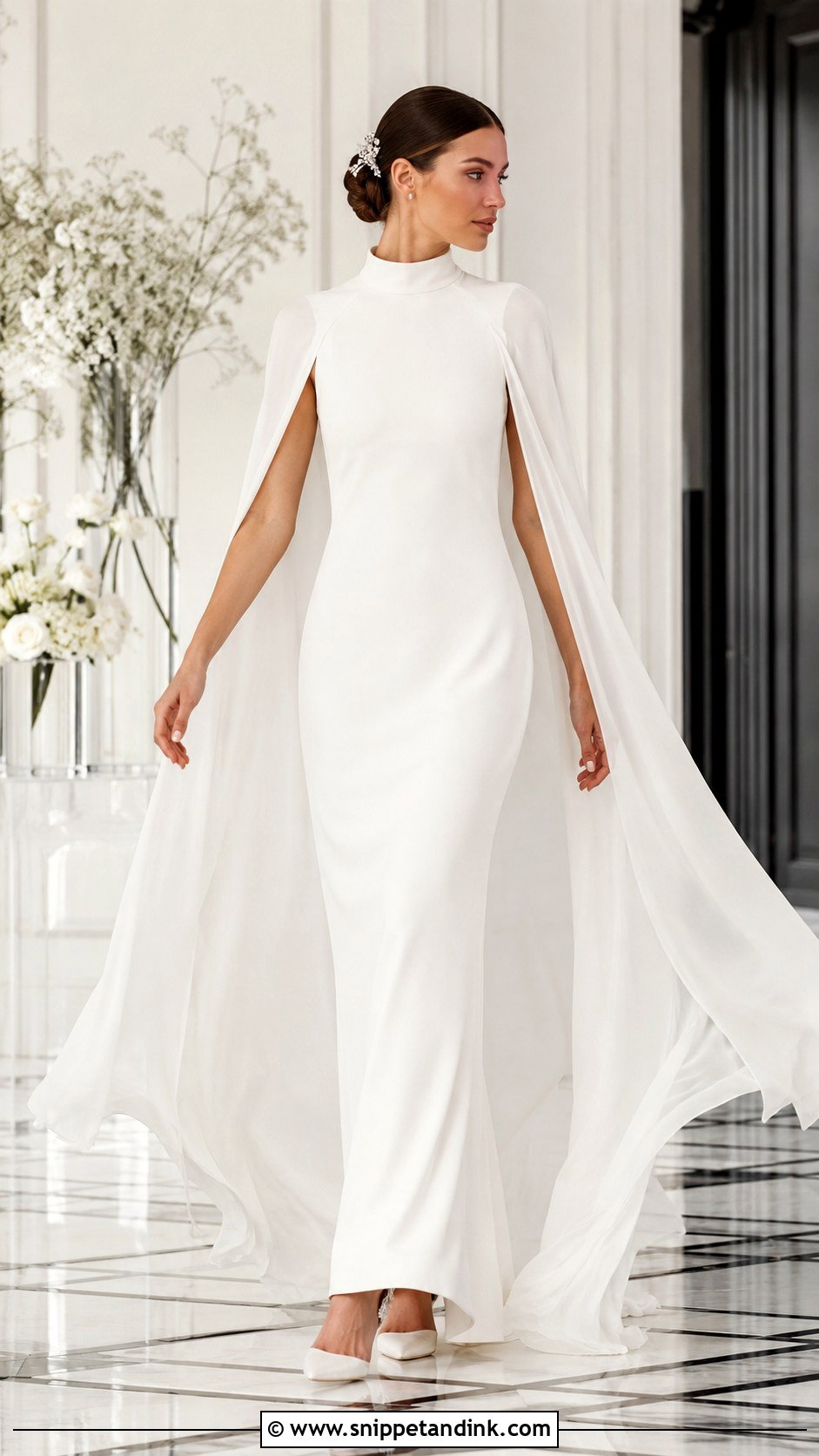
Cape sleeves give you the drama of a bridal cape without a second garment. The fabric can fall in short fluttering panels or run almost to the floor. Weight decides whether it works. A heavy cape pulls backward on a high collar and drags it against the throat, so I choose chiffon or light crepe every time. A slim sheath or soft A-line underneath keeps the shape balanced. Crystal studs, a smooth low bun and pointed heels finish it. If the cape reaches the floor, skip the long veil, because two trailing layers hide the gown’s outline. Ask whether the cape can be made detachable for dancing.
16. Detachable Overskirt High Neck Wedding Gown
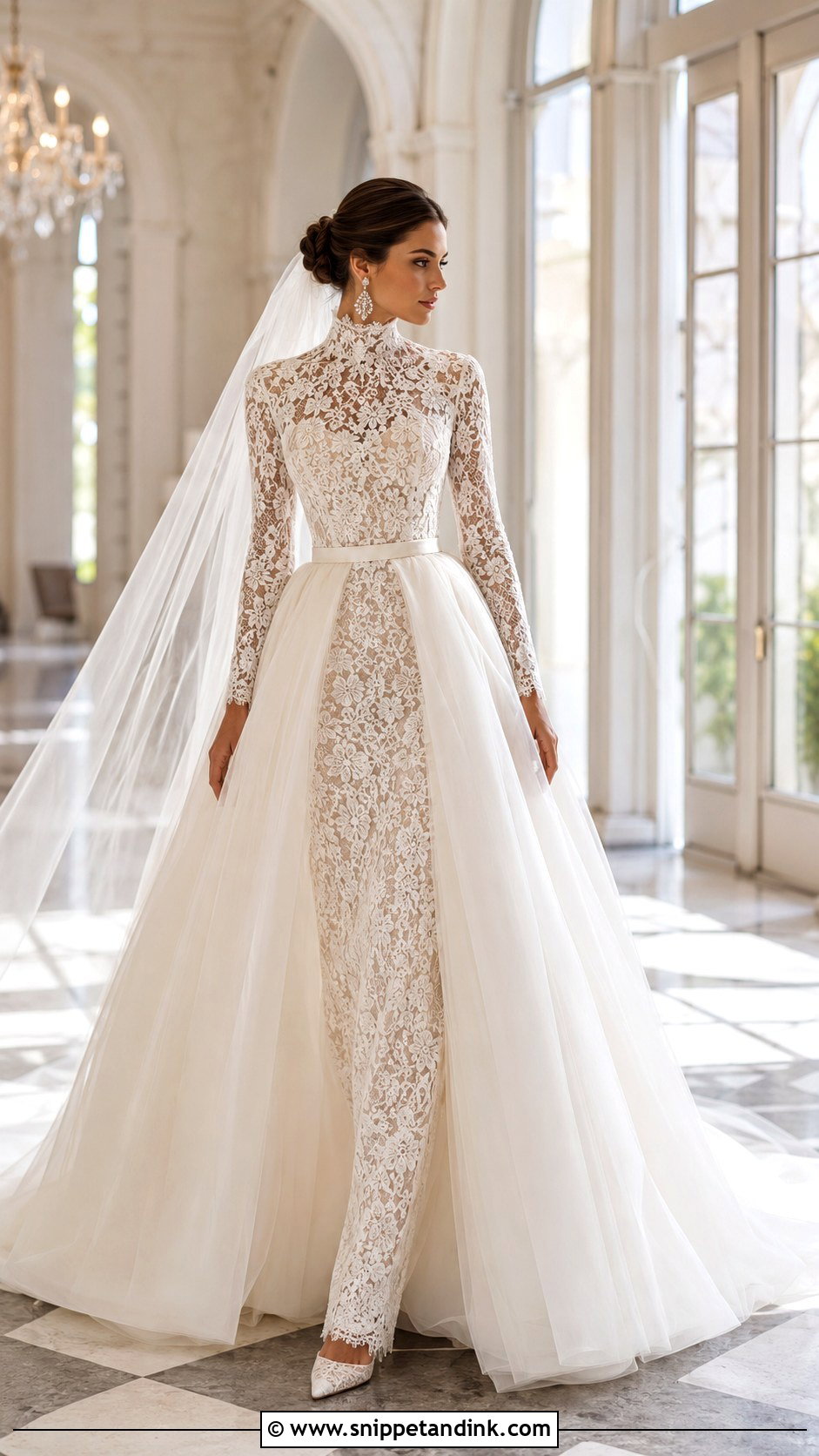
A detachable overskirt gives you two looks from one dress. Start with a fitted high neck gown in crepe, lace or satin, and add a full tulle or structured skirt for the ceremony; the slim base underneath is far easier to dance in later. Compare both pieces in daylight, not just under shop lighting, because two ivories that match indoors can drift apart outside. Wear a long veil, statement earrings and classic pumps for the ceremony, then swap the veil for a hair comb. Check that the attachment points lie flat at the waist and stay hidden. Have whoever will help you practise the closure before the day, since hooks and snaps are fiddly under pressure.
17. Tea Length High Neck Wedding Gown
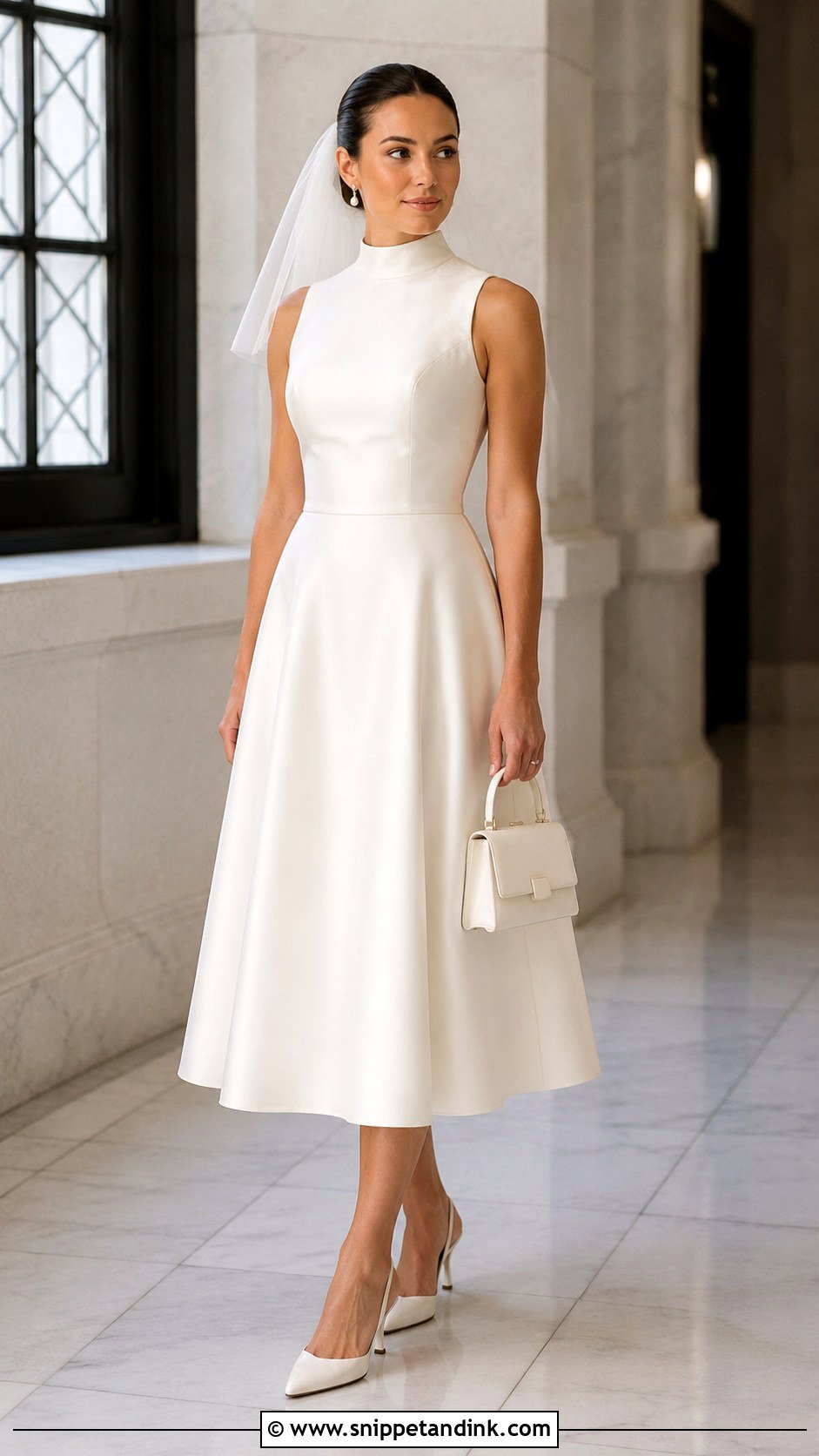
Tea length lets your shoes join the outfit. The hem lands between knee and ankle. Structured satin reads crisp and retro, while lace is softer. A fitted waist with a gently flared skirt keeps the proportions right and lets you move freely. Pointed slingbacks, pearl earrings and a small structured bag coordinate well, and a birdcage or short tulle veil suits the shorter hem better than a long train. Courthouse ceremonies, daytime celebrations and reception changes all suit it. The hem position is what I fuss over most: ending at the widest part of the calf shortens the leg, so we usually move it slightly above or below.
18. Plus Size A-Line High Neck Wedding Gown
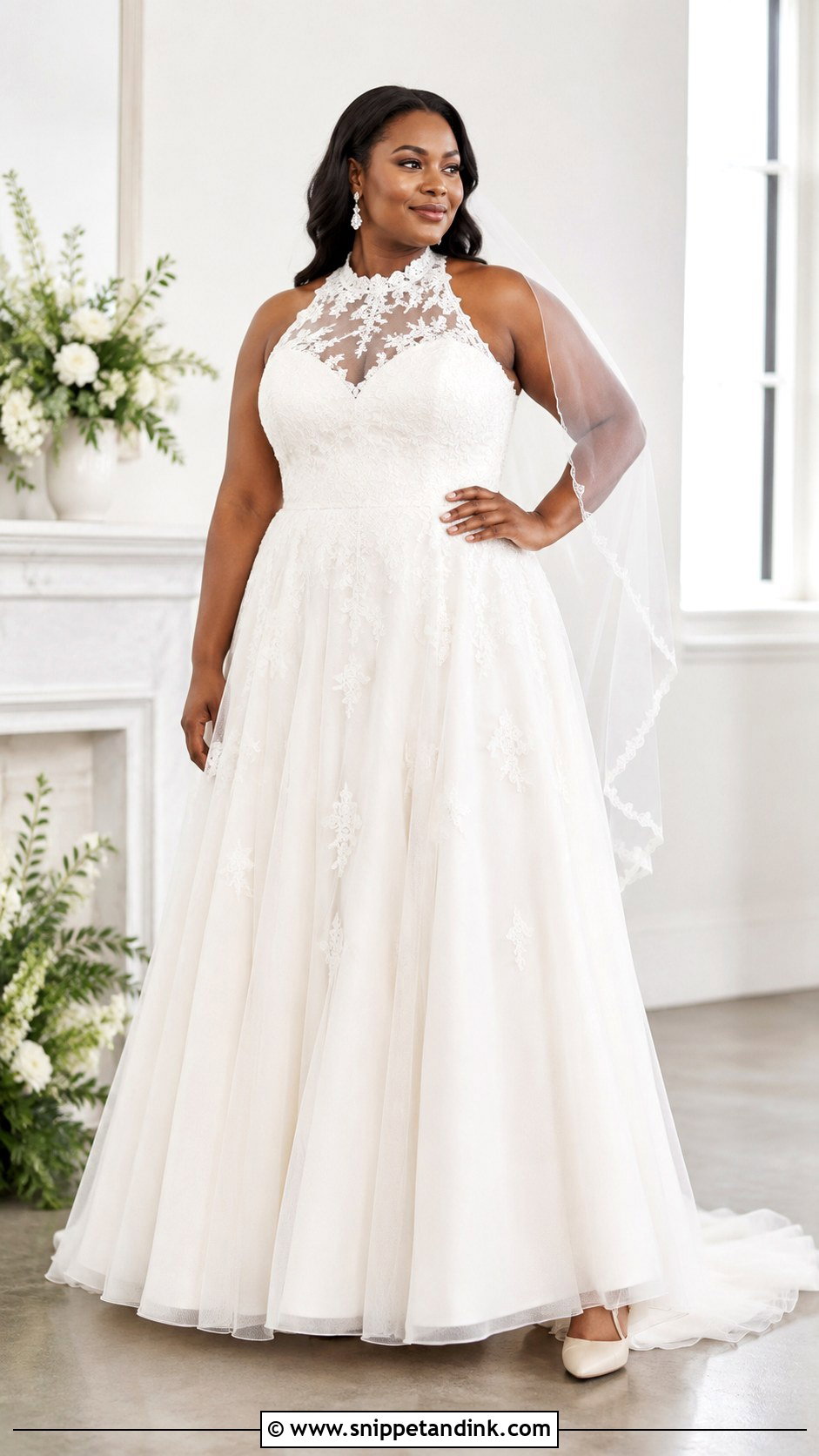
In the right construction, a high neck A-line supports and shapes across every size. I look for internal boning, secure cups and seams that define the waist without digging in. Soft lace or illusion tulle lightens the neckline, while a smooth lining keeps the coverage dependable. With a fuller bust, I prefer a collar with a sheer yoke or a subtle keyhole over solid fabric right up to the throat, which can make the chest read as one block. A skirt falling cleanly from the natural waist avoids bulk. Supportive block heels, drop earrings and a low bun or braided updo finish it, with a fingertip veil. Sample sizes tell you very little. Fit and skilled alterations matter far more than how the gown looked on the hanger.
19. Modest Long Sleeve High Neck Wedding Gown
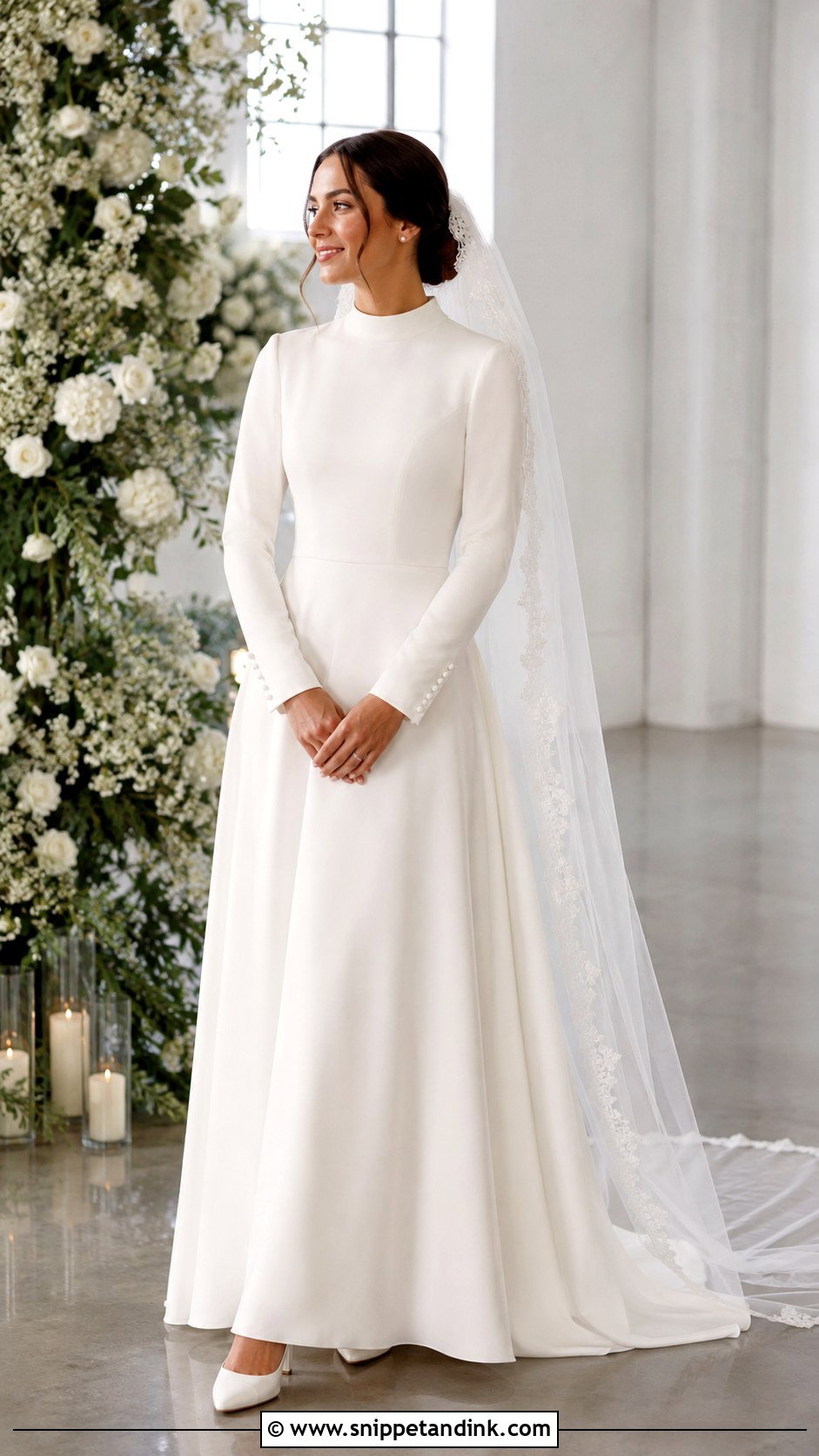
Full coverage can look modern and intentional rather than conservative. Choose an opaque, lined bodice and sleeves cut with enough room at the armhole to raise your arms; the armhole, not the sleeve, is usually what restricts movement. Crepe gives a tailored finish, while lace adds texture without needing a lower neckline. An A-line or gently flared skirt makes walking and sitting comfortable. Pearl studs, a neat updo and closed-toe block heels suit it, along with a lace-edged or plain chapel veil. Ask the tailor to check sleeve length, wrist width, collar placement and lining colour, so the dress covers you without bunching or pulling.
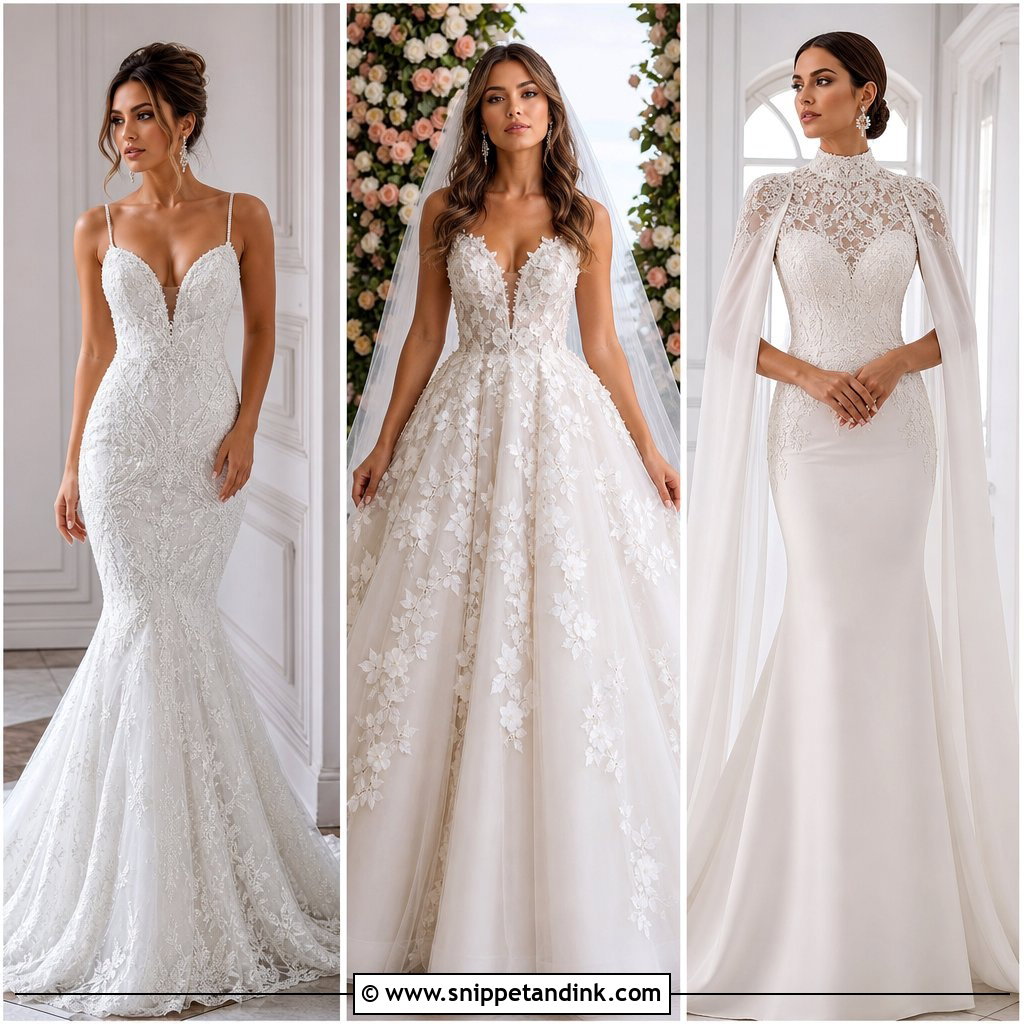

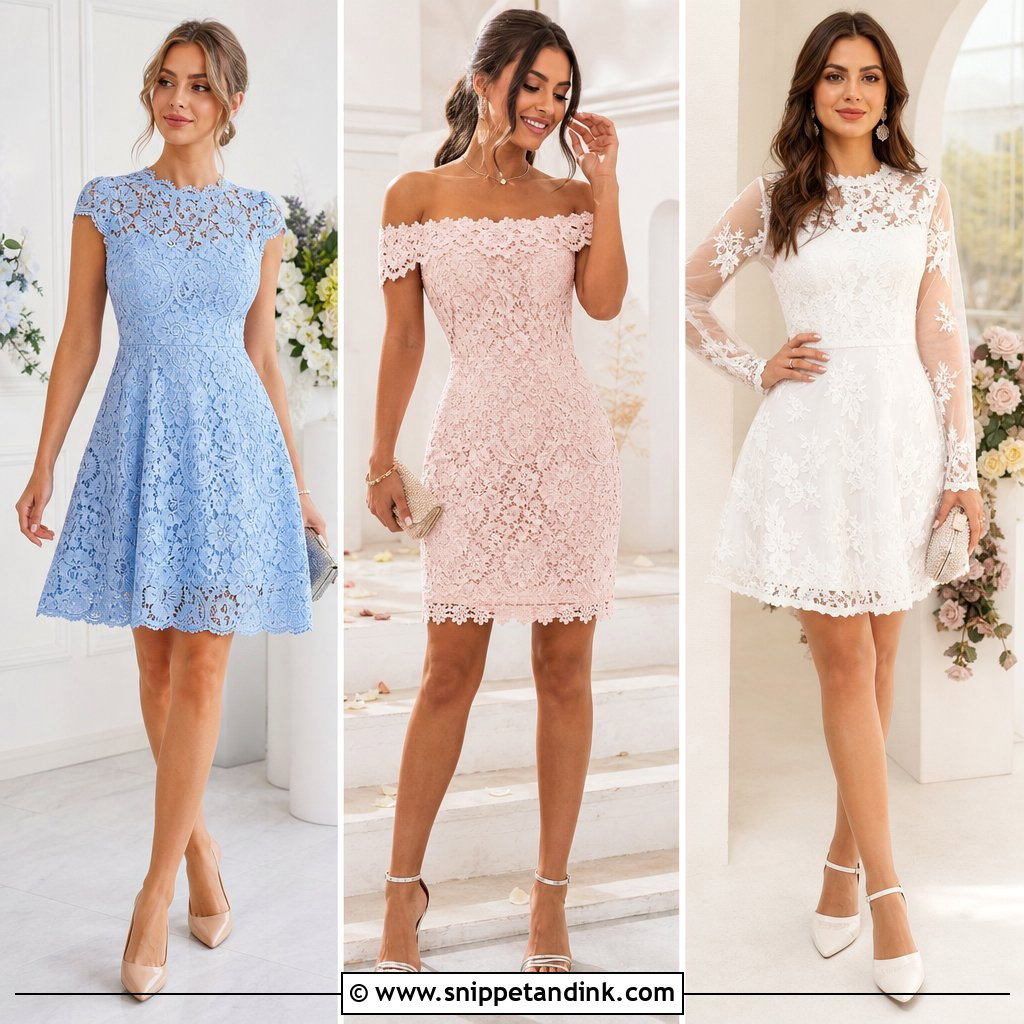

20. Boho Chiffon High Neck Wedding Gown
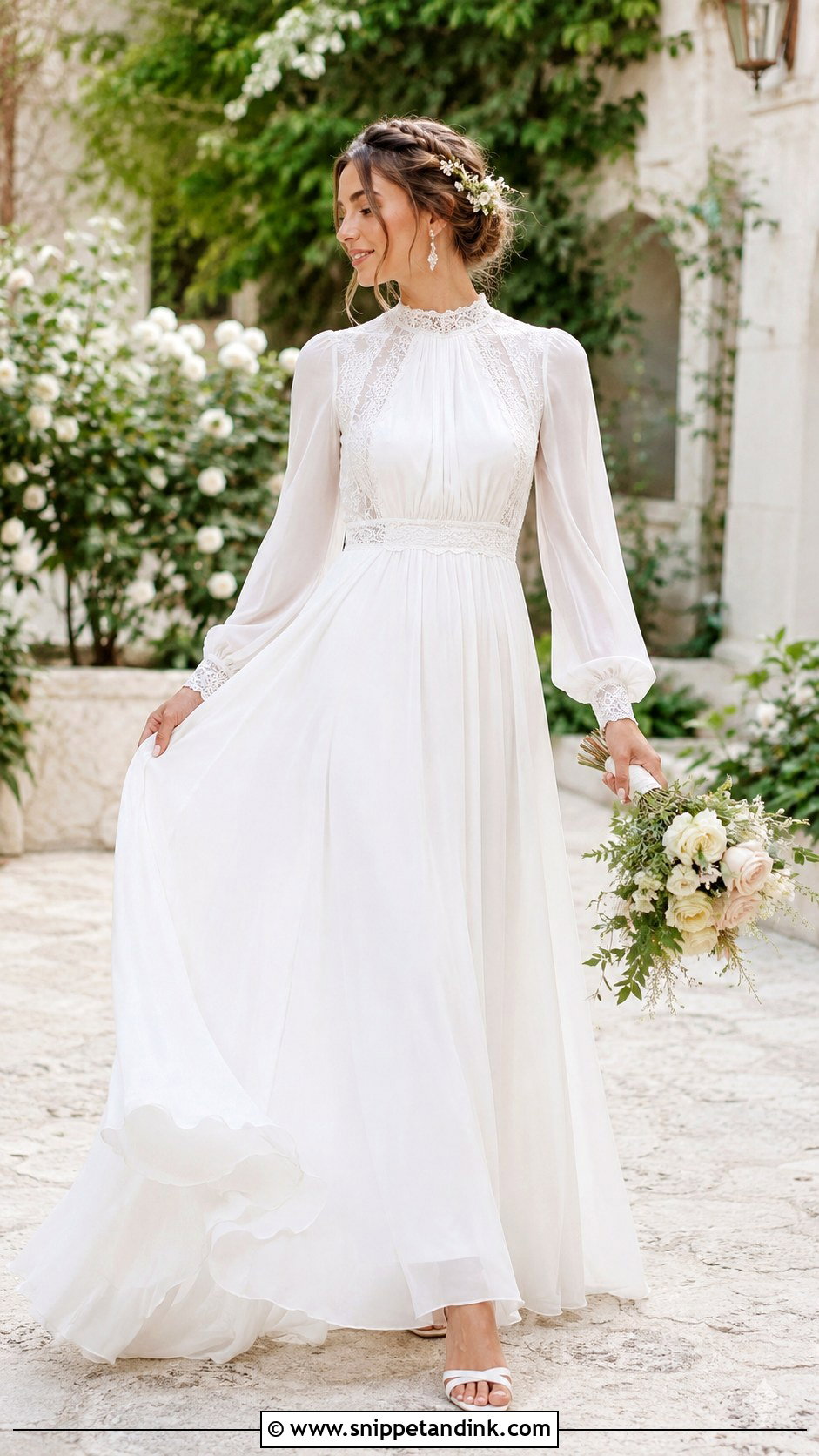
Chiffon gives a high neck a loose, breezy quality that suits outdoor weddings. A softly gathered neckline, a lace-trimmed bodice and an A-line skirt that moves in the wind are the classic combination. Sheer bishop sleeves add coverage without stiffening the shape. A loose braided updo, delicate drops and low block-heel sandals keep you steady on grass, and a floral comb fits better than a jewelled headpiece. Chiffon snags and frays easily, so outdoors I’d keep the train short, because dragged across grass or sand it picks up stains and pulled threads fast. If you want a veil, it has to be light and well anchored; otherwise, a chiffon capelet does the same job.
The Collar Check Most Fittings Rush Through
High necks are less forgiving than any other neckline, and nearly every fitting problem shows up at the collar first. Bring your wedding shoes and undergarments to each appointment, and run through these four checks.
- Swallow, then turn your head fully both ways. You should feel the collar, but it should never press on your throat.
- Look down at your feet. A collar cut too high digs in under the chin when you do.
- Have someone check the centre back. The closure should lie flat without gaping between buttons.
- Lift your arms as if to hug someone. If the collar rides up with you, the armholes need adjusting, not the neckline.
Collars are usually taken in or let out at the centre back seam or closure, so the fix is manageable. Just leave time for one more fitting after it’s done.
Foundation Marks on an Ivory Collar
A collar that rests against your jaw all day will pick up makeup. Ask your makeup artist to blend foundation down past the collar line so there’s no visible edge, then set the jaw and neck with powder. Step into the gown rather than pulling it over your head; if it must go over, cover your face with a thin scarf first. Keep a clean white cloth and a stain pen in the emergency kit, and blot marks gently rather than rubbing them.
Raise Your Arms in It Before You Say Yes
The right high neckline suits your proportions, your support needs and your venue as much as your taste. Lace sleeves feel romantic, while satin and crepe read cleaner and more architectural. Halters and open backs look current; Victorian collars and pearls bring vintage character. Judge the whole outfit rather than the dress alone. Hair should reveal the collar, earrings should support it, and the veil shouldn’t hide it. Above all, walk, sit, turn and lift your arms at every fitting. A gown you can move in is a gown you stop thinking about once the ceremony starts, which is exactly how it should be.
You'll Like These Ideas:



Leave a Reply