
Coconut is one of the flavours I’m asked about most for warm-weather weddings, and the tender version (made with young coconut water, soft flesh and coconut cream) is gentler than the sweet shredded kind most people picture. It sits comfortably with guests who’d normally pick vanilla, yet it still tastes like a choice. On the outside it can go almost anywhere: plain white buttercream for a ballroom, toasted flakes for a garden, orchids and fruit for a beach. Below are twenty designs I’d happily build, with notes on what each one needs from the kitchen and the venue.
Where the Tender Coconut Flavour Actually Comes From
Young coconut has a mild, almost milky taste, and that is exactly why it can vanish in a cake. Sugar, butter and vanilla will drown it unless the baker builds the flavour in several layers. When I develop one, it usually comes from three places at once.
- The sponge: coconut milk or cream replaces some of the dairy, which also gives a tighter, moister crumb.
- The soak: a light syrup made with coconut water brushed onto each layer. This is where the fresh, tender note shows up most.
- The filling: a coconut cream or custard, sometimes with soft young coconut flesh folded through for texture.
At your tasting, ask how the coconut flavour is built and taste a plain slice before any fruit filling goes in. If the sponge tastes like vanilla cake with flakes on top, the flavour will disappear once mango or berries are added. Also ask whether the baker uses fresh coconut or a flavouring. Both can be good, but fresh coconut fillings need tighter refrigeration, which affects everything about display.
1. Tender Coconut Wedding Cake With Fresh Orchids
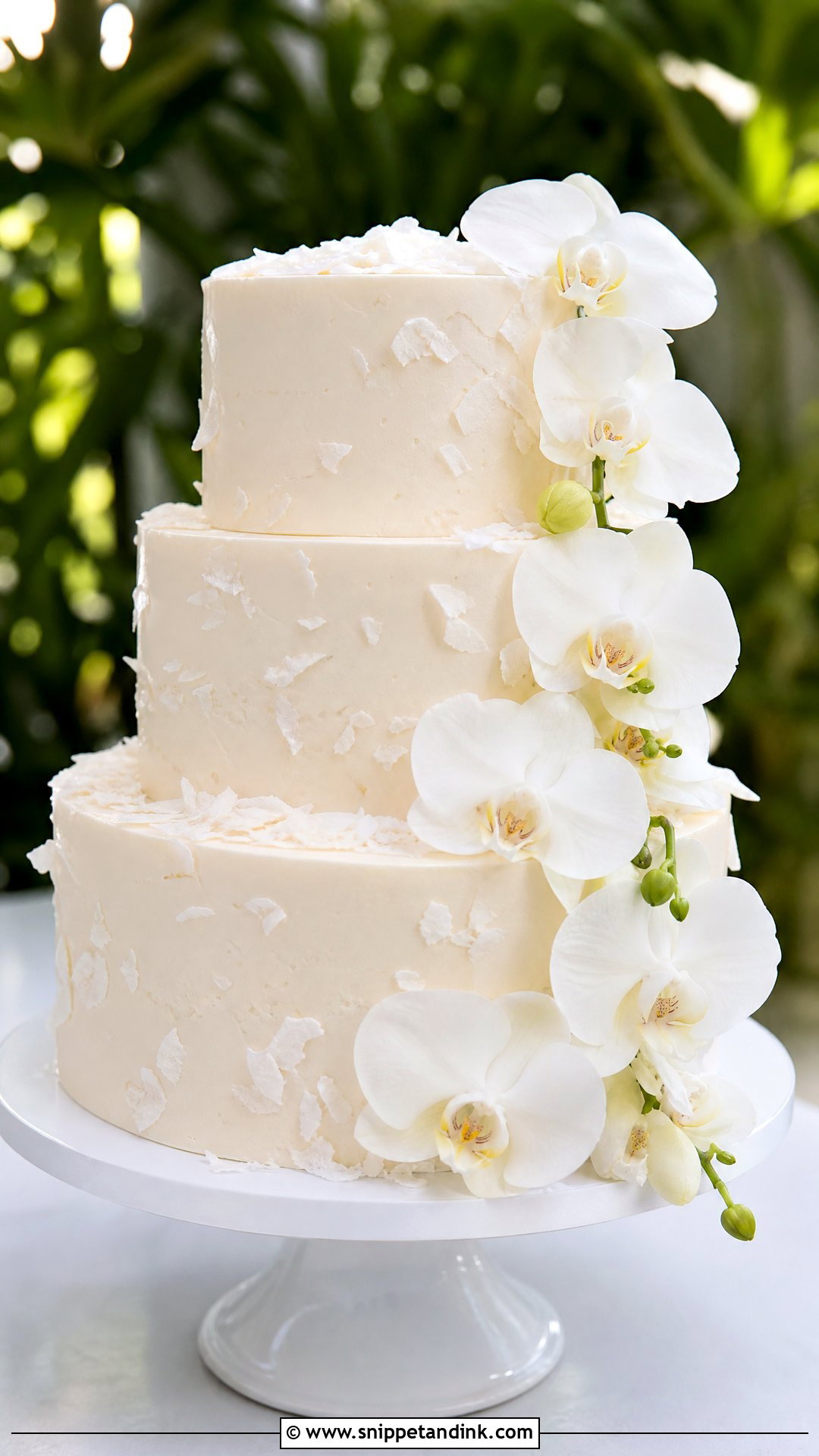
Orchids are my go-to when a couple wants tropical without it tipping into a luau. Ivory tiers in smooth coconut buttercream, with white and pale blush orchids trailing down one side, feel formal enough for any reception. Inside, I’d layer vanilla sponge with young coconut cream and brush each layer with a light coconut milk soak to keep the crumb moist. Orchids aren’t edible, so I wrap or seal the stems before they touch the frosting and remove them before slicing. A ring of coconut flakes at the base adds texture; covering the whole cake in flakes loses the clean line.
2. Tender Coconut Wedding Cake With Toasted Coconut
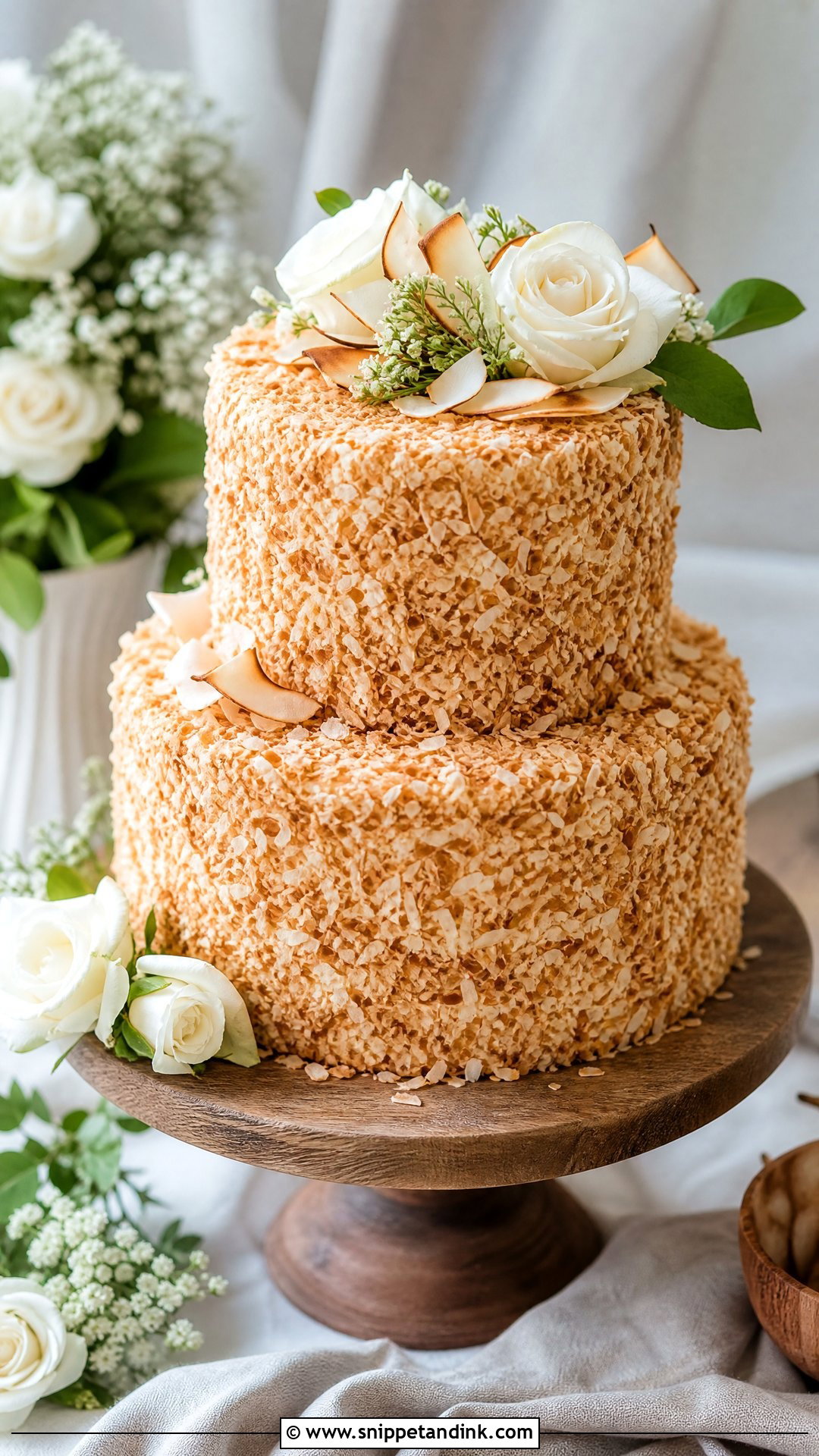
Toasted coconut tells guests what’s inside before anyone cuts a slice, and the smell alone does half the work. I press the flakes onto a thin coat of coconut buttercream so they sit in an even golden layer, a job that takes patience on the sides of a tall tier. The colour looks warm against white flowers, neutral linens and a wooden stand. It suits couples who like texture but don’t want piping or fondant. One honest caution: toasted flakes soften in humid air within a few hours, so I toast and apply them as close to delivery as I can. Two tiers suit an intimate dinner; three tiers suit a full guest list, finished with a few white roses.
3. Tender Coconut Wedding Cake With Pearl Buttercream
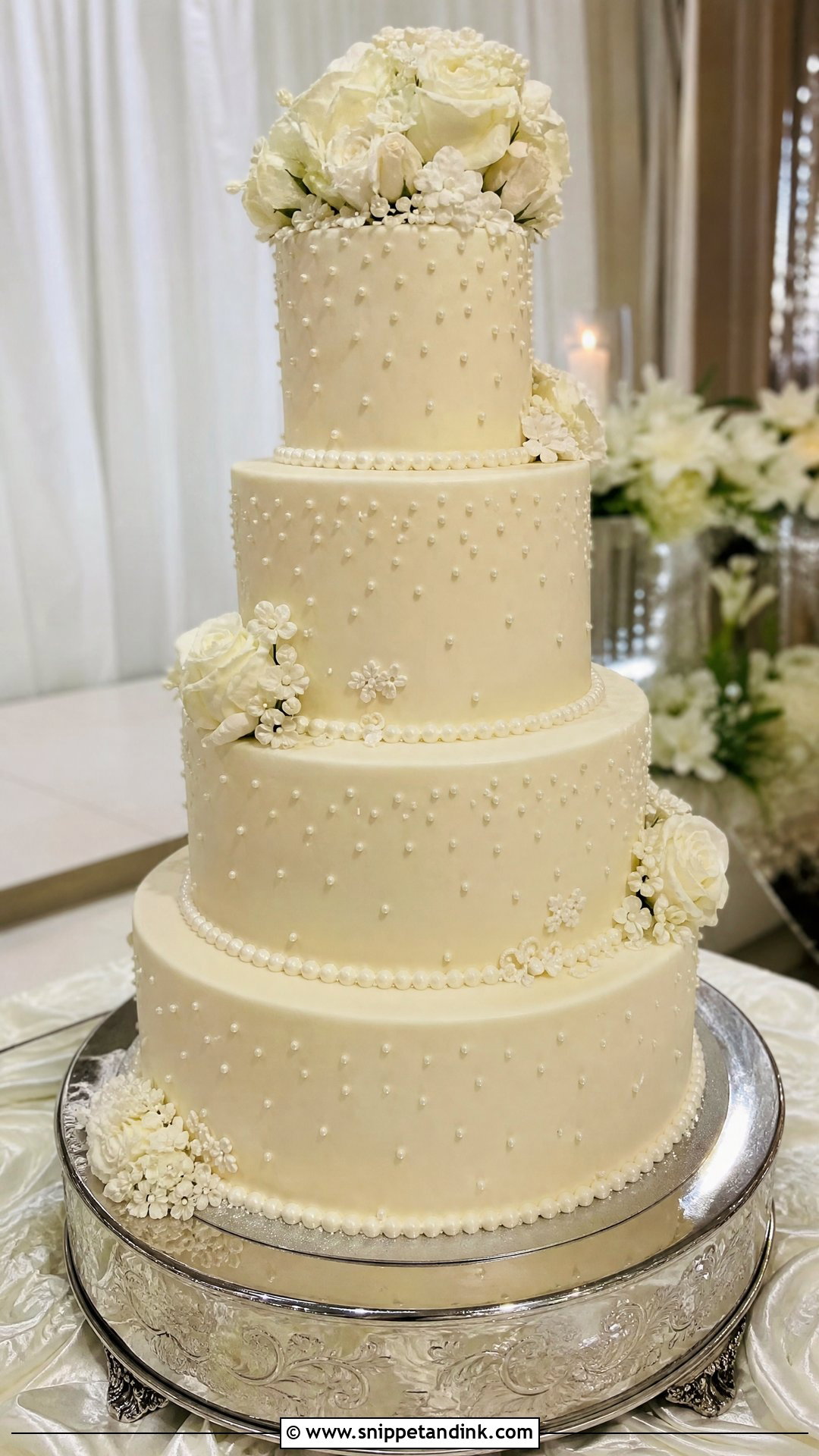
Pearls give coconut a classic wedding face. I frost in smooth ivory coconut buttercream, then place edible pearls in rows, clusters or soft curves, one at a time with tweezers so they sit straight. Fixing pearls on a chilled cake is easier, because warm buttercream lets them slide and leave trails. A pearl border at the base of each tier is the simplest version and the one I’d suggest for a formal indoor venue. Coconut sponge with coconut cream and vanilla bean filling keeps the inside quiet so the outside can be the detail.
4. Tender Coconut Wedding Cake With Gold Leaf
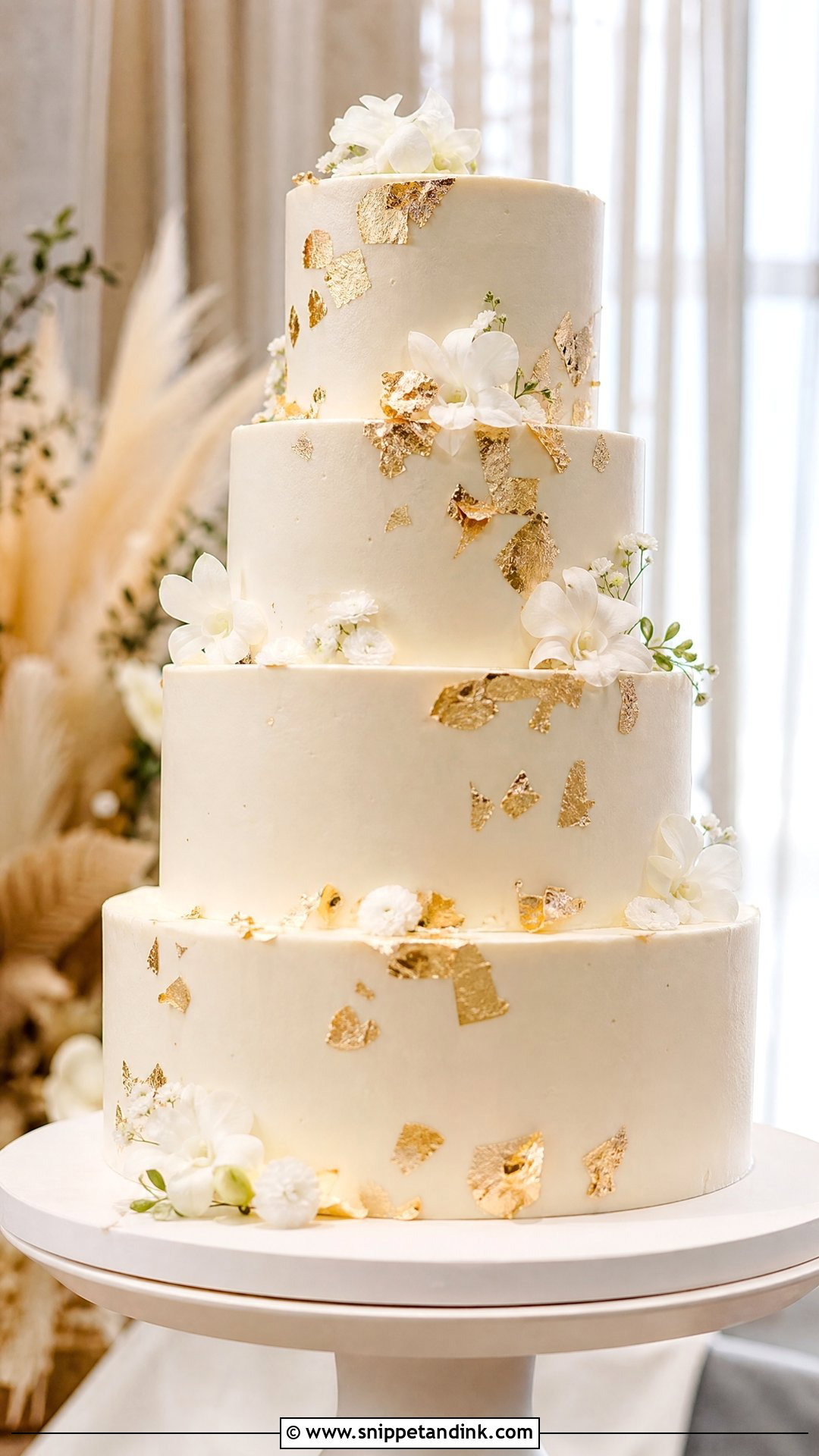
Gold leaf on white coconut buttercream is about as much shine as a soft cake can carry before it looks busy. I lay thin pieces around the top edges or sweep them across one side of each tier, and I apply leaf with a dry brush, since any moisture on your fingers makes it stick to you rather than the cake. It suits evening receptions and elegant tropical events especially well. Inside, mango curd gives a bright surprise next to coconut custard or vanilla cream. Keep the flowers to a few white blooms or some greenery, or they’ll compete with the gold.
5. Tender Coconut Wedding Cake With Ruffle Frosting
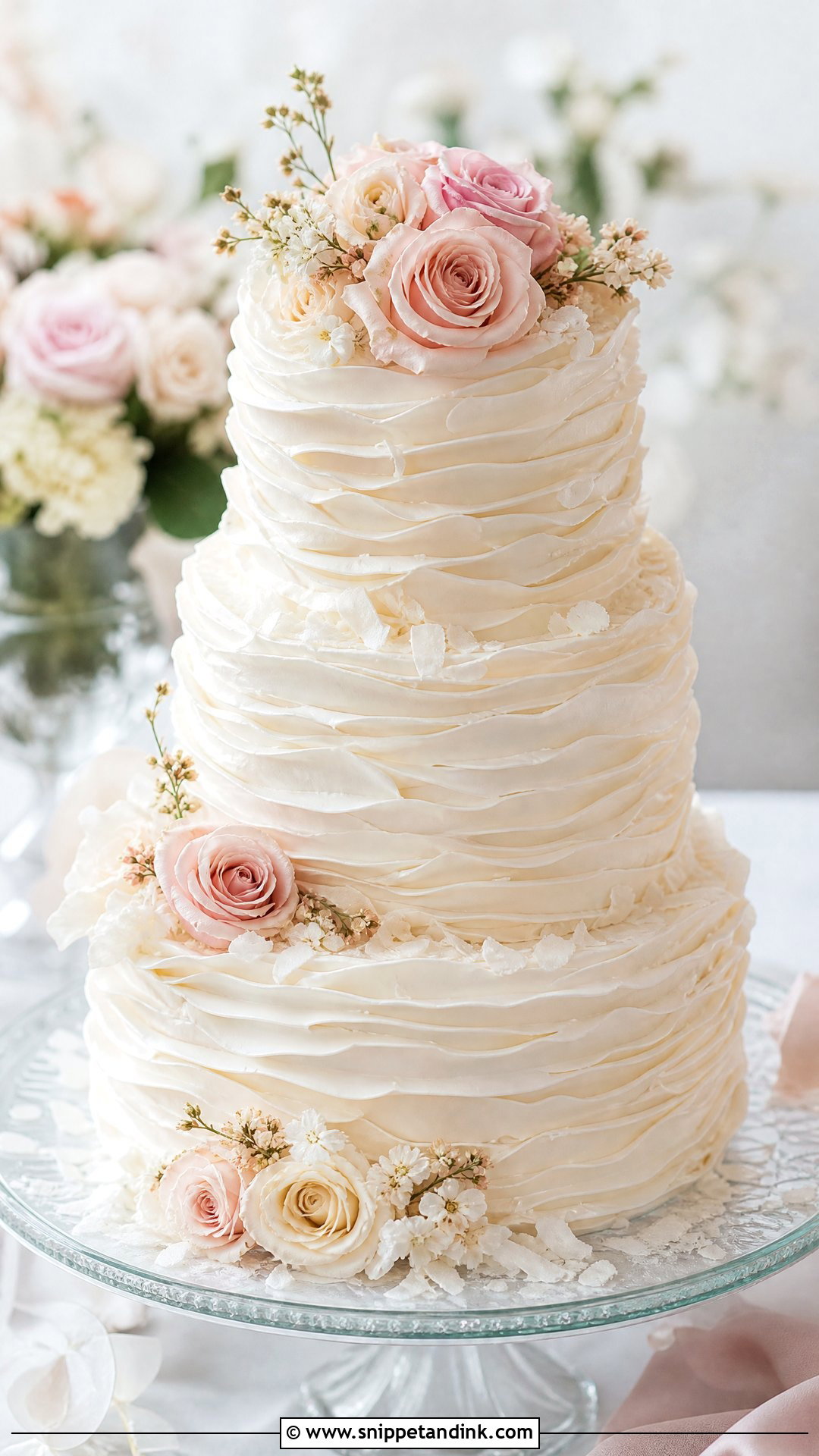
Ruffles make a coconut cake look like fabric, and they’re one of the few designs that can carry a cake without any flowers at all. I pipe them in ivory, pale cream or the softest blush, working tier by tier with a petal tip. They do take time, so I’d allow for that in the quote. Buttercream ruffles are also more forgiving in mild warmth than smooth sides, because small droops just look like movement. Coconut sponge, coconut cream filling and a gentle milk soak inside. Add a few blooms at the base, or leave it plain.
6. Tender Coconut Wedding Cake With White Roses
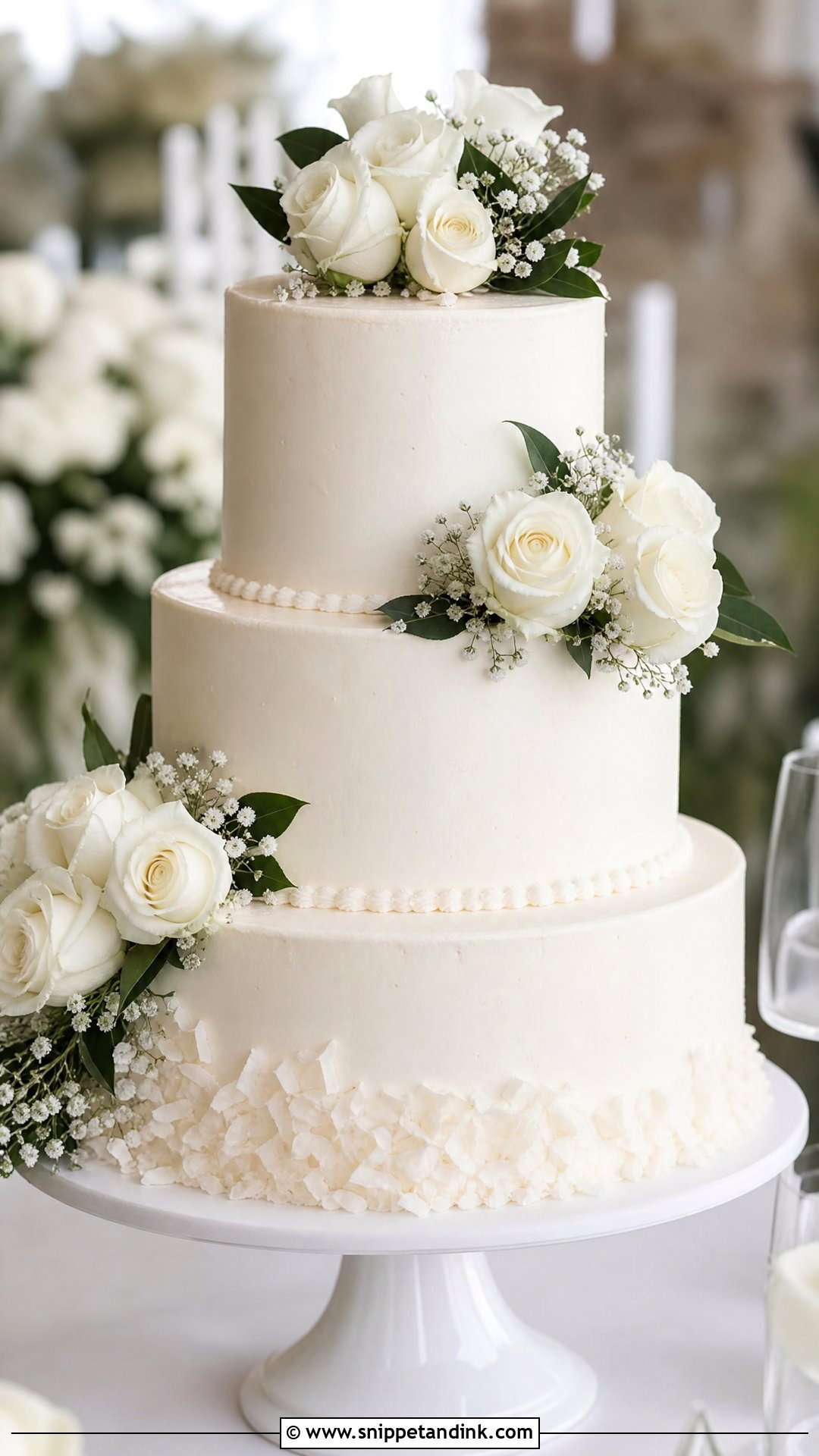
White roses with coconut cake is the pairing I’d recommend to a couple who can’t decide, because it rarely looks out of place anywhere. Smooth coconut buttercream or fondant, fresh white roses around the tiers, and a few coconut flakes at the base hinting at the flavour. Coconut cream, vanilla bean or pineapple coconut mousse all suit the filling. Roses should come from a grower who hasn’t sprayed them, and I always ask the florist about this before I put any stem near the cake. It’s the obvious match for an all-white theme and reads clearly in photos.
7. Tender Coconut Wedding Cake With Tropical Flowers
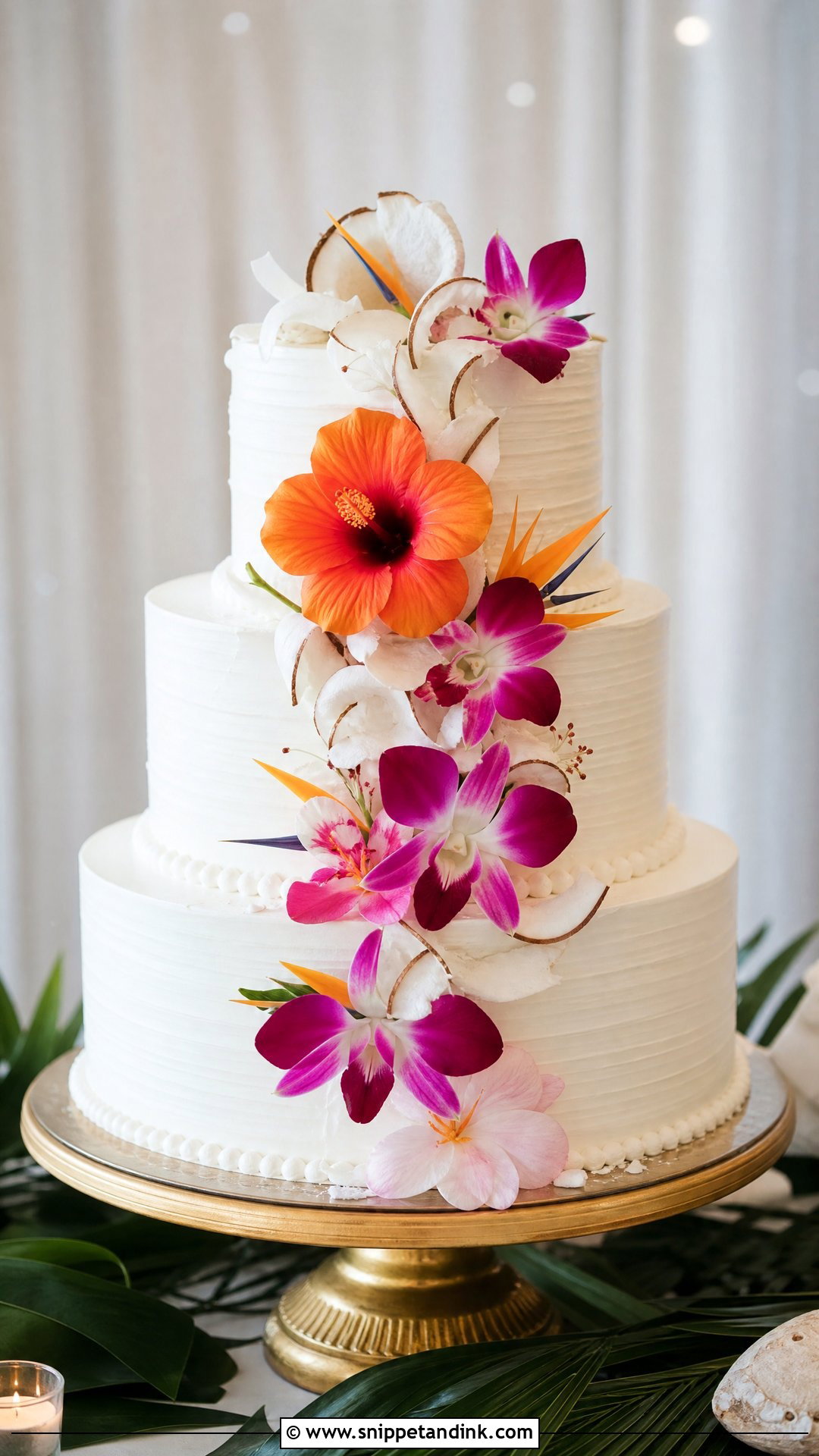
Bright tropical flowers can turn a coconut cake into the centrepiece of the reception, provided the cake shape stays calm underneath them. I start with a white coconut buttercream base and add hibiscus, orchids, anthurium or frangipani in your colours. A tall three-tier round or a smooth two-tier keeps the arrangement from overwhelming the cake. Most of these blooms aren’t food-safe, so stems get wrapped or set in picks and the florals sit on, not in, the cake. Passion fruit, mango or lime filling matches the setting for island and outdoor summer receptions.
8. Tender Coconut Wedding Cake With Coconut Drip
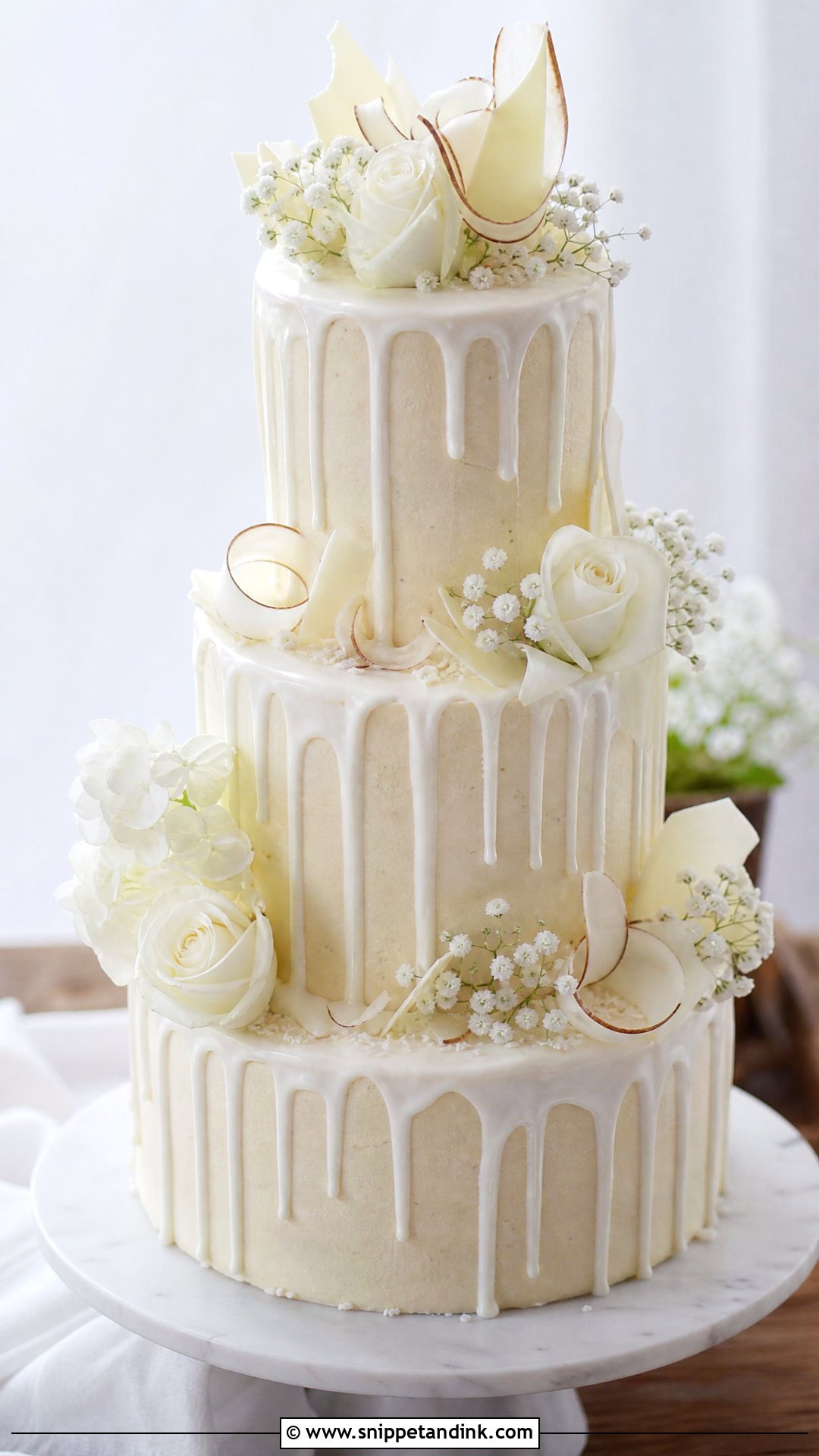
A coconut drip cake stays wedding-appropriate as long as the colours stay soft and the drips stay controlled. I chill the frosted cake first, then run a white chocolate and coconut ganache over the edge at just above room temperature; too warm and it races to the board, too cool and it stops in stubby blobs. The top can carry coconut curls, white chocolate shards, fresh flowers or a few neutral macarons. It’s a relaxed cake that still looks finished, and it holds interest from every side of a dessert table.
9. Tender Coconut Wedding Cake With Fresh Berries
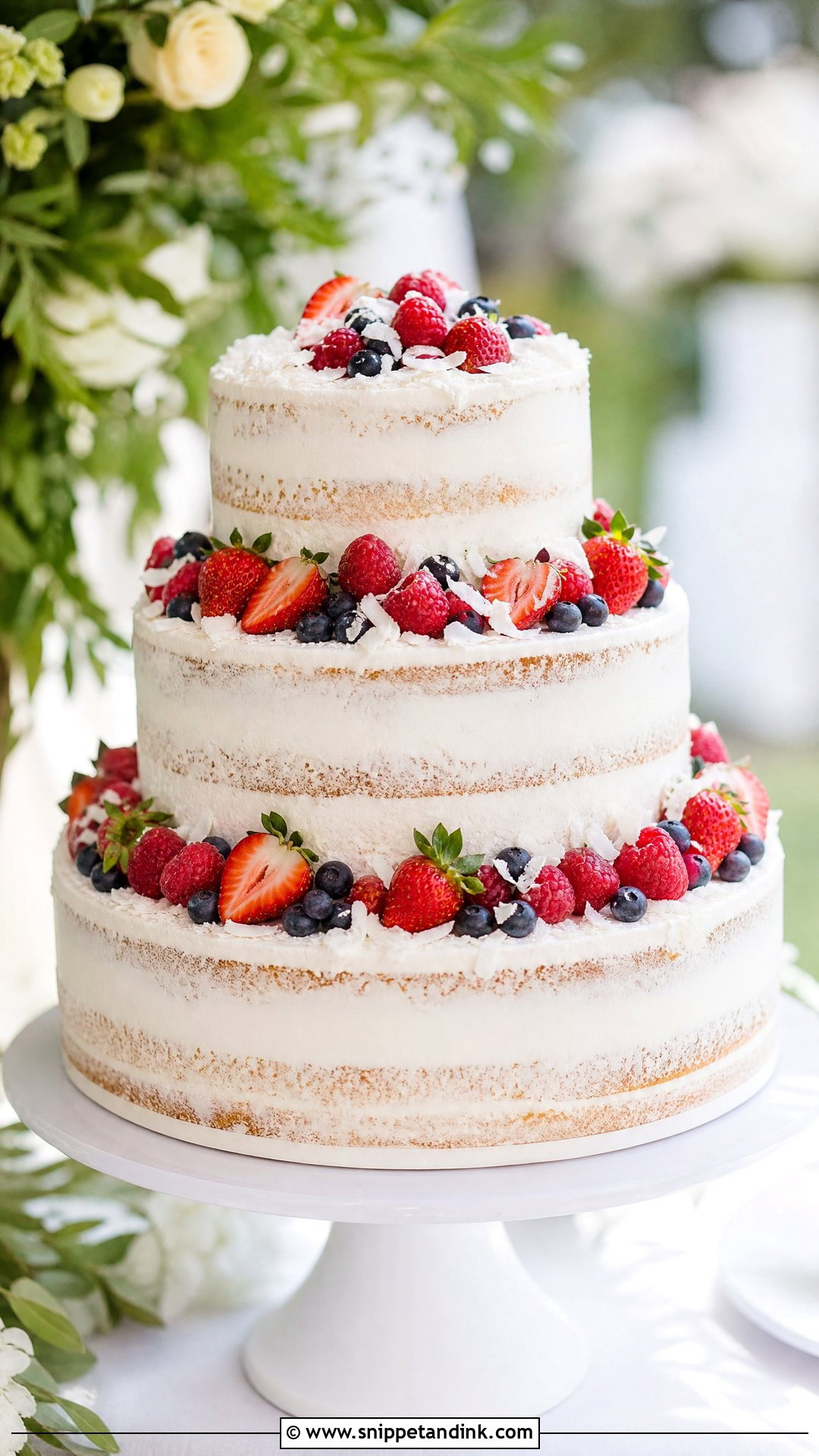
Berries bring colour to coconut without overpowering it. I’d frost this one semi-naked or lightly, with coconut buttercream between the layers and berries tucked around each tier in small clusters, which look more considered than a full cover. Strawberries, raspberries, blueberries and blackberries all sit well against white. Berry compote in the filling with coconut cream keeps it fresh rather than sweet. Cut berries weep after a few hours, so I add them on site where possible. Spring and summer garden weddings and brunch receptions suit it best.
10. Tender Coconut Wedding Cake With Mango Filling
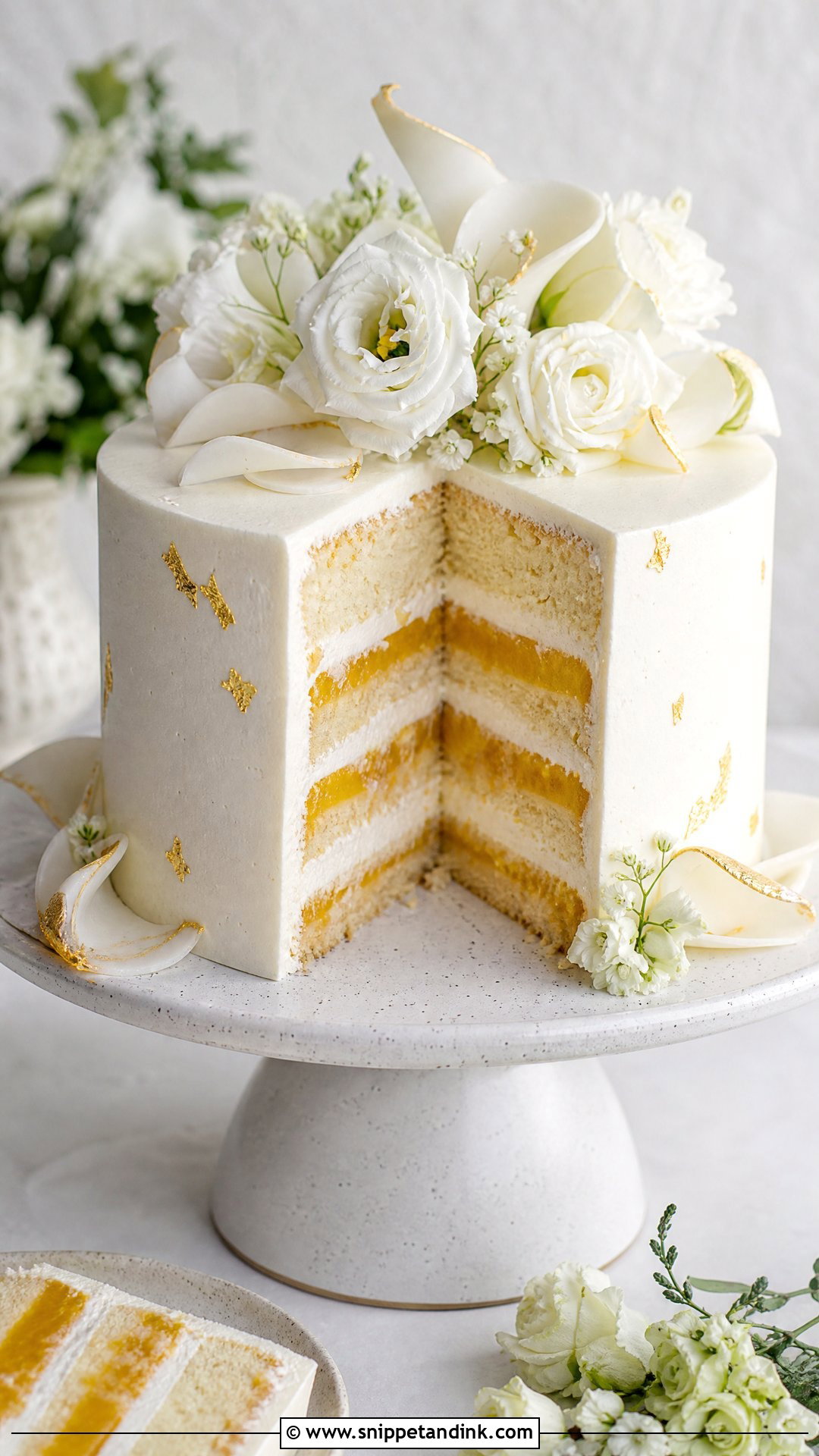
Mango and coconut is the flavour surprise I enjoy watching guests discover when the cake is cut. The outside stays white in smooth coconut buttercream; inside, coconut sponge layers with mango curd or mango mousse. A curd is my pick over fresh mango slices because fresh fruit releases juice into the sponge and can make tiers slip. Decorate with white flowers, thin mango-coloured accents or small gold details, or add a pale yellow ombré effect near the bottom tier. Let the mango bring the colour and the coconut keep the outside creamy.
11. Tender Coconut Wedding Cake With Lime Buttercream
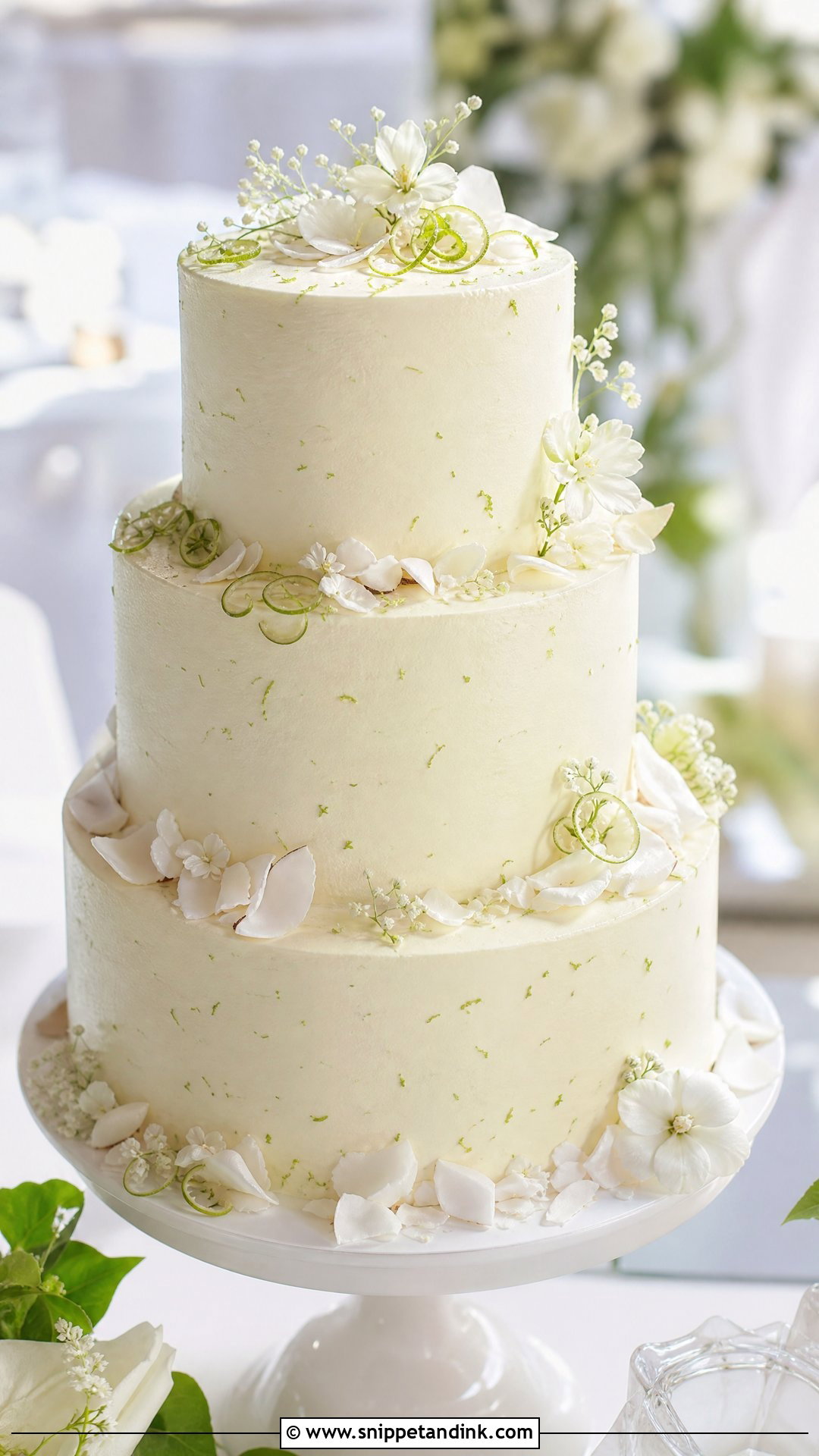
Lime is my favourite partner for coconut after a heavy meal, because it cuts the richness and leaves the palate clean. Coconut cream filling, then lime buttercream on the outside in a very pale green or simply ivory with the lime in the flavour only. Small zest details, white blossoms and a few coconut curls are enough decoration. I keep the green barely there, since a stronger green can look minty and unbridal in photos. A two-tier round or a tall single tier suits beach, garden and outdoor receptions.
12. Tender Coconut Wedding Cake With Semi Naked Frosting
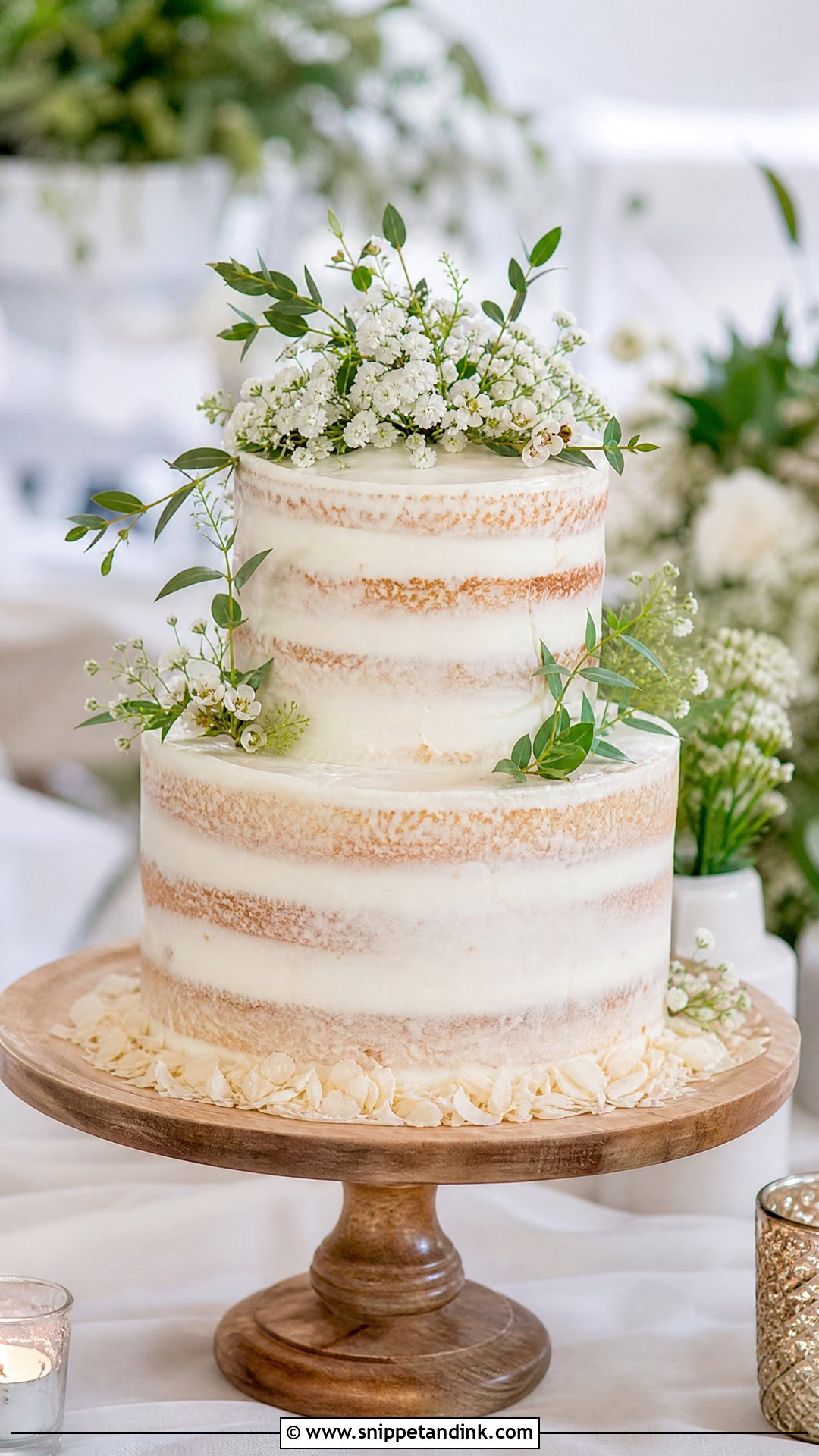
Semi-naked finishes show off the pale coconut sponge, and that only works if the layers are level and the crumb is even, because every flaw is visible. I scrape a thin coat of coconut buttercream so the layers peek through, then fill with coconut cream, vanilla mousse or fruit preserves. Small white flowers, greenery and a scatter of coconut flakes round the base finish it. The catch is that thin frosting protects the sponge less, so it dries faster once it’s out of the fridge; I’d keep display time short for barn, backyard and garden receptions. A wooden stand suits it.
13. Tender Coconut Wedding Cake With Lambeth Piping
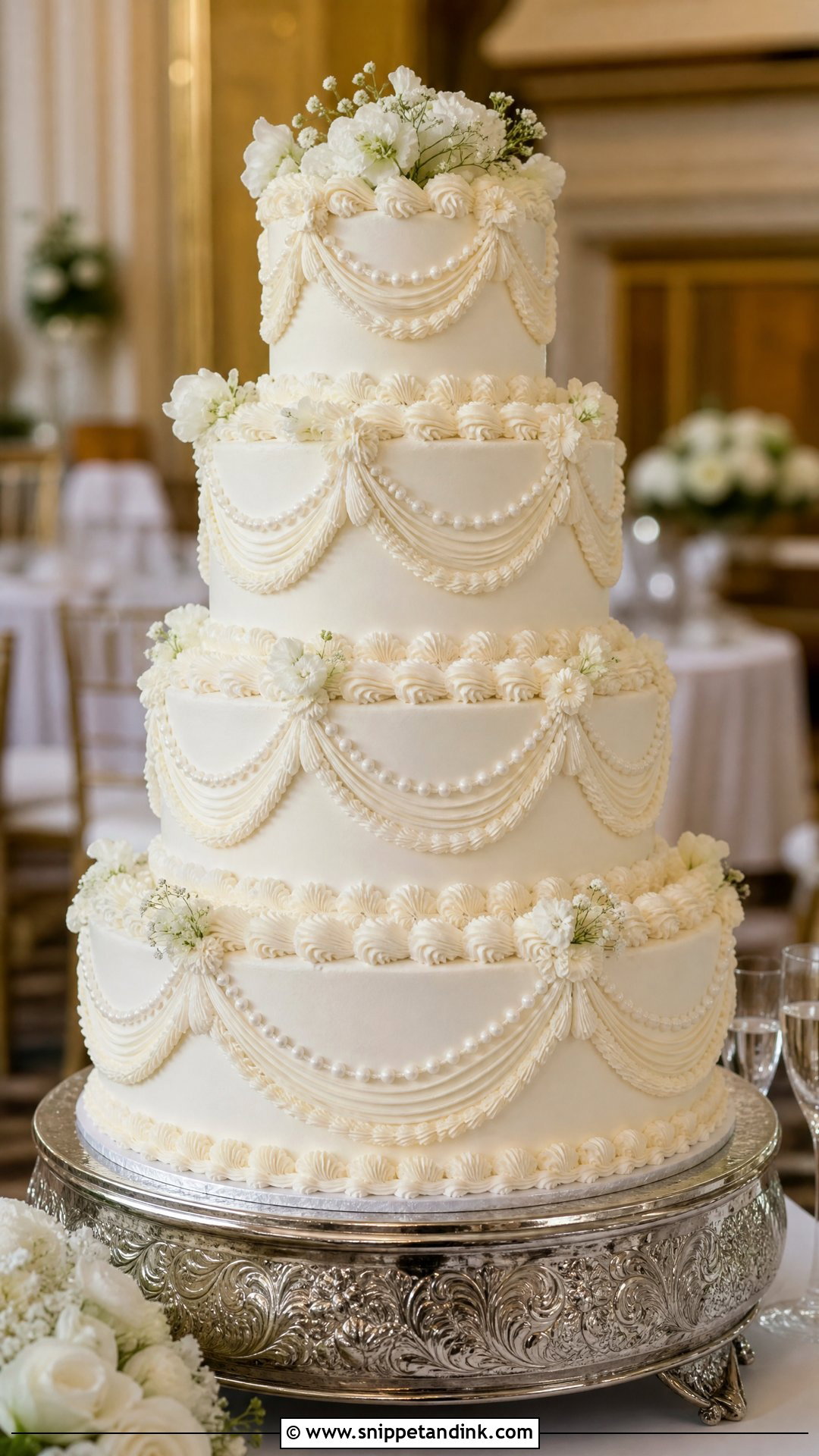
Lambeth piping suits couples who love vintage cakes but want something fresher than traditional fruit cake inside. Coconut layers and smooth coconut buttercream carry the ornate borders, swags, shells and curves well. Overpiping takes a stiff buttercream, so I adjust the recipe for structure, and that same recipe holds its shape better in a warm room. Ivory or white keeps it classic, pale blush makes it romantic. Two tall tiers look dramatic; three look grand. Edible pearls or tiny white flowers can finish the piped details.
14. Tender Coconut Wedding Cake With Square Tiers
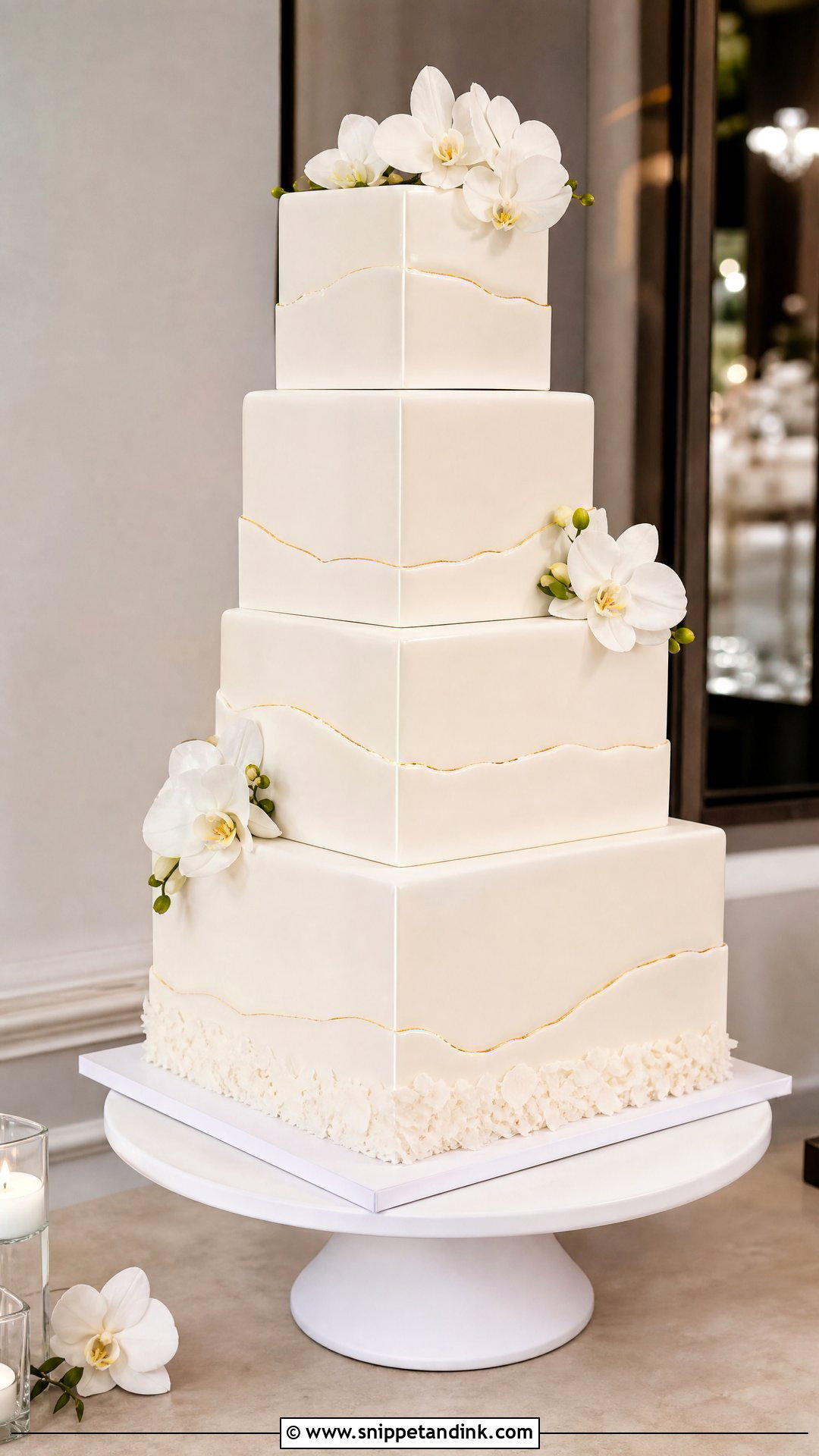
Square tiers give coconut cake a modern, architectural shape, and they’re less forgiving than rounds. Sharp corners need either smooth fondant or very carefully finished buttercream, and I chill between coats to get them crisp. I’d keep coconut flakes to selected places, such as a base border or one textured panel, so the edges stay clean. Coconut cream and vanilla bean filling inside. White orchids, gold accents or thin piped lines suit hotel receptions and minimalist venues. Square tiers also yield more servings per tier than rounds of the same width, which helps if your guest count is tight.
15. Tender Coconut Wedding Cake With Seashell Details
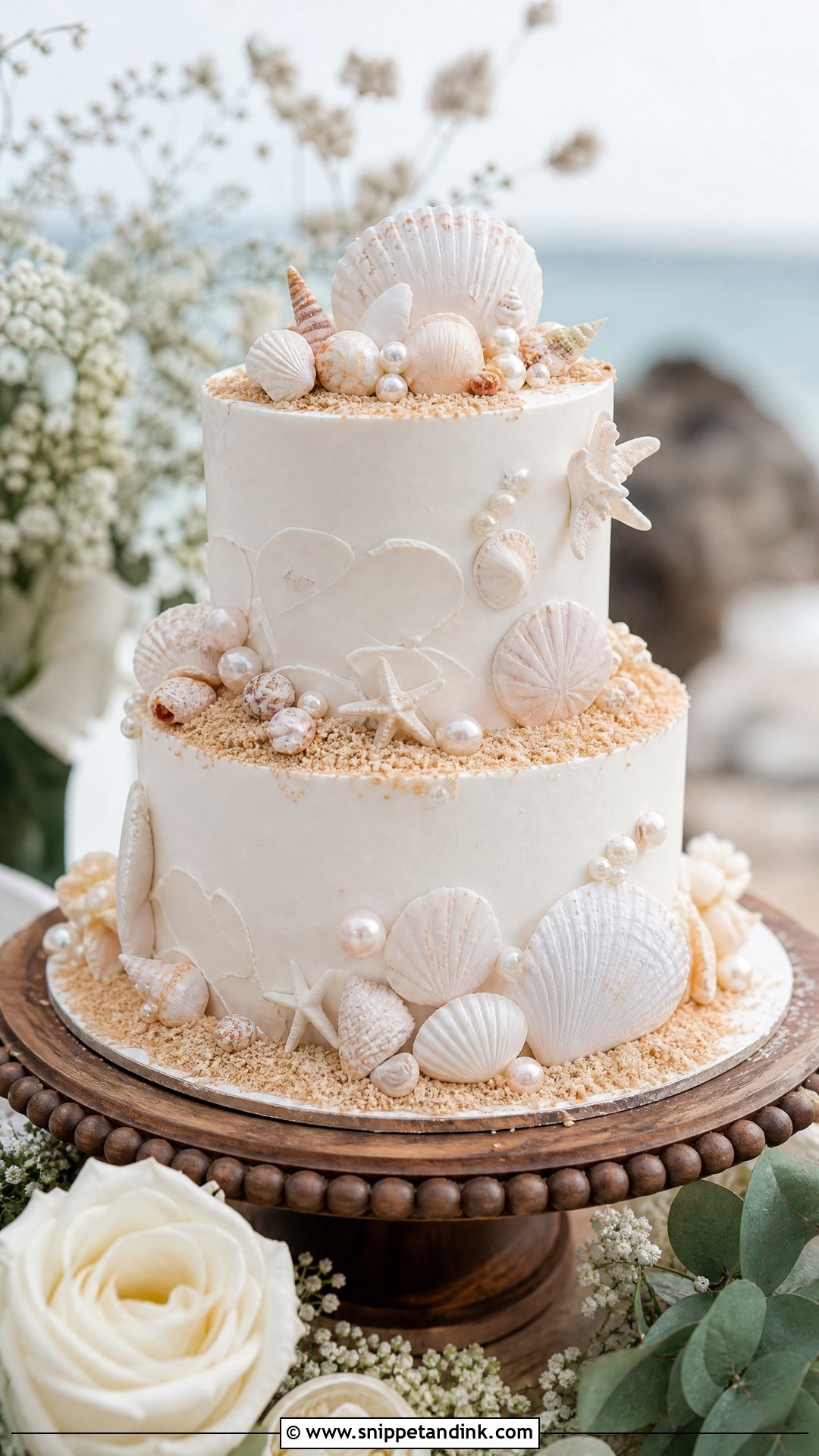
On a beach, a coconut cake with seashell details feels natural rather than themed, provided you stop at a few shells. I cover the tiers in white coconut buttercream, then add fondant or white chocolate shells, a few pearls and a little toasted coconut that reads as sand. Pineapple coconut filling suits the setting. Too many shells and it starts to look like a children’s party, so I group them on one side. A two-tier on a white or wooden stand looks right among coastal flowers and light linens.
16. Tender Coconut Wedding Cake With Edible Flowers
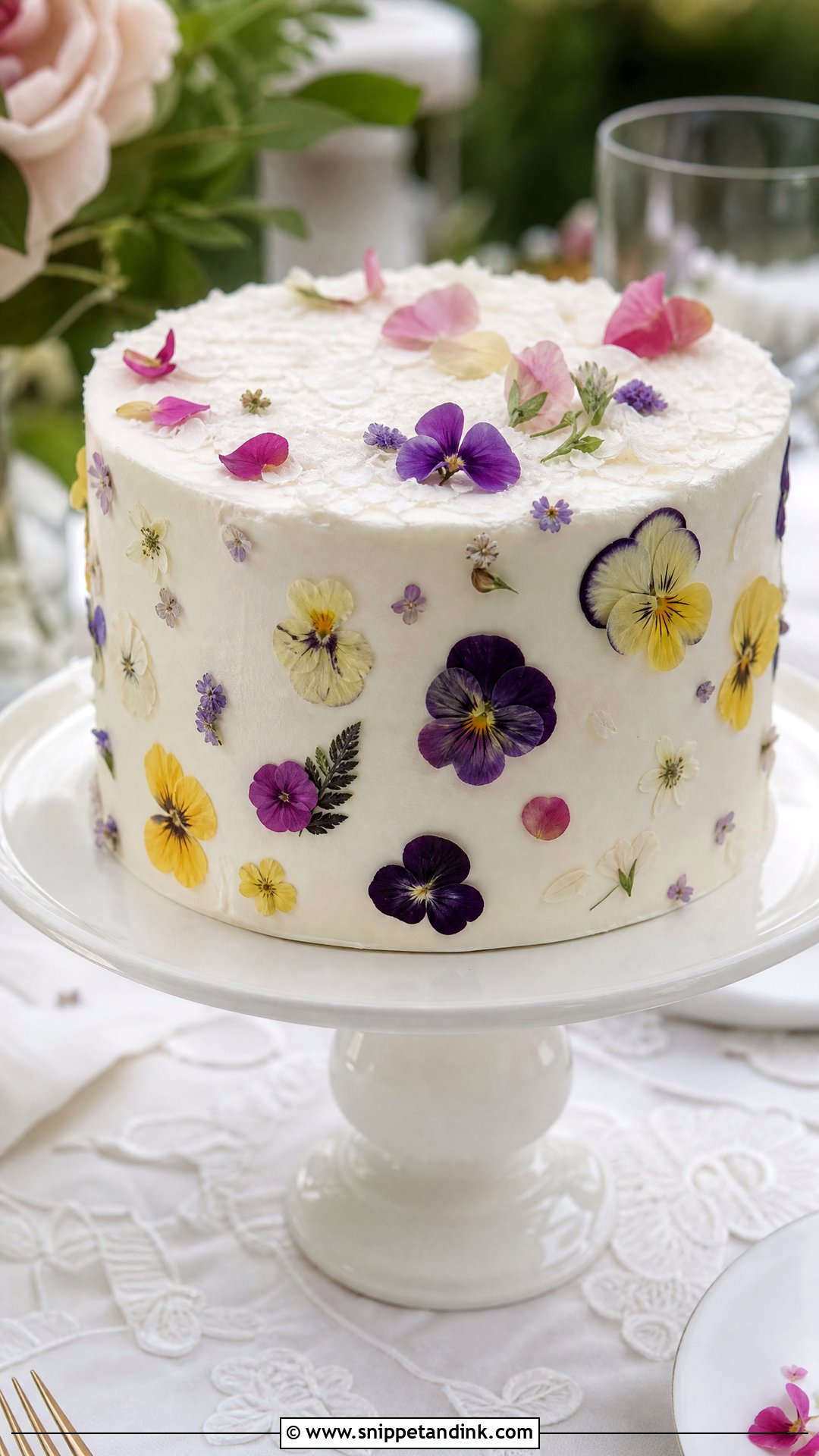
Edible flowers give a garden look without any of the stem worries real arrangements bring. Pansies, violets and calendula petals all work, either fresh or pressed flat. Frost in smooth coconut buttercream or a light whipped coconut frosting. I cascade them down the front for romance, or press them around the sides for something more modern. Pressed flowers hold up best because fresh petals wilt on a warm table within a couple of hours. Coconut sponge and coconut cream filling keep the flavour simple for spring weddings and smaller receptions.
17. Tender Coconut Wedding Cake With Macarons
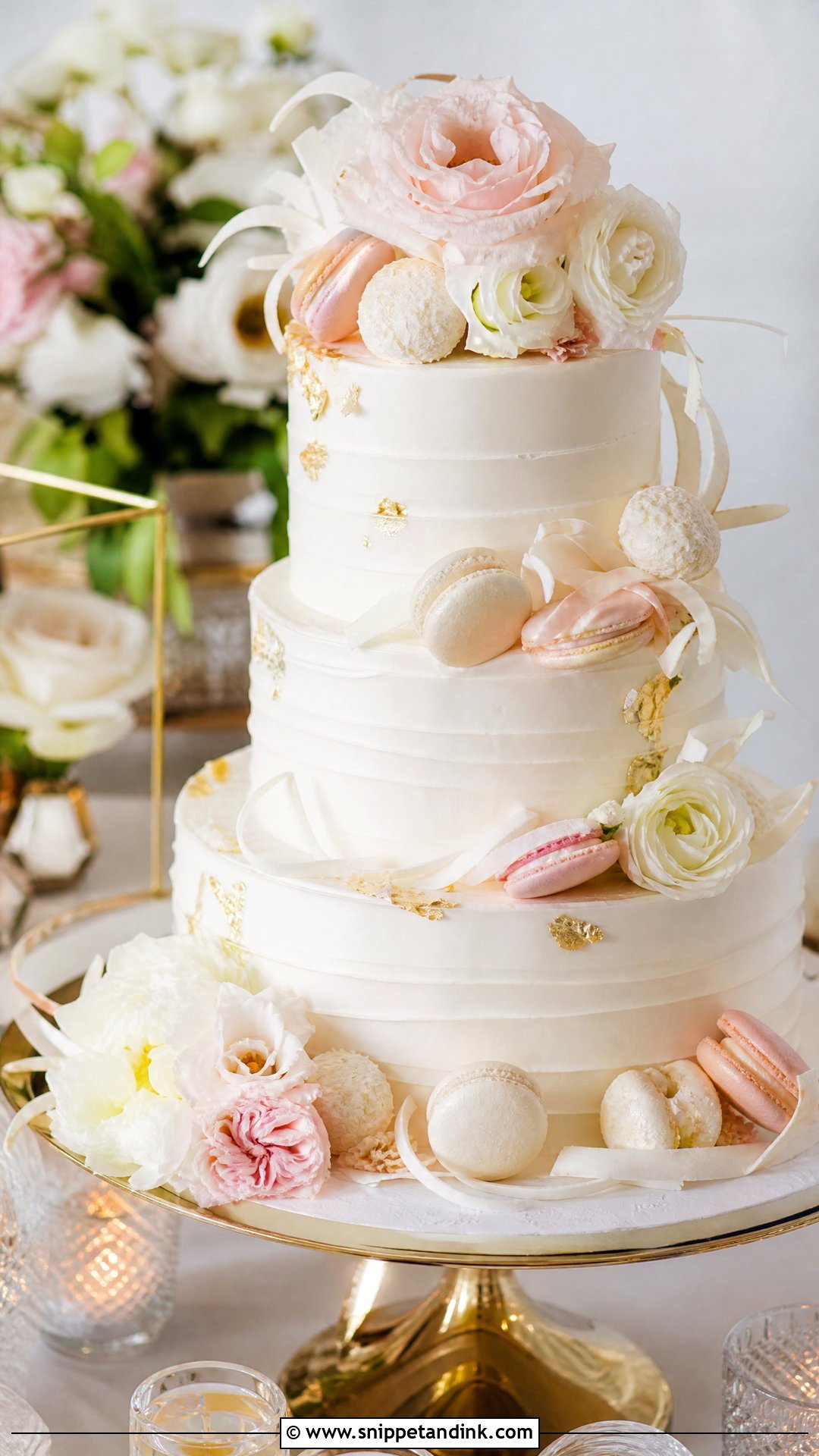
Macarons add height and a little play, and they double as a ready-made extra dessert. A smooth white coconut buttercream cake, then coconut, vanilla or mango macarons around the tiers and on top. Ivory, blush, pale yellow or light green keep the colours bridal. I attach them with a dab of buttercream at the last stage, because macaron shells soften against moist frosting if they sit for too long. A thin fruit filling with coconut cream inside. Coconut curls, small flowers or gold accents finish it for a modern reception.
18. Tender Coconut Wedding Cake With Textured Buttercream
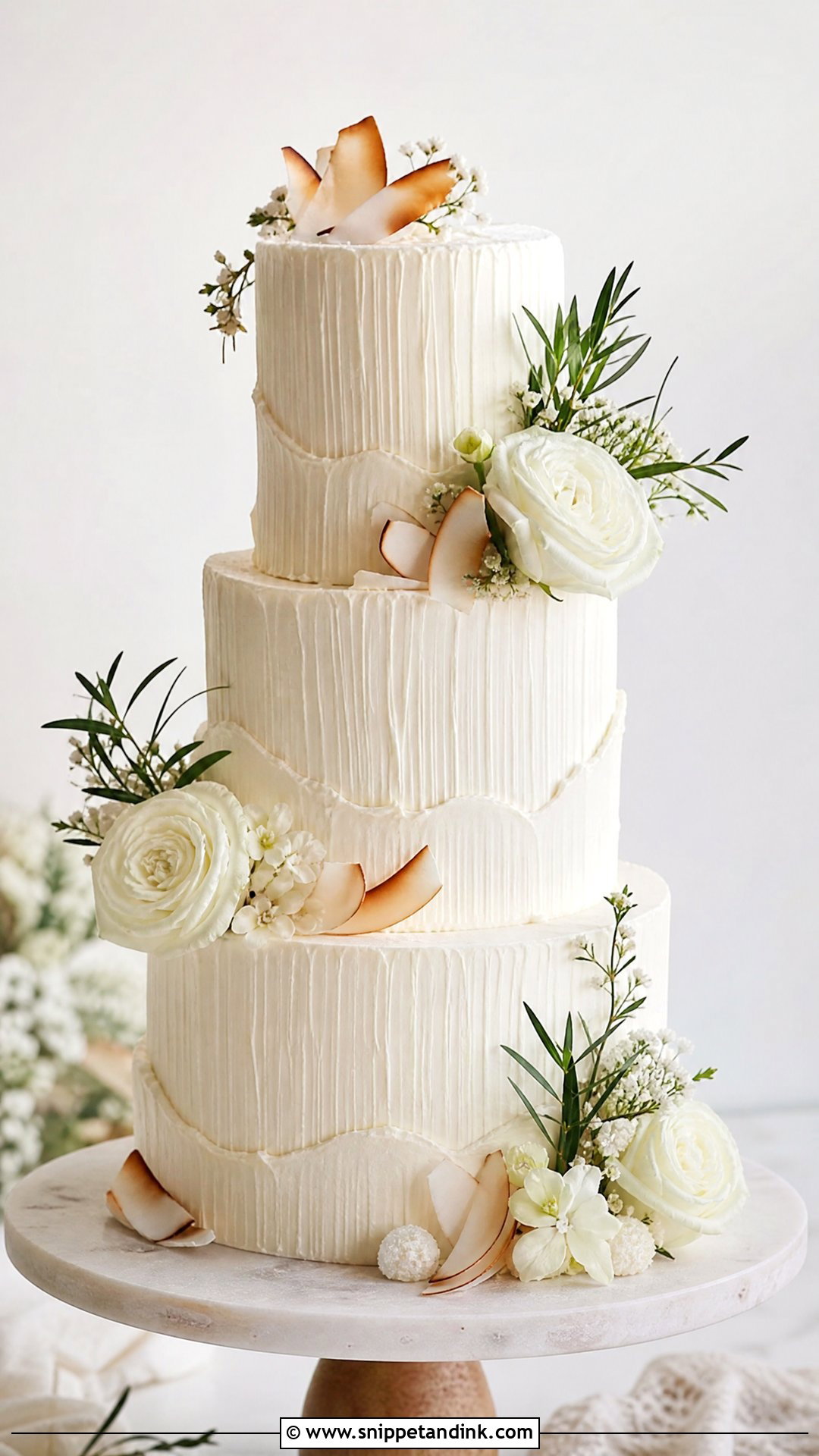
Textured buttercream is the design I suggest to couples who want simple but not plain. Vertical lines, waves, palette knife strokes or a combed finish all catch light in a way a smooth side can’t. I use ivory or warm white coconut buttercream so the texture shows. It’s also the most forgiving finish to transport, since small scuffs blend into the pattern. Coconut custard or whipped coconut filling inside, with white flowers, greenery or a few coconut chips on top. It dresses up for a formal room or down for a rustic one.
19. Tender Coconut Wedding Cake With Mini Cakes
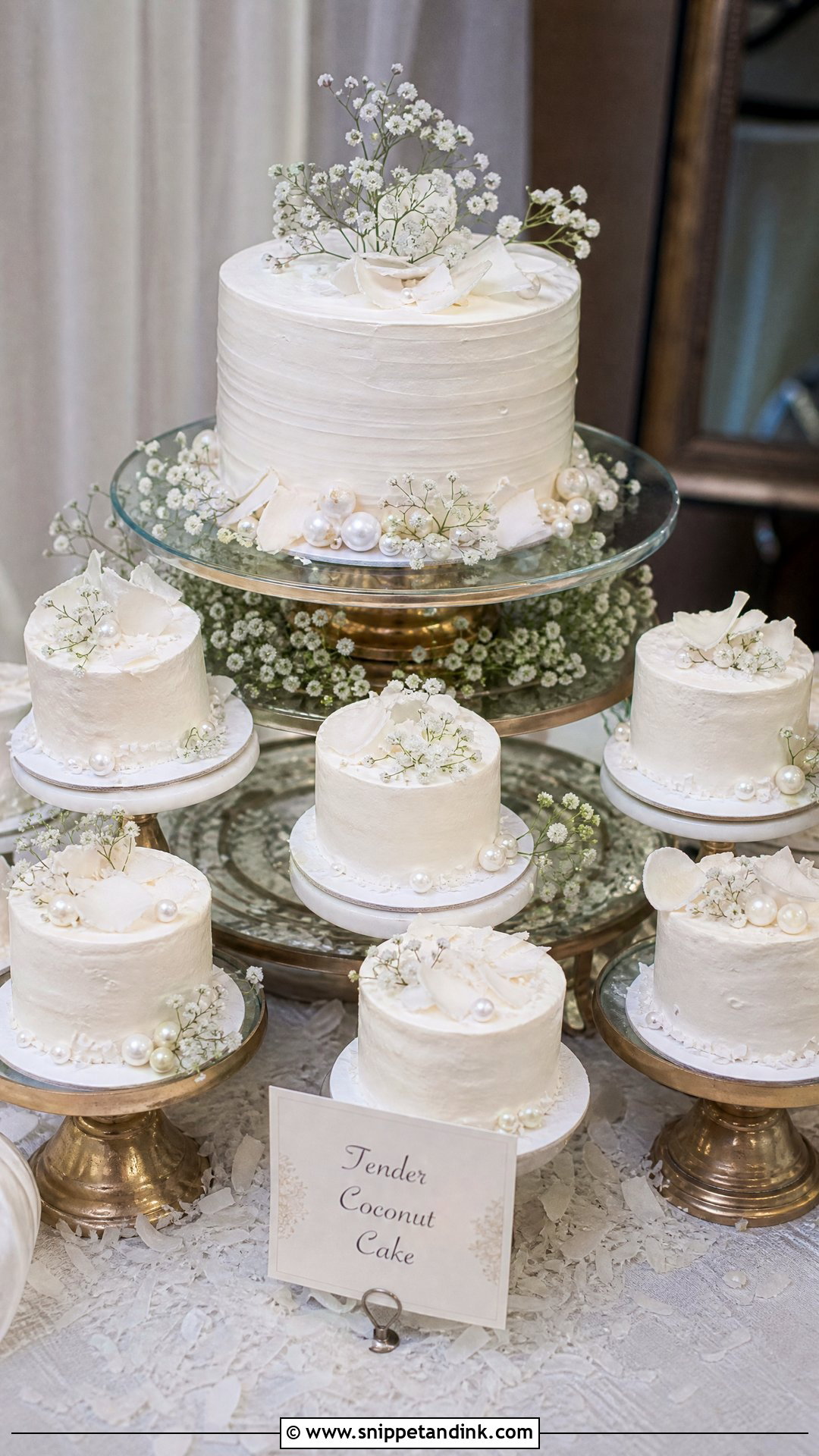
Mini coconut cakes suit intimate weddings and plated dessert service. Each guest gets a small cake with smooth buttercream, tiny flowers and a sprinkle of coconut. You can also set them on stands at different heights. They take far more hands-on time than one large cake, because every little cake needs its own frosting and finishing, so expect the price to reflect that. Keep the decoration identical across all of them so the display looks deliberate, and add one slightly larger cutting cake if you still want that moment with the knife.

20. Tender Coconut Wedding Cake With Tall Single Tier
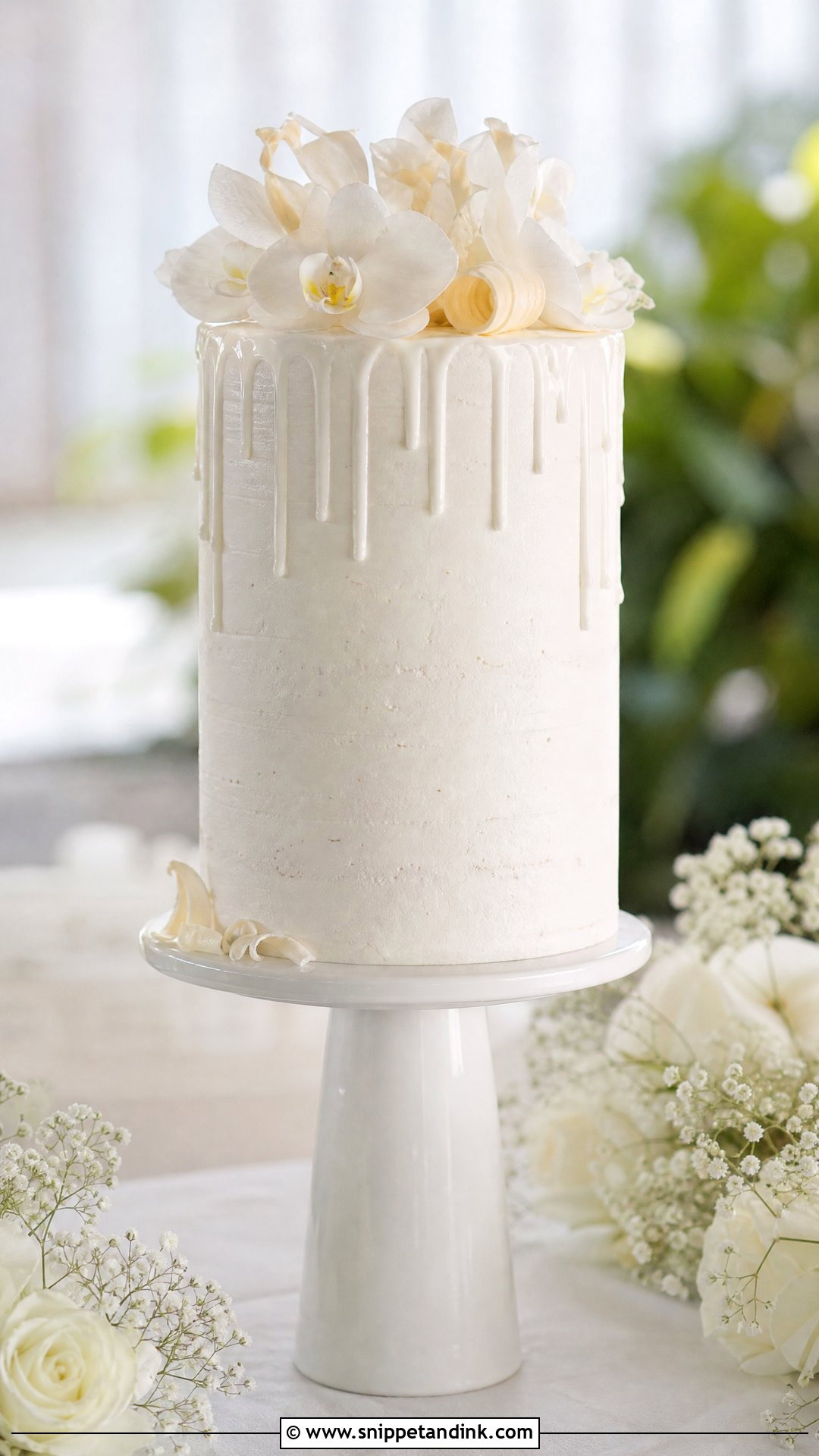
A tall single tier gives a small cake real presence. Stacking coconut layers high with coconut cream filling creates the drama, and a single tier keeps the cost down. Anything much taller than it is wide needs internal support, so I’d still dowel it even without a second tier. Smooth white buttercream and one strong detail: orchids, pearls, coconut curls or a clean white drip. It suits micro weddings, courthouse celebrations and receptions with a full dessert table. Put it on a raised stand so it reads as the wedding cake in photos.
A Coconut Cream Cake in Beach Heat
Most of these designs are chosen for warm, outdoor weddings, which happen to be the hardest conditions for a coconut cake. Fresh coconut cream, custard and whipped fillings are perishable, and buttercream softens in the sun. Here’s how I plan around it.
- Keep it cold until it’s needed: the cake should come out of refrigeration as late as the timeline allows. I’d rather set it up after cocktail hour than at the start of the ceremony.
- Shade, not a breeze: a table in full sun will slump a buttercream tier, and a sea breeze carries sand. Place it under cover, away from heat lamps and the buffet.
- Choose the frosting for the weather: a meringue buttercream or a firmer buttercream holds up better than whipped coconut cream, which I’d only use indoors or for a cake that is served almost immediately.
- Leave late jobs for the venue: toasted flakes, cut fruit and fresh petals go on at setup, so they look the way they did in the sketch.
One more practical point: label the cake on the dessert table. Some guests with nut allergies have been told to avoid coconut, and a small card saves them from asking the catering staff in the middle of service.
Does Coconut Belong on Your Cake Table?
Coconut works as a wedding flavour because it’s light and creamy without being loud, and it takes on almost any finish: pearls and roses for a classic room, orchids and mango for a tropical one, square tiers for a modern space, semi-naked for a relaxed garden. Pick the design for your venue, season, guest count and the photos you want. Then book a tasting and ask your baker which fillings keep the crumb moist in your conditions, whether that’s coconut cream, mango curd, lime buttercream or vanilla mousse.
You'll Like These Ideas:







Leave a Reply