
Anthuriums are the flower I reach for when a couple wants something tropical that still reads as architecture rather than a fruit bowl. The glossy, heart-shaped part everyone calls the petal is really a waxy bract, which is why it holds its shape for so long and why it photographs with that lacquered shine. They suit beach weddings, garden receptions and pared-back city venues alike. One rule comes before any design: real anthuriums are not edible and their sap irritates the mouth, so on a cake they must be sugar, food-safe faux, or fresh stems kept fully behind a barrier. Here are twenty ways I’ve seen them work, from plain white tiers to coral, burgundy and tropical fruit.
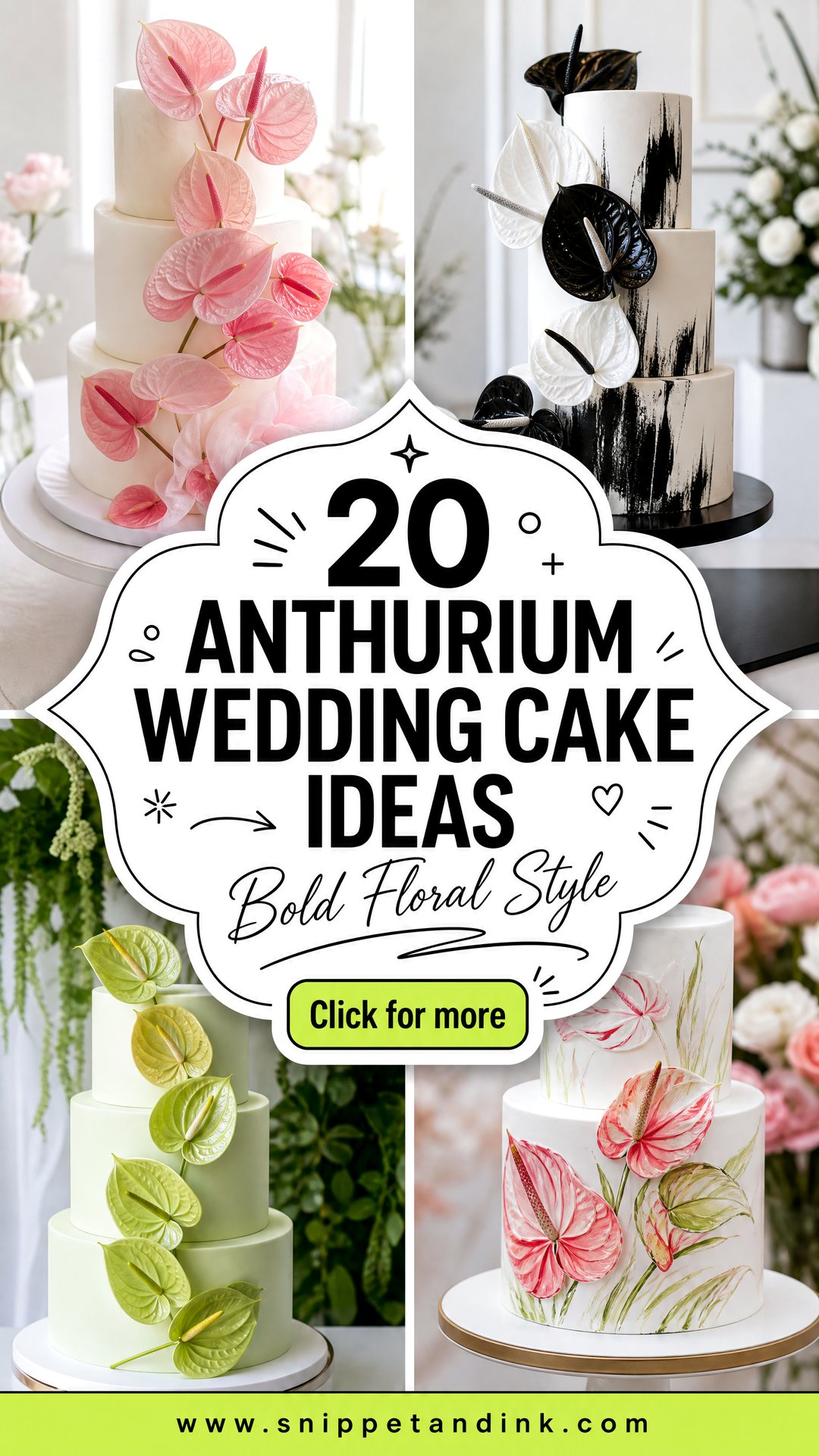
Fresh, Sugar or Faux Anthuriums on a Cake
Each version behaves differently, and the right one depends on your venue, your budget and who is placing the flowers.
Fresh stems
Anthuriums are one of the toughest cut flowers I work with, and they hold up for hours out of water, which is why they suit cakes. But the whole plant contains calcium oxalate crystals that sting the mouth, so fresh stems never go straight into the icing. I trim each stem short, seal the cut end with floral tape, wrap it, and set it in a food-safe posy pick pushed into the cake. Larger groups sit on a small acetate or wafer disc so nothing rests on the frosting. Ask that the flowers are bought from a florist rather than a supermarket, because commercial stems may have been treated with sprays.
Sugar anthuriums
Sugar bracts are rolled thin in gumpaste, shaped over a former, dried for several days and given a shine with an edible glaze. They are fully safe to sit on the cake, but they take time, so order early, and they’re brittle: humidity softens them and a knock snaps them. They suit a hot or humid venue less well than fresh flowers do.
Faux stems
Good real-touch faux anthuriums look convincing in photos and can be kept afterwards. Treat them exactly like fresh: wash them, cut off any exposed wire, and use picks or a barrier, since the dyes and stems were never meant for food.
1. White Anthurium Wedding Cake
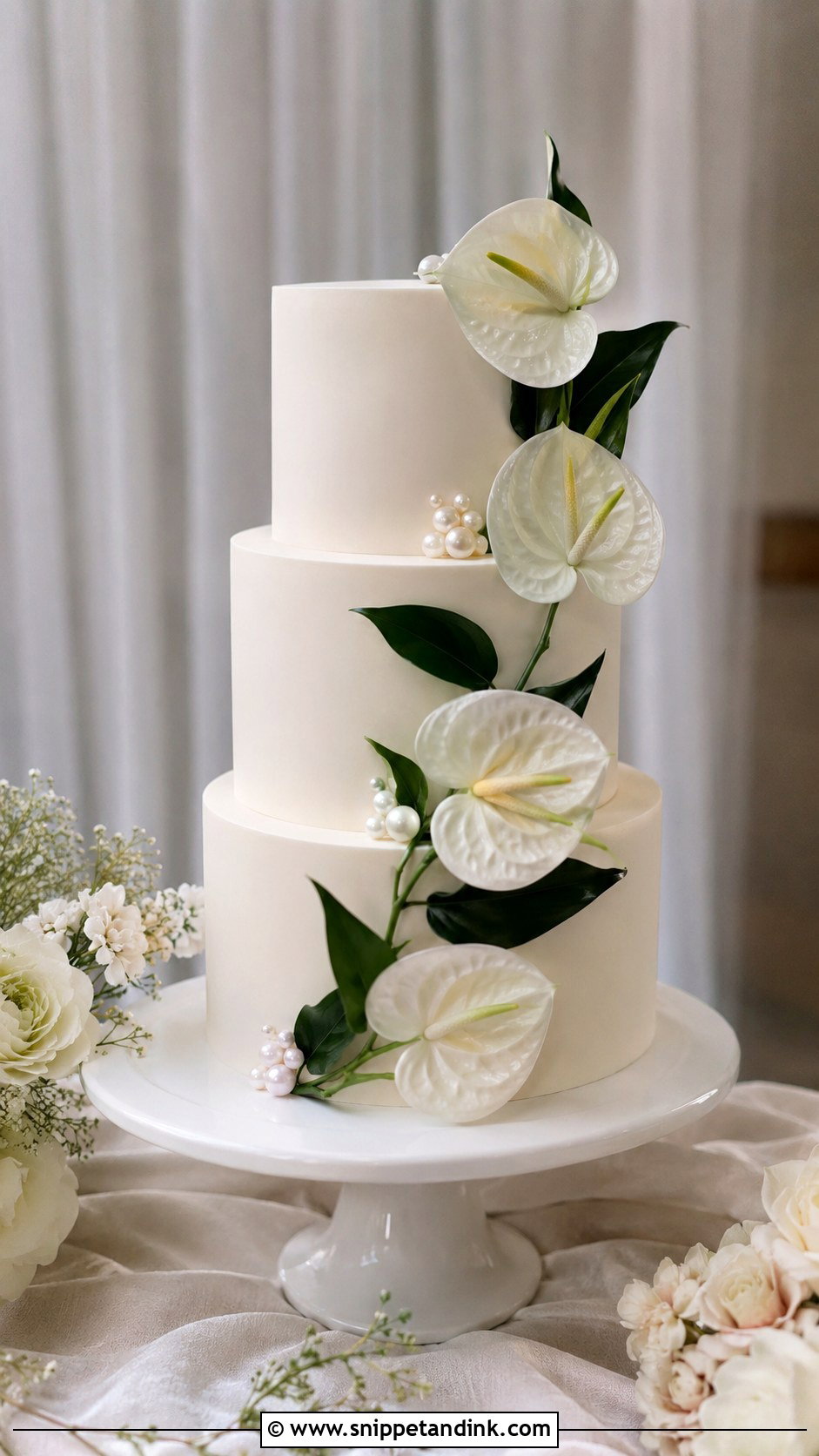
White anthuriums turn the tropical dial right down. On smooth ivory tiers I place a few off-center so they draw one clean line from the top tier to the base, and the waxy bracts look almost porcelain against buttercream. Vanilla bean, almond, coconut or champagne sponge keeps the cake bridal. A few pearls, a white orchid or one glossy leaf adds depth if you want it. White anthuriums bruise visibly, so I check each bract for brown marks before it goes anywhere near the cake.
2. Pink Anthurium Wedding Cake
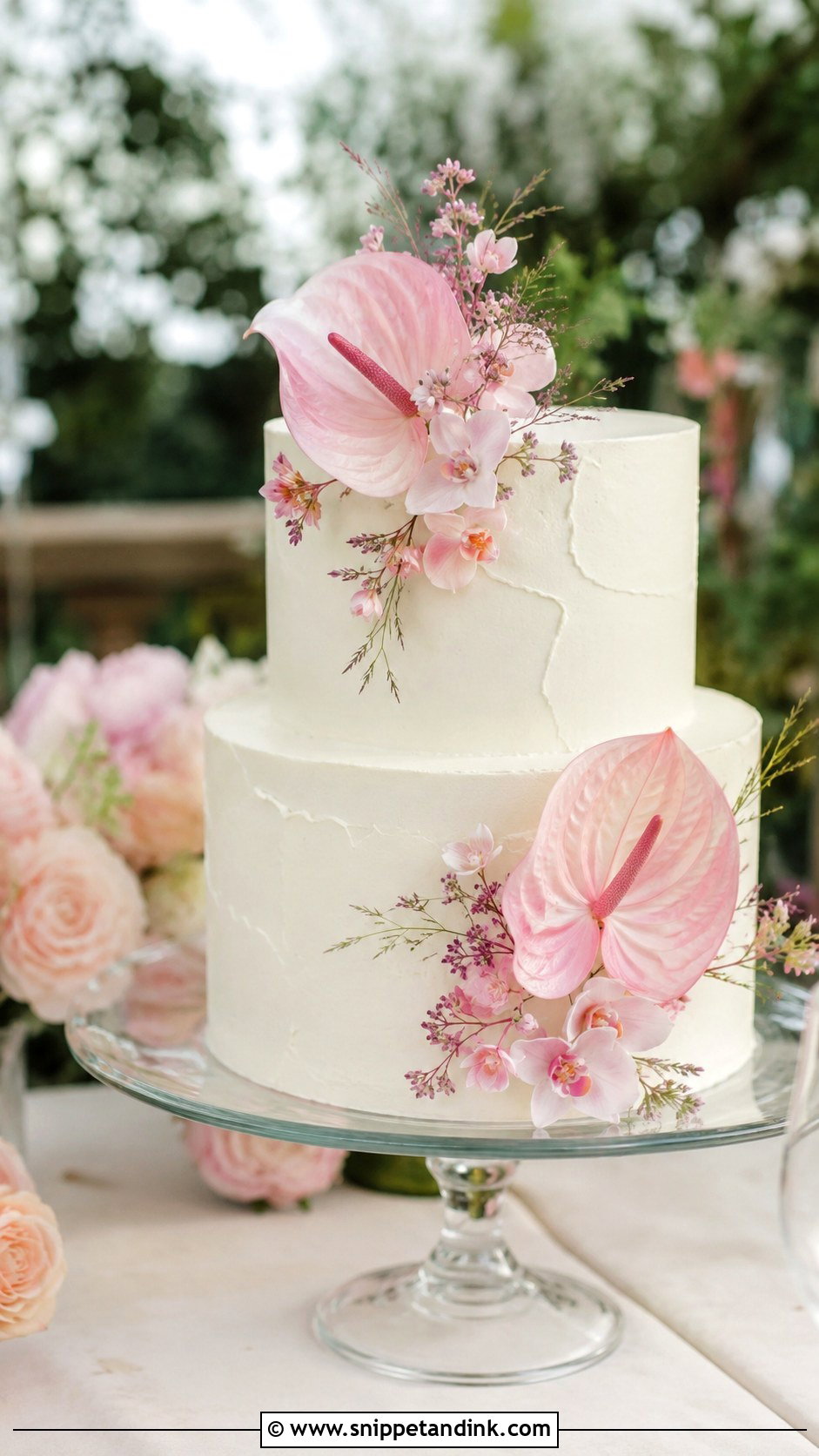
Pink comes in two very different moods. Blush anthuriums on white buttercream look soft and spring-like; hot pink tips straight into tropical. For a pastel garden palette I’d stay pale. Two or three tiers give the flowers enough room, usually one strong bloom near the top and a few around the base. Strawberry, guava or raspberry filling picks up the color on the inside. If you’re matching the bouquet, bring a stem to the tasting, because pinks shift a lot between photos and real life.
3. Red Anthurium Wedding Cake
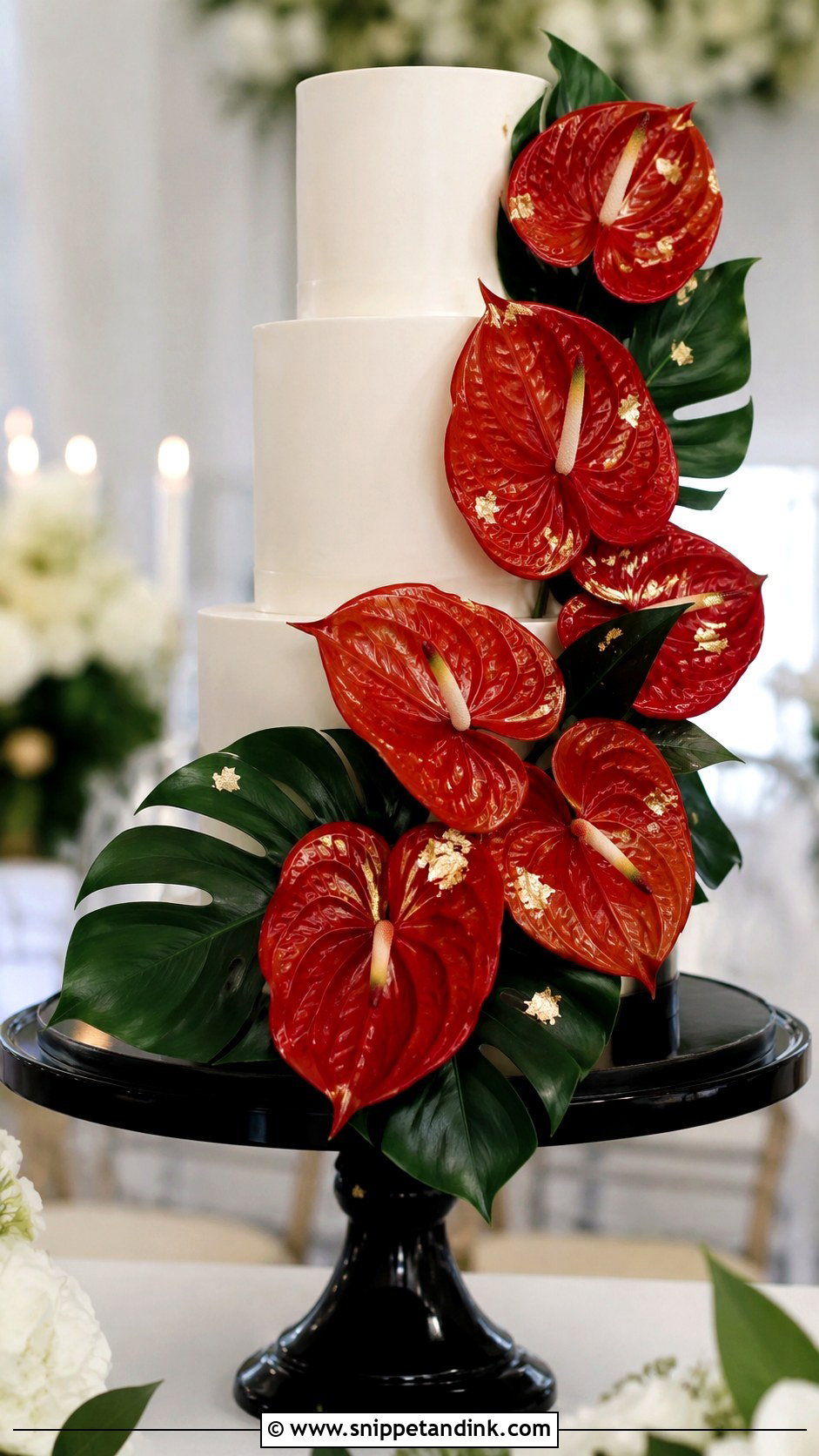
Red is the anthurium most people picture, and it needs the least help. Against white, ivory or nude frosting, a small cluster of red bracts with deep green leaves is enough to hold the whole cake. I keep everything else controlled: smooth fondant, sharp edges, nothing else competing. Chocolate, red velvet, vanilla or passion fruit layers suit the drama. Use fewer stems than you think. Three well-placed reds look deliberate; seven look like a florist’s bucket.
4. Tropical Anthurium Wedding Cake
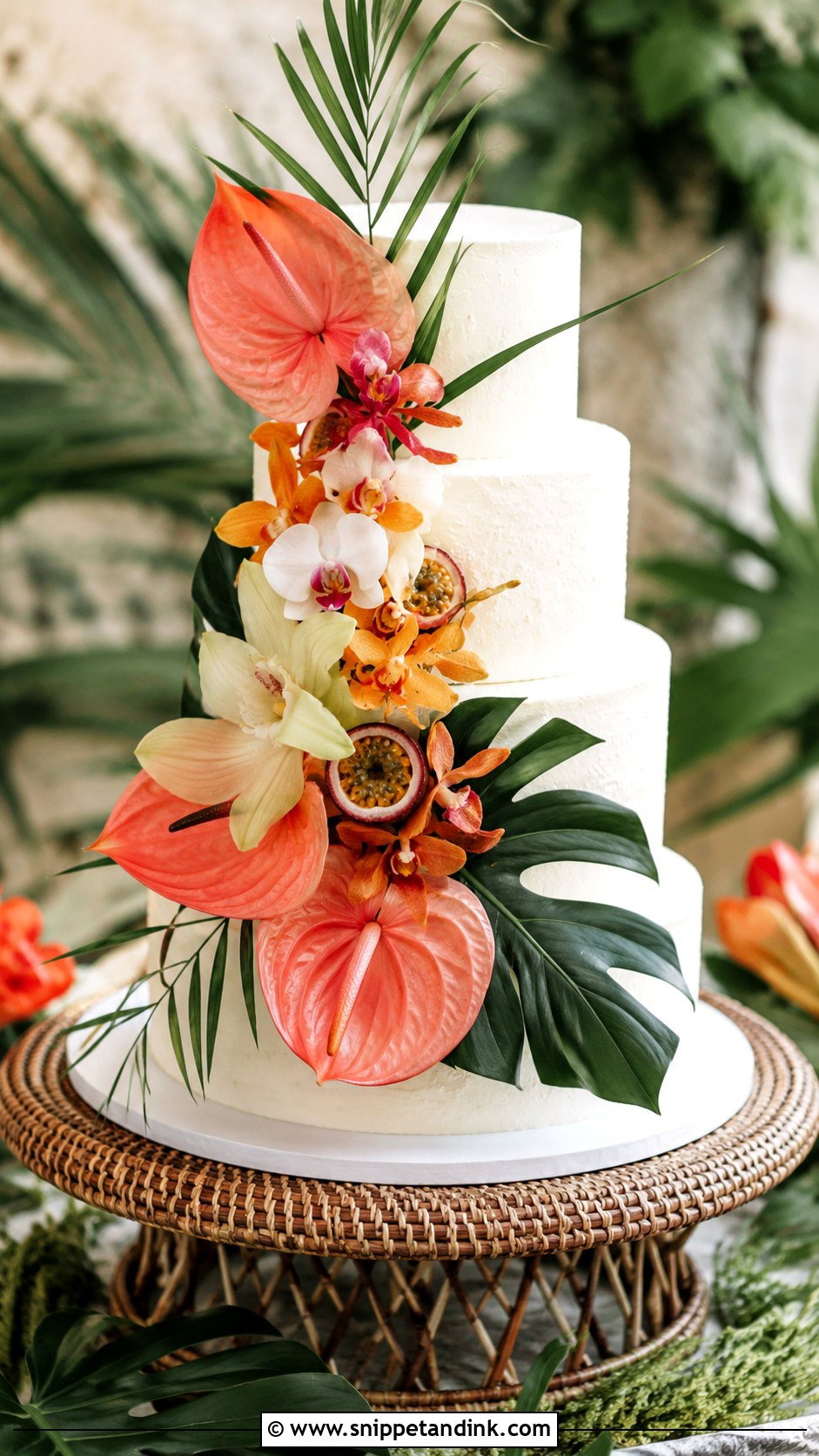
The fully tropical version piles in orchids, monstera, palm fronds and hibiscus-style blooms around the anthuriums, and a tropical anthurium wedding cake needs white buttercream underneath so all that color has a calm ground. Coconut, mango, pineapple, lime or passion fruit fillings carry the theme. On a tall three-tier cake I run a cascade down one side and leave the other side clean. The arrangement should look full but still have air in it; packed tight, tropical foliage turns into a hedge.
5. Minimalist Anthurium Wedding Cake
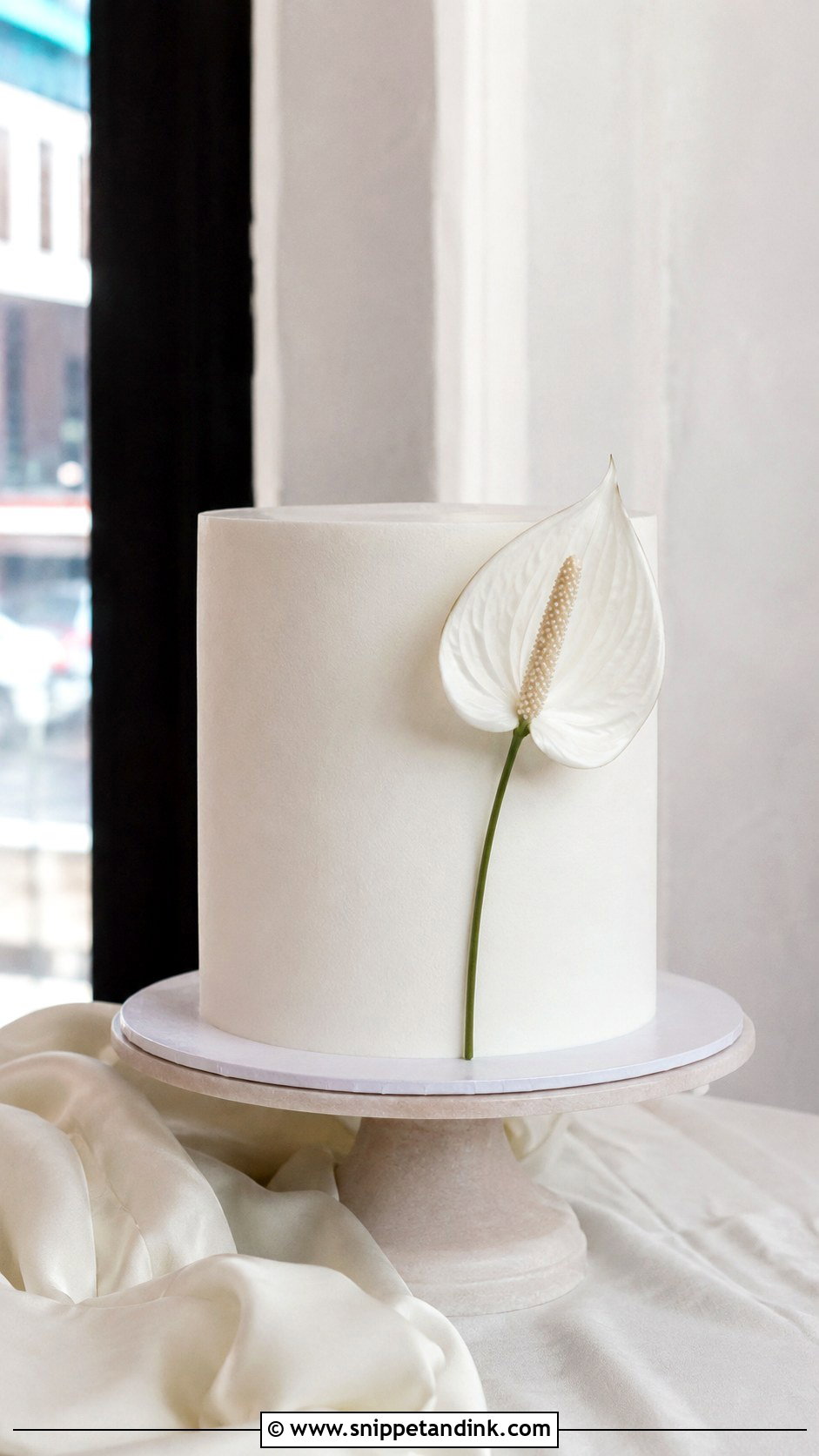
Sometimes one bloom is the whole design. A smooth single or two-tier cake in white, cream or pale beige with one or two anthuriums in white, blush or peach has an editorial quality that suits a city wedding or a courthouse celebration. Placement is everything here: I angle the bract slightly toward the room so the heart shape reads, not its edge. Vanilla bean, almond, lemon or olive oil cake matches the restraint. Use a slim stand and keep the table plain.
6. Modern Anthurium Wedding Cake
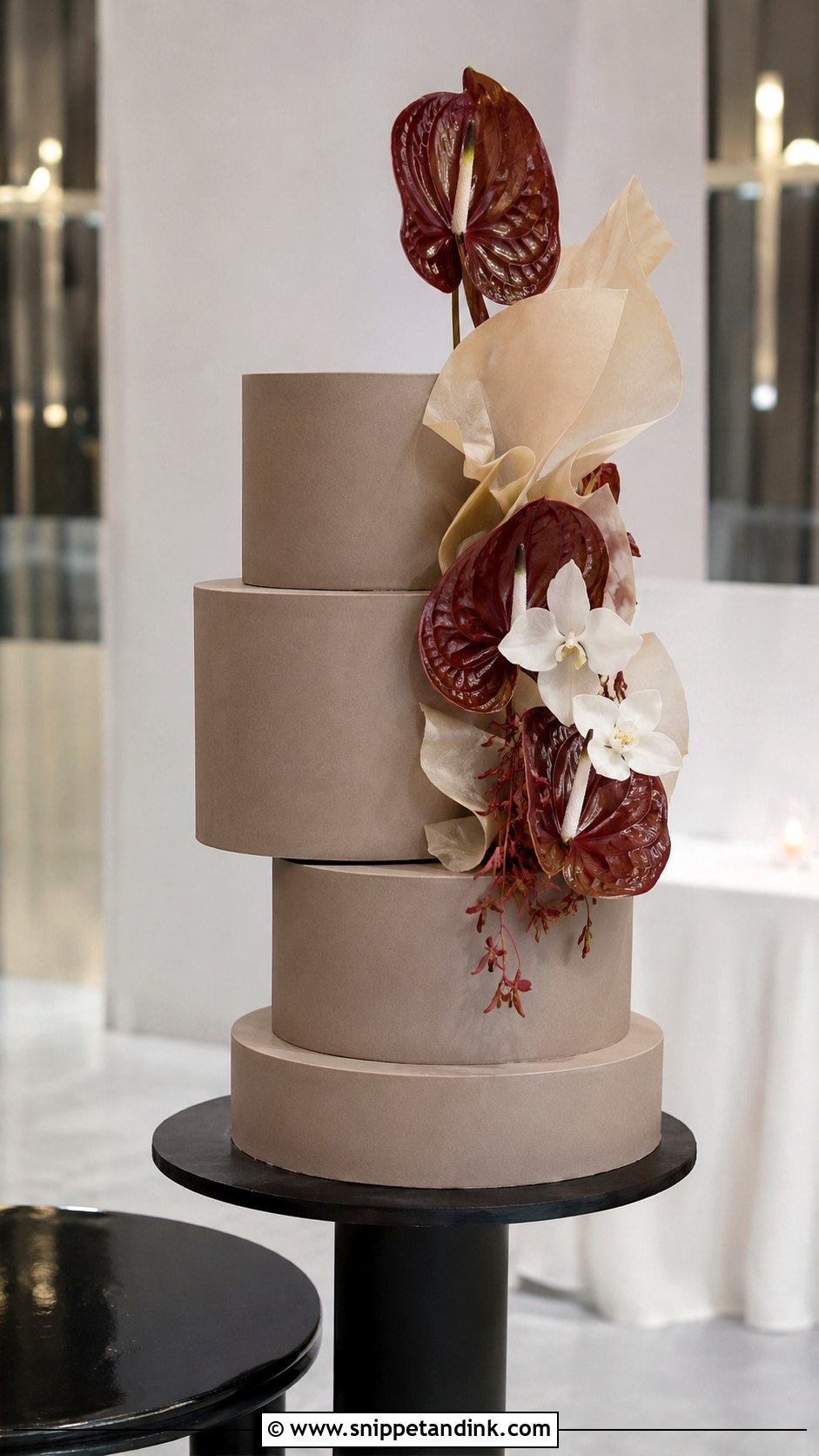
Modern cakes let the anthurium’s shape do the work. Square tiers, offset tiers or a tall cylinder with one sculptural cluster all play to its graphic outline. White, taupe, black or a muted clay frosting makes the flowers look sharper, and wafer paper curves or fondant panels can echo the bract’s sweep. Dark chocolate, espresso, vanilla or passion fruit layers suit a grown-up menu. I’d keep this one to a single color of anthurium; mixing shades fights the clean shapes.
7. Beach Anthurium Wedding Cake
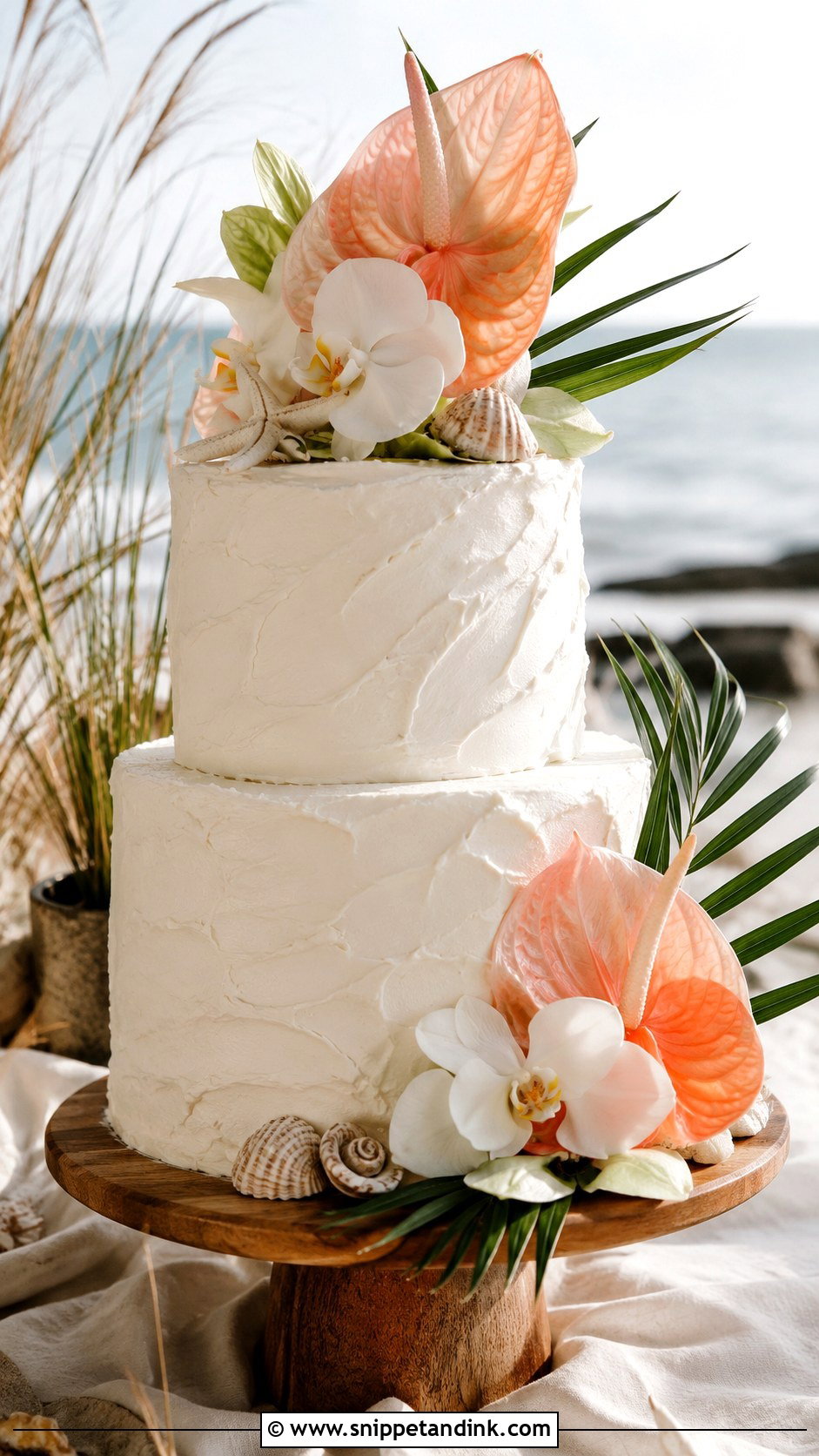
Beach cakes face the hardest conditions of any on this list: heat, wind, salt air and sun. White or sandy beige buttercream with coral, pink or white anthuriums sets the tone, with orchids, palm leaves or a few edible shells for a soft coastal touch. Coconut, key lime, pineapple or vanilla with passion fruit curd fit the setting. A swept, textured finish looks like wind on sand and hides small heat marks. Keep the cake shaded until cutting and keep the flowers to one side.
8. Boho Anthurium Wedding Cake
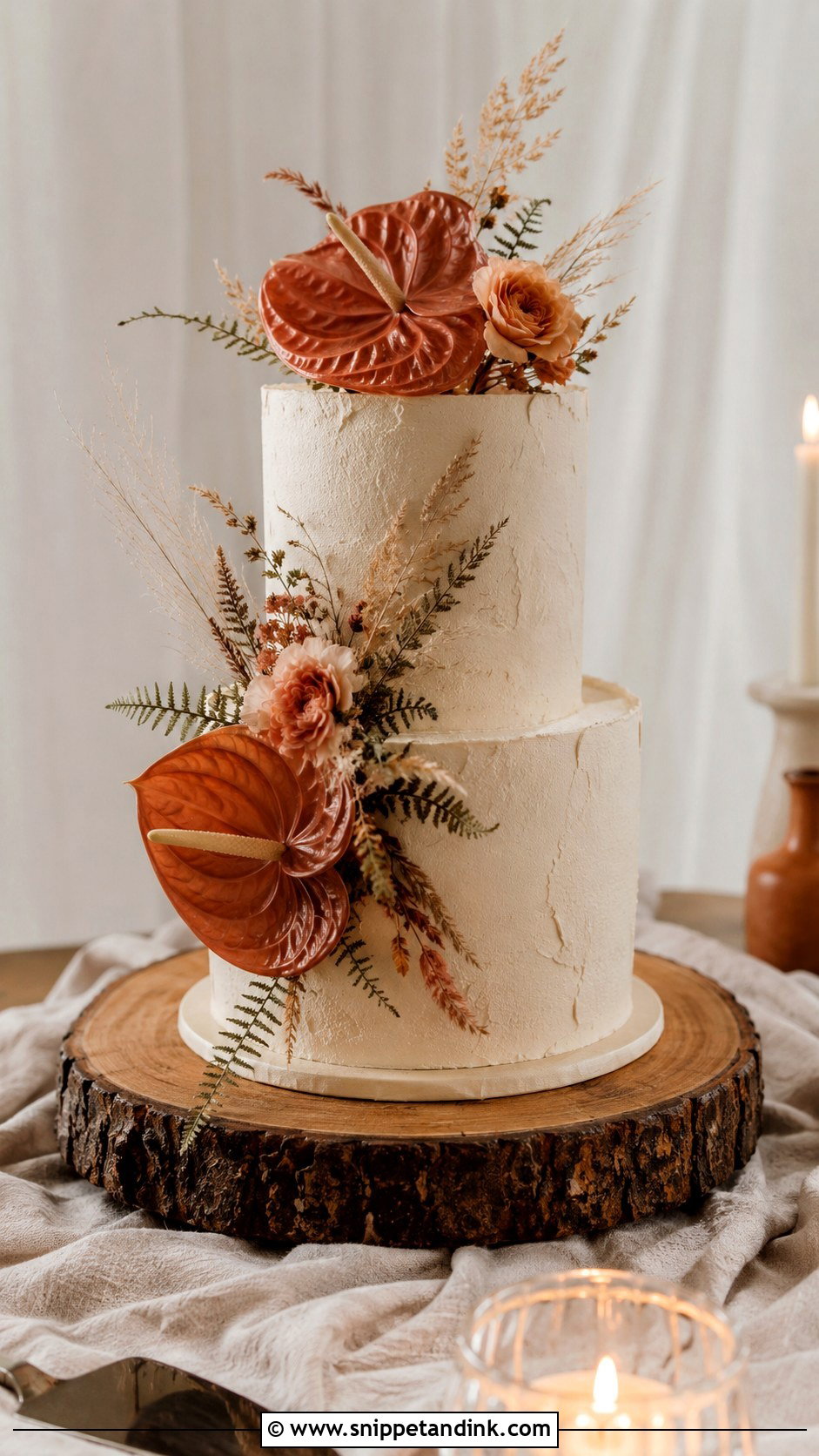
Boho takes the anthurium out of the tropics. I’d source muted peach, terracotta, cream, dusty rose or caramel-toned varieties and pair them with dried grasses, preserved ferns, orchids or soft neutral roses. A lightly textured buttercream finish suits the handmade feel, over carrot, spice, almond or vanilla-caramel layers. Dried material sheds and isn’t food safe, so I build it on a separate pick or keep it on the stand rather than in the icing. Set it on wood with linen and candles nearby.
9. Black And White Anthurium Wedding Cake
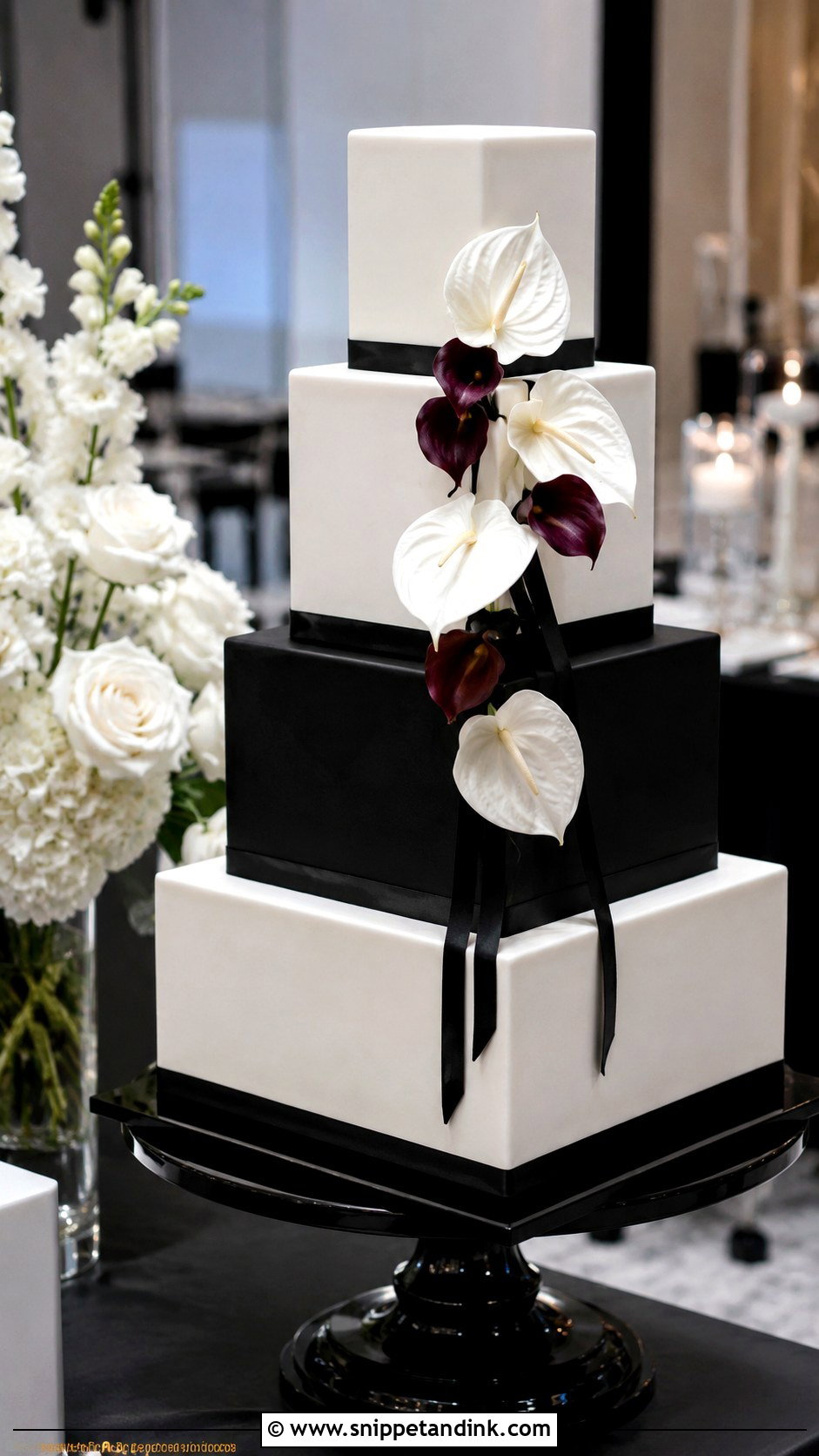
Black and white is the anthurium at its most formal. Sharp white tiers with black ribbon, black piping or one black fondant tier give the contrast, and the flowers can be white, deep burgundy or dark painted sugar bracts. It belongs in a ballroom or an evening reception. Chocolate, black cocoa, vanilla or cookies and cream filling works with the palette. I keep the arrangement to a single tight group; spread across a black and white cake, flowers start to look like clutter.
10. Green Anthurium Wedding Cake
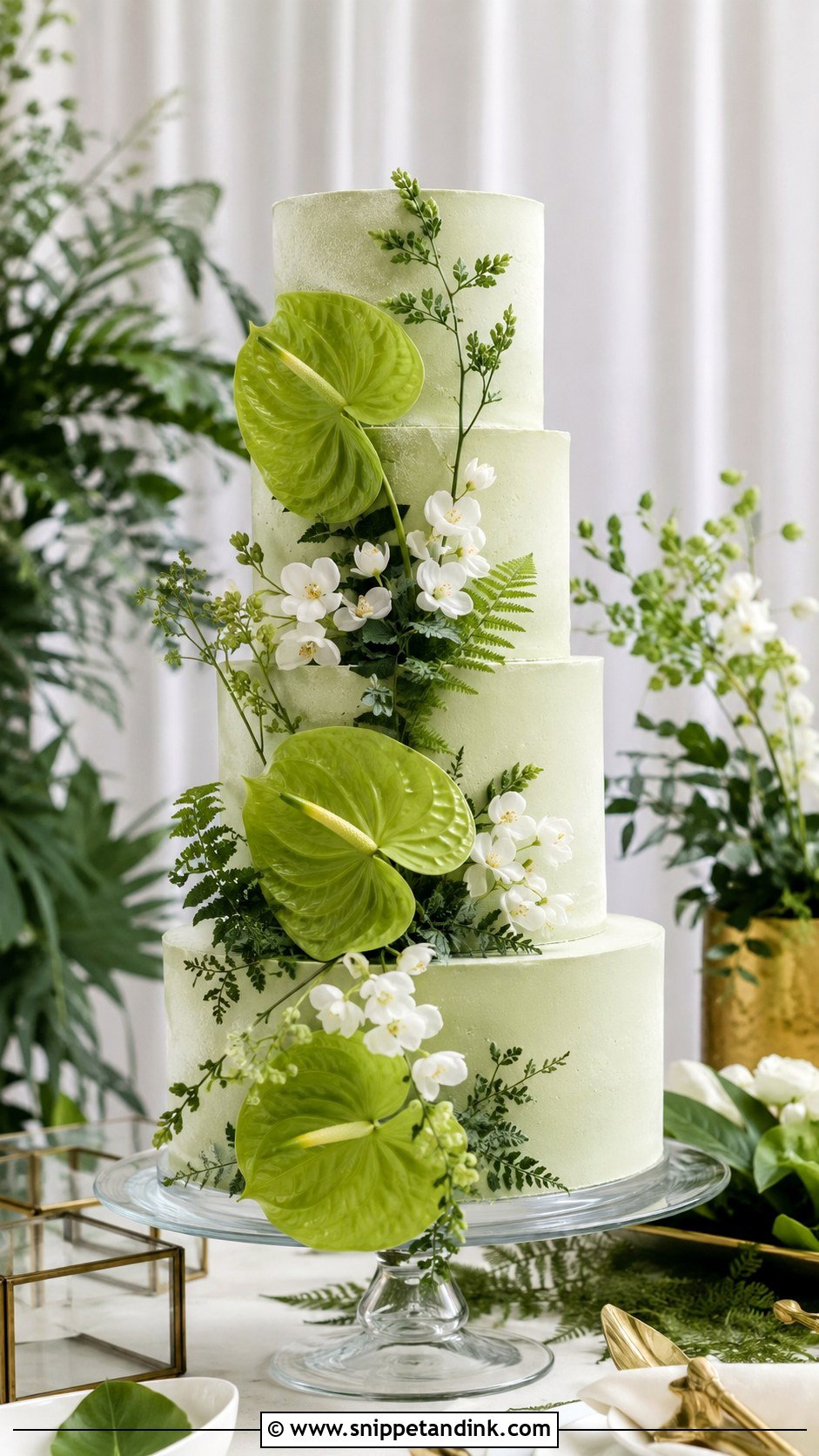
Green anthuriums are underrated. Against white buttercream, pale sage frosting or ivory fondant they read as calm and botanical rather than loud. Add monstera leaves, ferns, orchids or small white flowers for a greenhouse feel. Matcha, pistachio, coconut or vanilla with lime curd can echo the theme without tasting grassy. Green bracts show any bruising, so they need gentle handling, and an asymmetrical line keeps the cake from looking like a wreath.
11. Burgundy Anthurium Wedding Cake
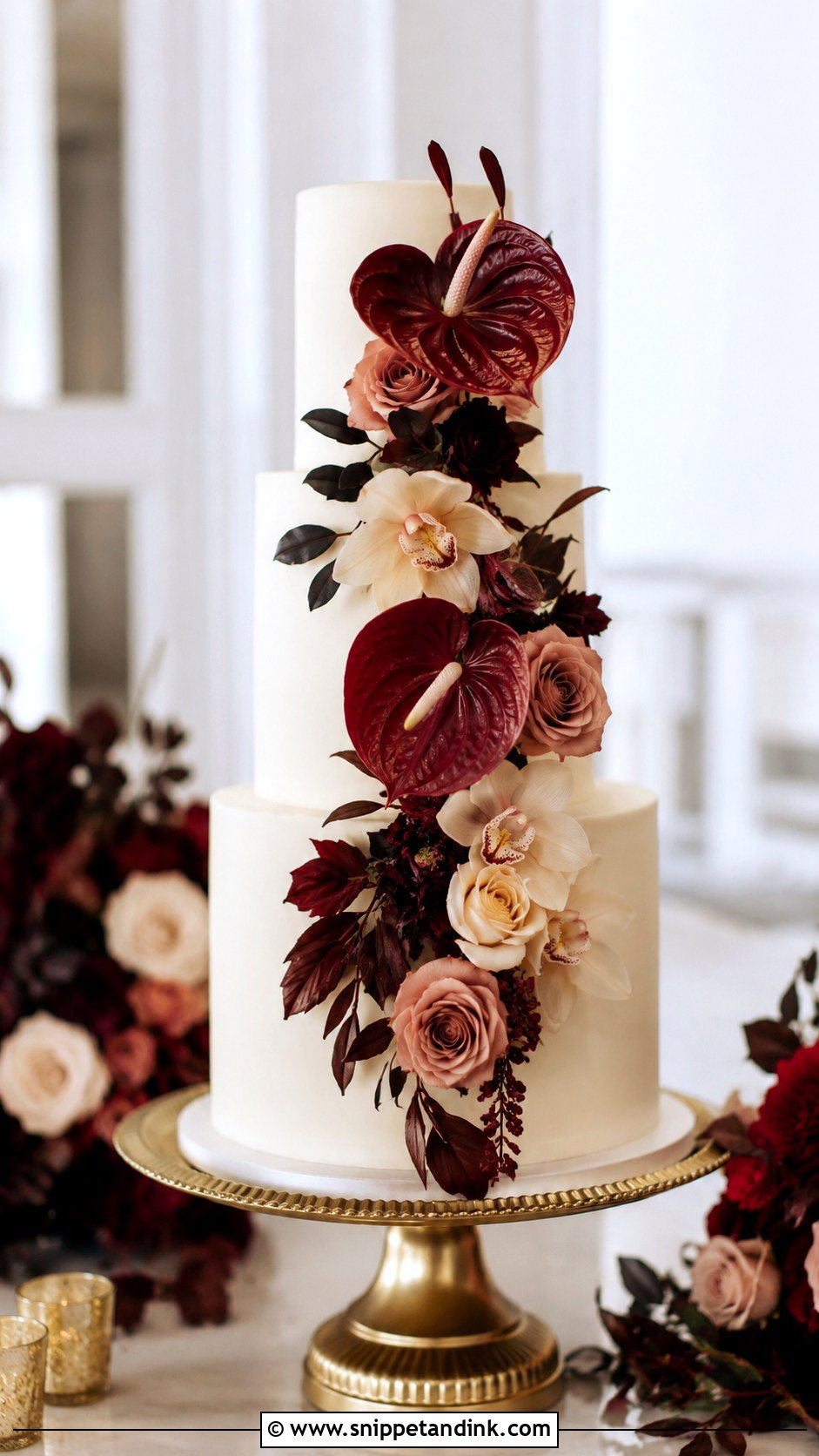
Burgundy anthuriums bring a rich, moody look even when the cake itself stays white. They suit late summer, fall and evening receptions. I pair them with blush roses, cream orchids, chocolate cosmos in sugar and dark foliage, over smooth ivory buttercream so the tone stays romantic. Chocolate raspberry, red velvet, almond or vanilla with berry compote match the palette. Burgundy reads almost black in low light, so ask your photographer how the cake table will be lit.
12. Coral Anthurium Wedding Cake
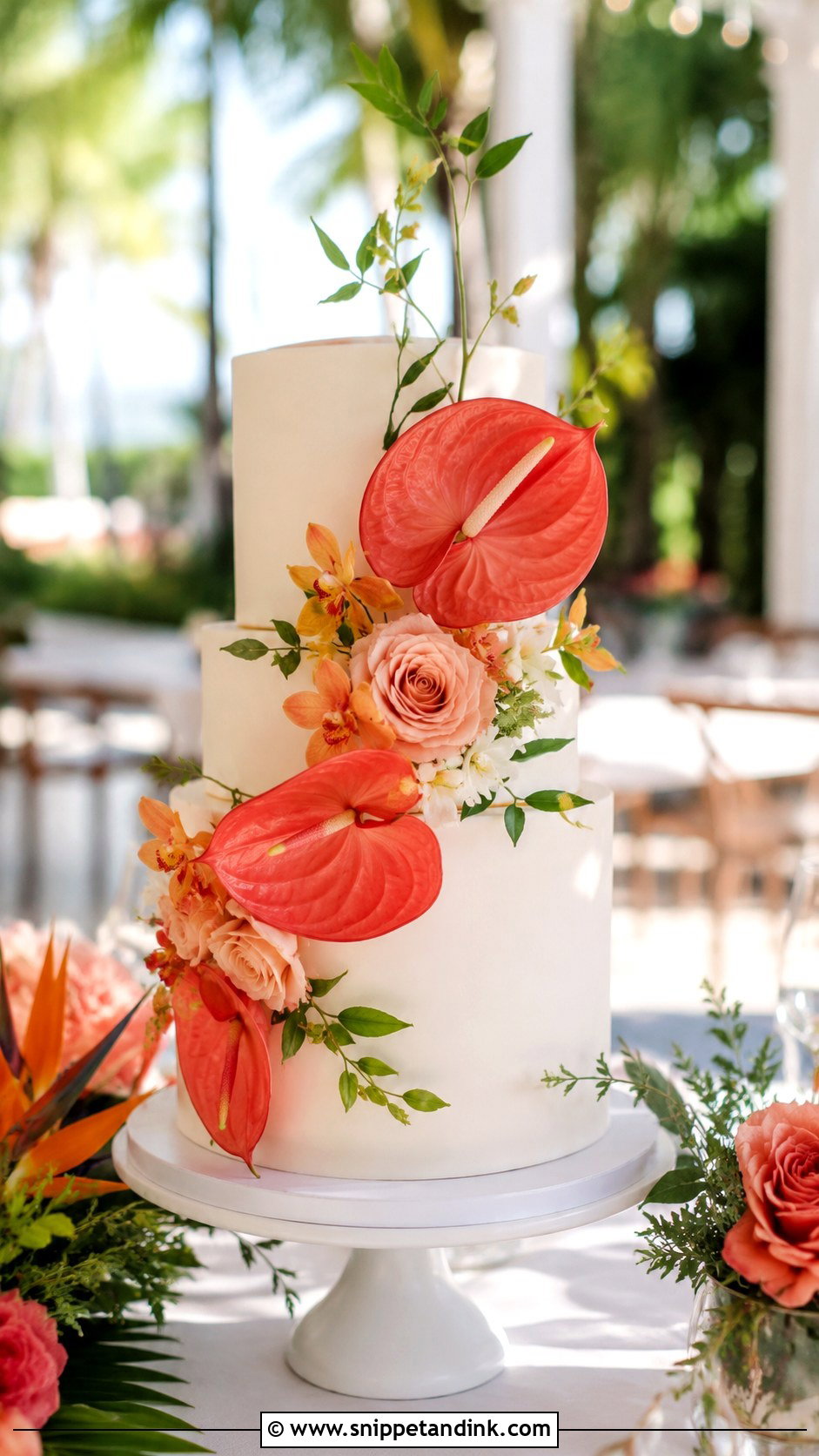
Coral is the sunny one. On white, pale peach or light buttercream it reads warm without shouting, and peach roses, orange orchids or soft greenery round it out. It fits a summer reception or a bright tropical palette, over mango, coconut, vanilla or citrus layers. I cluster a few blooms on a diagonal so the eye travels across the tiers. Coral fades a little in strong sun, which is one more reason to keep a daytime cake out of direct light.
13. Single Tier Anthurium Wedding Cake
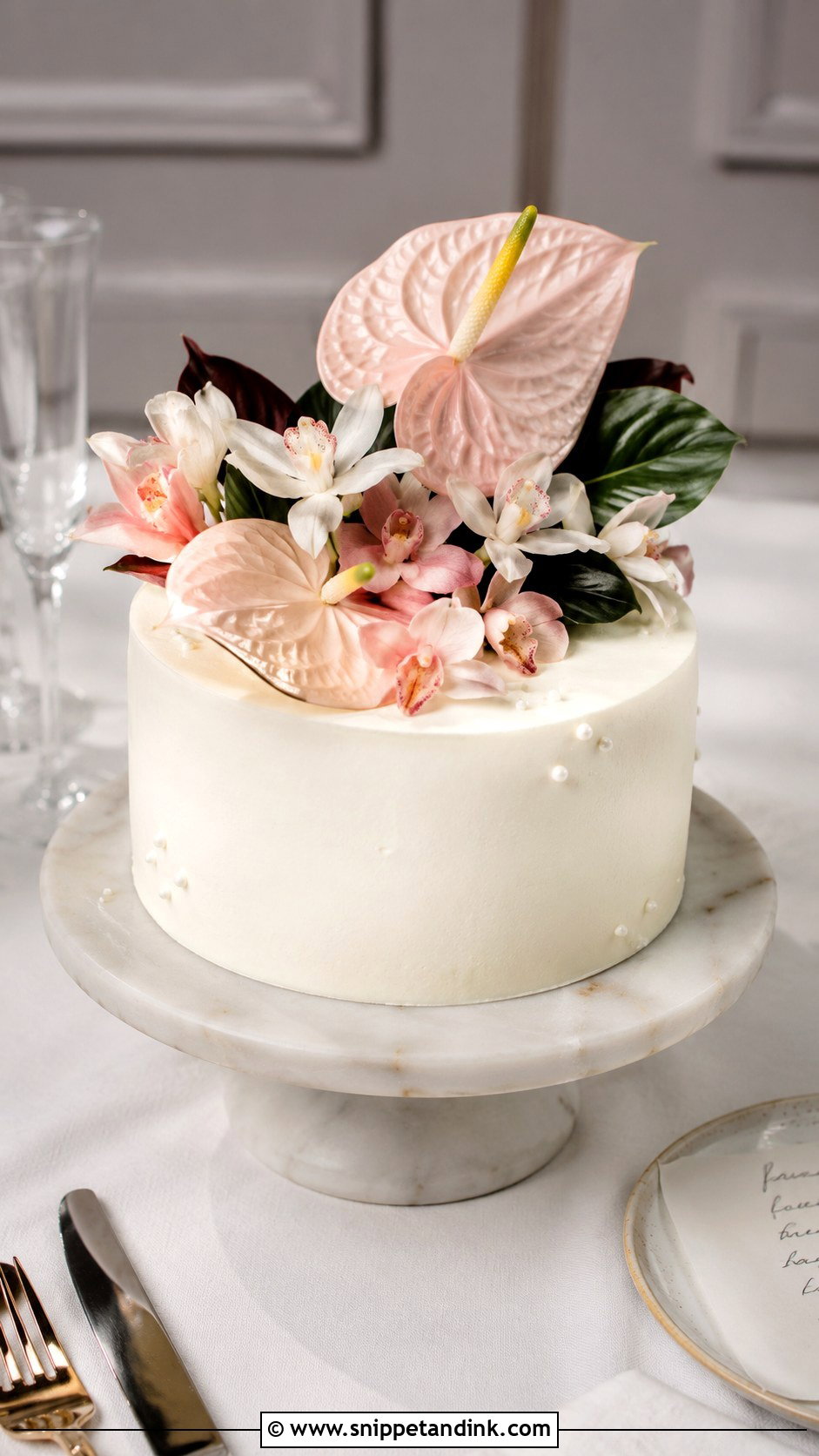
A single tier gives you a statement at a small scale: an elopement, a micro wedding or a dessert table where the cake is one of several sweets. I’d choose a wide round with smooth buttercream and one bold cluster on top or at the side, in pink, white or coral. Vanilla, lemon, coconut or almond keep it crowd-pleasing. Watch proportion: an anthurium is a large flower, and two big bracts on a 6 inch cake can look top-heavy, so smaller varieties or sugar versions scaled down work better here.
14. Two Tier Anthurium Wedding Cake
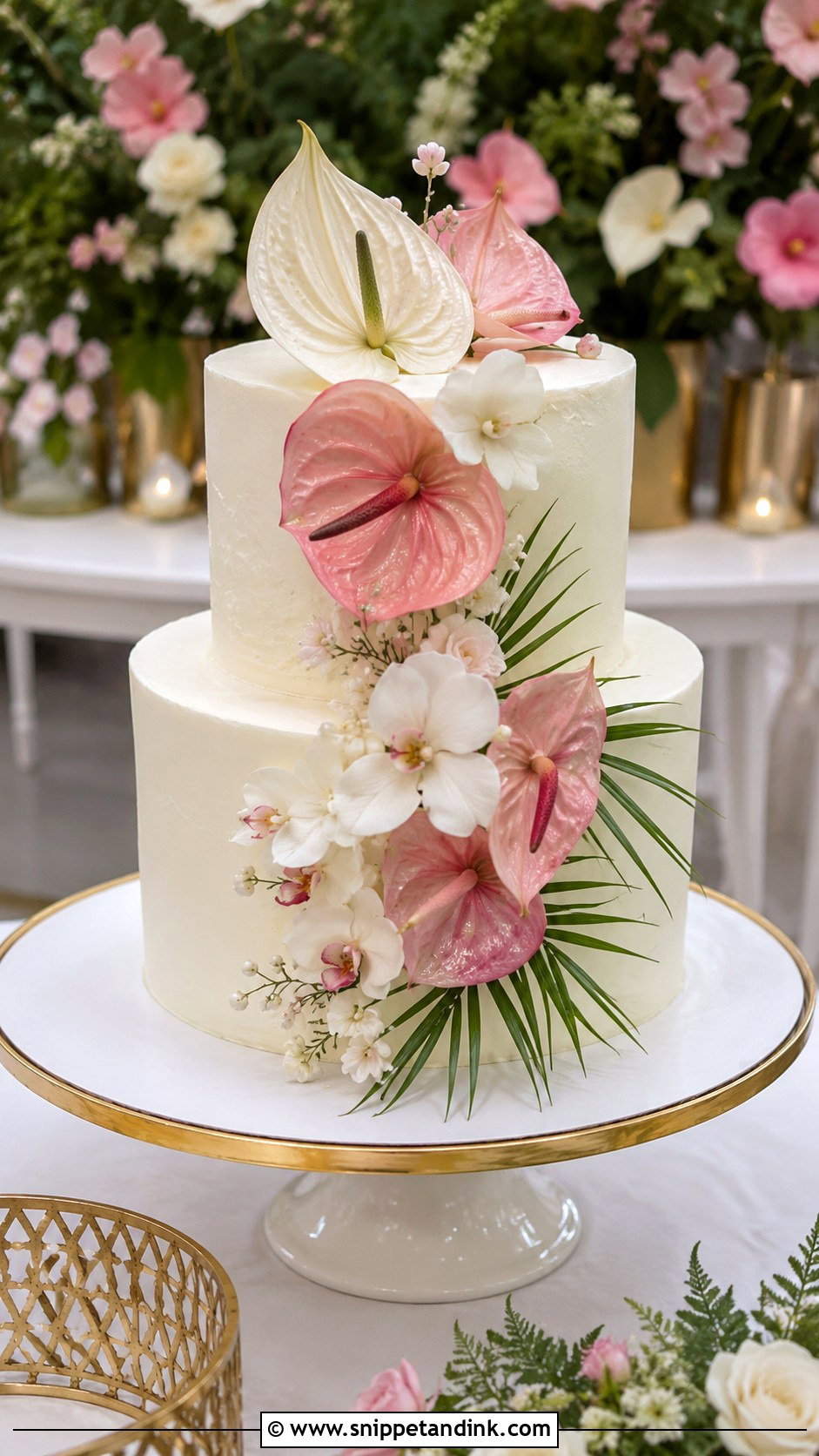
Two tiers give height without making the cake table feel enormous. I put a small cluster on the top tier and a side group on the lower tier, linked by a slight diagonal so they read as one arrangement. White buttercream with blush or red flowers is the classic route; sage or beige frosting looks more current. Coconut, vanilla, passion fruit or raspberry sponge pairs well. This size is also the easiest to dress on site because I can reach every tier without a step.
15. Three Tier Anthurium Wedding Cake
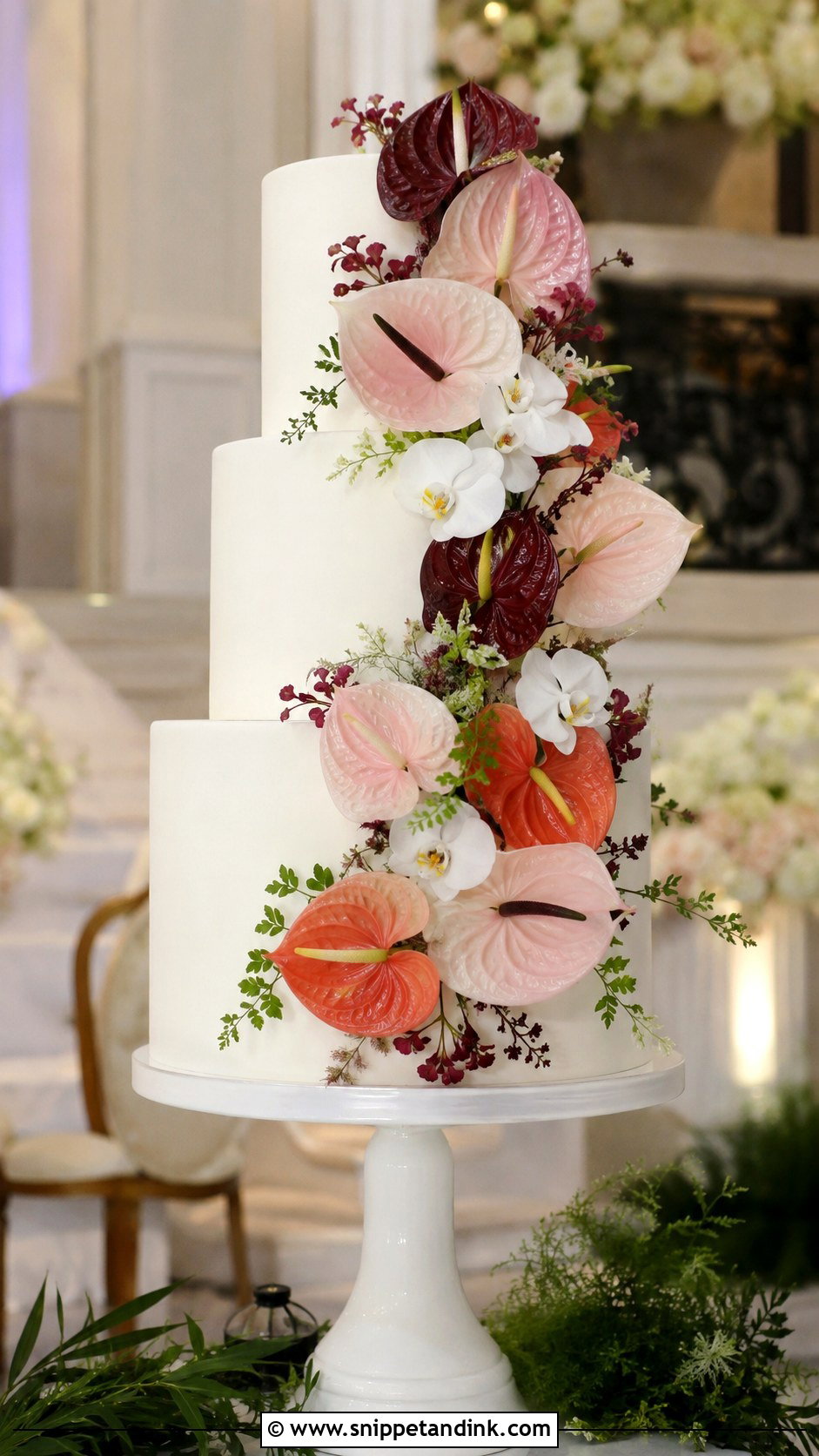
Three tiers give anthuriums room to cascade properly, and for a large reception this is the centerpiece size. A smooth white cake with blooms running from top to bottom is dramatic on its own. One color looks graphic; a mix of blush, coral, white and burgundy feels lush. Tiers can carry different flavors, such as vanilla, coconut and chocolate. If the stems are fresh, ask your baker and florist how they’ll be isolated from the cake, and expect the cascade to be wired onto picks rather than pushed into the icing.
16. Anthurium And Orchid Wedding Cake
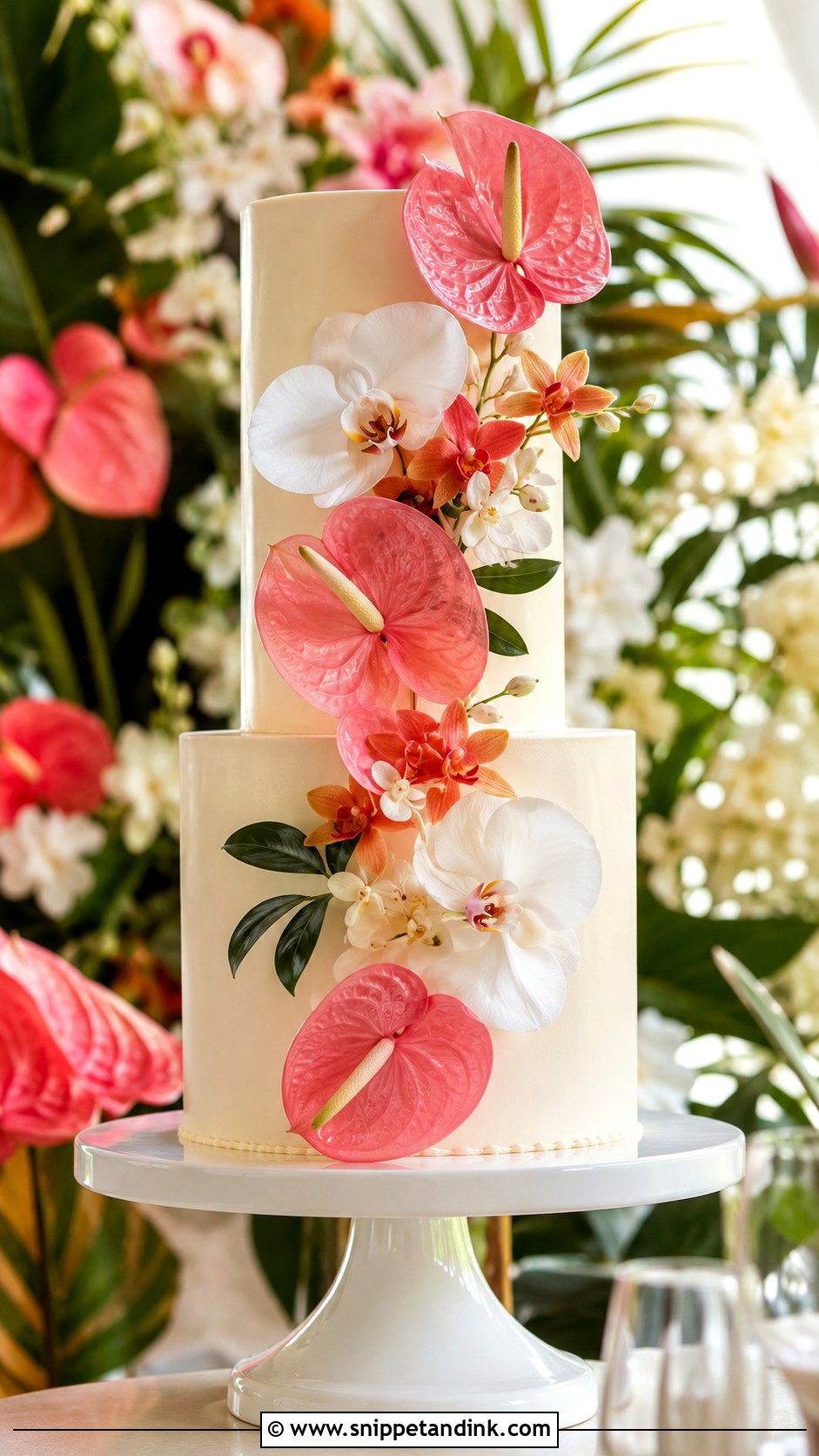
Orchids and anthuriums are natural partners. The orchid’s soft, open shape relaxes the stiff anthurium heart, and the anthurium gives the orchid some structure. White or blush frosting carries pink, coral, green or white flowers, and coconut, vanilla, guava or passion fruit filling suits the mood. It belongs at a beach venue, a tropical garden or a hotel reception. Phalaenopsis orchids are the gentler choice on cakes because they’re light; heavy stems drag a cascade down. A one-sided cascade on two or three tiers suits couples who love tropical flowers.
17. Anthurium And Monstera Wedding Cake
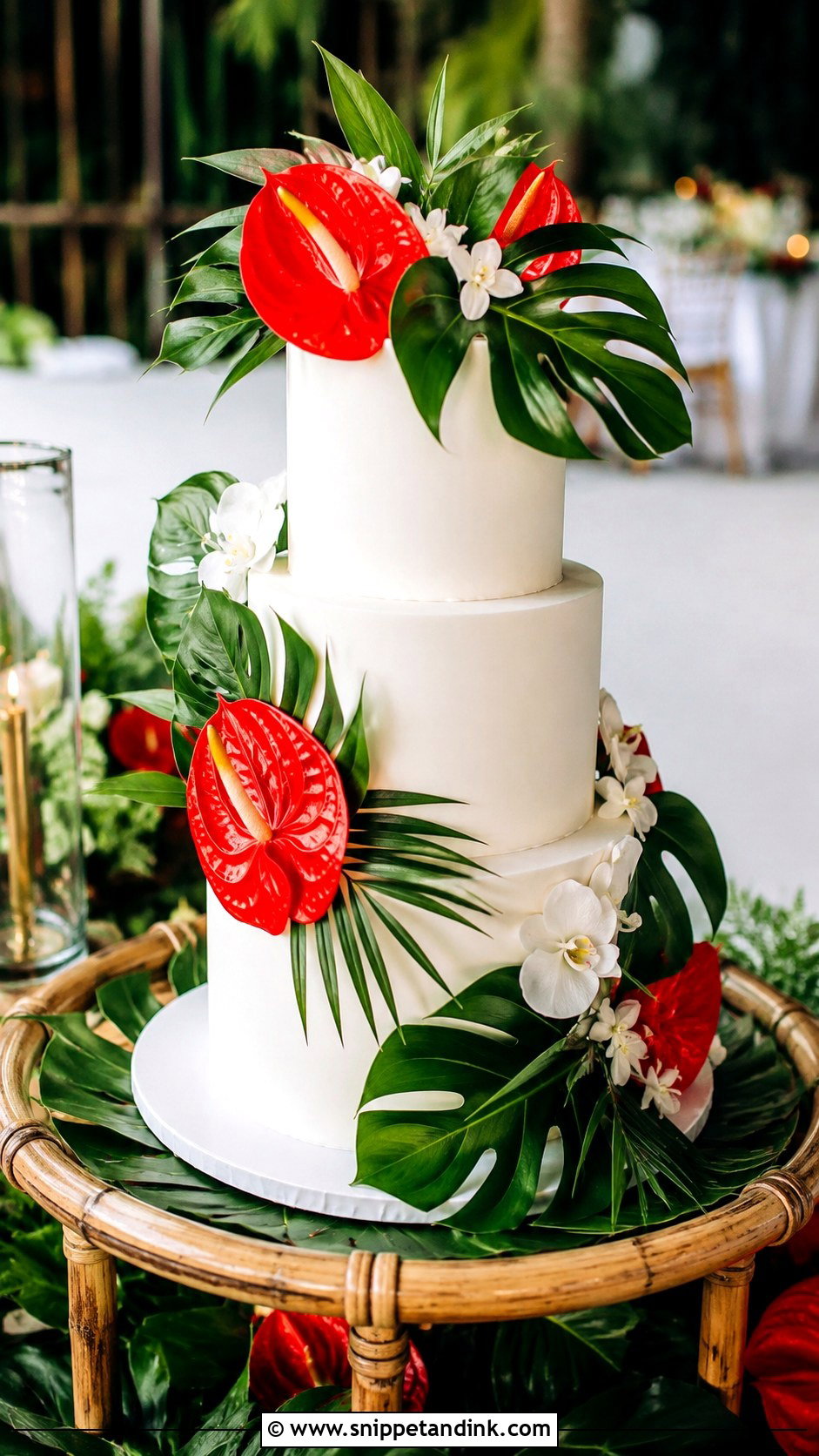
Monstera leaves give anthuriums a dramatic backdrop, but they’re big and stiff, and laid flat against tiers they hide the cake. I tuck them low around the base and up one side only. A clean white or ivory frosting stops the greenery from looking busy, and the bracts can be red, coral, pink or white. Coconut, mango, lime curd or vanilla bean layers suit the island feel. Real monstera is another plant you don’t eat, so the same barrier rules apply as for the flowers.
18. Hand Painted Anthurium Wedding Cake
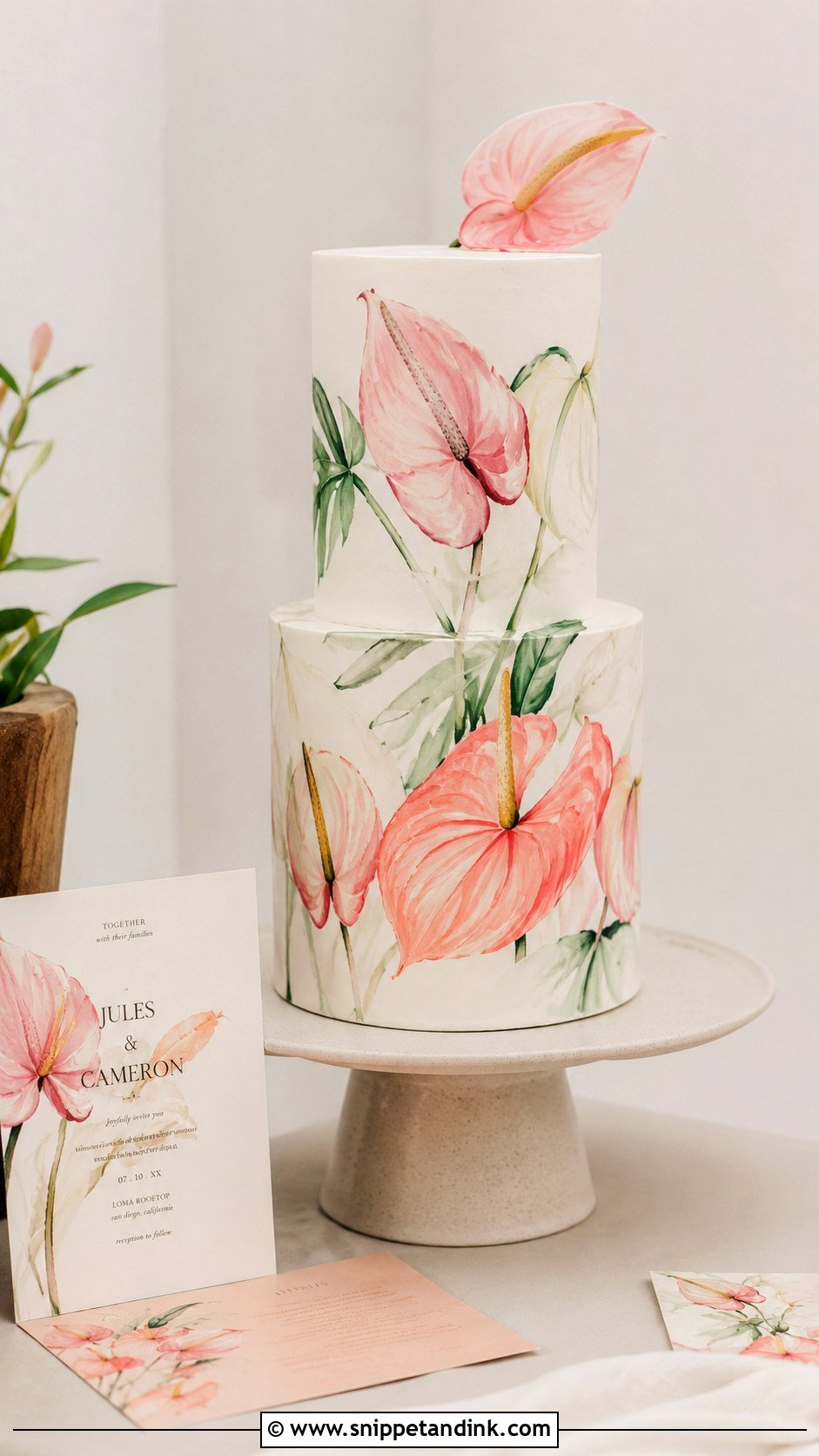
Painting is the answer when you love anthuriums but don’t want blooms on the cake at all. The baker paints them straight onto fondant or a firm buttercream in watercolor washes or soft brushstrokes, usually on clean white tiers. Pink, peach, coral or green can match your stationery and my flower plan. Vanilla, almond, lemon or champagne cake suits the delicate finish. One small sugar anthurium on top adds dimension. It’s also the simplest version to cut and serve, with nothing to remove first.
19. Anthurium Drip Wedding Cake
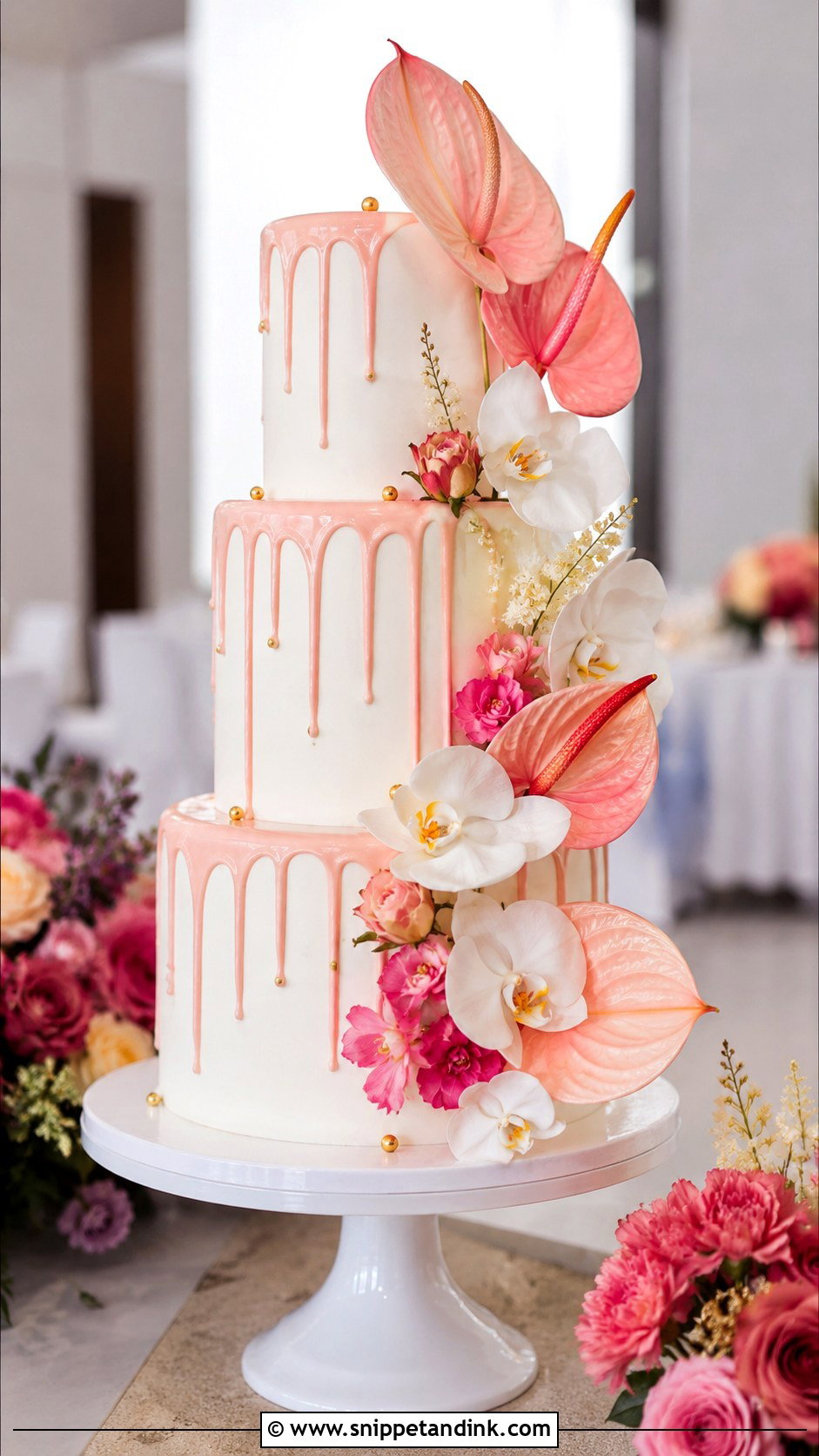
A drip makes the anthurium cake less formal. On a smooth cake with a white, blush or peach drip, a cluster at one side keeps the flowers from sitting in the run of the glaze. Gold drips feel glamorous; a fruit glaze feels tropical. Vanilla, strawberry, coconut or chocolate underneath all suit. The drip has to set before anything is added, or bracts pressed into wet glaze leave dents. Orchids, macarons or pearls can fill gaps, and it sits happily on a bright cake table.




20. Square Anthurium Wedding Cake
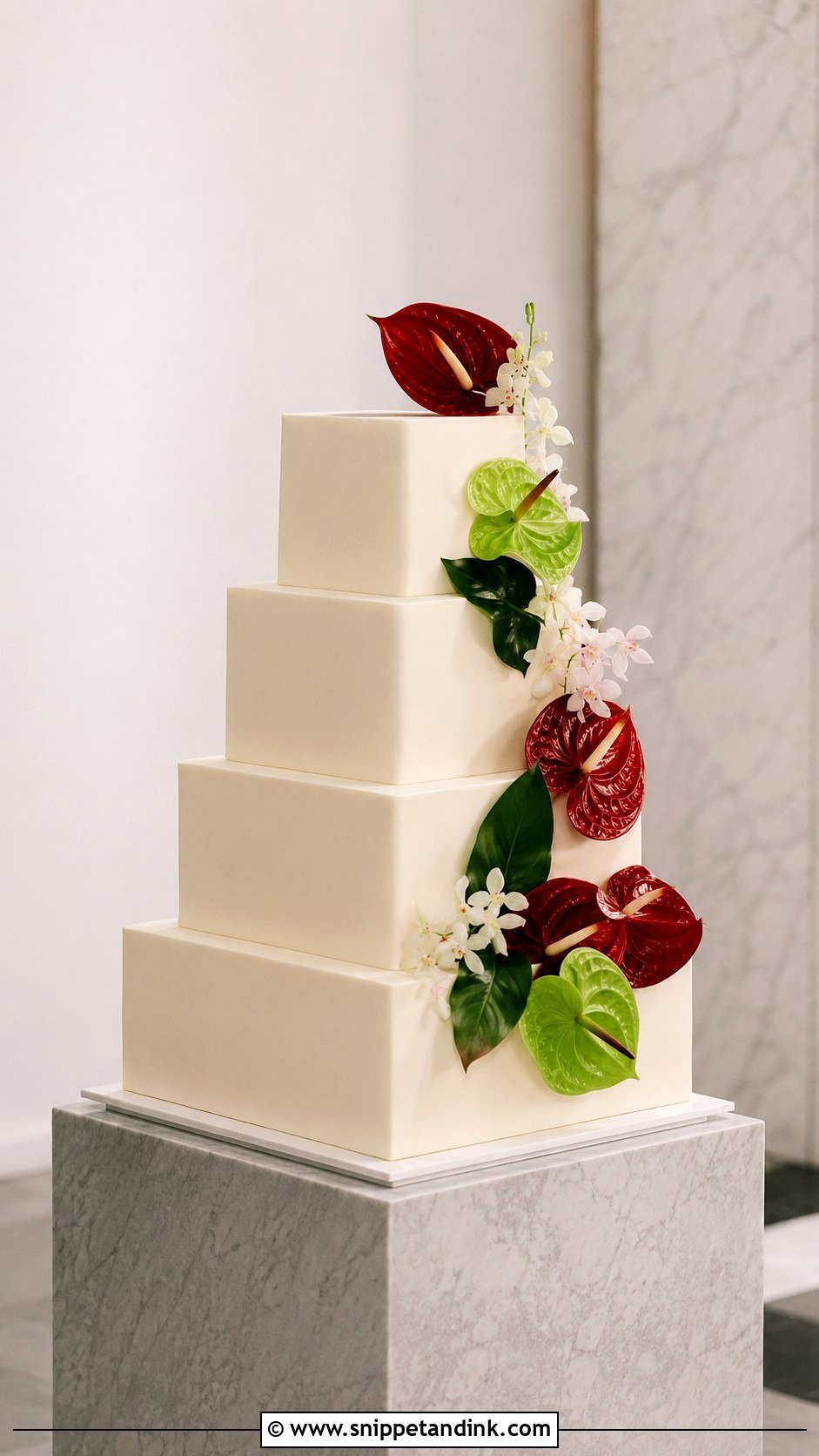
Straight edges and a curved bract are a natural contrast, which is why square tiers flatter anthuriums so well. Sharp fondant or crisp buttercream corners give the cleanest base. White tiers with red, blush or green flowers look graphic; beige or taupe frosting is quieter. Chocolate, vanilla, almond or passion fruit layers suit it. I place the flowers at one corner or climbing diagonally across the tiers, because centered blooms on a square cake look static. It’s a natural fit for a gallery or a modern loft venue.
Who Dresses the Cake, and When
Most anthurium cakes go wrong in the gap between the baker leaving and the florist arriving. Decide in advance who is responsible for placing the flowers, and give that person a time slot after the cake is set up and before guests enter.
- Anthuriums are sensitive to cold and can brown if they sit in a fridge, so dress the cake after it comes out of any cold room, not before it goes in.
- Order a few spare stems for the cake beyond the bouquet count; one bruised bract is very visible at eye level.
- Send your baker a photo of the actual flowers or a stem sample so the cake color can be matched to them.
- Agree on who removes the flowers before cutting, and have a clean plate ready to receive them.
- On a beach or in a marquee, keep the dressed cake out of direct sun; buttercream will soften long before the anthuriums notice the heat.
If the baker places the flowers themselves, give them the stems the day before, already trimmed and conditioned, along with a sketch of where each one goes.
Letting a Few Glossy Bracts Carry the Whole Cake
Anthuriums change character completely with color. White feels clean and bridal, pink and coral feel warm, burgundy and red carry drama, and green with monstera looks botanical. Whatever you choose, safety comes first: fresh anthuriums should never touch the cake, so agree with your baker and florist on sugar flowers, good faux stems, picks or a proper barrier. Once that’s settled, a few well-placed bracts are enough to make a plain cake the focal point of the room.
You'll Like These Ideas:


Leave a Reply