
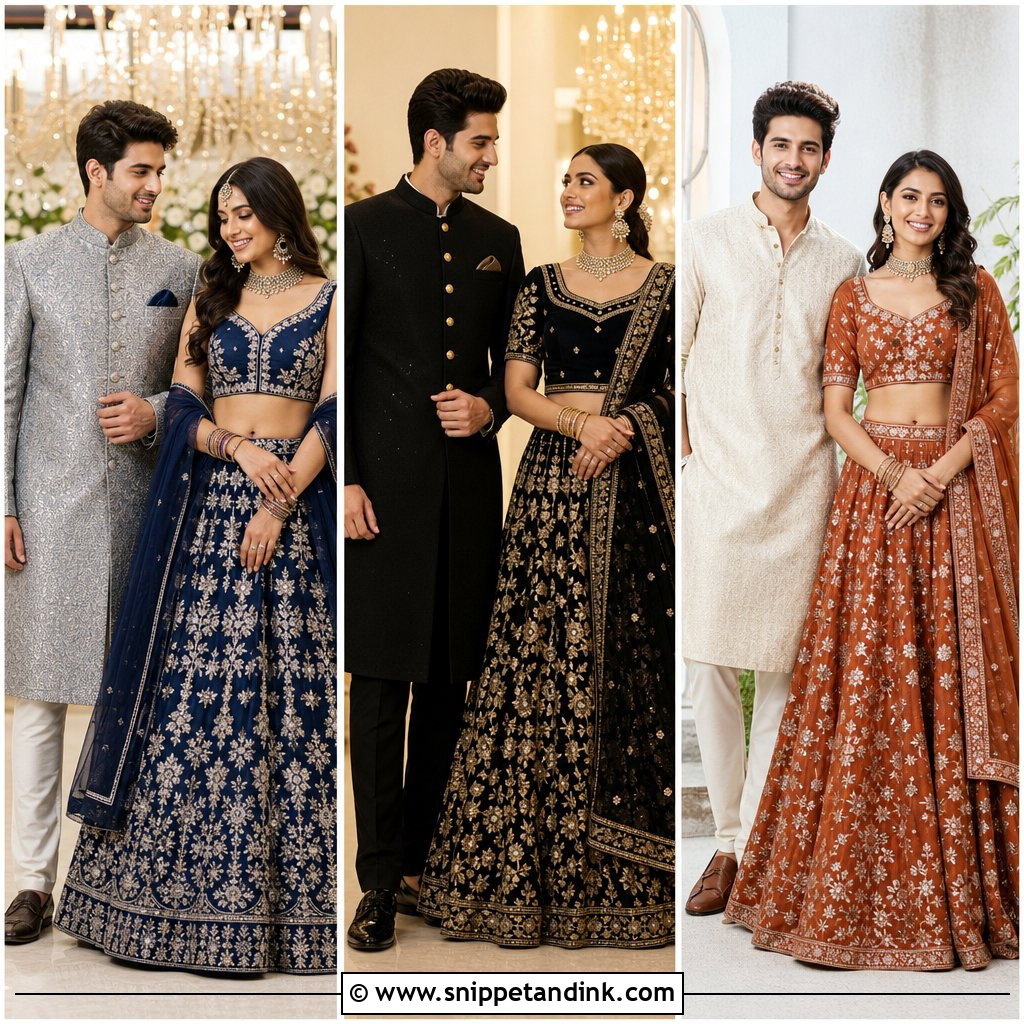
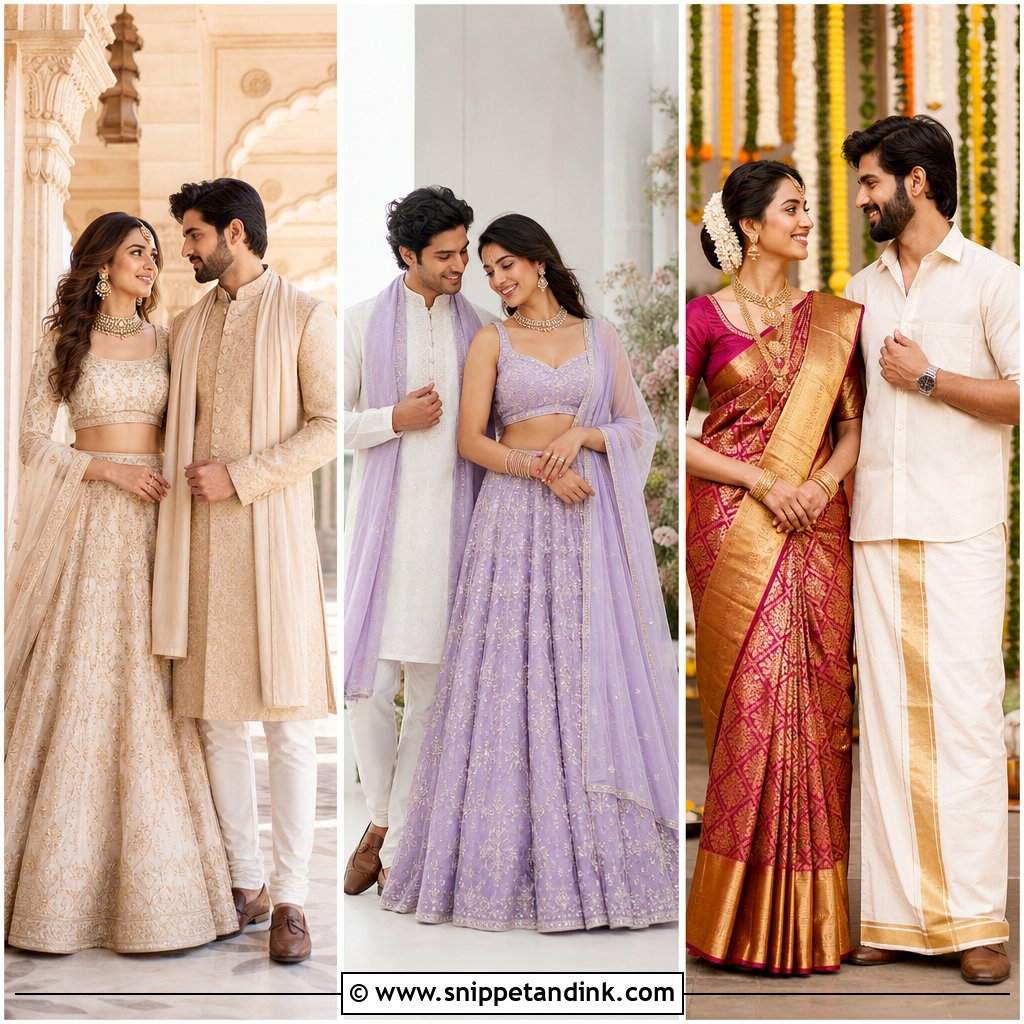
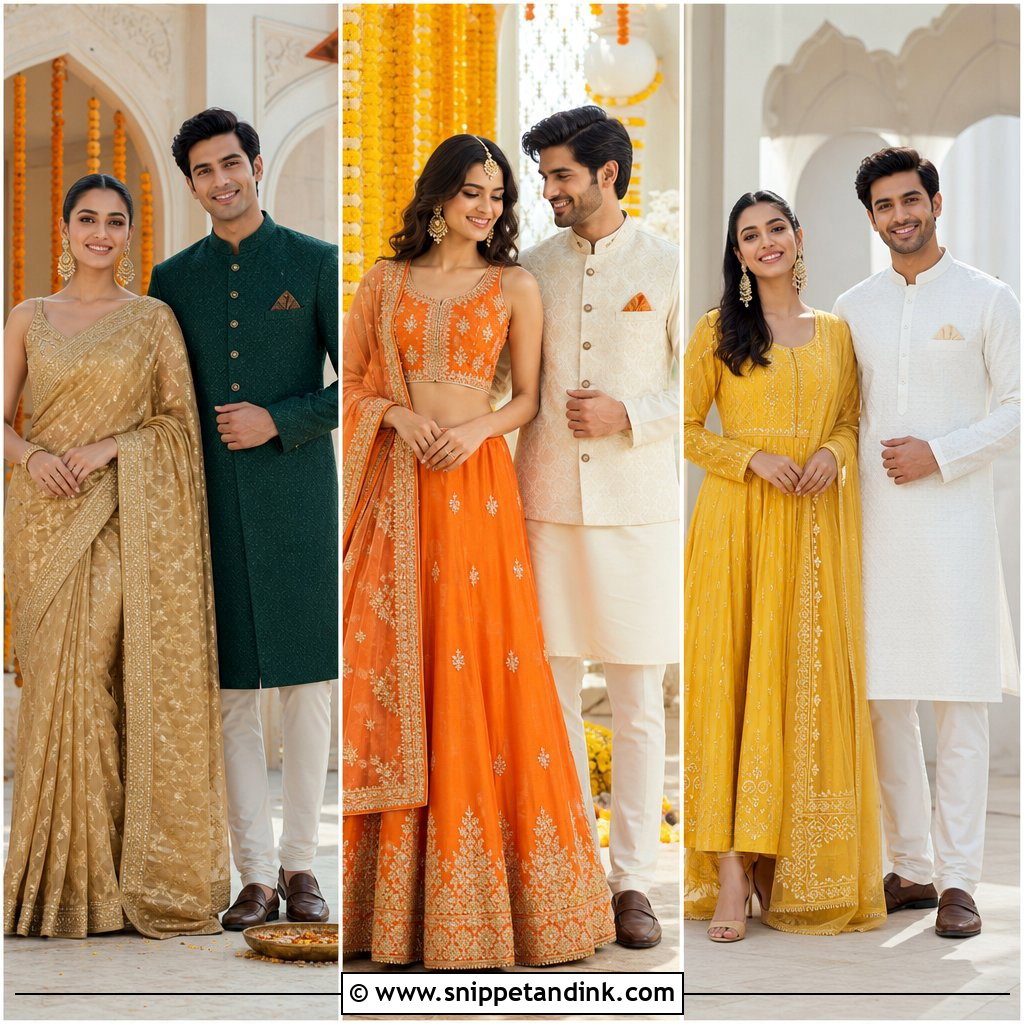
The couples who look best together in Desi wedding photos are rarely wearing the same thing. What connects them is usually one thread: a shared colour, a matching embroidery tone, or a single accent that crosses from one outfit to the other. When I style a pair, I start with her outfit because it carries more colour and detail, then decide which piece of it the groom will echo. The embroidery on her lehenga border might show up again in his pocket square, his safa or the trim of his jacket. Fabric weight follows the clock: cotton, chanderi and light georgette for daytime functions, velvet, raw silk and heavier zari once the sun is down. And each person has to be able to sit on a low mandap, climb into a car and dance without fighting their clothes. Below are twenty pairings across traditional, regional and fusion looks, with what I’d watch for in each.

Mapping Colours Across Five Functions at Once
Most Desi weddings run across several events, and couples often plan each outfit separately, then discover the photos all look alike. I sit down with both of them early and draw a simple grid: each function down the side, her outfit and his across the top. Seeing it laid out stops two red evenings in a row or three pastel days with no contrast.
- Fix the wedding ceremony colours first, since family tradition often decides them.
- Give each other function a clearly different colour family, so the album has a rhythm.
- Decide which functions are washable and cheap (haldi, mehndi) and which deserve the investment (ceremony, reception).
- Note the time of day beside each event. Daytime calls for lighter fabrics and softer colours, evening can carry velvet and heavier zari.
Then work backwards on timing. Custom bridal lehengas commonly take several months from order to final fitting, and heavily embroidered pieces take longer, while a groom’s sherwani usually needs less time but still benefits from two fittings. Lead times vary a lot between designers and seasons, so ask each one for dates in writing and leave a buffer for alterations.
1. Red Lehenga And Cream Sherwani Desi Couple Outfit
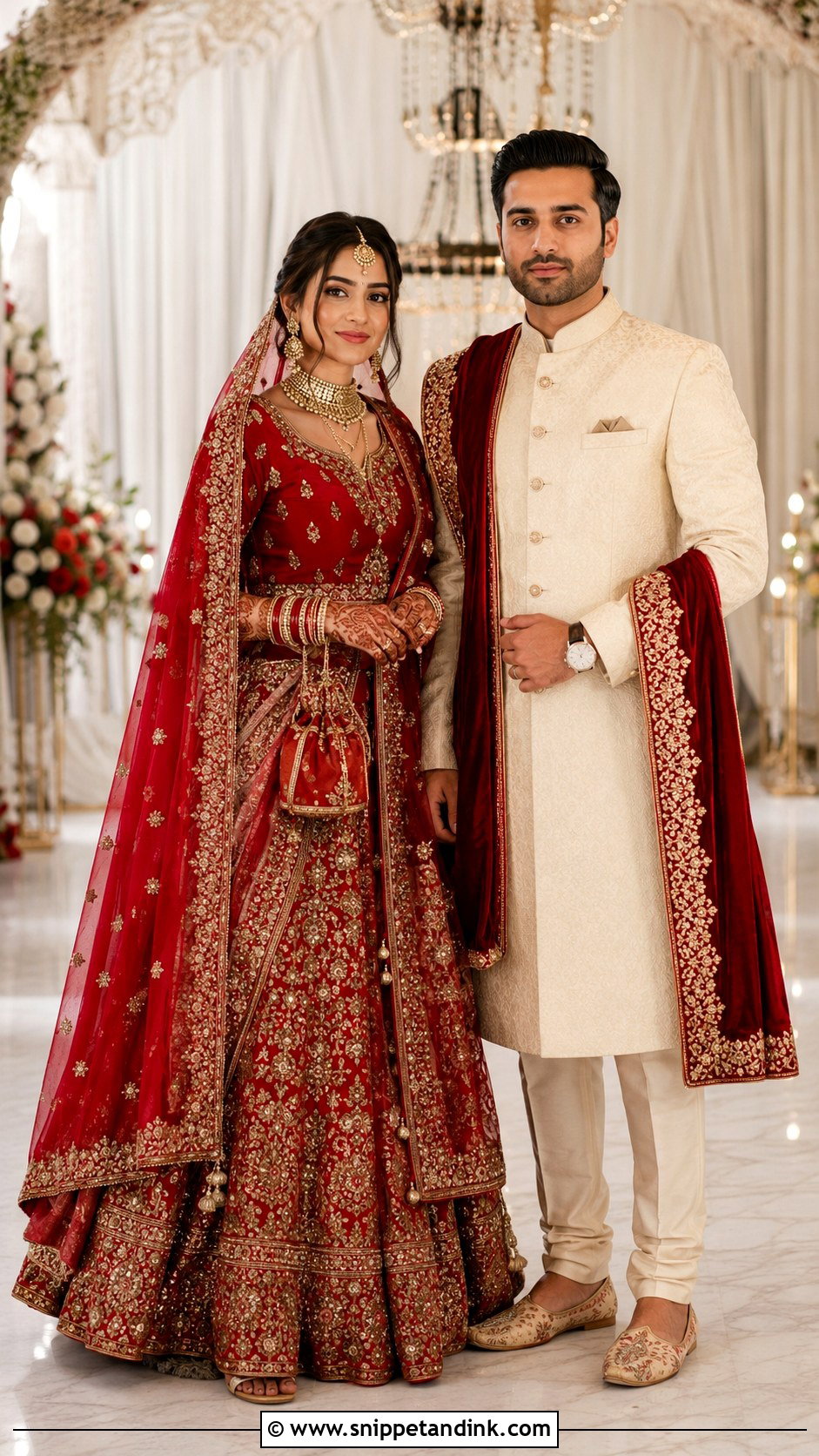
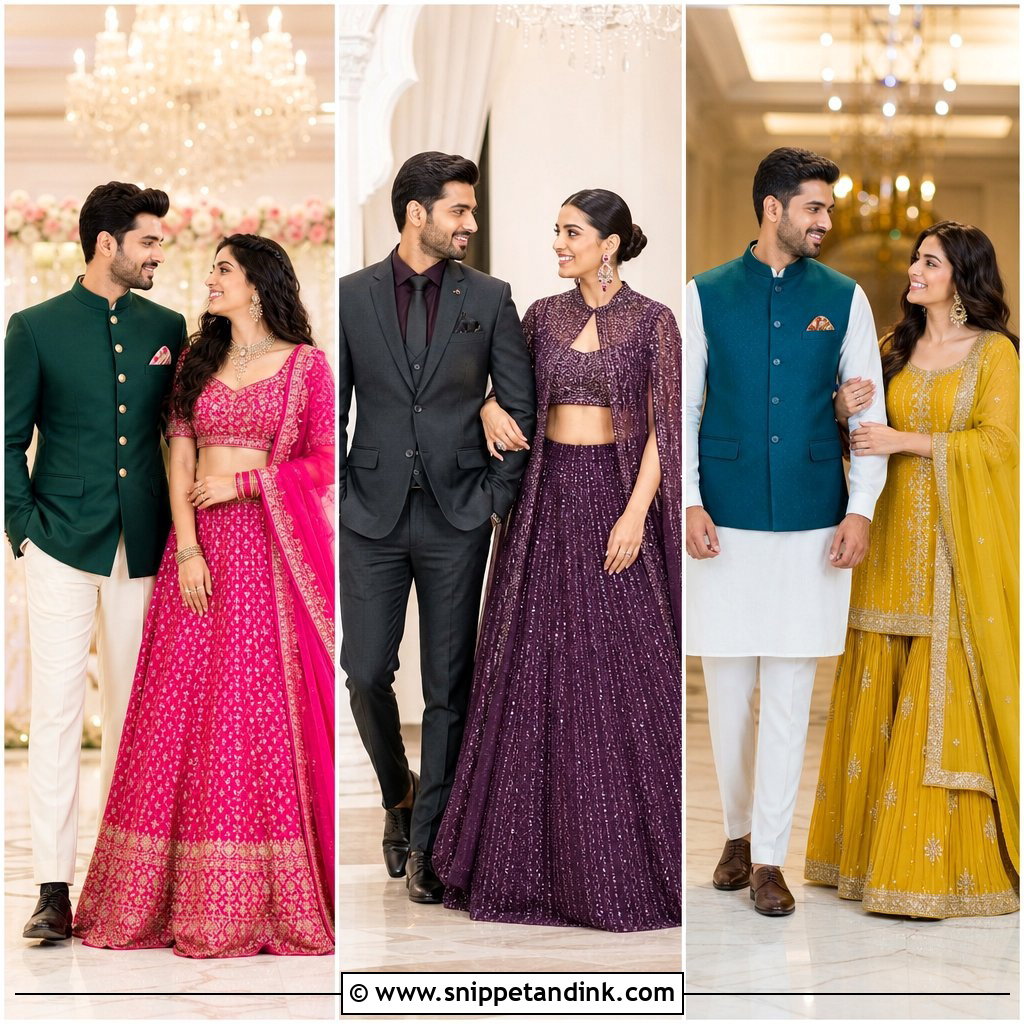
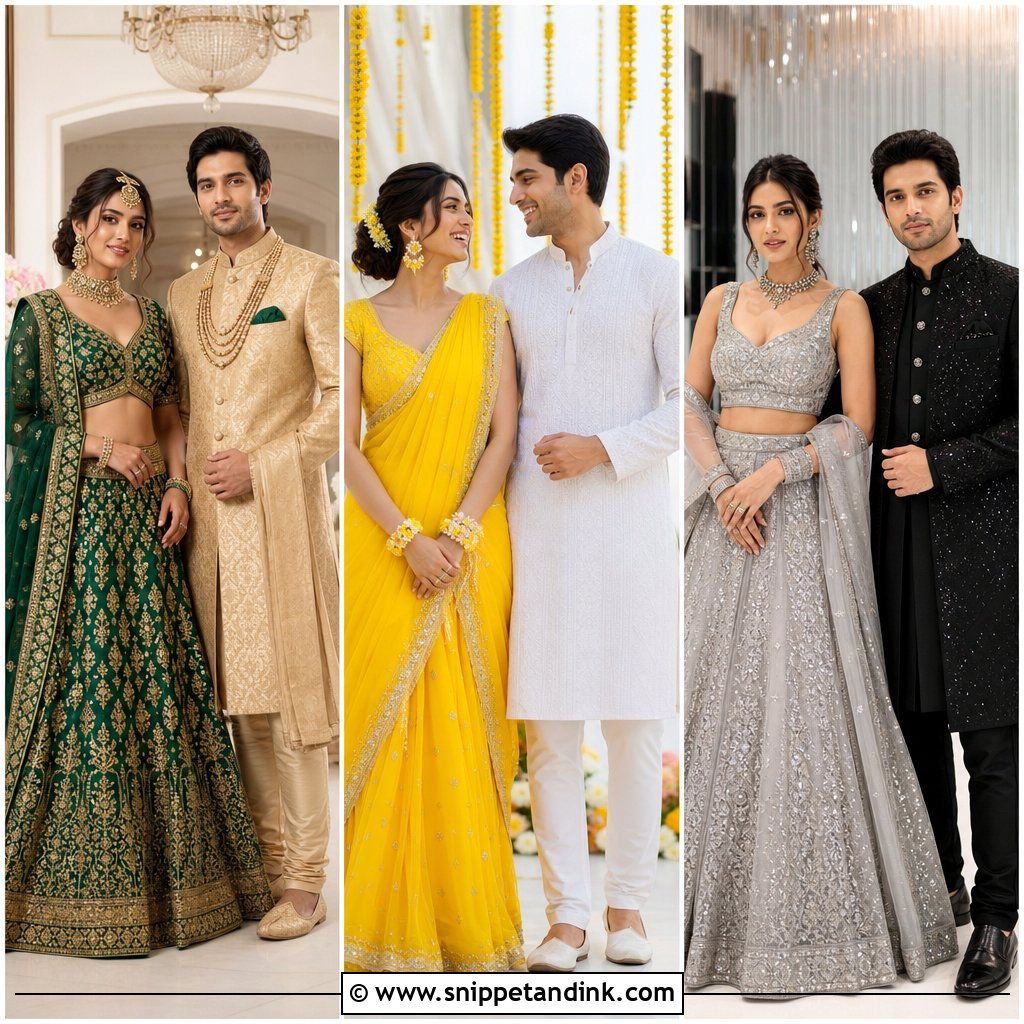
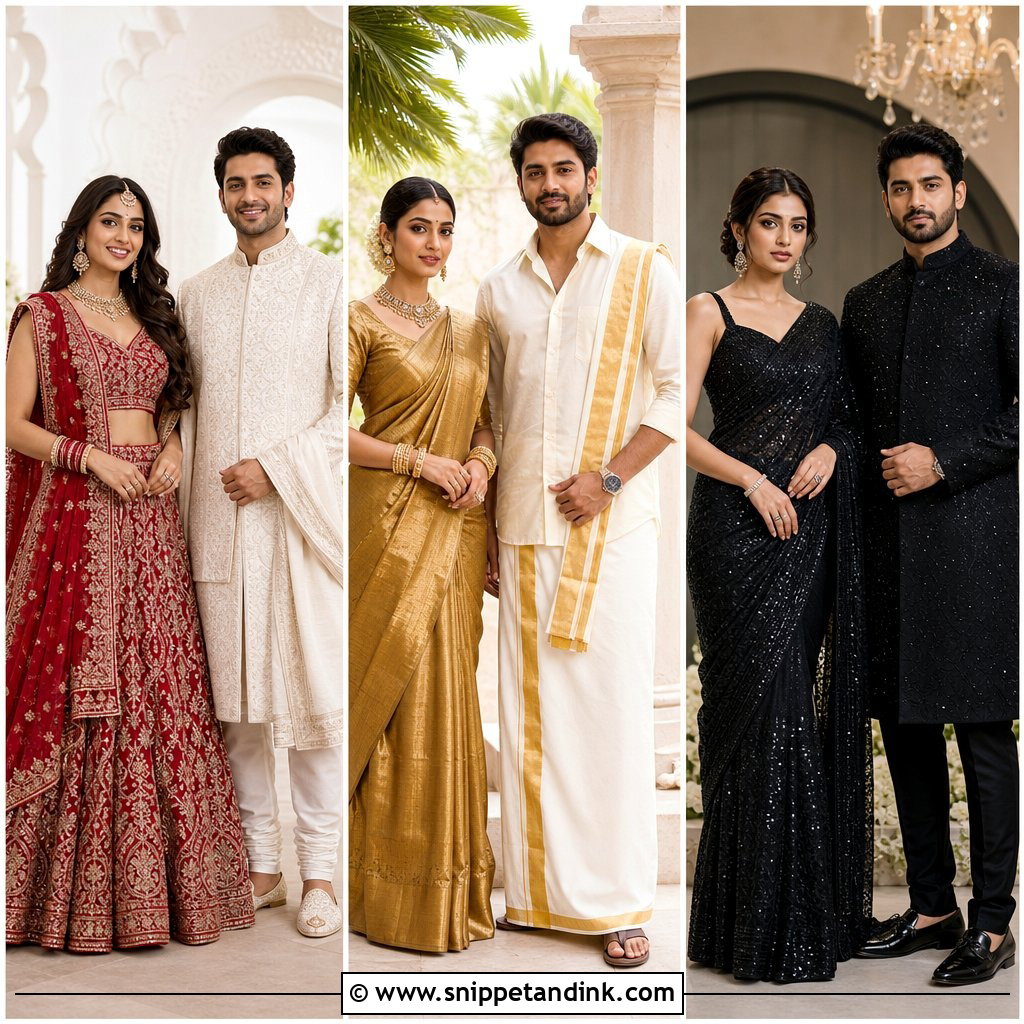
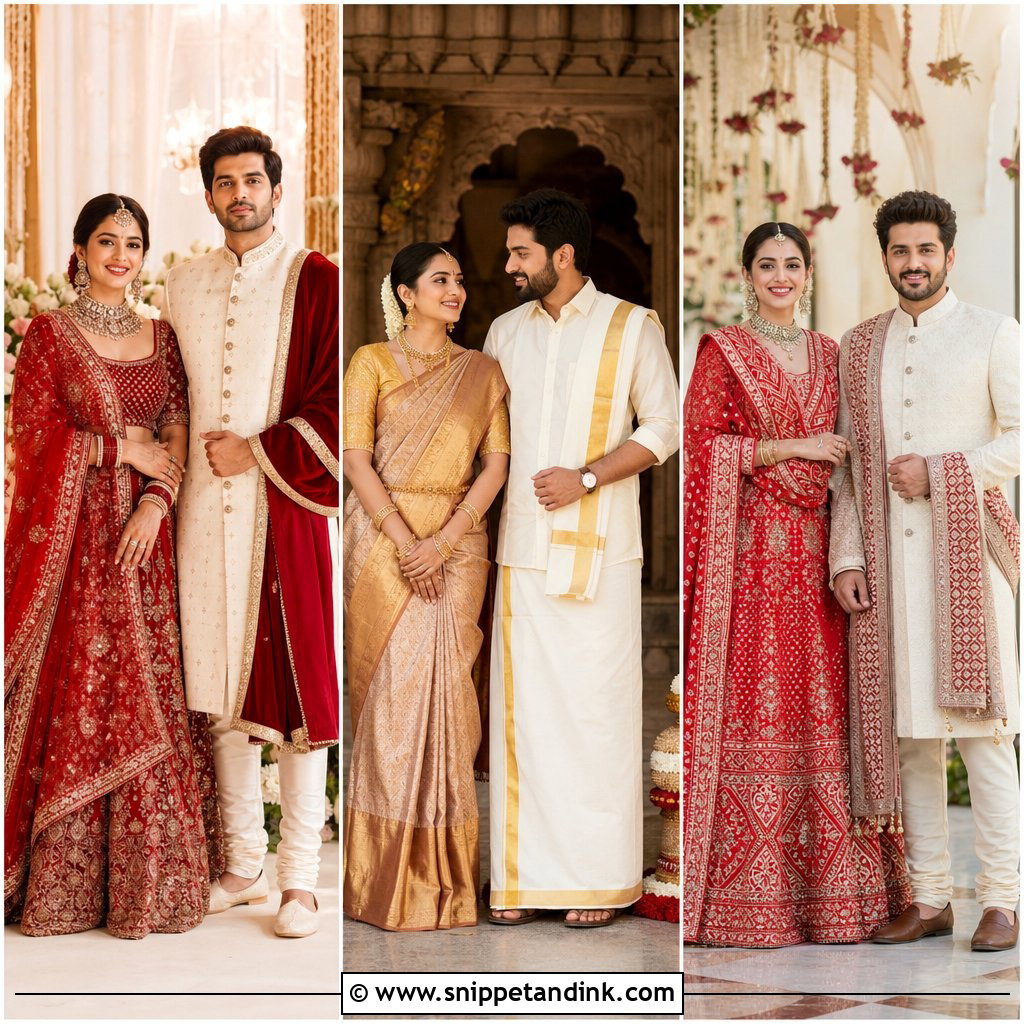
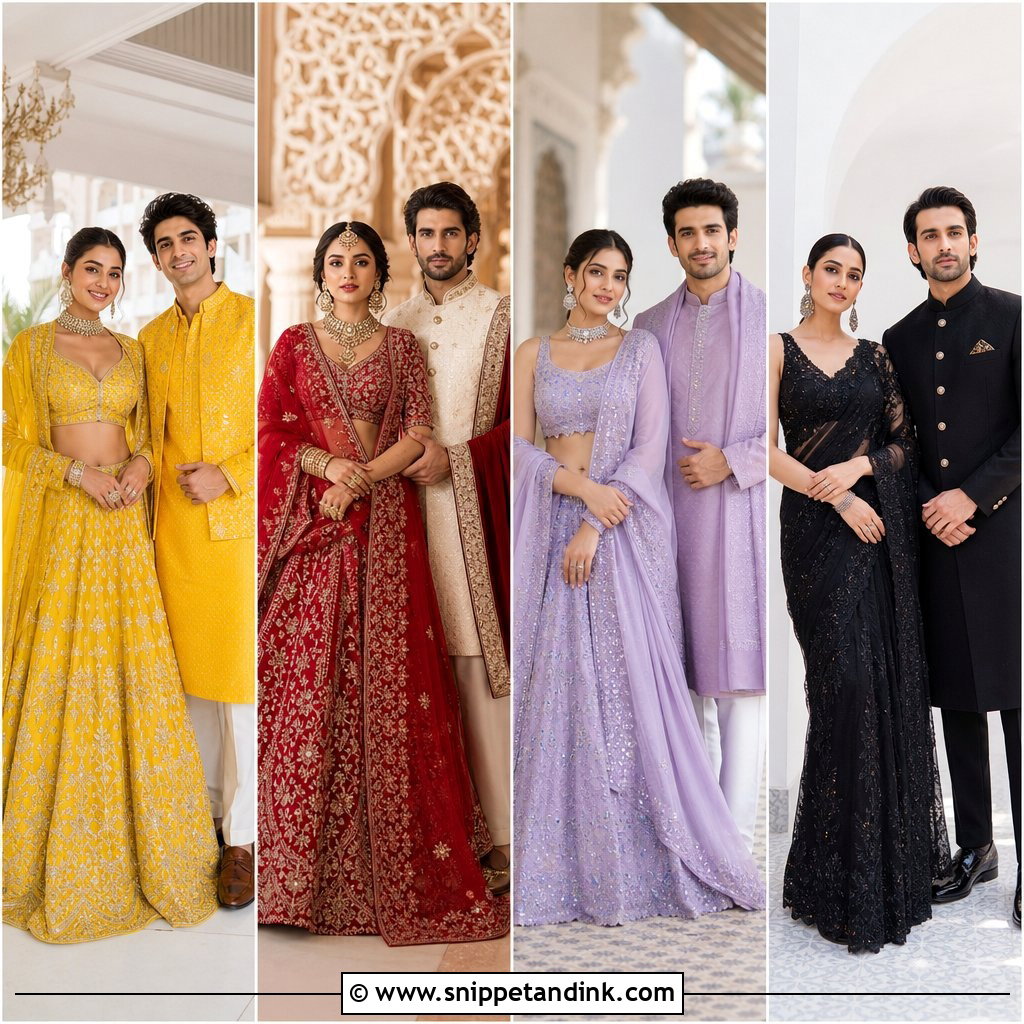
Red with cream is the classic for a reason, and the pairing lives or dies on the gold. Her deep red lehenga with antique-gold work, a fitted blouse, draped dupatta, traditional jewelry and a small potli sets the tone. His cream silk sherwani, straight trousers and brown or gold juttis balance it. The mistake I see most is mismatched metal: his zari in a bright yellow gold next to her antique work makes both look slightly off. Hold the fabrics side by side in daylight before the tailoring starts. A red stole, pocket square or safa is enough to tie him in. It sits naturally in heritage venues and evening pheras.
2. Ivory Saree And Ivory Bandhgala Desi Couple Outfit
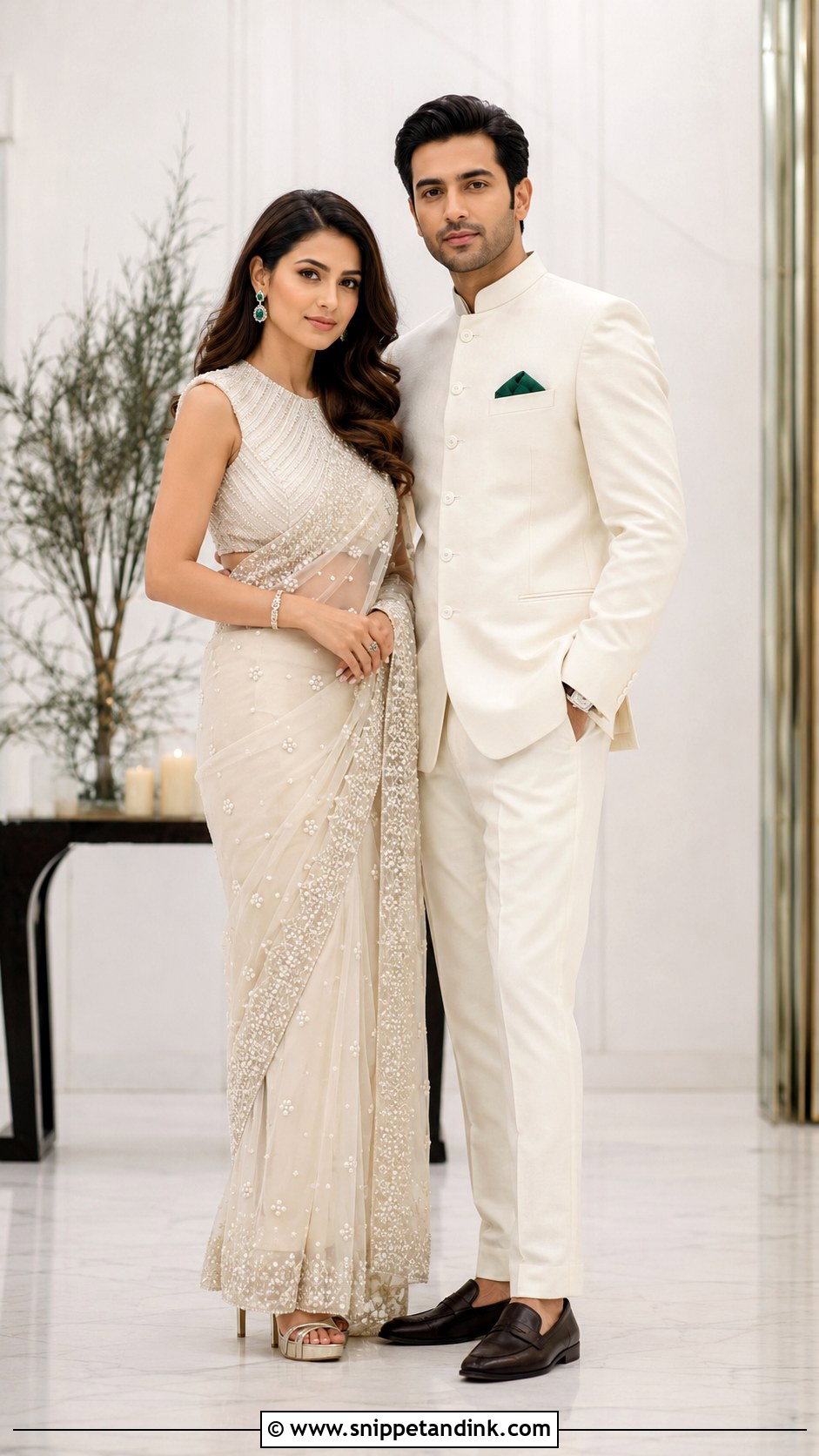
Ivory on both people only works when the textures are different, otherwise two light outfits merge into one pale shape in group photos. Her ivory silk or organza saree with pearl work, a structured blouse, metallic heels and fine kundan pieces is the soft half. His ivory bandhgala with tonal embroidery, tailored trousers and loafers or juttis is the crisp half. Bring in one jewel colour, emerald, ruby or sapphire, through her earrings and his pocket square. A sleek bun or soft curls keeps her styling clean. I like it most for engagements and daytime receptions, where the light shows texture well.
3. Green Lehenga And Green Kurta Mehndi Couple Outfit
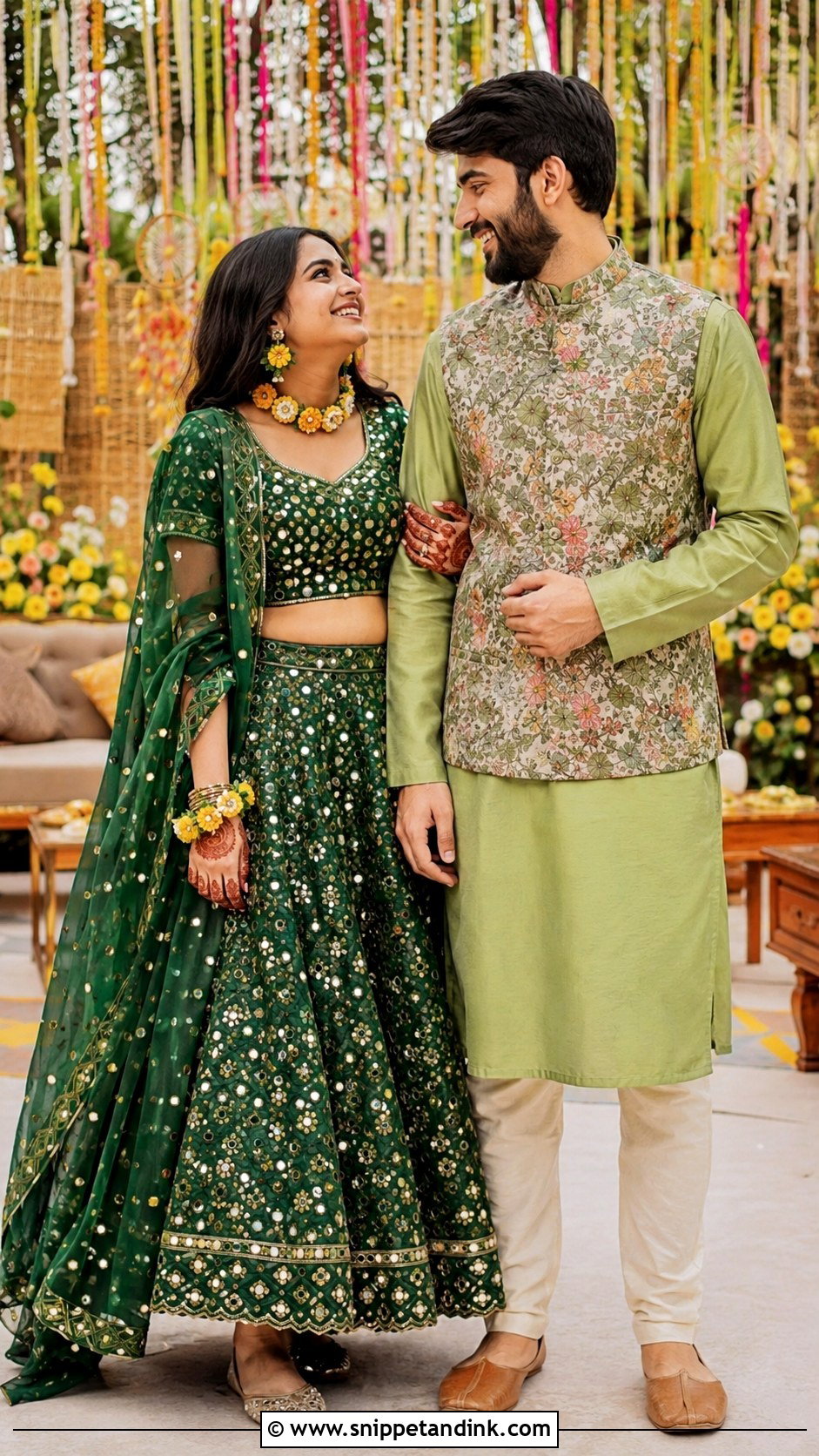
Mehndi is a working event for the bride: she sits for hours with wet paste on her hands and feet, so her outfit has to stay out of the way. A forest, parrot or emerald lehenga with mirror work and a short-sleeve blouse is right for this, because full sleeves get stained or have to be rolled up mid-application. Floral jewelry, bangles added after the henna dries, a light dupatta and flats. He can wear a lighter or darker green kurta with ivory pajamas, a printed Nehru jacket, tan juttis and a plain watch. Different greens give depth. Repeat one accent, pink, yellow or gold, from her lehenga in his jacket print to link them.
4. Yellow Sharara And Yellow Kurta Haldi Couple Outfit
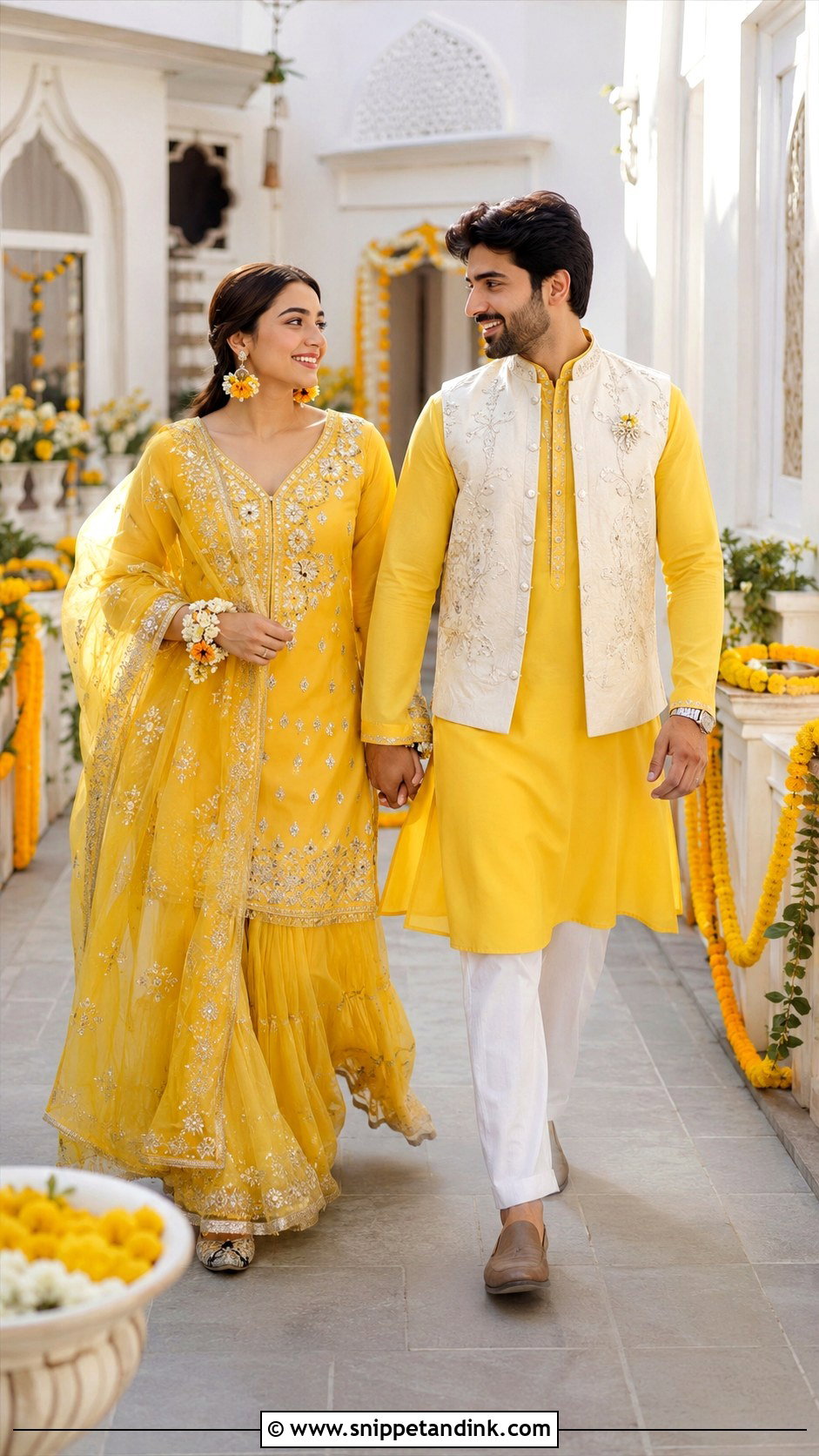
Haldi stains, and turmeric on silk rarely comes all the way out, so this is the function I tell couples not to spend heavily on. A yellow sharara and coordinating kurta in cotton or a cotton blend is the sensible choice. She might wear mustard, marigold or lemon with light gota work, a short kurti and an airy dupatta, with juttis, floral earrings and bangles. He can go with a plain yellow kurta, white trousers and an ivory sleeveless jacket with small yellow details, plus brown sandals. Pick neighbouring shades rather than identical yellows; they read richer in bright daylight photos.
5. Pink Lehenga And Mint Sherwani Desi Couple Outfit
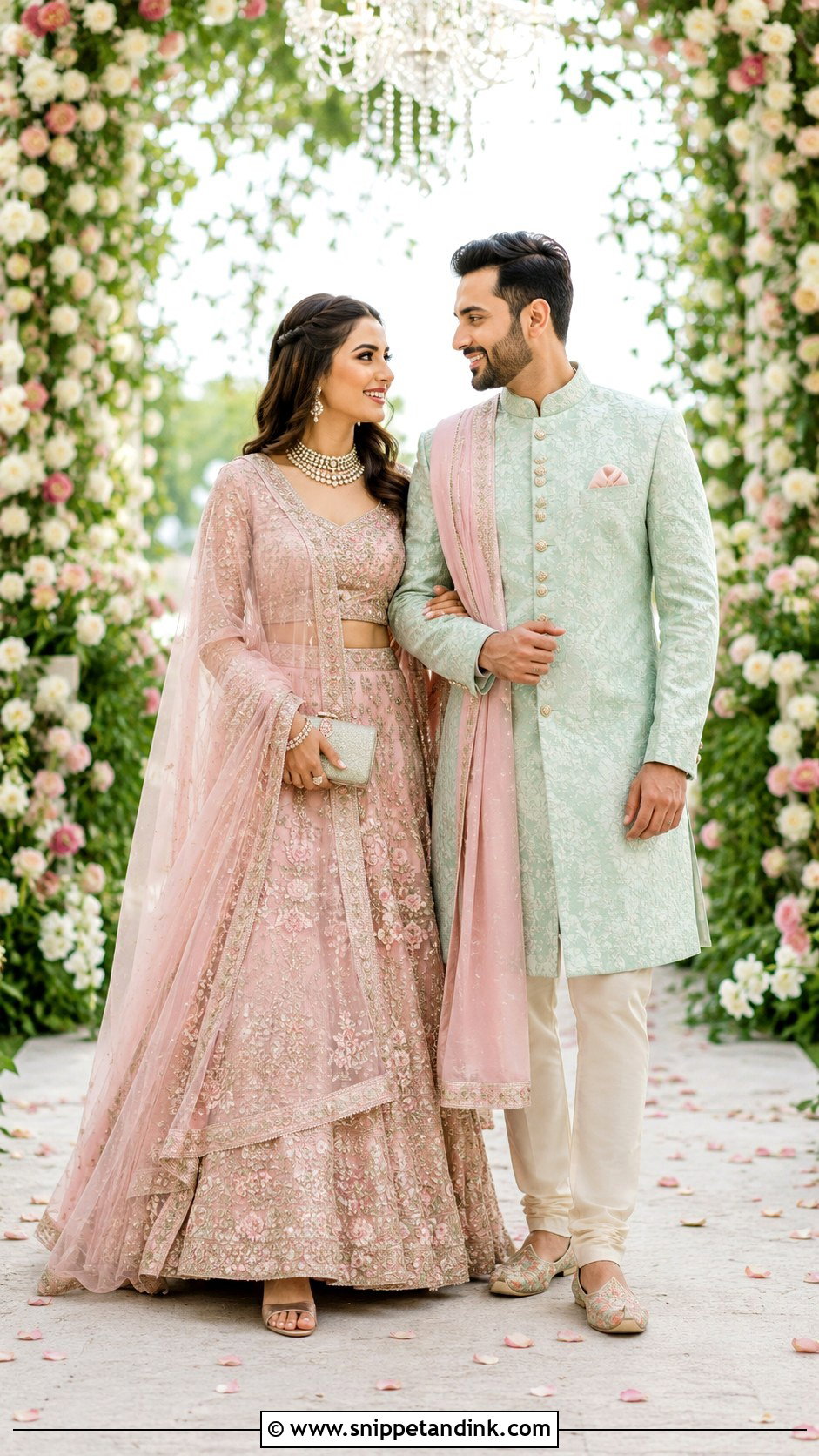
Pink and mint is a soft contrast that needs restraint. Her blush or rose lehenga with silver embroidery, fitted blouse and sheer dupatta, styled with pearls, metallic sandals and a pastel clutch. His mint sherwani, ivory trousers, neutral juttis and a pale pink pocket square or stole. A little pink floral embroidery on his sherwani ties the two together. Stop at two pastels. Add a third, say lilac in the bridesmaids, and the palette starts to look washed out on camera. Keep the metal to silver, pearl or champagne gold. Garden engagements, nikkahs and spring functions suit it.
6. Black Saree And Black Bandhgala Desi Couple Outfit
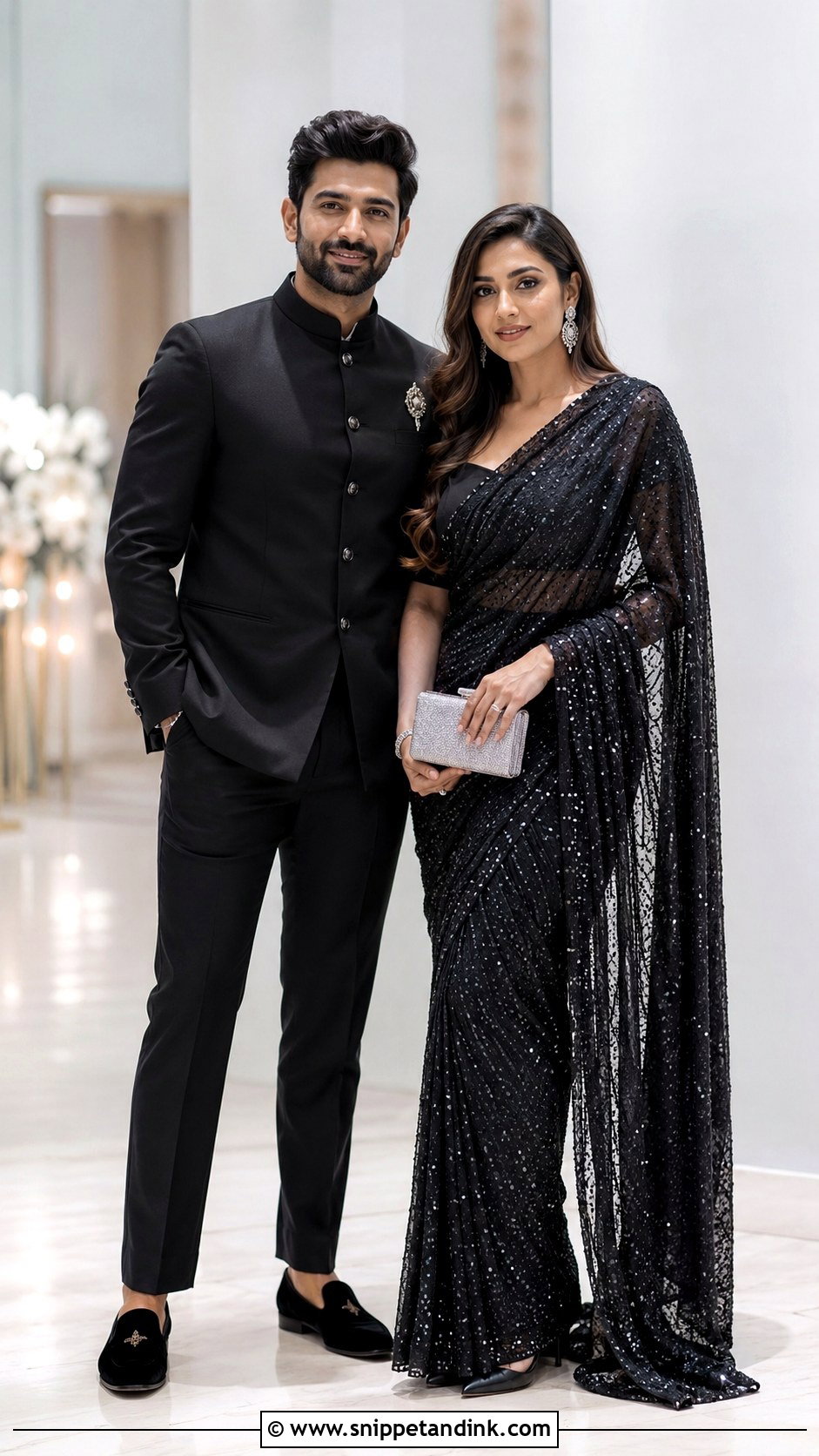
Black works for a reception or sangeet once families are comfortable with it; in some households it is still avoided at weddings, so check before you buy. Her sequined, satin or embroidered black saree with a sleeveless or long-sleeve blouse, crystal earrings, a metallic clutch and pointed heels. His black bandhgala with tonal buttons, tailored trousers and velvet loafers, plus a silver brooch or textured pocket square. All-black flattens in photographs unless the surfaces differ. Her reflective drape against his matte jacket is what gives the picture depth.
7. Navy Anarkali And Navy Sherwani Desi Couple Outfit
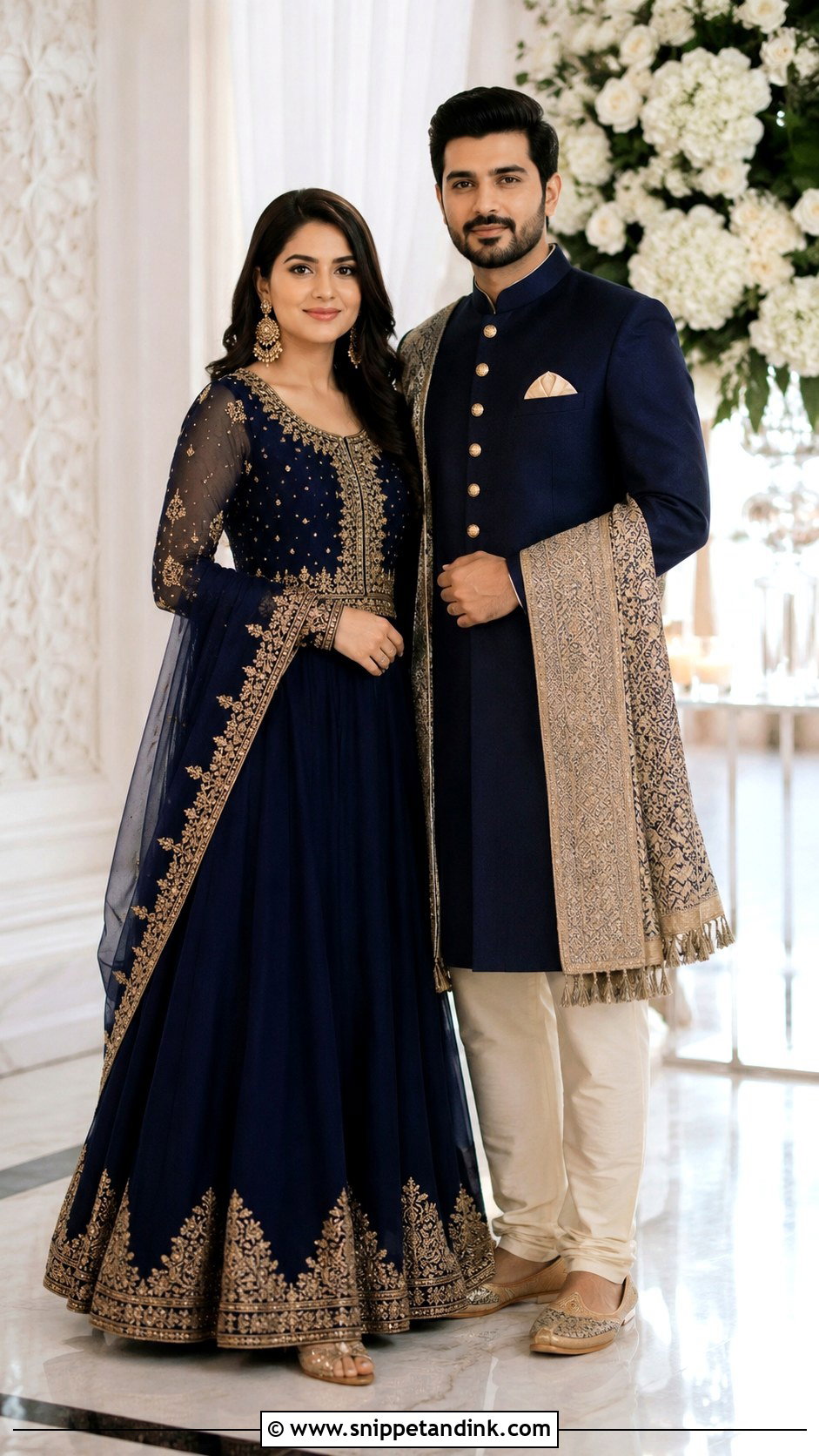
Navy gives the weight of a dark formal colour without the harshness of black, and it holds gold embroidery very well under evening lights. Her floor-length navy Anarkali with gold work, a fitted bodice and flowing skirt, gold earrings, embroidered heels and a neat dupatta. His navy sherwani with restrained gold detail, cream trousers and matching juttis. A cream or gold stole breaks up the dark. If both outfits carry embroidery, let one stay quieter; two fully worked garments in the same colour compete. Her flowing line against his structured cut does the rest.
8. Floral Lehenga And Printed Jacket Kurta Couple Outfit
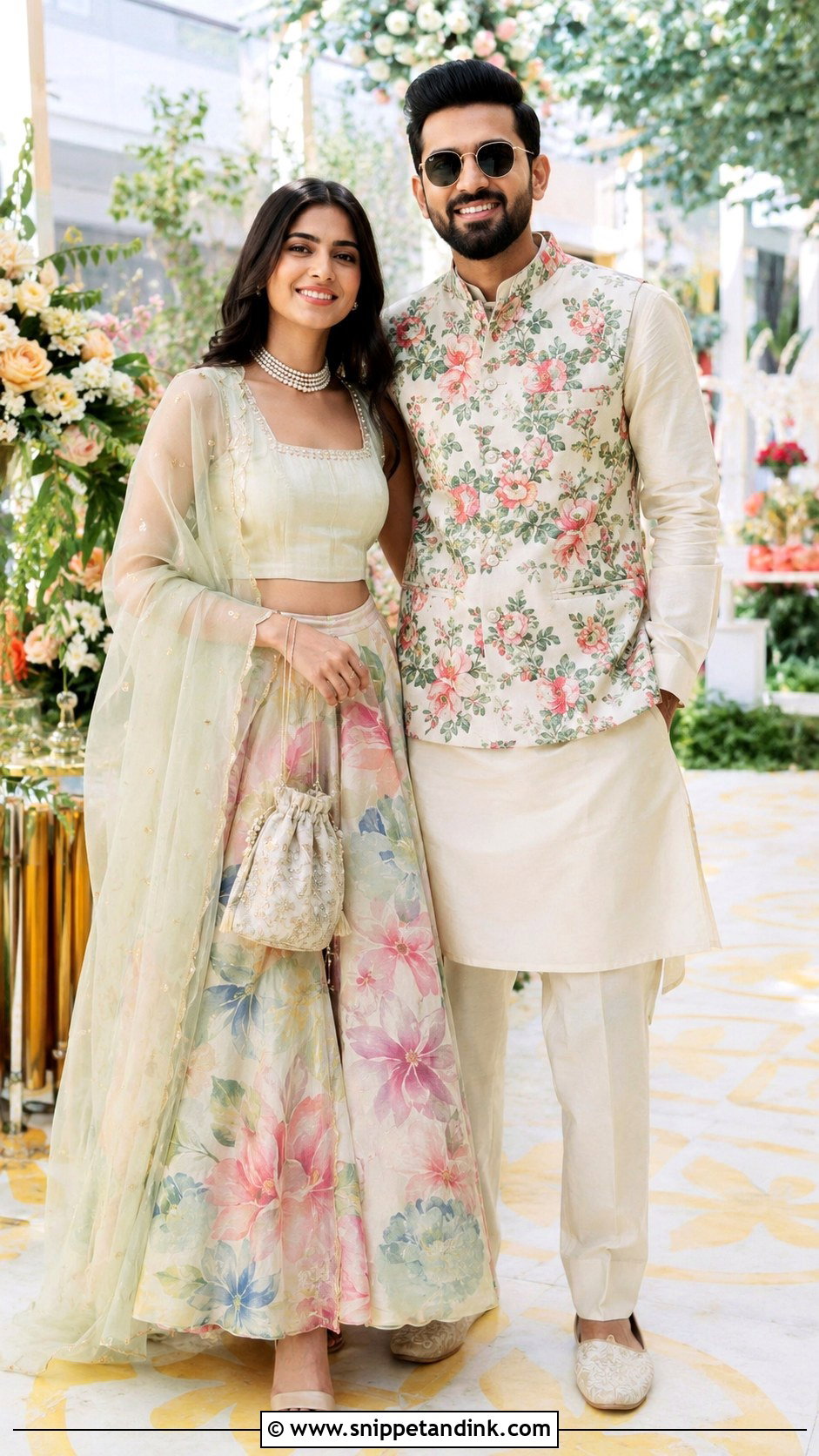
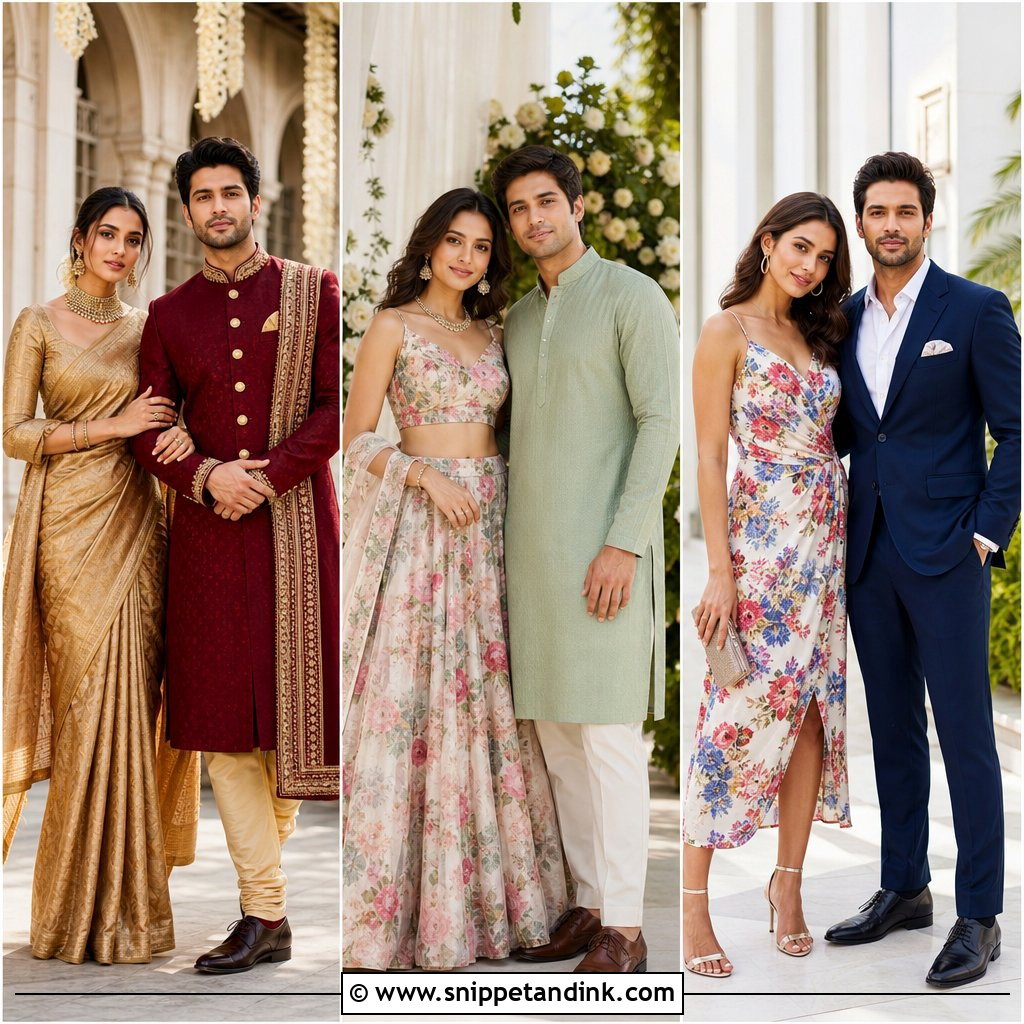
Print-on-print is easier than couples expect, as long as the scale differs. Her pastel lehenga with watercolour florals, a simple blouse and an organza dupatta, with pearl earrings, a potli and neutral block heels. His ivory kurta and trousers under a floral Nehru jacket that repeats one or two of her colours. I keep his print smaller than hers so they don’t vibrate against each other when photographed side by side. Neutral shoes on both. Garden engagements and pre-wedding shoots are where it shines.
9. Maroon Gharara And Velvet Sherwani Desi Couple Outfit
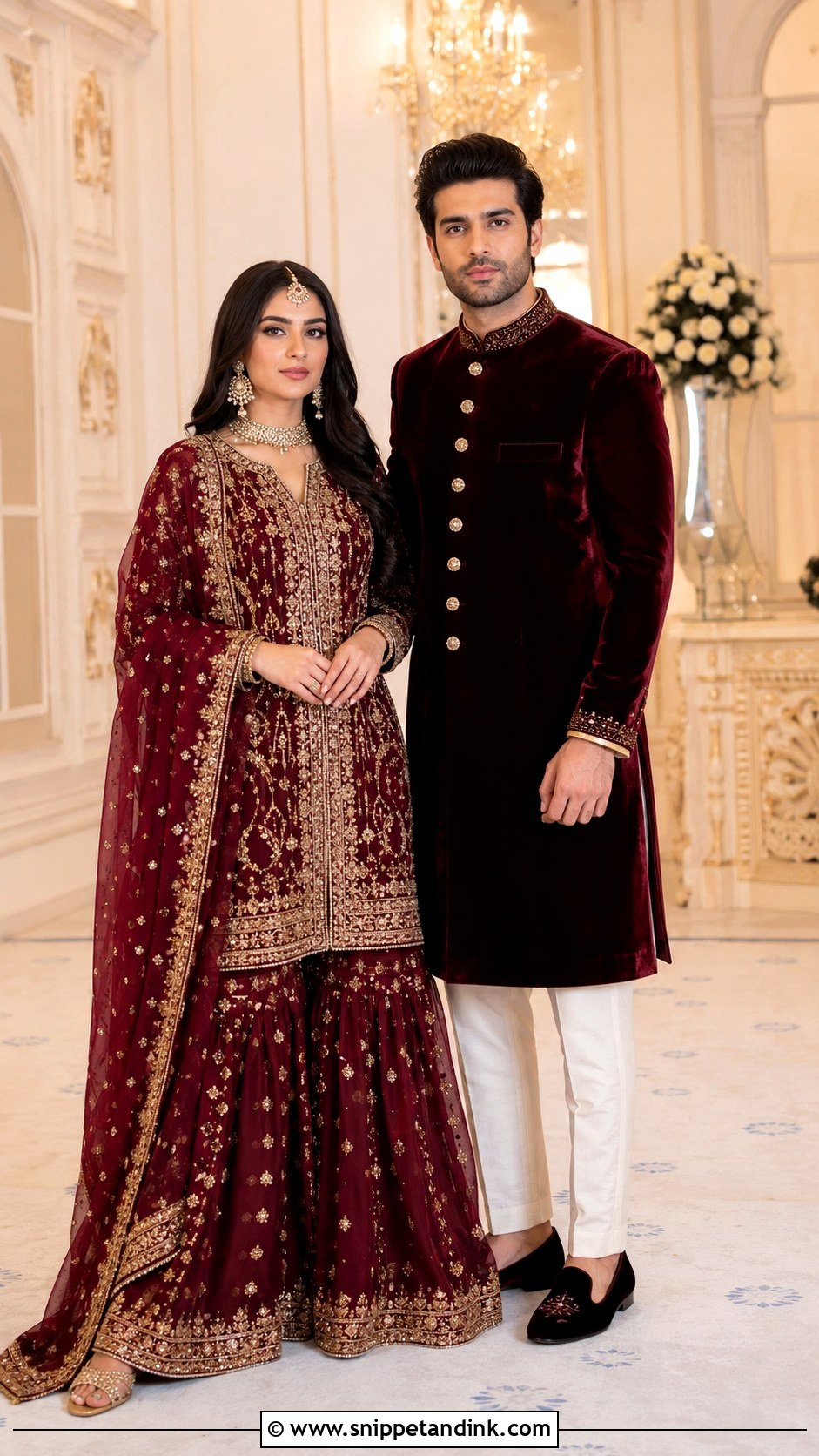
Velvet in maroon is heavy and warm, so I keep this pairing for winter weddings and cooled indoor halls. Her maroon gharara with gold work, a long kameez and a detailed dupatta over one shoulder, plus kundan, a potli and comfortable embellished heels. Gharara pleats gather at the knee and are long, so do a stair test in the actual shoes. His maroon or burgundy velvet sherwani, ivory trousers and dark leather juttis. Antique gold looks softer than bright yellow gold here. If both outfits are heavily worked, scale back the jewelry. It suits a baraat, a formal nikkah or a grand reception.
10. Bandhani Lehenga And Kurta Pajama Couple Outfit
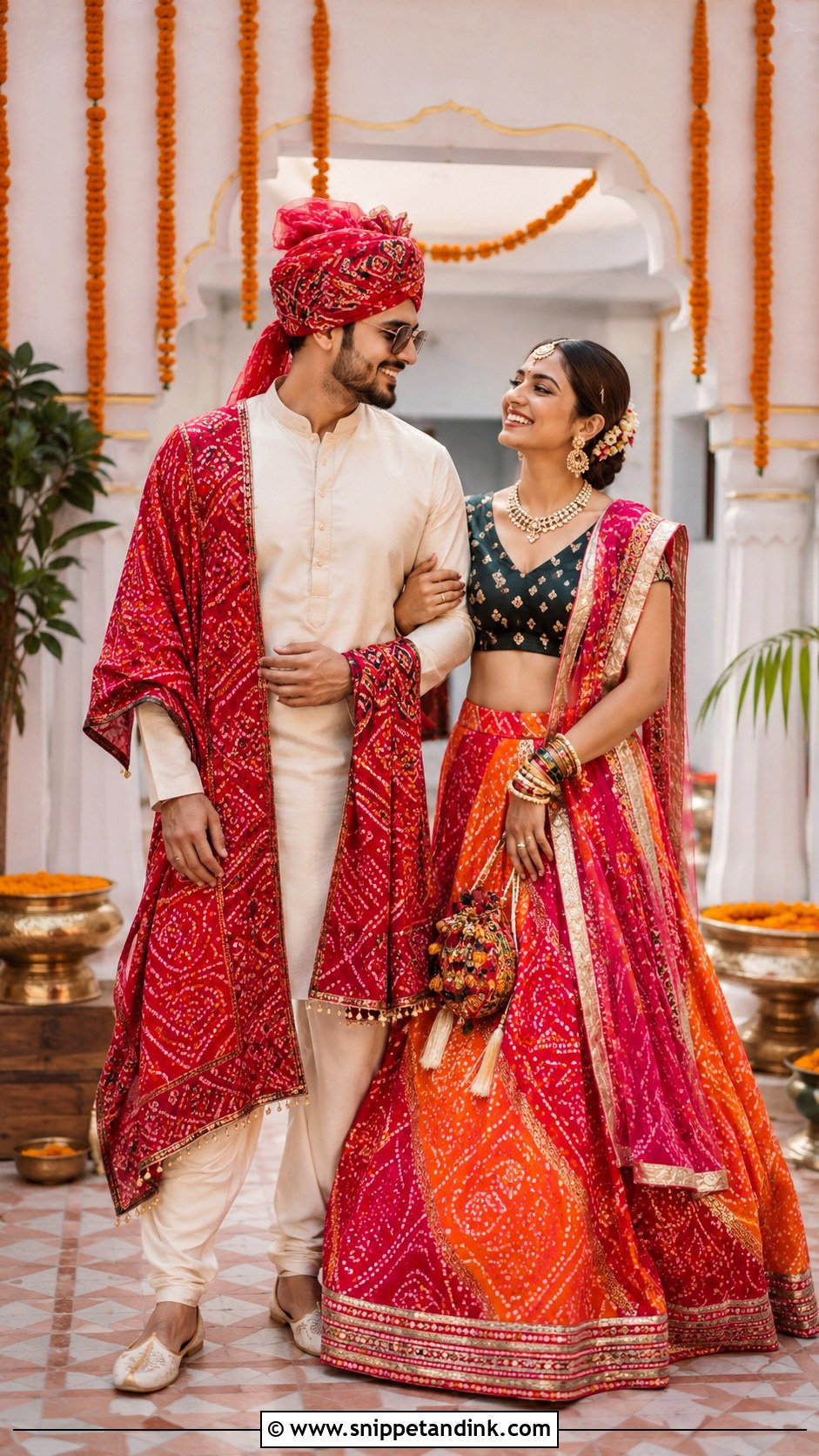
Bandhani is tie-dye at its most precise, with tiny resist dots tied by hand, and it brings instant festivity. She can wear a red, orange, pink or multicolour Bandhani lehenga with a contrasting blouse and bordered dupatta, oxidised jewelry, stacked bangles, an embroidered potli and juttis. He takes one colour from her lehenga for a solid kurta pajama, then adds a Bandhani stole or safa. Keep his trousers and shoes neutral. Real Bandhani can bleed when wet, so it is not a fabric for a haldi. It shines at garba nights, mehndis and dholkis where everyone is dancing.
11. Blue Saree And Ivory Kurta Desi Couple Outfit
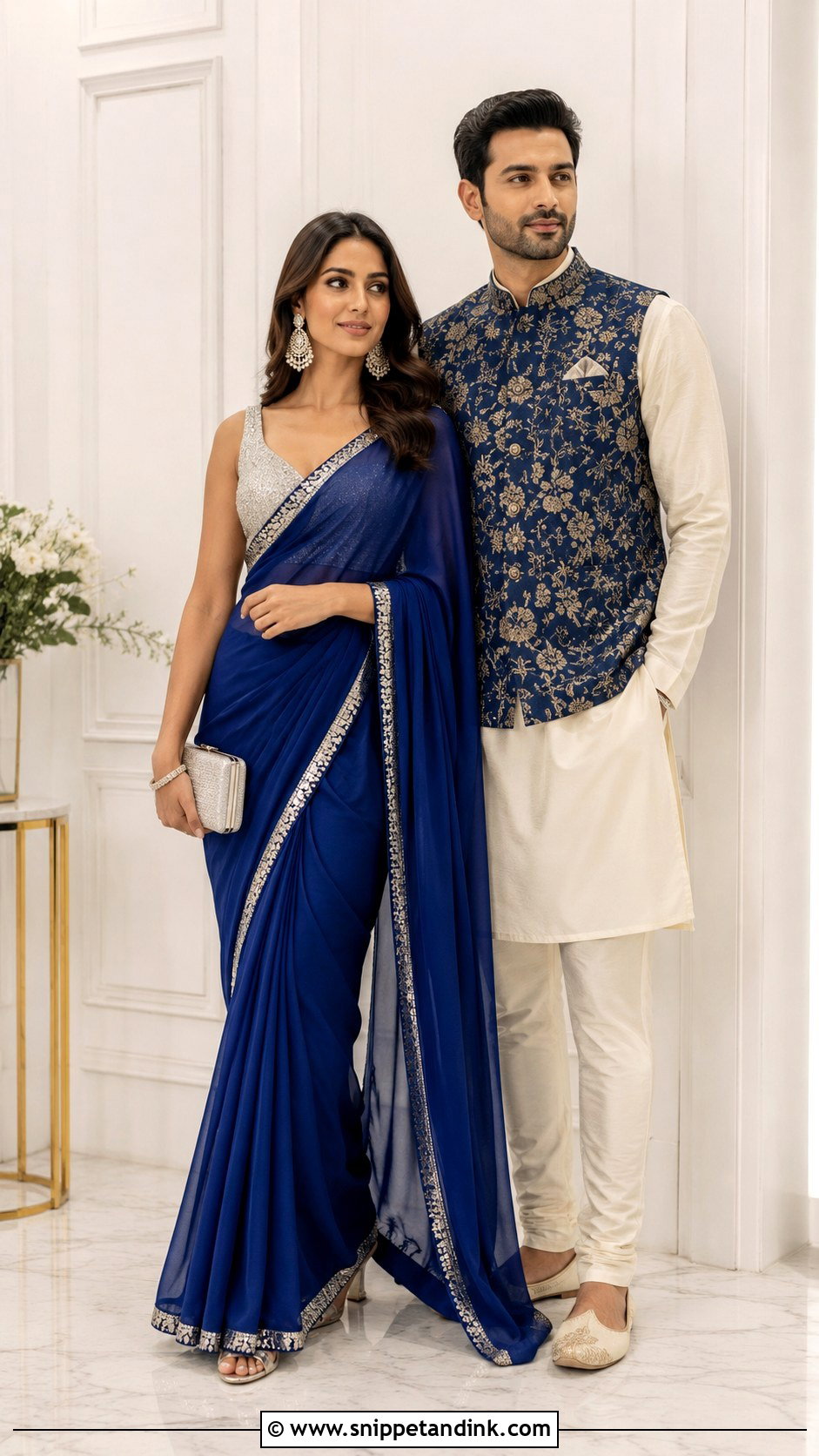
A blue saree with an ivory kurta keeps each person clearly separate in photos while still reading as a pair. Royal blue for evening, powder blue for daytime. Her silver embroidered blouse, metallic sandals, chandelier earrings and a compact clutch. His ivory silk kurta with fitted pajamas and a blue waistcoat close to the saree tone, or just blue thread at his collar and cuffs if he prefers subtle. Decide on silver or gold for both, not one each. It travels well beyond the wedding too, to Eid, anniversaries and guest appearances.
12. White Chikankari Anarkali And Kurta Couple Outfit
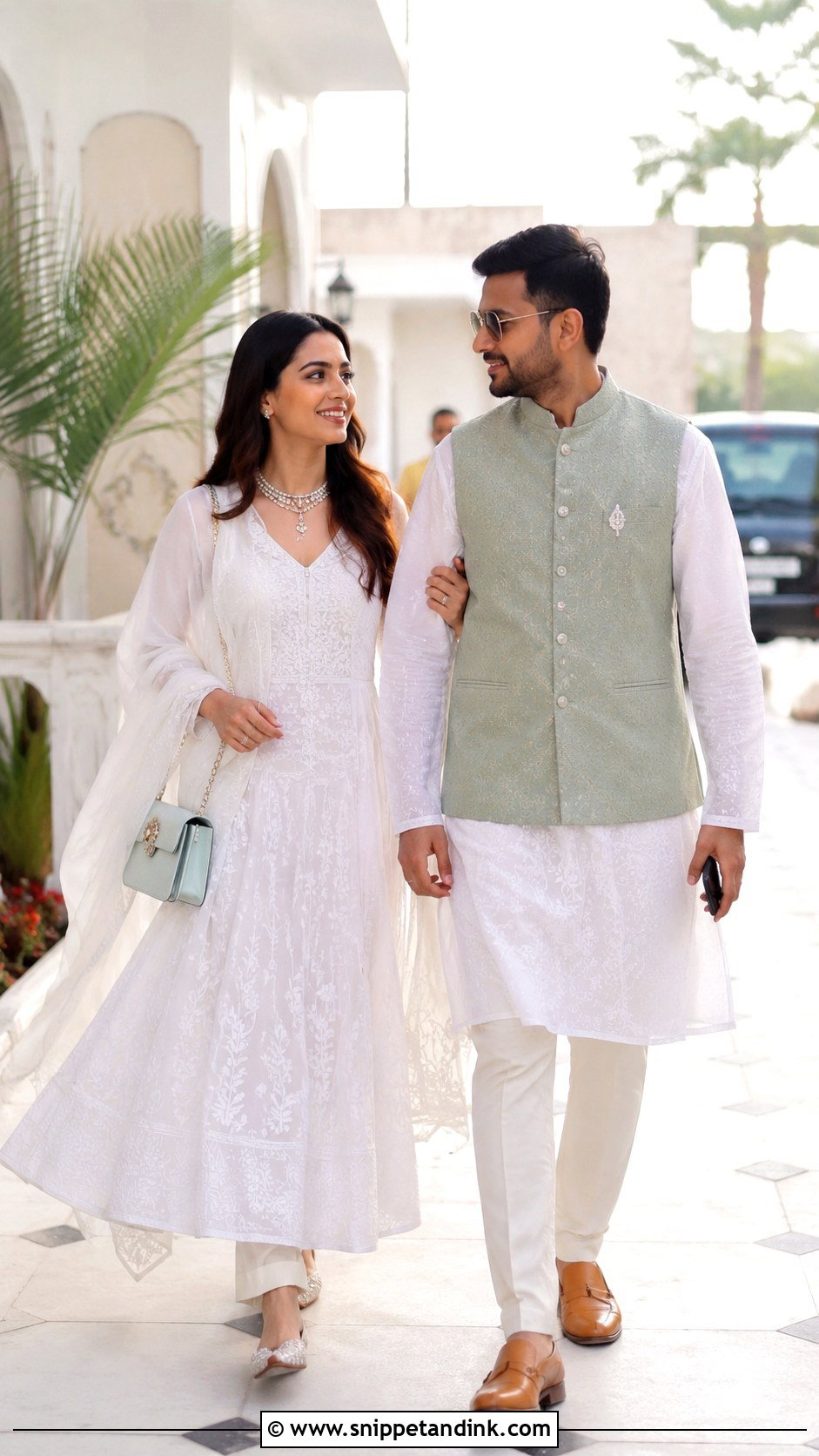
Chikankari is shadow work and fine stitching on light cotton or georgette, so it breathes in heat better than almost anything else on this list. Her white or soft cream Chikankari Anarkali with matching trousers and a sheer dupatta, pearls, silver juttis and a pastel bag. His white Chikankari kurta, cream pajamas and tan or ivory shoes, with a pale blue, sage, blush or peach Nehru jacket for definition. Insist on a lining for both: unlined white Chikankari turns see-through in direct sun and under a photographer’s flash. Daytime engagements, Eid lunches and summer family events suit it.
13. Purple Lehenga And Embroidered Bandhgala Couple Outfit
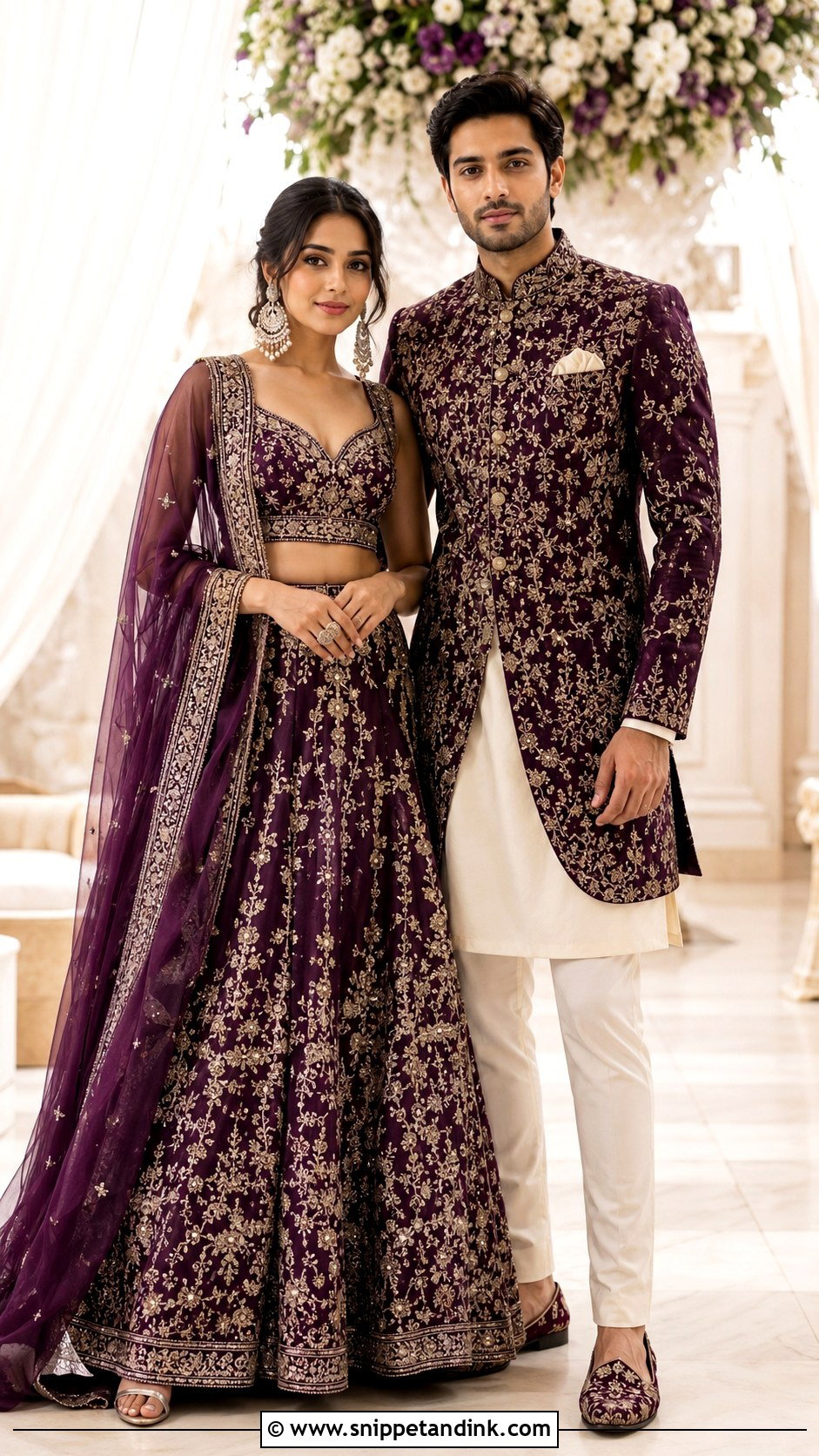
Purple is a confident colour, and I let her carry most of it. Her plum, violet or deep purple lehenga with silver, gold or multicolour work, a structured blouse, draped dupatta, statement earrings and metallic heels. His ivory or black kurta and trousers under a purple embroidered bandhgala or long jacket. Repeat one metal across his buttons, her jewelry and both pairs of shoes. Purple shifts noticeably under warm venue lighting, so view the fabrics in the evening light you’ll be photographed in. Lavender with dove grey is the softer version. Evening engagements, sangeets and receptions are where it belongs.
14. Teal Sharara And Teal Kurta Desi Couple Outfit
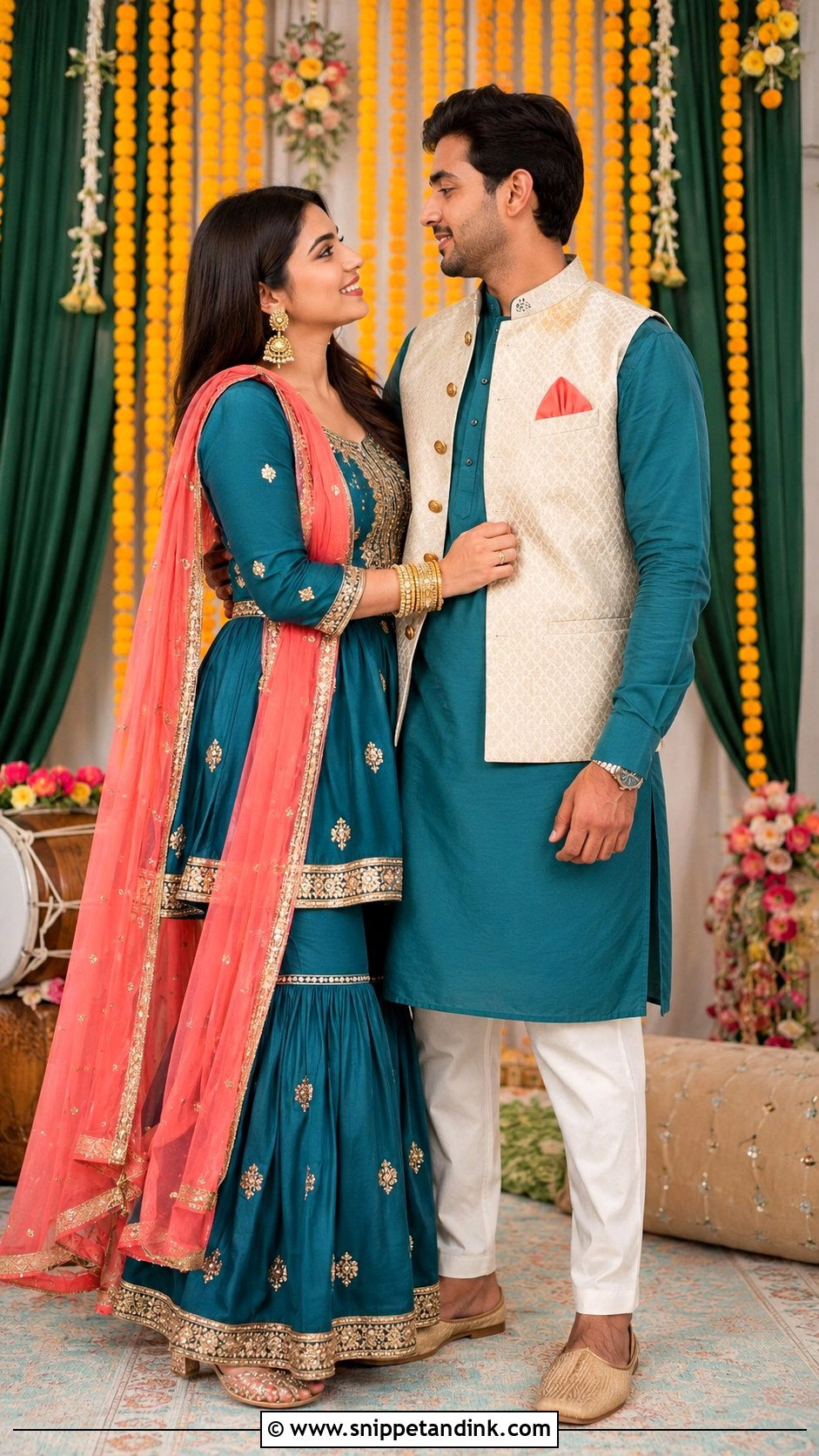
Teal sits between green and blue and photographs richly in both daylight and indoor light. Her teal sharara with a peplum kurti, gold work and a pink or coral dupatta, plus jhumkas, gold bangles and embellished heels. His teal kurta with ivory trousers and a gold, beige or printed waistcoat; a coral pocket square picks up her dupatta. Let the two teals differ slightly so it looks layered, not uniform. Lightweight fabric matters, because sharara outfits get danced in hard. Mehndi, sangeet and dholki nights suit it in any season.
15. Gold Saree And Gold Sherwani Reception Couple Outfit
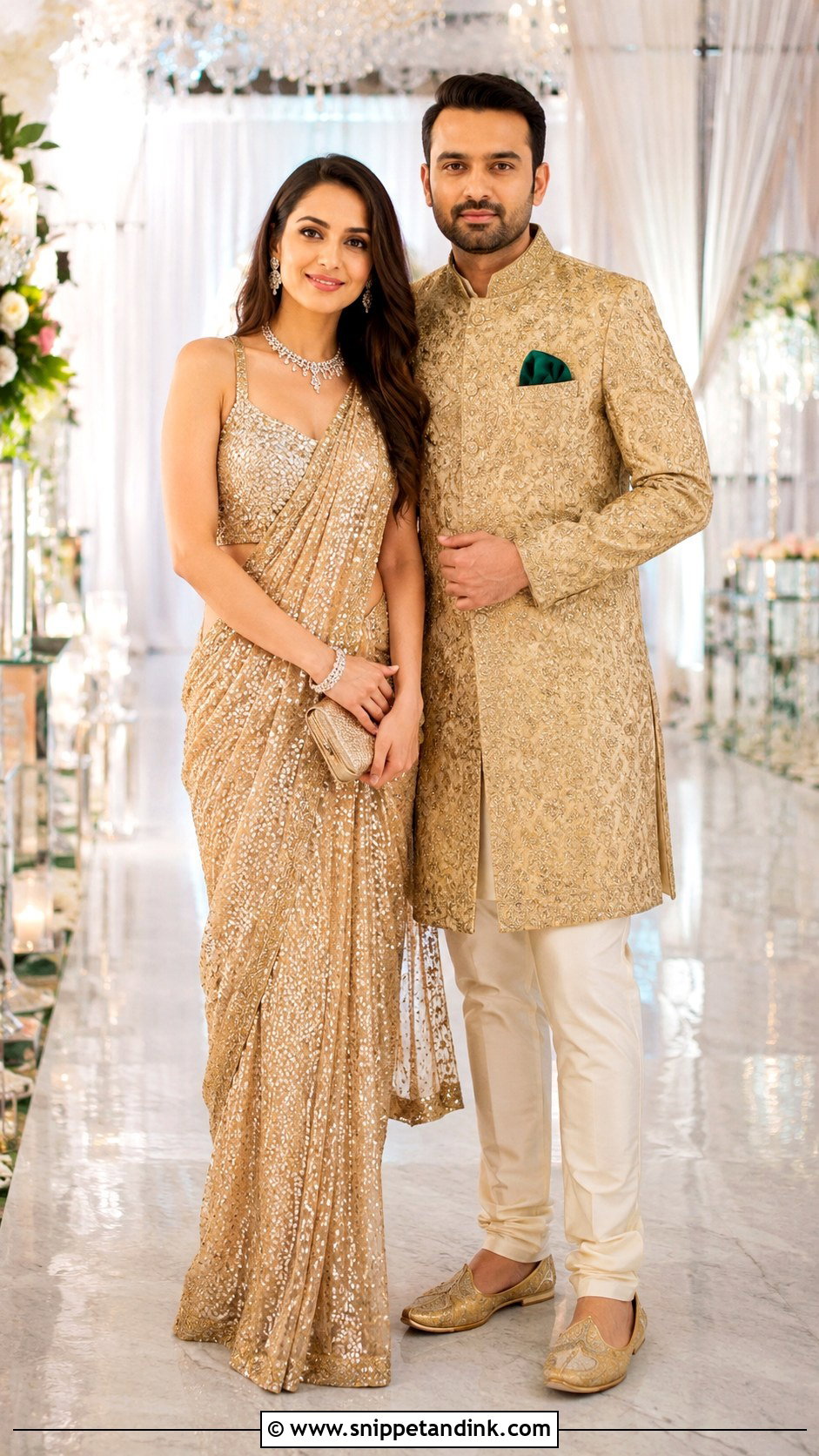
Gold on gold is glamorous and very easy to overdo. Her champagne saree with sequins, beadwork or metallic thread, a fitted blouse, crystal jewelry, neutral heels and a structured clutch. His muted gold or beige sherwani with tonal work, cream trousers and matching juttis. Only one of you should shine. If both fabrics are highly reflective, camera flash bounces off both and the faces lose detail. Let her saree carry the sparkle and keep his sherwani matte. Emerald, maroon or black accents give some contrast. Receptions and engagement dinners are its natural setting.
16. Phulkari Suit And Kurta Pajama Couple Outfit
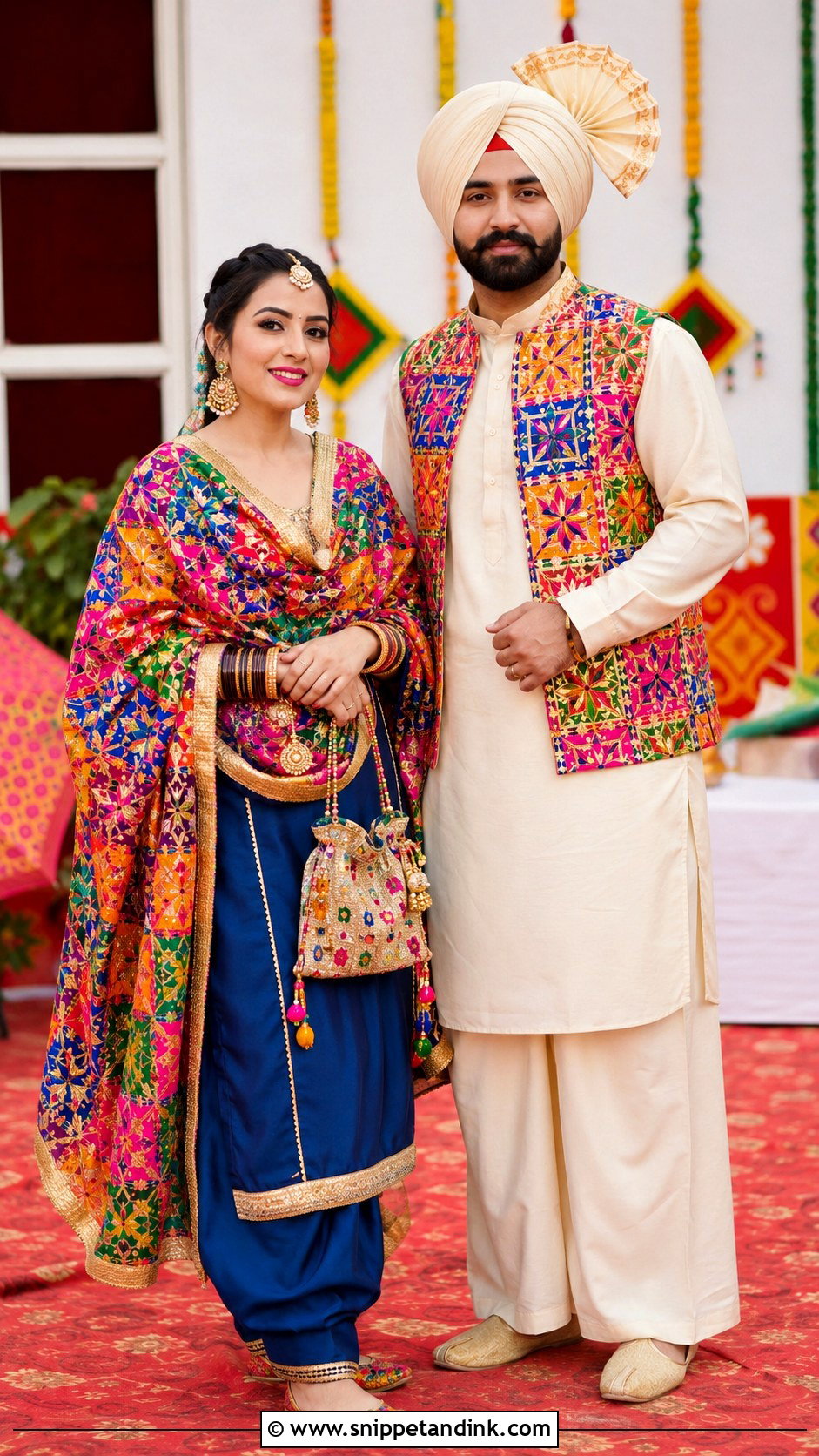
Phulkari is dense, colourful darning stitch embroidery from Punjab, and a real one is heavy enough to dominate any outfit. For her, a Phulkari suit usually means a solid salwar kameez under a richly worked Phulkari dupatta, with traditional juttis, bold earrings and bright bangles. He can choose a cream, navy or maroon kurta pajama with a waistcoat that pulls colours from her dupatta, and a matching turban for ceremony. Keep him plain by comparison. Both silhouettes are made for long nights of bhangra, so jaggo, sangeet and family functions are its home.
17. Silk Saree And Veshti South Indian Couple Outfit
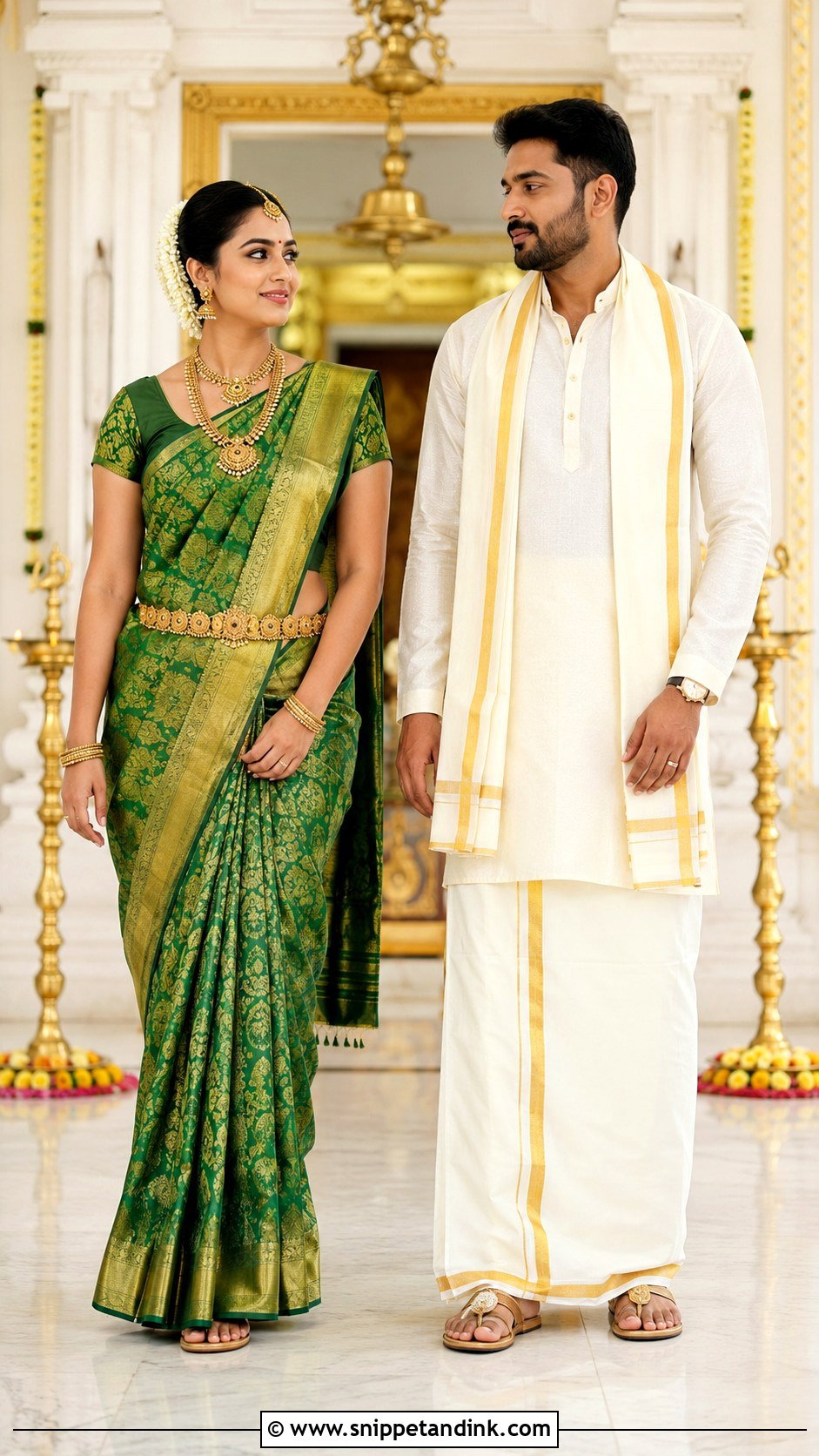
A silk saree and veshti connect through borders rather than body colour. She can wear a Kanjeevaram-style silk in red, green, gold, purple or blue with a fitted blouse, gold temple jewelry, fresh jasmine in a bun, a small potli and comfortable sandals. He wears a white or cream veshti with a kurta or shirt carrying a gold border, and an ivory angavastram over one shoulder for formal moments. Match her border zari to his gold trim. Kanjeevaram silk is stiff and heavy, so I have the blouse fitted with a little ease at the back; seated rituals can last a long time.
18. Red And White Saree And Dhoti Kurta Couple Outfit
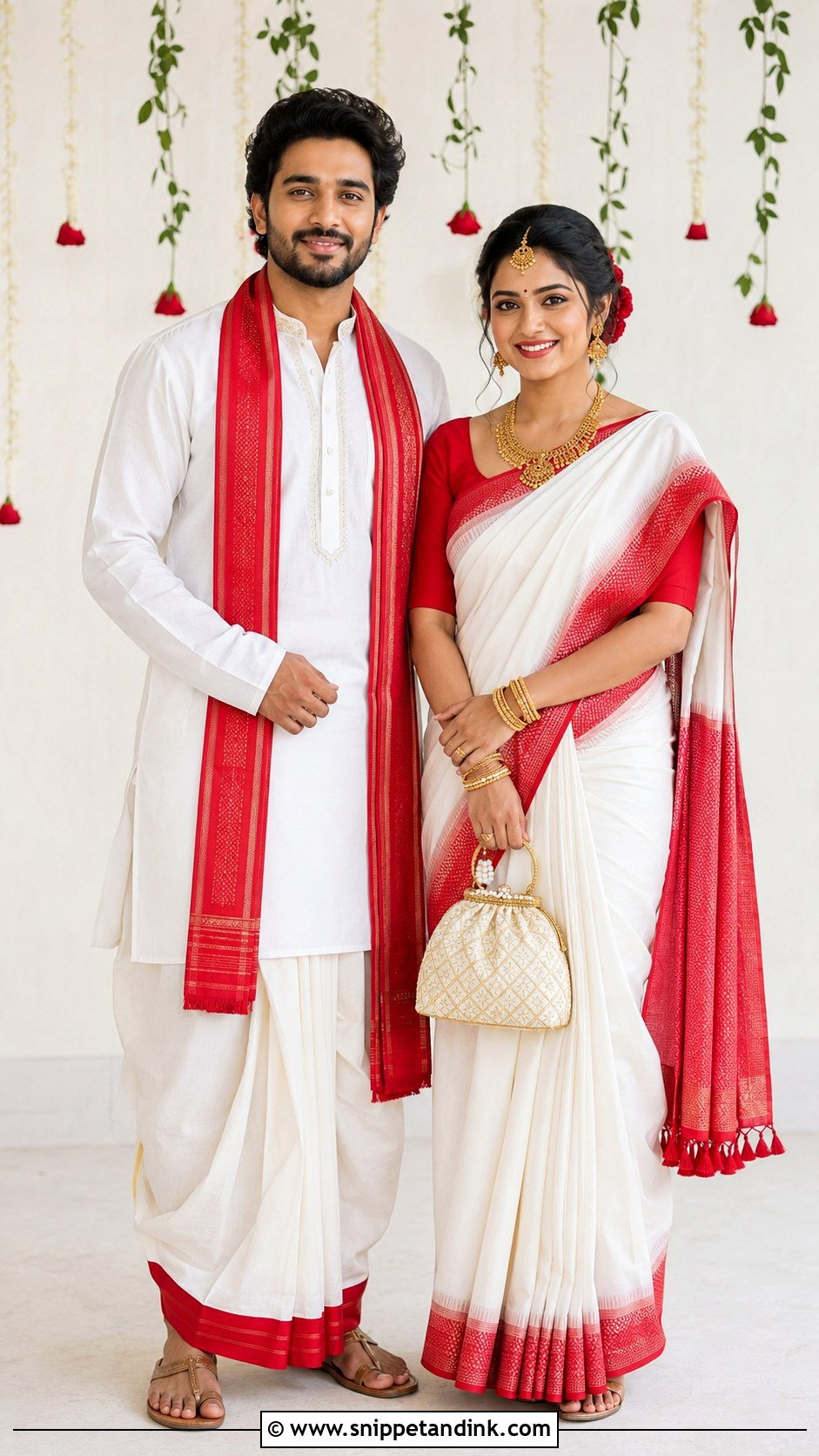
Red and white is the Bengali bridal language: a white or ivory saree with a bold red border, worn with a red blouse, gold jewelry, a small bag and comfortable sandals. He matches it in a white dhoti and kurta, with a red stole or embroidered waistcoat as the link. Crisp cotton for a relaxed day event, lustrous silk for the ceremony. With a palette this simple, the drape is everything. Have someone who ties a dhoti properly dress the groom, because a loose pleat slips during the rituals. Keep extra colours away.
19. Embroidered Gown And Tuxedo Desi Fusion Couple Outfit
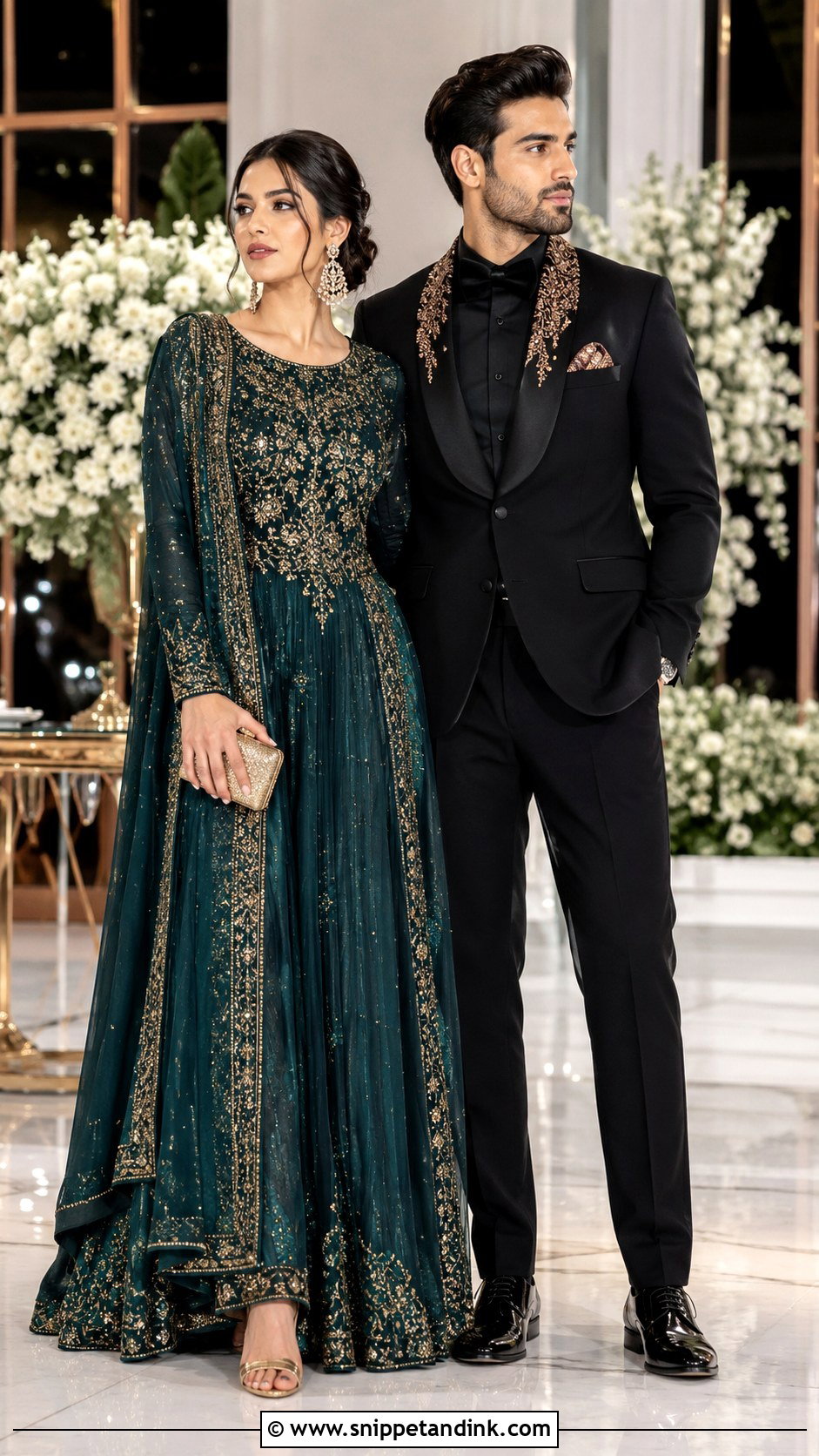
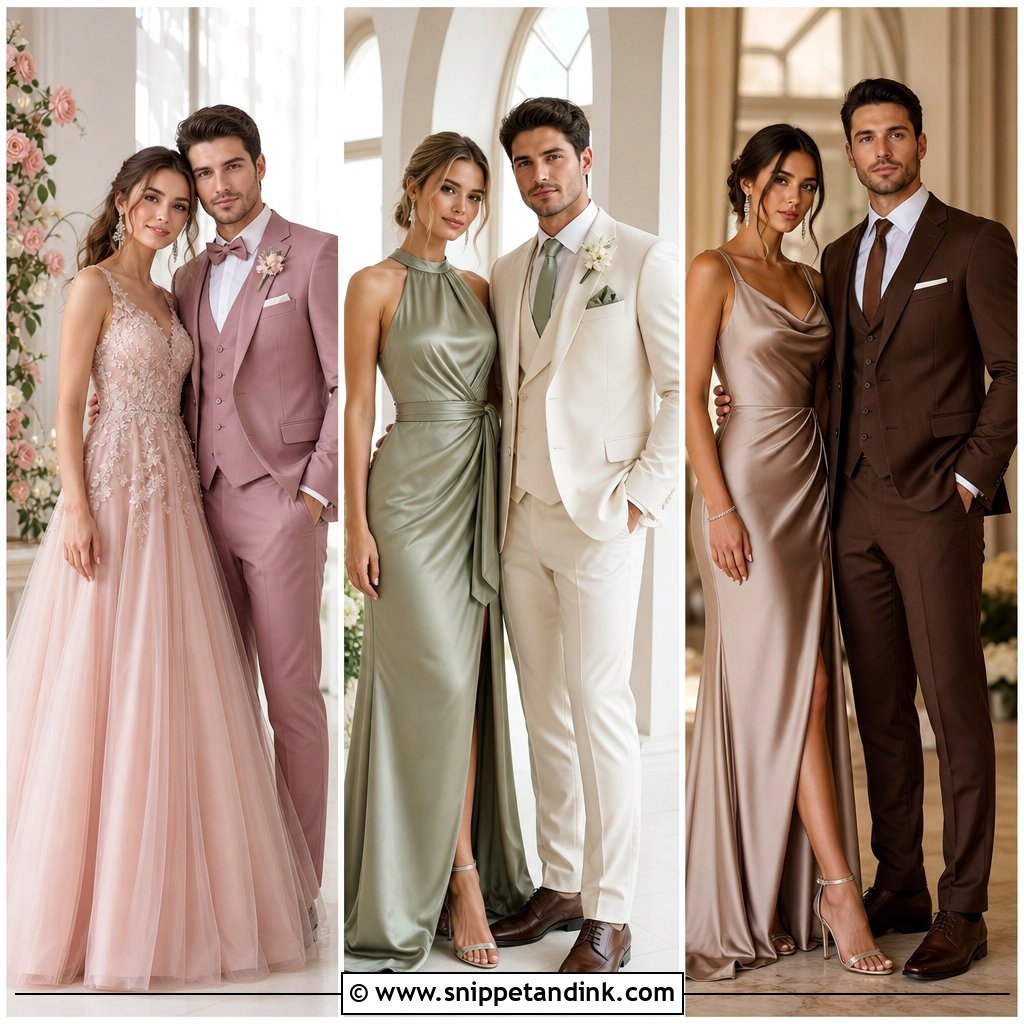
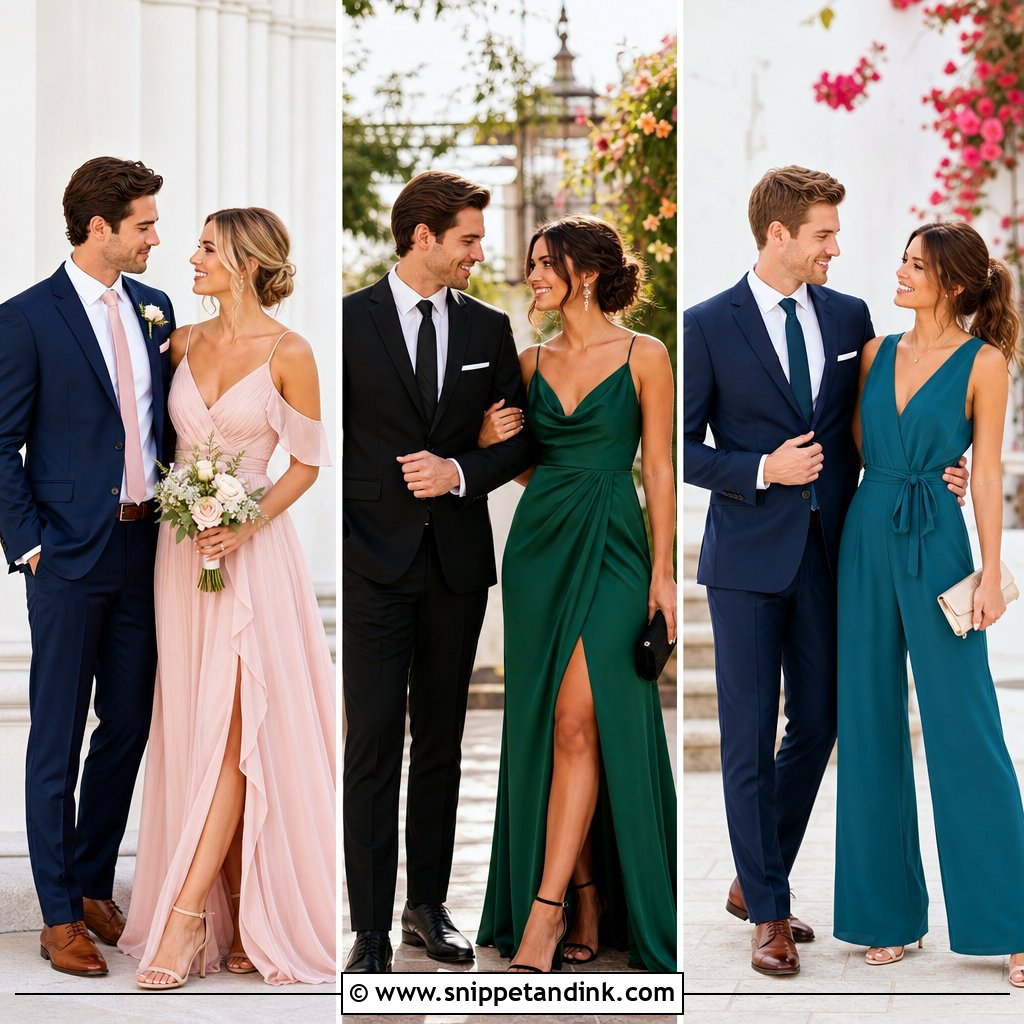
Fusion only looks deliberate when the formality matches. Her floor-length gown with zardozi-style embroidery, beadwork or a dupatta panel, metallic heels, statement earrings and a structured clutch. His black, navy or ivory tuxedo with an embroidered pocket square, a decorative collar or a subtle brocade jacket. Share one colour or textile detail and stop there. I’d say no to a heavily worked gown beside a casual lounge suit; it reads as two different events. Receptions, engagement parties and multicultural weddings are where this pairing makes sense.
20. Salwar Suit And Nehru Jacket Desi Couple Outfit
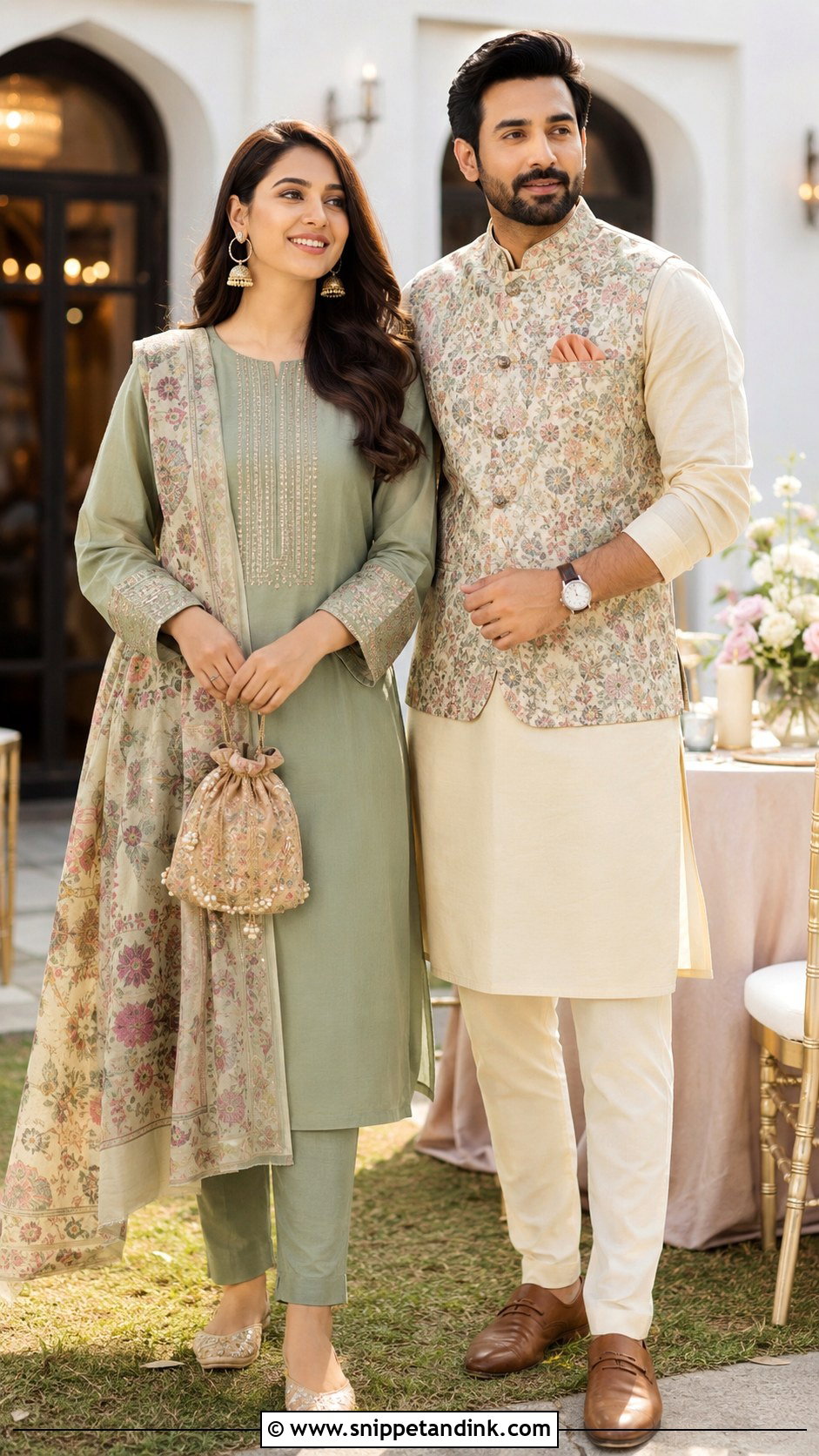
Not every function needs embroidery. For a relaxed lunch or a guest appearance, her straight-cut suit in sage, peach, blue or rust with a printed dupatta, juttis, jhumkas and a small crossbody potli is plenty. He wears ivory or a complementary kurta pajama with a printed Nehru jacket repeating her colours. Fit is what keeps casual clothes looking intentional, so have both pieces tailored, not just bought off the rack. Cotton silk, linen blends and light jacquard stay comfortable through a long day.
The Side-by-Side Trial Most Couples Skip
Couples nearly always try their outfits on separately. I’d ask for one session where both of you are fully dressed, jewelry and shoes included, in the same room. It reveals things that never show up alone.
What I look for in that mirror
- Height and volume: a full lehenga beside a slim sherwani can make the groom look narrow. A stole or a longer jacket often fixes the balance.
- Metals: put her jewelry next to his buttons and safa brooch. Rose gold, antique gold and yellow gold side by side look accidental.
- Sitting: sit on a low stool together. Dupattas slide, sherwanis ride up at the collar and stiff sarees crease badly in the lap.
- The phone flash test: take one photo with flash. Sequins and some synthetic zari reflect strongly and can wash out a face.
Break in the juttis during that same session. New leather juttis are stiff and tend to rub at the heel for the first few wears, and a baraat or a long reception is no place to discover it. A little padding or a few evenings of wear at home makes a real difference.
Coordinated, Never Carbon Copies
Coordinating a Desi couple is about connection, not duplication. Start from the event, the season and how formal it is, then link the two outfits through one or two things: a colour, an embroidery tone, a fabric or an accessory. Different silhouettes in complementary shades nearly always look more polished than an identical set. Put comfort ahead of drama for the long ceremonies. And stand together in both outfits, in daylight and in indoor light, before the day, because that ten-minute check catches most of the problems a photograph would show later.
You'll Like These Ideas:


Leave a Reply