
Dressing two people for one wedding is mostly about harmony, not matching. When I style a couple, I look for one thread that runs through both outfits: a repeated embroidery motif, two fabrics with the same surface finish, or a single color that shows up in a tie and again in a bouquet ribbon. The venue and season set the limits first. Linen relaxes by the coast, velvet belongs to a winter evening, and neither one rescues an outfit the person feels awkward in. The pairings below each start from a different setting, so read them for the reasoning as much as the clothes.
Lay Both Outfits Side by Side Before Anything Is Altered
Most couples shop separately, which is how a cream suit ends up next to a stark white gown. When I coordinate a couple, I ask for fabric cuttings from both outfits as early as each shop will release them, then compare them together by a window in daylight. Store lighting flatters everything; daylight shows the undertones.
The three checks I run on every pairing
- Undertone. Hold the two whites or two neutrals together. If one looks yellow and the other blue, change whichever piece is easier to replace, usually the shirt.
- Formality. A structured satin gown next to an unlined linen suit reads as two different weddings. Match the level of tailoring before you worry about color.
- Sheen. Pair matte with matte, or one shiny piece with one matte piece. Two different satins side by side rarely agree under flash.
Then picture the two of you seated. A wedding day includes a long table, a car ride and a first dance. A gown that pools and a jacket that bunches at the button will show more in those frames than in any standing portrait, so sit down together at least once during fittings.
1. Minimalist White Wedding Outfits
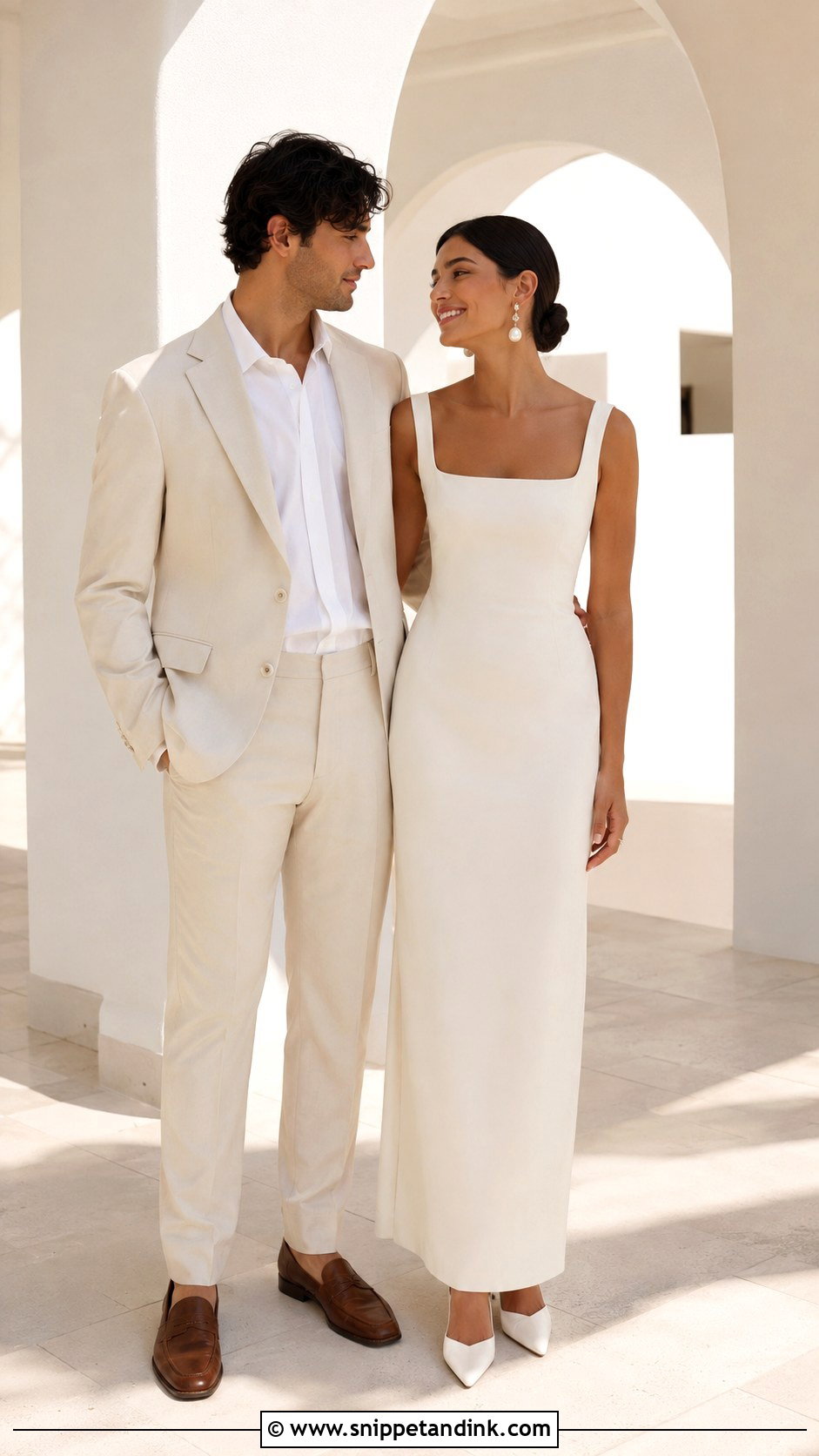
Minimal only works when the tailoring is close to perfect, because there’s no embellishment to distract from a pulled seam. Picture an ivory crepe column with a square neckline, a low bun and pearl studs, beside a cream suit with a white shirt and tonal tie. The trap I watch for is whites that clash: a blue-white shirt next to an ivory gown makes the gown look yellow in photos. I hold the shirt fabric against the dress in daylight before anything is bought. Galleries and rooftops suit this pairing because the backgrounds stay as quiet as the clothes.
2. Black Tie Wedding Outfits
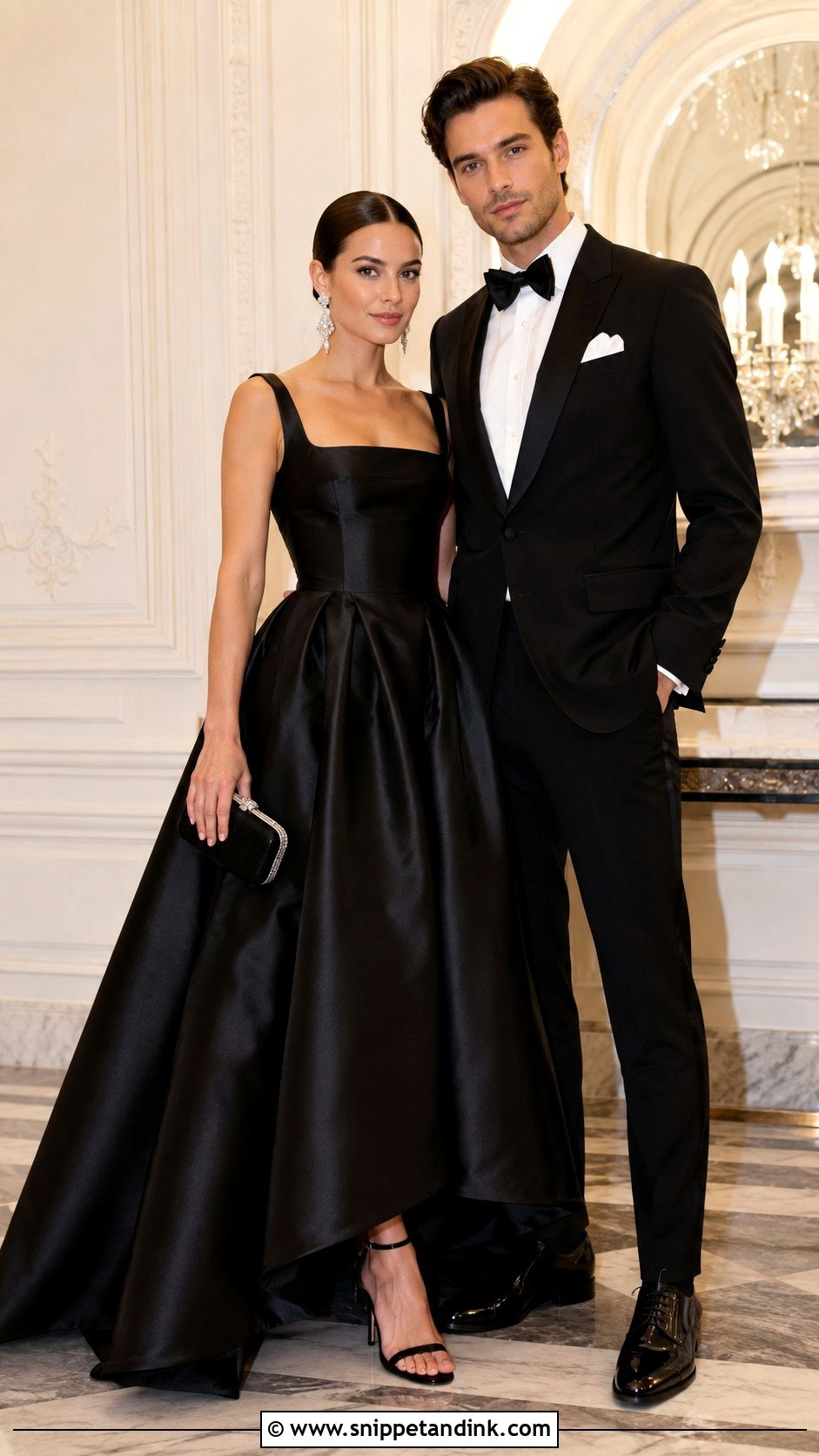
A ballroom asks both partners to dress at the same level, and black tie makes that easy because the rules are already written. A structured satin ball gown with a clean neckline sits naturally beside a classic black tuxedo, white shirt, black bow tie and patent shoes. Satin is unforgiving of a loose waist, so I schedule the bodice fitting with the actual shoes and undergarments. A black velvet jacket adds texture without breaking the code. If both partners prefer tailoring, coordinated tuxedos with different lapel shapes, say a peak and a shawl, keep them distinct when they stand side by side.
3. Garden Wedding Outfits
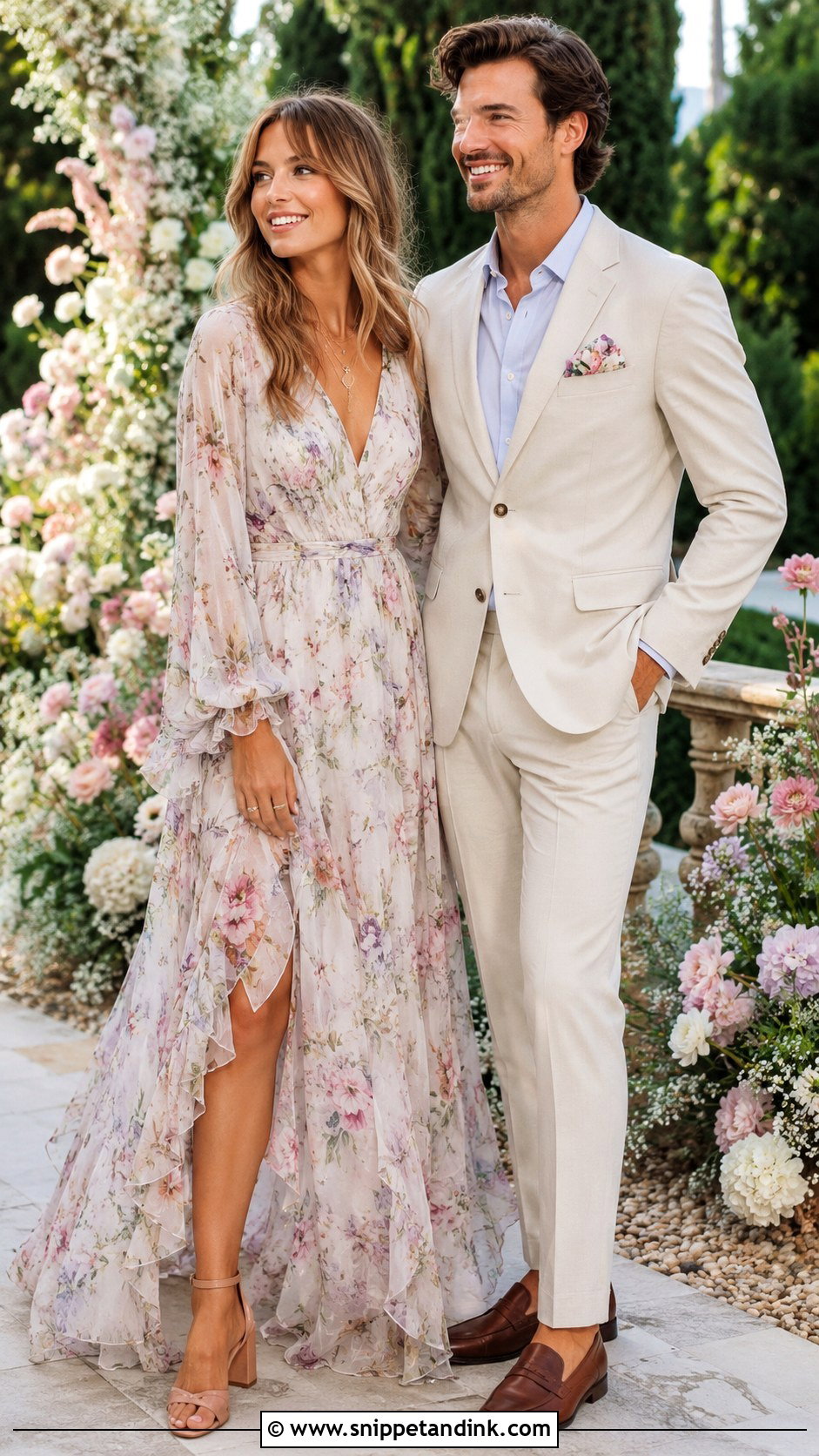
Grass is the first thing I plan around at a garden wedding, before color. A floral chiffon gown with flutter sleeves moves well outdoors, but stilettos sink, so block heels go on the list from day one. For the other partner, a light beige suit with a pale blue or blush shirt and brown loafers works, as long as the shirt color is lifted from one small flower in the print rather than the dominant one. Chiffon also snags on rose bushes and lavender. If portraits are planned in the borders, ask the seamstress for a clean, secure hem.
4. Boho Wedding Outfits
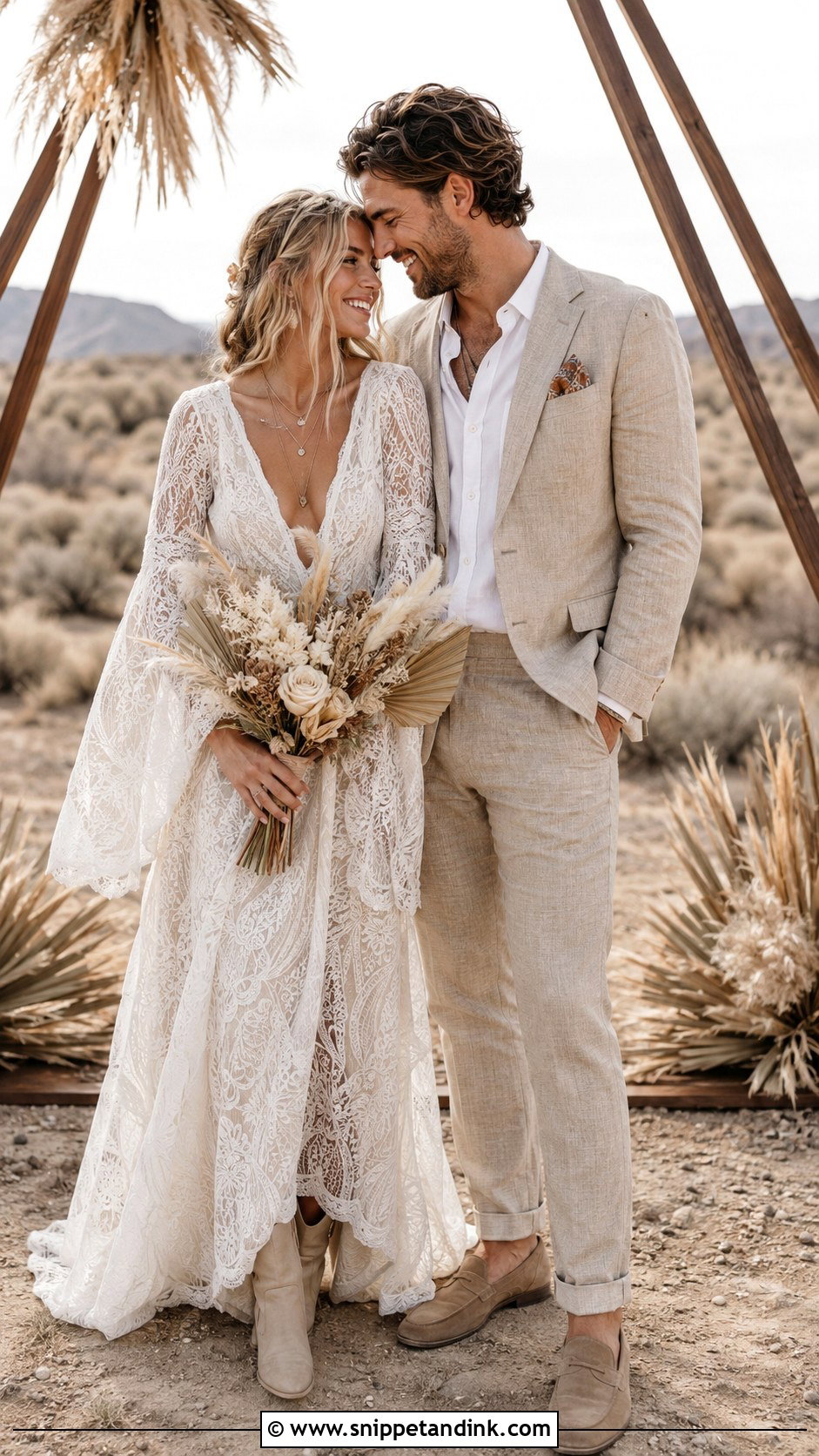
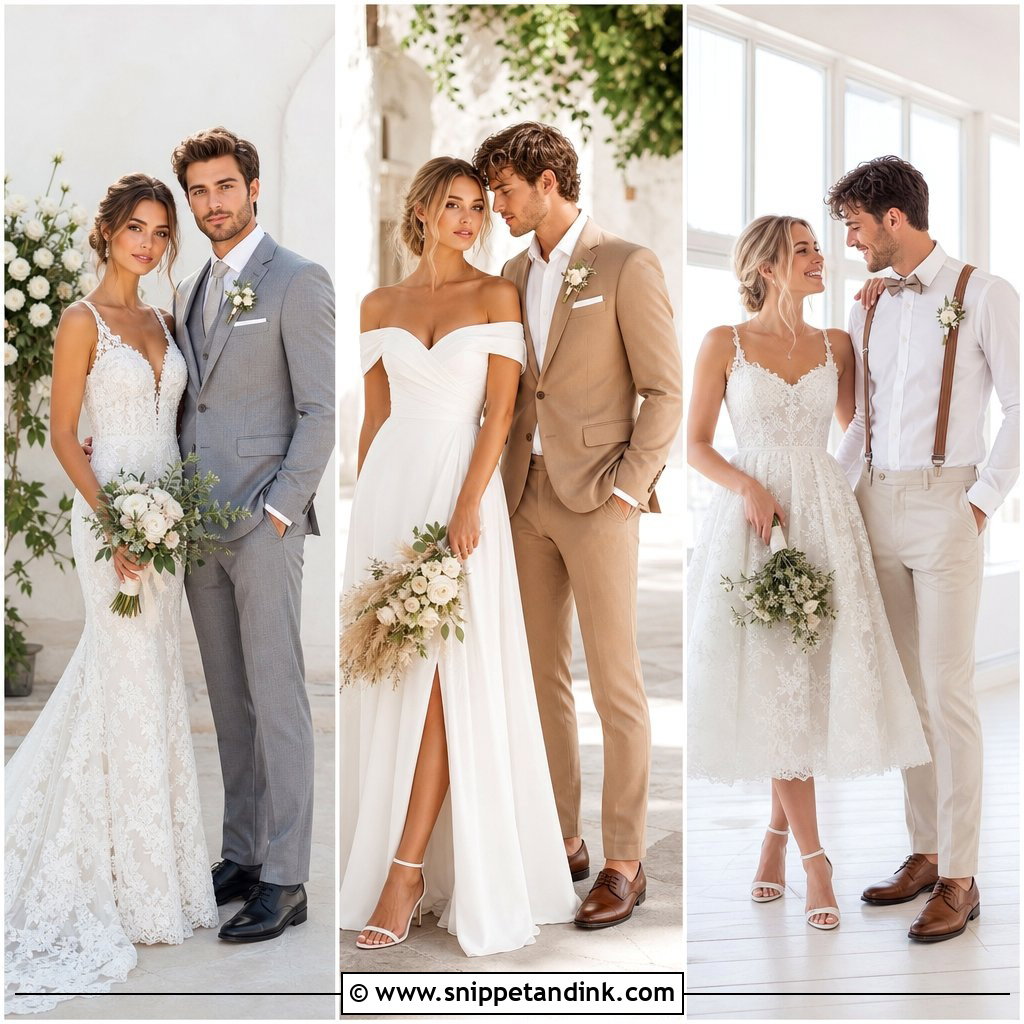
Boho goes wrong when it tips into costume, so I keep the textures and edit the props. A lace dress with bell sleeves and ankle boots pairs with a tan linen suit, an open-collar white shirt and suede loafers. Sand, camel and muted olive tie lace, linen and suede together without anyone matching. One headpiece is plenty, either a flower crown or a wide-brim hat. Linen will crease within the first hour of sitting, and I tell couples to accept that as part of the look rather than steam it between every photo.
5. Beach Wedding Outfits
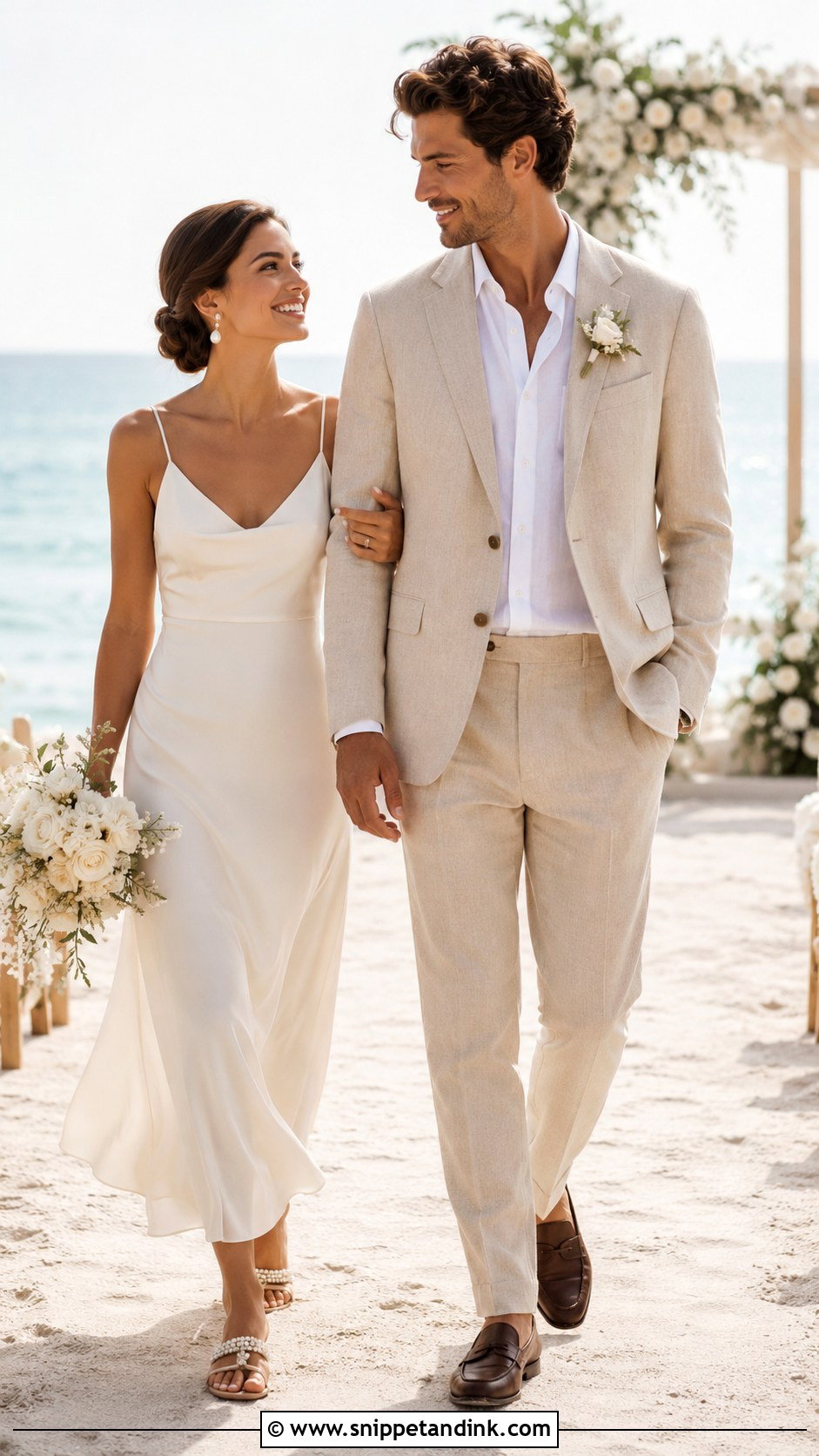
Sand dictates the hemline. I’d keep a beach gown at floor length or an inch above it, because a train fills with sand and drags wet salt up the fabric. An ivory slip dress, chiffon gown or wide-leg jumpsuit with flat sandals sits next to a pale blue or sand linen suit worn with no tie. Wind is the other problem. A lightweight satin slip clings in a sea breeze and shows every line underneath, so check undergarments outdoors at a fitting, not in the shop.
6. Rustic Wedding Outfits
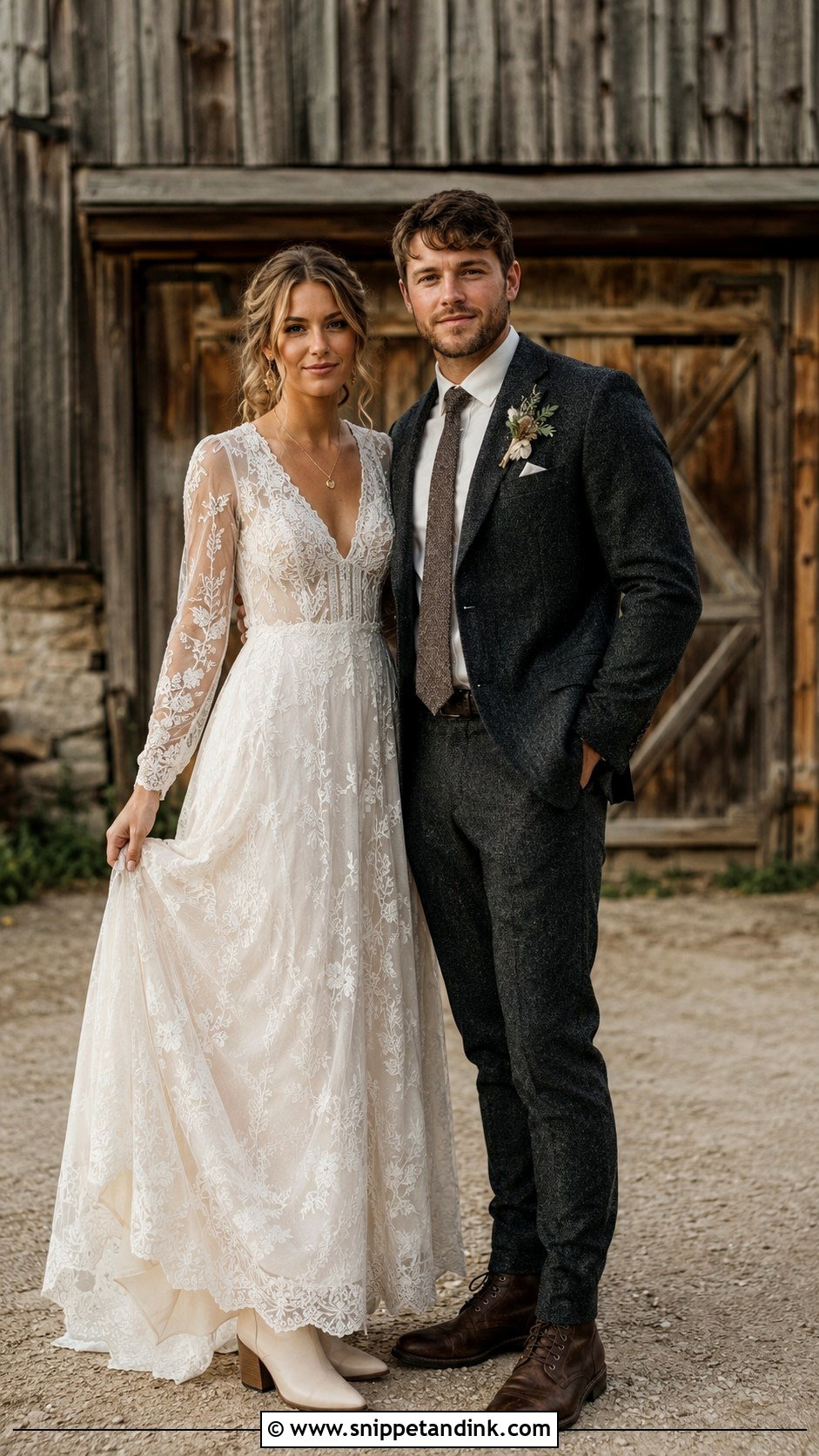
Rustic outfits need structure under the warm fabrics or they start to look like everyday clothes. An embroidered lace A-line with a modest train and block-heel boots works next to a brown or charcoal tweed suit, cream shirt and dark leather boots. Tweed is warm, which is welcome in October and miserable in a July barn with no air conditioning, so I check the venue’s summer temperatures before suggesting it. Keep to one or two rustic textures; a burlap clutch on top of a tweed suit is one too many.
7. Vintage Wedding Outfits
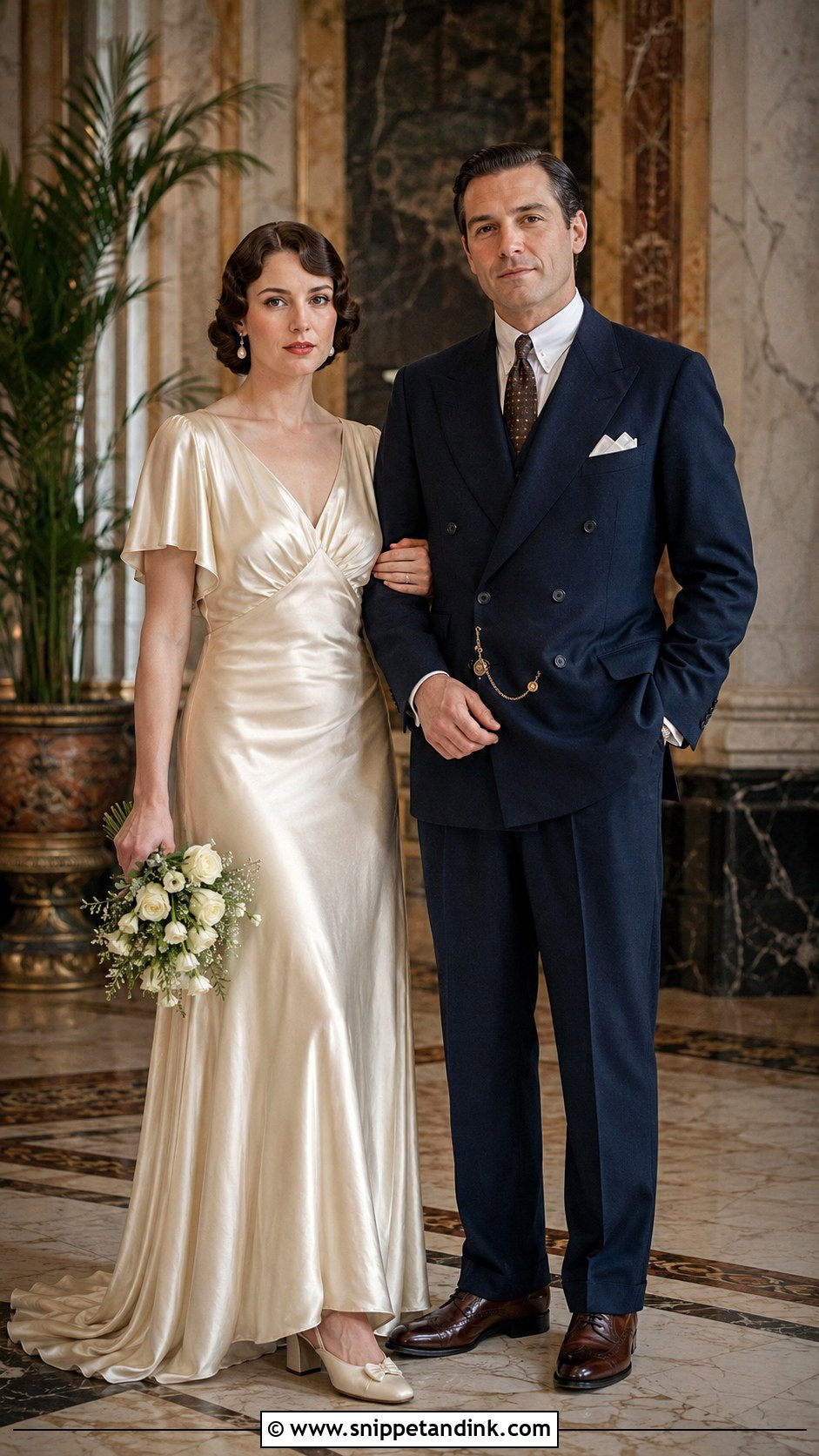
Pick one decade and stay there. A 1930s pairing means a bias-cut satin gown with cap sleeves and finger waves, alongside a double-breasted suit in navy or brown with brogues and a pocket watch. A 1960s version swaps in a short structured dress and a slim suit with a narrow tie. Bias-cut satin is the hardest dress here to alter, because it stretches along the diagonal and shows every seam allowance, so I’d only take on an original vintage piece with a seamstress who has handled bias work before. Colors can differ freely. The silhouettes are what keep the couple in the same era.
8. Old Money Wedding Outfits
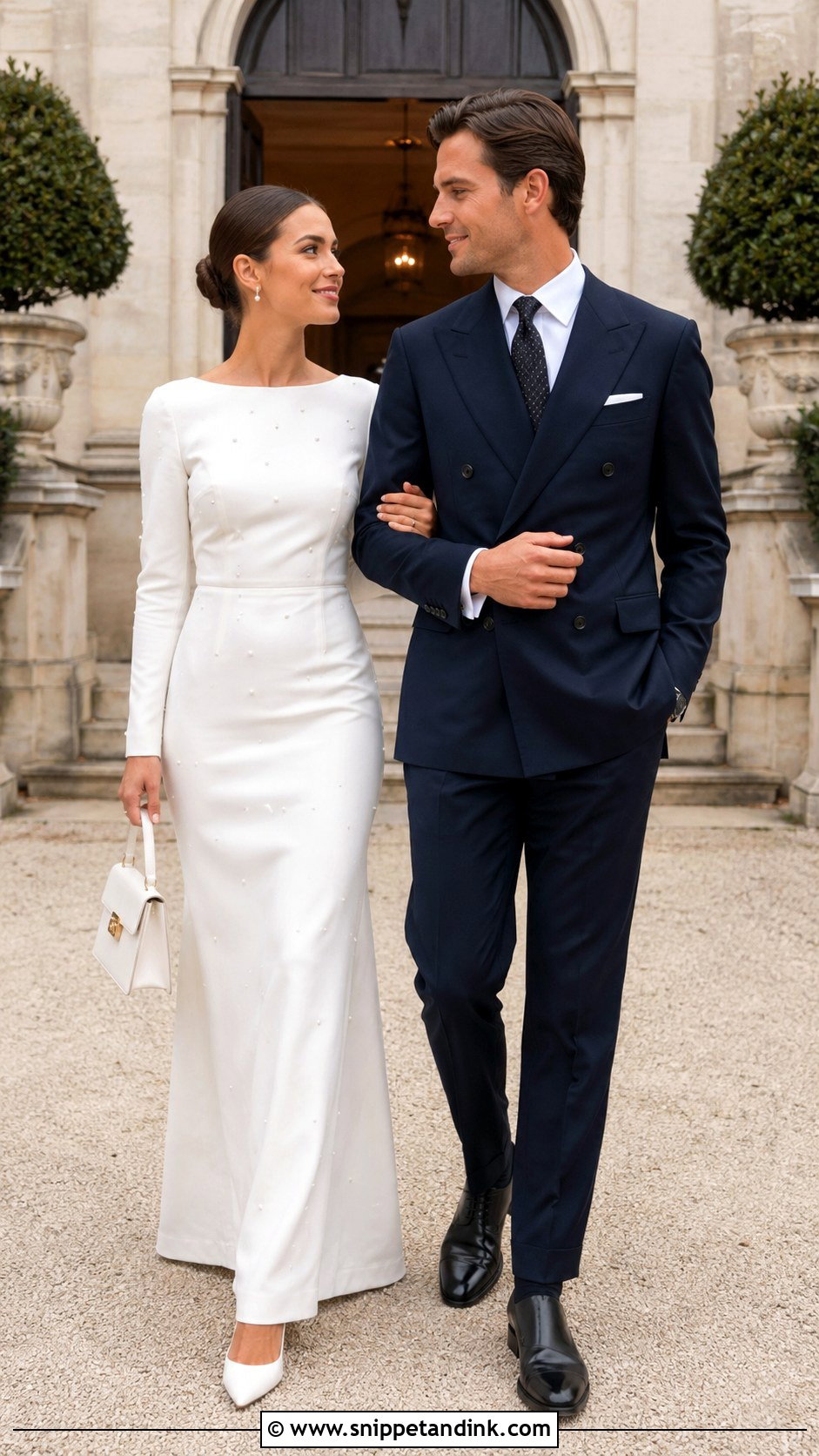
Nothing in an old money wedding aesthetic should show a logo, so the impact has to come from cut and cloth. Silk mikado holds a bateau neckline and a fitted waist crisply, which is why I reach for it here, with pearl studs and a structured top-handle bag. The partner wears a navy double-breasted suit or black tuxedo with Oxfords and a plain watch. The one thing I check closely is jacket shoulders. A tailor can take in a waist easily, but a shoulder that’s too wide undoes the quiet polish this look depends on.
9. Modern Monochrome Wedding Outfits
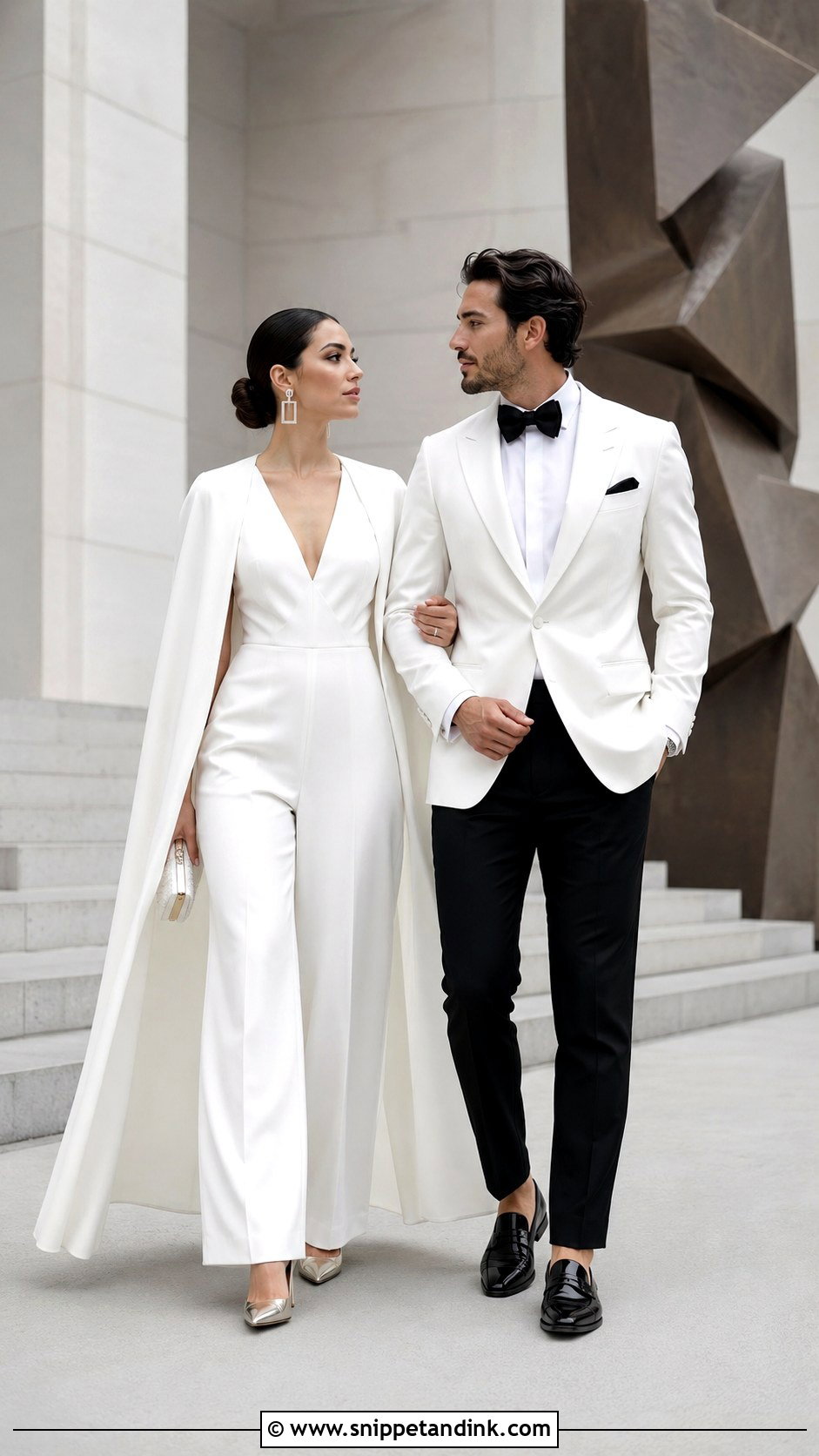
Monochrome stays interesting only through texture. A sculptural white jumpsuit with a cape and metallic pumps can stand beside a white dinner jacket with black trousers and a bow tie, or both partners can go fully black with different shirt shapes. I mix satin, crepe and wool so the camera can separate the pieces. Two matte blacks side by side flatten into one dark shape in evening photos. Museums and concrete venues give this pairing the clean backdrop it needs.
10. Romantic Pastel Wedding Outfits
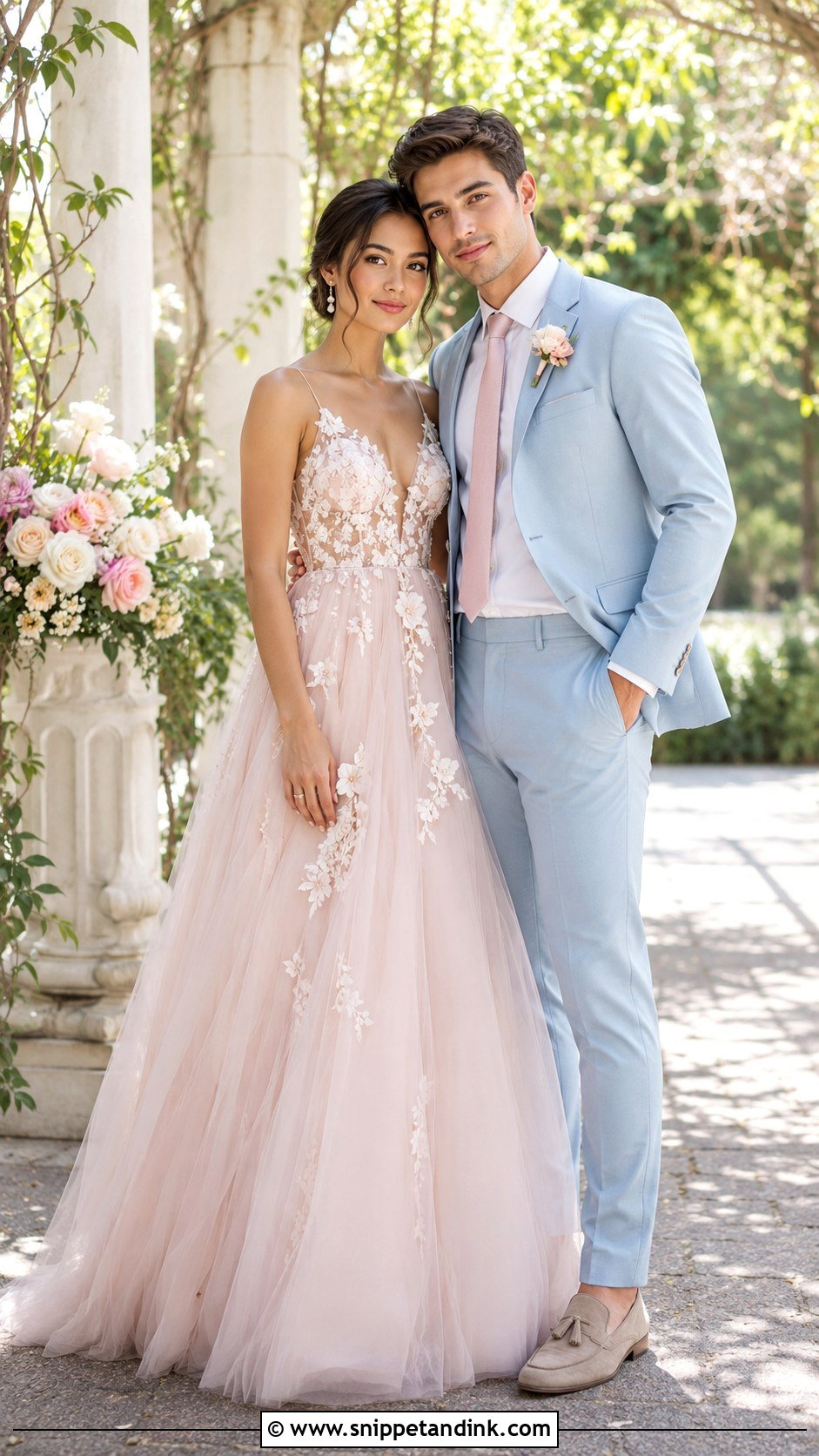
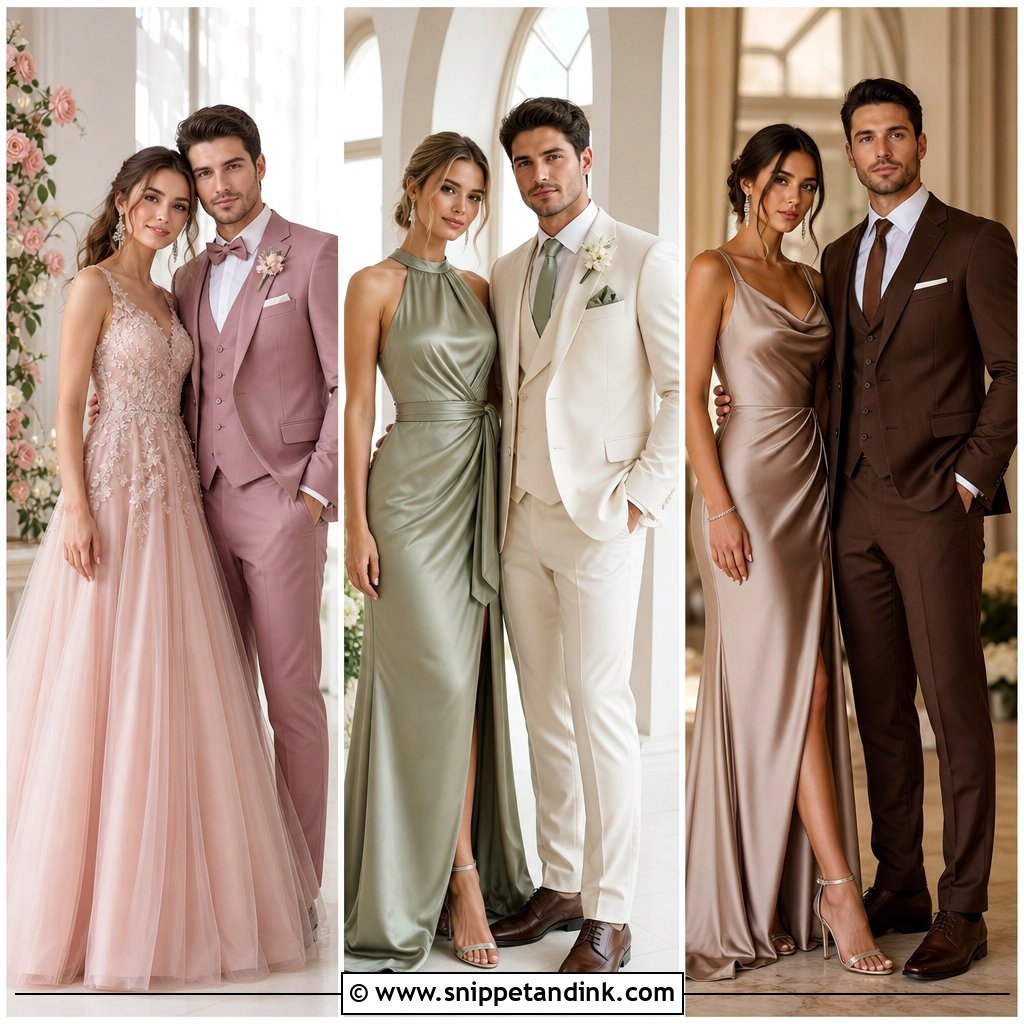
I limit pastels to two shades plus one neutral, because blush, lavender, peach and powder blue all together read as a nursery. A pastel tulle gown with floral appliqués pairs with a light gray or pale blue suit, ivory shirt and blush tie. Two gowns in neighboring pastels also coordinate well. One honest caution: pale tulle under hard midday sun can wash out toward white in pictures, so if the color matters to you, ask your photographer about shooting in open shade.
11. Sage Green Wedding Outfits
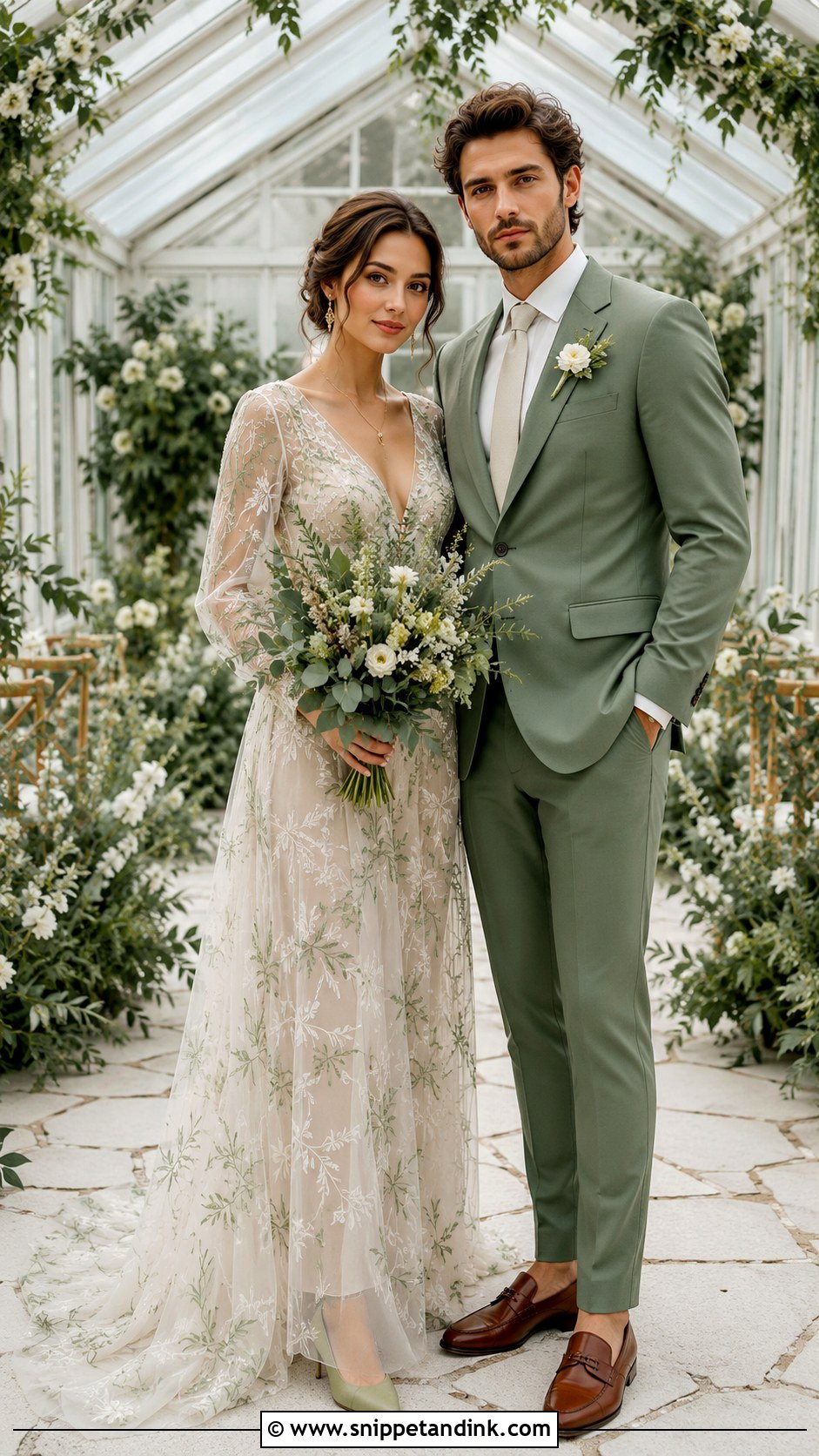
Sage is forgiving, which is why I suggest it to couples who can’t agree on a color. An ivory gown with botanical embroidery and sage shoes works beside a sage suit with a cream shirt. If a full green suit feels like too much, keep the suit beige and bring sage in through a vest or tie. Bright white makes sage look gray and dull, so warm ivory is the better partner, and matte fabrics hold the green truer than shiny satin does.
12. Champagne Wedding Outfits
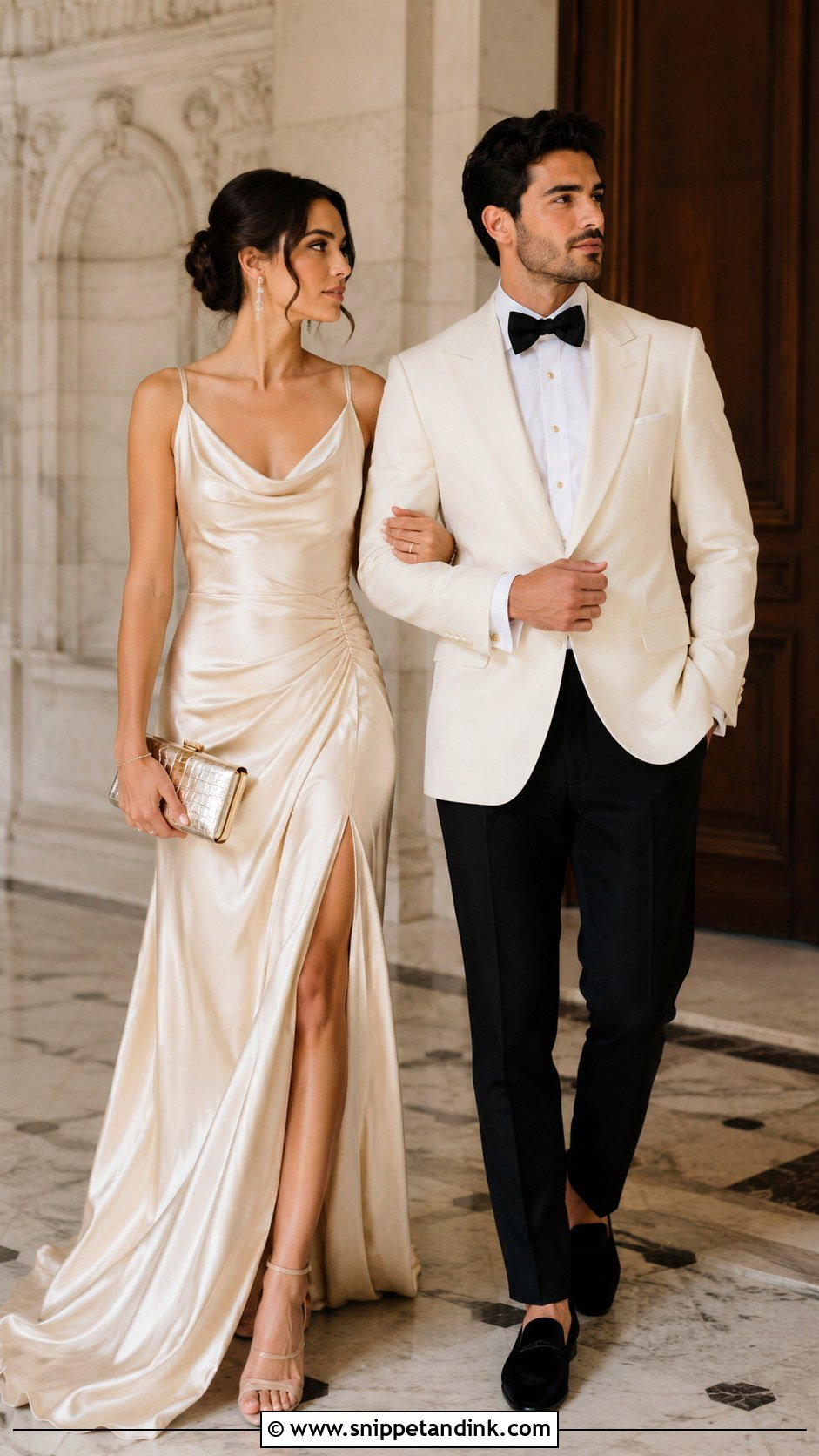
Champagne’s risk is that everything turns into one beige blur. A champagne satin gown or tailored pantsuit with nude heels and crystal earrings sits next to a cream tuxedo jacket with black trousers, or a full taupe suit. Those black trousers do real work; they give the eye a fixed point. I also check champagne fabric against the wearer’s skin before ordering, because some shades disappear on fair skin and read as nude in photographs. Satin, velvet and crisp wool reflect candlelight differently, and that variation keeps the pair from looking flat.
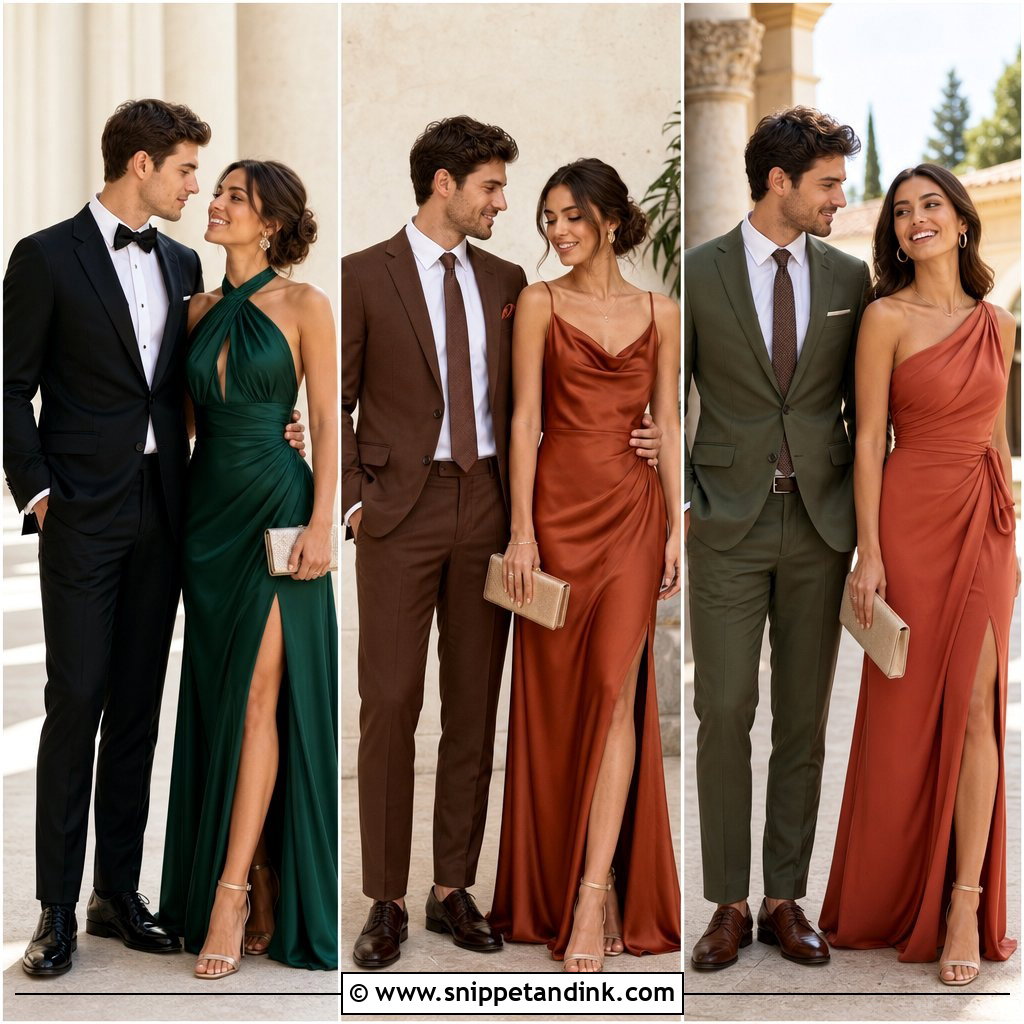
13. Terracotta Wedding Outfits
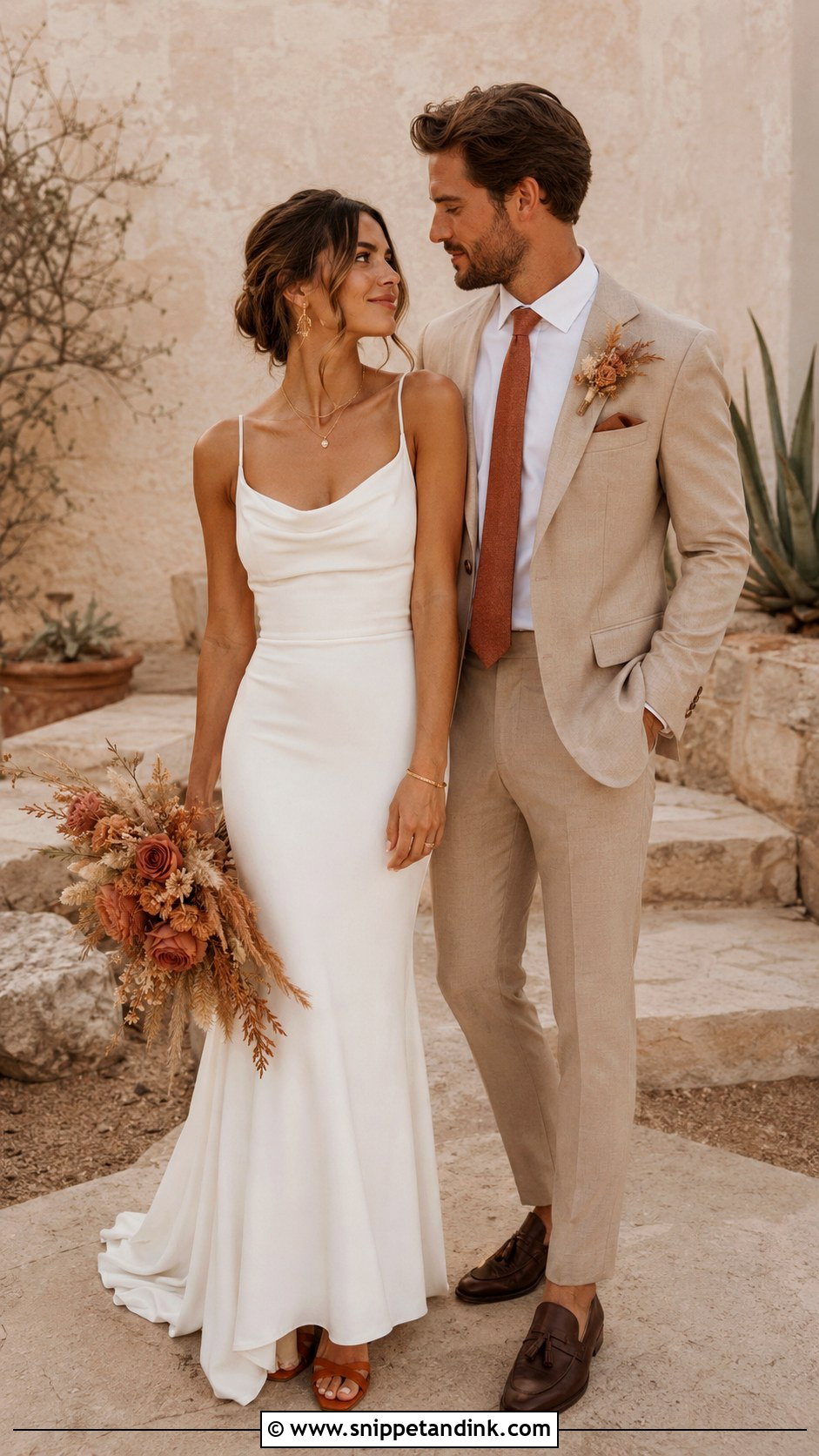
Terracotta looks expensive when it’s muted and cheap when it drifts toward bright orange. An ivory crepe gown with terracotta heels and gold jewelry pairs with a tobacco or warm beige suit and a terracotta tie. For more color, a rust suit next to a simple ivory dress works well. Rust dyes take very differently on linen and silk, so I order swatches of the tie and the shoes together before committing. Brick courtyards, vineyards and autumn fields suit the palette best.
14. Burgundy Wedding Outfits
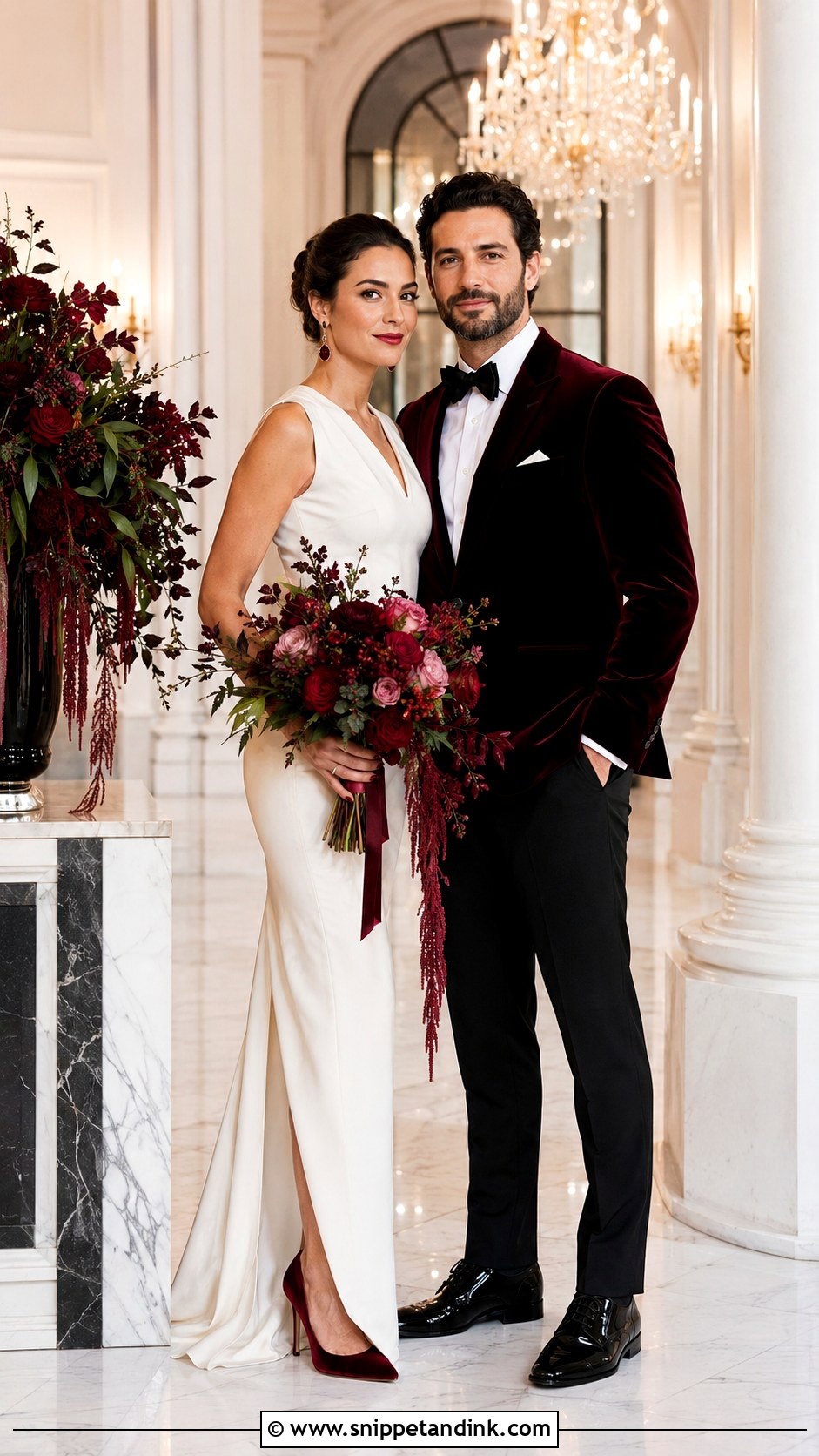
Burgundy is a color I’d keep to the cooler months; in summer light it can feel heavy. An ivory gown with burgundy velvet heels and garnet jewelry pairs with a burgundy velvet dinner jacket, black trousers and a bow tie. Another route is a burgundy gown beside a black tuxedo with a matching pocket square. Velvet crushes where it’s sat on and those marks photograph as darker patches, so I remind the partner in the jacket to unbutton and lift it before sitting at dinner. Two or three dark red elements are enough.
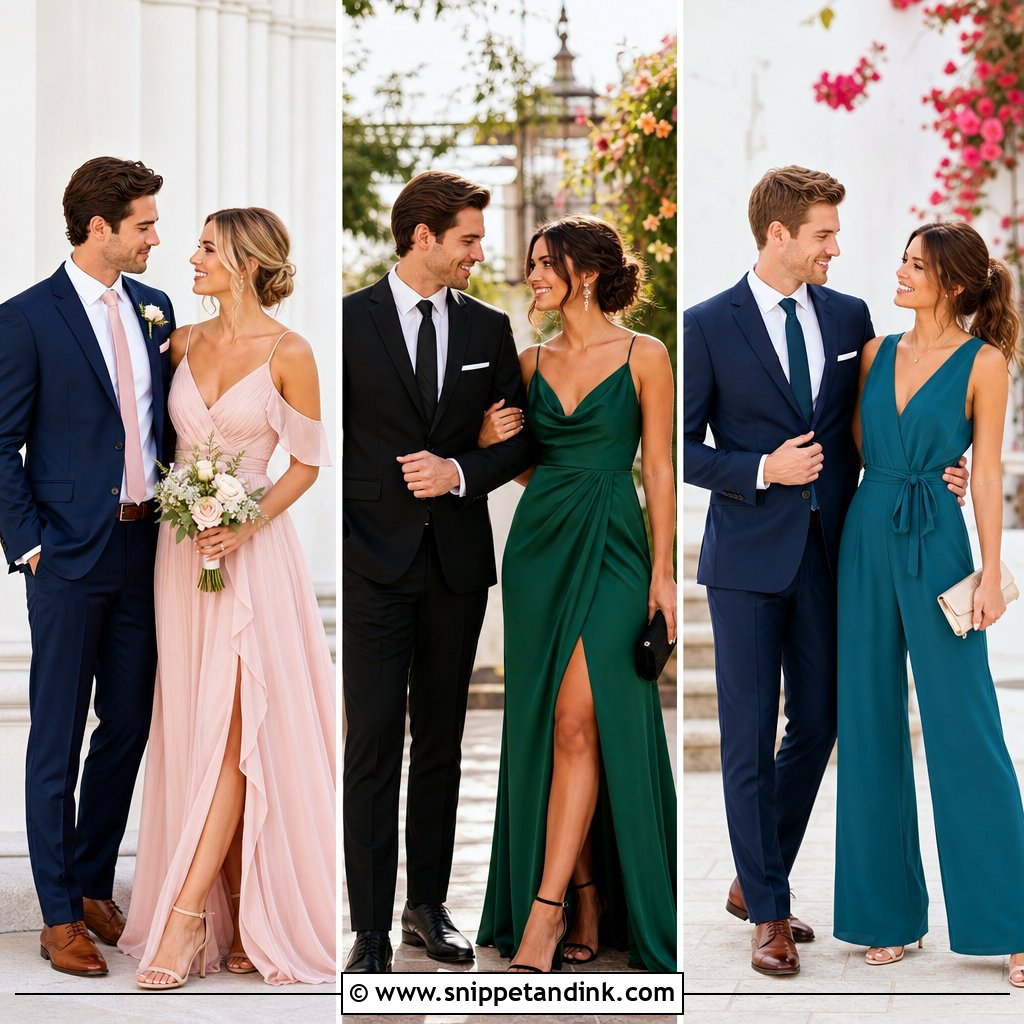
15. Blue Wedding Outfits
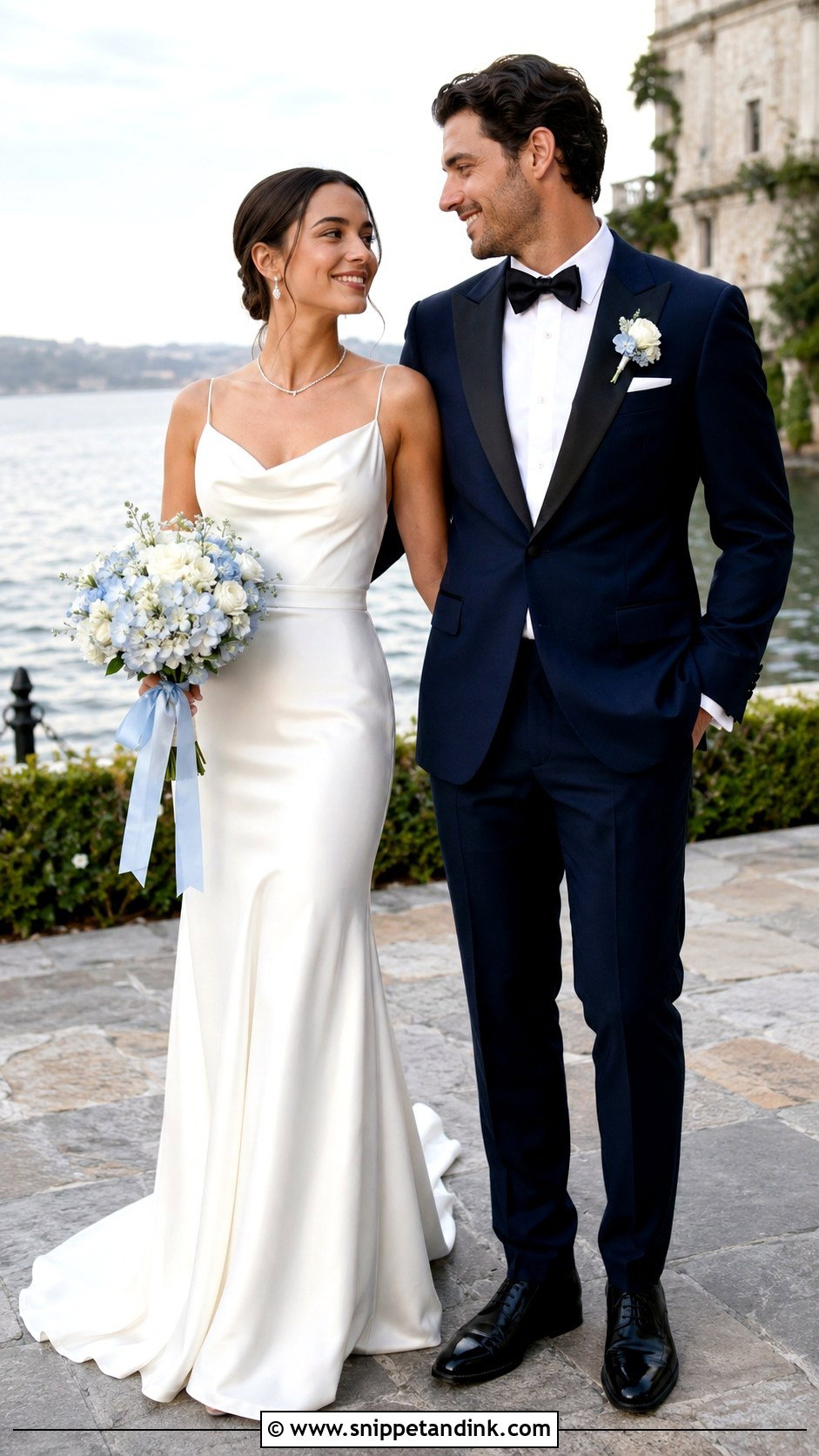
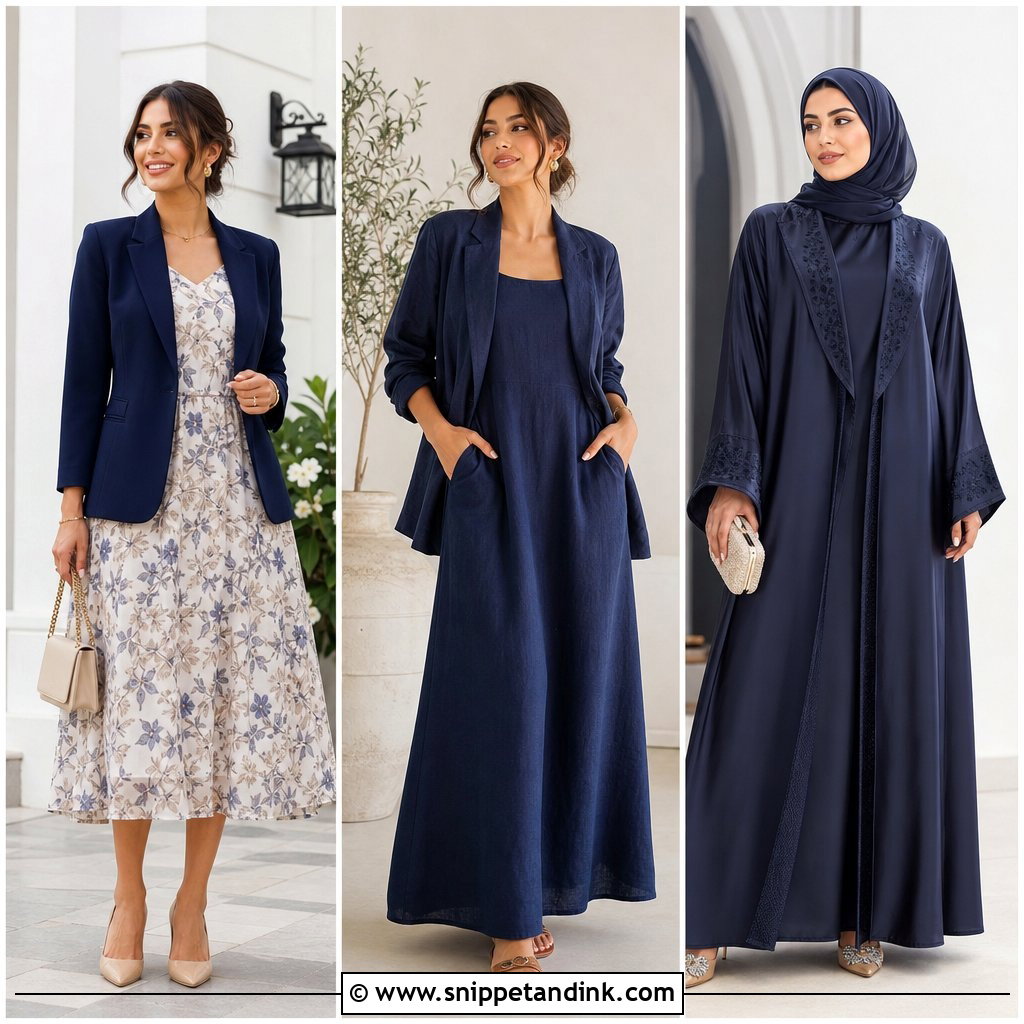
Blue covers the widest range of formality in this list. For daytime, a simple ivory dress beside a soft blue suit with tan loafers; for evening, a lace or satin gown with a midnight-blue tuxedo and black lapels. The detail I check most is undertone. Navy and dusty blue sit together well, but a warm, teal-leaning blue next to a cool gray-blue looks like a mistake, so I compare them under the same light. Silver jewelry or a pale blue bouquet ribbon ties the outfits together quietly.
16. Floral Wedding Outfits
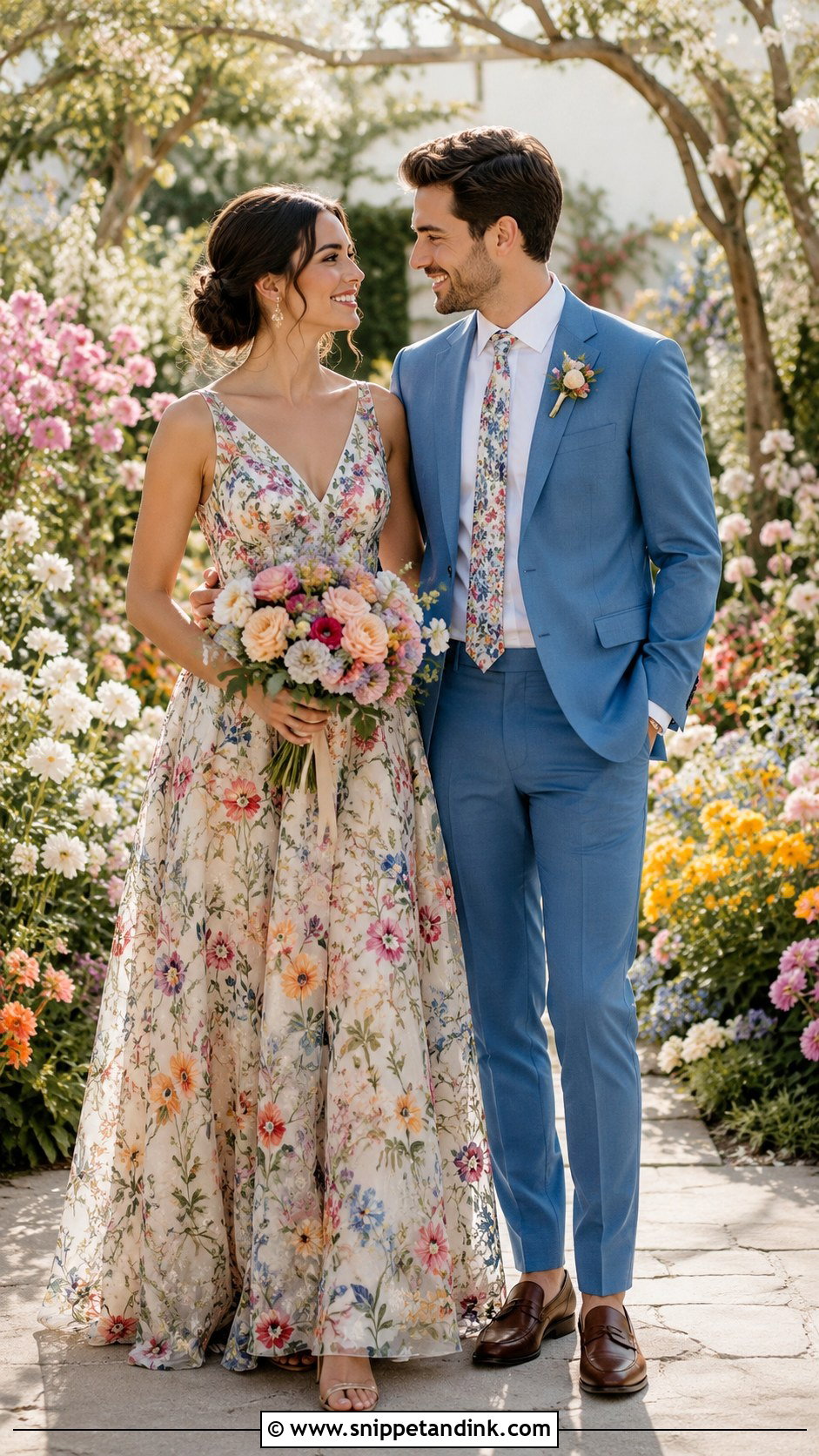
One print per couple. A full-length embroidered floral gown carries the pattern, and the partner wears a solid suit in one shade pulled from the embroidery, with a floral tie or pocket square as the only echo. Two brides can split it the same way: one floral gown, one solid dress with a floral veil or appliquéd shoes. When a tailor is matching a suit to embroidery, I bring the actual thread or a fabric cutting rather than a phone photo, since screens shift color badly.
17. City Hall Wedding Outfits
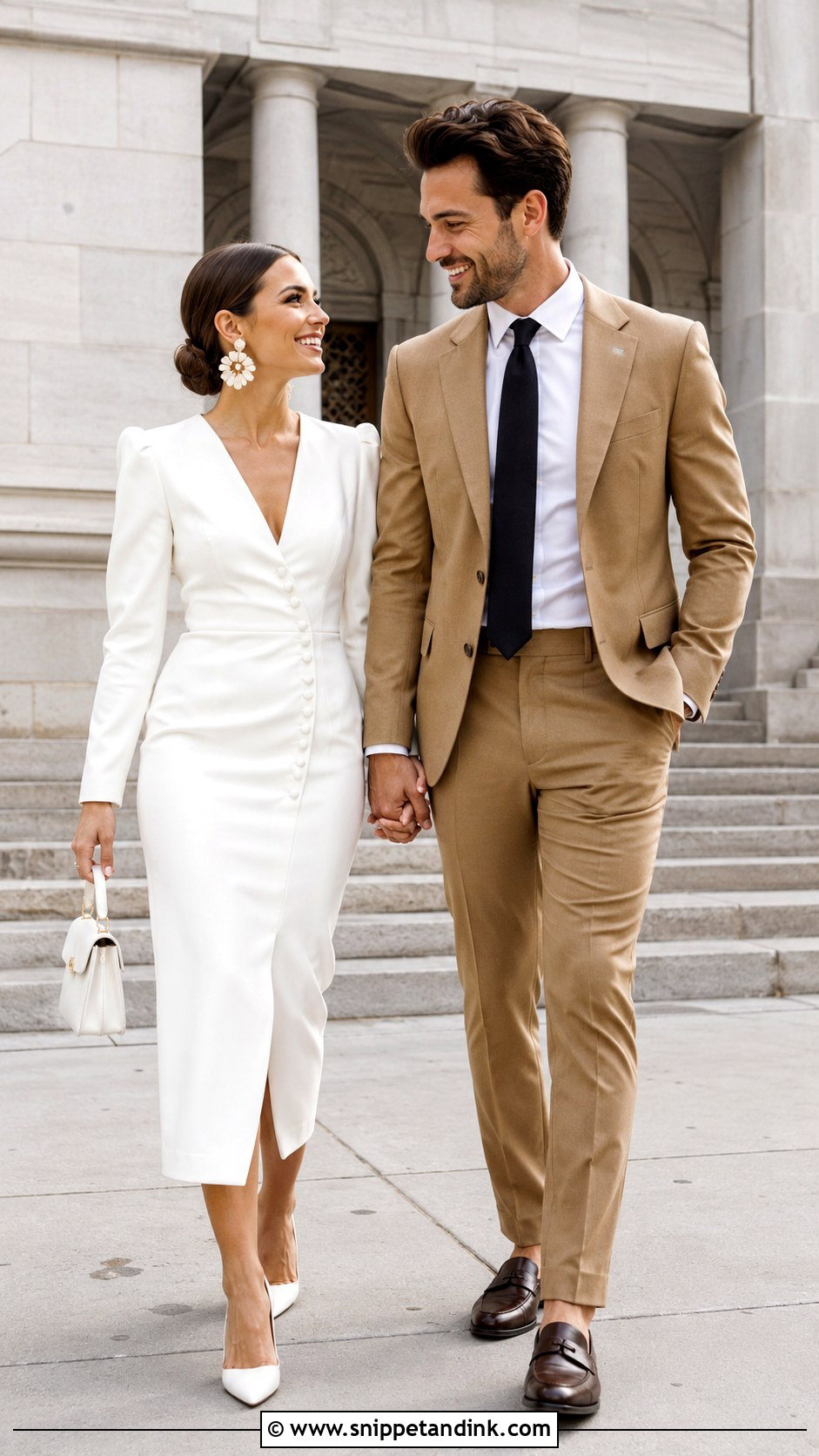
City hall days involve more walking, waiting and taxis than people expect. A tailored white midi dress, pantsuit or jumpsuit with pointed pumps pairs with a navy, charcoal or camel suit and leather loafers; two contrasting neutral suits work just as well. I’d choose crepe or a wool blend over linen here, because creases from a car seat show clearly in a courthouse’s flat light. A short veil or silk scarf adds a sense of ceremony without catching in revolving doors.
18. Winter Wedding Outfits
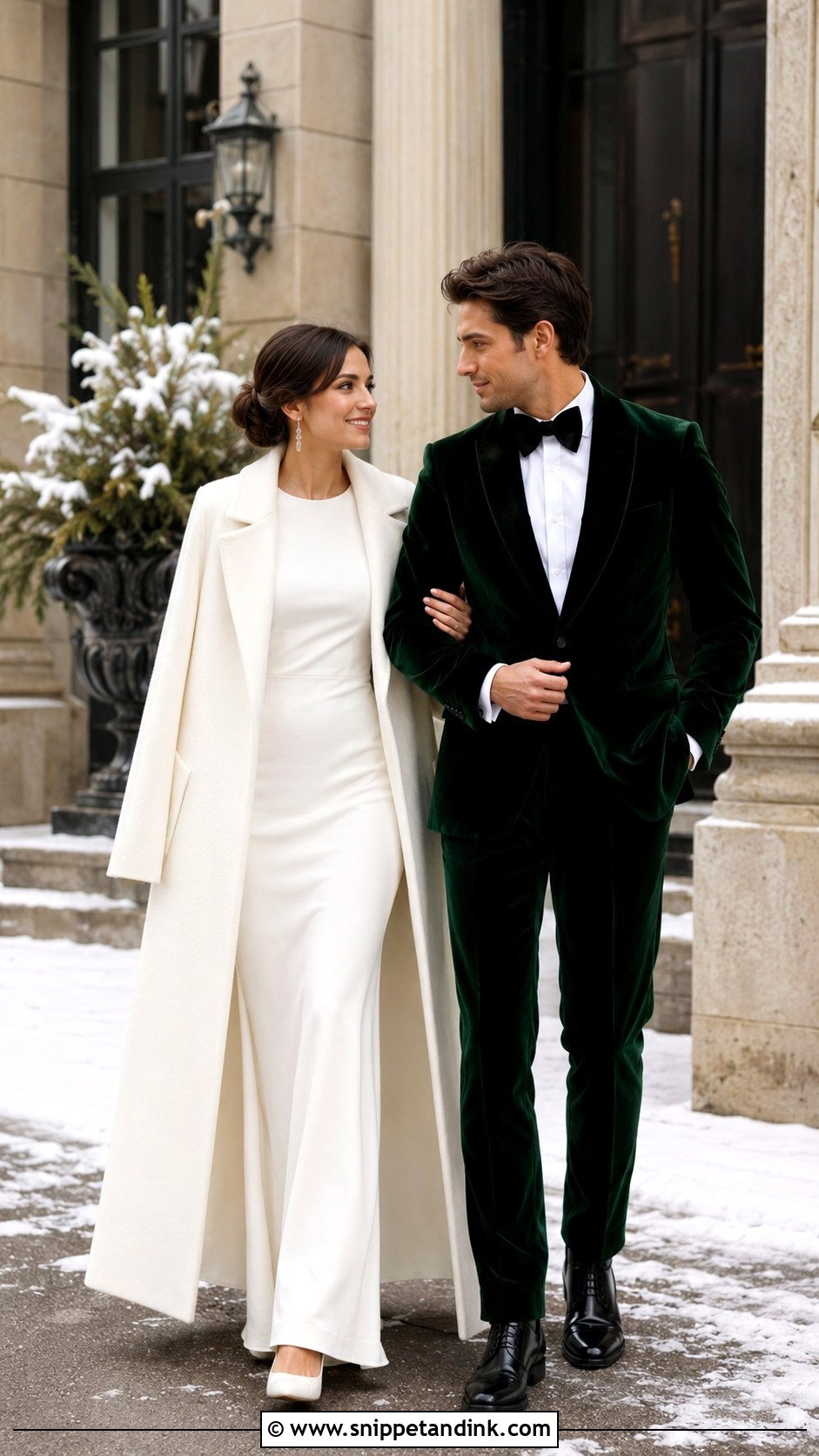
In winter I treat the coat as part of the outfit, because it’ll appear in half the outdoor photos. A long-sleeved satin or crepe gown with closed-toe heels pairs with a tailored wool coat or faux fur, while the partner wears a black tuxedo or deep green velvet suit with polished boots. Velvet on both the shoes and the jacket creates harmony without matching colors. Check that the coat sleeves cover the gown’s sleeves; a strip of bare wrist looks unfinished in close-ups.
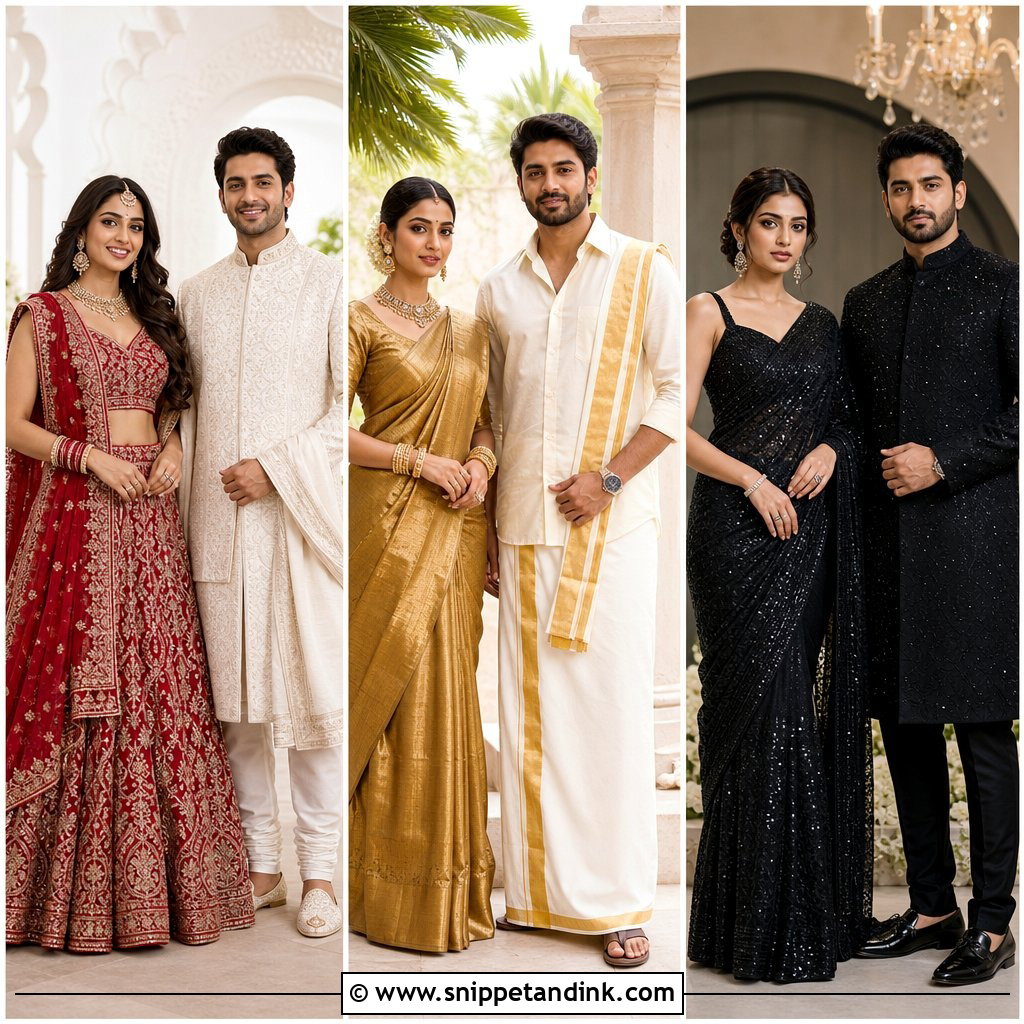
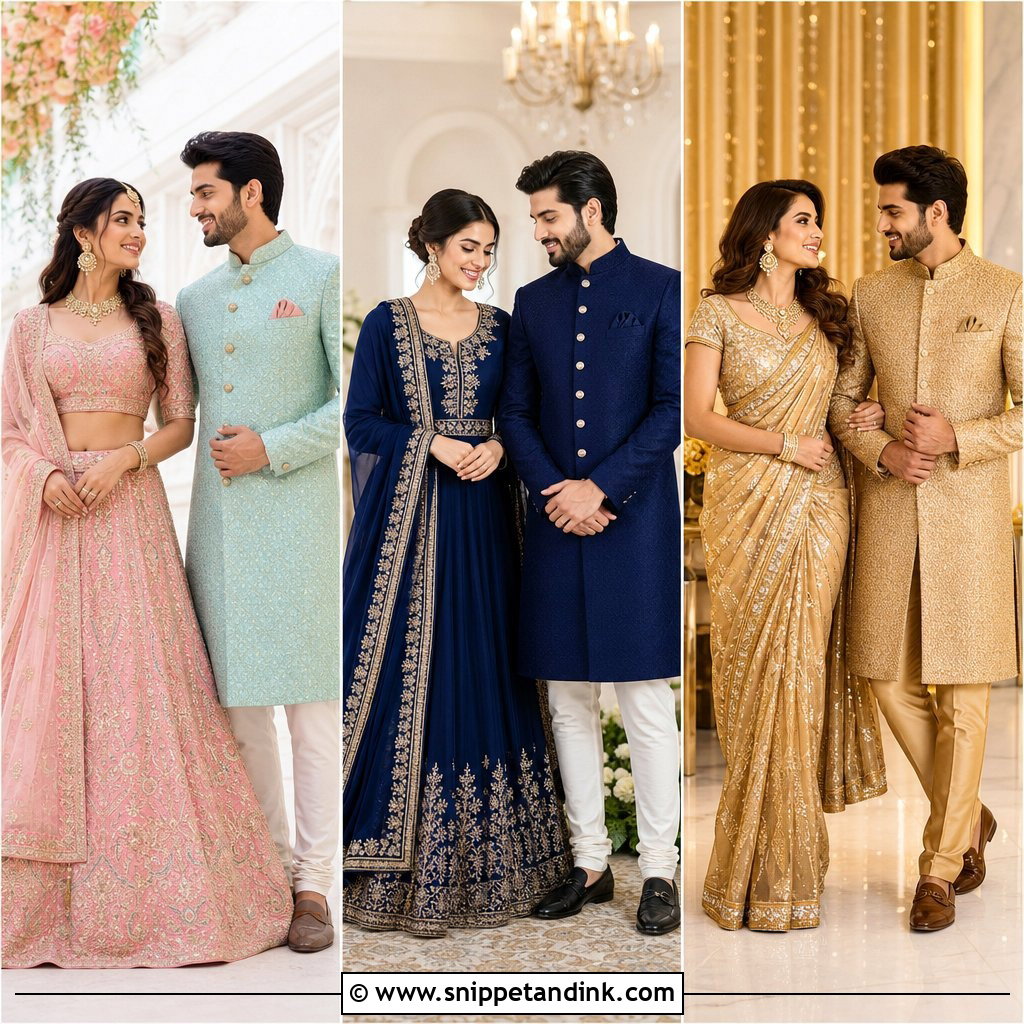
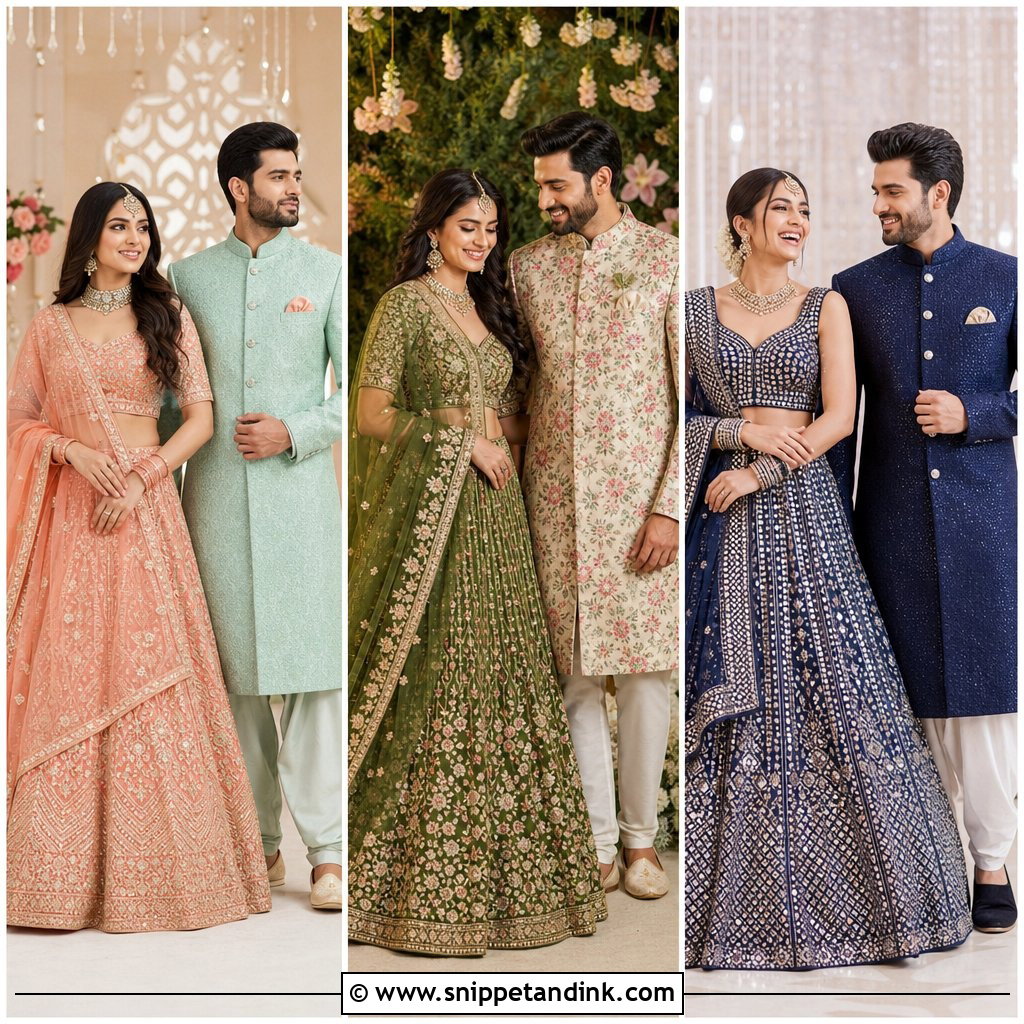
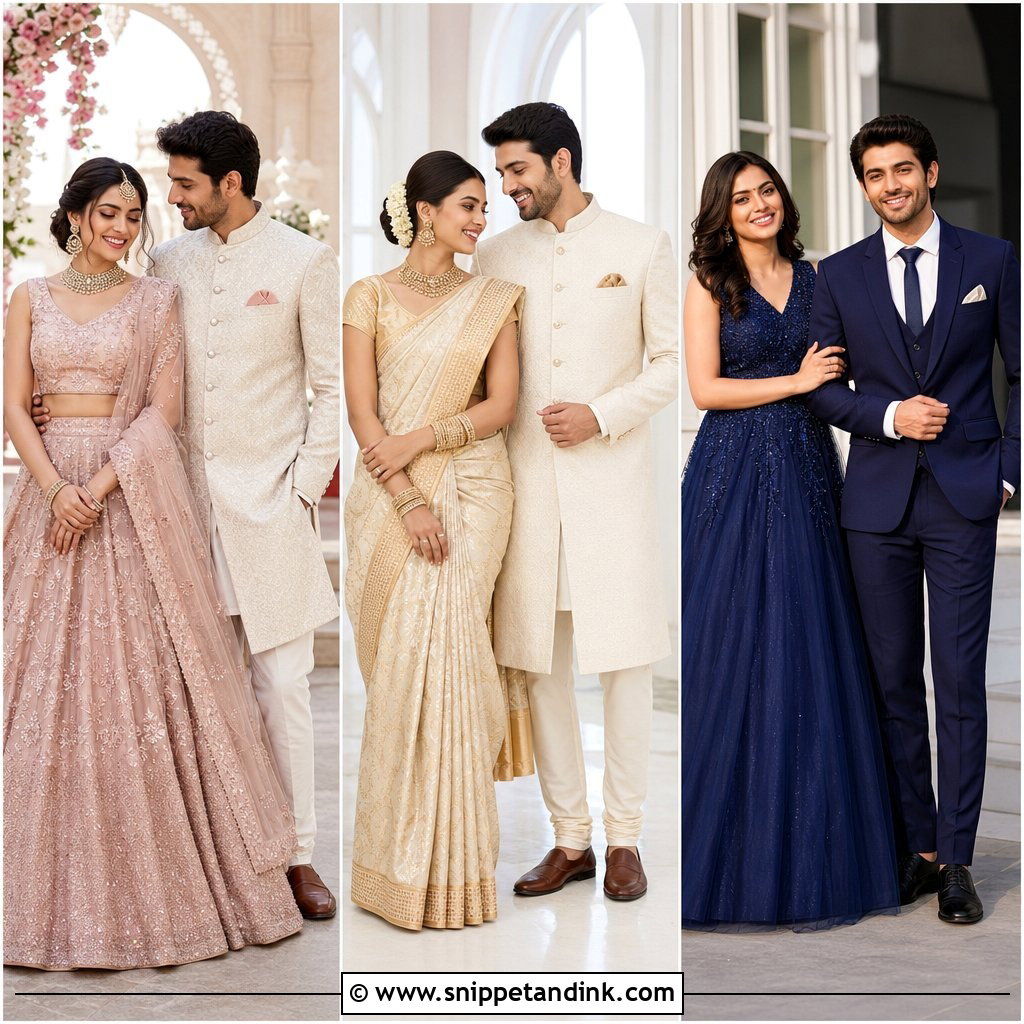
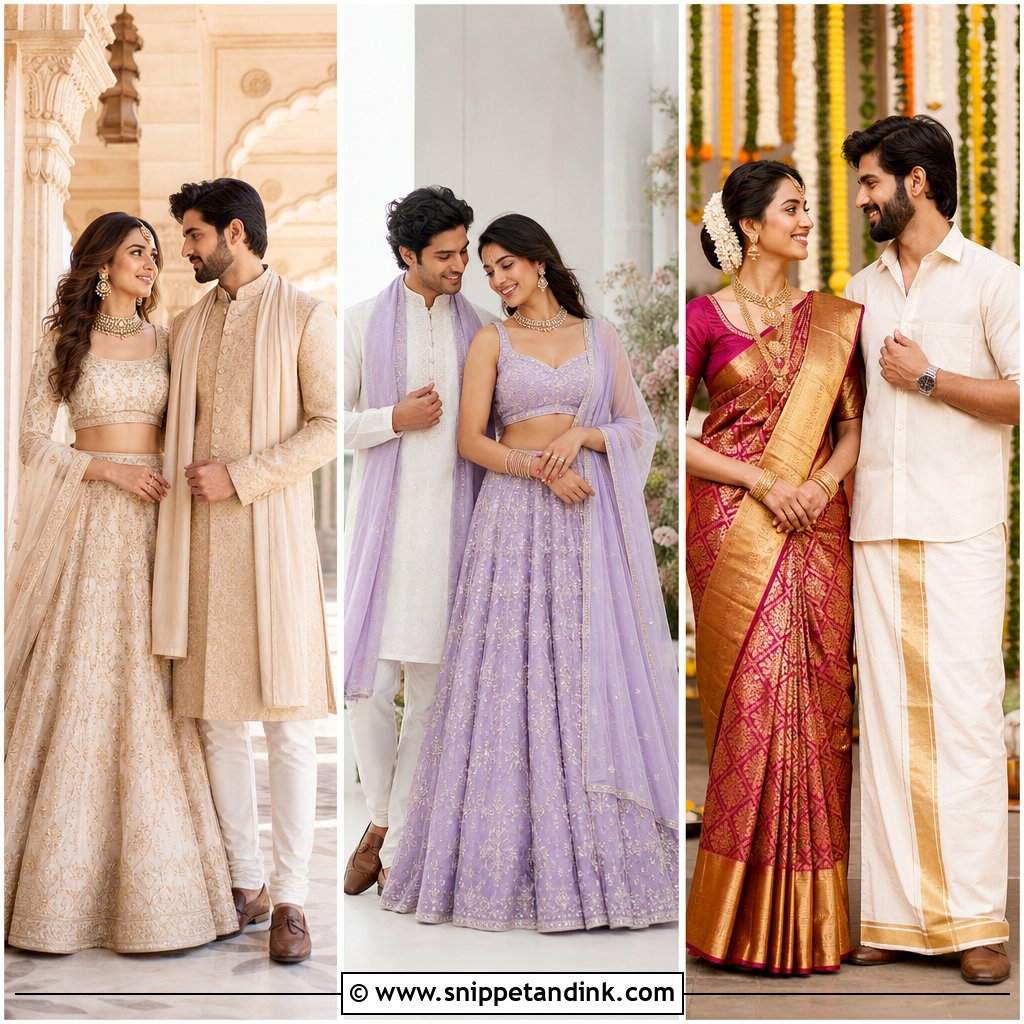
19. Indian Wedding Outfits
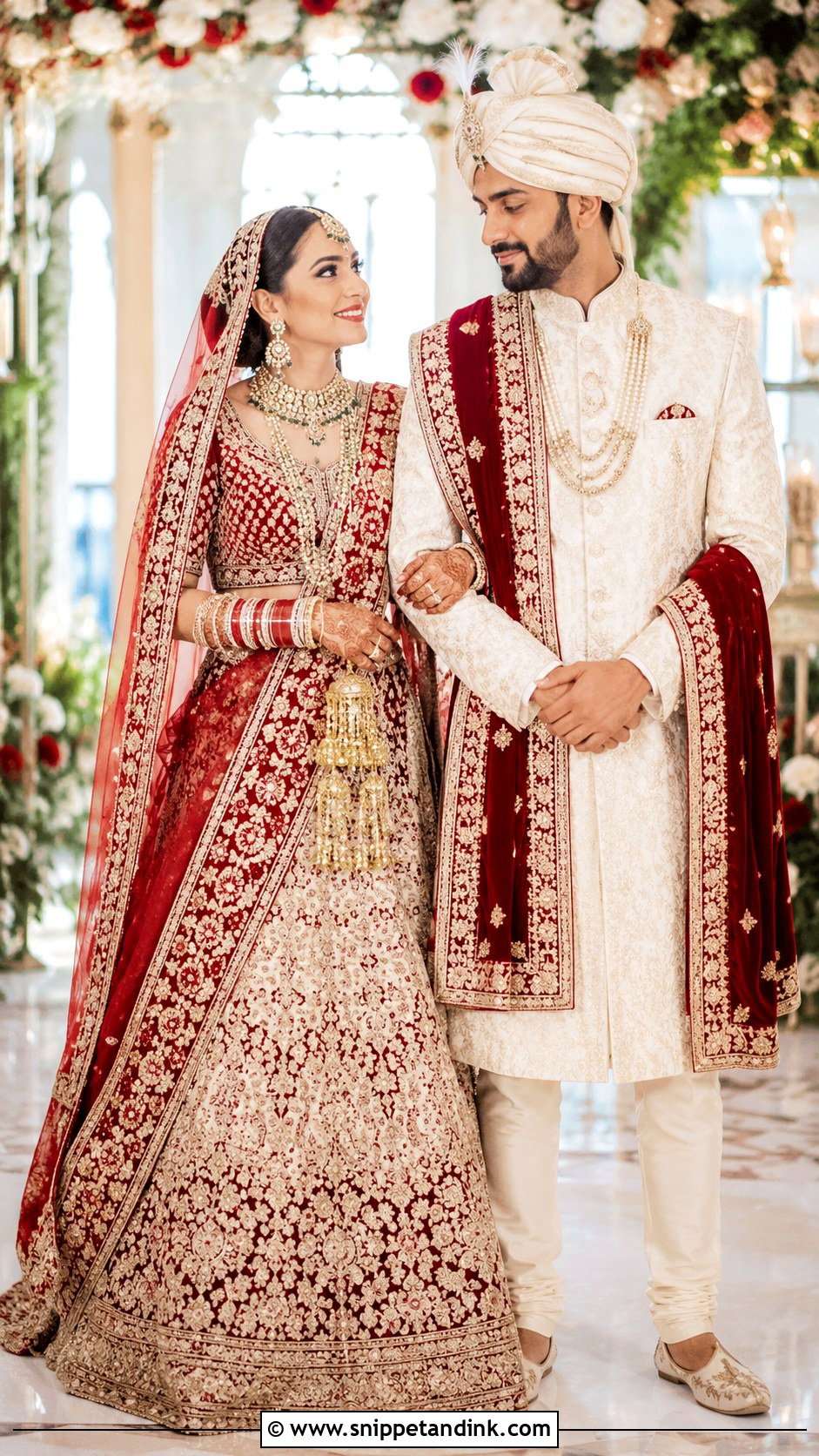
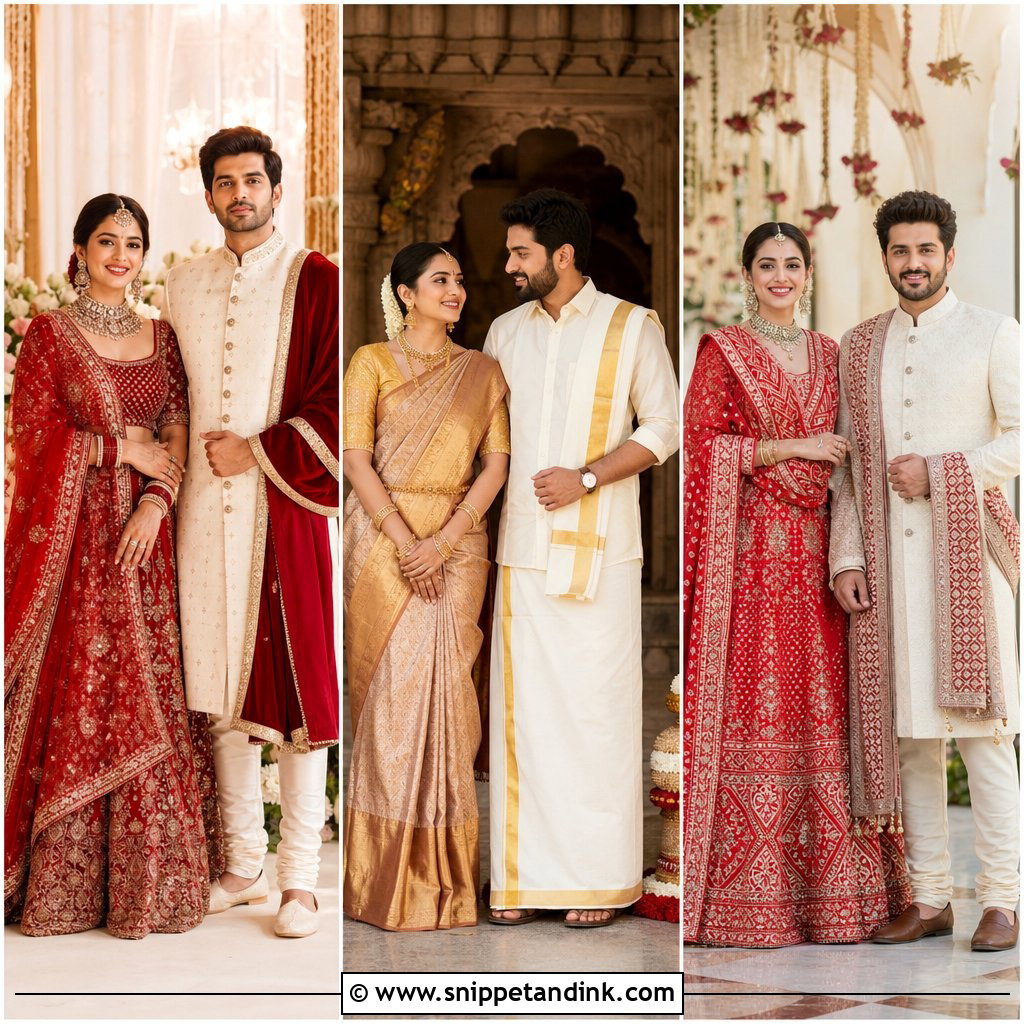
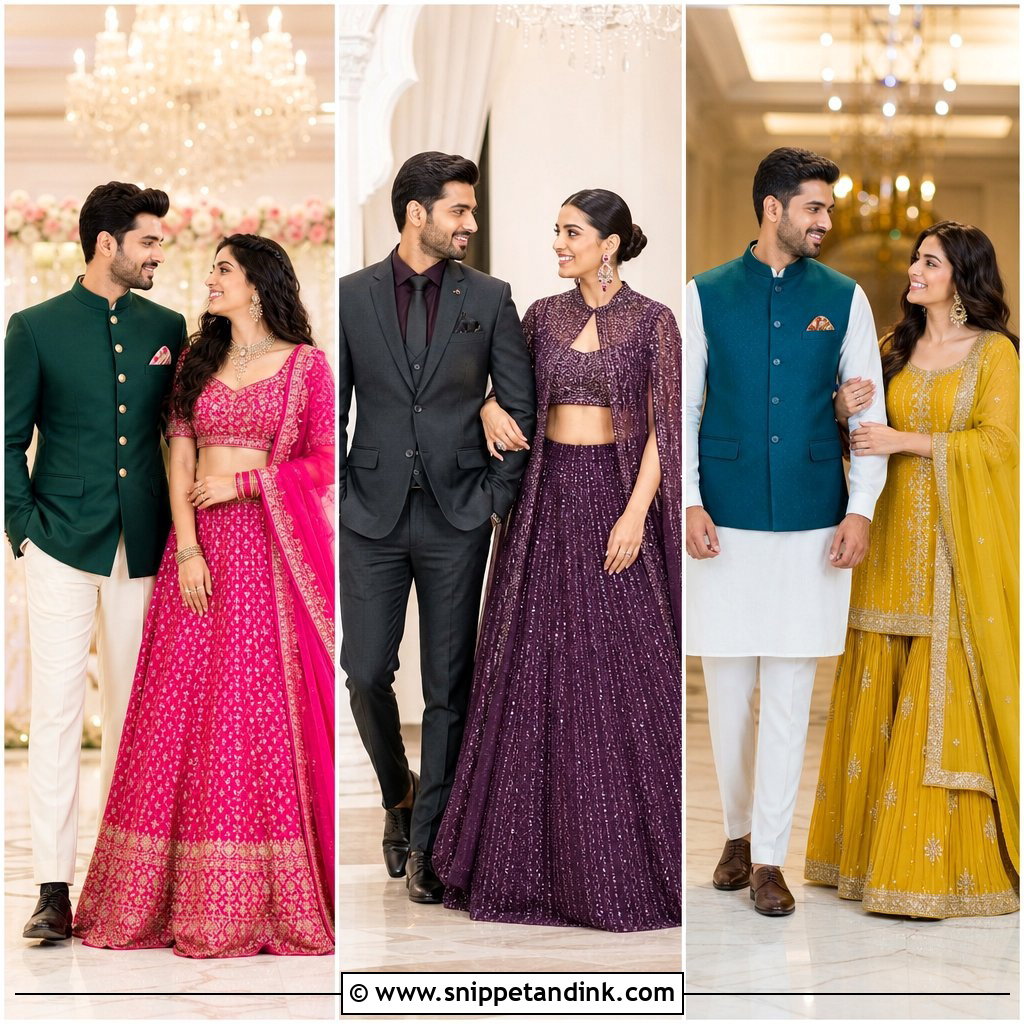
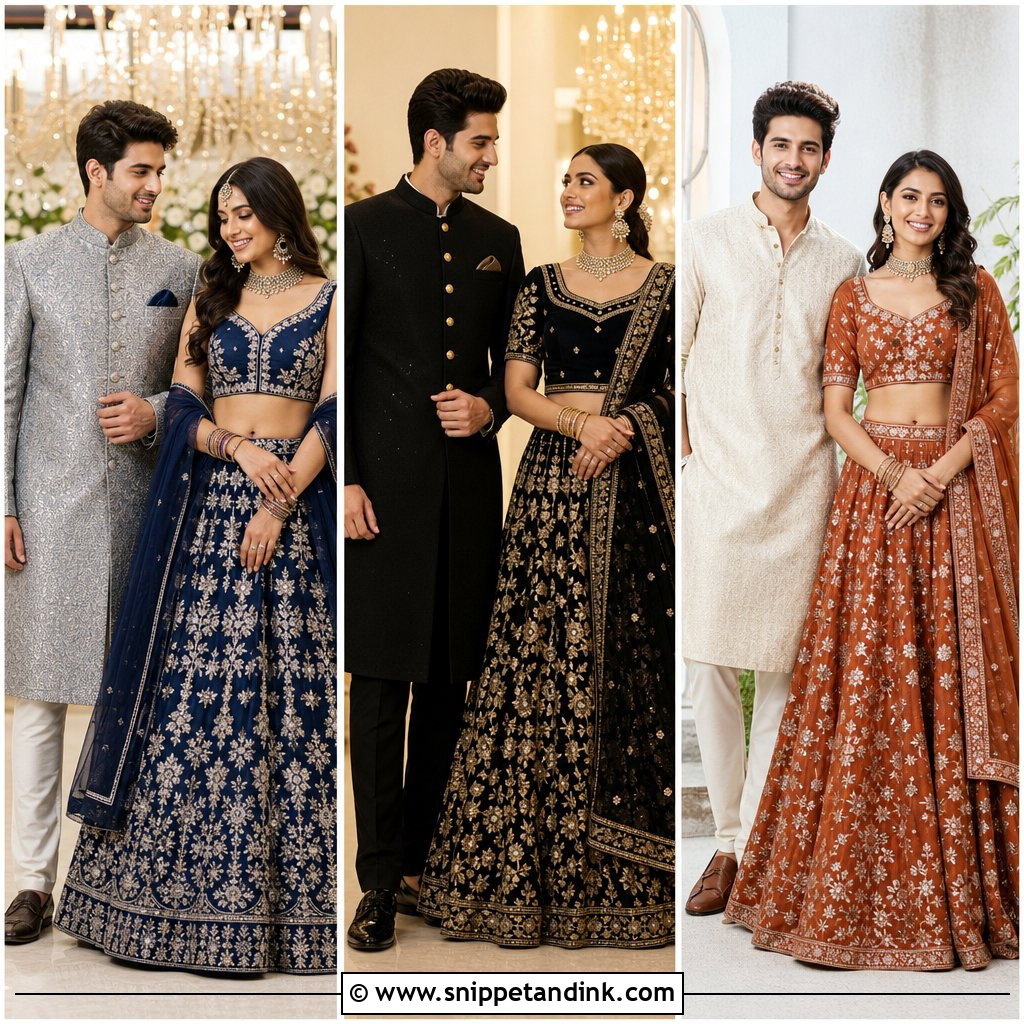
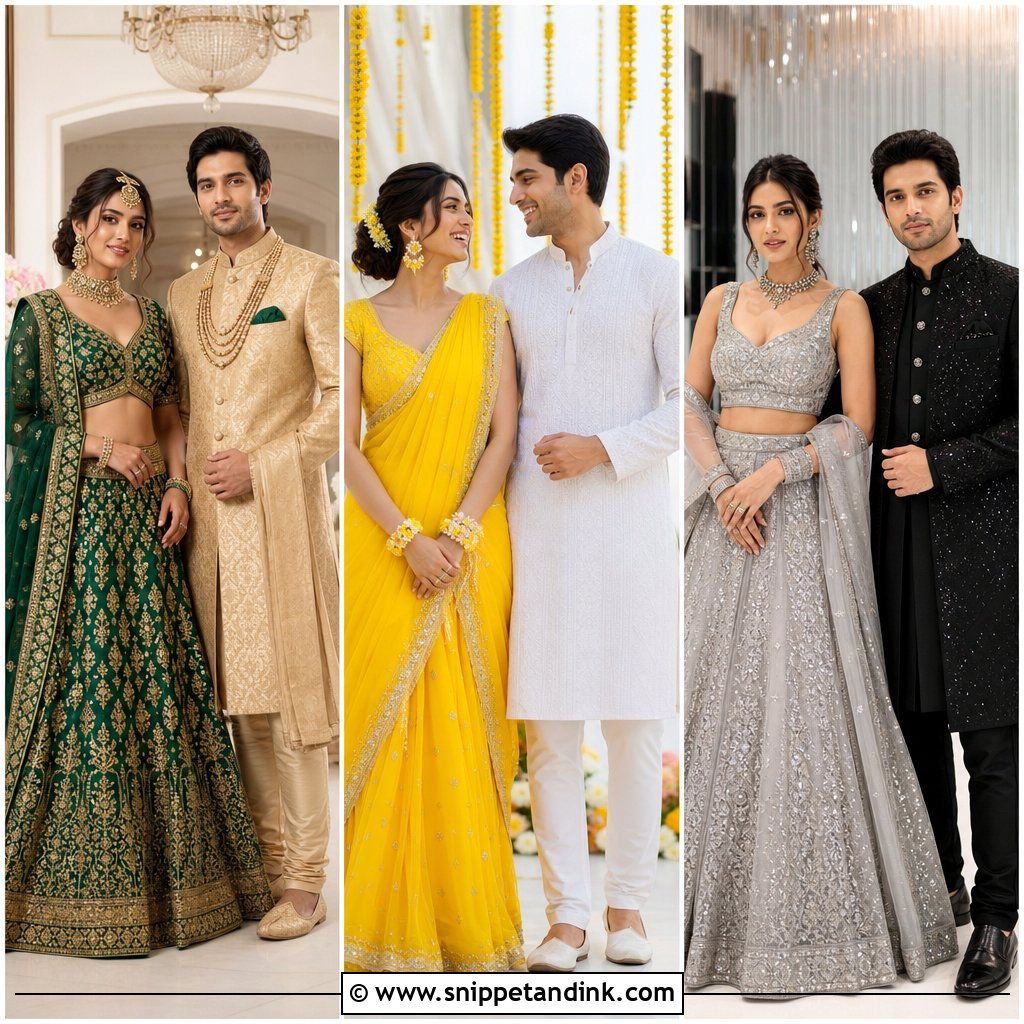
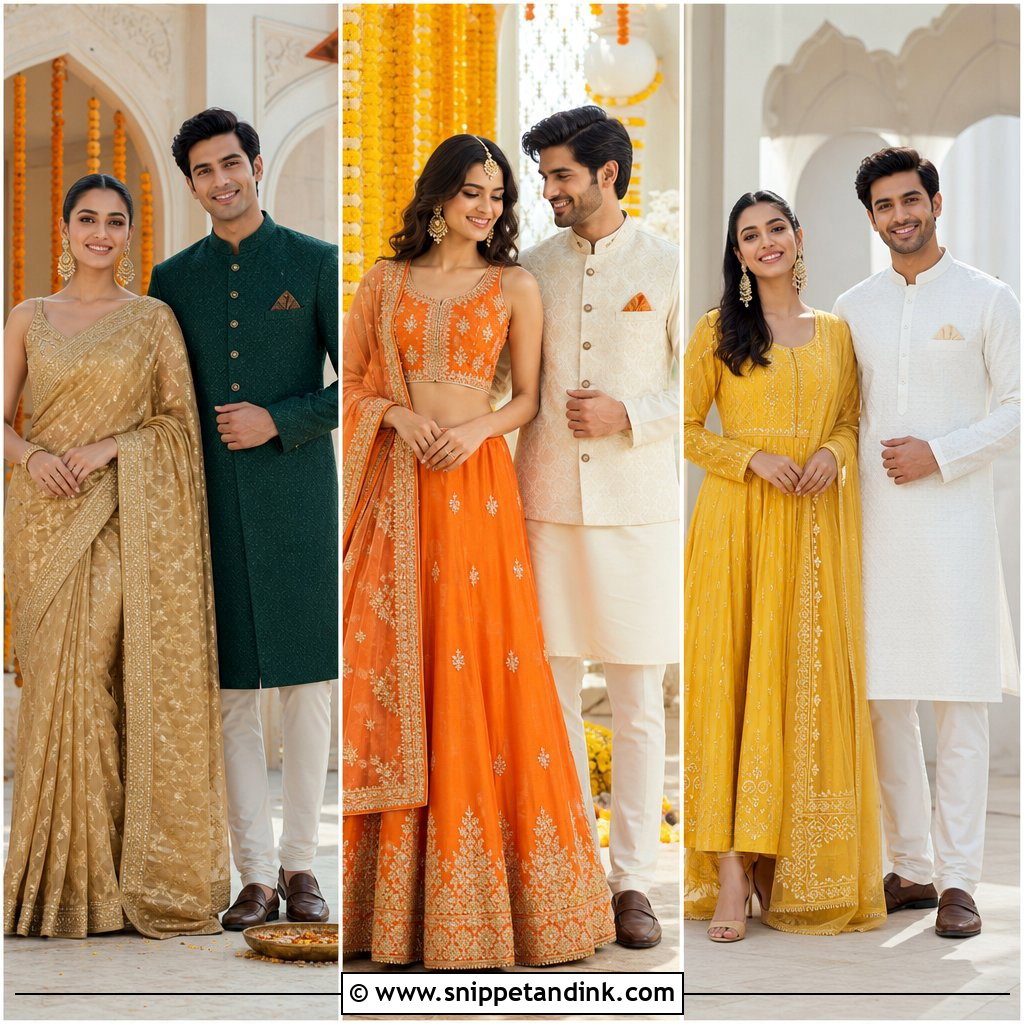
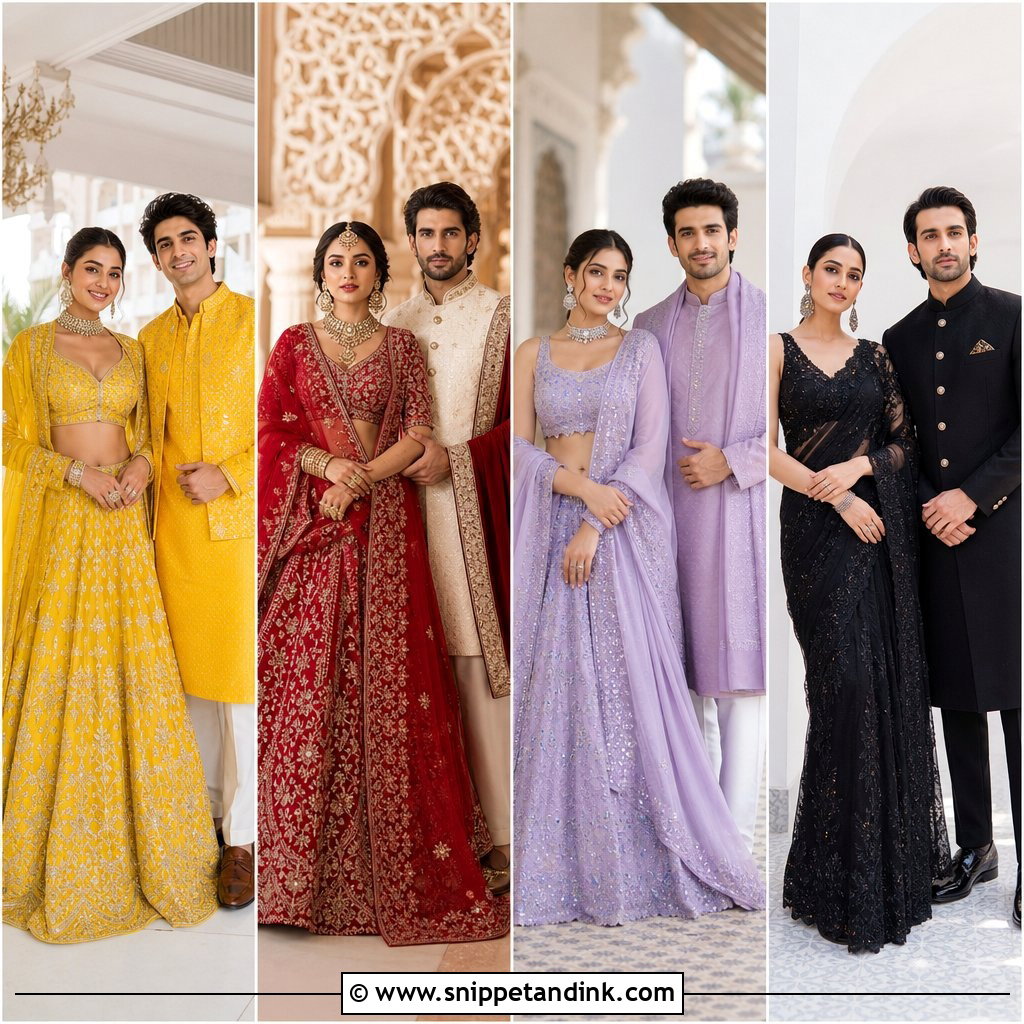
Coordination at Indian weddings usually happens through the embroidery rather than the base color. A red or ivory lehenga with a draped dupatta pairs with an ivory or complementary sherwani, and I’d repeat one border shade or metallic thread from the lehenga in the sherwani’s detailing instead of copying its color outright. Heavy zardozi work adds real weight, so at the final fitting I make sure the lehenga waistband sits securely on the hip. Family custom and the specific ceremony often settle colors before the couple does, so ask early. Couples planning Indian wedding outfits across several events can save the closest coordination for the main ceremony.
20. Gender Neutral Wedding Outfits
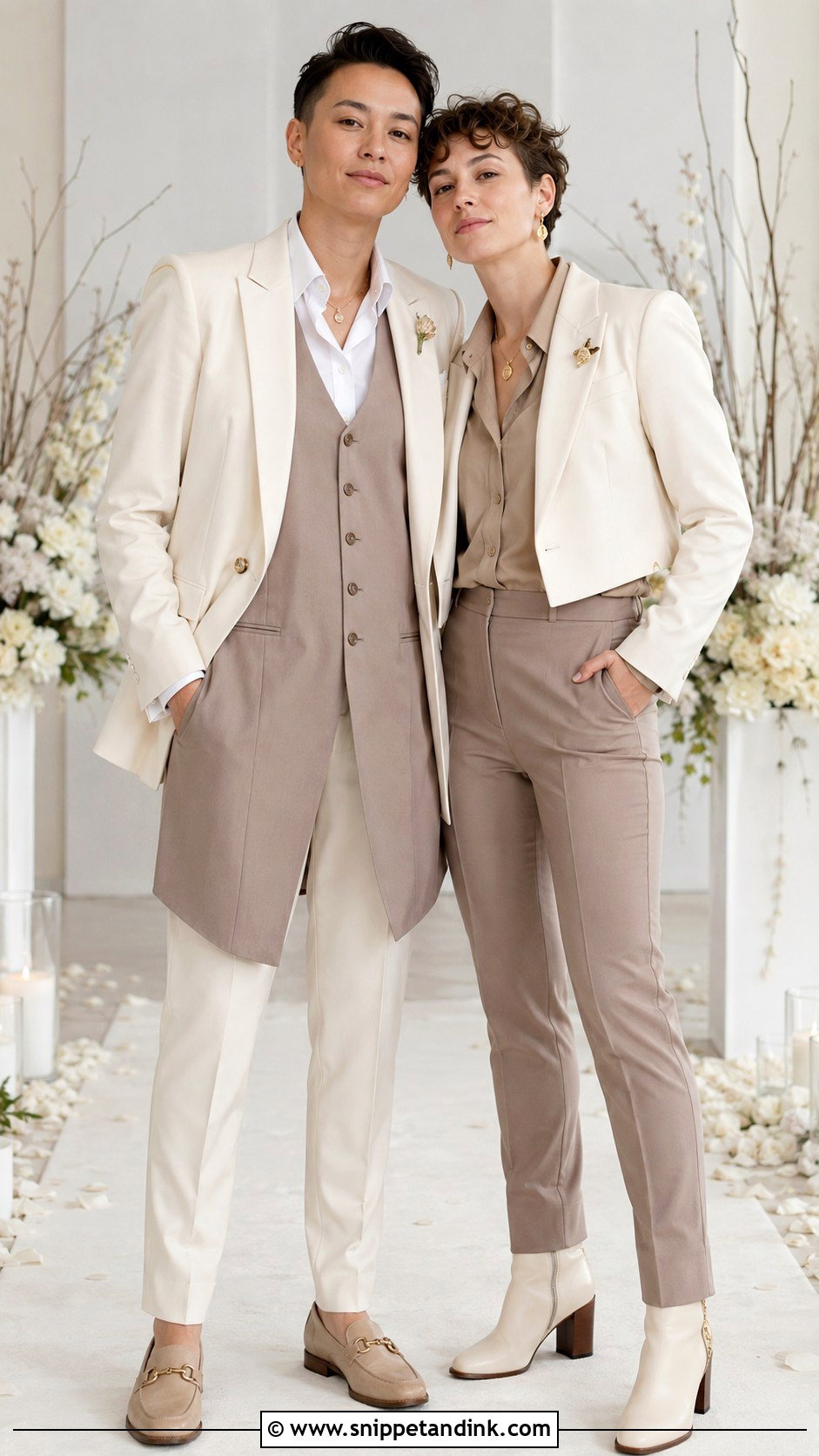
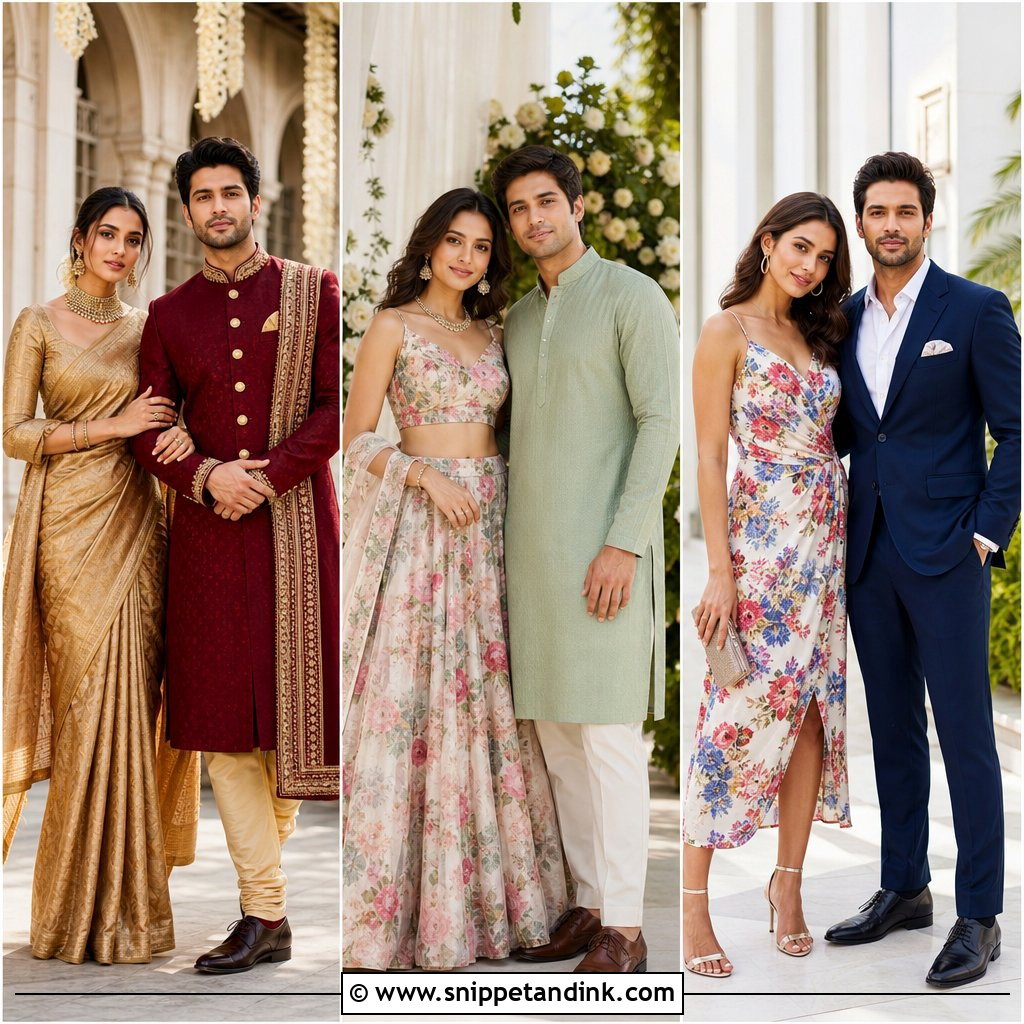
Gender-neutral wedding outfits let each person choose a silhouette that feels like theirs, without bridal and groom defaults. Coordinated suits in ivory and taupe work, one with a longline vest and the other a cropped jacket, as does a tailored jumpsuit beside a relaxed double-breasted suit. Proportion carries this pairing, so where possible I book alterations for both people with the same tailor. Two tailors rarely land on the same trouser break. Shared lapel pins or repeated jewelry finish the connection.
A Fitting Calendar When One Outfit Is Bought and One Is Rented
The two timelines rarely line up. A made-to-order gown commonly takes several months to arrive, then needs two or three alteration appointments spread over the last couple of months. A suit rental runs the other way: measurements go in a few weeks out and the suit arrives days before the wedding, with little room for change. Here’s the order I’d follow.
- As soon as the gown is ordered, send a swatch to whoever is choosing the suit. Rental colors are fixed, so the gown leads.
- Around two months before, go to the first gown fitting in the real shoes, since hem length depends on heel height.
- About a month out, get measured for the rental and ask what the shop can change in-house. Sleeves and trouser hems usually can be adjusted; a jacket that pulls across the back can’t.
- In the final week, try both outfits on together once, with a steamer and lint roller nearby.
If both outfits are bought, I’d still make sure the suit tailor and the gown seamstress know about each other. A trouser break and a hem both depend on shoes, and those choices tend to be made by different people at different times.
What Linen, Velvet and Satin Look Like by the Last Dance
A pairing that matches at noon can drift apart by ten at night, because fabrics age at different speeds over a long day.
- Linen creases at the hip and elbow within an hour. That’s part of its charm, but next to crisp satin the contrast grows as the evening goes on.
- Velvet holds its shape but marks wherever it’s pressed. A small pile brush in the getting-ready bag lifts most of it.
- Satin shows water spots and underarm marks. Dress shields are cheap insurance at a summer wedding.
- Wool suiting recovers best. Hang the jacket on a chair back during dinner and most creases drop out.
Standing Next to Each Other Is the Real Test
Neither partner should look like an accessory to the other. Begin with the venue, season and dress code, agree on a palette and a level of formality, then repeat one or two details through fabric, flowers or jewelry. Complementary clothes usually look more personal than identical ones. If you can, go to one final fitting together, in shoes and outerwear, and look at yourselves side by side in a full-length mirror. That view tells you more than any mood board.
You'll Like These Ideas:


Leave a Reply