
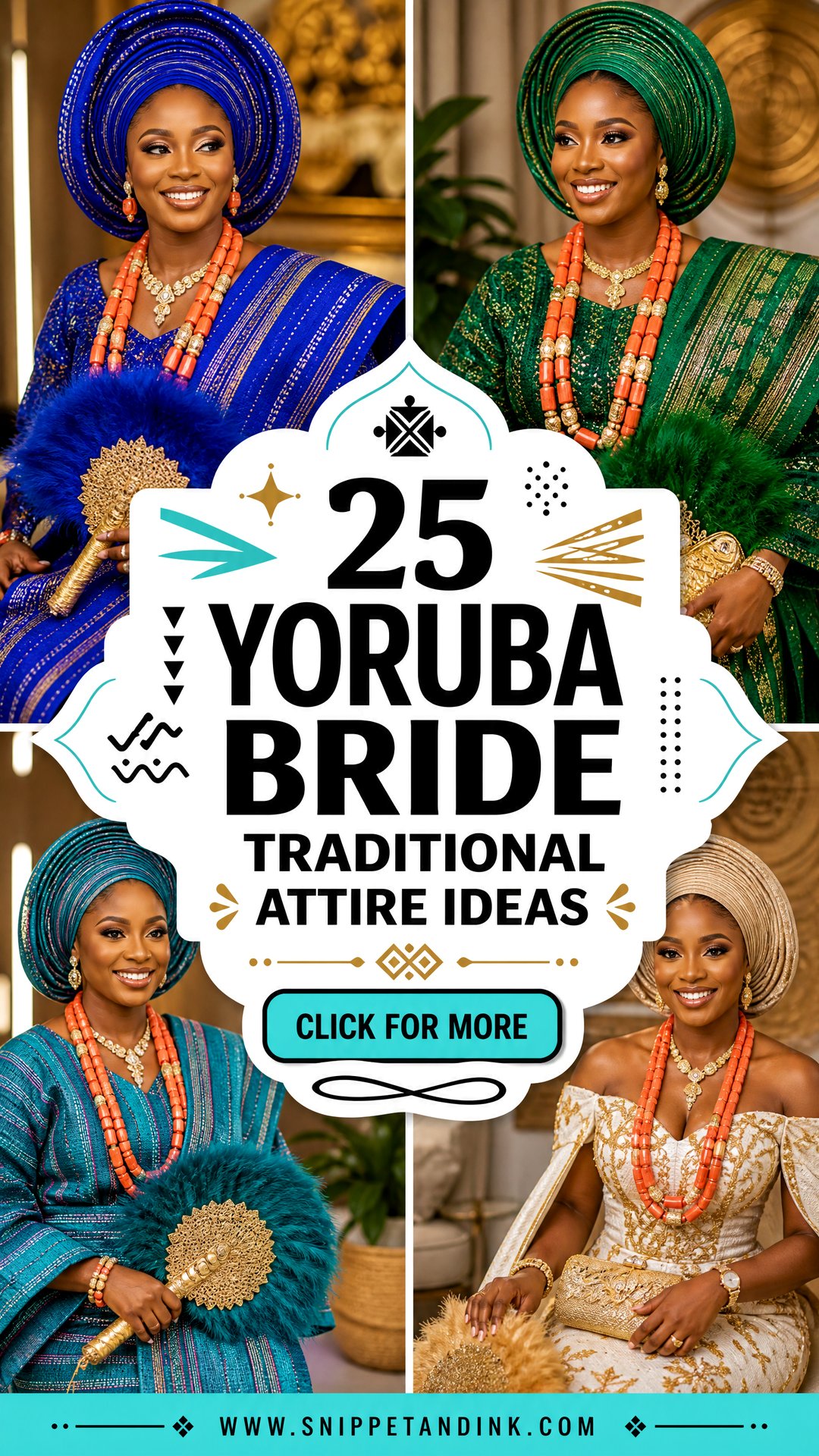
A Yoruba bridal look is built around one decision: the fabric. Most traditional outfits start with aso oke, the hand-woven cloth stitched together from narrow strips, and grow from there into iro, buba, gele, ipele or iborun, beads, shoes and a clutch. When I plan a bride’s look, I begin with her family’s colors and the weight of the cloth, because aso oke is thick, warm and stiff, and that shapes everything from the blouse cut to how long she can dance. The 25 looks below run from classic etu, alaari and gold to komole gowns, lace bubas, pastels and adire, with the styling and fitting notes I’d give for each.
Kneeling, Dancing and a Second Outfit: What the Ceremony Asks of Your Attire
A Yoruba traditional engagement is not a sit-still event. The bride usually makes an entrance with her friends, dances, kneels before both sets of parents for prayers and greets a long line of elders, and many brides change into a second outfit partway through. When I fit a bride, I fit for those moments rather than for standing in front of a mirror.
Fit for kneeling
Practice kneeling at the fitting. The iro needs enough wrap to cover the legs when you go down, and a fitted komole needs ease at the knee and seat. If a wrapper tends to loosen, I ask the tailor to sew it as a ready-to-wear iro with a hidden hook or zip. It looks the same in photos and won’t unravel mid-dance.
Plan the second look
Aso oke is thick and warm, so the second outfit is often lighter: a lace buba, a softer komole or a pre-tied gele. Agree the change time with your planner, and pack the second look with its own shoes and jewelry so nothing has to be borrowed from the first outfit in a rush.
1. White Aso Oke Bridal Attire
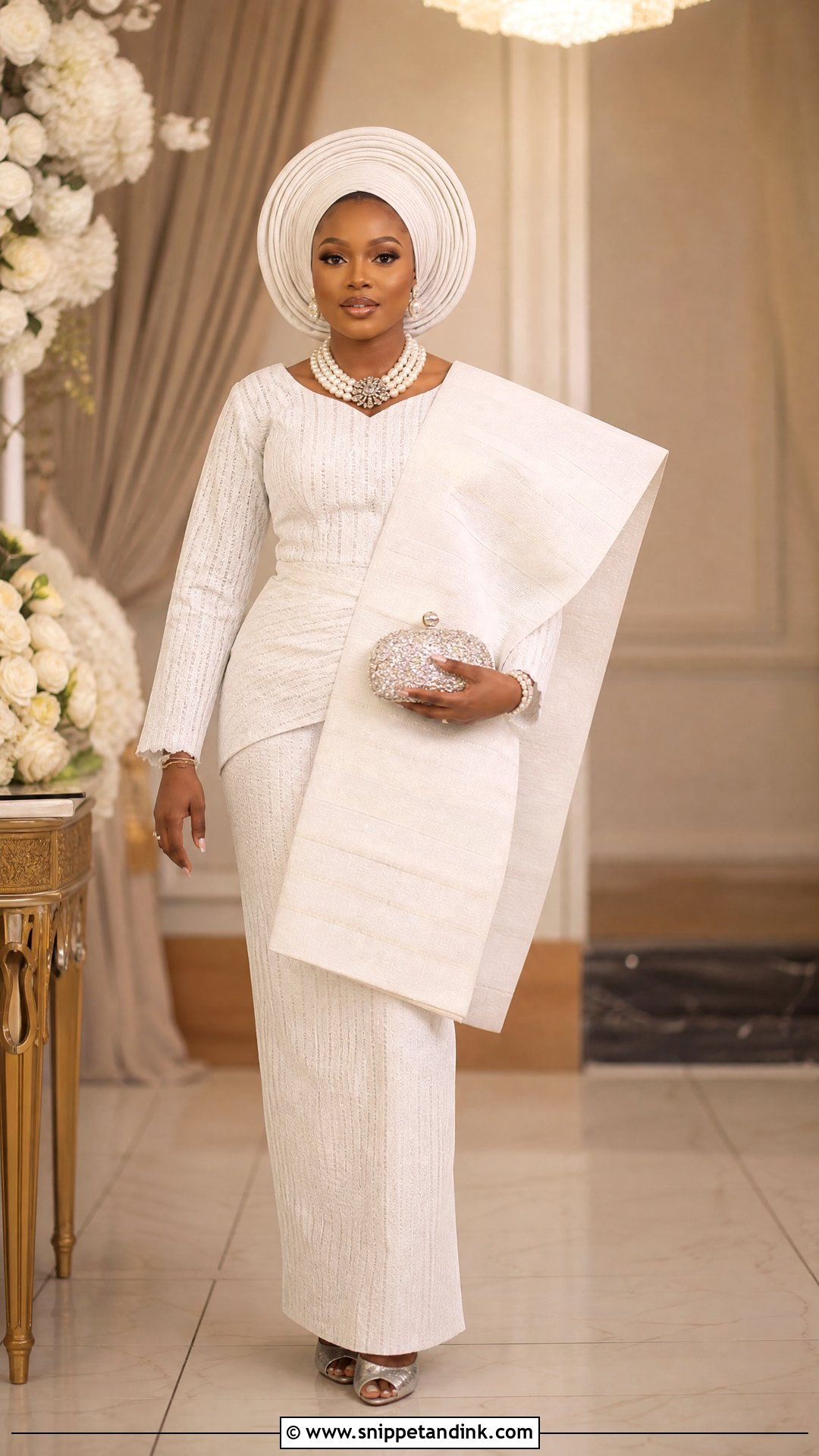
White aso oke looks clean and calm, but plain white can photograph flat, especially in bright outdoor light. I always ask the weaver or designer for silver threading, tonal stripes or light beadwork so the cloth has depth on camera. A fitted buba, a neatly wrapped iro, a structured gele and an ipele across one shoulder make the classic set. Pearl earrings, layered white beads, a crystal clutch and silver heels keep it refined, and a tall fan-shaped gele adds height. Keep a stain pen in your clutch, because white aso oke and party jollof don’t mix.
2. Gold Aso Oke Bridal Attire
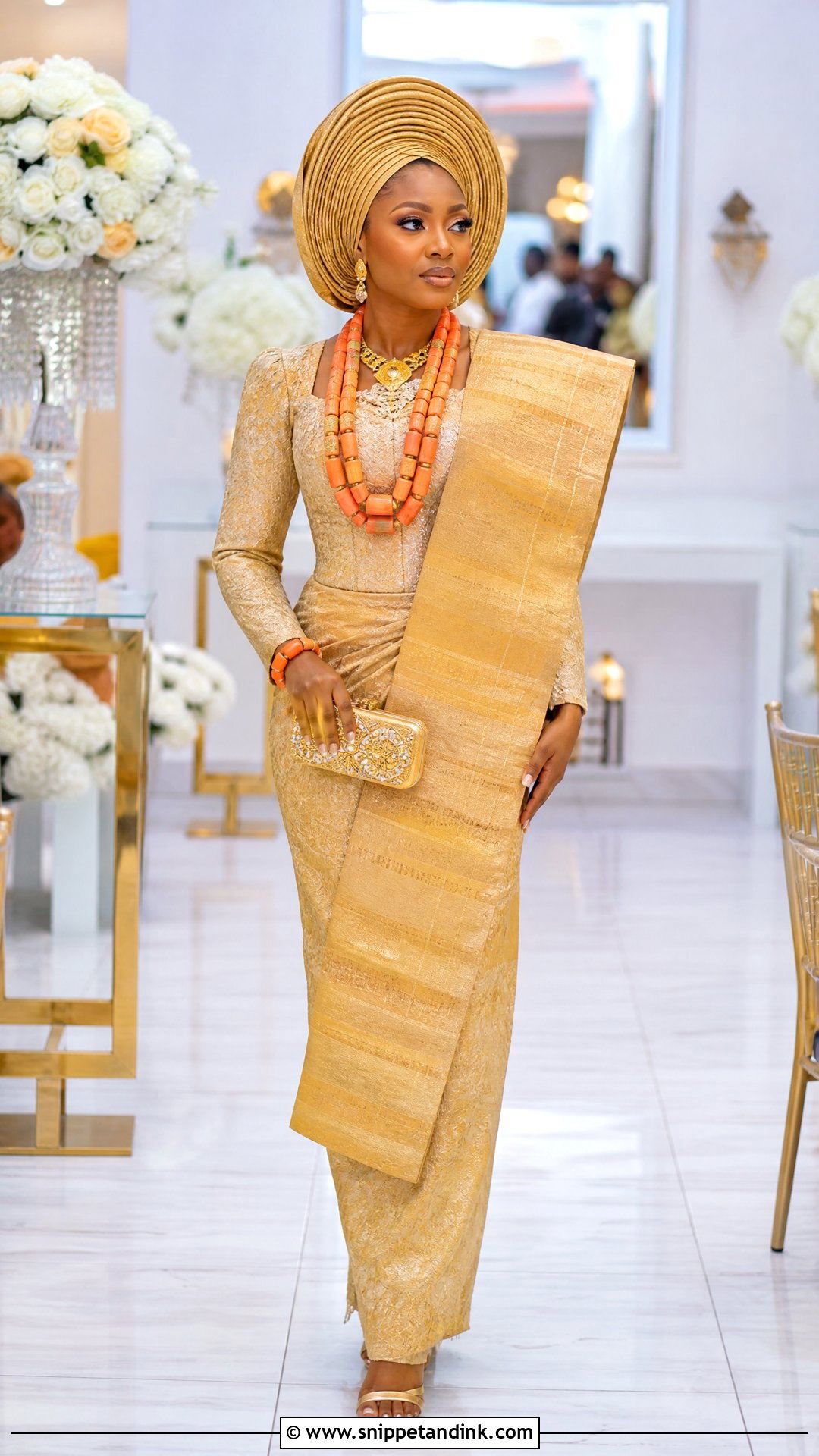
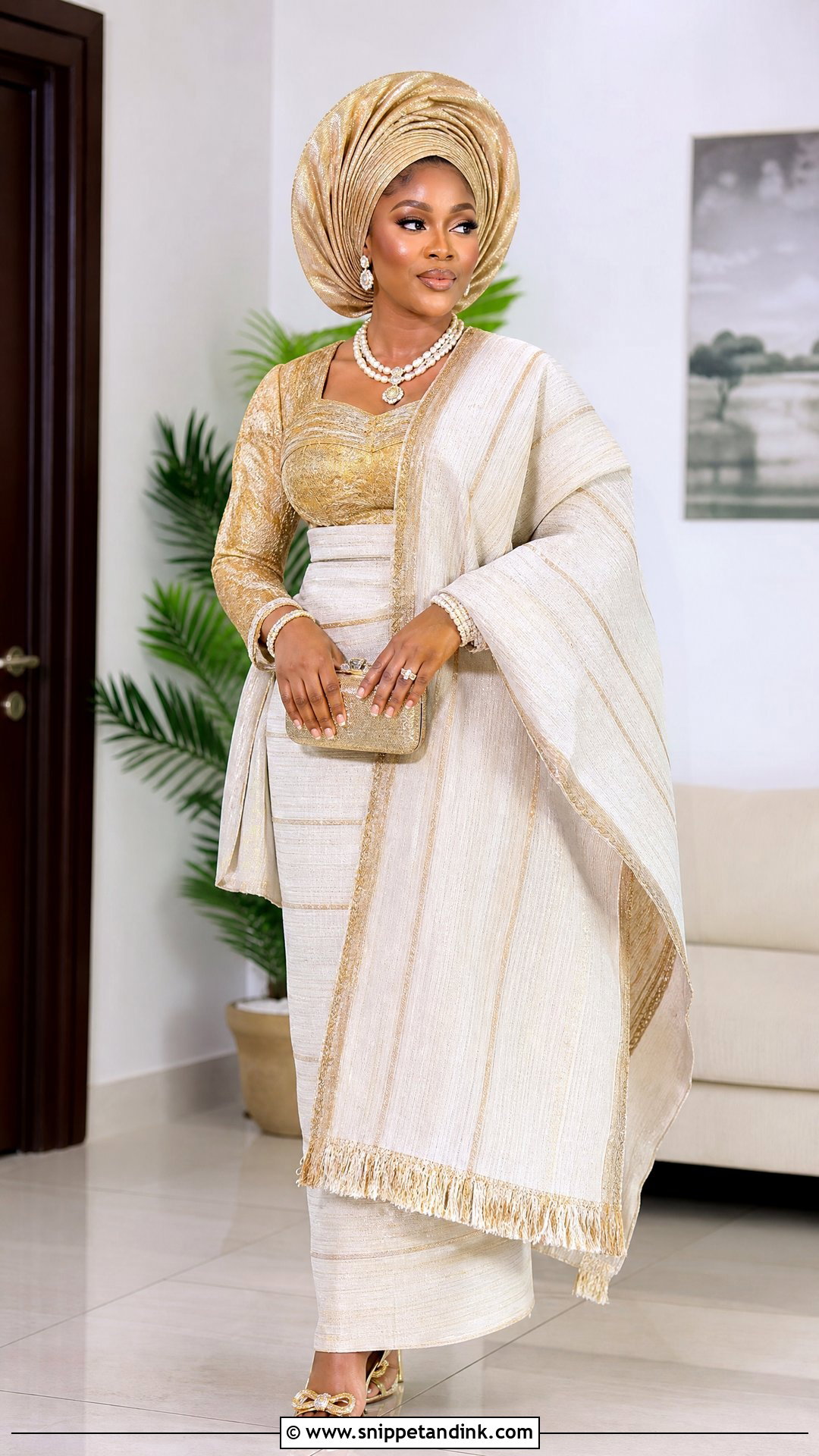
When the metallic weaving is heavy, the cloth does the talking, so I keep the blouse shape clean. A gold iro and buba, a large pleated gele, a matching ipele, gold sandals and coral or crystal jewelry make the full set. Metallic thread can scratch where it touches skin, which is why I ask for the buba to be lined at the neckline and underarms. A gold clutch and soft glam makeup tie it together. Indoor halls flatter it most, since the threads pick up the lighting and glow warmly in photos.
3. Red Alari Aso Oke Bridal Attire
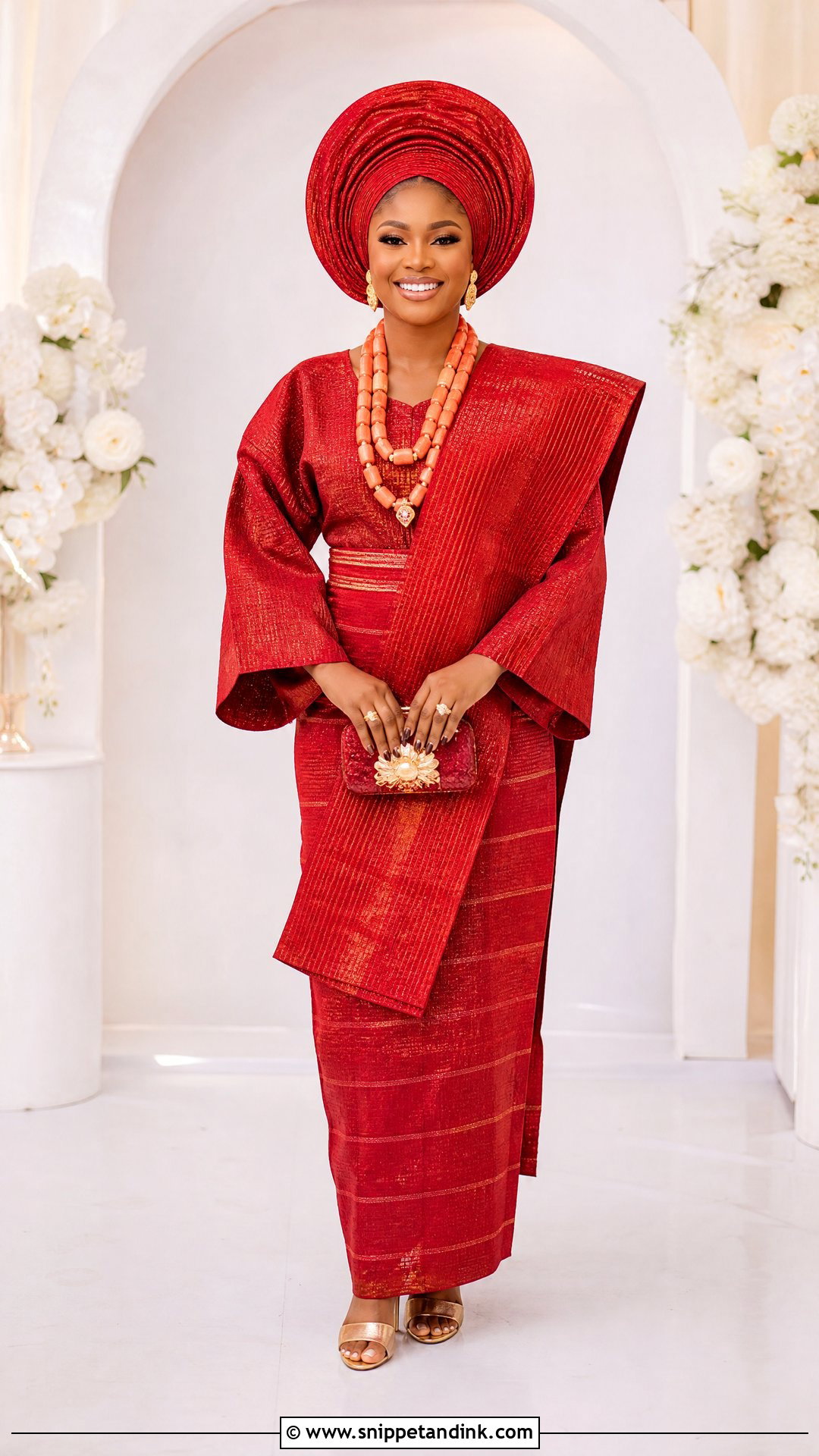
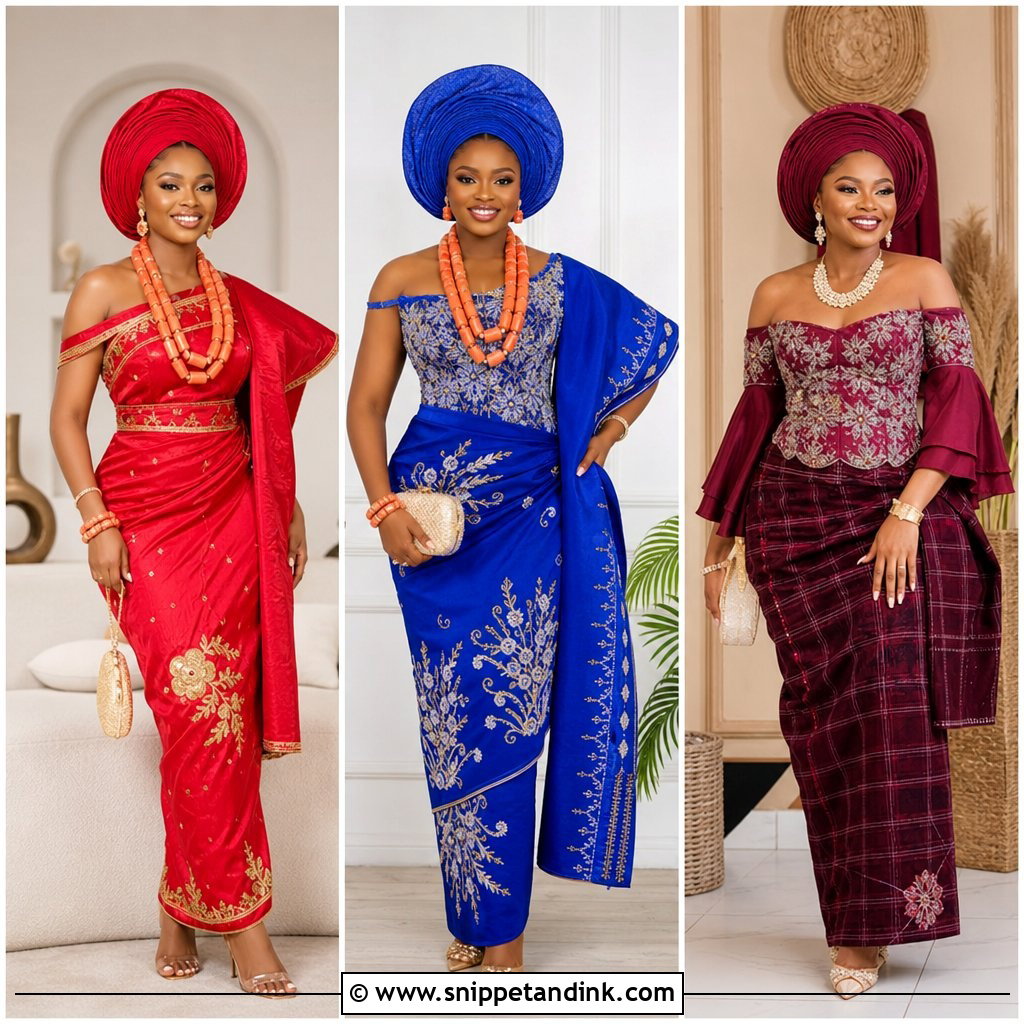
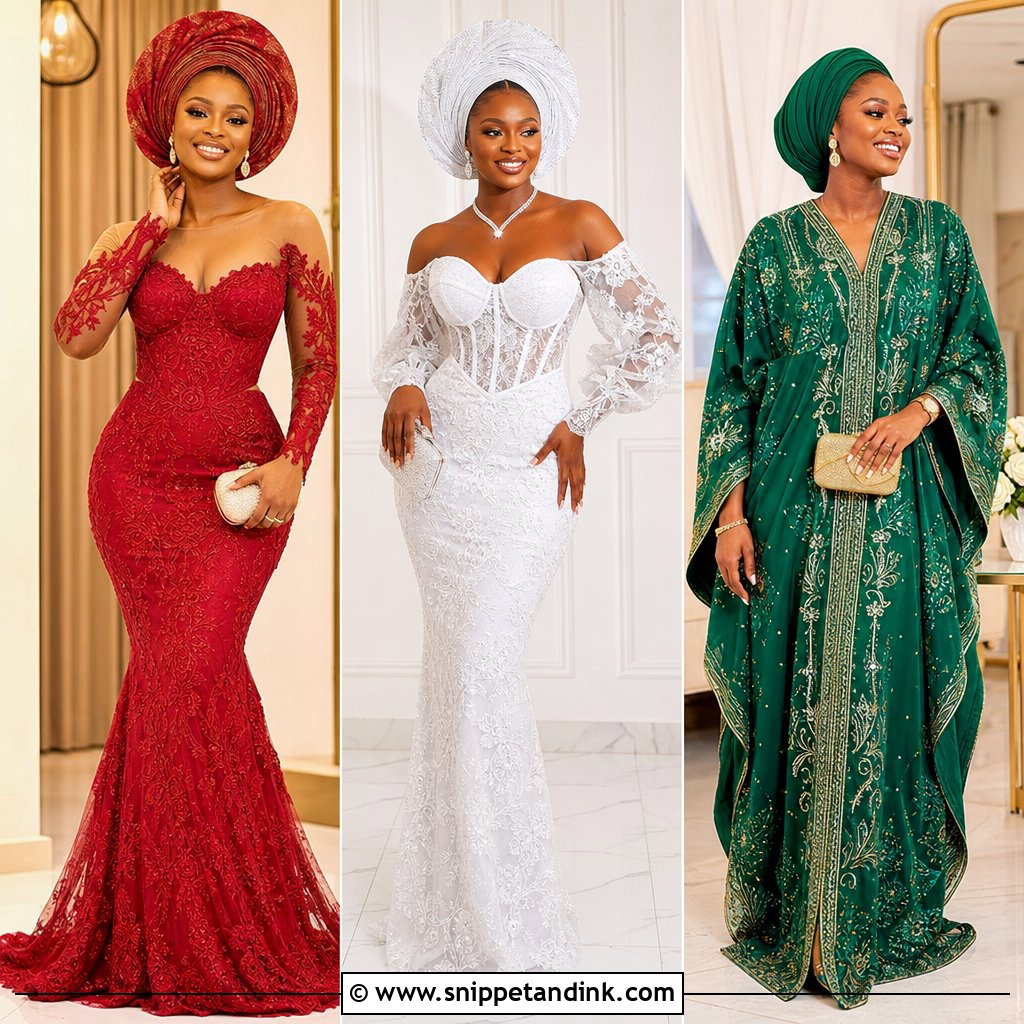
Alaari is one of the three classic aso oke types, a deep red or magenta cloth, and it carries more ceremonial weight than almost any other color. A red wrapper with a matching buba, a sculptural gele, an ipele, coral beads and gold jewelry give a dramatic entrance. To modernize it, I keep the sleeves clean and add a little beadwork at the cuffs or a shaped neckline rather than changing the cloth. Match the shoes to the exact red, or go nude or gold if you can’t find the shade. Keep the clutch simple.
4. Blue Etu Aso Oke Bridal Attire
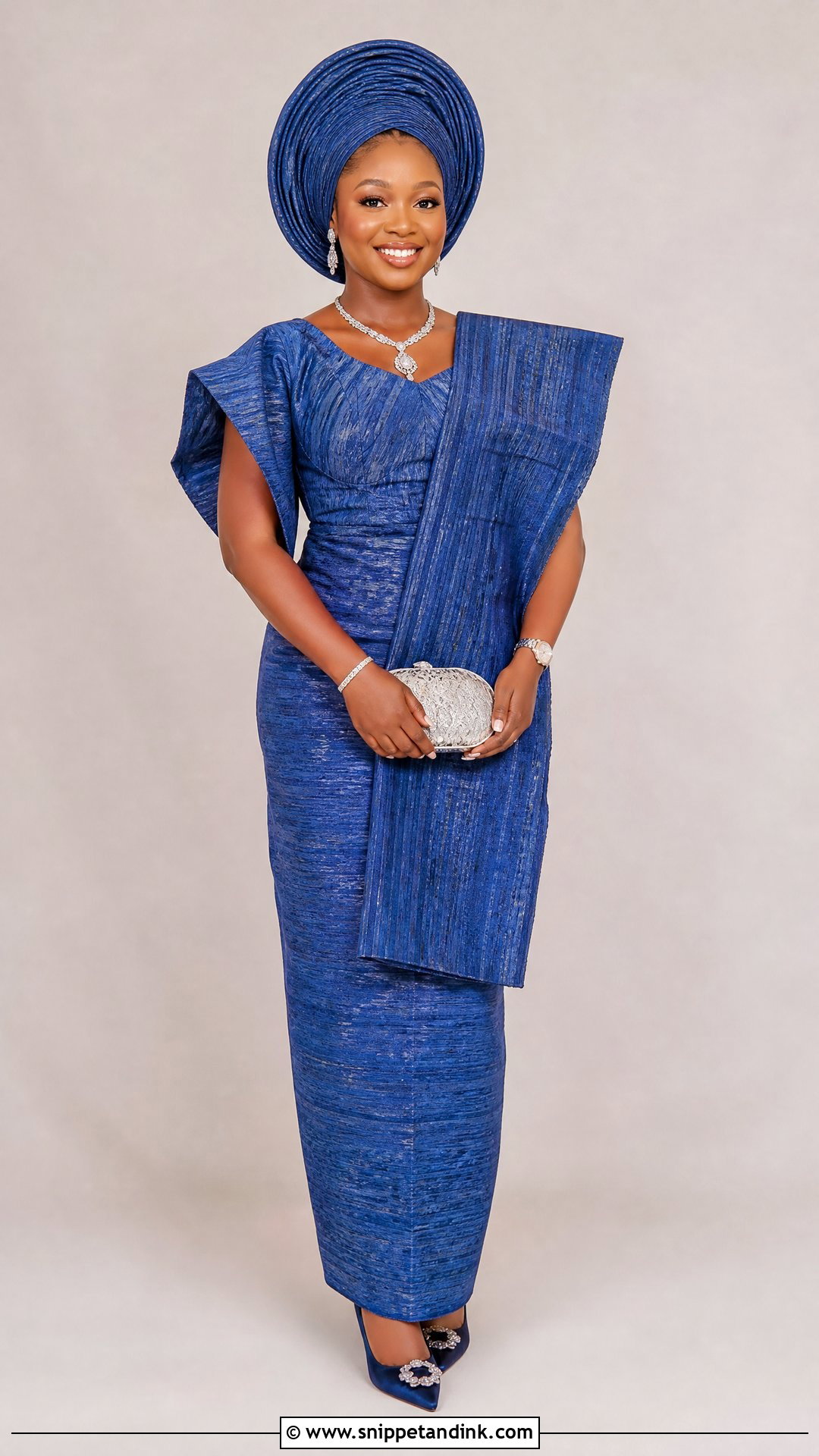
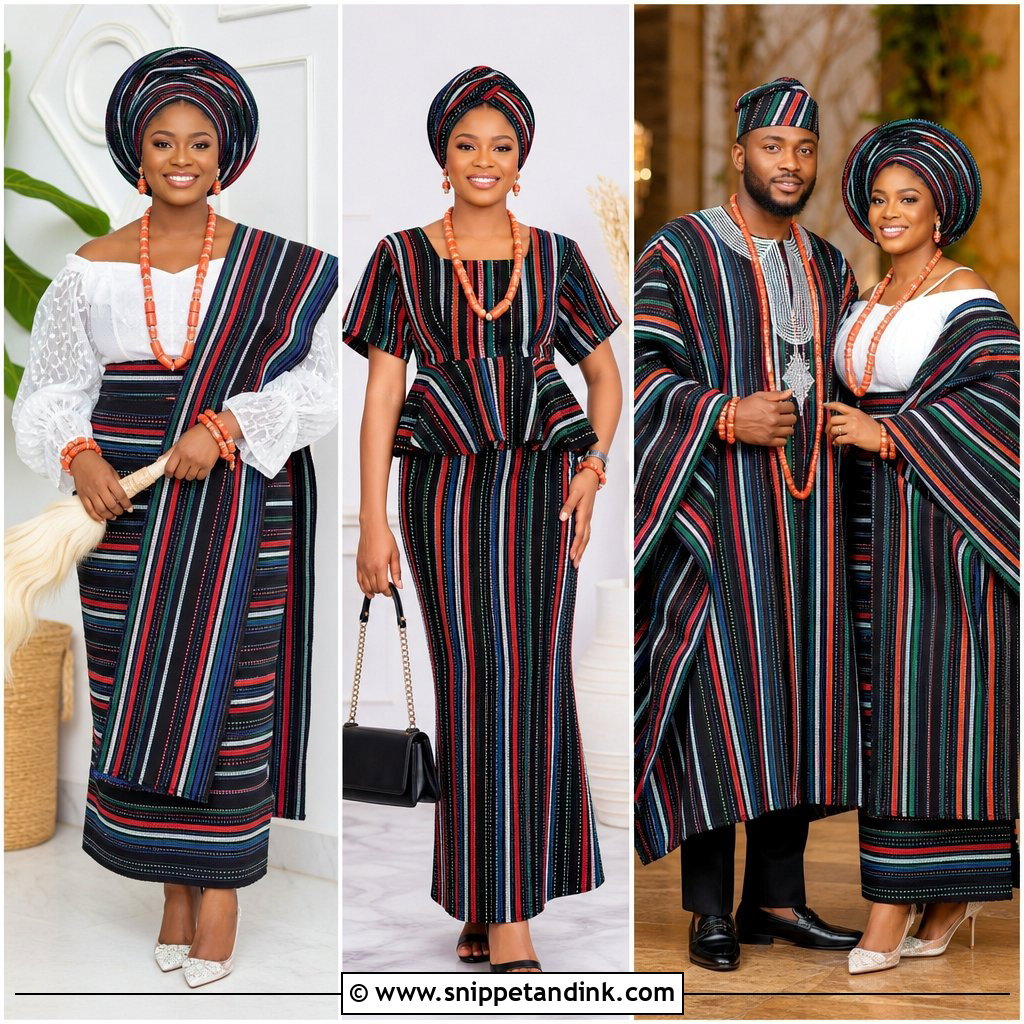
Etu is the deep indigo aso oke, often flecked with fine light threads, and its name is the Yoruba word for guinea fowl, whose speckled feathers it recalls. It’s dignified rather than loud. A tailored buba and full iro, a wide ipele draped neatly across the shoulder and a matching gele make the set, while silver jewelry, white beads and navy heels suit the tone. Pearls or a little light blue embroidery soften it, and a silver clutch finishes it. Etu also coordinates easily with a groom in navy or silver.
5. Ivory And Gold Yoruba Bridal Attire
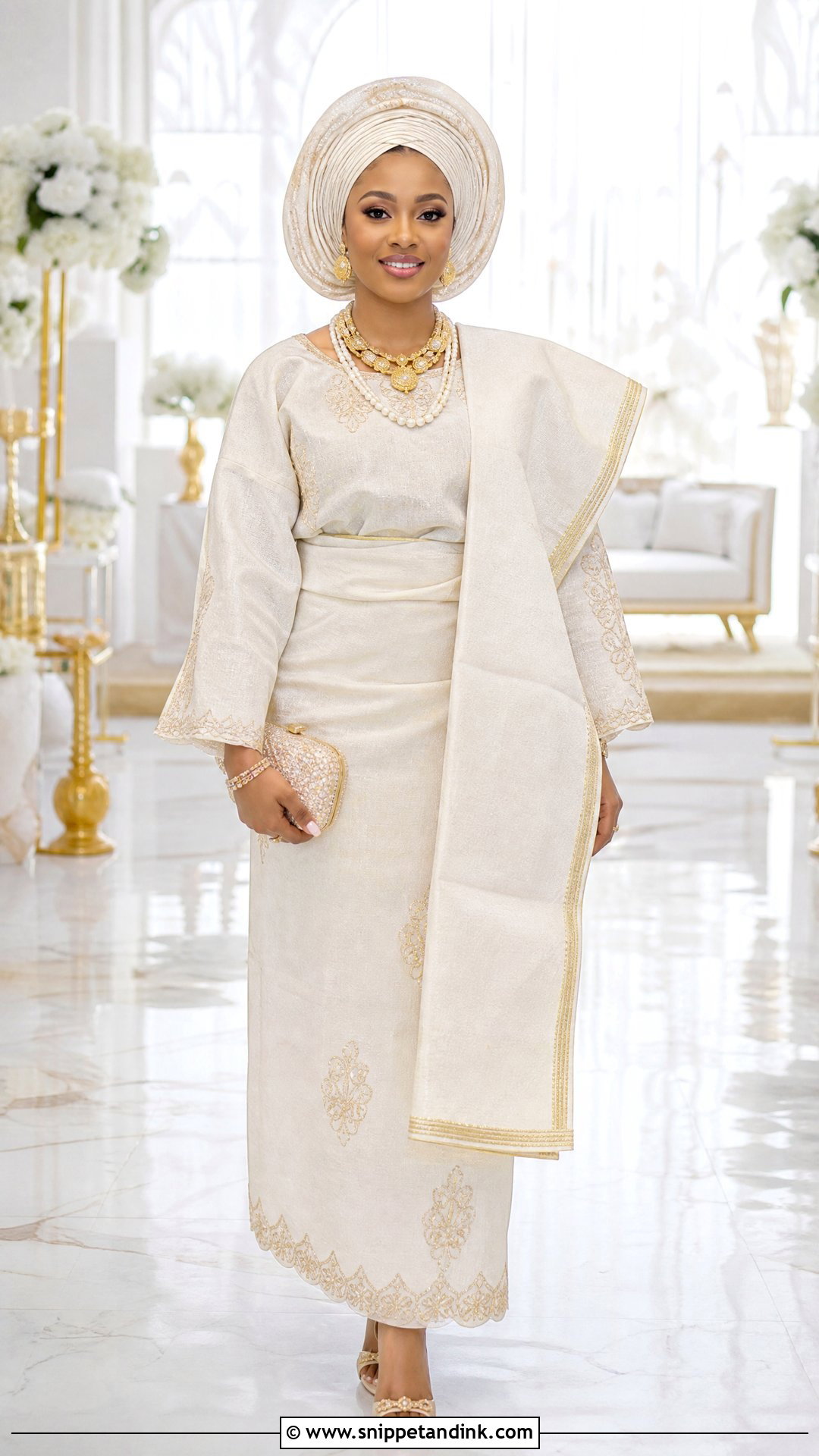
Ivory suits more skin tones than stark white because it doesn’t throw cool light onto the face, and gold adds the richness. An ivory buba with gold embroidery, a matching iro, a gold-trimmed ipele and an ivory gele with metallic detail make a set that coordinates easily with the groom. Gold jewelry, cream heels and a structured clutch finish it. For extra detail I add beaded sleeves or an embellished neckline, but never both on the same buba.
6. Champagne Aso Oke Bridal Attire
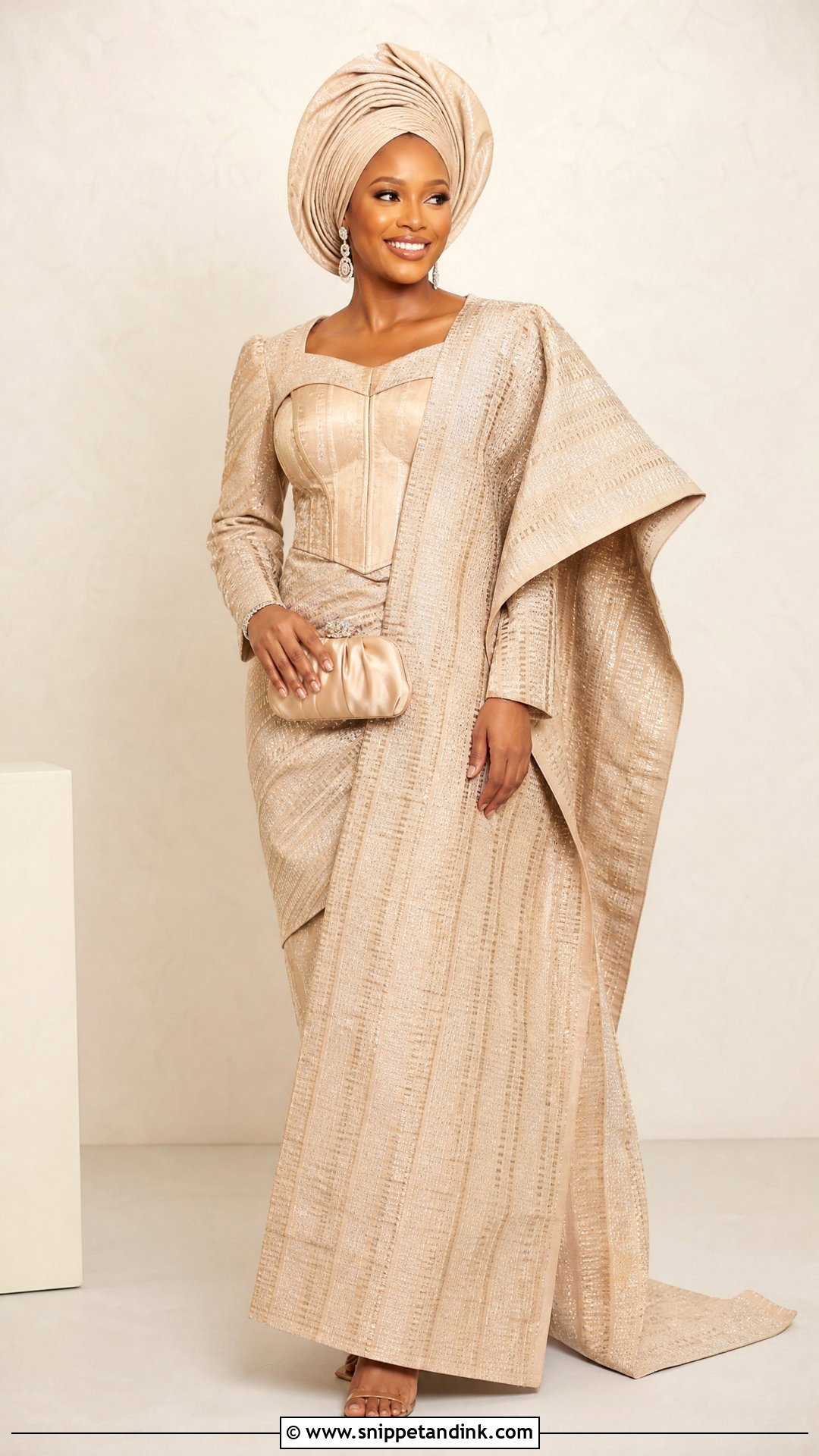
Champagne sits between gold, beige and soft metallic, so it works across many skin tones. The risk is looking washed out, particularly on lighter skin under camera flash. I’d choose a cloth with woven shimmer, subtle stripes or beaded edging, and ask the makeup artist for a little more warmth on the cheeks. A champagne iro, structured buba, matching gele and flowing ipele, with crystal jewelry, nude heels and a satin clutch, make the full look. Crisp, defined gele folds are what make it look expensive.
7. Emerald Green Yoruba Bridal Attire
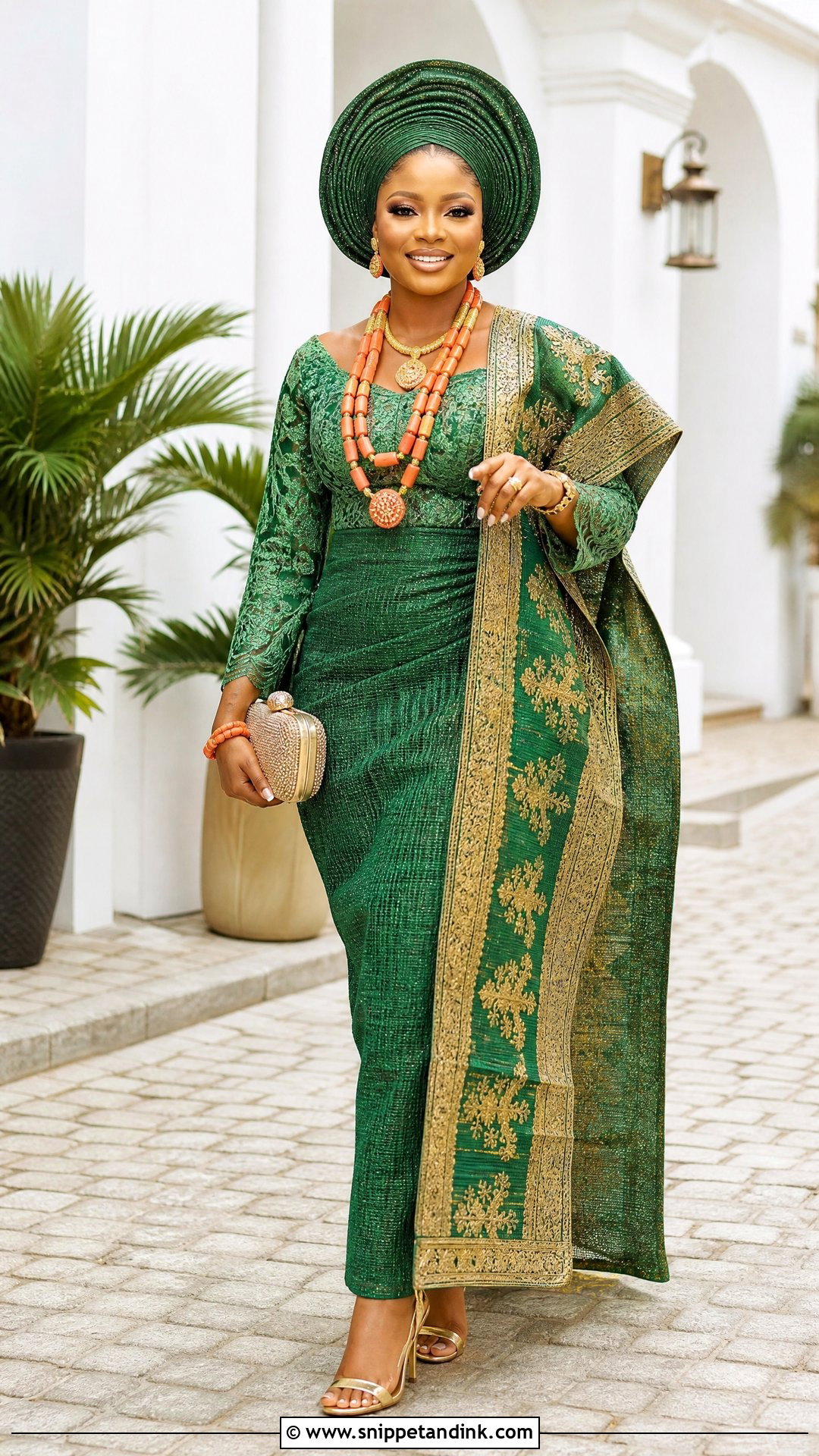
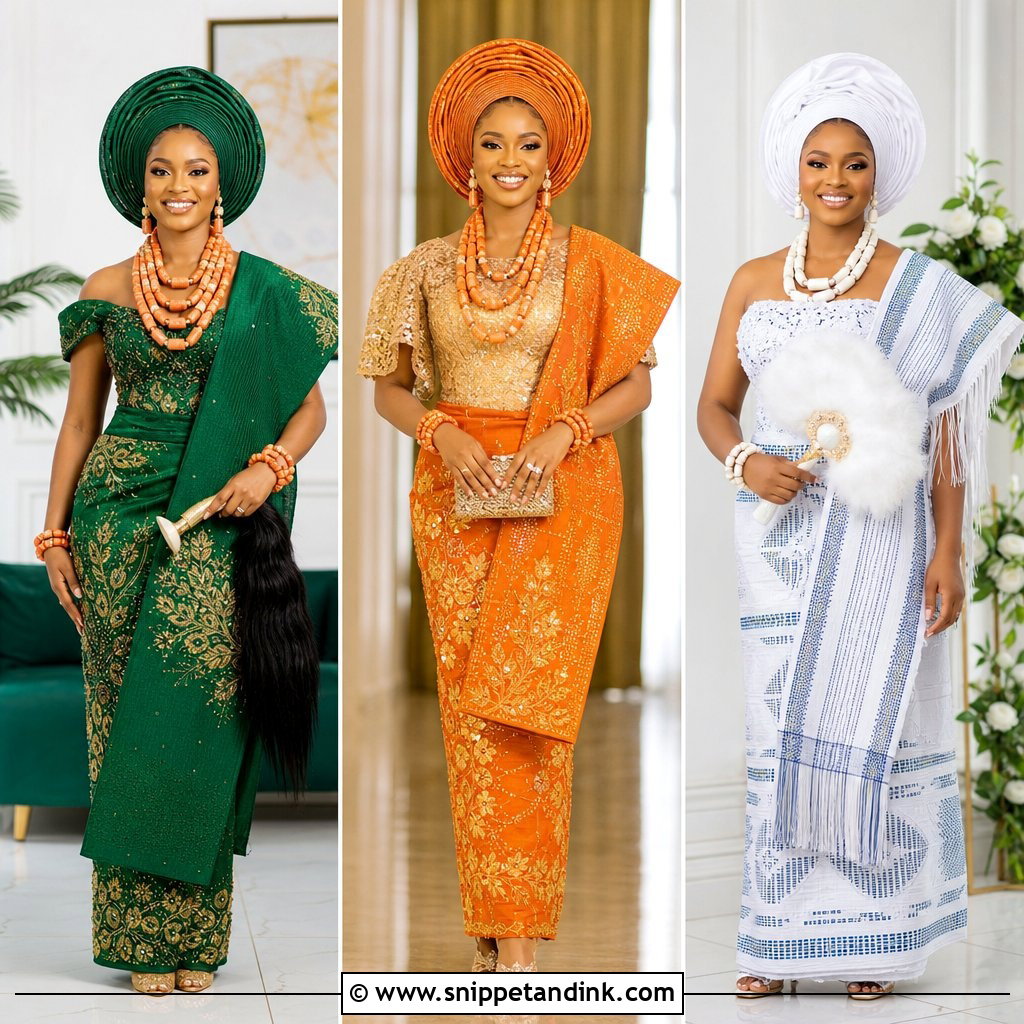
Emerald with coral beads is a contrast I love: the red-orange beads seem to glow against the green. A fitted buba, a wrapped iro, a matching gele and an ipele with gold or silver accents form the set. Gold jewelry warms it, while clear crystal makes it feel more current. Gold heels or green embellished sandals and a structured clutch keep it formal. Emerald stands out sharply against neutral decor, so it’s worth checking the hall’s backdrop before you commit.
8. Burgundy Yoruba Bridal Attire
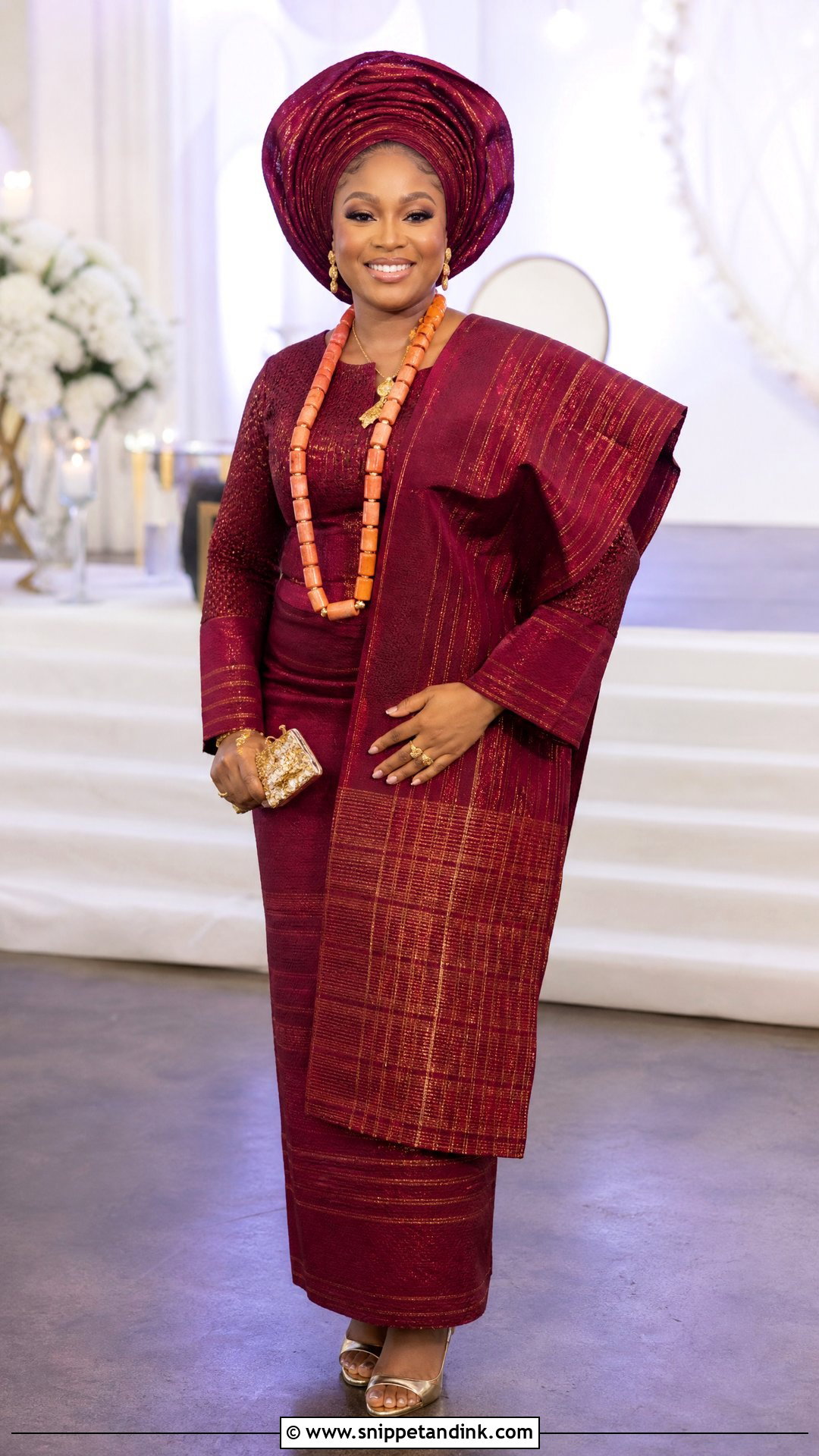
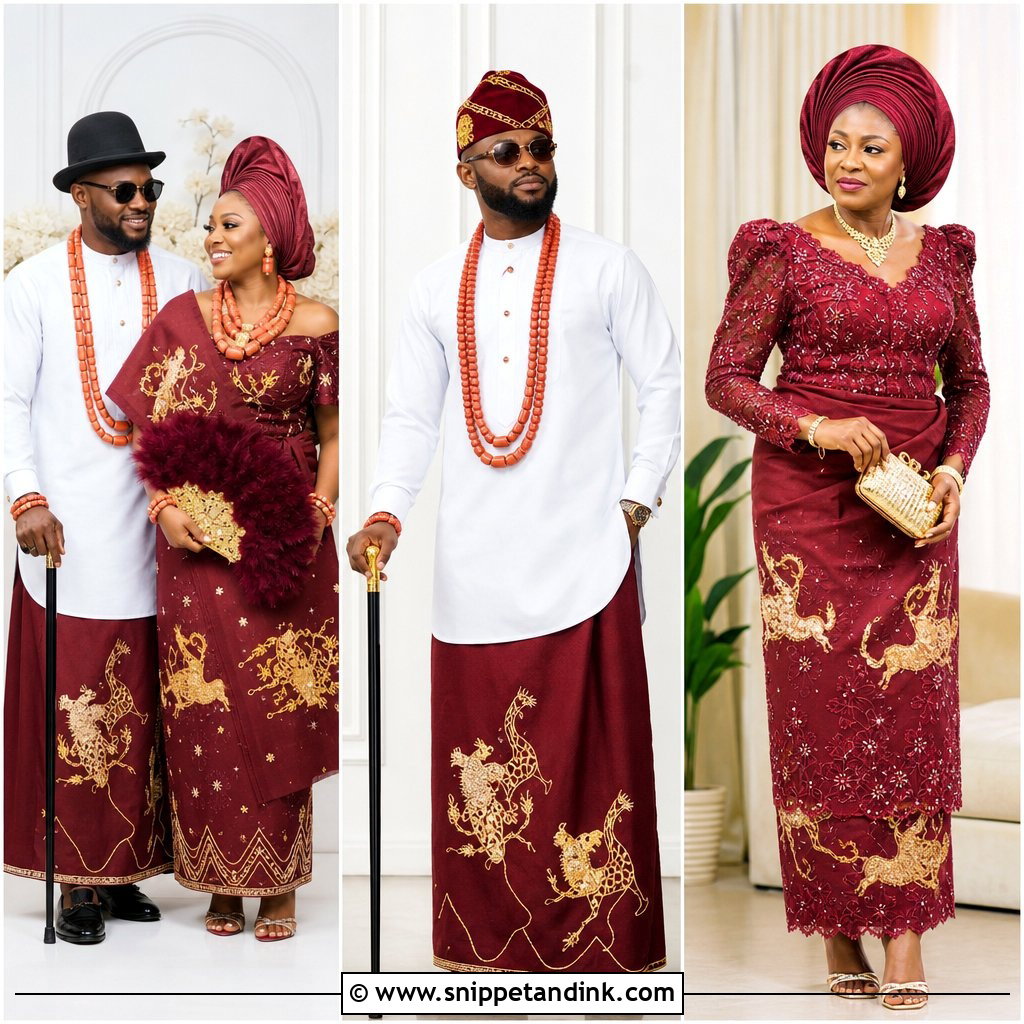
Burgundy gives depth without the intensity of bright red, which suits brides who find alaari too loud for them. A burgundy iro and buba, a matching gele, a shoulder ipele, gold earrings, coral beads and metallic heels make it complete, and beadwork around the neckline adds the bridal detail. For family asoebi, burgundy pairs well with champagne, blush or cream. Deep colors hide gele folds in photos, so I’d go for a gele with volume and a clean, sharp fold pattern.
9. Blush Pink Aso Oke Bridal Attire
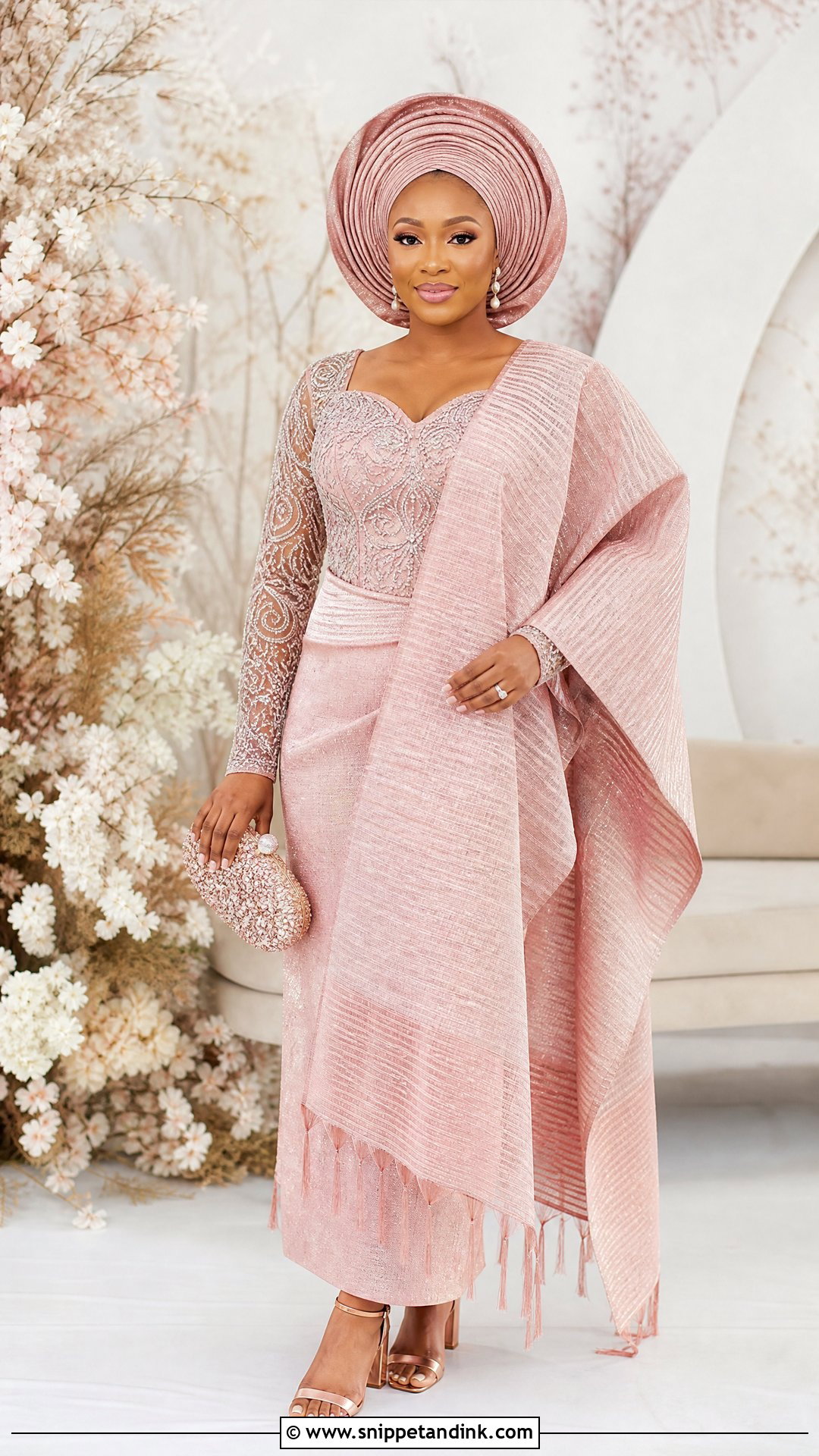
Blush is soft, so texture matters more than it does with any deep color. If the aso oke is simple, I add embroidery, crystal stones or a lace-trimmed blouse to stop it reading flat. A blush iro, a fitted buba with beaded sleeves, a matching gele and a delicate ipele form the set, with pearl jewelry, rose gold heels and a small embellished clutch. Outdoors, blush reflects soft light back onto the face. A crisply shaped gele keeps it ceremonial.
10. Purple Yoruba Bridal Attire
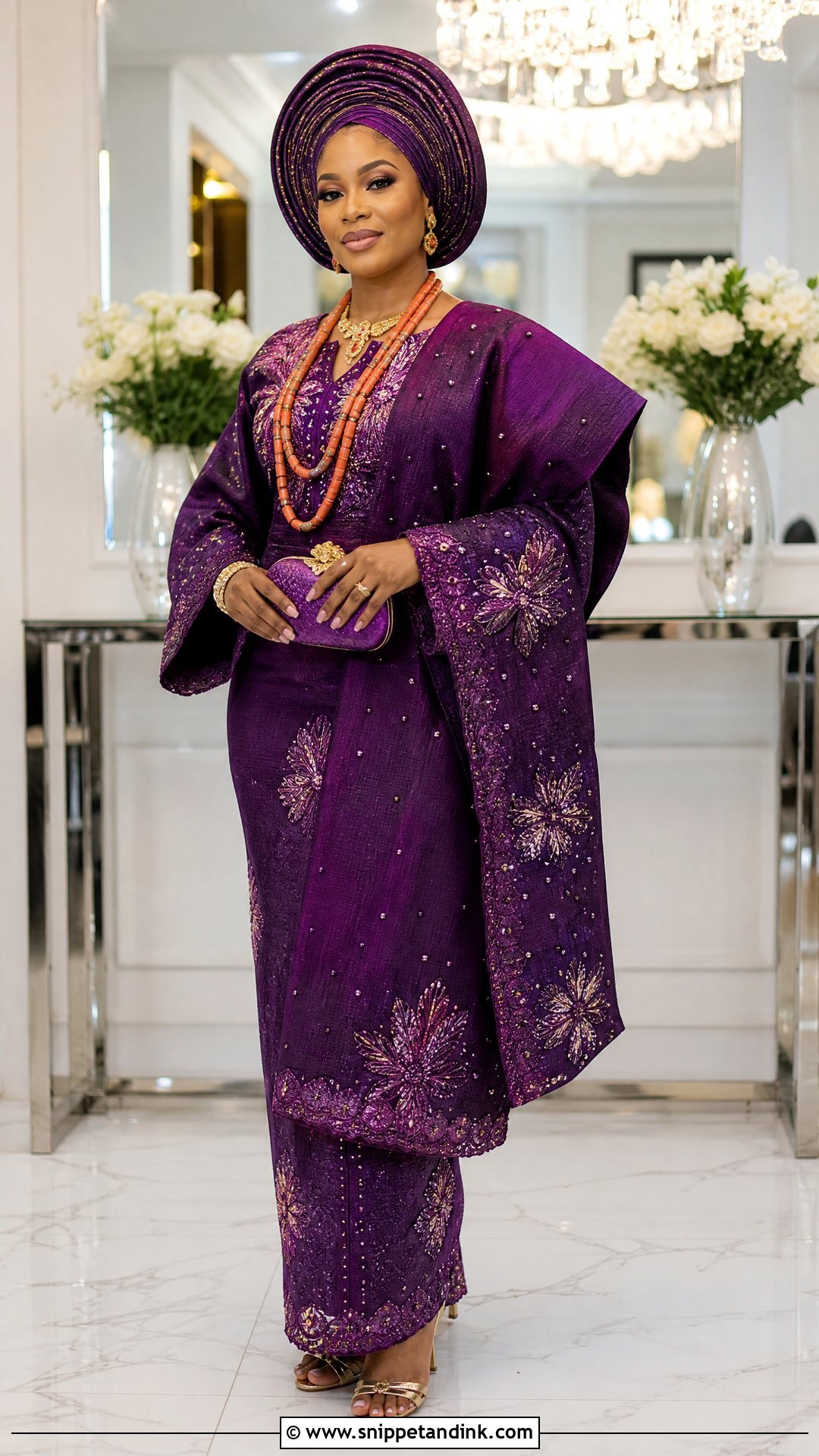
Purple runs from lavender to plum, and the deeper tones read more ceremonial. A deep purple aso oke iro and buba with silver or gold woven stripes, a matching gele, an embellished ipele, gold jewelry and metallic heels make the full look. Statement brides can layer beads or wear a bold necklace; minimal brides can keep everything slim. A structured fan gele adds height and drama. I check purple under the hall’s own lighting before ordering, because warm bulbs can push some purples toward brown on camera.
11. Teal Aso Oke Bridal Attire
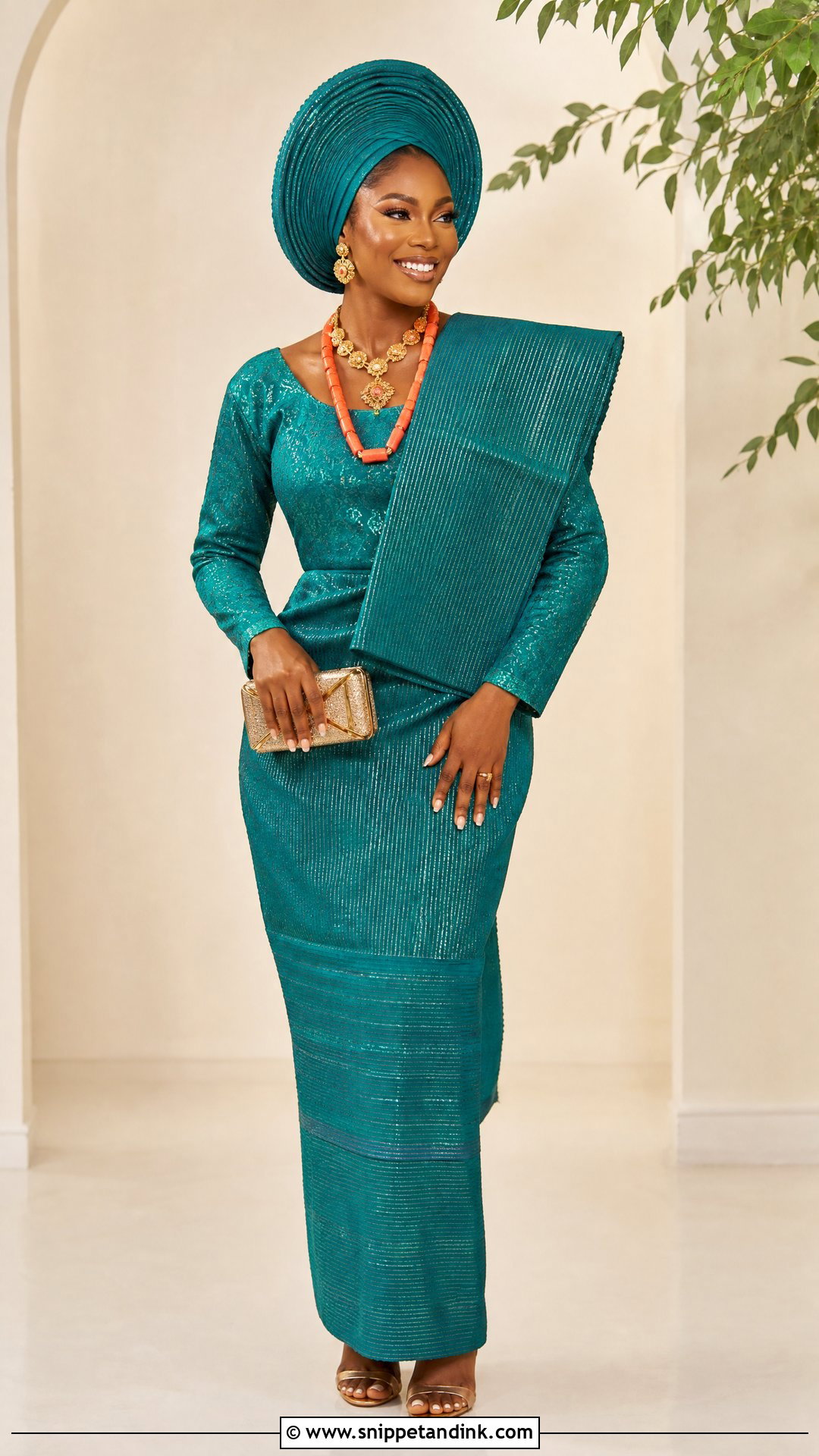
Teal sits between blue and green, so it takes gold, silver, coral or pearl equally well. That flexibility helps when two families can’t agree on which metal to wear. A teal wrapper, a tailored buba, a dramatic gele, a matching ipele and metallic sandals form the set, and beadwork at the neckline or an embellished clutch makes it bridal. It’s less expected than red or gold but still bold, and it photographs cleanly beside cream and white decor.
12. Silver Aso Oke Bridal Attire
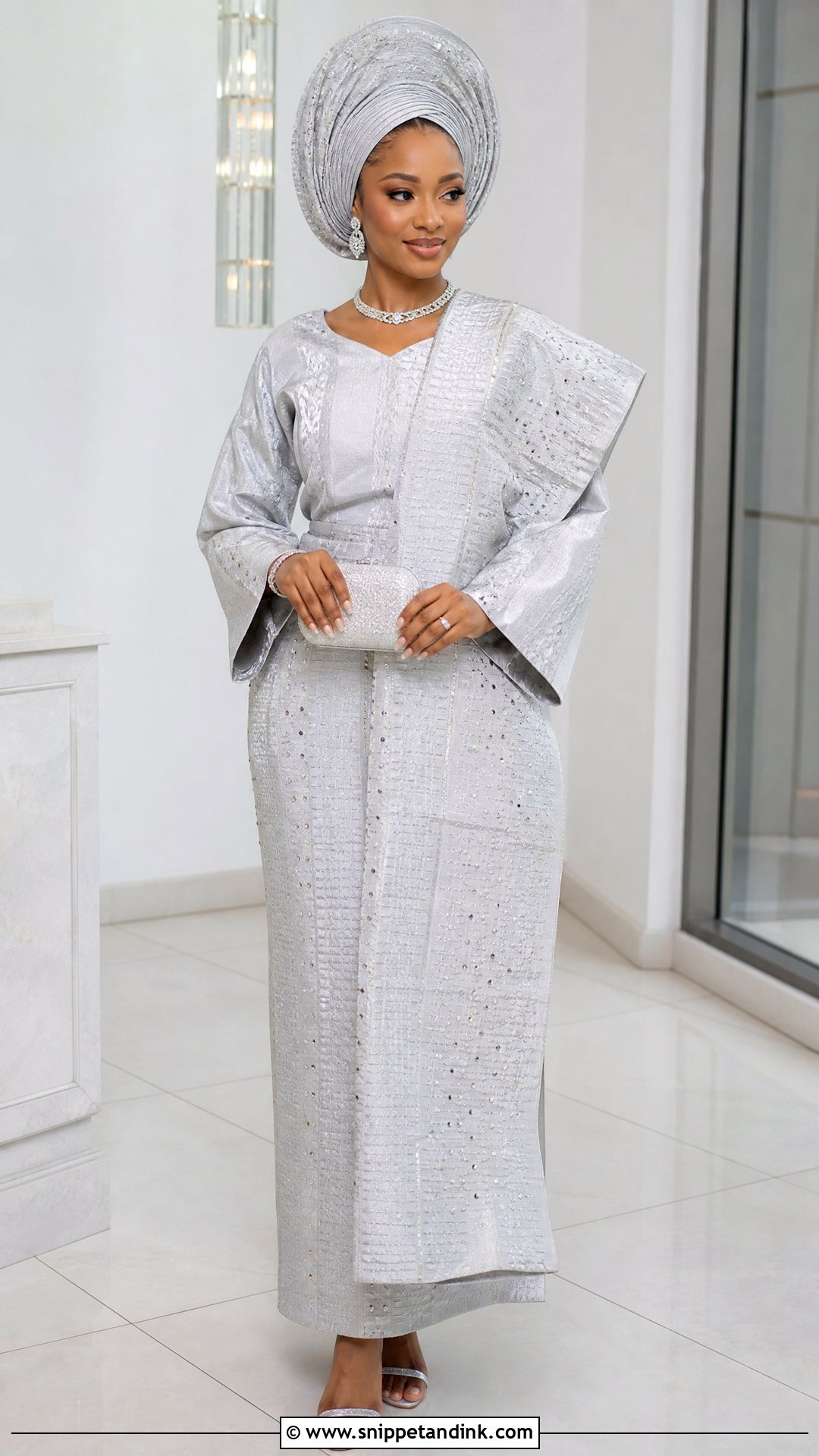
Flat silver cloth can turn grey in photos, so I only recommend silver aso oke with clear weaving or a visible pattern. A silver iro and buba, a structured gele, a matching ipele, crystal earrings, silver heels and a polished clutch make the look. A soft smoky eye or classic neutral makeup suits the cool tone. Mixing silver with white or pale blue keeps it crisp rather than metallic all over.
13. Coral Bead Yoruba Bridal Attire
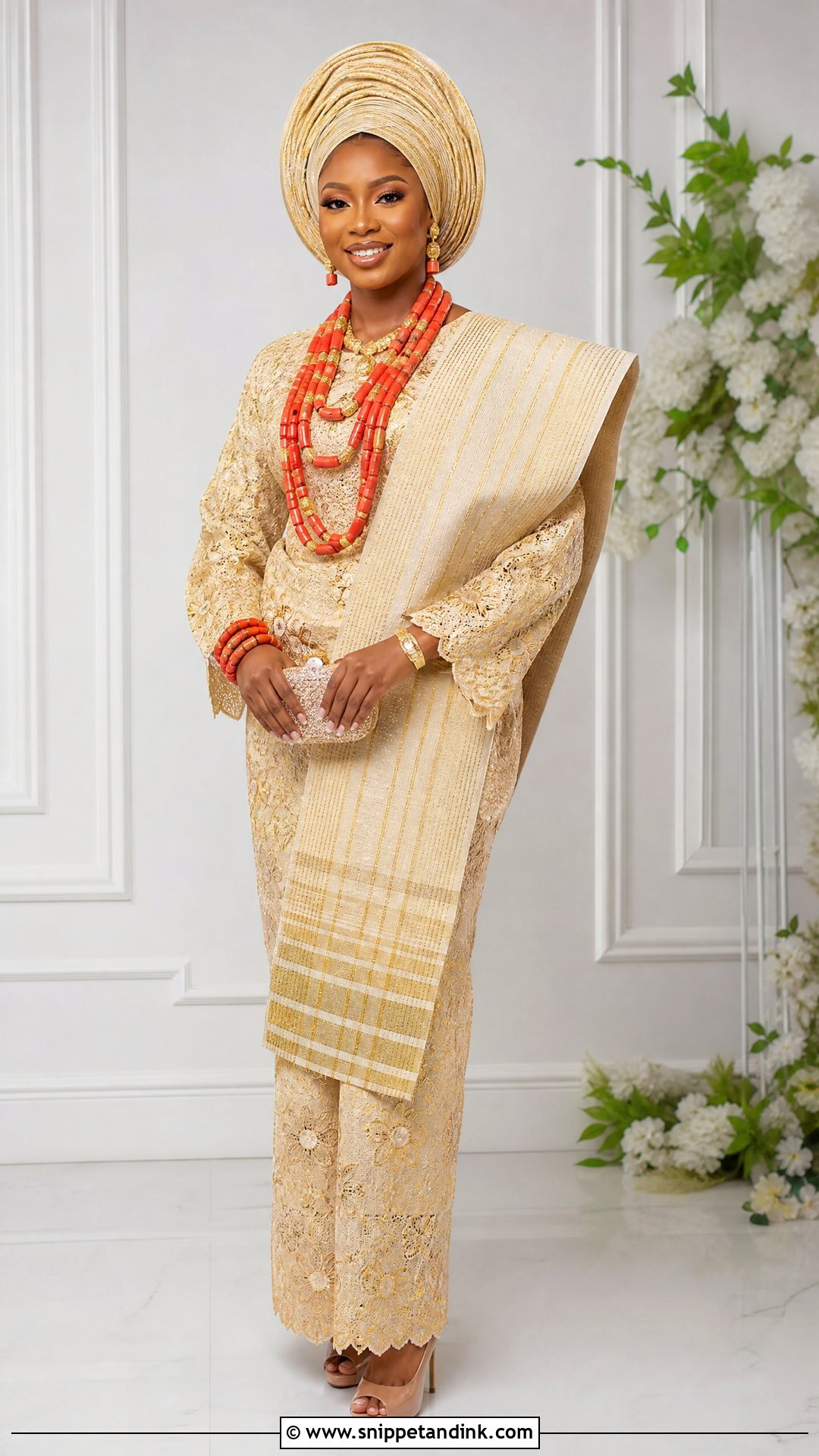
Coral beads, iyun, have long been worn by Yoruba royalty and brides, and they can turn a simple outfit into a heritage statement. They sit well on white, gold, cream, red or green aso oke. Real coral is heavy, so before the day I check the weight of a full layered set on the bride’s neck and shoulders; hours of it is tiring. Layered necklaces, bracelets, matching earrings, a gele and an ipele complete the look. With large beads, keep the blouse clean and the clutch simple, and let gold accents and warm makeup support the coral.
14. Komole Yoruba Bridal Attire
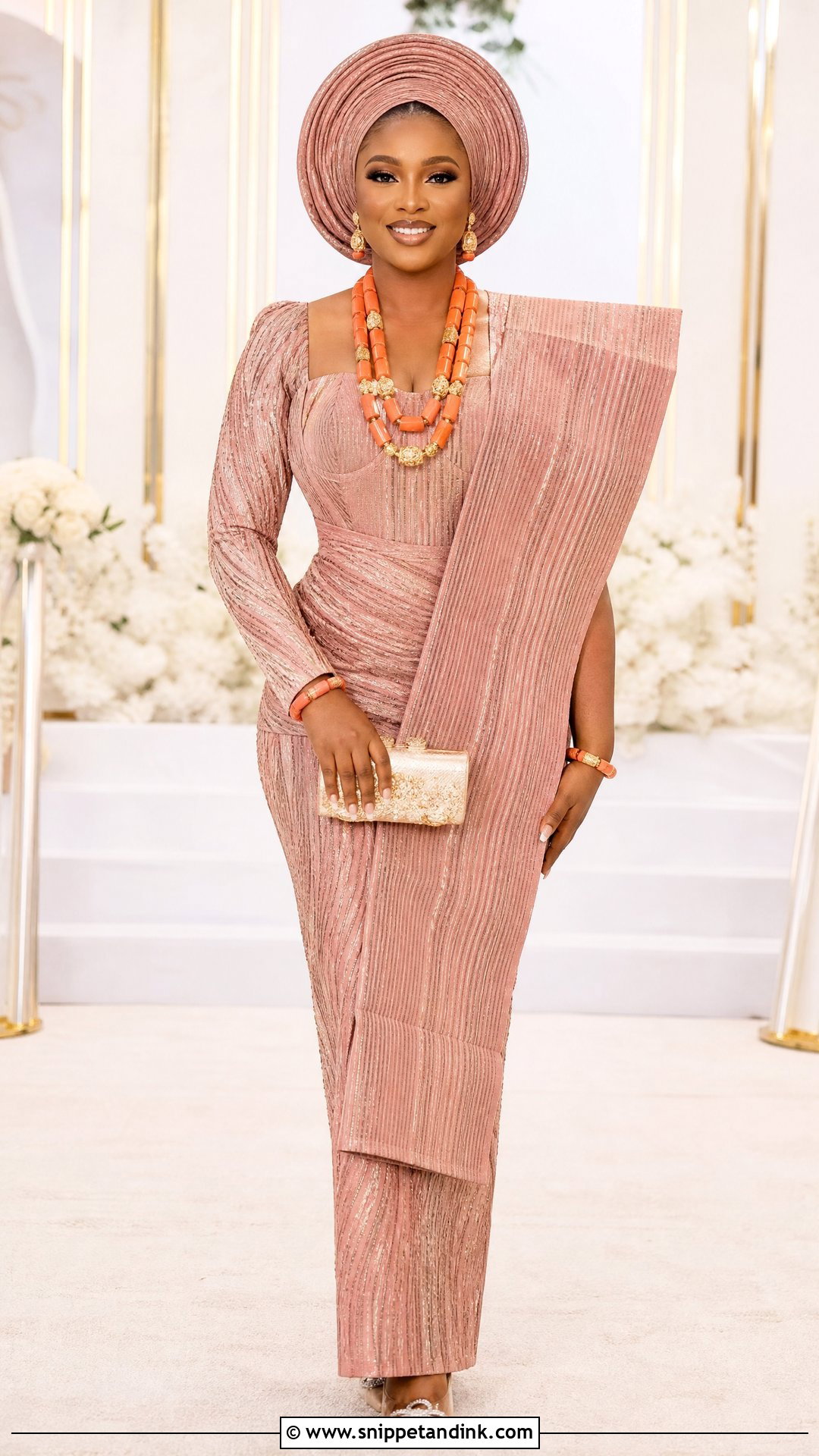
Komole is a fitted gown cut from aso oke, or aso oke with lace, and it gives easier movement than a separate wrapper that can loosen. A mermaid, column or slightly flared skirt all work. To keep it clearly Yoruba, use authentic aso oke and pair it with a gele, an ipele or sash, beads and statement earrings, so it doesn’t read as an ordinary evening gown. Heels and a clutch finish it. Stiff aso oke has no stretch, so I leave enough ease at the hip and seat for the bride to kneel.
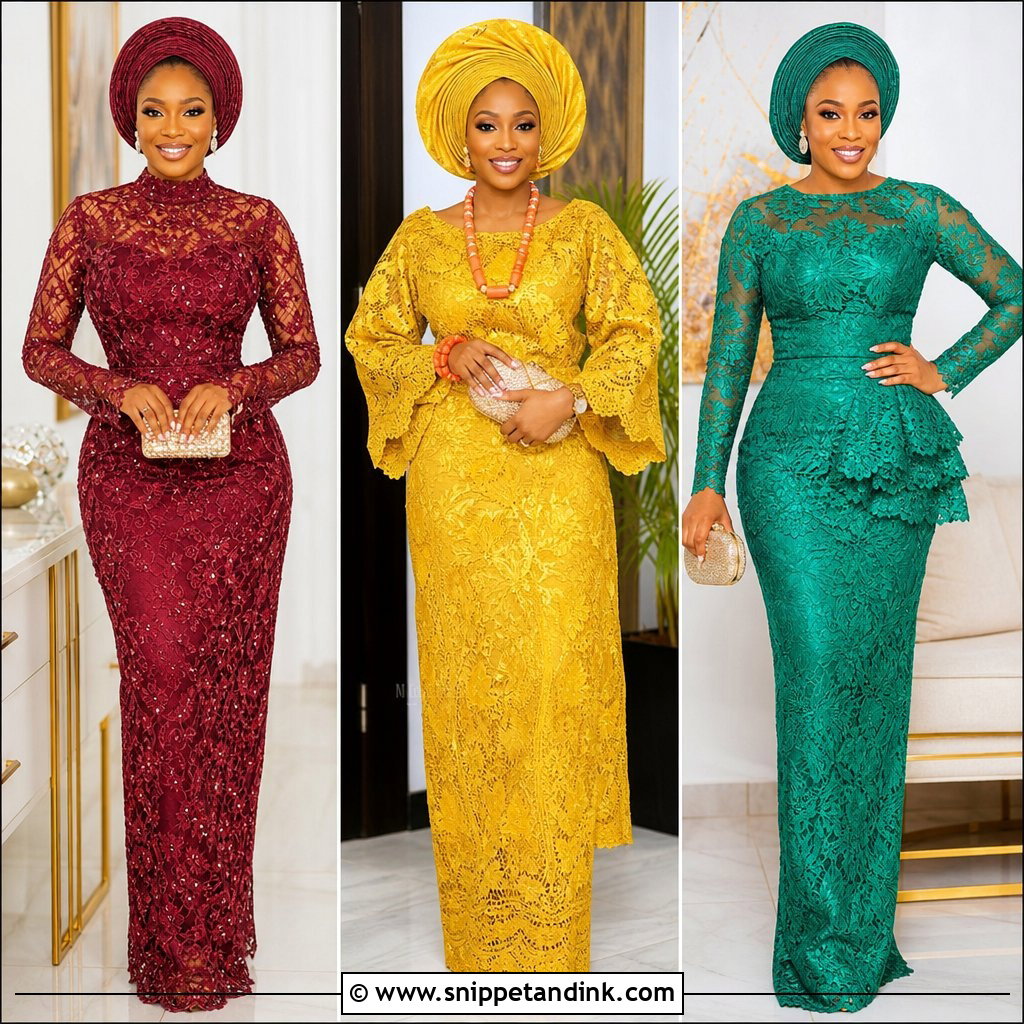
15. Lace Buba And Aso Oke Wrapper Bridal Attire
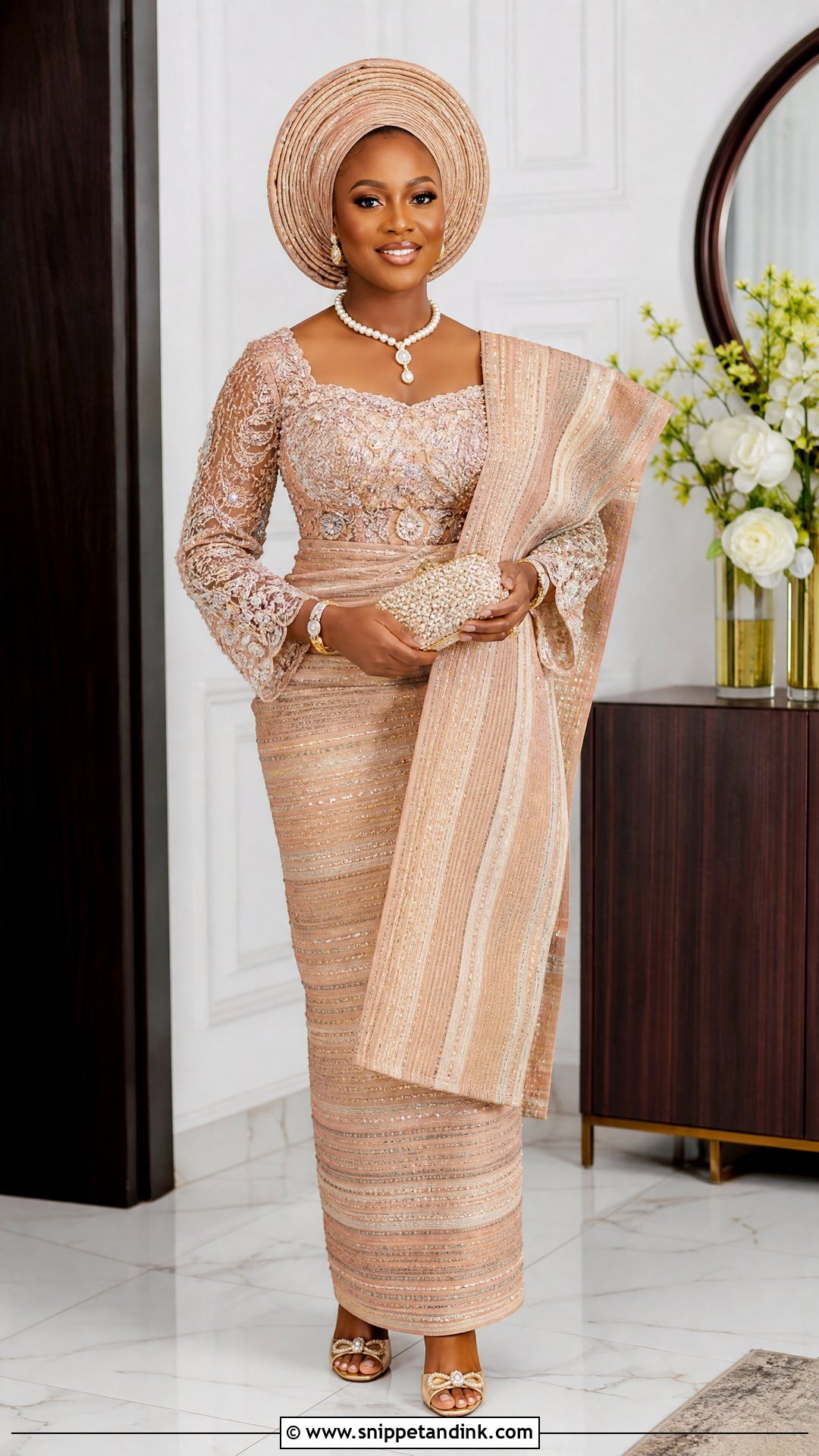
Lace and aso oke balance each other: lace softens the top while the woven cloth holds the shape below. Beaded lace, cord lace or embroidered lace all suit the buba, worn with an aso oke wrapper and a gele and ipele in the same cloth. Ask for the lace to be lined. Unlined lace scratches, and under flash it can show more skin than you expect. Gold or pearl jewelry suits most palettes, with a clutch matched to the wrapper or gele.
16. Peplum Buba Yoruba Bridal Attire
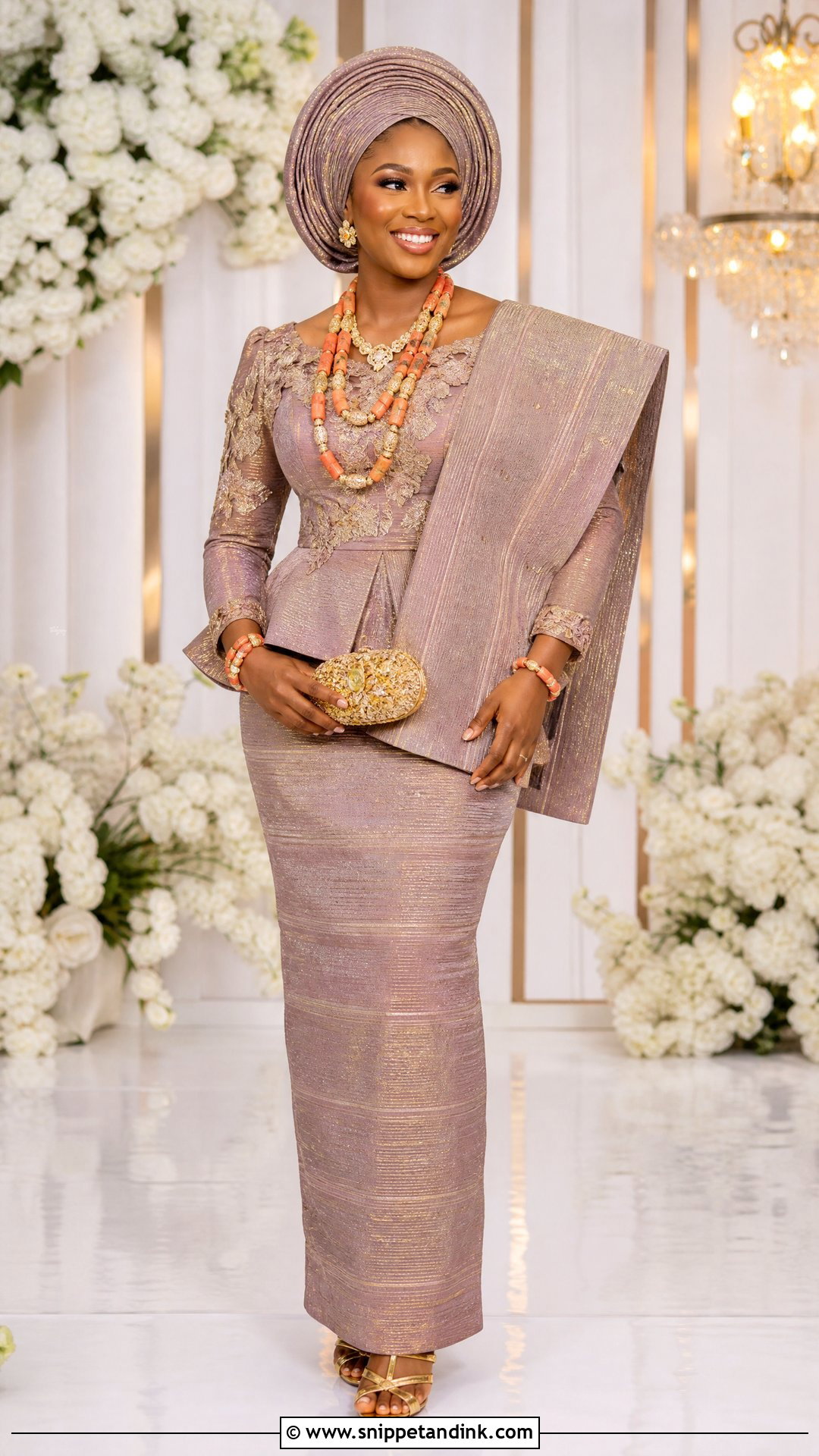
A peplum buba defines the waist and sits over the iro, hiding the knot or tuck where the wrapper is tied. That’s its practical advantage over a straight buba. Keep the peplum smooth rather than bulky, especially over thick aso oke, or it adds width right at the hip. An aso oke iro, a matching gele, a shoulder ipele, beads, gold heels and a compact clutch complete the set. A clean neckline and a strong gele shape keep it polished from every side.
17. Off Shoulder Yoruba Bridal Attire
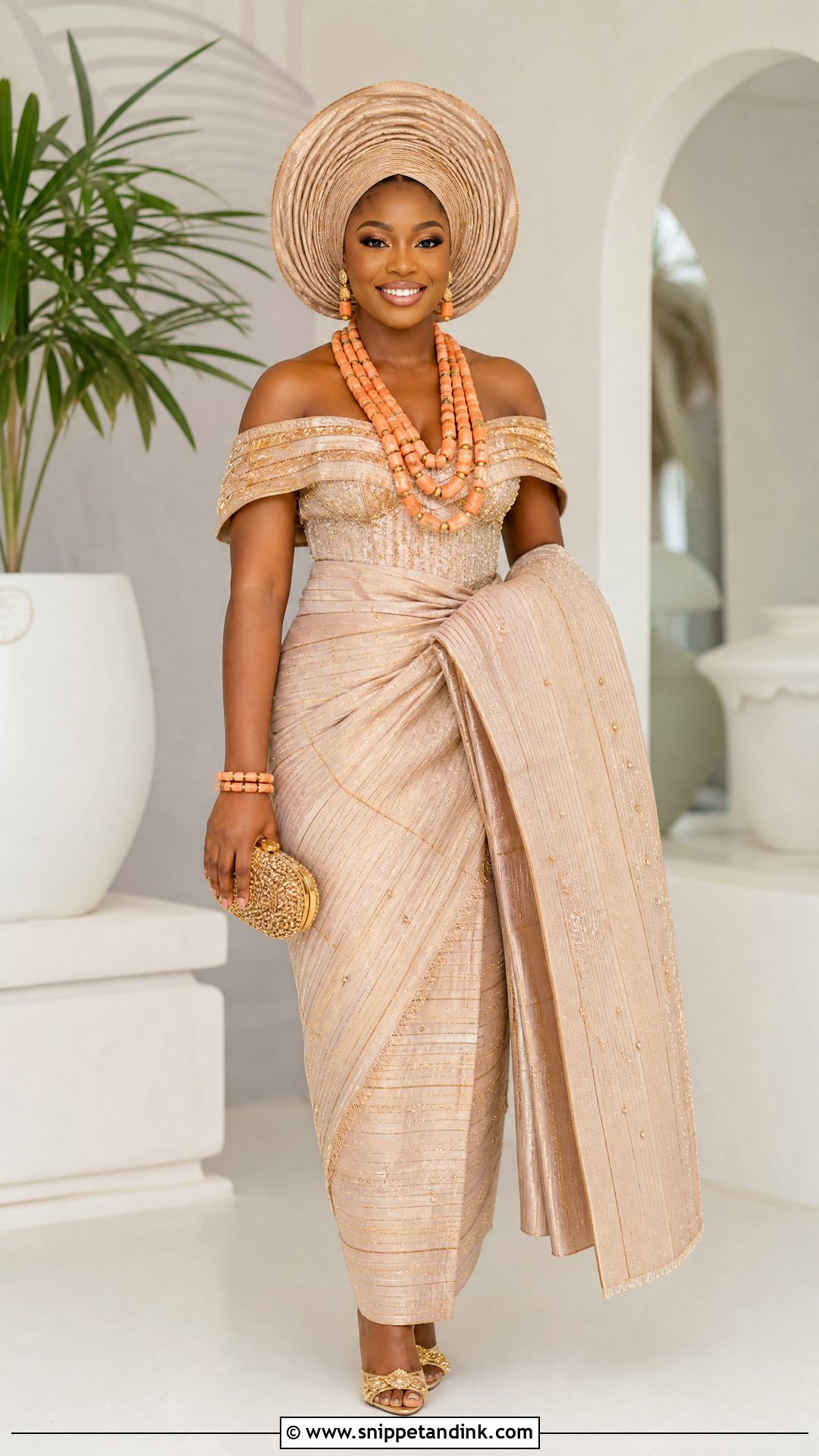
An off-shoulder buba can look current, but it has to stay put through hugs, greetings and kneeling. I insist on boning or a silicone grip along the neckline and test it with the bride’s arms raised. Keep the neckline modest too, given how many elders she’ll greet. A wide gele balances the bare shoulders, and a necklace or layered beads frame the neckline. A wrapped iro, an ipele, heels and a clutch complete it.
18. Long Sleeve Yoruba Bridal Attire
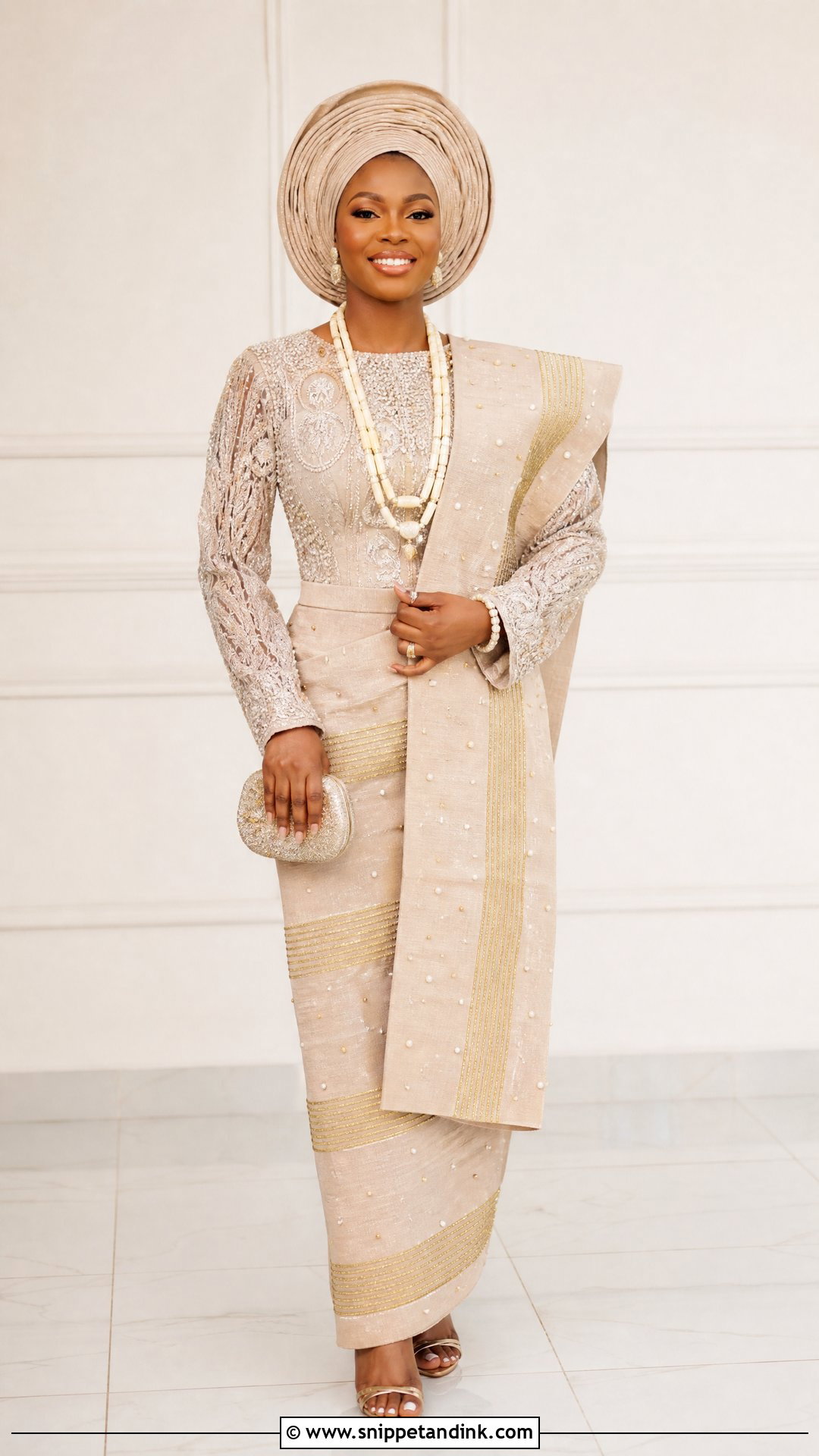
Many families prefer covered arms for the ceremony, and long sleeves give that coverage with plenty of room for detail. Aso oke sleeves are stiff, so I often suggest lace or a mix: lace moves with the arm, while aso oke sleeves can restrict you when you raise your hands to dance. Beaded cuffs, sheer panels or subtle embroidery add interest. A fitted sleeve looks clean and a slight bell adds drama. With the arms covered, bring detail upward through earrings, the gele and the clutch.
19. Mermaid Komole Yoruba Bridal Attire
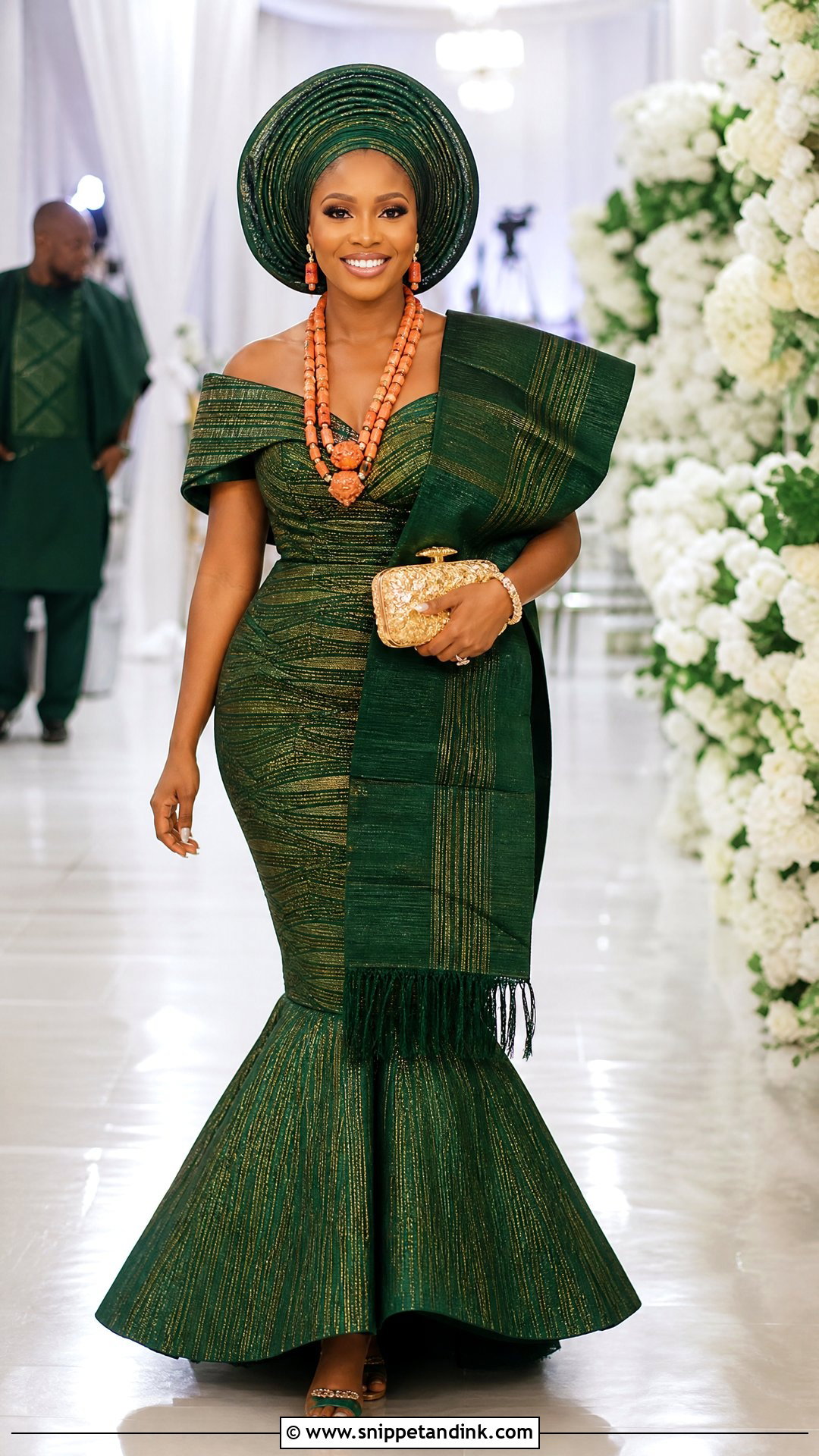
A mermaid komole is the most glamorous shape here, and the least forgiving to kneel in. I ask the tailor to leave room through the knee and set the flare slightly higher, so the bride can kneel for her parents’ blessing without straining the seams. Aso oke alone or aso oke with lace both work, styled with a matching gele, an ipele-style sash, beads, earrings, heels and a clutch. If the gown is heavily embellished, keep the gele simple. It makes a grand entrance, but plan a second outfit for the dancing.


20. Beaded Aso Oke Bridal Attire
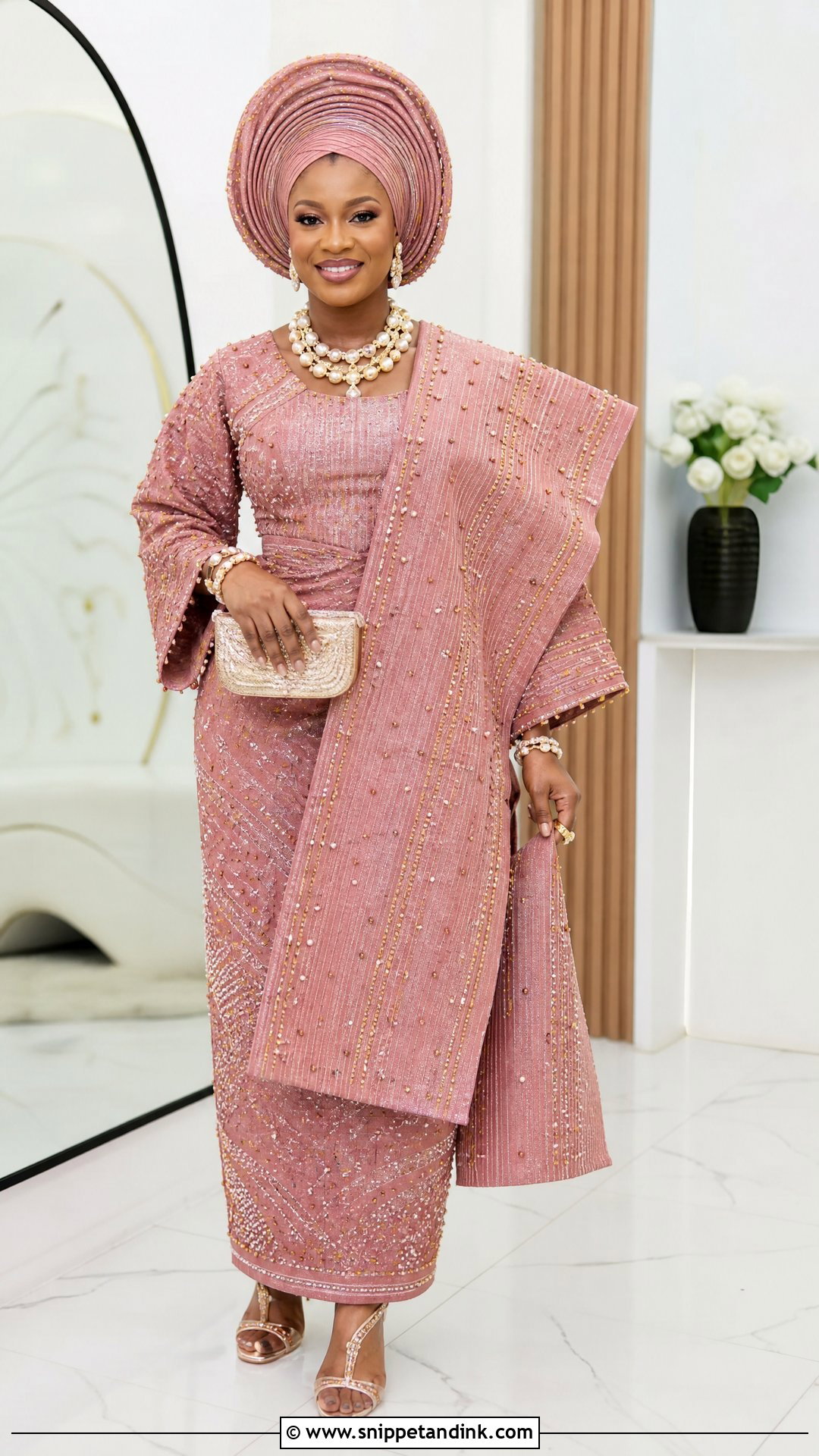
Beadwork should frame the fabric, not bury it. I pick one main area for heavy embellishment, usually the blouse or the sash, and keep everything else light. An aso oke iro and buba beaded at the neckline, cuffs, hem or wrapper border, with a matching gele, ipele, jewelry, heels and clutch, makes the full look. Clear crystals, pearls, gold stones or coral beads suit different colors. Hand-sewn beads add real weight to aso oke, so try the finished buba on well before the day.
21. Pastel Yoruba Bridal Attire
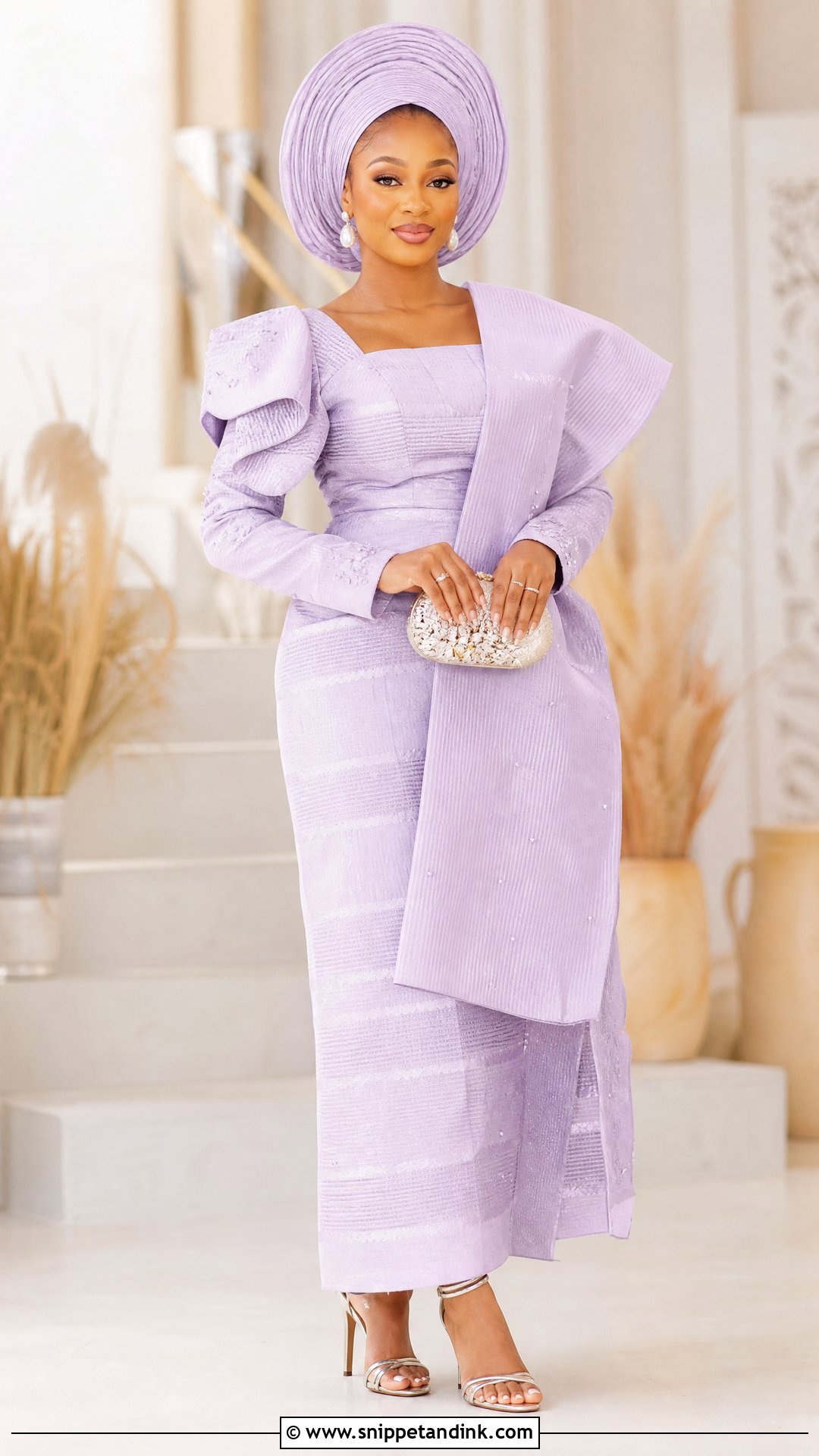
Pastel Yoruba bridal attire is the softest look on this list. Lilac, mint, powder blue, peach and soft pink all work in aso oke, especially with pearl jewelry and light metallic heels. Pastels look plain unless the cloth has texture, shimmer or a woven pattern, so I go for those every time. A pastel iro and buba, a matching gele, an ipele and a small embellished clutch complete it. Pale colors also show makeup transfer fast, so a cover cloth at the makeup chair is worth bringing.
22. Monochrome Yoruba Bridal Attire
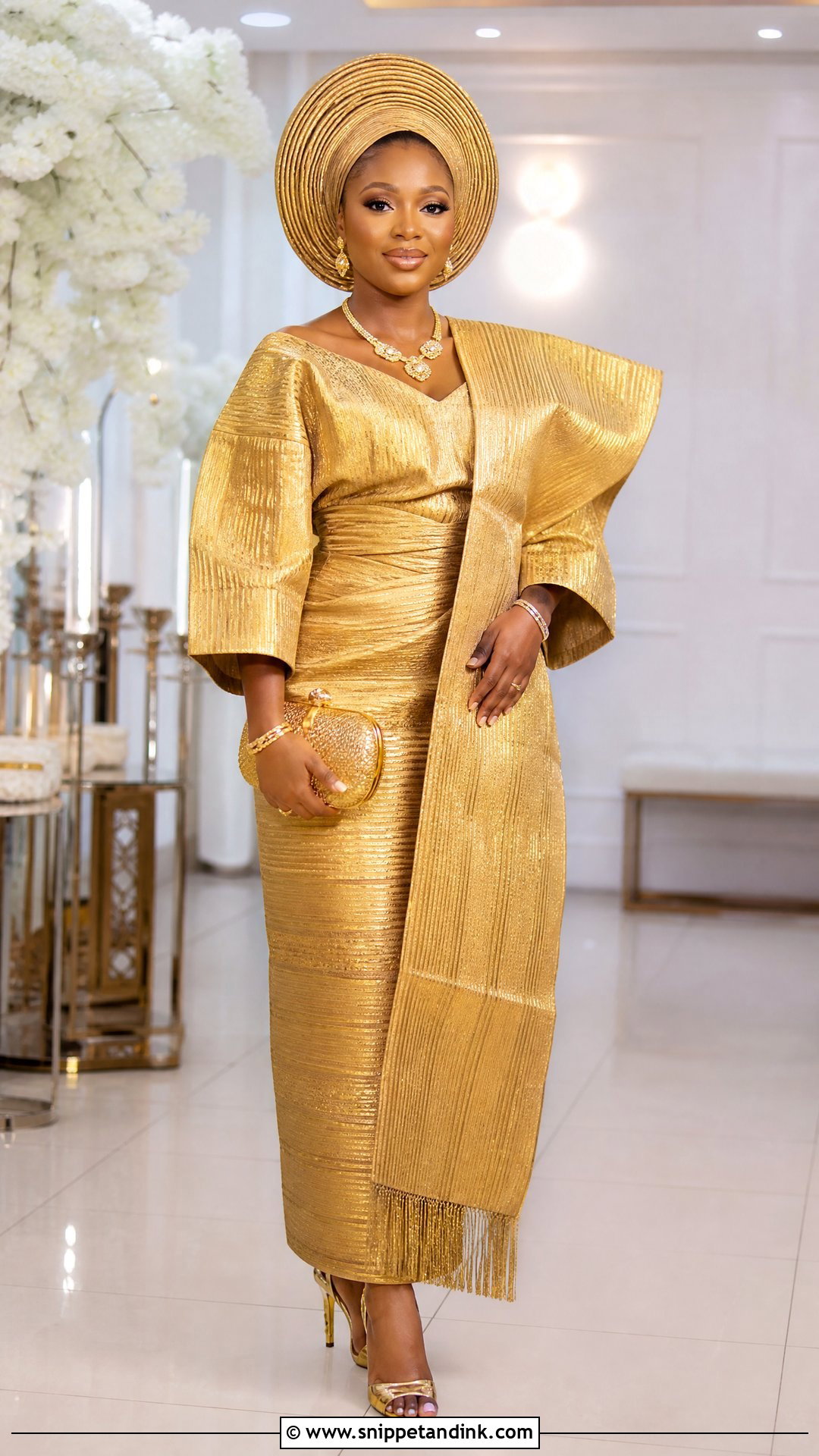
Monochrome means one color from head to toe, whether white, gold, red, blue or green, with the iro, buba, gele, ipele, shoes, clutch and jewelry matched or close. Texture is what keeps it interesting. Woven aso oke beside beadwork, metallic thread, a satin lining or crystal details gives the outfit depth. It creates a strong identity in photos and makes coordinating the groom’s agbada and the family asoebi far simpler.
23. Two Tone Yoruba Bridal Attire
Two tones give more color without chaos, as long as the placement is balanced. Ivory and gold, red and champagne, blue and silver, green and gold, and blush and coral are common pairings. One color goes on the iro and the other on the buba, gele or ipele. Shoes and jewelry should connect the palette rather than bring in a third color; a gold gele and gold ipele, for instance, tie together an ivory wrapper and blouse. I find two tones especially useful when each family wants its own color represented.
24. Adire Yoruba Bridal Attire
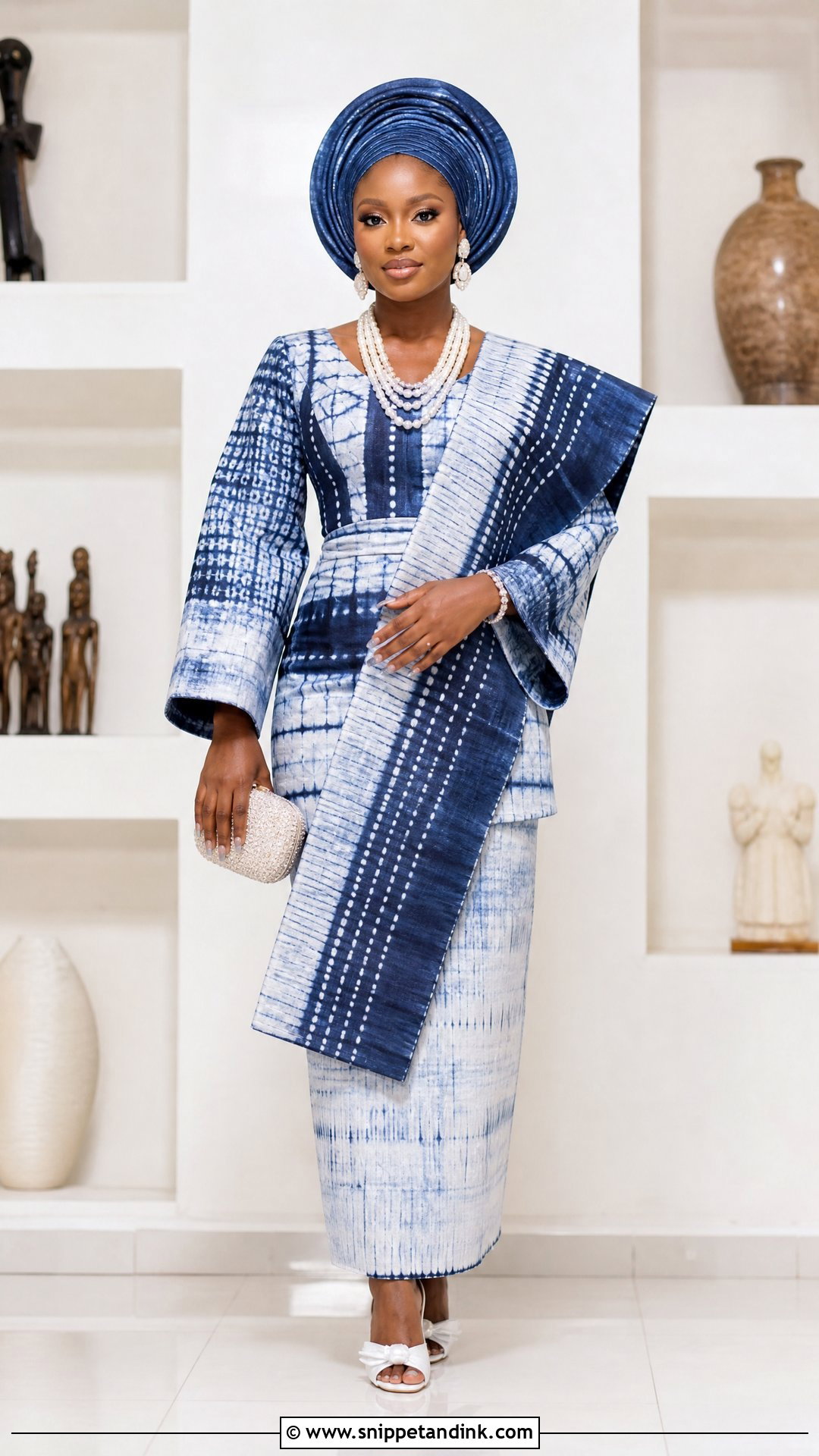
Adire is Yoruba resist-dyed cloth, traditionally indigo, patterned by tying, stitching or painting starch paste onto the fabric before it goes into the dye. It brings a handmade, artistic feel. Wear an adire buba with an aso oke wrapper, or use adire for the full iro and buba look with a matching gele and ipele. Blue and white is the classic; newer pieces add pastels, brown, green or black. The patterns are busy, so keep accessories clean with silver, pearl beads or simple gold. New indigo can rub off on skin and pale fabric, so have the adire rinsed before the tailor cuts it.
25. Aso Oke With Matching Groom Outfit
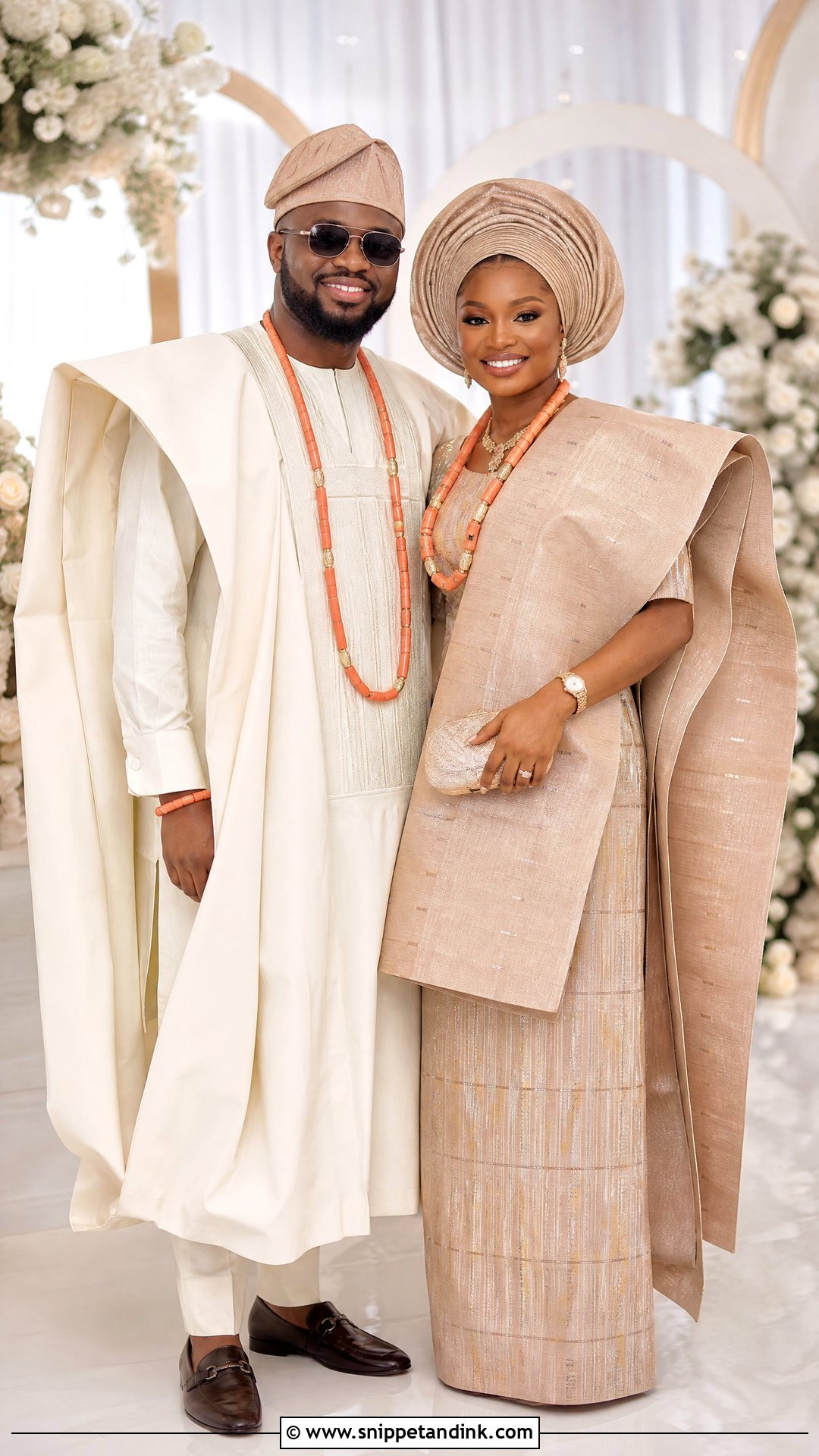
Coordinating with the groom doesn’t mean identical outfits. The bride wears iro, buba, gele and ipele, and the groom wears agbada, buba, sokoto and fila in the same cloth or a complementary color, which creates a strong couple look while each outfit stays distinct. Champagne aso oke with gold details on the bride and an ivory agbada with a champagne fila on the groom is one example. Link the accessories as well, through matching beads, gold accents or a shared embroidery motif. Where possible I order both fabrics from the same weaver at the same time, so the colors match exactly.
Ordering Aso Oke Early Enough for Custom Weaving
Aso oke is still woven in narrow strips and sewn into wider panels, and a custom color or pattern means the weaver starts from yarn. That takes time, and longer again in the busy wedding months. I tell brides to place custom orders months rather than weeks before the date, and to allow extra time if the family asoebi will be woven in the same colors. Ask for a sample strip before the full order, and look at it in daylight and under indoor lighting before you approve it.
The Gele on the Morning
Book a gele stylist separately unless your makeup artist ties gele too, and schedule the tie after makeup so nobody has to touch your face again. Aso oke gele is stiff, which is why it holds dramatic folds, but that stiffness presses on the head. I ask for it snug at the back and a little looser over the temples, because a tight band there brings on a headache within hours.
- Wear your hair flat and smooth underneath; a bulky bun pushes the gele out of shape.
- Keep a few pins and a small mirror in the clutch for touch-ups late in the evening.
- For the second outfit, a pre-tied gele goes on in seconds and saves real time during the change.
Heritage First, Then the Details
A Yoruba bridal look has to honor the culture, flatter the bride and work for the ceremony she’ll actually have, with all the kneeling, dancing and greeting that comes with it. Aso oke, iro, buba, gele, ipele, beads, shoes and clutch should read as one outfit. Some brides feel most themselves in classic white, red, blue or gold; others in pastels, lace, komole or beadwork. Start with the family’s colors and the cloth, fit everything for movement, and the details fall into place.
You'll Like These Ideas:




Leave a Reply