
Chinese bridal dressing covers a wide span, from heritage ceremonial clothing to Western gowns with a single Mandarin collar. Red is still the signature color, and gold embroidery, phoenix motifs and silk tie a look to the culture even when the shape is modern. The traditional pieces most brides consider are the fitted qipao, the embroidered qun kwa, layered hanfu and the ornate Xiu He Fu, and the qipao and qun kwa remain the usual picks for the tea ceremony and a reception change. Many brides wear two or three outfits in a day, so I’ve styled each of these twenty with the shoes, jewelry and hair I’d use, and noted where each one fits in the schedule.
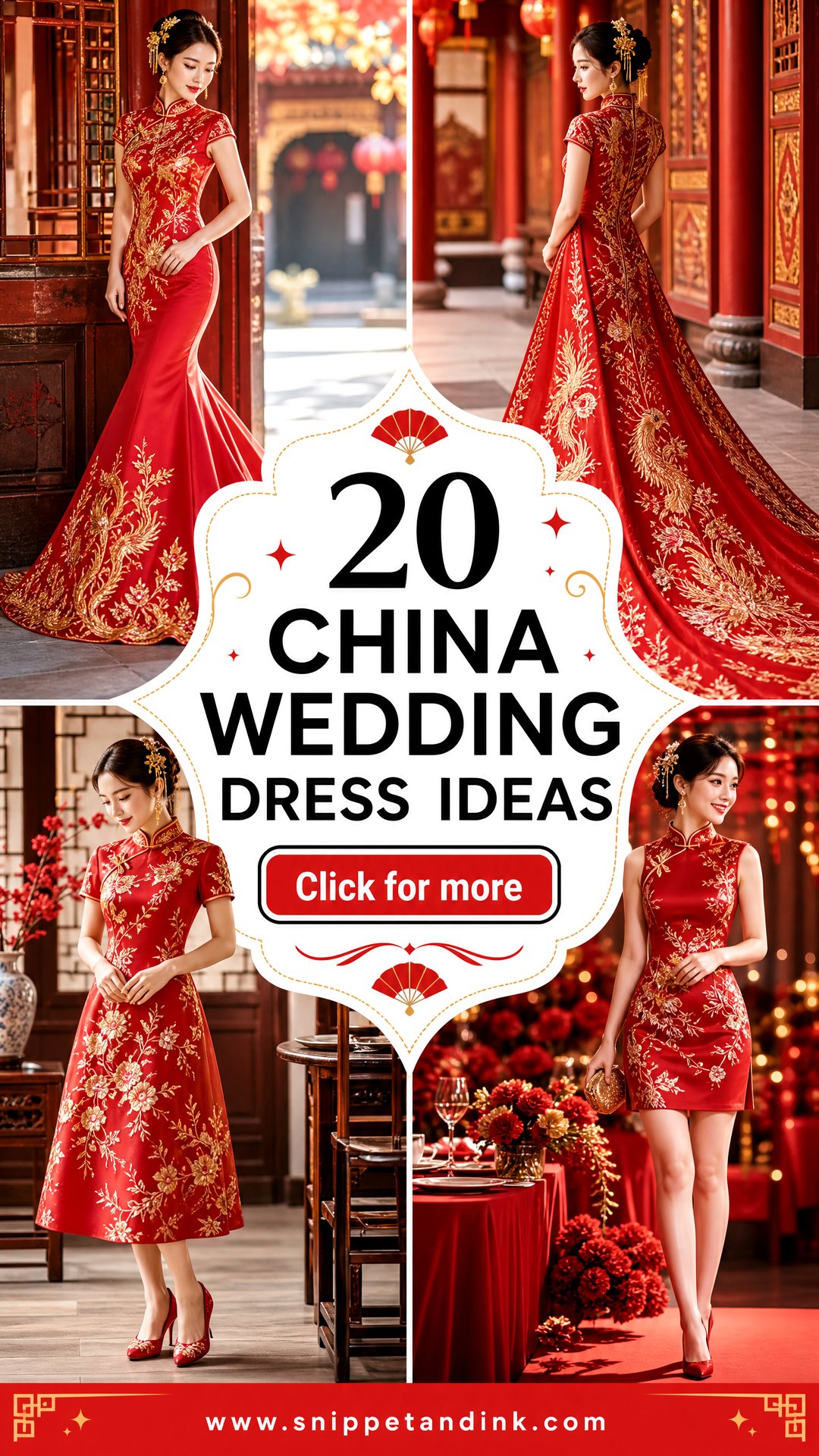
Mapping Your Outfit Changes Around the Tea Ceremony
Many Chinese weddings involve a morning tea ceremony, an afternoon or evening ceremony and a long banquet, and brides often change two to four times. The way to stop the day turning into a race is to plan the outfits as a sequence, not as separate purchases.
- Tea ceremony: you’ll kneel or bow and serve elders. Choose something with room at the knee, such as a qun kwa, Xiu He Fu or a loose qipao, and low shoes.
- Main ceremony: this is where a gown, a train or a cape belongs, because you’ll mostly stand and walk.
- Banquet: you’ll sit, toast table by table and eat. A tea-length qipao, separates or a mini moves easily.
Each change takes longer than people expect once hair ornaments and jewelry are swapped, so allow at least twenty to thirty minutes and assign one person to help with fastenings. Keep the hairstyle consistent enough that only the ornaments change, not the whole updo.
1. Red Qun Kwa Wedding Dress
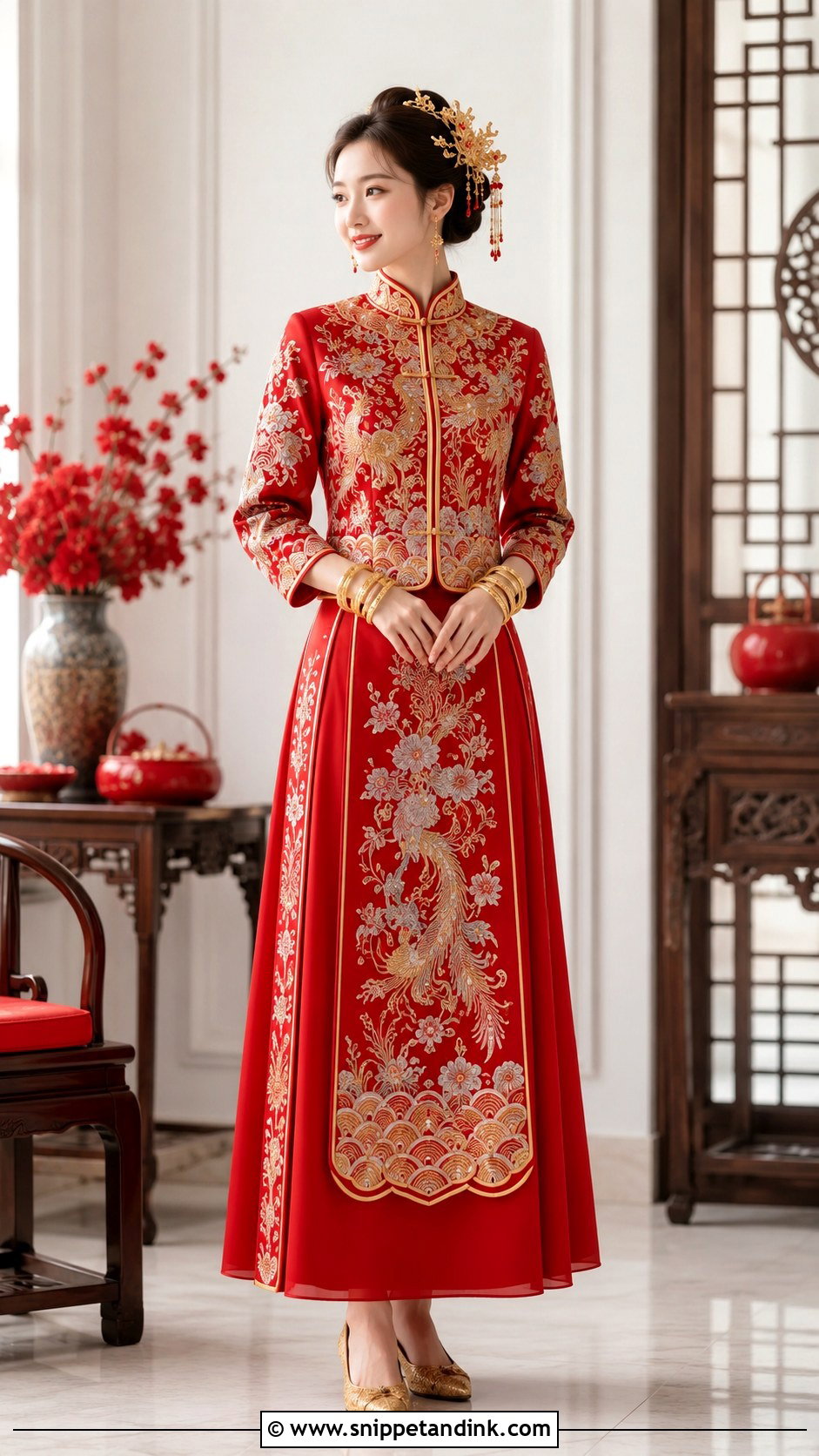
The red qun kwa is the outfit I see most at tea ceremonies, and for good reason. The embroidered jacket and long skirt let you kneel, bow and pour tea without a fitted bodice fighting you. The more of the red ground the gold dragon, phoenix and peony embroidery covers, the more formal and costly the set. Low red or gold heels are a must, because you’ll be up and down repeatedly. Gold bangles, drop earrings and a delicate phoenix hairpiece are traditional. Wear the hair in a low bun so the collar shows, and keep the makeup to glowing skin and a classic red lip.
2. Gold Qun Kwa Wedding Dress
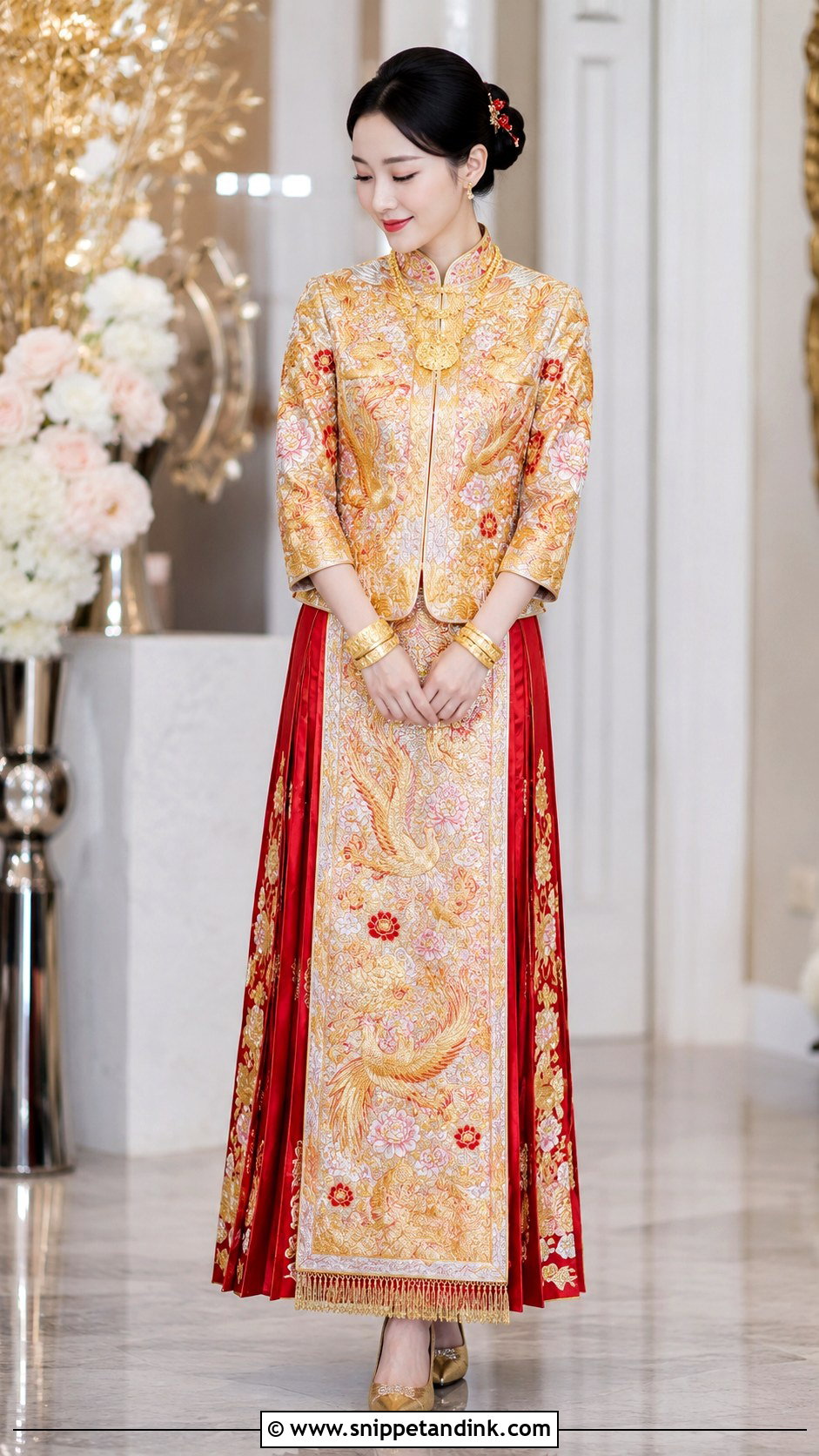
Gold-dominant qun kwa, where the metallic thread covers most of the red silk, reads even more formal under indoor lights. It’s heavy, though. A densely embroidered jacket can weigh noticeably more than you expect, so wear it around the house for an hour before the day. Spread the jewelry out: layered gold necklaces against a heavily worked collar quickly look crowded, so I’d choose the necklaces or the bracelets as the focus. A single phoenix comb in a smooth bun is plenty. Gold pumps or embroidered flats keep the color running head to toe.
3. Red Xiu He Fu Wedding Dress
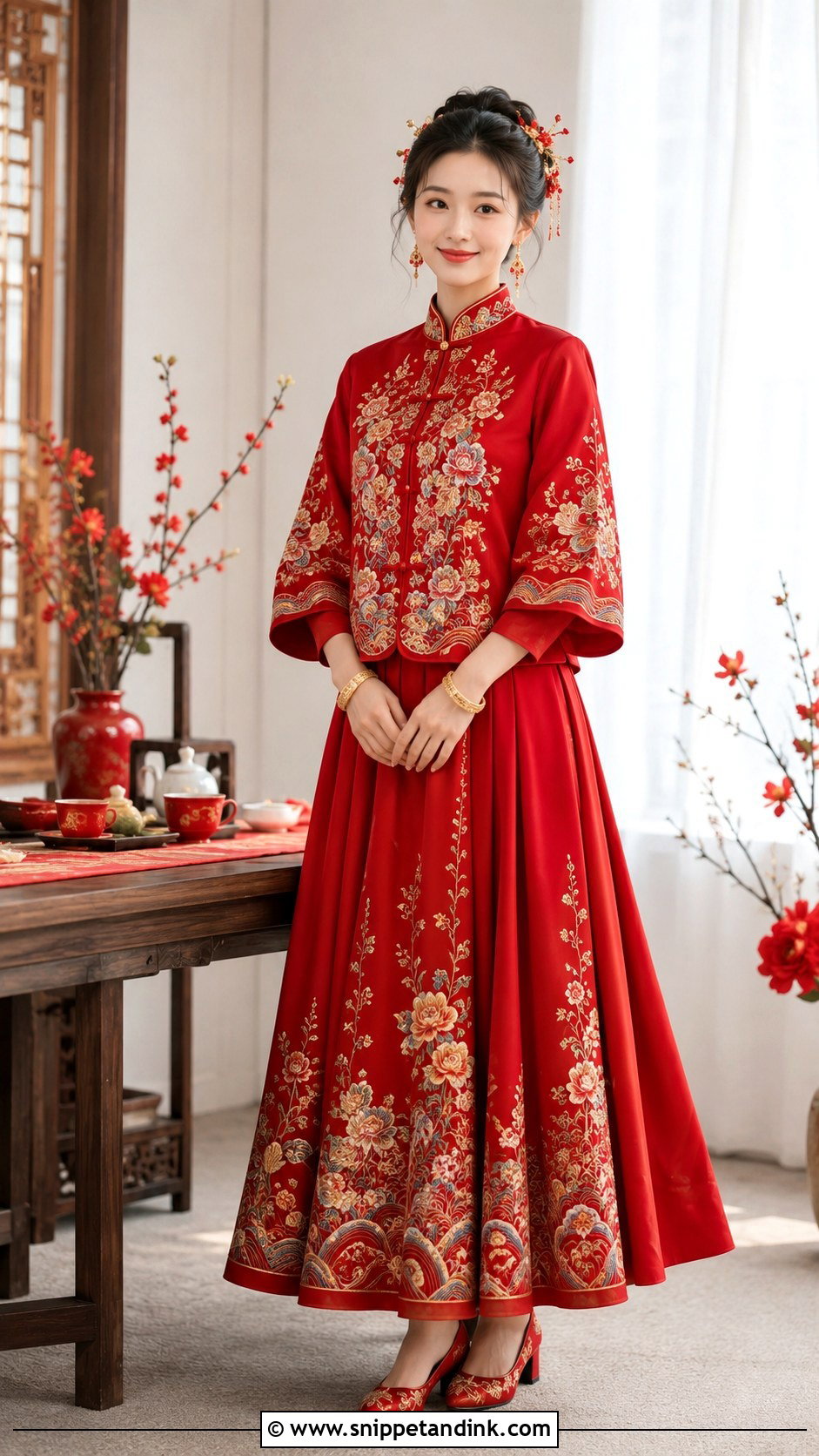
Xiu He Fu is looser than a qipao, with an embroidered jacket over a full skirt, and that softness makes it one of the most comfortable traditional choices for a long morning of greetings. Modern versions often mix in flowers, birds and butterflies alongside the classic bridal symbols, so look at what’s embroidered before you buy if particular motifs matter to your family. Red embroidered shoes with a low block heel suit it. A center-parted low bun echoes the rounded shape, and a berry-red lip keeps the face fresh against so much detail.
4. Red Qipao Wedding Dress
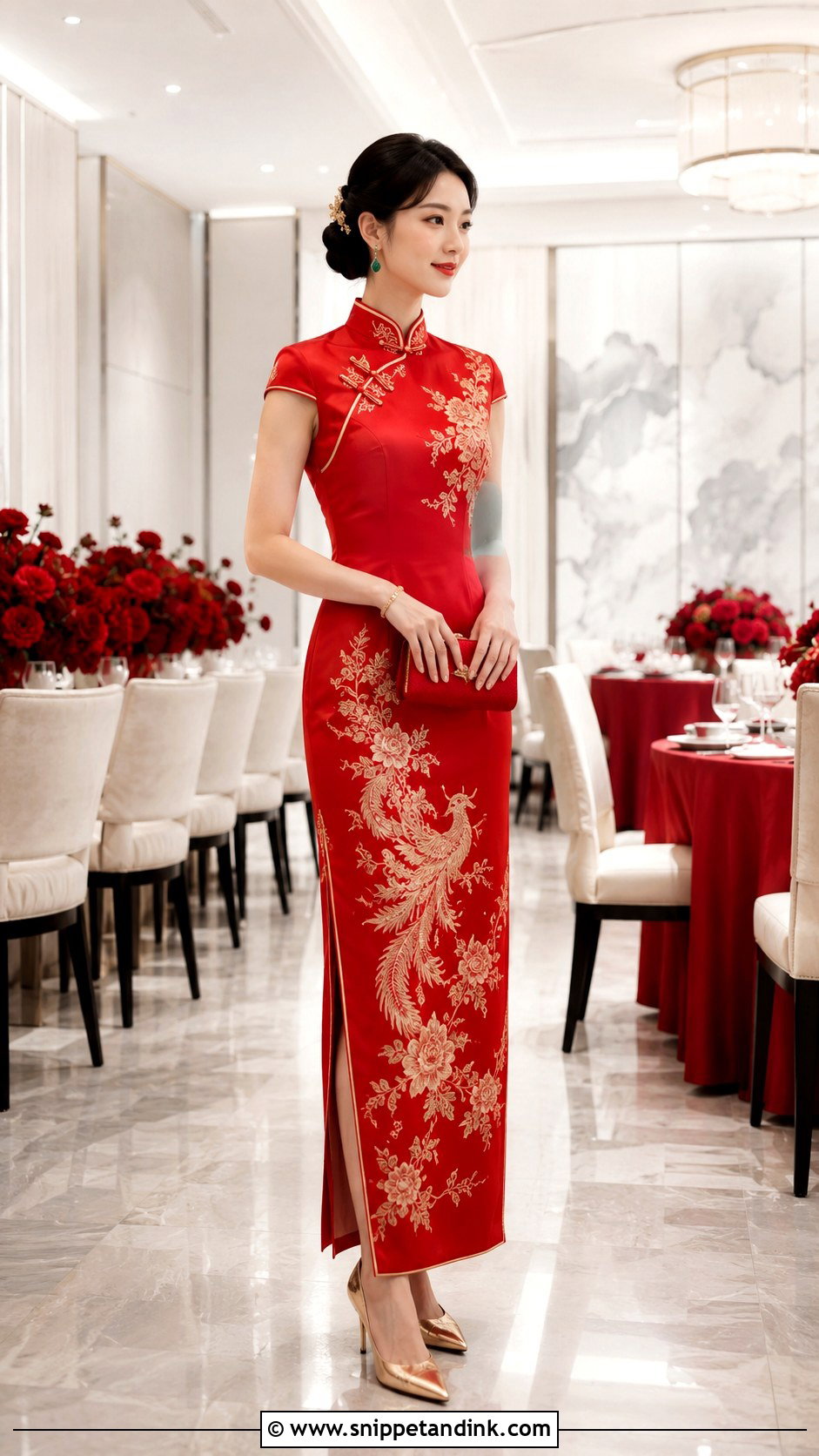
A red qipao is the most recognizable Chinese bridal dress, and it’s also the least forgiving of fit. The Mandarin collar, diagonal fastening, side slits and frog closures all sit close to the body, so I always check the collar first: you should be able to slide a finger inside it, or it will feel tight by mid-afternoon. Floor length suits a formal banquet, tea length is easier to move in. Gold embroidery at the neck or hem is enough. If the slit runs high, balance it with covered shoulders. Pointed gold heels and jade or gold earrings finish it.
5. Red Lace Qipao Wedding Dress
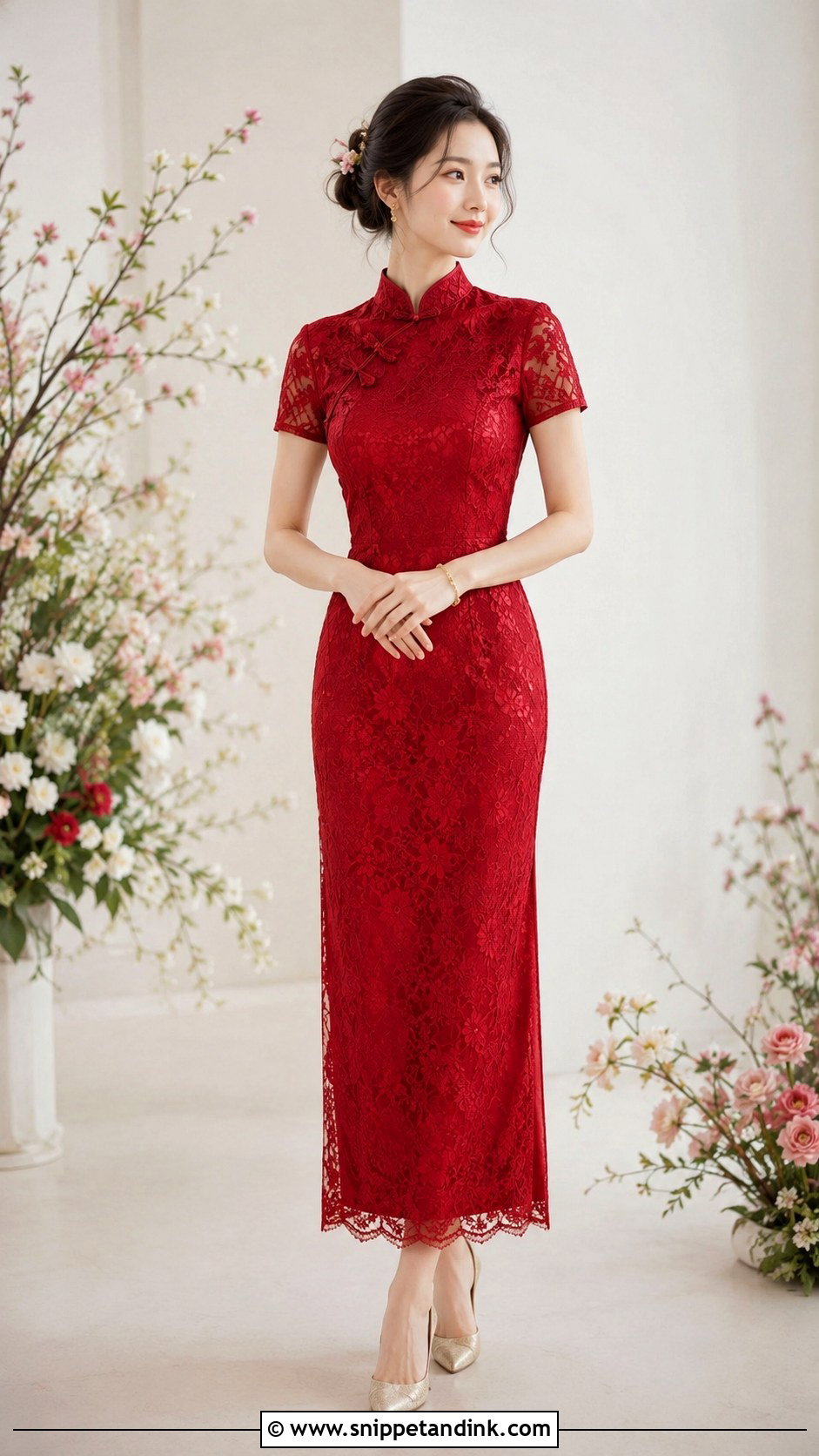
Lace softens the qipao without losing the high neck. Tonal red lace over a satin or silk lining keeps the color even; a contrasting lining makes the pattern busier. The bodice should be fully lined, since lace on its own shows everything. Short lace sleeves suit a spring or summer wedding. For a tea ceremony, I’d keep the slit low to moderate, because kneeling in a high slit is awkward. Champagne pumps, small gold earrings and a simple updo that shows the lace collar complete it.
6. Red Mermaid Qipao Wedding Dress
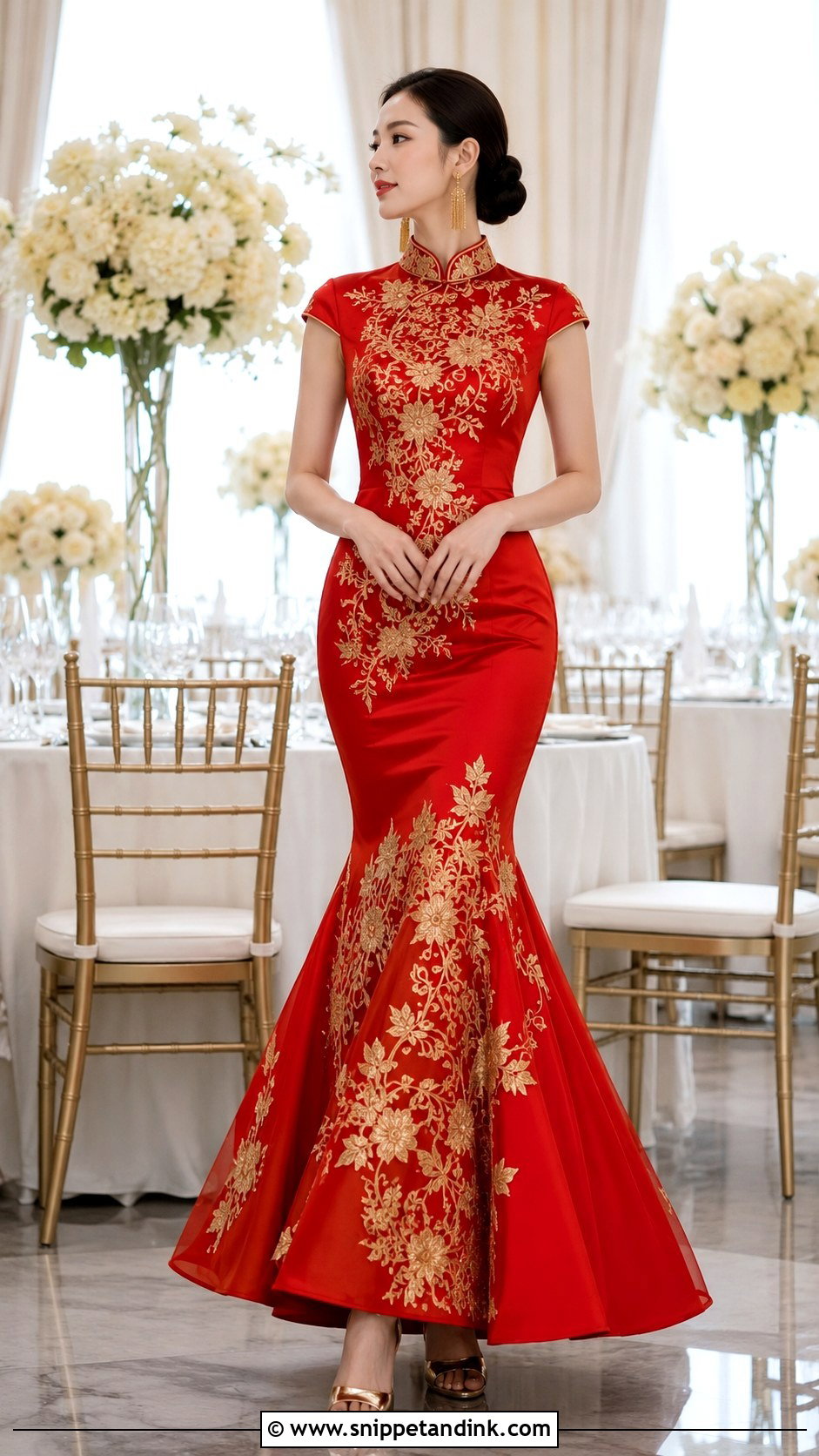
Where a standard qipao stays straight, the mermaid version flares below the knee like a Western gown, which makes it a strong evening reception look. It is not a tea ceremony dress: the narrow knee makes kneeling nearly impossible. Keep the collar, frog closures and gold floral embroidery on the bodice. Long gold earrings and a bracelet do better than a necklace against a high collar. Platform heels hidden under the hem give height without showing. A sleek low bun and a deep red lip suit the drama.
7. Red Qipao With Train
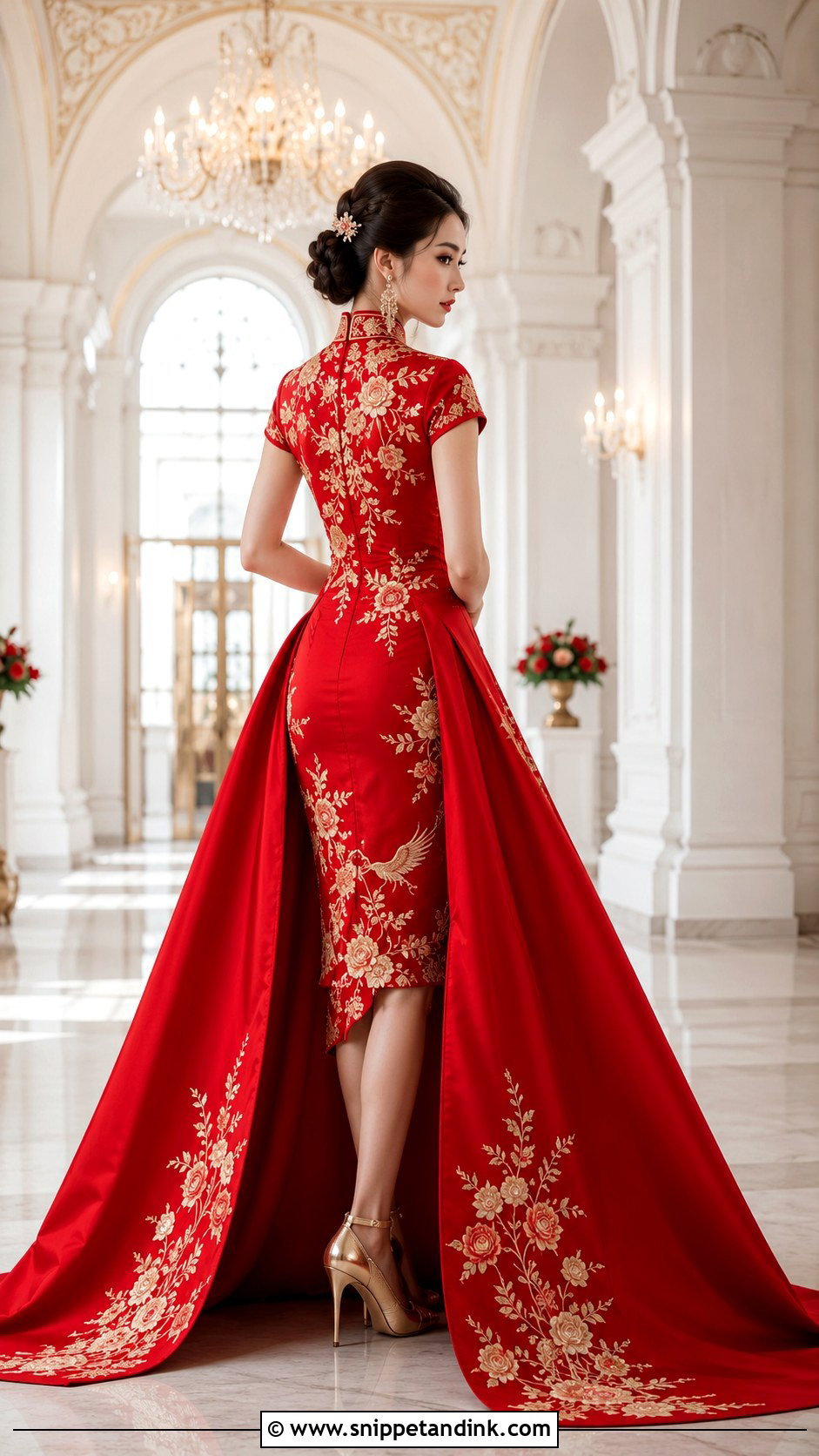
A detachable train turns one qipao into two looks. Start with a fitted red dress with a high collar, covered buttons and light gold embroidery, then add an overskirt or long train for the ceremony and formal portraits. The attachment is the part I scrutinize. Heavy trains hooked at the waist pull the whole dress backward and lift the hem at the front, so ask for a wide waistband or hidden belt to spread the load. Gold heels and chandelier earrings suit it, and an updo keeps the back view clear.
8. Tea Length Qipao Wedding Dress
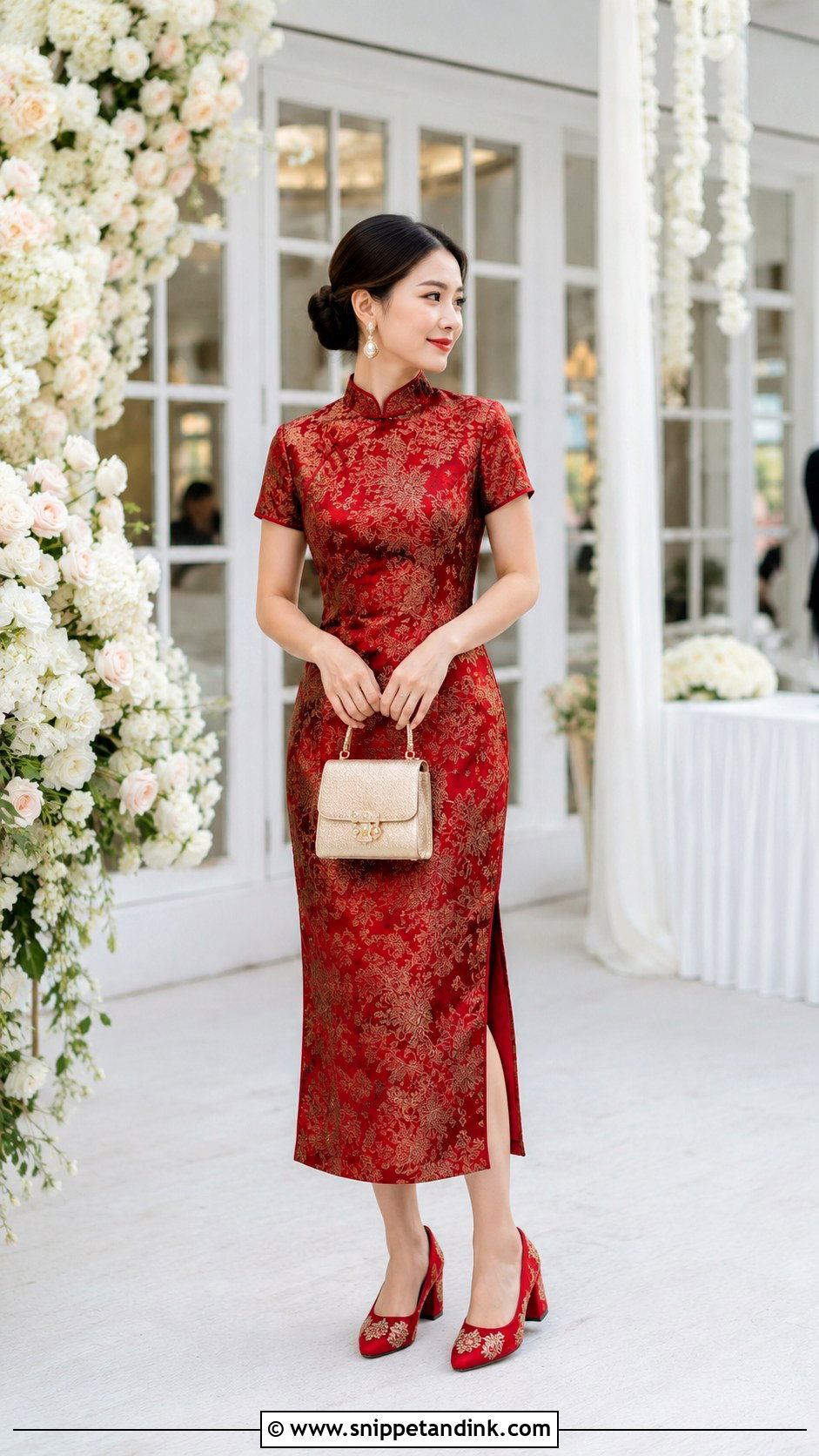
A tea-length qipao is easy to wear for hours, which makes it a natural second outfit or a civil ceremony dress. Red brocade holds the shape well and hides creases from sitting at a banquet table. A modest side slit is enough at this length. The shoes are on show, so embroidered red pumps or metallic slingbacks earn their place. One family bracelet worn with small pearl-and-gold earrings carries more meaning than a full set. A soft curled bob or low ponytail keeps it modern.
9. Ming Dynasty Hanfu Wedding Dress
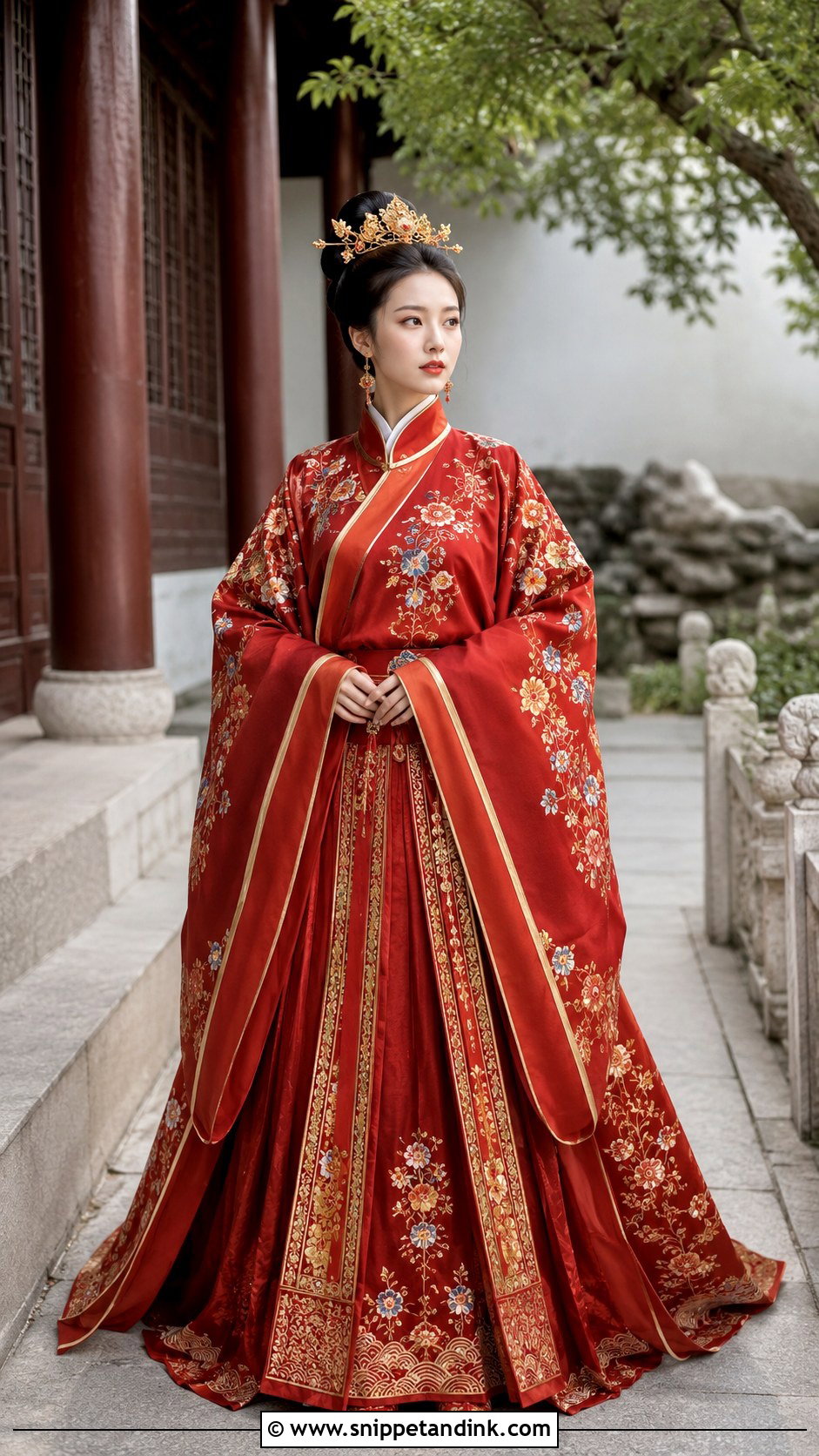
A Ming-inspired hanfu wedding outfit is stately rather than fitted: layered robes, structured collars and a long mamianqun skirt with gold woven borders. The outer robe gives formality without a tight bodice. Historical dress varies a great deal by period and region, so I’d always work with a maker who knows the Ming details rather than mixing elements from different eras. Keep accessories symmetrical to match the construction. Hidden flats under the skirt keep you steady on stairs, and a gold hair crown needs a firm, structured updo beneath it.
10. Tang Dynasty Hanfu Wedding Dress
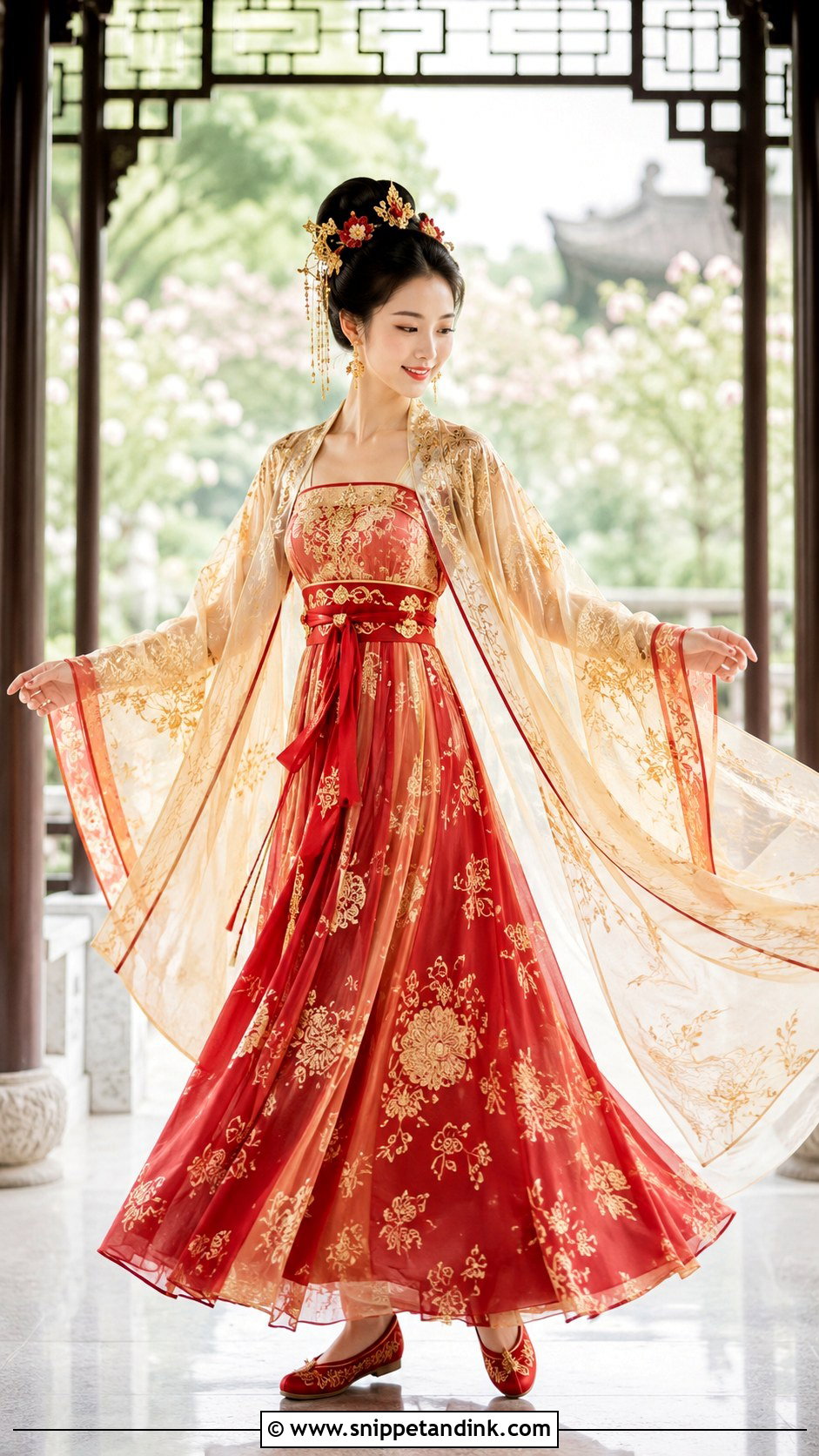
Tang-inspired hanfu sits the skirt line higher, often just under the bust, and the result is airy and loose. A red and gold ruqun with a fitted inner top and a light outer robe is the core. Those wide sleeves look wonderful in photographs and knock over teacups in real life, so practice serving and eating in them. Simple red flats are enough, since the skirt covers most of the shoe. Floral hairpins and a softly arranged updo keep it from looking like costume, and a sheer red shawl adds a layer for portraits.
11. Red Hanfu With Gold Cape
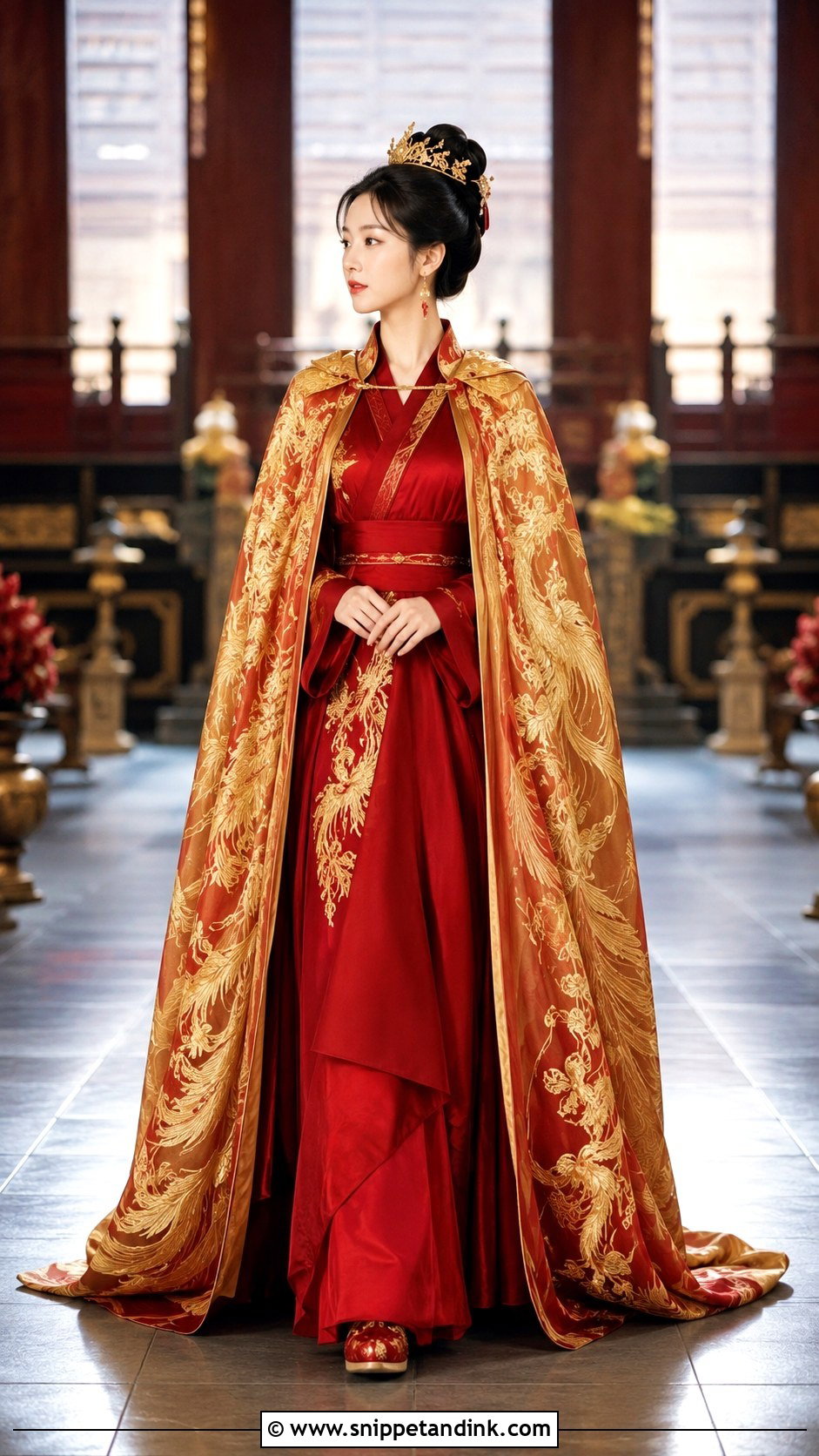
Imagine entering the ceremony in layered red hanfu with a long gold-embroidered cape over the top. It’s a grand look, and a heavy one. The cape must fasten securely at both shoulders rather than at a single neck point, or it drags the collar backward. Phoenix, cloud or peony embroidery can link the layers. Keep the earrings light and the crown simple to balance the volume at the shoulders. Before the day, walk, sit and turn in the full outfit, and have the cape shortened if it drags rather than skims the floor.
12. Fengguan Xiapei Wedding Dress
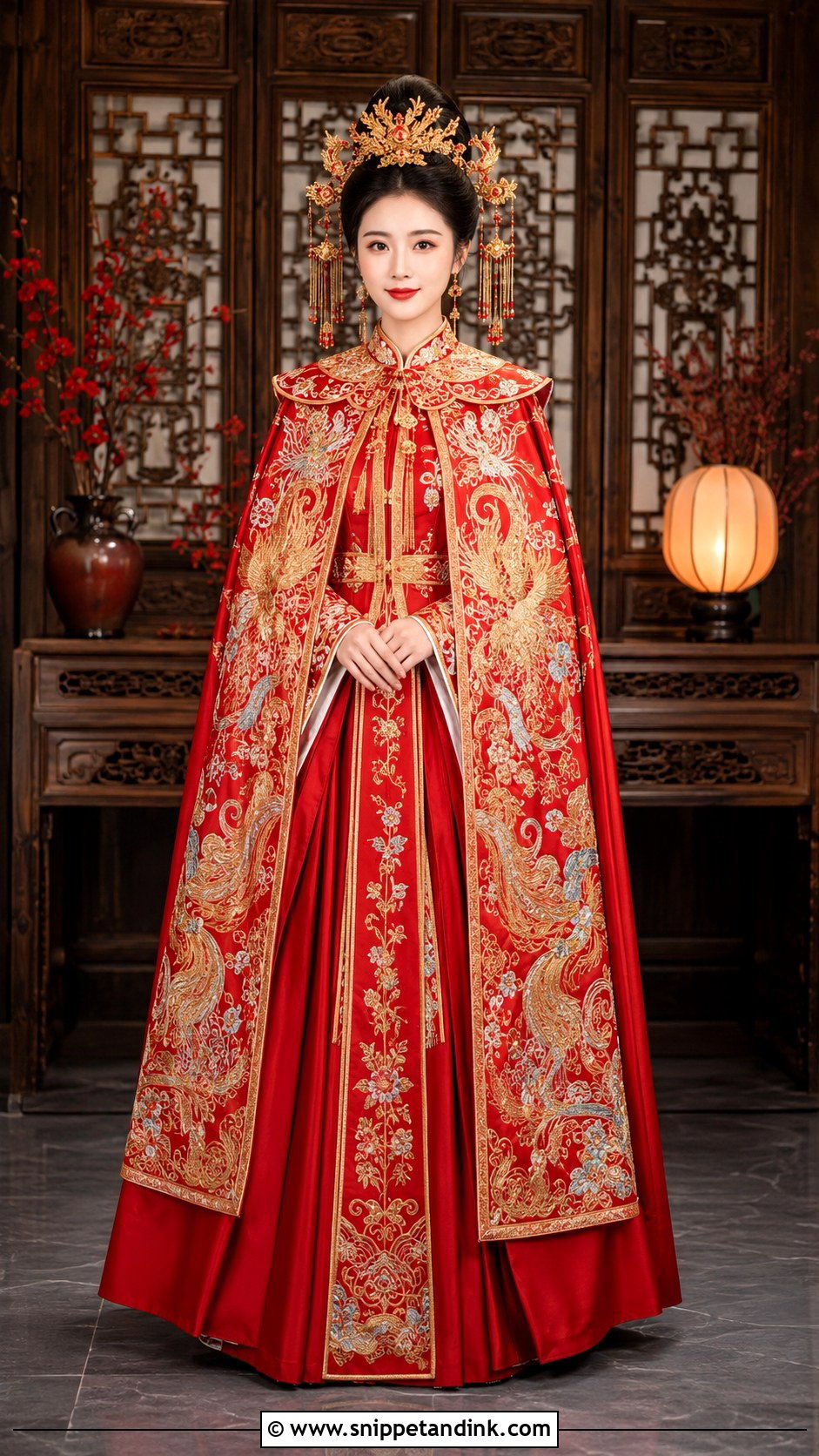
Fengguan xiapei, the phoenix crown and embroidered cape, is about as ceremonial as Chinese bridal dress gets. Layered red clothing, a decorative collar and an ornate crown already frame the face, so visible jewelry should be minimal. The crown is the practical challenge. Real or well-made replicas are heavy, and they need a structured updo with pins anchored close to the scalp to stay level through an entrance and portraits. Concealed flats help. Research the historical or regional version you want to honor, and source it from a maker who understands it.
13. Mamianqun Wedding Dress
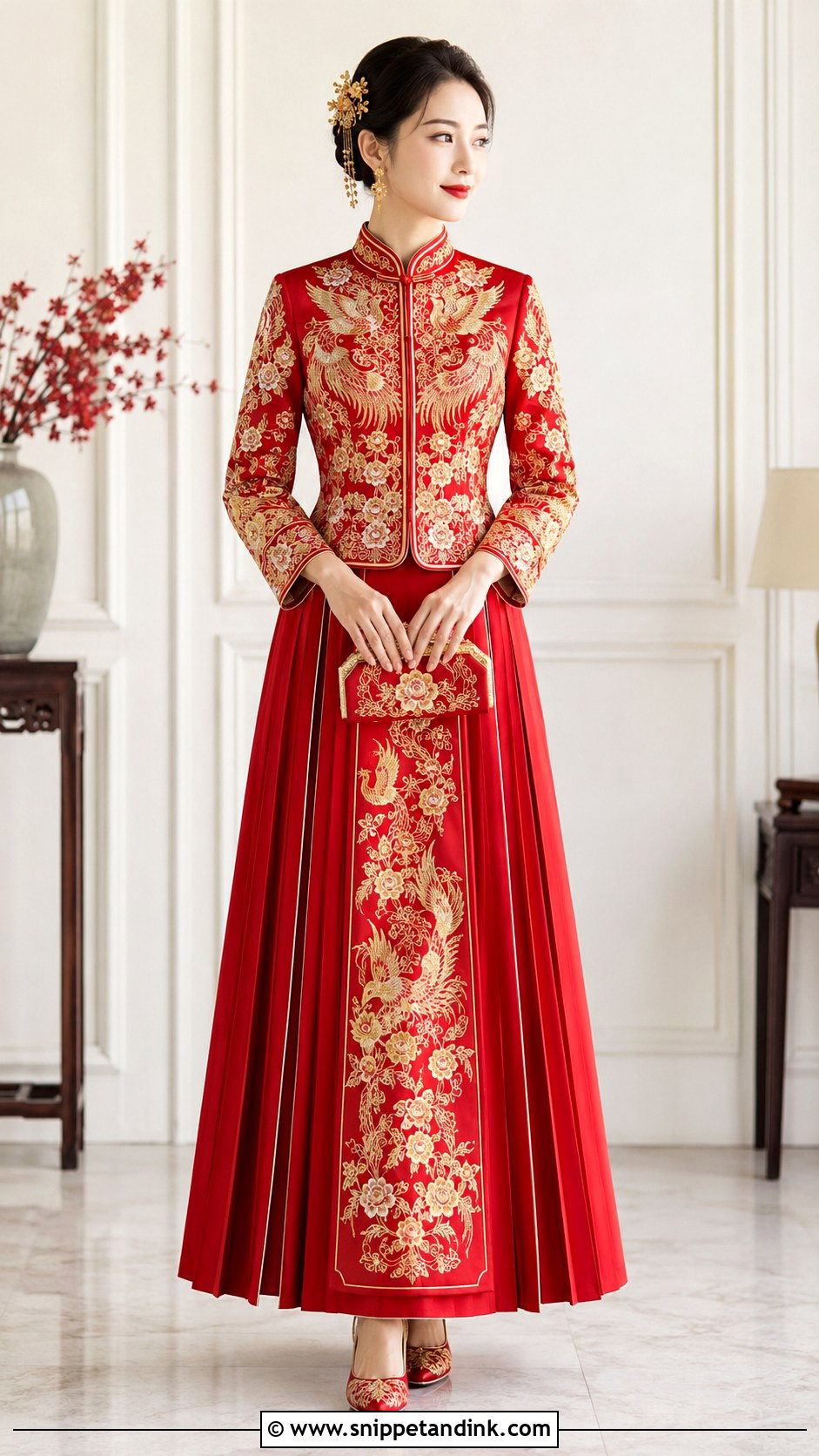
The mamianqun, a pleated skirt with flat front and back panels, swings dramatically when you walk. The panels should sit centered so the main embroidery faces forward; I check this standing, walking and seated, because a skirt that twists shows its side pleats in every photo. Pair it with a high-collar jacket or an embroidered wrap top. Echo the gold motifs in small earrings and hairpins rather than adding new ones. A waist sash adds shape without changing the character. It’s well suited to a tea ceremony or family photographs.
14. Red Embroidered Ball Gown
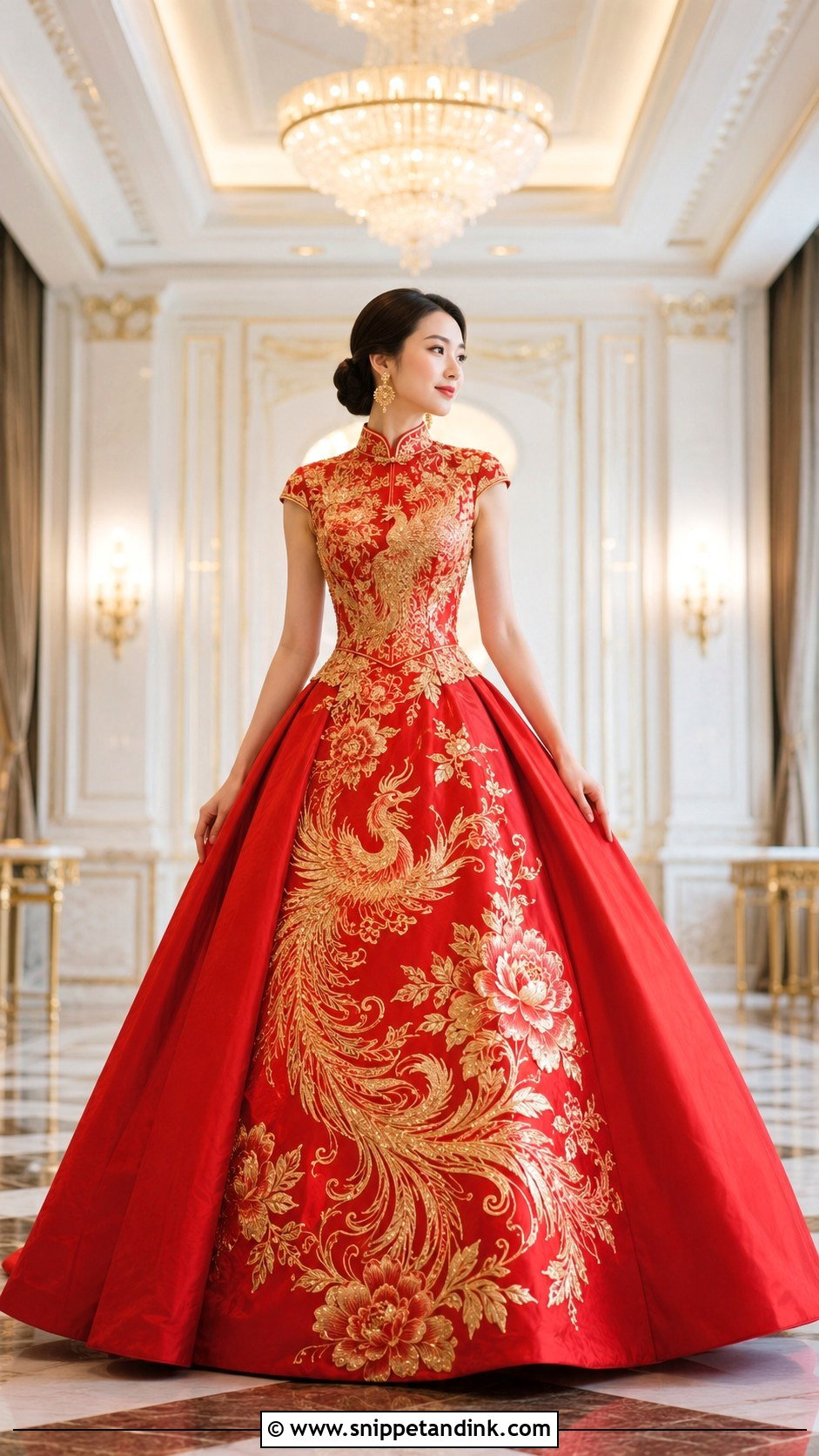
For a bride who loves a full Western skirt, a red embroidered ball gown with a Mandarin collar or asymmetrical closure bridges the two traditions. Gold phoenix, peony or cloud embroidery ties it to the rest of the wedding. Full skirts in heavy fabric get tiring, so plan a bustle or wrist loop before the reception. Skip the necklace if the neckline is detailed, and wear statement earrings instead. Concealed gold heels and a low bun that shows the collar finish it.


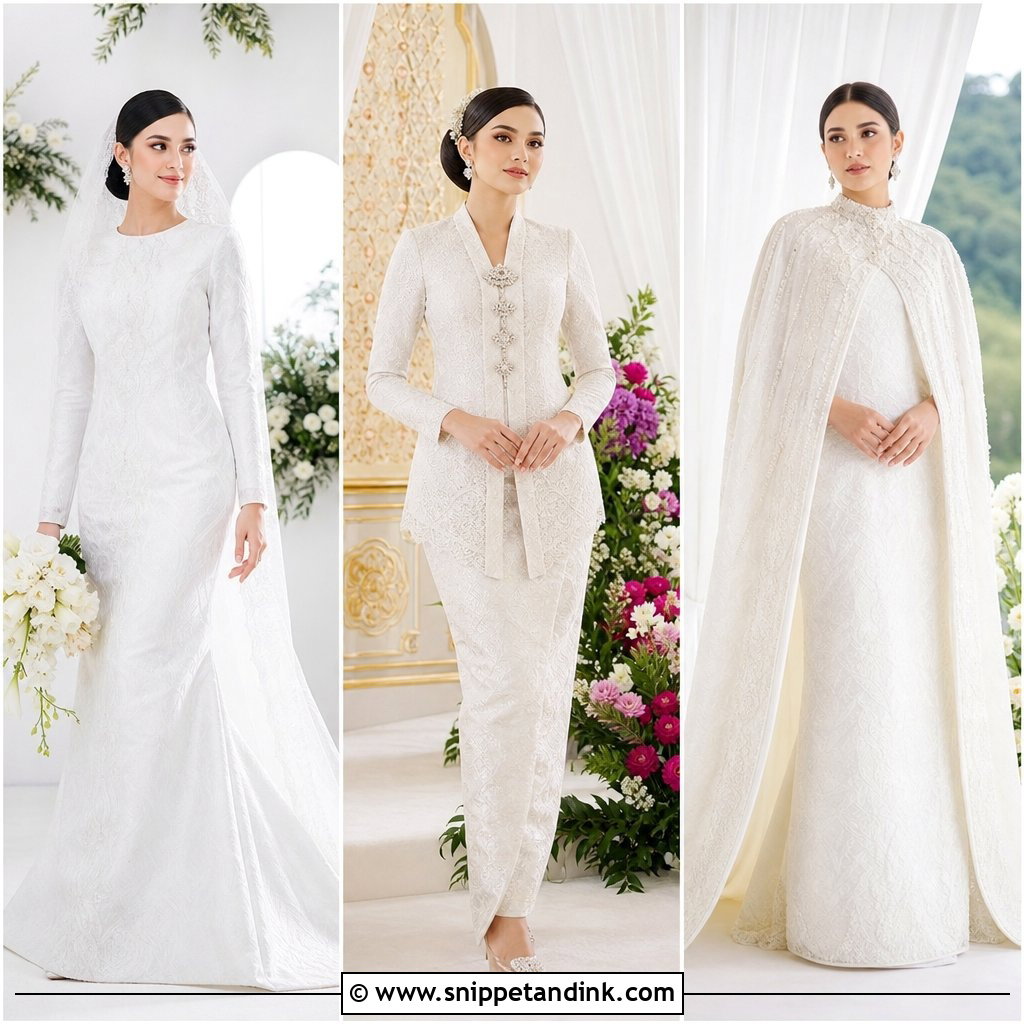
15. White Mandarin Collar Wedding Dress
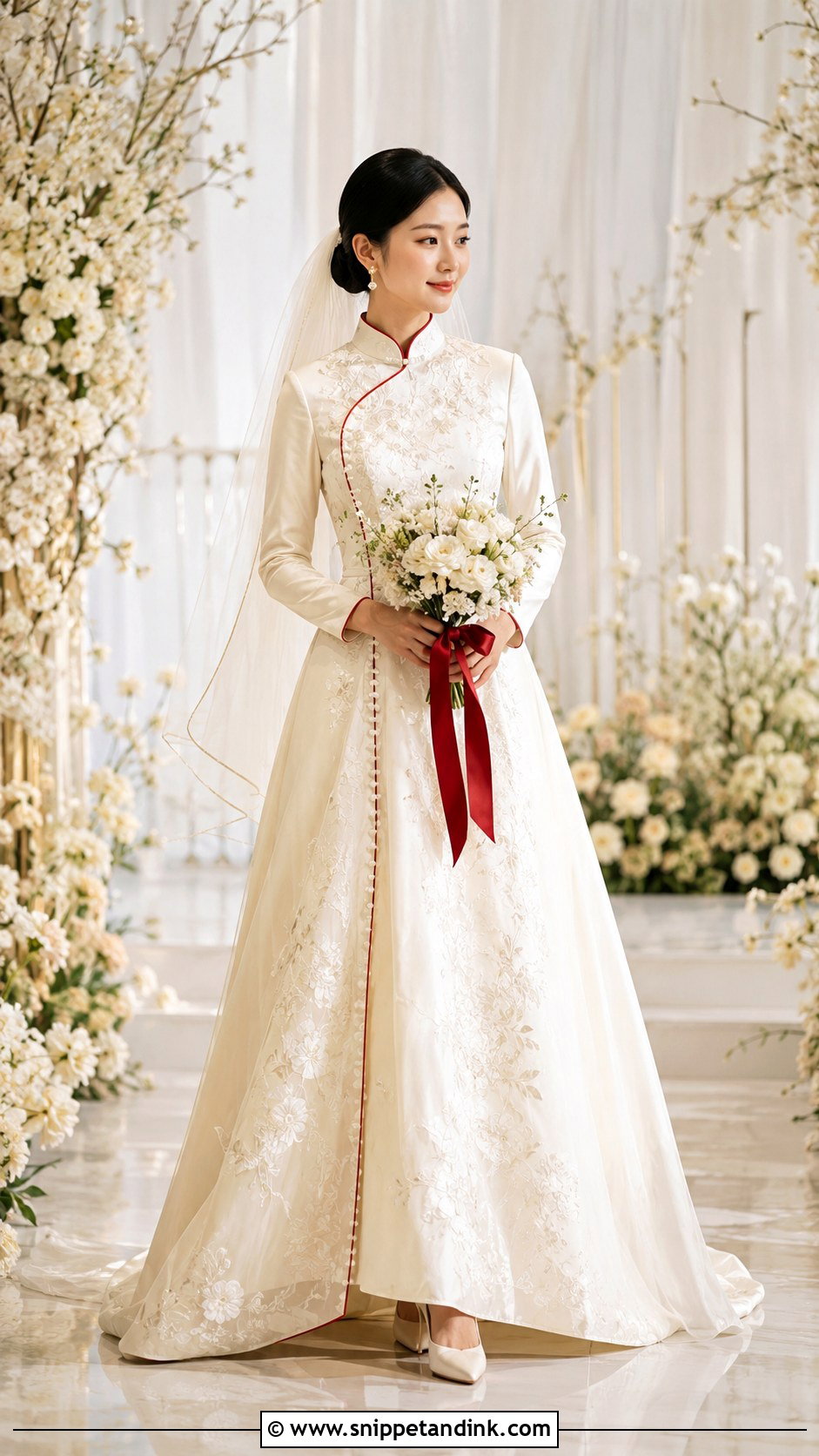
Not every Chinese-inspired bridal gown must be red. Many brides wear white or ivory for a Western-style ceremony and red for the tea ceremony, and a Mandarin collar on the white dress links the two. An A-line with covered buttons and delicate floral embroidery is the cleanest version. A thin line of red piping or a small gold detail references the celebration without taking over. A red ribbon on the bouquet does the same job. A fingertip veil and a polished chignon that shows the collar complete it.
16. Red Cape Wedding Dress
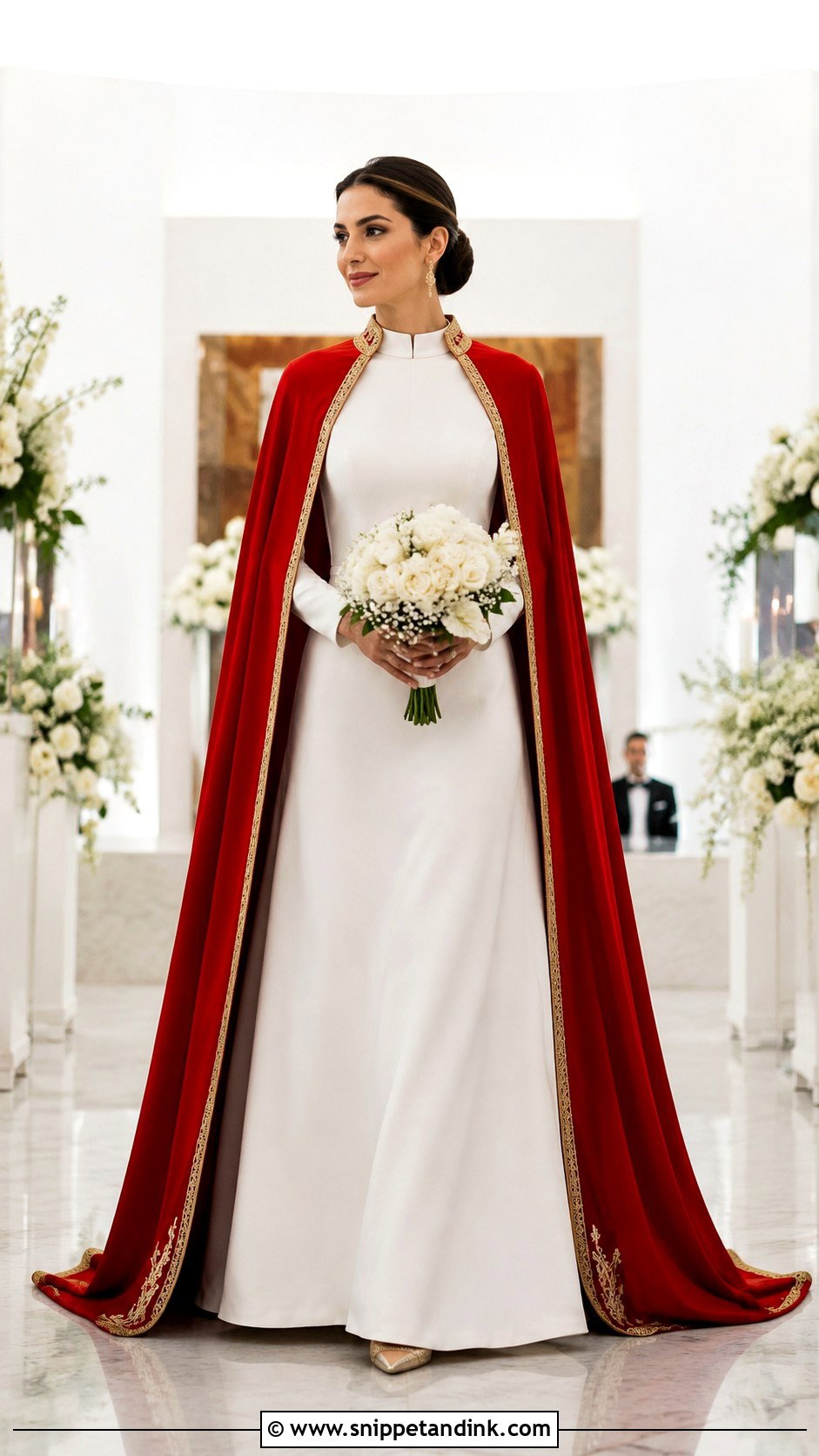
A detachable cape gives a red gown its drama, so the dress beneath can stay simple: a column or A-line with a high neck. The cape can carry the gold edging, appliqué or a decorative clasp. Gold pointed heels and drop earrings are enough while it’s on. Take it off for the reception and add a bracelet or bolder earrings, and you have a lighter outfit without a full change. A sleek low bun keeps the fastening and neckline visible.
17. Modern Chinese Two Piece Wedding Dress
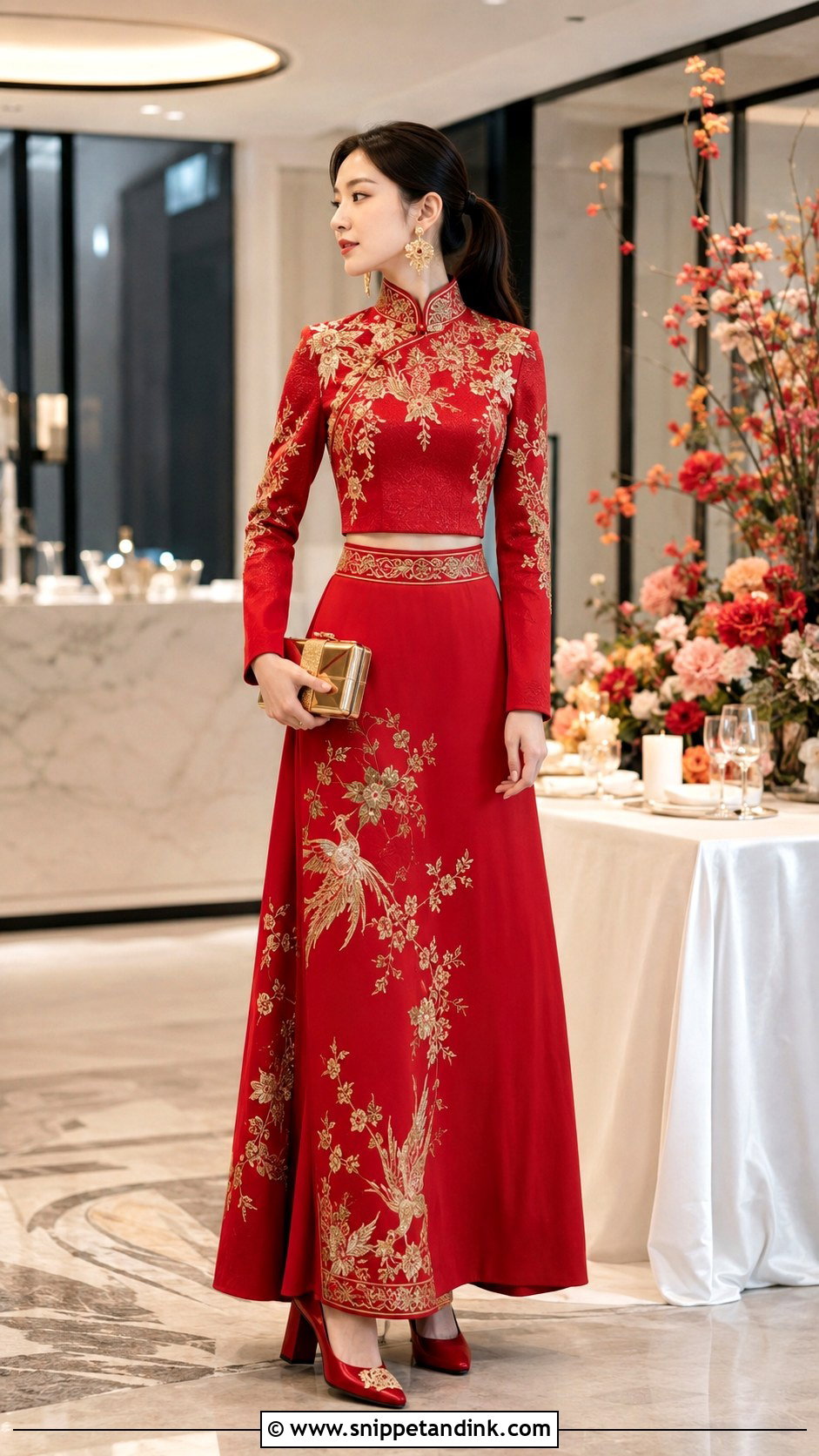
Separates make tailoring easier, and that’s a real advantage if your top and bottom are different sizes. An embroidered red cropped jacket with a Mandarin collar or frog closures over a high-waisted floor-length skirt is the modern build. The jacket should meet the skirt exactly at the waist, with no gap when you raise your arms. Keep the skirt plain so the jacket stays the focus. Red block heels and a gold box clutch suit it. A longer jacket or silk inner layer adds coverage.
18. Plus Size A Line Qipao Wedding Dress
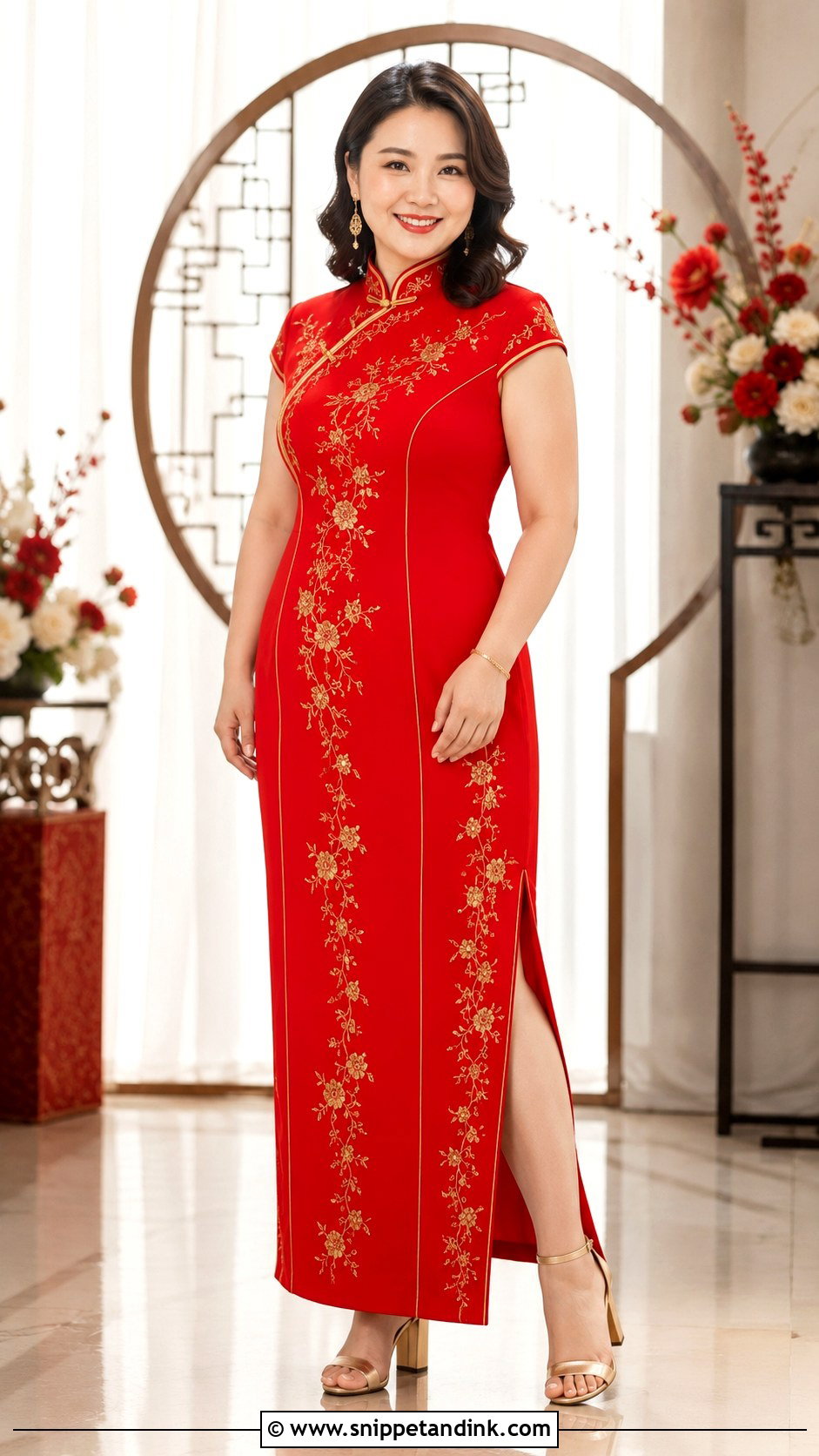
An A-line qipao keeps the high collar, diagonal closure and embroidery while giving room over the hips. It should follow the bust and waist closely and then open gently. Princess seams and a stretch lining help it move, and a moderate slit makes walking easier. Vertical embroidery or embroidery framing the neckline draws the eye up. Off-the-rack qipao sizing is rarely generous, so custom measurements are worth it here, with a final fitting close to the date. Stable gold block heels finish it.
19. Minimal Red Satin Qipao Wedding Dress
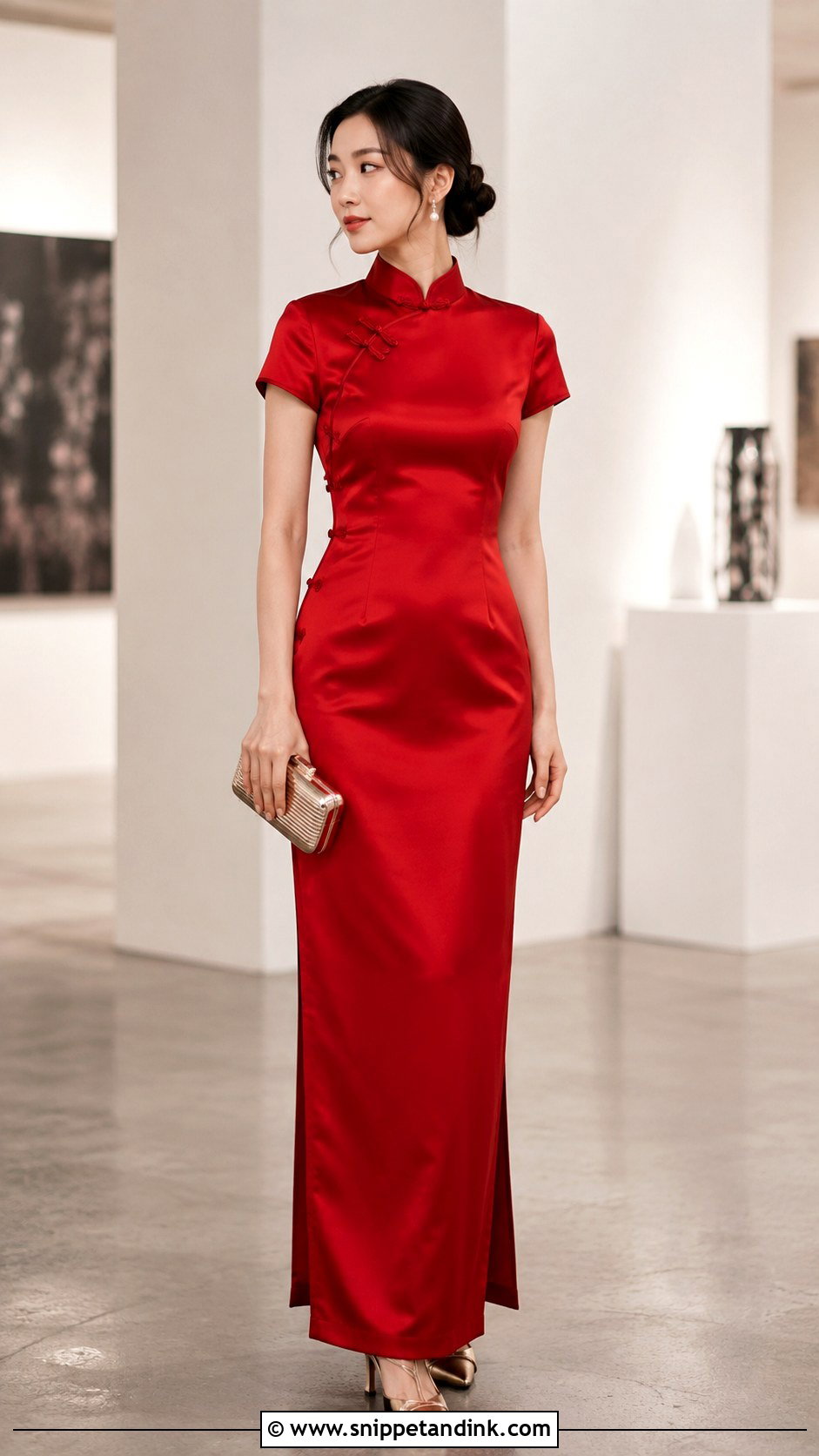
With no embroidery to distract, the quality of a plain satin qipao shows immediately, good or bad. Choose heavy satin, a clean Mandarin collar and neat fabric-covered fastenings, and schedule alterations early. Red satin also shifts color dramatically between daylight and warm indoor lighting, so look at it in both before you commit. A floor-length column is formal; a midi works as a reception outfit. Gold slingbacks, pearl drops and a low knot keep it quiet and sharp.
20. Red Mini Qipao Reception Dress
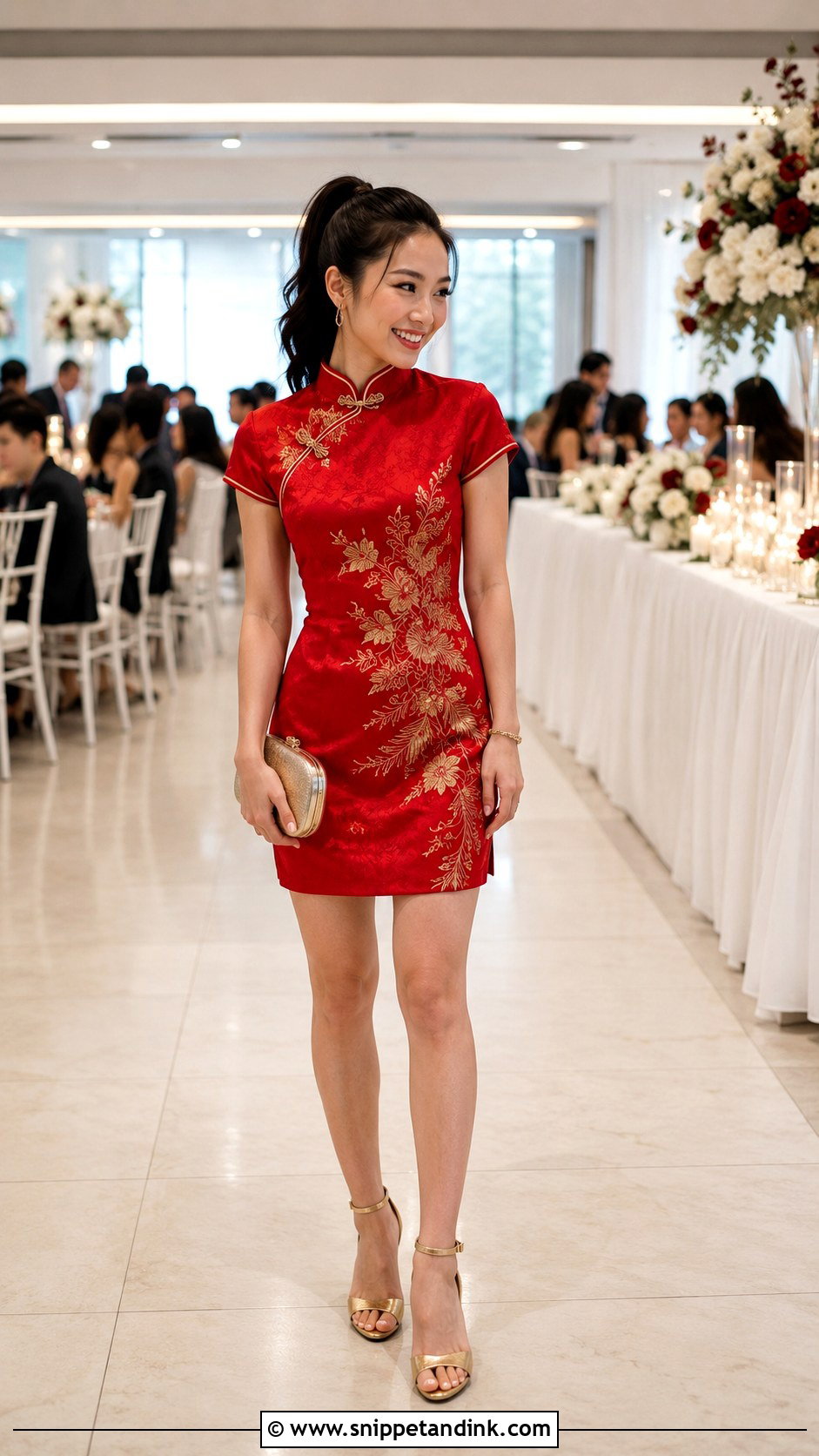
A red mini qipao is a fun last outfit for the end of the banquet. A structured cut with a Mandarin collar, short sleeves and gold embroidery at the neck or hem keeps it bridal. Check the length sitting down; a mini that’s fine standing can be too short at a round banquet table. Gold block-heel sandals or embellished flats are kinder after a long day than high heels. Repeat one motif from the ceremony dress, such as a phoenix or the same red-and-gold fabric, so the day’s outfits feel connected.
Gold Thread Tarnishes, So Store It With Care
A qun kwa or embroidered qipao is often kept for a daughter, or borrowed from a mother, and metallic embroidery ages badly if it’s treated like an ordinary dress. Gold thread is usually a metal-coated fiber, and moisture, perfume and hairspray all dull it over time.
After the wedding, have it cleaned by someone experienced with embroidered silk, and don’t let a cleaner press directly on the metallic work. At home, fold the jacket with acid-free tissue in each fold so the embroidery doesn’t crease along one line, and keep it in a cotton bag or archival box rather than plastic, away from damp walls and sunlight. Spray perfume before dressing, never onto the garment.
If you’re wearing an heirloom, try it on months ahead. Older silk can split at the seams under strain, and a careful seamstress can reinforce it from inside before the day.
Red for the Tea, Something Lighter for the Dancing
Each part of the day can call for something different, and that’s the real advantage of Chinese bridal dress. Qun kwa, qipao, Xiu He Fu, hanfu and fengguan xiapei-inspired ensembles all honor Chinese heritage, while fusion ball gowns, detachable capes, separates and reception minis bring in modern shapes. Start with your family’s customs and the ceremony plan, then think about venue, weather and how many changes you want. High collars, embroidered jackets and fitted qipao all need early measurements and fittings. Practical shoes, balanced jewelry and a hairstyle that shows the neckline finish every look.
You'll Like These Ideas:



Leave a Reply