
Most of the cake enquiries I get now arrive with a screenshot rather than a description, and the screenshots have changed. Couples want texture they can see from across the room: heavy vintage piping, ridged buttercream, pressed petals, pearls, bows, odd sculptural shapes. Flavours have moved too, so lemon, pistachio, almond and espresso turn up as often as plain vanilla. Below are the twenty styles I’m asked about most, with what each one actually involves once it has to be baked, carried into a venue and cut.
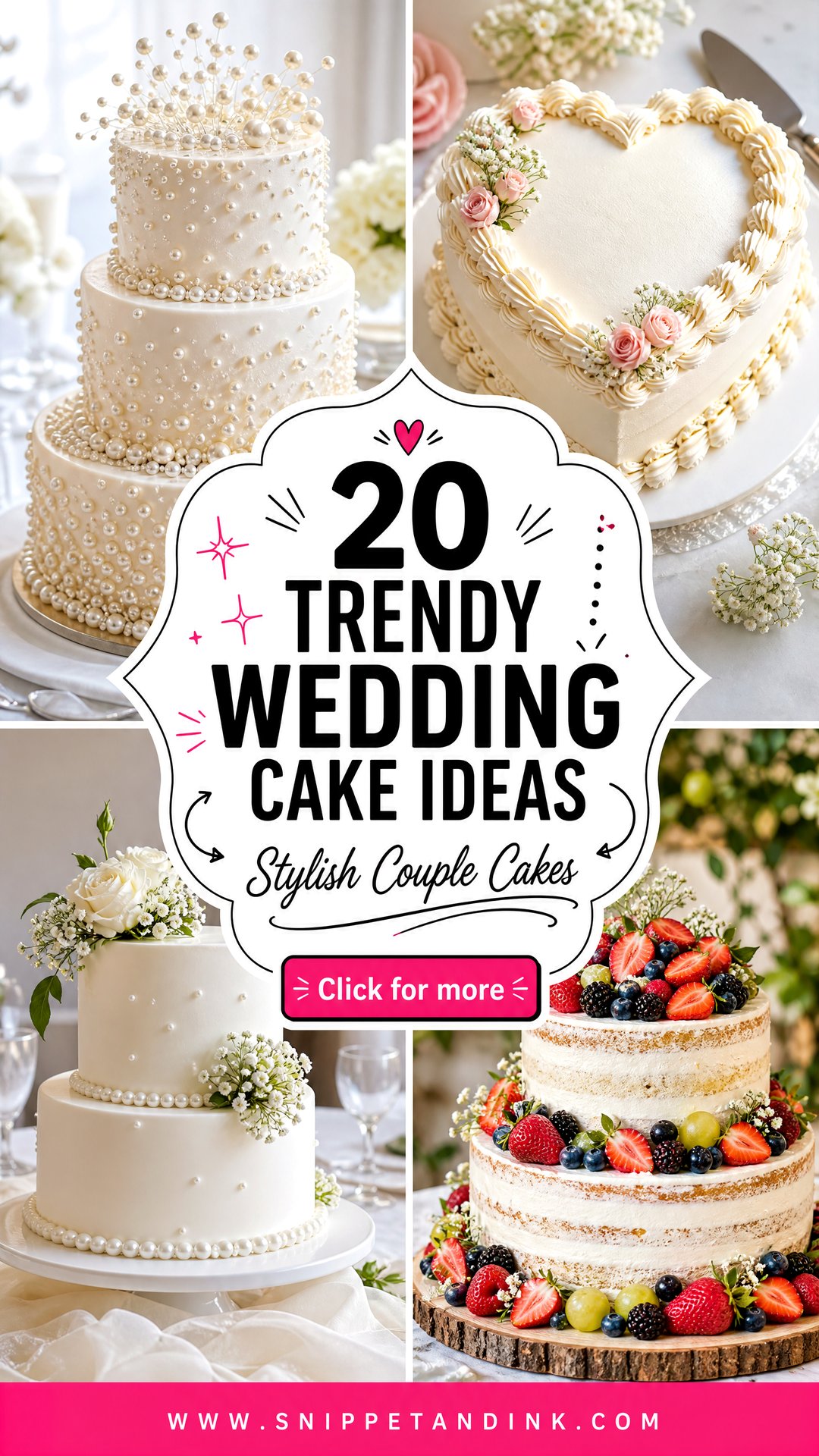
Turning a Saved Cake Photo Into Something a Baker Can Quote
A picture tells me the look, but not the parts that set the price and the schedule. When a couple sends me a screenshot, I need a few more facts before I can say whether it’s realistic.
- Real guest count, and how many will actually eat cake. If there is also a dessert table, I can make the display smaller and cover the rest with kitchen cake cut out of sight.
- Where the cake will stand and for how long. A cake on display for four hours in a conservatory needs a different frosting from one wheeled out after dinner.
- Which details you love most. Hand piping, sugar flowers and sculpted shapes are labour, and labour drives cost far more than size. Knowing your priority lets me simplify the rest.
- Any allergies or dietary needs. Nut-free or gluten-free tiers change how I plan the kitchen, so they need flagging early, not in the final week.
Sugar flowers and dried fondant bows are made days or weeks ahead, which is one reason popular cake makers book up months before a wedding. Lead times vary a lot between bakers, so ask about theirs at the first conversation.
1. Vintage Lambeth Wedding Cake
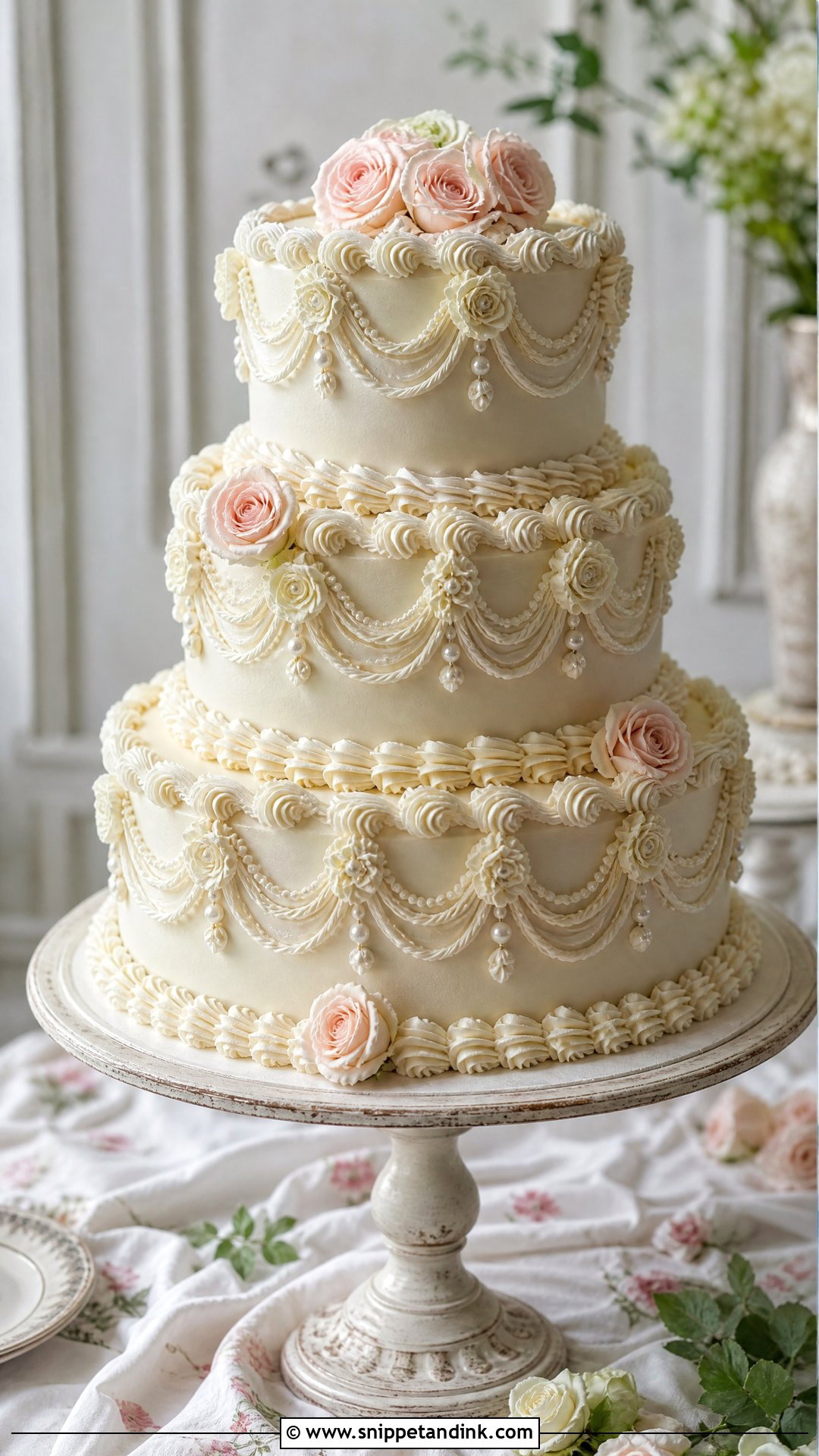
Lambeth is the most time-hungry finish on this list, and that is what you are paying for. Every swag, shell border and overpiped scroll is built up by hand in layers, so a three-tier version can take a full day of piping on its own. I pipe it in a stiff meringue buttercream so the ridges stay crisp; a soft, whipped frosting slumps within an hour in a warm room. Keep the colour to one shade, ivory, butter yellow or pale blue, and let the piping carry the detail. Cherries and tiny sugar bows look sweet, but I add them last because their weight can drag a fresh swag downward.
2. Minimalist Buttercream Wedding Cake
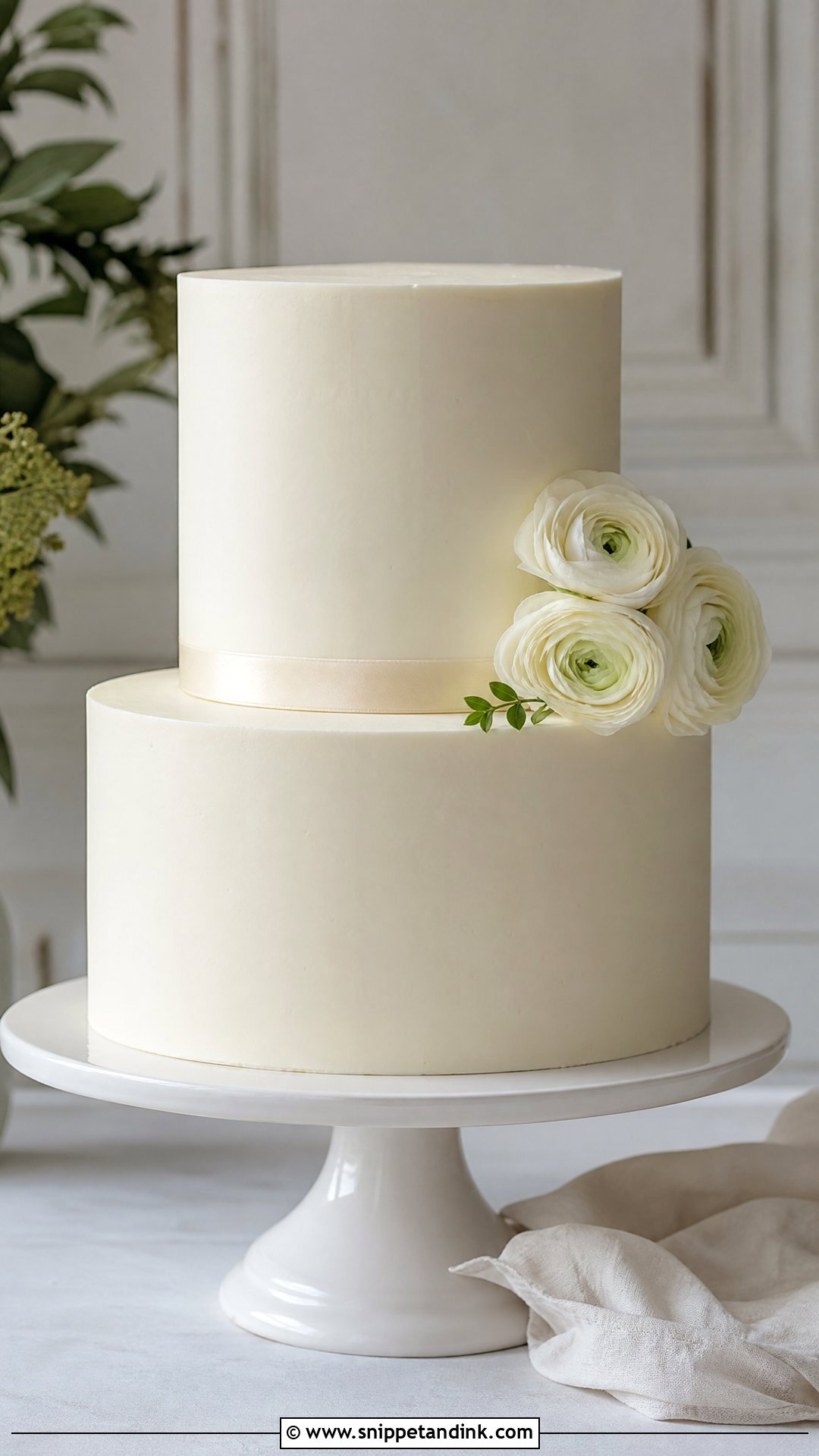
Plain looks easy, which is exactly why it is hard. A smooth buttercream tier with razor edges shows every air bubble, every fingerprint and any bulge where the filling has settled, so I chill and re-scrape each tier several times before it is stacked. One accent is plenty: a silk ribbon, a short line of pearls or a small cluster of blooms. Vanilla bean, almond and lemon sponge all suit the clean outside, and garden or city receptions both carry it well.
3. Pressed Flower Wedding Cake
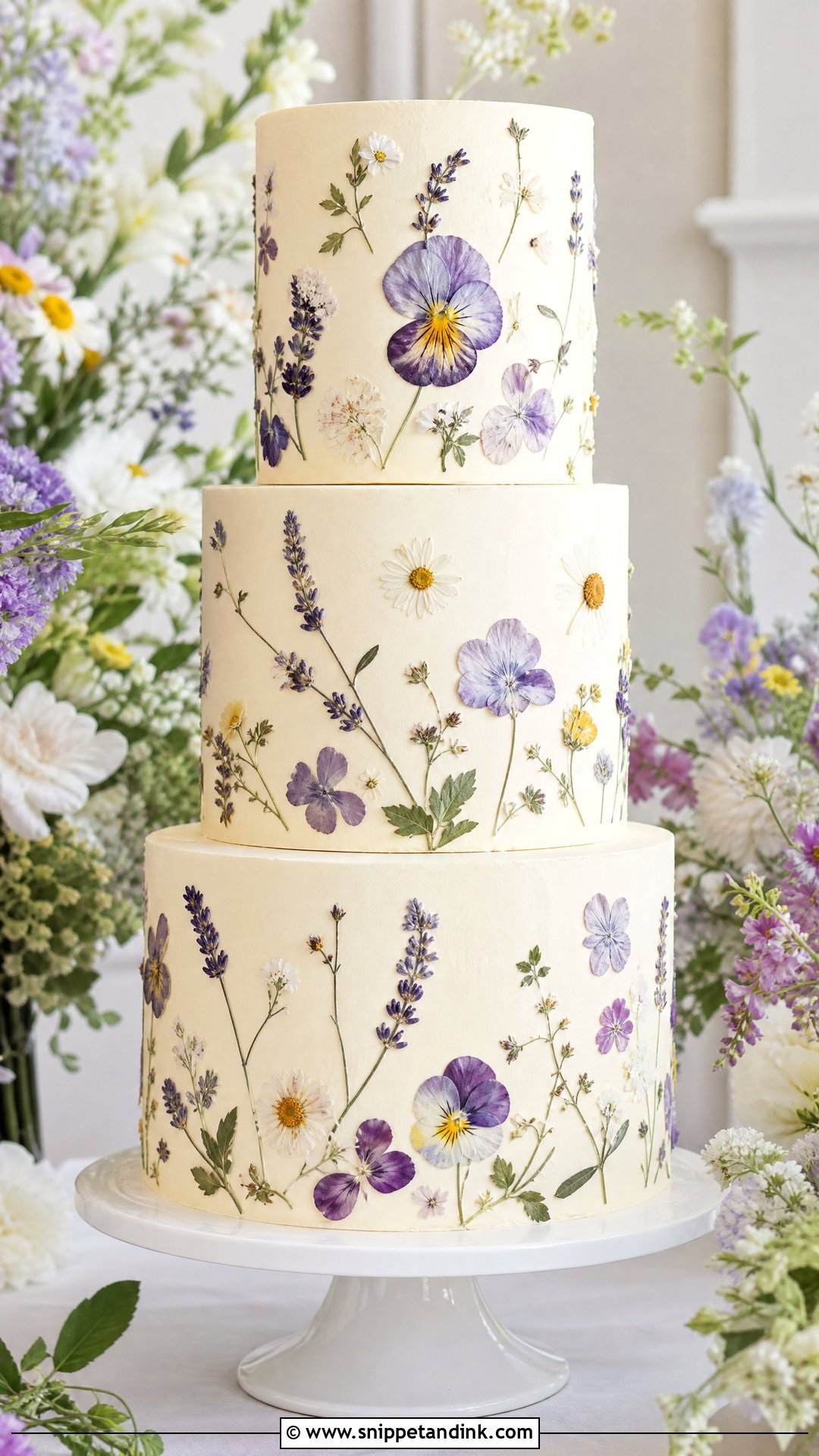
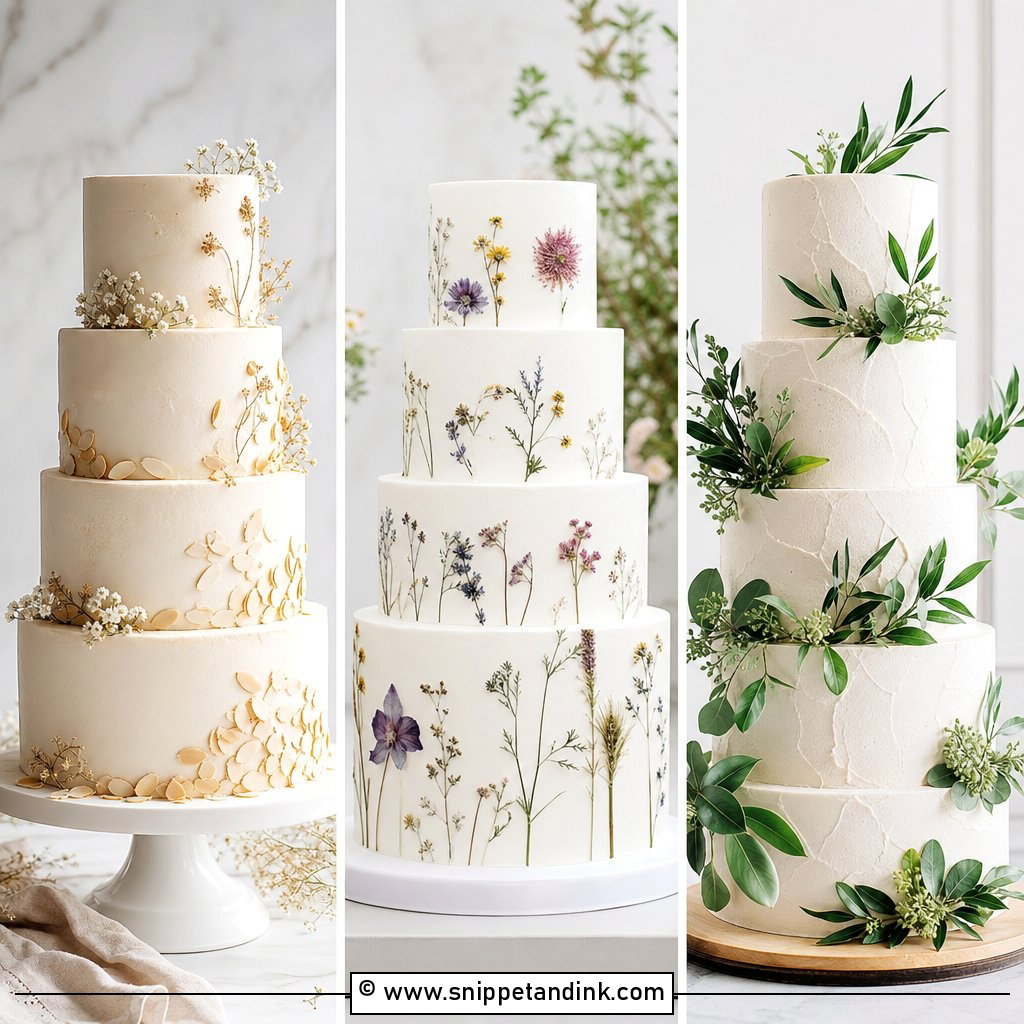
Pressed flowers need to be grown and dried for eating, not lifted from a florist’s bucket, so I order them in from a supplier who sells edible-grade petals. They sit flat against smooth buttercream or fondant, which makes this style more forgiving outdoors than a cake loaded with fresh stems. The catch is fading: strong sun pulls the colour out of violas and cornflowers surprisingly fast, so I keep the cake out of a sunny window until the last moment. Leave breathing space between petals. Lemon elderflower or honey lavender sponge picks up the garden mood.
4. Pearl Wedding Cake
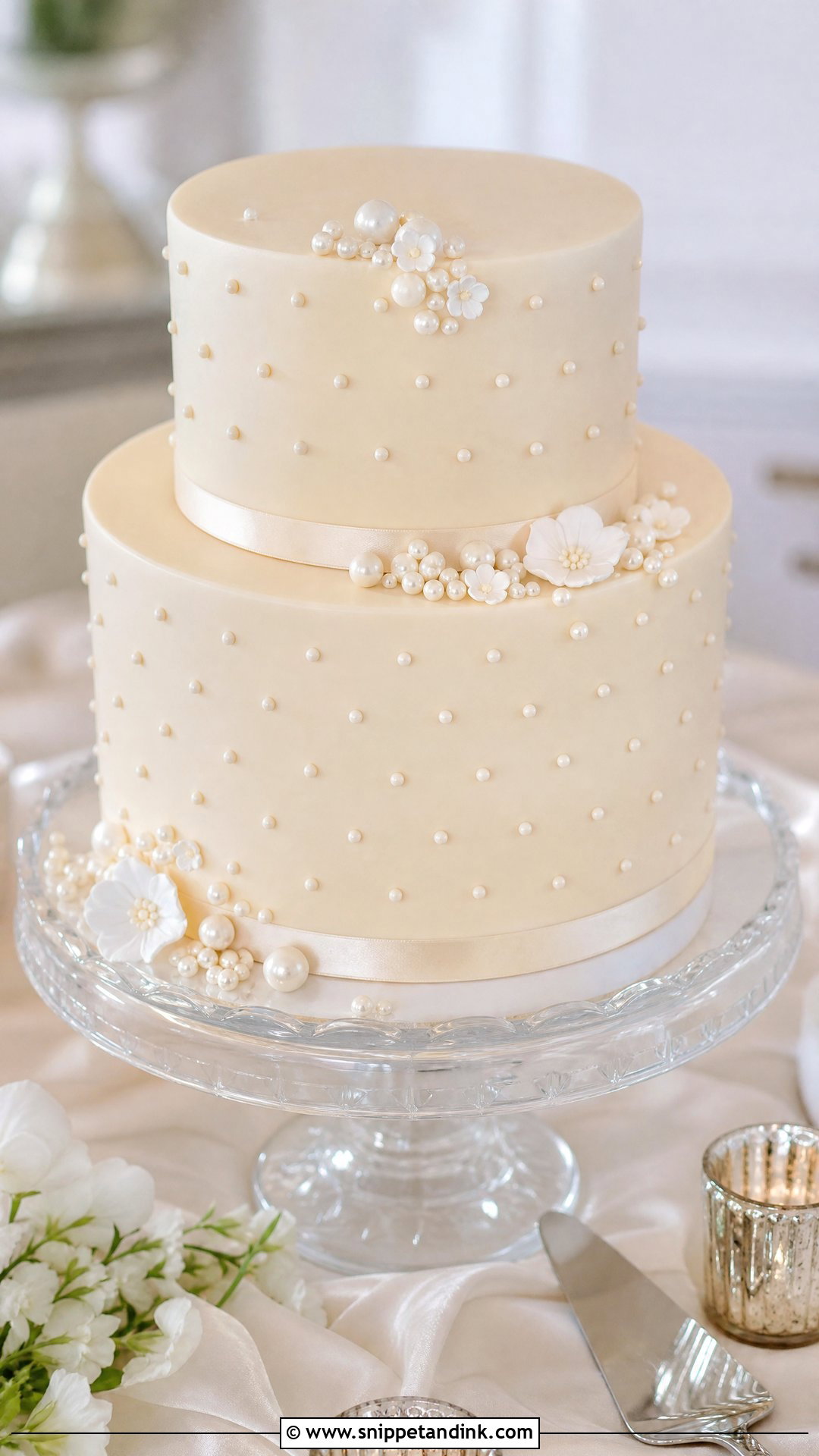
Edible pearls come in two very different kinds, and I always explain the difference at the tasting. Hard sugar pearls give the brightest shine but crunch loudly and can be tough on teeth, while soft fondant or chocolate pearls bite like the rest of the cake. I use the hard ones sparingly near the base and the soft ones anywhere a knife will go through. Ivory with pearl accents reads classic in a ballroom; blush or champagne frosting warms it up. White chocolate raspberry or almond sponge sits well under it.
5. Bow Wedding Cake
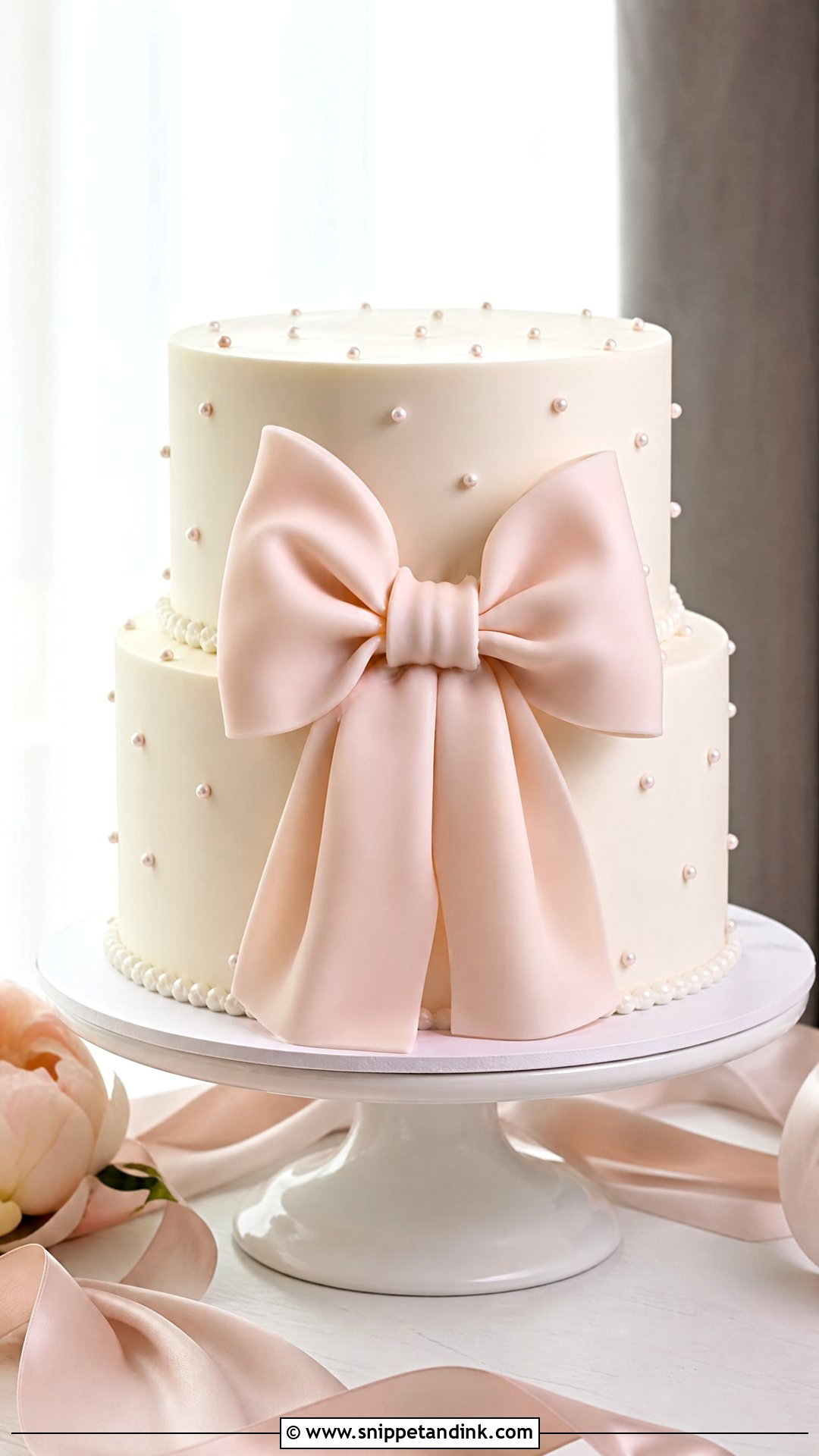
A fondant or sugar-paste bow has to be made days ahead so it can dry hard enough to hold its loops, which means it needs to be decided early, not added in the final week. Real ribbon works too, but satin laid straight onto buttercream soaks up grease and turns blotchy, so I back it with a thin strip of acetate or tape first. One oversized bow on a smooth tier looks like fashion; a ring of tiny piped bows looks vintage. Strawberry cream filling with vanilla almond sponge is my usual match for the pink and baby-blue versions.
6. Heart Shaped Wedding Cake
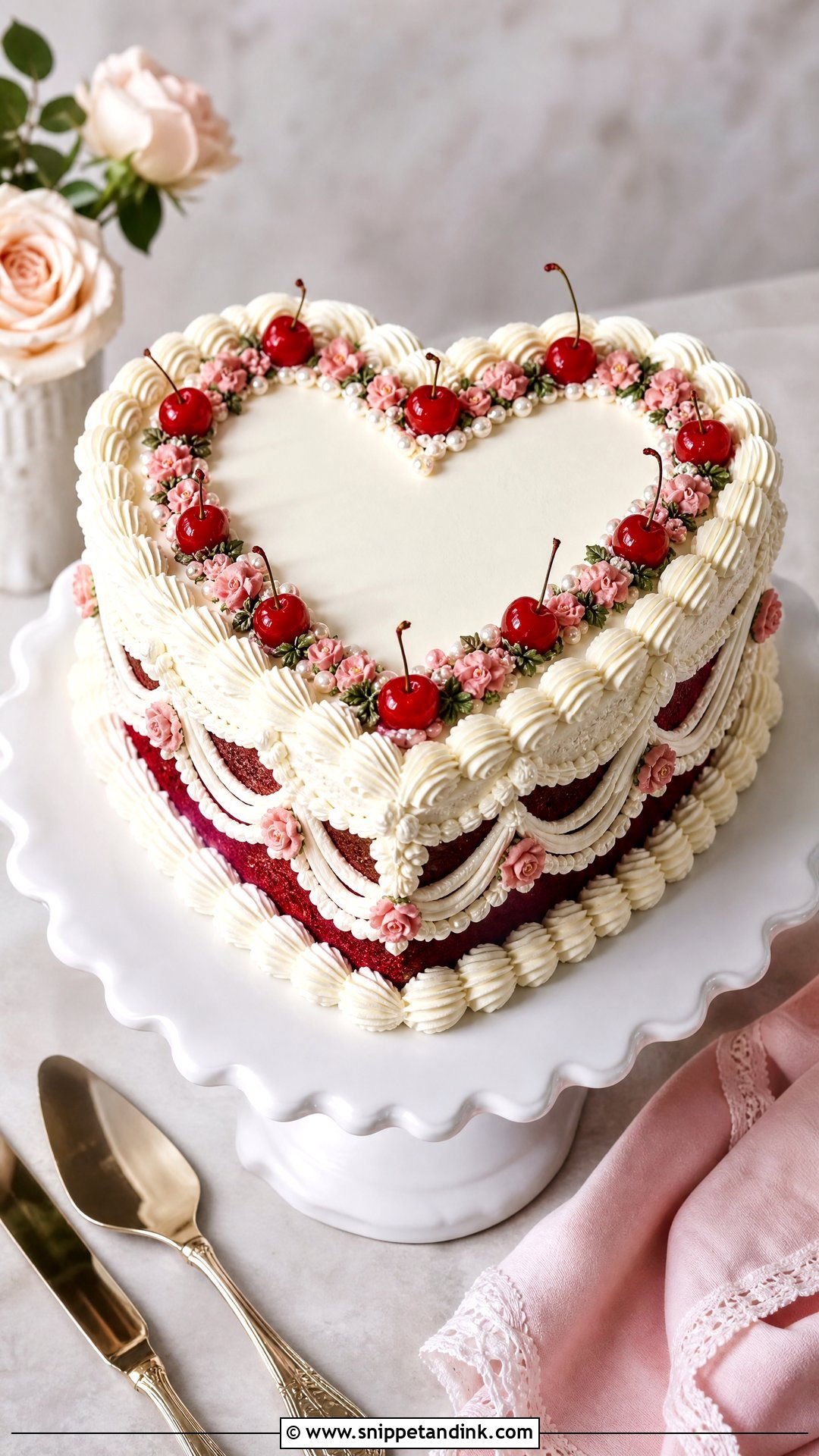
Heart cakes are carved or baked in a shaped tin, and the point of the heart is the fragile part: it is the first thing to crack in transport and the first to dry out if the cake is cut early. I like this shape most as a cutting cake for a sweetheart table, a courthouse lunch or a small elopement, with kitchen cake doing the real serving. Cherries and simple piping are enough, since the outline already says everything. Red velvet and chocolate cherry suit it, but deep red frosting needs a lot of colour gel and can taste slightly bitter.
7. Floral Cascade Wedding Cake
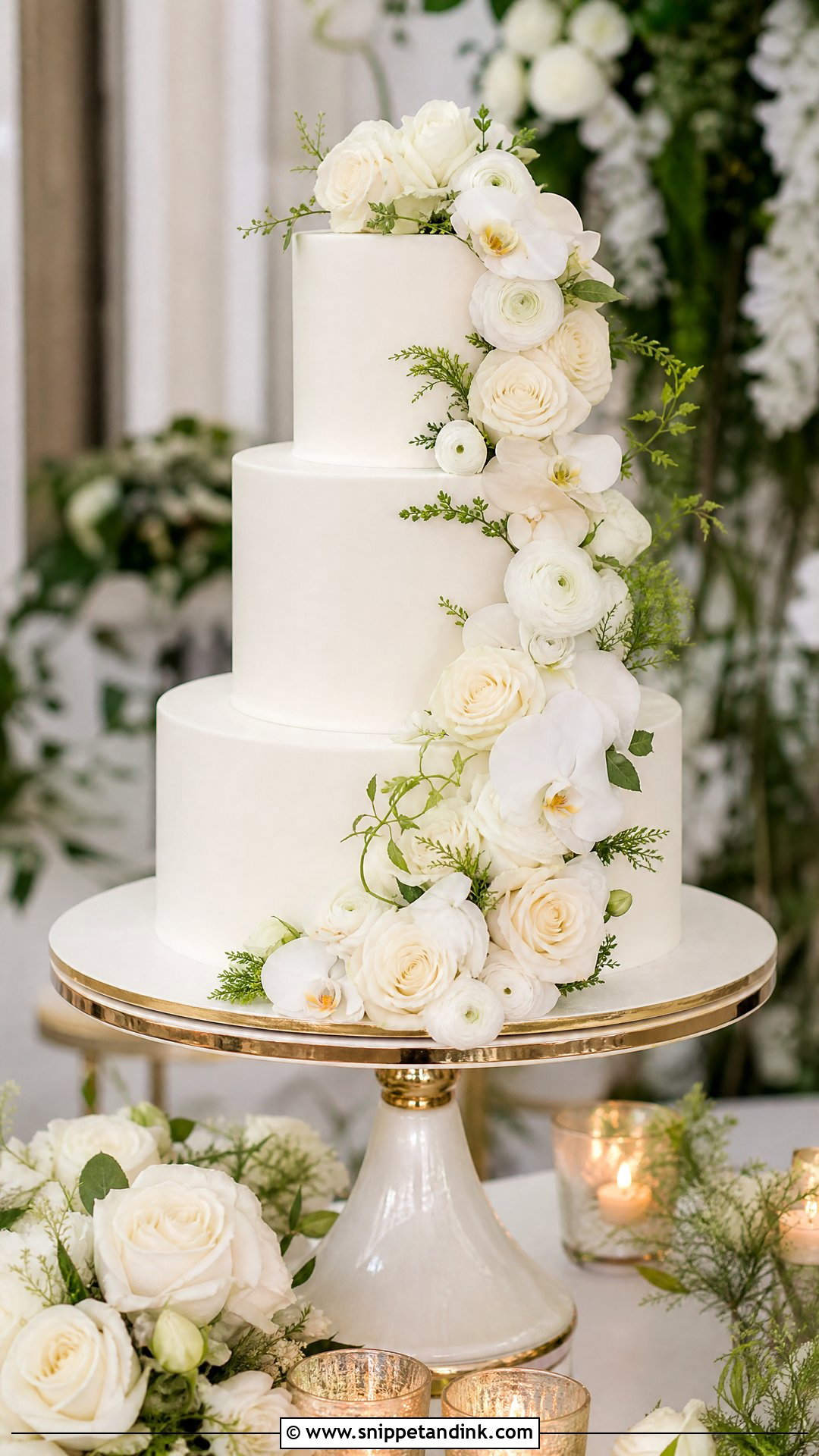
Cascades are where I work closest with the florist. Fresh stems never go straight into sponge: I wrap them in floral tape and set them in food-safe picks, and I steer couples away from flowers that are toxic or heavily sprayed, which rules out lily of the valley, hydrangea and anything grown with pesticides. Sugar flowers avoid the problem entirely and won’t wilt, though they take days to make and cost more. Garden roses, ranunculus and orchids are the usual picks. A lighter sponge such as lemon or berry cream keeps the slice from feeling heavy next to all that decoration.
8. Textured Buttercream Wedding Cake
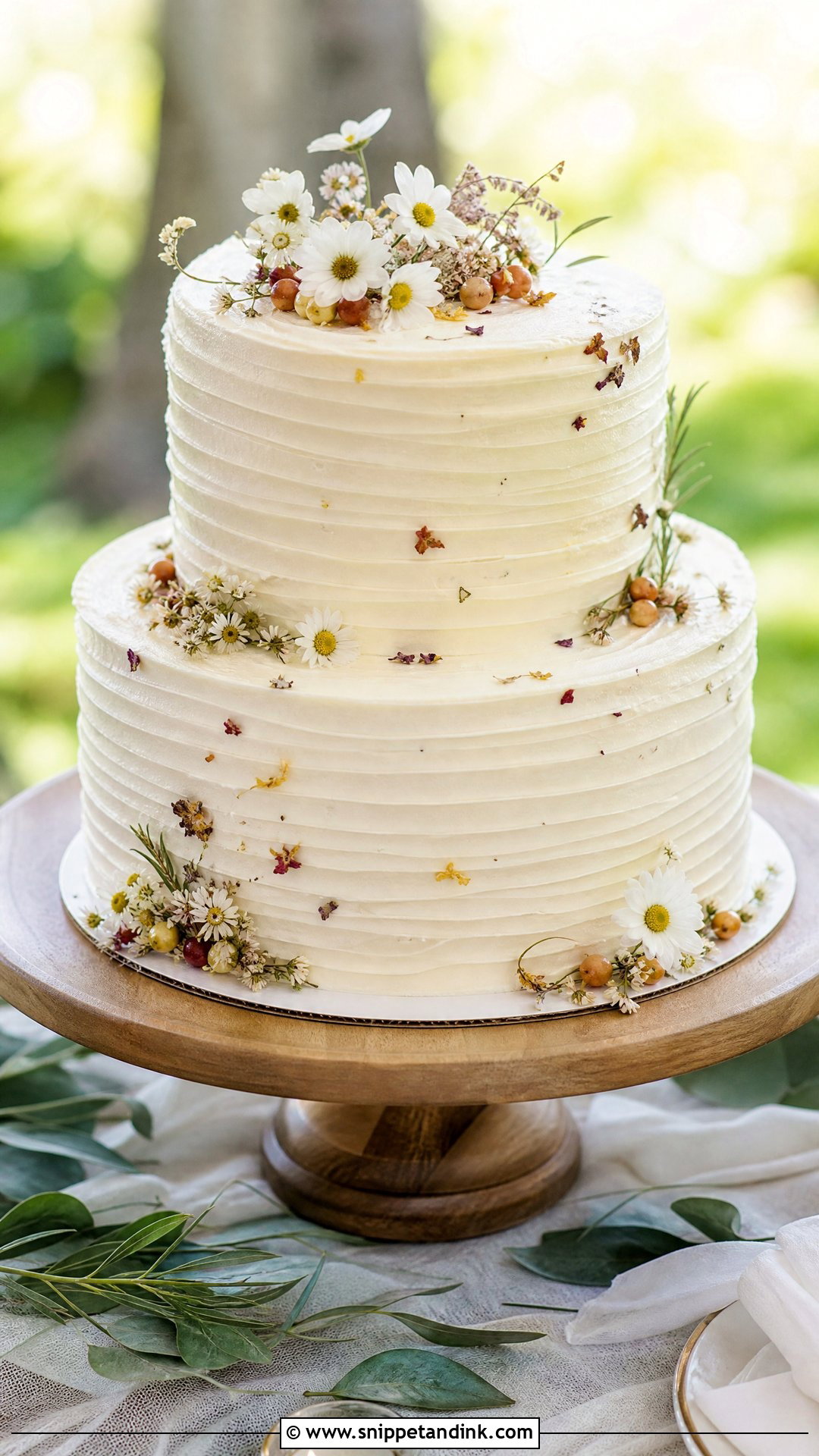
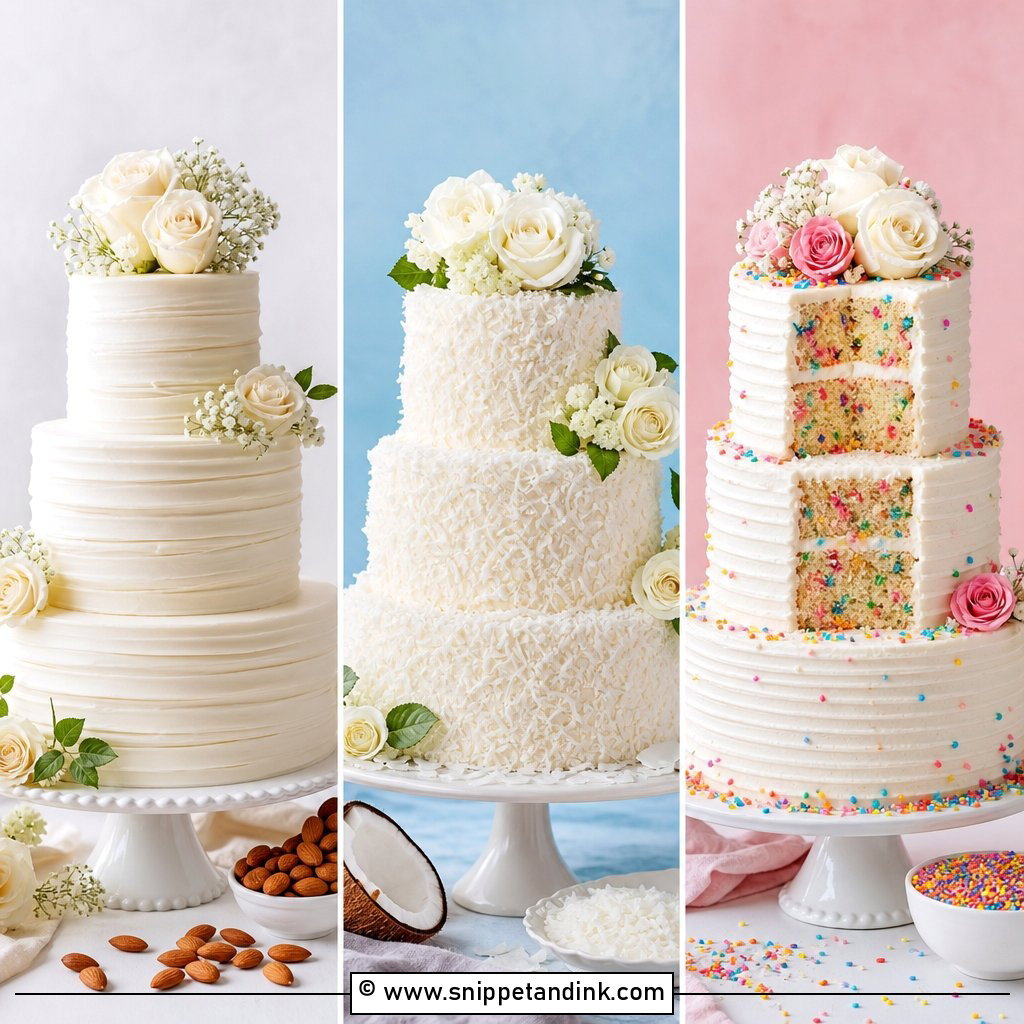
Textured buttercream is my first suggestion for any outdoor or beach reception. Palette strokes, horizontal ridges and soft waves hide the small dents a cake picks up in a van, and a nudge during setup can be smoothed back in seconds with a warm spatula. Ivory is the safe colour, though pale sage and blush look fresh against greenery. Lemon blueberry and coconut sponge both hold up well in warmer weather. A few dried petals or berries finish it without fighting the texture.
9. Sculptural Wedding Cake
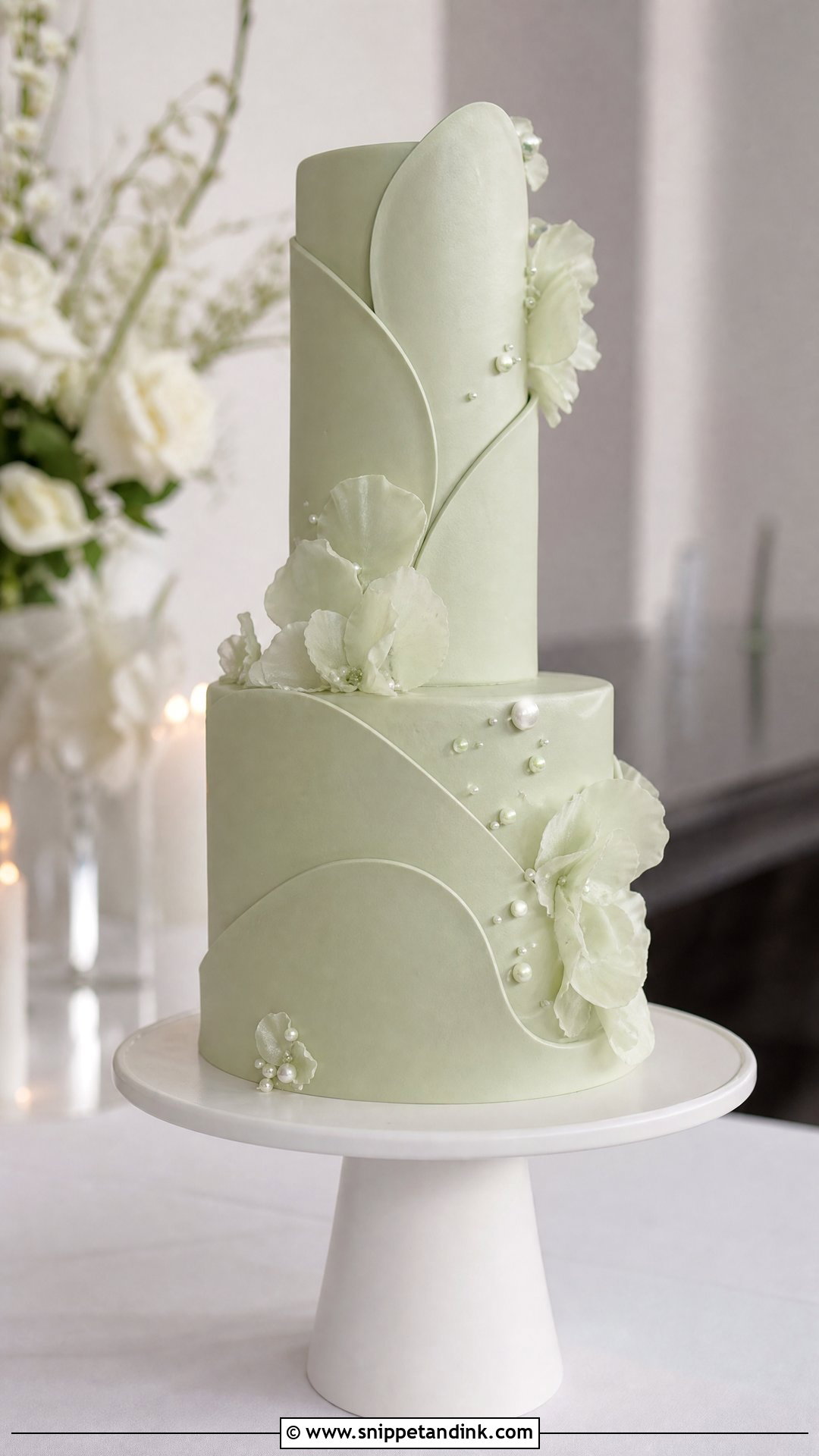
Offset tiers, tall narrow layers and wafer-paper waves look simple in a photo, but every unusual shape needs an internal structure of boards and dowels planned before I bake a single layer. That planning is why these cakes usually cost more than a traditional stack of the same size. Keep the colour to one tone so the silhouette does the talking. Pistachio and chocolate espresso fit the modern mood, and the table around it should stay bare: props compete with a shape like this.
10. Single Tier Wedding Cake
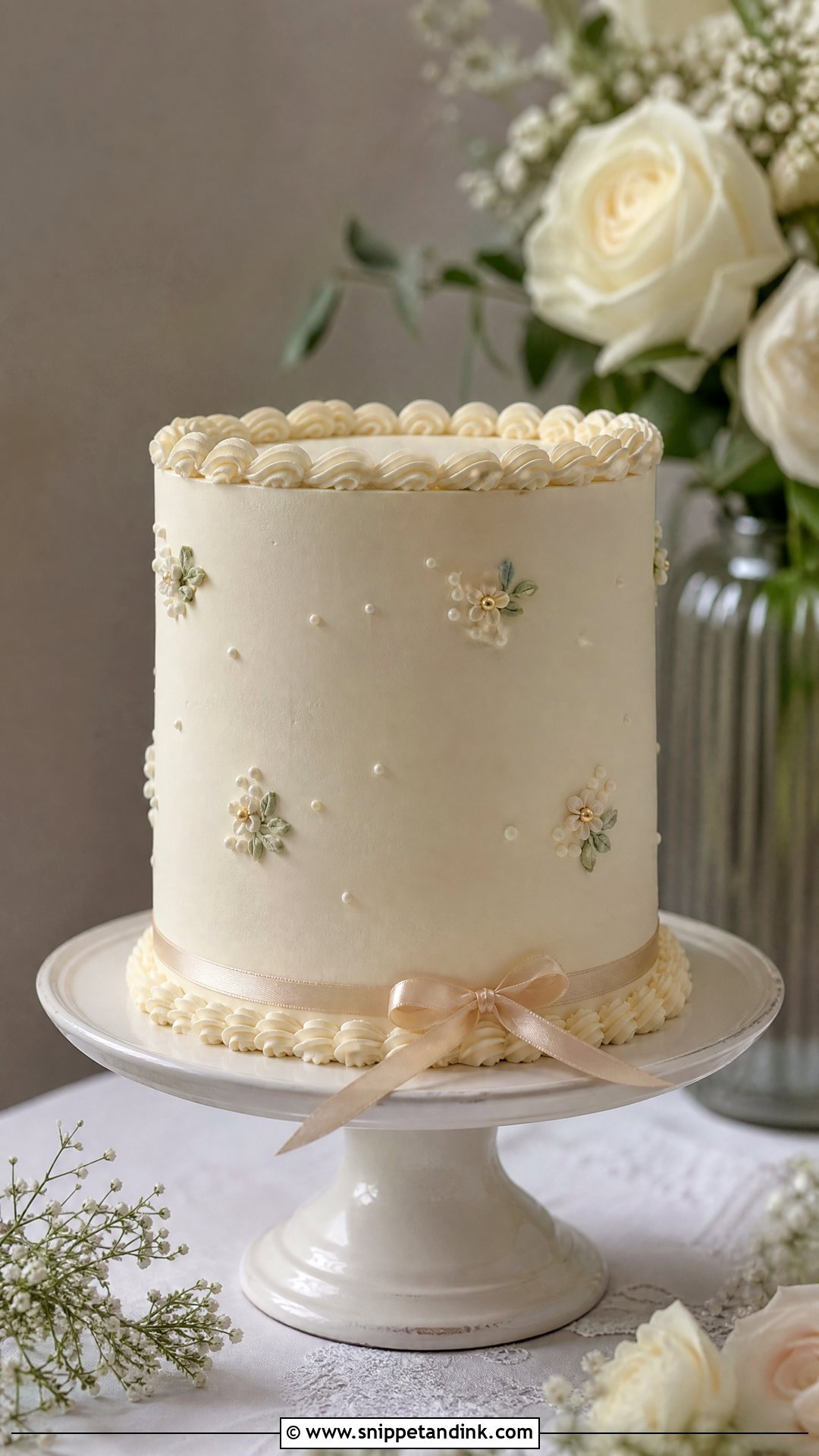
A single tier wedding cake is where I’d spend the budget on finish instead of size. One six or eight inch tier can take Lambeth piping, sugar flowers or a big bow without the cost climbing the way it does across three tiers. It suits elopements, micro weddings and couples serving a dessert table as well. A tall single tier looks more deliberate than a short wide one in photos, and lemon elderflower or almond raspberry makes a small cake feel worth the wait.
11. Two Tier Wedding Cake
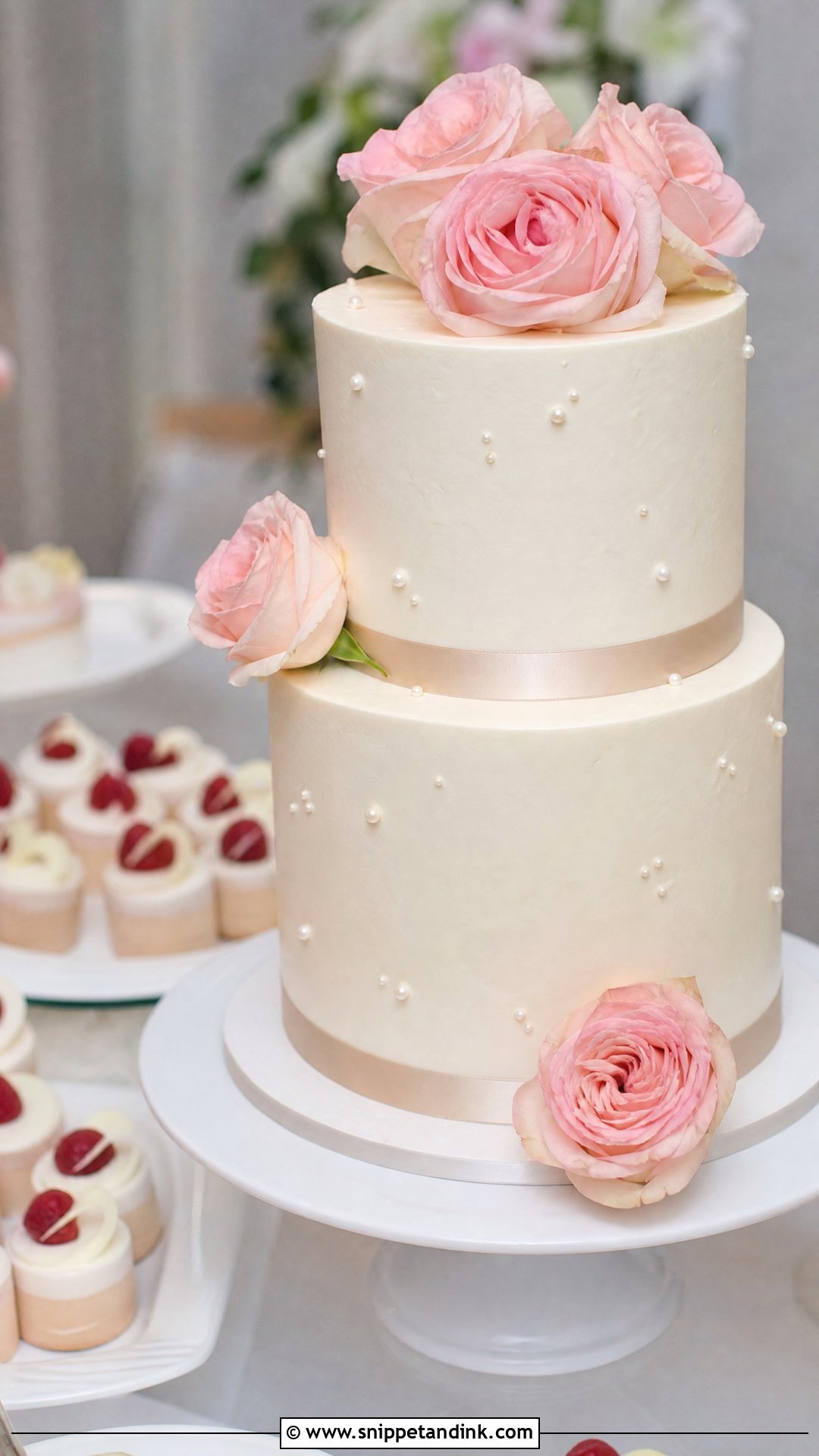
Two tiers is the size I build most often for receptions under about fifty guests. It gives you a proper cake-cutting moment without a huge display, and it lets you serve two flavours, say vanilla raspberry on top and chocolate espresso below. My one structural tip: make the bottom tier a little taller than standard so the proportions look current rather than squat. Then pick a single decorative idea, pearls, ribbon or a few blooms, and stop there.
12. Tall Wedding Cake
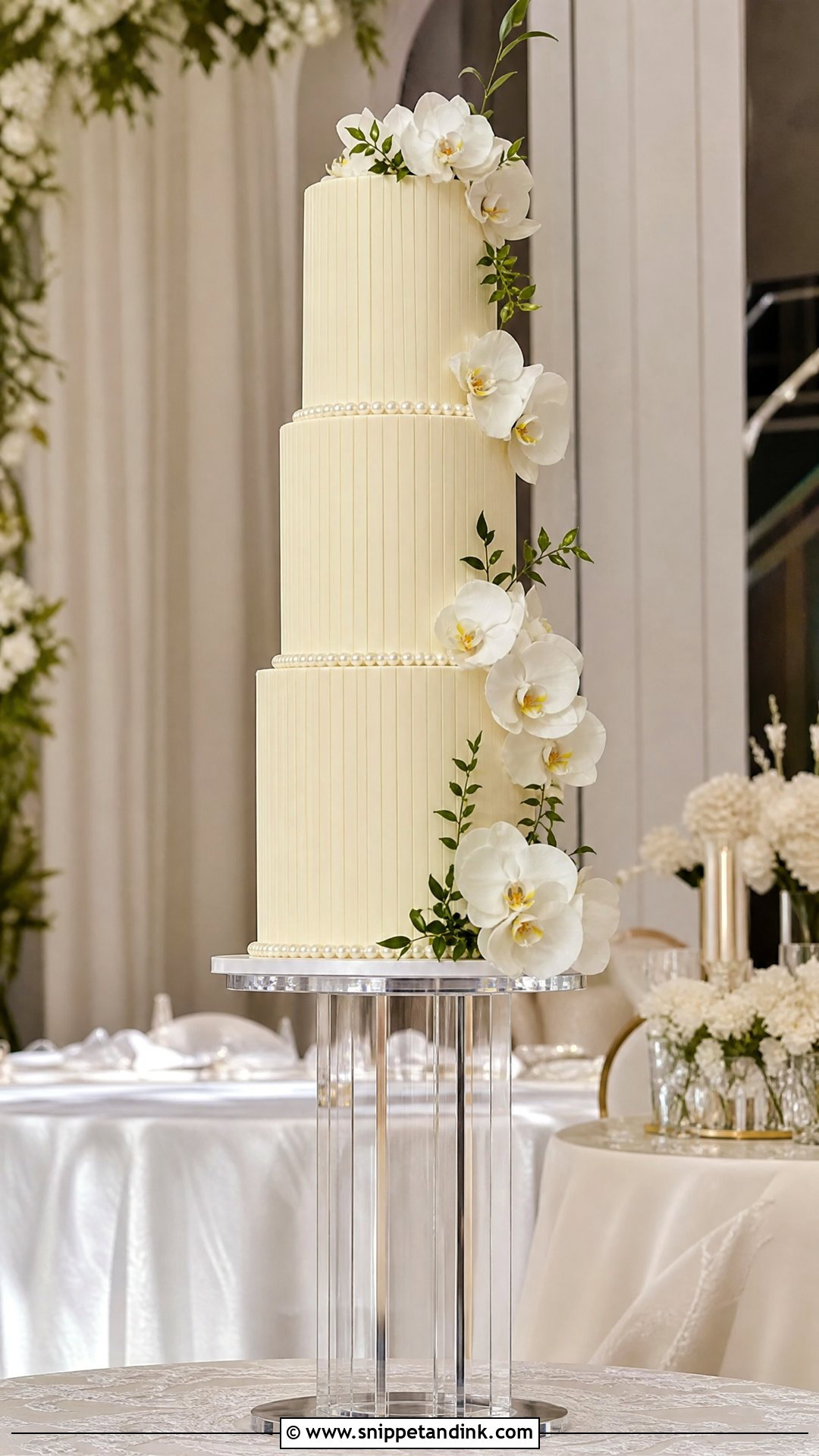
Extra-height tiers are usually two cakes stacked with a hidden board in between, often called double barrels, and without that board and its dowels a tall tier can lean or sink under its own weight. Done properly, height gives drama with almost no decoration. Vertical ribbing or slim sugar flowers stretch the line even further. Tall slices look impressive on the plate, but they are also big, so I cut them in half for serving and tell couples to count on that when we work out portions.
13. Square Wedding Cake
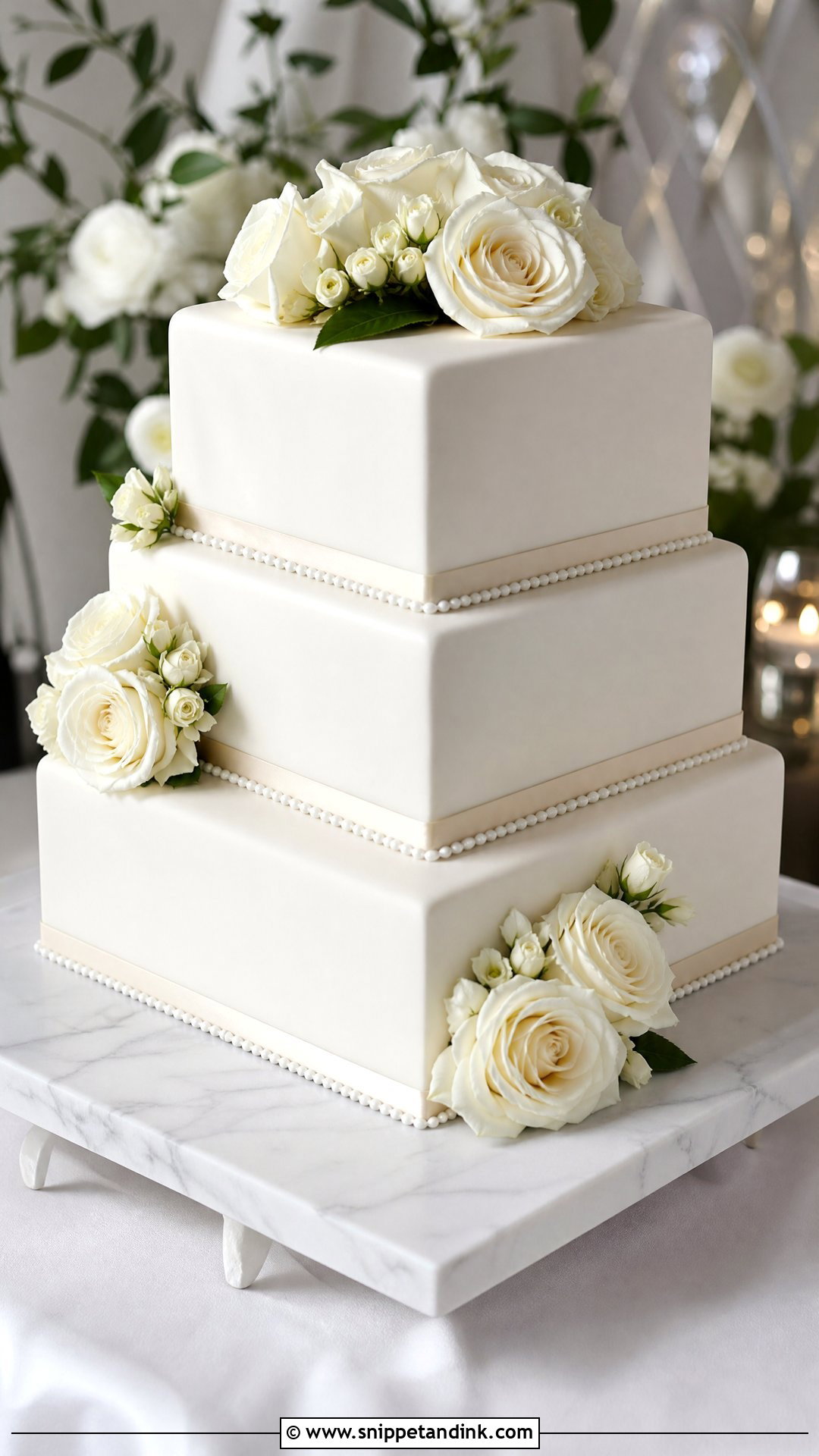
Square tiers are harder to finish than round ones, especially in buttercream, because each corner has to be built up and scraped sharp separately. The reward is a crisp, modern outline and noticeably more slices than a round tier of the same width. Pearl borders and piped lace follow the straight edges neatly, and flowers tucked at the corners soften the geometry. Almond or dark chocolate ganache sponge cuts cleanly into the neat squares this shape gives you.
14. Black And White Wedding Cake
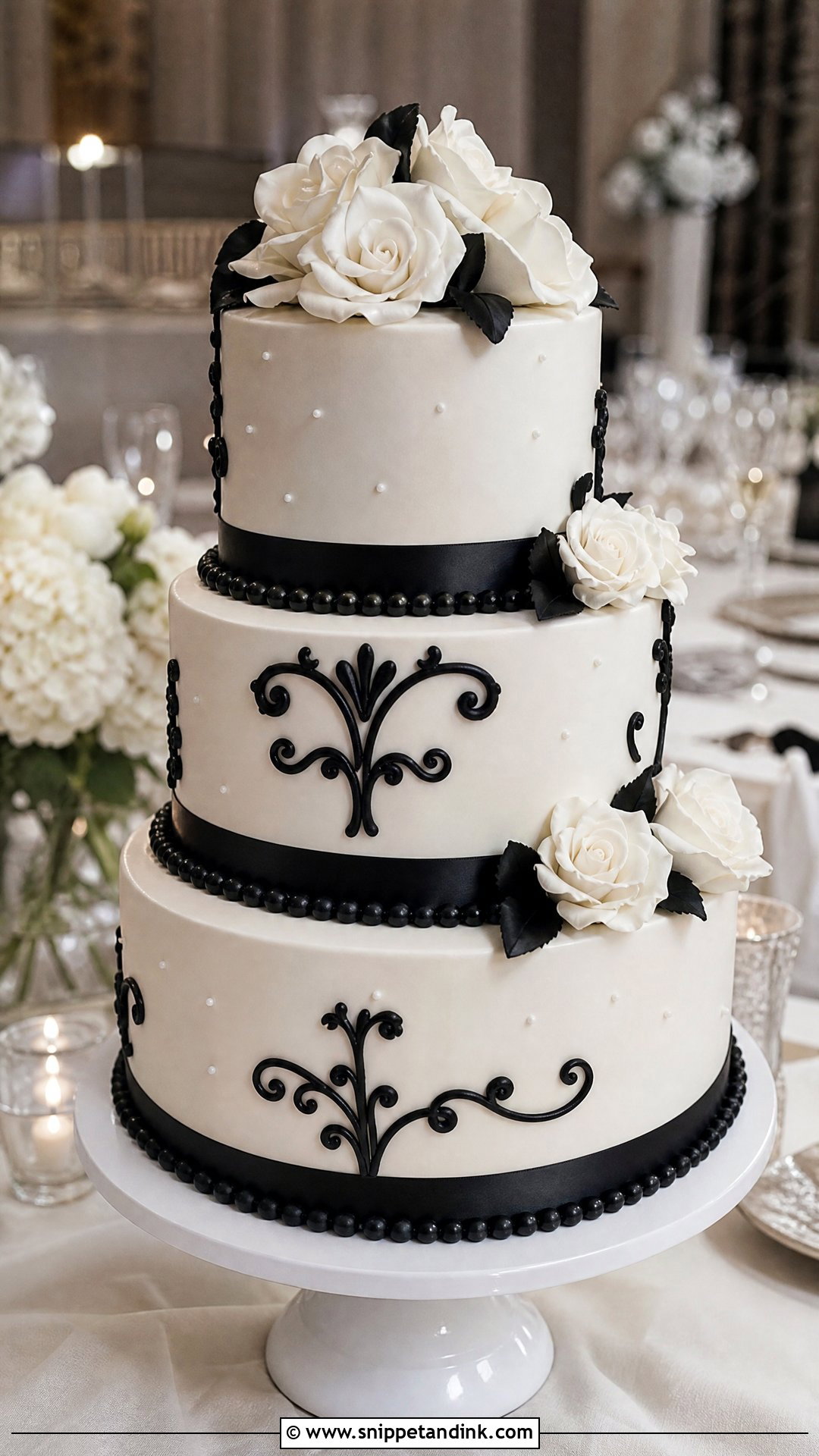
Black looks dramatic but it is the most awkward colour I work with. Black buttercream needs so much colouring that it can taste bitter and stain teeth, so I keep it to ribbon, painted details or a black fondant tier that guests can peel away. Charcoal with ivory and pearls is the softer option. Clean shapes matter here because any wobble in a line shows against white. Cookies and cream or chocolate vanilla sponge tie the contrast inside the slice too.


15. Blue Wedding Cake
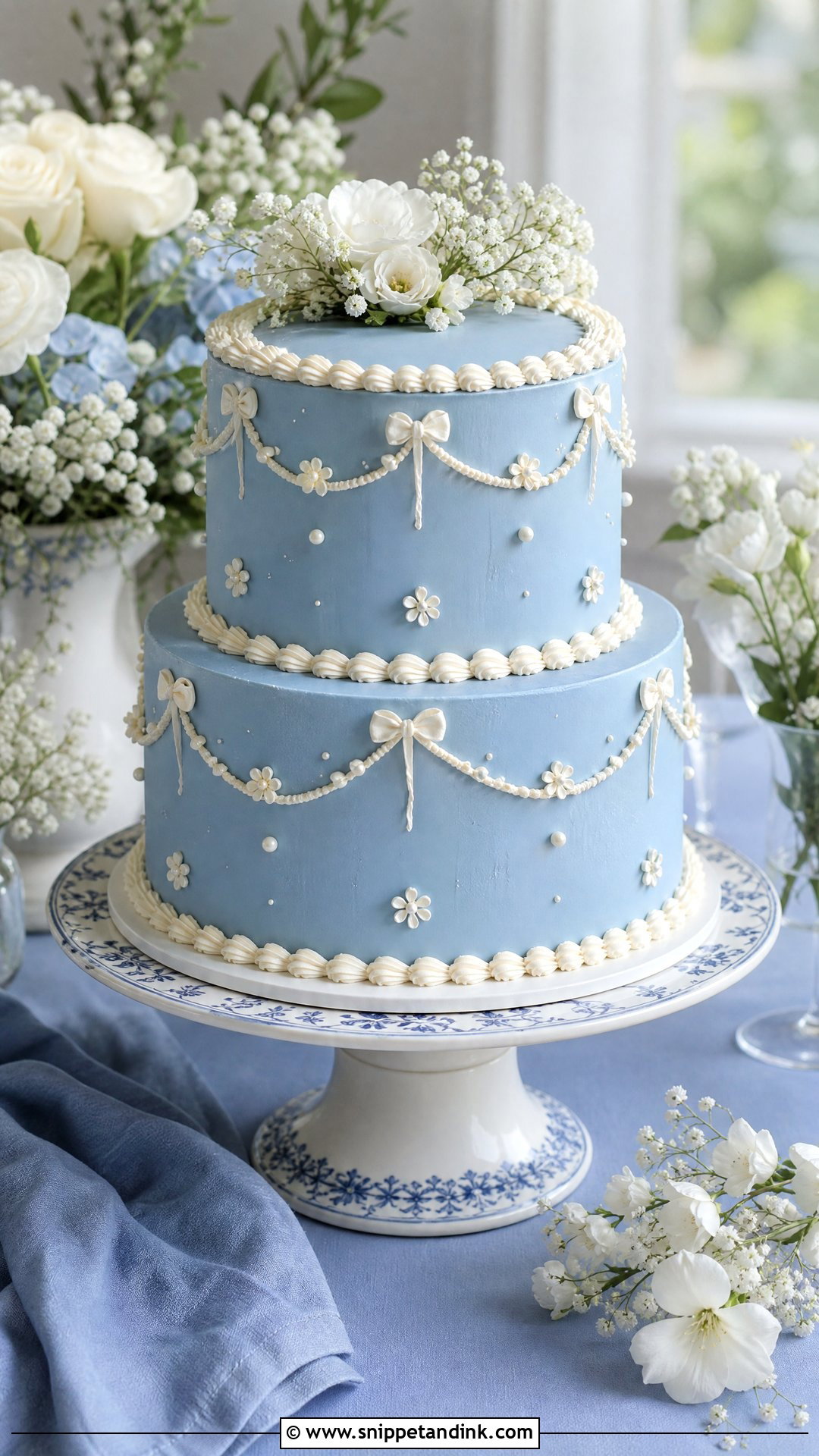
Butter-based frosting is naturally yellow, and blue added to yellow drifts toward green, so a pale blue cake needs a whiter base or a careful touch of violet first. That is the step people skip at home. Dusty blue suits evening receptions; powder blue looks right on vintage piping. Pair it with white piping, pearls or sugar flowers, and bring a swatch of the linens or stationery to the tasting so I can match the shade by eye rather than by name.
16. Green Wedding Cake
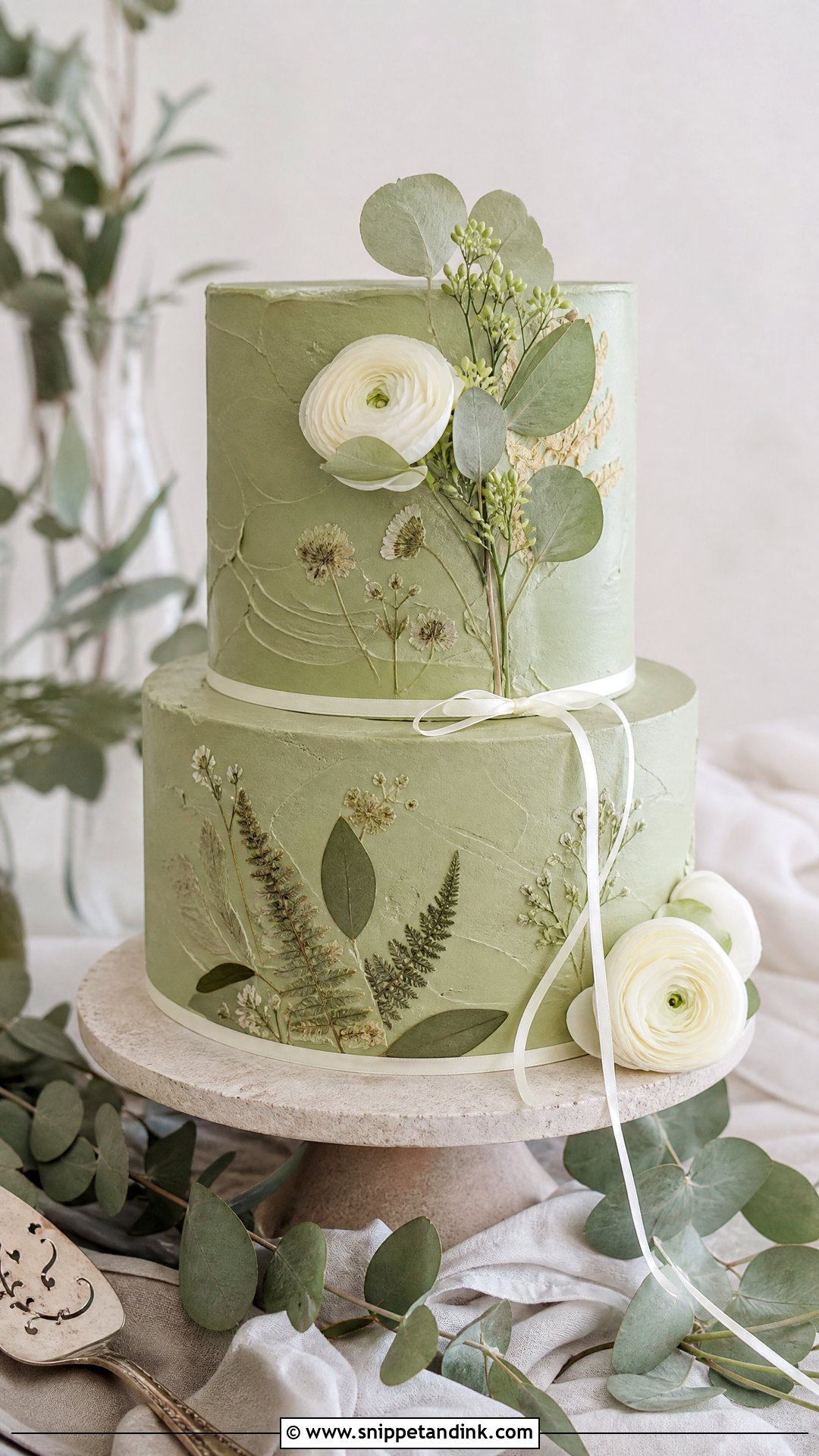
Green is one of the easiest colours to make taste right, because pistachio, matcha and basil can carry some of the tint naturally. Sage and olive sit well beside white flowers and neutral decor, which is why they suit greenhouse and garden venues. I’d avoid a bright grass green; under warm reception lighting it can look artificial. Pressed herbs, sugar leaves or a plain ribbon finish it, and pistachio with almond pear filling is a reliable pairing.
17. Fruit Wedding Cake
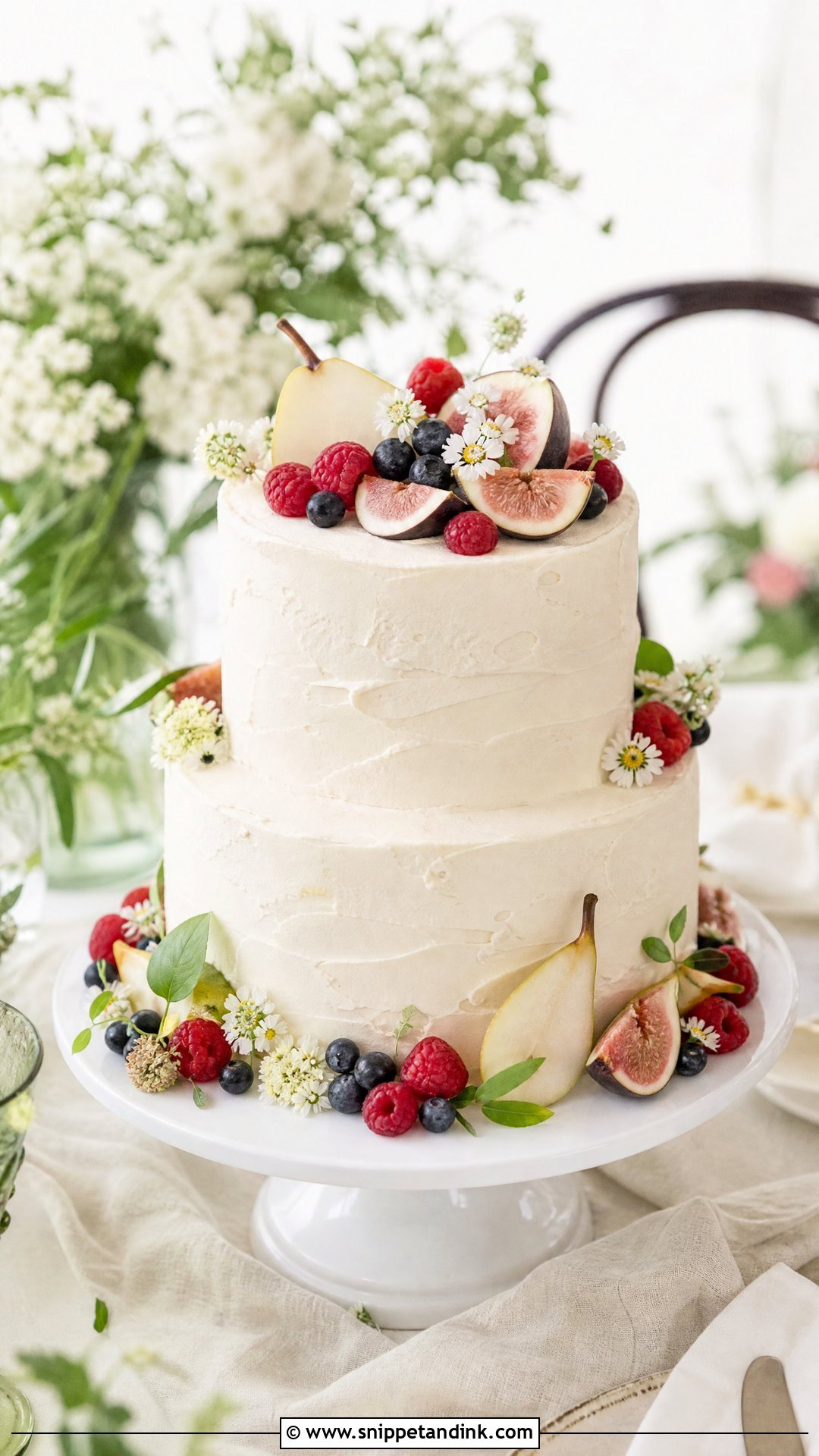
A fruit wedding cake depends on timing more than anything else. Cut fruit weeps juice and browns, so I place berries and figs as close to the reception as I can and leave citrus slices whole or brush them with a thin glaze. Seasonal fruit always looks and tastes better: berries in summer, figs and pears toward autumn. White buttercream with berries reads bright; figs feel moodier. Lemon raspberry or honey fig sponge echoes what is on top.
18. Geode Wedding Cake
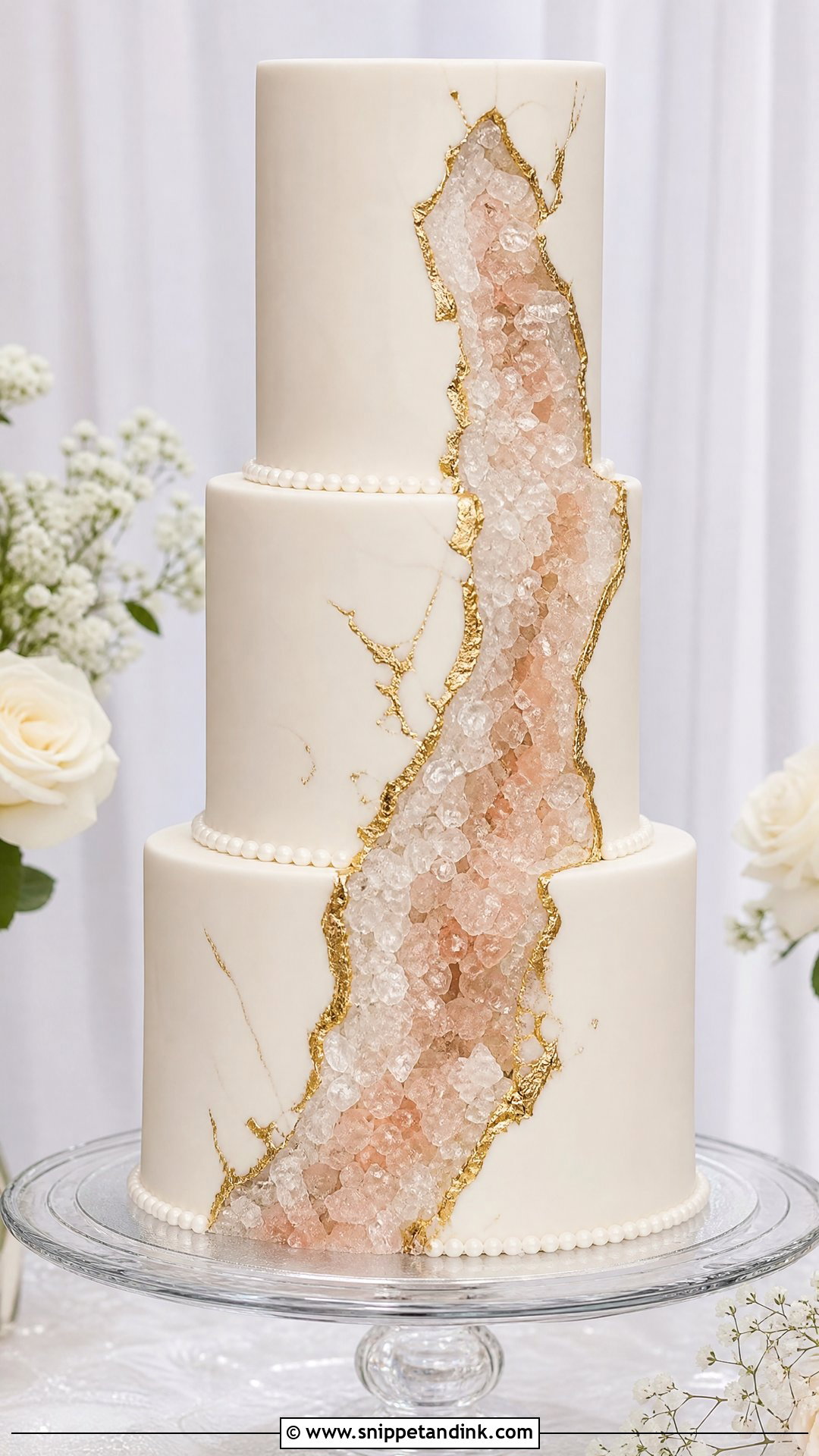
The crystals in a geode cake are usually rock candy or isomalt, set into a cut-away section of the tier and painted at the edges. They are heavy and they hate humidity, turning sticky and cloudy in a damp marquee, so this style belongs indoors. The rest of the cake should stay plain, white fondant or smooth buttercream, so the crystal section reads clearly. Amethyst and clear quartz tones are the classics; a thin gold edge sharpens it. Chocolate ganache or salted caramel sponge holds up well under the extra weight.
19. Watercolor Wedding Cake
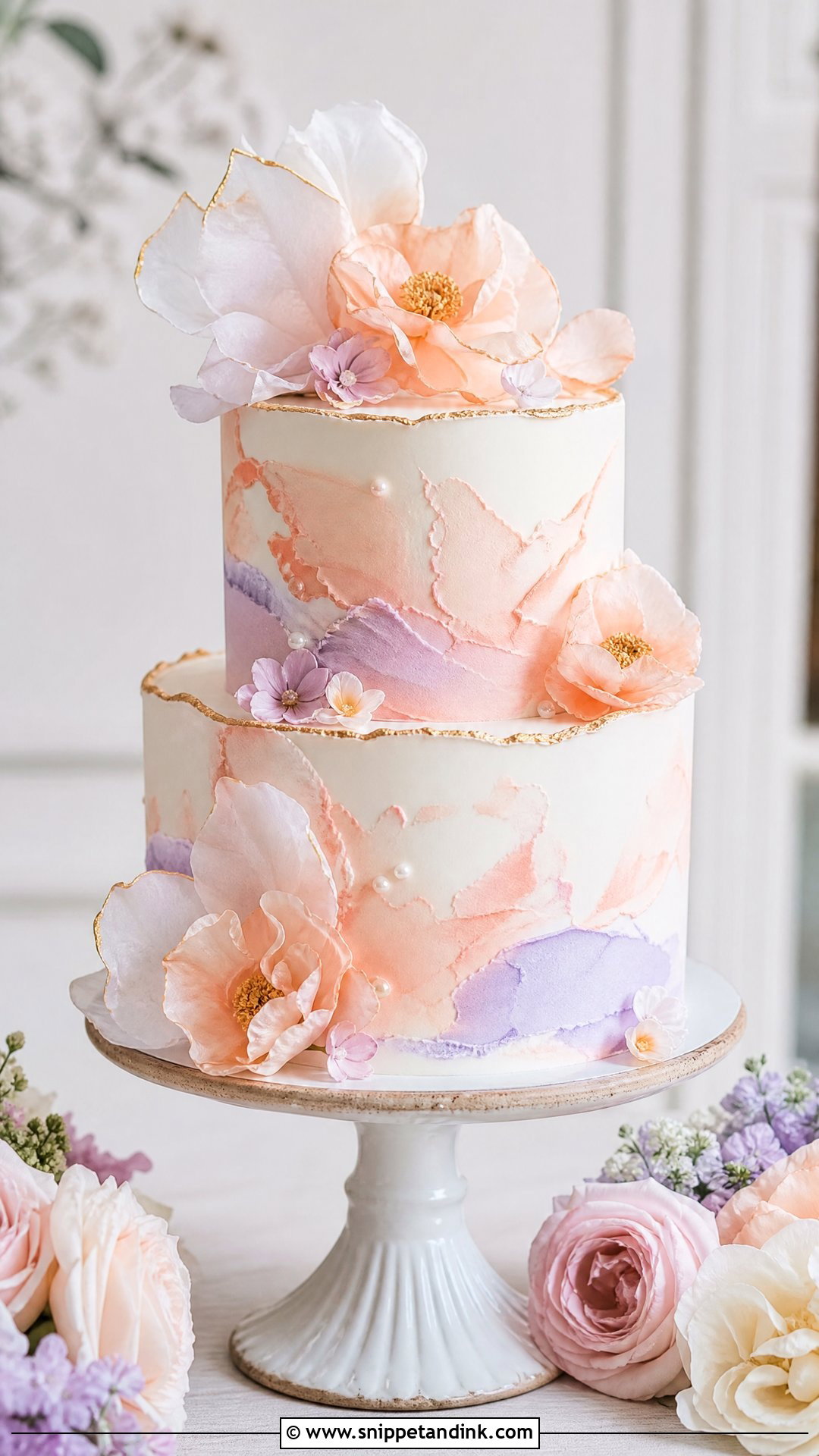
A watercolor wedding cake is painted with thinned food colour on fondant, or blended with a palette knife on buttercream, and the two give different results. Fondant takes a cleaner, more painterly wash; buttercream gives a softer smudge. I pull the shades straight from the bouquet or invitation so the cake ties into the rest of the design. Wafer paper flowers or a light metallic edge finish it. Lemon and orange blossom sponge suit the pastel palette.

20. Dessert Table Wedding Cake
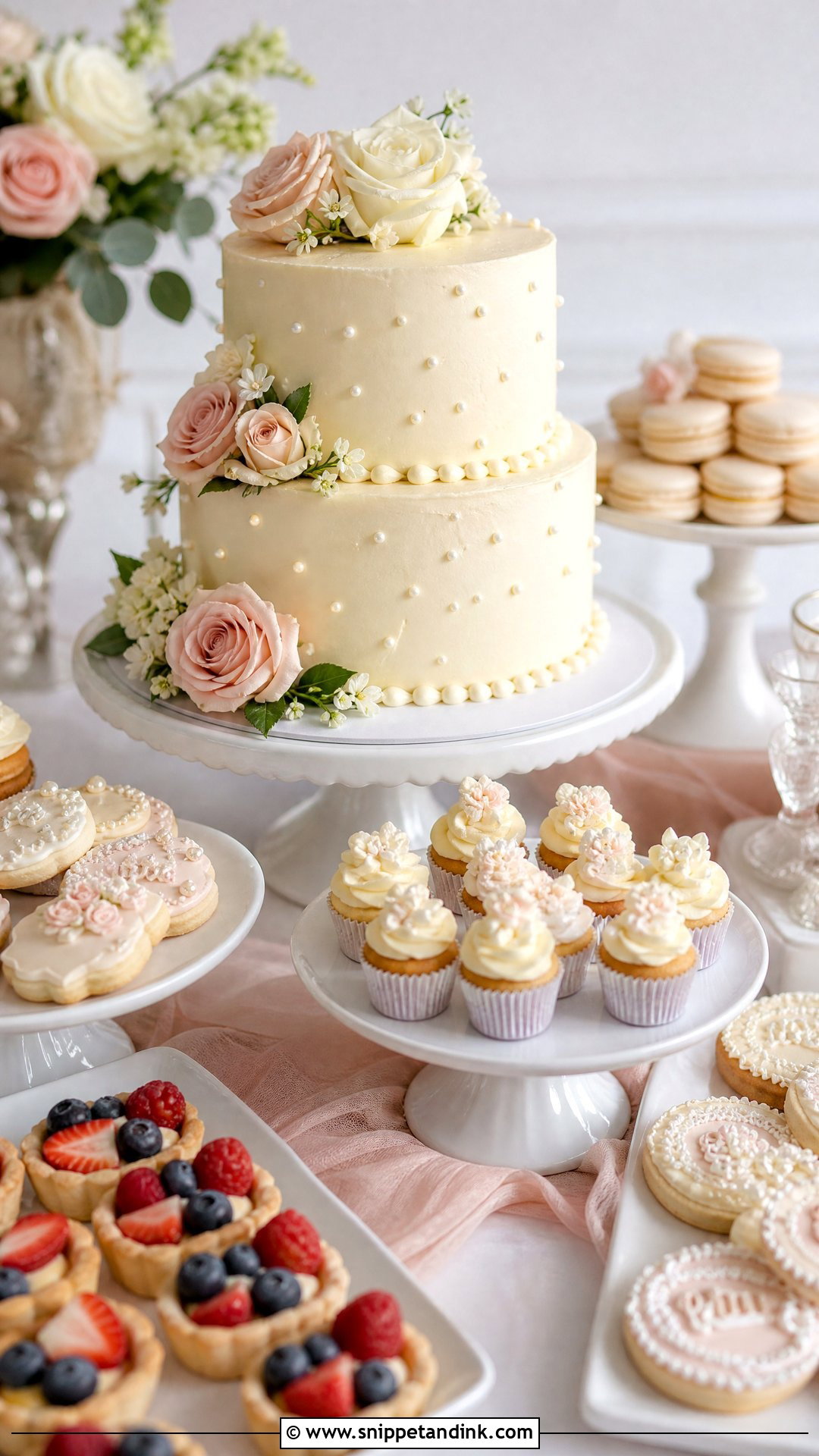
A dessert table wedding cake setup is how I solve mixed dietary needs without baking a five-tier cake. The centrepiece can be a modest two-tier cutting cake, surrounded by cupcakes, macarons, cream puffs and fruit tarts. Tie them together with one repeated detail, a ribbon colour or a flower, so the table looks planned. I’d label anything gluten-free or nut-free clearly and keep it on its own stand to avoid crumbs crossing over.
Buttercream, Fondant and a Warm Marquee
Most cake disasters I hear about are temperature problems rather than baking problems. Butter-based frosting softens as the room warms, so piping loses its edges and tall tiers can start to bulge at the seams. Meringue buttercreams hold up better than the sweet, fluffy kind, but none of them like direct sun.
Fondant behaves differently. It protects the cake from drying, yet when a chilled fondant cake goes into a humid room, condensation beads on the surface and colours can bleed. I let fondant cakes come up to temperature slowly in their boxes for that reason.
A quick heat ranking from this list
- Safest outdoors: textured buttercream, pressed flower, fondant-covered square or black and white tiers.
- Needs shade and a short display: Lambeth, minimalist sharp-edged buttercream, tall double-barrel tiers.
- Indoors only if possible: geode crystals, which go sticky in damp air, and fresh fruit, which weeps.
How Many People a Tier Really Feeds
Wedding portions are cut as narrow fingers, much smaller than a birthday wedge, so a cake feeds more people than you might expect. As a rough guide, a six inch round gives about twelve wedding portions and an eight inch about twenty-four, while a square tier of the same width gives noticeably more. Bakers’ charts differ slightly, so confirm with yours.
If you love a tall, dramatic cake but your guest list is small, I can swap a tier for a decorated dummy. It looks identical in photos and saves a little on ingredients, though the decorating time and cost stay much the same.
The Trend Matters Less Than Your Reception Room
Any of these can work, but the venue usually decides more than the photo does. Lambeth piping and a minimalist buttercream cake both need a cool room; geode crystals need dry air; fruit and fresh flowers need careful timing. Bring your venue details, guest count and season to the first tasting, and ask your baker straight out which finish they would trust in that room. A good one will tell you honestly if your favourite picture won’t survive the afternoon.
You'll Like These Ideas:










Leave a Reply