
A wedding cake has two jobs, and couples usually only think about one of them. It has to look right on the night, under the lights and in close-up photos, and it has to be cut, plated and eaten by every guest without a fuss. The designs couples are asking me for at the moment lean personal and a bit theatrical: vintage piping, pearls, sculptural tiers, cascading flowers, bows and bold texture. Below are twenty of them, each with what I’d tell you at a consultation about how it is made, how it travels and where it can trip you up.
Working Out the Tiers From Your Guest List
Before falling for a design, count servings. Wedding slices are cut smaller than party slices, usually a narrow finger of cake about an inch wide, so a cake serves more people than its size suggests. As a rough guide for a standard height round tier, a 6 inch serves around a dozen, an 8 inch around two dozen, a 10 inch close to forty and a 12 inch over fifty. Every baker’s chart differs slightly, so ask for theirs.
- Under 60 guests: two tiers, or a single wide tier with a small kitchen cake behind the scenes.
- Around 100 guests: three tiers, such as 6, 8 and 10 inches, covers most rooms.
- 150 and up: four or more tiers, or a smaller showpiece plus sheet cakes cut in the kitchen.
- Dessert table too? Many guests take a smaller piece, so you can usually order slightly fewer servings.
Popular designers fill their calendars months ahead, so I’d start conversations about six months out. Sugar flowers and large bows are made in advance, and your final count usually goes in a few weeks before the date.
1. Lambeth Wedding Cake
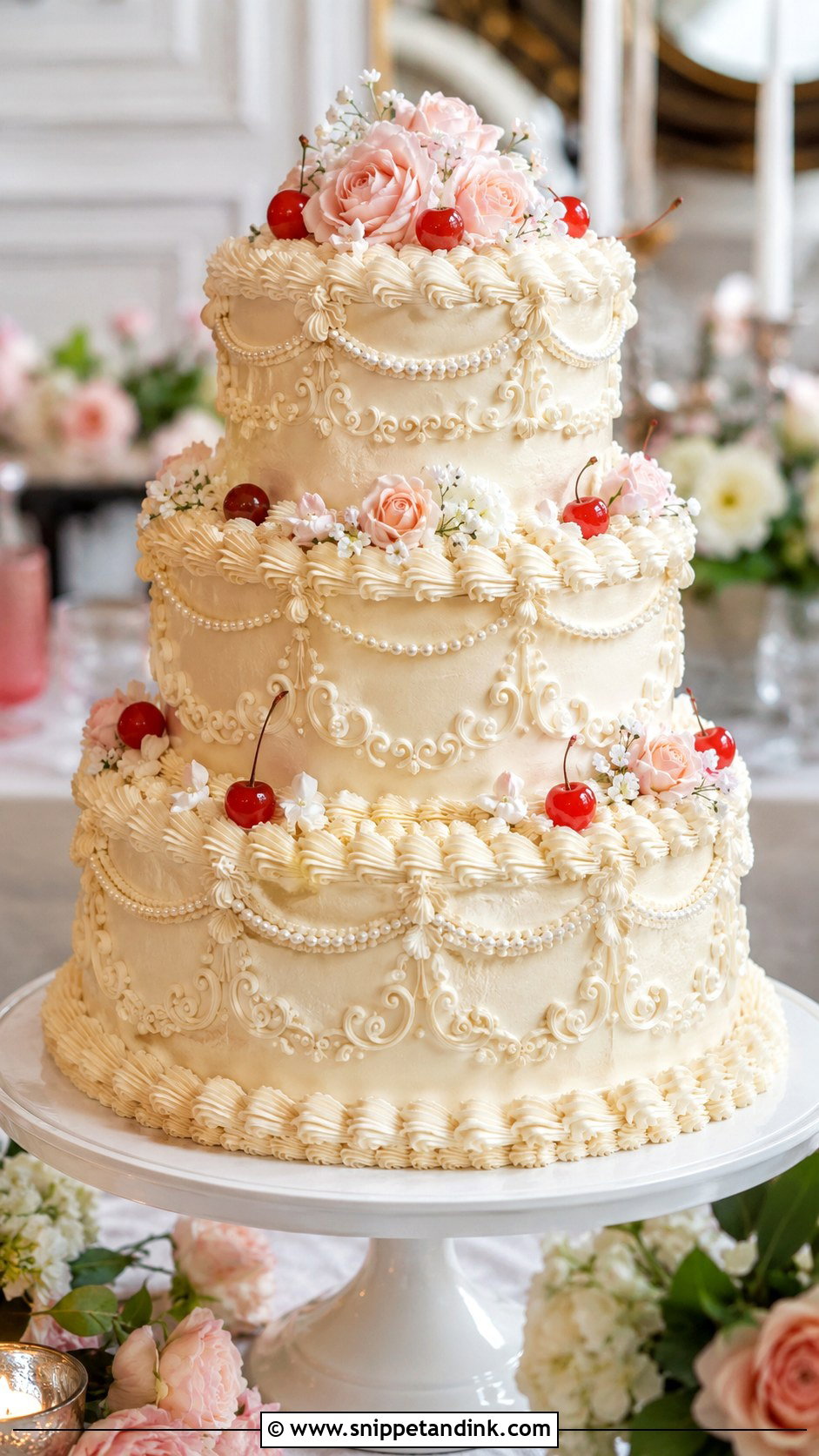
Lambeth is the over-piped vintage style: shells, scrolls, swags and ruffled borders layered on top of each other. It is almost always done in buttercream, which means it needs a cool room, because every piped ridge softens at the same time once the temperature climbs. Soft ivory, blush, butter yellow or dusty blue let the piping read without shouting, and white on white is the most formal version. Cherries and small sugar flowers make it playful. Ask for symmetry between tiers, and pick a lighter flavor like lemon elderflower or almond to balance how rich it looks.
2. Pearl Wedding Cake
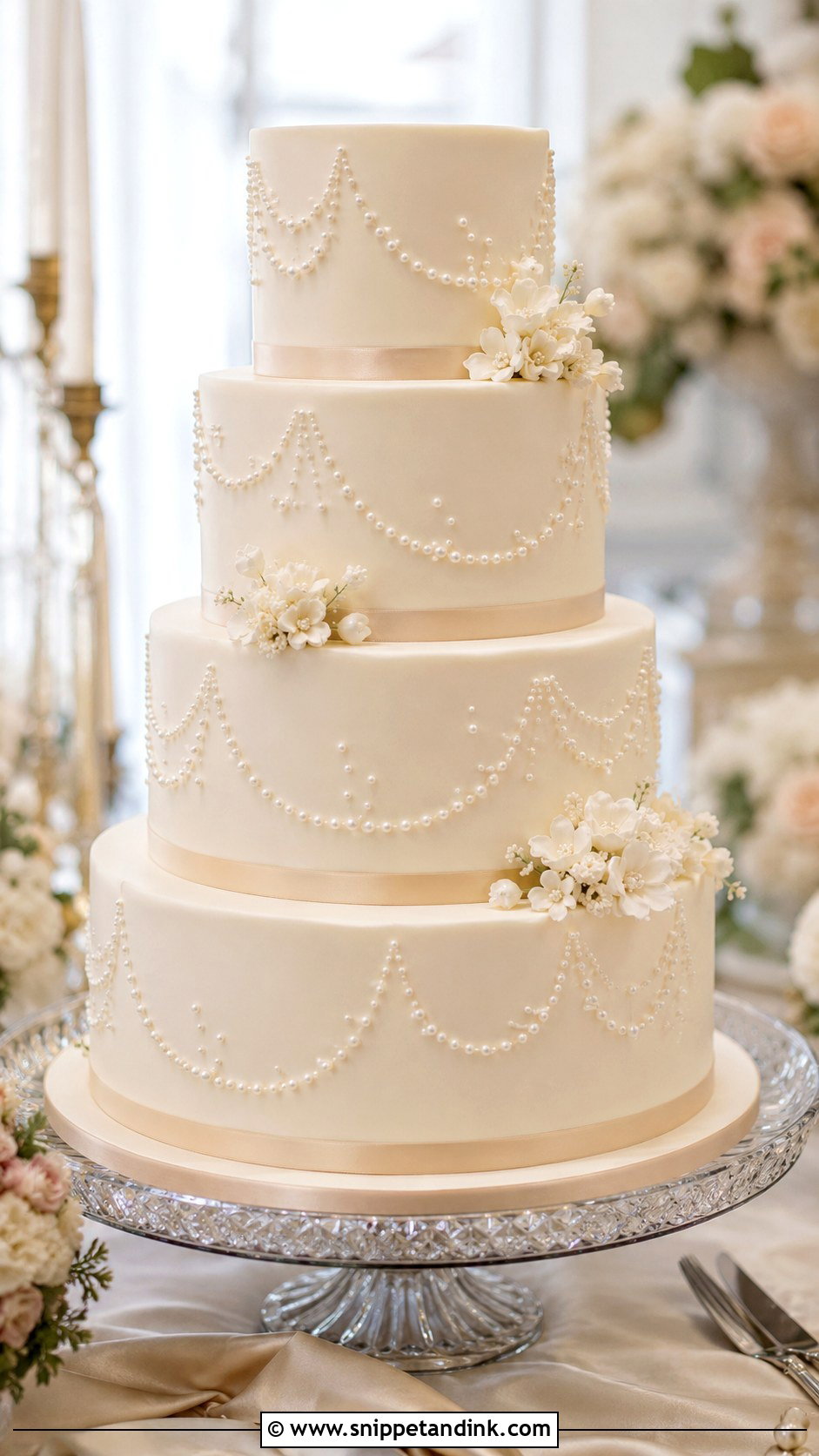
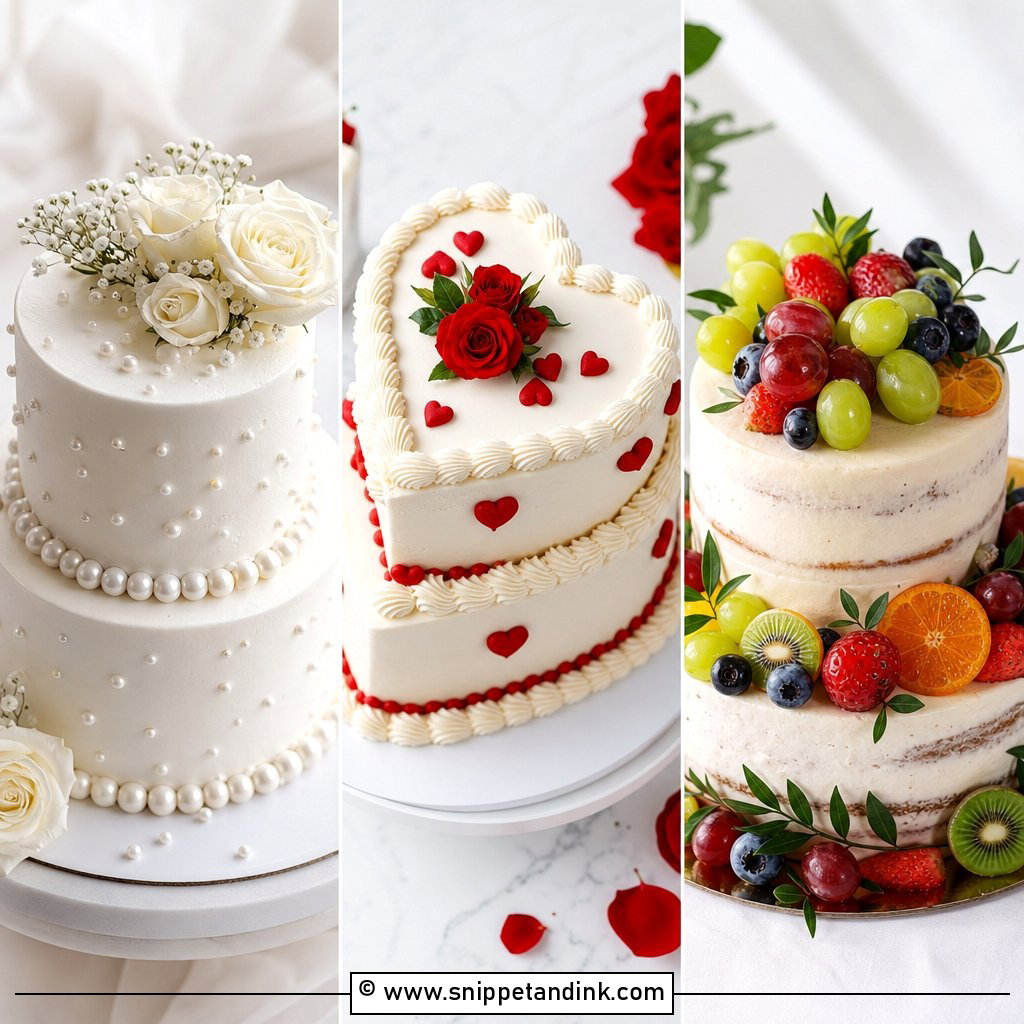
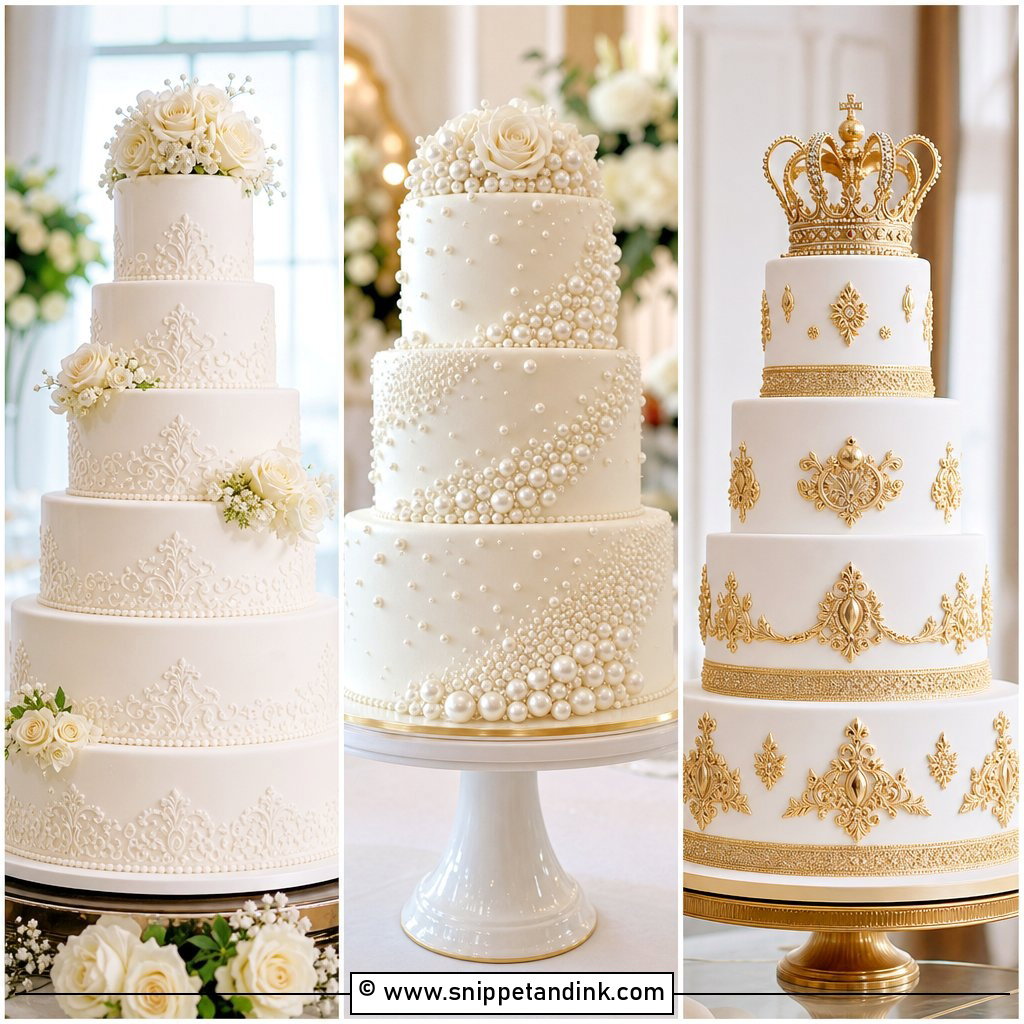
Pearls do a lot with very little. I press sugar pearls into buttercream borders or set them on fondant in soft vertical trails, and the trick is spacing them with a template so the lines don’t wander as they go round the tier. Too many and the cake looks busy; a clear arrangement looks deliberate. Ivory, champagne and satin ribbon suit them, as do vanilla bean, coconut or almond inside. One practical note: hard sugar pearls are very firm, so I keep them off the slices I expect children to eat and away from the cutting line.
3. Floral Wedding Cake
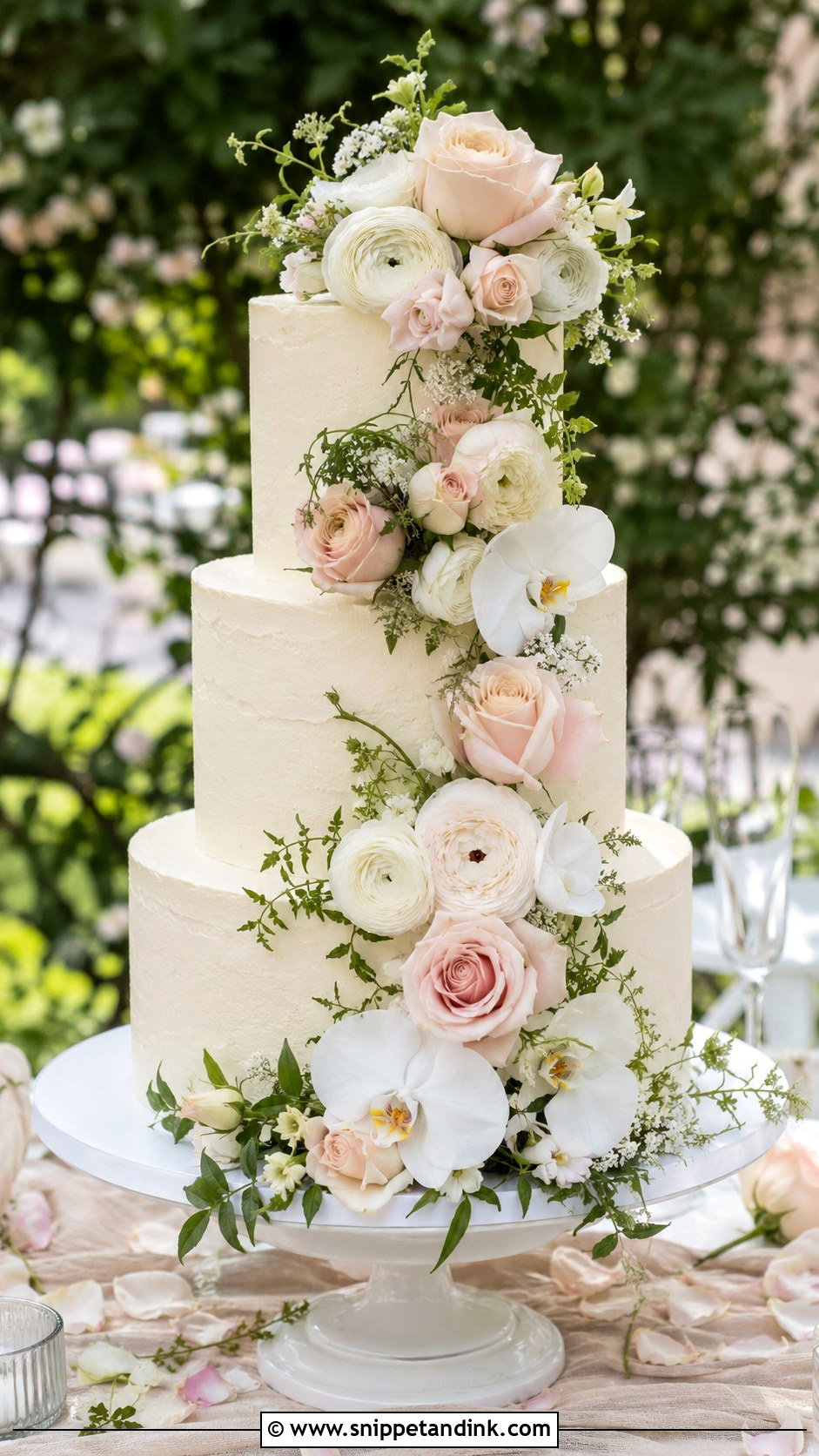
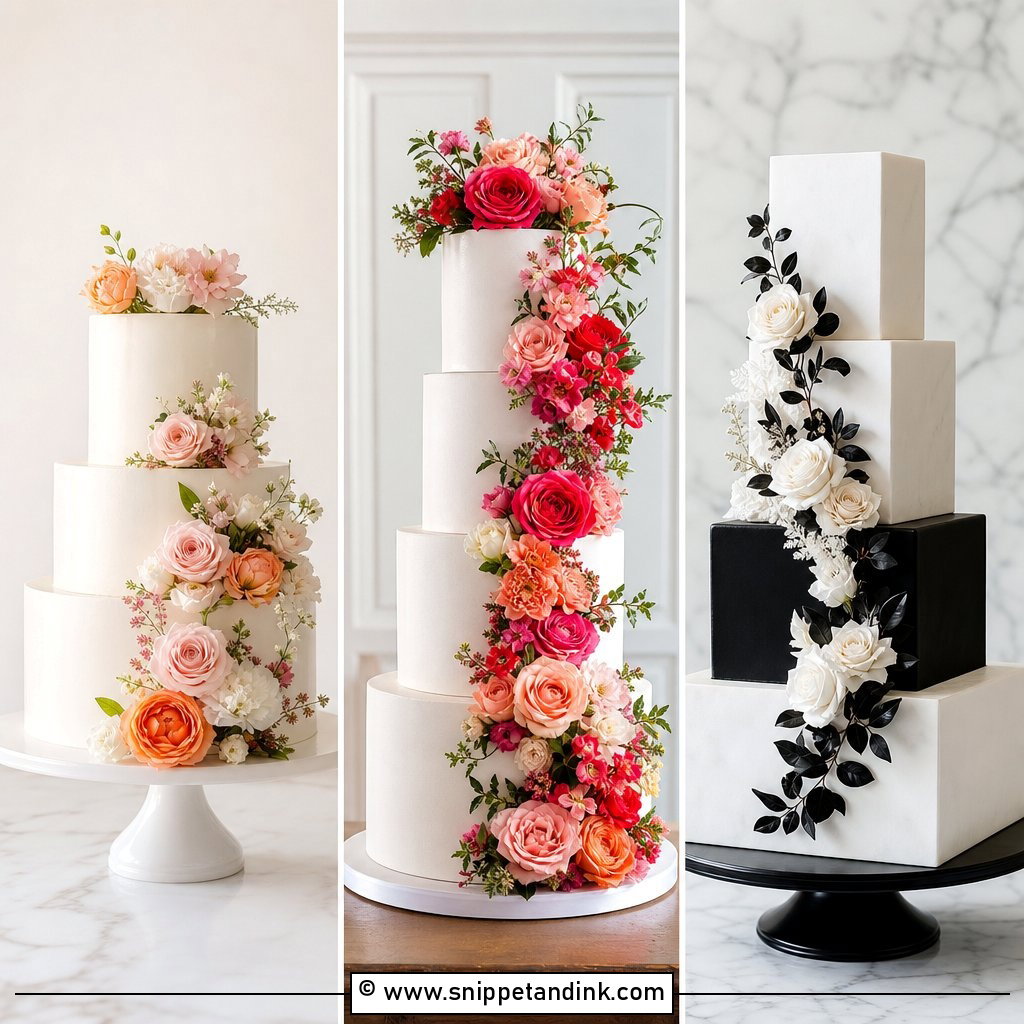
Fresh flowers can turn a plain cake into the centerpiece of the room, and a floral wedding cake looks most at home when the blooms repeat the bouquet or the arch. A cascade down one side, a ring between tiers or a low meadow around the stand all work. The part couples don’t see is the prep: not every flower is safe near food, so stems should be wrapped in floral tape and pushed into straws or picks, never straight into the sponge, and treated blooms should stay off entirely. Get your baker and florist talking a few weeks out about who supplies and who places them.
4. Ruffle Wedding Cake
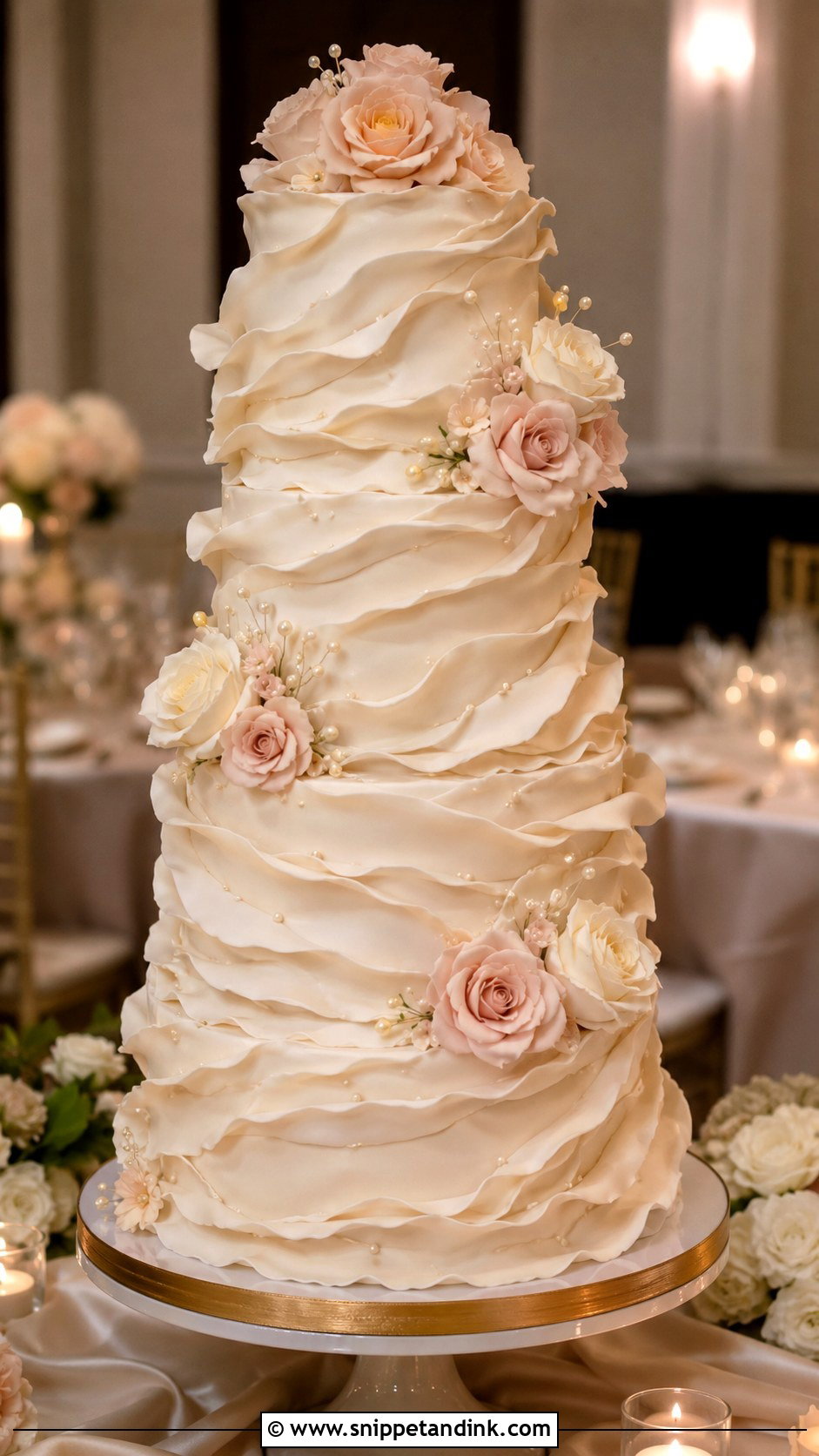
Ruffles bring movement, and the material changes the result more than the color does. Fondant ruffles hold crisp edges; wafer paper is feather-light but goes limp in humidity; buttercream ruffles look soft but need a cool room; white chocolate holds shape well but is fiddly to cut. A fully ruffled cake reads like a gown, while ruffles on one tier with the rest smooth looks more current. I’d keep the palette to ivory, blush or pale blue so the shadows in the folds do the work, and add pearls or a small flower only where the ruffles stop.
5. Gold Leaf Wedding Cake
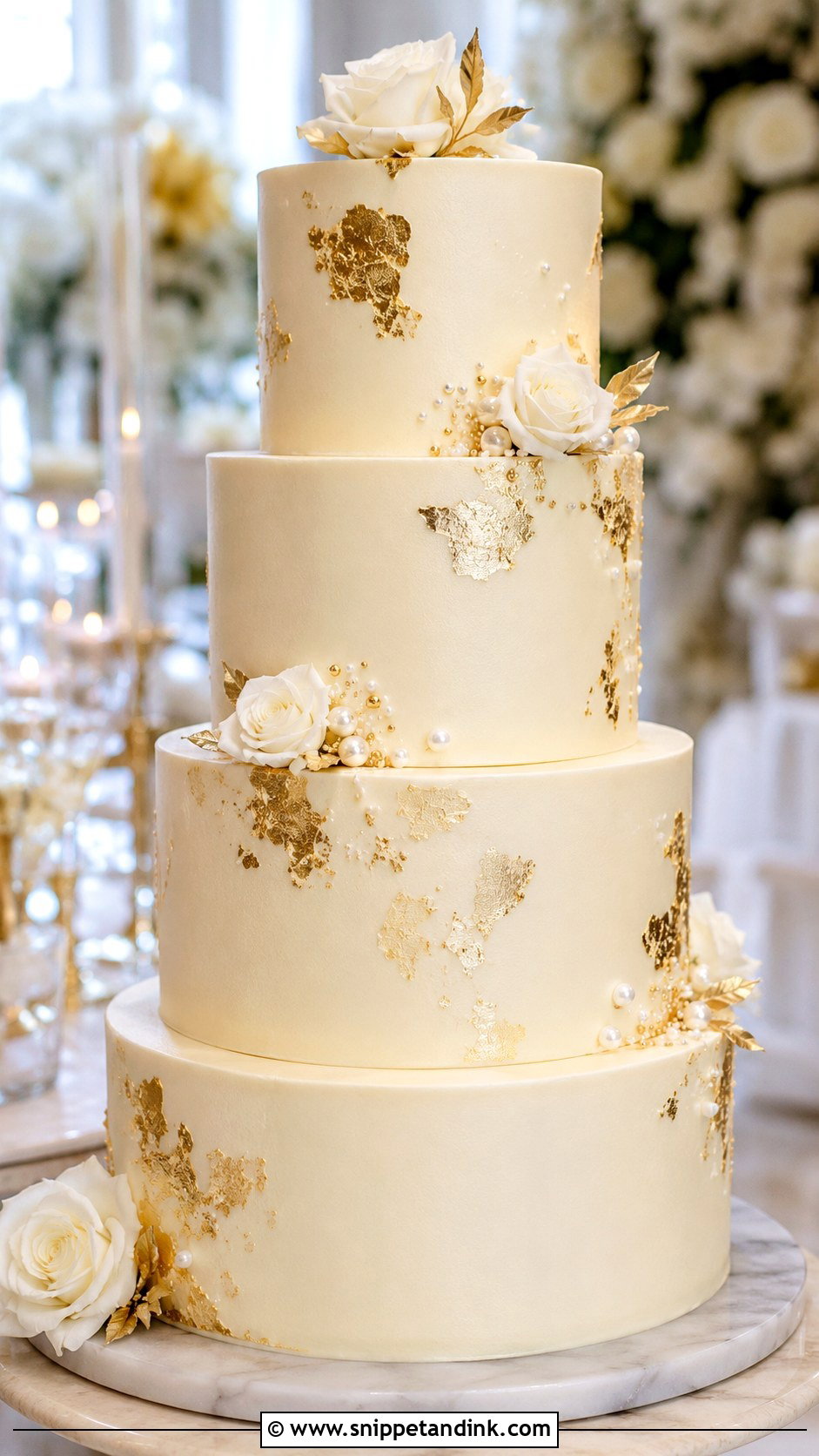
Edible gold leaf is so thin it lifts off with a breath, so I apply it with a dry brush onto a barely tacky surface, never with fingers. Placed along tier edges, scattered over textured buttercream or laid as patches on fondant, it works against white, blush, black, emerald or deep berry. My advice is to treat it like jewelry and stop before the cake is mostly gold, which tends to look flat in photos. Flavors like vanilla almond, chocolate ganache, honey or salted caramel suit its warmth. Check it is labeled as edible gold, not just food-contact decorative.
6. Marble Wedding Cake
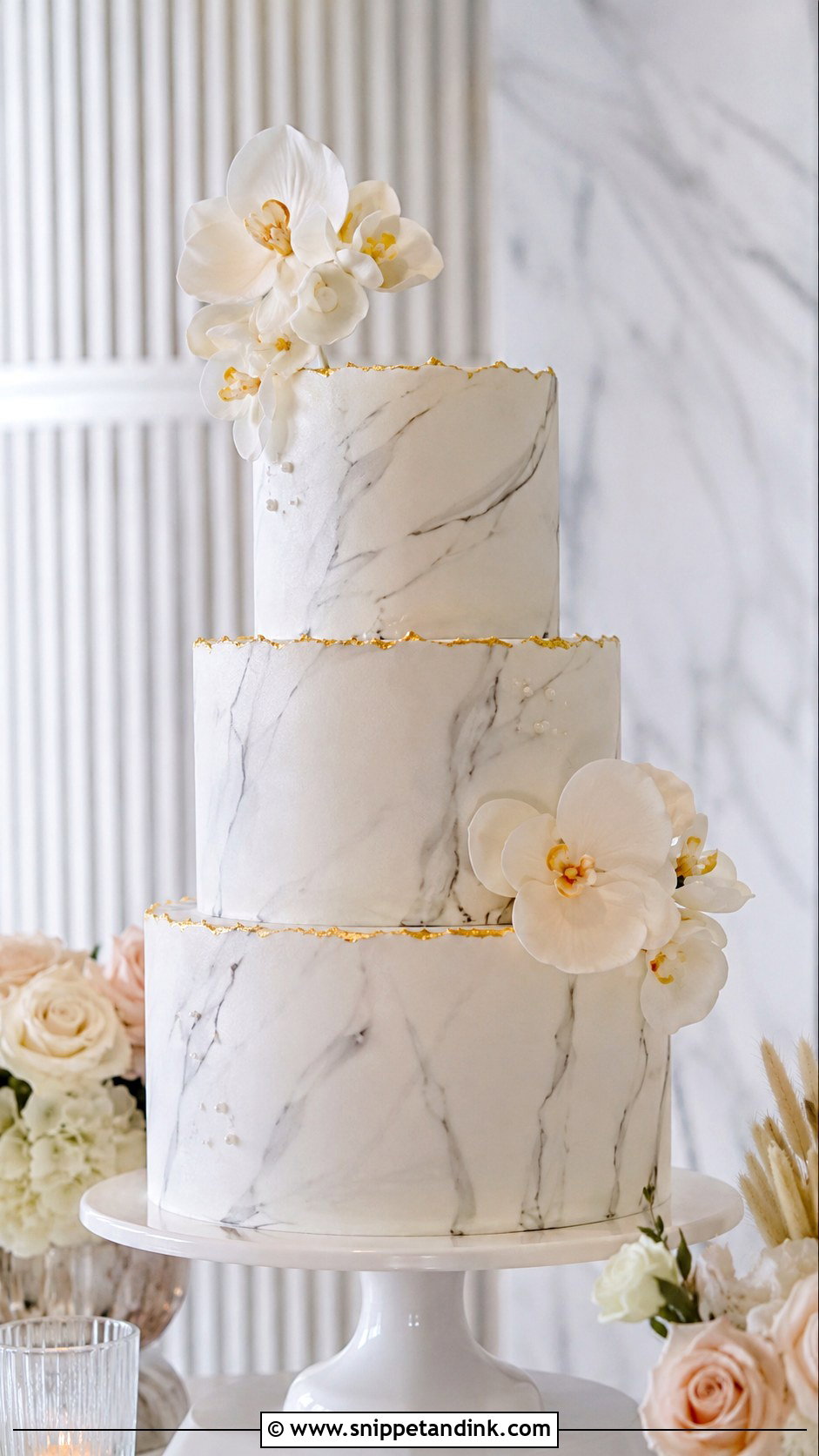
Marbling is done either by kneading colors partly into fondant or by painting veins on with a fine brush and diluted color, and the second gives more control. Thin, uneven lines look like real stone; thick, regular ones look like a print. Soft gray on white is the classic, though blush, green veining or black and white all work. A touch of gold leaf in a vein or one sugar flower is plenty. It sits well in galleries, rooftops and city venues. Inside, keep it classic or try pistachio, espresso or hazelnut.
7. Bow Wedding Cake
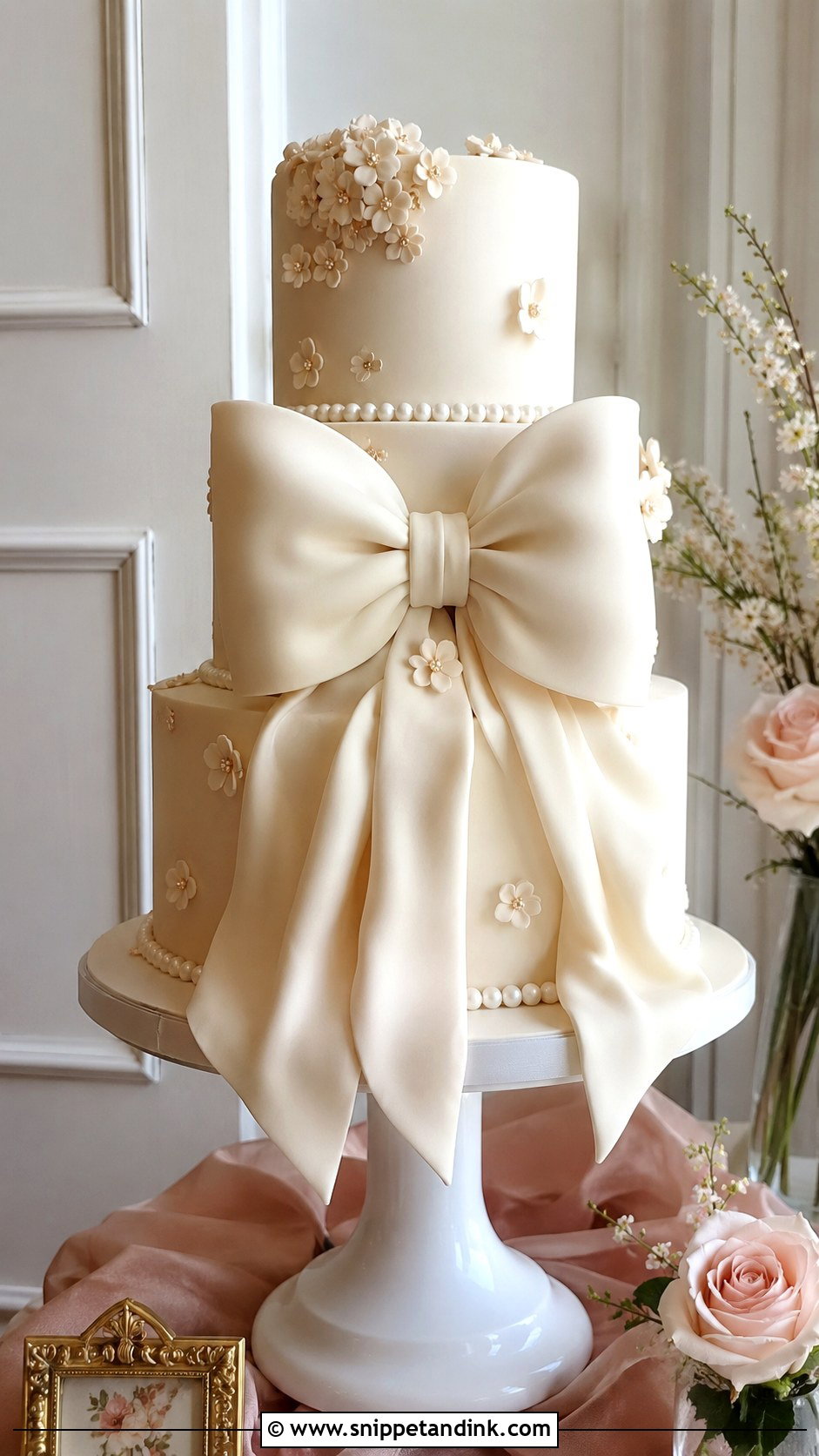
Bows are everywhere right now, and they’re more structural than they look. A large fondant or modeling paste bow is made days ahead and left to dry so it holds its loops, then attached with royal icing on the day. Real ribbon round a tier looks softer, but it needs a strip of parchment or acetate behind it, or the butter in the frosting stains it. One oversized bow can replace flowers entirely. Clean white tiers, pearls or pleated textures sit well around it, with vanilla bean, raspberry almond or champagne inside.
8. Black And White Wedding Cake
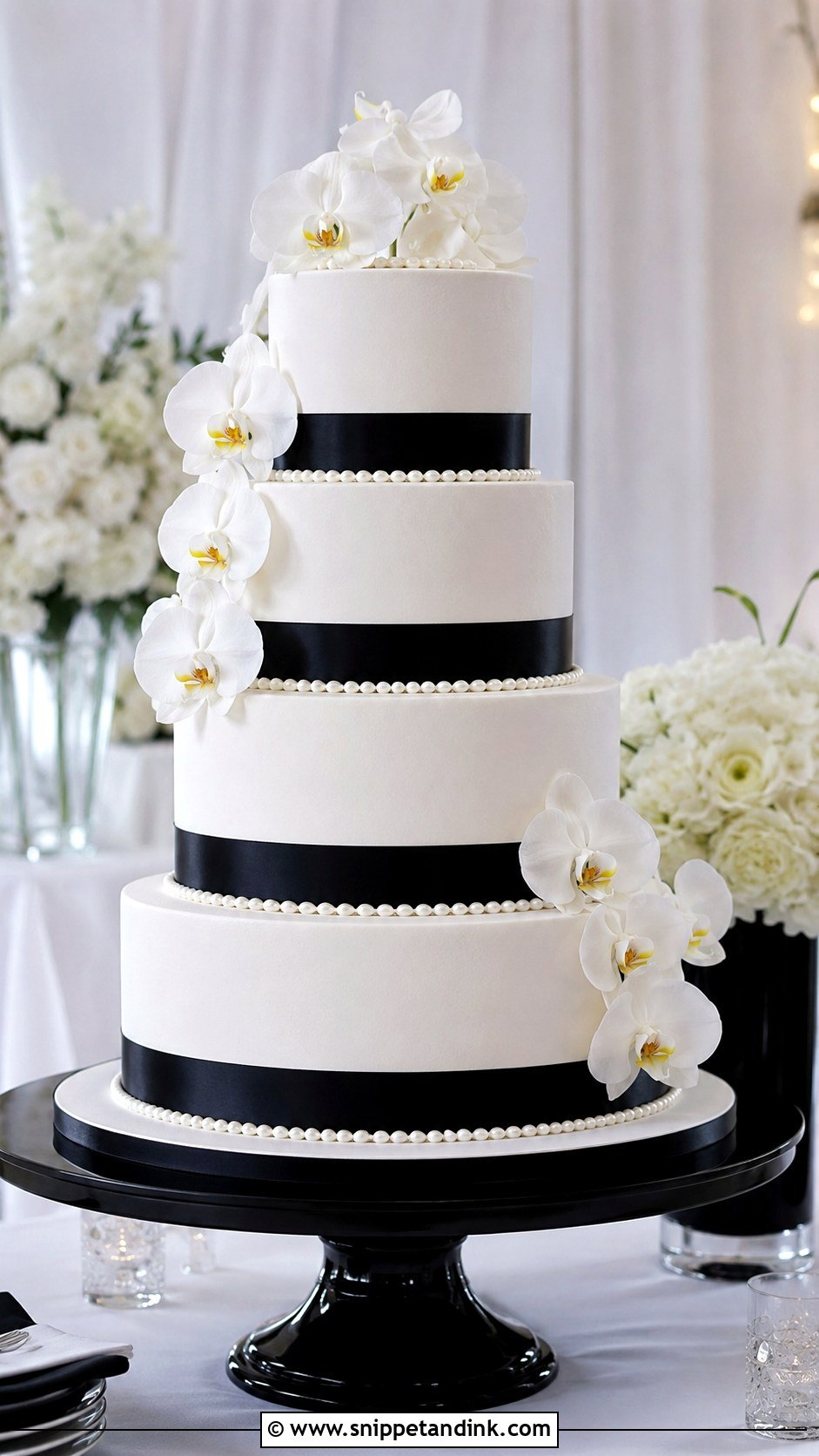
Black and white is the most formal palette on the list, and black frosting is the hardest color to get right. Getting a true black in buttercream takes a lot of coloring, which can stain teeth and add a bitter edge, so I usually start from a chocolate base or use black fondant for large areas. Black ribbon on white or black piping over ivory sidesteps the problem. White orchids, sugar roses, pearls or silver soften the contrast. Chocolate, vanilla bean or cookies and cream suit a black tie evening and keep the flavors familiar.
9. Textured Buttercream Wedding Cake
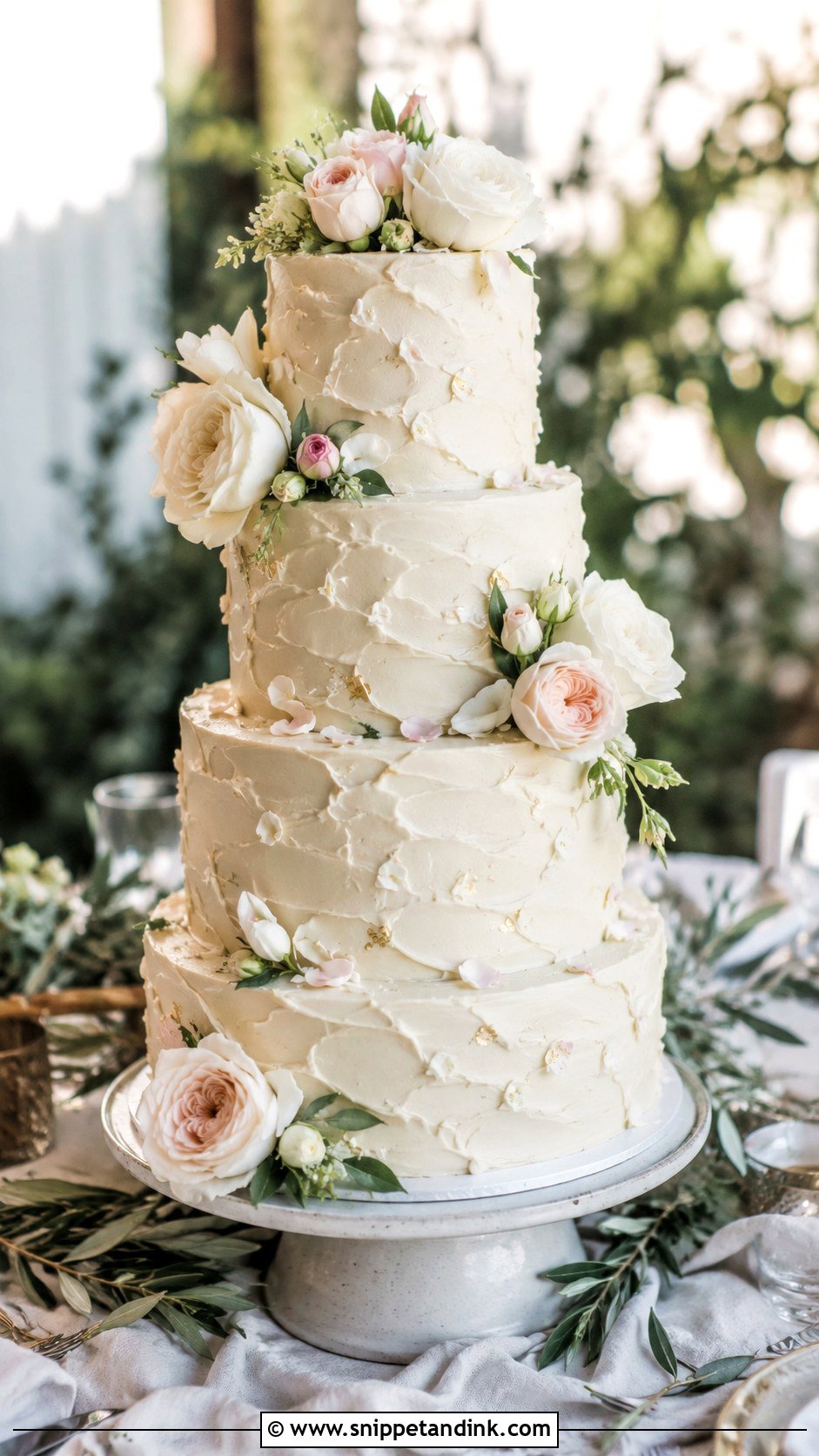
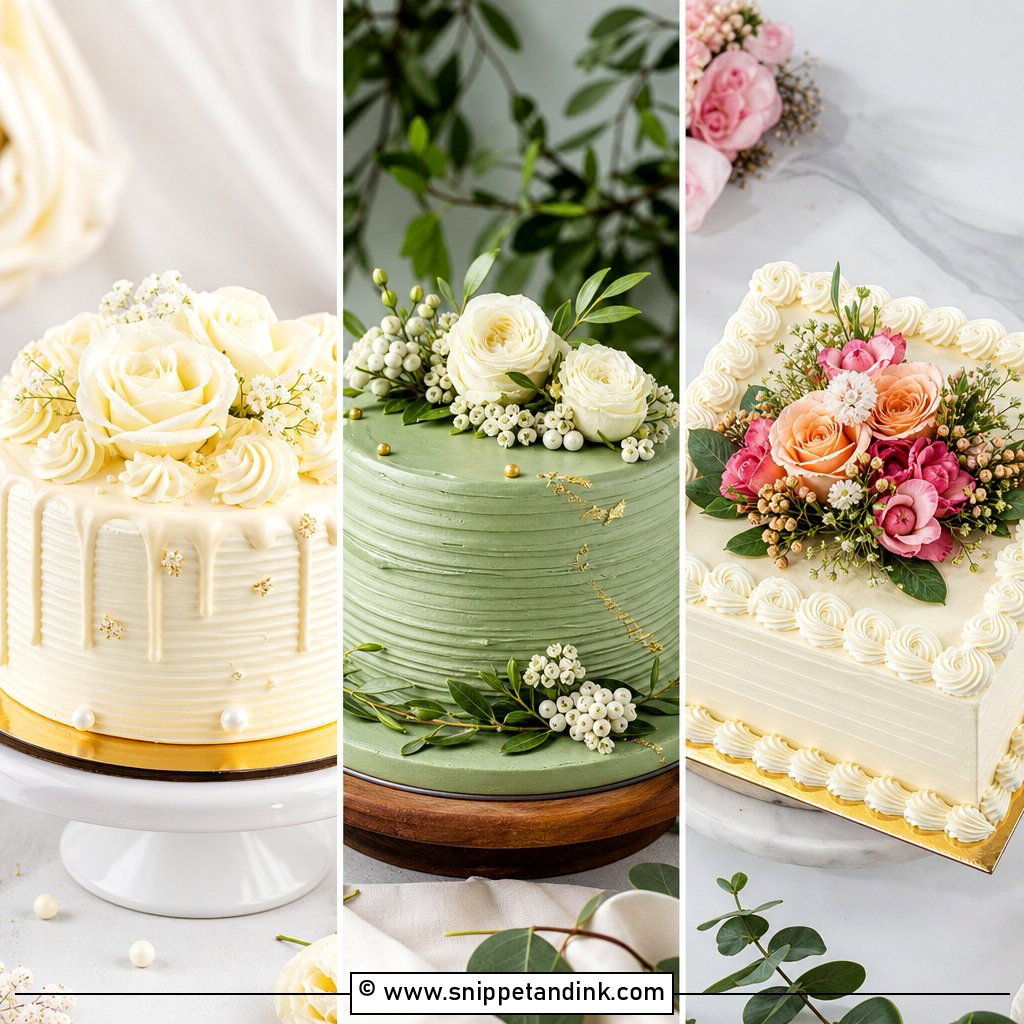
Textured buttercream is the relaxed end of fancy: swoops, ridges and palette knife strokes instead of a perfectly smooth side. It also hides small bulges, which makes it a forgiving finish for outdoor and garden receptions. To keep it polished rather than rustic, I limit the palette and the decoration. A few fresh flowers, dried petals or gold flecks are enough. The flavor is the real bonus, since buttercream eats better than fondant, so vanilla, lemon, almond, honey or berry-filled layers all suit it. In heat, though, those ridges are the first thing to slump.
10. Tall Tiered Wedding Cake
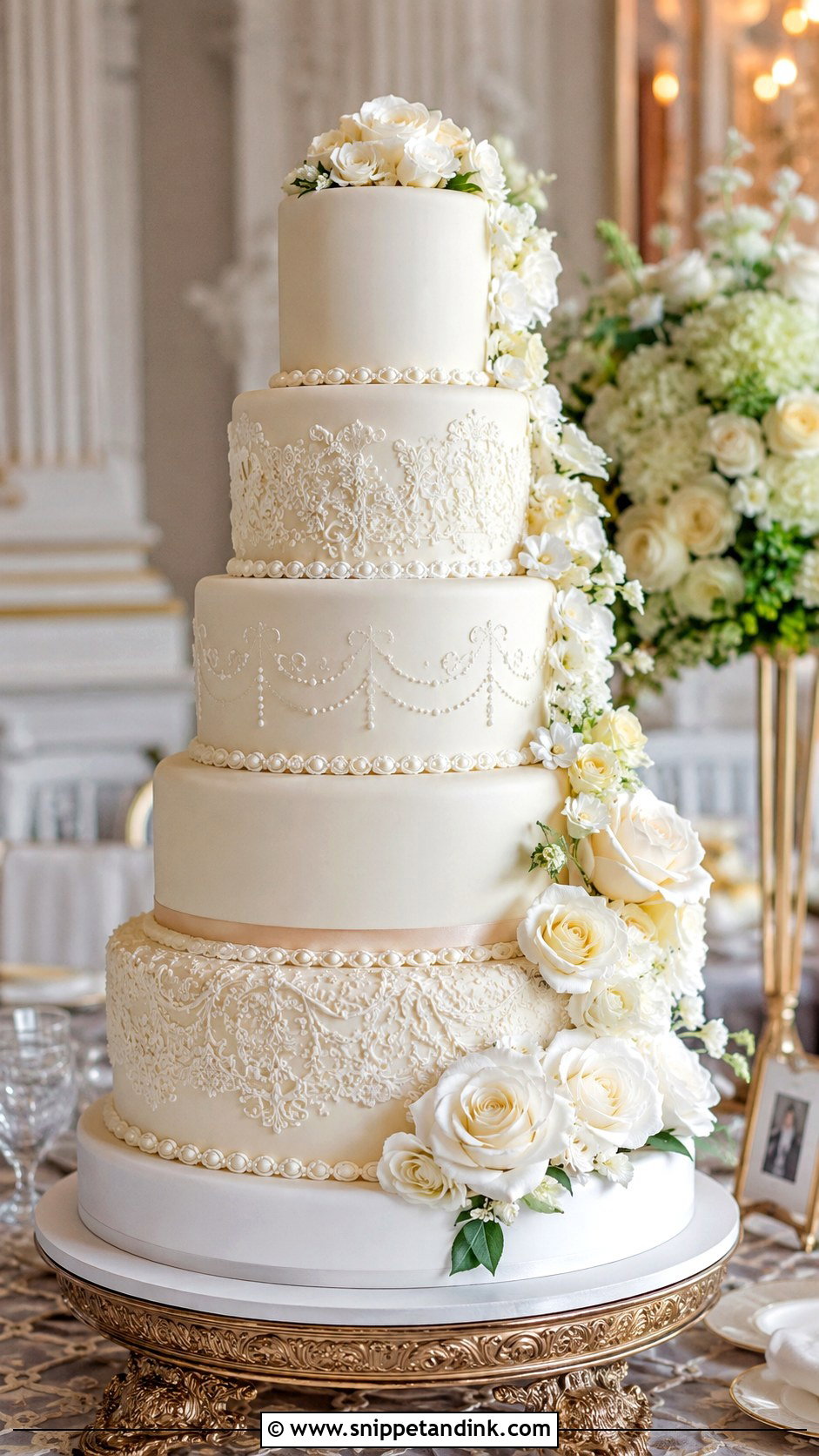
A tall cake gives height and presence, which matters most in ballrooms, tents and rooms with high ceilings where a short cake disappears. Every tier above the base needs internal dowels and a cake board, otherwise the weight of the upper tiers sinks into the lower ones. I give each tier a role, mixing smooth with piped, lace or flowers, but keep one palette so it doesn’t look chaotic. Different flavors per tier are a nice touch for guests. Vanilla raspberry, chocolate ganache, lemon elderflower and almond cream all hold up in tall stacks.
11. Single Tier Wedding Cake
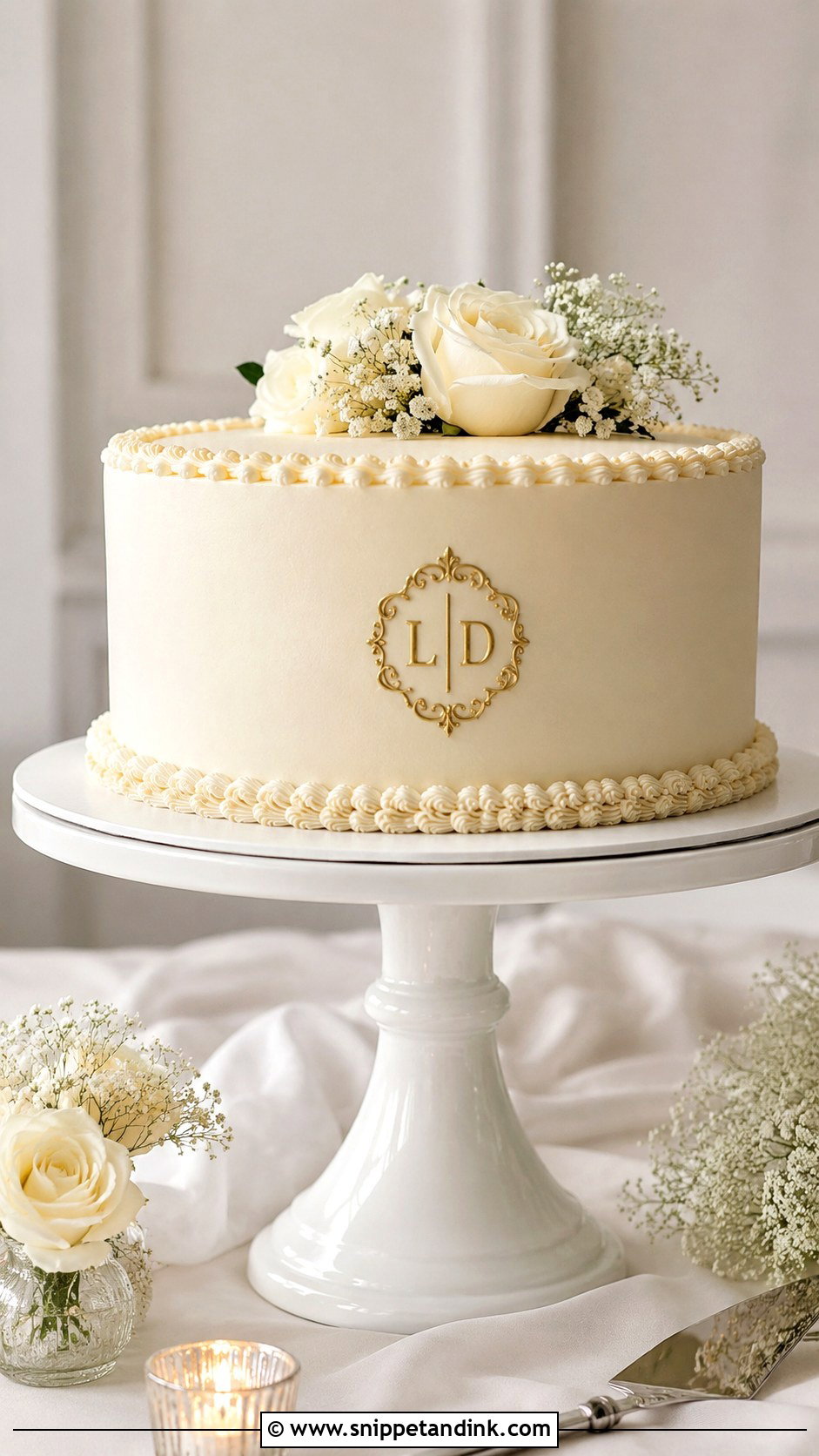
A single tier looks fancy when the scale is right, and the usual mistake is ordering one that’s too small for the table. I go wide rather than tall and set it on a raised stand so it reads from across the room. It suits intimate weddings, elopements and couples with a separate dessert table. Detail carries it: smooth buttercream with Lambeth piping, pearls or a few fresh stems. It costs less than a tiered cake, but plan how you’ll feed everyone else, since one tier only serves a small group.
12. Sheet Wedding Cake
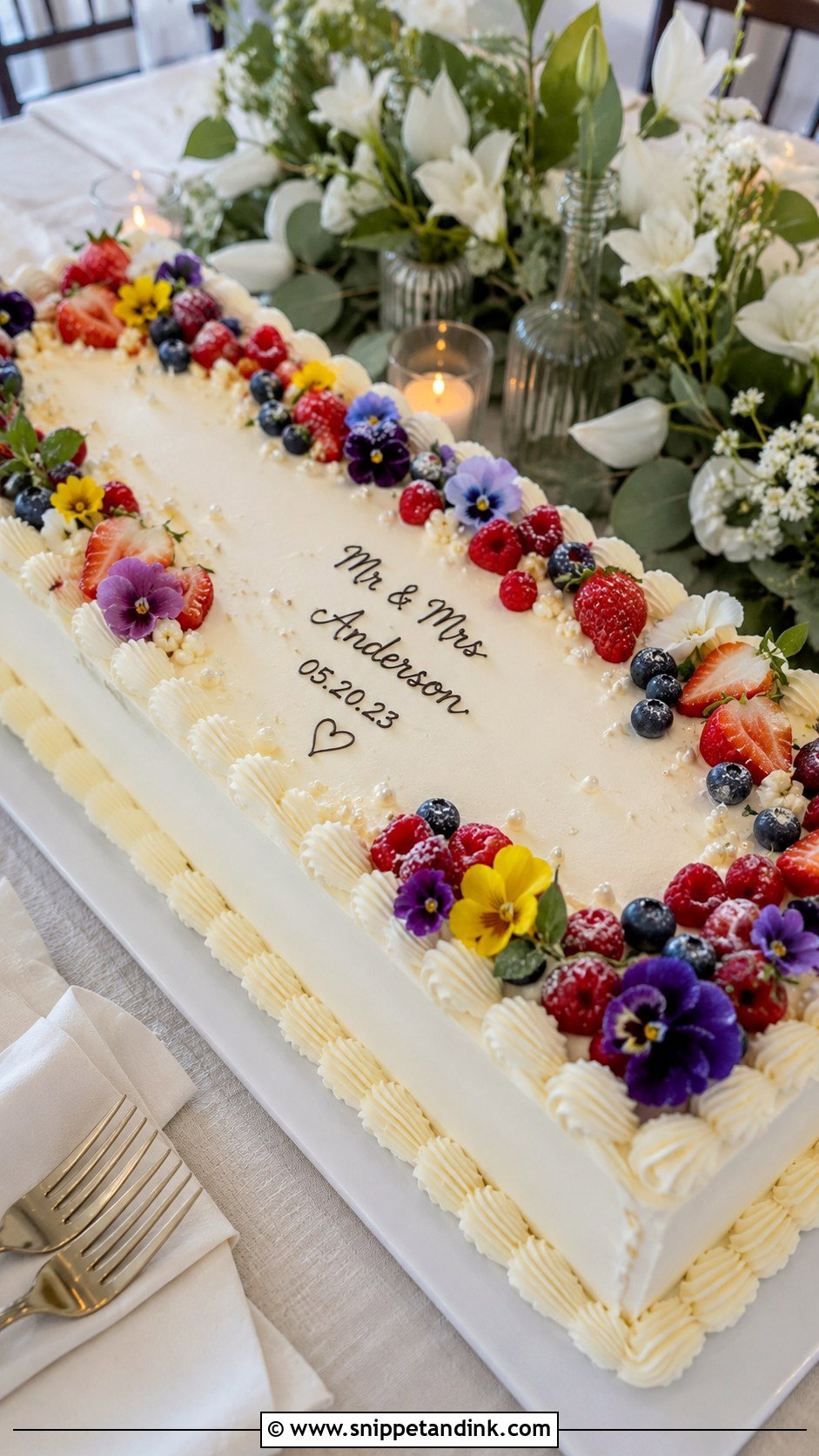
A sheet wedding cake is back in a smarter form: long, low and finished with piped borders, fresh fruit, edible flowers or buttercream waves. It is also the easiest cake there is to serve, because the kitchen cuts it into neat squares in minutes. It fits restaurant weddings, backyard receptions and dessert tables. Many couples now pair a small decorated cutting cake for photos with sheet cakes for serving, which saves money without guests noticing. Vanilla berry, pistachio cream or lemon curd make it feel special, and a piped monogram gives it a personal note.
13. Lace Wedding Cake
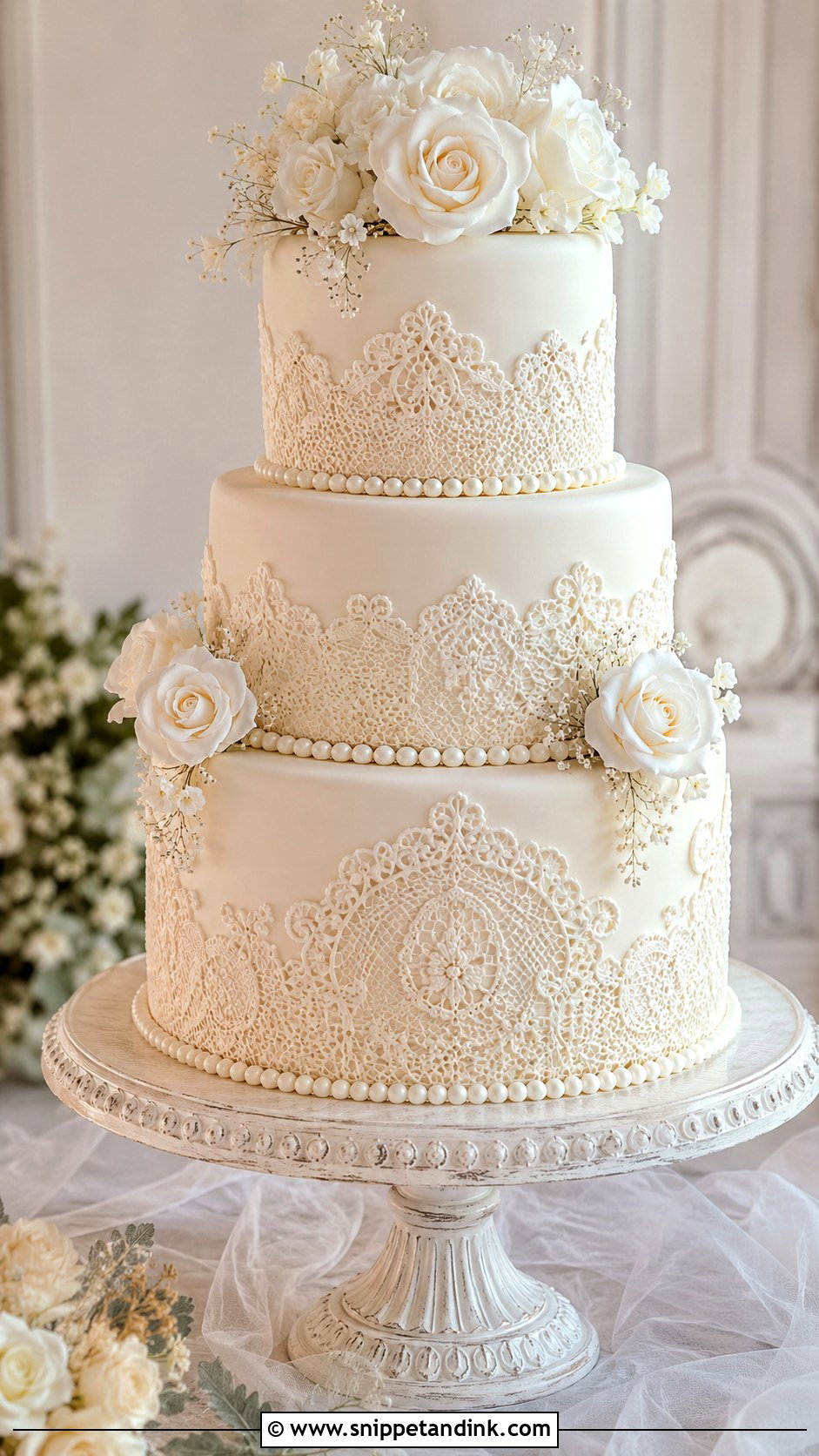
Lace on a cake is made in a few ways: edible lace pressed from a silicone mat, piped royal icing, fondant appliqués or stencil work. The best version picks up a motif from the gown or veil, so bring a close-up photo of the lace to your consultation. White on white is classic; ivory over blush or champagne adds warmth. Edible lace sets firm in dry air but goes sticky in humid rooms, so it is added near the end. It needs little else, perhaps a few sugar flowers. Almond, coconut or orange blossom suit its gentle look.
14. Sugar Flower Wedding Cake
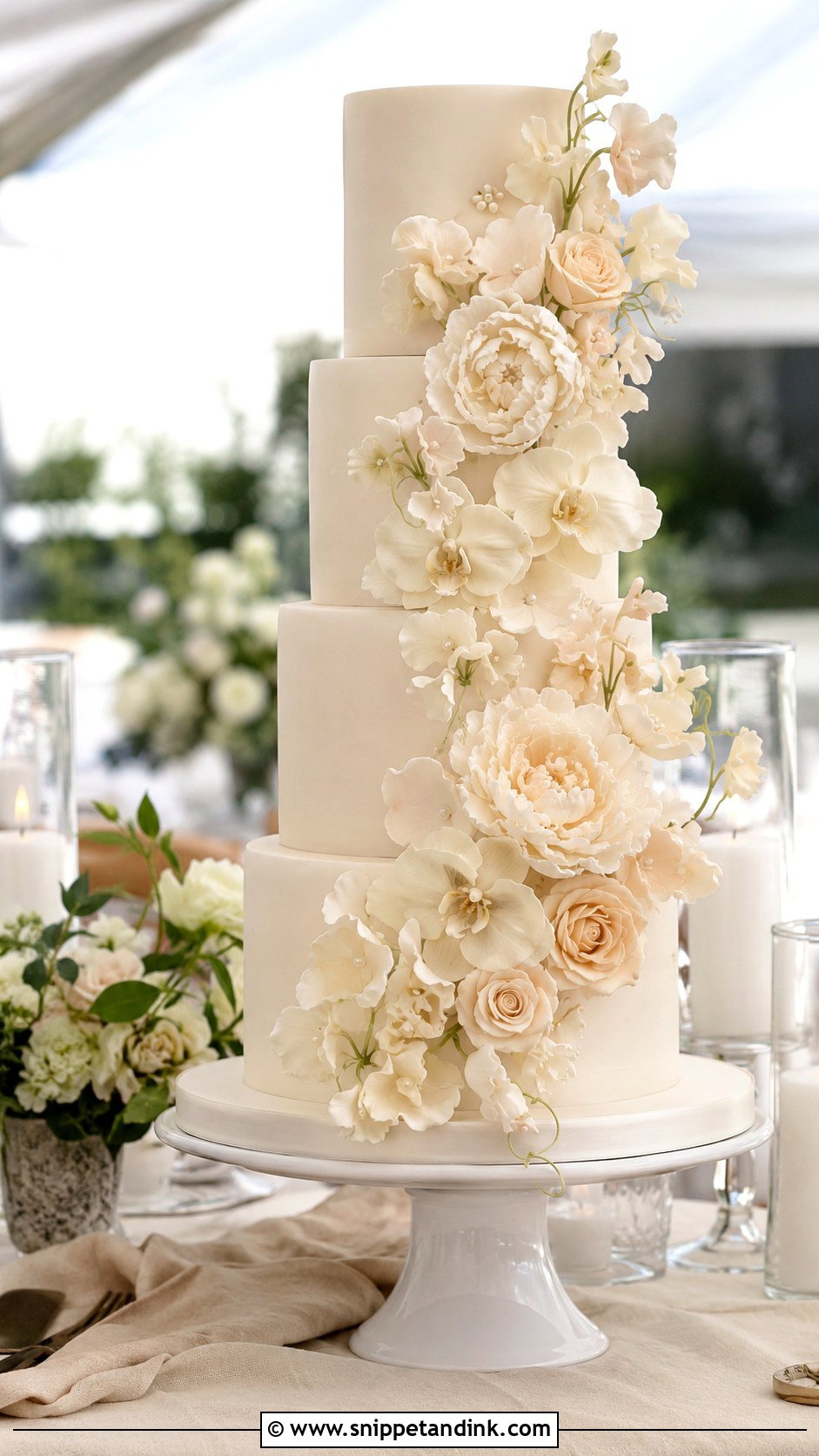
Sugar flowers are built petal by petal from gum paste, wired and dried, so they need lead time: a full cascade can take days of work, which is why I ask for the design to be settled weeks ahead. In return you get any color in any season, and they keep as a memento if stored dry and out of sunlight. Roses, orchids, peonies, magnolias and sweet peas are common. Keep the cake underneath clean so the flowers stay the focus. They are not meant to be eaten, so make sure whoever cuts the cake removes them first.

15. Watercolor Wedding Cake
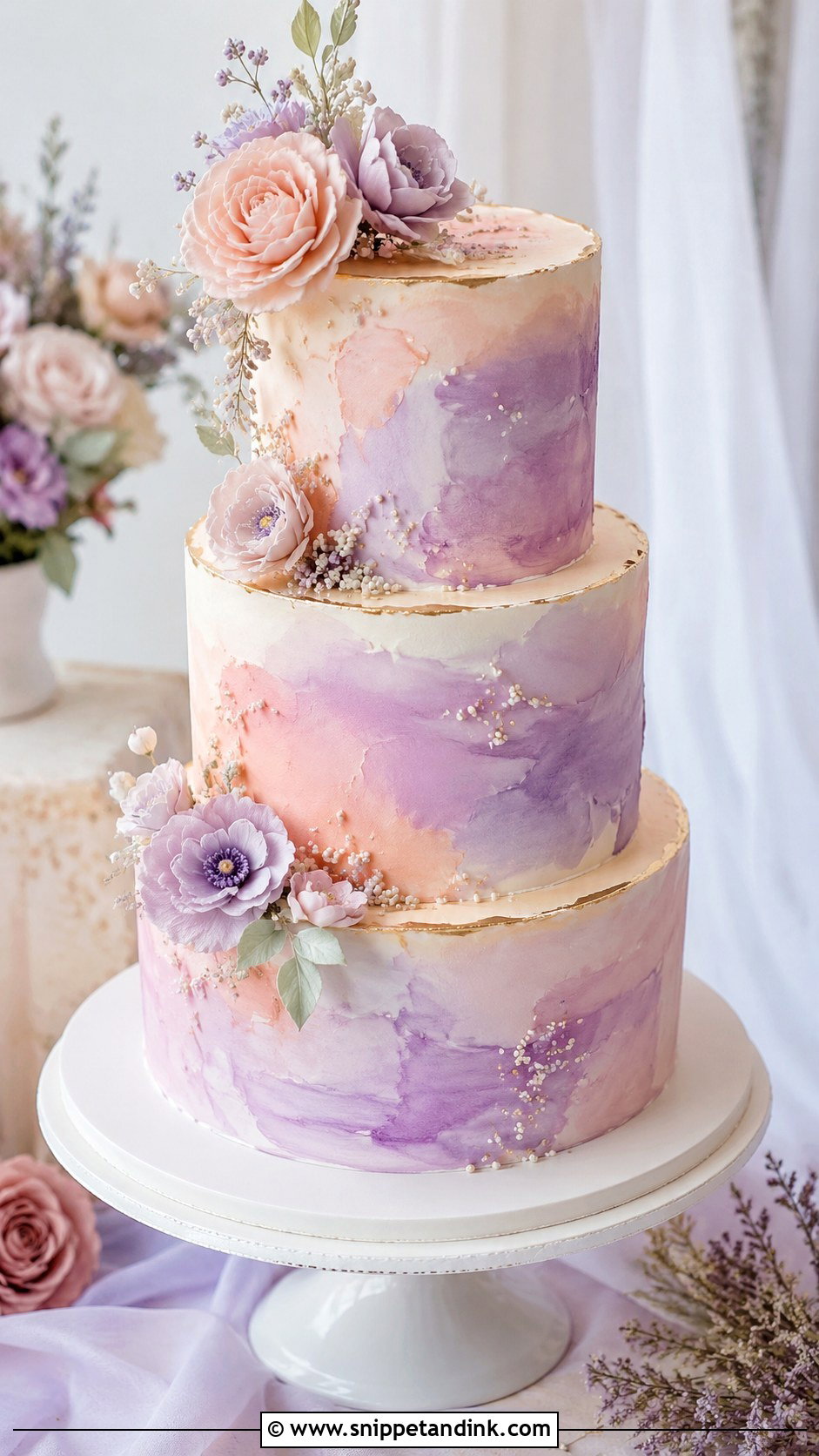
Watercolor is painted onto fondant with thinned gel colors or blended into buttercream with a palette knife, and the softness comes from letting the edges bleed. Blush, lavender, peach and sage are the usual choices. Gold edging or a few sugar flowers make it dressier. It suits spring weddings, garden venues and pastel palettes. One honest warning: soft pastels can go slightly grey under yellow reception lighting, so I’d look at a sample under warm light before committing. Lemon raspberry or vanilla lavender inside echo the colors.
16. Fruit Wedding Cake
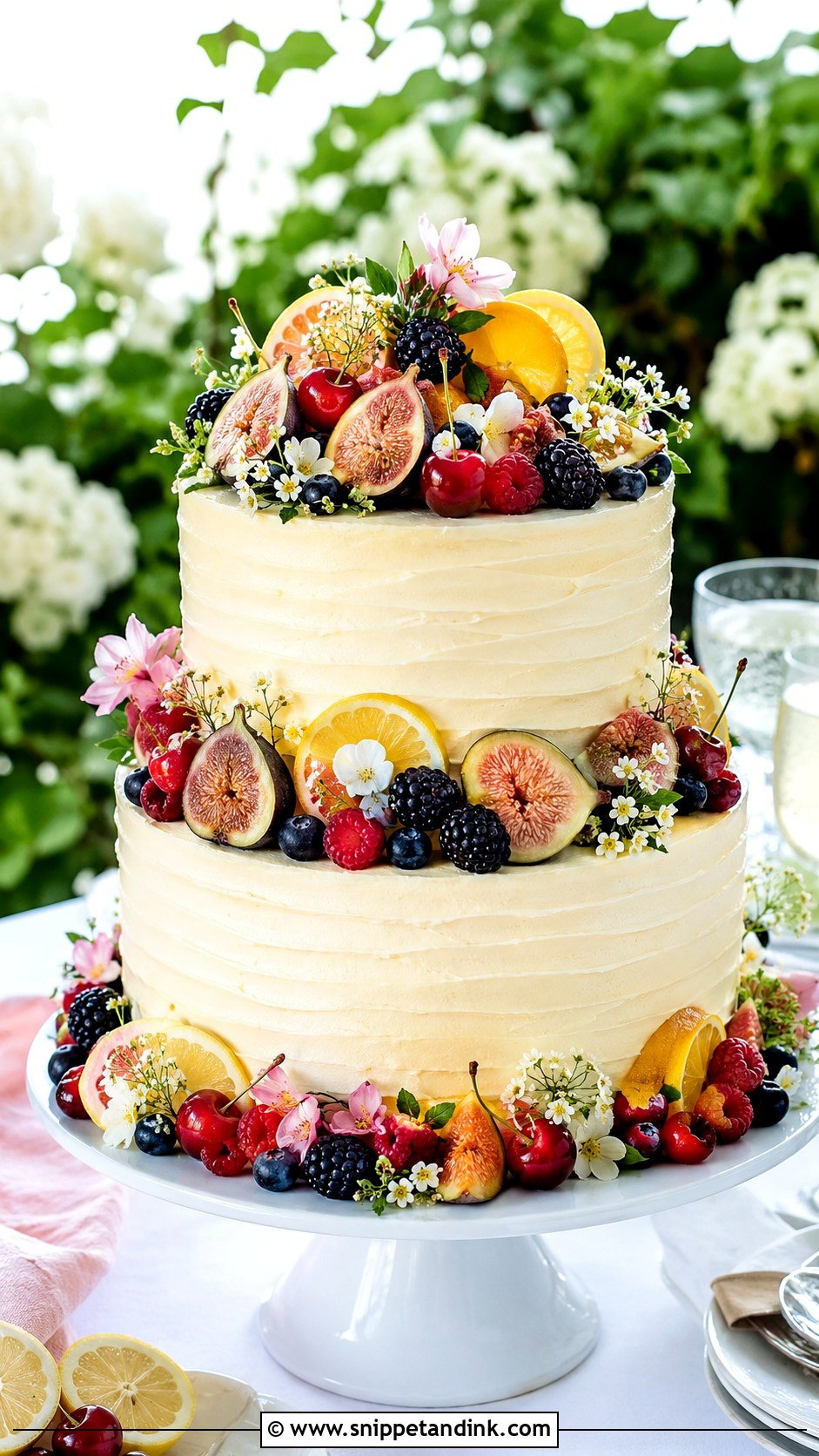
A fruit wedding cake only looks elegant when the fruit is placed deliberately. Figs, berries, citrus slices, grapes, cherries and pomegranate all work, but cut fruit weeps juice onto frosting within hours, so I dry it well, glaze it lightly and add it as late as possible. Whole berries and figs hold up better than sliced citrus. Smooth buttercream or a light glaze suits it. It’s a natural fit for summer and outdoor dinners, and the fruit tells guests the flavor: lemon blueberry, orange almond or chocolate cherry.
17. Minimalist Wedding Cake
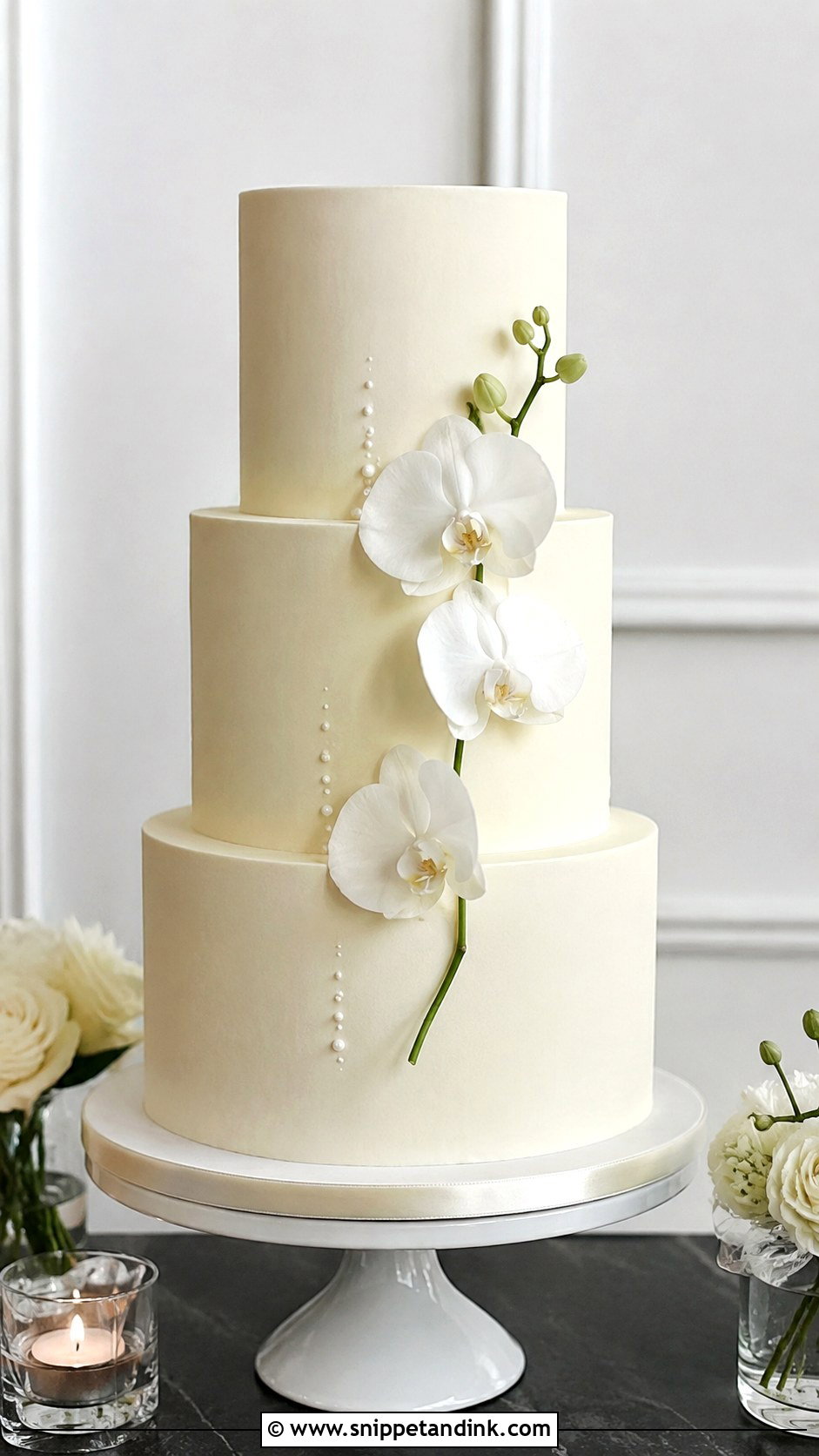
Minimalism leaves nowhere to hide. With a single flower, a narrow ribbon or one texture as the only detail, the sharp edges and flat sides have to be flawless, and that finish takes a skilled hand and a cold cake. It suits modern venues, galleries and rooftops. White, ivory, taupe or a muted pastel all work. Because the outside is quiet, I like the inside to say something, maybe pistachio rose or brown butter. Ask any baker to show you close-up photos of their edges before booking this style.
18. Greenery Wedding Cake
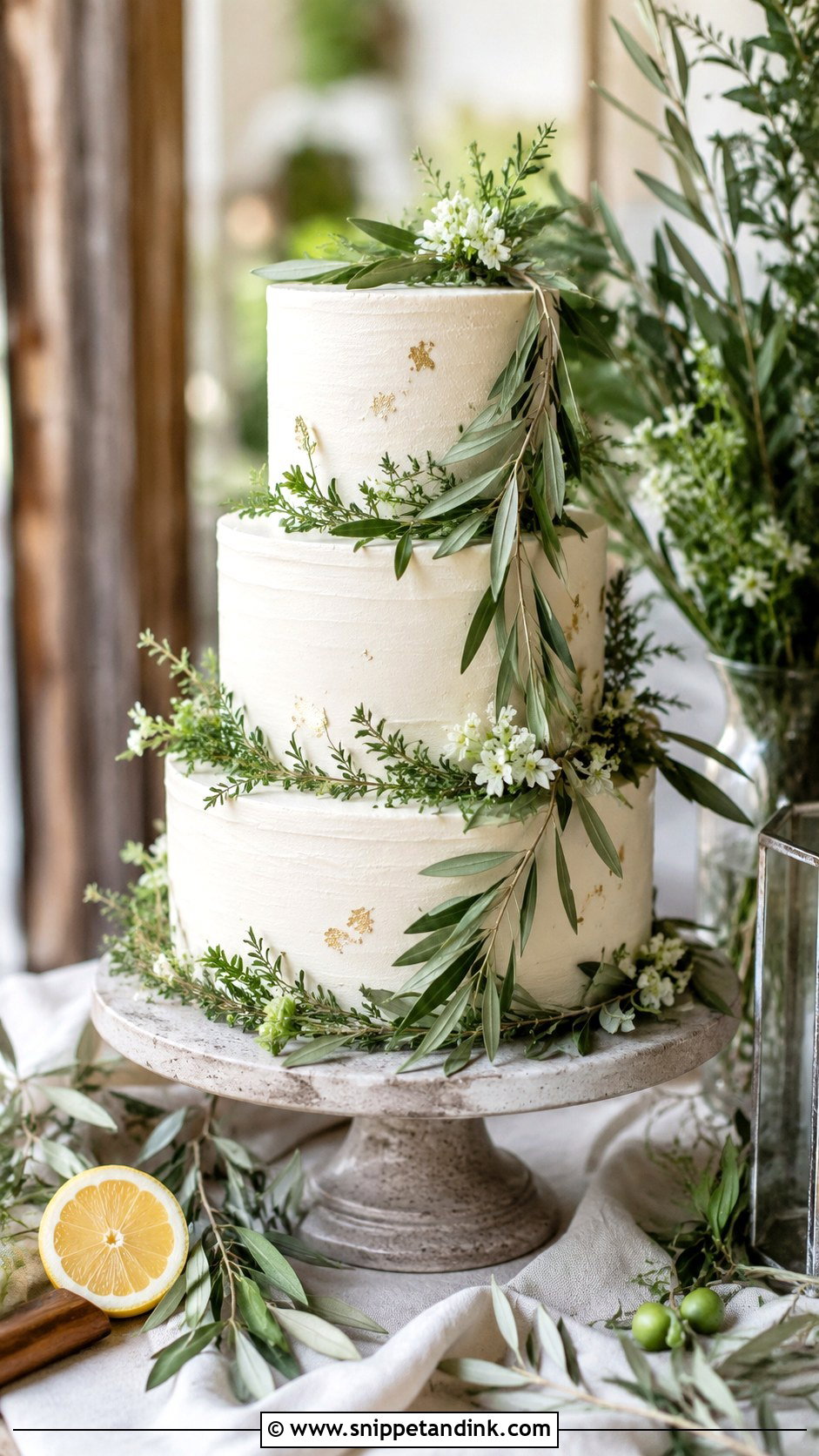
Greenery cakes trade flowers for herbs, vines, olive leaves or eucalyptus. That last one needs care: eucalyptus is not food-safe, so it should only touch a barrier, never the frosting, and edible herbs like rosemary or bay are safer near the cake. A few trailing pieces look better than a full wrap. White buttercream, ivory fondant or a hint of gold sit well behind the green. It suits outdoor and woodland settings, and lemon, honey or basil citrus flavors carry the fresh look inside.
19. Monogram Wedding Cake
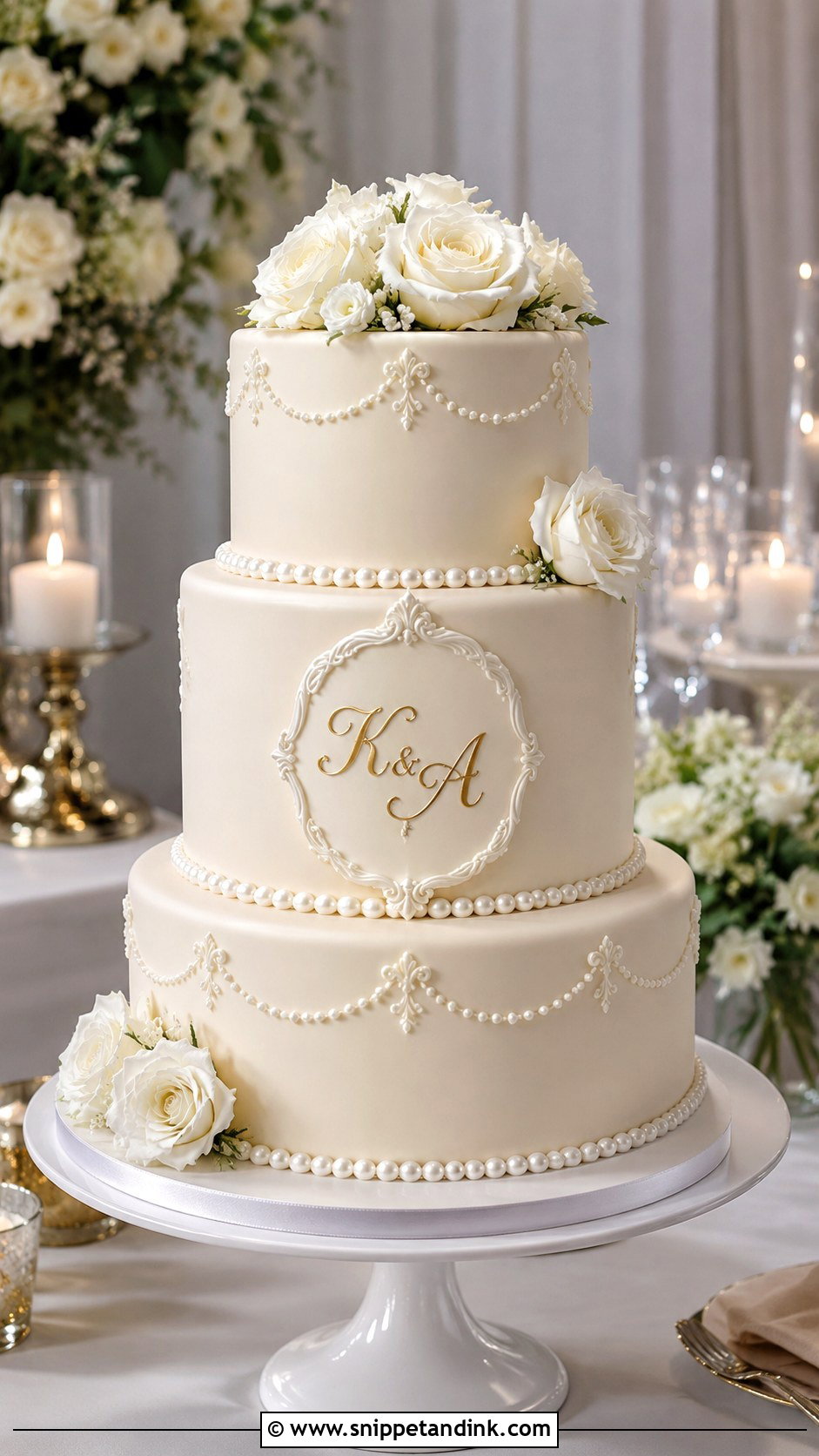
A monogram should look built into the cake, not stuck on. The couple’s initials can be piped, painted, embossed or set on a small plaque framed by sugar flowers, and I place them on the middle tier at eye level for photos. Metallic lettering or white-on-white embossing feels formal. Send your designer the exact lettering from your invitations so the style matches across the day. Keep everything else restrained so the initials stand out. Vanilla almond, chocolate or raspberry cream are dependable inside.
20. Gothic Wedding Cake
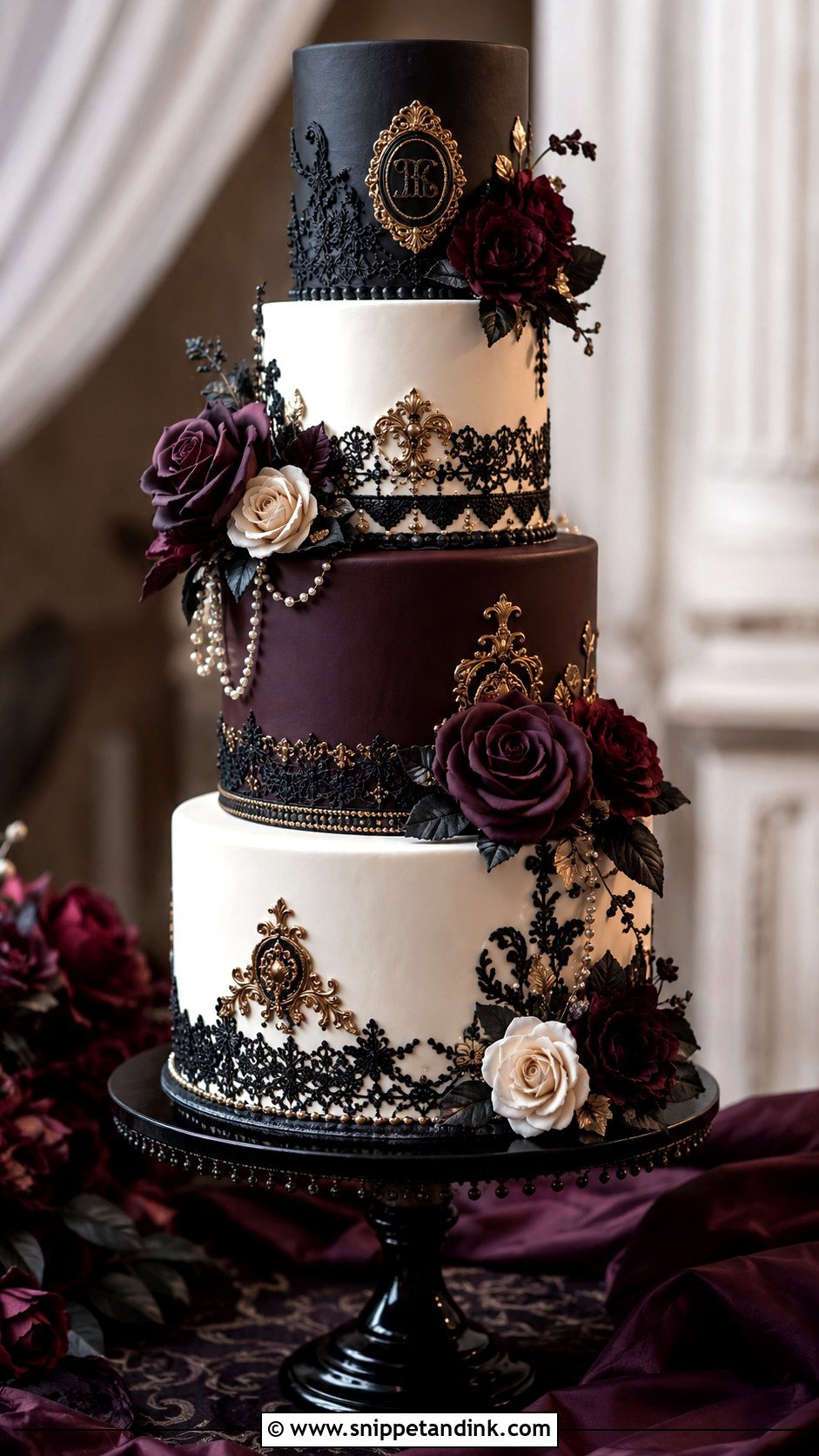
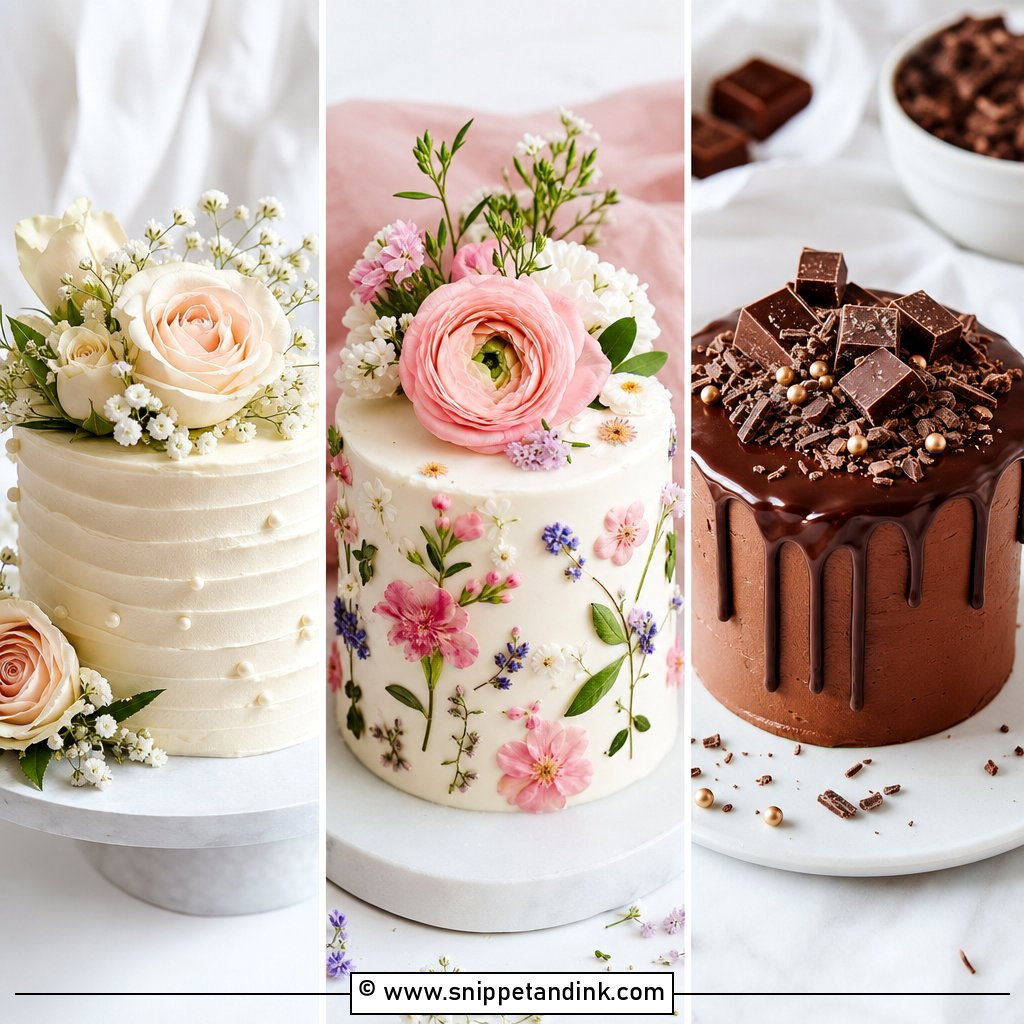
Gothic cakes lean on deep berry tones, black or ivory frosting, vintage piping and moody flowers, and they work best at evening weddings and in historic, candlelit rooms. The balance comes from structure: dark detail on a tidy, well shaped cake still looks like a wedding cake. Black buttercream with white sugar flowers, ivory tiers with black lace or burgundy blooms on smooth frosting all work. As with black and white designs, deep colors take a lot of pigment, so a chocolate base helps. Chocolate, espresso, black cherry and red velvet fit the mood.
Heat, Stairs and a Long Wait Before the Cutting
A cake can look perfect when it leaves my kitchen and still struggle by the time you cut it. Most of what goes wrong happens between delivery and dessert, and the venue usually decides more than the design.
Warm rooms and sunlight
Buttercream softens as soon as the room warms up, and piping, ruffles and ridges slump first. Fondant holds its shape better but sweats when a chilled cake meets humid air. Ask the venue to set the cake table away from windows, heaters and the dance floor lights, and for outdoor summer weddings, keep the cake inside until shortly before the cutting.
Getting it into the room
Tall cakes are often delivered in stacked sections and assembled on site, so your designer needs to know about stairs, narrow doors, long walks from parking and the time the room opens. Give them the venue contact so they can confirm access themselves, and make sure the cake table is level and sturdy before they arrive.
Who cuts and serves it
Check whether your caterer charges a cutting fee and whether they know how to take a tiered cake apart. Dowels, boards, sugar flowers and wired stems all have to come out before slicing. If you want to keep the top tier, arrange a box and someone to pack it before the cake goes to the kitchen.
One Clear Idea, Then the Details
The cakes I’m proudest of are the ones that look like they belong to the rest of the wedding, with the same flowers, the same lettering and a palette that matches the room. Some couples want a tall tiered cake with pearls and lace, others a smart sheet cake or a single tier on a high stand. Either way, settle one direction rather than borrowing from five designs at once. Save your favorite photos, give your designer an honest guest count and the venue conditions, and book a tasting, because a cake people actually eat is worth more than one that only photographs well.
You'll Like These Ideas:











Leave a Reply