
There’s a moment at most receptions when people drift toward the cake table, phones out, waiting for the first slice. A classic cake earns that moment with simple things: white or ivory icing, clean tiers, piped borders, sugar flowers, ribbon and good proportions. Traditional doesn’t have to mean dull. The flavor inside, the height, the finish and one or two personal details are what make a classic cake belong to a particular couple. Below are twenty designs I’m asked for again and again, with what I’d tell you about each one across the consultation table.
How Many Tiers Does Your Guest List Really Need?
Height and servings are separate decisions, and mixing them up is the most common budget surprise I see. Wedding portions are cut smaller than party slices, roughly a finger-width wide, so a cake feeds more people than you’d guess from looking at it. As a rough guide using round tiers of standard height, a 6-inch tier gives about a dozen wedding portions, an 8-inch around two dozen, a 10-inch close to forty and a 12-inch something over fifty. Charts vary between bakers, so always ask how they count.
If you want a tall cake for a small guest list, ask about dummy tiers, which are iced foam rounds decorated to match. They cost less than real cake but not nothing, since decorating time is the same. If you want a modest cake for a big list, a kitchen cake of the same flavor can be cut out of sight and served alongside.
Also count who actually eats cake. At evening receptions with a dessert table, a good share of guests skip it or take a bite, so many couples order for most of the guest list rather than every single person.
1. White Three Tier Wedding Cake
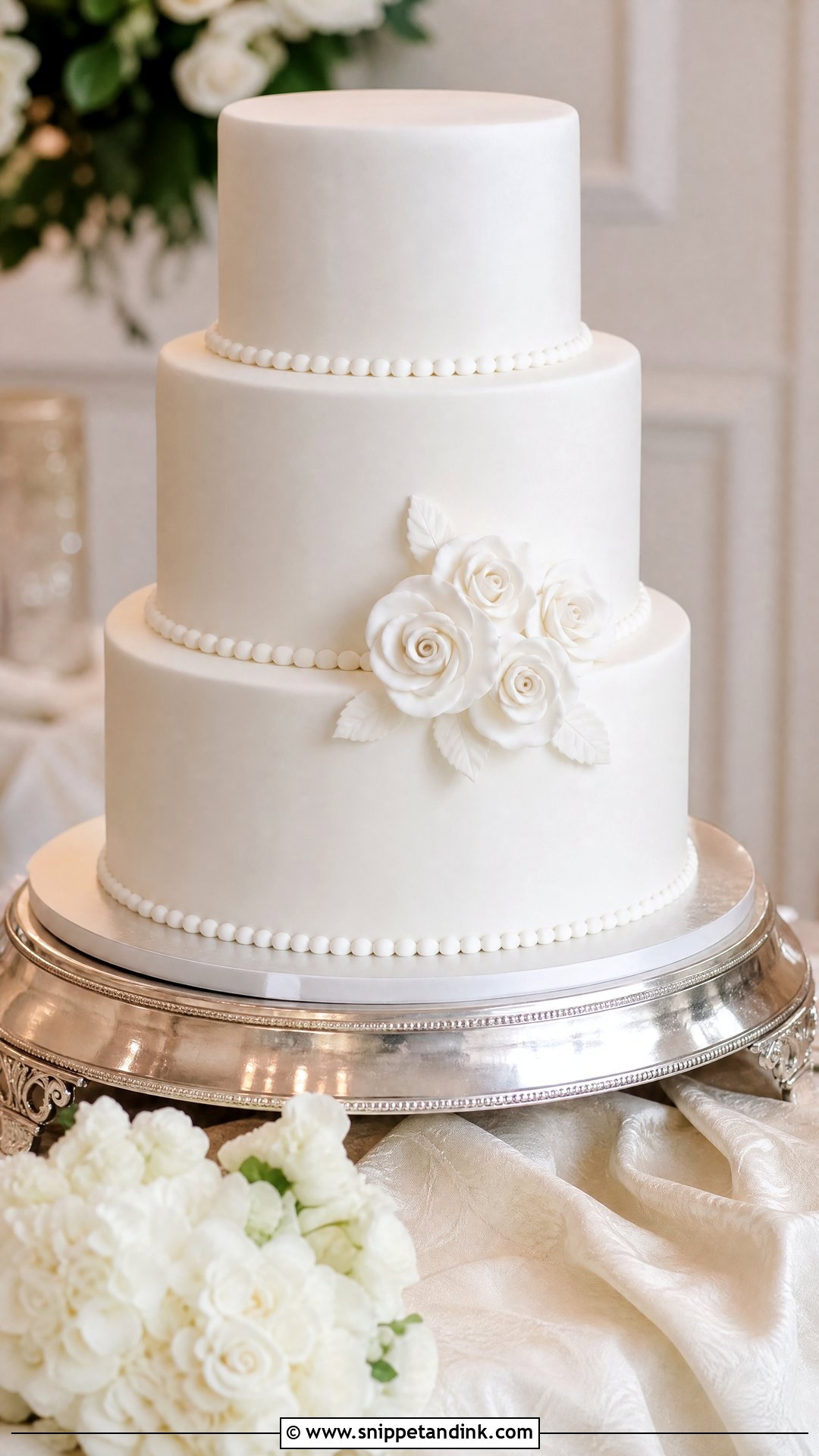
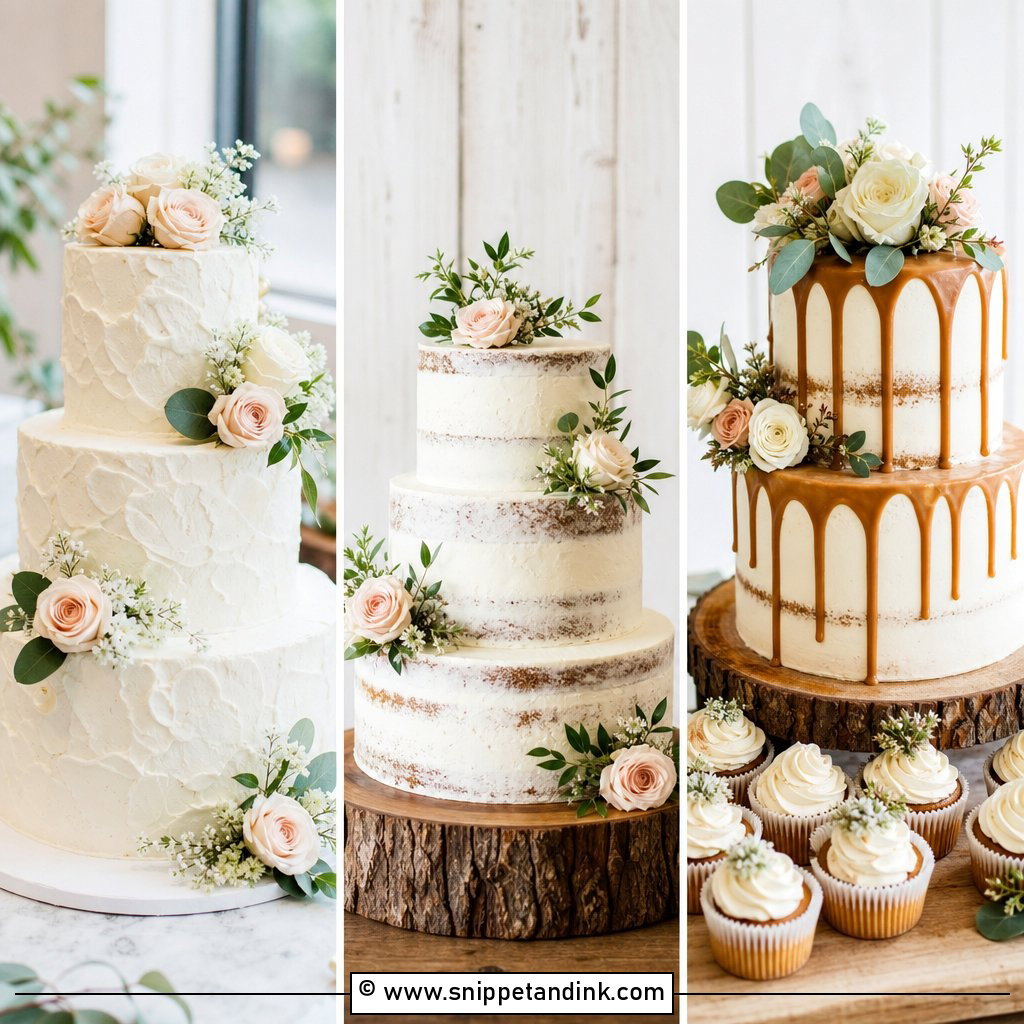
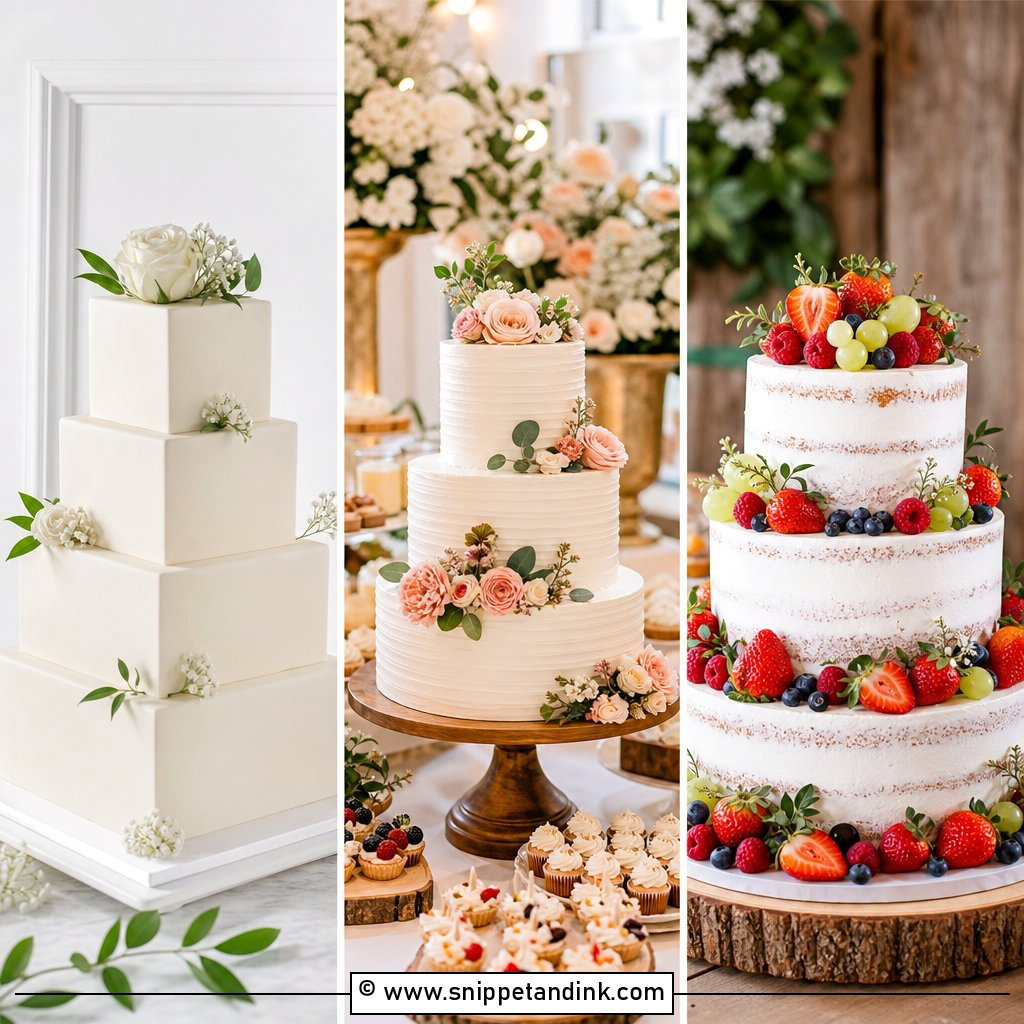
A white three tier wedding cake is where most of my consultations start, and often where they end. Three stacked rounds give height and balance from every side of the room. Fondant gives the crispest white and the sharpest edges; buttercream is softer and tastes better to most people, but it’s never quite snow white because butter is yellow. I’d keep the decoration to one idea, pearls or piping or a floral cluster, rather than all three. Inside, vanilla bean or almond with a raspberry layer is hard to beat.
2. Ivory Buttercream Wedding Cake
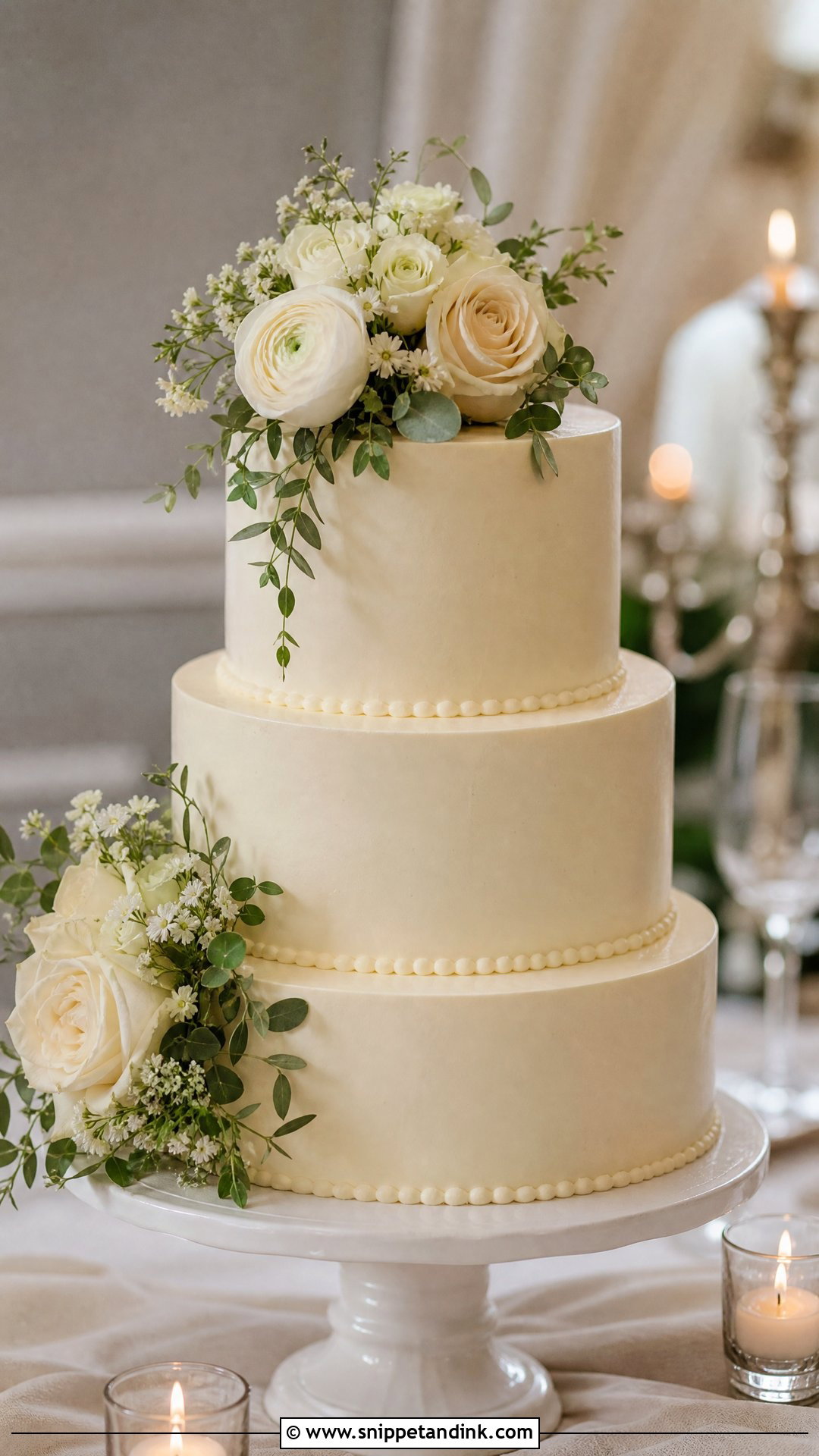
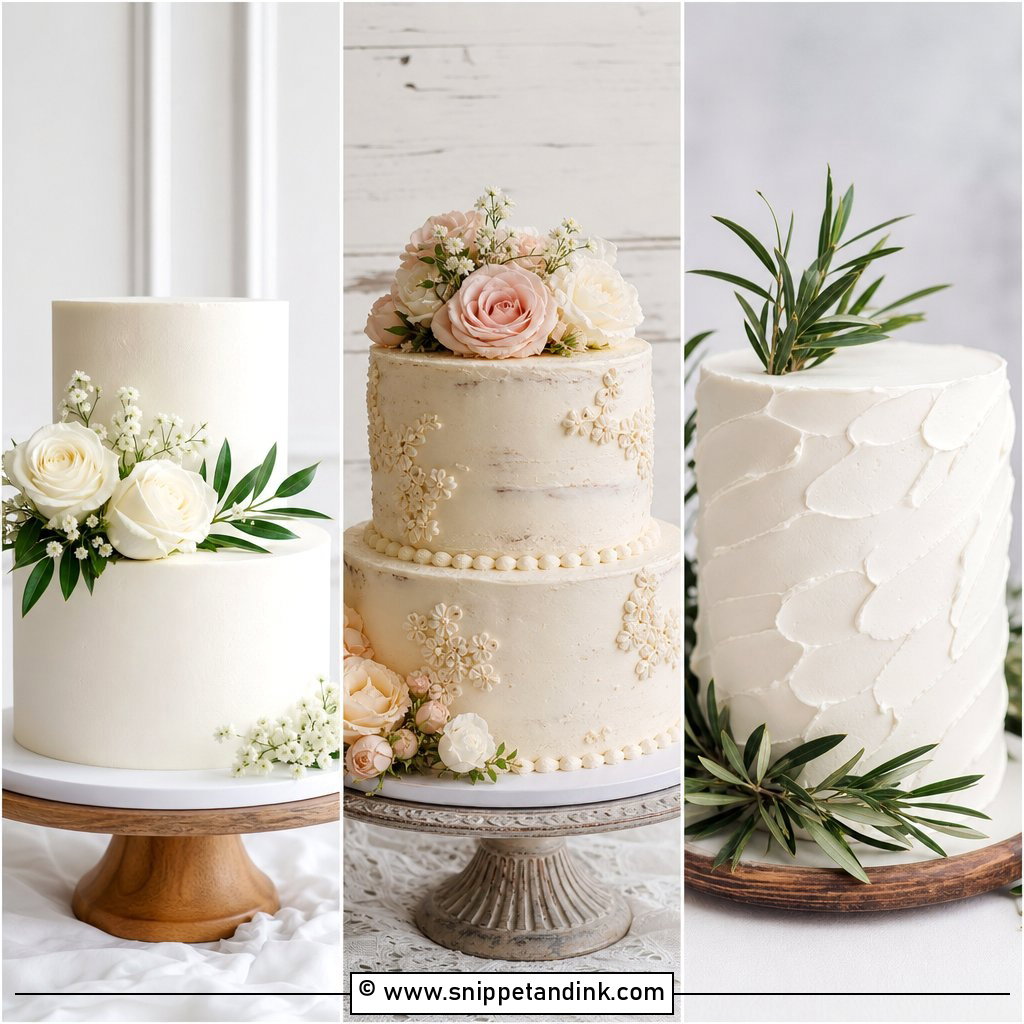
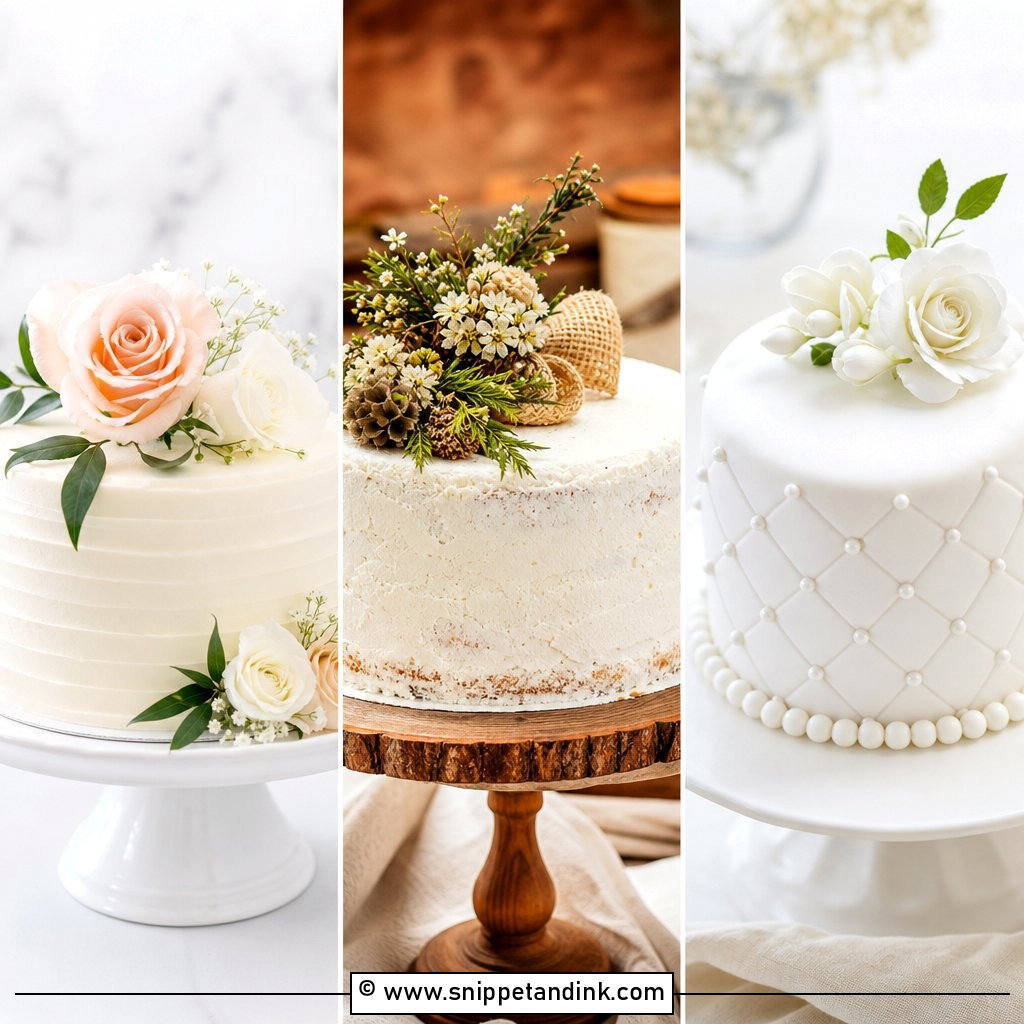
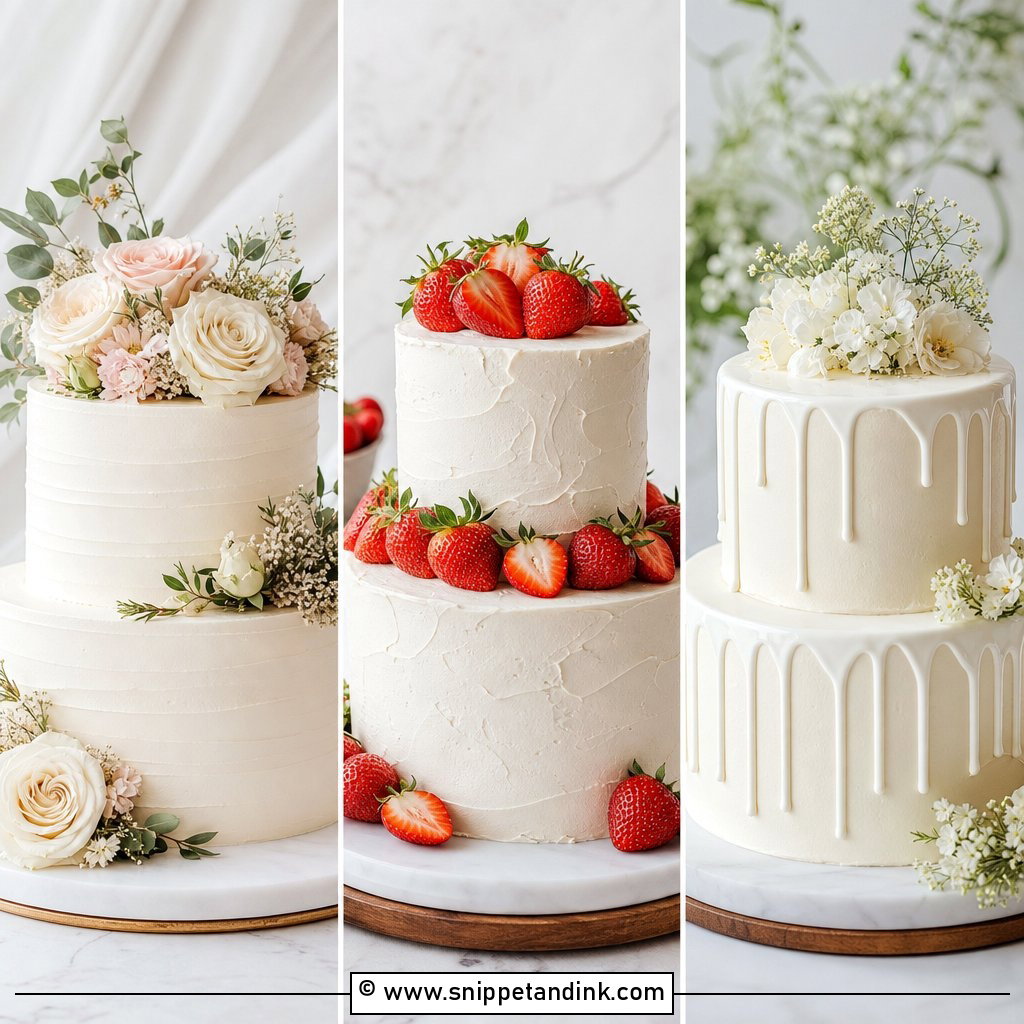
Ivory buttercream looks warmer than white and far kinder under candlelight, which can make bright white icing look slightly blue. It sits naturally with greenery, cream flowers and gold accents. I can smooth it to a clean finish or leave a light palette-knife texture that reads as hand-made. Roses, ranunculus and small sugar blossoms all suit it. Lemon and champagne-style sponges taste lovely under it. The one caution: buttercream softens in a warm room, so an ivory buttercream cake for an August garden party needs shade and a late setup.
3. Fondant Wedding Cake With Sugar Flowers
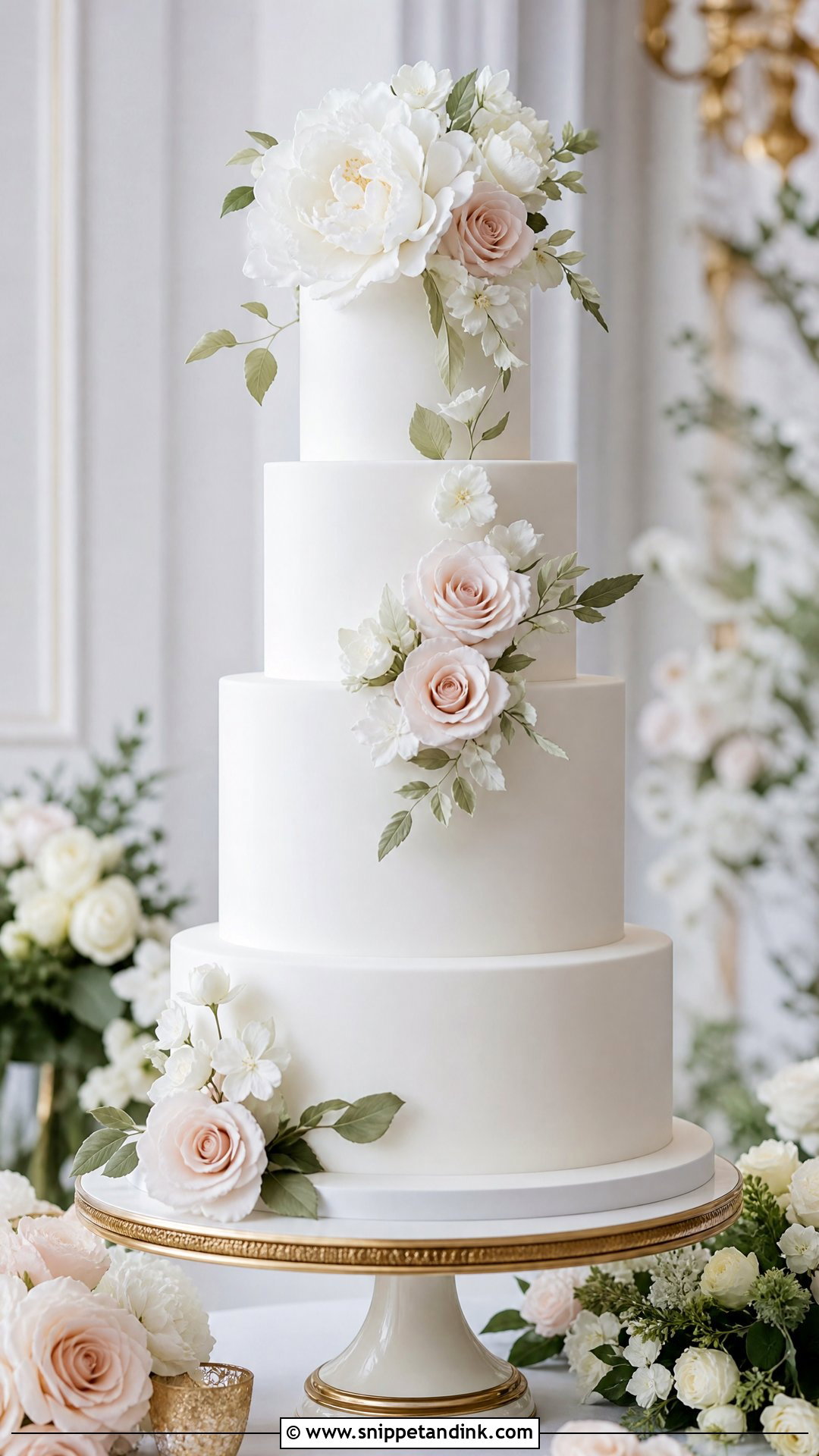
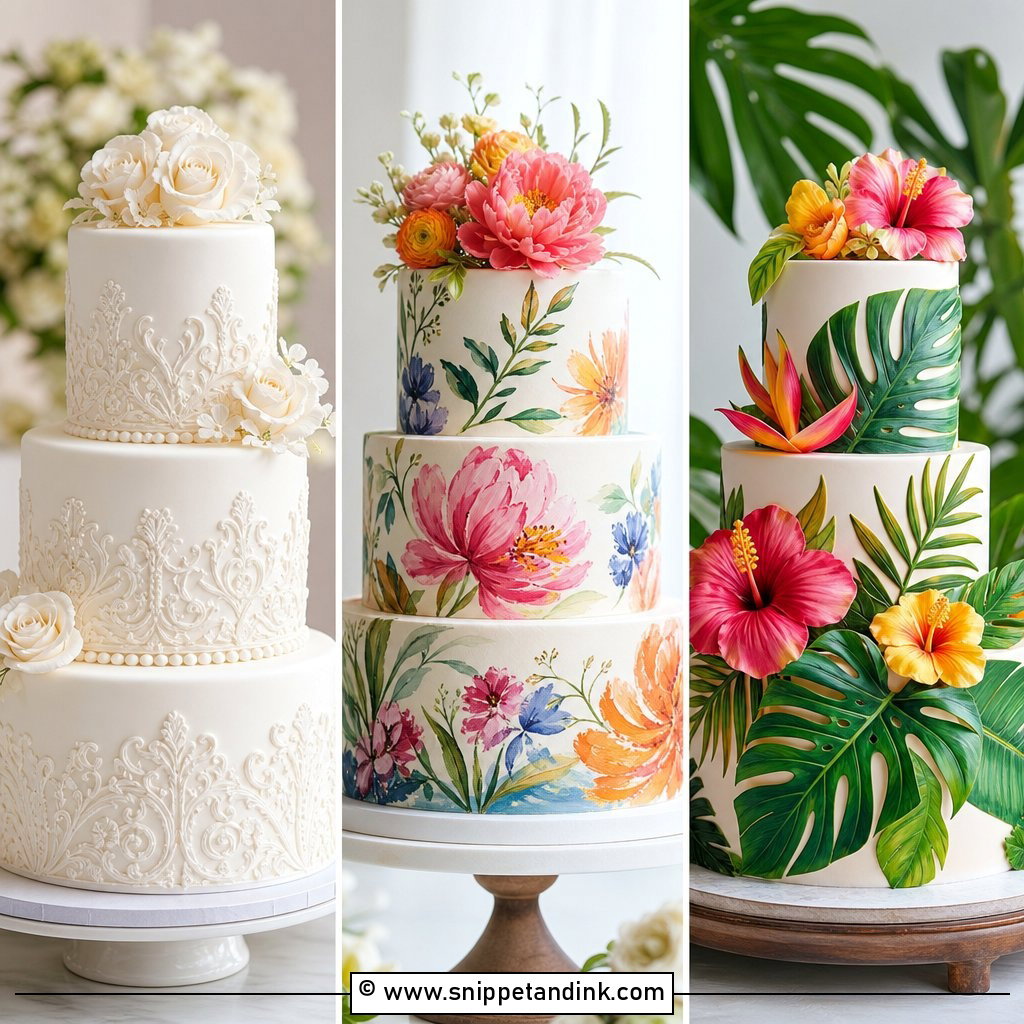
Fondant with sugar flowers is the cake I’d suggest when it has to stand out for hours before it’s cut. Fondant seals the cake, holds sharp edges and gives detailed decoration a clean surface, and sugar flowers never wilt or raise questions about which stems are safe against food. Roses, peonies, orchids and gardenias are the classic choices. Sugar flowers are made petal by petal and dried for days, so they add real cost and need ordering well ahead. Underneath, a sturdy sponge such as vanilla almond or chocolate holds the weight best.
4. Traditional Wedding Cake With Piping
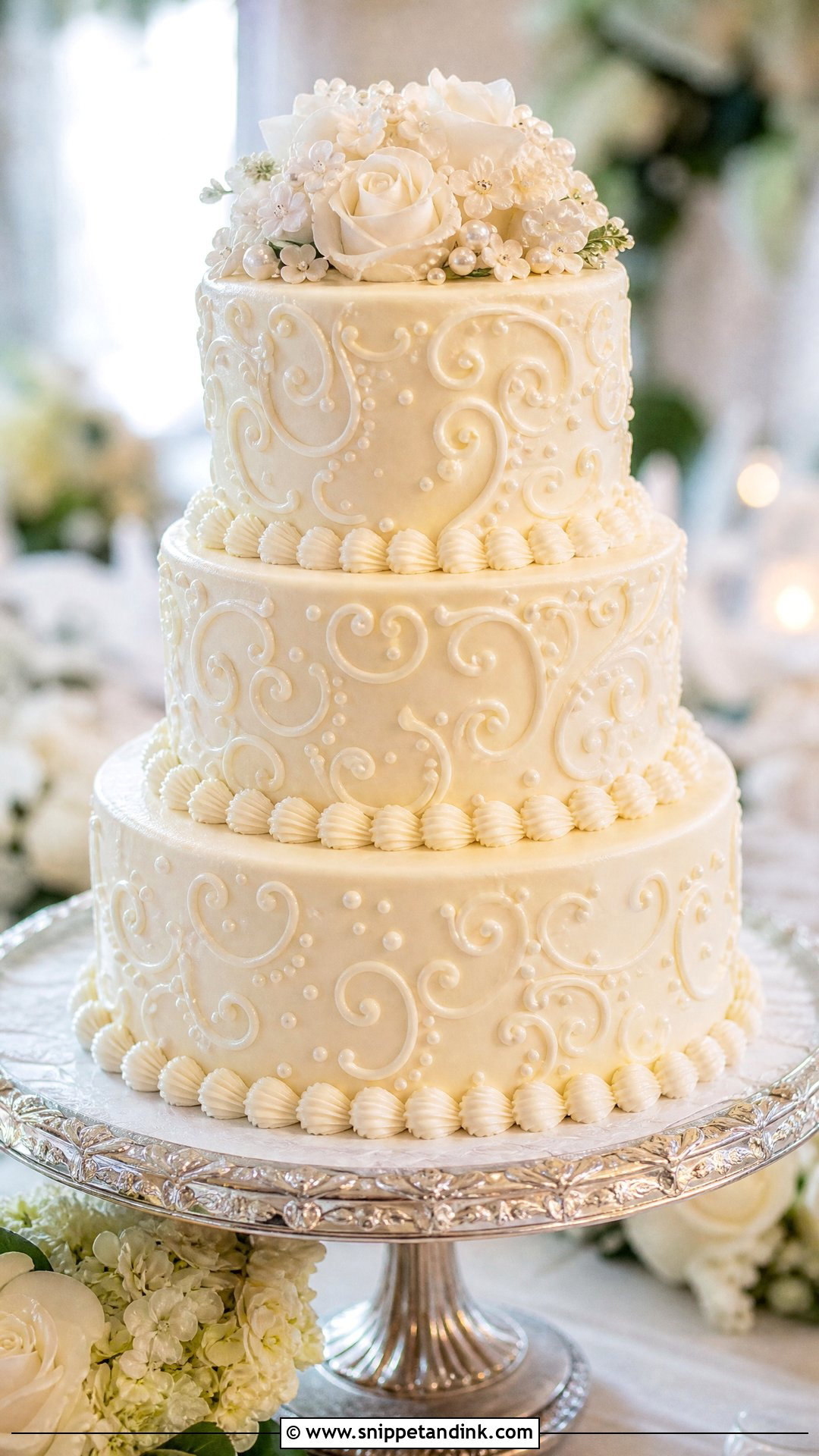
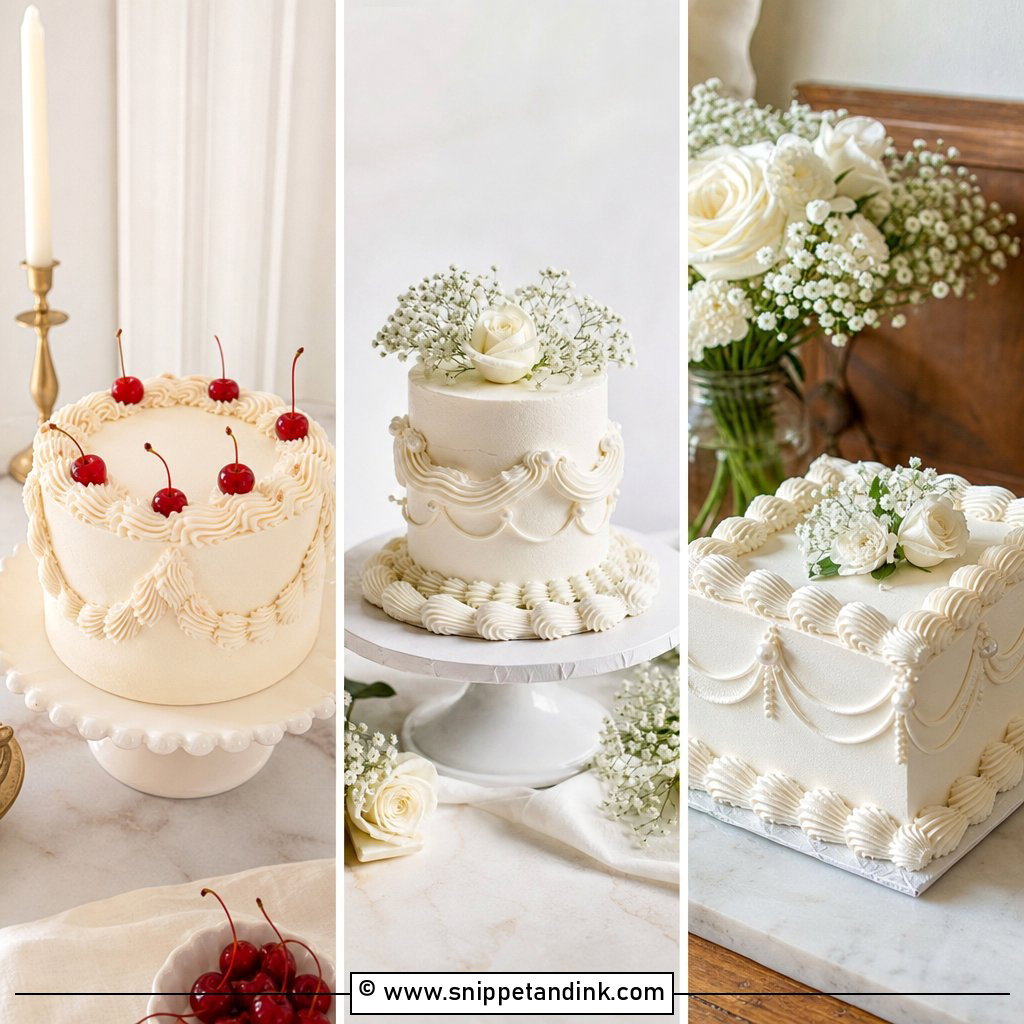
Hand piping is old-school cake work and I love doing it, because every line shows. Shells, scrolls, dots, lace patterns and swags add texture without needing any color. White on white is the most classic; ivory on ivory is softer and hides the tiny shadows at the base of each line less harshly. Royal icing keeps the detail crisp, while buttercream piping looks gentler and holds up worse in heat. It suits round or square tiers, finished with a simple topper or a small crown of flowers.
5. Wedding Cake With Pearl Details
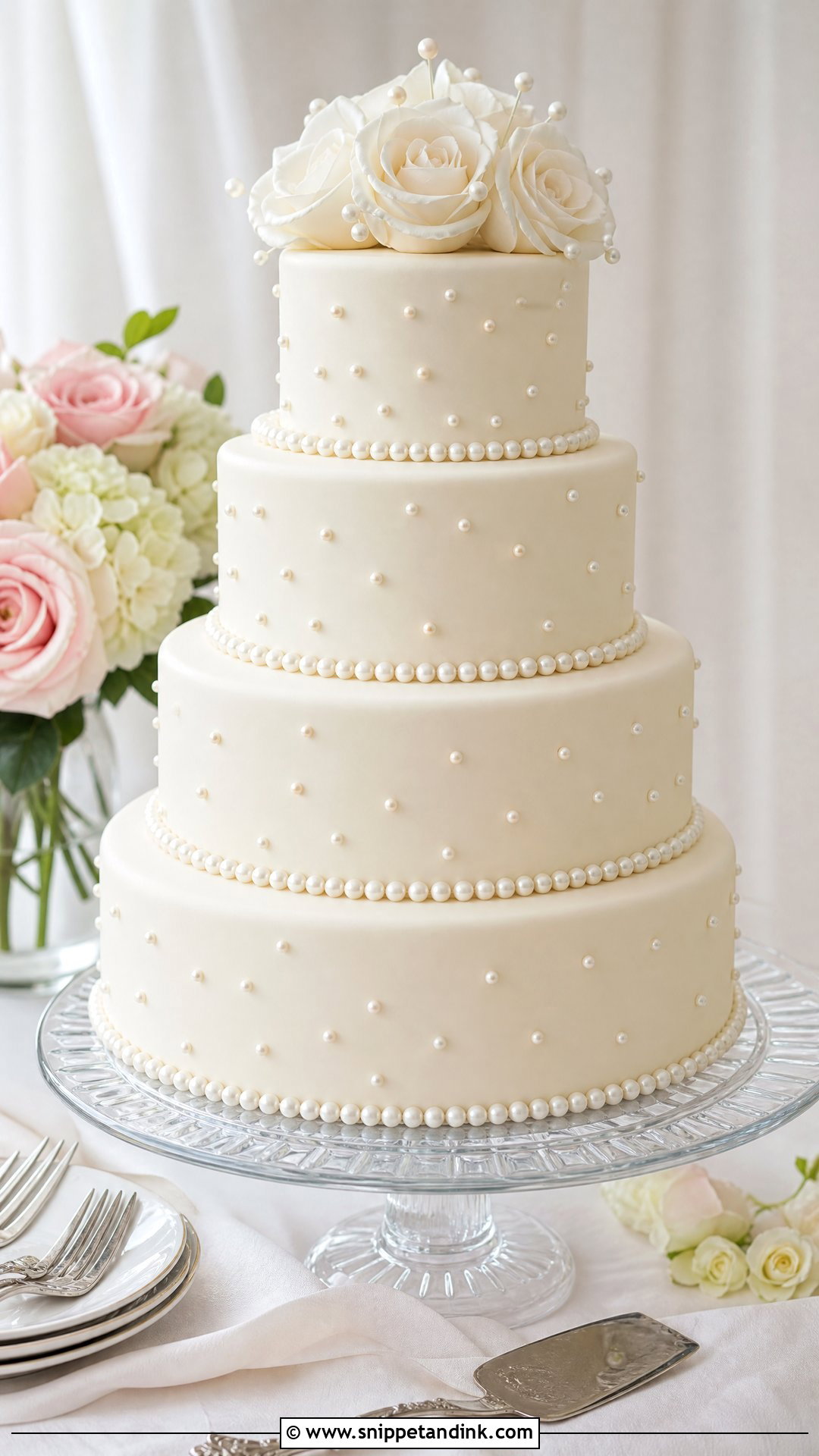
Pearls catch the light without shouting. Edible sugar pearls can border each tier, scatter across smooth fondant or form lace-like patterns, and I can also pipe them by hand in icing. One practical note: some dragees and metallic pearls are sold as decorative only, so ask your baker whether theirs are fully edible if guests will eat the tier they sit on. A white or ivory cake with pearls looks at home beside satin linens and a silver stand. Coconut or almond sponge keeps the flavor clean.
6. Wedding Cake With Lace Piping
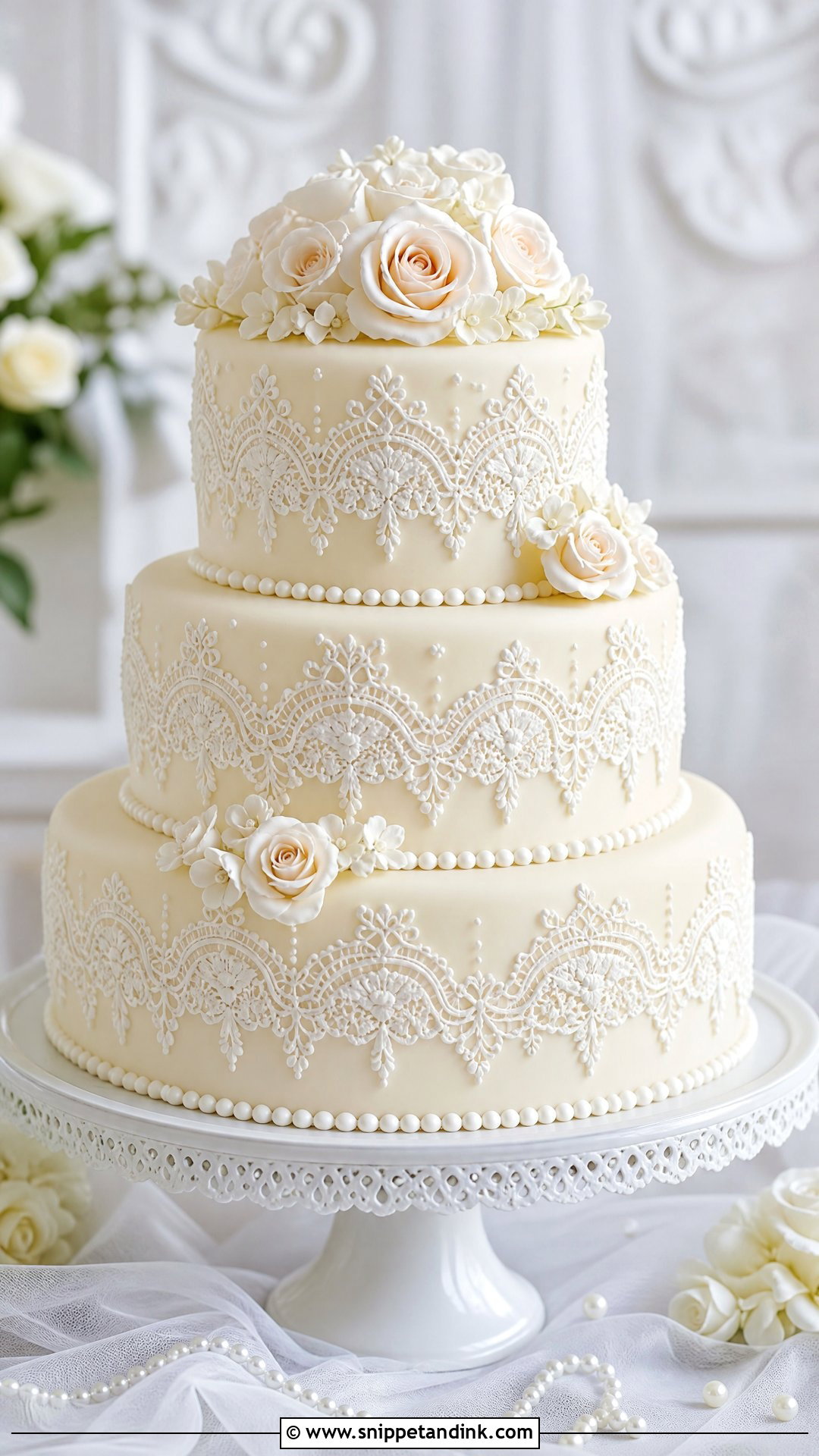
Lace piping lets the cake borrow from the dress, the veil or the invitation, which is the quickest way to tie it to the rest of the day. Bring a close photo of the lace to your consultation so I can copy the actual motif rather than a generic one. Full lace on every tier feels formal; panels or borders feel lighter. White or ivory icing keeps the detail delicate. Add a few sugar roses or a thin ribbon at each base, and choose a gentle flavor such as strawberry cream so the inside matches the mood.
7. Square Wedding Cake
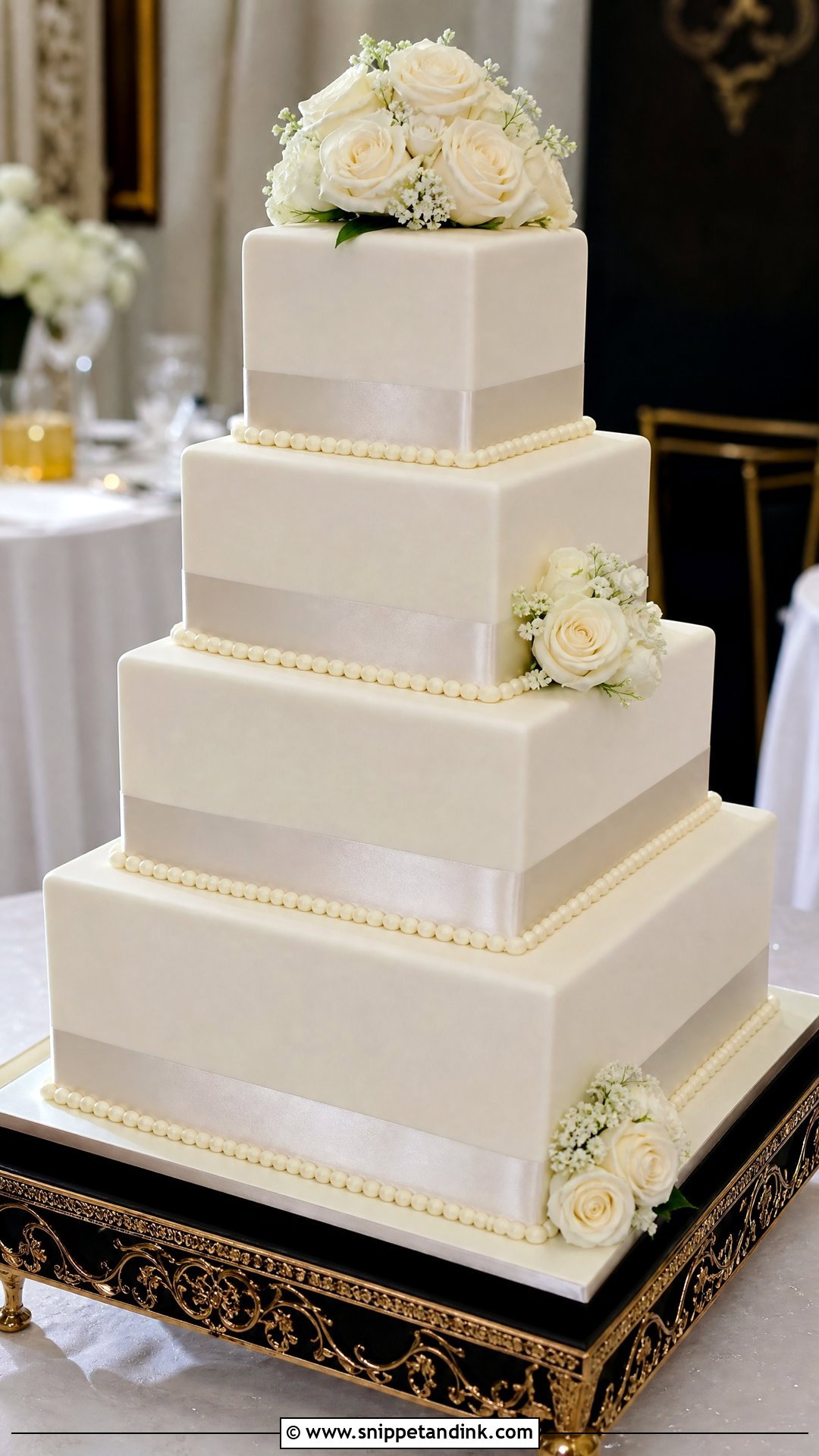
Square tiers look tailored and suit black-tie receptions and hotel ballrooms. The flat sides give clear panels for piping, ribbon or a monogram. They’re also harder work than they look: sharp corners in buttercream are tricky to keep crisp, and any lean in the stack shows straight away along those edges. Fondant handles the shape best. You can stack squares evenly or alternate with round tiers for some contrast. Squares cut neatly into even portions, which caterers appreciate.
8. Round Wedding Cake With Roses
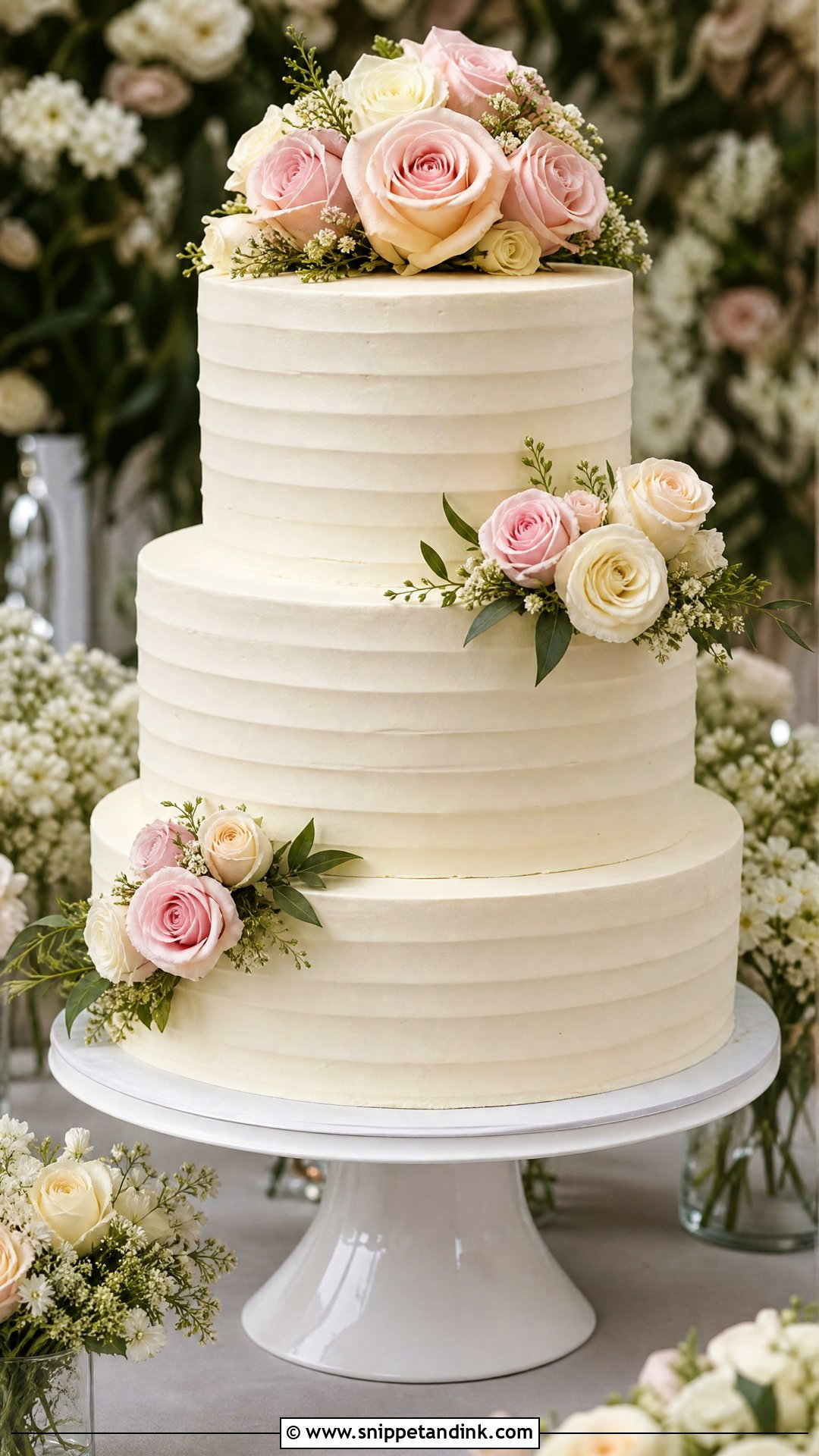
Round tiers with roses are the picture most people have of a wedding cake. Fresh roses can match the bouquet; sugar roses can be made in any shade and will look the same at midnight as they did at noon. If you go fresh, the stems should be wrapped or the flowers placed on small barriers so they don’t touch the icing directly, and they should be grown without heavy pesticide treatments. Smooth frosting reads formal, light texture reads garden. Vanilla rose or a plain white cake suits the theme.
9. Wedding Cake With Satin Ribbon
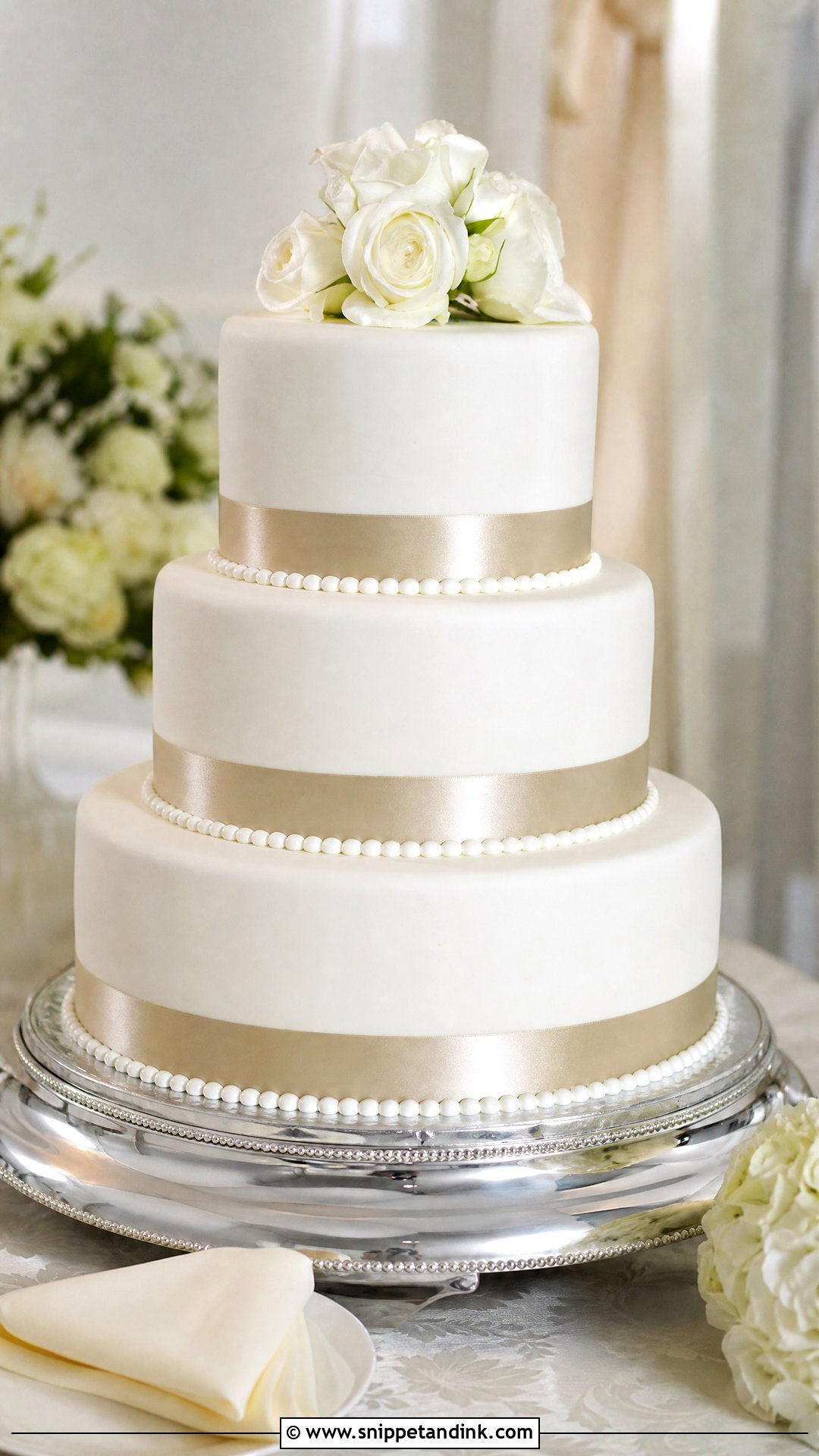
A ribbon around the base of each tier gives a finished edge with almost no added cost, and it’s the easiest way to bring in your wedding colors. Satin in ivory, champagne, navy or soft gold all work. The detail couples don’t know about: ribbon laid straight against buttercream soaks up the fat and spots, so I back it with a strip of food-safe tape or acetate first. Add a small floral cluster, a pearl border or a simple monogram, and the cake will coordinate with linens and bridesmaid dresses without trying hard.
10. Wedding Cake With Columns
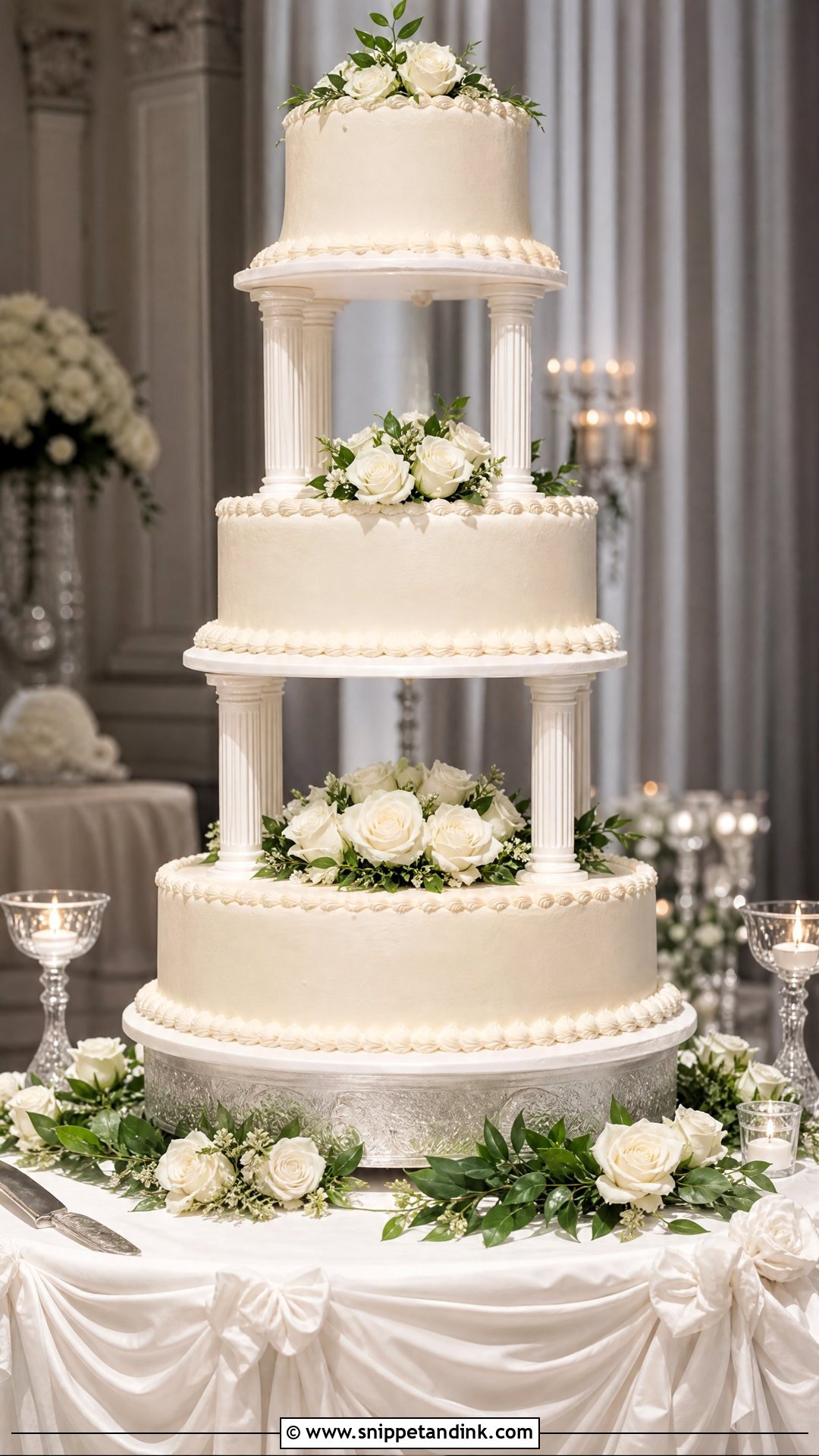
Pillared cakes, with tiers lifted apart on decorative columns, give a cake real height and a very ceremonial feel. They were everywhere in older wedding albums and are coming back for their vintage look. Each separated tier sits on its own board with dowels running down through the tier beneath, so this is engineering as much as decoration; I’d only trust it to an experienced baker. Flowers tucked between tiers soften the gaps. Keep the colors quiet, because the structure already does the talking.
11. Traditional Fruit Wedding Cake
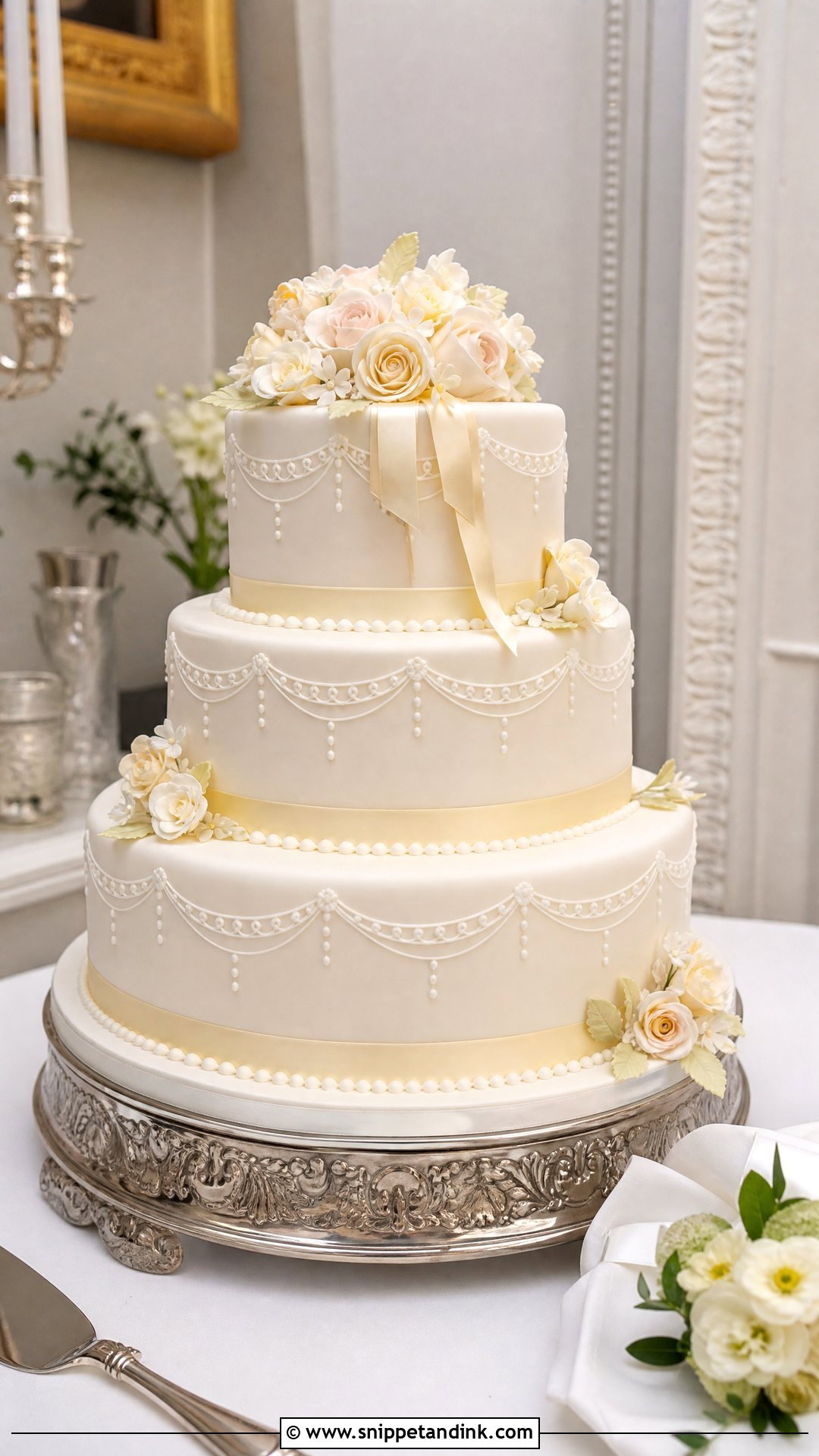
Fruit cake is the original wedding cake in the British tradition: dense, spiced, packed with dried fruit, covered in marzipan and then a firm white icing. That density is why it can carry tall tiers and heavy royal icing decoration without collapsing. It also keeps for months when wrapped well and fed with a little brandy, which is why couples once saved the top tier for a christening. It’s not to everyone’s taste, so many of my couples now do one fruit tier and sponge for the rest. Fruit cake needs baking weeks ahead so it can mature.
12. Almond Wedding Cake
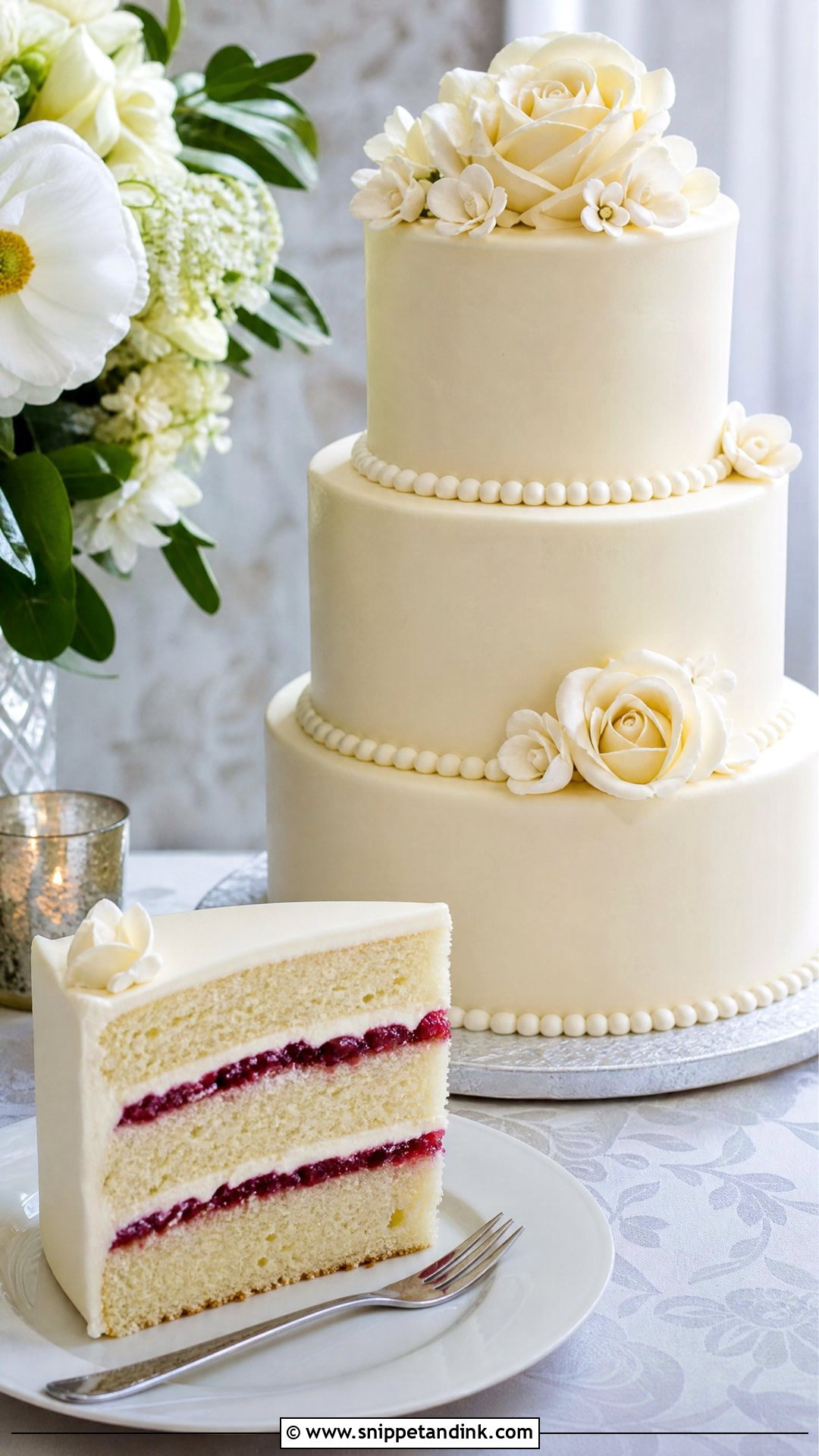
Almond wedding cake has a light, fragrant crumb with a little nuttiness, and it holds up under fondant better than very soft sponges. It pairs well with raspberry, apricot preserves or a simple vanilla buttercream. Do check your guest list for nut allergies before committing, and tell the caterer exactly which tier contains almond. Outside, keep it classic: white icing, smooth tiers and soft flowers. A three-tier almond cake in ivory buttercream with pearl borders always goes down well.
13. Vanilla Wedding Cake
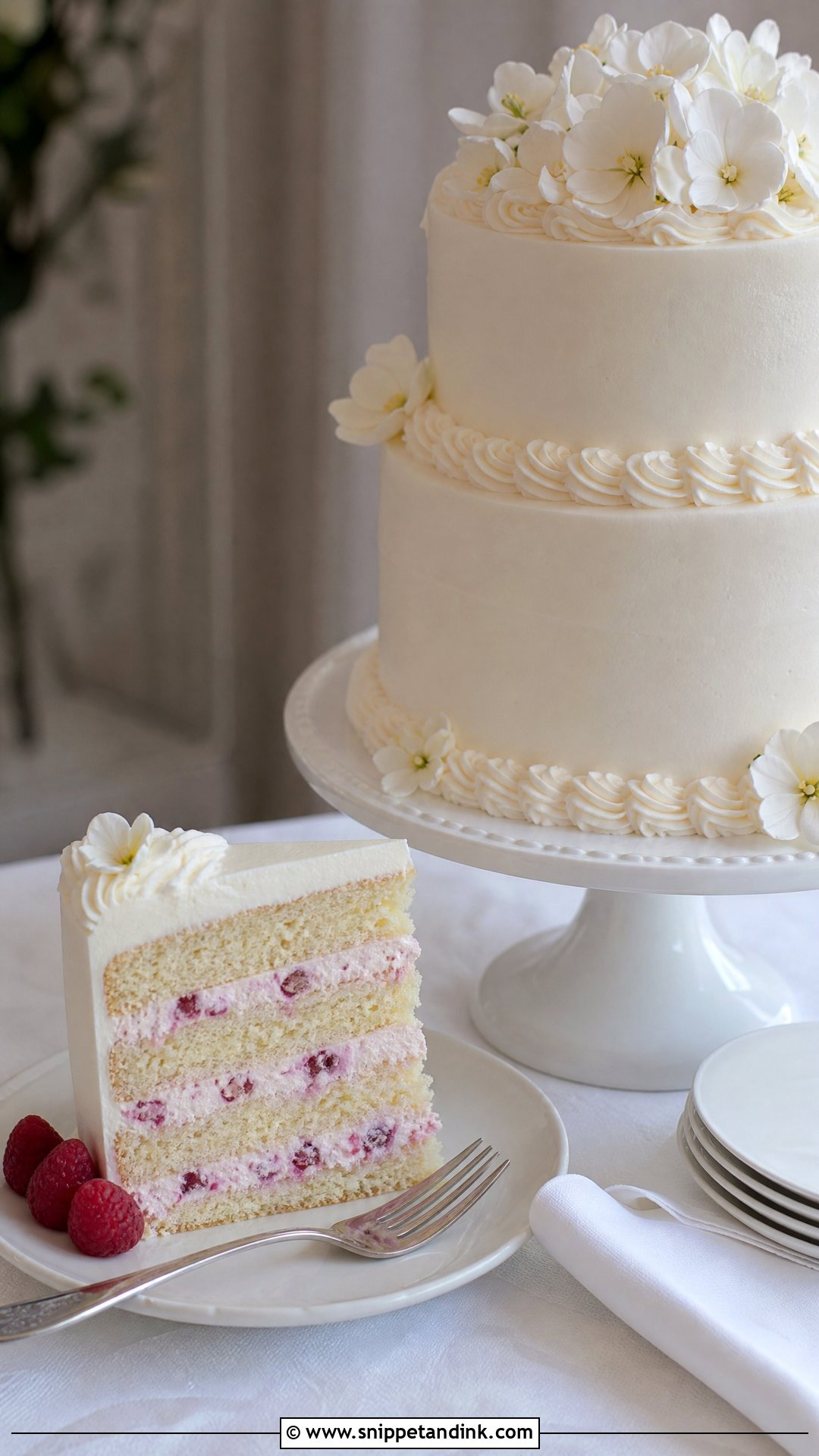
Vanilla is the flavor that gets eaten. When guest numbers run large and tastes vary, it’s the tier I’d put at the bottom. Real vanilla bean adds depth and visible specks; a white cake made with egg whites keeps the crumb pale and bridal. Fillings make it personal: raspberry, lemon curd or strawberry cream all sit well against it. Outside, it takes any finish, from smooth fondant to piped buttercream to ribbon.
14. Lemon Wedding Cake
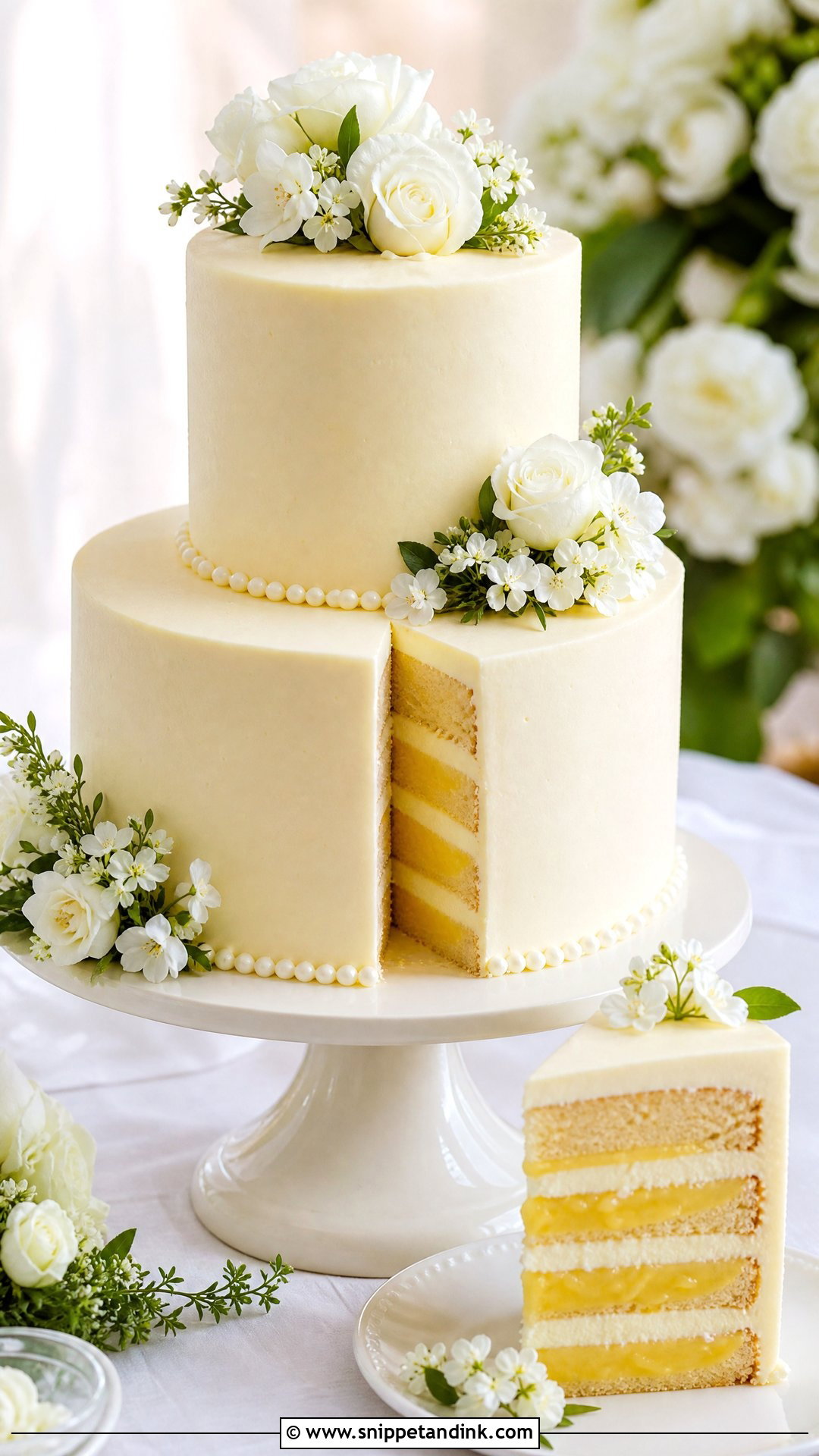
Lemon is the flavor I suggest most for spring and summer, because after a heavy dinner it tastes light. A lemon sponge with lemon curd and vanilla buttercream is bright without being sharp. Curd fillings need a firm buttercream dam piped around the edge of each layer, otherwise they seep and the tiers can bulge. Outside, it can stay completely classic, with smooth ivory icing, piped borders and white flowers or small sugar blossoms.
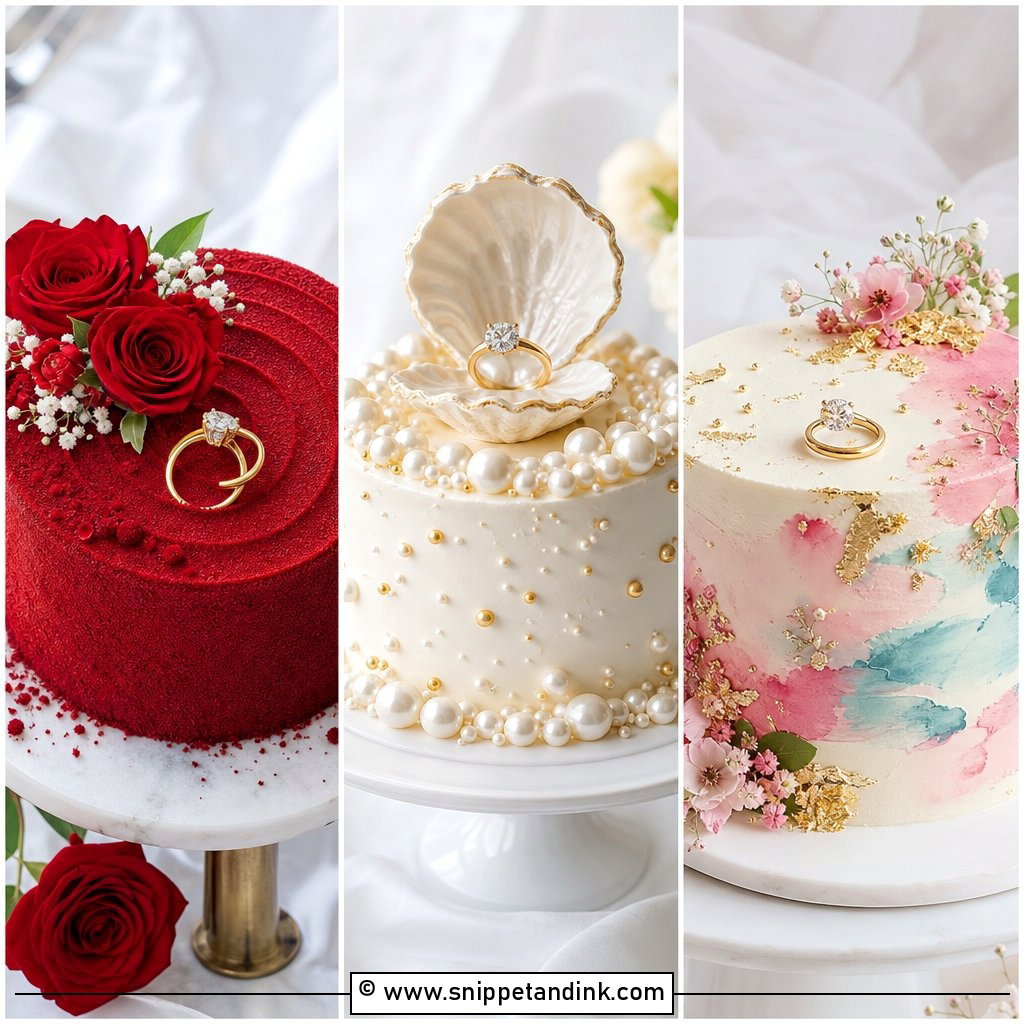


15. Chocolate Wedding Cake
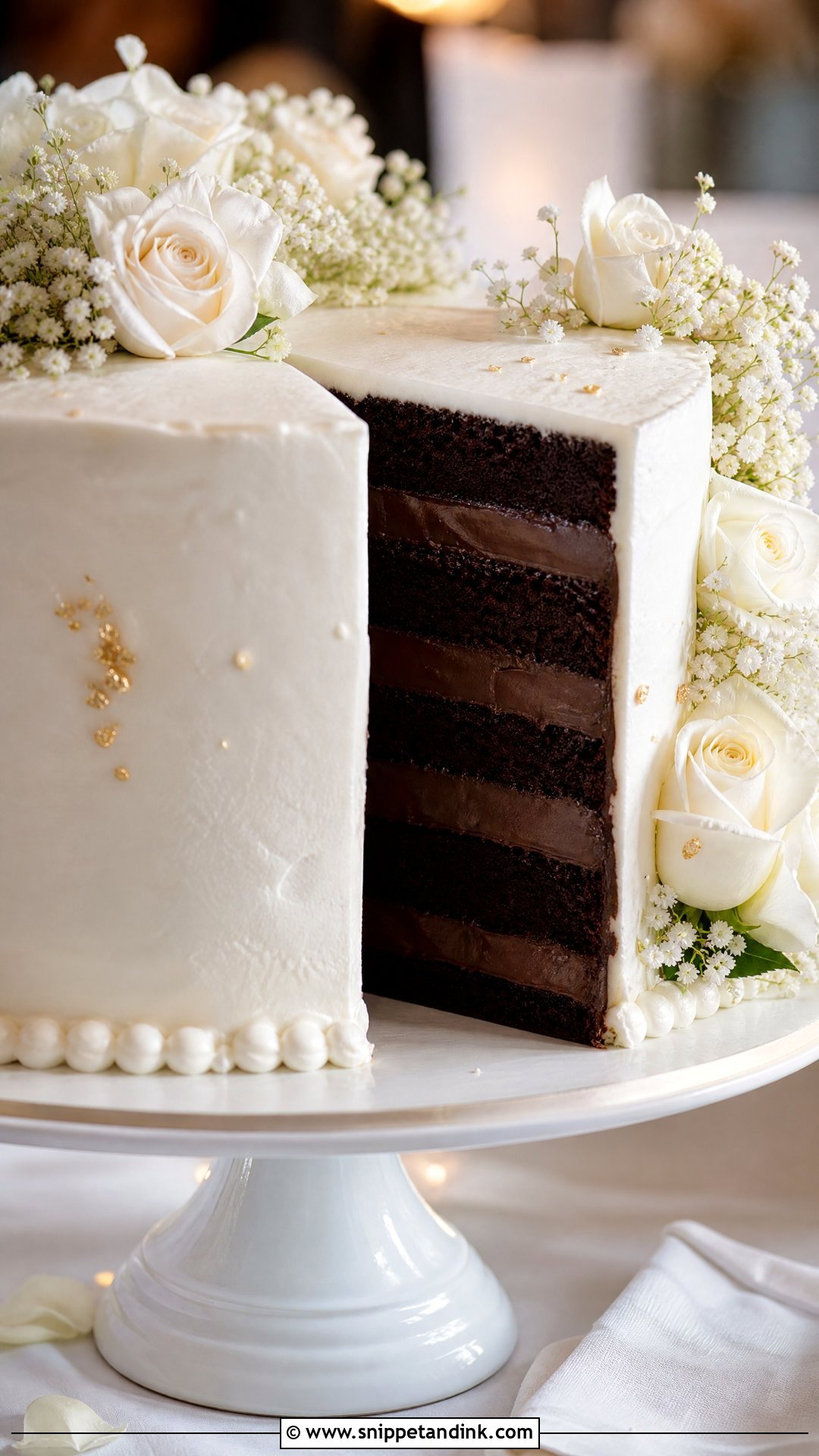
Chocolate wedding cake can look entirely traditional once it’s dressed in white or ivory buttercream. Guests get the rich ganache or mousse inside while the outside still suits a formal room. A dark sponge does need a thicker crumb coat, or flecks show through pale icing. Mixed families often settle on a white cake with a chocolate filling, or one chocolate tier among vanilla ones. Raspberry and caramel both pair well with it, and roses or piped borders keep the design bridal.
16. Wedding Cake With Fresh Flowers
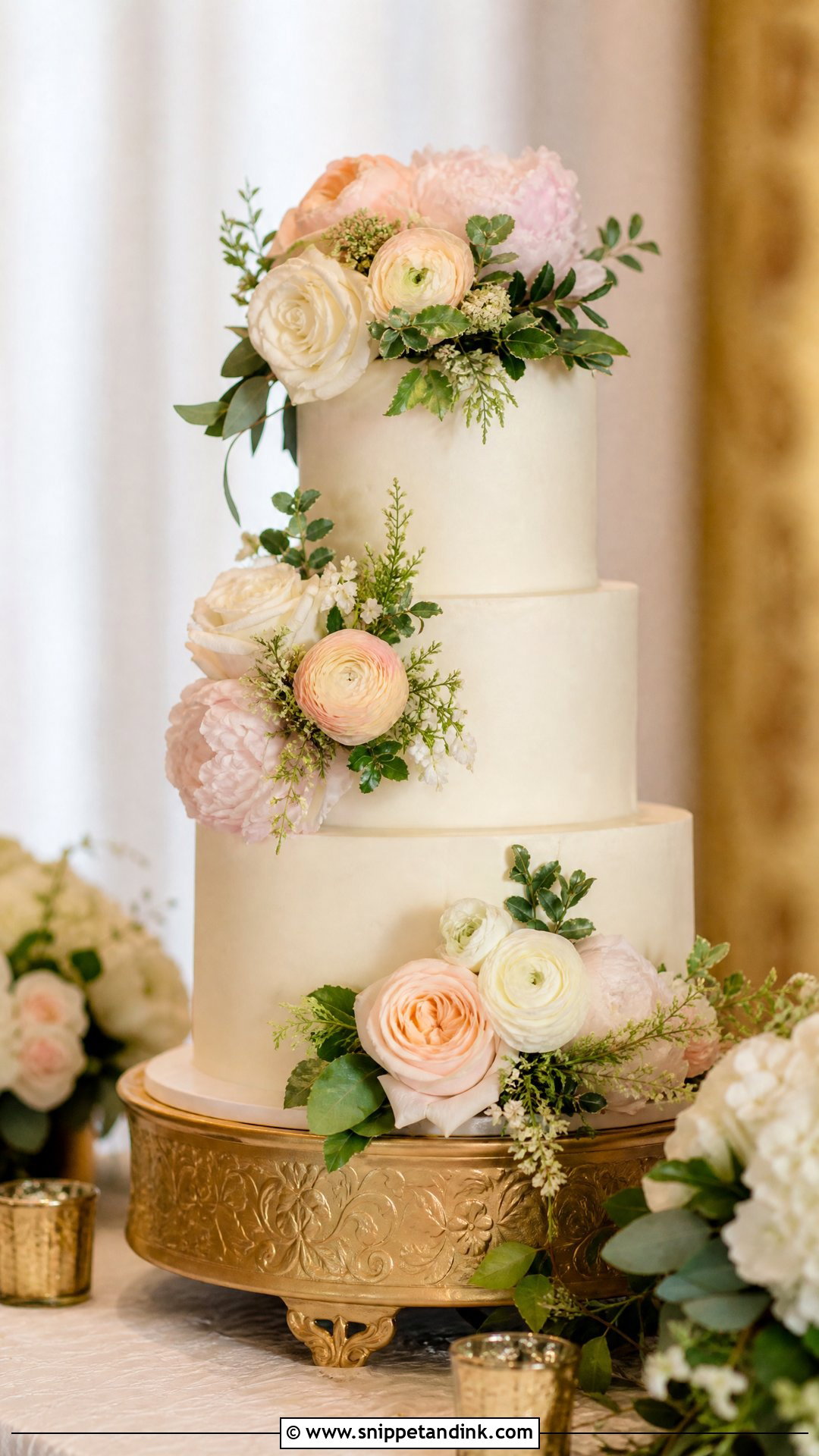
Fresh flowers link the cake to the bouquet, the centerpieces and the ceremony arch. Roses, peonies, lisianthus and ranunculus are reliable on cakes; hydrangeas look generous but wilt quickly out of water. Flowers should be chosen together by your baker and florist, kept free of toxic varieties, and placed with wrapped stems or on small barriers so they never sit directly in the icing. Clusters, cascades or a simple top arrangement all work, and I prefer the florist to dress the cake on site so blooms go on fresh.
17. Wedding Cake With Monogram
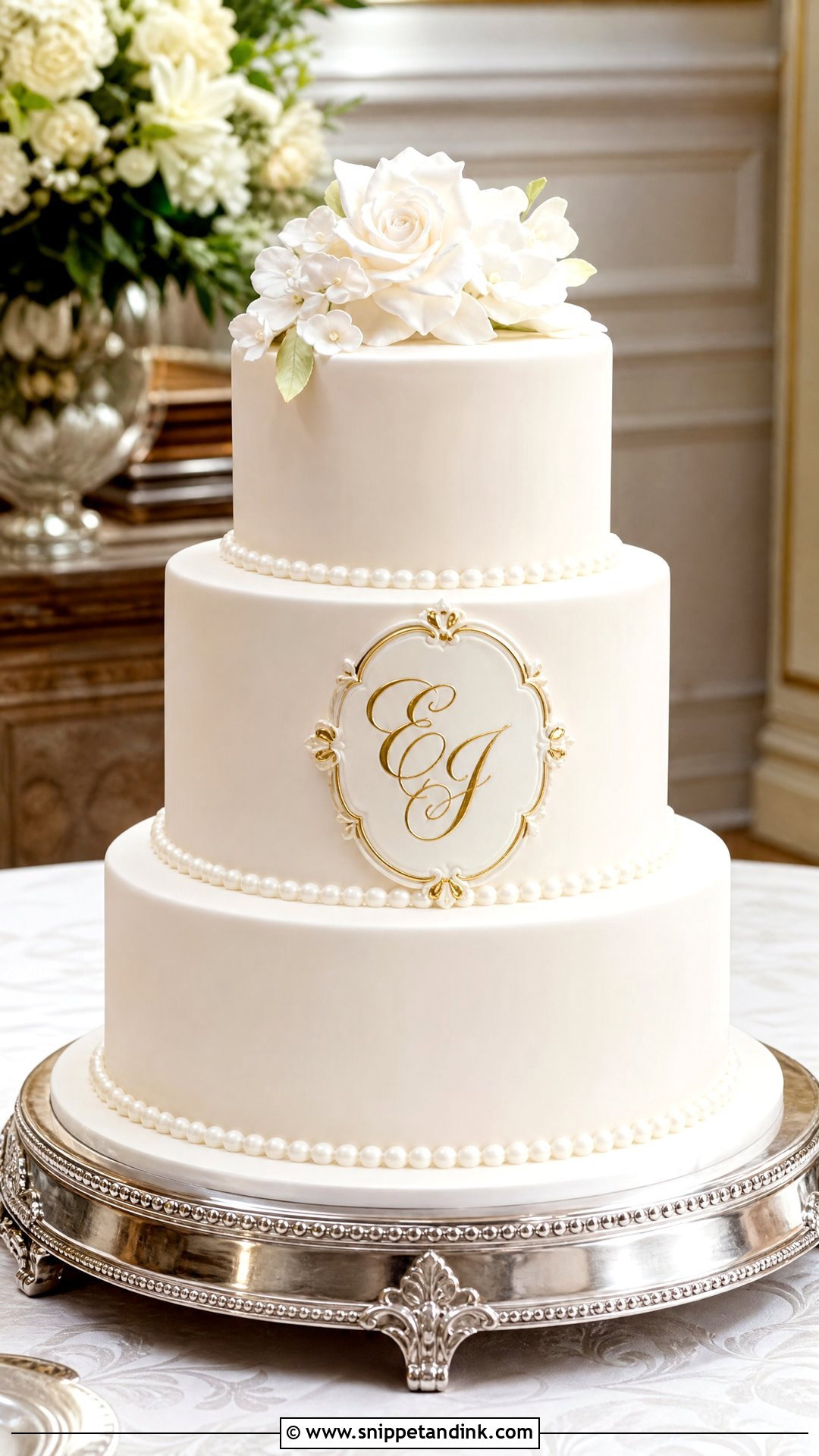
Initials make a classic cake personal without changing its character. I can pipe them, emboss them into fondant, set them inside a small sugar plaque on the front tier or use them as a topper. They read best on a smooth surface. I always draw the monogram at actual size first, because letters that look delicate on paper can disappear once there’s a cake table and a few feet between you and them. Silver or soft gold accents suit it, with pearls or ribbon around the frame.
18. Buttercream Rosette Wedding Cake
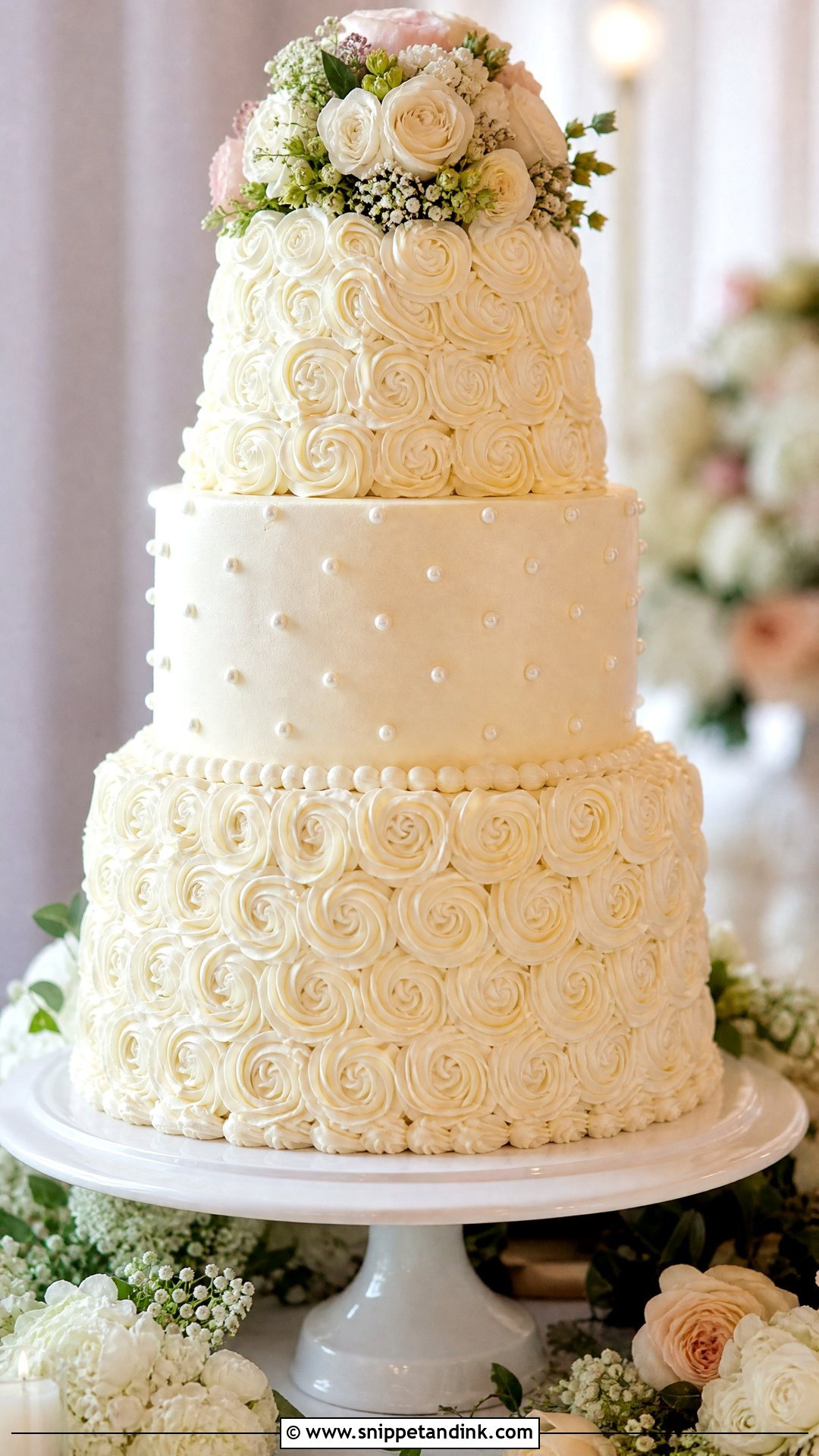
Rosettes are piped in a single spiral with a star tip, and covering a tier in them gives texture and fullness without needing much else. All-over rosettes on every tier can feel heavy, so I often keep one tier rosette-covered and the rest smooth. White and ivory are classic, and a very pale blush still reads traditional. They use a generous amount of buttercream, which helps keep a strawberry or lemon sponge moist. A few sugar or fresh flowers on top add height if you want it.
19. Traditional Wedding Cake With Cake Topper
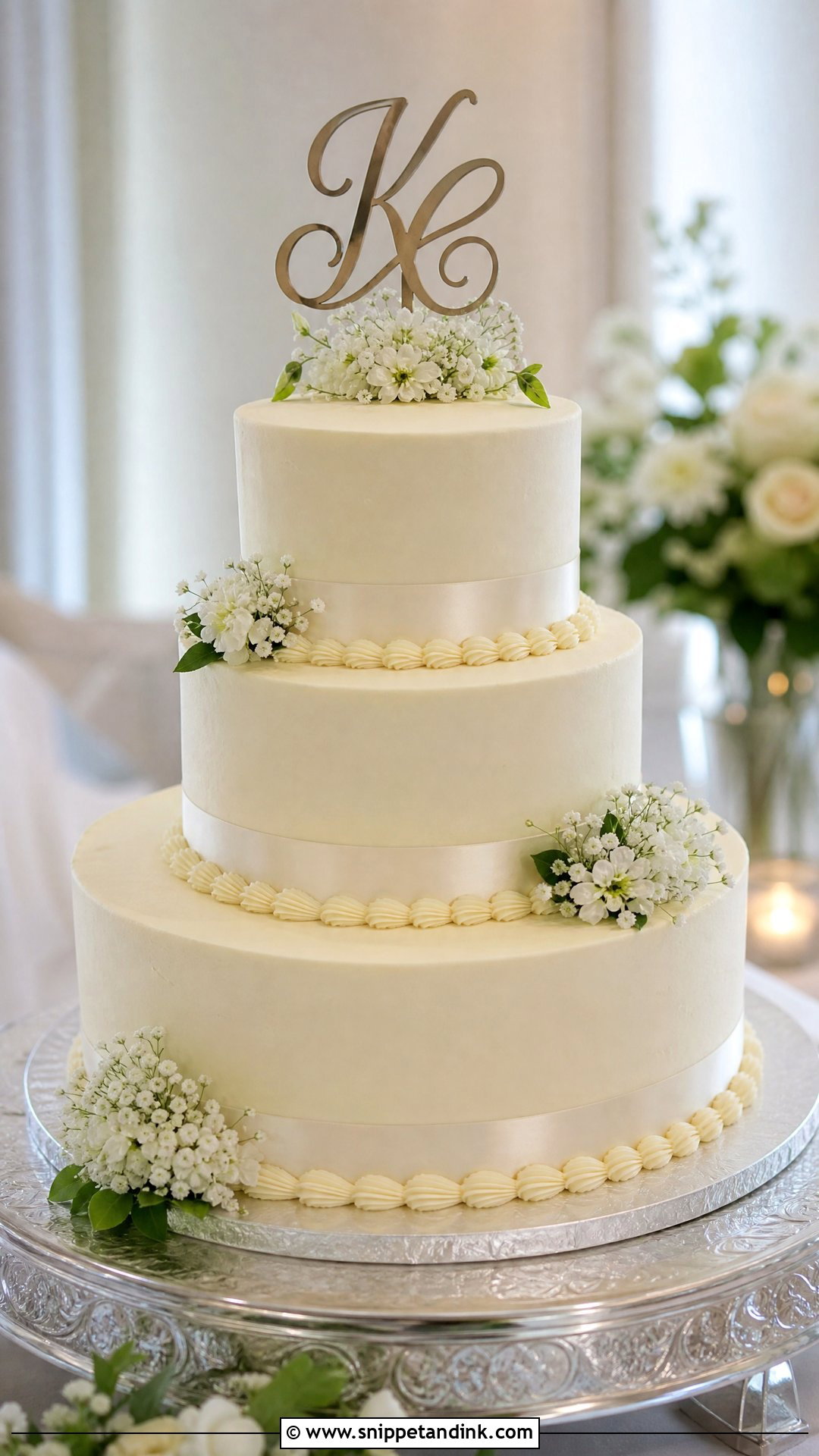
A cake topper gives the top tier a clear focal point: a couple figurine, initials, bells, doves or a family crest. Heavy toppers are the problem I see most. Porcelain or metal heirloom figures need a supported top tier and sometimes a hidden board beneath them, so tell your baker about the topper early and bring it if you can. Keep the decoration underneath simple so the topper looks intended. Afterwards, it’s one of the few parts of the cake you get to keep.


20. Small Traditional Wedding Cake
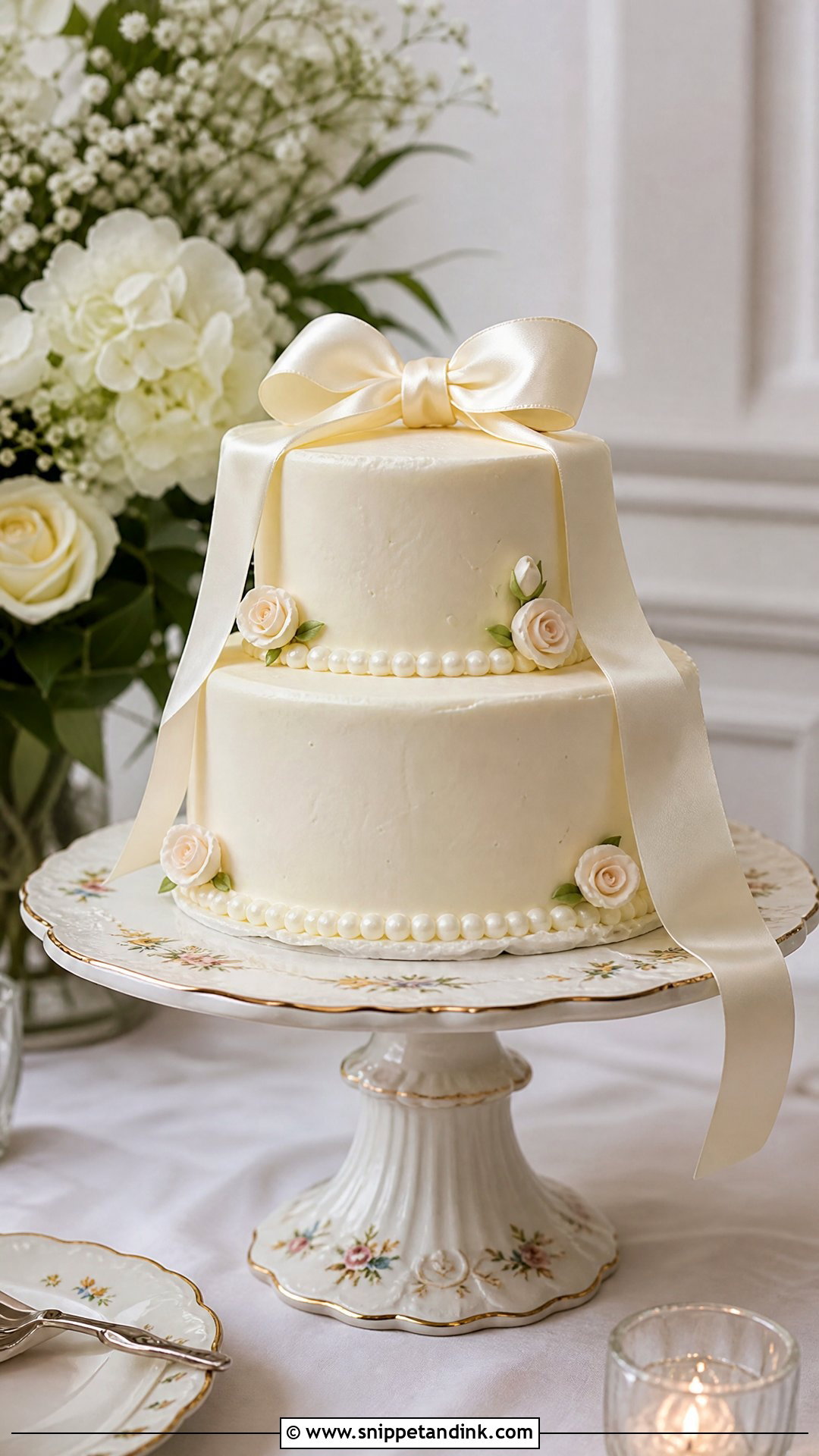
A small cake of one or two tiers suits elopements, intimate weddings, or couples who’d rather serve a dessert table. It can still look formal with smooth icing, piped borders and a few flowers or pearls. With less cake to make, the budget can go on better ingredients and finer handwork. Lift it on a tall stand so it doesn’t vanish on a long table. For a larger guest list, a small display cake plus kitchen-cut sheet cakes in the same flavors is a sensible way to feed everyone.
Keeping the Top Tier for Your First Anniversary
Saving the top tier is an old custom, and how well it works depends mostly on what’s inside. Fruit cake under marzipan and royal icing was made to keep, and it was traditionally saved for the first christening. A light sponge in buttercream is another matter.
- Ask the caterer to box the top tier before the cake is cut, and remove any fresh flowers, wires, dowels and the topper.
- Chill it uncovered for an hour so the icing firms, then wrap it tightly in several layers of cling film and a layer of foil.
- Freeze it in an airtight container away from strong smells; freezers pass flavors on surprisingly fast.
- Thaw it slowly in the fridge, still wrapped, so condensation forms on the wrapping rather than the icing.
Be honest with yourself about expectations: sponge cake frozen for a year tastes edible, rarely wonderful. Mousse and fresh fruit fillings freeze worst. Some couples simply order a small fresh replica of their top tier for the anniversary instead, and plenty of bakers are happy to make one.
Who Cuts the Cake Once the Photos Are Done
The couple makes the first cut, usually into the bottom tier where the cake is most stable, and then the cake goes back to the kitchen. Check who handles cutting and plating. Some venues charge a per-guest cutting fee for cakes from outside bakers, and it’s far better to learn that at the contract stage than on the final invoice.
A Classic Cake Starts With Your Room and Your Guests
Traditional cakes keep their place because they make a reception feel finished. Height, ceremony and a little sweetness, without chasing the newest trend. Fondant or buttercream, sugar flowers or fresh roses, pearls, lace or a family topper: each of these choices comes back to the same few questions. How warm will the room be, how many people need a slice, and which flavor will your guests actually finish? Answer those first and the decoration tends to settle itself.
You'll Like These Ideas:



Leave a Reply