
Wedding cakes stopped being plain white tiers with a topper some time ago. Now they’re sculpted, painted, piped, pressed with flowers or stripped back to bare sponge. I judge a design by two things: whether it belongs in the room you’ve booked, and whether people go back for a second slice. Below you’ll find classics, newer finishes and flavor-led cakes, with notes from the decorating side on what each one asks of the weather, the budget and the person cutting it. Compare them before you sit down with your baker.
Sending Inspiration Photos Your Baker Can Use
Most couples send a folder of screenshots. That’s a good start, but I need to know what you like about each picture, because one photo carries five decisions at once: shape, finish, color, flowers and size.
- Mark one thing you love in each photo, such as the ruffle texture or the shade of the sugar roses, and one thing you’d change.
- Include a picture of your venue and the spot where the cake will stand, so its scale suits the room.
- Say if a photo comes from a styled shoot. Many cakes online are dummies photographed once, and some details aren’t practical on a real, sliceable cake in a warm room.
- Share your guest count early. The cake in your favourite photo may feed forty when you need to feed a hundred and fifty, and redesigning around that number is easier at the start.
If you’re torn between styles, bring all of them. A good baker can often merge two ideas, vintage piping in a modern palette for instance, into one design that feels like neither photo and suits you better than both.
1. Three Tier Wedding Cake
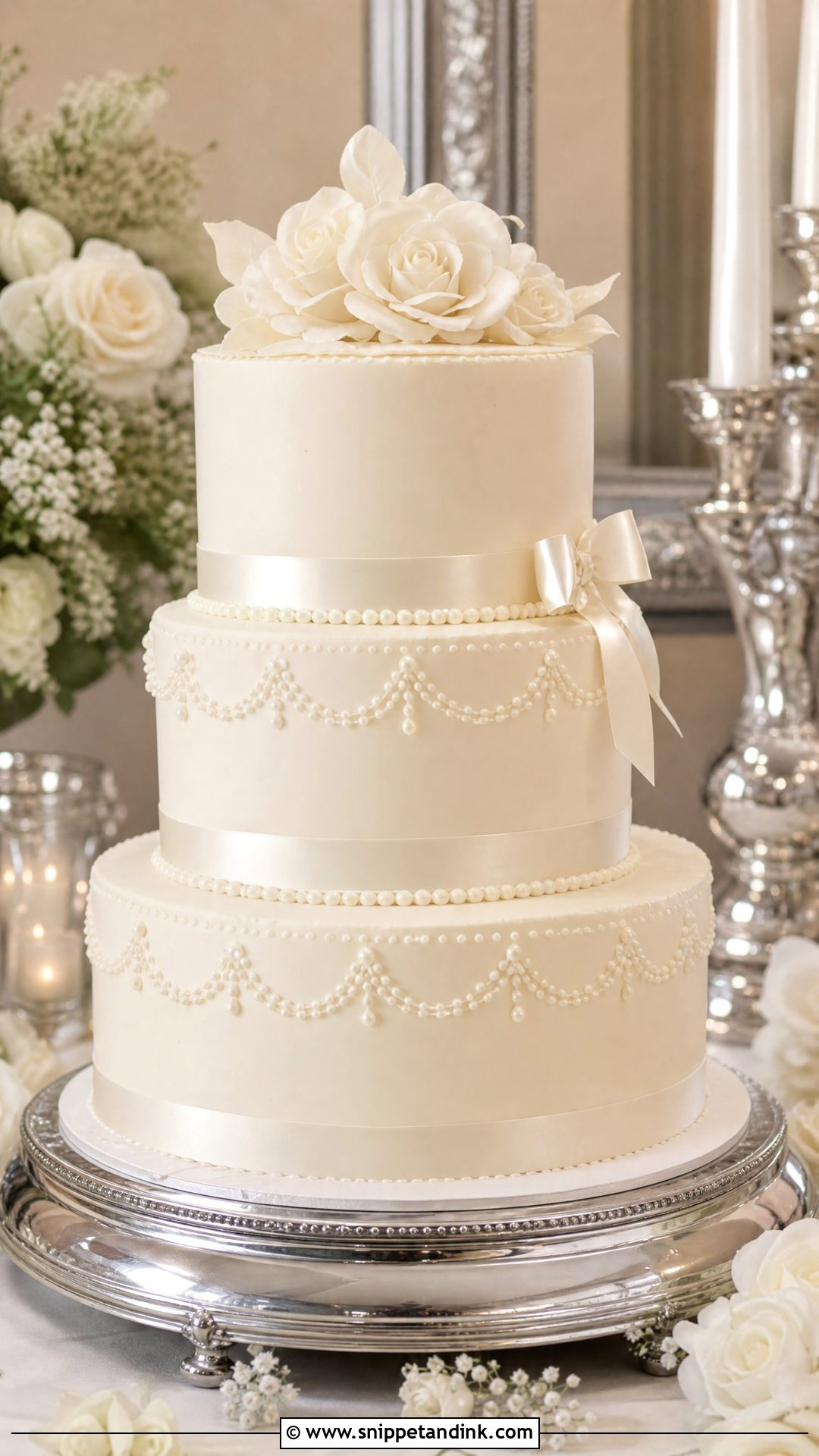
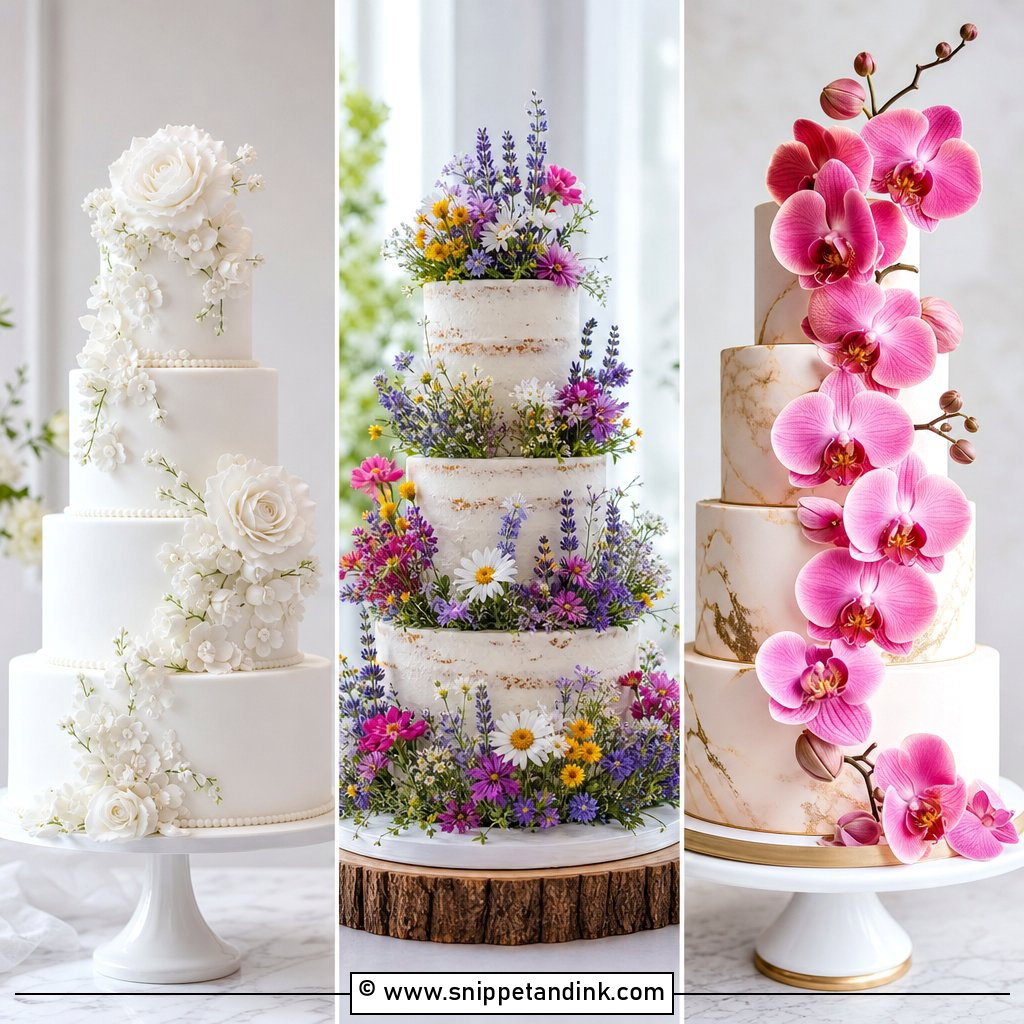
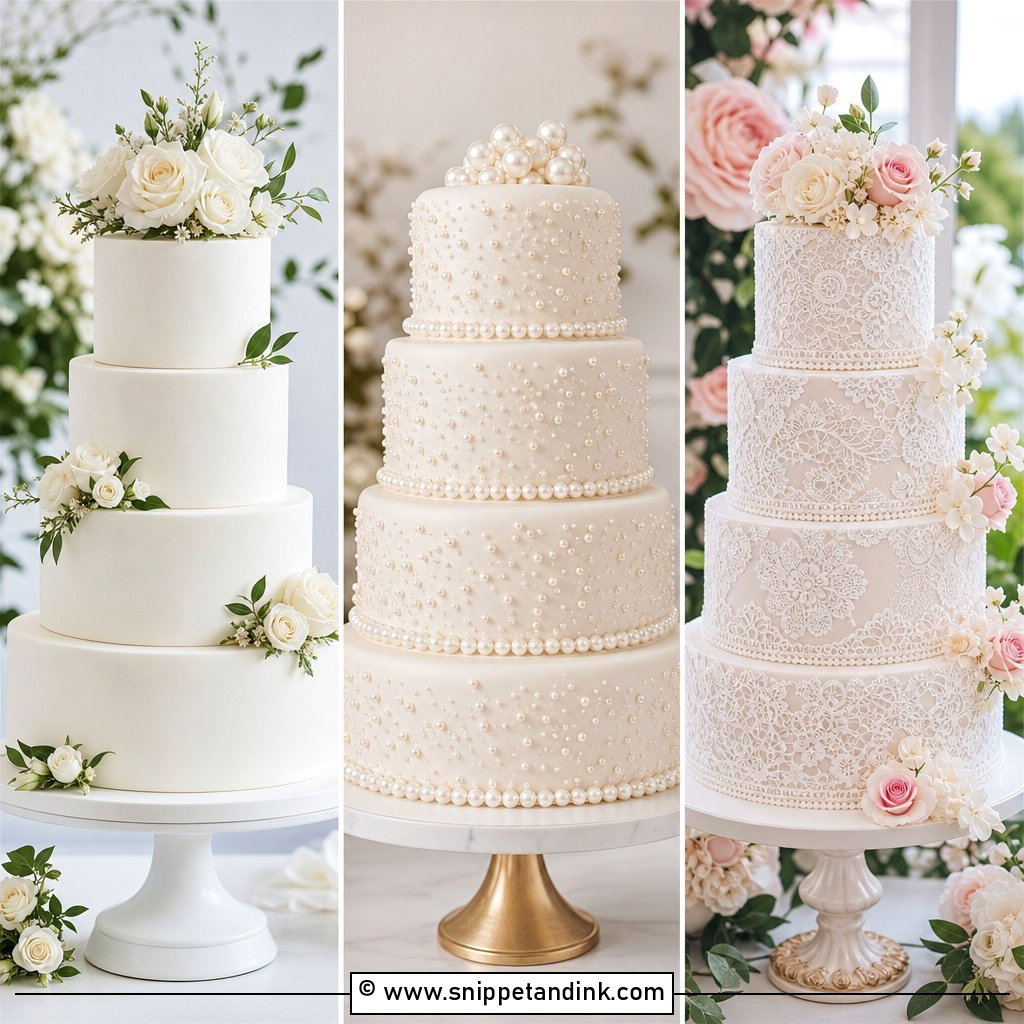
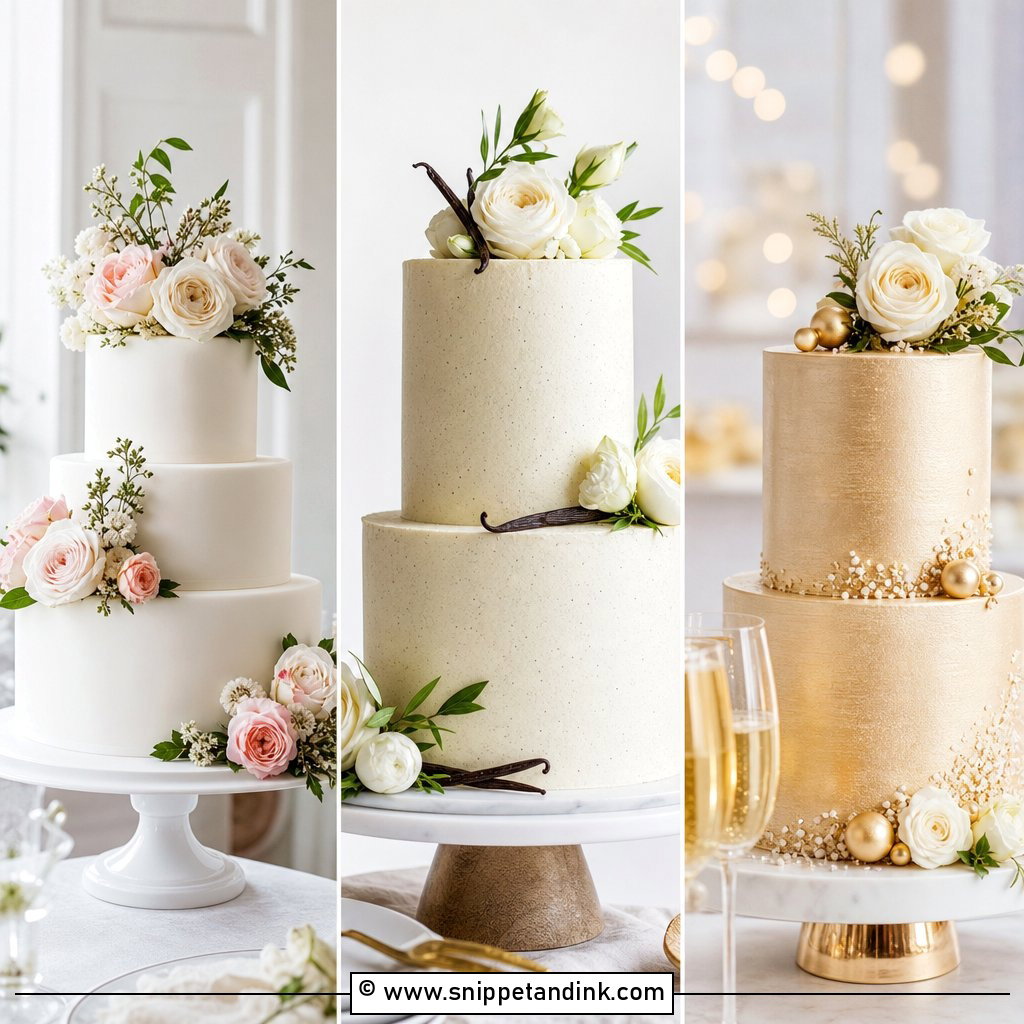
Three tiers is the shape most people picture when they hear the words wedding cake, and it earns that. There’s enough surface for real decoration without overwhelming a ballroom or a church hall. When a couple can’t settle on one flavor, this cake settles it, since each tier can differ; I put the sturdiest sponge at the bottom because it carries the weight of the other two. Smooth ivory buttercream with sugar flowers or a ribbon border is the classic finish. Set it on a raised stand so it clears the centerpieces.
2. Two Tier Wedding Cake
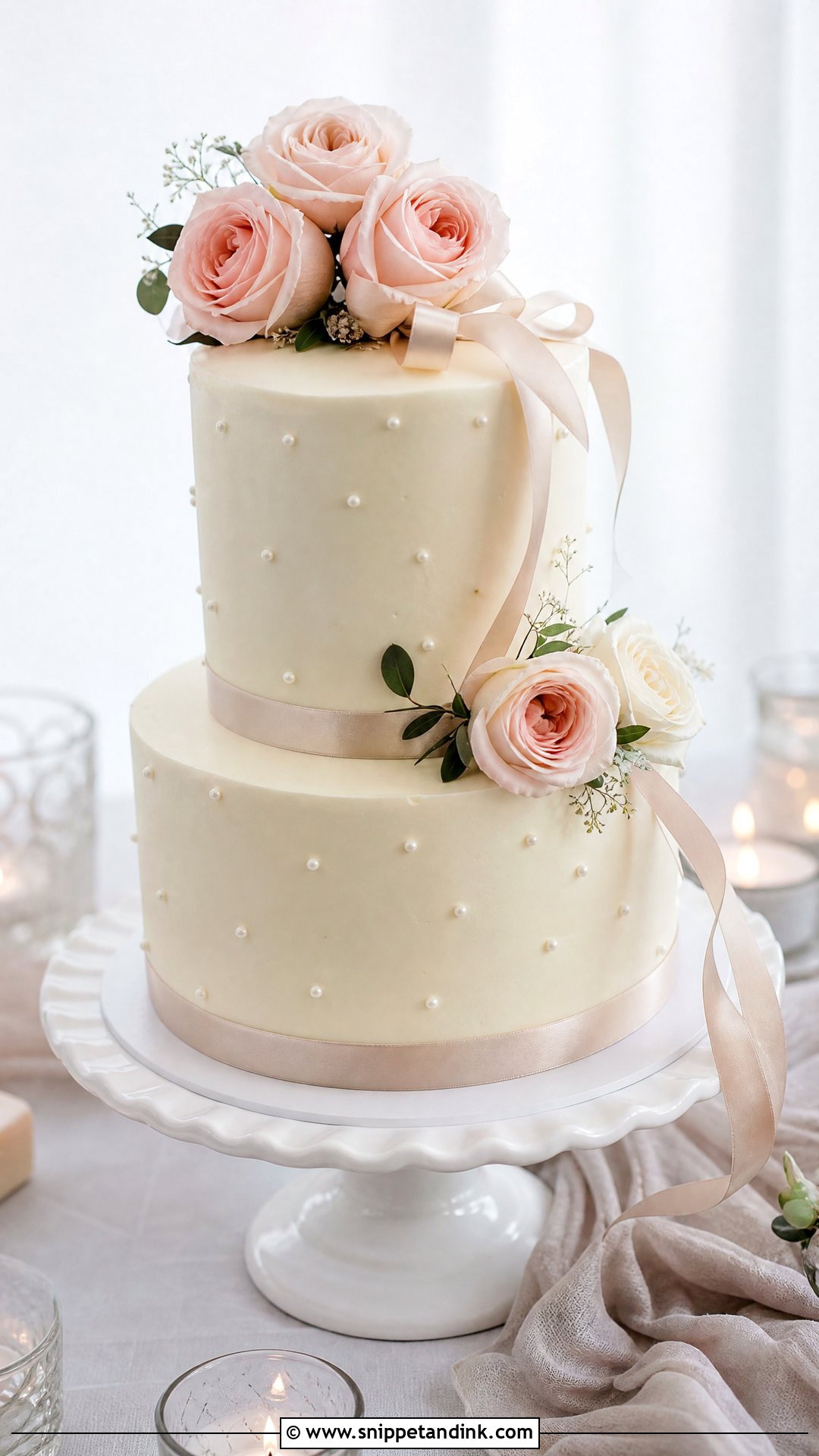
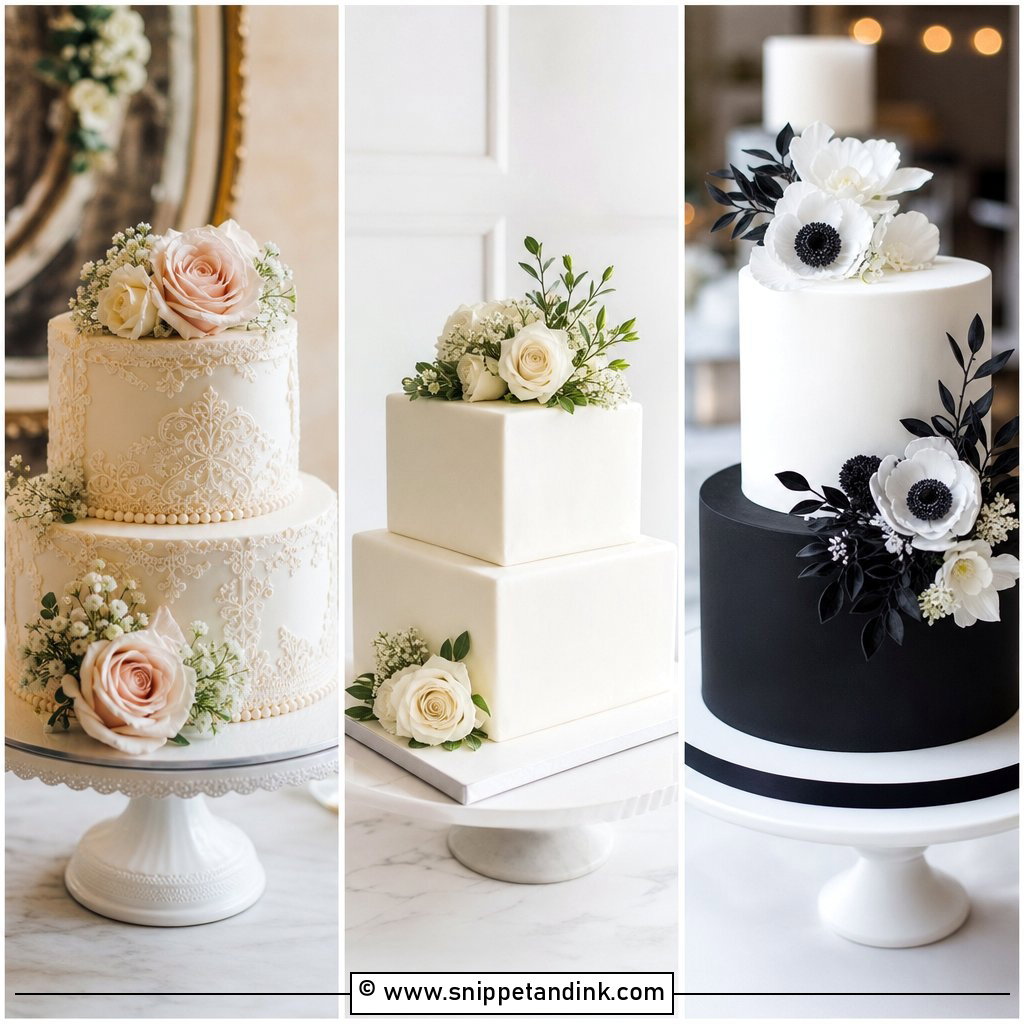
Two tiers suits micro weddings and sweetheart-table setups where a tall cake would block the view of the couple. If your guest count outgrows it, don’t add a tier; add a plain kitchen cake or cupcakes behind the scenes. One strong feature is enough at this size, perhaps pressed flowers or a satin ribbon. Pile on too many details and a short cake starts to look squat.
3. Buttercream Wedding Cake
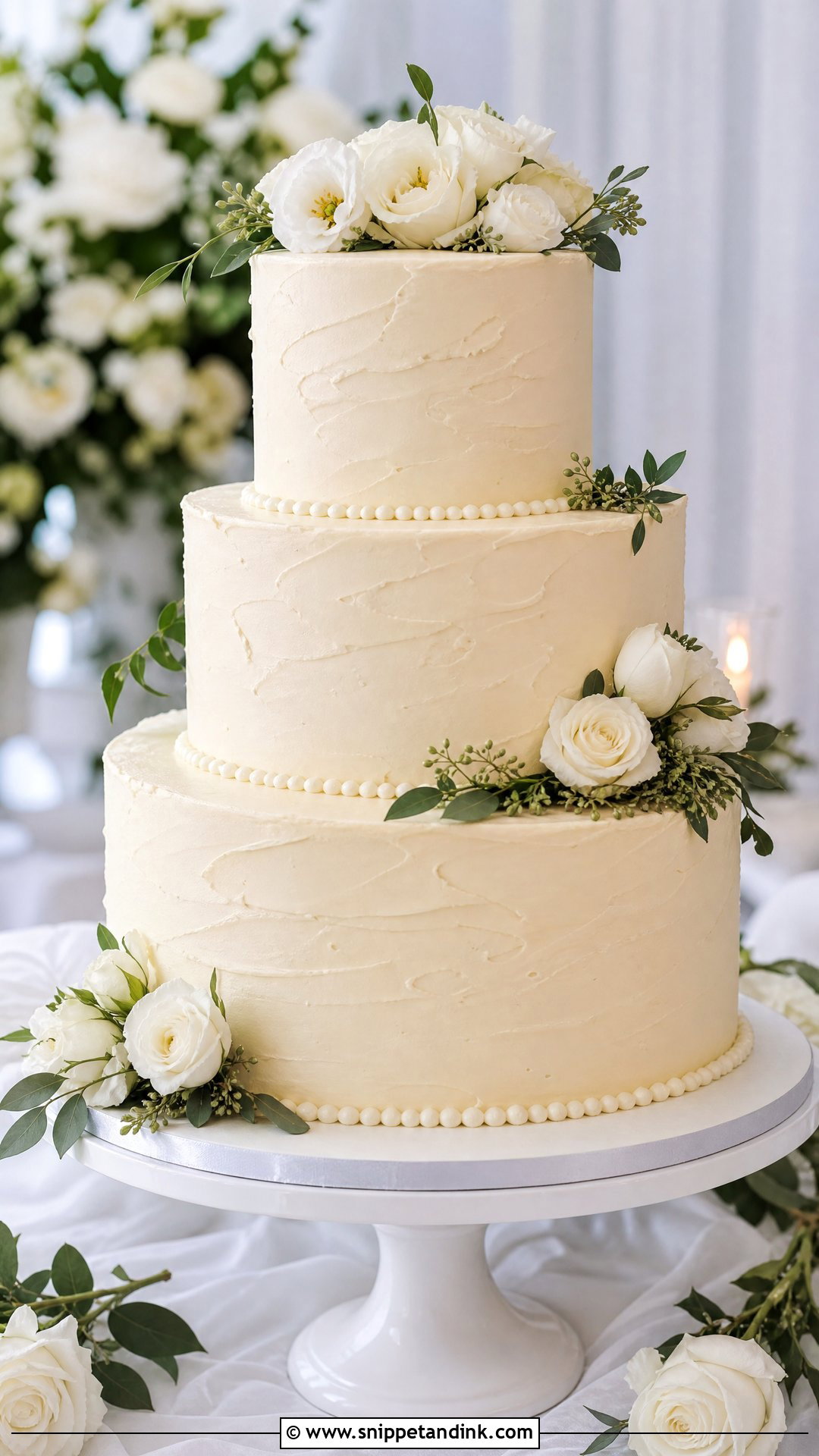
Most of the cakes I make are buttercream, and Swiss meringue is my default for weddings: silky, less sweet than the American kind, and it takes color evenly. It can be scraped smooth, combed into ridges or painted. The trade-off is temperature. It softens noticeably in a hot room, so in high summer I chill the tiers right through before delivery and ask the venue to keep the cake away from windows. Fresh flowers or a cake-comb texture finish it.
4. Fondant Wedding Cake
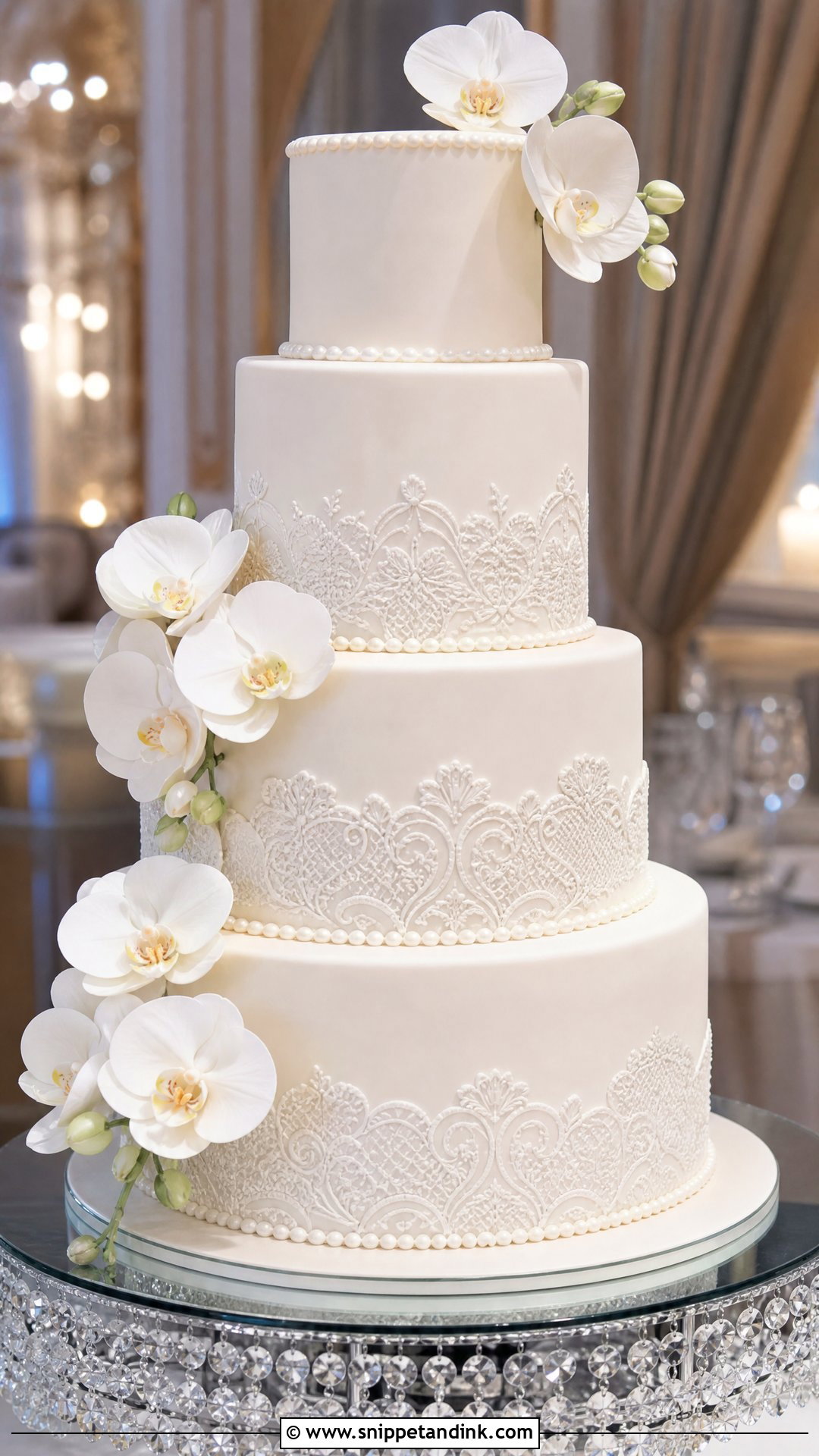
Fondant has a bad reputation for taste, and a thick layer of cheap fondant deserves it. Rolled thin over ganache, it’s barely noticeable, and it gives you crisp edges, quilting, monograms and painted surfaces that buttercream can’t hold. It’s the safer finish in heat too, because it shields the softer frosting underneath. Humidity is its weak spot: in very damp air fondant can turn tacky and lose its sheen. Ivory or champagne tones keep it classic.
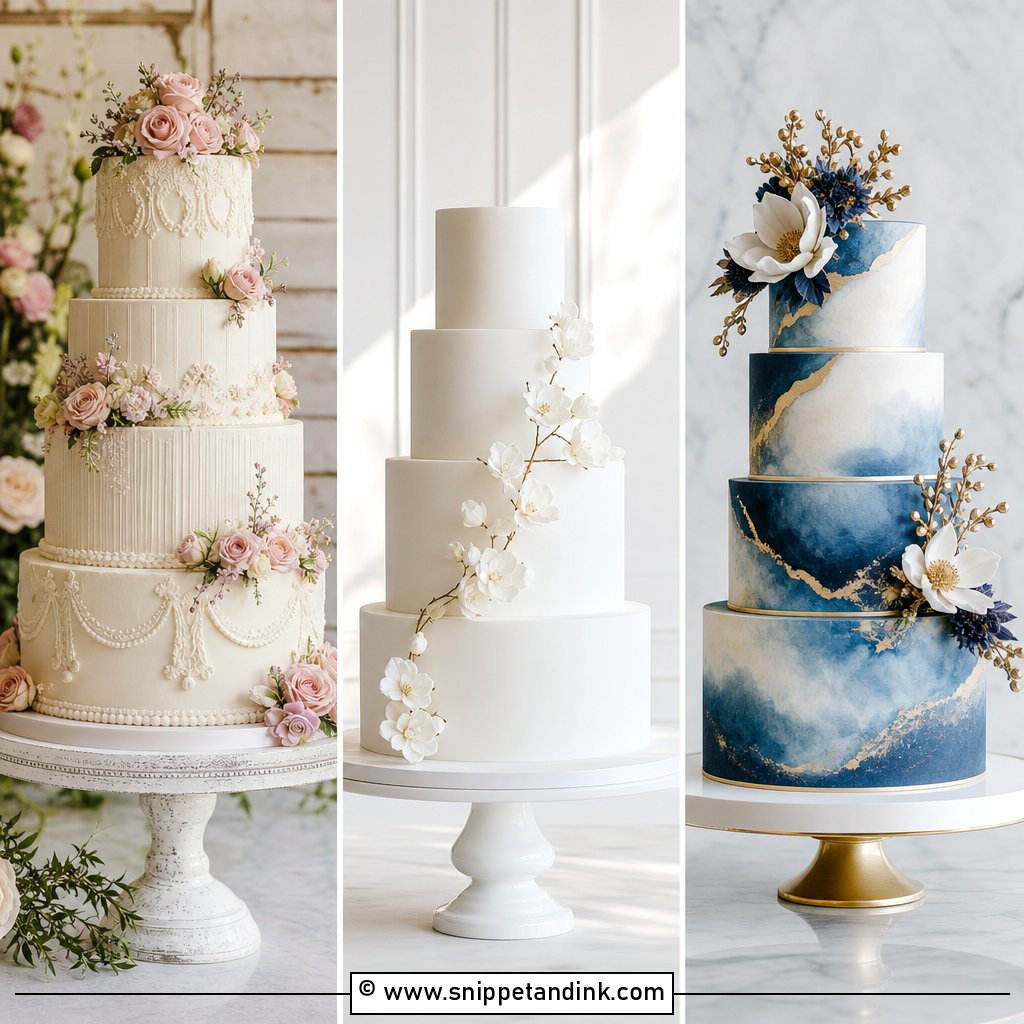
5. Vintage Wedding Cake
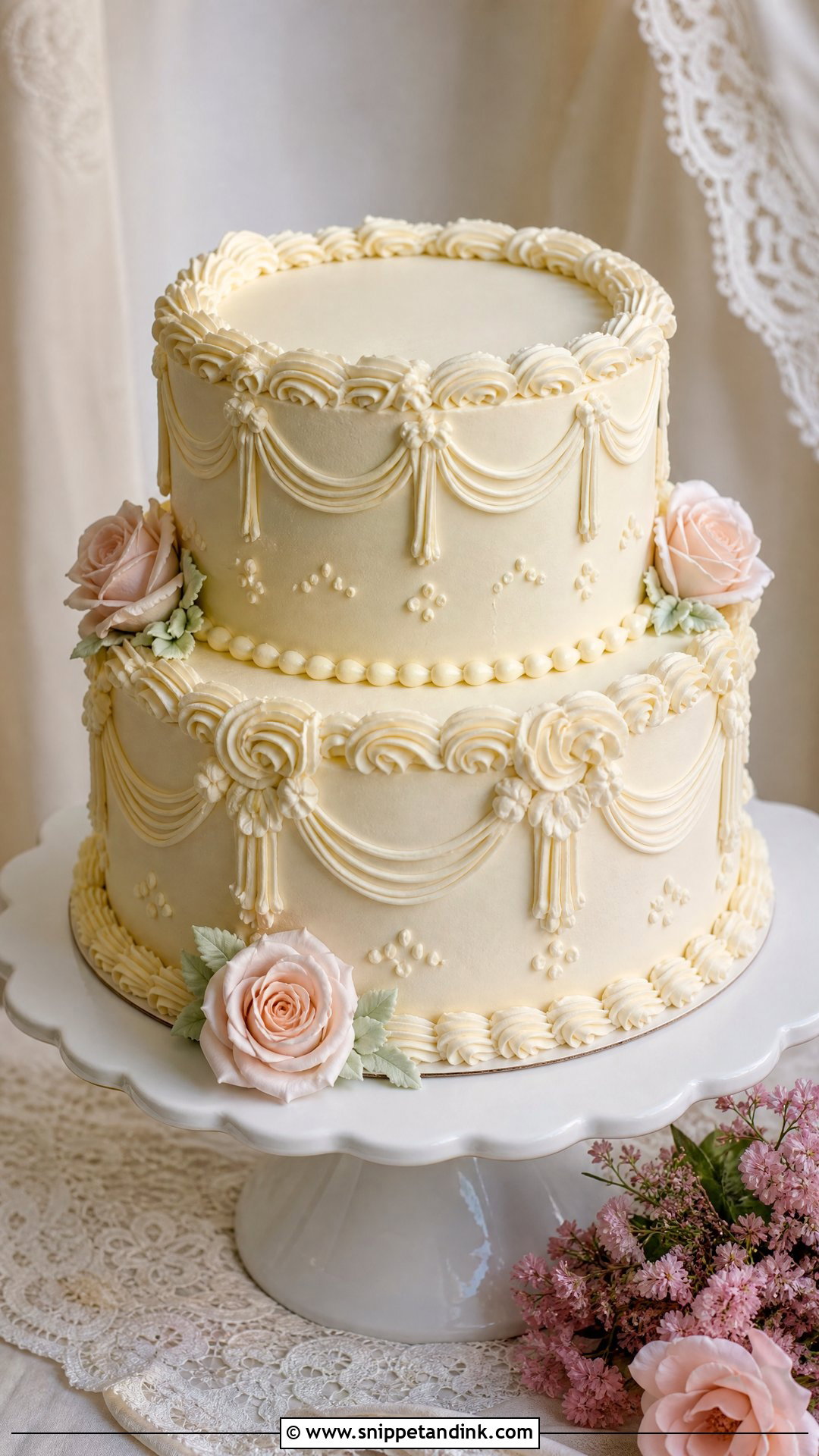
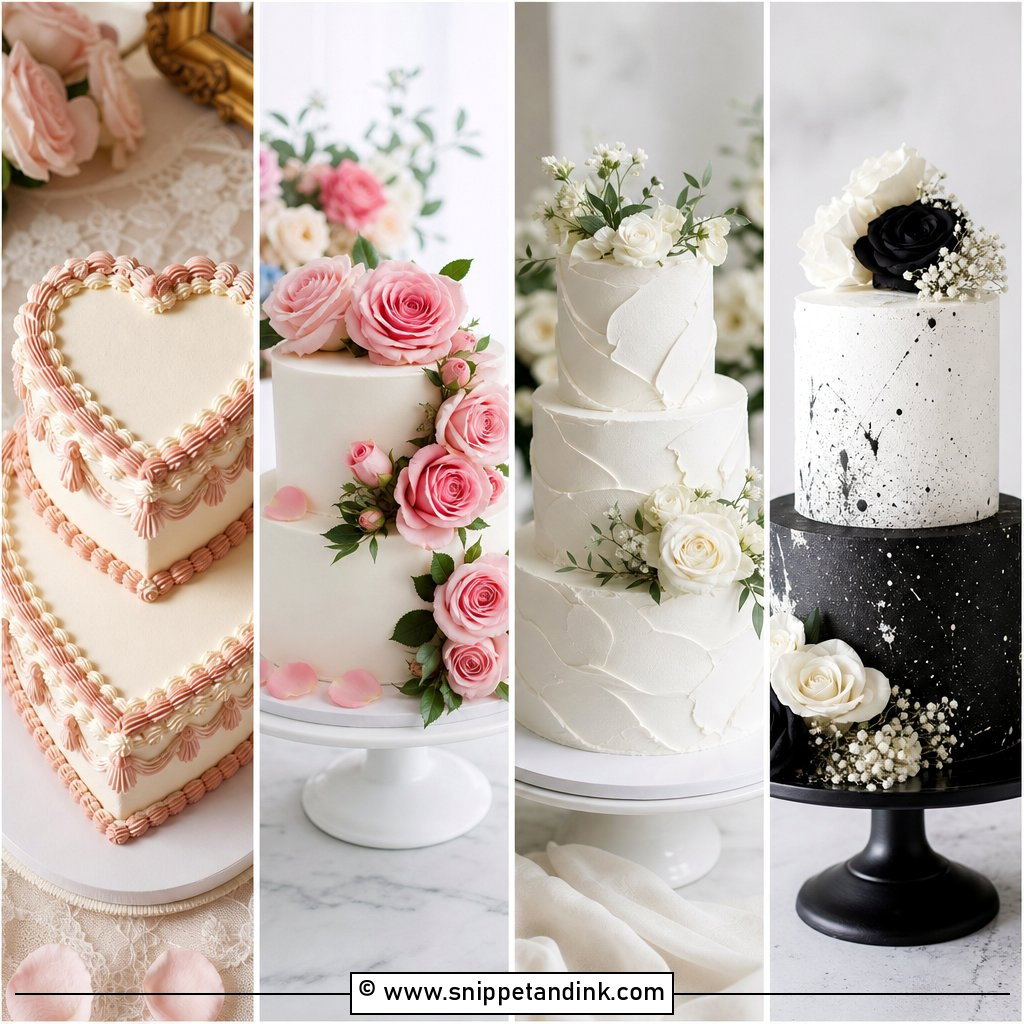
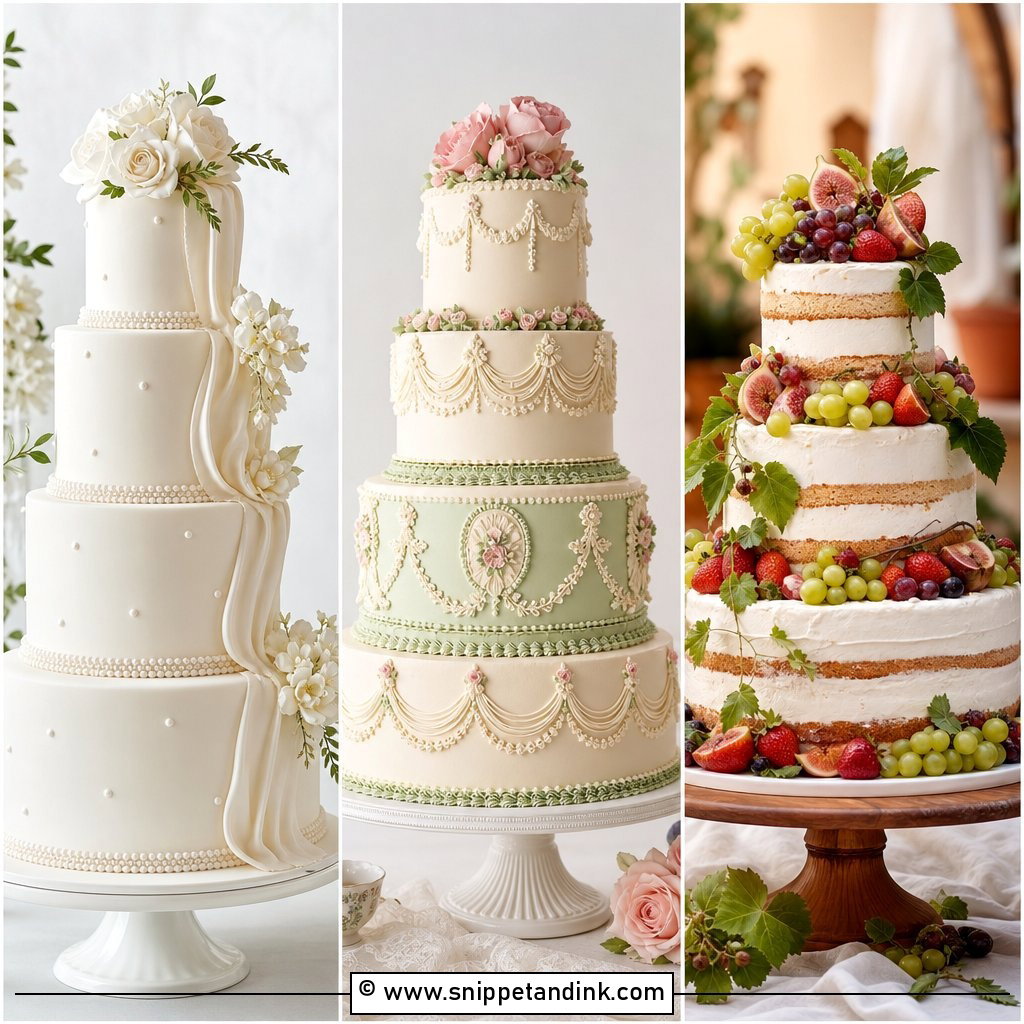
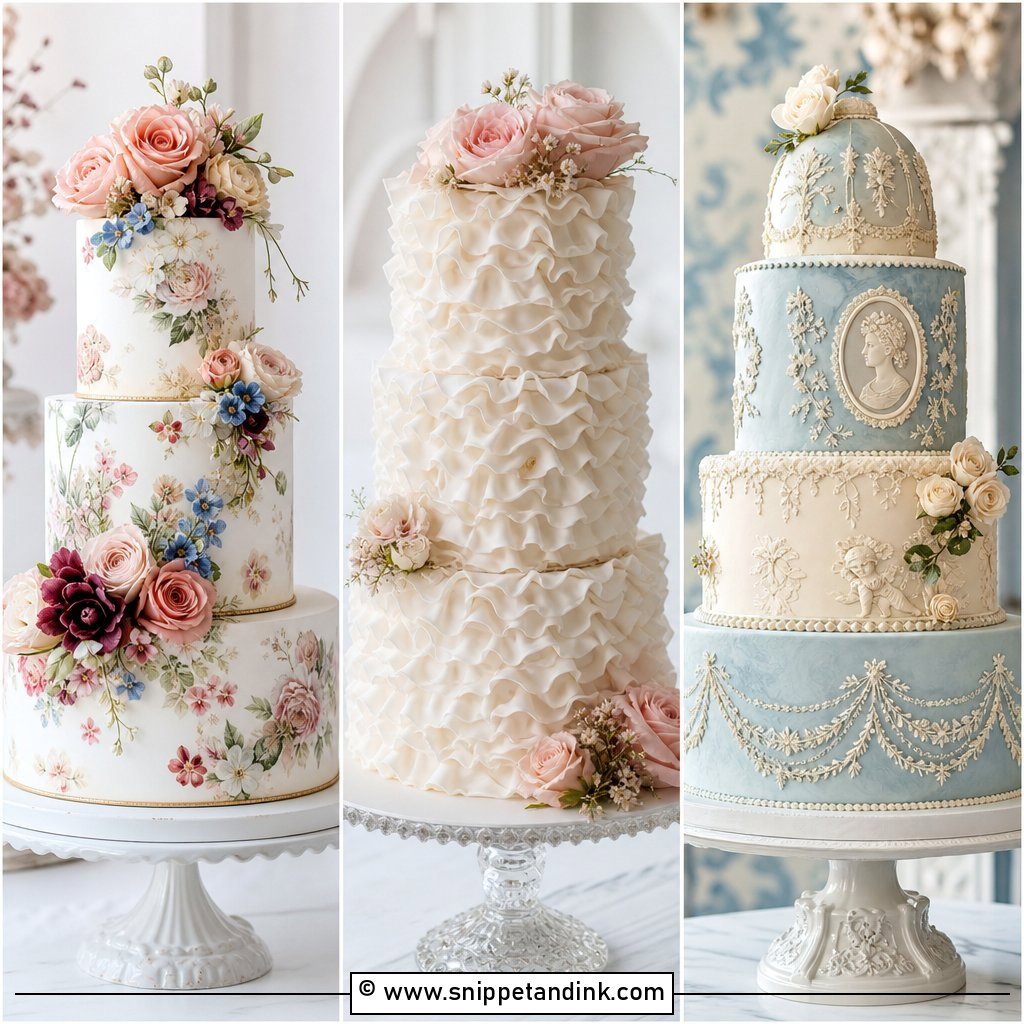
Vintage cakes borrow from old bakery windows: Lambeth overpiping, shell borders, swags, cherries, pearls. The look is controlled excess. I sketch where the heavy piping goes before I start, usually concentrated at the tier edges, and leave flatter areas between so the eye has somewhere to rest. One tier for an intimate wedding or several for a big reception both work, and a scalloped stand completes the effect.
6. Modern Wedding Cake
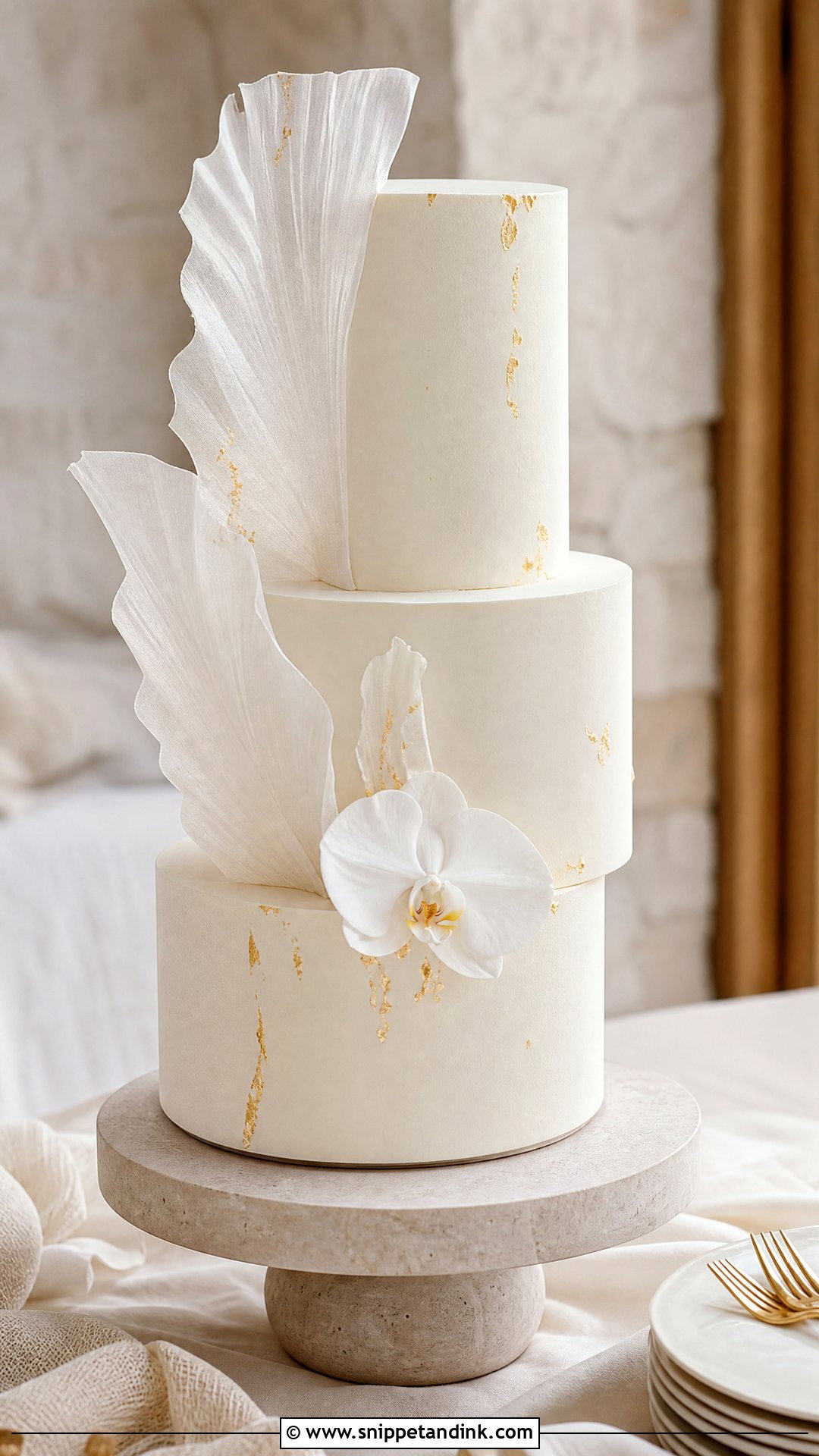
Modern cakes run on shape and contrast: sharp edges, offset tiers, sculpted buttercream, wafer paper sails, a monochrome palette. Wafer paper is a favourite of mine for this style because it’s light and holds a fold, but it reacts to moisture, curling or wilting in a damp room, so I add those pieces late. Loft venues, museums and rooftops suit it. Two-color palettes like black and white or ivory and gold keep it disciplined.
7. Floral Wedding Cake
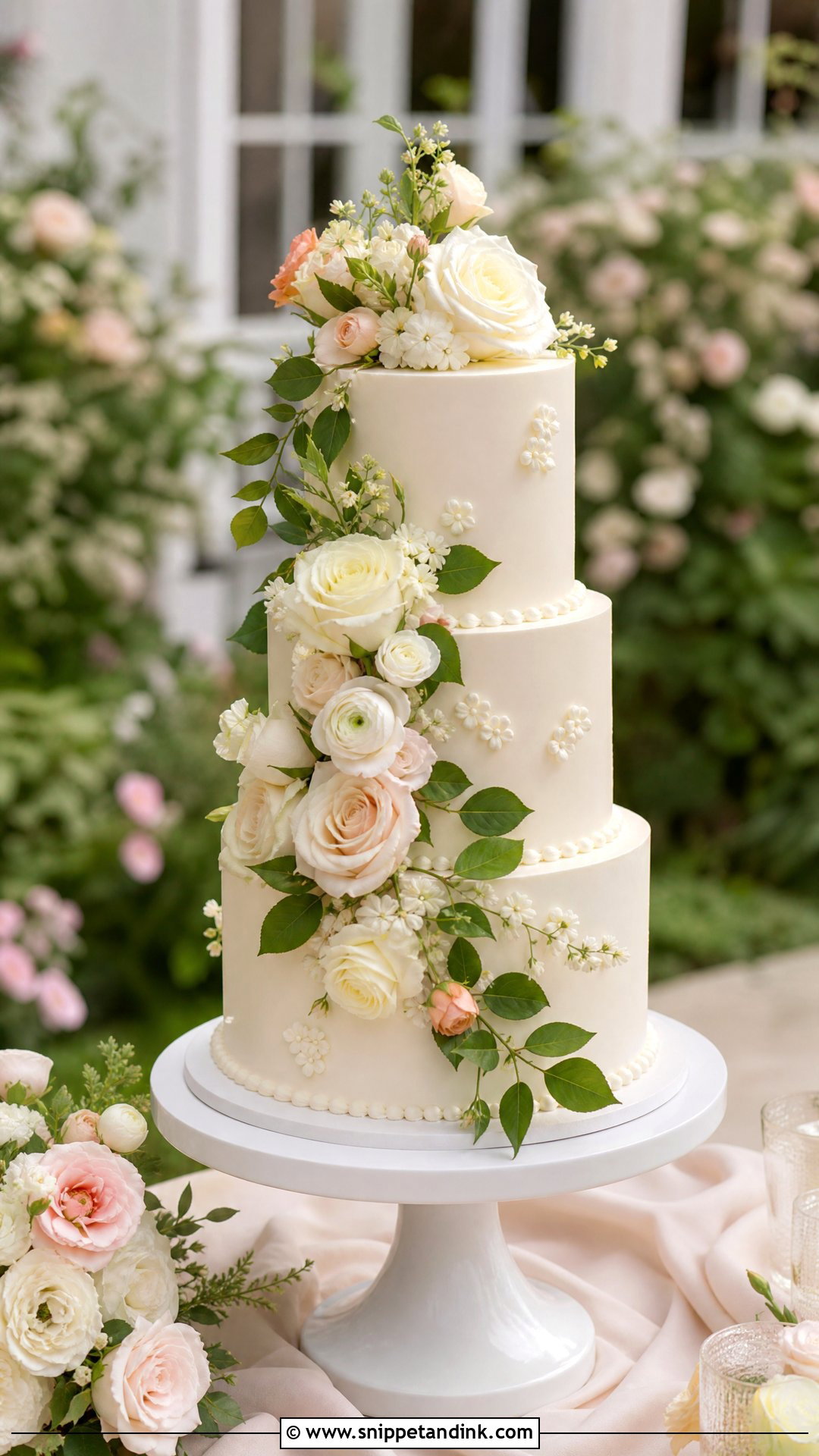
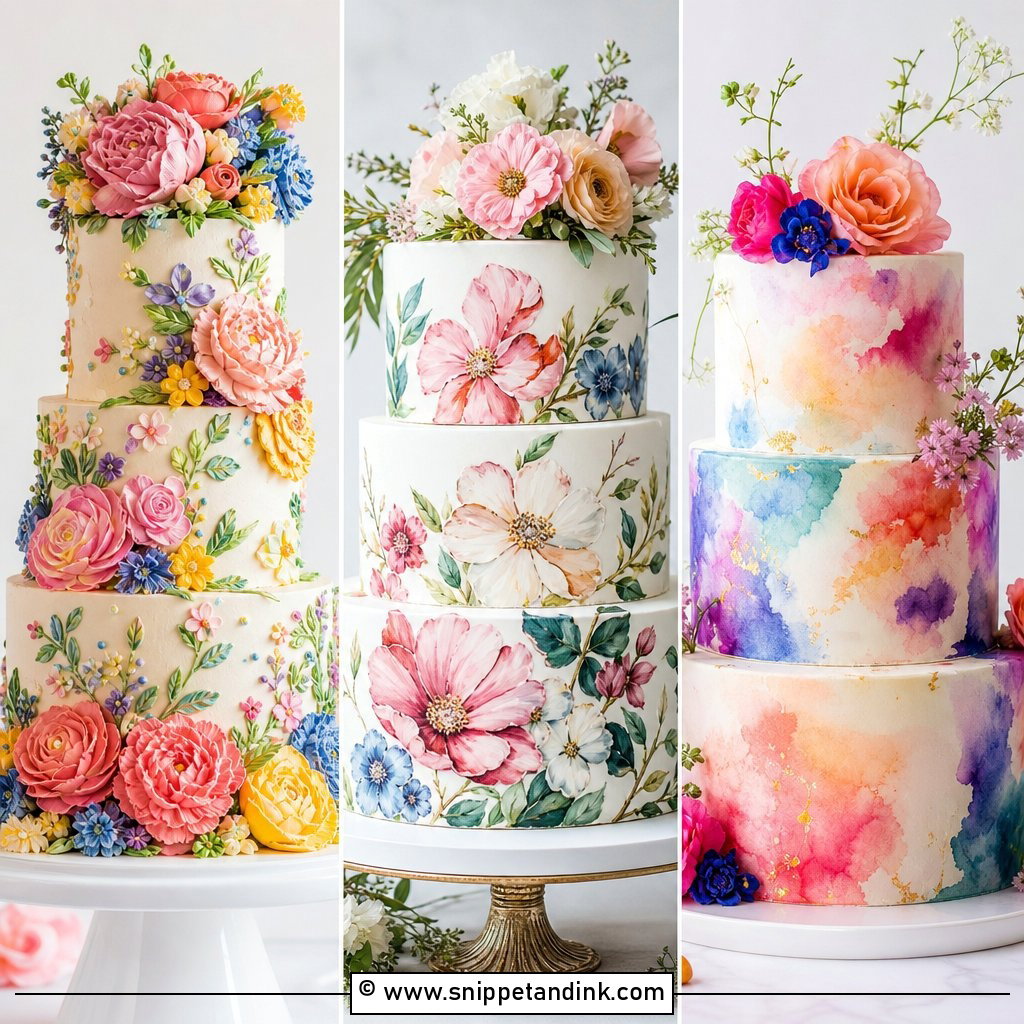
Flowers on a cake should feel like part of the room’s floral design, not an afterthought. Fresh, sugar, pressed or buttercream flowers each change the budget and the look. With fresh blooms, either the florist dresses the cake or I place what the florist supplies, and we agree who is responsible well before the day. Leave bare space between clusters. A cake buried in flowers looks like an arrangement with a cake hiding inside it.
8. Pressed Flower Wedding Cake
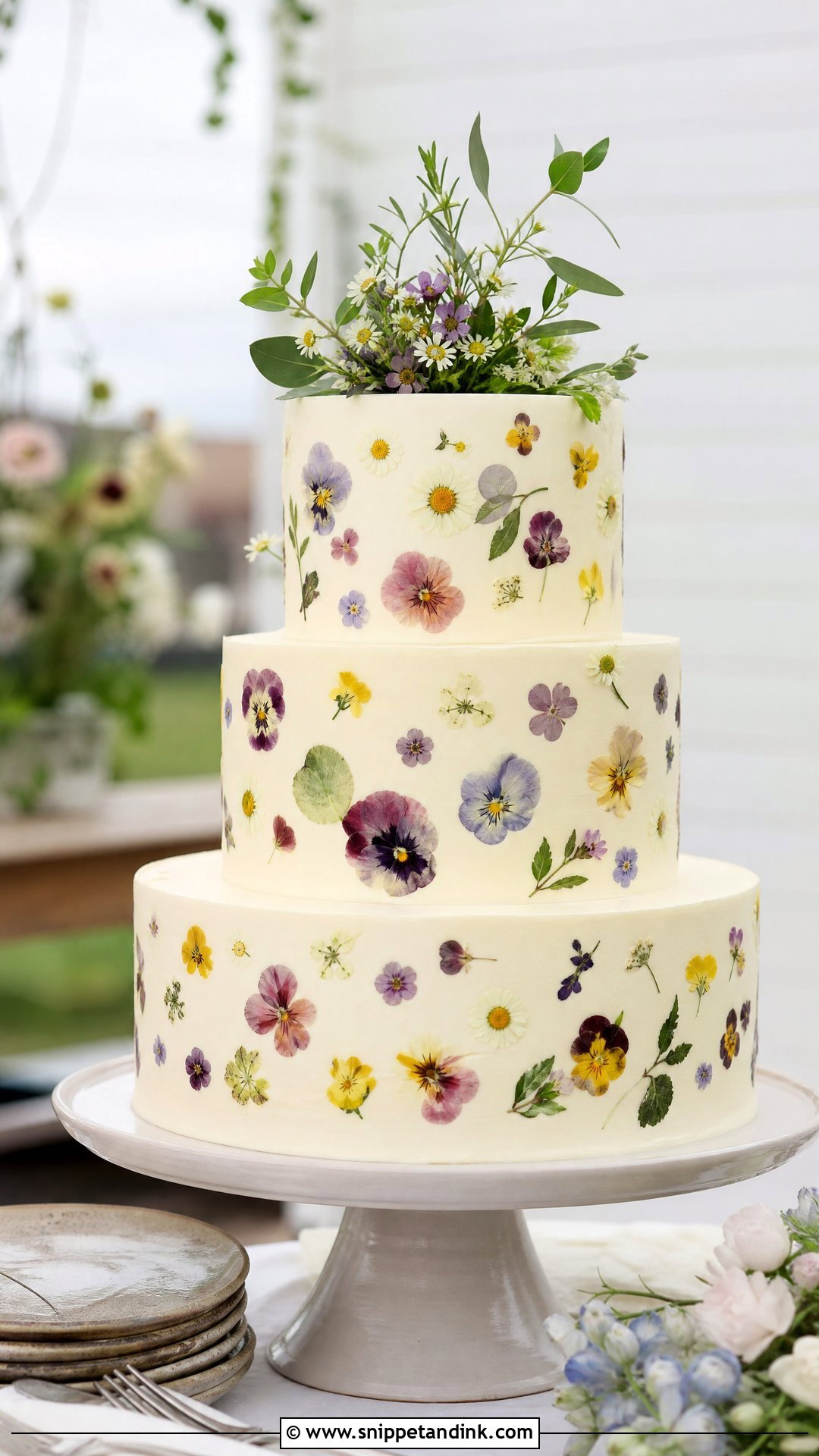
Pressed flowers lie flat against the frosting like a botanical print, adding color without bulk. They have to be edible varieties grown for eating, such as violas, pansies, cornflowers and small rose petals, never florist stock. I press them onto smooth buttercream or fondant near the end of decorating, since petals left on damp frosting for long can darken or turn translucent. Pale backgrounds, white or pale yellow, let the colors show. Spring garden weddings suit it best.
9. Sugar Flower Wedding Cake
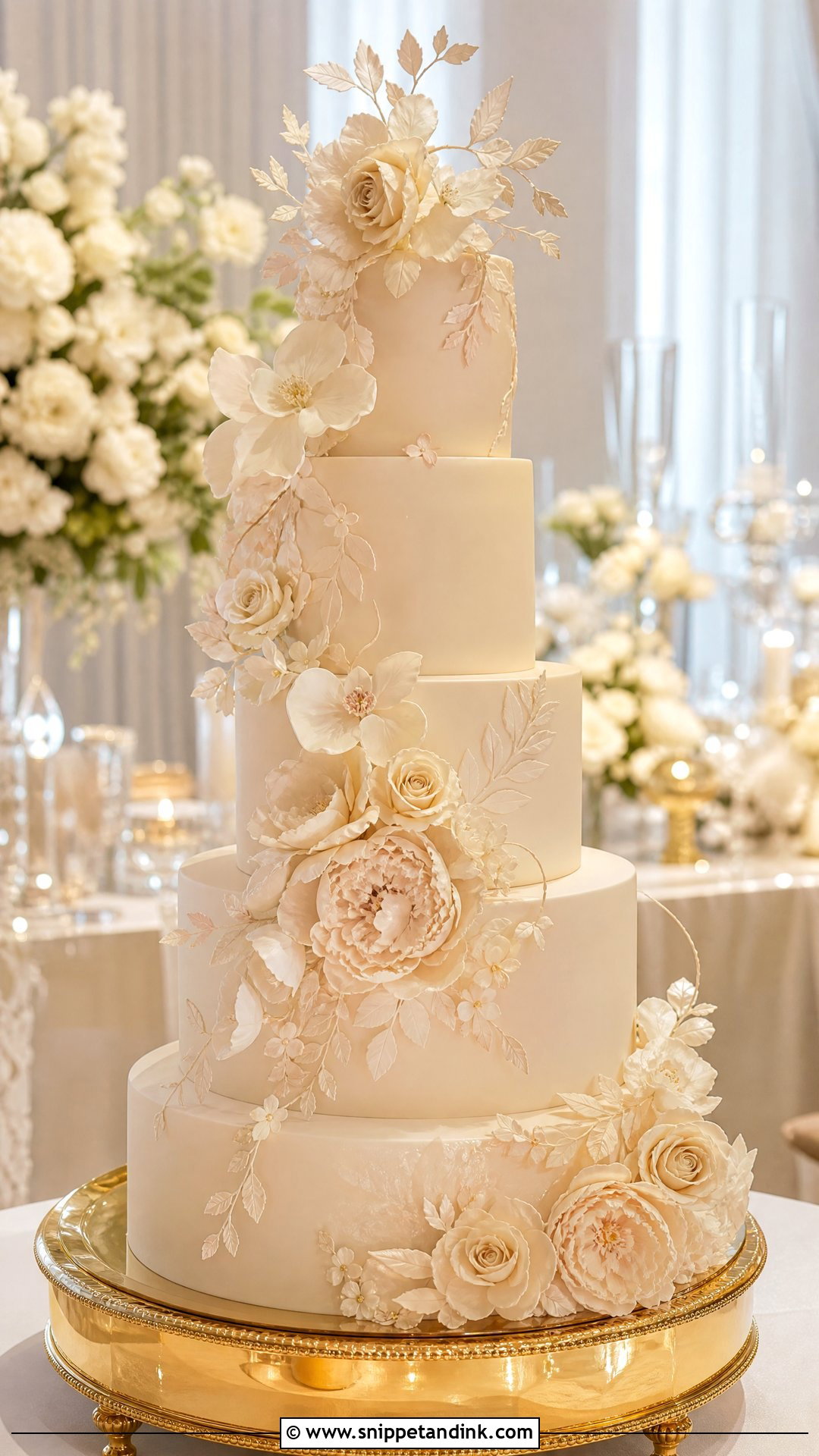
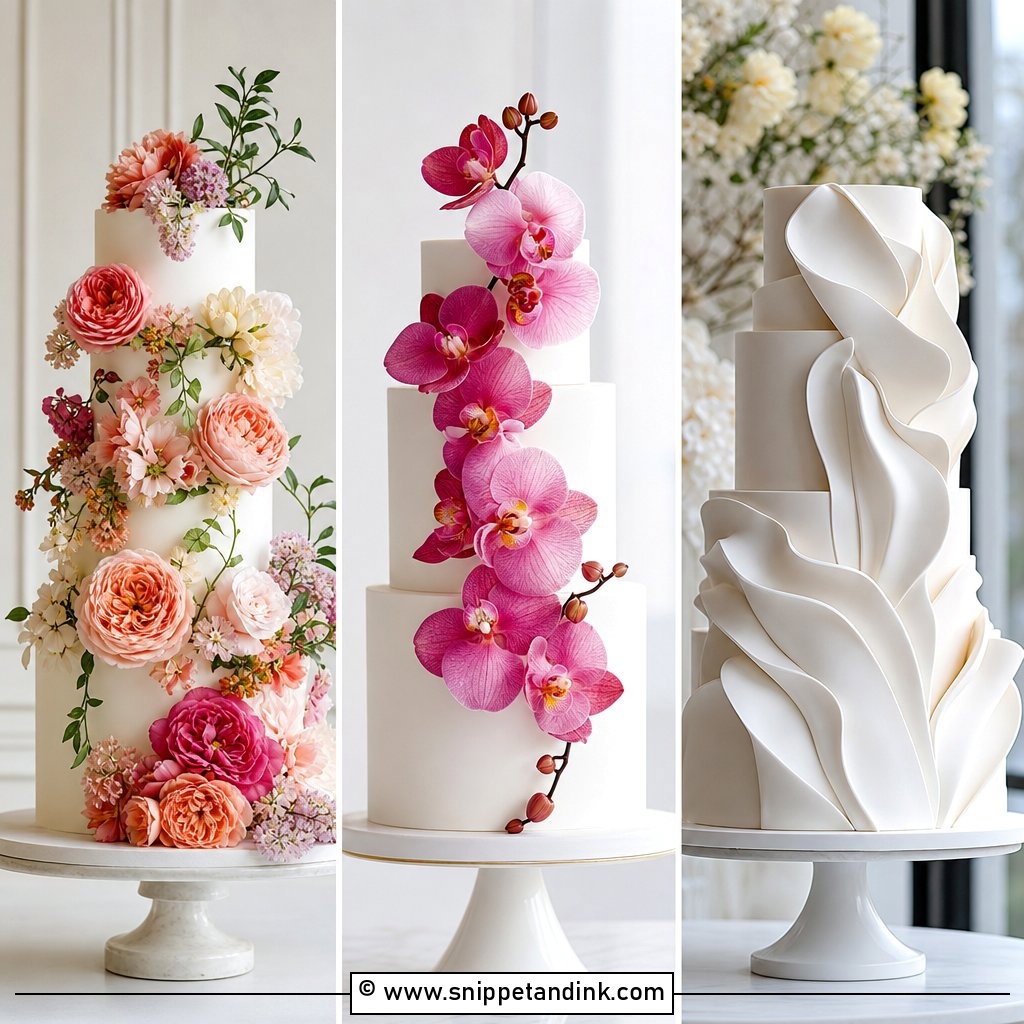
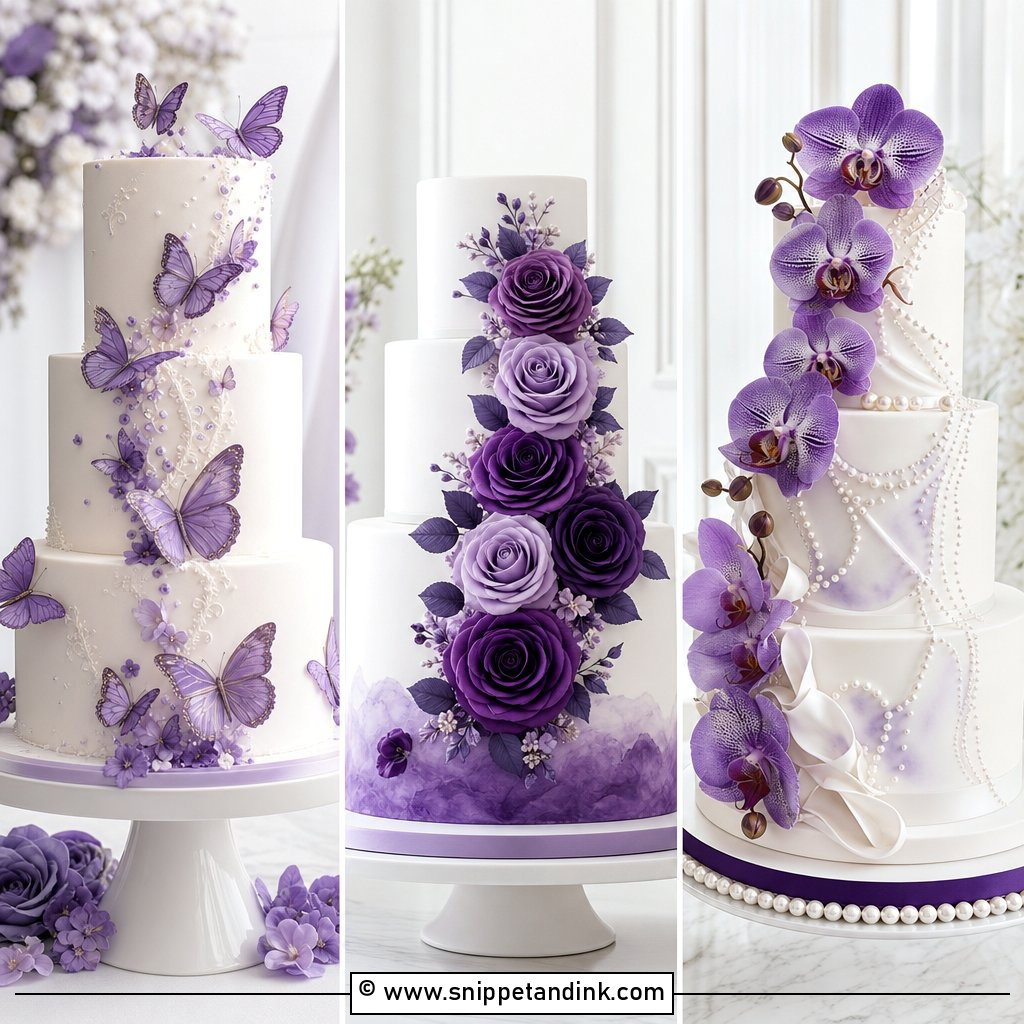
Sugar flowers are made petal by petal from gum paste, wired, dusted with color and left to dry, which is why a cascade of them costs what it does. In exchange you get blooms in exact colors that won’t wilt under lights, copied from varieties in your bouquet, peonies, orchids, even flowers that are out of season. They aren’t meant to be eaten; the wires see to that. Plenty of couples keep one afterwards. Clusters, cascades or a line along a tier edge are the usual placements.
10. Minimalist Wedding Cake
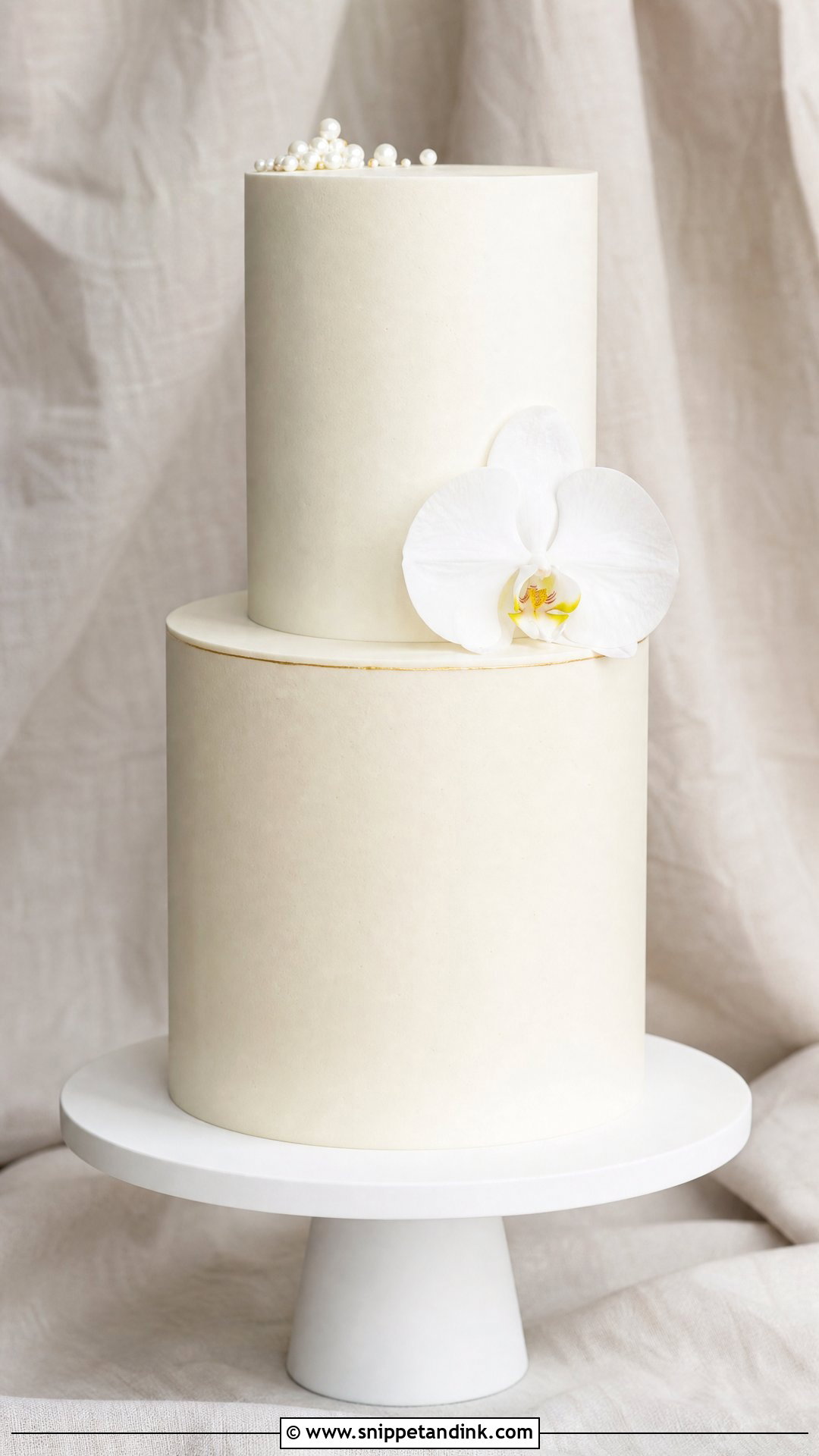
Minimal cakes are smooth buttercream, sharp fondant or plain tiers with one considered detail: a single orchid, a sliver of gold leaf, a thin ribbon, white-on-white piping. With so little decoration, flavor takes the spotlight, so this is where I nudge couples toward something with character, like lemon elderflower or vanilla with raspberry. Keep the display as spare as the cake. A clean stand and a linen backdrop are enough.
11. Rustic Wedding Cake
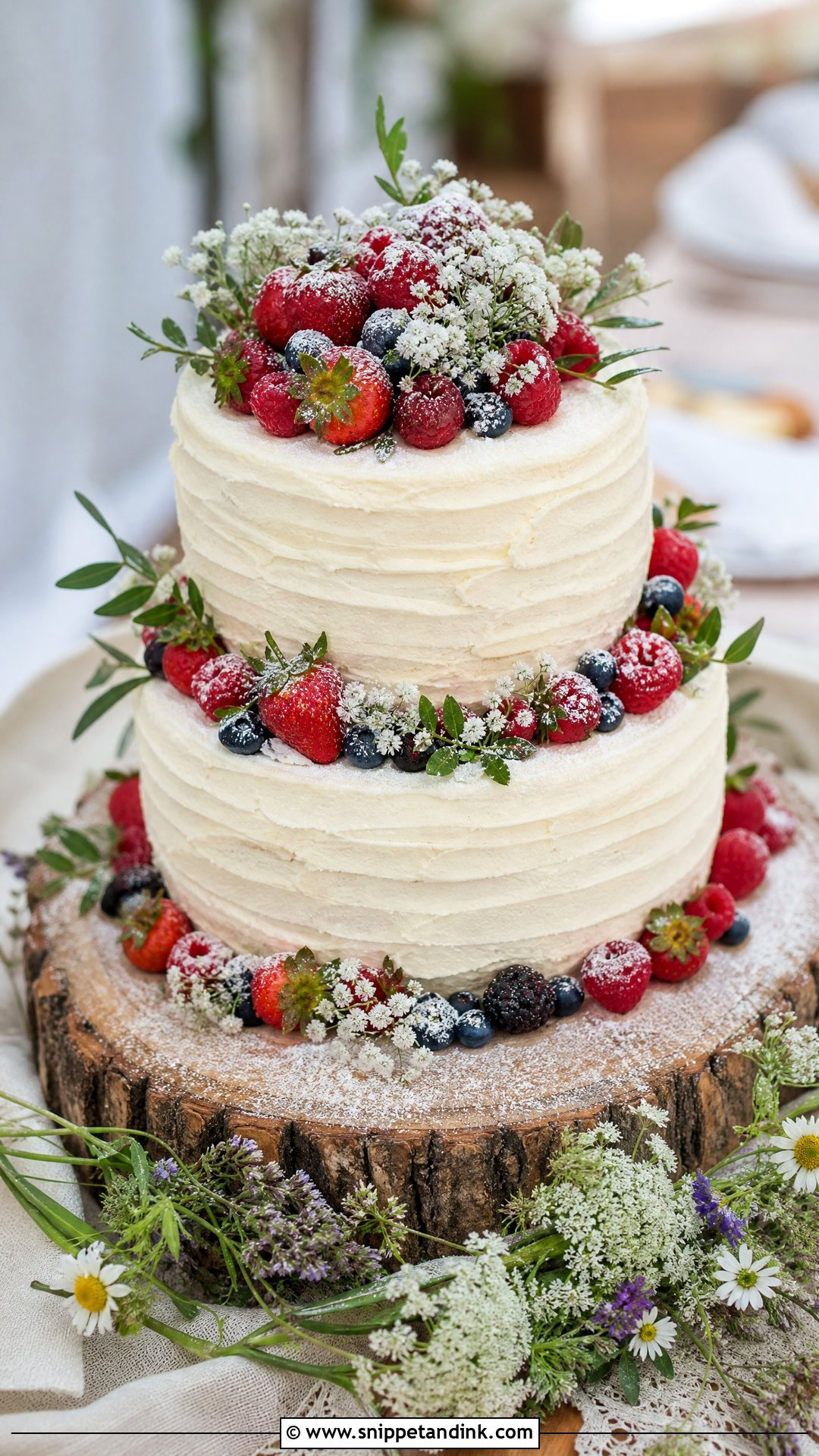
Rustic cakes forgive imperfection, which is half their charm. Textured buttercream or semi-naked sides, figs, berries, herbs and garden flowers suit barns and backyard receptions. What I watch is the fruit: berries placed in the morning can look tired by evening, so I hold some back and refresh the top shortly before guests arrive. Carrot, spice and chocolate flavors suit the cooler-weather version.
12. Semi Naked Wedding Cake
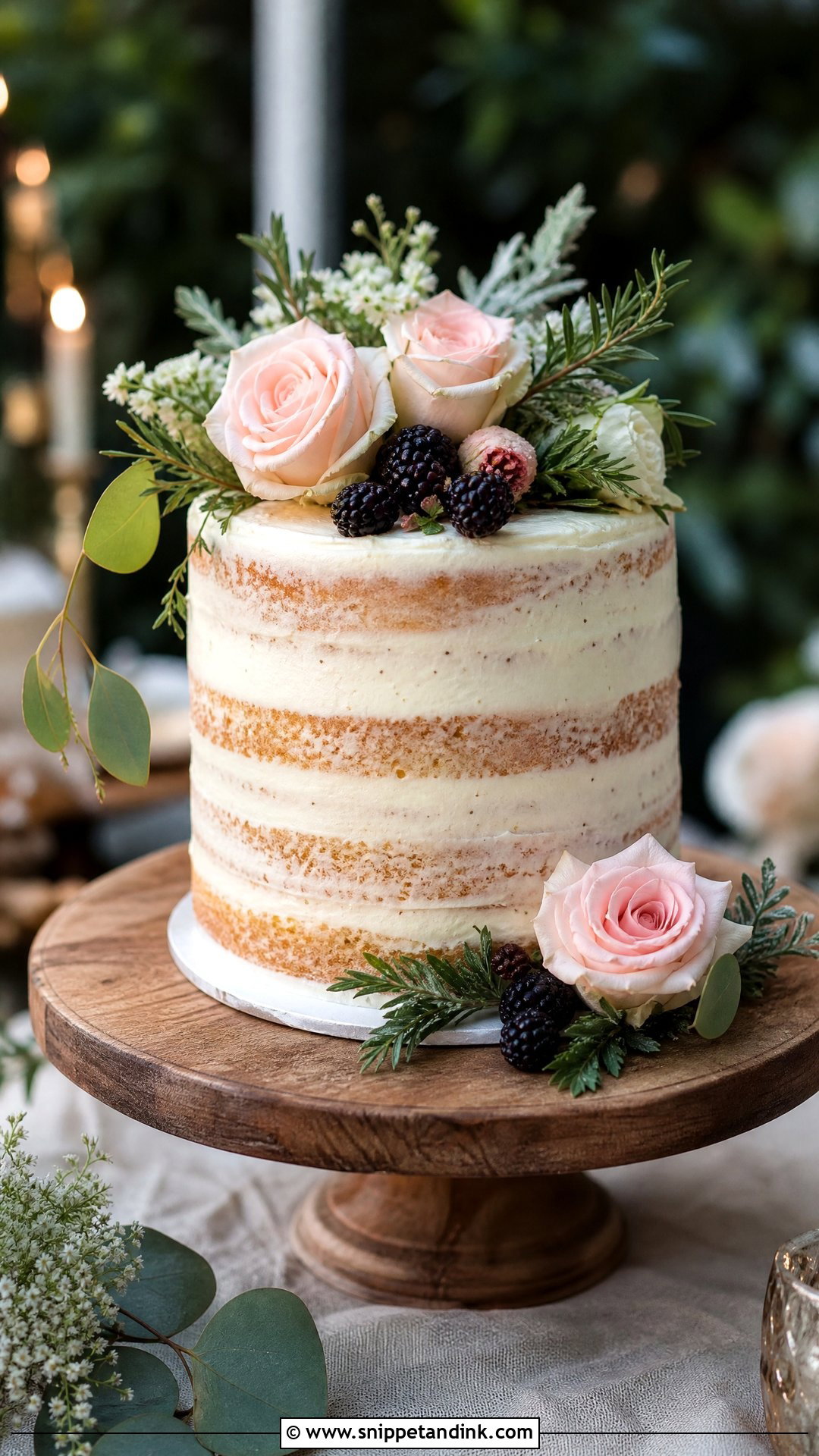
A thin veil of frosting lets the layers show through, so the filling becomes part of the design. Red velvet, lemon and chocolate layers all give good contrast, and the style sits naturally at garden and boho receptions. That thin coat seals less than a full one, so these cakes should be assembled close to the day and kept cool. One left in a warm marquee for hours eats noticeably drier than one cut soon after it’s set out.
13. Naked Wedding Cake
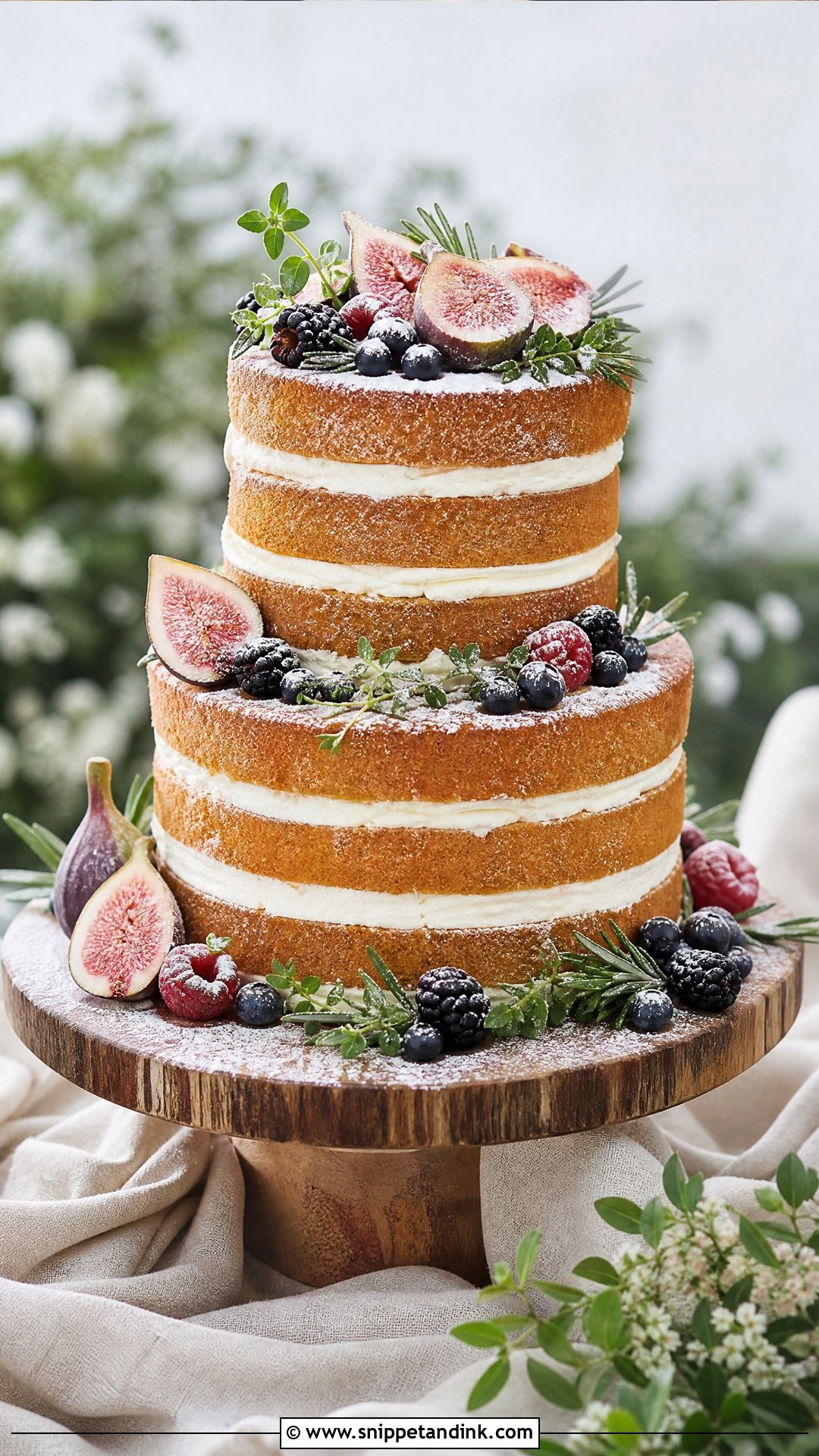
Naked cakes have nowhere to hide uneven baking. Every layer needs the same height and a level stack, since there’s no thick frosting to correct a lean, and that’s the first thing I’d check in a baker’s portfolio for this style. Moist flavors like carrot, almond raspberry or chocolate do best. Berries, figs and a little powdered sugar finish it; dust the sugar at the last minute, because it dissolves into moist sponge surprisingly fast.
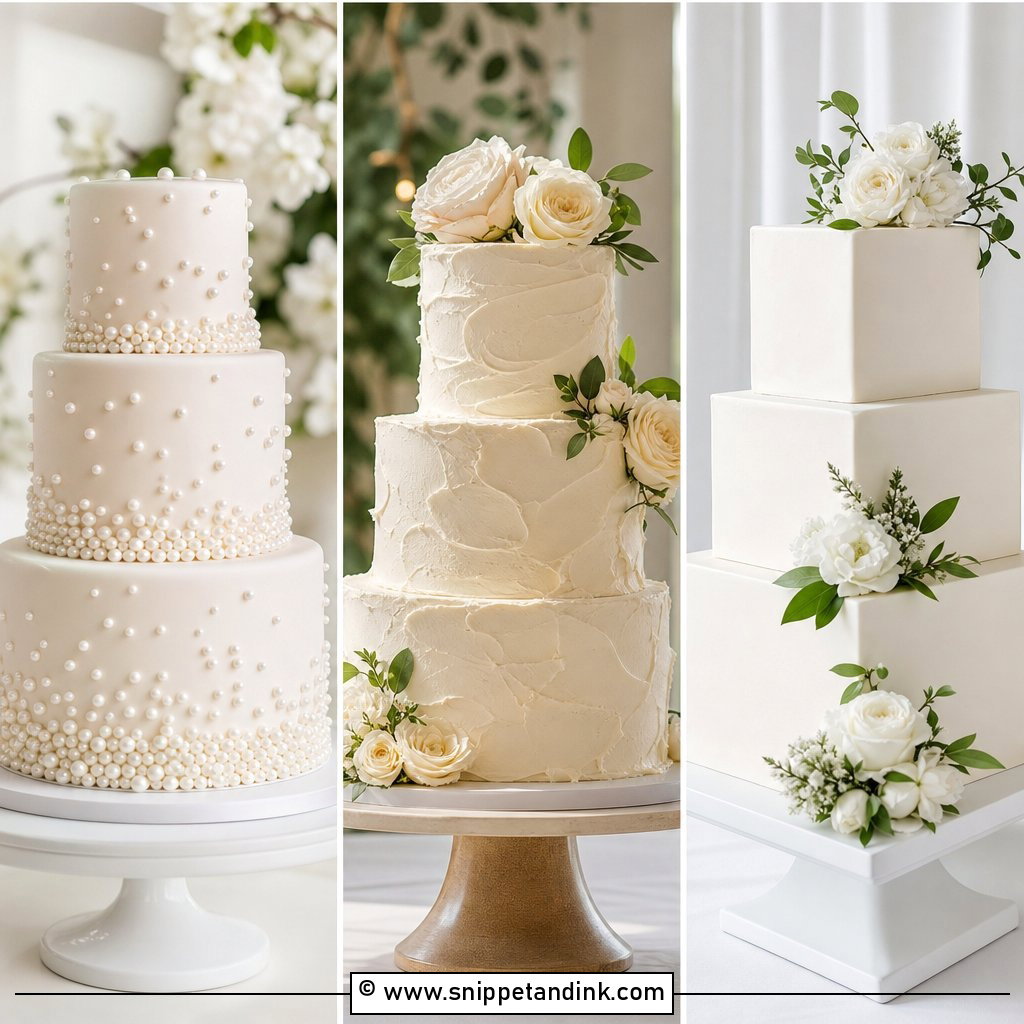
14. White Wedding Cake
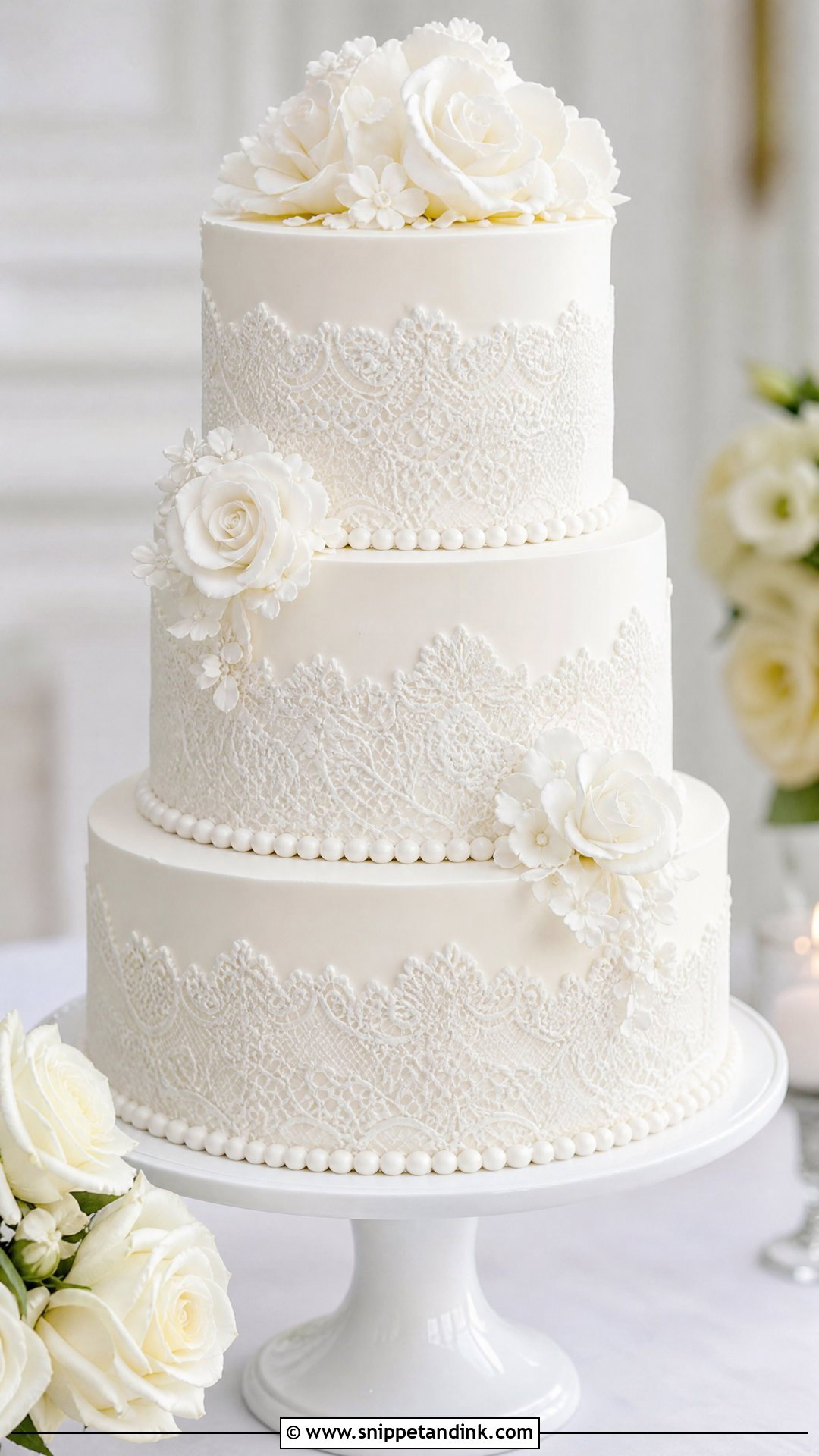
White is the most flexible palette there is, which means the details carry it: pearl piping, a satin ribbon, white sugar flowers, lace. One thing I’ve learned to watch: stark white frosting can look grey or bluish beside an ivory dress, so I often warm the shade slightly to match the gown. Flavor can go well beyond vanilla. Almond, coconut, white chocolate raspberry and champagne-style sponge all sit happily under white.
15. Black And White Wedding Cake
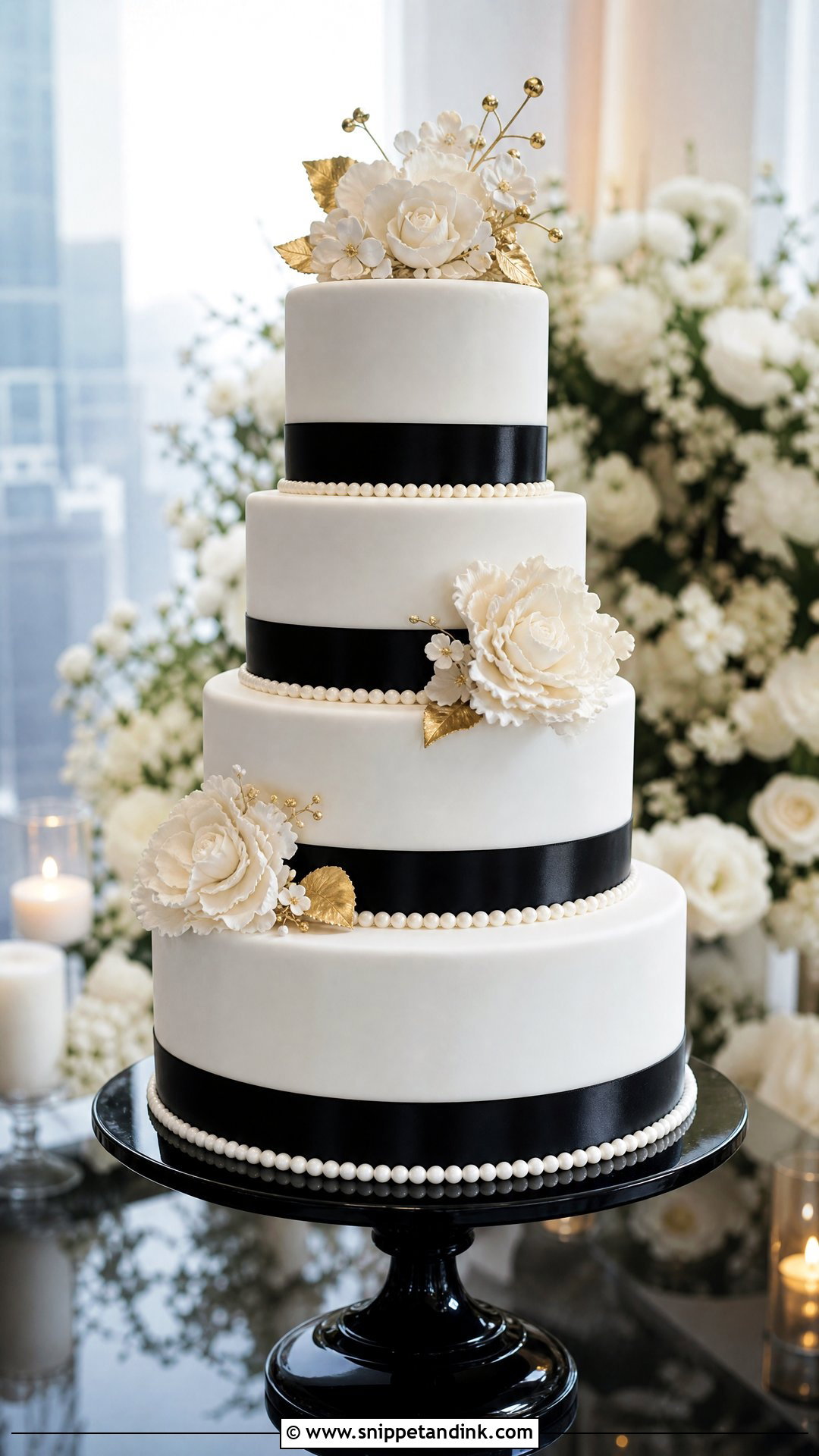
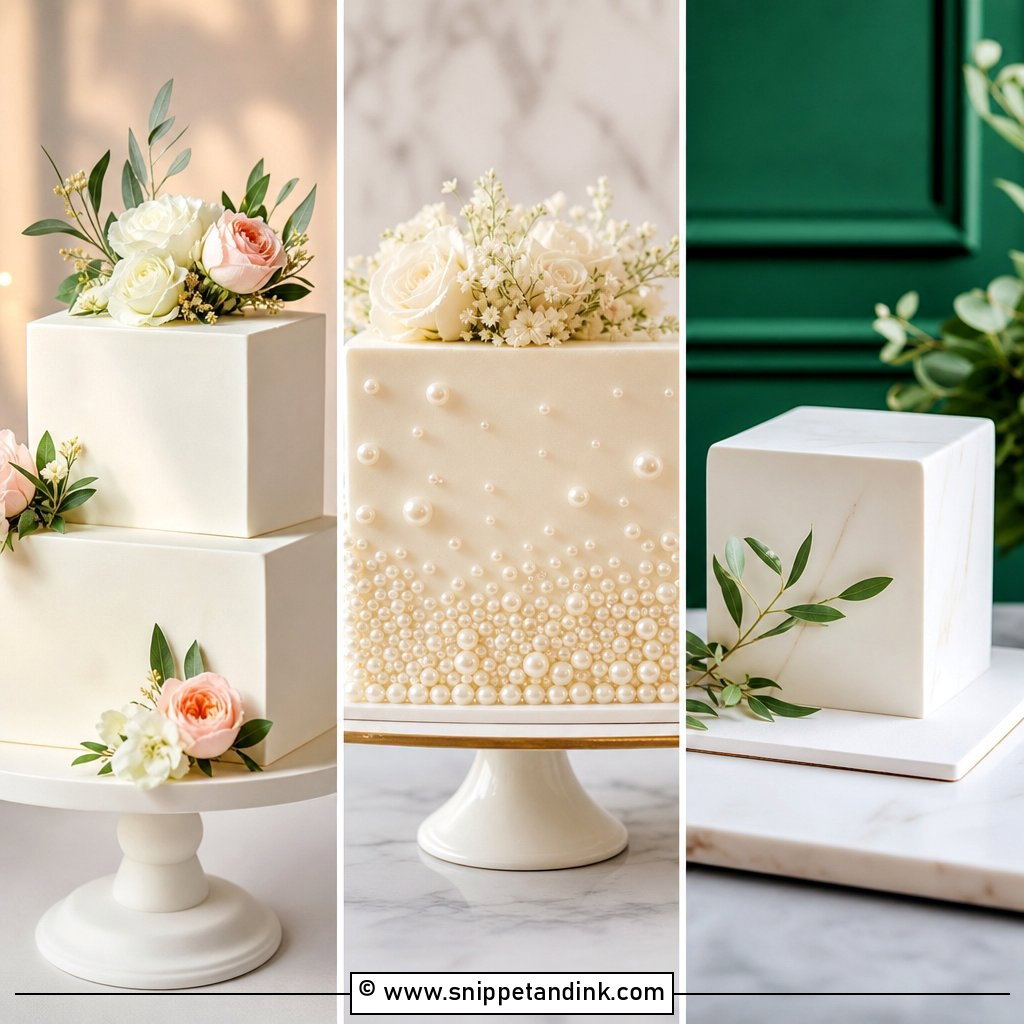
Black and white gives instant contrast with very little decoration: white tiers with black ribbon, painted line art, or one dramatic black base tier. I make the black details as separate pieces where I can, painted fondant or wafer paper, because a dark color pressed against white frosting can bleed into it over a warm evening. Hotel ballrooms and black-tie dinners suit it. Espresso or cookies and cream inside keep the monochrome idea going.
16. Blue Wedding Cake
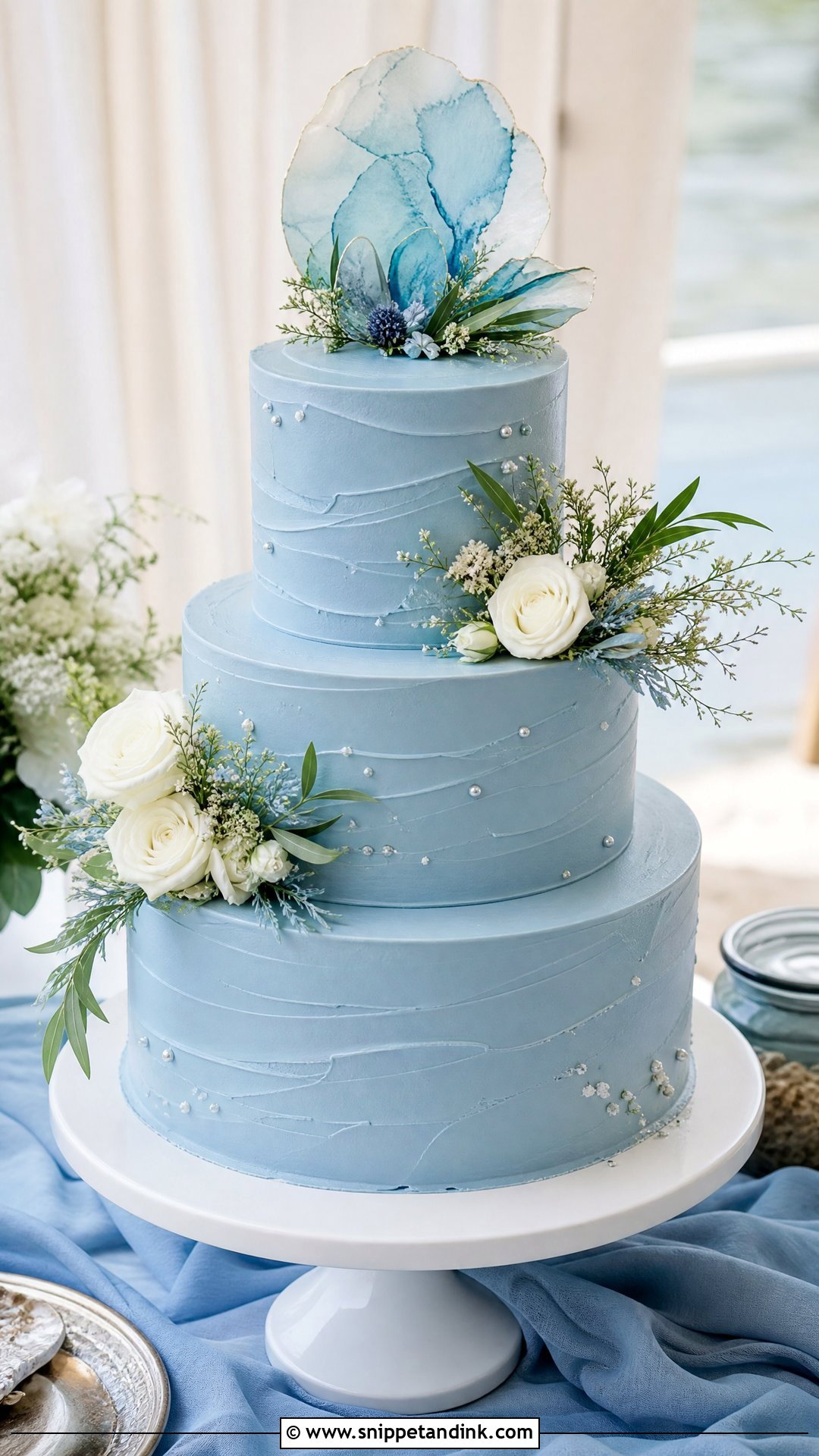
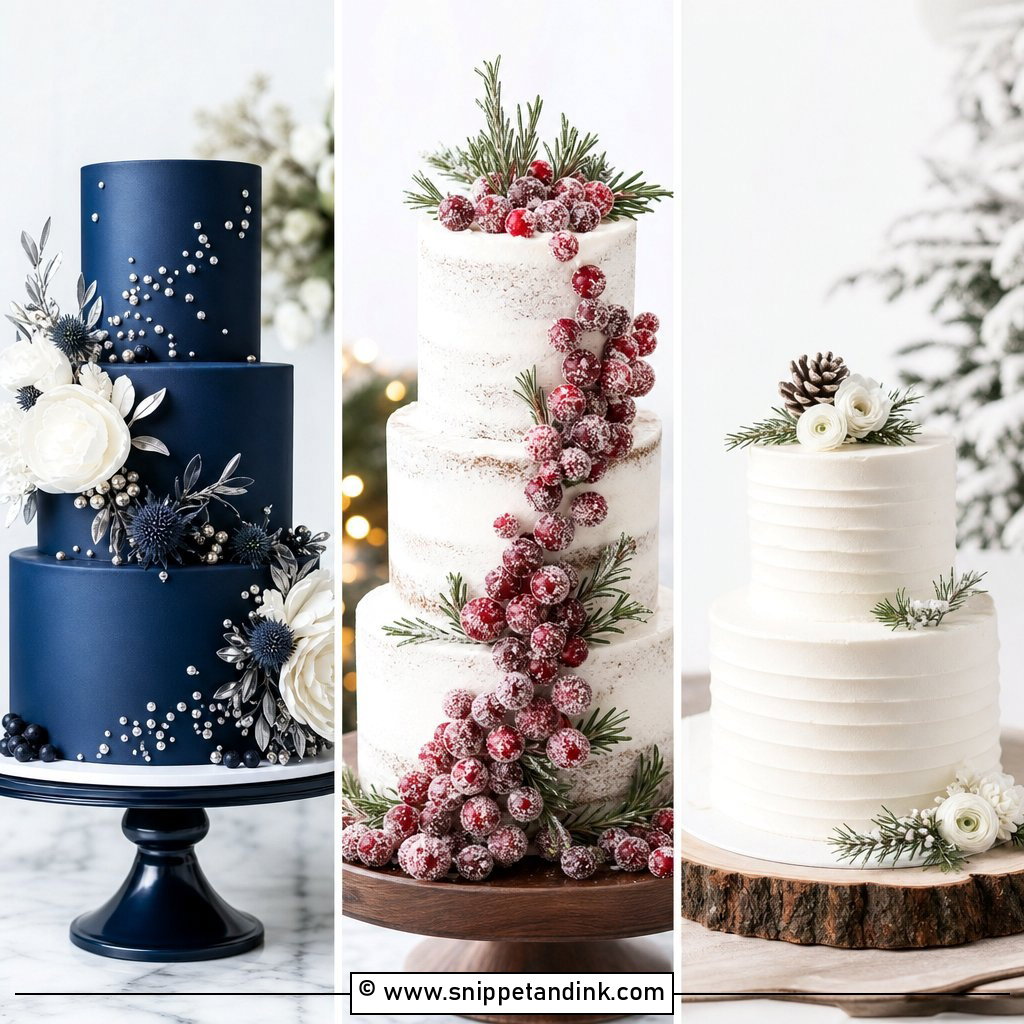
Dusty blue, powder blue and pale slate are the shades I’m asked for most for garden and coastal weddings. Blue is one of the harder colors to hold in buttercream, because the yellow of the butter pulls it toward green; I start from a whiter base or add a touch of violet to correct it. Silver accents, pearls and white flowers suit it, and navy is there for a formal evening.
17. Pink Wedding Cake
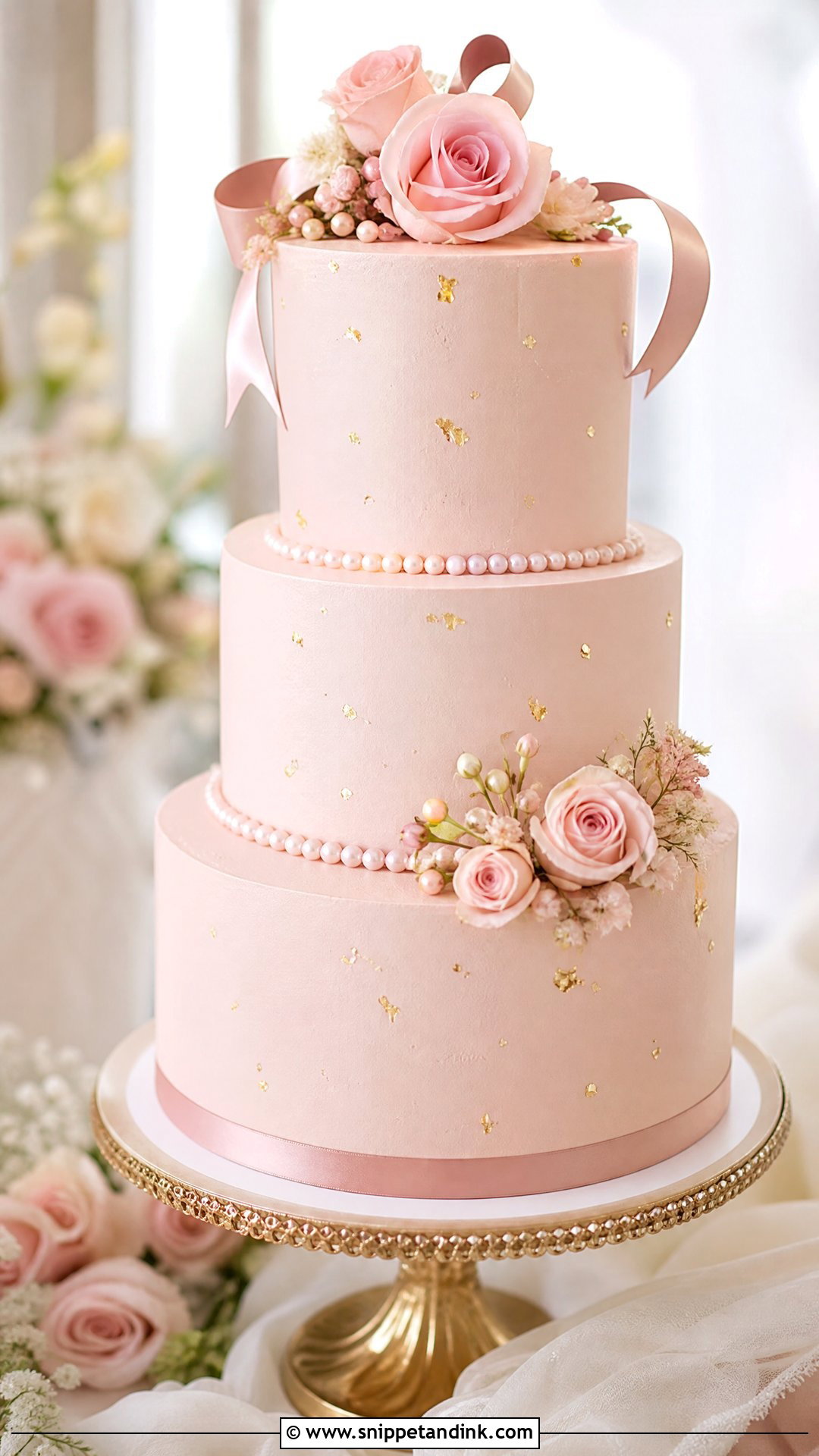
A pink wedding cake stays grown-up when the shade is dusty rather than candy: blush, mauve, a peachy pink. One pink tier among white ones looks modern, while pink florals and pearls all over lean romantic. Natural colorings from beetroot or berry powders give softer shades but can fade in strong light, so an outdoor cake needs shade. Raspberry suits the color, and so does rose, though rose needs a very light hand or it tastes like soap.
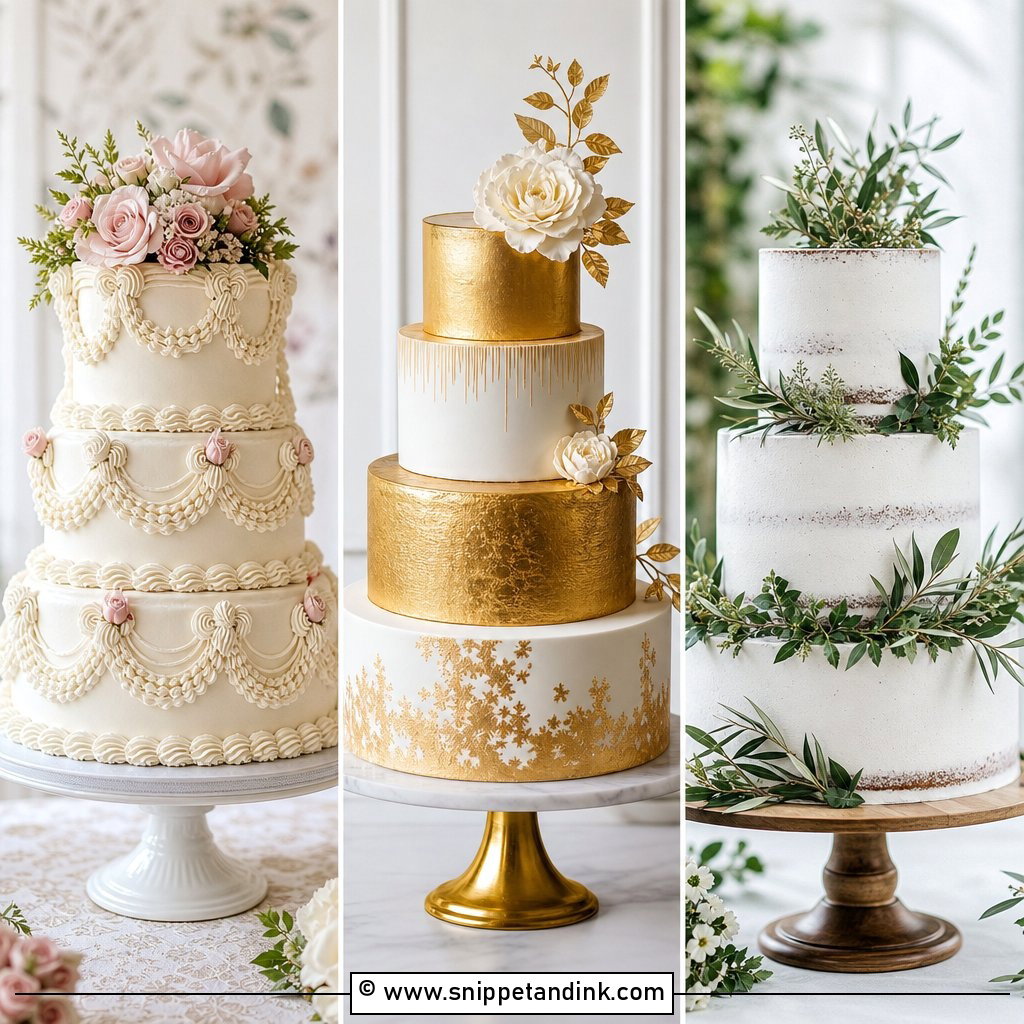
18. Gold Wedding Cake
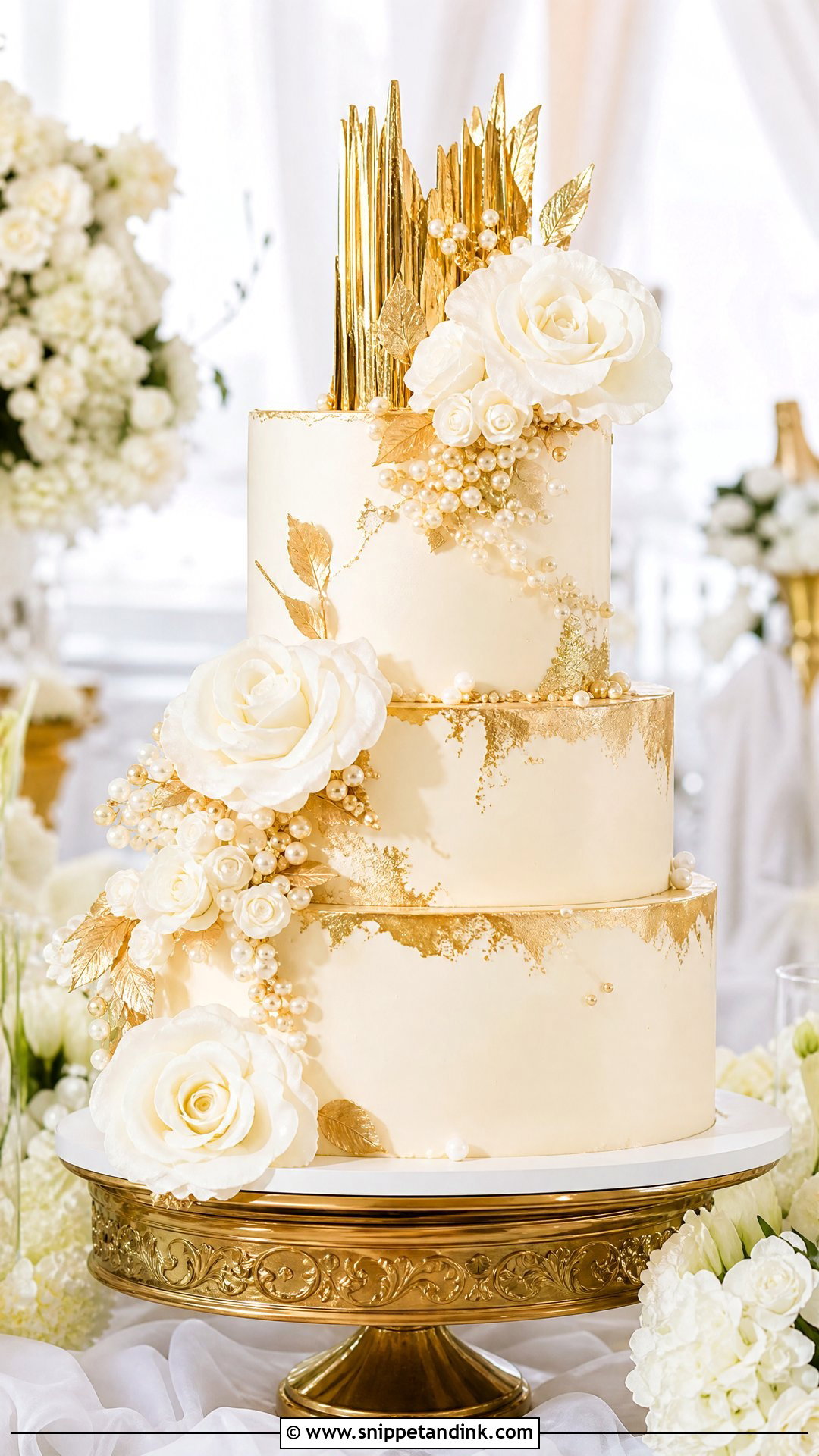
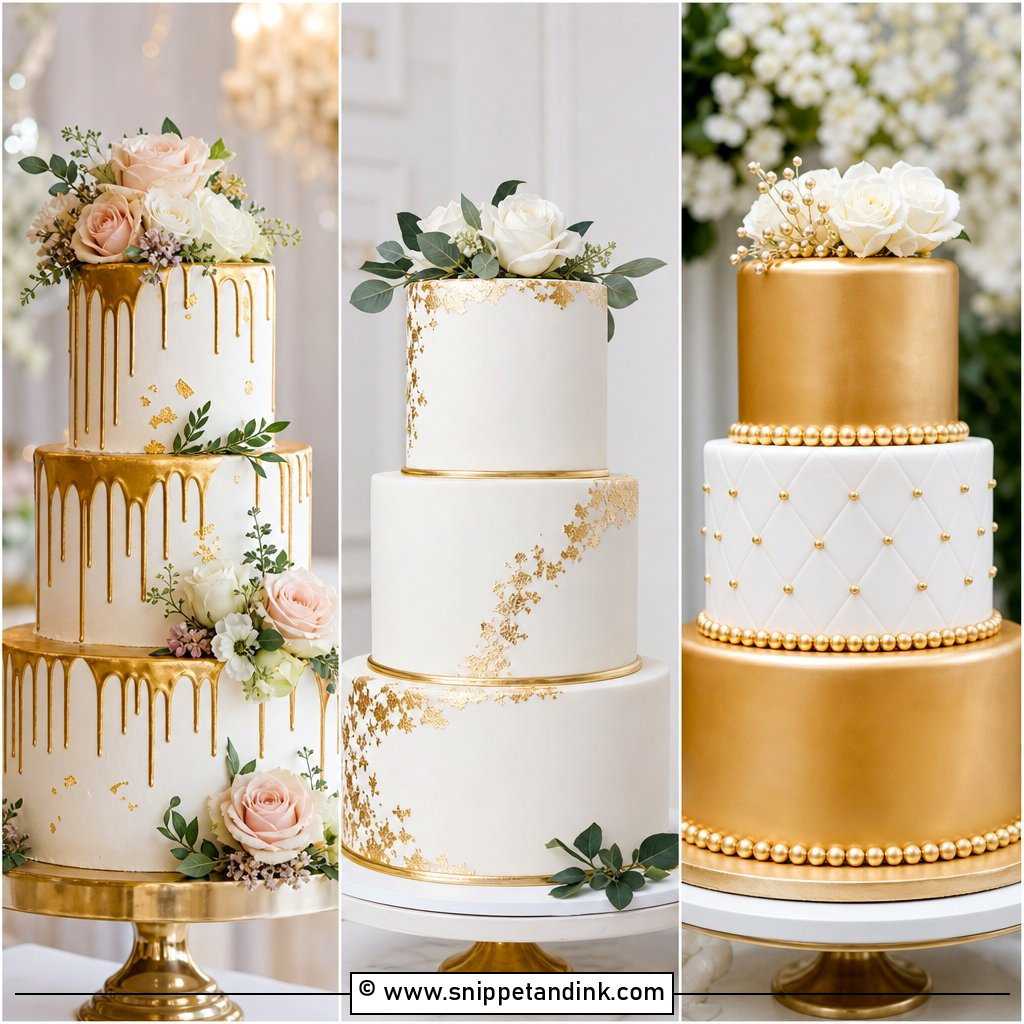
Gold can be leaf accents, painted tiers, brush strokes or ribbon trim. Restraint really is the rule here: a narrow band or a few torn flakes of leaf looks richer than a fully painted tier, which can read as costume. Check that your baker uses edible gold, not craft luster dust labelled non-toxic, which looks identical and isn’t food. Salted caramel and honey flavors suit the warm color.
19. Greenery Wedding Cake
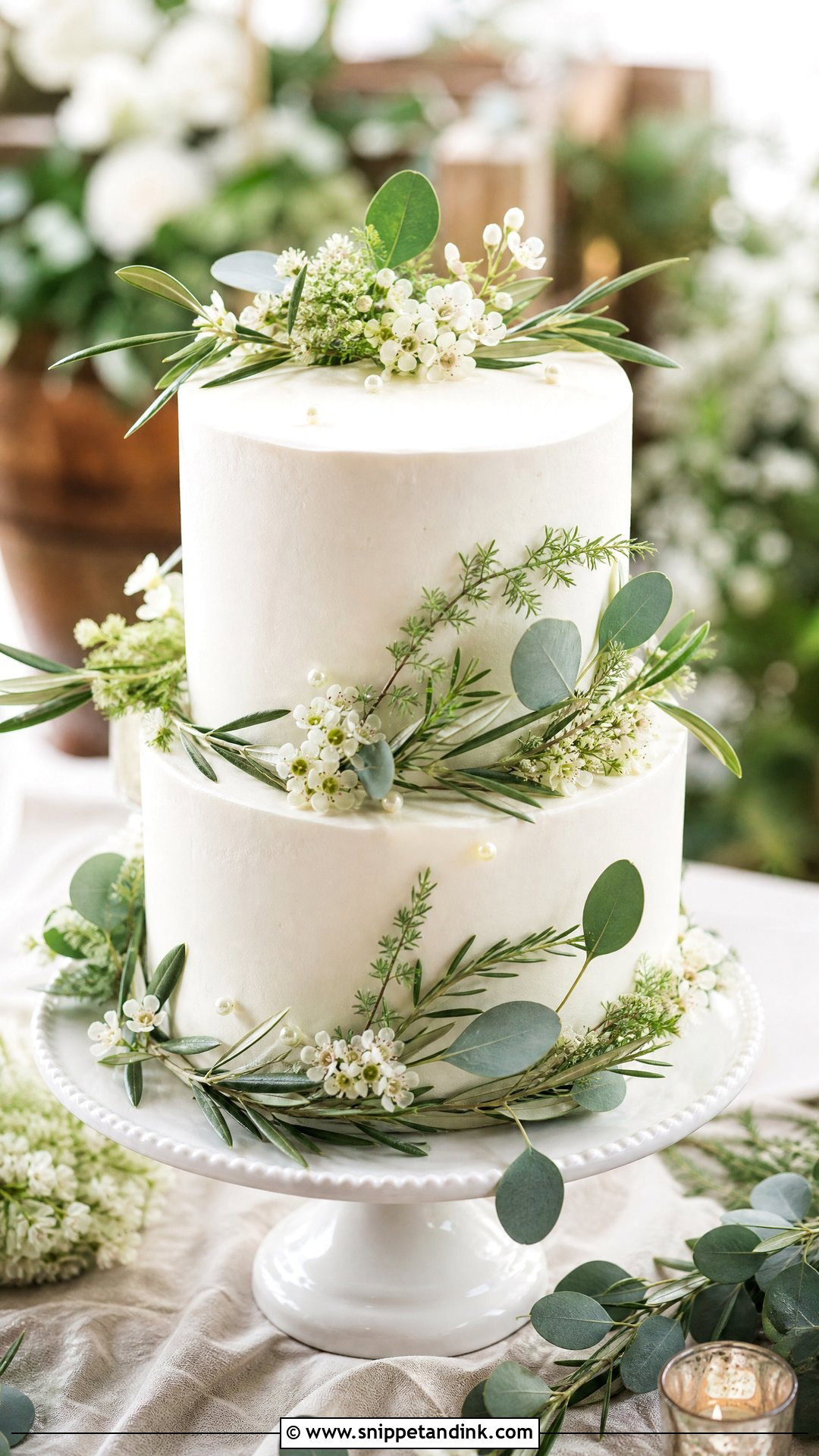
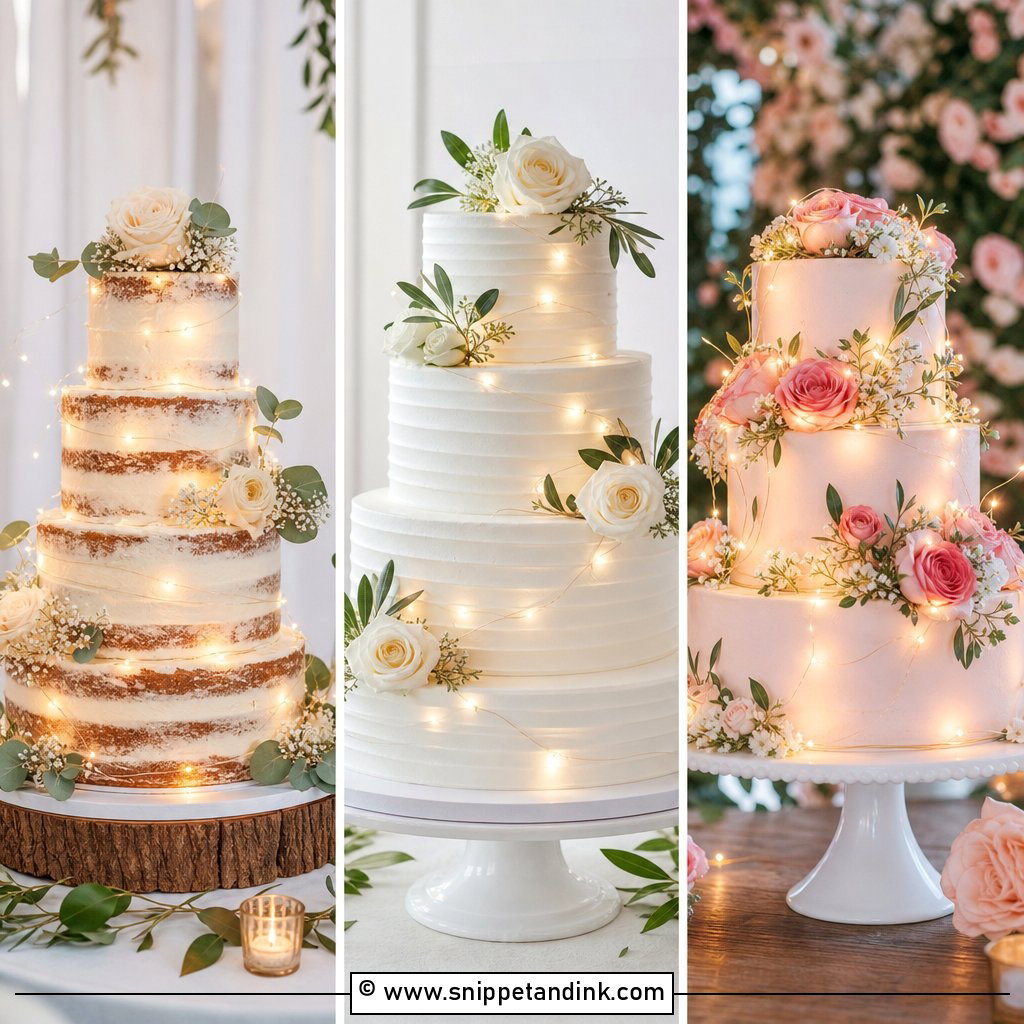
Greenery arranged with movement, a small cascade down one side or a loose wreath at the base, looks more natural than evenly spaced sprigs. Everything touching the cake needs your baker’s approval, and popular choices like eucalyptus are toxic, so I either use culinary herbs and olive leaves or put a barrier under each stem. A smooth white base lets the green read clearly, and a few white flowers soften it.
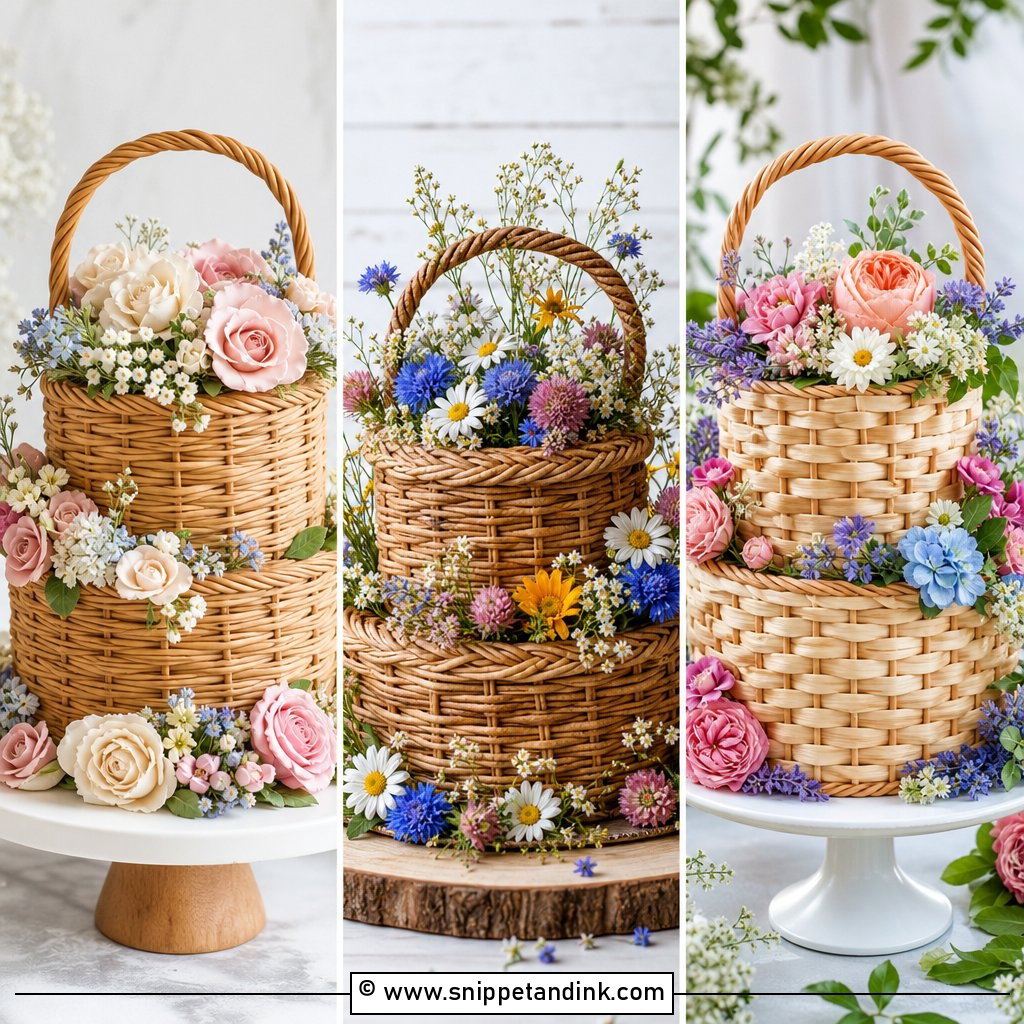
20. Garden Wedding Cake
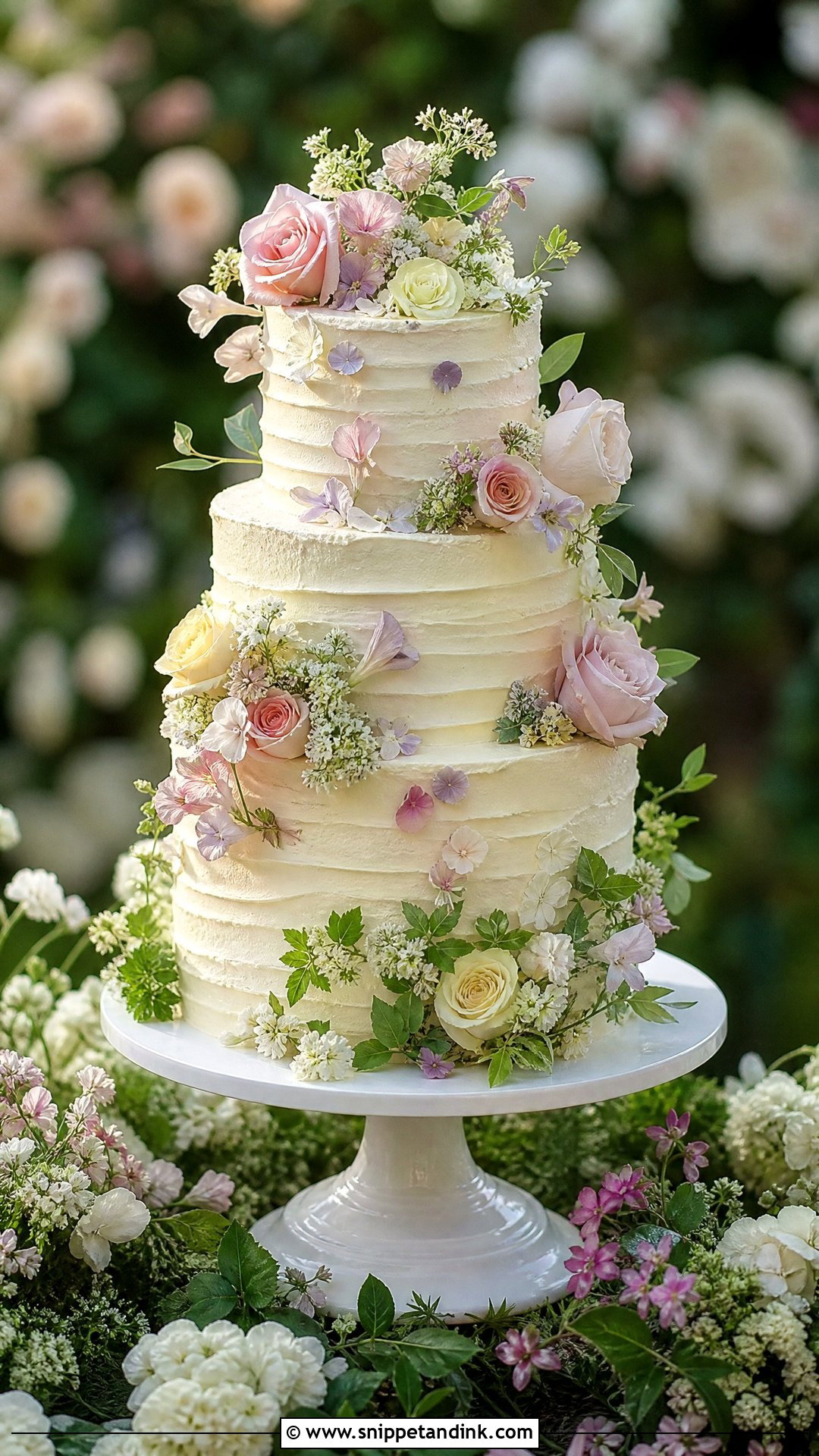
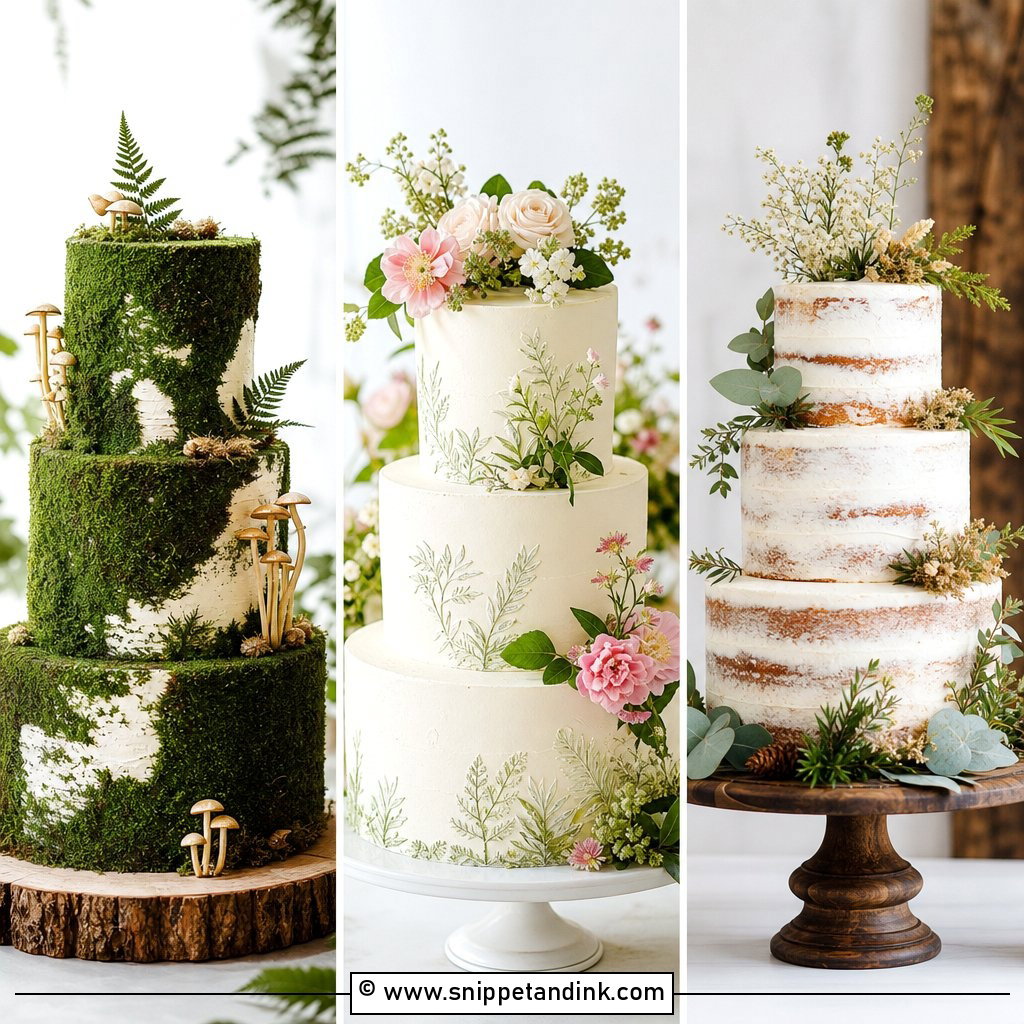
The aim with a garden cake is for the flowers to look as if they’re growing around the tiers rather than placed on them, so I work asymmetrically and let a few stems trail. Pastel blooms, edible petals and buttercream texture carry it. Lavender honey and elderflower suit the mood, though lavender is strong and best kept to a hint. For a tented summer reception, plan for heat: buttercream flowers soften faster than the cake beneath them.
21. Beach Wedding Cake
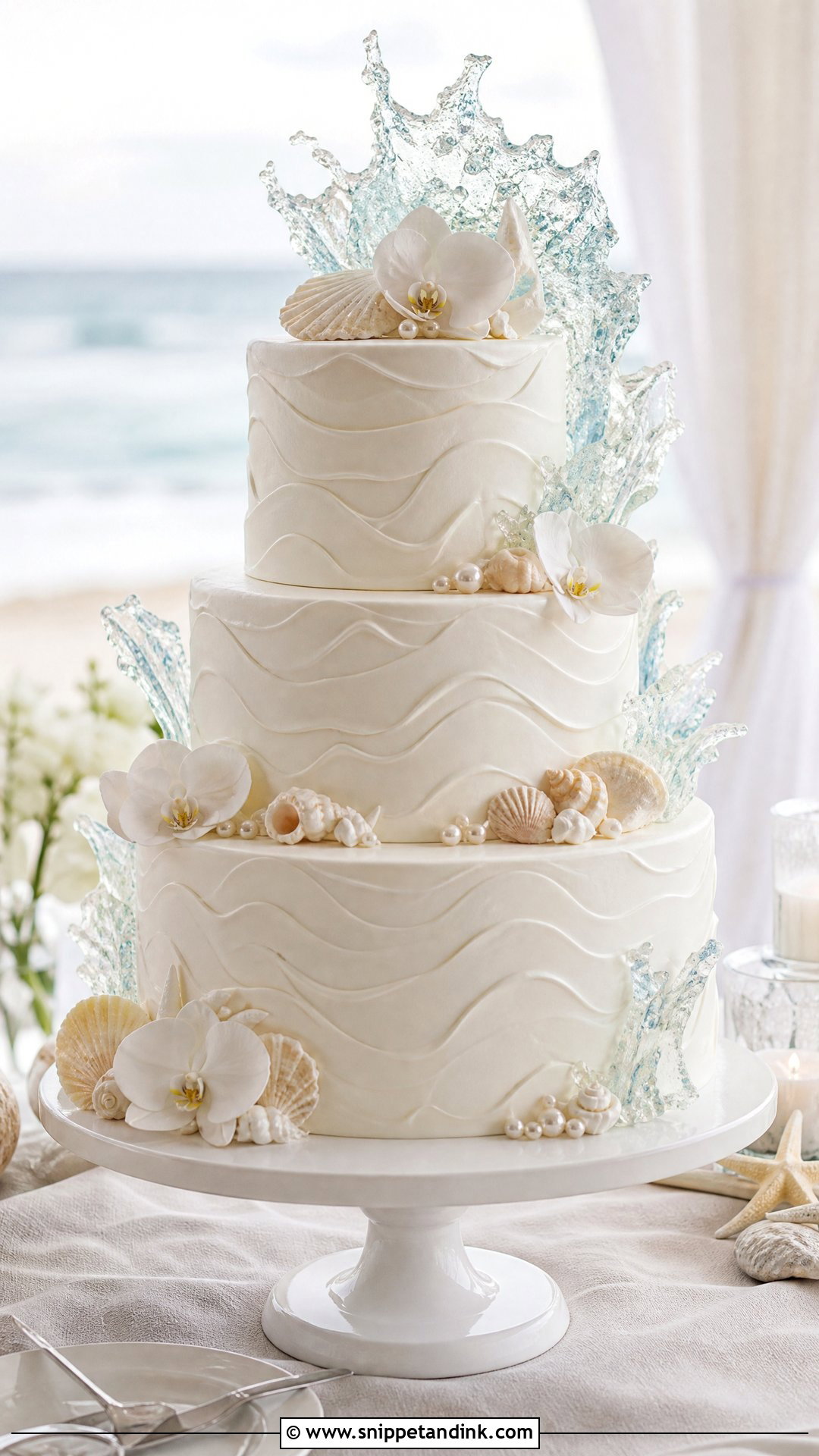
Beach cakes go wrong when they get too literal. A few sugar shells or a wave-textured buttercream says coast; a fondant starfish on blue sugar sand says children’s party. Coconut, lime and passion fruit fit the setting. The real problem by the sea is heat and humidity, so I’d choose fondant over ganache or a firm buttercream, and keep the cake indoors or under cover until the cutting.
22. Boho Wedding Cake
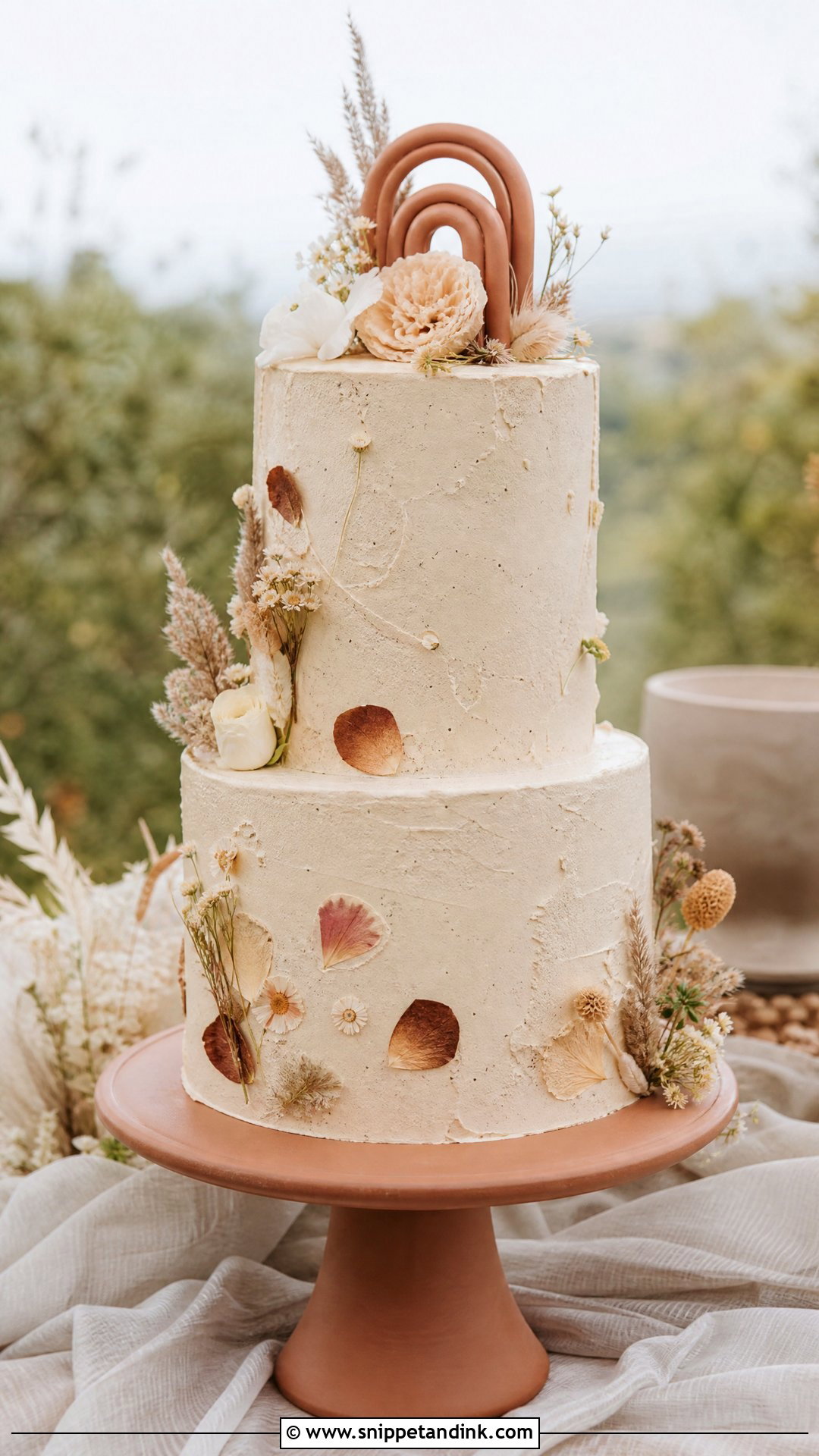
Boho cakes mix neutral buttercream, dried grasses, pressed blooms and warm terracotta tones, and some bakers pipe macrame-style patterns. Chai, honey, carrot and citrus flavors fit the warmth. The common trap is clutter, with dried grass, pampas, fresh flowers and texture all at once; I pick two of those and keep the tier shapes clean. Pampas sheds, so it goes on picks and stays off the frosting.
23. Pearl Wedding Cake
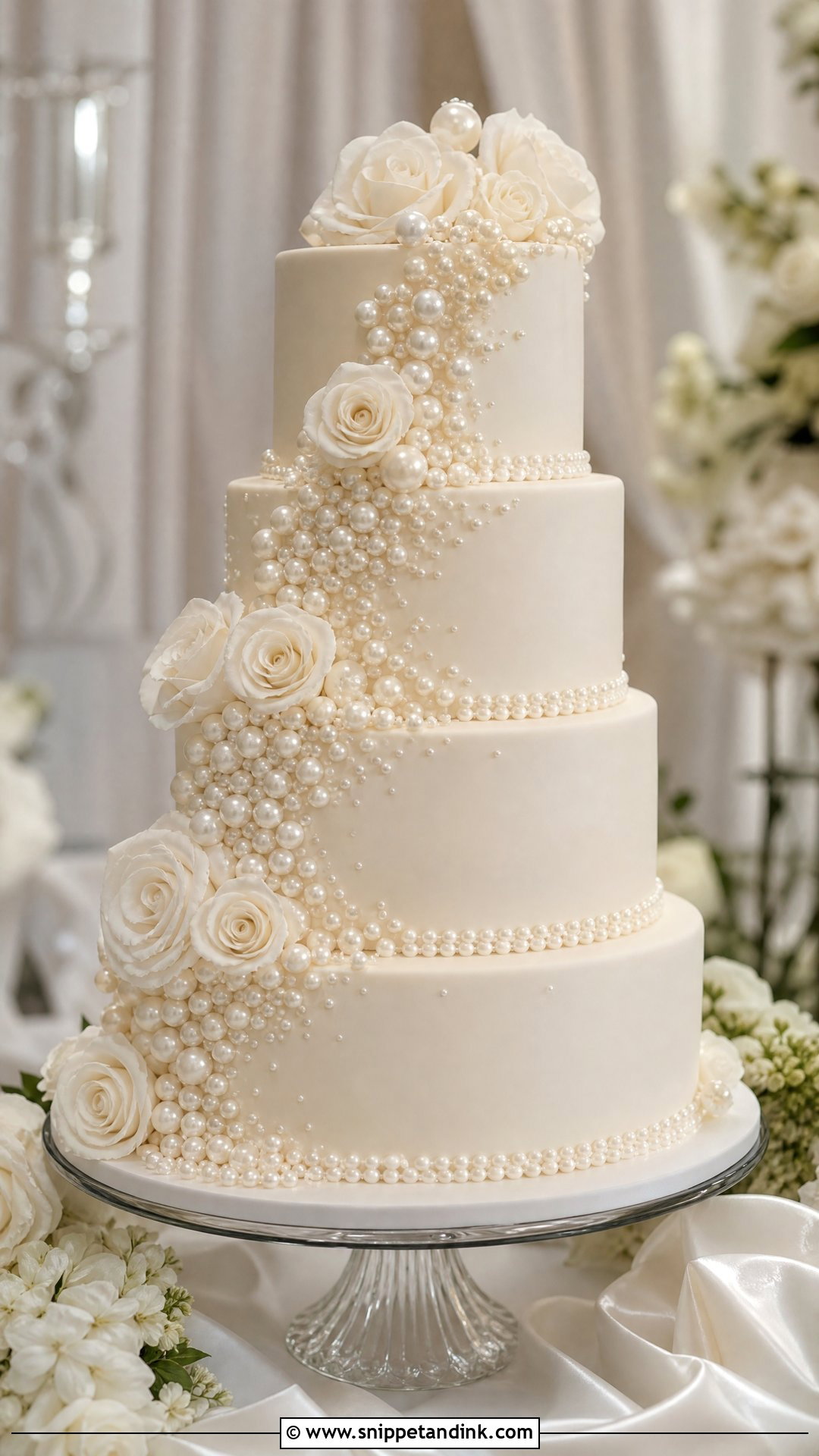
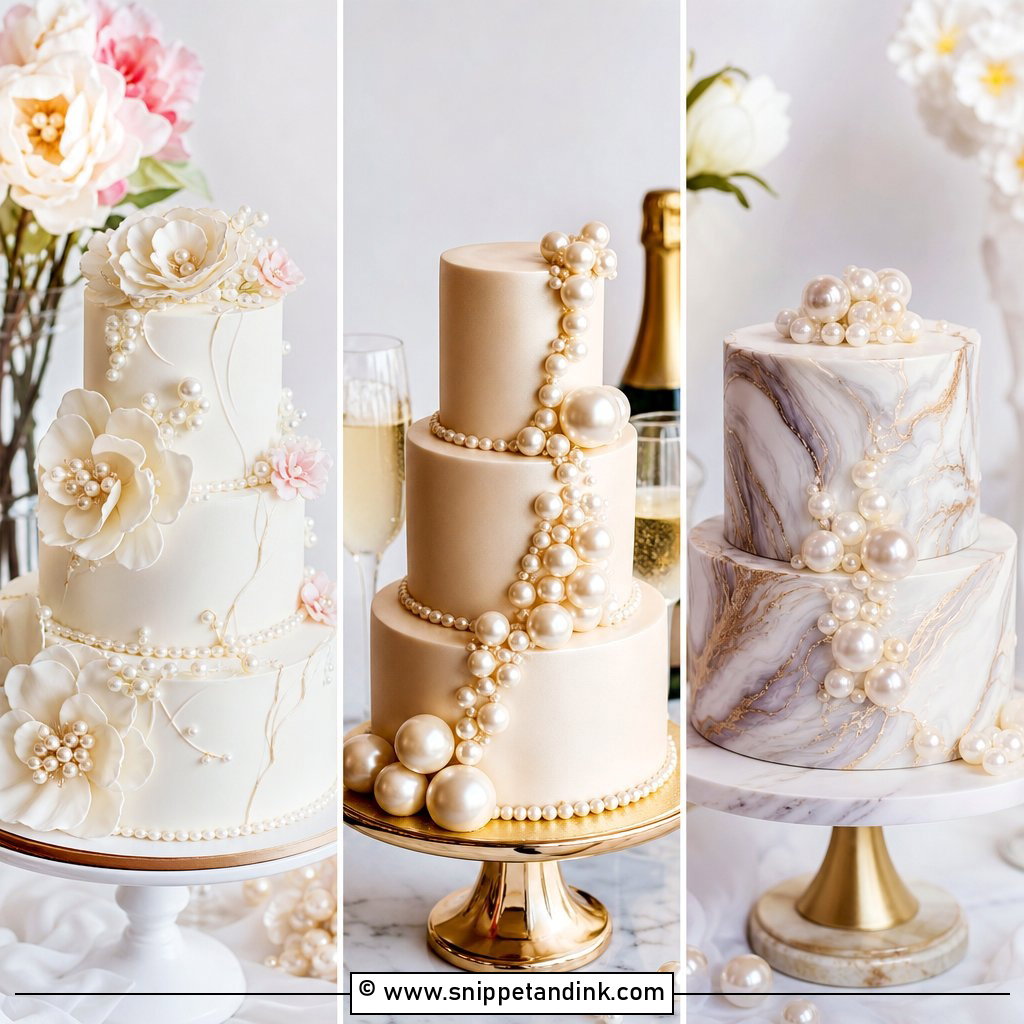
Pearls can be scattered, used as borders, cascaded or packed over an entire tier. A fully pearl-covered tier takes hours of hand placing and adds a lot of hard, crunchy sugar to every slice, which not every guest enjoys, so I usually suggest borders or a cascade instead. With piped swags they look vintage; on smooth tiers with clean spacing they look modern. Lemon cream or white chocolate raspberry suits the pale palette.
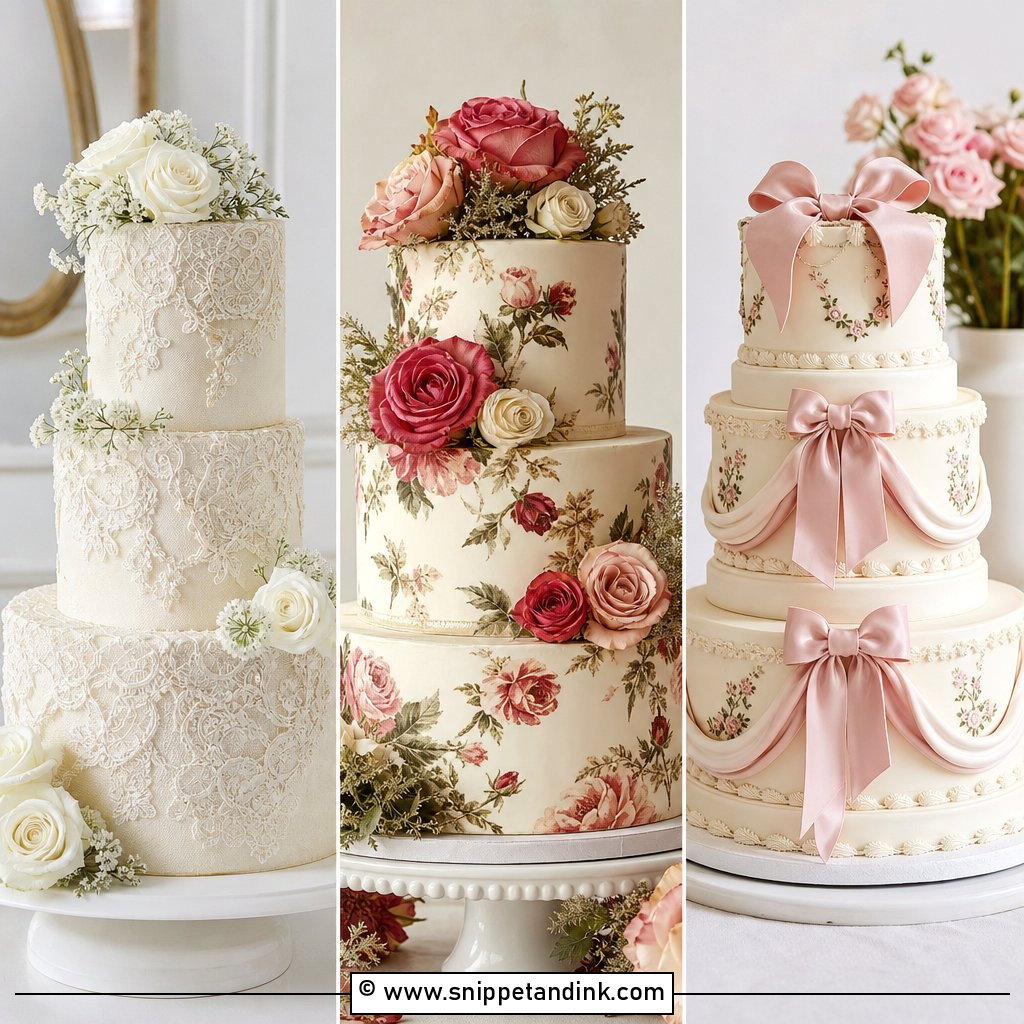
24. Lace Wedding Cake
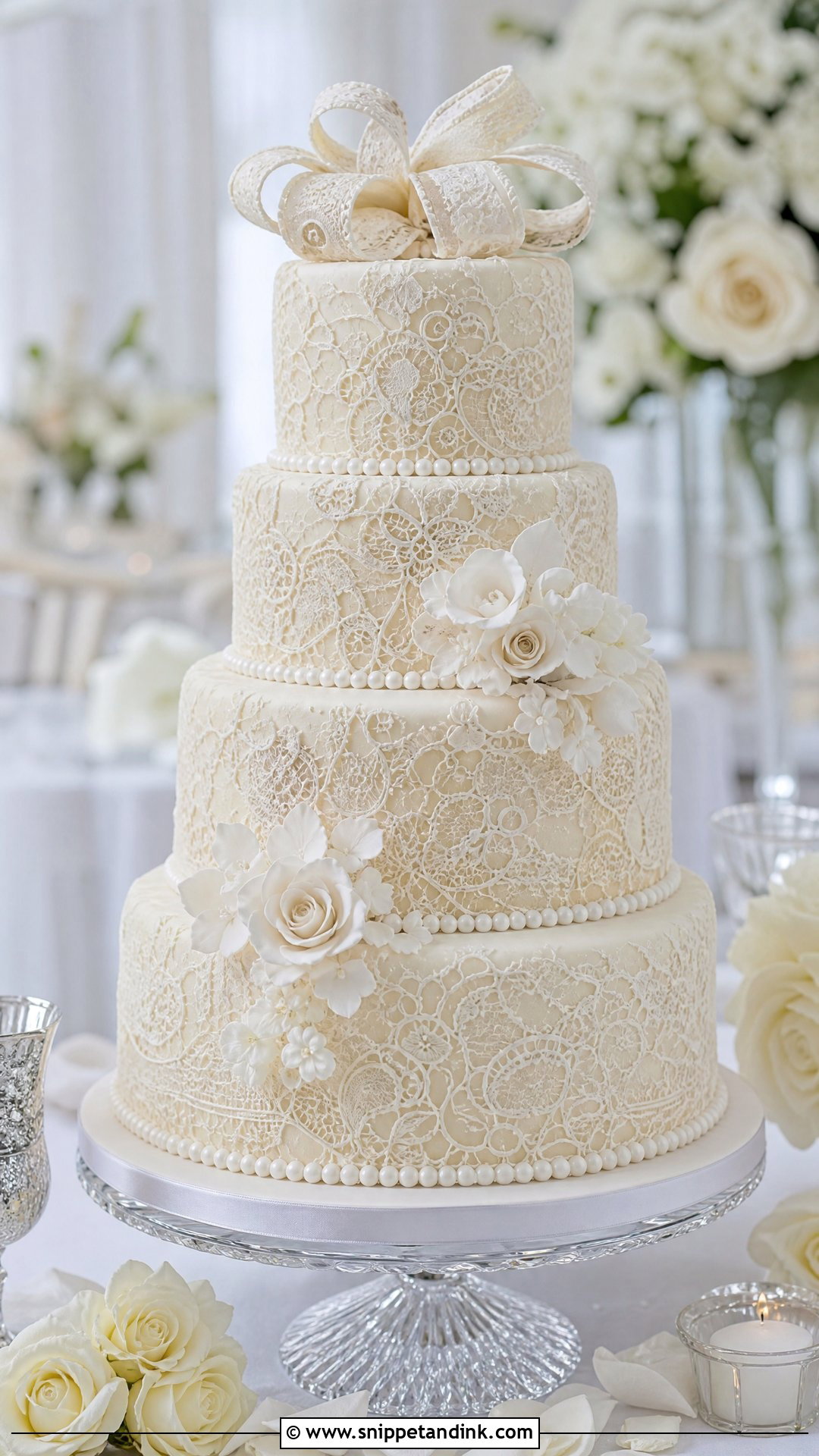
Lace can be fondant applique, piped royal icing, edible lace sheets or stenciling, and each looks different up close: piped lace has a raised, handmade quality, while lace sheets are flat and very regular. If the pattern should echo the gown, bring a close-up of the fabric, not just a full-length photo. Royal icing sets hard and can crack if a chilled cake is jolted, so piped lace needs gentle handling in transit. White, ivory or champagne keep the focus on texture.
25. Watercolor Wedding Cake
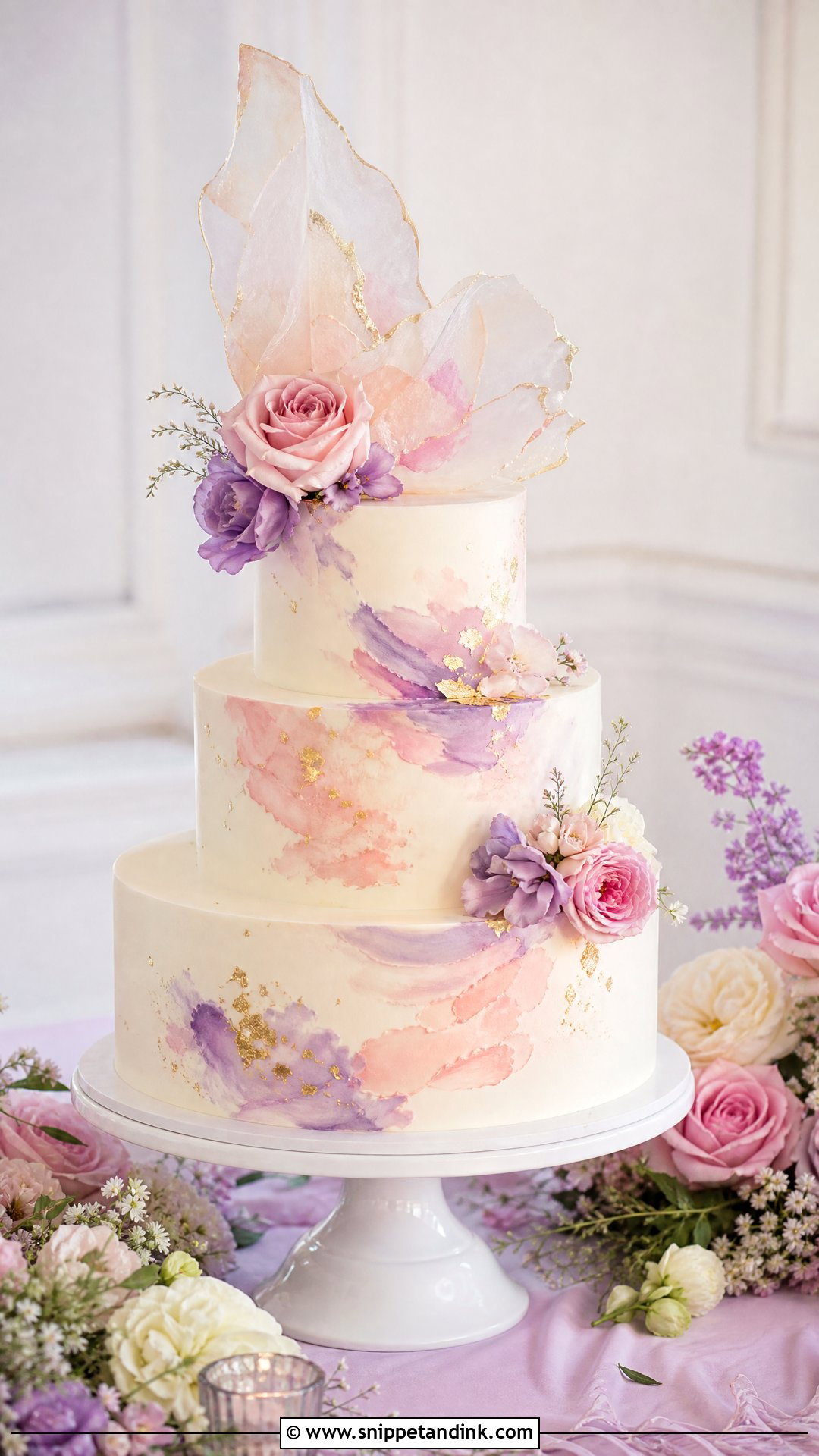
Watercolor is painted in layers onto fondant or blended into buttercream, in blush, blue, lavender, peach or sage. Match the shades to your invitations or flowers so it looks planned. Touches of gold leaf, wafer paper or simple sugar blooms add detail over the wash. Painting works best on a firm, chilled surface; on soft buttercream the brush drags the frosting and leaves marks. Lemon or elderflower suits the airy look.
26. Marble Wedding Cake
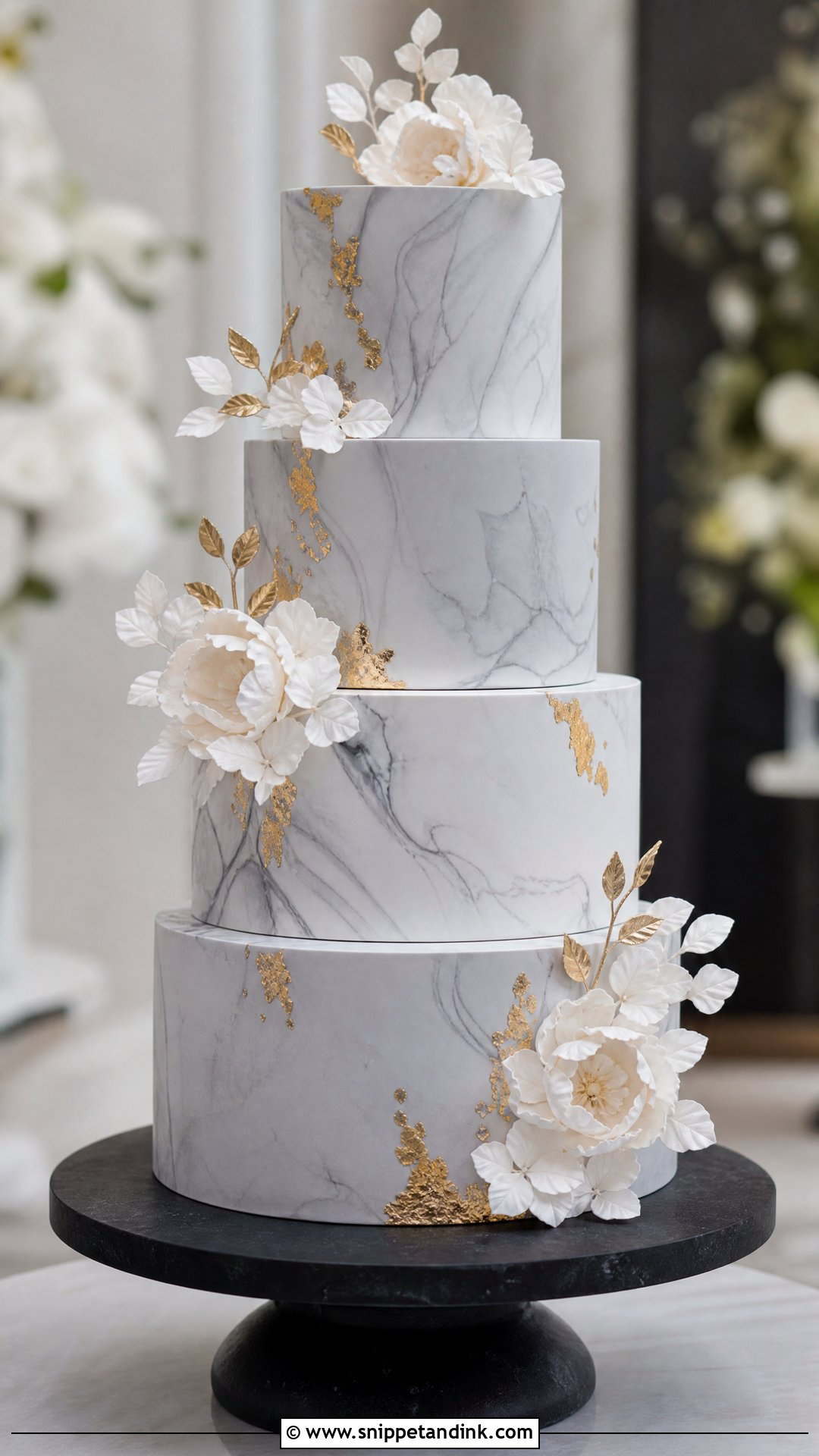
Marble works in fondant or buttercream, with grey, blush, green or black veining. Real stone has veins that branch and taper, and the best cake versions copy that; thick, evenly spaced stripes look like a cartoon of marble. It’s at its best on tall, sharp-edged tiers in a city hotel or gallery. Espresso, chocolate or salted caramel inside match the cool exterior. Keep extra decoration to a minimum.
27. Square Wedding Cake
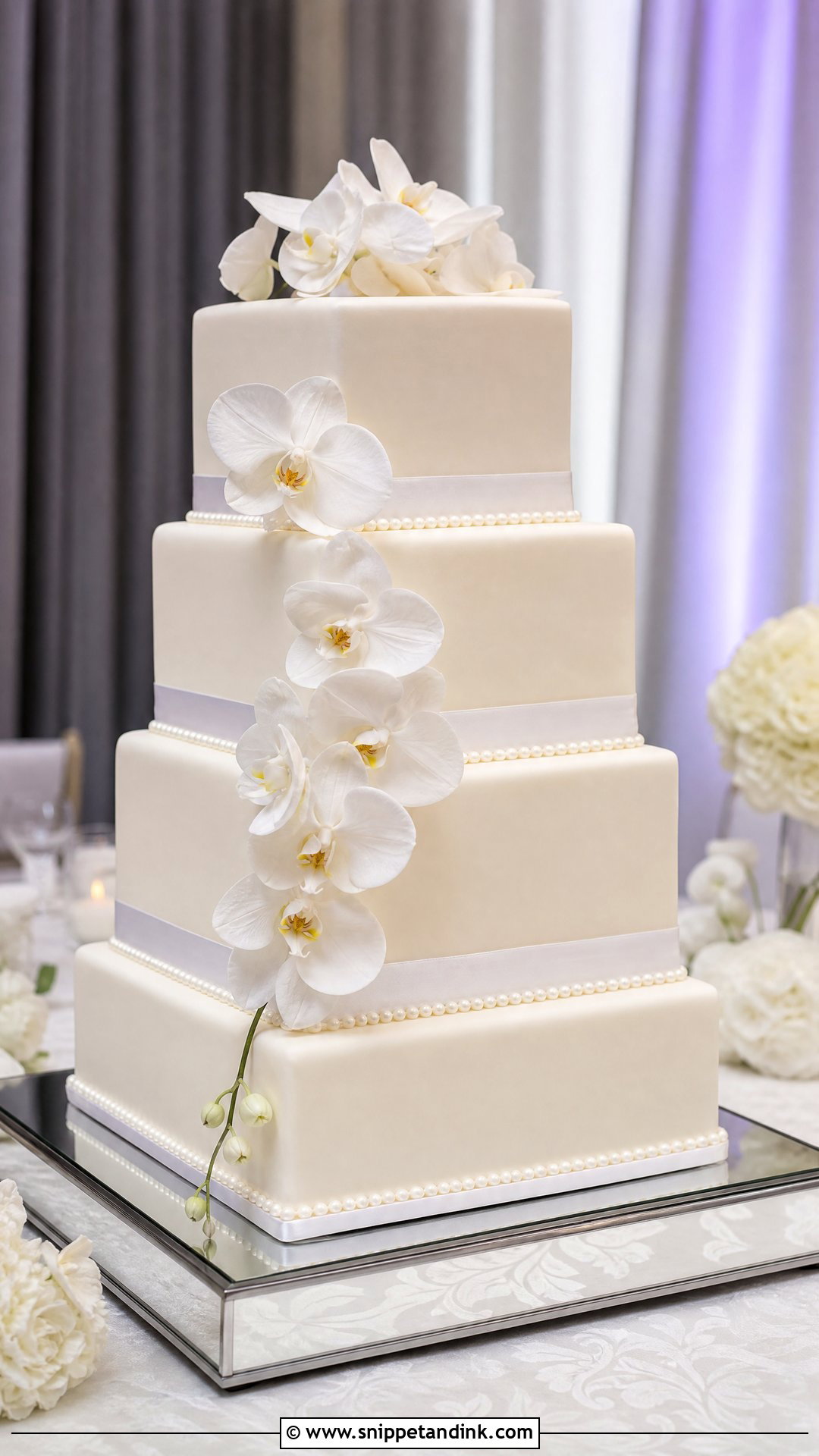
Square tiers feel tailored, and setting flowers on one corner rather than along an edge plays up the geometry. Mixing square and round tiers creates contrast but needs care with proportion; I usually make a square tier slightly smaller than a round would be, so it doesn’t look oversized. Those corners take longer to finish cleanly than curves, which often shows in the price. Ribbon bands and pearl borders suit the formal look.
28. Round Wedding Cake
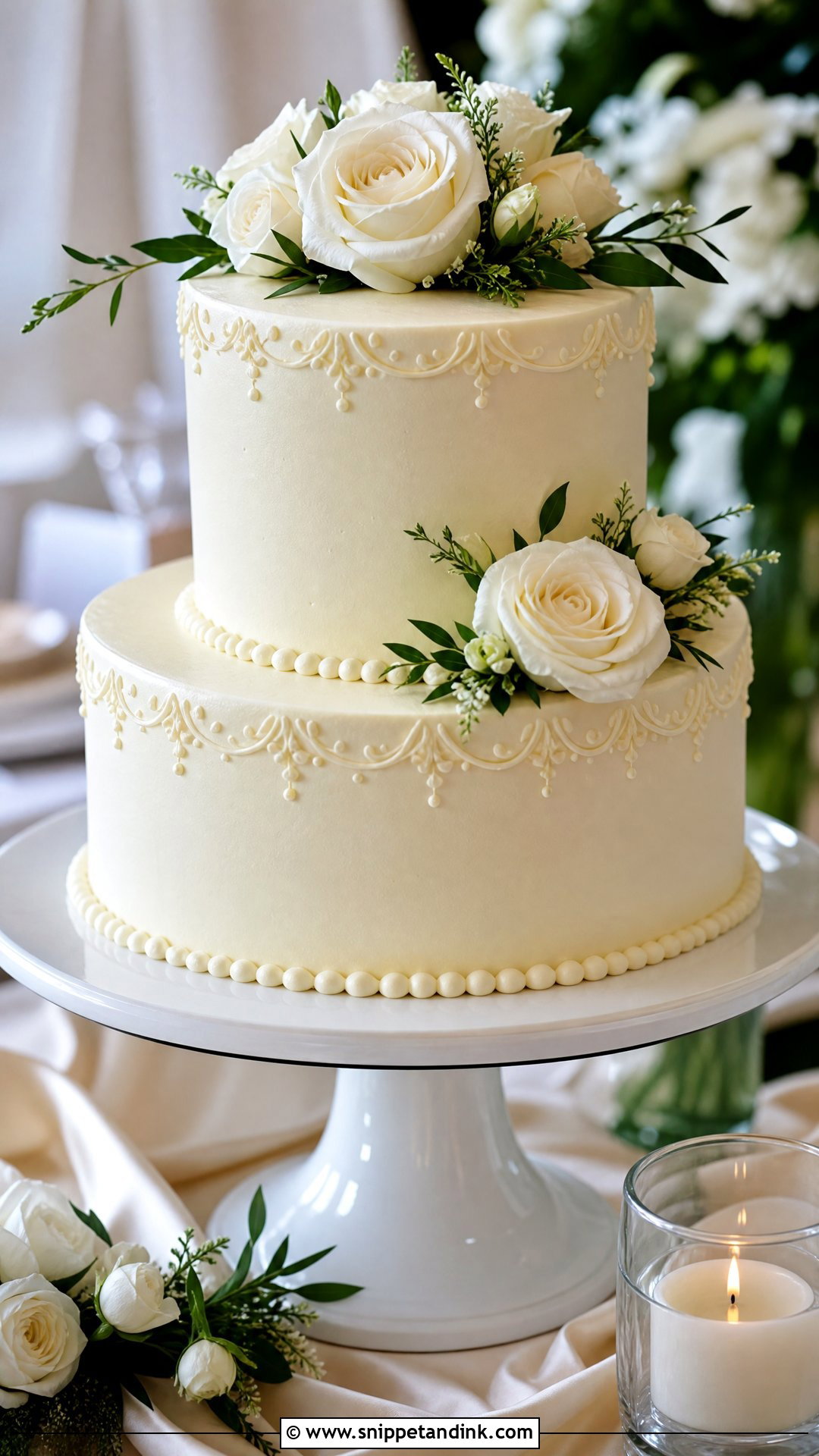
If you’re undecided, round is where I’d steer you. It takes any finish, rustic, vintage or minimal, and suits every venue and guest count from two tiers to four. It’s also the simplest shape to support and transport, so it’s often the most affordable for its size. Smooth ivory frosting, balanced floral clusters and a plain pedestal give a clean wedding look.
29. Tall Wedding Cake
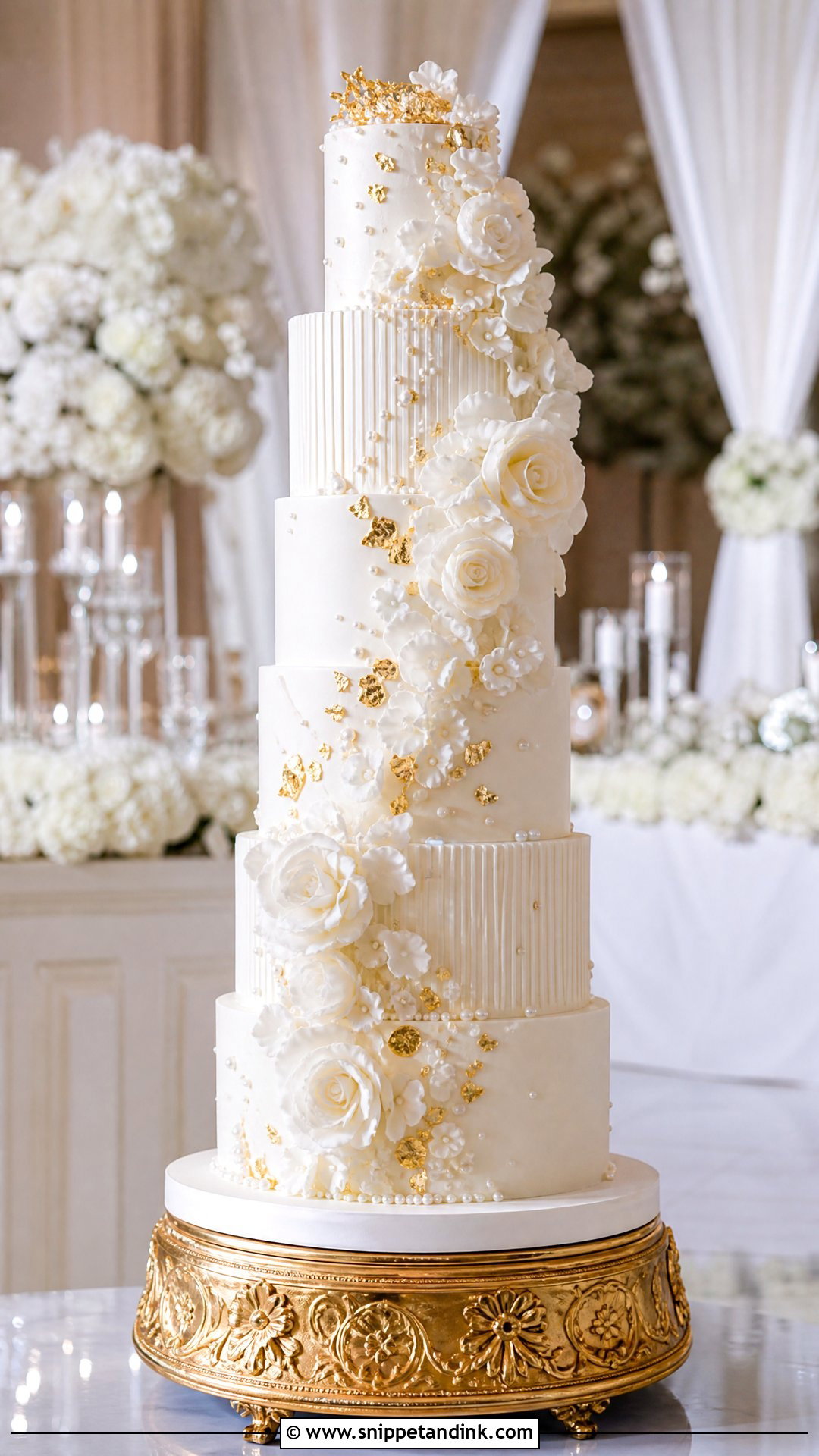
Height comes from extra-tall tiers, more tiers, or slim tiers stacked upward, and each needs proper internal support: dowels in every tier, boards between them and often a central rod through the whole cake. Ask your baker to walk you through theirs. A vague answer is a warning sign. High-ceilinged ballrooms suit this best, and different flavors per tier give guests a choice.
30. Small Wedding Cake
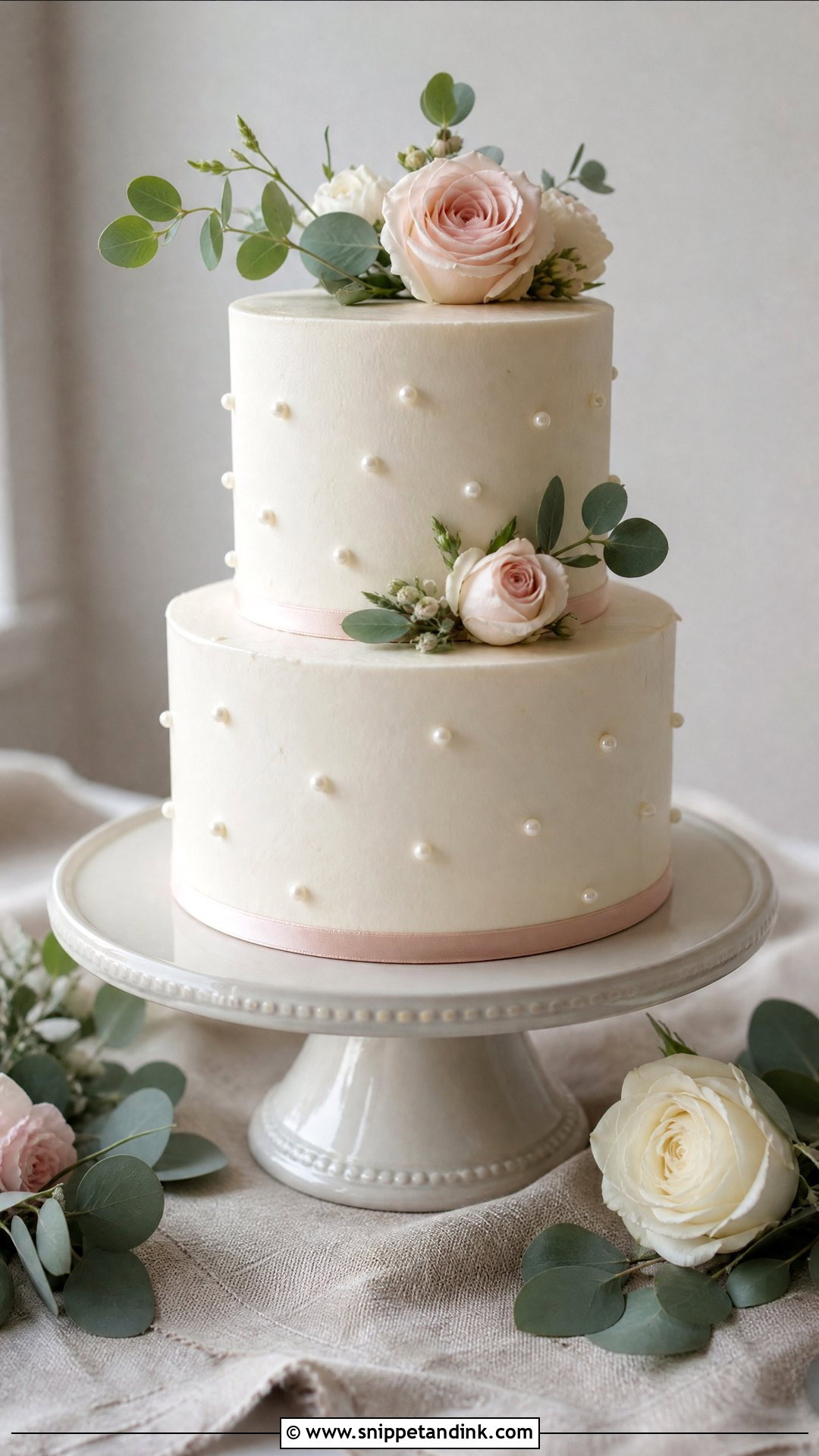
With a small cake, guests stand close, so the details are seen at arm’s length: piping consistency, clean seams, the finish around the base. That’s where I’d put the budget. Fresh flowers, pearls or painted details all work at this size. If you need more servings, pair it with mini desserts or a dessert bar. Lemon raspberry and chocolate ganache are dependable flavors.
31. One Tier Wedding Cake
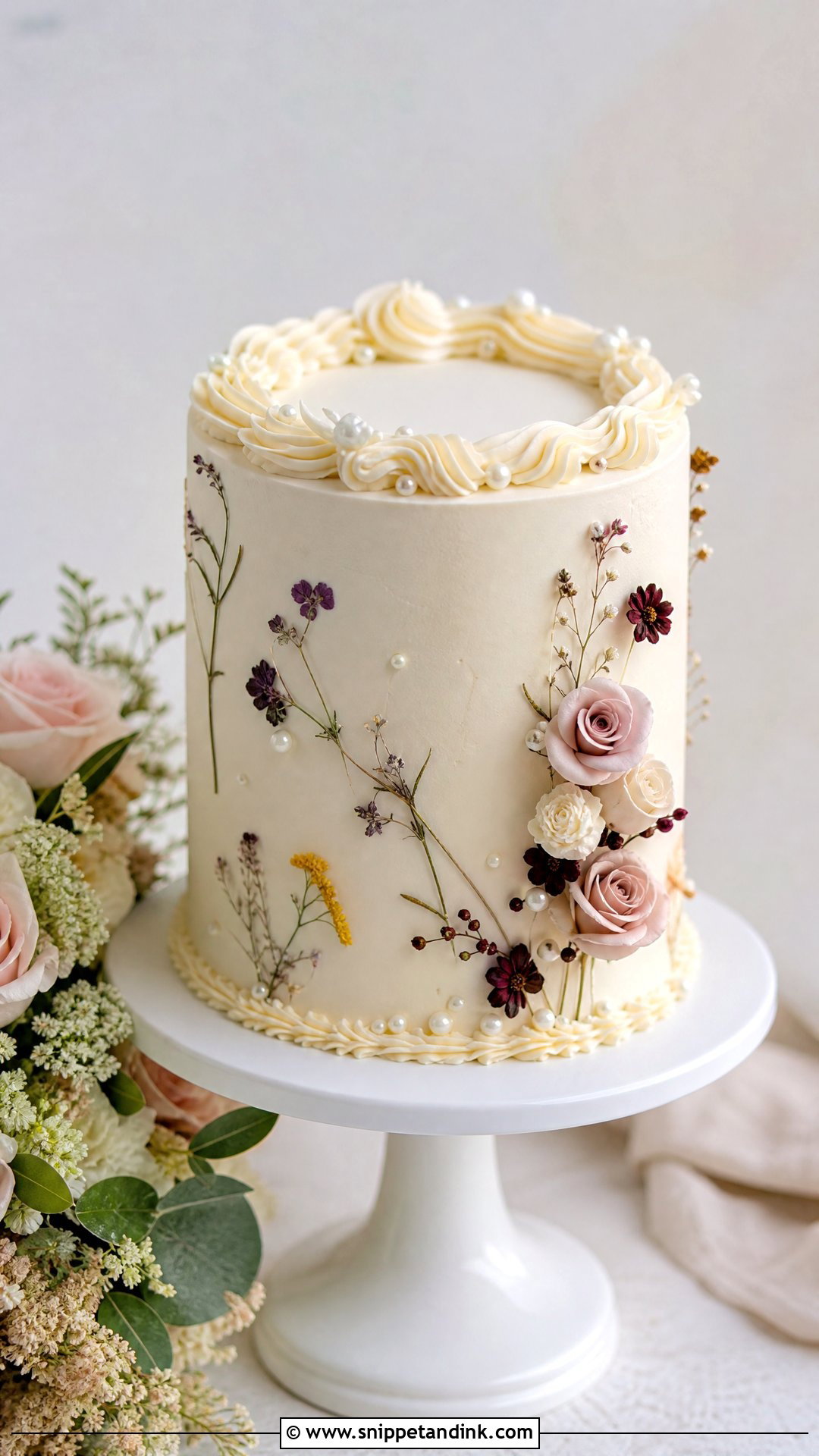
One tier gives you a cutting moment without a mountain of leftovers. A taller tier has more presence; a low round looks sweet and understated. Since you’re only buying one, it’s worth choosing a flavor with some personality, such as lemon elderflower or almond cream. Vintage piping or pressed flowers carry a single tier well. Put it on a stand with some height so it doesn’t vanish on a long table.
32. Cupcake Wedding Cake
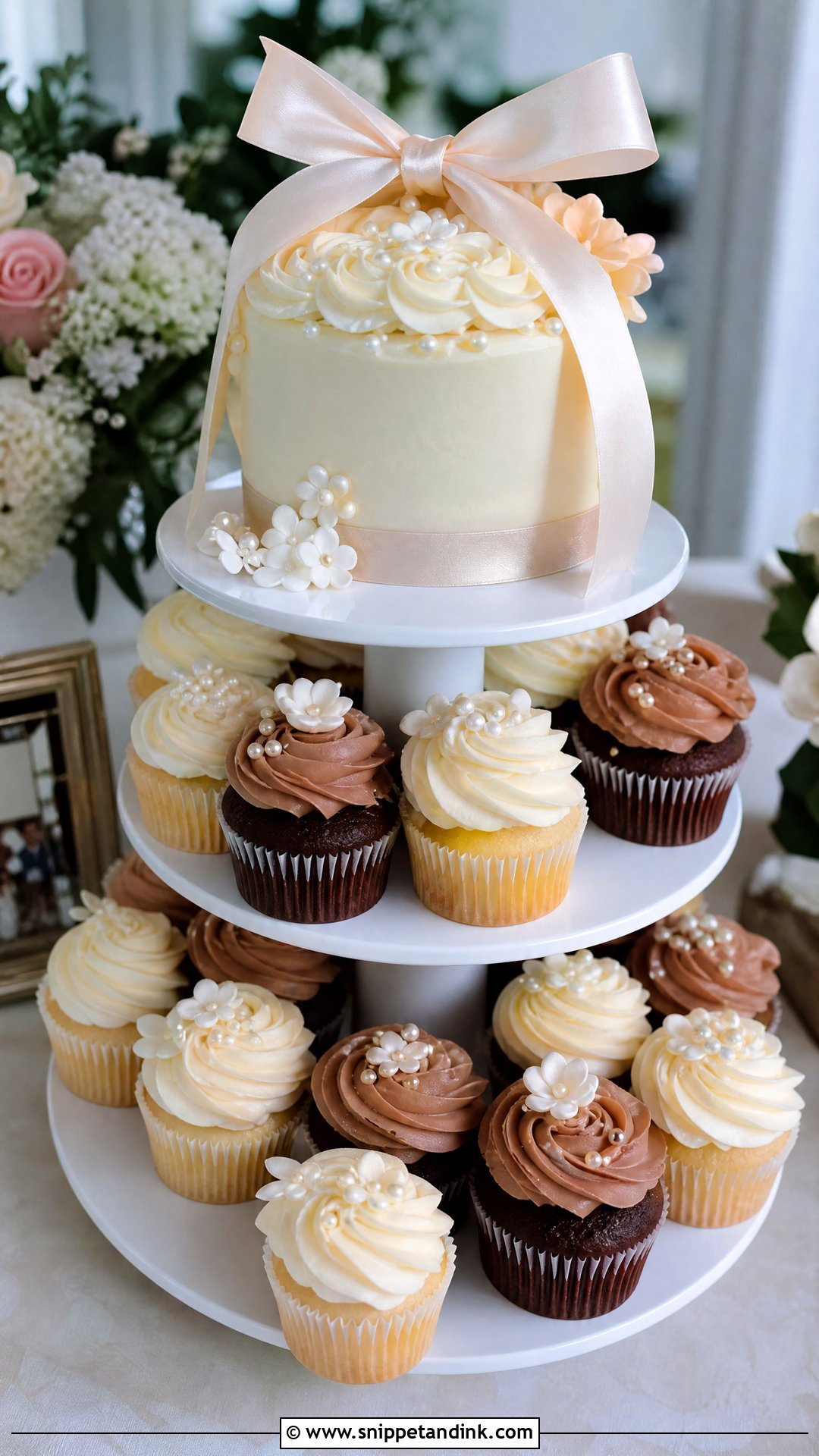
A cupcake setup puts a small cutting cake on top and cupcakes below, with no slicing needed. The weak point is consistency: different flavors still need matching frosting colors and the same topper, or the tiers look random. Check the stand itself, too. Tiered cupcake stands wobble on uneven outdoor ground, so test it on the actual table. Red velvet, carrot and lemon cupcakes give guests a choice.
33. Chocolate Wedding Cake
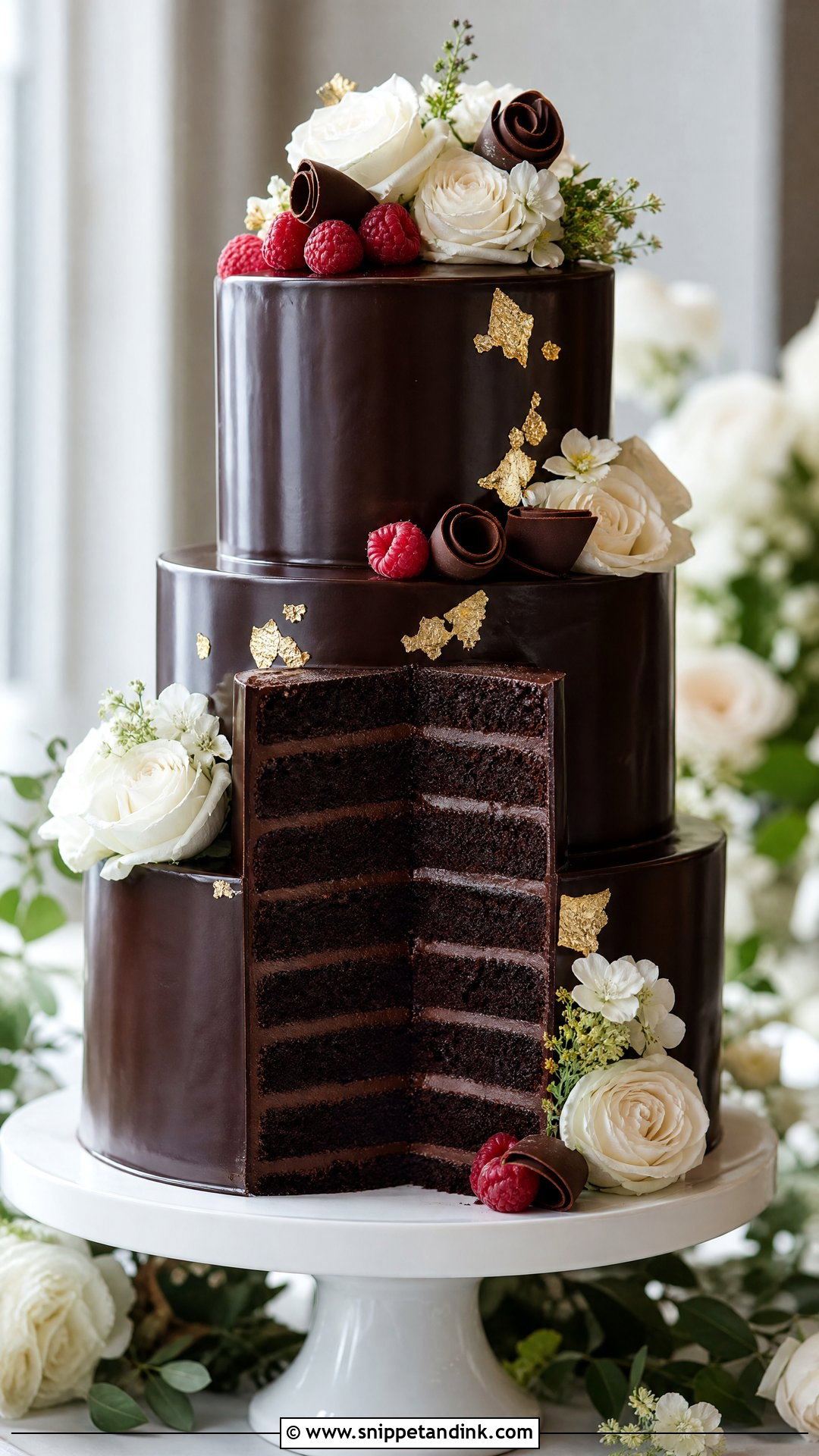
A chocolate wedding cake is where flavor and finish meet, because the outside is edible chocolate too, a smooth dark ganache or cocoa buttercream. Ganache sets firm and gives sharp edges, but white flowers or gold leaf against it read very strongly, so I use them sparingly. Raspberry, salted caramel, espresso and hazelnut all pair well. On a white dessert table a dark cake becomes the focal point, which is exactly why its decoration should stay clean rather than birthday-busy.
34. Lemon Wedding Cake
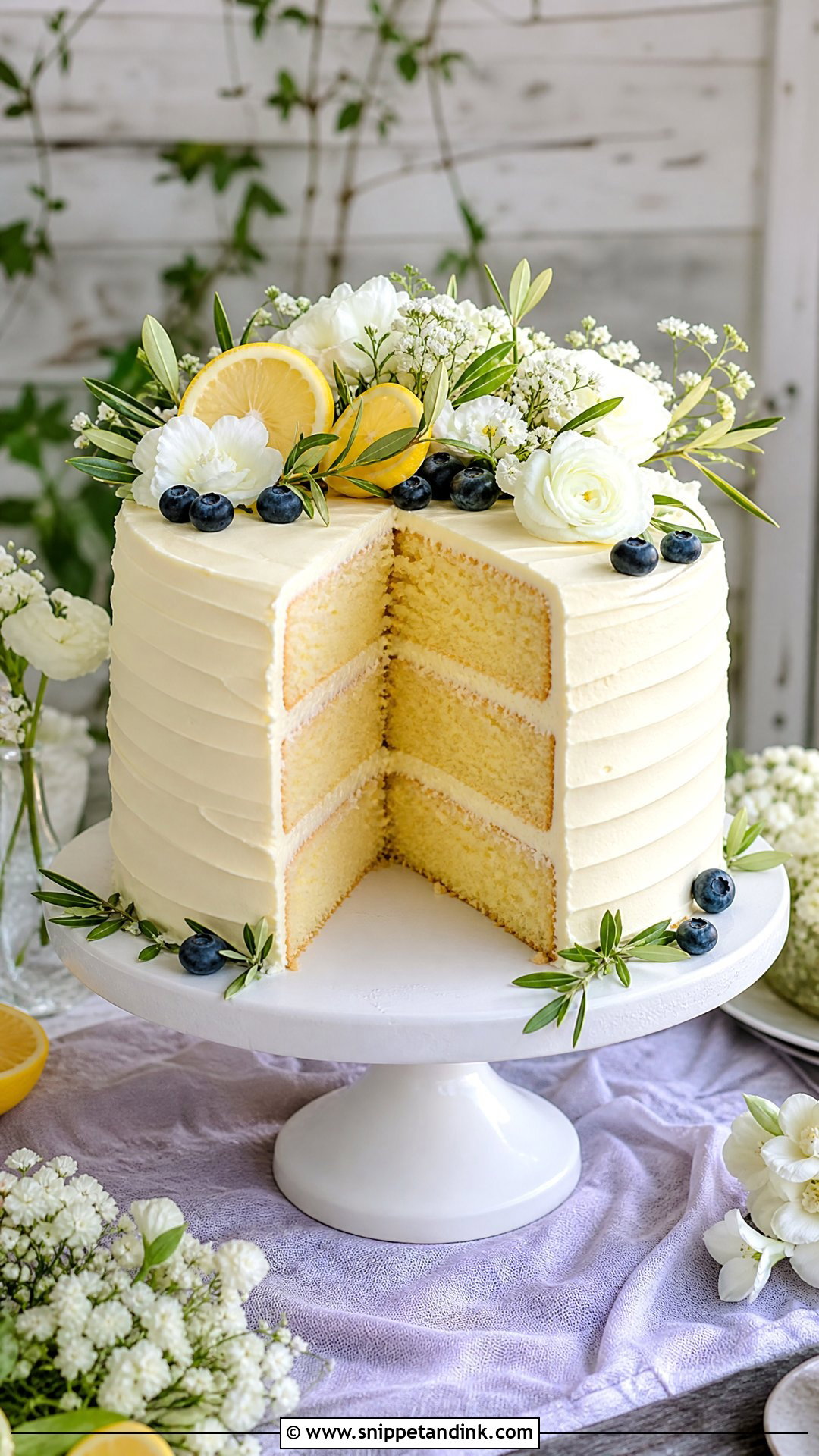
Lemon is the flavor I recommend most for summer weddings, because guests who’ve just eaten a full dinner still finish a slice. Lemon curd is the classic filling, but curd is soft and can squeeze out under the weight of upper tiers, so I pipe a stiff buttercream dam around the edge of each layer before filling. Raspberry or blueberry compote pairs well too. Outside, white buttercream with yellow flowers or berries keeps the bright mood.
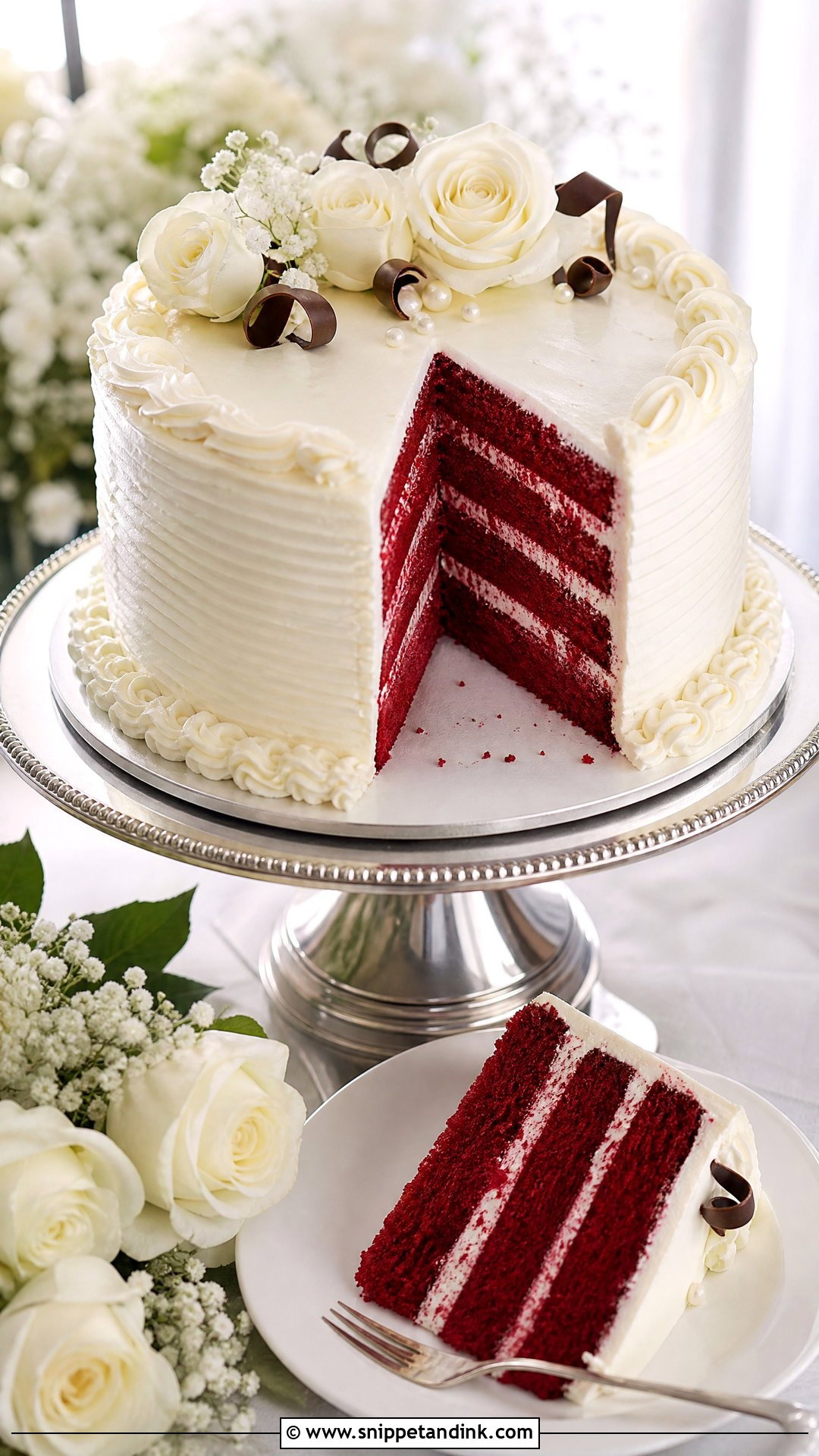
35. Red Velvet Wedding Cake
Red velvet surprises guests at the cutting: a classic white cake outside, deep red layers inside. Pure cream cheese frosting is too soft to hold tiers, so most bakers, me included, use a cream cheese buttercream that keeps the tang but stays firm. Smooth ivory frosting with white flowers or pearl accents keeps the outside elegant. Keep it refrigerated until close to serving, since cream cheese doesn’t like a long stay at room temperature.
Which Finishes Survive a Hot Reception
Ask a cake designer about the worst day of their summer and the answer is usually the weather, not the decorating. A design that looks fine in a cool studio can slump or sweat at an August garden party. Here’s roughly how the finishes above rank once a room gets warm.
- Firmest: fondant over chocolate ganache. It holds its shape longest, though very damp air can leave the surface tacky.
- Reliable: ganache on its own, and a thoroughly chilled buttercream kept out of the sun.
- Fragile: Swiss meringue buttercream on a hot day, semi-naked and naked cakes that dry out, and wafer paper, which wilts in humidity.
- Riskiest: whipped cream finishes and fresh cream fillings, which need refrigeration and shouldn’t sit out for long.
Whatever you choose, ask the venue where the cake will wait before it’s cut. A cool room away from windows and kitchen heat protects it better than any recipe change.
Gluten-Free, Vegan and Nut-Free Guests at the Same Table
Dietary needs no longer mean a sad separate plate. Gluten-free sponge has improved a great deal, but it’s more fragile and crumbly, so I rarely use it for the load-bearing bottom tier of a tall cake; one gluten-free tier on top, or a matching small cake, is the usual answer. Vegan buttercream made with plant butters softens faster than dairy versions, which matters in a warm room.
For serious nut or celiac allergies, the question is the kitchen, not the recipe. Ask whether the bakery handles nuts or wheat flour at all and how it prevents cross-contact. If the honest answer is that it can’t guarantee it, a separately sourced, sealed dessert for that guest is safer than a slice cut with the same knife.
Trust the Slice as Much as the Silhouette
No trend should outrank your own celebration. A three tier white cake suits one couple; a pressed flower cake or a small vintage tier suits another. Weigh the venue, guest count, season, palette and flavors before you settle on a design. Bring clear photos to your baker, then listen when they talk about structure, weather and serving size, because those decide how the cake looks at nine in the evening, not just at noon. Aim for a cake that slices cleanly and tastes good enough that the plates come back empty.
You'll Like These Ideas:


Leave a Reply