
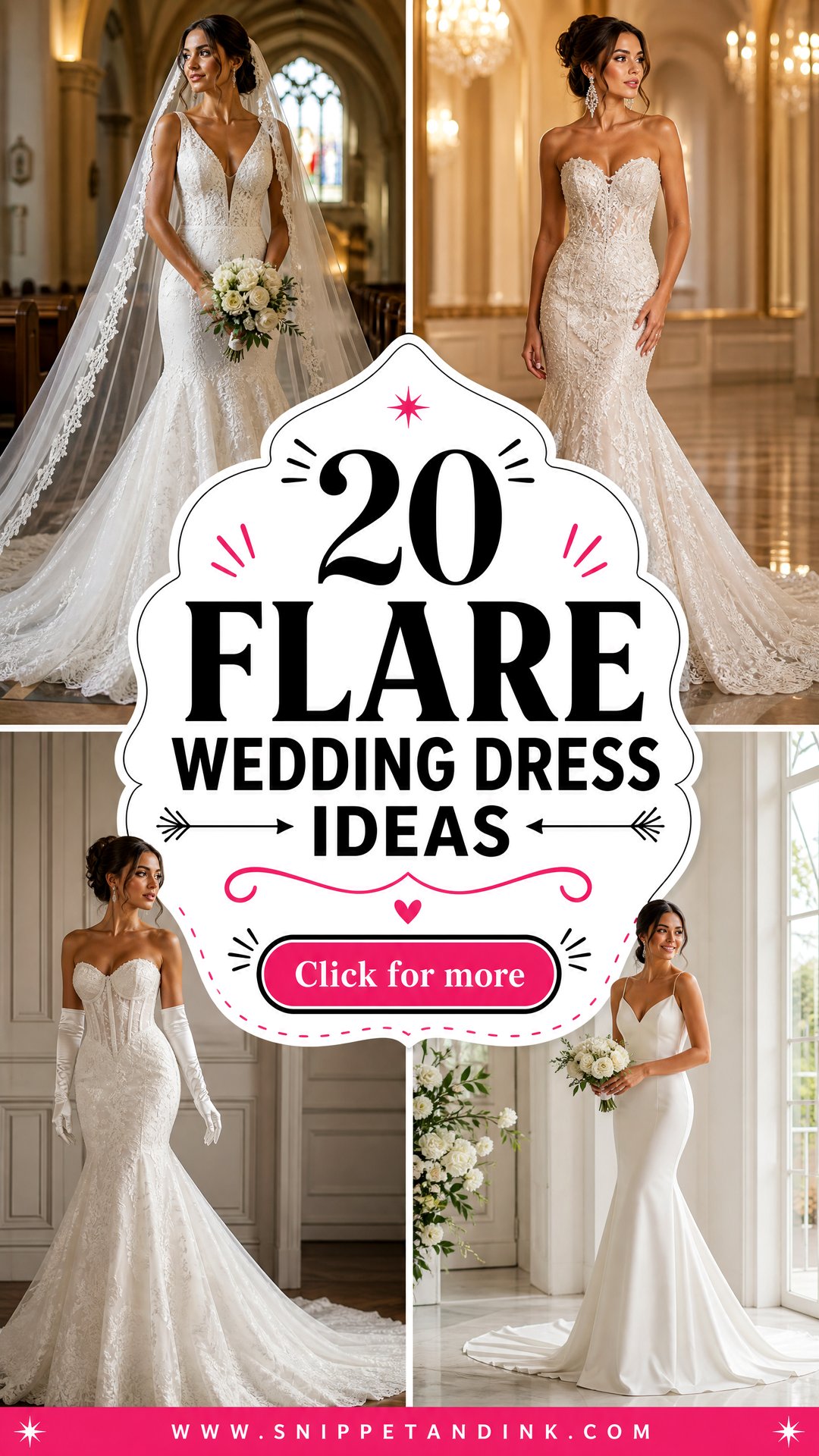
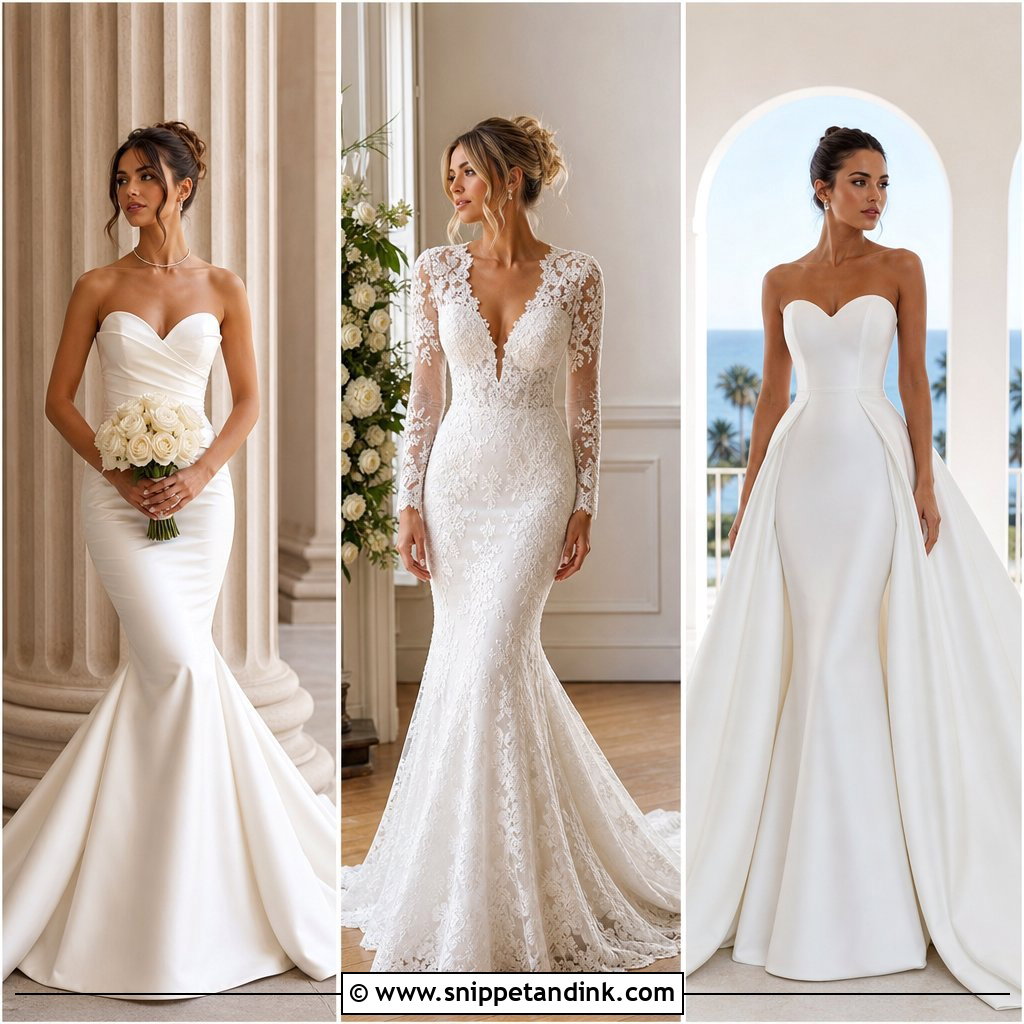
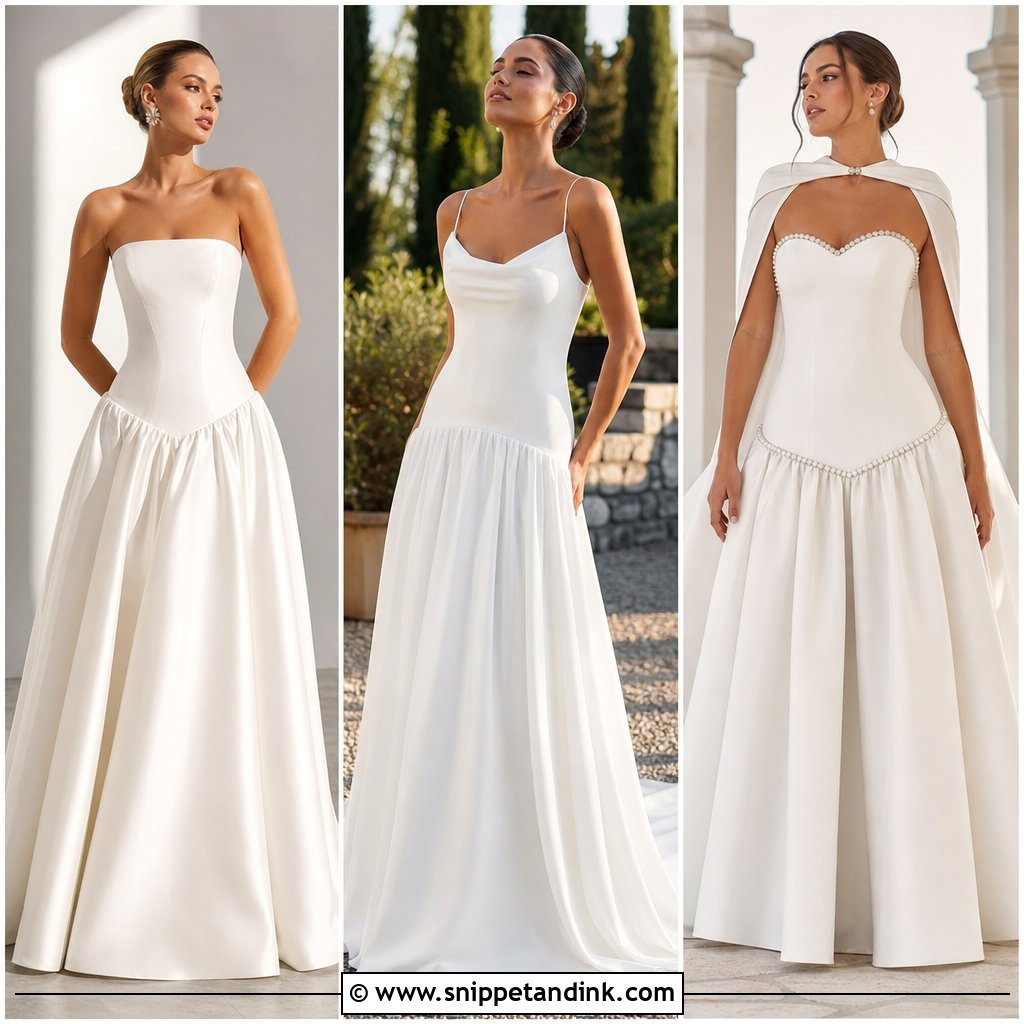
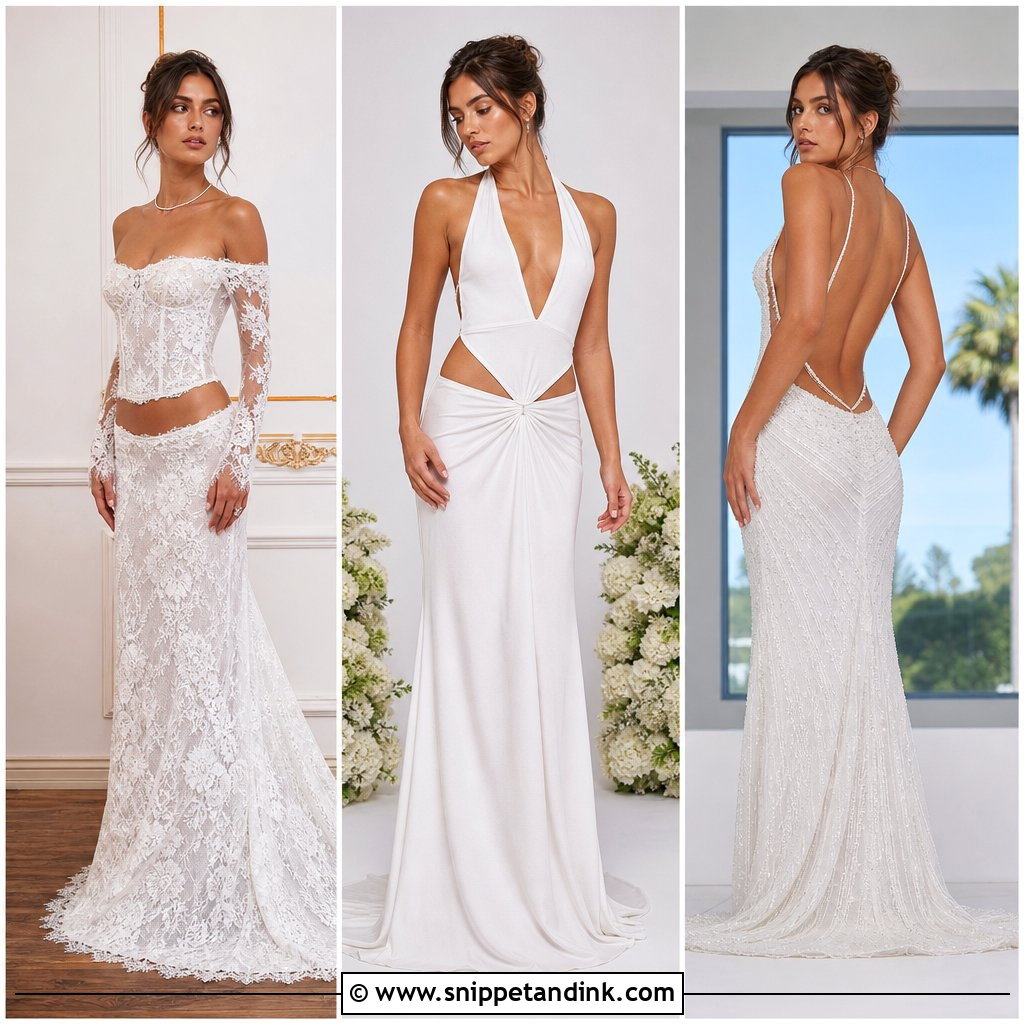
Fit-and-flare is the silhouette I reach for most often when a bride says she wants shape but can’t face a mermaid. The dress follows the bodice, waist and hips, then opens into the skirt gradually, usually from mid-thigh, so you can still take a normal step. That softer release is the whole point. The twenty gowns below cover lace, satin, crepe, corsetry, necklines and two-look designs, and for each I’ve noted what I would check at a fitting and who it tends to suit. Treat them as starting points. The right one is whichever feels secure on your body and still lets you breathe at dinner.
Where the Skirt Opens Decides Who the Dress Suits
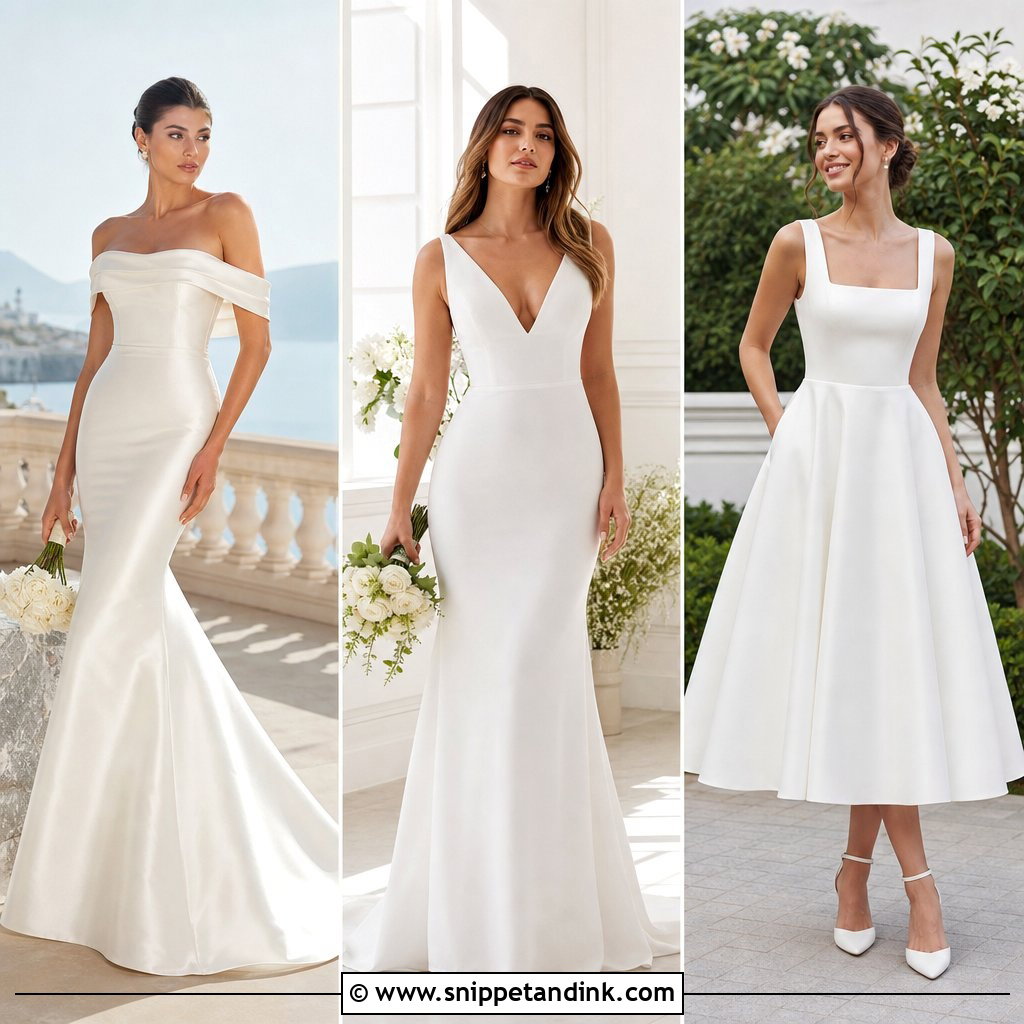
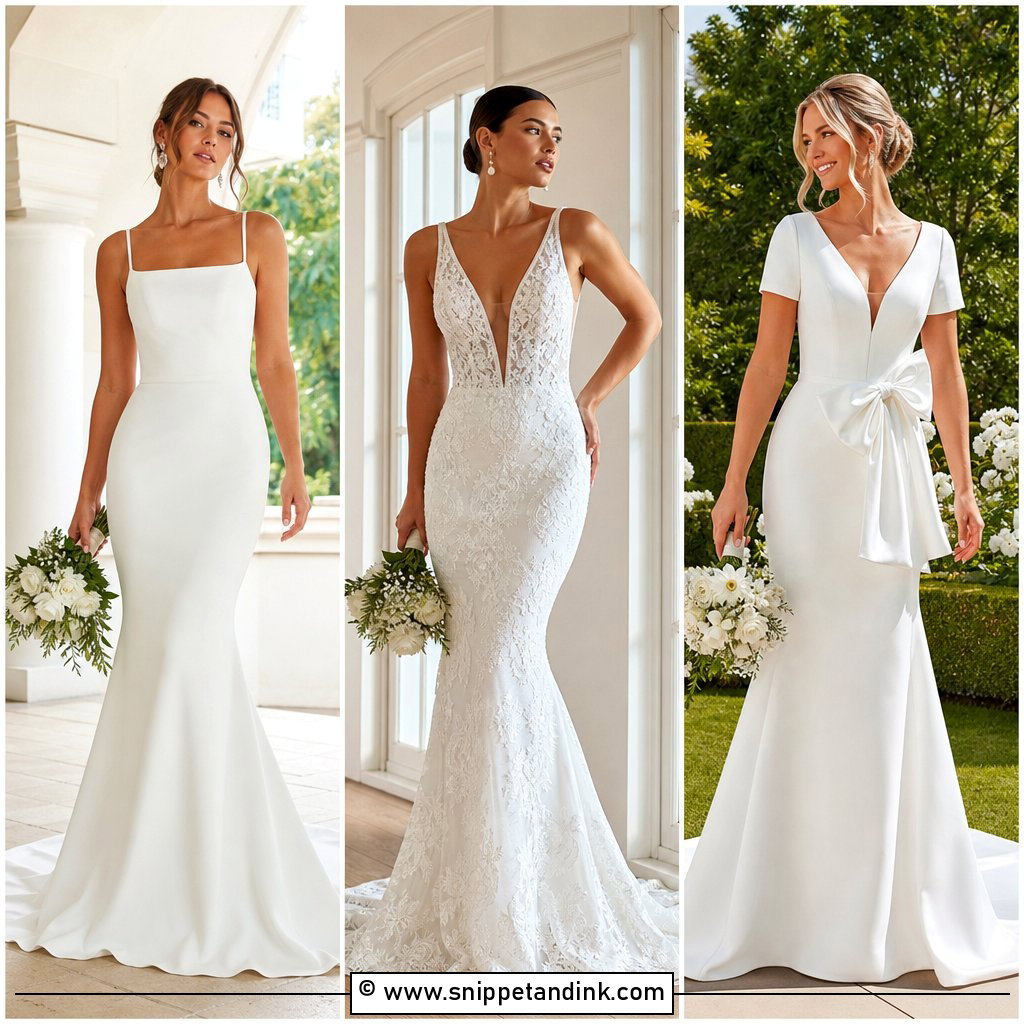
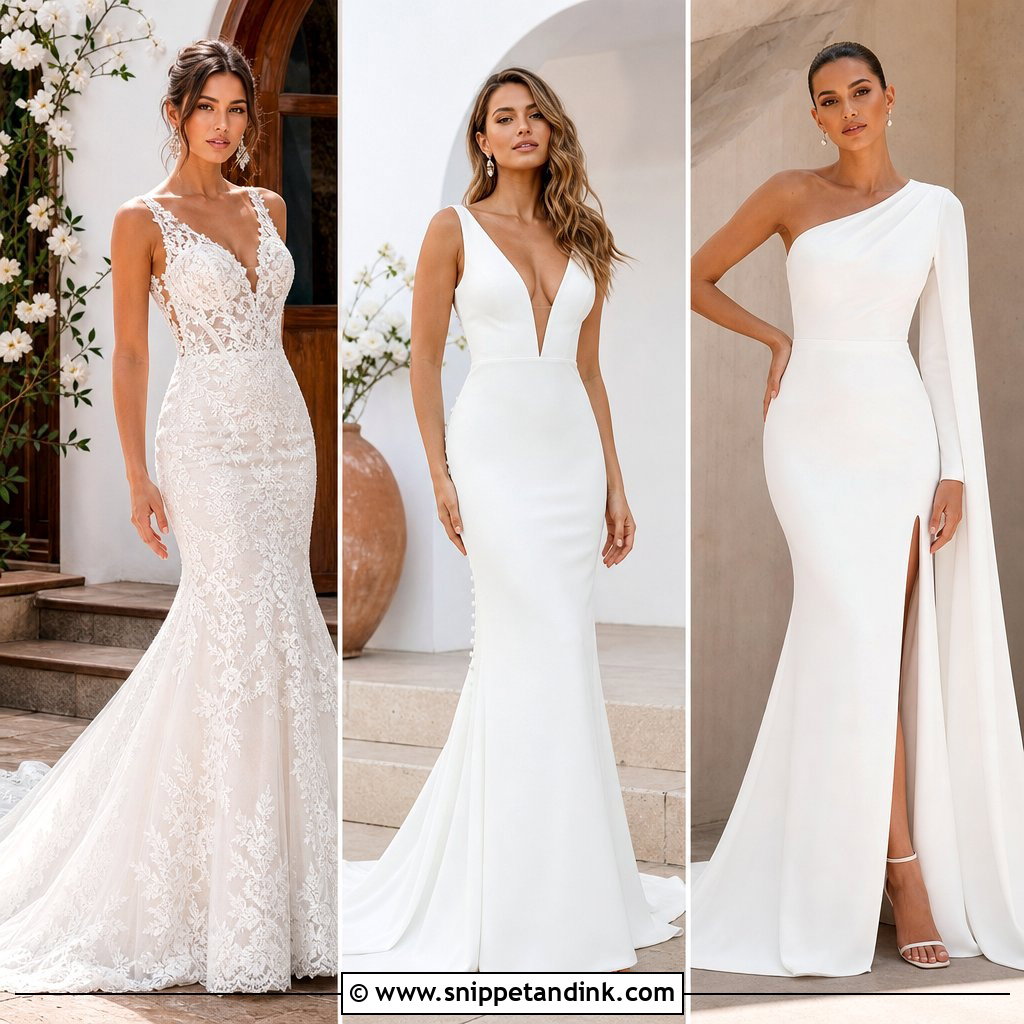
Fit-and-flare, trumpet and mermaid are often lumped together in shops, but they are separated by one thing: the point where the skirt starts to widen. Learning to spot it saves a lot of try-ons.
- Fit-and-flare opens around the upper or mid-thigh. Walking, stairs and sitting are easy.
- Trumpet opens around mid-thigh to just above the knee. More drama, slightly shorter stride.
- Mermaid opens at or below the knee. The most sculpted, and the most restrictive.
Reading your own proportions
I place the flare where it makes the hip look intentional rather than squeezed. Brides with a long torso usually look best when the flare starts a little lower, so the fitted part has room to show the waist. Shorter-legged brides do better with a higher flare that keeps the skirt in proportion. If you carry weight on the thighs, a higher opening skims instead of clinging. Stand side-on to the mirror in every sample. The profile tells you far more about where the fit ends than the front view.
Fabric changes the equation too. Crepe and satin show the exact break point, while layered tulle or lace blurs it, which is forgiving if you’re between two shapes.
1. Lace Fit And Flare Wedding Dress With Cathedral Veil
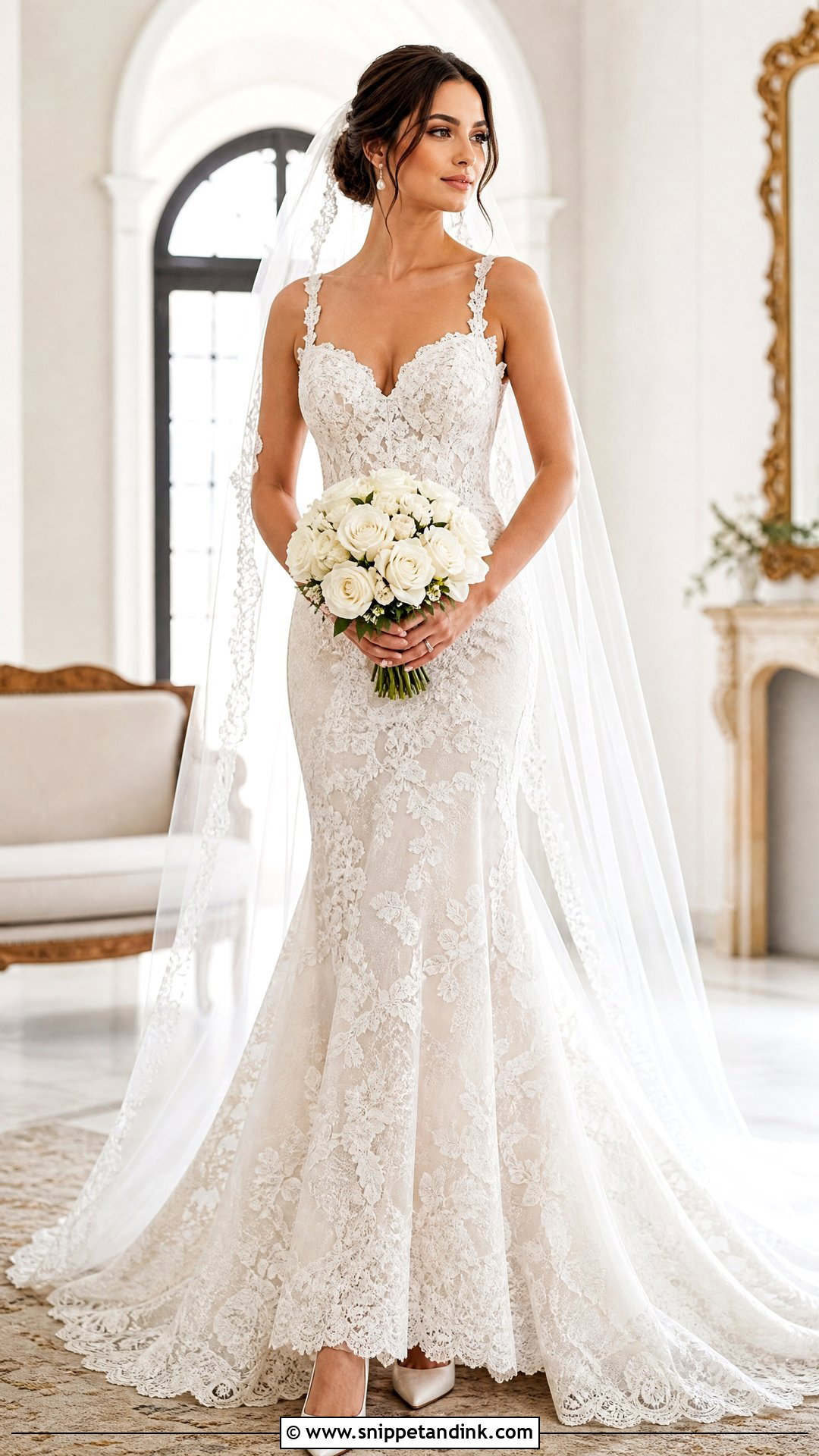
Lace that’s dense on the bodice and thins out toward the hem keeps the flare light instead of stiff, so that’s what I look for on a lace version. A lightly structured sweetheart with narrow straps holds everything up without bulk. Add a cathedral tulle veil edged in matching lace, pearl drops and ivory pointed pumps, with a low chignon so the neckline and back stay visible. A round bouquet of roses and ranunculus suits it. One warning from fittings: lace edging on the veil has to match the dress lace in colour, not just in style. Ivory lace comes in a surprising range of shades, and a mismatch shows the moment the veil lies across the gown.
2. Satin Fit And Flare Wedding Dress With Pearl Jewelry
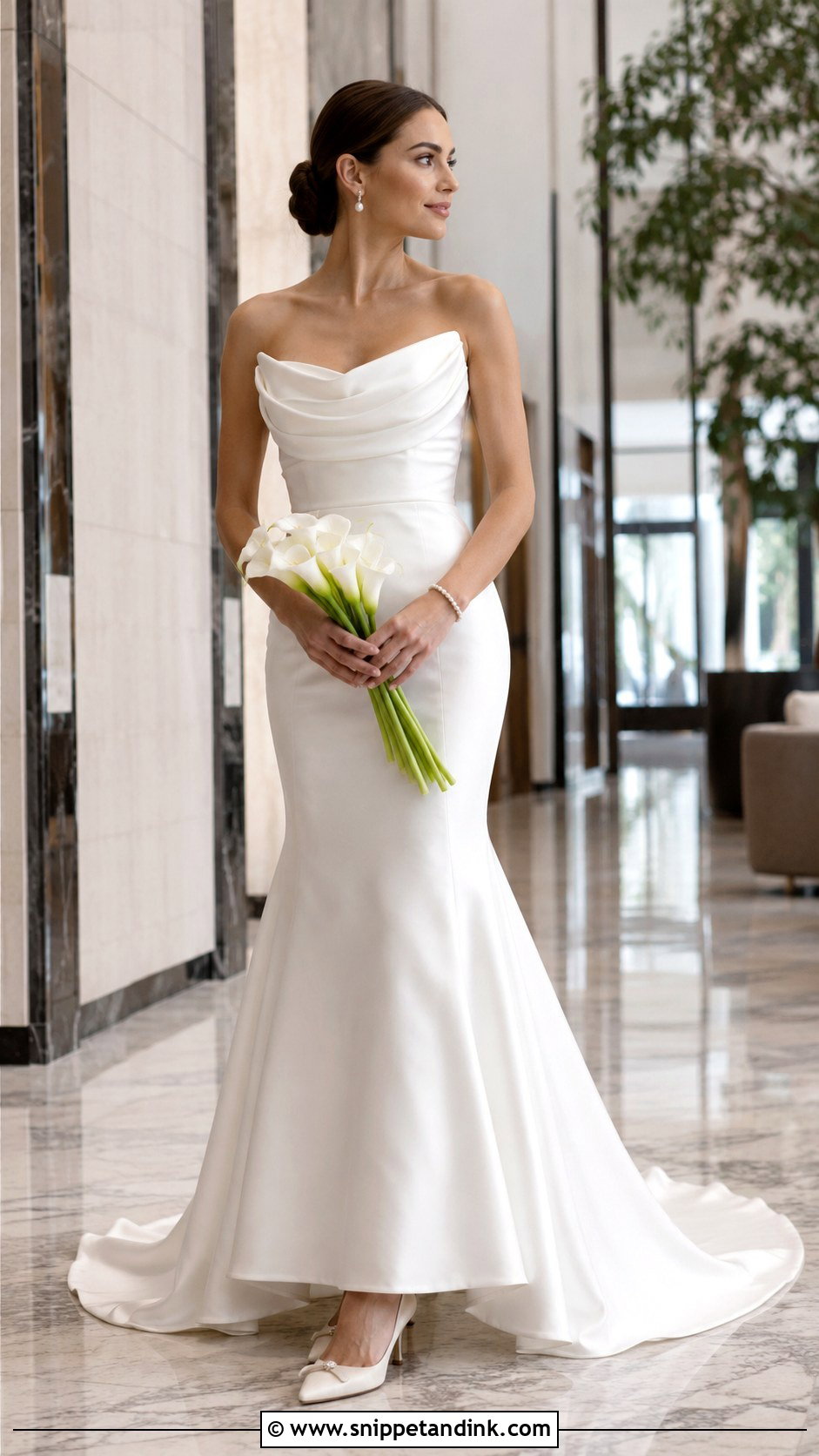
Satin is unforgiving and that’s its appeal. Every seam, every pull at the hip and every line of underwear shows, so a satin fit-and-flare has to be altered precisely. When it is, it looks crisp in a way lace never does. Choose a softly draped neckline and a moderate train, then keep accessories to pearl studs, a pearl bracelet and mid-height satin pumps. A fingertip veil leaves the clean back on show. Calla lilies or tulips in a compact bunch suit the long lines, and modern hotels and architectural venues are its natural setting.
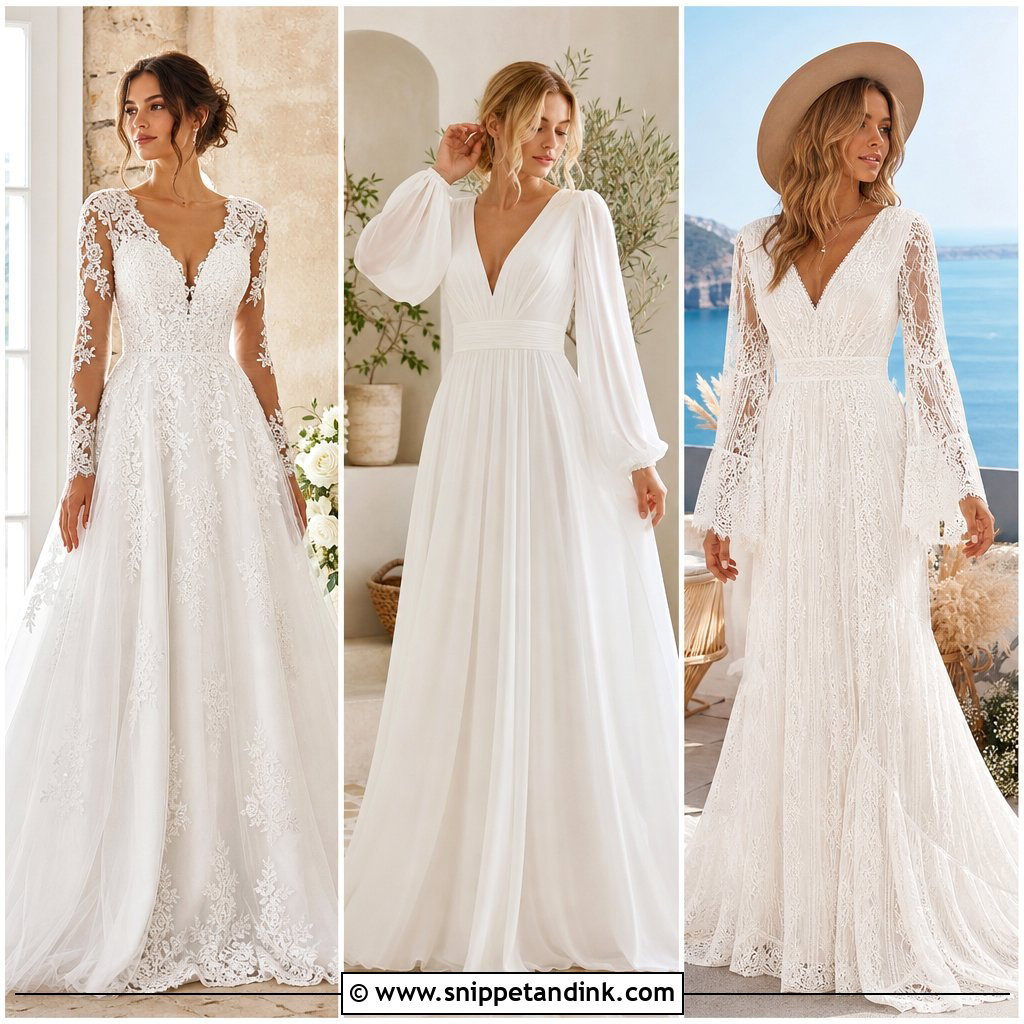
3. Long Sleeve Fit And Flare Wedding Dress With Tulle Veil
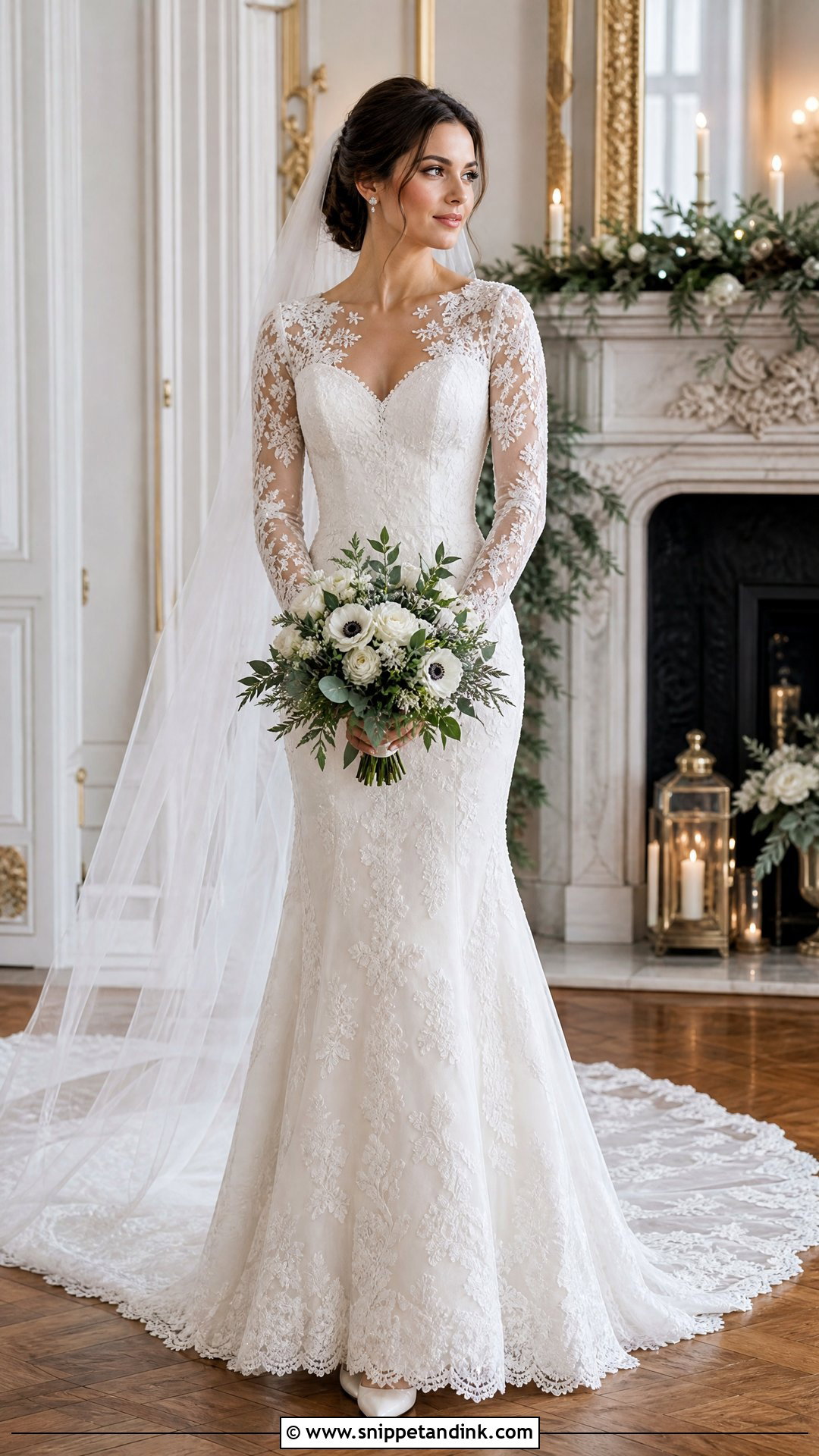
Sheer lace sleeves over a lined sweetheart or bateau base give cool-weather coverage without making the bodice look solid. The skirt should flare gently from the lower thigh. A plain tulle chapel veil lets the sleeve pattern be the detail. Crystal studs, closed ivory heels and a small clutch, with hair in a loose low bun, keep the arms and neckline visible. Try lifting your arms above your head at the fitting. Lace sleeves set into a fitted bodice often pull the whole dress up when you raise them, and a seamstress can add a little ease under the arm if you catch it early. Anemones and roses with winter greenery finish it.
4. Off The Shoulder Fit And Flare Wedding Dress With Drop Earrings
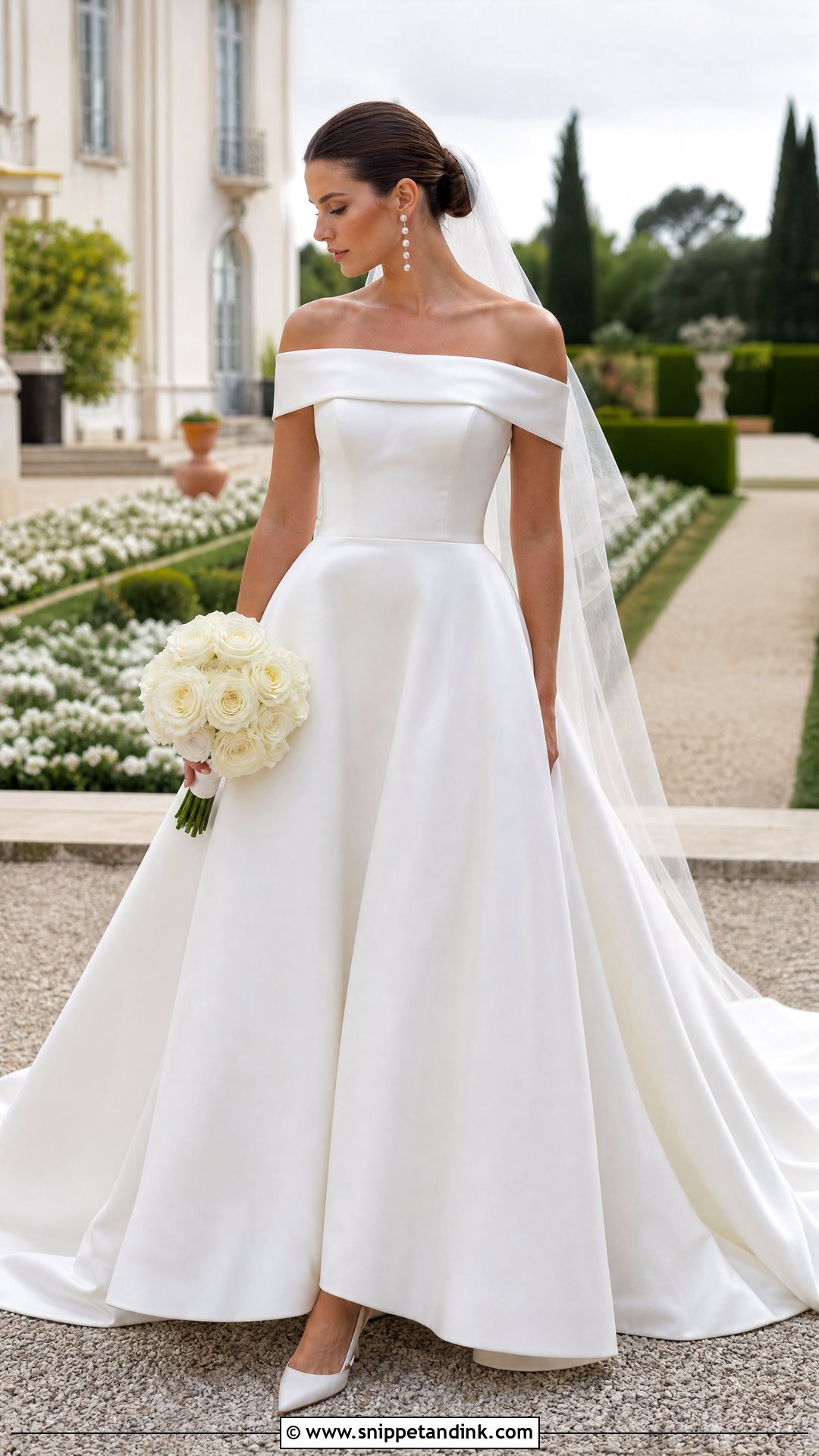
Off-the-shoulder necklines photograph well and are among the hardest to keep in place. A folded satin band looks modern; lace-trimmed sleeves feel softer. Either way, an inner corset or boned bodice does the real work, since the sleeves sit on your upper arms and will slide if the bodice isn’t anchored. Long drop earrings and no necklace keep the collarbone clear. Pointed slingbacks and a sheer chapel veil under a low bun finish it, with roses and sweet peas in a loose bouquet. Practise hugging people at your fitting. That’s when these bands creep up.
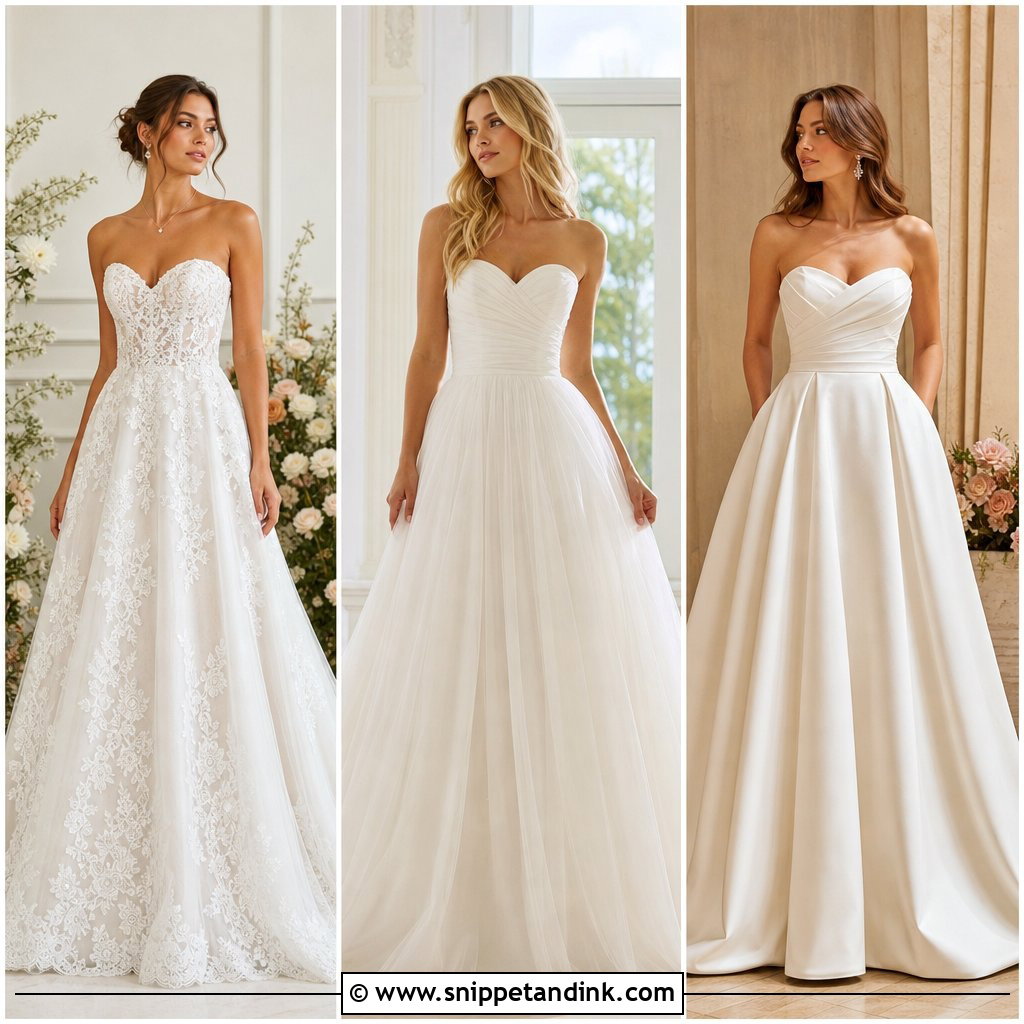
5. Strapless Fit And Flare Wedding Dress With Statement Veil
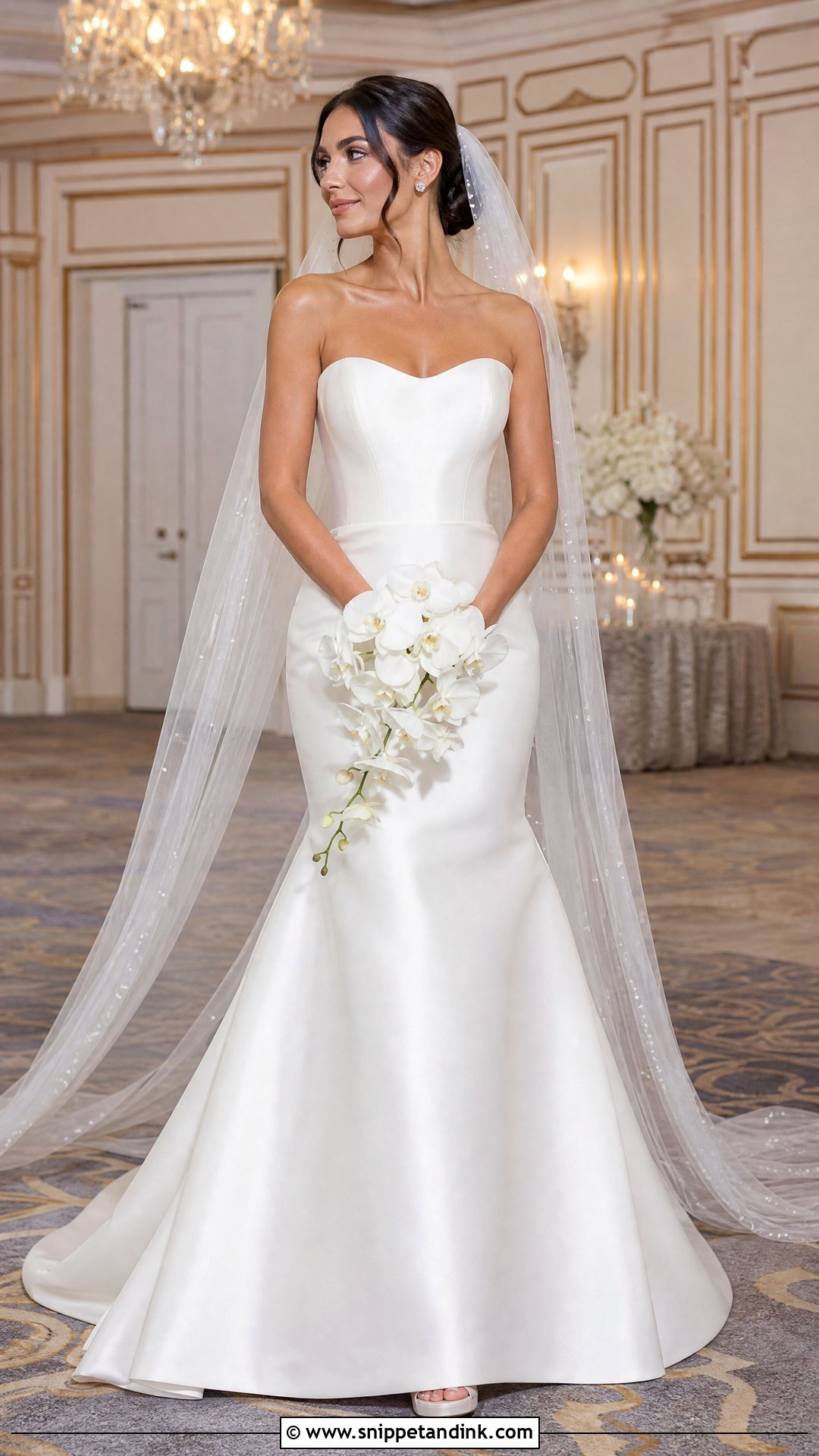
Strapless gives you a blank canvas for one strong accessory, which here is the veil. The bodice needs internal boning and tailoring snug at the ribcage, not the bust; that’s where a strapless dress actually holds. Crepe, satin or Mikado keeps the flare defined. Put the drama into a veil with scattered pearls or a wide lace border, and keep jewelry to diamond studs and a slim bracelet. Block heels and orchids or long-stem roses complete it. If you catch yourself hitching the bodice up during the fitting, it isn’t tight enough at the ribs yet.
6. Sweetheart Fit And Flare Wedding Dress With Floral Accessories
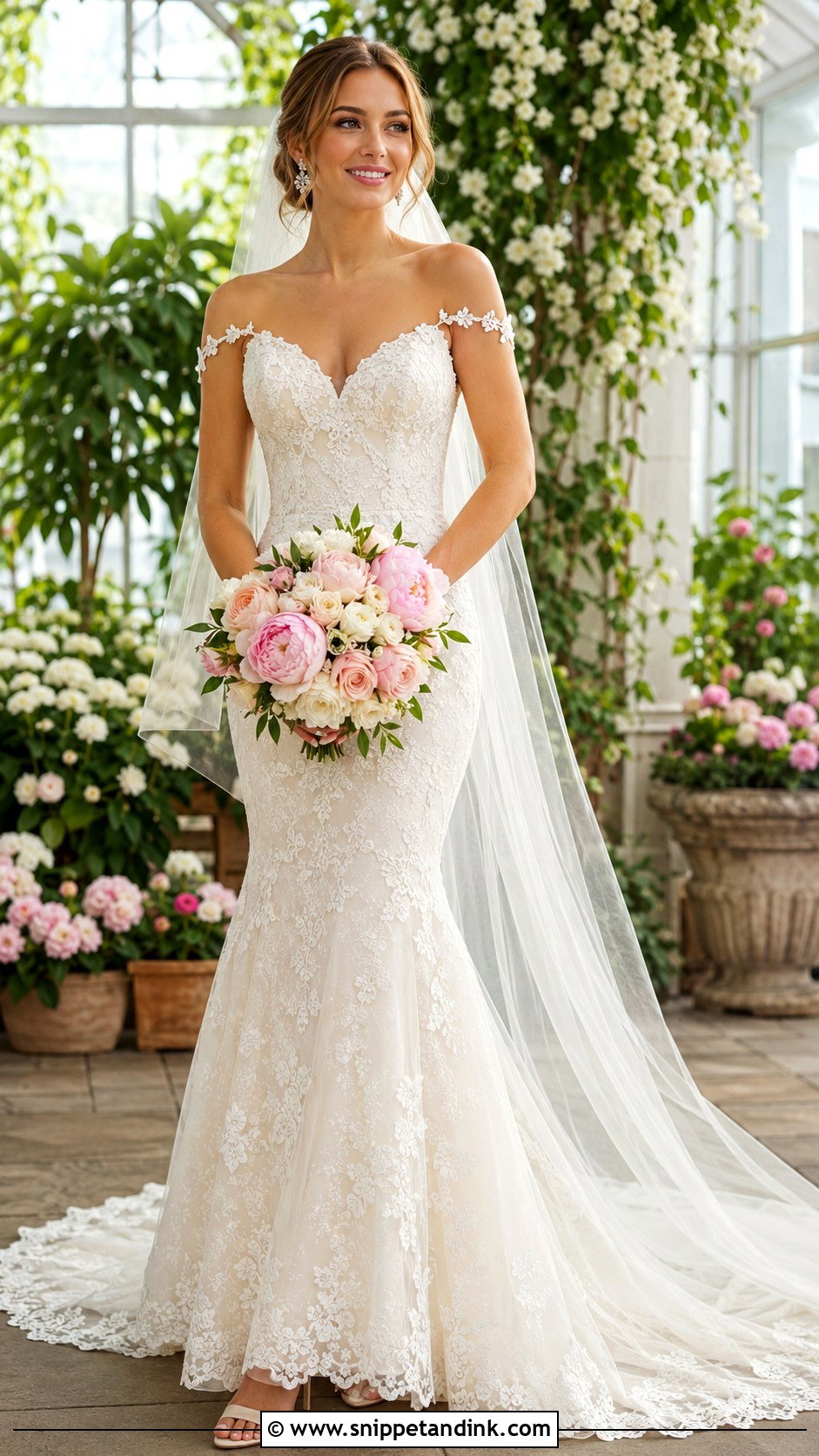
A sweetheart curve softens the bodice, especially with lace appliqués clustered there and scattered lightly over the skirt. Detachable narrow straps are worth asking about; many brides find they feel more secure with them for the ceremony and take them off later. Flower-shaped earrings and a small comb echo the appliqués, and a plain tulle veil balances them. Peonies or garden roses when in season, ivory heels, and soft waves or a half-up style. I keep the floral accessories small and few. Three matching flower details look intentional; six look like a set bought together.
7. Square Neck Fit And Flare Wedding Dress With Minimal Accessories
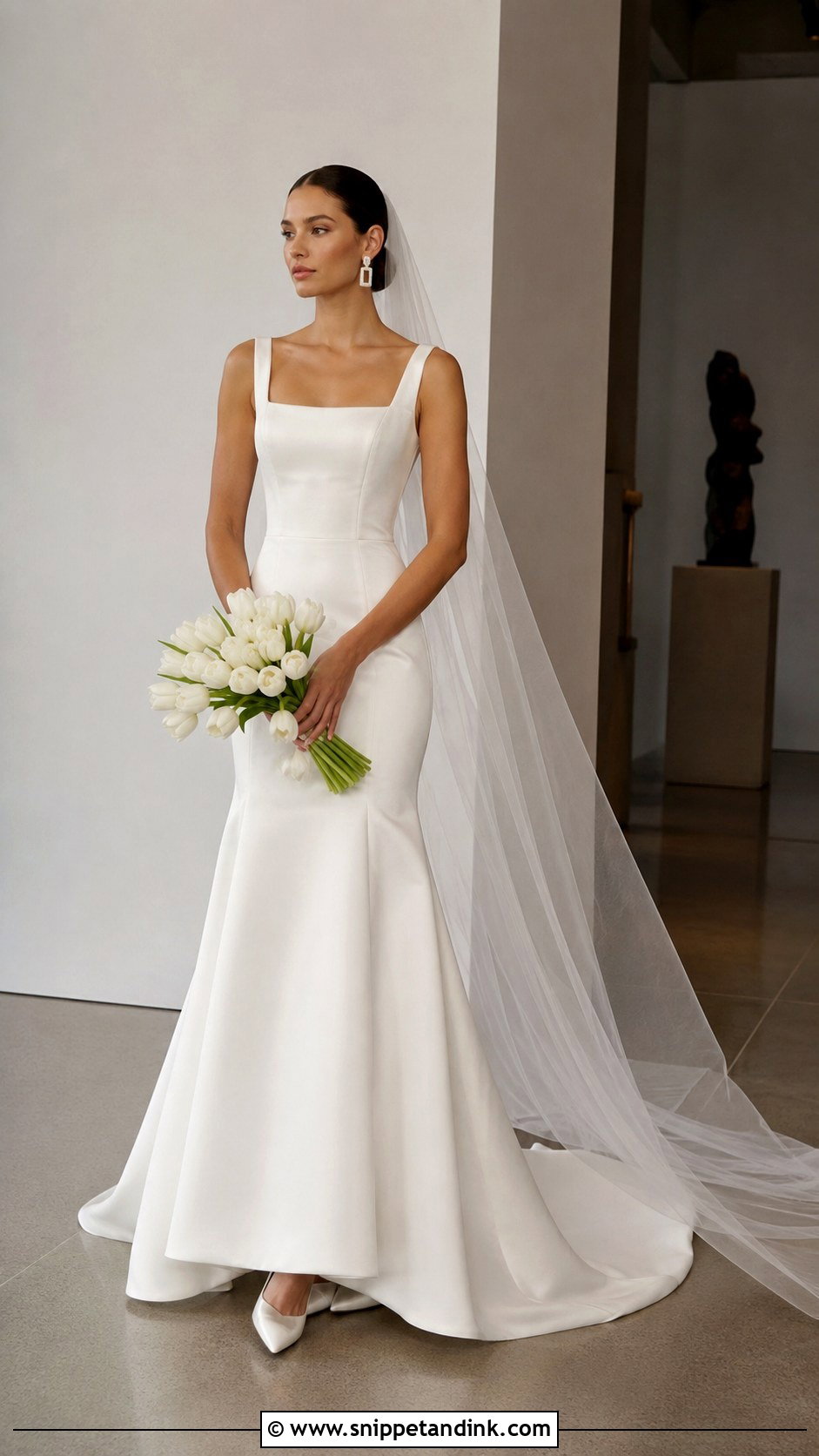
A square neckline needs wide straps and a structured bodice in crepe or satin, otherwise the corners collapse and it stops reading as square. The skirt should skim the hips and open in a controlled flare. Geometric studs, a slim bracelet and pointed ivory pumps suit the clean lines. A plain cathedral veil adds the ceremony moment without fuss. Hair in a centre-parted bun or low ponytail keeps the neck clear. Square necks can sit too wide on narrow shoulders and show bra straps, so check the strap position from behind in the mirror before agreeing to it. Tulips, callas or orchids complete it, for galleries, museums and modern hotels.
8. V Neck Fit And Flare Wedding Dress With Chapel Veil
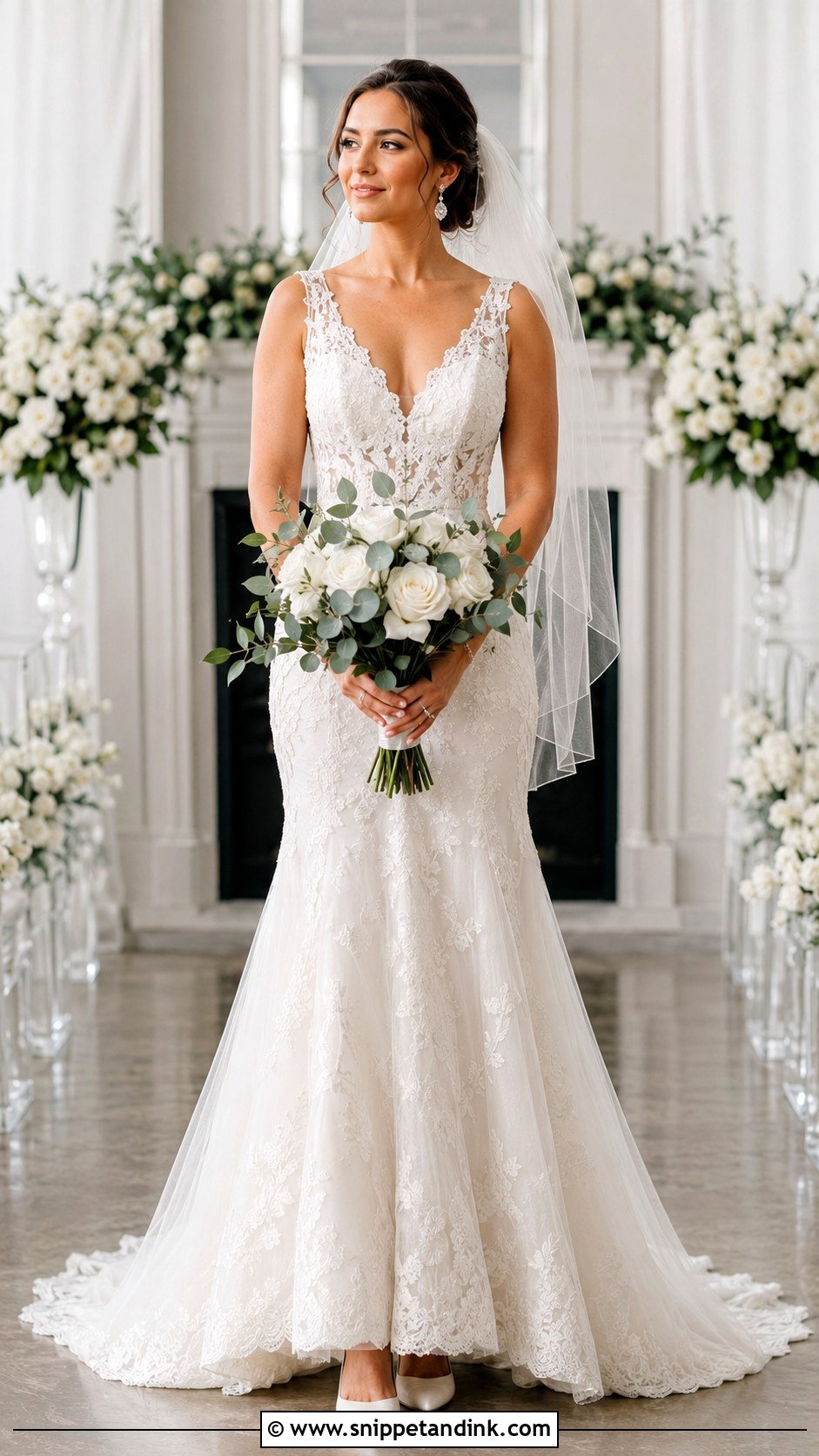
A V-neck draws one long line from collarbone to waist. Its depth can be anything from modest to plunging with illusion tulle filling the gap. Lace softens it; crepe sharpens it. A fine pendant only works if it sits inside the V without touching the edges, otherwise wear small drops and a bracelet. A chapel veil, closed pumps, a low twisted bun and roses with eucalyptus finish it. Illusion panels are the thing to test. Sit, lean forward and turn at the fitting; mesh that’s cut too tight wrinkles across the chest, and mesh cut too loose gapes.
9. High Neck Fit And Flare Wedding Dress With Sleek Bun
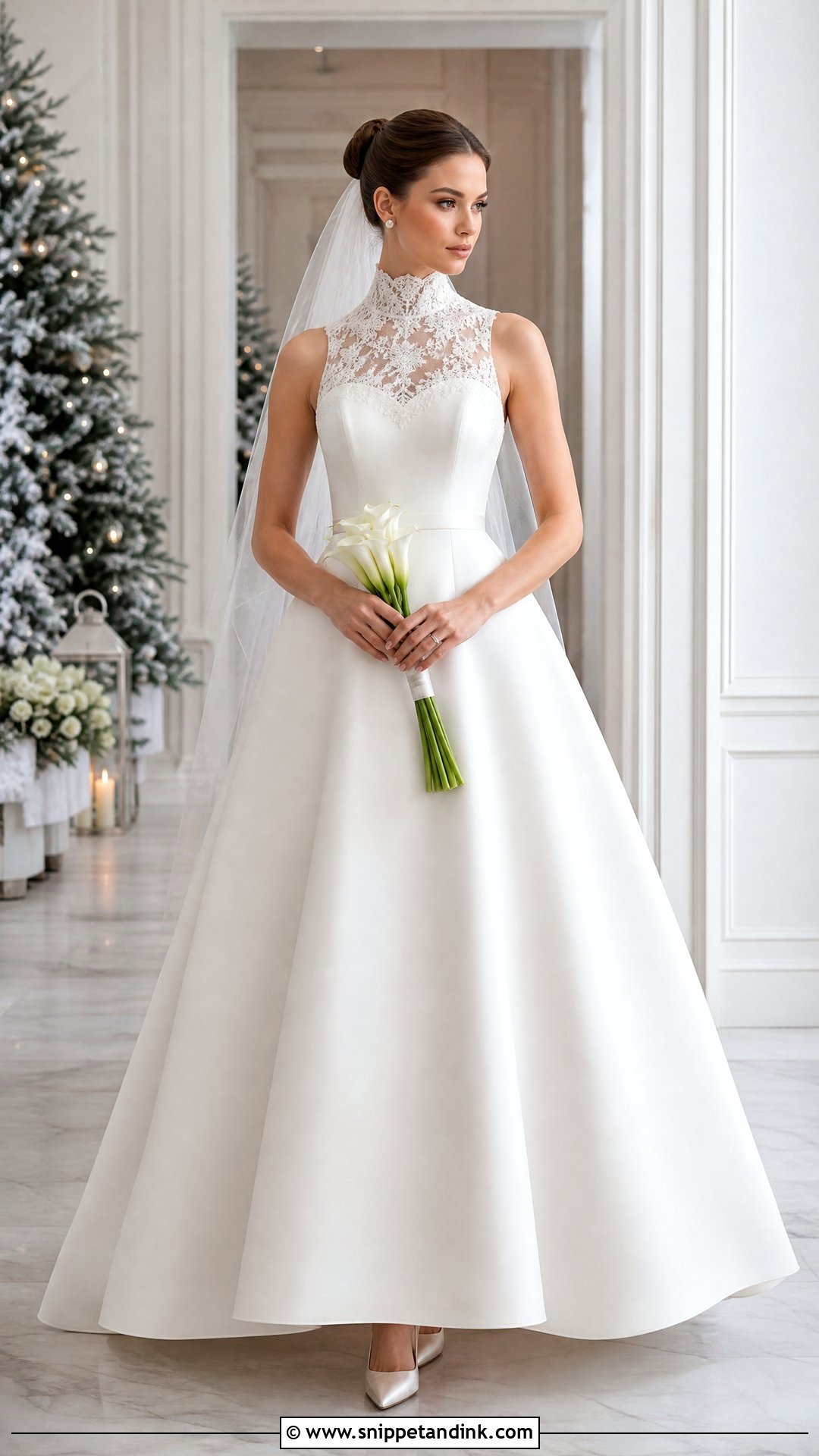
Coverage up to the throat has real presence, and sheer lace stops it looking heavy. Under it, a lined sweetheart or bateau layer gives structure while the lace provides the high line. Skip the necklace entirely. Pearl studs or small crystals, a sleek bun that can hold the veil beneath it, pointed satin heels and a slim bunch of callas carry the long vertical feel. Turn your head left and right at every fitting. High necklines that are even slightly tight rub, and you’ll notice it by the speeches.
10. Spaghetti Strap Fit And Flare Wedding Dress With Sheer Veil
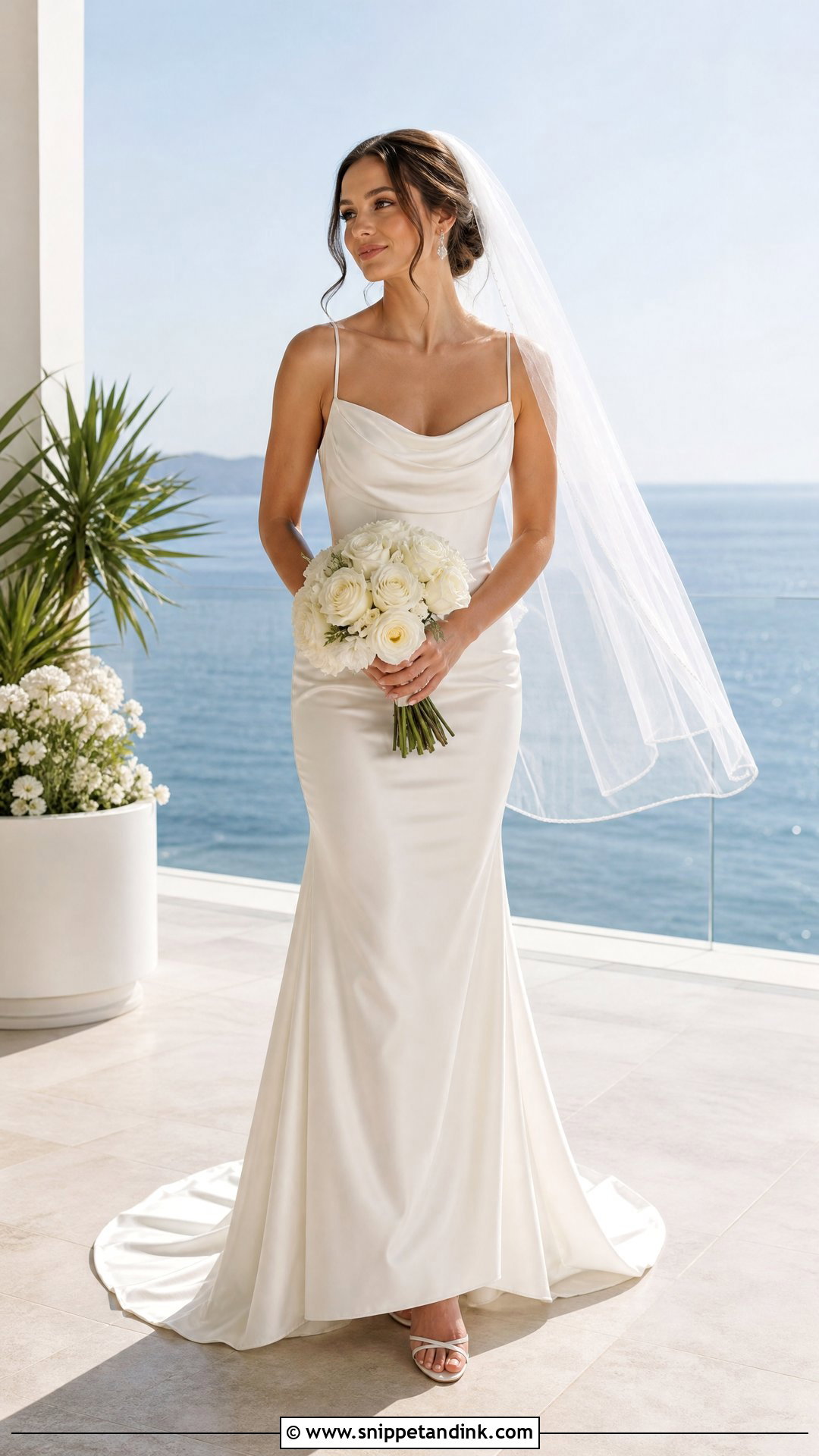
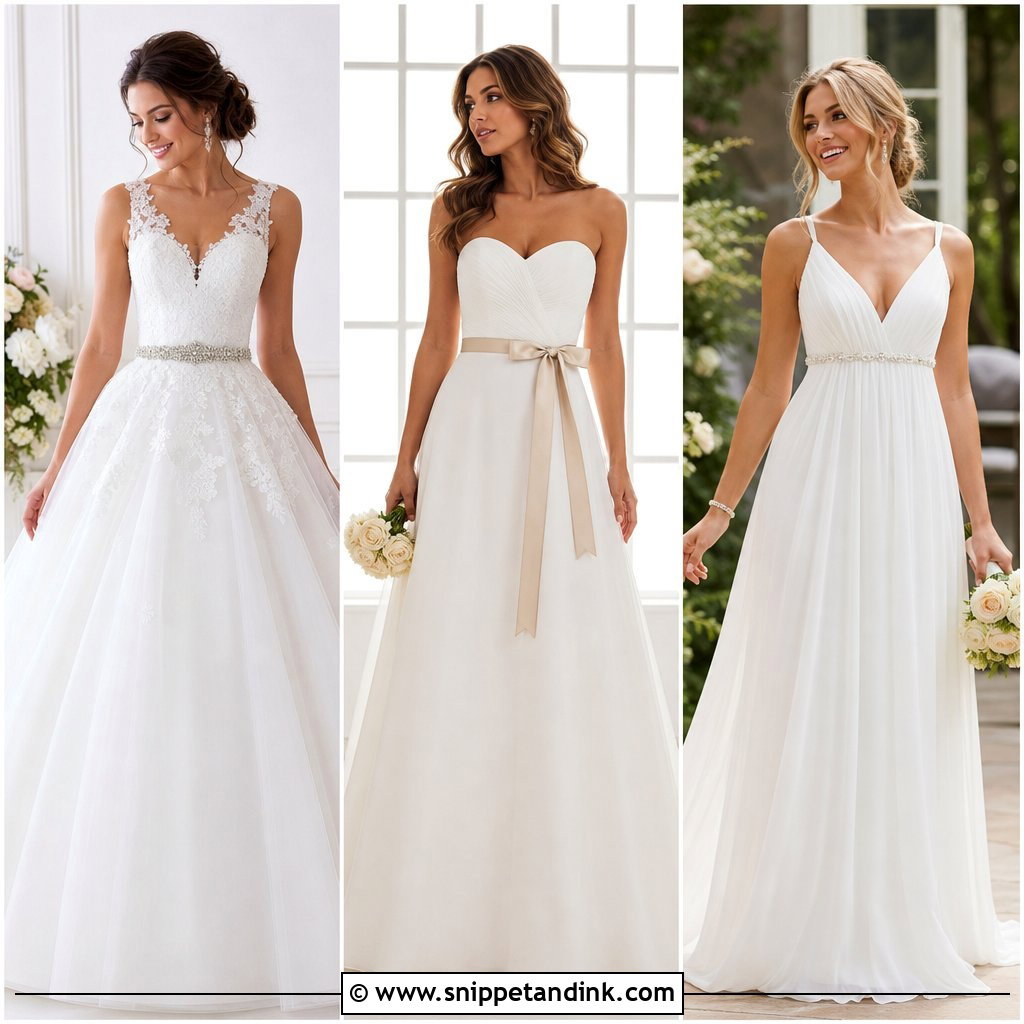
Thin straps keep the look airy for summer. A draped cowl reads modern; a lace or beaded bodice reads more bridal. On a gown with a structured skirt or real train, I ask for reinforced or adjustable straps, because spaghetti straps carry more weight than they look like they can and can dig in by the evening. Pair with a sheer fingertip veil, fine earrings and strappy ivory heels. Loose waves, a low ponytail or a relaxed bun depending on how much back you want to show. Roses and greenery, hand-tied, for coastal venues and bright rooms.
11. Open Back Fit And Flare Wedding Dress With Hair Up
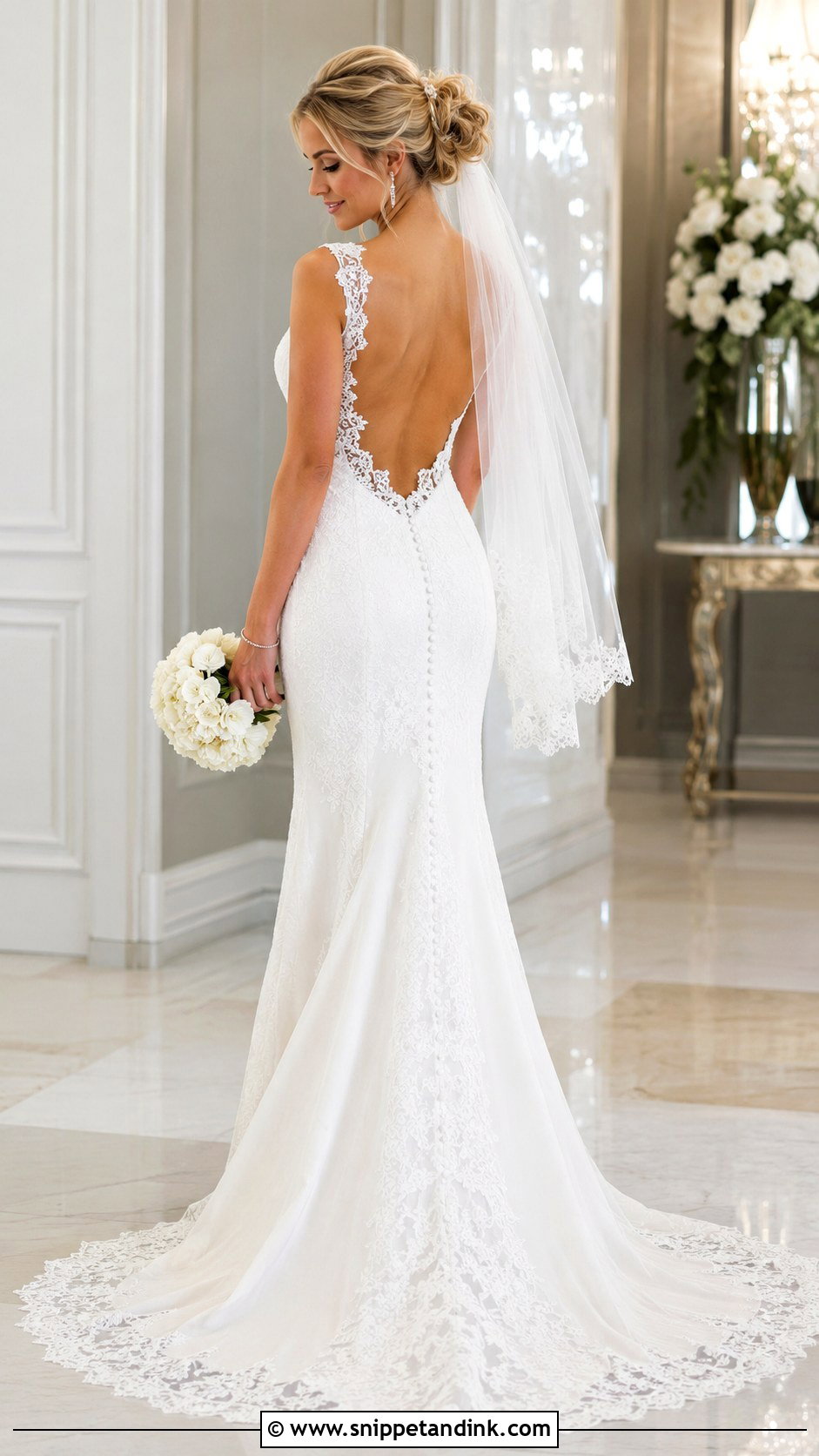
An open back only works if the styling gets out of its way. Lace edging, covered buttons, crossed straps or illusion panels give the opening a frame. Wear the hair up in a high bun or textured updo and place the veil below it so the back is visible through the ceremony. A modest front balances a deep back. Small earrings, a slim bracelet and closed heels with a little detail are enough. Cascading bouquets suit plain gowns; a busy back wants a compact posy. Ask your seamstress to check where the opening sits when you’re seated, since backs that look fine standing often gape at the lower edge in a chair.
12. Beaded Fit And Flare Wedding Dress With Crystal Earrings
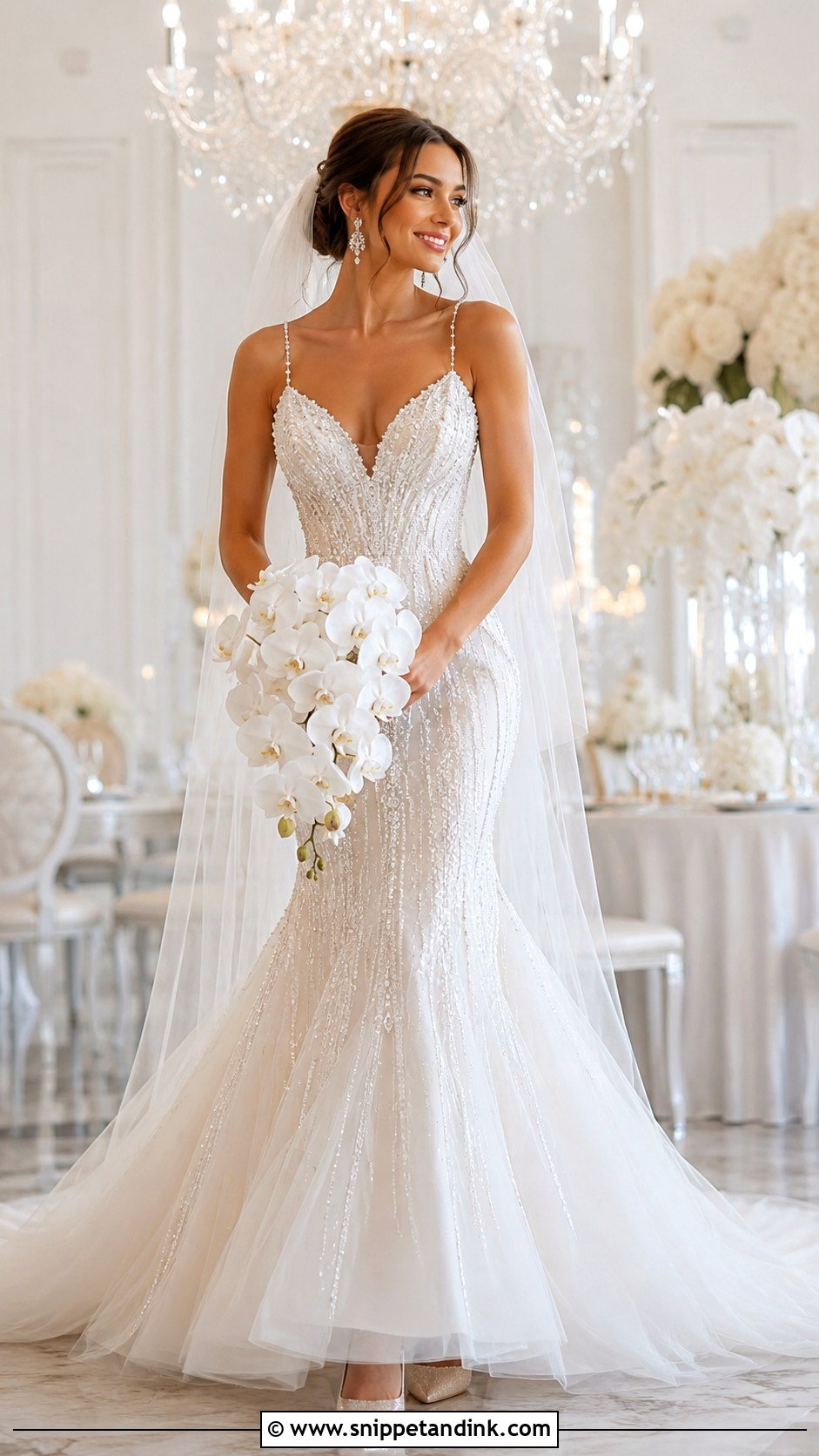
Beadwork that runs vertically or in balanced patterns over the bodice and upper skirt carries the sparkle for the whole outfit. A plain tulle layer below the flare softens it and moves well. Crystal studs or short drops, no large necklace, metallic ivory or soft silver pumps. A simple veil, low bun and white roses or orchids. Look at the beading under daylight and under warm indoor bulbs before you commit. Silver-lined and iridescent beads can shift from icy to yellow depending on the light, and the evening reception light is the one you’ll be photographed in most.
13. Pearl Fit And Flare Wedding Dress With Matching Veil
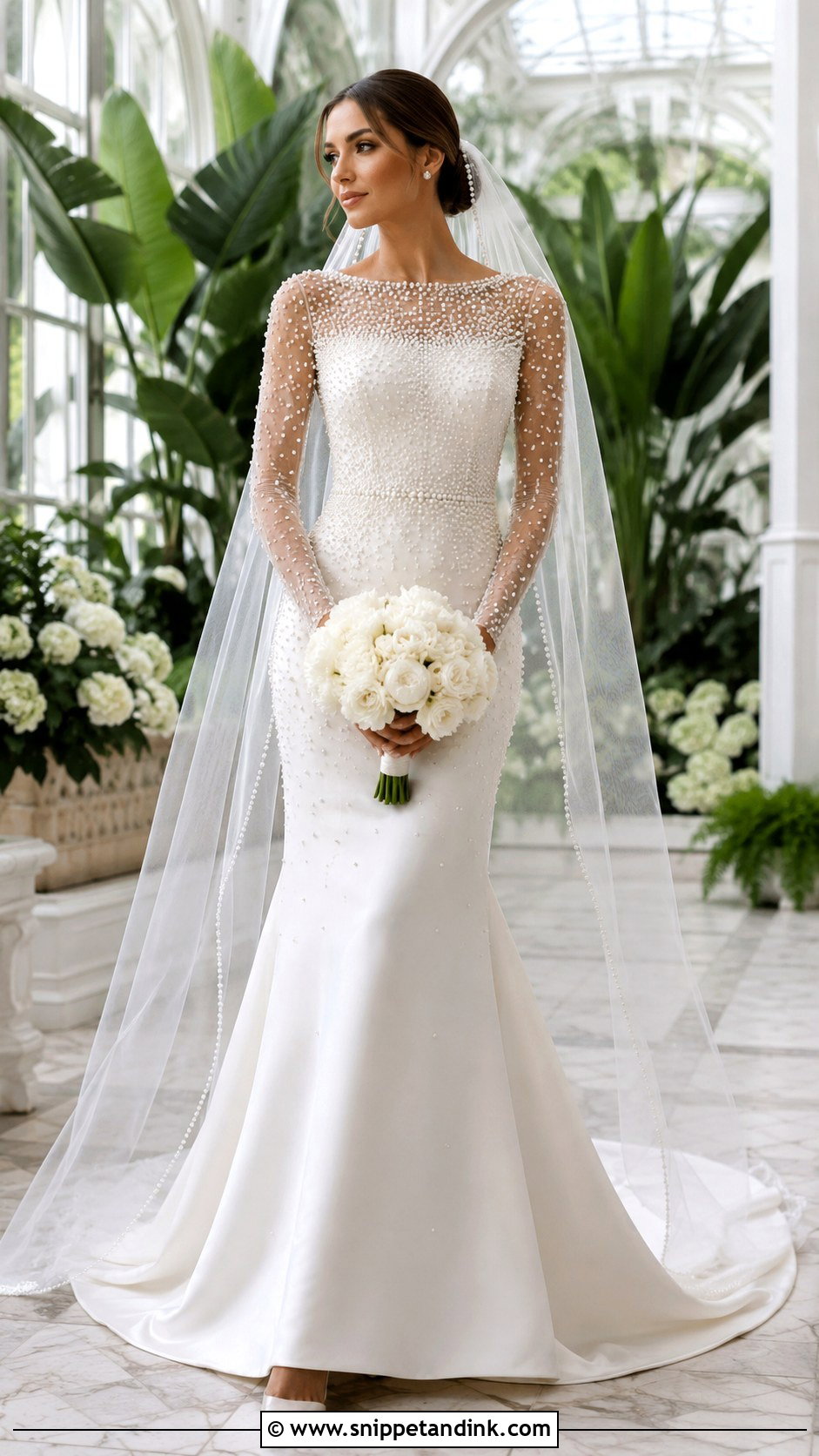
Scattered pearls on sheer sleeves, the bodice or the upper skirt add texture while letting the shape show through. Covering every surface makes the gown look busy and heavy. A pearl-edged veil continues the detail, so stop there: small studs and no pearl necklace. Satin pointed heels, a compact handbag and a soft bun with a simple comb above the veil complete it. Carry an all-white bouquet with smooth greenery for contrast. Pearls are worth seeing up close, so this suits conservatories and smaller rooms where guests are near you.
14. Floral Applique Fit And Flare Wedding Dress With Garden Bouquet
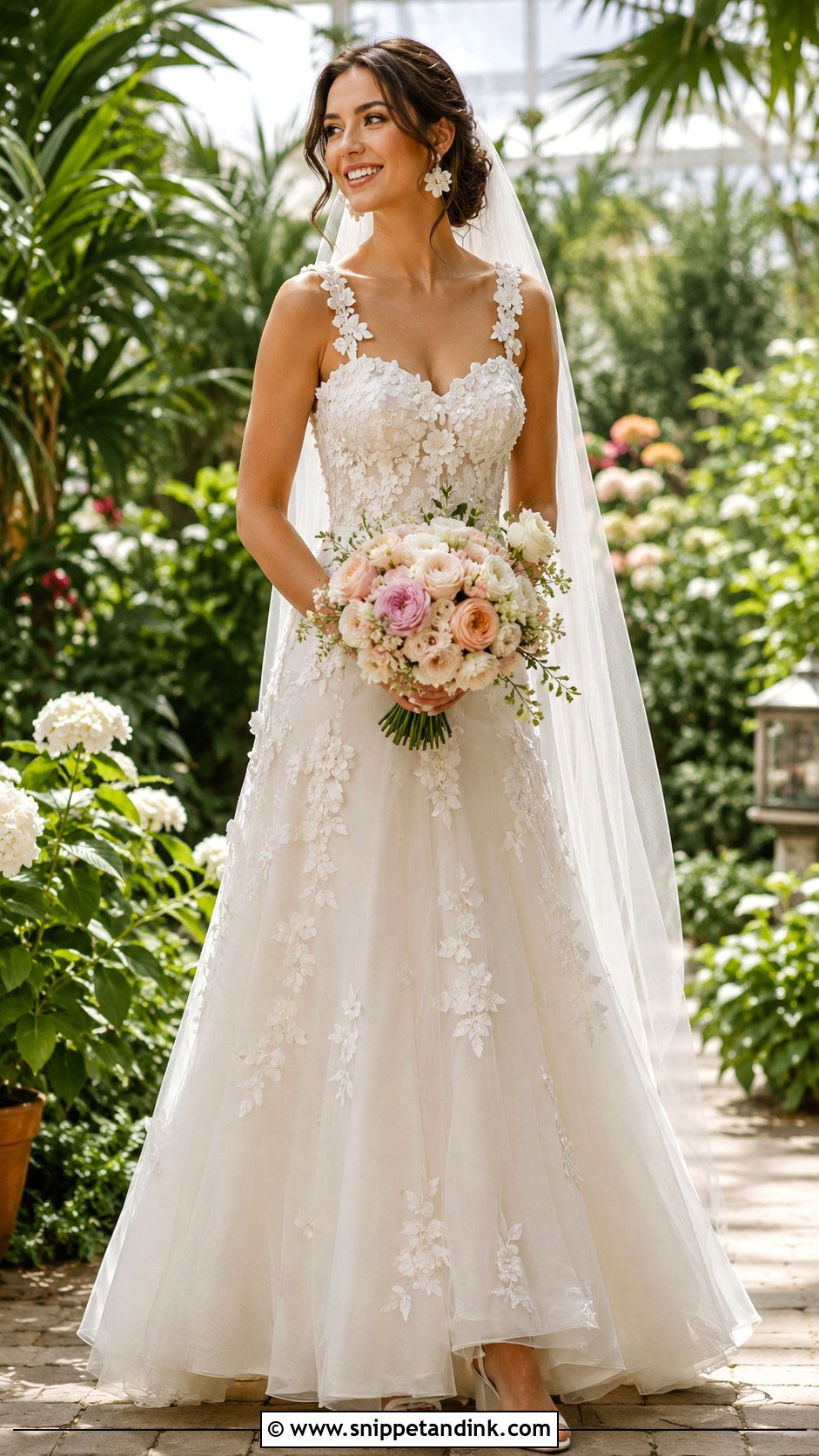
Three-dimensional appliqués look freshest when they start at the neckline and waist and spread loosely down the skirt, leaving the hem light. A plain chapel veil and block heels steady the look, and a loose bouquet of garden roses, ranunculus and sweet peas continues the theme without copying the appliqués flower for flower. Wear the hair textured, up or half-up. Raised appliqués catch on veil tulle and bouquet wires, so I tack down any loose petal edges at the final fitting. One coordinated bouquet and one small jewelry detail is plenty.
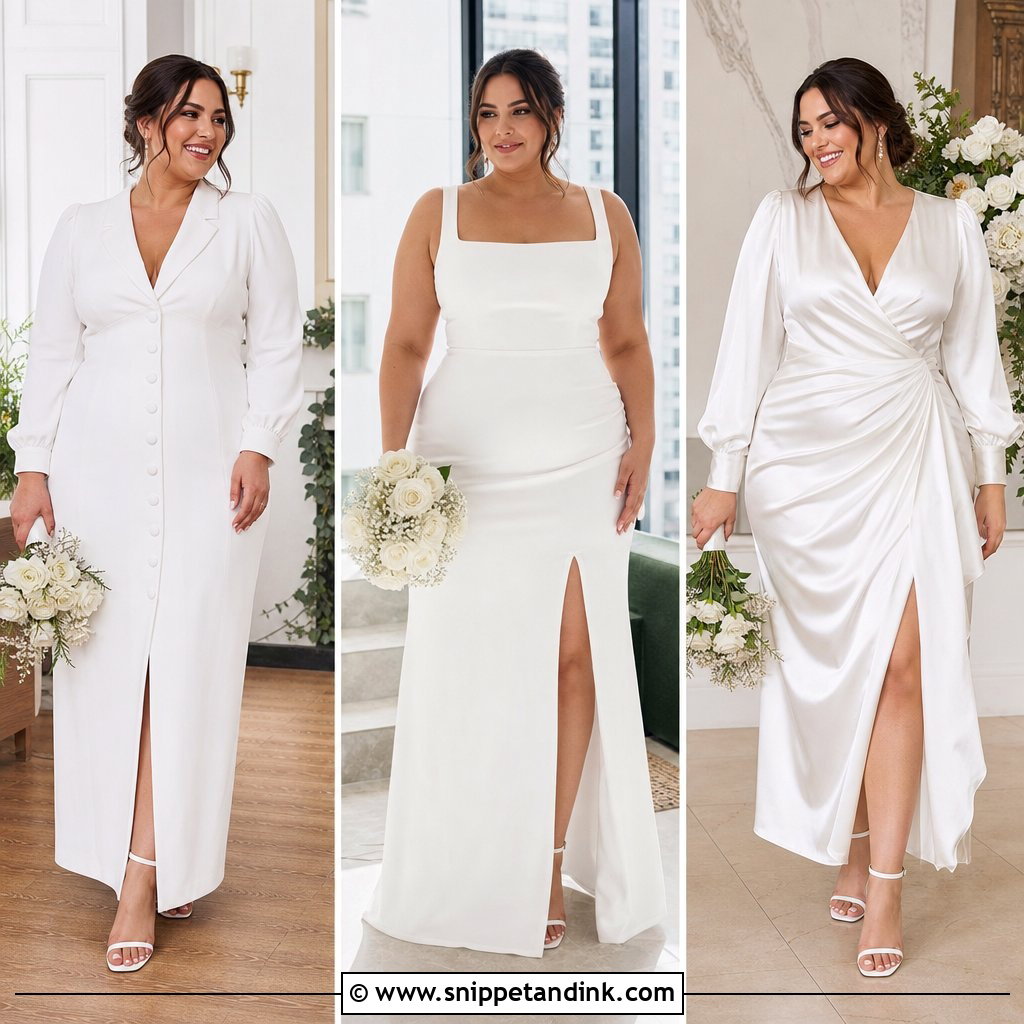
15. Crepe Fit And Flare Wedding Dress With Modern Veil
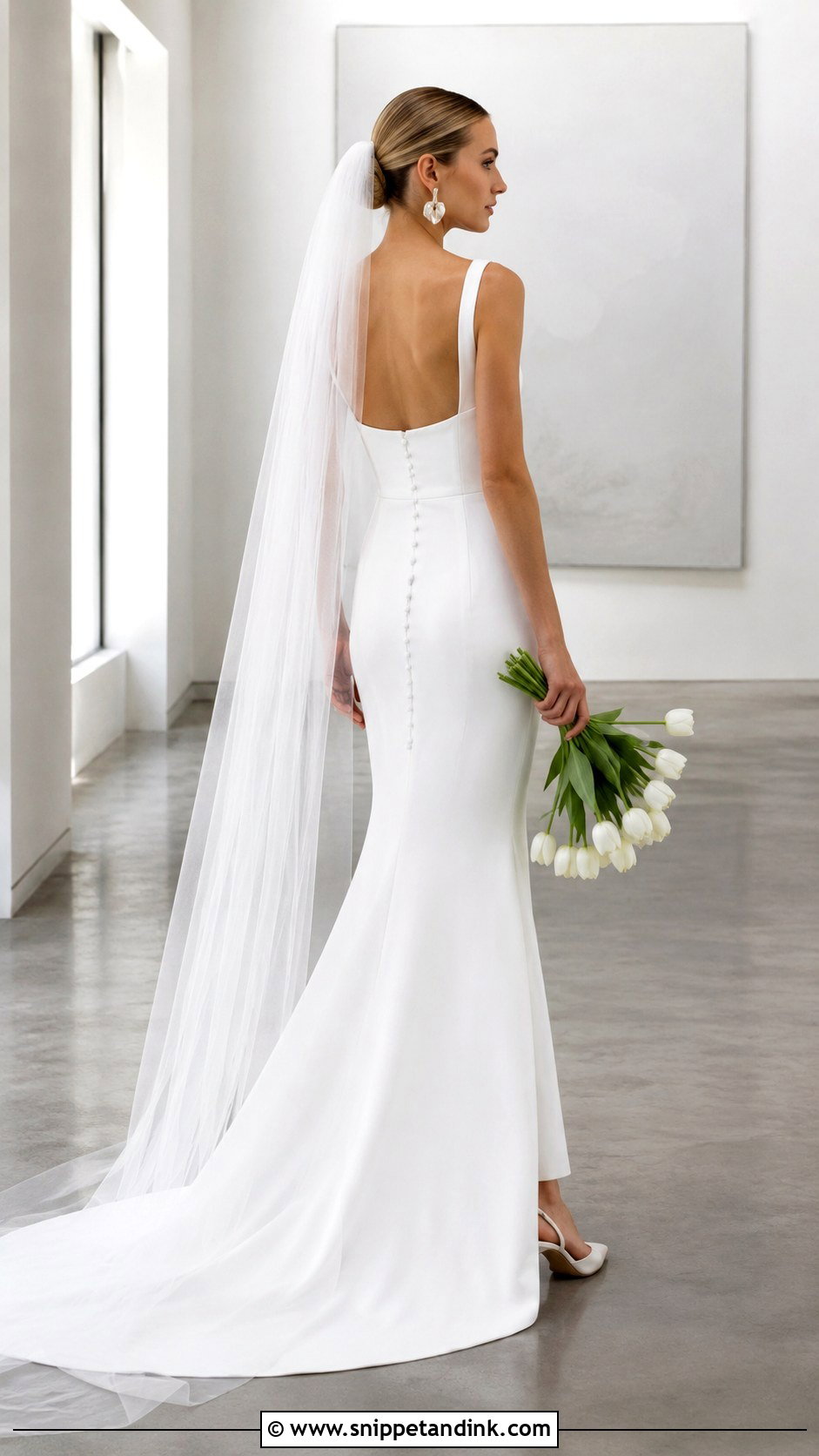
Crepe is my favourite fabric for a minimal fit-and-flare because it drapes cleanly and has a matte finish that photographs without glare. It needs precise seams, a defined waist and a smooth fit at the hip, not a tight one, since crepe shows strain lines across the seat. A low or square back with covered buttons, a narrow raw-edge cathedral veil, sculptural earrings and pointed slingbacks finish it. A sleek centre-parted bun keeps attention on the cut. Wear your actual smooth-edged underwear to the last fitting; crepe will show any edge.
16. Corset Fit And Flare Wedding Dress With Satin Gloves
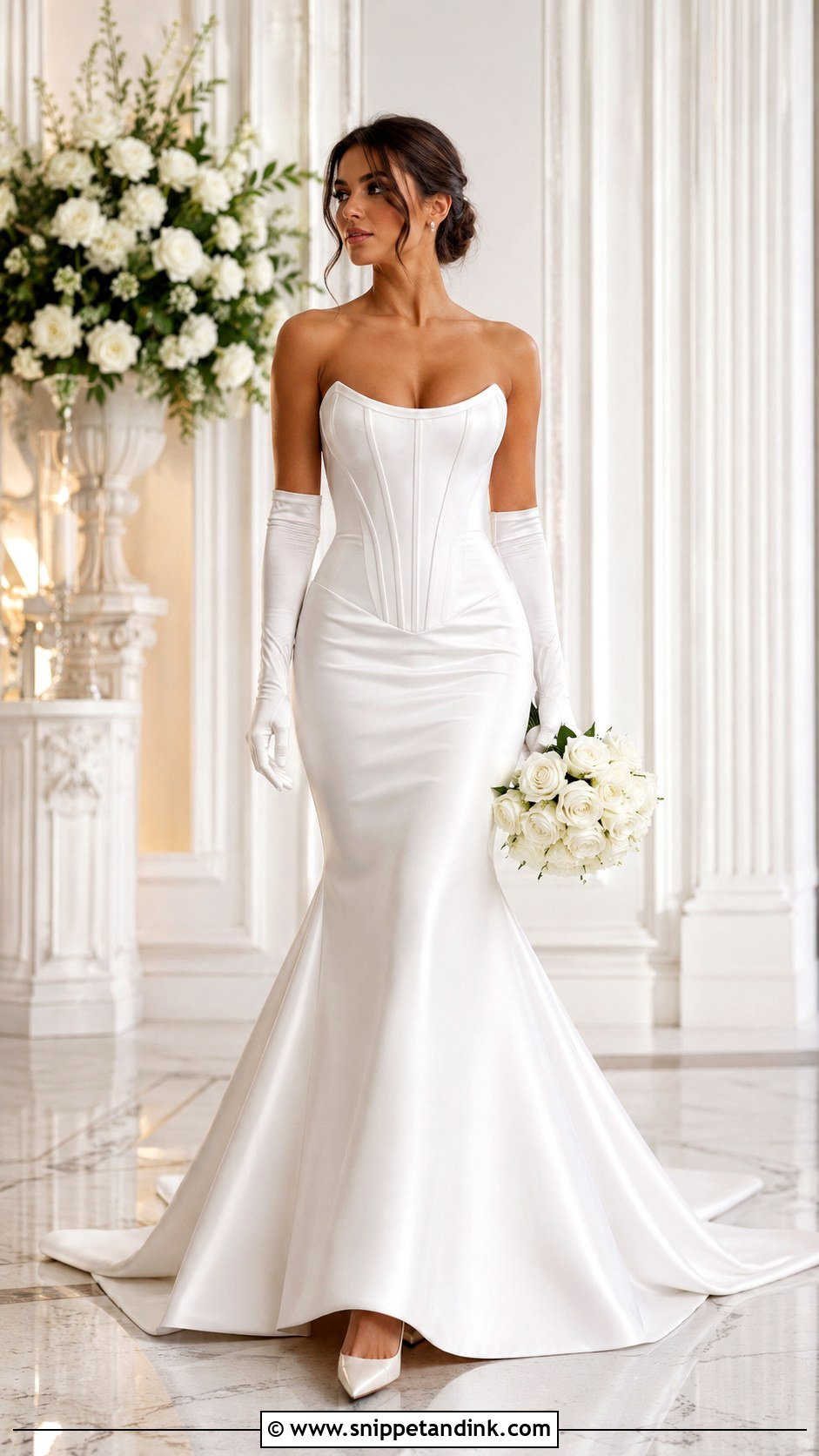
A visible corset gives the most defined waist on this list. The bodice needs well-placed boning and real cups, in a straight or gently curved neckline, over a satin, Mikado or layered tulle flare. Wrist-length satin gloves are a fashion-led touch that works here because the corset already reads structured. Keep everything else plain: crystal studs, pointed pumps, a simple veil, compact roses. Lacing at the back looks good with hair up; covered buttons suit waves. The test I use is simple. If you can’t eat a few bites and laugh at the fitting, it’s laced too tightly for a ten-hour day.
17. Detachable Sleeve Fit And Flare Wedding Dress With Two Looks
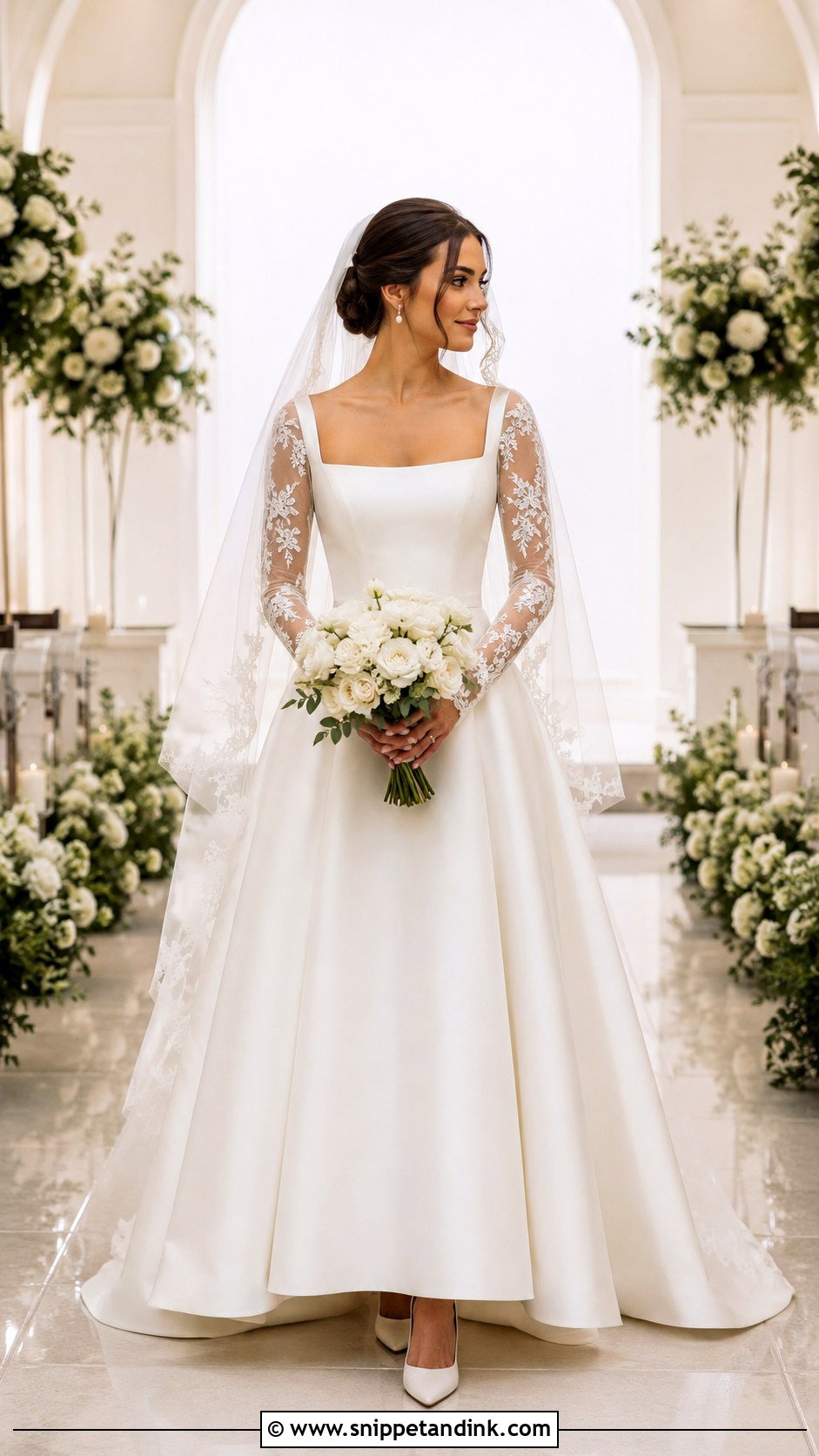
Detachable sleeves give you two looks from one dress. Sheer lace sleeves over a strapless or sleeveless bodice, with a chapel veil, pearl earrings and closed pumps, for the ceremony. After photos, the sleeves and veil come off and a sparkling comb or bolder earrings refresh the reception look. The bodice must be corseted or boned to stay up once the sleeves are gone. Practise the change before the day. The fastenings are usually tiny hooks or snaps, so teach one calm person how they work and give them five quiet minutes, not a crowded hallway.
18. Fit And Flare Wedding Dress With Detachable Overskirt
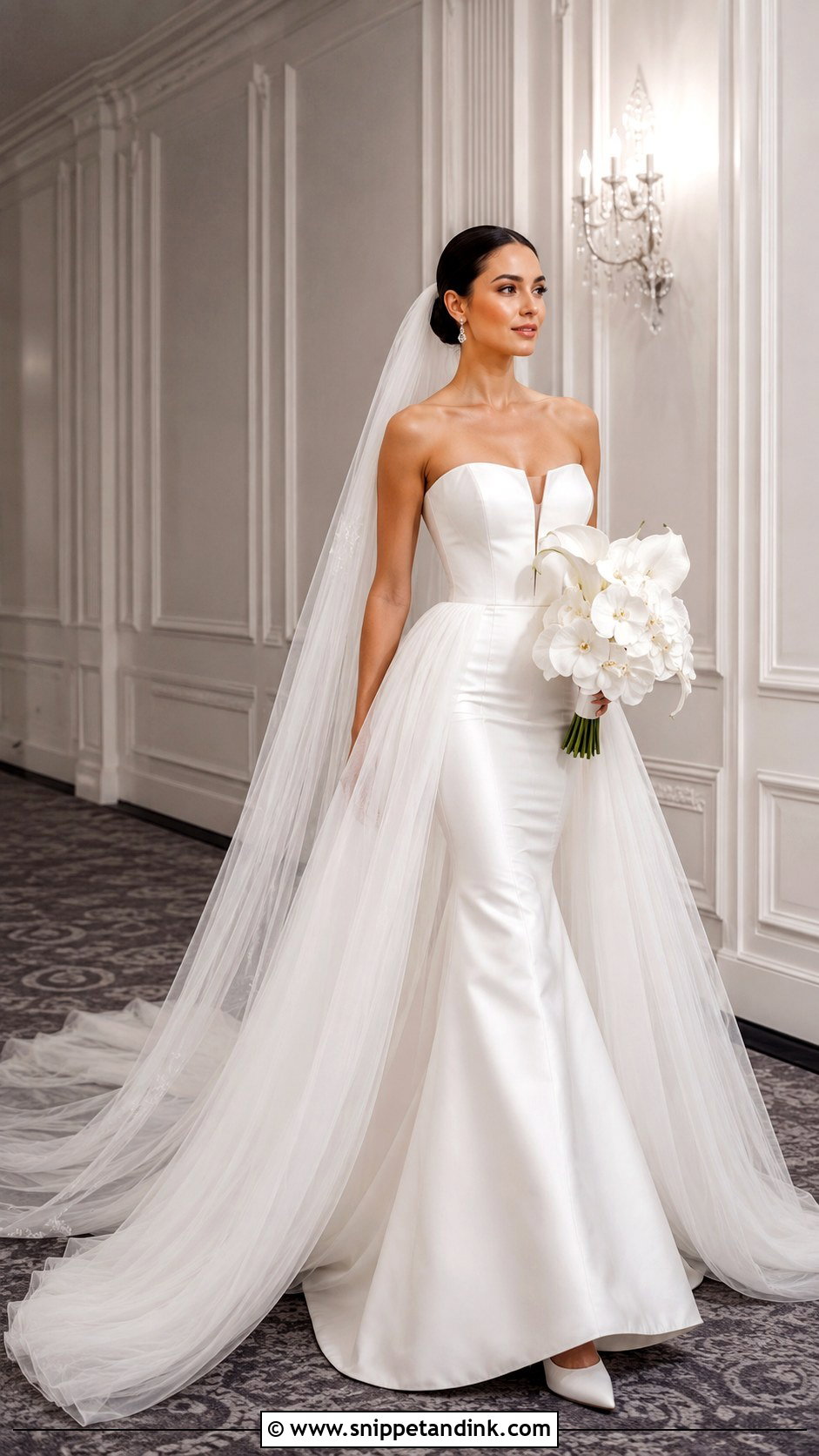
A detachable overskirt in tulle, organza or satin turns a sleek gown into a fuller ceremony look, then comes off for dancing. It should attach at the waist cleanly, without a thick band of hooks. Wear it with a cathedral veil, drop earrings and classic pumps. Remove both later to reveal the streamlined base dress. A low bun or smooth waves works with both versions. Check that the base dress has a finished waistline and that the attachment points disappear once the overskirt is off; some show as small bumps under satin.
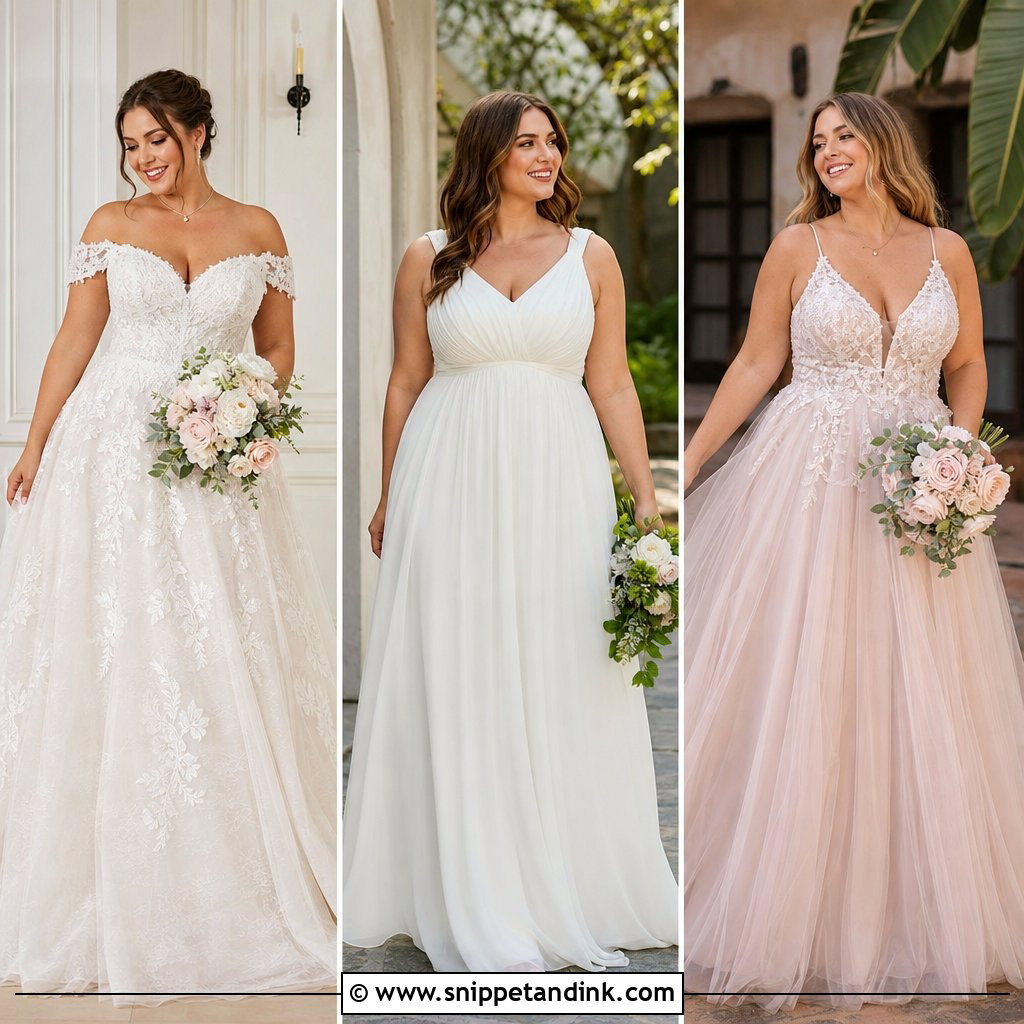
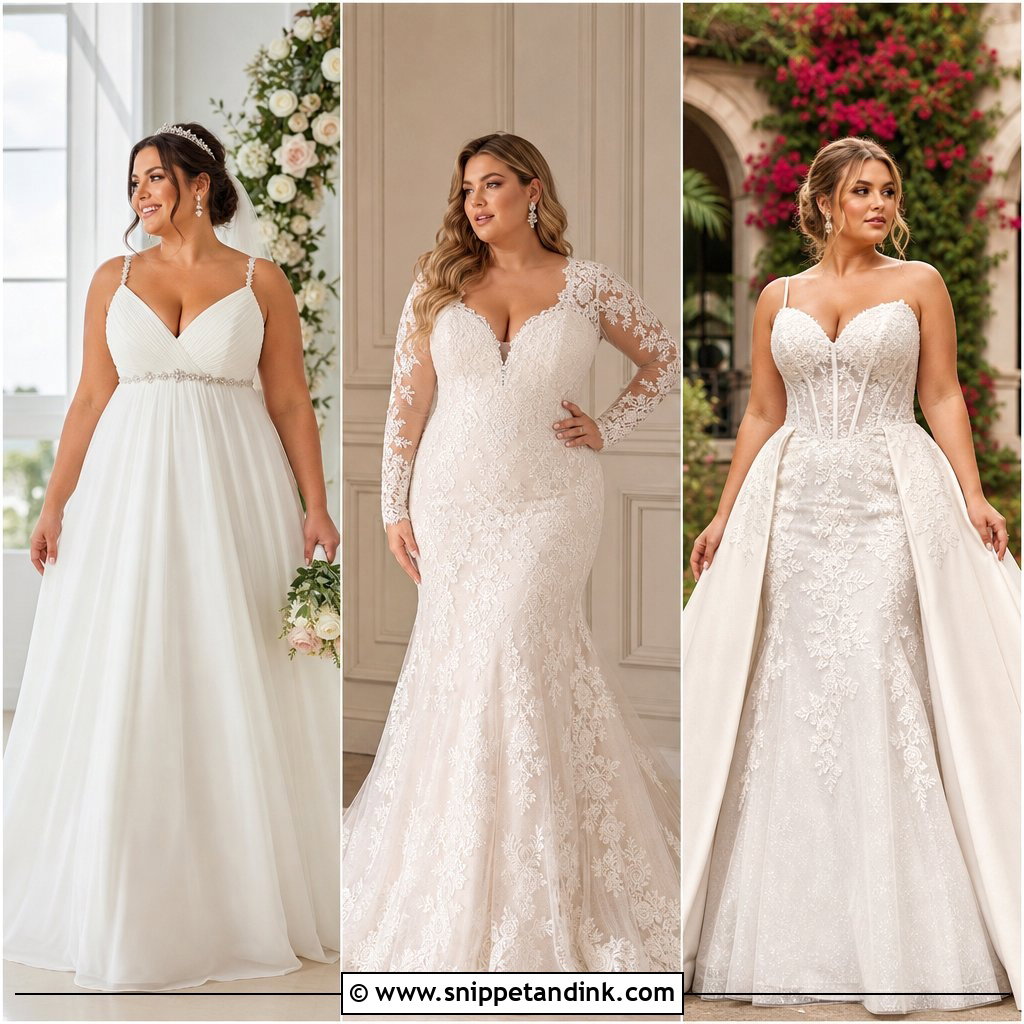
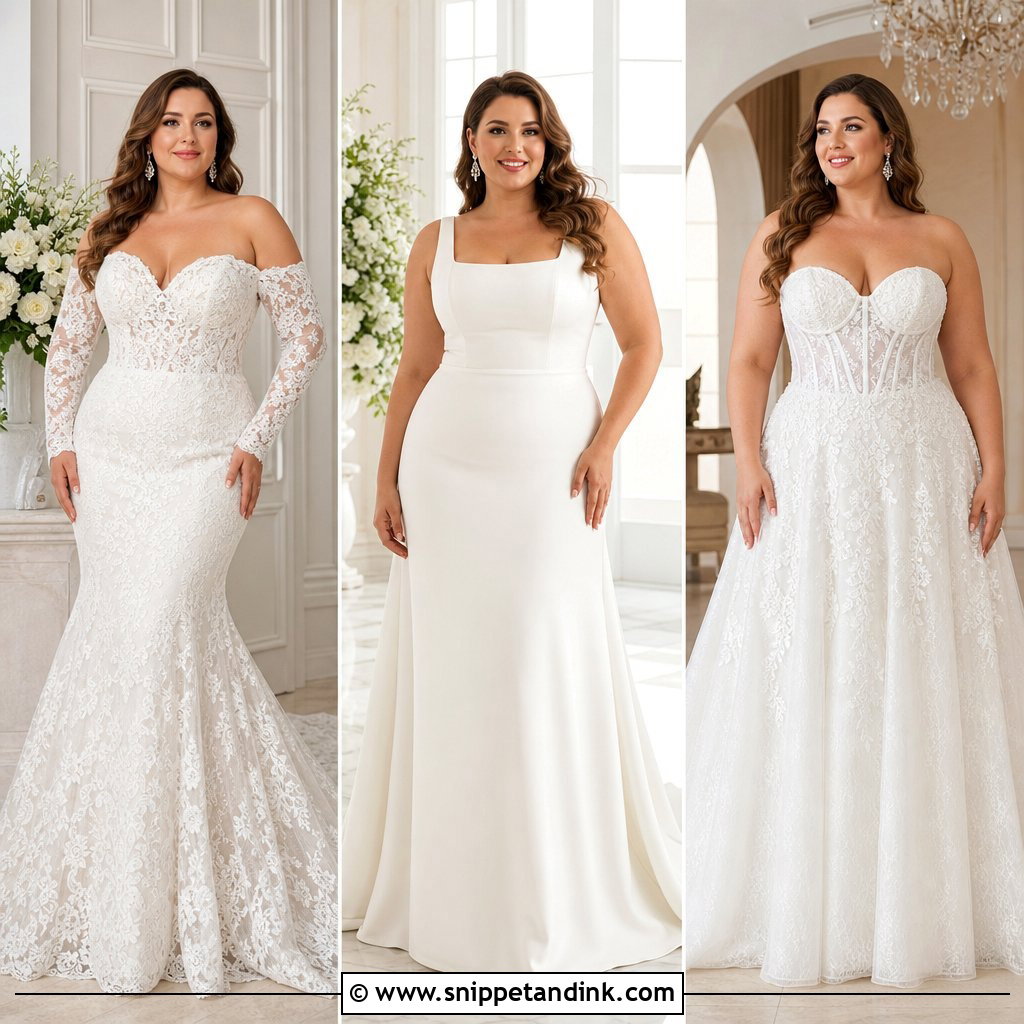
19. Plus Size Fit And Flare Wedding Dress With Supportive Bodice
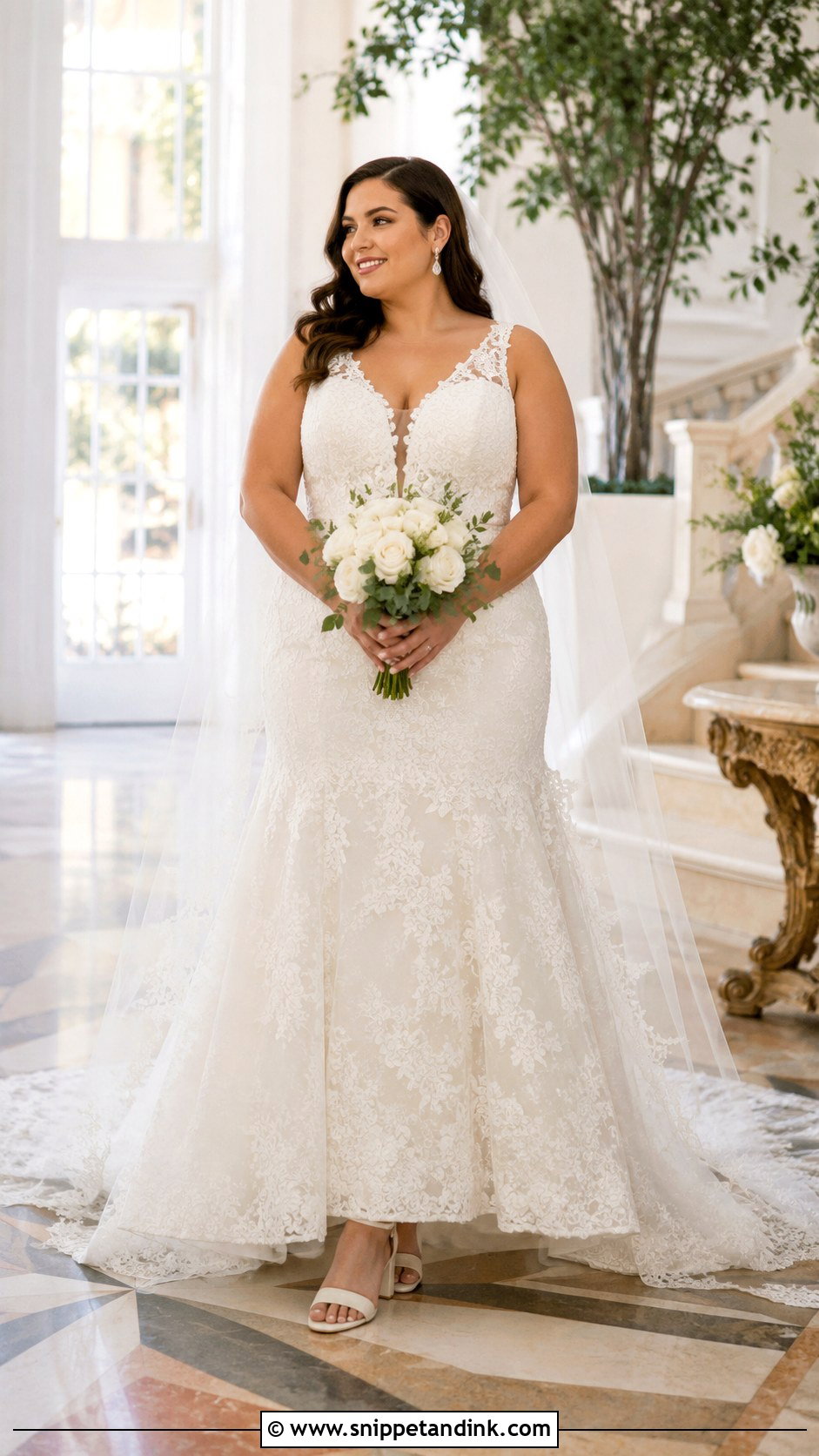
For plus-size brides, I start with the structure inside the dress rather than the label size. Look for boning, wider straps, real cups and a waist seam placed at your natural waist rather than the sample’s. V-neck, sweetheart and off-the-shoulder all work when they are tailored properly. Lace adds texture, while smooth crepe or satin gives a sleeker line. A chapel veil, mid-height block heels, drop earrings and a bouquet sized to your hands complete it. Ask what the designer can customise: added straps, extra neckline coverage, different lining, or moving the flare point up or down.
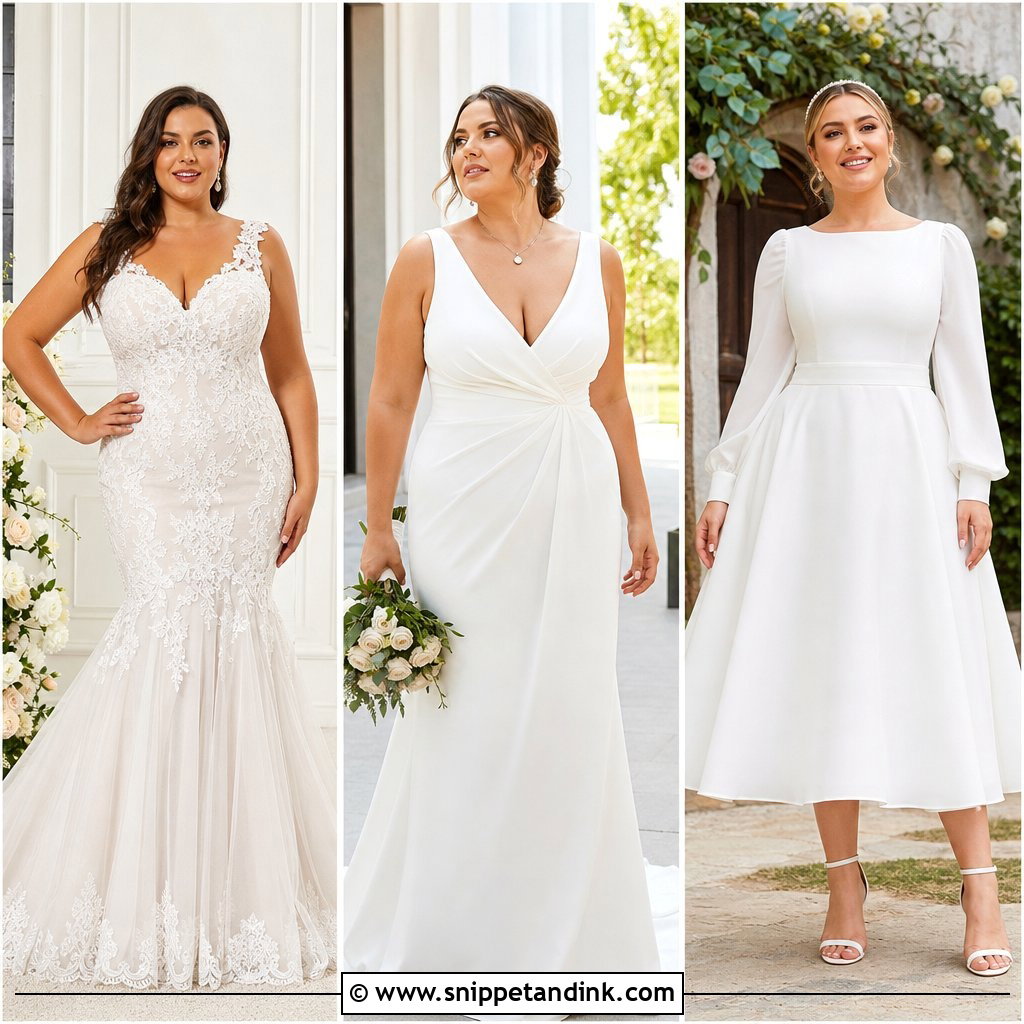

20. Petite Fit And Flare Wedding Dress With Simple Train
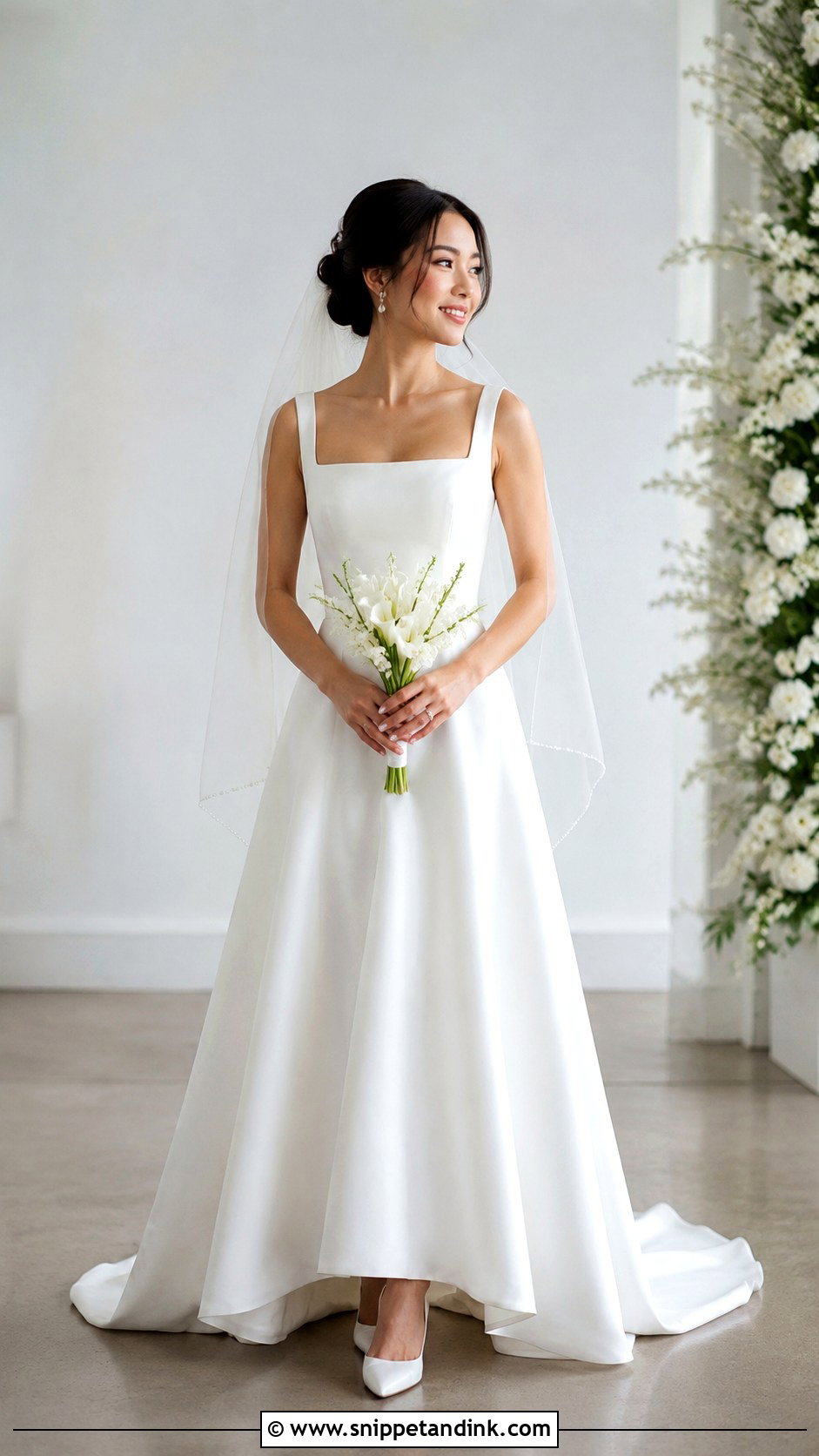
Proportion is everything on a petite frame. A clean V or narrow square neck with little horizontal detail keeps the eye moving upward. The flare should start above or around the knee so that hemming doesn’t cut into it. Pick a chapel or sweep train over a wide one, pointed heels, fine earrings, a narrow bouquet and a fingertip veil. Hair up or half-pinned keeps the neckline in view. If a lot of length needs removing, ask whether the seamstress will take it from the waist or above the flare instead of the hem, because shortening from the bottom can lose lace borders and squash the flare.
What a Seamstress Can and Can’t Change on a Fitted Gown
Most fit-and-flare dresses need some alteration, because the fitted section has to match your body exactly. Knowing what’s realistic before you buy prevents expensive surprises.
- Easy to change: taking in side seams, adjusting strap length, adding a bustle, hemming a plain tulle or crepe skirt, adding cups.
- Possible but involved: moving the flare point, adding straps or sleeves, hemming lace with a scalloped border, which means lifting and re-sewing the edge by hand.
- Hard or impossible: letting a dress out more than the seam allowance, re-cutting heavily beaded areas, changing a satin seam that has already been sewn, as satin often keeps the old needle holes.
Order with enough time for at least two or three fittings, and wear the exact shoes and underwear to every one of them. I also have brides bring whoever will bustle the train to the last appointment. Fit-and-flare bustles often use several hooks or ribbon ties, and the person in charge needs to practise it once while the seamstress is watching.
The Flare That Still Feels Right at Midnight
A fit-and-flare earns its place by supporting your body and letting you move, not by how much decoration it carries. Go back over the gowns you saved and compare the boring parts: neckline, fabric, where the flare starts, train length, and what accessories each one actually needs. Bring your undergarments and shoes to every appointment and walk around in each dress. A good seamstress and a few personal pieces can make almost any of these silhouettes feel like it was cut for you.
You'll Like These Ideas:



Leave a Reply