
Solid white is the hardest bridal color to fake. With no lace, beading or blush lining to hide behind, the fabric, the cut and the fit carry the whole look, and a poor alteration on a plain white bodice shows from across a fitting room. That is exactly why I enjoy styling it. Satin gives a polished, formal sheen, chiffon floats at an outdoor ceremony, crepe shows off clean tailoring, and tulle builds volume without bringing in a second color. Below are twenty shapes I’d put on the rail for a bride who wants all-white, each with the shoes, veil and fitting checks I’d pair with it.

Holding Three Whites Under Your Chin Before You Shop
Solid white covers more shades than most brides expect, and the sample you try on may not be the shade you end up ordering. Bridal fabric generally falls into a few families, and the names drift a little between designers:
- Optic or stark white is the brightest. It’s usually polyester or a blend, because silk can’t be bleached that far, and it can carry a faint blue cast or glow under UV party lights.
- Natural or soft white is the shade silk takes on its own, with a hint of warmth. Plenty of gowns sold as white are really this.
- Diamond or silk white sits a touch warmer again, often with a slight sheen.
- Ivory has a visible cream undertone and is no longer what most people would call solid white.
When I bring swatches to an appointment, I hold each one under the bride’s chin in daylight, never under the boutique spotlights. Optic white tends to suit deep skin tones and very cool undertones. On fair or olive skin it can make the face look grey beside it, and natural white is usually the safer middle. Ask the shop to write the exact shade name from the sample on your order form.
Then match the veil and shoes to the dress, not to each other. A stark white veil over a natural white gown makes the dress look dingy in every photo. I ask for a fabric snip to carry to the veil and shoe appointments, because comparing from memory never works with whites.
1. Solid White Satin A-Line Wedding Dress
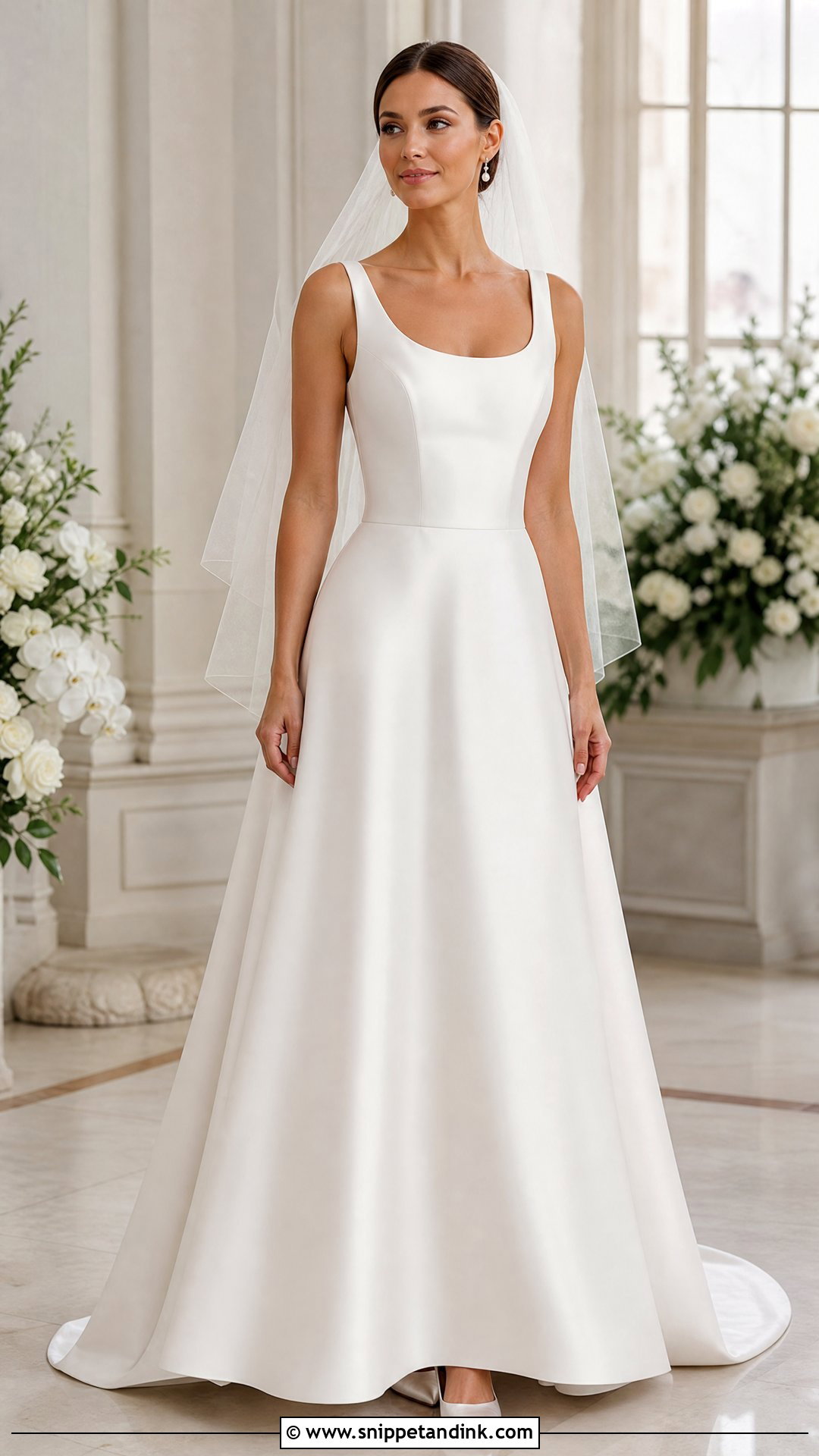
Satin A-lines are where I start with a bride who isn’t sure what she wants yet, because the shape suits most figures and quickly tells me how she feels about structure. The fitted bodice marks the waist and the skirt widens gradually, so there’s no heavy volume to manage. Pick the neckline by support: a scoop or square sits flatter on a fuller bust than a deep V. Pointed white pumps lengthen the line, while block heels sink less on a lawn. Pearl drops, a fingertip veil and a small satin clutch are plenty. One warning about satin: it shows every pull at a seam, so if the waist wrinkles sideways at your fitting, the bodice needs taking in, not pressing.
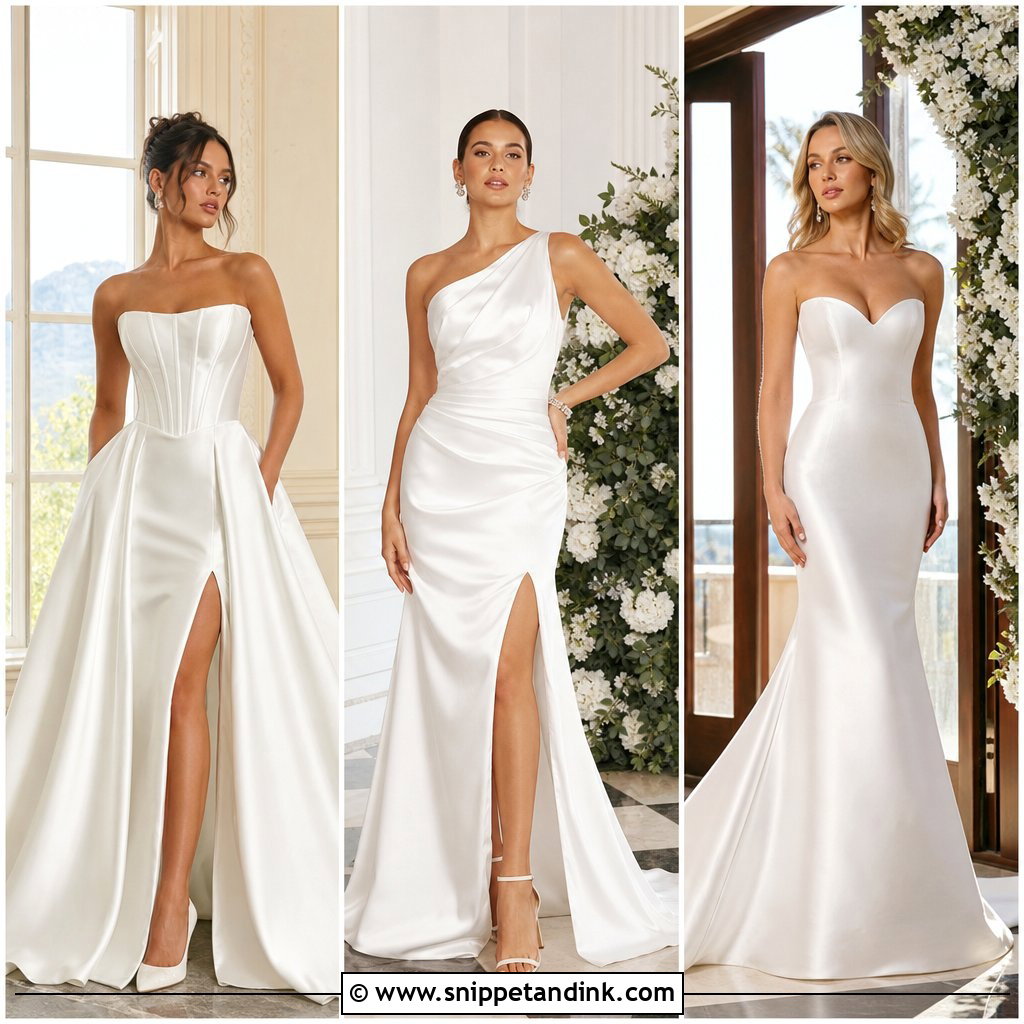
2. Solid White Strapless Ball Gown Wedding Dress
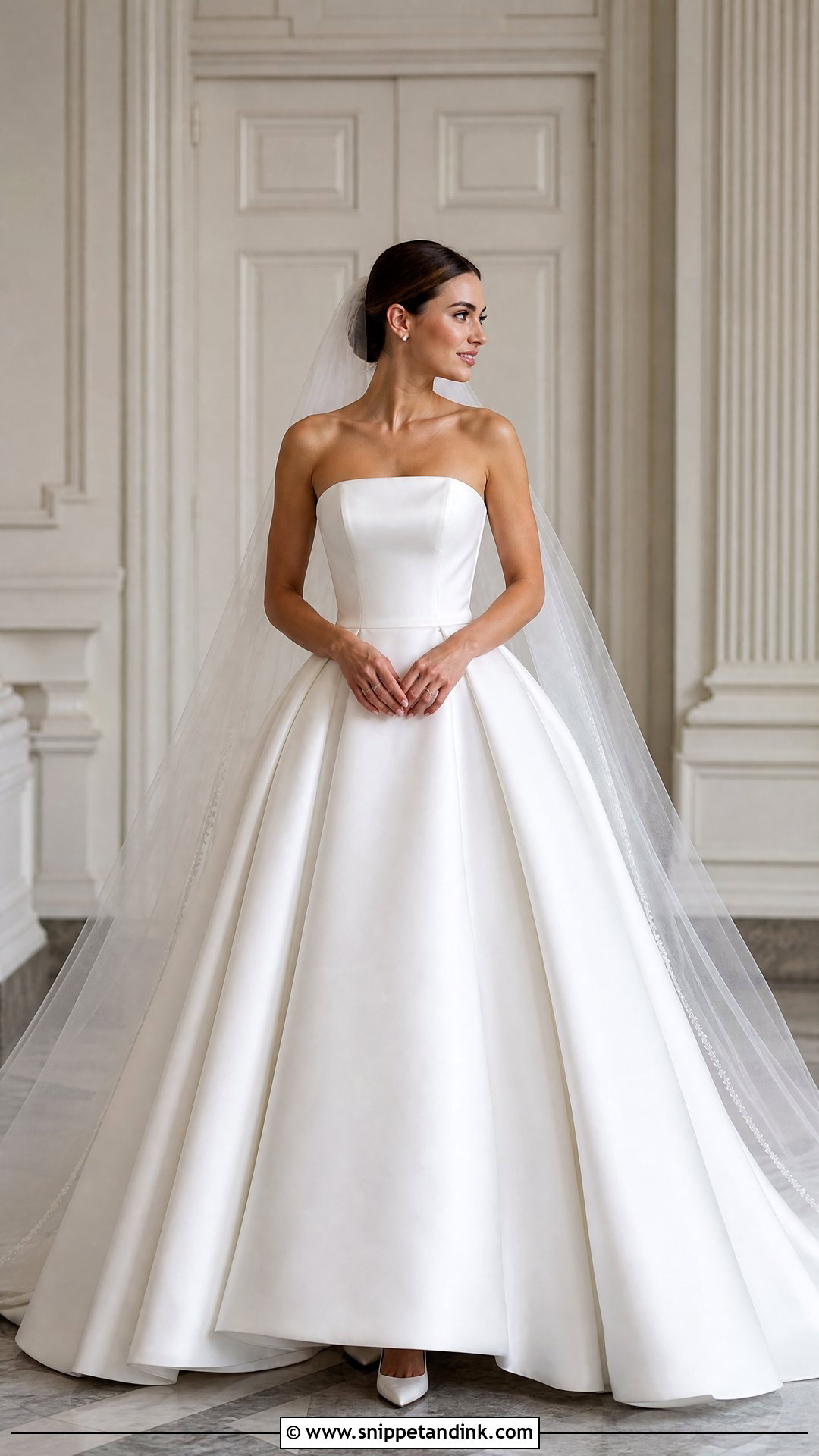
A strapless ball gown only works if the bodice holds itself up. I check for internal boning and secure cups, then ask the bride to lift both arms and hug me. If the neckline slides, it goes back to the seamstress. Mikado, satin or layered tulle gives the skirt its volume without any color or trim. Closed-toe heels, a cathedral veil and crystal or pearl studs suit it, with a neat bun or soft waves keeping the eye at the neckline. These skirts are heavy, so ask about a lighter underskirt and a bustle you can work yourself. In a narrow aisle or a small room the skirt takes over, which is why I save this one for formal indoor venues with space to move.
3. Solid White Long Sleeve Crepe Wedding Dress
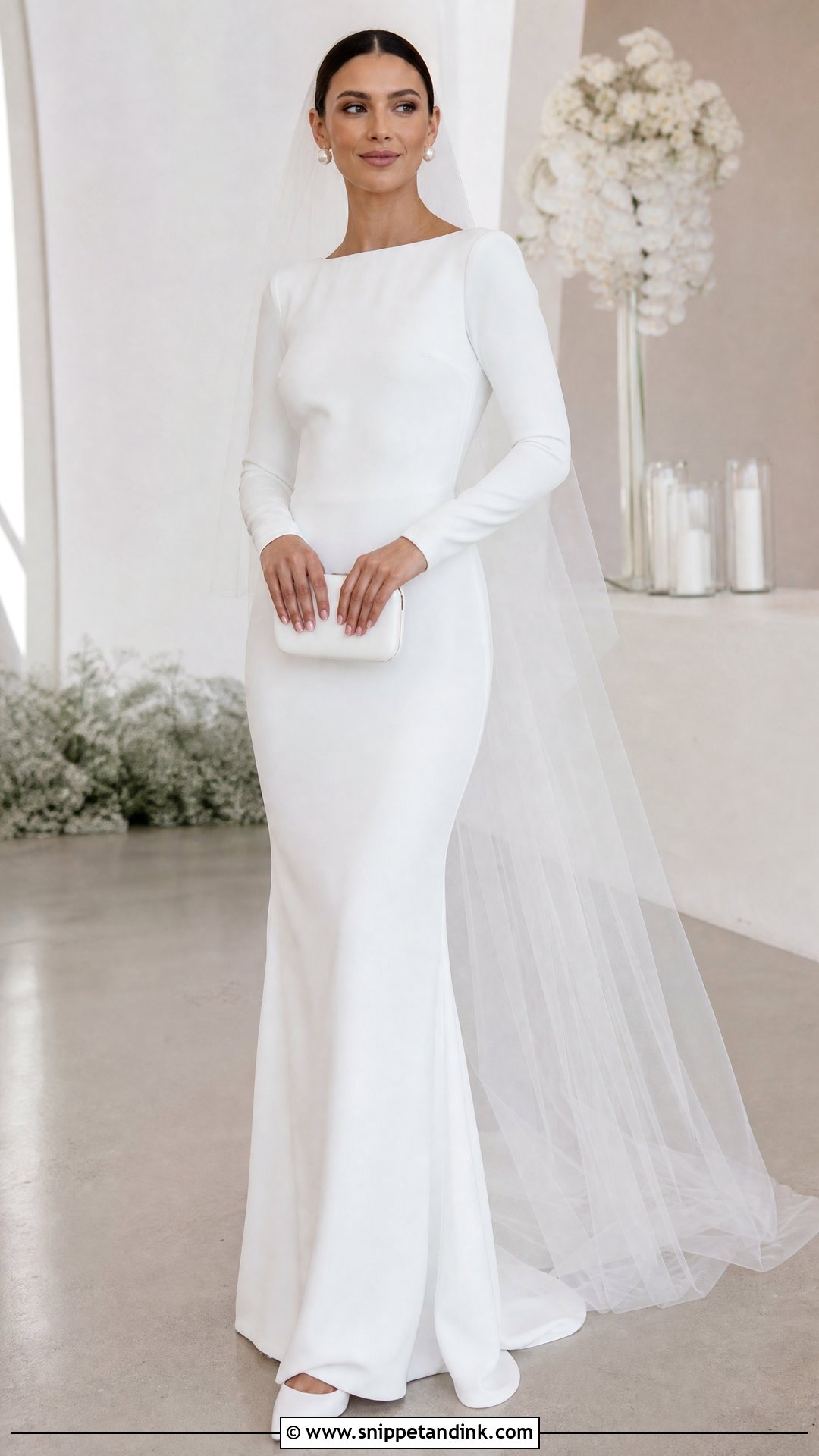
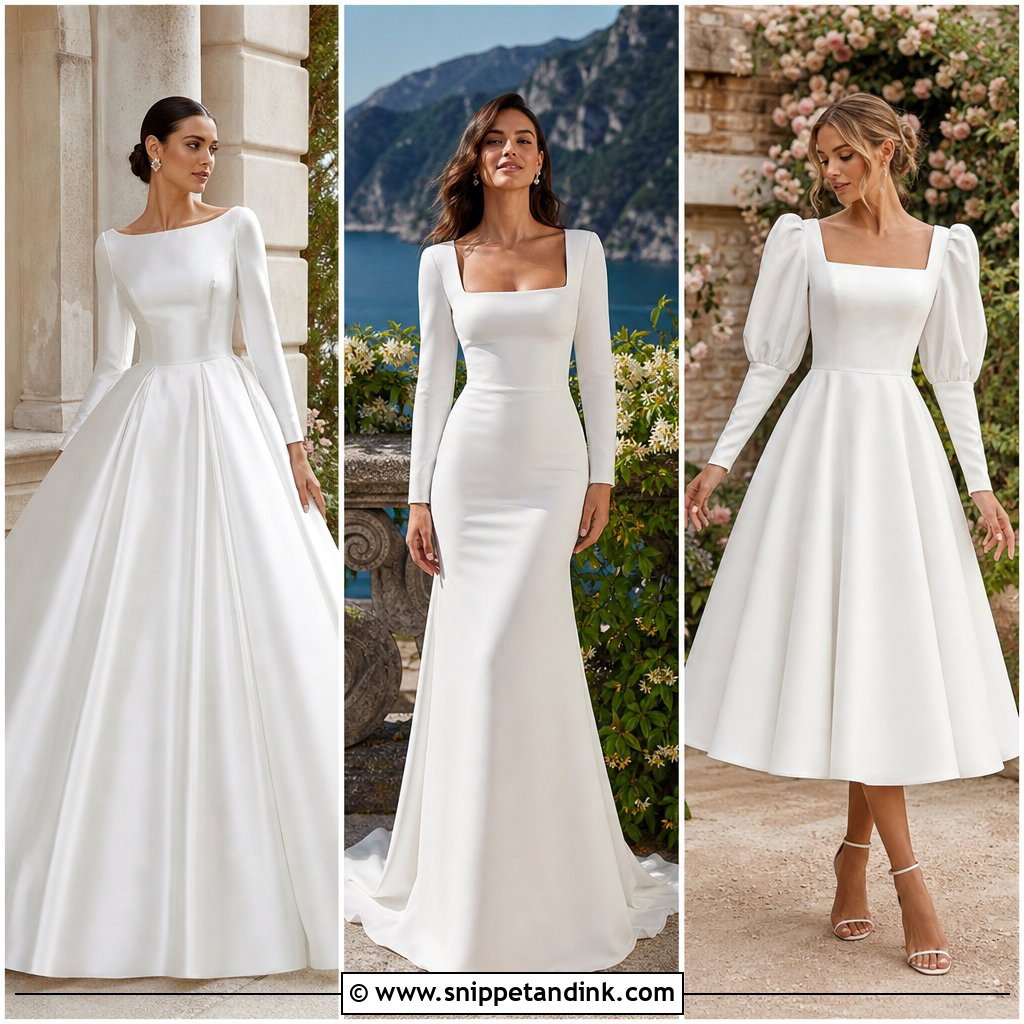
Long crepe sleeves look simple and are the trickiest fit on this list. Crepe skims the body in a sheath, column or soft fit-and-flare, and slim sleeves with covered buttons give a traditional finish while a slight flare at the cuff softens it. The first thing I do at the fitting is have the bride hug someone and reach forward as if signing the register. If the sleeve pulls across the back of the arm, the armhole is cut too low, and lowering it further only makes it worse. A low bun, pearl earrings, a chapel veil, pointed pumps and a small structured bag keep the lines uncluttered. Here, tailoring at the shoulders, waist and hips matters more than any accessory.
4. Solid White Square Neck Column Wedding Dress
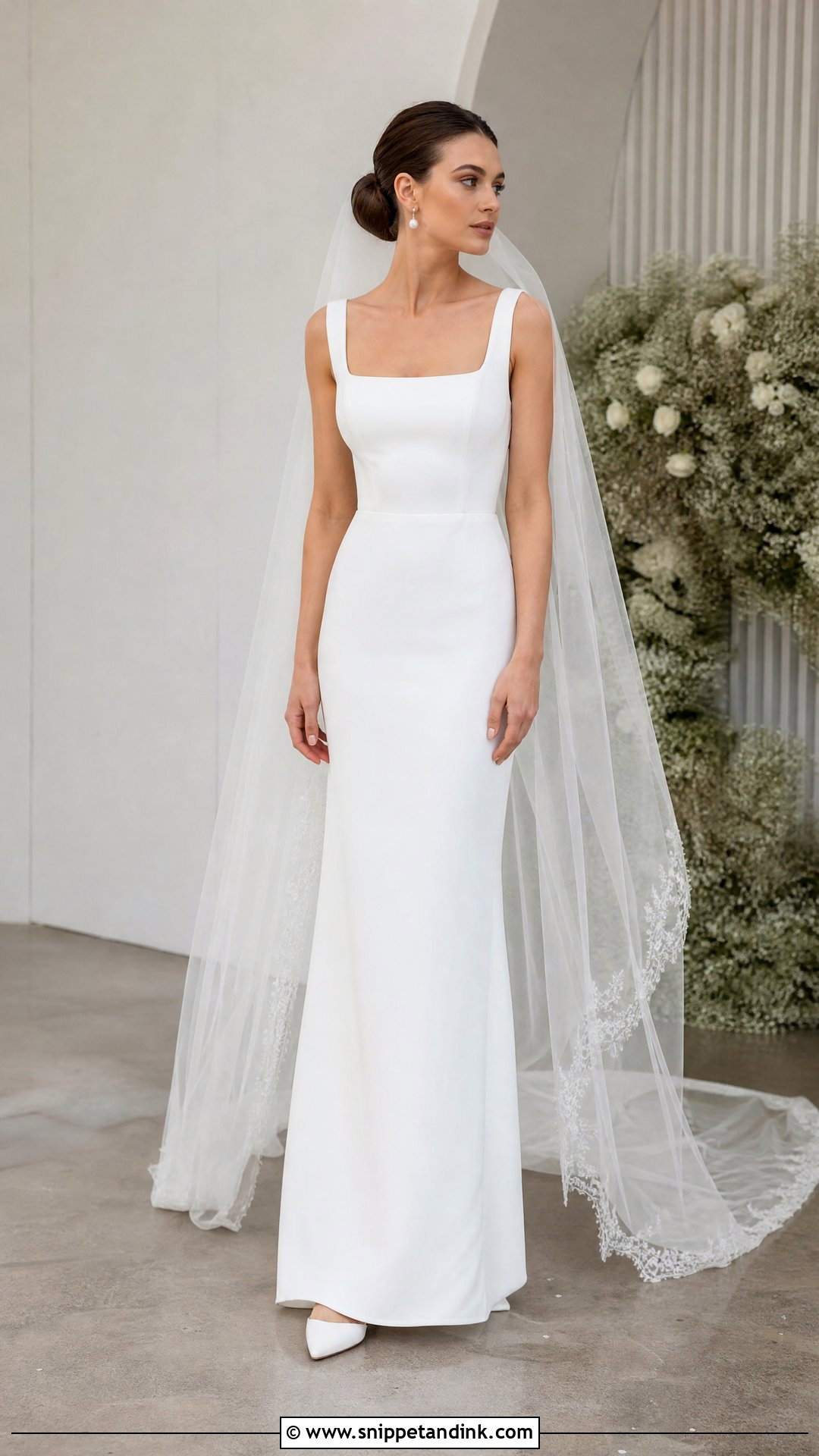
A square neckline over a straight skirt gives one long, unbroken line, and that line is unforgiving if the fabric is thin. I steer brides toward a substantial crepe or satin so the column doesn’t cling at the hip or show undergarment edges. Delicate straps look lighter; wider straps actually carry support. Sleek white heels, a low chignon and small pearl or diamond-style earrings suit the angles, and a sheer cathedral veil adds the movement the skirt lacks. A polished headband can replace the veil entirely. Before you commit, take ten long strides in it. Without a back slit or some ease through the knees, you’ll be taking tiny steps all evening.
5. Solid White Off Shoulder Mikado Wedding Dress
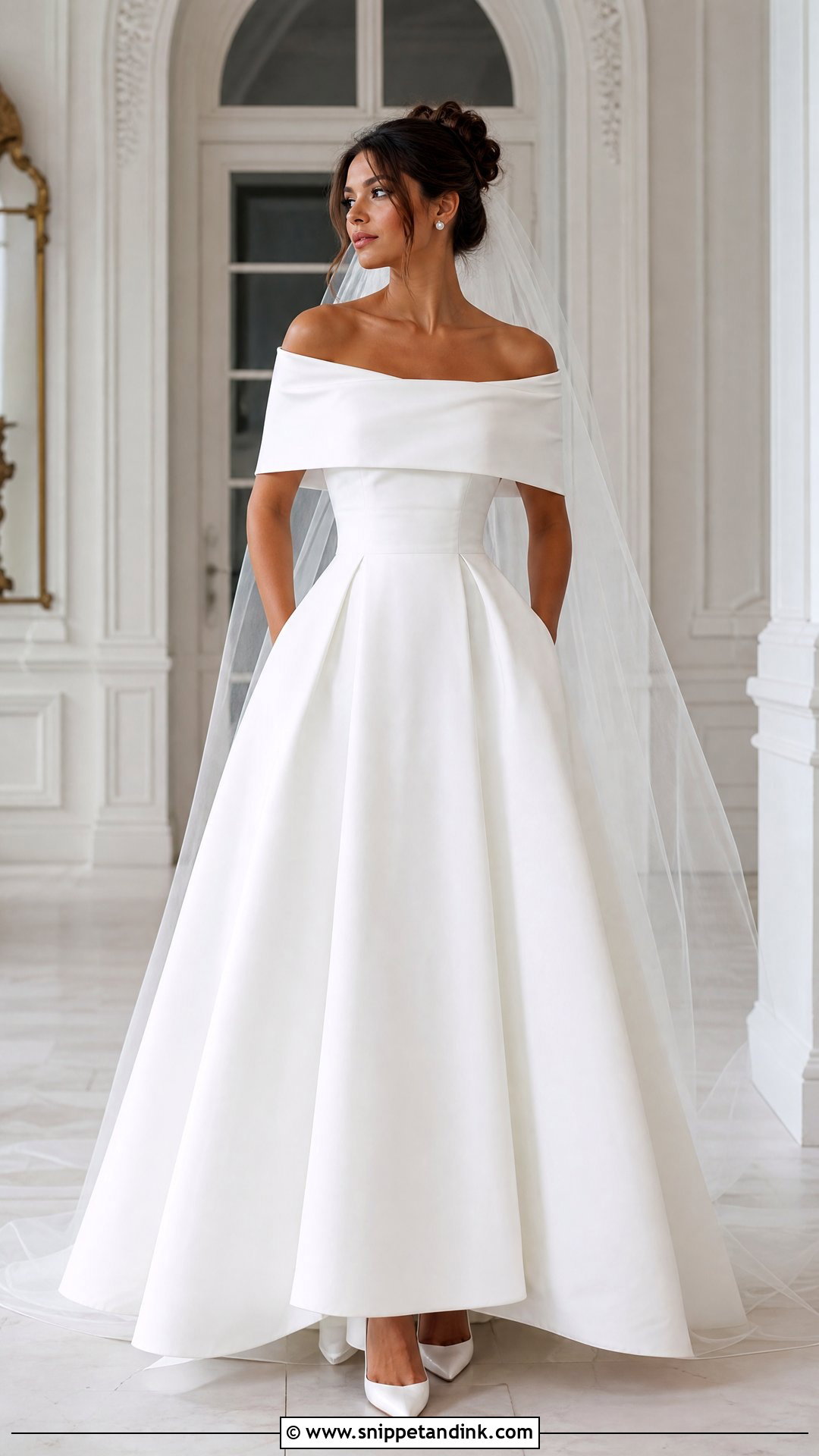
Mikado is stiff enough to hold a sculpted fold, which makes it the right fabric for an off-shoulder neckline that has to stay put. I prefer a softly folded band to fitted sleeves that grip the upper arm, because tight off-shoulder sleeves stop you lifting your arms to hug anyone. Pearl studs, white pointed heels and a long veil tucked beneath a smooth bun keep it formal. A fitted waist and a gently pleated skirt give shape with no embellishment at all. Be ready for mikado to crease across the lap once you’ve sat through dinner. Removable off-shoulder straps give you a strapless second look later while the outfit stays fully white.
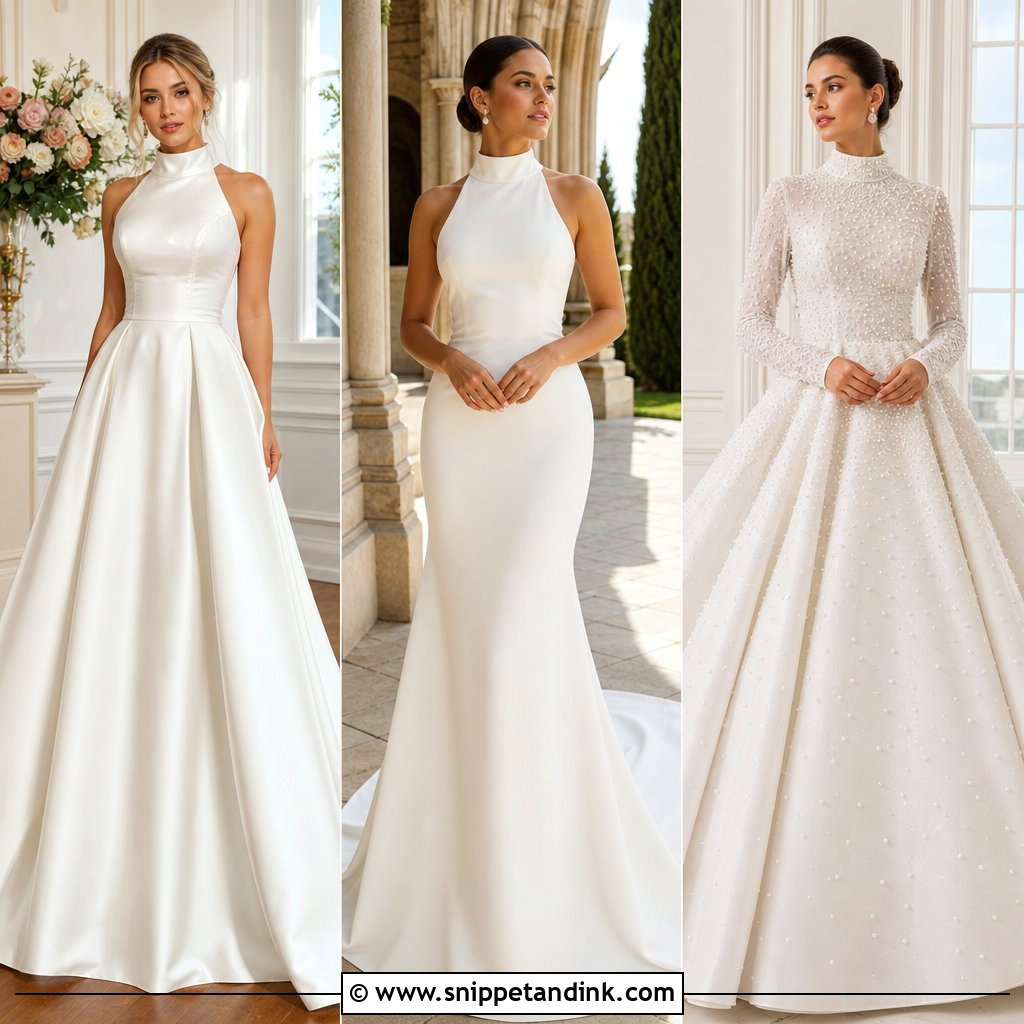
6. Solid White Halter Sheath Wedding Dress
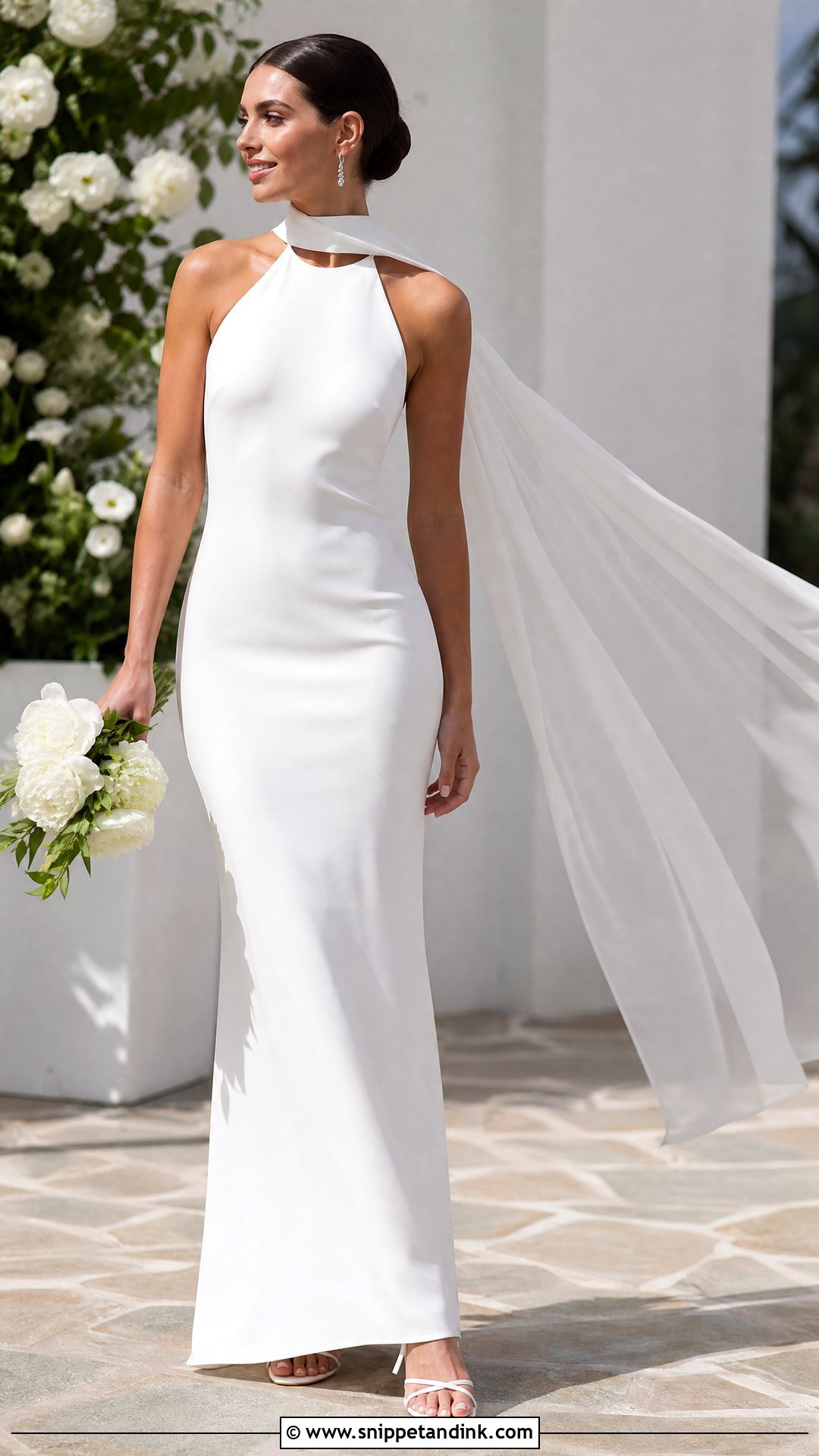
A halter sheath pulls the eye up to the shoulders and keeps the skirt narrow, without the knee flare of a mermaid. Fluid crepe, satin or a silk-like fabric works best. Wear your hair up so the halter shape shows, add slim drops, white sandals and a light veil or detachable chiffon scarf, and skip the necklace, which crowds that neckline. Halters can put weight on the back of the neck, and after a few hours a badly balanced one gives some brides a headache. At the fitting I check that the armholes lie flat and that the bodice is anchored at the back so the neck strap isn’t carrying the dress. A small train looks bridal, though a floor-skimming hem is easier outdoors.
7. Solid White Sweetheart Mermaid Wedding Dress
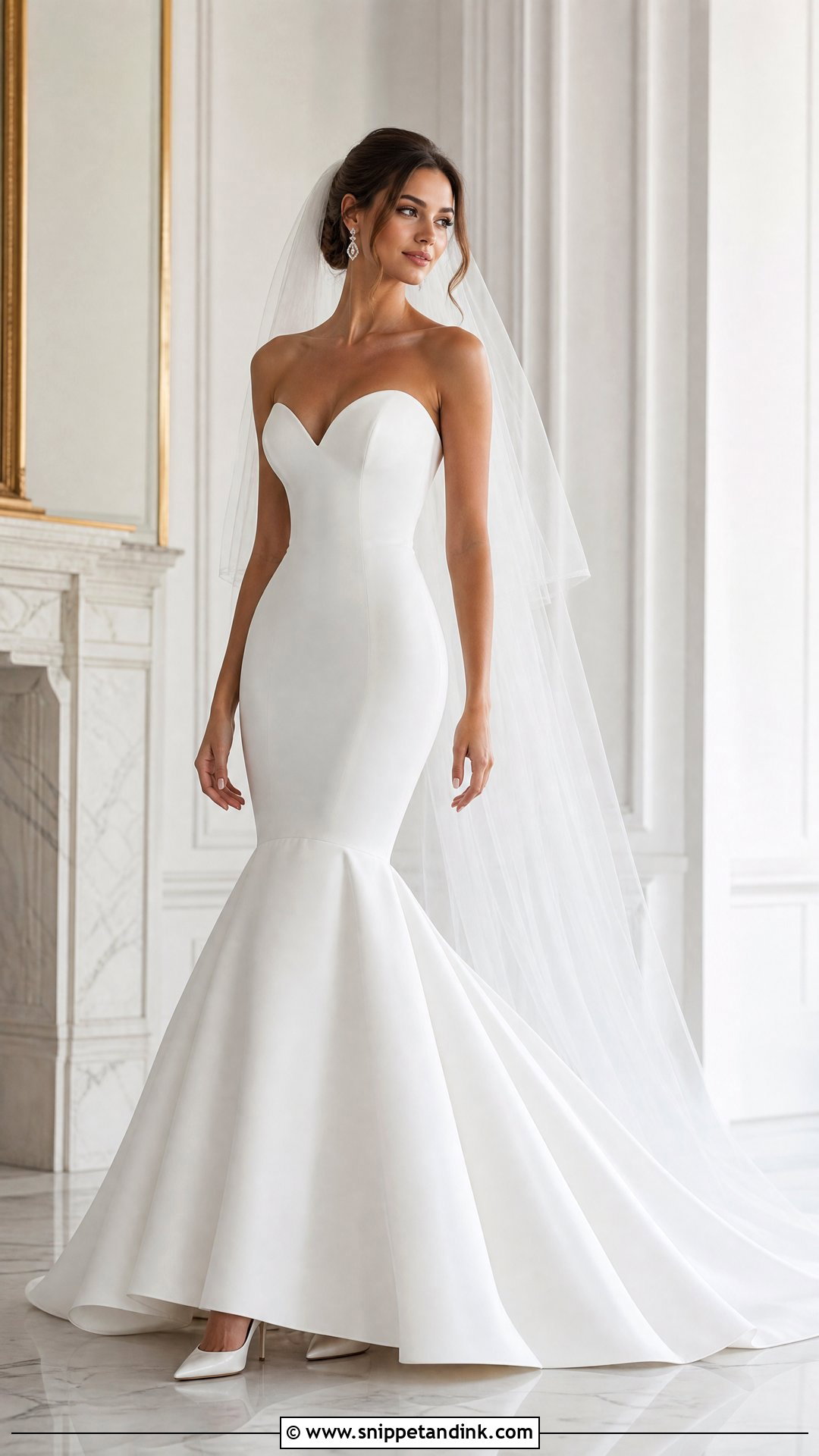
The sweetheart curve softens a mermaid’s very fitted body, which hugs the waist and hips before flaring near the knee. Stretch crepe gives you room to move; satin and mikado hold a sharper shape but forgive less. Pointed heels, a long sheer veil and plain earrings suit the neckline, and loose waves relax the fit while an updo makes it more formal. Where the flare starts decides whether you can walk. I have brides sit, walk and climb a few steps at every fitting, and if the knees feel trapped, the flare point needs lowering. A well-placed bustle will also make the train easier to manage later.
8. Solid White Basque Waist Wedding Dress
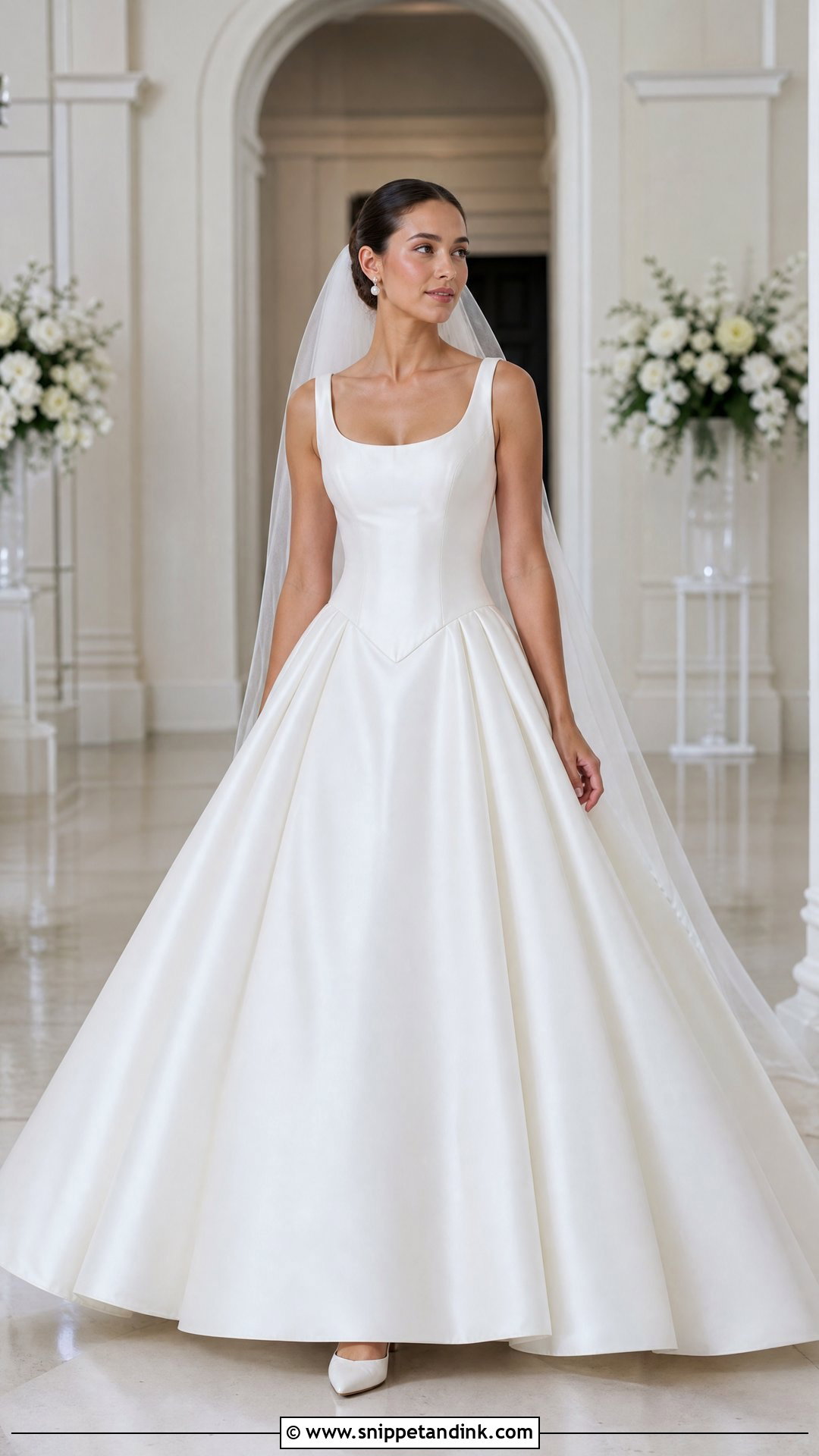
A basque waist wedding dress dips into a point at the center front, which lengthens the torso and leads the eye into a full or gently flared skirt. Satin or mikado gives that point a crisp edge; tulle keeps the skirt lighter. A scoop or strapless neckline stops the bodice looking busy. White pumps, pearl earrings, a chapel veil and a neat bun are all it needs. Because the seam is the whole feature, it has to sit exactly at center. I check it standing and seated, since a basque point that digs into your hips when you sit will be all you think about at dinner.
9. Solid White High Neck Chiffon Wedding Dress
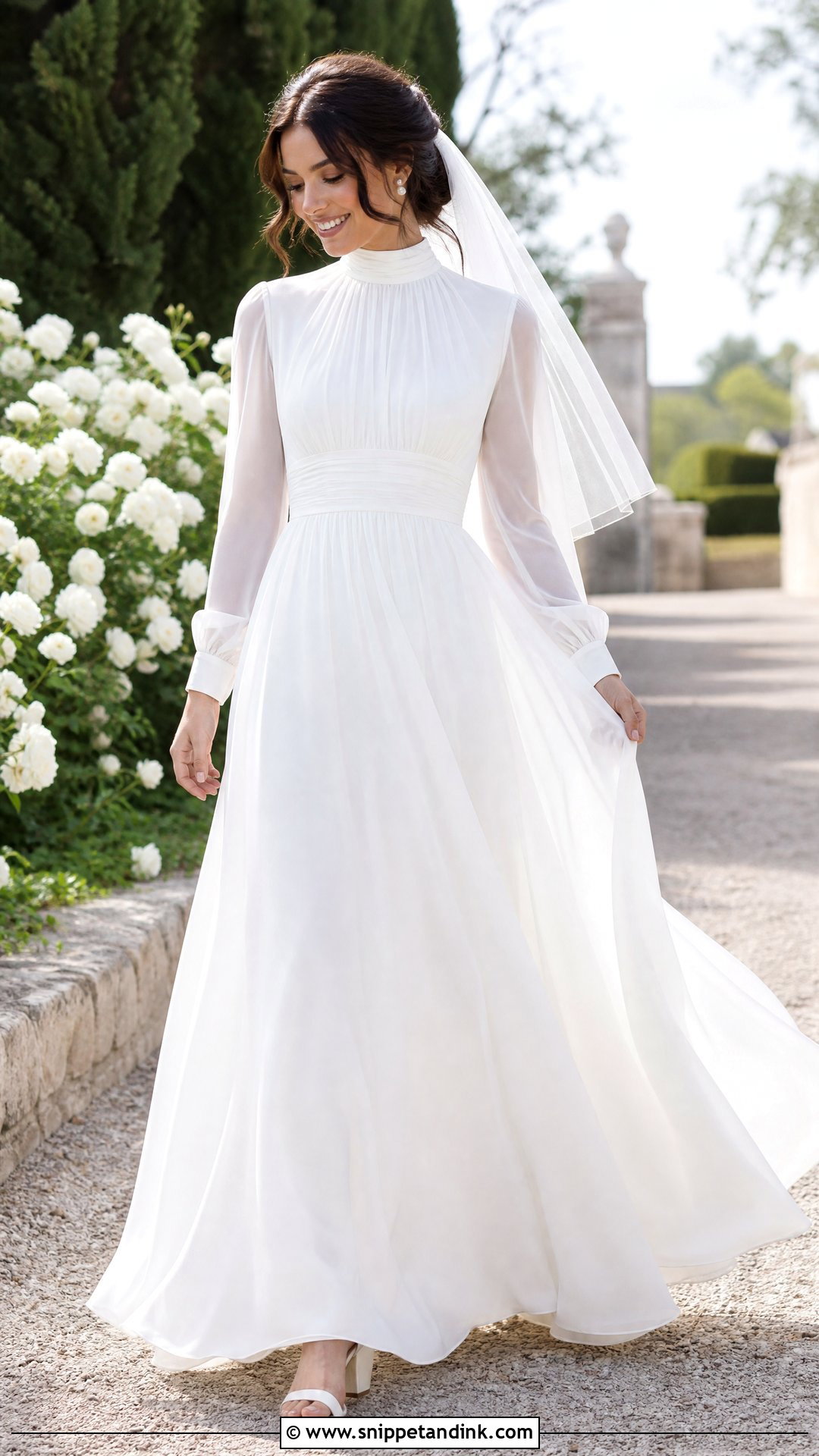
Chiffon moves with every step, and a high neck gives that movement a composed frame. Keep the bodice lightly gathered at an empire or natural waist so the fabric doesn’t swamp a smaller frame. Go sleeveless in heat, or add sheer long sleeves for coverage. A low bun, pearl studs, white block-heel sandals and a narrow veil keep it light. Chiffon is semi-sheer, so I walk brides over to a window during the fitting: daylight shows lining lines and gaps that shop lighting hides. Heavy jewelry drags on the fabric. This is the dress I reach for first for a garden or coastal wedding in warm weather.
10. Solid White One Shoulder Draped Wedding Dress
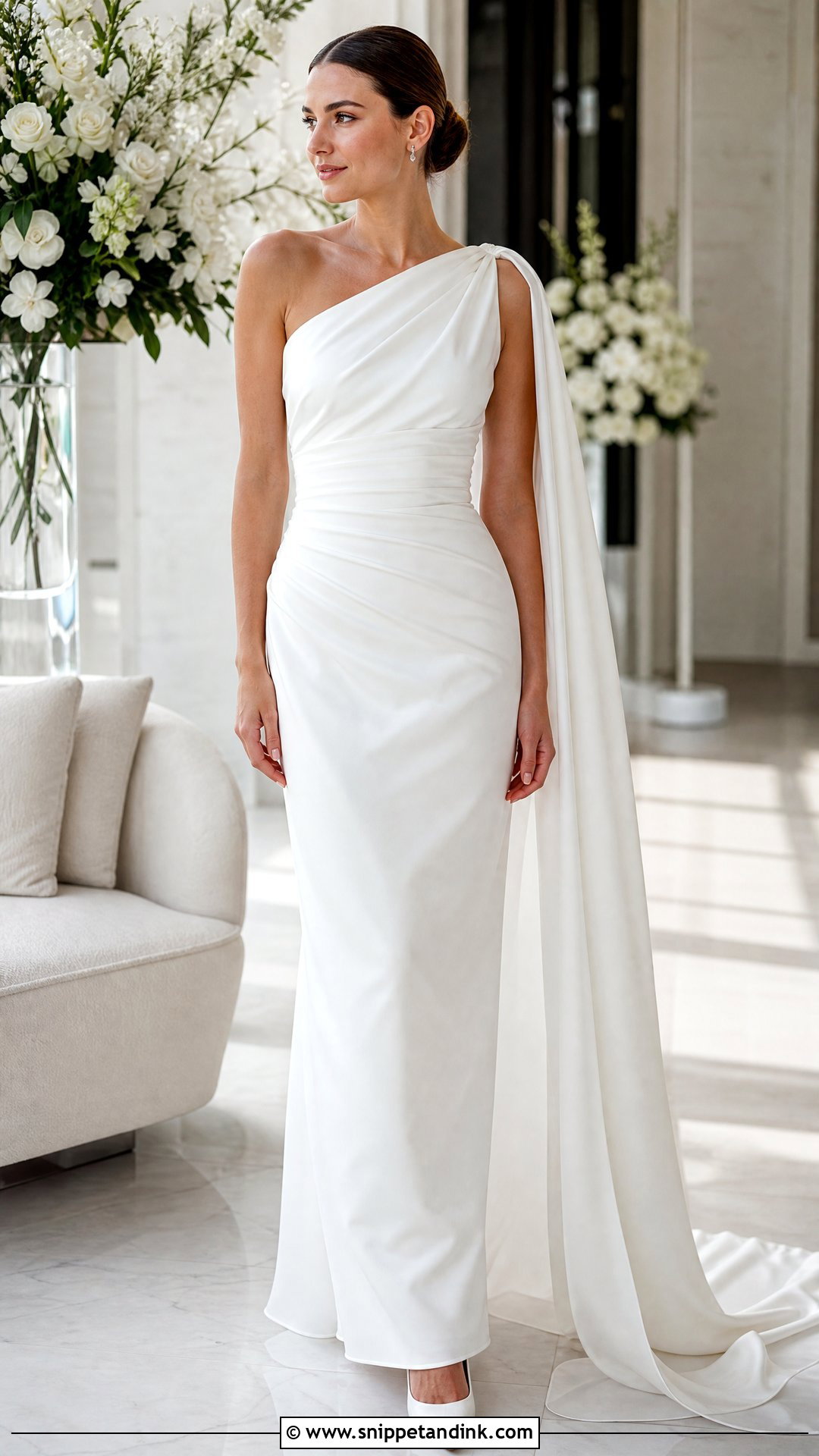
Asymmetry is what makes a one-shoulder drape feel modern, and the folds across the bodice can define the waist without lace or beading. Satin catches light along each fold, while crepe keeps it quieter. I place the bun slightly toward the bare shoulder to balance the line, and I’d wear one statement earring or matched studs, never a necklace that breaks the diagonal. White pointed pumps and a simple wristlet finish it. A detachable drape can run down into a small train. What I watch at fittings is the raised armhole. If it rubs when you swing your arm, you’ll feel it on the dance floor long before anyone sees it.
11. Solid White Tea Length Wedding Dress
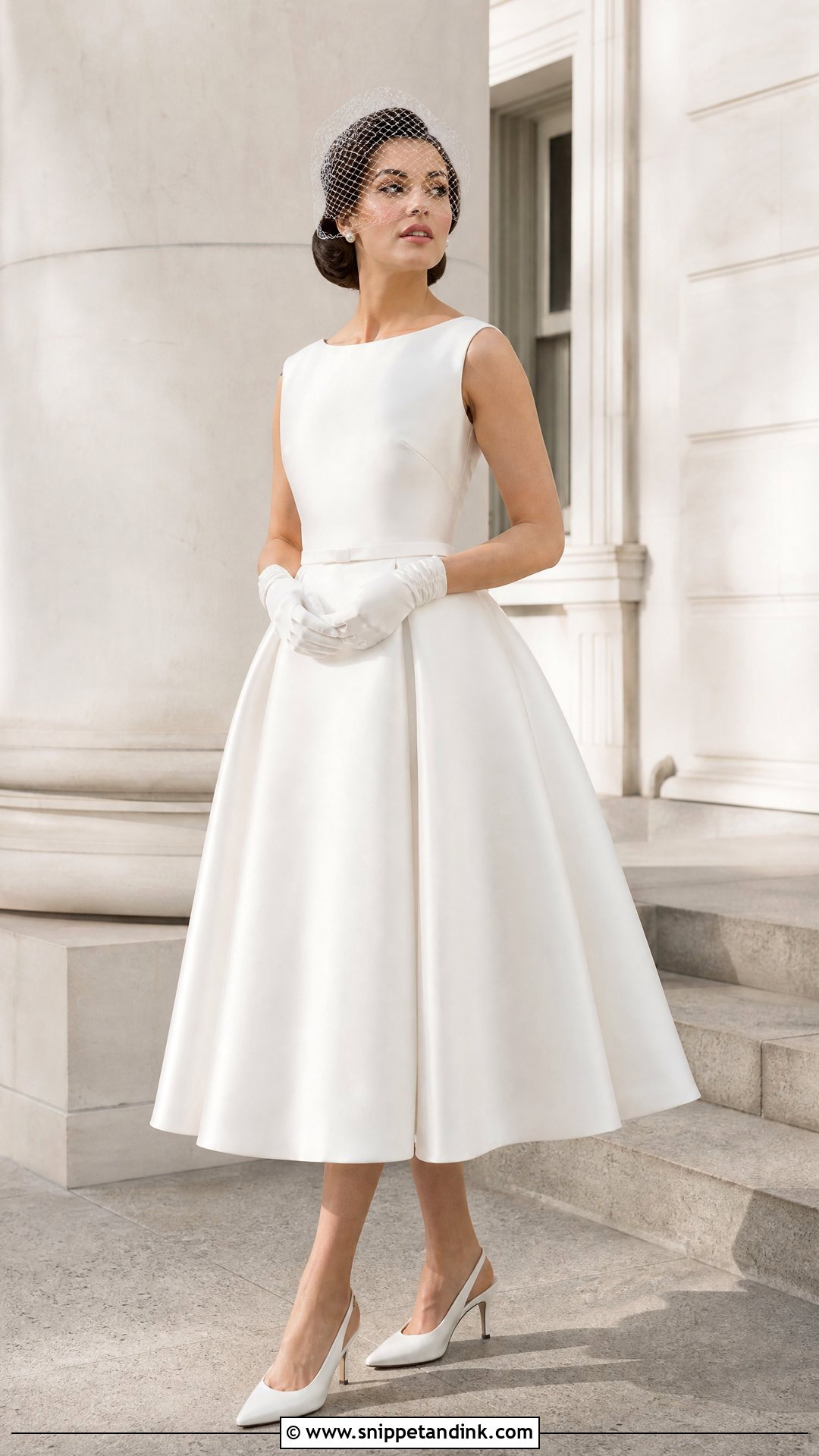
Tea length lands between knee and ankle, which puts your shoes on full display, so I choose them before the hem is set. A fitted bodice with a full satin skirt for a retro shape leans vintage, and a simpler A-line reads modern. White slingbacks, ballet-style heels and embellished flats all suit it. Short gloves, pearl studs and a birdcage veil or small bow add detail without crowding. The hem matters more here than on a long gown: an inch too low cuts the calf at its widest point, so stand in your wedding shoes while it’s pinned. It’s a practical length for a courthouse ceremony or a daytime reception where a train would only get in the way.
12. Solid White Mini Wedding Dress
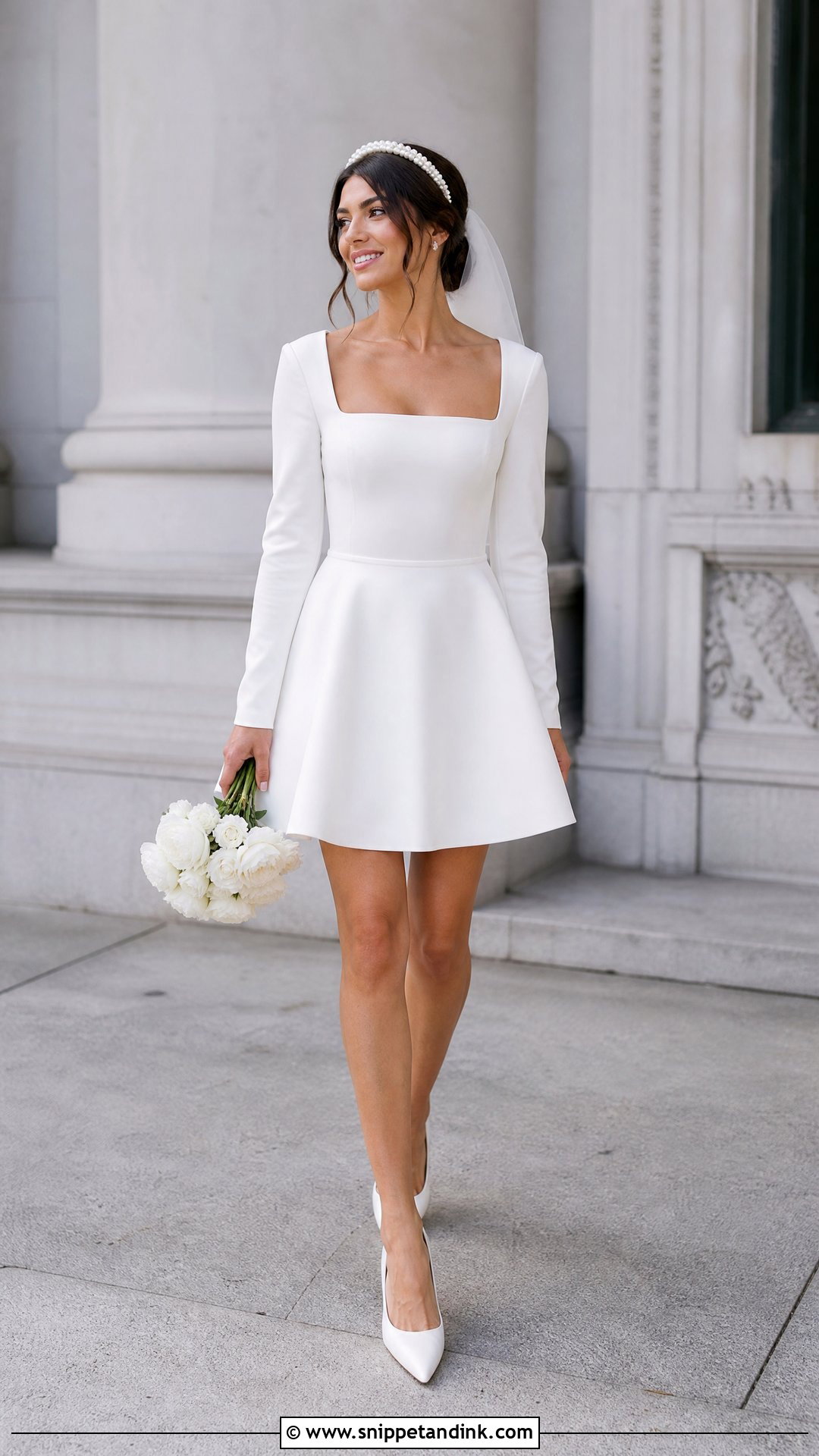
A white mini works for a courthouse ceremony, a welcome party or a reception change, provided the fabric is opaque and has some weight. In thin fabric a mini looks like a summer dress rather than a bridal one. A structured shift, fitted sheath or flared skater cut all read sharper in heavier crepe or satin. Pointed pumps or ankle-strap heels give a clean leg line, and a short veil, pearl headband or small satin bow tells everyone who the bride is. Long sleeves balance the short hem. During the fitting, sit, bend and climb in and out of a car seat while someone watches from the side. Tailored shorts or a smooth lining fix most of what that test reveals.
13. Solid White Satin Slip Wedding Dress
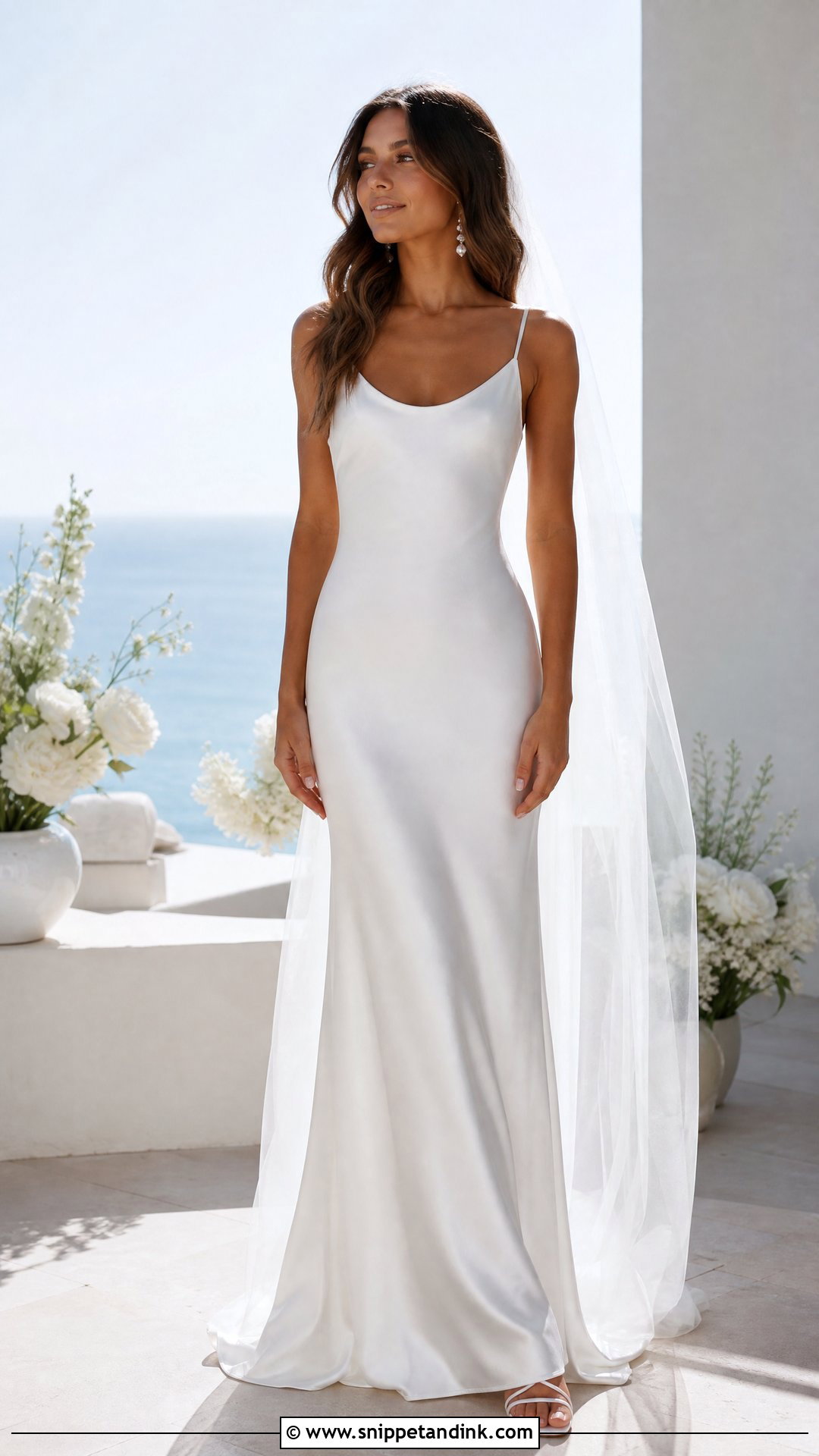
Bias-cut satin follows the body and reveals everything underneath it, which is why I treat a slip dress fitting as an underwear fitting too. Bring the exact undergarments you’ll wear on the day. Choose a lined, heavier satin so the skirt falls instead of clinging, with thin or medium straps. Minimal white sandals, small earrings and a sheer floor-length veil complete it. Soft waves keep it relaxed; a sleek bun makes it formal. A removable chiffon wrap helps on a cool evening. Hemming a bias cut takes real skill because the fabric keeps dropping as it hangs, so a good seamstress lets the dress rest on a hanger before she marks the length.
14. Solid White Corset Tulle Wedding Dress
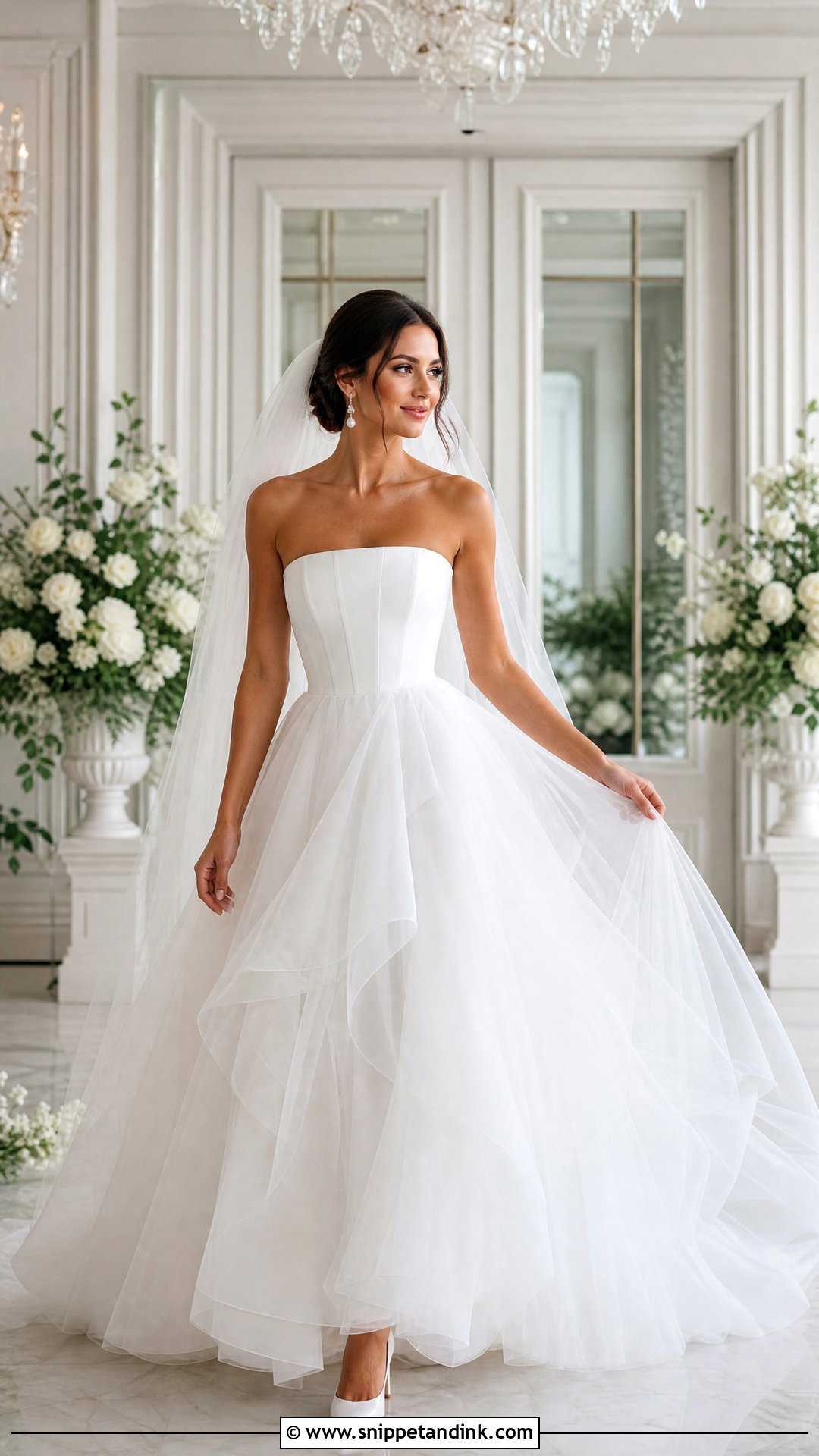
Covered boning, clean paneling and a secure back separate a refined corset from a costume one, and I can usually tell which I’m looking at by whether the bones show through the fabric. Layers of white tulle keep the skirt airy against all that structure. A straight or softly curved neckline works with detachable straps if you want extra support. White heels, pearl drops, a loose updo and a veil that runs past the train finish it. Ask whether tulle layers can come out during alterations. Many skirts are fuller than a petite frame needs, and removing a layer or two lets the bodice show. Tulle also catches on stone floors and heel buckles, so expect a snag or two by evening.

15. Solid White Empire Waist Wedding Dress
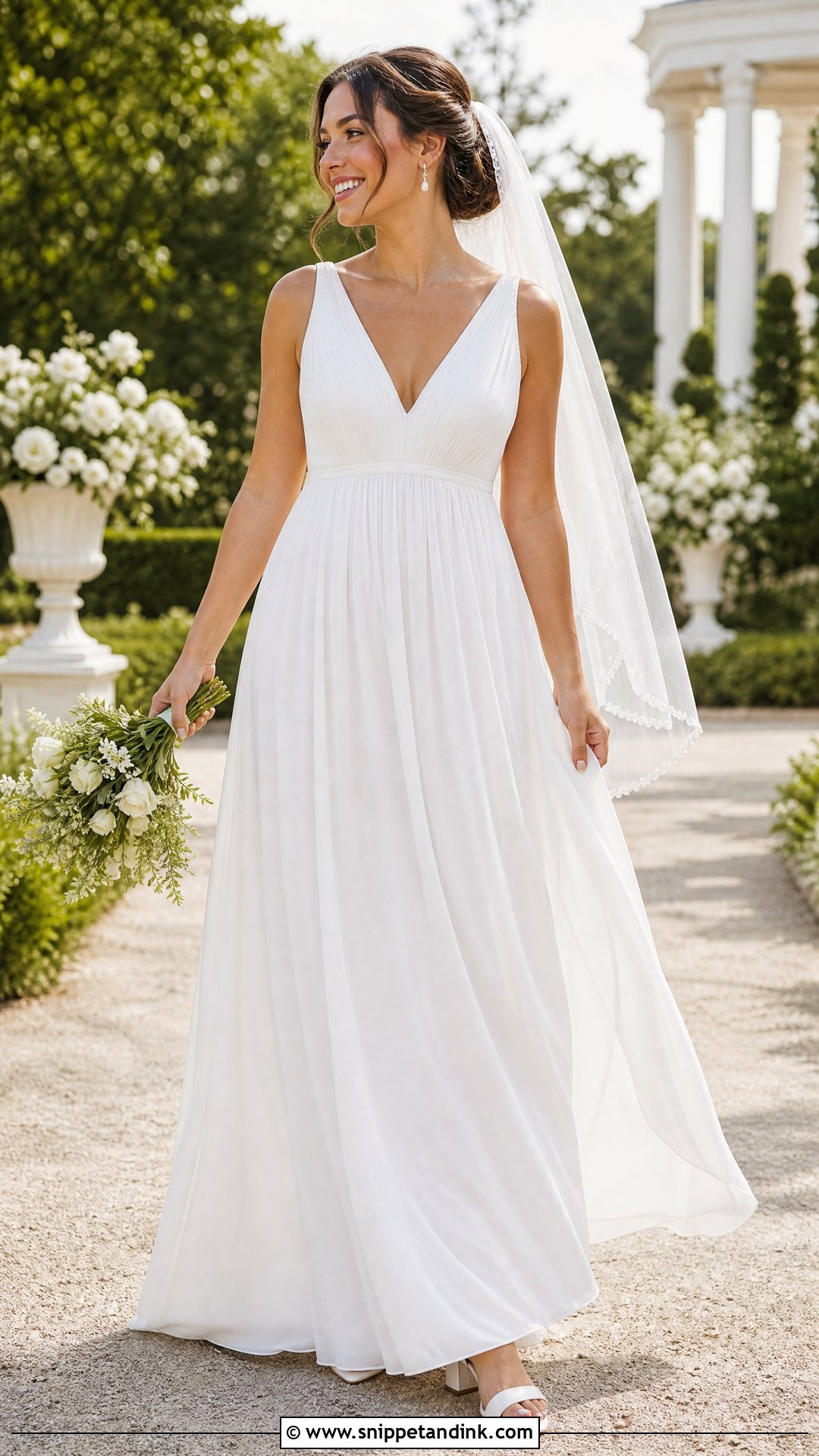
With the seam right under the bust and the skirt falling loose from there, an empire gown gives you room through the waist and hips all day. Chiffon, soft crepe and lightweight satin fall smoothly; anything stiff turns the shape into a tent. A V-neck adds length and a square neckline adds coverage. Low block heels, pearl earrings, a fingertip veil and soft waves or a low textured bun suit it. Because the bodice does all the supporting, that seam has to stay put. If it rides up when you raise your arms at the fitting, the bodice needs to be fitted more firmly under the bust.
16. Solid White Trumpet Wedding Dress With Bow
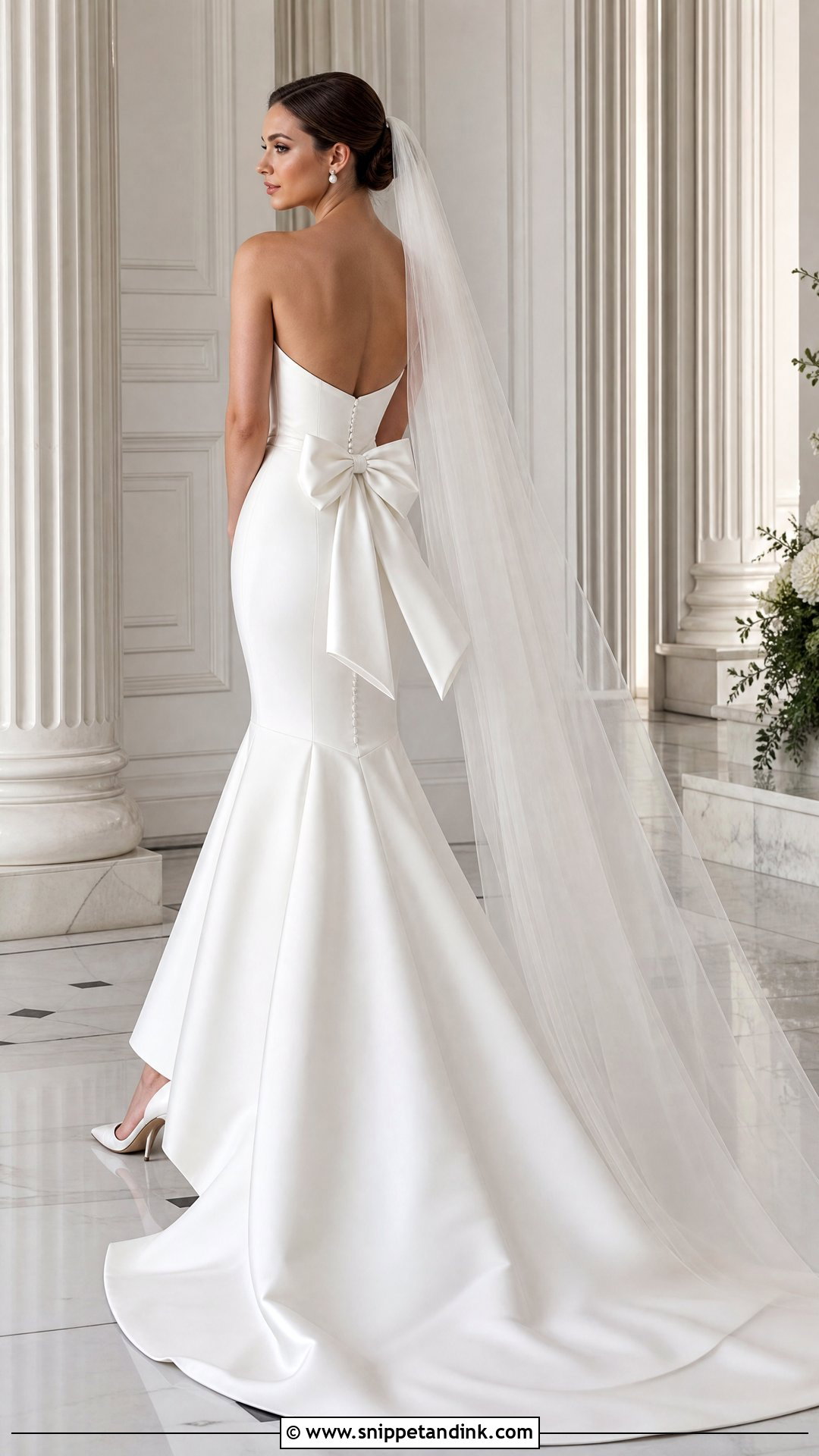
A solid white trumpet wedding dress with a bow flares from mid-thigh, higher than a mermaid, so you keep the fitted shape with far more freedom to walk. Satin or mikado holds both the flare and a structured bow. I place the bow at the back waist or the top of the train so it frames the silhouette instead of hiding it. Pointed heels, pearl studs, a plain cathedral veil and sleek hair keep details from competing. One thing brides forget: once the train is bustled, the bow can end up folded or hanging sideways. Bustle it at the final fitting and check the bow from behind. A removable bow gives you a cleaner reception look.
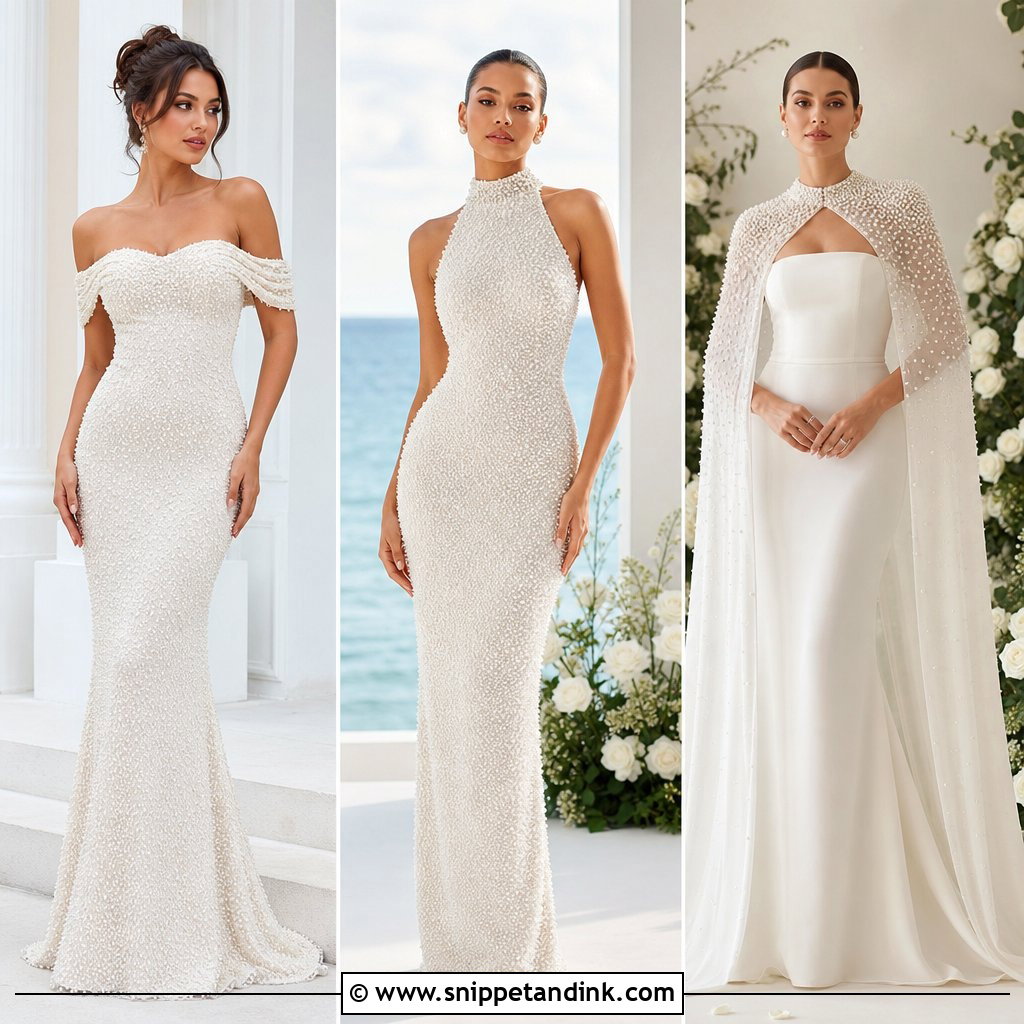
17. Solid White Cape Sleeve Wedding Dress
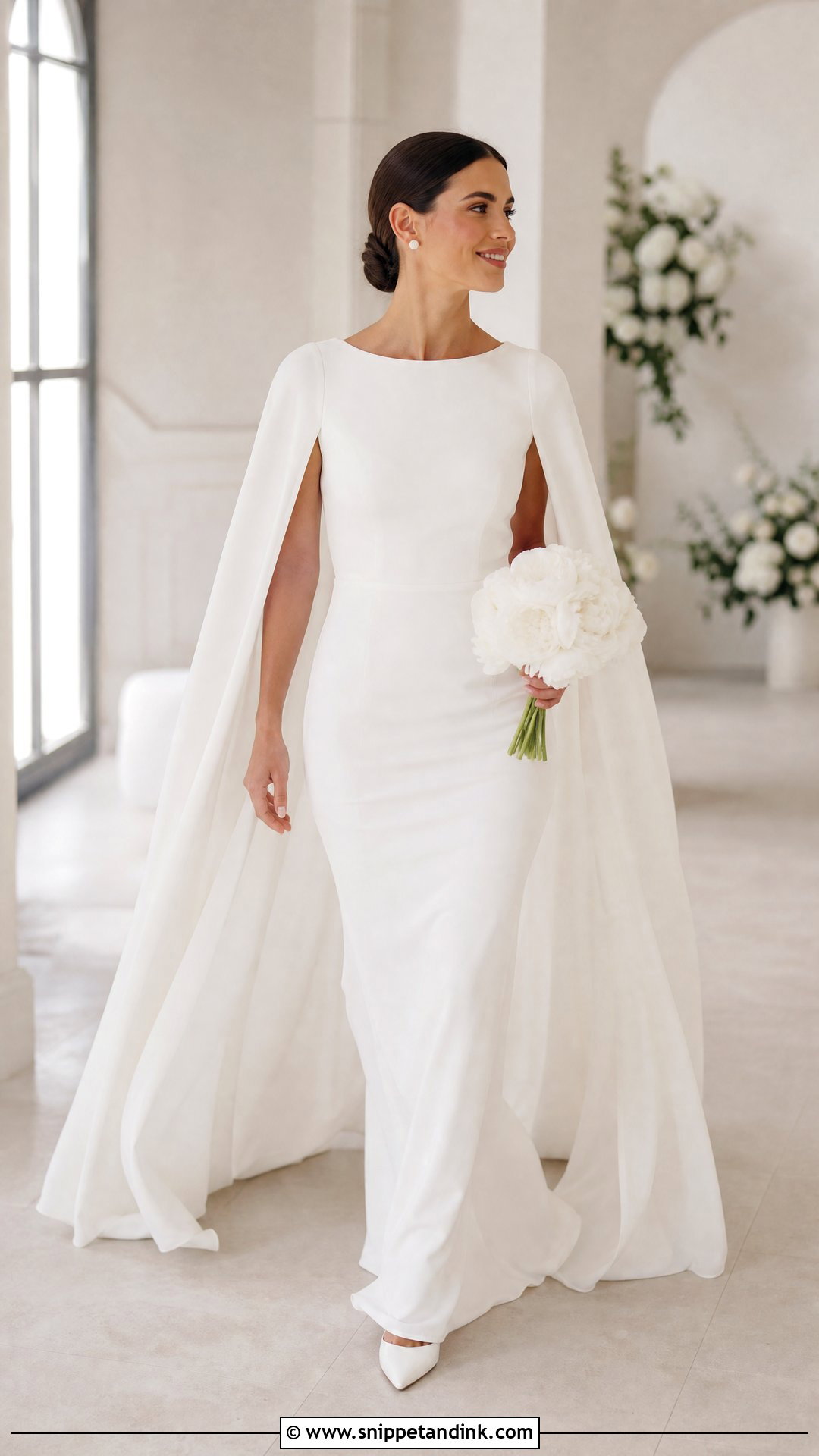
A cape can start at the shoulders, the neckline or the back and fall beside the arms, doing a veil’s job with more structure. I pair it with a clean column, sheath or A-line so the extra fabric has somewhere to sit. Chiffon floats; crepe reads tailored. White pumps, small earrings and a smooth low bun are enough. If the cape runs into a train, I’d skip the veil, because the two fight for the same space down your back. Check the cape length in your wedding shoes. Unless it clears the floor, it needs a wrist loop, or you and everyone near you will be stepping on it.
18. Solid White Puff Sleeve Wedding Dress
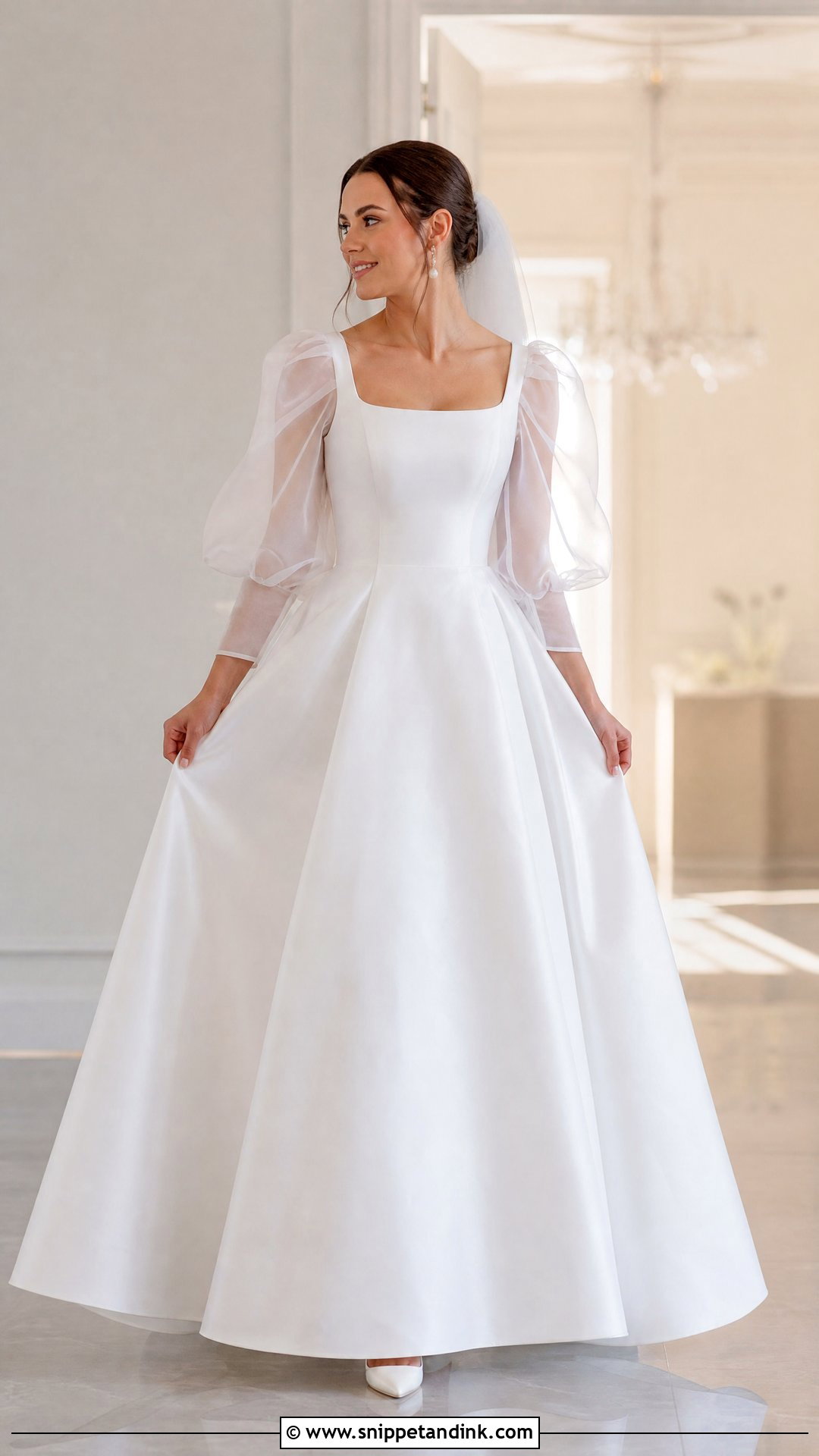
Puff sleeves put the volume at the shoulders, so I keep everything below them simple: a fitted waist and an easy A-line skirt. Sheer organza gives a light puff and structured satin a bolder one. White pointed pumps, small pearl earrings and a narrow veil set under a low bun finish it. Detachable sleeves reveal a strapless or sleeveless bodice for the reception. Elastic is the weak point. Too tight and it leaves red marks and pinches when you lift your arms; too loose and the sleeve slides down by the first dance. Raise both arms several times at each fitting and tell your seamstress exactly where it grips.
19. Solid White Wedding Dress With Detachable Overskirt
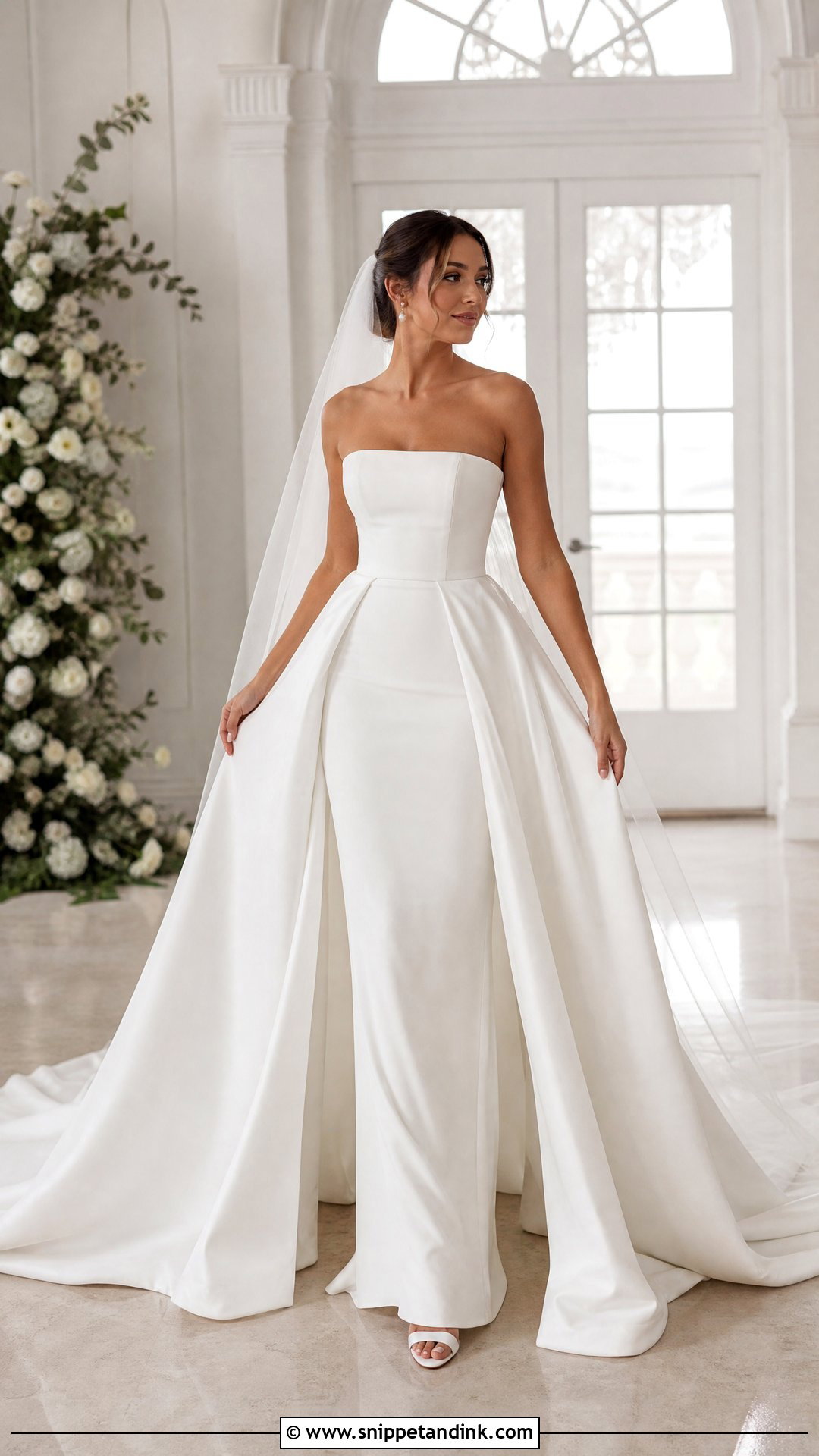
A solid white wedding dress with a detachable overskirt gives you two looks without buying a second gown. Underneath sits a fitted crepe, satin or mikado column; over it goes a full skirt that reads as a ball gown and may run into a train. Remove it after the photos and the sleek dress is left. White heels, pearl earrings and a simple veil work with both versions. From the side, the overskirt waistband shouldn’t look bulky, so I always check it in a three-way mirror. Hidden hooks or snaps need to be secure yet quick to undo. Have whoever will help you practice the removal twice before the day, because the first attempt always takes longer than anyone expects.
20. Solid White Bateau Neck Wedding Dress
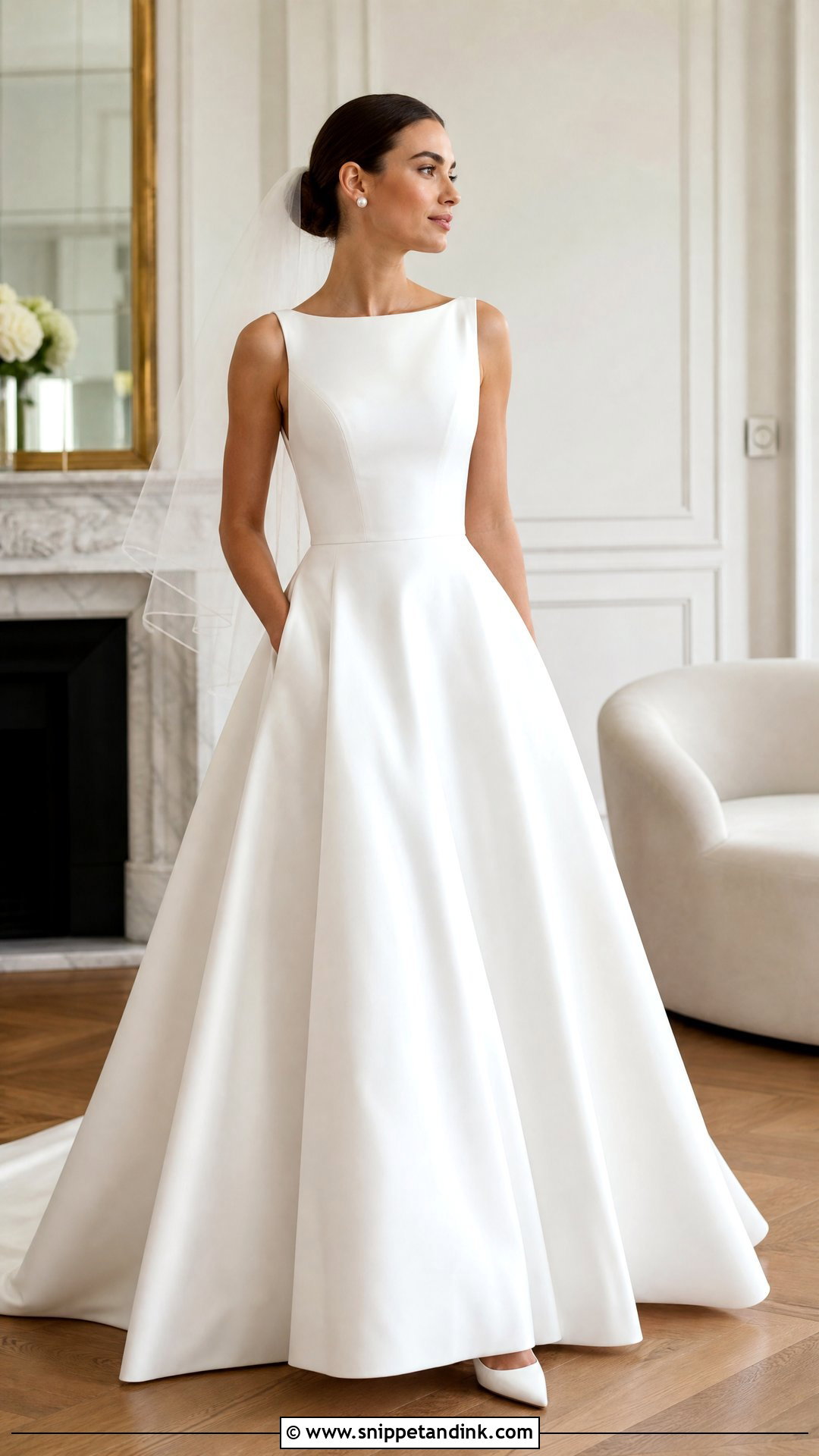
A bateau neck wedding dress runs almost straight across the collarbones, covering more than a plunge and slightly widening the shoulder line, which is worth knowing if your shoulders are already broad. It suits a fitted sheath, a structured A-line or a full satin skirt. Sleeveless feels modern, while three-quarter or long sleeves feel traditional. Pearl studs, a low bun, white pumps and a veil set beneath the hair are all you need, since a large necklace competes with that horizontal line. A low back adds contrast. The usual fault is a neckline that gapes or pulls toward the shoulders, so check that it lies flat when you turn your head.
Rescuing a White Bodice From Lipstick, Grass and Red Wine
With no lace or print to break it up, a mark on a plain white bodice appears in every photo taken after it happens. I pack a small kit for every all-white bride: white chalk, a few clean white cloths, a stain pen she has already tested on a fabric scrap, safety pins and a roll of clear tape for lint.
- Foundation and lipstick: lift it with dry tissue or tape before anything wet touches it. Water spreads makeup into a wider halo.
- Mud on the hem: let it dry, then brush it off. Rubbing wet soil grinds it into the weave.
- Red wine or coffee: blot with a damp white cloth from the outer edge inward, then dust what’s left with chalk for the remaining photos.
- Champagne and sweet drinks: they dry invisibly but can brown over the following weeks as the sugar oxidizes, so note where they landed for your cleaner.
Test anything wet on an inside seam allowance first. Satin and silk can water-mark, and a ring is often harder to hide than the stain was.
After the Wedding, Before the Box
Get the gown to a cleaner who handles bridal work within a few weeks, and point out every spill, including the ones you can’t see. For storage, use acid-free tissue and a breathable cotton bag or an acid-free box. The plastic bag it came home in traps moisture and can yellow white fabric over time. Heavy gowns shouldn’t hang from their straps for months, since the weight stretches the shoulder seams. Fold with tissue padding each fold, keep it somewhere cool and dark, and refold it along different lines once a year so no permanent crease sets.
Plain White Leaves the Fit With Nowhere to Hide
Start with silhouette and fabric, then let the venue narrow it down. A satin ball gown brings formal drama, a crepe sheath keeps things modern, chiffon and tulle move, and mikado holds an architectural shape. Shoes, jewelry, veils, gloves and detachable pieces come last. At every fitting, walk, sit and raise your arms, because a plain white dress shows a pulling seam faster than anything decorated. Good alterations will do more for an all-white gown than any accessory. Buy the one that supports your body and still feels like you after a long day in it.
You'll Like These Ideas:







Leave a Reply