
A gown on a hanger tells you very little. What I want brides to picture is the whole person walking down the aisle: the silhouette, yes, but also the veil, the shoes, the earrings, the bouquet and the room around her. The dresses below are styled that way, as full outfits. Some are sculpted satin, some are soft lace or crepe, a few are suits and jumpsuits, and each comes with my notes on how the fabric behaves, who it suits and where it tends to go wrong. A classy dress is mostly one you can move in without thinking about it.
How Satin, Crepe, Lace and Chiffon Behave by Hour Eight
Brides usually choose a dress by how it looks standing still in a fitting room. I ask them to imagine it after a ceremony, a car ride, a long dinner and two hours of dancing. Fabric decides more of that than shape does.
- Satin creases where you sit and shows water spots. Heavier satins recover better than thin ones.
- Crepe stays smooth and doesn’t wrinkle much, but it reveals undergarment lines and uneven seams.
- Lace hides small marks and creases, which is why it’s forgiving at outdoor weddings. It can catch on jewelry.
- Chiffon and tulle stay cool and light, though they snag and pick up dirt along the hem.
- Mikado holds its structure all day and resists creasing, at the cost of a stiffer feel and more weight.
If your venue is outdoors or the day is long, lean toward lace, crepe or mikado. If you want satin anyway, plan a steamer for the morning and choose a heavier weight.
1. Satin A Line Wedding Dress
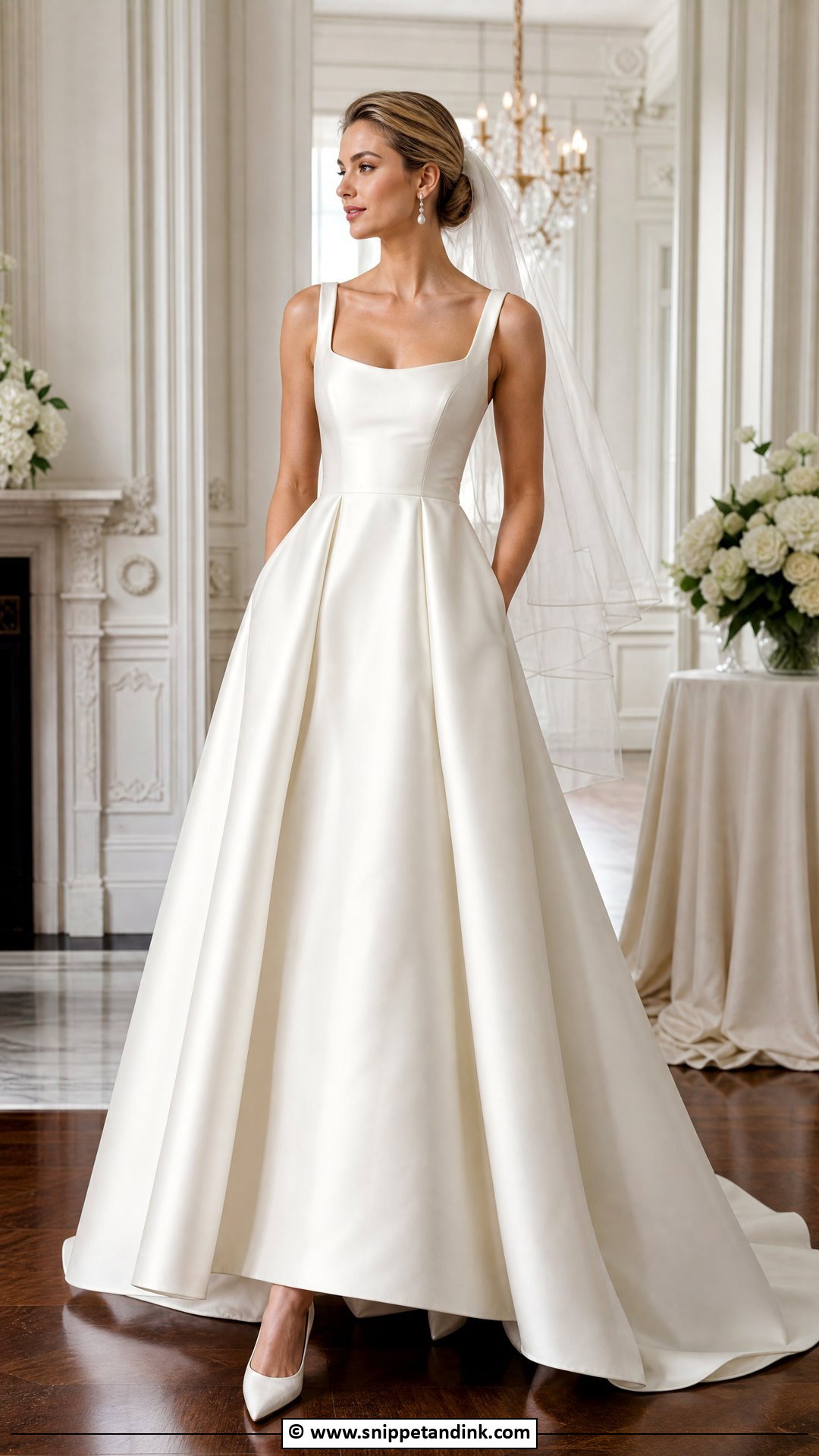
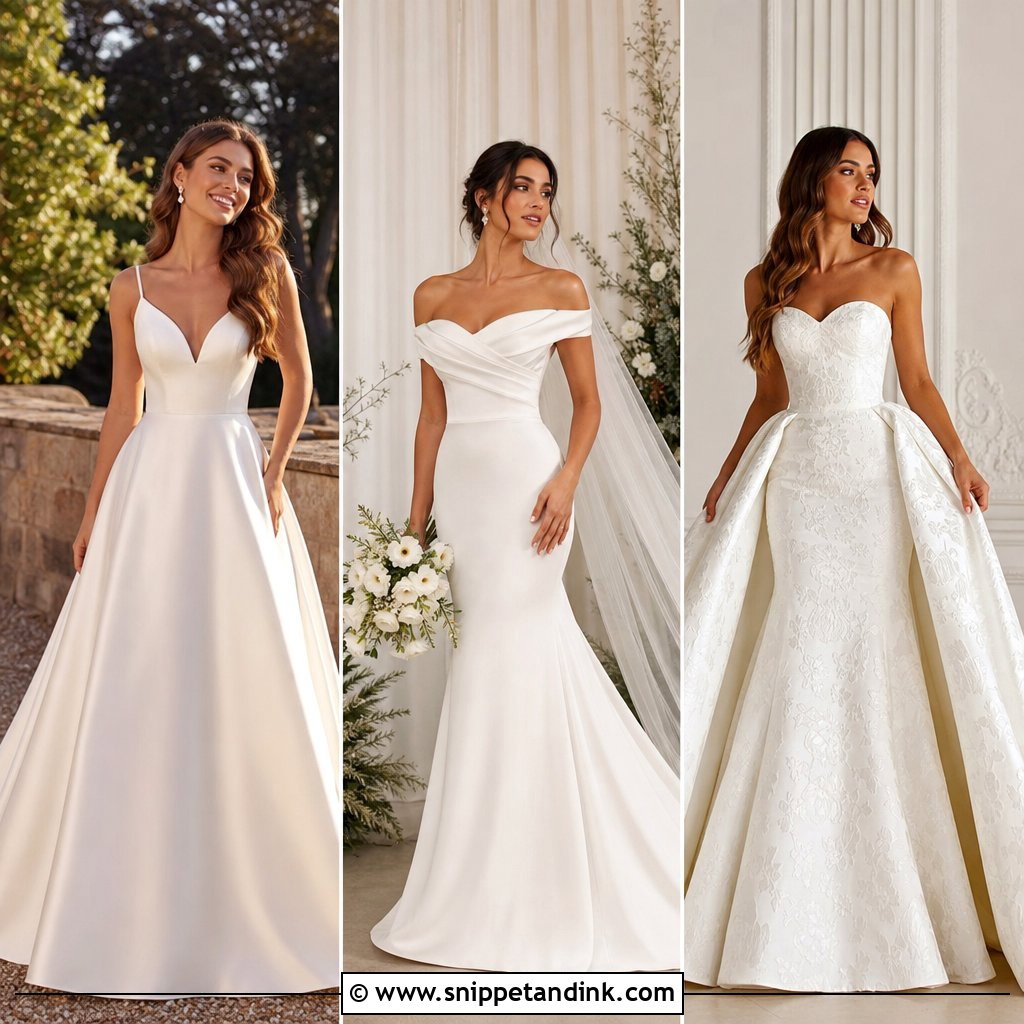
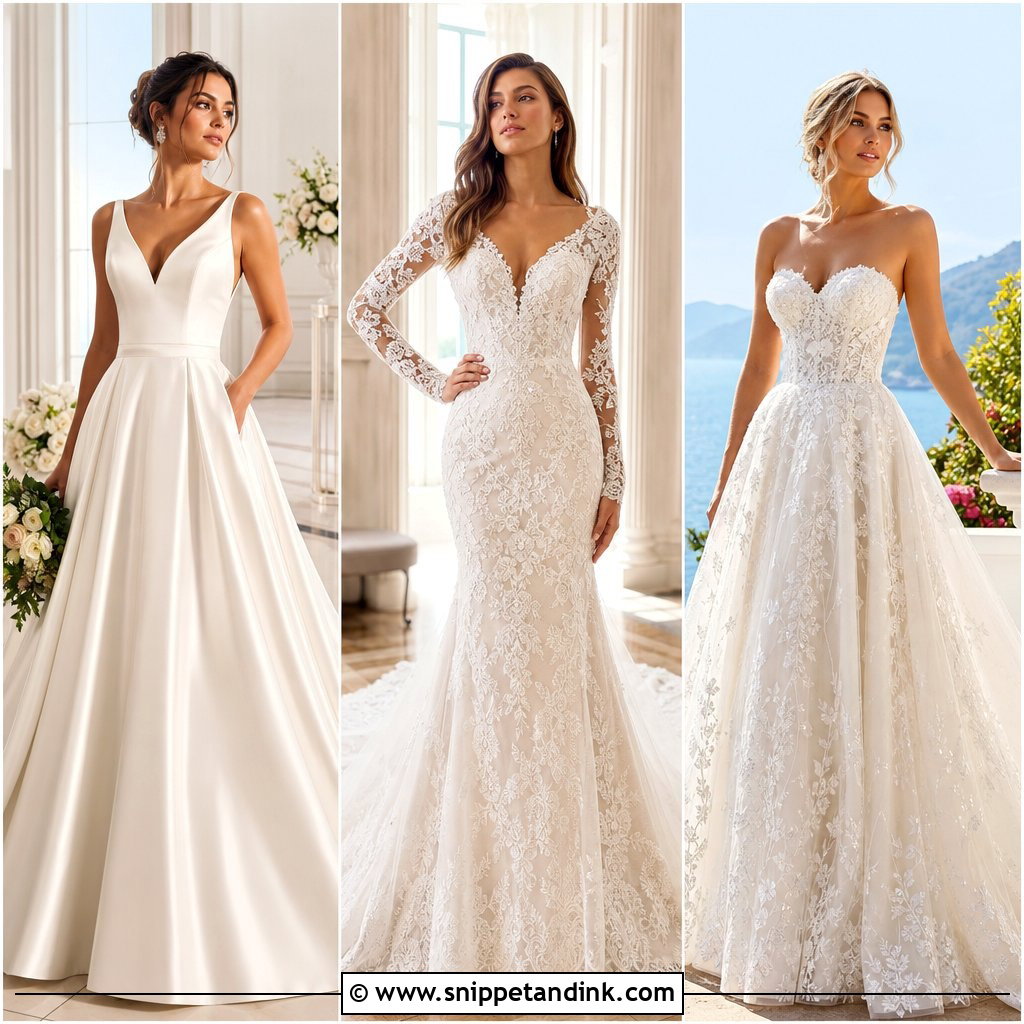
Satin A-lines are the shape I suggest when a bride can’t decide, because the fitted bodice and skirt released from the waist flatter almost every figure. Ivory or soft white satin glows in photos. The catch is creasing: satin marks wherever you sit, so I ask for a heavier duchess or a satin with some body rather than a thin, slippery one. Pointed satin pumps, pearl drops and a mid-length veil finish it. Keep the bouquet to white roses, ranunculus or orchids so the satin stays the star.
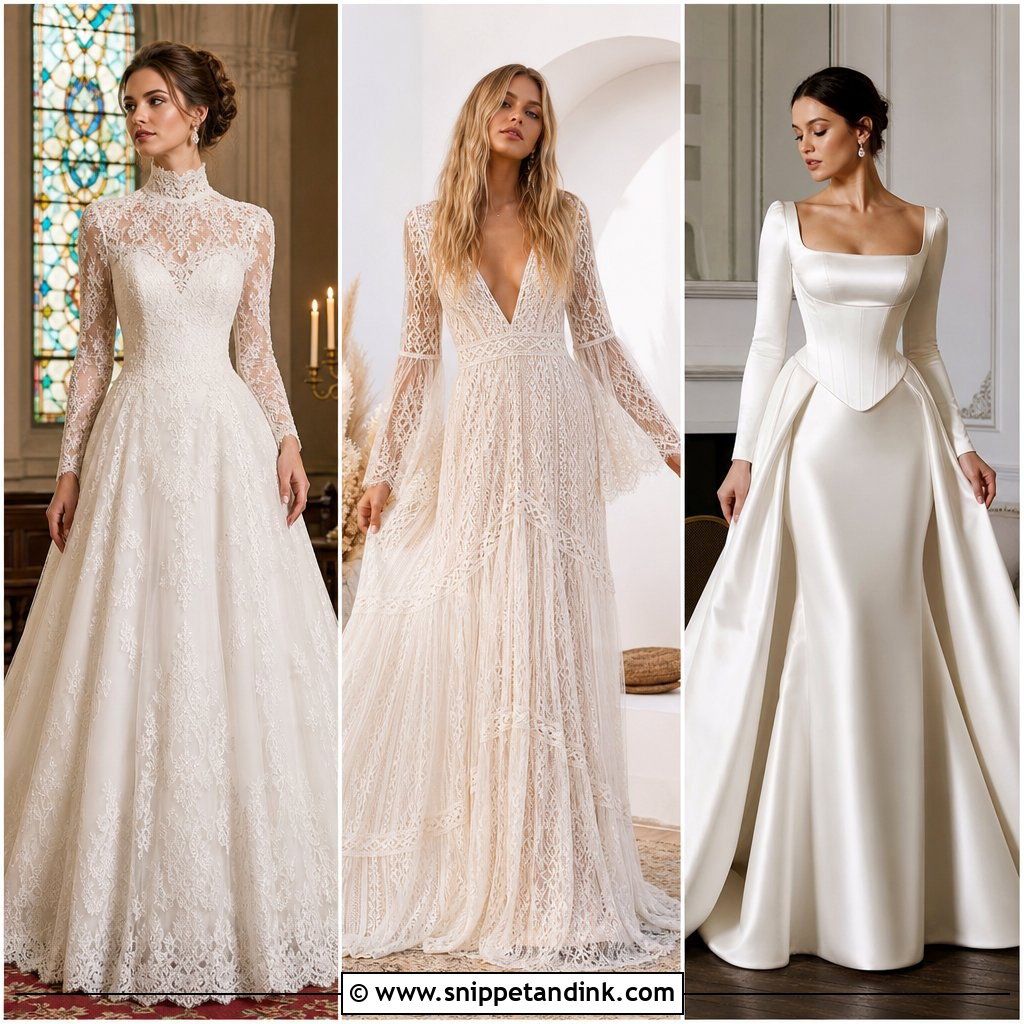
2. Long Sleeve Lace Wedding Dress
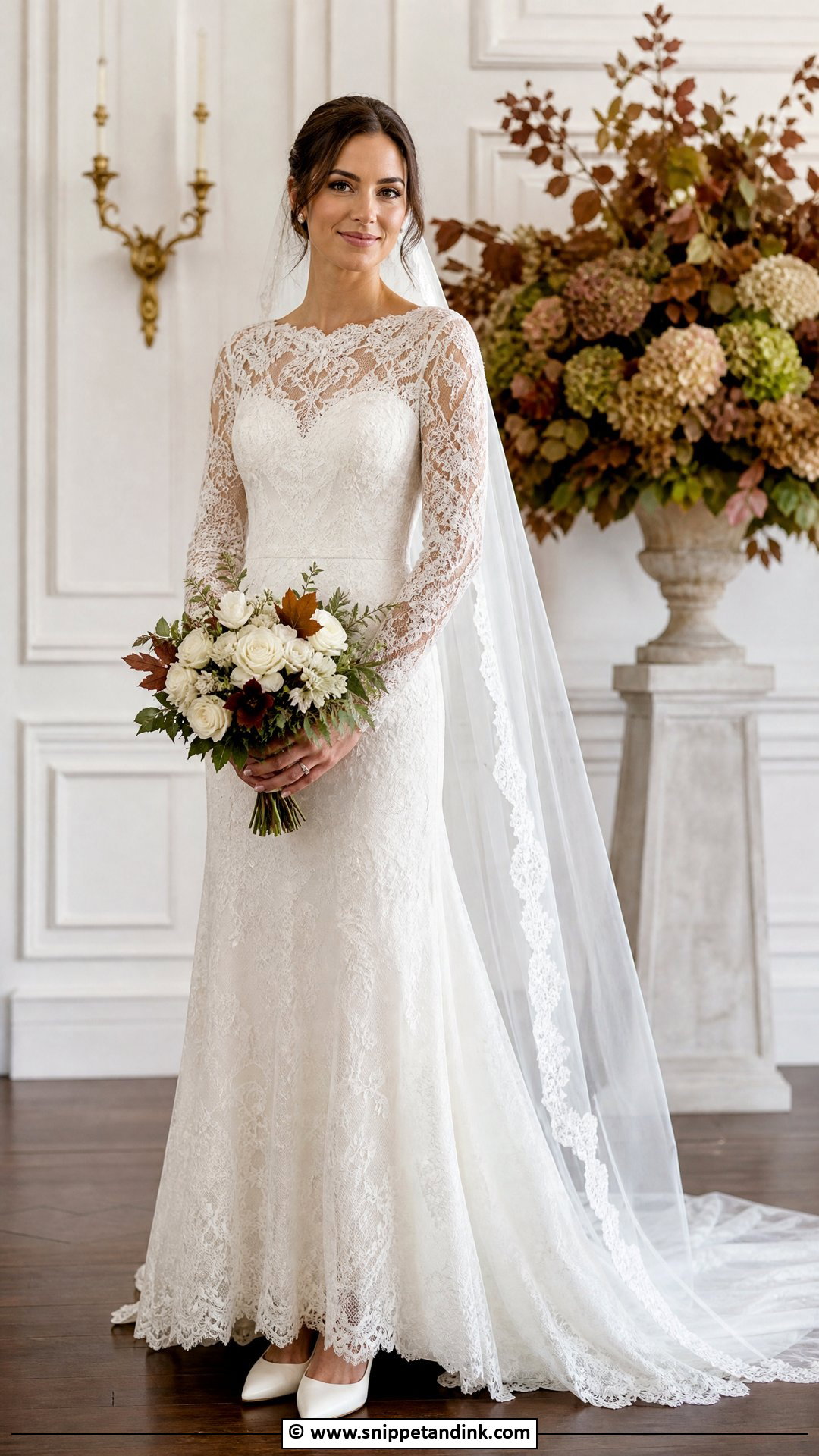
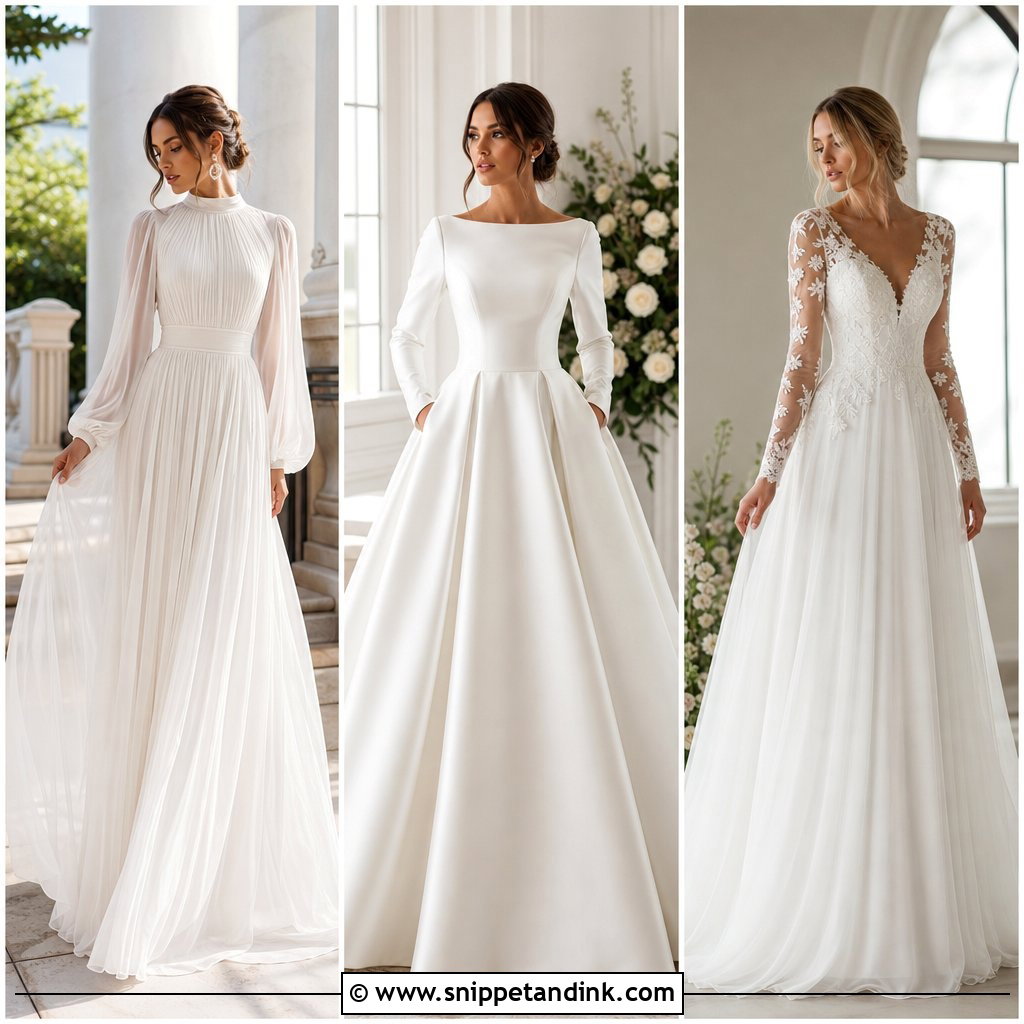
Lace sleeves give coverage and texture at once. Delicate floral lace on a sheer base with a fitted or gently flared skirt keeps the proportions balanced, and nude lining lets the pattern read clearly. What I check first on long lace sleeves is the armhole: cut too high and tight, it lifts the whole bodice when you hug people. Pearl studs and a lace-edged veil coordinate well. Closed-toe heels or pointed pumps suit fall, winter and formal indoor weddings.
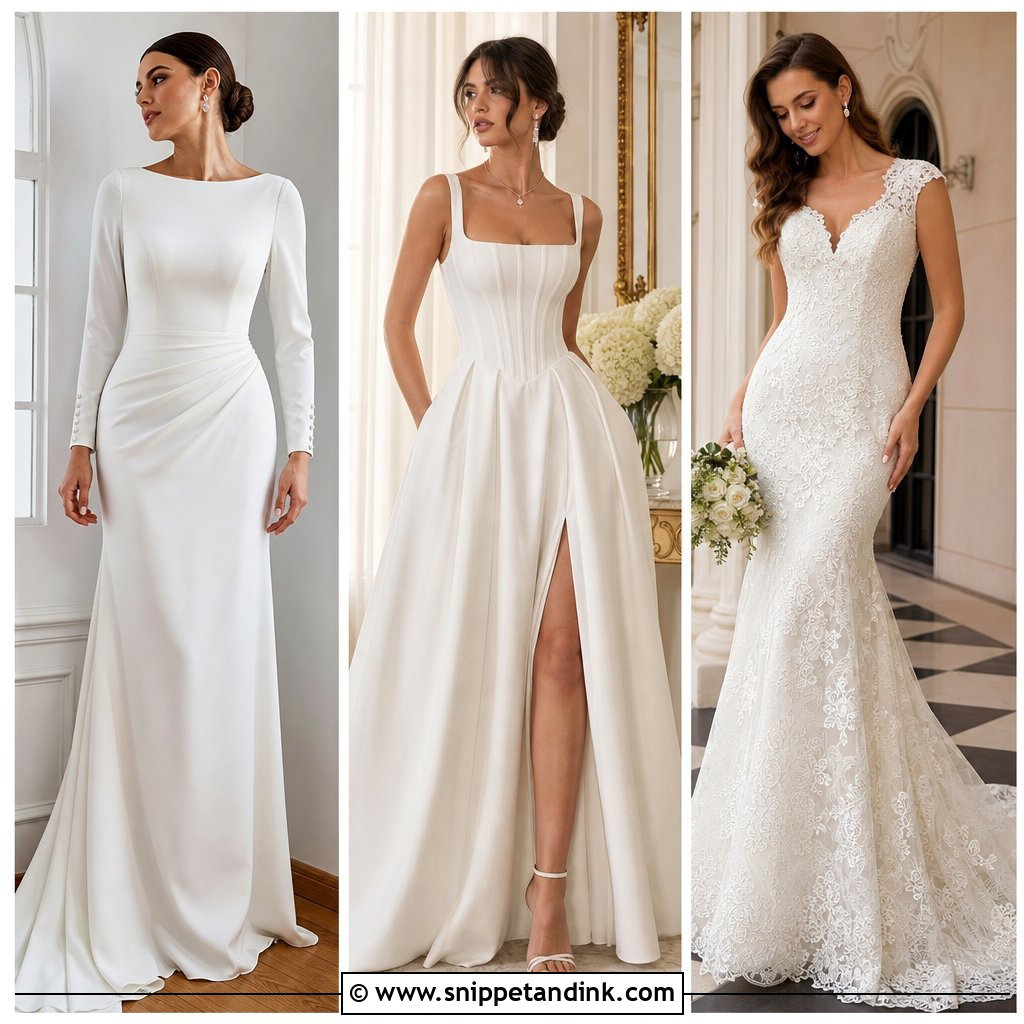
3. Simple Crepe Wedding Dress
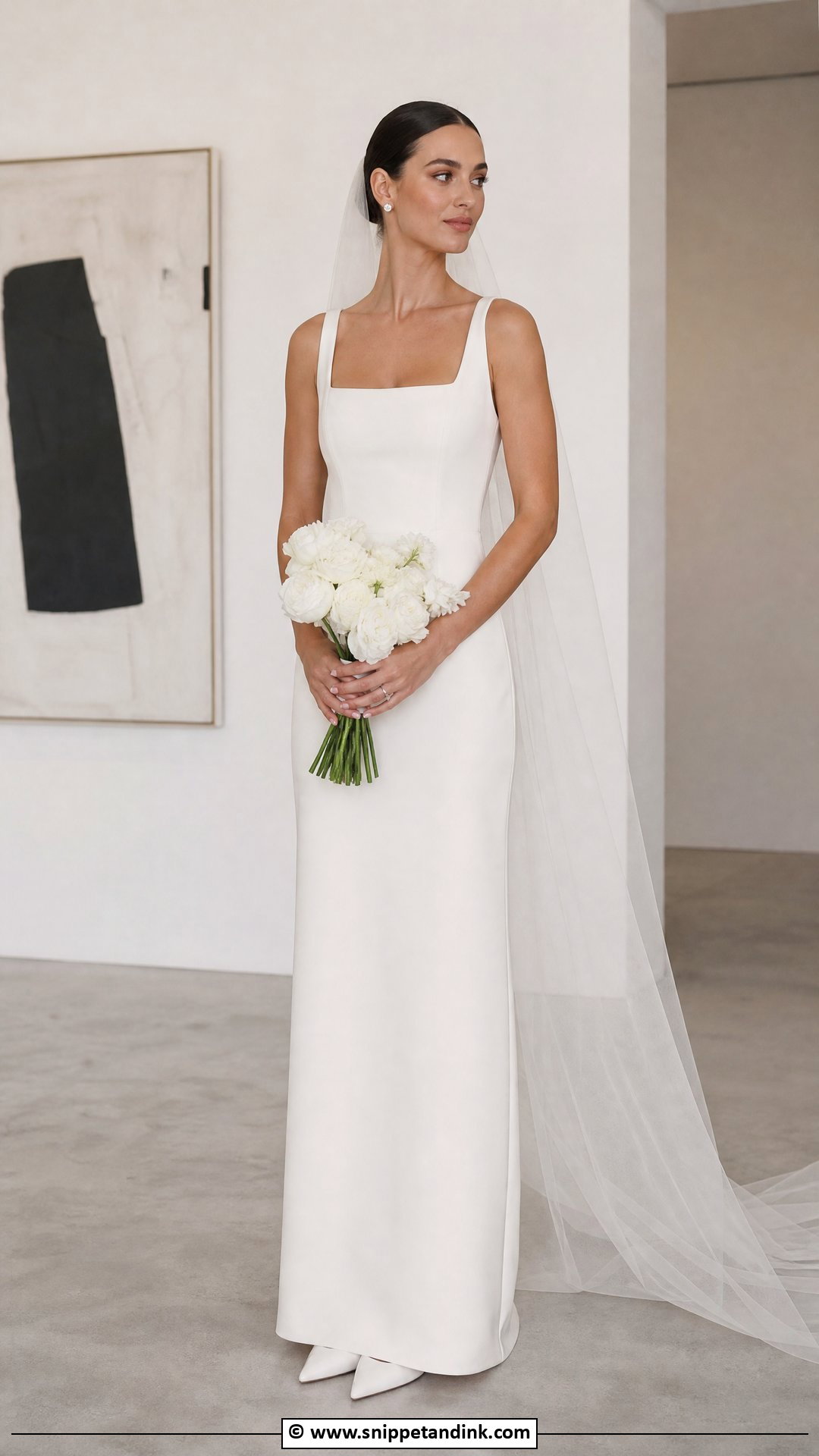
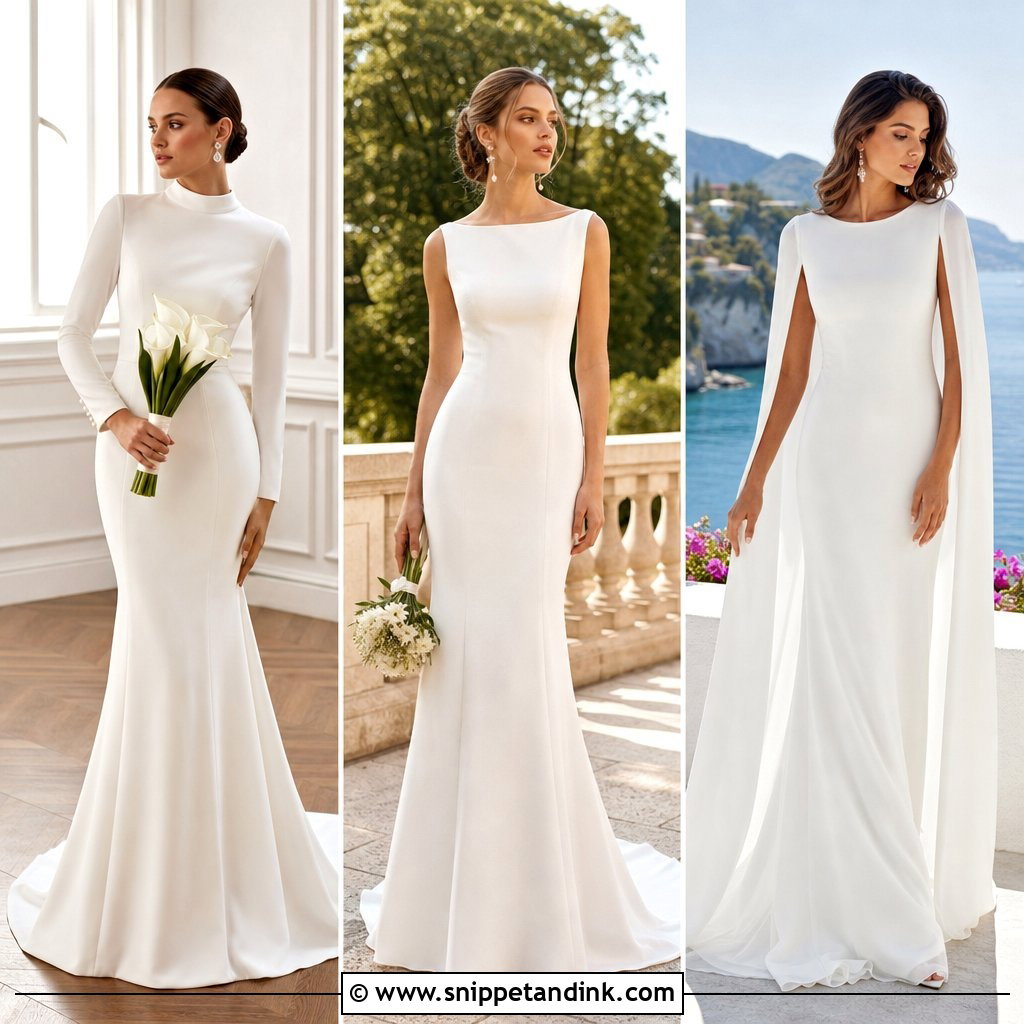
Crepe is my pick when a bride wants quiet luxury. Its matte surface photographs as pure line and shape, with no shine to distract. That honesty cuts both ways, though: crepe shows every seam, every undergarment edge and every bump of a badly placed zip, so the fitting has to be precise and the shapewear smooth-edged. Sheath, soft mermaid or column all work, with a square, bateau or high neckline. A structured bouquet and a neat bun suit its clean character.
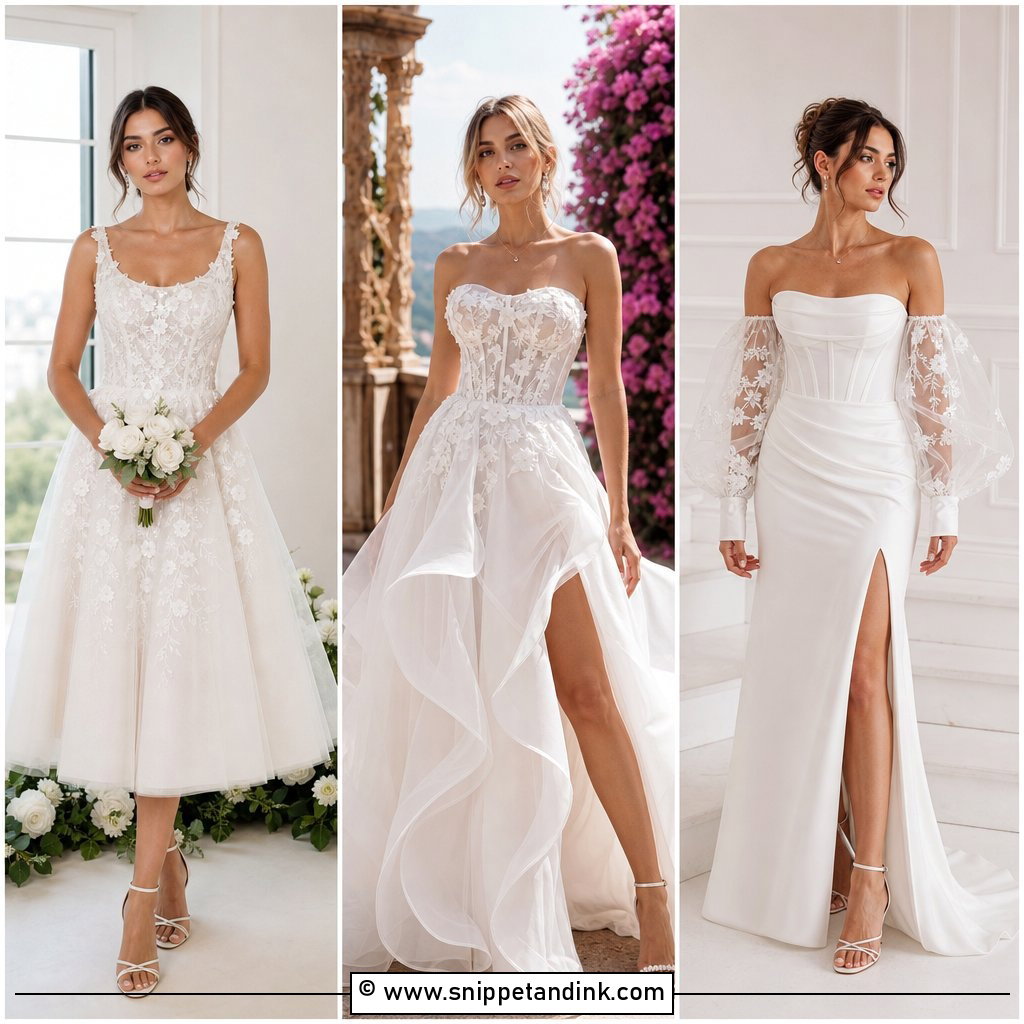
4. Off The Shoulder Wedding Dress
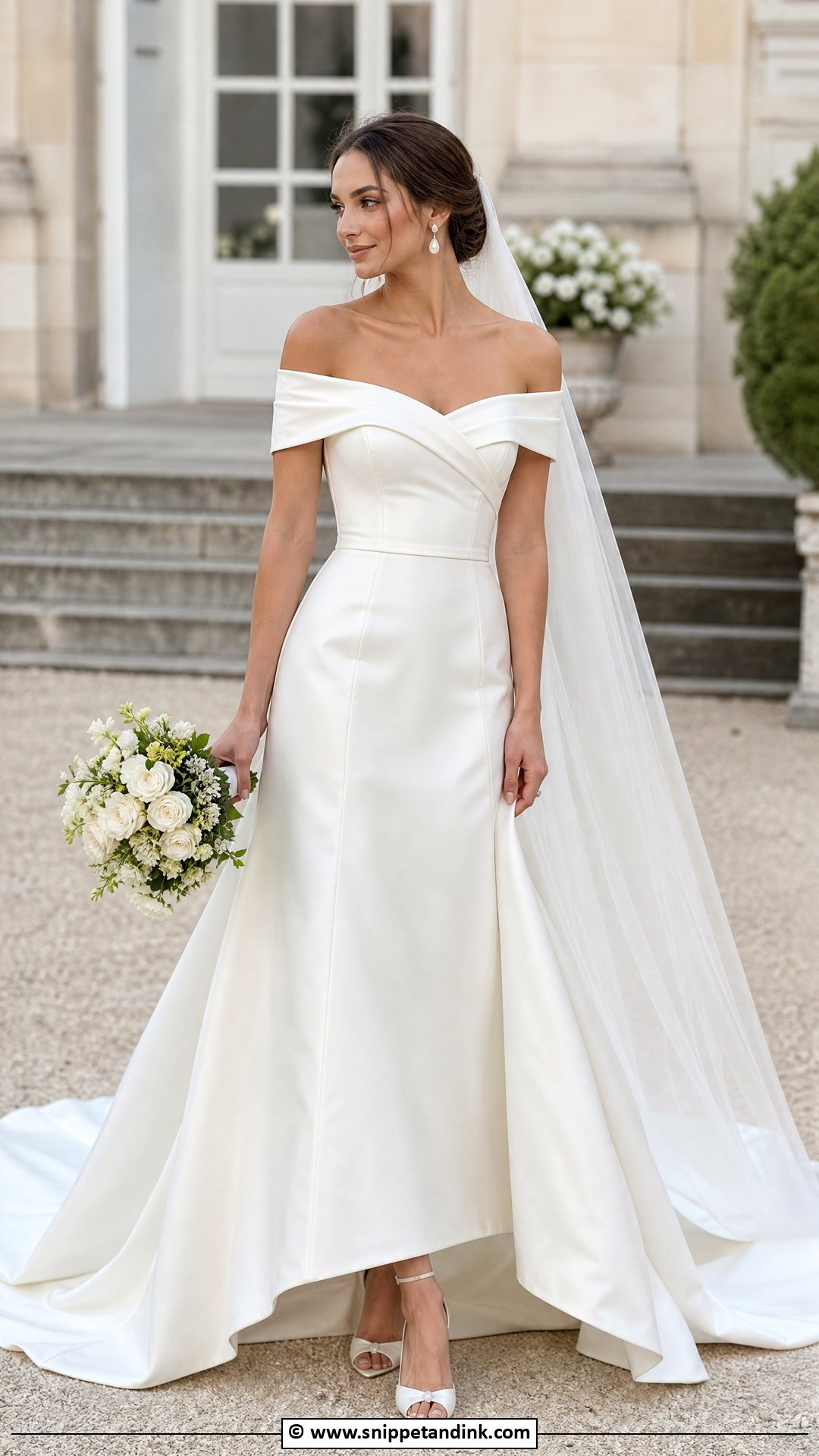
Off the shoulder necklines soften a formal gown without making it casual. They work on ball gowns, fitted gowns and A-lines, in satin, mikado, lace or crepe. The engineering matters: the bodice must be supported from inside with boning or a built-in corset, because the off-shoulder band can’t hold the dress up on its own. Skip the necklace and wear statement earrings instead. A cathedral veil adds drama; a fingertip veil keeps things lighter.
5. Strapless Ball Gown Wedding Dress
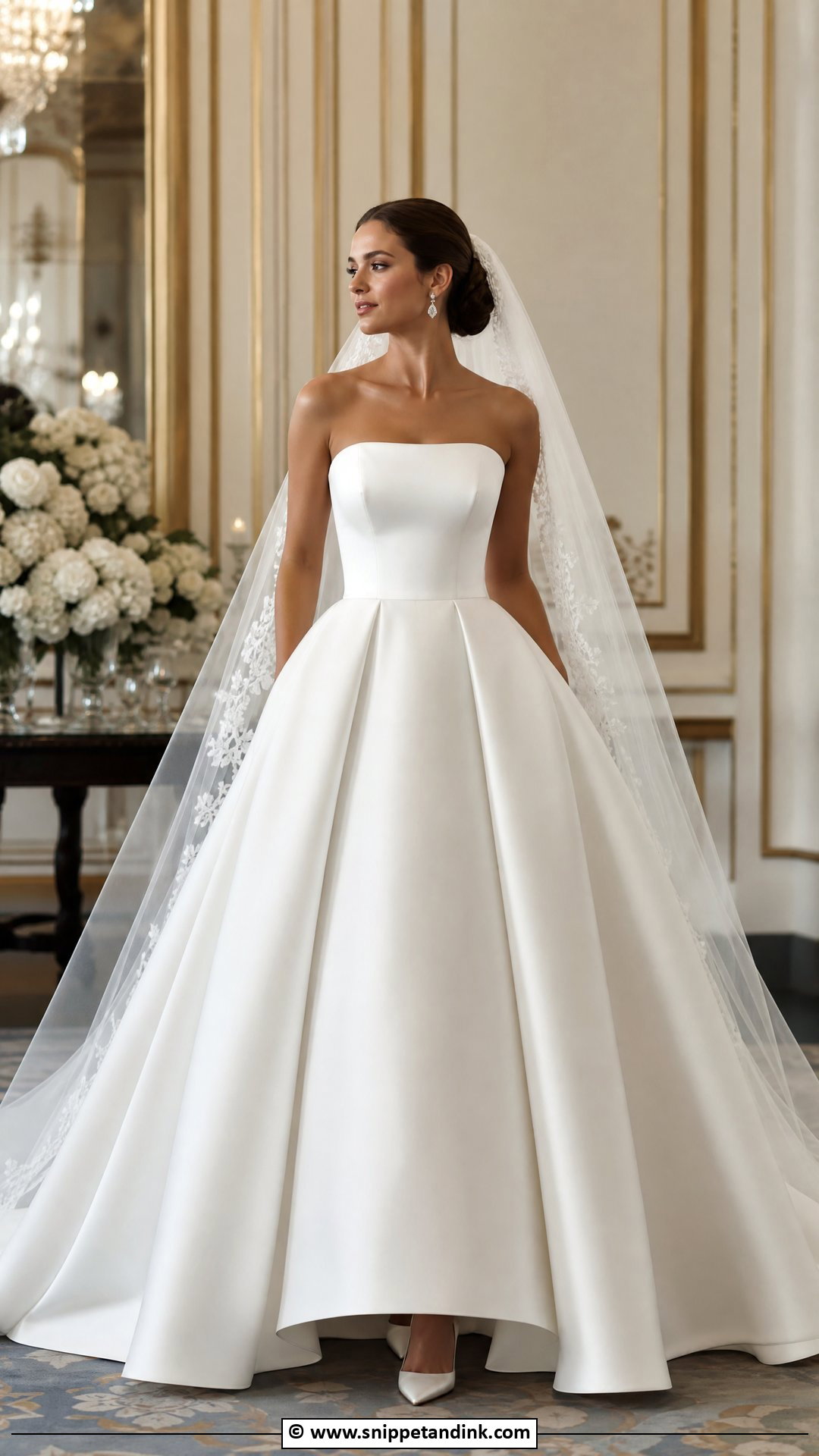
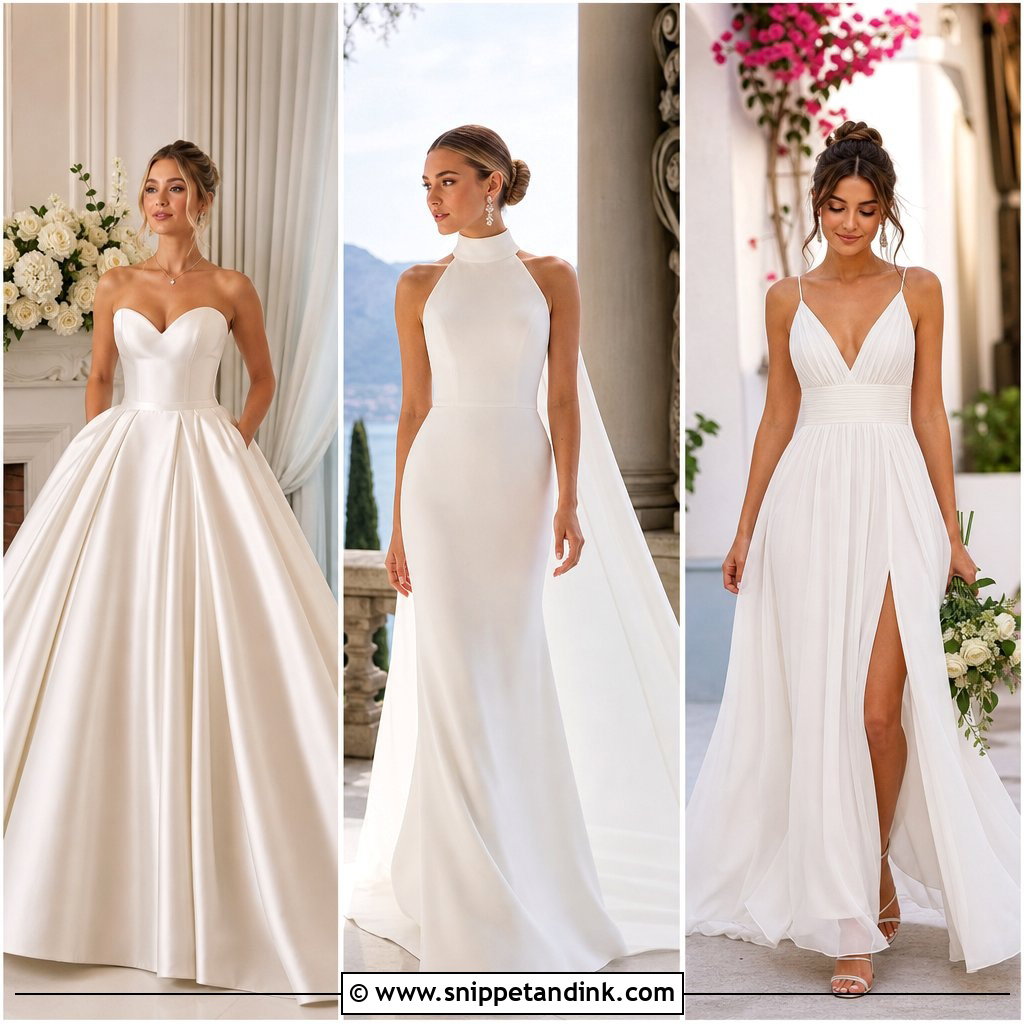
A strapless ball gown wedding dress reads bridal from across a room. Smooth satin, mikado or structured tulle hold the full skirt best. Strapless gowns stay up because of the waist fit, not the bust, so I have brides raise their arms and twist at every fitting; if it slips, the waist needs taking in. A long veil, delicate drops and plain satin heels are enough. Ballrooms, historic venues and black-tie evenings are where it belongs.
6. Square Neck Wedding Dress
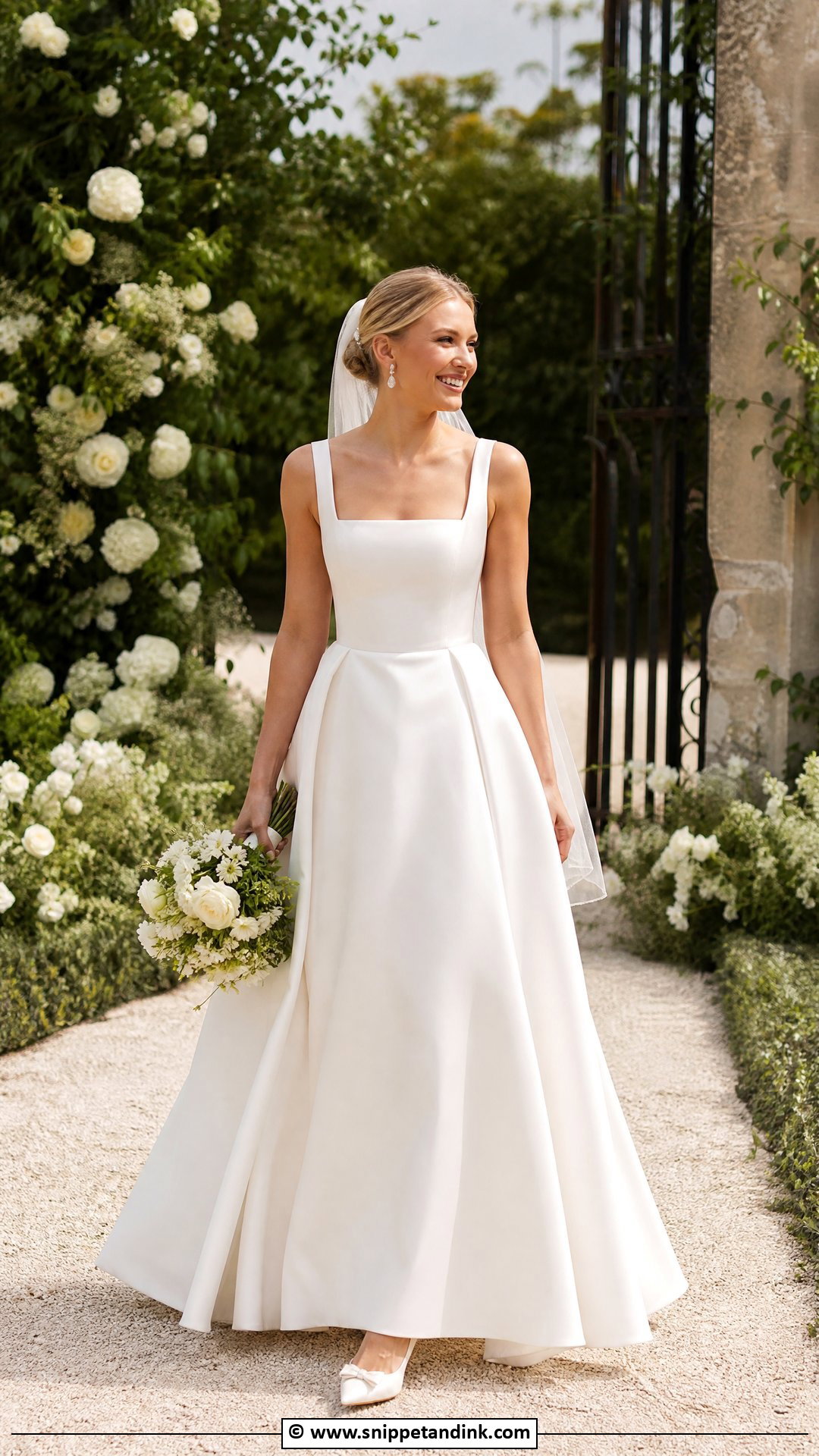
Square necklines have a slightly vintage structure that never looks severe. Wider straps give real support for fuller busts; thin straps look lighter but need a well-built bodice underneath. I like a veil placed low at the back of the head with this neckline so the line of the square stays clean from the front. Pearl earrings and a smooth bun keep focus at the collarbone. Choose pointed heels for a chapel and ankle-strap sandals for grass.
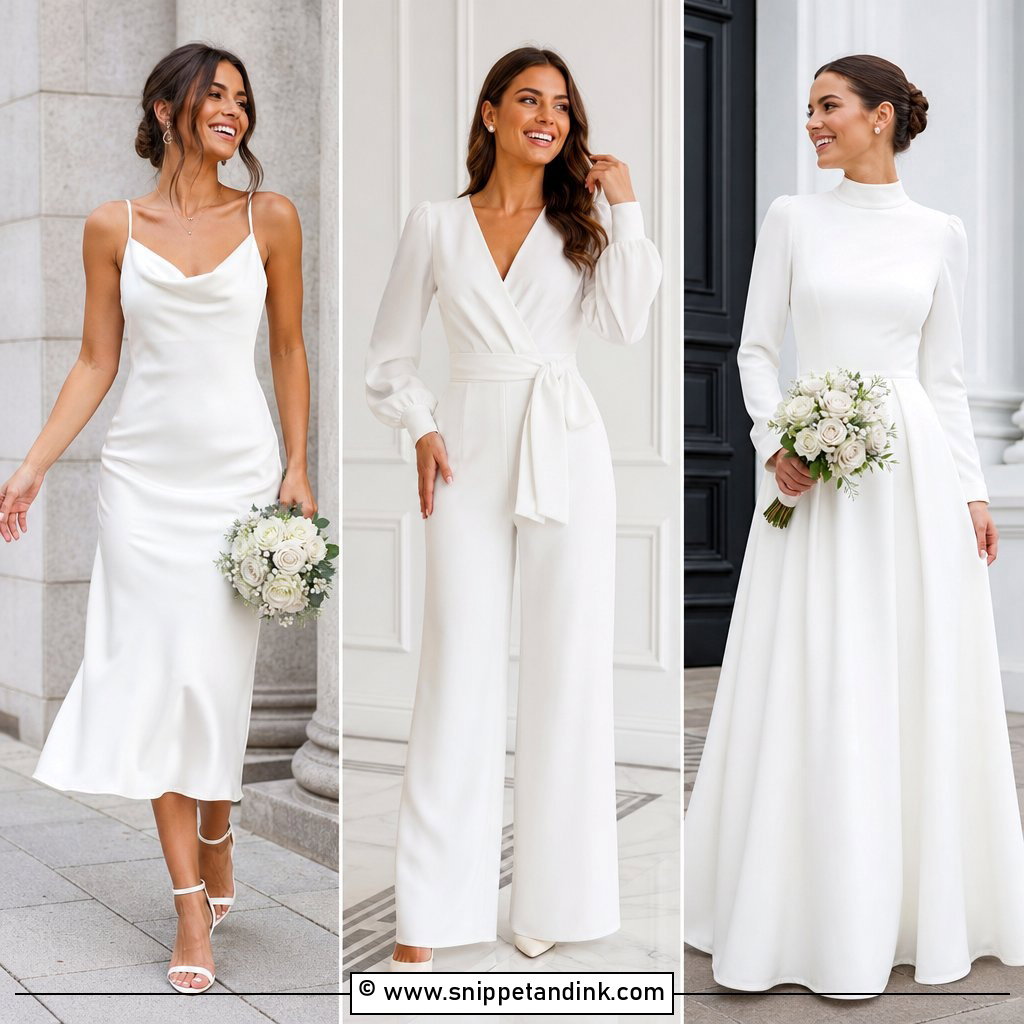
7. High Neck Wedding Dress
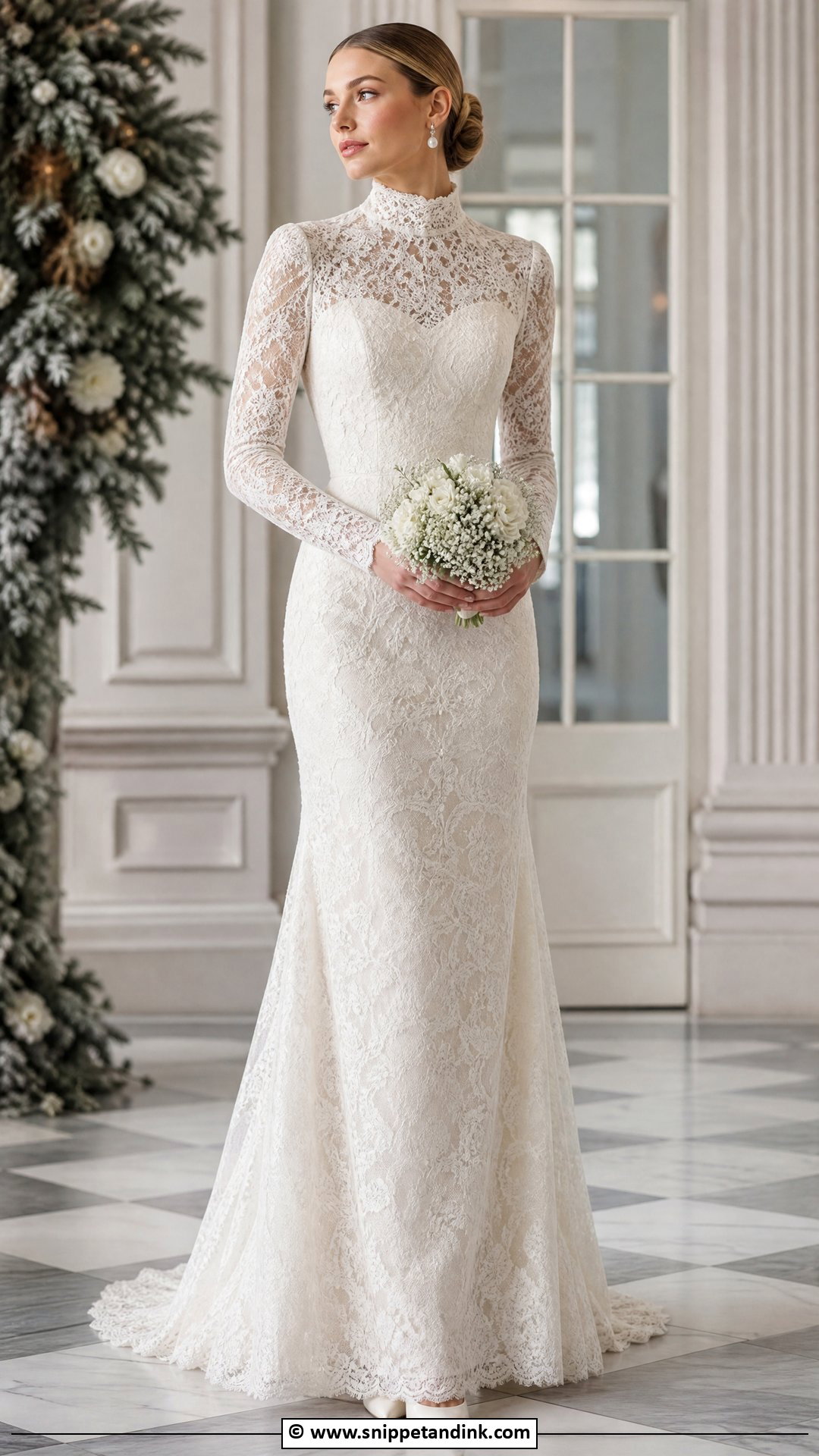
High necks feel regal and draw attention to the face and posture, so pulled-back hair and statement earrings are a natural pair. Lace, crepe, satin or chiffon all suit it. Watch the neck height on a bride with a shorter neck: a collar that sits right under the jaw can look like it’s choking her in profile photos, and dropping it even a little fixes that. Keep the veil simple. Cooler seasons and formal venues suit this look most.
8. V Neck Wedding Dress
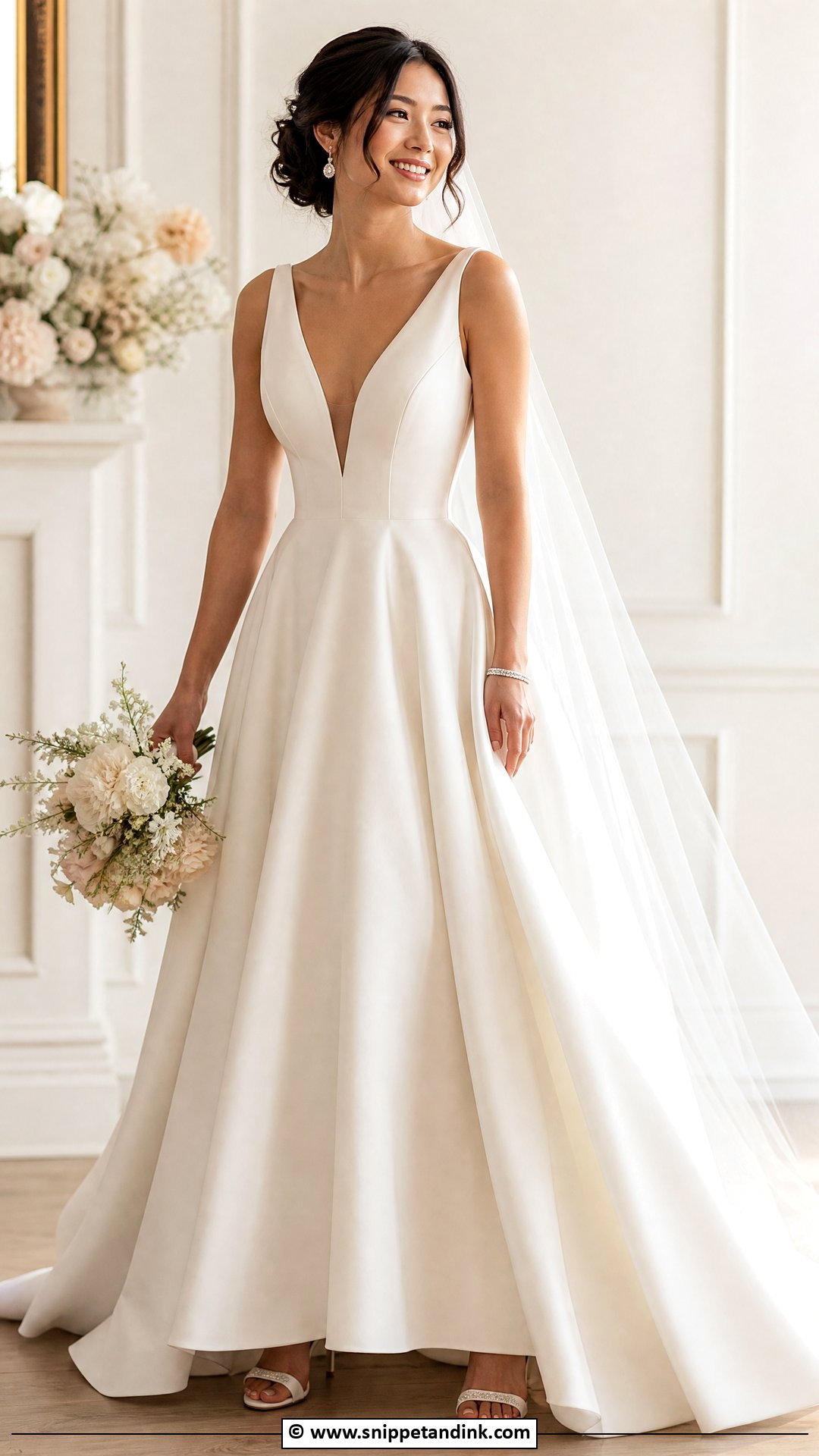
A V neck flatters most torsos by lengthening the line from chin to waist. A shallow V reads classic; a deep V needs fashion tape or a mesh panel to stay put through dancing, and I always test it with arms raised. Lace, satin, crepe or chiffon work. A delicate pendant can sit in the V, though I’d skip it if the dress has beading at the neckline. Soft waves or a loose bun suit beach, garden and destination weddings.
9. Boat Neck Wedding Dress
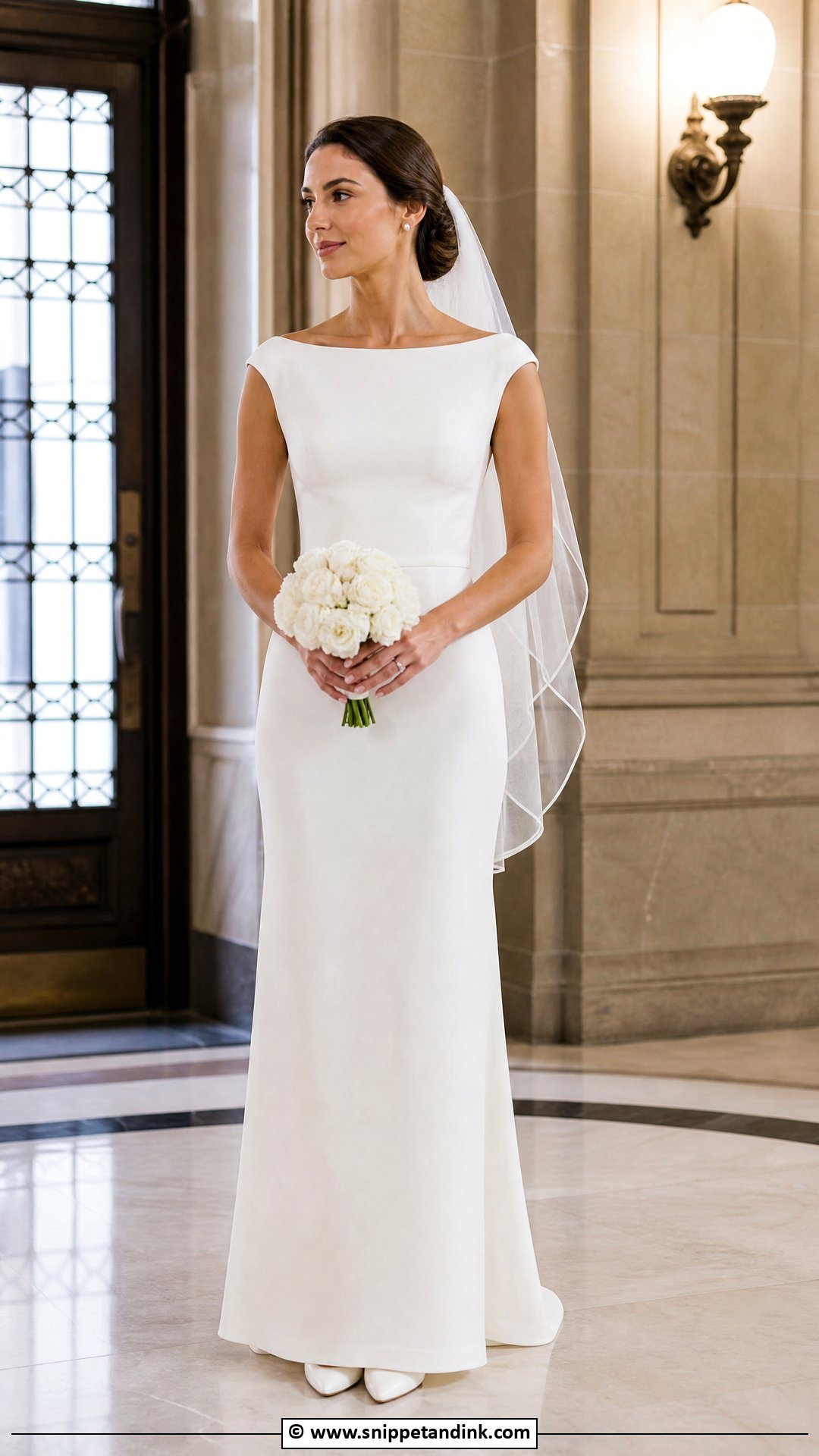
The boat neck runs wide and nearly straight across the collarbone. It’s understated and very grown-up. It needs clean fabric like crepe, satin or mikado, because the neckline itself is the detail. The one issue I see is gaping at the back when the bride rolls her shoulders forward, so I have the back neckline anchored with a hidden snap or bra loop. Small pearl earrings, a low bun and optional gloves complete it.
10. Silk Slip Wedding Dress
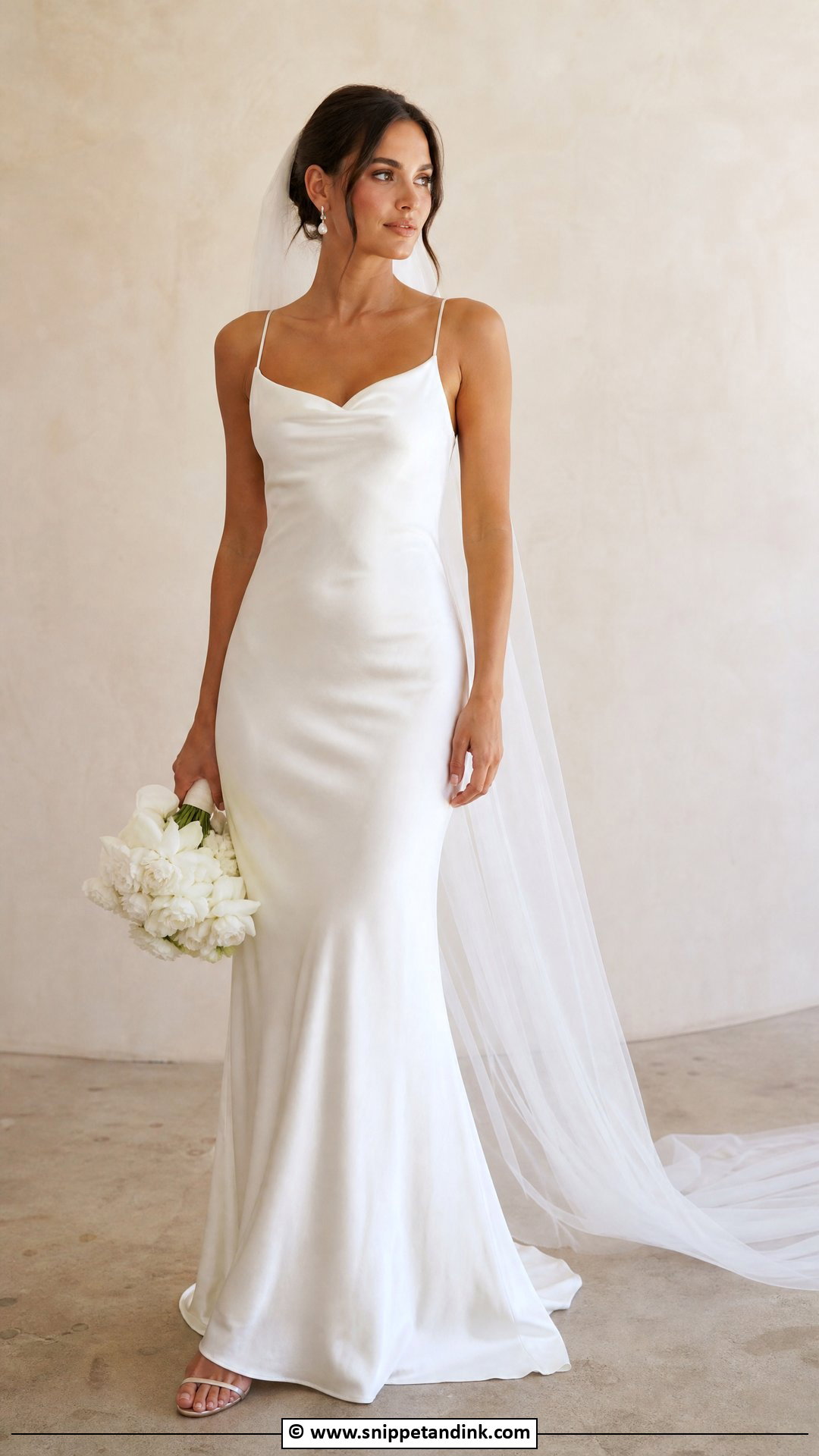
Silk slips look like nothing on the hanger and come alive on the body, and that’s exactly the problem. A bias cut drapes over every curve, so the dress depends on fabric weight and fit more than any other style here. Thin silk clings and shows undergarments; a heavier silk satin hangs. I always try slips on with the actual shapewear. Barely-there heels, a light veil and a sleek bun or low ponytail suit city hall weddings and intimate dinners.
11. Mikado Wedding Dress
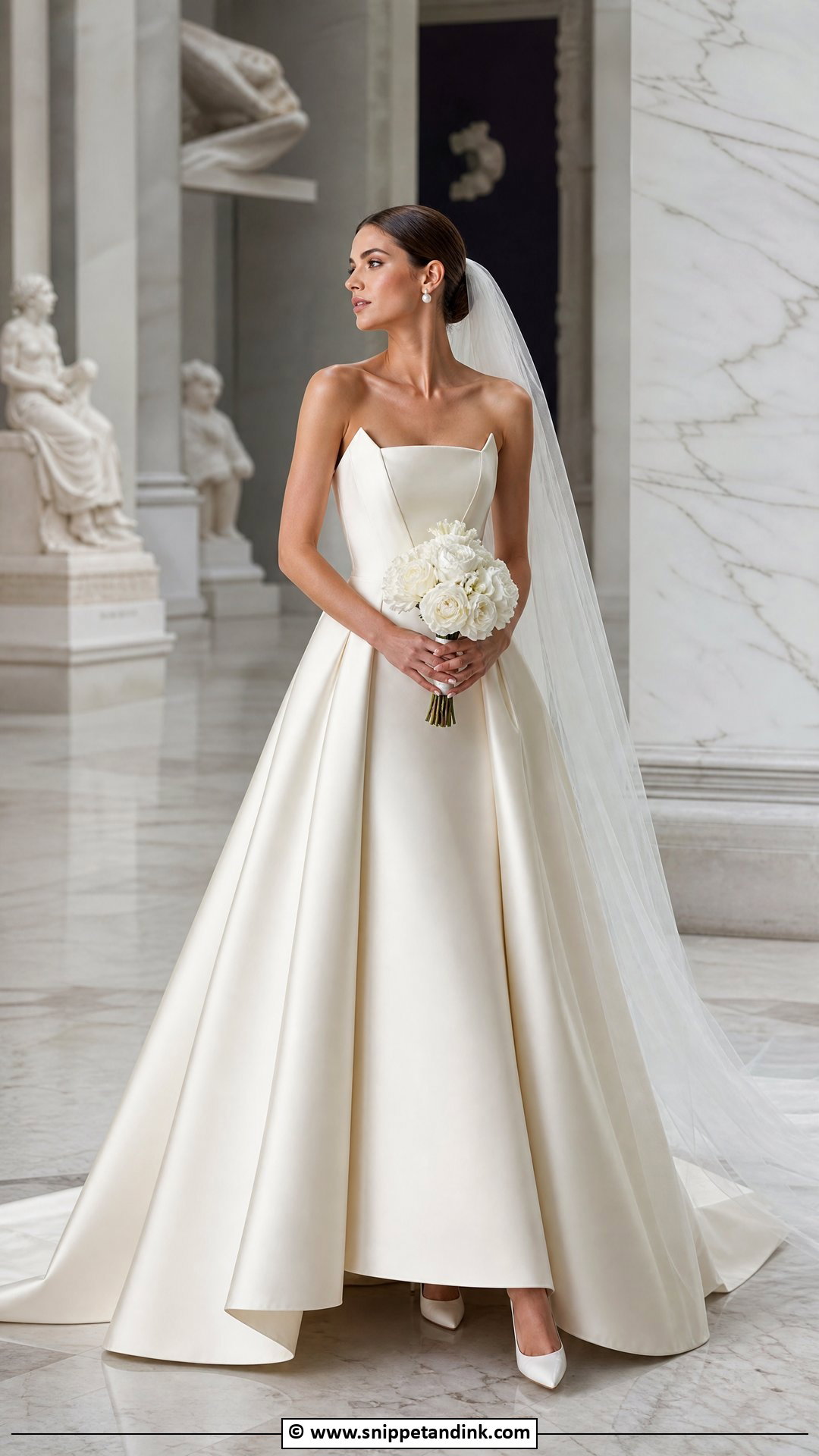
Mikado has a stiff, slightly ribbed body and a soft sheen that holds sculptural shapes: A-lines, ball gowns and architectural bodices. It doesn’t cling and it doesn’t collapse when you sit, which is why I recommend it to brides worried about looking rumpled in reception photos. Satin pumps and a long clean veil suit it. Calla lilies or tightly packed white roses echo its crisp lines.
12. Chiffon Wedding Dress
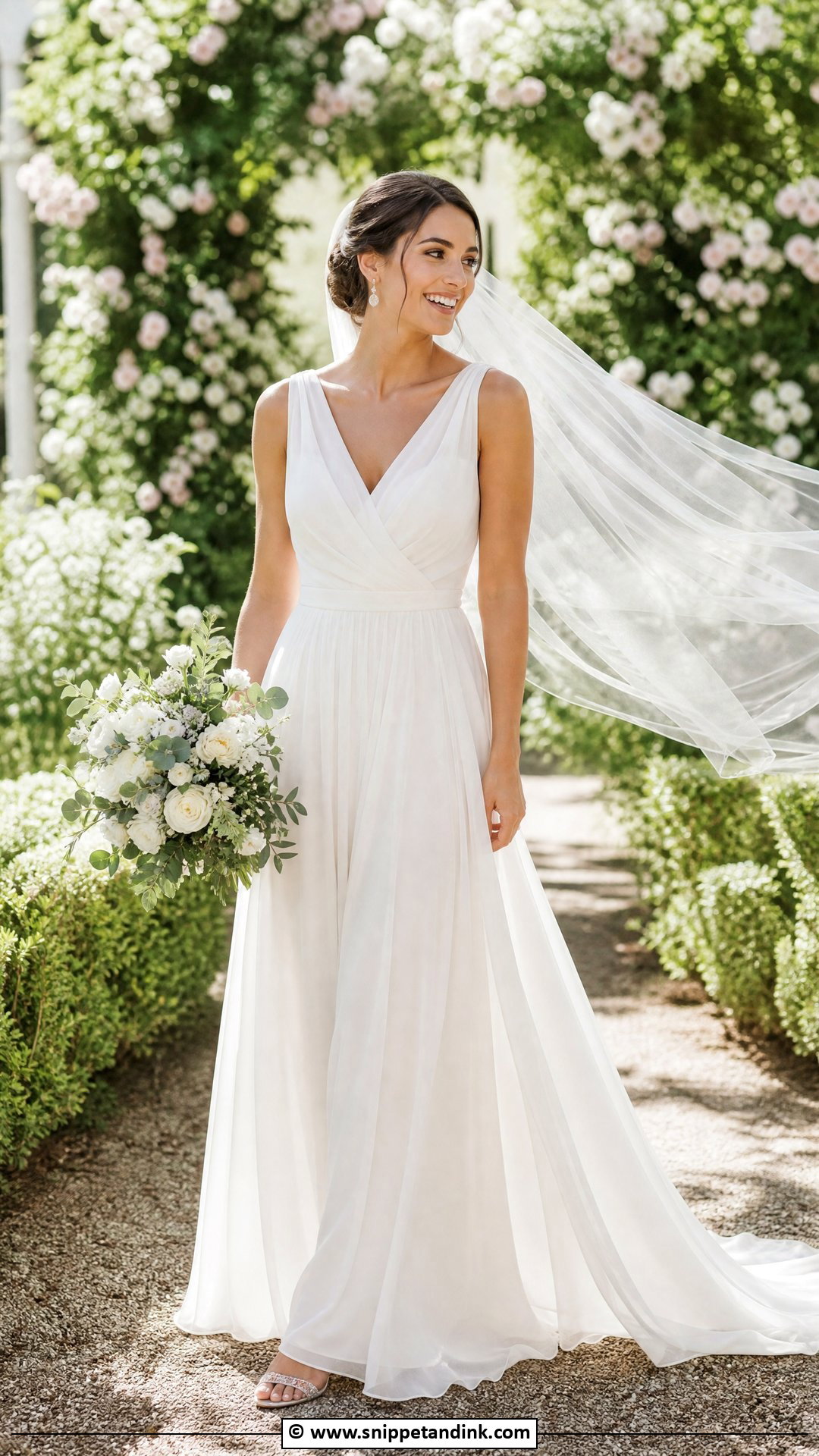
Chiffon is the outdoor fabric. It’s light, it moves in a breeze and it doesn’t trap heat, so spring, summer, beach and garden weddings suit it well. Empire waists and softly draped bodices are classic chiffon shapes. It snags easily on rough stone, wooden benches and some bouquet stems, so I warn beach brides to check the hem after the ceremony. Delicate sandals and a sheer veil keep the airy mood.
13. Tea Length Wedding Dress
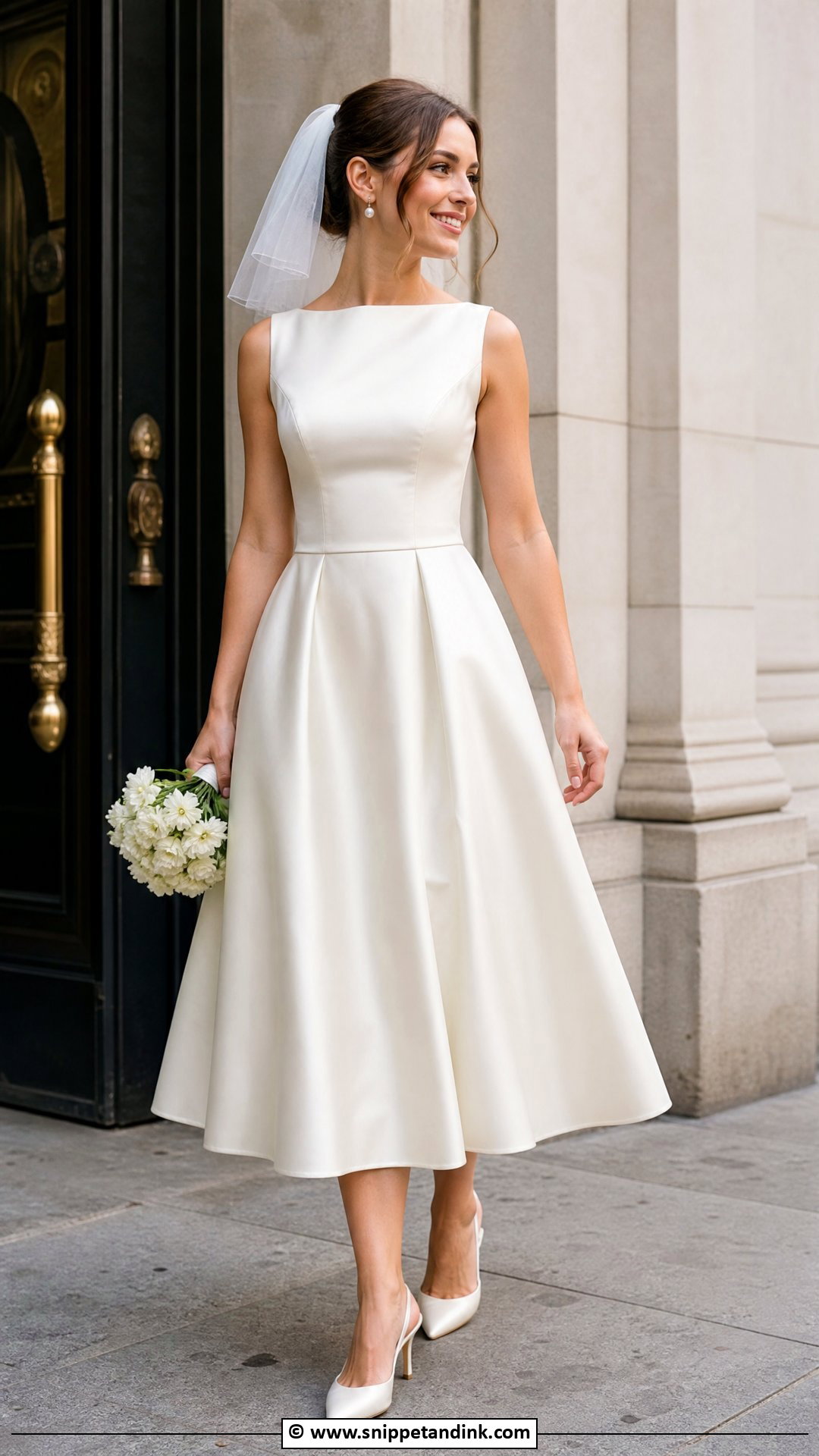
A tea length wedding dress falls between the knee and ankle and puts your shoes on show. Satin, lace, organza or tulle keep it bridal. Hem height is personal: I mark it with the bride in her wedding shoes, because two centimeters changes the proportion more than you’d think. A birdcage veil or pearl headband leans into the vintage mood. Courthouse ceremonies, brunch receptions and second looks are its natural home.
14. Floral Lace Wedding Dress
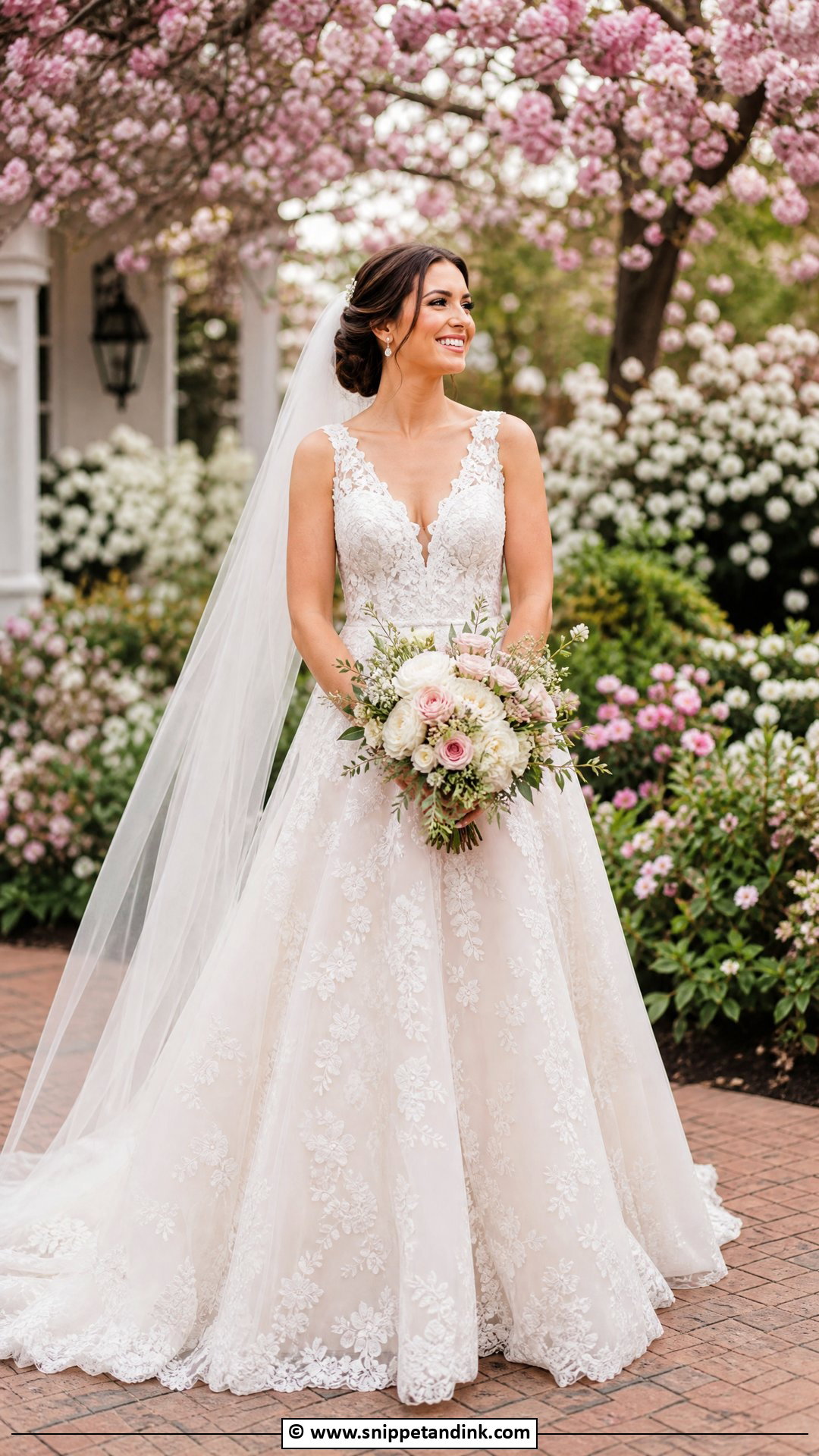
Floral lace adds romance and texture. Large motifs look modern; tiny florals feel traditional. Because the lace is busy, I keep the silhouette clean, usually a fitted bodice with an A-line skirt or a simple sheath. Good lace gowns have motifs hand-placed along the hem and neckline rather than just cut through, and that’s worth checking up close. A plain veil and a garden bouquet with white and pale blush flowers suit estates and vineyards.
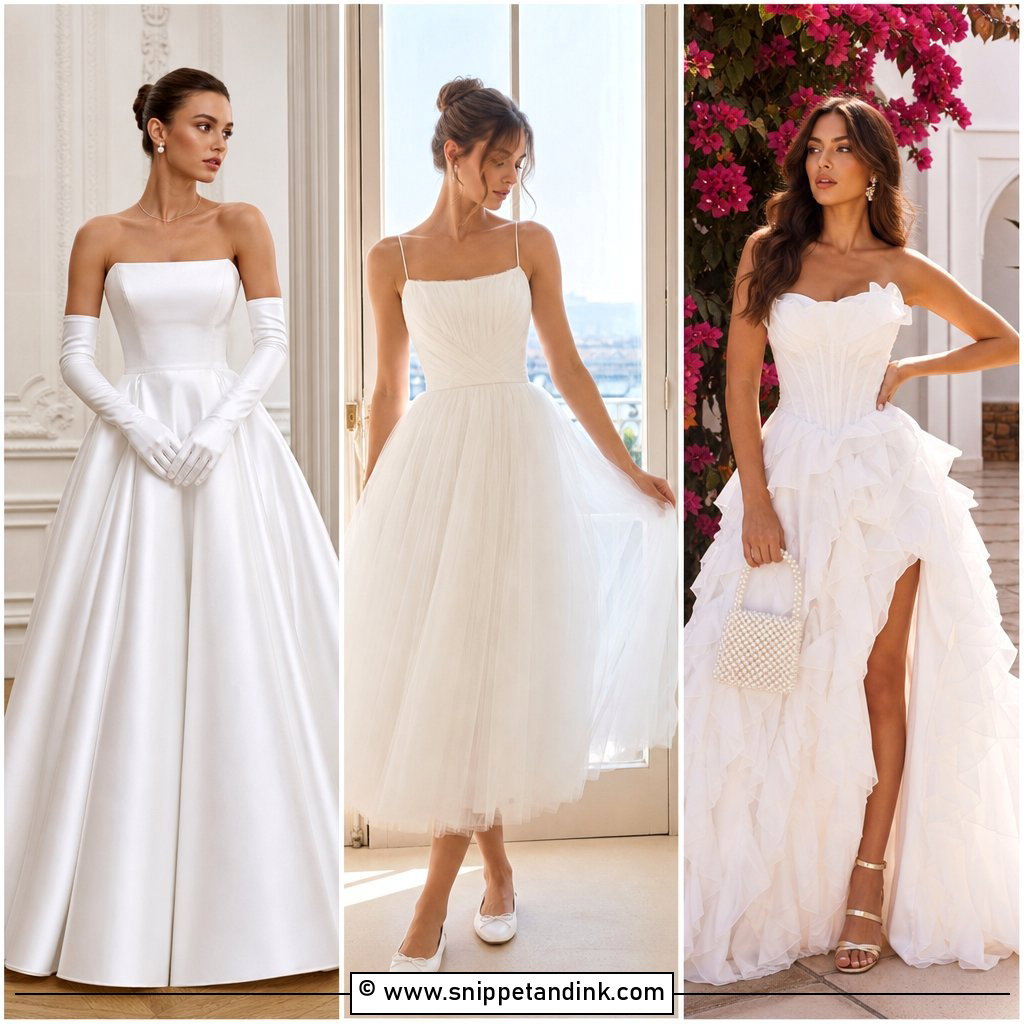

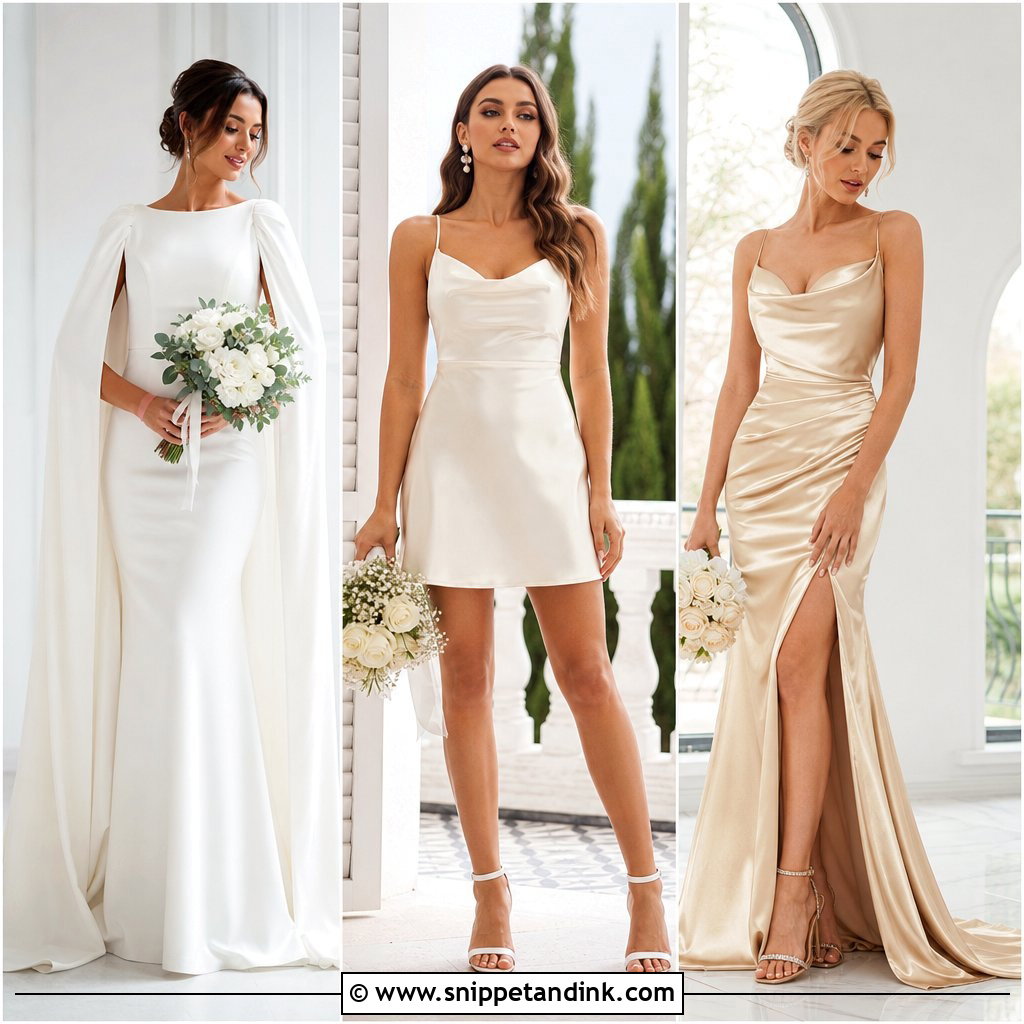
15. Embroidered Tulle Wedding Dress
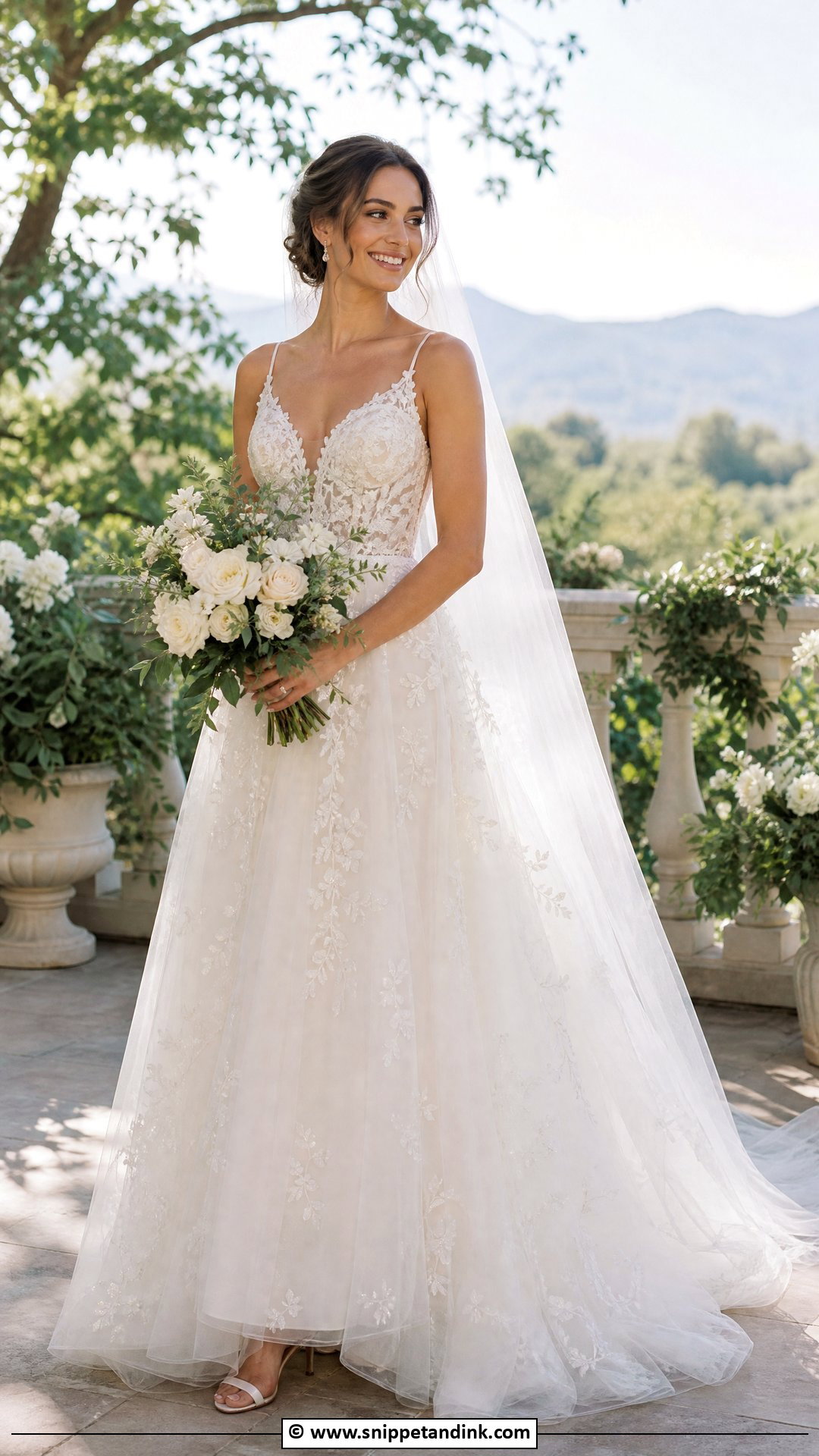
An embroidered tulle wedding dress softens beautifully in natural light. Floral, vine or pearl embroidery on a sheer overlay adds depth without weight. Tulle is fragile, though: rings, bracelets and bouquet wire catch it, so I tell brides to tape or cover anything sharp. The veil should be plain so it doesn’t fight the embroidery. A loose bun or half-up style keeps it gentle.
16. Pearl Detail Wedding Dress
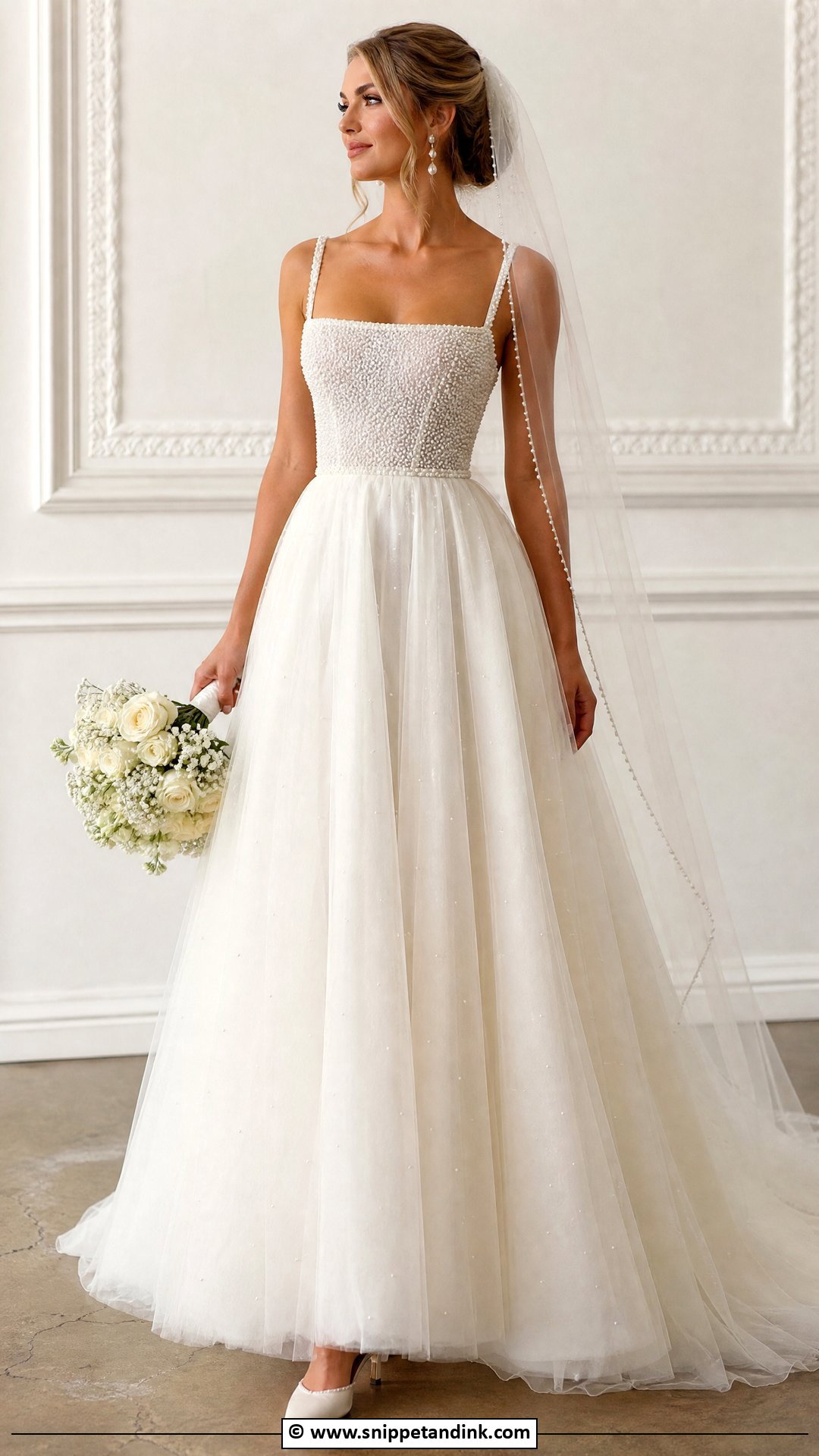
Pearls give a soft glow rather than the sharp sparkle of crystals. They can sit on straps, sleeves, bodice, veil or scattered across tulle. Pick one pearl moment, not five. Check how pearls are attached: individually knotted pearls survive a day of hugging, while glued ones pop off. Pearl earrings and satin heels finish it; keep the bouquet to white roses or orchids if the dress already carries a lot of pearls.
17. Beaded Wedding Dress
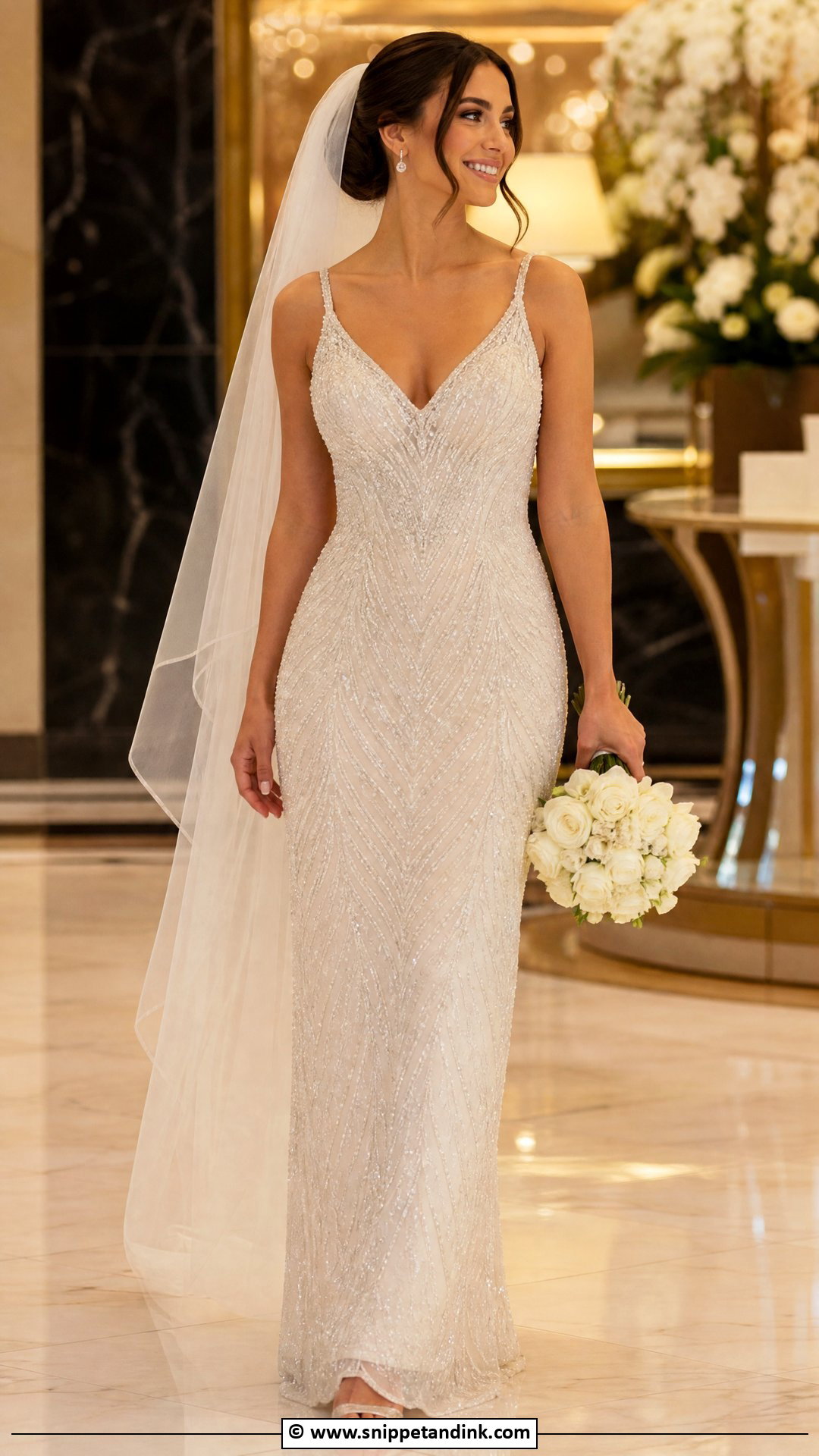
Beading brings shine, and placement decides whether it looks refined or heavy. A beaded sheath reads glamorous and vintage; a lightly beaded A-line feels softer. Fully beaded gowns are heavy, sometimes surprisingly so, and the weight pulls on the shoulders by evening, so I make sure the bodice has internal support. Plain veil, small earrings and sleek hair stop the sparkle from multiplying. Evening ceremonies and hotel receptions suit it.
18. Minimal Column Wedding Dress
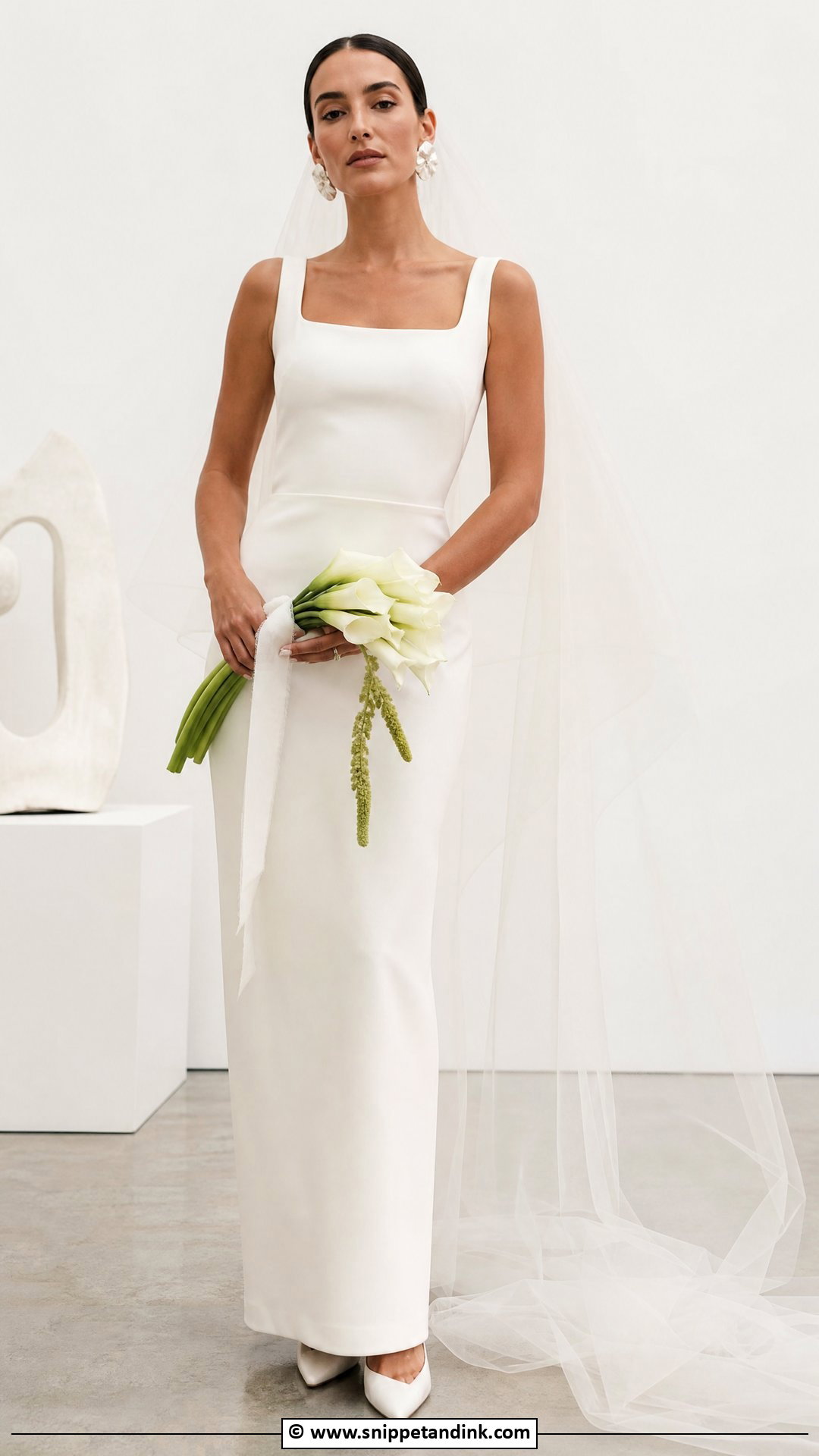
A minimal column follows the body straight down without volume. Crepe, silk or satin keep it refined, and a square neck, low back, high slit or covered buttons give interest. I’d steer a bride away from a column if she plans to dance hard, unless there’s a slit, because the narrow hem restricts stride. Pair it with sculptural earrings and a long veil for contrast. Galleries, rooftops and city venues suit it well.
19. Fit And Flare Wedding Dress
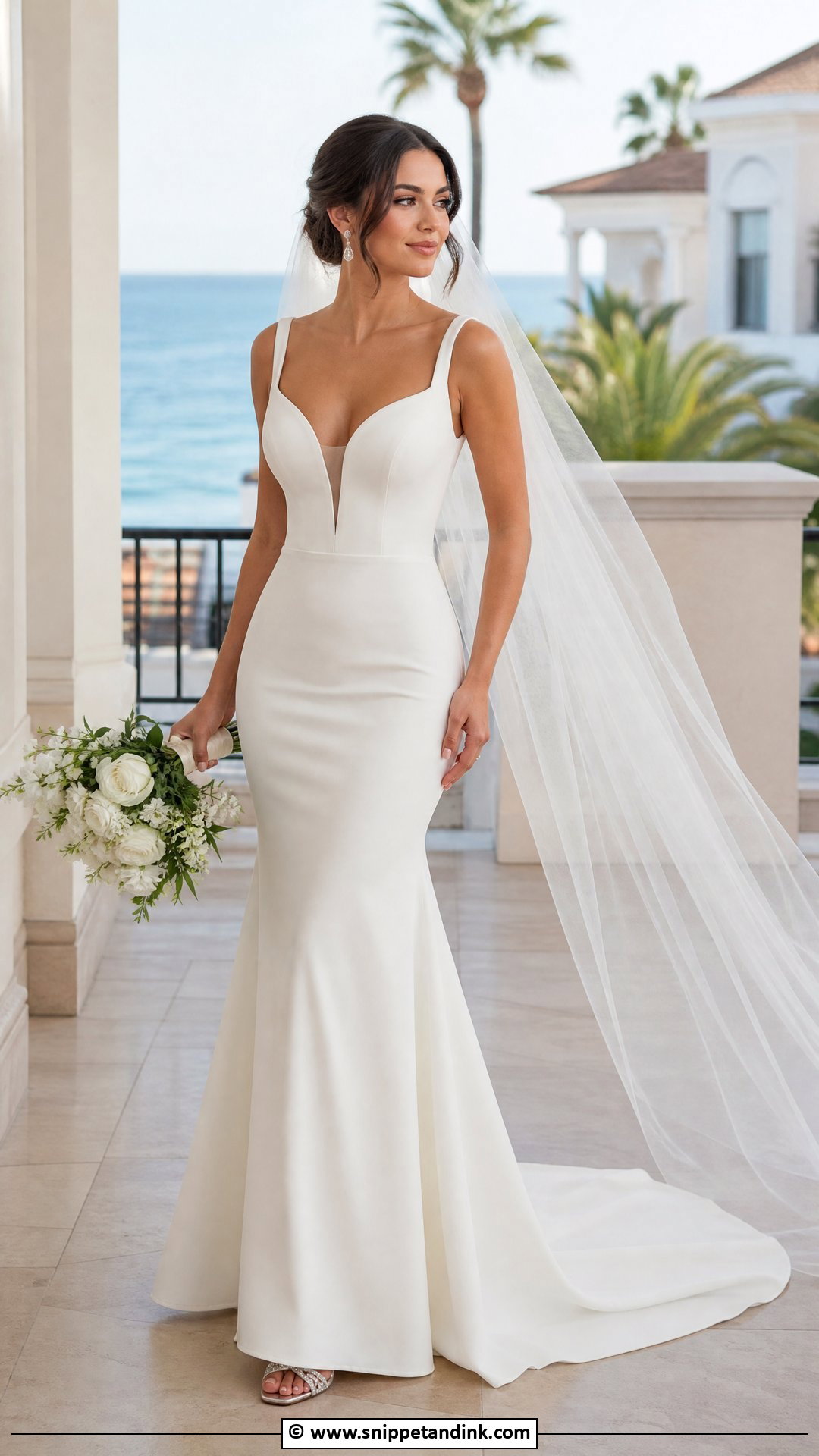
Fit and flare follows the body through the hips but opens higher than a mermaid, usually mid-thigh, so you can walk and dance more freely. Lace feels romantic, crepe modern, satin classic. It depends heavily on alterations, because the flare point must sit where your body naturally curves. I bring a slightly elongated bouquet to the styling so its line echoes the dress.
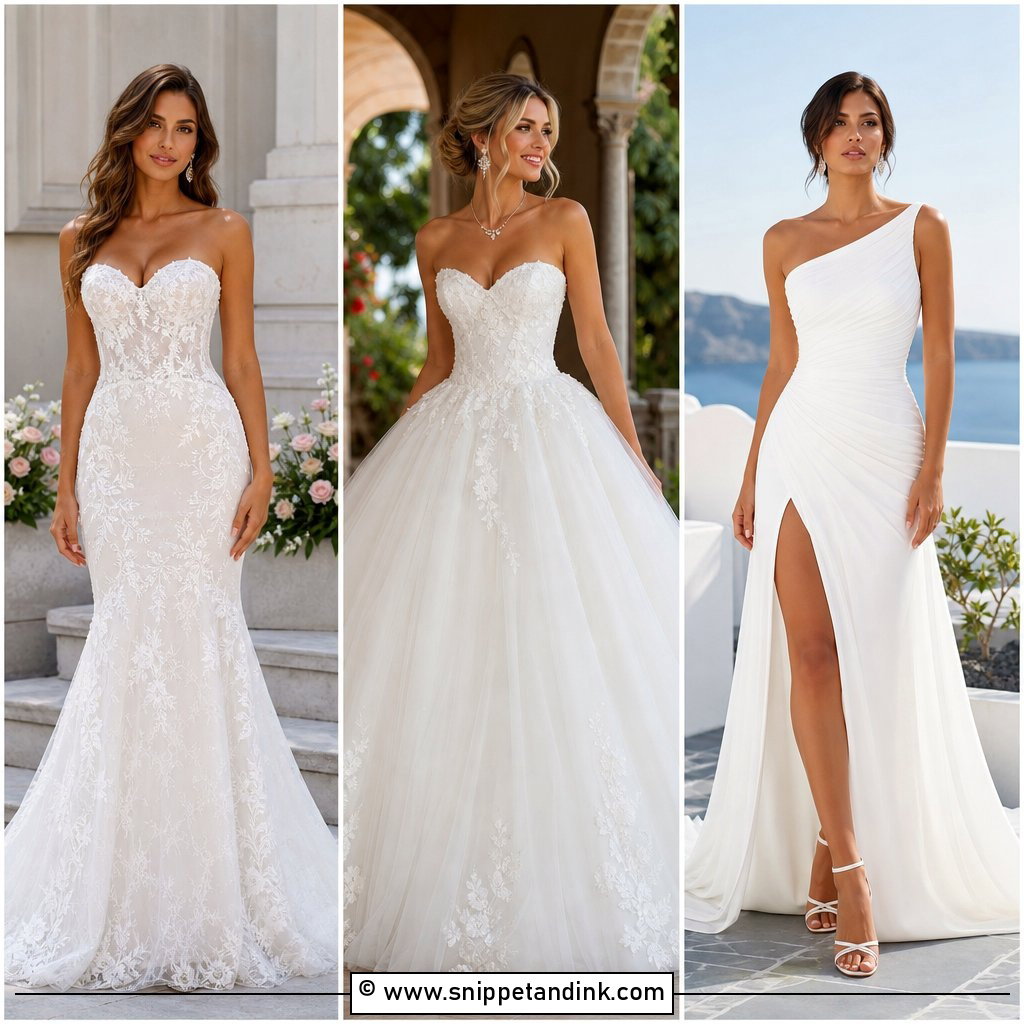
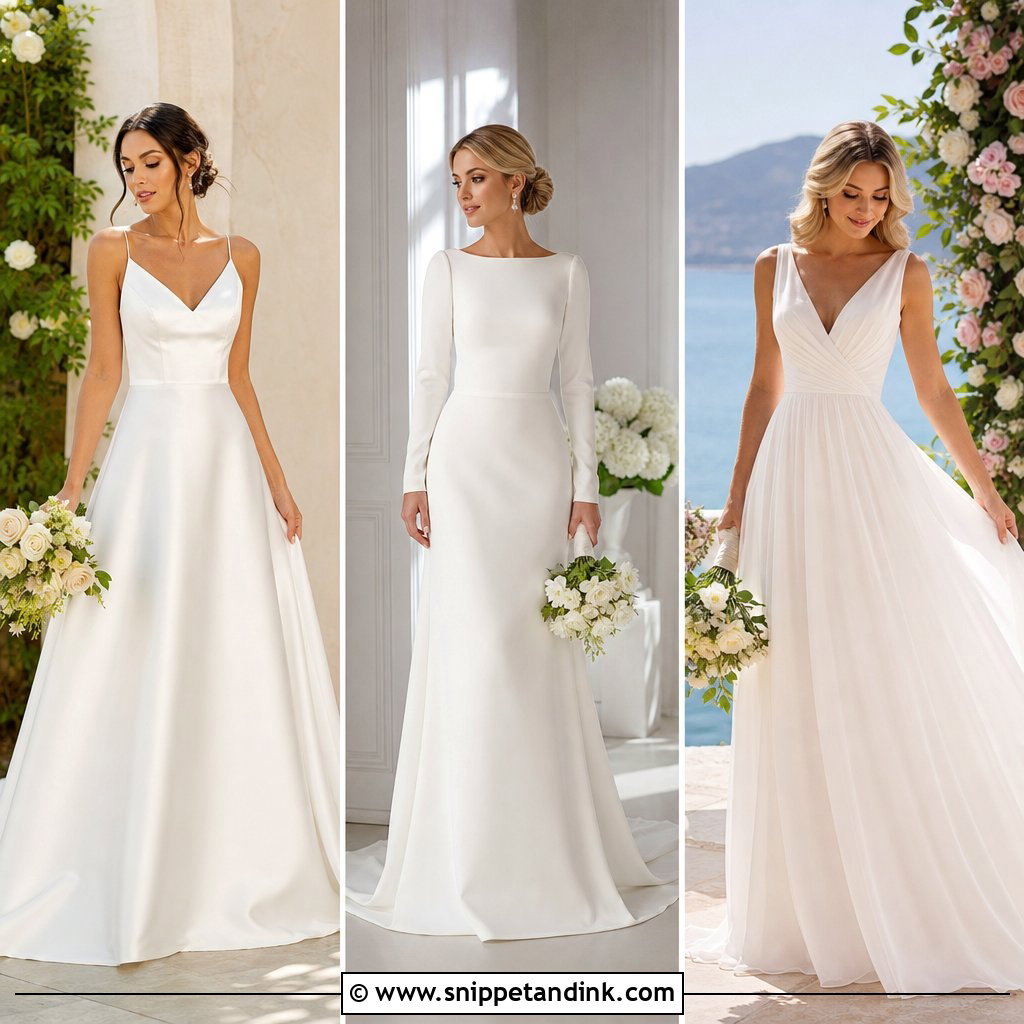


20. Mermaid Wedding Dress
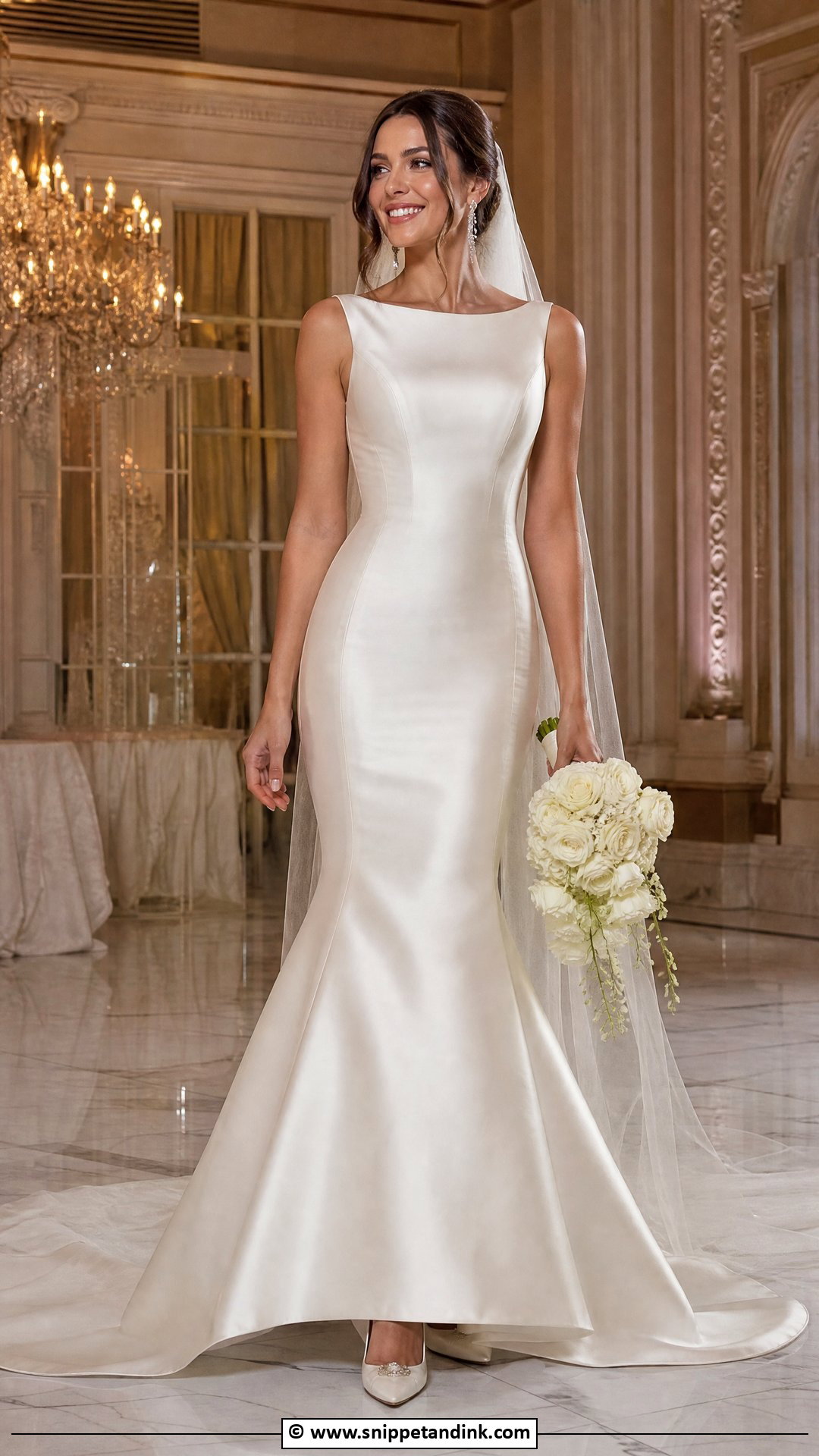
A mermaid wedding dress makes a strong hourglass, and restraint keeps it classy: smooth satin, fine lace or matte crepe, with few competing details. The flare sits at or below the knee, which limits movement more than any other shape here. I have every mermaid bride practice sitting, climbing two steps and dancing at the final fitting. A long veil and drop earrings complete it. Formal indoor and black-tie weddings suit it best.
21. Sheath Wedding Dress
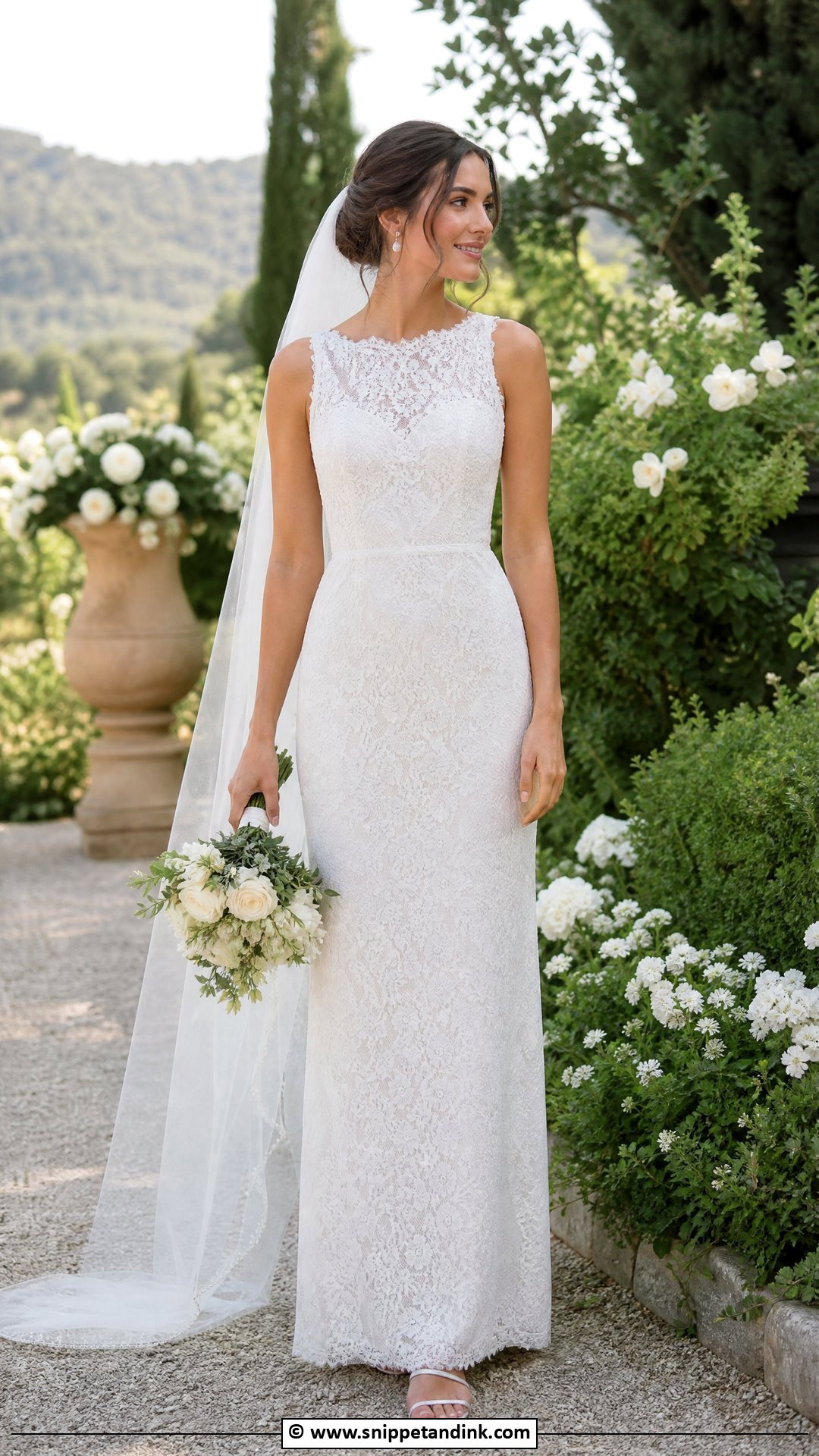
Sheaths fall close to the body without a dramatic flare, so they feel relaxed but polished. Lace, crepe, satin or chiffon all work. A bateau neck reads classic; a V neck or low back reads modern. This is the gown I’d suggest for a long wedding day or a hot destination, because there’s very little fabric to manage. Heeled sandals, pearl earrings and a loose bouquet finish it.
22. Corset Bodice Wedding Dress
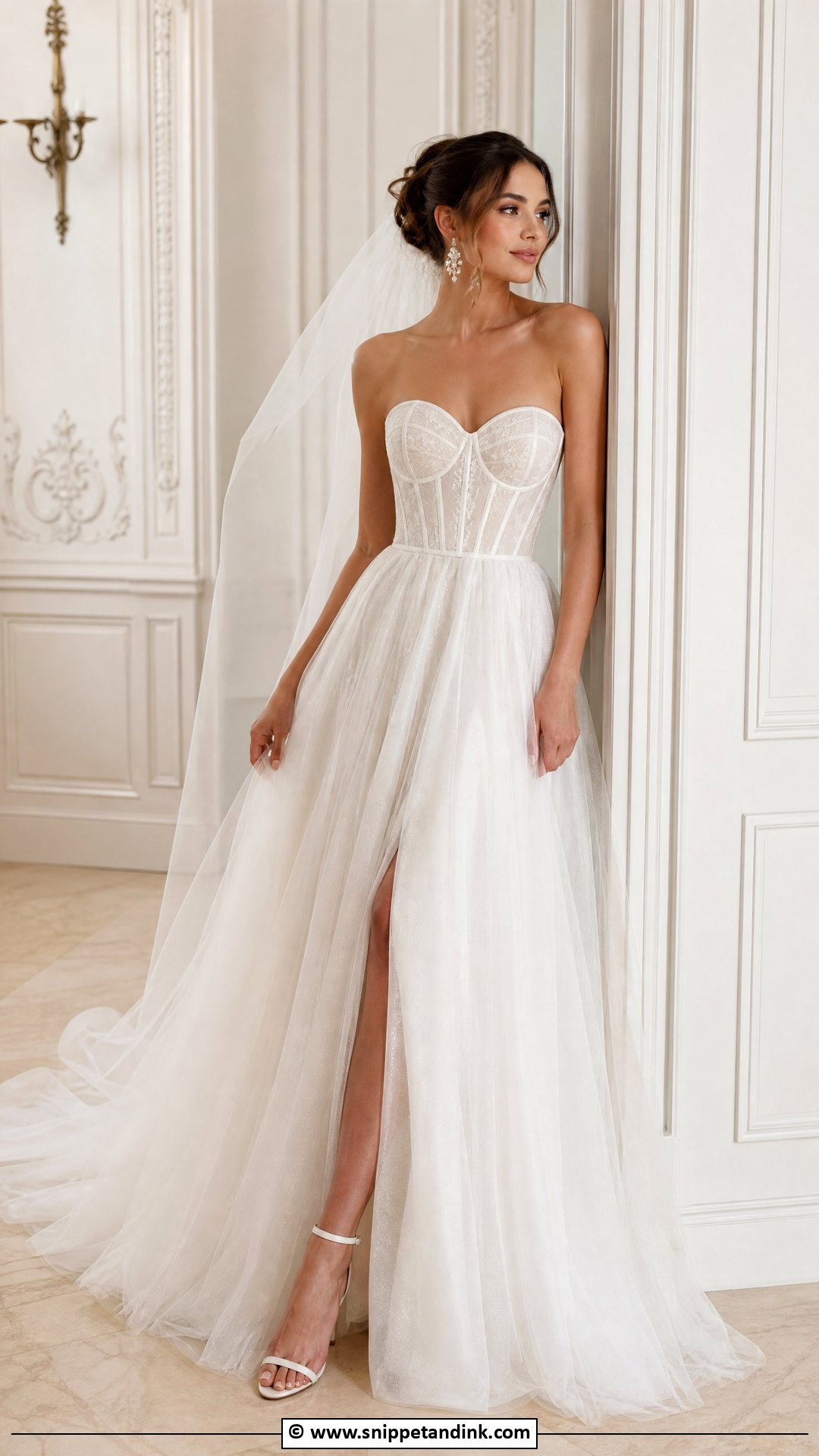
A corset bodice shapes and supports, which is why many brides with fuller busts feel most secure in one. Visible boning can look modern if it’s neat; uneven boning looks cheap. Satin, lace or mikado give a refined finish, and an A-line, ball gown or tulle skirt balances it. I always check that the corset lacing or zip lies flat at the back, since that’s what the guests see during the vows. Keep jewelry minimal.
23. Draped Wedding Dress
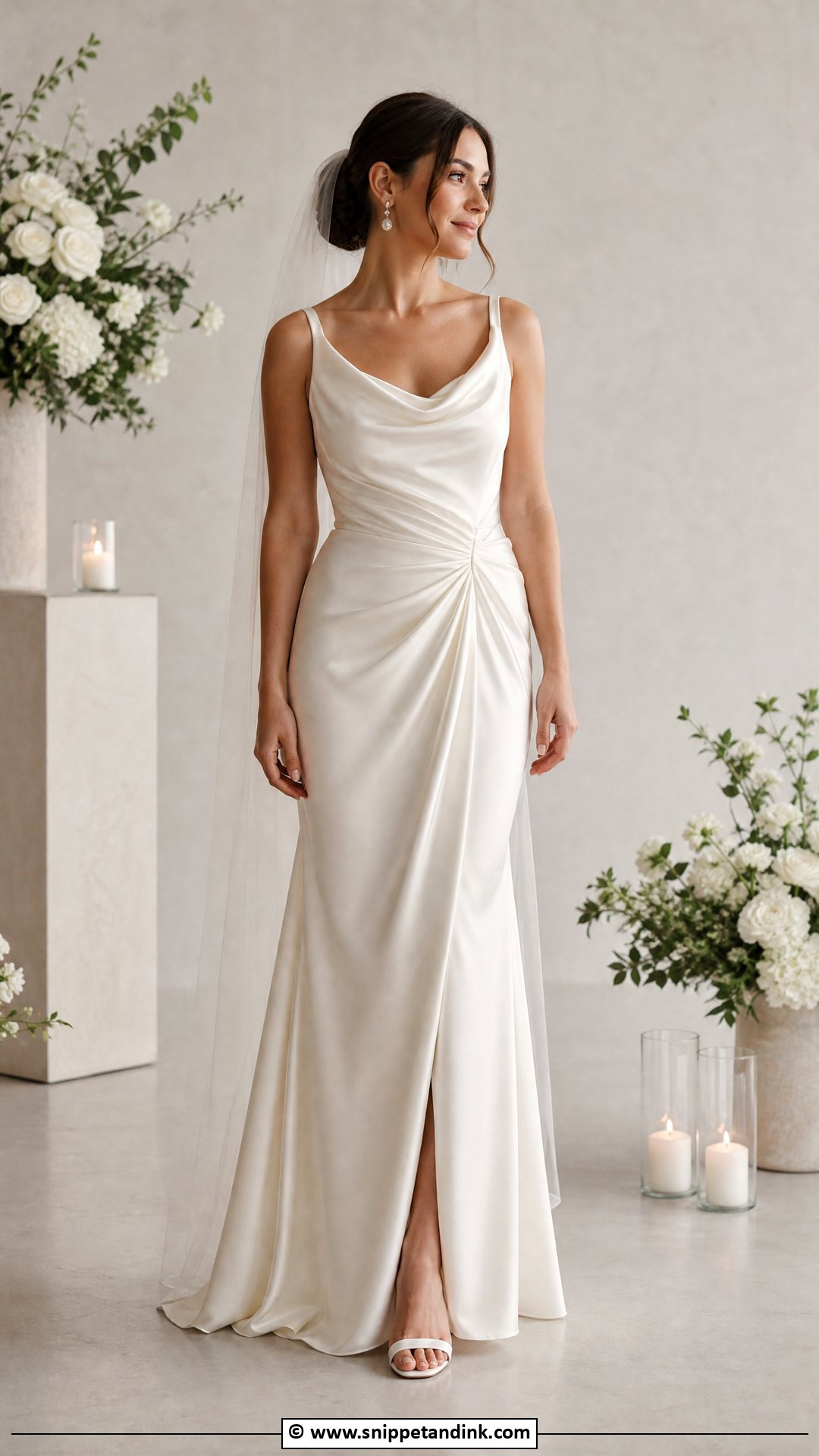
Draping crosses the bodice, gathers at the waist or falls across the hips, and it flatters because it creates shape without tightness. Crepe, satin, chiffon and silk drape best. My concern with draping is bulk: too many folds at the hip add width in photos taken from the side. One clean sweep of fabric is usually enough. A soft bun and a modest bouquet keep the drape visible.
24. Pleated Wedding Dress
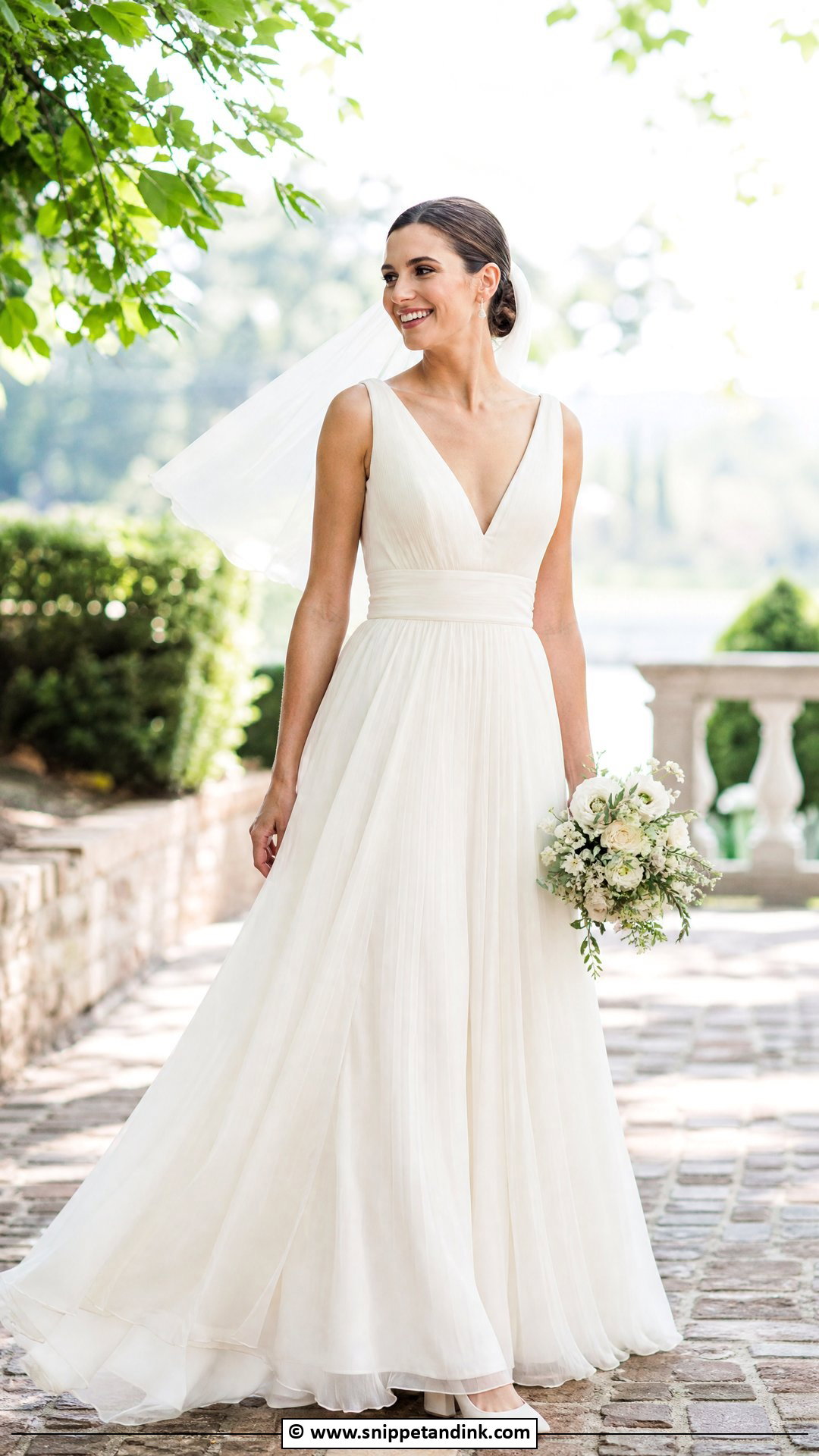
Pleats bring texture and movement. They can run through the skirt, bodice or sleeves. Soft pleats in chiffon, organza or satin look graceful; stiff, wide pleats can look boxy. Pleated skirts catch light as you walk, which gives subtle depth in photos. They also need careful steaming on the morning, because crushed pleats from a garment bag rarely fall straight on their own. Keep hair neat and earrings simple.
25. Basque Waist Wedding Dress
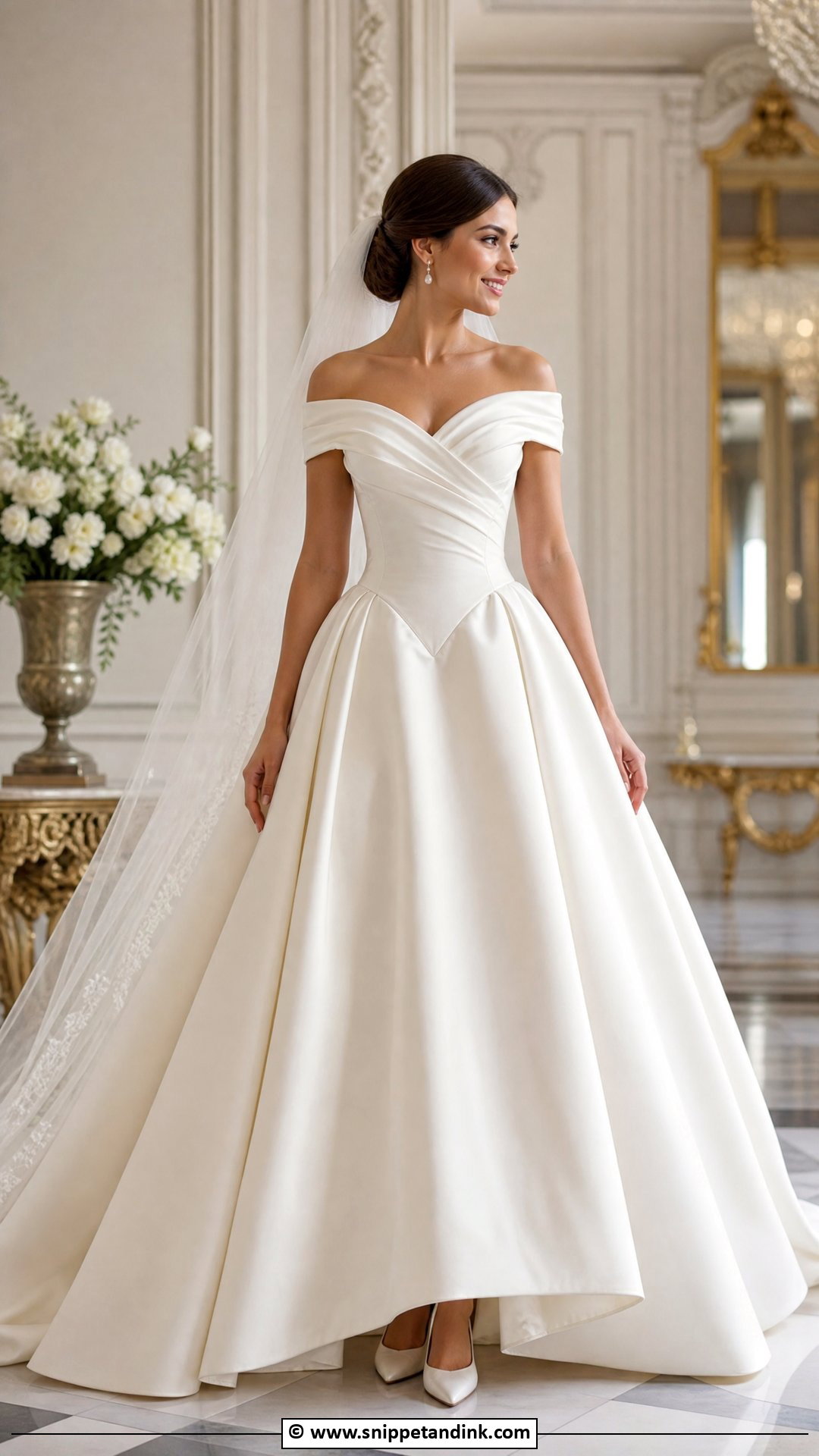
The basque waist dips into a soft V at center front, carving a defined waist above a full skirt. It’s mostly seen on ball gowns and full A-lines in satin, mikado, or tulle. It suits brides with a shorter torso particularly well, since the point visually lengthens the body. A long veil, pearl earrings and a soft updo work. Hold a medium bouquet so it doesn’t hide the point of the waist.
26. Drop Waist Wedding Dress
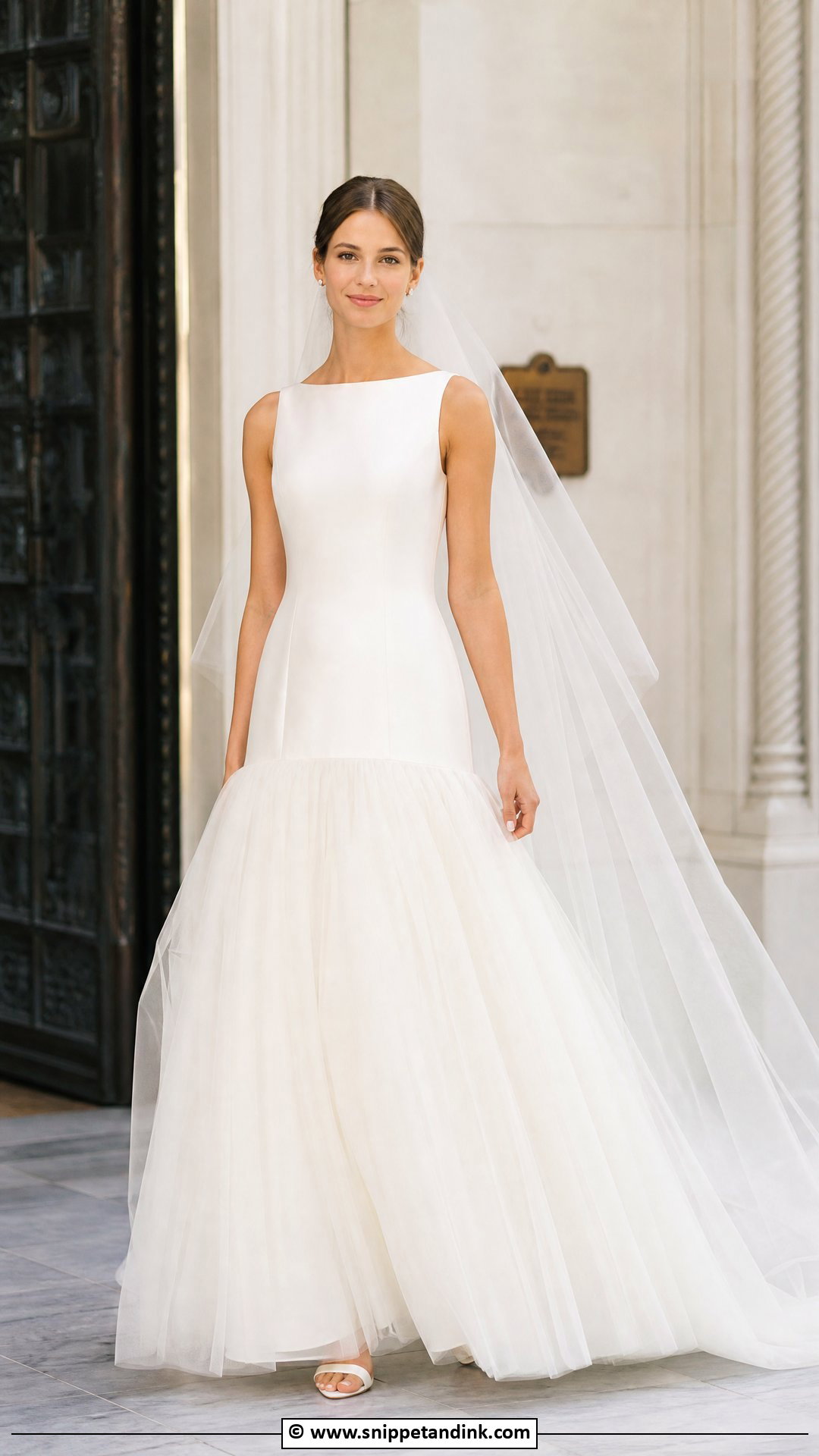
A drop waist starts the skirt at the hip rather than the natural waist, creating a long line through the torso. Full skirts make it romantic; slim skirts make it fashion-forward. Honestly, it’s the trickiest silhouette here for short-waisted or petite brides, because it can shorten the legs. Satin, lace or soft tulle with clean construction keep it classy. Choose it if you want something different from the usual waistline.
27. Detachable Overskirt Wedding Dress
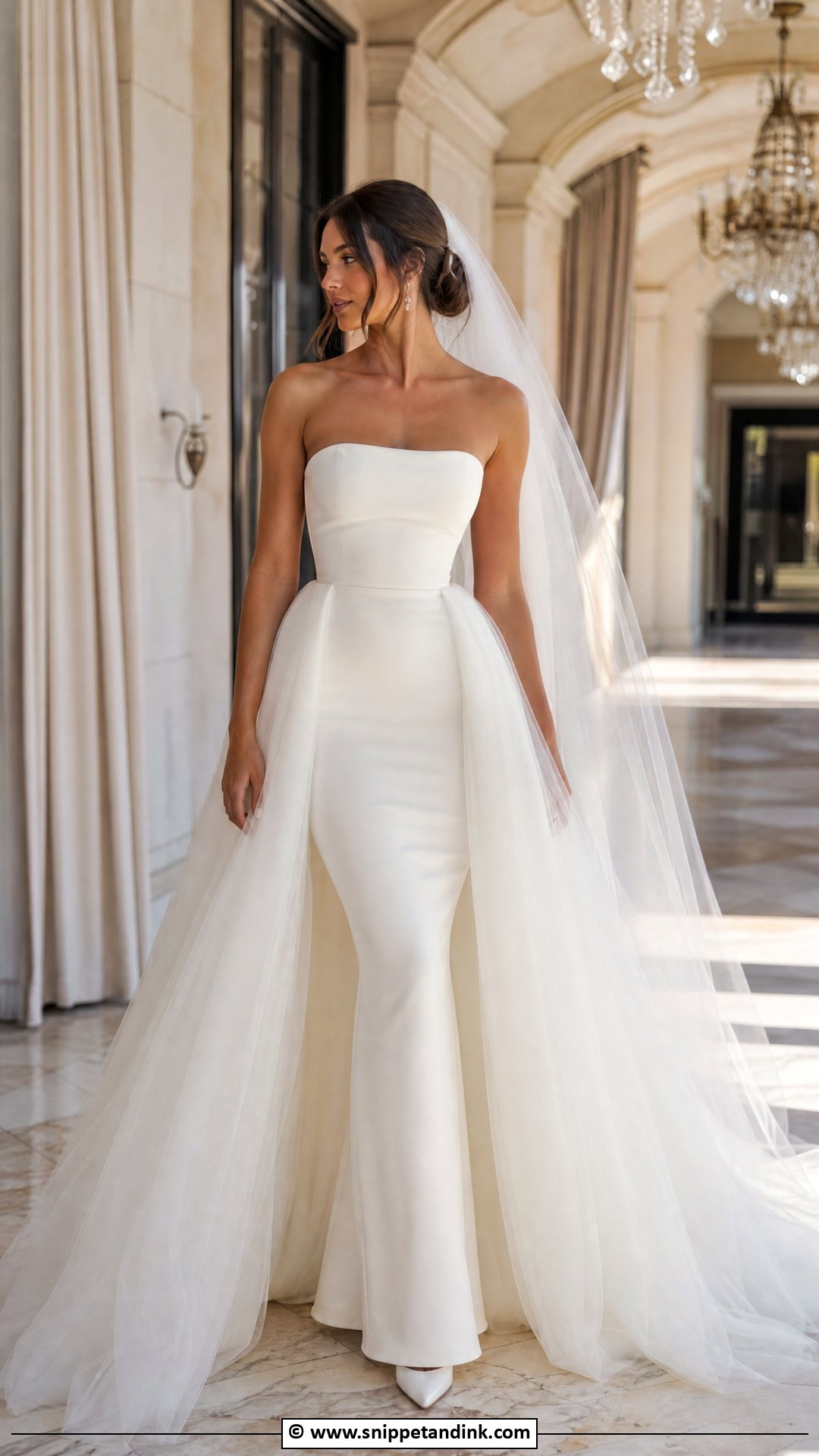
A detachable overskirt gives two looks: full volume for the ceremony, then a sleeker gown for dancing. It works over a fitted crepe, satin or lace base, with tulle, organza or mikado on top. I always rehearse the removal with whoever will help on the day, because hooks and hidden buttons are fiddly under pressure. Statement earrings can come out for the reception look. Comfortable shoes matter, since the second look shows more of them.
28. Cape Wedding Dress
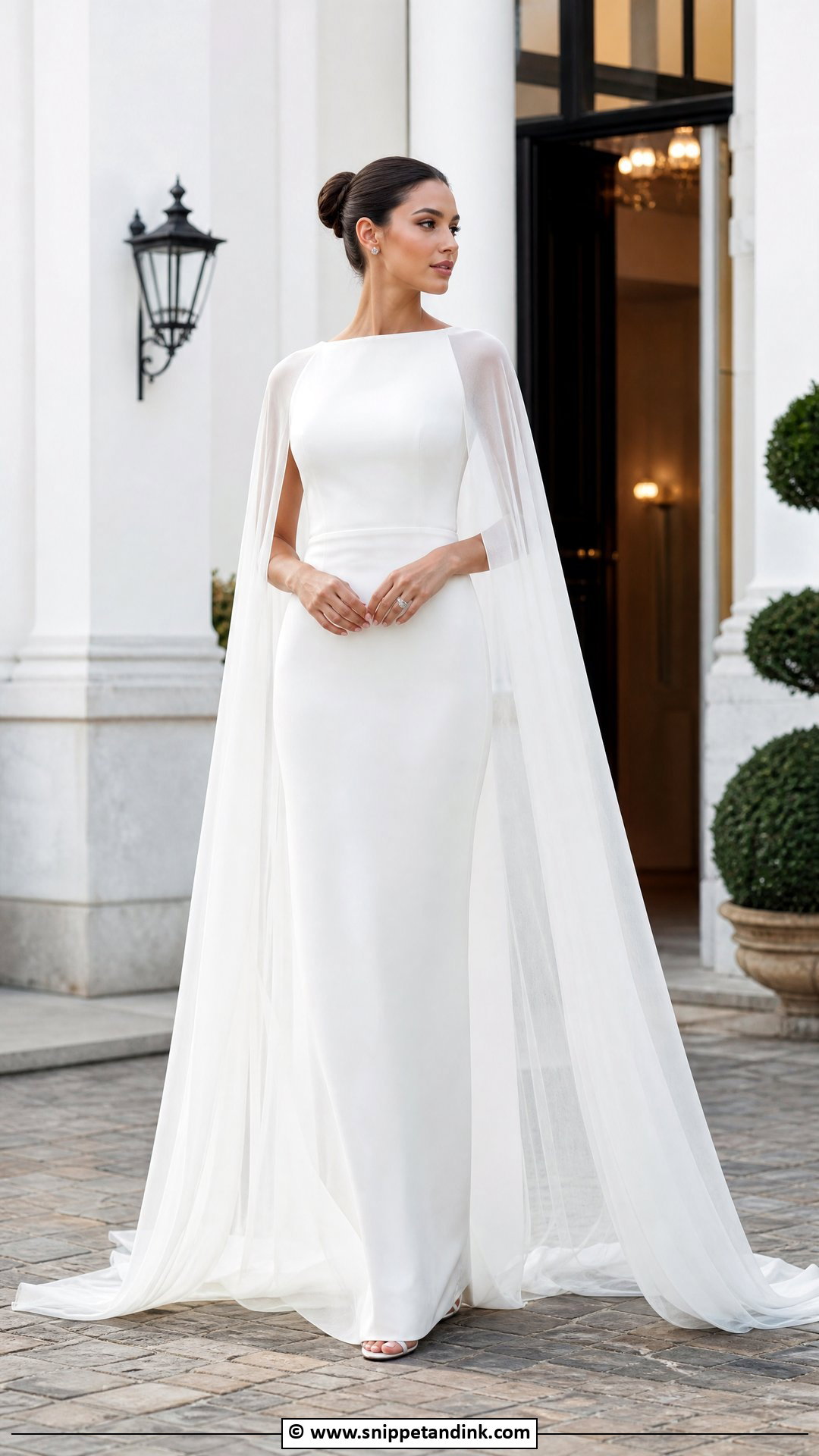
Capes replace a veil with something that moves as you walk. Sheer tulle, chiffon, lace or crepe all work, over column gowns, strapless dresses or clean A-lines. A floor-length cape gives drama; a shoulder cape is softer. Windy outdoor venues are worth thinking about: a long cape will lift and wrap, so I add small weights or a wrist loop for outdoor ceremonies. Keep jewelry minimal.
29. Bridal Suit Wedding Dress Look
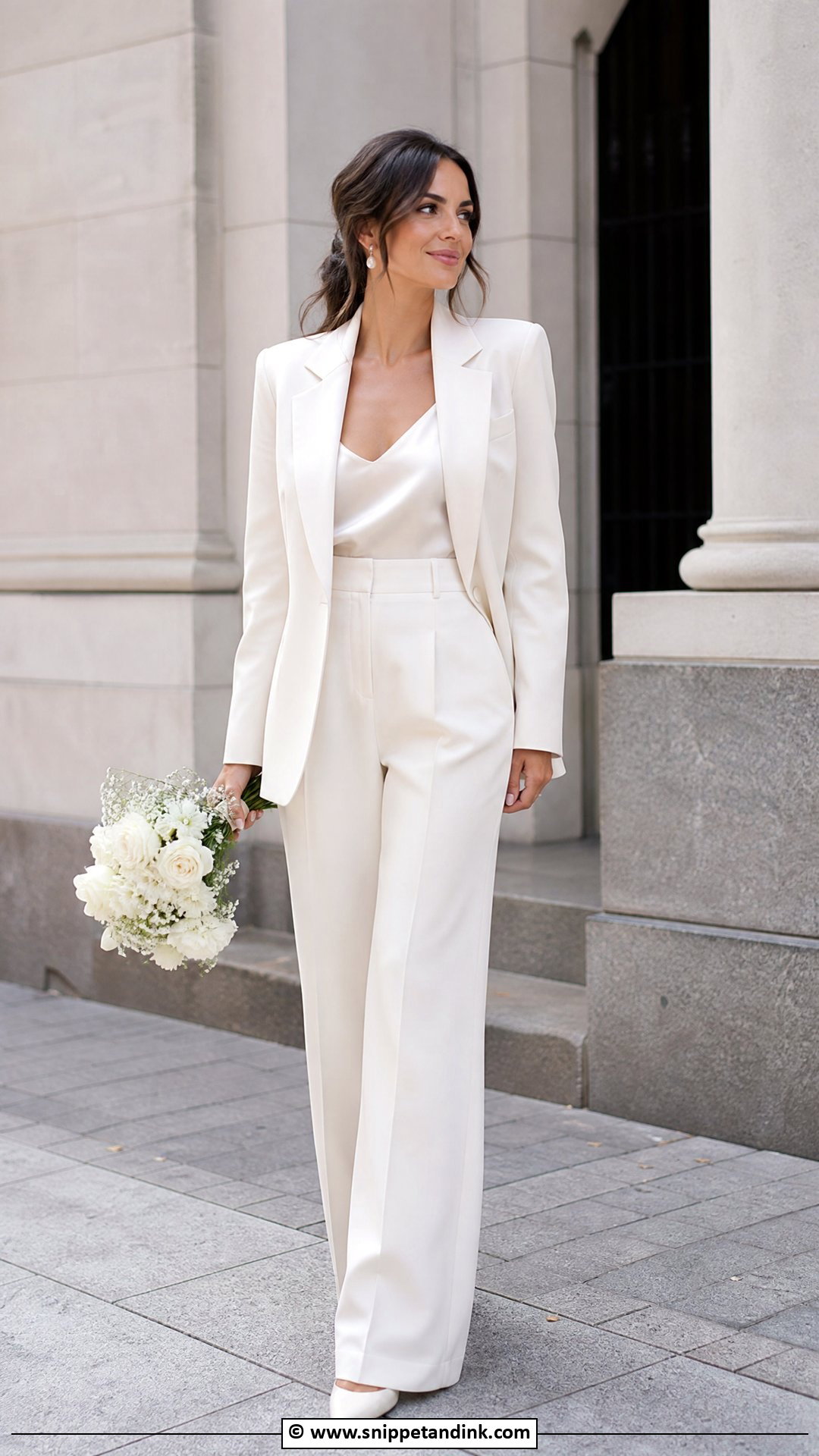
A suit is the cleanest alternative to a gown. An ivory or white blazer with matching trousers over a silk camisole, lace top or structured corset looks sharp and modern. Wide-leg trousers read elegant; slim trousers read sleek. The tailoring point I fuss over is trouser length: it should brush the top of the shoe with a slight break, measured in the exact heels. A short veil or sleek headband marks it as bridal.
30. Bridal Jumpsuit Wedding Dress Look
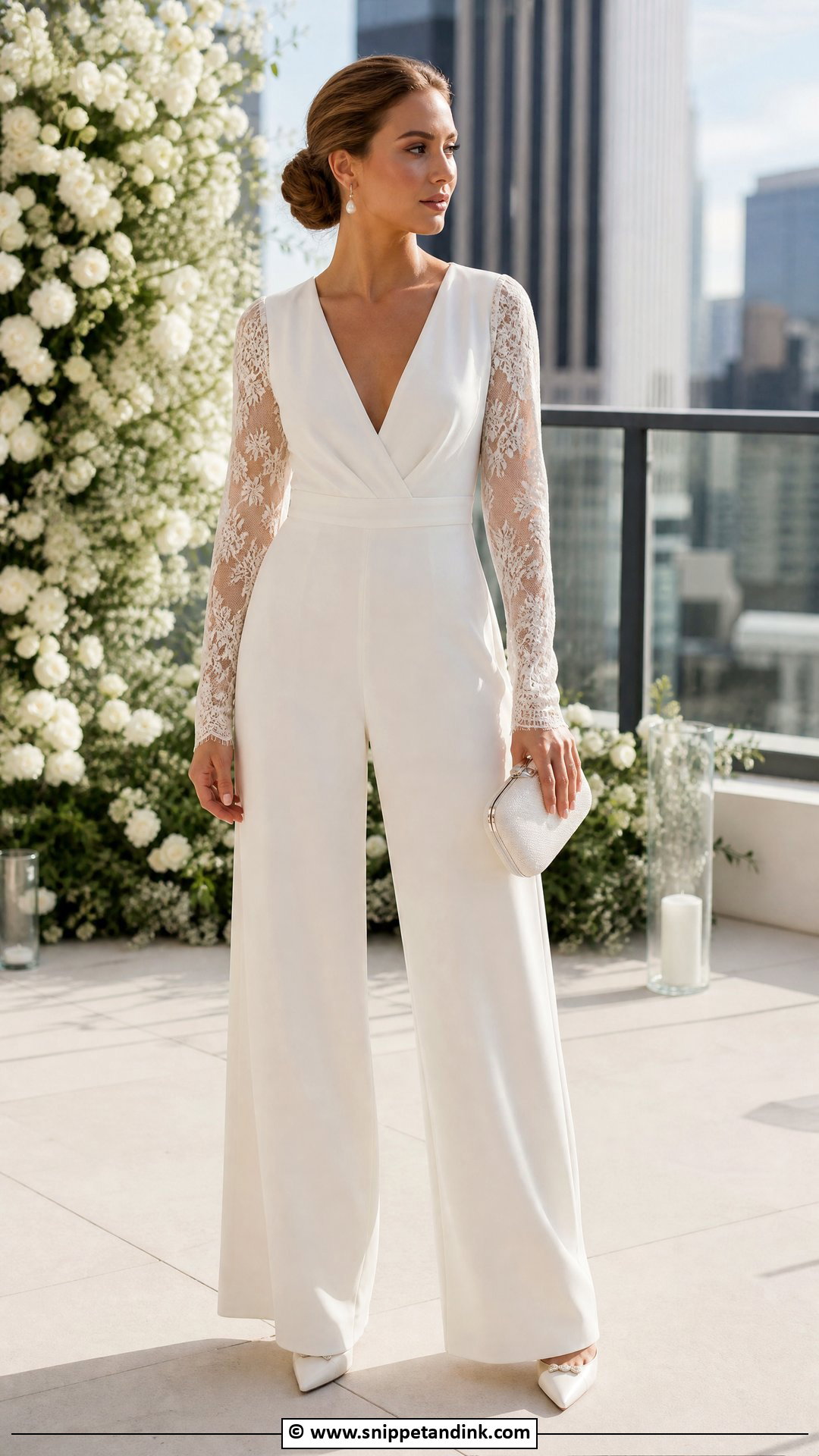
Bridal jumpsuits move with you and suit courthouse ceremonies, rooftops and reception changes. Wide-leg trousers, a fitted waist and a refined neckline keep it formal, and lace sleeves, a satin bodice or a cape overlay add bridal character. The rise has to be right, since a too-short torso pulls every time you sit. Add a short veil or floor-length cape if you want a ceremony moment.
31. Short Wedding Dress
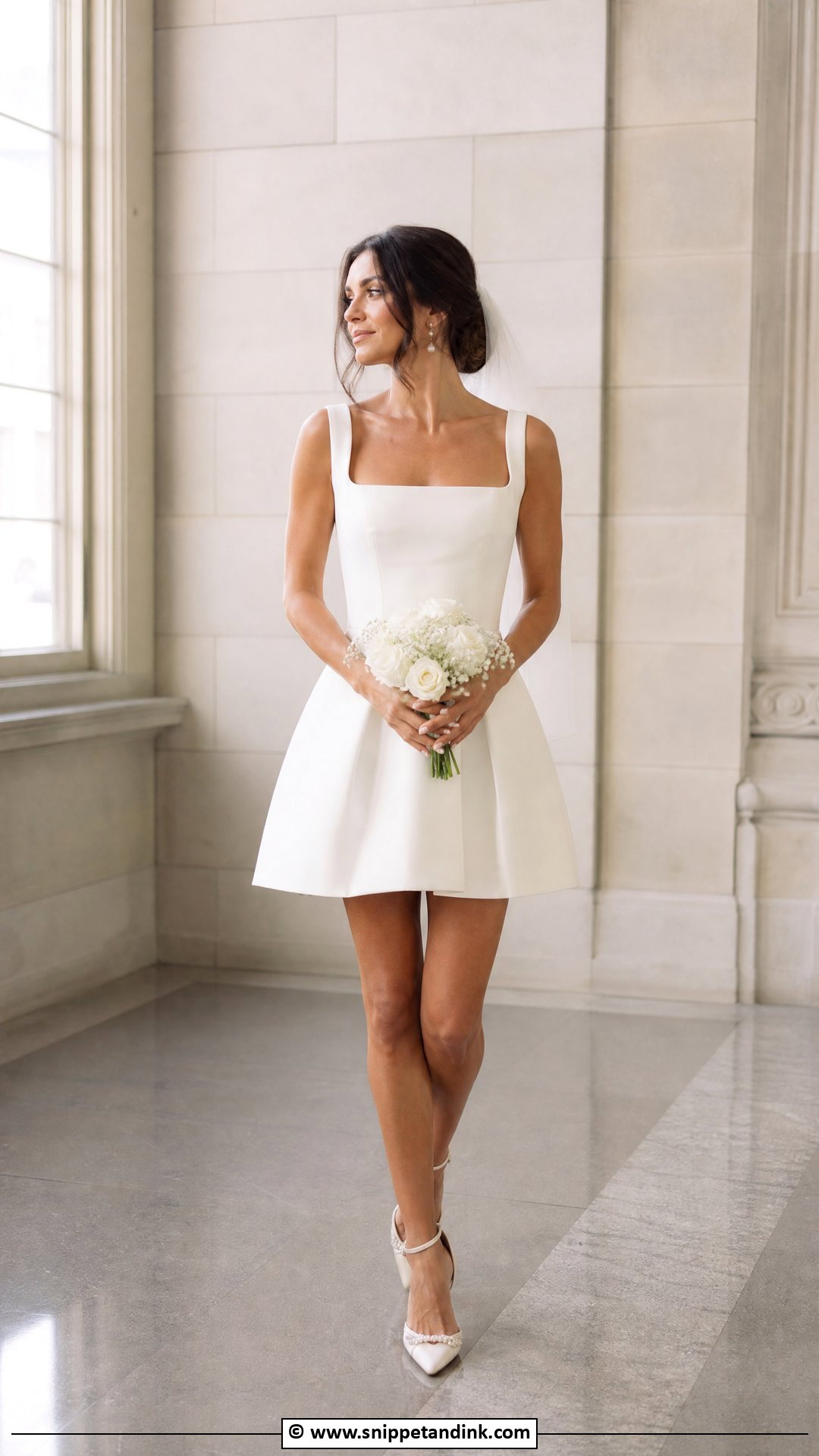
Short dresses look classy when the cut and fabric are deliberate: a tailored mini, knee-length lace or structured satin. They suit courthouse weddings, civil ceremonies, reception changes and summer celebrations. Shoes become part of the outfit, so choose a pair you’ll actually stand in for hours. Keep the bouquet small to match the dress’s scale. A short veil, bow or headband tells everyone it’s bridal.
32. Long Sleeve Satin Wedding Dress
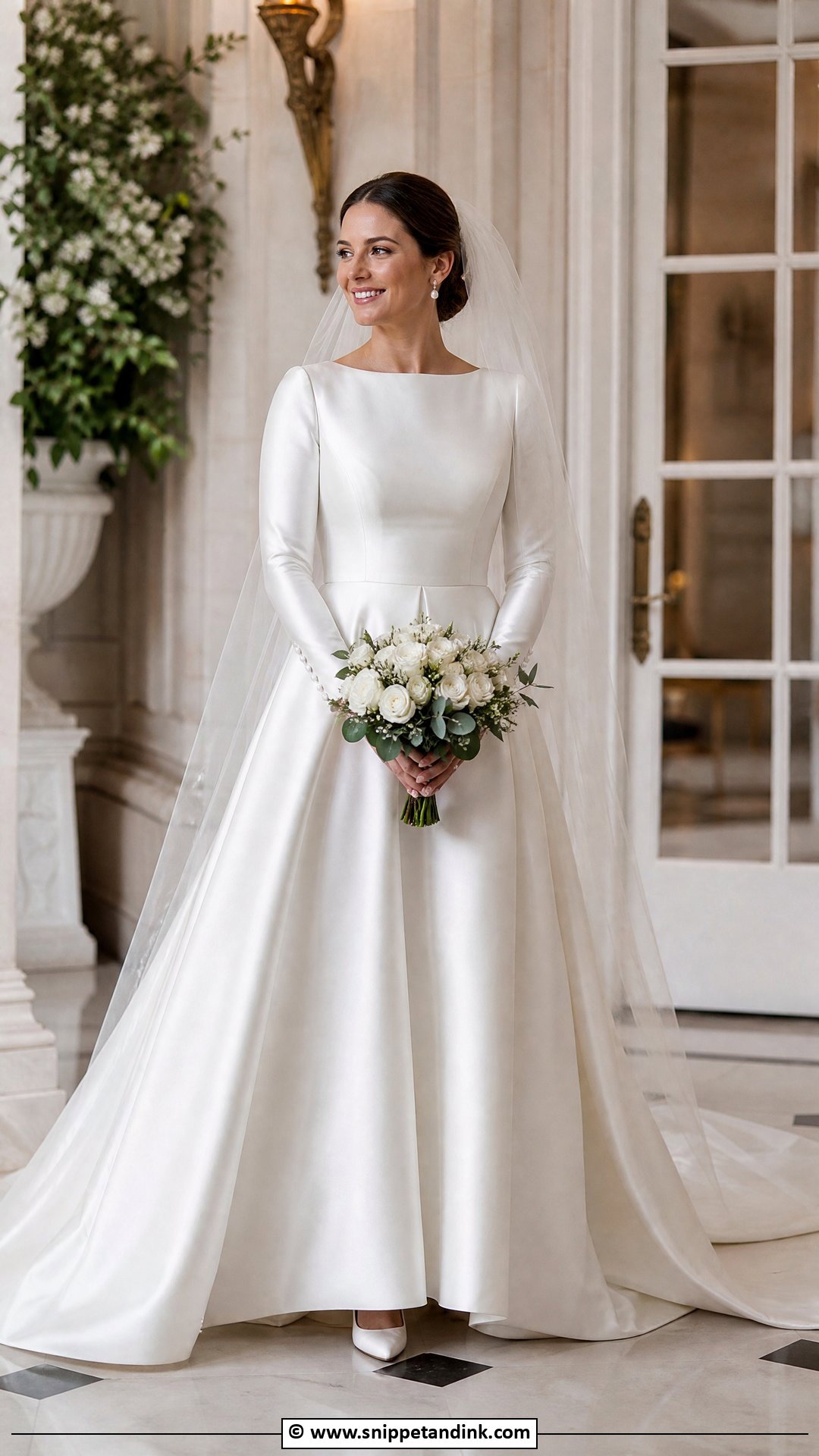
Long satin sleeves combine coverage with shine. Covered buttons at the wrist, a bateau neck or a clean V keep it polished. Satin sleeves need room at the elbow; cut too slim, they crease into horizontal lines by the first dance. I’d keep embellishment minimal, since satin already reflects light. White orchids, roses or calla lilies add structure. Fall, winter and evening formals suit it.
33. Vintage Inspired Wedding Dress
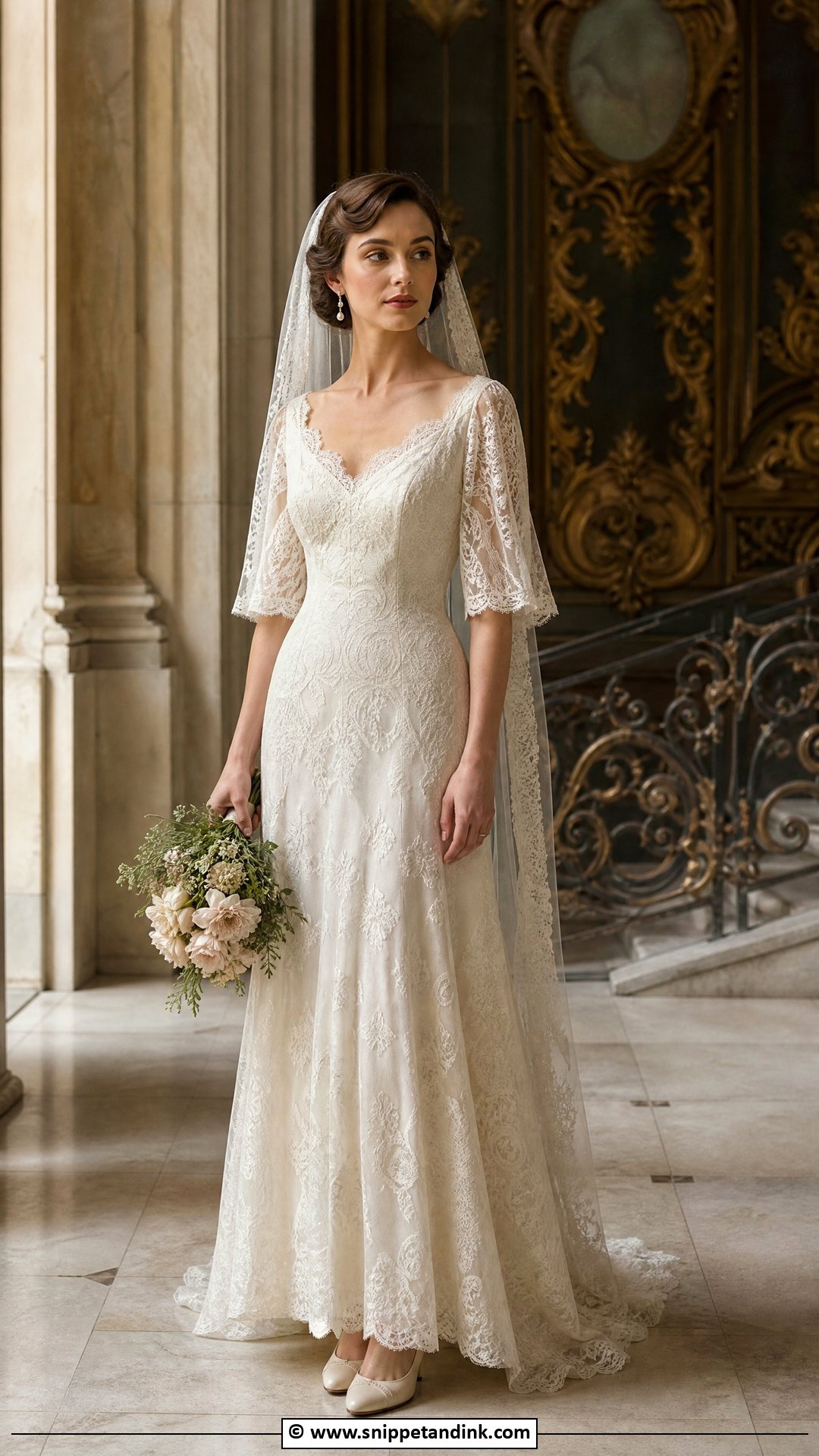
Vintage inspiration works when you pick one era and commit. Lace sleeves suggest the 1950s, a bias-cut silk the 1930s, a tea length gown the mid-century. Shoes, hair and accessories should support the same era without slipping into costume. I usually let one or two details carry the vintage feel, such as finger waves or a birdcage veil, and keep the rest modern. Historic venues and boutique hotels are natural settings.
34. Blush Wedding Dress
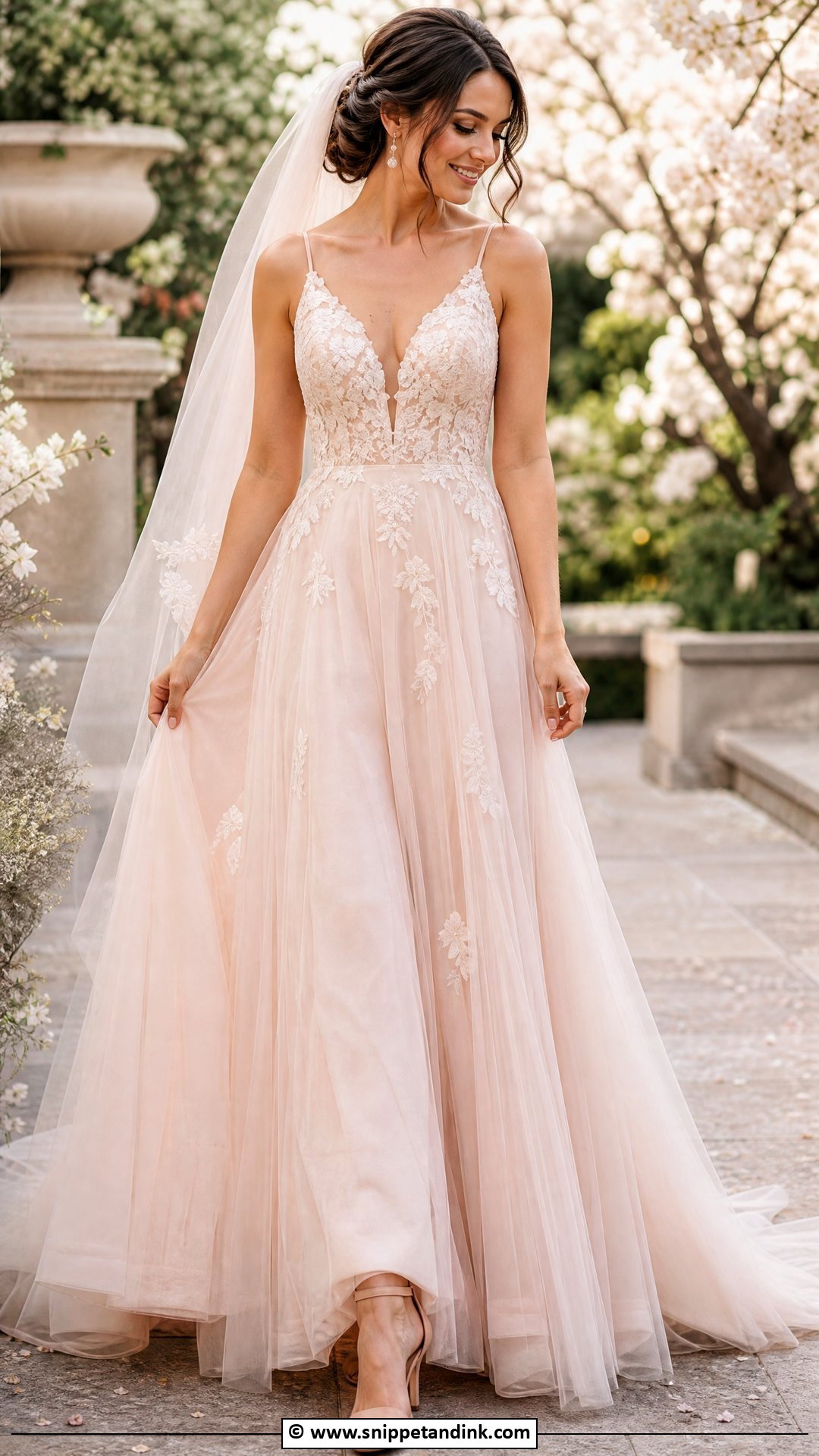
Blush is a soft step away from white or ivory, and it reads bridal only when the shade is genuinely pale. Tulle, chiffon, lace and embroidered fabrics carry it well. I check blush fabric against the bride’s skin in daylight: on some skin tones a pink cast washes out the face, while a peachier blush warms it. Nude or ivory heels, rose-gold jewelry and a bouquet in cream and pale pink tie it together.
35. Champagne Wedding Dress
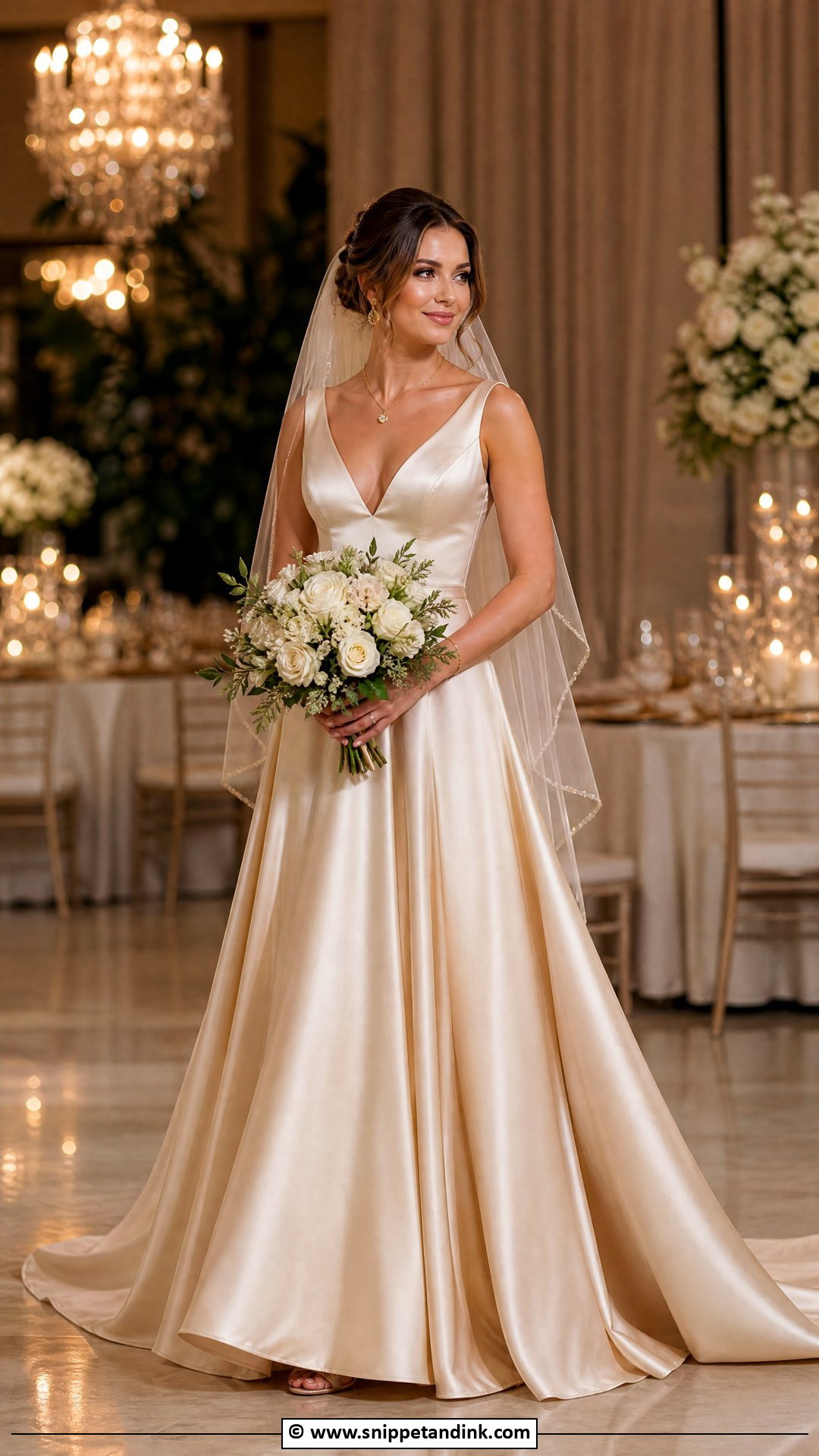
Champagne has a warm glow that is softer than bright white and flatters many skin tones. Satin, silk, tulle, lace and beaded fabrics all take it. Match the veil to the dress undertone, not to white, or the veil will look grey against the gown. Metallic or nude heels and fine gold jewelry suit it. Keep the styling plain so the color looks intentional; evening ceremonies and vintage-leaning weddings suit it.
A Dress Calendar That Leaves Room for Alterations
Most made-to-order bridal gowns take several months to arrive from the designer, and alterations come on top of that. I work backward from the wedding date so nobody ends up paying rush fees or squeezing fittings into the final week.
- Start shopping roughly nine to twelve months out. Ordering earlier gives slack if the fabric is back-ordered.
- Buy your shoes and undergarments before the first fitting. Hem length and bodice fit depend on both.
- Book alterations to begin around two to three months before the wedding. Most gowns need two or three fittings.
- Hold the final fitting a week or two before the date, and bring the person who will help you dress so they learn the bustle and fastenings.
The bustle question
Any gown with a train needs a plan for the reception. An over-bustle lifts the train with hooks onto the back of the skirt; an under-bustle tucks it beneath with ribbons. Lace and heavy satin usually look tidier with an under-bustle, while tulle can go either way. Ask to see it pinned before the seamstress sews it, and try a few dance steps with it up.
Start With the Room, Then the Fabric
Satin ball gowns, crepe columns, lace sleeves, chiffon, suits and jumpsuits can all look classy. What decides it is how well the dress suits your venue, the season and how long you’ll be on your feet. Shoes, veil, jewelry, hair and bouquet shape the final picture as much as the gown. Bring them all to your last fitting, look in a full-length mirror, and you’ll know whether the outfit is finished.
You'll Like These Ideas:









Leave a Reply