
A fitted strapless gown shows the body more honestly than any other bridal shape, so it rewards good construction and exposes weak construction. The open neckline leaves room for earrings, a veil and a proper hairstyle, while the close skirt follows the waist and hips before releasing lower down. Sculpted necklines, corsetry, raised flowers, drapery and detachable layers all turn up in this category. Before falling for any of them, I look at three things: internal boning, how the bust is supported, and how much the skirt lets you move. Below are twenty complete looks, from plain satin columns to lace mermaids, with the shoes and finishing details I’d put with each.
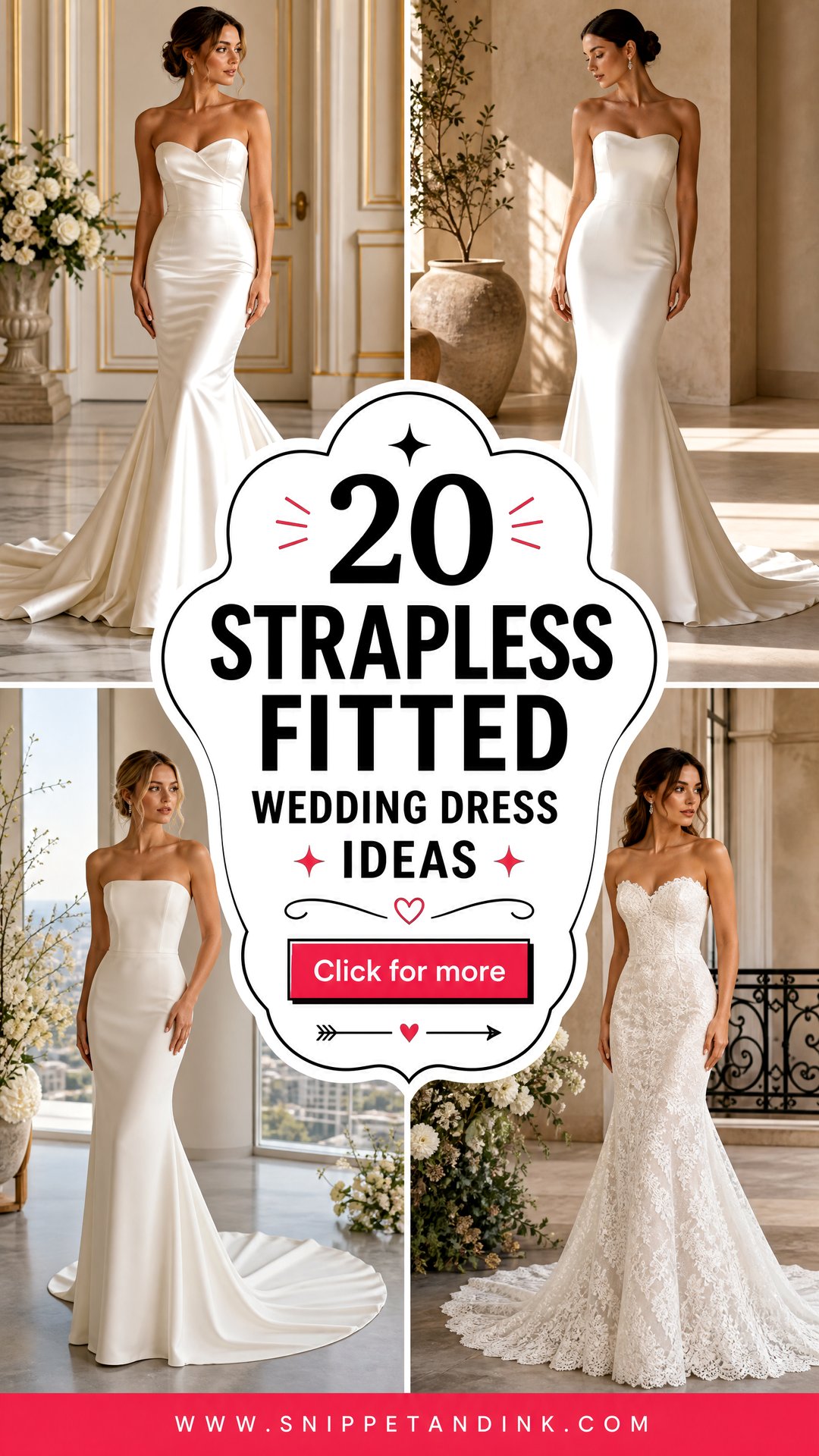
Knee, Thigh or No Flare at All
Fitted gowns are named by where the skirt releases, and that single point decides how the dress looks on you and how you’ll move in it.
- Mermaid: fitted to the knee or just below, then a dramatic flare. The strongest hourglass, and the most restrictive to walk in.
- Trumpet: releases around mid-thigh, so the flare is gentler and walking is easier. I suggest it more often than a true mermaid for that reason.
- Fit and flare: fitted through the bodice and waist, opening from the hips. Comfortable and forgiving on a fuller thigh.
- Column: no flare; the skirt falls straight. Clean and modern, but it needs a vent, a slit or some stretch to let you stride.
On a petite bride, a flare that starts low can make the legs look shorter, so I’d usually raise it a few inches. A tall bride can carry a knee-level mermaid easily. If your hips are noticeably fuller than your bust, a trumpet that releases at the widest point of the thigh tends to balance the shape better than a skirt that grips past it.
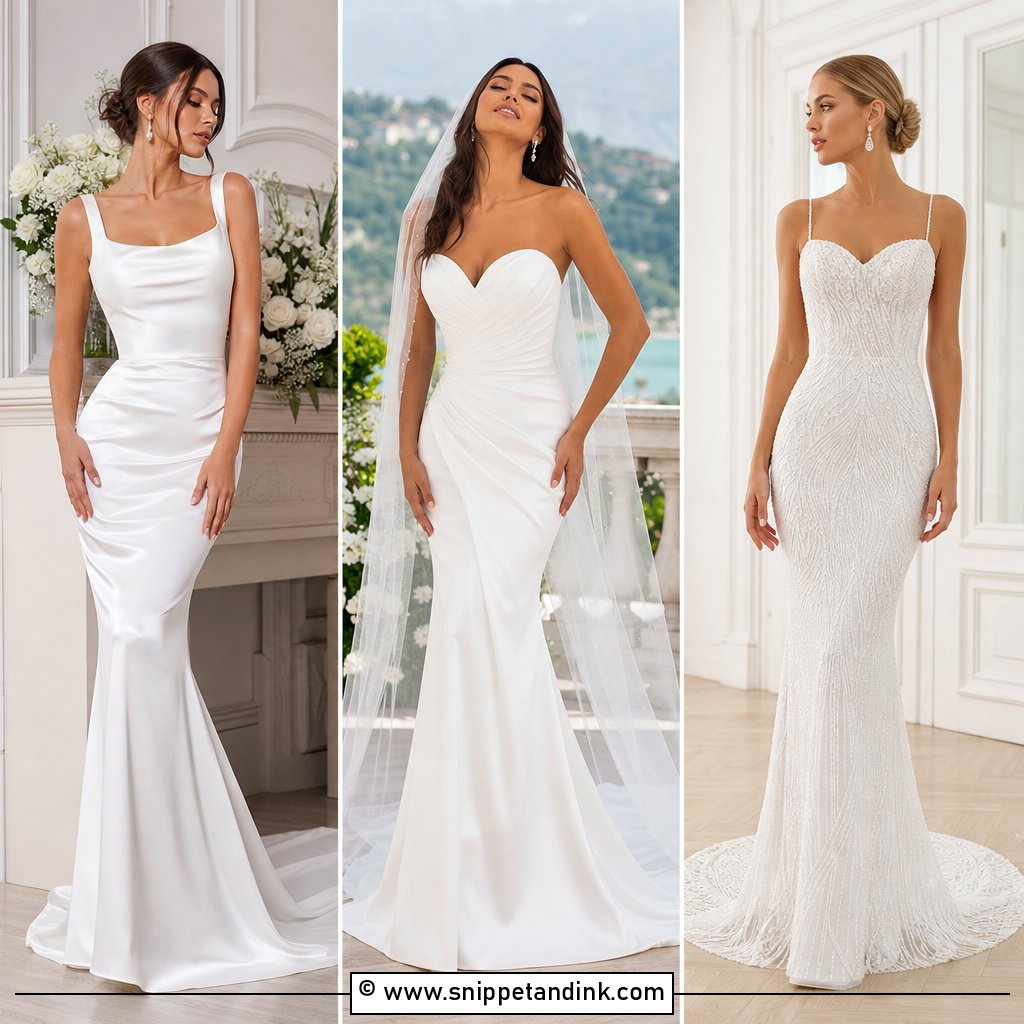
1. Strapless Satin Mermaid Wedding Dress
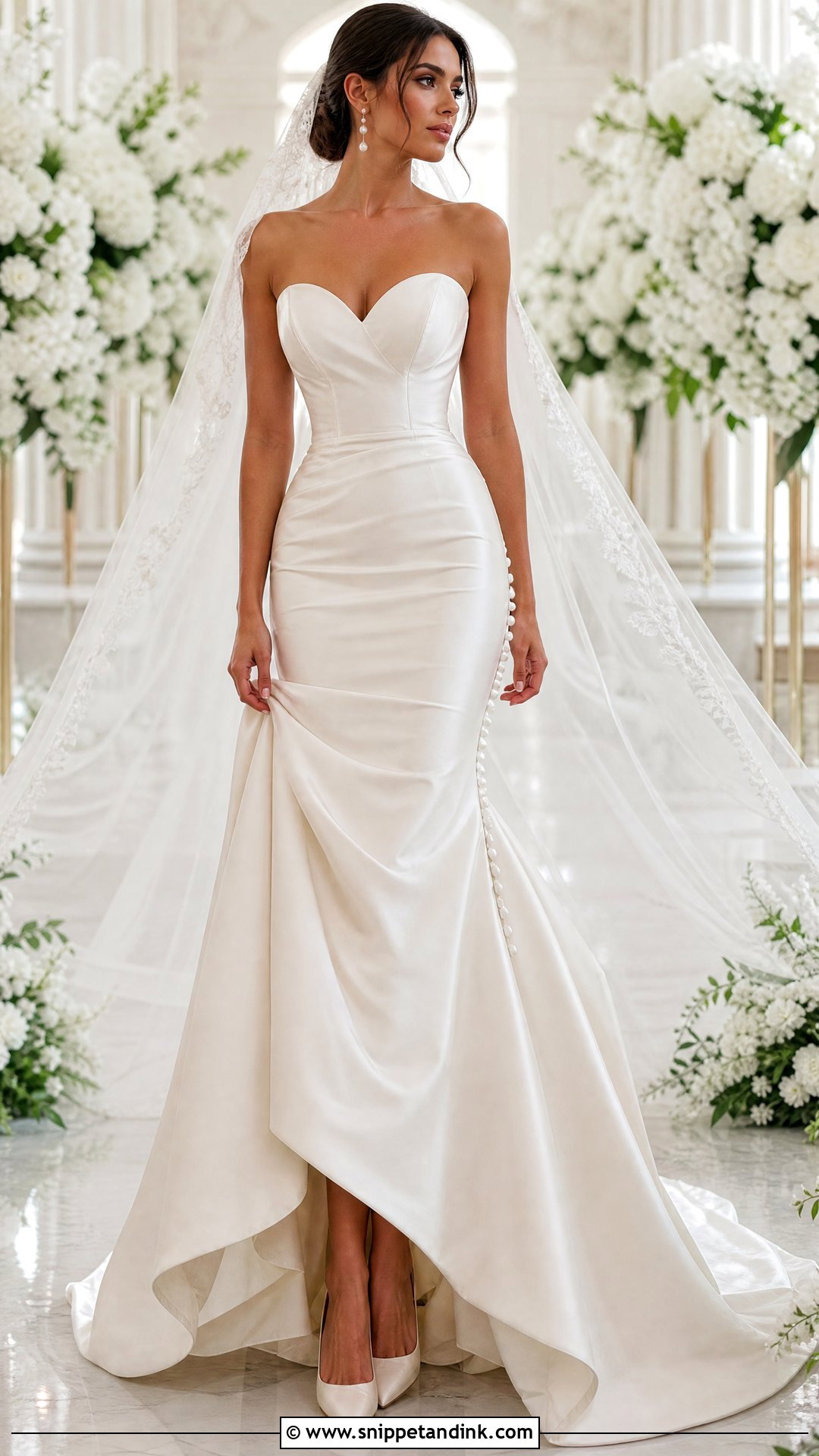
A strapless satin mermaid wedding dress needs no decoration, but it needs heavy satin. Thin satin clings and shows every line underneath; a substantial one skims the hips and holds the flare at the knee. A softly curved sweetheart neckline and covered buttons running down the train keep it classic. I’d add pointed ivory pumps, pearl drops and a cathedral veil with a raw edge, with a sleek bun to keep the shoulders clear. A rounded bouquet of white roses softens the line. Sit, walk and dance at the fitting, because a mermaid that looks perfect standing can grip the knees once you move.
2. Strapless Lace Mermaid Wedding Dress
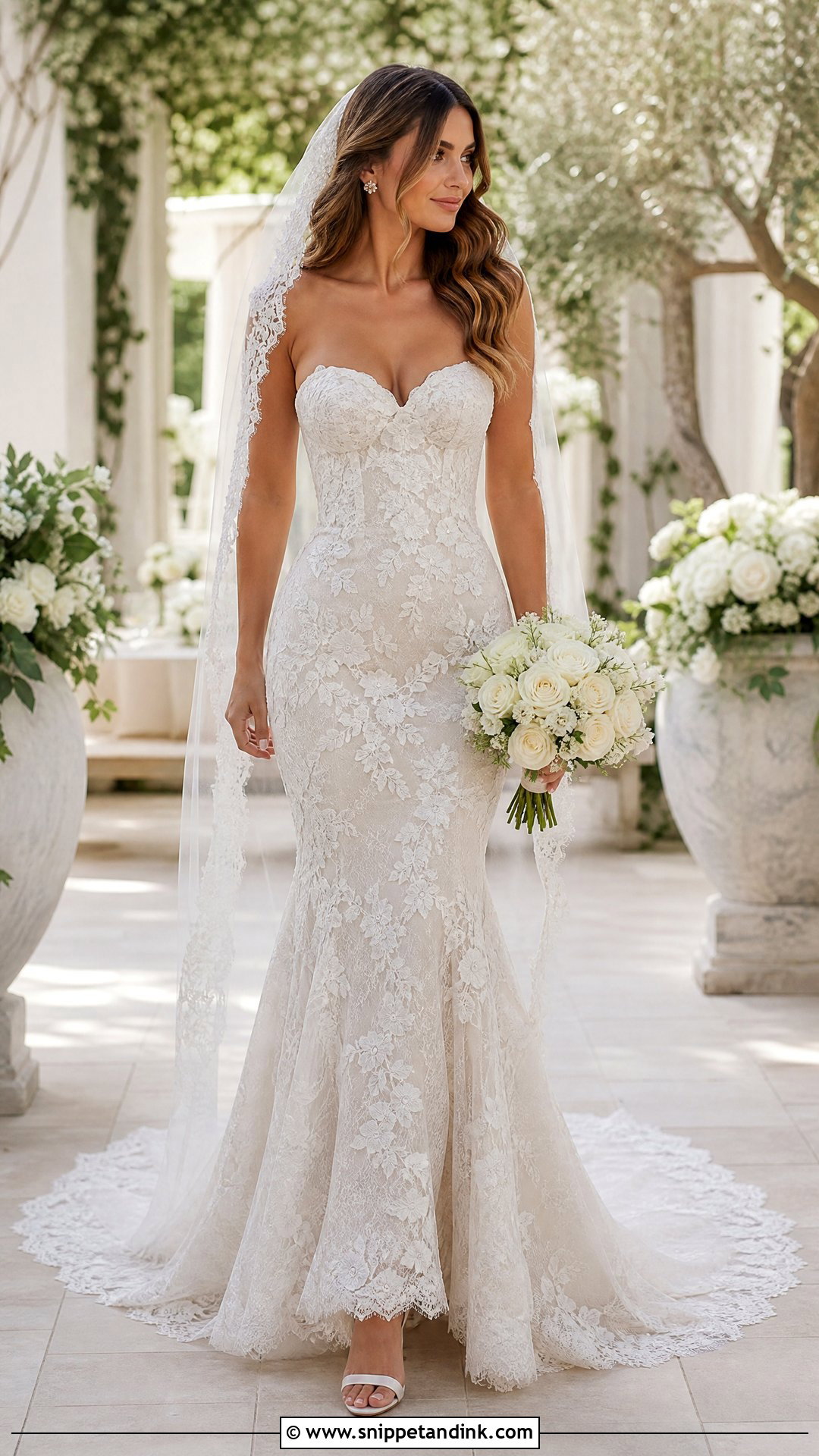
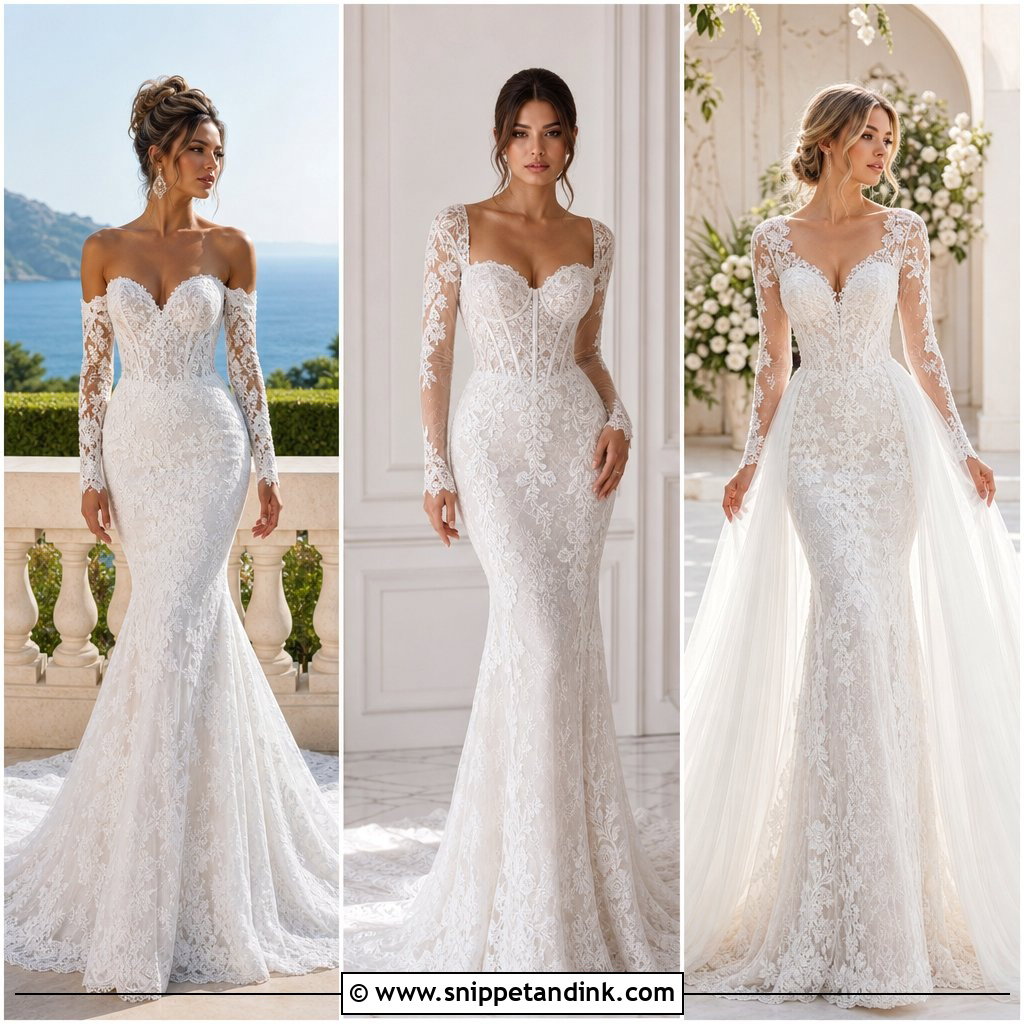
Lace over a fitted mermaid adds texture without adding bulk, which is the reason I suggest it to brides who want detail but not volume. The appliqués should sit on supportive tulle or a smooth lining. A sweetheart bodice, scalloped hem and lace-covered train tie the whole dress together. Crystal studs, a fingertip veil edged in matching lace and ivory slingbacks suit it, with soft waves or a low textured bun. Skip the necklace if the lace reaches the neckline; a slim bracelet and a small floral comb are enough. White garden roses finish it.
3. Strapless Crepe Fit And Flare Wedding Dress
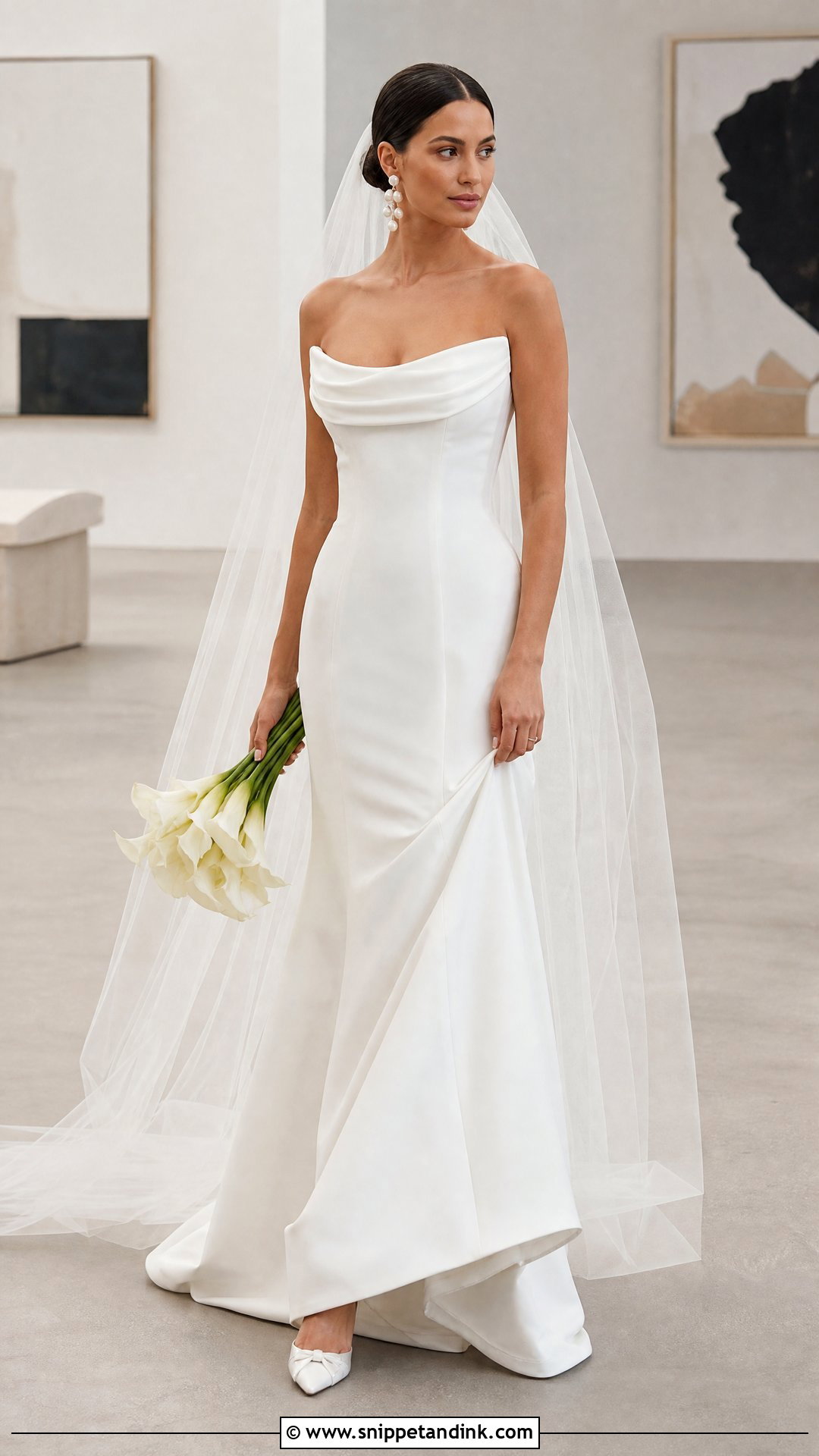
Stretch crepe is the most comfortable fabric for a fitted gown, and I’ll usually say so before a bride even asks. It follows the figure but gives when you breathe, sit or bend, which structured satin simply doesn’t. A folded neckline or soft scoop adds interest without breaking the clean line. Pair it with pointed satin heels, sculptural pearl earrings, a long sheer veil and a center-parted bun, plus a small bouquet of calla lilies. Plain crepe shows every seam and alteration, so the tailoring has to be precise. It also shows underwear, so if the bodice has no built-in support, sort out smooth undergarments before the first fitting.
4. Strapless Basque Waist Wedding Dress
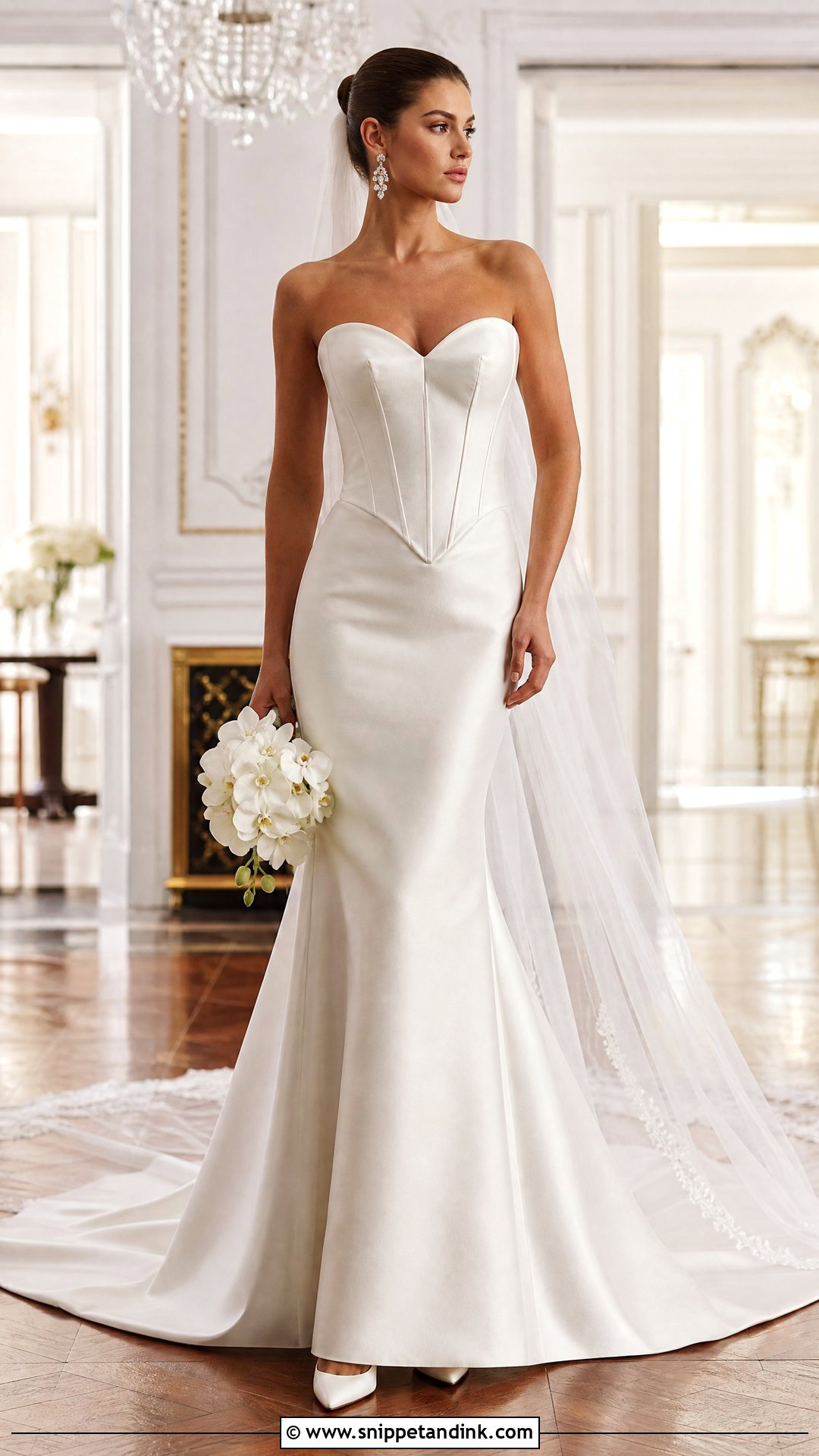
A strapless Basque waist wedding dress points the eye to the center of the body, and on a fitted skirt that point leads straight down the line of the dress. Satin or Mikado keeps it sharp; lace-covered construction softens it. Crystal drops, closed-toe pumps and a cathedral veil set beneath a polished updo suit it, with no necklace and a compact bouquet of white orchids. The bodice should grip at the waist, not at the ribs. When a fitted Basque dress squeezes the ribcage, it’s usually because the point is sitting too high for that bride’s torso.
5. Strapless Cat Eye Neckline Wedding Dress
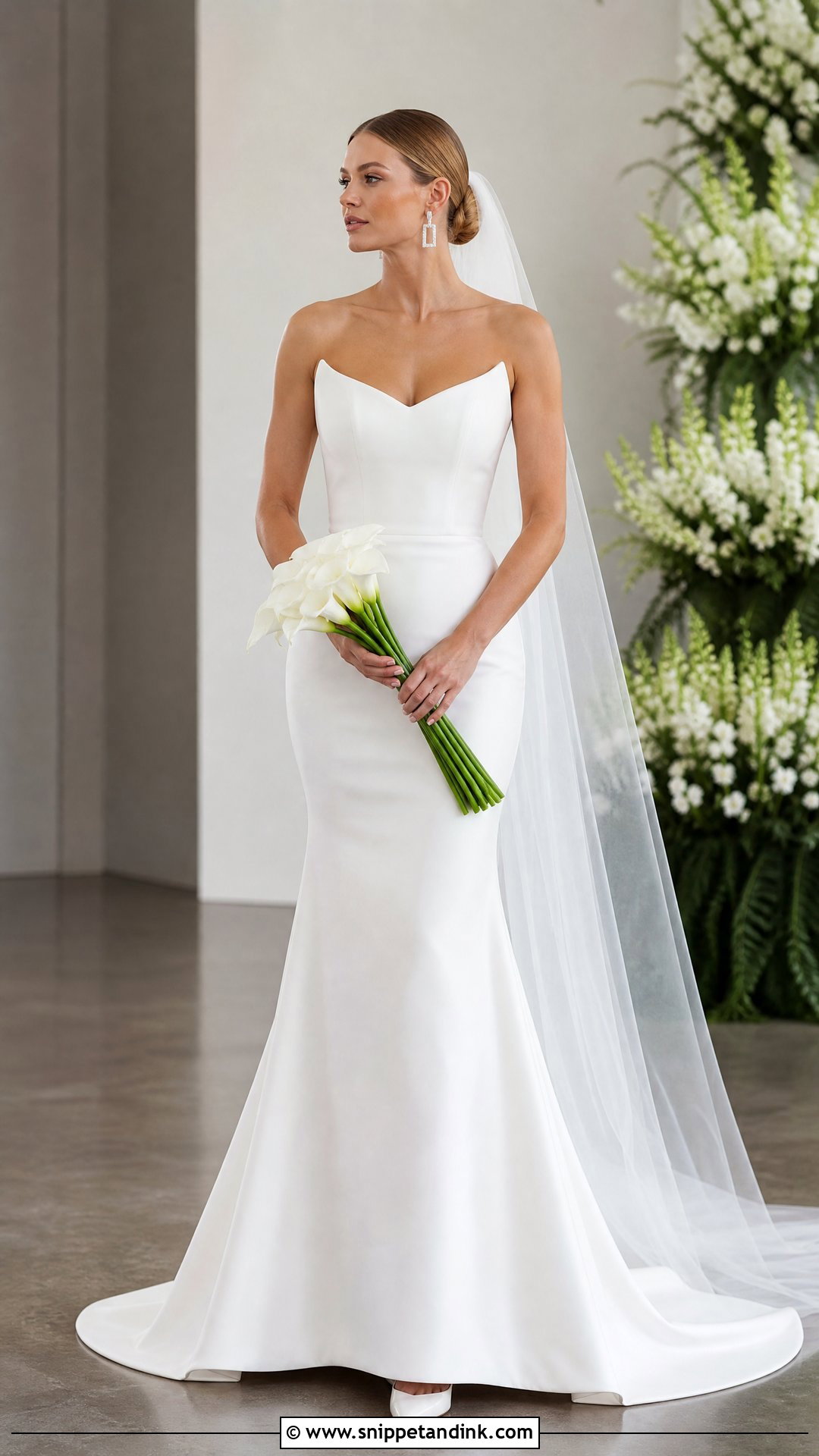
The raised points of a strapless cat eye neckline frame the shoulders and give the bust a sculpted edge. They only hold in fabrics with body: satin, Mikado or structured crepe. A cat-eye mermaid with sleek ivory heels, geometric earrings, a simple floor-length veil and a smooth low bun keeps the outline strong, and a narrow bouquet of long-stemmed white flowers suits the vertical line. I check the points from the front, side and back. If you find yourself hitching the bodice up, the neckline distorts, which means the internal support needs work rather than the points.
6. Strapless Sweetheart Fitted Wedding Dress
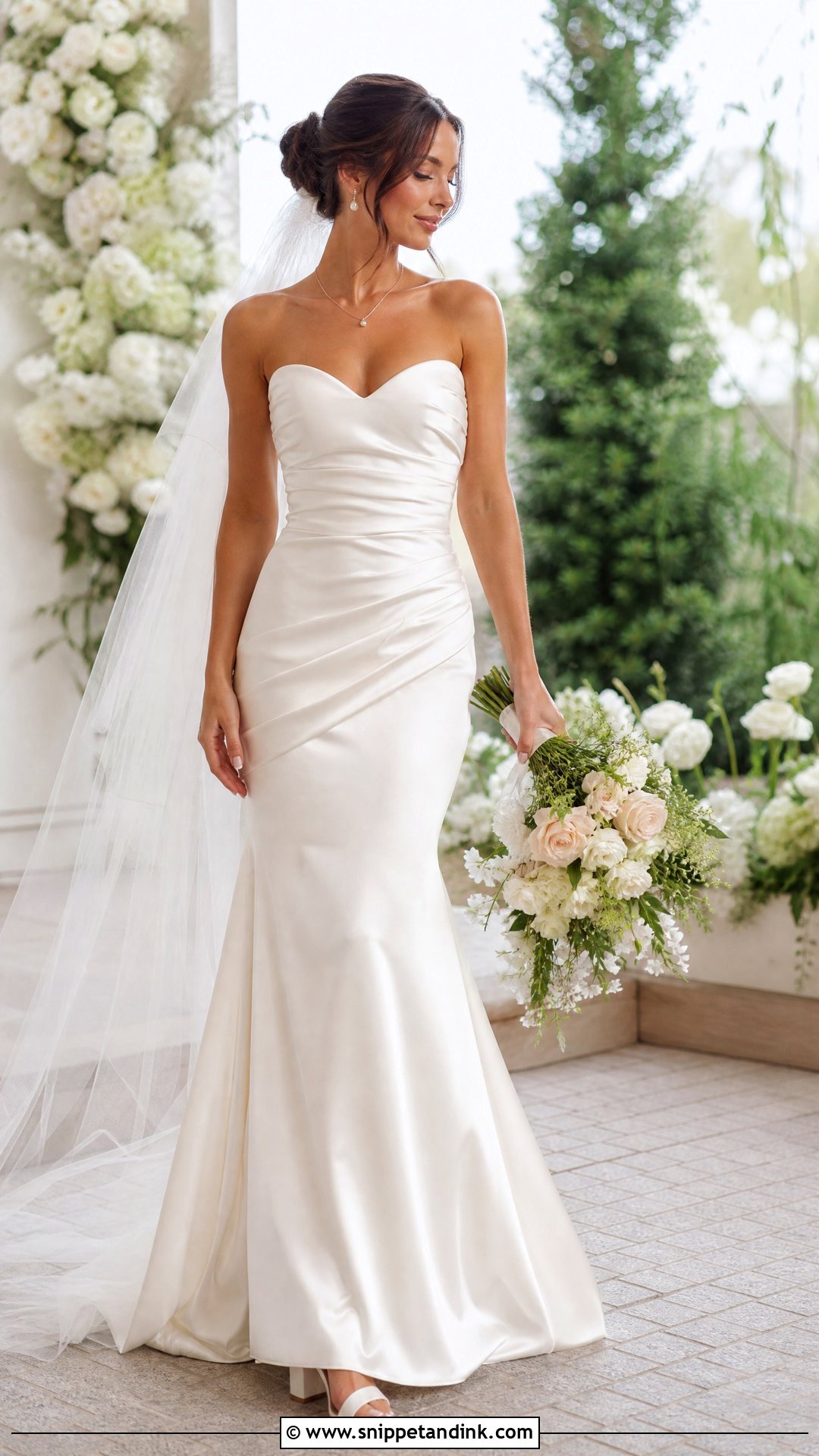
Sweetheart is the neckline most brides try first, and the one with the widest range of depths. A shallow curve gives more coverage; a deep one is bolder. Floral lace, satin and crepe all suit it, from a garden ceremony to a ballroom. Pearl earrings, a fine pendant and ivory block heels make a balanced outfit, with a softly gathered veil and loose low bun. If the bodice is beaded or lace-covered, drop the necklace. The check I always do: arms up, hug someone, then look at both sides of the neckline. They should sit evenly and stay flat.
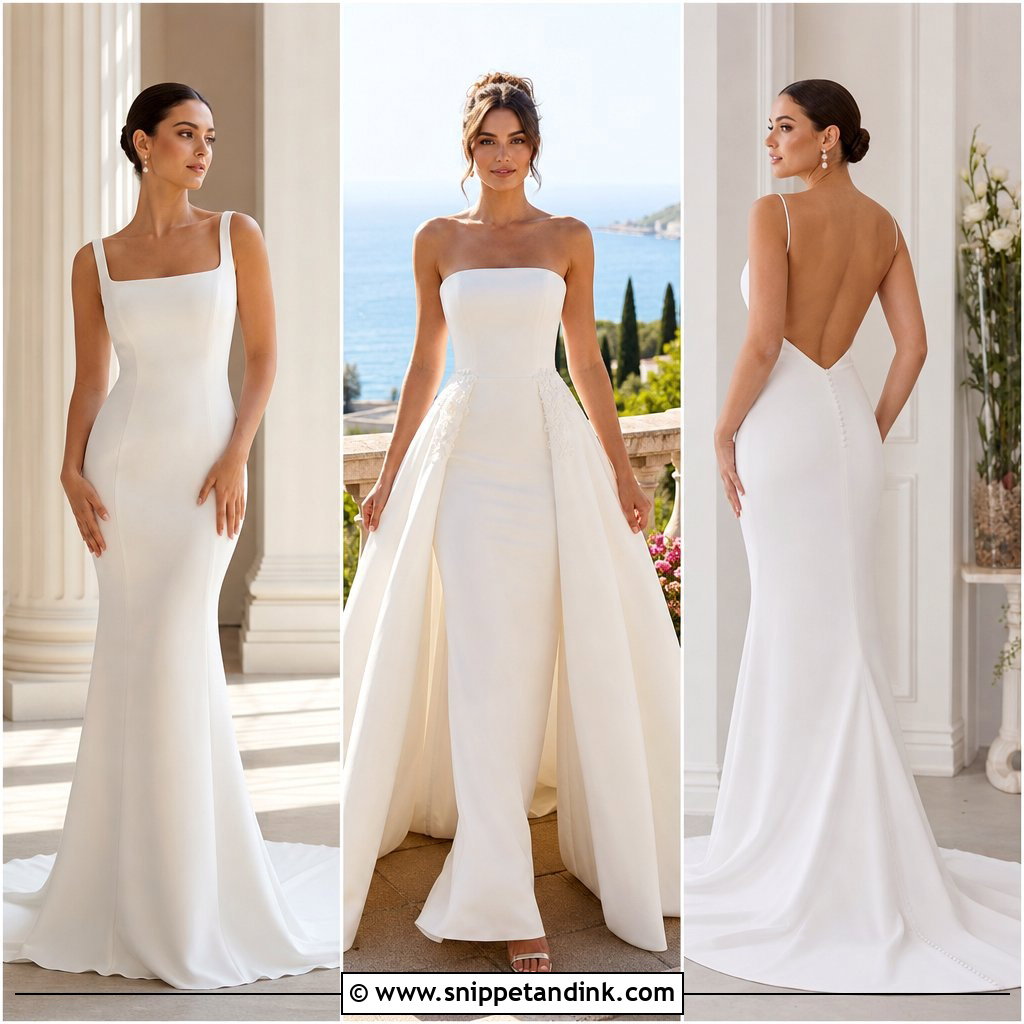
7. Strapless Straight Neckline Column Wedding Dress
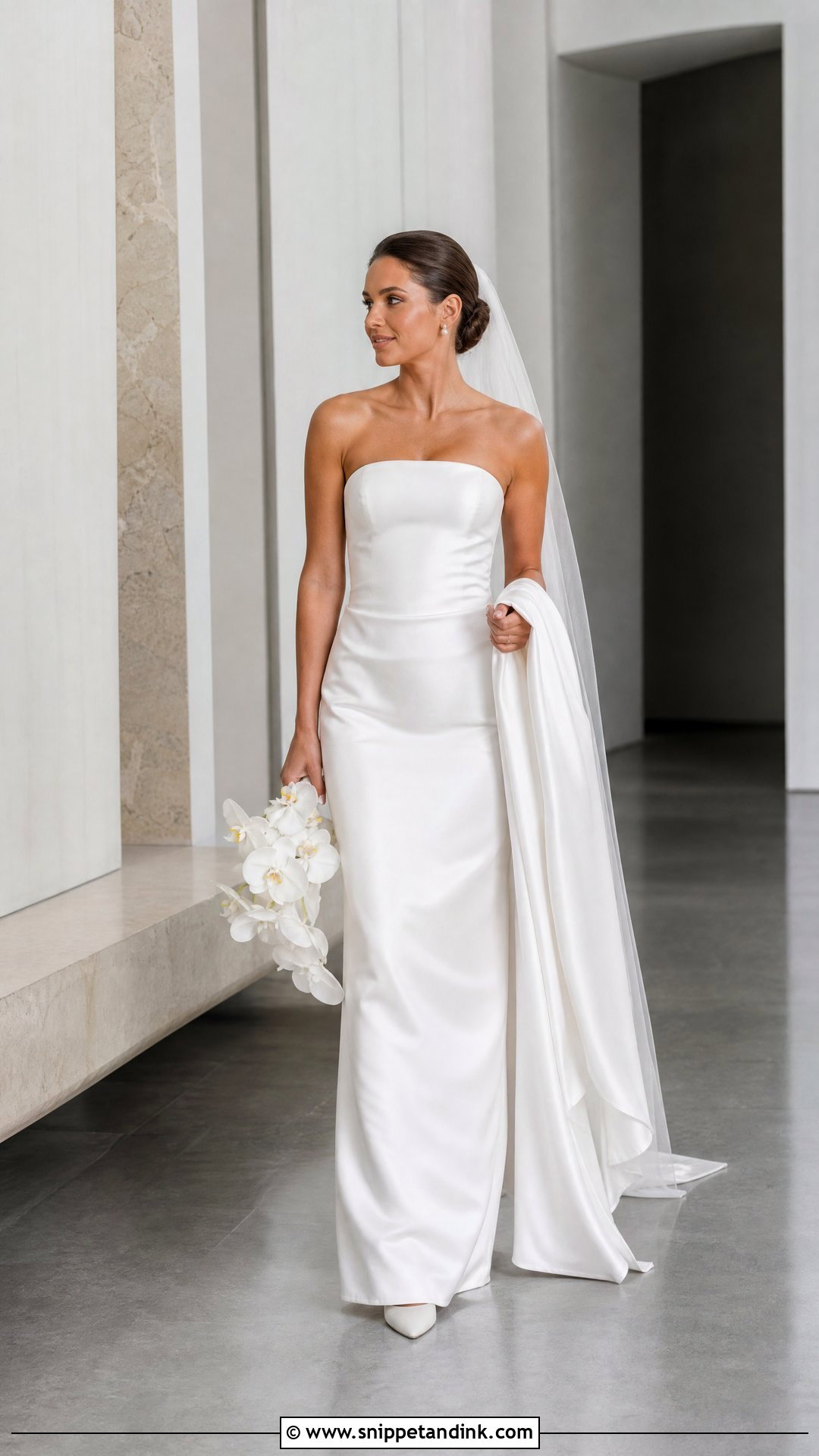
A column has no flare at all, which makes it the calmest silhouette here and the trickiest to walk in. The straight neckline draws a crisp horizontal line; the skirt falls close with little or no fullness. Silk satin or structured crepe gives the right finish. Pearl button earrings, pointed pumps, a long veil without lace edging, a low chignon and a single orchid bouquet complete it. Take full strides at the fitting. A back vent or a fabric with some stretch makes the difference between walking and shuffling. Smooth underlayers keep the surface clean, and a detachable wrap gives coverage for a church.
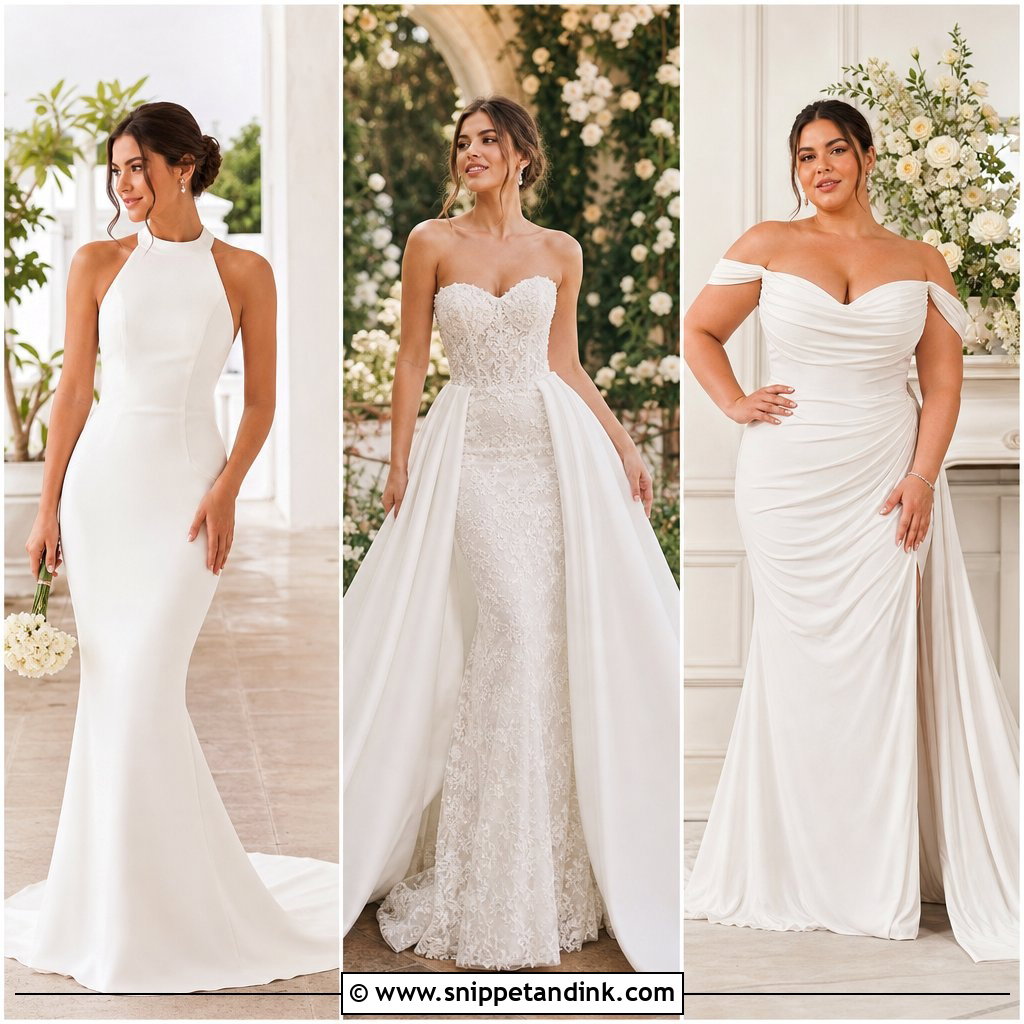
8. Strapless Draped Satin Wedding Dress
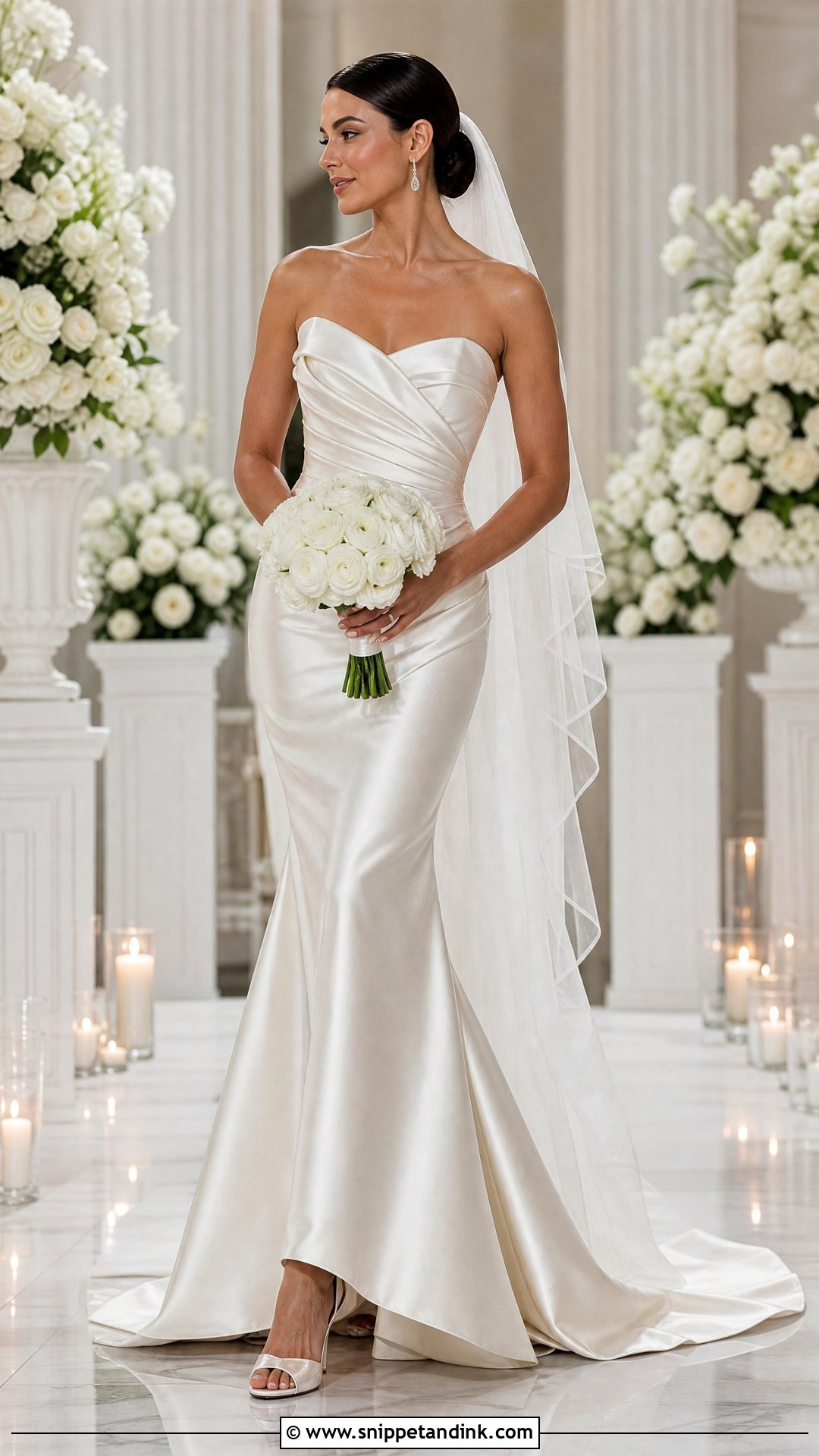
Diagonal pleating across the bodice, or fabric gathered at the waist, softens a fitted satin gown and is kind to anyone who worries about the stomach area. The drape should flow into a mermaid or fit-and-flare skirt. A sculpted neckline balances the folds. Satin slingbacks, medium drop earrings, a plain tulle veil and a side-parted bun or glossy waves tucked behind the ears suit it. Carry loose white ranunculus. Look at the gown from the side at alterations: drapery that collapses or twists there adds exactly the bulk it was meant to hide.
9. Strapless Pearl Beaded Wedding Dress
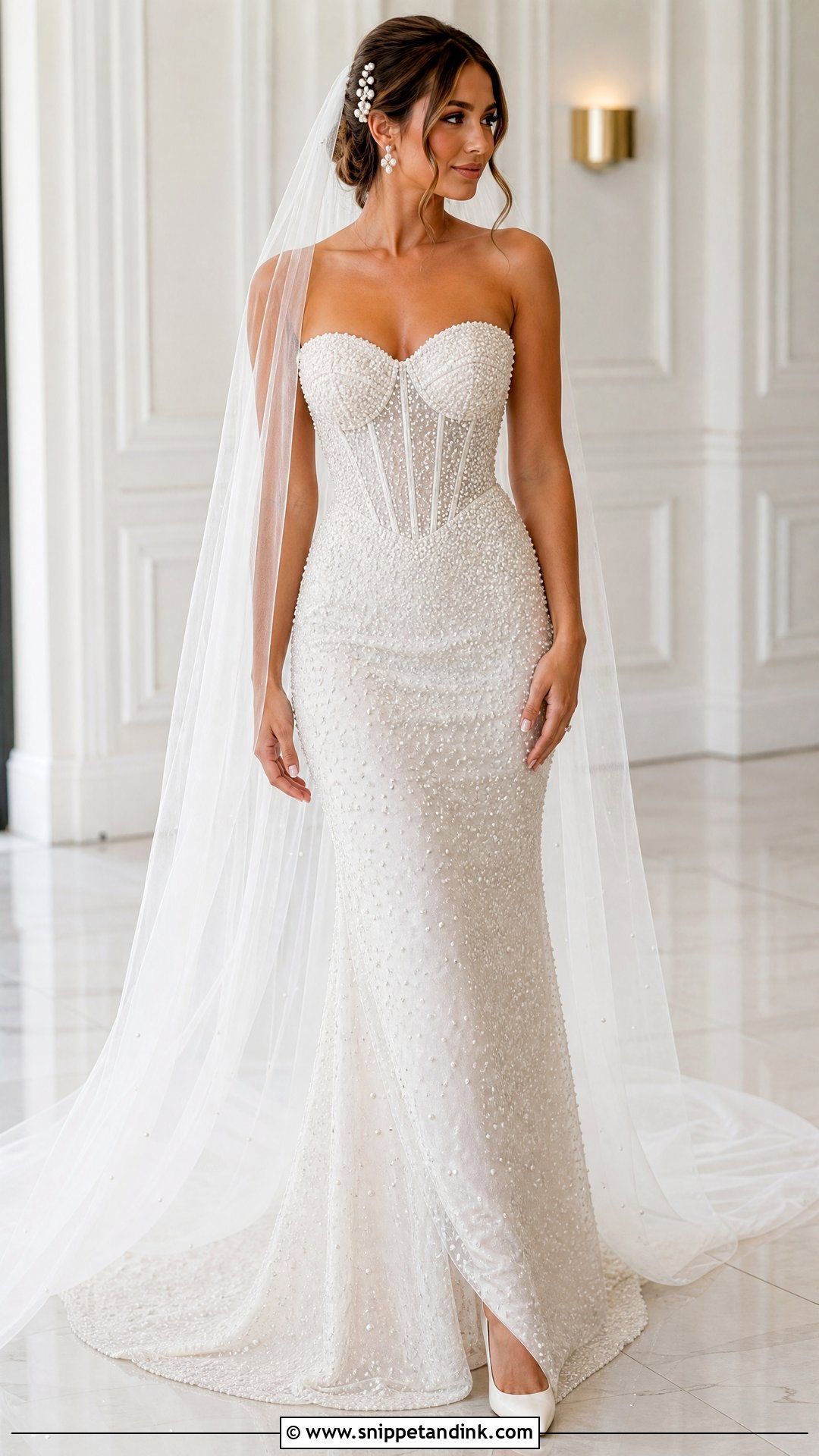
Pearls give a fitted gown a quiet glow rather than sparkle. They may cover the whole dress, outline a corset or scatter down a tulle mermaid skirt; choose one placement and stay with it. Pearl studs, a single pearl hairpin, smooth satin heels and a plain fingertip veil keep the accessories from repeating the dress too literally. A relaxed updo shows the neckline and upper back. Pearl-covered fabric is heavier than it looks, so lift the gown before you fall in love. Then check the beads around the hips, zipper and hem, where a fitted skirt rubs most.
10. Strapless 3D Floral Wedding Dress
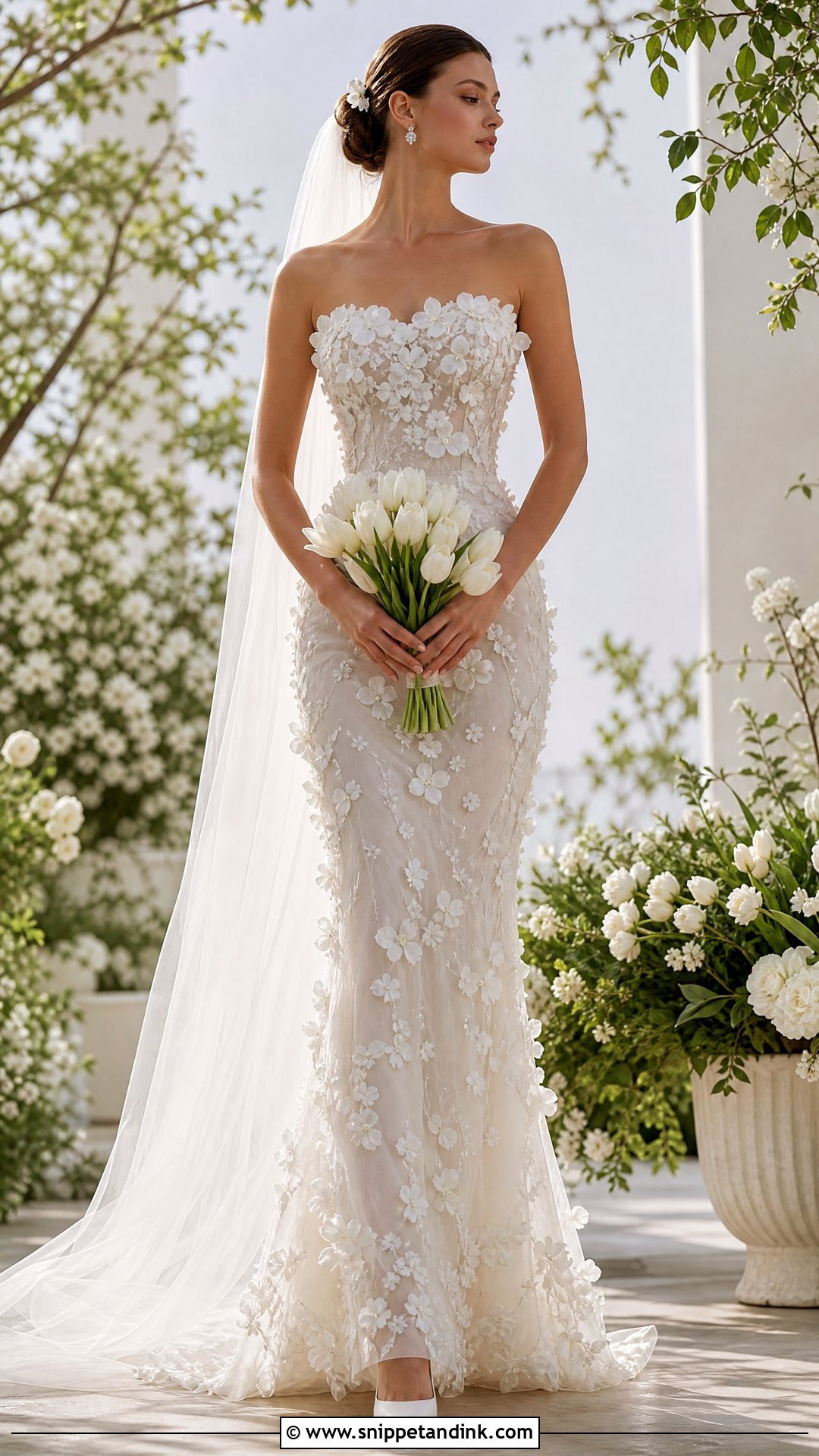
Raised flowers on a fitted strapless gown look best when they cluster at the bodice and space out along the skirt, which keeps the silhouette long. Ivory flowers on sheer tulle look deep; tonal petals on satin are subtler. Simple pointed heels, small crystal earrings and a veil without floral edging stop the look tipping over. One or two matching fabric flowers in a neat bun can connect hair to gown. A restrained bouquet of white tulips or roses is plenty. Before alterations, ask which appliqués can be moved. On a fitted dress, taking in a seam often means lifting and resewing flowers along it.
11. Strapless Mikado Trumpet Wedding Dress
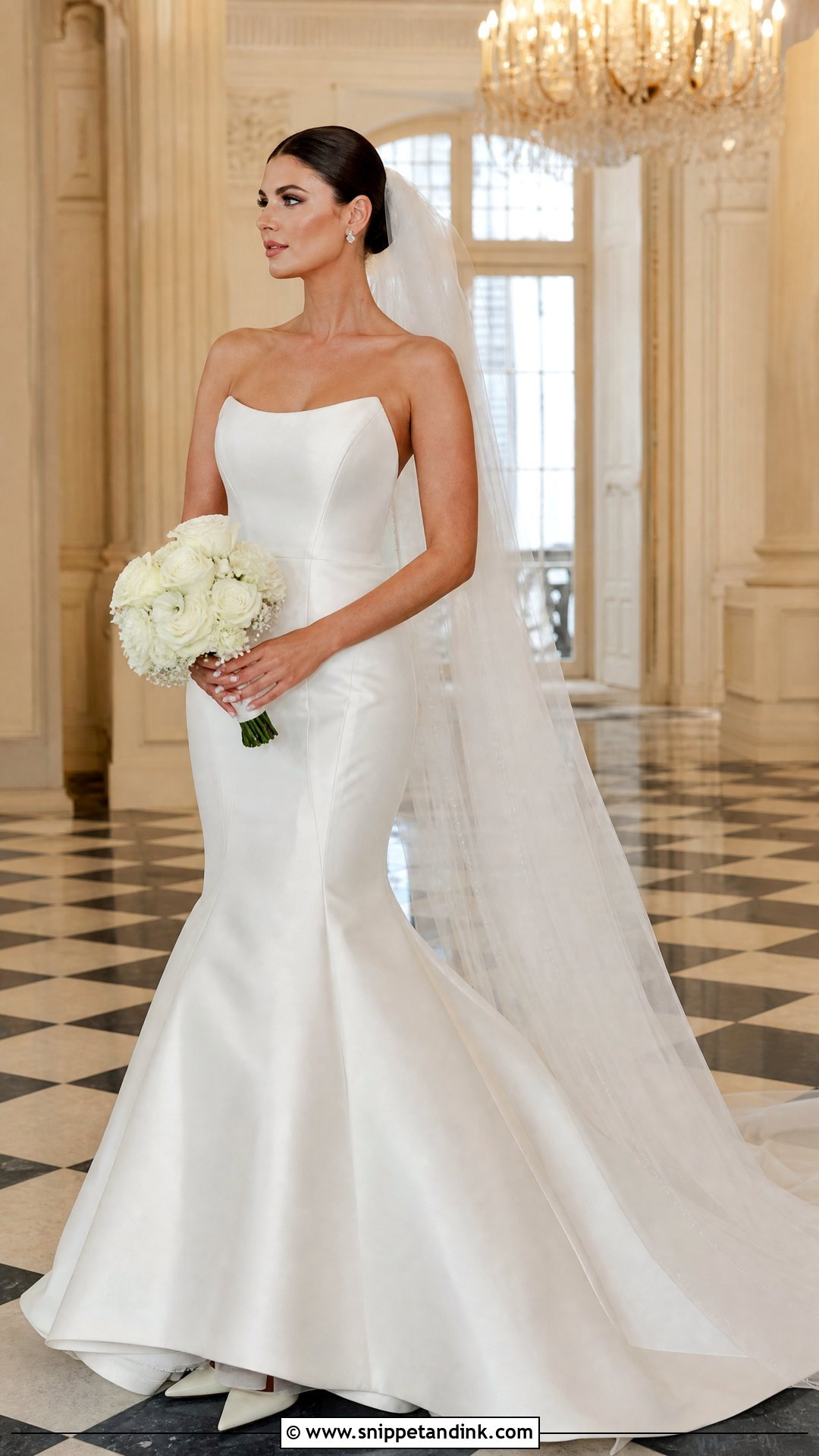
Mikado gives a trumpet skirt crisp seams and a clearly defined flare, more so than any soft fabric. A softly scooped neckline and covered back buttons keep the weight of the fabric from looking severe. Pointed ivory pumps, diamond-style studs, a clean cathedral veil, a smooth bun and a structured white bouquet suit it. Mikado doesn’t stretch, so practice stairs and sitting at your alterations; a trumpet in a rigid fabric can make steps hard. A secure bustle under the train makes the reception manageable.
12. Strapless Minimalist Ivory Wedding Dress
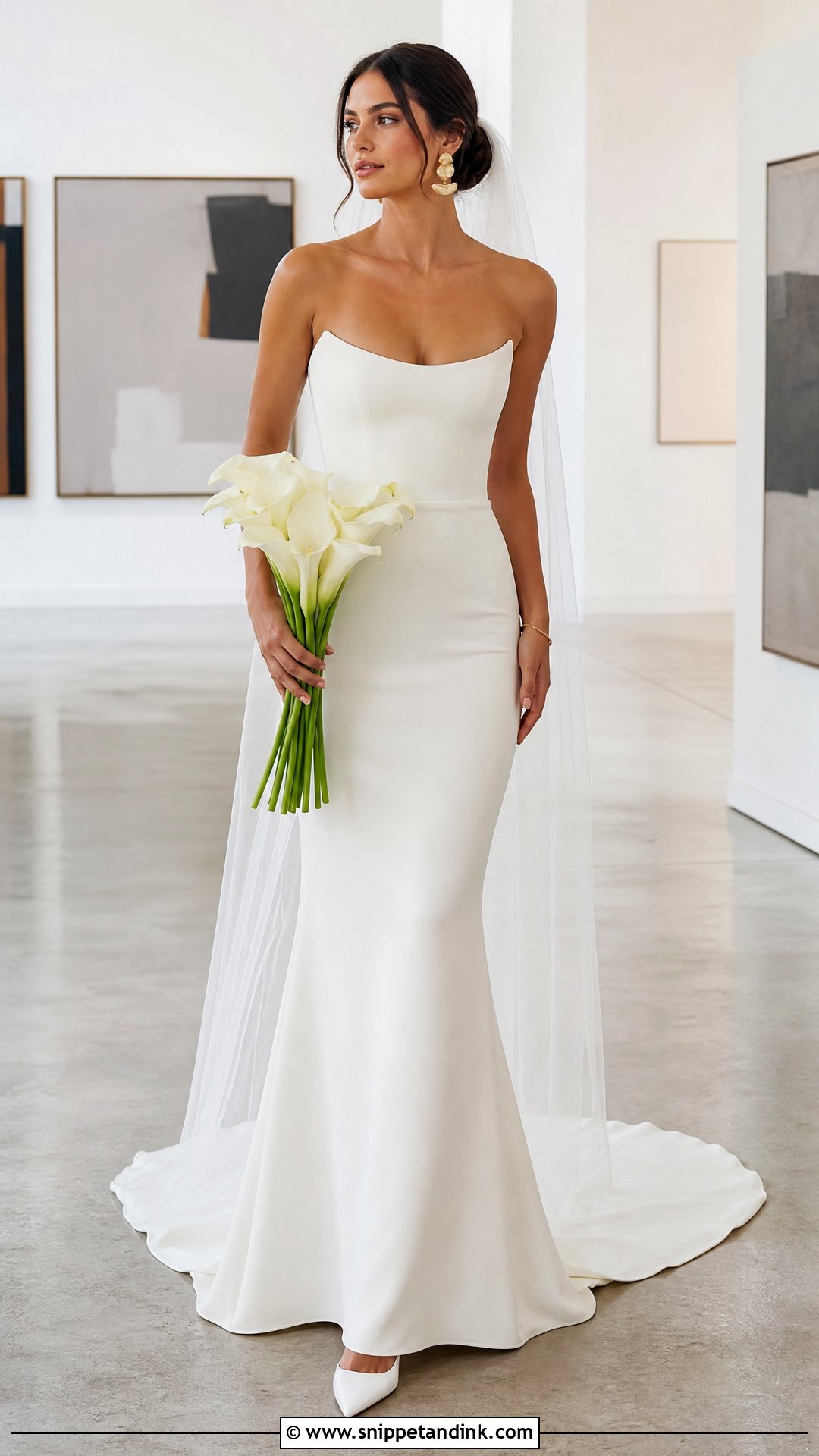
Imagine an ivory gown with no lace, no beads and nothing to hide behind: a gentle scoop neckline, a fitted skirt and a subtle flare. It’s the gown I’d point to for a bride who cares more about cut than decoration. Sculptural gold earrings, pointed ivory heels, a sheer veil set beneath a low bun and a single-strand bracelet are enough. White calla lilies or a small bouquet without greenery keep it modern. The fabric must be heavy enough to lie smooth, and the internal bodice should support without showing seams. Careful pressing and an even hem matter more here than anywhere else.
13. Strapless Wedding Dress With Detachable Overskirt
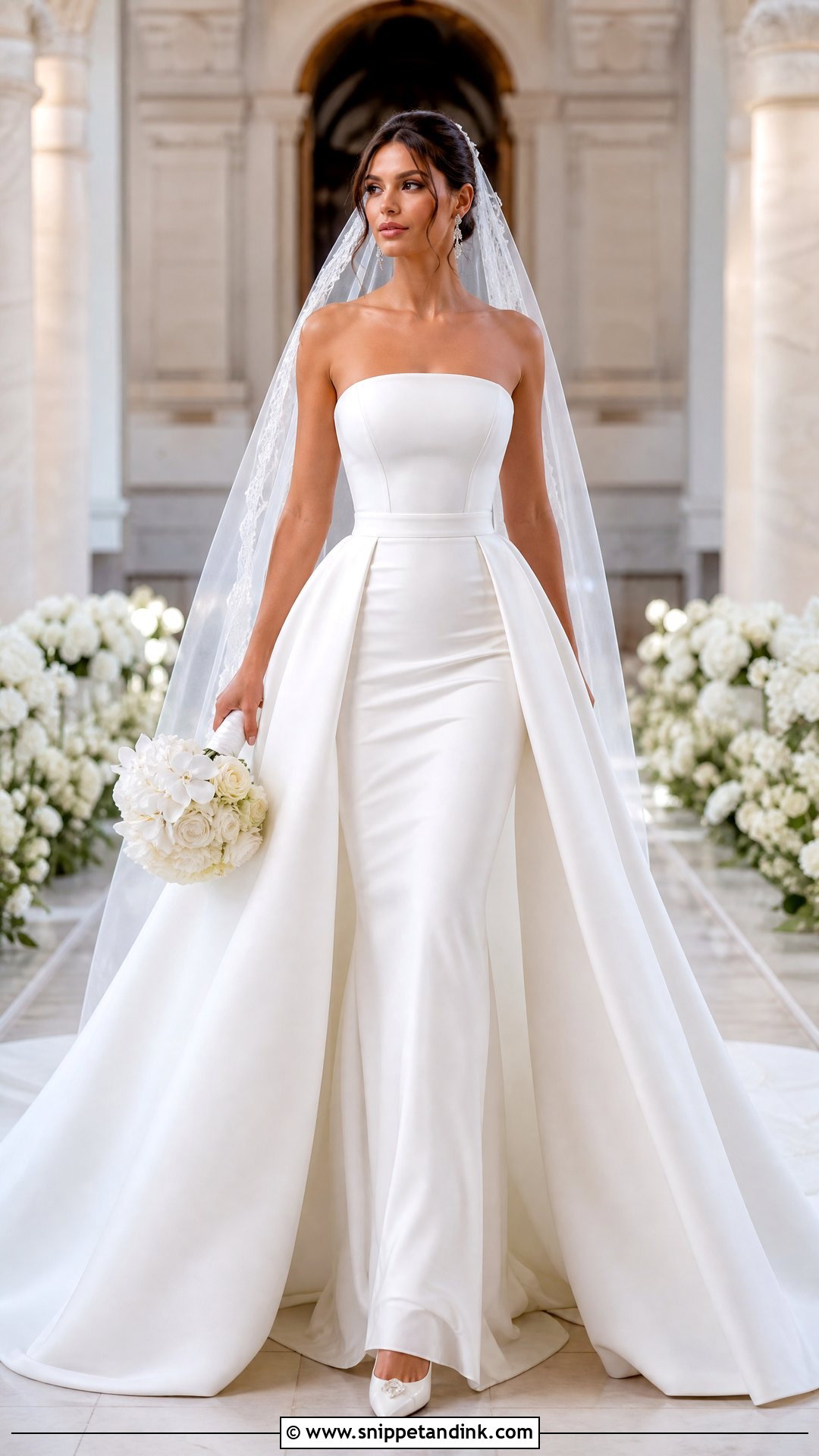
Would you like a big ceremony silhouette and a fitted dress to dance in without buying twice? An overskirt does it. Start with a strapless lace, crepe or satin mermaid, then add a full tulle or mikado overskirt for the ceremony that fastens neatly at the waist and hides its attachment points. A cathedral veil, crystal earrings and pointed pumps suit the formal version; afterward, swap the veil for a pearl comb. Check that the overskirt and gown are the same shade in daylight and indoors. White and ivory from different fabric lots can look noticeably different in photos.
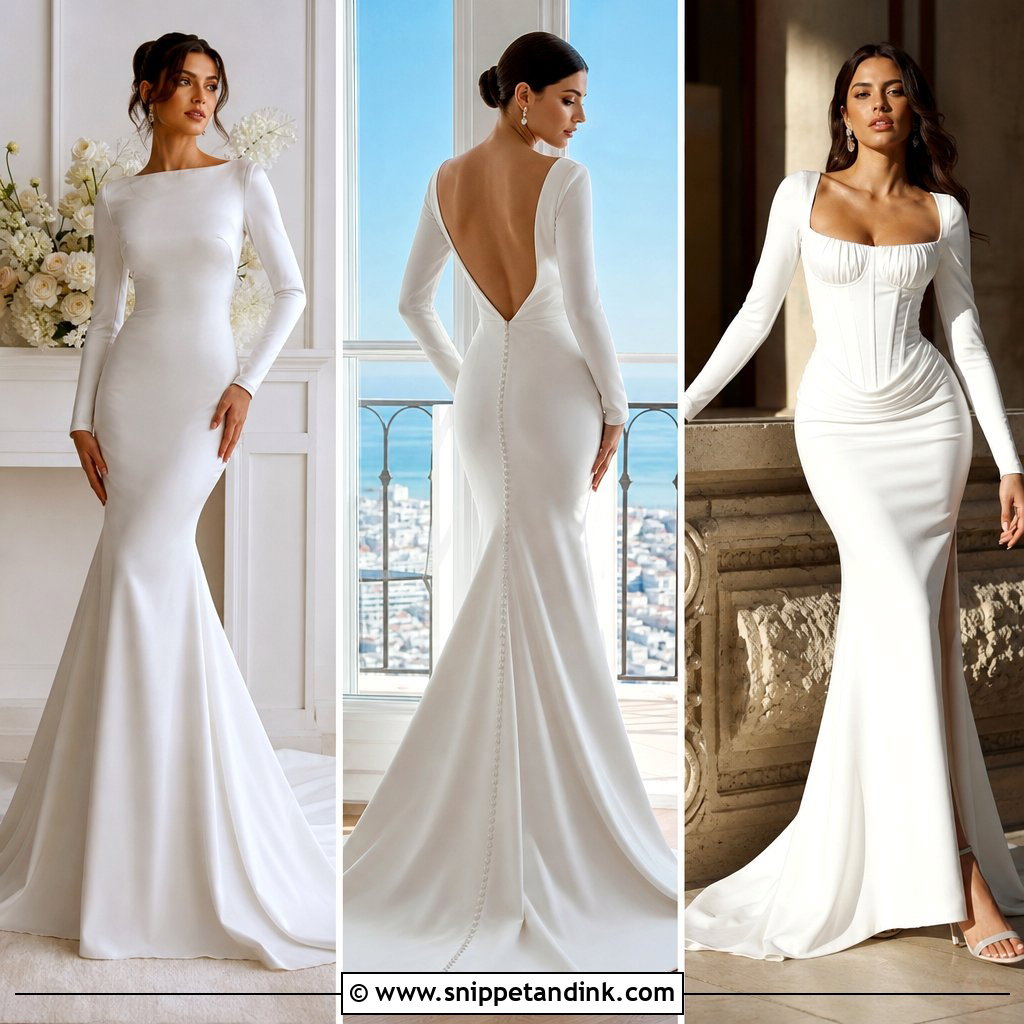
14. Strapless Fitted Wedding Dress With Slit
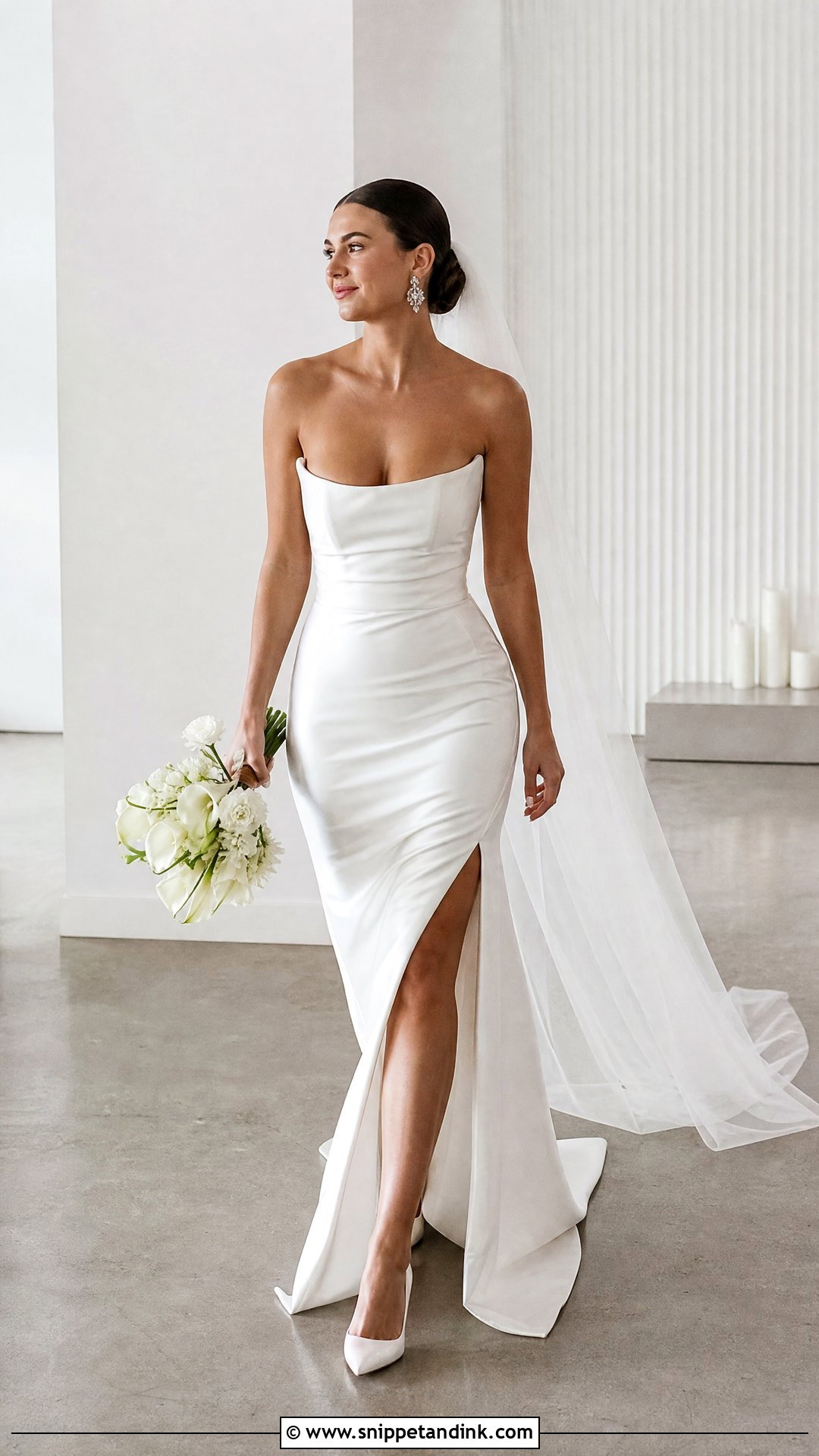
A slit gives a fitted skirt somewhere to move, which is its practical advantage as much as a style one. Choose a gown with the slit designed in, not one cut into an existing skirt; the lining and seam allowances need planning. Your shoes will show, so pick elegant pointed pumps or slim ankle straps. Statement earrings, a smooth bun and a plain chapel veil balance it. At fittings, sit and climb steps to check how much leg shows. A hidden modesty panel can bring a high slit down to a comfortable level. Keep the bouquet narrow so it doesn’t cover the line.
15. Strapless Low Back Wedding Dress
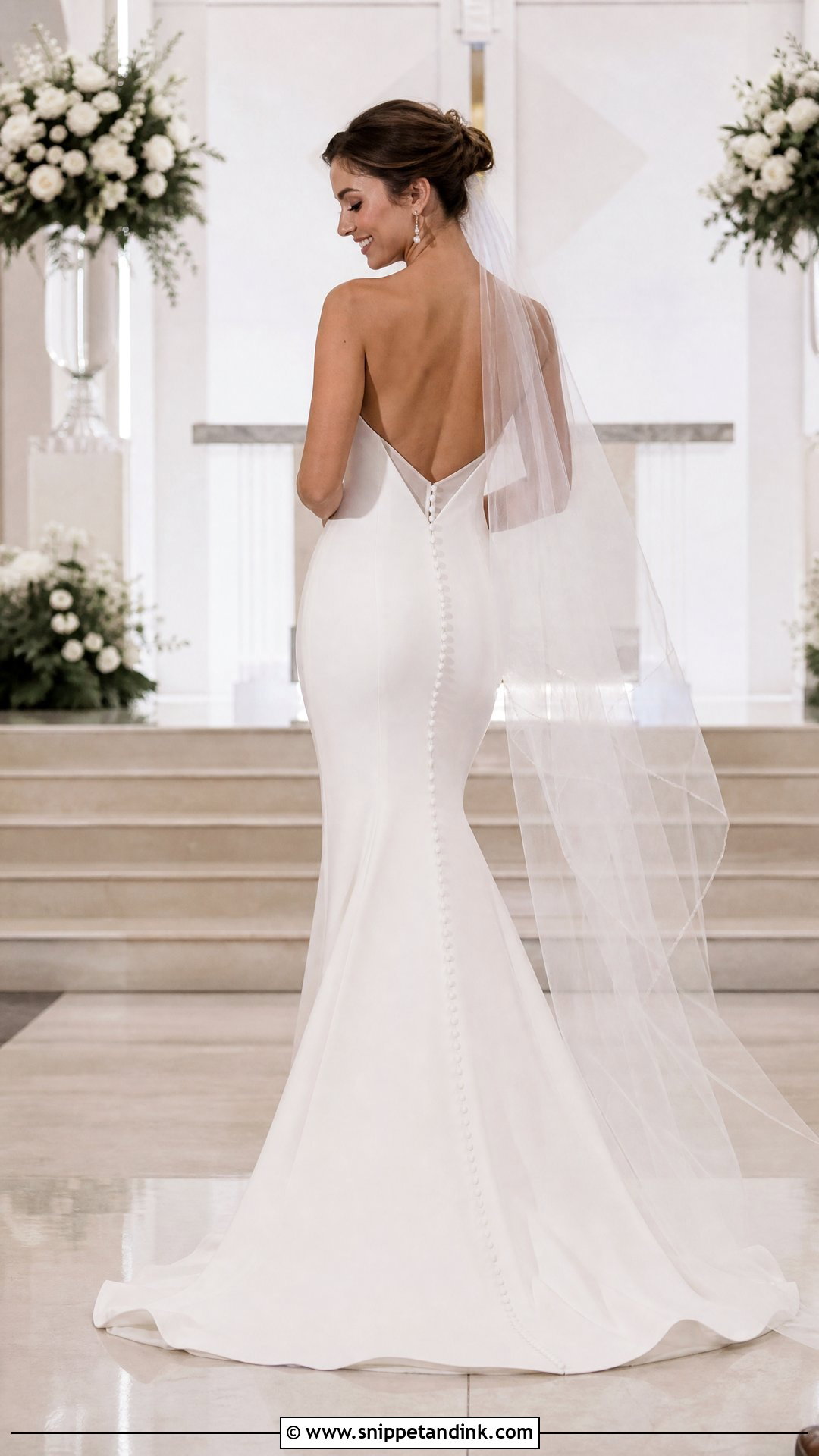
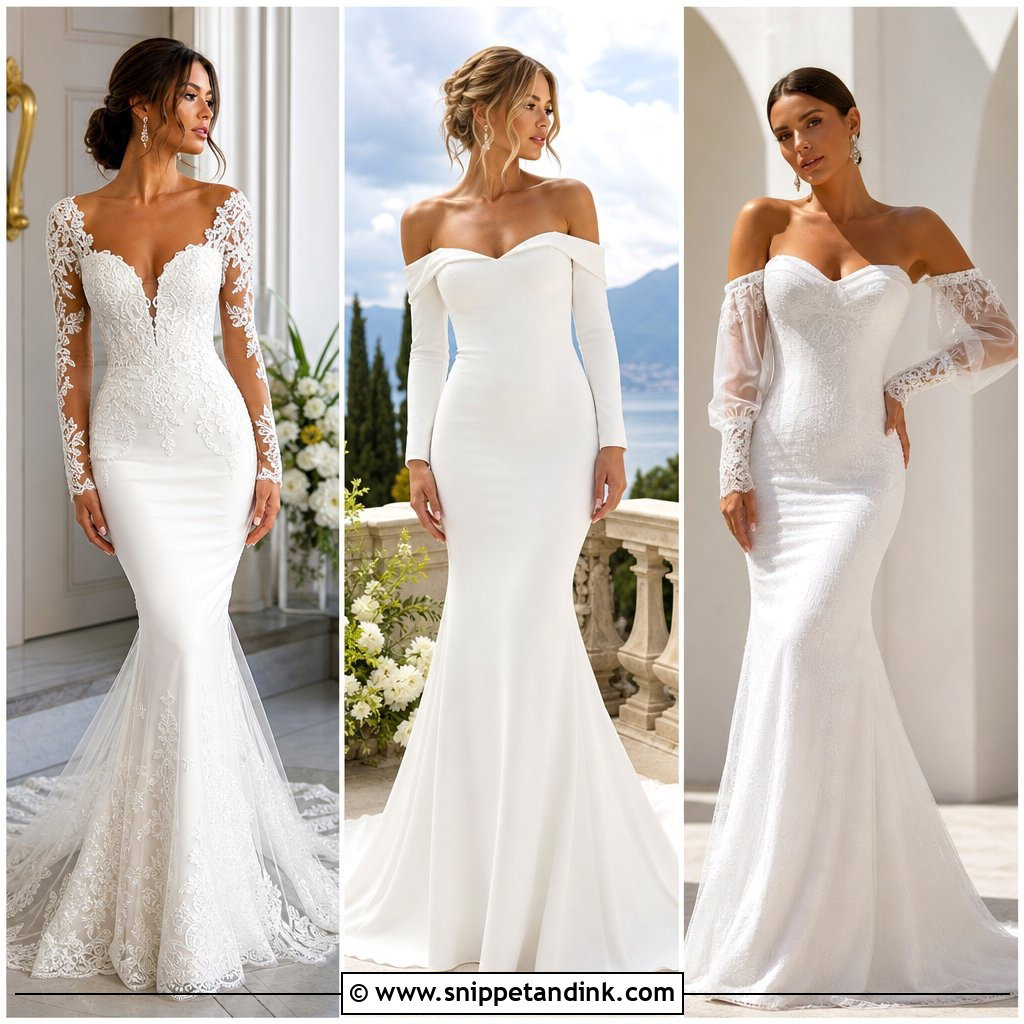
A low back changes how a fitted strapless dress has to be built. With less fabric behind, the support comes from boning at the sides and a firm waistband, so I raise that with the salon before we discuss anything else. From the front, keep it simple with a curved or straight neckline. From behind, the open back runs into a fitted satin, crepe or lace skirt and train, sometimes edged with covered buttons or illusion tulle. An updo, drop earrings, ivory pumps and a sheer veil you can lift aside for photos suit it. Don’t hang a back necklace over an embellished back.
16. Strapless Lace Up Corset Wedding Dress
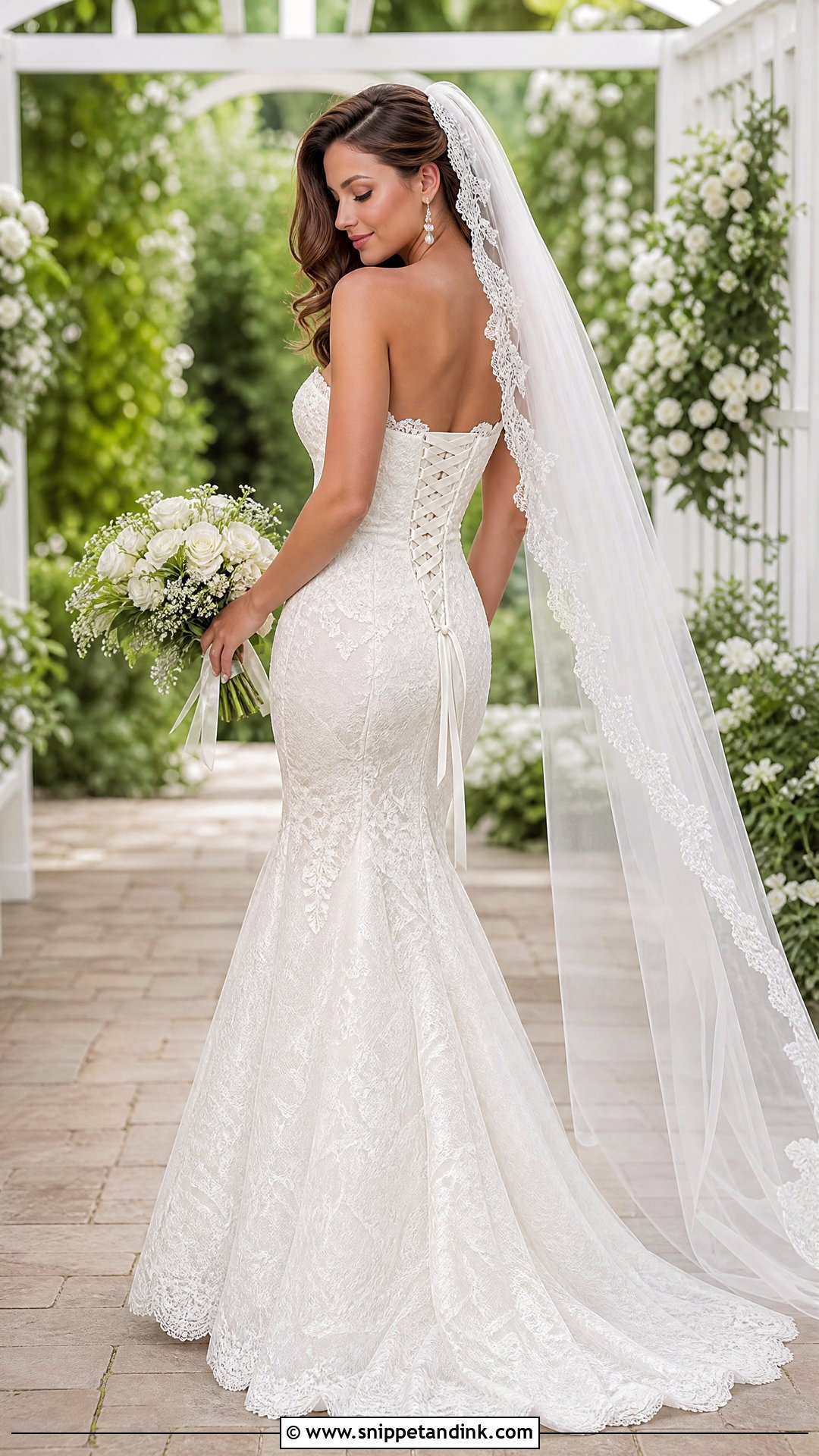
A lace-up back is the most adjustable closure in bridal wear, which is useful if your weight tends to shift in the last weeks. Choose a fitted gown with real boning, a sweetheart neckline and satin ribbon lacing that matches the main fabric, with a mermaid or fit-and-flare skirt below. Pearl drops, closed-toe heels and a lace-edged veil suit it, with soft waves pinned to one side. Teach one attendant to lace it from the bottom up and tuck the ribbon ends flat. Pulled evenly, a corset back supports you; pulled too tight at the top, it drags the neckline and leaves gaps.
17. Strapless Ruched Wedding Dress
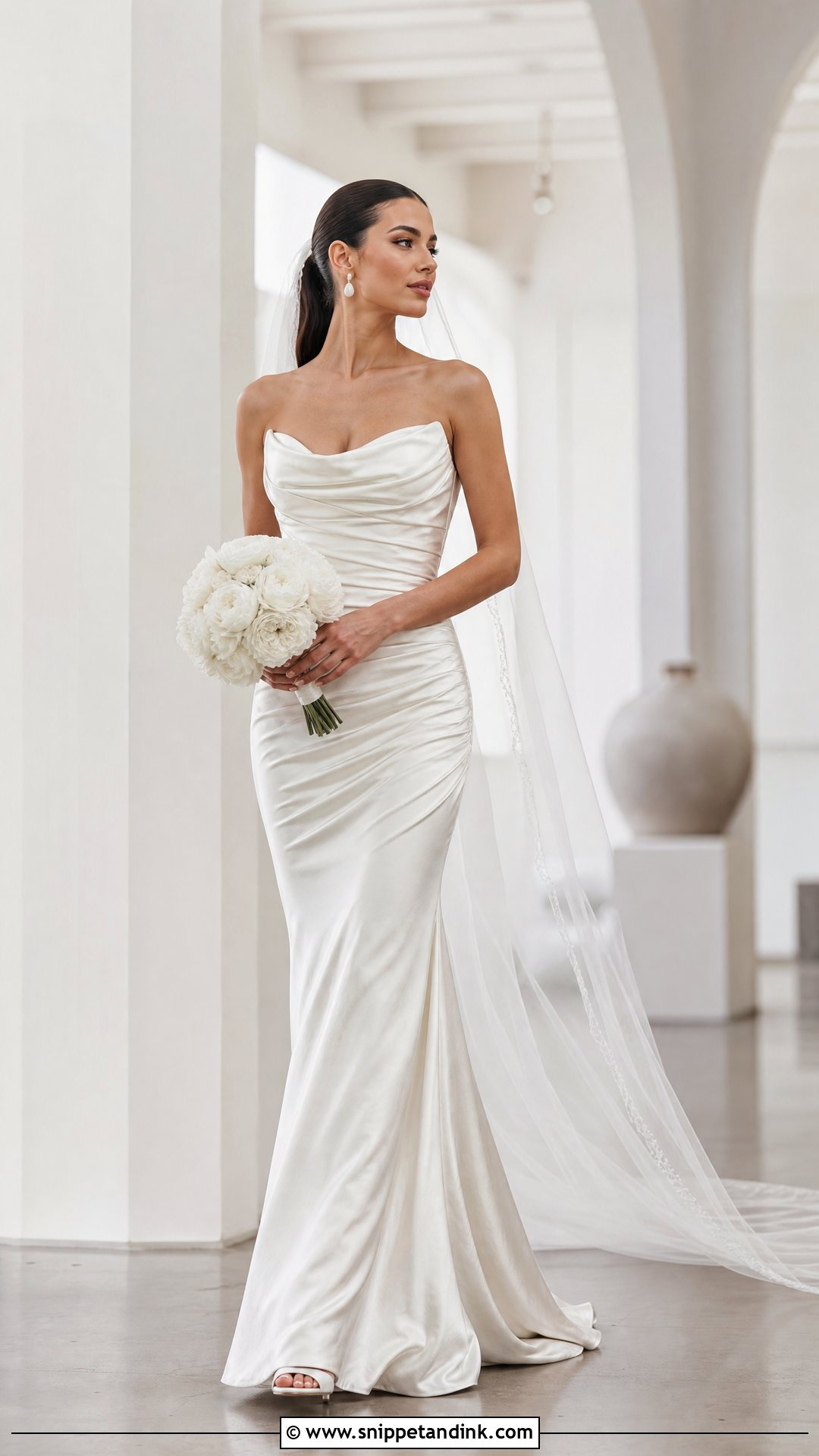
Ruching across the bodice and waist adds texture without beads or lace, and it’s forgiving on the stomach. Diagonal gathers soften the line from neckline to hip. Choose stretch satin or jersey-lined crepe for comfort and a smooth mermaid skirt. Sleek earrings, satin heels, a lightweight raw-edged veil and a polished ponytail or low bun keep it fresh. A rounded bouquet contrasts with the directional folds. Inspect the gathers from every side. Twisted ruching usually means the base layer underneath is loose, and your tailor can stitch the folds to it.
18. Strapless Scalloped Lace Wedding Dress
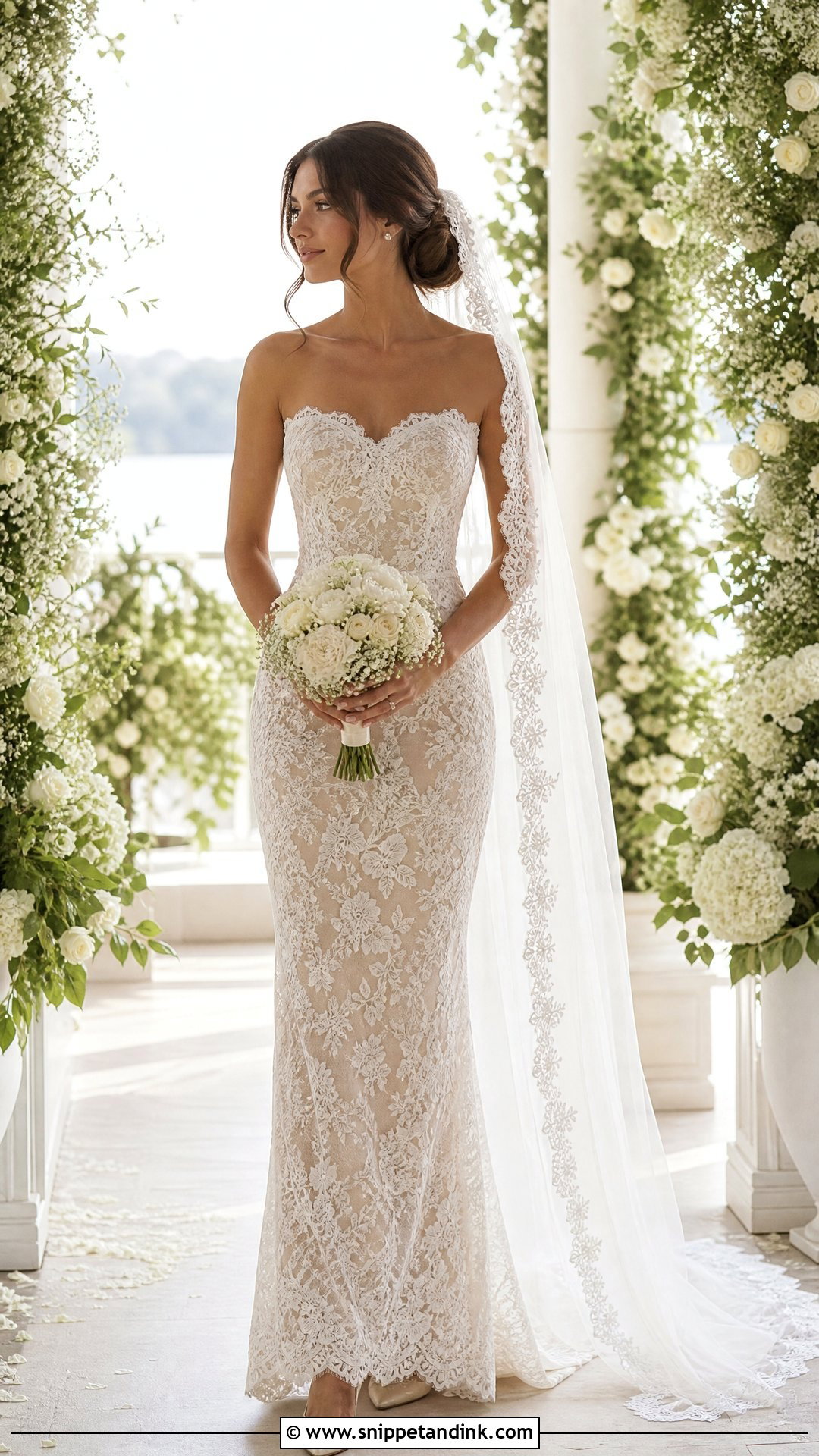
Scallops give the strapless edge a softer finish than a straight or sculpted neckline. Delicate floral lace should follow the curve of the neckline and repeat along the skirt or train. A light champagne lining under ivory lace makes the pattern pop while staying within a bridal palette. Pearl studs, ivory slingbacks, a fingertip veil with a narrow lace border and a loose low bun with a few face-framing pieces suit it. With decorative edges on both dress and veil, keep the bouquet and jewelry quiet. Alterations often mean a tailor lifts and repositions lace sections so the scallops stay symmetrical across the bust.
19. Strapless Embroidered Fitted Wedding Dress
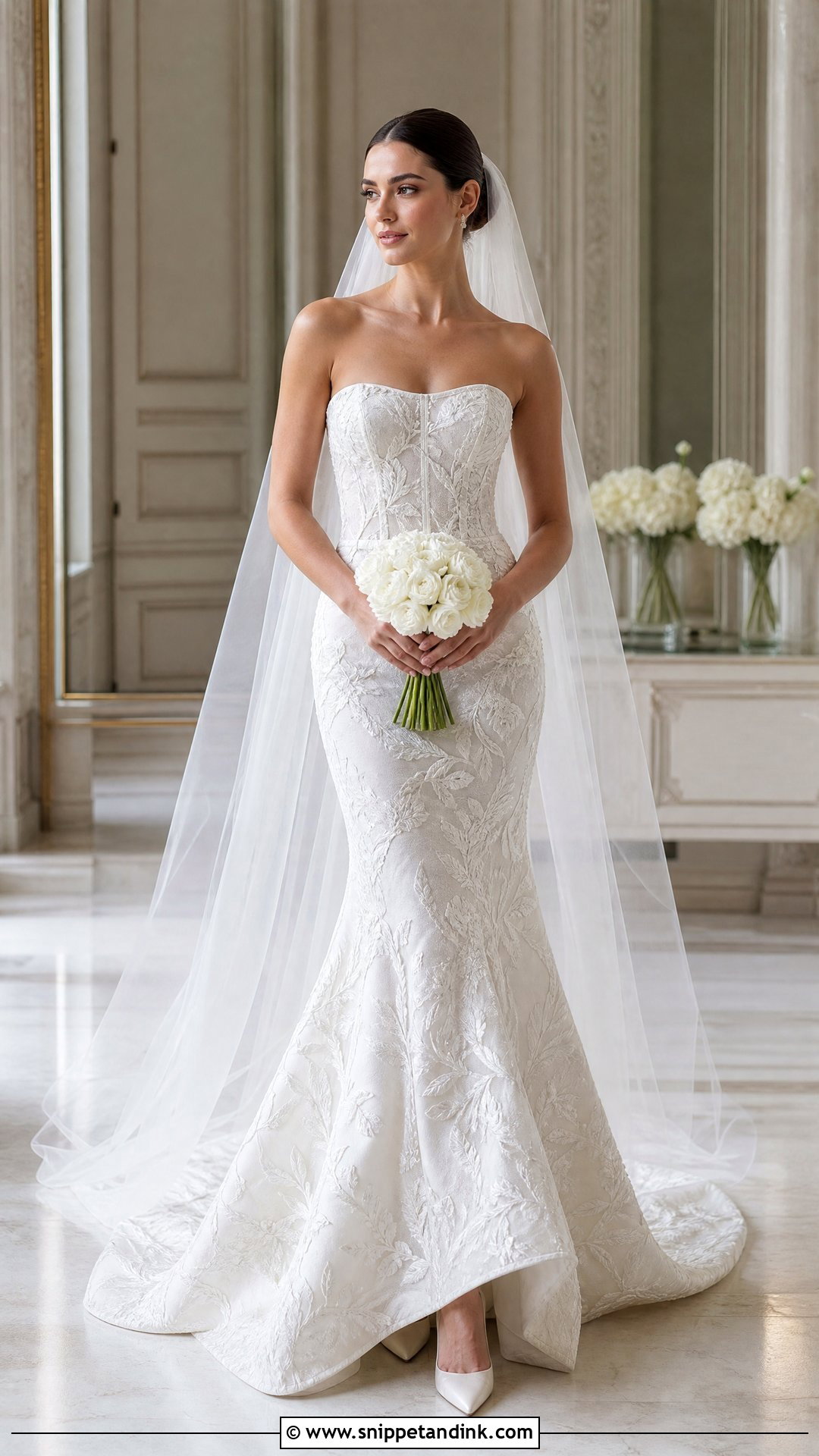
Embroidery sits between lace and beading: detailed, but flatter and lighter than either. Ivory botanical stitching on tulle, tonal threadwork on satin or a few metallic accents around the bodice all work on a fitted silhouette, which gives the stitching a simple base. Plain ivory pumps, understated earrings, an unembellished cathedral veil, a smooth updo and a small bouquet keep the competition down. Look at how the pattern crosses the seams and the waist. Then ask about the hem: if the embroidery forms a border at the bottom, shortening the dress may mean removing and re-attaching it.
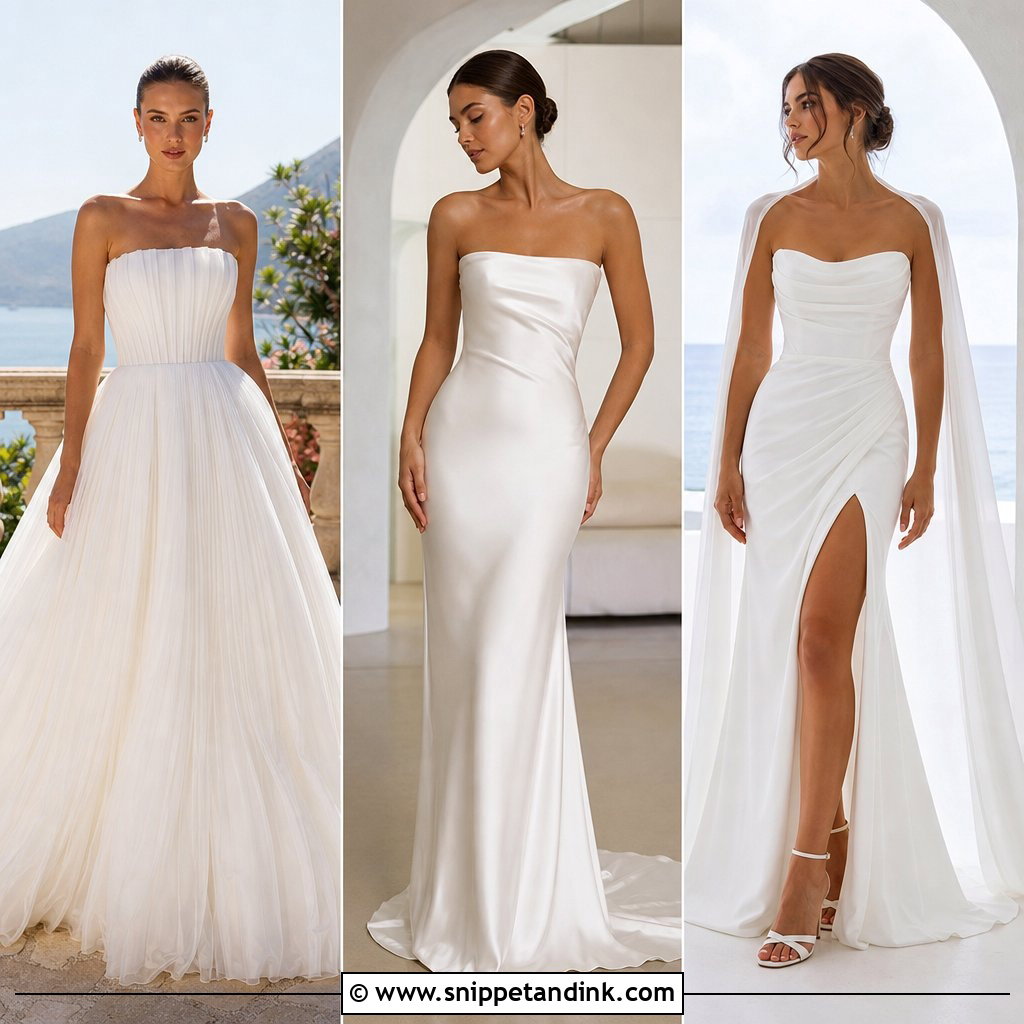
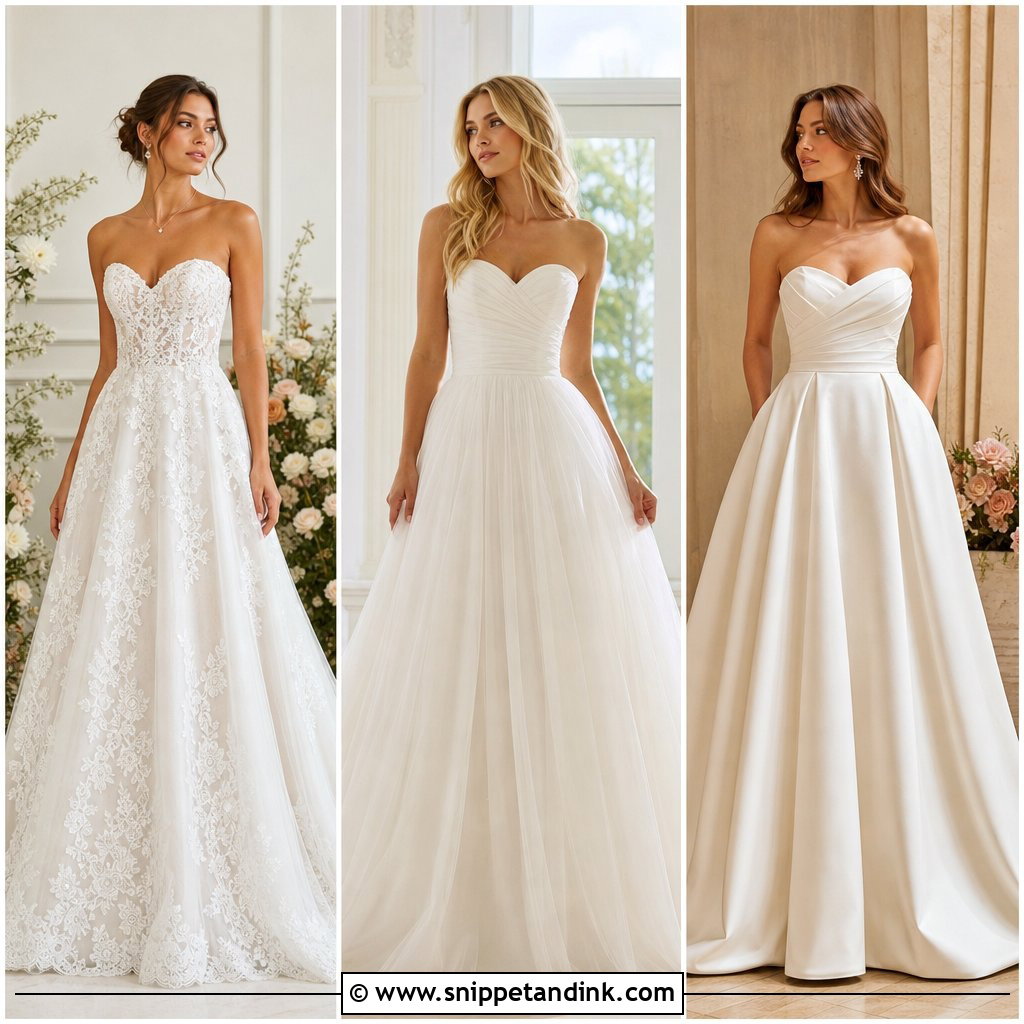
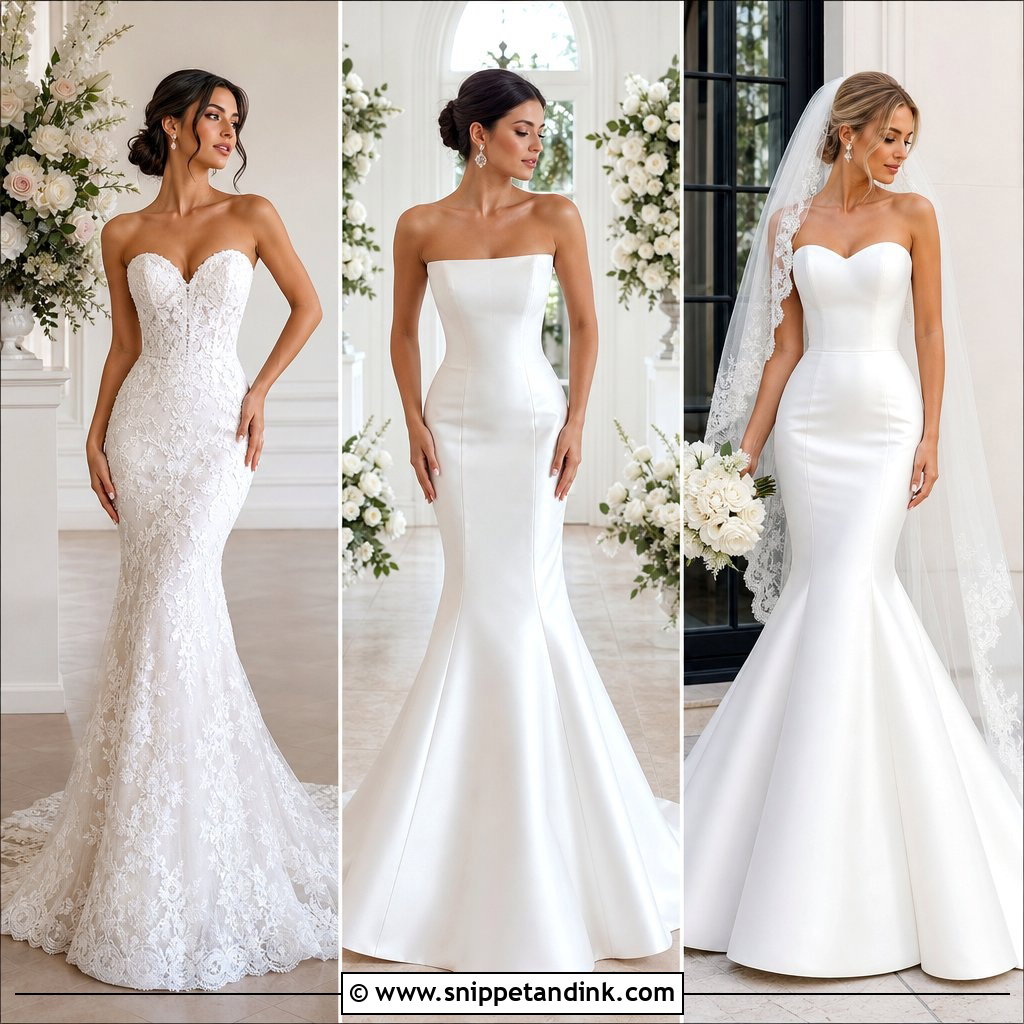
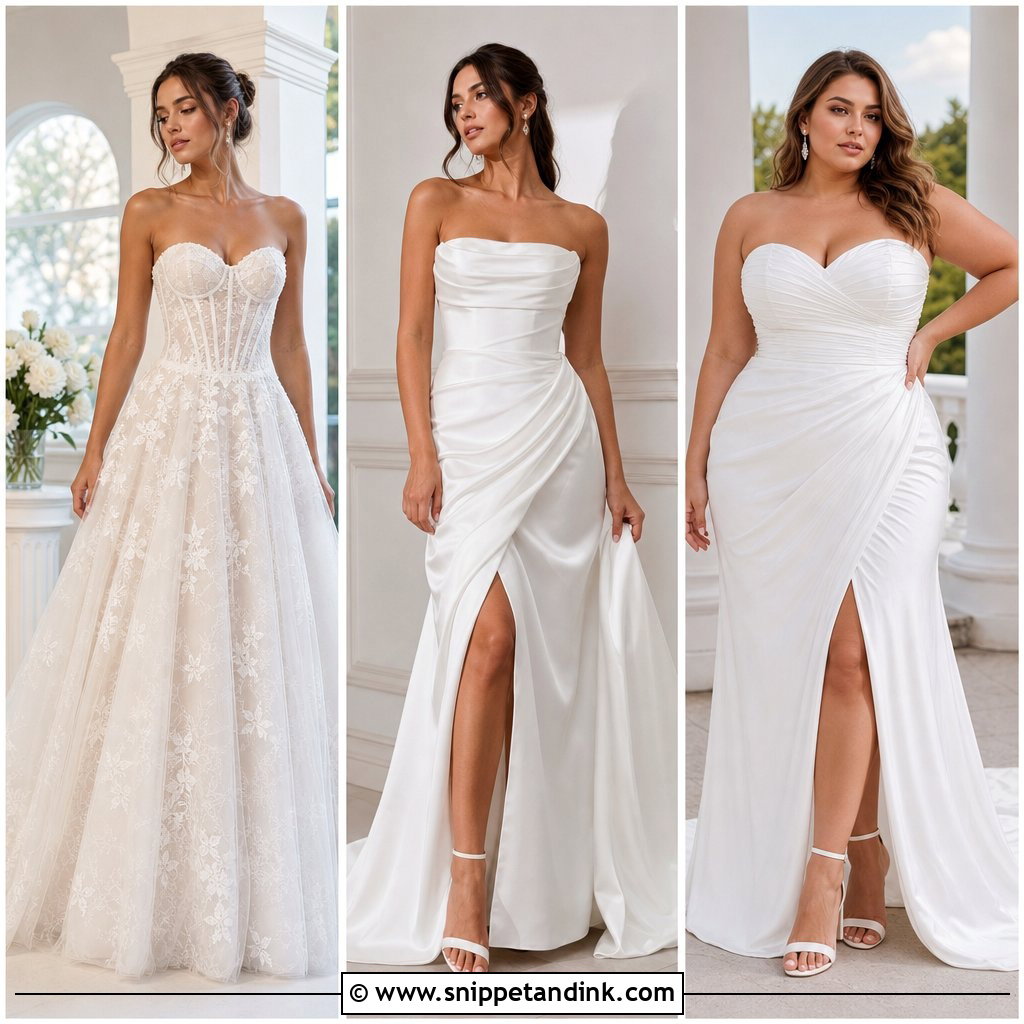
20. Strapless Fitted Wedding Dress With Bow
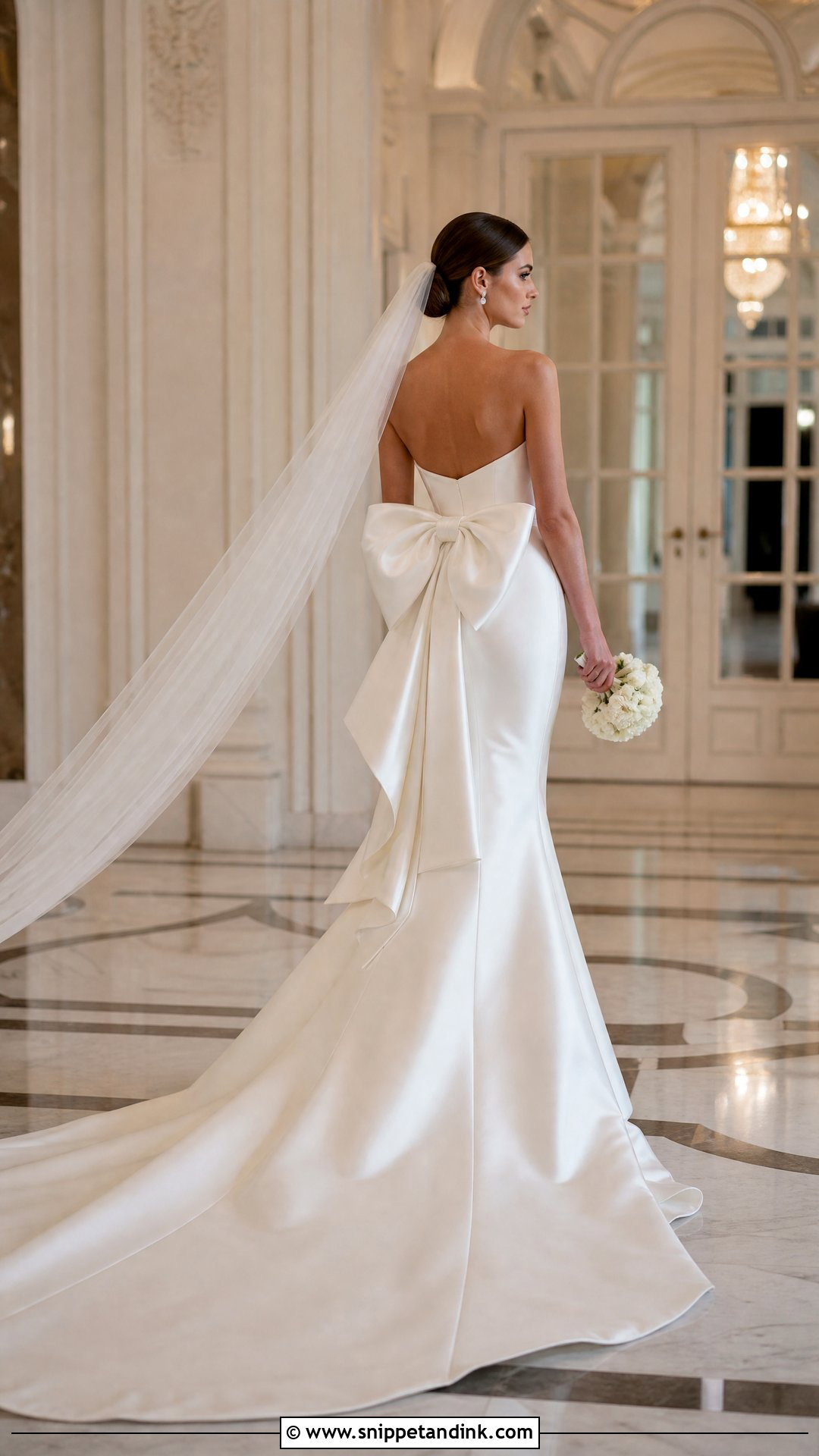
A bow adds one strong detail to an otherwise sleek fitted gown. A removable bow at the back waist, a smaller sculpted one above the train, or an asymmetrical side bow are the usual options. Satin and Mikado make the sharpest bow; organza a lighter one. Simple stud earrings, pointed pumps and a plain long veil that falls behind the bow suit it, with a sleek bun and compact white bouquet. On a fitted dress, scale matters: an oversized bow can make a slim silhouette look top-heavy from the side. Hidden hooks or snaps let you take it off for dancing.
How Satin and Crepe Behave Over a Long Day
A fitted dress holds your shape all day, so it also records everything you do in it. Satin shows seat creases across the back of the skirt after dinner, and the tighter the fit, the deeper they set. Stretch crepe relaxes slightly with body heat, which is comfortable but can make a hem look a touch longer by evening.
Have the dress steamed the morning of the wedding, hanging, never ironed. I keep a small handheld steamer in the bridal suite for creases from the car. Before you sit down for the meal, smooth the skirt flat under you instead of perching on gathered fabric; it halves the creasing.
Mermaid and trumpet trains are usually bustled with a French or under bustle, because there isn’t enough skirt above the flare to hook an over bustle neatly. Ask for the bustle points to be tested with you moving, not just standing. A fitted skirt pulls on those points every time you take a step.
Support Is What You’ll Notice by Evening
One close-fitting silhouette covers a lot of ground. Satin mermaids bring glamour, while lace, pearls, embroidery and raised flowers add texture. Sculpted necklines and Basque waists feel fashion-led, and straight-neck columns keep things simple. Overskirts, bows, veils and jewelry can all change the look without crowding the dress. Above all, choose a gown with reliable internal support and good alterations, so you can walk, sit, hug and dance without thinking about it. Try each one with your real shoes and accessories, and look at it from every side.
You'll Like These Ideas:







Leave a Reply