
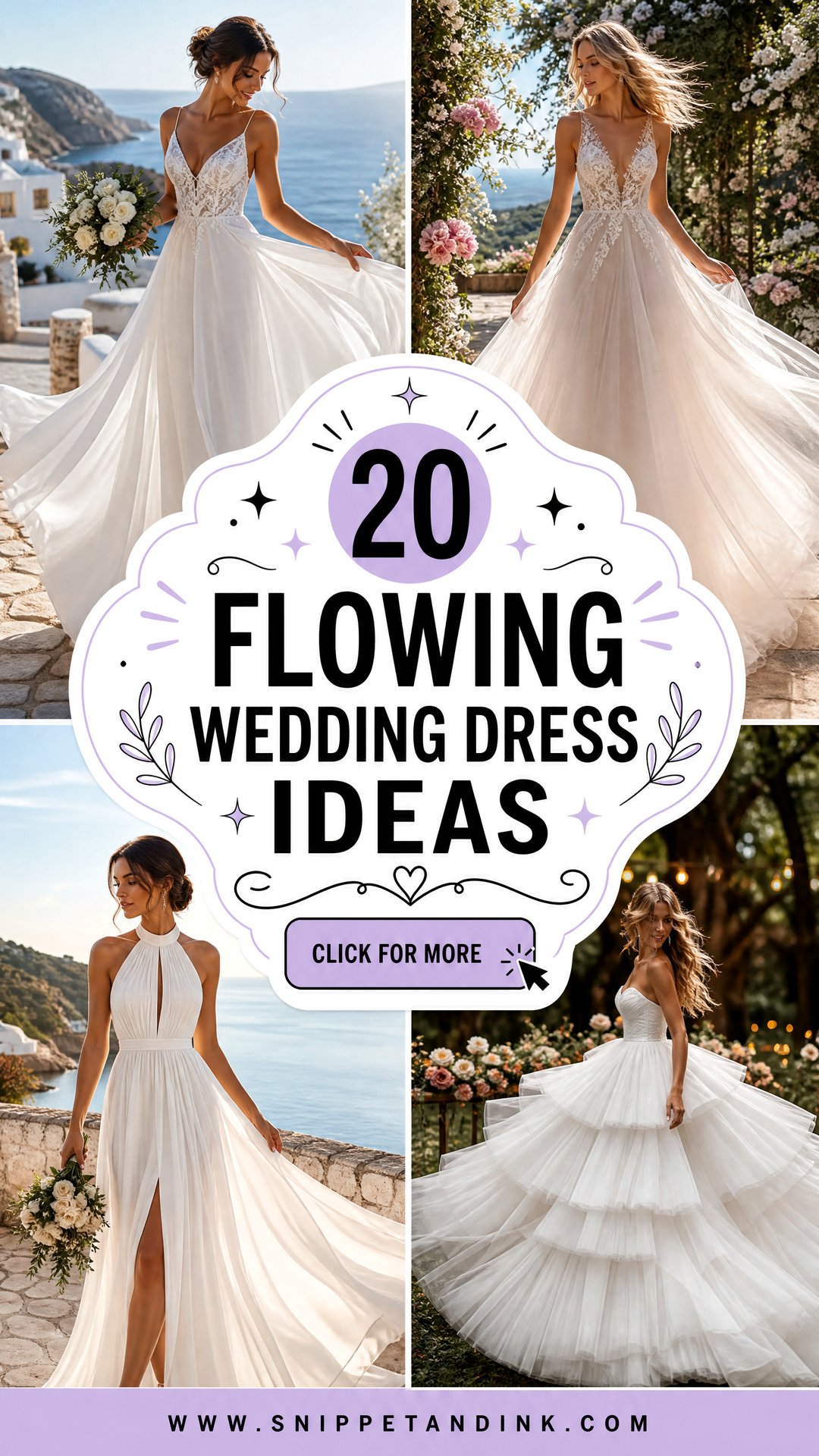
Movement is the thing a photo can’t really show you about a dress, and it’s the thing you’ll feel most on the day. Chiffon, tulle, organza, lace, silk and fluid crepe all move differently, and the gowns below cover every one of them. Light fabrics, sheer details, raised florals, structured bodices and removable layers are all strong in bridal right now. I’d start by matching the fabric to your venue and season, then think about how much volume you want: a relaxed beach dress, a garden A-line or a full skirt with real swing. Every look below comes with its shoes, jewelry, hair and veil worked out.
How Each Flowing Fabric Behaves in Wind, Heat and a Ten-Hour Day
Two dresses with the same silhouette can feel nothing alike once you’re wearing them outdoors for an afternoon. I’d judge a flowing gown by its fabric first, because that decides how it moves, creases and copes with weather.
- Chiffon: very light and sheer, moves with the smallest breeze. Breathes well in heat, creases gently, and frays or snags if handled roughly.
- Georgette: a little heavier and grainier than chiffon, so it hangs straighter and clings less. Good if chiffon feels too wispy.
- Soft tulle: floats and holds volume with almost no weight. Creases are rarely a problem, but it catches on jewelry and heel buckles.
- Organza: crisp and airy, holds shape for full skirts. It shows sitting creases and can feel scratchy against bare arms.
- Silk charmeuse or satin-back crepe slip: drapes close to the body and moves like liquid. It shows water spots, sweat and every undergarment line.
- Fluid crepe: heavier, swings rather than floats, and stays put in wind. It’s warmer to wear in high summer.
On a windy beach I’d lean toward georgette or crepe; in a sticky, hot garden, chiffon or soft tulle. If the ceremony is indoors and cool, silk and organza come into their own.
1. Flowing Chiffon A-Line Wedding Dress
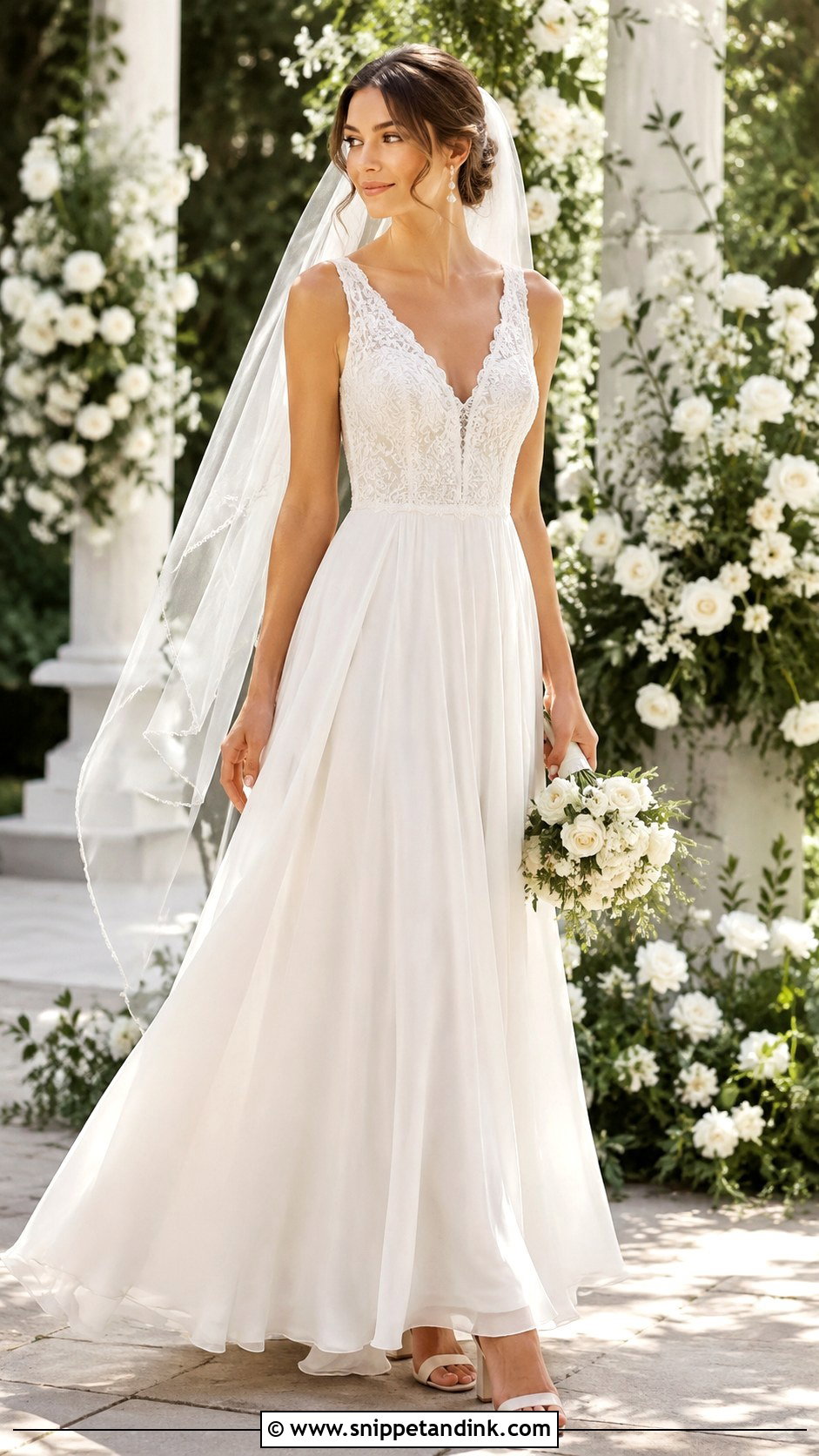
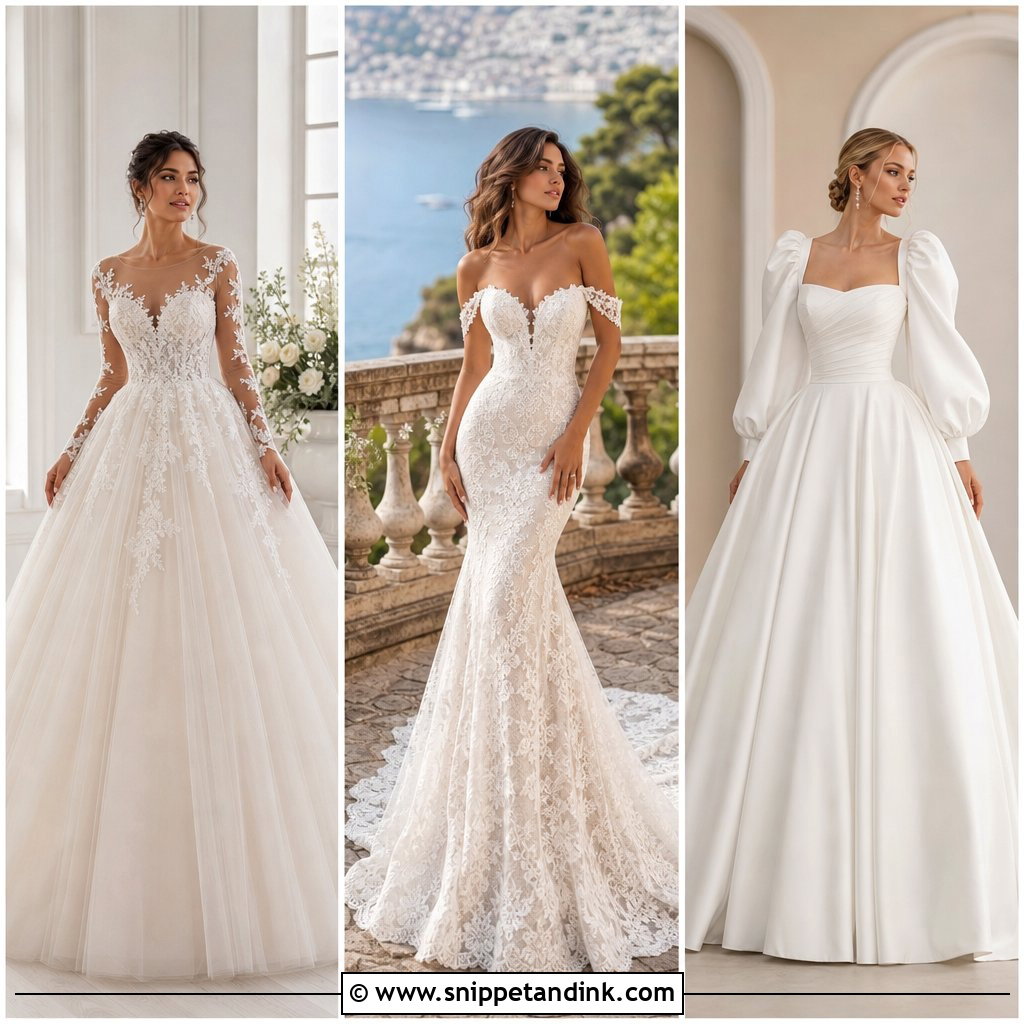
Chiffon is the fabric I reach for when a bride wants softness without bulk. A fitted bodice with a V-neck, narrow straps or a little lace, then a skirt falling loose from the waist, gives a gentle sway with every step. It’s the obvious pick for beach, garden and destination weddings, where heavier fabrics feel punishing. Pearl drops, ivory block-heel sandals and a clean-edged fingertip veil are enough, with loose waves or a low textured bun. Chiffon is unforgiving about length, so have the hem and the lining set while you wear your actual shoes, or the outer layer will catch under your toe.
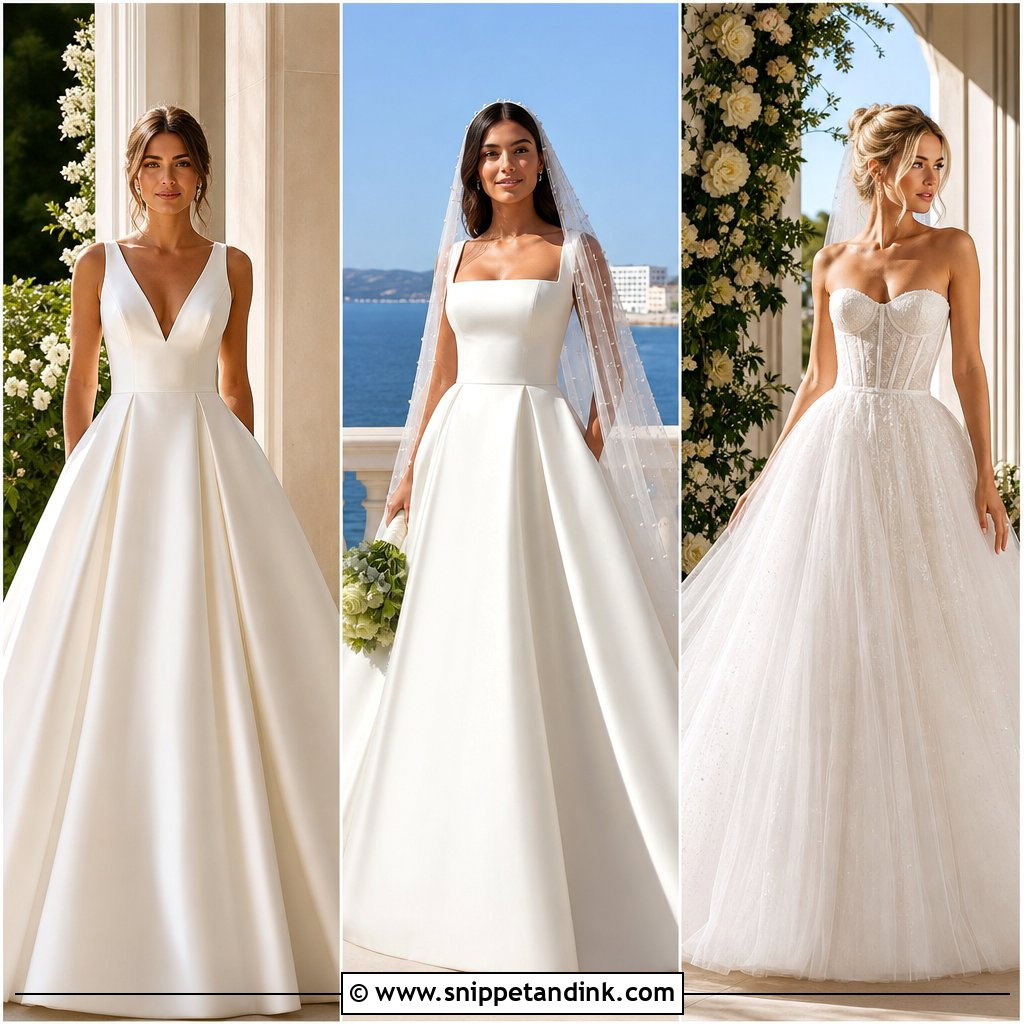
2. Flowing Tulle A-Line Wedding Dress
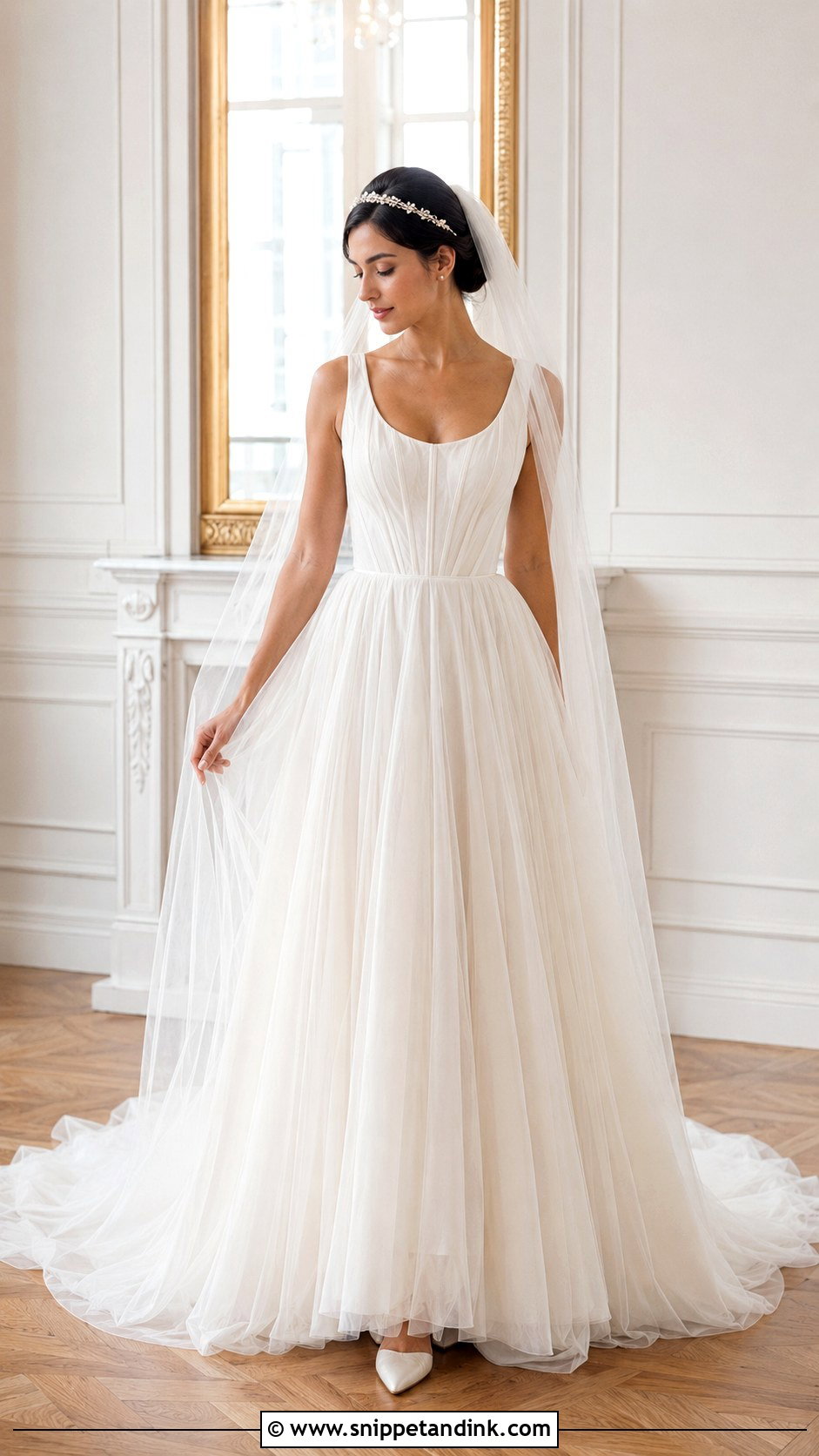
Not all tulle is equal. Fine, soft tulle drapes and floats; stiff netting stands away from the body and crackles when you sit. I always rub a corner between my fingers before suggesting a tulle A-line. A scoop-neck bodice with light boning gives the airy skirt a clean base. Pointed flats or low heels, a narrow crystal headband and small studs keep it light, and a sheer chapel veil melts into the skirt. If the sample feels fuller than you pictured, a seamstress can usually take out one or two underskirt layers. Choose a bustle a friend can fasten in under a minute.
3. Flowing Organza Ball Gown Wedding Dress
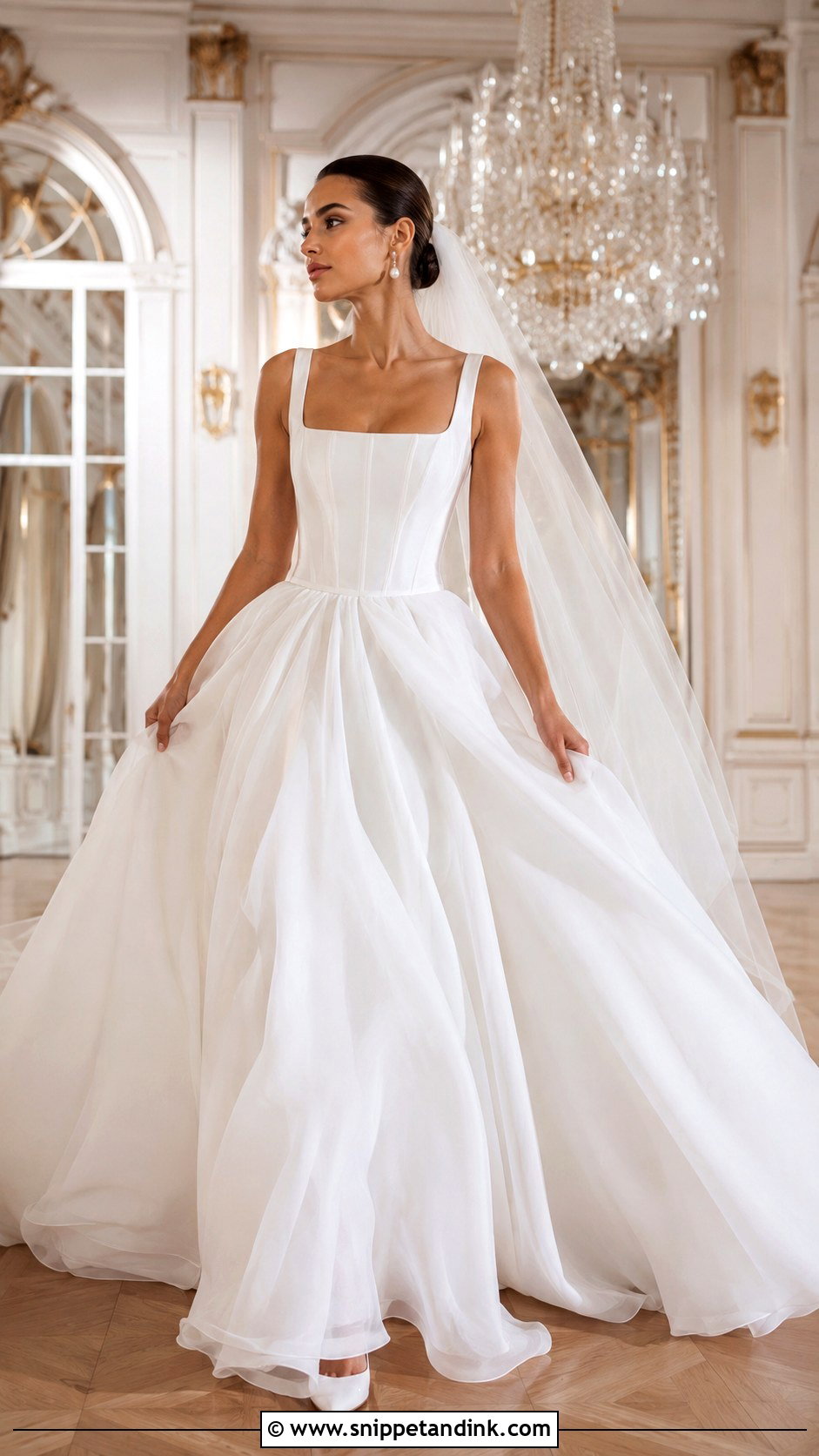
Organza is the answer if you want a ball gown that doesn’t weigh a ton. It’s crisp, so it holds folds and volume with far fewer layers than satin needs, and the skirt still moves when you turn. A strapless or square-neck corset bodice with very little embellishment lets the fabric be the feature. Pearl earrings, a smooth low bun and plain satin pumps keep it classic; a cathedral veil suits a formal room, a shorter one feels less traditional. Organza does crease where you sit, so I’d steam the skirt after the ceremony. Ask for a wrist loop and a bustle that lifts the sweep evenly.
4. Flowing Silk Slip Wedding Dress
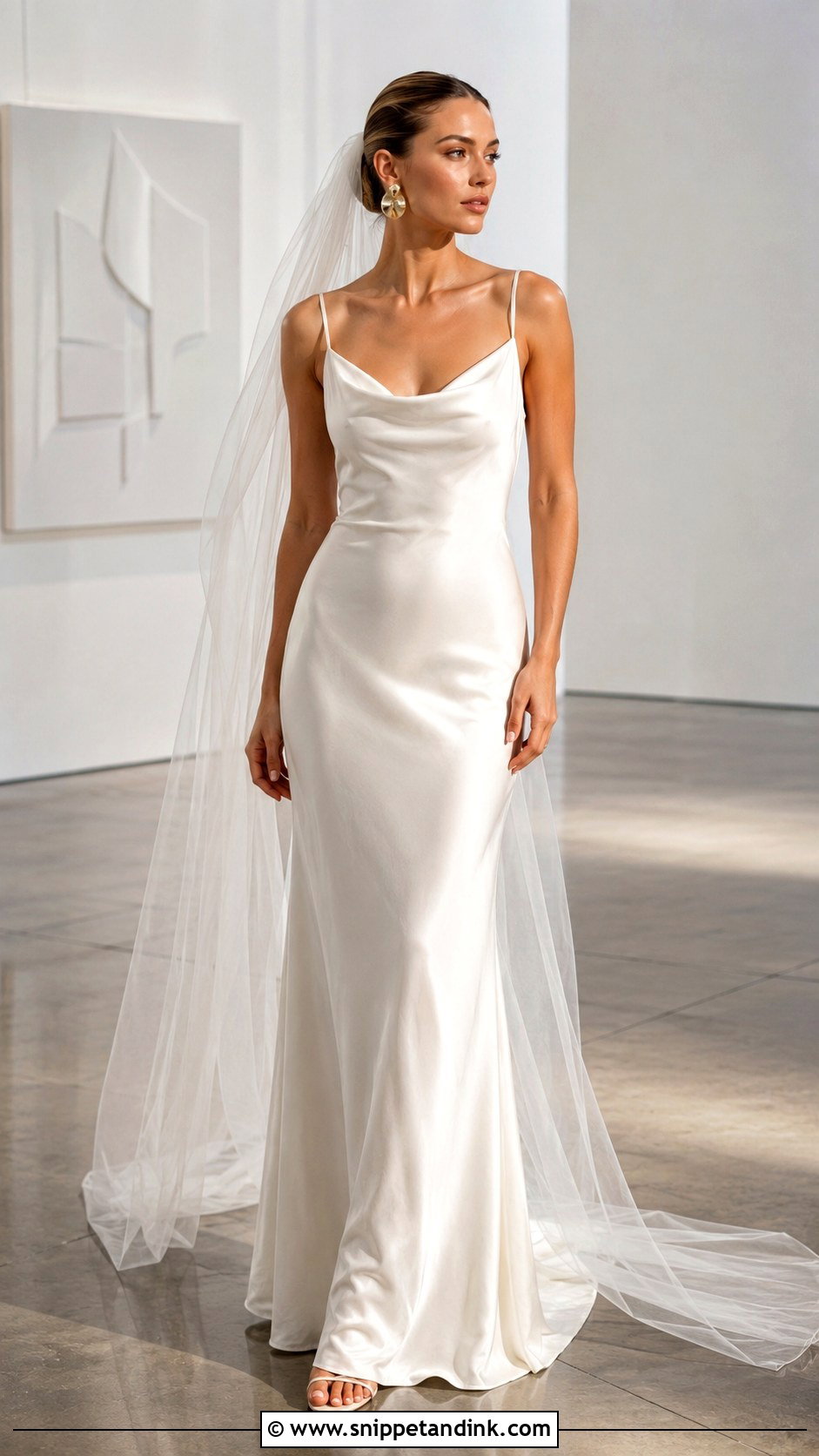
A silk slip is the simplest dress here and the hardest to fit. Its bias-cut shape skims the body, so every seam, strap mark and undergarment line shows. A cowl, V-neck or soft drape at the neck with adjustable straps and a decent lining keeps it wearable. Sleek sandals, sculptural earrings and a compact bouquet suit a city venue or a small ceremony, and a long sheer veil adds drama without hiding the line. For cool weather, a removable sheer cape works. I’d choose smooth, no-show undergarments before the first fitting, and ask the salon how to steam and pack the silk if you’re traveling.
5. Flowing Lace A-Line Wedding Dress
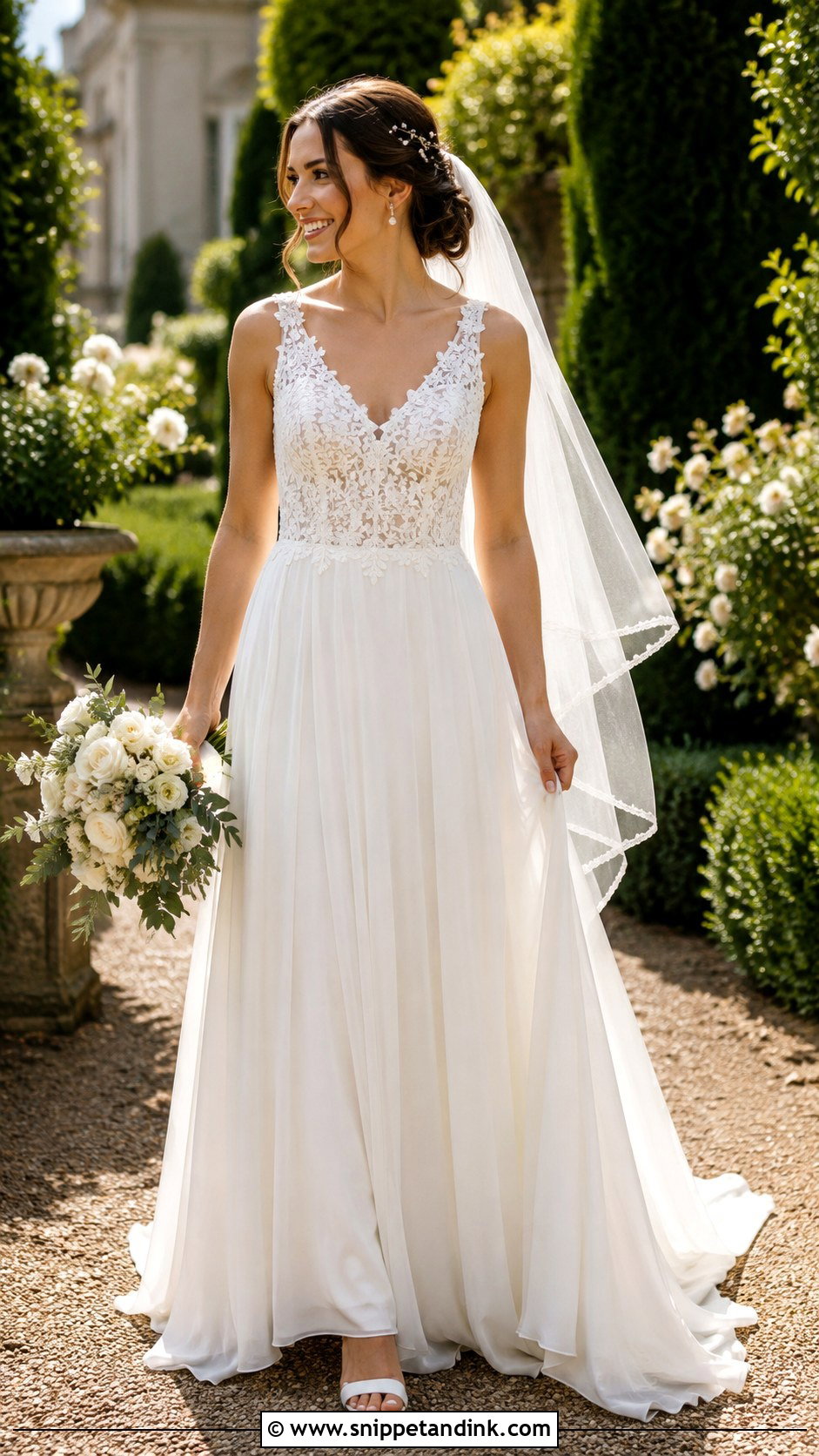
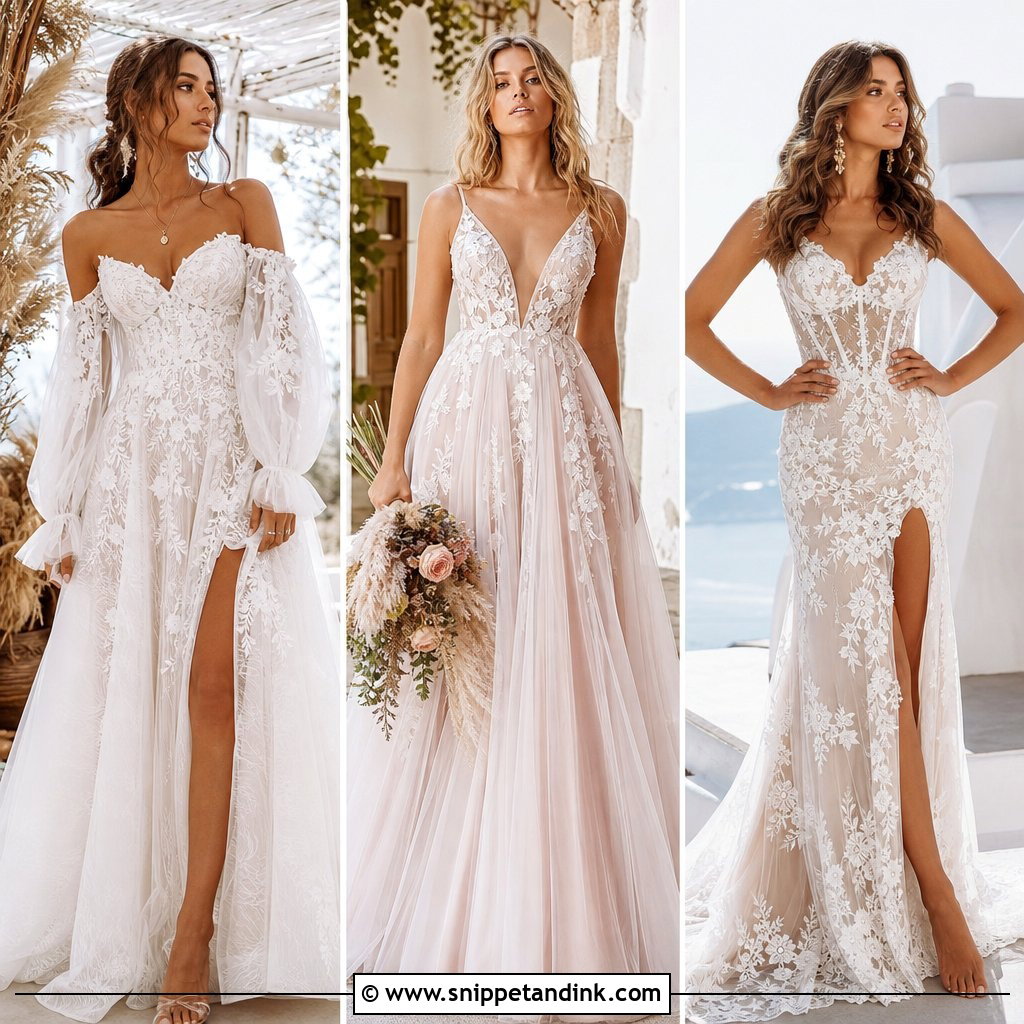
Heavy corded lace kills the movement of a flowing dress, so I look for fine lace laid over chiffon or soft tulle. A lined sweetheart bodice, narrow straps and a gently flared skirt keep it balanced, and it settles naturally into gardens, estates and rustic venues. Pearl hairpins, small drop earrings and ivory block heels that won’t sink into grass finish it. Keep the veil plain, or use a lightly trimmed one only if its lace matches the gown. During alterations, watch where the motifs stop at the waist and hem. A seamstress can move them to lengthen your line.
6. Flowing Long Sleeve Chiffon Wedding Dress
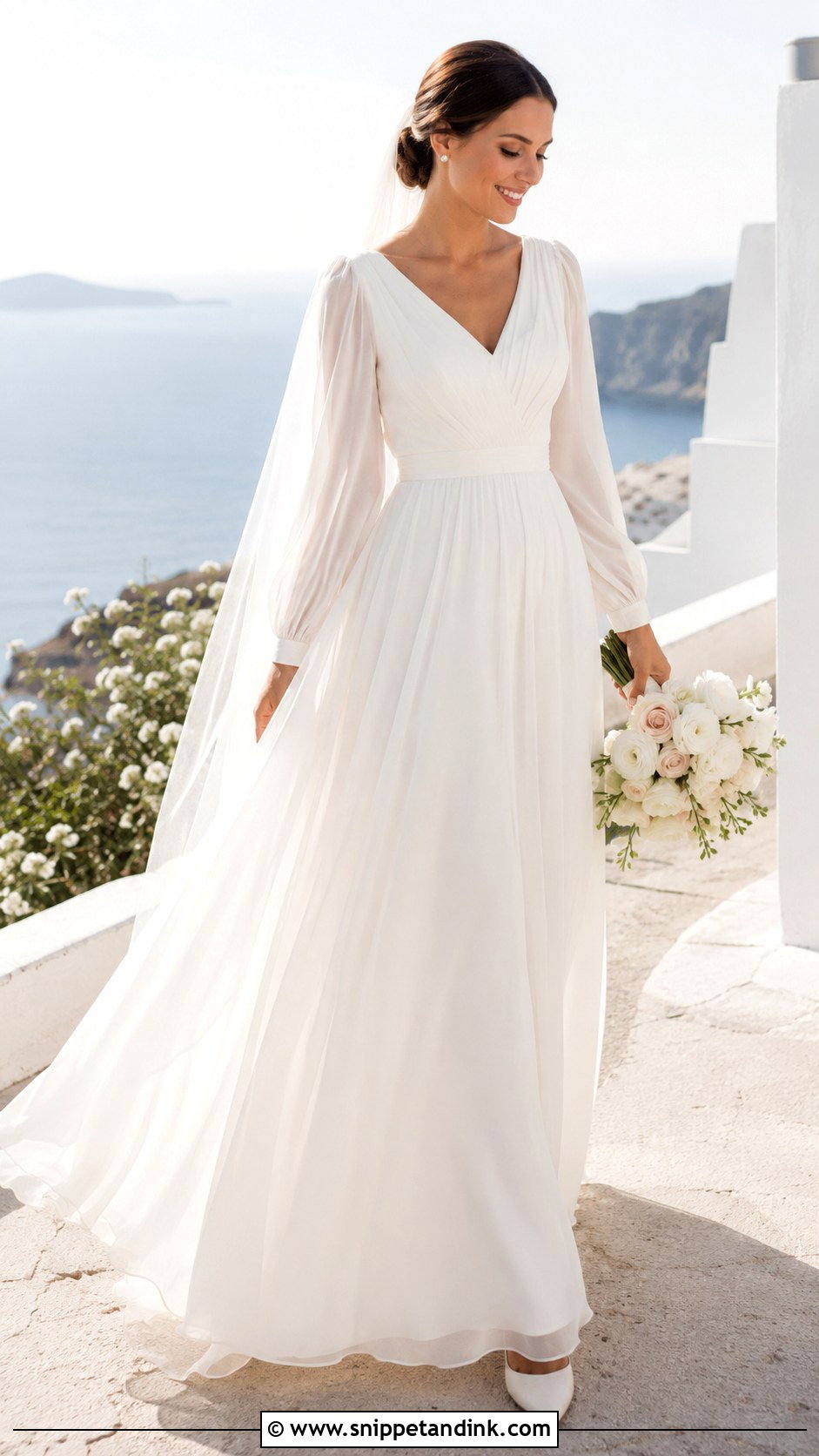
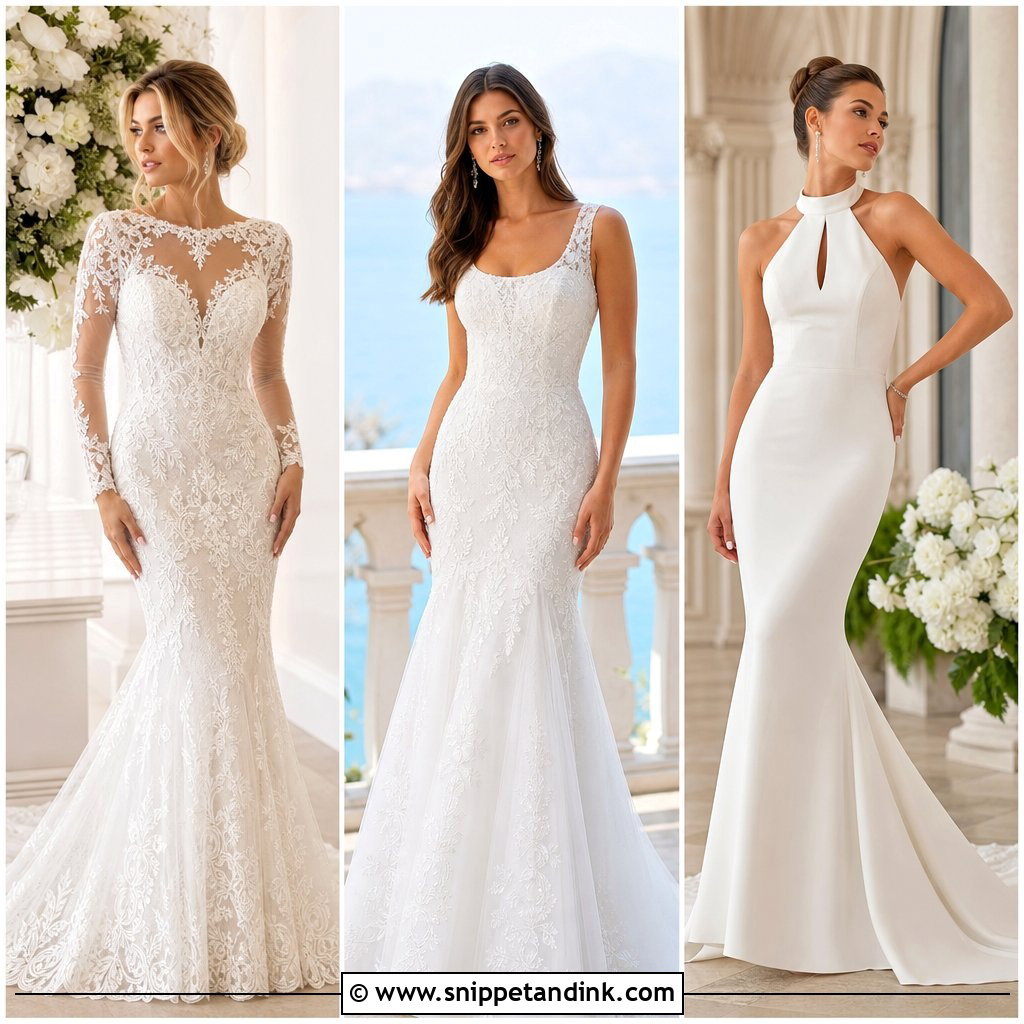
Chiffon sleeves catch the breeze, which is half their charm outdoors. Gathered at the wrist or finished with a slim cuff, they give coverage without heaviness. A softly structured bodice and an A-line skirt from the natural waist keep the shape easy, and an open back or modest V balances the covered arms. A low chignon, pearl studs, closed-toe heels and a simple veil under the bun complete it. Spring, fall and breezy coasts suit it. The armhole is where long sleeves usually fail: I ask the bride to raise both arms and hug me. If the bodice lifts, the armhole needs recutting.
7. Flowing Off-the-Shoulder Tulle Wedding Dress
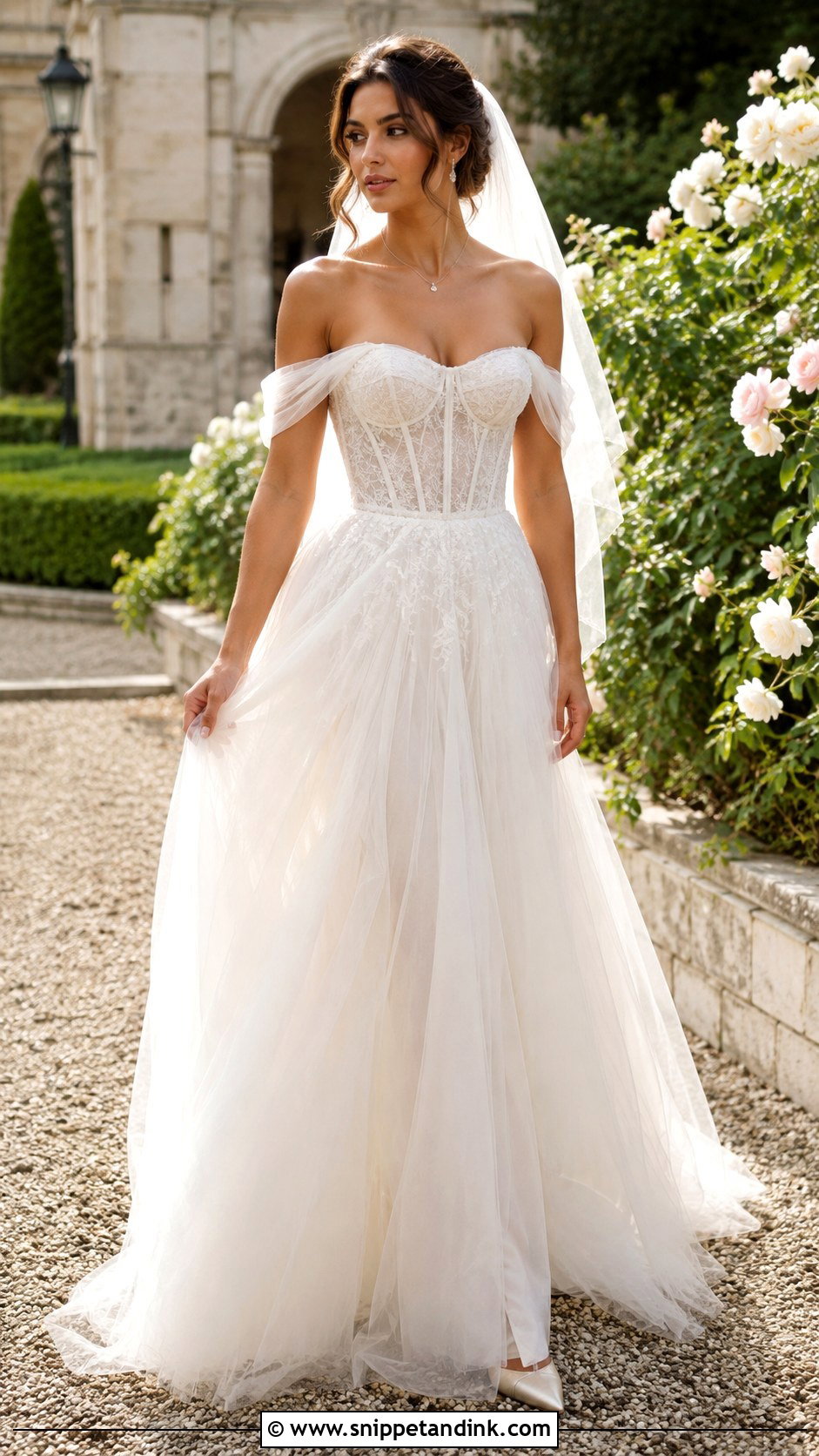
Draped off-shoulder straps should sit around the upper arm and anchor into a boned bodice, or they’ll slide down by the speeches. Below the waist, fine tulle can fall into an A-line or a relaxed ball gown. A fine pendant, small earrings, a loose updo and pointed ivory shoes keep the shoulders as the focus, with the veil under the hairstyle. Move your arms in the appointment, because some versions pin your elbows to your sides. Detachable straps are a smart alternative. Wear them for the ceremony, take them off for dancing, and you have two looks from one dress.
8. Flowing Halter Chiffon Wedding Dress
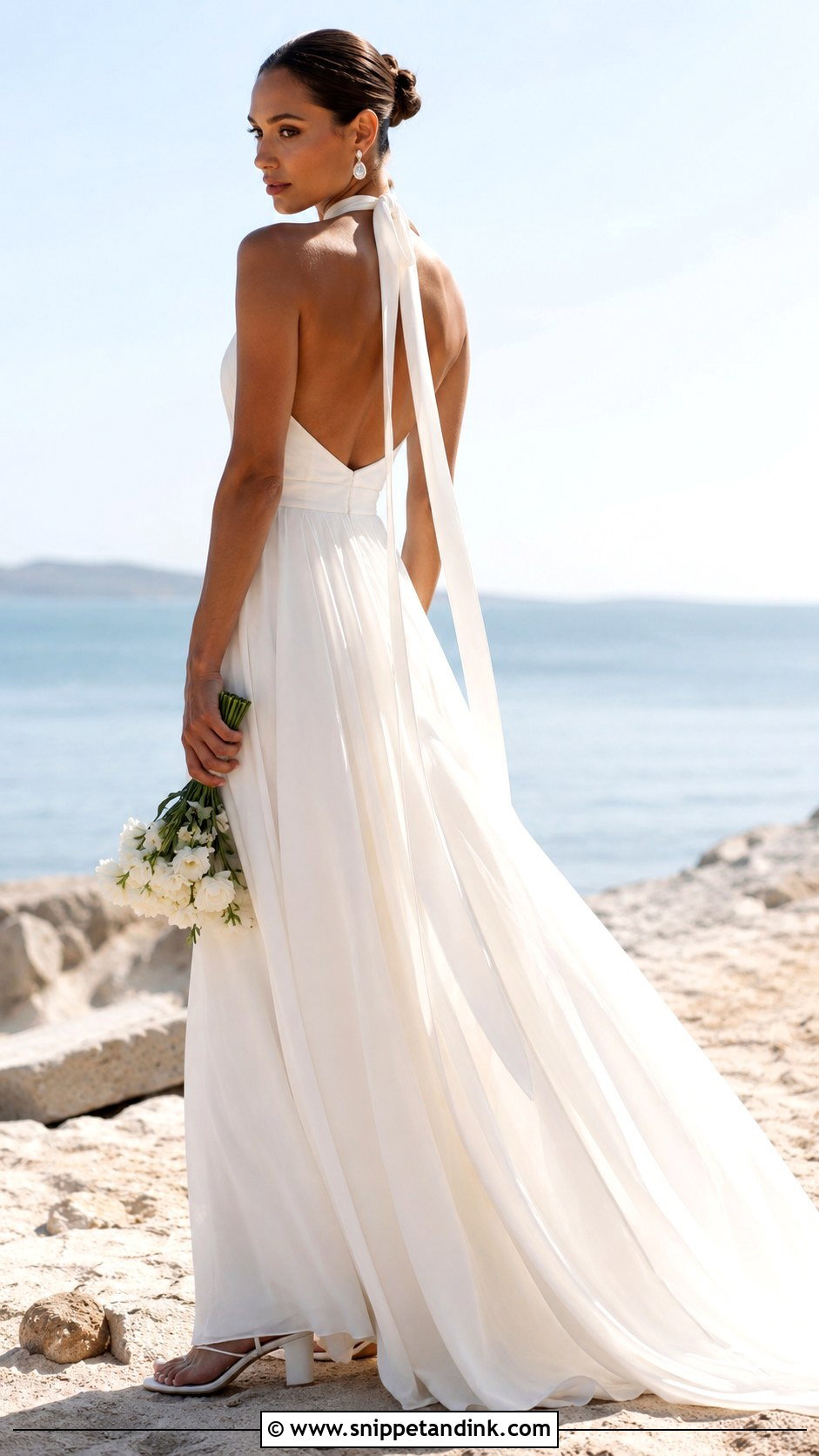
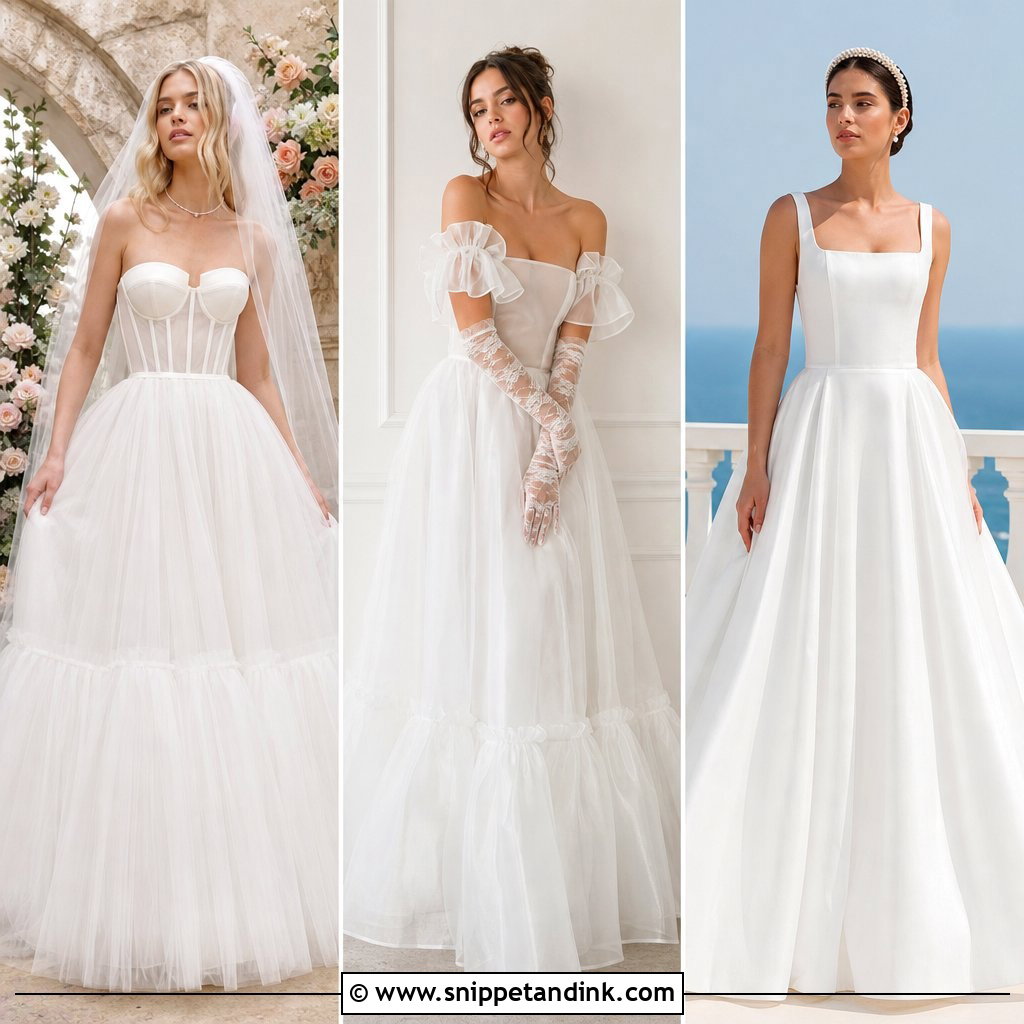
A chiffon halter gown draws one long line from neck to hem. It feels modern and relaxed, which suits beaches, contemporary venues and warm weather. A gathered or softly pleated bodice with a defined waistband and an open or keyhole back keeps it shaped. Brushed-metal earrings, a sleek bun and minimal heeled sandals finish it; skip the necklace. A narrow chapel veil or long chiffon ribbons add movement behind you. The halter strap shouldn’t carry the weight of the dress. If it pulls at your neck when you sit or bend, the support needs moving into the bodice and waist.
9. Flowing Square Neck Organza Wedding Dress
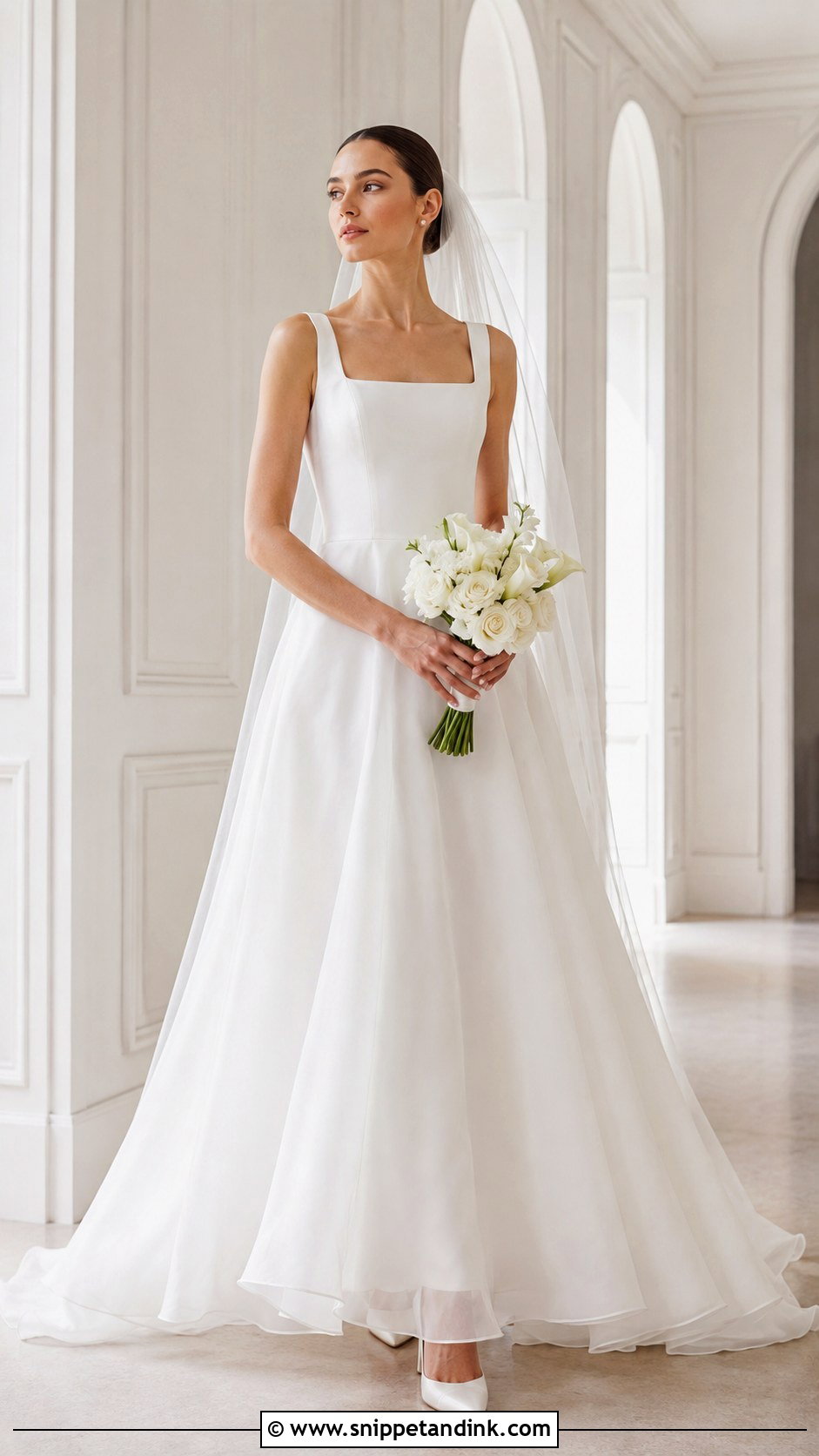
The square neck brings clean lines; the organza skirt keeps it soft. Wide straps give more support, slim ones look lighter, and a slightly dropped or basque-inspired waist adds definition before the skirt opens out. A polished bun, pearl studs, satin pumps and a structured bouquet suit the architecture of the top, with a plain fingertip veil. Organza shows its folds clearly, so I check the gown from front, side and back. If a pleat falls badly over one hip, the tailor can reset it. You want structure at the bodice and ease through the skirt.
10. Flowing Empire Waist Wedding Dress
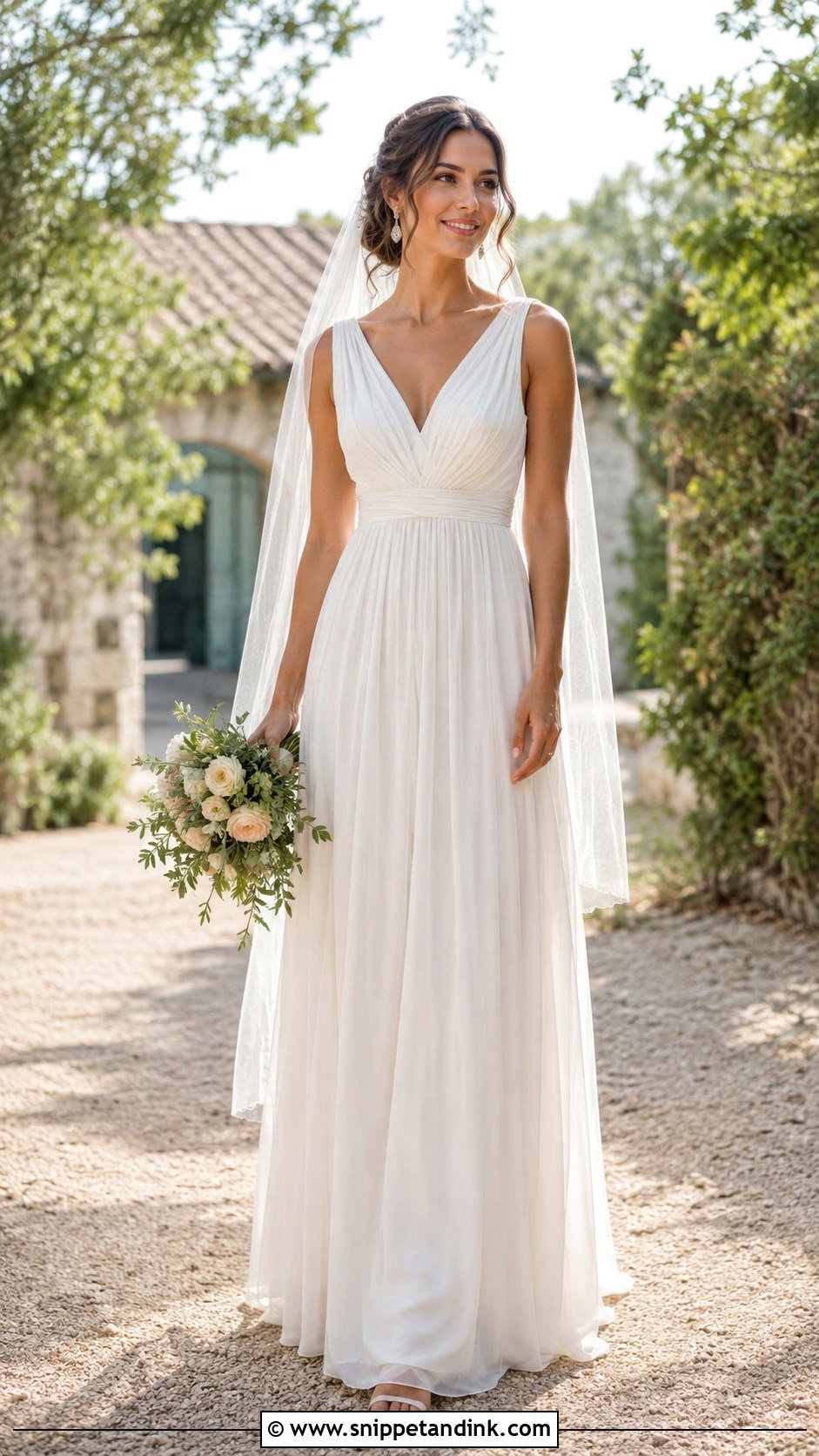
Starting the skirt just under the bust lengthens the whole body and leaves the waist free, which makes this one of the most comfortable shapes for a long, warm day. Chiffon or georgette drapes better than anything stiff. A V-neck, gathered bust and narrow waistband define the top without squeezing. Small drop earrings, low-heeled sandals and loose waves pinned off the face keep it relaxed, with a shoulder or fingertip veil. The raised seam is my main check: it should sit flat on the ribs and not press when you breathe deeply. Make sure the lining covers you without dulling the float of the outer fabric.
11. Flowing Corset Tulle Wedding Dress
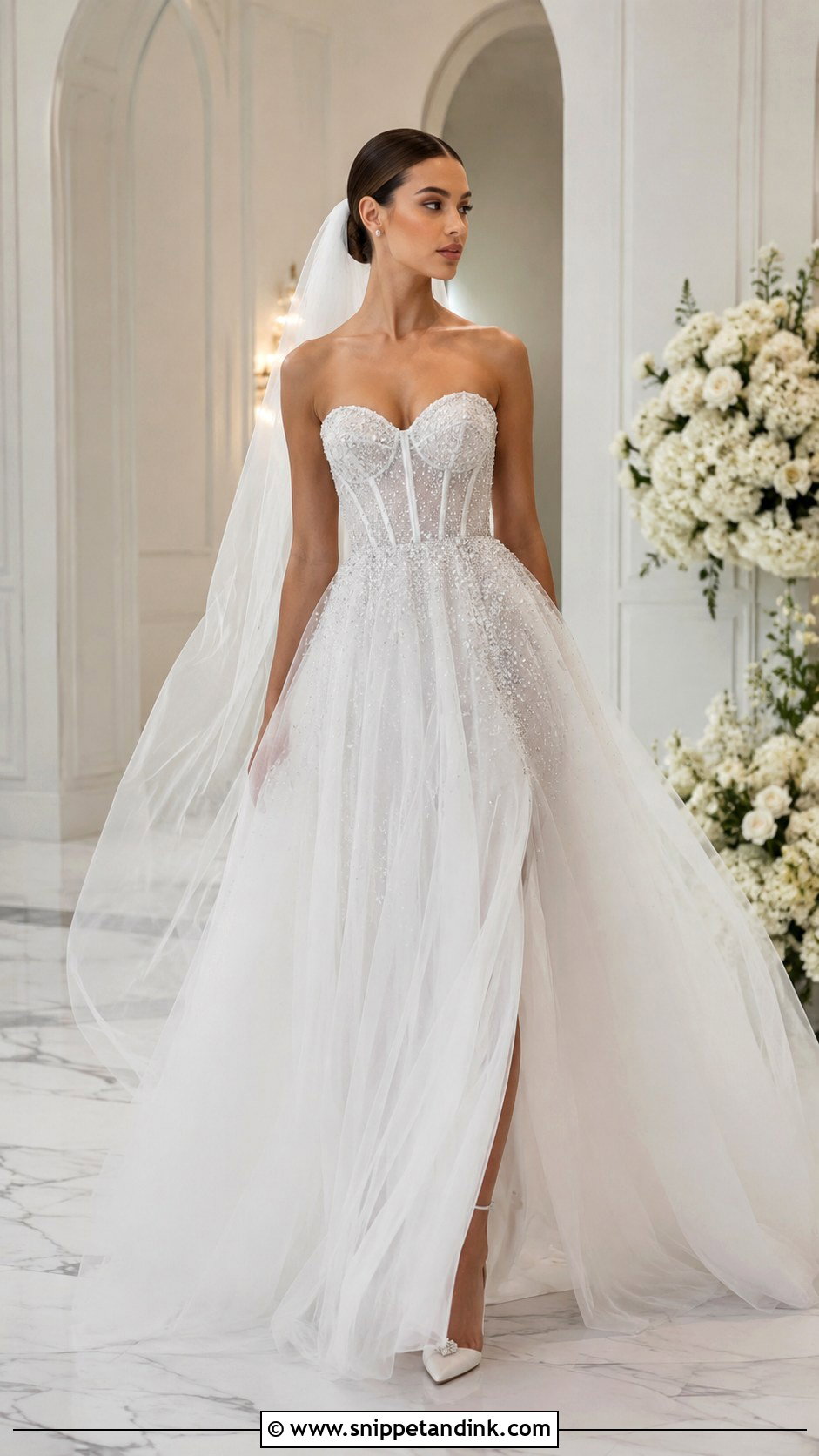
Structure on top, float below. Curved seaming, comfortable boning and a neckline that stays put without tugging make the corset work. Exposed boning looks modern; covered boning feels more classic. Crystal studs, a smooth updo, pointed heels and a sheer veil just past the train keep it restrained so the contrast stays clear. My fitting rule for any corset is to sit for several minutes, then stand. Mirrors only show you upright. Well-placed cups, a stable waist seam and a properly fitted back closure are what keep it comfortable through dinner.
12. Flowing 3D Floral Organza Wedding Dress
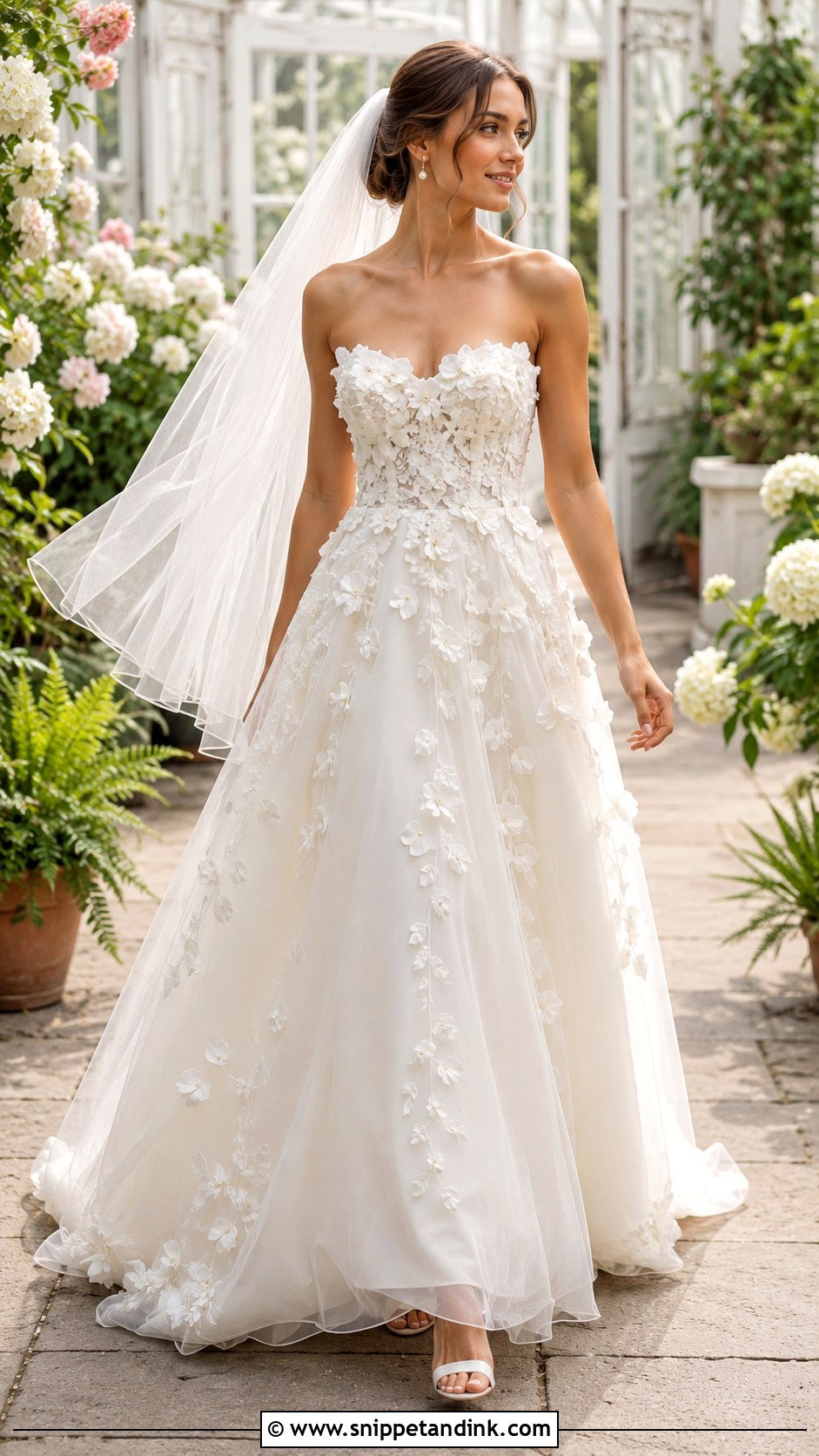
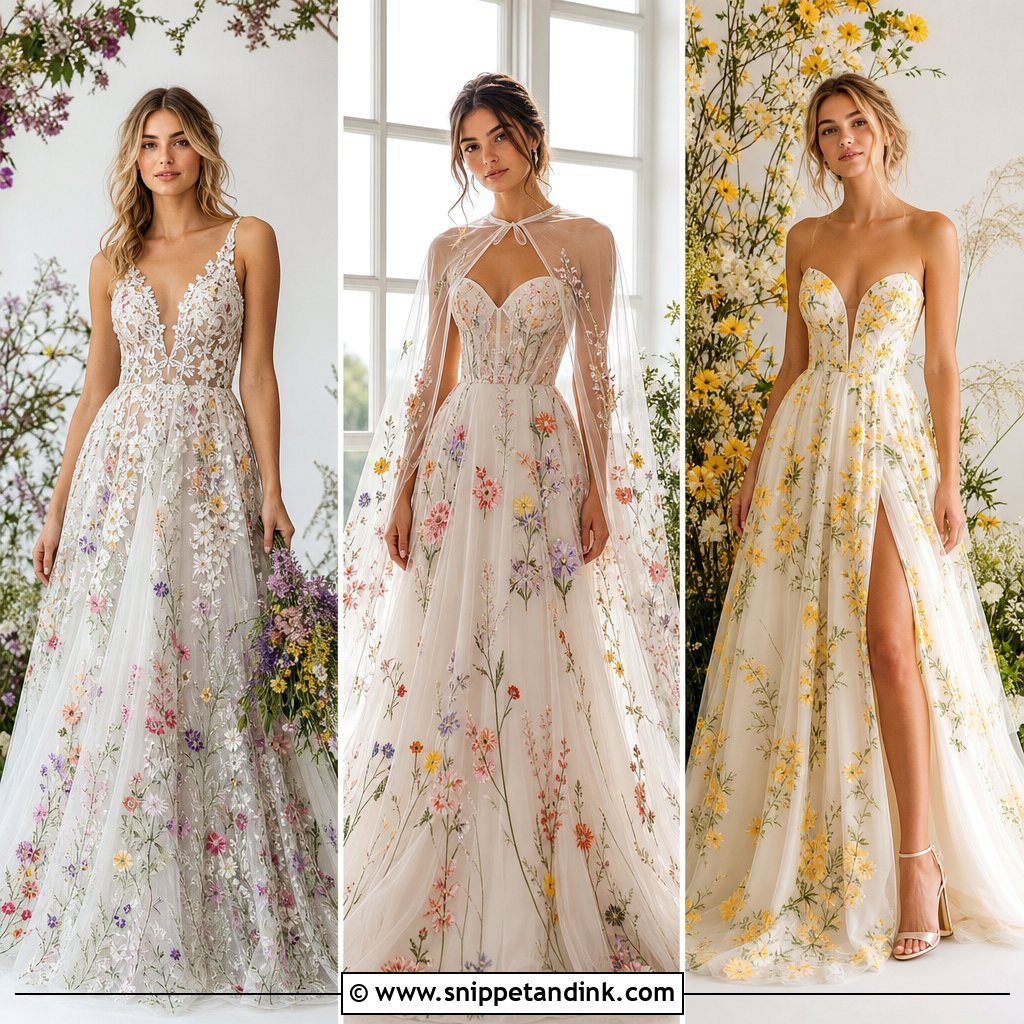
Raised flowers on organza work because the fabric is light enough to let them stand out without dragging the skirt down. I like them clustered at the bodice and scattering toward the skirt, which gives a sense of flow without covering every inch. Pearl earrings, a low bun, ivory heels and a plain tulle veil let the petals lead, and a bouquet in quiet colors and simple shapes won’t compete. Light A-lines with 3D florals are everywhere in bridal at the moment. Run your arm past the appliqués in the fitting: stiff petal edges can scratch skin, snag the veil and catch in the bustle.
13. Flowing Cape Sleeve Wedding Dress
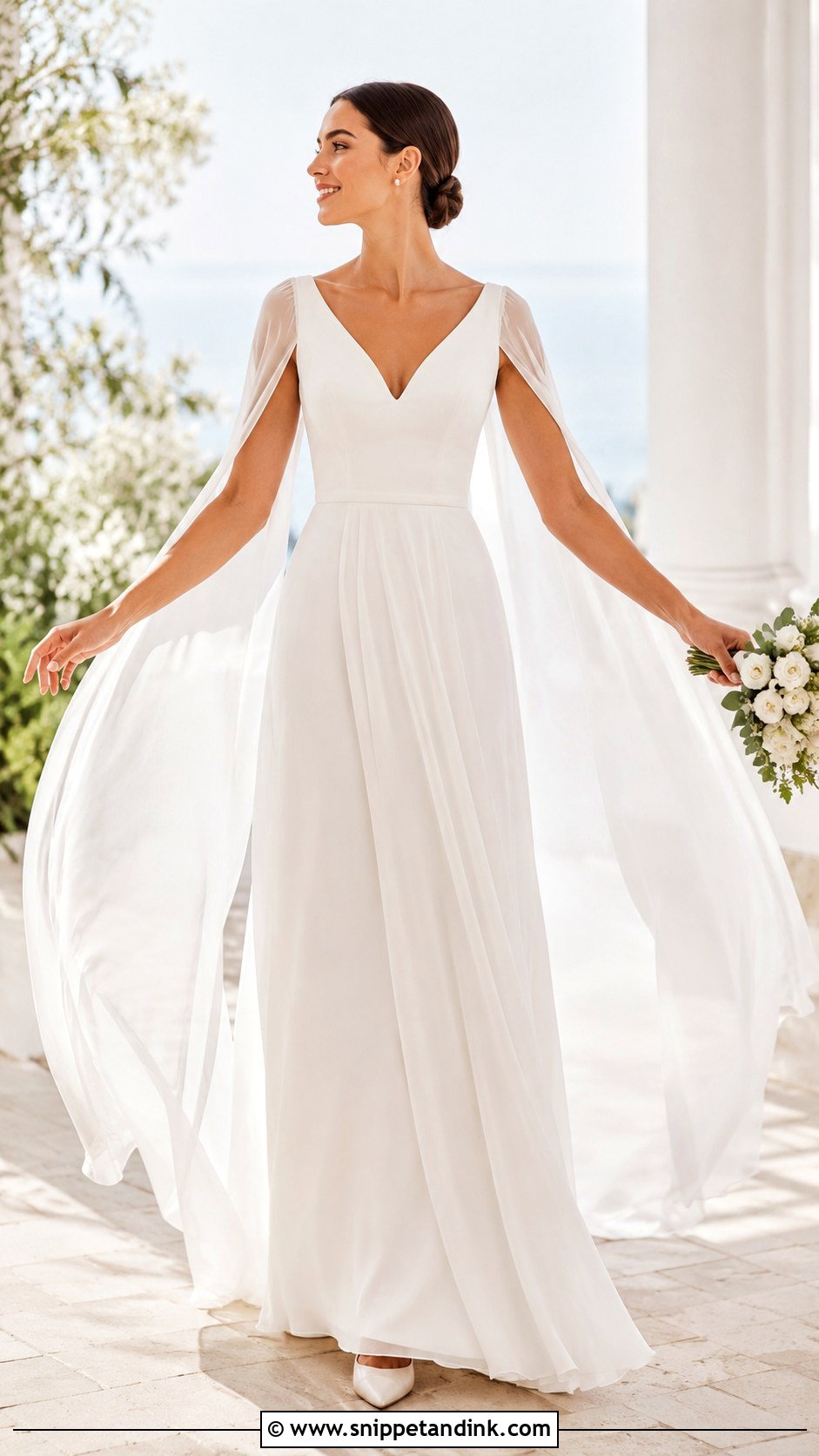
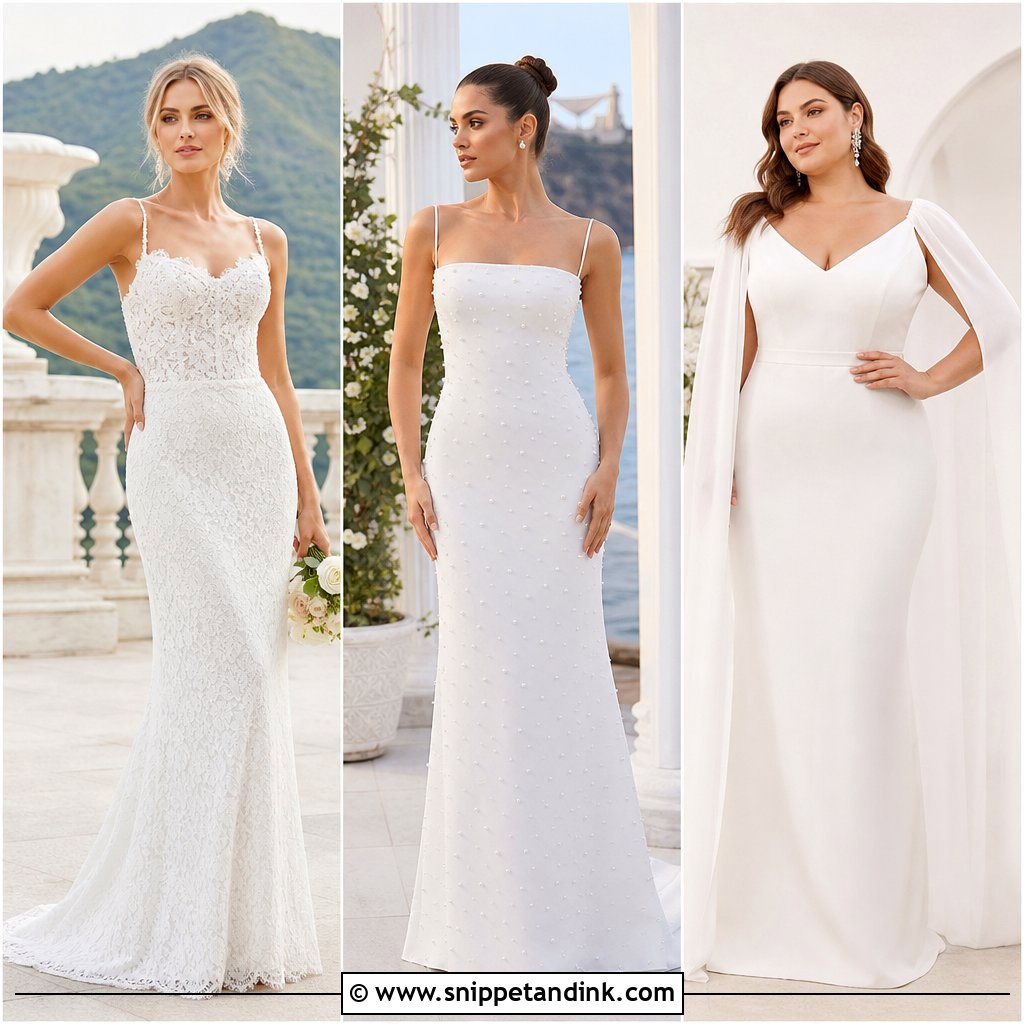
Cape sleeves put movement into the top half of the dress, not just the skirt. Sheer chiffon panels attached at the shoulders hang like sleeves when your arms are down and open out as you move. A simple V or scoop bodice and an A-line chiffon skirt keep the flow running from shoulder to hem. Pearl studs, a neat low bun and comfortable pointed shoes suit it, and you may not need a veil at all; if you want one, keep it short and plain. Wind will lift the panels outdoors. I ask the tailor for tiny hidden snaps so they can be secured if the day turns gusty.
14. Flowing Tiered Tulle Wedding Dress
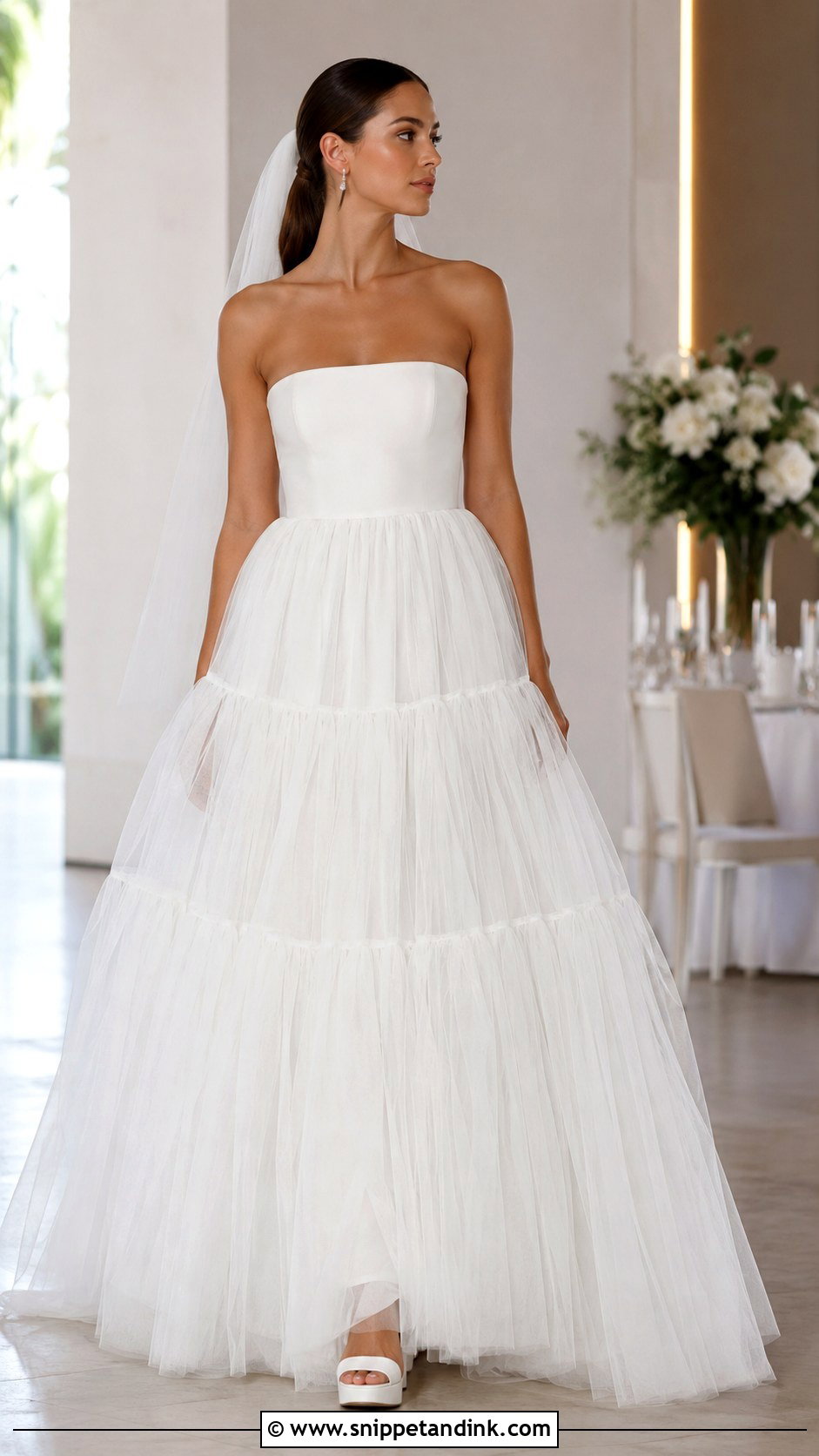
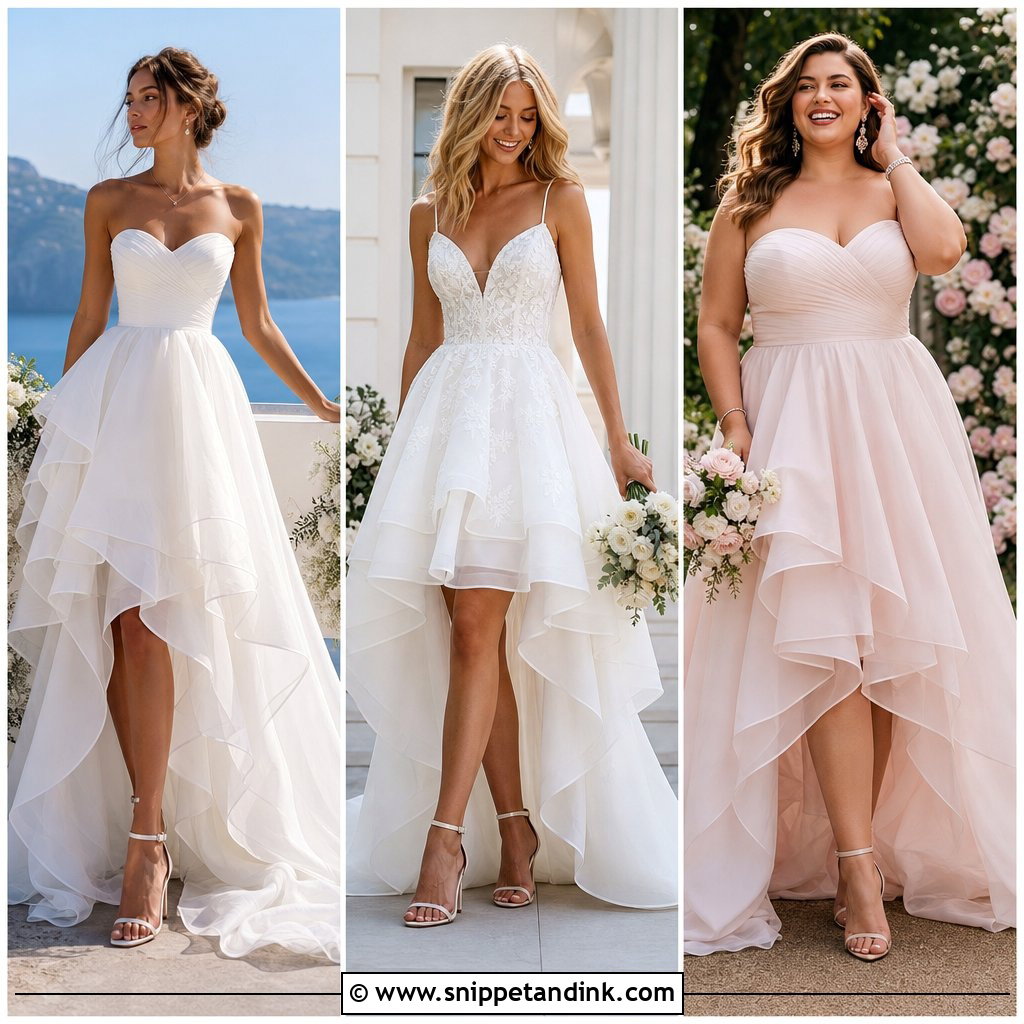
Tiered tulle gives volume through layers rather than embellishment. Wide, softly gathered tiers look elegant; tight ruffles start to look like a costume. A simple fitted bodice with a straight or sweetheart neck gives the skirt a clean start. A sleek ponytail or low bun, small crystal earrings and satin platforms hidden under the hem suit it, with a minimal veil. If you’re petite, ask for fewer or shallower tiers to keep the proportion. Check that each tier hangs evenly instead of collapsing onto the one below. A multi-point bustle lifts a full tiered skirt far better than one loop.

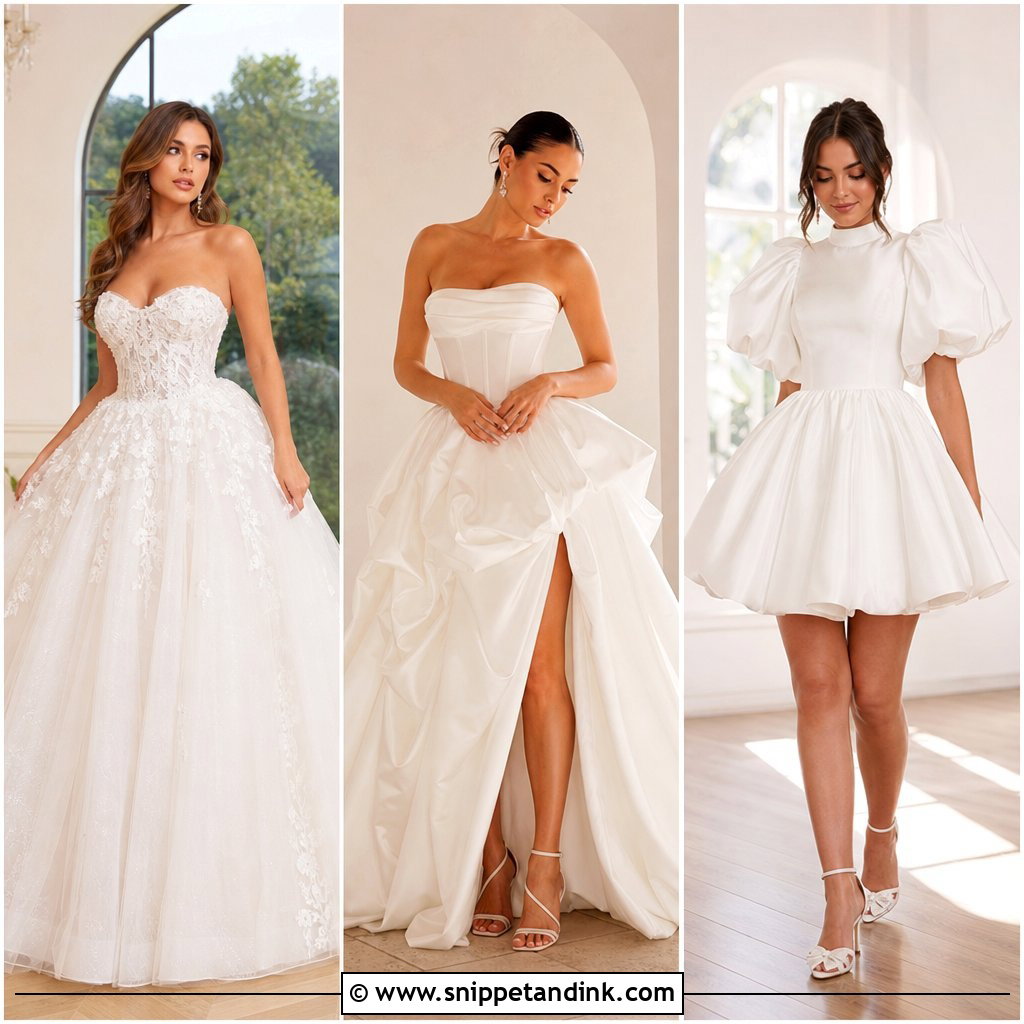
15. Flowing Pleated Chiffon Wedding Dress
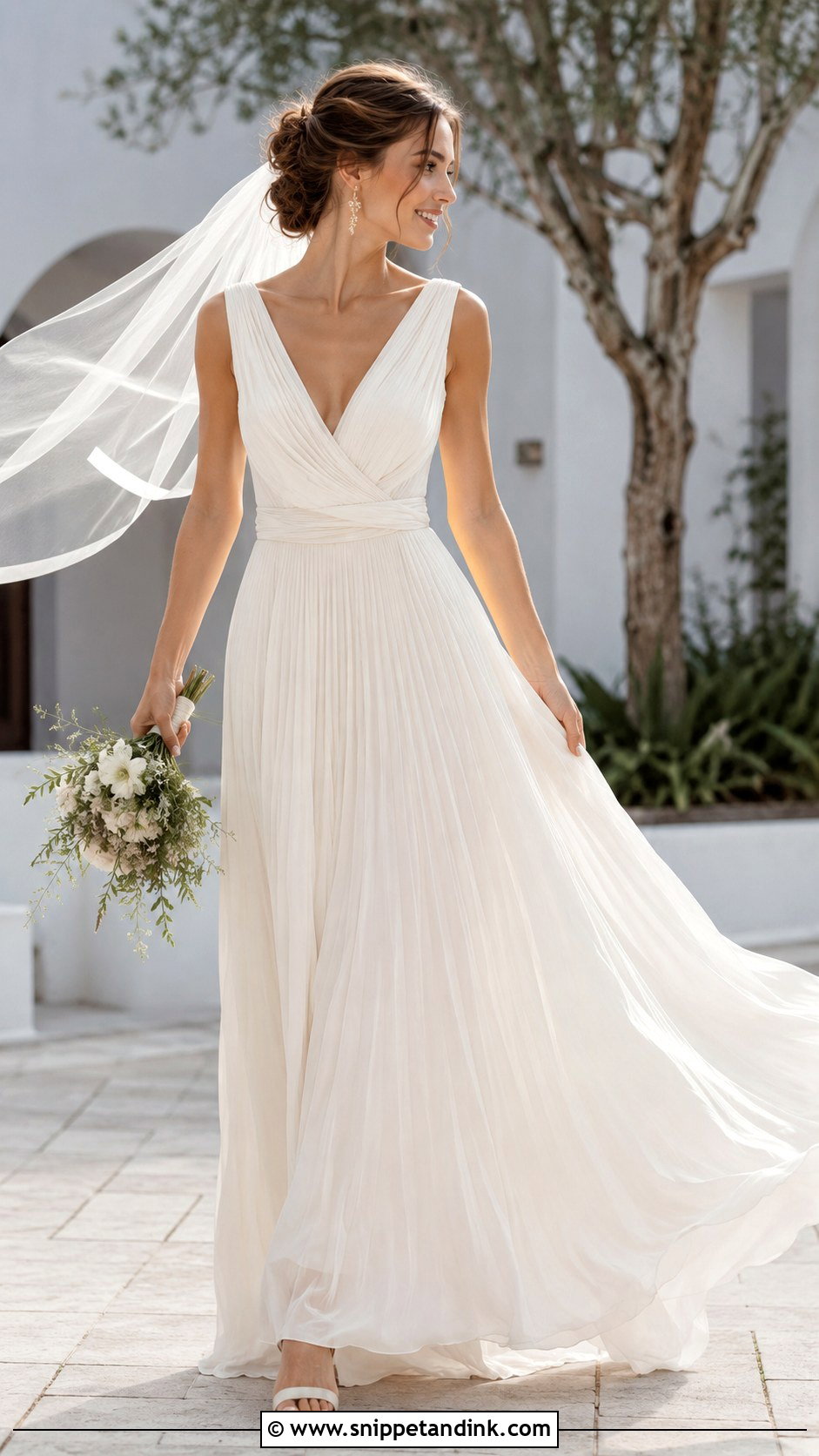
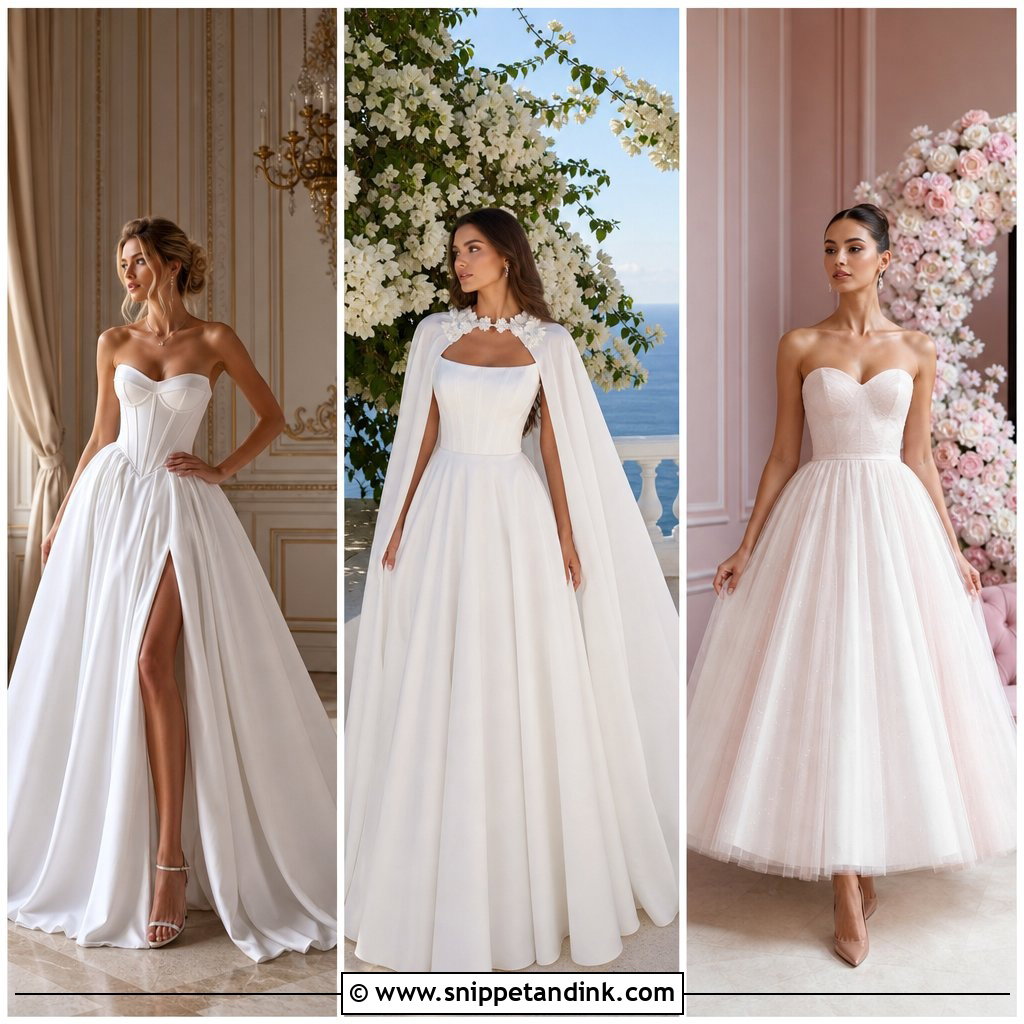
Pleats add texture to chiffon and still let it swing. A pleated A-line gown with a wrapped V-neck, a defined waist and panels that open as you walk looks long and clean. Fine metallic earrings, low block heels and a soft updo suit it, and a narrow ribbon-edged veil echoes the vertical lines. Pleats have to stay aligned through alterations, especially at the side seams and hem, so choose a seamstress who has handled them before. Too much steam or pressure flattens them for good. If you’re traveling, pack it in a breathable bag and book a professional steam near the venue rather than trying on the morning.
16. Flowing High Slit A-Line Wedding Dress
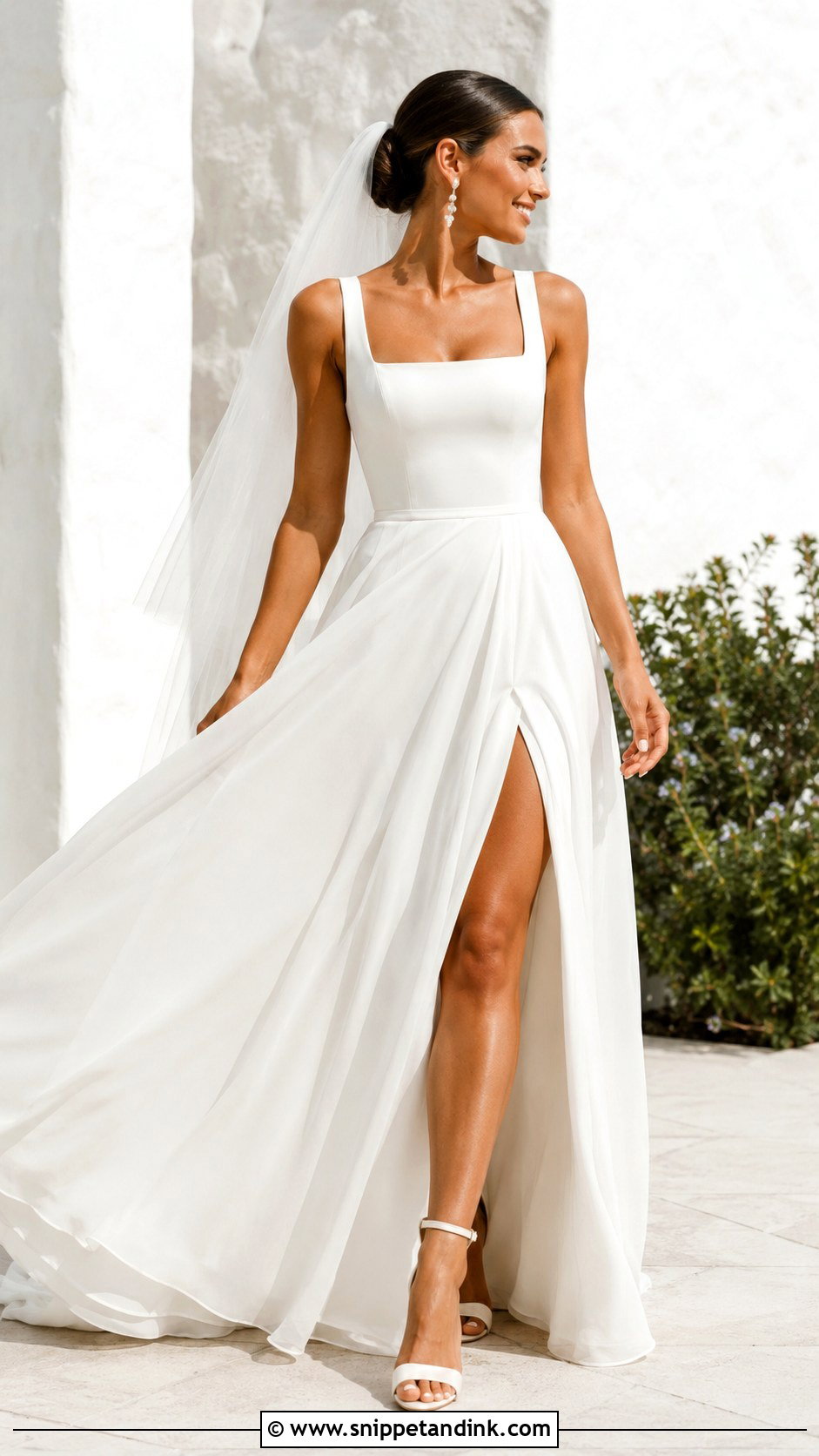
A high slit makes walking easier and adds a modern edge. Chiffon, soft tulle or light crepe let the slit close when you stand still and open just a little as you step. A draped bodice or square neckline balances the leg detail. Ankle-strap heels, small statement earrings and a sleek bun suit it, with a plain chapel veil. Sit, walk and climb a step in the fitting to see where the slit lands in motion. Your tailor can lower it or add an invisible modesty panel, and should cut the lining so it never peeks out of the opening in photos.
17. Flowing Blush Tulle Wedding Dress
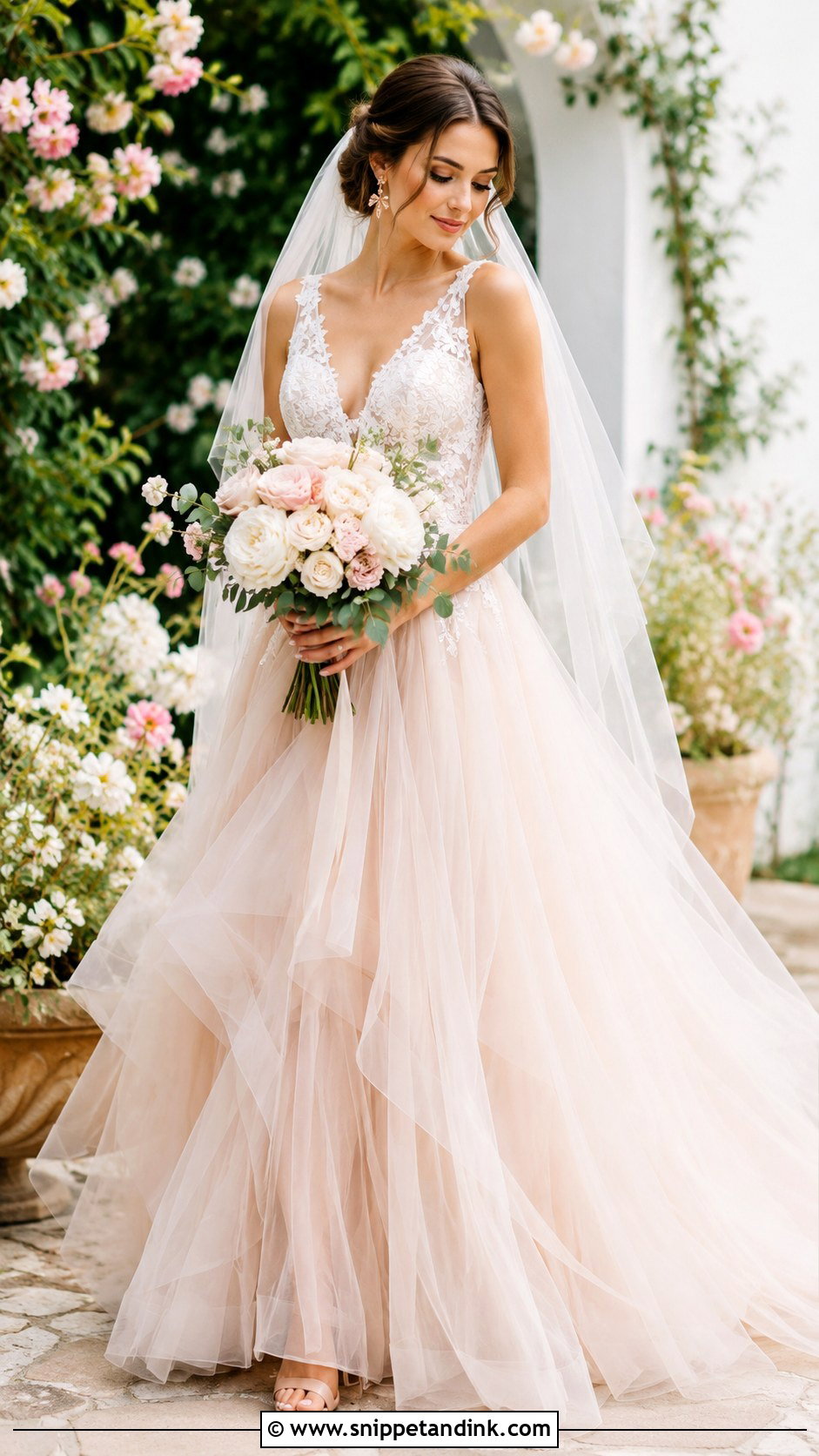
Blush is a romantic alternative to white that still reads bridal. A layered A-line in pale pink, champagne blush or rosy ivory with an ivory lace bodice on a blush lining makes the lace easier to see. Rose-gold earrings, neutral ivory heels and a veil matched to the palest tone of the gown keep it soft, and a bouquet of white, cream and muted pink ties in. Look at colored fabric in daylight, never only under salon lights, and have someone photograph you from a few angles. Undertone matters: some blushes flatter warm skin, others cool. Hold it next to your partner’s outfit fabric too.
18. Flowing Boho Bell Sleeve Wedding Dress
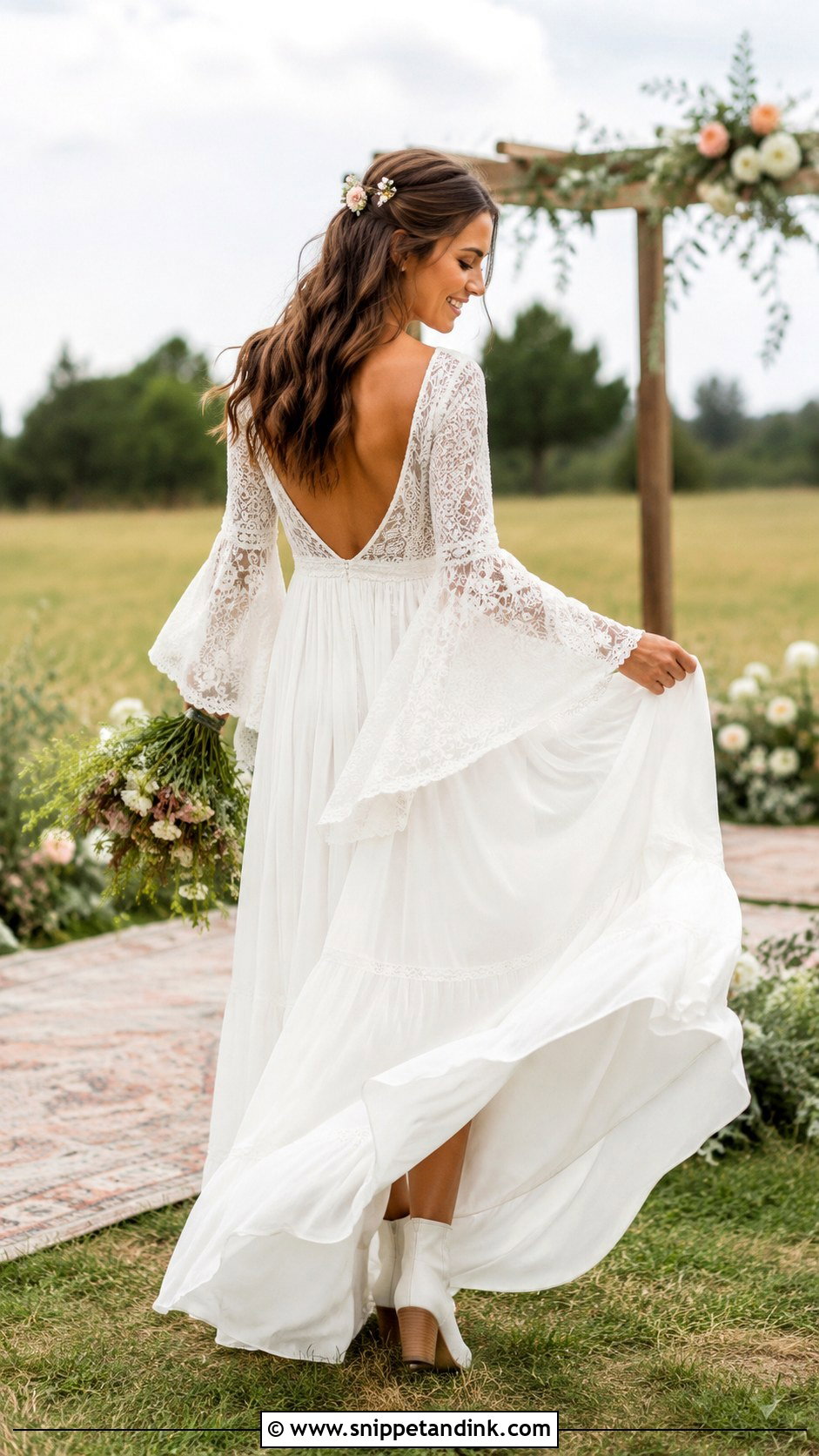
Bell sleeves are what make this dress, and they’re also what goes wrong. Lightweight lace sleeves widening below the elbow with a chiffon or georgette skirt, a V-neck bodice, an open back and a soft waist keep it graceful. Textured waves, small floral pins, ivory ankle boots or block-heel sandals and a loose bouquet suit outdoor settings, with a simple veil, a sheer cape or just a floral comb. I check sleeve length with the bride’s hands on a table: cuffs that drag through dinner or cover the hands need shortening. Discreet wrist loops let you lift them for eating and dancing.
19. Flowing Minimalist Crepe Wedding Dress
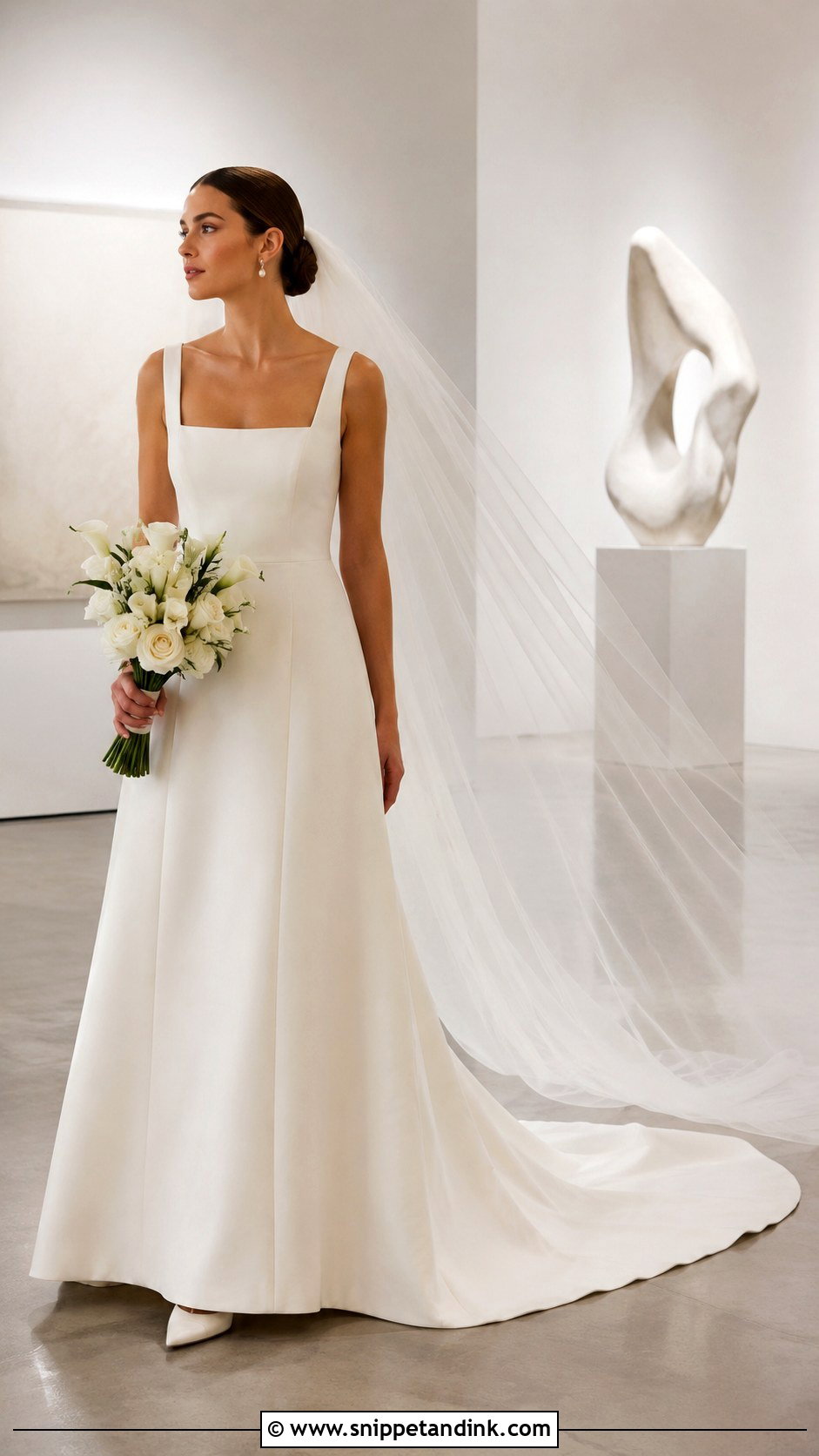
Crepe moves with weight rather than float, which gives a minimal gown a smooth, liquid line. An A-line or soft column with clean seams and a gentle train, and a bateau, scoop or square neck, needs no lace or beading. Pearl drops, a sleek low bun, pointed ivory pumps, a plain cathedral veil and a structured bouquet keep it pared back. A dress with nothing on it hides nothing, so I check the neckline, waist, side seams and hem from every angle. No-show underwear is essential, and an extra lining sometimes improves the drape. Each detail has to look deliberate.


20. Flowing Wedding Dress With Detachable Overskirt
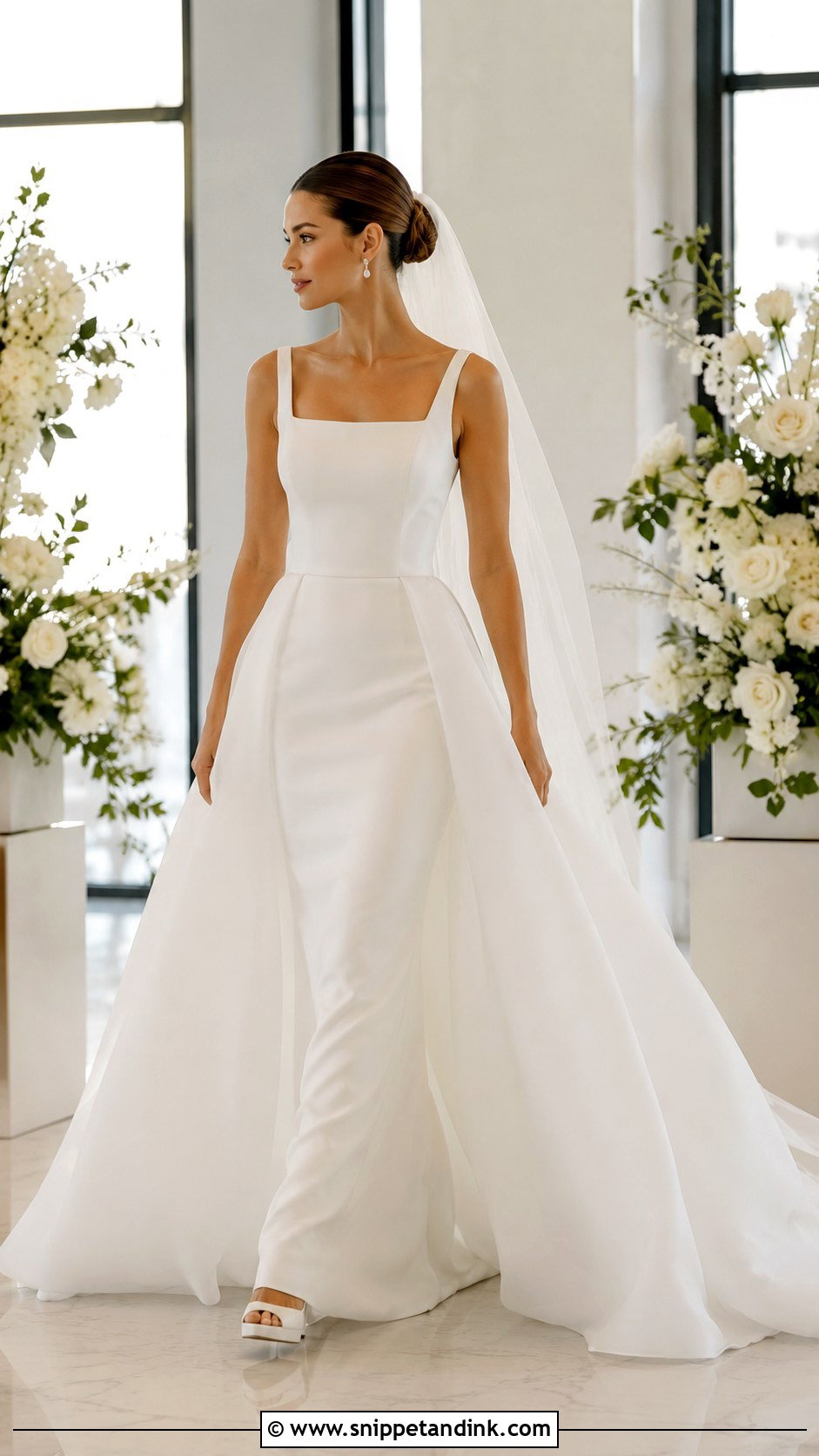
One dress, two moods. Start with a fitted crepe, lace or silk gown and add a flowing tulle or organza layer fastened neatly at the waist, ideally with its own train so the pair looks like one design. A long veil, pearl earrings and elegant heels suit the ceremony. After portraits, take off the veil and overskirt together and add a hair piece or bolder earrings. Removable layers make sense because they give you flexibility inside one outfit. Practice the fastening at fittings, and decide who removes the overskirt and where it gets stored so it isn’t left on a chair.
Static, Damp Hands and Water Spots on Light Fabrics
Flowing fabrics have small, specific problems that heavy satin never does. None of them are serious if you know they’re coming.
- Static: chiffon and silk can cling to tights or the lining in dry air or air conditioning. A light mist of anti-static spray on the lining, not the outer fabric, usually stops it. A thin slip helps too.
- Damp hands: holding up a chiffon skirt with warm hands leaves marks and creases where you grip. Use a wrist loop or hold the skirt with a tissue between hand and fabric.
- Water spots: plain water can leave rings on silk. Blot spills immediately with a dry white cloth and don’t rub. If a spot remains, leave it for the cleaner.
- Wind: a long veil and a light skirt together can turn into a sail on an exposed site. Pin the veil firmly and keep a short backup veil or comb for outdoor portraits.
Getting it there in one piece
For a destination wedding, carry the dress onto the plane in a breathable garment bag rather than checking it. Stuff the bodice and the folds with acid-free tissue. Hang it the moment you arrive and let the creases drop for a day before anyone steams it, keeping the steamer moving and well away from silk to avoid water marks.
What a Dress Feels Like After the Last Song
A dress that moves well also has to feel good from the first photo to the last song. Each fabric drapes differently, so feel chiffon, tulle, organza, georgette, silk and crepe in person before you decide. Factor in the venue, weather, shoes, support and how much volume you want. Then walk, sit, turn and raise your arms at every fitting. Good tailoring turns a sample you liked into a dress that feels made for you, whichever silhouette you land on.
You'll Like These Ideas:






Leave a Reply