
Sri Lankan bridal dressing covers a lot of ground. A Kandyan bride in her osariya, a Tamil bride in Kanjivaram silk and a Muslim bride in a full-sleeved saree each follow different customs, and many brides add a reception gown or a going-away saree on top. What I’ve learned from dressing brides across these traditions is that the outfit is never just the saree. The drape, the blouse fit, the weight of the jewelry, the heat in the hall and the time the astrologer has set for the ceremony all shape what works. Below are 25 complete looks from ceremony to send-off, with the practical details I’d want a bride to know before she commits to each one.
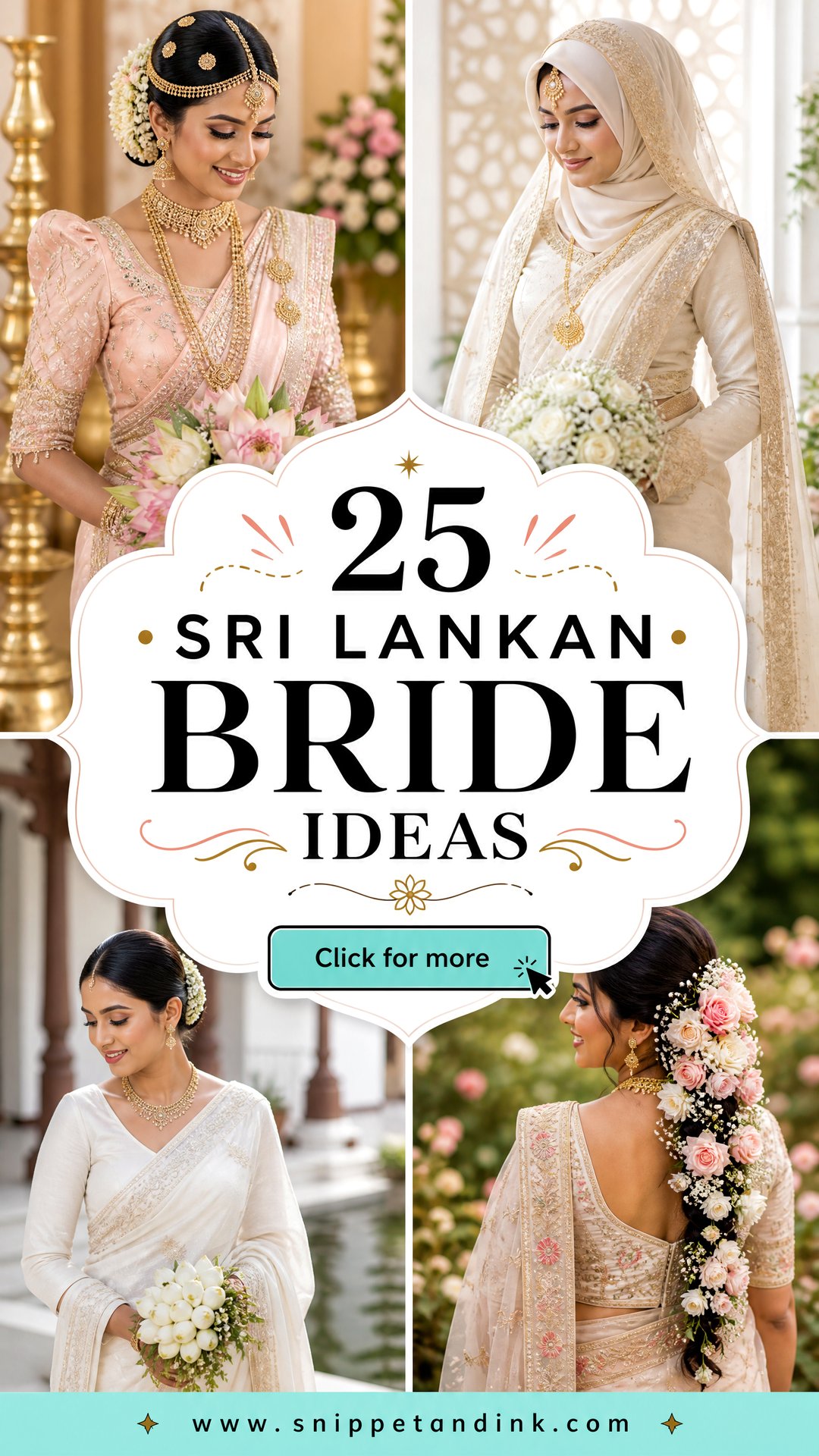
The Auspicious Time Sets Your Dressing Schedule
Many Sri Lankan ceremonies run to an auspicious time (the nekath) set by the family astrologer, and that time doesn’t move for a late dresser. I work backward from it, and I’d encourage every bride to do the same.
- Draping a Kandyan osariya properly, with the frill, pleats and pinning, takes longer than an everyday saree. Allow a generous window and don’t let anyone rush it.
- Hair and makeup usually come before the drape, so the saree isn’t crushed by someone leaning over you.
- Jewelry goes on last. Layered Kandyan necklaces and a nalalpata need careful placement and a second pair of hands.
- Build in buffer time for photos of the dressing itself, which most families want.
If you’re wearing a Tamil bridal saree with a change before the thali is tied, or planning a reception outfit, ask your dresser to stay for the changes rather than leaving after the first look. A drape done in a hurry by a relative almost always slips.
1. Kandyan Bride Osariya
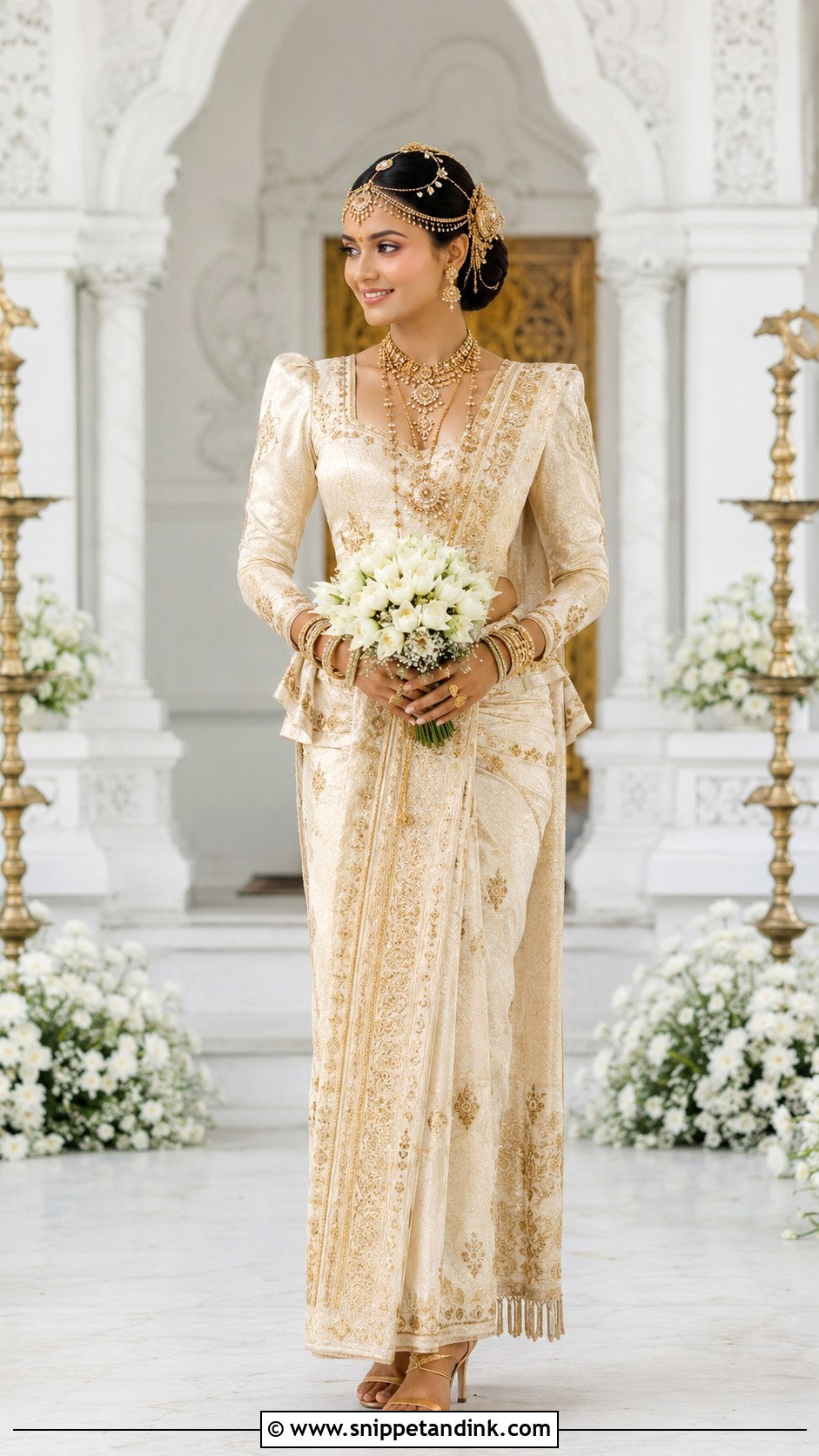
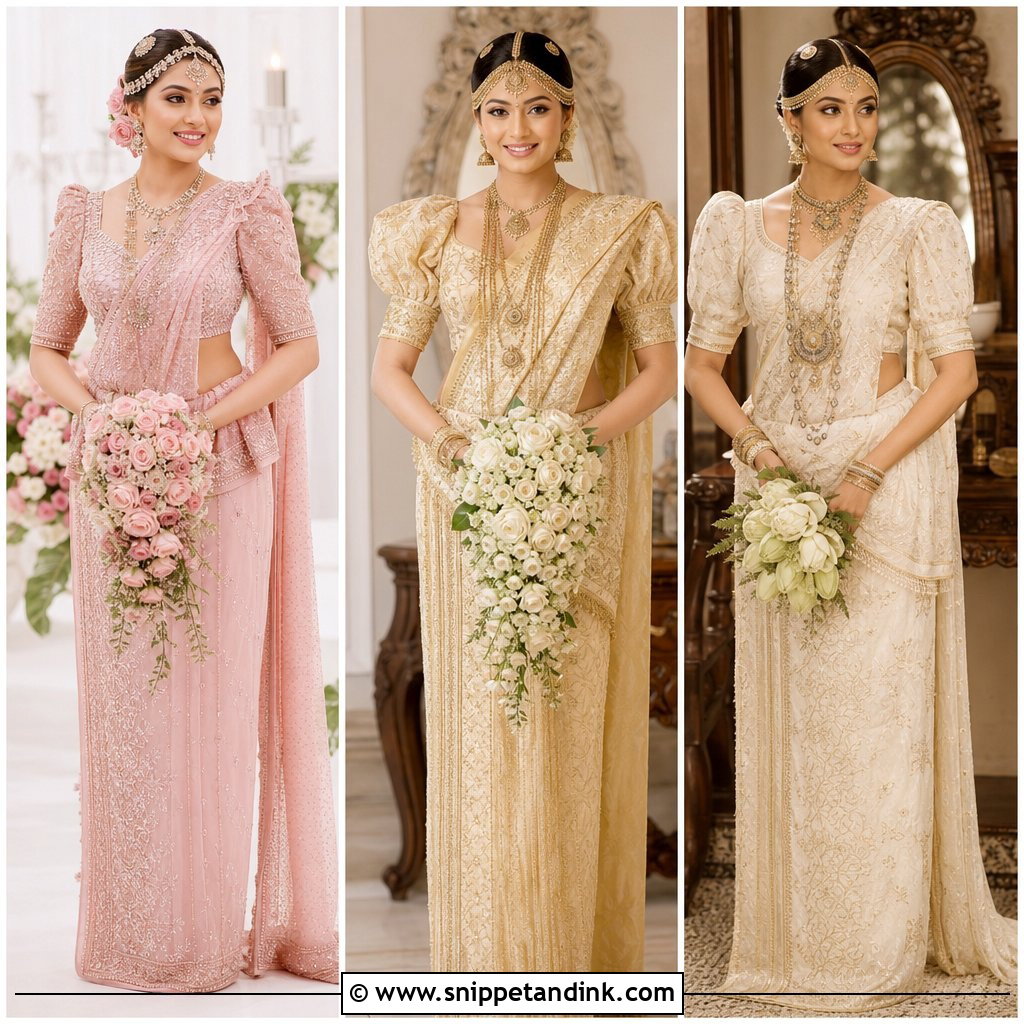
The osariya is the drape most people picture first. It’s worn with a frilled flounce at the waist and the pallu taken over the shoulder, usually in ivory, gold or champagne with heavy embroidery. The blouse has to be fitted precisely, because the layered Kandyan necklaces sit directly on it and pull it down if it’s loose. Add bangles, earrings and a nalalpata headpiece if your family follows that custom. A sleek bun keeps the jewelry visible. I always pin the drape in more places than look necessary, since the Poruwa ceremony involves stepping up and down.
2. White Kandyan Bride Saree
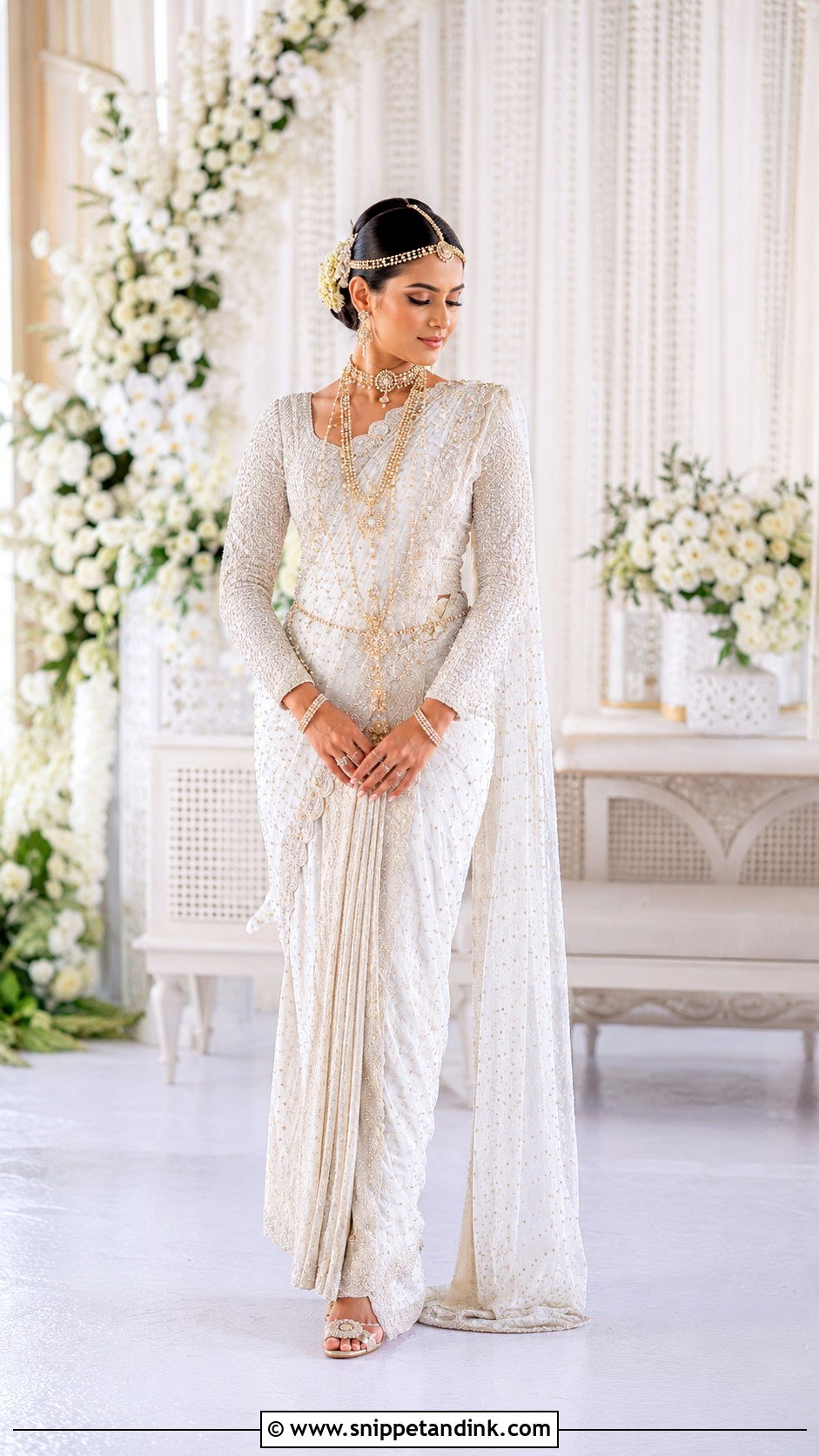
White is the most traditional color for a Kandyan bride, and it’s also the hardest to keep clean on a long morning. I’d choose a rich white or soft ivory with pearl, bead or threadwork so it has depth in photos rather than reading as flat white. A fitted blouse with long or subtly puffed sleeves gives structure. Keep the jewelry in gold, pearl or antique tones to match the saree work. A low bun with fresh flowers or a delicate hair chain softens it. Keep a stain pen with whoever is minding your bag.
3. Gold Kandyan Bride Saree
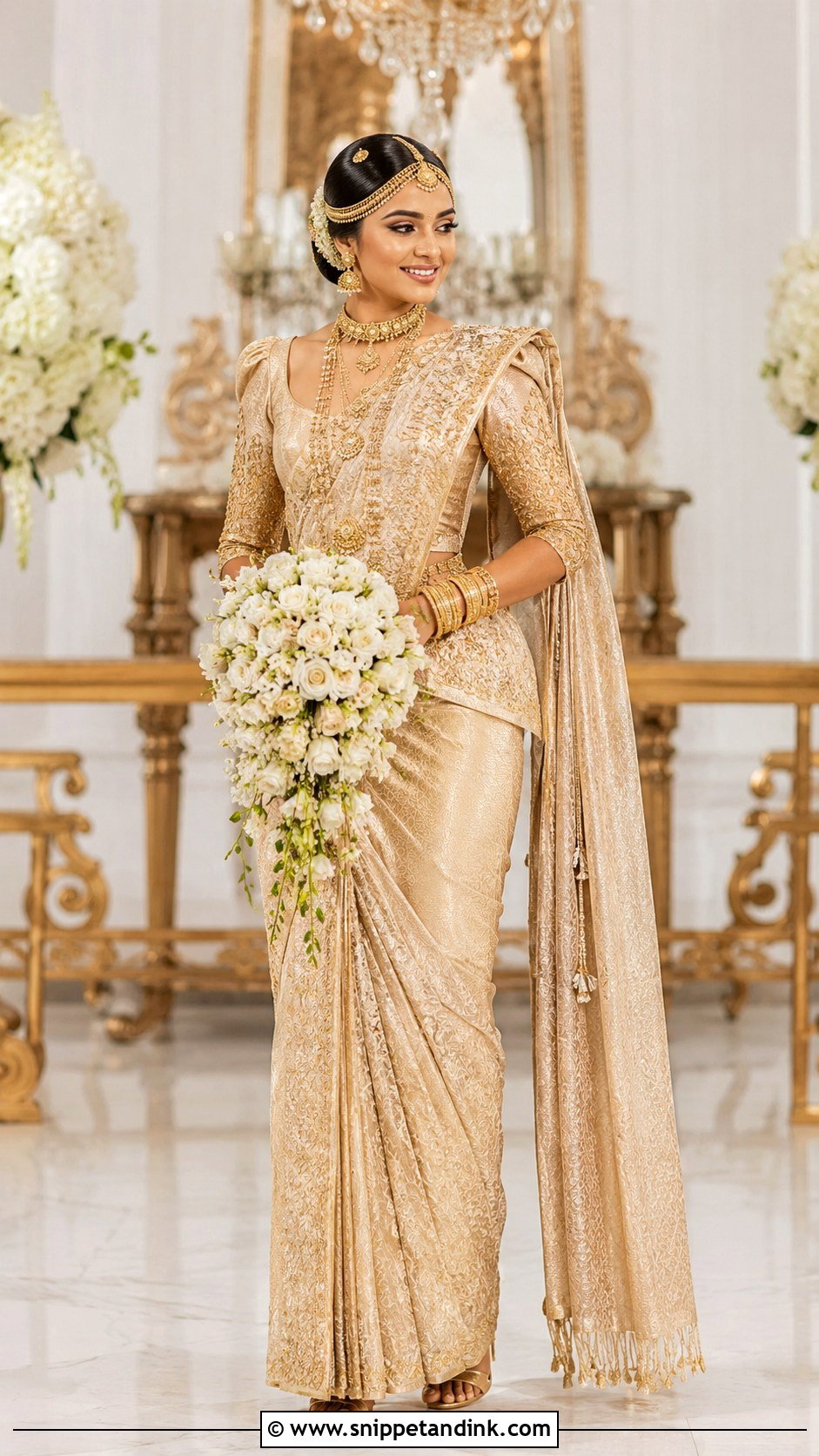
Gold is the grand option. A gold osariya with woven motifs and metallic embroidery, plus a matching blouse, carries a lot of shine on its own, so I’d pair it with antique gold jewelry rather than bright polished pieces; two kinds of gleam side by side flatten each other in photos. A structured bun, soft contour, defined eyes and a neutral lip keep the face from disappearing under all that gold. Nude or gold heels blend in. Heritage halls and grand hotel venues suit it.
4. Pastel Kandyan Bride Saree
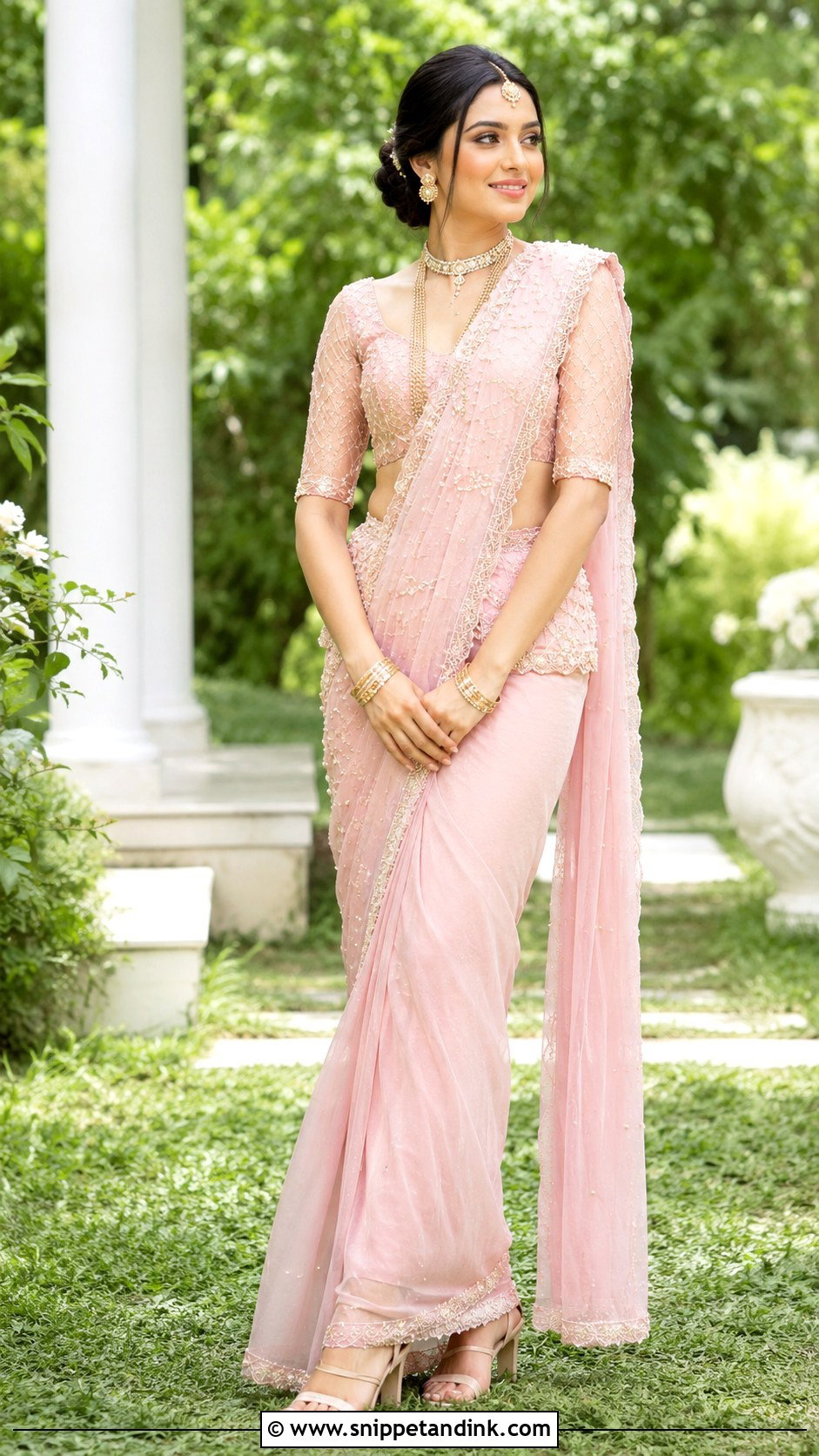
Pastels are where many younger Kandyan brides are heading now. Blush, powder blue, sage, lavender and champagne keep the traditional drape but lighten the palette. Fine embroidery and pearl work suit these shades far better than heavy zari, which can look harsh against a pale ground. I’d keep the blouse neckline clean and the jewelry lighter: soft gold, pearl or a few crystal accents. Glowing skin and a natural lip match the mood, especially at a daytime garden ceremony.
5. Red Sri Lankan Bride Saree
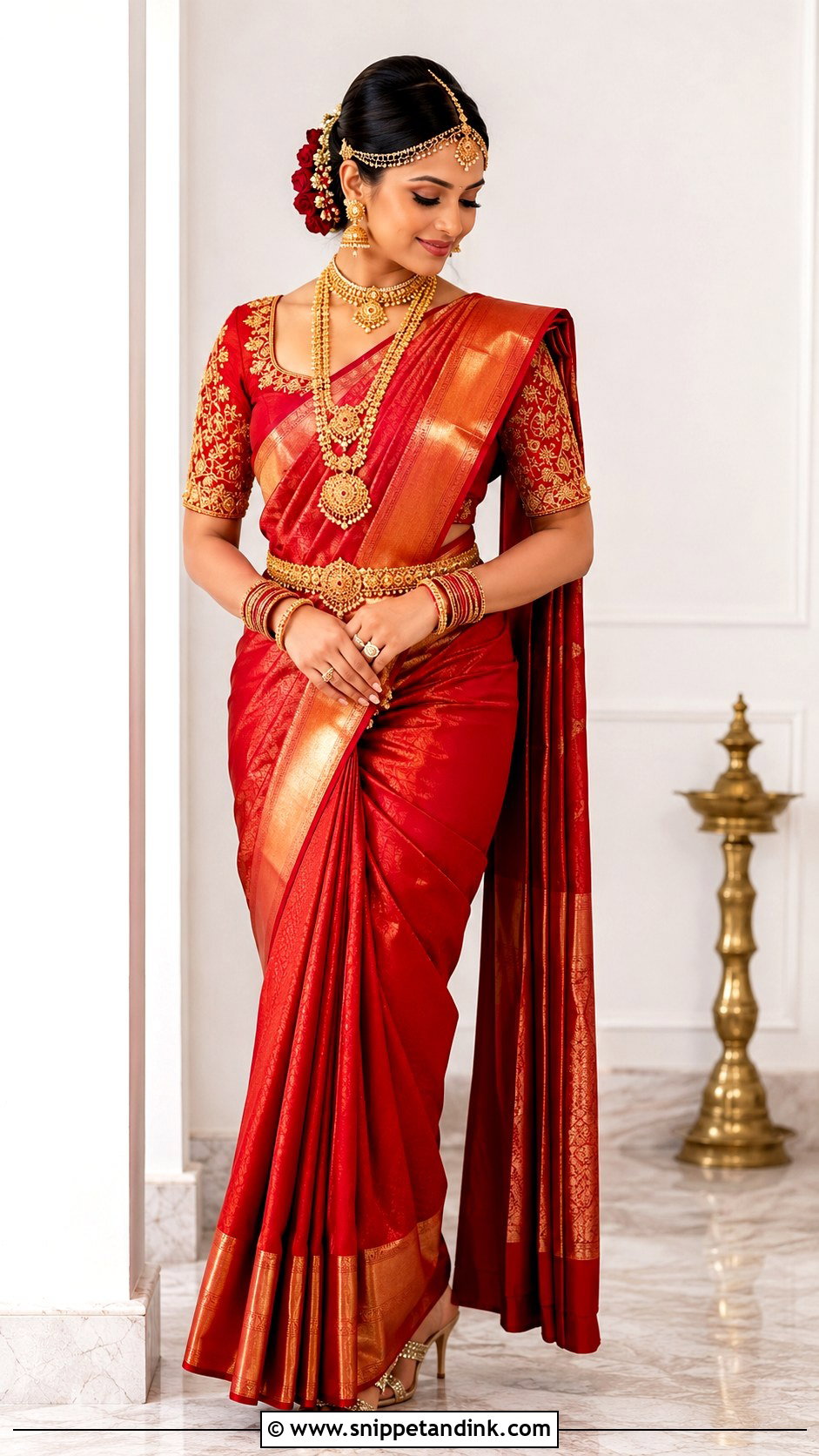
Red is festive and unmistakably bridal, and it can be draped either as a classic saree or in a Kandyan-inspired style. Silk or brocade with gold borders gives it richness. The makeup needs care: a bright red saree next to a matching bright red lip can overwhelm the face, so I usually steer toward a rose or softer red lip with defined eyes. A matching blouse with embroidered sleeves, stacked bangles and a statement necklace complete it.
6. Tamil Bride Kanjivaram Saree
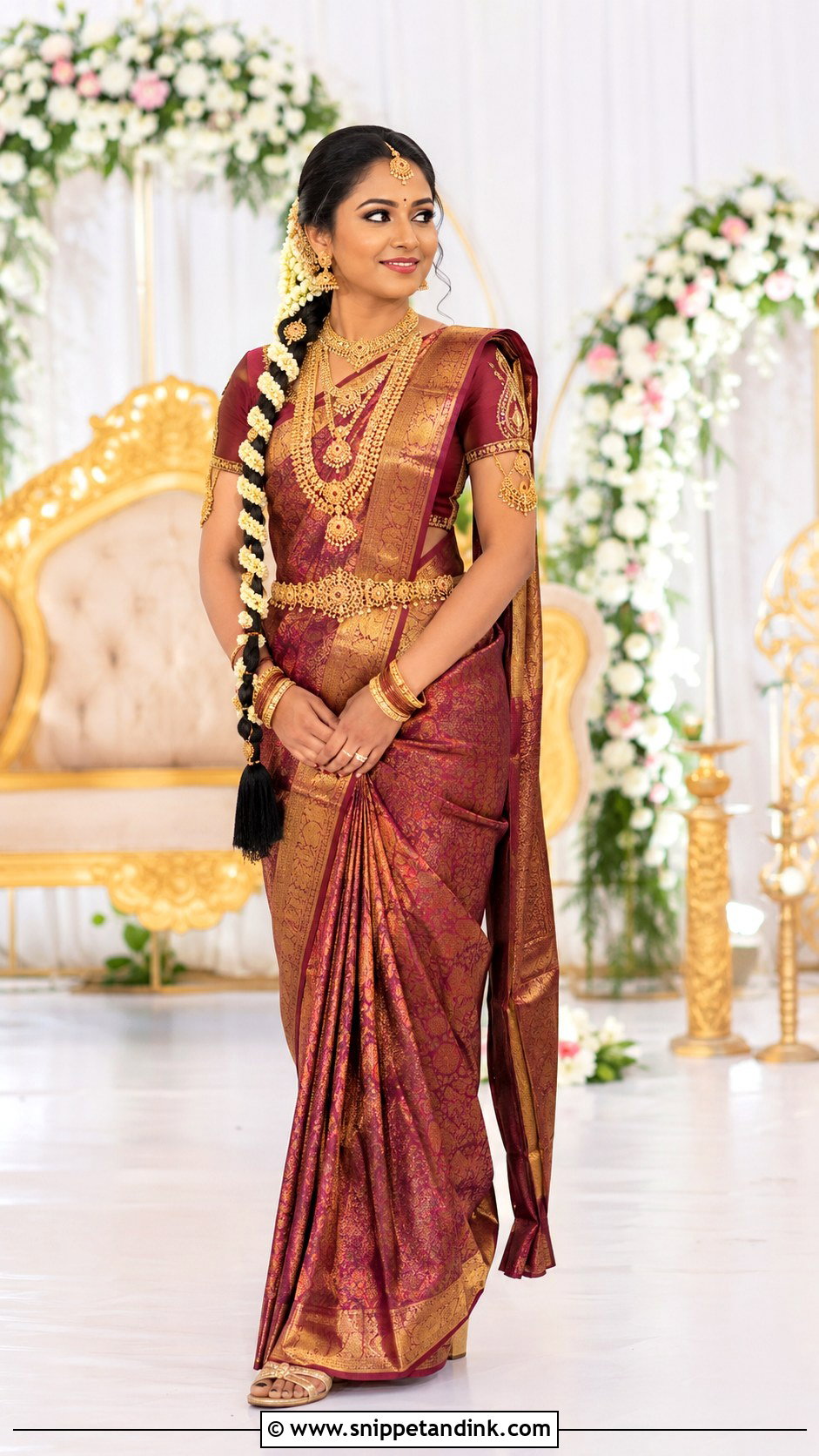
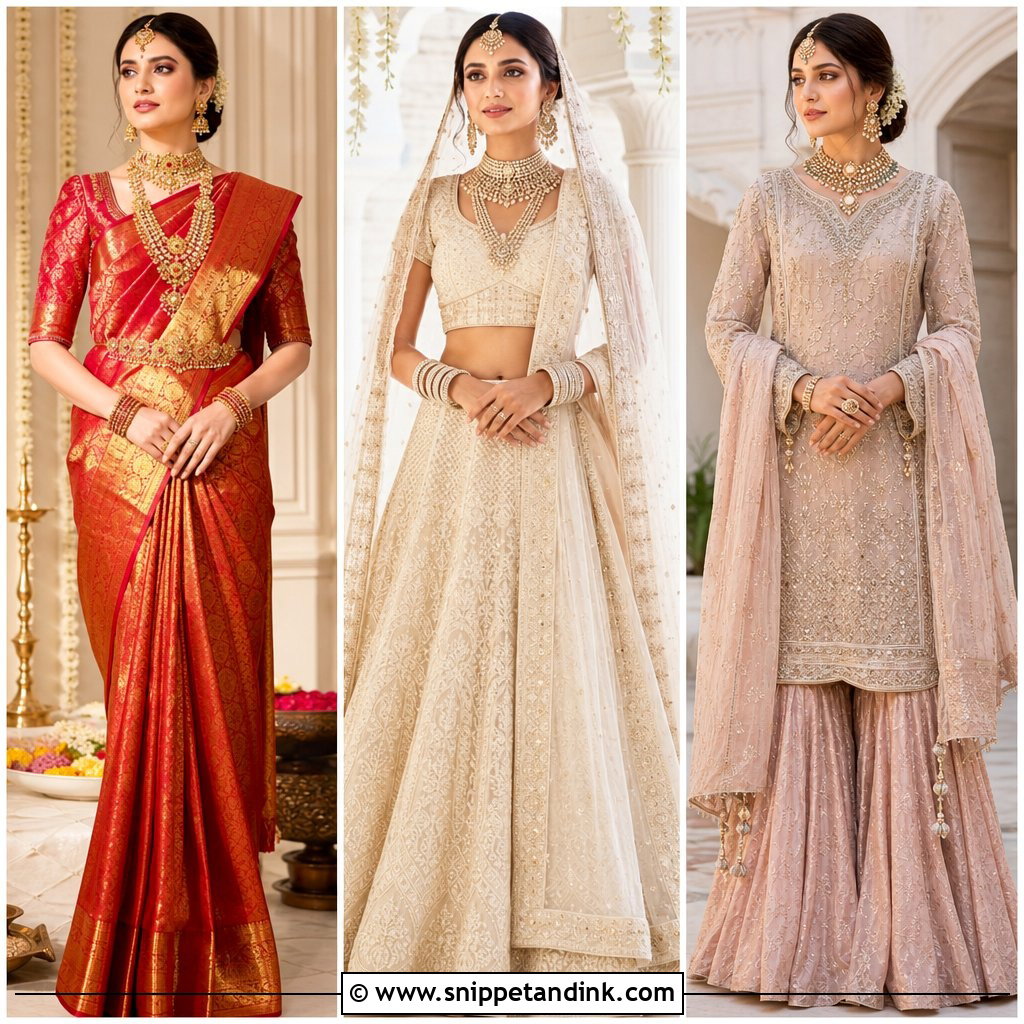
Kanjivaram silk is heavy and woven with a contrasting border, which is why a Tamil bride Kanjivaram saree carries so much presence. Red, maroon, gold, green and deep pink are the traditional shades. In many Tamil families, the bride changes into a saree given by the groom’s side before the thali is tied, so check whether you’ll need two drapes and plan the dressing time accordingly. The pleats should be set so the border and pallu show clearly. A long braid with flowers or jewelry, a waist belt, bangles and anklets complete the look.
7. Muslim Bride Modest Saree
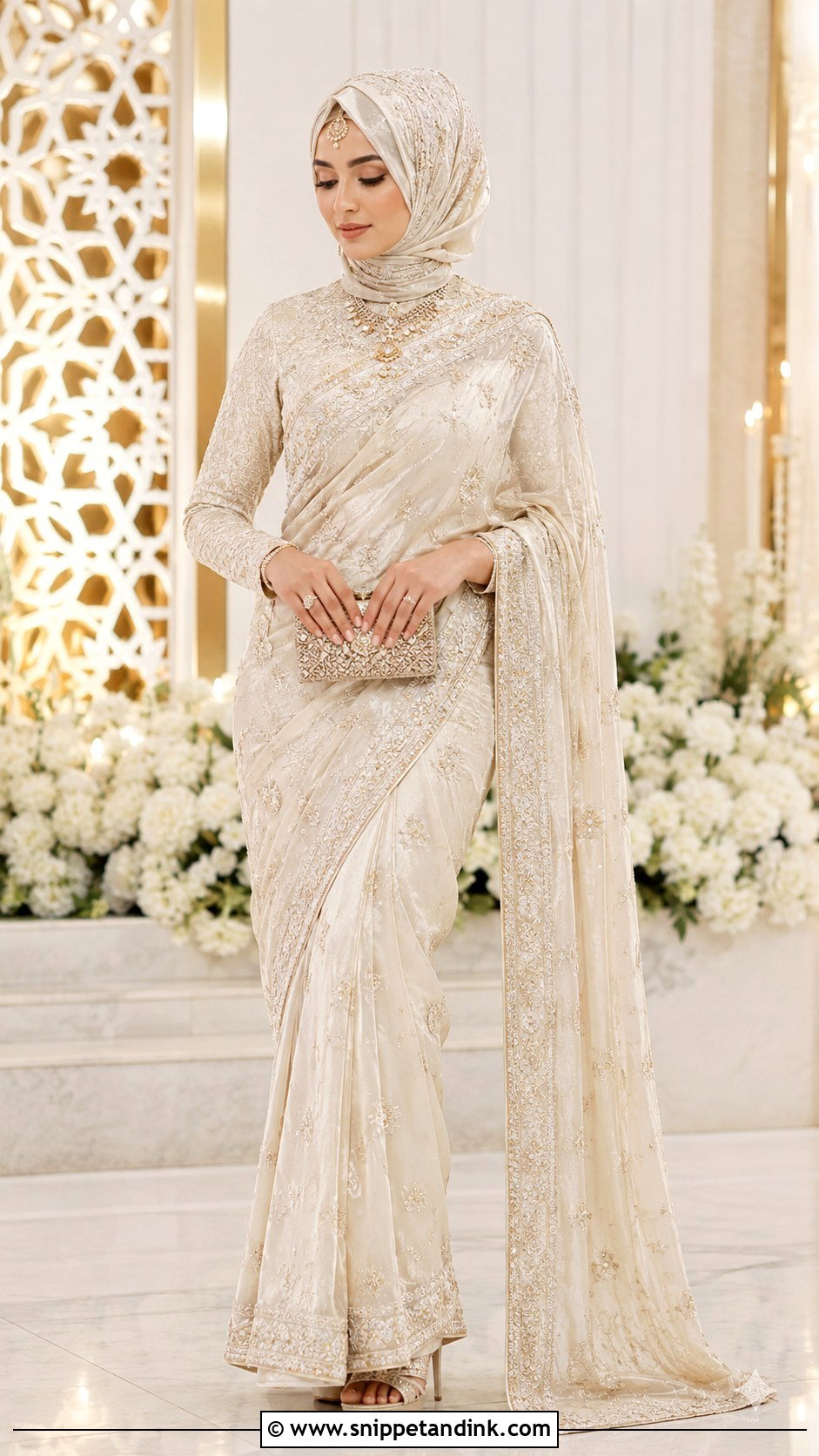
For a Muslim bride, I start with the blouse: full sleeves, a higher neckline and enough ease to move comfortably. The saree itself can be soft ivory, gold, blush, emerald or champagne with detailed embroidery. A secure drape matters even more here, because adjusting it in front of guests isn’t an option. A matching hijab or embellished head covering can be pinned with pearls or a small headpiece; I use underscarf caps to stop the hijab from slipping on silk. Gold or crystal jewelry and comfortable heels finish it.
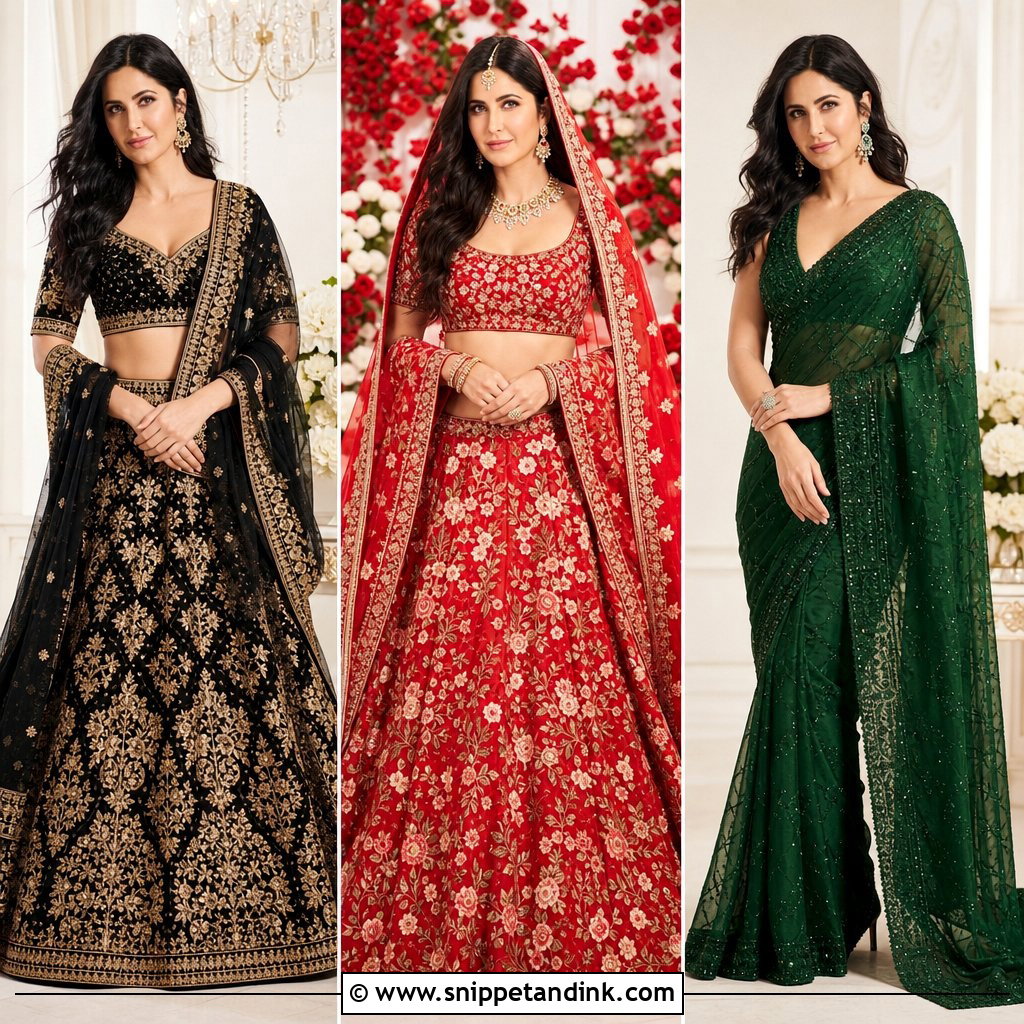
8. Sri Lankan Bride Lehenga
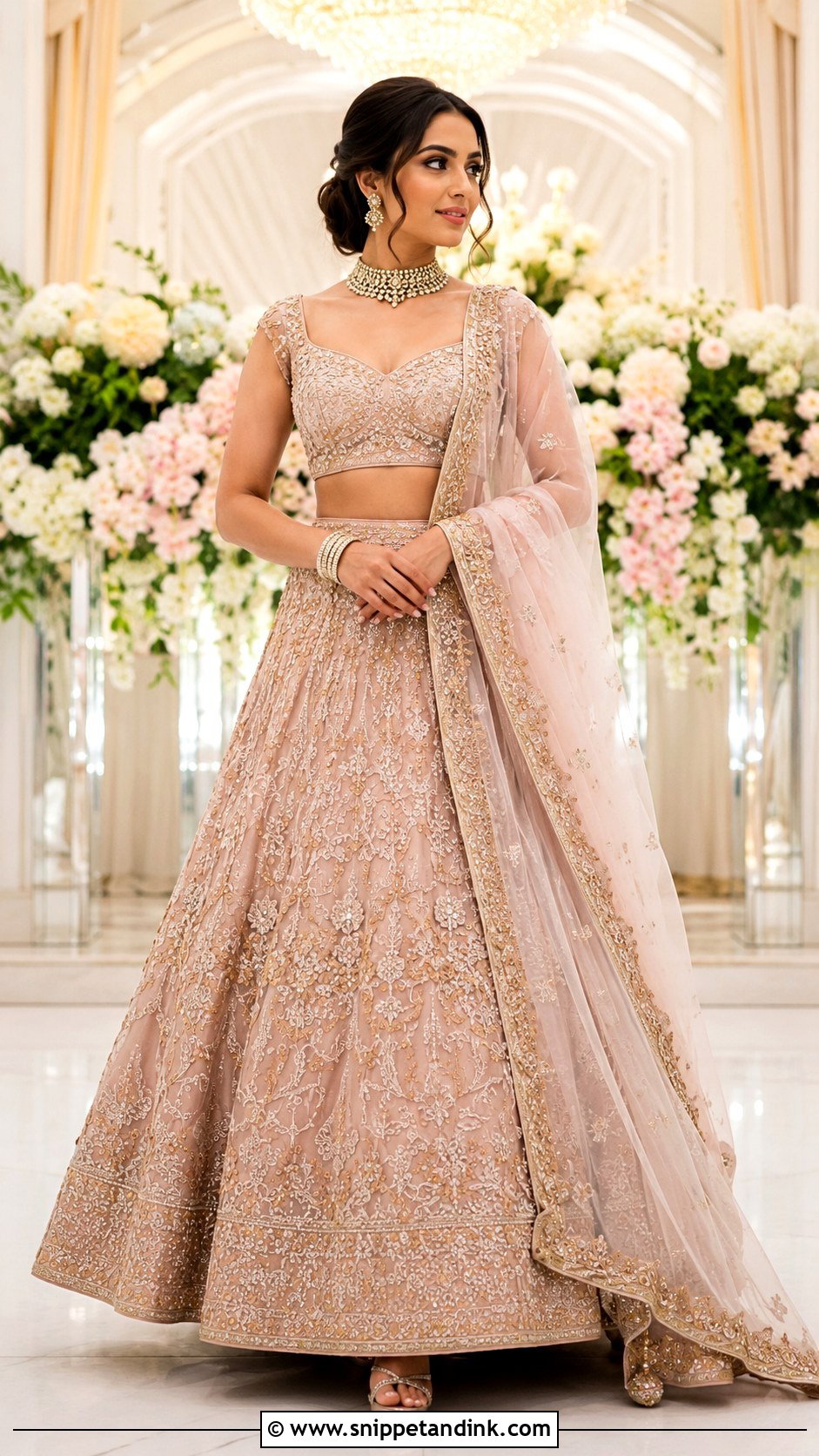
Lehengas are a popular reception change because they’re quicker to put on than a saree and easier to dance in. I’d choose an embroidered skirt with a fitted blouse and a light dupatta that can sit over the shoulder or head. Soft gold, blush, ivory, red and emerald all read as bridal. Check the skirt weight; heavily worked lehengas can be surprisingly tiring after a few hours. Statement earrings, bangles, a choker and a soft bun or loose waves make it feel less formal than the ceremony look.
9. Sri Lankan Bride Reception Gown
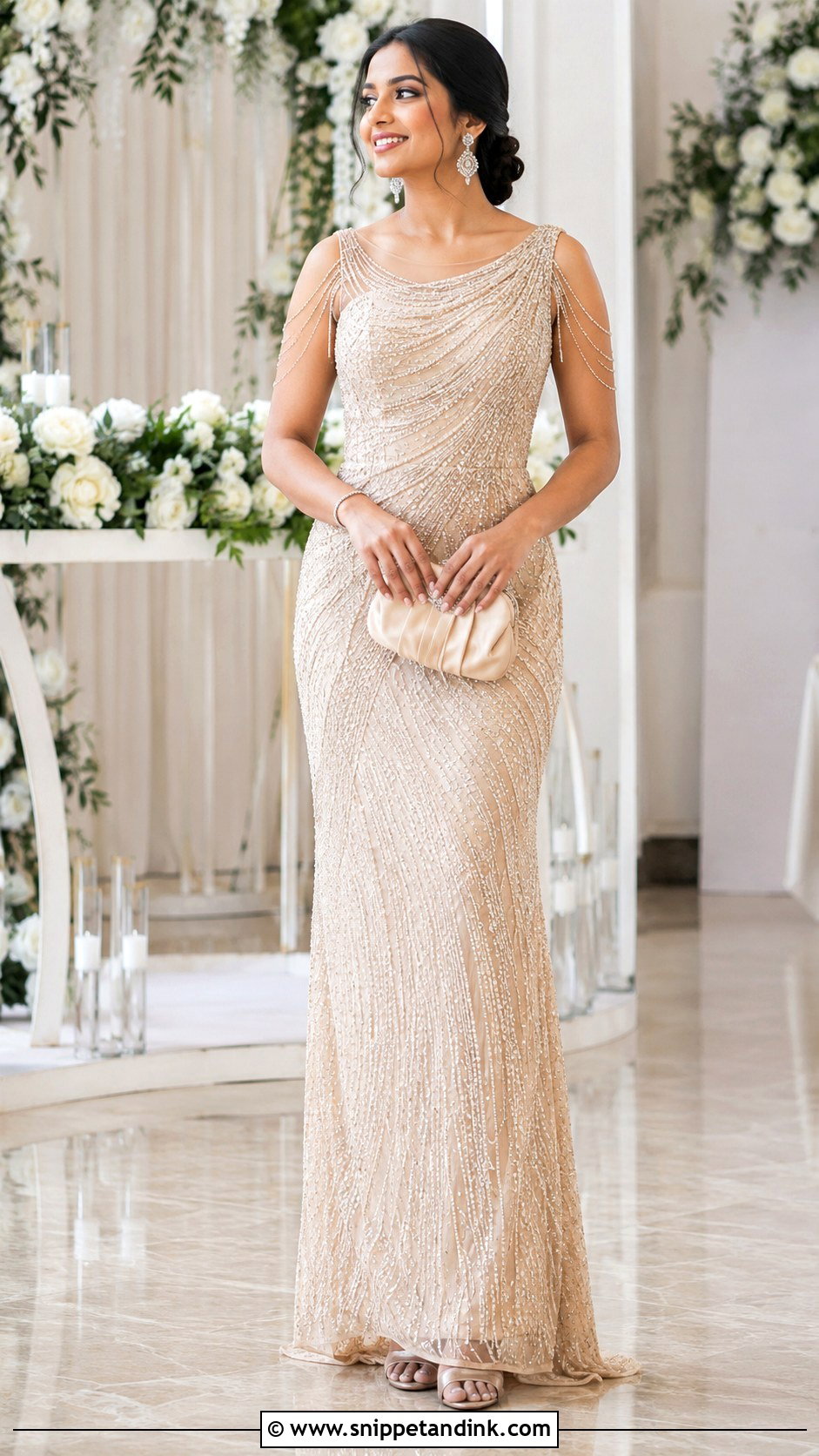
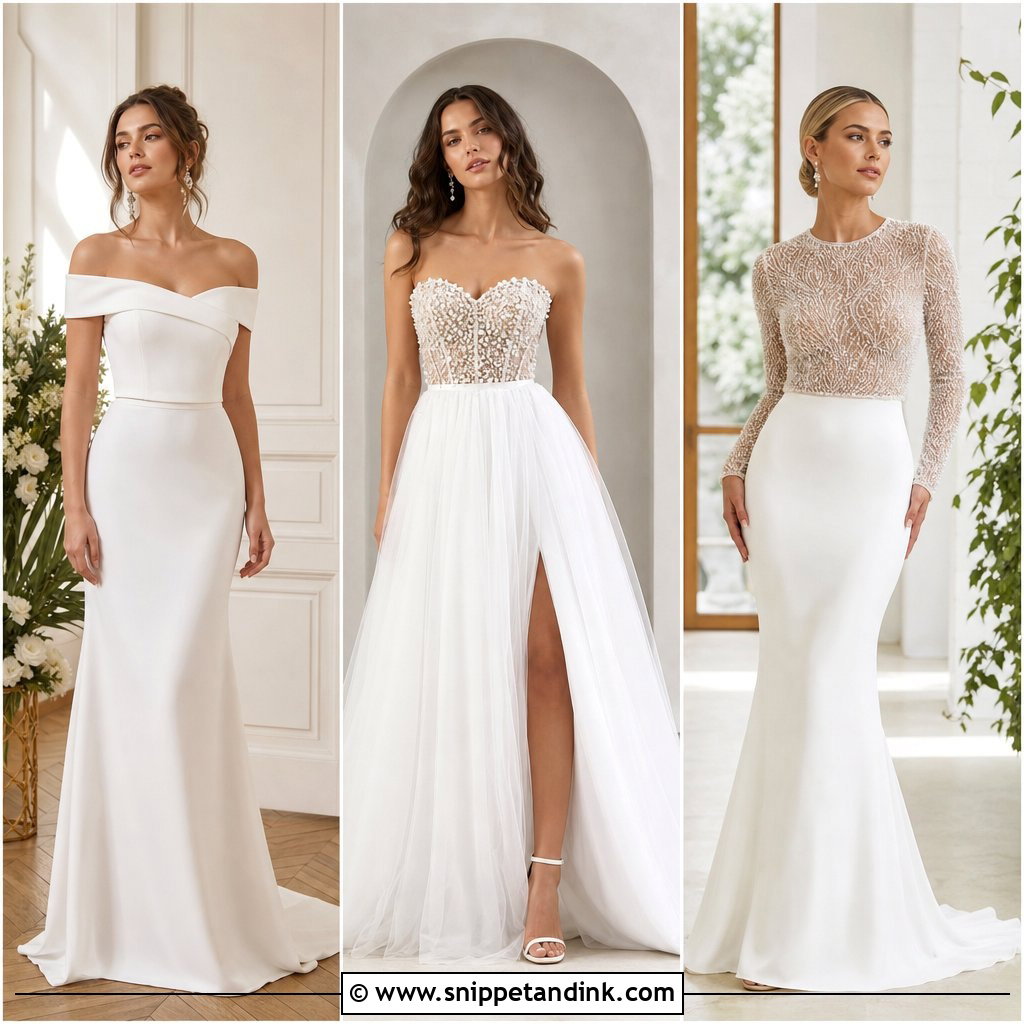
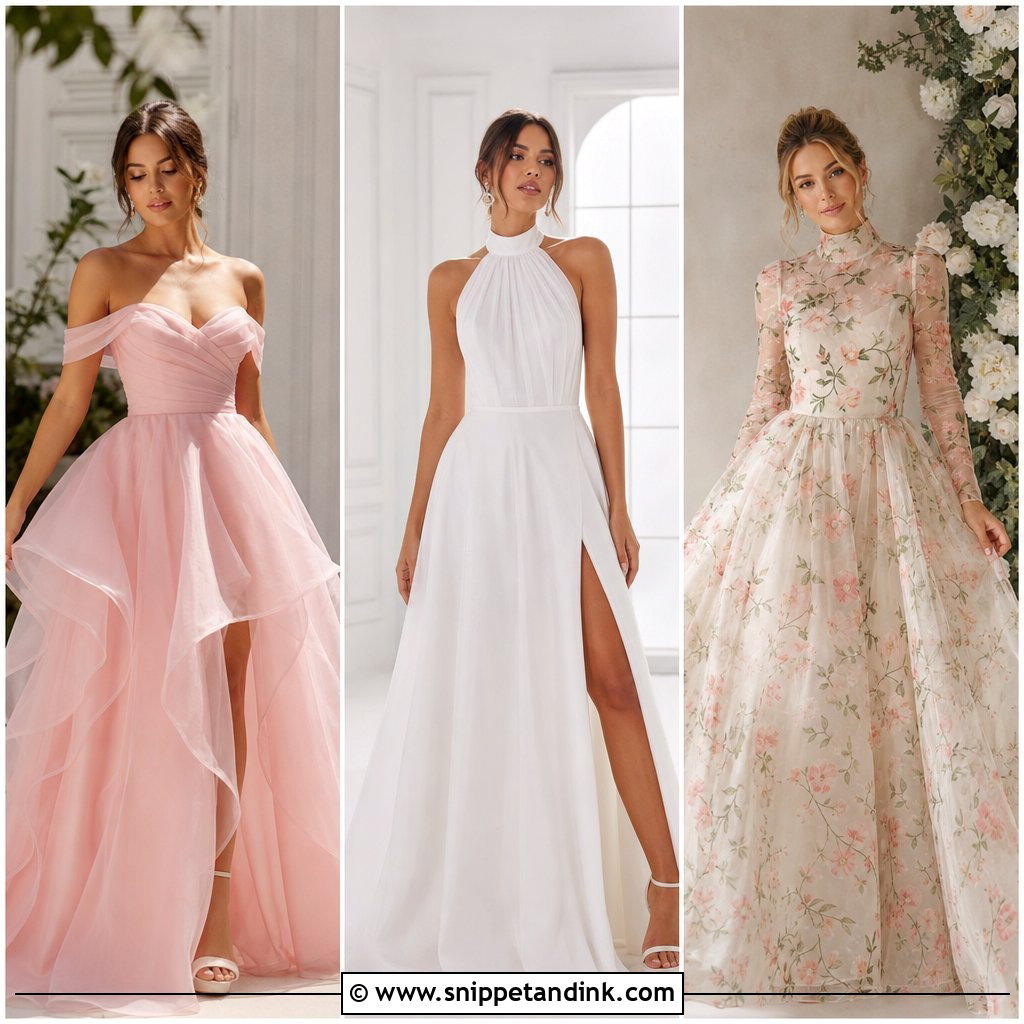
A reception gown gives a completely different evening look after the ceremony. Ivory, champagne, silver, blush or soft gold in a fitted or A-line shape stays bridal without competing with the wedding saree in photos. Beading, lace, pearls or clean satin all work. The practical win is speed: a gown with a zip and a hook takes a few minutes, compared with re-draping a saree. Crystal earrings, a bracelet and heels in the dress tone suit a sleek bun or waves.
10. Sri Lankan Bride Going Away Saree
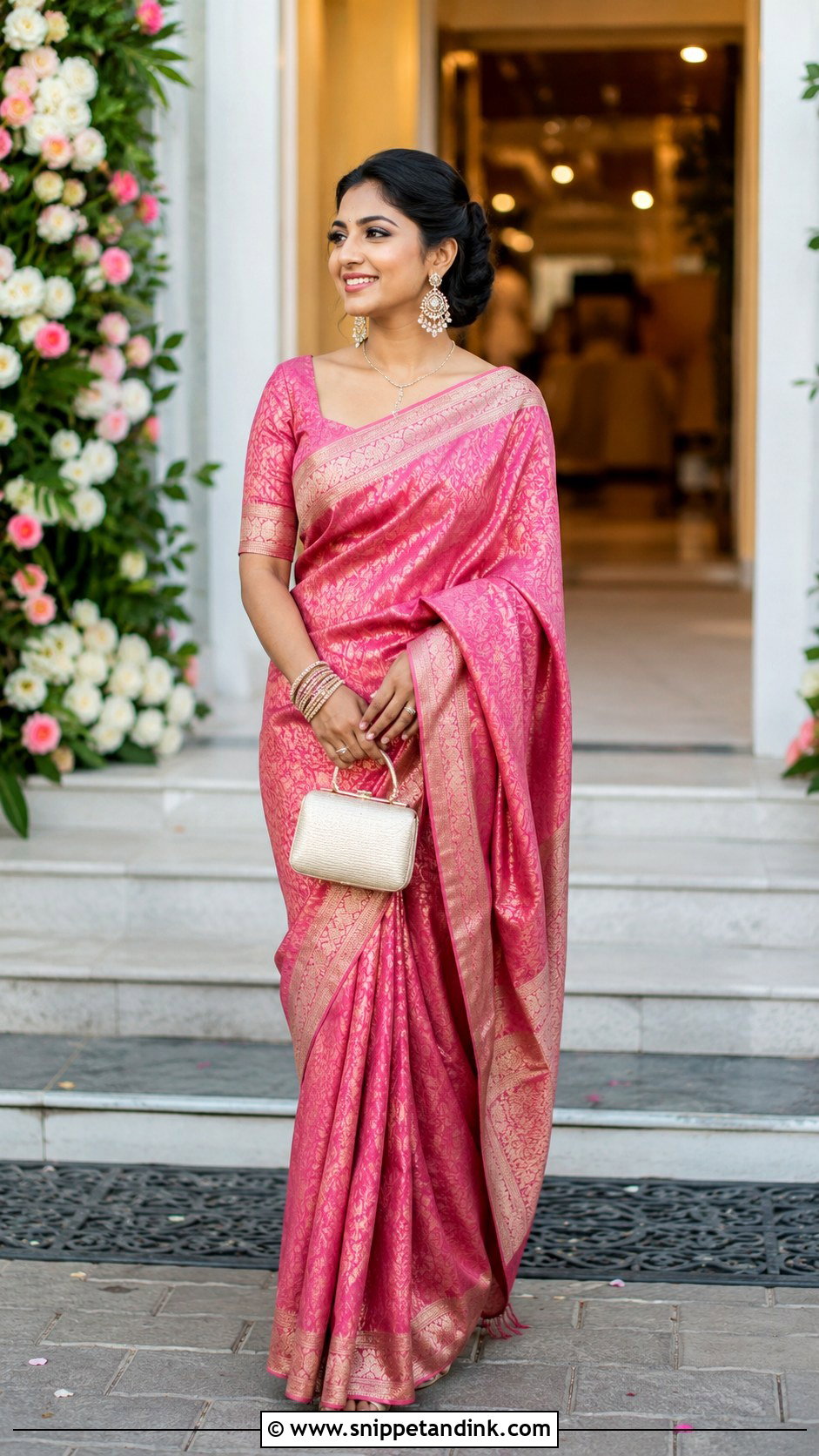
The going-away saree is usually lighter and brighter than the ceremony outfit, and that’s a good thing after a long day in heavy silk. Red, deep pink, teal, royal blue and maroon are common choices. A saree with metallic borders or soft embroidery, a comfortable blouse and a secure drape let you move freely. Because it’s worn later, the makeup can go bolder, with a brighter lip or more defined eyes. Statement earrings, bangles and a small handbag finish it.
11. Sri Lankan Bride Handloom Saree
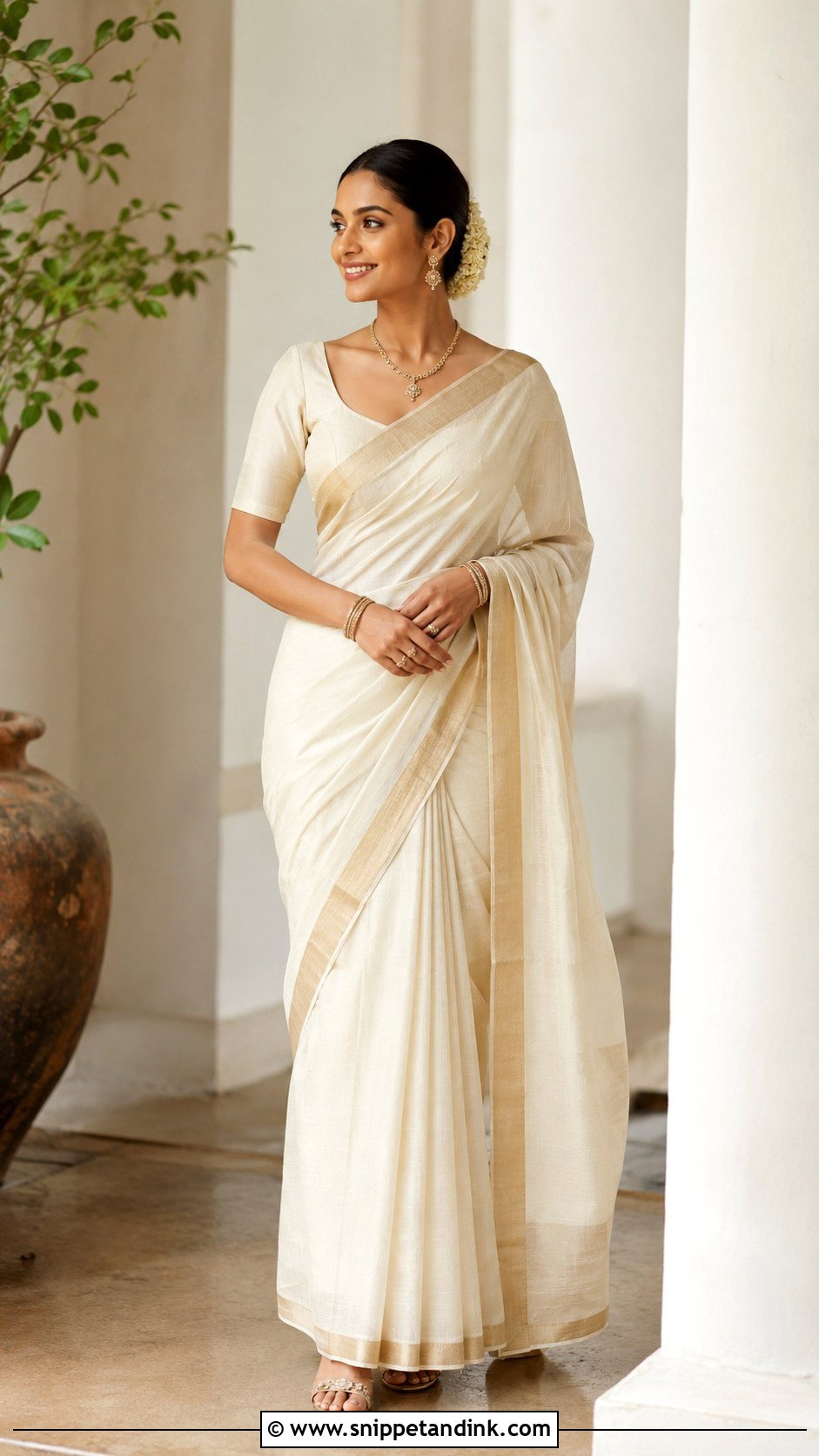
Handloom sarees have a slight irregularity in the weave that machine fabric doesn’t, and that texture is the whole appeal. Ivory, beige, blush, muted gold or a soft pastel with a refined border all work. Handloom cotton is cooler than silk, which matters at an outdoor ceremony. Keep the blouse simply tailored so the fabric stands out. Traditional gold, pearls or handcrafted accessories suit it, along with a natural bun with fresh flowers and low heels.
12. Sri Lankan Bride Batik Saree
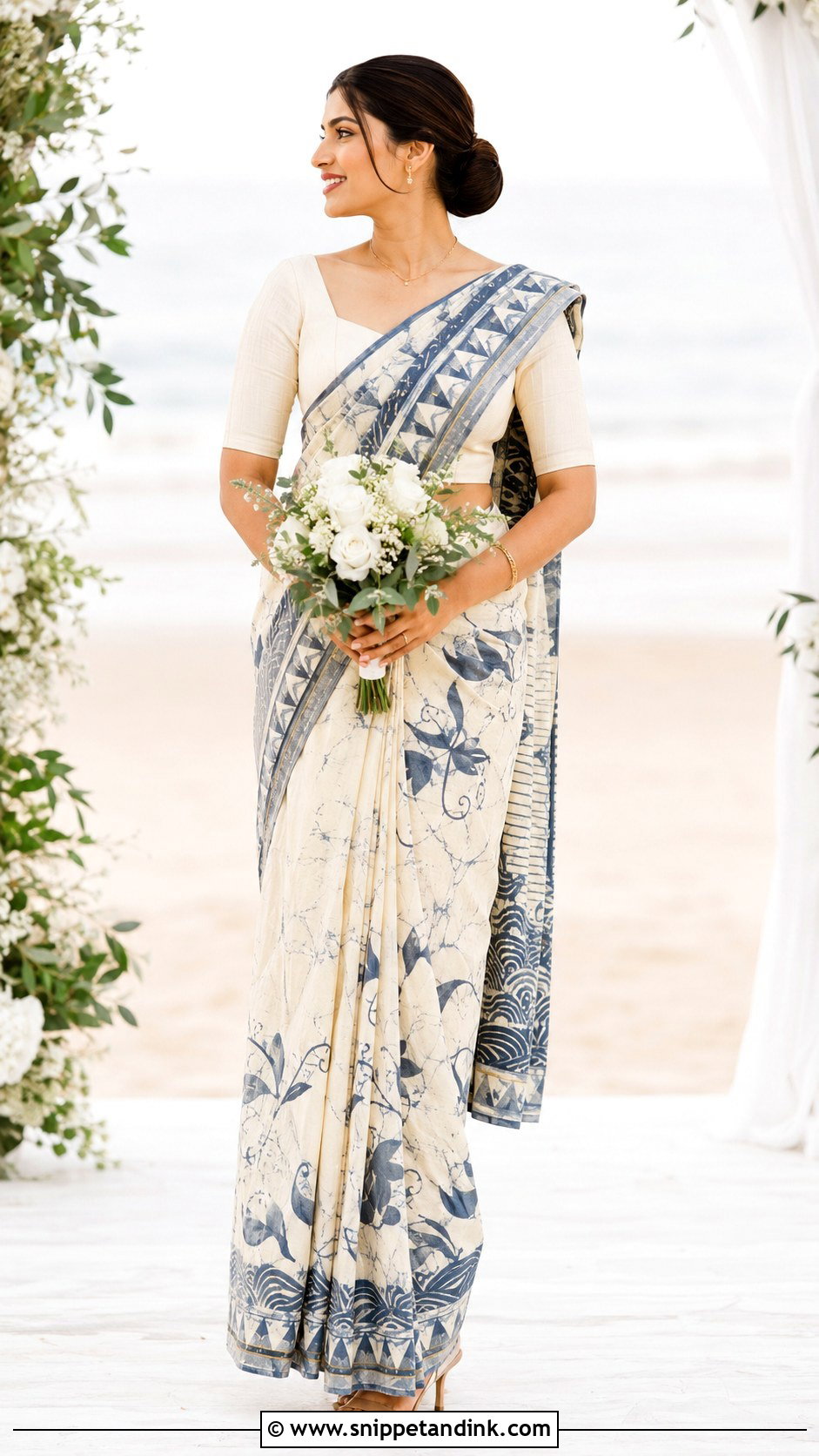
Batik is a craft many Sri Lankans grew up seeing, which makes a Sri Lankan bride batik saree a personal choice. I’d look for a refined design in ivory, gold, blush, blue or earthy tones rather than a busy print, which tends to dominate every photo. Batik on silk drapes better than batik on cotton. The blouse can be plain, embroidered or cut from a coordinating batik. Minimal gold jewelry, a neat hairstyle and clean makeup let the pattern lead at a beach or destination wedding.
13. Sri Lankan Bride Lace Saree
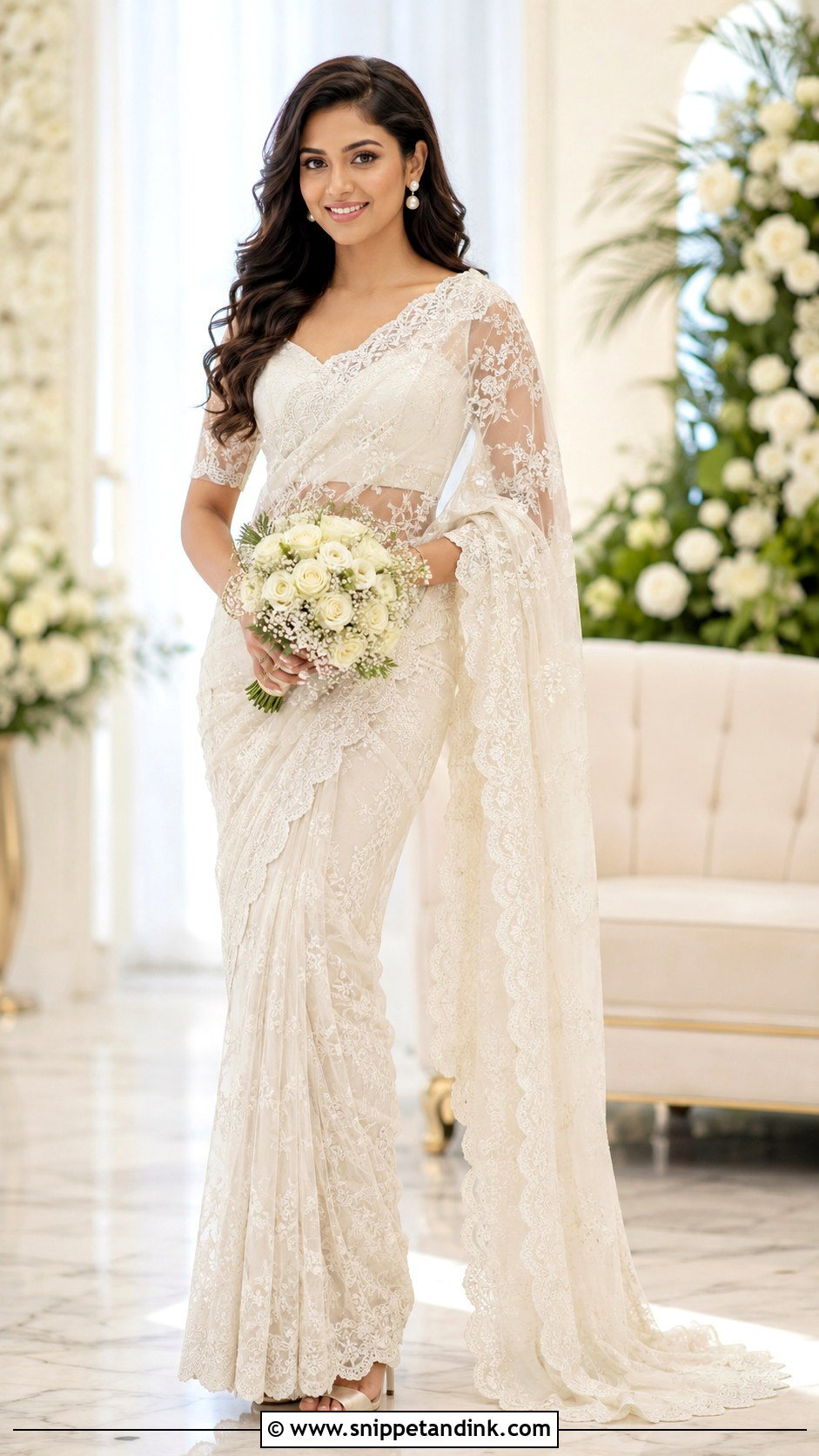
Lace sarees feel soft and romantic, especially in ivory, white, champagne or blush with a little beading. The challenge is drape: lace is less fluid than silk, so the pleats need more pinning to sit flat. A matching blouse with sheer sleeves or scalloped edges gives a feminine finish. With that much texture, I’d keep the jewelry to pearl earrings, a slim necklace and a few bangles. A soft updo and satin heels suit indoor receptions and formal ceremonies.
14. Sri Lankan Bride Pearl Saree
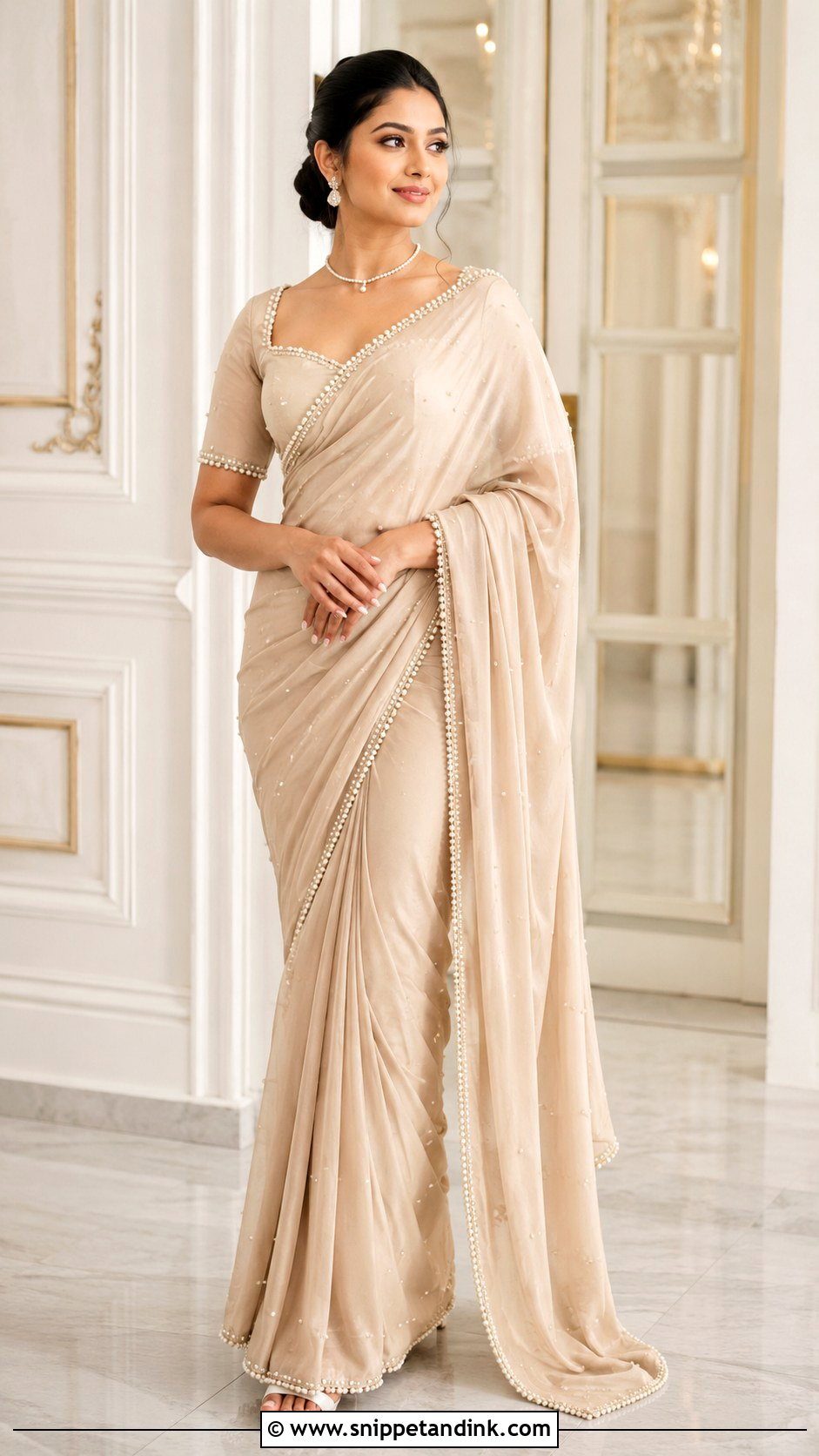
Pearl work gives a saree a soft glow rather than a shine. An ivory or champagne saree with scattered pearls, a pearl-trimmed border and a matching blouse reads delicate and current. I’d pair it with pearl earrings and a soft necklace rather than heavy gold layers, which overwhelm the embellishment. Sewn pearls can snag on bangles, so check that they’re stitched securely before the day. A clean bun, glowing makeup and soft pink lips suit bright daylight ceremonies.
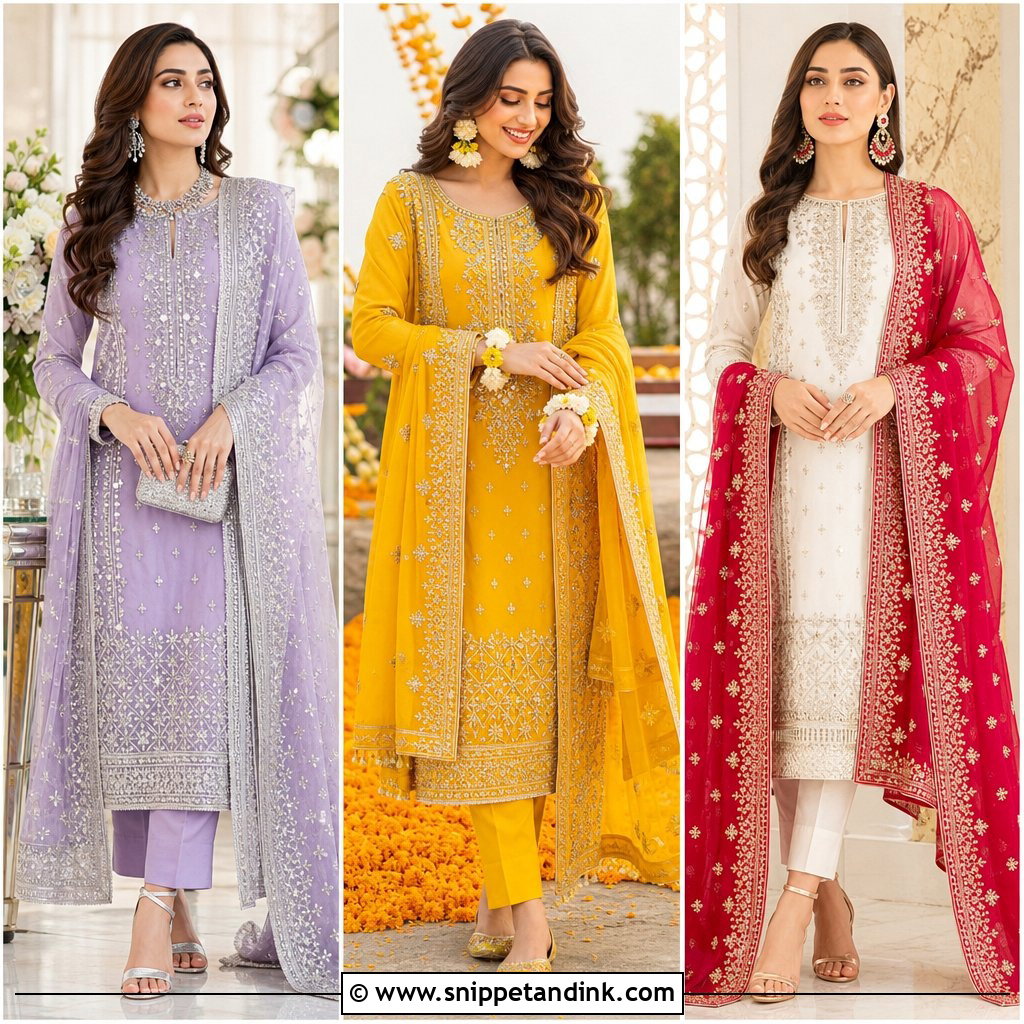
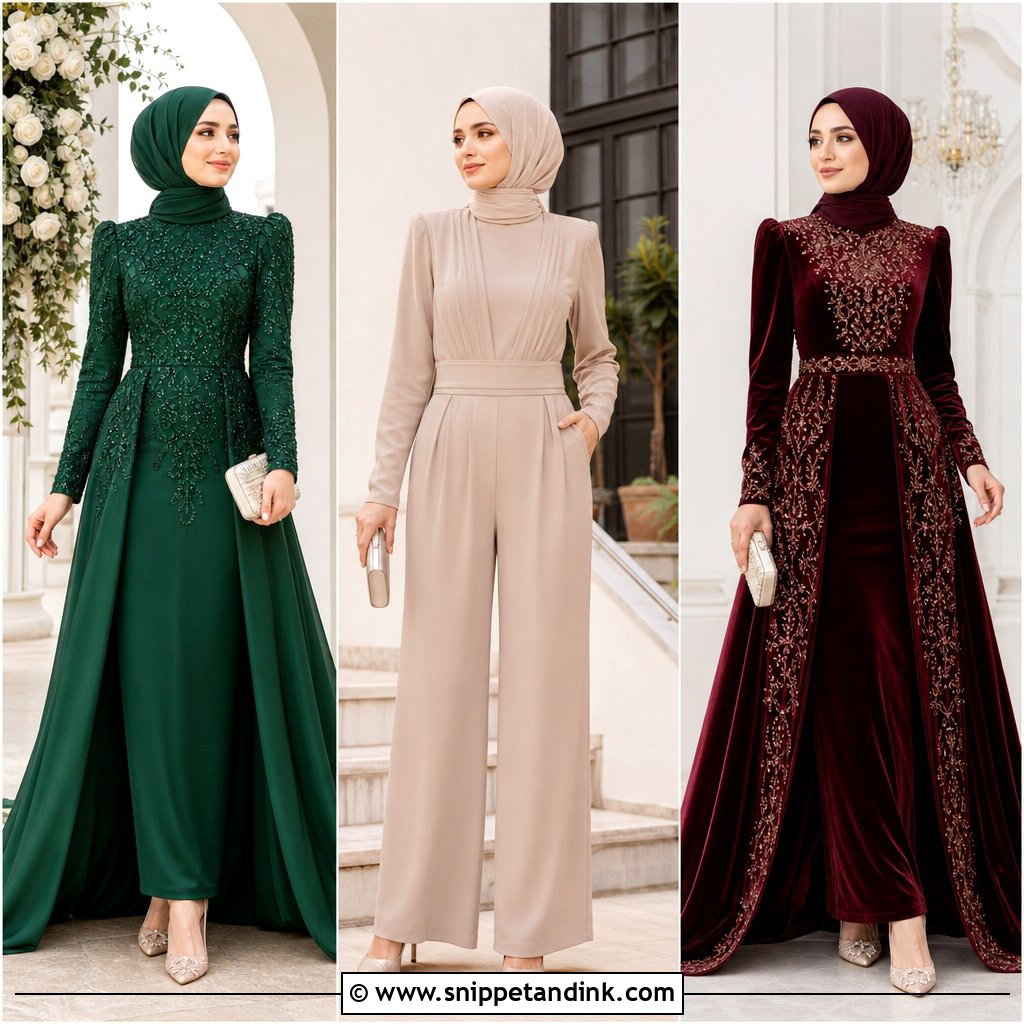
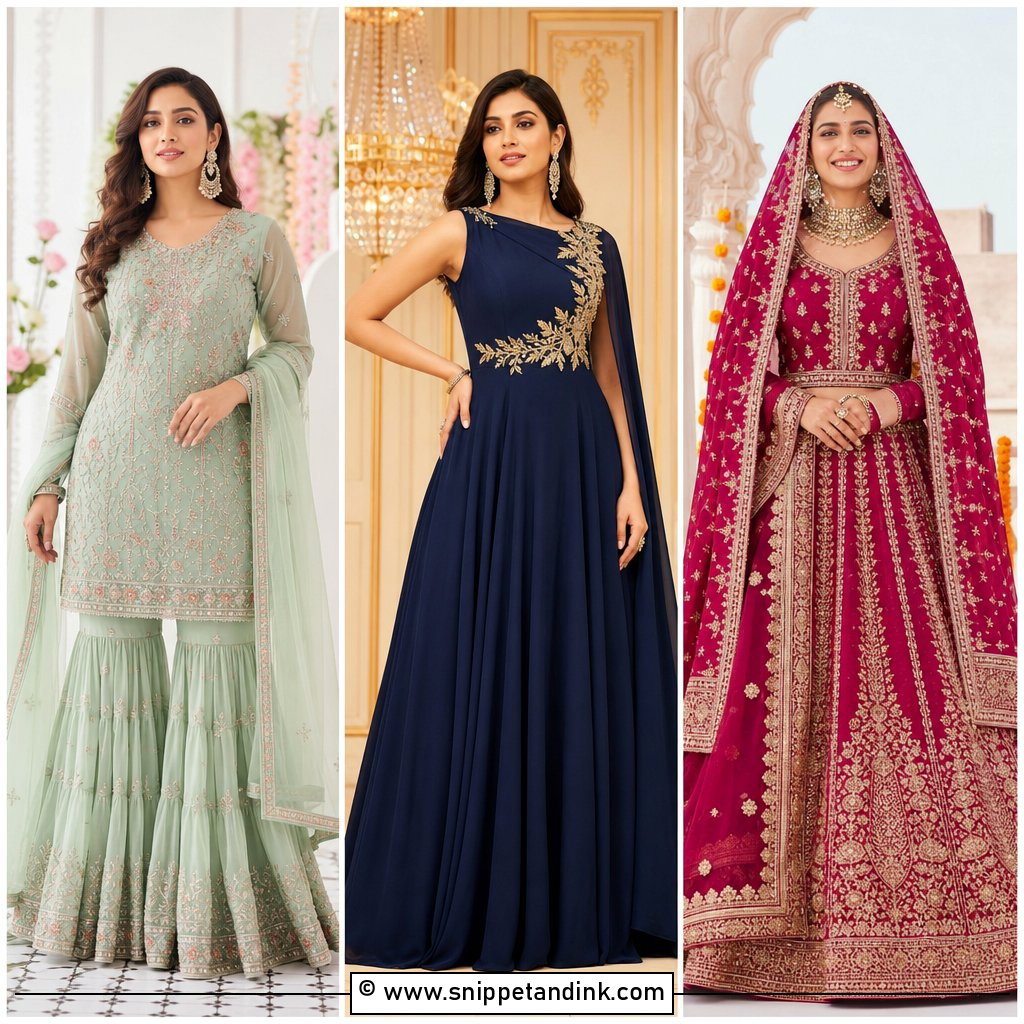
15. Sri Lankan Bride Embroidered Saree
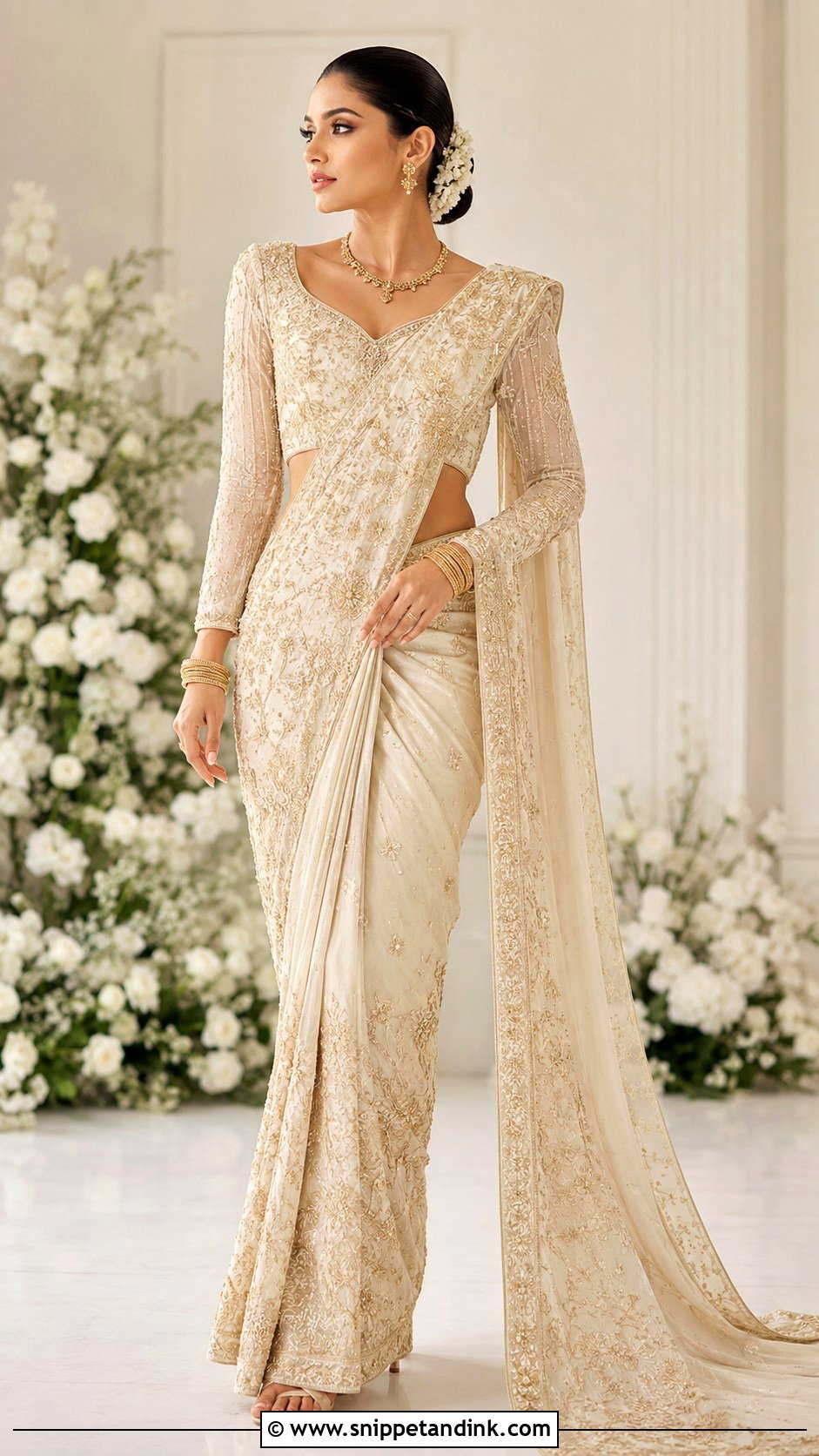
Heavy embroidery adds real weight. I always warn brides that a fully worked saree can feel noticeably heavier by the end of the ceremony, so comfortable heels and a well-fitted blouse that spreads the load matter. Embroidery that follows the border, sleeves and pallu connects the whole outfit. Ivory with gold, blush with silver and red with antique gold are classic combinations. Match the jewelry to the embroidery tone, and keep hair and makeup neat so they don’t compete.
16. Sri Lankan Bride Minimal Saree
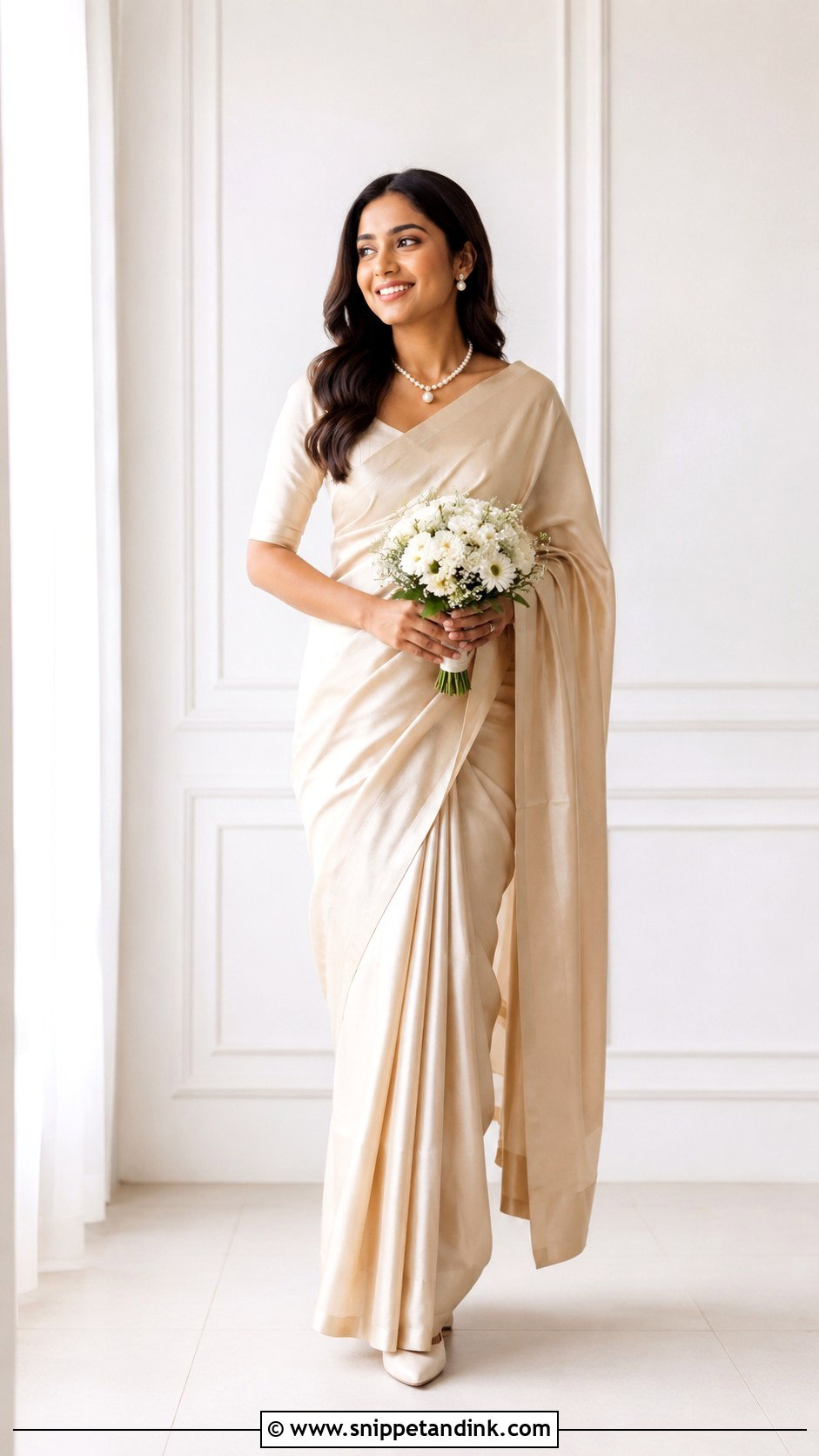
Minimal sarees rely entirely on fit. Plain silk, satin or handloom in ivory, champagne, blush or soft gold with a clean border has nothing to distract from a badly cut blouse, so I’d book an extra fitting for the blouse alone. Add one statement element, such as a necklace, pearl earrings or a hair accessory. Fresh, skin-focused makeup and a sleek bun or smooth waves keep it clean. Civil ceremonies and intimate weddings suit this quiet approach.
17. Sri Lankan Bride Modern Blouse Saree
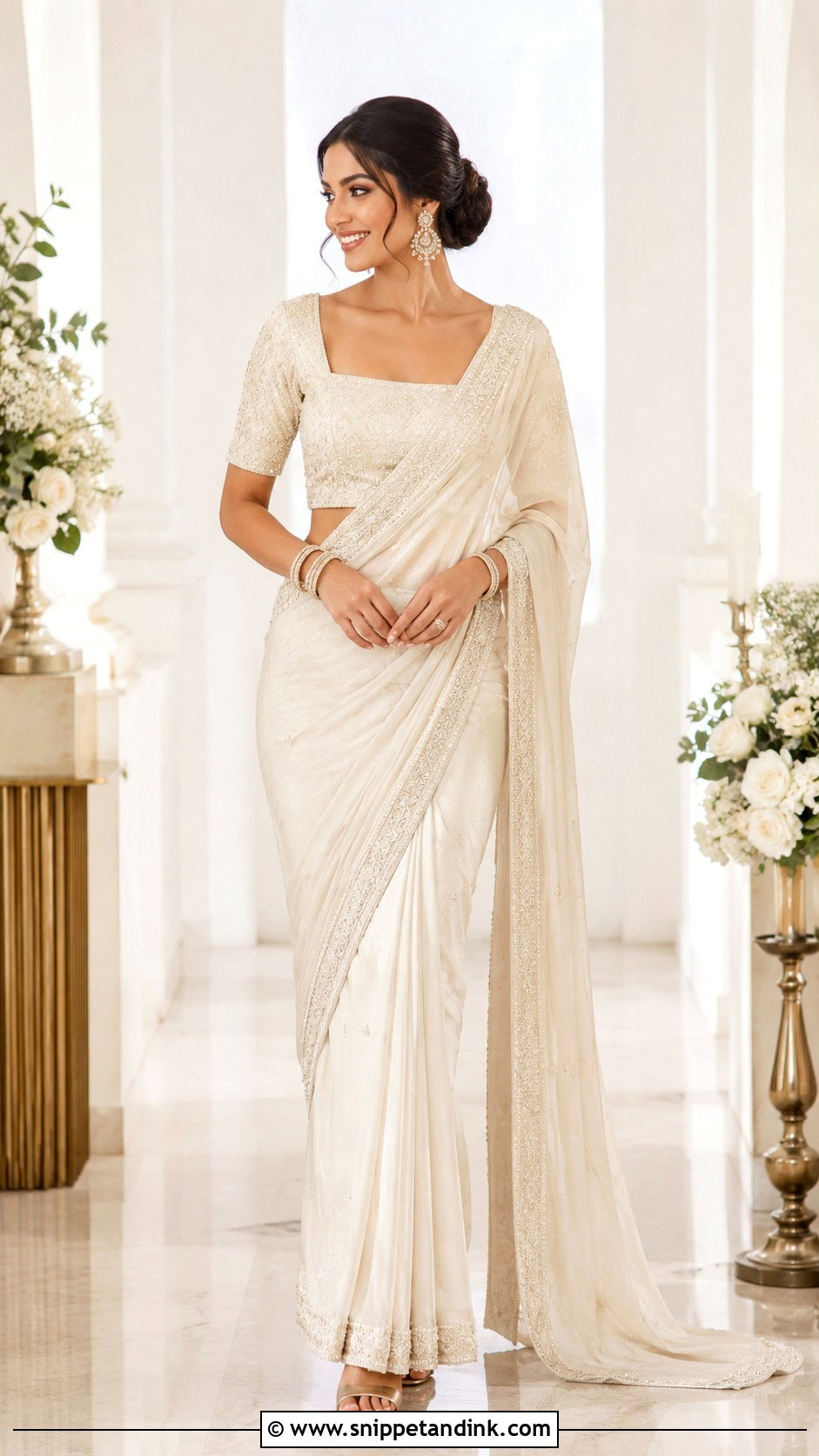
The blouse is the easiest place to make a traditional saree feel current. Structured sleeves, a square neckline, sheer panels or refined embroidery all update an osariya or bridal saree in ivory, gold, pastel or red. Balance is the rule I follow: if the blouse is dramatic, keep the drape and jewelry controlled. Check with your family first if you’re wearing a Kandyan drape, since some elders have firm views on blouse cuts. Earrings, bangles and a hair accessory should match the saree’s color story.
18. Sri Lankan Bride Veil Saree
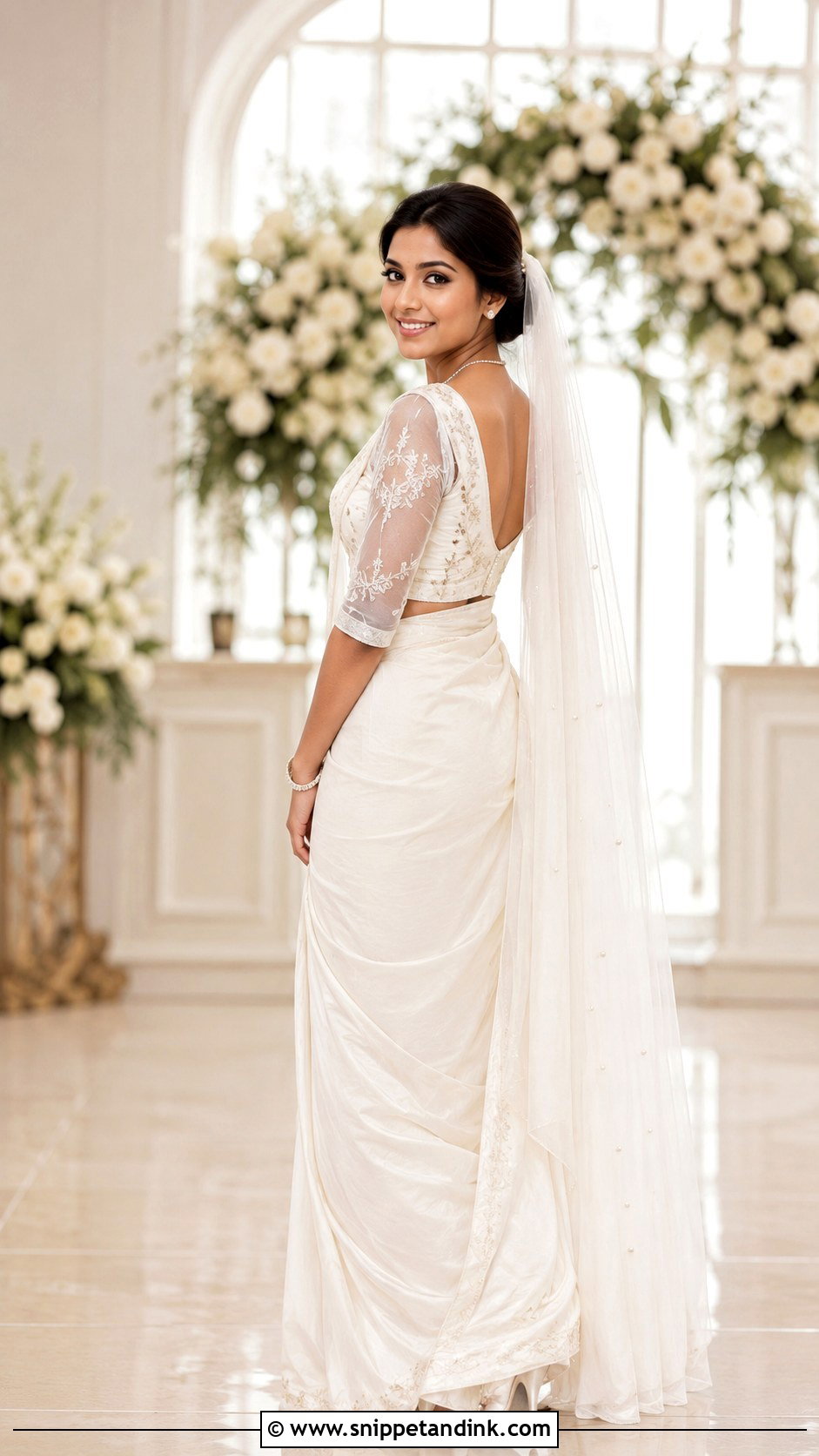
A veil adds a soft, Western-style touch to a saree. I’d choose an ivory, white, champagne or pastel saree and a light veil anchored to a bun, the crown or a comb. The veil must be sheer enough not to hide the embroidery or jewelry, and short enough not to tangle with the pallu. Pearl or gold accessories, elegant heels and luminous makeup suit it. A small bouquet works if your ceremony includes one.
19. Sri Lankan Bride Crown Look
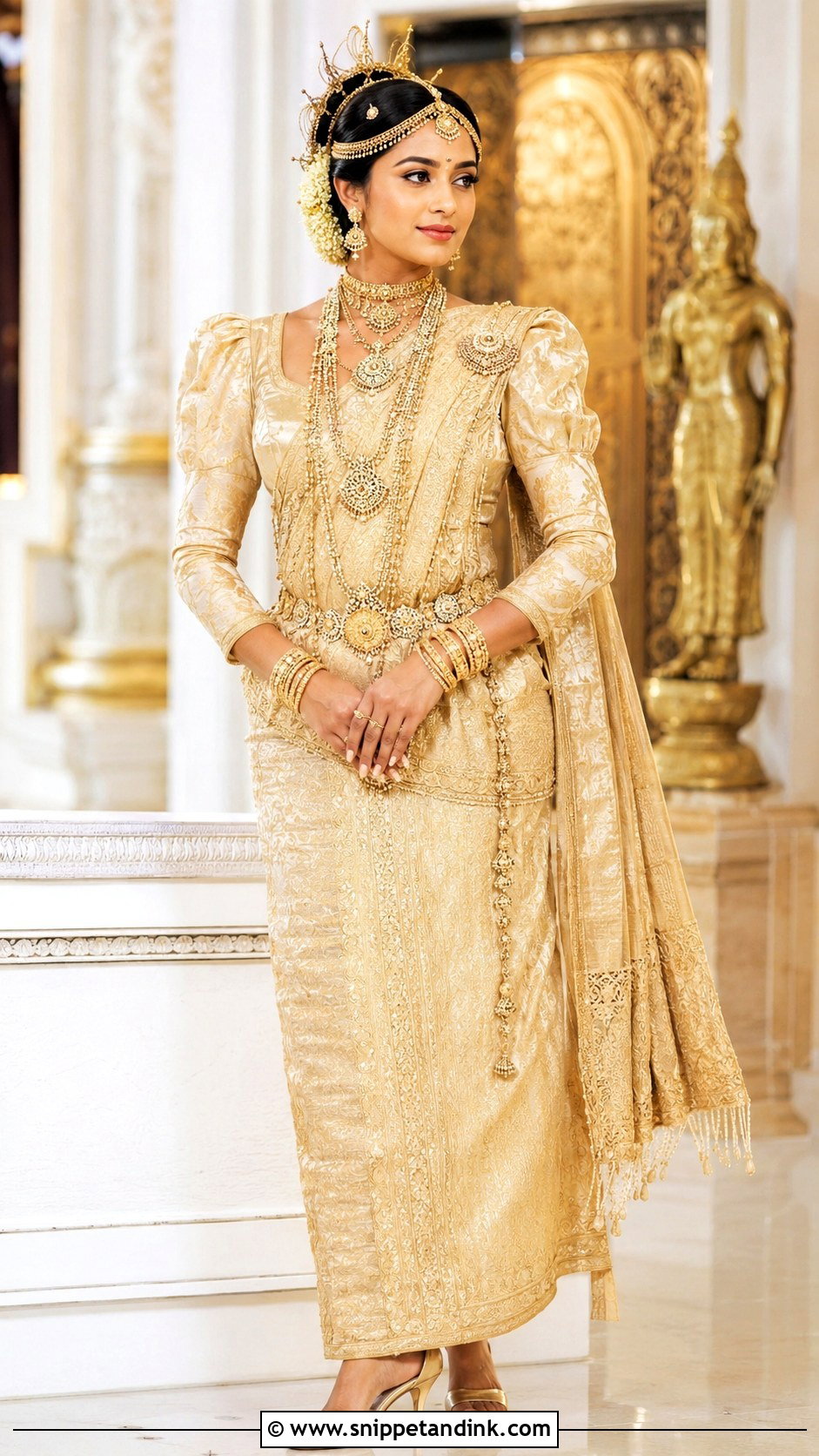
Crowns and crown-style headpieces are heavy, and they need a firm base. A smooth bun or structured updo with plenty of pins is what keeps them steady through a long ceremony. Kandyan osariyas, silk sarees and embellished bridal sarees in ivory, gold or deep red all suit the look. Match the earrings and necklaces to the crown’s metal tone, and skip other hair accessories so the crown stays the focus. Portraits and entrance photos are where it shows best.

20. Sri Lankan Bride Floral Hair Saree
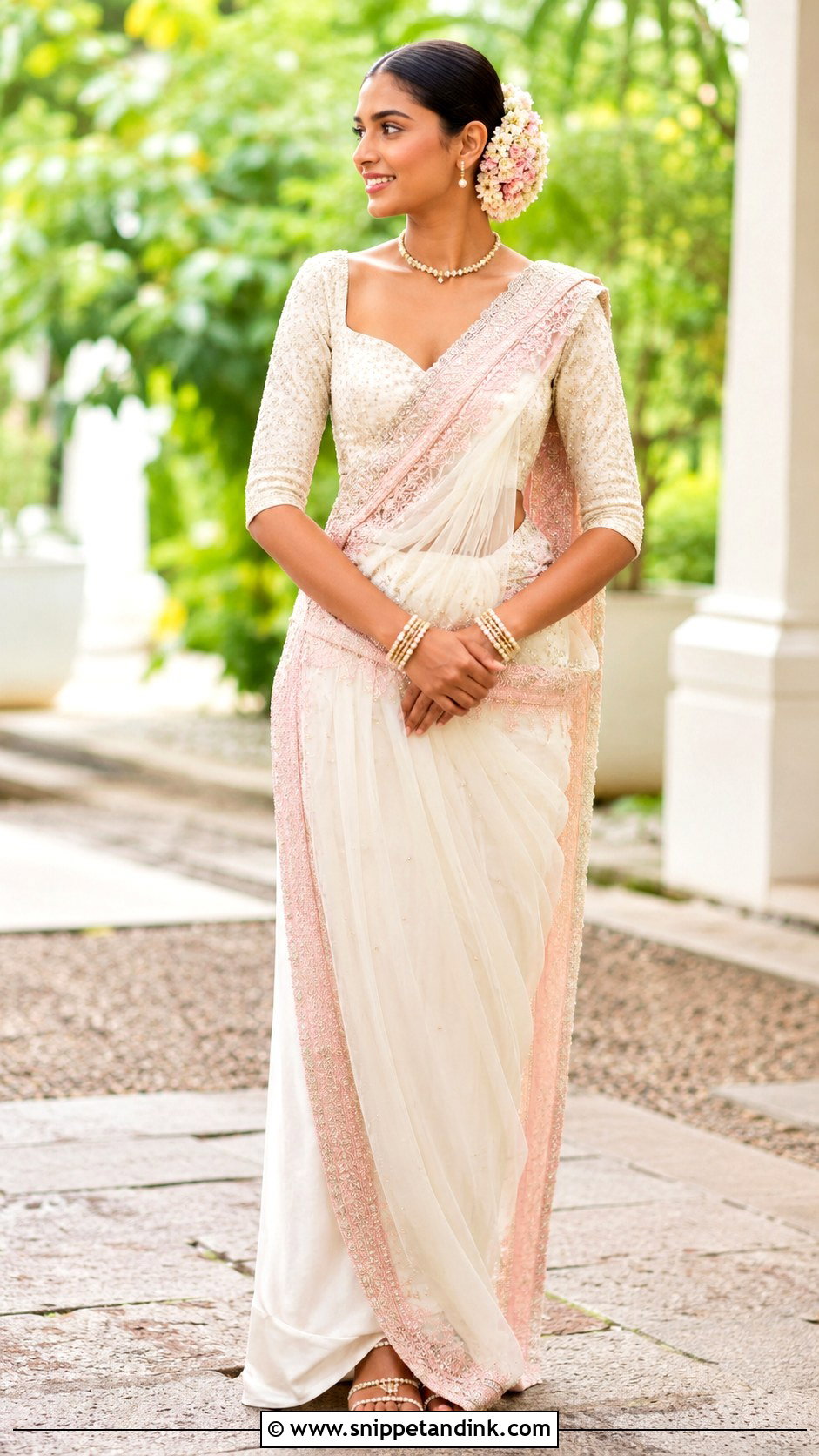
Fresh flowers in the hair are traditional across Sri Lankan weddings, and jasmine is the classic. It smells wonderful and it wilts in heat, so I have the flowers strung on the morning and kept cool until the last moment. Orchids and roses hold up longer. A bun, braid or half-up style can all carry them, as long as the flowers don’t cover the blouse or neckline. Gold or pearl earrings, bangles and heels complete it for daytime, garden or beach ceremonies.
21. Sri Lankan Bride Beach Wedding Saree
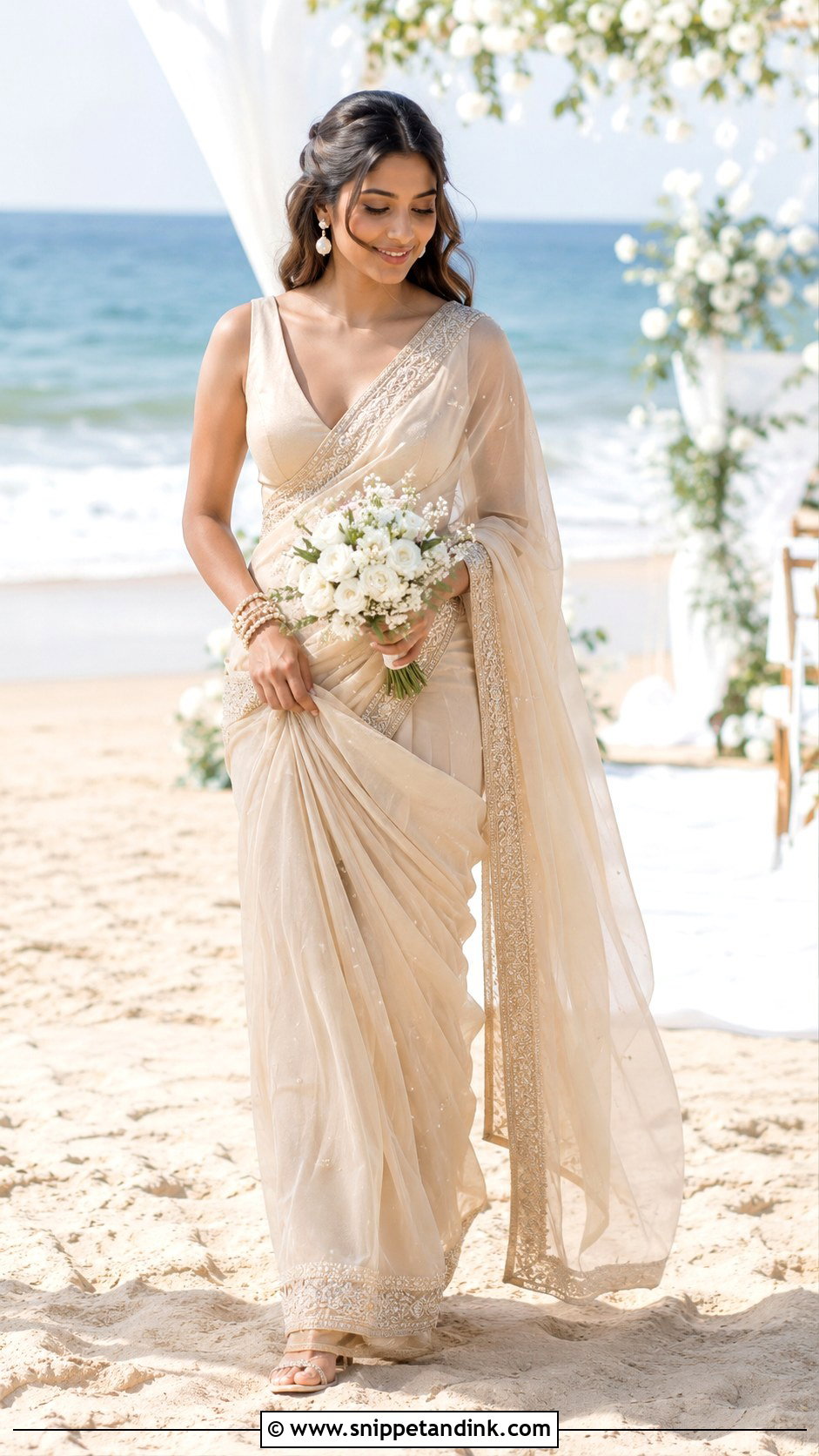
Coastal heat and wind change the fabric choice completely. Chiffon, georgette, organza or soft silk in ivory, champagne, blush, sea blue or pale gold stays lighter than brocade. Heavy borders and trailing pallus pick up sand, so I’d keep the hem a touch shorter and pin the pallu firmly. A lighter blouse helps. Pearl jewelry, delicate bangles, low block heels and fresh makeup suit the setting, and waves or a soft bun can stand up to the breeze.
22. Sri Lankan Bride Garden Wedding Saree
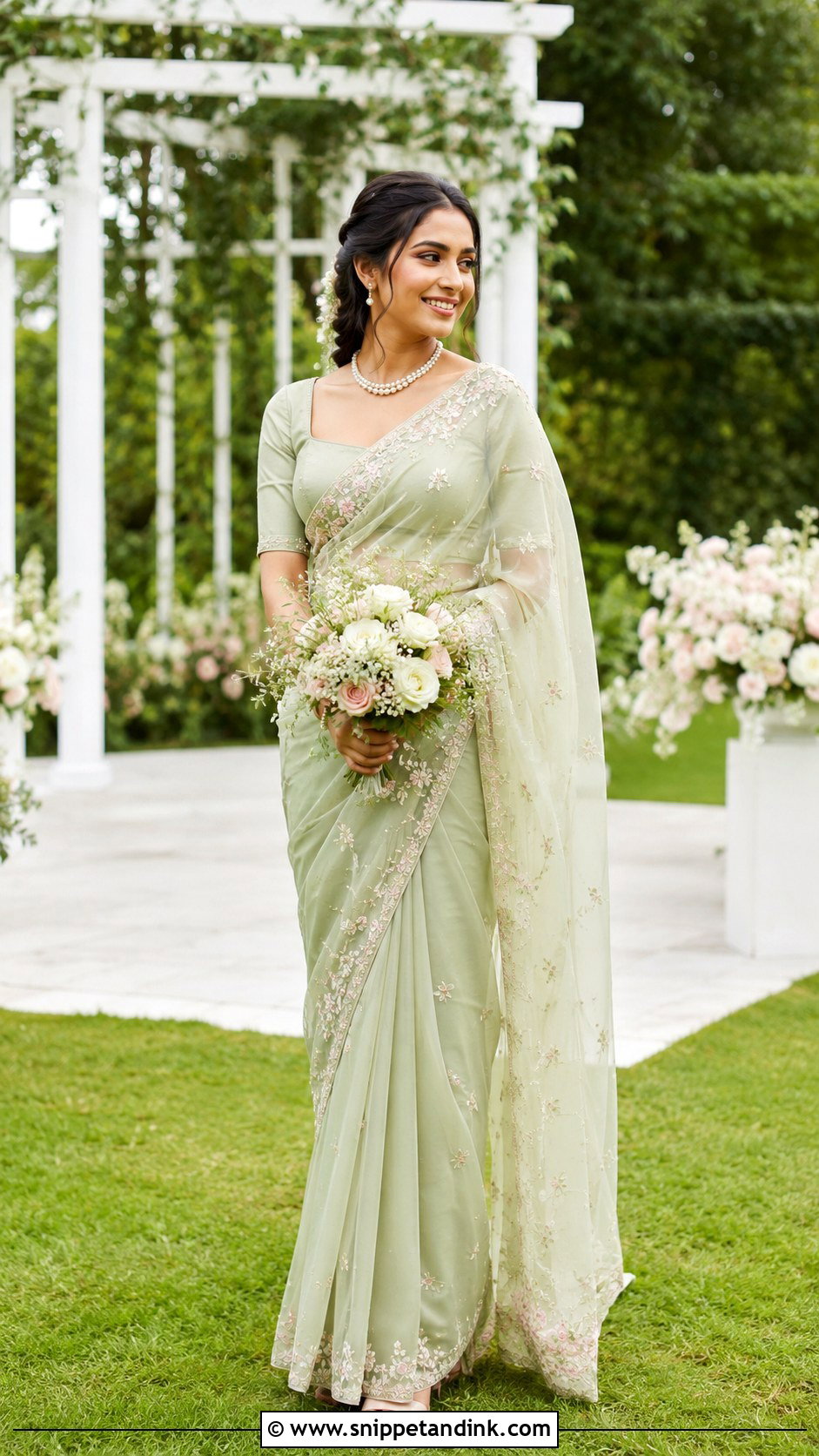
Greenery suits pastel sarees: pink, sage, ivory, lavender and champagne all stand out against it. Floral embroidery, pearl accents or a light metallic border tie the outfit to the setting. On grass, block heels or wedges are a must, and I’d pin the pleats a little higher so the hem clears damp lawn. Gold, pearl or crystal jewelry and a floral bun or soft braid complete a comfortable outdoor look.
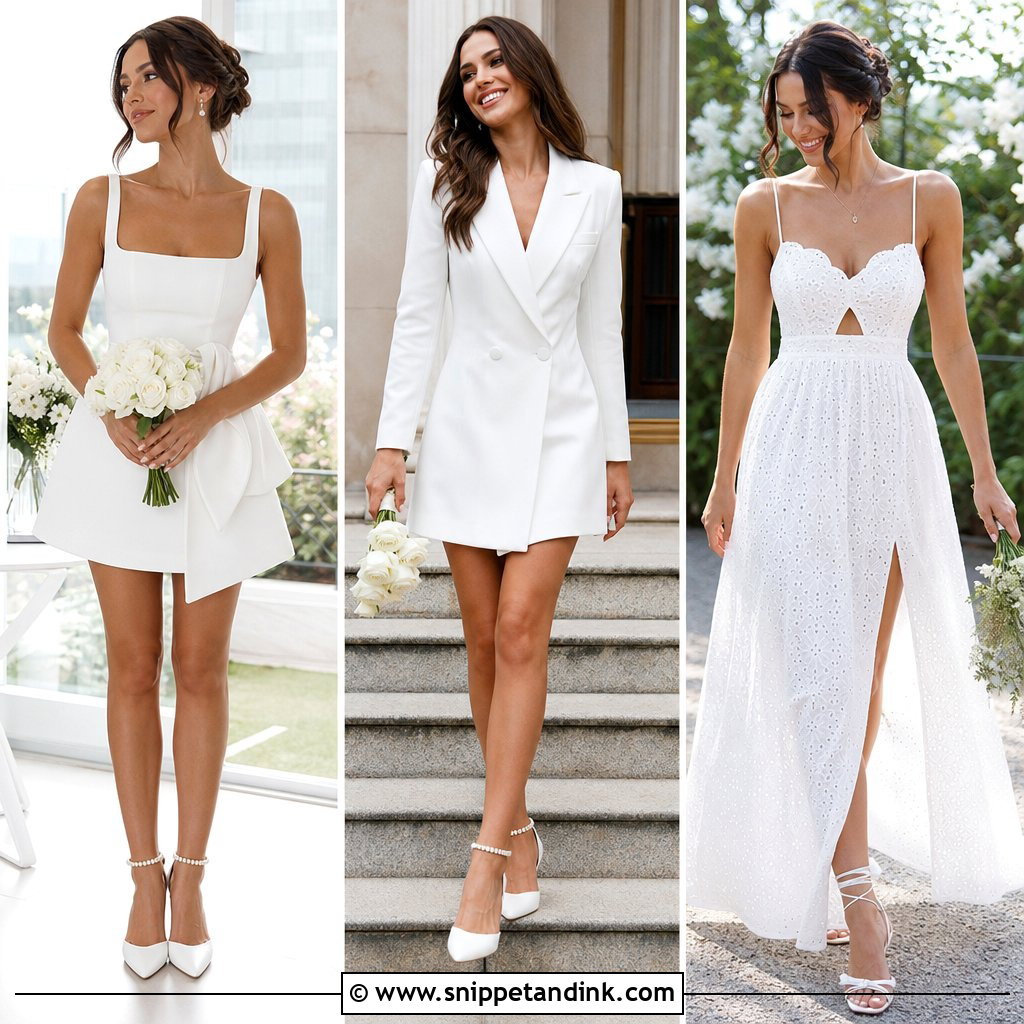
23. Sri Lankan Bride Civil Ceremony Outfit
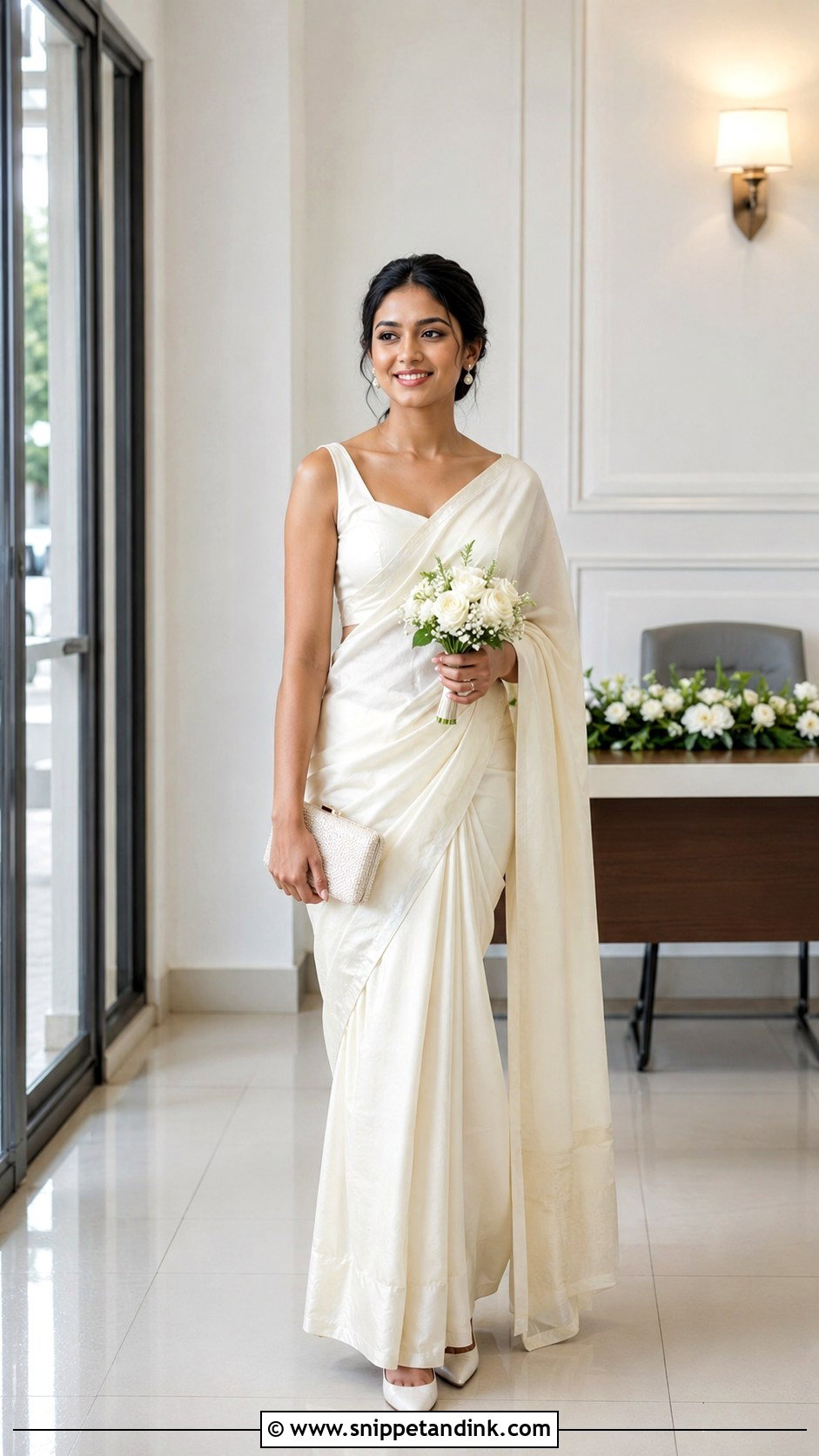
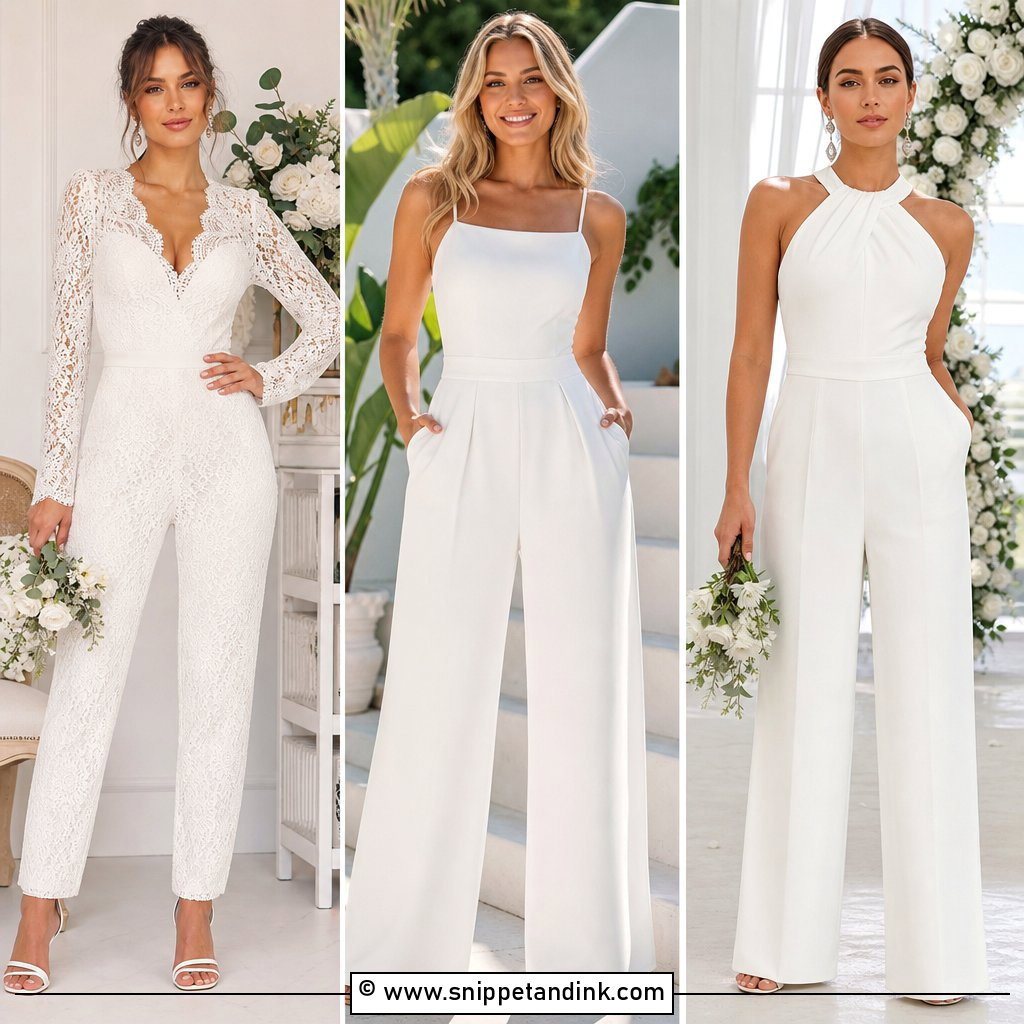
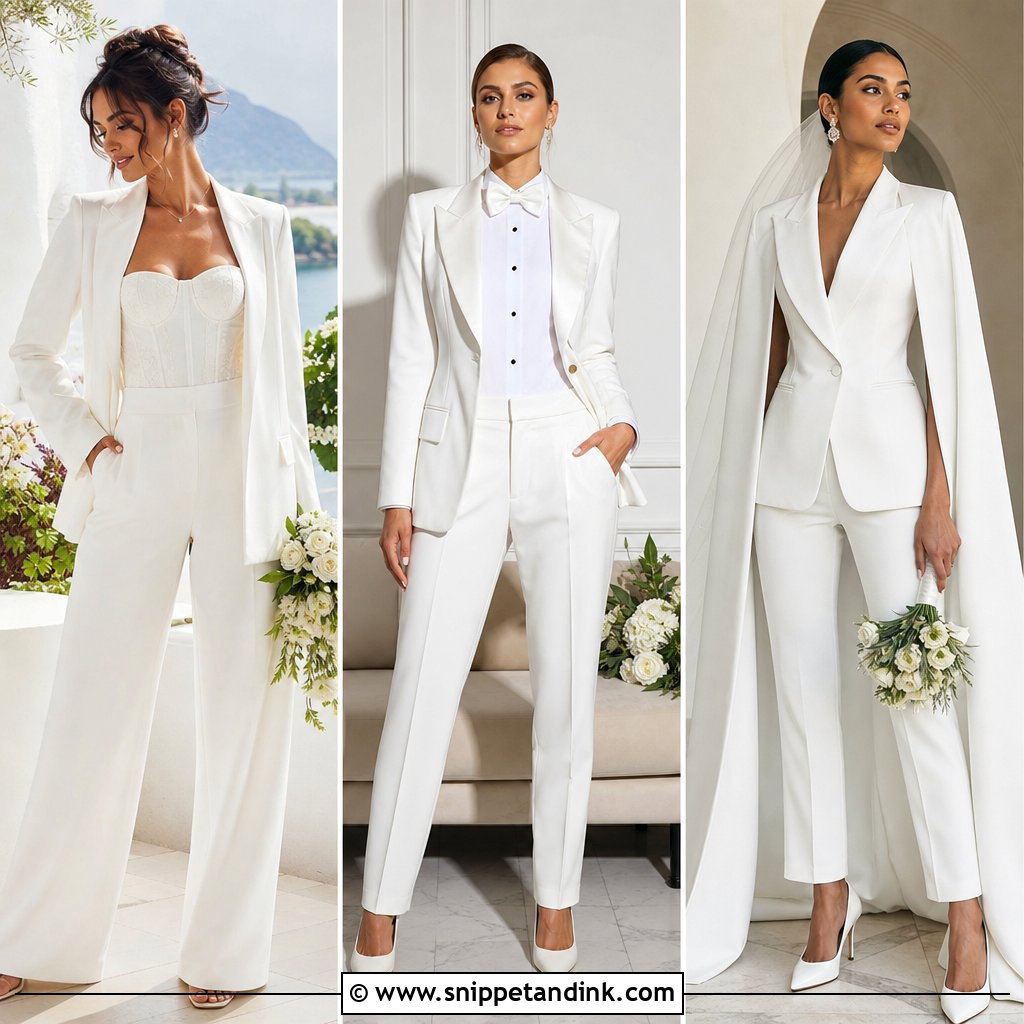
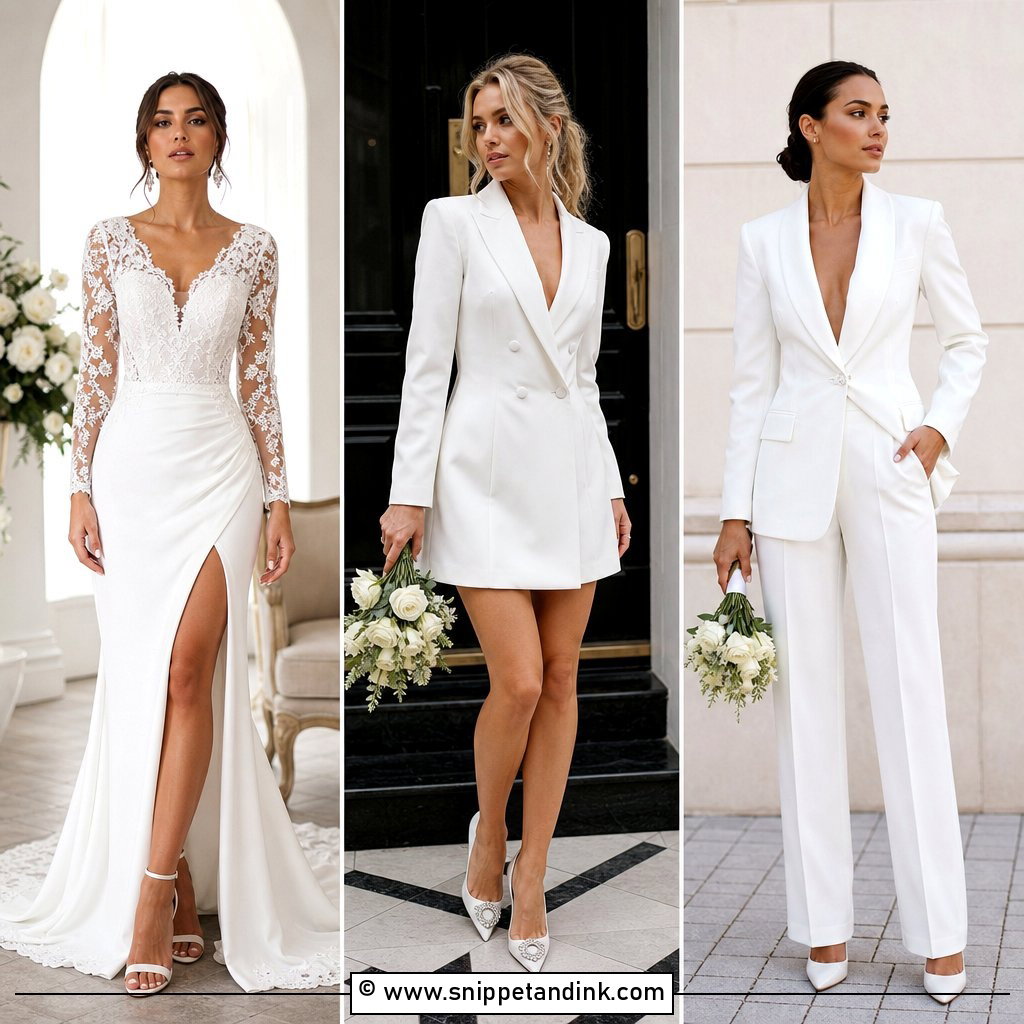
Civil ceremonies are often held on a different day from the main wedding, so the outfit can be lighter. A minimal saree, a tailored white dress, a soft pastel suit or a simple gown all work. For a saree, choose ivory, blush, champagne or pale gold with a clean blouse and delicate jewelry. A dress should be polished and modest enough for the registrar’s office. Pointed heels, pearl earrings, a small clutch and soft makeup keep it looking bridal in photos.
24. Sri Lankan Bride Plus Size Saree
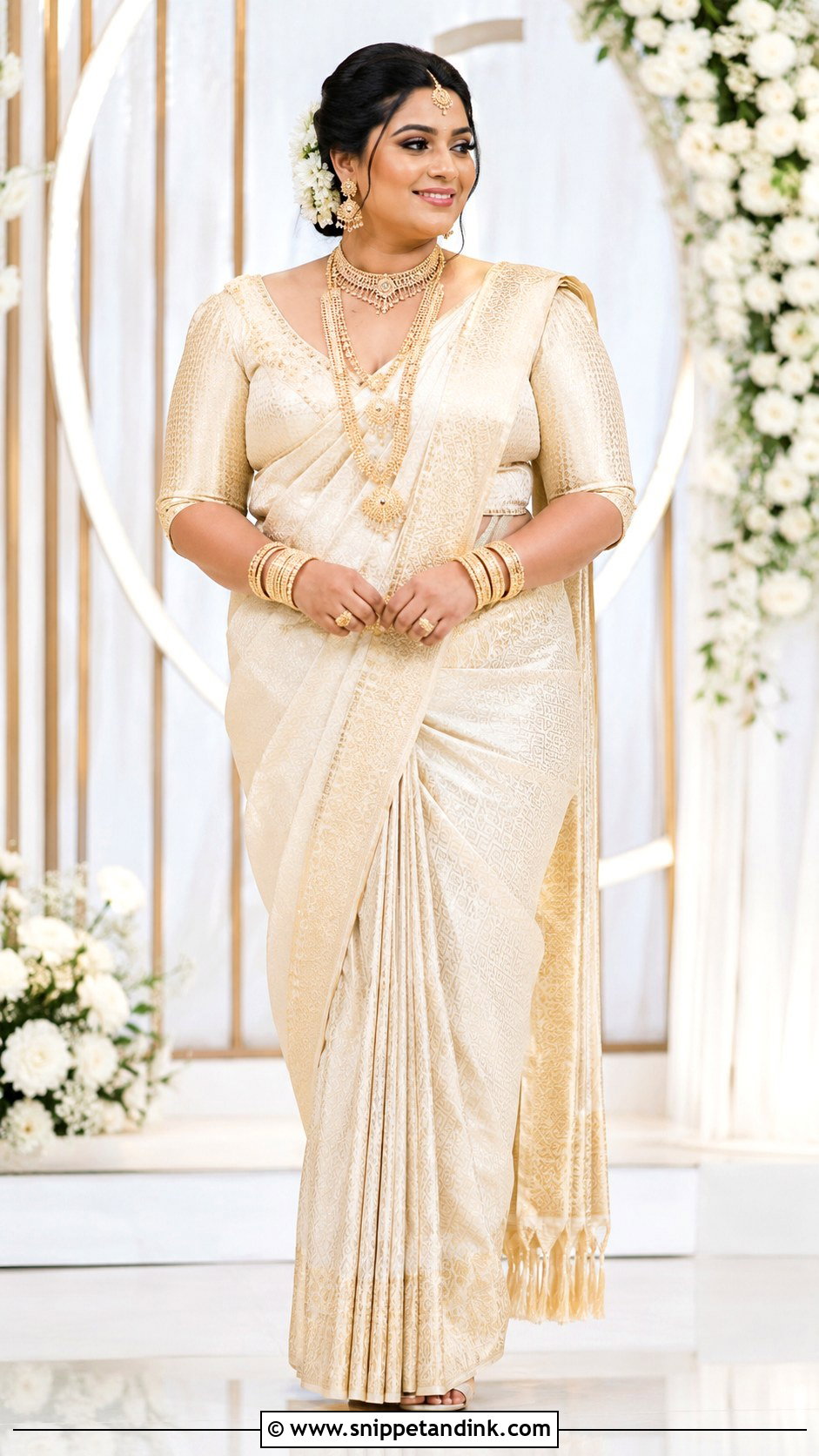
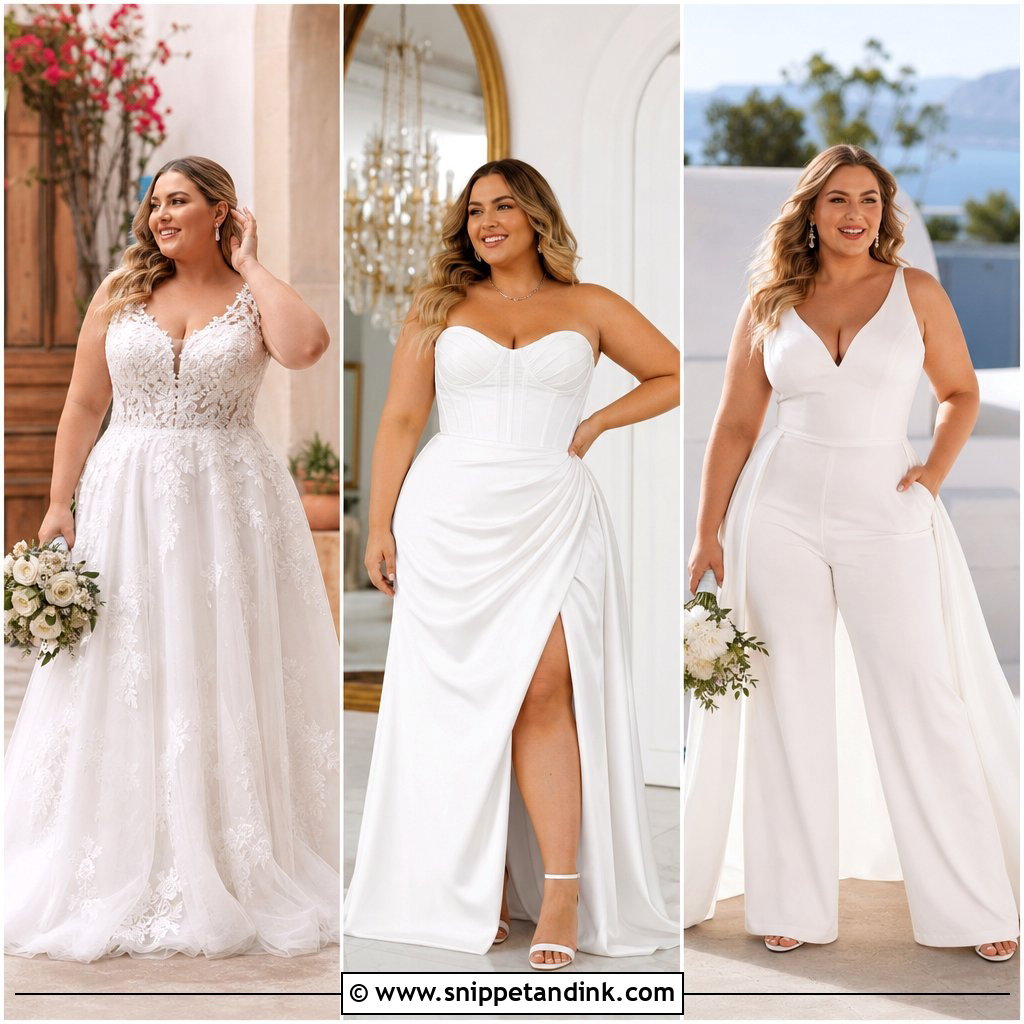
For plus size brides, the drape is where a good dresser earns their fee. Fabric that falls smoothly without bulk, a structured blouse with longer sleeves and pleats tucked flat at the waist all create a balanced line. I’d use a well-fitted petticoat in a smooth fabric, since a bulky cotton one adds width under the pleats. Ivory, gold, blush, red, emerald and navy all suit bridal looks. Jewelry that frames the face, comfortable heels and a lifted hairstyle finish it. Fit and proportion matter far more than hiding anything.
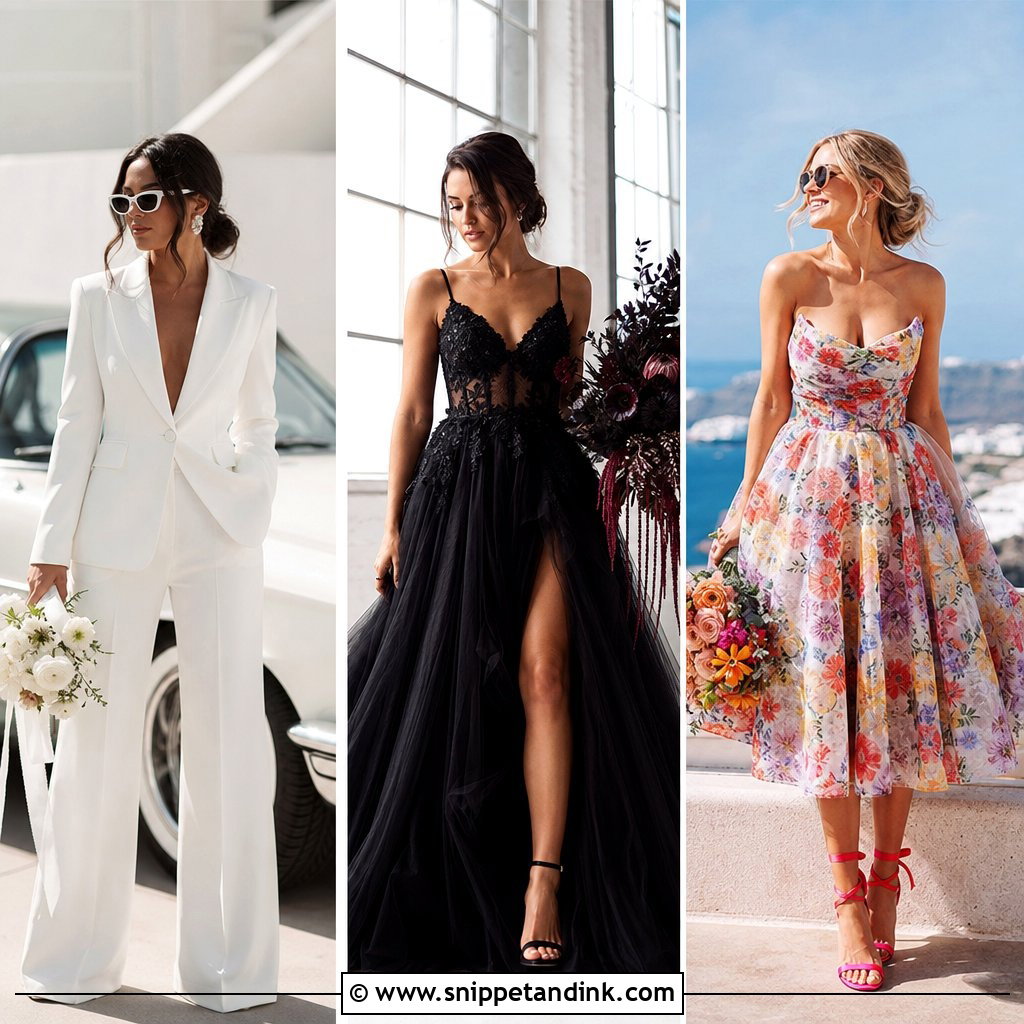
25. Sri Lankan Bride Second Outfit
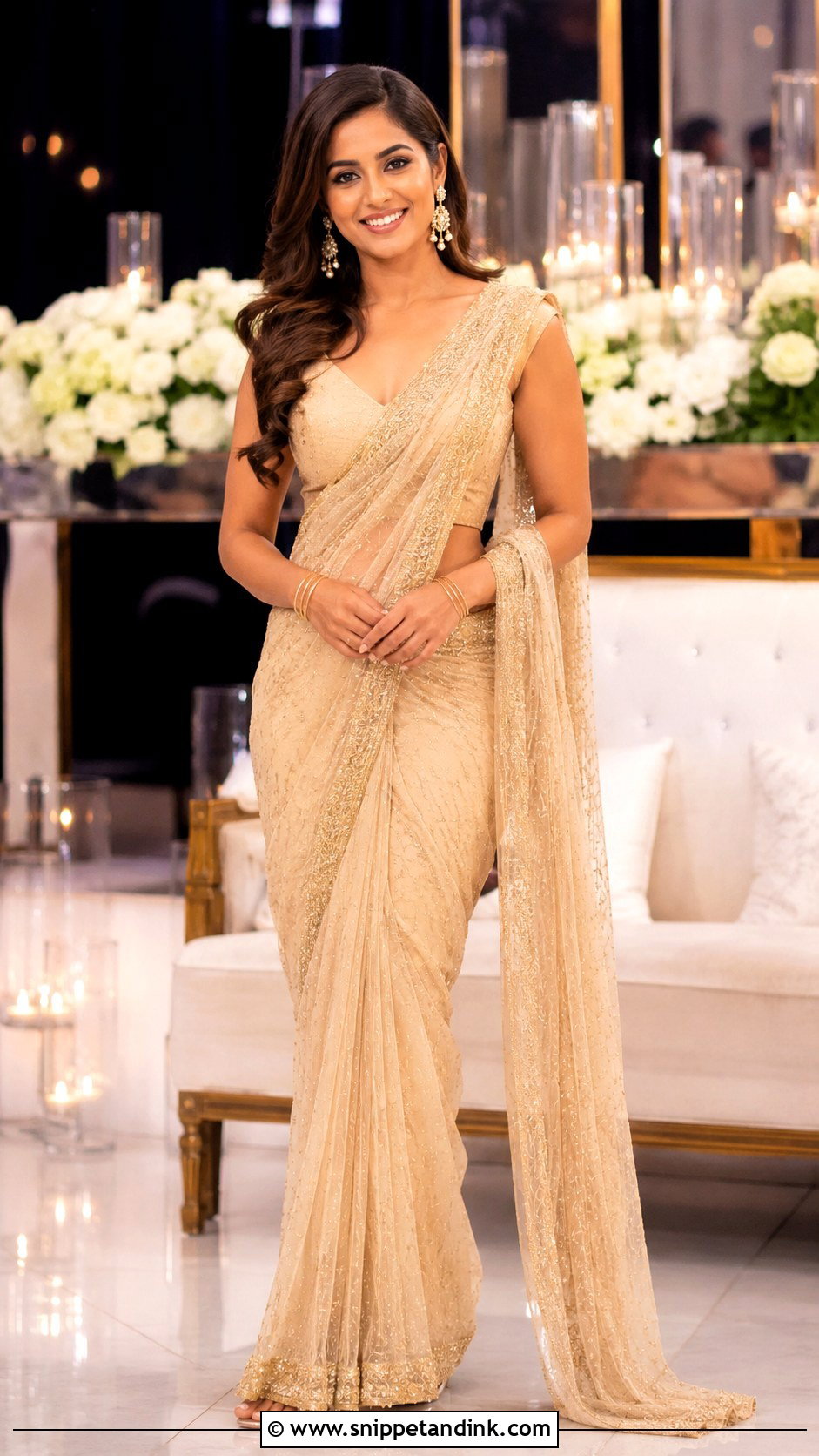
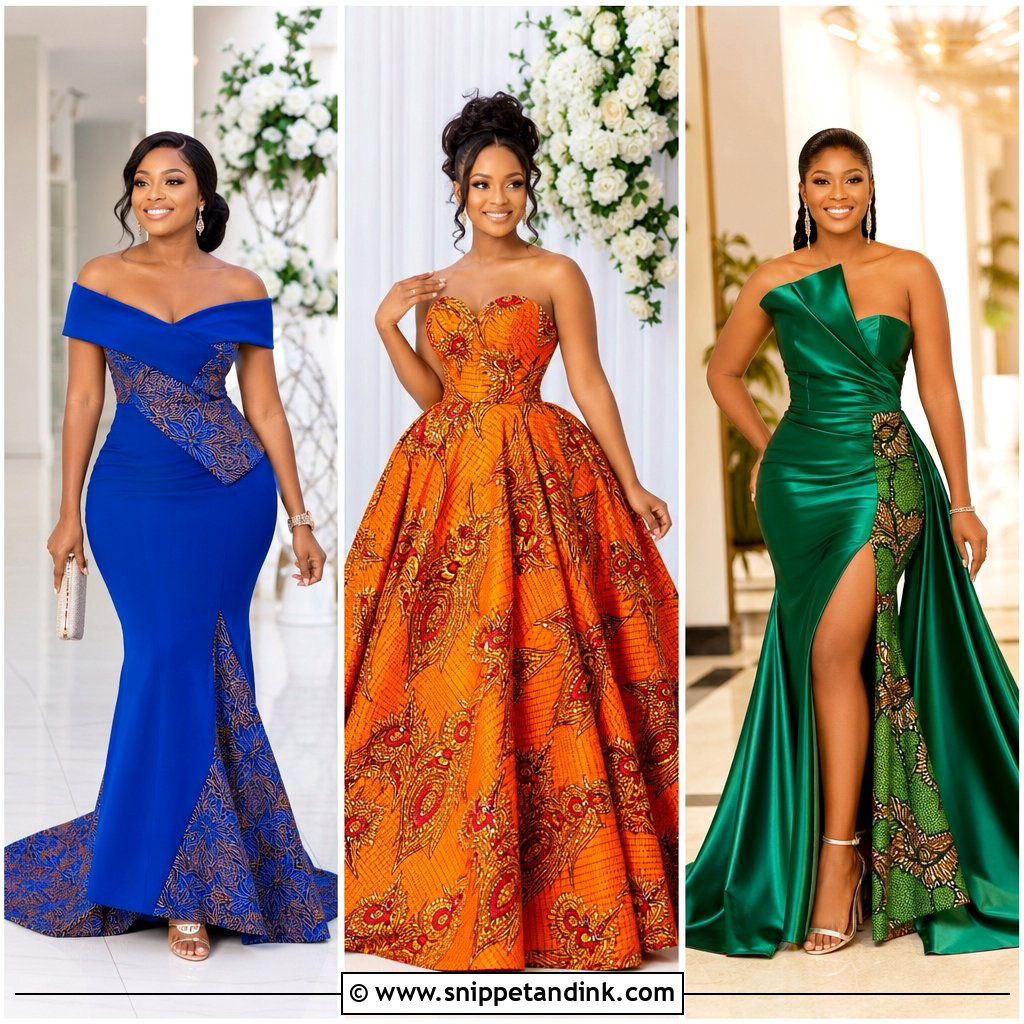
Most brides I dress change at least once, and I always plan the second outfit around how quickly it goes on. After a ceremony saree, a lighter gown, lehenga, modern saree or going-away saree lets you walk, sit, dance and greet guests comfortably. Soft metallics, jewel tones, blush and ivory all work. Keep the jewelry lighter than the ceremony set and choose heels you can stand in for hours. Allow at least half an hour for the change, longer if a new drape is involved.
Silk, Gold Thread and a Hot Afternoon
Sri Lankan weddings are often held in heat and humidity, and a bridal saree is several meters of fabric plus a fitted blouse and heavy jewelry. A few small decisions make a long day bearable.
Ask your tailor to line the blouse in cotton rather than synthetic fabric; it breathes and absorbs sweat. Use more safety pins than you think you need, especially at the shoulder and the pleats, and keep spares in the bag. Set your makeup properly and have blotting papers rather than powder for touch-ups, so the base doesn’t build up. A small hand fan and sips of water between rituals help more than any product.
Storing an Osariya So Someone Can Wear It Again
Many bridal sarees become family pieces, and zari and silk need care to last. After the wedding, have it professionally dry cleaned by someone who handles silk, then wrap it in plain cotton or muslin rather than plastic, which traps moisture. Refold it along different lines every few months so the creases don’t wear through, and keep it away from damp walls. Real gold or silver zari tarnishes in humid air, so a dry cupboard matters.
From Poruwa to Going-Away, One Bride, Several Looks
The right outfit depends on your culture, your family’s customs, the venue and how comfortable you’ll be through the day. A Sri Lankan bride can stay fully traditional in a Kandyan osariya, choose soft pastels, wear Tamil bridal silk, dress modestly or change into a reception gown. Whatever you choose, plan the dressing time, the pins and the second outfit as carefully as the saree itself. That’s what keeps you looking finished from the first ritual to the last photo.
You'll Like These Ideas:


Leave a Reply