
A modest bridal look is never just one white gown. The brides I dress choose between A-line satin, full ball gowns, slim crepe columns, embroidered lehengas, abayas and kaftans, and every one of them can be built with long sleeves and a closed neckline. The part that takes real styling work is the head: the hijab with the gown’s fabric has to agree on colour, sheen and weight, or the outfit splits into two halves in photographs. Below are twenty dresses I’d happily put a bride in, with what I’d pair on the head and the fitting details that decide whether each one actually works.
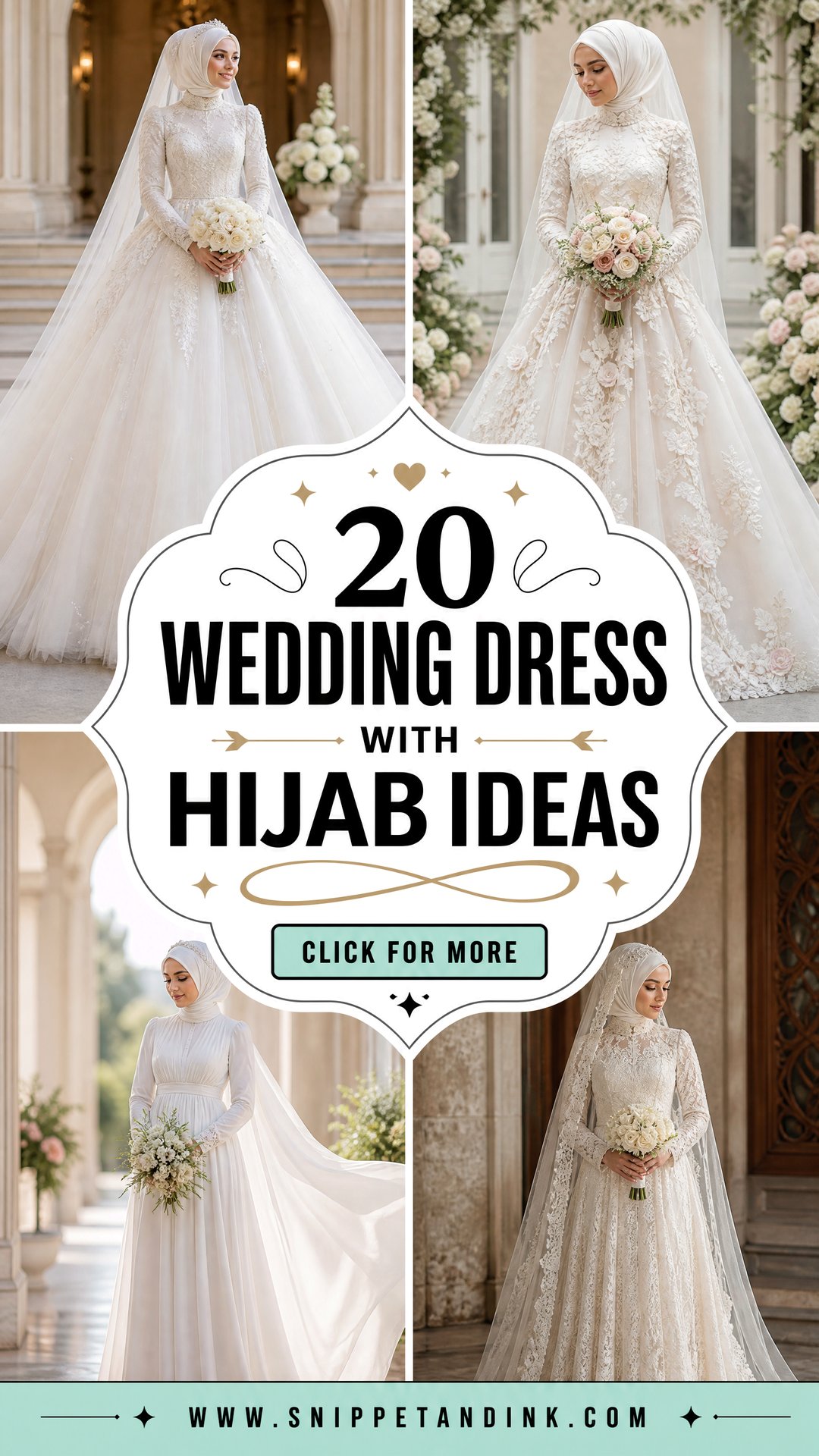
Bring Your Hijab and Underscarf to Every Dress Fitting
Most bridal shops fit a gown on a bare head and an open neckline, then the bride adds her hijab at home and the proportions change. A wrapped hijab adds bulk at the neck and shoulders, so a collar that looked neat in the shop can suddenly sit too high or bunch. I ask every hijabi bride to arrive at fittings already dressed in the underscarf, the hijab fabric she plans to wear and the pins she normally uses.
During the fitting, these are the checks I run before the seamstress pins anything:
- Raise both arms above your head. Sleeves should stay at the wrist bone, not ride up the forearm.
- Shine a phone torch through the bodice and sleeve from behind. Any skin you can see, a camera flash will see too.
- Sit down and lean forward as if signing a register. The neckline and back should stay closed.
- Turn your head fully left and right. A high collar should not push the hijab out of place.
- Walk in the actual shoes. Hem length is decided by heel height, so never hem barefoot.
Order early. Made-to-order gowns commonly take several months, and adding sleeves or lining to a sample design adds alteration time on top, so start shopping well before you’d think you need to.
1. Satin A-Line Wedding Dress with Hijab
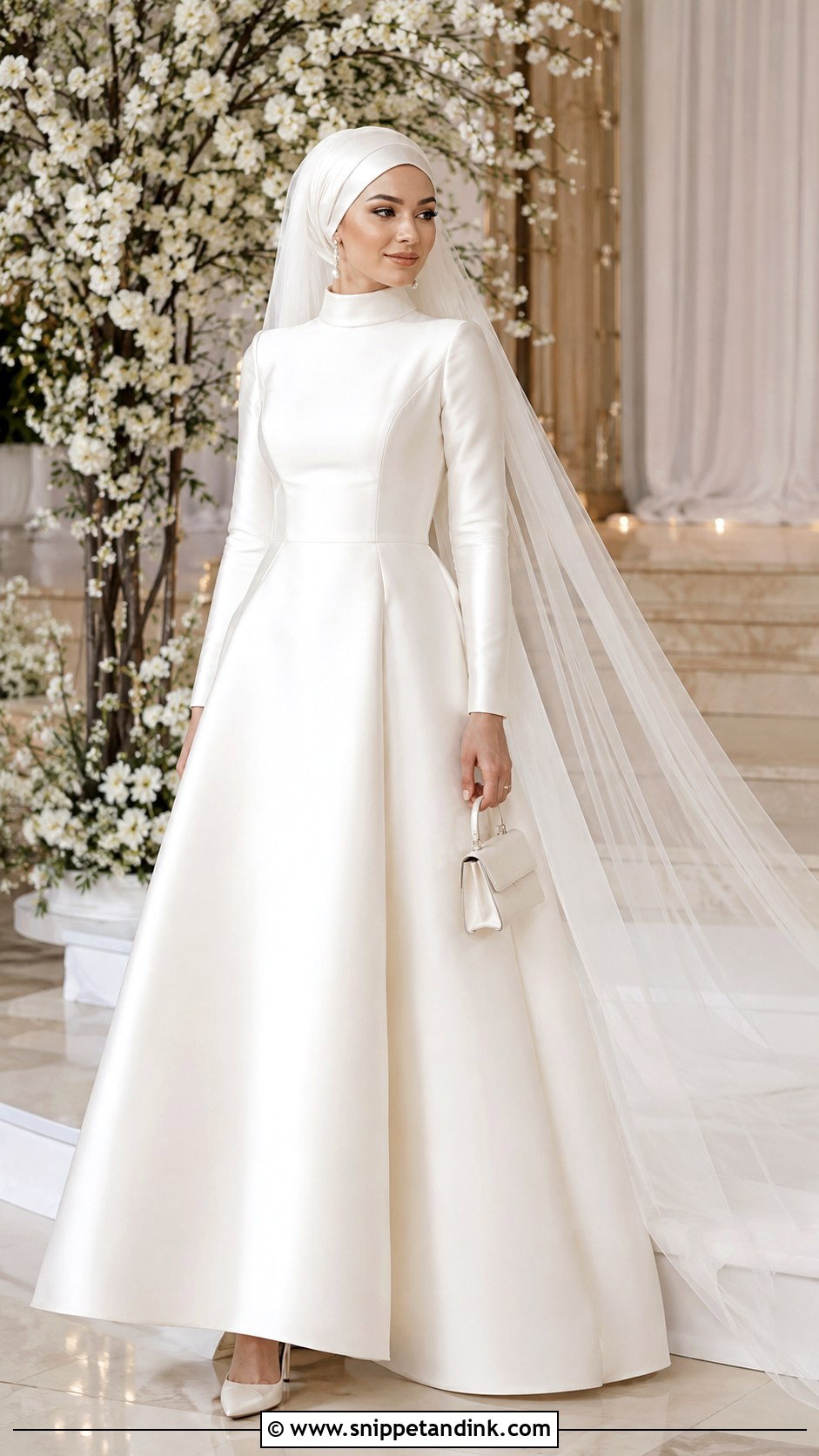
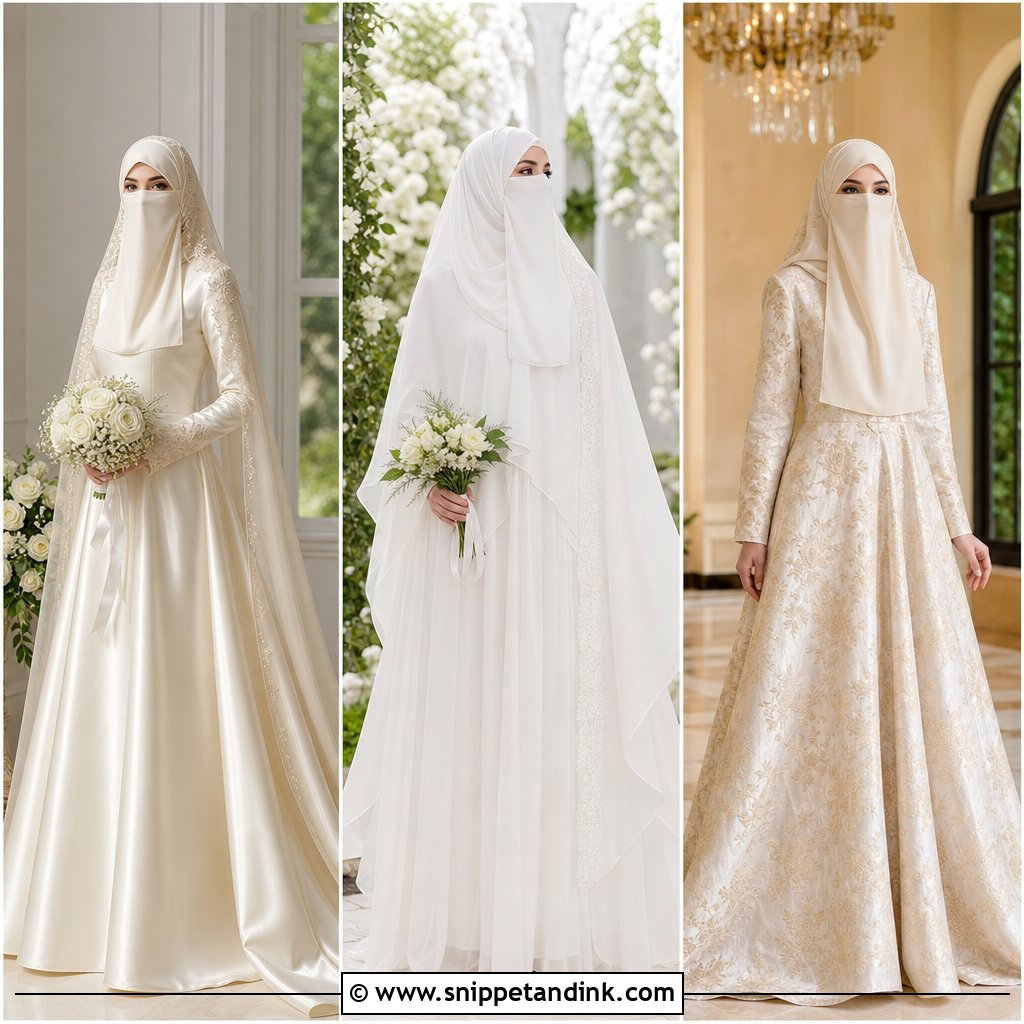
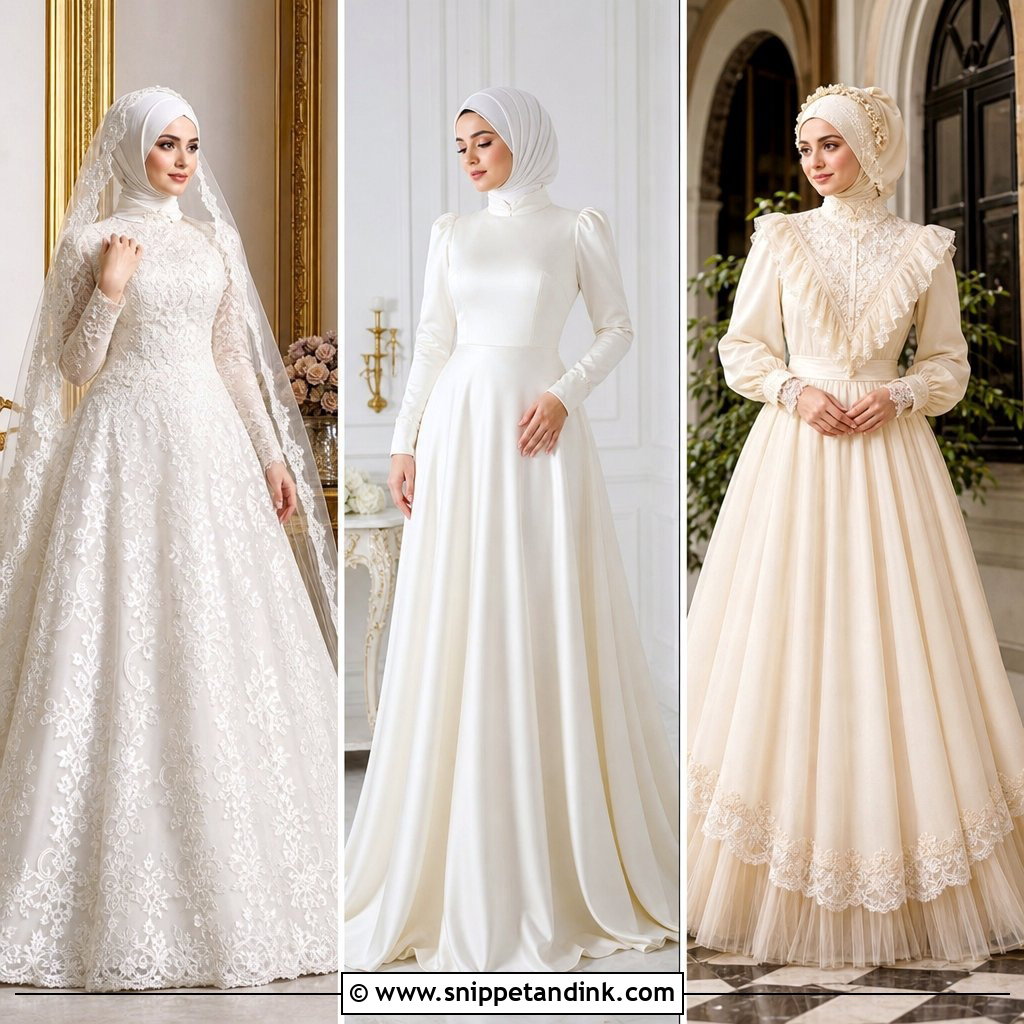
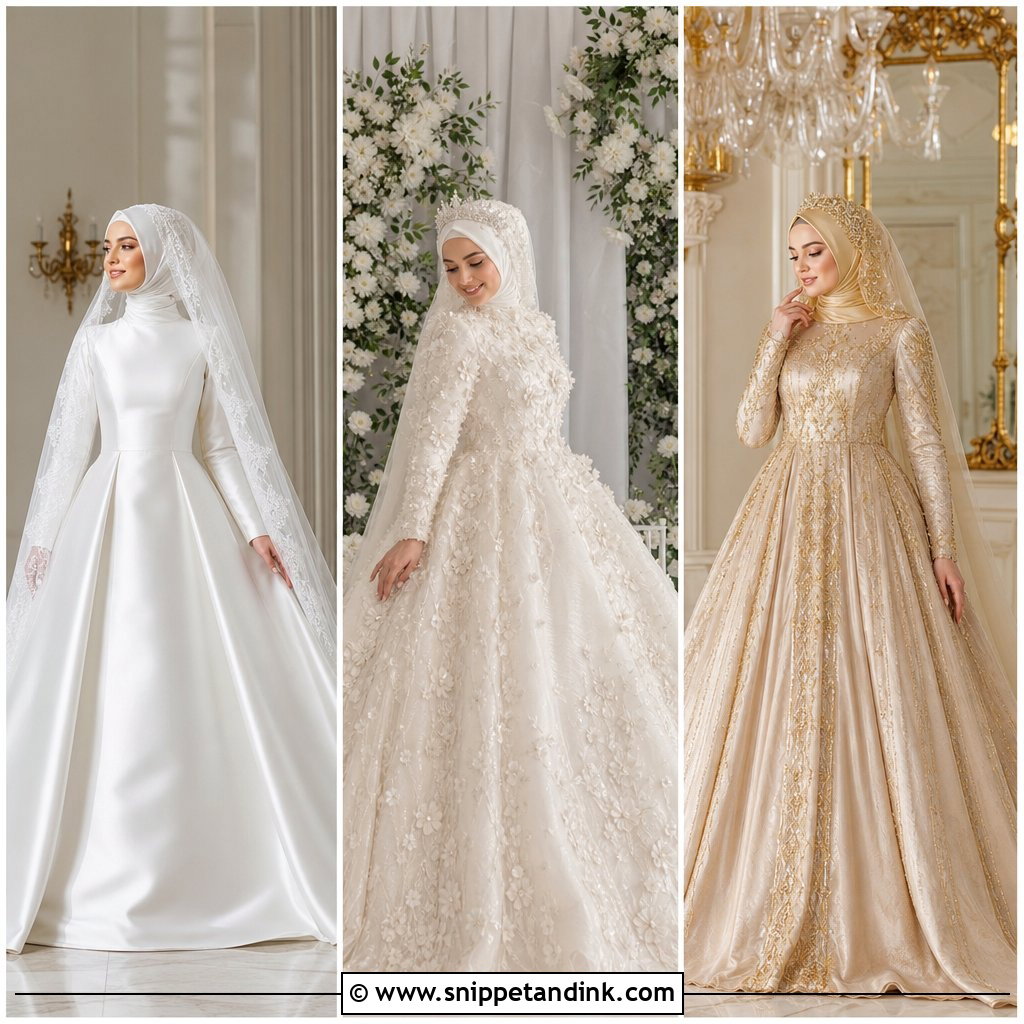
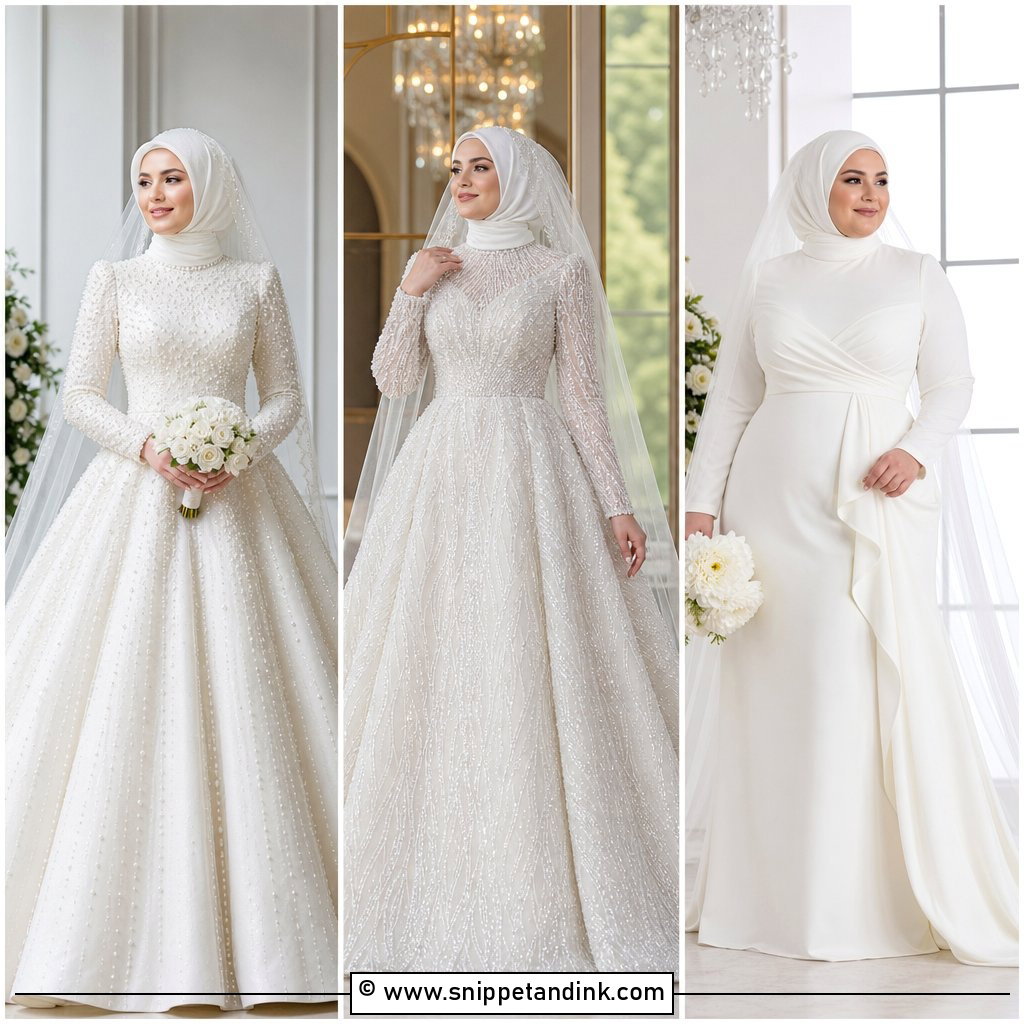
Satin A-line is the shape I reach for first when a bride isn’t sure where to start, because the waist is defined but nothing clings. Look for a high neckline, fitted long sleeves and a skirt that widens gently from the natural waist. Ivory satin has a soft glow; bright white reads crisper. I keep the hijab in the same colour family but in a lighter satin, since a heavy one stacks into folds under the chin. A cathedral veil anchored behind the hijab keeps the front clean. Satin creases the moment you sit in a car, so choose a dense weight and have a steamer at the venue, not just at home.
2. Lace Ball Gown Wedding Dress with Hijab
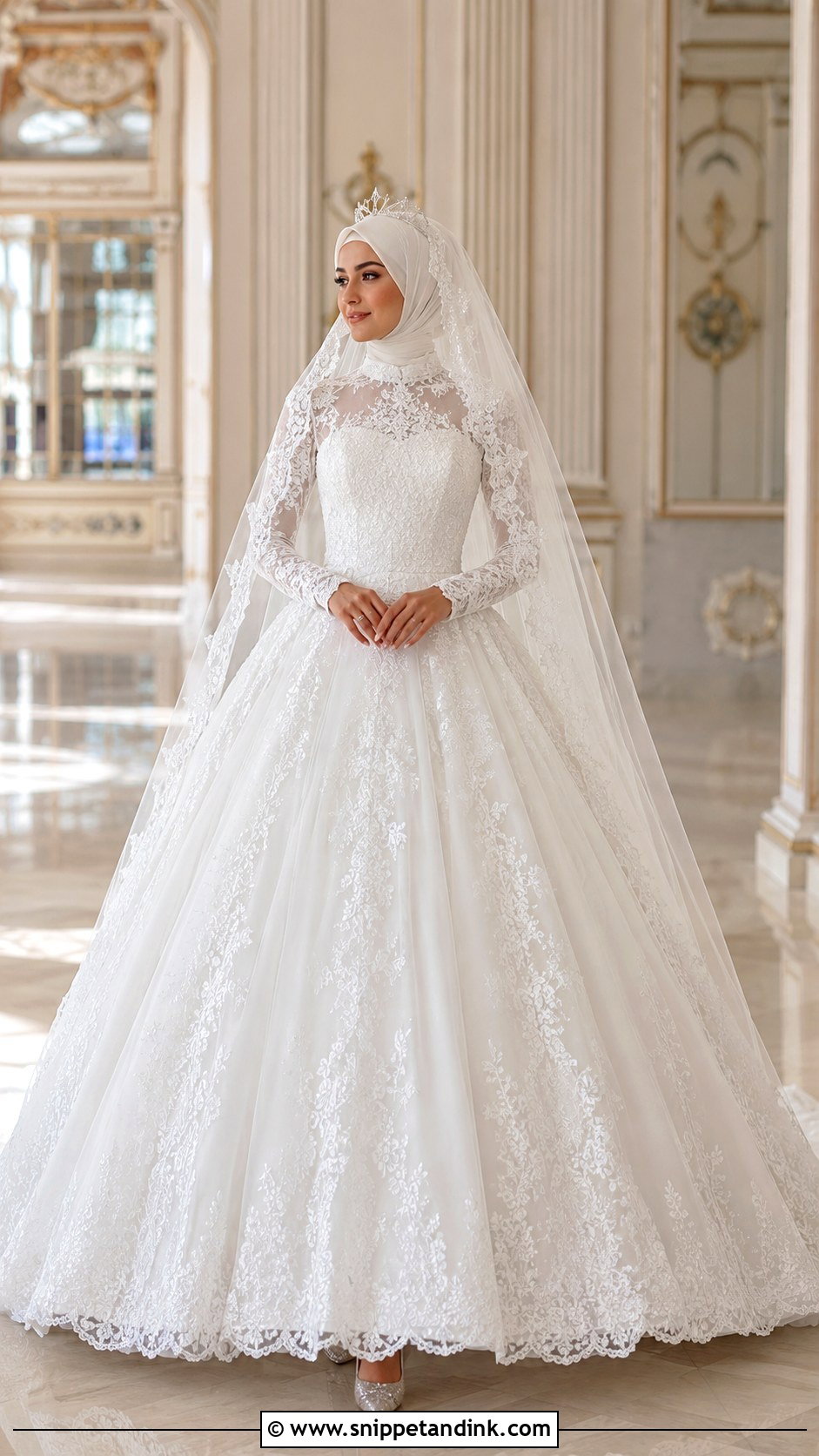
A lace ball gown gives you the entrance without giving up coverage. I look for a structured bodice, an illusion neckline that is lined rather than sheer, and sleeves with a full lining underneath the lace. Floral lace can run over the whole gown or sit only on the bodice, cuffs and hem. Because the dress is so busy, the hijab should be plain chiffon. One check I never skip: hold the bodice up to a window. If the lining is a shade off your skin or the gown, camera flash finds it.
3. Pearl Wedding Dress with Hijab
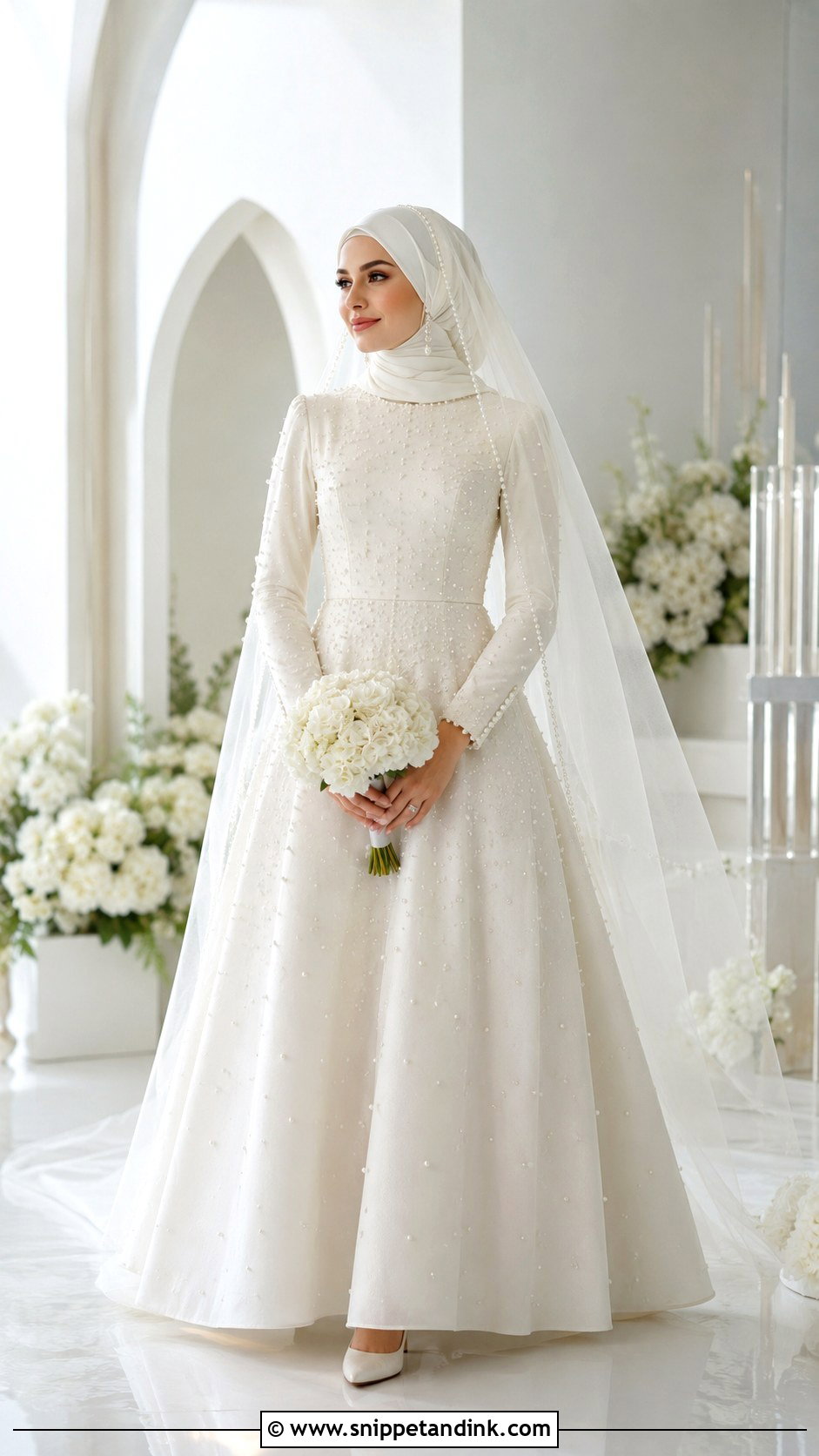
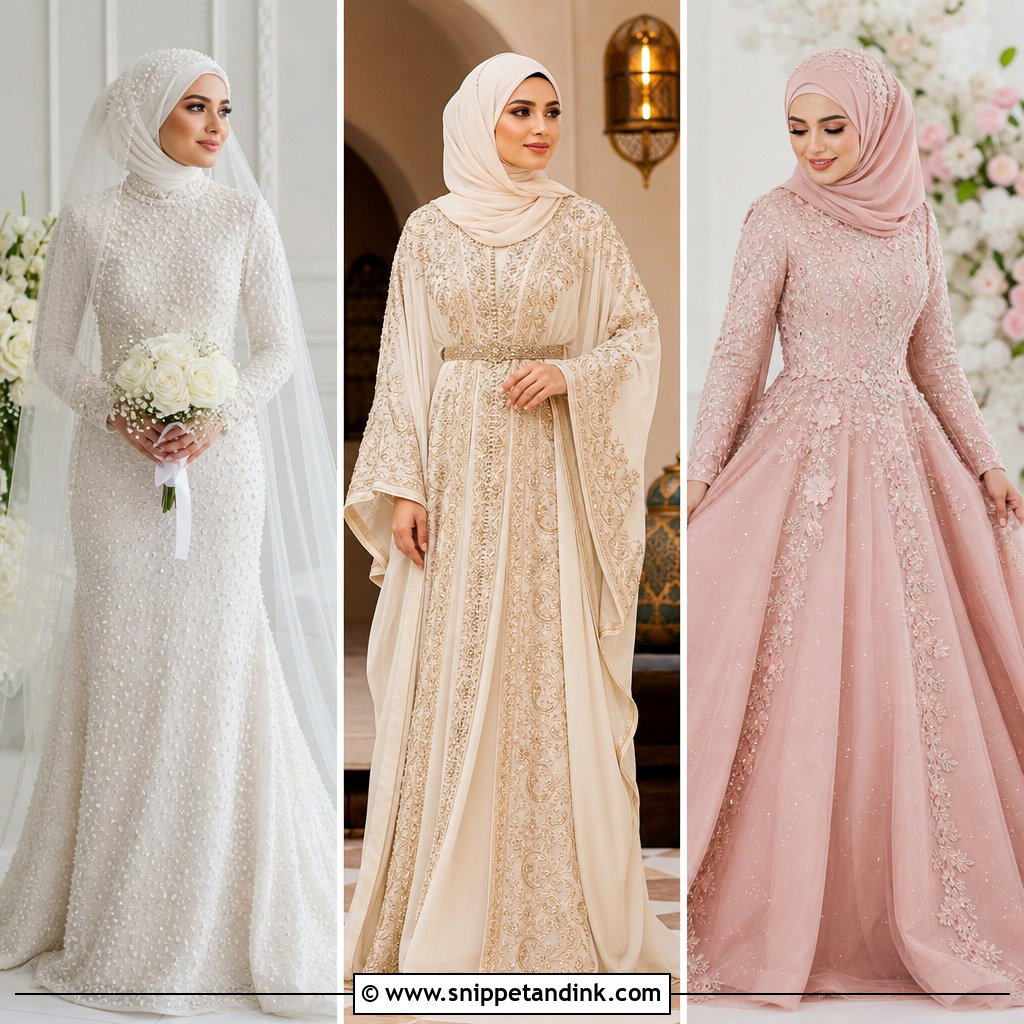
Pearls catch light softly instead of sparkling, which suits brides who find crystals too loud. I prefer graduated placement, dense on the bodice and thinning down the skirt, because a gown pearled all over gets heavy at the hem and pulls the shoulders back by evening. Pair it with a matte chiffon or crepe hijab so the head doesn’t compete with the beading. Pearl drop earrings over the hijab line and closed satin heels are enough. Ask how the pearls are attached; hand-sewn ones survive a long day, glued ones pop off when you hug people.
4. Crepe Column Wedding Dress with Hijab
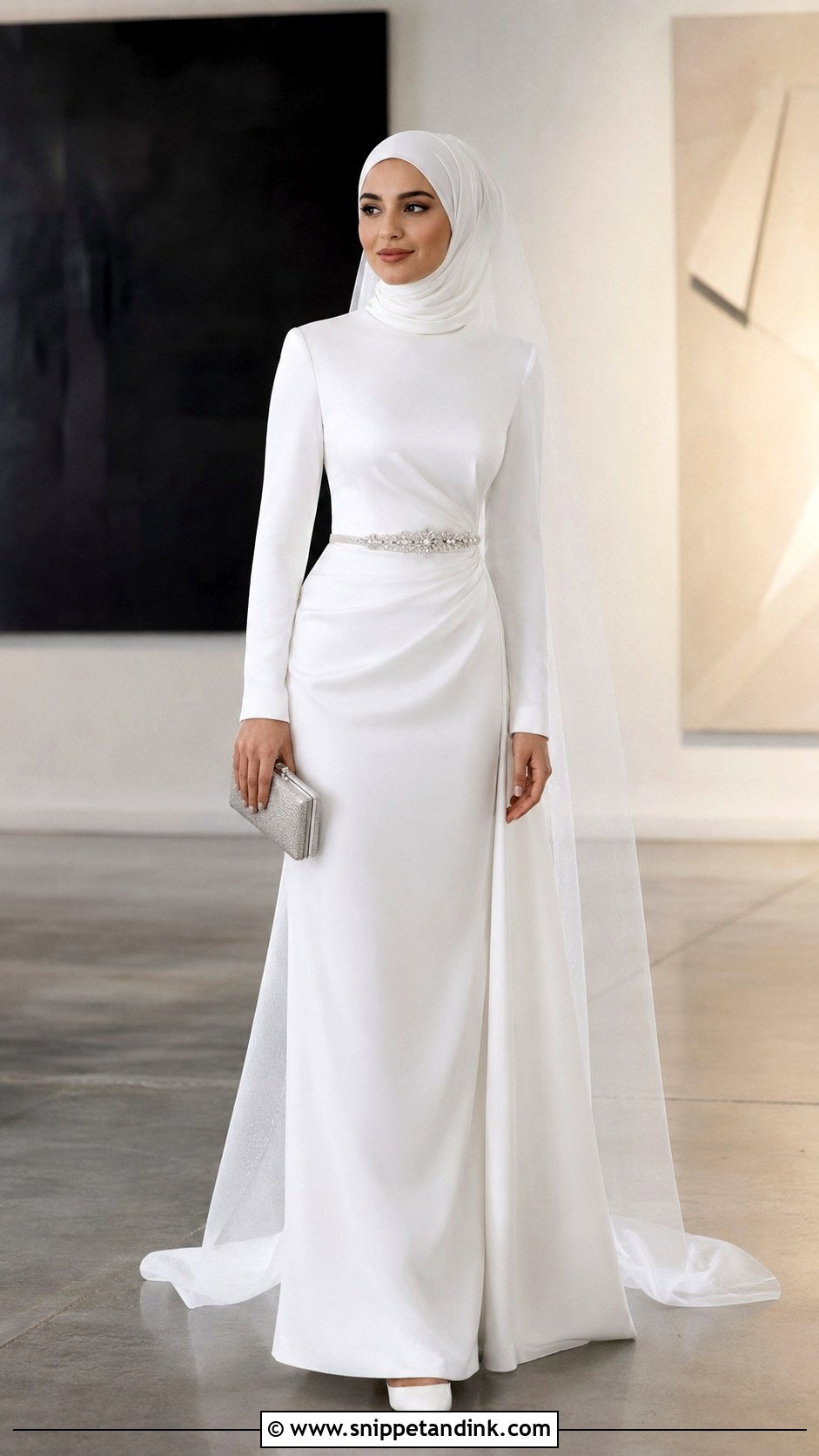
Crepe columns are the most honest silhouette on this list, since there is no volume to hide a poor fit. The dress should skim, not cling, with long sleeves, a high bateau neckline and a fully covered back. Gentle draping at the waist or a row of covered buttons gives the eye somewhere to rest. I match the hijab in crepe so the textures read as one piece, and keep the veil plain and chapel length. Budget for alterations here: shoulder seams, sleeve length and hem height are what make crepe look expensive or cheap.
5. Cape Sleeve Wedding Dress with Hijab
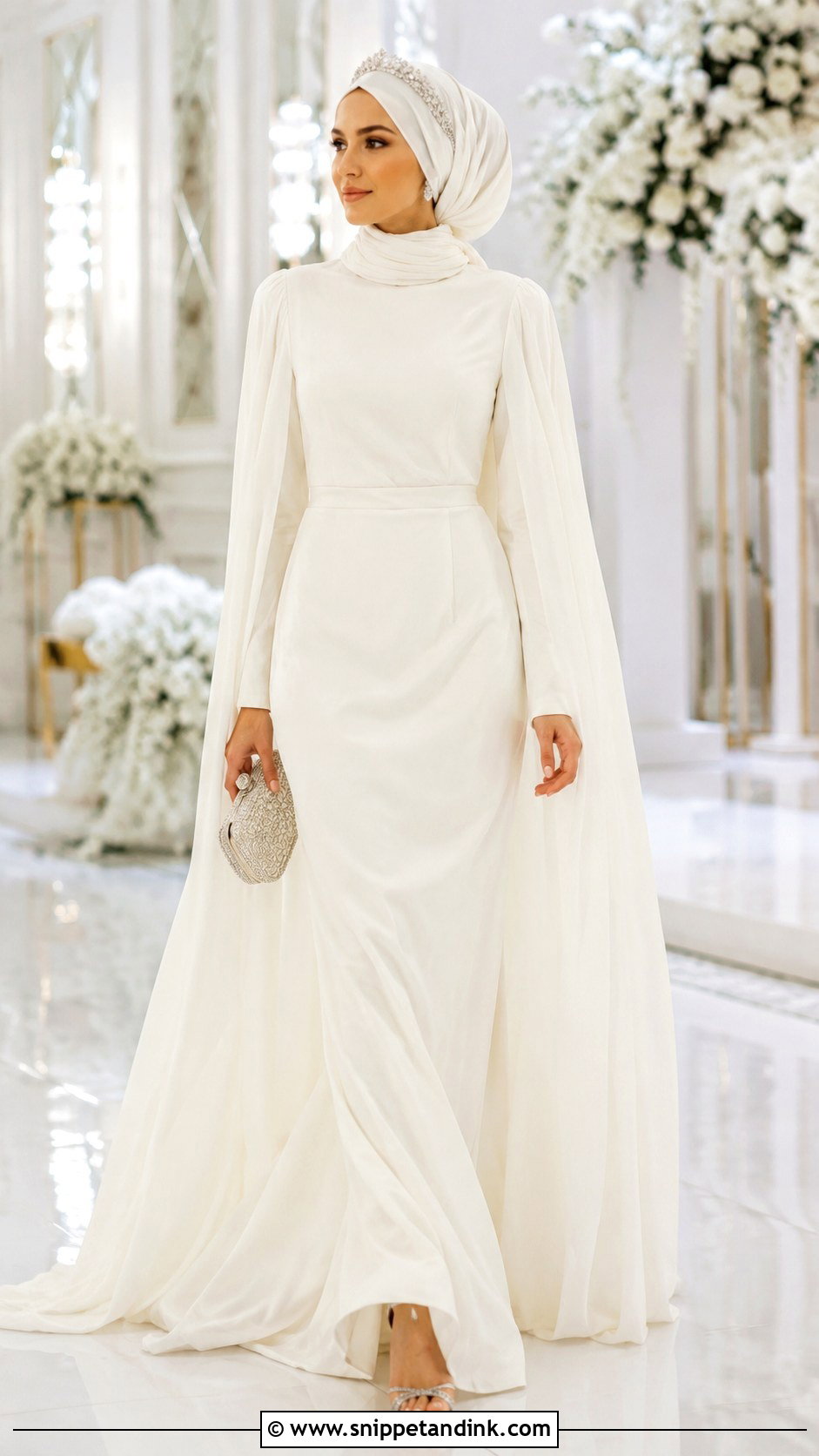
A cape replaces the veil for many of my hijabi brides, and it frames the shoulders in a way a veil can’t. Choose a high-neck gown in an A-line or column cut and let the cape fall from the shoulder seams to the floor. Chiffon floats; crepe holds a sharper line. With a cape, I keep the hijab low in volume so the two layers don’t fight at the neck. At the fitting, raise both arms and hug someone. If the cape pulls at the throat or drags past the train, it needs a release snap or a shorter length.
6. Tulle Princess Wedding Dress with Hijab
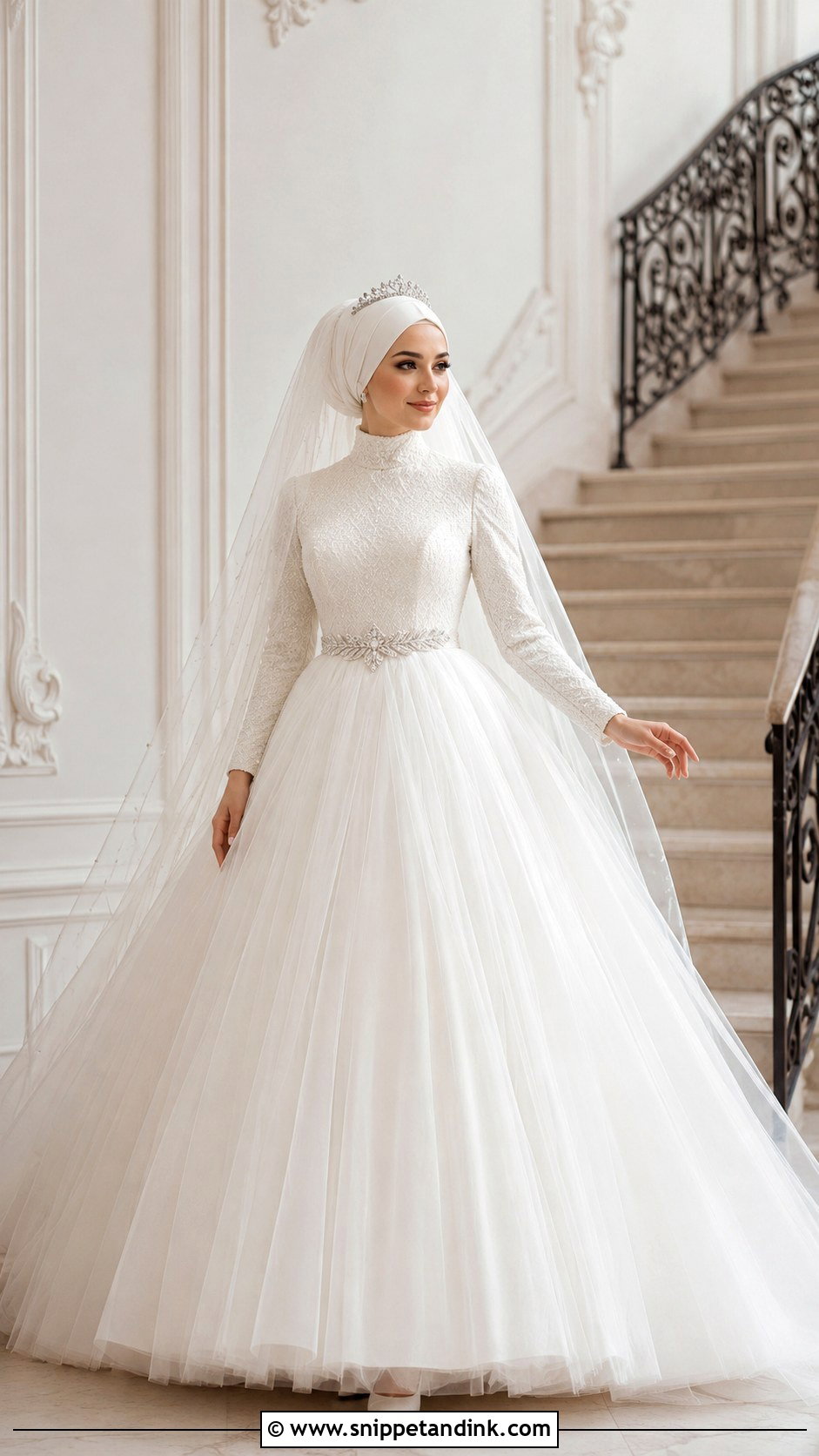
Tulle gives you the princess skirt, but it needs a lined high-neck bodice and long fitted sleeves to stay modest. A little internal structure, such as a horsehair hem or a light petticoat, stops the layers from collapsing flat by the reception. Lace appliqués or a few crystals at the waist are enough detail. I style it with smooth chiffon on the head and a fine tulle veil in exactly the same white. Be realistic about width: a skirt that fills a doorway makes sitting at a nikah table and walking between guests tiring.
7. Floral Appliqué Wedding Dress with Hijab
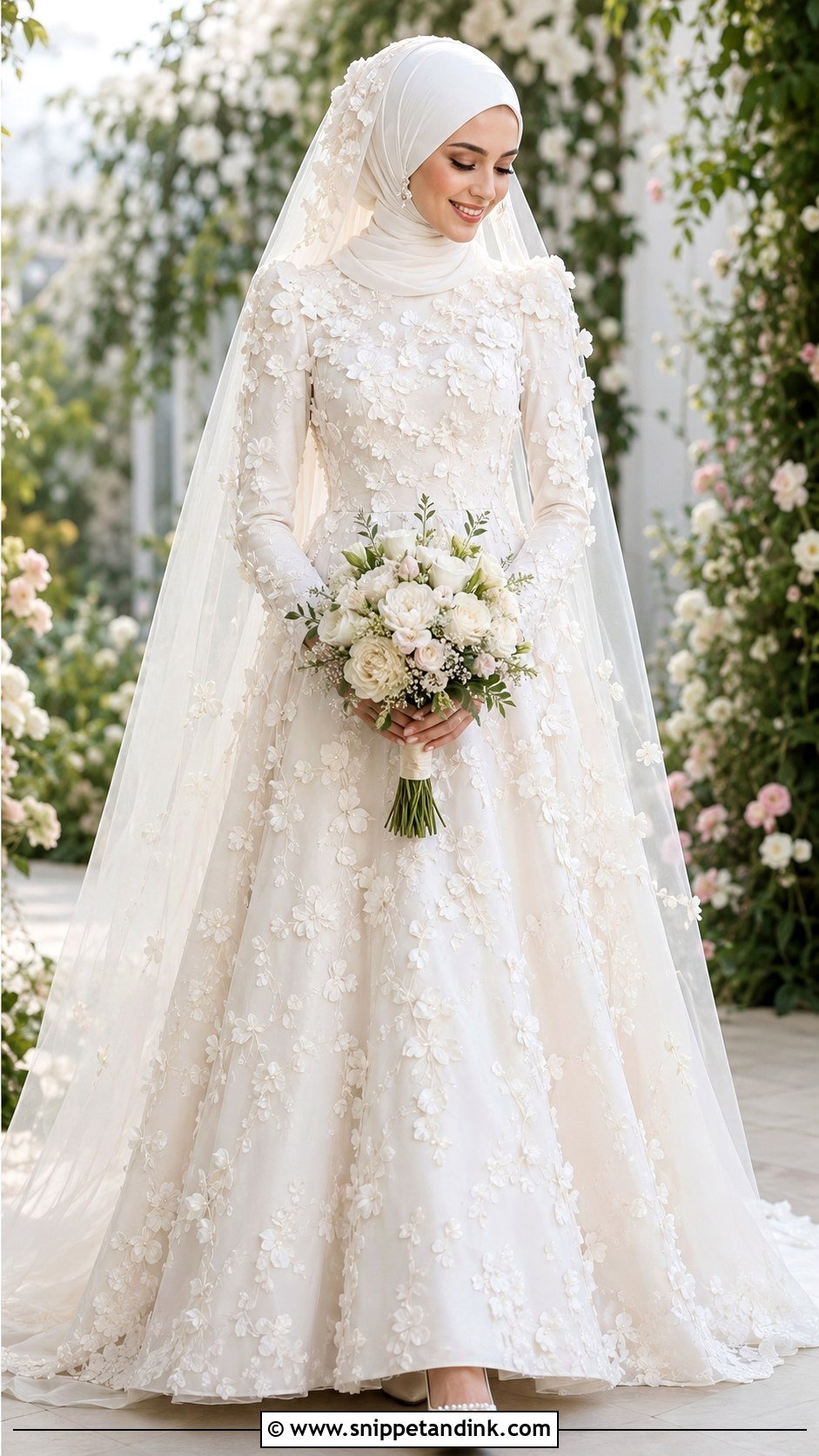
Three-dimensional flowers are the detail brides touch most at fittings, and they need the most care. I like them concentrated on the bodice and shoulders, scattering thinner down the A-line skirt. With raised petals near the face, the hijab has to be plain chiffon and the veil should carry only a few blooms at the bottom edge, otherwise the head looks crowded. Raised appliqués crush under a seatbelt or a heavy bouquet arm, so plan how you’ll sit in the car. Ivory, pale blush and natural white all work; hold each against your face in daylight before deciding.
8. Detachable Overskirt Wedding Dress with Hijab
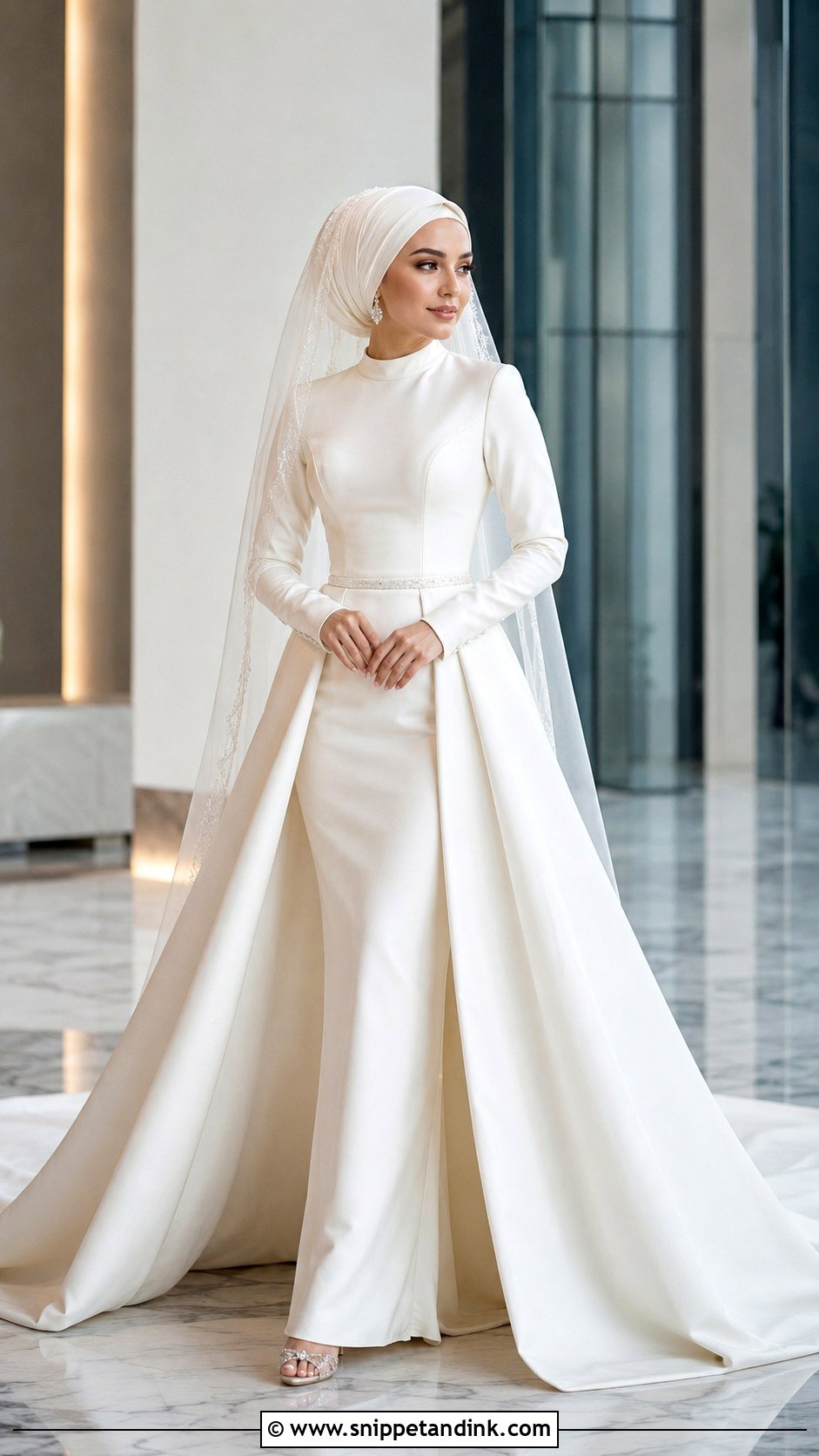
A detachable overskirt solves the pull between ceremony drama and dancing later. Start with a long-sleeve column or softly fitted gown with a high neck and covered back, then add a full satin or tulle overskirt with its own train. When it comes off, the slimmer dress underneath has to look finished, so I ask the seamstress to hide every hook and snap under a waistband. Keep the veil medium length so it never tangles with the overskirt fastening. Practise the removal once at the final fitting, with whoever will be helping you.
9. Modest Mermaid Wedding Dress with Hijab
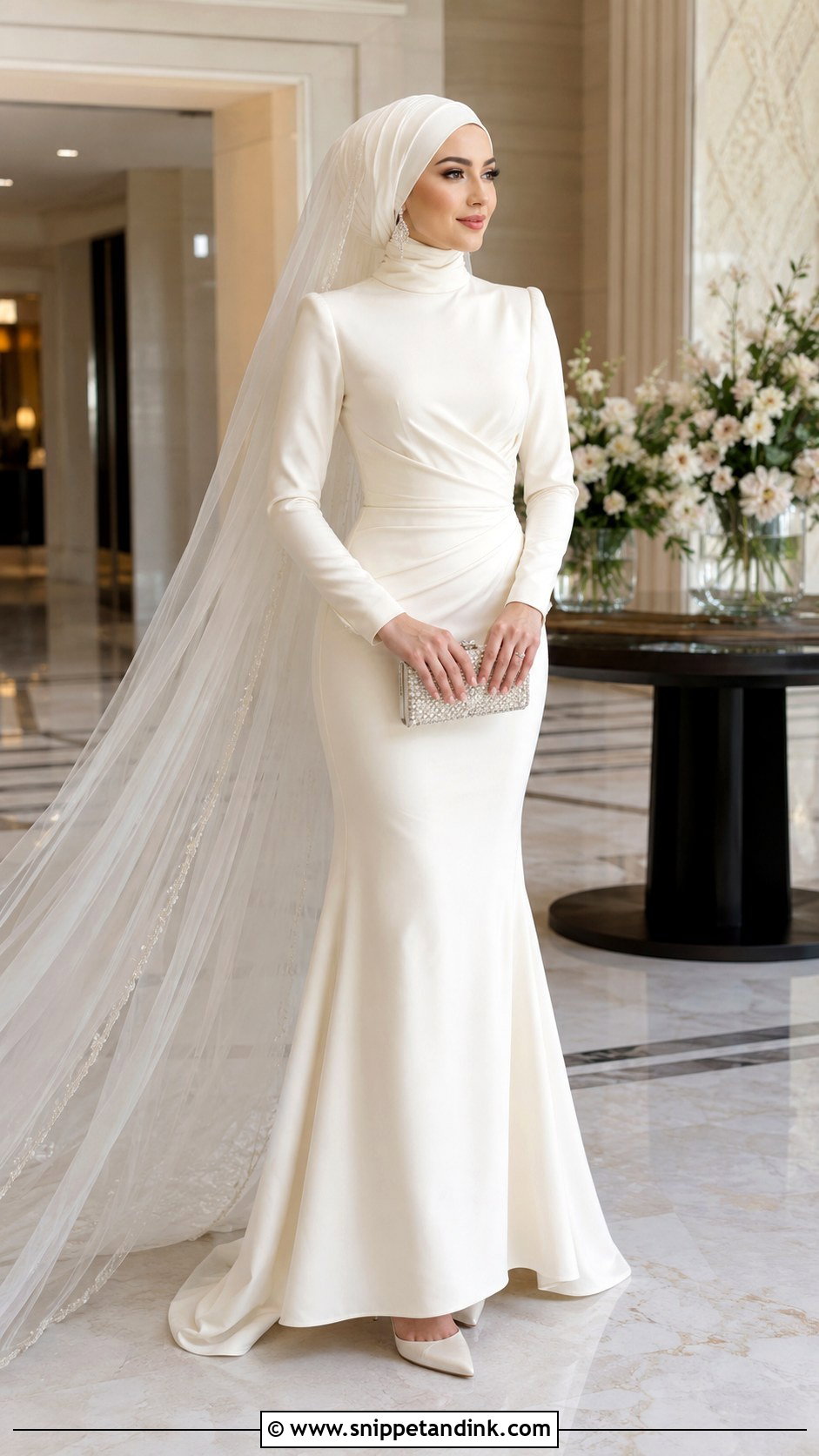
Mermaid is the shape I talk brides out of most often, and the reason is movement, not modesty. In a substantial crepe or satin that follows the body gently and flares around the knee, with long sleeves, a raised neckline and a covered back, it can look very polished. Tailored too tight through the hips, though, and you can’t climb stage steps or sit for photos. A matching satin hijab gives one smooth line from head to hem, and a veil attached at the back softens the sculpted shape. At every fitting I make the bride sit, walk and take two stairs before we pin anything.
10. Chiffon Empire Waist Wedding Dress with Hijab
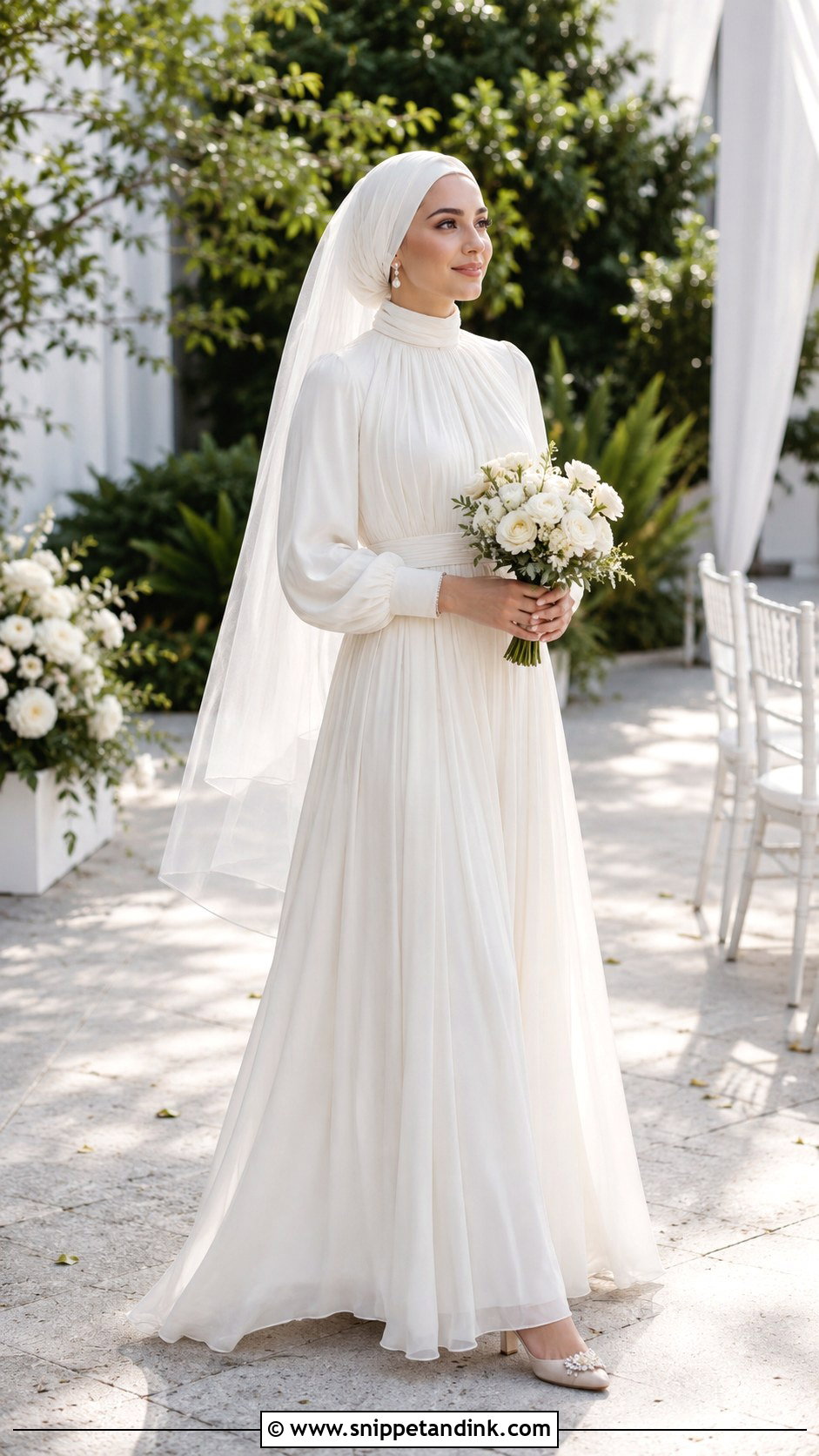
Chiffon with an empire waist is the most comfortable dress here. The seam sits under the bust and the skirt falls loose, so there’s no pressure at the waist after a long meal. Gathered sleeves and a pleated high neck keep it bridal. This is the one I suggest for outdoor daytime weddings, with one warning: several chiffon layers still go see-through in direct sun. Stand in front of a sunny window at the fitting. If you can see your legs, ask for an extra opaque lining layer.
11. Bridal Kaftan Wedding Dress with Hijab
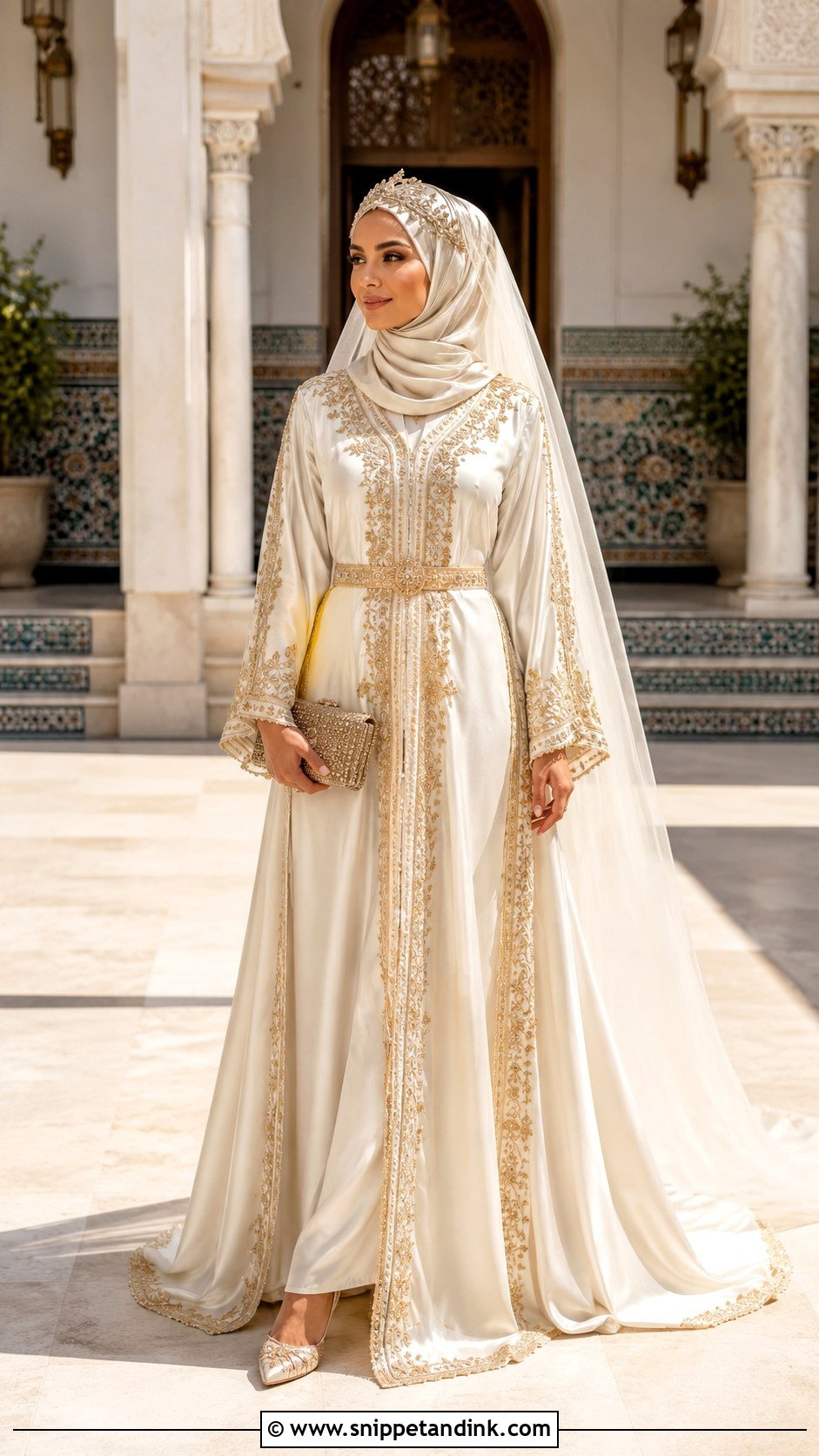
A bridal kaftan suits brides who want a regal look without boning or a zip down the back. White, ivory, champagne and soft gold all work, with embroidery along the neckline, cuffs, centre front and hem. A belt gives shape without losing the easy fall. I pull the hijab colour from one thread in the embroidery rather than from the base fabric. If the kaftan is heavily worked, skip the long veil. The hem should hover just above the floor so the embroidery is seen and slippers don’t catch in it.
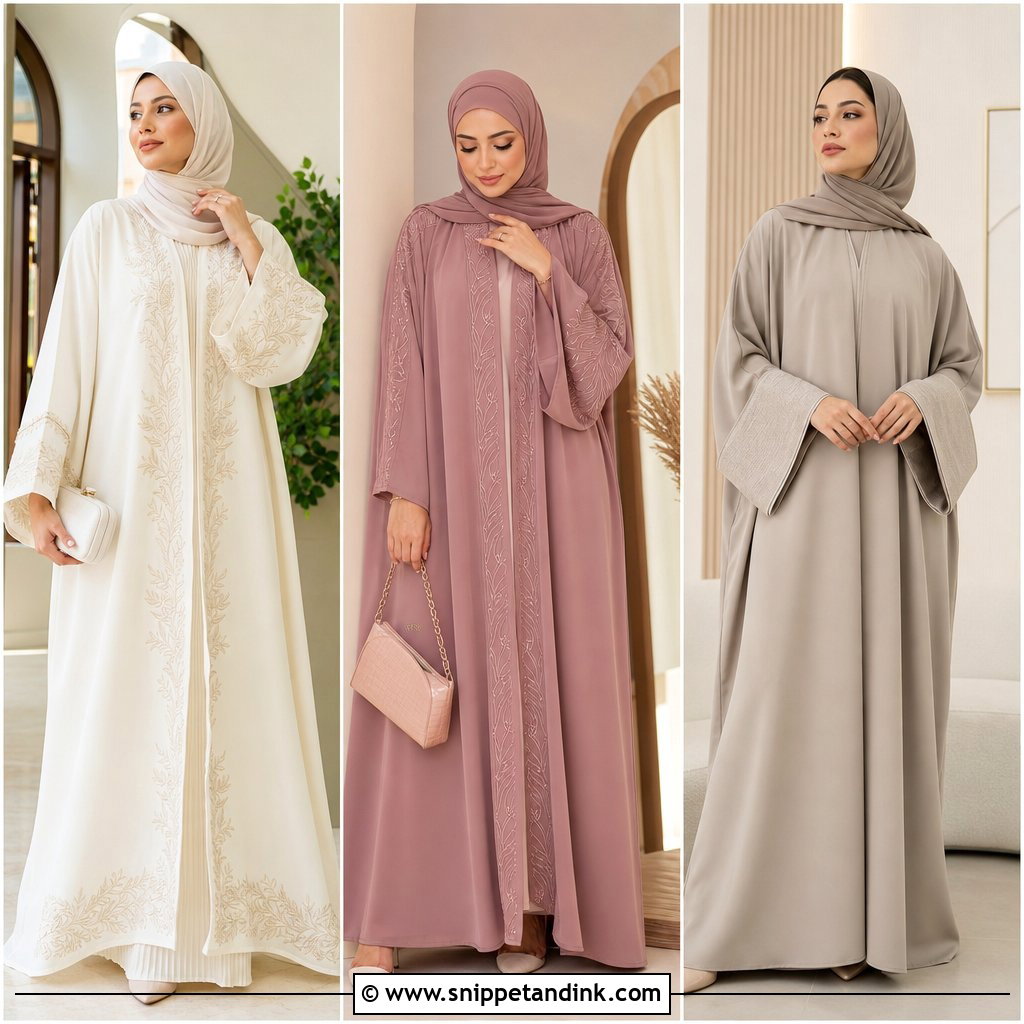
12. Bridal Abaya Wedding Dress with Hijab
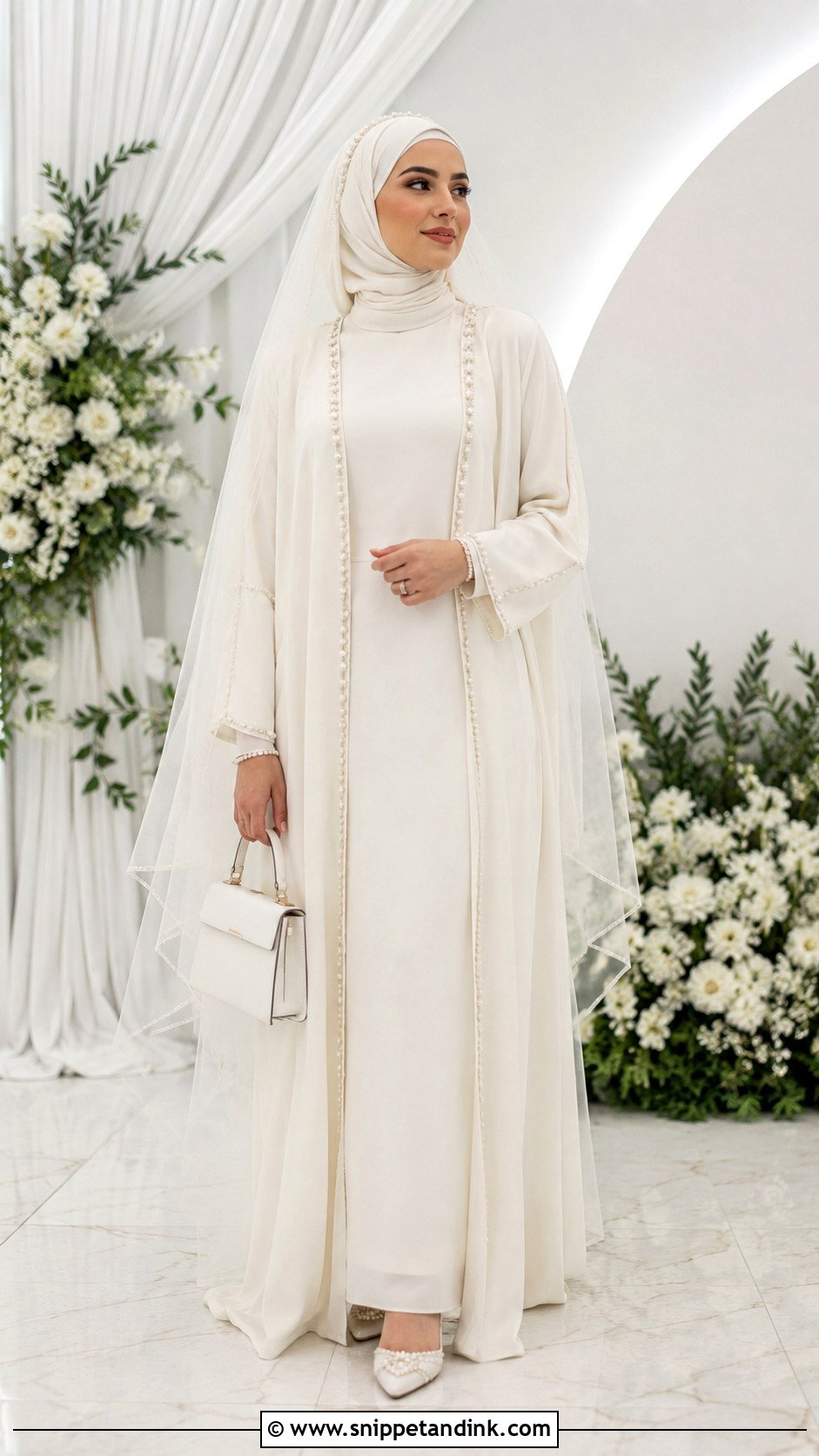
An abaya feels right for a nikah held at home or in a mosque, where a ball gown would look out of place. I choose ivory crepe, satin or nida with pearl trim or tonal embroidery. An open abaya layered over a plain high-neck maxi in the same colour gives full coverage and lets you take the outer layer off for the meal. Keep embellishment light at the sleeves; beaded cuffs get heavy and snag on the hijab when you lift your hands. A softly draped chiffon hijab and a light veil at the back finish it.
13. White Lehenga Wedding Dress with Hijab
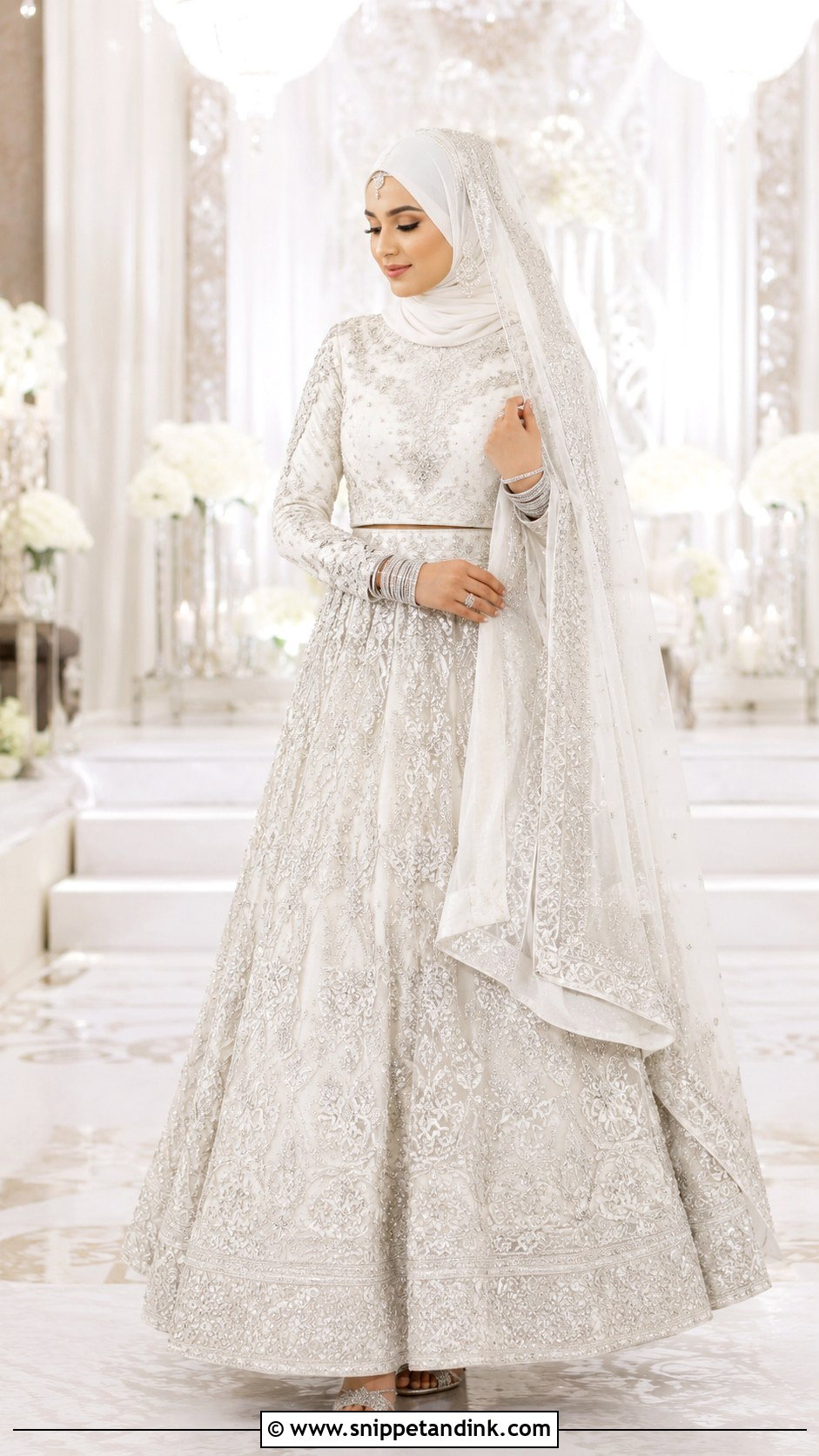
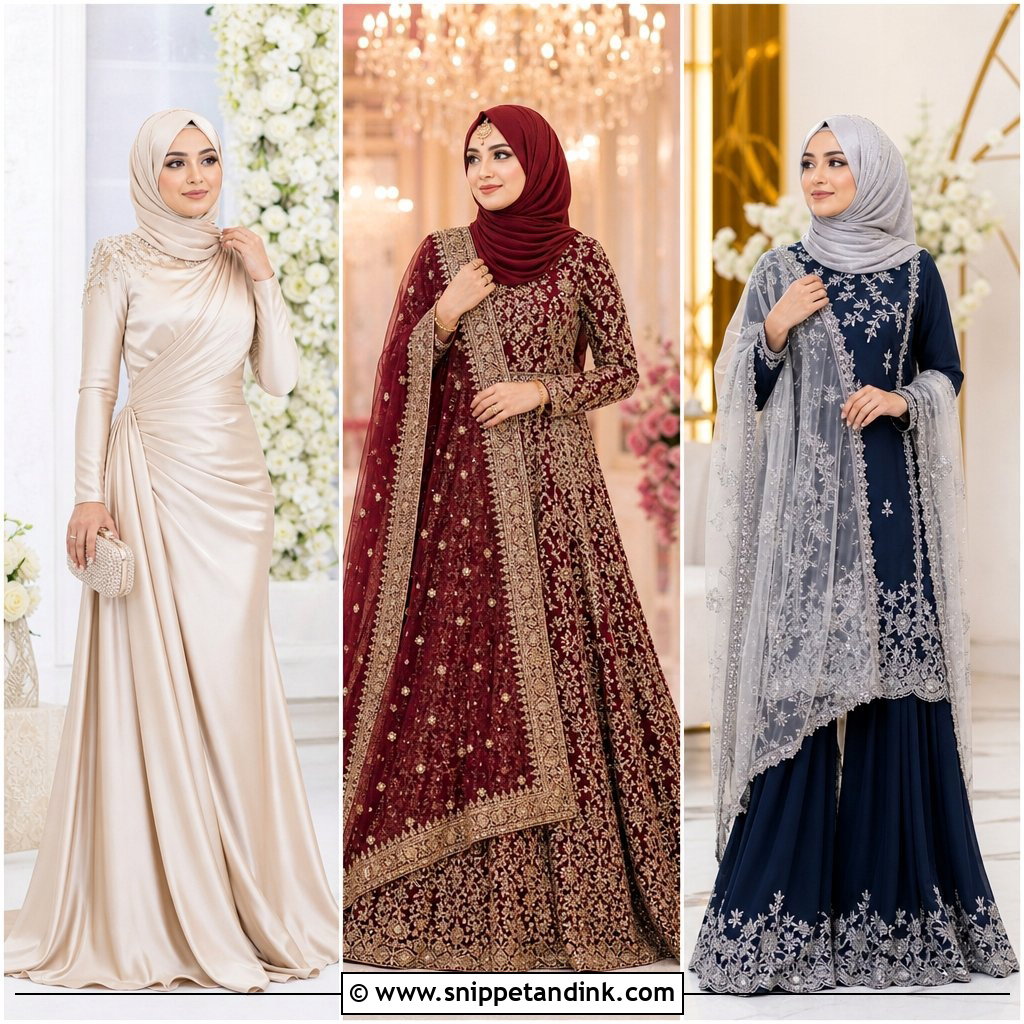
A white bridal lehenga brings South Asian embroidery into a white palette. Choose a high-waisted, fully lined skirt with silver, pearl or tonal thread work, and a long-sleeve blouse long enough to meet the skirt when you raise your arms, which is when the midriff usually shows. I set a smooth chiffon hijab first, then drape the embroidered dupatta over the head and one shoulder. The common failure is undertone: cool white blouse, warm ivory skirt, champagne dupatta. Lay all four pieces together in daylight before the final fitting.
14. Ivory Sharara Wedding Dress with Hijab
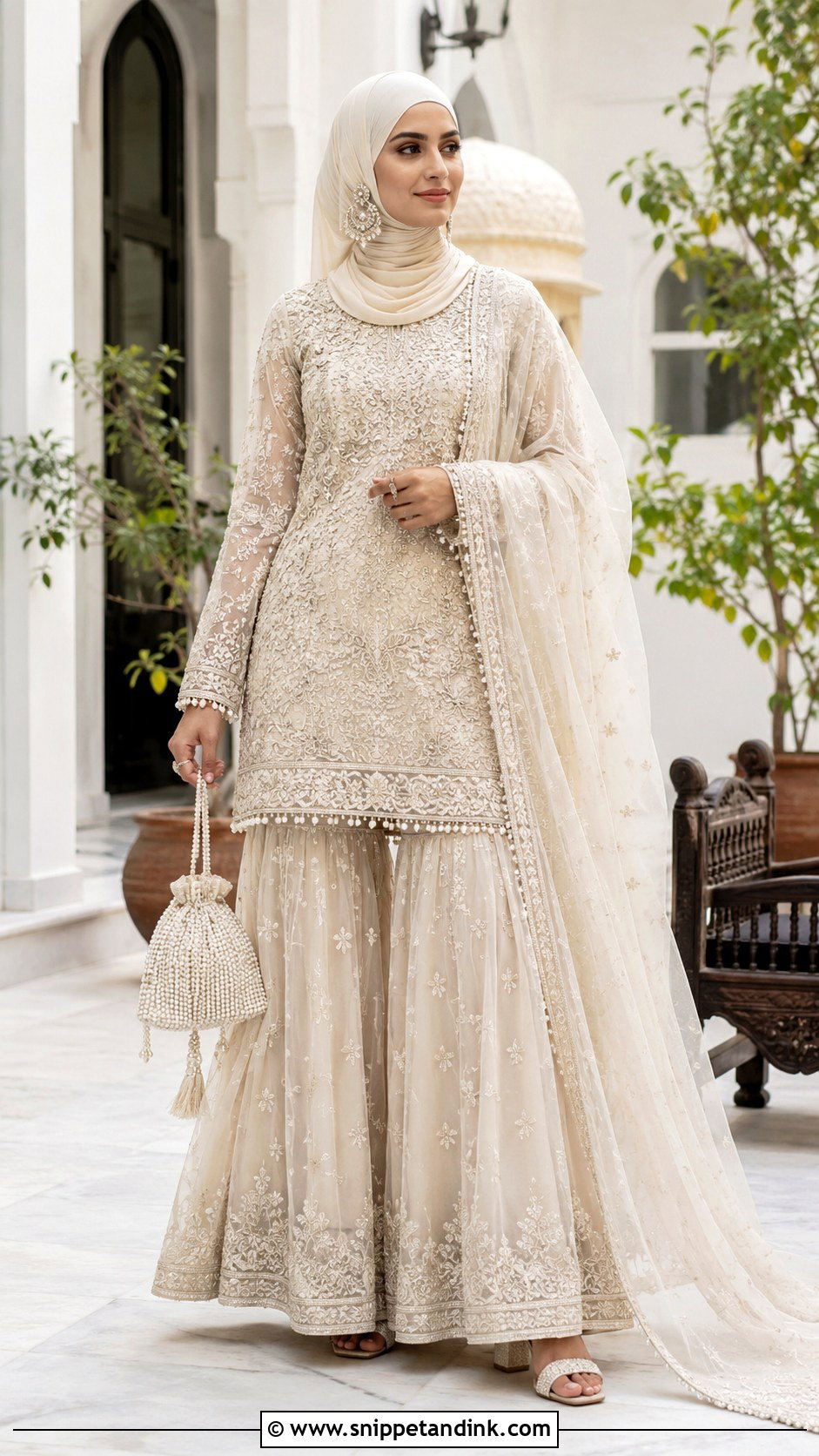
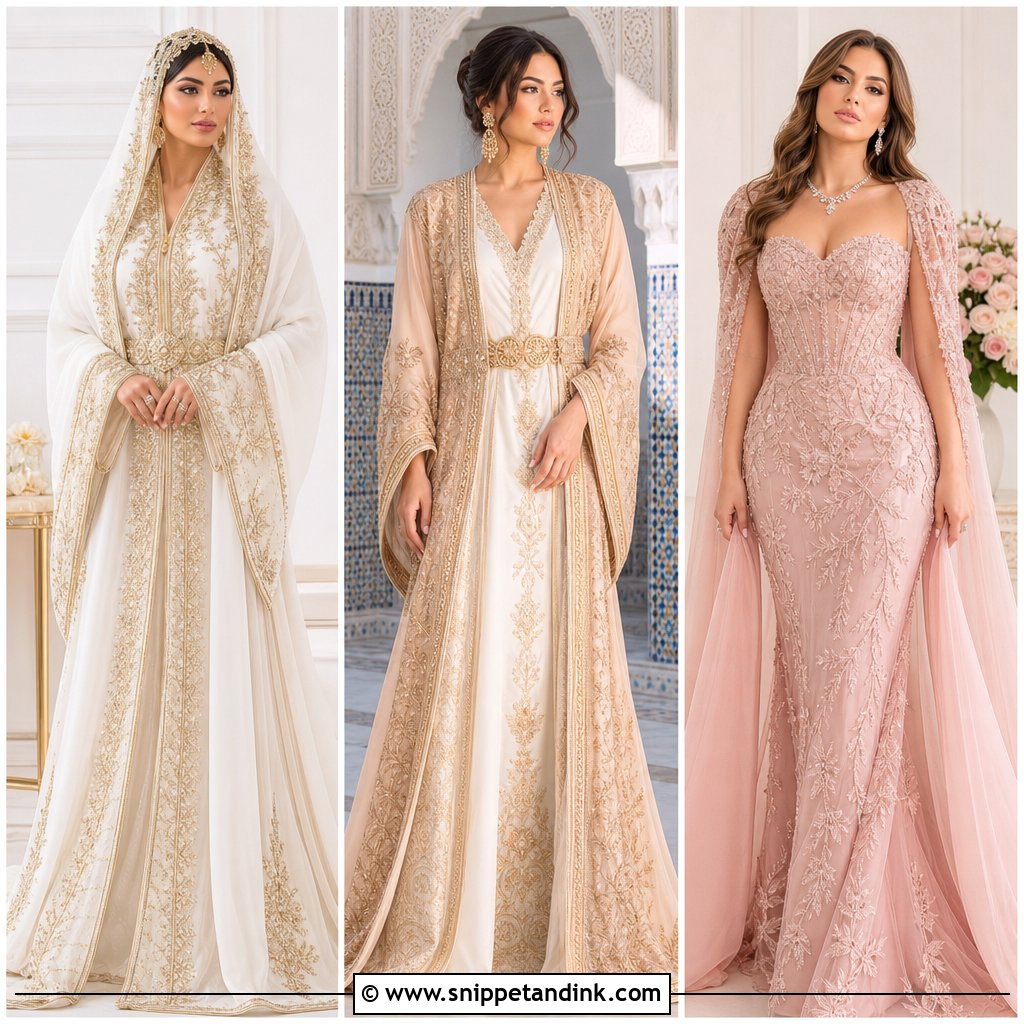
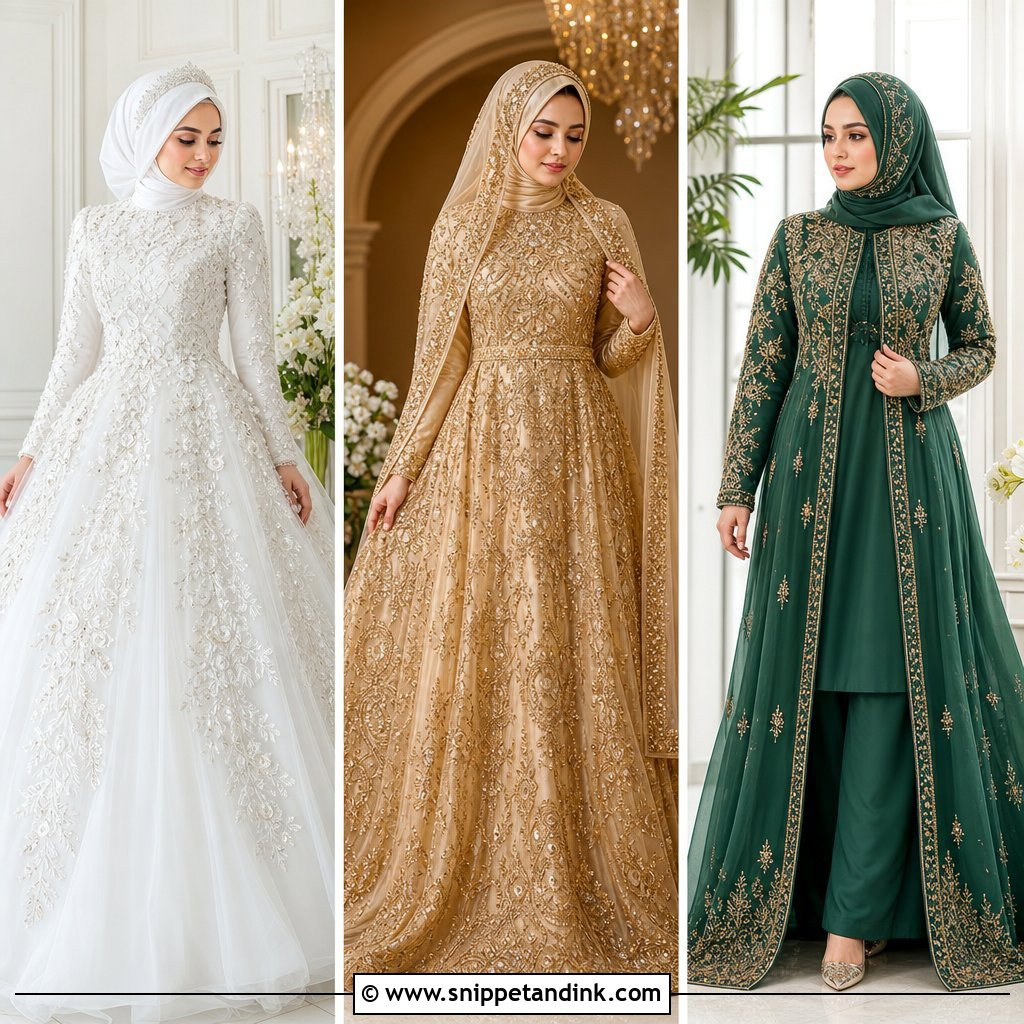
Shararas are the outfit I recommend to brides who dread a heavy skirt, because the wide flared pants move like a skirt but let you walk freely. The set is a long embroidered tunic, the sharara and a dupatta. Choose a tunic with full sleeves, a covered neckline and enough length to balance the volume below. I wrap the chiffon hijab close to the face, then pin the dupatta lightly over the head or one shoulder so it can come off for dancing. Hem the sharara to your exact shoe height; even two centimetres too long and you’ll step on it all evening.
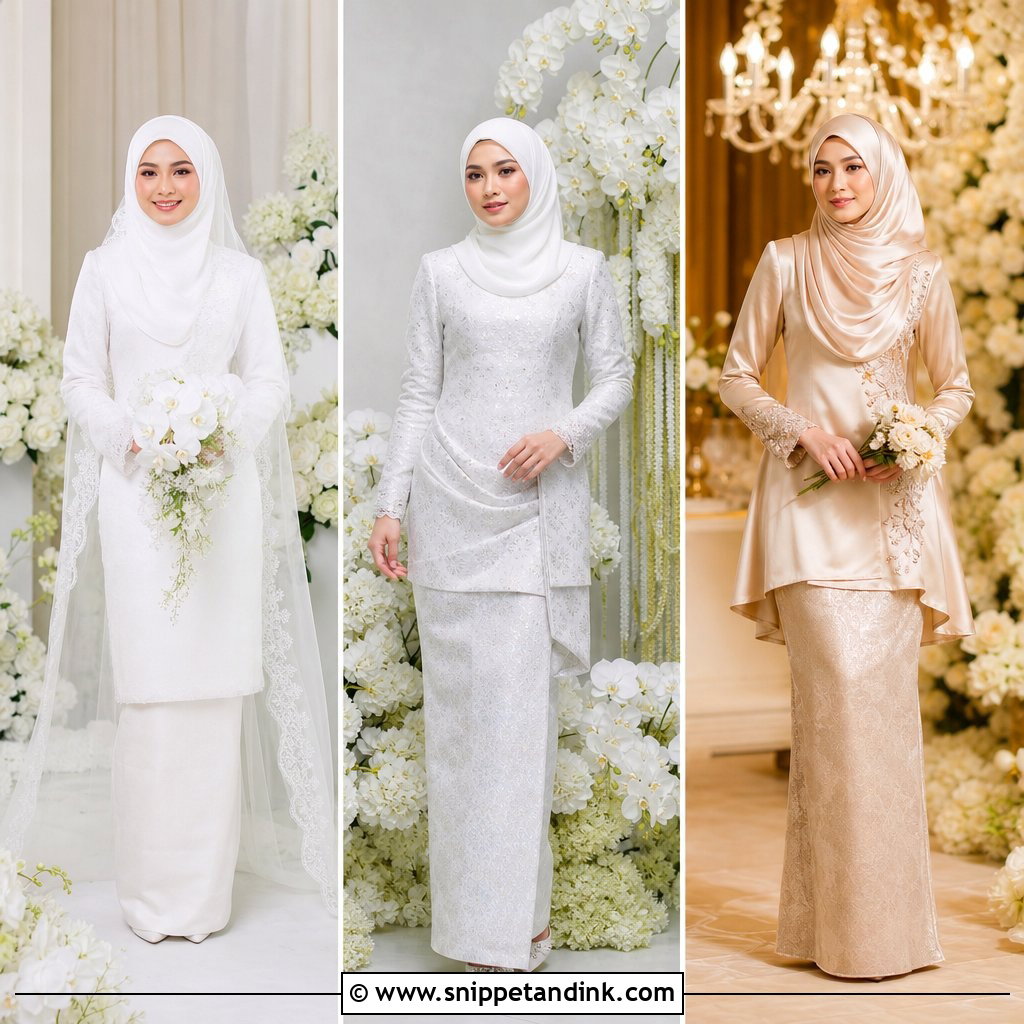
15. Turkish Wedding Dress with Hijab
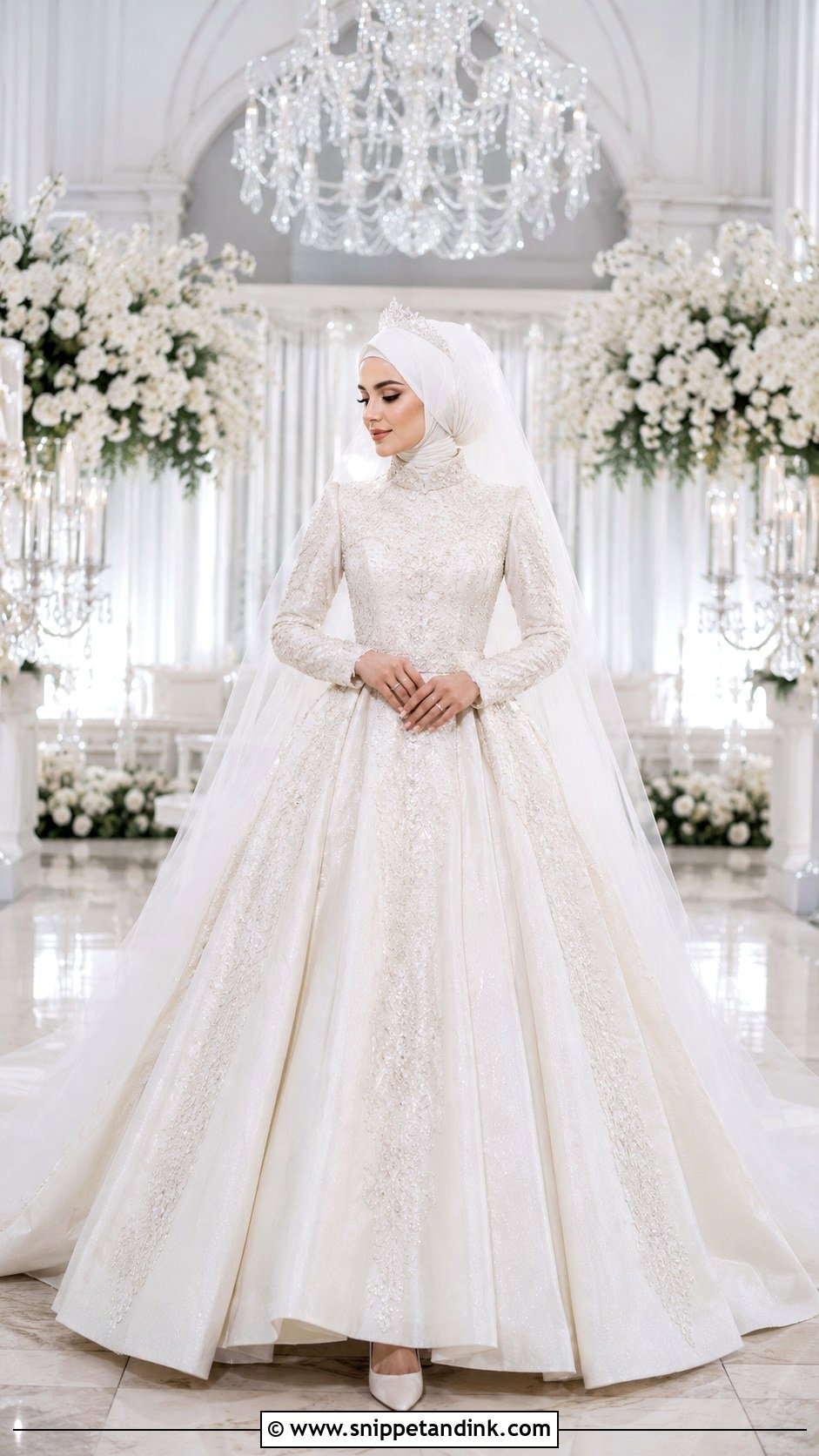
A Turkish-inspired wedding dress usually means a structured bodice, high neckline, long sleeves and a very full skirt, often with covered buttons down the back. The sharp waist is what keeps all that volume from swallowing you. The headpiece is the signature here: I set a crystal crown or headband over a smooth, tightly wrapped hijab and attach a long veil behind it. With this much going on, the hijab needs zero extra folds or pins showing. Have the crown fitted over the hijab, not on bare hair, since the hijab layers change its size.
16. Vintage Lace Wedding Dress with Hijab
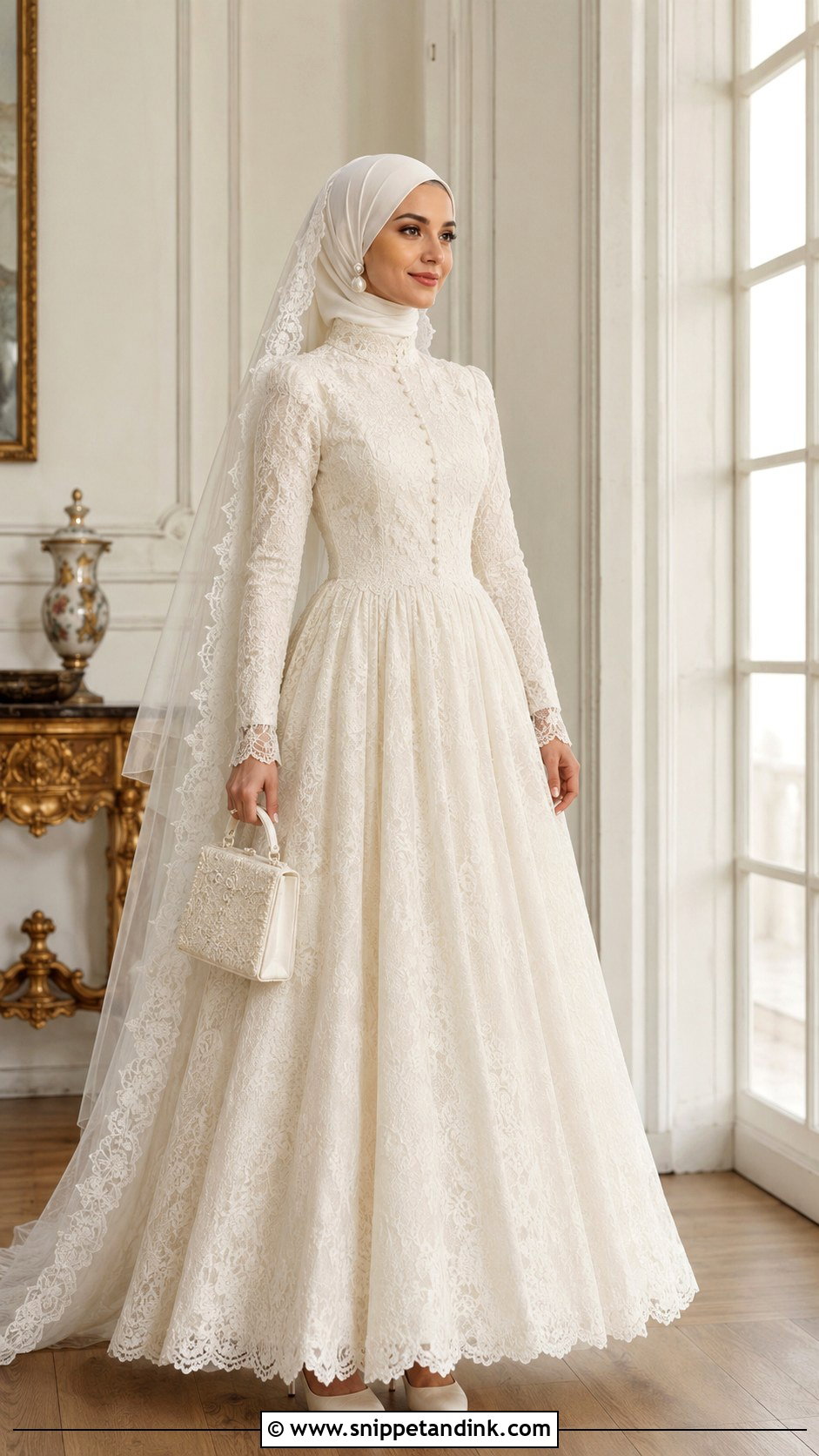
Vintage lace dresses look delicate but they’re the ones I check hardest for coverage, because the old-style lace patterns are open. A high Victorian neckline, fitted lace sleeves, covered buttons and a gathered A-line skirt give the look; an opaque lining underneath gives the modesty. Pick one lace motif and repeat it on the veil edge only. Two different lace patterns side by side look like a mistake. Soft ivory flatters vintage lace far more than optical white, which makes old-style lace look synthetic.
17. Velvet Winter Wedding Dress with Hijab
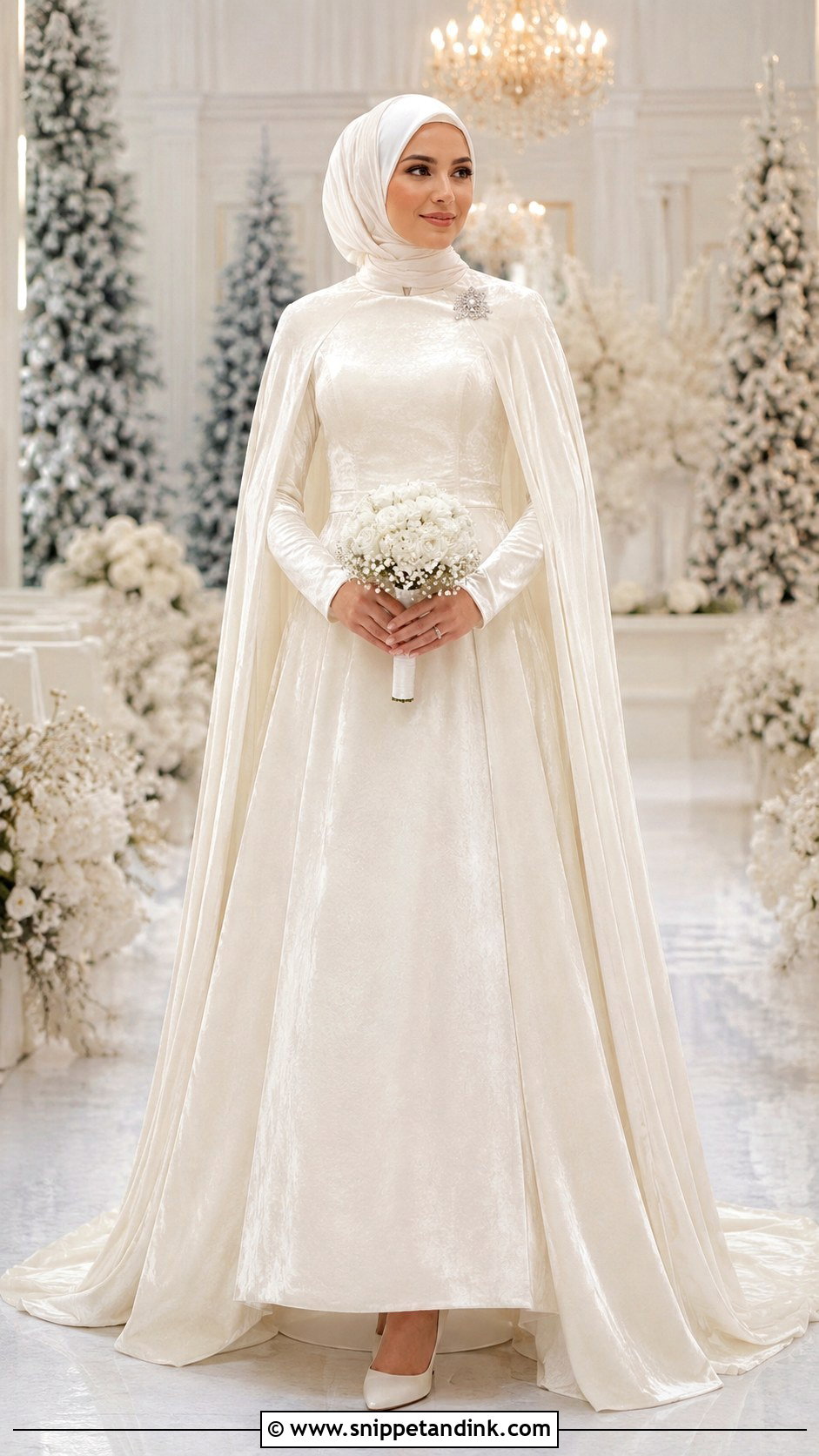
Velvet is a winter-only fabric for me, and it rewards a simple cut. An A-line or straight gown with a high neckline, long sleeves and clean seams lets the pile do the work. Ivory is traditional; champagne or soft silver feels more unusual. Don’t wrap velvet around your head, it’s too thick under the chin. Use smooth satin instead. Keep the train moderate because velvet is heavy, insist on a breathable lining for heated indoor venues, and add a lined cape and a brooch rather than more beading.
18. Blush Wedding Dress with Hijab
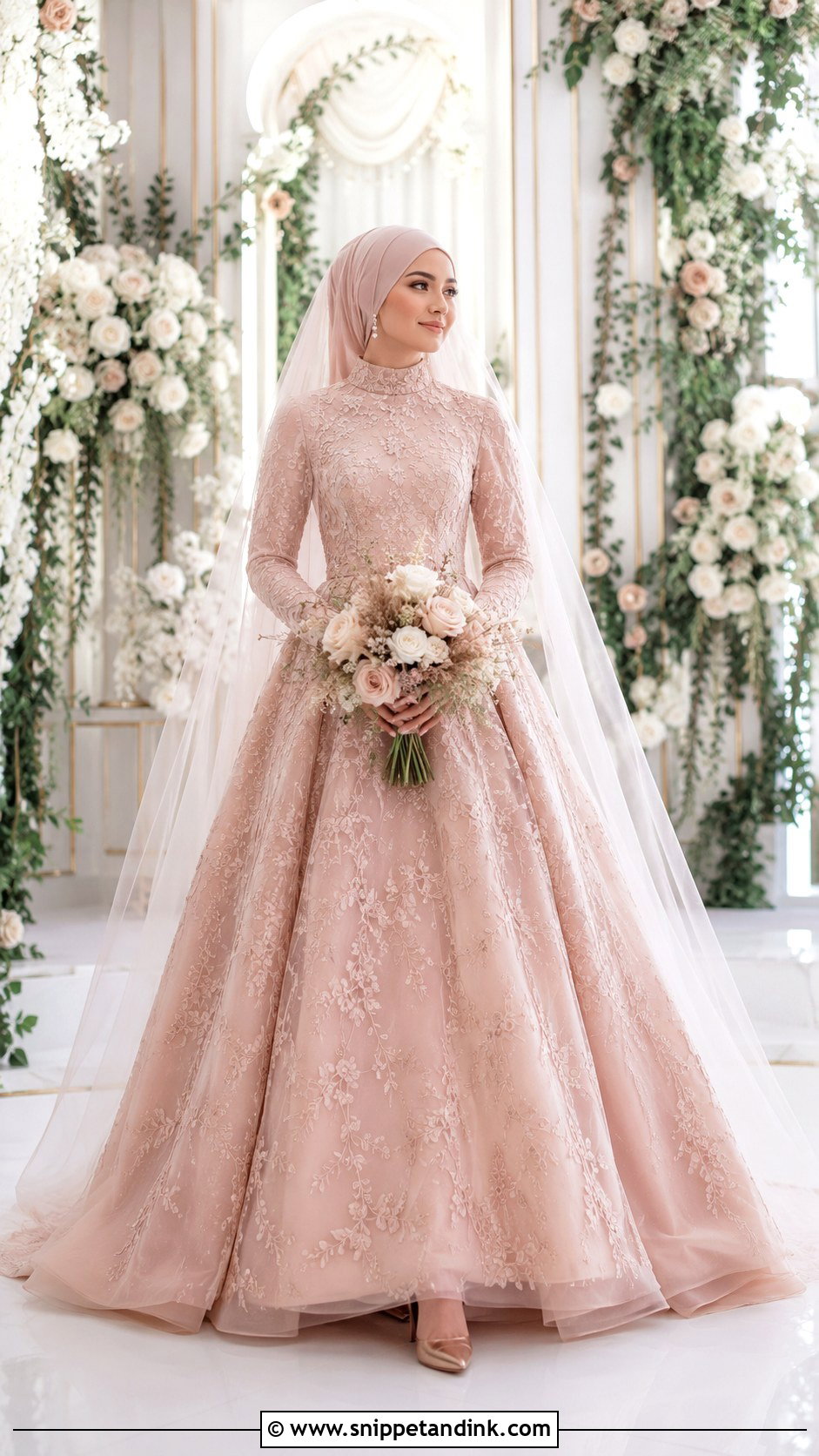
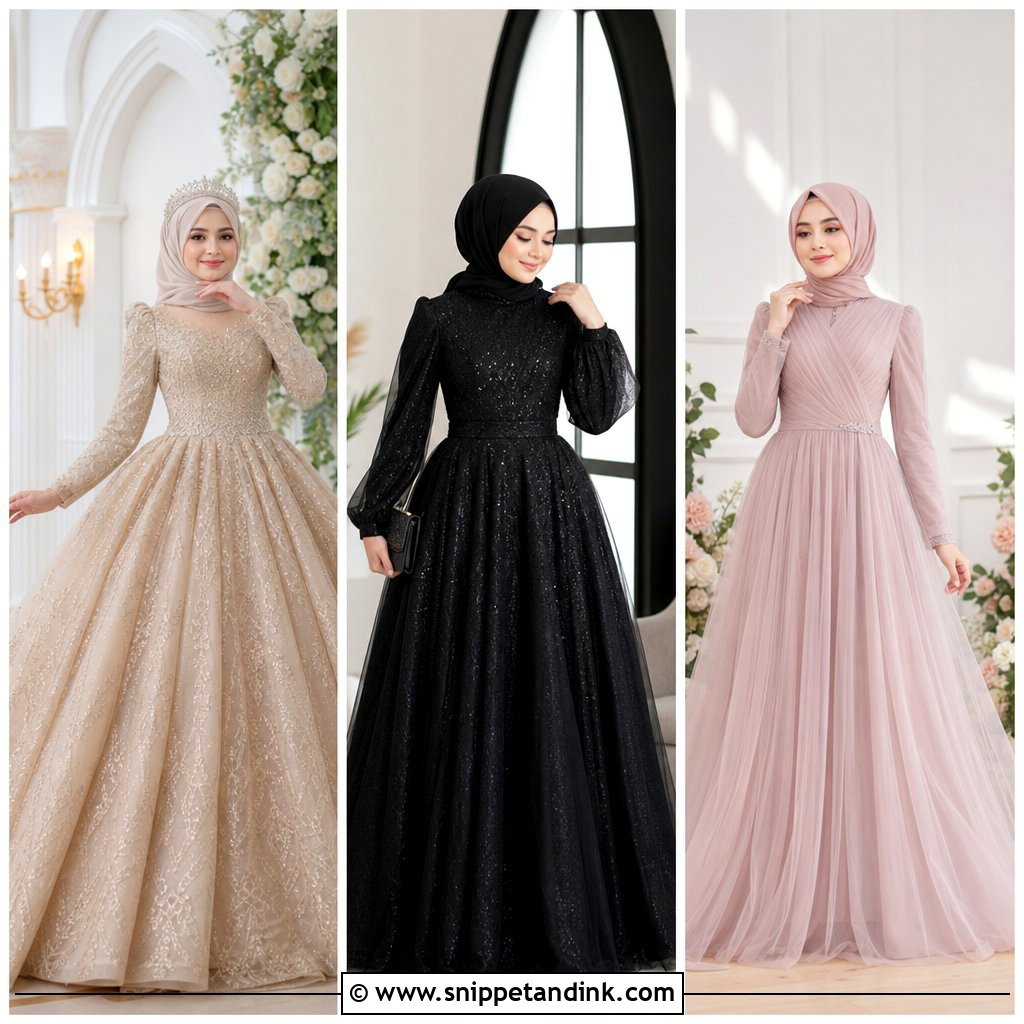
Blush still reads clearly as a wedding dress, it just softens the contrast against warmer skin tones. Choose dusty pink or pale rose with long sleeves, a high neck and an A-line or ball-gown skirt; tonal embroidery or tiny pearls give it definition. I match the hijab to the gown exactly and let a sheer ivory veil add a little brightness between dress and background. The thing to test is lighting. Blush can turn peach under warm bulbs and lavender in shade, so view the fabric in both before you commit.
19. Champagne Wedding Dress with Hijab
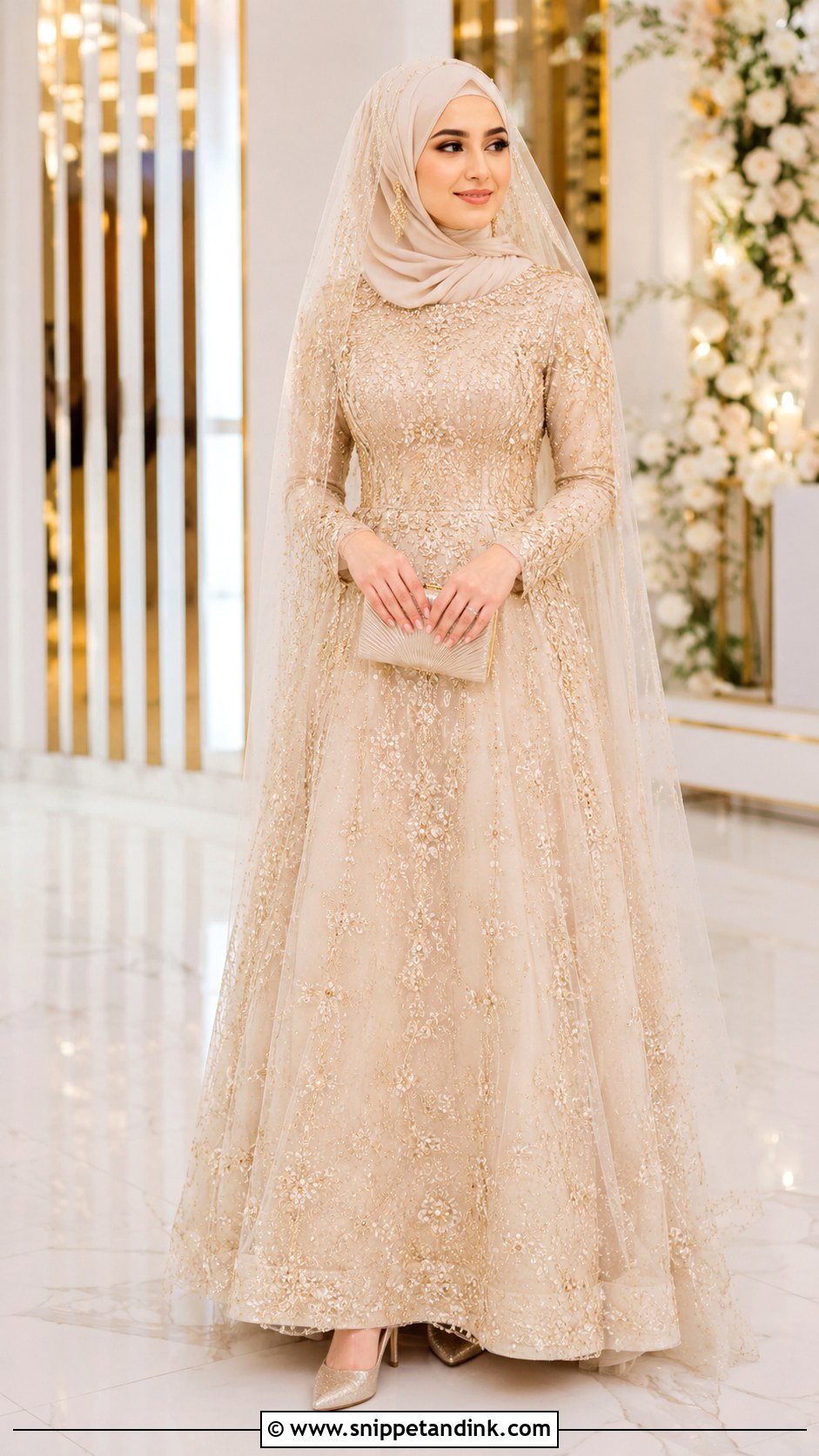
Champagne is warm and pairs naturally with gold or pearl embellishment. A long-sleeve gown with a covered neckline and an A-line skirt keeps the colour as the main feature. For the hijab, I hold champagne, beige and pale gold against the bride’s face and pick the one that suits her skin, not the one that matches the swatch card. Champagne varies enormously between mills, so compare dress, hijab, veil and shoes together in natural light. If the gown is heavily beaded, wear one headpiece and stop there.
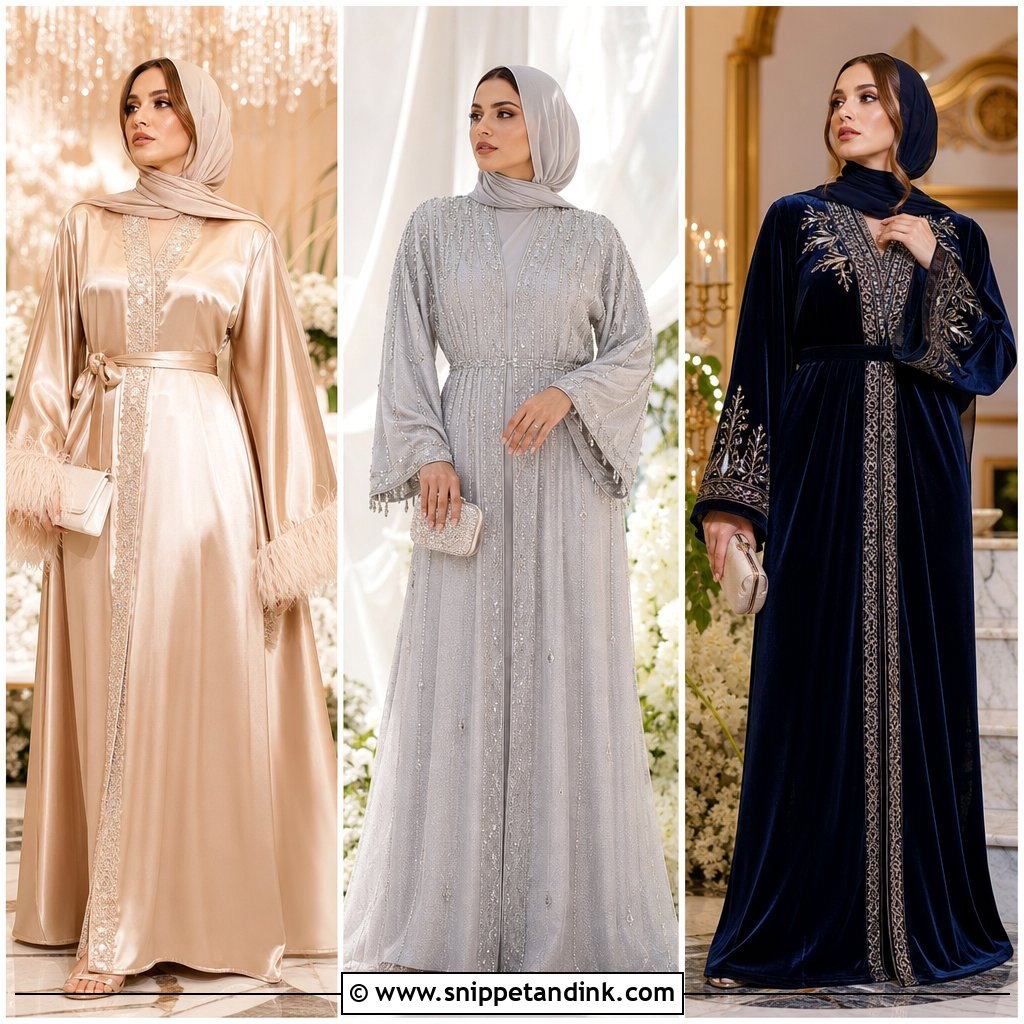


20. Simple Nikah Wedding Dress with Hijab
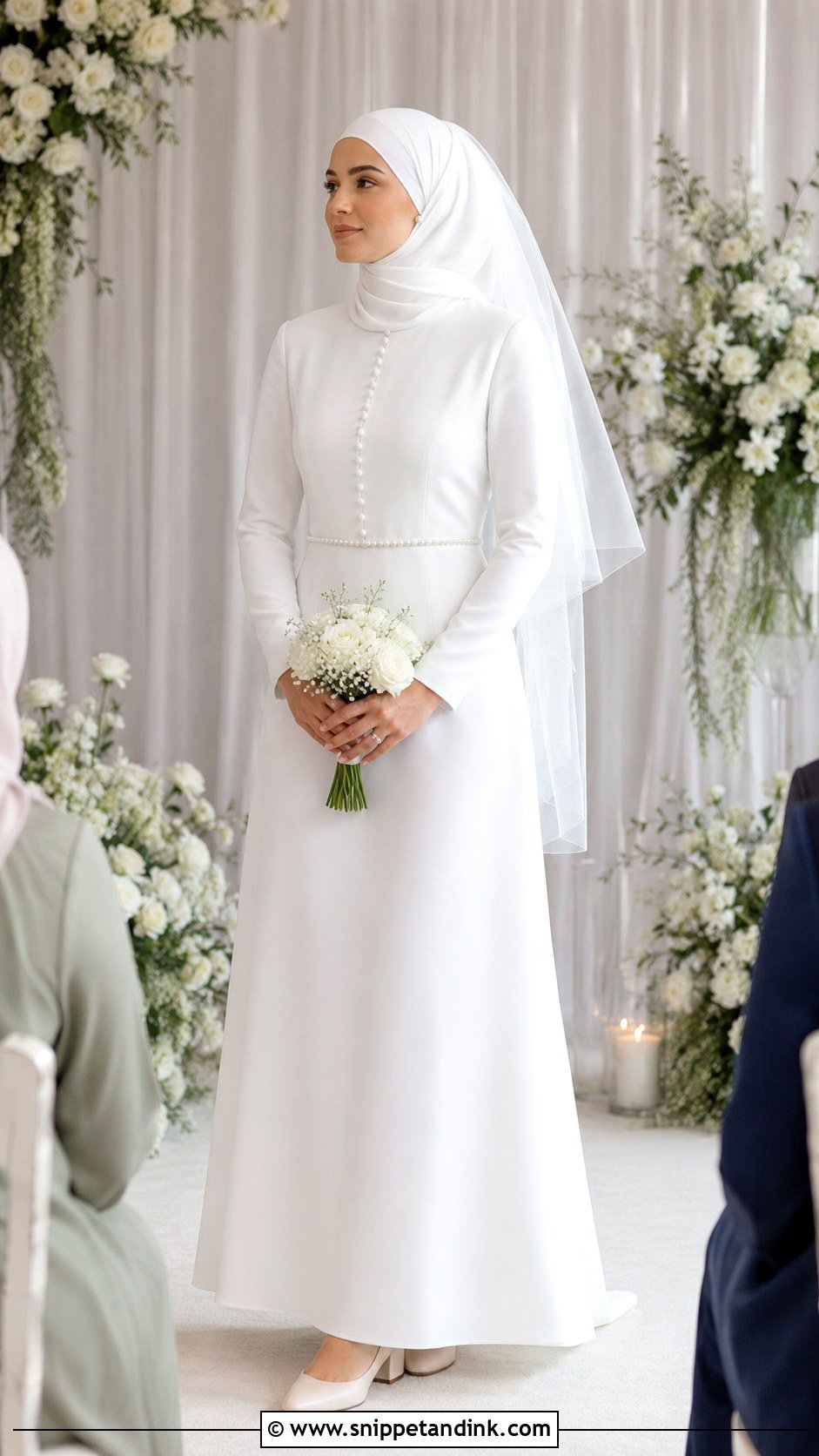
For a small nikah, a simple white maxi can carry as much meaning as a grand gown. I like opaque crepe or satin with long sleeves, a high neckline, a fitted waist and a fluid skirt, with a few small touches: covered buttons, pleated cuffs or a narrow pearl belt. Pair it with a neatly wrapped chiffon hijab and a short veil, or no veil at all. Nikah ceremonies often mean sitting on the floor or a low cushion, so sit cross-legged at the fitting and check the skirt doesn’t ride up or pull at the waist.
Where the Veil Attaches When There Is No Hair to Pin Into
A traditional veil comb is designed to grip hair, so on a hijab it slides. The fix is to give it something firm to hold. I set a snug cotton or jersey underscarf, often with a small bun or volumiser underneath at the back of the head, and slide the comb into that through the hijab layer. The bun gives the comb a ridge to sit behind, and the underscarf stops it slipping.
Pins, weight and the wind
Use flat hijab pins along the sides and two or three bobby pins crossed through the comb teeth into the underscarf. Keep a long cathedral veil to a single layer of soft tulle; a heavy lace-edged one drags the hijab backward by the reception. For outdoor ceremonies, a short sewn-in loop under the veil edge lets you hook it to a pin at the shoulder if the wind picks up.
Steaming and day-of kit
Steam the hijab separately from the gown, on the lowest setting for chiffon, and dress your head last, after the dress is on, so nothing gets crushed pulling the gown over. I always pack spare pins in the colour of the hijab, a small travel steamer, and a fabric-safe stain pen for makeup on the inner edge of the scarf.
One Silhouette, One Shared Detail, Then Stop
Modest bridal fashion covers everything from a plain crepe maxi to a crystal-crowned ball gown, and none of these twenty is more correct than another. Start with the silhouette you can move in for the whole day, then tie dress and hijab together through one shared element: colour, texture or a repeated detail. Veils, capes, crowns and dupattas should support that, not add a second story. Do your last fitting in your real shoes, underlayers and pinned hijab, and you’ll know before the day exactly how everything sits.
You'll Like These Ideas:








Leave a Reply