
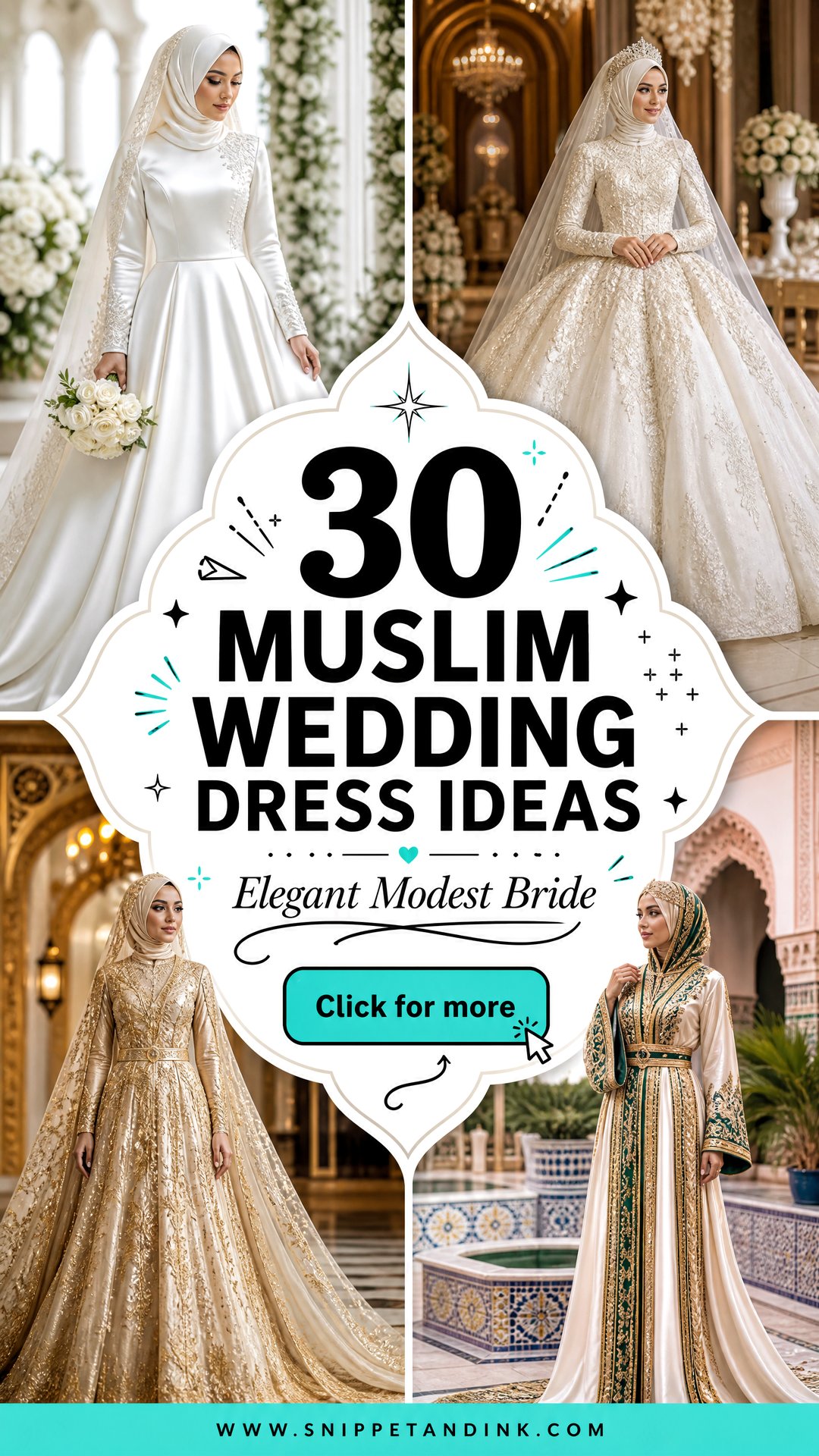
Dressing a Muslim bride means styling two things as one: the gown and the hijab. A neckline that looks right on a hanger can leave a gap under the scarf, and a sleeve that seems opaque in the shop can turn sheer under a camera flash. The choices are wide now, from lace gowns and satin silhouettes to embellished abayas, kaftans, layered veils, pearl hijabs and two-piece looks. Classic white, champagne, rich gold or embroidered color can all work. Below are 30 complete looks, each with the fit and fabric notes I’d give a bride in the fitting room.
Bring Your Hijab to Every Fitting
The most common problem I fix for hijabi brides is a gown fitted without the scarf on. A neckline that sits perfectly against bare skin can bunch under an underscarf, and a collar that looked high enough can show a sliver of neck once the hijab is wrapped. So I ask brides to bring the exact underscarf, a similar-weight hijab and their pins to every appointment.
Checking coverage the way a camera sees it
Shop lighting is soft and flattering. Wedding photography often uses flash, which passes straight through thin mesh and pale linings. Stand by a window and ask someone to photograph you with flash on. If an illusion sleeve or neckline reads as skin, it can usually be lined in ivory or a deeper tone.
Modesty panels and add-ons
Many bridal seamstresses can raise a neckline with a matching panel, add sleeves or lengthen a hem. It’s easier when the shop can supply matching fabric, so mention your coverage needs before ordering rather than after the gown arrives.
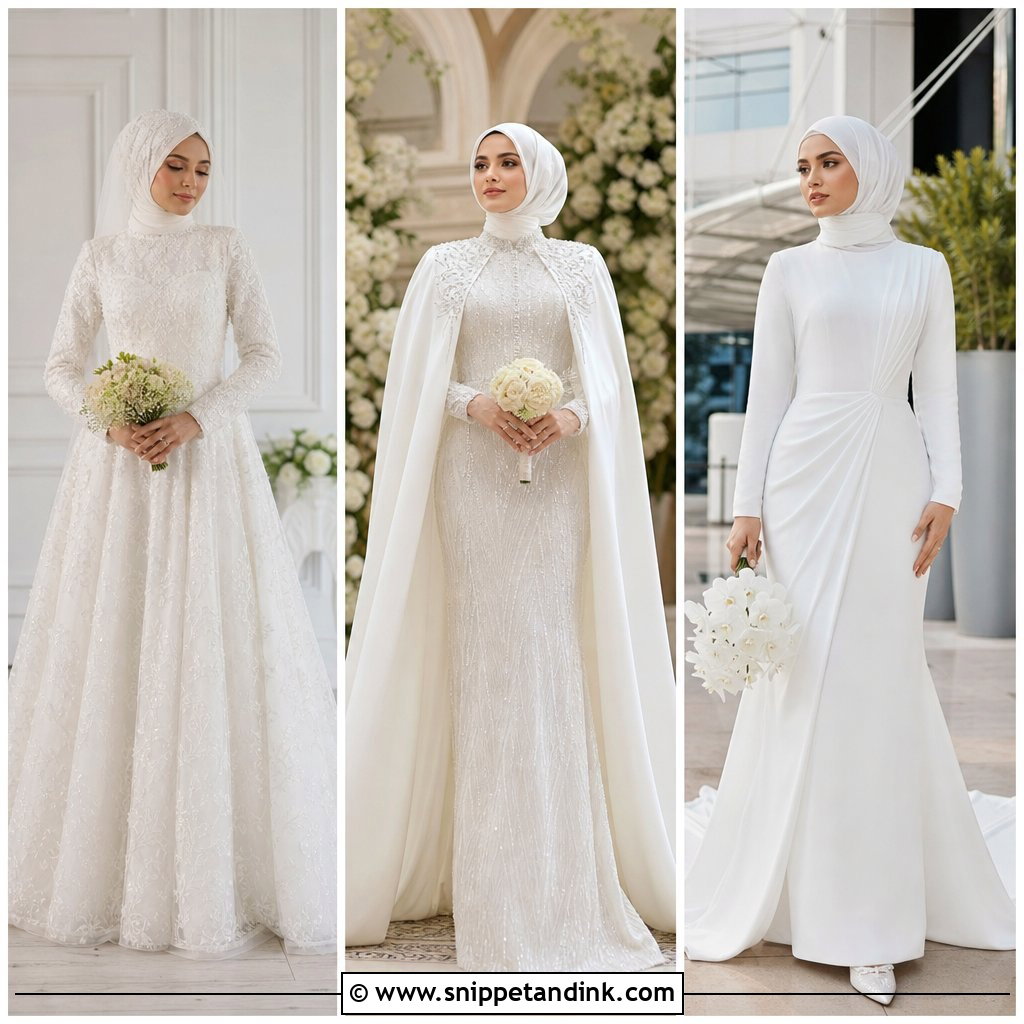
1. White Lace Muslim Wedding Dress
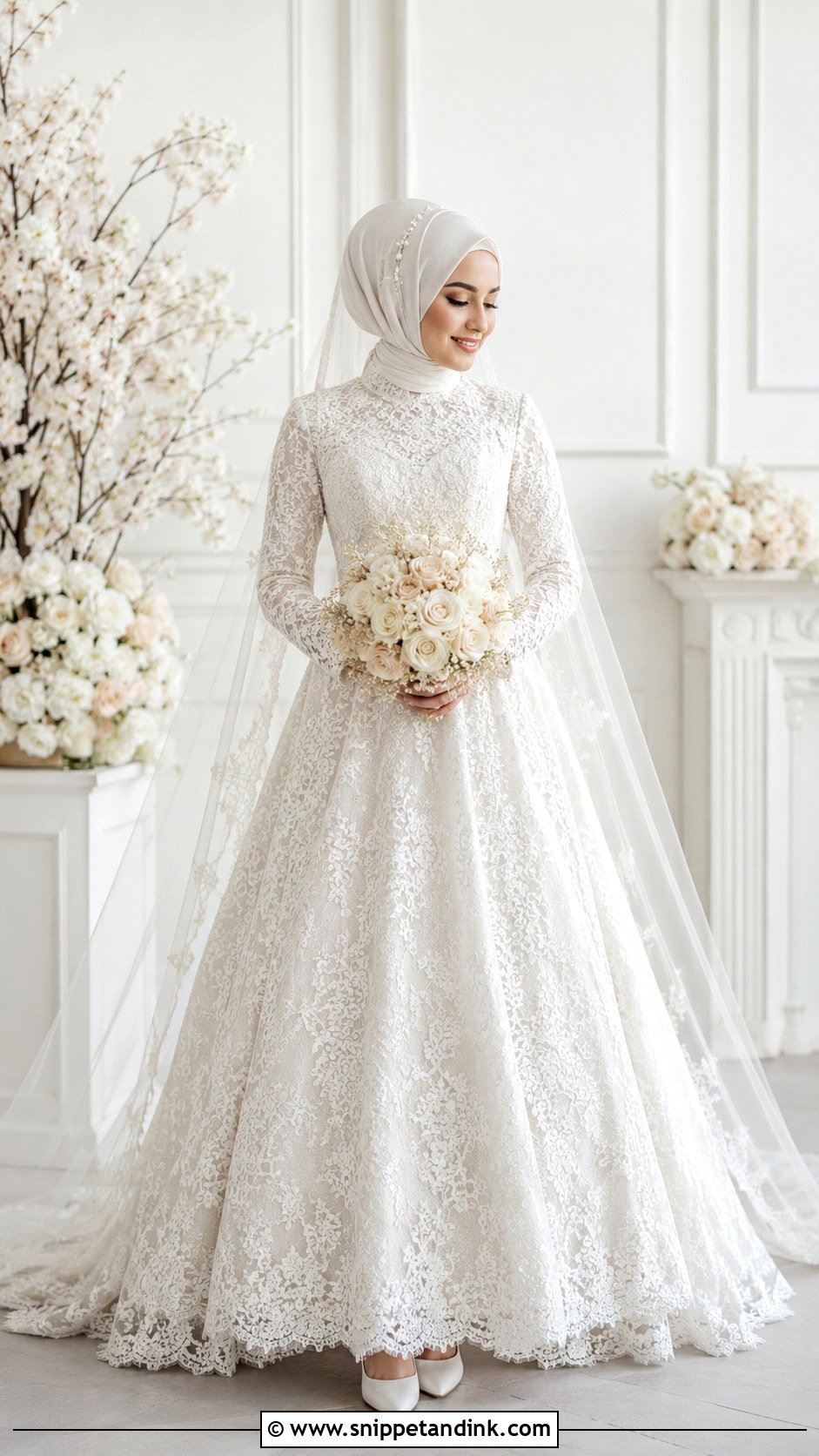
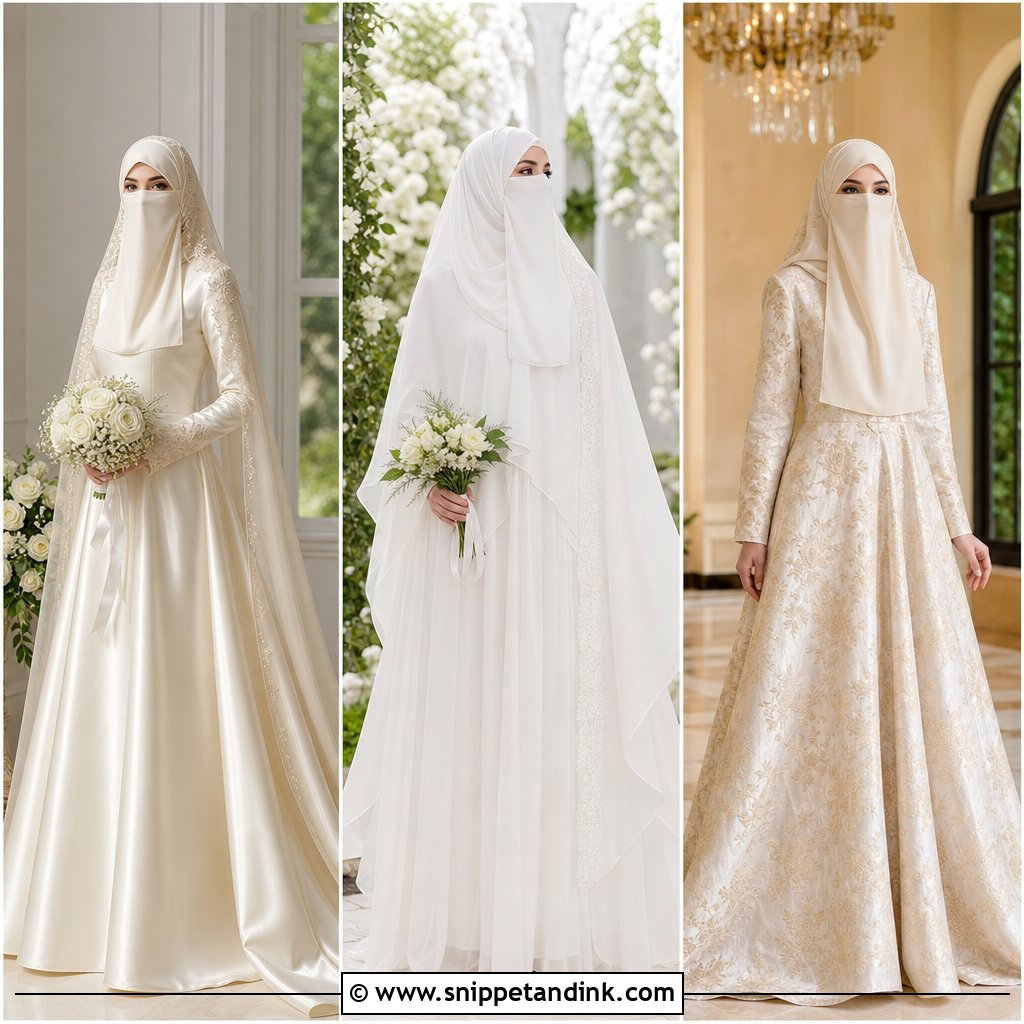
Lace gives softness, but it’s also the fabric most likely to fail a modesty check, because many bridal laces are sewn onto sheer mesh. Ask for a full lining under the bodice and a sleeve lining in a tone close to the lace, not your skin. A high neckline and long sleeves pair with a gentle A-line that moves without weight. Wear a smooth white or ivory hijab with pearl pins, closed-toe heels and a small cream or blush bouquet. With detailed lace, pearl earrings or a fine bracelet is plenty.
2. Satin Muslim Wedding Dress With Hijab
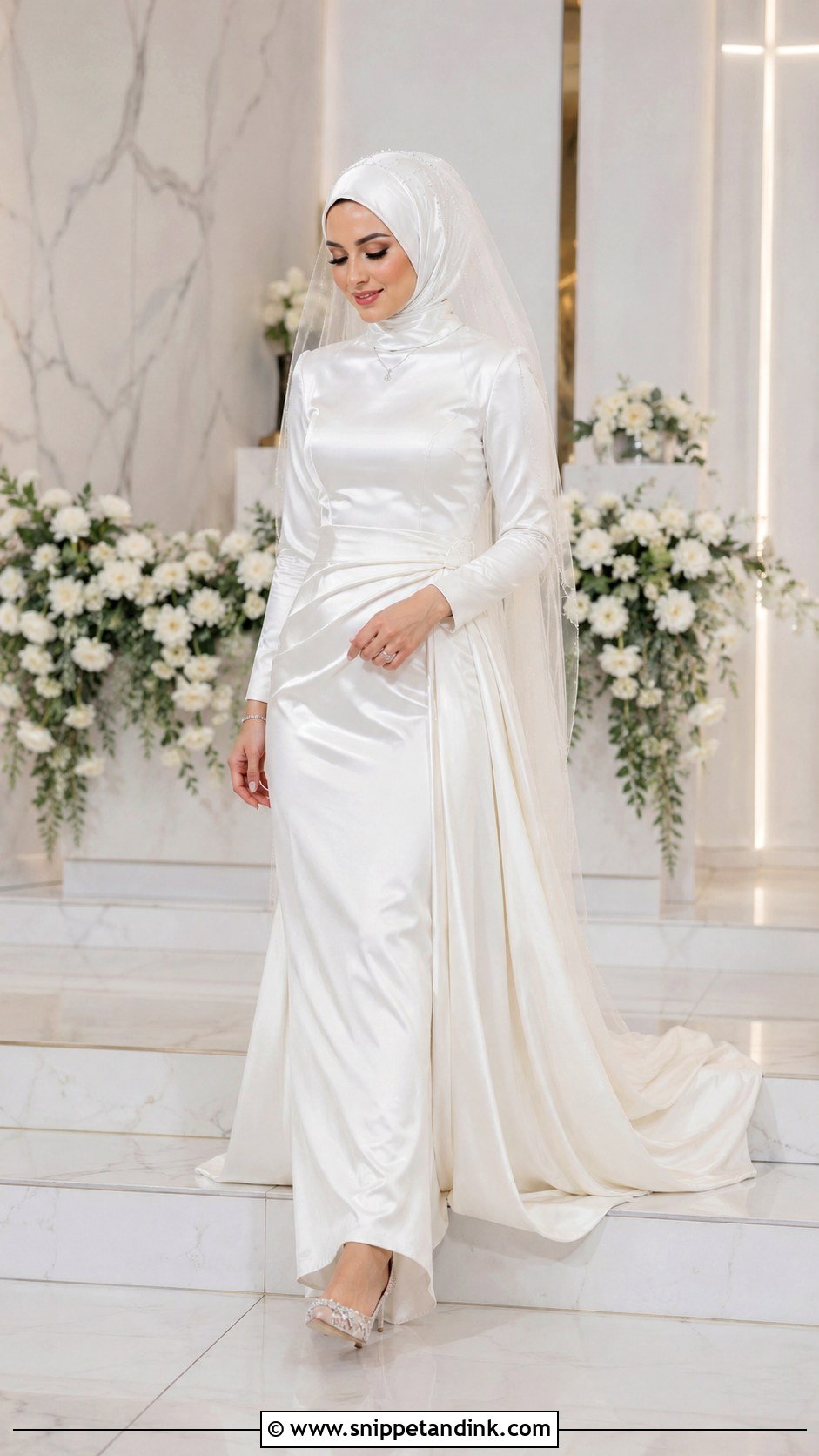
Satin’s soft shine makes even a plain silhouette feel rich. A long-sleeve gown with a high neck, defined waist and flowing skirt gives a modest, elegant line. Matching the hijab in satin looks polished but slips, so I add a cotton underscarf with grip and use more pins than usual. Satin also shows every line beneath it, so ask for smooth lining and a fit with room to move. Pointed ivory heels, a structured clutch and minimal crystal jewelry finish it, with a light veil if you want more drama.
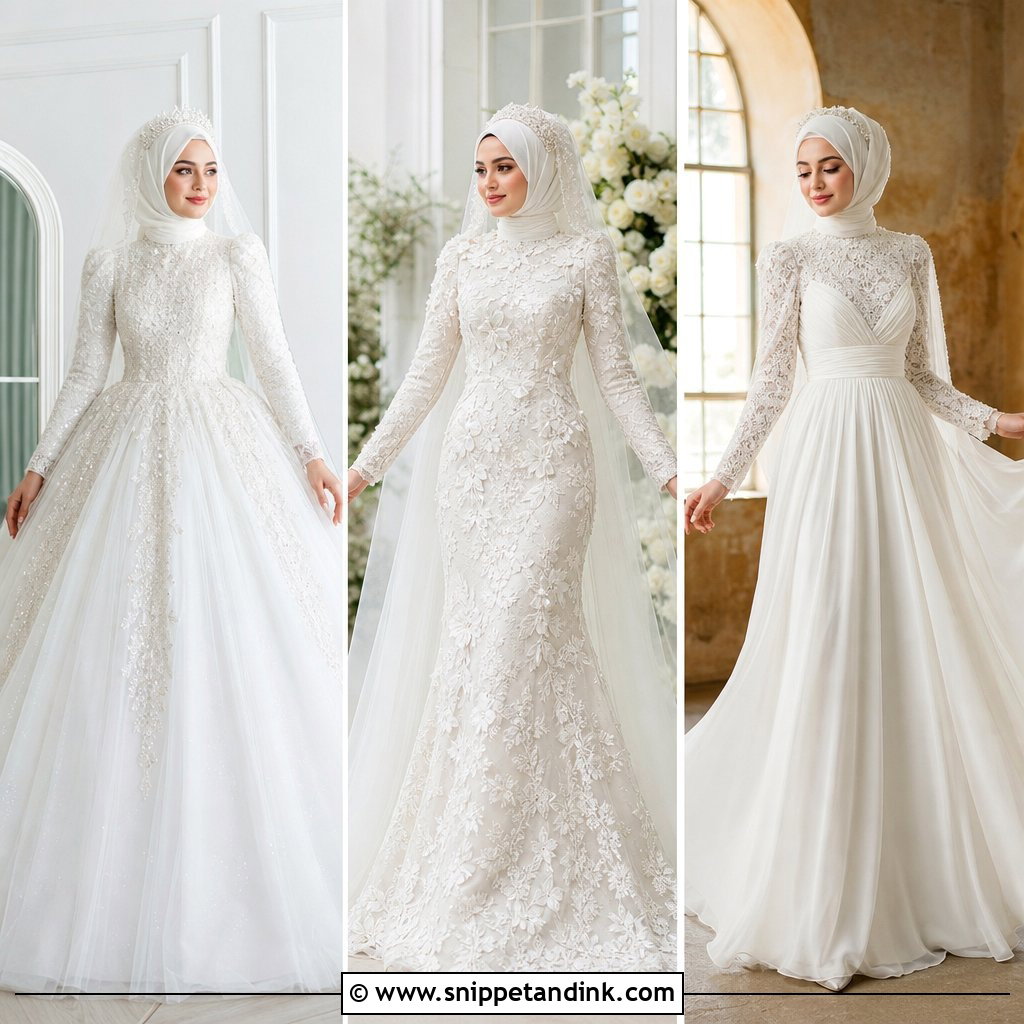
3. Ball Gown Muslim Wedding Dress
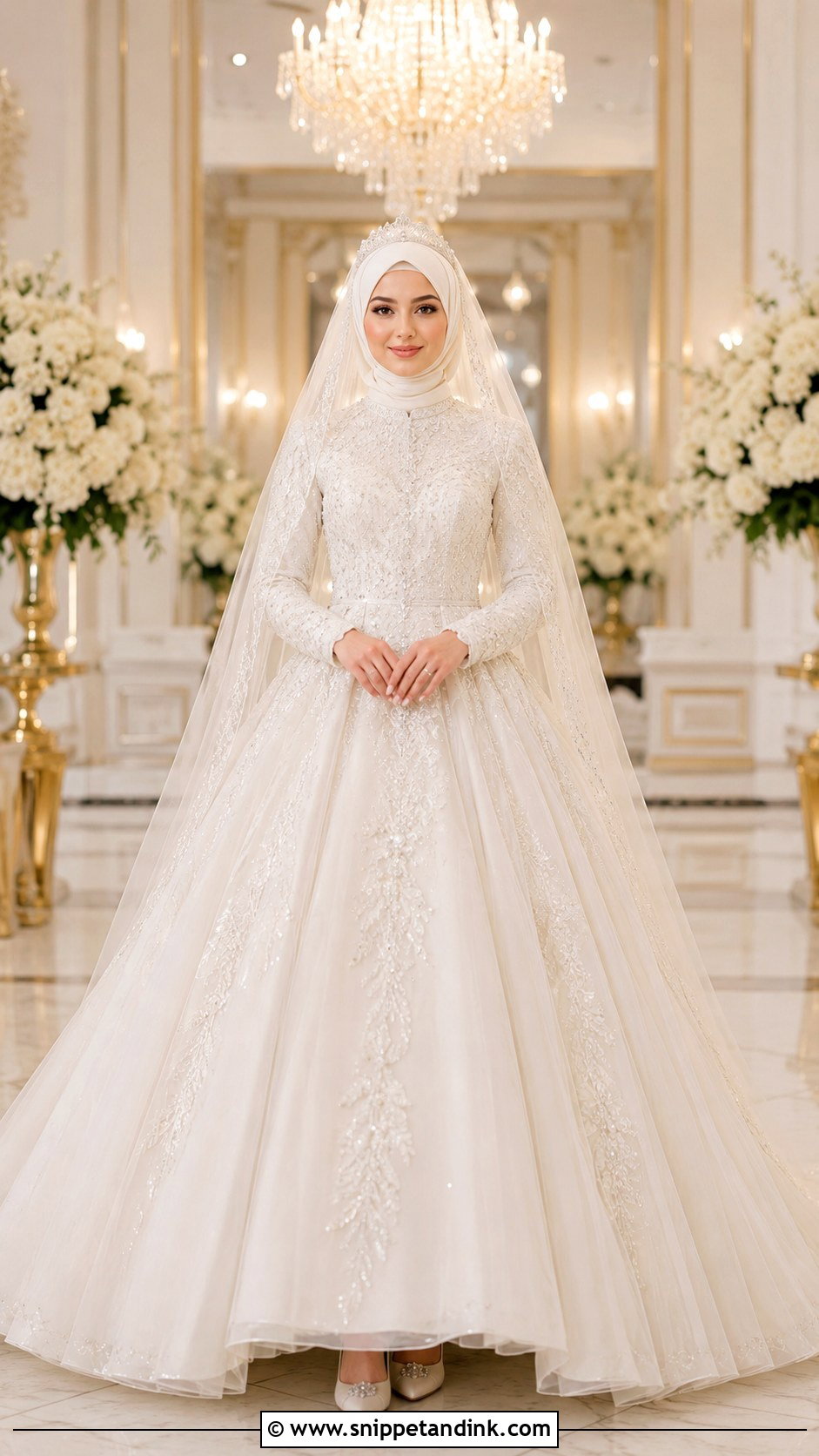
For a grand entrance, a full skirt does the work while a modest bodice with long sleeves and a high neckline keeps you covered. Lace, tulle, organza or satin each change how structured it feels. A fitted waist balances the volume in photos. Ball gowns are heavy, and that weight hangs from the waist for hours, so comfortable shoes are essential, and so is a bustle for the reception. A coordinated hijab, long veil and small tiara or pearl headpiece suit it. Large receptions and formal halls are its natural home.
4. A-Line Muslim Wedding Dress
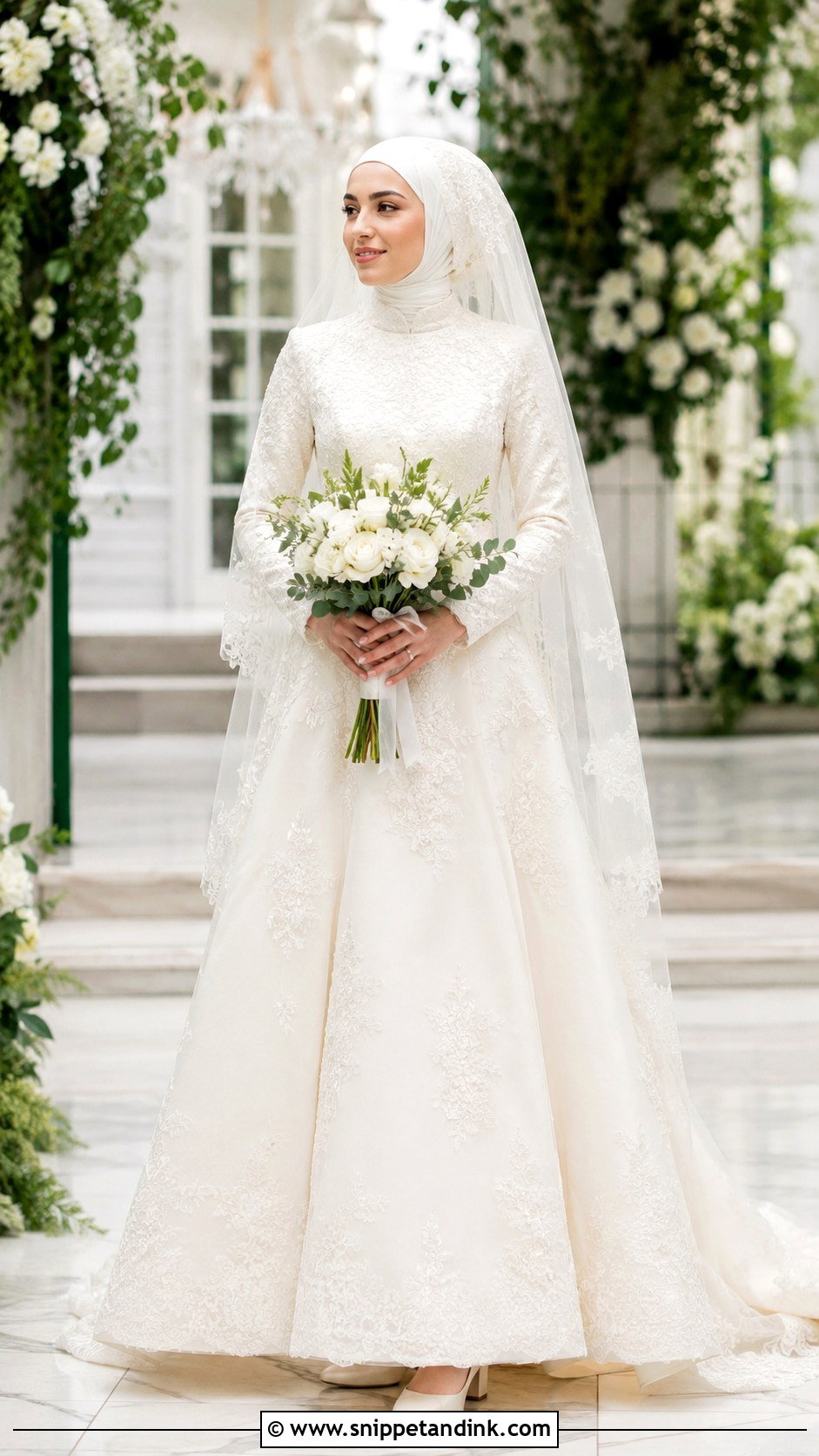
The A-line is the modest silhouette I recommend most to brides who are unsure, because it fits gently through the bodice and falls away from the waist without clinging anywhere. A long sleeve with a high or bateau neckline pairs easily with a matching hijab. Lace appliqué, soft beading or subtle embroidery adds detail without crowding the shape. Low block heels, a delicate veil and a bouquet with soft greenery finish it, and you can sit, walk and greet guests all day without adjusting anything.
5. Mermaid Muslim Wedding Dress
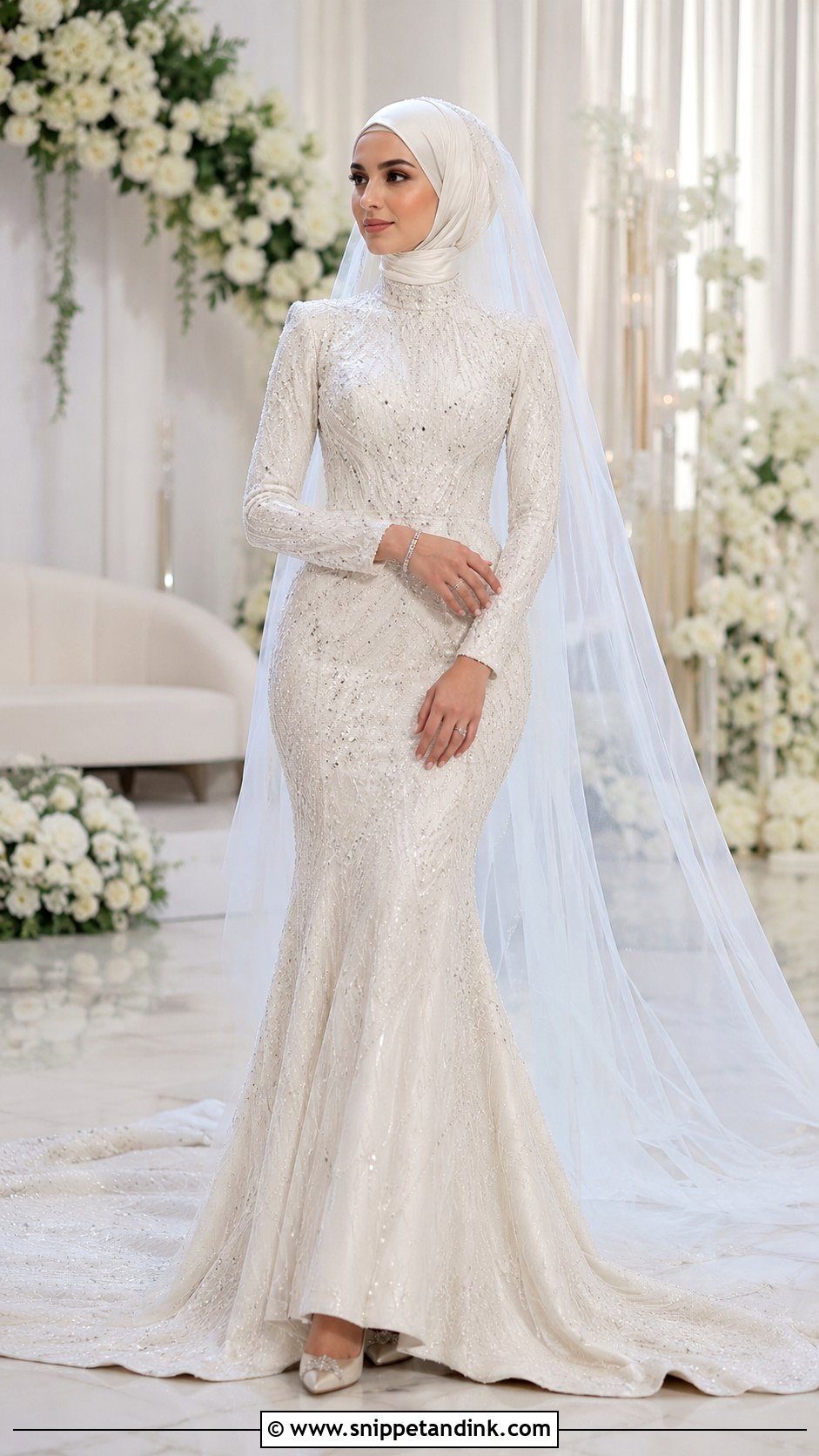
Mermaids and modesty can work together if the dress skims rather than grips. Ask for a slightly relaxed fit through the hips, thicker lining and a flare that starts below the knee, which also makes walking easier. Long sleeves and a high neckline keep coverage. Some brides find even a relaxed mermaid more fitted than they’re comfortable with, and a trumpet shape that flares higher is a good compromise. A smooth hijab, long veil and pointed heels lengthen the line, with crystal drops or a slim bracelet.
6. Modest Princess Muslim Wedding Dress
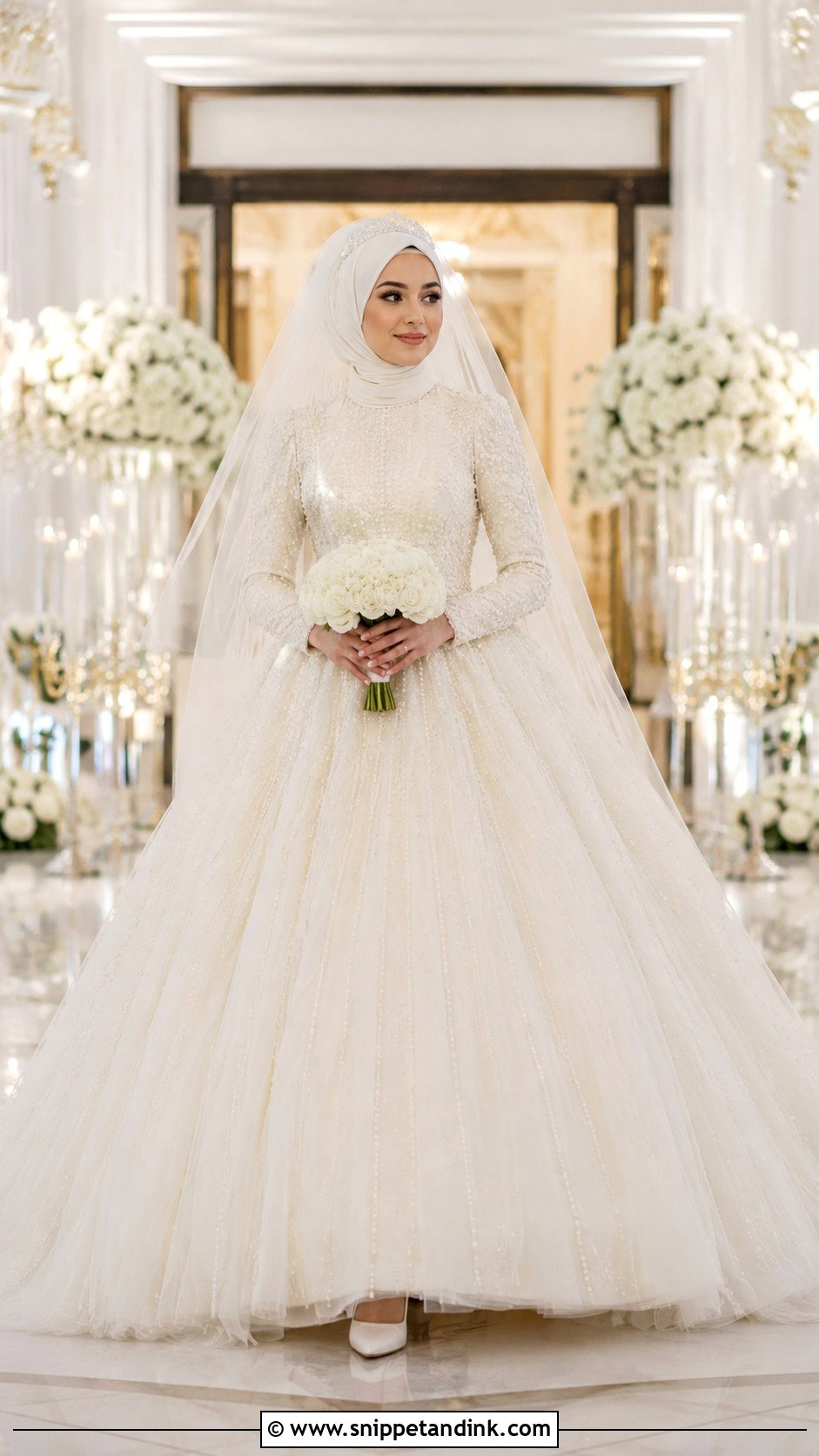
Volume and sparkle meet covered elegance here: a full tulle or organza skirt, a structured bodice, long sleeves and a neckline that sits naturally under the hijab. The rule I follow is balance. With heavy beadwork on the dress, keep the hijab plain and the veil soft; with a plain gown, a jeweled headpiece adds charm. Comfortable heels and a bouquet in white, blush or pale peach complete the fairytale without it tipping over.
7. Muslim Wedding Dress With Cape
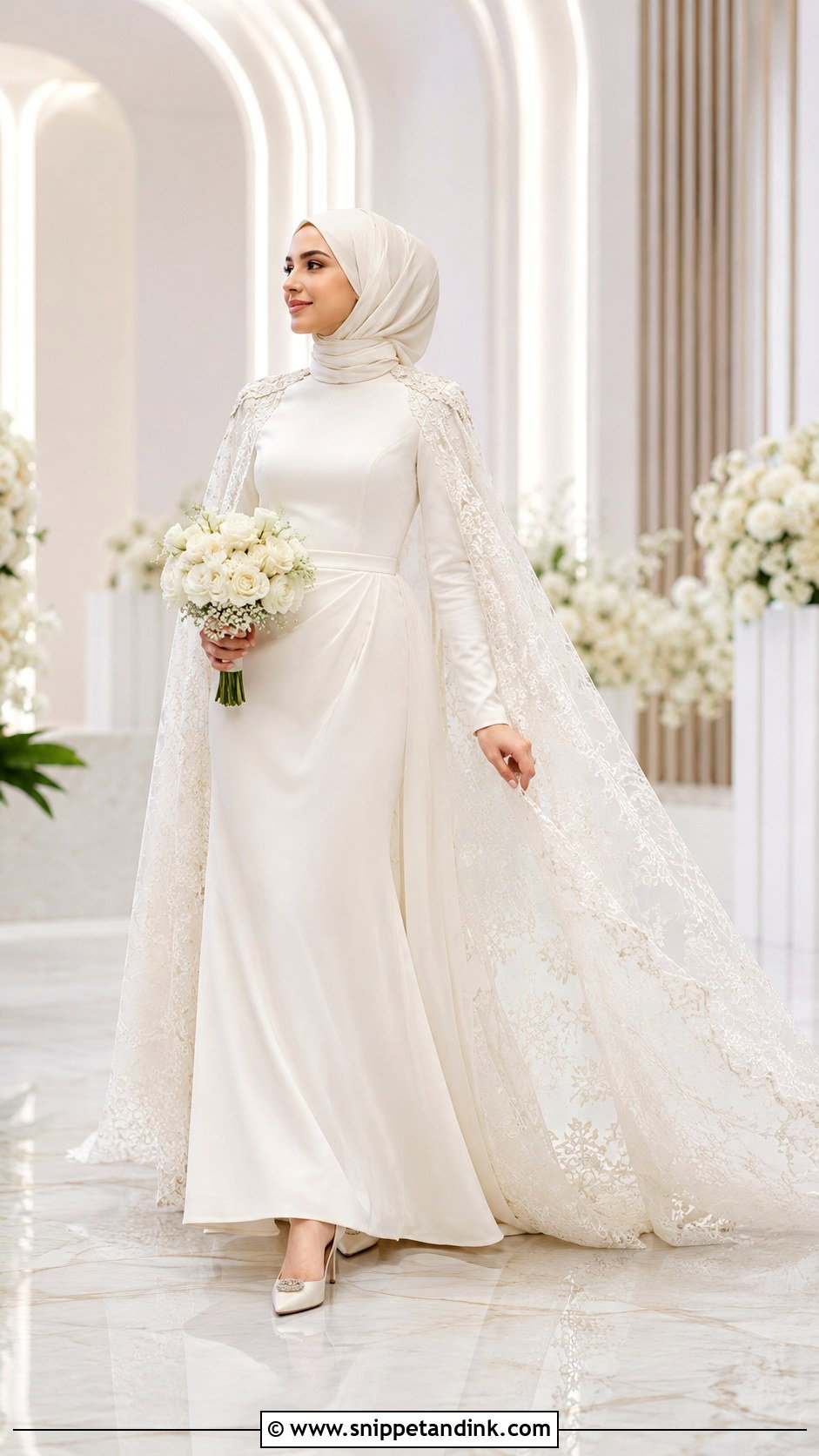
A cape adds coverage across the shoulders and back and flows in photos, which makes it one of the most useful modest details. Keep the gown underneath clean with long sleeves and let the cape carry the drama. Sheer tulle, lace or beaded chiffon capes need proper lining beneath them if coverage matters to you. With an embellished cape, a simple hijab avoids clutter. I check that the cape is anchored at the shoulders, since it can pull the hijab back when it catches on a chair. Slim heels, a neat bouquet and understated jewelry finish it.
8. Muslim Wedding Dress With Detachable Train
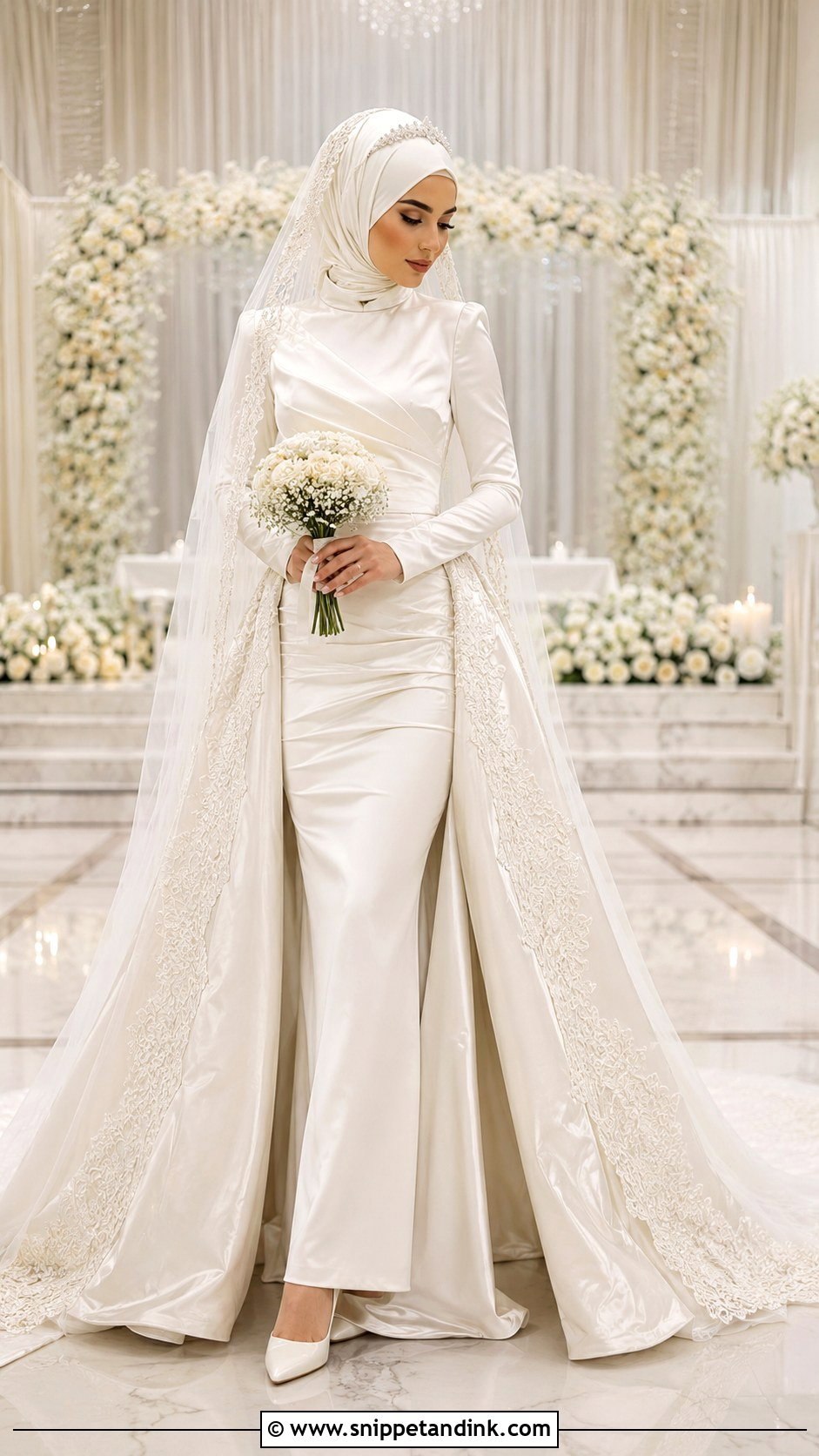
A detachable train gives drama for the ceremony and freedom afterwards. The base should be a modest long-sleeve gown with a high neckline, with a lace, satin or tulle train fastened at the waist or shoulders. Shoulder-attached trains pull on the neckline and hijab, so I generally prefer waist attachment for hijabi brides. A matching hijab and veil keep everything consistent, and stable shoes help you manage extra fabric on the entrance.
9. Embroidered Muslim Wedding Dress
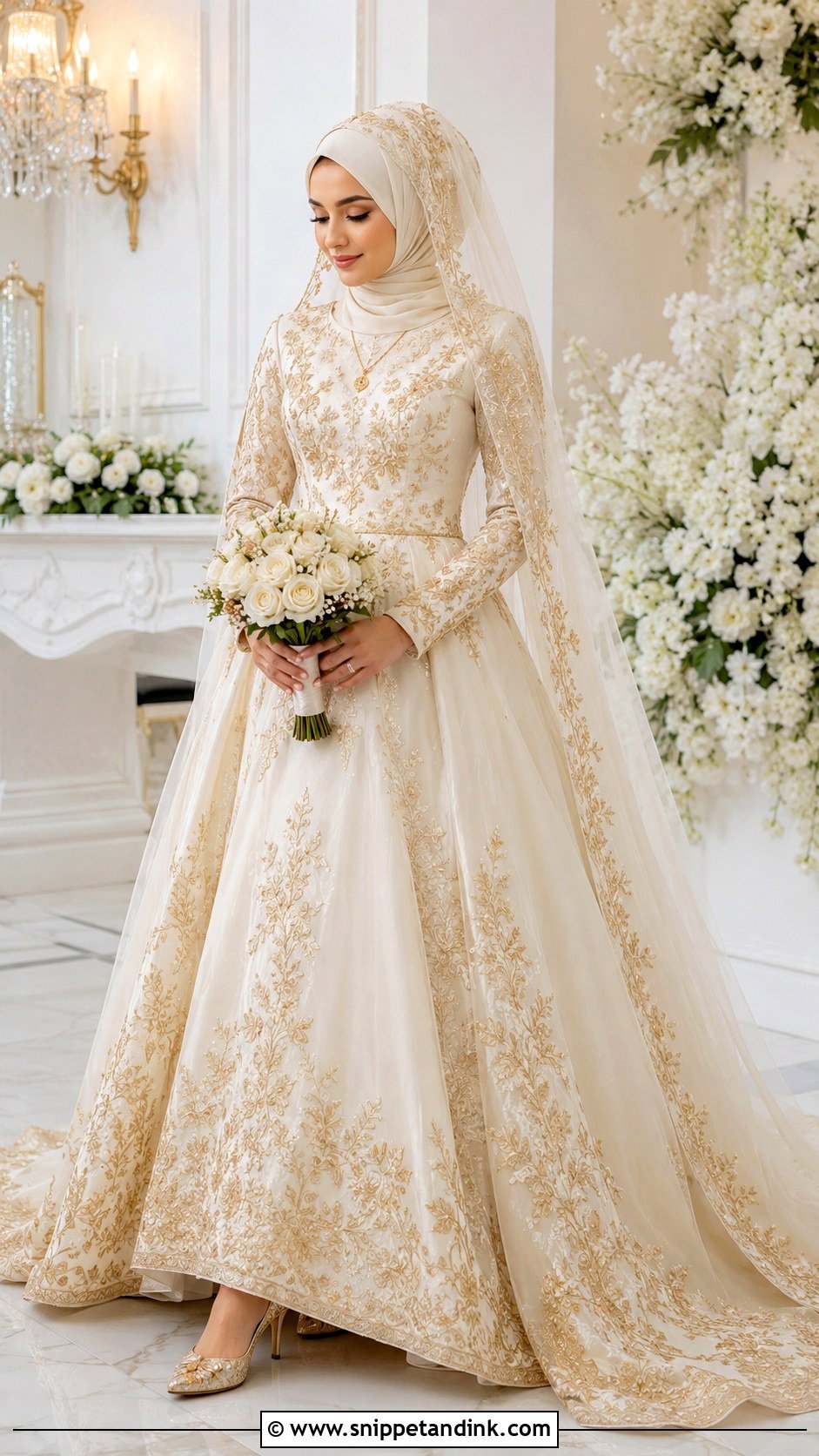
Embroidery can be floral, geometric, traditional or modern, depending on your taste and heritage. I’d place it along the sleeves, bodice, hem or veil rather than everywhere, so the eye has somewhere to rest. A lined high neck keeps it comfortable. Match the hijab to the gown and pick jewelry that echoes the thread: gold reads warm and regal, silver cool and classic. Turn the sleeves inside out at your fitting, because rough embroidery backs scratch for hours unless they’re lined.
10. Beaded Muslim Wedding Dress
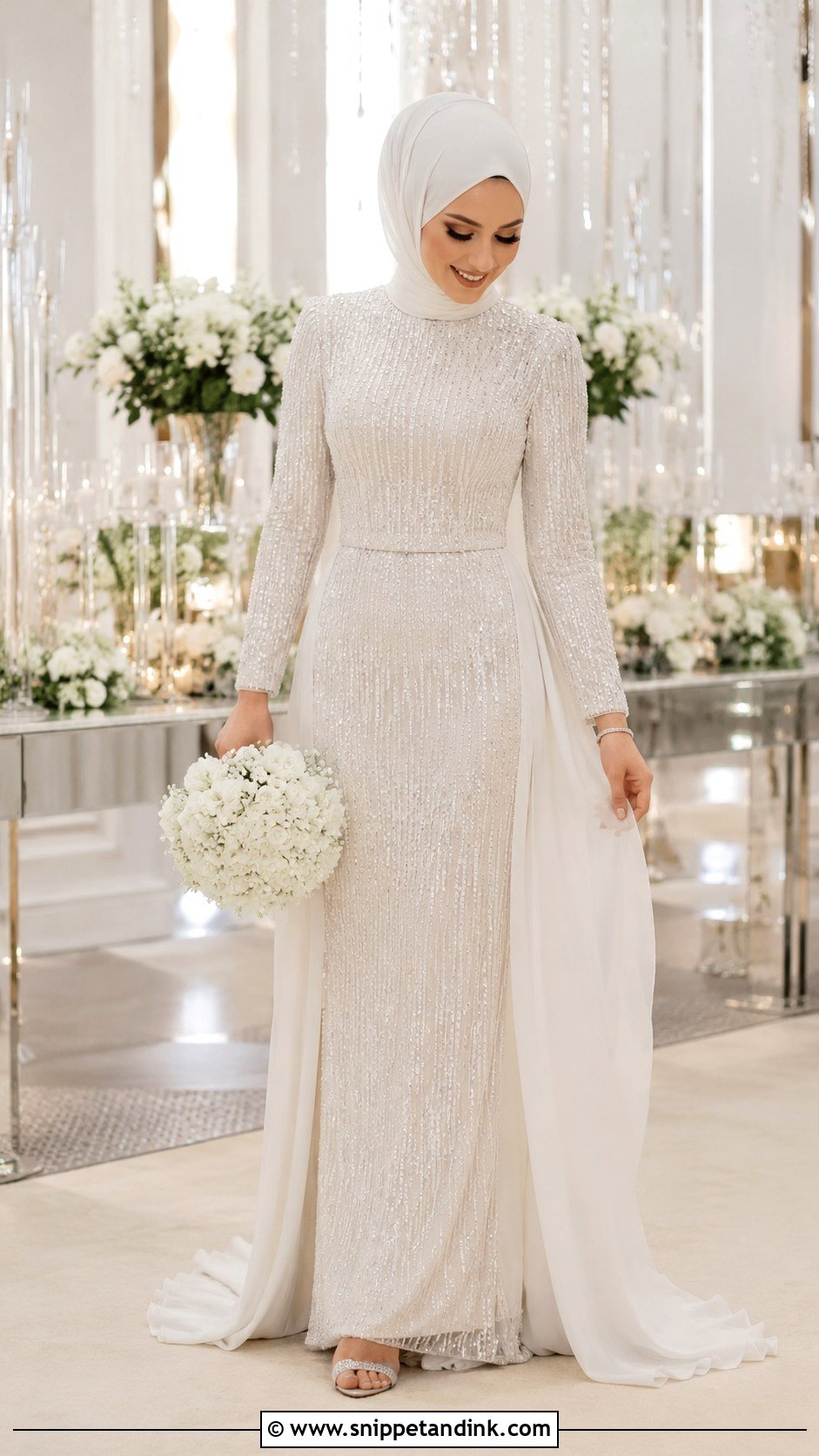
Beading brings instant glamour without needing a revealing cut. Vertical lines of beads lengthen the body, while scattered beads give a softer sparkle. Choose long sleeves and a high neck, then test the weight honestly, because a heavily beaded bodice presses on the shoulders by evening. A plain chiffon or satin hijab lets the dress do the talking. Beads also snag delicate hijab fabric at the neckline, so pin the scarf a little higher. Crystal heels, a small clutch and white flowers finish it.
11. Pearl Muslim Wedding Dress
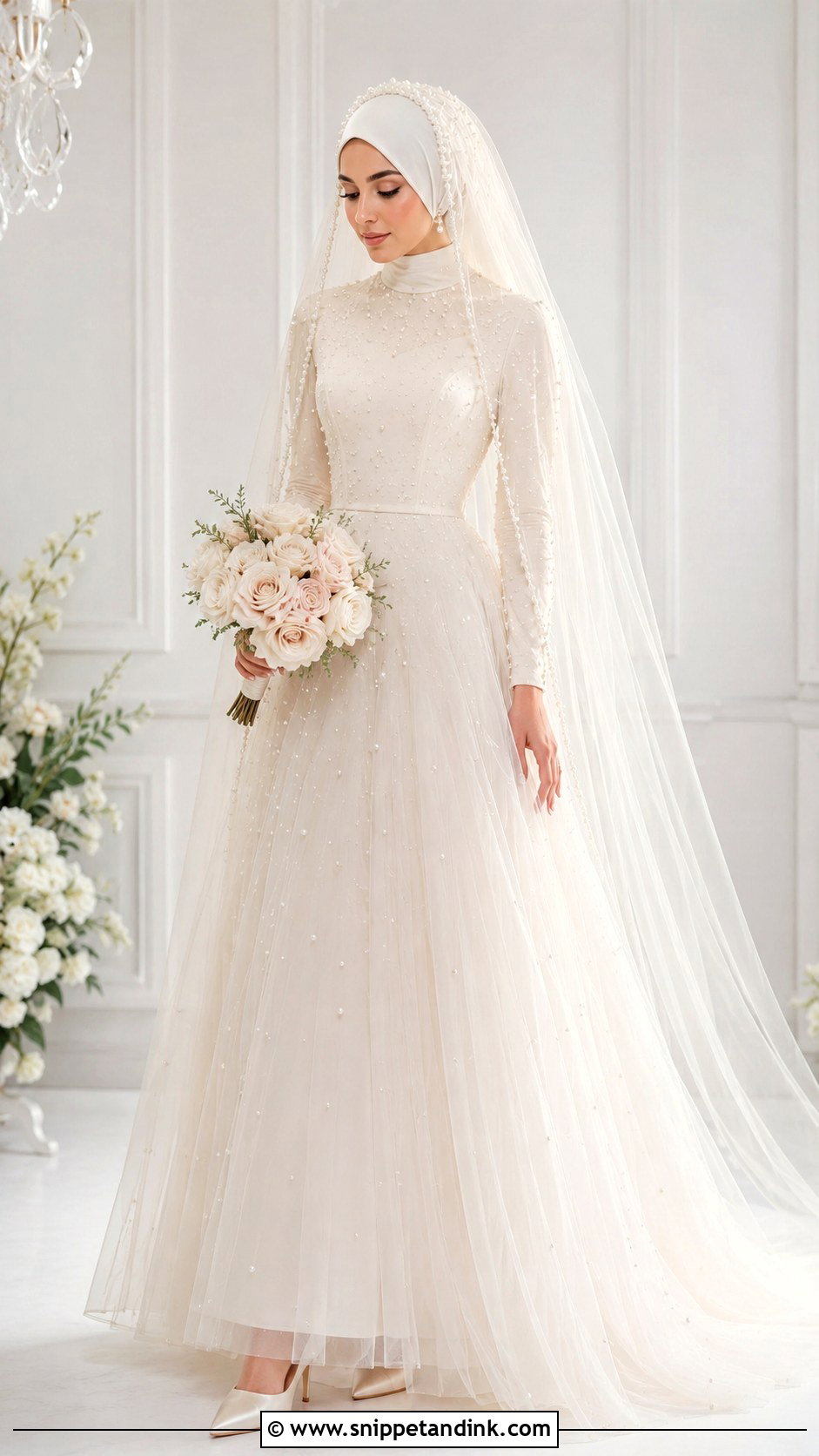
Pearls can be scattered across tulle, set along sleeves or traced around the neckline and cuffs. Choose one main pearl detail and repeat it small: pearl hijab pins, pearl earrings or a pearl-trimmed veil. A long-sleeve A-line suits it, and ivory, cream or soft white fabric makes pearls look natural rather than harsh. Satin heels and pale roses or orchids complete it, for quiet luxury rather than heavy sparkle.
12. Simple Muslim Wedding Dress
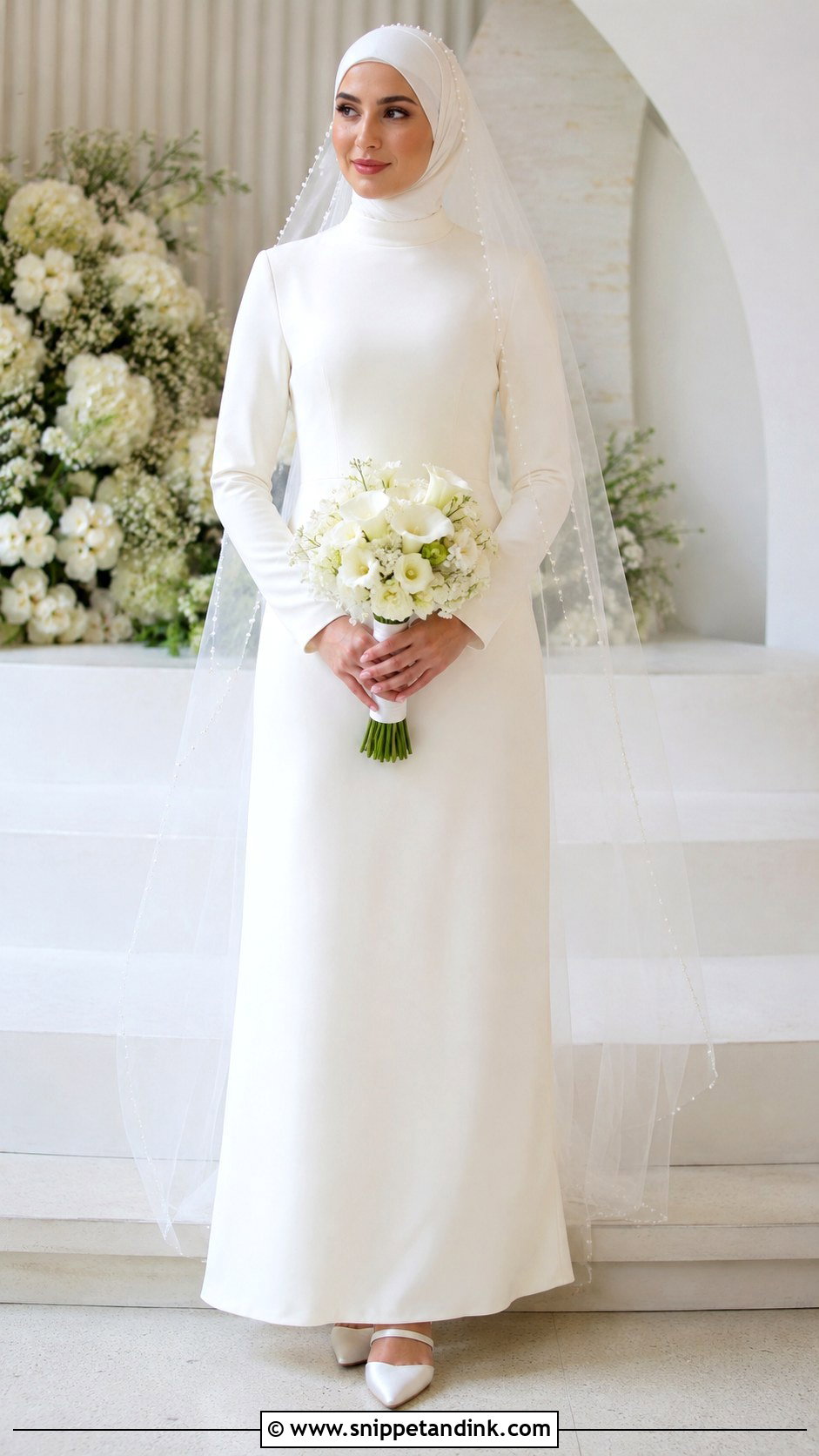
Less can be more, but only with excellent fabric and fit. Satin, crepe, Mikado or matte silk keeps the focus on shape and tailoring, with a modest neckline and long sleeves. A matching hijab gives a smooth, intentional finish. Add one refined accessory, a pearl veil trim, a crystal belt or a structured bouquet, so the look still reads bridal. With fewer heavy details, fittings are faster and alterations simpler. It suits intimate celebrations and modern venues.
13. Luxury Muslim Wedding Dress
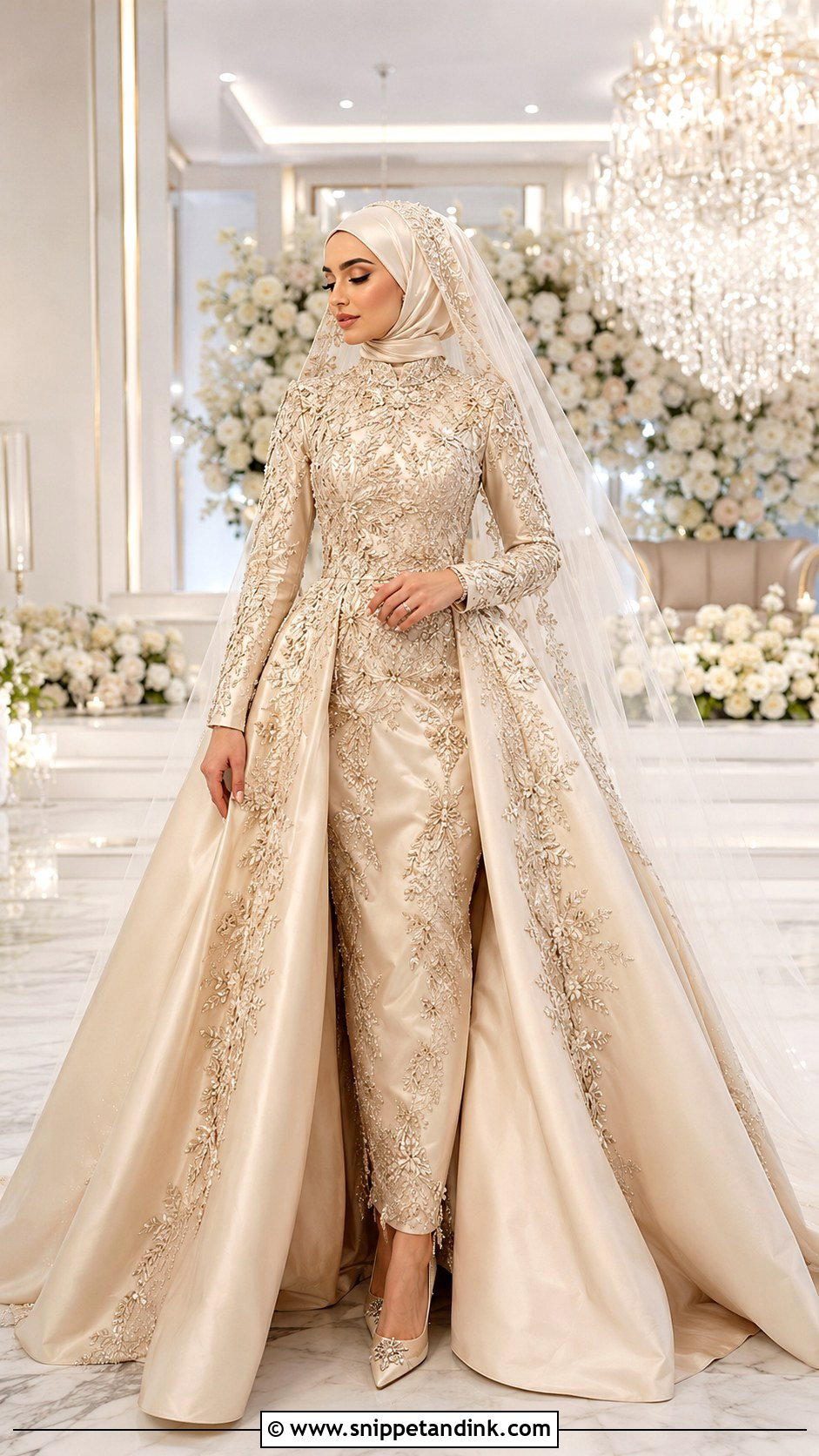
A luxury Muslim wedding dress is defined by fine fabric, excellent tailoring and considered detail rather than piling on embellishment. A structured bodice, smooth lining, hand embroidery or crystal work looks expensive without overwhelming. Long sleeves and a high neckline keep it modest, and a dramatic veil or train adds presence. A silk hijab, elegant heels and jewelry in the gown’s metal tone complete it. Champagne, ivory and soft gold read especially rich in evening light.
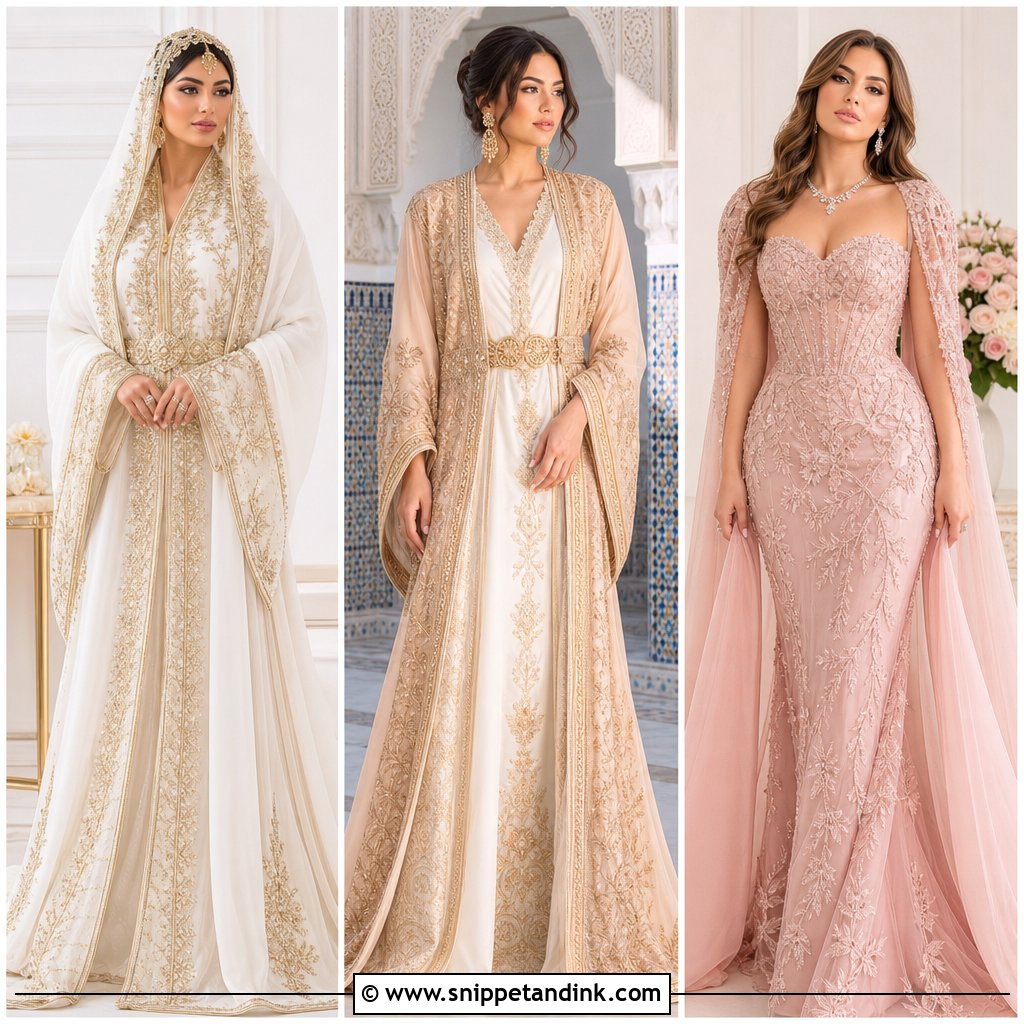
14. Gold Muslim Wedding Dress
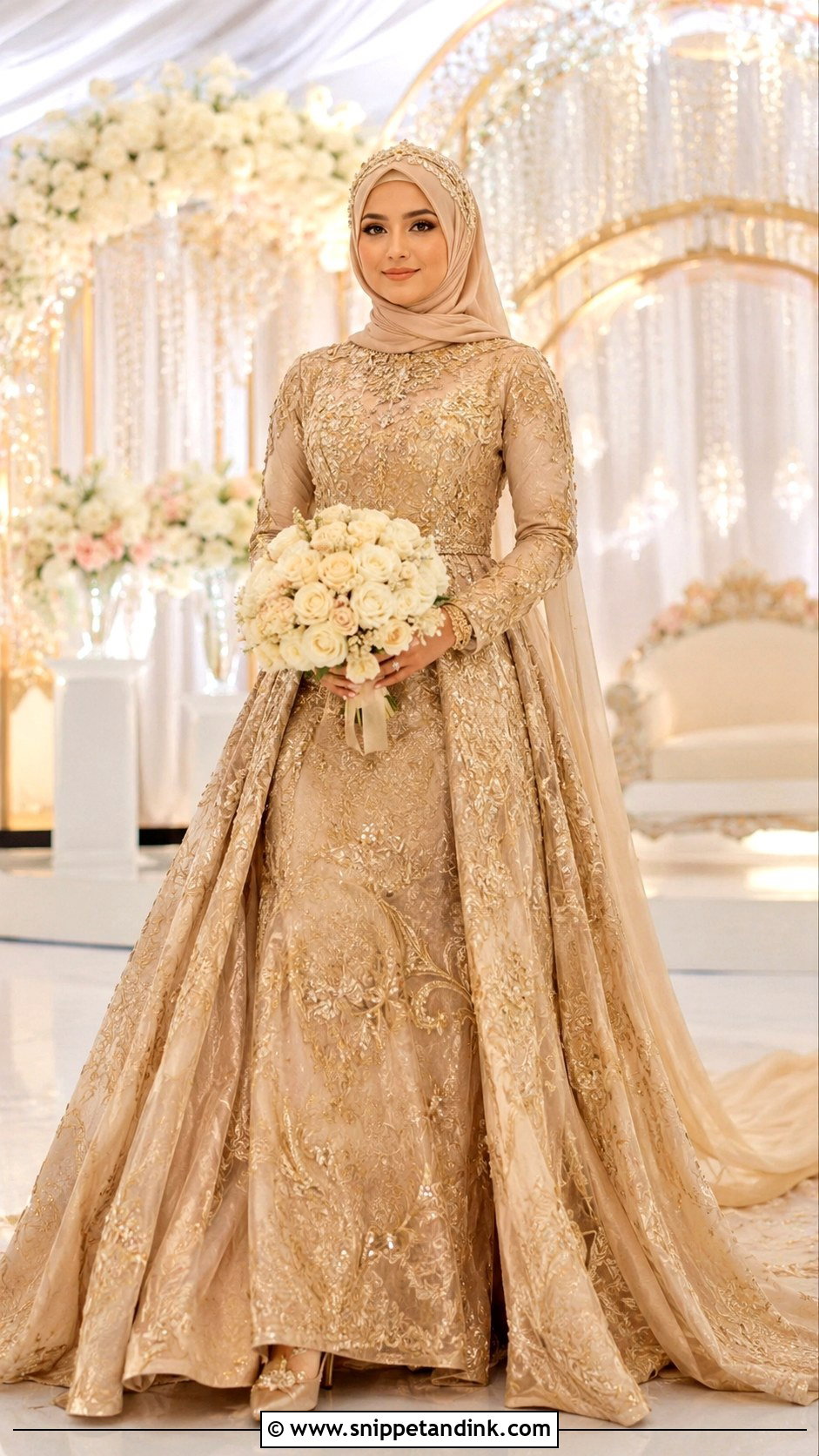
Gold can be the whole gown, a champagne-gold, or ivory with gold embroidery. Long sleeves and a modest neckline keep it elegant while metallic threadwork adds shine. Pair it with a matching or soft ivory hijab and gold heels, and keep jewelry quiet so it doesn’t compete. Warm makeup suits gold far better than cool tones. If the gown is heavily embellished, choose a plain bouquet in white or cream. For a traditional-inspired look, it carries real presence.

15. Champagne Muslim Wedding Dress
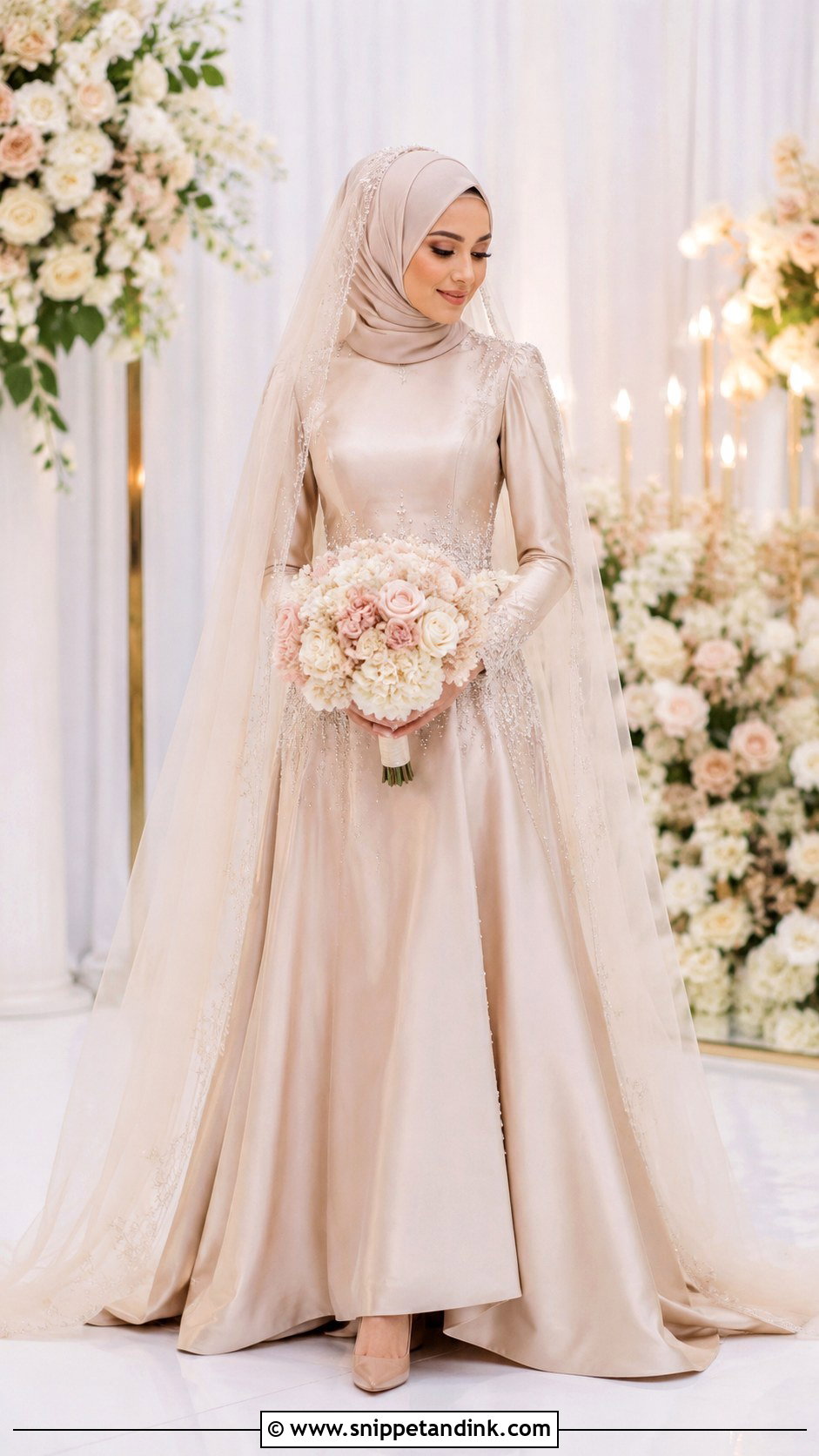
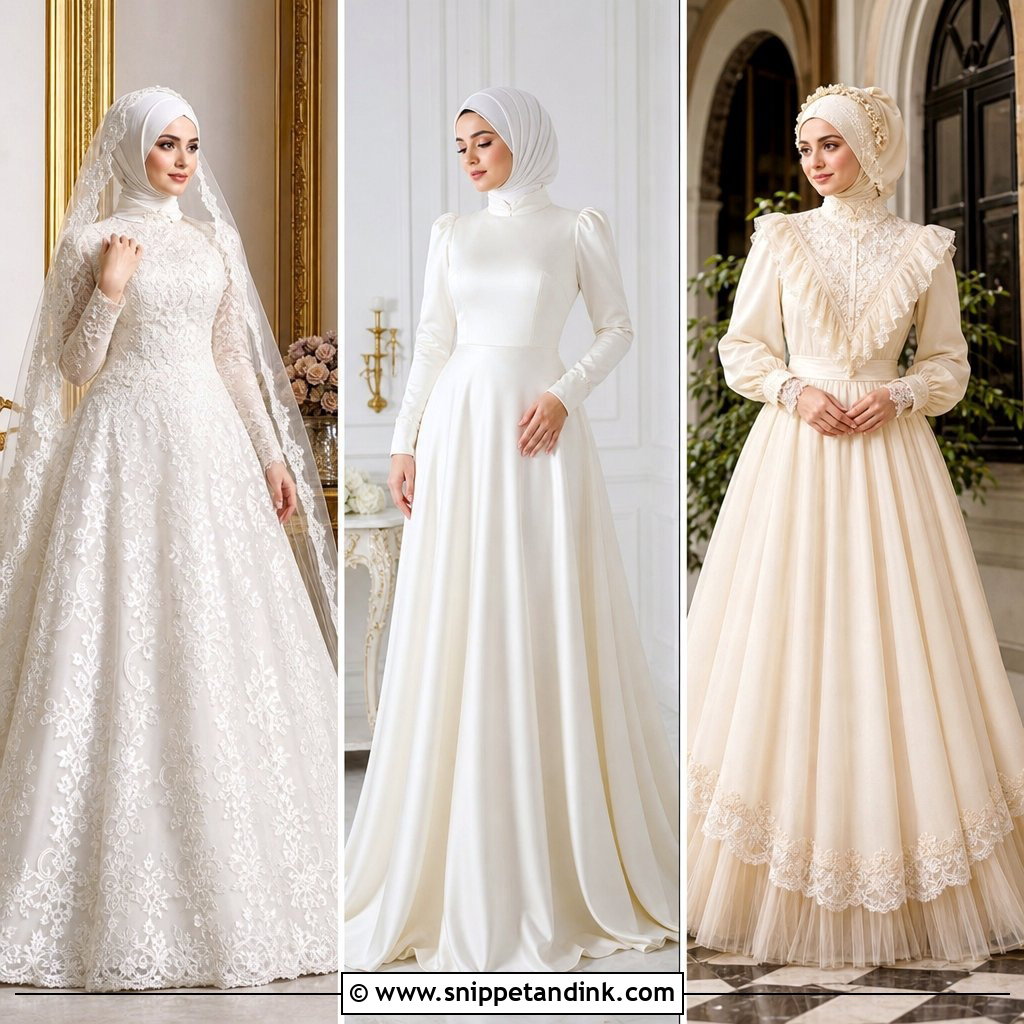
Champagne is a warm alternative to bright white that flatters many skin tones. Choose long sleeves in satin, tulle or lace with comfortable lining, and add pearls, gold embroidery or soft crystal beading. A matching hijab blends neatly; an ivory veil adds gentle contrast. Check the hijab and gown side by side in daylight, as champagne varies a lot between fabric makers. Nude or champagne heels and a bouquet in cream, blush or dusty rose finish it.
16. Ivory Muslim Wedding Dress
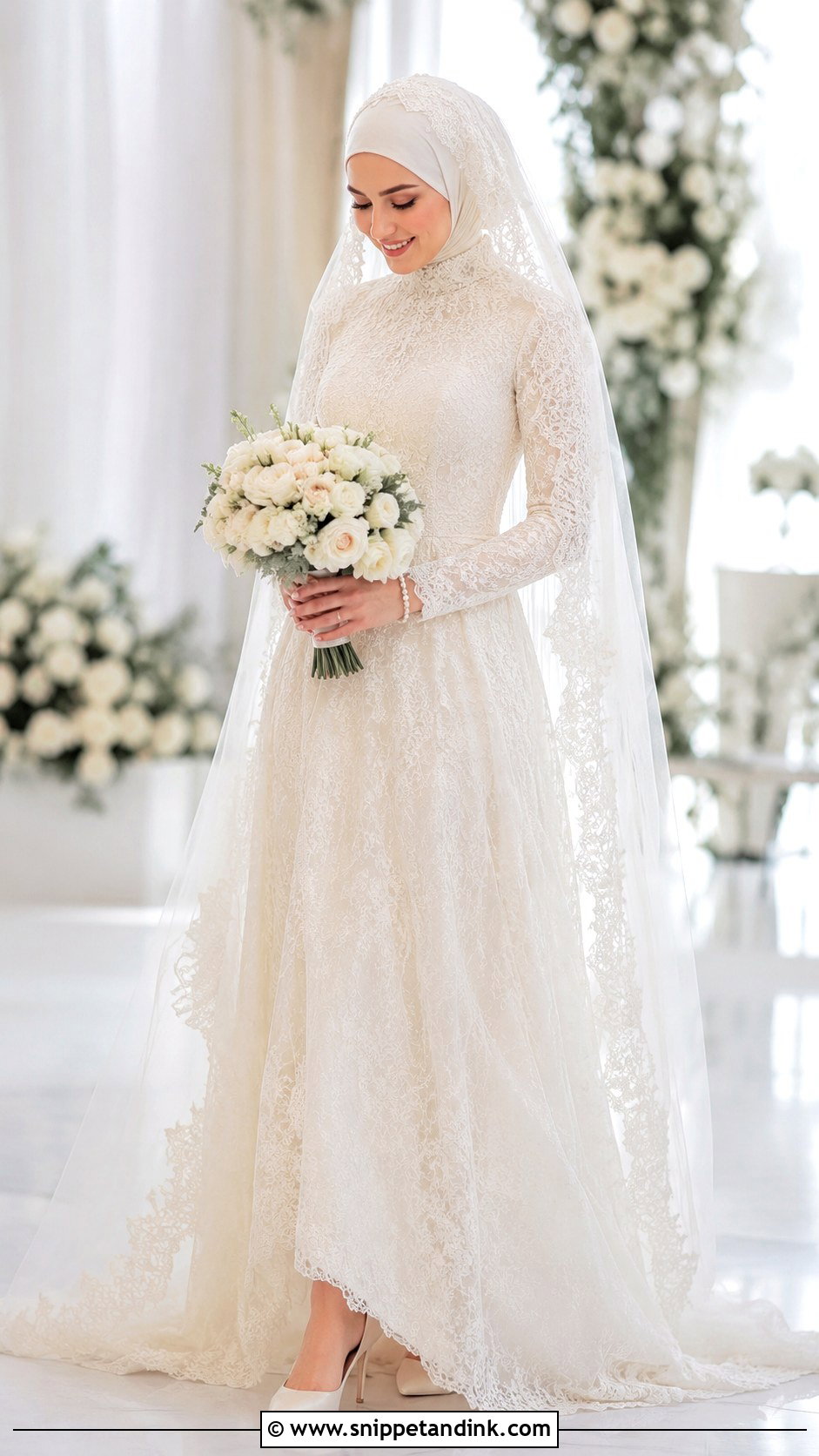
Ivory’s warm undertone is kinder than stark white to most complexions and pairs easily with lace, pearls, satin and tulle. Choose long sleeves, full lining and a neckline that sits comfortably under the hijab. An ivory hijab gives a clean finish, and a lace-trimmed veil adds texture. Ivory heels, a pearl bracelet and soft white flowers complete it, and it suits almost any setting without being too plain or too dramatic.
17. Blush Muslim Wedding Dress
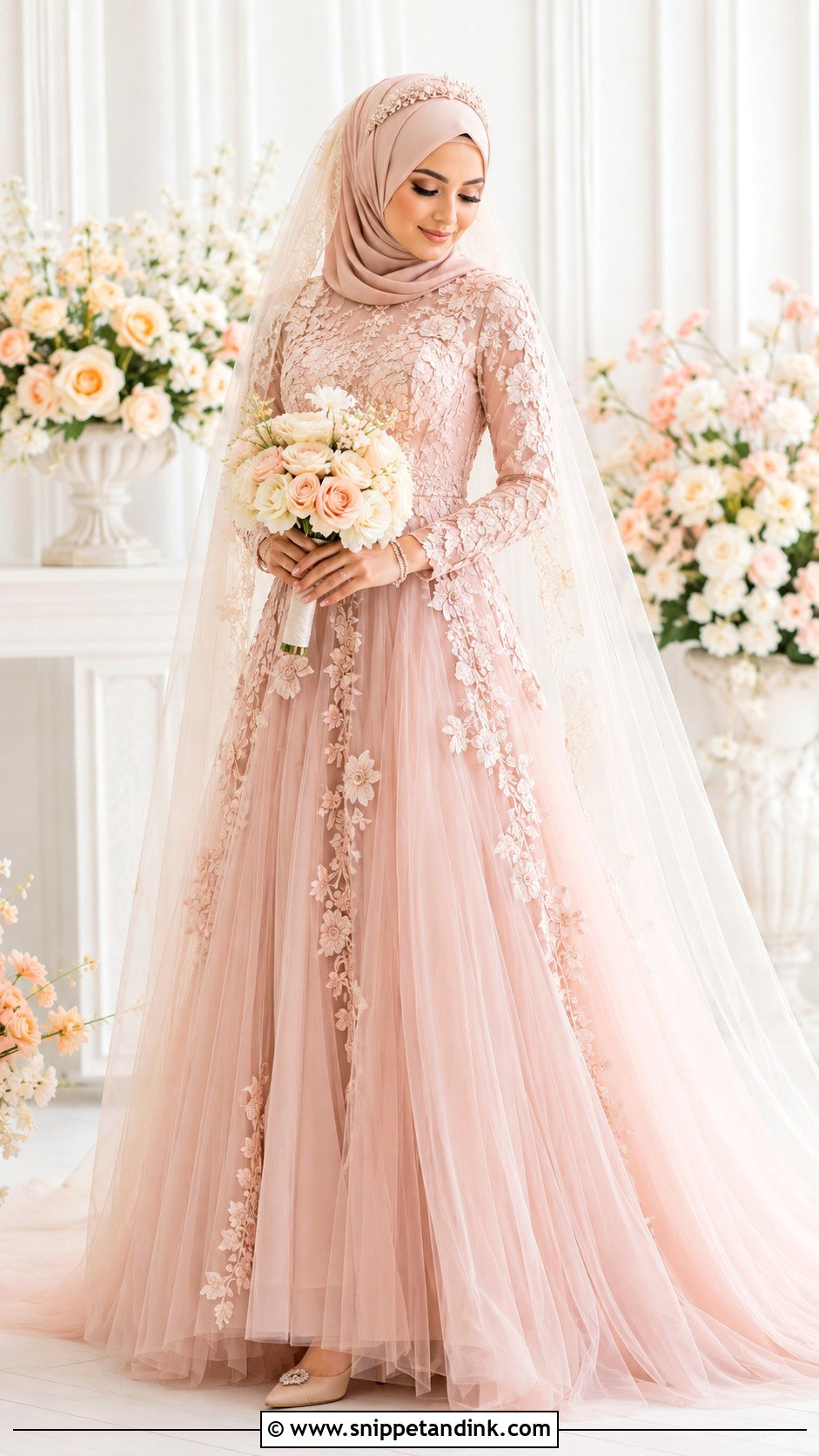
Blush ranges from barely pink to dusty rose, so choose a shade that suits both your skin and the wedding palette. A long-sleeve tulle gown with embroidery or lace appliqué shows it off. Here’s a modesty point I always raise: a nude-toned lining under sheer blush layers can read as bare skin in photos, so choose lining a shade deeper or in ivory. A matching hijab, ivory veil, rose-gold or pearl accessories and a cream, blush and peach bouquet complete it.
18. Red Muslim Wedding Dress
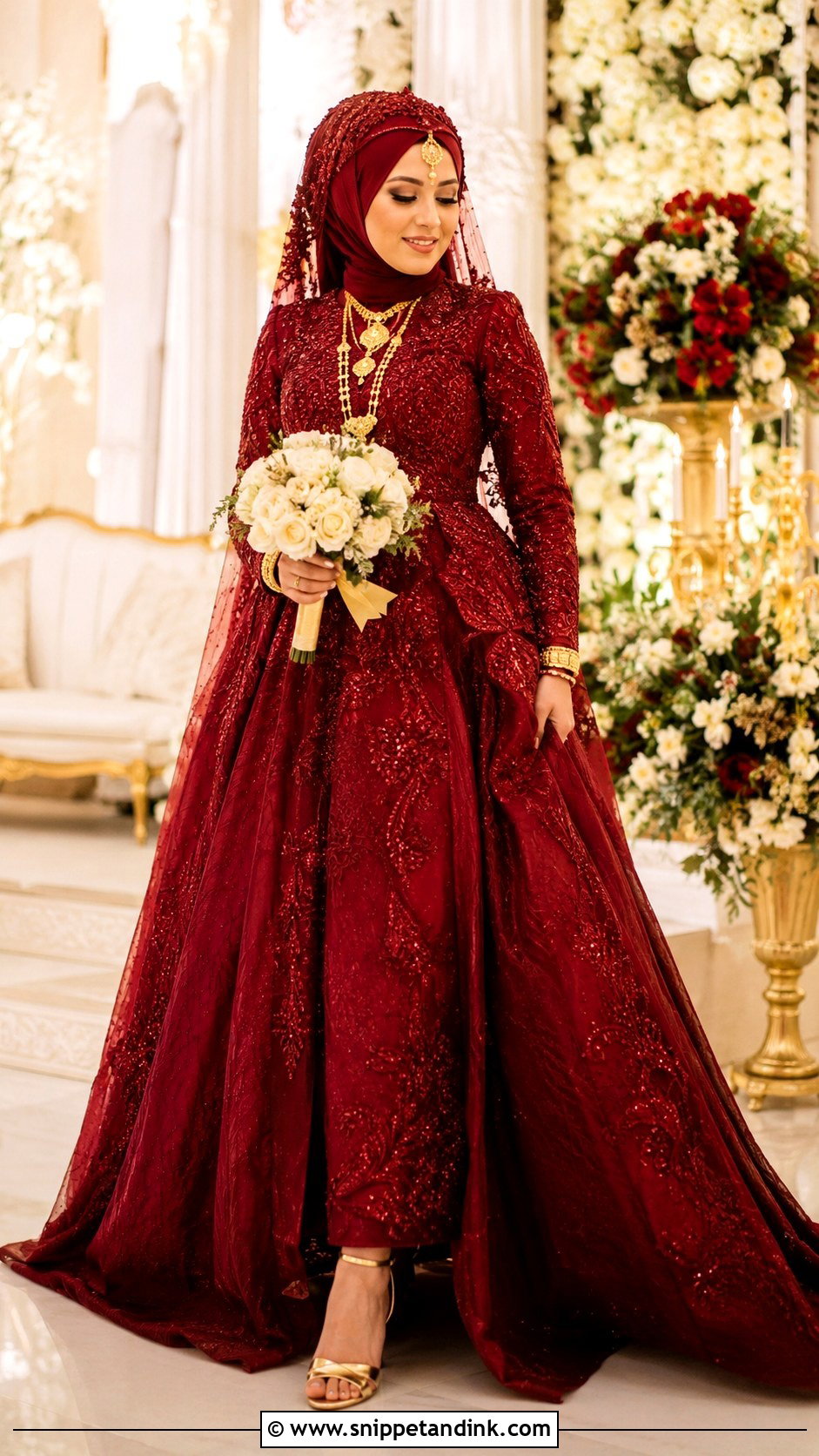
Red carries meaning in many cultures, and deep red, burgundy, ruby or maroon all suit a modest bridal outfit. Choose a long-sleeve gown or lehenga-inspired dress with a high neckline and rich embroidery. Gold accessories pair naturally, and a matching hijab gives a strong, coordinated look. Red dye can bleed onto pale fabric in heat, so I avoid pairing a damp-prone red outfit with a white underscarf. Clean styling and careful tailoring keep the power of the color in check.
19. Green Muslim Wedding Dress
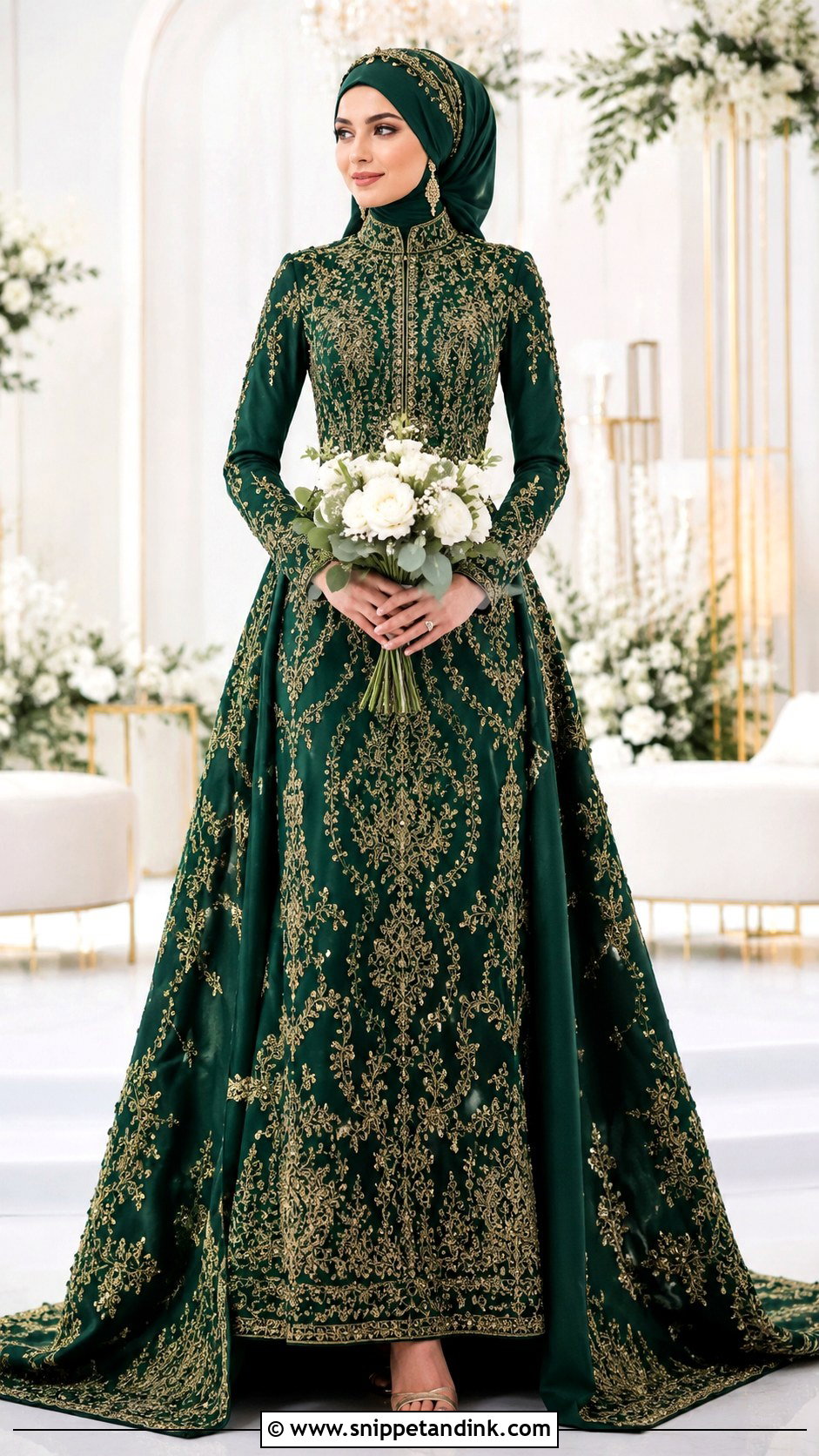
Emerald, sage, olive and pistachio each set a different mood: emerald formal and rich, sage soft and modern. Choose long sleeves and full lining, then add embroidery, pearls or gold accents to suit the shade. A matching hijab keeps it refined, though ivory softens it. Metallic heels and a bouquet of white flowers and greenery complete it. Green is a good choice when rich color feels more personal than classic white.
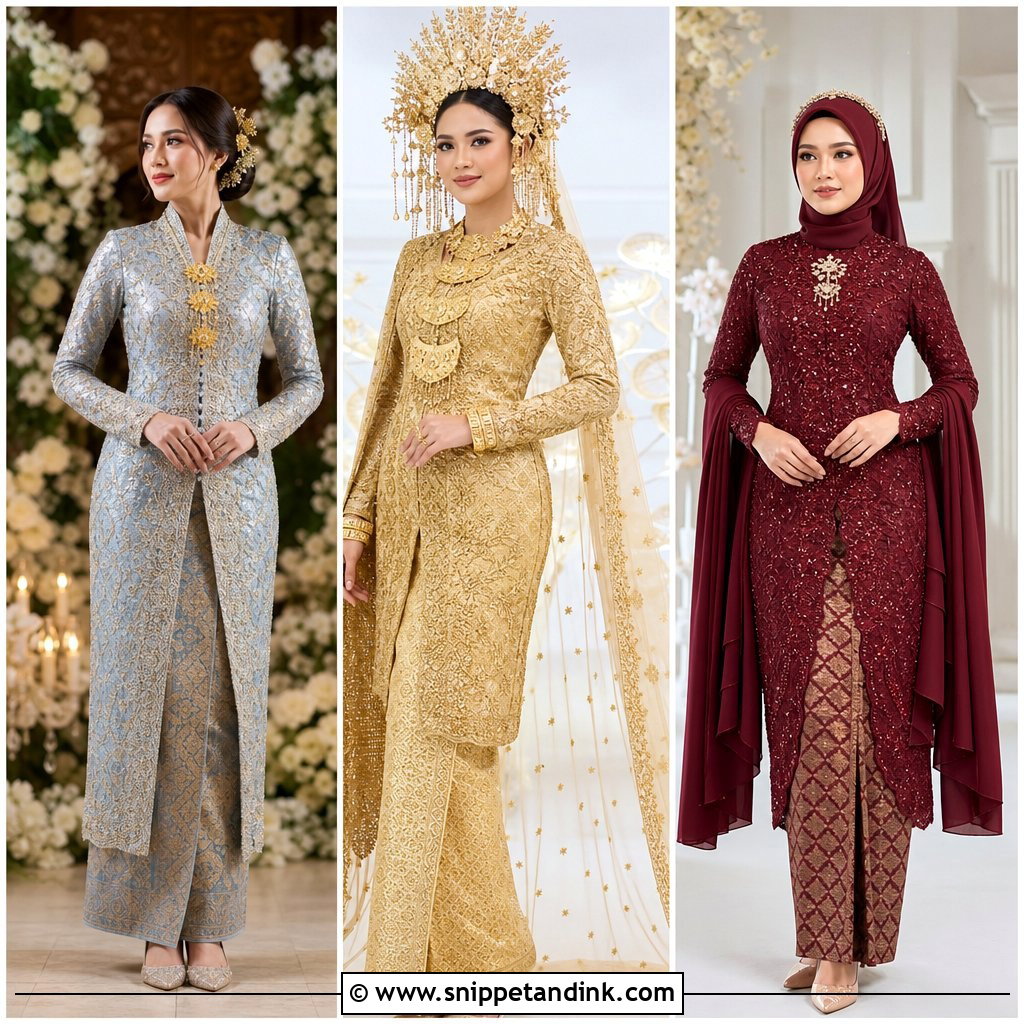
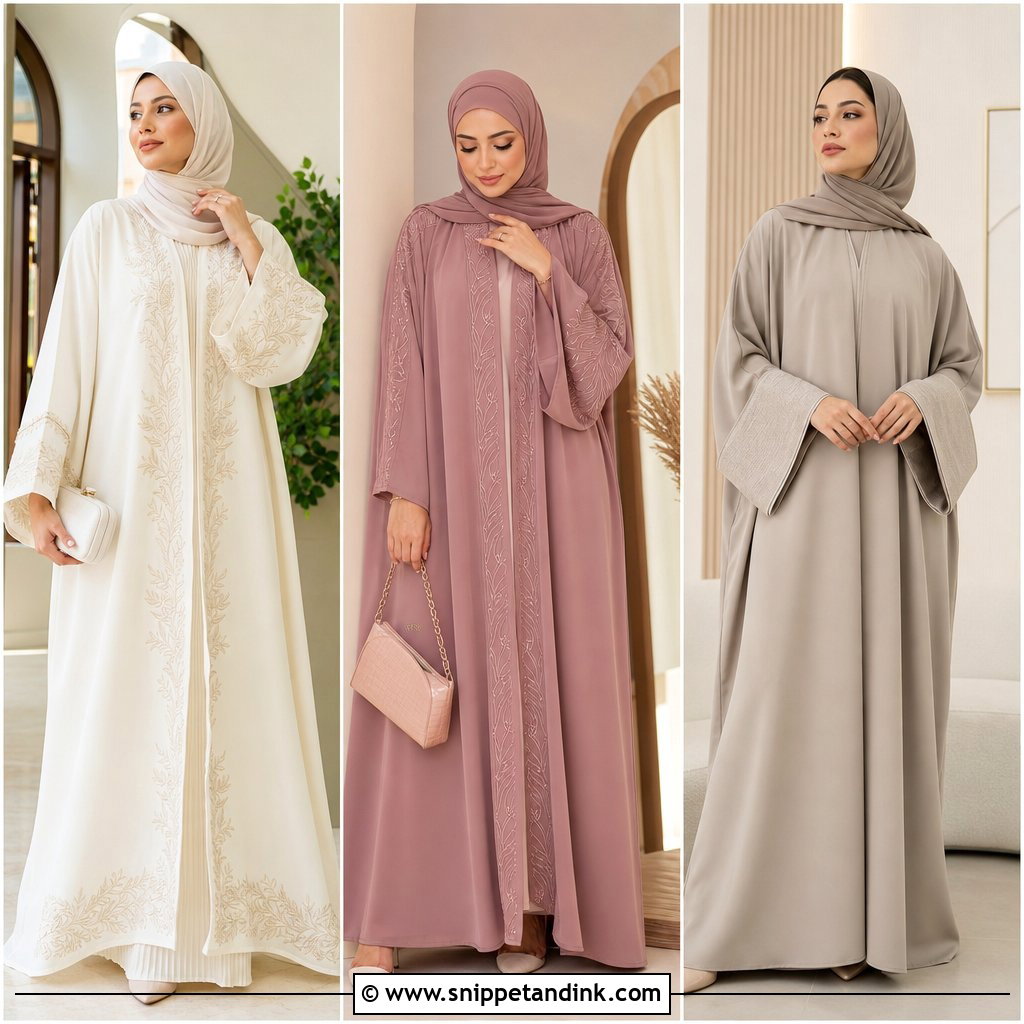

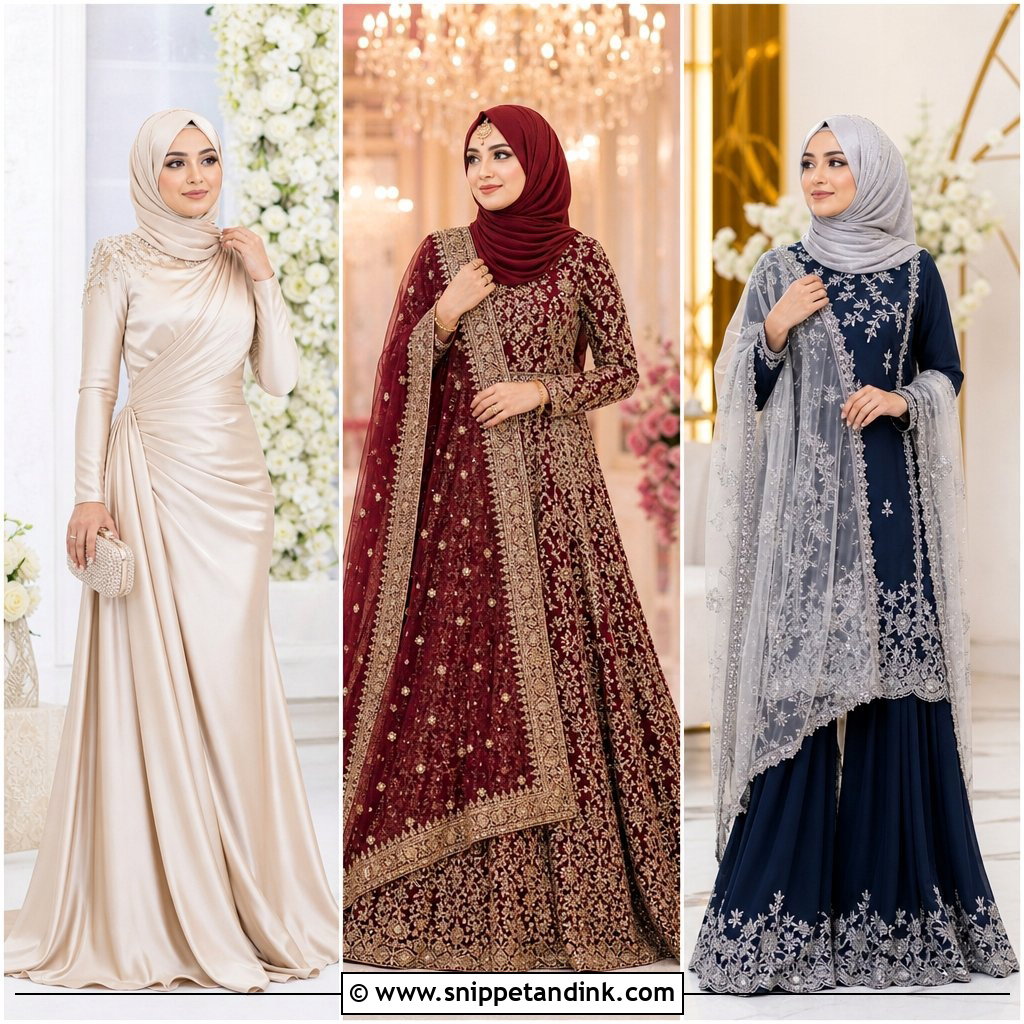

20. Pakistani Muslim Wedding Dress
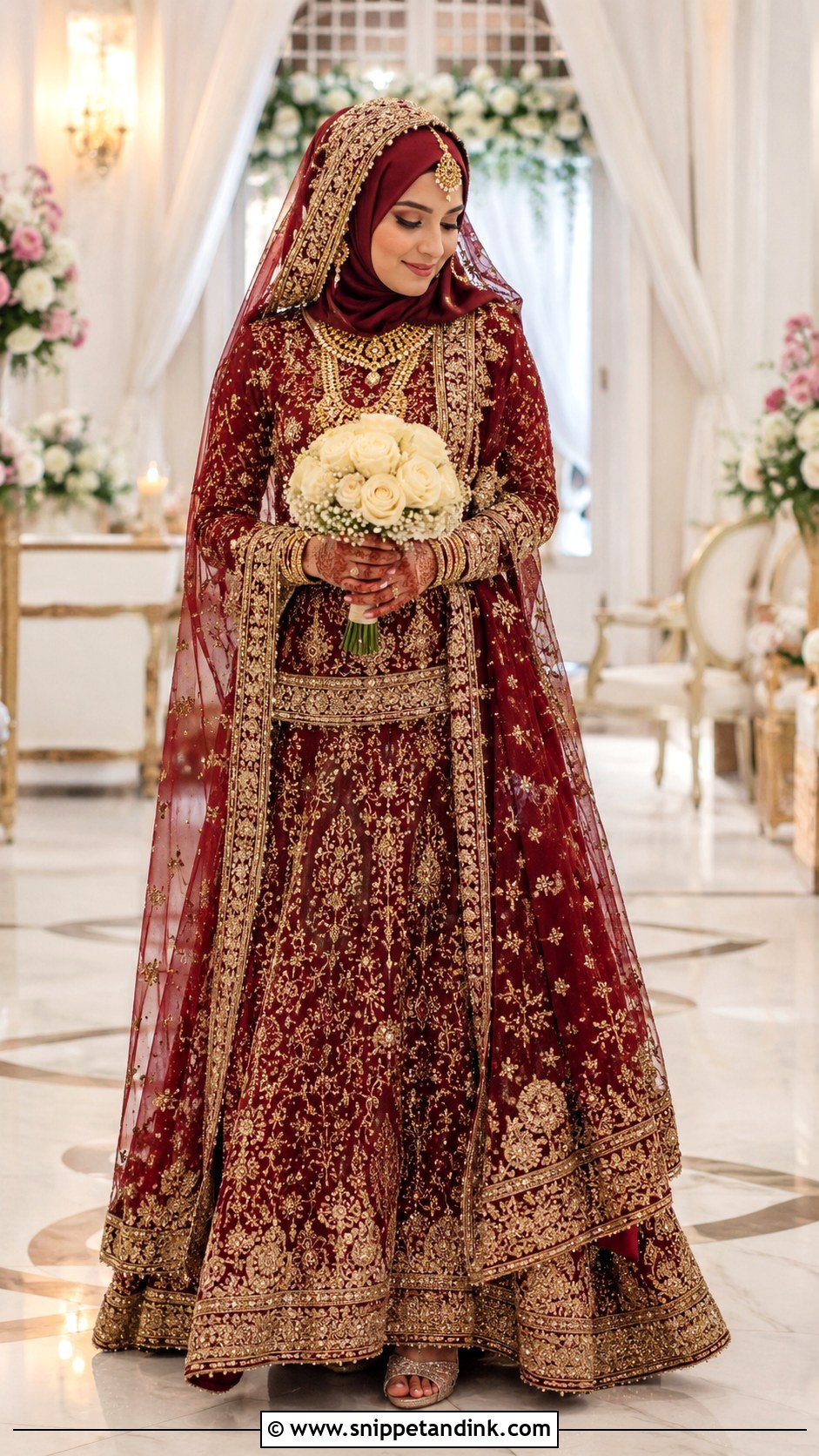
A Pakistani Muslim wedding dress is usually built from rich embroidery, layered fabric and a coordinated dupatta worn with the hijab. Lehenga, sharara, gharara or long gown all work depending on family tradition. For a modest look, ask for long sleeves, a higher neckline and a well-lined kameez or choli. The heavy dupatta is the hard part: pin it to the hijab at several points, not just the crown, or it drags the scarf back as you move. Embellished heels and traditional jewelry finish it.
21. Turkish Muslim Wedding Dress
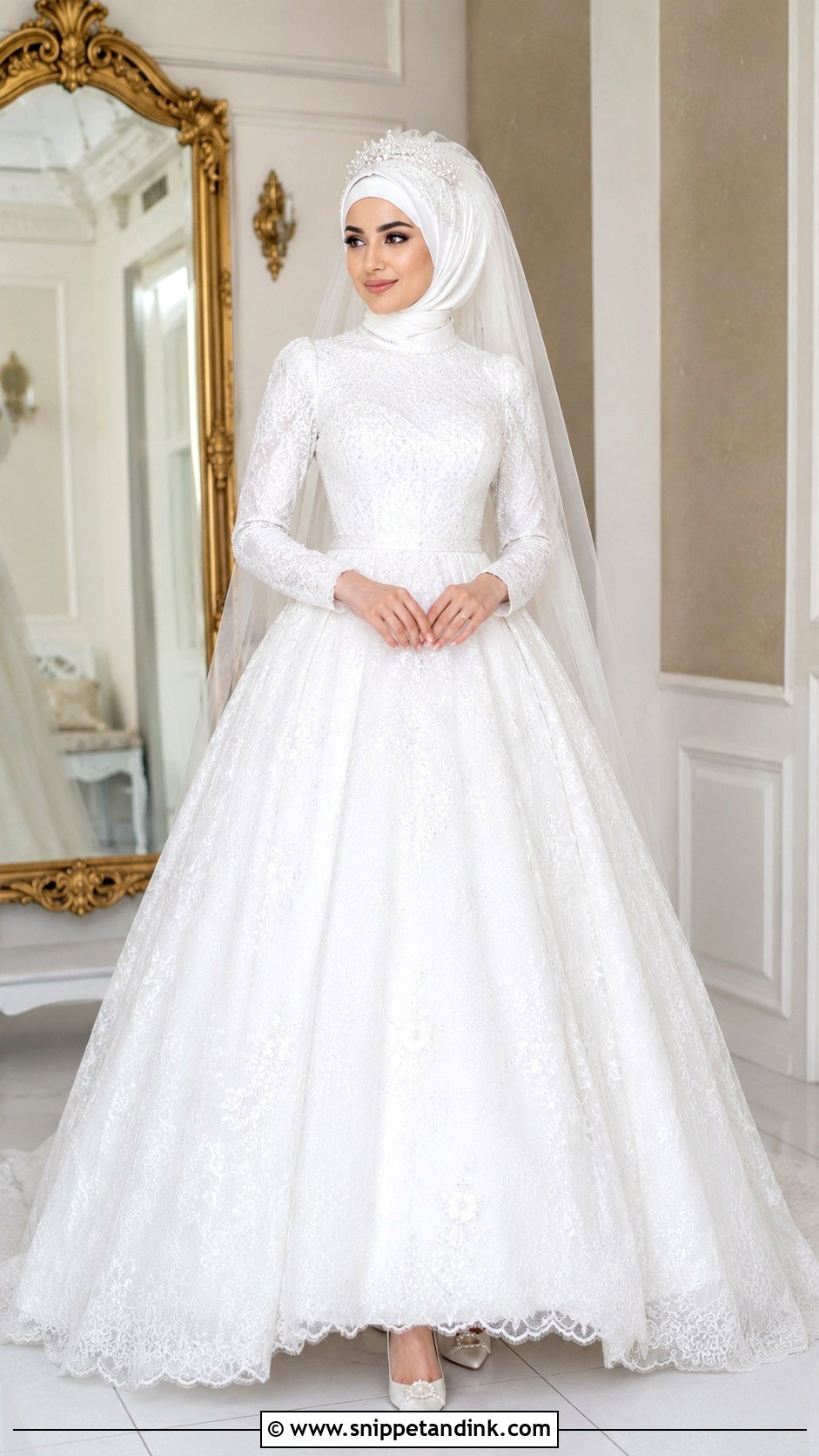
Turkish modest bridal design often combines high necklines, long sleeves, defined waists, lace bodices and flowing skirts. A white or ivory gown with a coordinated hijab, veil and delicate headpiece is the classic version. For a more traditional touch, choose ornate embroidery or a structured skirt with volume. Pearl details, soft heels and a neat bouquet keep it refined for formal and family-centered celebrations alike.
22. Moroccan Muslim Wedding Dress
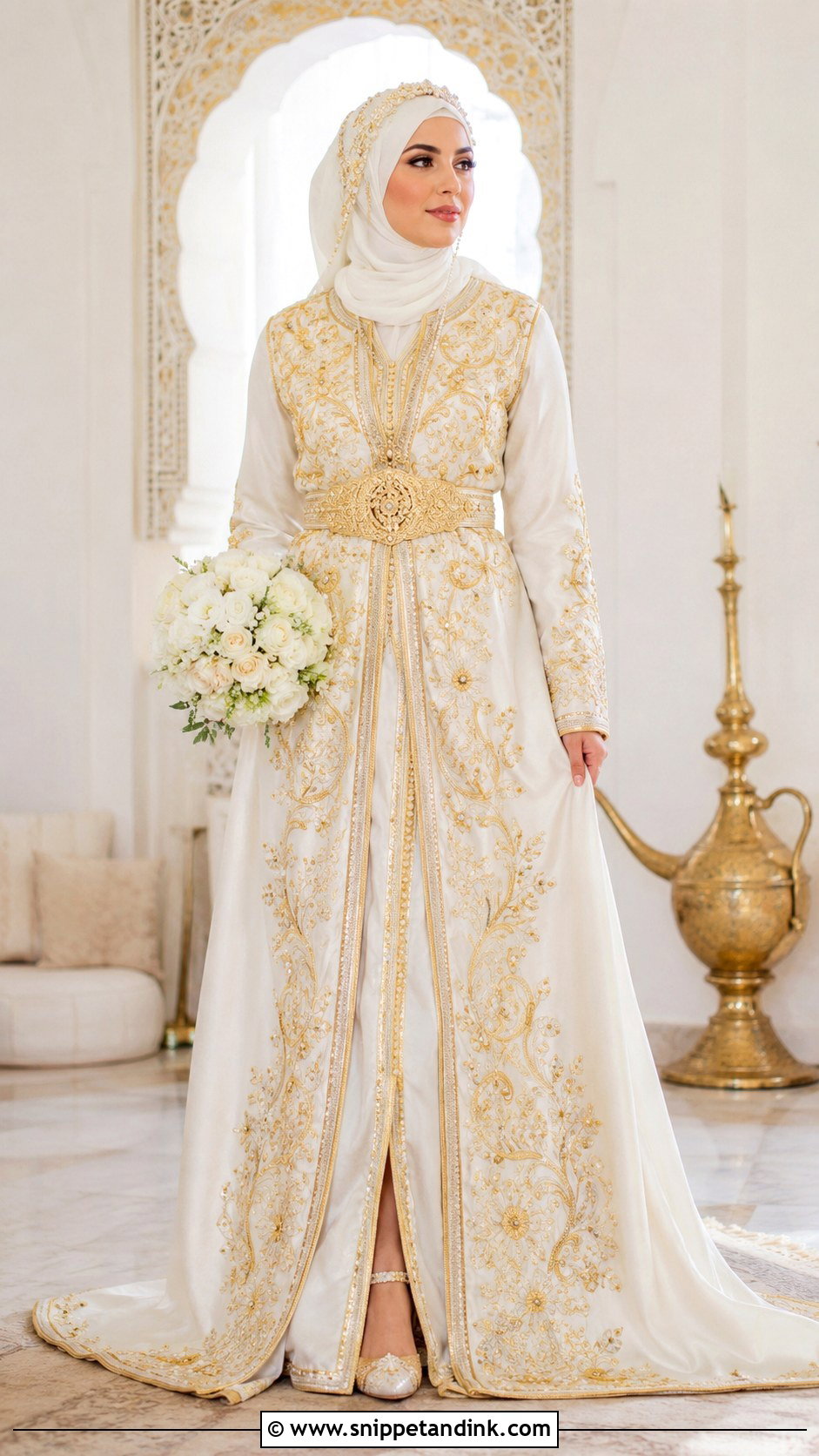
Moroccan bridal dress centers on the kaftan or takchita, with long sleeves, a flowing shape and embroidery along the neckline, sleeves and front. White, gold, green and jewel tones all work. A belt defines the waist while the silhouette stays loose and comfortable, which suits hijabi brides well. A matching hijab, embellished shoes and jewelry in the embroidery tone finish it. It feels grand without a fitted shape or heavy train.
23. Arab Muslim Wedding Dress
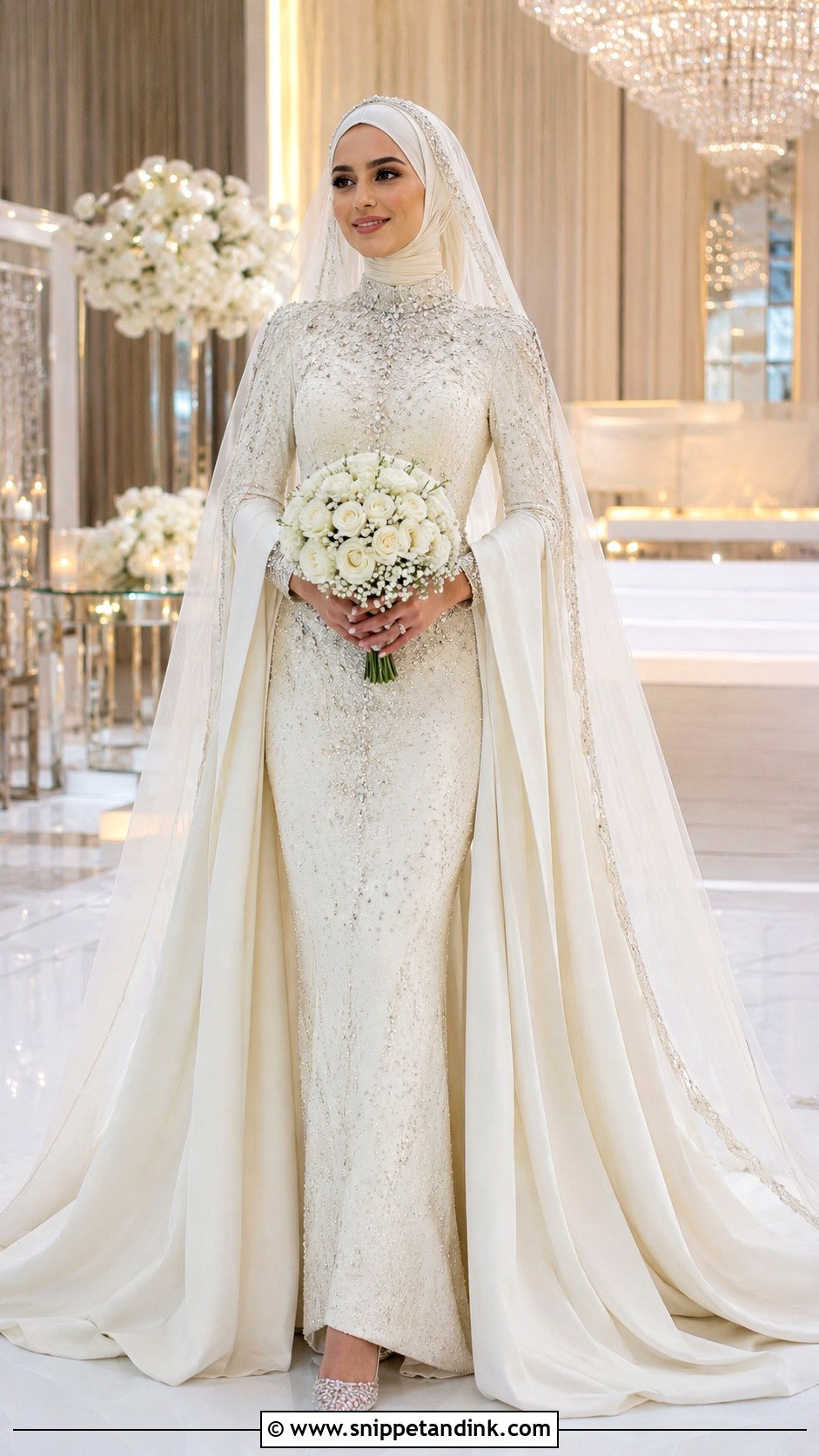
An Arab Muslim wedding dress leans glamorous: flowing fabrics, detailed beadwork, capes, embroidered sleeves and carefully styled hijabs. A white, ivory or champagne gown with crystal accents or a long veil is the refined version; an abaya-inspired gown with ornate work and a loose shape is another. Match the hijab fabric to the gown’s formality, since a casual jersey scarf undercuts a beaded gown. Choose heels comfortable under long fabric.
24. Indian Muslim Wedding Dress
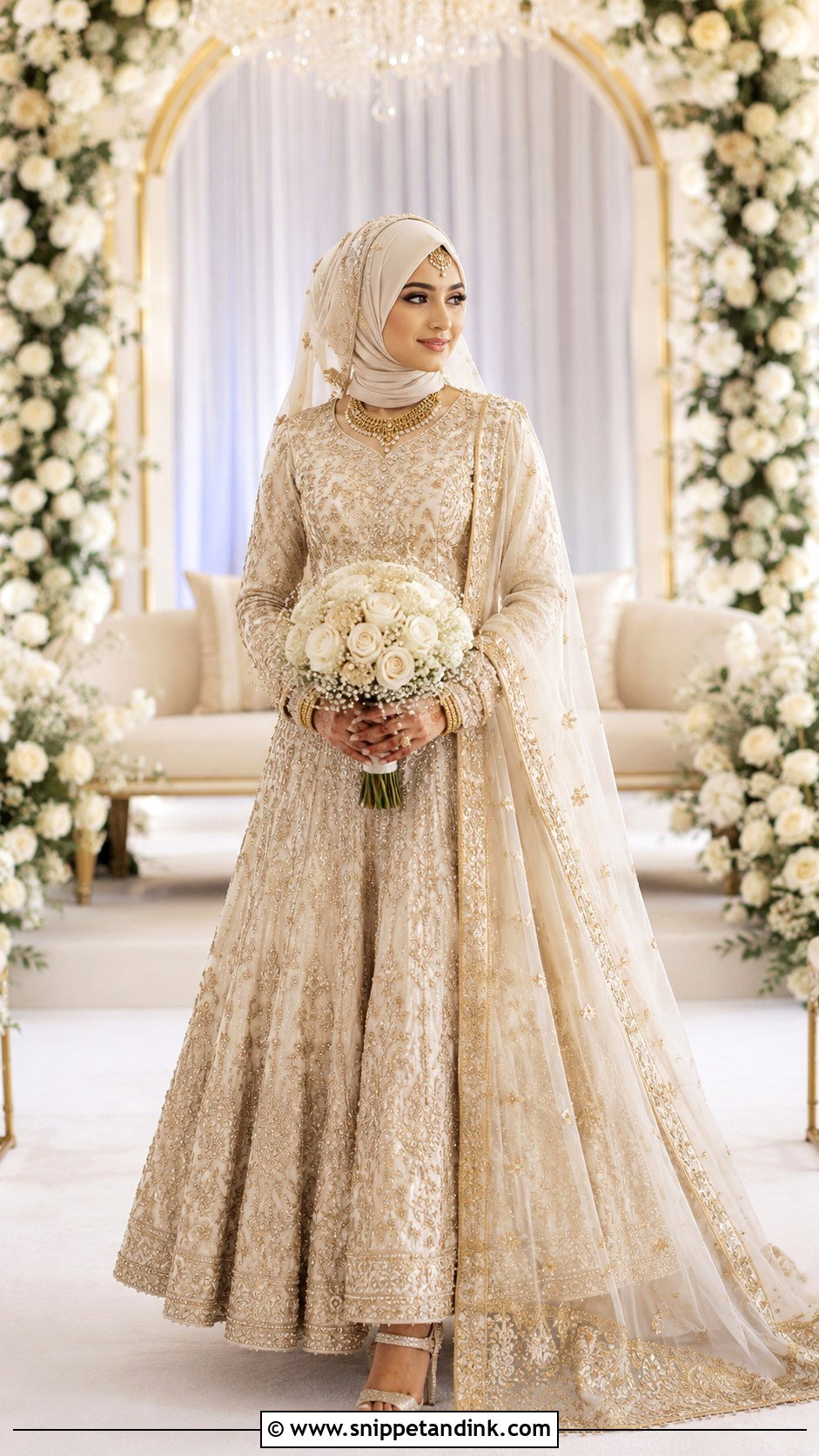
An Indian Muslim wedding dress can be a lehenga, anarkali, sharara or long embroidered gown worn with a hijab and dupatta. Silk, brocade, chiffon and velvet feel festive, in red, gold, ivory, emerald, blush or royal blue. For modest styling, choose a longer blouse, full sleeves and a comfortable neckline. Lehenga skirts can be very heavy, so sit and walk in it at the fitting. Embellished heels, traditional jewelry and a neatly secured dupatta complete it.

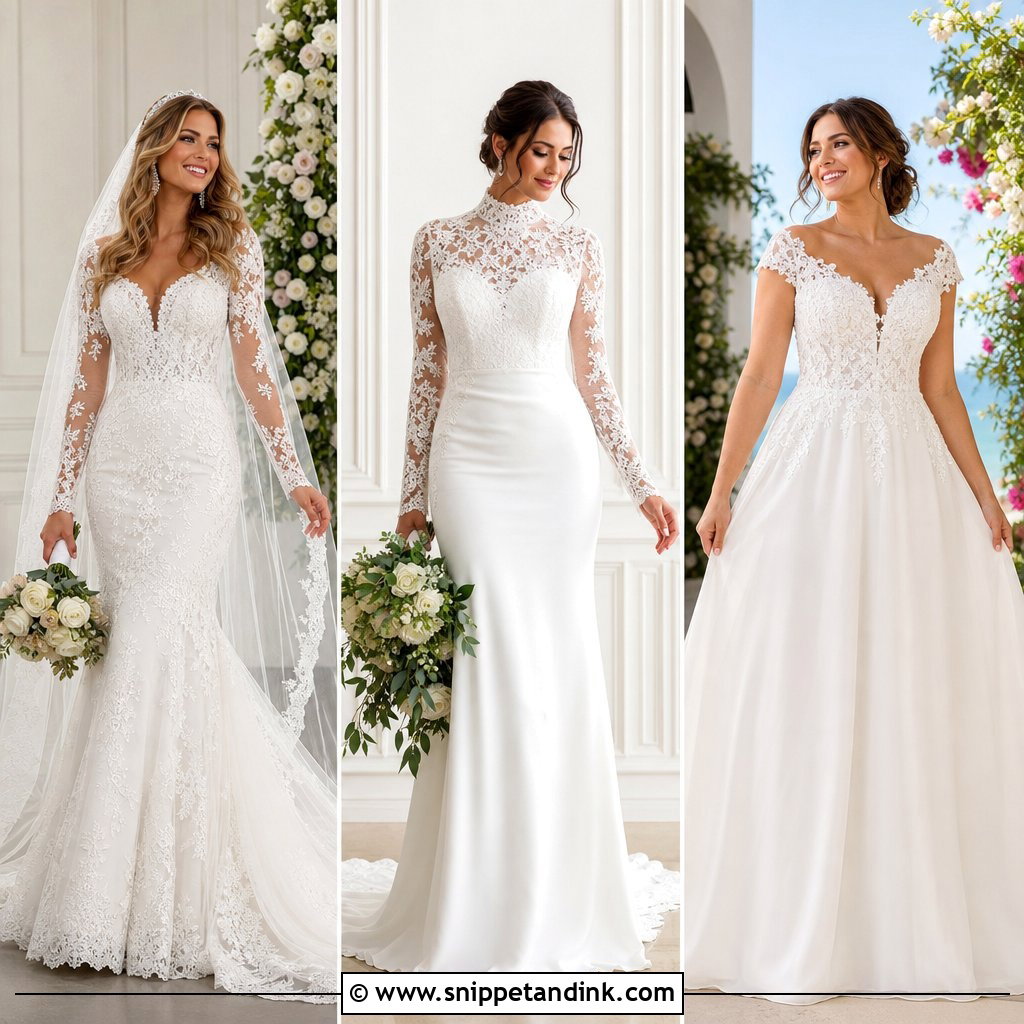
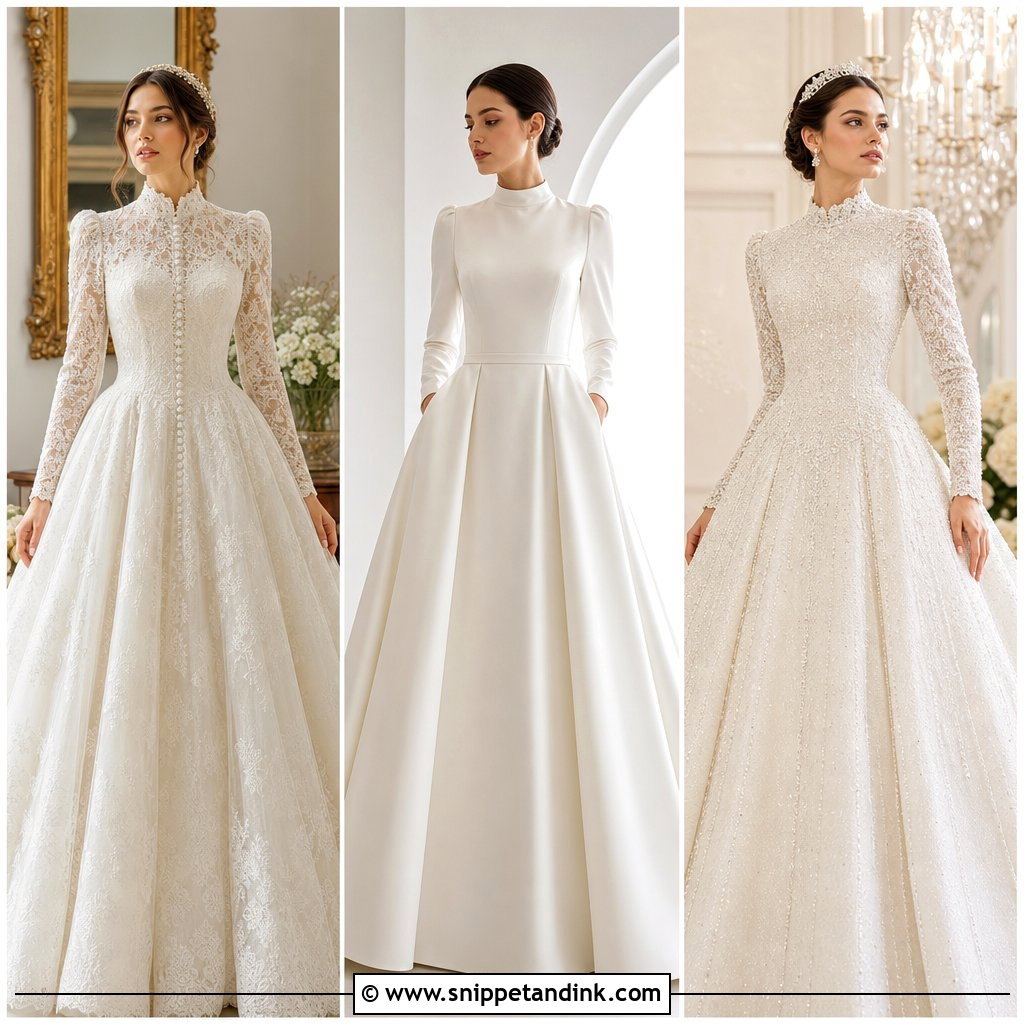

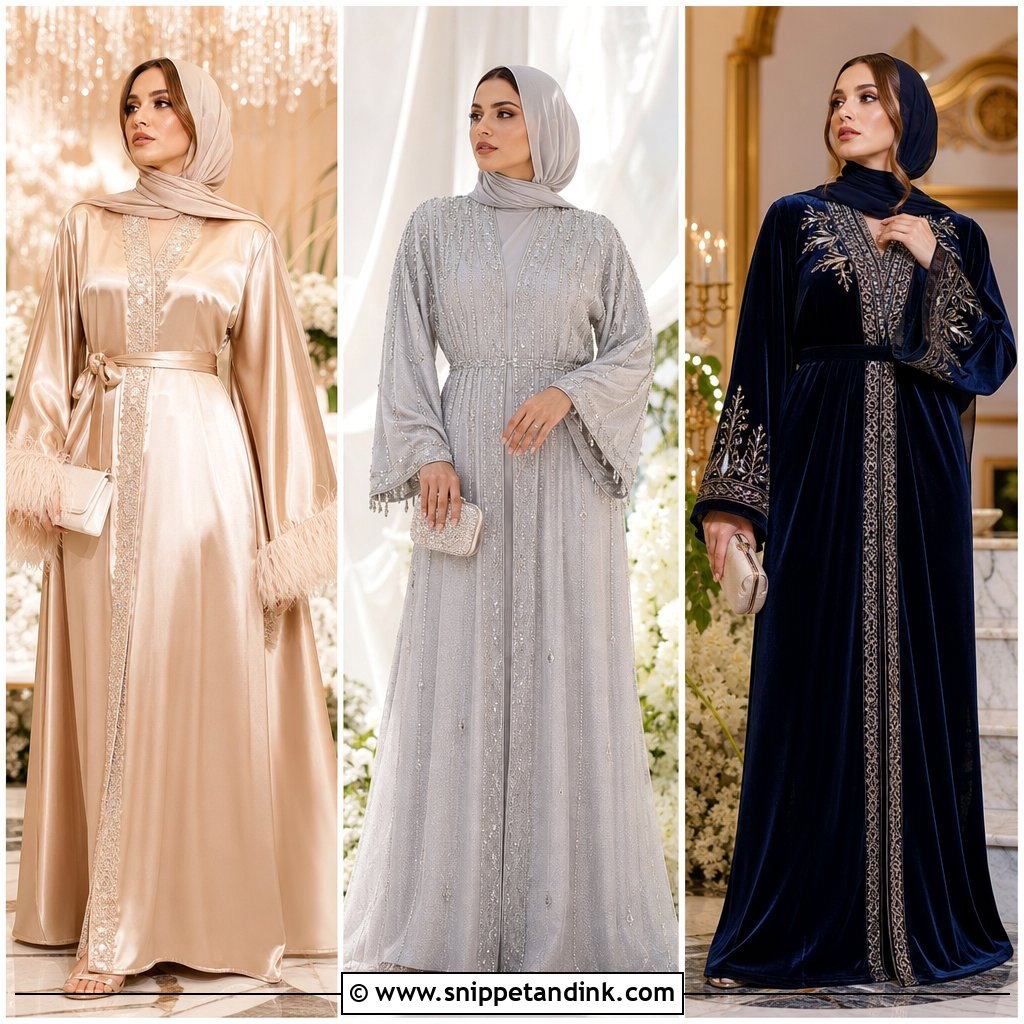
25. Bridal Abaya Muslim Wedding Dress
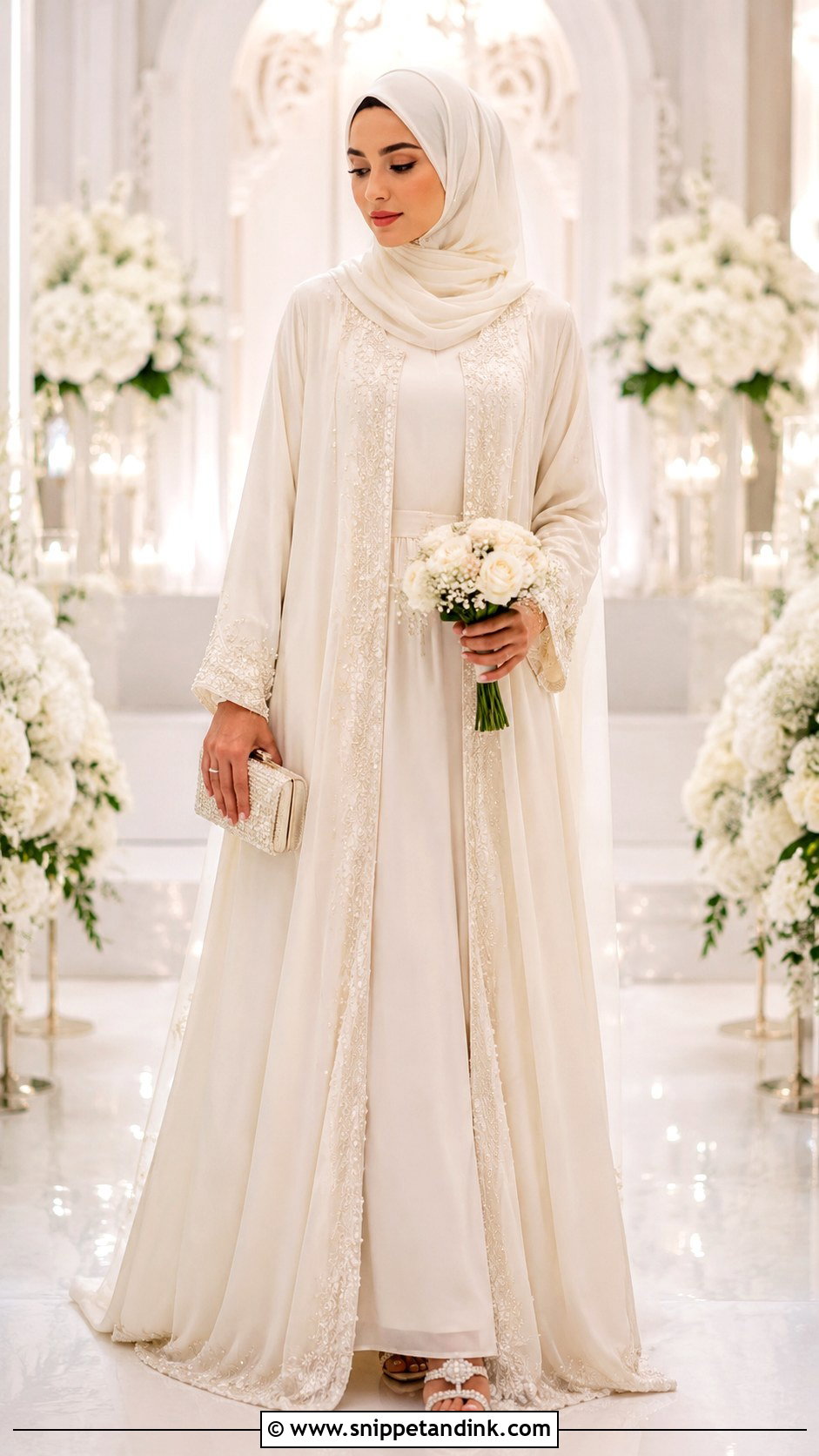
A bridal abaya suits brides who want a flowing silhouette with full coverage. White, ivory, champagne or pastel with embroidery, pearls, crystals or lace trim keeps it bridal. The shape must look intentional rather than casual, so quality fabric and tailoring at the shoulders matter most; a dropped shoulder seam makes it look borrowed. A matching inner dress keeps it smooth, and a coordinated hijab completes the coverage. Embellished heels, a delicate clutch and a small bouquet finish it.
26. Kaftan Muslim Wedding Dress
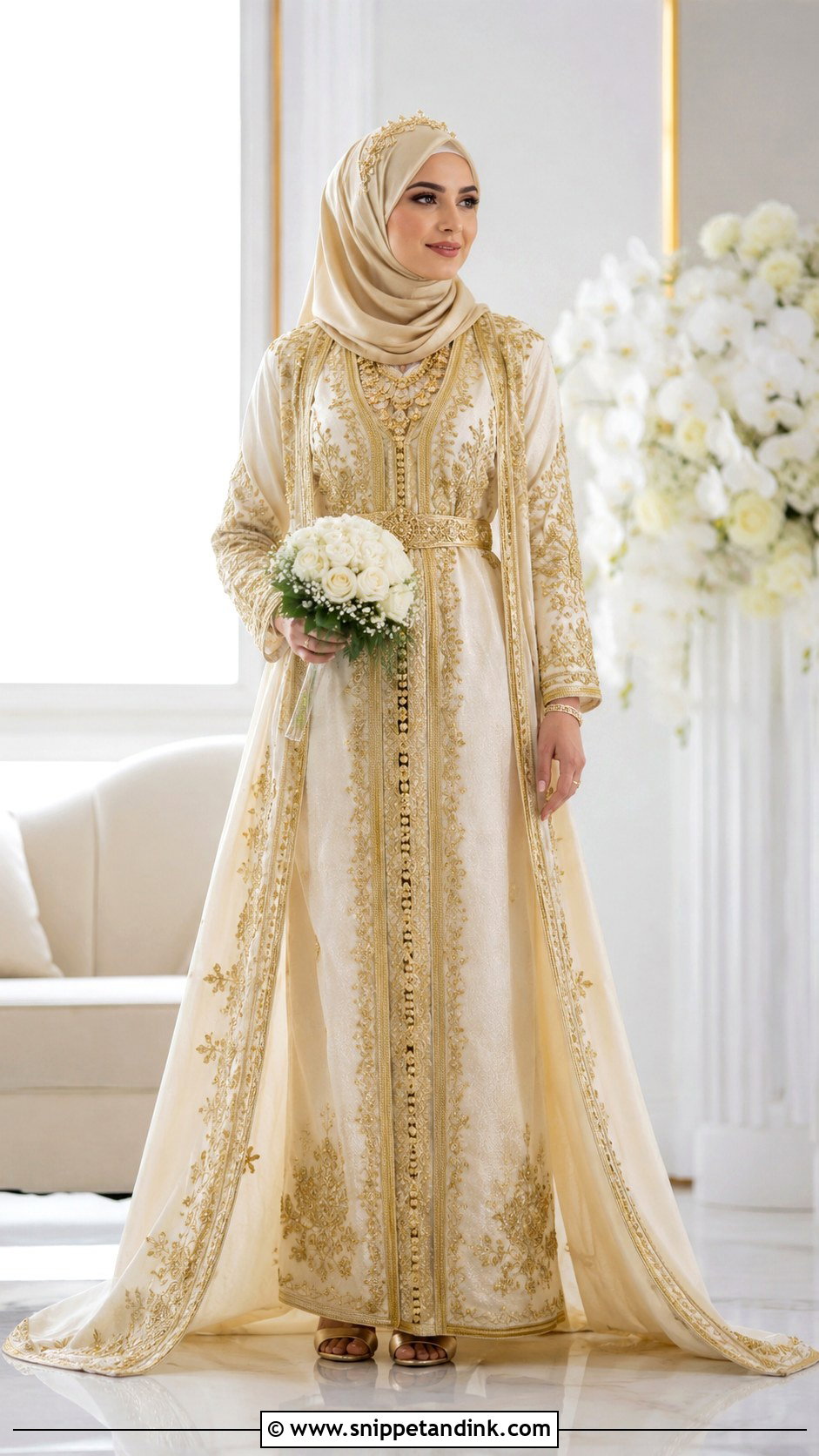
A kaftan’s loose shape gives modest coverage naturally, and embroidery, beading or a belt makes it bridal. White, gold, cream or jewel tones suit different wedding styles. A matching hijab keeps it polished, and a structured belt adds shape without tightness. It’s the outfit I suggest for hot weather, because air moves through it. Embellished heels, refined jewelry and a bouquet that matches the embroidery complete it.
27. Two-Piece Muslim Wedding Dress
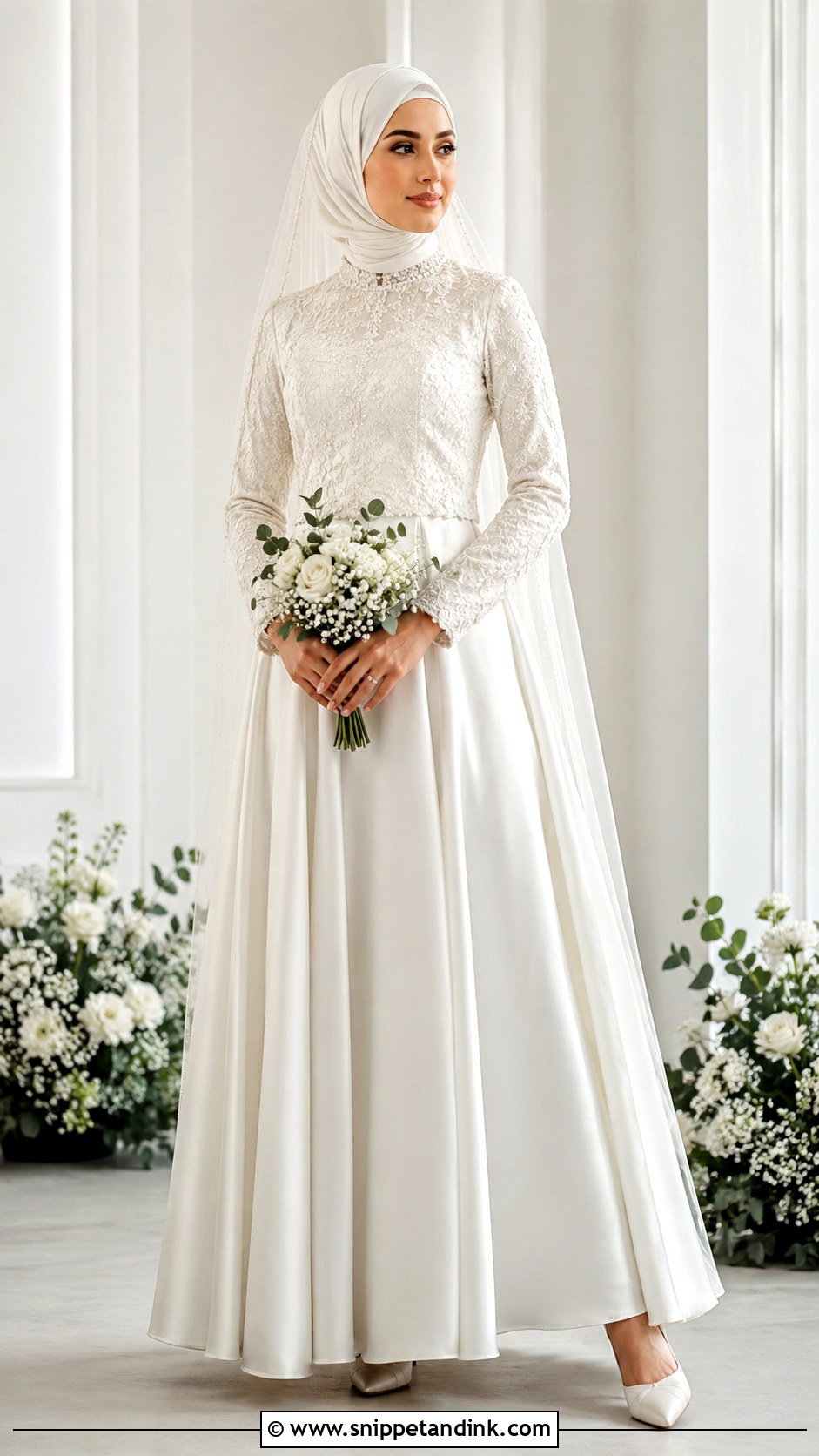
Separates give flexibility: a long skirt with a high-neck top, a structured tunic over a flowing skirt, or a jacket layered over a bridal base. You can adjust coverage, mix textures and get a custom feel. For a bridal finish, choose richer fabrics like satin, lace, crepe or embroidered tulle. Make sure the top is long enough to stay tucked or covered when you raise your arms. A matching hijab, slim heels and a simple bouquet complete it for civil ceremonies, smaller weddings or reception changes.
28. Long Sleeve Muslim Wedding Dress
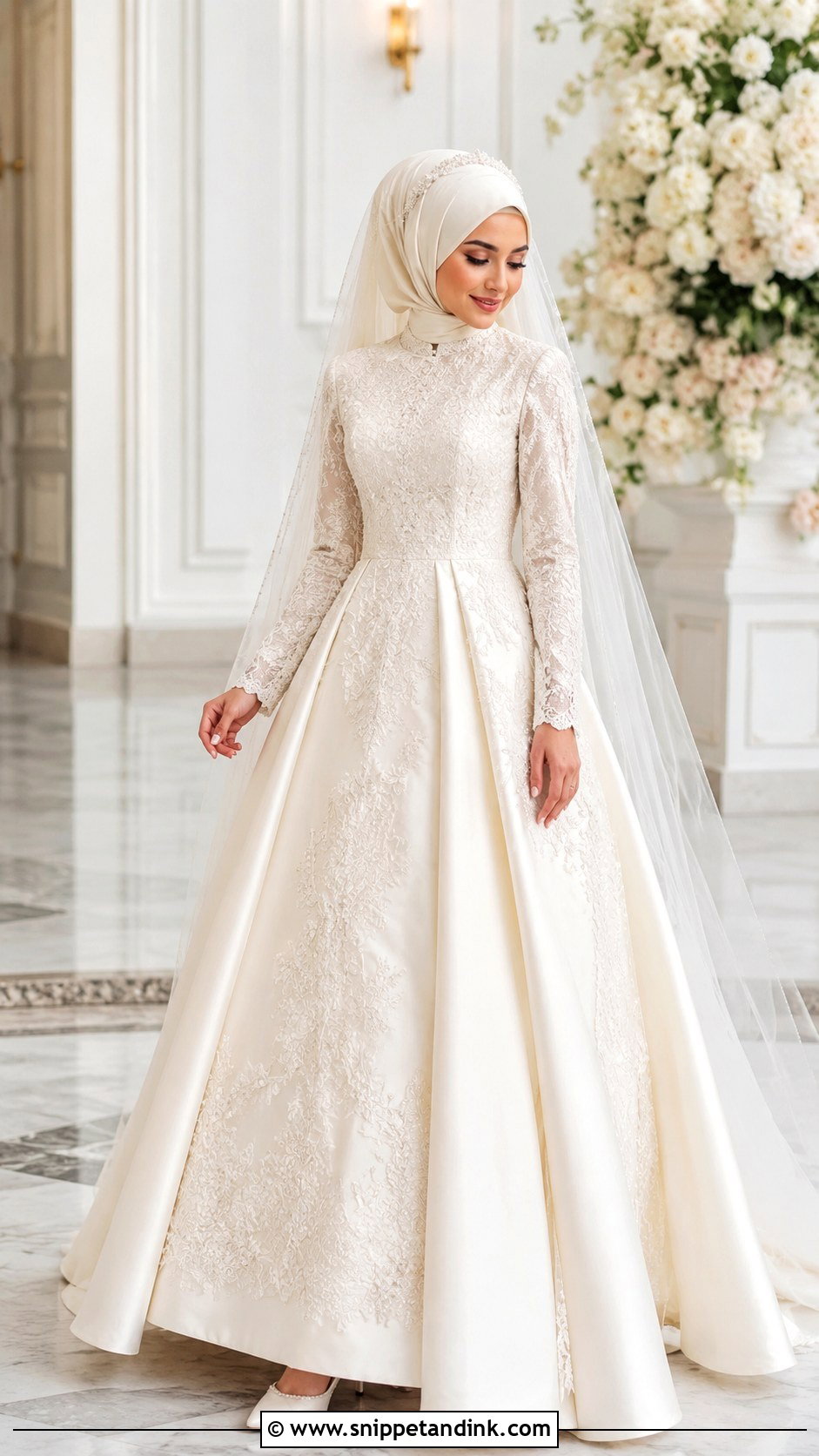
Sleeves can be fitted, slightly puffed, flared, lace, satin or embroidered; the right one depends on the gown and your comfort. If the sleeve fabric is sheer, ask for lining. Watch the cuff, too. A sleeve that rides up when you reach forward to hug exposes the wrist, so check the length with your arms extended. A high neckline, coordinated hijab and soft veil finish it, with jewelry that won’t catch on lace.
29. High Neck Muslim Wedding Dress
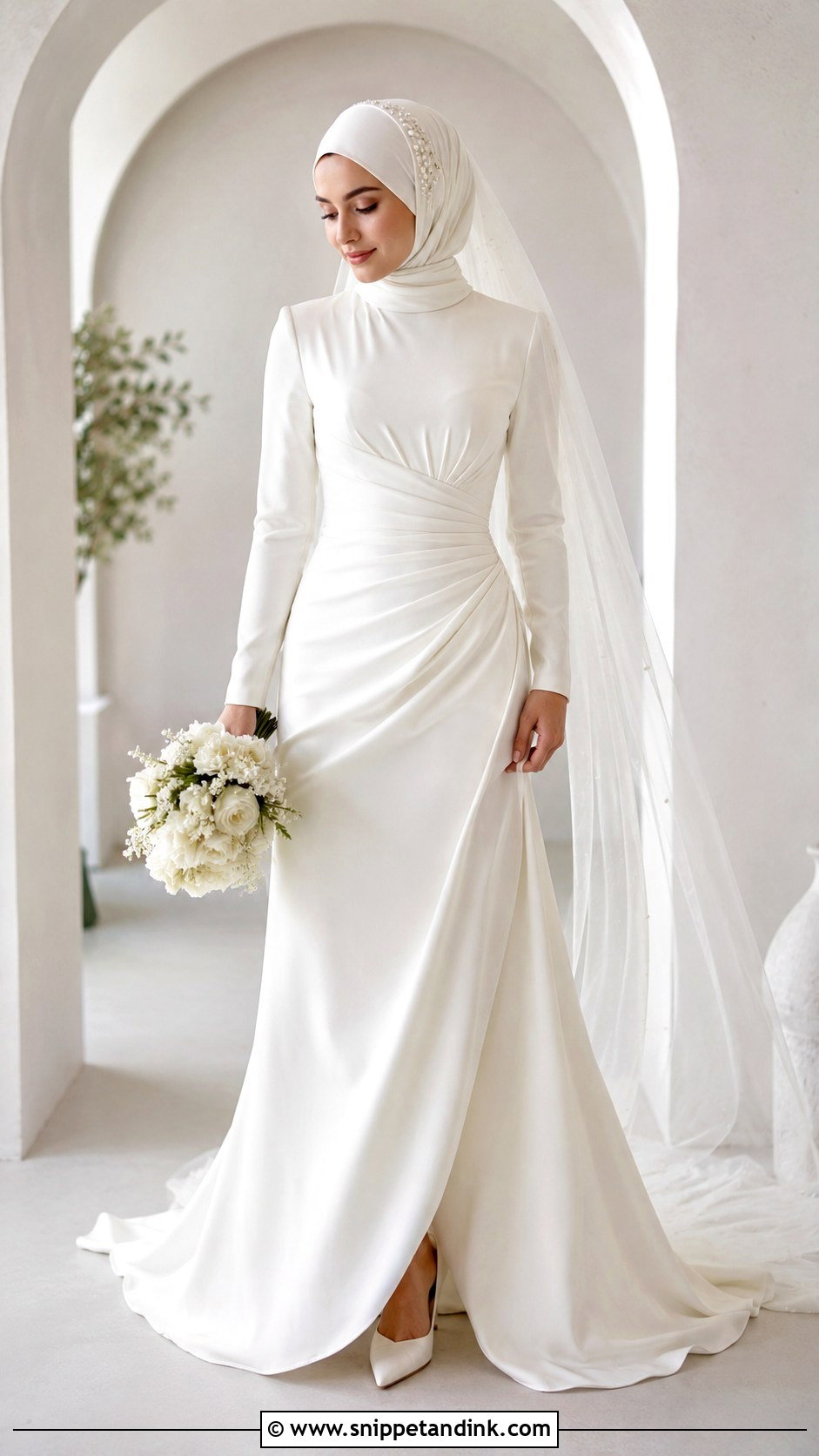
High necklines are the easiest way to avoid a gap between gown and scarf. Choose a fitted or softly structured bodice with long sleeves, over an A-line, ball gown or sheath skirt. Lace looks romantic, satin or crepe modern. I prefer a neckline that sits just under the jaw rather than right against it, so the hijab can wrap over it smoothly without bulk. A veil, pearl pins and simple heels complete it.
30. Plus Size Muslim Wedding Dress
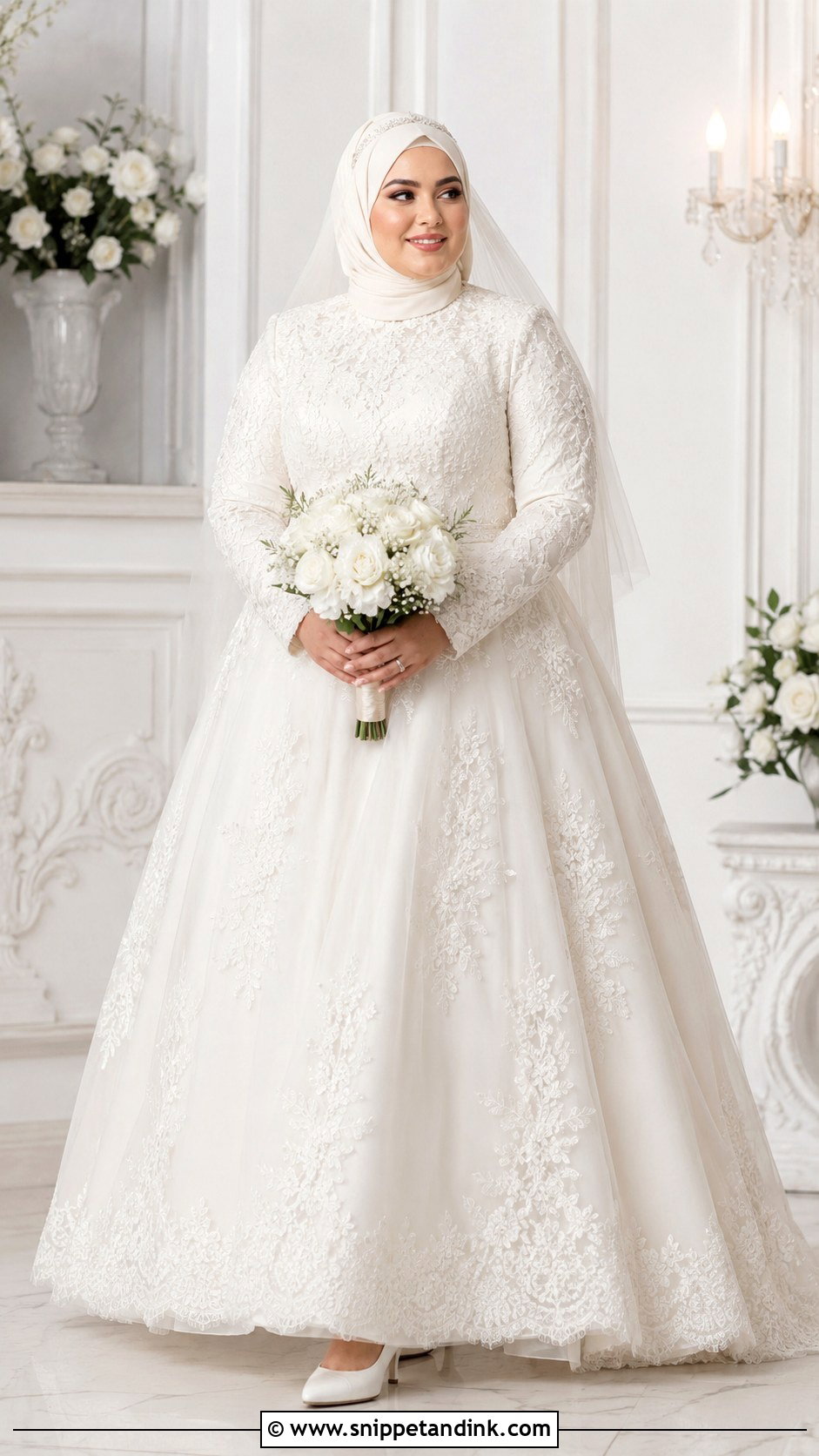
Support and structure come first in a plus size Muslim wedding dress: strong lining, real boning and a silhouette that lets you move confidently. A-line, empire, ball gown and soft fit-and-flare shapes all work. Long sleeves and high necklines give coverage, and lace, beading or embroidery can highlight the details you love. Sleeves are often cut narrow in samples, so ask for custom sizing there. Choose shoes you can stand in all day, with a matching hijab and veil.
Nikah, Walima and a Women-Only Evening
Many Muslim weddings run over more than one event, and each can call for a different look. The nikah is often the most formal religious moment and may be held in a mosque, where a simpler, fully covered outfit is practical. The walima, the reception hosted after the marriage, is usually the grand gown moment. Some families also hold a women-only celebration, and there some brides choose a less covered style or remove the hijab entirely. Talk through which events you’ll attend before buying anything, so each outfit suits its setting.
Pins, Magnets and an Underscarf That Holds
A bridal hijab has to stay put under a veil, through hugs and across hours of photos. A few habits make that much easier.
- Start with a cotton or jersey underscarf with grip. Silk and satin slide over hair; cotton holds.
- Use straight pins to anchor the shape and safety pins where weight pulls, such as under a dupatta or heavy headpiece.
- Magnetic hijab pins are quick, but keep them away from very sheer chiffon, which can tear when you pull them apart.
- Attach the veil to the underscarf, not the outer hijab, so its weight doesn’t drag the visible layer back.
- Pack spare pins and a small mirror for your bridesmaid’s bag.
Where the Gown Ends and the Hijab Begins
Modesty, culture, comfort and personal style can all live in one outfit. White lace gowns, satin, bridal abayas, kaftans, colorful cultural pieces and plus size silhouettes each work when the whole look is styled together. Focus on coverage, fabric quality, movement and how the hijab meets the neckline and veil. Then choose accessories that support the dress instead of crowding it, and the outfit will feel like yours from the nikah to the last photo.
You'll Like These Ideas:






Leave a Reply