
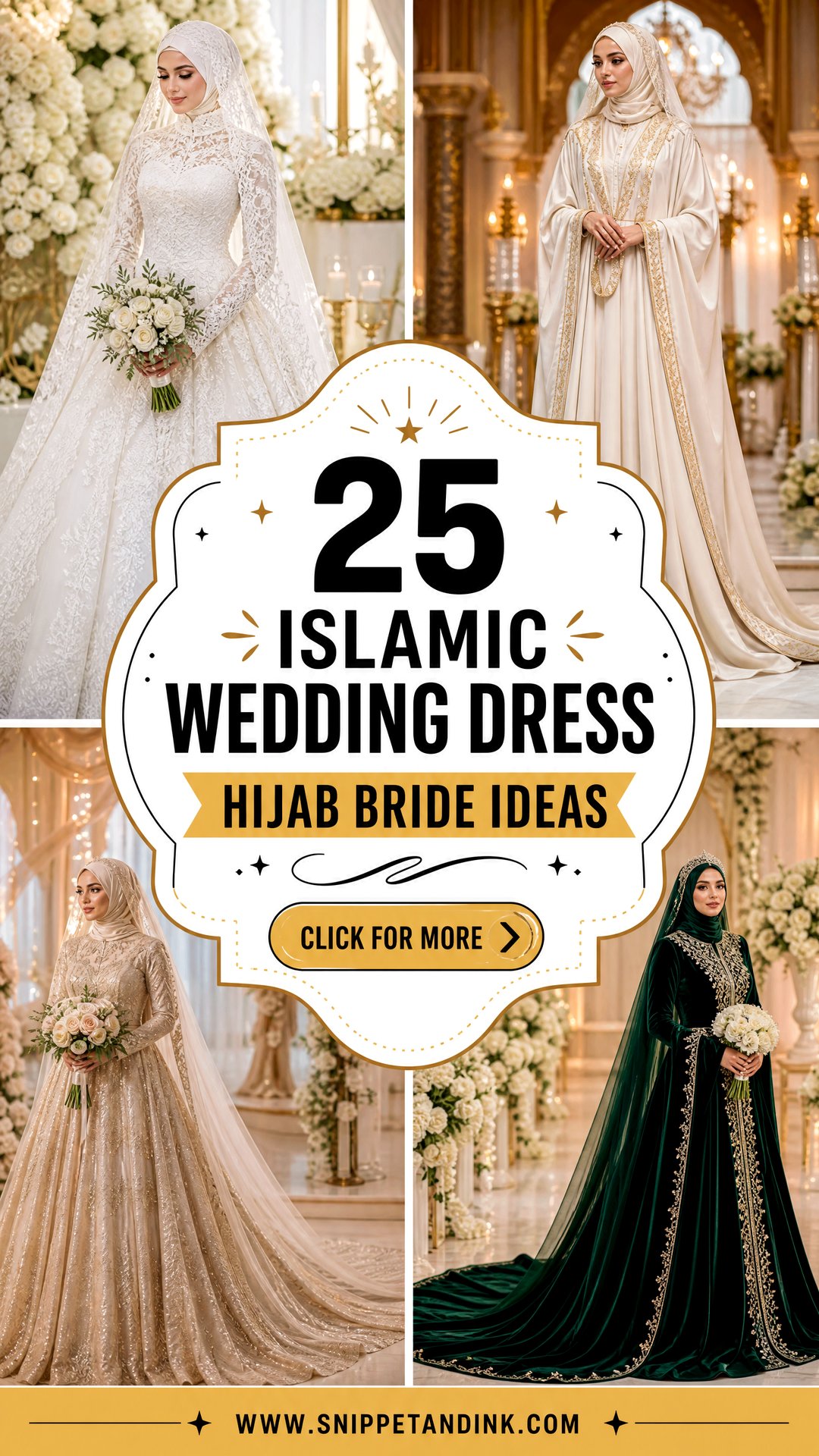
For a hijab bride, the dress is only half the outfit. The other half sits around your face all day, and it decides how the gown reads in every close-up. When I style a modest bride, I ask for her hijab fabric and wrap before I pull a single dress, because a satin wrap with a lace bodice is a very different picture from chiffon over crepe. Modest bridal wear now covers classic white gowns, embroidered abayas, cape dresses, kaftans, lehengas, satin silhouettes and soft pastel nikah looks. Most brides also want something that holds up through a long day and honors both faith and family culture. Below are 25 full looks, each with notes on how the hijab, veil and accessories fit into it.
Which Hijab Fabrics Stay Put Through a Long Wedding
A wedding day can run from an early nikah to a late reception, and the hijab has to sit neatly through all of it. Each fabric behaves differently, and I’d choose it alongside the dress rather than after.
- Chiffon is light and drapes softly, but it slips. It needs a cotton or jersey underscarf underneath to grip, and it shows creases less than satin does.
- Crepe and georgette have a slight texture that holds pins well and sits matte in photos. They’re my default for a full day.
- Silk satin looks luxurious and matches satin gowns, but it slides and reflects light onto the face. Pin it to a non-slip undercap at several points.
- Jersey stays put almost on its own and feels comfortable, though it can look casual next to a formal gown.
Plan the pins too. Two or three flat pins at the sides and one at the back of the crown usually hold a wrap; magnetic clasps avoid holes in delicate fabric. If you’re adding a veil or tiara, have it anchored through the underscarf rather than the outer layer, so its weight doesn’t pull the hijab back off your hairline.
1. White Islamic Wedding Dress With Hijab
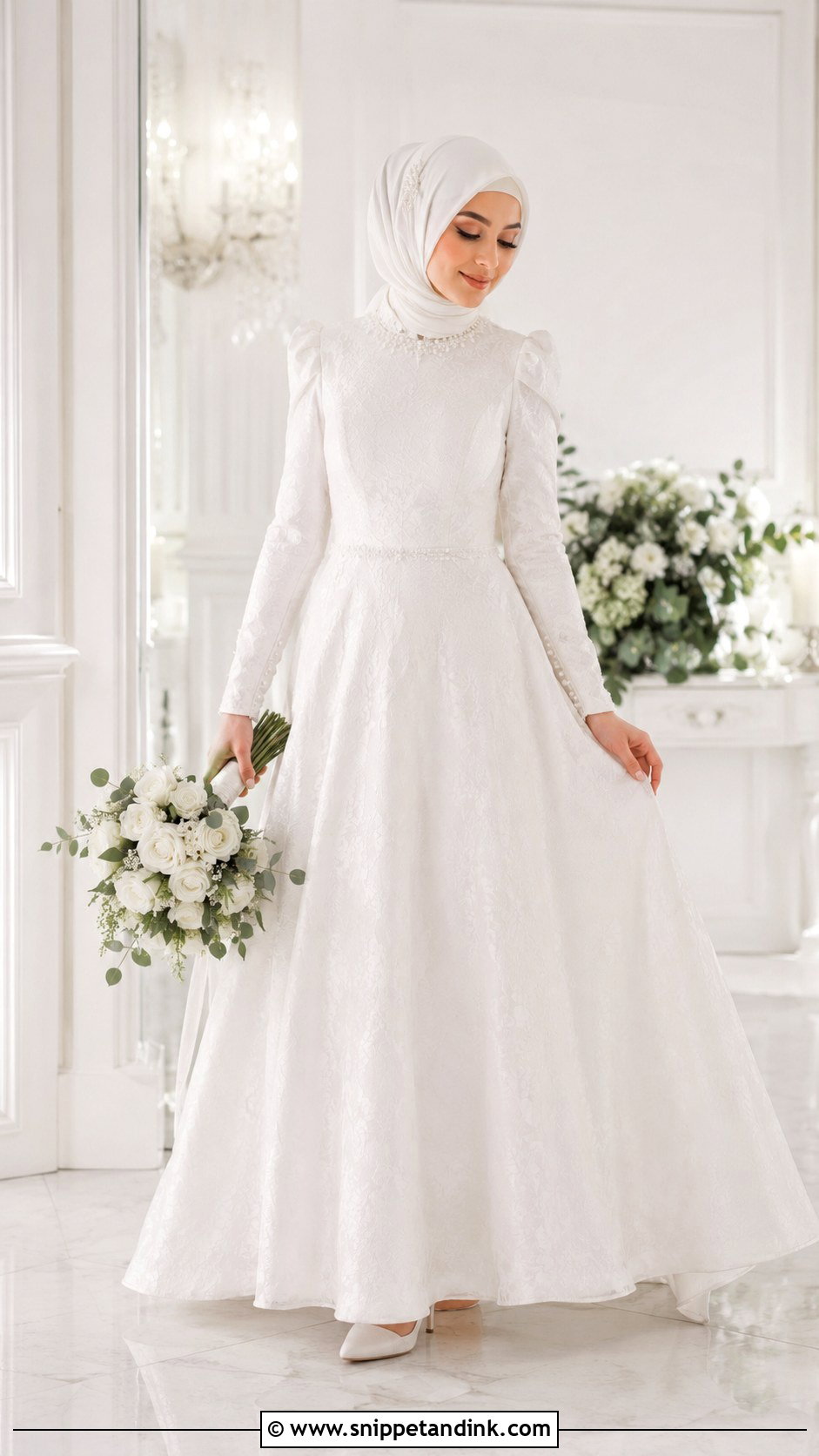
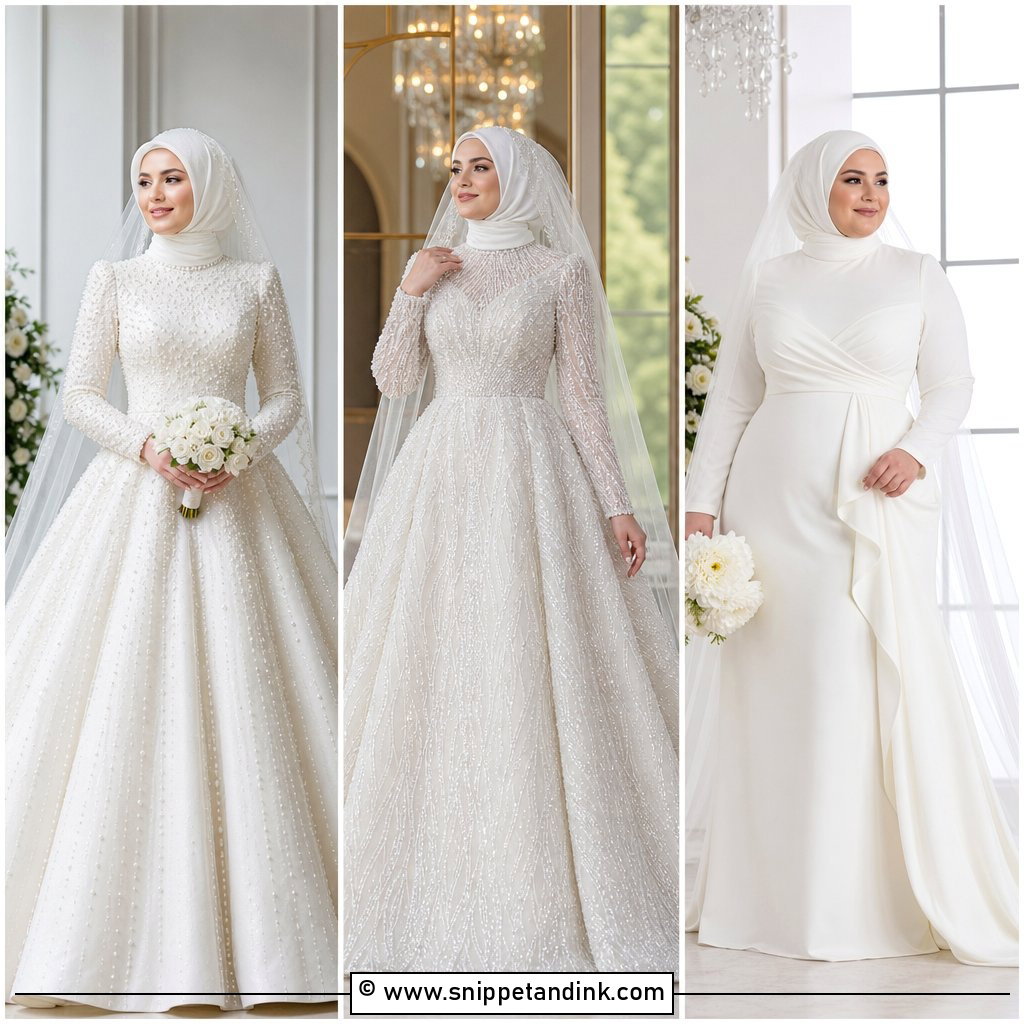
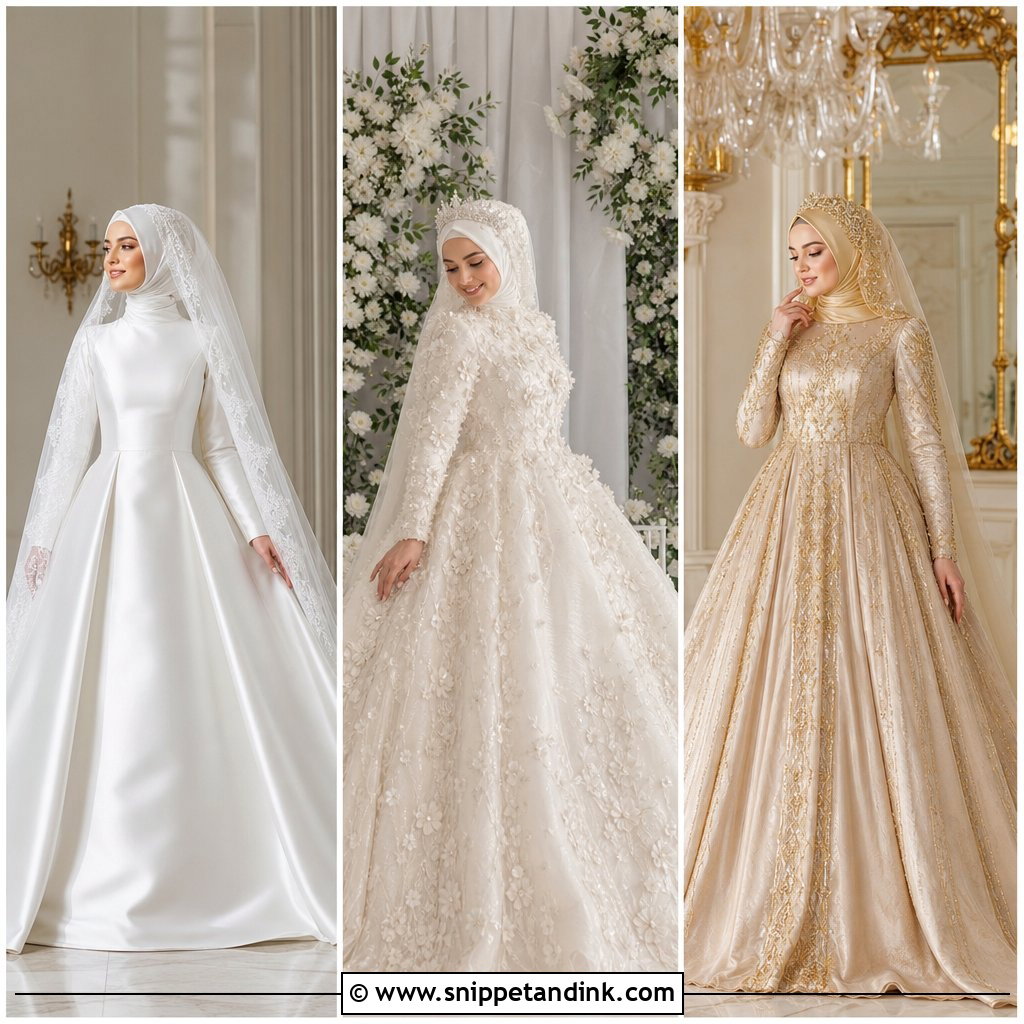
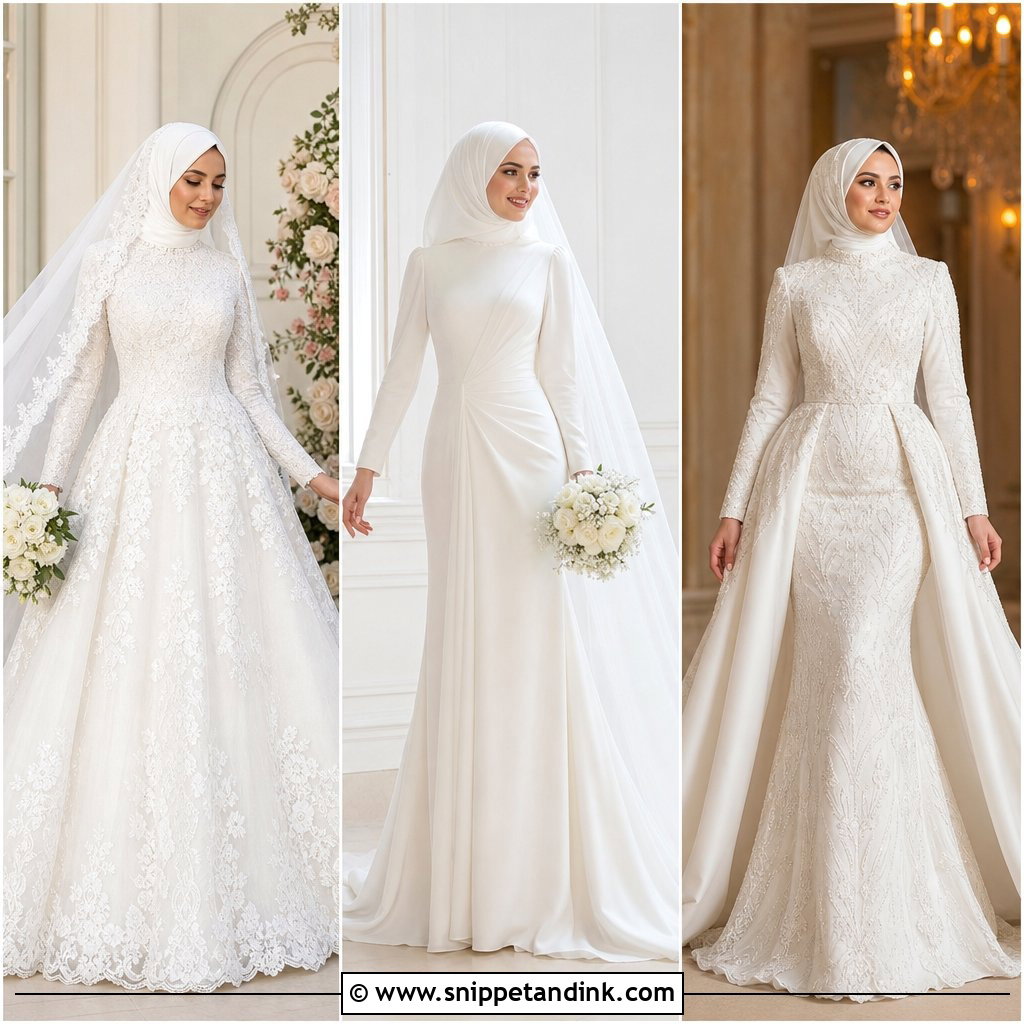
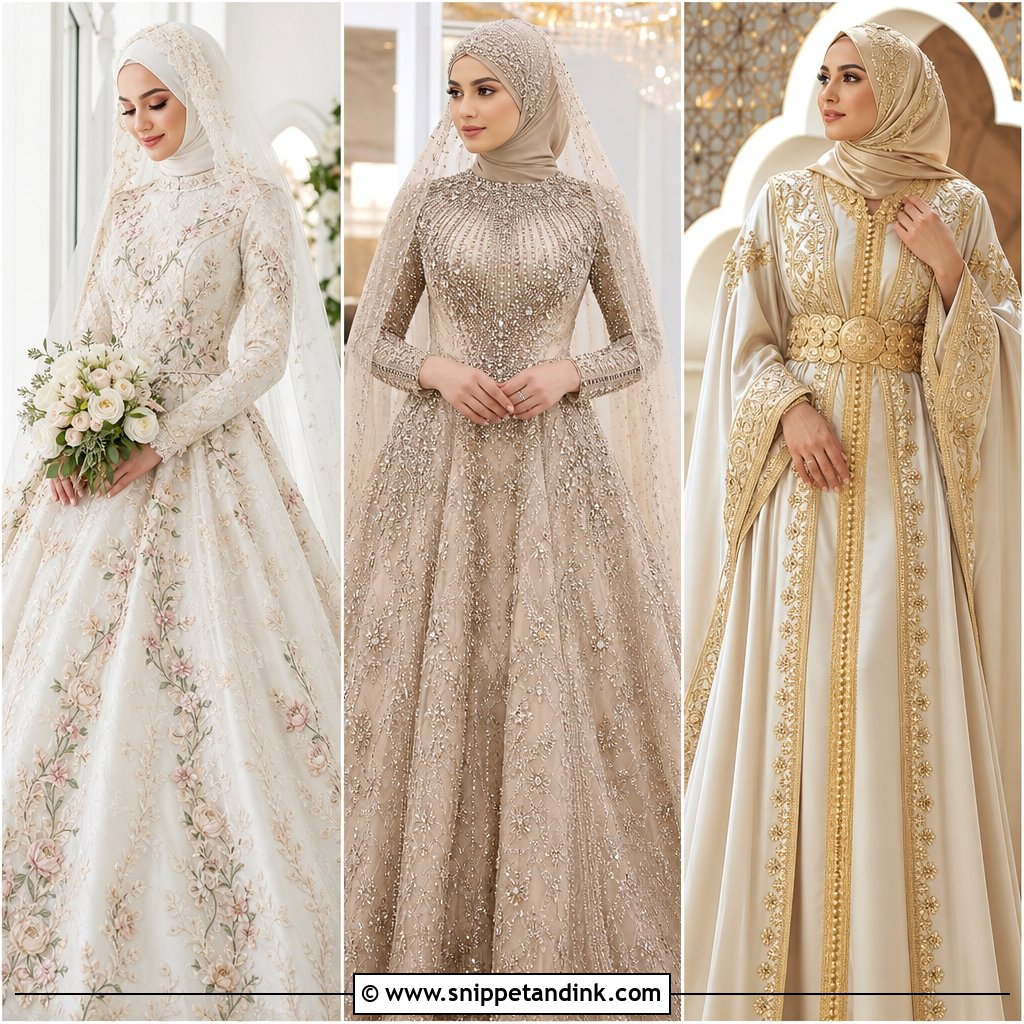
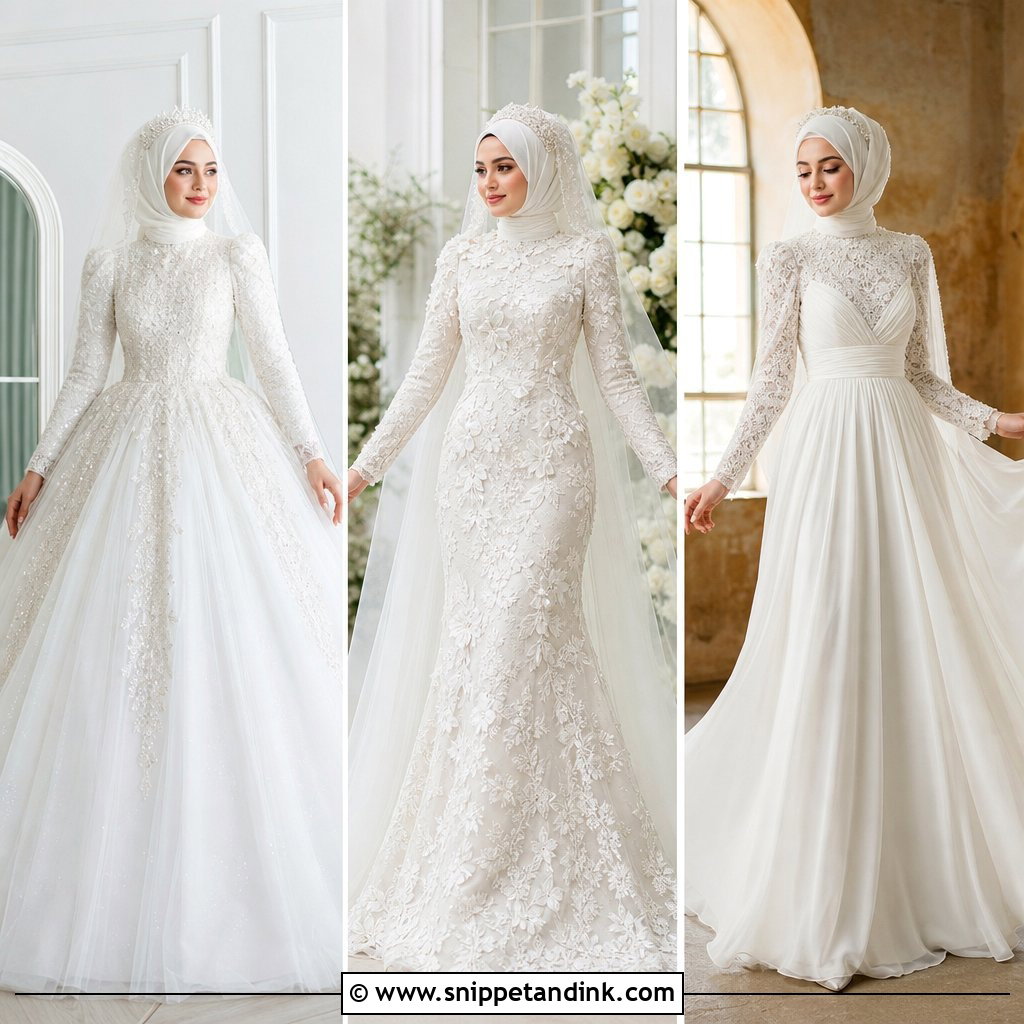
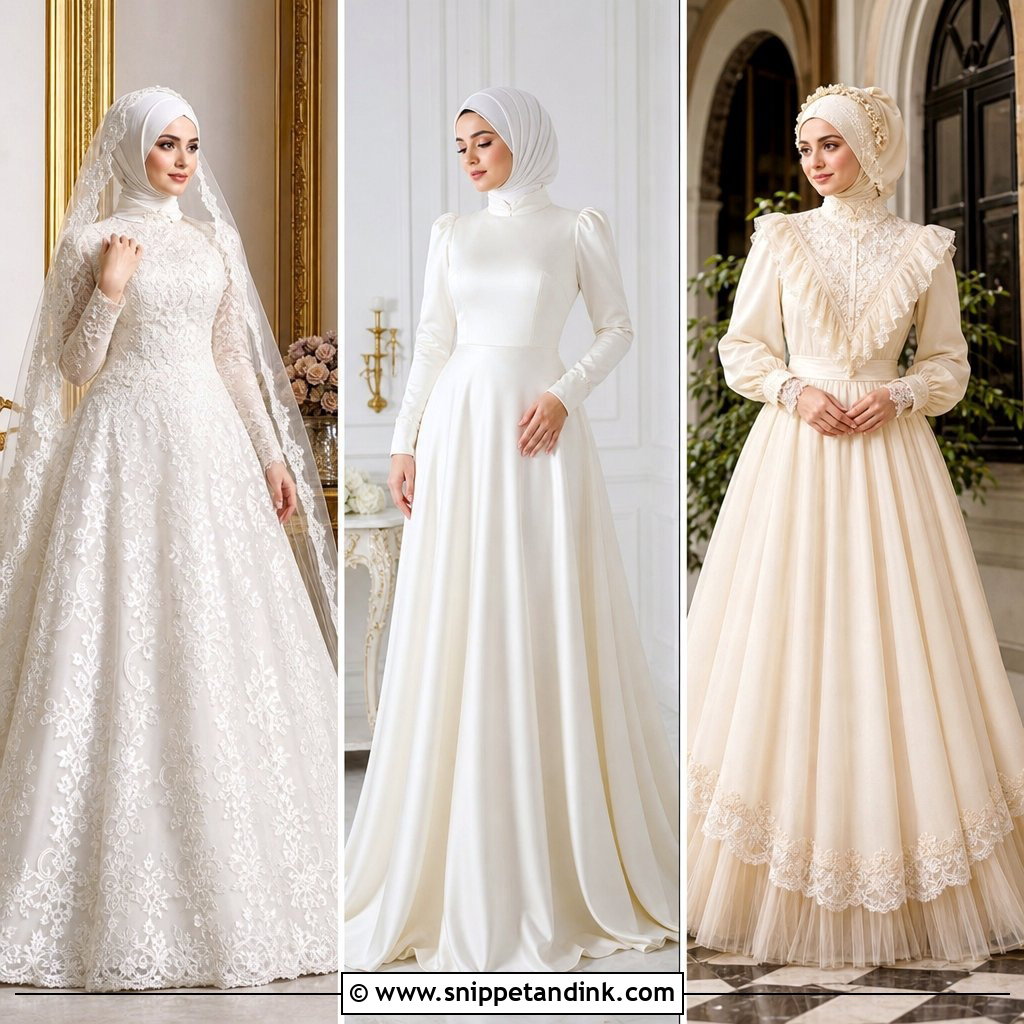
A long white gown with a matching hijab is the classic, and it ages well in photos. Choose long sleeves, a high neckline and a skirt that moves easily, in lace for romance, satin for shine or crepe for clean lines. Match the hijab to the dress white, not to a different white. Pure white beside ivory makes the gown look dingy, so I hold the two fabrics together in daylight before buying either. A fine tiara, pearl pins, closed-toe heels and a small bouquet finish it. This one moves easily from a nikah to a walima or formal reception.
2. Lace Islamic Wedding Dress With Hijab
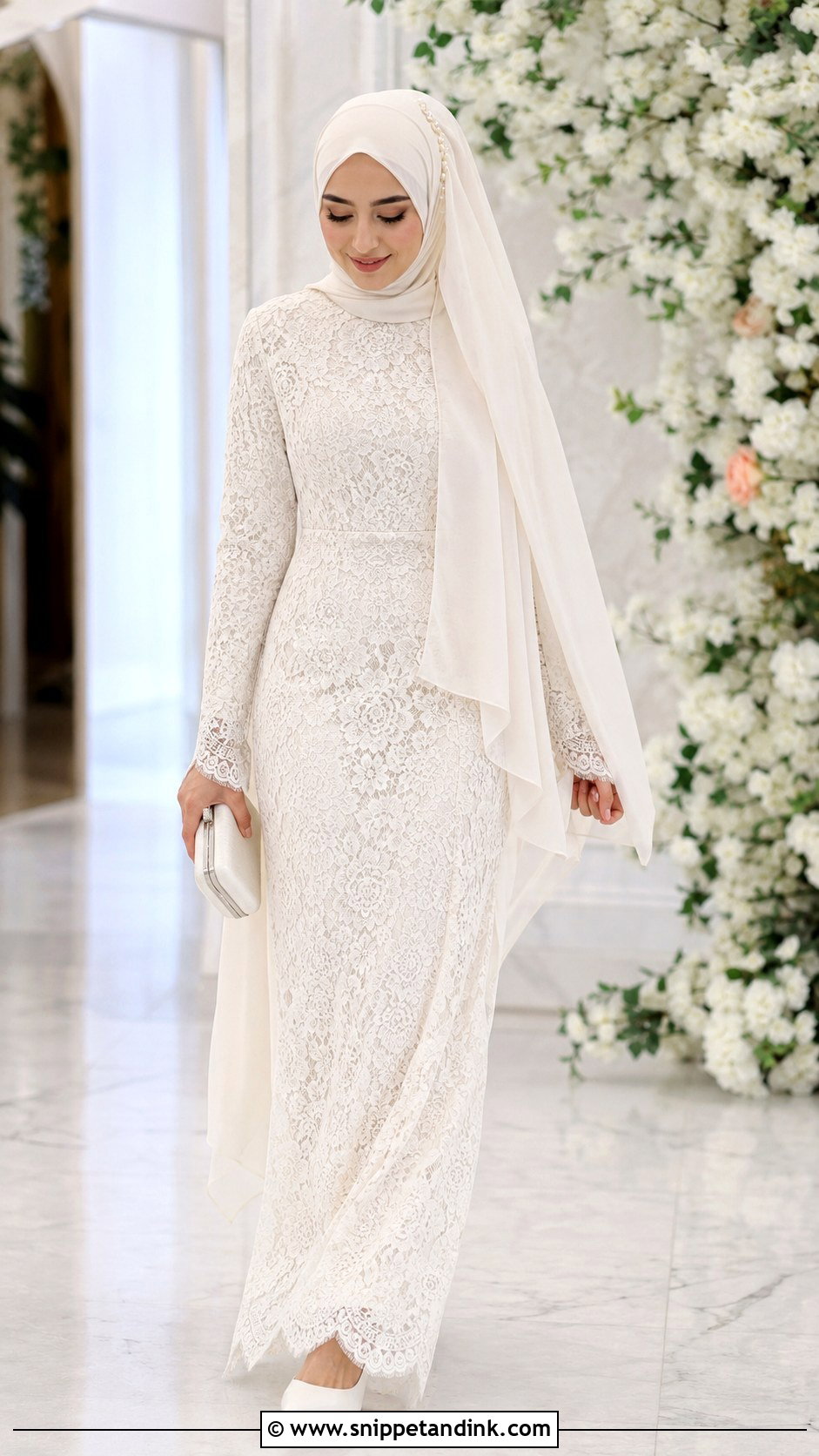
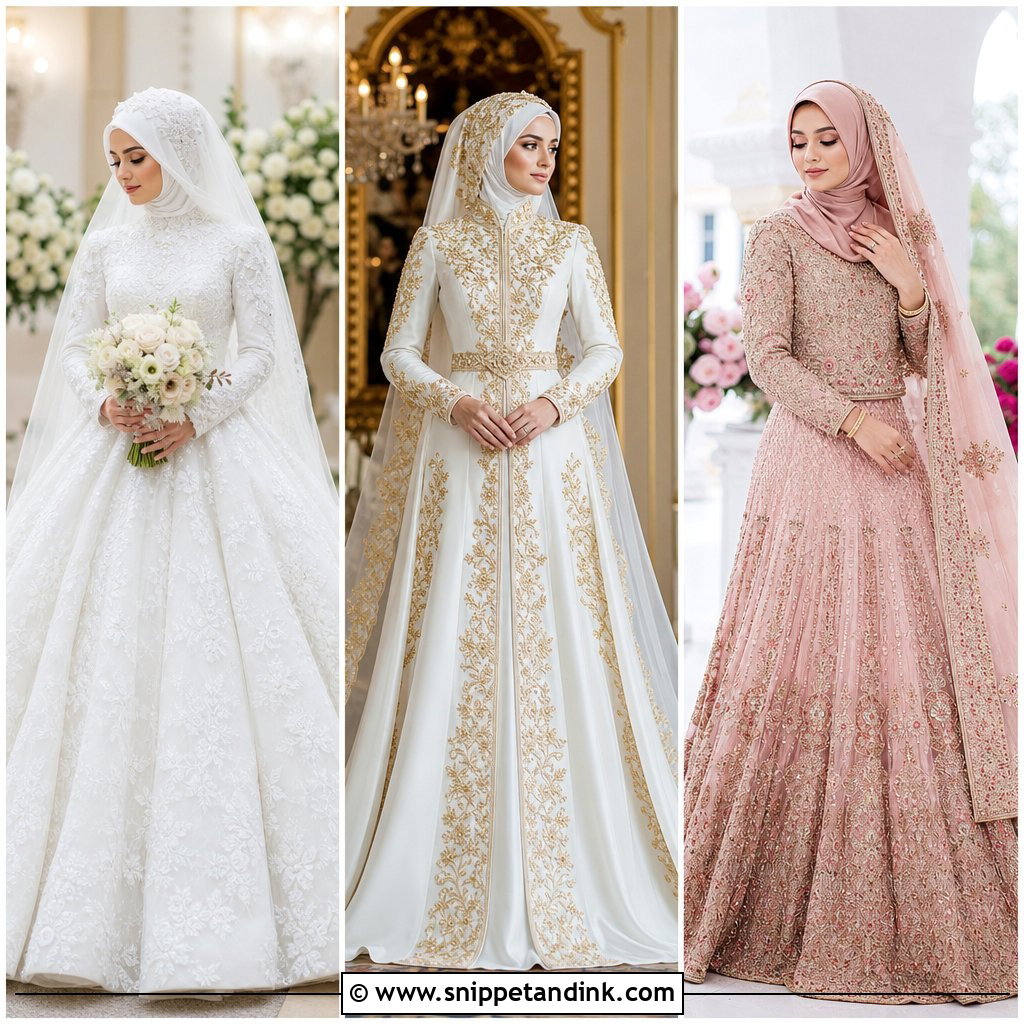
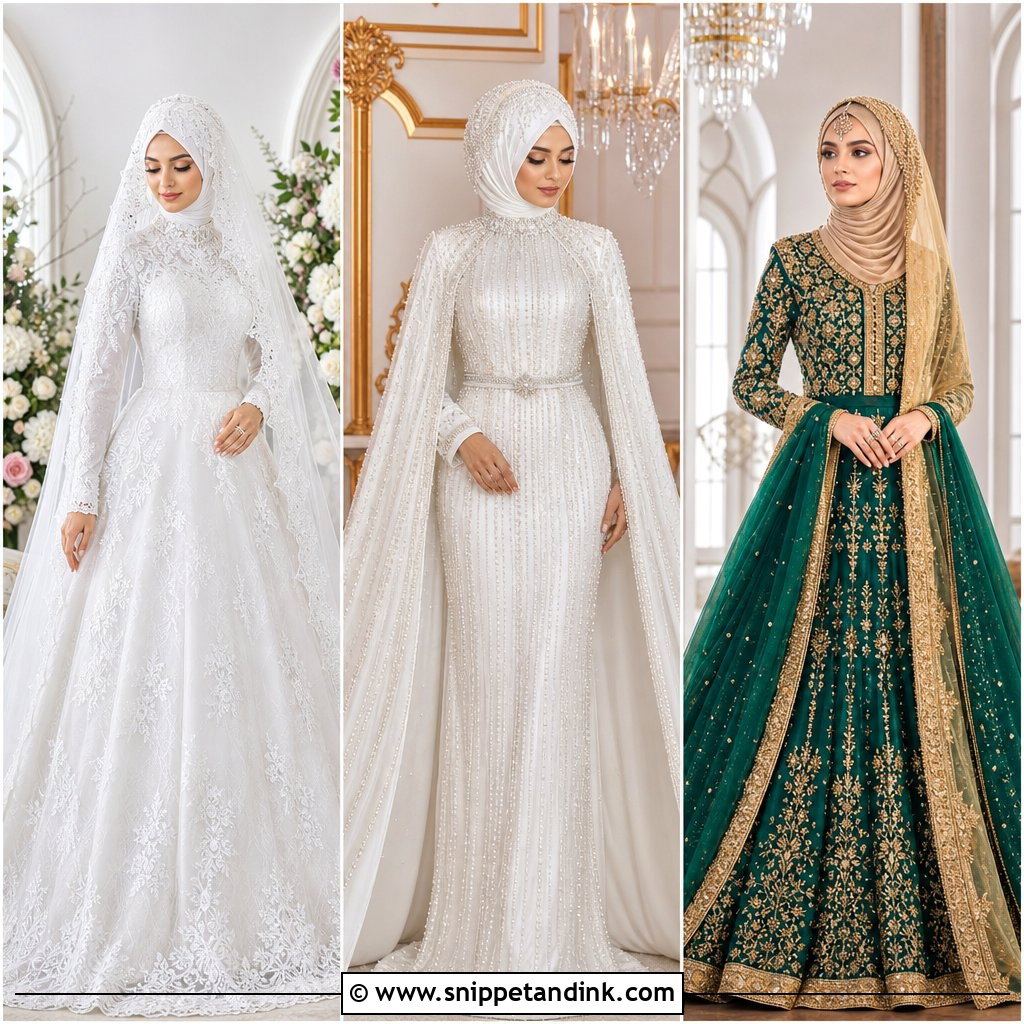
Lace keeps a modest gown soft and detailed, as long as it is fully lined with no sheer gaps across the shoulders or back. Look for long fitted sleeves and a high neck with lace laid over the bodice and skirt. Floral lace reads romantic; geometric lace looks more modern. With all that texture, I put the bride in a plain chiffon or silk hijab so the outfit doesn’t turn busy. If your style allows earrings over an undercap, small pearls are enough; otherwise let decorative hijab pins do that job. Nude or ivory heels, a small clutch and a light veil complete it.
3. Satin Islamic Wedding Dress With Hijab
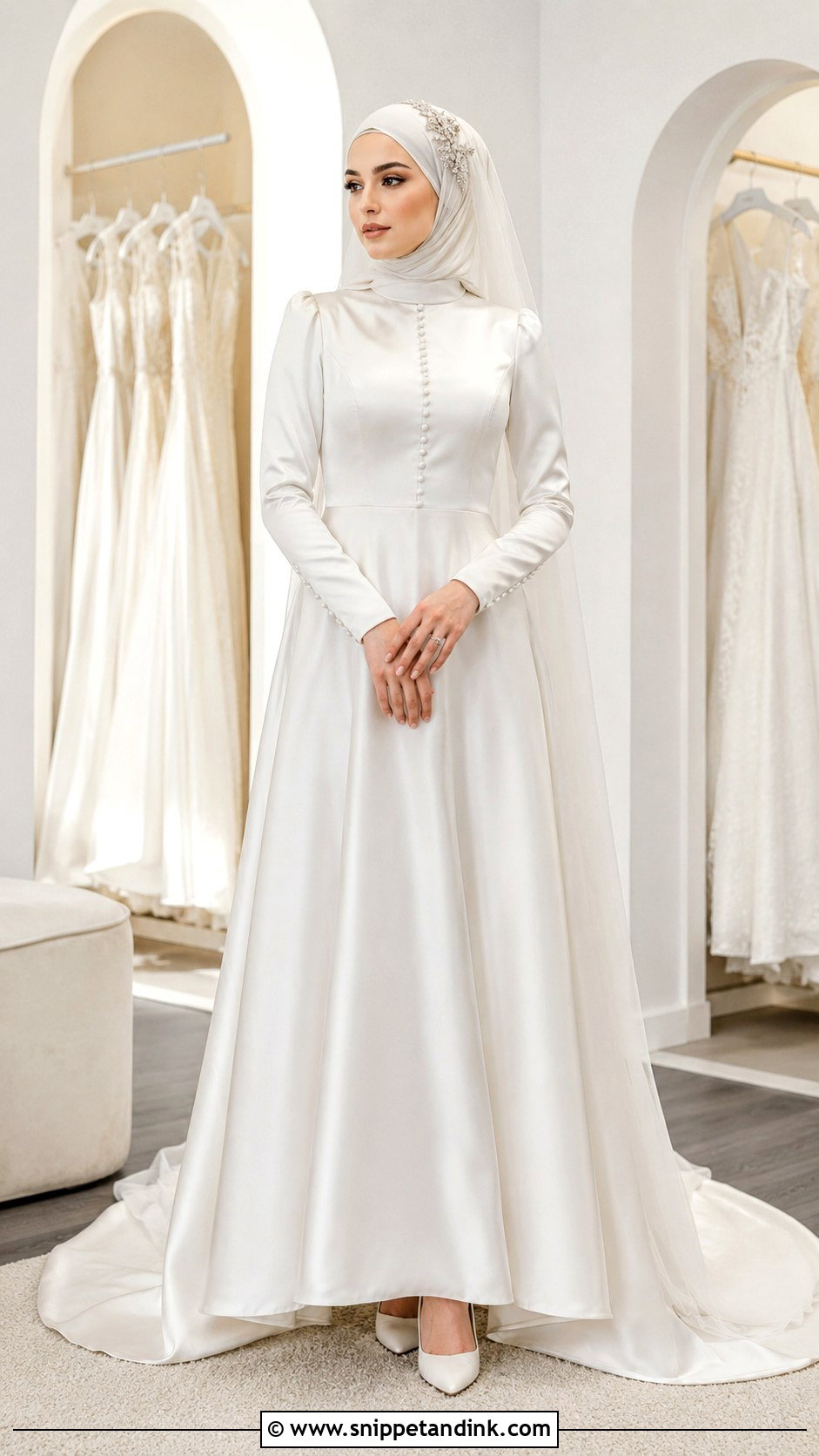
Satin is the fabric I steer brides toward when they want clean lines and a bit of glow. A structured A-line or a soft, mermaid-inspired shape both work with modest tailoring: covered buttons, a high neck, long sleeves and a waist that is defined but never tight. Think twice about a satin hijab. It matches perfectly, but shine right next to the face bounces light onto the skin and can make makeup look oily in flash photos, so a matte chiffon wrap is often kinder. A crystal hairpiece over the hijab, pointed heels and a structured bouquet keep it sharp.
4. Ball Gown Islamic Wedding Dress With Hijab
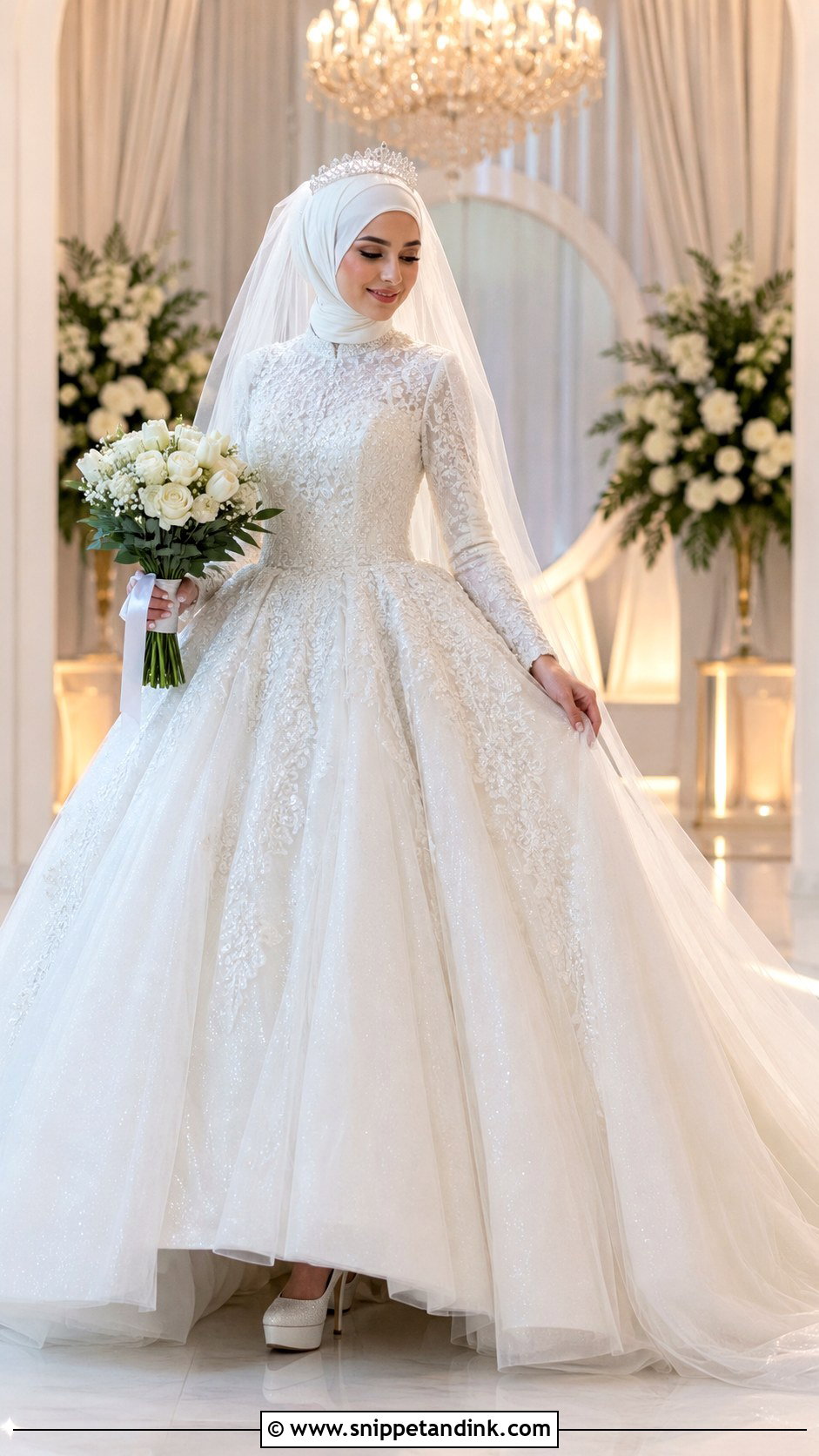
Ball gowns are for the grand entrance. A high-neck bodice with long sleeves and soft embroidery holds the coverage, while a skirt of tulle, organza or mikado brings the drama. Keep the hijab neatly wrapped and close to the head; volume on top and volume below fight each other in a full-length photo. A long veil over the hijab adds impact for portraits. These skirts are heavy, so I’d choose block heels or platforms that let you stand for hours. It suits a large hall or a formal evening reception, and I always plan where the bride will sit, because a full skirt needs a wide chair.
5. A Line Islamic Wedding Dress With Hijab
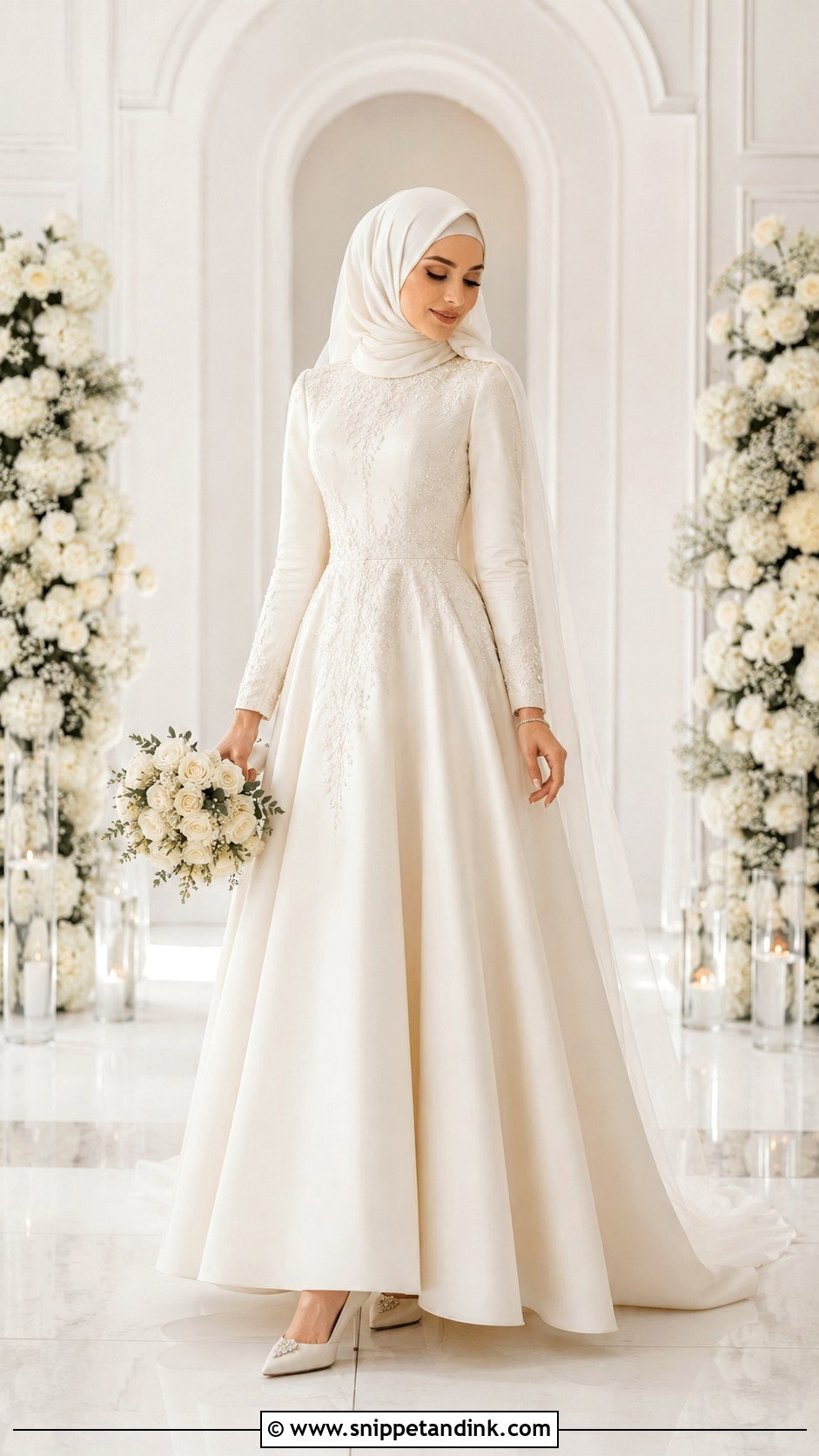
An A-line defines the waist and falls away from the hips, which is why it flatters so many body types and stays comfortable through a long ceremony. Choose long sleeves, a high neck and a skirt with room for walking, sitting on a low stool and dancing with family. Lace, crepe, satin and chiffon all hold this shape. A matching hijab, pointed heels and a single bracelet are plenty. When a bride can’t decide on a silhouette, this is the one I put her in first, since it tells us quickly whether she wants more volume or less.
6. Modest Mermaid Islamic Wedding Dress With Hijab
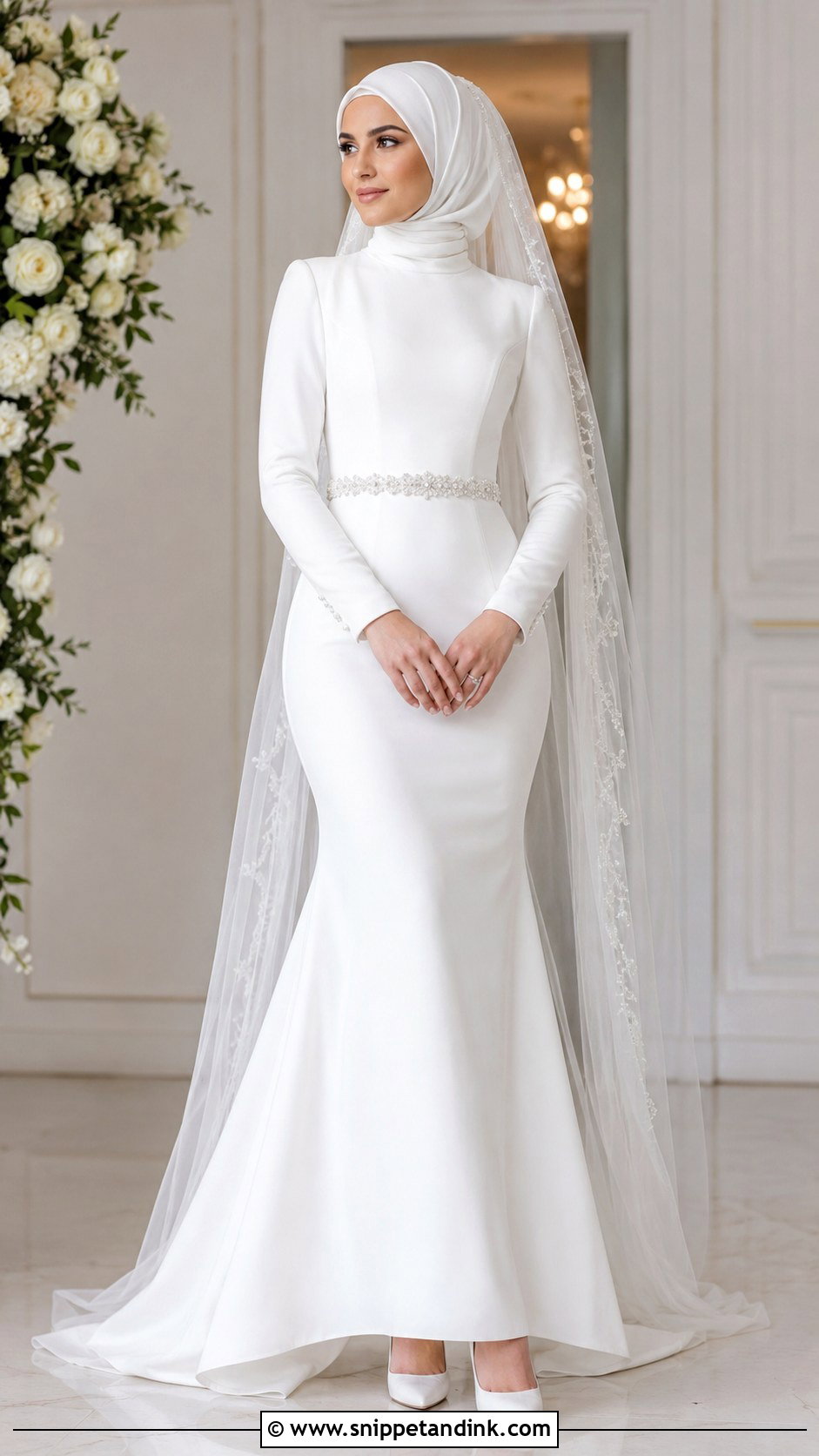
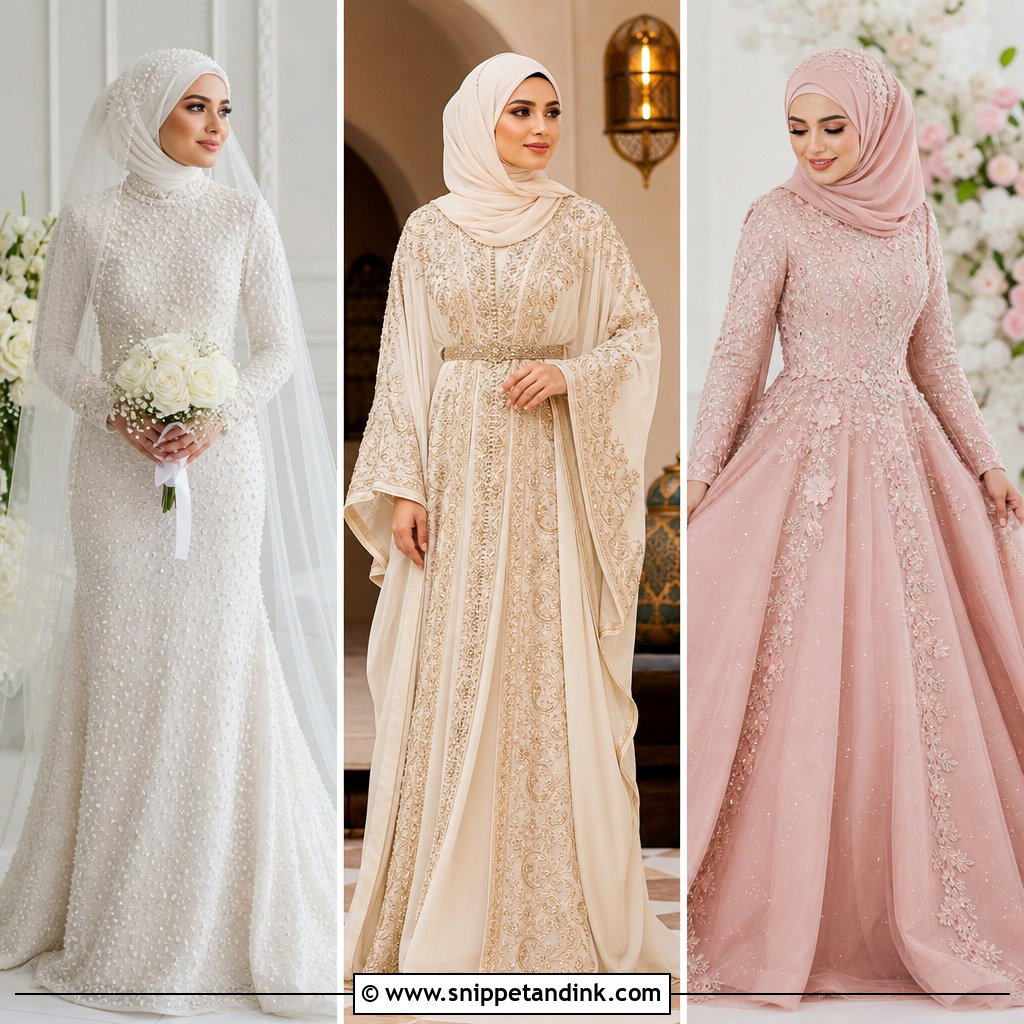
A modest mermaid works when it skims the body and flares below the knee, without pulling tight across the hips. Thicker fabrics such as crepe, satin or lined lace give better coverage and hold the shape; thin stretch fabrics cling and show everything. Long sleeves and a high neck make it hijab-friendly without added panels. I always check a mermaid with the bride sitting and climbing a step, because a flare set too high makes both awkward. A long veil softens the fitted line, and sleek heels, a jeweled belt and a smooth hijab wrap complete a modern, glamorous look.
7. Cape Islamic Wedding Dress With Hijab
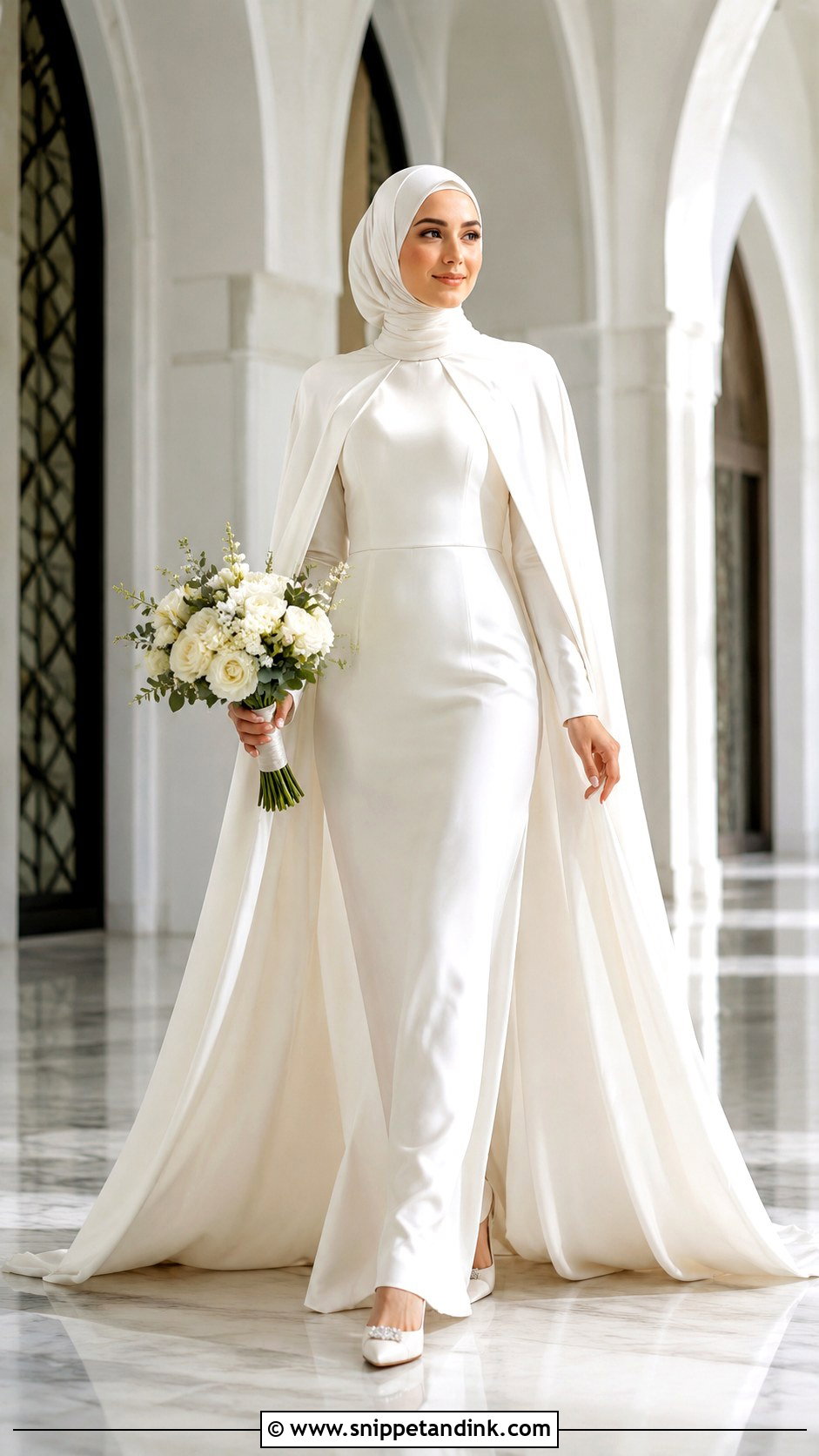
Capes give coverage around the arms and upper body plus a lot of movement in photographs. The cape can attach at the shoulders, fall from the neckline or sit over the gown as a sheer overlay, and it works best over a plain dress such as a satin column or crepe A-line. If the cape is sheer, remember it doesn’t count as sleeve coverage; the dress underneath still needs its own sleeves. Pair it with a neat hijab wrap, minimal jewelry and elegant heels. Many brides use a cape instead of a veil, which keeps the head layers lighter.
8. Abaya Islamic Wedding Dress With Hijab
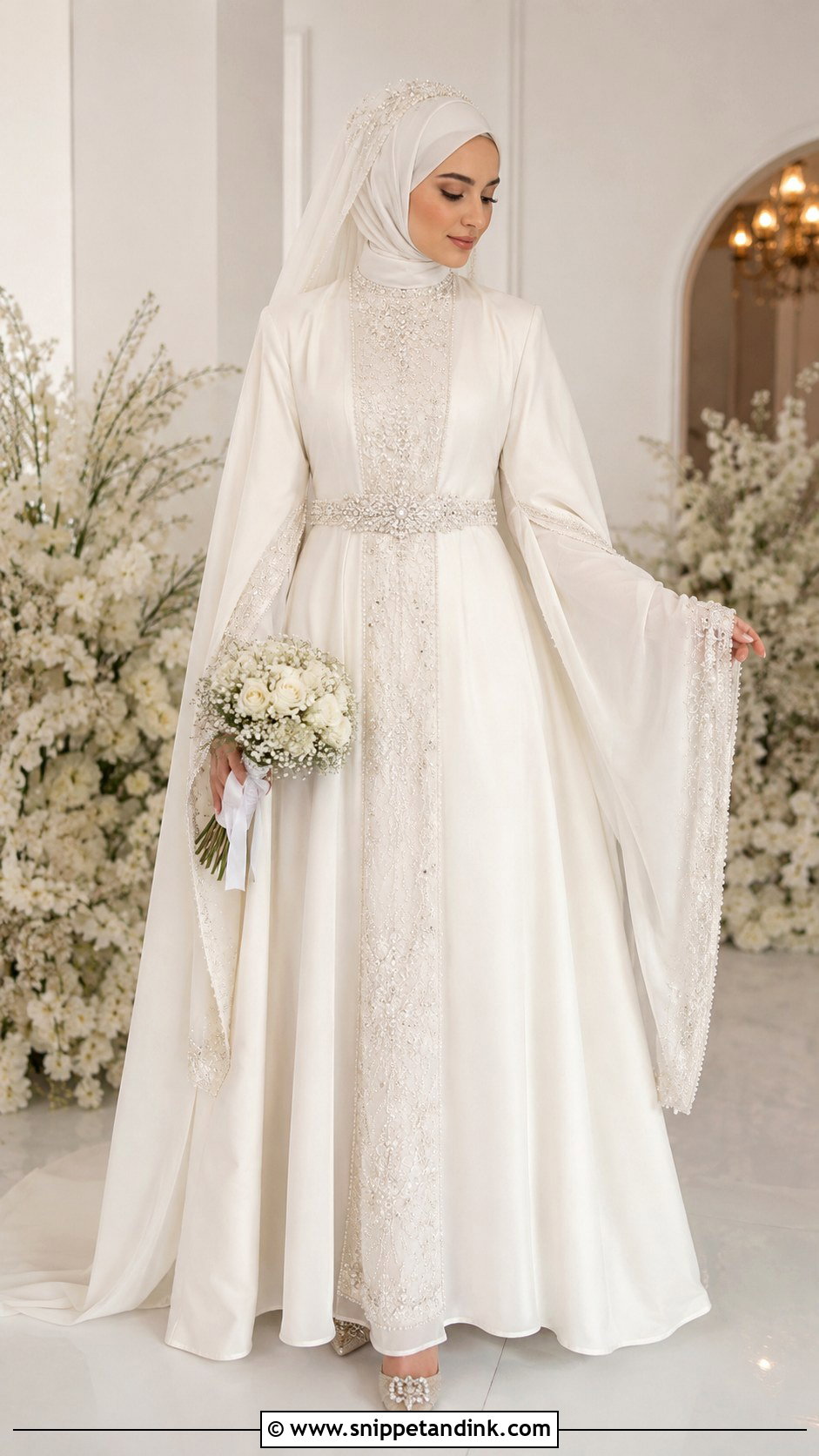
An abaya covers naturally, and that ease is why many hijab brides choose one. Bridal abayas often carry beadwork, embroidery, lace panels, pearls or soft metallic thread. The cut matters more than the decoration: I look for one that drapes from the shoulder without swallowing a petite frame, which usually means having the sleeves and hem shortened. White, ivory, champagne, blush and soft gold all suit it. A matching hijab keeps the column of fabric unbroken, and a jeweled belt can define the waist if you want one. Embellished heels and a small bouquet complete it for a nikah or walima.
9. Kaftan Islamic Wedding Dress With Hijab
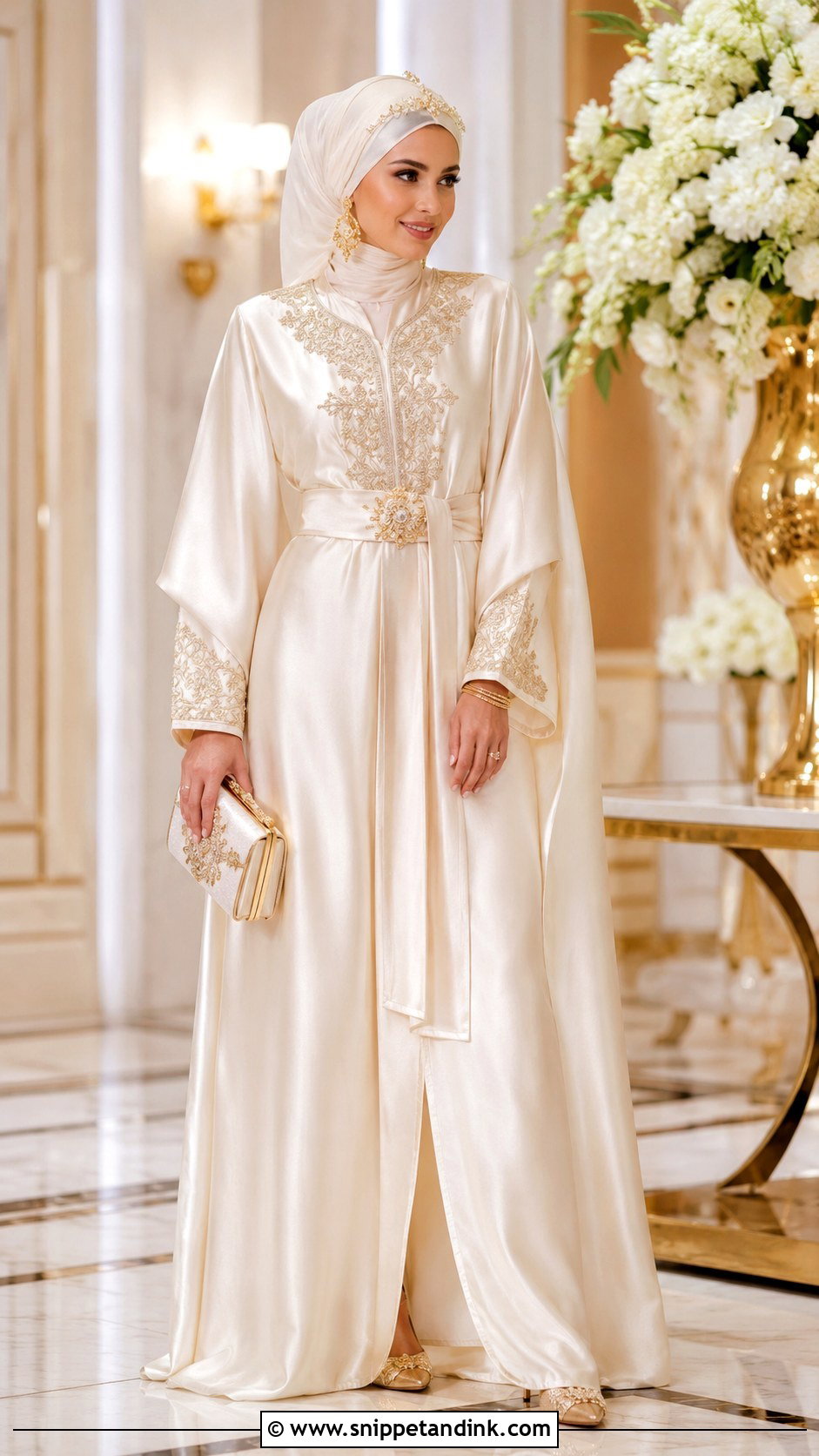
Kaftans bring comfort and culture into one outfit, with no fitted waist to think about. Bridal versions come in silk, crepe, chiffon, brocade or embroidered organza. Choose detailed cuffs, a decorated neckline and a little waist shaping so the shape looks deliberate rather than loose. Brocade kaftans are stiff and warm, so I suggest chiffon or crepe for a summer wedding. A chiffon or silk hijab keeps the face soft. Gold or pearl accessories, low heels and a structured clutch finish a look that feels luxurious and is easy to wear for hours.
10. Moroccan Islamic Wedding Dress With Hijab
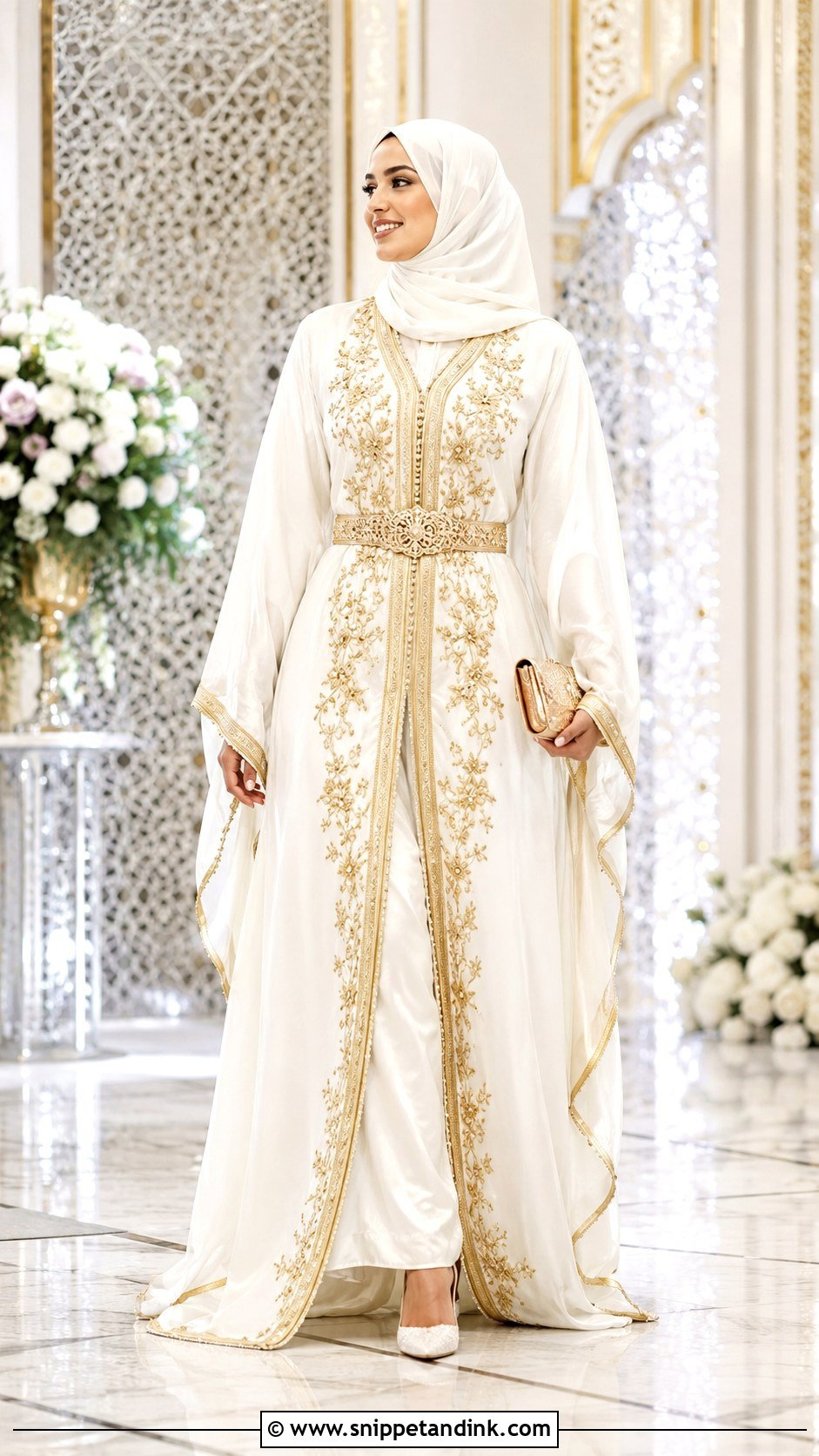
Moroccan bridal dress is all ornate detail, and the takchita or kaftan-inspired gown is its center: embroidery, beading, a decorative belt and layered, flowing fabric. White, ivory, emerald, soft gold and blush are common bridal colors. Coordinate the hijab with the gown but keep it plain enough that the embroidery leads. Pointed heels, a metallic clutch and the traditional belt complete the outfit. Takchita layers add depth from every camera angle, and they also add weight, so I check that the belt sits where the bride can still sit and eat comfortably.
11. Turkish Islamic Wedding Dress With Hijab
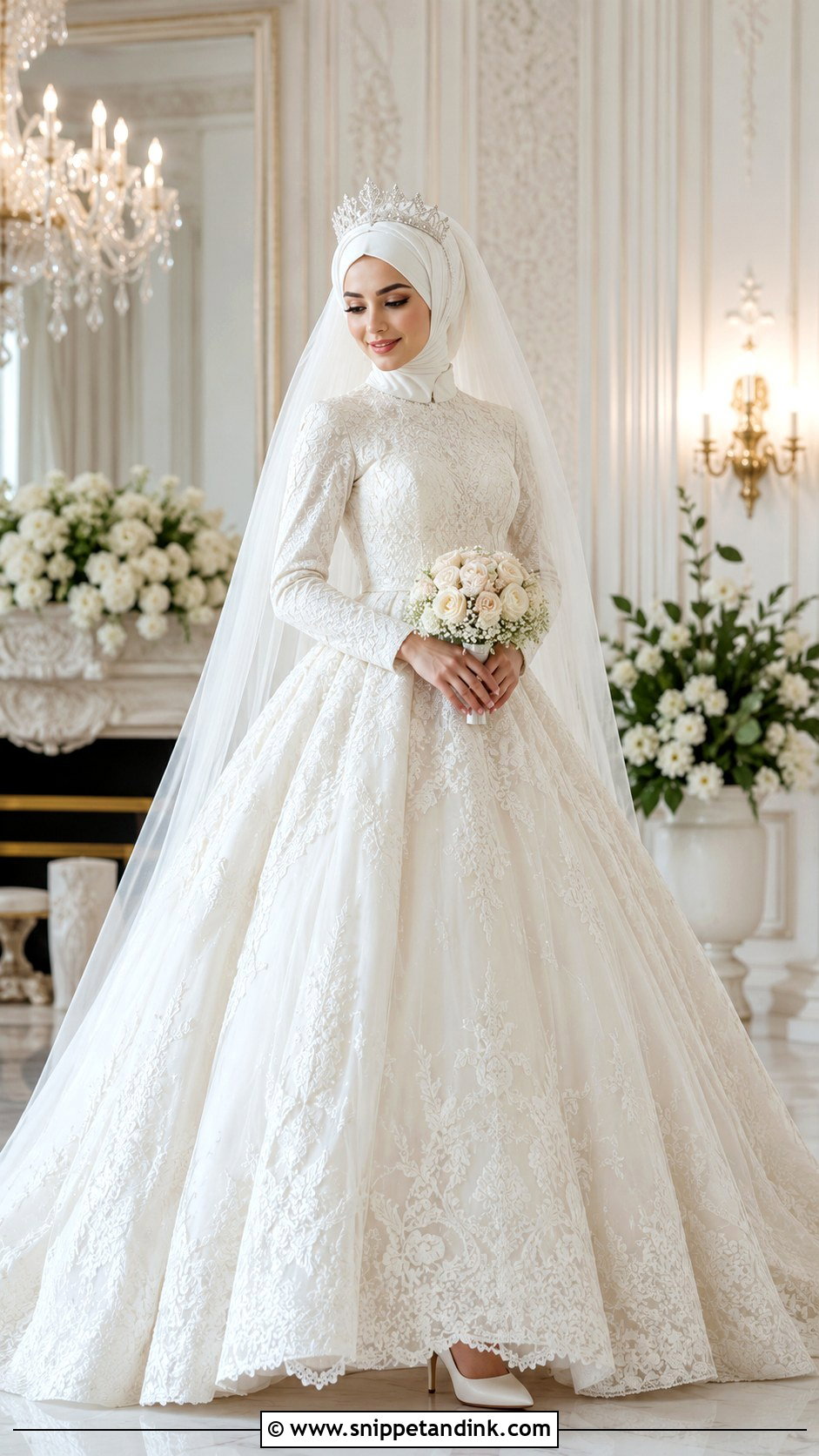
Turkish-style modest bridal dressing is polished and often very formal: high necklines, long sleeves, lace bodices, full skirts and long veils worn over the hijab. Go simple or grand to suit the venue. A white or ivory gown with fine lace and a long train is the classic version. A smooth wrap with a crown or tiara on top gives a regal finish. I’d always secure a tiara through the underscarf with small pins on each side, since a heavy crown on a slippery hijab slides back within the hour. Satin heels, a soft bouquet and delicate hand jewelry complete it.
12. Pakistani Islamic Wedding Dress With Hijab
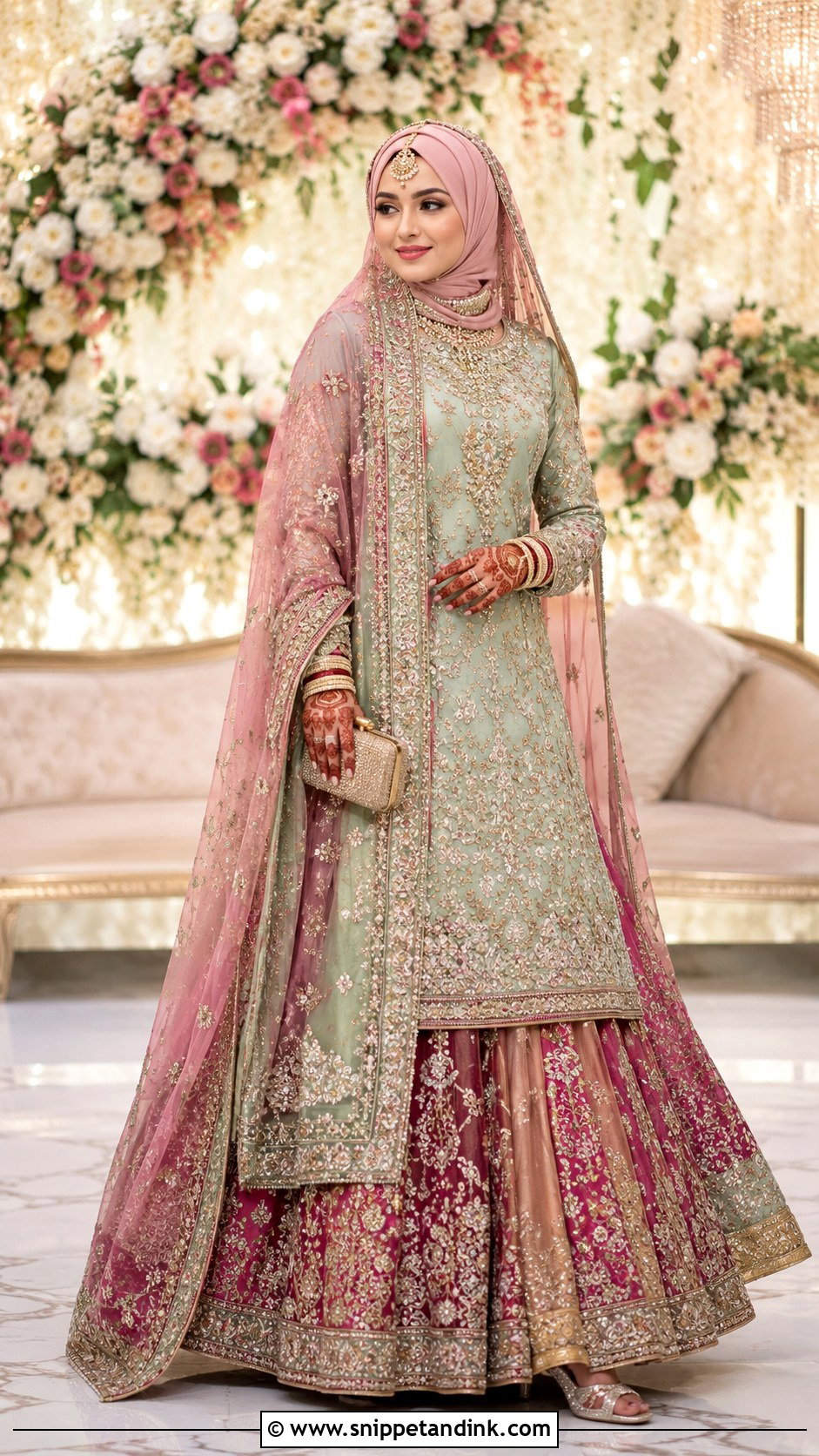
A Pakistani Islamic wedding dress brings color, embroidery and tradition, and the outfit can be a long kameez, sharara, gharara or lehenga with a coordinated dupatta. Deep red, ivory, blush, sage, gold and soft peach all work, depending on the event. For coverage, choose longer tops and lined sleeves. The hijab sits under the dupatta, so it should be a thin, non-slip fabric that won’t add bulk at the crown. Embellished heels, bangles, a clutch and jewelry matched to the embroidery tone complete it for a nikah, mehndi or reception.
13. Lehenga Islamic Wedding Dress With Hijab
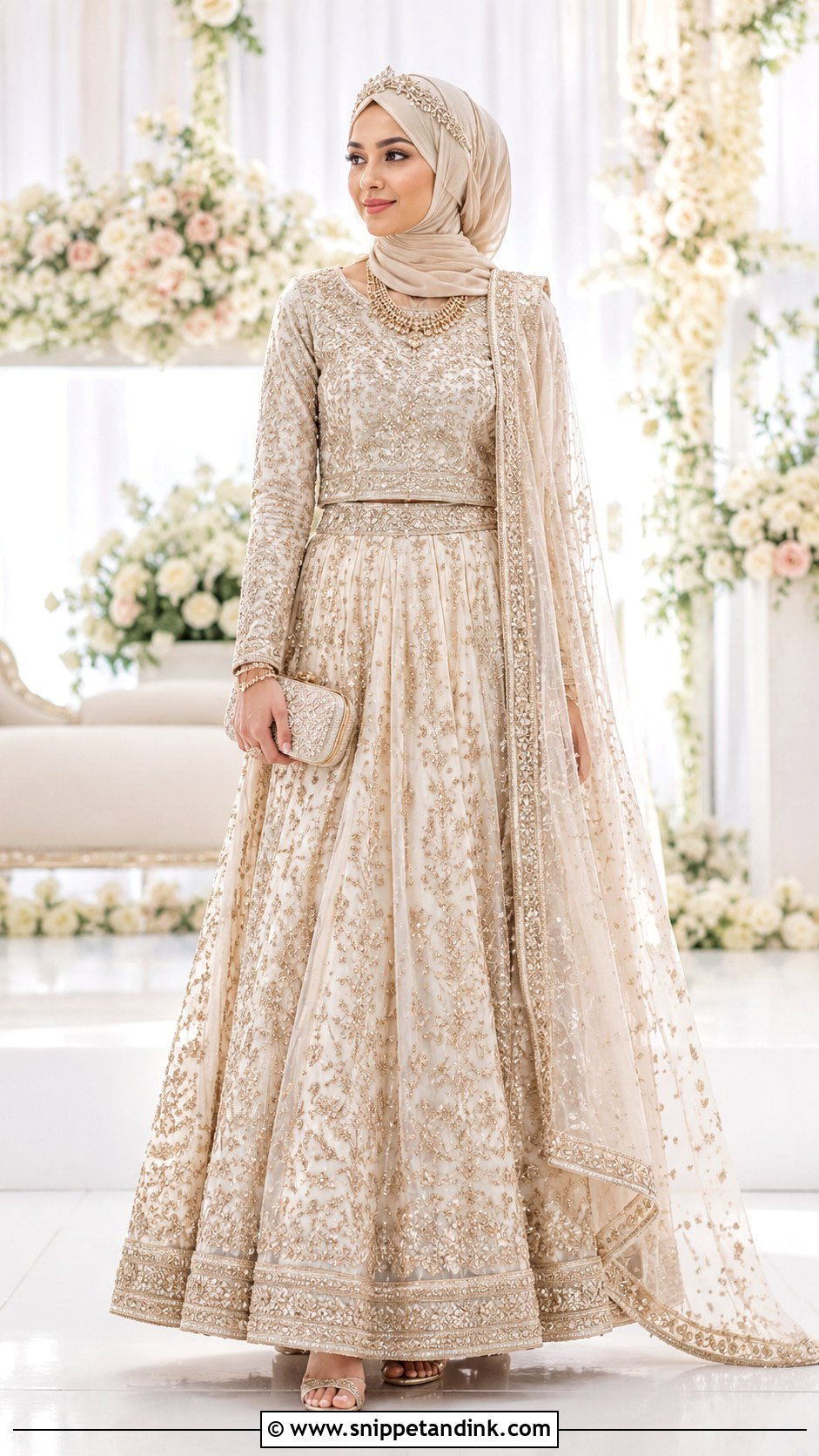
A lehenga becomes hijab-friendly mostly through the top. Choose a long-sleeve blouse or jacket-style top that covers the neckline and the waist completely. A high-waisted skirt with a longer top stays modest and secure, even when you raise your arms. The dupatta can sit over one shoulder or be draped over the hijab as a veil. I match the embroidery’s metal to the jewelry first, silver, gold, pearl or crystal, because mixing them in one outfit looks unplanned in close-ups. Embellished heels and a small clutch complete it.
14. Sharara Islamic Wedding Dress With Hijab
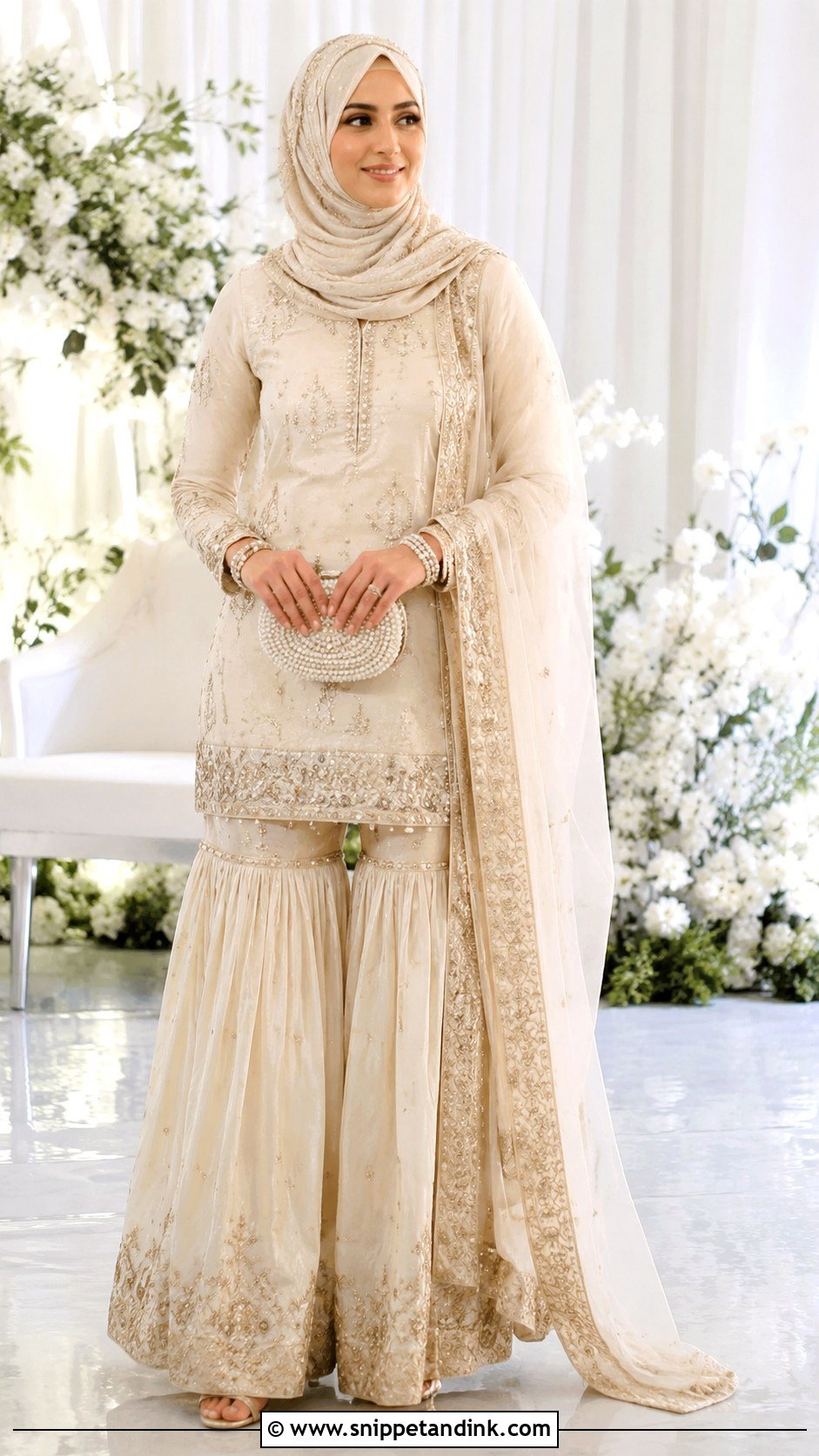
Sharara bottoms look like a skirt but give your legs far more freedom, which matters on a long day of greetings and stairs. Pair them with a long, modest kameez or peplum top that covers well. Embroidery at the hem, sleeves and neckline adds bridal detail without crowding the outfit. A coordinated hijab and dupatta create the layered look. Sharara hems sweep the floor, so I’d have them finished to your exact heel height and choose block heels for balance. Bangles and a beaded clutch complete it for a nikah, family celebration or cultural reception.
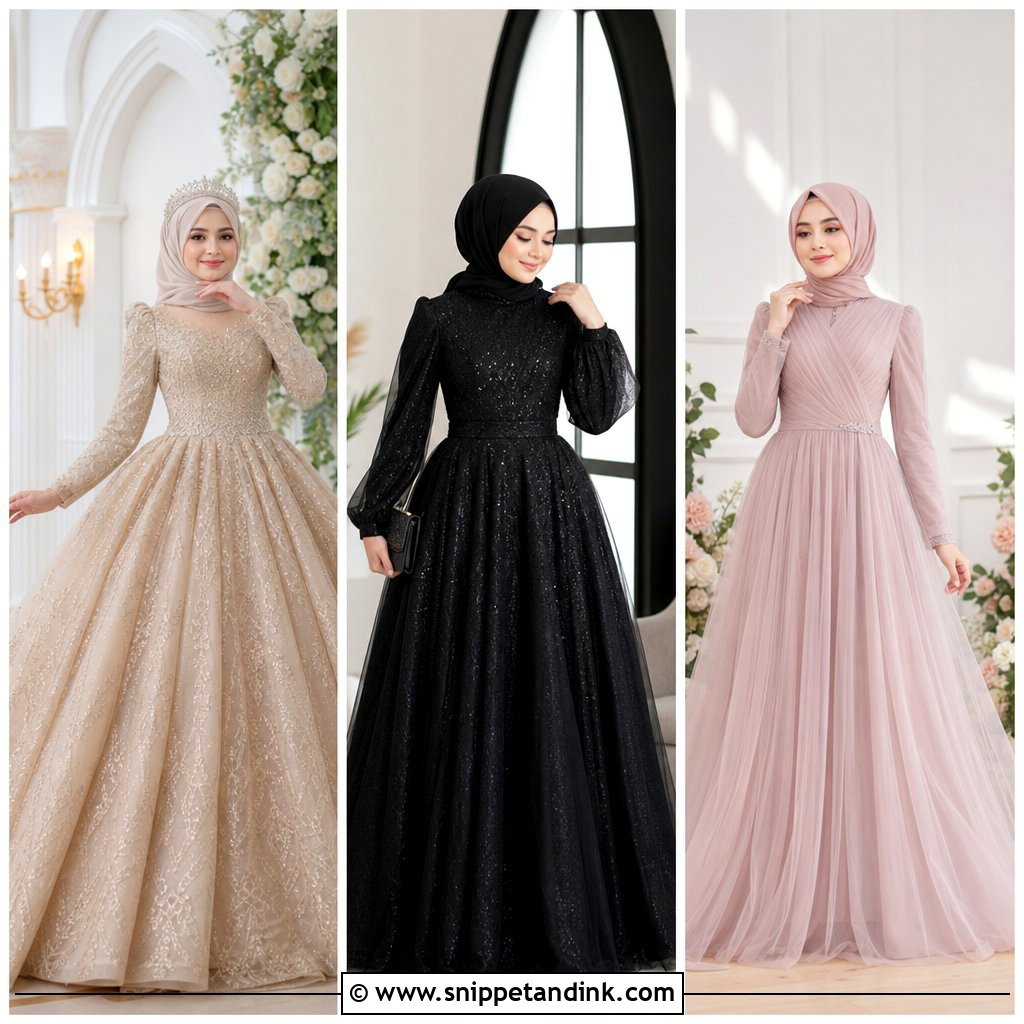

15. Gharara Islamic Wedding Dress With Hijab
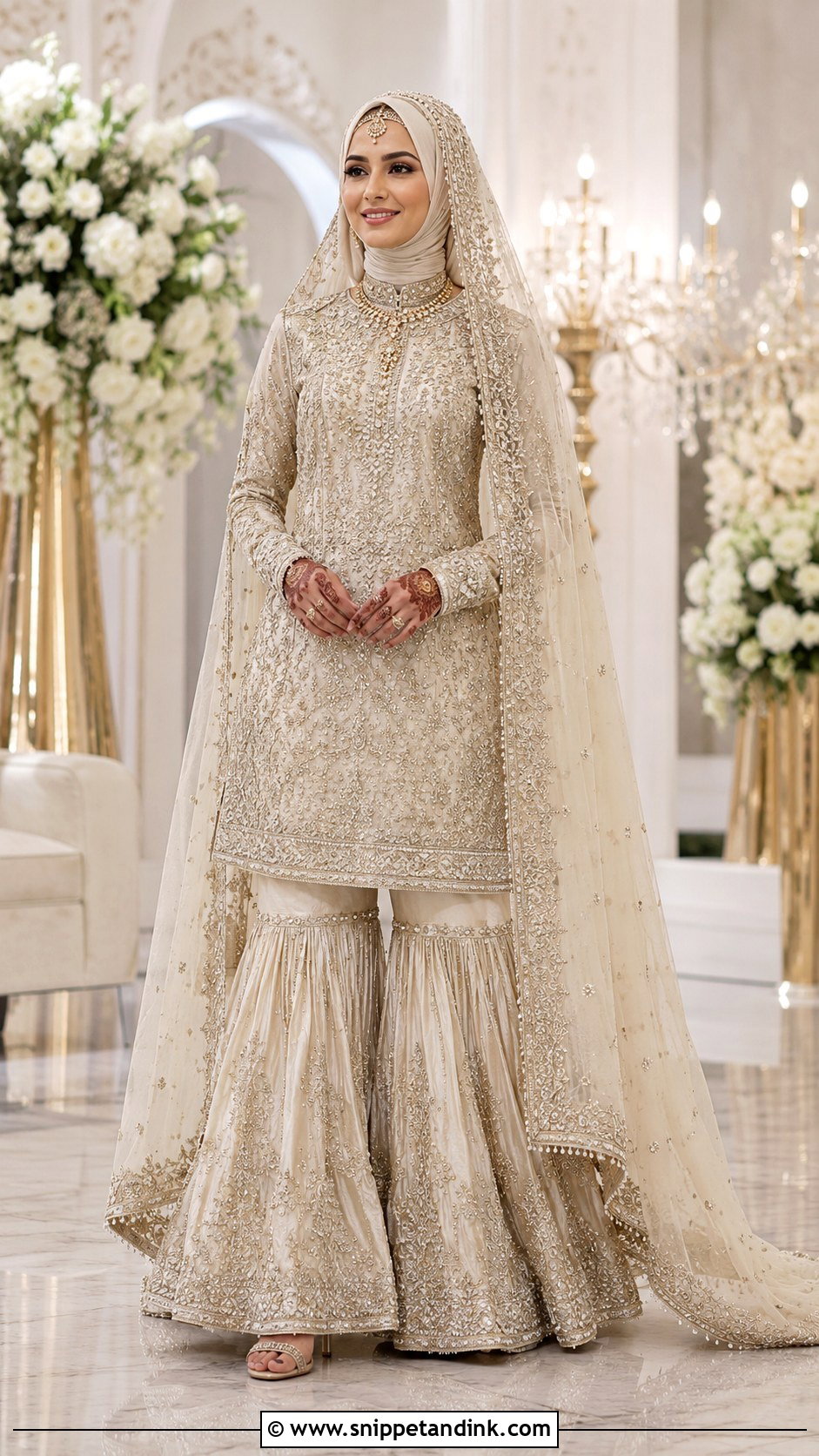
The fitted upper leg and flared lower section give a gharara Islamic wedding dress with hijab its distinctive shape, and it looks best in motion. For modesty, pair it with a longer kurti or kameez, full sleeves and a high neckline. A matching hijab worn under a decorative dupatta finishes the head. Put the richest embroidery on the hem and the dupatta border. Gharara fabric is often heavy with work at the knee joint, and I always have brides take a few steps in it at the trial; if the joint sits too low, walking becomes a shuffle. Comfortable heels are a must.
16. Simple Nikah Dress With Hijab
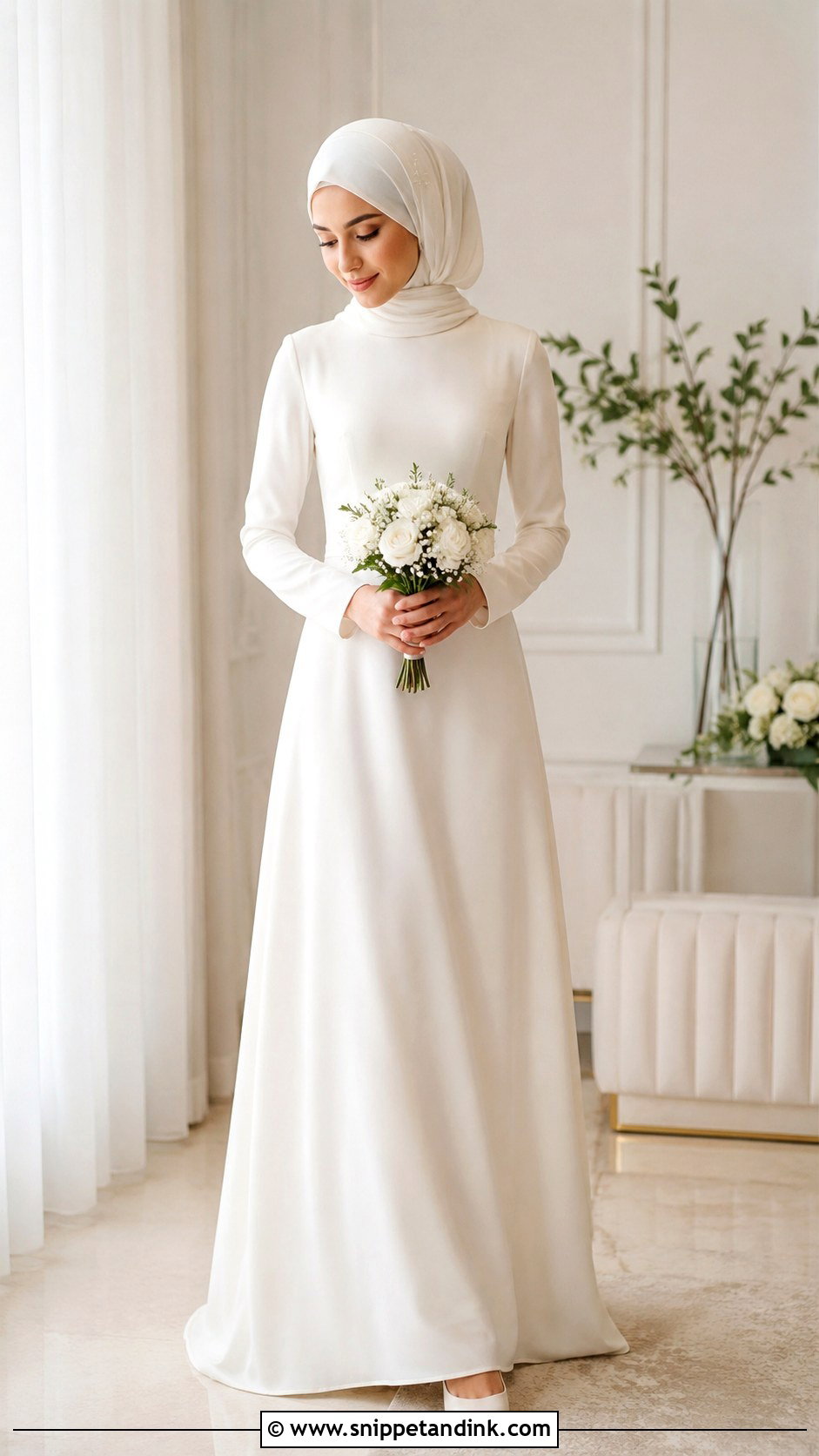
Not every bride wants a gown for her nikah. A white, ivory or pastel dress with a clean shape, long sleeves and a modest neckline is often more fitting for a calm, intimate ceremony. Crepe, chiffon, georgette and satin are all light enough. A plain hijab in the same shade frames the face cleanly, and pearl pins, low heels and a small bouquet are enough. I like this choice because it can be altered and worn again for Eid or family events afterward. It suits a mosque ceremony, a home nikah or a small civil-style gathering.
17. Blush Islamic Wedding Dress With Hijab
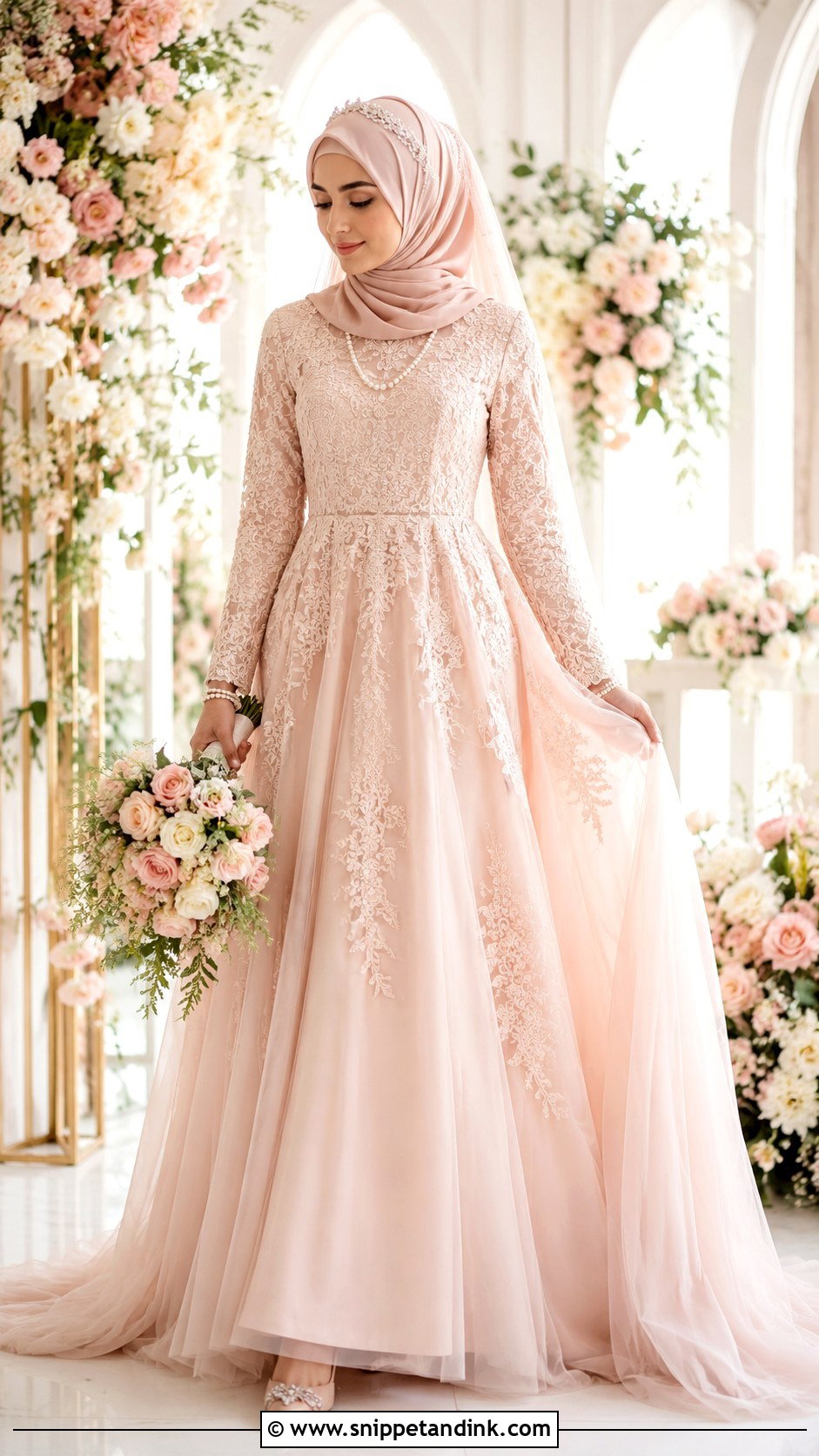
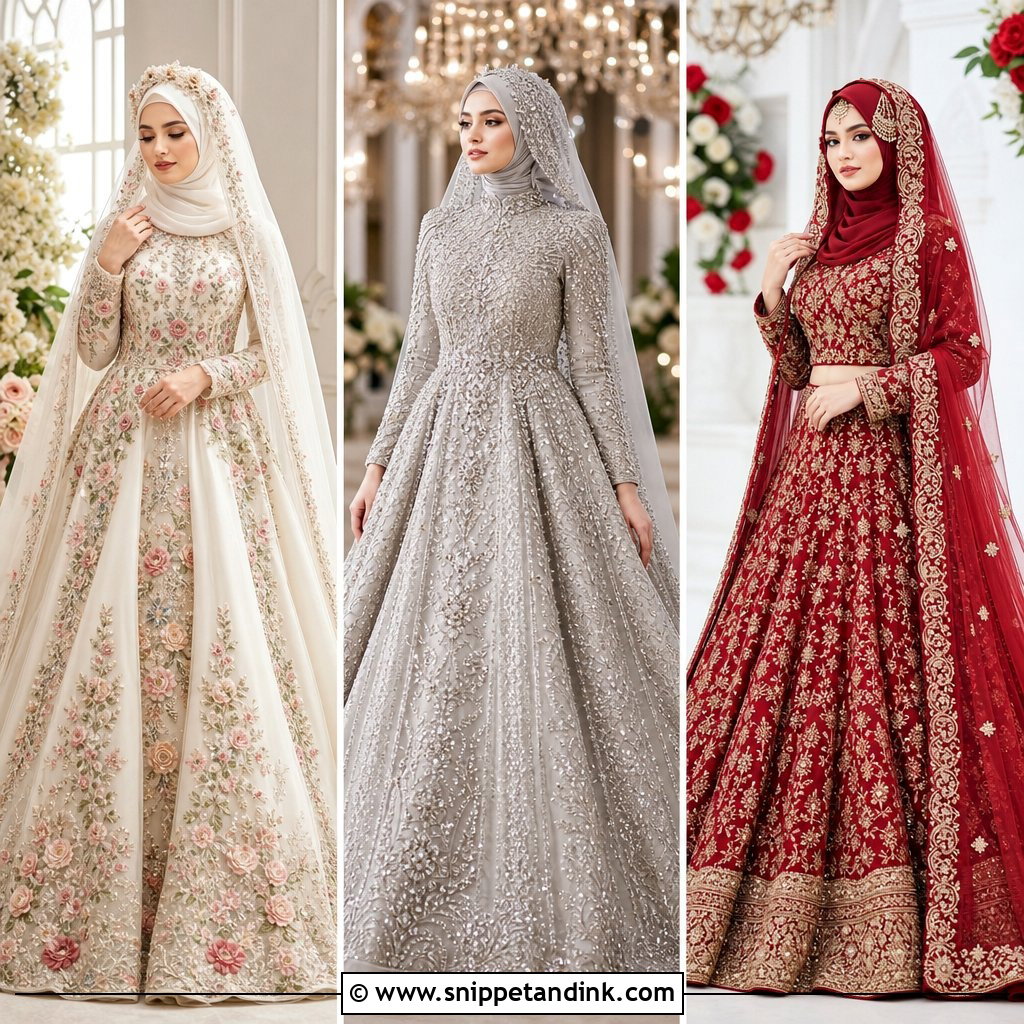
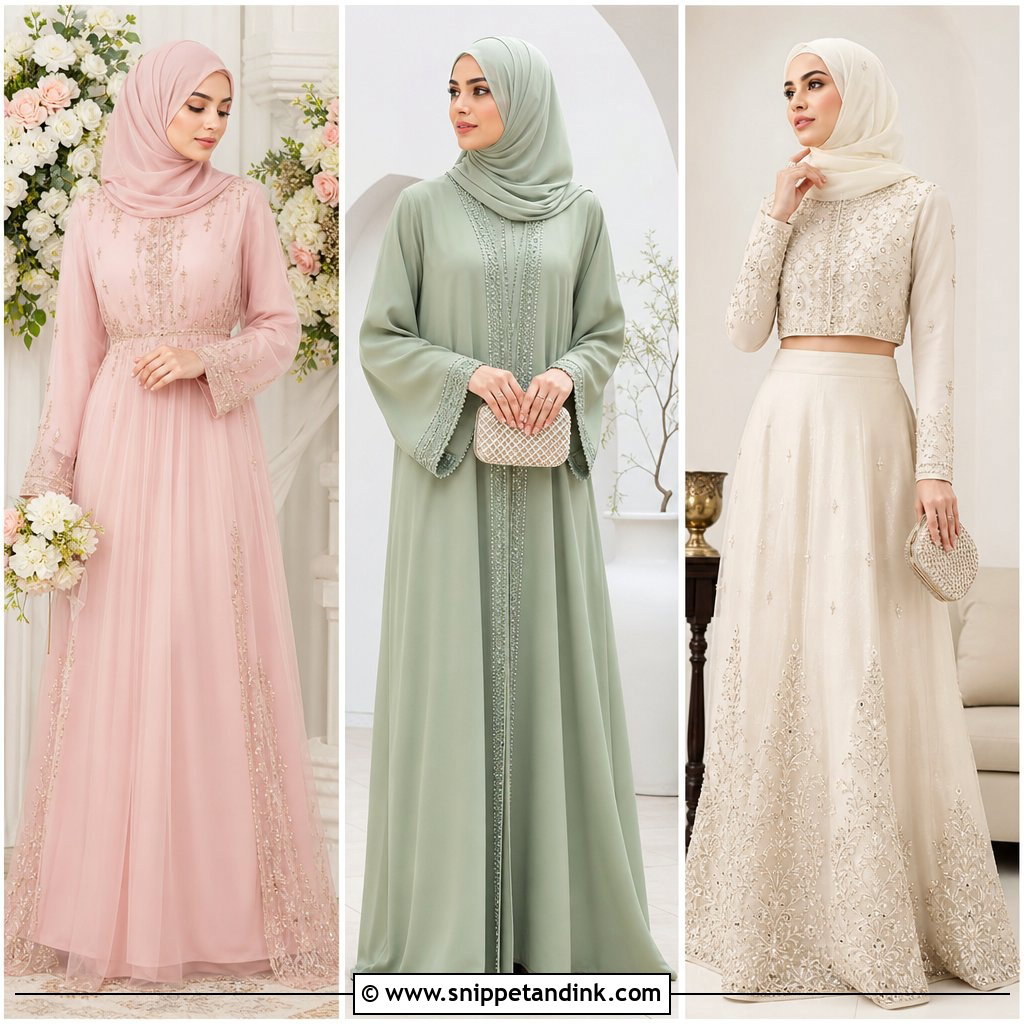
Blush reads romantic without being loud, and it suits many skin tones in natural light. Choose a modest gown with lace sleeves, a flowing skirt or subtle beadwork. The hijab is where you decide the mood: blush on blush is softer and more monochrome, while an ivory hijab lifts the face and looks more bridal. I usually try both at the fitting and let the photos decide. Pearl accessories, champagne heels and a soft bouquet complete it. It works in spring and summer and for indoor receptions any time of year.
18. Champagne Islamic Wedding Dress With Hijab
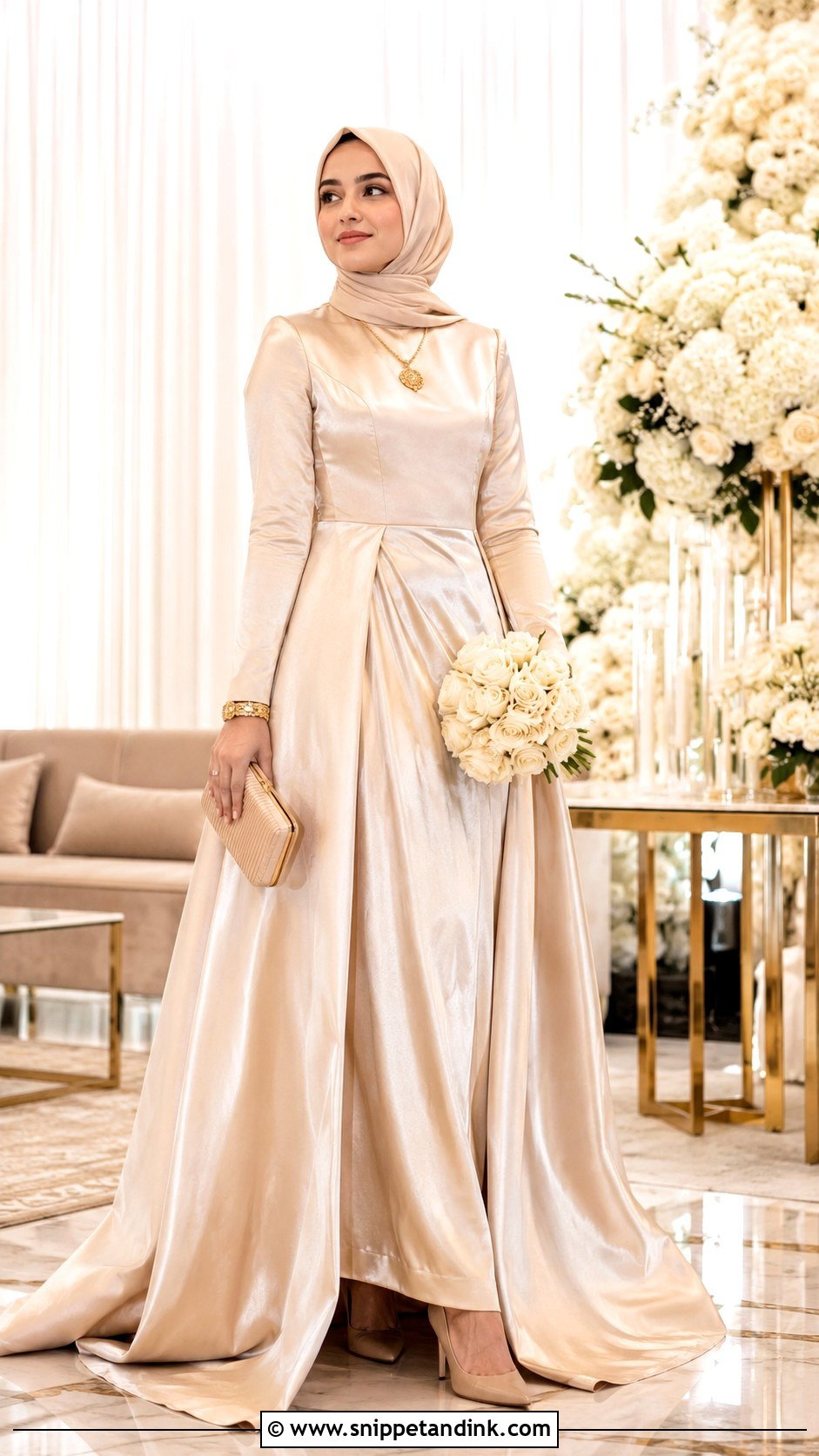
Champagne sits between ivory, beige and soft gold, so it is warm without being bright. It looks rich in satin, beaded tulle, lace or embroidered chiffon. Choose a champagne or ivory hijab depending on how much contrast you want near the face; on fair, cool skin, I find a champagne hijab can wash the face out, and ivory is safer. Gold jewelry, nude heels and a cream bouquet complete it. Champagne catches warm evening light well, which makes it a strong choice for a night reception, or for anyone ready to move away from white.
19. Gold Islamic Wedding Dress With Hijab
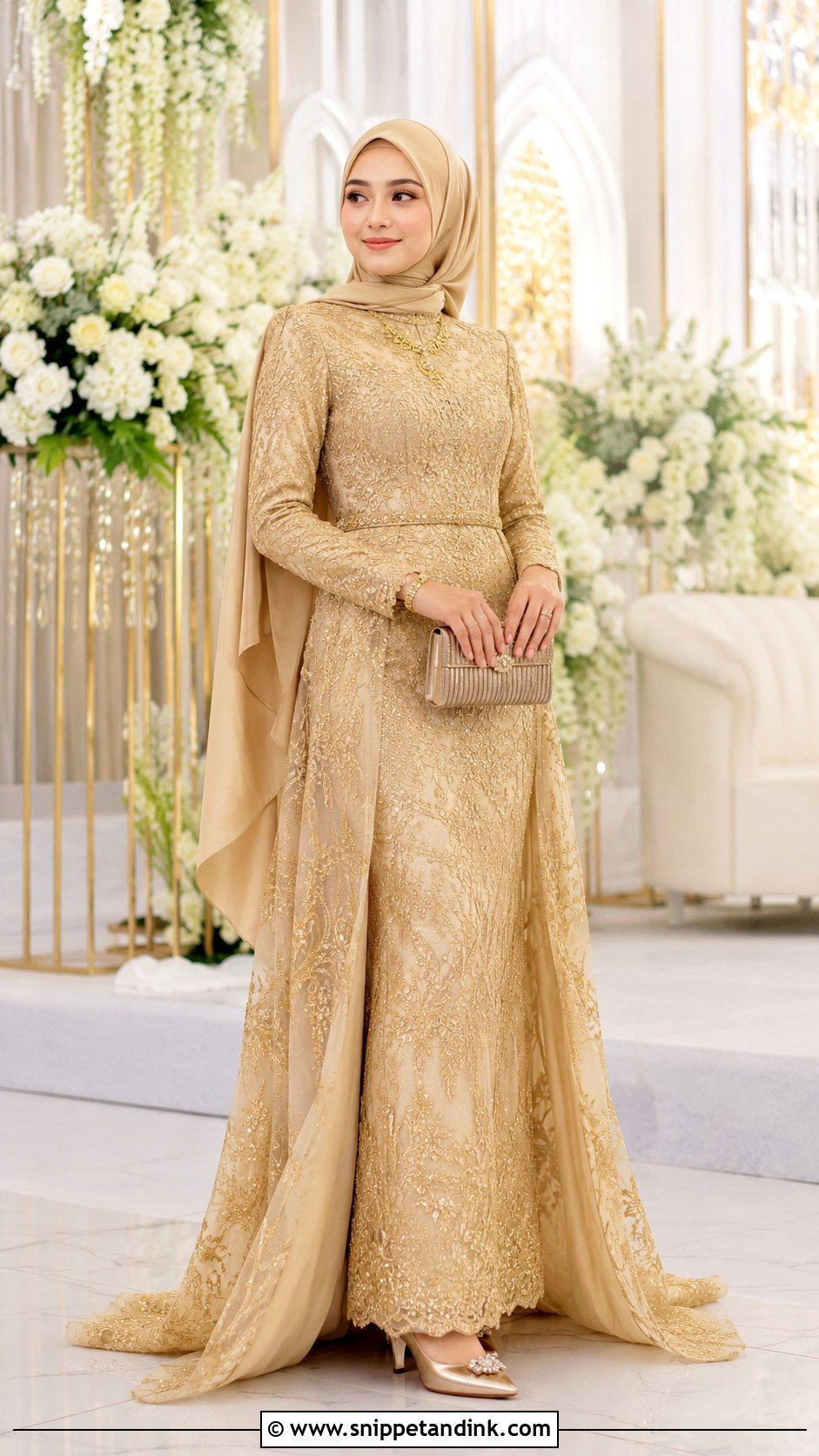
Gold is festive and regal, and it is easy to overdo. For a modest bride, a full-length gown, abaya, kaftan or lehenga with long sleeves and a high neckline in soft gold looks refined; antique gold feels more traditional. When the dress has heavy embroidery or beadwork, I keep the hijab smooth and plain so the face doesn’t disappear between two textures. Metallic heels, a structured clutch and jewelry that matches the gown’s undertone finish it. It suits a walima or a formal reception.



20. Emerald Islamic Wedding Dress With Hijab
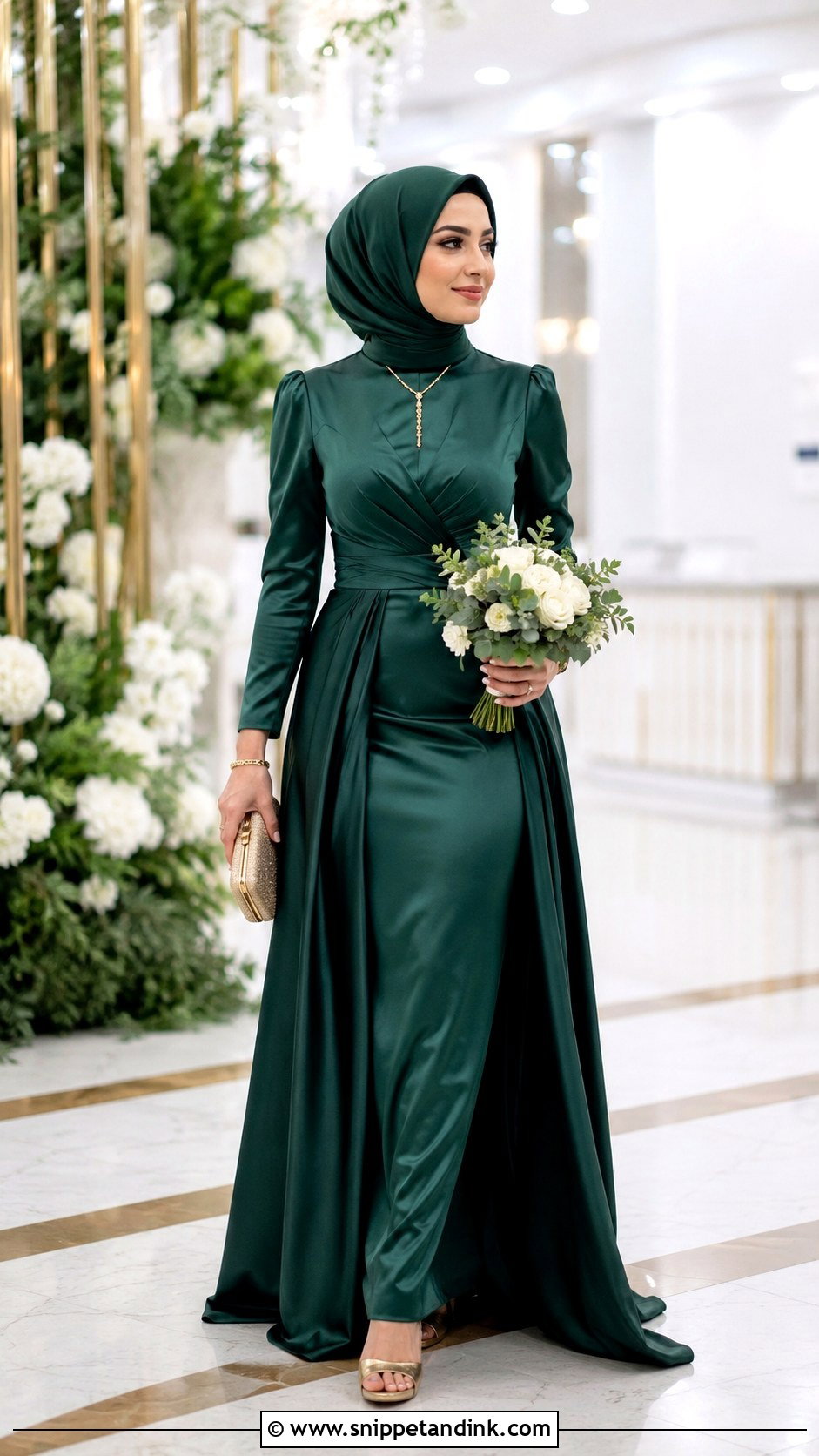
Emerald is a confident color for a bride, and it has deep meaning in many Muslim families. It looks rich in velvet, satin, chiffon or heavy embroidery, as a long-sleeve gown, kaftan or lehenga. A matching hijab makes a bold, single-color statement; an ivory one softens the face and keeps it bridal. Gold sits naturally with emerald in jewelry, heels and clutch. Keep the bouquet to white flowers, since mixed colors next to a strong green look muddy in photos. I’d suggest emerald for a reception or a cultural wedding rather than a small daytime nikah.
21. Pastel Islamic Wedding Dress With Hijab
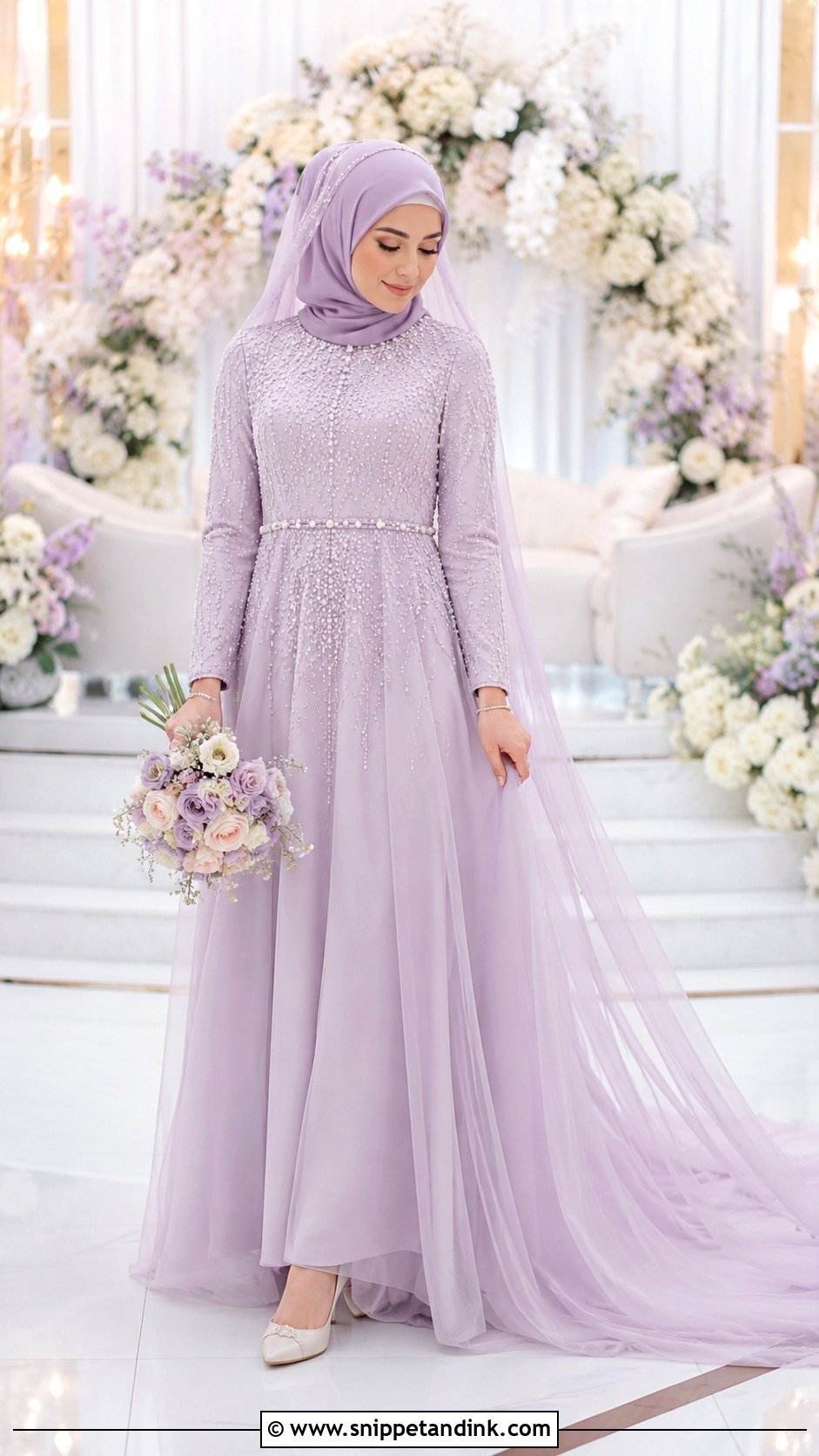
Powder blue, lavender, mint, peach and pale rose all bring color gently, and they suit nikah ceremonies and daytime receptions. Choose a full-length gown with long sleeves, a high neck and soft embroidery or pearl detail. A matching pastel hijab creates a monochrome outfit, while ivory accessories keep it bridal. Pastels are where cheap fabric shows most, as they go slightly translucent and shiny, so I check the lining twice. Low heels, a fine bracelet and flowers in similar tones complete a fresh look for spring, garden venues and small family gatherings.
22. Velvet Islamic Wedding Dress With Hijab
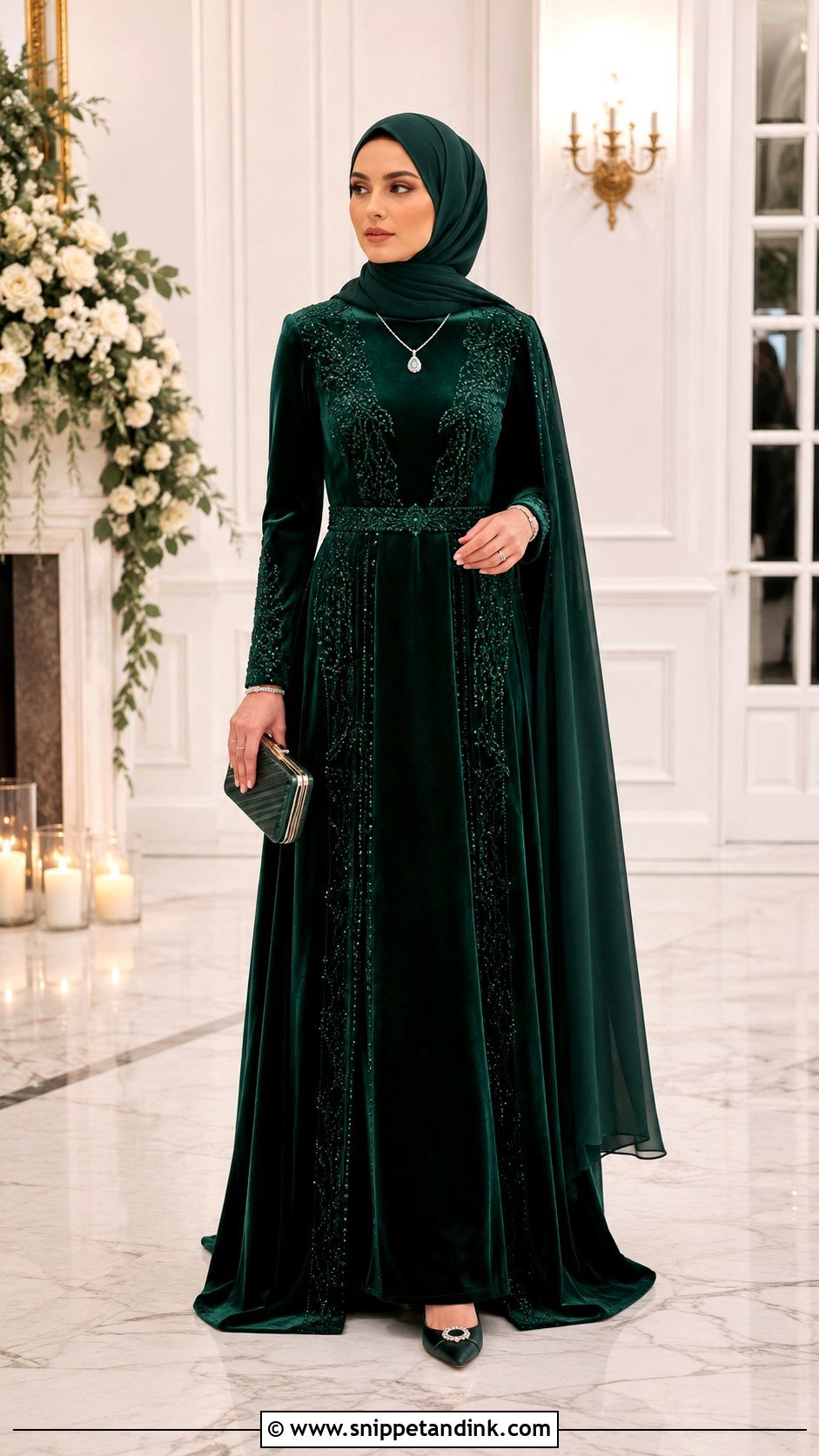
Velvet has depth and softness that makes even a plain cut feel special, which is why I like it for cooler seasons and evening weddings. Choose a long-sleeve gown, abaya, or kaftan in ivory, emerald, navy, burgundy or soft gold. Velvet is already strong, so keep the cut modest and clean. A chiffon or silk hijab balances the heavier fabric near the face; a velvet hijab is too warm and too heavy for most brides. Closed-toe heels, a structured clutch and classic jewelry complete it. Velvet also marks easily, so carry a soft brush for the skirt.
23. Pearl Islamic Wedding Dress With Hijab
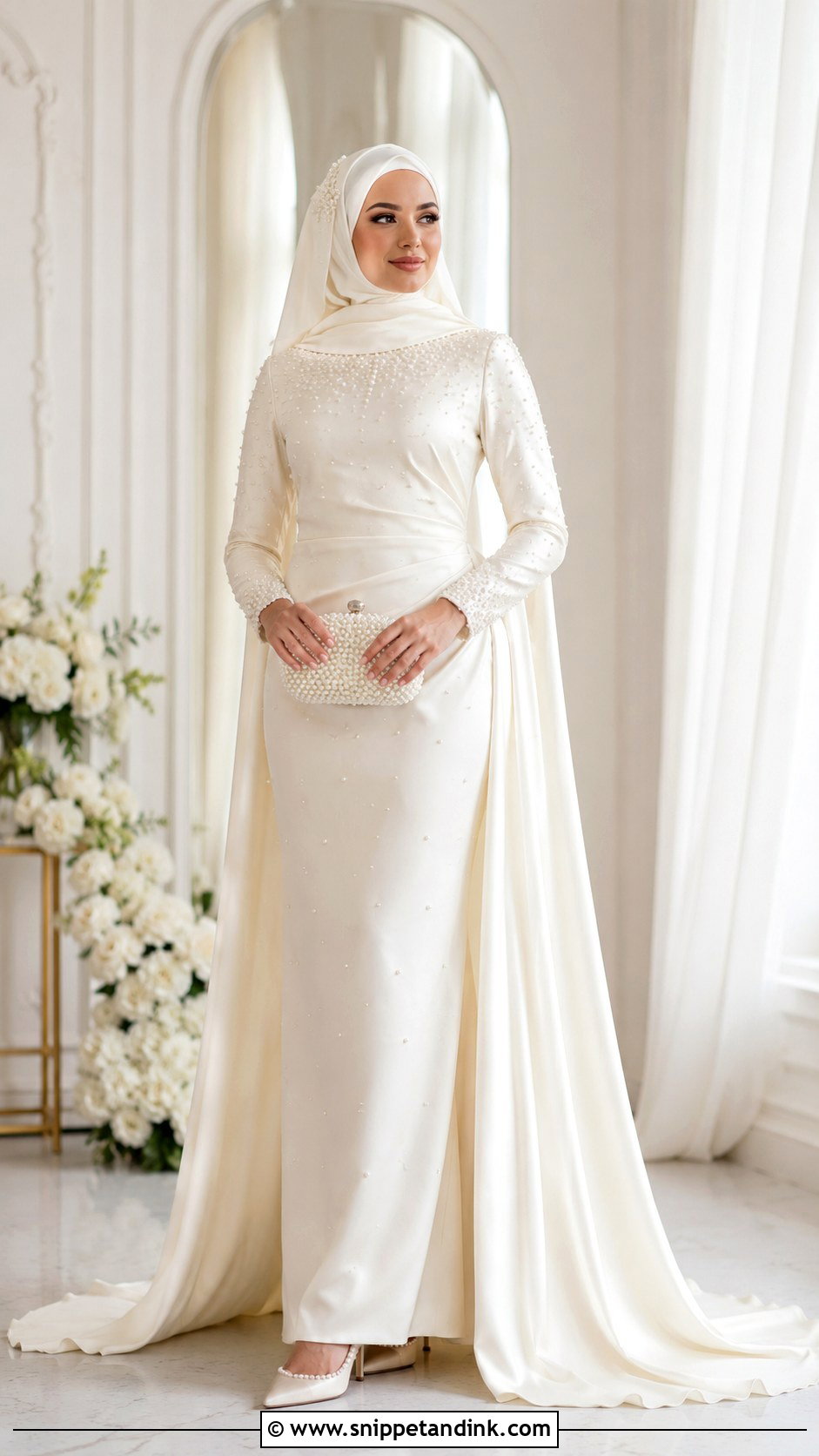
Pearls give a soft, luminous finish without hard sparkle. They can be scattered across sleeves, bodice, skirt, a cape or along the hijab edge. Keep the base fabric simple, such as crepe, satin or tulle, so the pearls don’t crowd it. A plain hijab with a few pearl pins ties the look together. I check pearl-edged hijabs carefully, because heavy beads along the edge pull the fabric down and loosen the wrap through the day. Ivory heels, a pearl-trimmed clutch and minimal jewelry keep the outfit balanced for a modern or classic bride.
24. Minimalist Islamic Wedding Dress With Hijab
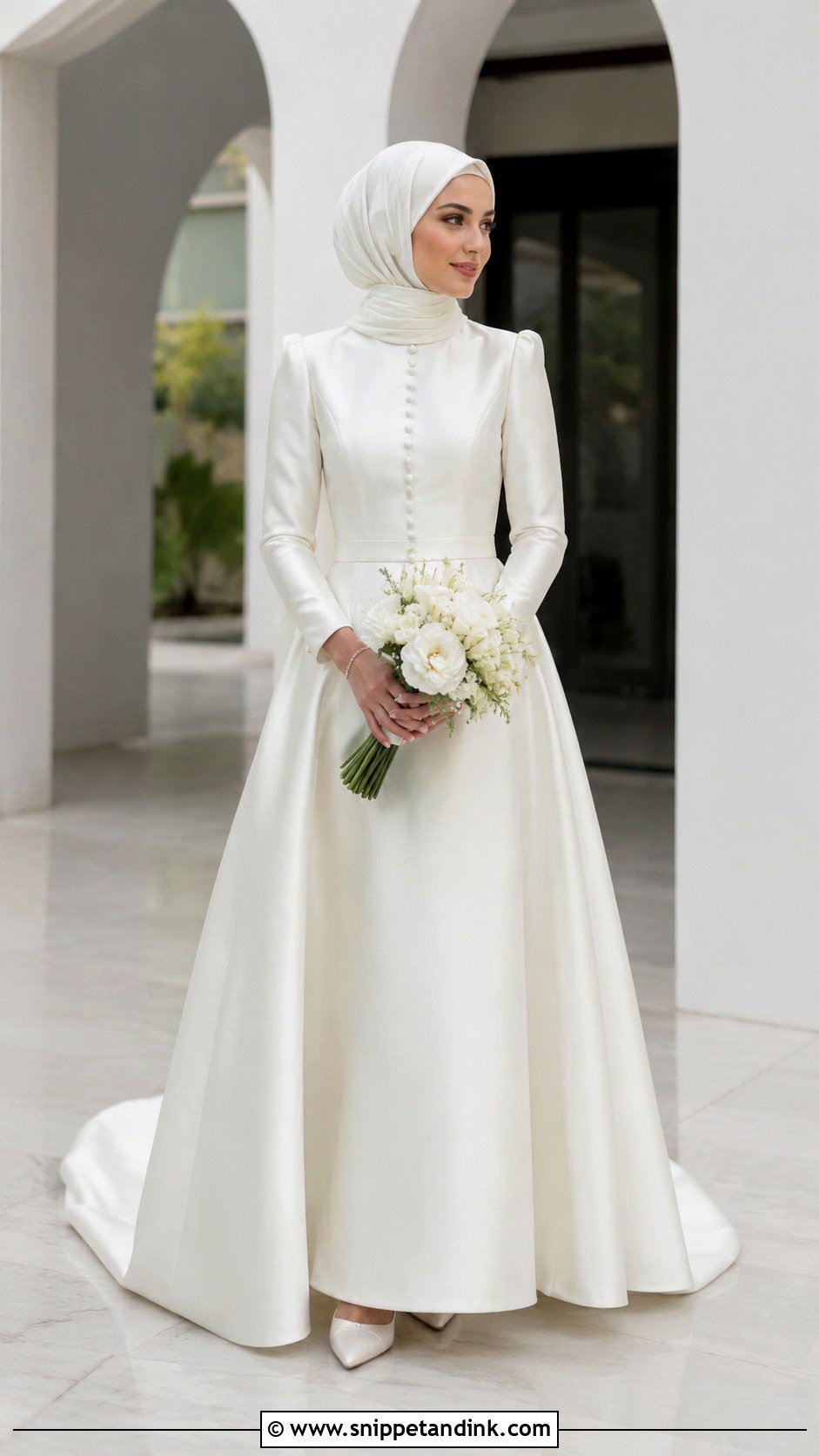
Clean lines suit some brides better than any embellishment. Look for a simple crepe, satin or mikado gown with long sleeves, a high neck and a smooth skirt. Covered buttons, a structured waist or a soft train make it bridal without decoration. A plain hijab in matching fabric or matte chiffon keeps it modern. Minimal dresses depend entirely on fit, so I’d spend the budget saved on beading on a skilled tailor. Pointed heels, a sleek bouquet and one accessory, a pearl pin or slim bracelet, complete a calm and polished look.

25. Modern Islamic Bridal Suit With Hijab
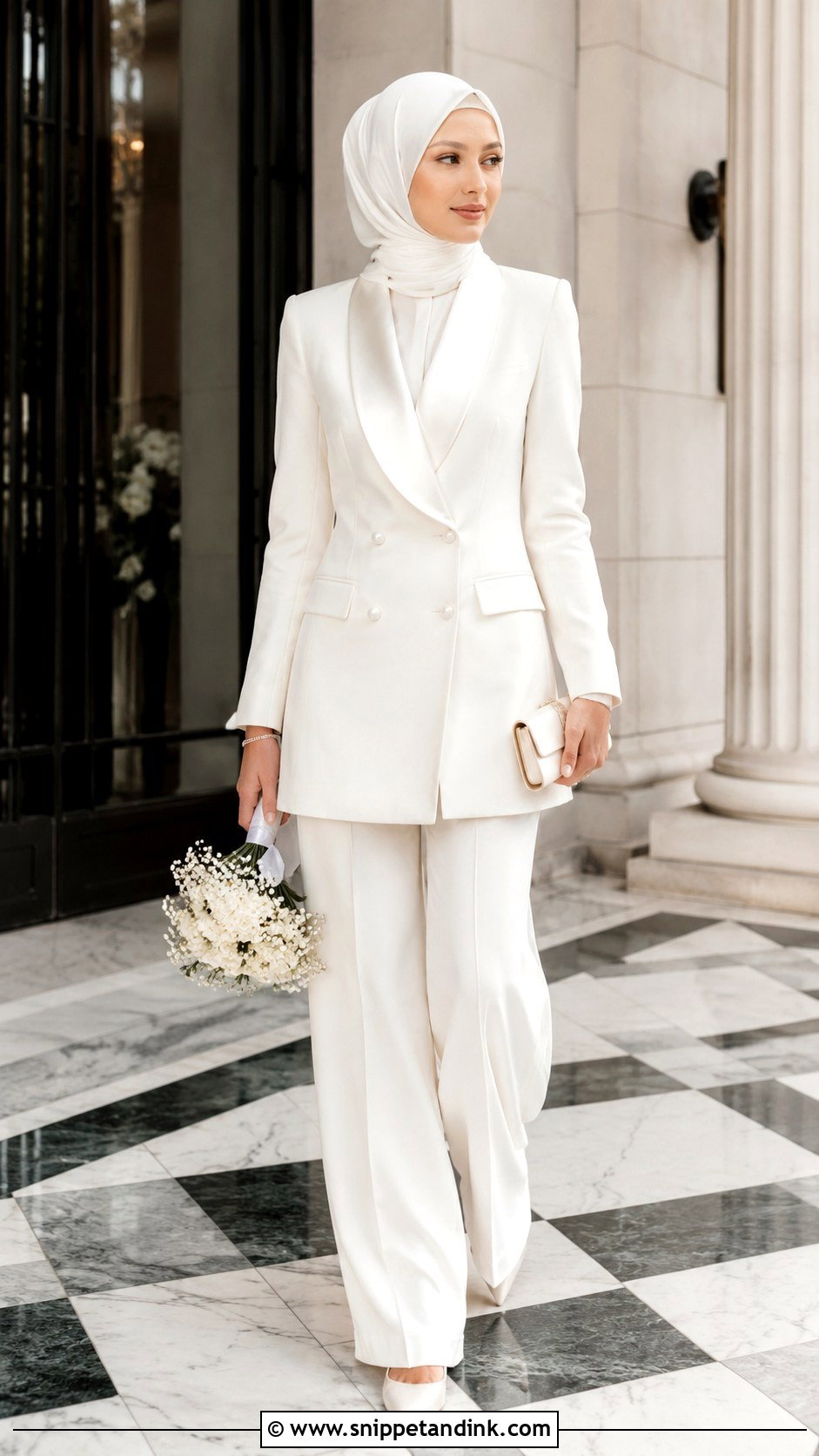
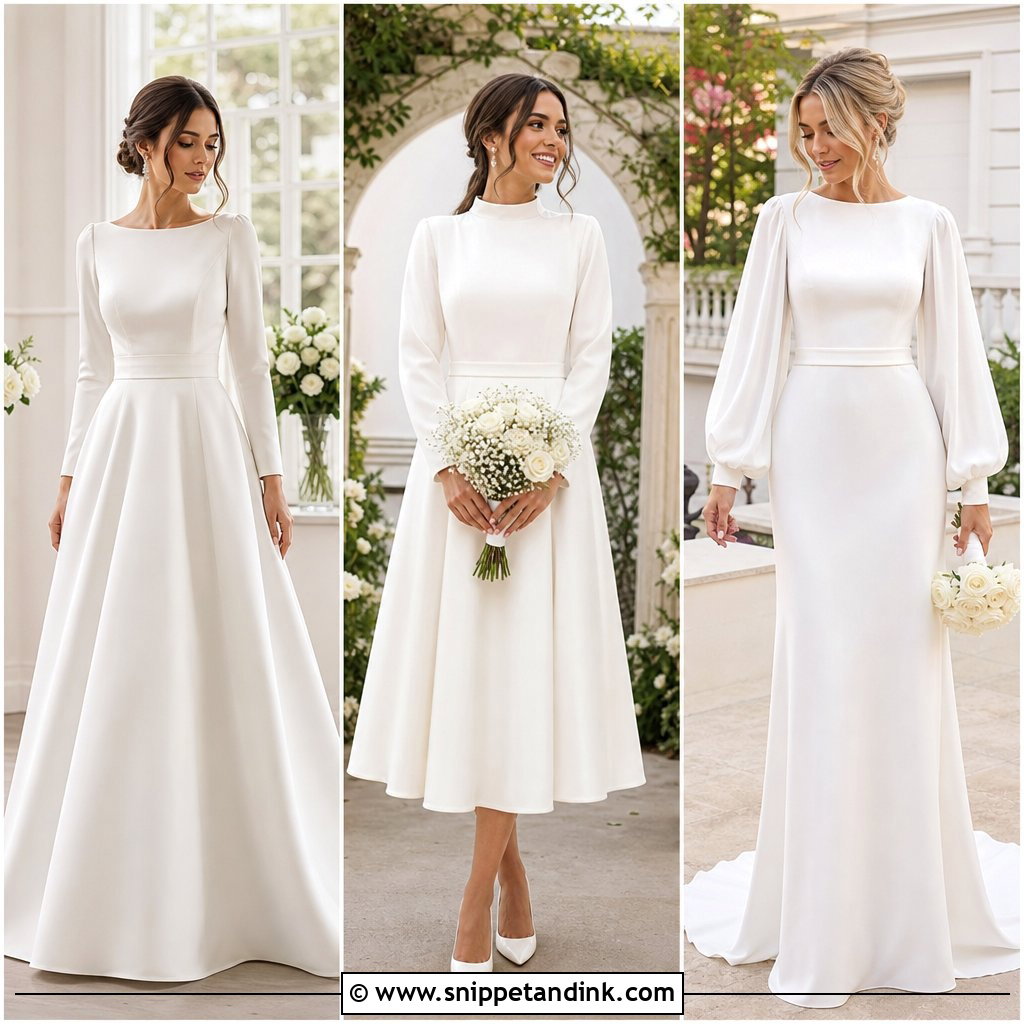
A bridal suit is a sharp choice for a bride who wants something other than a dress. Choose wide-leg trousers with a long tailored blazer, tunic jacket or belted coat that covers fully. White, ivory, champagne or soft blush keep it bridal, and satin lapels, pearl buttons, embroidery or a cape overlay make it feel like an occasion. Have the jacket cut long enough to cover the hips when you sit; standard blazers ride up. A smooth hijab wrap adds structure. Pointed heels, a mini bouquet and a sleek clutch finish it for a civil ceremony or a small nikah.
Turning a Standard Gown Into a Modest One
Many brides fall for a bridal-shop gown that has short sleeves, a low back or illusion panels. Most of these can be changed, but it takes more time and planning than a standard fitting, so I raise it at the very first appointment.
Sleeves can usually be added from matching lace, tulle or crepe, and illusion mesh can be lined with an opaque fabric close to your skin tone or the dress color. Ask the boutique whether they can order extra fabric from the manufacturer, because a near-match on a large area like a sleeve shows up in photos. Raising a neckline or closing a low back is more involved and depends on how the bodice is built.
- Order early. Custom changes often add weeks to standard alteration time, and lace sleeves are slow handwork.
- Bring your hijab and shoes to every fitting so the neckline and hem are set for how you’ll actually wear them.
- Know what can’t be changed: a skirt can rarely be made longer, and a very fitted cut may not have enough seam allowance to let out.
If a gown would need changes almost everywhere, a made-to-measure modest design is usually simpler and often costs about the same, since it is cut to your coverage from the start.
Coverage, Fabric and the Way Your Hijab Sits
The right outfit lets you feel confident, comfortable and like yourself. A white lace gown, a pastel nikah dress, a cape gown, a cultural lehenga or a tailored suit can all be fully modest. Focus on coverage, fabric quality and ease of movement, then on how your hijab works with the neckline and the veil. Small details such as pins, belts, shoes and jewelry finish the look. Take your hijab to every fitting, and you’ll find the style that honors your faith, your culture and your own taste.
You'll Like These Ideas:







Leave a Reply