
A gown worn with a hijab has two jobs. The dress has to stay covered when you sit, hug relatives and lift your arms for photos, and the scarf has to look like it belongs to the outfit rather than something added in the car. Those are the two things I watch at every modest fitting. Full-length hems, long sleeves, high necklines and opaque fabric are the baseline; after that, the fabric decides most of the rest, from which hijab drapes well beside it to how much jewelry the look can carry. The ideas below start with fabrics, move through shapes and finish with colors, with notes on where each one tends to go wrong.
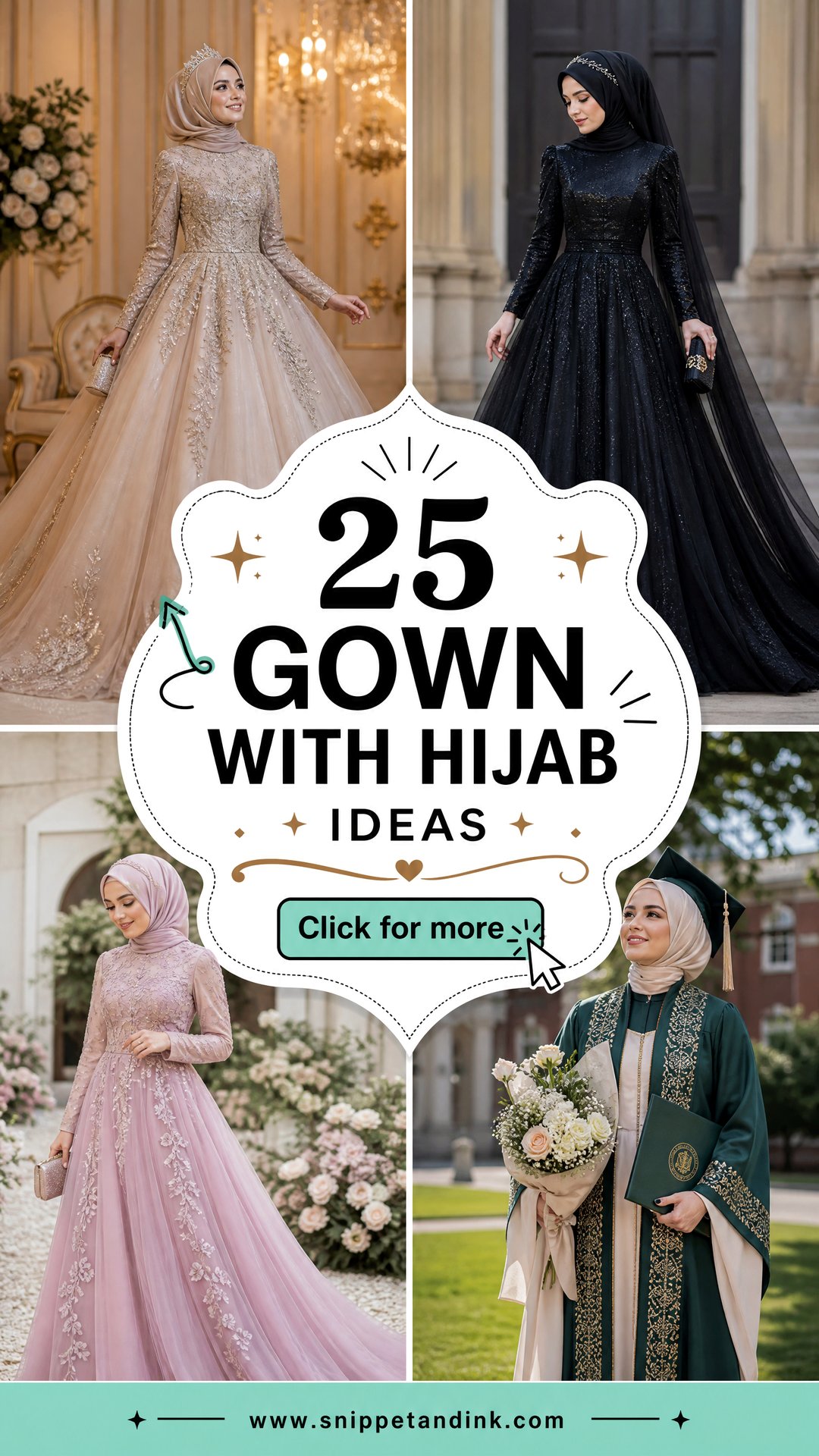
Bring the Actual Hijab and Underscarf to Every Fitting
Most of the problems I fix on modest gowns come from fitting the dress without the scarf. A neckline that looks high on the hanger can sit too low once the hijab drapes over it, and a collar that seems modest can push the scarf forward into an awkward lump at the throat. So I ask clients to arrive with the hijab, the underscarf and the pins they plan to wear, already styled the way they’ll wear them.
Then we check three things in the mirror and from the side:
- Where the hijab’s edge meets the neckline. You want an overlap of a few centimetres when you turn your head, so no skin shows at the side of the neck.
- Sleeve length with arms raised. Cuffs that reach the wrist standing still often ride up when you hug someone or lift a bouquet, so I usually lengthen them slightly or add a snug inner cuff.
- Weight of the scarf against the fabric. A heavy satin hijab drags a lightweight chiffon bodice down at the shoulders, while a fine chiffon scarf over stiff satin can look underdressed. Match the weight first, then the color.
If you can’t find a hijab that matches yet, bring one in a similar weight. The color can be solved later; the drape cannot.
1. Satin Gown With Hijab
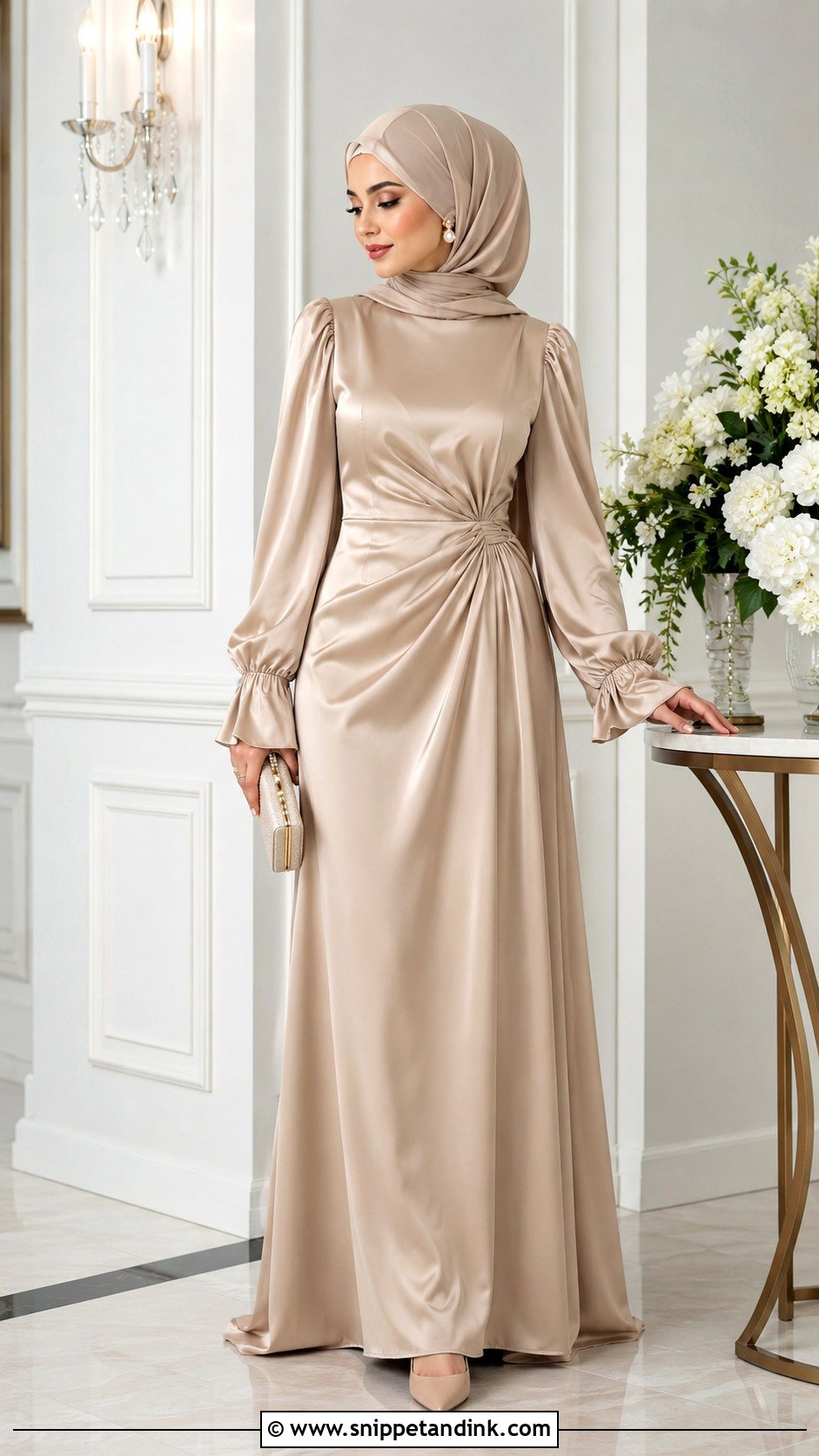
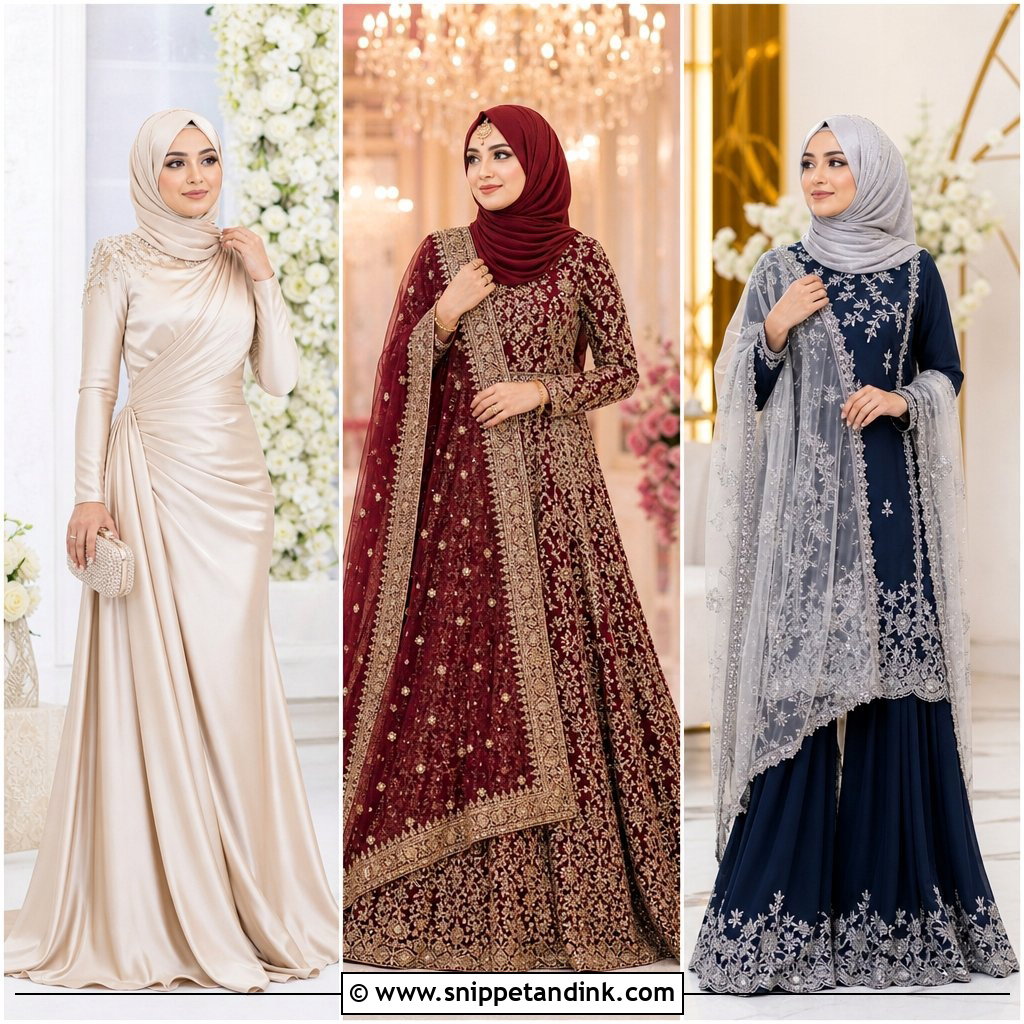
Satin is the fabric I reach for when someone wants a polished result with very little styling. A long-sleeve gown in champagne, emerald or navy does most of the work, and a matching chiffon or satin hijab keeps the line clean, while a scarf one shade lighter softens the deeper colors. The catch is that satin shows every pull. If the gown strains even slightly at the bust or hip, it creases into horizontal lines the moment you sit, so I would rather size up and have it taken in. Pointed heels, a small clutch and pearl studs are plenty. A defined waist needs nothing added; a looser cut can take a slim belt.
2. Chiffon Gown With Hijab
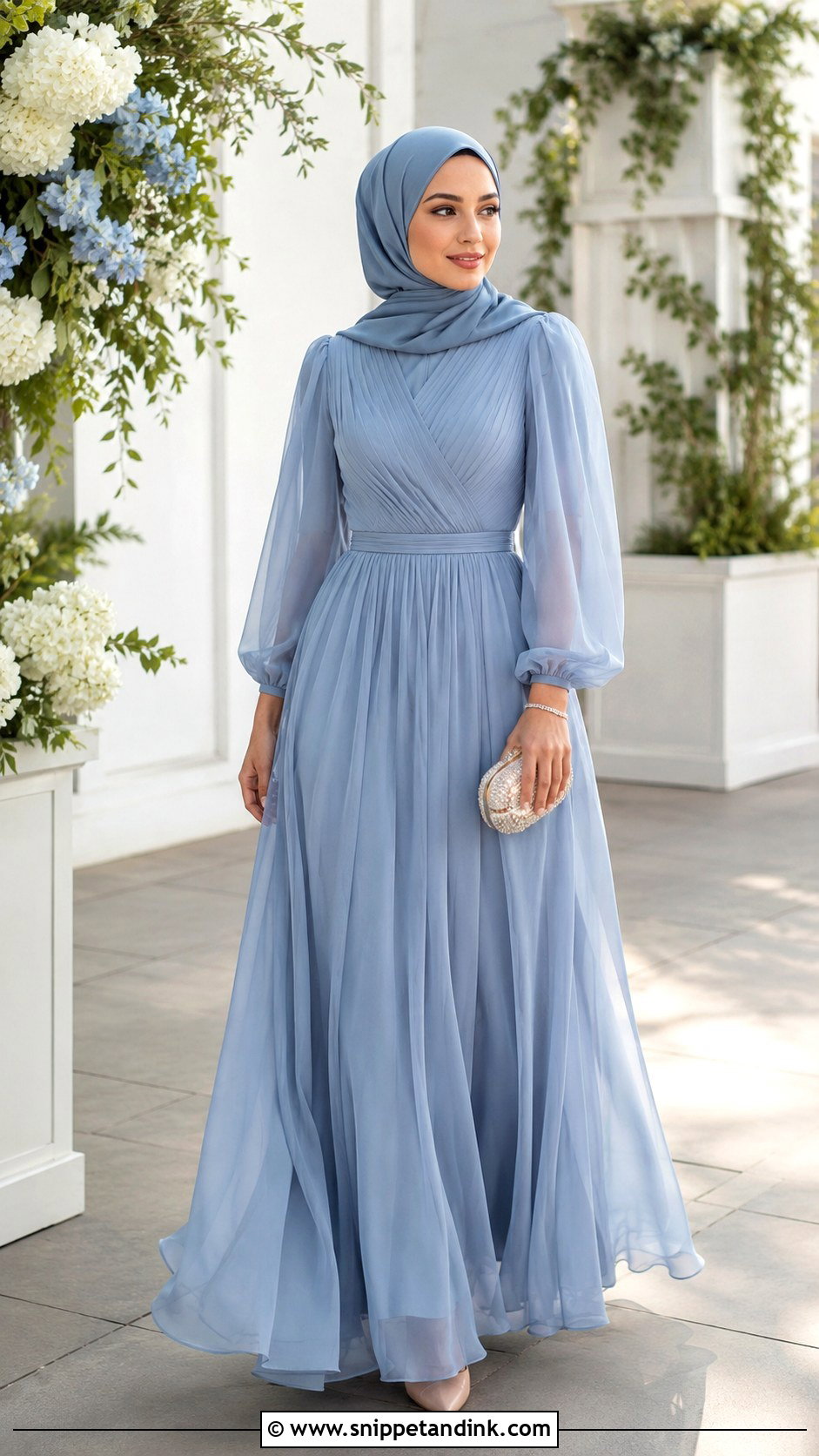
Chiffon moves when you walk, which is exactly why people love it and exactly why it needs a proper lining. Unlined chiffon is close to transparent in daylight, so I only suggest fully lined versions with long sleeves, a high neck and an A-line skirt. Pick a matte chiffon hijab in the same color family. A shiny scarf beside matte chiffon looks like a mismatch up close, even when the shades are identical. Soft gold heels and a small beaded clutch are all the detail it needs, and it stays cool through a long spring or garden reception.
3. Lace Gown With Hijab
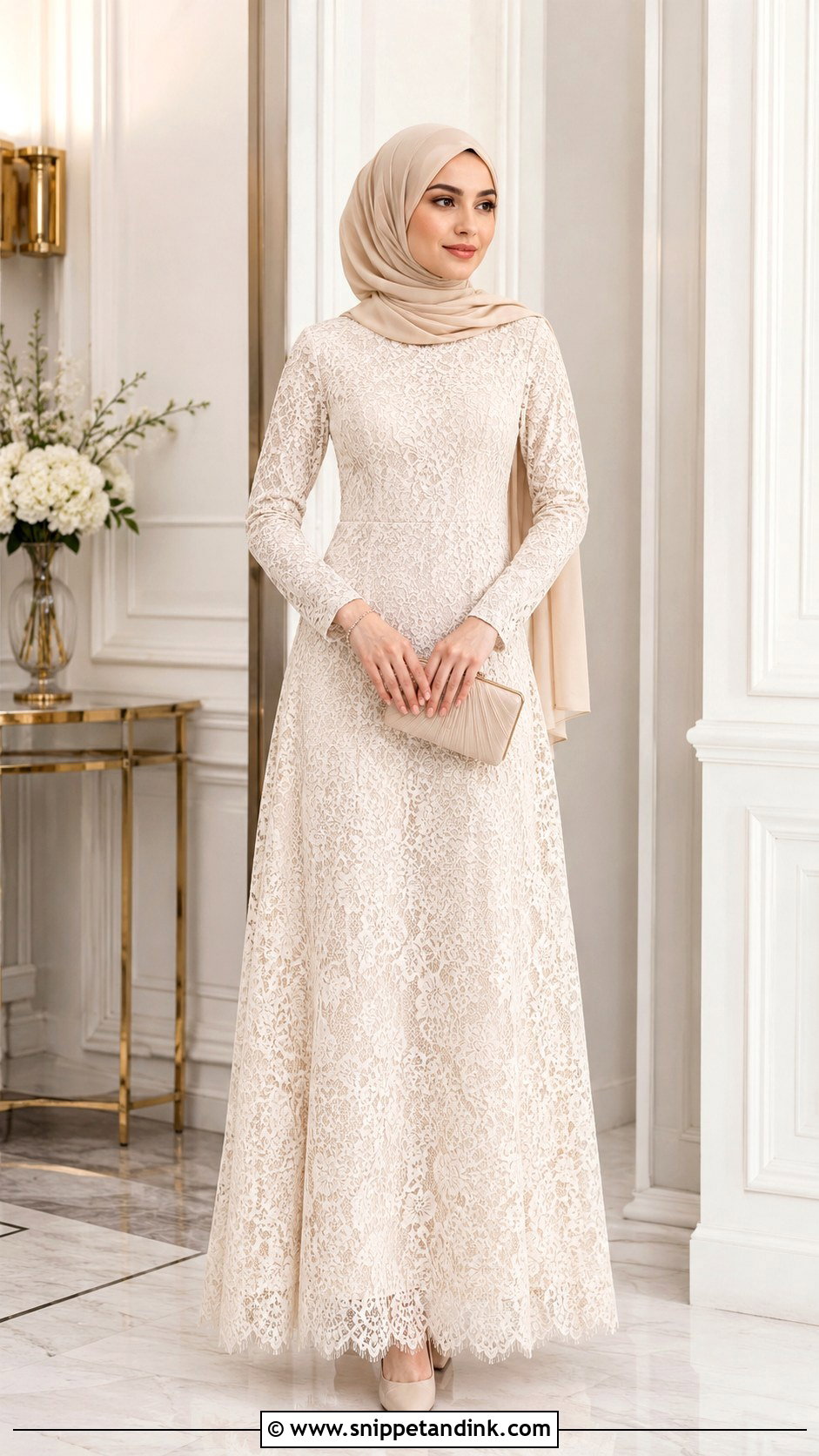
Lace brings texture on its own, so the styling around it should go quiet. The most modest option is a fully lined lace gown with long sleeves and a high or illusion neckline, and I check the illusion panel in natural light, because some mesh linings read as bare skin in photos. Ivory, dusty rose, sage and mocha all suit lace. Keep the hijab plain: chiffon is the safe pick, satin makes it feel more formal. Small studs, closed-toe heels and a structured clutch finish it. Guests and family celebrations indoors are where this one is happiest.
4. Velvet Gown With Hijab
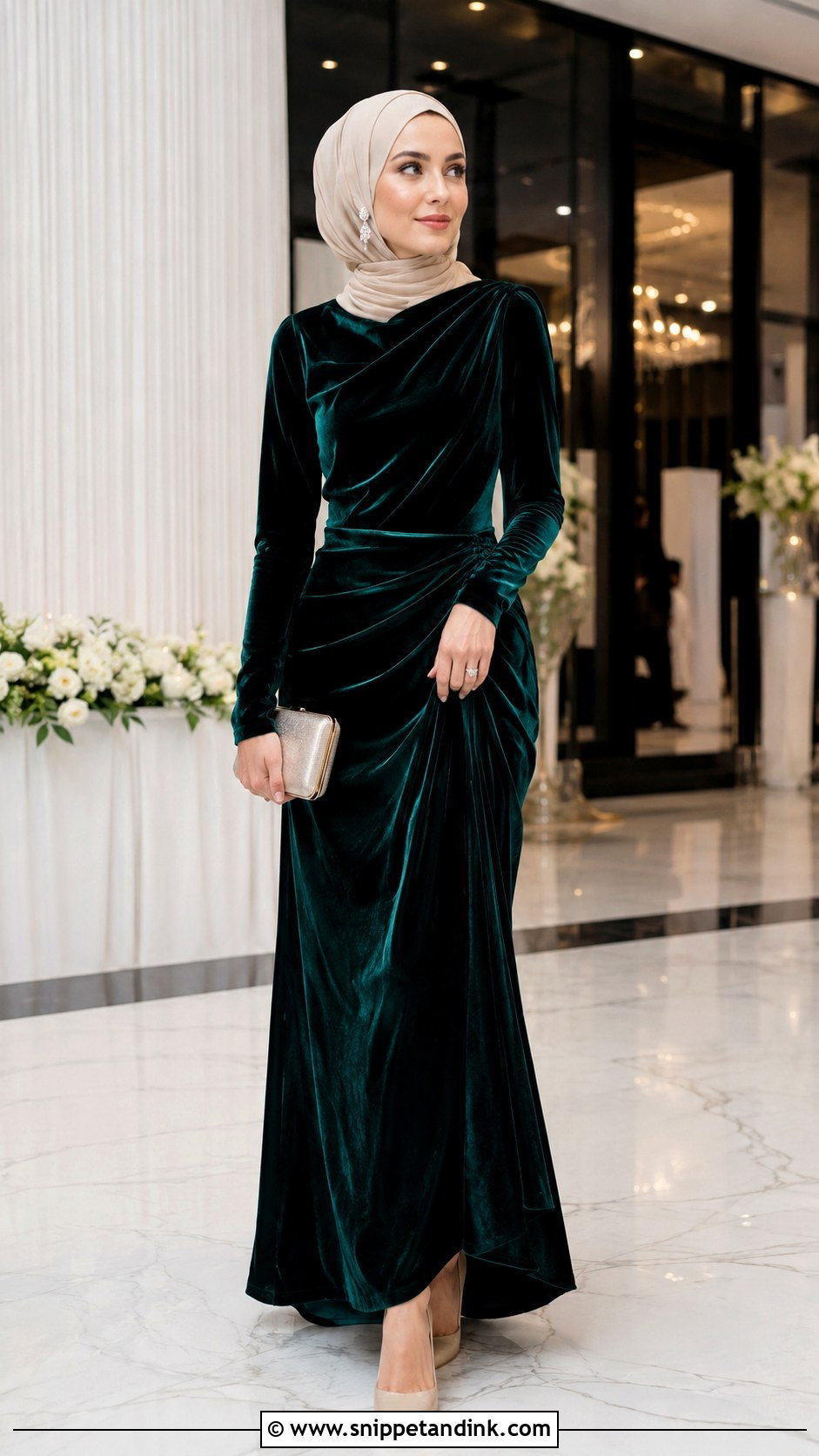
Velvet is a cold-weather fabric, and it earns its place at autumn and winter receptions. Emerald, plum, navy and chocolate brown are the shades I’d choose, because velvet’s pile catches light unevenly and gives deep colors a soft glow. Keep the gown shape simple so the fabric stays the focus. A matte chiffon hijab balances the plush texture far better than anything shiny. One practical note: velvet holds heat, so for an indoor venue in a warm room, a lighter crepe lining matters more than any accessory. Pointed heels, a box clutch and subtle crystal earrings are enough, and if the waist is fitted, skip the necklace and let the hijab frame the face.
5. Tulle Gown With Hijab
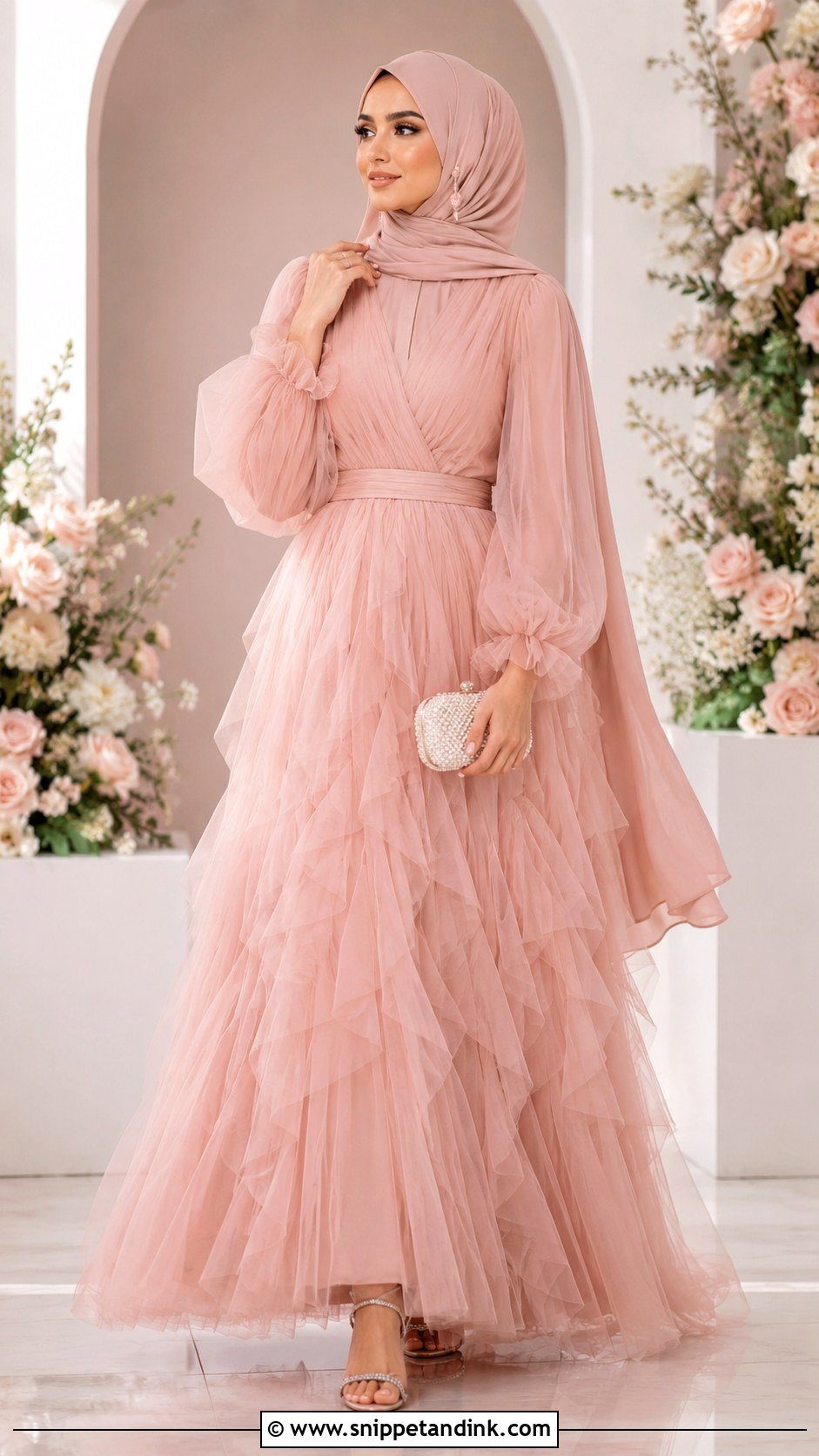
Tulle gives you volume without weight, so a layered skirt can look grand while still being easy to move in. Modest versions need long sleeves and a lined bodice, since tulle on its own covers nothing. Blush, mauve, dove gray and powder blue are the colors that suit it best. Pair it with a plain chiffon hijab in a matching or slightly deeper shade, and keep the wrap neat and close to the face so the skirt stays the only volume in the outfit. I’ve seen this styling chosen for engagement parties, graduations and bridesmaid outfits alike, and the rule is the same each time: simple heels, small earrings, nothing bulky.
6. Sequin Gown With Hijab
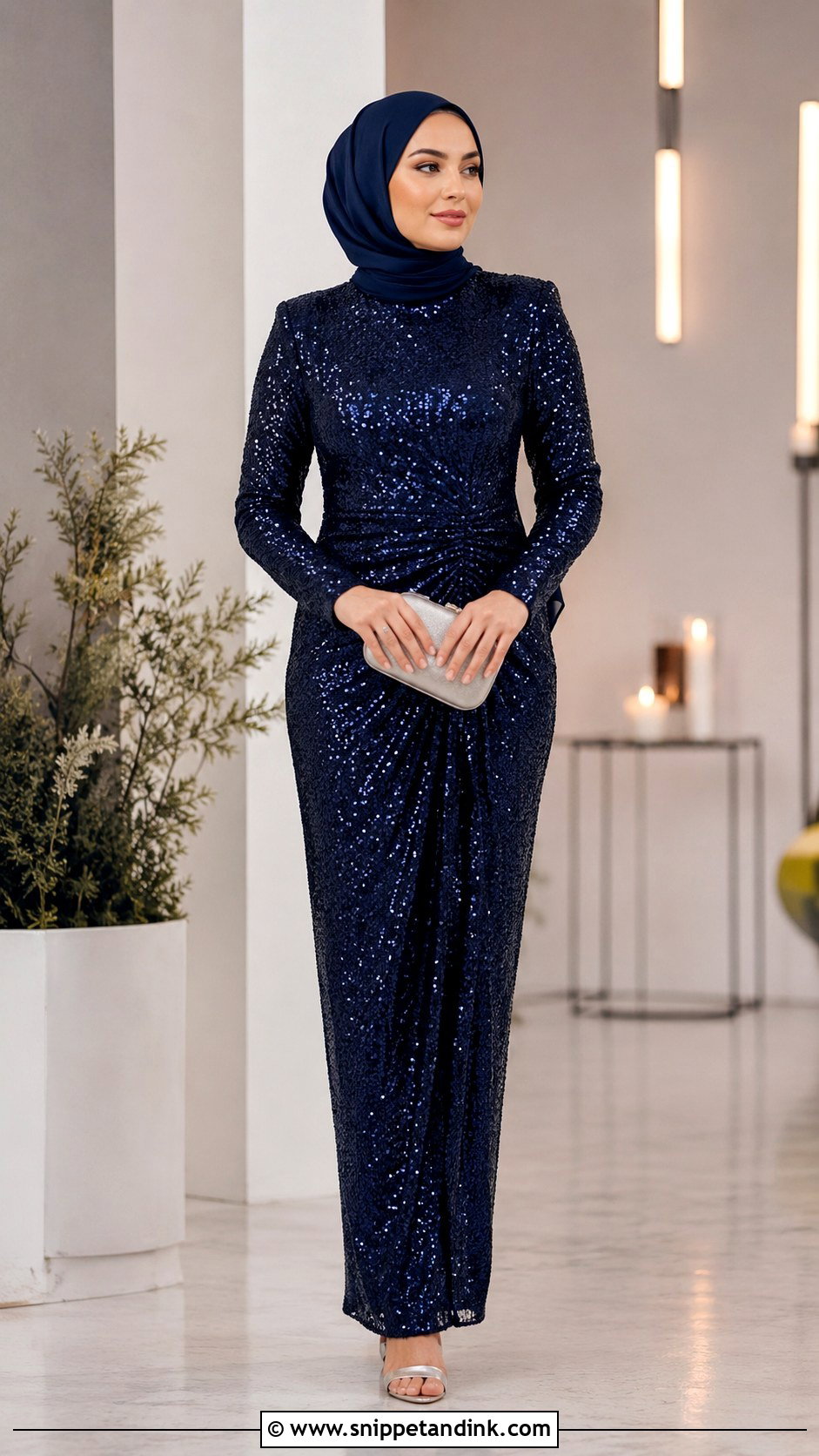
Sparkle and modesty sit together more easily than people expect, as long as the coverage is generous. Choose all-over subtle sequins or sequins only on the sleeves or bodice, with long sleeves and a high neck. A plain matte hijab is the right partner here; it calms the shine and frames the face cleanly. Black, navy, silver and champagne are strong choices. Two things I check before recommending sequins: that the inside seams are bound, because sequin edges scratch the wrists over a long evening, and that the scarf fabric won’t snag on the shoulders. Wear simple heels and let the gown be the only shine.
7. Embroidered Gown With Hijab
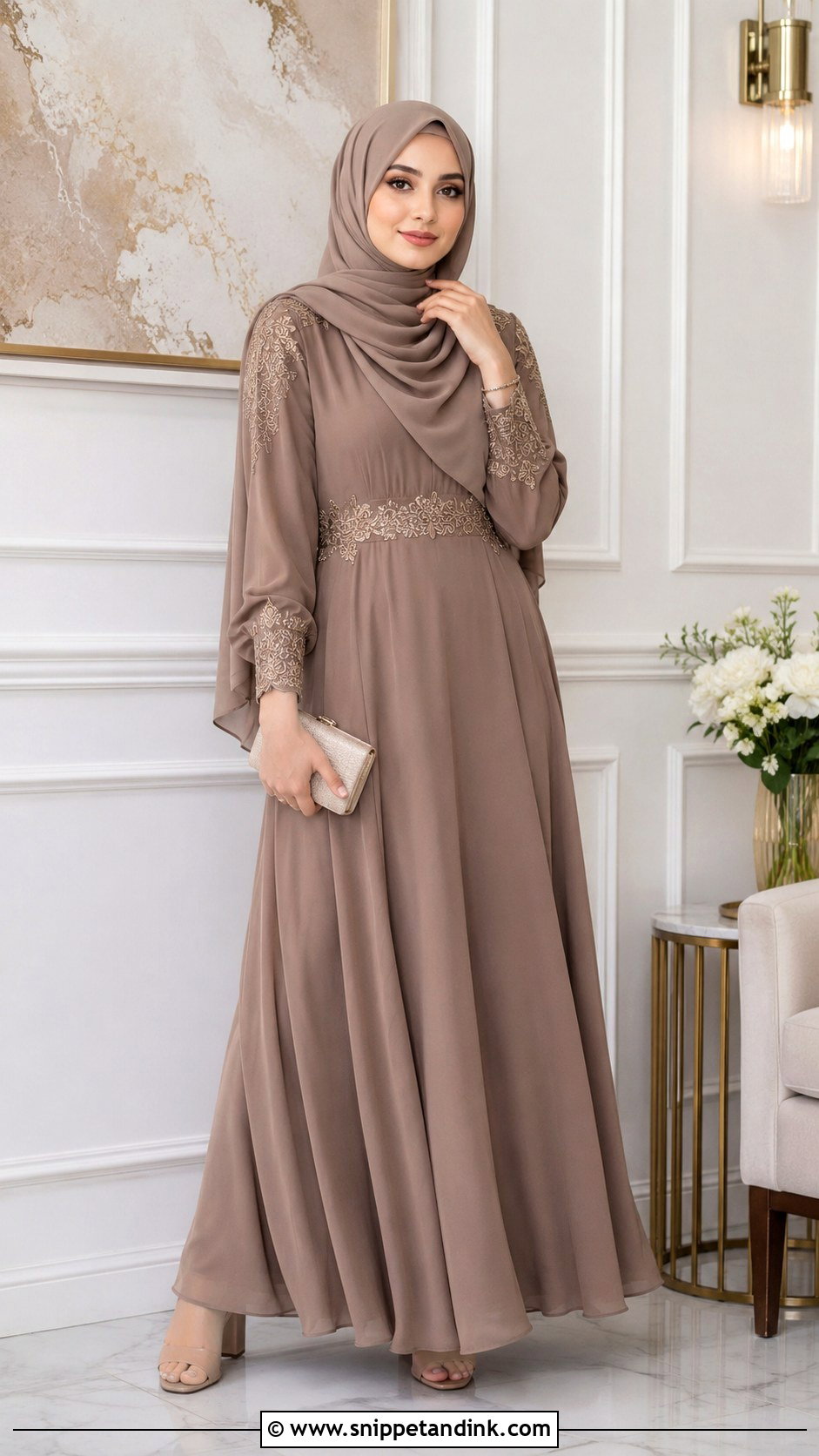
Embroidery suits cultural events and family weddings, and it is the easiest gown on this list to personalize. I like it around the cuffs, bodice, hem or waist rather than everywhere. Matching the hijab is simple once you know the trick. With colorful threadwork, pull the scarf color from the softest tone in the design; with metallic work, go neutral. Block heels or pointed pumps and a simple clutch finish it. Hold back on jewelry, since embroidery already gives the eye plenty to look at, and a second pattern competing near the face looks busy in close-up photos.
8. Beaded Gown With Hijab
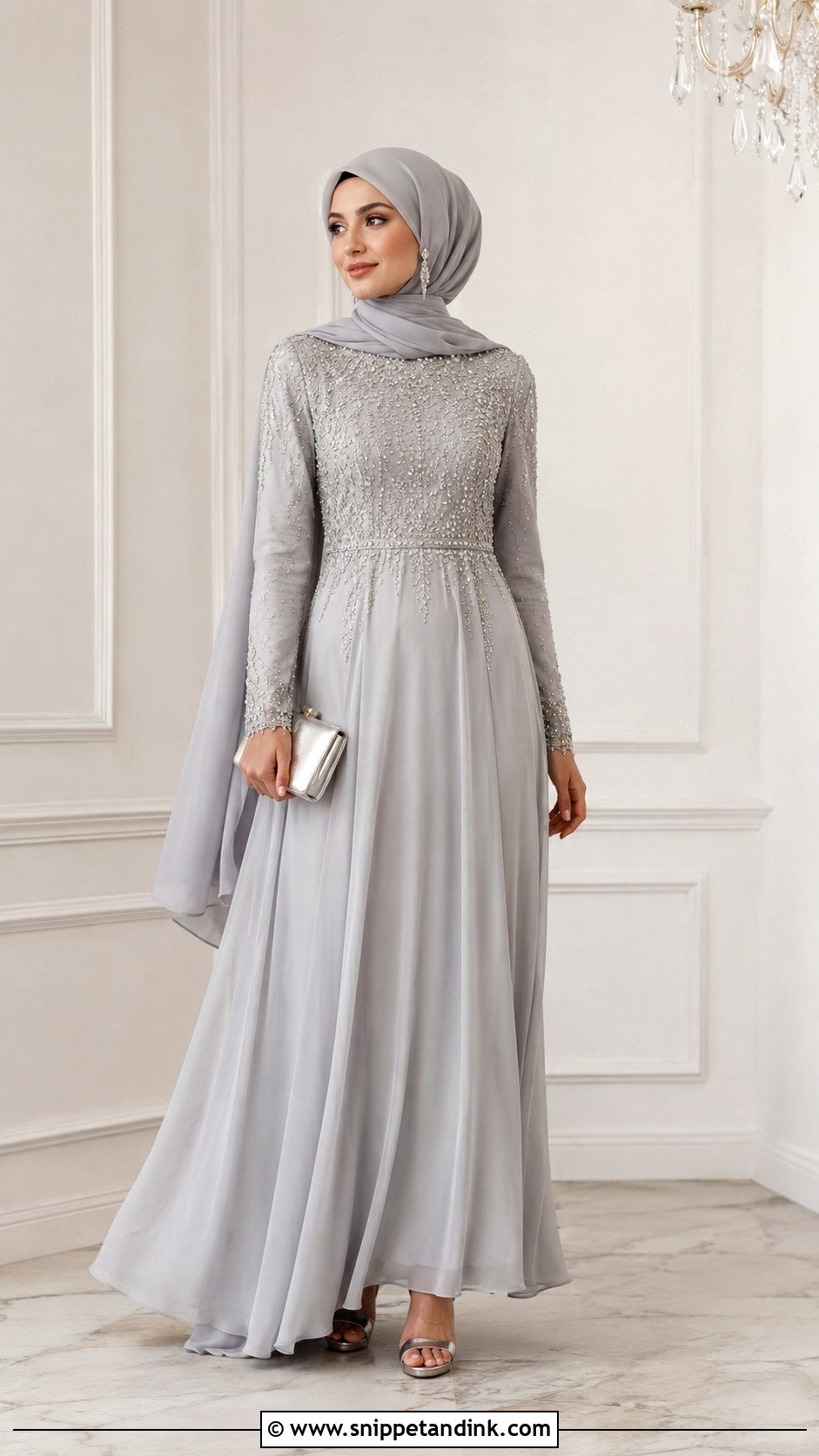
Beadwork gives sparkle with structure, but weight is the issue nobody mentions until the third hour. Heavily beaded gowns can be surprisingly heavy and pull at the shoulders, which drags the neckline and shifts the hijab. Beading on the bodice, sleeves or waist rather than all over keeps the gown wearable for hours. A plain chiffon or crepe hijab gives a clean contrast against the embellishment. If the beadwork reaches the neckline, skip the necklace entirely and wear small earrings under the scarf. Soft gold, silver and deep green suit beaded gowns well, with metallic heels and a small satin clutch to tie it together.
9. Cape Gown With Hijab
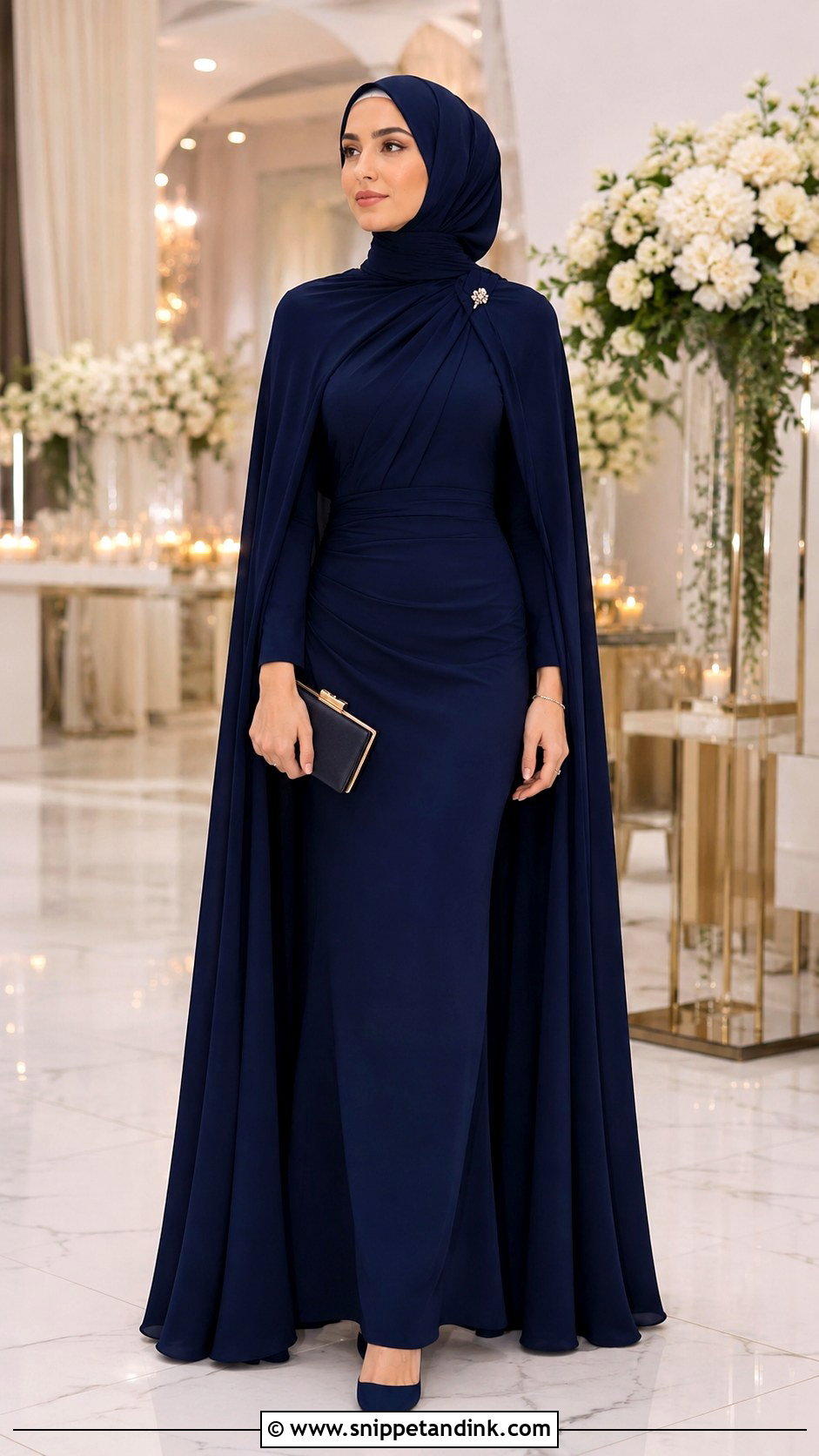
A cape solves a coverage problem many women have with formalwear: it covers the shoulders, arms and back without tight sleeves or an extra jacket. Look for a simple inner gown with a flowing cape layer in chiffon, crepe or satin. A close-wrapped hijab works best here, because a loose drape at the shoulders tangles with the cape every time you turn. I always ask clients to walk and turn at a fitting with the cape on, since a cape that is cut too long gets stepped on going up stairs. Sleek heels and minimal jewelry are all it needs for receptions and upscale celebrations.
10. Pleated Gown With Hijab
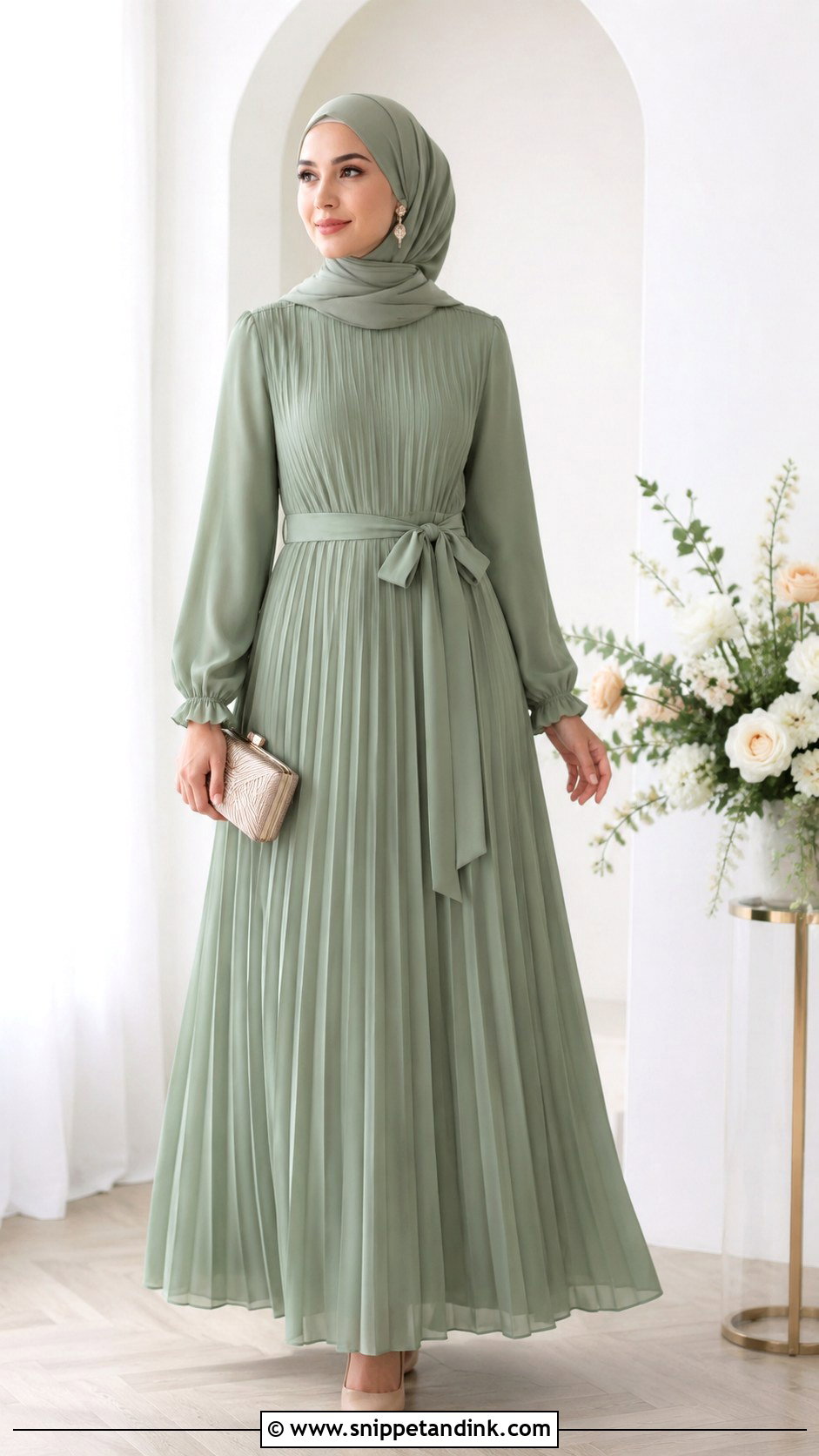
Fine pleats add length and movement without bulk, which makes a pleated gown with hijab look taller and more refined than its simple cut suggests. Choose a full-length gown with long sleeves and a soft waist tie. A smooth chiffon hijab balances the texture and stops the outfit from looking busy. My only warning is about storage: permanent pleats survive packing, but pressed pleats in natural fibers fall out if the gown hangs crushed in a wardrobe, so ask how they were set before you buy. Dusty blue, sage and taupe suit pleats well, and the gown needs very little adjusting during a long event.
11. A Line Gown With Hijab
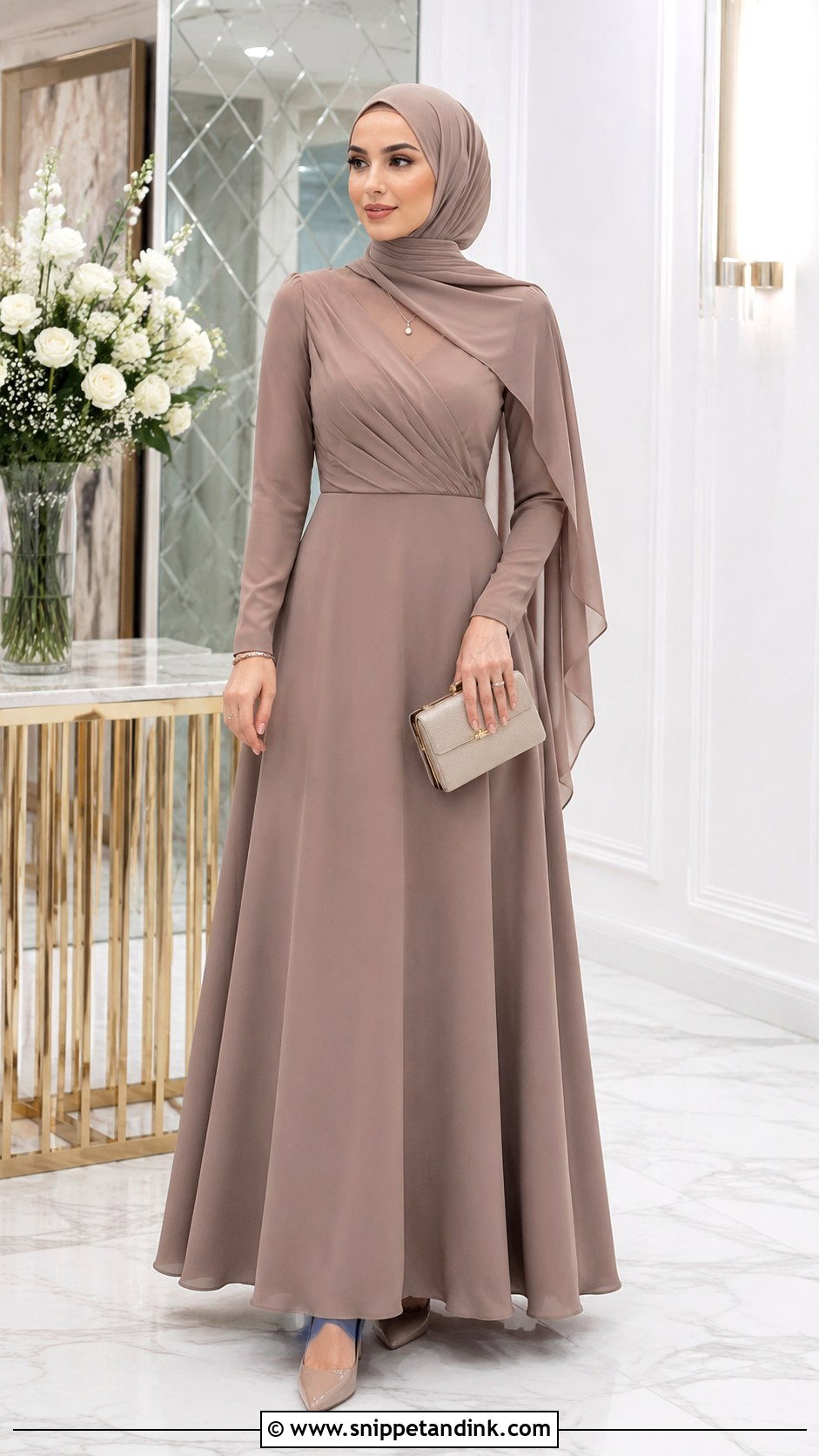
If I had to name one shape that suits most bodies with the least fuss, it would be the A-line. The fitted top and gently widening skirt create balance without clinging, which matters when you want shape without anything hugging the hips. Crepe and jacquard suit daytime, while satin and chiffon dress it up. A matching hijab makes it formal; a lighter neutral softens it. Petite, tall, curvy and straight figures all wear it comfortably. Pointed pumps, a structured clutch and delicate jewelry complete it.
12. Ball Gown With Hijab
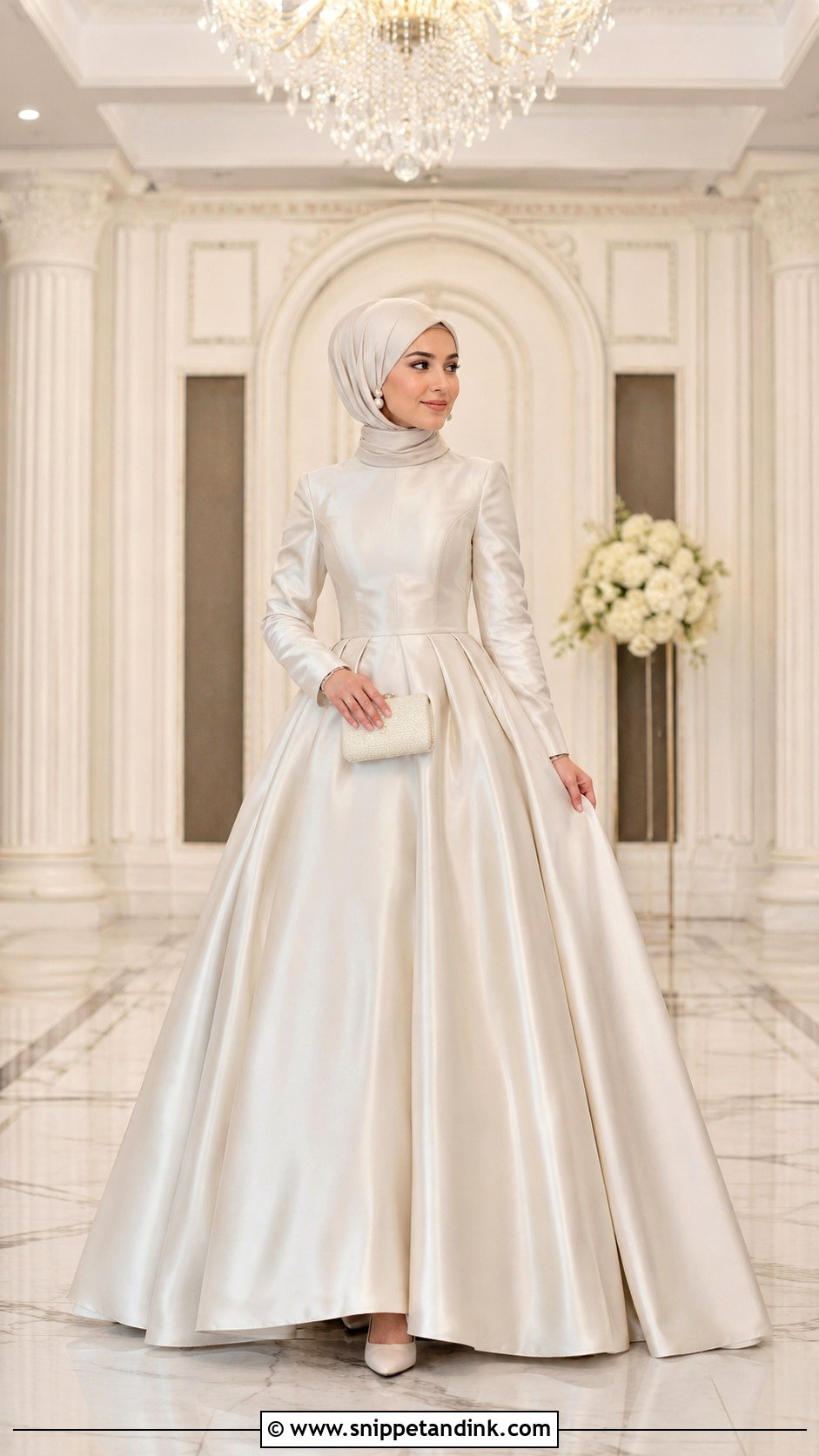
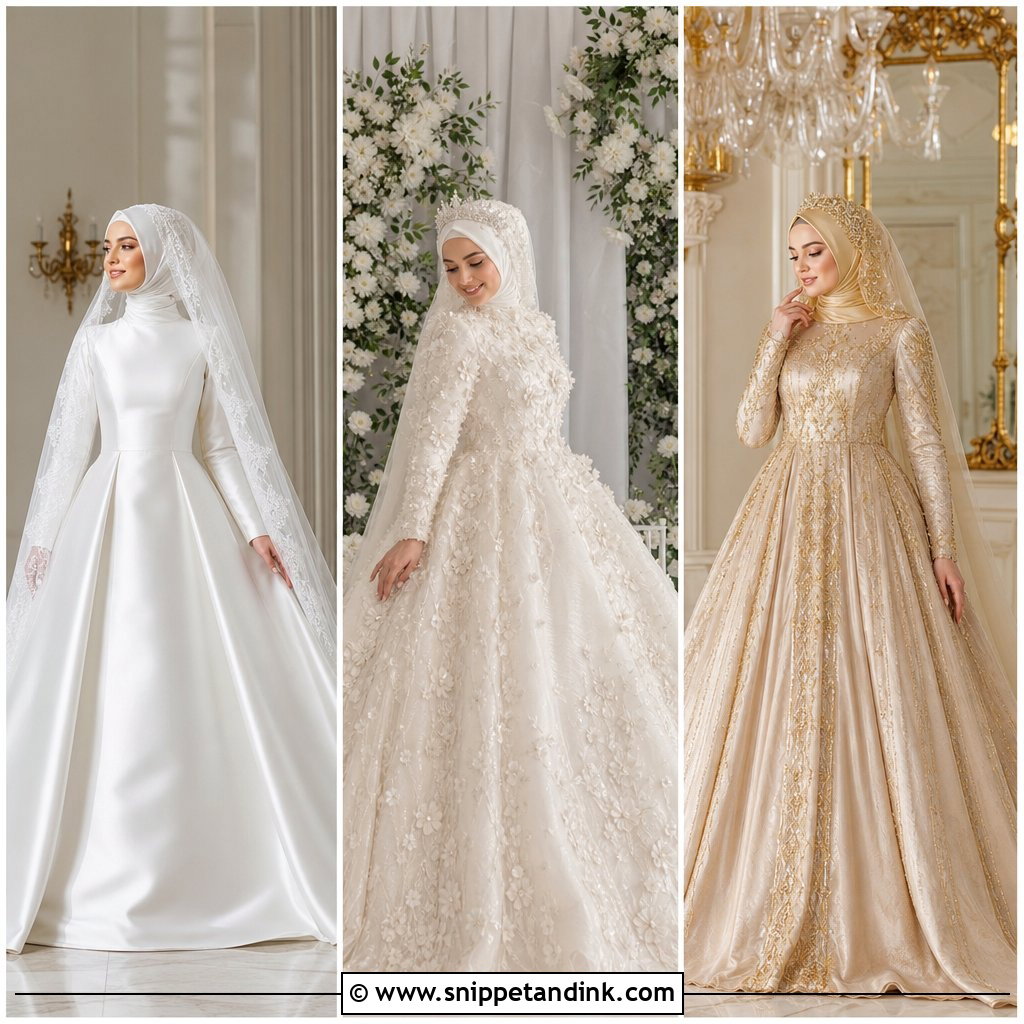
A ball gown with hijab gives the grand, full-skirted bride look with complete coverage from long sleeves and a high neckline. The skirt is already the statement, so the hijab wrap should be simple and the accessories small. Satin, tulle and organza all hold a full skirt well. Two honest notes from fittings: very full skirts make car rides, bathroom trips and dancing harder than most brides plan for, and on a petite frame a slightly softer skirt volume keeps the gown from overpowering you. Ask whether the petticoat can be removed for the reception.
13. Mermaid Gown With Hijab
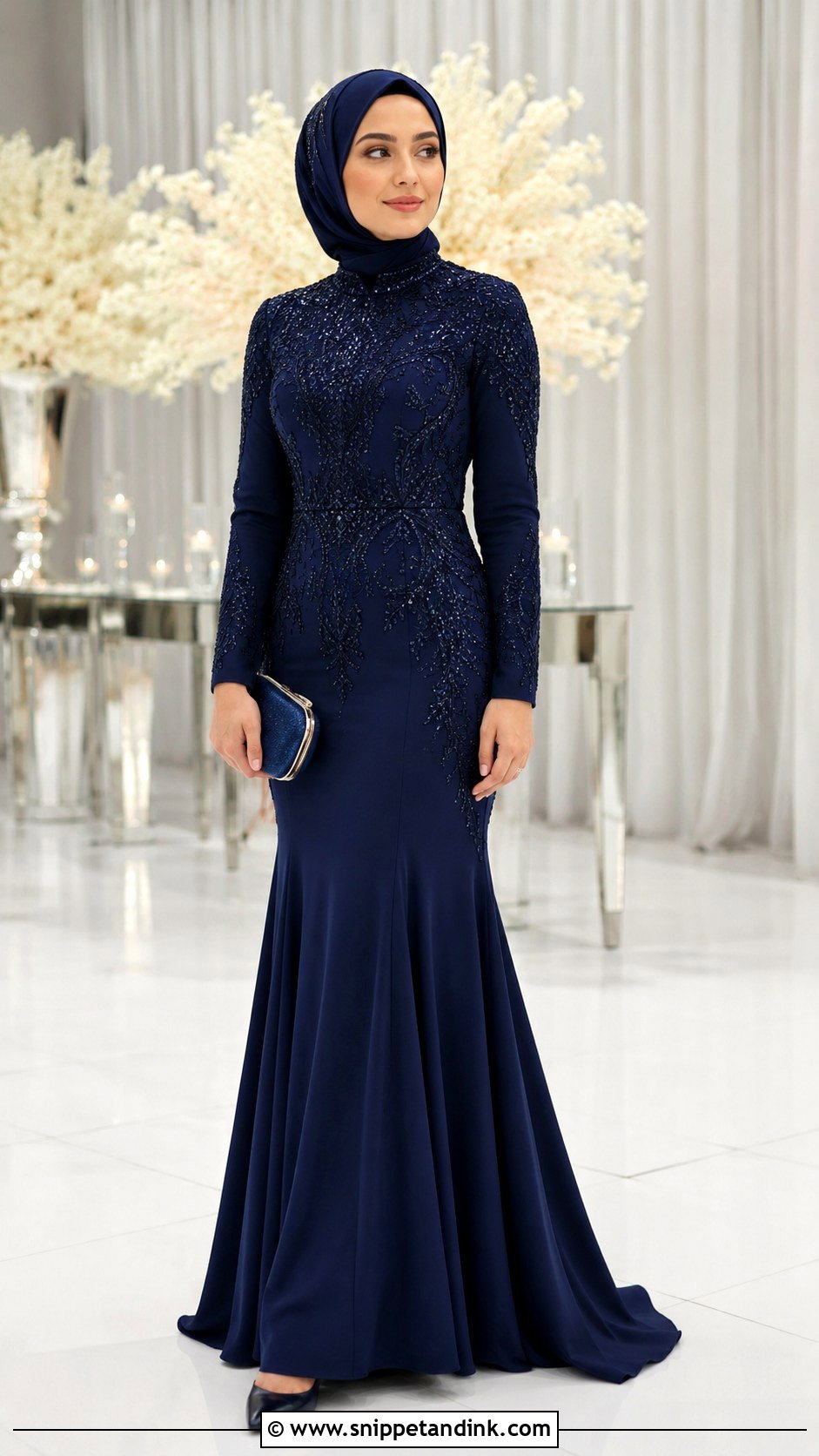
Mermaid shapes need the most careful fitting of anything on this list if coverage is the priority. Look for a version that skims rather than grips, with the flare starting low enough that you can still take a full stride. Long sleeves, a high neckline and opaque lining are non-negotiable for a hijab-friendly finish. A plain hijab in the gown’s color draws one long vertical line from head to hem. If the fitted section still feels too revealing, a matching long cape or sheer overlay fixes it. I’d steer anyone who will be sitting through a long ceremony toward the A-line instead, since mermaid skirts are tiring to sit in.
14. Kaftan Gown With Hijab
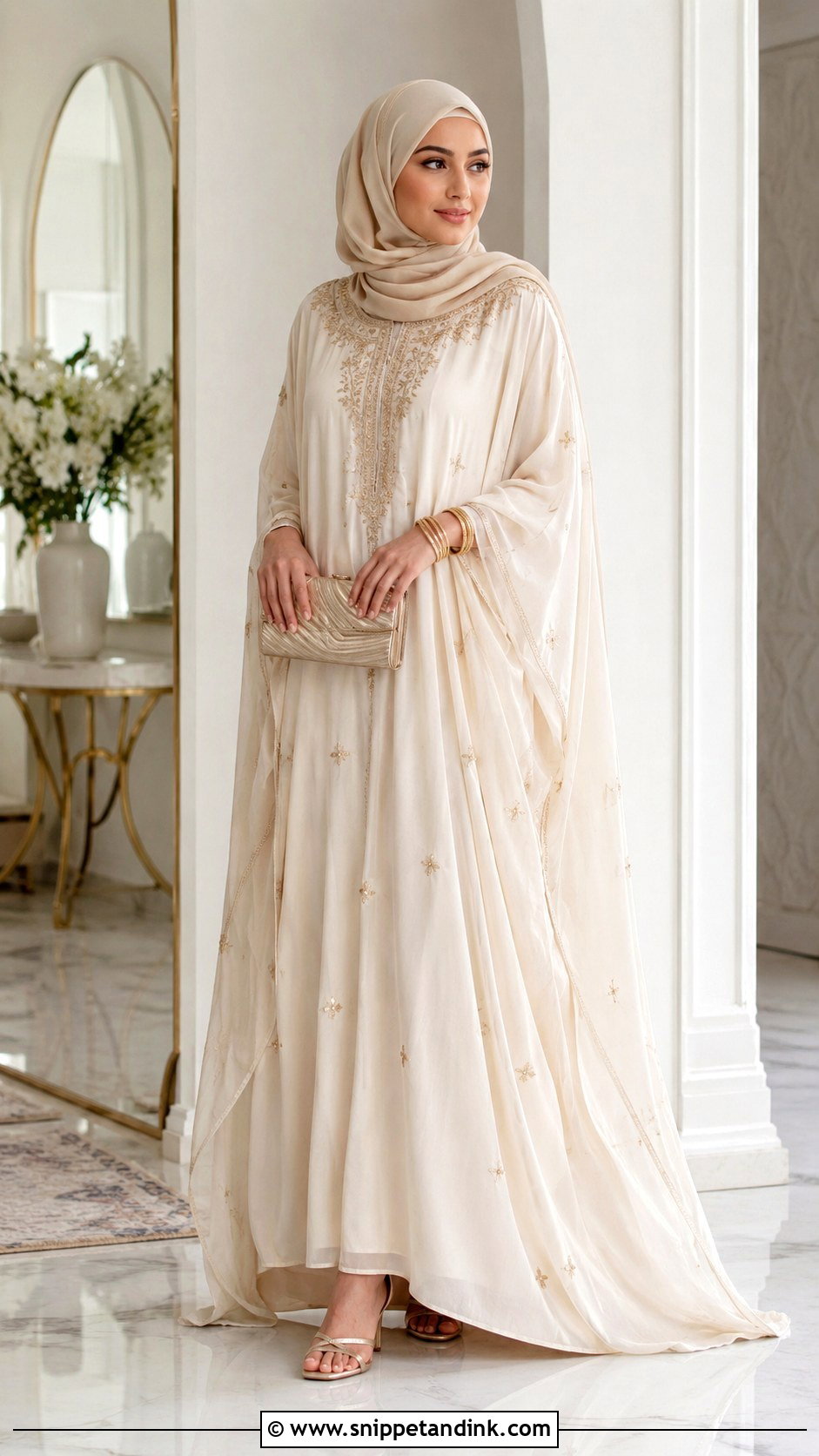
Loose silhouettes are a relief at long family events, and a kaftan gown with hijab is the most comfortable formal option here. Embroidery, beadwork or satin trim lifts it from everyday wear to occasion wear. Crepe, silk blend and chiffon hang best; cheaper polyester kaftans can look boxy rather than fluid. Choose a hijab in the same shade or a complementary neutral. Heeled sandals, a structured clutch and a few bangles finish it without weighing it down. Eid gatherings, family celebrations and cultural events all suit it, especially when you’ll be on your feet hosting.

15. Abaya Gown With Hijab
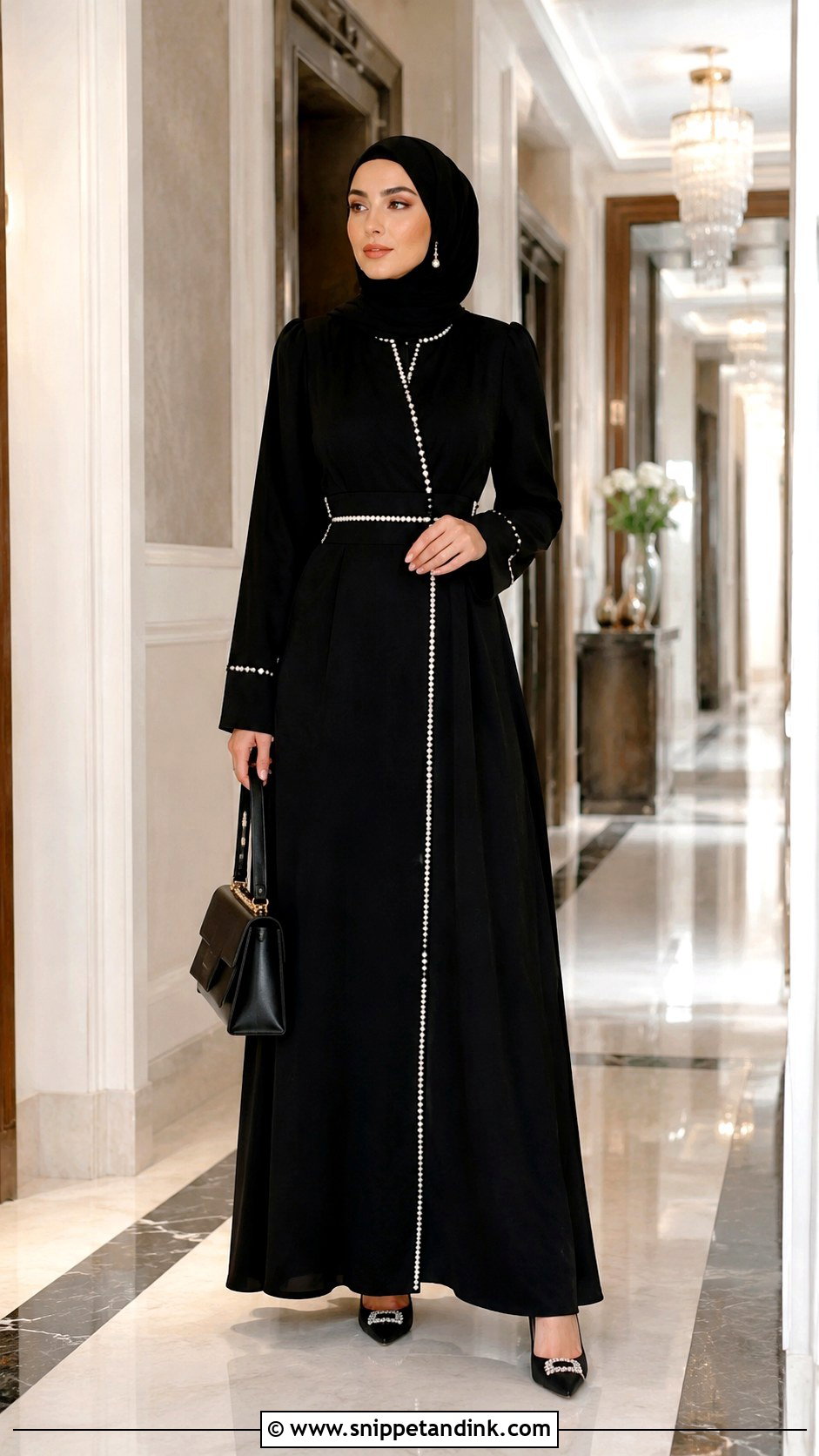
An abaya gown with hijab brings traditional modest dressing into formalwear. It usually has a flowing shape with refined details like pearls, lace or a subtle shimmer at the cuffs and front opening. Black, ivory, mocha and olive are classic. A matching hijab looks sleek, while a soft contrast scarf brightens the face in photos. Pointed flats or heels work, depending on how long you’ll stand. I suggest it often to clients who want full coverage without layering a slip, a cardigan and a long skirt, because the abaya does all three jobs in one piece.
16. Wrap Gown With Hijab
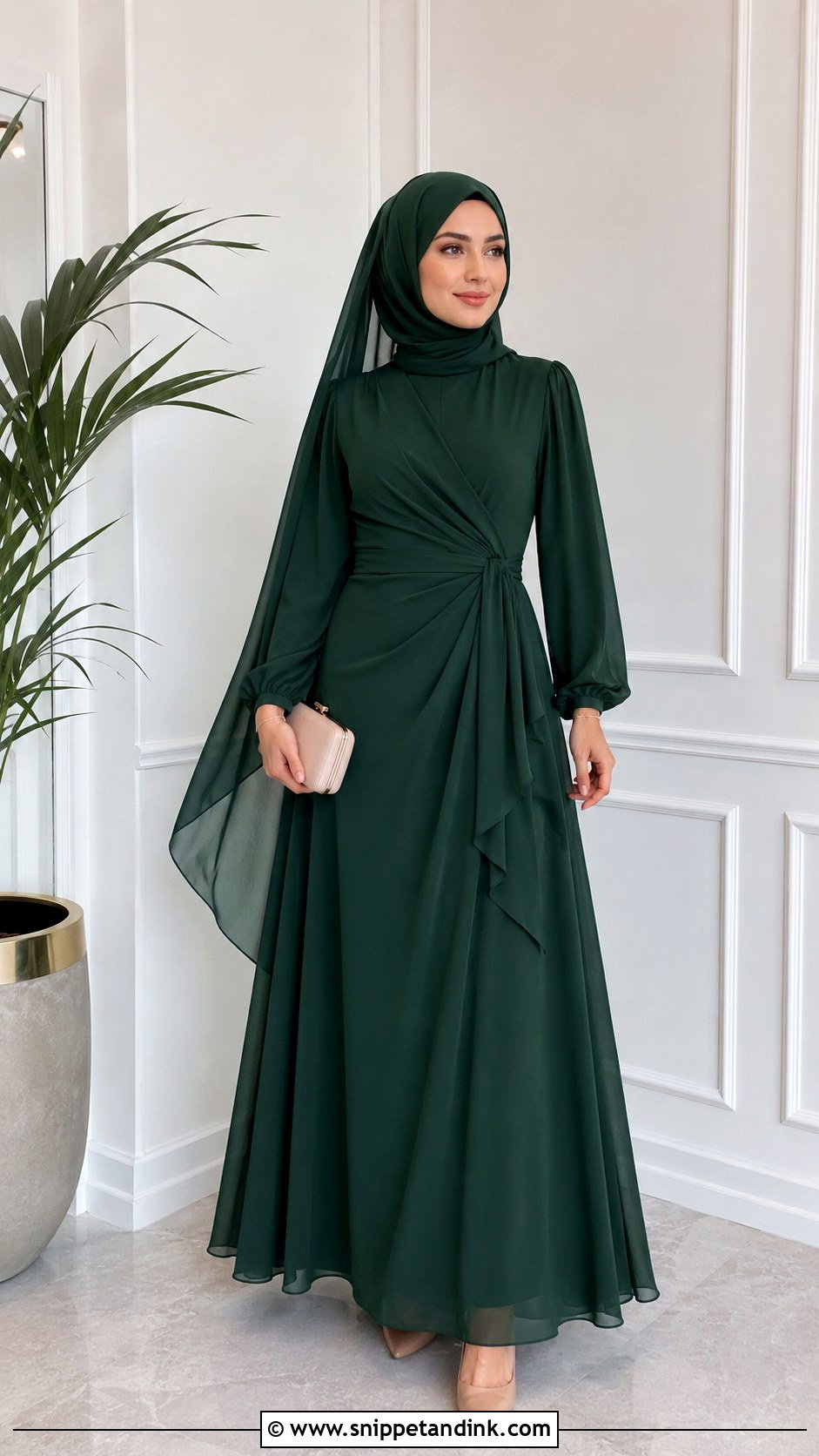
Wrap gowns define the waist nicely, but the wrap is also where coverage fails. Before buying, I sit down, cross my legs and climb a step in the gown, because a wrap skirt with too little overlap opens at the knee when you sit. Choose one with a secure inner panel or a high, fixed neckline, long sleeves and a full-length skirt, or add a modest underskirt. A smooth chiffon hijab, pointed heels and a clean clutch keep it polished. Solid navy, taupe and forest green look the most refined.
17. Ruffle Gown With Hijab
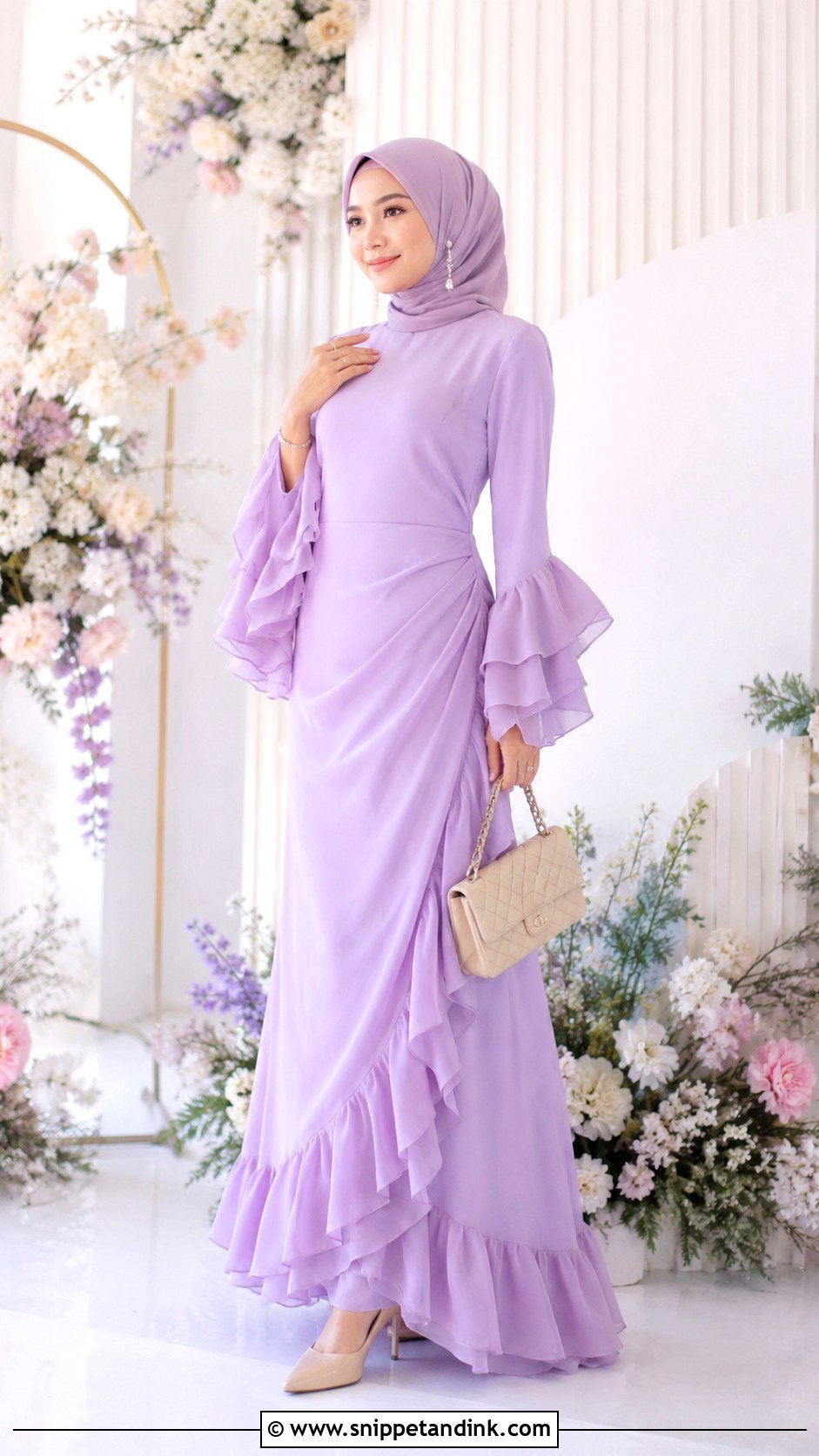
Ruffles are about placement. On the sleeves, hem or shoulder line they add softness; layered all over, they add bulk and make the whole outfit look busier than it is. Keep everything else simple. A plain chiffon hijab balances the volume, and soft heels with a small handbag are enough styling. Pastels, muted neutrals and deep jewel tones all suit ruffles. One fitting tip: ruffles near the neckline collide with a draped hijab, so if you wear a longer wrap, choose ruffles lower down the gown. Bridal showers, engagement parties and daytime celebrations suit it best.
18. Floral Gown With Hijab
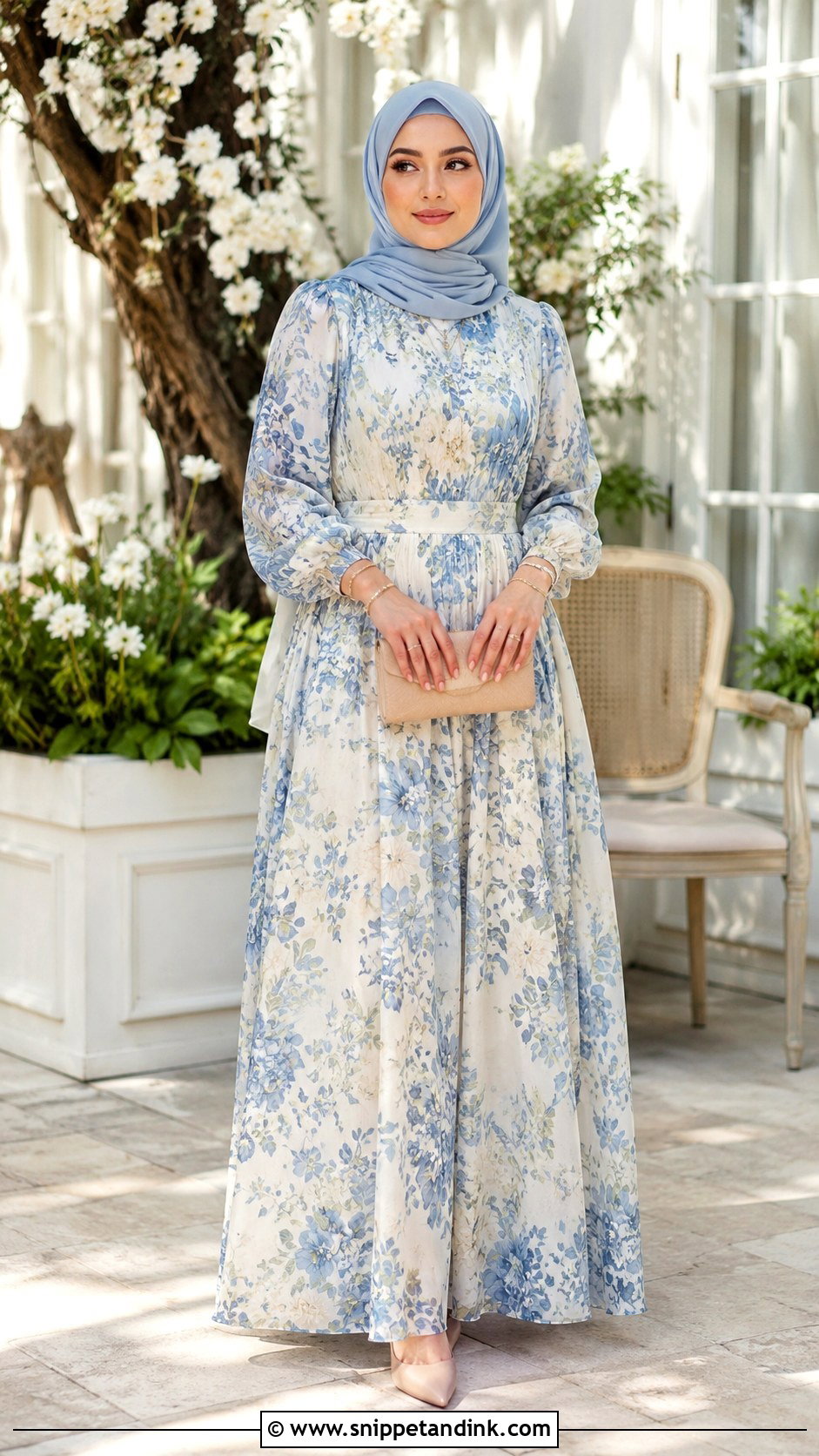
Prints are rarer in formal modest wear, which is why a floral gown stands out at daytime and semi-formal events. Choose a full-length gown with long sleeves and a modest neckline, and match the scale of the print to the season: watercolor florals feel springlike, small prints read quieter and more wearable. My rule for the hijab is to pull one color from the print, usually a secondary shade rather than the brightest flower, so the scarf frames the face instead of competing with it. Nude or cream heels and a plain clutch keep the pattern as the only busy element, and it suits garden parties and spring weddings.
19. Black Gown With Hijab
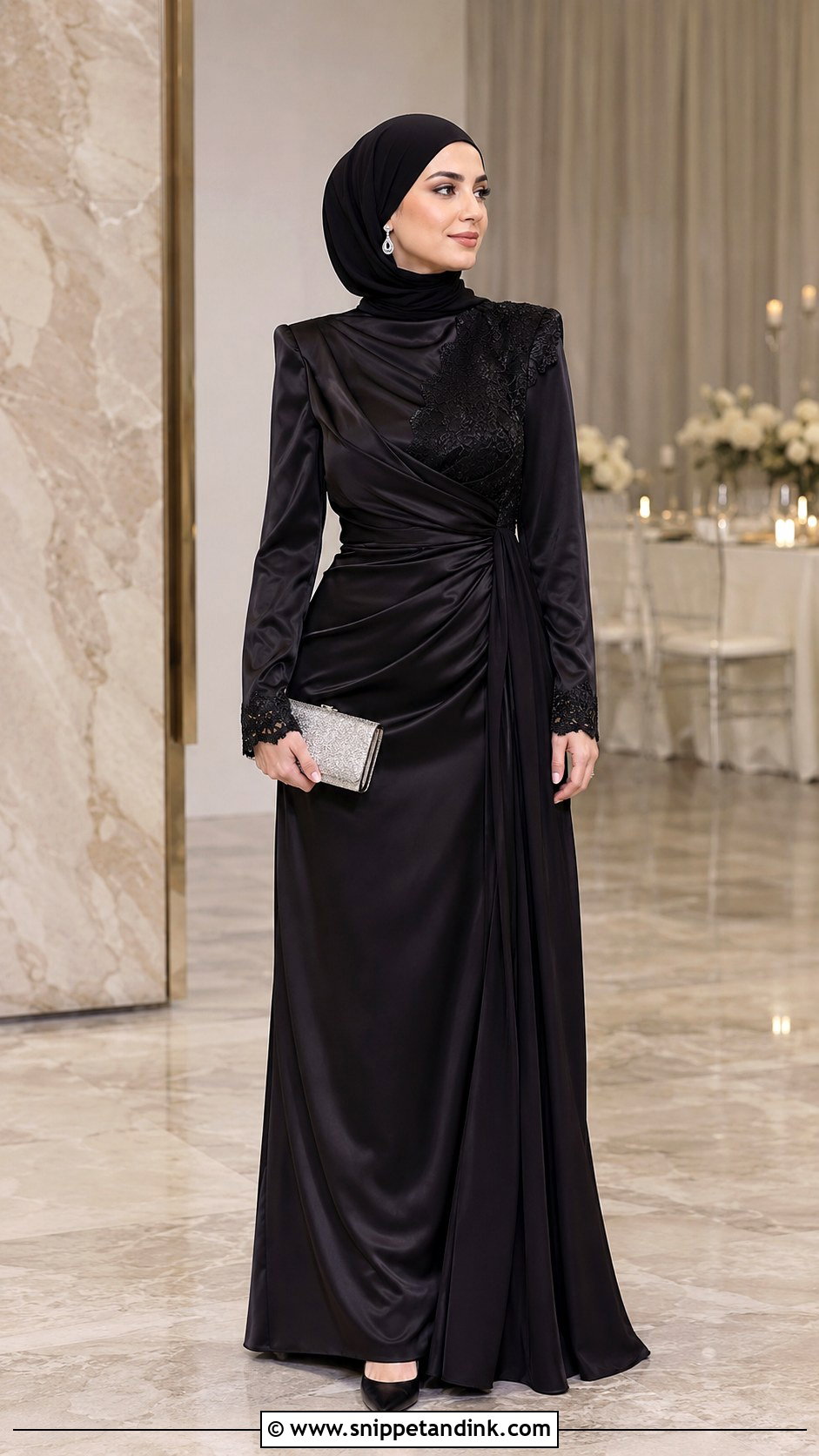
Black is classic and reliable for evening, but plain black can look flat in photographs, so I look for texture: satin shine, lace sleeves, beadwork or a cape. A black hijab makes a sleek monochrome outfit. A champagne, silver or soft beige scarf adds light around the face, which helps under dim reception lighting. Pointed heels and a structured clutch finish it cleanly, and jewelry can go simple or a little sparkly depending on the gown’s detail. Evening receptions and formal dinners are where black does best.

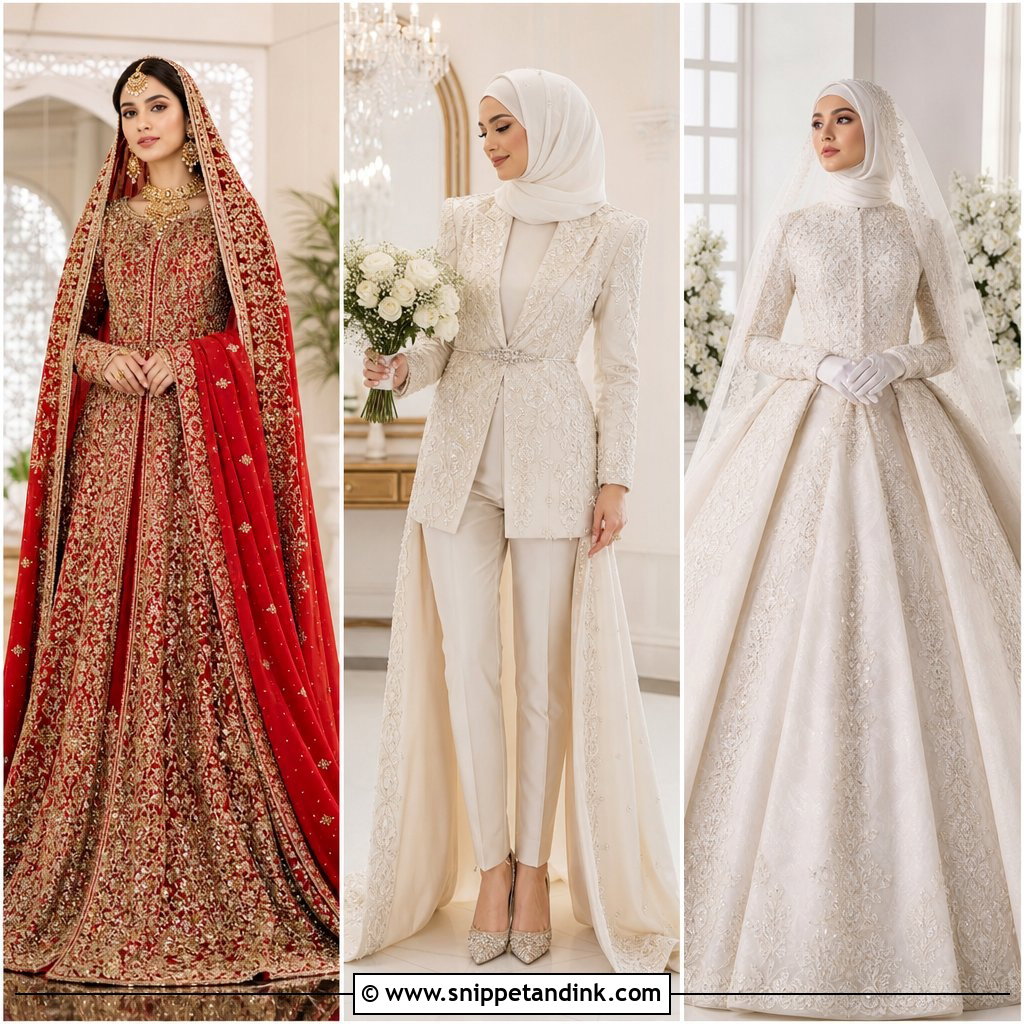

20. White Gown With Hijab
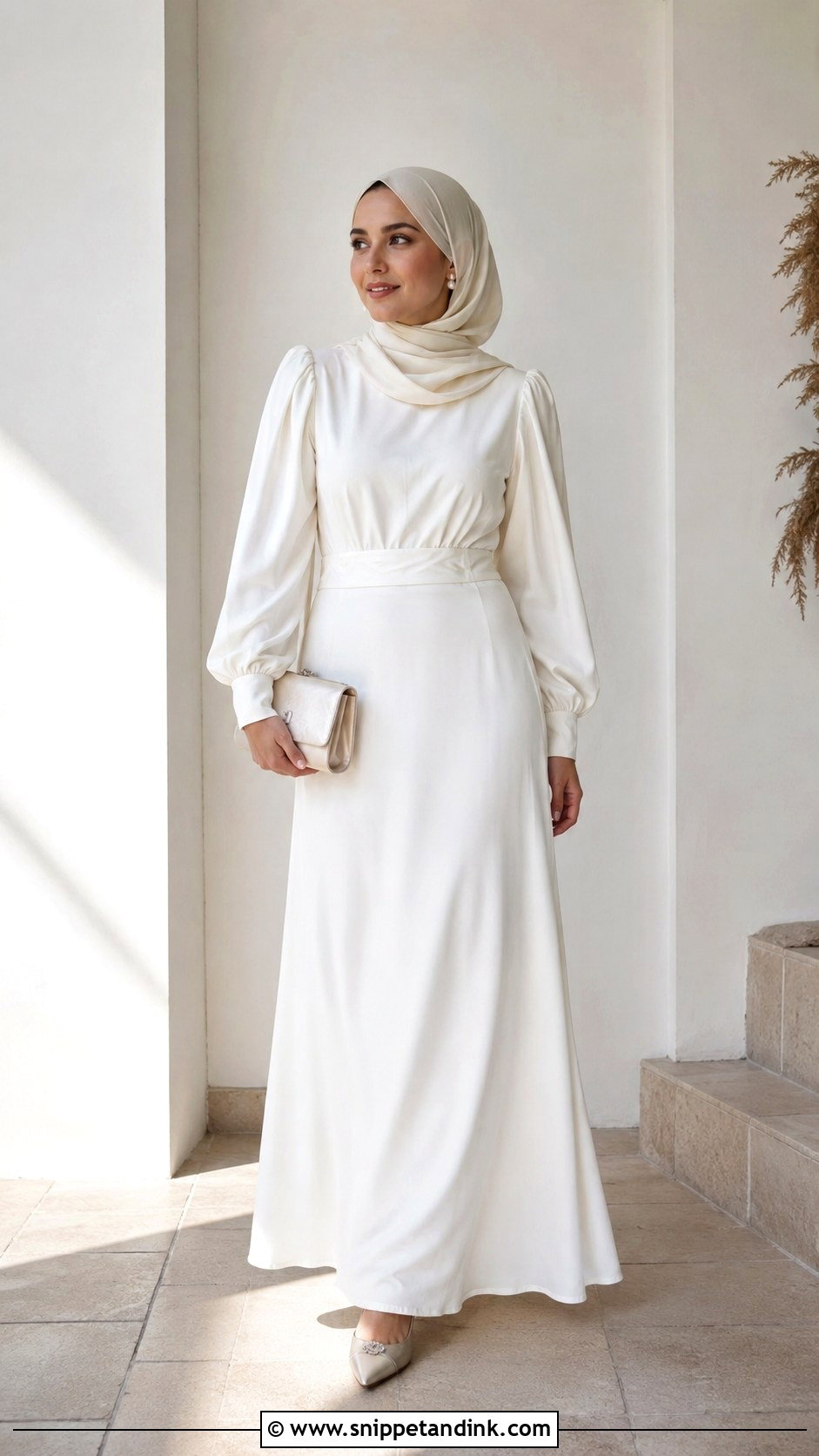
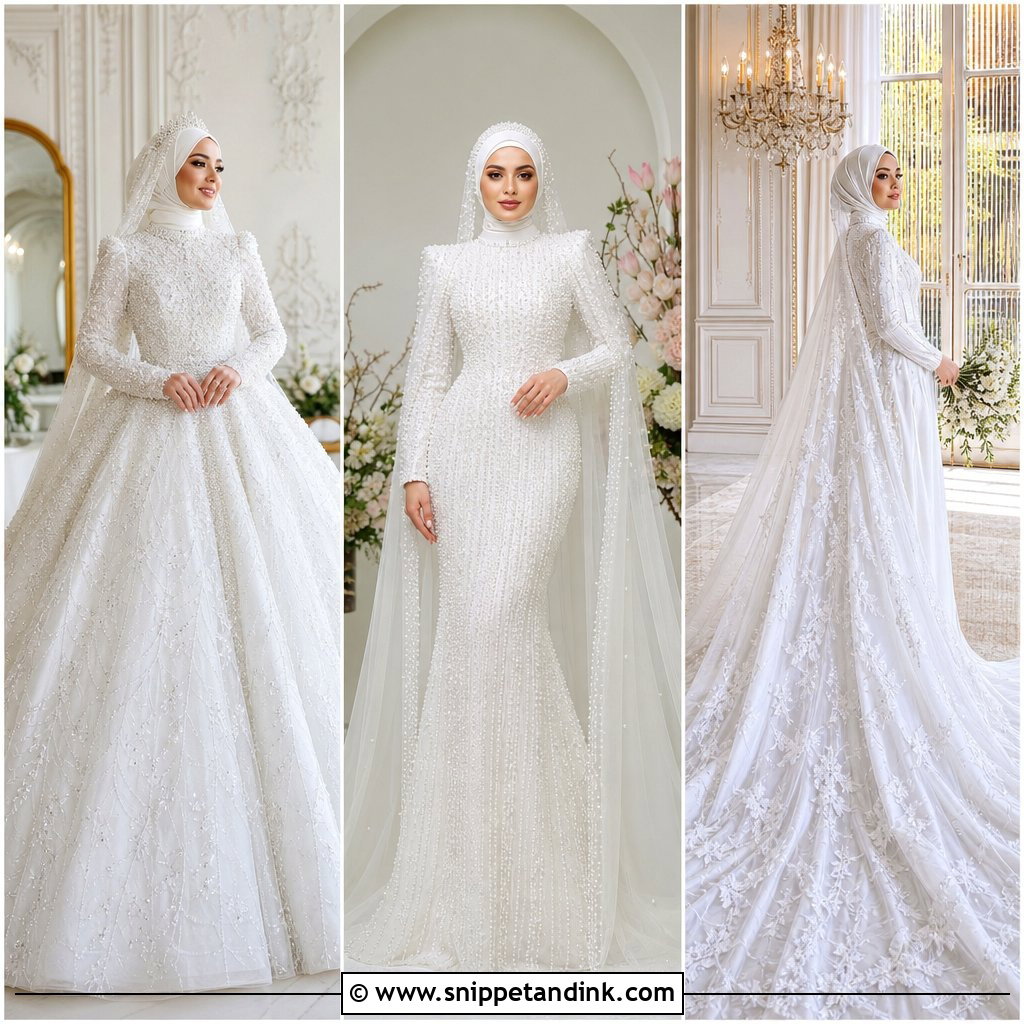
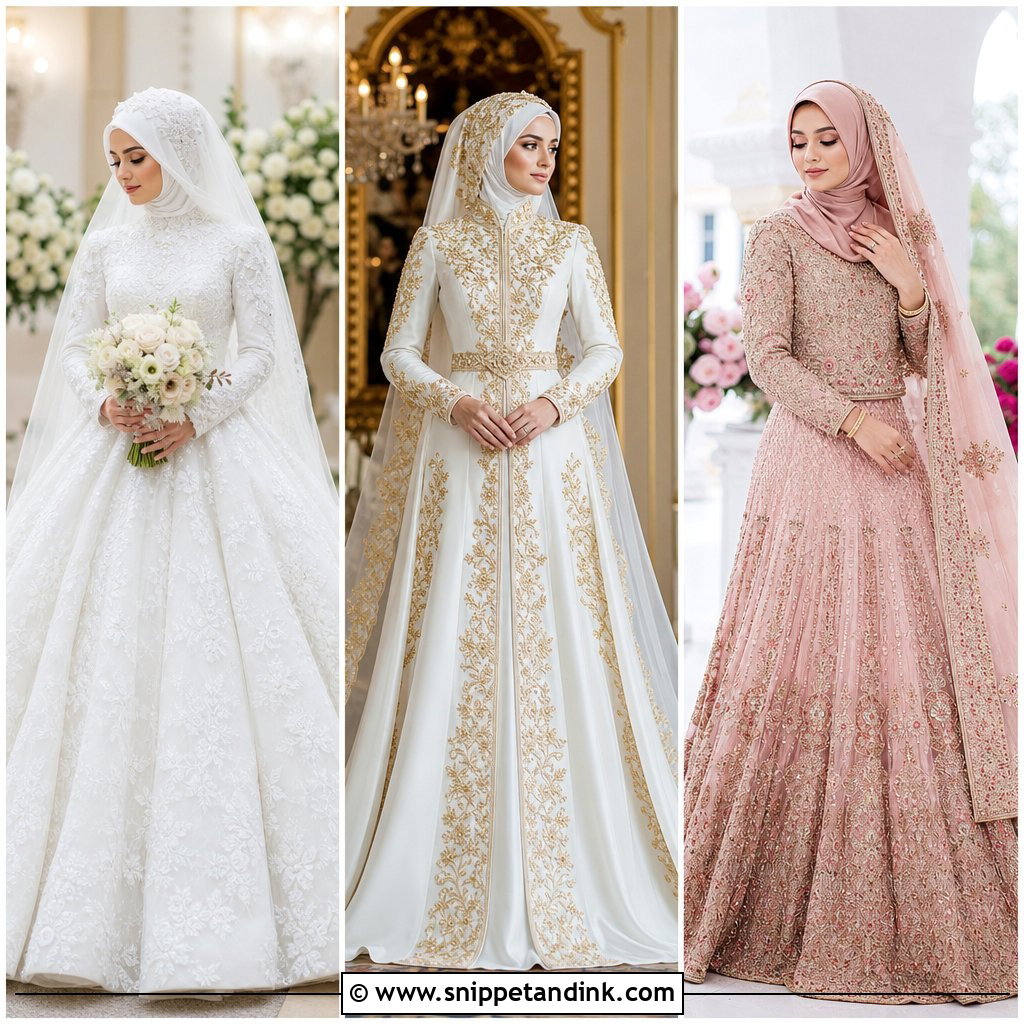
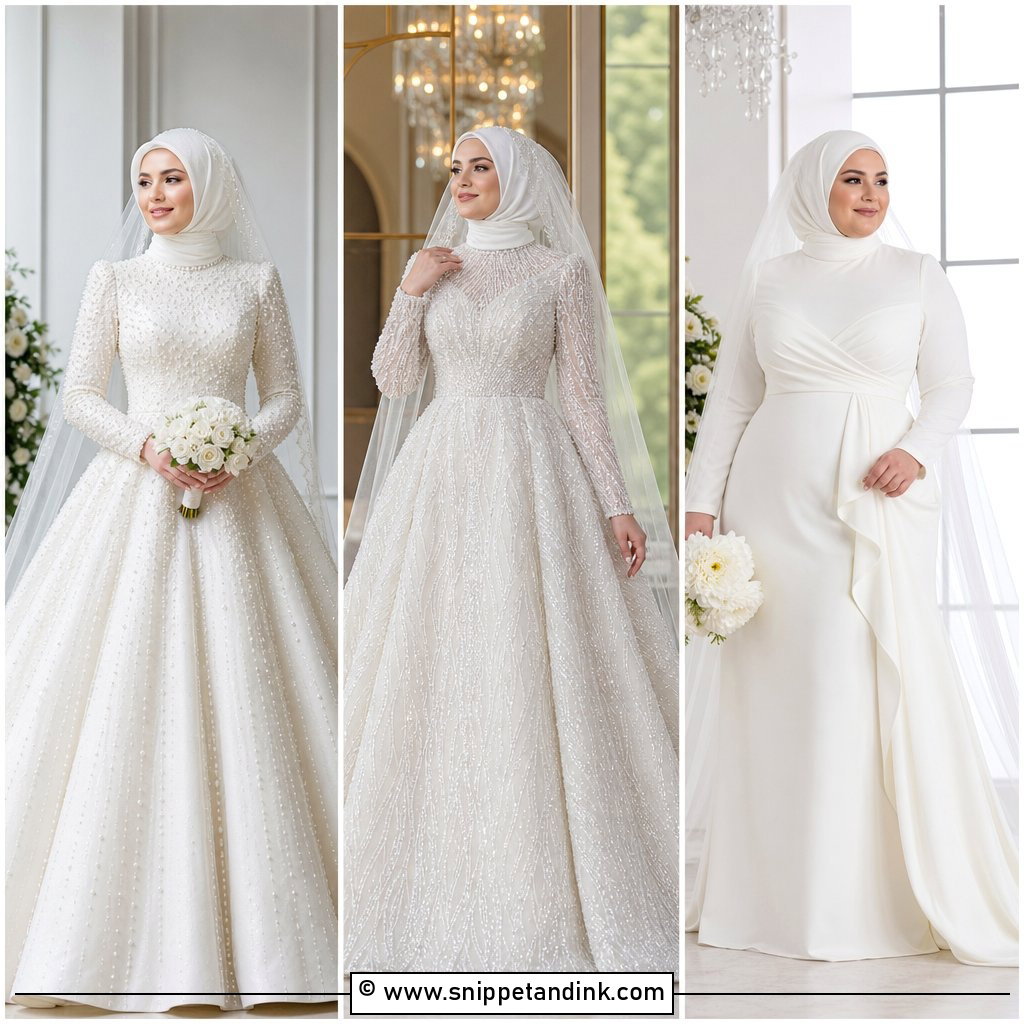
White and ivory demand opaque fabric. I hold every white gown up to a window at a fitting, because thin white satin and crepe show lining seams and undergarments in daylight. Choose full lining, long sleeves and a neckline that sits comfortably under your hijab. A white or ivory hijab gives a soft monochrome finish, and a champagne scarf adds warmth for anyone whose skin looks washed out next to bright white. Pearl earrings and soft metallic heels finish it. As a guest, check the dress code first, since many families keep white for the bride. Lace, jacquard and textured crepe add depth so the outfit doesn’t look flat.
21. Pastel Gown With Hijab
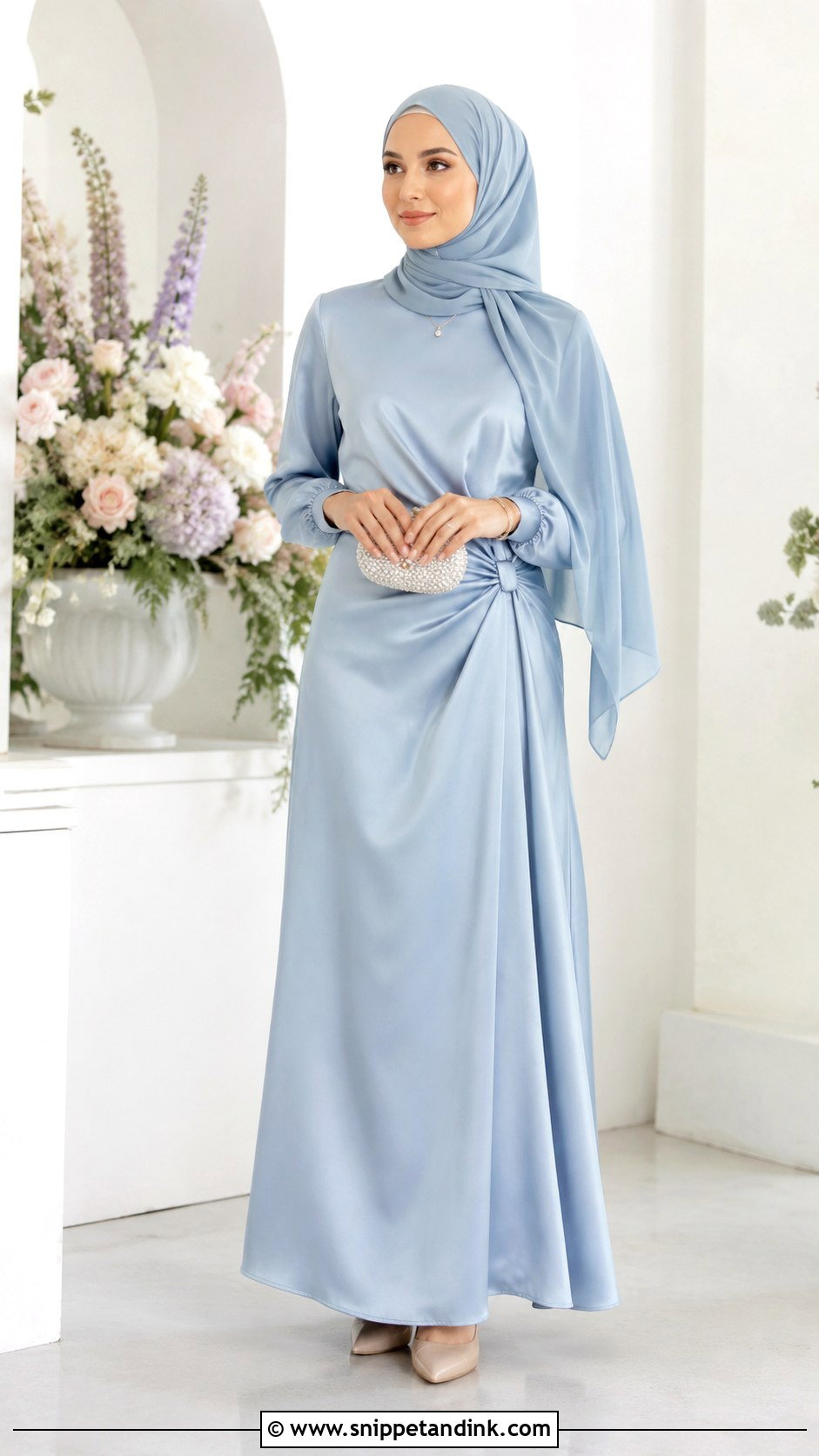
Pastels flatter in daylight and can fade in photos if the fabric is thin or the lighting is harsh. Blush, lavender, mint and powder blue all hold their color better in satin or layered chiffon than in a single sheer layer. Pair the gown with a matching hijab for one smooth line, or a neutral scarf to make it feel more grown-up. Nude heels, a pearl clutch and delicate jewelry keep the palette soft. Very light gowns need opaque lining, no exceptions. Spring weddings, engagement parties and graduations suit these colors.
22. Navy Gown With Hijab
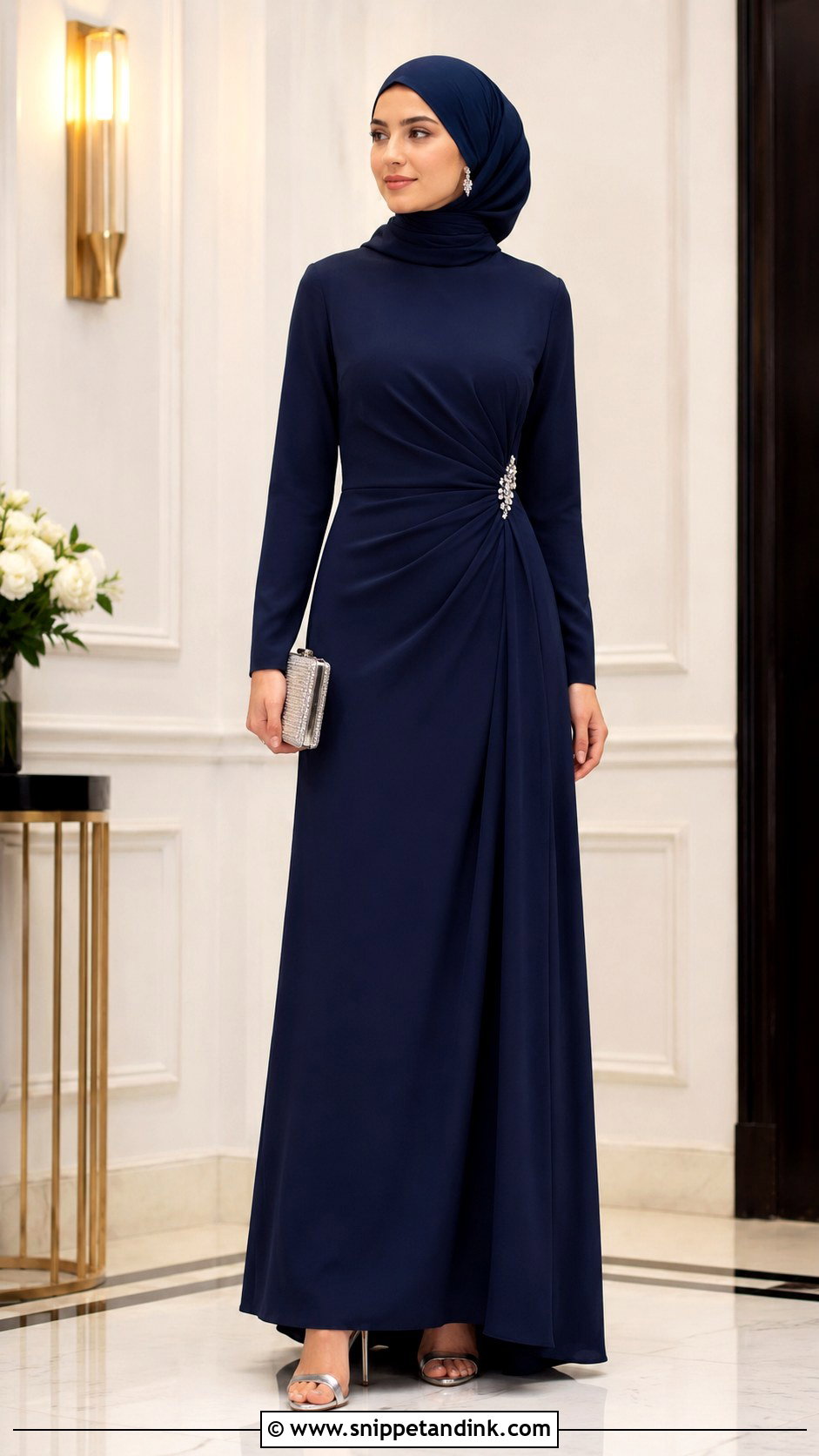
Navy is the shade I suggest to clients who want black’s formality with a softer effect near the face. It works in daylight and evening alike, and satin, velvet, crepe and chiffon all take the color well. A navy hijab creates a long, elegant line, while silver, gray or soft blue adds contrast. With a plain gown, a jeweled brooch at the hijab pin or delicate earrings is enough. With embellishment, keep accessories minimal. Metallic heels and a small clutch finish it for weddings, receptions and graduation dinners.
23. Emerald Gown With Hijab
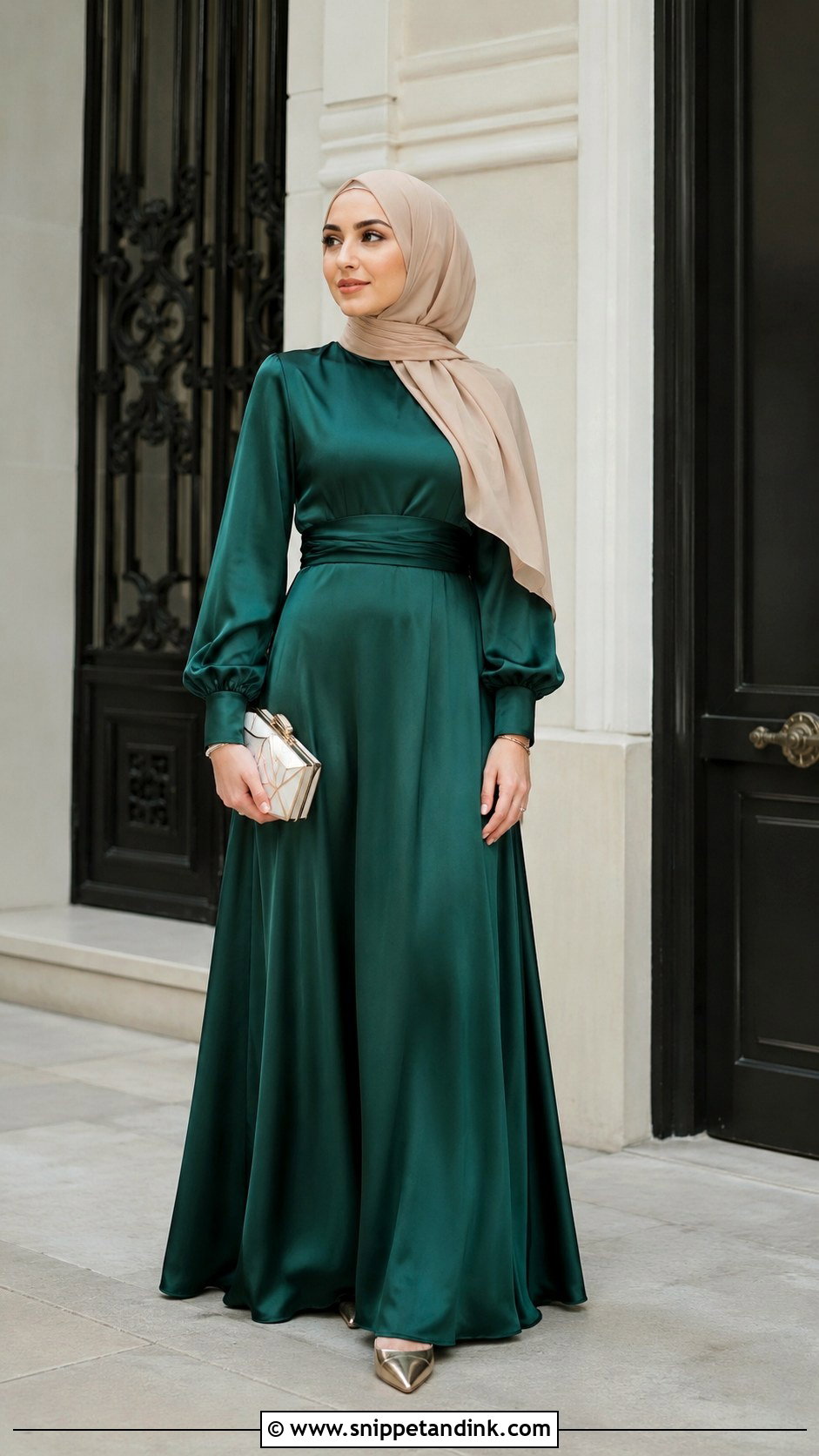
Emerald is a confident color that suits most skin tones, and it looks richest in satin and velvet under evening light. A matching emerald hijab makes a bold monochrome outfit; beige, champagne or soft gold brightens the face. Keep the gown modest with long sleeves, a high neckline and a full-length skirt. Gold-tone accessories pair naturally with emerald, but I keep them small so the color stays the main event. One thing to check is dye consistency: emerald scarves and gowns from different makers rarely match exactly, so compare them side by side in daylight before the day.
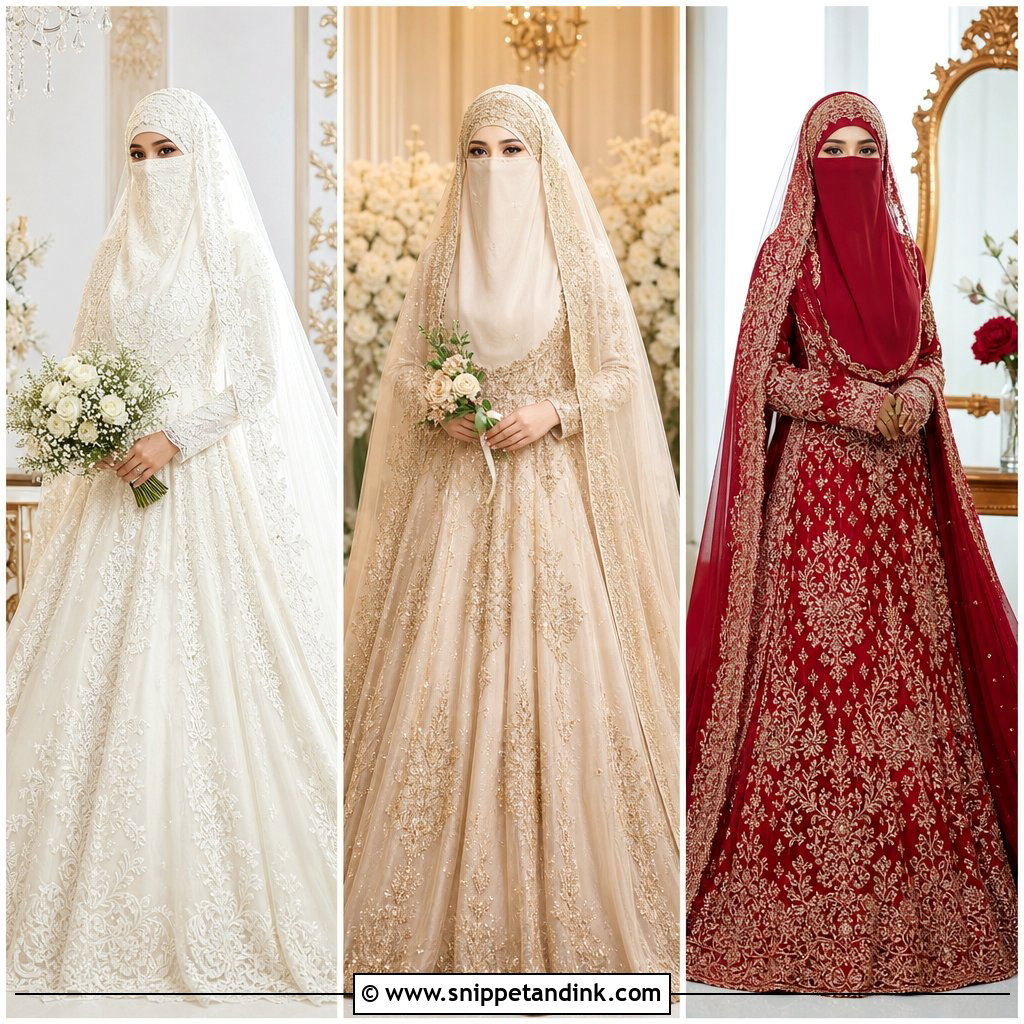
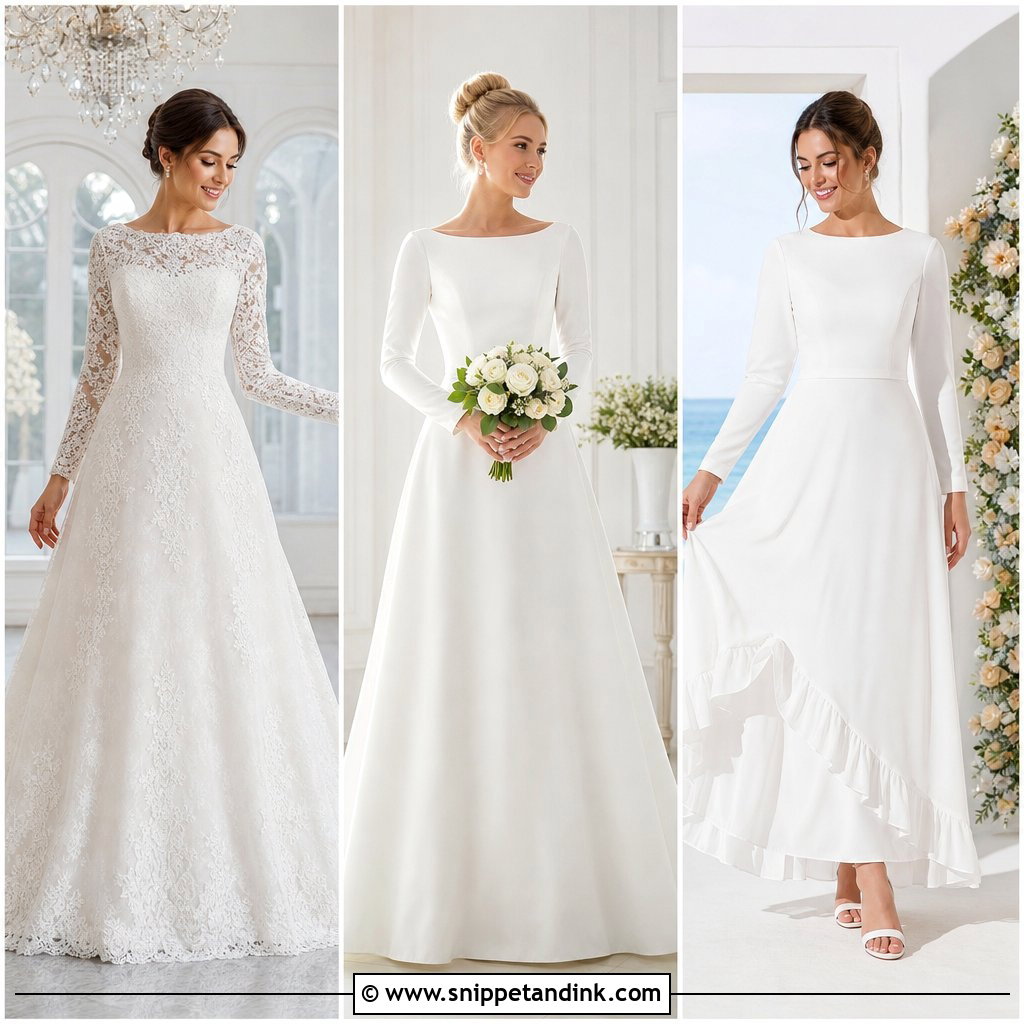
24. Modest Bridal Gown With Hijab
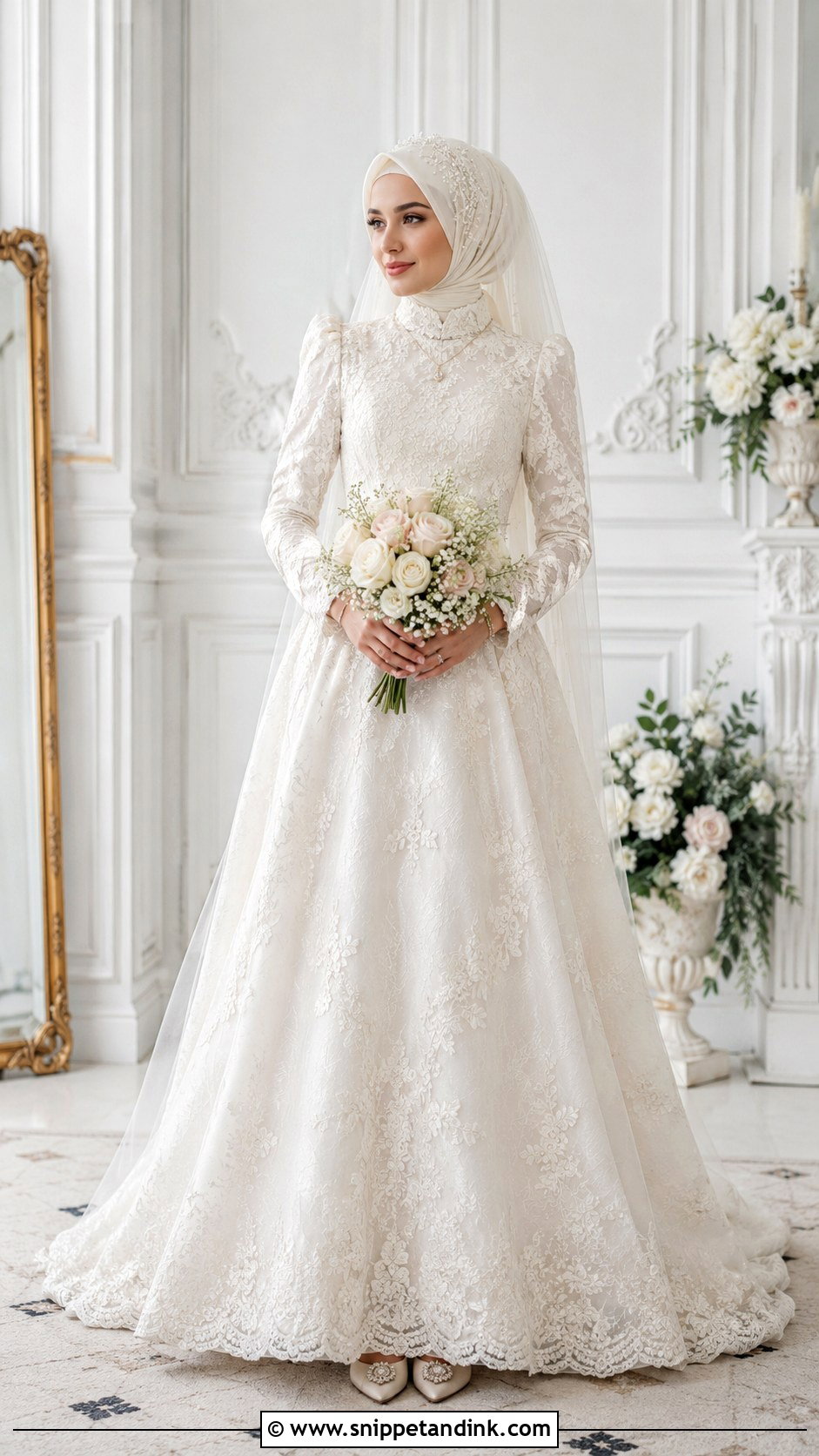
For a bride, the gown has to feel secure from every angle, because you’ll be photographed from the back, the side and above as often as from the front. Look for long sleeves, a high neckline, full lining and a skirt that suits your personality: satin reads clean and modern, lace romantic, tulle soft and full. A matching bridal hijab can sit under a veil, with pearl pins, a delicate headpiece or a clean wrap. I always test the veil over the hijab at the final fitting, because a veil comb needs a firm base to grip, and a slippery satin scarf without an underscarf lets it slide. Heavily embellished gown, smooth hijab; plain gown, lace or pearl details on the hijab.
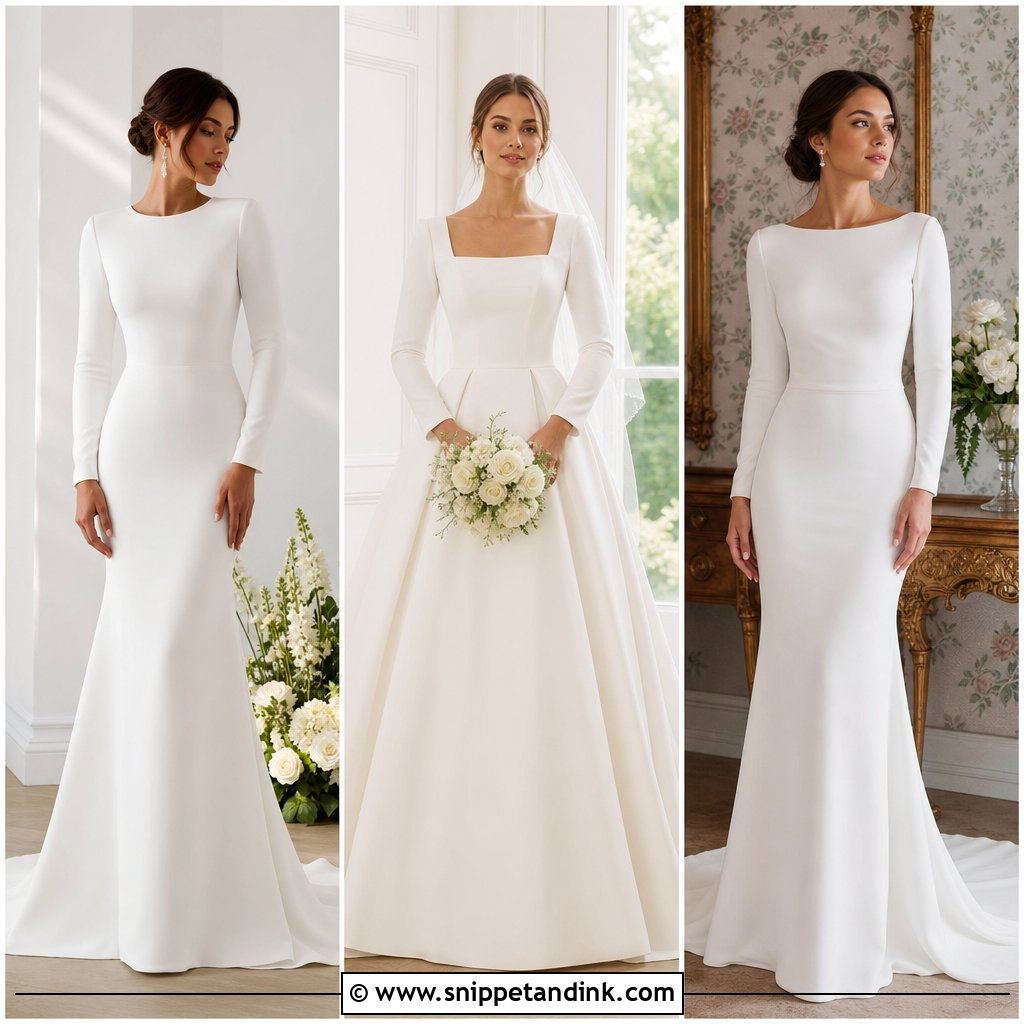

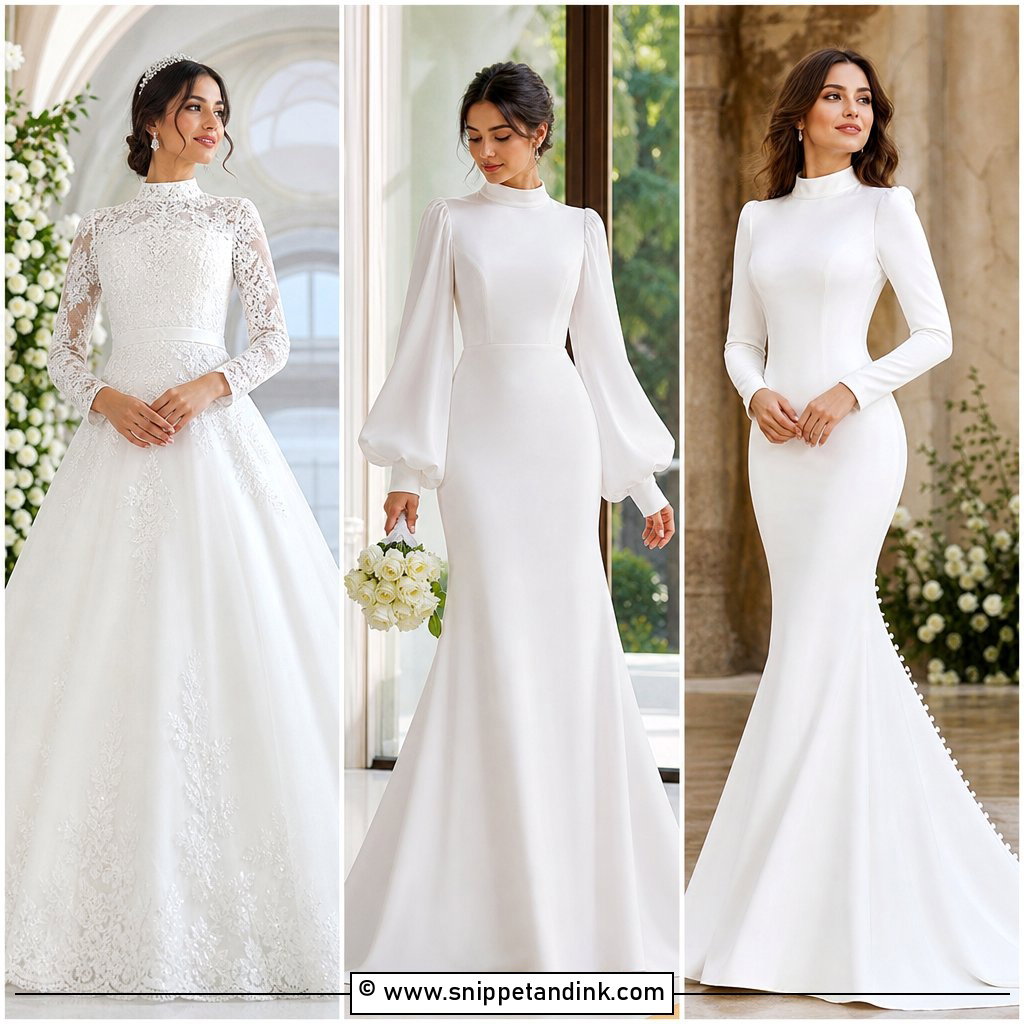

25. Graduation Gown With Hijab
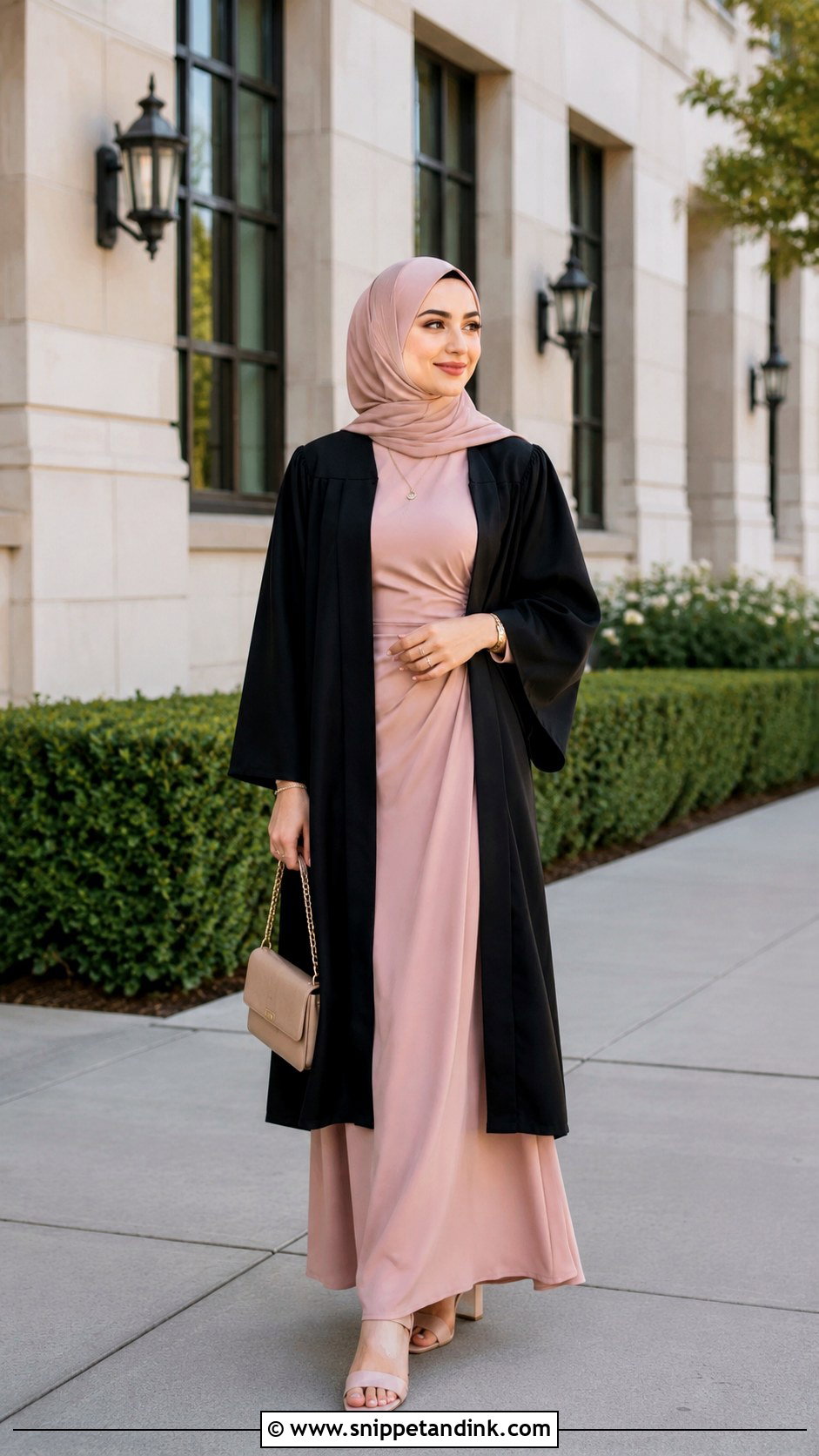
Graduation is the odd one out here, because the gown spends most of the ceremony under a robe. Choose a long, modest dress in smooth fabric that won’t bunch at the shoulders or bulk out the robe’s sleeves. Satin, crepe and chiffon sit neatly and look good in the photos taken once the robe comes off. A hijab in your gown color, school color or a soft neutral ties it together, and you may need to pin the cap to the scarf, so bring spare pins. Block heels or dressy flats are practical for walking across a stage. Keep the bag small, since you’ll hand it to someone anyway.
Sheer Fabric Under Camera Flash and Window Light
A gown can look fully opaque in a fitting room and turn see-through in photographs. Bright window light from behind and direct flash both pass through thin chiffon, light lace and pale satin, showing the outline of legs, slip seams and undergarments. This is the most common coverage complaint I hear after an event, and it’s easy to avoid.
Stand between a window and a friend with a phone, then take a picture with the flash on. If you can see shapes through the skirt or sleeves, ask for a second lining layer or wear a full-length slip in a shade close to your skin tone, not bright white, which shows through pale fabrics. Check the sleeves too, since many gowns line the body but leave chiffon sleeves single-layer.
Steaming Satin and Packing Chiffon for the Day
Satin and chiffon need opposite care. Satin marks if you iron it directly, so steam it from the inside, keeping the nozzle moving, and hang it for an hour before wearing so the fabric settles. Chiffon creases less, but pulls easily, so keep it away from sequin bags and bracelet clasps.
For travel, hang the gown in a breathable cotton bag rather than plastic, which can trap moisture. Fold the hijab around tissue paper rather than flat on itself, and carry a small kit of spare pins, a magnetic pin or two, a lint roller and a travel steamer. Pins bend and scarves slip over a long day, and fixing it in two minutes beats spending the reception tugging at the fabric.
Letting the Fabric Lead the Whole Outfit
Start with the occasion, then let the fabric guide the rest. Satin is polished, chiffon soft, velvet rich, and lace or embroidery brings its own detail, so each needs a different amount of help from the hijab and accessories. A matching scarf gives one unbroken line; a soft contrast scarf lifts the face. Shoes, bags and jewelry should support the gown instead of competing with it. And whatever you choose, sit, walk and raise your arms in it before the day, with the actual hijab on, because that is when you find out whether it truly works for you.
You'll Like These Ideas:








Leave a Reply