
Most of the hijabi brides I dress don’t want the heaviest gown in the room. They want full coverage, a clean line from chin to hem, a hijab that stays put through hugs and photos, and shoes they can stand in for hours. The dresses below keep the design quiet so those practical details can do their job. You’ll see satin and crepe gowns, lace sleeves, abaya-inspired bridal looks, pearl trims and a couple of two-piece options. For each one I’ve thought about the whole outfit, from how the hijab sits at the neckline to the shoes and bouquet, because a modest look only feels calm when every layer agrees with the next.
Where the Hijab Meets the Gown
Most of the problems I fix on a hijabi bride’s wedding morning happen at the neckline, not in the skirt. A slippery chiffon hijab on a satin collar slides all day. A heavy veil pulls the whole wrap backward. Pins leave holes in silk. So I plan the hijab as part of the dress, and I bring both to every fitting.
- Start with an underscarf or bonnet in cotton or jersey. It grips the hair and gives every pin something to hold besides the outer fabric.
- Match the hijab fabric to the gown’s surface. Matte crepe hijabs stay put on satin; a satin hijab on a satin gown slides.
- On silk and satin, I use magnetic pins or fine pearl-headed pins placed through the underscarf, which avoids visible holes.
- Wear the full wrap at your last fitting. A high neck plus extra hijab layers can feel tight, and the collar may need a small adjustment.
Ask your hijab stylist and your dressmaker to see the same photos. It’s a small step, and it stops two people designing two different outfits.
1. Simple Satin Hijab Wedding Dress
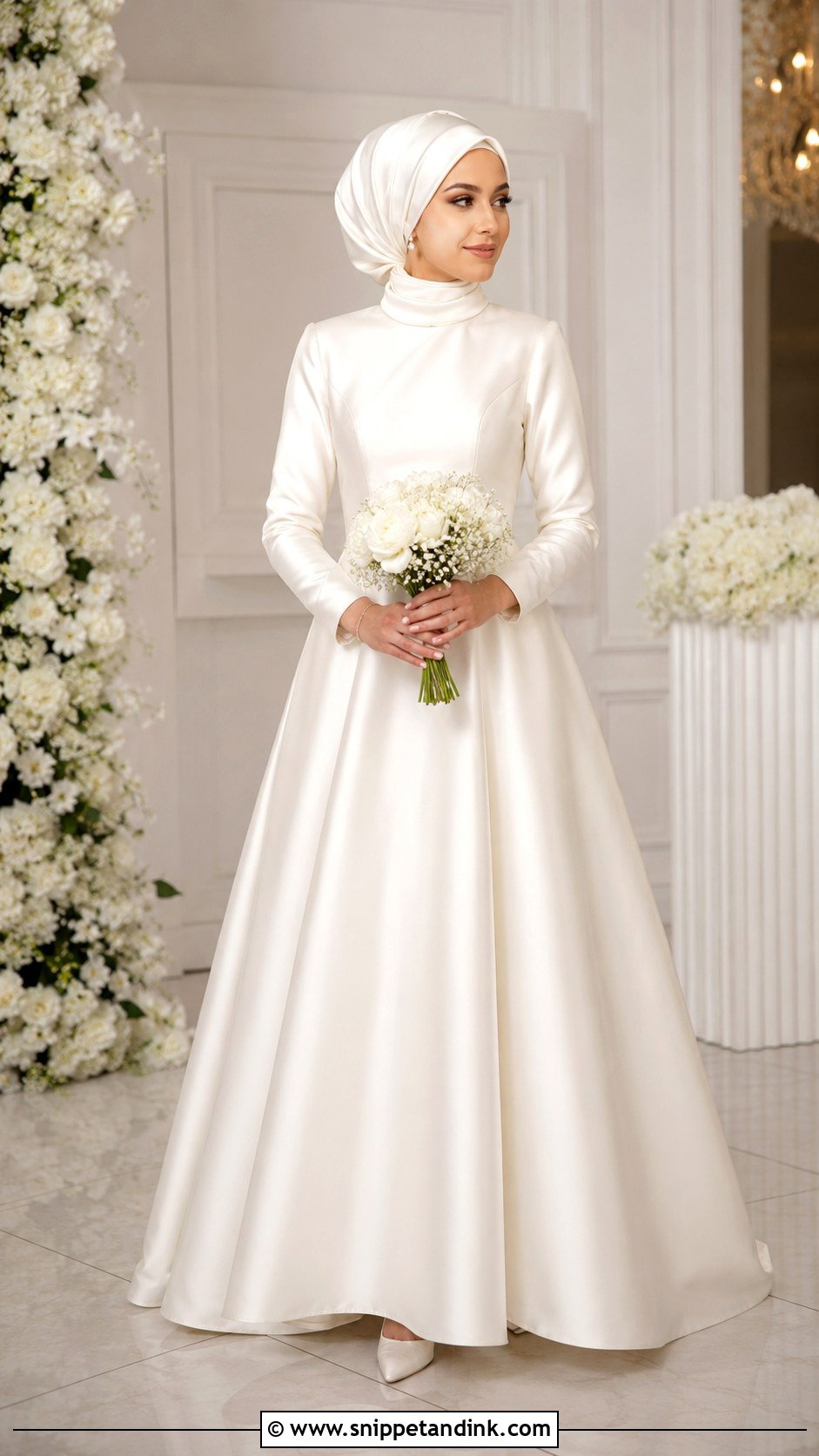
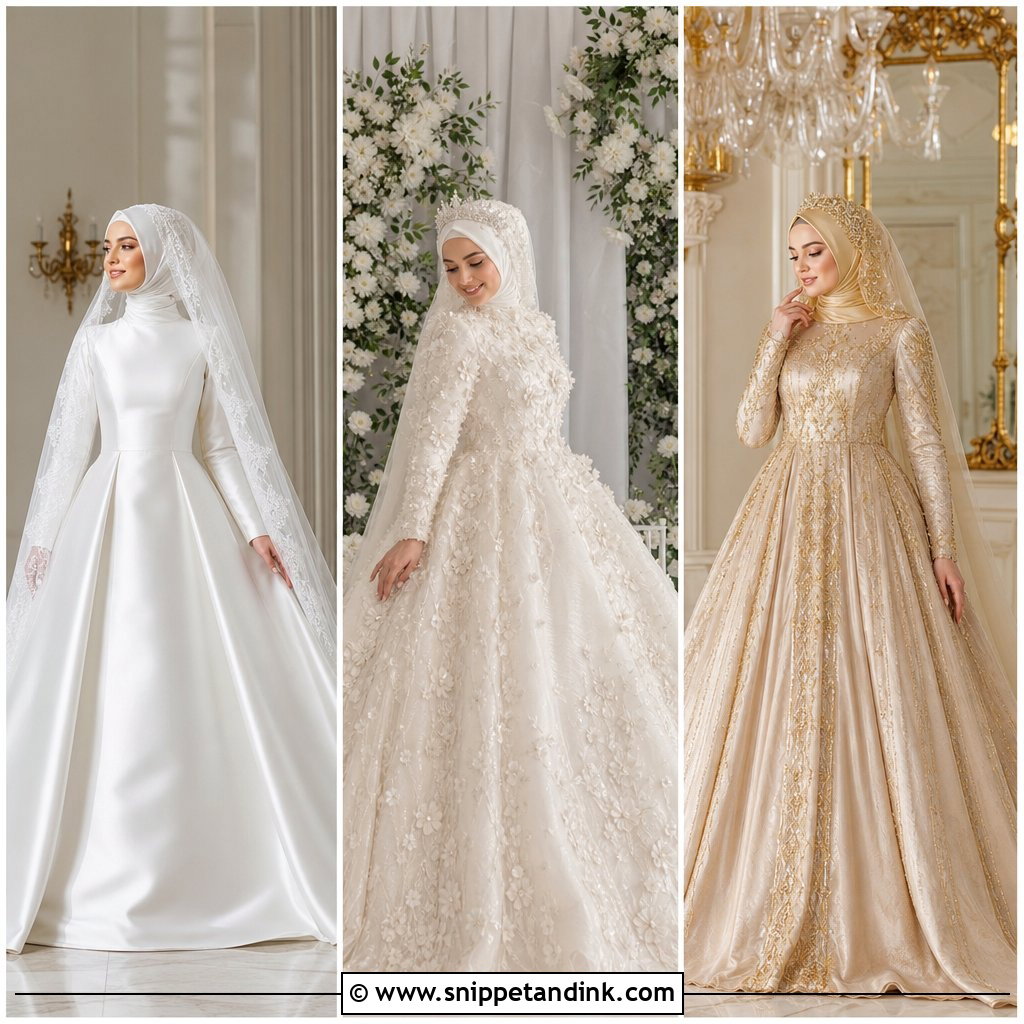
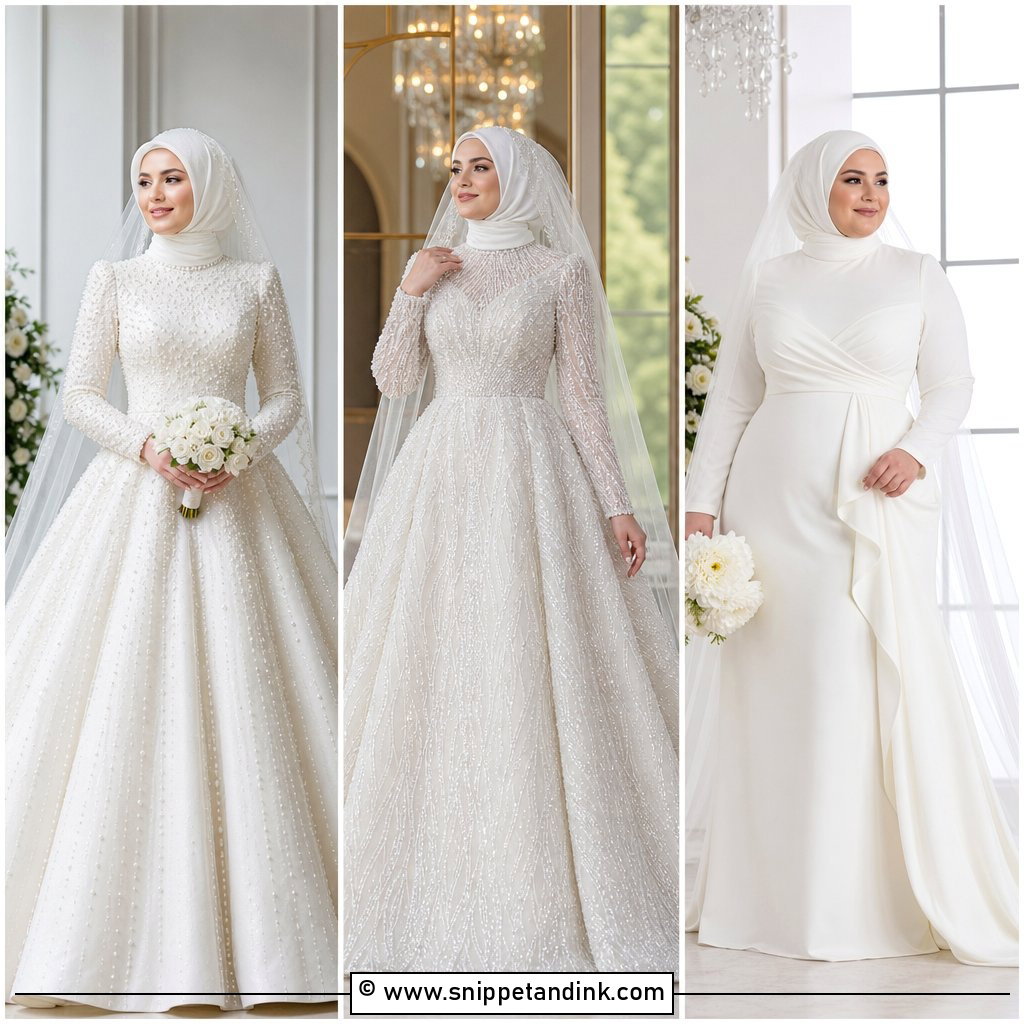
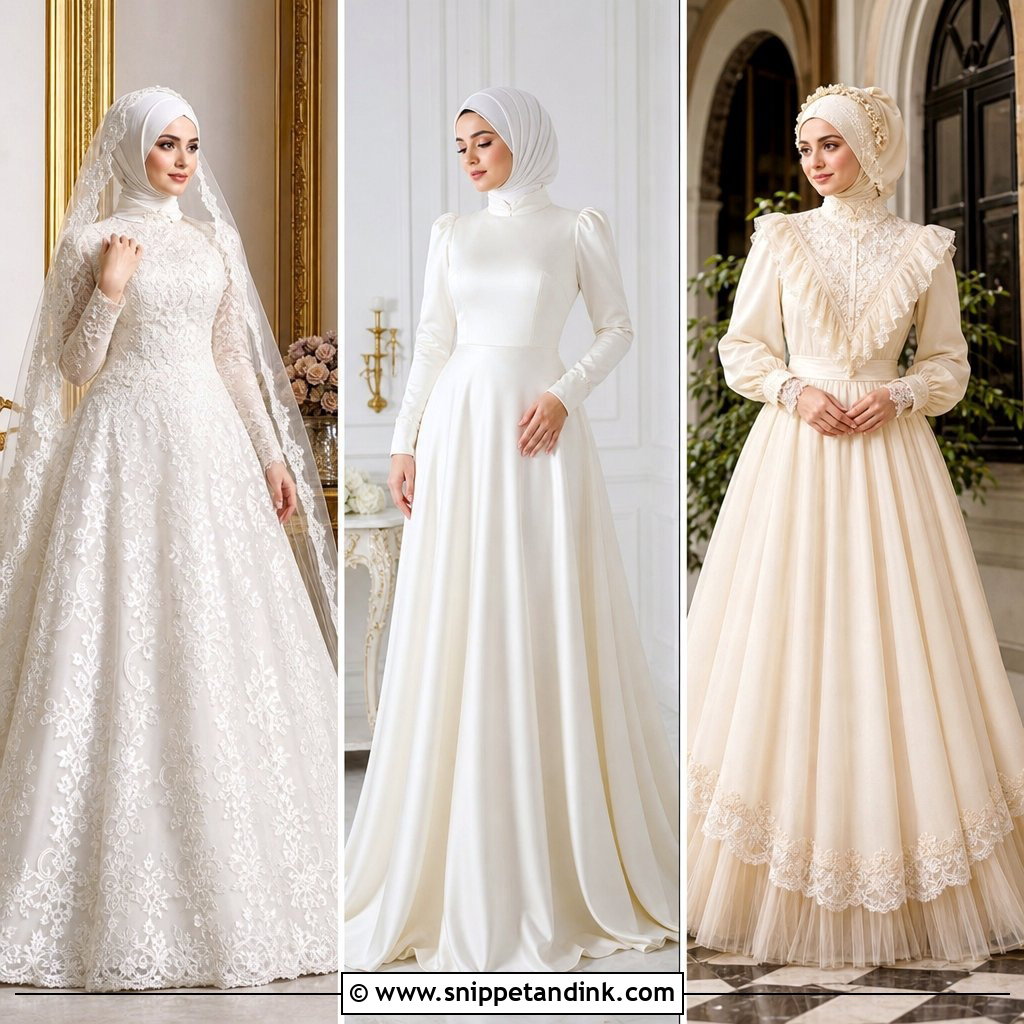
Satin carries its own shine, so a long-sleeve satin gown needs almost nothing added. Choose a high neckline, a smooth A-line skirt and a softly structured waist. One honest warning: satin creases where you sit, and heavy duchess satin shows it more than a lighter satin-back crepe, so I steam the skirt again right before the ceremony. A matching satin or chiffon hijab wrapped close to the face, pearl studs, a slim bracelet and closed-toe ivory heels finish it. Hotels and ballrooms suit it best, since warm indoor light brings out the sheen.
2. Crepe Hijab Wedding Dress With Long Sleeves
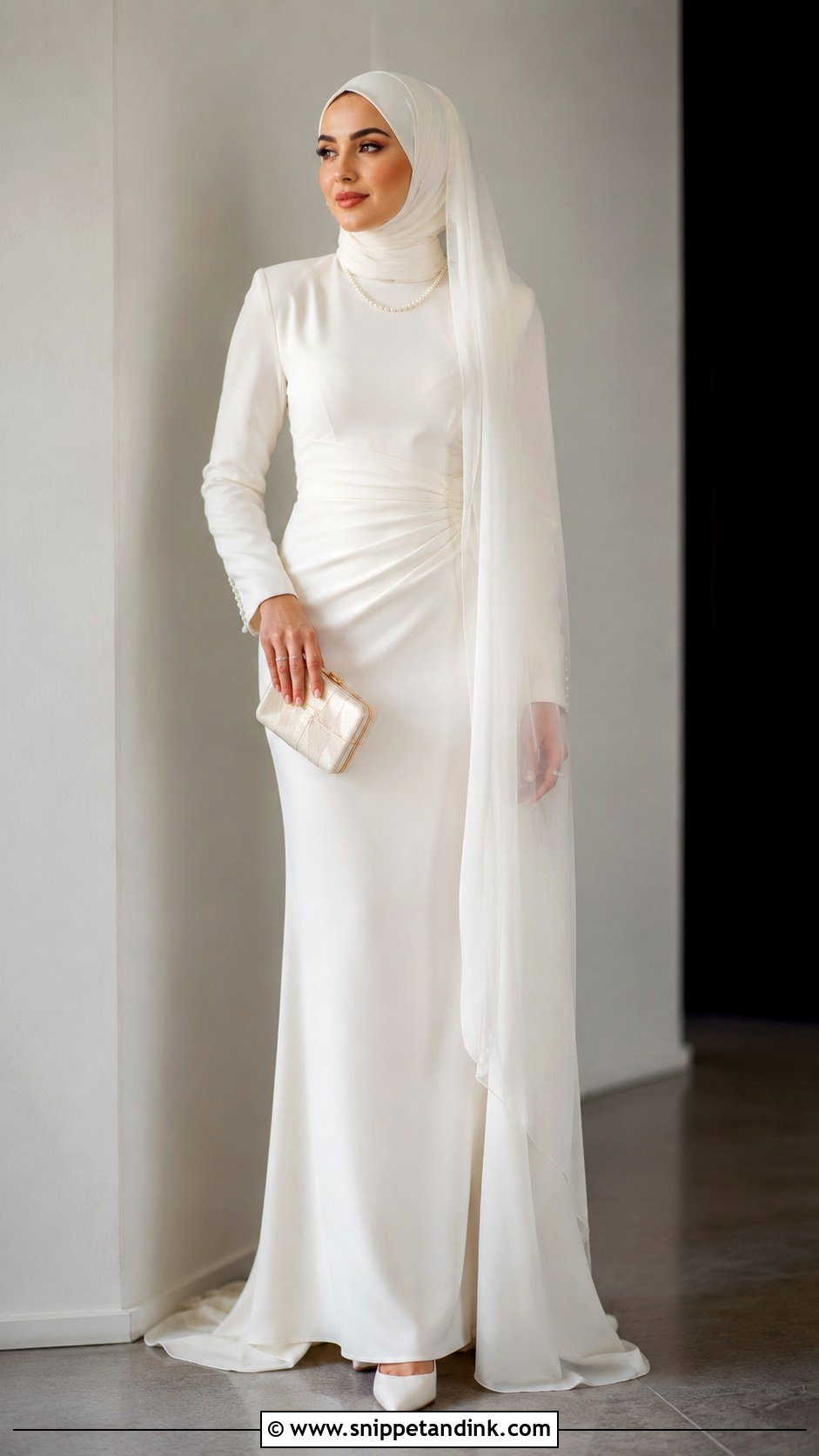
Crepe has a matte, fluid surface that looks modern without any shine. A high-neck crepe gown with long sleeves and a gentle column shape gives a very clean modest outline, and a thin belt adds definition if you want it. The catch is that crepe drapes close and shows whatever is underneath, so I fit these over the exact slip and shapewear the bride will wear on the day. Style it with a soft chiffon hijab in the same ivory, pointed pumps and a structured clutch. Keep jewelry fine: small pearl earrings or a slim ring stack. It suits city weddings and civil ceremonies.
3. A Line Hijab Wedding Dress With Plain Hijab
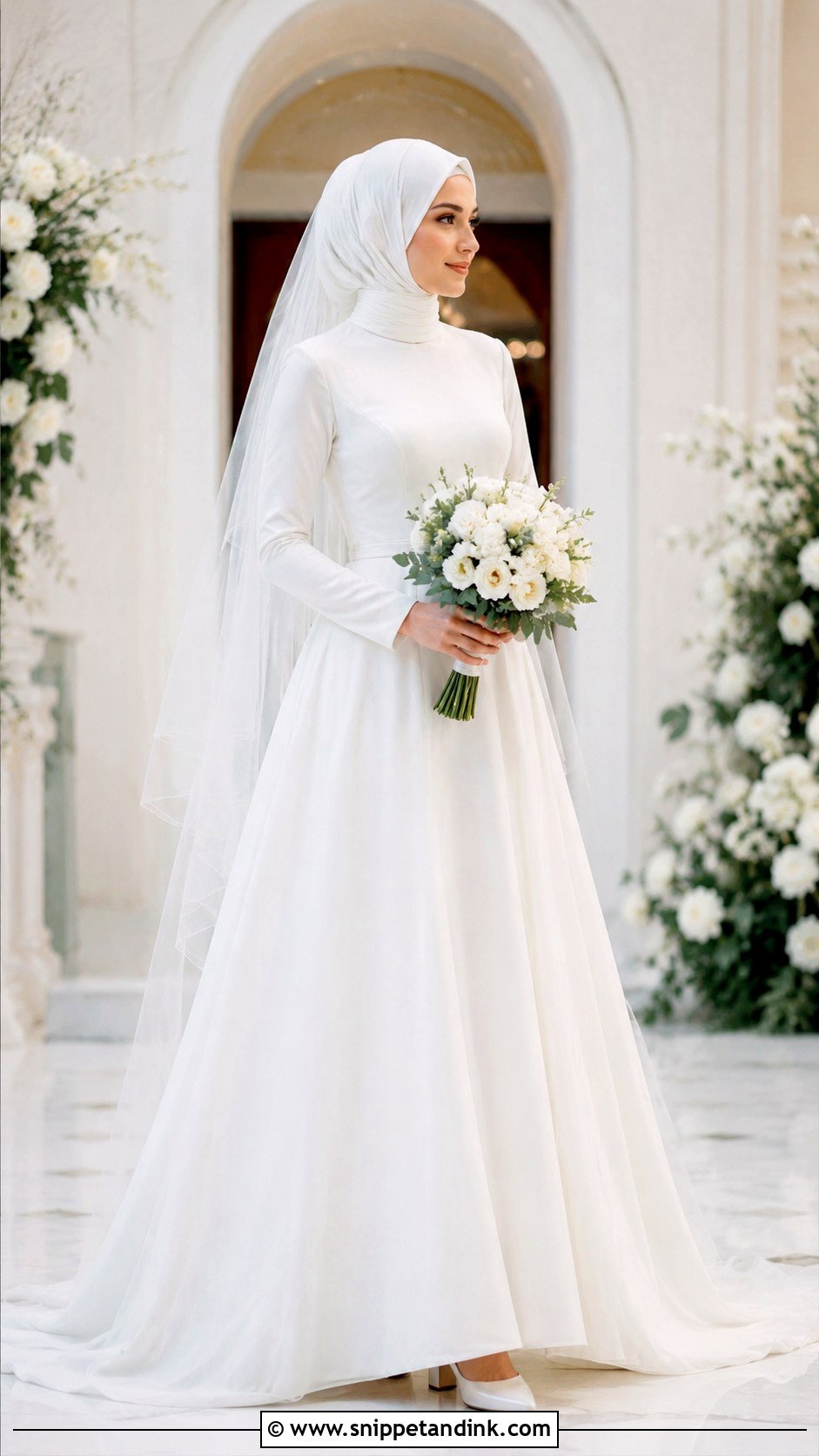
If a bride is unsure what shape she wants, A-line is usually where I start her. The fitted bodice gives structure and the skirt flares from the waist, so it skims rather than clings and you can walk, sit and climb steps easily. Keep it simple with long sleeves, a high neckline and very little embellishment, then add a plain hijab in chiffon, georgette or satin. Low block heels help if you’ll be standing for receptions and greetings. A soft veil over the hijab brings the traditional bridal feel without adding weight.
4. Lace Sleeve Hijab Wedding Dress
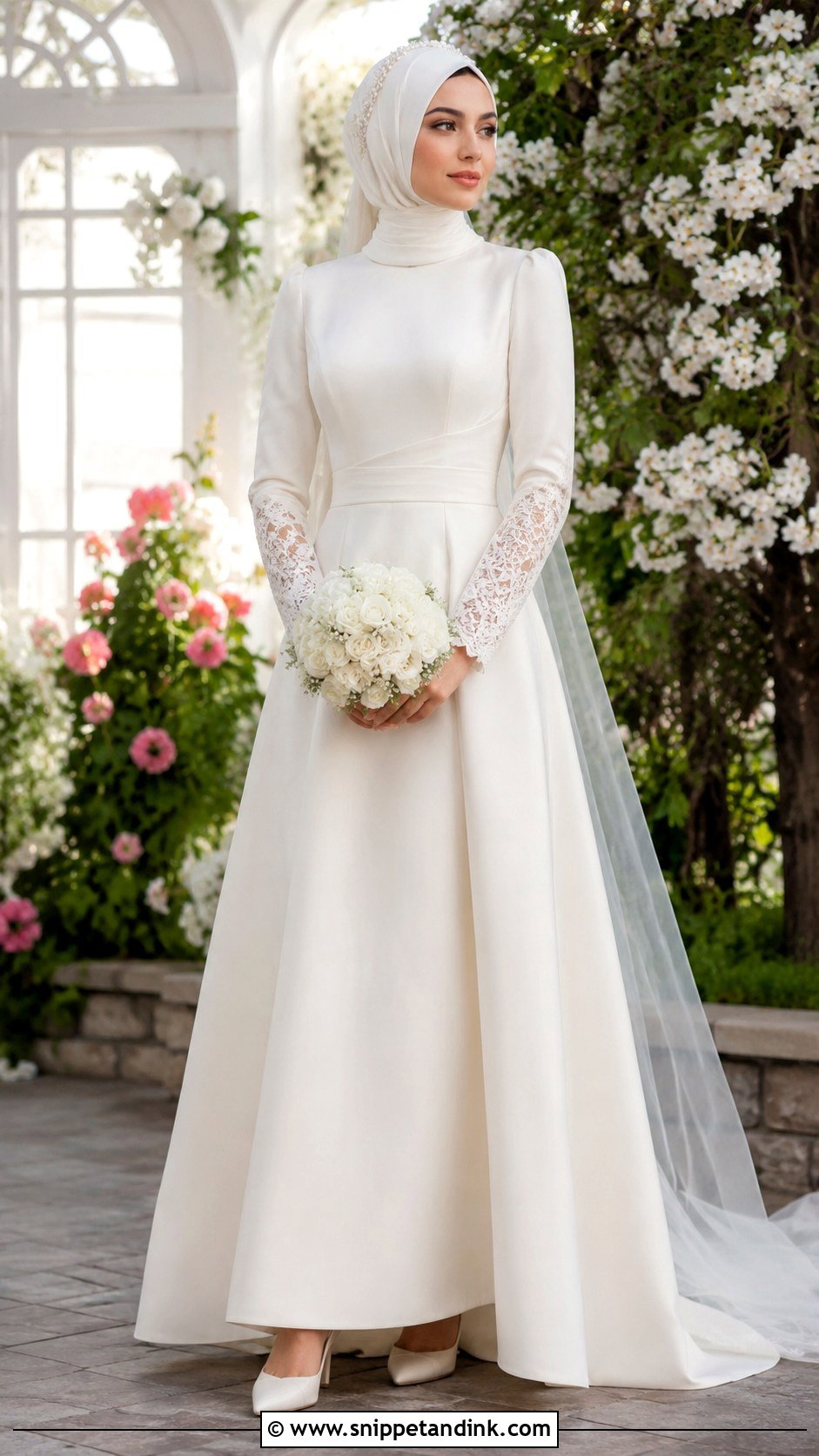
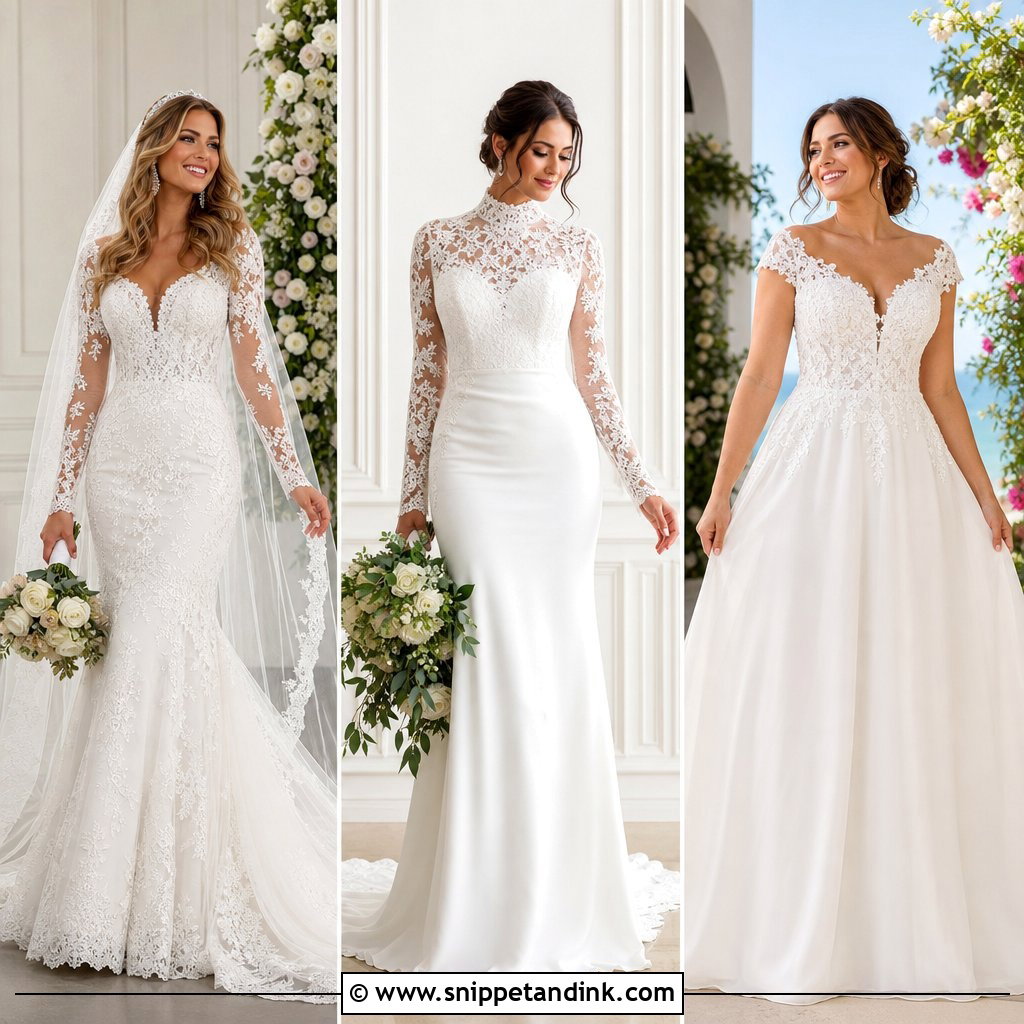
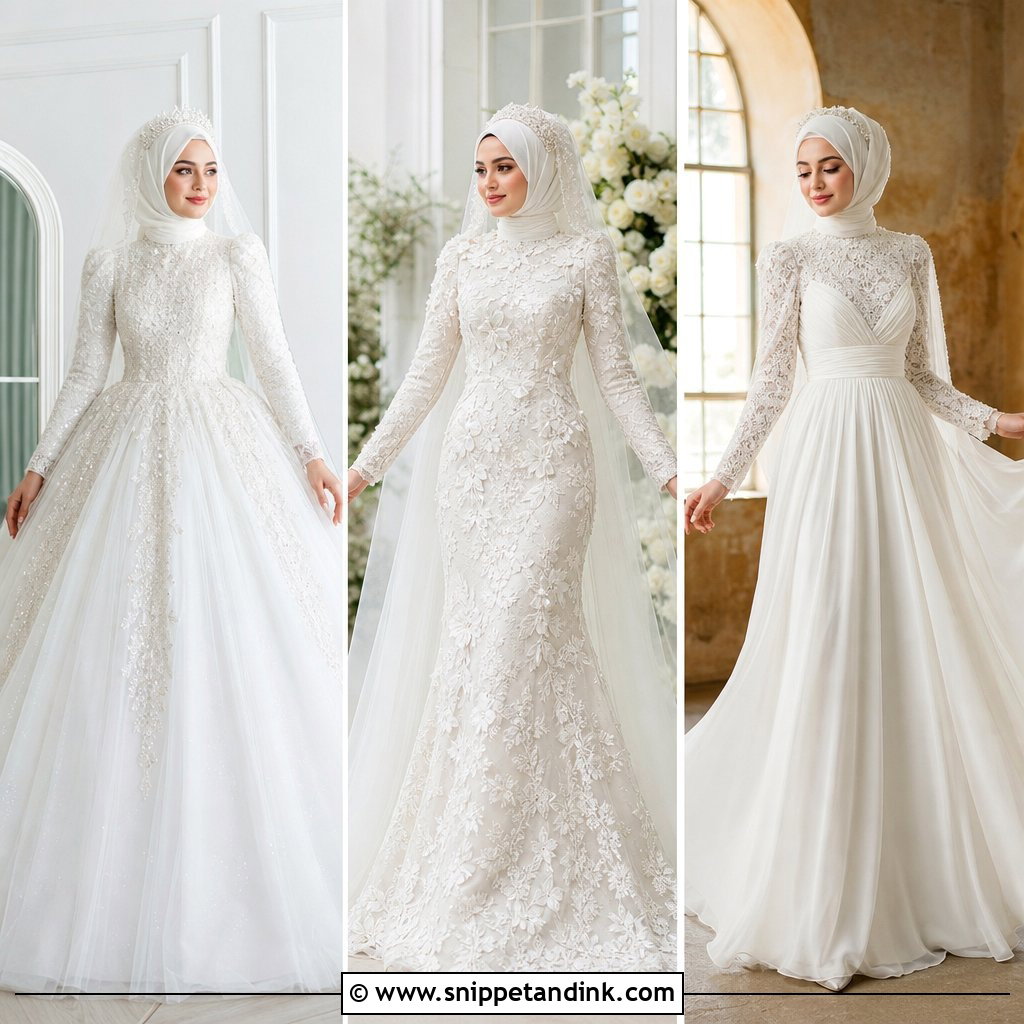
Lace only on the sleeves gives you romance without a fully embellished gown. Choose a plain crepe or satin dress with delicate lace only on the sleeves, perhaps finished at the cuff. Check the lace is lined or backed with skin-tone mesh if you want full arm coverage, since many lace sleeves are see-through unless you ask. A smooth hijab lets the lace be the one detail. I’d add ivory heels, a pearl hairpiece pinned over the hijab and a rounded bouquet. It feels right at a spring garden ceremony or a daytime reception.
5. High Neck Hijab Wedding Dress
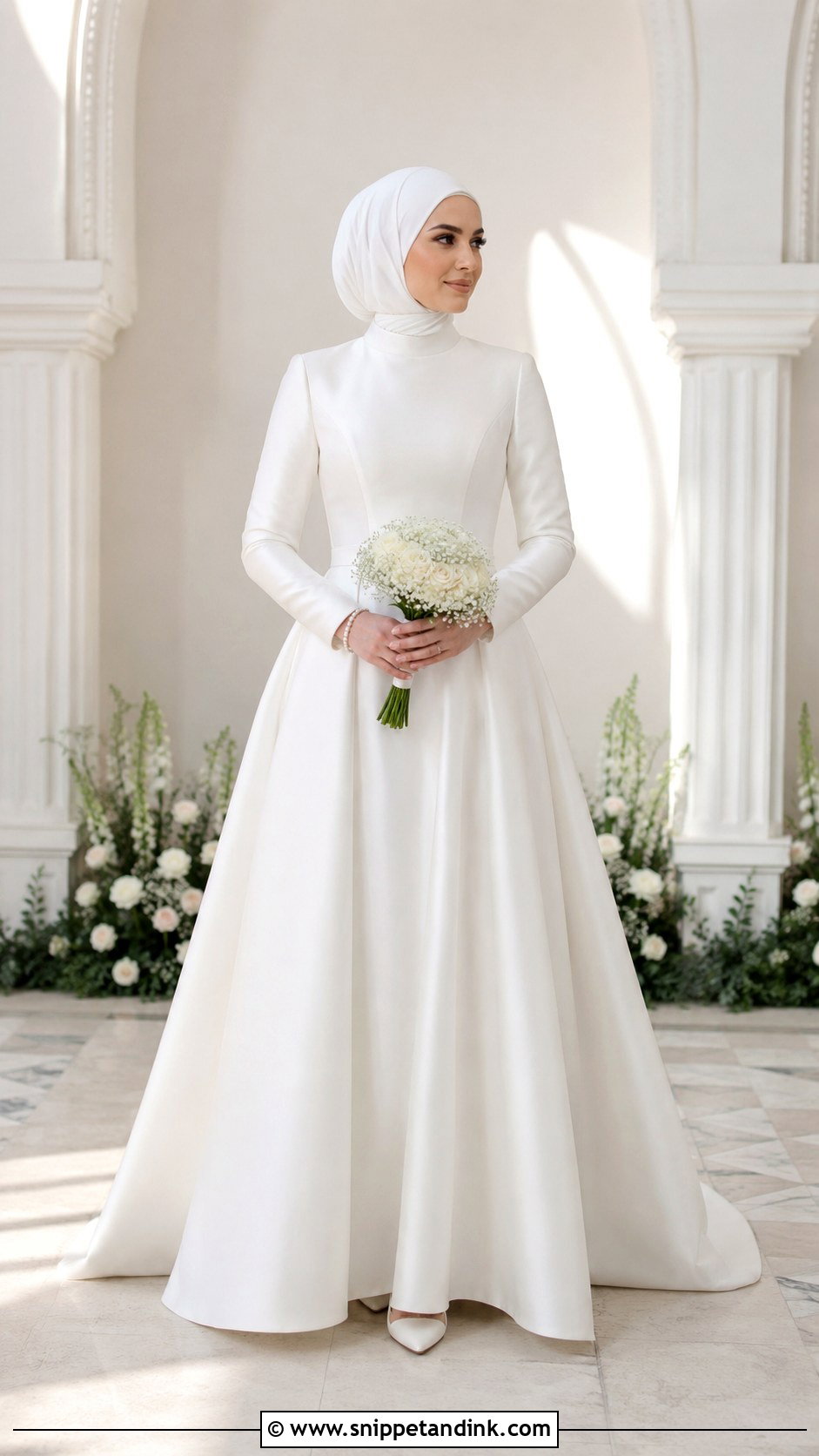
A high neck does half the modesty work for you. The hijab can sit smoothly against it without extra layers bunched at the chest, which is where many hijab looks start to feel bulky. Choose long fitted sleeves, a slightly flared skirt and a clean back. Satin, crepe and mikado all hold this neckline well; softer fabrics can collapse at the collar unless it’s interfaced. A tucked chiffon hijab frames the face neatly. If your style hides the ears, skip earrings and put the sparkle in a bracelet or ring instead. Closed ivory pumps and a compact bouquet finish it.
6. Simple Ball Gown Hijab Wedding Dress
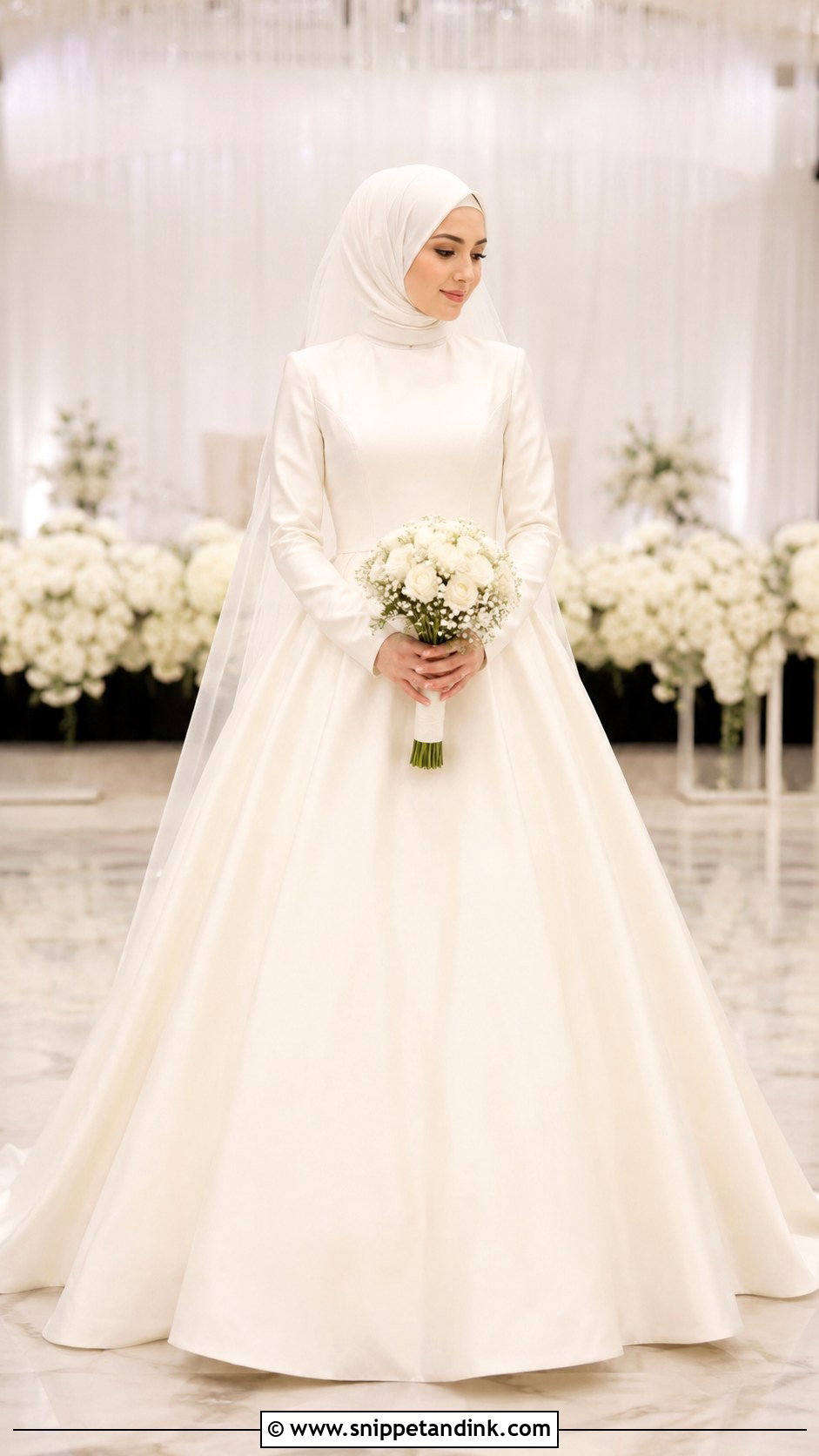
A ball gown stays simple when all the drama lives in the volume and none in the decoration. Look for a smooth bodice, long sleeves, a high neckline and a full skirt without heavy beading. Ask how the skirt gets its shape: a built-in hoop or a stiff petticoat changes how you sit, use the bathroom and get into a car, and I’d rather a bride find that out at the fitting. A matte chiffon hijab balances the rich skirt, and platform or comfortable heels matter even though nobody sees them. A short veil over the hijab adds ceremony. It belongs at a formal reception or a large family wedding.
7. Pearl Detail Hijab Wedding Dress
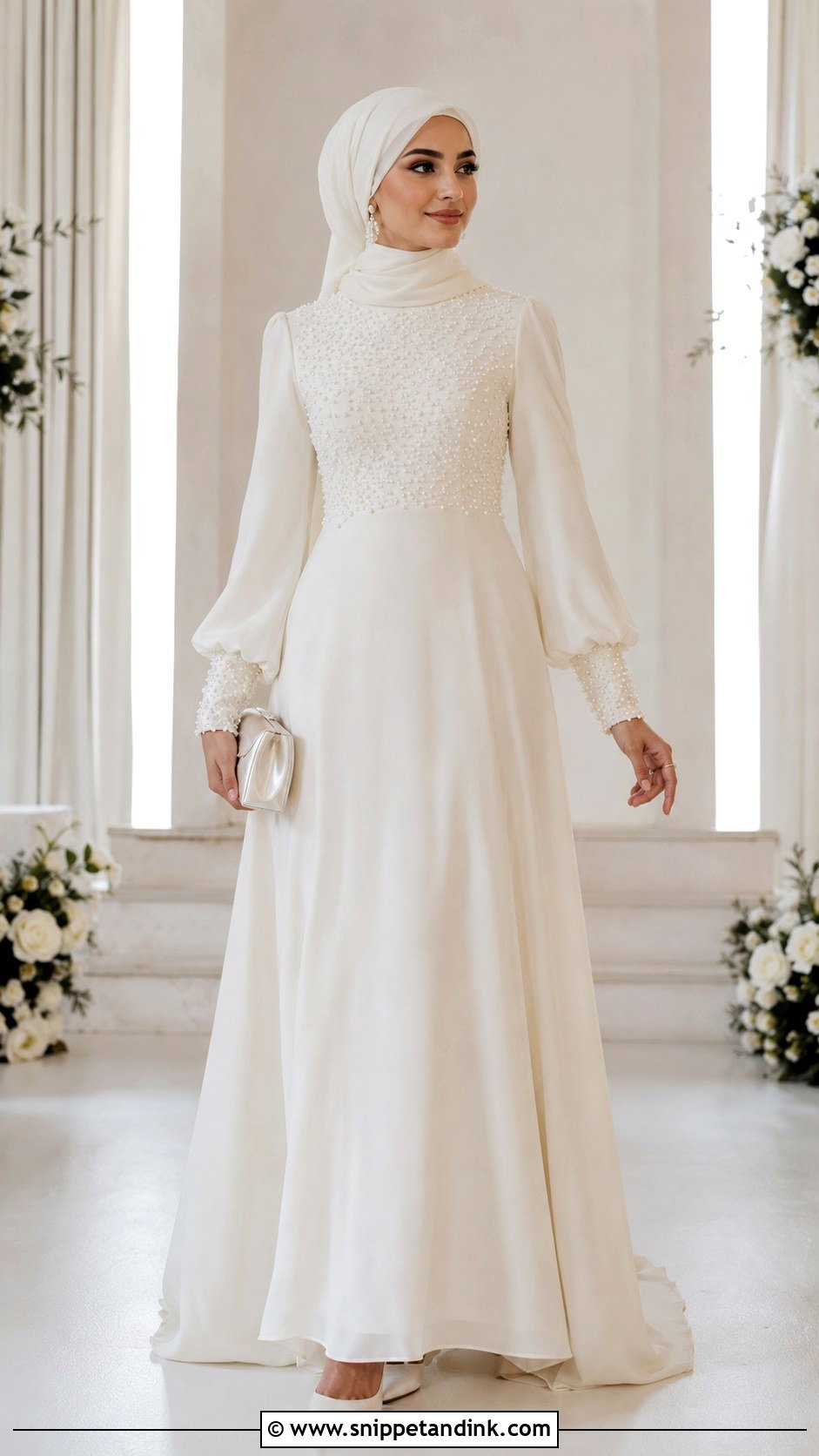
Pearls give a modest gown a soft glow instead of a crystal sparkle. Tiny pearls on the cuffs, neckline or waist are enough. When I look at a pearl gown, I turn the trim over: sewn pearls hold through a long day, while glued ones can pop off when you hug people or catch a sleeve. A smooth long-sleeve skirt lets the pearl accents show. Choose a pearl-trim hijab or a plain chiffon one depending on how subtle you want it, then add pearl earrings, ivory heels and a small satin clutch.
8. Plain Abaya Hijab Wedding Dress
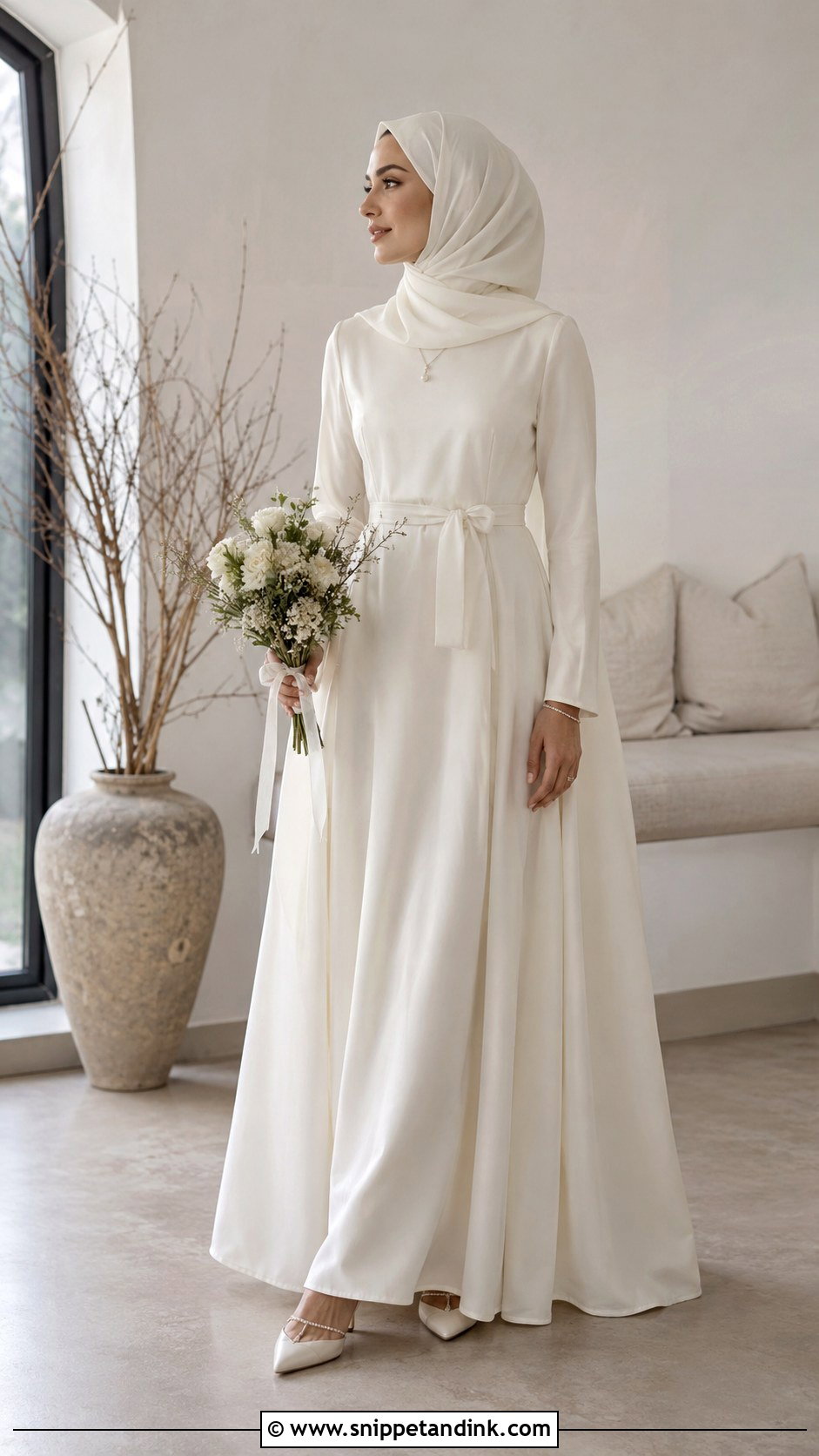
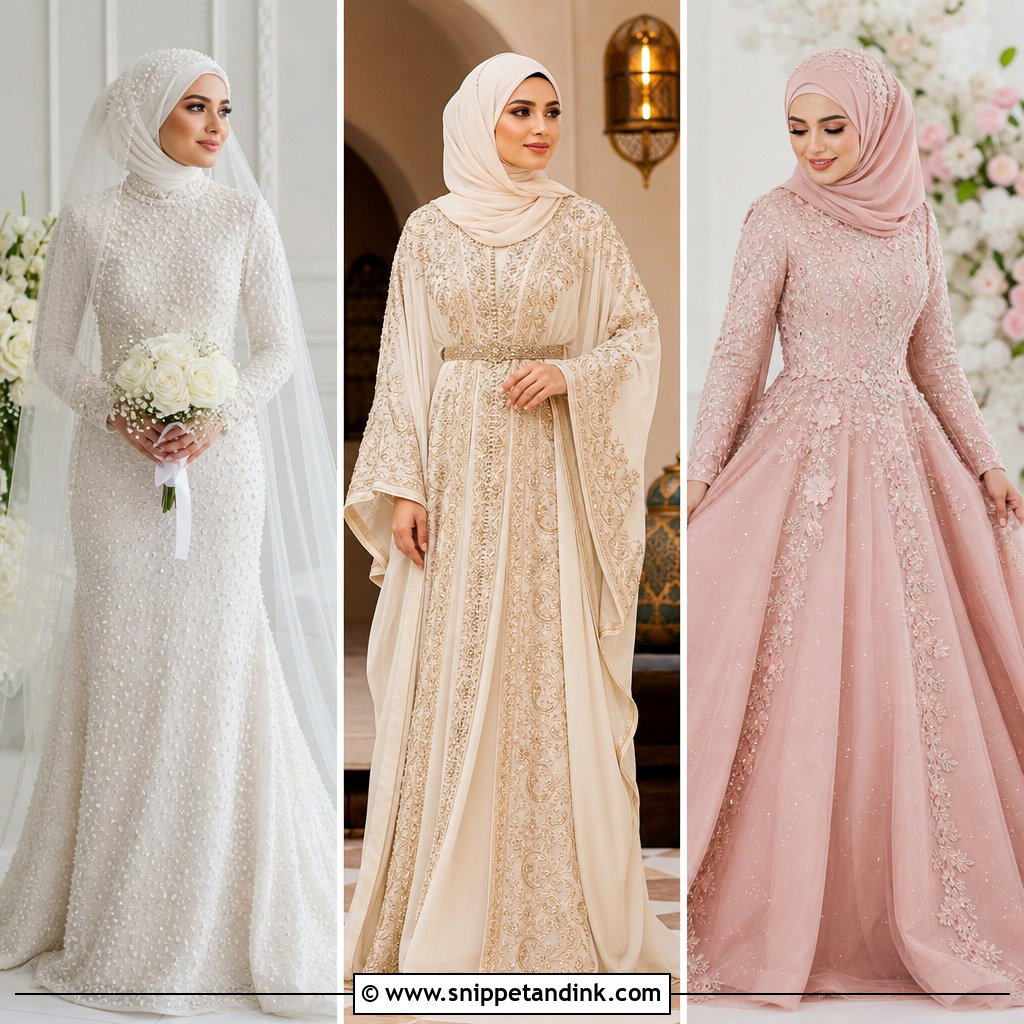
An abaya-style gown flows away from the body, which many brides find the most comfortable modest option of all. Look for ivory or soft white with long sleeves, a closed neckline and a slightly loose shape, plus small details like covered buttons, fine piping or a soft waist tie. Pair it with a matching hijab wrapped smoothly and pointed bridal flats or block heels. Because the shape is loose, fabric weight matters: a light crepe or matte satin moves well, while thin polyester can look like a robe. Slim gold or pearl jewelry and a delicate bouquet finish it. I’d suggest it for an intimate ceremony or a family gathering.
9. Minimalist Hijab Wedding Dress With Belt
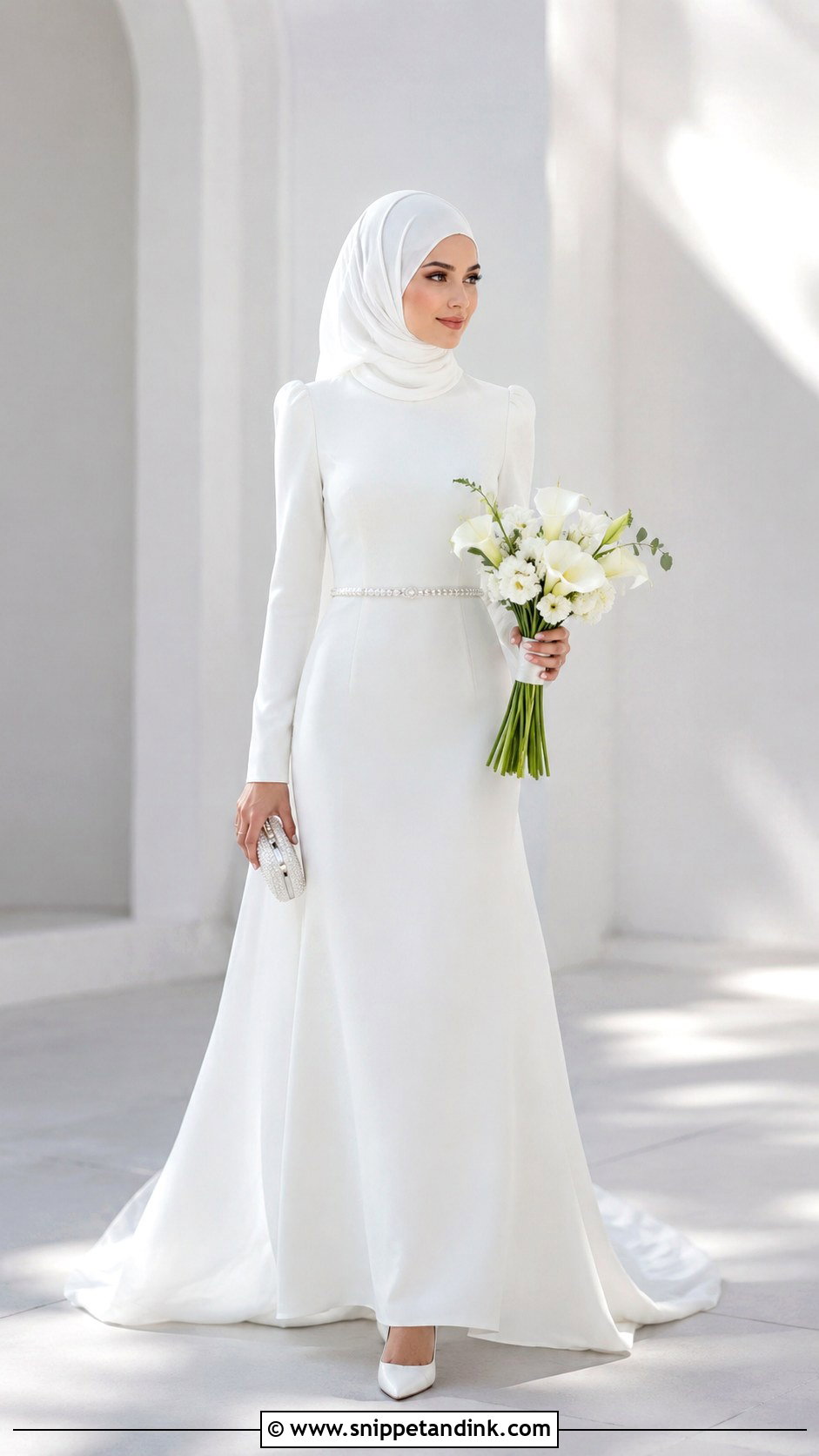
A belt is the cheapest way to make a plain gown look deliberate. Start with a long-sleeve dress in crepe, satin or mikado, then add a narrow belt in pearl, satin or a soft metallic. Have it sewn in place or anchored with thread loops at the side seams, because a loose belt rides up every time you lift your arms. A hijab in the same tone keeps attention on the gown’s shape. Pointed heels, a sleek bouquet and a small clutch complete it. It’s the option I suggest to brides who like modern bridal fashion and still want full coverage.
10. Chiffon Hijab Wedding Dress
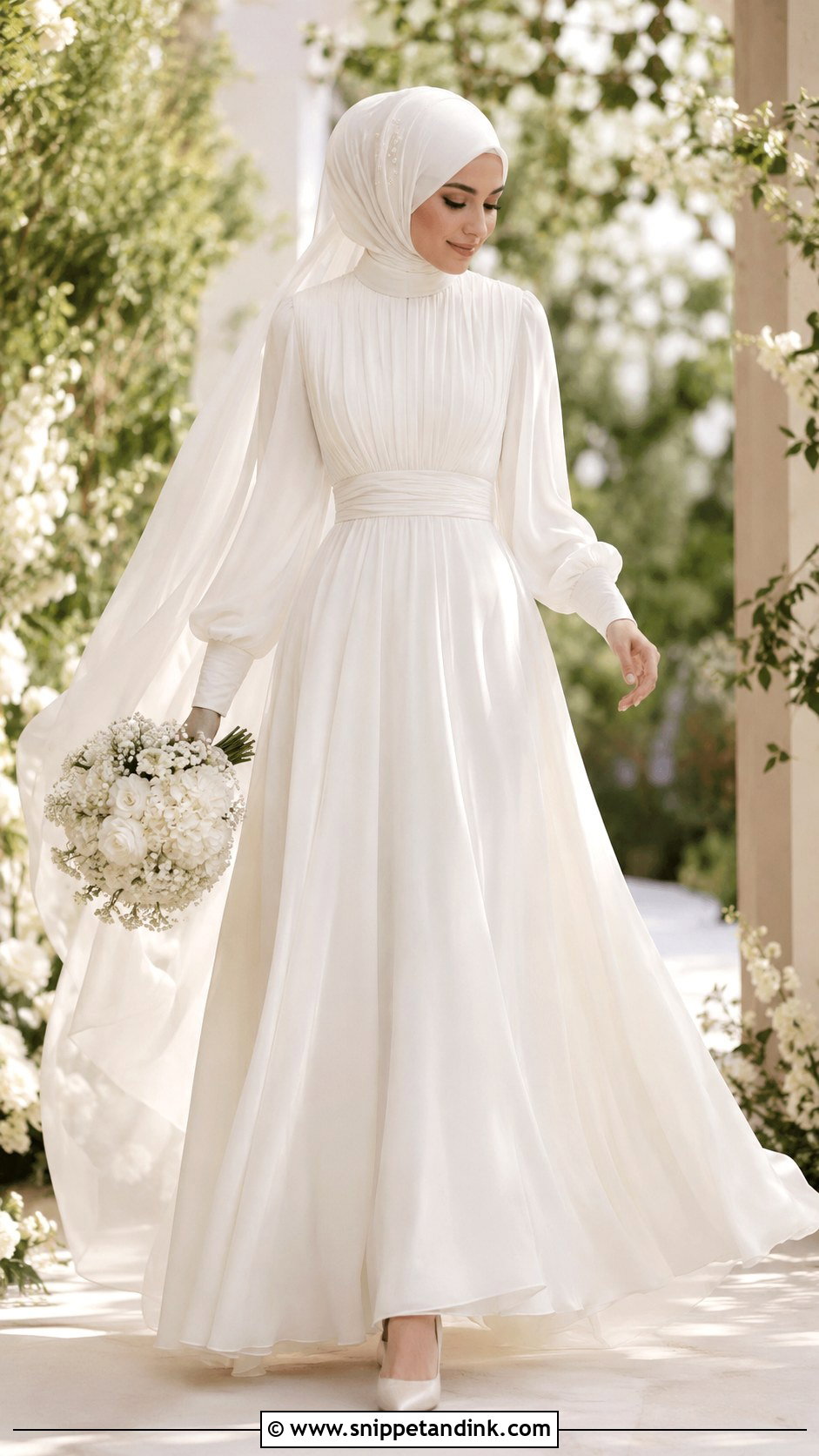
Chiffon moves with every step, so it reads soft and airy in a way stiffer fabrics can’t. Choose a fully lined gown with long sleeves, a high neck and a flowing skirt. Chiffon is sheer on its own, so ask for proper lining, especially in the sleeves, or plan a modest underdress. A matching chiffon hijab drapes softly around the face and shoulders. Keep accessories light: pearl pins, small earrings and comfortable sandals or low heels. I like it for warm weather and outdoor daytime ceremonies, where heavier fabrics would get hot fast.
11. Simple Mermaid Hijab Wedding Dress
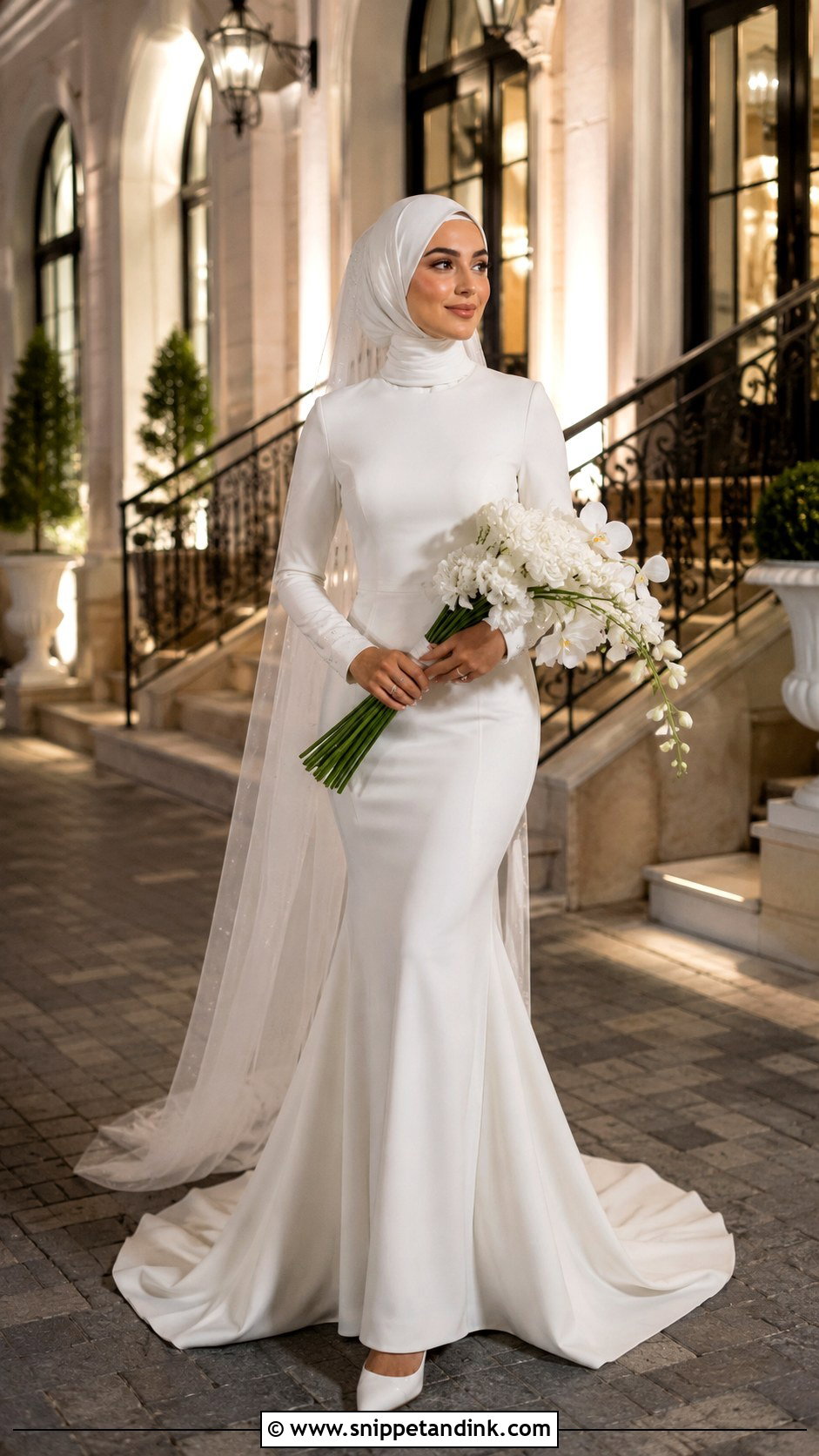
Mermaid gowns are the shape I’m most careful with for modest brides. The skirt should skim the body rather than grip it, and the flare should start at or just below the knee; if it starts too low you’ll shuffle instead of walk, and stairs become a problem. Long sleeves and a high neckline keep it covered. Crepe holds the shape smoothly without clinging. Pair it with a clean hijab, pointed heels and a long-stemmed bouquet, and keep the embellishment minimal so the silhouette stands on its own. Evening receptions and formal venues suit it.
12. Modest Cape Hijab Wedding Dress
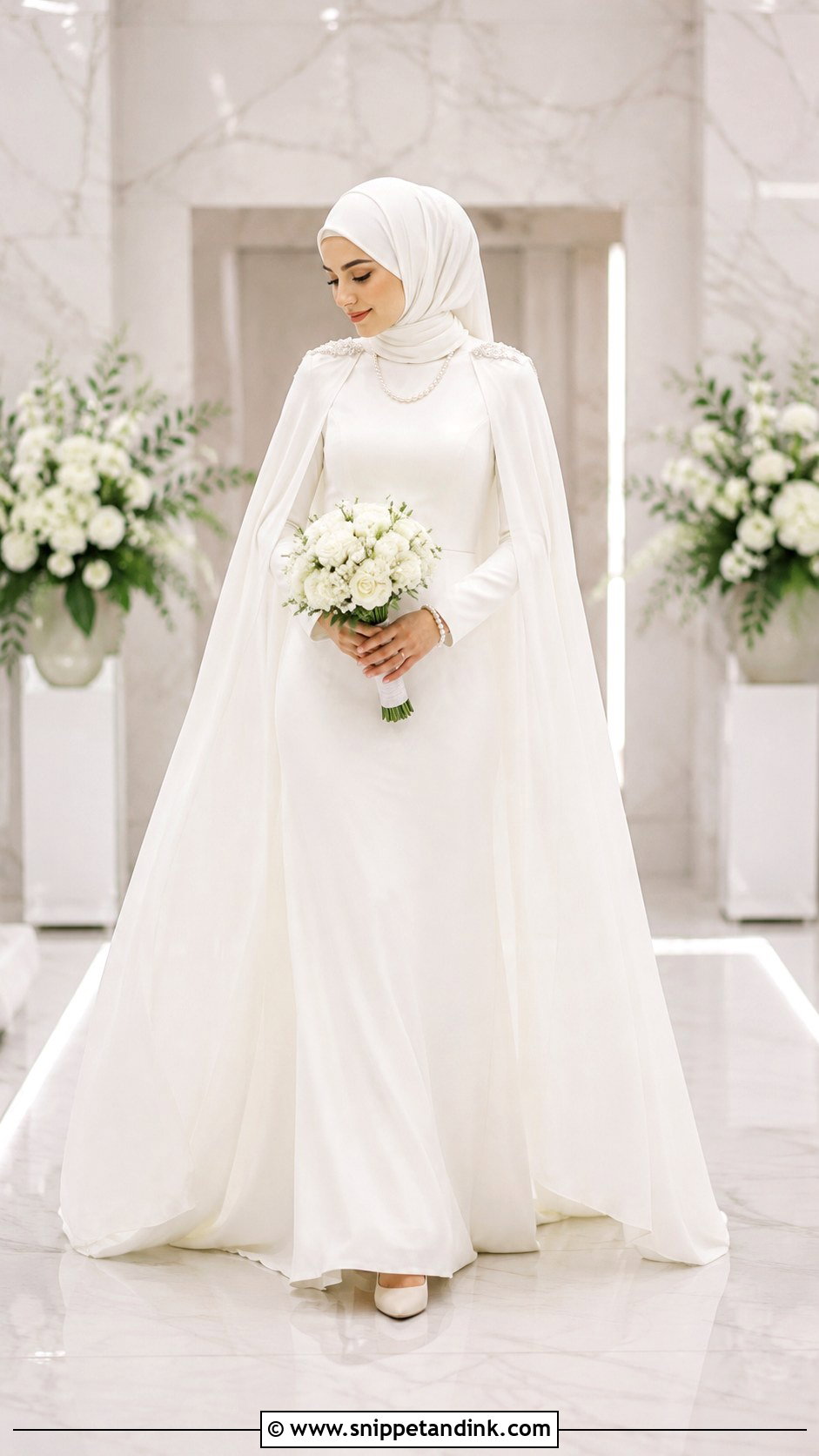
A cape gives a plain gown movement and an entrance without any embroidery. Choose a long-sleeve dress with a detachable cape falling from the shoulders or upper back. I ask the dressmaker to attach it at the shoulder seams with hidden hooks or snaps, because a cape tied at the neck pulls straight on the hijab. Keep the hijab neat and close to the face so the two fabrics don’t fight at the shoulders. Simple heels, pearl jewelry and soft white flowers complete it, and you’ll get good photos from the side and back as it moves.
13. Two Piece Hijab Wedding Dress
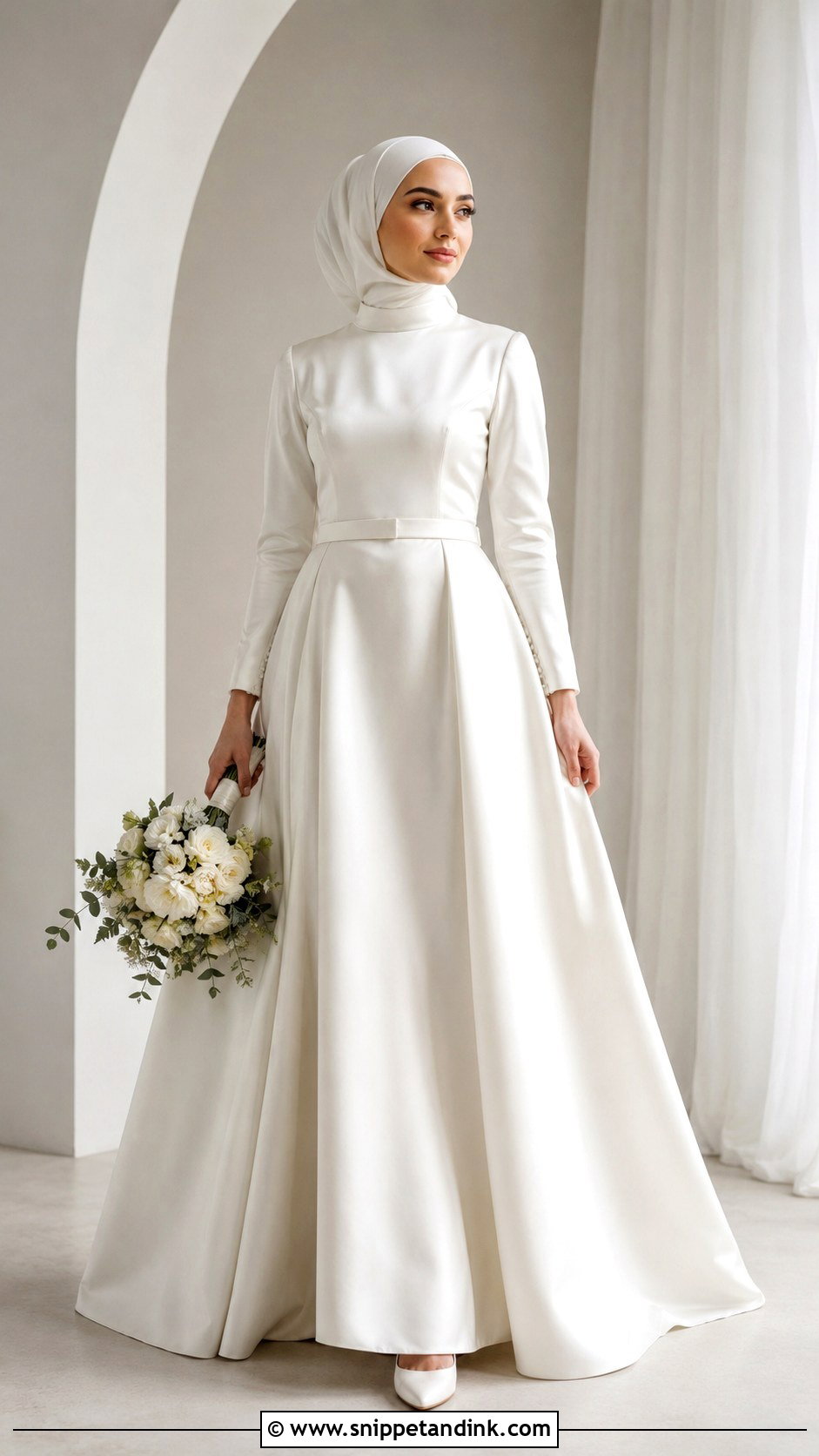
Two-piece bridal sets suit brides whose top and bottom are different sizes, since each piece is fitted on its own. Try a long-sleeve, high-neck top with a matching full skirt in satin, crepe or a textured weave. The real test is coverage at the waist: raise both arms and twist at the fitting. If skin shows, the top needs more length to overlap the waistband. A thin belt hides the join neatly. Add a matching hijab, closed heels and a small bouquet. It moves more freely than most one-piece gowns, and both halves can be worn again separately.
14. Embroidered Hijab Wedding Dress
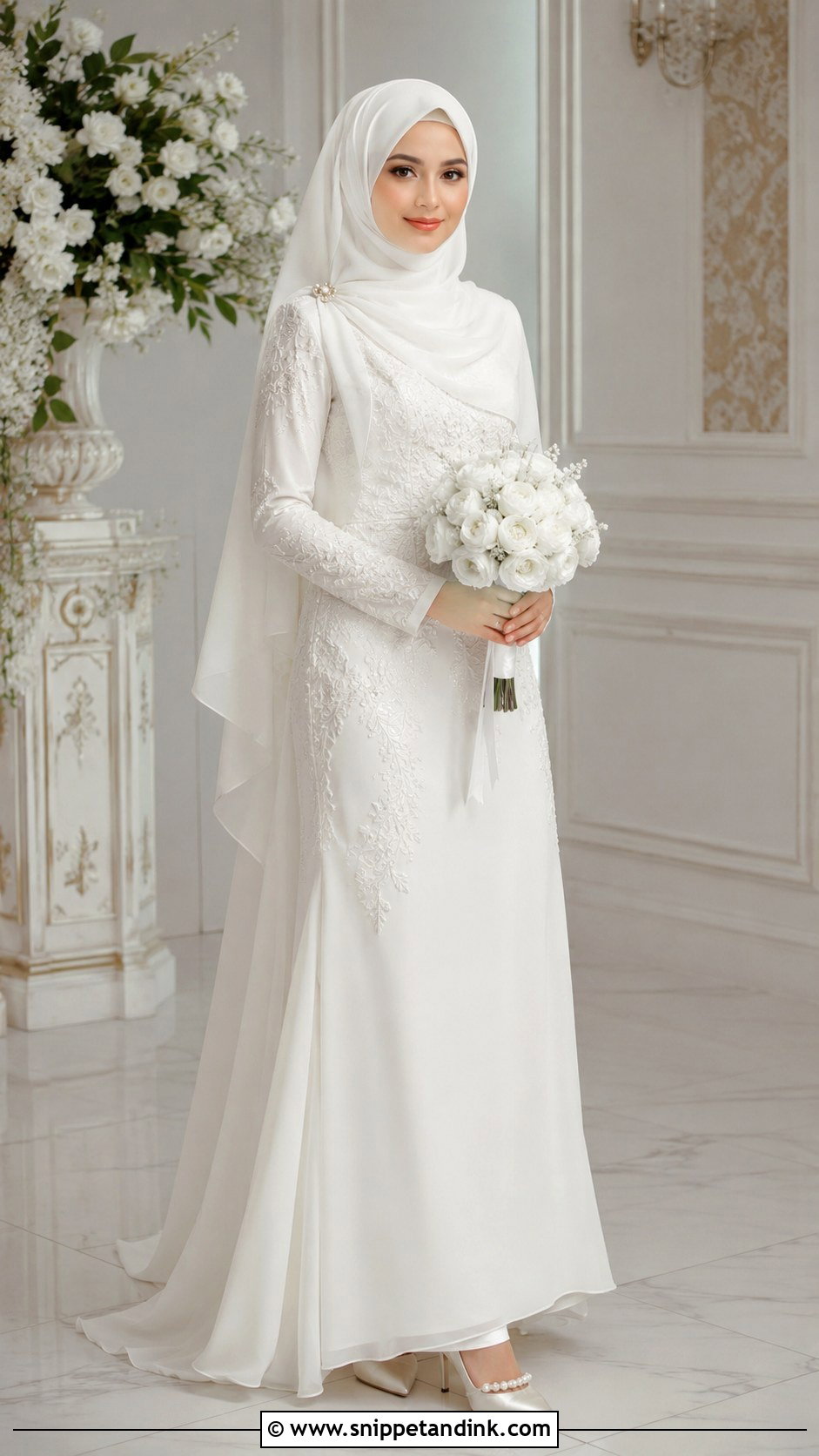
Embroidery stays simple when it’s kept to one area, like the sleeves, bodice or hem, instead of covering the whole gown. White-on-white work is my favorite here, because it adds texture you notice up close without strong contrast from across the room. A plain hijab balances the detail. Satin heels, pearl pins and a smooth bouquet finish the outfit. Check the reverse of the embroidery inside the sleeves; rough backing can scratch over a long day, and a soft lining fixes it. It suits cultural weddings and brides who prefer handwork to sparkle.



15. Simple Tulle Hijab Wedding Dress
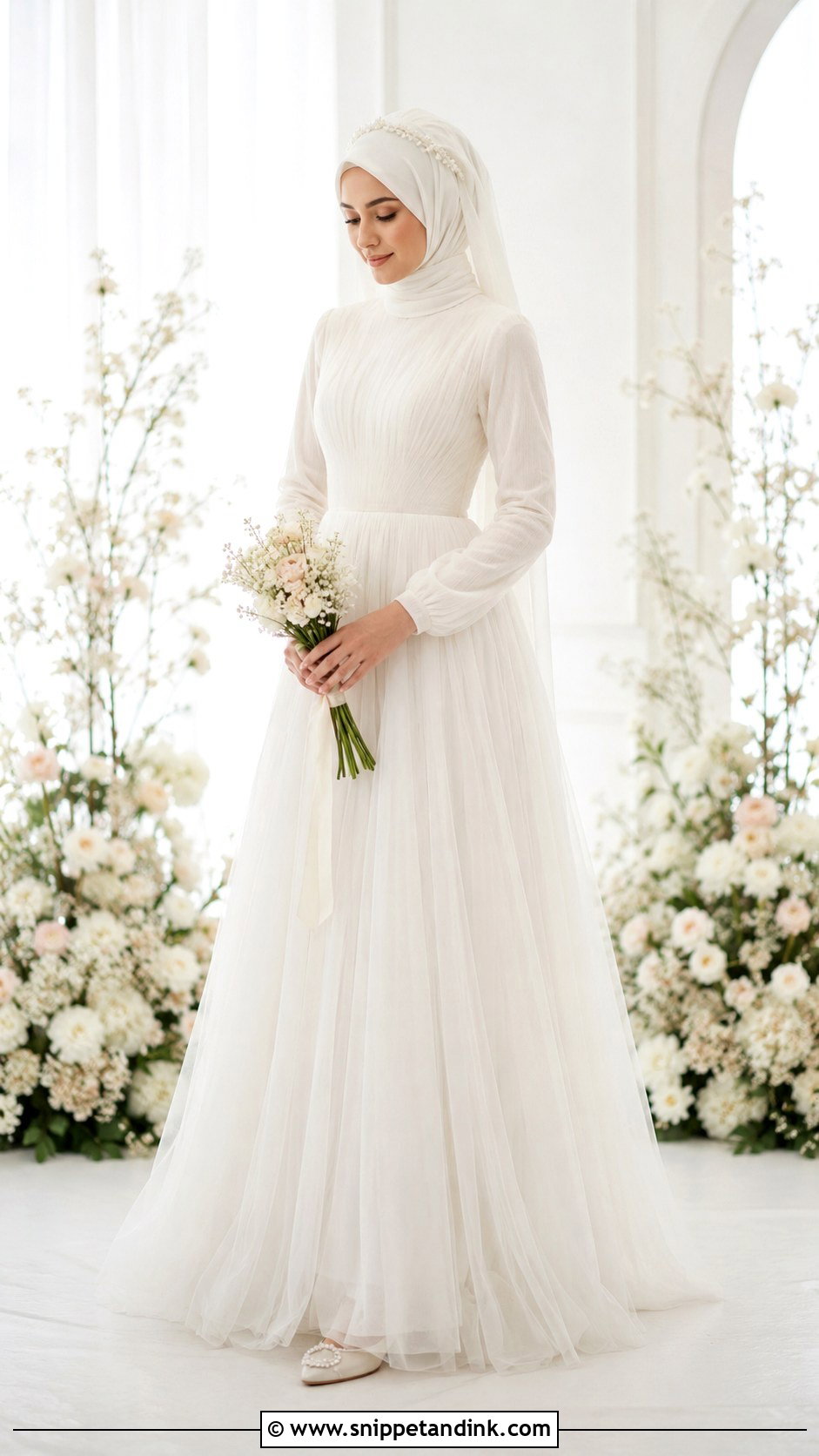
Tulle gives a dreamy shape while staying light. Choose a fully lined gown with long sleeves, a high neckline and a soft tulle skirt, with a plain bodice or tiny tonal details. A plain chiffon hijab keeps the upper body clean so the volume stays below the waist. Tulle snags easily on beaded bracelets, rings and clutch clasps, so I keep accessories smooth near the skirt. Wear comfortable heels or flats if there are several layers. A small tiara or pearl headband over the hijab adds a gentle bridal note.
16. Ivory Hijab Wedding Dress
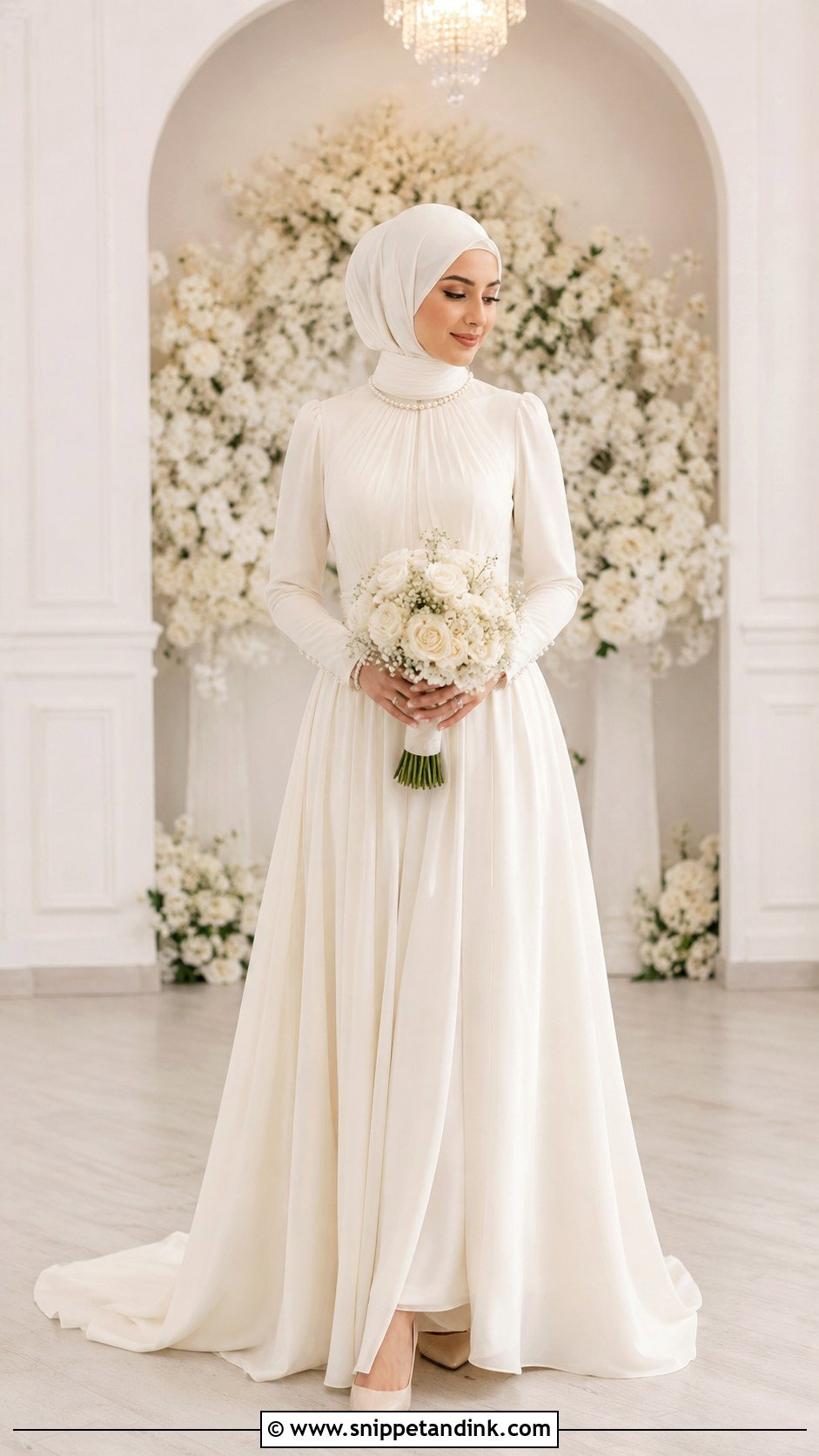
Ivory usually flatters more skin tones than bright white, and it photographs warmer. Choose a long-sleeve gown with a high neckline, a simple waist seam and a flowing skirt. The detail that trips brides up is the hijab: ivories vary a lot, from almost pink to almost yellow, and a hijab one shade off makes the gown look grubby next to it. I bring a fabric swatch to the hijab shop or have the scarf cut from the same fabric as the dress. Nude or ivory heels, pearl jewelry and cream flowers finish the look. Indoor, outdoor or intimate, it adapts to almost any setting.
17. Simple Hijab Wedding Dress With Train
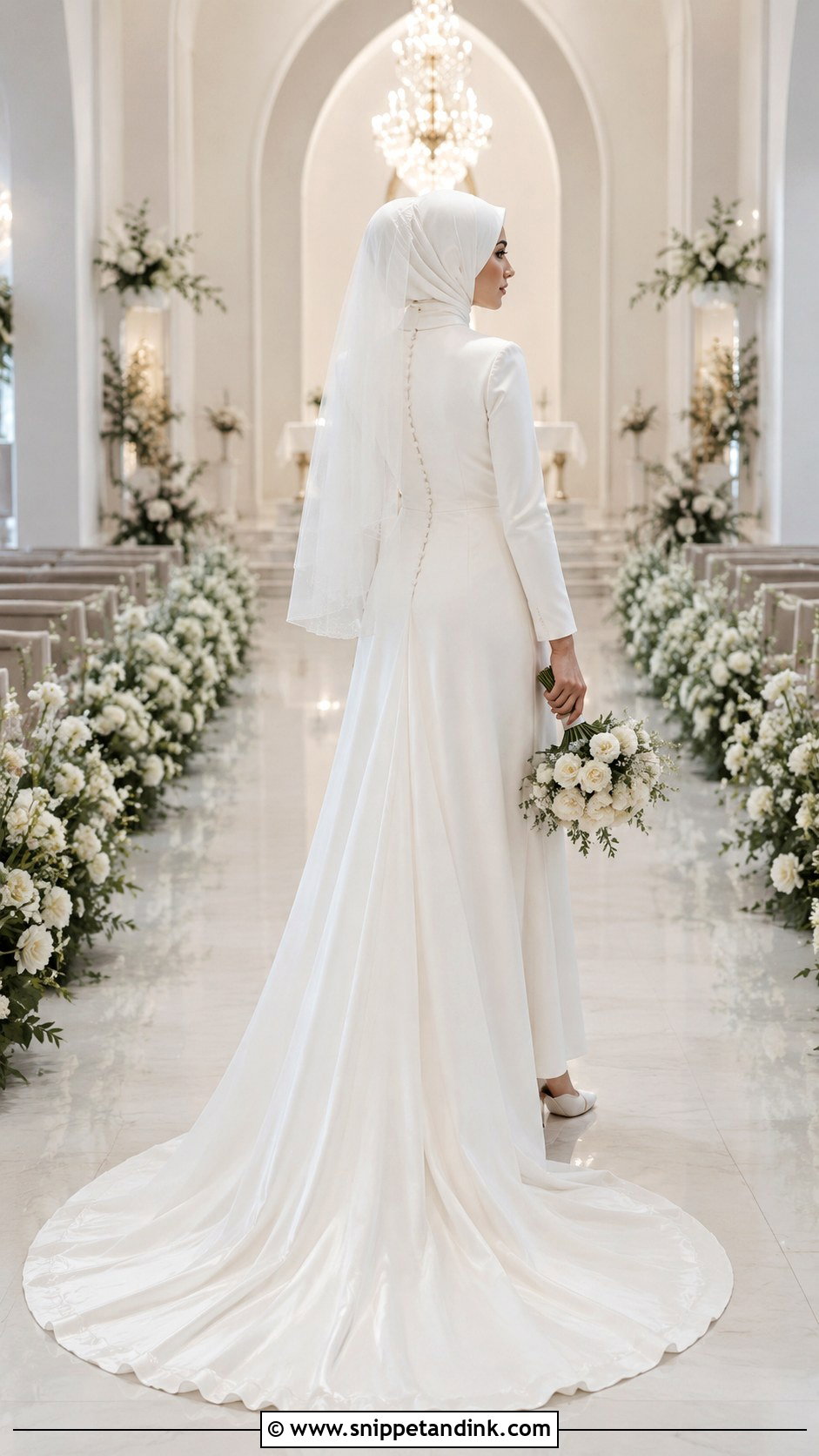
A train turns a simple gown into a bridal one instantly. Keep the long-sleeve, high-neck front clean and let the skirt extend into a soft chapel train. A smooth hijab and a short veil add tradition without competing for the back view. Practice walking in your actual heels, and turn around a few times, since trains catch underfoot when you pivot. Ask for a bustle so you can lift the train for the reception; I have the bride and one helper practice hooking it up at the last fitting. The aisle photos from behind are the payoff.
18. Modern Button Front Hijab Wedding Dress
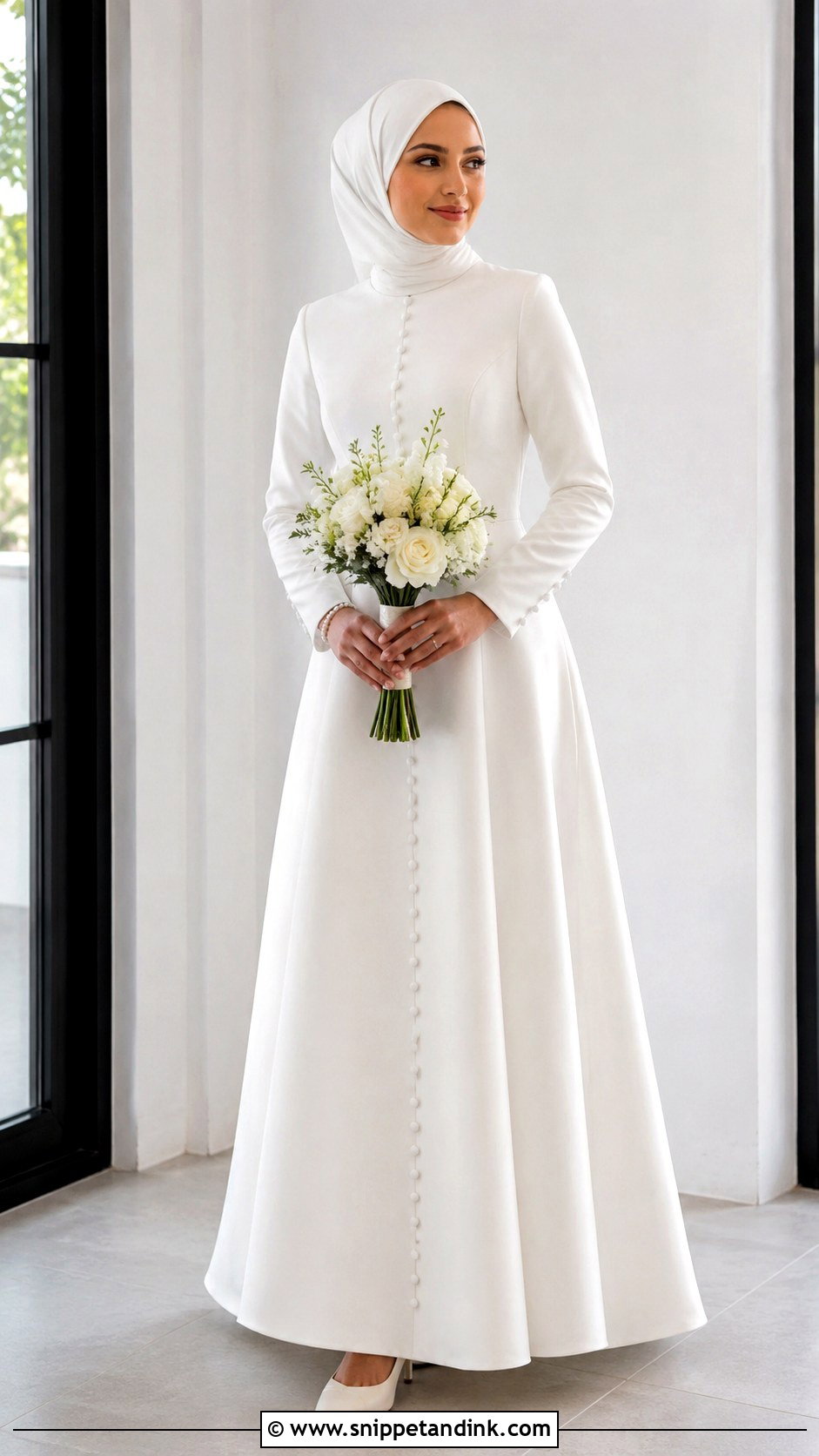
Buttons give a modest gown a tailored, slightly vintage look. Choose one with covered buttons running from the high neckline to the waist or the whole length of the skirt, with buttoned cuffs to match. Usually the buttons are decorative over a hidden zip, and I’d confirm that before buying, because thirty real loops take a long time to fasten on a busy morning. Crepe, satin and matte mikado all suit it. Pair it with a matching hijab, low heels and a structured bouquet. It’s the quiet choice for a bride who loves detail but not lace or sparkle.
19. Simple Pleated Hijab Wedding Dress
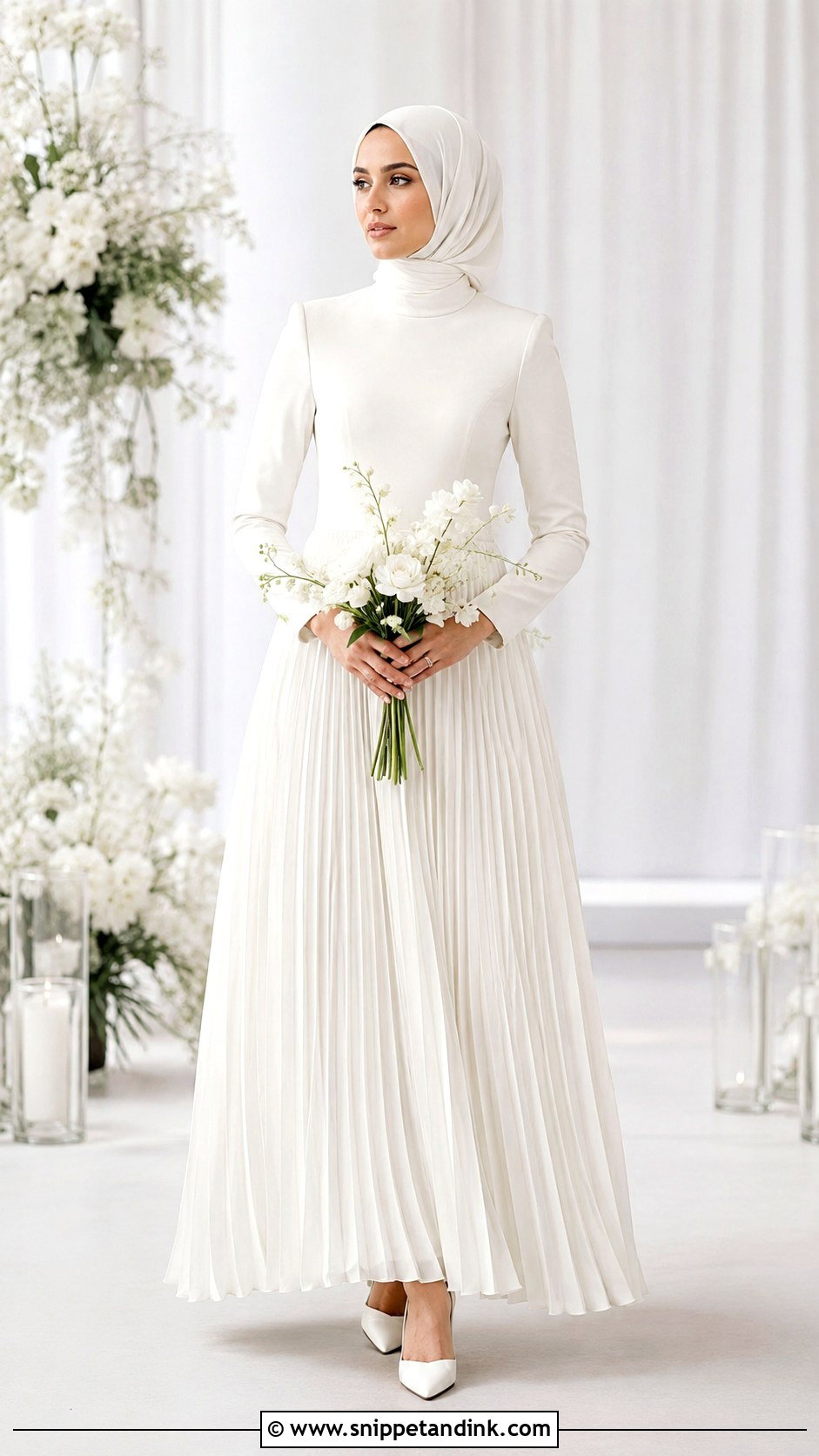
Pleats add texture through shadow rather than decoration. Pick a plain high-neck bodice with a pleated skirt, or soft pleating through the sleeves and skirt for a more fluid line. Keep the fabric light; heavy fabric pleated tightly adds bulk at the hips. The vertical lines also make the figure look longer, which petite brides often like. A plain hijab, minimal jewelry, pointed heels and a soft-stemmed bouquet complete it. Pleats need a steam on the morning, as they flatten if the dress is packed tightly.



20. Simple Hijab Wedding Dress With Overskirt
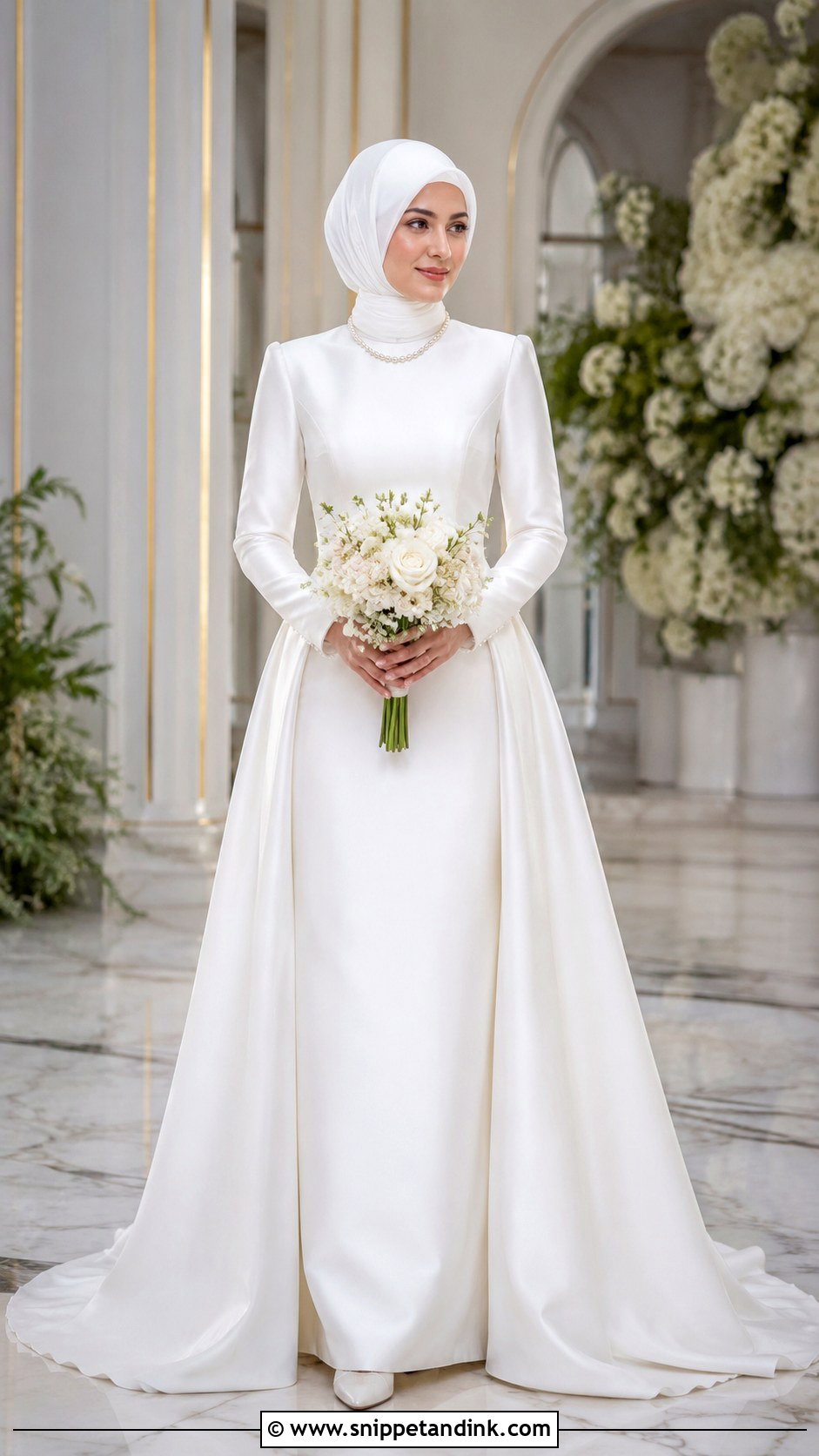
An overskirt gives you two looks without a second dress. Start with a simple long-sleeve column or A-line gown, then add a detachable overskirt for the ceremony; it brings volume for the aisle and comes off for the reception. Choose matching fabrics so the layers look planned. I’d ask how it fastens, since hooks or snaps hidden under a belt hold better than a tie, and practice taking it off with whoever will help you. A neat hijab, closed heels and pearl accessories keep the styling calm.
21. Simple Beaded Hijab Wedding Dress
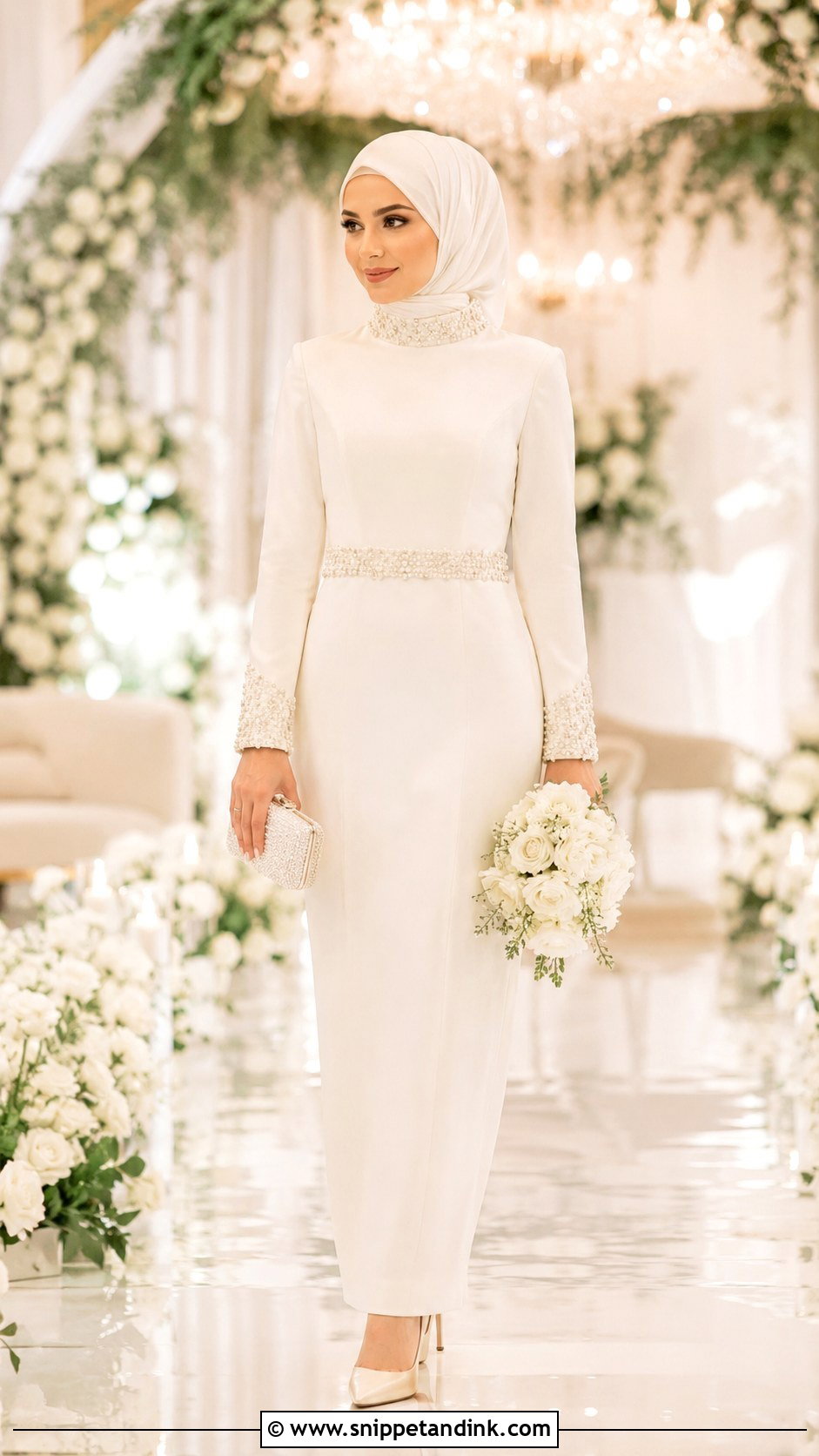
Beading works in a modest gown when it’s kept to a few places, like the neckline, cuffs, waist or veil edge. That keeps the dress lighter and more comfortable. A plain long-sleeve, high-neck shape lets the beads read as a detail rather than the whole story. Watch the neckline beads especially: they can snag a chiffon hijab, so I’d pair a beaded collar with a smooth satin or jersey-backed hijab. Metallic or ivory heels, a small clutch and a simple bouquet complete it. Evening light makes the beadwork glow.
22. Simple Princess Hijab Wedding Dress
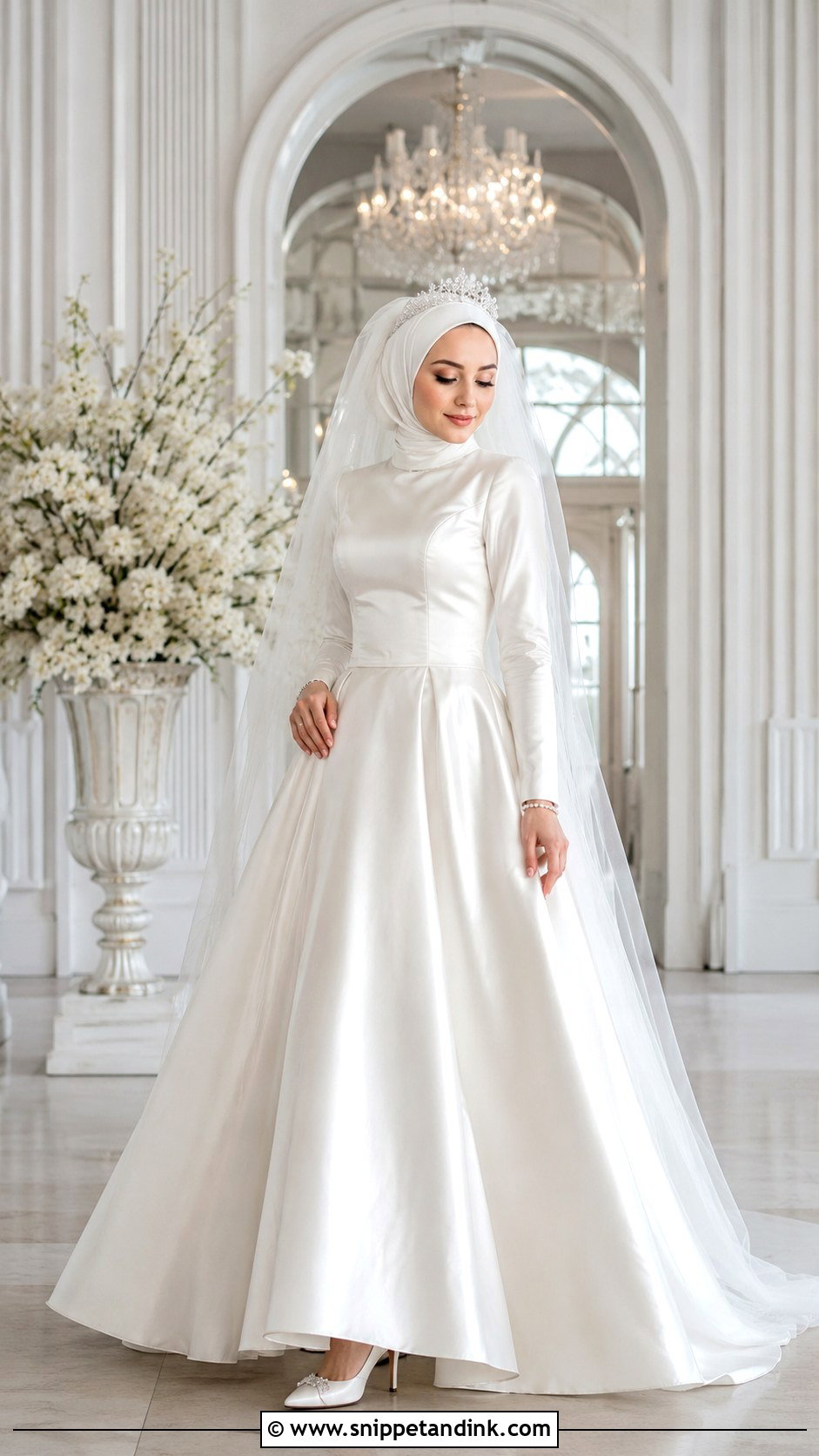
A princess hijab wedding dress gives the fairytale shape and still keeps you covered. Choose a fitted high-neck bodice, long sleeves and a full skirt in plain satin, tulle or organza, and go easy on sparkle so the shape reads clearly. A full skirt is heavy, so I check that the waistband sits on the natural waist and isn’t dragging on the hips by the end of the fitting. A matching hijab tucked under a soft veil frames the face. A delicate crown, a pearl bracelet and comfortable heels finish it.
23. Simple Organza Hijab Wedding Dress
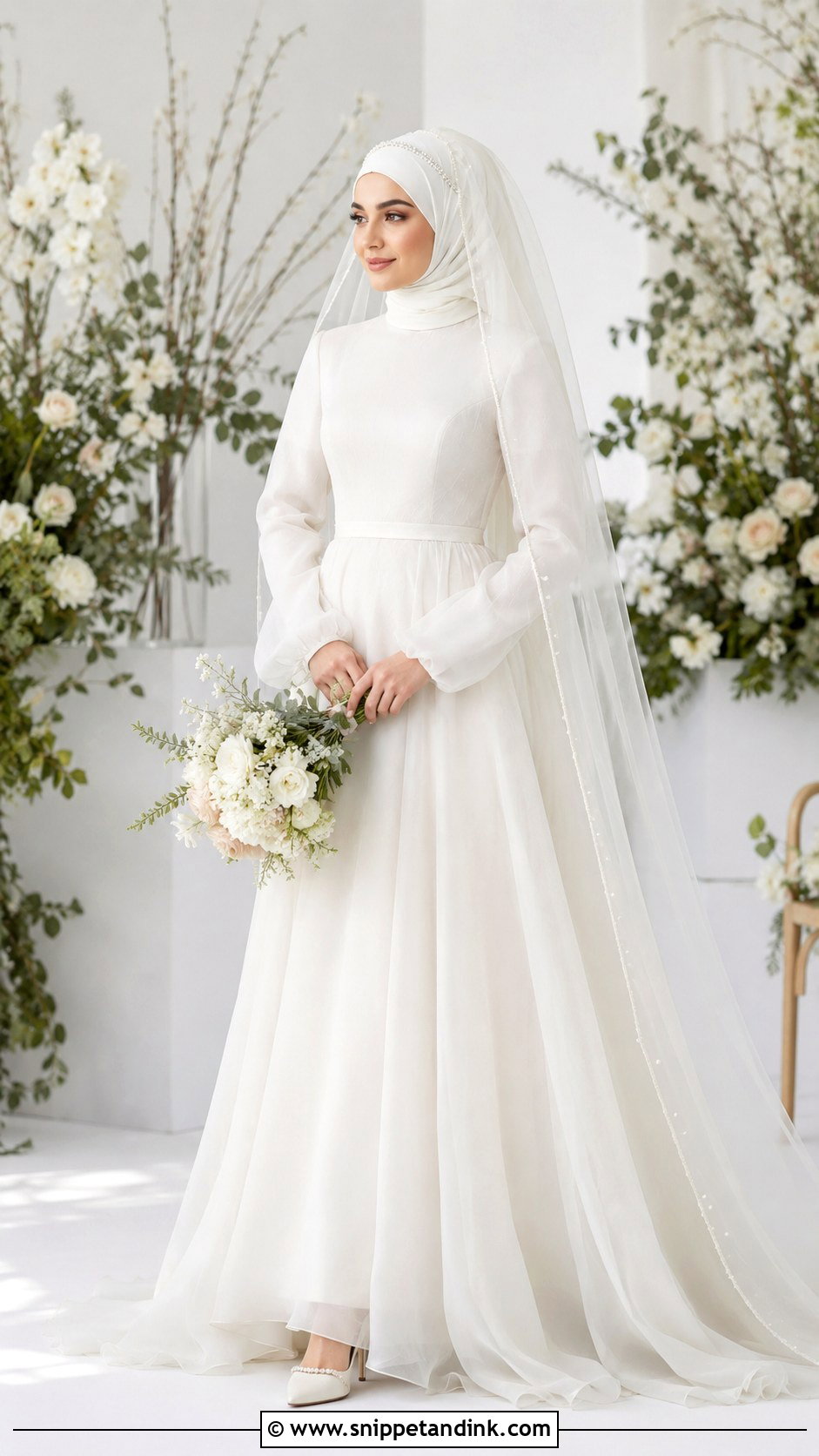
Organza is crisp and light, so it gives a flared skirt structure without much weight. A simple organza gown can have long sleeves, a high neckline and a softly flared skirt that holds its shape. Because organza is sheer, a full lining and a modest inner layer are essential. It also creases sharply if it’s crushed in a garment bag, so hang it as soon as it arrives and steam gently. Pair it with a matte chiffon hijab for contrast, or an organza-trim veil for a coordinated finish, plus simple heels and pearls. Spring and summer ceremonies suit it.
24. Simple Hijab Wedding Dress With Veil
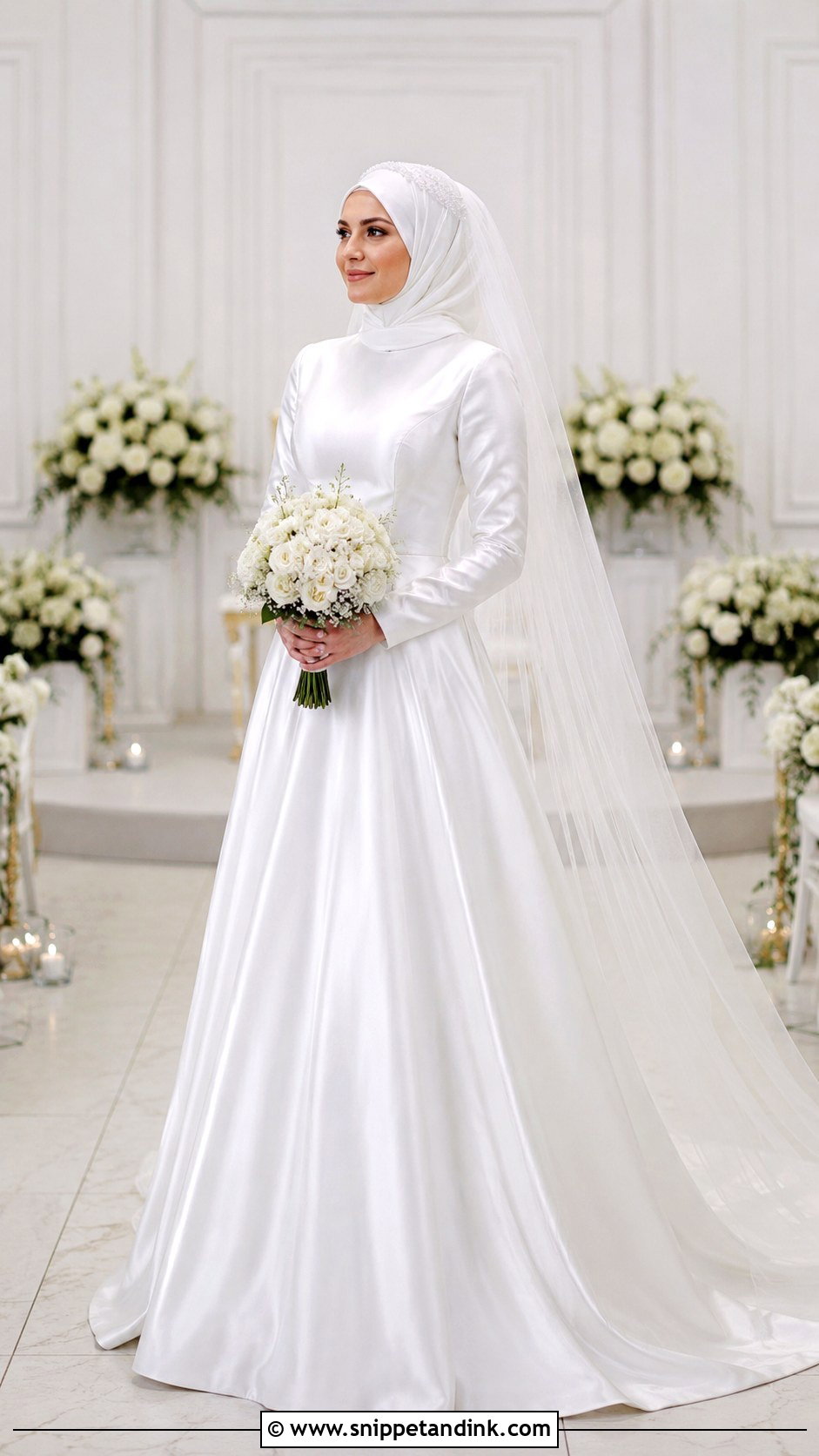
A veil over a hijab looks right only when the two layers are planned together. Choose a simple long-sleeve, high-neck gown and a hijab in matching fabric or color, then pin a light veil over or behind it. The veil is anchored to the underscarf or to a bun underneath, never to the hijab fabric alone, or its weight slowly drags the hijab back off your forehead. Keep the tulle sheer and soft. A plain satin or crepe gown lets the veil be the bridal detail. Pearl pins, comfortable heels and white flowers complete it.
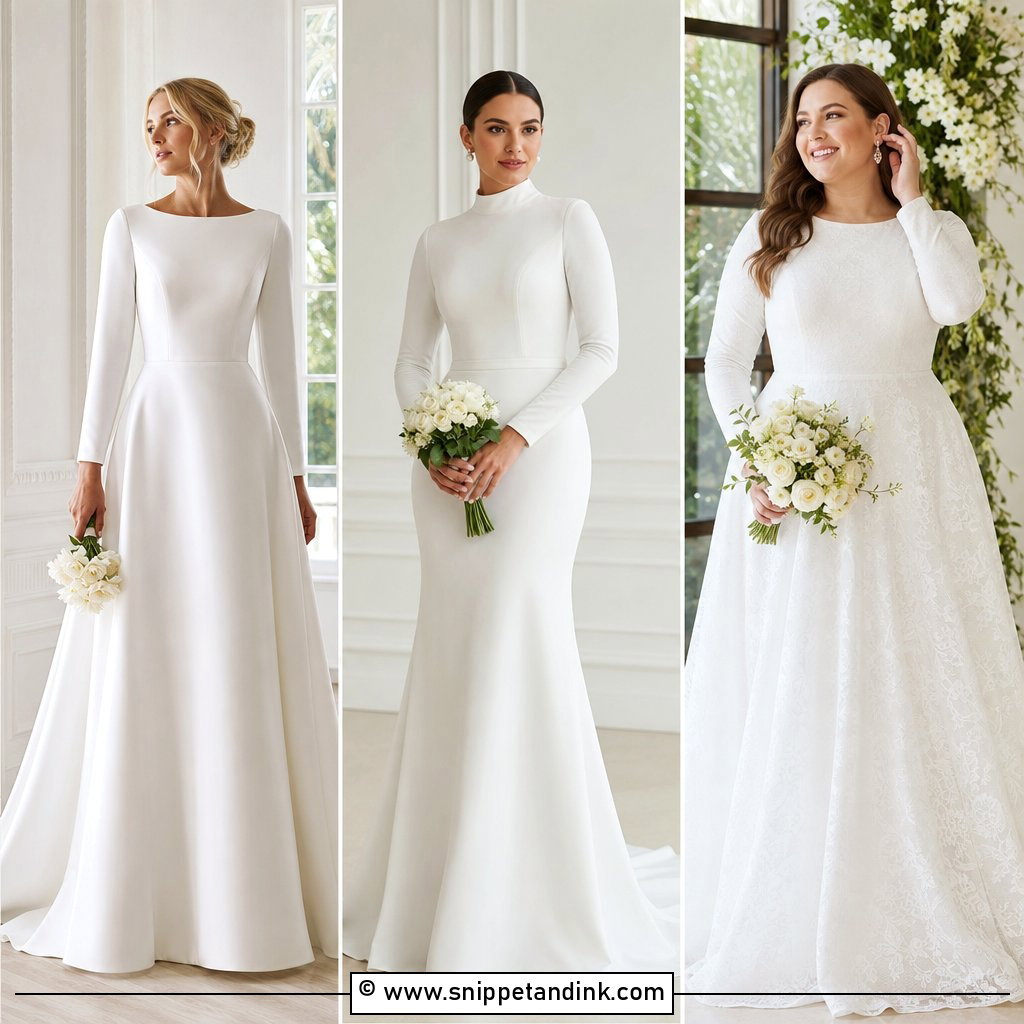
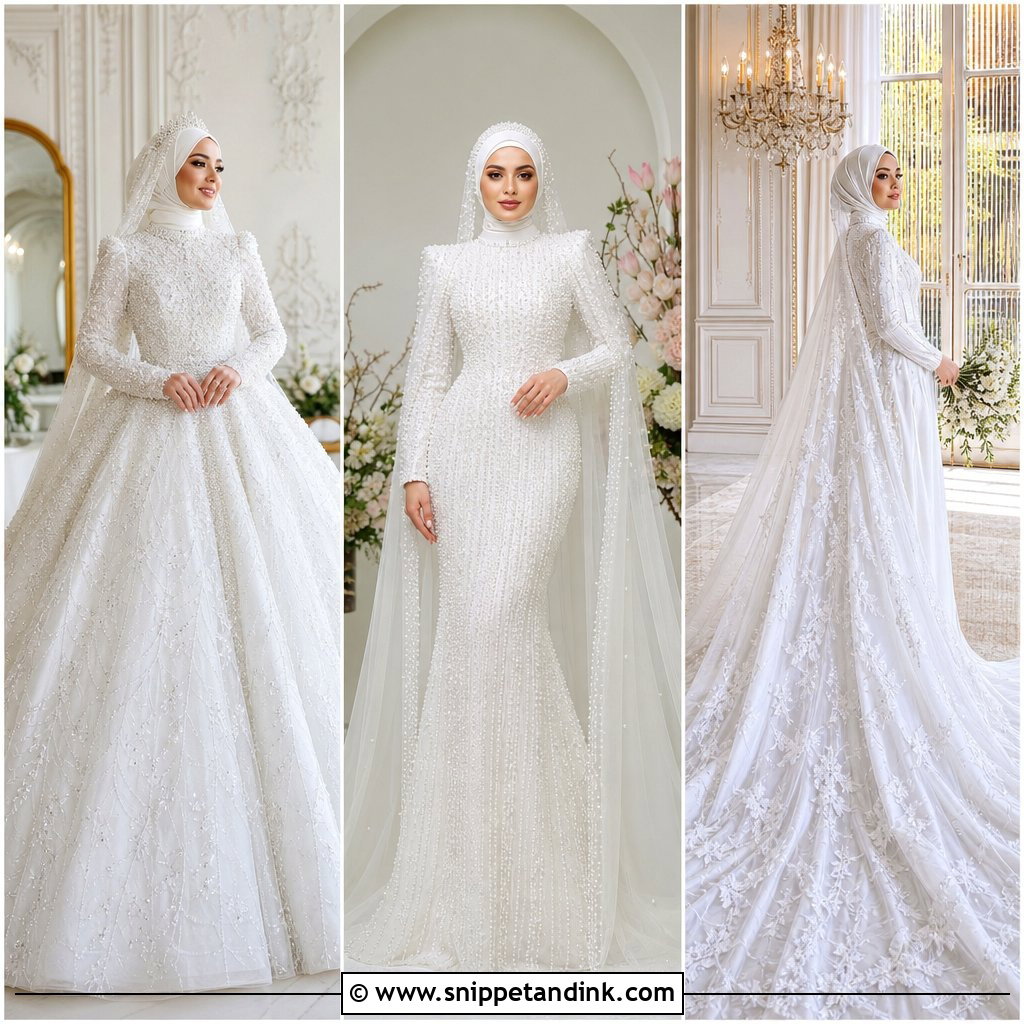

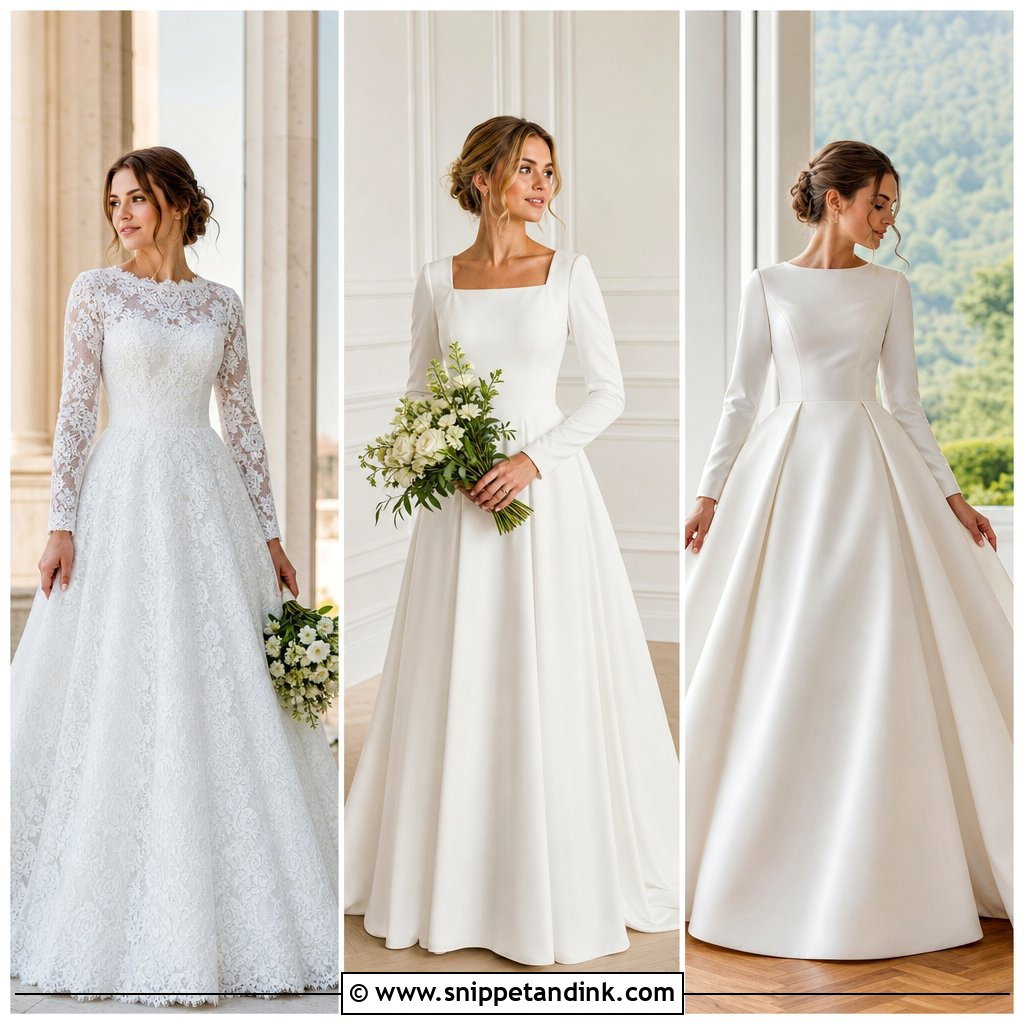
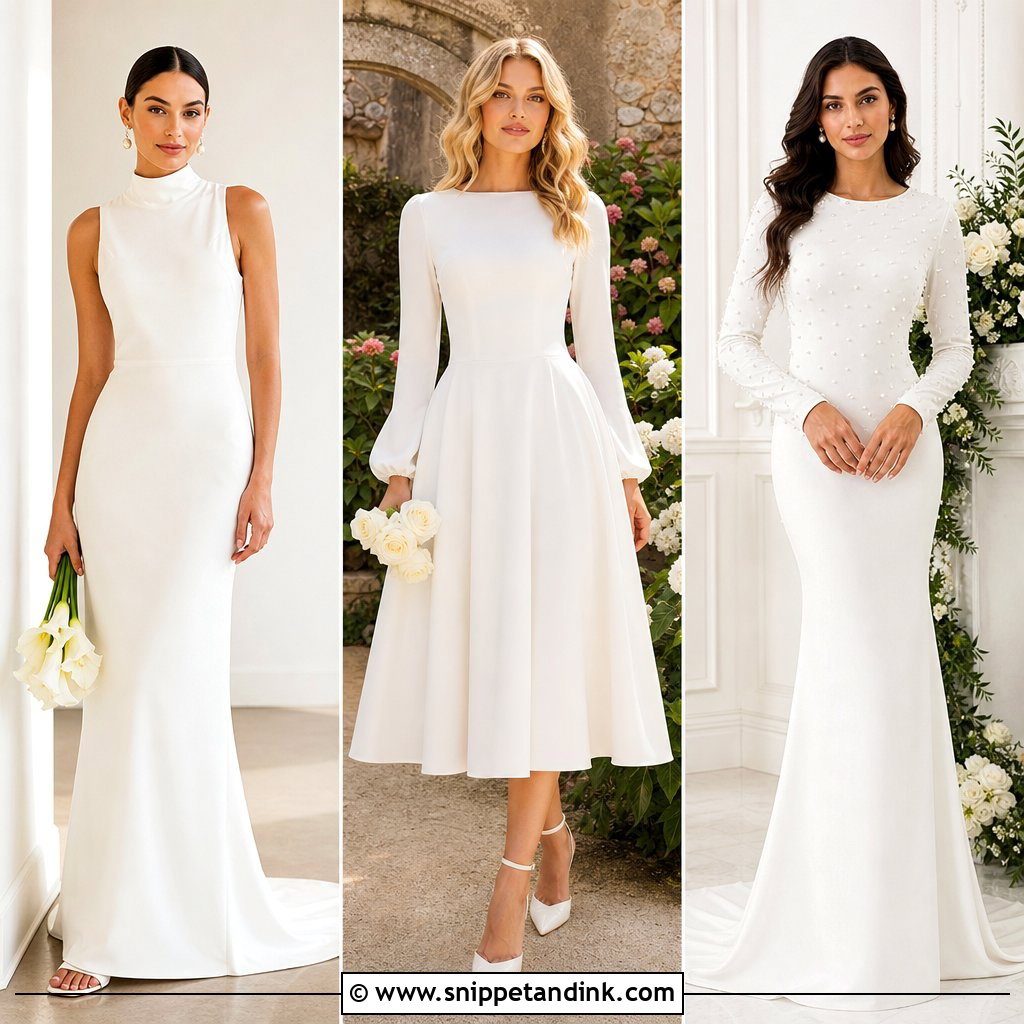
25. Simple Modest Reception Hijab Wedding Dress
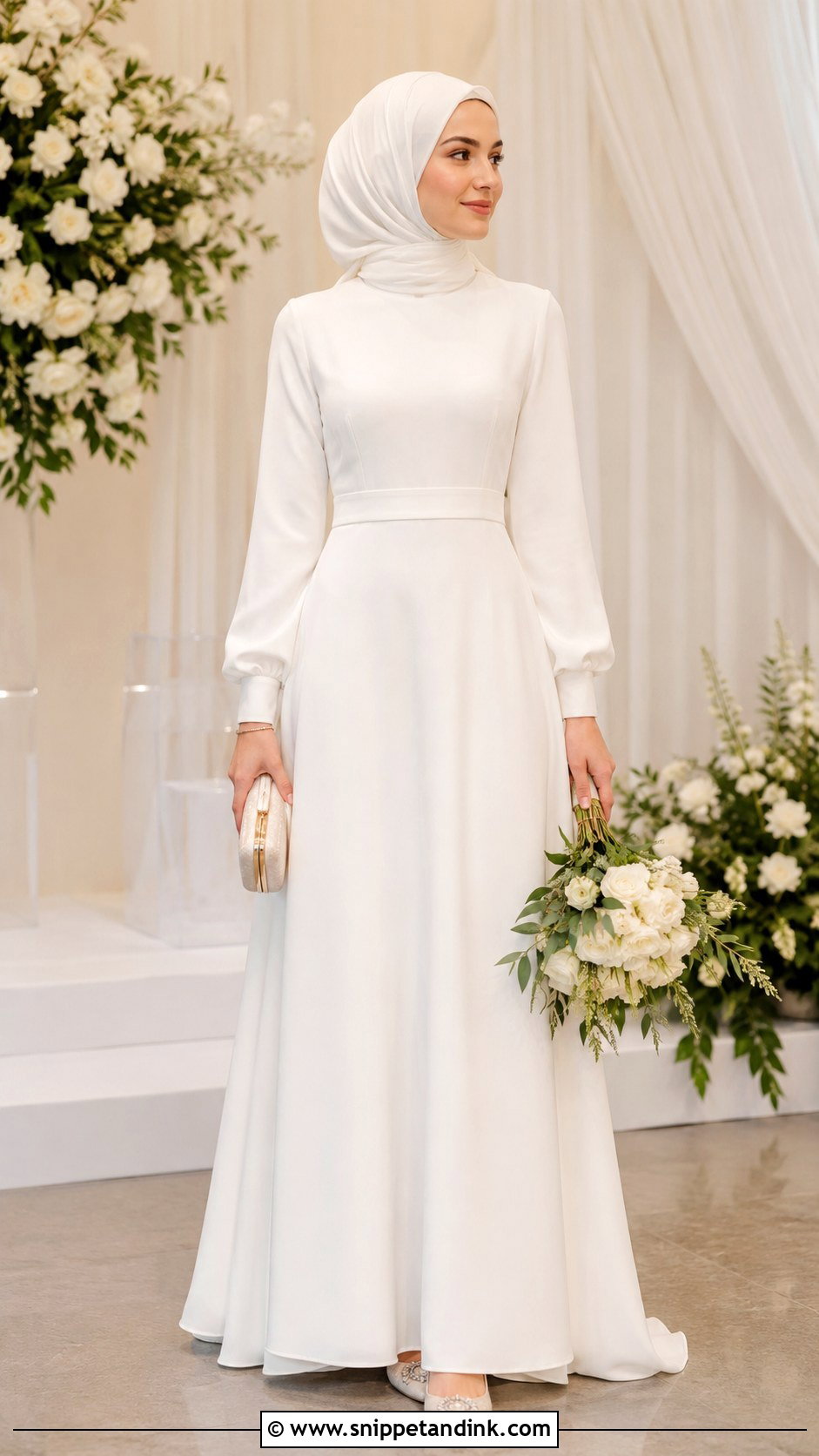
Your reception dress should be the one you can dance, eat and hug relatives in. Choose something lighter than the ceremony gown, like a crepe A-line, a satin column or a long-sleeve chiffon maxi with a high neck. A matching hijab keeps it formal, and comfortable heels or embellished flats keep you on your feet. Add a small clutch, a delicate bracelet and fresher makeup. If you change, rewrap the hijab or bring the same underscarf, since switching necklines often needs a different pin placement.
Can an Off-the-Rack Gown Be Made Modest?
Often, yes. Plenty of the gowns I love for hijabi brides started out with a sweetheart neckline or bare arms. A good bridal seamstress can add sleeves, fill a neckline, line a sheer skirt and raise a low back. Not every dress converts well, though, and it’s worth knowing which ones do before you buy.
What adapts easily
Gowns with simple, plain bodices take added sleeves and a high-neck illusion panel neatly, especially if the shop can order extra matching fabric or lace. A-line and ball-gown skirts can be lined fully without changing their shape. Low backs can be filled with a fitted panel that sits under the hijab anyway.
What I’d steer you away from
Strapless corset gowns with heavy boning are hard to convert cleanly; the sleeves end up looking added on. Gowns with all-over beading make it difficult to match new fabric. I’d also avoid buying a sample gown that’s very close to your size if it needs both sleeves and a neckline, since alterations need seam allowance to work with.
Give yourself time. Ordering a gown can take several months, and adding sleeves and a neckline usually means more fittings than a standard hem and take-in. Ask the shop before you order whether they’ll do modesty alterations in-house, and get the work quoted separately, as it can add noticeably to the cost.
Fabric, Fit and a Hijab That Matches
Modest bridal fashion can be soft, modern, traditional or minimal without ever looking plain. The gowns above all rely on the same few things: fabric that behaves, sleeves and necklines that fit properly, and a hijab chosen alongside the dress rather than at the last minute. Small details like pearls, buttons, lace sleeves, a belt or a veil make a simple gown personal. Before you decide, think about your venue, the weather and how many hours you’ll be wearing it. Then wear it at a fitting for an hour, hijab and all, and see how it feels.
You'll Like These Ideas:








Leave a Reply