
Elegant hijab bridal fashion has moved well past one traditional shape. The brides I dress now choose between satin ball gowns, lace A-lines, pearl-covered sleeves, capes, abayas, kaftans and very clean minimalist gowns. What they all need is the same: coverage that actually holds up in photos and movement, a dress they can sit and pray and dance in, and a hijab that looks like part of the outfit rather than an afterthought. High necks, long sleeves, opaque linings and smooth draping come up again and again. Here are twenty-five modest bridal looks, with the fitting details I’d check on each.
Sheer Linings, Camera Flash and How Opaque a Gown Really Is
The most common disappointment I see with modest gowns isn’t the style. It’s discovering in the photos that a sleeve or neckline was more see-through than it looked in the mirror.
Illusion mesh, single-layer tulle and fine lace can all look solid in soft boutique lighting and then show skin under bright sun, a photographer’s flash or a backlit window. Before you commit to a gown, do three checks:
- Stand near a window in daylight and have someone look at the sleeves and neckline from the side.
- Ask a friend to take a phone photo of you with the flash on. Flash exaggerates sheerness the way professional lighting will.
- Raise your arms and sit down. Sleeves and illusion panels stretch, and stretched mesh becomes more transparent.
If anything shows more than you’d like, the fix is usually simple. A seamstress can add an ivory or skin-tone lining, back the sleeves with a second layer or swap a mesh panel for crepe. Ask about it at the first fitting rather than the last, because a lining changes how the dress fits.
1. Satin Hijab Wedding Dress
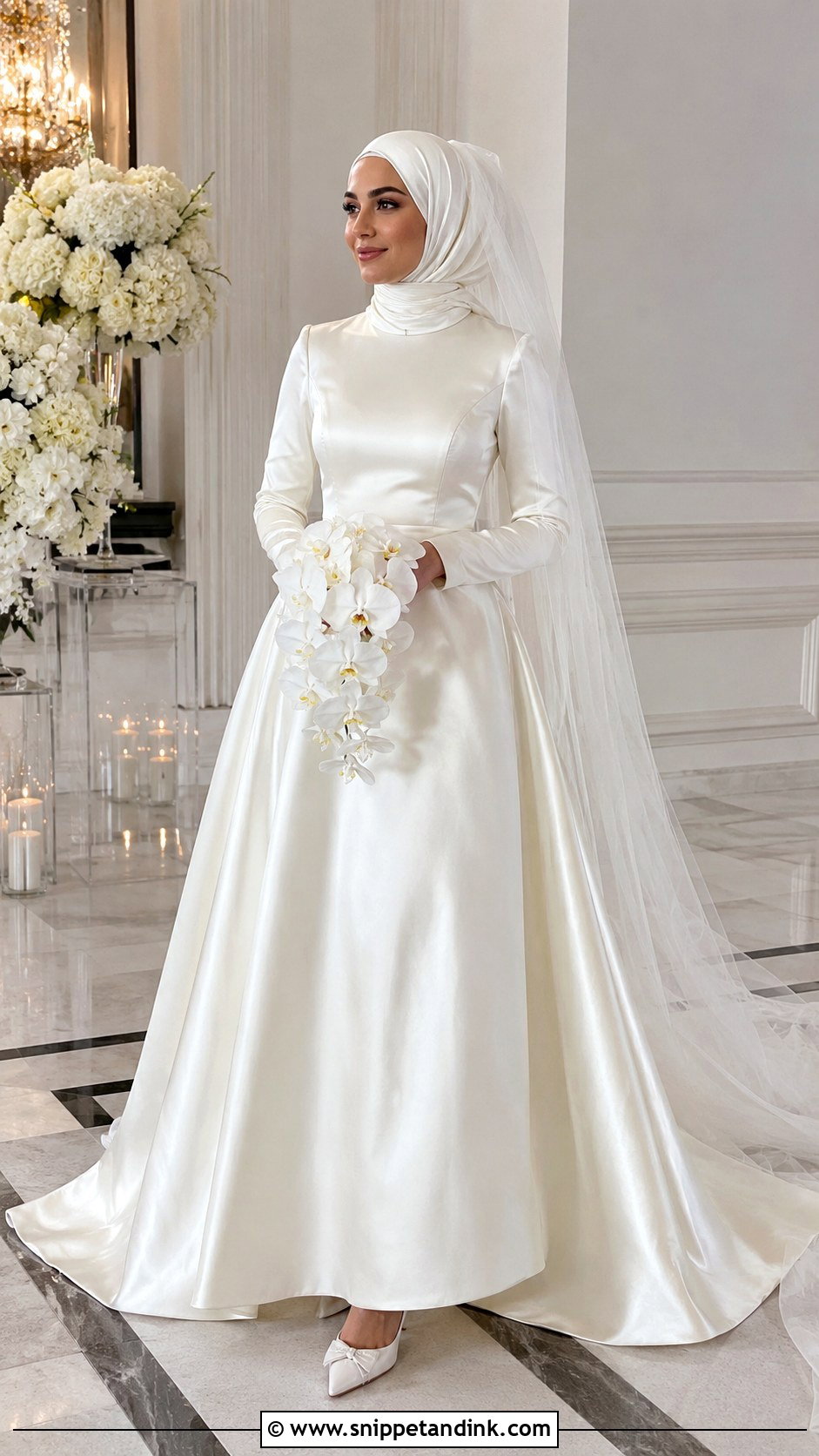
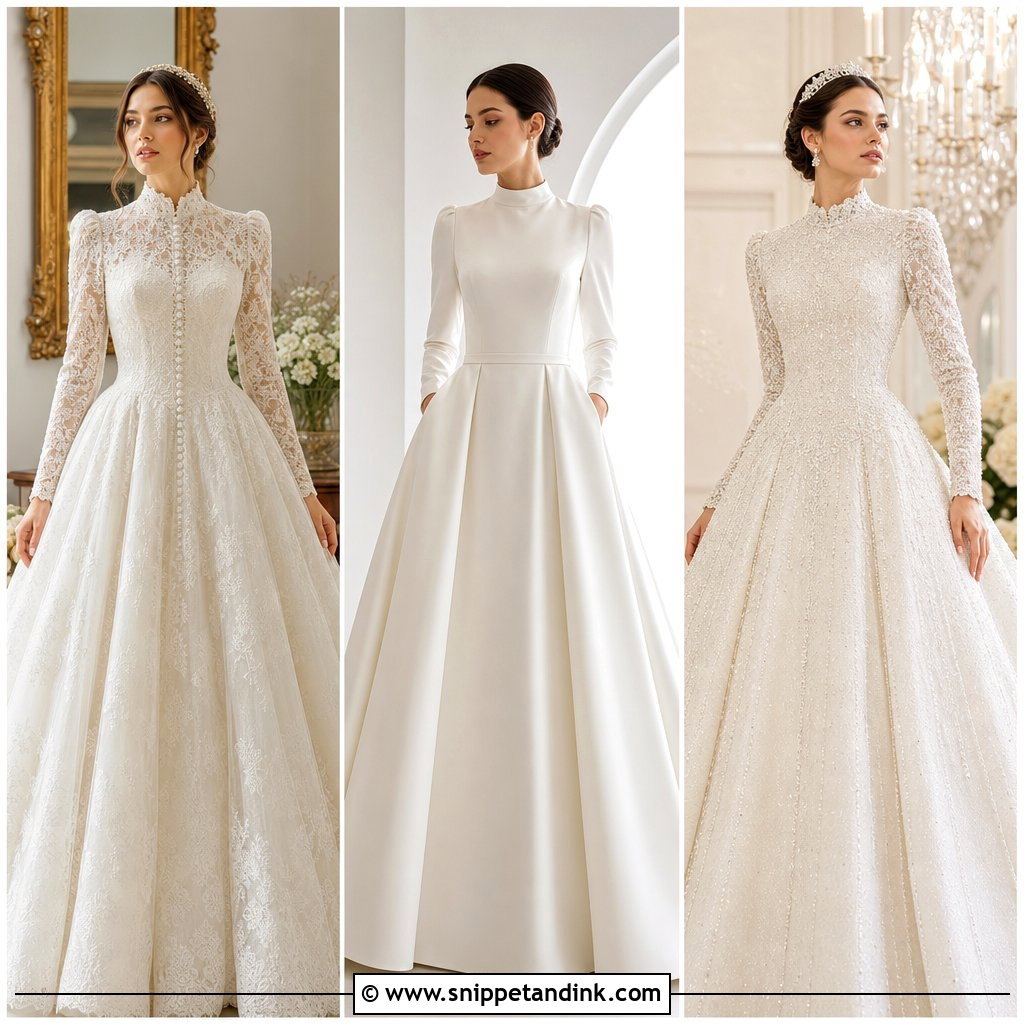
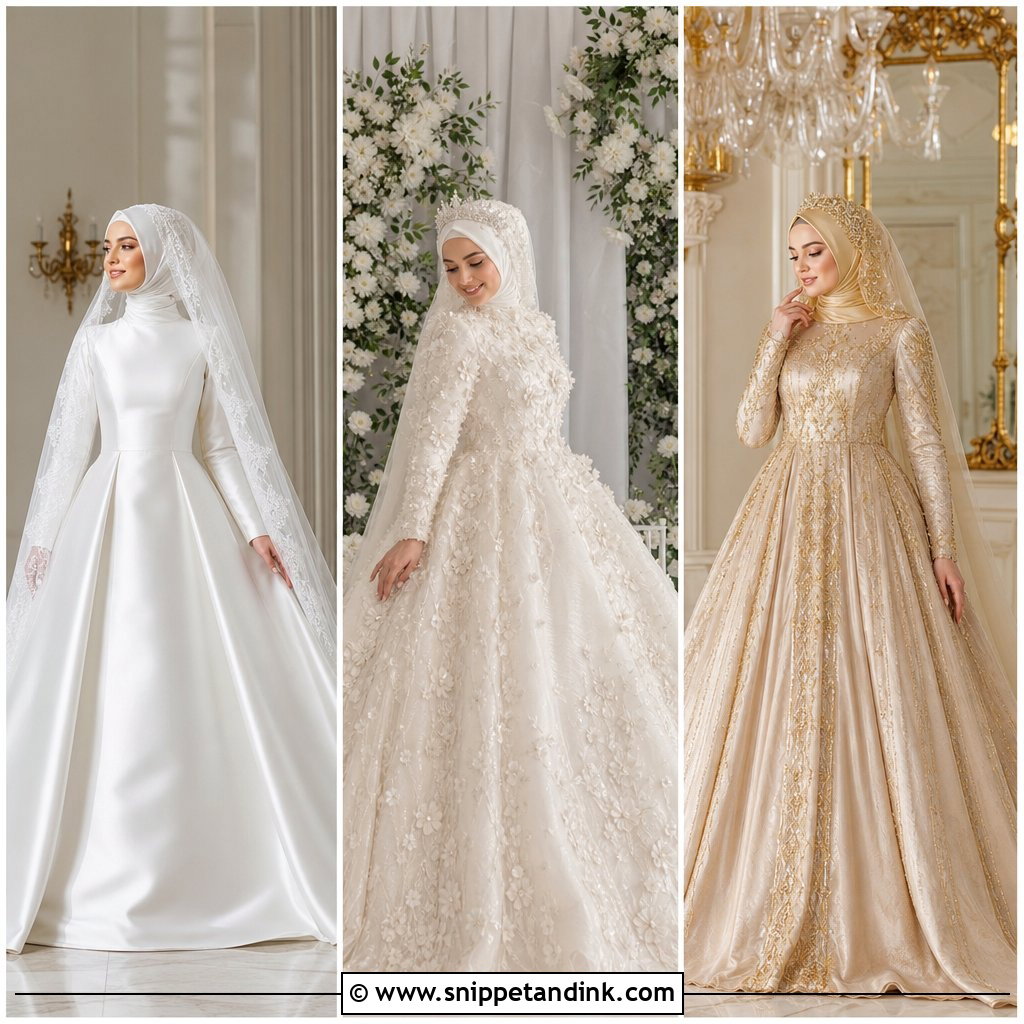
Satin is the cleanest canvas for a hijab bride, and it suits ivory, pearl or soft champagne best. My usual starting point is a long-sleeve gown with a high neck, a fitted bodice and a gentle A-line skirt. The hijab should be in the same satin, or a silk chiffon dyed to match, because two slightly different whites stand out badly on a reflective fabric. A thin undercap stops a satin hijab from sliding, since satin is slippery on satin. Keep beading minimal and let the shine work.
2. Lace Hijab Wedding Dress
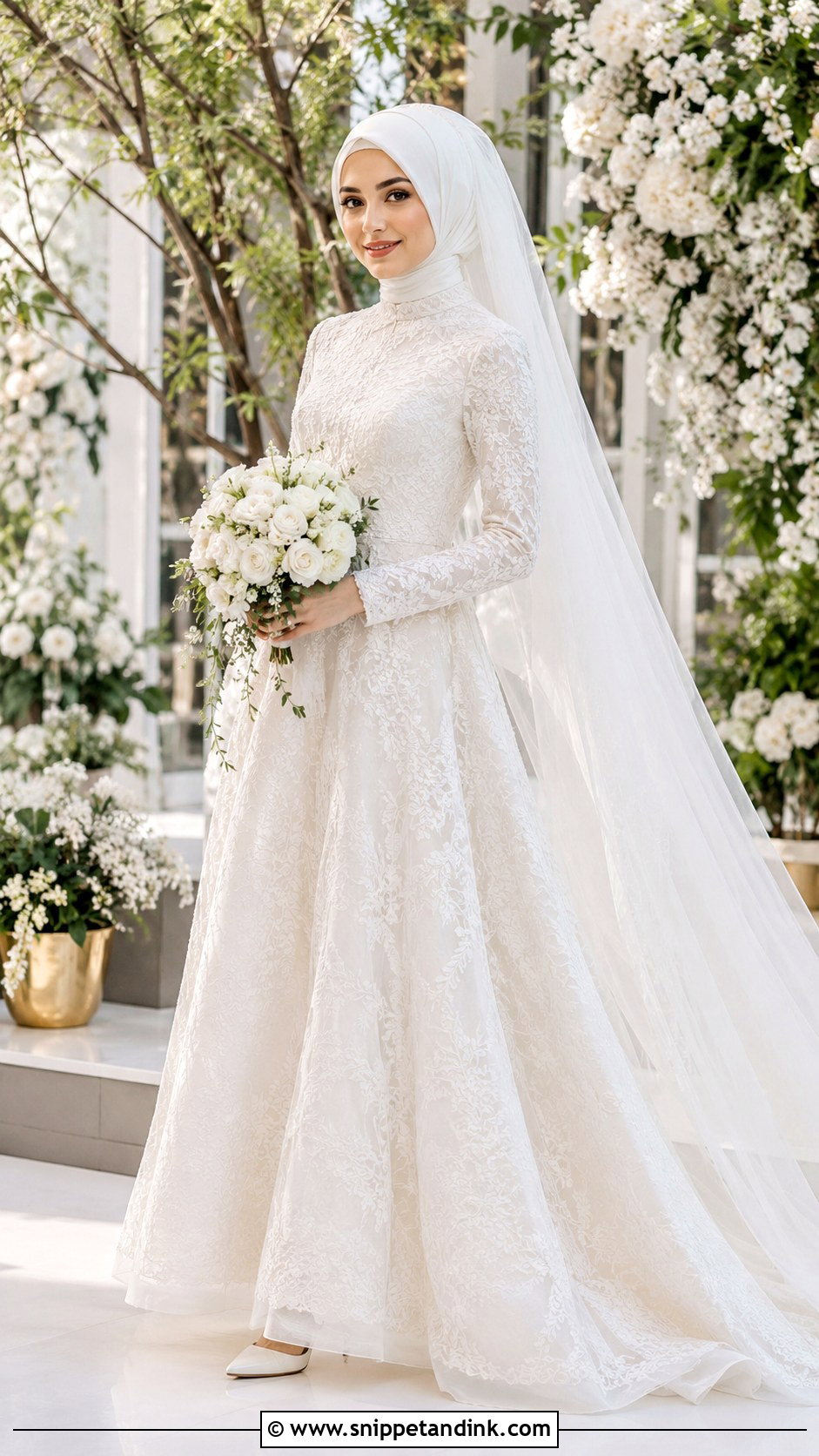
Lace gives romance without sparkle. For a modest gown, the lining is the first thing I check: lace sleeves and an illusion neckline should be backed in a skin-tone or ivory mesh that’s opaque enough for your comfort, and you should see it in daylight as well as in the shop. Floral lace suits a garden; geometric lace looks more modern. With a busy lace bodice, a plain chiffon or silk hijab works better than a patterned one, and the veil should be simple.
3. A Line Hijab Wedding Dress
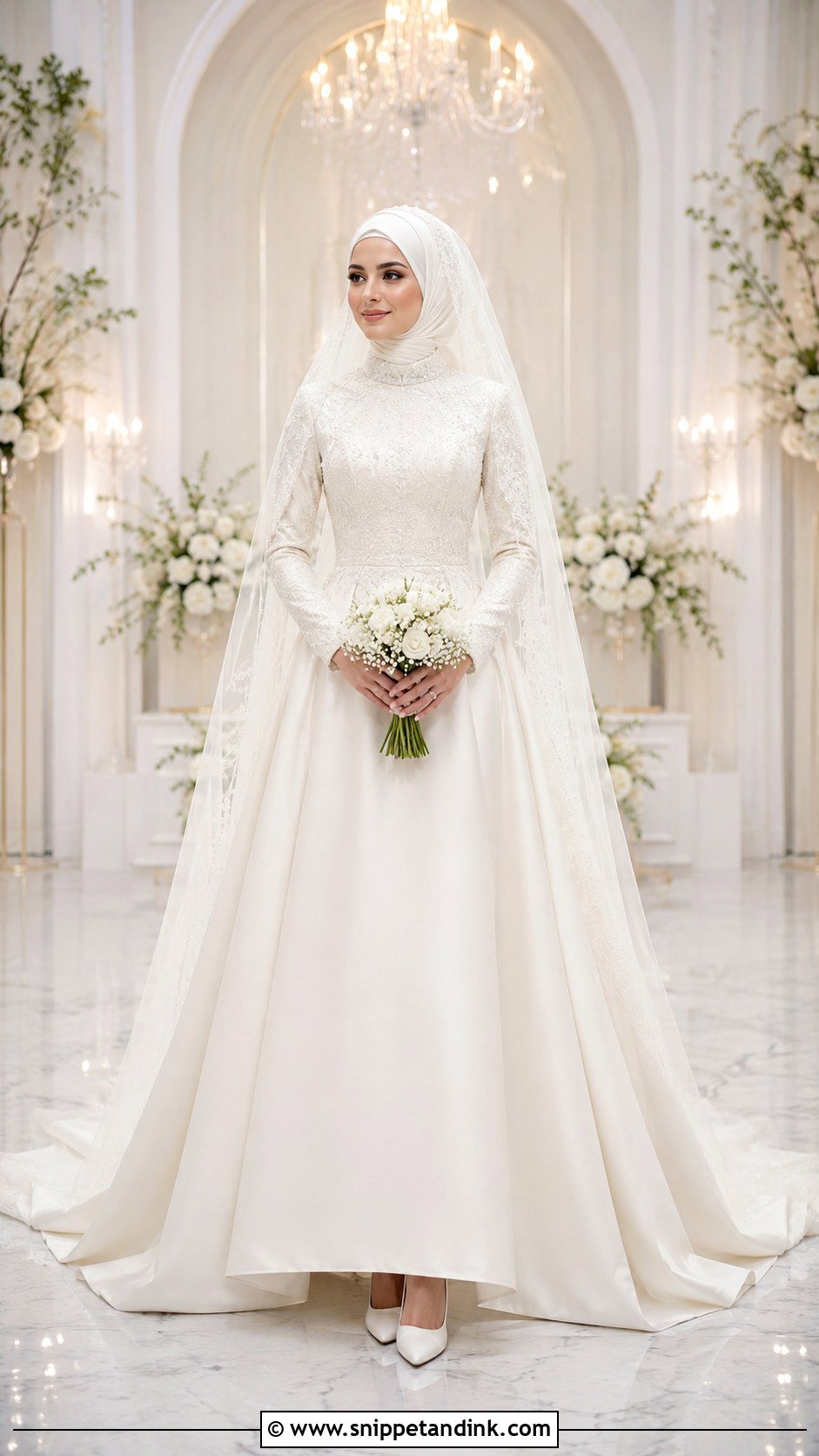
I start most undecided brides in an A-line. It narrows at the waist and moves away from the hips, so it gives shape without cling, which matters when modesty is the brief. A high neck, long sleeves and a skirt in tulle, chiffon, mikado or satin all work. A detachable train is worth considering: it gives drama for the ceremony and comes off for the reception. A simple hijab wrap and classic pumps keep it formal enough for a banquet hall without feeling heavy.
4. Ball Gown Hijab Wedding Dress
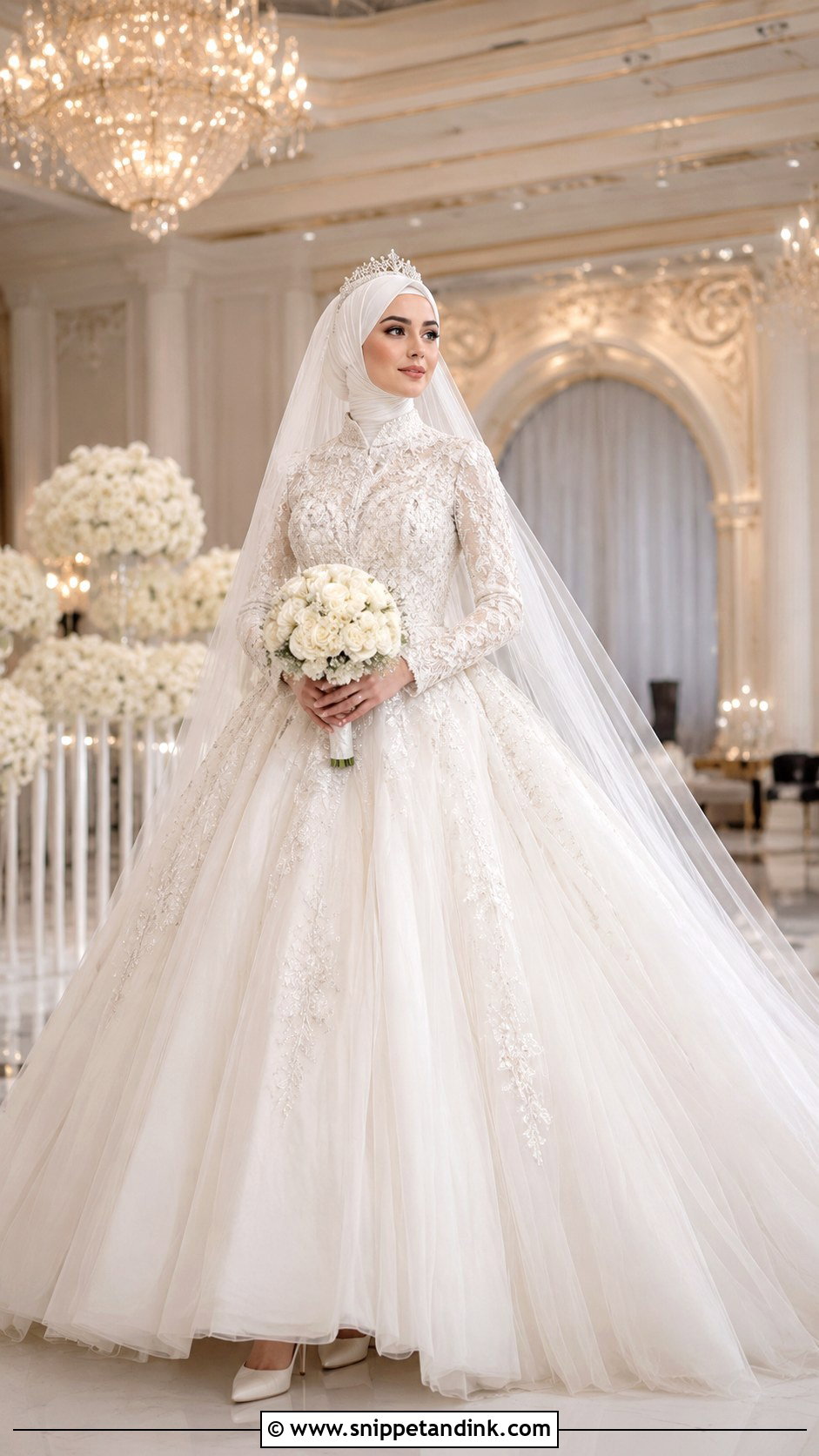
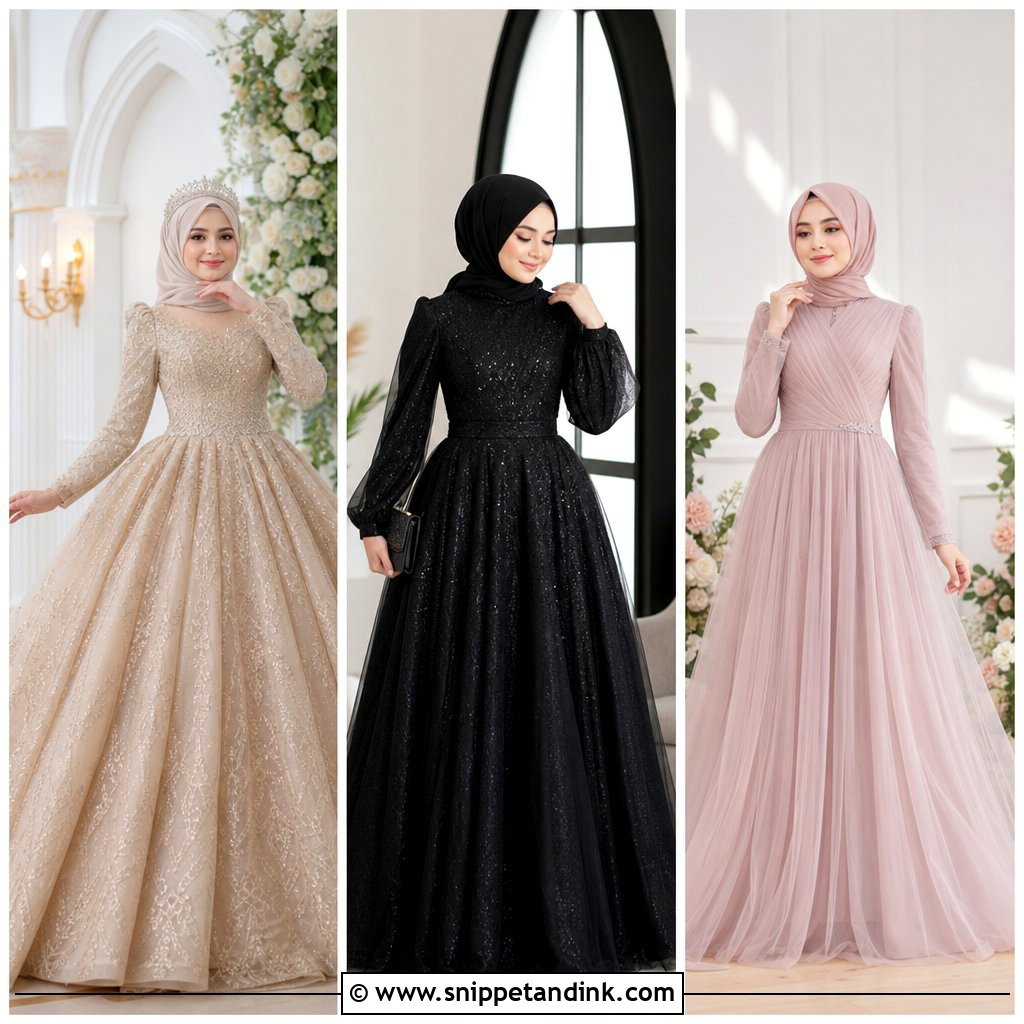
A ball gown gives you a princess-like bridal moment while staying fully covered. With so much volume below, I keep the hijab smooth and close to the head; a bulky wrap on top of a big skirt makes the whole silhouette look top-heavy and bottom-heavy at once. A fitted long-sleeve bodice with subtle embroidery balances the skirt. Let the veil fall behind the skirt rather than over the bodice detail. A small tiara set over the hijab finishes it.
5. Mermaid Hijab Wedding Dress
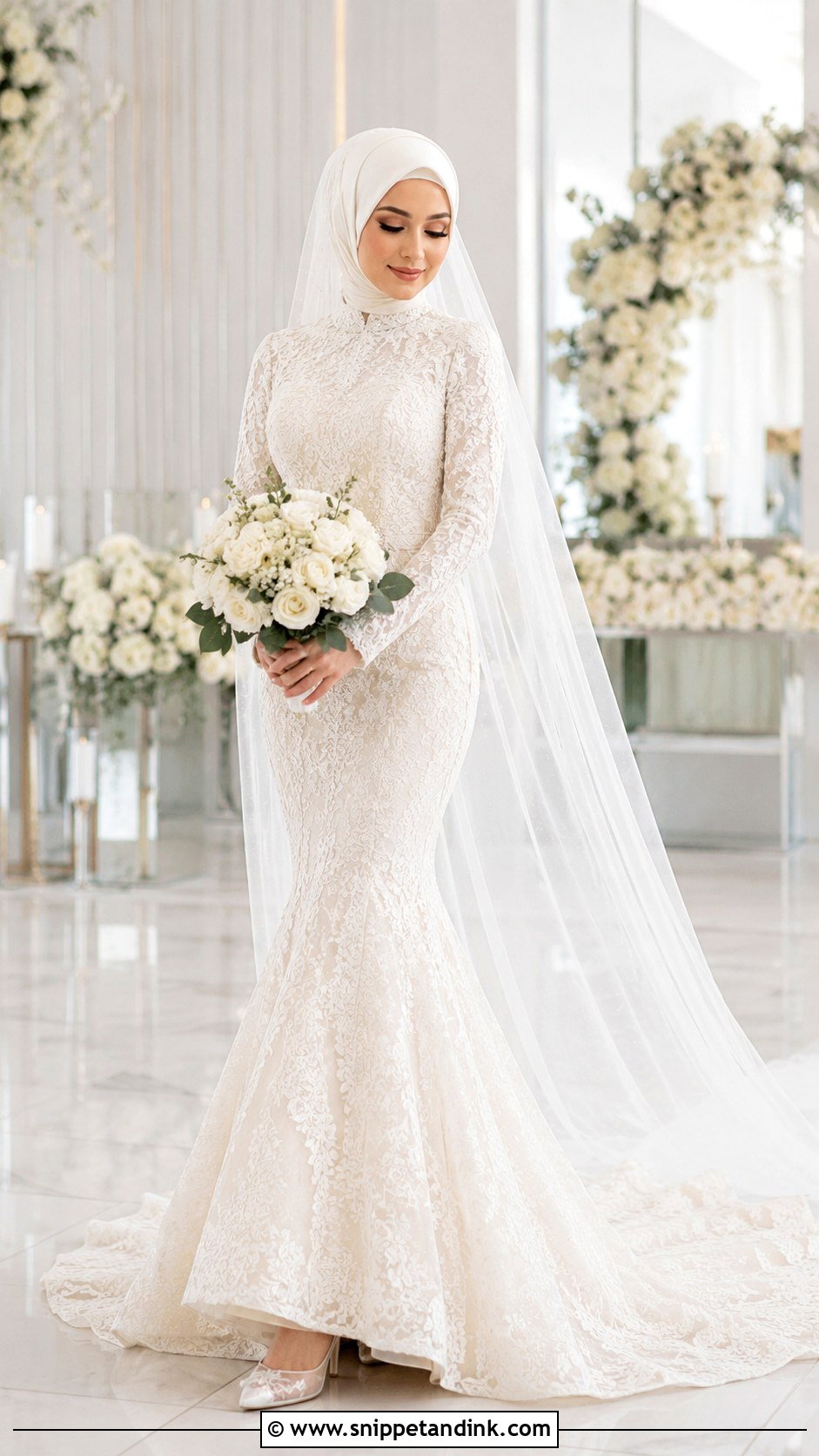
Mermaid and modesty can coexist, but it depends on the lining and the fit. A fully lined gown with long sleeves and a high neck keeps the shape polished. What I watch for is a mermaid cut so close through the hips that it reads as revealing even when everything is covered. Ease it slightly at the fitting. The flare below the knee gives movement. Pair it with a neatly wrapped hijab in the same tone, and choose heels you can walk in, because a mermaid shortens your stride.
6. Cape Hijab Wedding Dress
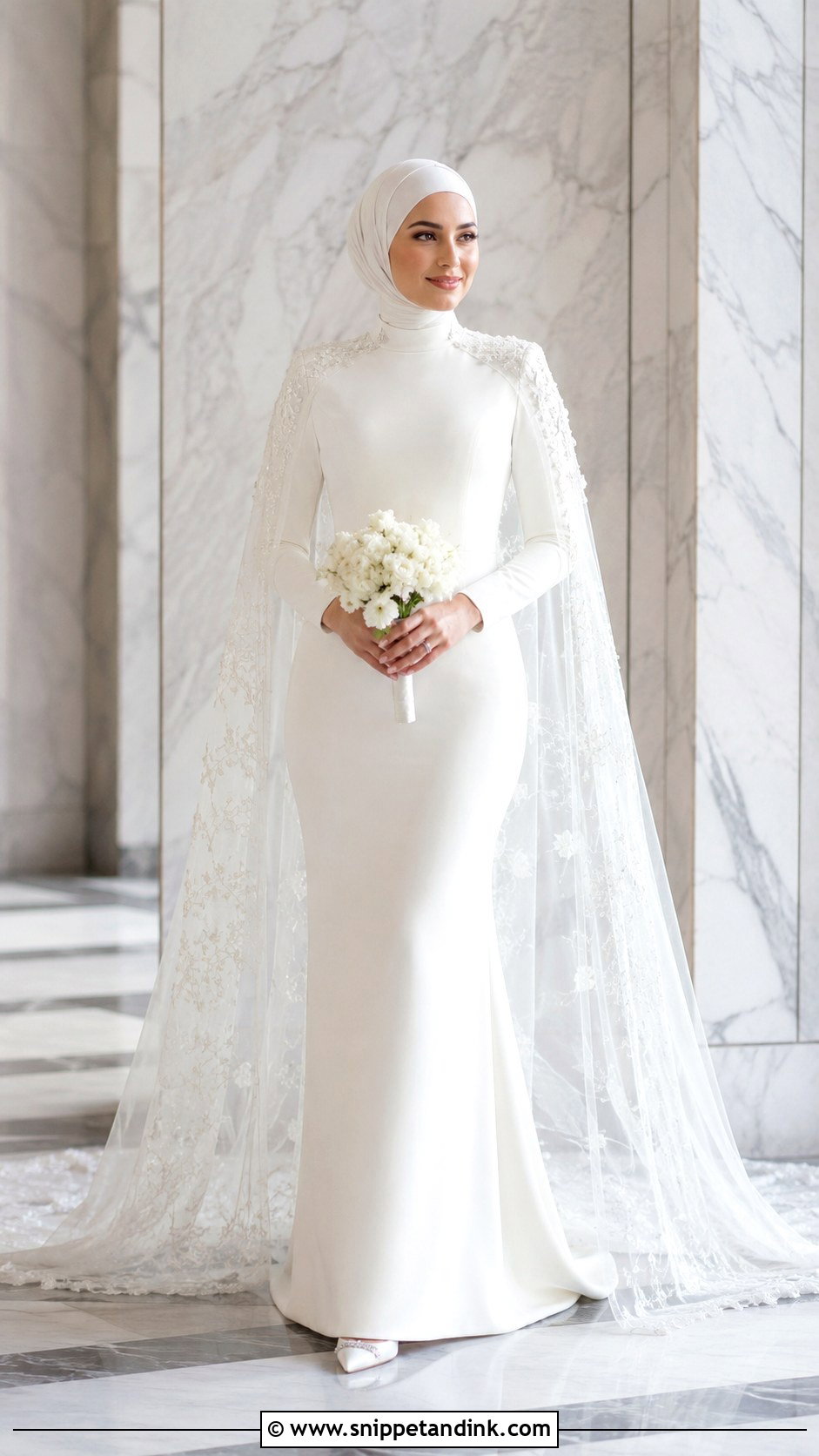
A cape gives coverage and movement at once. It can replace the veil or sit under one. I’d keep the gown underneath plain, such as a satin column or crepe A-line, so an embroidered, pearl-trimmed or lace-edged cape becomes the statement. Wrap the hijab cleanly at the neck so it doesn’t bunch under the cape’s collar. Check the cape’s attachment too. Sewn-in capes stay centred; hook-on ones drift sideways as you greet guests.
7. Beaded Hijab Wedding Dress
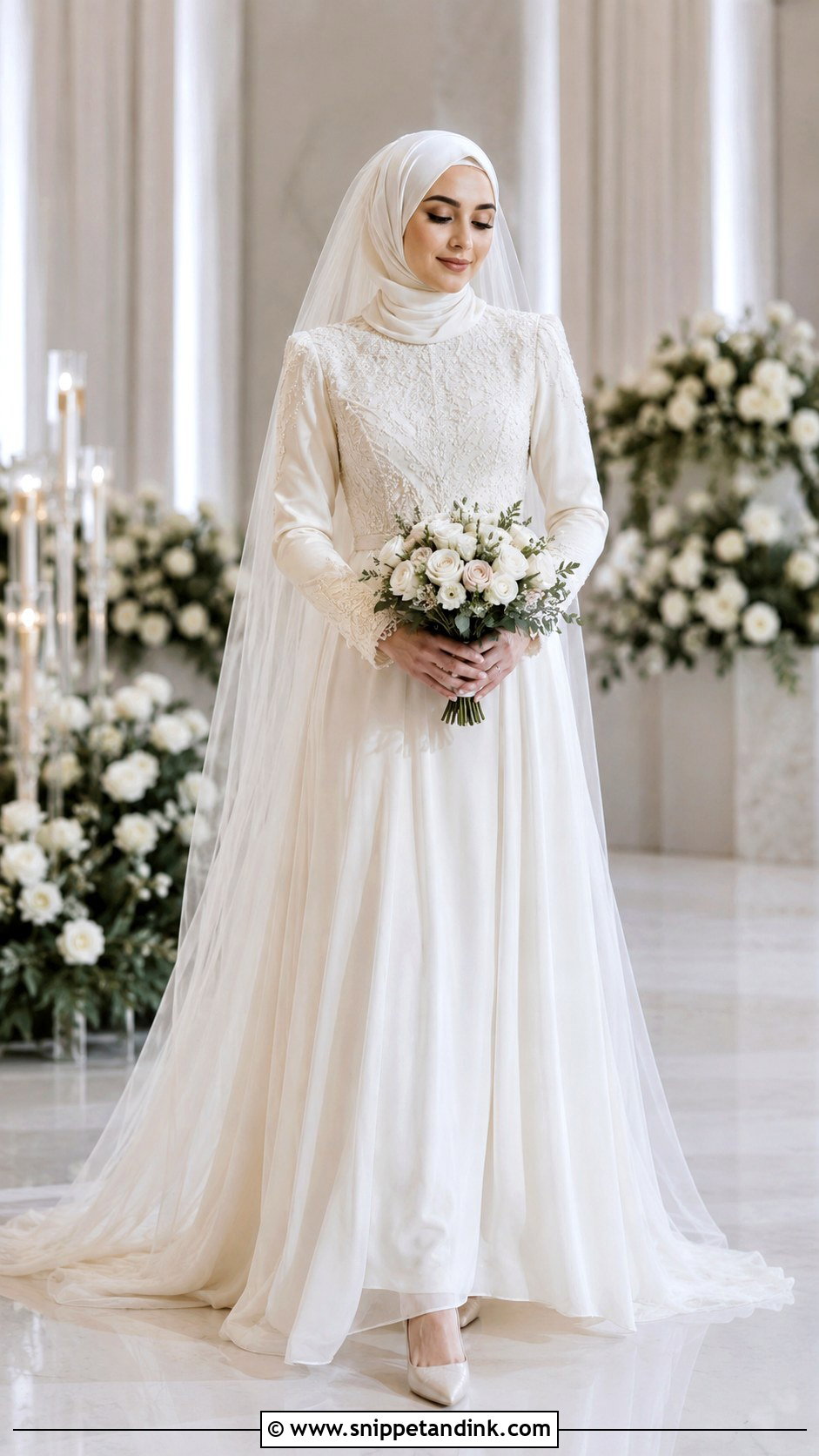
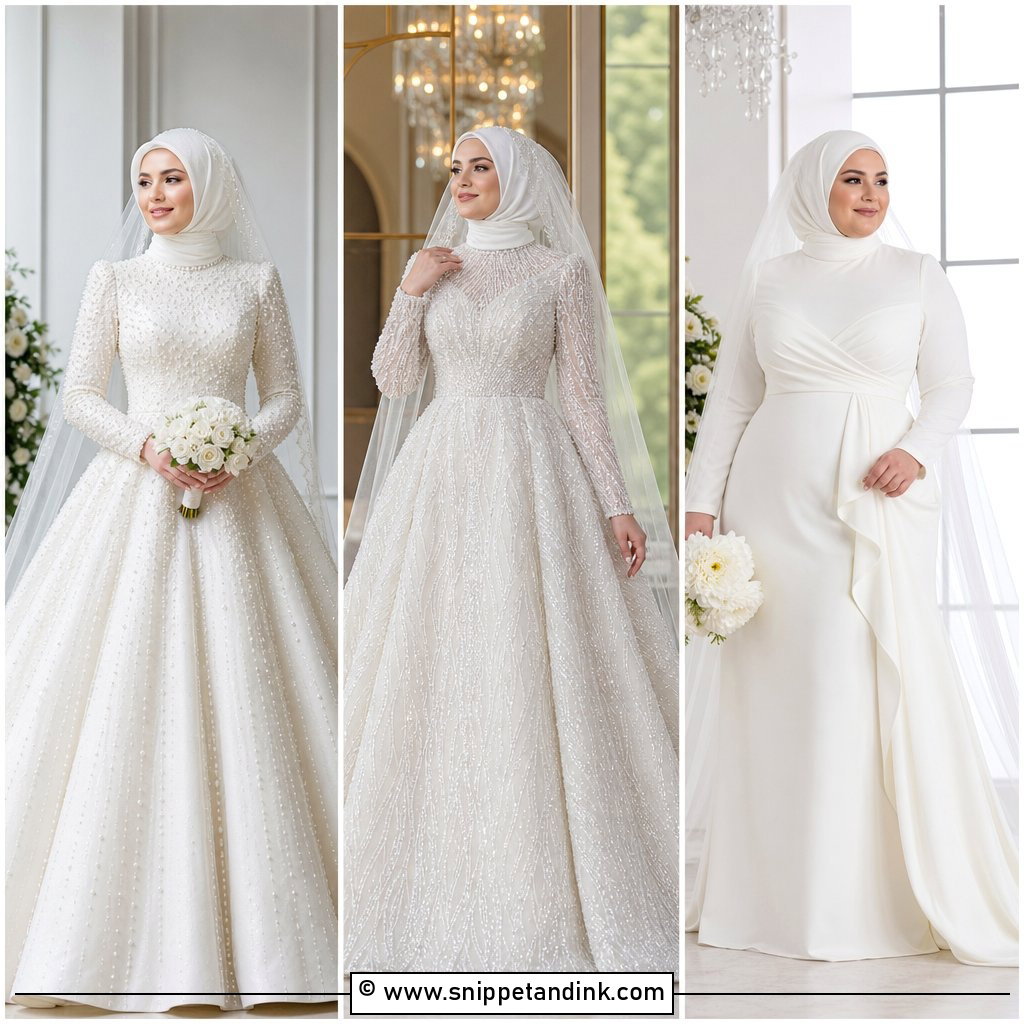
Beading on a modest gown works best when it’s placed rather than scattered everywhere. Sleeves, bodice, waist or hem: pick one or two. Heavy all-over beading adds real weight on long sleeves and pulls them down over the hands by the end of the night. A matte chiffon or plain satin hijab calms the shine. With a dense gown, go for a simple veil with a clean edge and neutral heels.
8. Pearl Hijab Wedding Dress
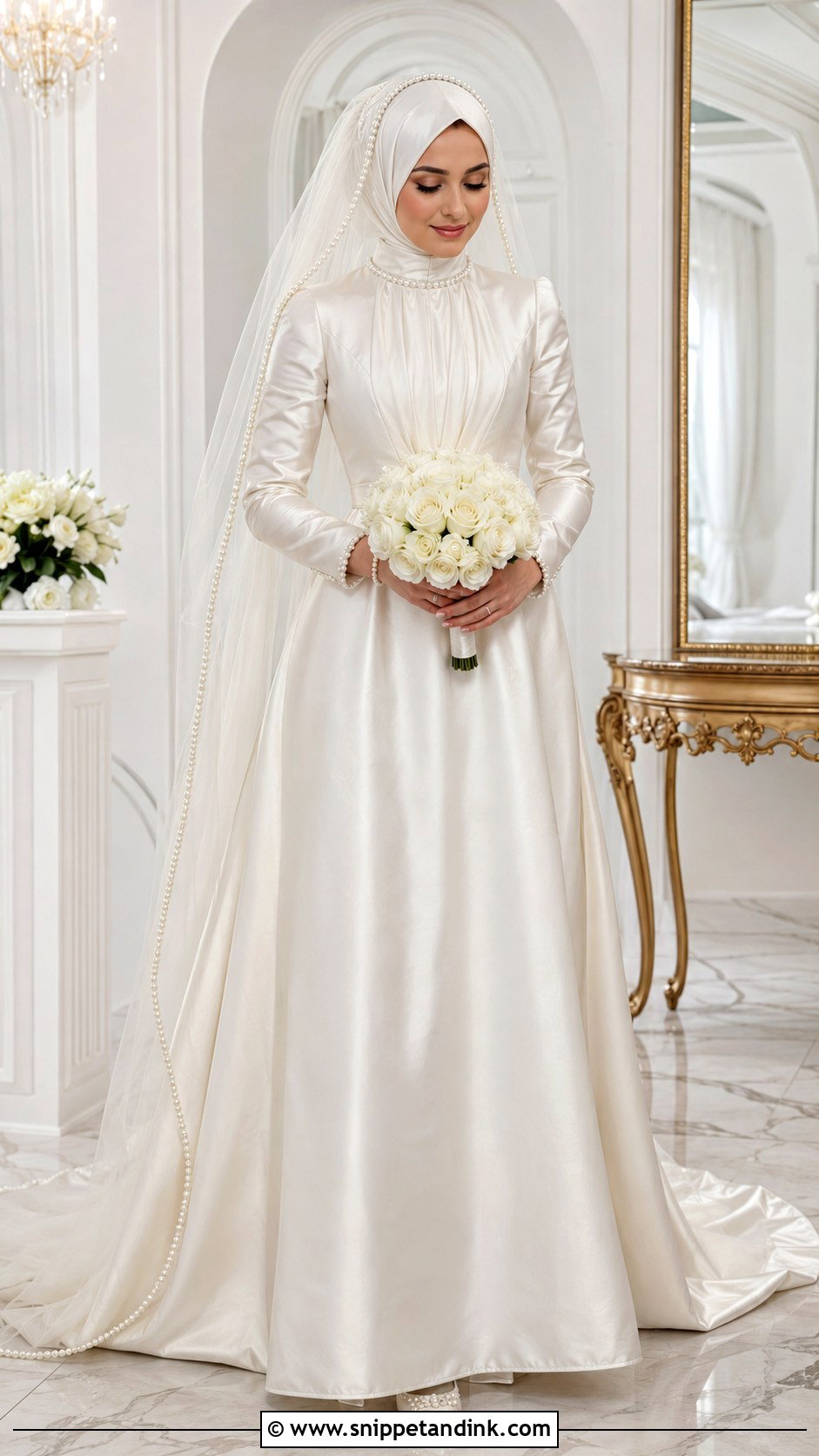
Pearls are soft and very current on modest gowns. They can go on sleeves, cuffs, the bodice, the veil or the hijab edge. Choose one main pearl area, not all of them. A long-sleeve crepe or satin gown with pearl buttons down the back is one of my favourite combinations. A plain hijab fixed with a single pearl pin at the side, closed-toe heels and creamy flowers complete it without glitter.
9. High Neck Hijab Wedding Dress
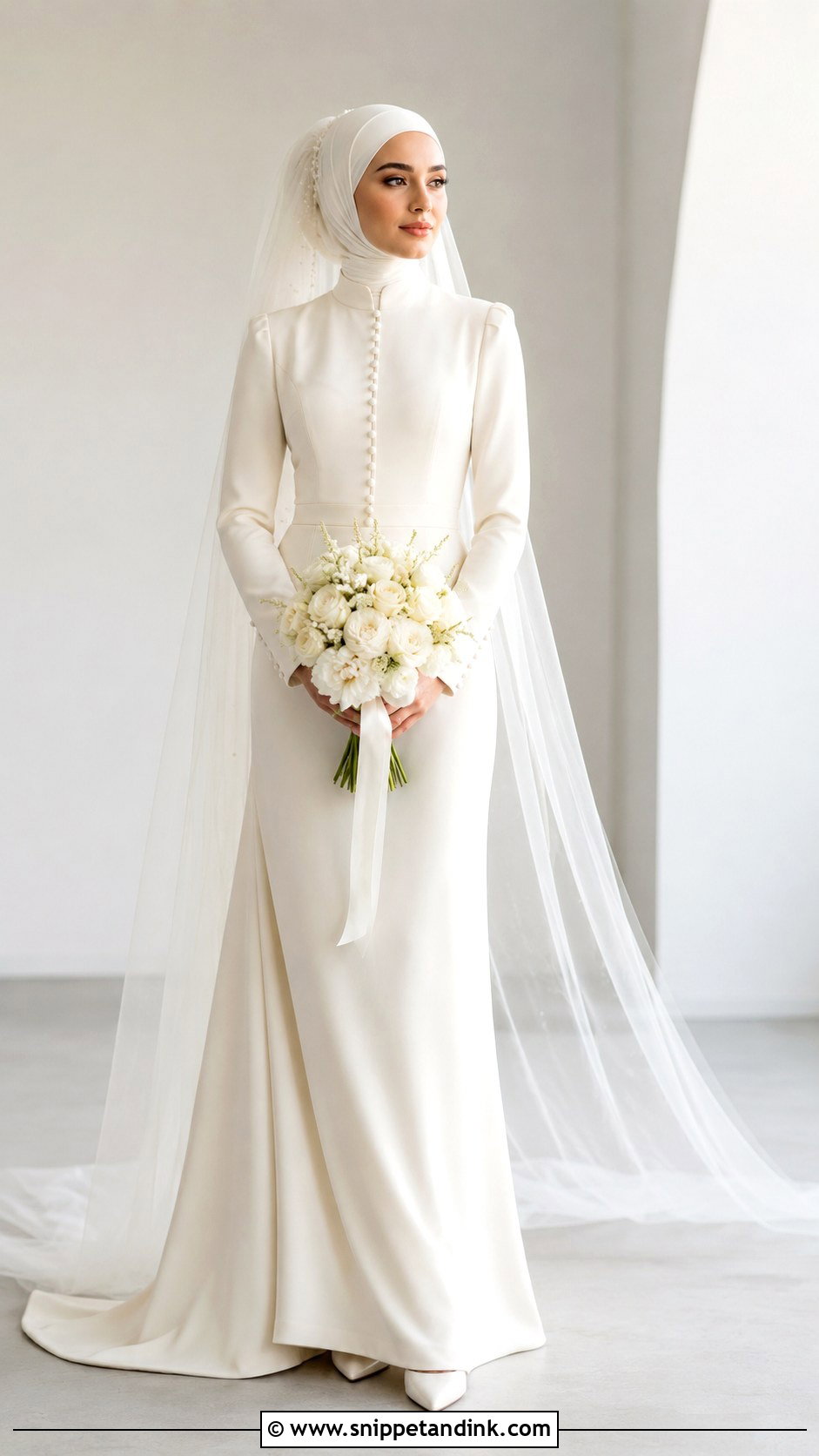
A high neckline is the simplest way to build modest coverage, and it creates a smooth base for the hijab to sit over. The collar should be soft enough to tuck the hijab into or drape over without lumps, so I test the hijab on top of the dress at the fitting, not separately. Crepe, a lace bodice or satin with buttons at the neck all work. Attach the veil behind the crown so it doesn’t crowd the face.
10. Long Sleeve Hijab Wedding Dress
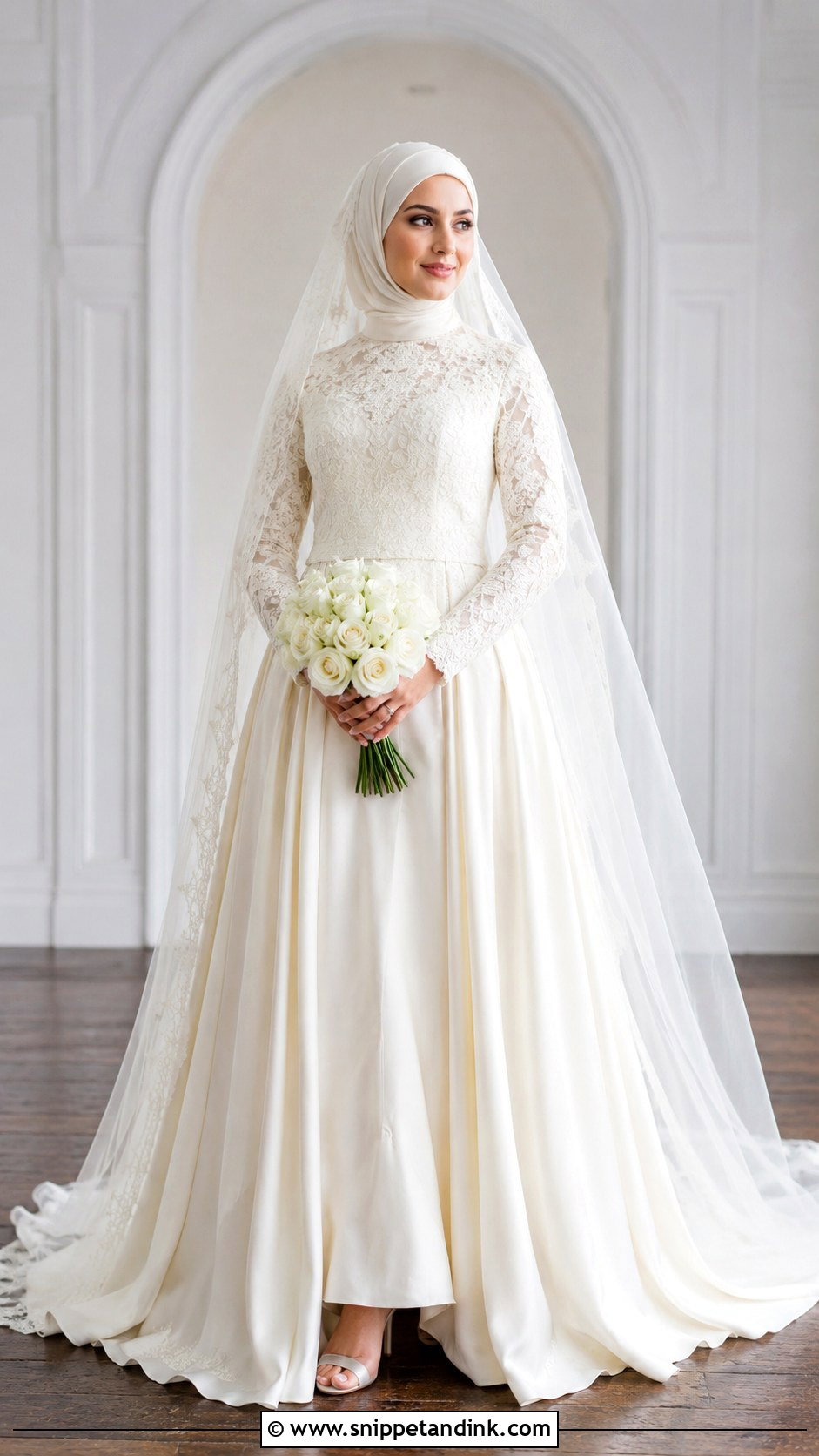
Sleeve choice changes the whole mood. Fitted satin sleeves look formal; lace looks romantic; chiffon looks airy; slightly puffed sleeves feel current. What I check is the armhole and elbow. A long sleeve that’s too tight at the elbow restricts eating and hugging, and one cut too short creeps up the arm. When sleeves carry a lot of detail, match the hijab colour closely so attention stays on the sleeve. A soft veil and comfortable heels finish it.
11. Tulle Hijab Wedding Dress
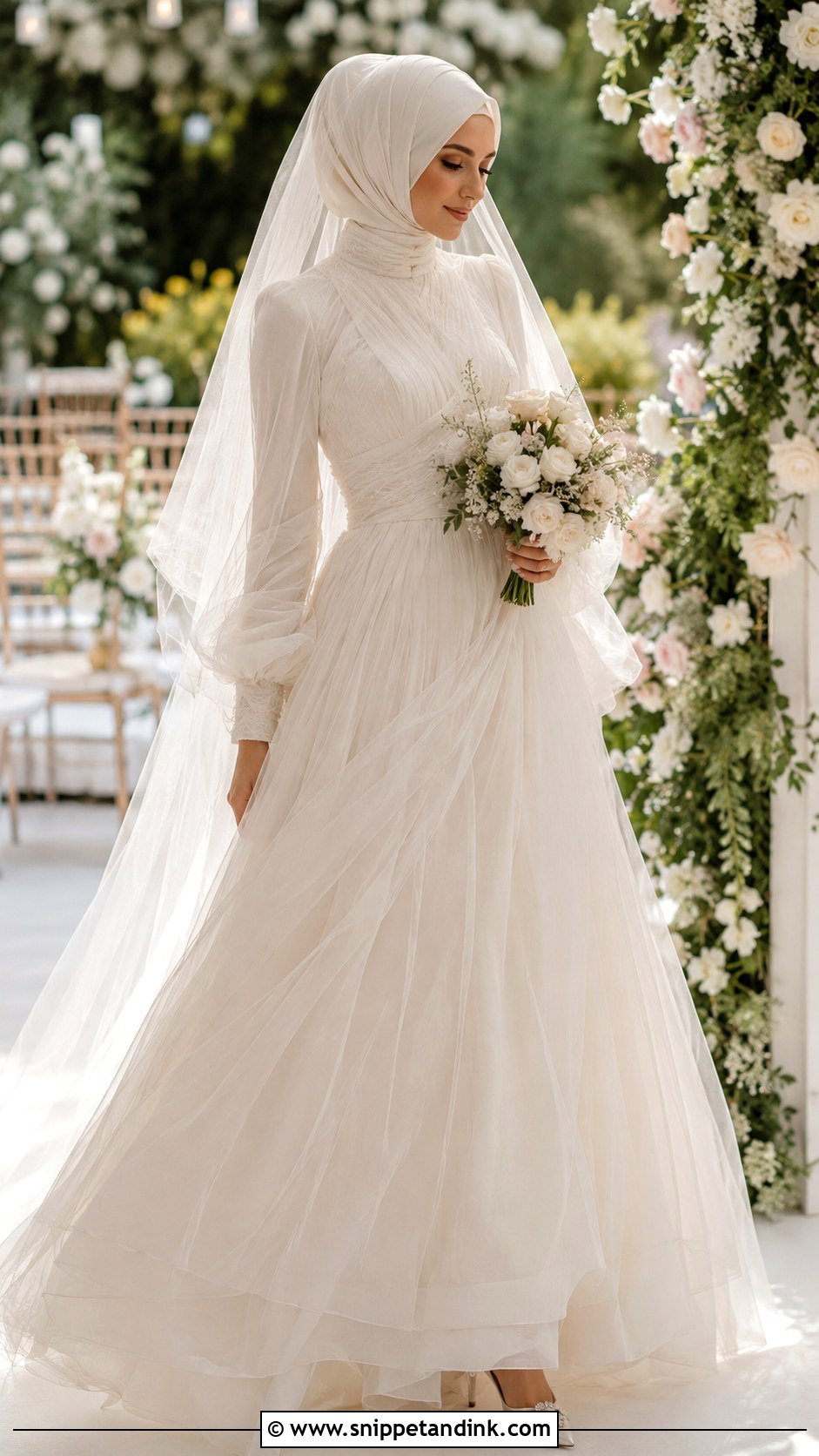
Tulle gives softness and volume, and it suits layered skirts, airy sleeves and long veils. The lining under tulle sleeves needs testing, because a single layer of tulle is far more see-through than it looks on a hanger. A lined high-neck bodice over a flowing tulle skirt looks modern and modest. A chiffon hijab moves the way tulle does, so the two sit well together. Keep jewellery away from the skirt; bracelets snag tulle.
12. Chiffon Hijab Wedding Dress
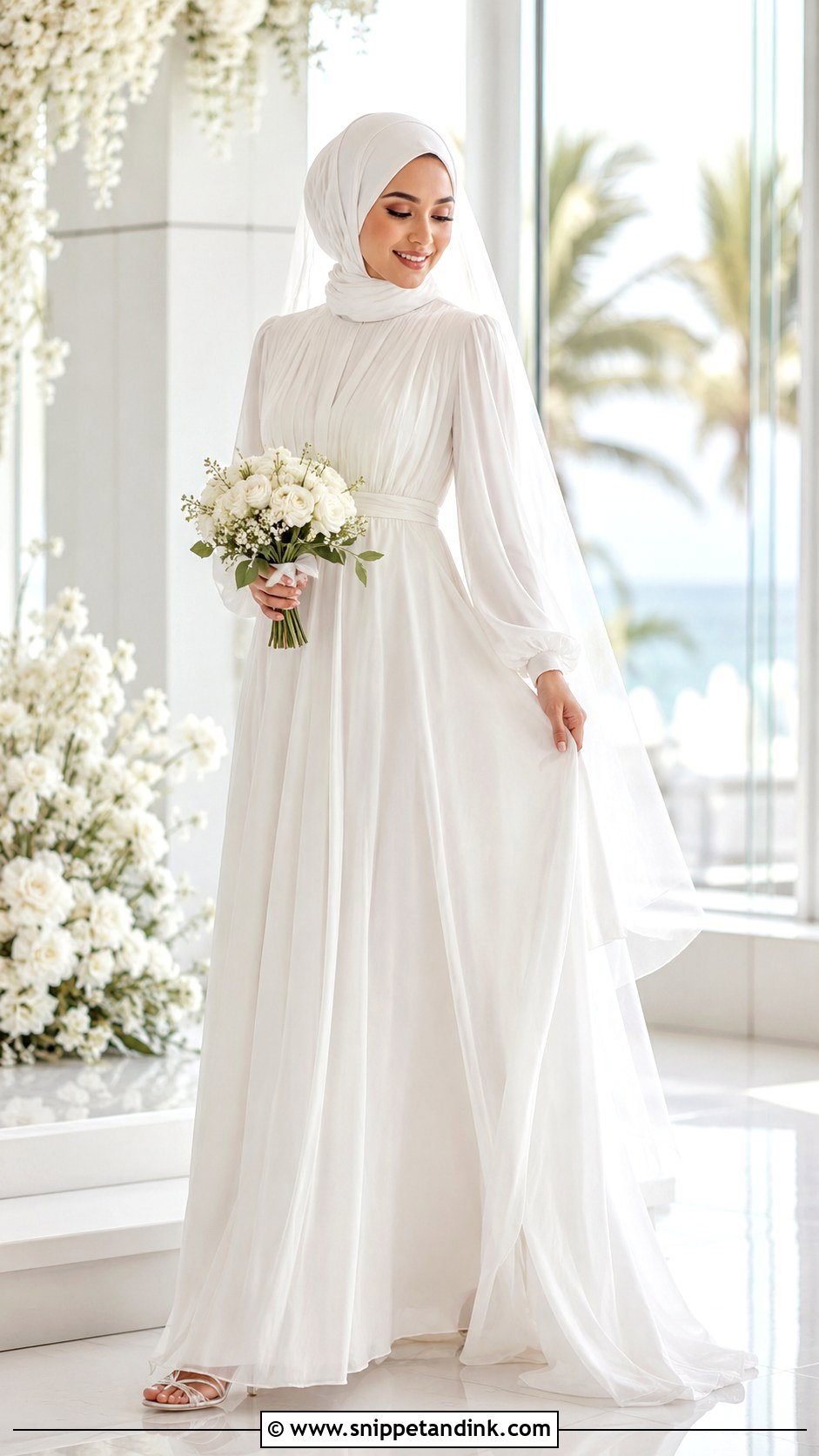
For heat and long ceremonies, chiffon is the most comfortable fabric here. It breathes and moves, so it suits destination weddings and summer gardens. A gathered waist, flowing skirt and high neck give an easy modest shape. The downside is wind: chiffon lifts and clings in a breeze, so a weighted hem or a fuller lining helps outdoors. A matching chiffon hijab looks soft and continuous. Add a beaded belt if you want more definition, and low heels or sandals.
13. Organza Hijab Wedding Dress
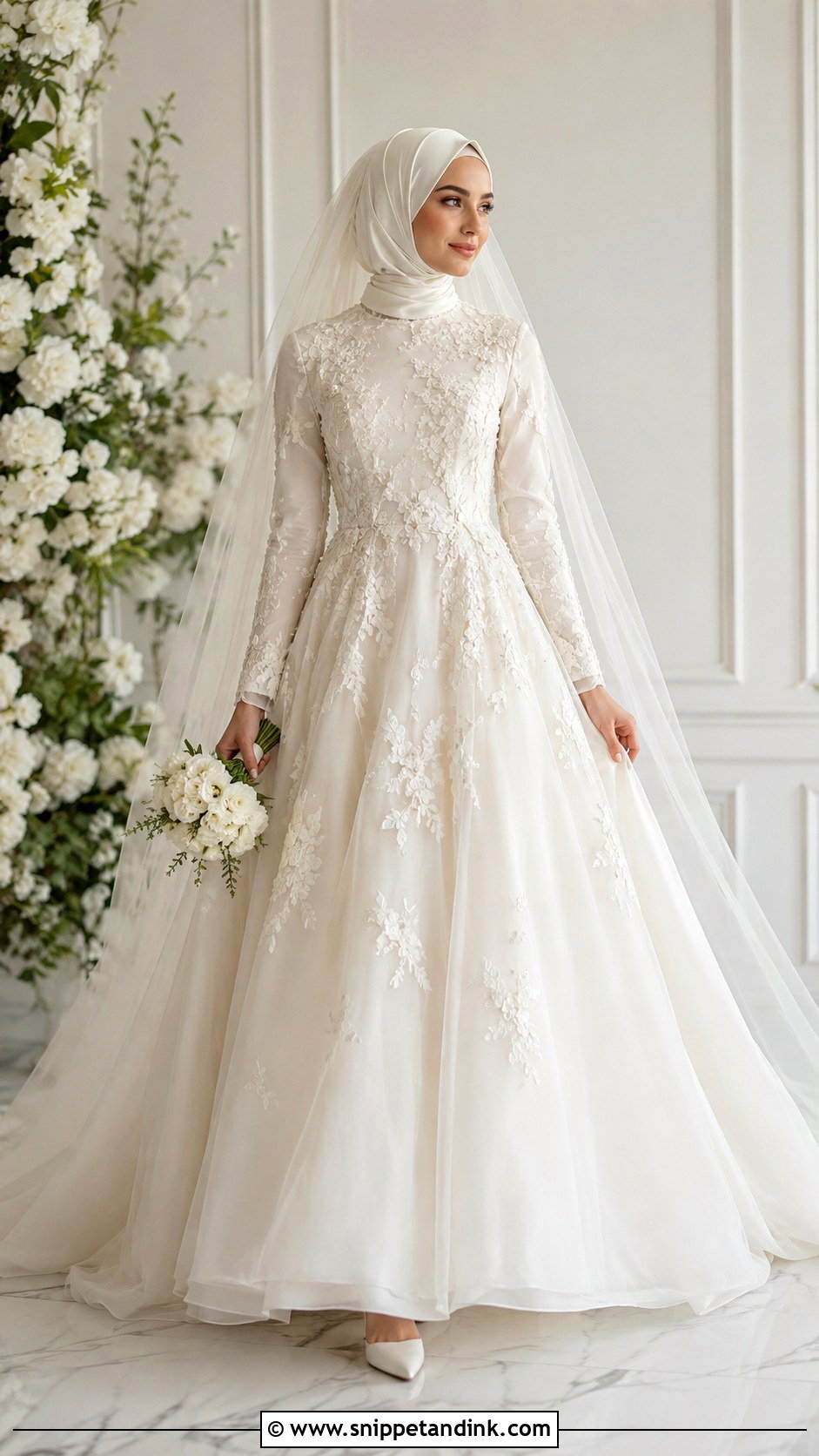
Organza is crisp and airy, so it gives shape without the weight of a full satin ball gown. An organza A-line with long sleeves, a high neck and subtle floral appliqué looks fresh. Organza creases easily, though, and the creases are sharp. If you’re travelling to the venue, plan a steamer and ten minutes before you dress. A satin or chiffon hijab softens the structure, and a sheer veil adds movement.
14. Crepe Hijab Wedding Dress
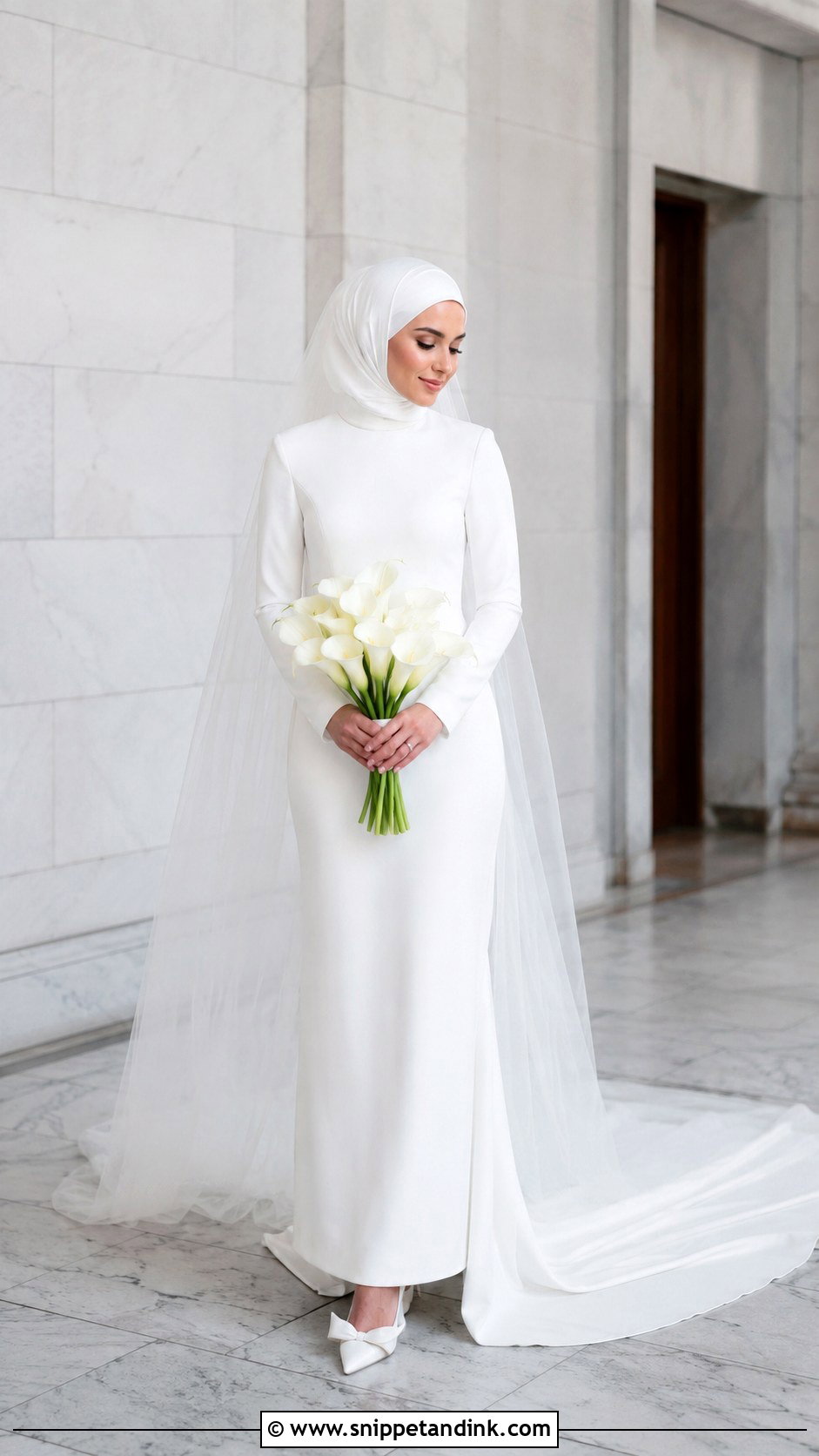
Crepe is matte and sleek, and it hides nothing. Because it’s so plain, the tailoring makes or breaks it, and the dress should skim the body without pulling at the hips or across the back. A long-sleeve column or A-line with a high neck, covered buttons or a small train works well. Pair it with a structured hijab wrap, a plain long veil and sculptural heels. A white orchid or calla lily bouquet suits the minimal line.
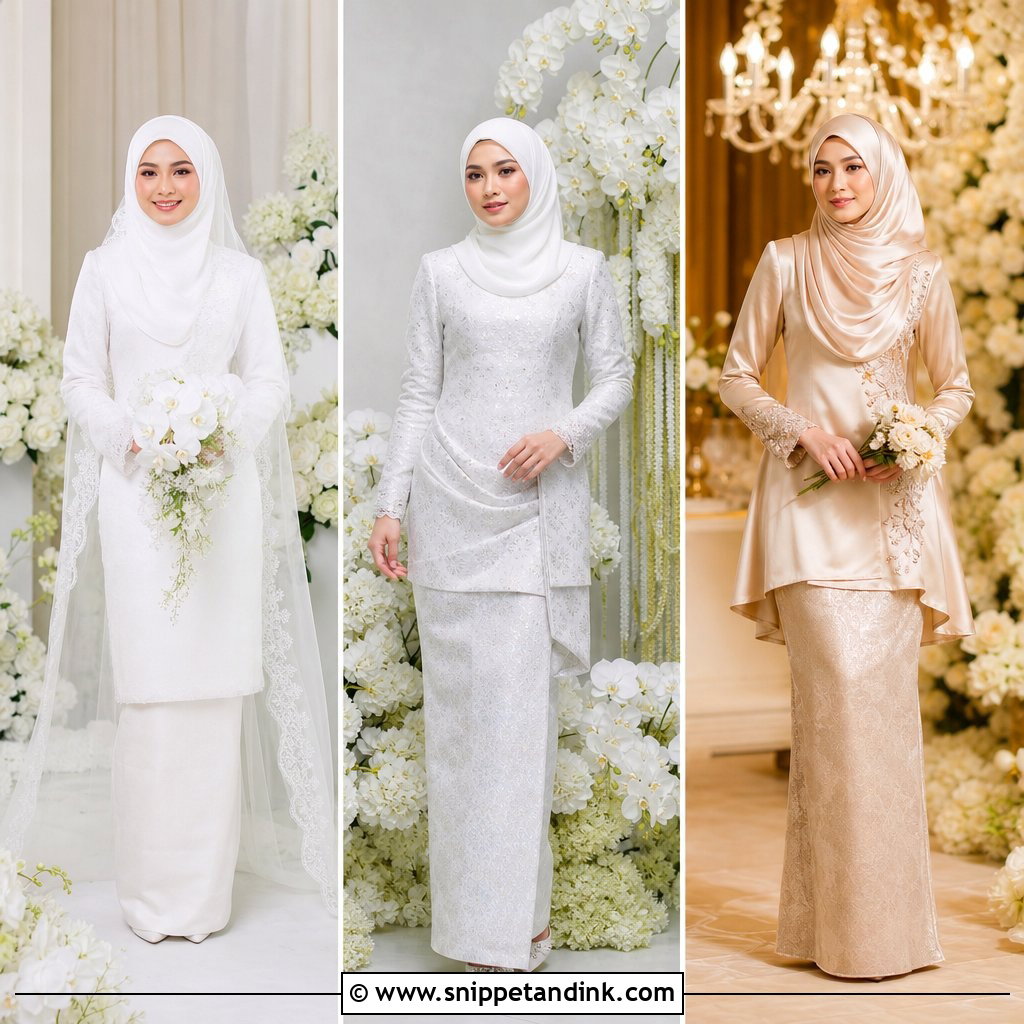
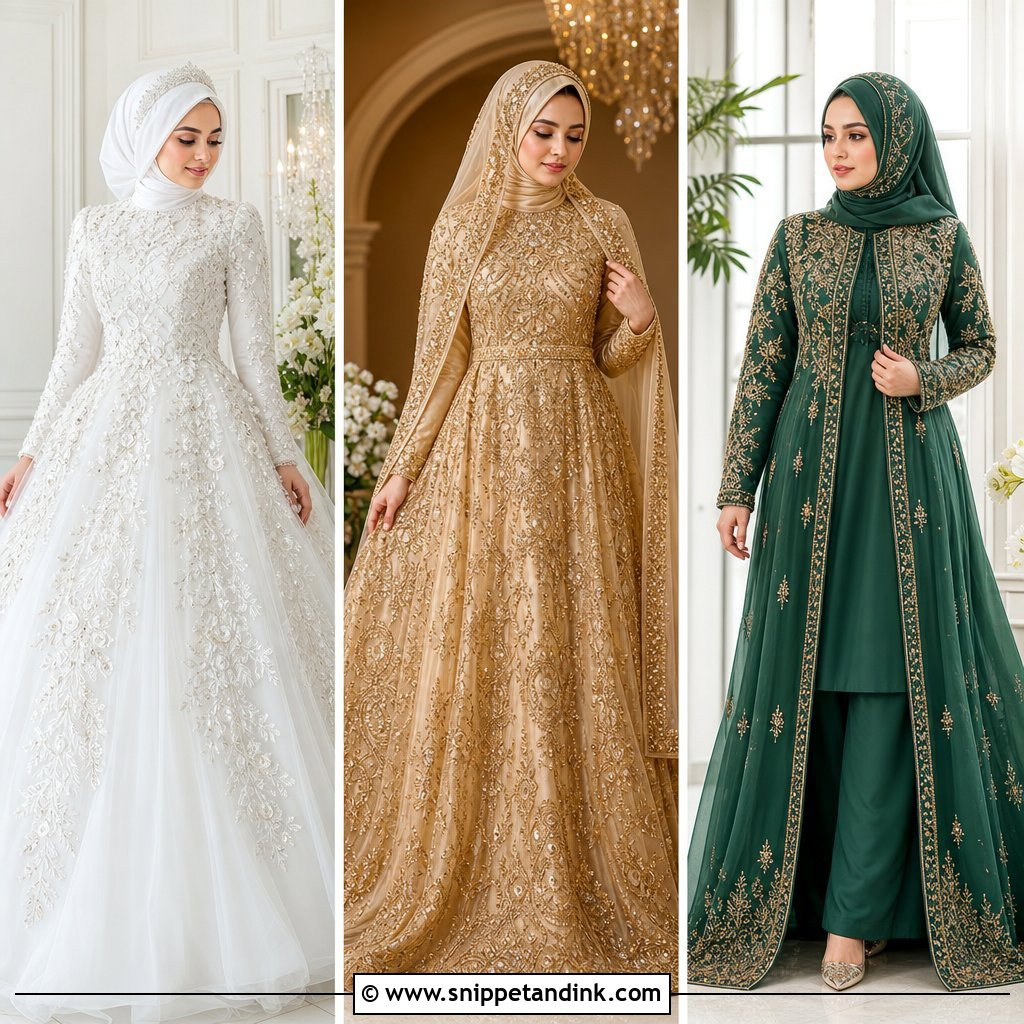
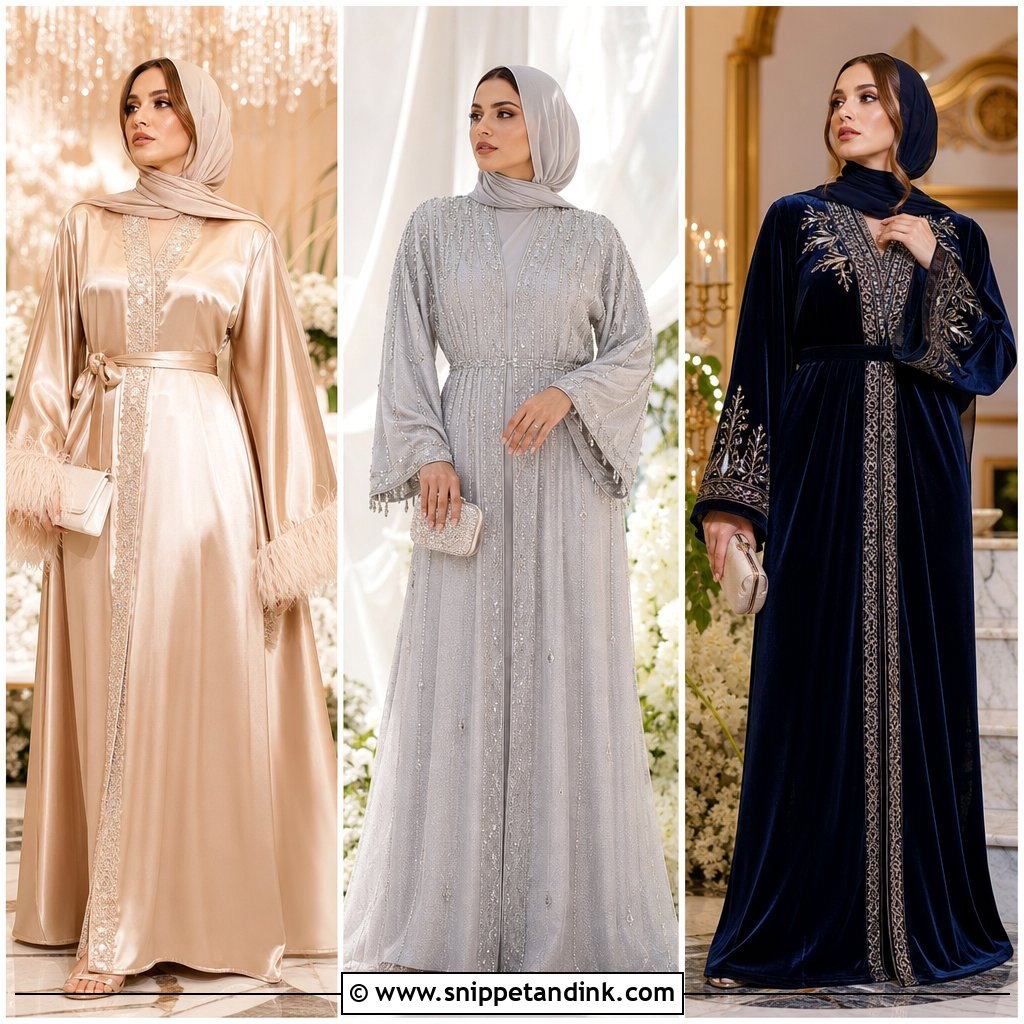
15. Embroidered Hijab Wedding Dress
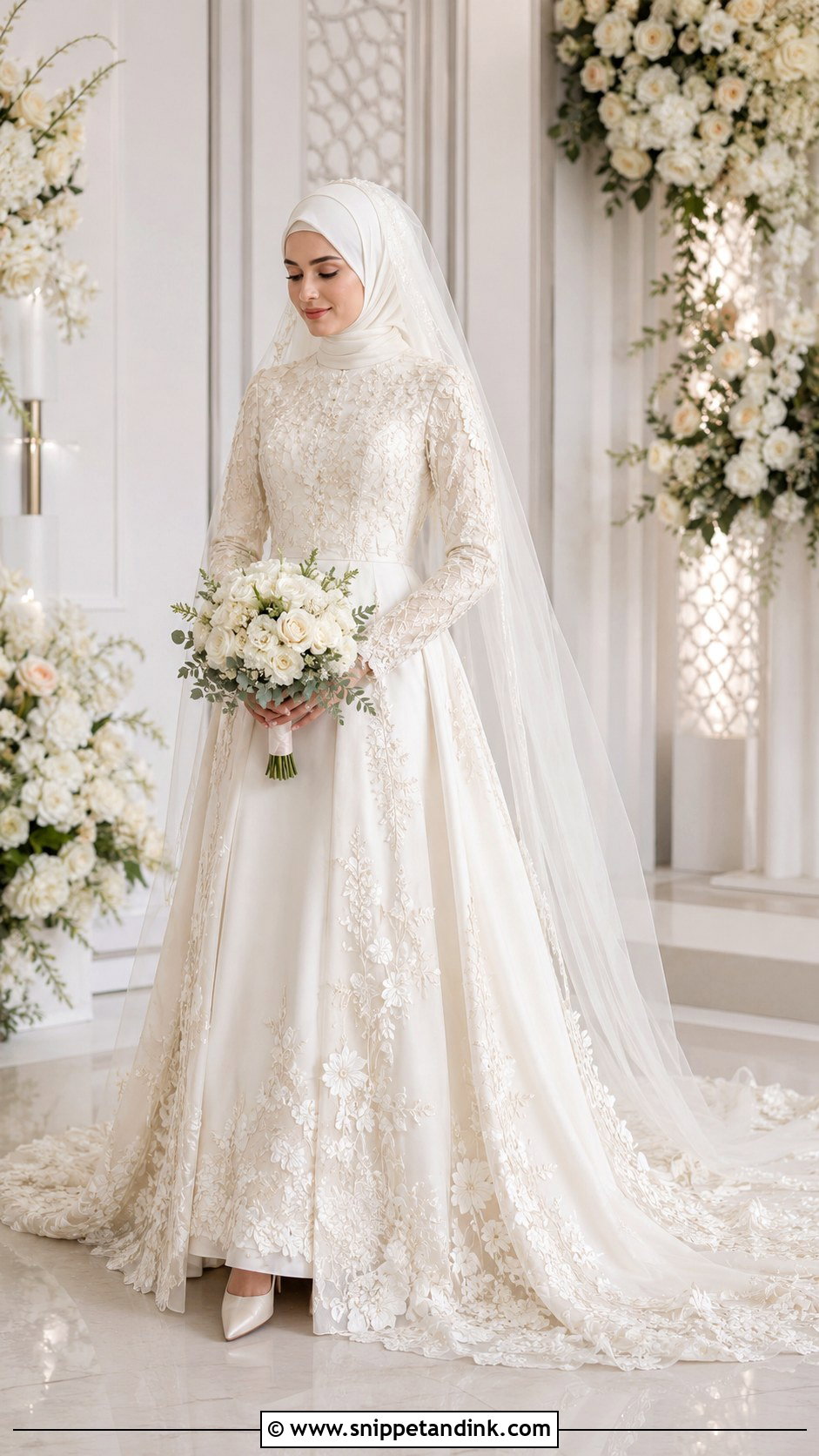
Embroidery is the easiest way to bring personal or cultural meaning into a modest dress. Floral vines, leaves, geometric motifs or patterns from your heritage all work. Place it on the sleeves, bodice, hem or train, and keep the hijab plain so it doesn’t crowd the design. If the embroidery is worked in silver, pearl or champagne thread, I’d match the metal of your jewellery and any headpiece to it. A bouquet that stays quiet lets the needlework show.
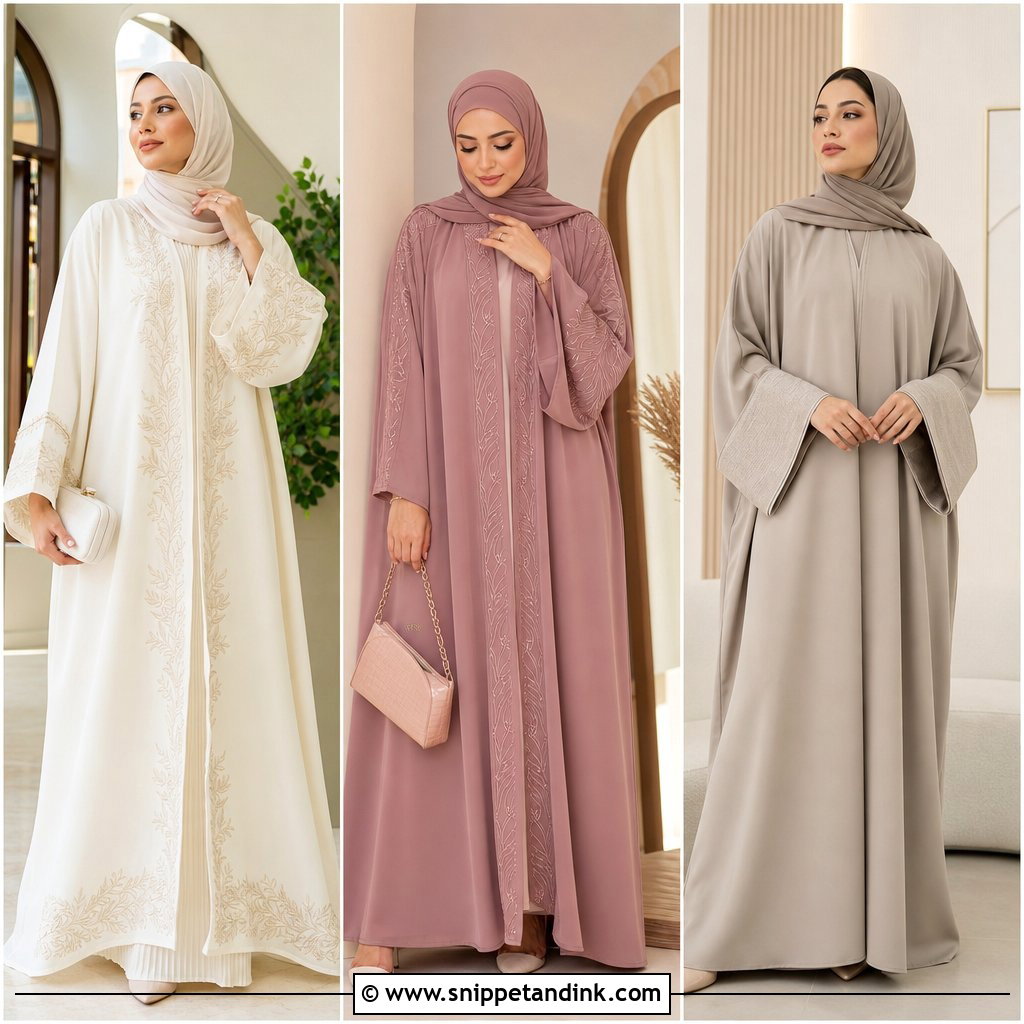
16. Modest Abaya Wedding Dress
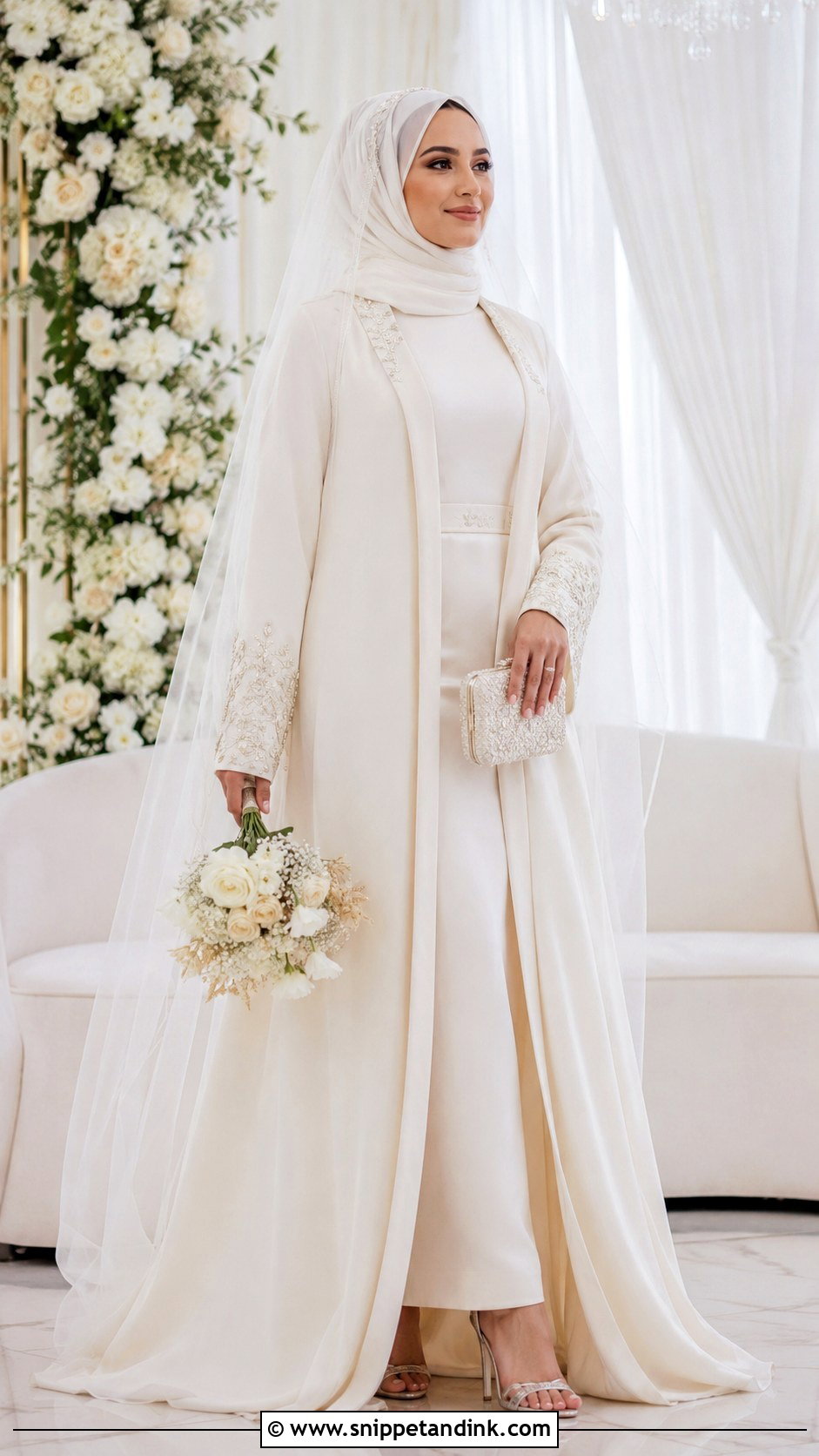
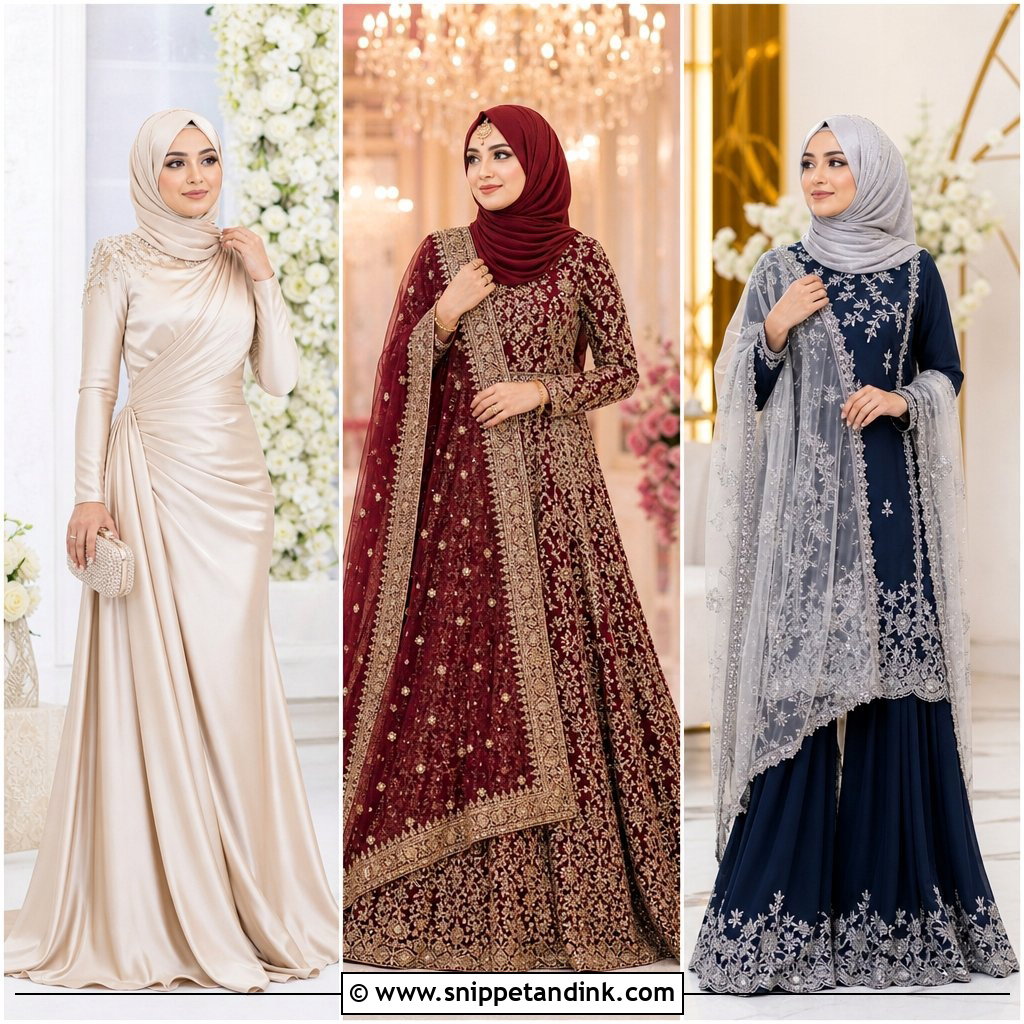
A modest abaya wedding dress is flowing and comfortable, with closed fronts and rich embellishment at the cuffs, neckline or hem. White, ivory, pearl and soft gold work well. The detail that makes it look bridal rather than everyday is what’s underneath: a structured inner dress or slip lets the abaya fall smoothly instead of clinging. A matching hijab ties it together, and a sheer veil adds ceremony. Metallic heels and a small embellished clutch suit it.
17. Kaftan Hijab Wedding Dress
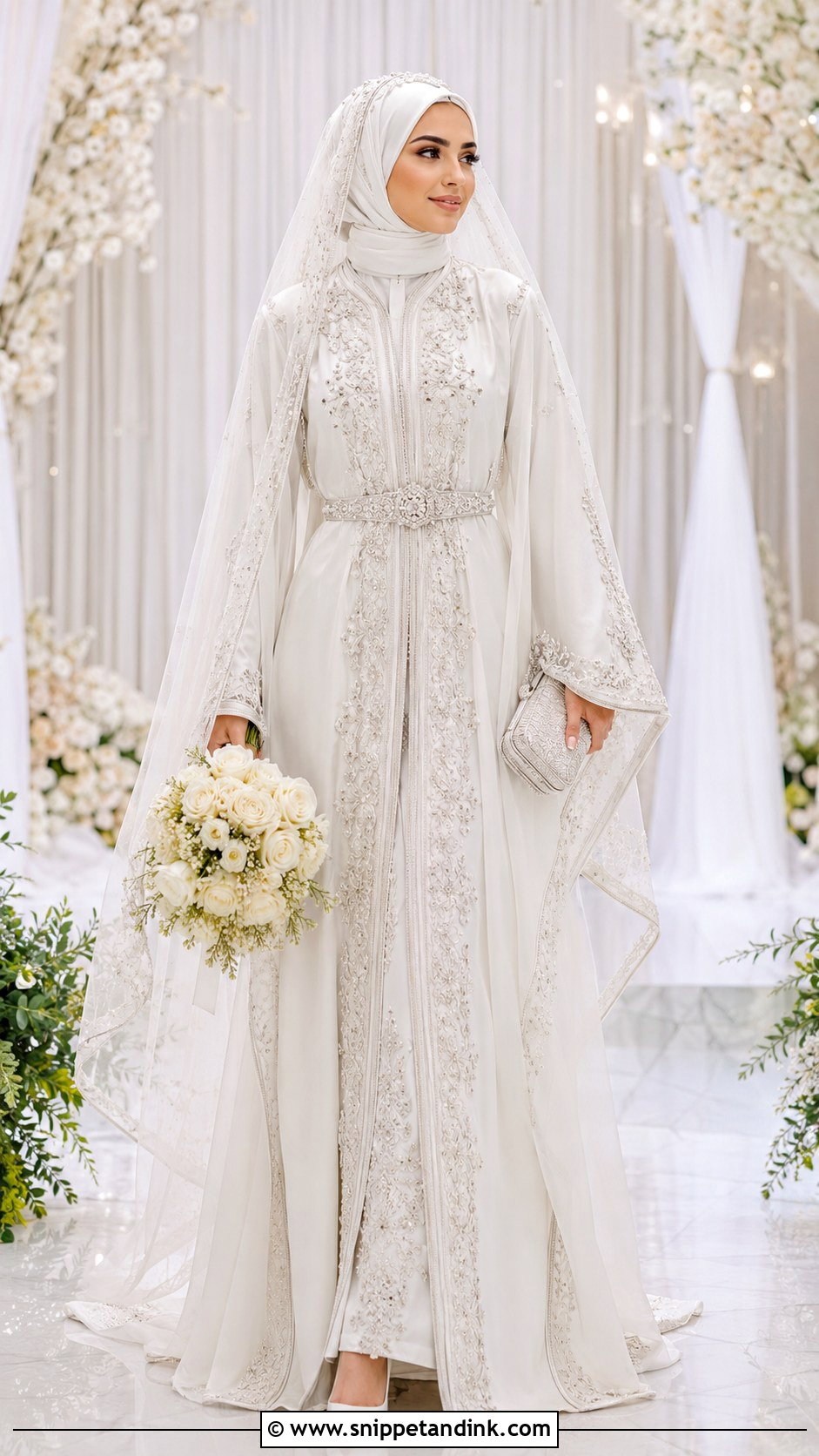
Kaftans are comfortable and regal. Bridal kaftans often carry wonderful embroidery on wide sleeves. The risk is a shapeless outline in photos. A defined waist, an embellished belt stitched at the side seams or a structured underlayer fixes that. Wide kaftan sleeves also fall back when you raise your arms, so if coverage matters, ask for a fitted inner sleeve. Ivory, champagne or pale blush, a neat hijab and a long veil complete it.
18. Two Piece Hijab Wedding Dress
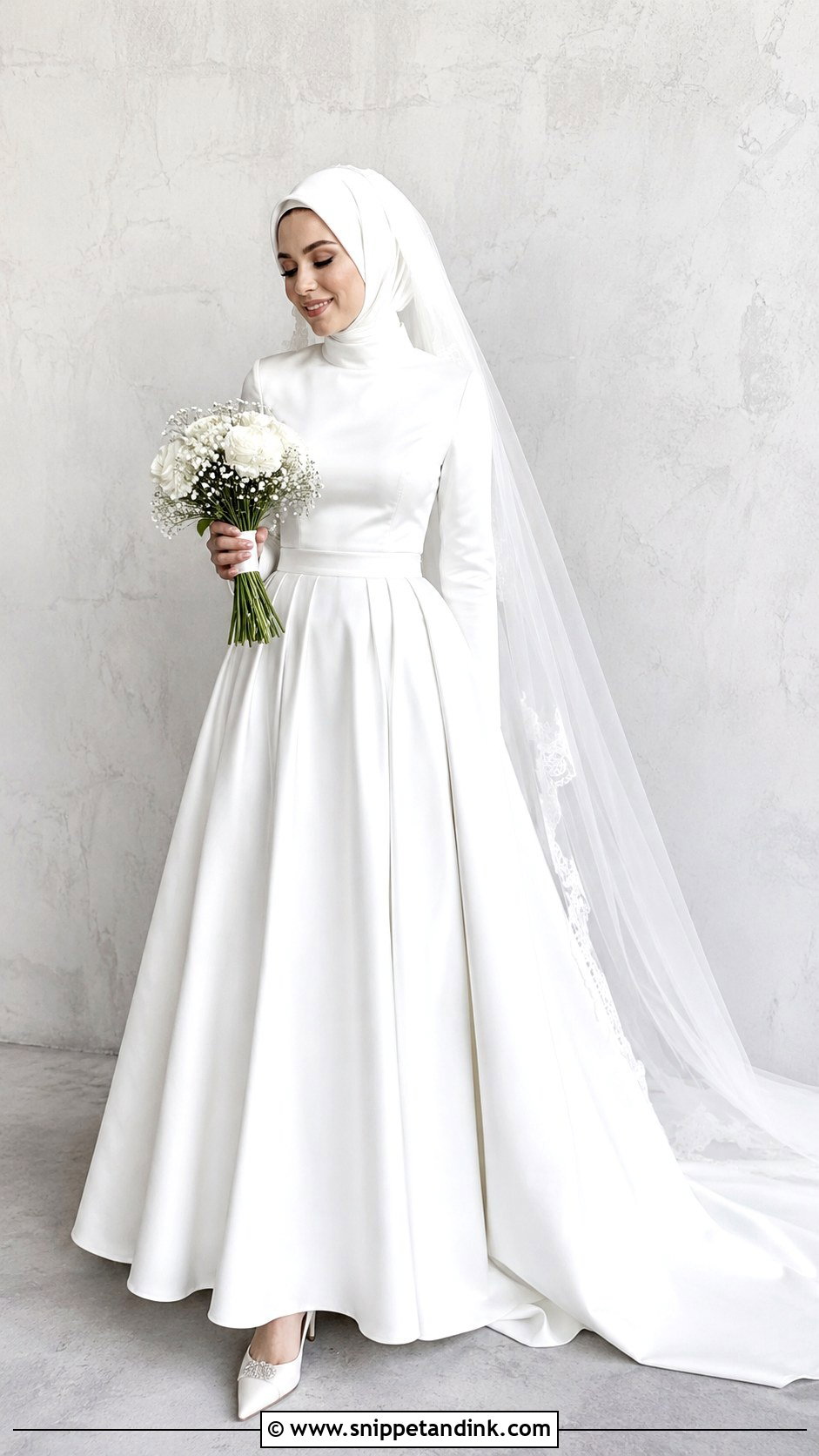
Two pieces give real practical flexibility: different sizes for the top and bottom, and a top you might wear again. A long-sleeve bridal top with a high neck over a full, A-line or satin skirt all work. A peplum adds shape; a tucked blouse looks cleaner. Check the top’s length. It should stay tucked or overlap the skirt when you raise your arms, or skin can show at the waist. Match the hijab to either the top or the skirt.
19. Blazer Hijab Wedding Dress
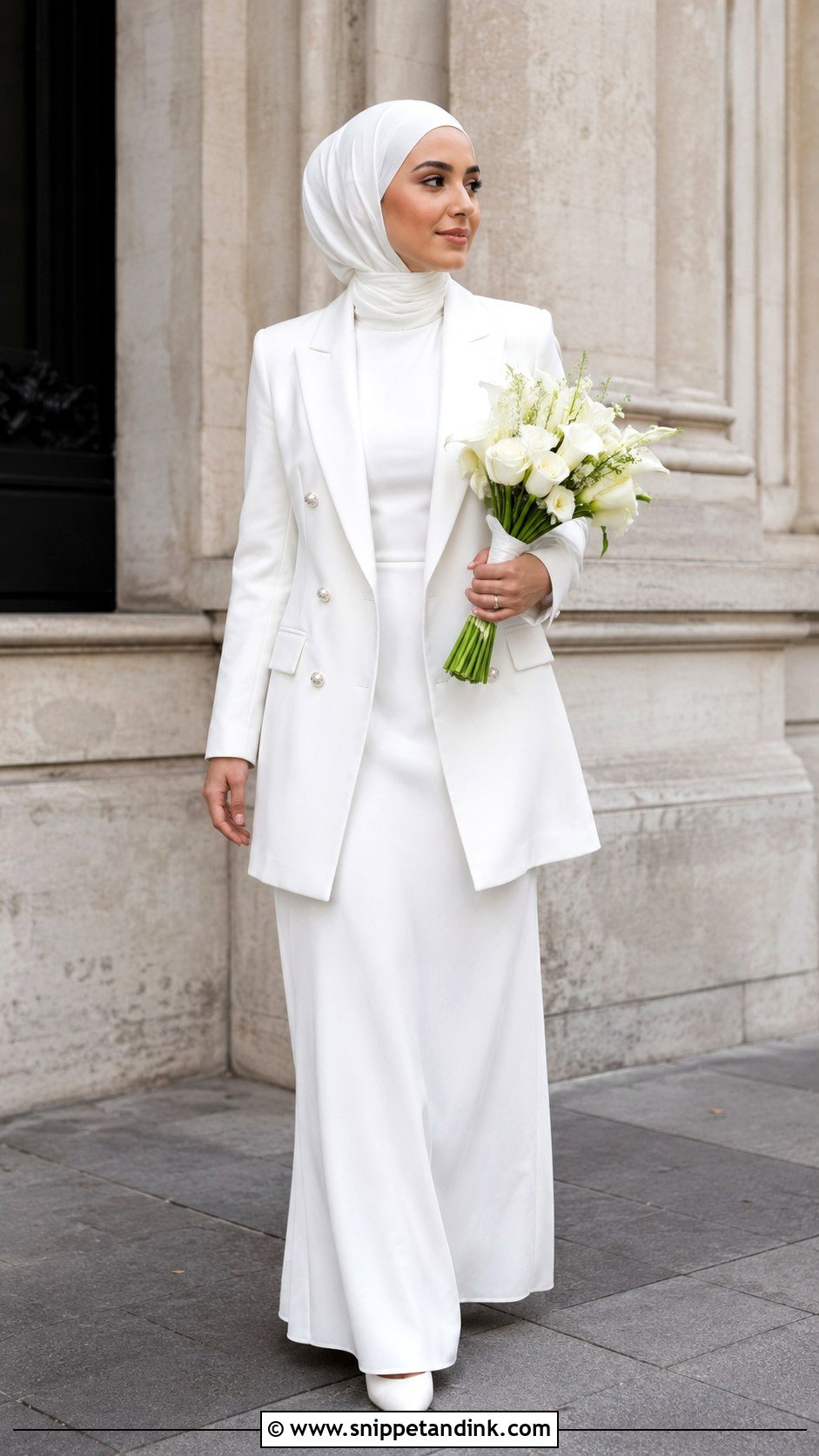
For a bride who loves tailoring, a bridal blazer over a column gown, or a white suit with wide-leg trousers and a modest top, looks sharp and modern. Choose crepe, satin or mikado so it reads as wedding wear rather than office wear. The blazer’s shoulders need proper fitting, since a modest top layered underneath adds bulk. A clean hijab wrap, pointed heels and a structured bouquet finish it. Pearl buttons or a long veil add bridal detail.


20. Ruffle Hijab Wedding Dress
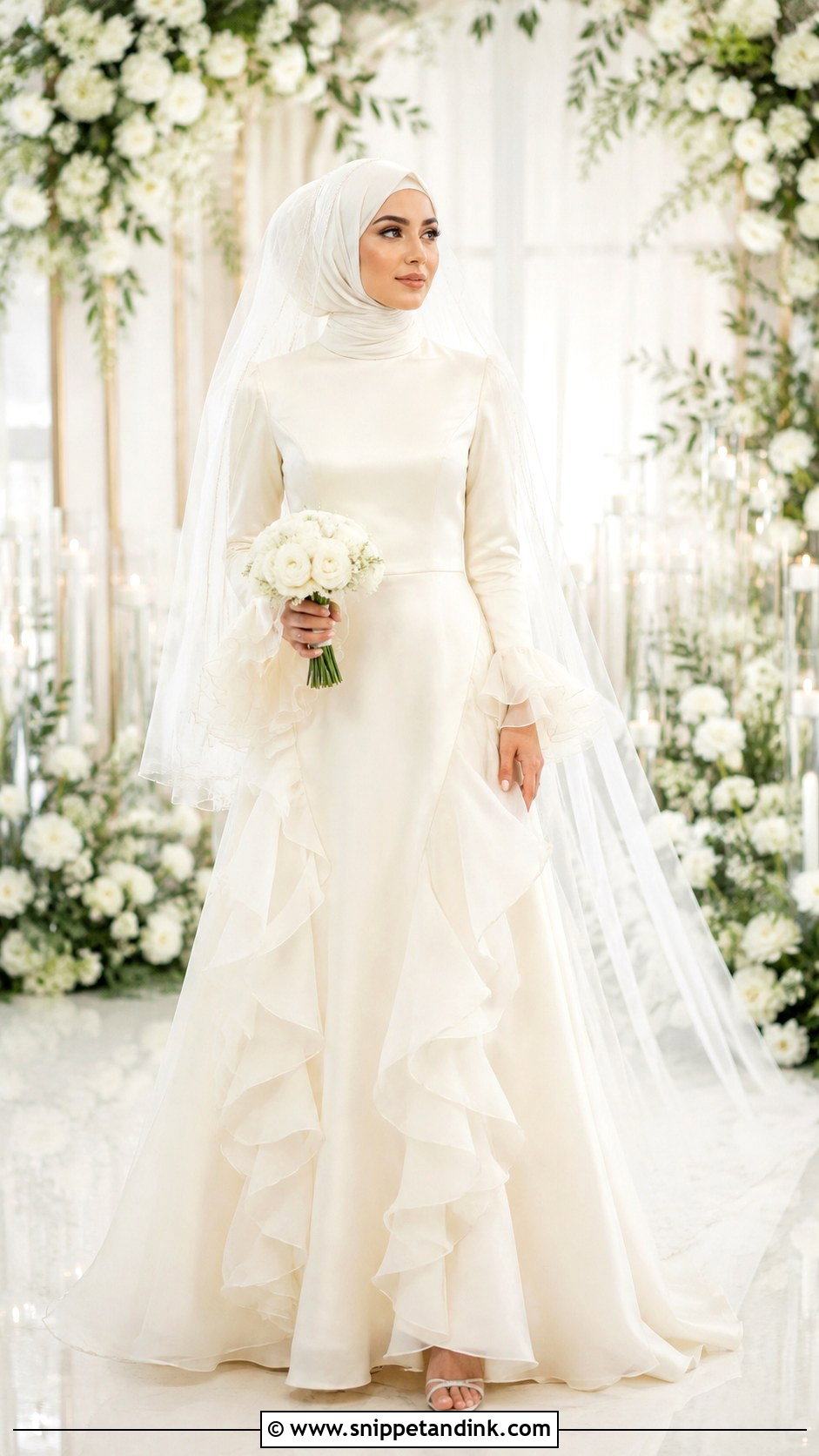
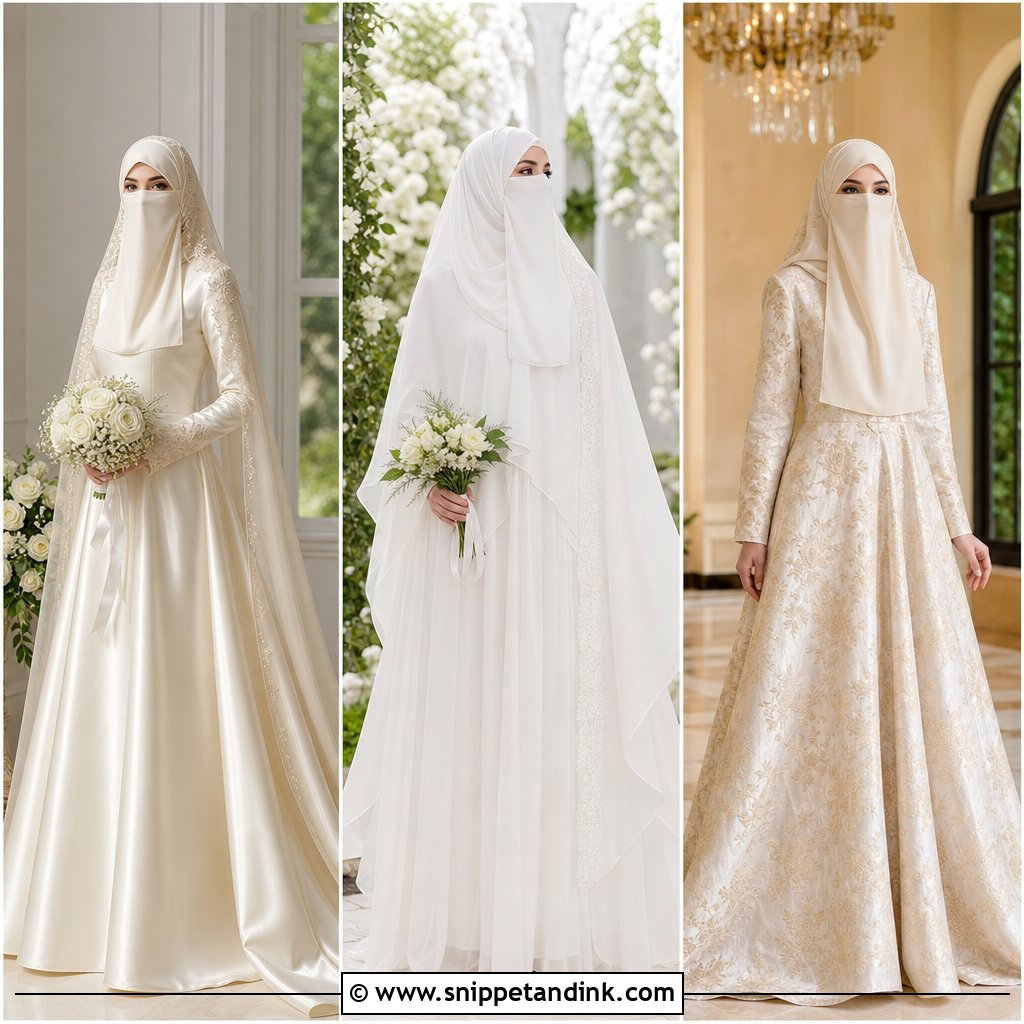
Ruffles add movement without beading, but placement decides whether they look romantic or fussy. Skirt, hem, cuffs or shoulders: choose one area. A high-neck long-sleeve gown with a ruffled organza or tulle skirt gives volume and texture. Keep the hijab smooth so it doesn’t add a second layer of frills near the face. Delicate heels and soft flowers suit it, and the skirt looks great in movement on video.
21. Floral Hijab Wedding Dress
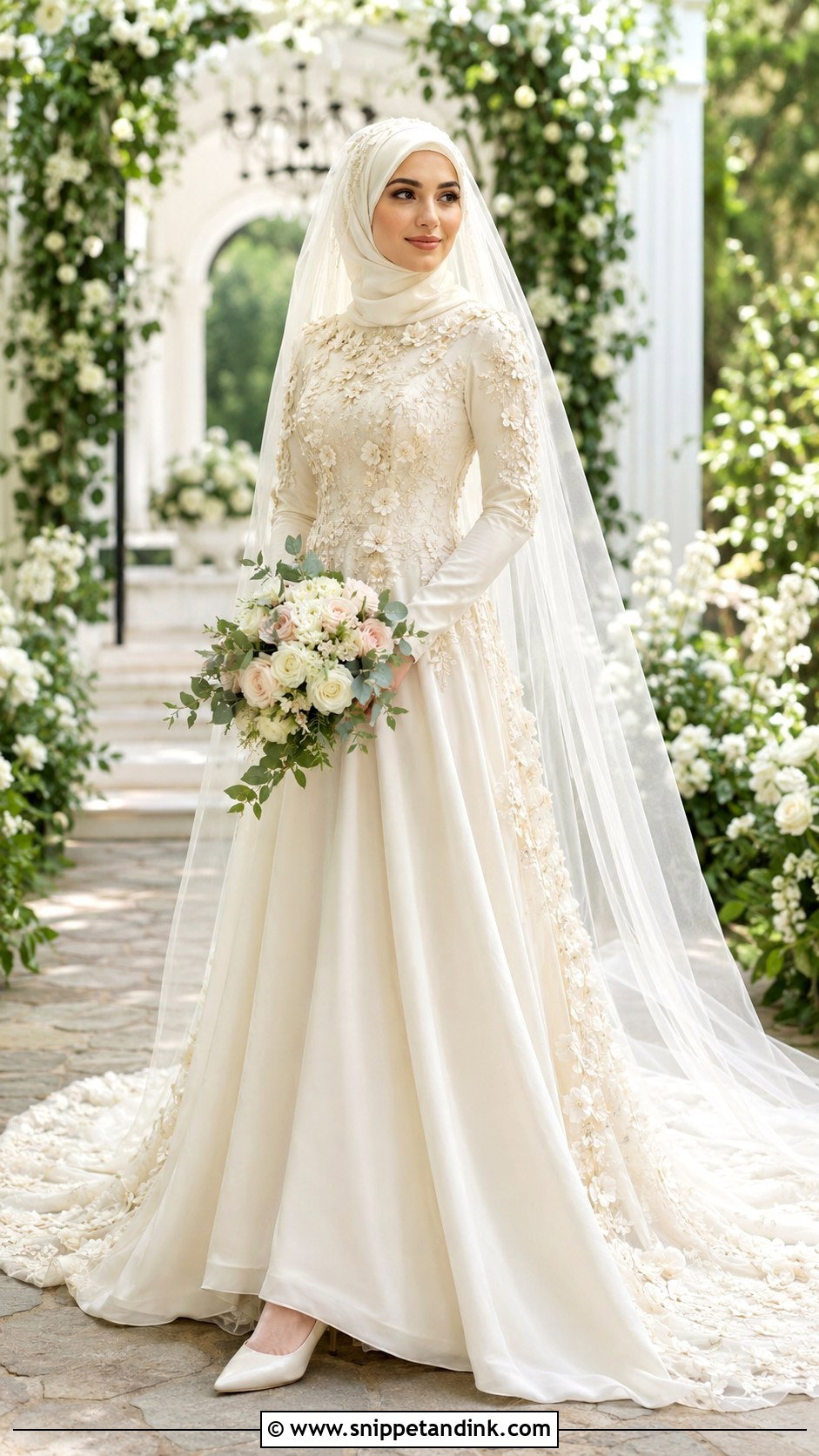
Florals in a modest gown can come through lace, embroidery, appliqué or soft 3D petals. I’d limit them to one zone, such as the bodice and sleeves, or the skirt and train. 3D petals on the shoulders can catch on a draped hijab, so if that’s your choice, pin the hijab back slightly at the shoulder. Ivory, white, blush and champagne all suit florals. A sheer veil and a bouquet that echoes the pattern complete it.
22. Minimalist Hijab Wedding Dress
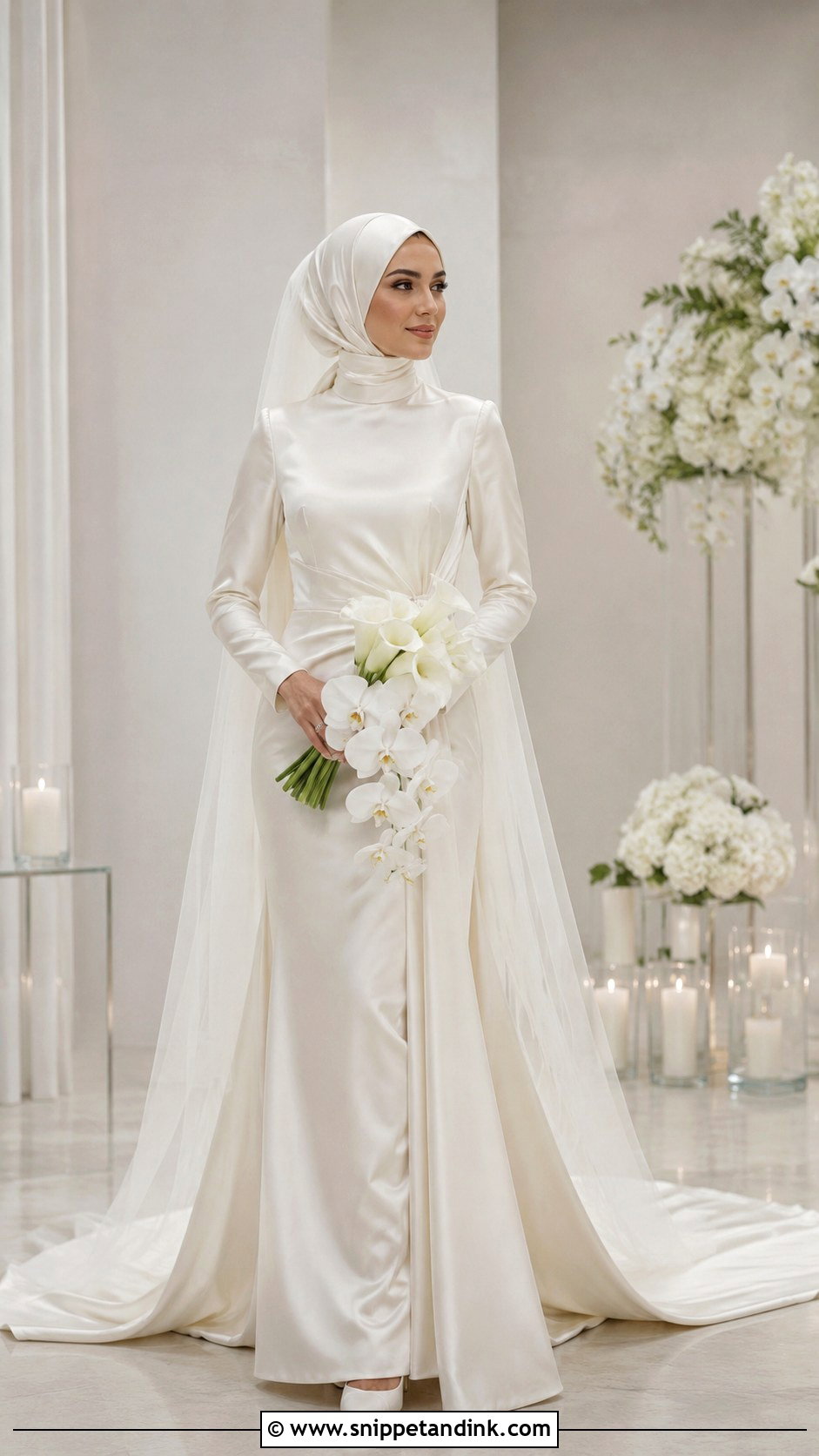
Minimalist modest gowns depend entirely on fabric and fit. A long-sleeve gown with a high neck, smooth seams and little or no embellishment in satin, crepe or mikado looks very current. Small details carry the interest: covered buttons, a sculpted waist, a long train, a clean cuff. A matching hijab wrap creates one continuous line. Spend on tailoring rather than decoration, and choose pointed heels and refined makeup.
23. Vintage Hijab Wedding Dress
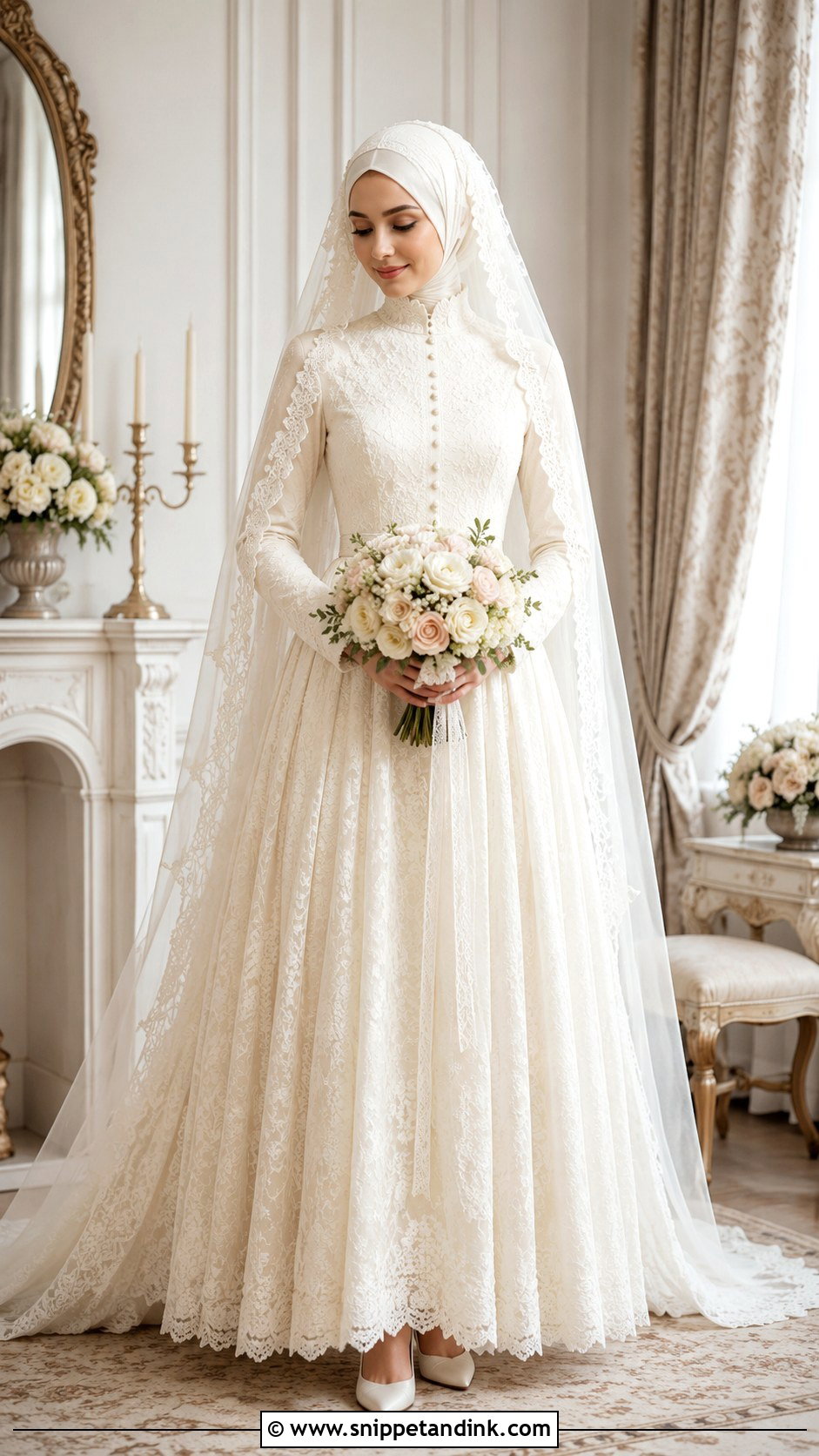
Vintage details sit naturally with modest dressing. Lace sleeves, covered buttons, high collars, soft pleats and tea-length or full skirts were common in older bridal fashion anyway. A Juliet-style veil or a lace-edged veil works over a hijab and adds an old-world feel. Ivory looks more authentic than bright white. Satin pumps or low heels and a small bouquet of classic flowers finish it without drifting into costume.
24. Champagne Hijab Wedding Dress
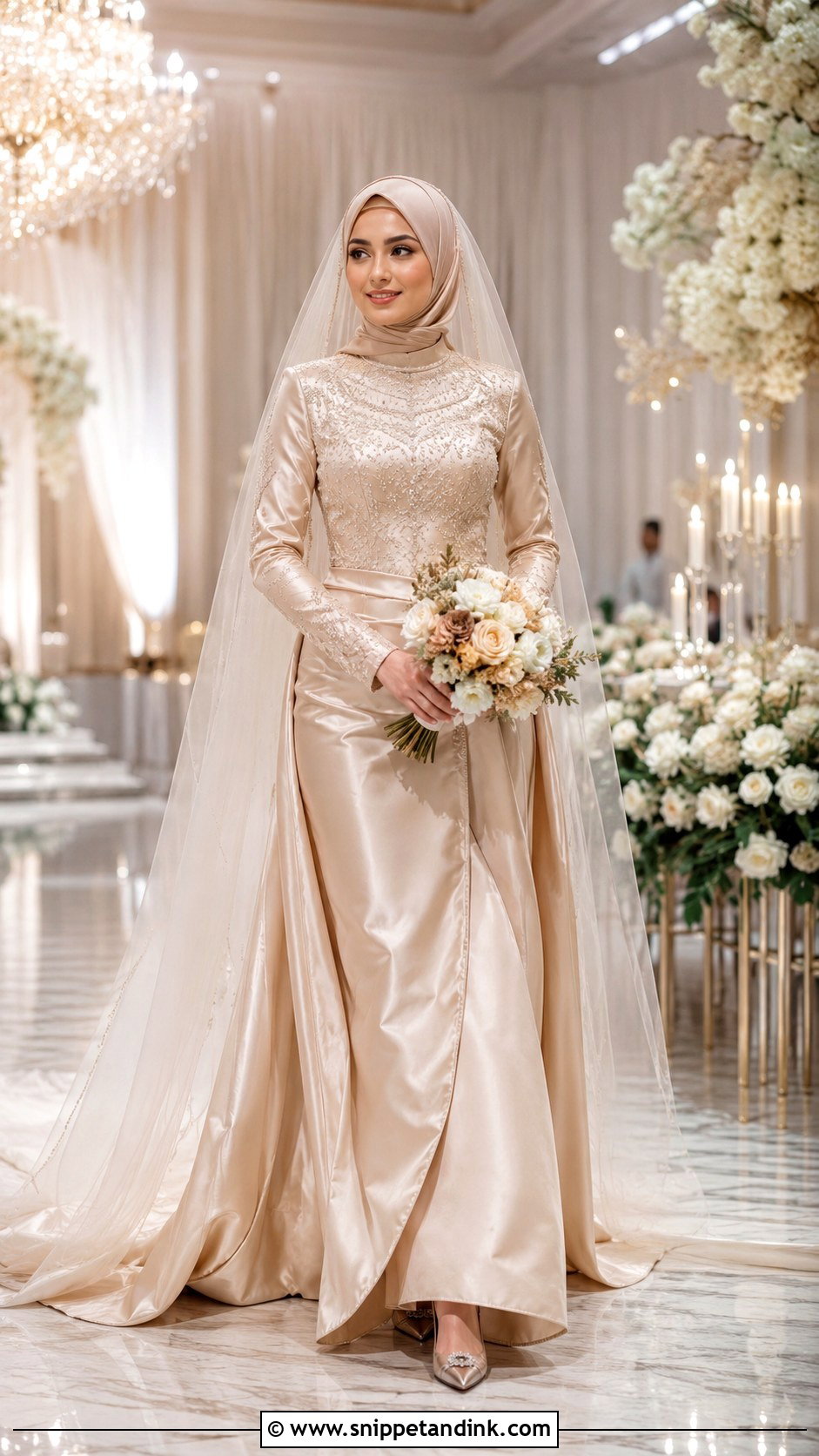
Champagne has a soft golden undertone that warms the face, and it looks good on many skin tones. Satin, tulle, lace or beaded fabric can all come in this shade. Match the hijab to the gown exactly rather than choosing white, or the hijab will look grey against it. An ivory veil, gold-toned accessories and nude or metallic heels sit better than bright white shoes. It’s especially good under warm evening lighting.


25. Plus Size Hijab Wedding Dress
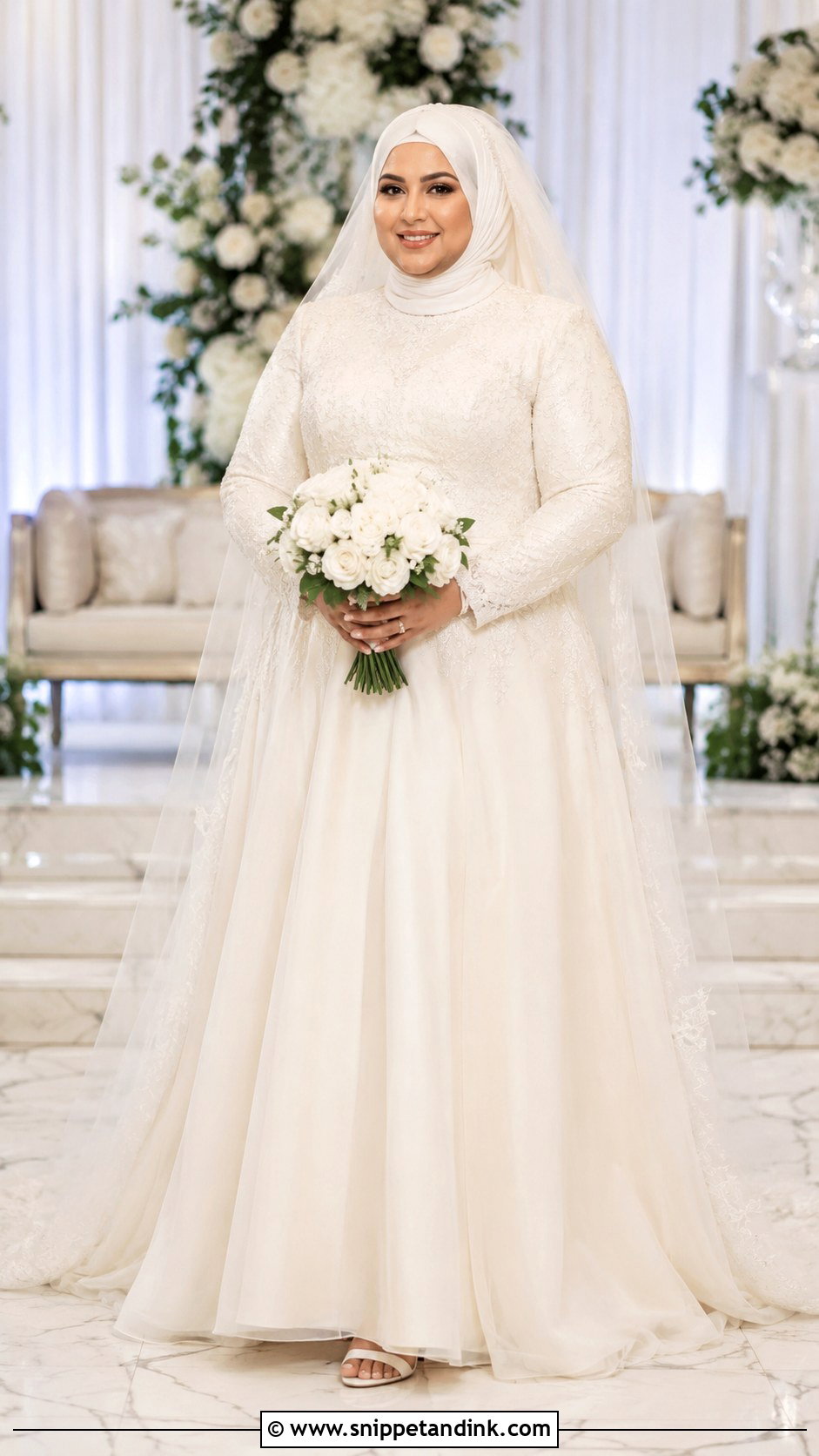
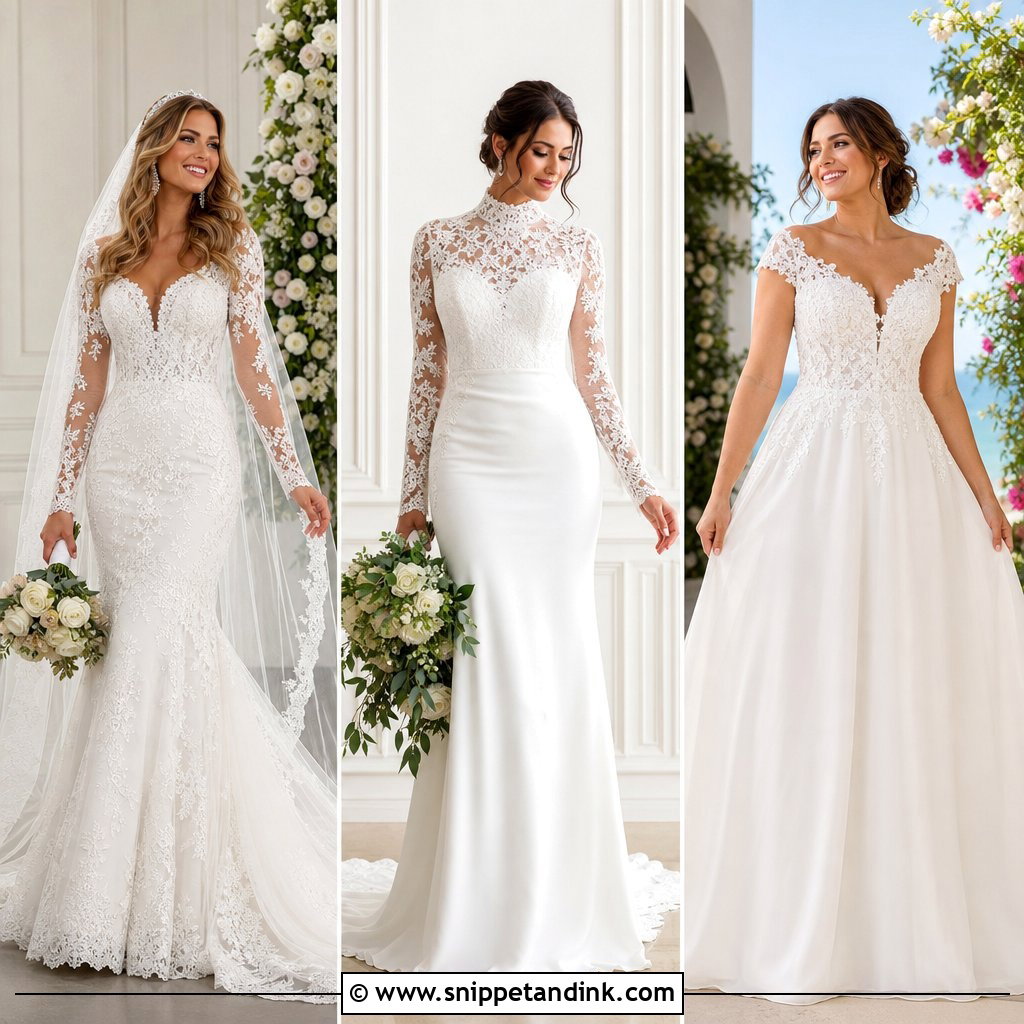
A plus size hijab wedding dress starts with support inside the gown: a built-in corset, boning and a waist stay. A-line, empire, structured ball gown and wrap-style bodices can all work. I pay special attention to the sleeves, which should have enough room in the upper arm to move and hug, and to a high neckline that sits comfortably without pressing. Fabric that holds its shape matters more than any particular cut. A matching hijab and long veil create a smooth line from head to hem.
Underscarf, Hijab, Headpiece, Veil: Layering the Head in the Right Order
On a wedding morning, the head is where things go wrong most often. Too many pins, a veil that pulls the hijab back, a crown that slides. Building the layers in a fixed order solves most of it.
The base
Start with a non-slip underscarf or bonnet. It gives every other layer something to grip and stops the hijab from moving when you turn your head. If your hair is long, a low, flat bun under it gives a smoother shape than a high one.
The hijab
Wrap and pin the hijab into the underscarf, not through it into hair. Fewer, well-placed pins hold better than many loose ones. Practise the exact wrap at least once in the dress, because the neckline changes how the fabric falls.
Headpiece and veil
A tiara or jewelled band sits on top of the hijab and should be pinned through to the underscarf at both sides. The veil goes on last, anchored with a comb or pins at the crown, ideally into the underscarf layer so its weight doesn’t drag the hijab backwards. Do a full run-through at your hair or makeup trial, and give whoever helps you on the day a small bag of matching pins.
Covered, Comfortable and Still Unmistakably Bridal
The right modest outfit leaves you comfortable, covered and still clearly yourself. Satin gowns, lace dresses, capes, abayas, kaftans and minimalist crepe all get there in different ways. In fittings, look hard at fabric, fit, sleeve comfort and neckline coverage, and always try the dress with the hijab you’ll actually wear. Then add accessories only where they support the gown. Romantic, dramatic or simple, any of the looks above can be shaped around you.
You'll Like These Ideas:








Leave a Reply