
Modest bridal dressing asks more of a gown than most fittings ever test. It has to cover where you need it to, stay covered when you sit, bend and hug, and work with a hijab that frames your face all day. When I style a hijabi bride, the gown and the hijab are planned as one outfit from the first appointment, not matched up the week before. Below are 25 ideas built around long sleeves, high necklines, layered veils, soft draping, lace, satin, beading and capes, alongside cultural pieces like abayas, lehengas and shararas. Each comes with how I’d style the hijab and where I’d watch for problems on the day.
Wear Your Hijab and Underscarf to Every Fitting
Most bridal shops fit gowns on bare necks and bare heads. For a hijabi bride that misses half the picture. The height of the collar, the way the shoulder seam sits and even how long the sleeves need to be all change once a hijab is draped over them, so I ask brides to bring the underscarf and a hijab in a similar fabric to their first fitting, not the last.
Coverage also needs testing in motion. A gown can look fully modest standing still and then reveal wrist, neck or back once you sit, reach or bend to greet an older relative.
What to check with the scarf on
- The collar sits under the hijab without pushing the drape up toward your chin.
- Sleeves still reach the wrist bone when you reach forward; if not, ask for an inner cuff or a thumb loop.
- Any sheer lace or illusion panel has a lining added, especially at the neck, arms and back.
- The back closure is flat, since a hijab lying over chunky buttons or a bulky zip looks lumpy in photos.
- The hem works in your wedding shoes and lets you sit without the skirt riding up at the ankle.
1. White Lace Wedding Gown Hijab
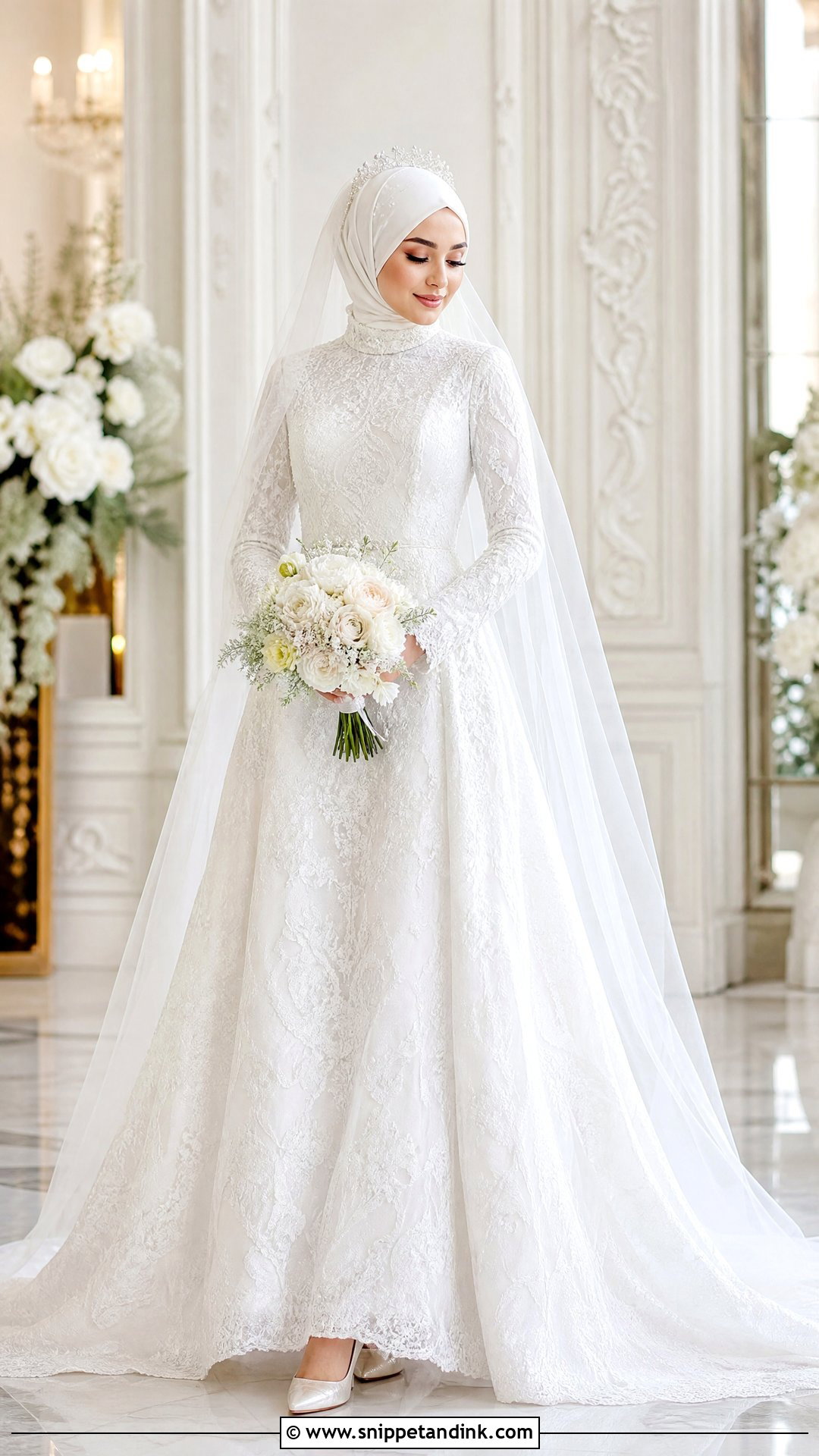
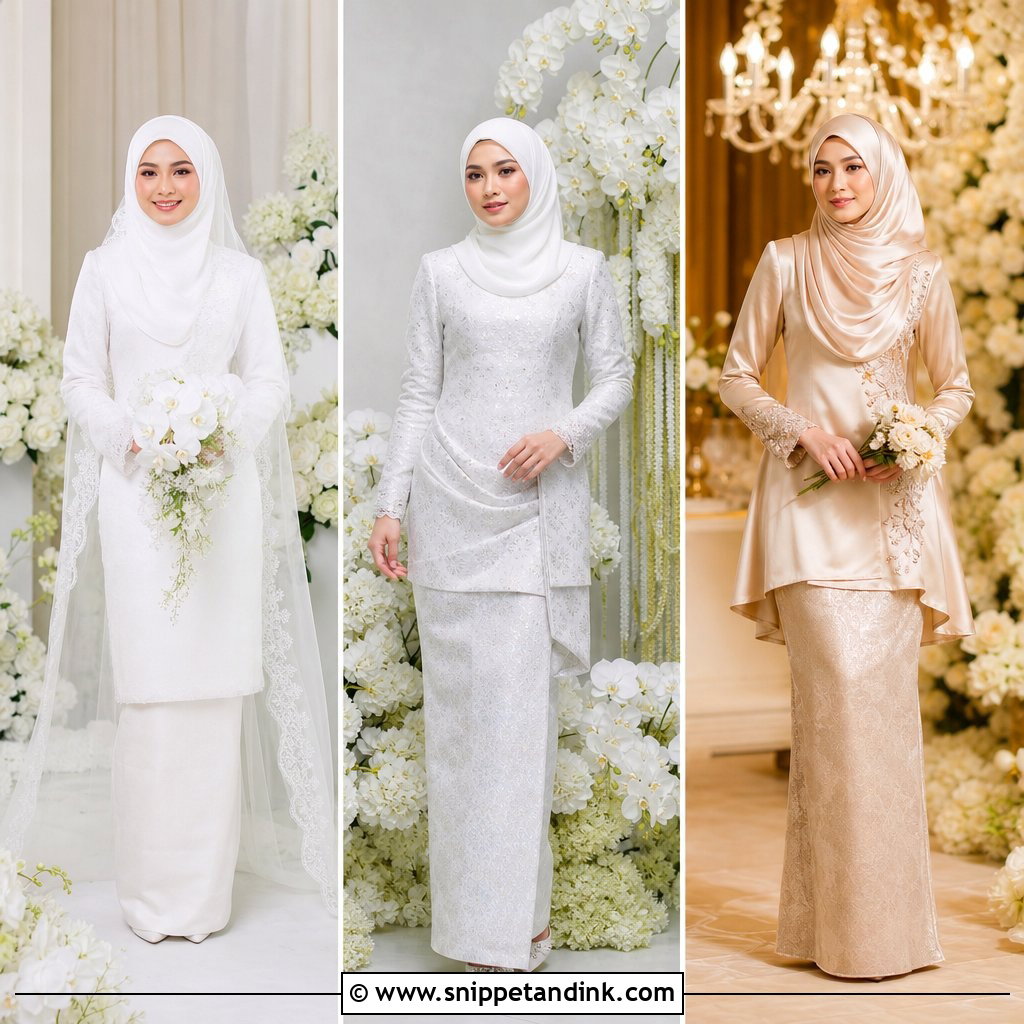
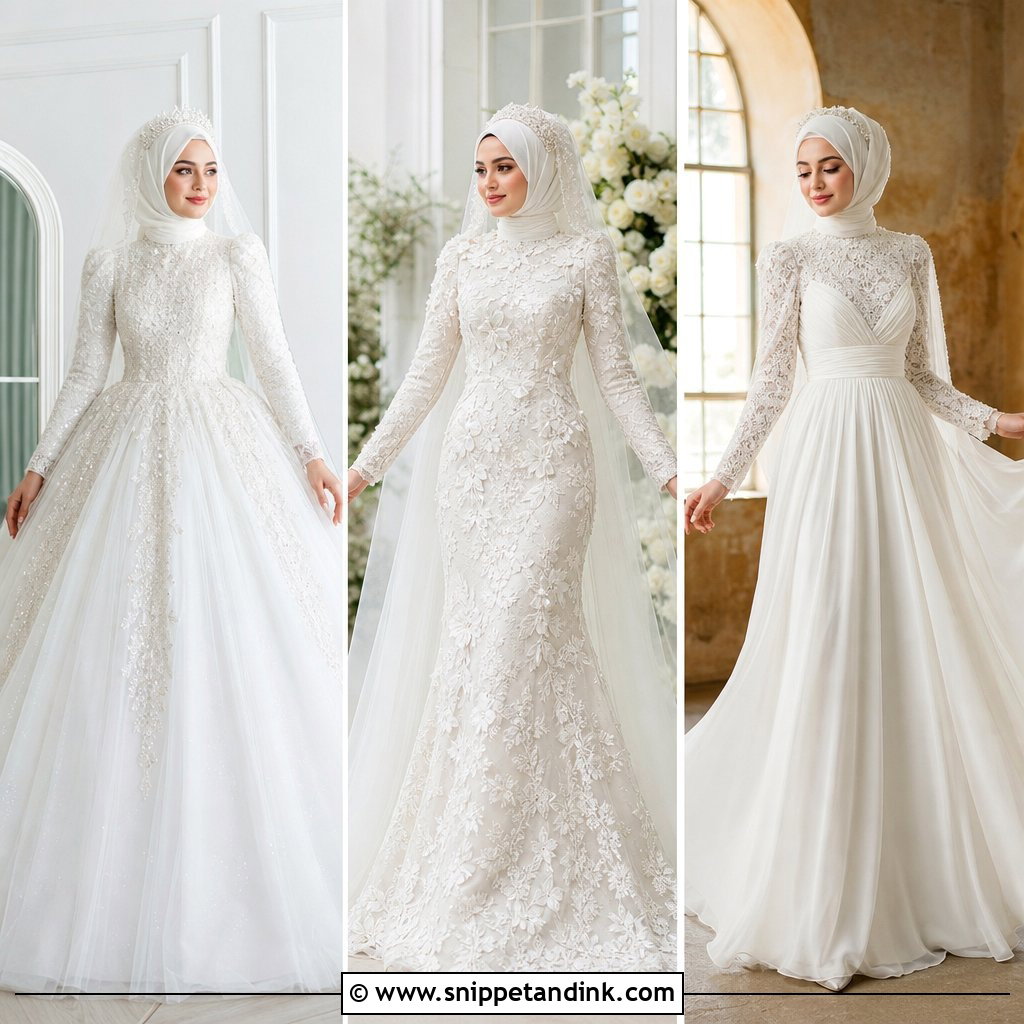
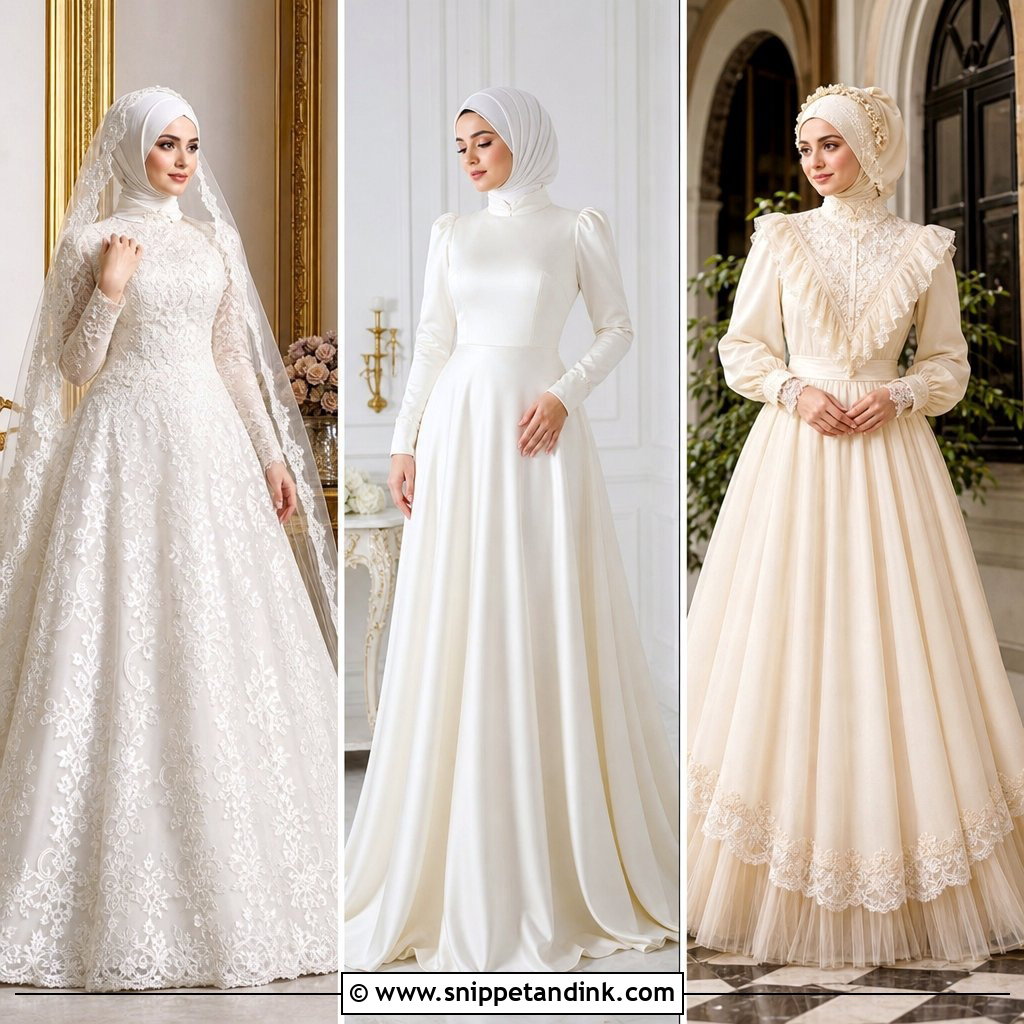
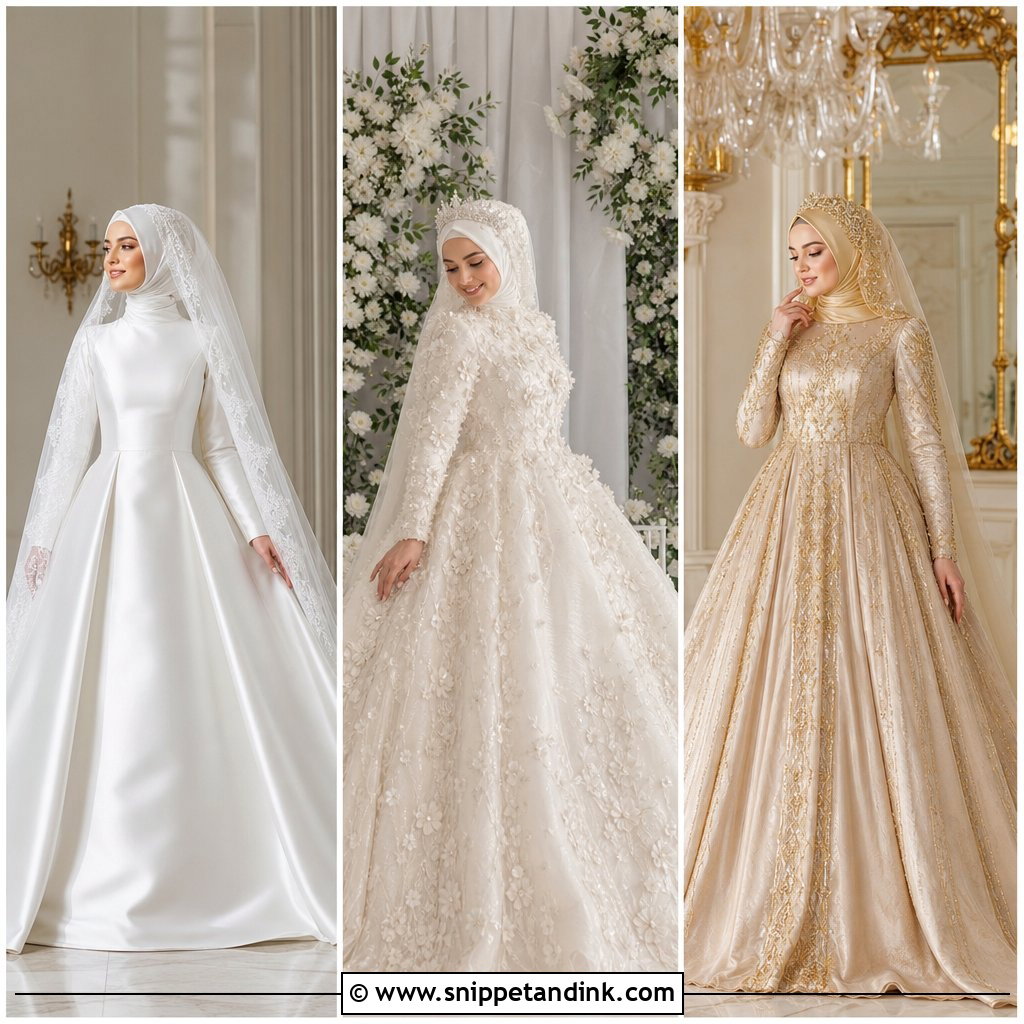
Lace is often where a modest bride starts, and for good reason: the texture gives the gown interest without needing extra jewelry. Look for a high neck, long fitted sleeves and a fully lined bodice, because many lace gowns are made on sheer tulle that needs a lining added for real coverage. A white or ivory chiffon hijab keeps the frame around the face smooth. The busier the lace, the plainer the hijab should be. Pearl pins, a delicate tiara or a thin crystal belt add a little shine. It suits ballrooms, gardens and formal indoor ceremonies.
2. Satin Ball Gown Wedding Hijab
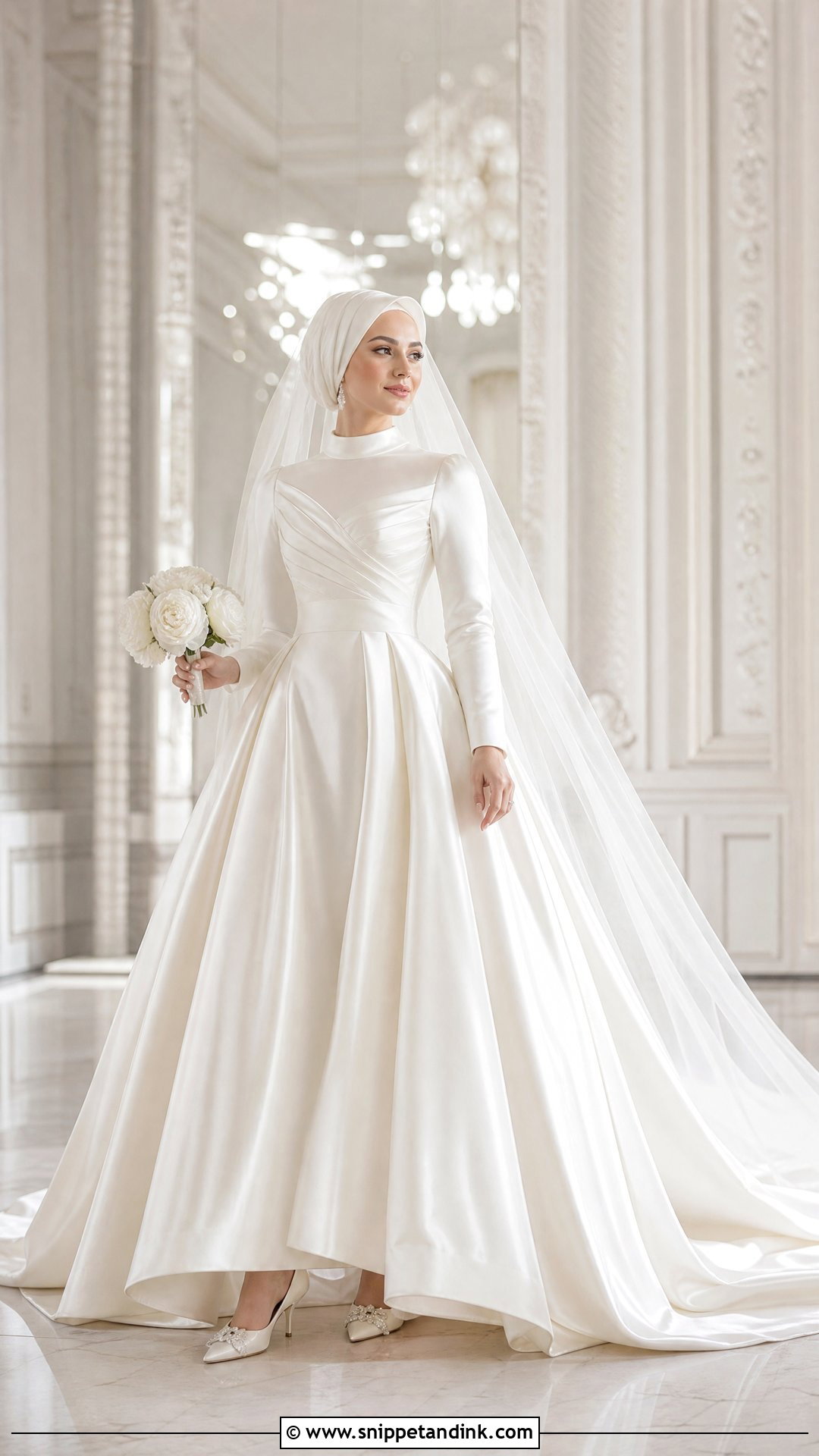
Satin glows on its own, so a satin ball gown photographs well without heavy sparkle. A full skirt, long sleeves and a modest neckline give it a regal outline, and a structured bodice holds everything in place. I’d match a satin or silk hijab to the exact shade of the gown so the line from face to hem reads as one piece. Satin hijabs are slippery, though, so they need a grippy underscarf beneath. A cathedral veil can be layered over the hijab for drama. Keep jewelry quiet: pearl earrings on the hijab pins, a small crown or a simple bracelet.
3. Mermaid Wedding Gown Hijab
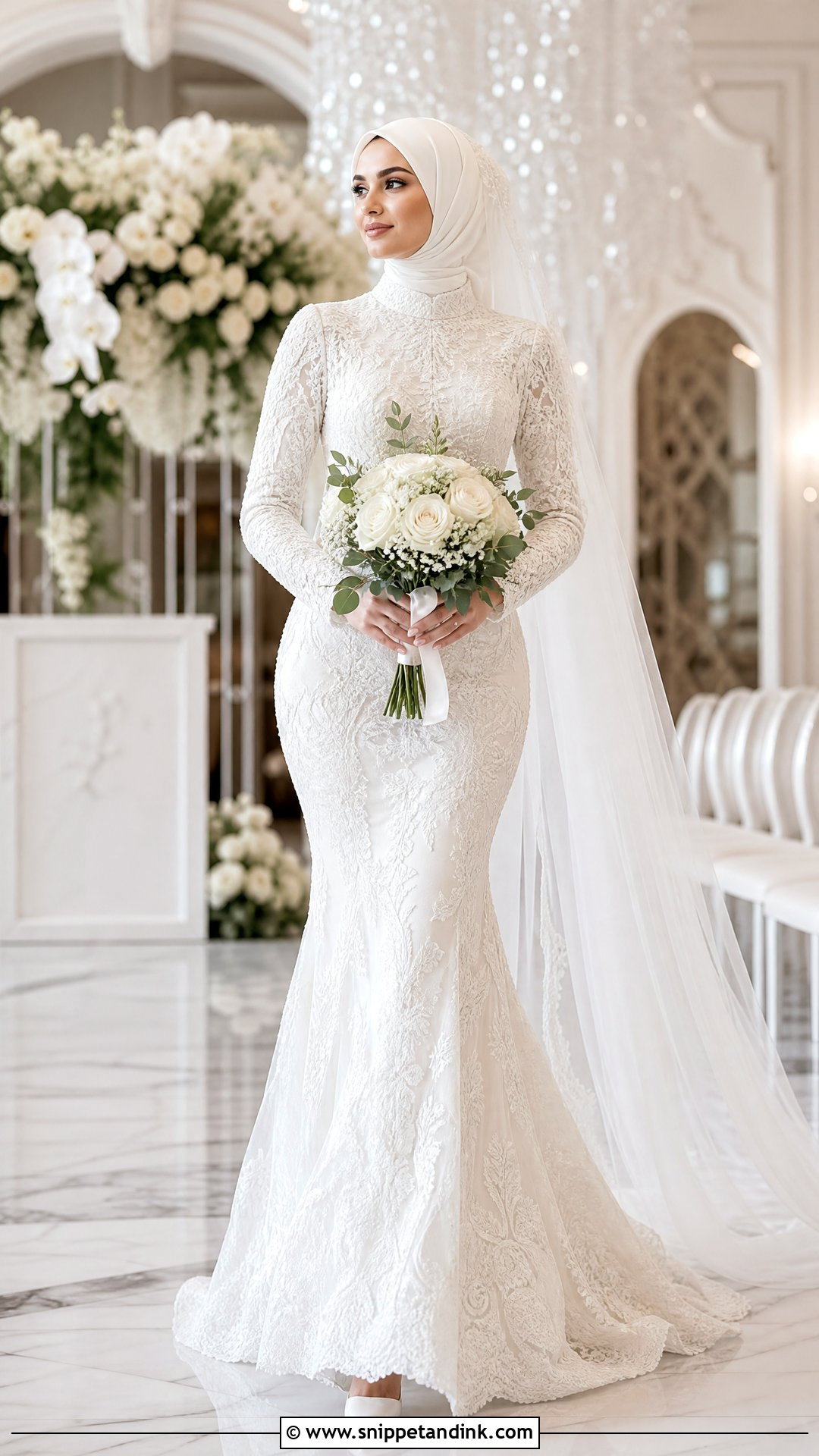
A mermaid gives you shape while keeping full coverage, but the fit has to be right. It should skim, not grip; if you can’t sit or climb a step, it’s too tight. Long sleeves, a high neck and a flared hem keep the balance modest. Lace appliqué, beadwork or light embroidery highlight the shape without weight. A smooth jersey or chiffon hijab suits this best because it won’t add bulk against a fitted bodice. Pointed heels, a structured bouquet and a long veil finish the formal look.
4. A Line Wedding Gown Hijab
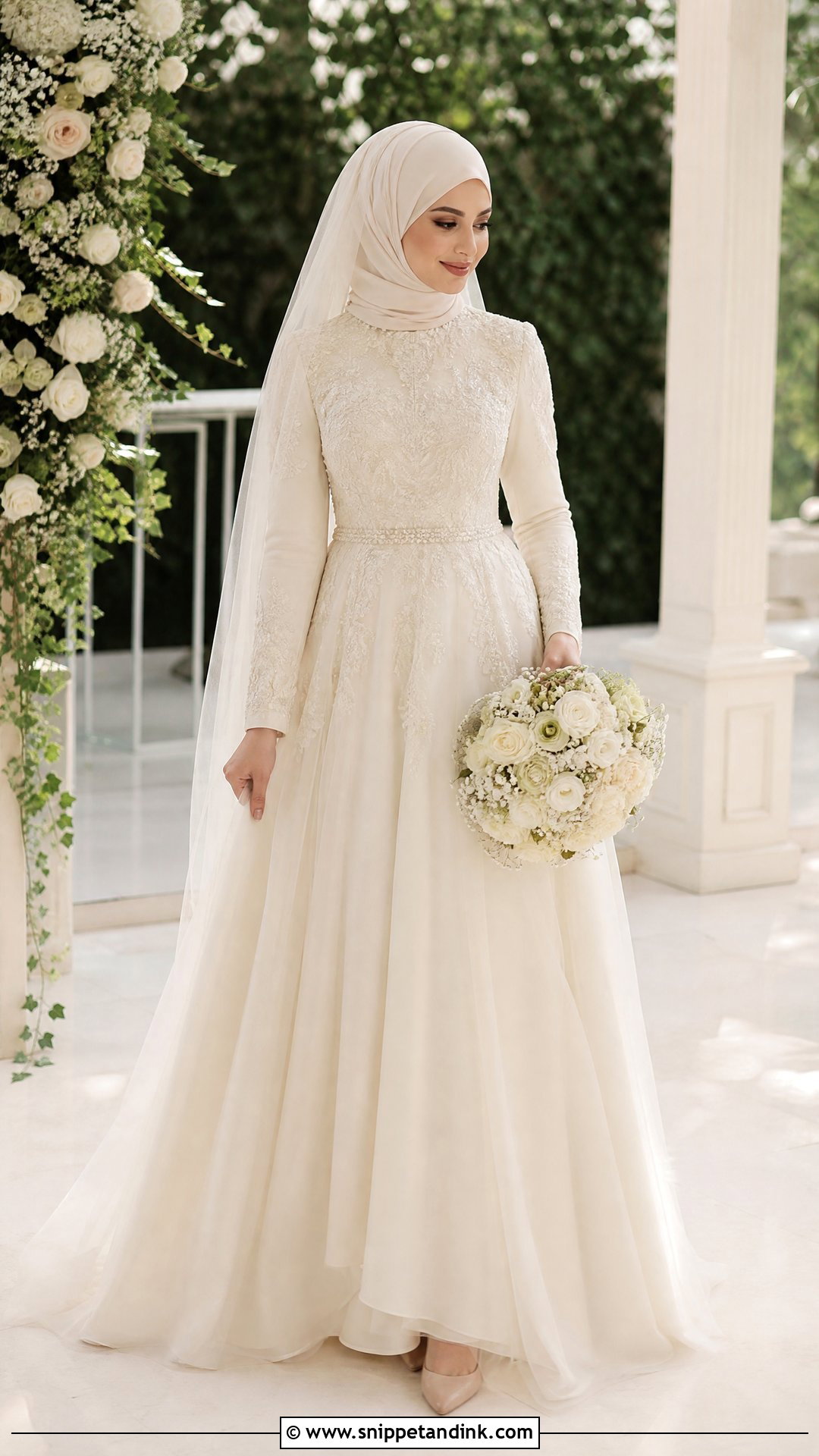
An A-line defines the waist and falls away from the hips, which suits most bodies and gives you volume without the weight of a ball gown. Tulle, chiffon, satin or lace all work depending on the mood. A high neck and long sleeves make it hijab-friendly straight off the rack in many cases. If the skirt is plain, a beaded belt or embroidered bodice adds detail. A softly wrapped hijab with a light veil frames the face. It’s the comfortable, practical choice I’d point to first for a long day.
5. Simple Wedding Gown Hijab
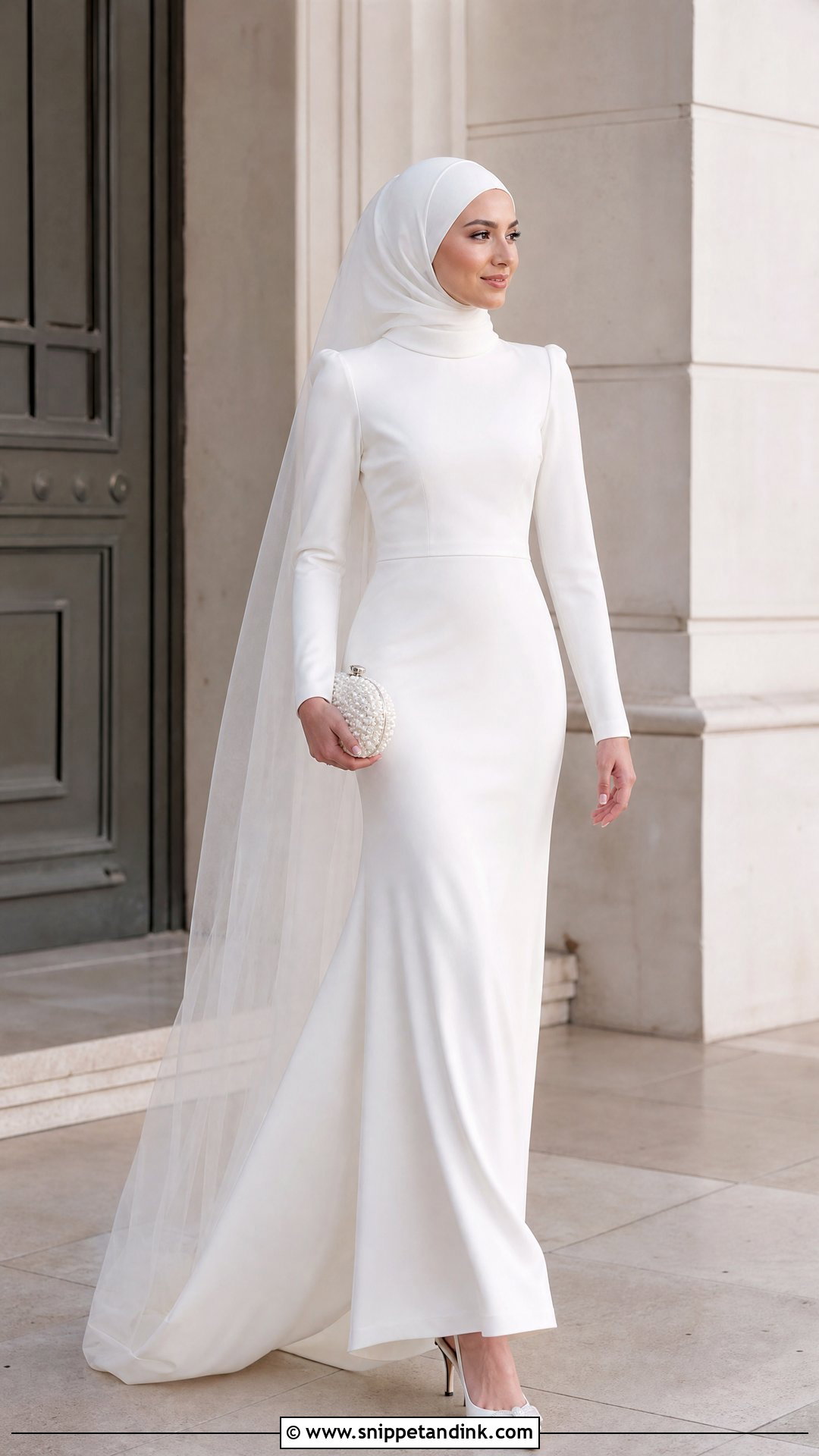
Sometimes the quietest look is the one people remember. A simple gown in matte crepe, satin or a silk blend, straight or gently flared, with long sleeves, a high neck and a smooth waist, relies entirely on fit. A plain hijab in ivory, white or soft cream continues the clean line. Interest can come from a long veil, pearl pins or sculptural shoes. City weddings and civil ceremonies suit it well. Matte crepe hides creases better than satin, which helps when you’ll be sitting for a long nikah.
6. Princess Wedding Gown Hijab
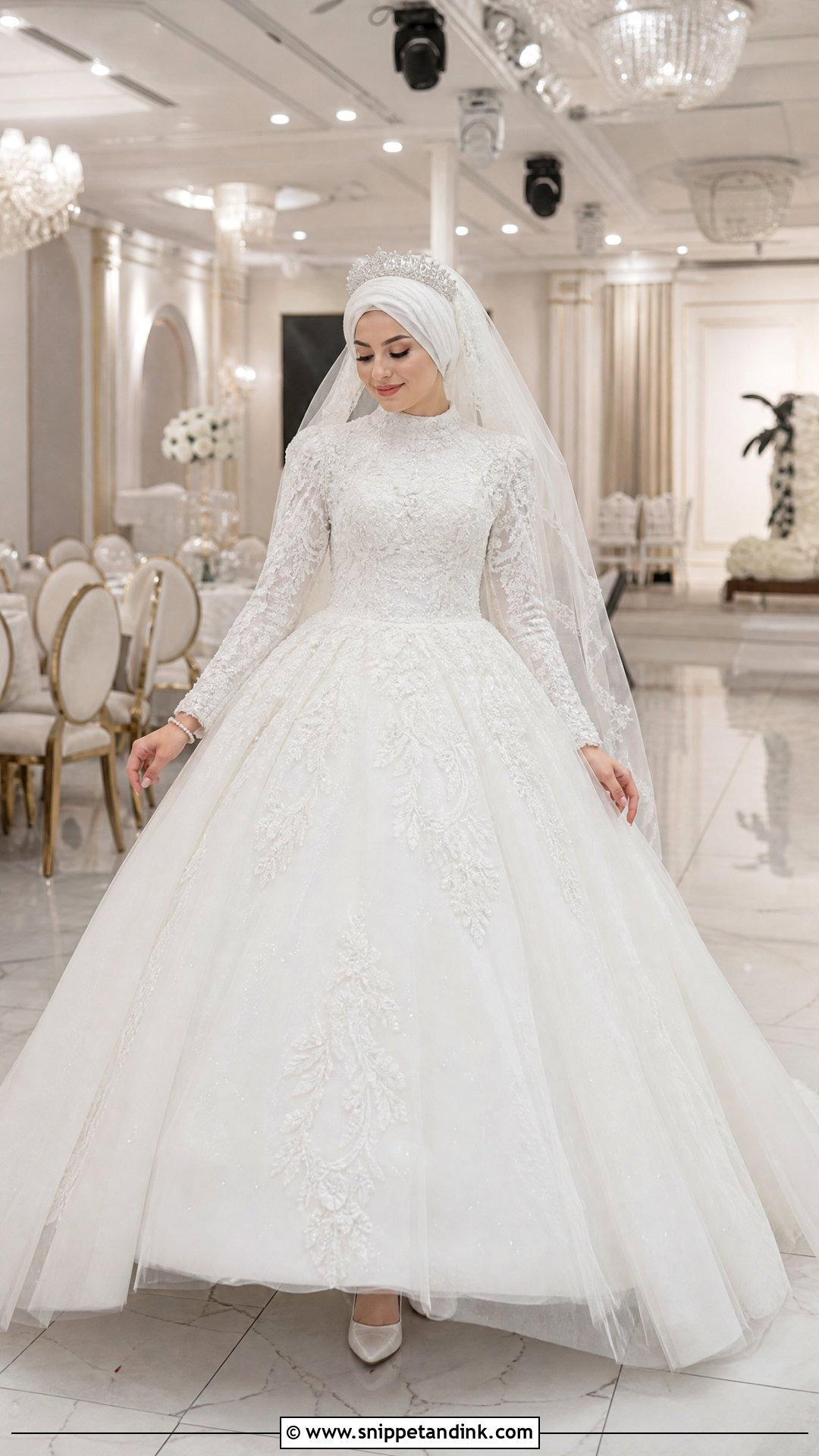
A princess gown with modest coverage gives the full fairytale shape: fitted bodice, full skirt and elegant sleeves in tulle, organza, lace or embroidered layers. A matching hijab tucked neatly under a crown or tiara completes it. Here’s the balance I aim for: if the gown is heavily beaded, wear a plain hijab and soft veil; if the gown is simple, a lightly embellished hijab cap can carry the detail. A tiara on a hijab needs to be anchored to an under-cap or bun, not just rested on top, or it slides forward every time you look down.
7. Cape Wedding Gown Hijab
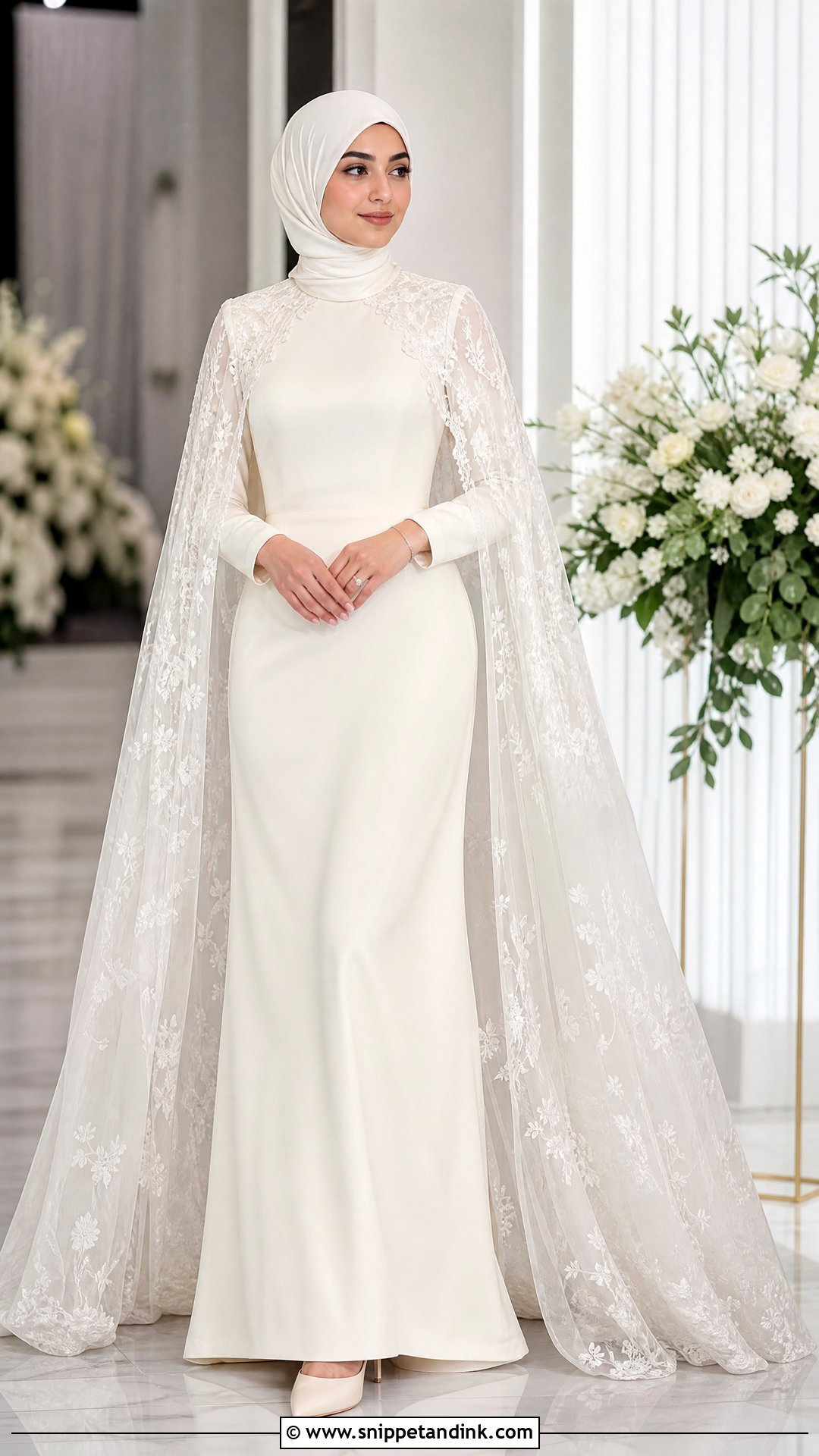
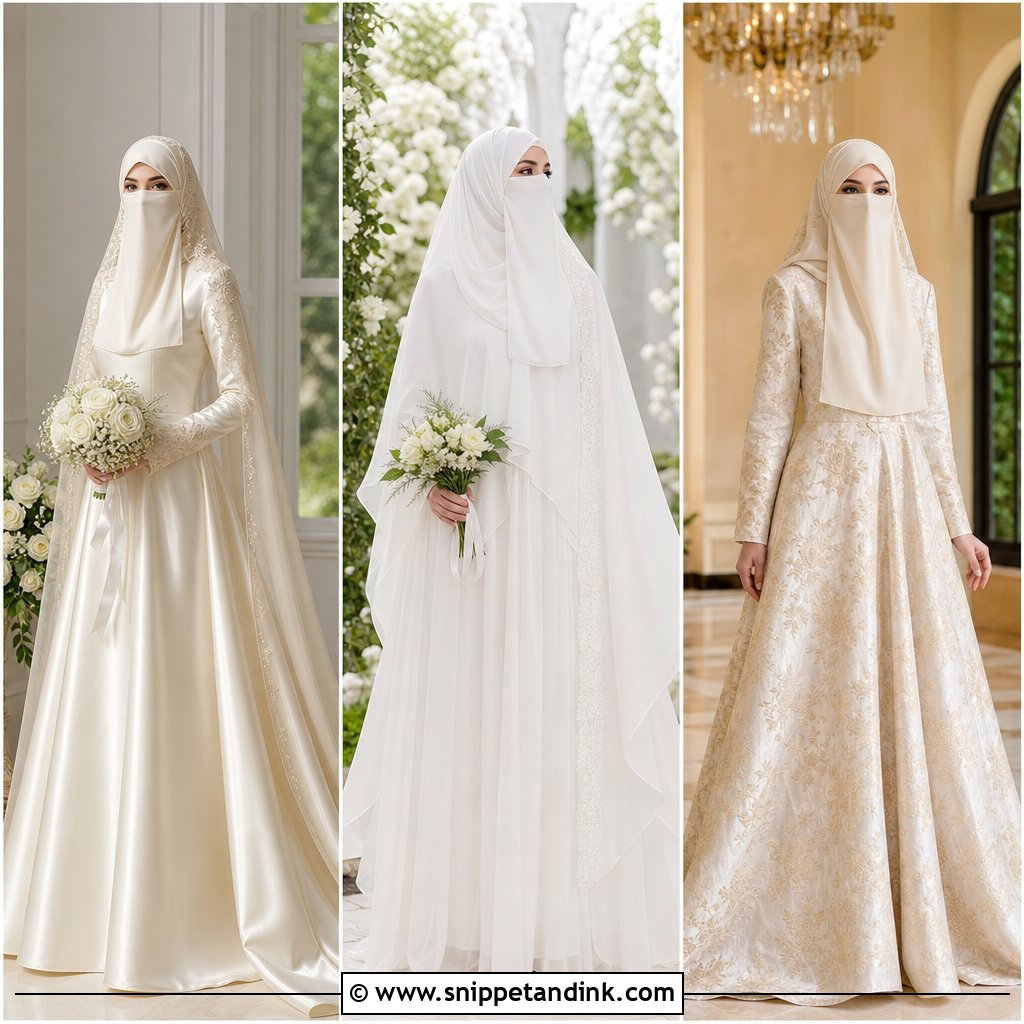
A cape gives you shoulder and back coverage without adding sleeves’ bulk, and it moves well in photos from behind. It can replace the veil or sit over it. Start with a simple long-sleeve gown, then choose a sheer lace, tulle or crepe cape, plain, pearl-trimmed, embroidered or lightly beaded. A smooth hijab underneath keeps the neckline clean. Where the cape attaches matters: a cape fastened at the shoulders sits better over a hijab than one tied at the throat, which tends to pull the hijab drape down.
8. Beaded Wedding Gown Hijab
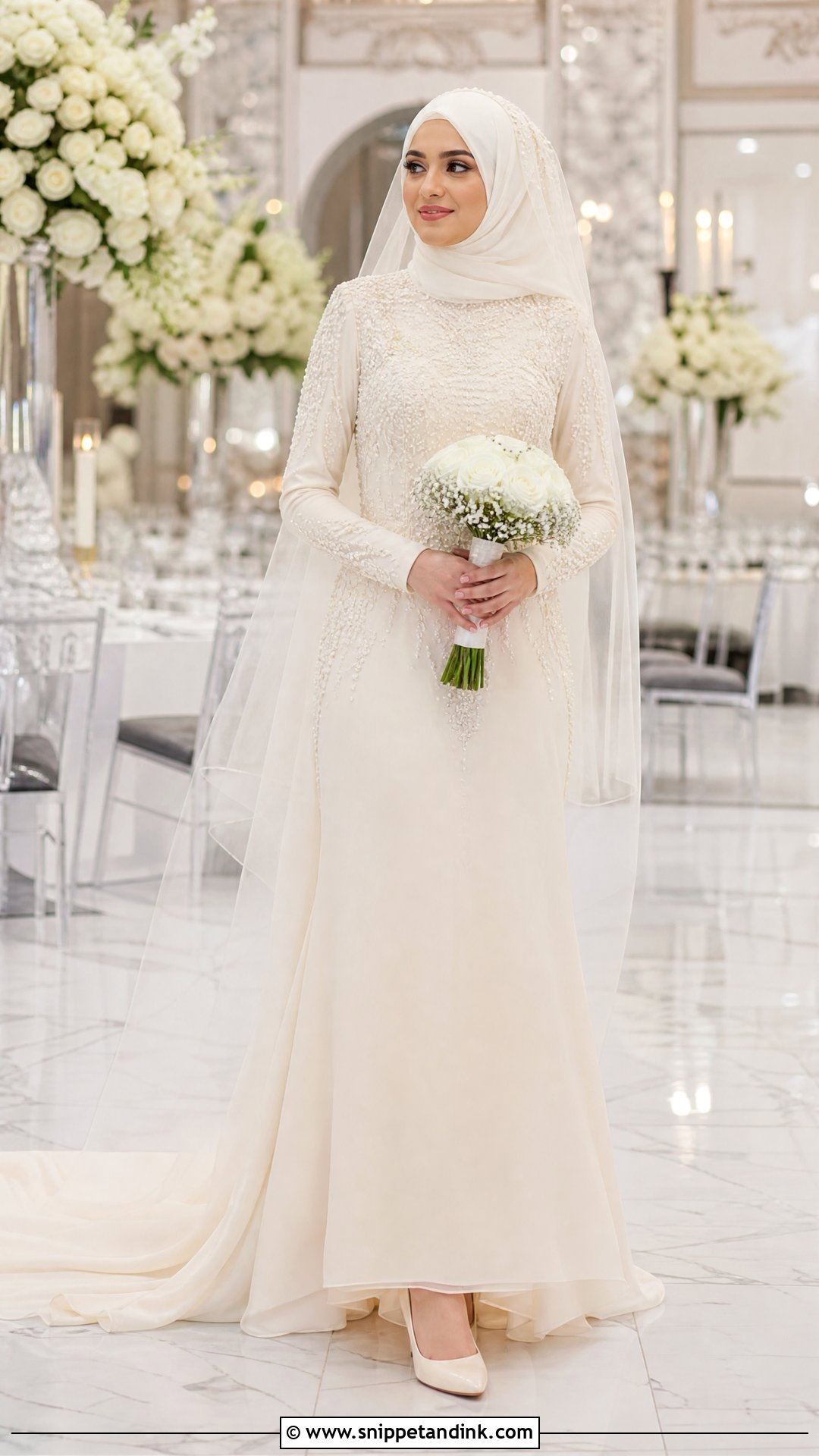
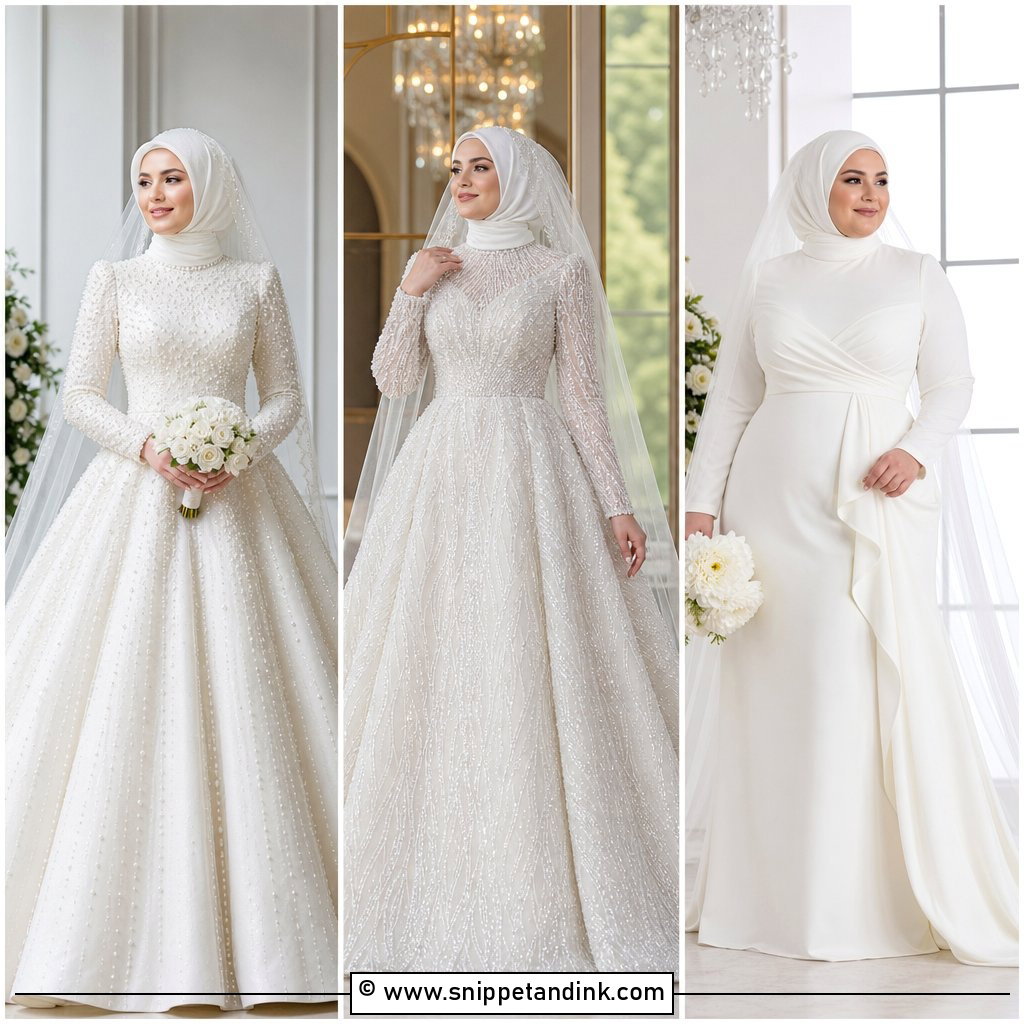
Beading on a modest gown looks best when it follows the shape, picking out the bodice, cuffs, waist or train rather than covering everything. Pearls, crystals and seed beads all work. A high neck and long sleeves keep it graceful. Since the beading already brings shine, I’d choose a soft plain hijab in matching ivory or white, with a light veil and a subtle edge. Watch beaded cuffs against a chiffon hijab: when you lift your hands to your face, they snag the scarf edge. Evening receptions and hotel ballrooms under bright light show this gown at its best.
9. Floral Embroidered Wedding Gown Hijab
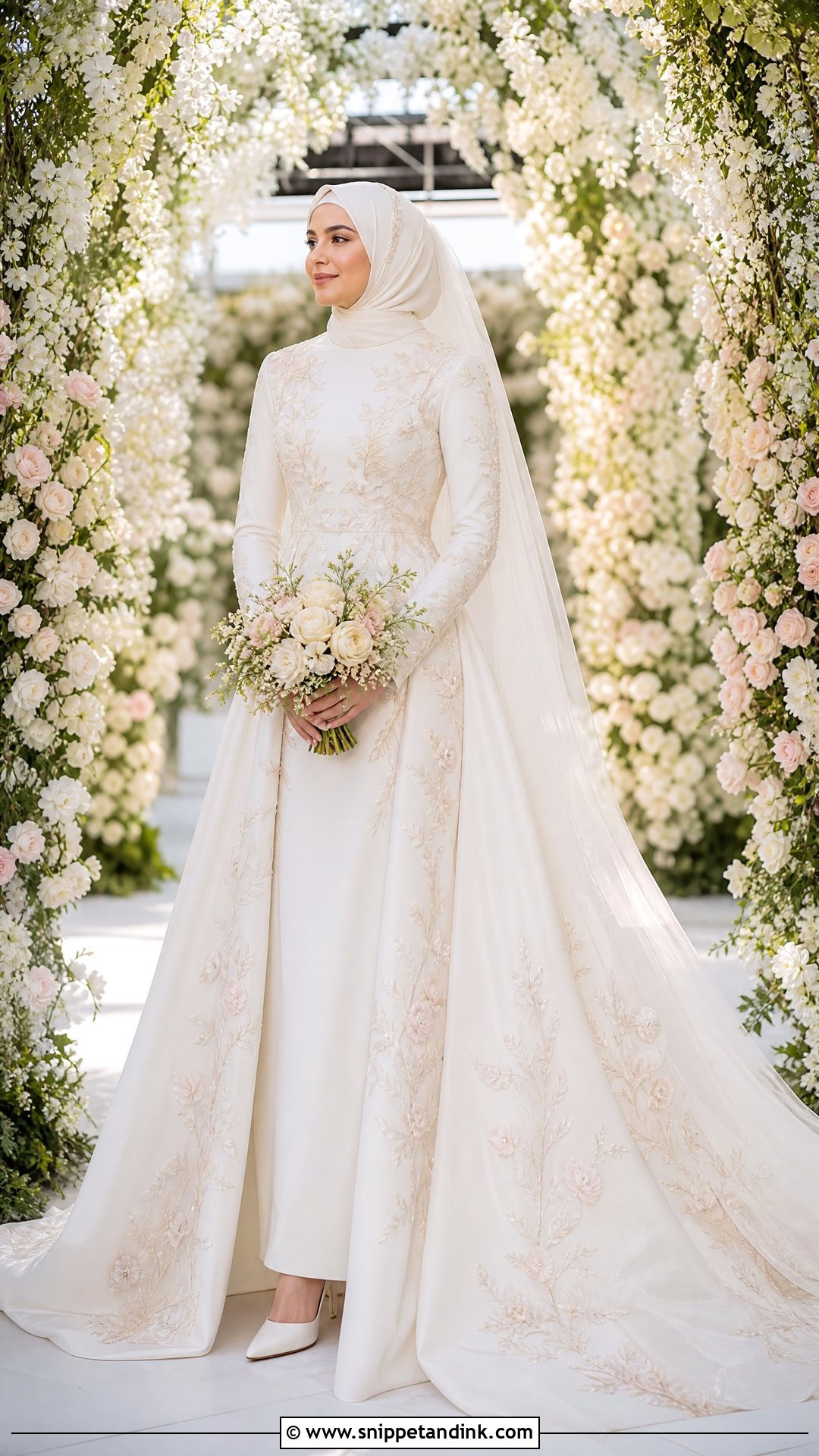
Embroidery can be tonal and classic or slightly colored and artistic, scattered across the sleeves, bodice, hem or train. A sheer embroidered overlay on a fully lined gown adds depth while keeping coverage. Match the hijab to the base fabric, not the embroidery thread, so the flowers stay the focus. A small bouquet that echoes the embroidered blooms ties the outfit together. It suits gardens and spring weddings. Check that the lining color matches the hijab too; a cream lining beside a bright white hijab shows clearly in close portraits.
10. Turkish Wedding Gown Hijab
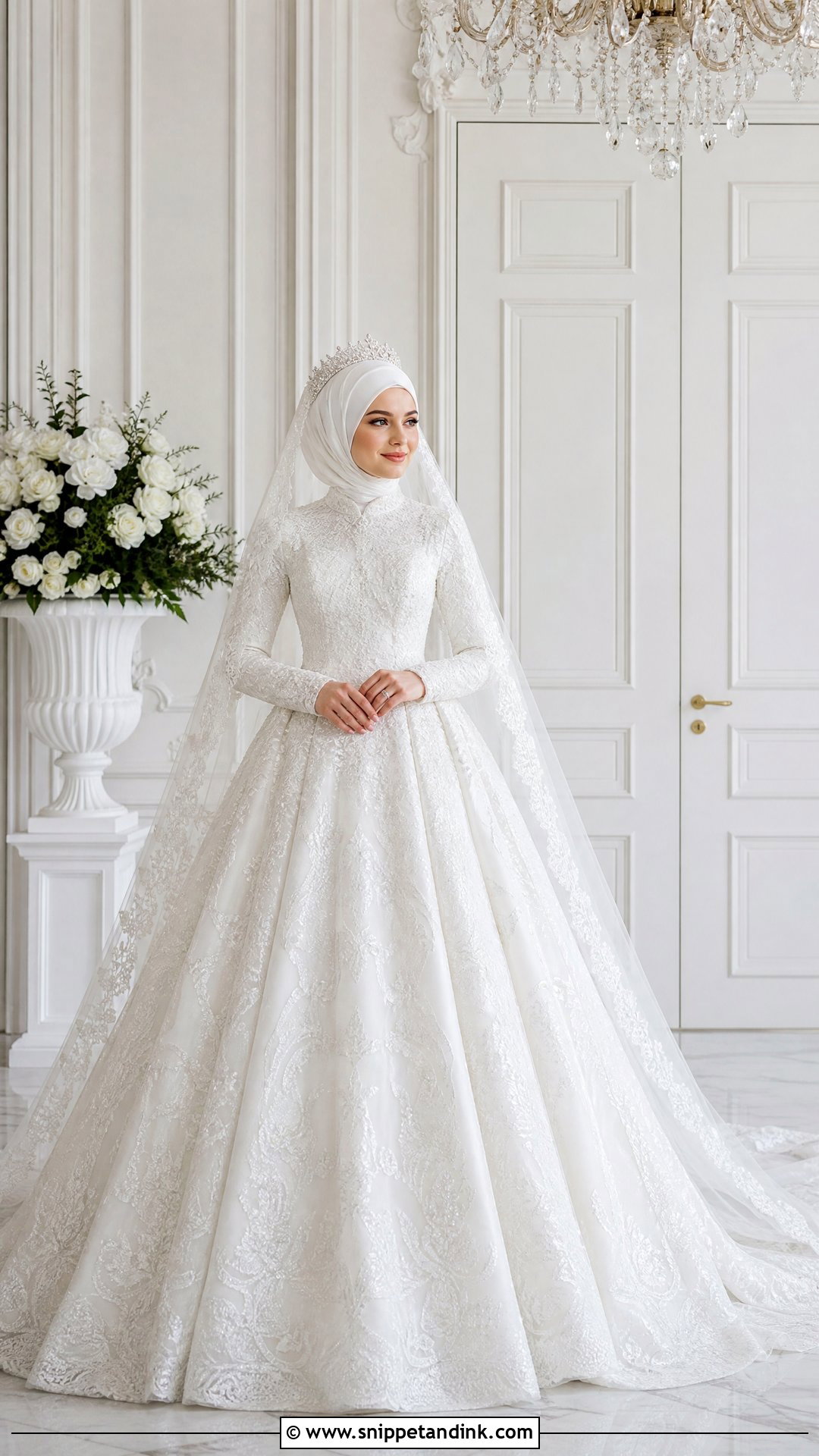
High collars, long sleeves, structured bodices, lace overlays and long trains give Turkish bridal style its formal, regal feel. Some gowns carry Ottoman-inspired embroidery, pearl accents or dramatic veils. The hijab is usually wrapped neatly and close to the face, often with a crown, headpiece or embellished veil on top. White, ivory or soft champagne keeps it traditional, and a full skirt or A-line suits it best. Symmetry matters a lot in this style; I check the headpiece is centered from the front and from both sides before the photos start.
11. Abaya Wedding Gown Hijab
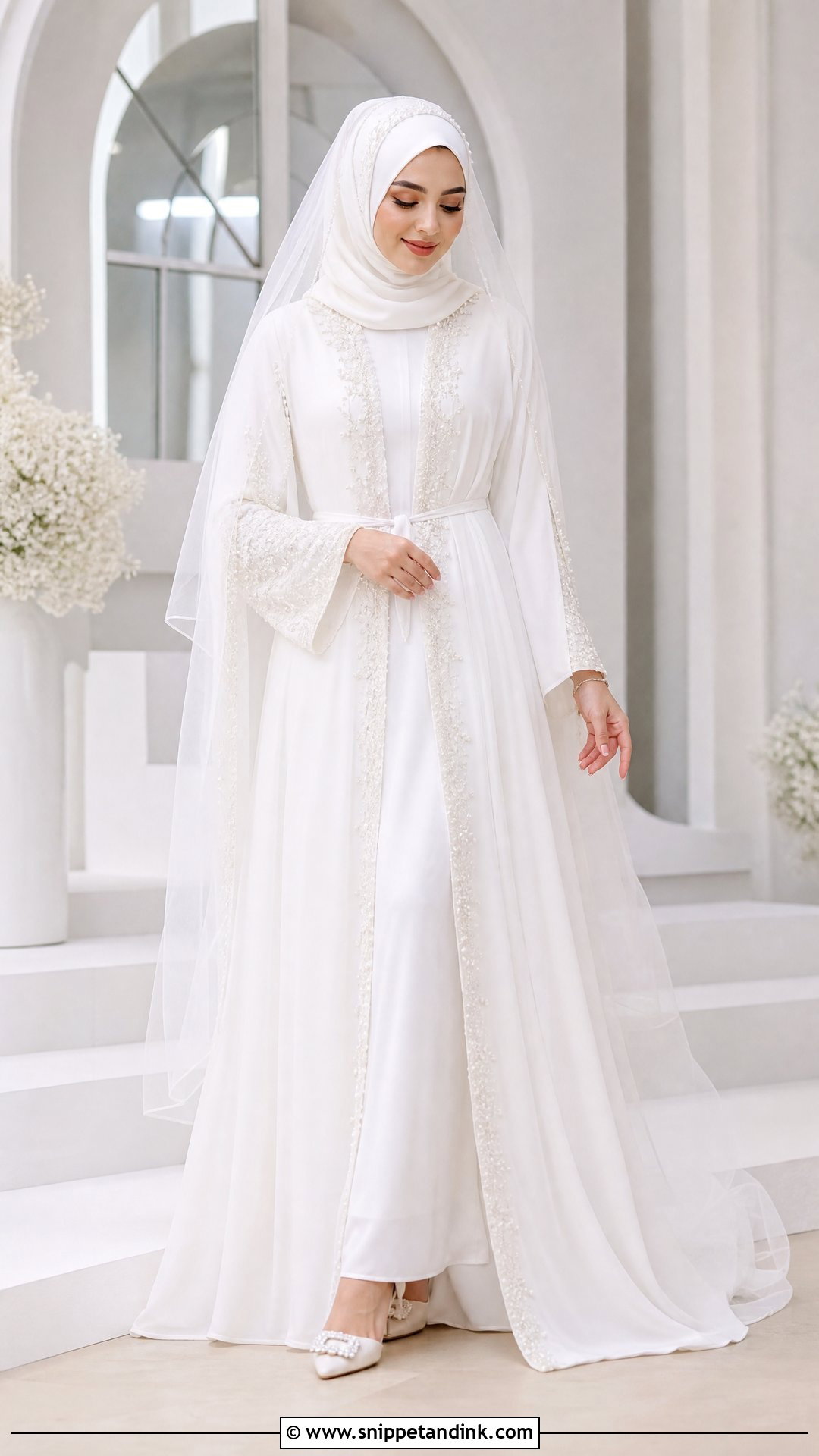
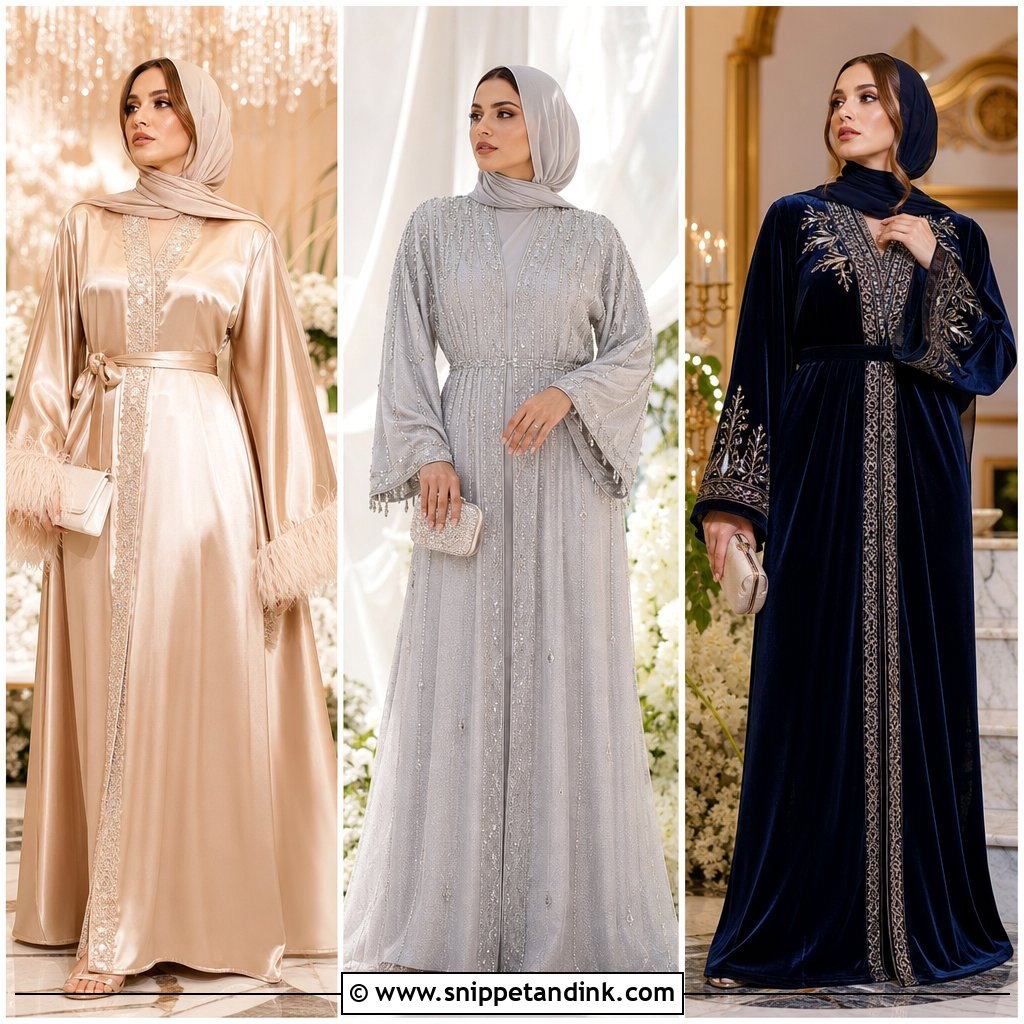
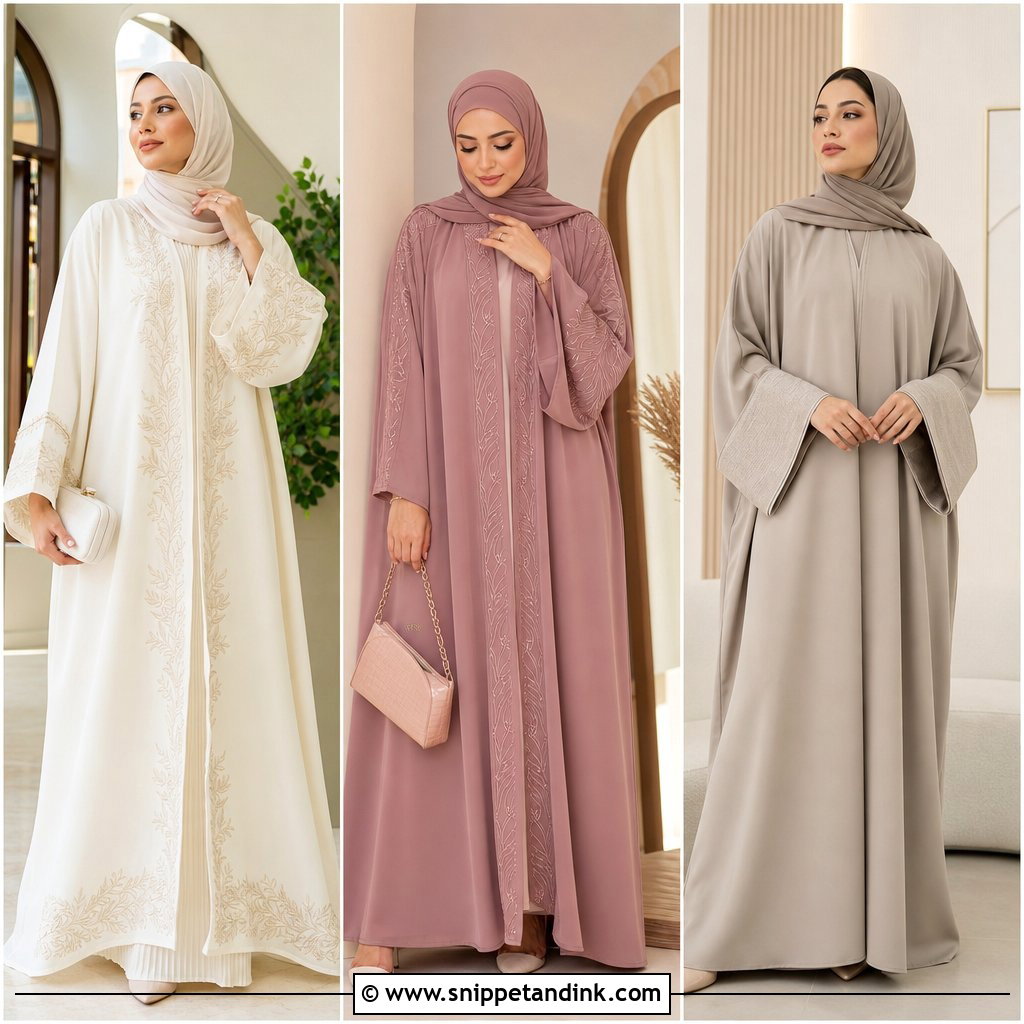
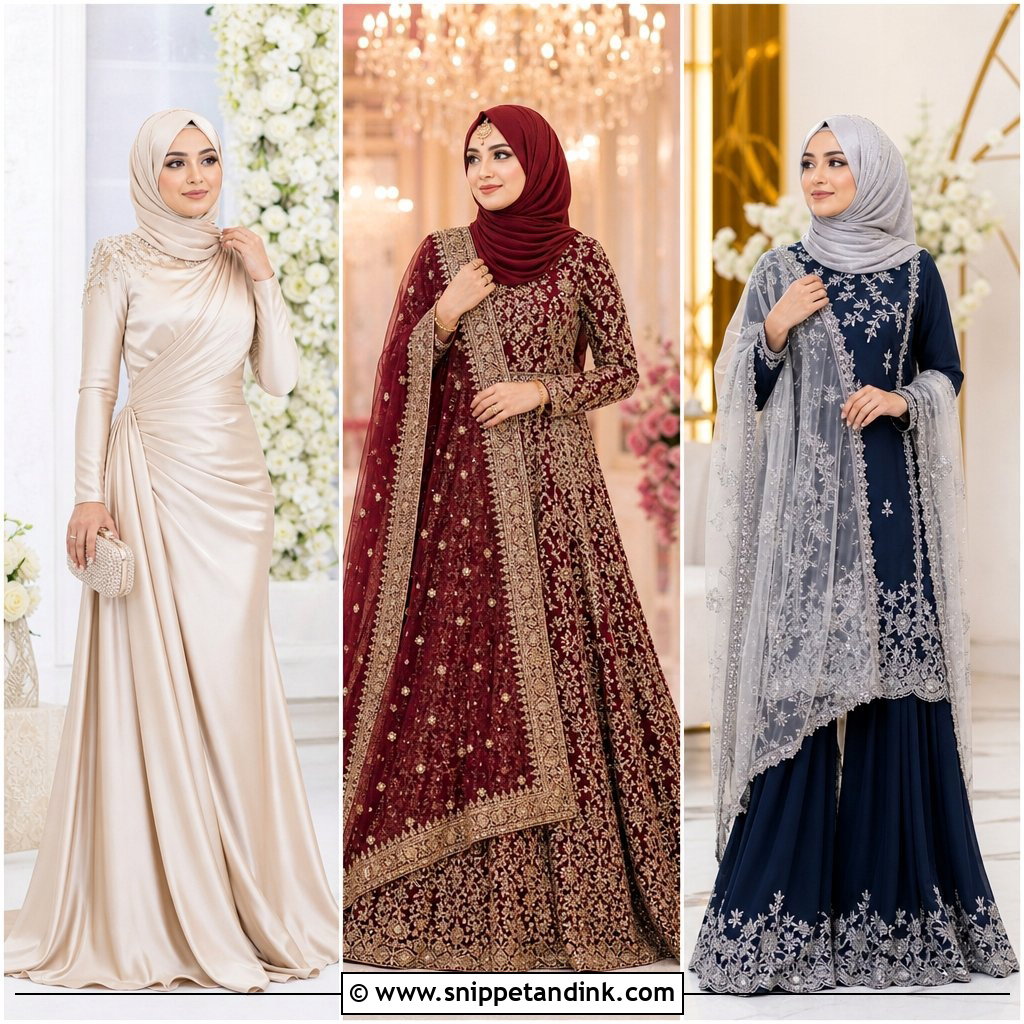
A bridal abaya trades Western structure for drape and fluid movement with full coverage. Bridal abayas often feature embroidery, beadwork, lace panels, pearls or crystals along the sleeves and front. White, ivory, champagne and soft blush all read bridal. A matching hijab keeps the outfit unified from head to toe, and heels, a clutch and a delicate bracelet finish it. Abayas are comfortable for long nikah ceremonies and seated meals. Have the length checked with your actual shoes, since a flowing hem that’s too long catches under your heel on stairs.
12. Chiffon Wedding Gown Hijab
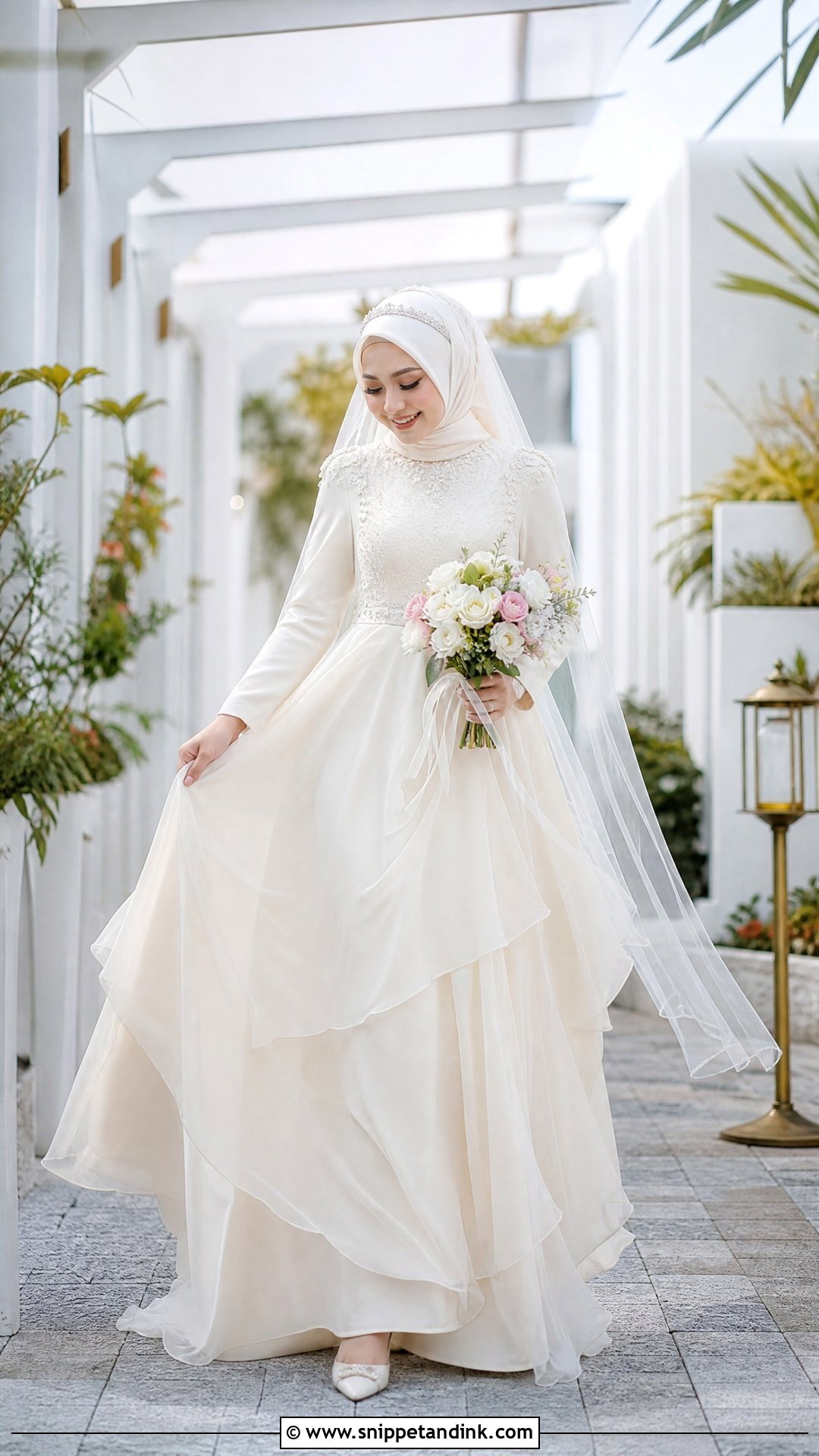
Chiffon is light enough to wear comfortably through a long celebration, which makes it a strong summer and outdoor choice. A layered chiffon skirt, long sleeves and a modest neckline keep it gentle; a beaded bodice, lace cuffs or a waist detail adds interest. A chiffon hijab in the same shade blends in. Chiffon is semi-sheer, so a full lining and careful tailoring are essential for real coverage. Check the sleeves in daylight too; unlined chiffon sleeves show the arm more than you’d expect outdoors.
13. Tulle Wedding Gown Hijab
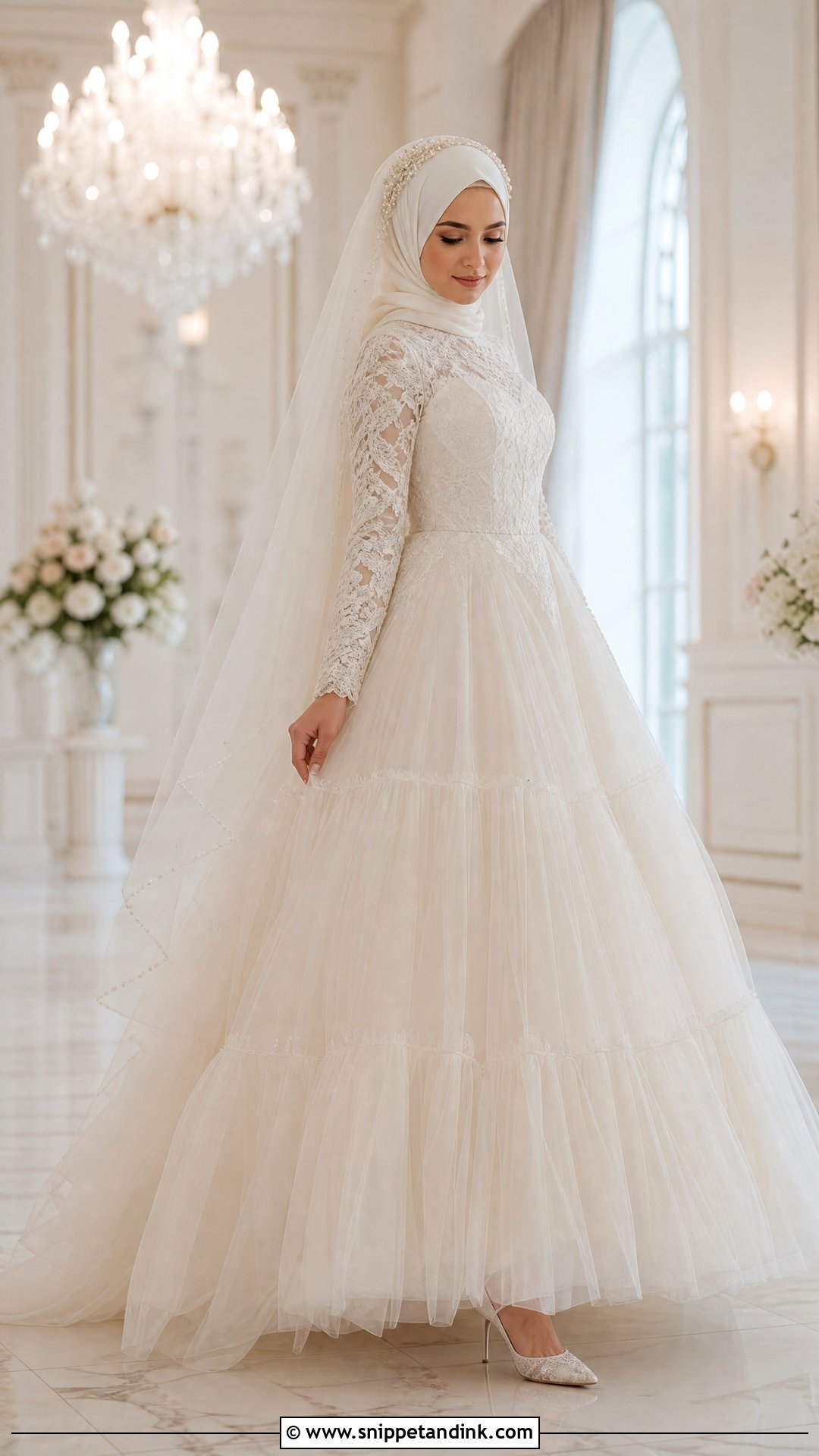
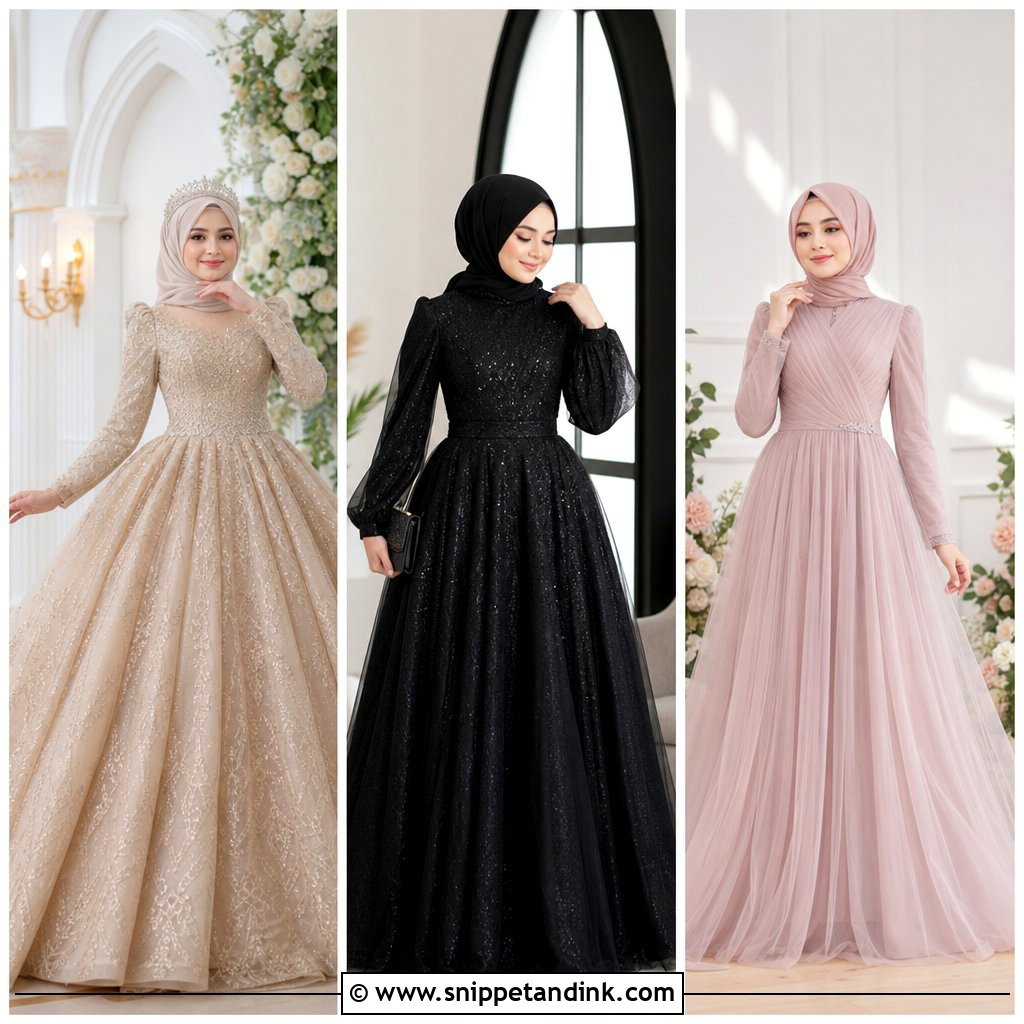
Layered over a satin or crepe lining, tulle gives volume and movement without heavy fabric. Pair a long-sleeve bodice in lace, pearls or embroidery with a flowing tulle skirt. A matching hijab keeps the top neat while the skirt does the dramatic work. For extra shoulder coverage, add a sheer tulle cape or veil. Garden venues and bright ballrooms suit it. Tulle catches on hijab pins and brooches, so I’d keep any decorative pins above the shoulder line and away from the skirt.
14. High Neck Wedding Gown Hijab
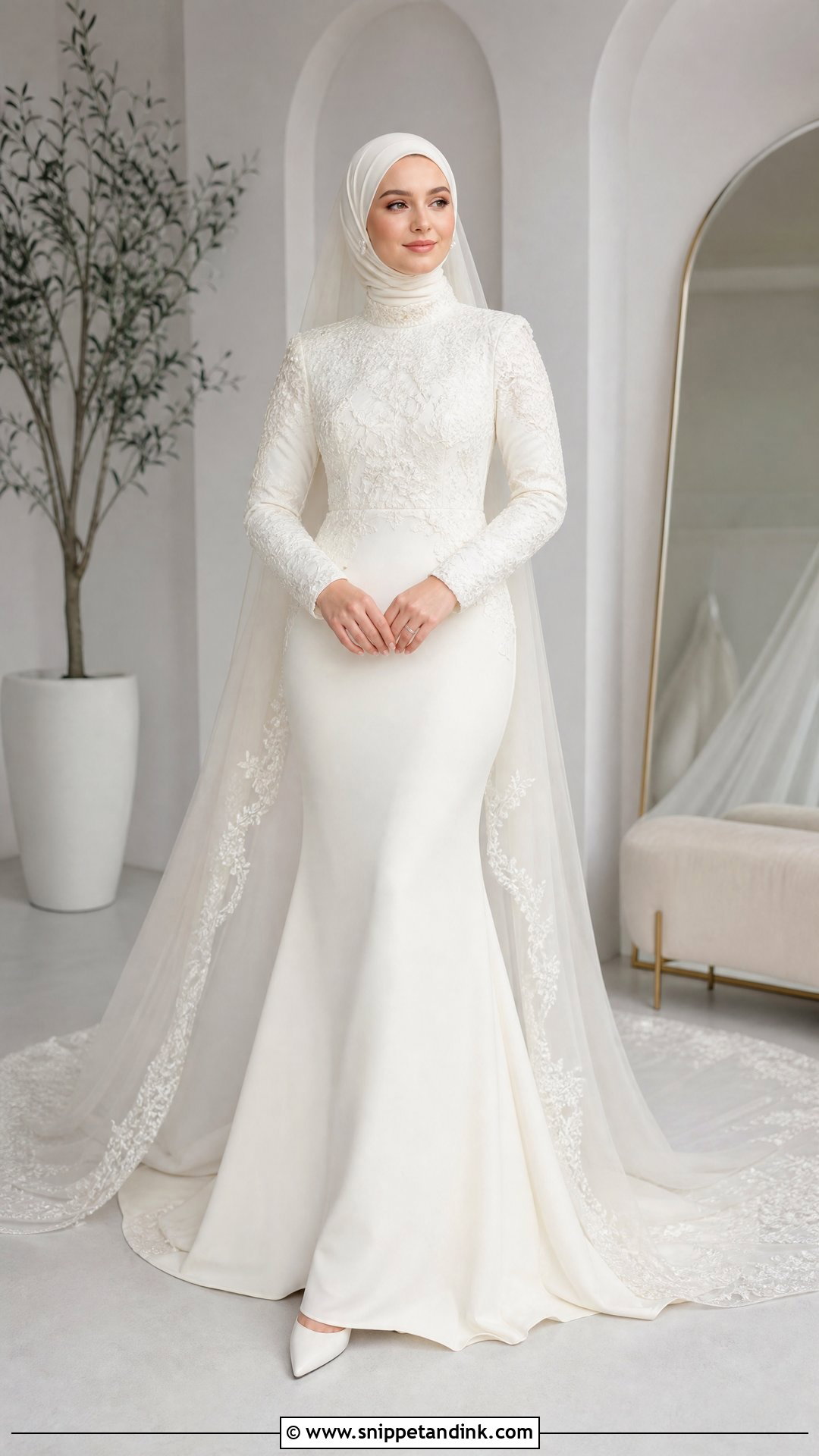
The high neck does a lot of the work for you: the neckline already covers, so the hijab sits smoothly without gaps at the throat. Lace, satin, crepe or mikado all suit it, plain and sleek or detailed with pearls, embroidery or scalloped lace. Pair it with long sleeves and a clean skirt. A tucked chiffon hijab keeps the neckline visible. The thing I check is height: a collar that sits too high can bunch up the hijab under the chin, so try the gown with your hijab on before the collar is finished.



15. Long Sleeve Wedding Gown Hijab
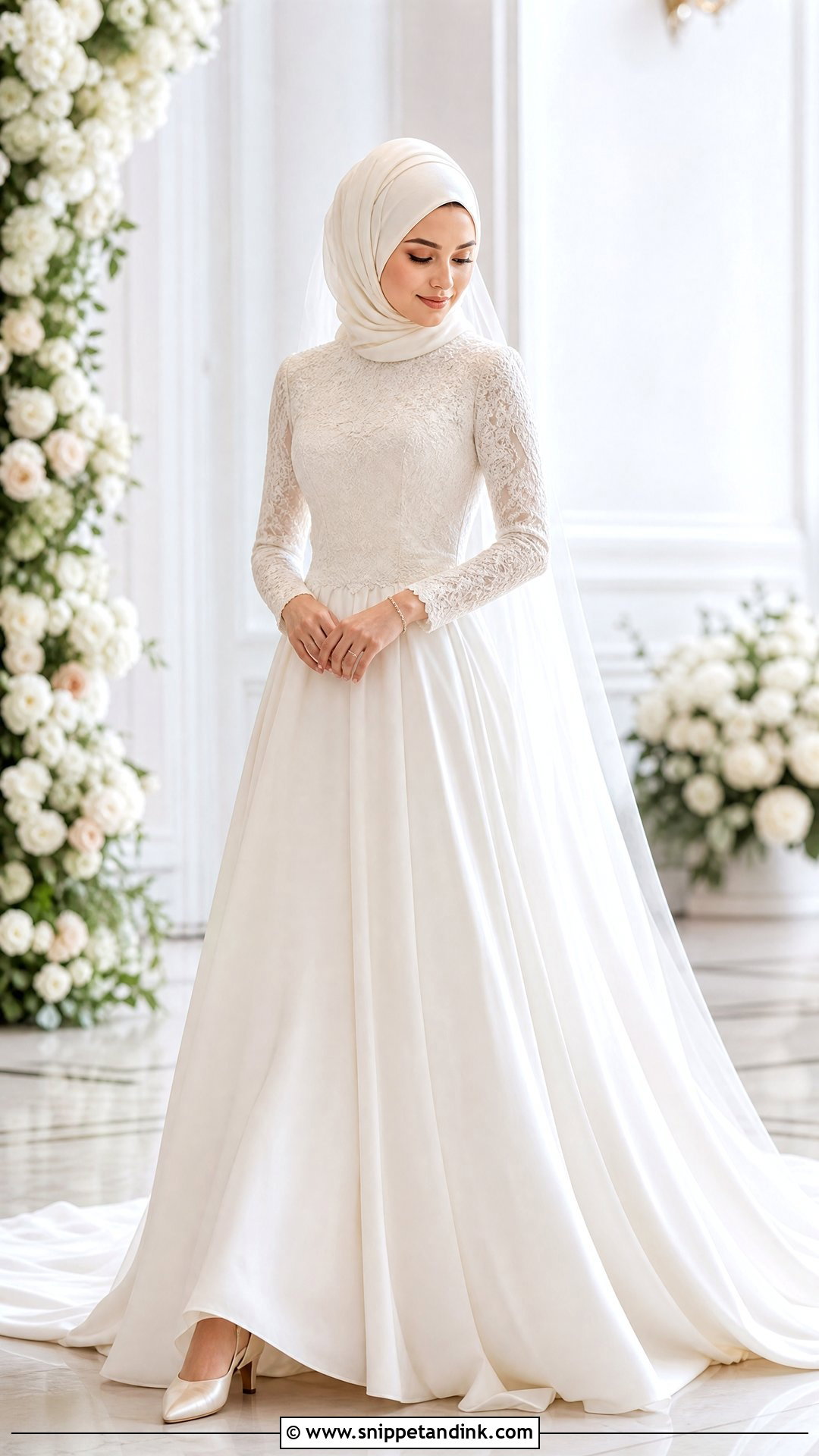
Sleeves change the whole feel of a gown. Lace looks romantic, satin classic, beading glamorous. For a hijabi bride, the lining is where coverage succeeds or fails: if the outer fabric is sheer, make sure the lining runs the full length of the arm. A high neck or a modest illusion neckline pairs well with a wrapped hijab. Fitted sleeves look clean; soft bishop sleeves look relaxed. I always ask brides to reach forward as if hugging a guest. If the cuff pulls back past the wrist, ask about a slightly longer sleeve or a small inner cuff.
16. Pearl Wedding Gown Hijab
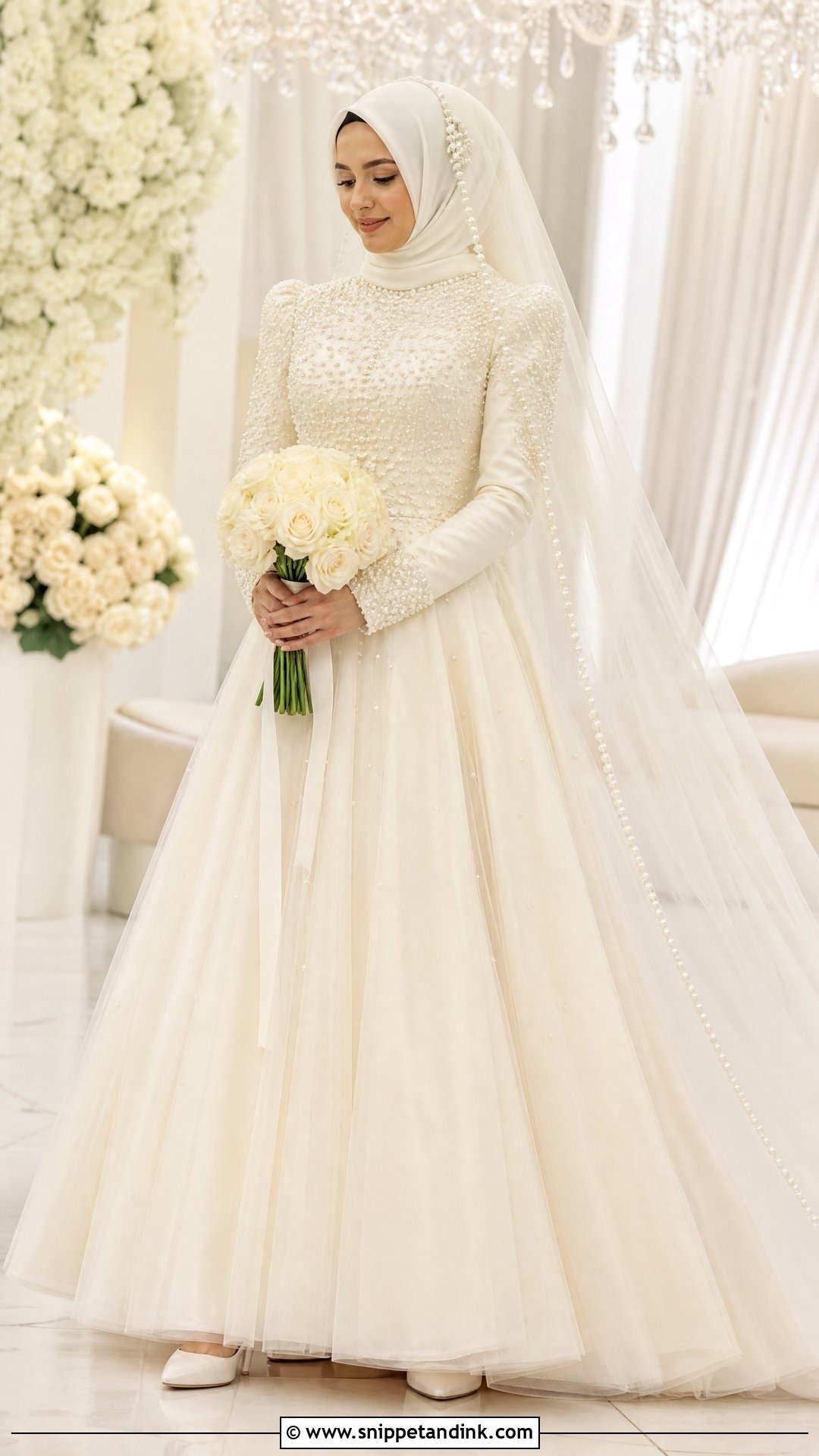
Pearls can go on the gown, veil, hijab pins, sleeves, belt or headpiece, but not all of them at once. If the bodice or sleeves are pearled, wear a plain hijab with just a few pearl pins. If the gown is simple, a pearl-trimmed veil or a pearl-detailed hijab cap adds charm. Ivory and white pearls suit lace, satin and tulle. Match the pearl tone across everything; a bright white pin on a cream hijab looks like it came from a different outfit.
17. Champagne Wedding Gown Hijab
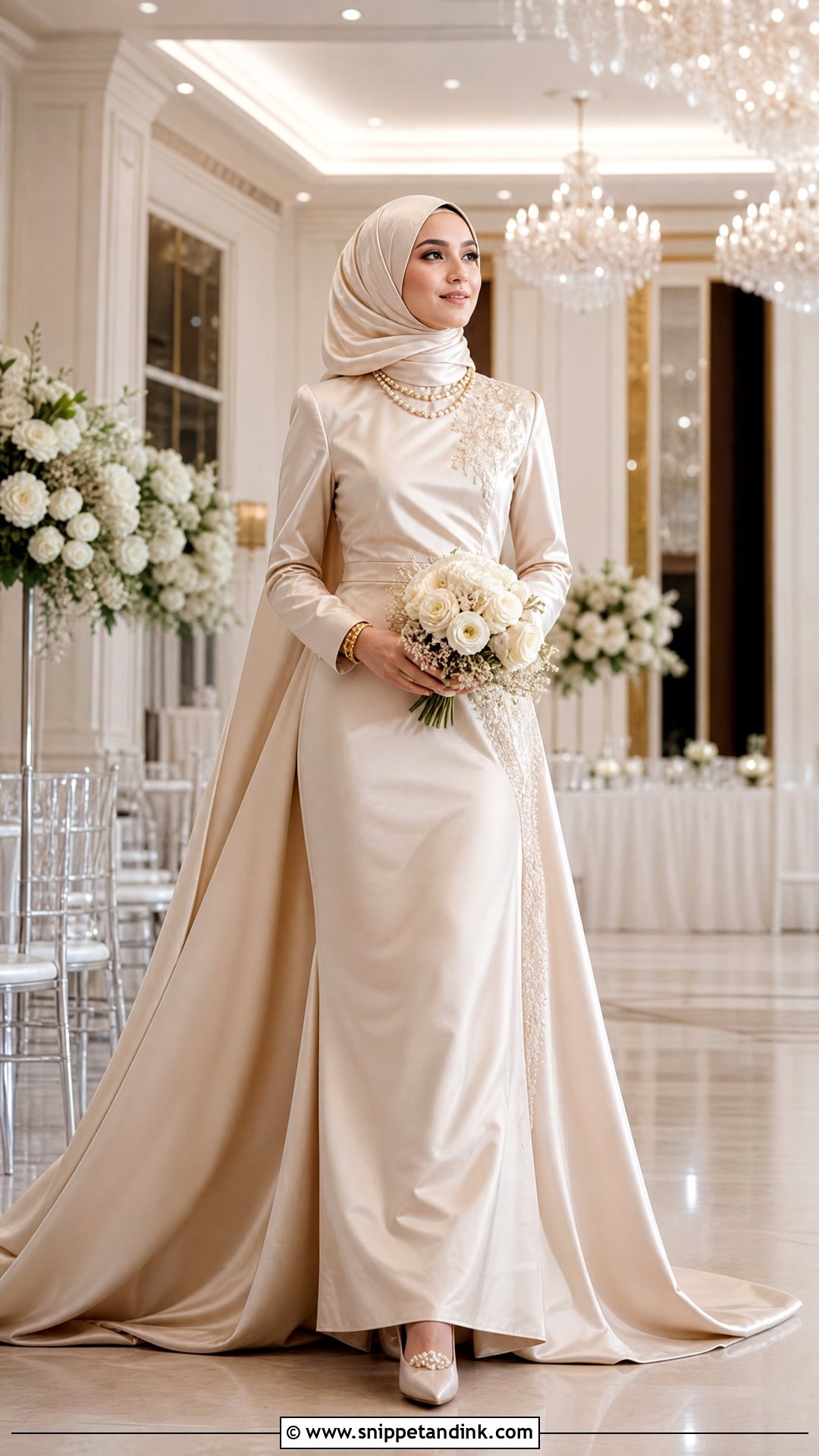
Champagne sits between white and gold, with a warm undertone that flatters many skin tones in photos. It’s a good answer when bright white feels harsh and ivory feels expected. Satin, tulle, lace or embroidered fabric all carry it. A champagne or soft beige hijab blends with the gown, and pearl or gold-toned accessories add warmth. Keep the bouquet in creams, blush or greenery. Champagne can look slightly grey under cool lighting, so if your venue uses white LEDs, ask to see the fabric under similar light.
18. Ivory Wedding Gown Hijab
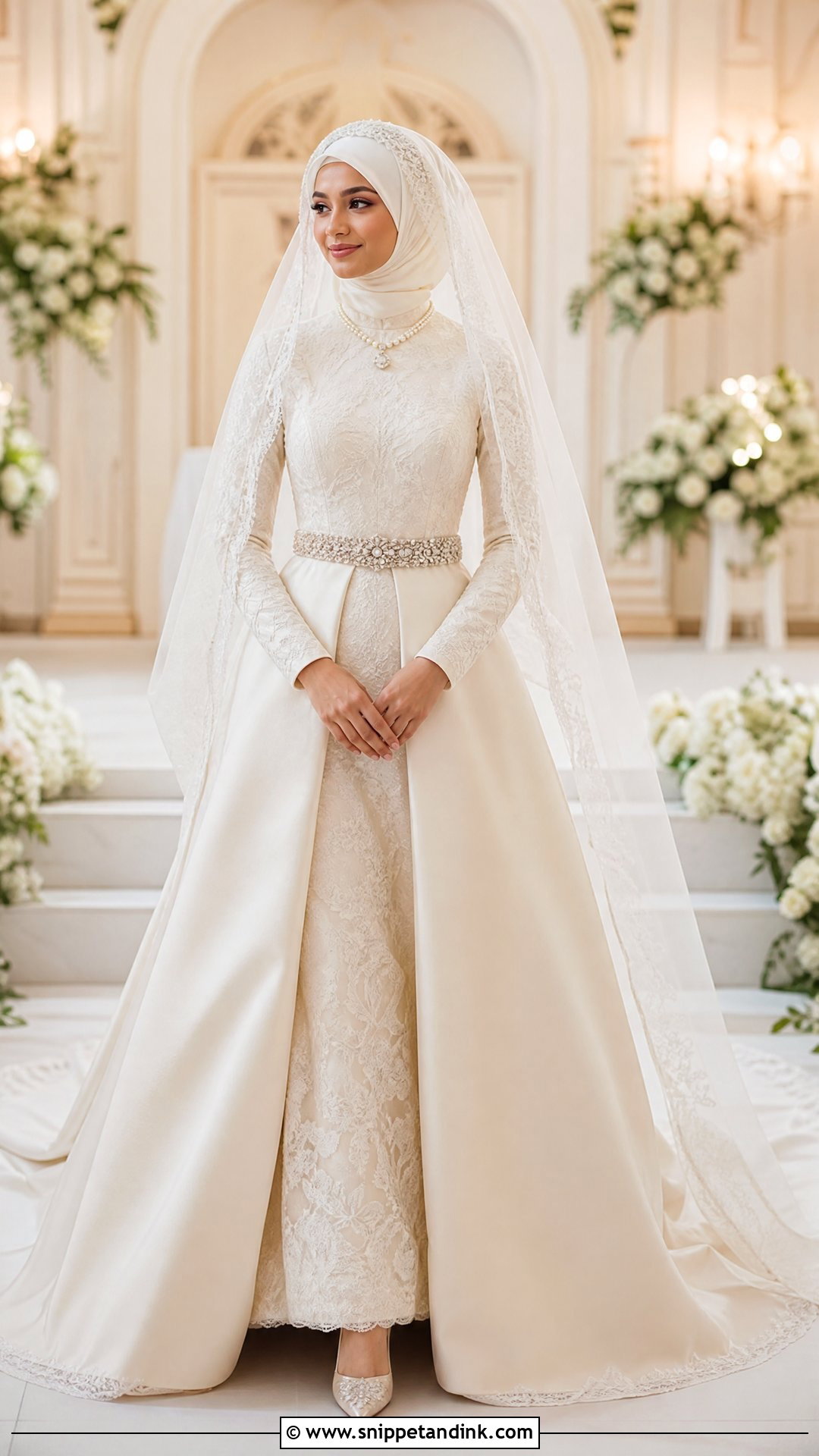
Ivory is softer than bright white and kind under most lighting. It works in lace, satin, crepe, chiffon or tulle. Match the hijab to the gown for a clean finish, or go a shade lighter near the face to brighten your complexion a little. A long veil in the same tone keeps the outfit unified. Gold, pearl and crystal accessories all suit it. Bring a swatch to the hijab shop, because ivory varies widely between makers and an almost-match looks worse than a clear contrast.
19. Blush Wedding Gown Hijab
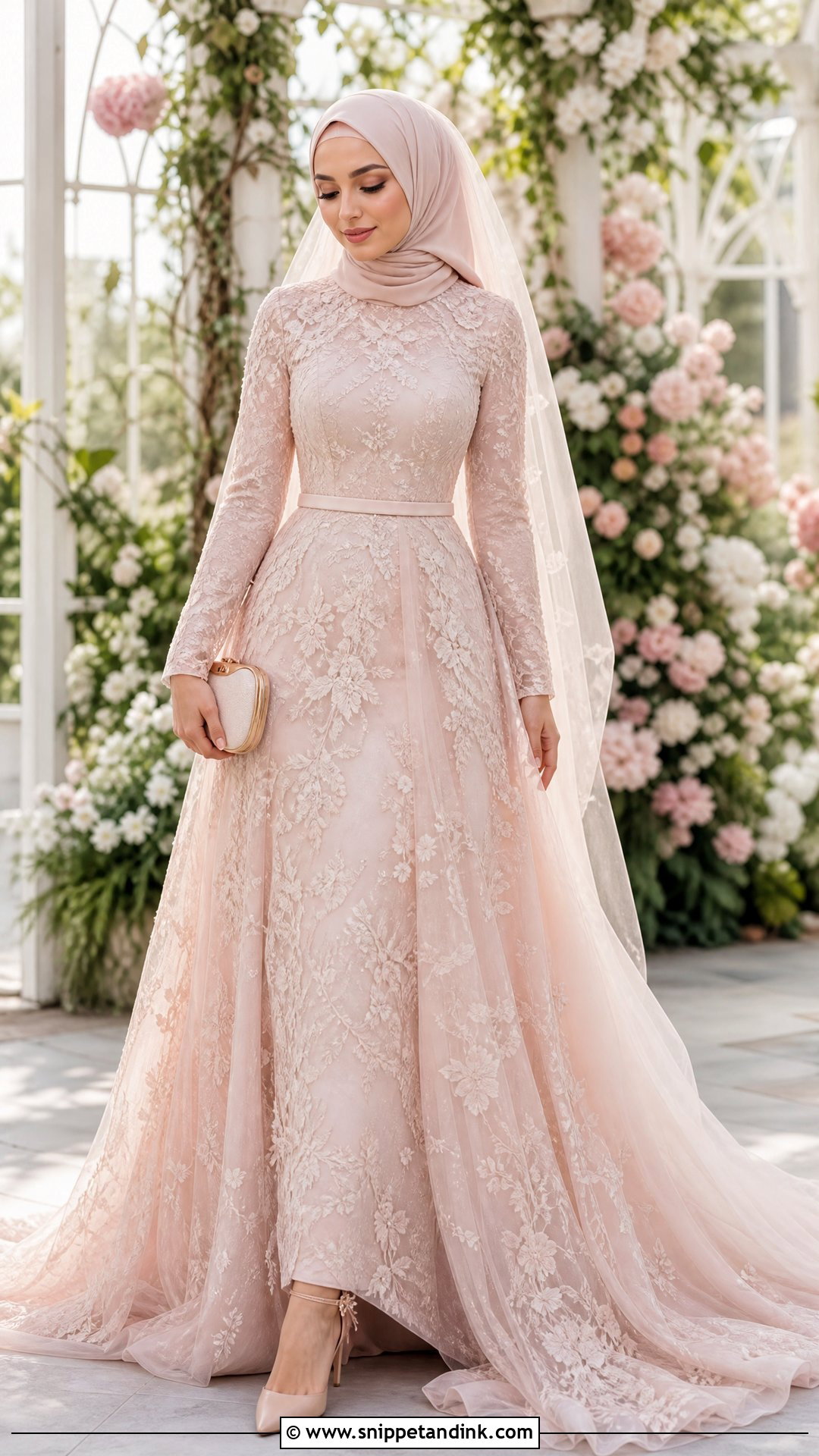
Pale pink, dusty rose and muted blush are a gentle step away from white that still reads bridal. Choose a fully lined gown with long sleeves and a high neck, with lace, floral embroidery or light beading for depth. A blush hijab gives a monochrome look; an ivory hijab softens the color near your face. Pearls, silver or rose gold keep the accessories delicate. It suits spring and garden weddings. Blush shades shift a lot with skin tone, so try a hijab in that exact shade against your face before ordering the gown in it.


20. Gold Wedding Gown Hijab
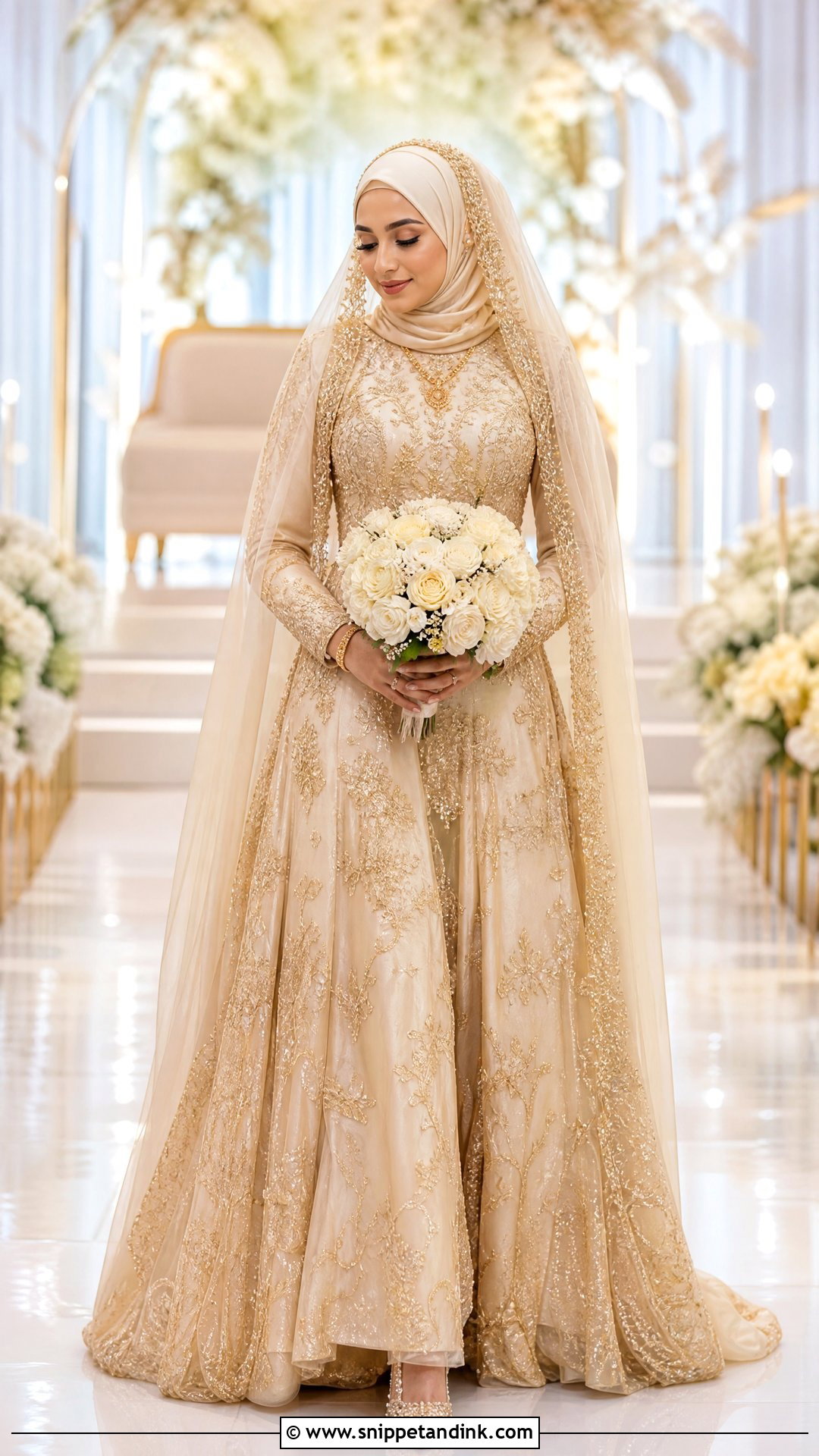
Gold says celebration, and soft or pale gold tends to look richer than bright metallic fabric. Brocade, embroidery, beading or satin with a subtle glow all work. A matching gold or cream hijab keeps it coordinated. With that much shine in the gown, simple heels and fine jewelry are enough, and a veil with light gold embroidery ties it together. Cultural weddings and evening receptions suit it. Brocade is stiff and warm, so I’d plan for a lighter hijab fabric to keep your head and neck comfortable.
21. Red Bridal Wedding Gown Hijab
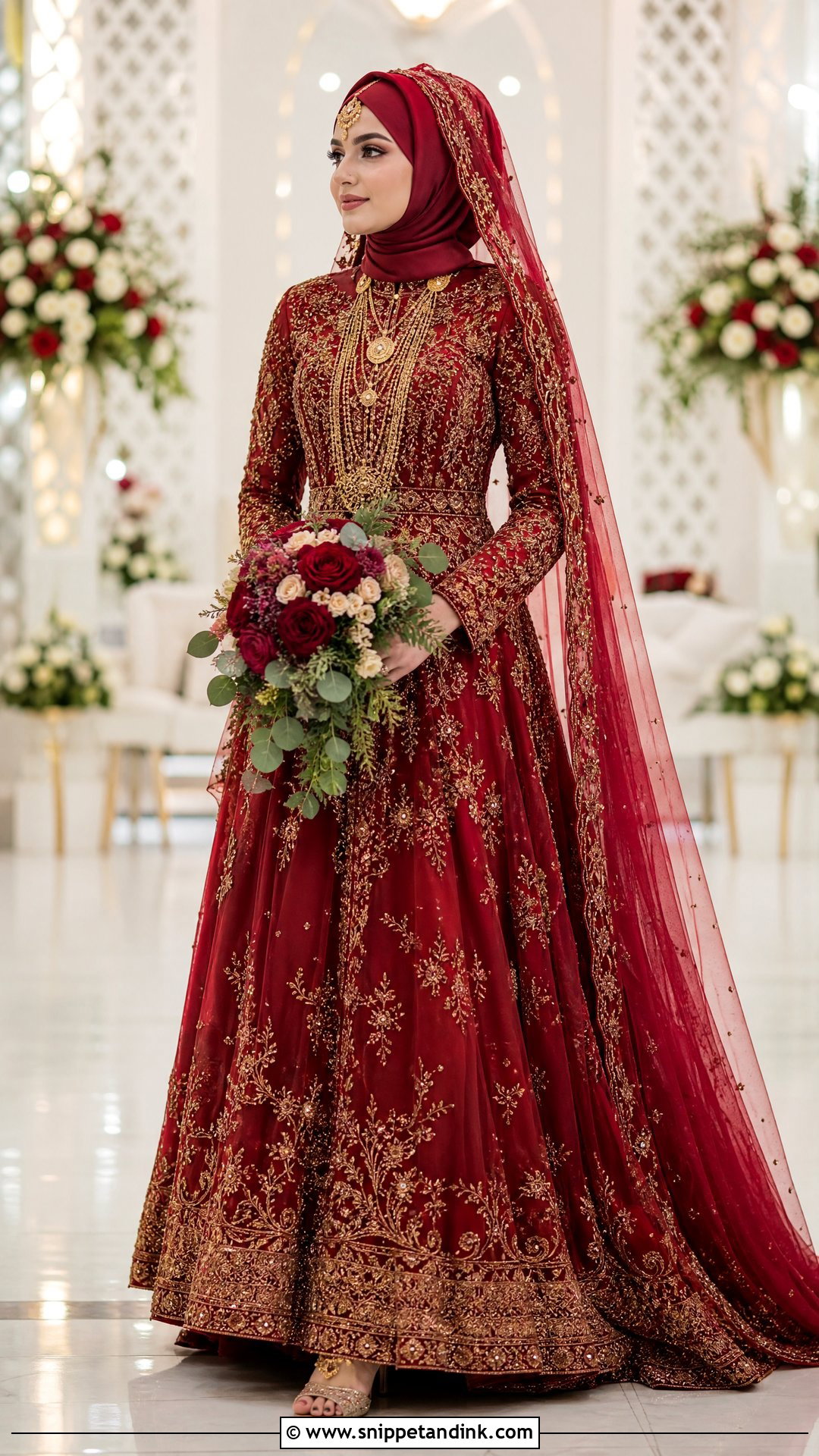
Red carries deep meaning as a bridal color in many cultures, and maroon, ruby and burgundy give it richness. A long-sleeve gown, a lehenga-inspired dress or an embroidered modest silhouette all work with full coverage. Gold embroidery, beadwork or lace adds depth, and a matching red hijab gives a strong, unified line. With heavy embellishment, keep the hijab smooth and well secured. Gold jewelry, embellished heels and a coordinated bouquet complete it. Dark reds can bleed dye onto skin when you sweat, so wear the hijab once before the day to check.
22. Lehenga Wedding Gown Hijab
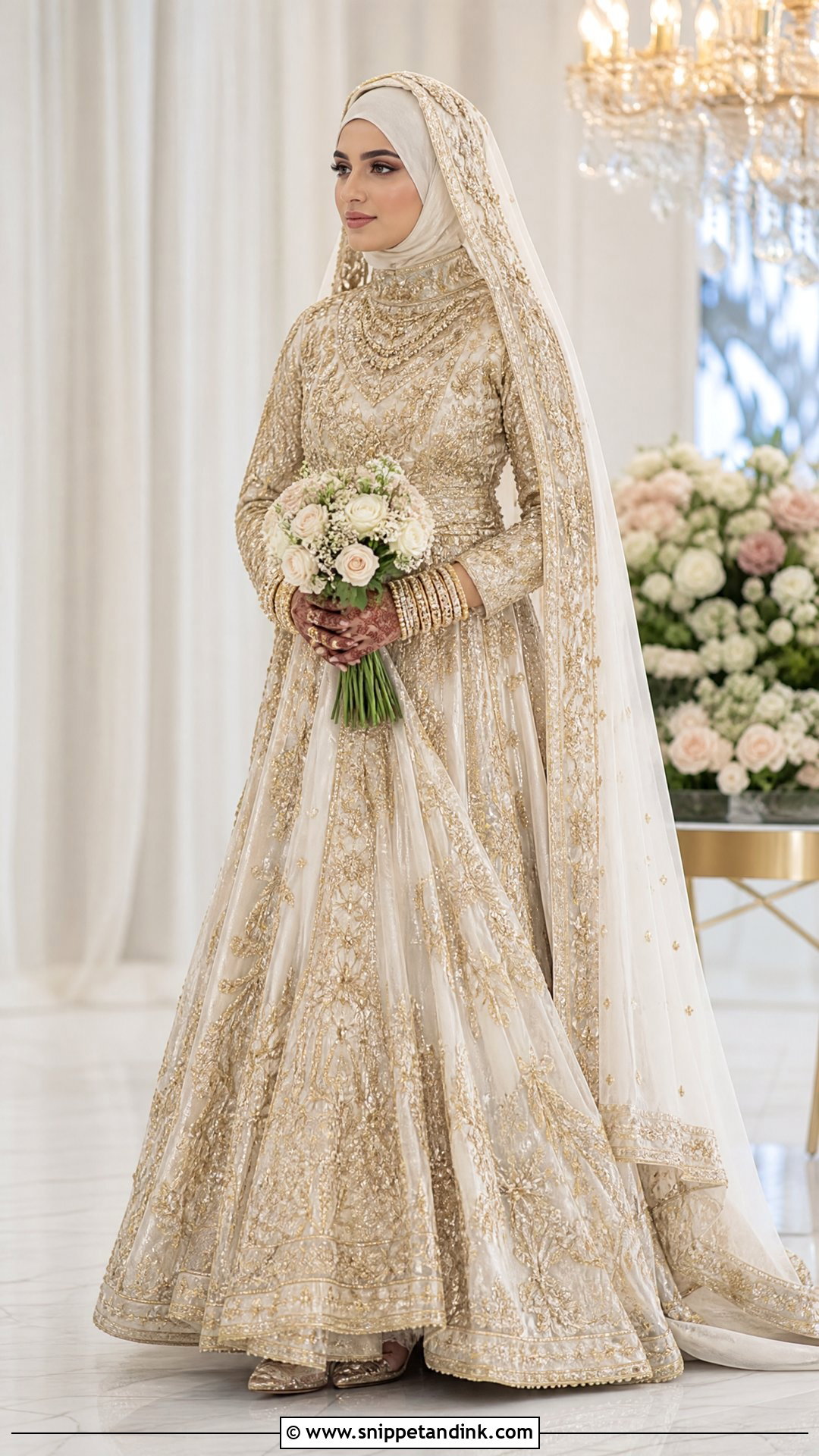
A lehenga styled modestly combines a long skirt, a covered blouse and a dupatta layered over a base hijab. For full coverage, choose a high-neck blouse with long sleeves and a longer hem. The skirt can be embroidered, beaded or richly textured. A plain hijab under the dupatta keeps everything secure, and matching it to the blouse or dupatta gives a clean finish. Heavy dupattas pull backward through the evening, so I pin them to the hijab at the crown and again at the shoulder rather than relying on one pin.
23. Sharara Wedding Gown Hijab
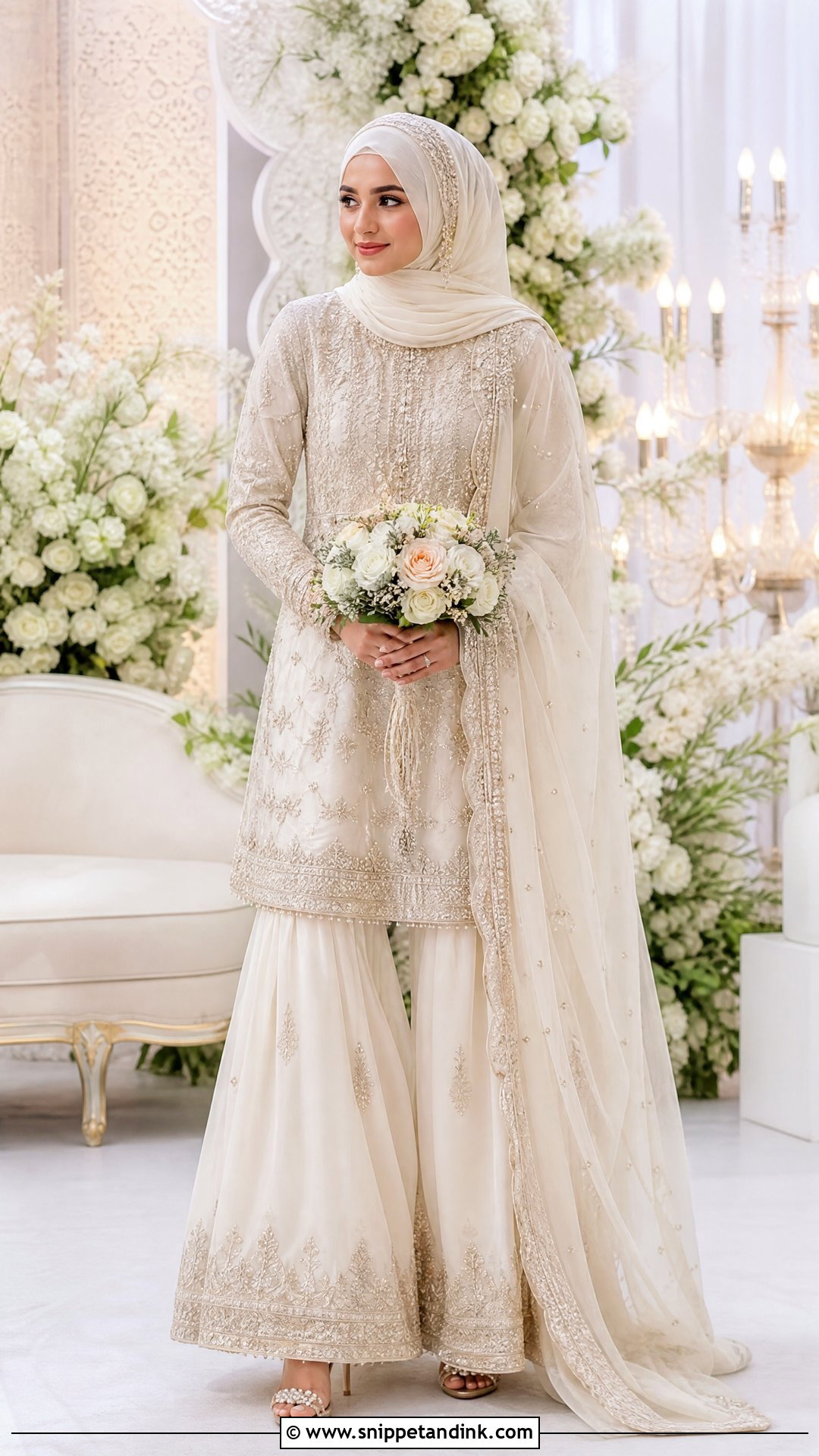
Wide-leg sharara trousers with a long top or kurta give you the drama of a gown with much easier movement. Silk, chiffon, organza or brocade with embroidery on the hem, sleeves and neckline feel bridal. A matching hijab and dupatta layer the coverage. Ivory, blush, gold or deep jewel tones all suit it. Heeled sandals or embellished pumps balance the wide legs. Get the sharara hemmed in your wedding shoes, since the flared legs are easy to step on when you turn.
24. Modest Reception Wedding Gown Hijab
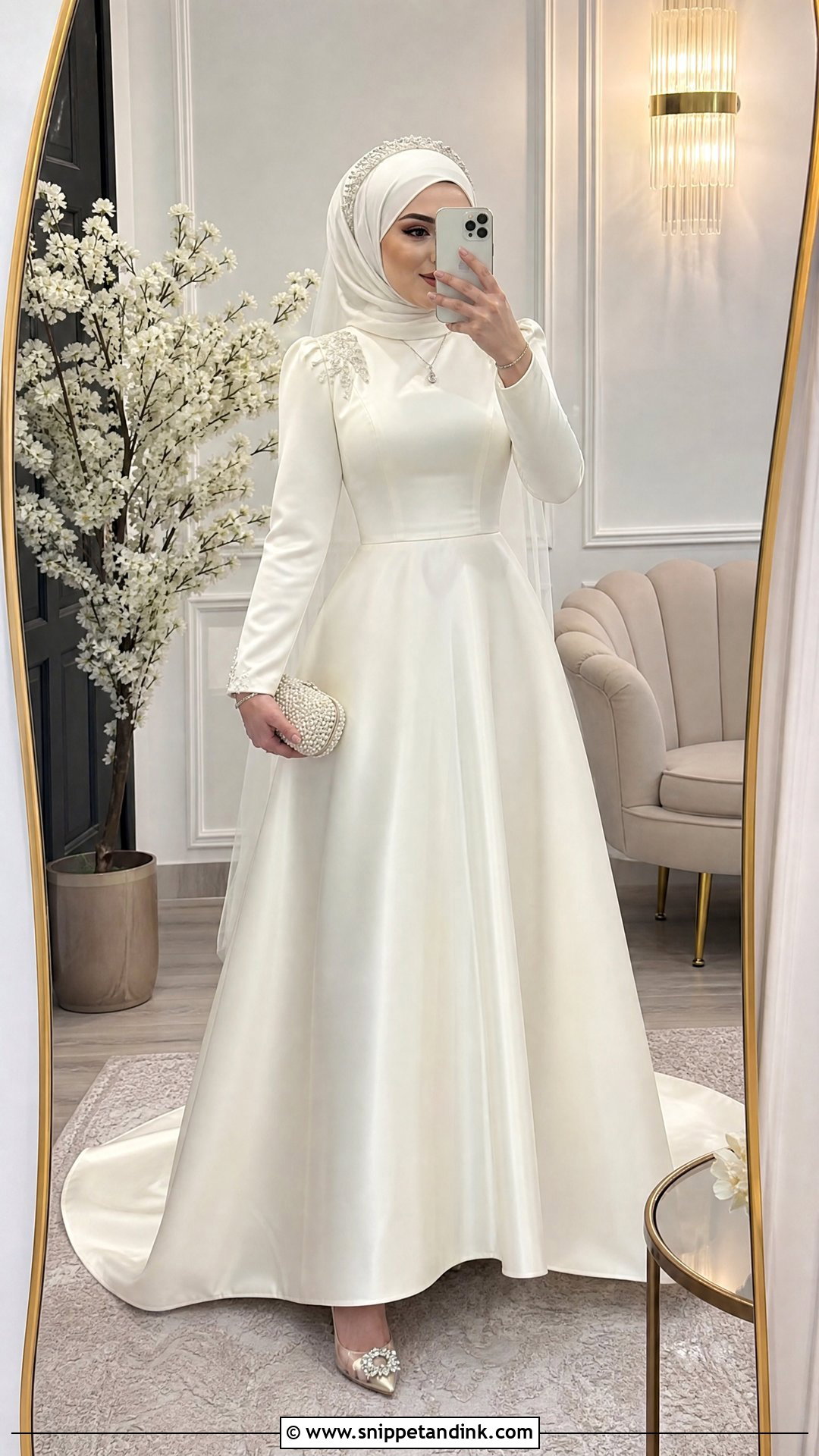
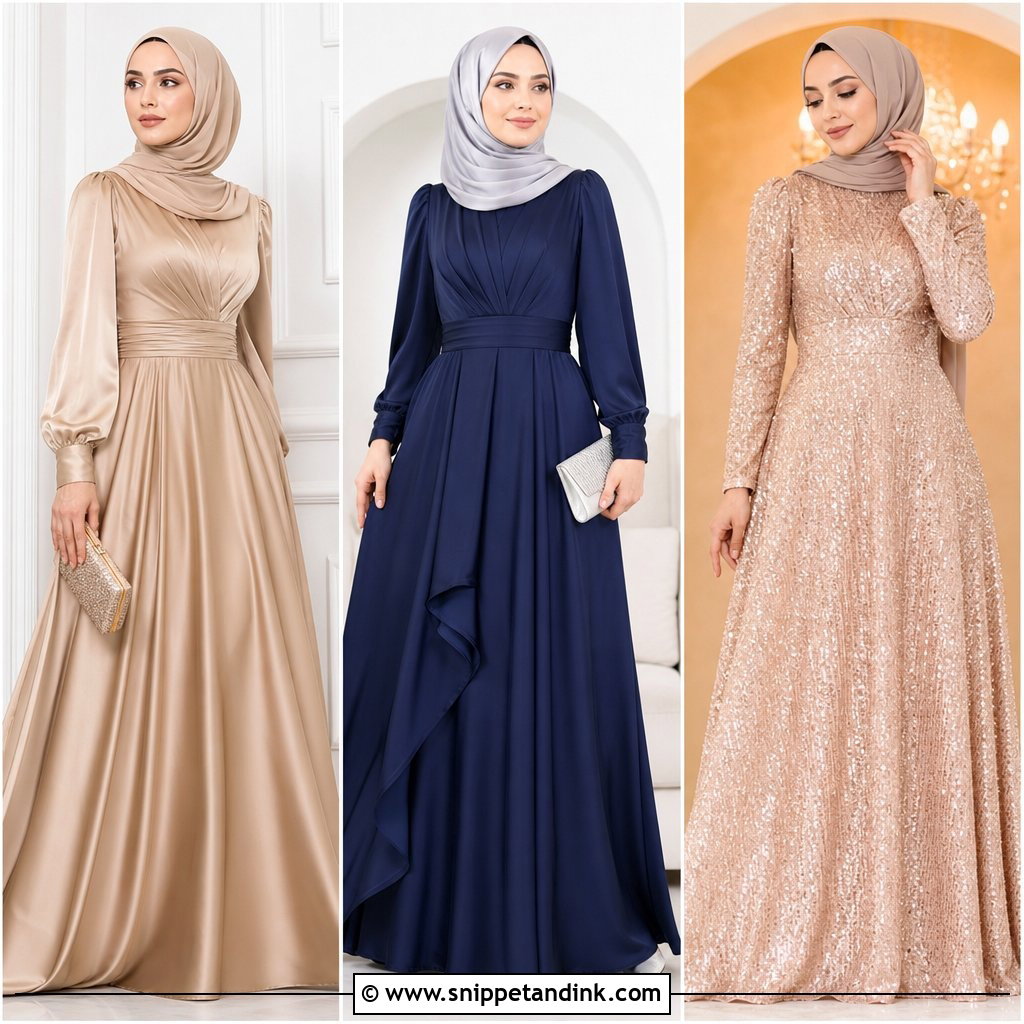
A reception outfit has to handle greeting guests, moving between tables and a lot of hugging. Many brides change into something lighter after the ceremony: a fitted A-line, a soft satin gown, a beaded abaya dress or a simple crepe gown with long sleeves. Choose a shorter train or none at all. The hijab style matters most here, so pin it to stay put through movement and photos. Pick jewelry that can’t catch on the scarf, which usually means studs over drops and smooth bangles over charm bracelets.

25. Nikah Wedding Gown Hijab
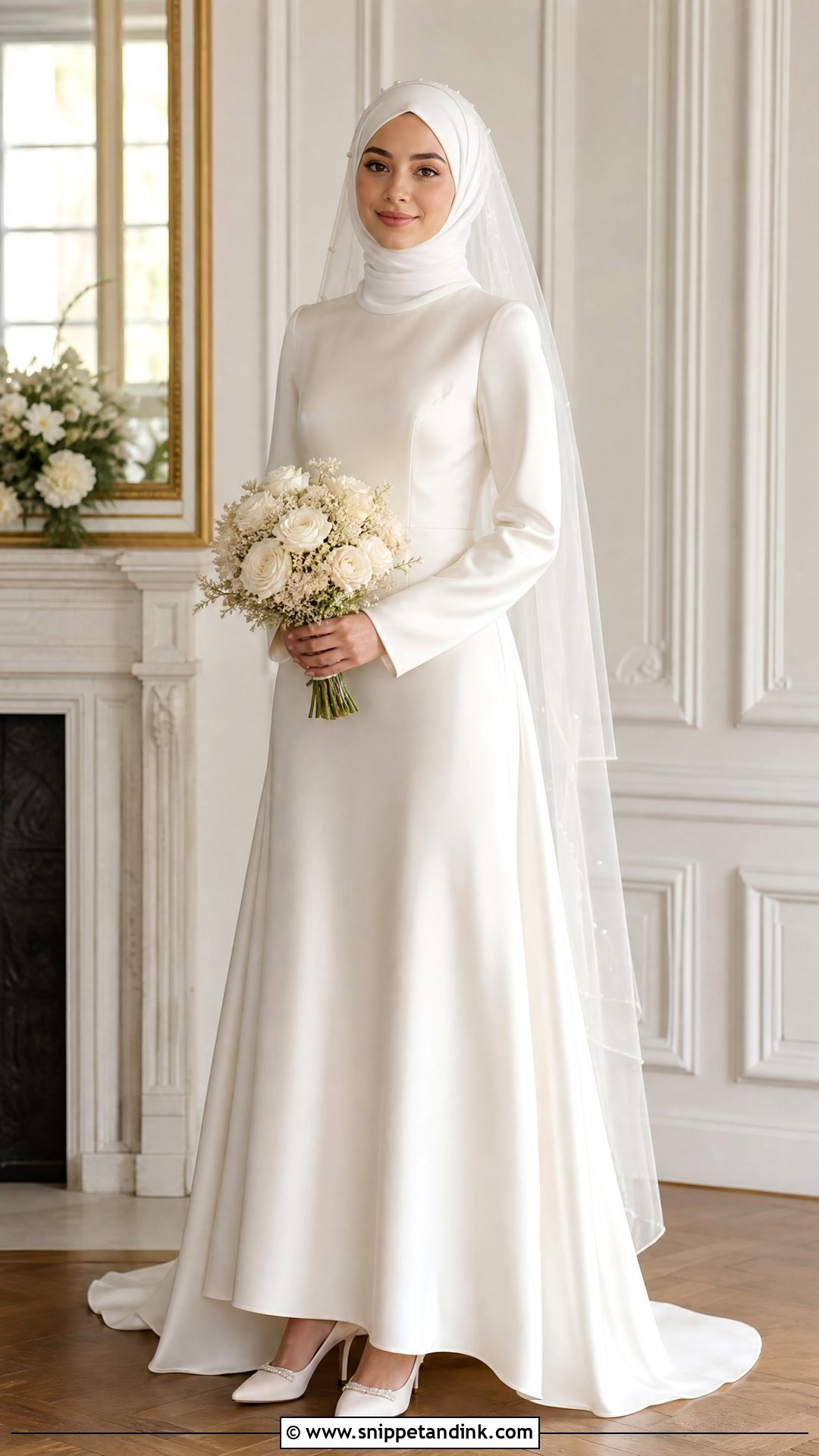
The nikah is often more intimate than the reception, and the outfit can be softer and simpler. White, ivory, cream, blush and champagne are common choices, in a modest long-sleeve gown, an embroidered abaya, lace or simple satin. Make sure the hijab is neat and secure, since family photos after a nikah can run long. A light veil, pearl pins or a delicate headpiece adds the bridal touch. Comfortable shoes and soft makeup suit the calmer mood. If you’ll sit on the floor or on low cushions for the ceremony, try sitting that way in the gown first.
Magnetic Pins, Grippy Underscarves and Hours of Family Photos
A bridal hijab has to stay neat through the ceremony, the photos, the hugs and the meal, often under hot lights. Fabric choice decides most of that. Jersey grips and holds its shape; chiffon drapes beautifully but slides; satin and silk slide the most and need the best foundation underneath. A cotton or jersey underscarf with a little grip gives everything above it something to hold on to.
Heavy pieces need their own anchor. A crown, tiara or long veil shouldn’t rest on the hijab alone. Most stylists secure it to the bun or a volumizer beneath, using combs or pins that never pierce the visible fabric.
What I keep in the bridal kit
- Magnetic pins for the outer layer, which hold without leaving holes in silk or satin.
- A few spare straight pins and safety pins in the hijab color for a dupatta or veil that shifts.
- Setting powder and a clean brush, since foundation transfers onto the hijab edge where it meets the jaw.
- A small fan for warm venues, as layered fabric around the head and neck holds heat.
Have a full hijab trial with the makeup on, the headpiece in place and the veil attached, and take photos from the front and both sides. Many brides book a hijab stylist alongside the makeup artist for the morning, and it’s worth asking whether your makeup artist can do both.
Plan the Hijab and the Gown as One Outfit
Modest brides have more choice now than ever, from simple satin gowns to lace ball gowns, embroidered abayas, capes, lehengas and soft nikah outfits. What ties them together is planning coverage, fabric and fit with the hijab in mind from the first appointment. Bring your hijab to fittings, test how everything moves and settle the pins before the day. With that groundwork, your wedding gown hijab can feel modest, personal and entirely yours.
You'll Like These Ideas:







Leave a Reply