
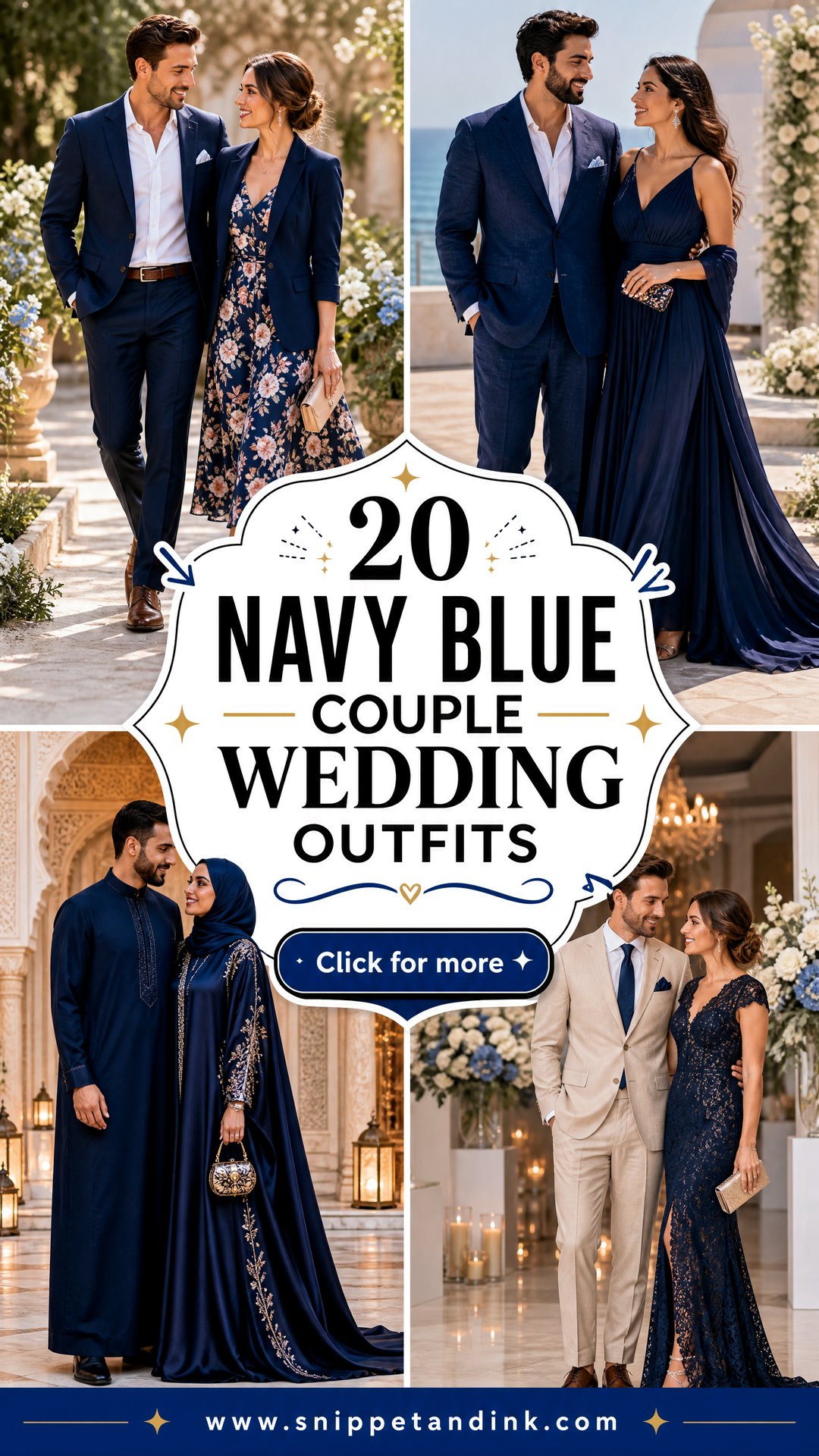
Navy is the color I reach for most when a couple wants to look like a pair without dressing like twins, because it reads formal in wool and soft in chiffon. The twenty pairings below run from black-tie tuxedos to linen on a beach, with kurta, agbada, thobe and dashiki combinations for cultural ceremonies along the way. In most of them one partner wears a suit and the other a gown, printed dress, tailored jumpsuit or traditional ensemble. What ties each couple together is usually one small repeat: the same metal in the jewelry and the cufflinks, a pocket square cut from the dress fabric, or matching embroidery thread. Let the dress code and the venue settle the fabric first, and let your own taste settle the rest.
Why Two Navy Fabrics Rarely Match Off the Rail
Navy isn’t one color. A wool suit, a satin gown and a sequinned dress can all be sold as navy and sit in completely different places, one leaning toward black, one toward purple, one toward teal. Dye takes differently on wool, silk and polyester, and a shiny surface bounces back more blue than a matte one. So the first thing I do with a couple is get swatches of both fabrics into the same hand.
The swatch check I do before anything is ordered
- Hold both swatches together by a window, then under warm indoor bulbs. A pair that matches in daylight can split badly at a candlelit reception.
- Photograph them with a phone flash. Flash exaggerates the purple undertone in a lot of synthetic satin.
- Decide on purpose whether you are matching or contrasting. A clearly lighter or darker second navy looks intentional; a near miss looks like a mistake.
- Pick the metal you will repeat while the swatches are in front of you, since gold makes navy read warmer and silver keeps it cool.
If the swatches refuse to agree, I stop chasing a match and bring in a third color, usually gray, pale blue or ivory, so the eye stops comparing the two navies directly.
1. Navy Blue Suit And Satin Gown
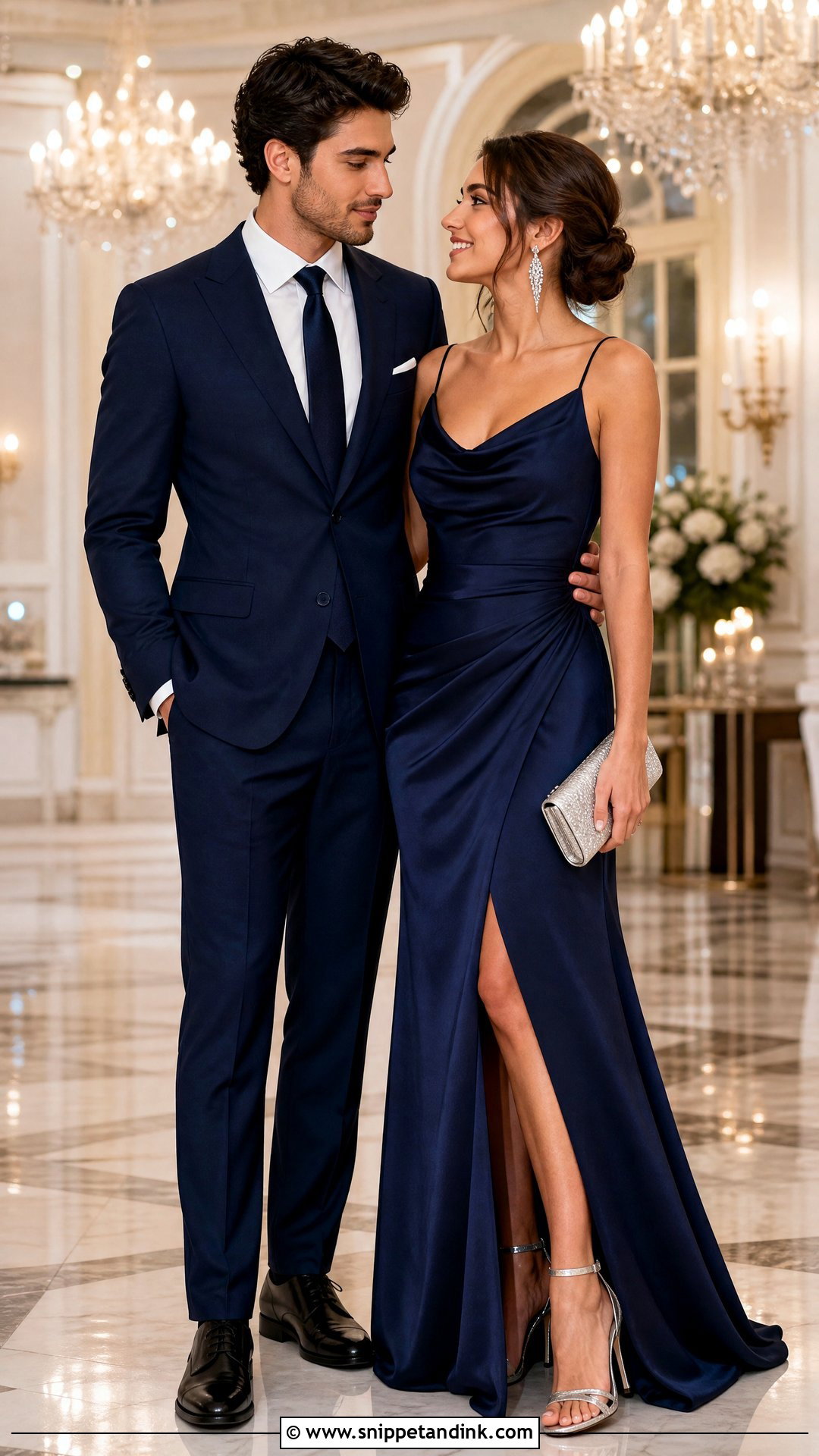
Matte wool beside fluid satin is the most reliable contrast on this list, and it’s why I rarely put a couple in two shiny fabrics. The suit is a sharp two-piece with a white shirt, silk tie, black leather shoes and a plain pocket square. Opposite it, a floor-length navy satin gown with a draped neckline or long sleeves. Silver earrings, a structured clutch and metallic heels add light without fighting the color. Satin shows every pull, so I hem the gown in the exact shoes it will be worn with and check the seat of the suit trousers while the wearer sits. Ballrooms and hotel venues suit this pairing best.
2. Navy Blue Tuxedo And Sequin Dress
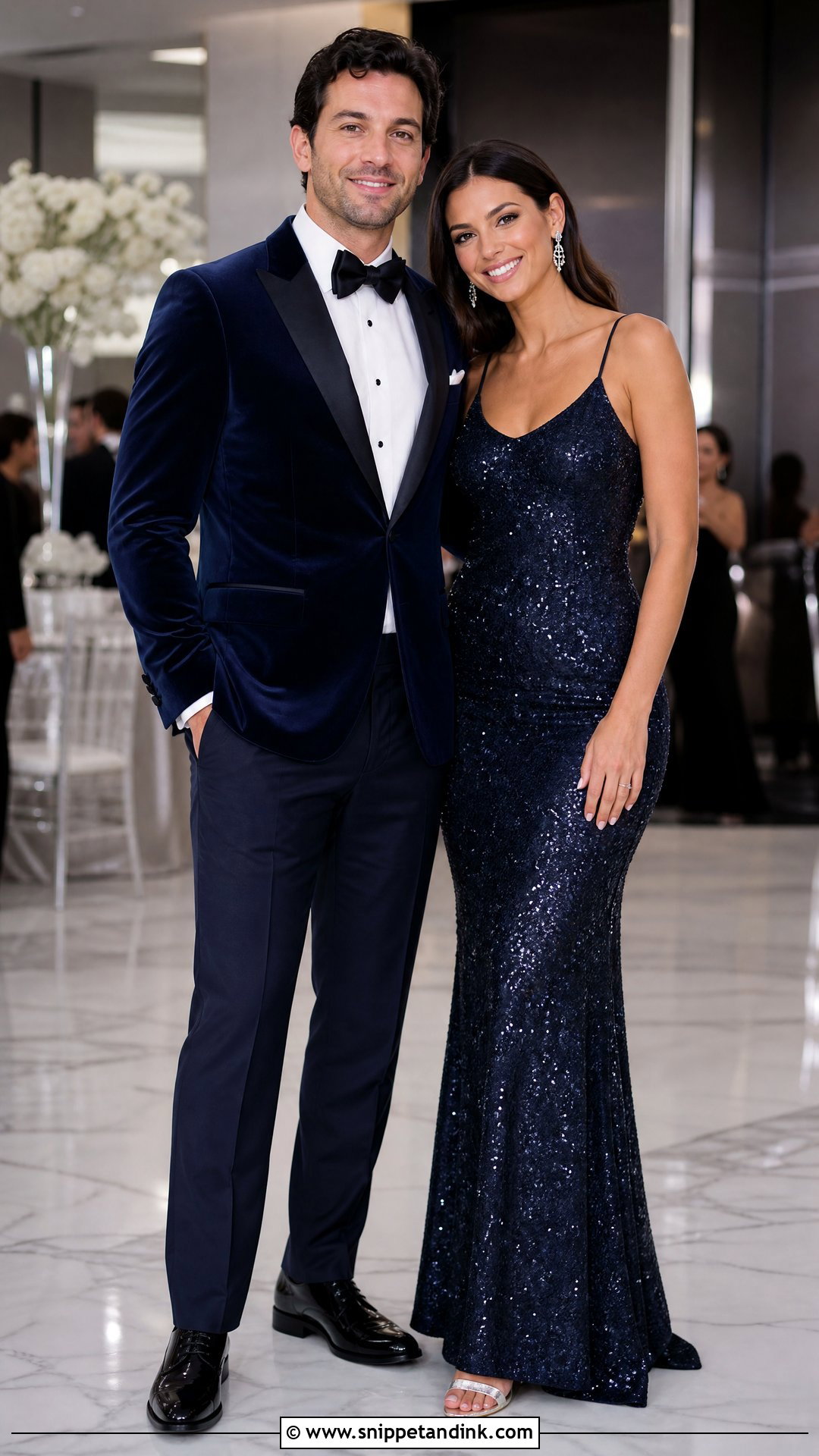
Sequins already throw light, so the tuxedo beside them has to stay quiet. I pair a navy tuxedo with velvet or satin lapels, a crisp white shirt, black bow tie, polished loafers and minimal cufflinks. The other partner wears a navy column dress in fine sequins; oversized paillettes look busy next to a clean lapel. Silver heels, drop earrings and a small black or metallic clutch are plenty. What I check under the venue lights is undertone. Sequinned navy often leans purple, and next to a tux that leans teal it looks like two unrelated colors. Save this one for black tie and late evening receptions.
3. Navy Blue Three-Piece Suit And Chiffon Gown
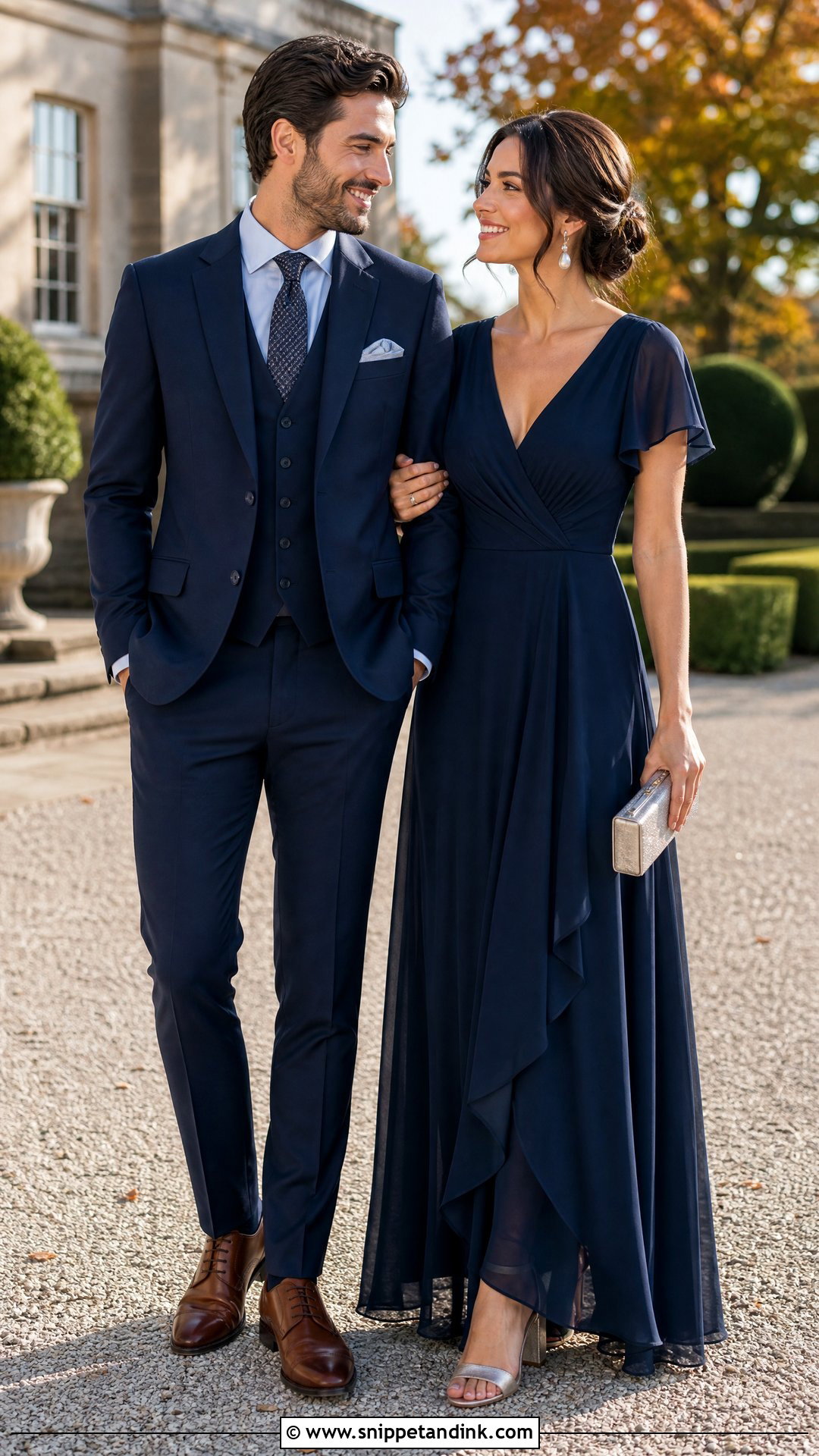
A three-piece suit carries a lot of structure, and chiffon is the fabric that softens it best. The suit side is a fitted jacket, matching vest and trousers with a pale blue shirt, a patterned tie and brown Oxfords. The gown is floor-length navy chiffon, where flutter sleeves or a wrap bodice give coverage without weight. Pearl earrings, a silver clutch and low block heels finish it. I tie the two outfits together with a pale blue pocket square that matches the shirt, because a navy square on a navy jacket simply disappears. One warning from experience: a vest is warm, so for an afternoon ceremony in early autumn I’d leave it off until the evening. Historic estates and semi-formal fall weddings are where this pairing makes sense.
4. Navy Blue Blazer And Floral Midi Dress
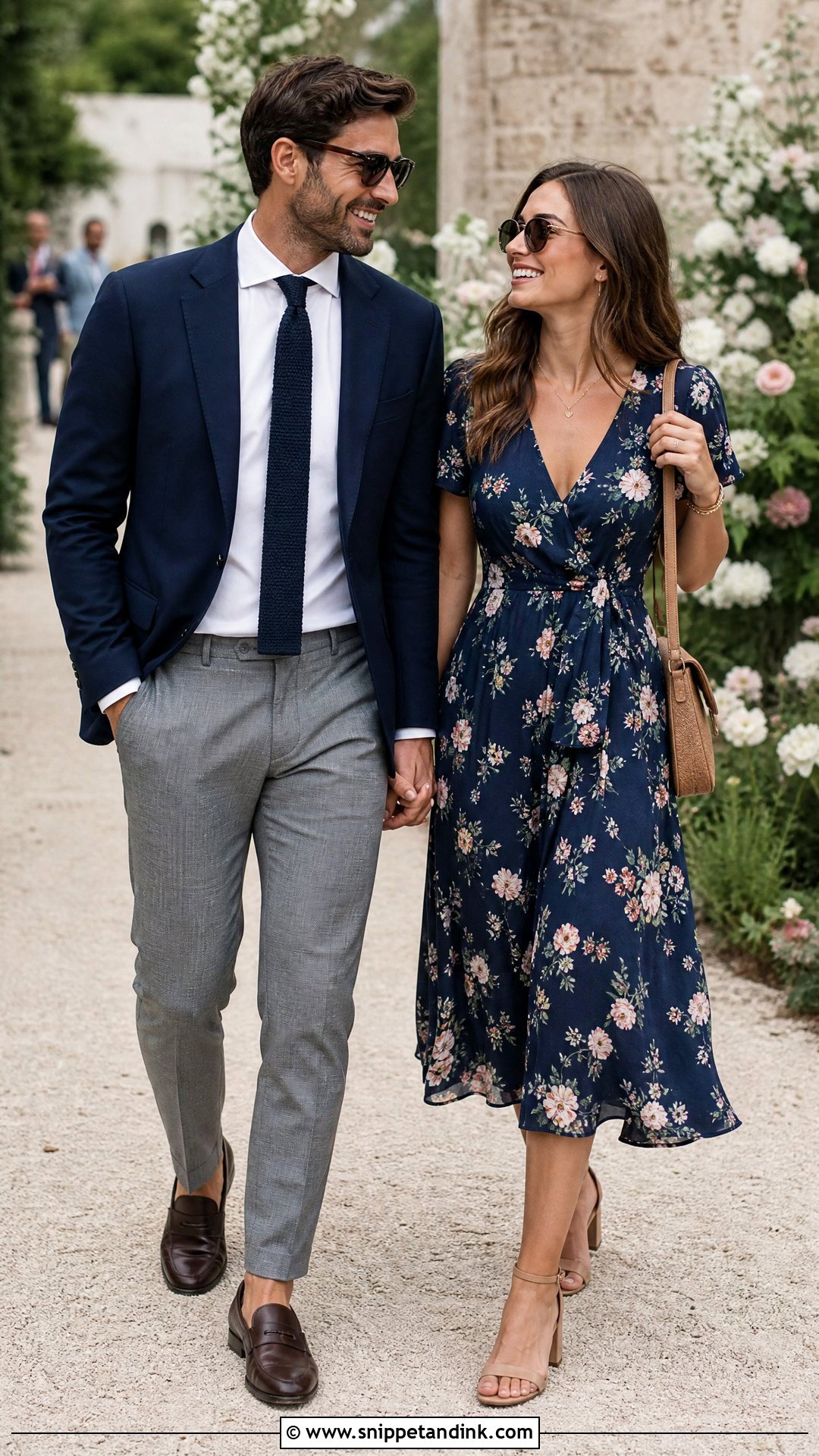
The print does the coordinating here, which takes the pressure off matching two exact navies. A navy blazer and floral midi dress suit garden ceremonies and daytime receptions. The blazer goes with light gray trousers, a white shirt, a navy knit tie, brown loafers and a matching belt. For the dress, I look for a print where navy is the dominant flower with a little blush or sage around it, so the blazer reads as if it were pulled straight from the fabric. Block-heel sandals matter on a lawn, since stilettos sink. A defined waist and a breathable fabric keep the dress comfortable through a long afternoon outdoors.
5. Navy Blue Suit And One-Shoulder Gown
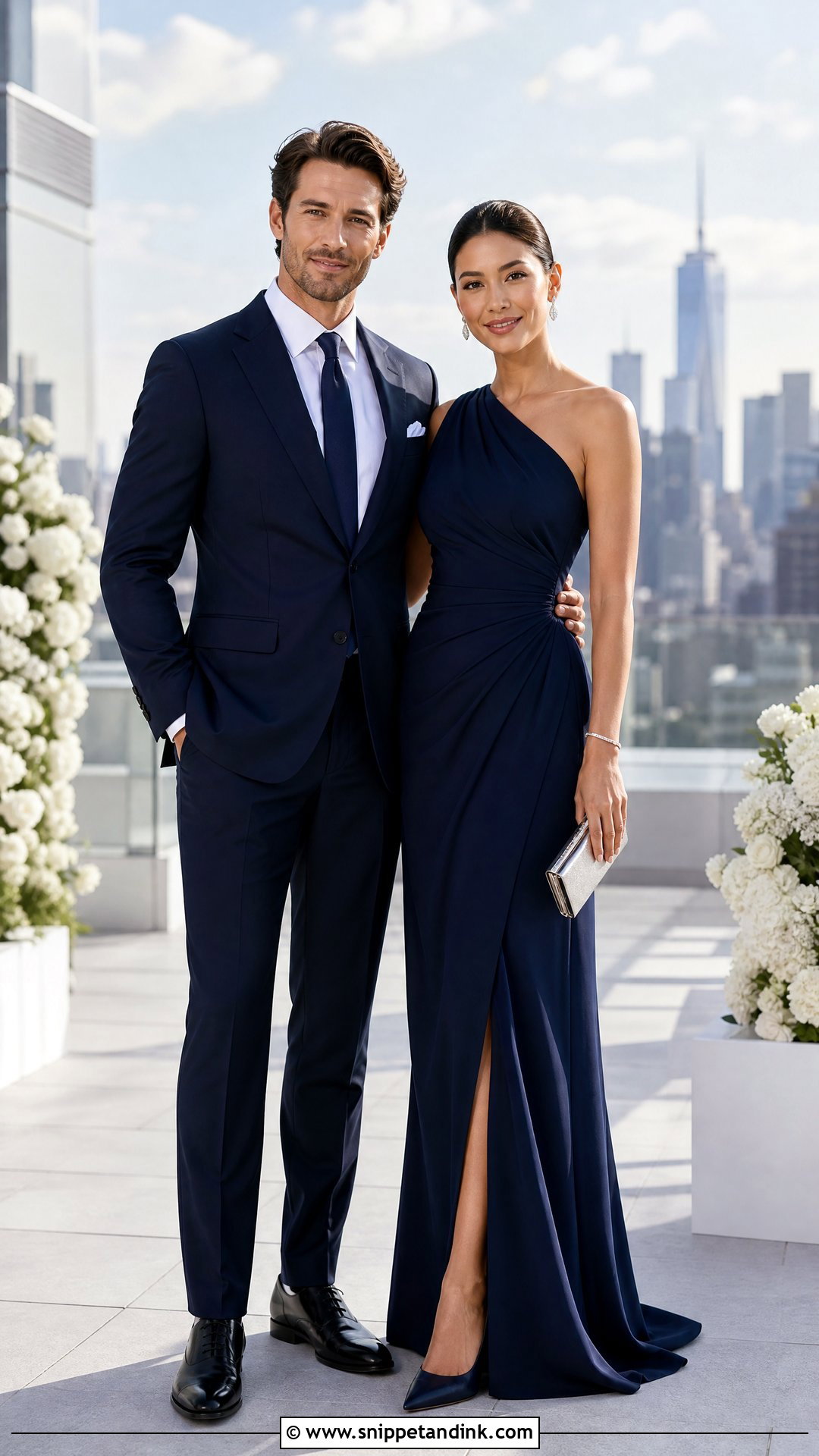
A one-shoulder neckline is the detail everyone looks at, so I keep everything near it bare. The suit can be slim or classic fit with a white shirt, tonal navy tie and leather shoes. The gown needs no embellishment, as the asymmetry is enough. A sleek bracelet on the bare arm, small earrings, pointed heels and a compact metallic clutch finish it, with hair up or swept to the covered side. If both outfits are the same shade, separate them through texture: smooth suiting against crepe or pleats. At the fitting I have the wearer lift both arms above her head; a one-shoulder bodice that slides then will slide all night. Rooftops, galleries and city hotels are its natural setting.
6. Navy Blue Jumpsuit And Matching Suit
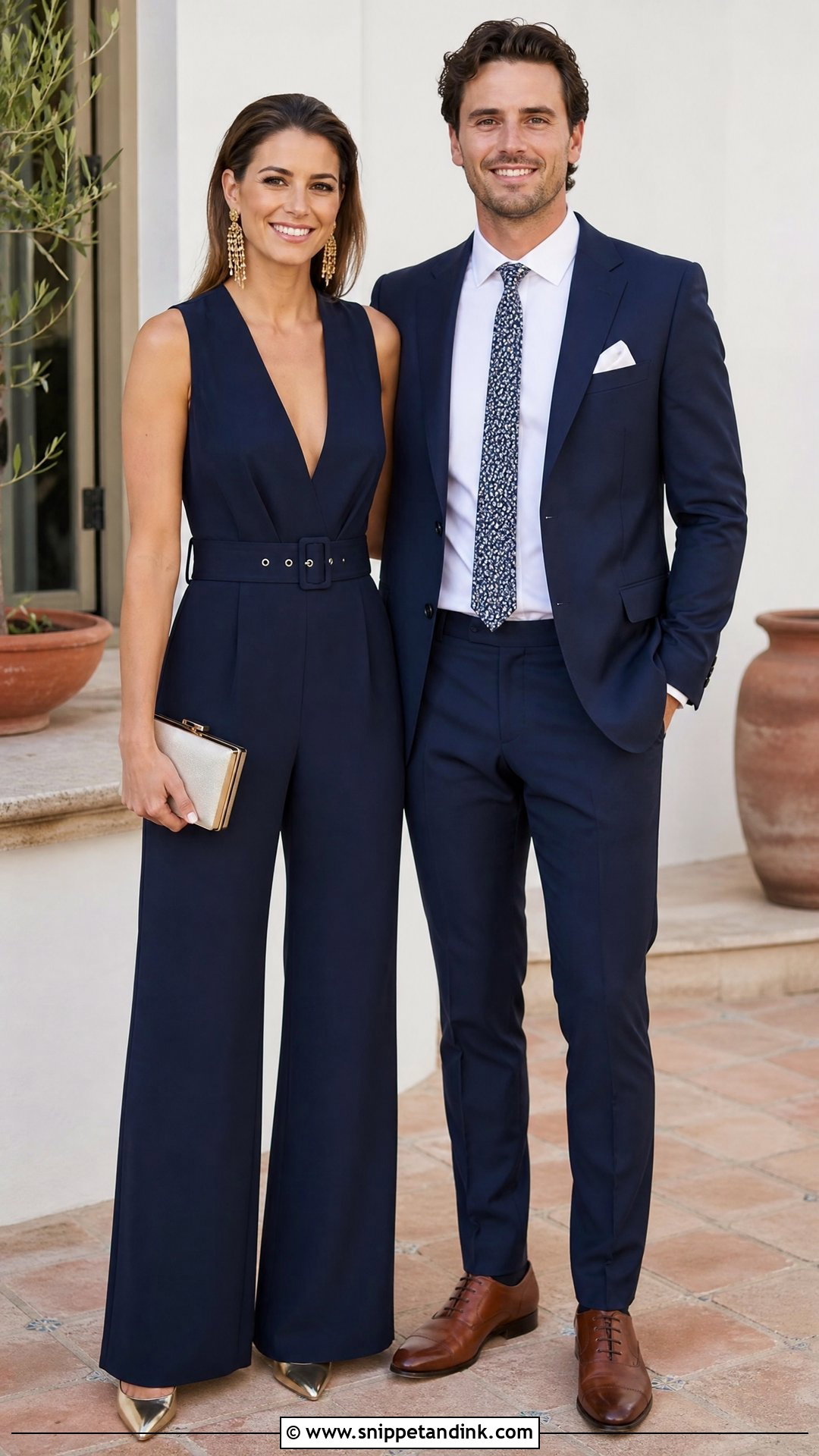
A jumpsuit is the most practical outfit here for anyone who plans to dance, and I fit it before anything else because torso length is unforgiving. Look for a full-length cut with a defined waist and structured shoulders, in a wide or tapered leg. Pointed metallic pumps, statement earrings and a box clutch complete it. The matching navy suit gets a white shirt, patterned tie, brown shoes and a pocket square. Slightly different navies are fine as long as both lean cool or both lean warm. Hem the jumpsuit to clear the floor in its own shoes and give the suit trousers a clean break, so neither drags across a dance floor or courthouse steps.
7. Navy Blue Velvet Jacket And Long-Sleeve Dress
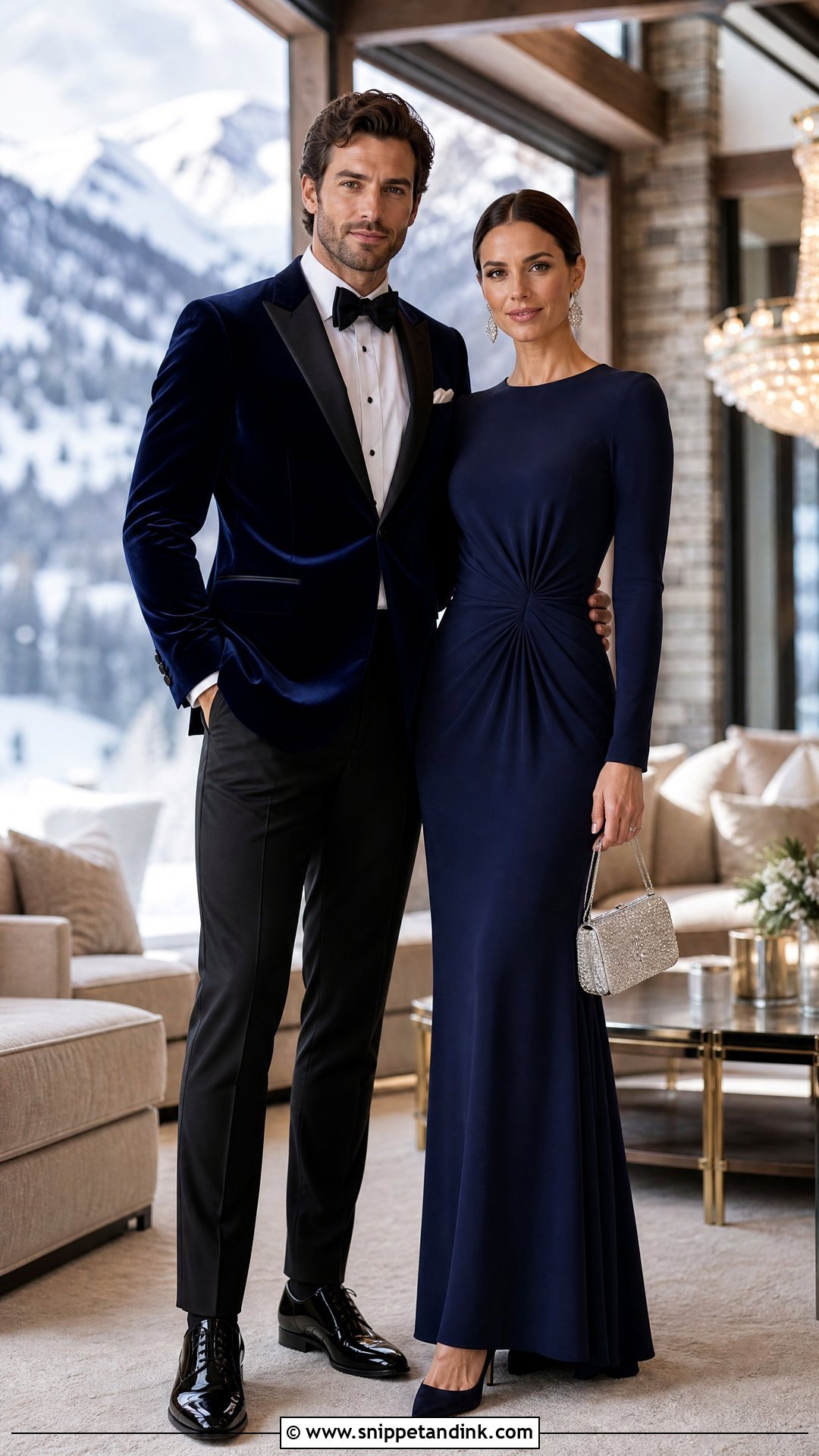
Velvet absorbs light. A navy velvet dinner jacket looks almost black indoors and only shows its color where the pile catches a lamp. I pair it with black trousers, a white formal shirt, black bow tie and patent shoes. The partner’s long-sleeve gown is better in crepe or jersey than in more velvet, because two plush fabrics side by side flatten each other in photos. A fitted bodice and a softly flared skirt balance the jacket’s structure, and crystal earrings, a silver evening bag and closed-toe heels finish the look. It’s a winter outfit for evening ceremonies and mountain resorts, and far too warm for anything else.
8. Navy Blue Linen Suit And Maxi Dress
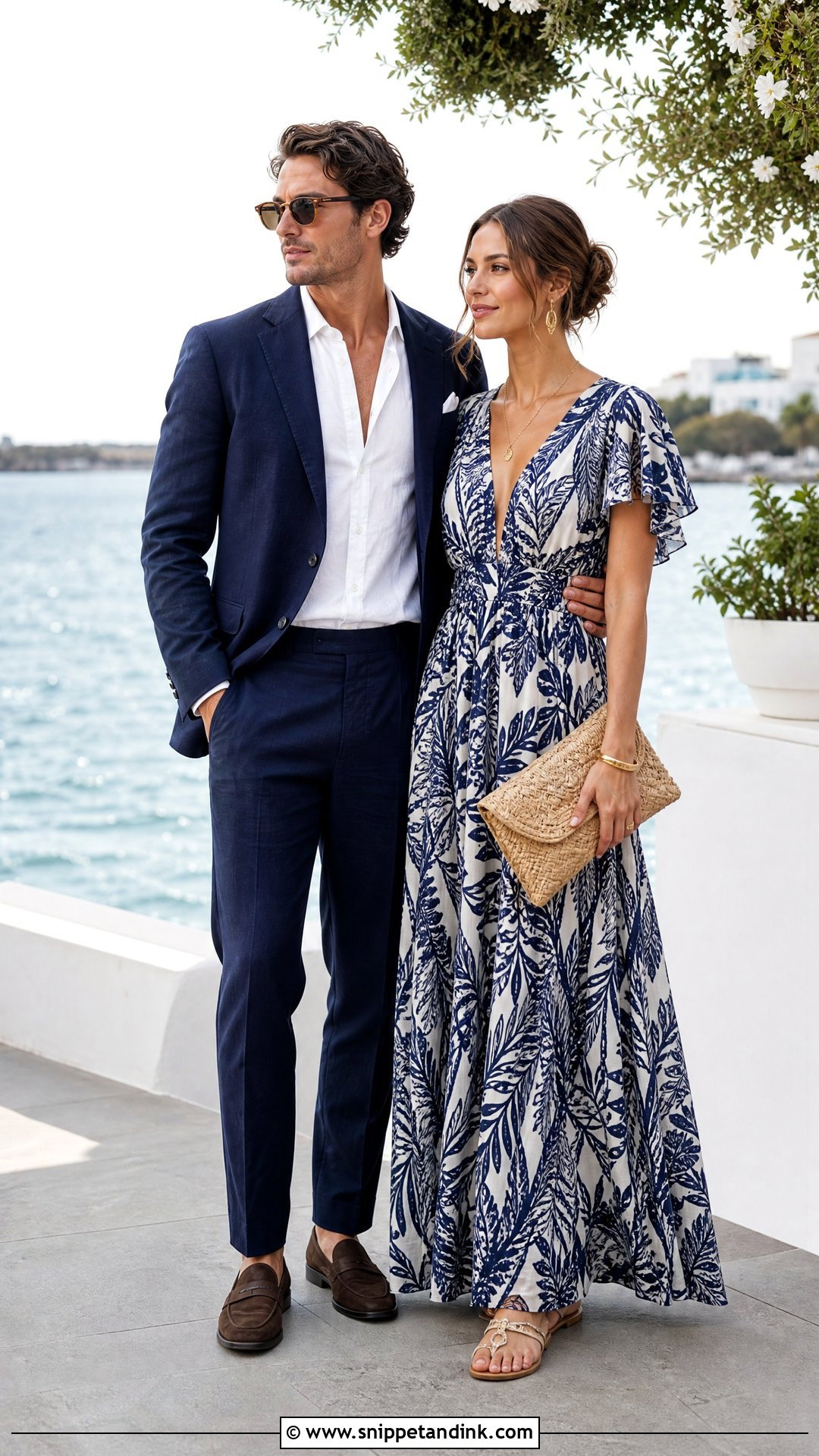
Linen creases within an hour of sitting down, and I tell couples that up front so nobody panics at the reception. A linen-cotton or linen-wool blend holds a sharper line and still breathes. The suit goes with a white or pale blue open-collar shirt, loafers and no tie. The maxi dress wants an airy skirt, comfortable straps or flutter sleeves and a fabric that moves in a sea breeze, with woven heels or flat sandals, gold jewelry and a small textured clutch. A subtle blue-and-white print on the dress keeps the two navies from merging into one dark block. Coastal and destination ceremonies with relaxed dress codes are its home.
9. Navy Blue Kurta And Embroidered Lehenga
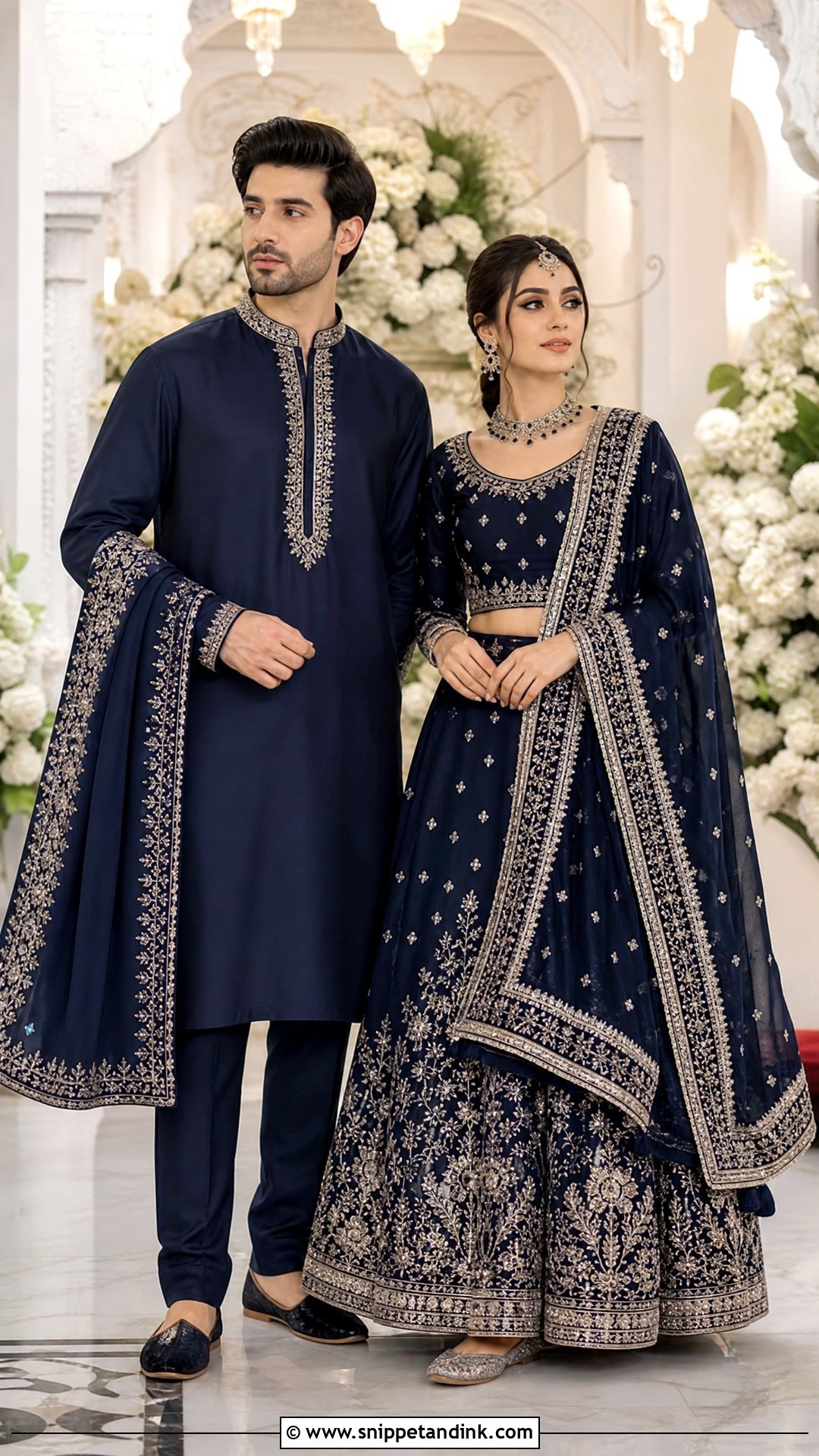
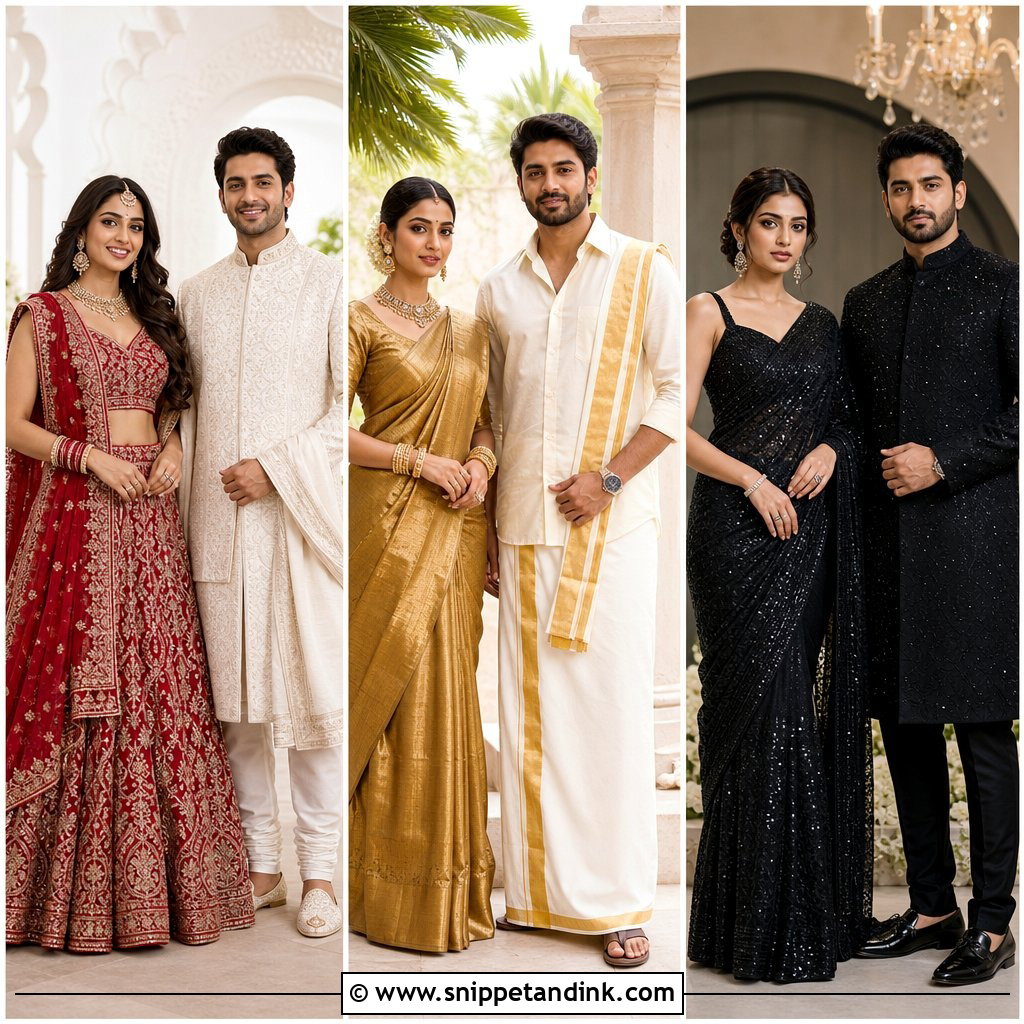
With a kurta and an embroidered lehenga, the coordination lives in the thread. The kurta is long, worn with slim trousers or churidar, embroidered loafers and a stole; the lehenga has a fitted blouse, a flowing skirt and a lightweight dupatta. I choose a single metallic thread color and make sure the jewelry matches it rather than introducing a second finish. Lehenga blouses are cut close, so I always do a sitting and arm-raising test at the final fitting, since the garland exchange needs both arms free. Pin the dupatta at the shoulder and at the waist so it stays put through the ceremony. Wear this pairing when it reflects the couple’s heritage or what the hosts have asked for.
10. Navy Blue Sherwani And Sequin Lehenga
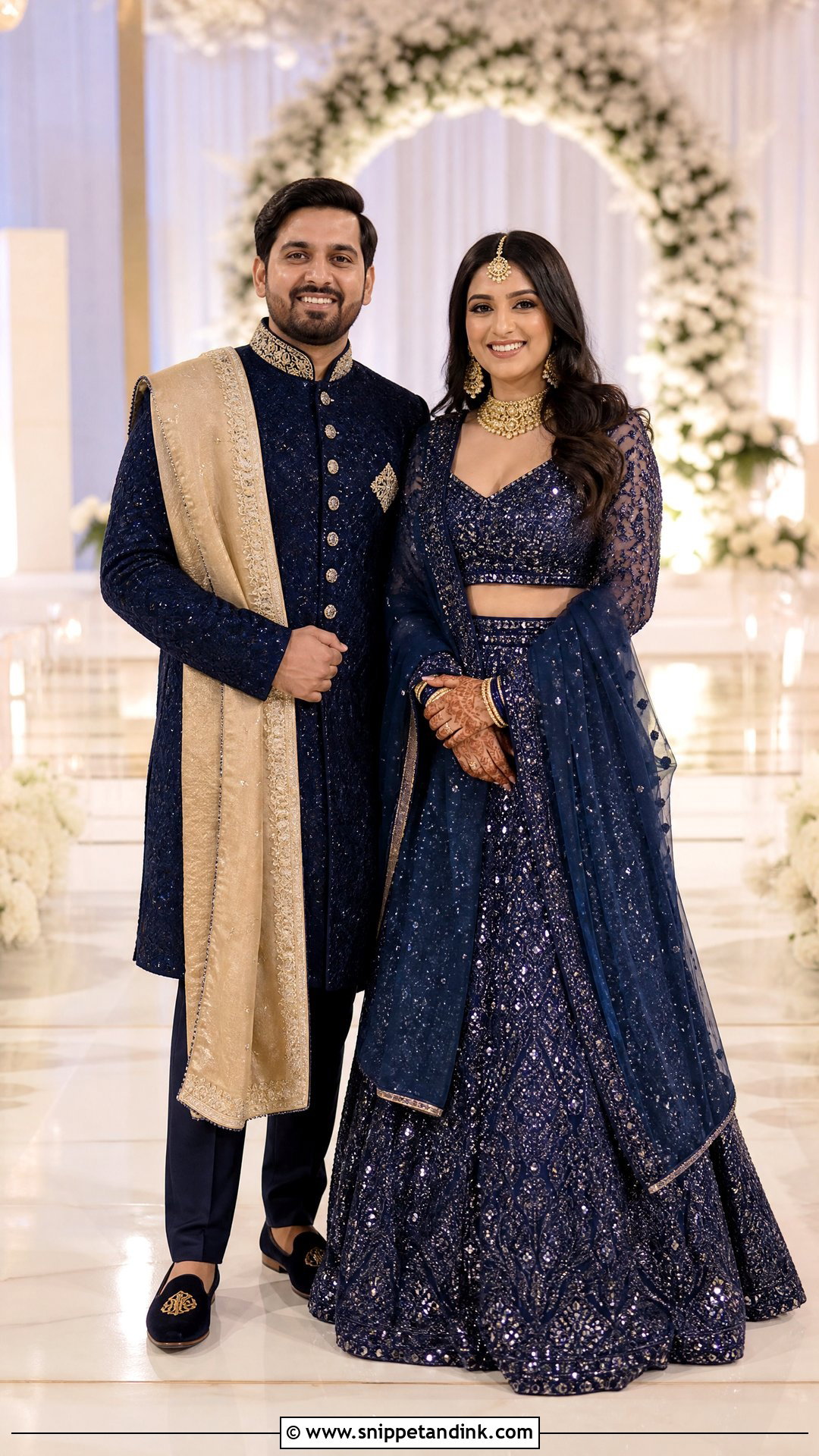
A navy sherwani and sequin lehenga carry a lot of ornament between them, so I decide early which outfit gets to be the louder one. Usually the sherwani keeps to tonal embroidery, a high collar, fitted trousers, traditional footwear and a champagne stole, while the lehenga takes the fine sequins or metallic thread. A structured blouse and a neatly draped dupatta give it shape. I repeat one metal across the sherwani buttons, the lehenga work and the jewelry. Heavily worked lehengas can be surprisingly heavy, so plan where the bride will rest between rituals and who helps lift the skirt on stairs. It belongs at receptions, engagements and formal ceremonies rooted in South Asian tradition.
11. Navy Blue Kurta And Anarkali Dress
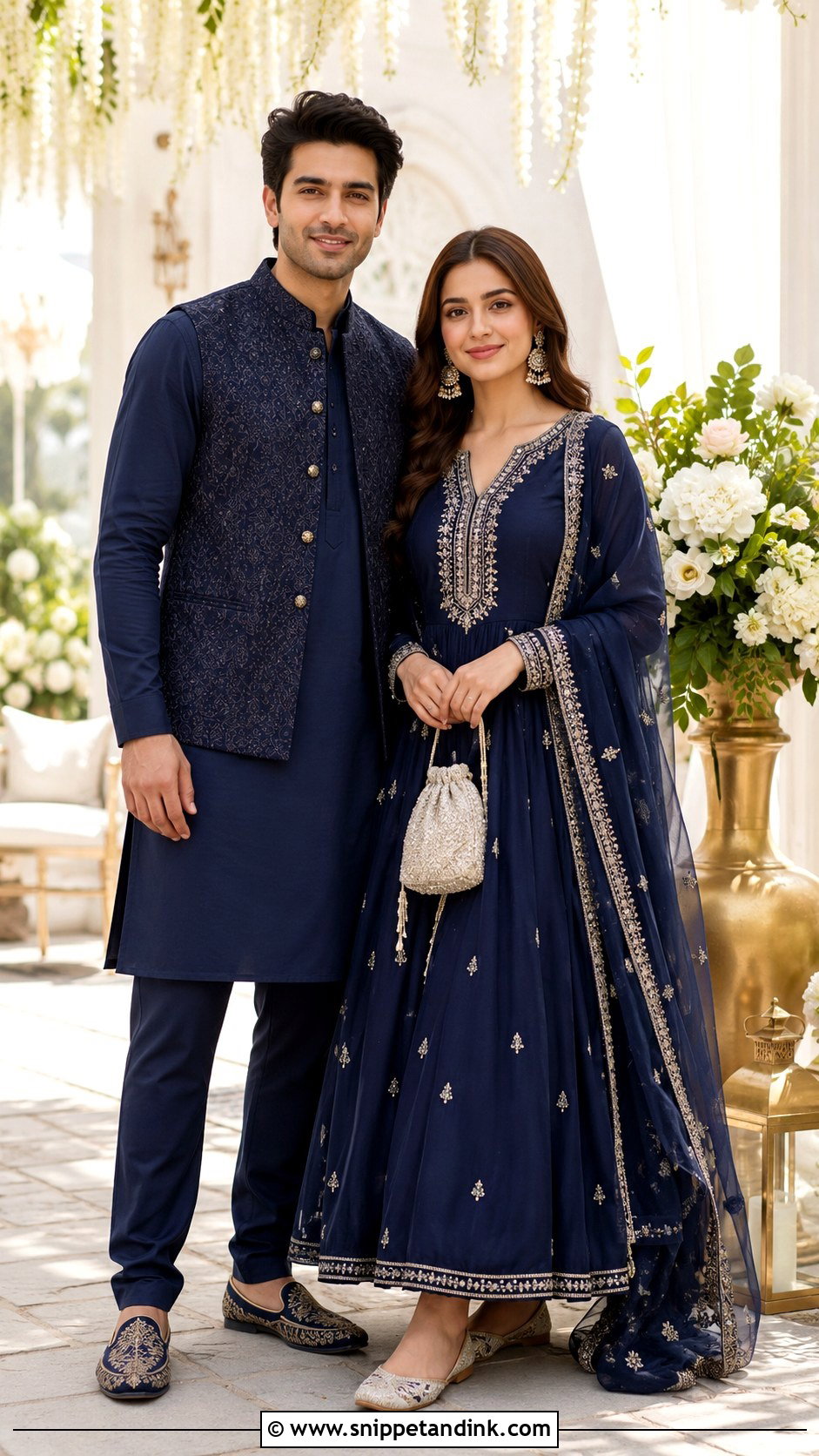
An Anarkali is the kindest outfit here for a long day of sitting on the floor, because the flared skirt never binds at the hip. The kurta can be knee-length or long with straight trousers and embroidered slip-ons, plus a simple waistcoat if the event is formal. The Anarkali has a fitted top, a floor-length flare and embroidery around the neckline and sleeves, finished with a light dupatta, metallic flats, earrings and a small embellished bag. Keep the silver or pale gold consistent across both outfits. I’d steer a couple toward this over a heavy lehenga for daytime functions with long rituals, where traditional dress is appropriate or the hosts encourage it.
12. Navy Blue Agbada And Embellished Gown
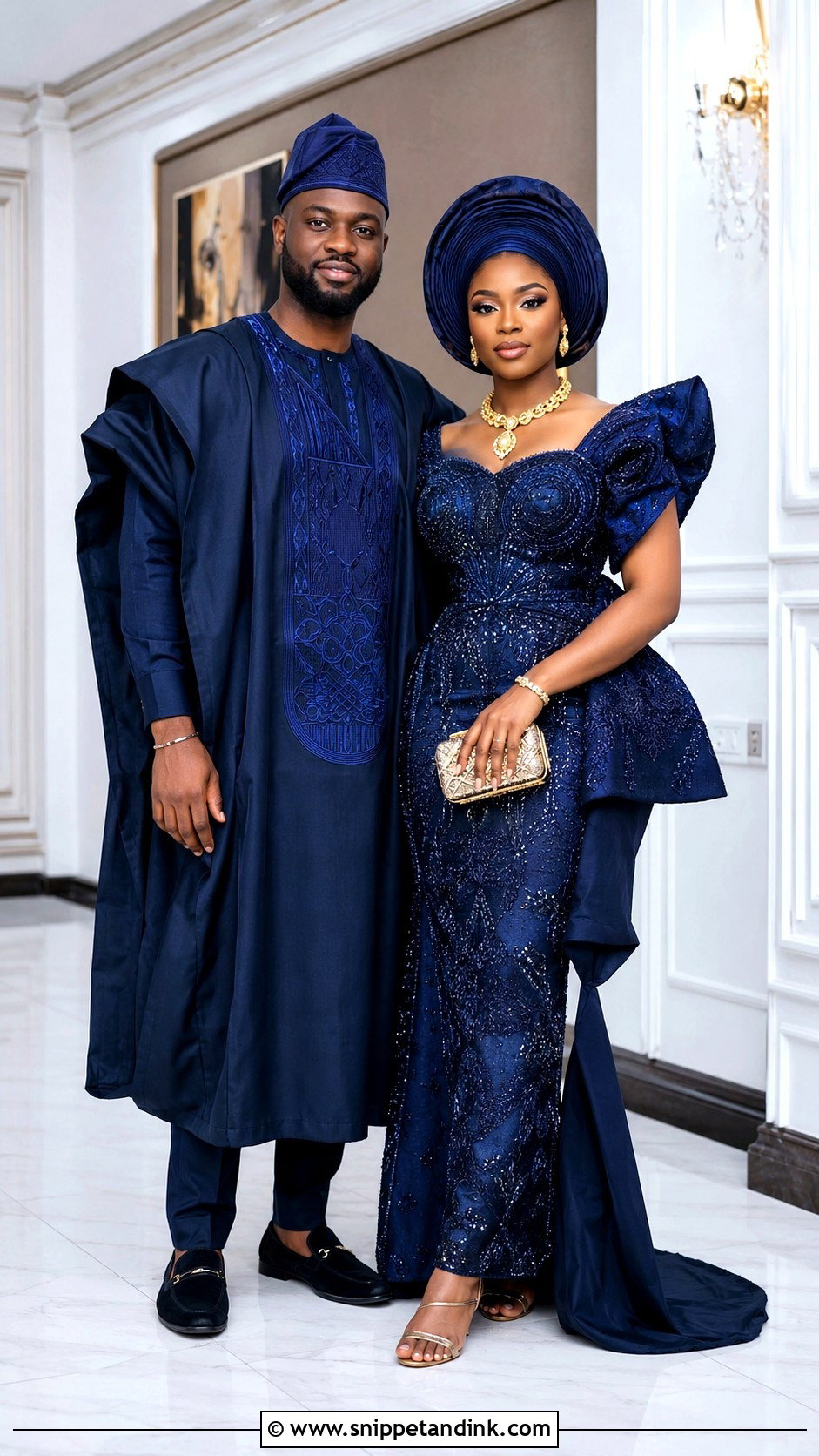
Volume is the whole point of an agbada, which is why measurements matter more here than anywhere else on this list. A navy blue agbada and embellished gown suit a Nigerian wedding or heritage celebration. The agbada includes the inner tunic, trousers, embroidered outer robe and cap, with polished traditional shoes. The gown usually has a fitted bodice, structured sleeves and embroidery that echoes the robe, often crowned with a gele tied to match. Gold jewelry and a structured clutch warm up the navy. The outer robe gets folded back over the shoulders again and again through the day, so I practice that movement at the fitting; cut too wide, it slides off every time the wearer reaches out to greet someone. Wear it where it honors the family’s culture.
13. Navy Blue Dashiki Suit And Matching Dress
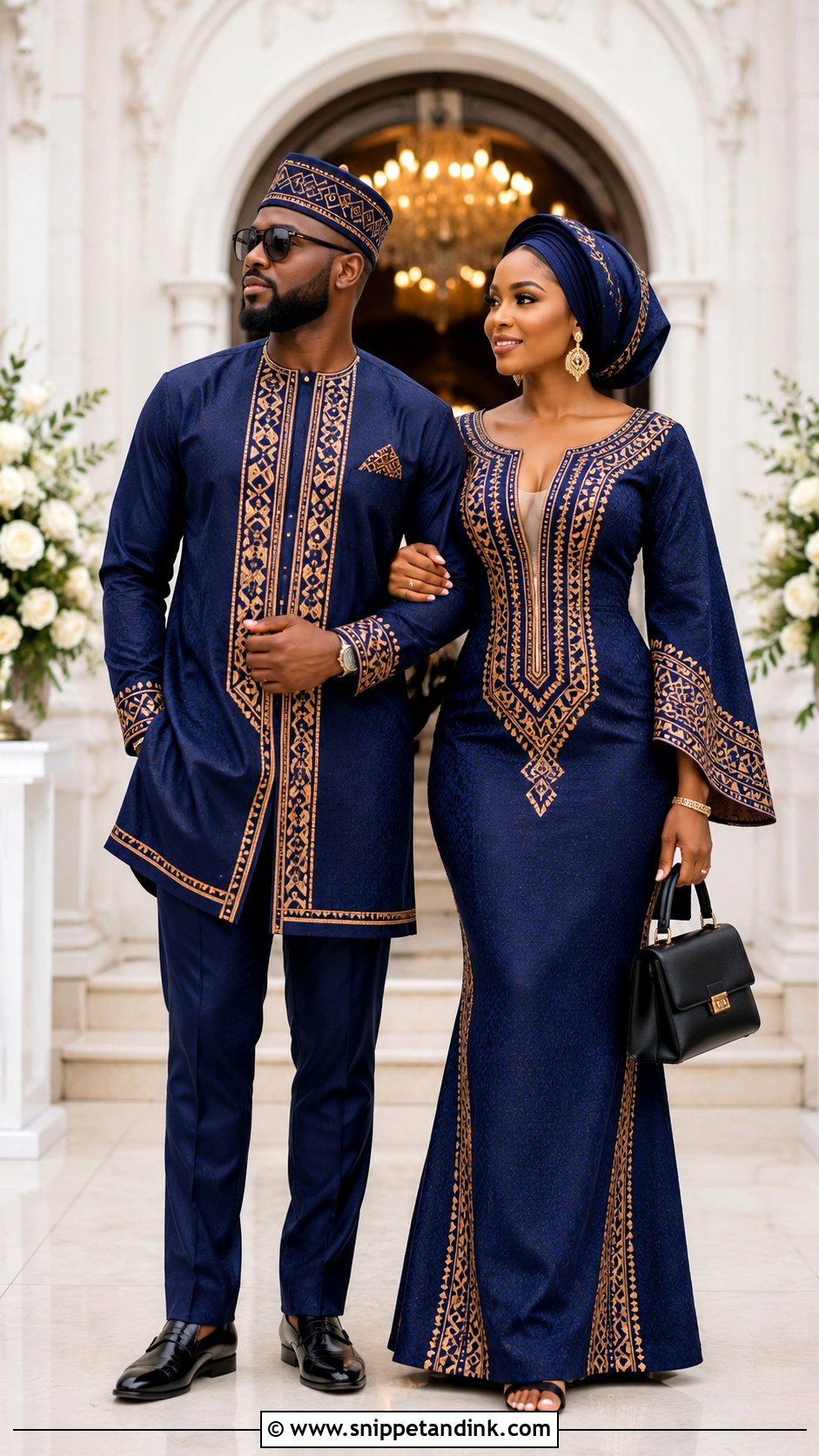
Matching fabric used in different proportions is how I keep a dashiki couple from looking like a uniform. One partner wears a patterned navy tunic or jacket with tailored trousers, leather shoes and a cap where appropriate. The other wears a full-length dress with the same print on the bodice, sleeves or skirt panels, plus a headwrap, gold earrings, comfortable heels and a compact handbag. Ask the tailor how the print will line up at the seams and neckline before anything is cut, because a broken motif at center front is the first thing a camera finds. Buy enough fabric for both garments at once so the dye lot matches. It’s right for African and multicultural weddings when it reflects the wearers’ background or the requested dress.
14. Navy Blue Thobe And Satin Abaya
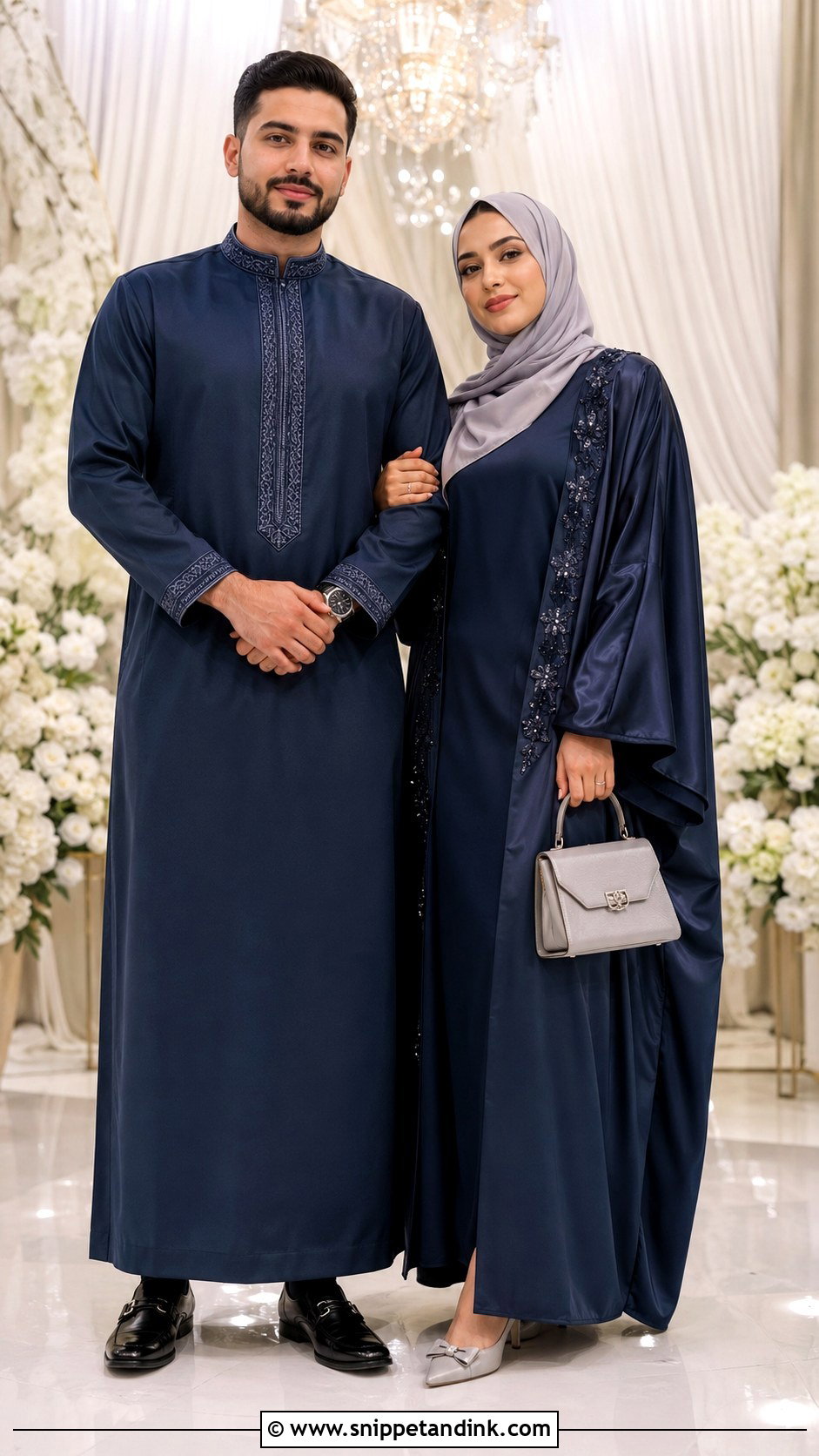
Modest dressing in navy relies on texture, because there’s little skin or silhouette to create contrast. The thobe should be well fitted with subtle collar embroidery, worn with polished formal shoes and a clean watch. The abaya is open satin over a long navy inner dress, with detail along the sleeves or front edges. Add a coordinated blue, silver or soft gray hijab, pointed flats or low heels and a structured handbag. Long satin is slippery underfoot, so I mark the abaya hem with the wearer standing in her shoes and then walking a few steps across the room. It fits Muslim weddings and family receptions where modest dress is preferred.
15. Navy Blue Pantsuit And Classic Suit
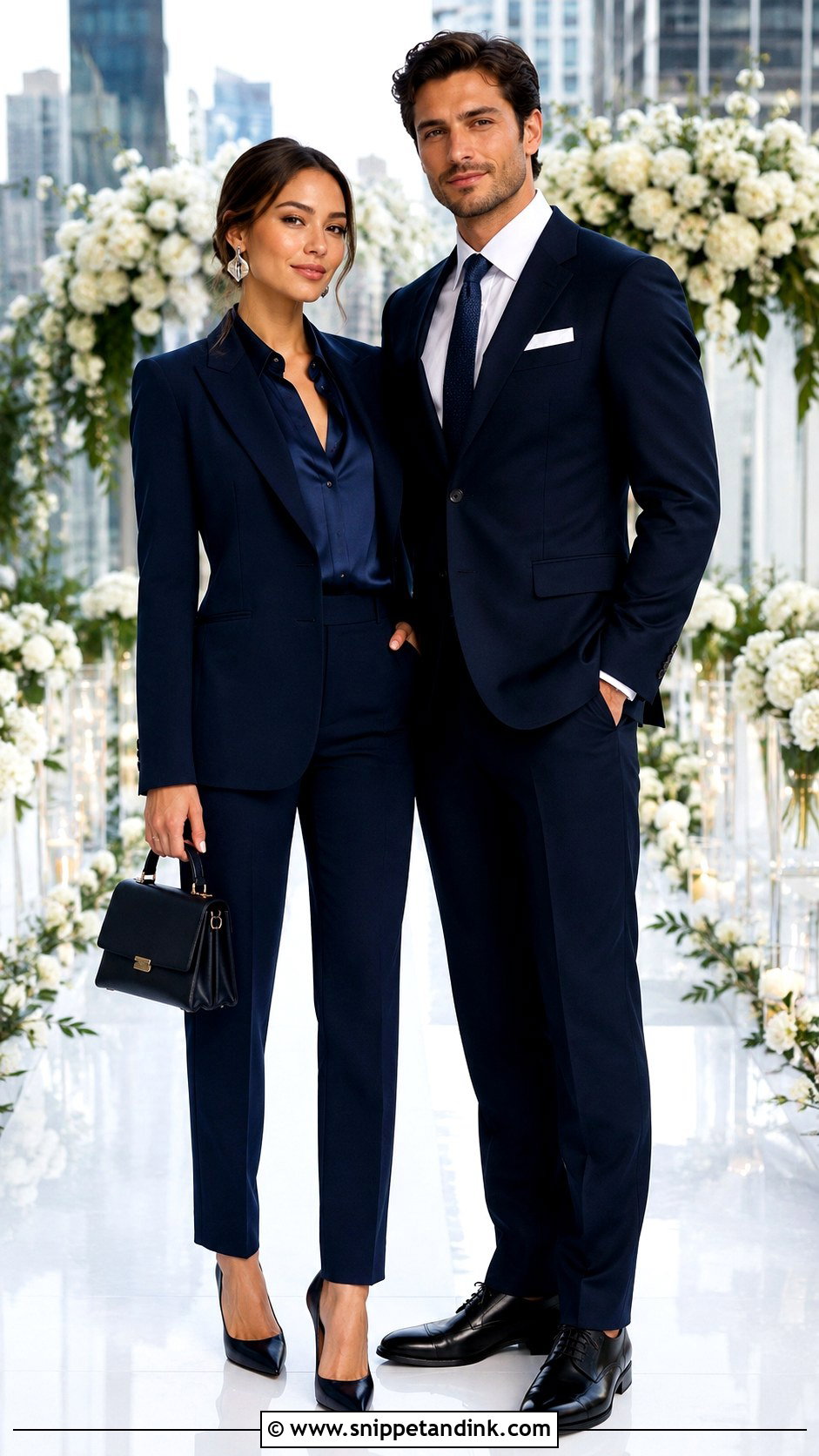
Two jackets side by side make shoulder fit very visible, so this is the pairing where I spend the most time at the mirror. The pantsuit goes with a silk camisole or high-neck blouse, pointed pumps, sculptural earrings and a structured mini bag. The classic suit gets a white shirt, textured tie, pocket square and black or brown shoes. Both jackets should lie flat across the shoulders without a ridge at the sleeve head. Each pair of trousers needs hemming for its own footwear, since a pump and an Oxford break the fabric differently. Identical fabric is optional; a satin-trimmed pantsuit beside matte wool looks deliberate. City weddings and cocktail receptions suit it.
16. Navy Blue Wrap Dress And Gray Suit
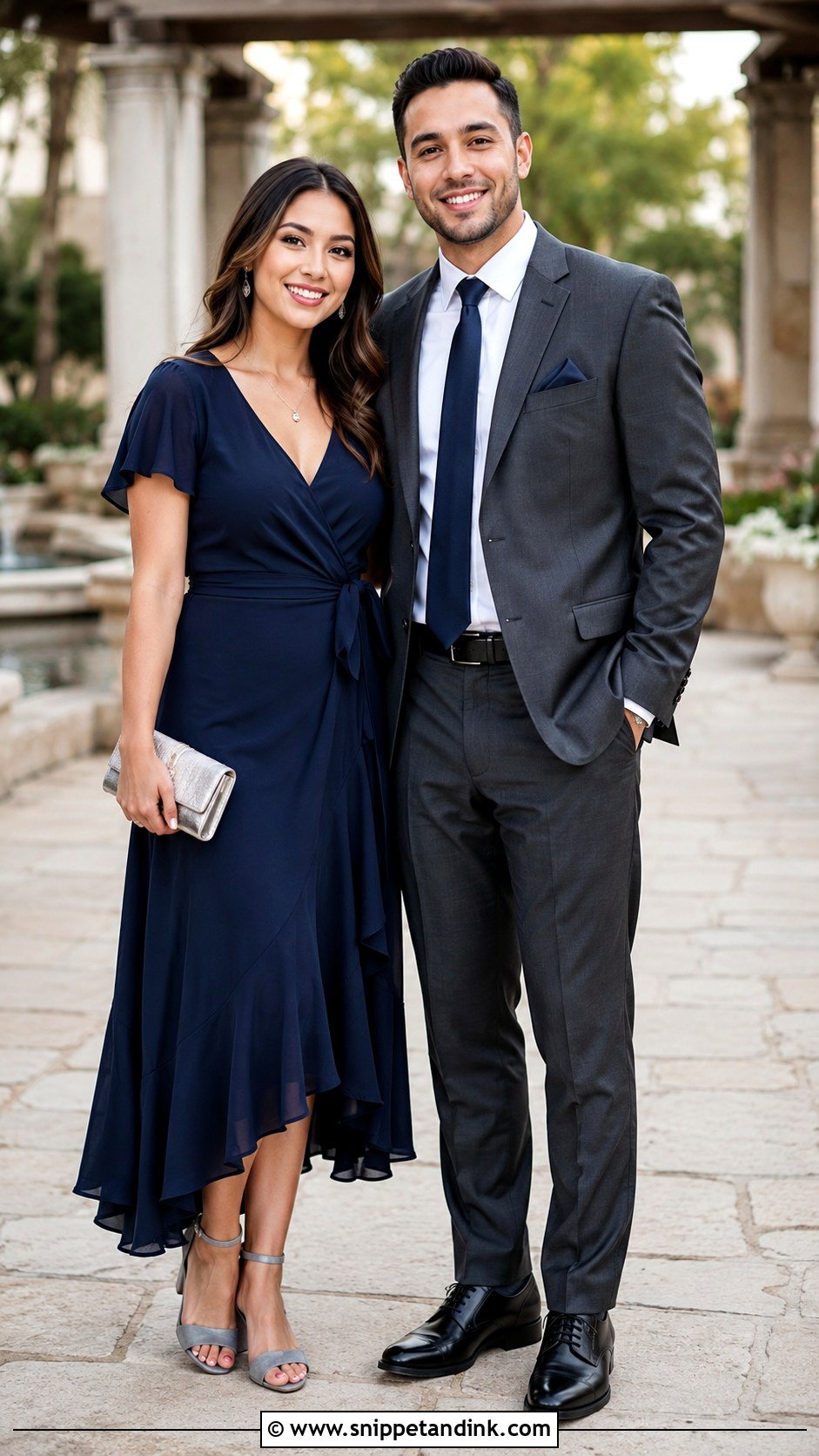
Gray takes the pressure off matching navies, which helps when one outfit comes off a shop rail and the other from a tailor. The wrap dress can be midi or full-length with a defined waist, soft sleeves and a neckline right for a ceremony. Wrap fronts gape when the wearer sits, so I add a discreet snap at the cross point. Silver jewelry, gray heels and a light metallic clutch finish it. The suit is medium or charcoal gray with a white shirt, navy tie, pocket square and black shoes. Block heels for outdoors, satin accessories for indoors, and it’s an easy answer for semi-formal daytime weddings.
17. Navy Blue Lace Dress And Beige Suit
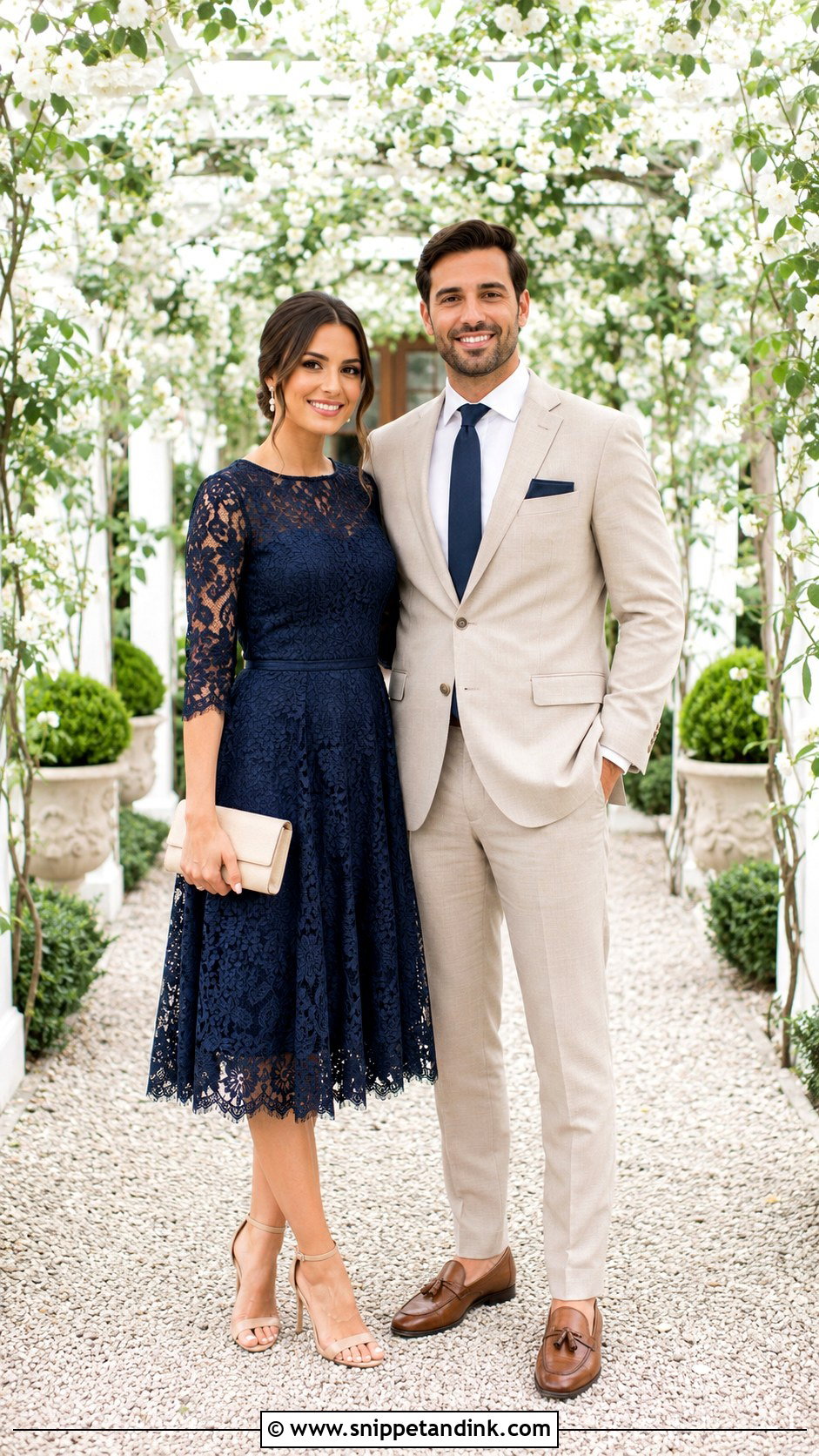
As far as the camera is concerned, lace is mostly lining. A navy lace dress over a nude lining looks lighter and almost patterned; over navy lining it reads as solid, so I settle that question before ordering. The dress has a midi hem, sheer lace sleeves and a softly defined waist, brightened by nude or metallic heels, pearl earrings and a cream clutch. The beige or light tan suit takes a white shirt, navy tie, brown loafers and a navy pocket square, so the color repeats only in small details. Fine lace on a smooth lining is also far more comfortable against the skin. Gardens and spring daytime ceremonies are where pale tailoring looks right.
18. Navy Blue Slip Dress And Double-Breasted Suit
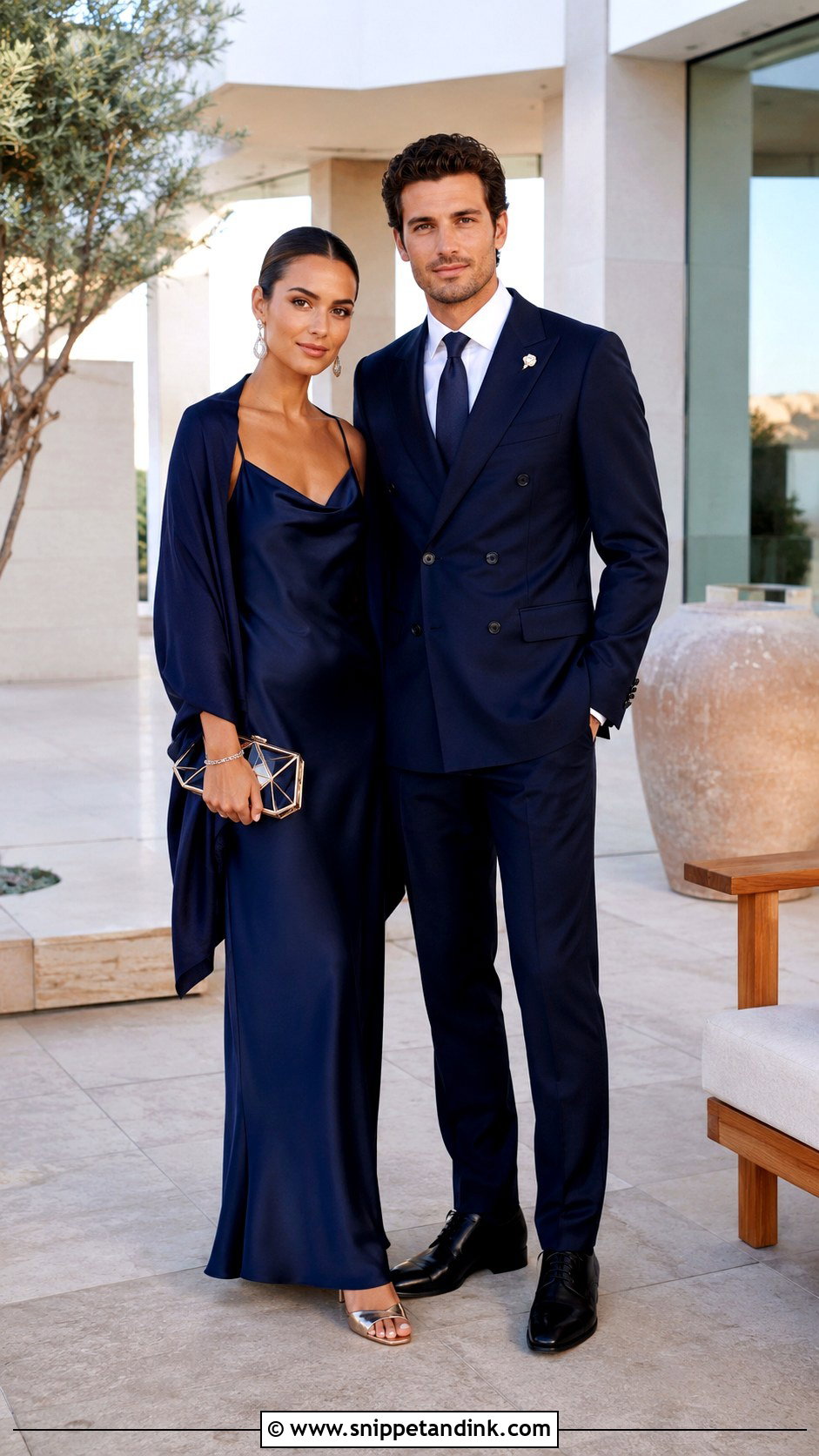
A slip dress shows everything underneath it, so this is the pairing where I talk about foundation garments first. The dress can be midi or floor-length with wider straps and a softly draped satin neckline, worn with a tailored wrap, slender metallic heels, small drop earrings and a structured clutch. The double-breasted suit takes a white shirt, tonal tie, polished shoes and a subtle lapel pin. Fit is the whole outfit: the dress should skim rather than cling, and the jacket must close without pulling into an X at the button. Double-breasted jackets are meant to stay fastened, so check it seated as well as standing. Modern hotels and evening receptions suit it.
19. Navy Blue Midi Dress And Checked Suit
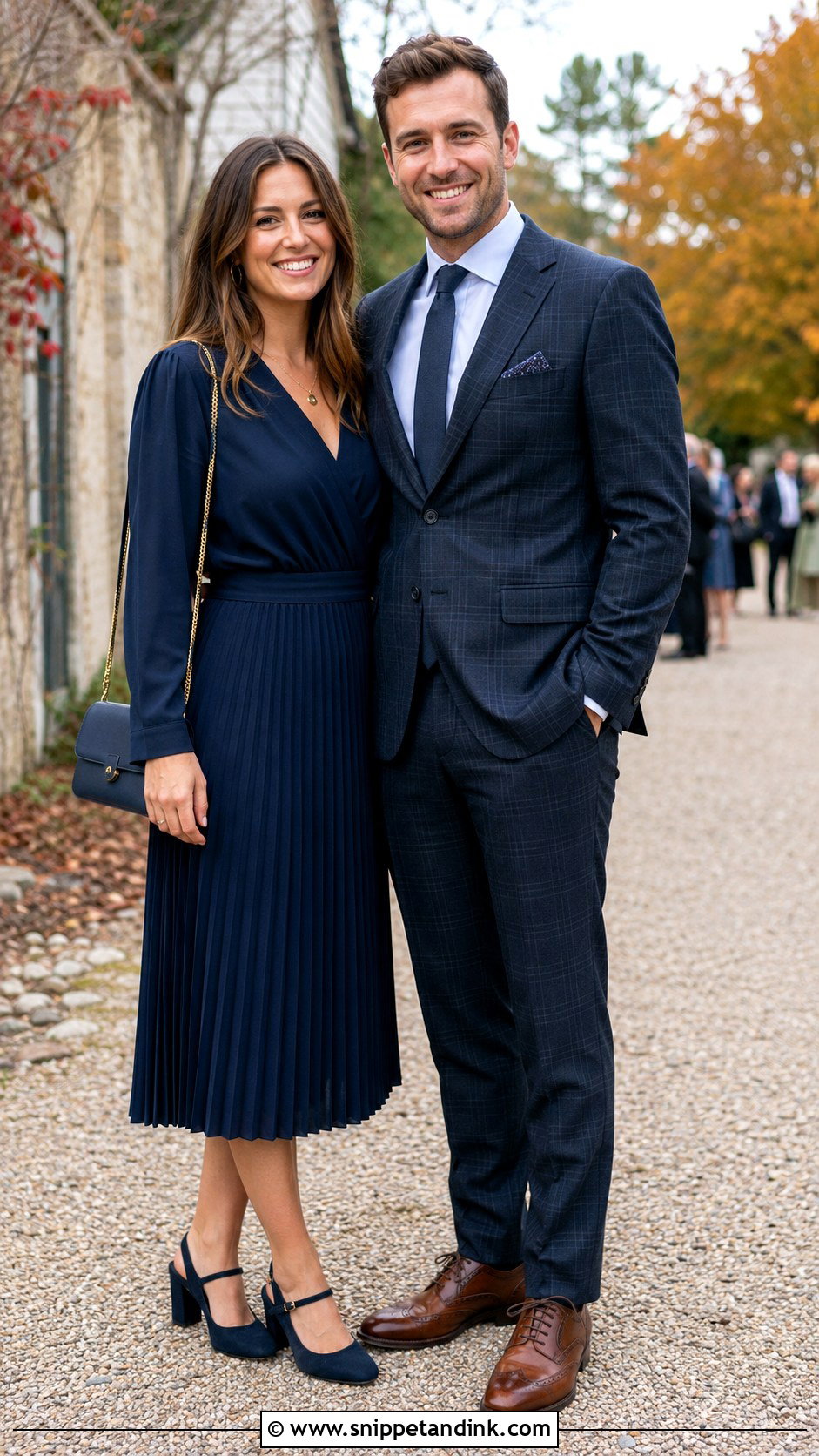
A little pattern on the suit is the easiest way to stop two navies from looking flat. The navy midi dress and checked suit pairing sits comfortably at a semi-formal wedding. The dress is fit-and-flare or pleated, with block heels, a small shoulder bag and gold or silver jewelry. The suit is a navy-and-gray check with a solid shirt, a simple tie, brogues and a plain pocket square. Keep the check understated but not microscopic, because very tight checks can shimmer on digital cameras; I pick one you can still read from a few steps away. A belt can sharpen the dress waist. Autumn and rustic venues suit it well.
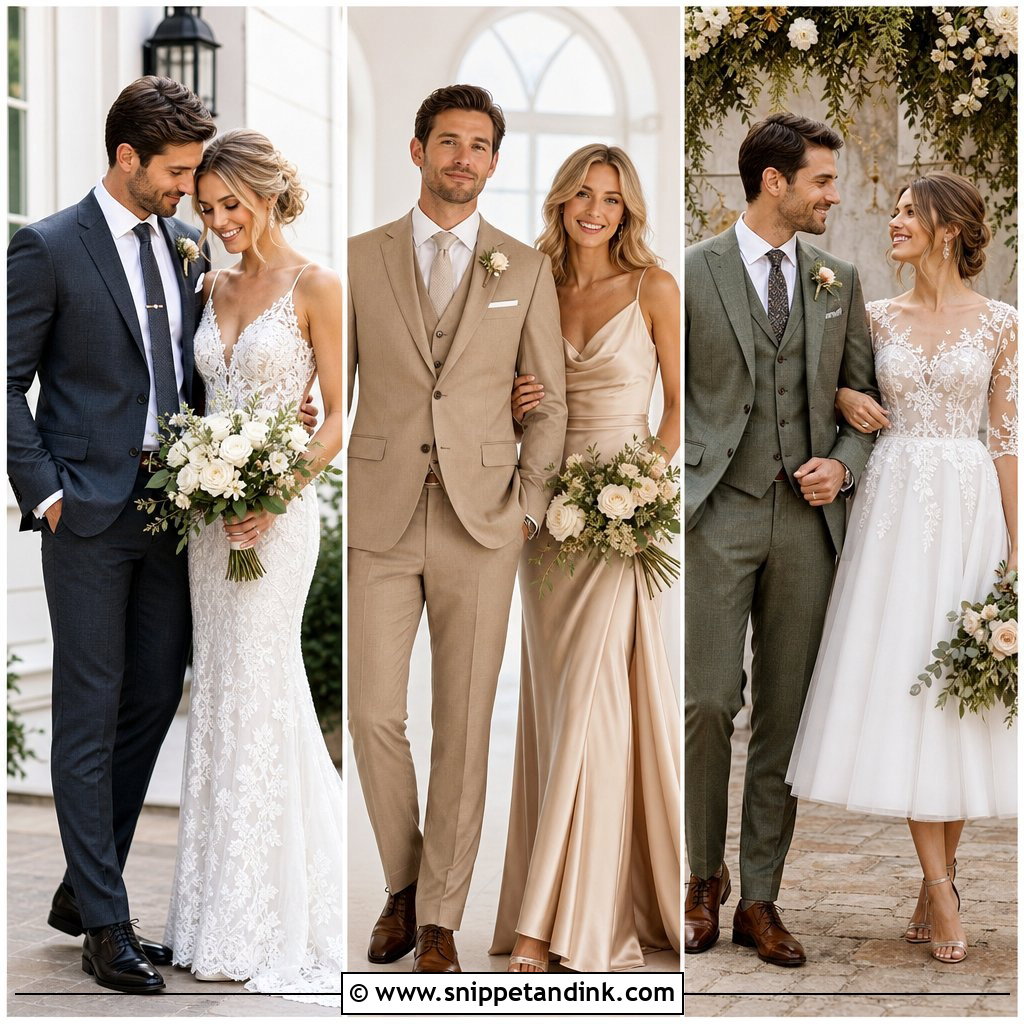
20. Navy Blue Gown And White Dinner Jacket
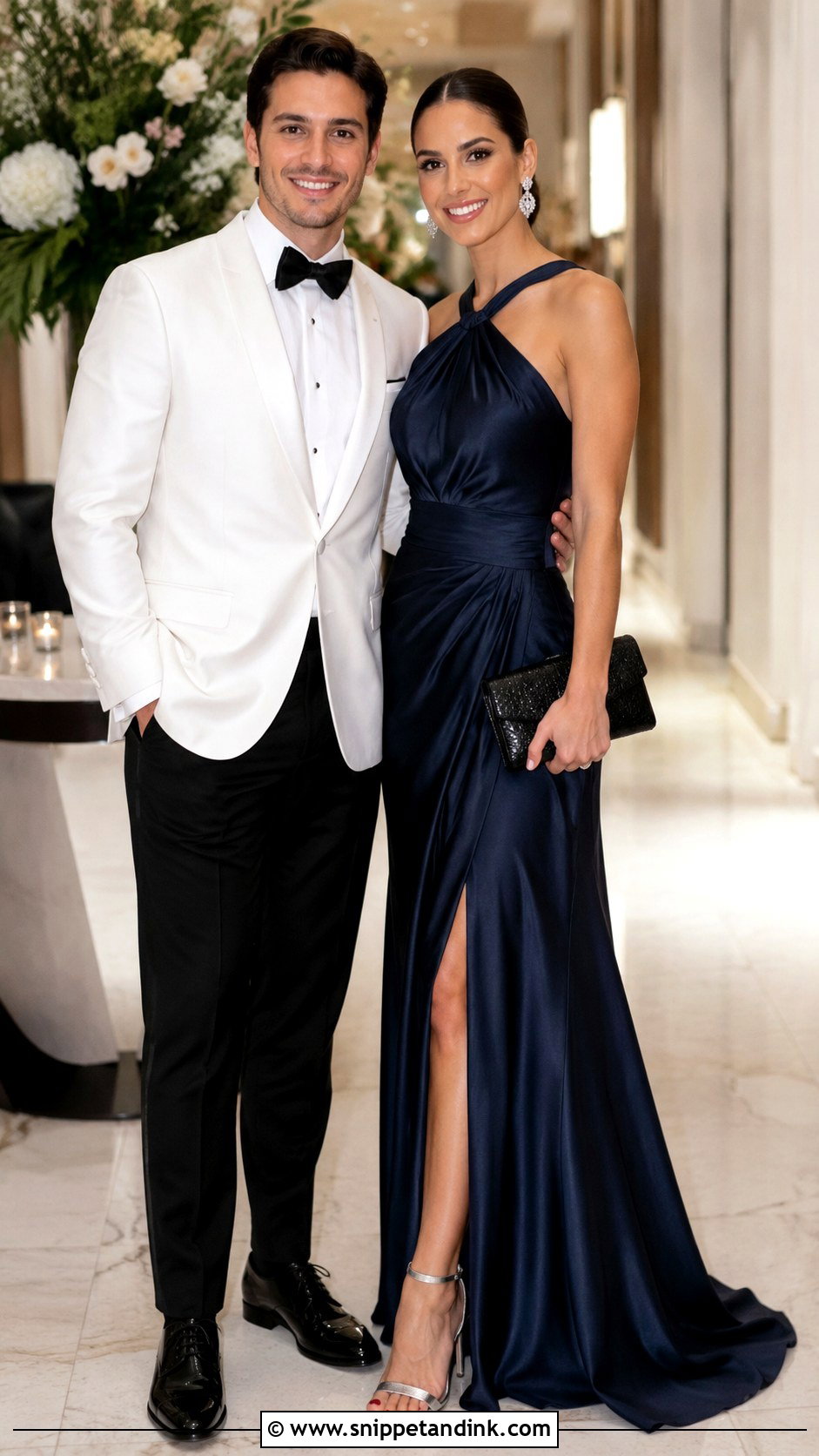
A white dinner jacket is traditional warm-weather formal wear, so I only suggest it when the invitation says black tie and the season is summer. It goes with black trousers, a white formal shirt, black bow tie and polished black shoes. The partner’s floor-length navy gown can be crepe, satin or chiffon with a clean neckline and a fitted waist. Black, silver or crystal accessories link to the jacket’s monochrome palette, and navy cufflinks or a navy pocket square close the gap between the two outfits. White picks up every mark, so keep the jacket off until the portraits and have a lint roller and stain pen close by. Destination resorts and grand summer receptions are its setting.
Navy After Dark Can Turn Black on Camera
Under dim reception lighting, deep navy and black become very hard to tell apart, in person and in photos. A good photographer can pull some color back in editing, but texture survives low light far better than color does. For an evening wedding I lean toward a slightly brighter navy, a fabric with some sheen or weave, and one lighter element near the face, such as a white shirt, pale pocket square or silver earrings, so neither partner reads as a dark shape in the dance-floor shots.
Shoes are the other giveaway. Black shoes under navy trousers are classic and fine; brown shoes warm the whole look and suit daytime better. What I avoid is one partner in black accessories and the other in brown, which makes the outfits look styled for two different events.
A Fitting Calendar for Two Very Different Outfits
Couples often forget that a gown, a suit and a custom traditional piece all run on different timelines. Lead times vary a lot by maker, so treat this as a rough order of events rather than fixed dates.
- Order the slowest piece first. Hand-embroidered lehengas, sherwanis and agbadas, and most made-to-order gowns, can take several months.
- Buy both pairs of shoes before the first fitting, because every hem is set to the heel.
- Bring a swatch of the other outfit to every fitting so the tailor and the seamstress are working toward the same navy.
- Plan two or three alteration fittings, with the last one about a week or two before the wedding.
- Do one full try-on together, with jewelry and bags, after the final fitting.
Put Both Outfits On Together by a Window
Navy coordination comes down to how close the two shades sit, how different the fabrics feel and which small detail repeats between you. Satin and sequins read glamorous, linen relaxed, velvet wintry and structured wool classic. Traditional garments should come from your own heritage or the event’s expectations. A few weeks before the wedding, put both complete outfits on together, shoes and jewelry included, and stand by a window. That’s when a purple-leaning navy, an overlong hem or a clashing metal shows up, and there’s still time to fix it.
You'll Like These Ideas:


Leave a Reply