
A Rajputi couple portrait works when two very different garments look as if they belong together. A woman’s poshak usually combines a ghagra, a kanchli or kurti and a draped odhni, while the man’s side of the pairing might be an achkan, angarkha, sherwani or Jodhpuri bandhgala, nearly always topped with a safa. The strongest couple outfits don’t match exactly. Through my lens, head-to-toe matching tends to merge two people into one block of color, whereas a single repeated color, embroidery detail, fabric or accessory ties them together and still lets each outfit stand on its own. The pairings below run from wedding red to quiet ivory, with details for both people, and cover weddings, engagements and cultural portrait sessions.

How Two Outfits Read in One Frame
In a couple portrait the camera sees two outfits as one picture, and contrast and shape matter more than exact color matching. Before a session I ask couples to send a phone photo of both outfits laid out together. These are the things I look at.
- Light against dark. A light outfit beside a darker one separates the two of you; two mid-tones of the same depth tend to merge.
- One shared color near the face. The safa and the odhni border sit at head height, so a color repeated there connects you more strongly than matching shoes or sleeves ever will.
- Shape. A ghagra is wide and most men’s outfits form a column, which looks balanced. A groom in a full, flared angarkha needs a little more space between you in wide shots.
- Pattern in one place per zone. If her odhni is bandhani, his safa can carry pattern too, but his jacket should stay plain.
None of this means one partner has to dress down. It means deciding together which outfit leads in each part of the frame.
1. Red Rajputi Wedding Couple Outfit
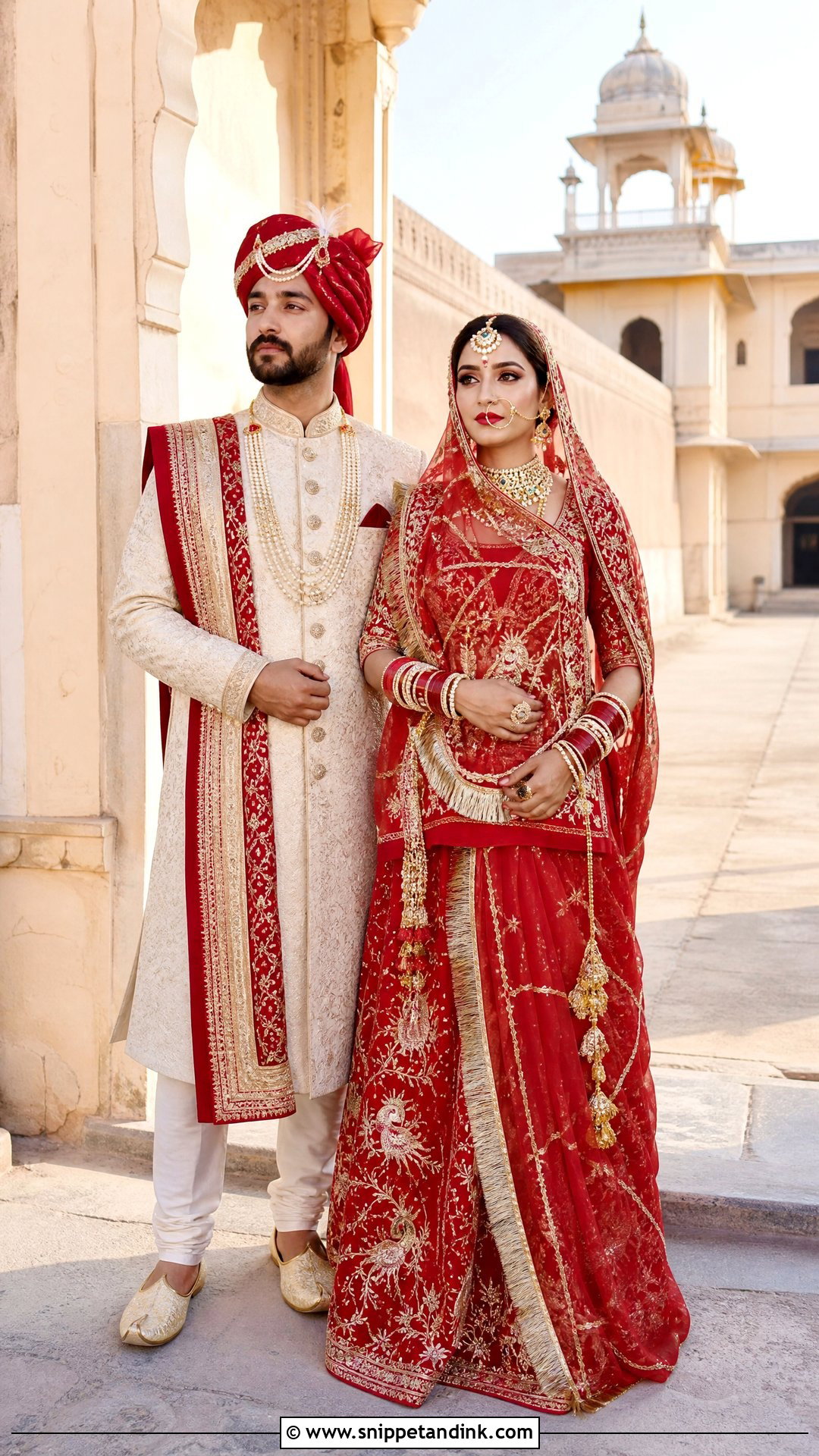
Red on the bride and ivory on the groom is the pairing I find easiest to light and expose for. She wears a flared red ghagra, fitted kanchli and matching odhni worked in gold gota, zari or traditional motifs, with an aad, borla, nath, bangles, anklets and embroidered juttis. His ivory sherwani or achkan carries red detailing, with fitted churidar, a red Rajputi safa, mojaris and a ceremonial stole. Red embroidery, buttons or a pocket detail on his side is enough to connect them. The safa does most of that work, since it sits at face height, right where the eye lands in a portrait. Wedding ceremonies, formal sessions and heritage venues all suit it.
2. Maroon Rajputi Couple Outfit
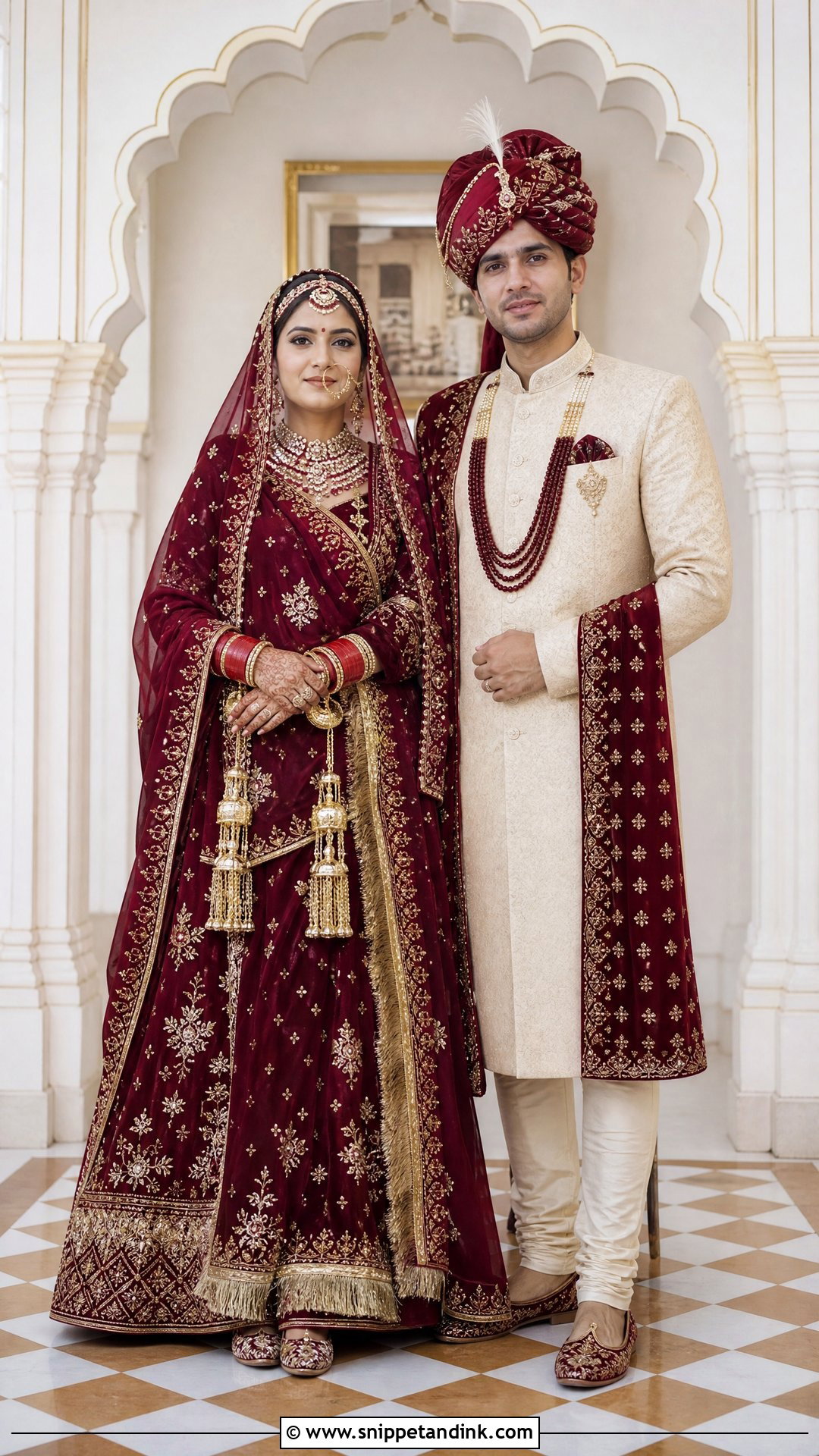
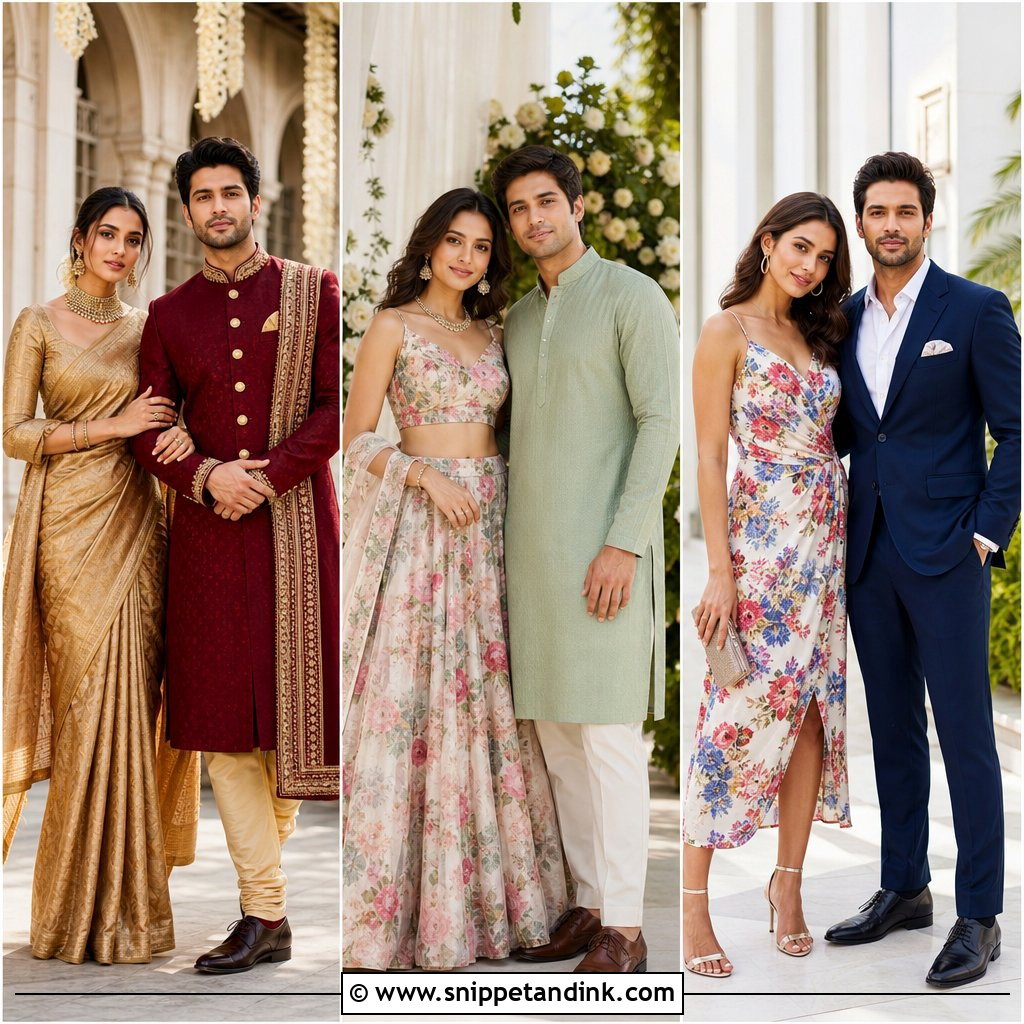
Maroon is softer than bright red but still formal. She wears a maroon poshak with antique-gold embroidery and a coordinated odhni, adding a second light veil if the ceremony calls for one. Traditional kundan jewelry, a centered borla, stacked bangles and maroon juttis finish her look. He wears a beige or muted-gold achkan with maroon piping, embroidered cuffs and a matching safa, plus cream churidar and tan or gold mojaris, and a maroon pocket square closes the loop. Dark maroon soaks up light, so for indoor palace portraits I look for texture. Flat maroon silk turns into a solid dark shape on camera, while raised embroidery and velvet pile keep their detail.
3. Pink Rajputi Engagement Couple Outfit
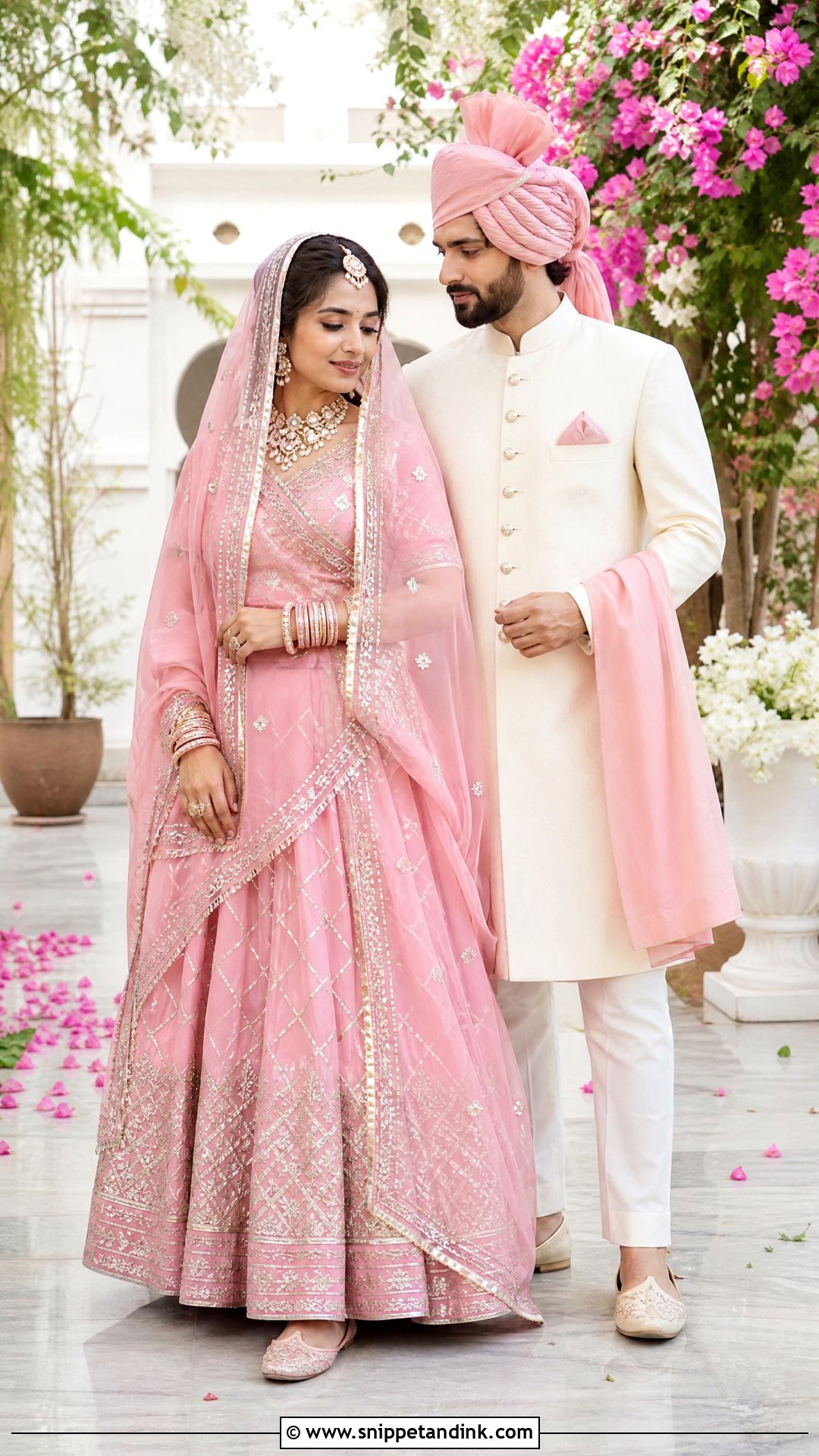
Soft pink suits a daytime engagement. A blush or rose-pink poshak with silver gota feels festive and stays comfortable, styled with a matching odhni, pearl-accented jewelry, a delicate borla, bangles and embroidered flats. He wears an ivory Jodhpuri bandhgala with pale pink buttons, a pocket square and straight trousers, and a lightly patterned pink safa connects him to her without looking overly matched. Pick breathable fabric if there are long rituals or outdoor photos. Against sandstone in harsh midday sun, pale pink can wash out, so I’d plan the portraits for late afternoon, when the stone warms and the pink holds its color.
4. Green Rajputi Mehndi Couple Outfit
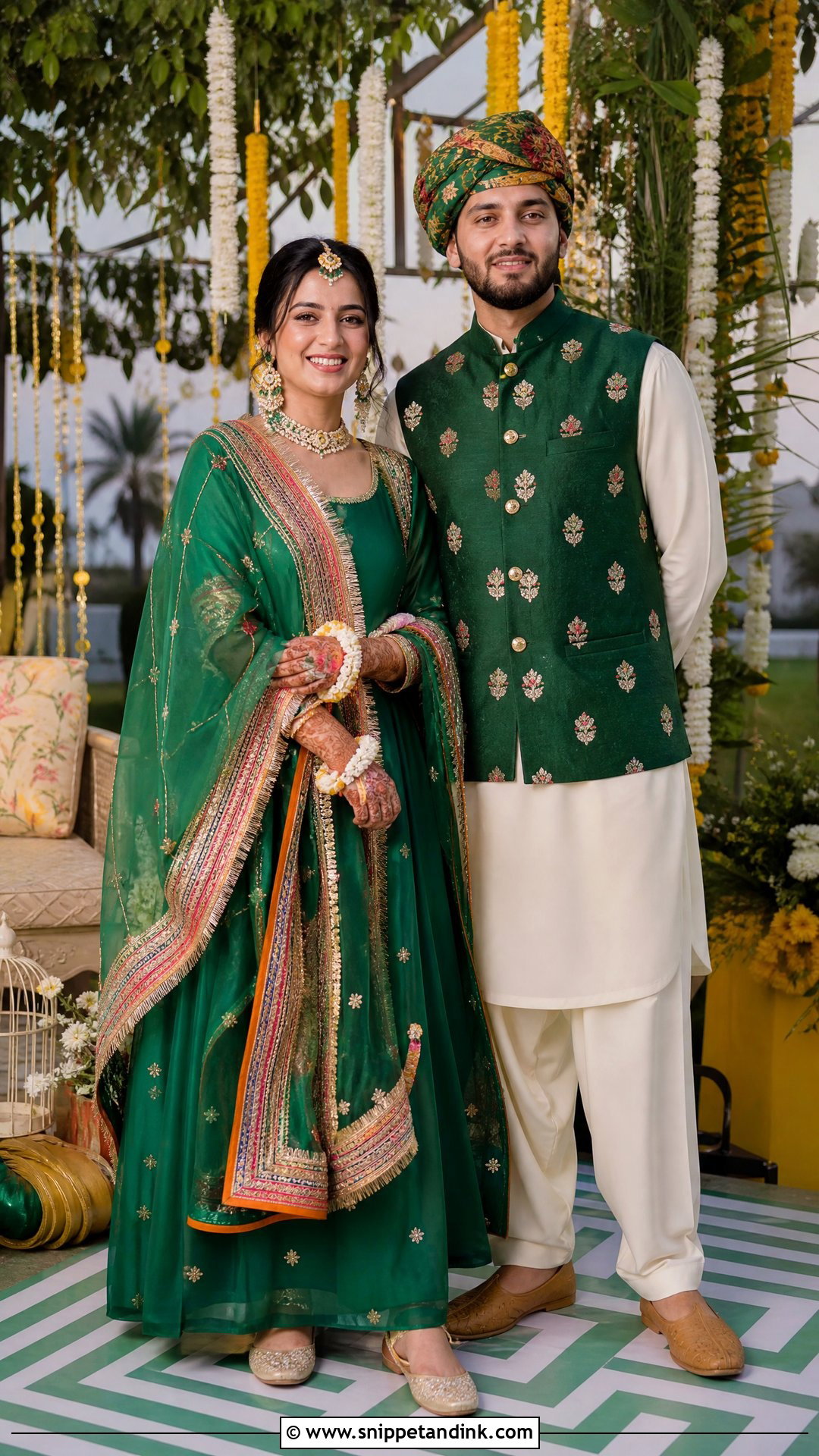
Mehndi functions are long, seated and messy, and both outfits should be planned around that. She might wear an emerald, leaf or parrot green poshak with colorful borders and light mirror or gota work, comfortable juttis, floral bangles, a small borla and earrings she can forget about. He goes for a cream kurta, a green embroidered waistcoat, tapered pajamas and tan mojaris, with a patterned green safa for a stronger Rajputi finish. Skip heavy fabric and heavy jewelry, because there will be dancing. Mirror work catches light at random angles, which gives sparkle in candid shots, though very large mirrors near the face can throw distracting glare. Shared green with cream sections keeps the pair coordinated without overload.
5. Yellow Rajputi Haldi Couple Outfit
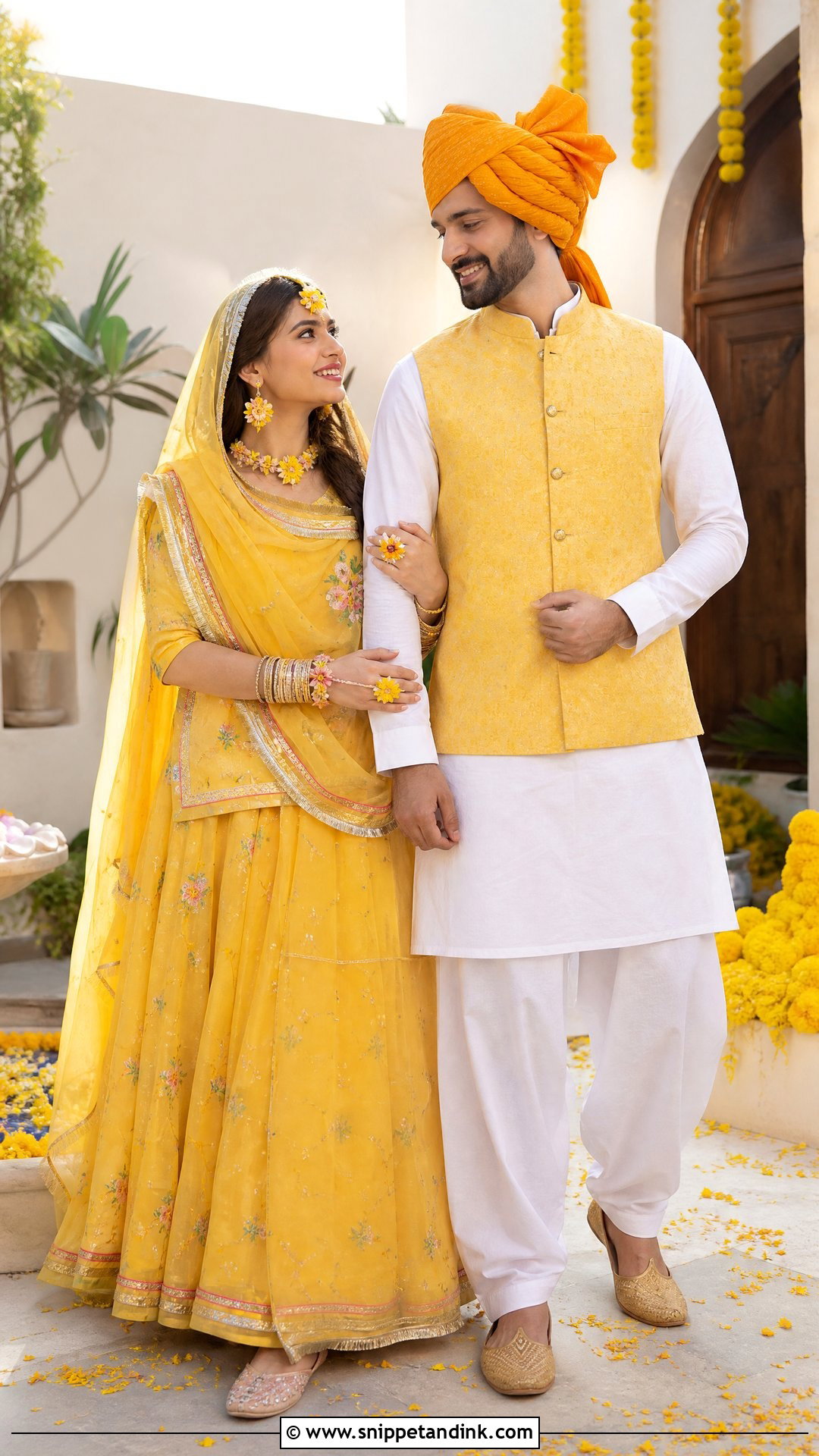
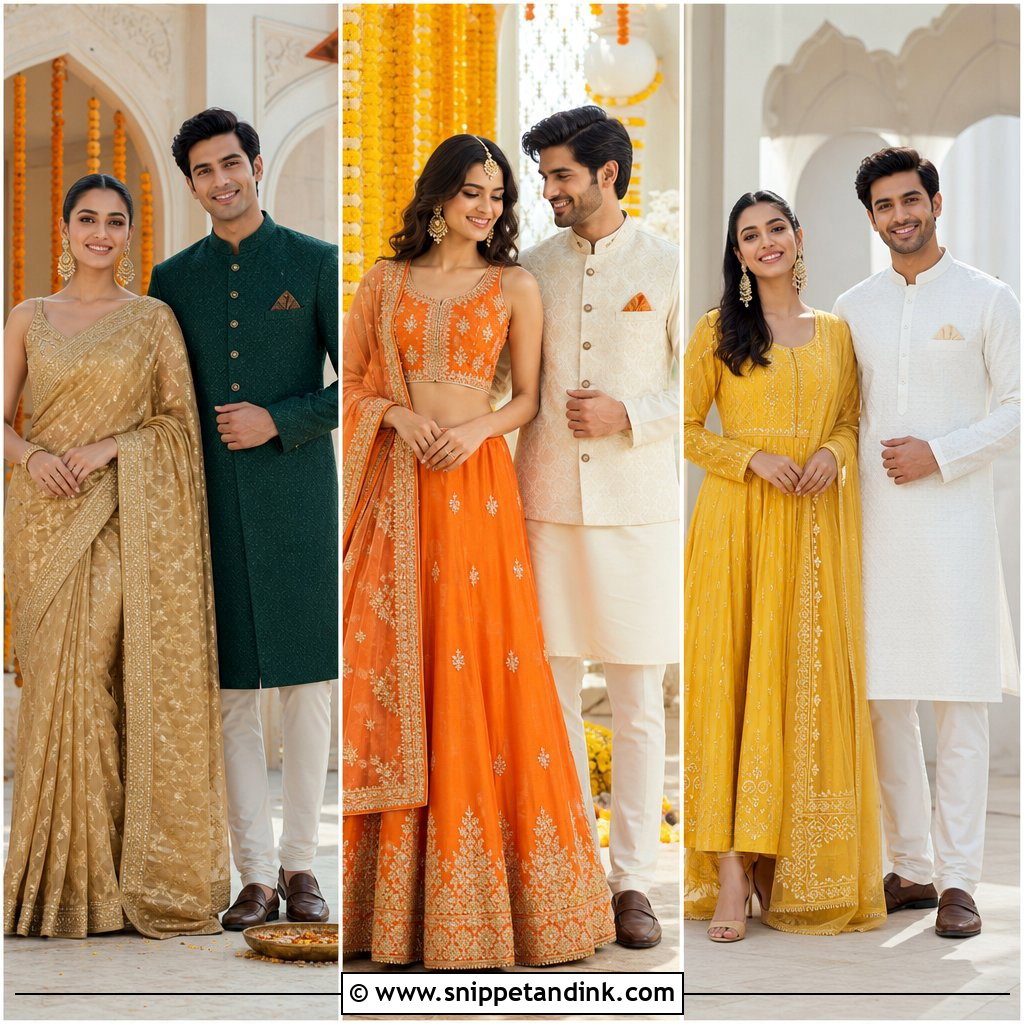
Haldi is the one event where I tell couples to wear something they’re happy to ruin. She can wear a lightweight yellow Rajputi poshak with a simple ghagra, comfortable kanchli and a neatly pinned odhni, minimal gota borders, floral jewelry, small earrings, bangles and flat juttis. He wears a white or pale yellow kurta under a sleeveless yellow jacket, relaxed pajamas and traditional mojaris, with a printed saffron or yellow safa. Leave heirloom pieces at home. White on him looks crisp before the turmeric arrives and shows every haldi mark afterwards, which is half the fun of those pictures.
6. Ivory Rajputi Couple Outfit
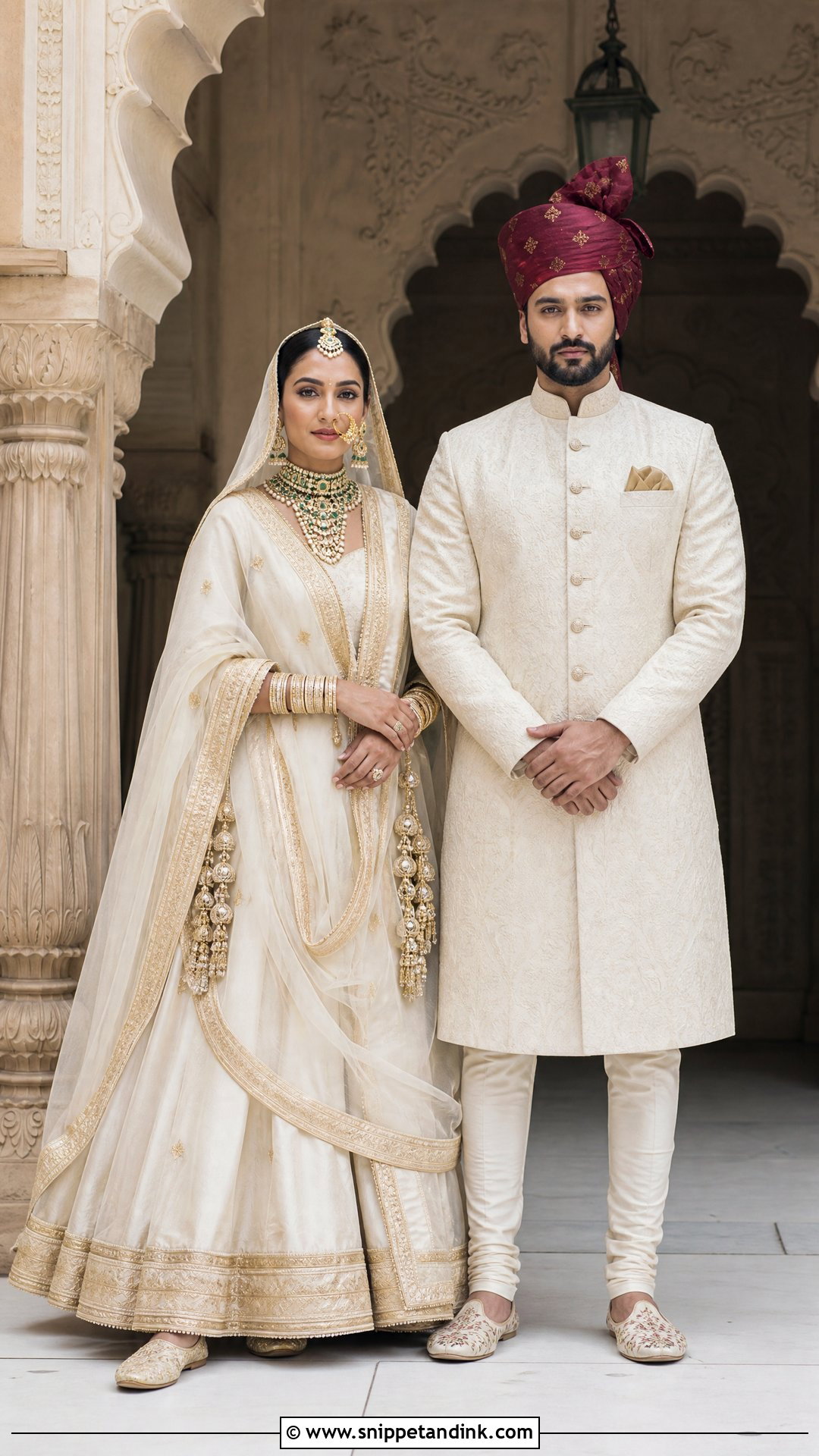
An all-ivory pairing shows off embroidery, jewelry and construction, but in photographs two ivory outfits side by side can flatten into one pale shape. Give it separation. She wears an ivory poshak with gold borders, subtle sequins and a lightly embroidered odhni, plus kundan, an aad, gold bangles, a borla and cream juttis. He wears an ivory achkan with tonal embroidery, churidar and embroidered mojaris, and a deep red, maroon or saffron safa, an accent repeated in her odhni border or bangles. I also check that both ivories are the same shade. A warm cream beside a cool white looks like a mistake once the image is printed. Engagements, daytime weddings, anniversaries and carved-stone backdrops suit it.
7. Royal Blue Rajputi Couple Outfit
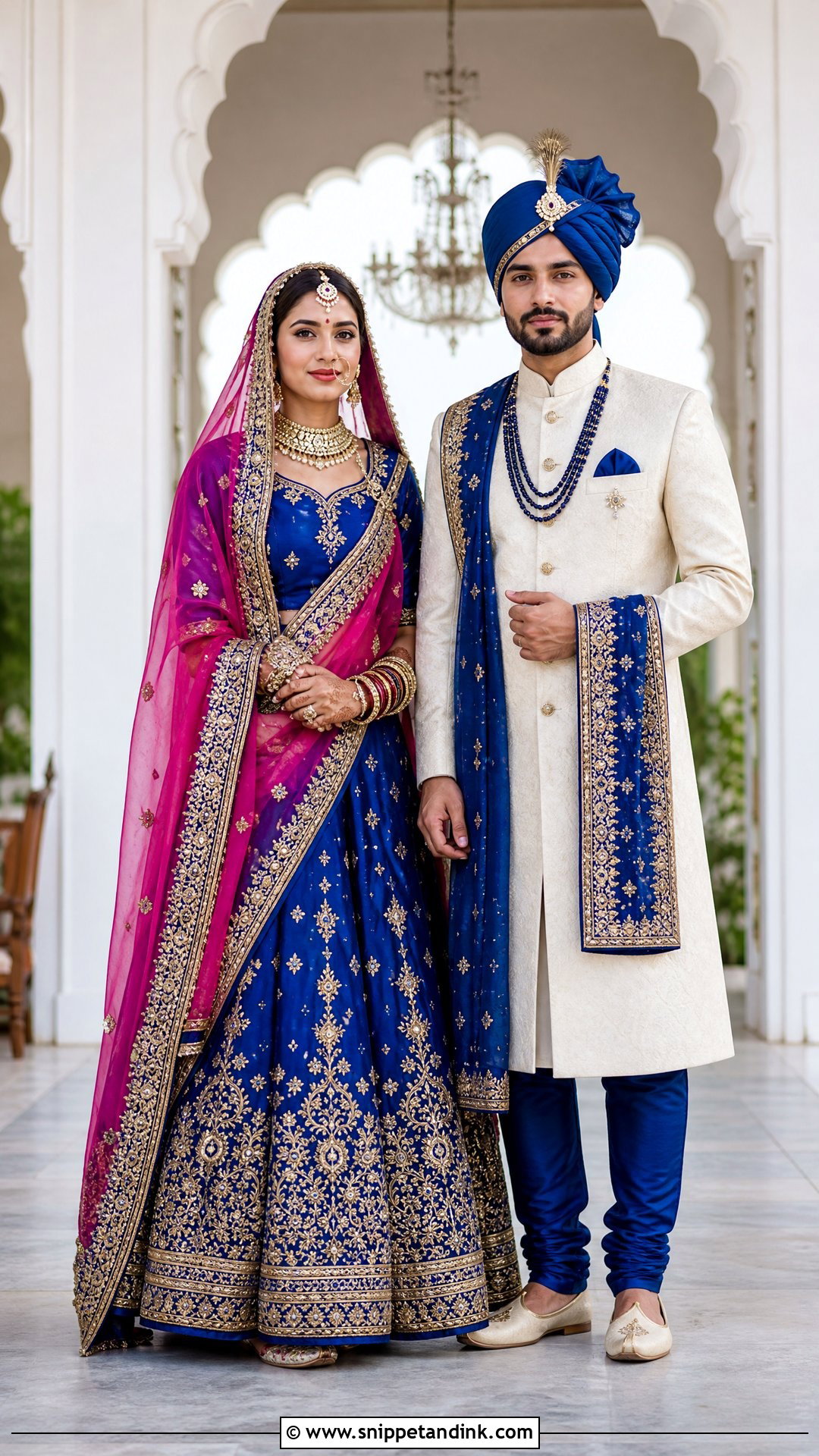
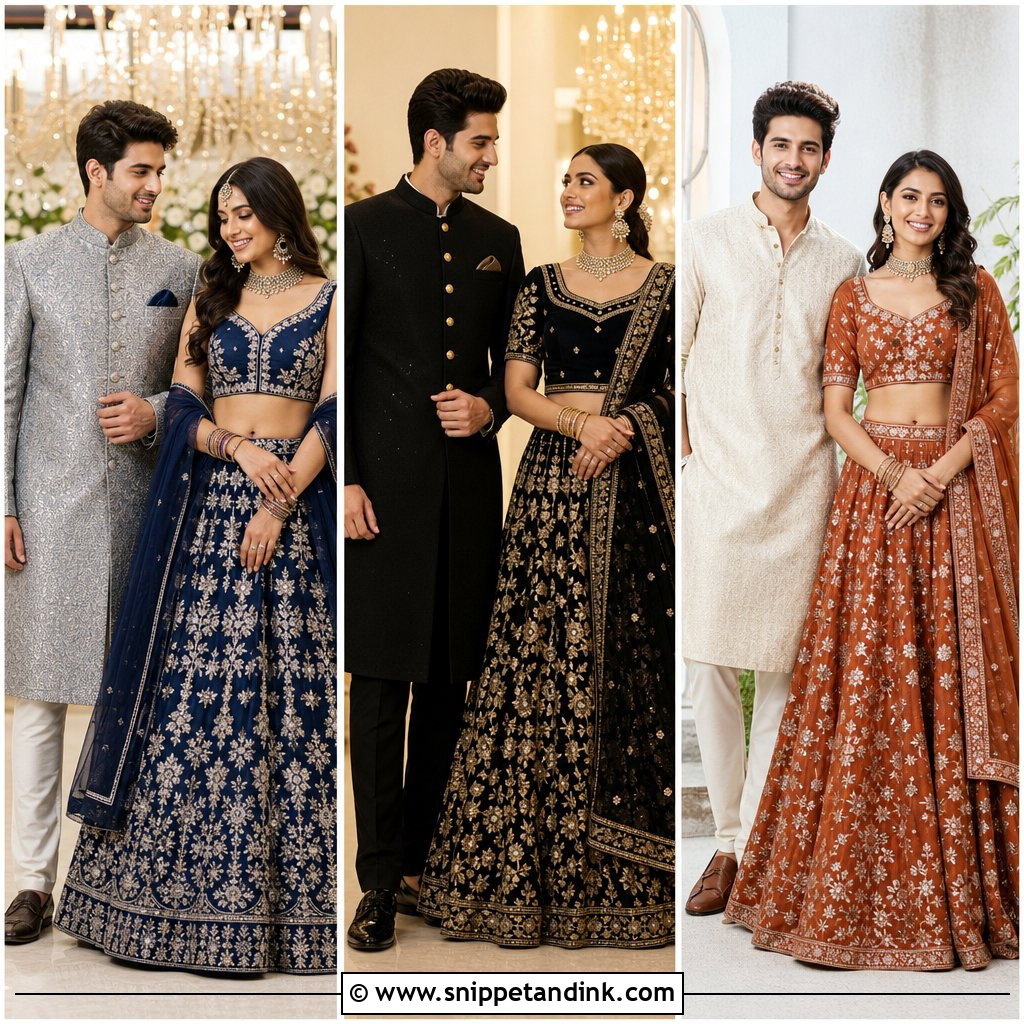
Royal blue is a confident step away from wedding reds. Her poshak is royal blue with gold embroidery and a contrasting red or magenta odhni, with kundan jewelry, a borla, bangles and blue embroidered juttis. He wears a cream achkan with royal blue buttons and pocket detail, a matching blue safa, churidar and neutral mojaris, or a blue bandhgala with ivory trousers if the event is less ceremonial. Blue is intense, so cap the palette at two or three shades for a clearer, more elegant couple outfit. Under blue stage lighting, a royal blue outfit can lose its detail entirely, so at receptions I ask for a warmer lamp near the portrait spot.
8. Orange Rajputi Couple Outfit
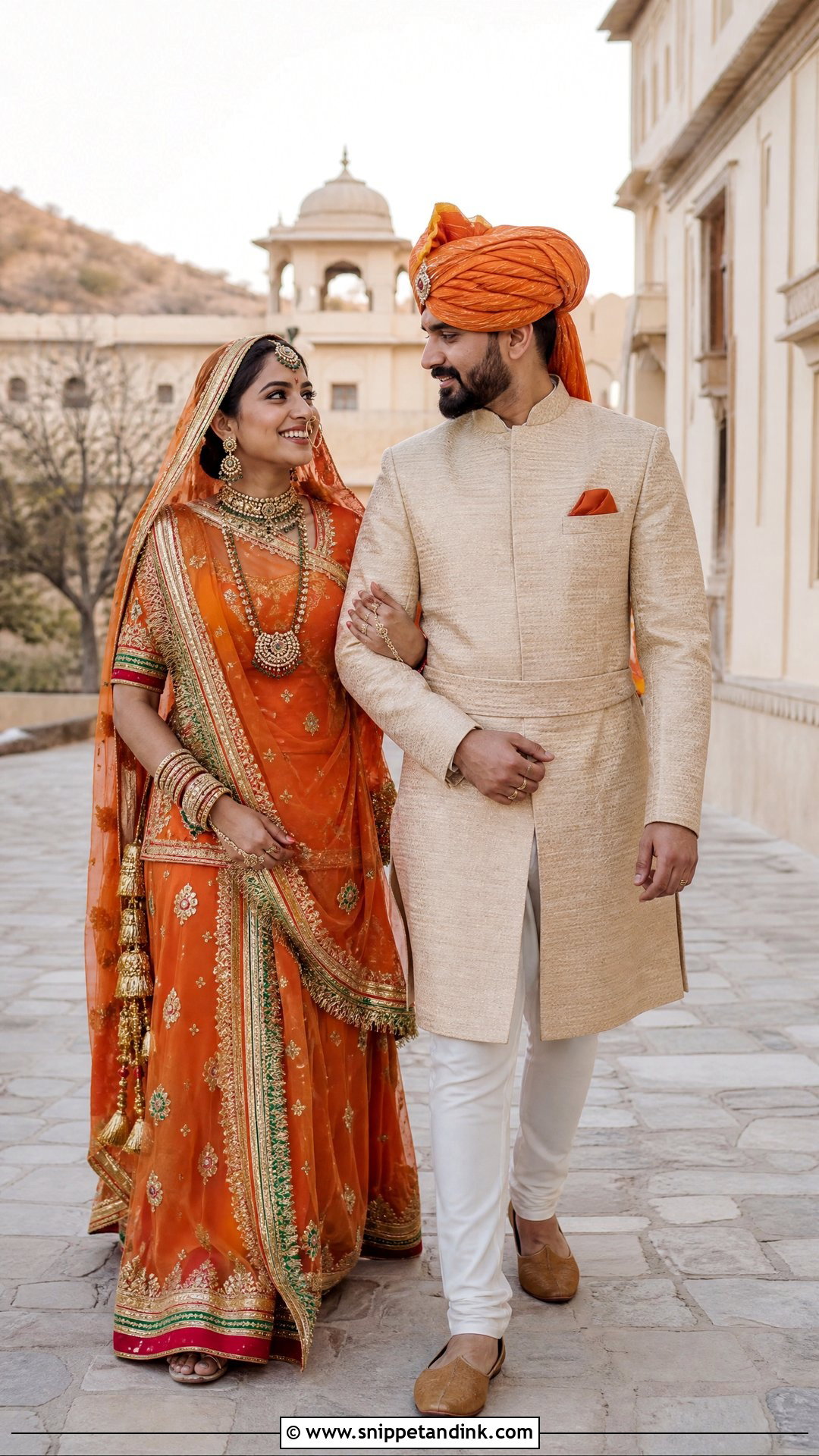
Burnt orange and saffron carry the warmth of Rajasthan, and they hold up well outdoors. She wears an orange poshak with a red, pink or green border and gold detailing, a matching odhni, antique-finish jewelry, a borla, colorful bangles and embellished juttis. He chooses a beige angarkha or achkan with orange embroidery, fitted trousers and a saffron safa, with brown or tan mojaris. If both of you wear orange, vary the intensity: a saturated shade on one person, a softer accent on the other. Against desert sand at midday, orange tends to blend into the background, so I look for a darker wall, a doorway or the long shadows of late afternoon to frame the pair.
9. Black Rajputi Reception Couple Outfit
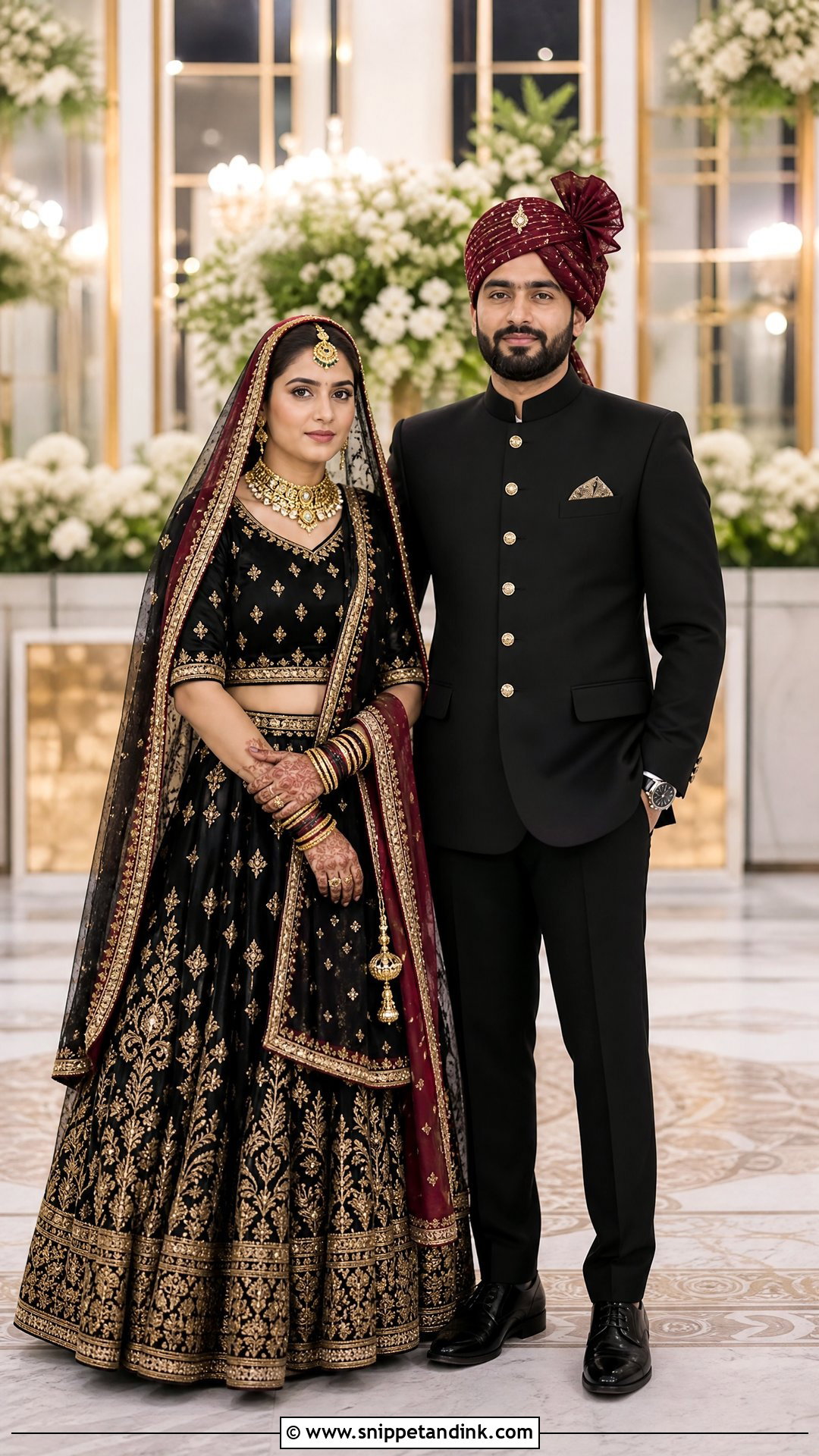
Black is welcome at many receptions but avoided at ceremonies by some families, so check first. If it’s fine, she wears a black ghagra and kanchli with gold embroidery and a black or deep maroon odhni with a structured border, plus gold jewelry, an aad, a statement borla, stacked bangles and black juttis. He wears a tailored black Jodhpuri bandhgala with gold buttons, straight trousers, polished mojaris and a maroon safa, which adds color and keeps the look from turning severe. Black swallows detail on camera. Choose fabrics with visible texture, and expect your photographer to hunt for well-lit spots; evening receptions and bright indoor setups suit it best.
10. Pastel Rajputi Couple Outfit
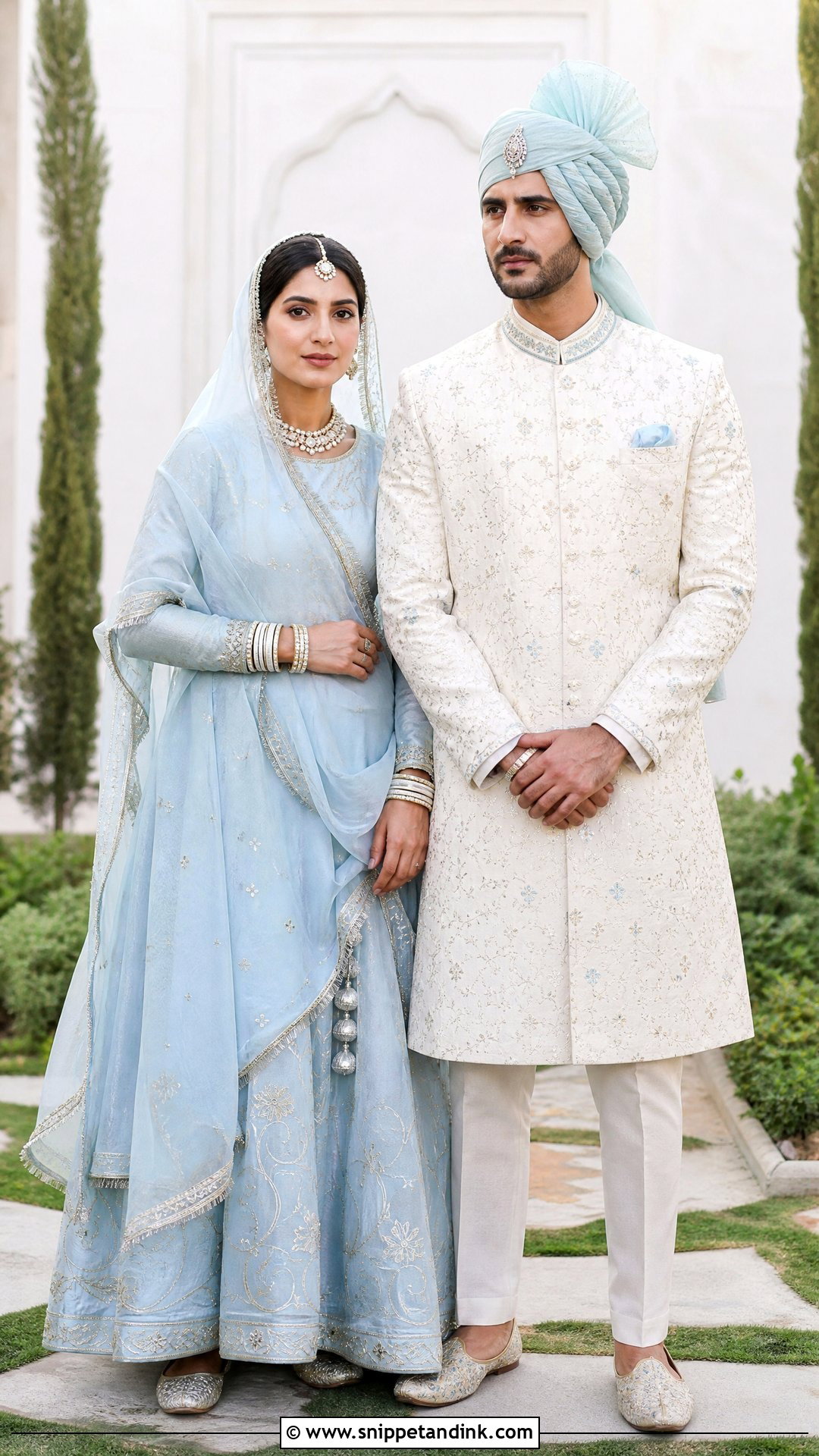
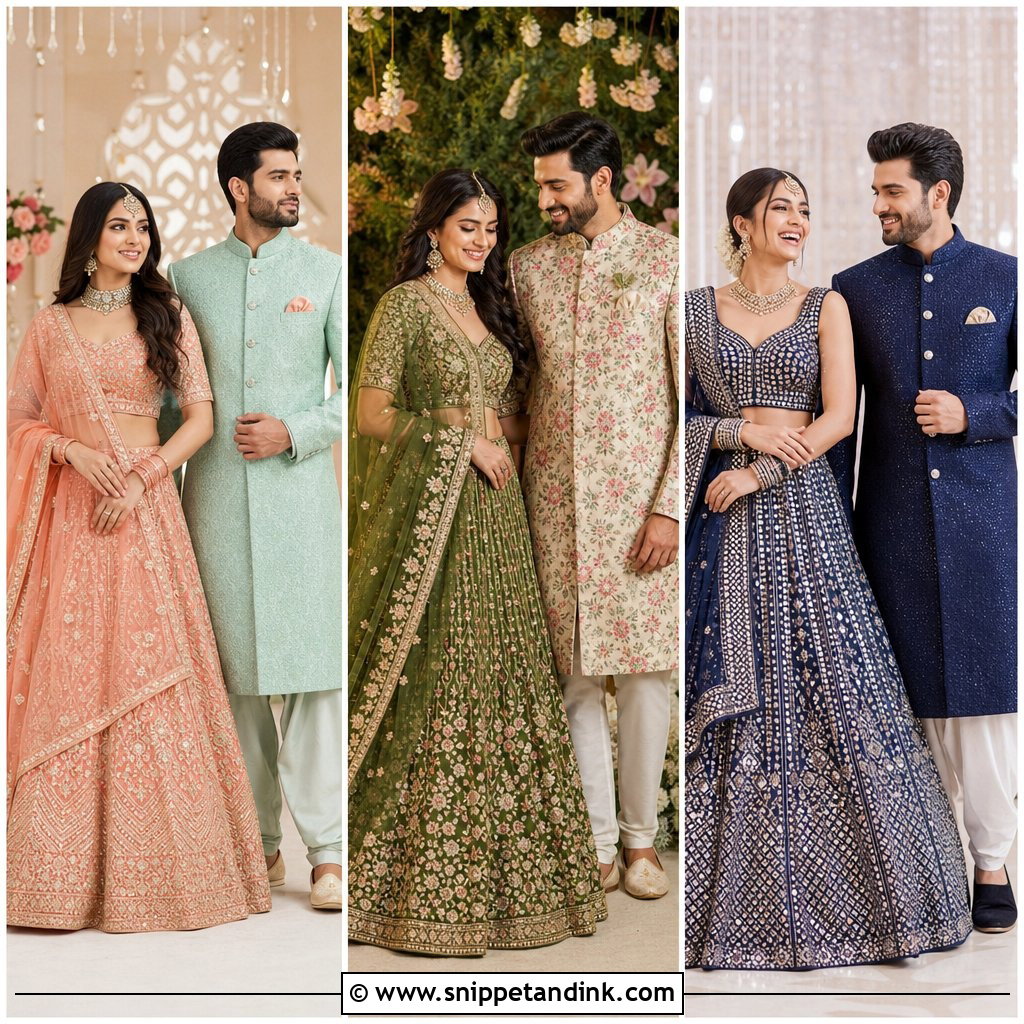
Pastels make Rajputi clothing feel lighter and more current while keeping the full traditional silhouette. She can wear powder blue, peach, lavender or mint with fine silver-gold embroidery and a sheer odhni, plus pearl jewelry, a small borla, slim bangles and embellished flats. He wears an ivory bandhgala or achkan with buttons, embroidery or a pocket square that repeats her main color, neutral trousers, mojaris and a softly patterned safa. Keep the undertones consistent: cool pastels sit best with silver, peach and blush with warmer gold. In full sun, pastels look chalky in photographs. Open shade, like the shadow side of a courtyard, keeps them soft and true.
11. Bandhani Rajputi Couple Outfit
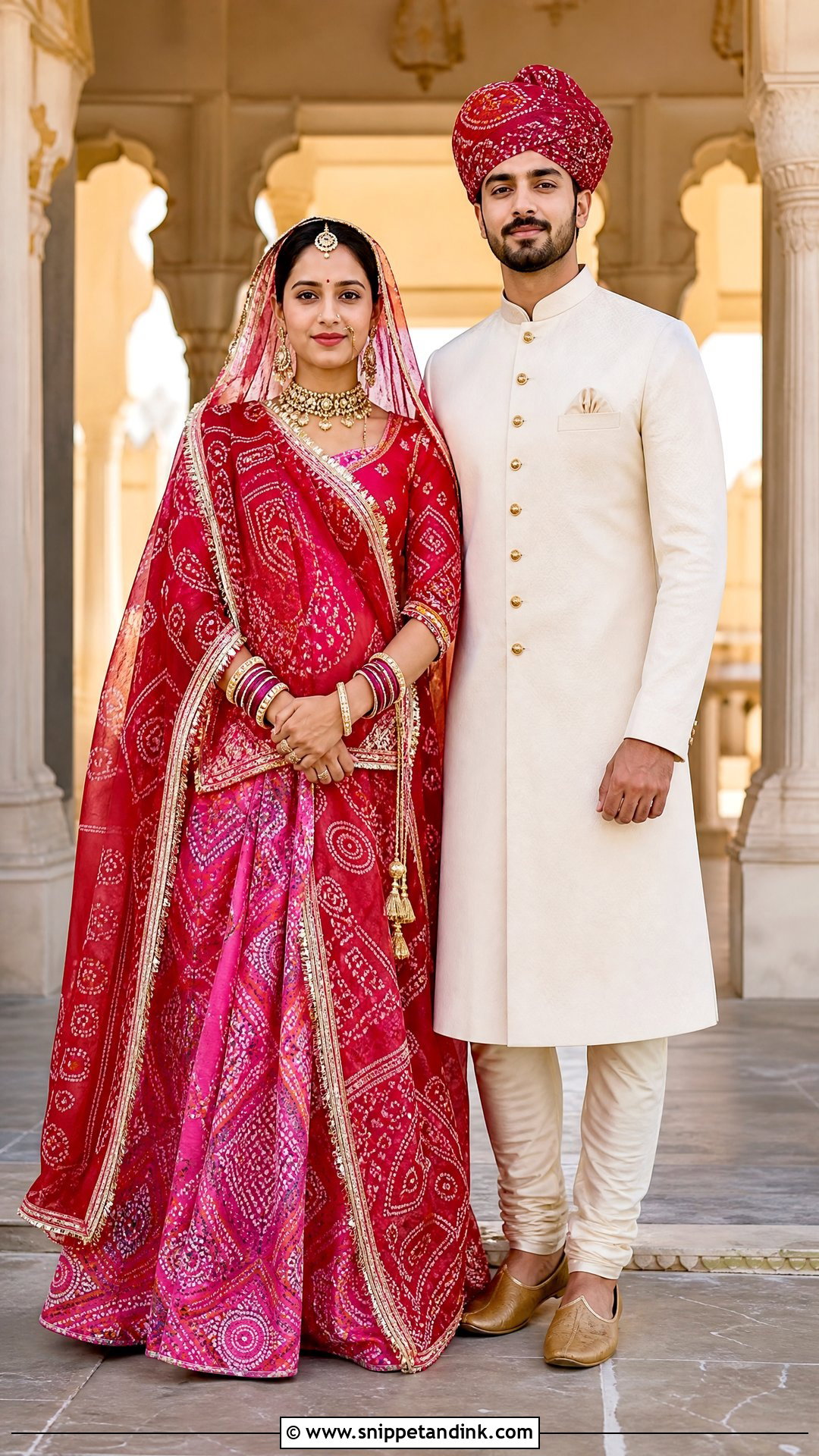
Bandhani gives color and movement without heavy embellishment, and it reads as unmistakably Rajasthani in a frame. She wears a red, pink, green or multicolor bandhani poshak with a plain kanchli and a strongly patterned odhni, with traditional jewelry, colorful bangles, a borla and embroidered juttis. He keeps to a solid ivory or beige angarkha and churidar, with a bandhani safa in one of her colors and, if he likes, a small matching pocket square. One patterned piece per person stays balanced. Very fine dot patterns can produce a shimmering moire effect on digital sensors at a distance, so for wide shots I’ll often step closer or shift the angle slightly.
12. Leheriya Rajputi Couple Outfit
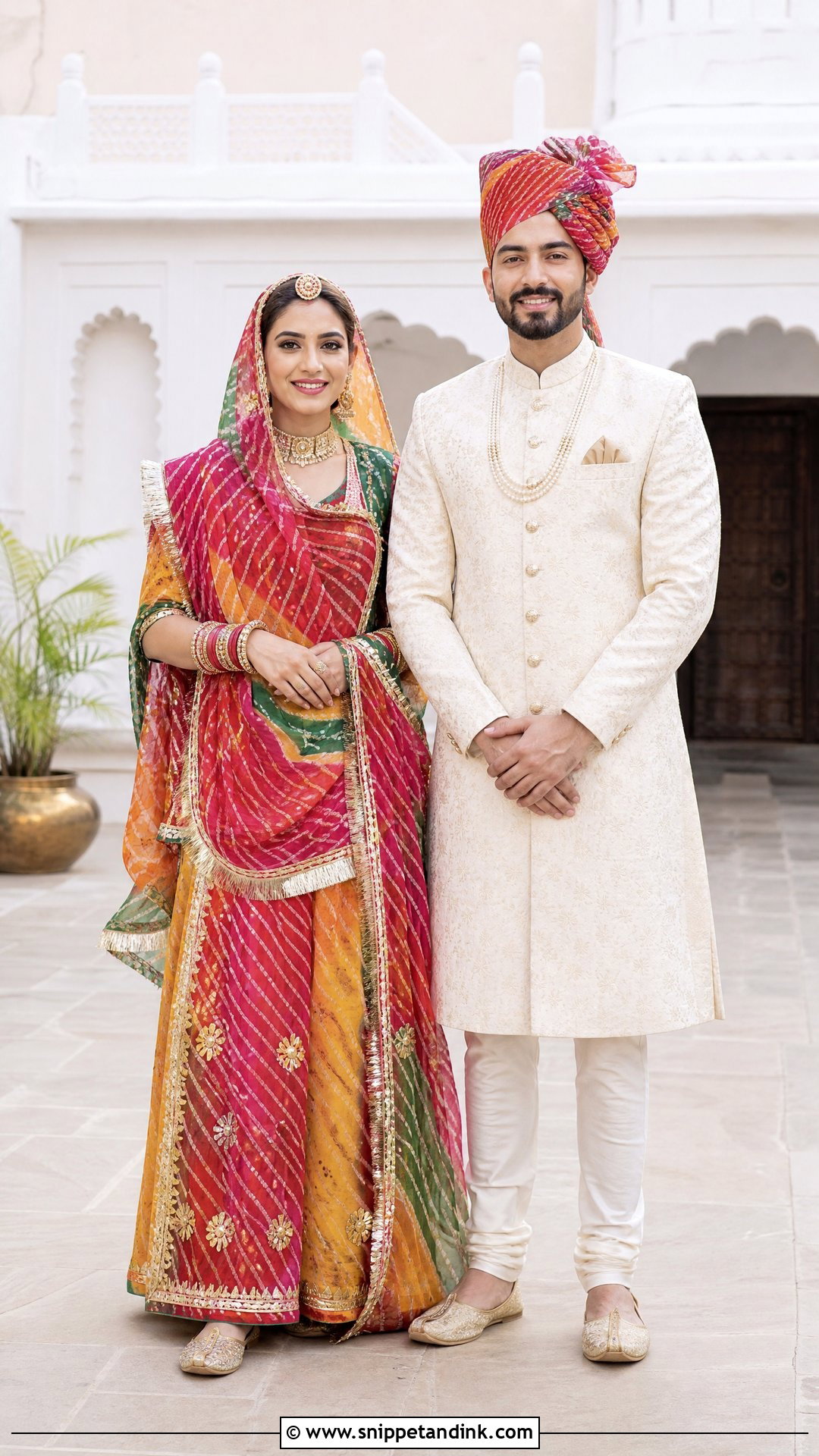
Leheriya stripes feel alive in daylight. She can choose a colorful leheriya poshak, or a plain ghagra and kanchli with a striped odhni, adding a borla, medium earrings, bangles, an aad and juttis in one of the print’s accent colors. He wears a white or cream kurta and achkan with a leheriya safa and neutral mojaris, and can repeat one stripe color in a waistcoat, buttons or stole. Let the patterned fabric set the palette, since competing prints pull the eye away from the silhouettes. Leheriya is traditional in the monsoon months, and if you’re shooting then, plan for wet ground; juttis and an odhni hem pick up mud very quickly.
13. Velvet Rajputi Winter Couple Outfit
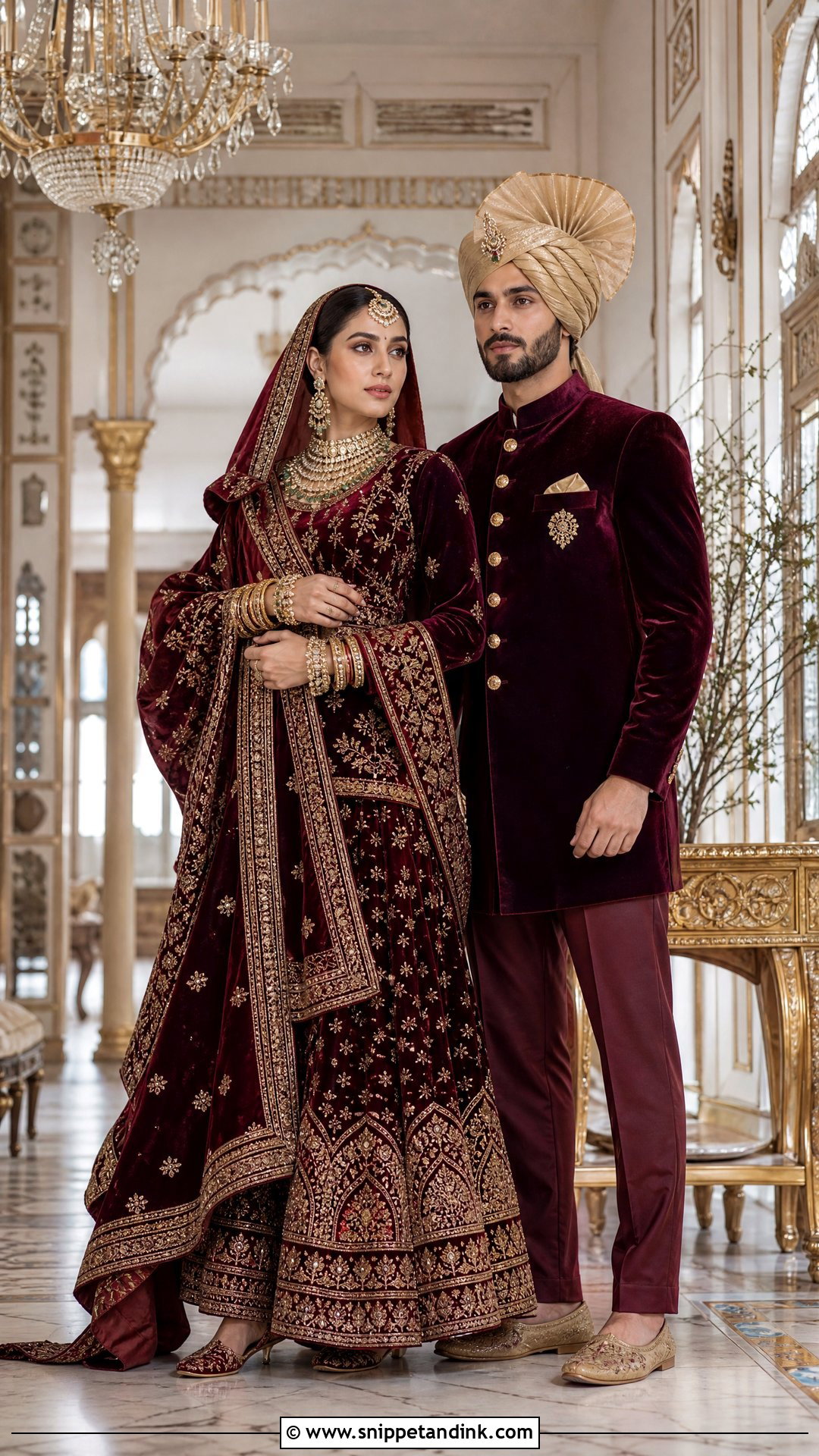
Velvet suits a winter wedding and keeps both of you warm through an outdoor evening. She wears a velvet poshak in maroon, bottle green, navy or plum with antique-gold embroidery, a structured odhni, layered kundan, an aad, a borla, bangles and closed embroidered juttis. He picks a velvet bandhgala or achkan in the same color family with tailored trousers and mojaris, while a contrasting beige, gold or muted red safa adds definition near the face. Keep embellishment controlled and make sure both garments fit properly. Under side light, velvet exaggerates every wrinkle at the elbows and waist.
14. White And Red Rajputi Couple Outfit
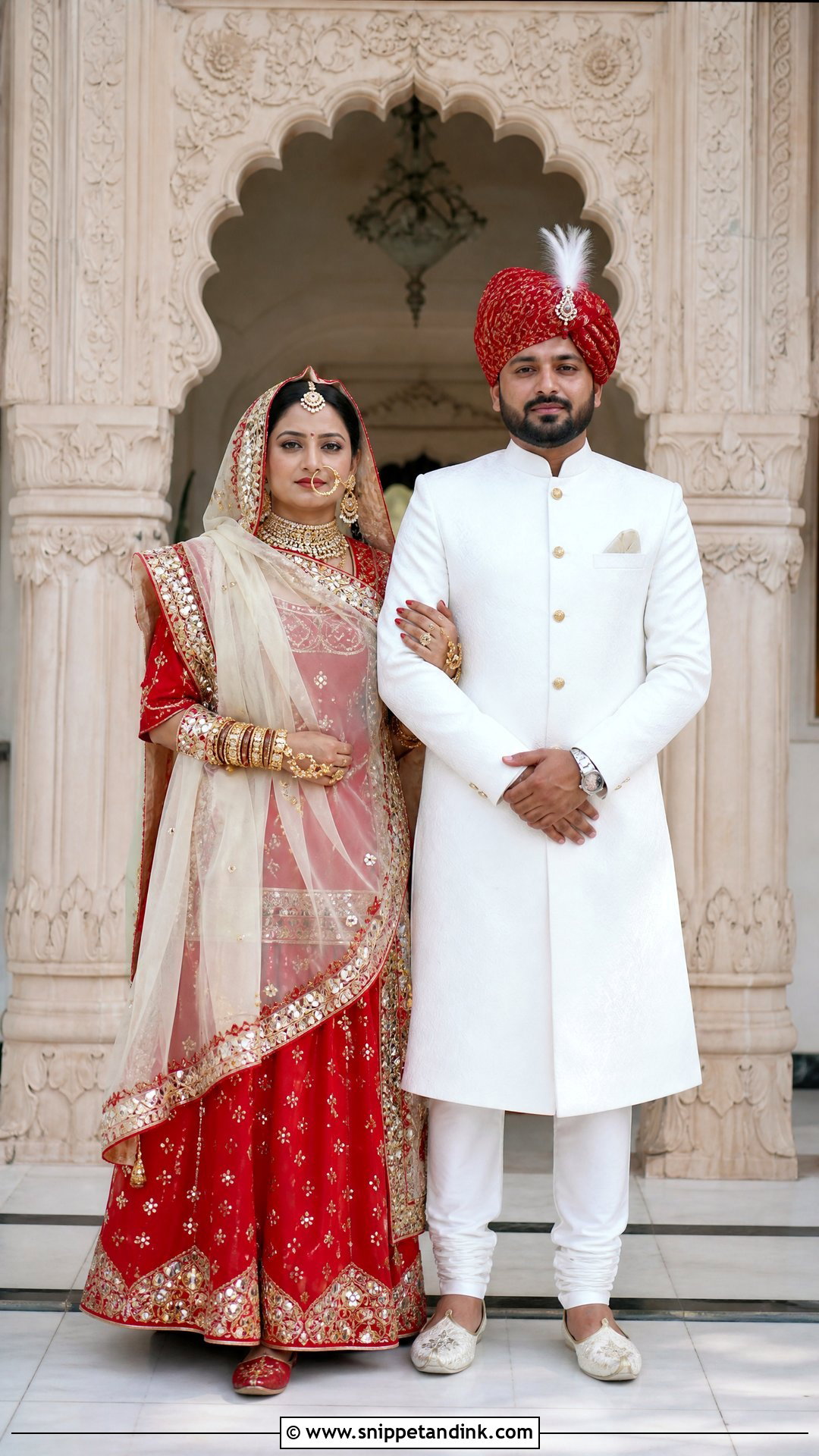
White with red is about as clear a combination as you can put in a photograph. She wears a red poshak with a white or ivory odhni edged in red embroidery, kundan jewelry, a borla, nath, bangles and red juttis. He reverses it with a white achkan, white churidar and an ornate red safa, connecting through red buttons, a pocket square or subtle cuff work. With only two dominant colors, fabric texture and border work matter more than usual. Choose crisp whites rather than a mix of creams. In bright sun, pure white is the first thing to lose detail, so I expose carefully for it and keep the couple out of direct midday glare.
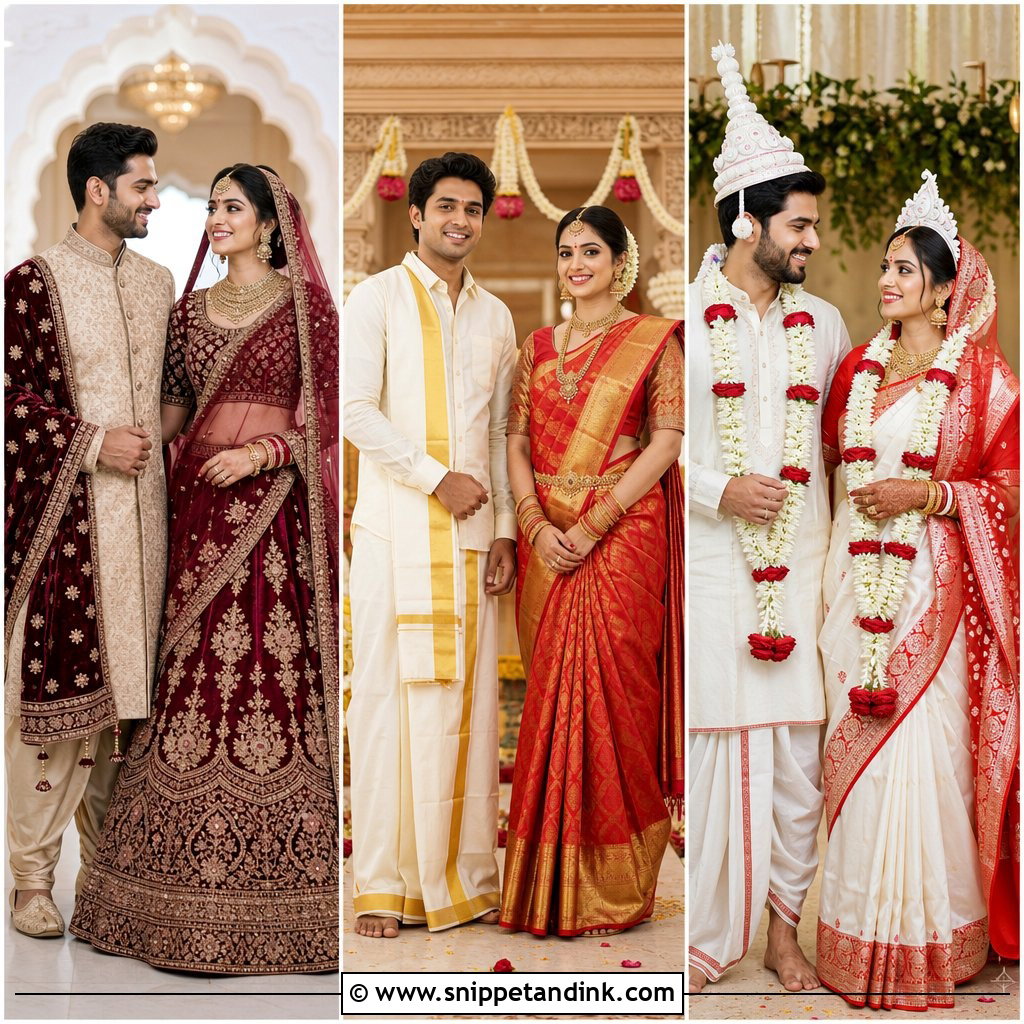
15. Purple Rajputi Couple Outfit
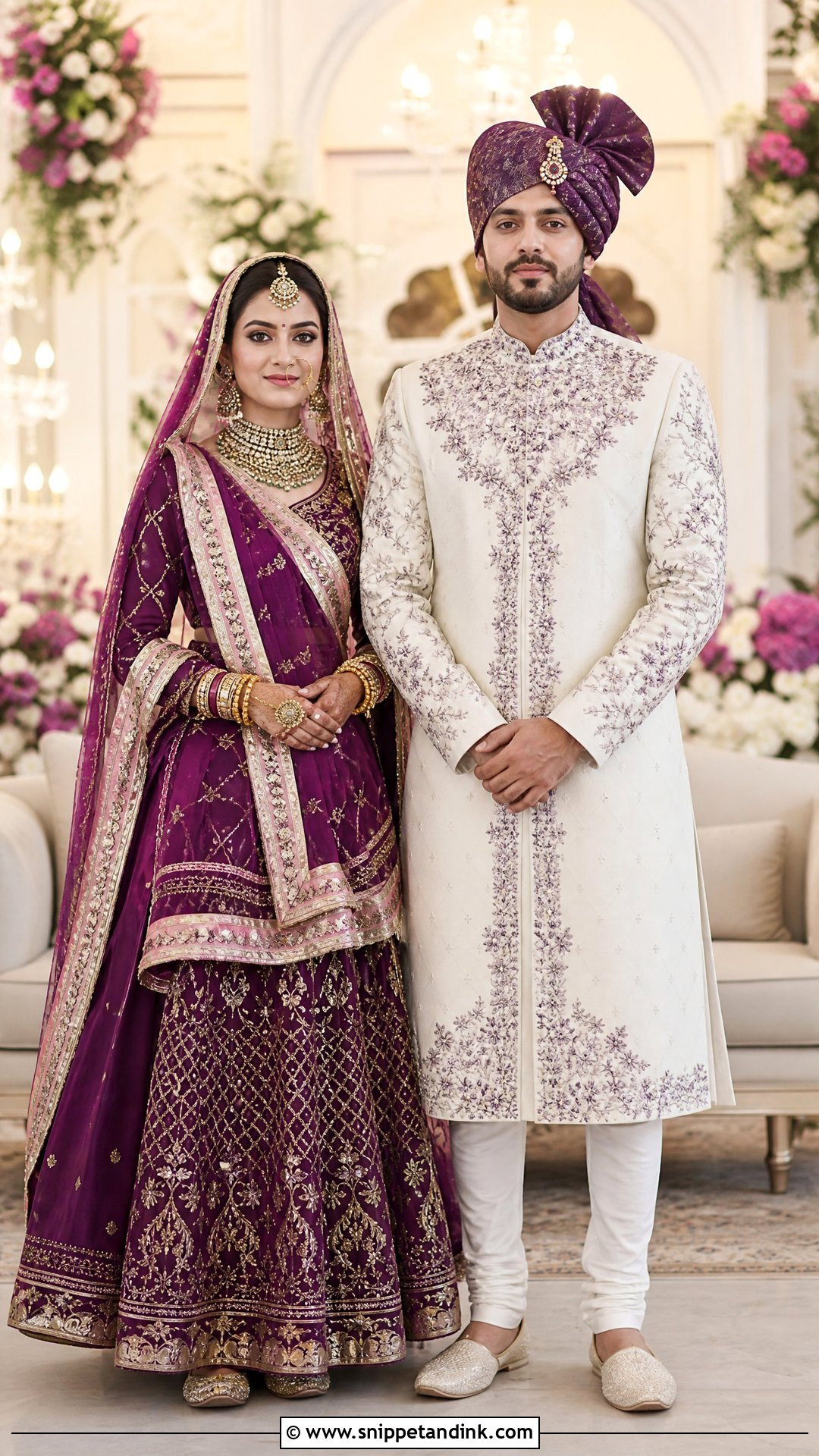
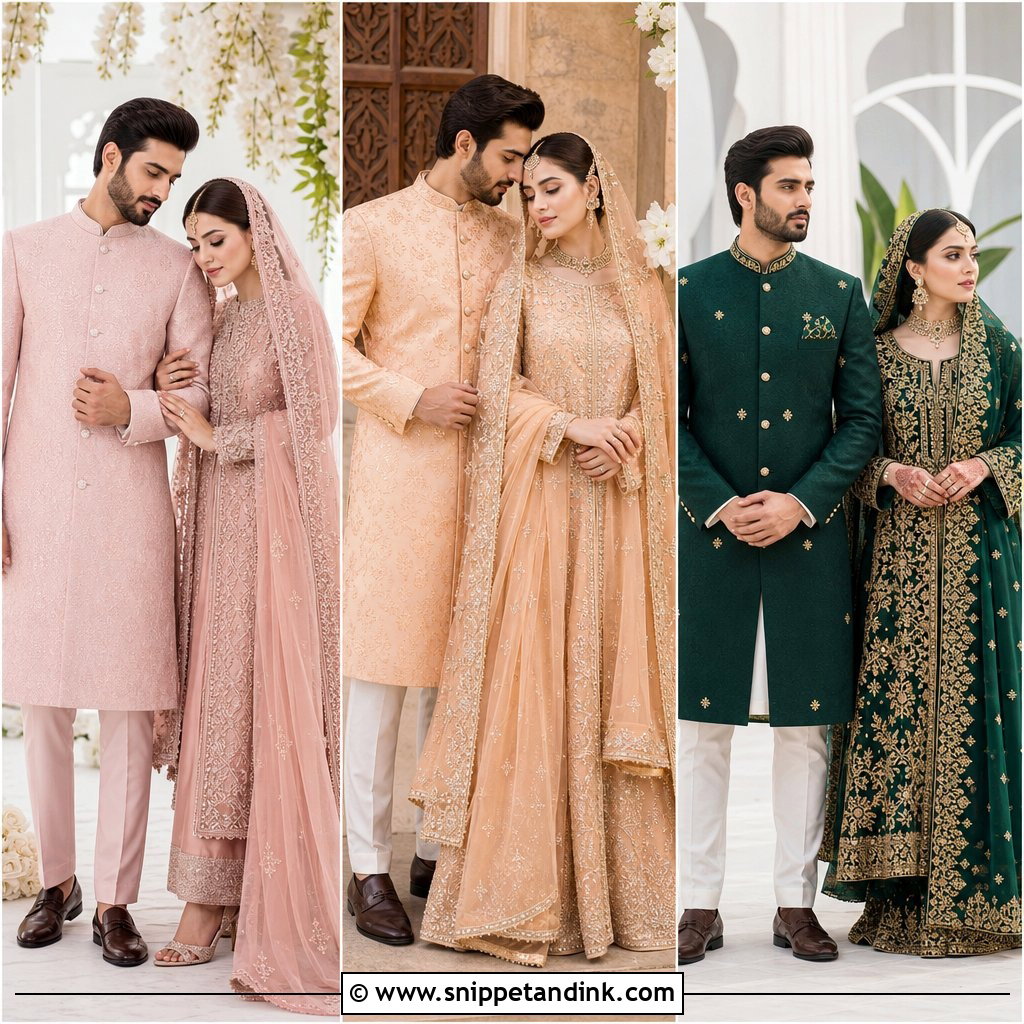
Purple feels regal without straying far from the classic jewel tones. She wears a plum or deep purple poshak with gold gota, a coordinated odhni and a contrasting pink border, with kundan jewelry, a borla, bangles and gold-toned juttis. He wears an ivory sherwani or bandhgala with purple embroidery, churidar and neutral mojaris, and a purple or pink-patterned safa links the two. If her poshak is heavily embellished, keep his fabric cleaner and more structured so they aren’t competing. Purple is one of the colors cameras find hardest to reproduce exactly, often drifting toward blue, so I check the screen at the first location and adjust before the session gets going.
16. Peach Rajputi Couple Outfit
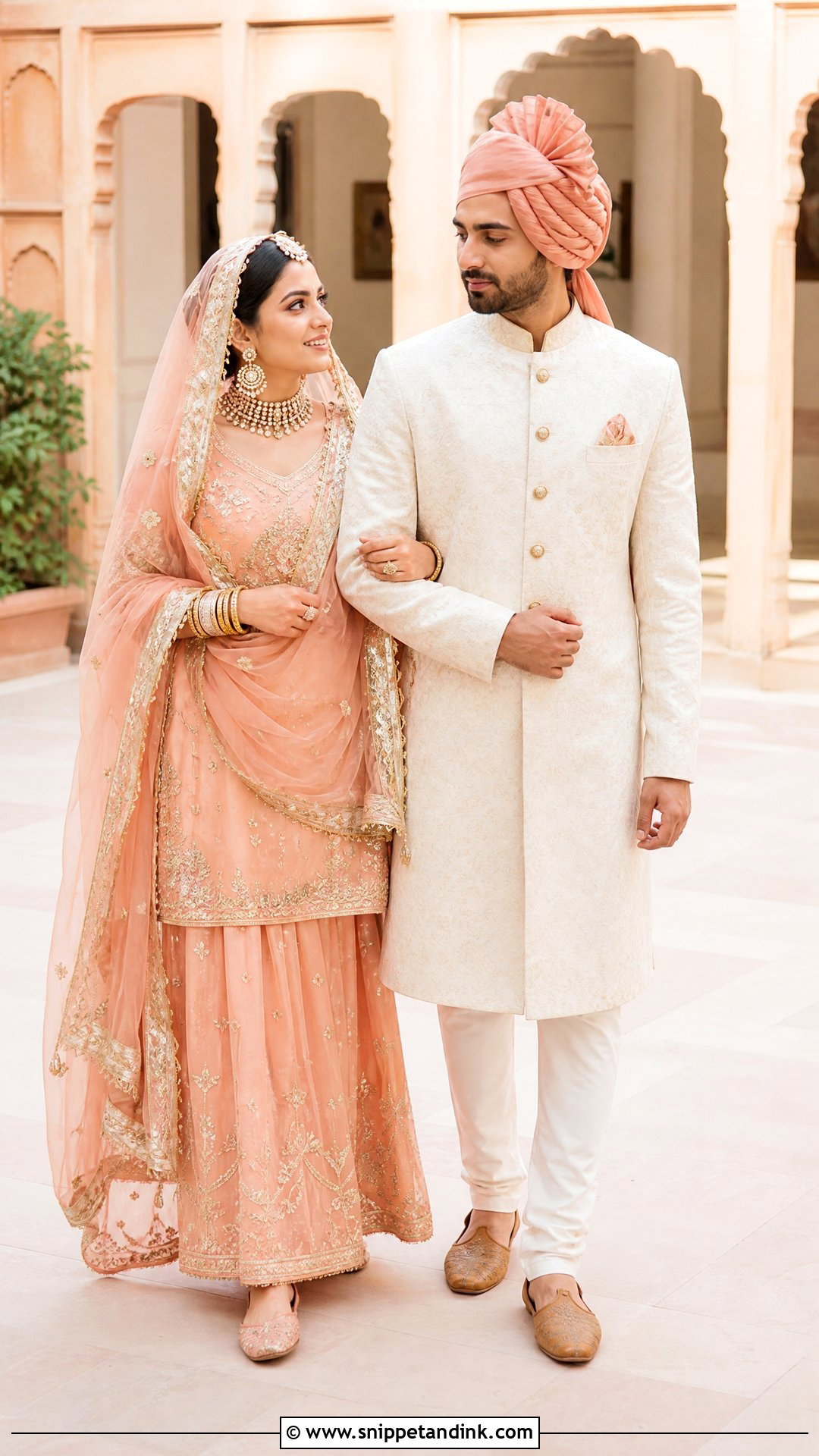
Peach is approachable and polished for couples who’d rather skip dramatic jewel tones. She wears a peach poshak with gold embroidery, a sheer matching odhni and a narrow mint or pink border, with pearl-kundan jewelry, a delicate borla, coordinated bangles and peach juttis. He chooses an ivory achkan with peach embroidery, straight trousers or churidar and tan mojaris, and a peach safa with a subtle pattern adds dimension. Peach sits close to many skin tones, which is flattering, but it means the border and jewelry have to supply the contrast in close-up portraits. Gardens, courtyards and sandstone suit it for engagements and pre-wedding sessions.
17. Rajputi Lehenga And Jodhpuri Suit Couple Outfit
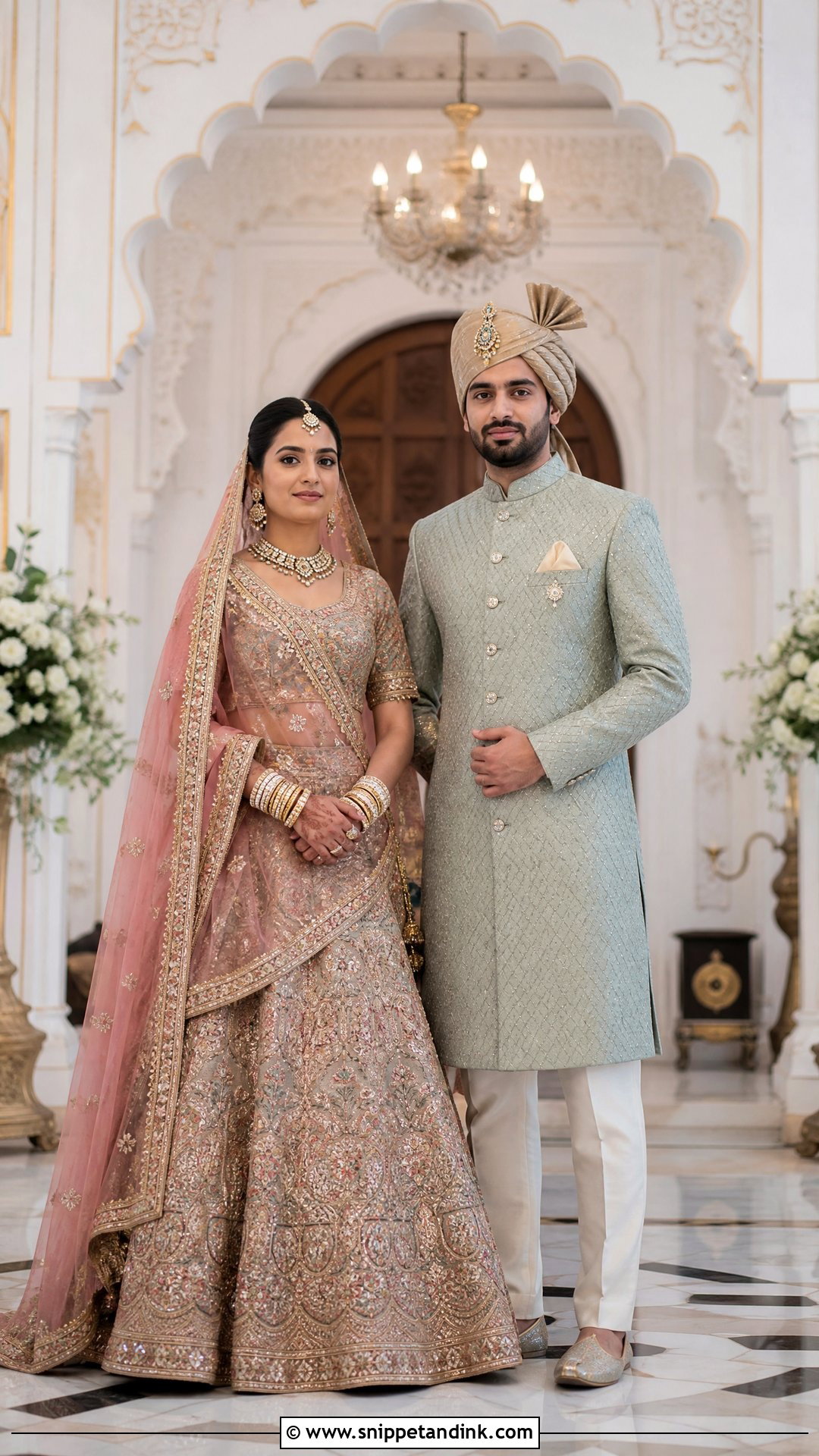
A Rajputi-inspired lehenga paired with a Jodhpuri suit is a flexible choice for receptions and more contemporary events. She wears a full lehenga with heritage motifs, a fitted blouse and an odhni draped the traditional way, with an aad, borla, statement earrings, bangles and embroidered juttis to strengthen the Rajputi character. He chooses a tailored Jodhpuri bandhgala in a coordinating color with straight trousers and polished mojaris. Match one detail, such as her border color with his jacket or safa, rather than the whole palette. The bandhgala’s sharp, upright line beside a full skirt makes for clean posed portraits, and it’s my go-to suggestion when a couple wants formal without full ceremonial dress.
18. Rajputi Poshak And Angarkha Couple Outfit
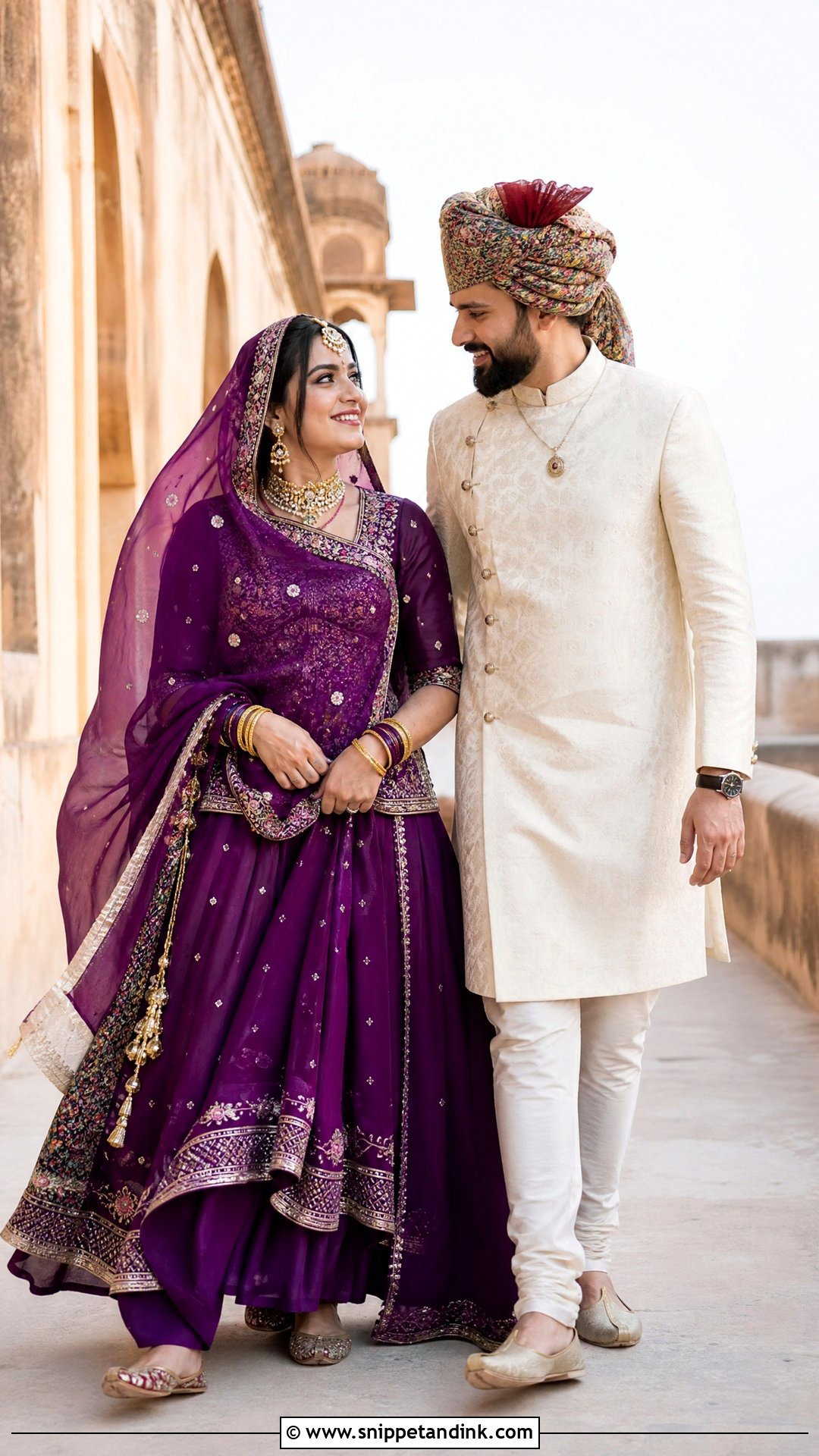
The angarkha’s diagonal front fastening gives the groom a flowing line that partners naturally with a full ghagra. She wears a jewel-toned ghagra, fitted kanchli and embroidered odhni with kundan, a borla, stacked bangles and juttis. He wears a cream or beige angarkha with side ties, fitted churidar, a patterned safa and traditional mojaris, with her main color appearing in his piping, sash or turban. In full-length frames, the angarkha’s diagonal and the ghagra’s volume balance each other. I like a slow walking shot for this pairing, because both garments swing as the couple steps forward.
19. Gold Rajputi Couple Outfit
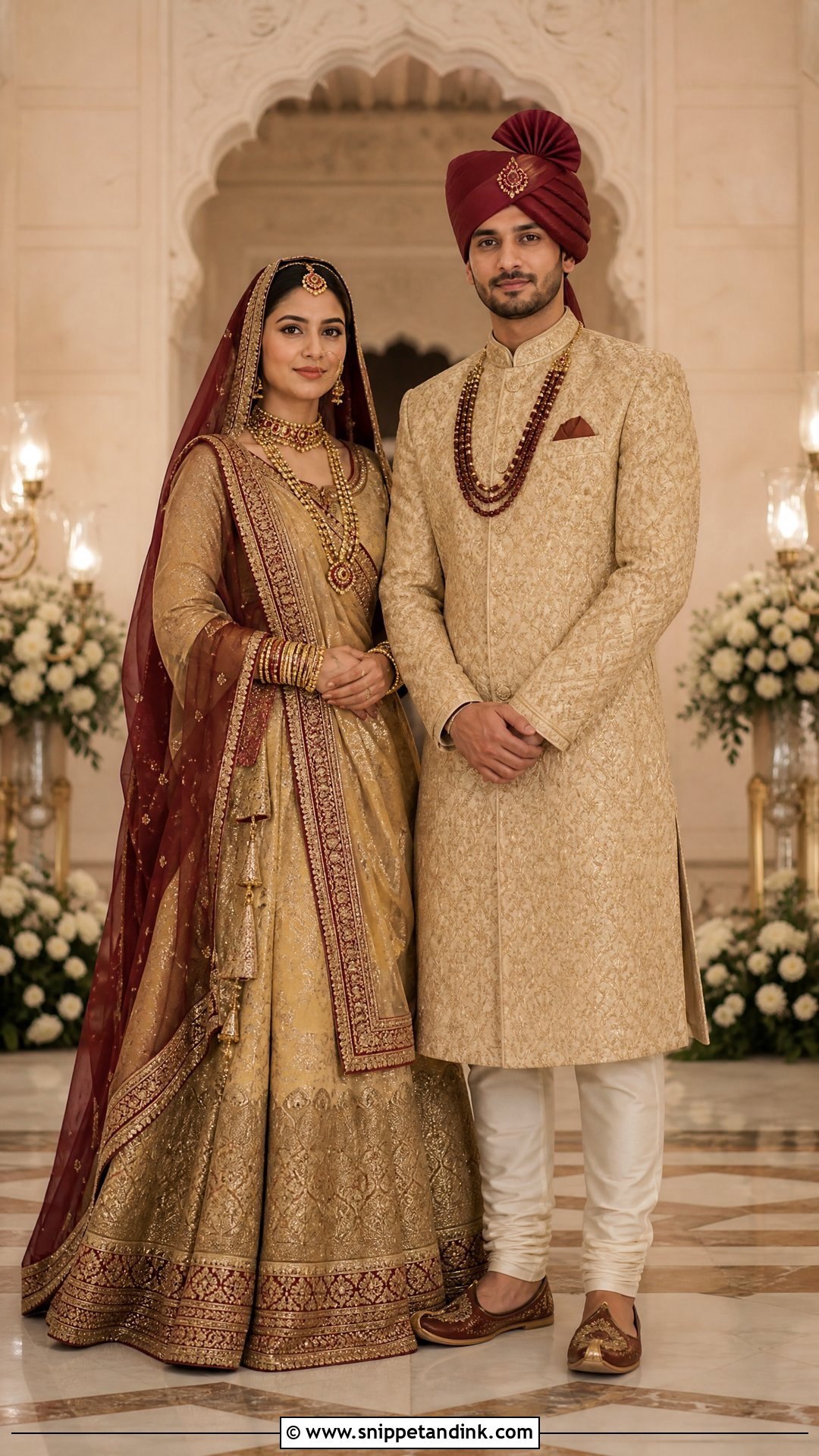
Gold clothing needs control or it turns into glare. She wears a muted-gold poshak with maroon borders, tonal embroidery and a contrasting maroon odhni, with antique-finish jewelry, a borla, aad, bangles and gold juttis. He wears a beige-gold sherwani or achkan with restrained embroidery, cream churidar and brown-gold mojaris, and a maroon safa stops the couple from blending into one metallic mass. Choose matte, brocade or textured fabric over very reflective material. Shiny lame and tissue bounce flash straight back into the lens as white hotspots, which are hard to fix afterwards. Weddings, receptions and grand, well-lit interiors suit it.
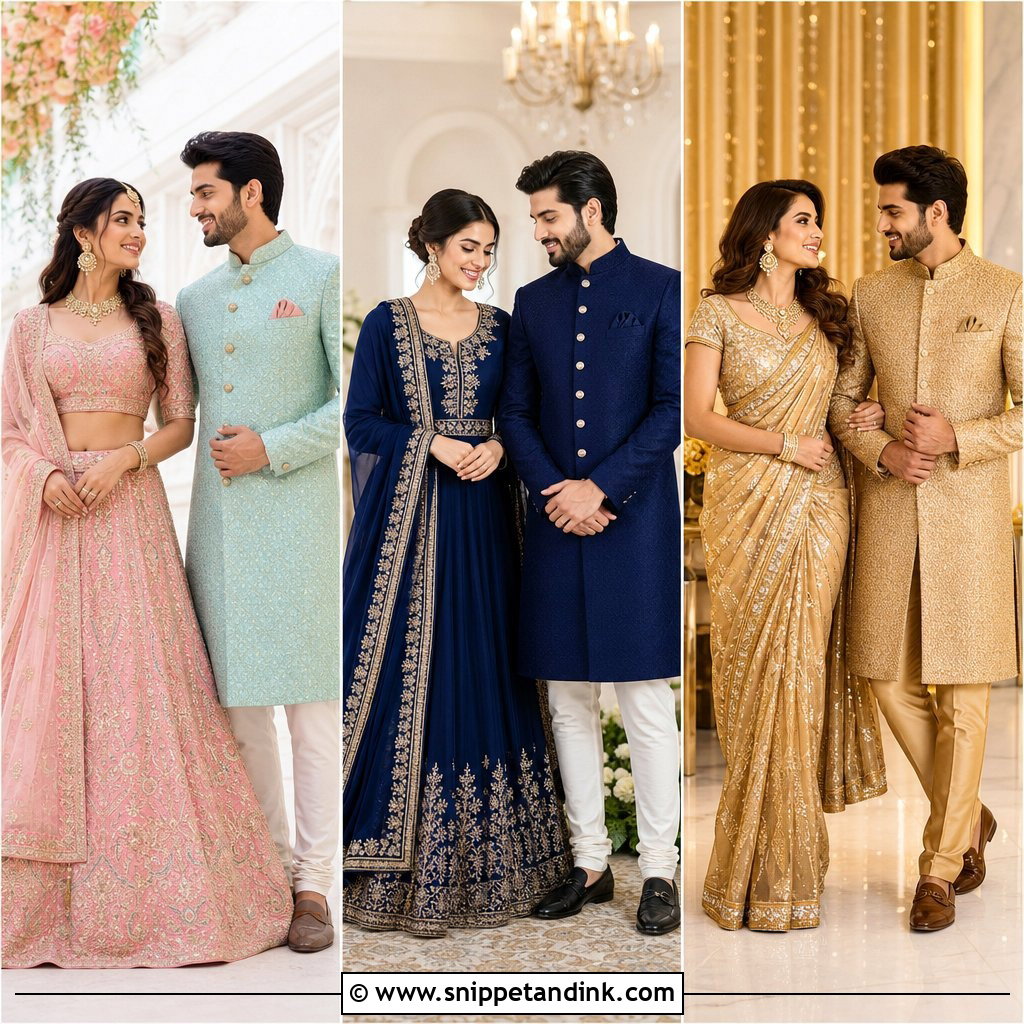
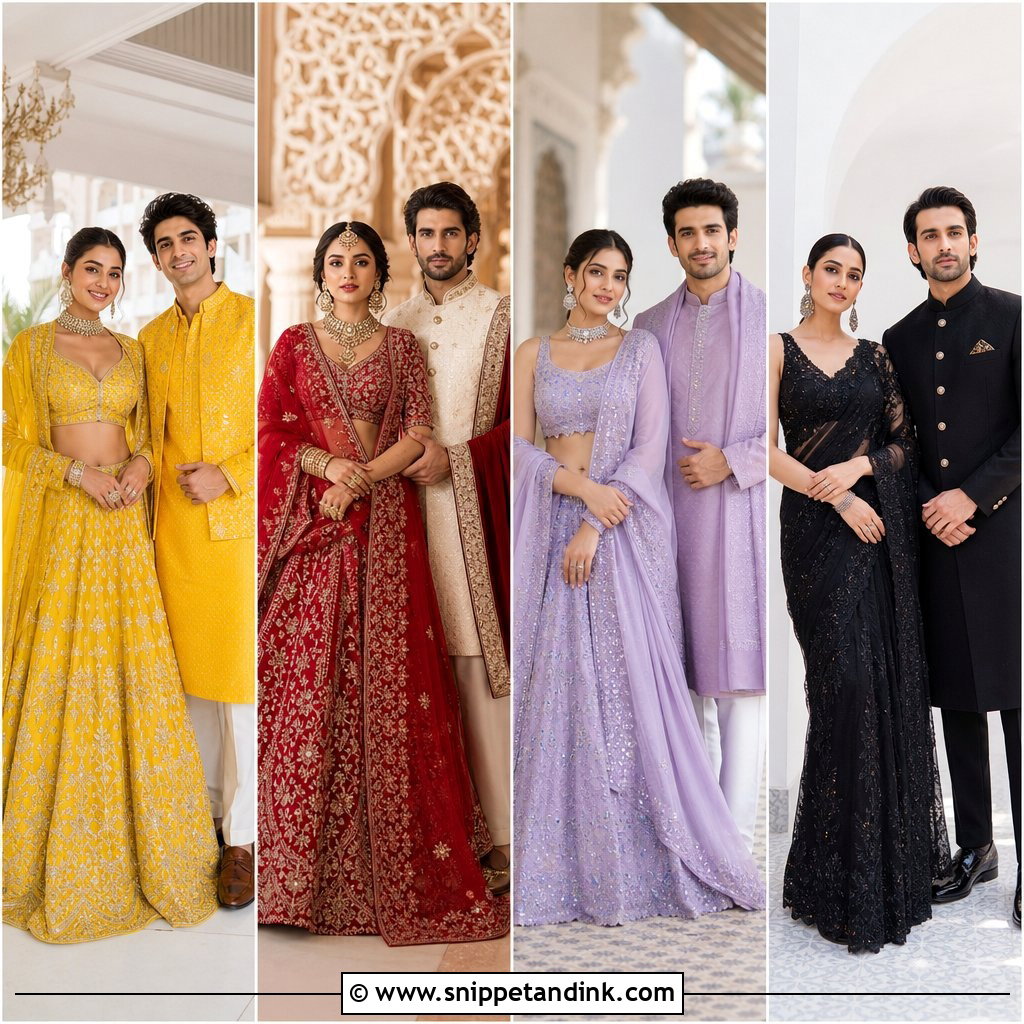
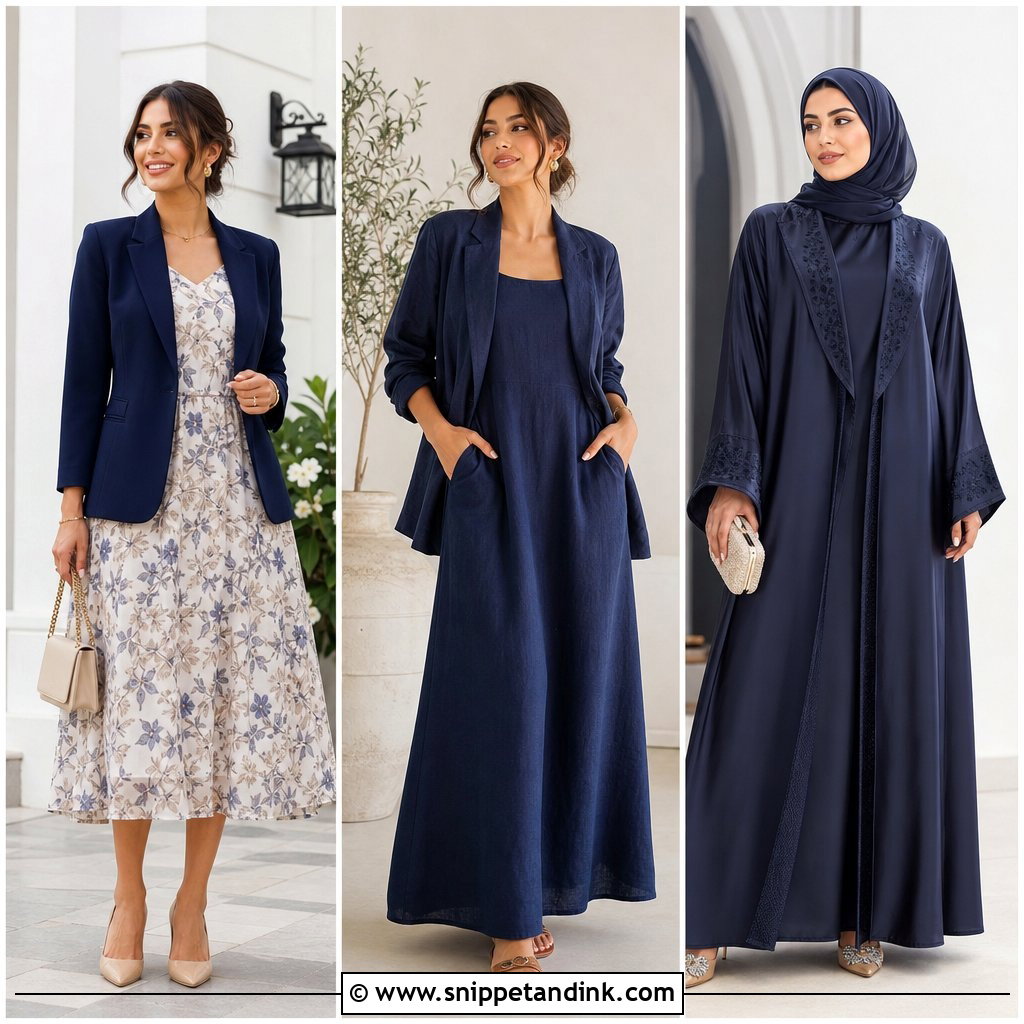
20. Rajputi Pre-Wedding Couple Outfit
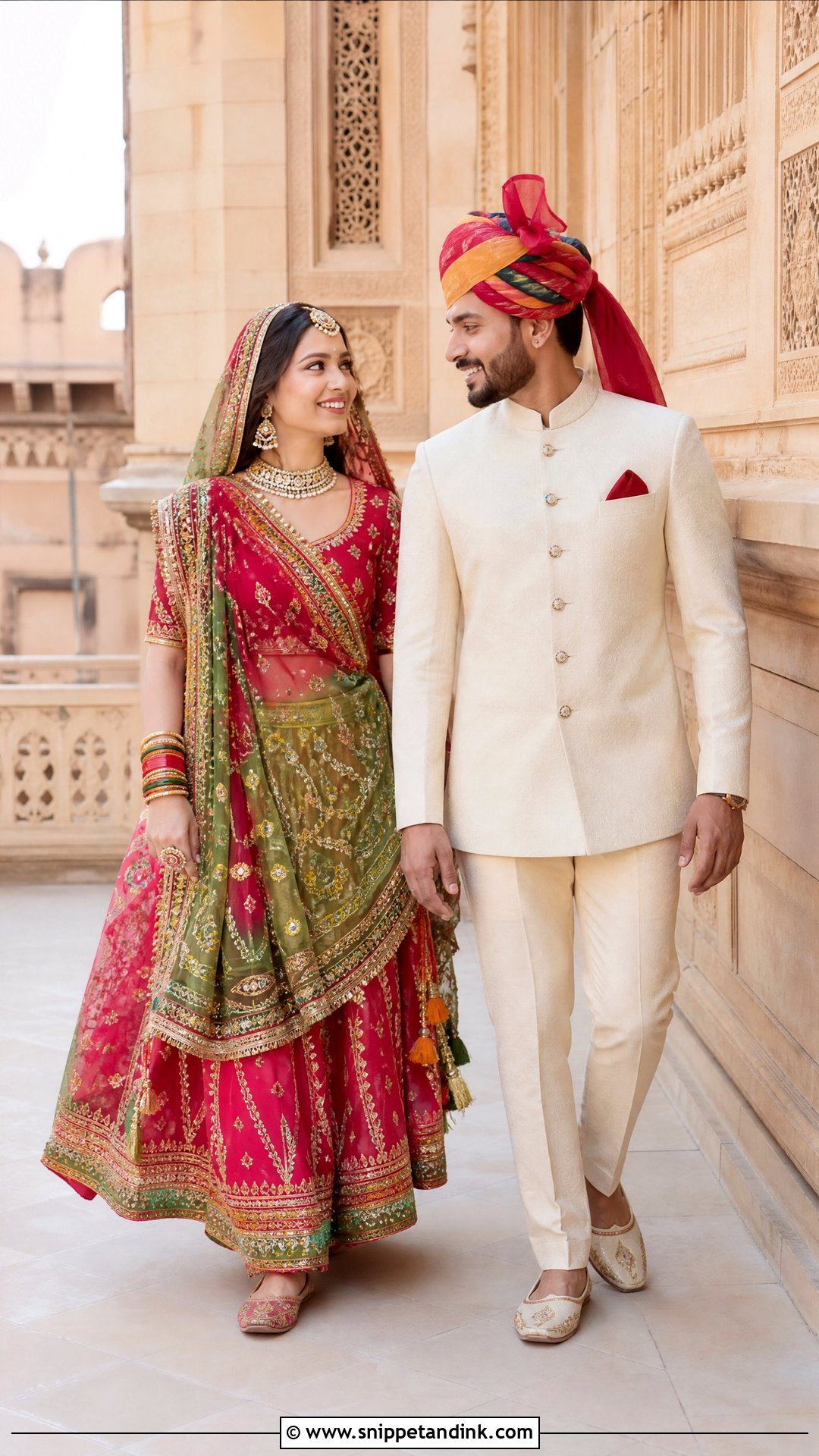
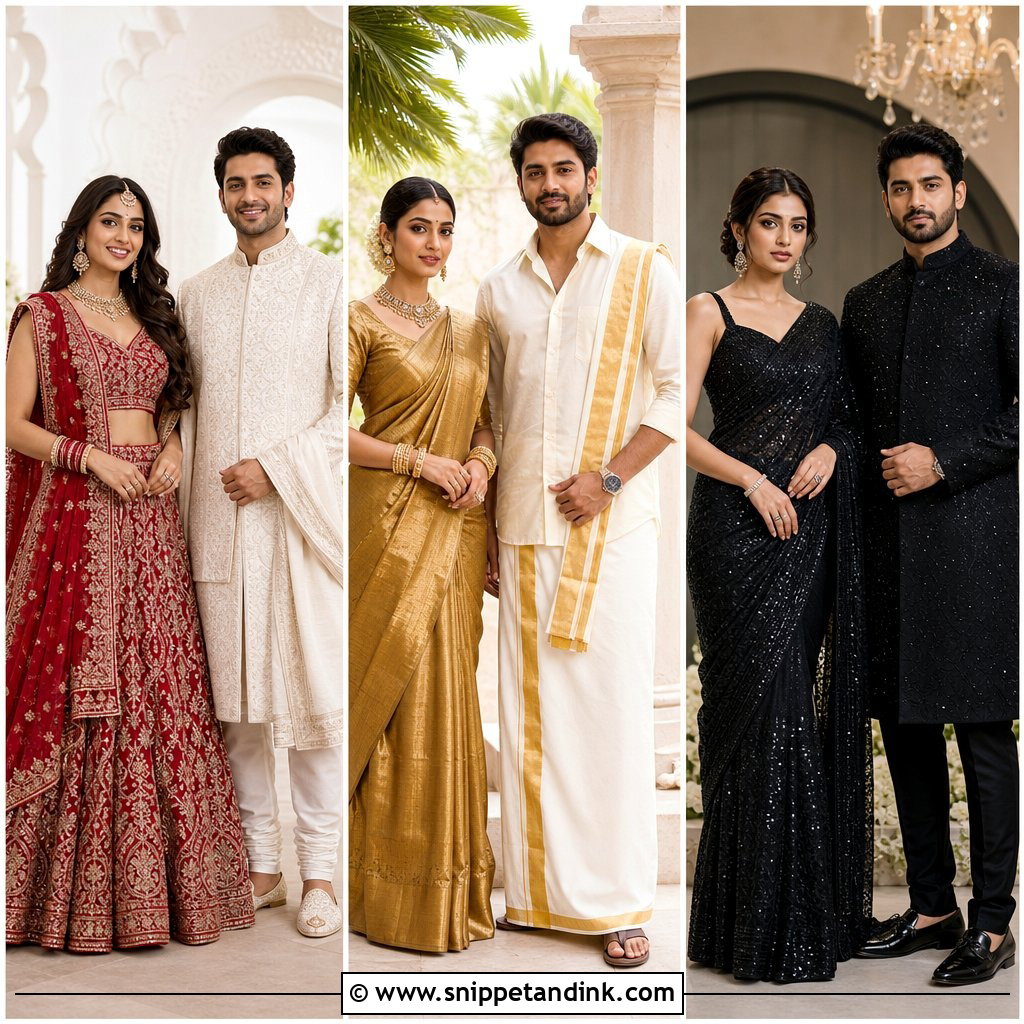
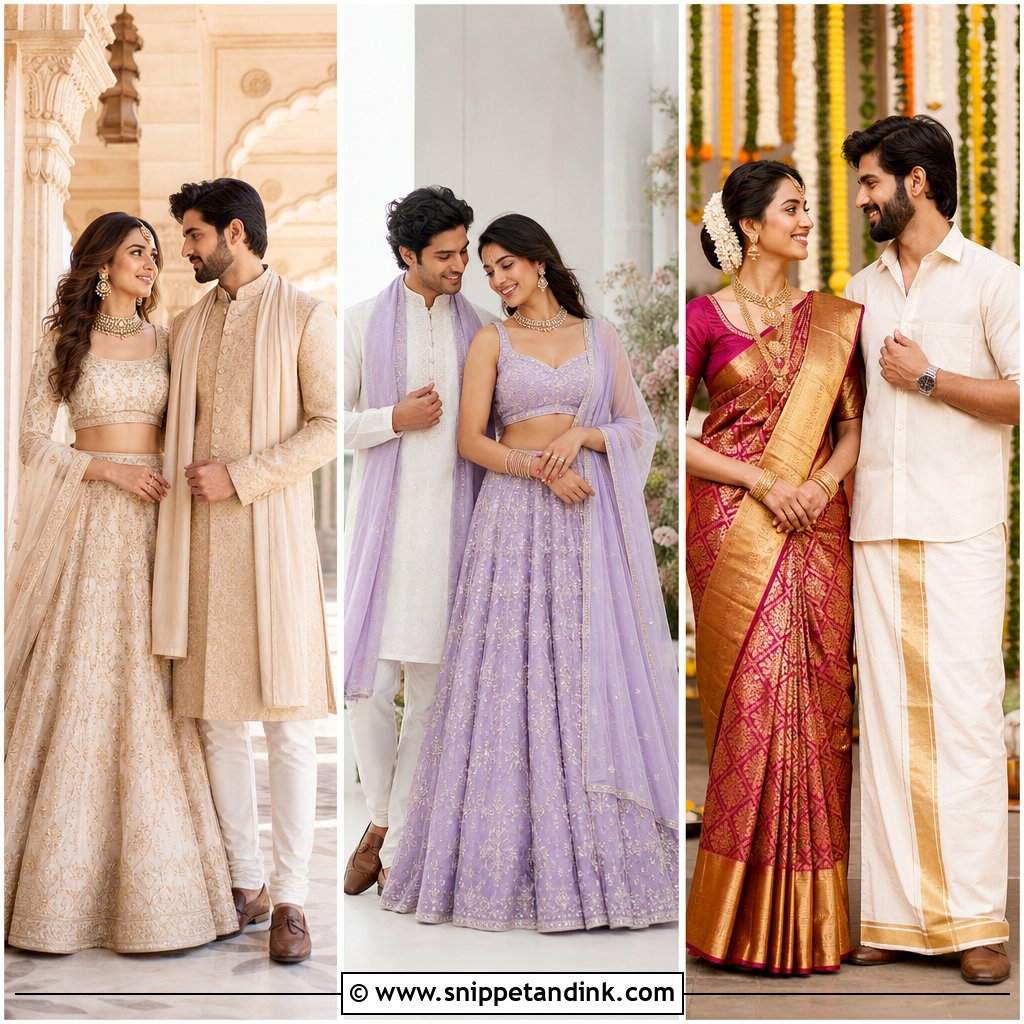
For a pre-wedding shoot, lighter fabrics and relaxed styling make a long session far easier. She chooses a colorful poshak in red, yellow, blue or green with moderate embroidery and a flowing odhni, plus a borla, earrings, bangles and comfortable juttis for walking and sitting. He wears a cream angarkha or Jodhpuri bandhgala with fitted pants, mojaris and a safa that repeats one color from her border or odhni. Heritage courtyards, sandstone walls, carved doorways and open desert all complement the clothing without distracting from it. A flowing odhni looks wonderful in a breeze, and it also blows across faces, so pin it securely and let your photographer decide when to free one end for a movement shot.
Planning the Portrait Hour Around Sun, Wind and the Safa
Rajasthan’s light is harsh through the middle of the day and generous in the last hour or so before sunset, when sandstone turns warm and golden. Where the schedule allows, I put couple portraits in that window and keep midday for indoor rooms or deep shade. Desert evenings are often breezy too, so I scout a sheltered wall or archway first; an odhni that won’t stop lifting costs more time than any change of location.
Give the safa a backup plan
A safa is usually tied by someone who knows the style, and after hours of hugging, bowing and dancing it can loosen. Ask whoever tied it to stay nearby, or learn to re-tuck the tail yourselves. A few pins hidden in the folds help, and a lighter cotton or chiffon safa is far more bearable in heat than a heavy one.
A small kit for the portrait session
- Safety pins for the odhni and the safa.
- Blotting papers and lip color for both of you.
- A soft cloth to wipe dust off juttis and mojaris before full-length shots.
- Water with a straw, so nobody smudges lipstick or drips on embroidery.
Do Your Outfits Talk to Each Other From Across the Courtyard?
Good couple outfits balance tradition, comfort, color and two personalities. You can coordinate through a shared border shade, textile, embroidery pattern, safa or accessory without dressing identically. Red, maroon, velvet and gold suit formal ceremonies, while peach, pastels, yellow and ivory feel lighter for daytime functions. She can build around a full poshak or a Rajputi-inspired lehenga, and he can choose an achkan, angarkha, sherwani or Jodhpuri bandhgala. Check family and regional customs before you settle the odhni drape, the jewelry or any ceremonial details. Then lay both outfits side by side and look at them together, the way the camera will.
You'll Like These Ideas:


Leave a Reply